
Bringing nature inside doesn’t have to mean cluttering your floor with heavy pots. When you run out of shelf space, the walls are your best friend for adding life to a room. Vertical gardening is a smart way to clear the air and make a cramped apartment feel like a lush sanctuary without losing any floor area.
This list covers everything from simple DIY frames to full-scale living installations. Whether you want a small accent or a massive plant feature wall, these ideas will help you find the right setup for your light levels and style. Getting your plants off the ground changes the whole energy of a room.
Modular Felt Pocket Planters for Full Wall Coverage
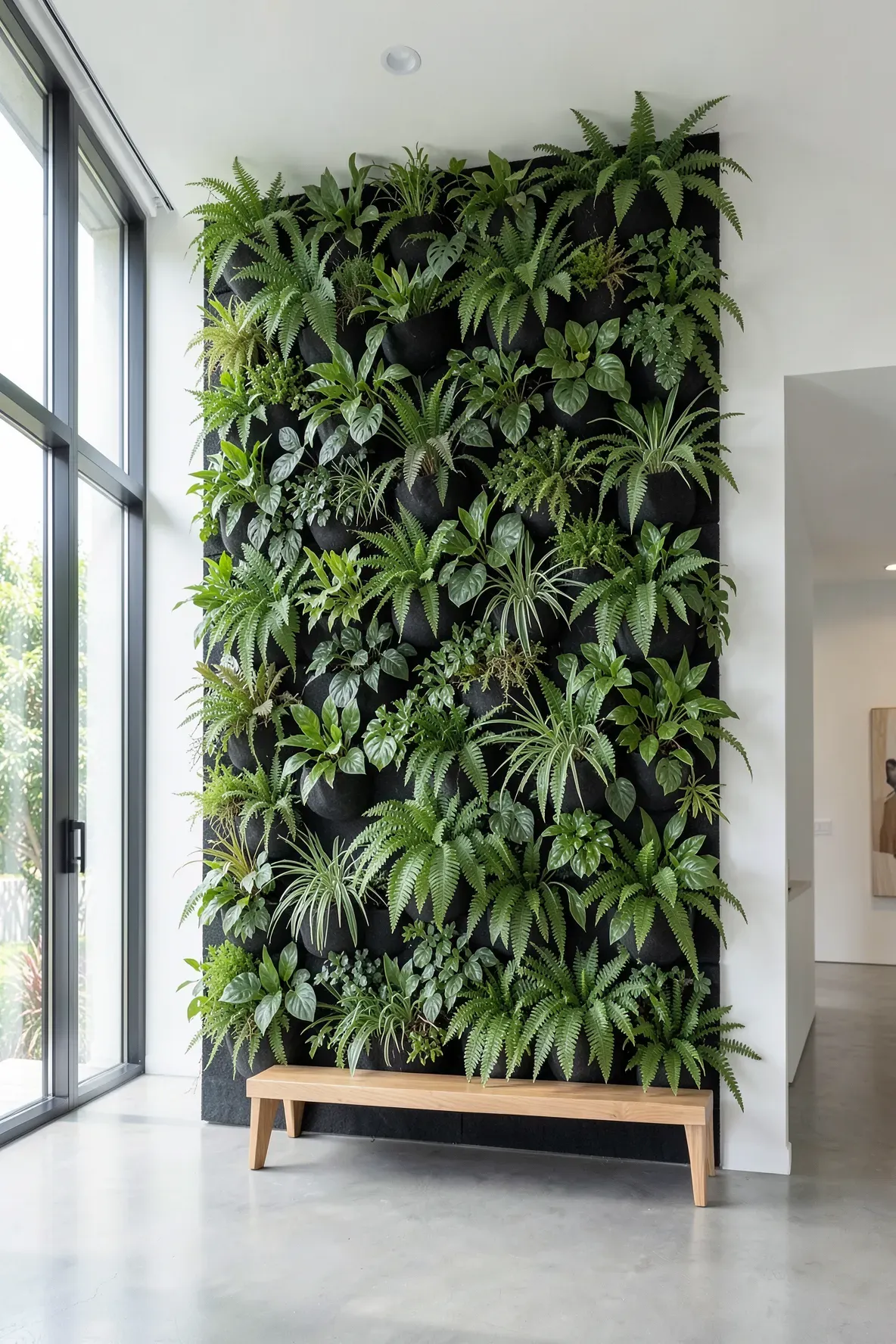
Felt pockets are a great way to cover a large surface area quickly. The breathable fabric allows roots to get plenty of air, which helps prevent root rot in many tropical species. You can screw these panels directly into the wall and fill each pouch with a small plant like a fern or a spider plant. They create a lush, seamless look once the foliage grows out to hide the black or grey felt.
Watering these can be tricky, so it is often best to use a waterproof backing or a drip tray at the bottom. These work well for high-humidity plants because the felt stays moist for a bit after watering, helping the plants stay hydrated. It is an affordable way to build a massive plant wall ideas indoor project without spending thousands on custom hardware.
Preserved Moss Panels in Geometric Shapes
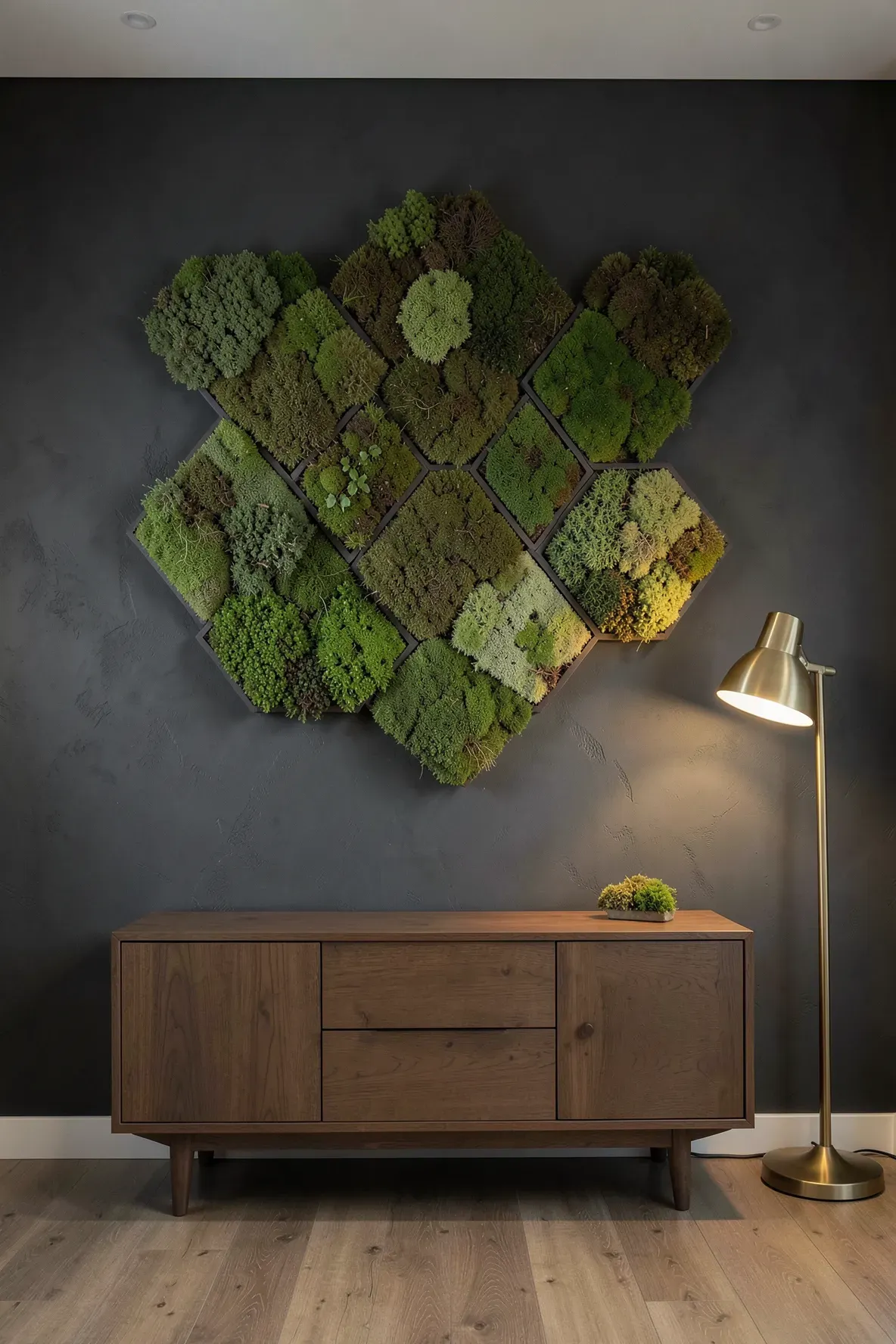
If you want the look of green wall decor ideas but don’t have enough light to keep plants alive, preserved moss is the answer. This moss is treated with glycerin to stay soft and vibrant for years without water or sunlight. You can glue different shades of reindeer moss and sheet moss into wooden hexagons or triangles to create a modern art piece.
These panels are very light and easy to hang with simple nails or command strips. They add a soft texture to hard rooms like offices or hallways. Since they don’t grow, you never have to worry about pruning or messy soil falling on your carpet. It is a set-it-and-forget-it way to get that deep forest green into your home.
Recycled Wood Lattice with Potted Ivy
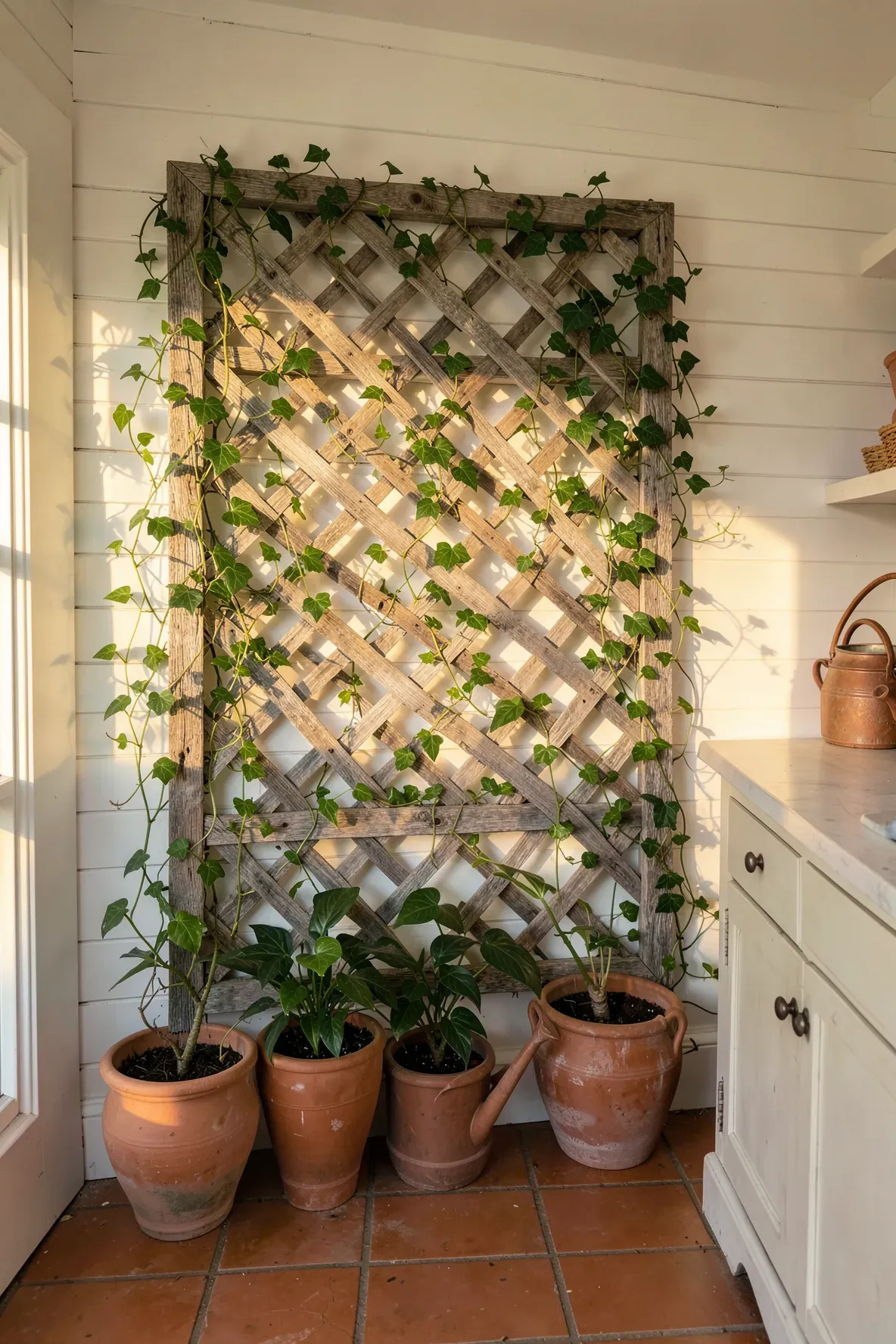
A simple wooden lattice gives climbing plants a place to grab onto. You can mount a piece of garden lattice to an interior wall and place a few pots of English Ivy or Heartleaf Philodendron at the base. As the vines grow, you can gently weave them through the wood to create a living tapestry.
Using recycled wood adds a rustic feel to the room. This setup is flexible because you can move the pots around or swap them out if a plant gets sick. It works especially well in kitchens or sunrooms where you want a bit of a garden-shed aesthetic. The wood also provides a nice contrast against the dark green leaves.
Glass Propagation Tubes on a Wooden Wall Mount
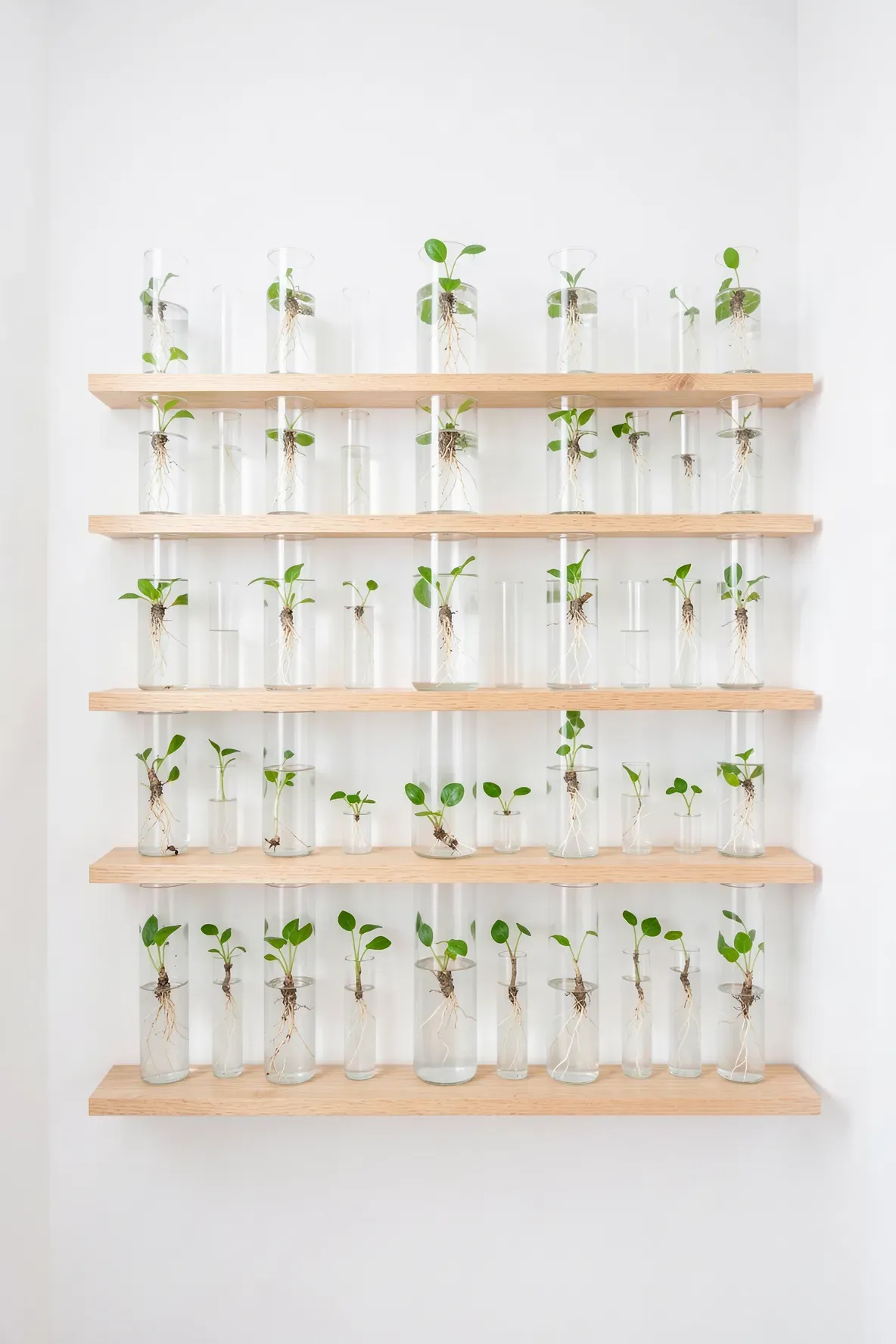
Propagation stations are a functional form of indoor plants wall decor. You can find wooden strips with holes for small glass test tubes that mount directly to the wall. This allows you to grow new plants from cuttings while displaying them as art. The sight of roots growing through clear water is fascinating and adds a scientific look to your decor.
Change the water once a week to keep it clear and prevent algae. This is an inexpensive way to fill a small wall space. Once the cuttings have long roots, you can pot them in soil or just keep them in the tubes for a minimalist, water-based display.
Floating Hexagon Shelves with Trailing Pothos
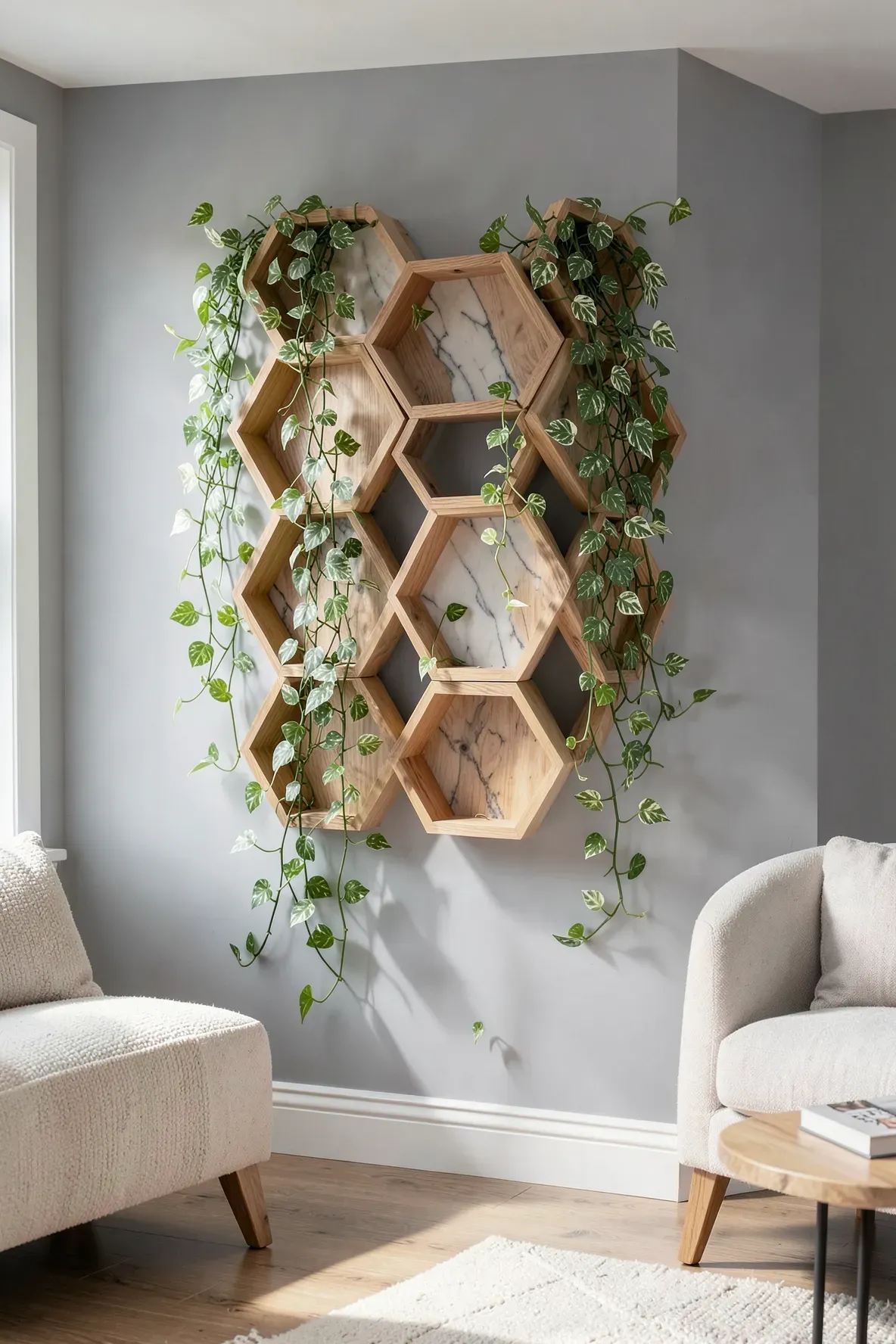
Hexagon shelves are popular for a reason; they look like a honeycomb and fit together in endless patterns. By placing a trailing plant like a Marble Queen Pothos on a top shelf, you can let the vines drape down over the other shelves. This creates a vertical flow of green that connects different parts of the wall.
Make sure the shelves are deep enough to hold a standard four-inch pot. You can paint the shelves to match your wall or use natural wood for a warmer look. This is one of the easiest wall plant ideas because it relies on standard shelving that you can find at most home stores.
Industrial Steel Mesh Grid for Climbing Vines
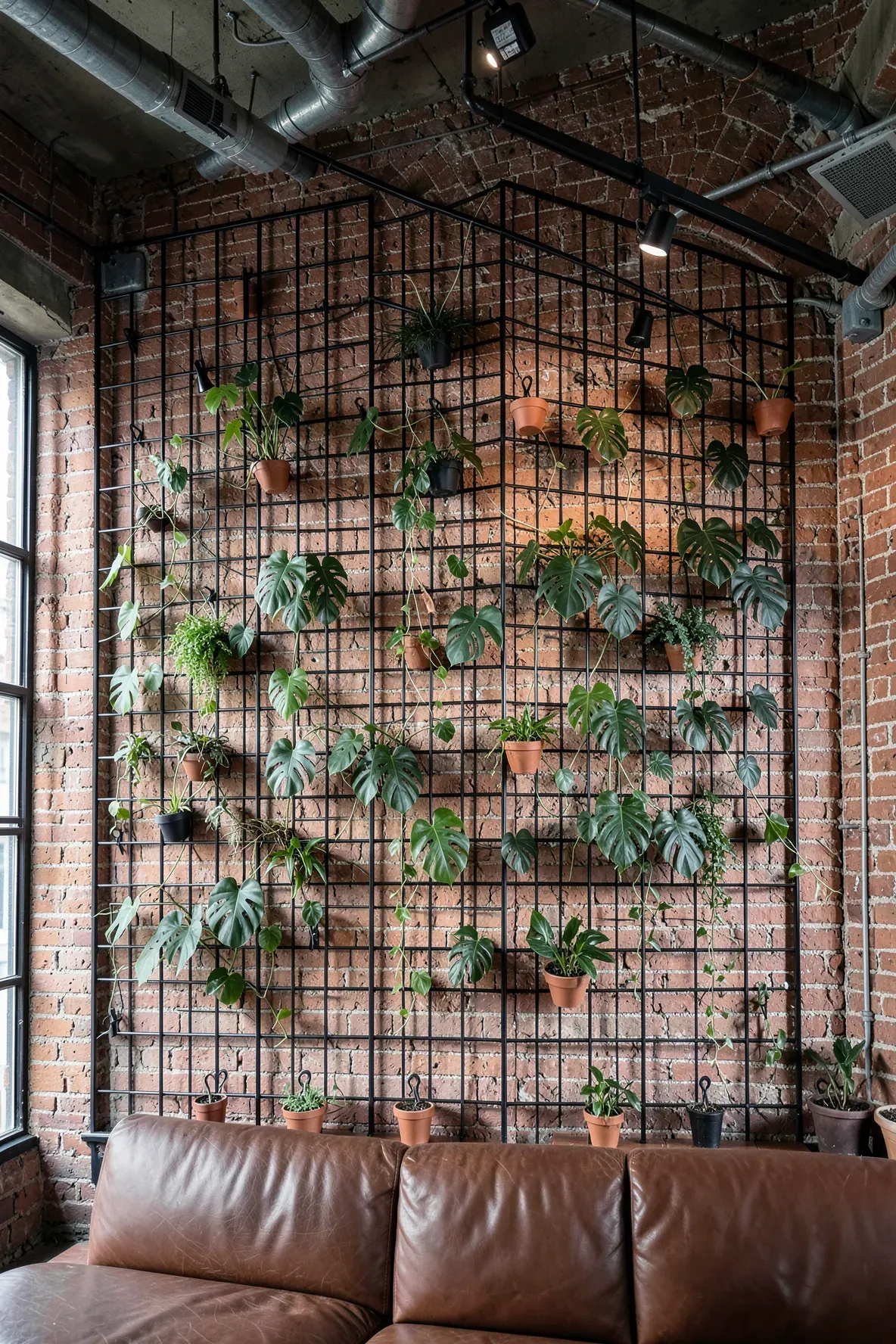
A steel mesh grid offers a clean, industrial look that works well in modern apartments. You can clip small pots to the wire or let plants like Hoya or Monstera Adansonii climb up the metal. The grid keeps the plants organized and prevents them from flopping over or attaching themselves directly to your paint.
Use S-hooks or binder clips to attach nursery pots to the wire. This makes it very easy to take the plants to the sink for a deep watering. It is a sturdy solution for a plant feature wall that can handle the weight of multiple heavy plants as they grow.
Vertical Terracotta Pot Hangers on Metal Rails
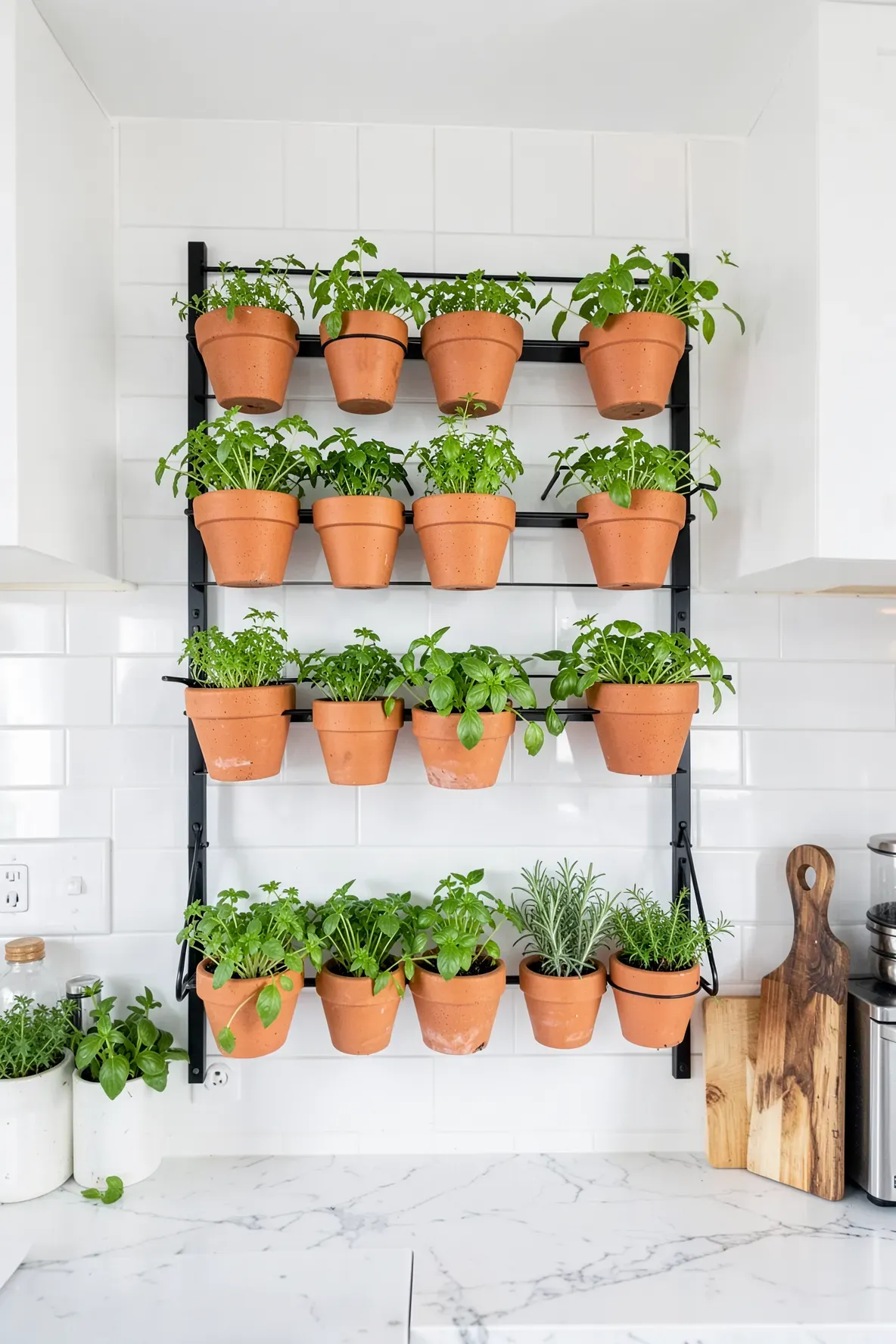
Metal rails, like the ones used for kitchen towels, can be repurposed to hold plants. You can find specialized pot rings that hook over the rail and hold traditional terracotta pots. This creates a neat, organized row of greenery that looks professional and intentional.
Terracotta is great for plants that like to dry out, such as succulents or herbs. Since these pots are porous, they breathe well. Just be sure to use pots without drainage holes or place a small plastic liner inside to prevent water from dripping onto your floor.
Living Picture Frames with Succulent Arrangements
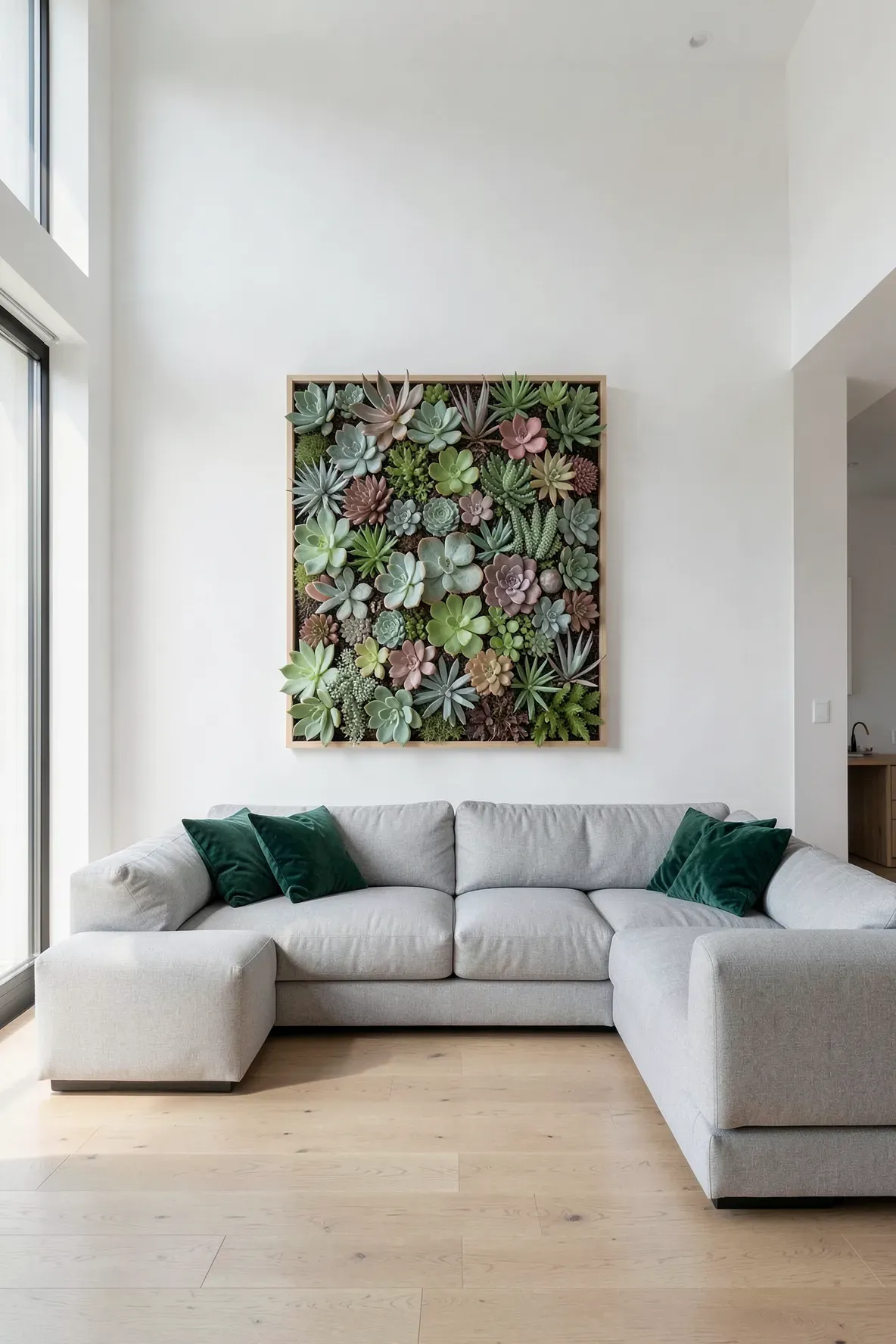
Succulents are perfect for plant frame wall decor because they grow slowly and have shallow root systems. You can build a shallow box frame with a wire mesh front to hold the plants and soil in place. When you tuck the succulents through the mesh, they eventually root into the soil and stay put even when the frame is hung vertically.
To water these, you usually take the frame off the wall and lay it flat for a few hours after a light misting or soak. This creates a textured, colorful focal point that looks like a 3D painting. It is a great conversation piece for a living room or entryway.
Macramé Plant Hangers Suspended from a Driftwood Branch
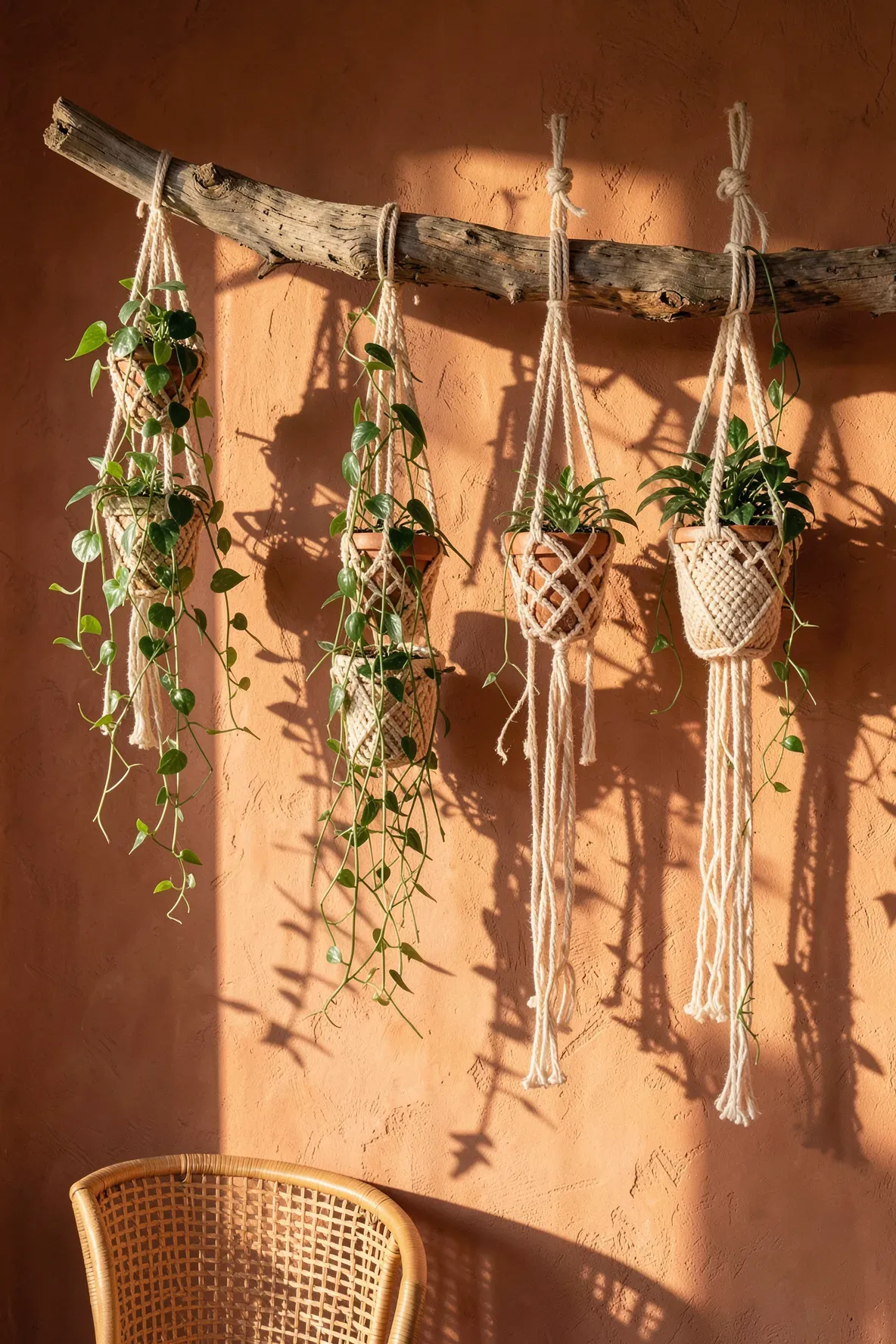
Instead of hanging macramé from ceiling hooks, try mounting a large piece of driftwood to the wall and hanging your plants from it. This creates a hanging plants wall that feels more like a cohesive art installation. The natural shape of the wood adds an organic touch that complements the woven rope.
Use different lengths of rope to vary the heights of your plants. This looks best with trailing varieties like Burro’s Tail or String of Hearts. It fills a large wall space without requiring you to drill dozens of holes for individual hangers.
Magnetic Wall Planters for Kitchen Backsplashes
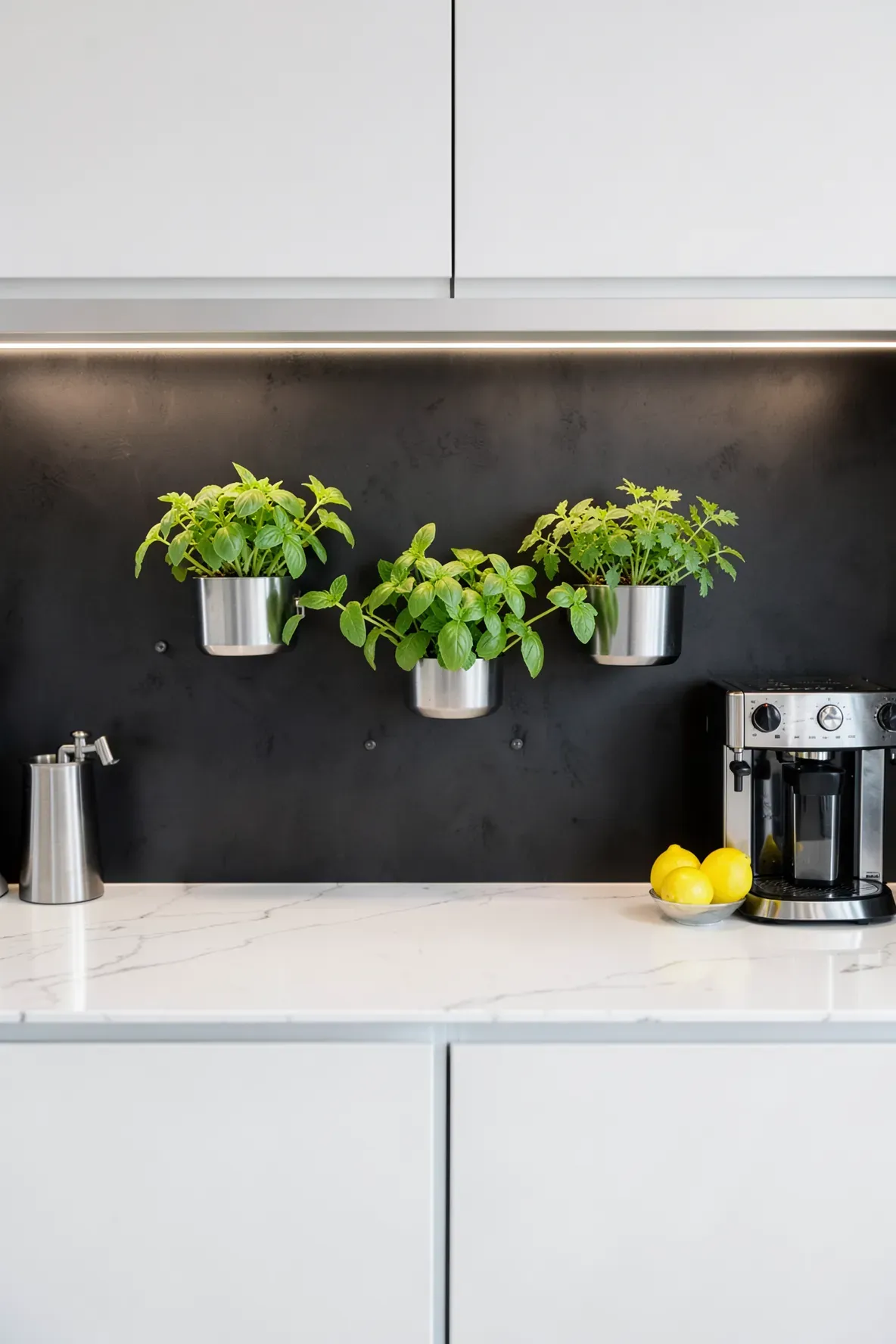
If you have a metal backsplash or a magnetic board, small magnetic planters are a lifesaver. These are usually small plastic or metal pods with strong magnets on the back. They are perfect for growing fresh herbs like basil or mint right where you cook.
Since they are small, you will need to water them more frequently. They are also great for air plants, which don’t need soil at all. It is a smart way to use vertical space in a small kitchen where counter space is limited.
Wall-Mounted Glass Globes with Air Plants
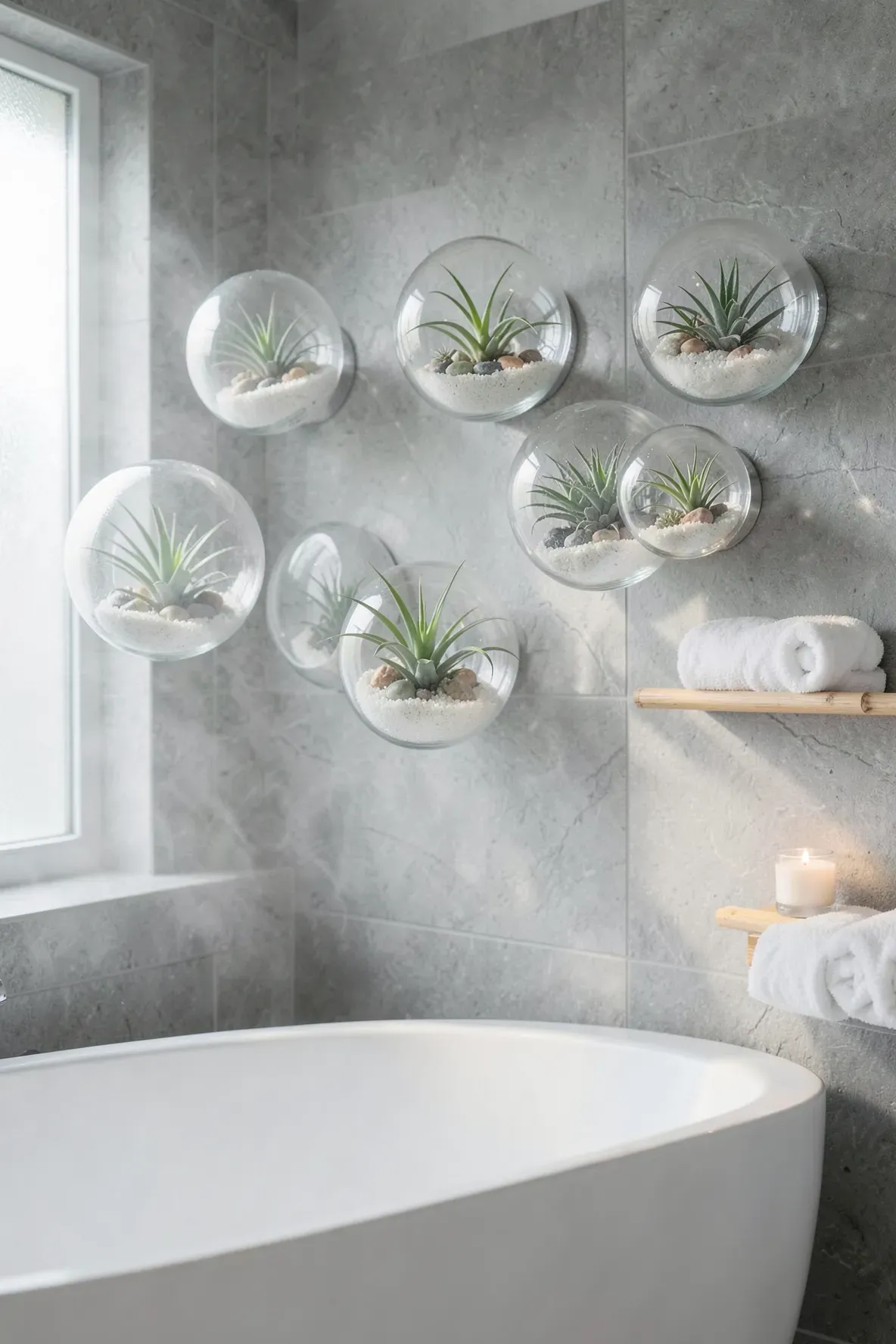
Glass globes with a flat back can be mounted directly to the wall. These are ideal for Tillandsia, also known as air plants. Because air plants don’t need soil, the globes stay clean and lightweight. You can add a bit of decorative sand or colored pebbles at the bottom for extra style.
To keep them healthy, just take the plants out once a week and soak them in water for 20 minutes. Let them dry completely before putting them back in the glass to avoid rot. This creates a light, airy look that works well in bathrooms or bedrooms.
Built-In Recessed Wall Shelving for Tropical Greenery

If you are renovating, consider adding recessed niches into your walls. These built-in shelves can be lined with waterproof materials and filled with potted plants. It gives the greenery a permanent, architectural feel rather than looking like an afterthought.
You can even install small LED grow lights in the top of the niche to ensure the plants get enough light. This is a high-end way to incorporate a plant accent wall into your home’s design. It works particularly well in hallways where protruding shelves might get in the way.
Woven Seagrass Baskets Mounted as Planters
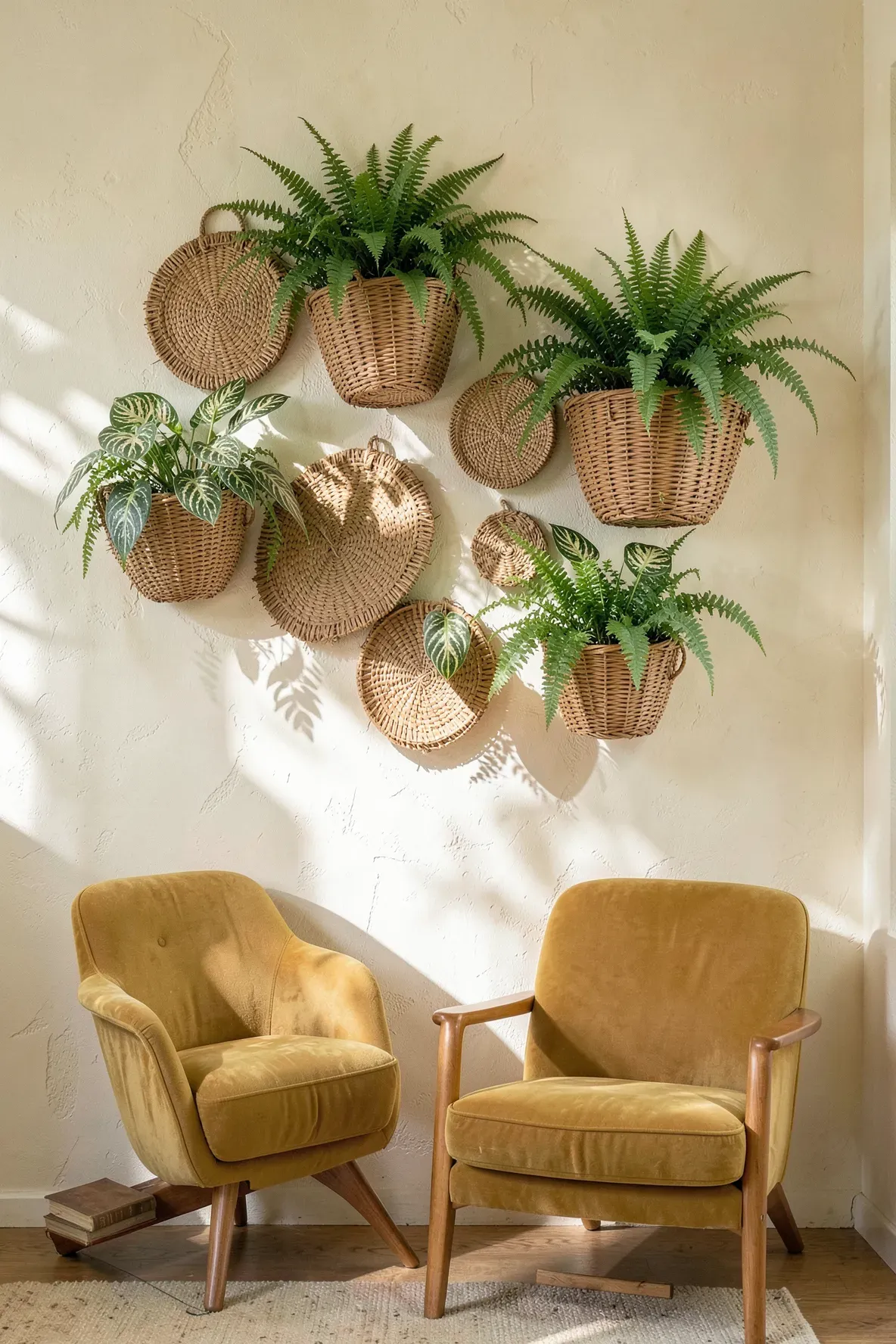
Mounting woven baskets to the wall is a great way to add warmth and texture. You can place a plastic pot inside the basket to catch water and prevent the fibers from rotting. The natural tan color of the seagrass looks beautiful against the vibrant green of a Boston Fern or a Calathea.
Baskets come in many shapes and sizes, so you can create a varied gallery wall. They are lightweight and usually only need one or two nails to stay secure. This is a soft, bohemian approach to wall mounted plants.
Minimalist Ceramic Wall Vases for Single Stems
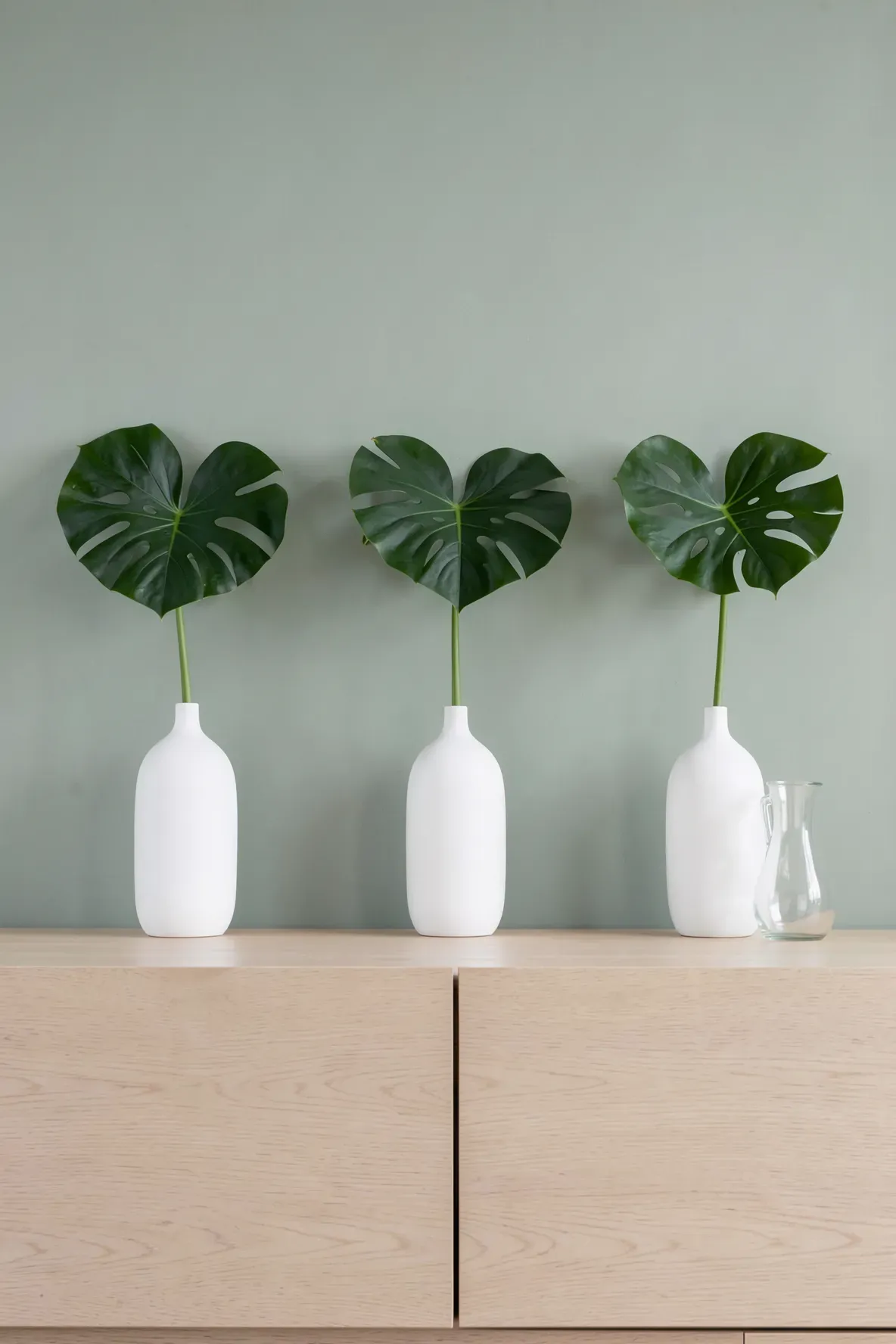
For a clean and modern look, small ceramic wall vases are excellent. These are often shaped like pockets or cones and hang flat against the wall. They are perfect for a single Monstera leaf or a few stems of Eucalyptus. This approach is more about the shape and color of the plant rather than a dense jungle look.
Because these vases are small, they are very easy to clean and refill. They work well in minimalist homes where you want a pop of color without overwhelming the space. You can arrange three or five in a row for a structured, rhythmic display.
Repurposed Wooden Pallet Vertical Garden
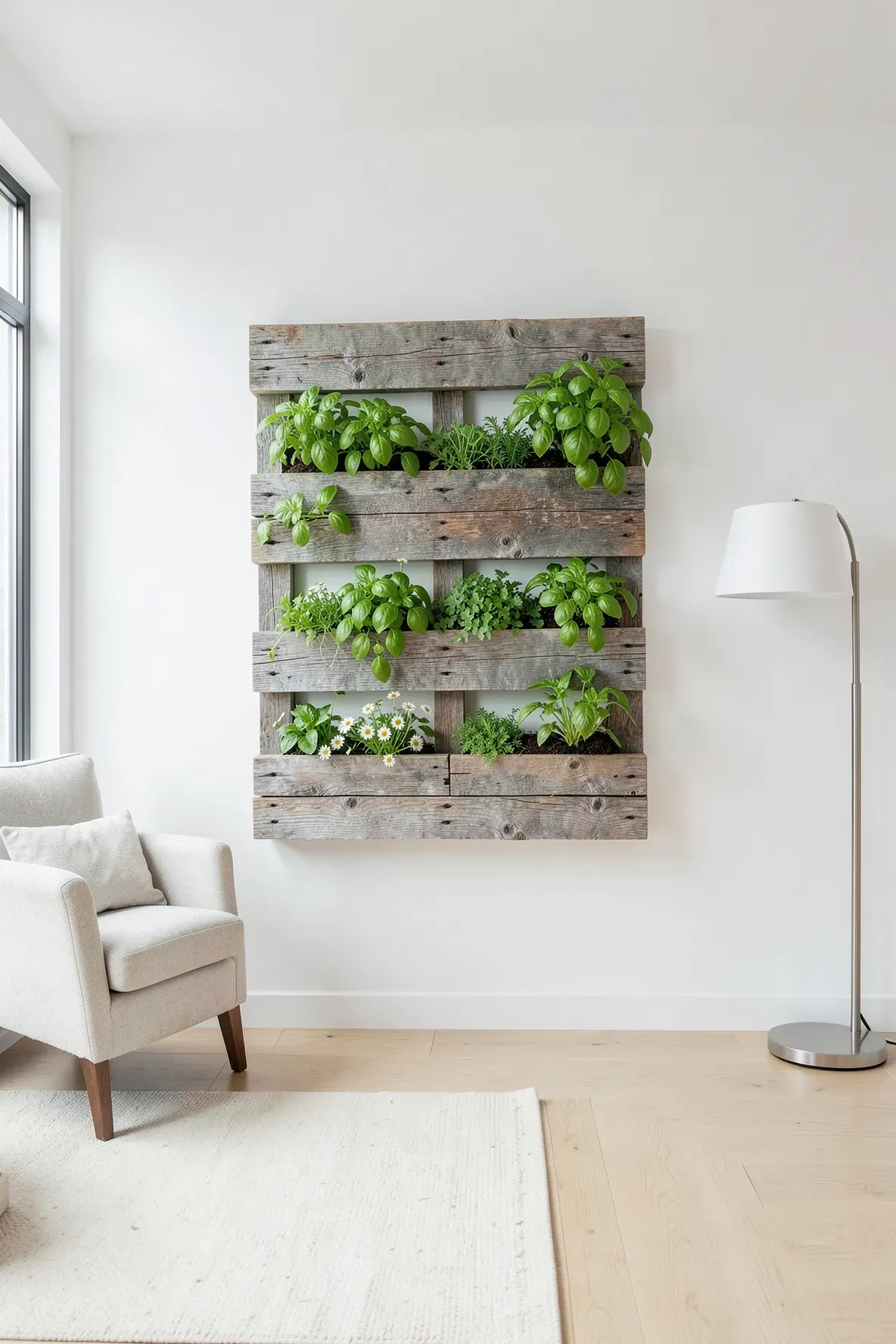
An old wooden pallet can be turned into a rustic vertical garden with very little effort. By stapling landscape fabric to the back and bottom of the slats, you create long planting troughs. This is a heavy-duty option that is great for a patio-style feel inside the home.
Fill the slats with kitchen herbs or small flowers. The pallet can be leaned against a wall or bolted securely for safety. It is a rugged, eco-friendly way to achieve a dense plant picture wall decor look on a budget.
Copper Pipe Frame with Hanging S-Hooks for Pots
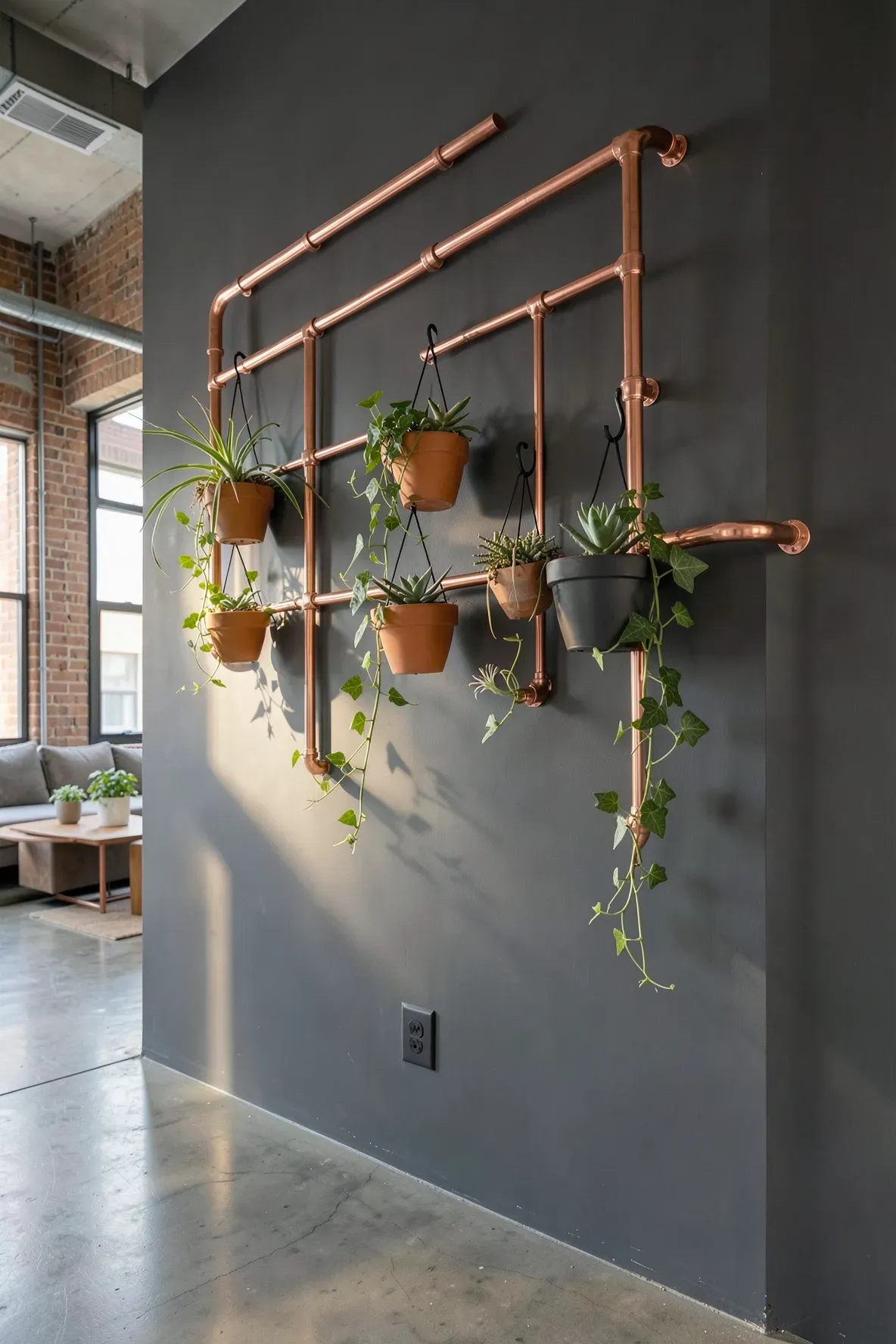
Copper pipes offer a metallic shine that looks great in modern or industrial interiors. You can build a simple rectangular frame out of copper piping and mount it to the wall. Use S-hooks to hang small pots with handles from the horizontal bars.
This setup allows you to slide the plants left or right to find the best light or to make room for growth. Over time, the copper will develop a dark patina, or you can polish it to keep it bright. It is a very sturdy way to display a collection of small potted plants.
Cork Board Wall with Pinned Air Plant Clusters
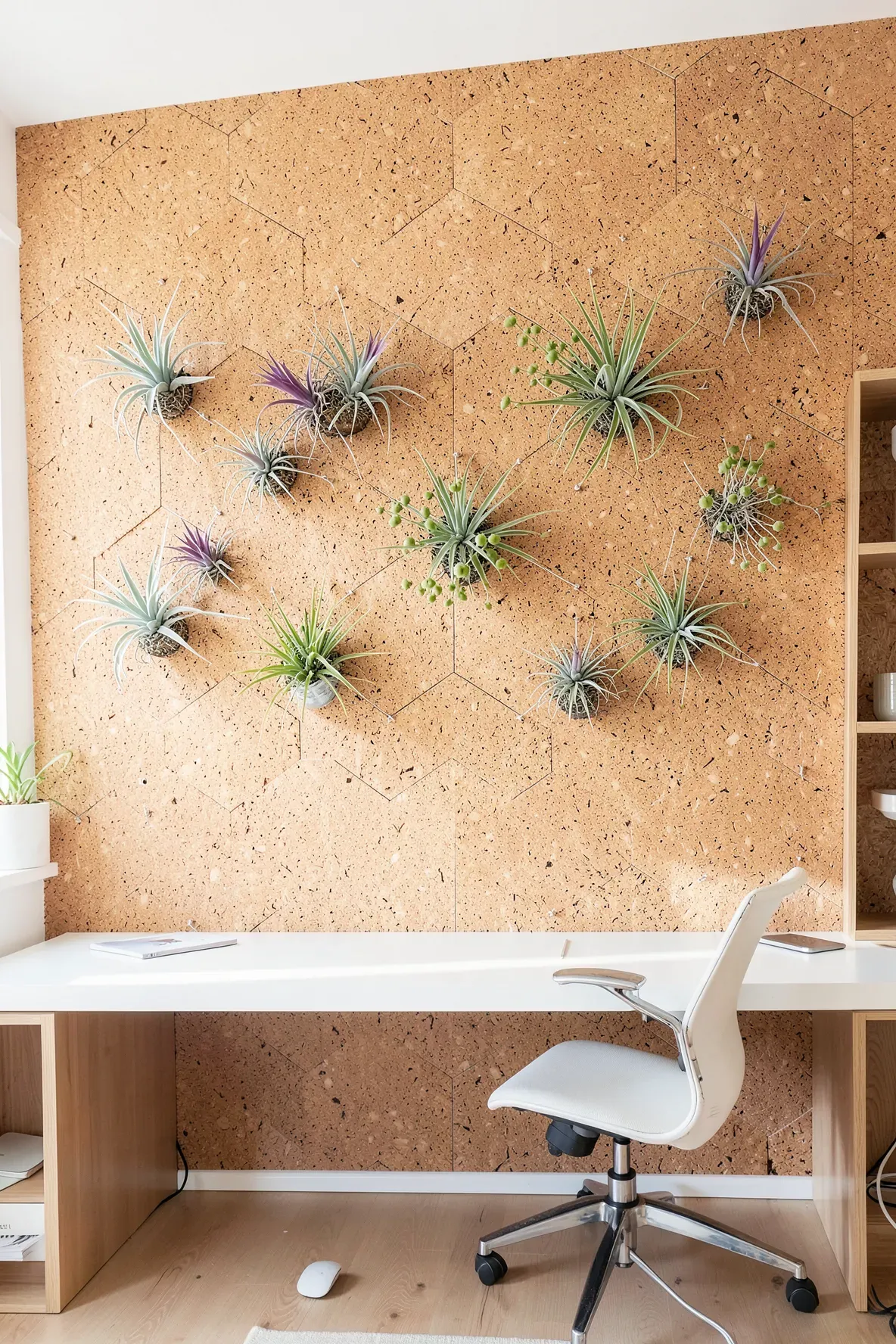
A wall covered in cork tiles is a unique backdrop for air plants. You can use thin wire or even U-shaped pins to gently secure air plants to the cork. This allows you to create patterns or even spell out words with the plants themselves.
Cork is naturally rot-resistant and handles the occasional misting well. This setup is very lightweight and can be expanded easily as your collection grows. It is a fun, tactile way to experiment with plant wall ideas indoor.
Circular Metal Wall Hoops with Integrated Planter Trays
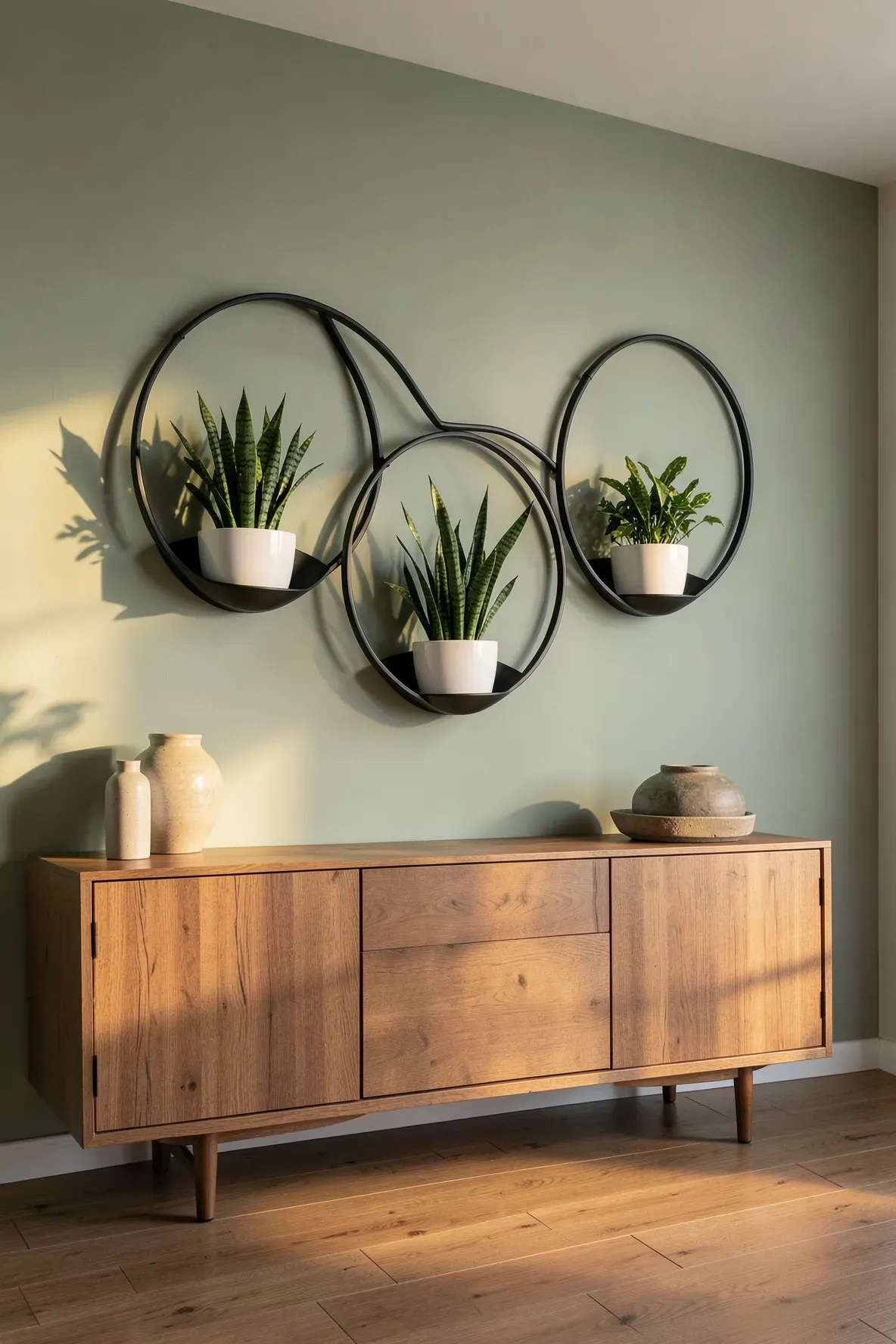
Metal hoops with a small shelf or tray at the bottom provide a geometric frame for your plants. The circular shape breaks up the straight lines of most furniture and walls. These usually hold one medium-sized pot and look best when grouped in odd numbers.
Choose plants that grow upright, like a Snake Plant or a small ZZ plant, to fit within the circle. The frame acts like a piece of jewelry for your plant, making even a basic nursery pot look high-end and intentional.
Cascading String of Pearls in Wall-Mounted Half-Moons
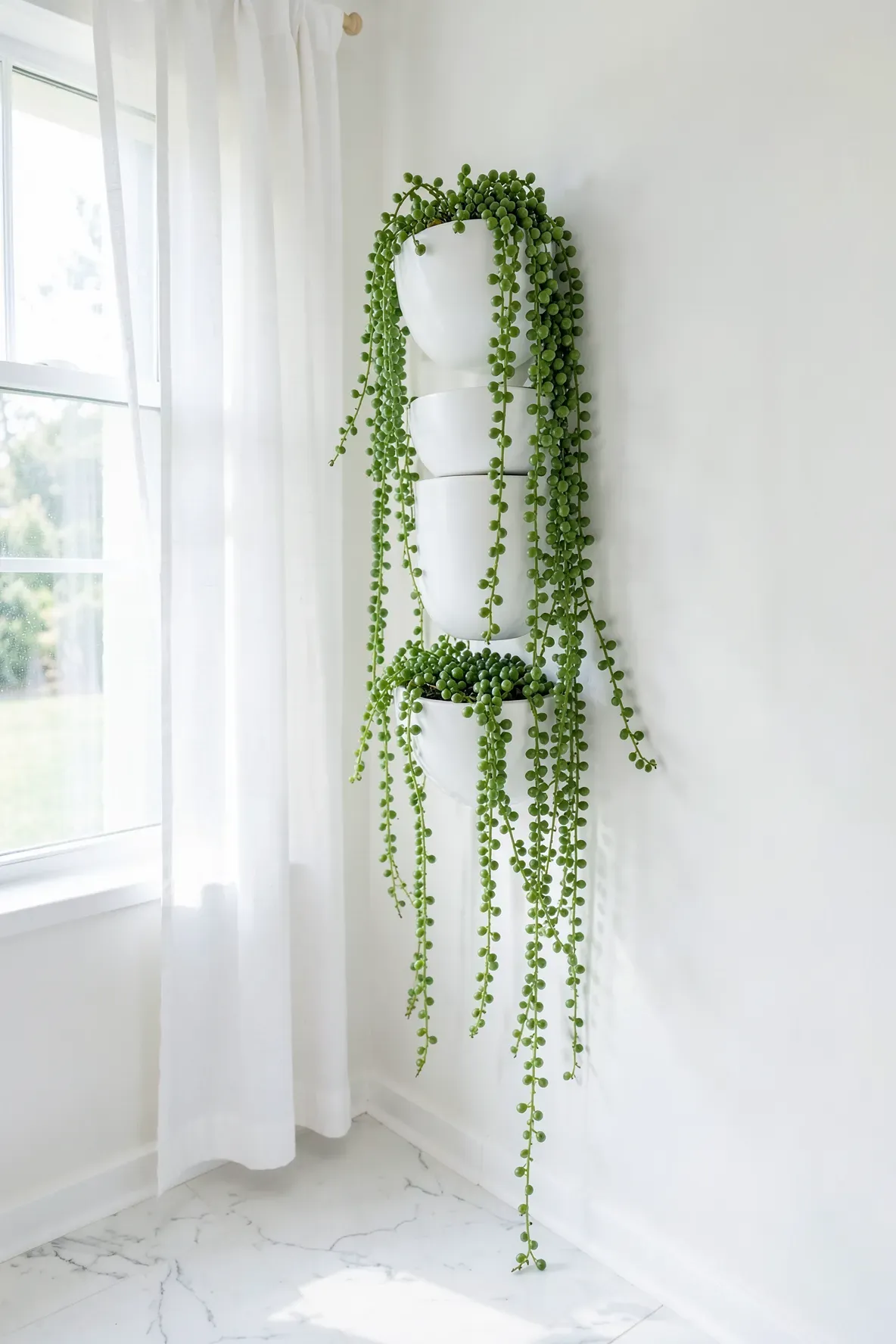
String of Pearls is a unique succulent that looks like a bead necklace. When planted in a wall-mounted half-moon planter, the “pearls” spill over the edge and trail down the wall. This creates a delicate and beautiful vertical line.
These plants need bright light, so place the wall mount near a window. The half-moon shape keeps the soil tucked away while putting the focus entirely on the trailing stems. It is a subtle but striking way to use wall mounted plants.
Vintage Picture Frame Borders Around Live Potted Plants
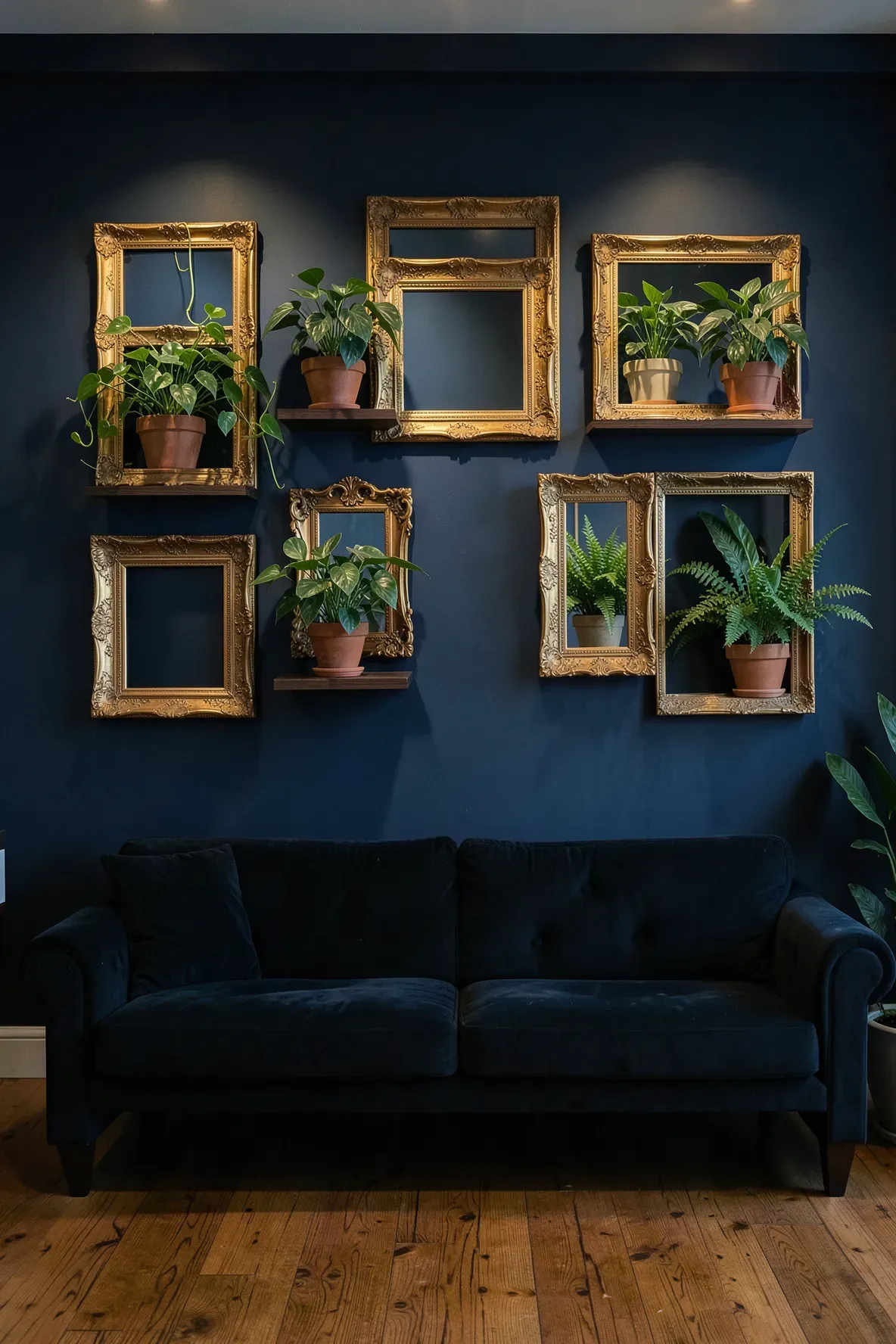
You can turn a regular wall plant into a piece of art by hanging an empty vintage picture frame around it. Mount your plant on a small shelf or hook, then center the frame around it. This highlights the plant as the “subject” of the artwork.
Using ornate, gold-painted frames adds a classic touch to your greenery. It is a clever way to blend traditional decor with live plants. You can mix and match different frame styles for an eclectic gallery wall look.
Floor-to-Ceiling Tension Pole Plant Stand
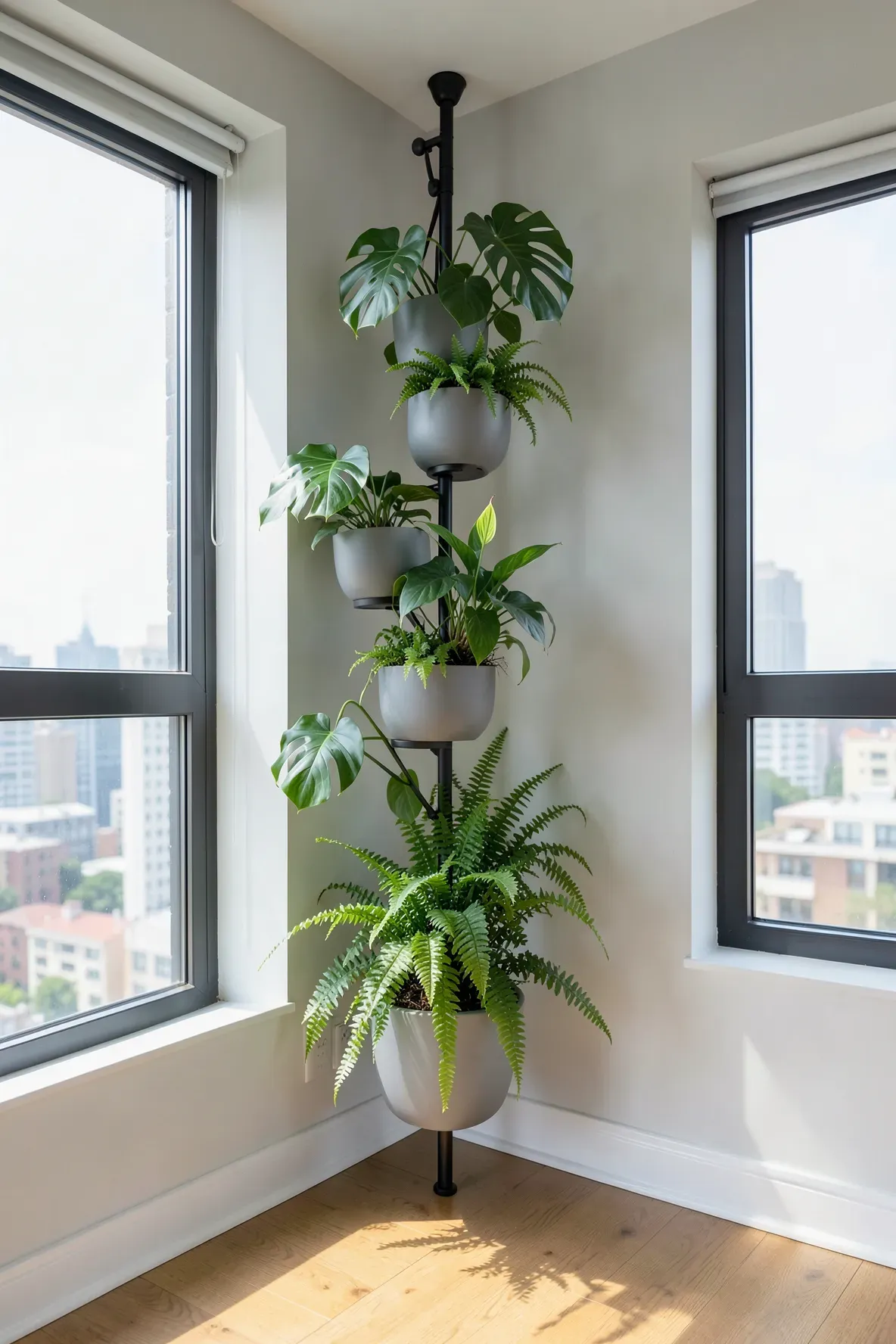
A tension pole stand is a great way to add plants to a wall without drilling any holes. The pole wedges between the floor and the ceiling, and features several arms that hold pots. You can rotate the arms to face different directions, creating a 3D plant pillar.
This is perfect for renters who want a dense plant feature wall but can’t damage the surfaces. It allows you to stack five or six plants in a very small footprint. It works well in corners or next to a window where light is most abundant.
Leather Strap Wall Slings for Terracotta Pots
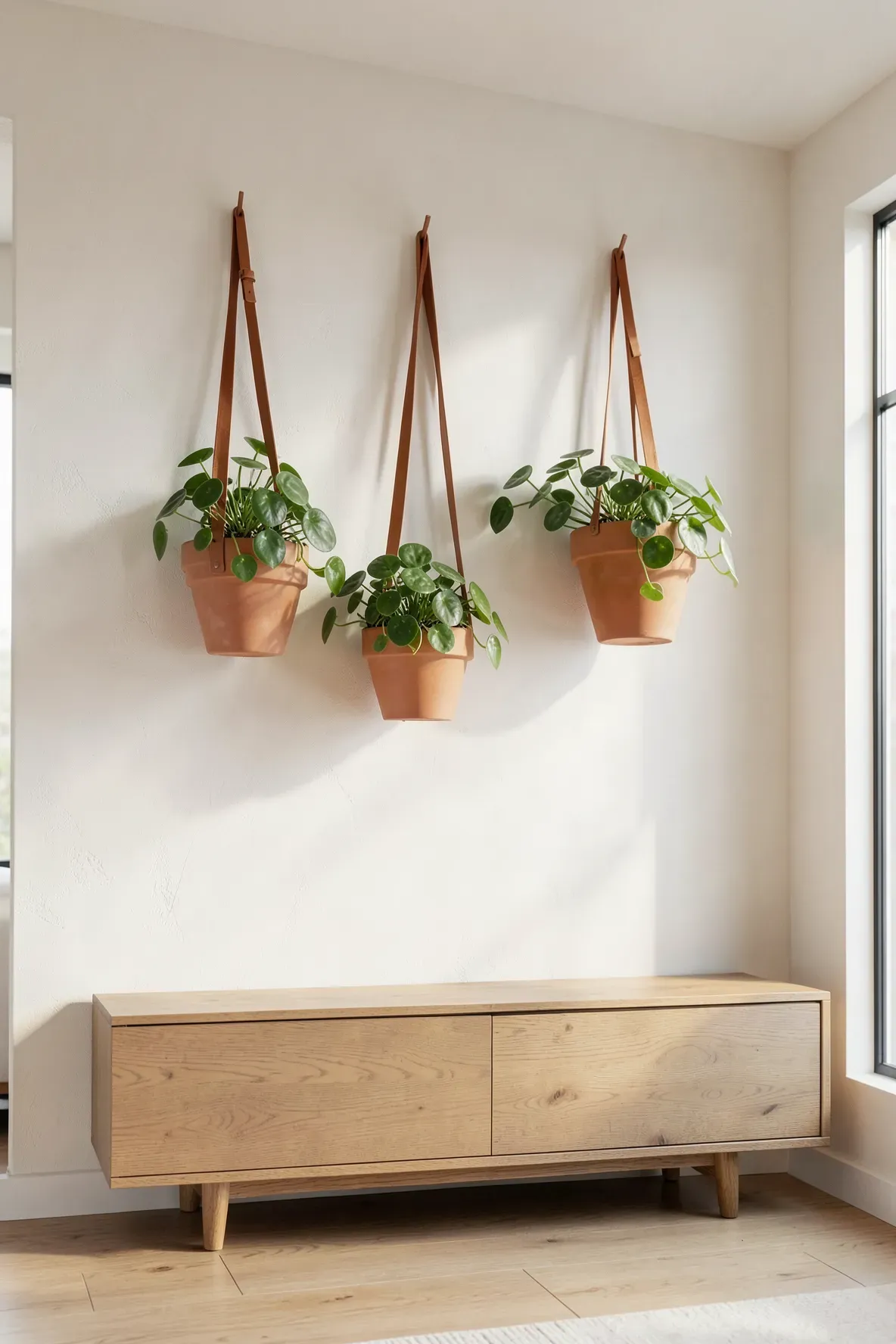
Leather straps offer a warm, organic texture that pairs perfectly with terracotta. You can use two loops of leather screwed into the wall to cradle a pot. This minimalist design is very secure and looks much more expensive than it actually is.
Over time, the leather will age and darken, adding character to your display. This style works best with simple plants like a Peperomia or a small Philodendron. It is a clean, modern take on the traditional plant hanger.
Shadow Box Frames with Preserved Fern Fronds
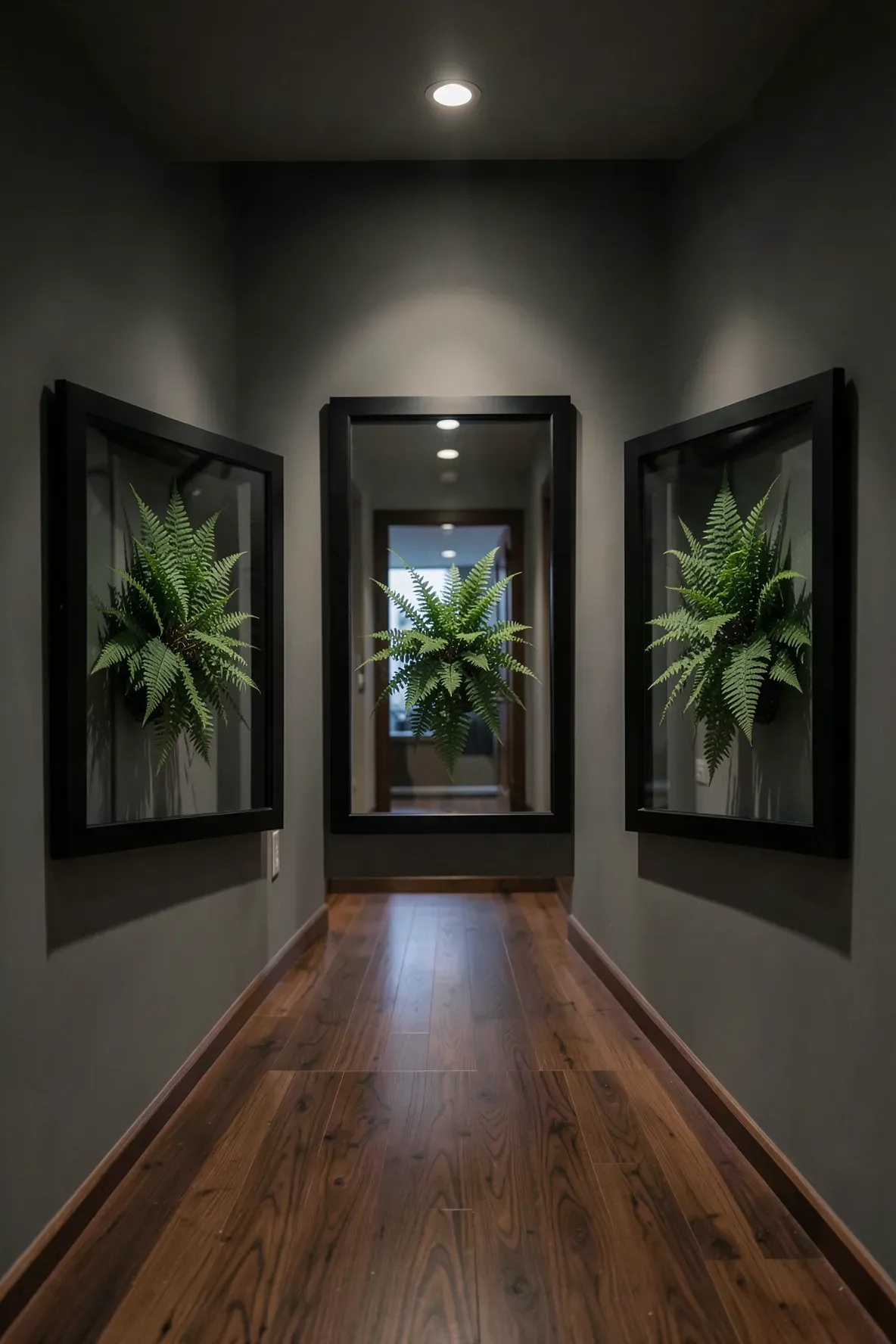
For a thin and sleek look, try placing preserved fern fronds inside a deep shadow box frame. This protects the delicate leaves from dust and damage while showing off their intricate shapes. Unlike a flat press, a shadow box allows the leaves to keep some of their 3D form.
This is an excellent option for dark hallways where live ferns would never survive. You can buy these pre-made or dry your own ferns between heavy books before framing them. It brings a botanical museum vibe to your home.
Modular Hexagonal Living Wall Tiles
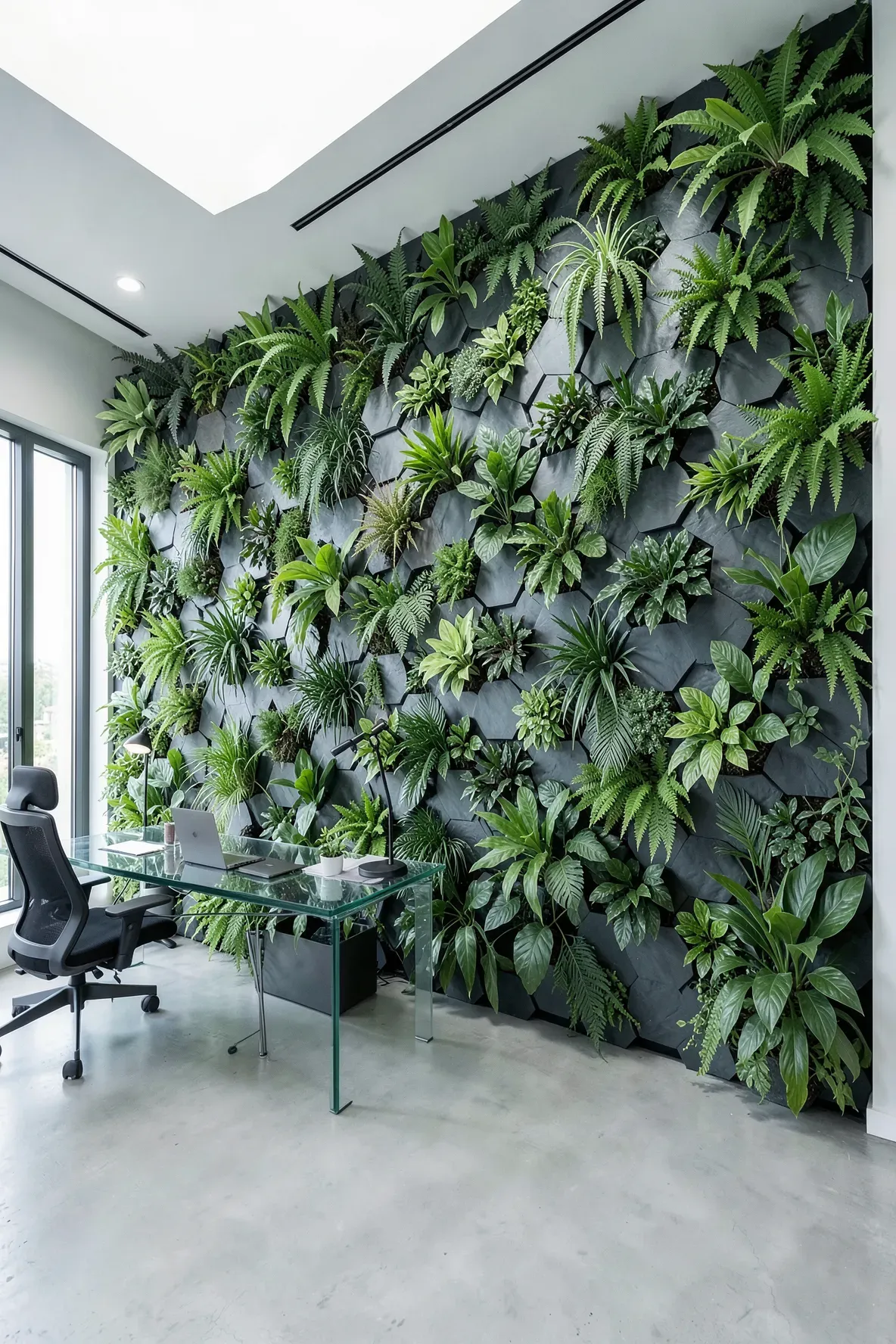
There are modular systems designed specifically for creating living walls. These plastic hexagonal tiles click together and have built-in irrigation channels. You can start with three and eventually cover an entire wall as your budget allows.
These systems are great because they take the guesswork out of watering. They often have a central reservoir that distributes water to all the plants at once. This is the most professional way to achieve a full-scale plant feature wall in a residential space.
Staircase Wall Gallery with Alternating Art and Foliage
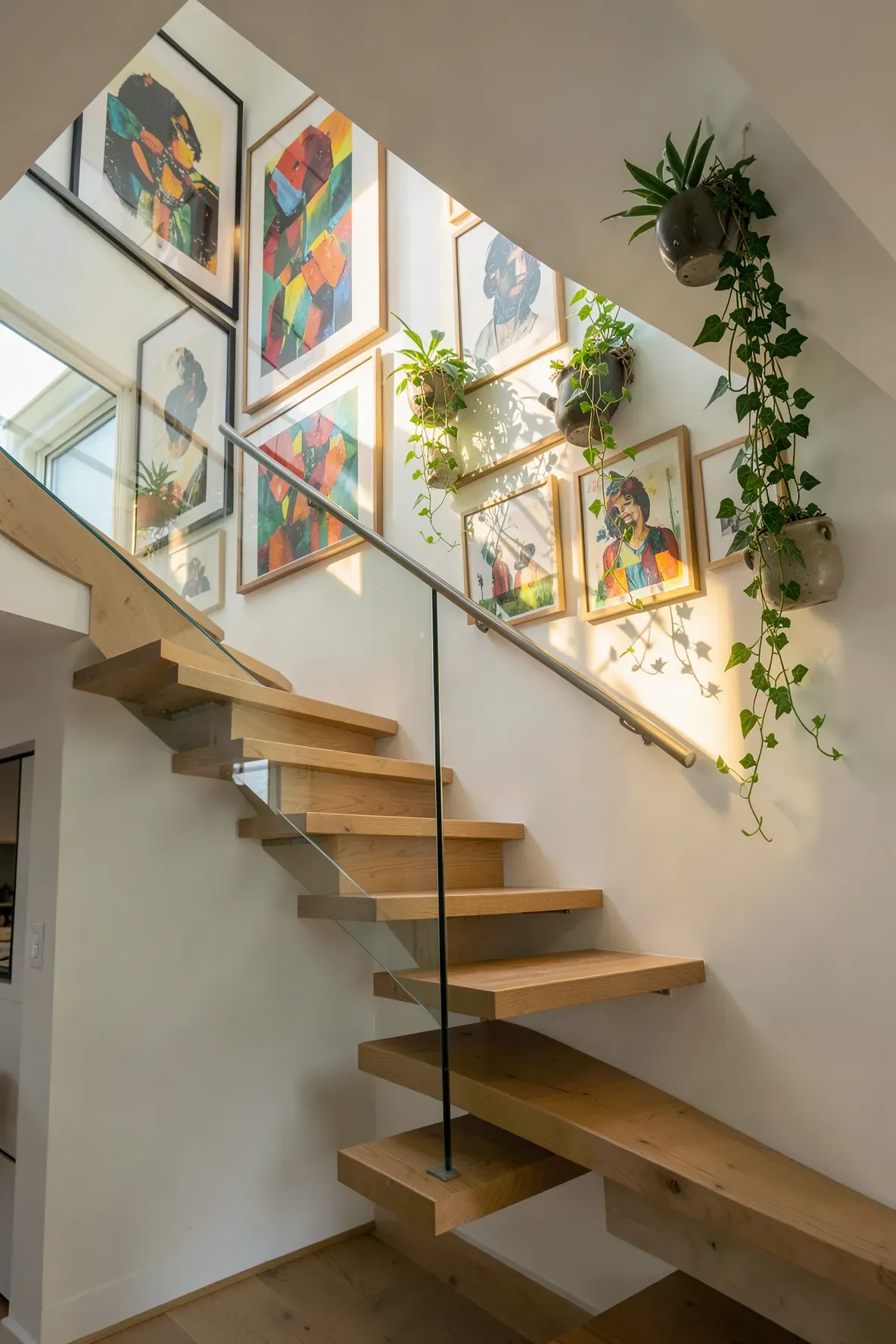
The wall along a staircase is often ignored, but it is a great place for a plant gallery. By alternating framed art prints with wall-mounted pots, you create a dynamic display that you see from different angles as you move through the house.
Use sturdy wall mounts here, as people might accidentally bump them while walking. Trailing plants look especially good as they can follow the angle of the stairs. It turns a functional transition space into a lush journey between floors.
Bamboo Trellis with Potted Jasmine for Indoor Fragrance
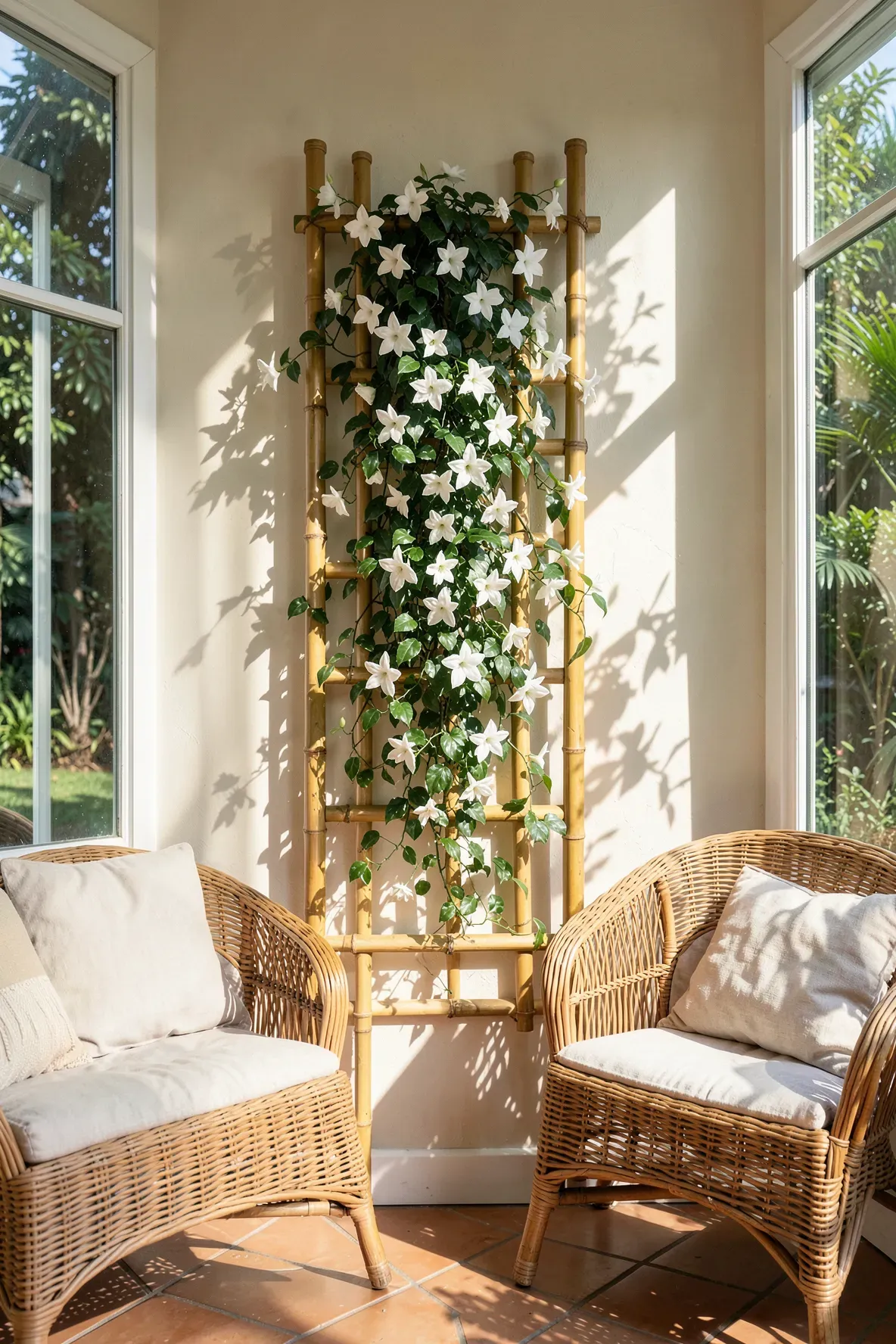
A bamboo trellis adds a tropical or Zen feel to a room. You can mount a small trellis to the wall and grow Star Jasmine or another fragrant climber. This not only looks good but also acts as a natural air freshener when the plant blooms.
Bamboo is very lightweight and easy to install. Keep the jasmine pruned so it doesn’t take over the room, and make sure it gets plenty of sunlight to encourage flowering. It is a multi-sensory approach to green wall decor ideas.
Reclaimed Window Frame with Chicken Wire Plant Support
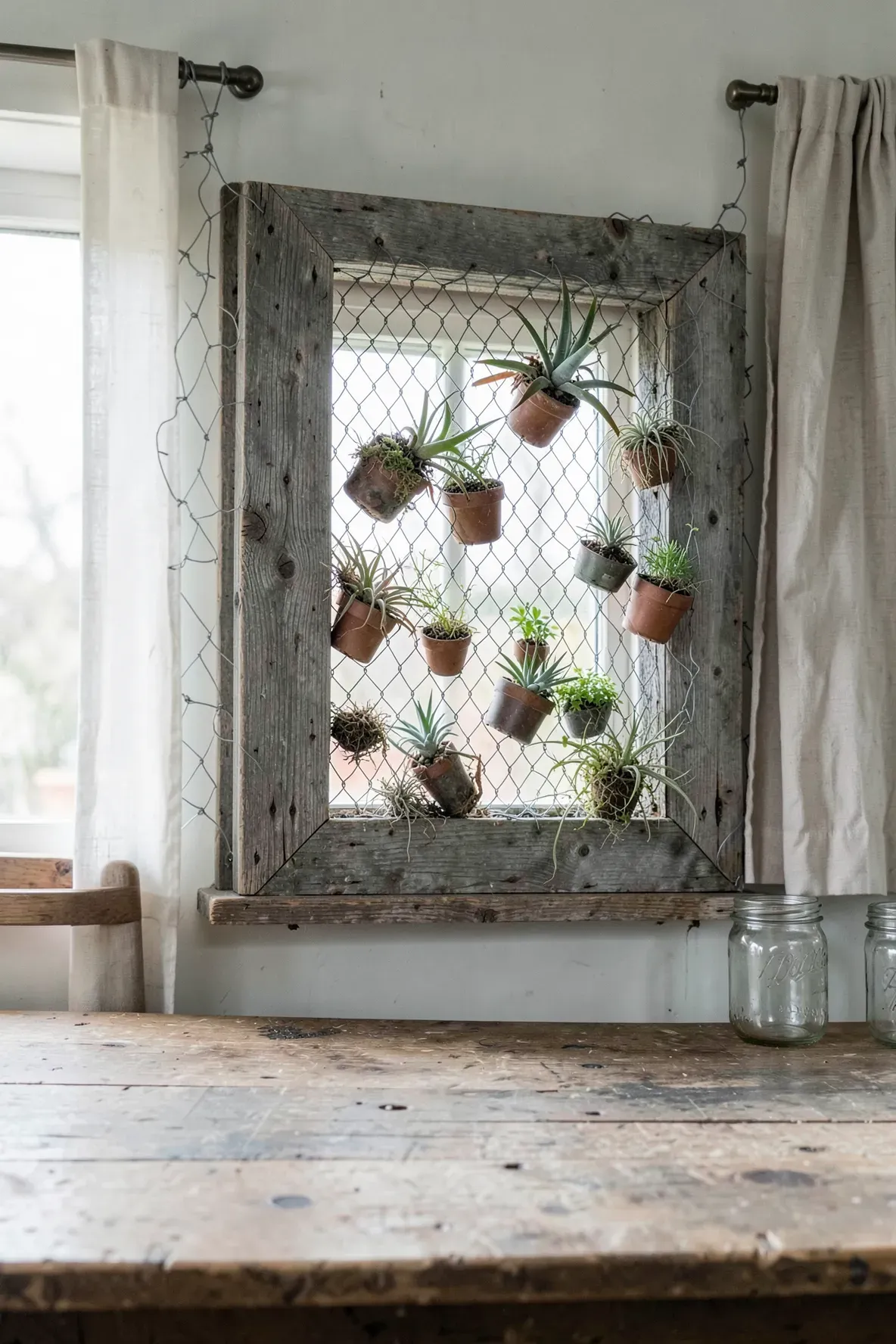
An old window frame with the glass removed can be updated with a layer of chicken wire. This provides a rustic grid for clipping on small pots or air plants. The frame itself adds a sense of history and architectural interest to the wall.
This is a popular DIY project for farmhouse-style interiors. You can leave the wood chippy and weathered or give it a fresh coat of white paint. It is a versatile base for any kind of indoor plants wall decor.
Black Slate Wall Panels with Contrasting Neon Green Moss
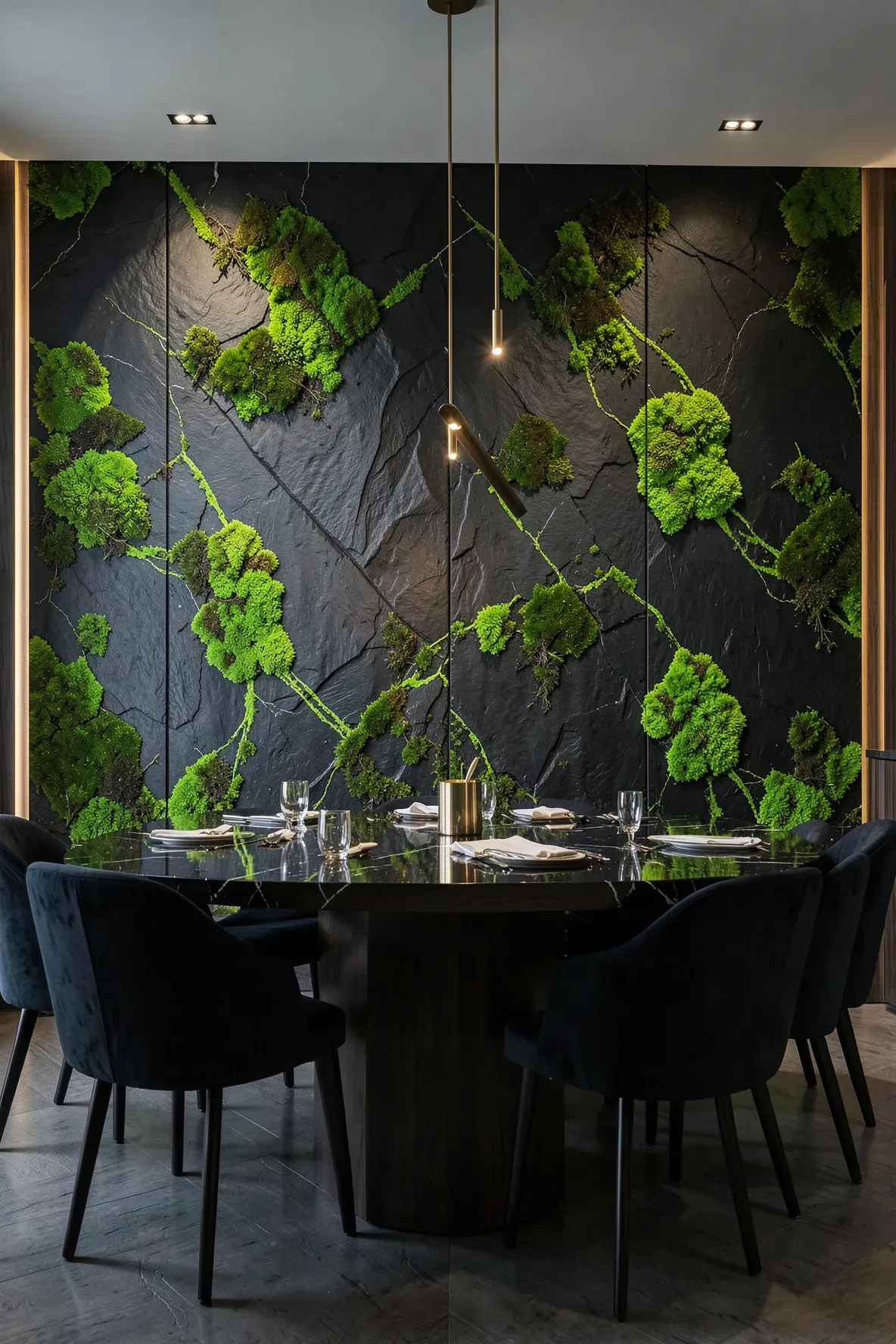
For a high-contrast, dramatic look, try mounting neon green moss onto black slate or dark wood panels. The bright green “pops” against the dark background, making it look incredibly vibrant. This works well in modern, moody rooms with dark furniture.
You can use preserved moss for this to keep it low maintenance. The texture of the slate combined with the soft moss creates a sophisticated, natural look. It is a great way to add a focal point to a dining room or executive office.
Zig-Zag Wooden Wall Shelves for a Dense Plant Feature
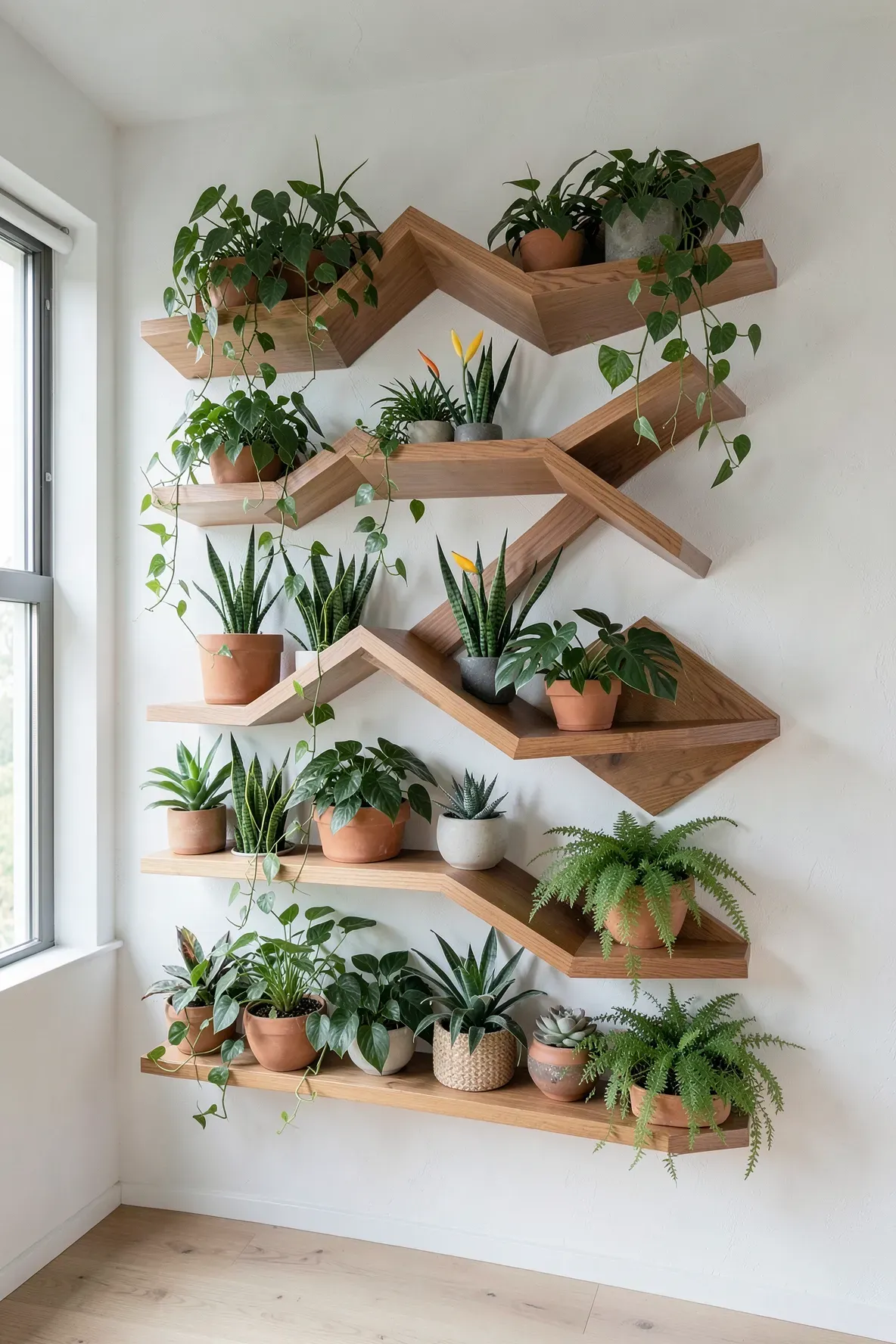
Zig-zag or staggered shelves allow you to fit more plants in a vertical space without them shading each other out. By offsetting the shelves, you give taller plants room to grow upward while shorter plants sit comfortably below. This creates a dense, layered look of foliage.
This is one of the best wall plant ideas for collectors who have many different species. You can mix trailing plants, upright plants, and even small decorative items. The staggered layout feels more organic and less rigid than straight rows of shelves.