
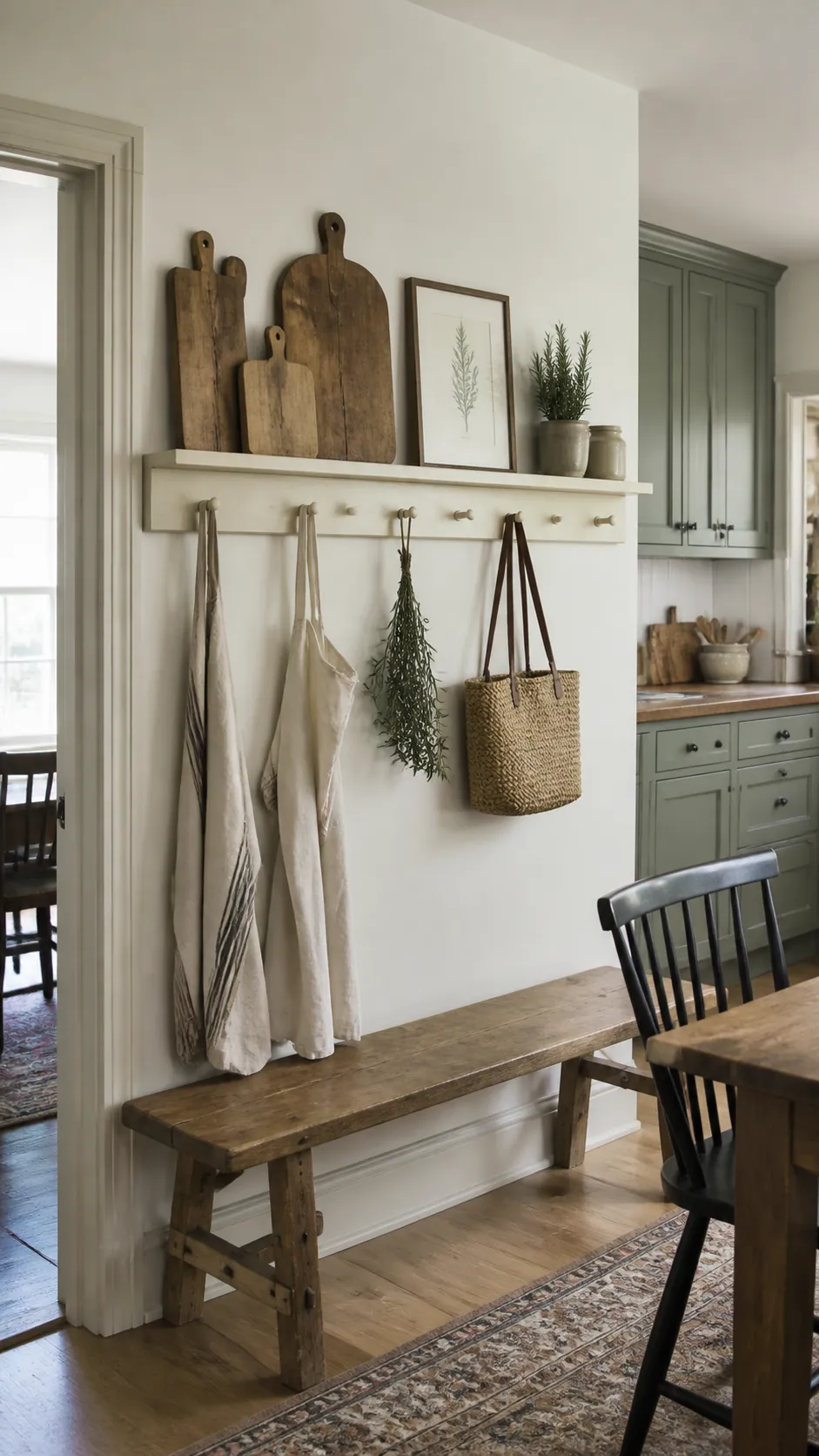
Farmhouse style works best when it feels collected, useful, and rooted in honest materials—not when every surface carries a slogan. These 29 kitchen wall decor ideas farmhouse style mix shiplap, vintage pieces, practical storage, coastal notes, and quiet finishes while keeping grease, scale, and visual clutter in check.
White Oak Shiplap Feature
Clear-finished white oak gives a breakfast nook warmth without making it feel themed. Run the shiplap across the wall that already anchors the table or bench, so the grain strengthens the room’s architecture rather than becoming a detached accent.
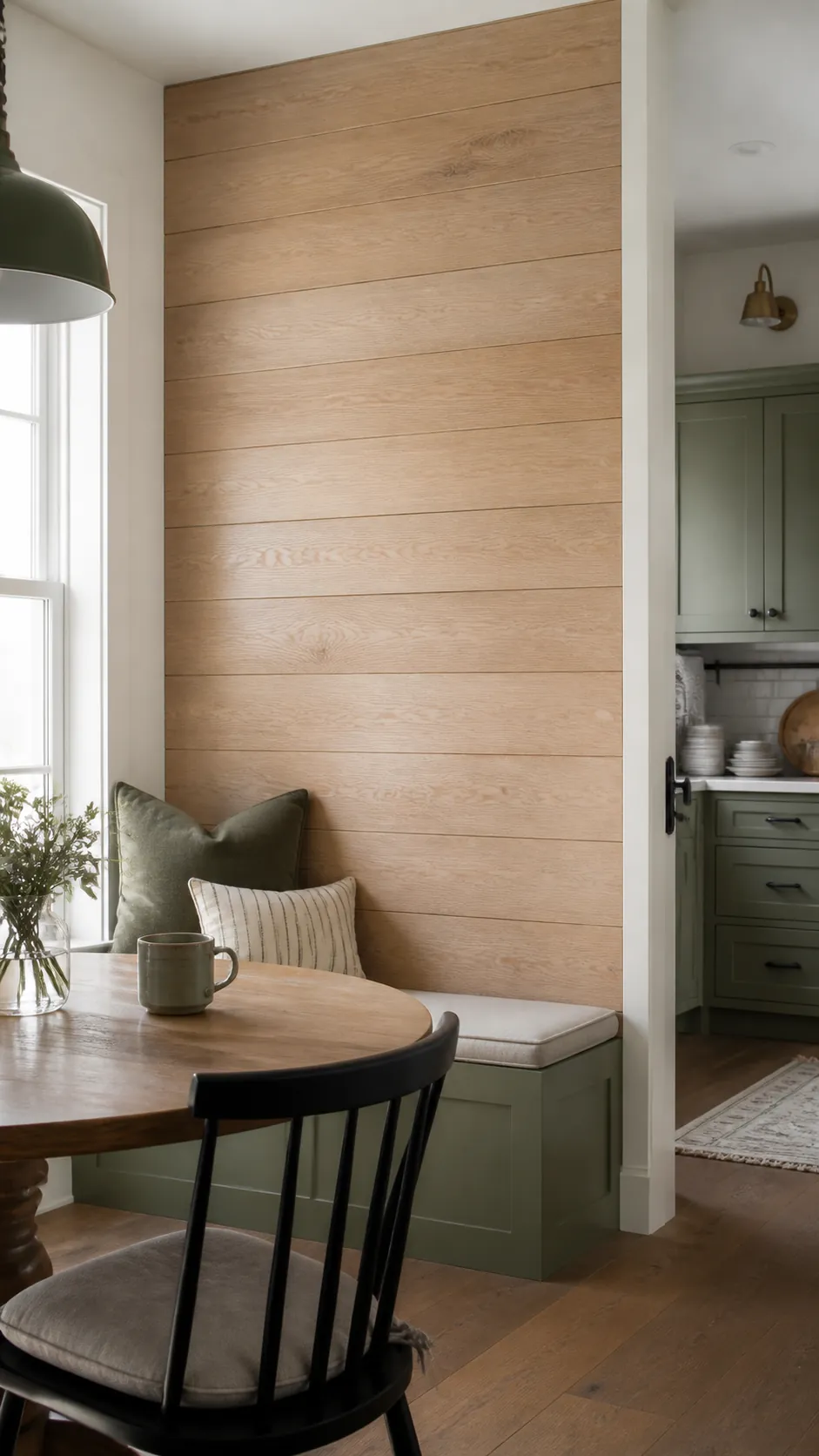
Hold a finished sample beside the cabinetry at several times of day; pale timber can shift from quiet beige to honey as the light changes. Plan board breaks around outlets and trim before work begins, since awkward slivers are more noticeable on an otherwise simple surface. Once the oak is up, resist adding a word sign—the changing grain is the decoration.
Long Shaker Peg Rail
A long Shaker rail can turn the blank dining end of a galley into useful storage while preserving its narrow footprint. Mount the cream-painted board as one continuous horizontal line, checking that chairs and shoulders will pass below the hanging items comfortably. Decide in advance which pegs are for daily aprons and which are simply breathing room.
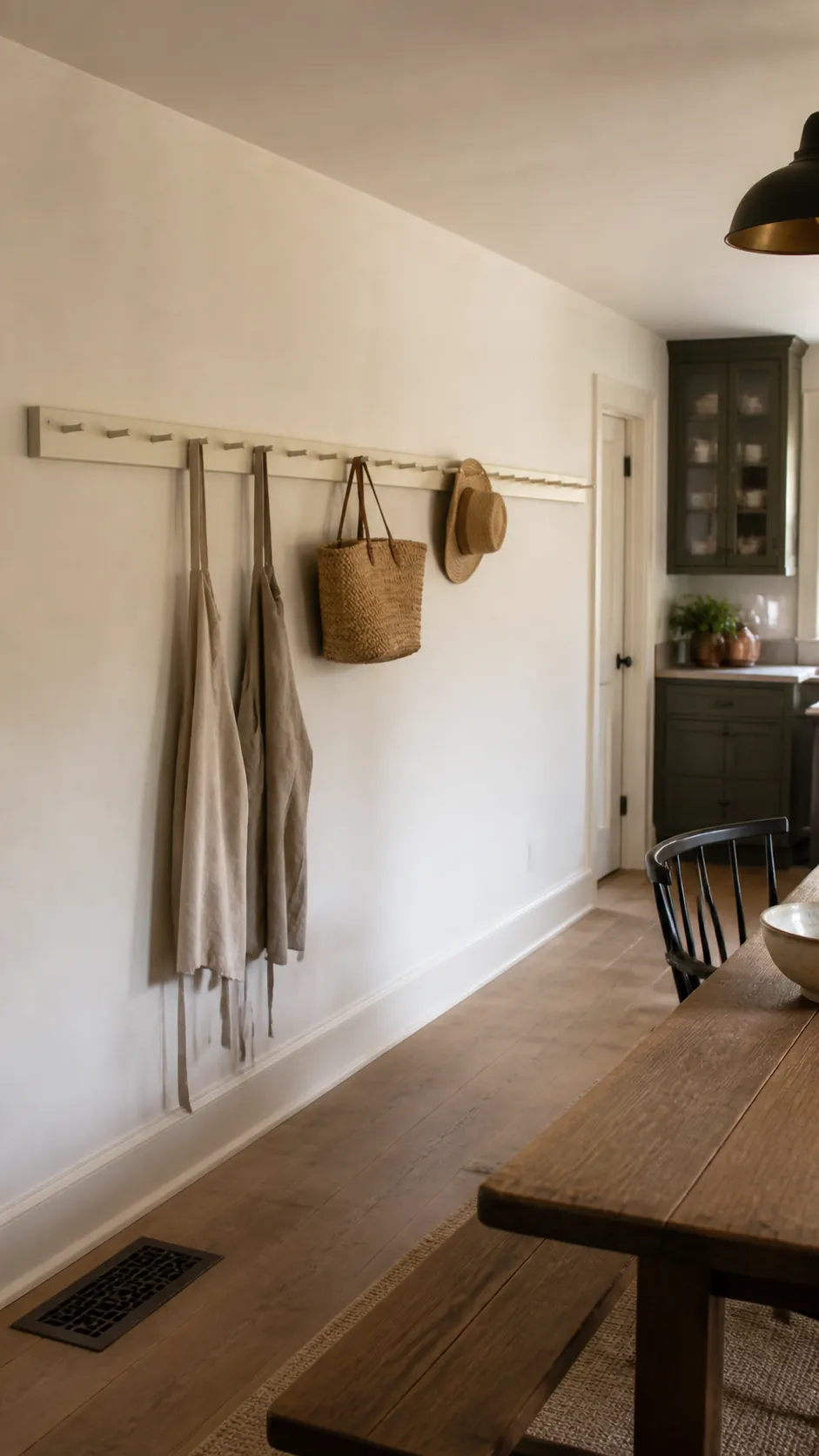
Linen, willow, and straw provide enough texture, so keep the number of visible objects low and vary their drop lengths. A soft cream finish lets the rail connect painted cabinetry to darker iron or stone elsewhere in the kitchen without adding another dominant color.
Antique Breadboard Collection
Six old breadboards make a convincing wall collection when their silhouettes, not their age alone, drive the arrangement. Lay the maple and walnut pieces on the floor first and move the round, paddle, and rectangular forms until the gaps feel balanced.
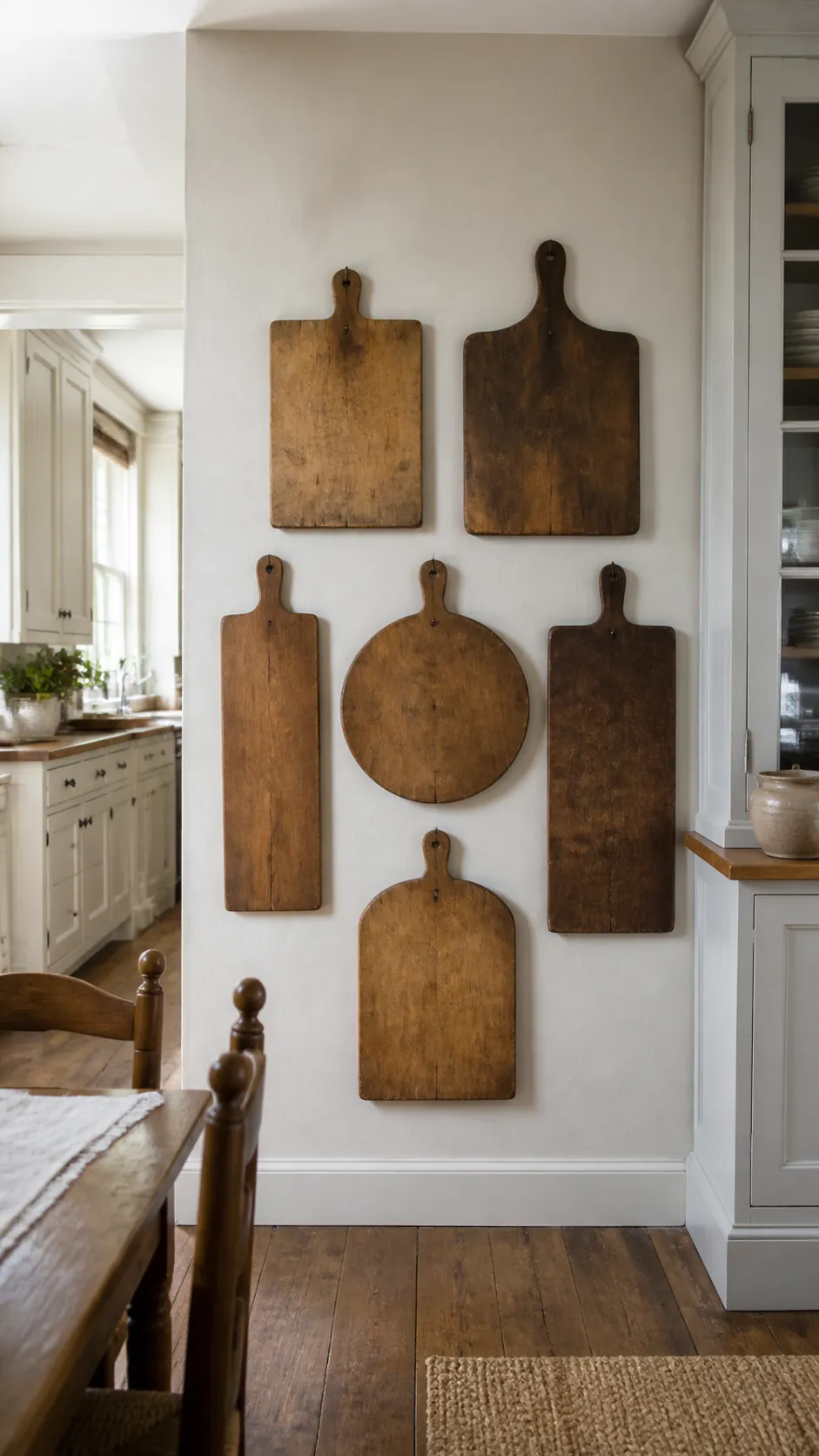
Alternate warm and dark woods so one side of the group does not look visually heavy. Use discreet supports that hold each board flat while allowing it to be removed for dusting. A side wall away from sink spray and range vapor will preserve the patina and make upkeep much easier.
Pressed Herb Triptych
Oversized rosemary, dill, and sage studies bring botanical detail to an open dining zone without introducing busy color. Matching frames give the three delicate specimens enough visual authority to hold a broad wall. Align the triptych with the table rather than the entire room, which keeps the art connected to the place where it is seen most often.
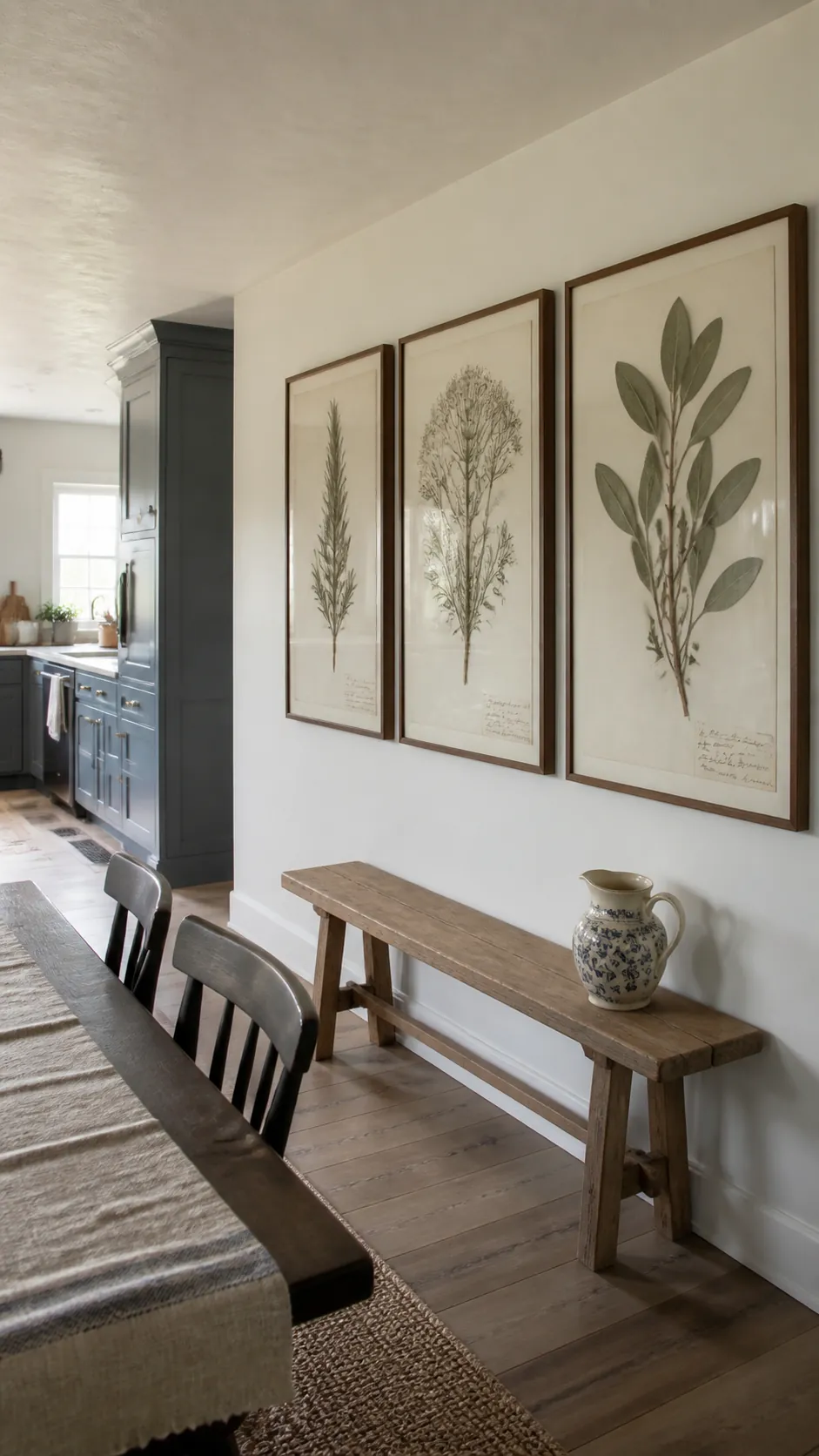
Dry plant material completely and protect it behind cleanable glazing before it enters a kitchen environment. Walnut edges and cotton-colored paper read as collected and scholarly, leaving surrounding plaster calm enough for the fine stems to register.
Copper Pan Rail
Copper cookware earns its wall space by serving as both equipment and a changing finish. Combine polished and naturally darkened pans on an aged-brass rail, using the handles and bowl sizes to create an easy rhythm rather than a showroom-perfect row.
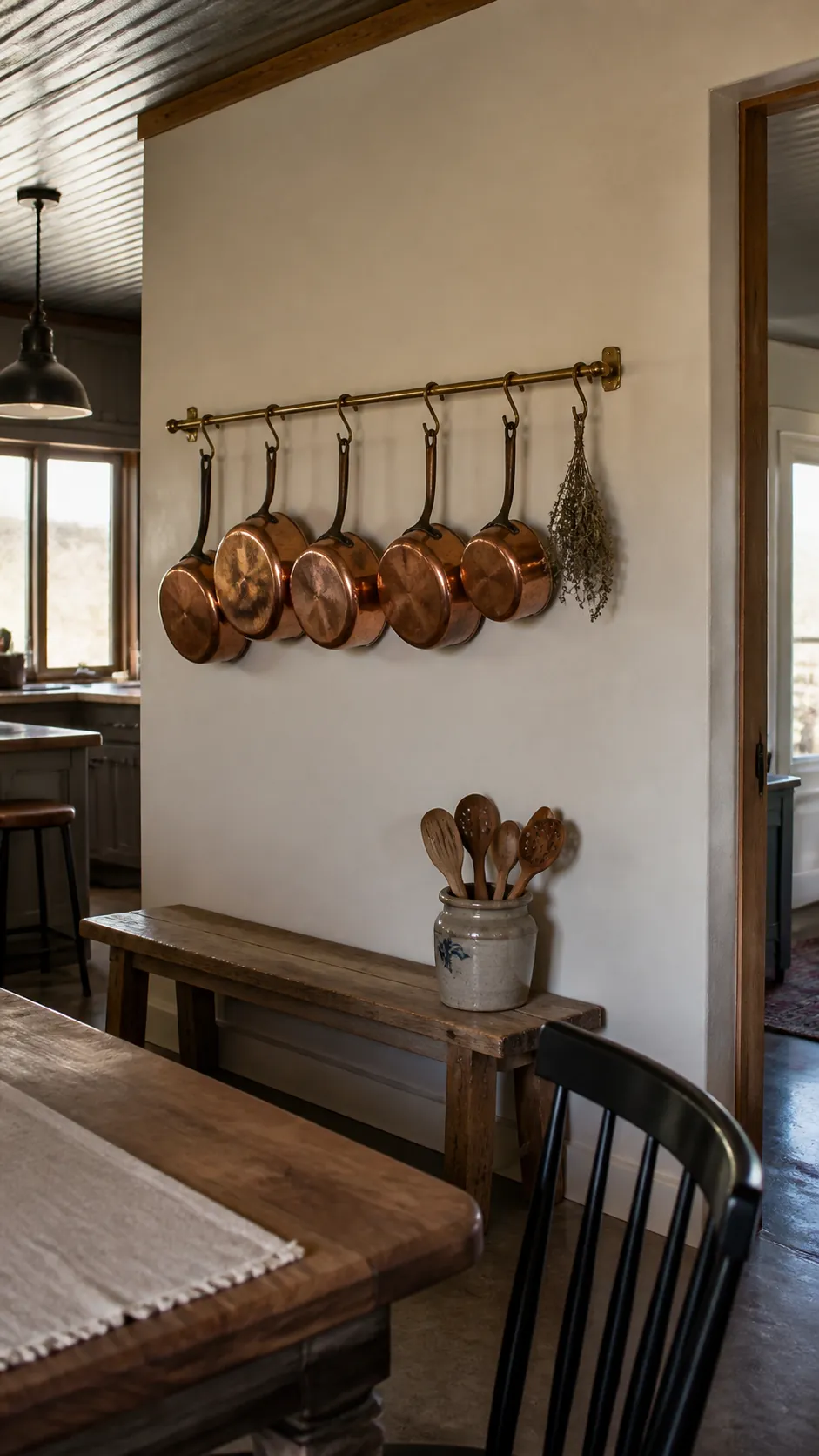
Fasten the rail for the full loaded weight and place it where a lifted pan cannot strike a cabinet door or a person passing through the alcove. Give each hook enough separation that pieces come down without clattering against their neighbors. Because copper already commands attention, stoneware and other nearby accents can remain muted.
Farmhouse Pantry Doors
Reclaimed sliding doors make the pantry opening itself the strongest decorative feature in a cottage passage. Confirm that the panels can travel their complete path without covering switches, colliding with trim, or narrowing a useful work area. Iron straps should look integral to the door construction, not like ornamental hardware added after the fact.
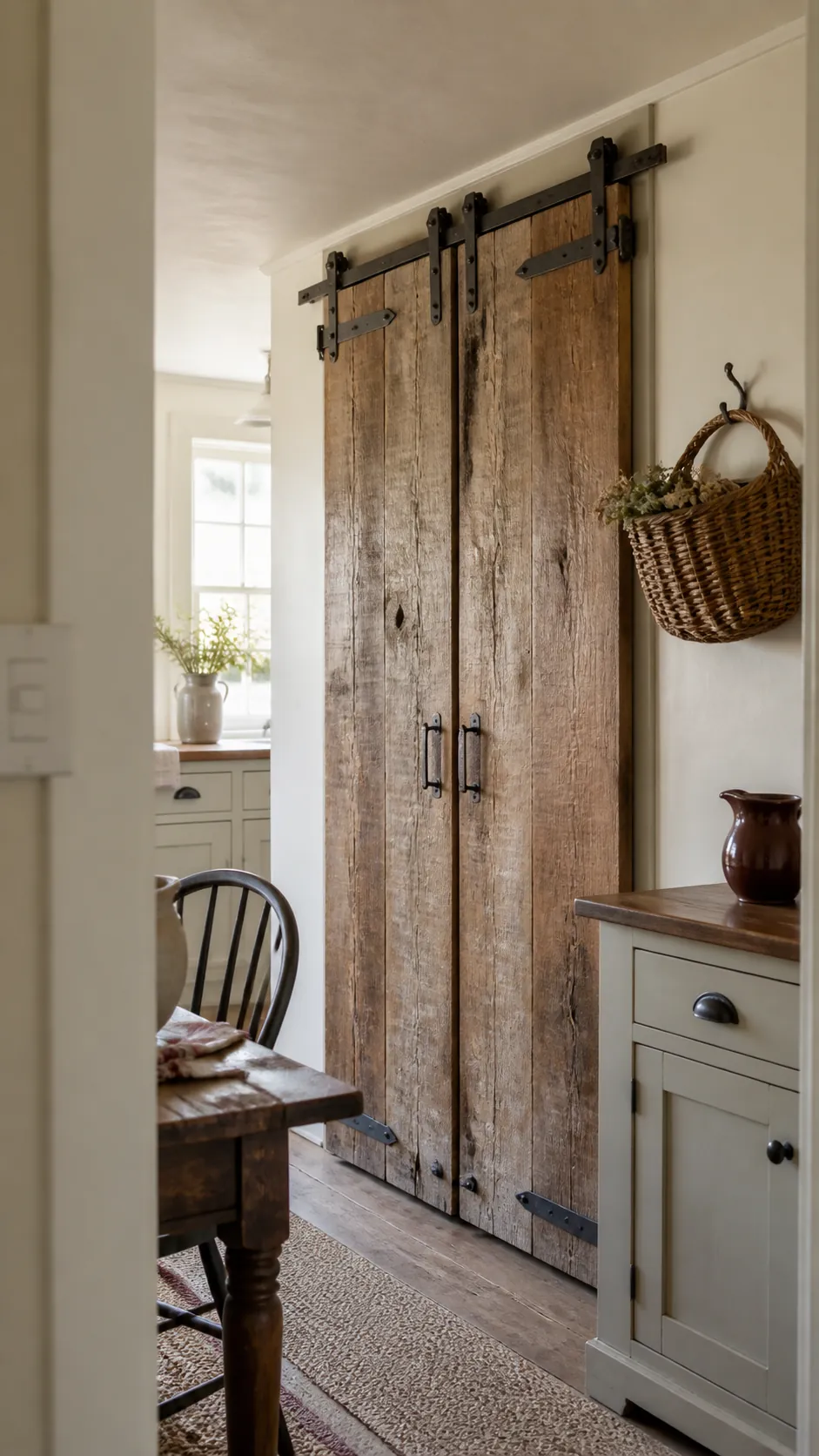
Choose boards that retain softened grain and age marks but have sound edges and a sealed, wipeable surface. Keep baskets and pottery around the doorway restrained; the scale of the moving wood panels supplies all the rustic character the passage needs.
Stoneware Display Shelf
One substantial oak shelf is calmer than several small ledges and gives a stoneware collection a clear boundary. Arrange crocks and pitchers by height, then interrupt the upright forms with a low stack of bowls so the display does not resemble a row of containers.
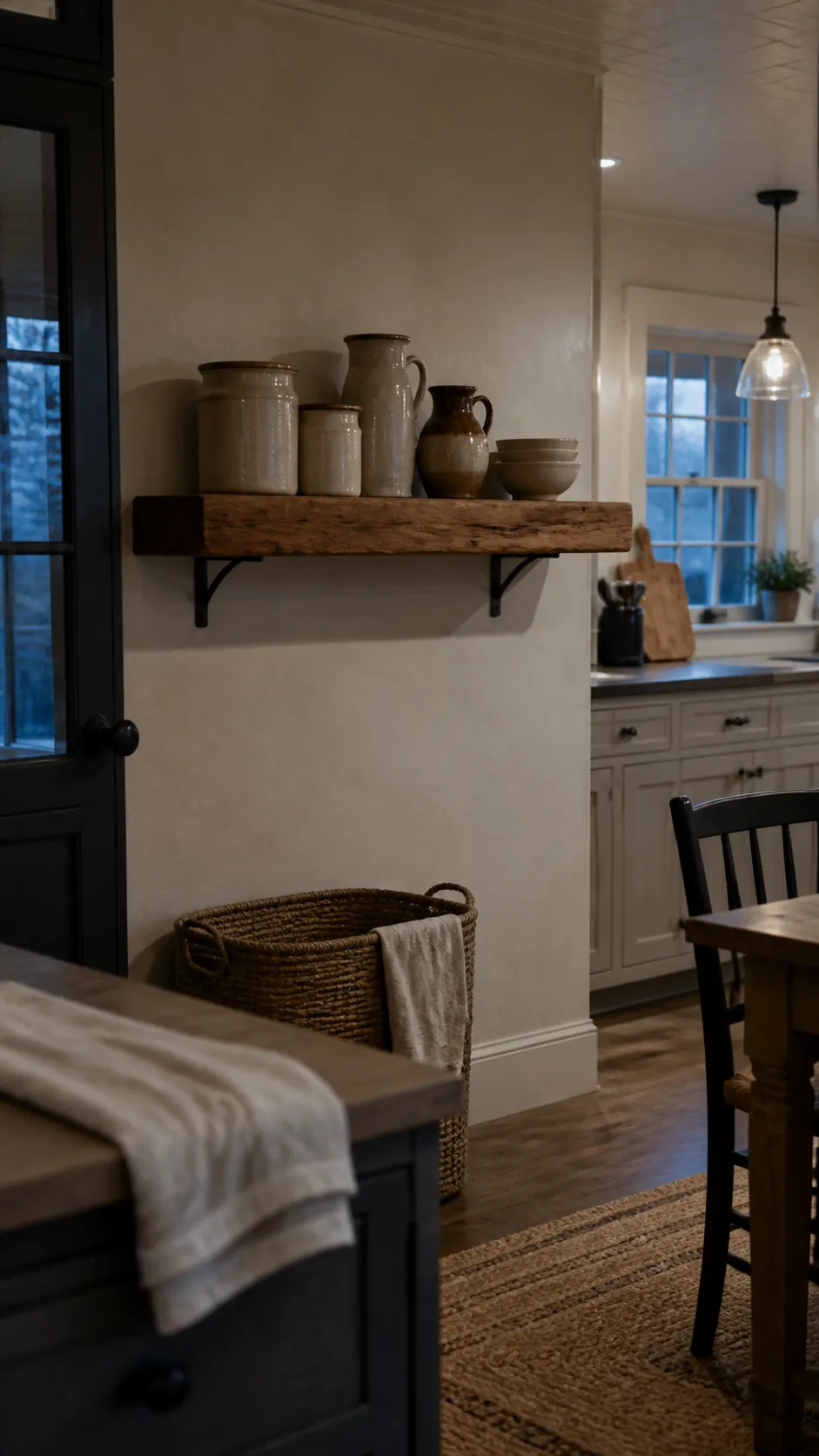
Check the wall construction and support the shelf for the combined weight of dense ceramics. Pieces used often belong near the ends where they are easy to lift without reaching behind another vessel. Leave a little bare oak visible between groups, allowing glaze pooling, chips, and varied profiles to become the detail.
Vintage Market Painting
An original market-interior painting adds narrative to a breakfast nook without relying on literal kitchen slogans. Choose a scene quiet enough to live with every day, then size it generously so it relates to the table instead of floating as a small decorative afterthought. A simple frame lets brushwork and the subdued produce colors remain the focus.
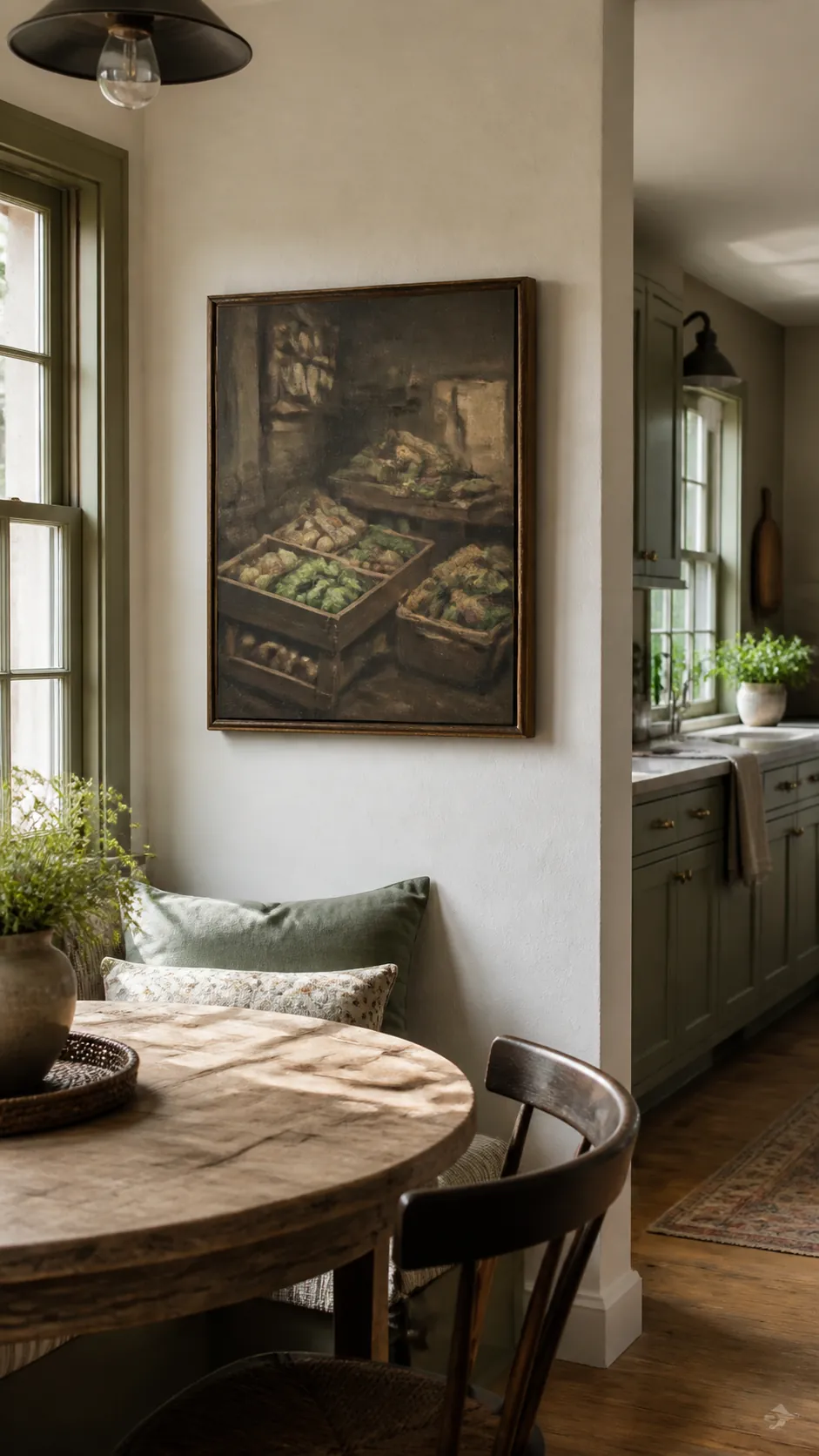
Position the canvas where window glare will not erase its darker passages from the main seat. Since oil paint and ornate frames trap residue, keep the work away from the active cooking zone and make access for gentle dusting straightforward.
Black Iron Plate Rack
Cream ironstone stands out crisply in a black wall rack, giving a long galley an old-kitchen note with little color noise. Select plates with related warm whites but slightly different rims, so the repetition feels collected rather than purchased as one set.
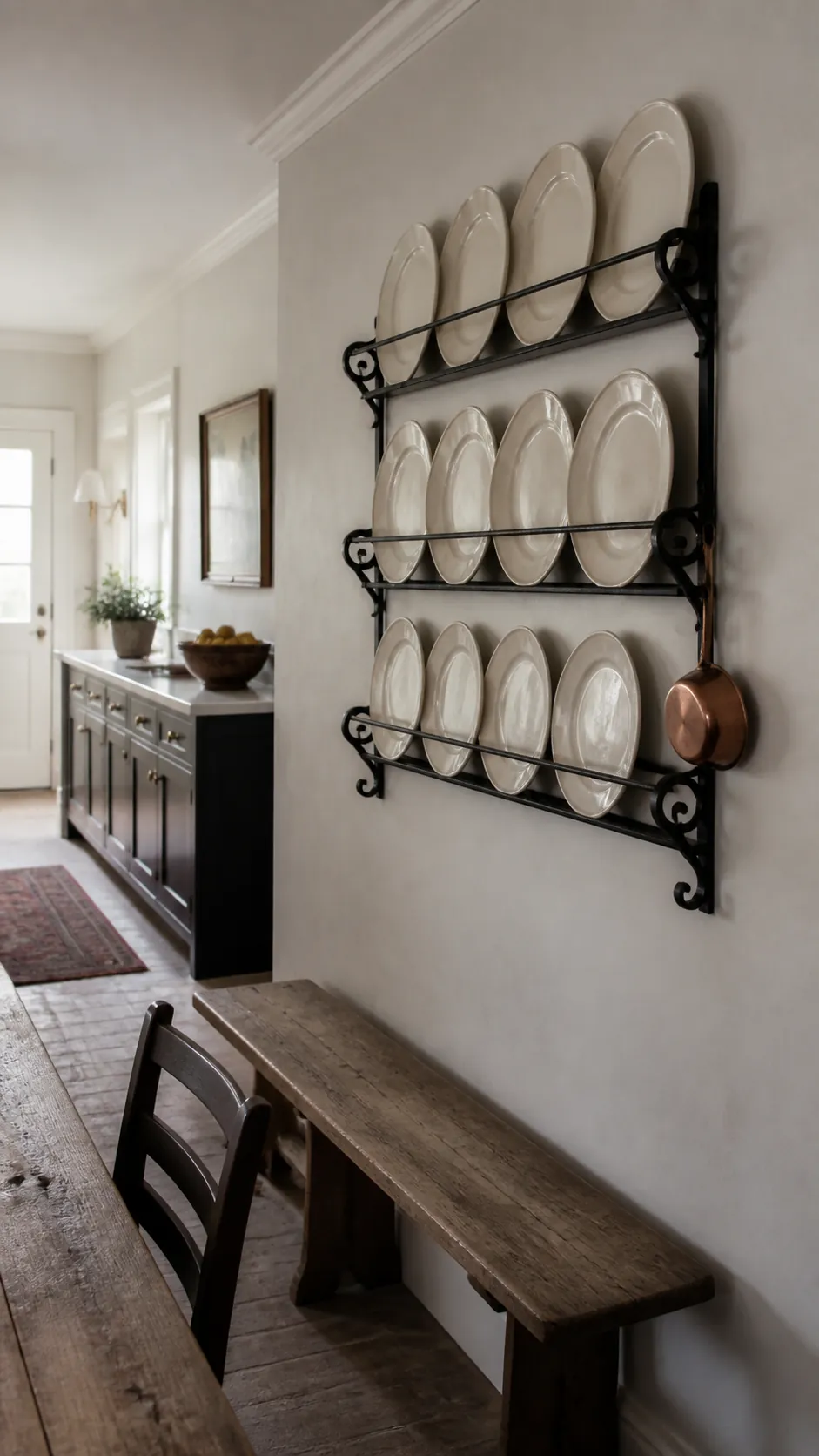
Test every slot for depth and retention before trusting it with an older piece. Hang the rack beyond chair backs and busy circulation, where a bumped shoulder cannot dislodge the display. Repeating the iron in one nearby handle or light fitting is enough to link it to the rest of the room.
Limewash Accent Wall
Warm mushroom limewash makes a plain side wall feel tactile while keeping the farmhouse reference architectural. Its cloudy movement becomes most visible in grazing daylight, so sample the finish on the actual wall instead of choosing from a small color chip. Brush direction and overlapping layers should remain subtly apparent rather than being corrected into a flat painted surface.
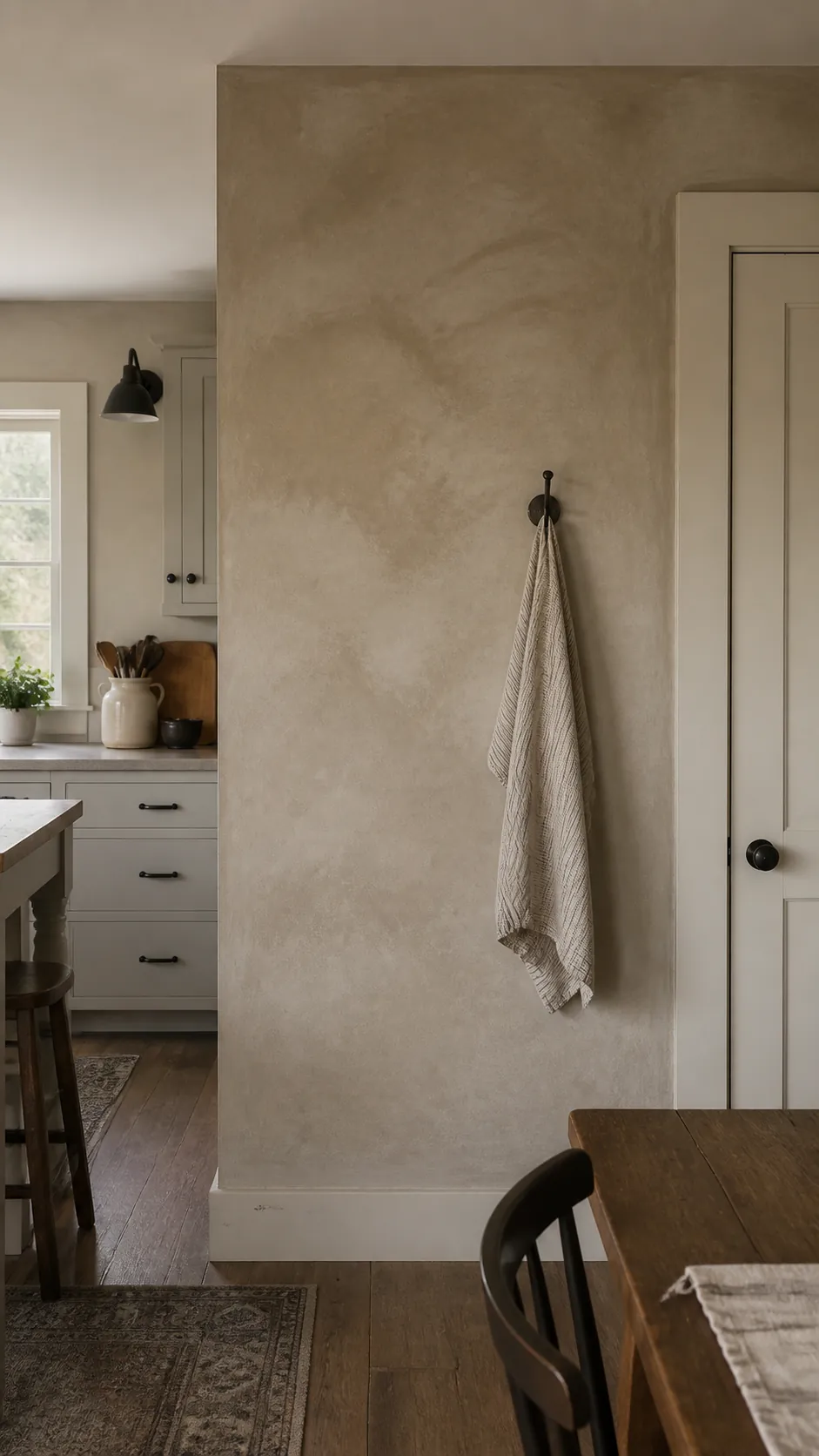
Use the treatment where splashes and frequent scrubbing are unlikely, and follow the chosen finish system for preparation and protection. Painted maple and linen can sit against it quietly, allowing the mineral variation to supply depth without additional wall objects.
Woven Tobacco Basket Pair
Two shallow tobacco baskets offer more presence than a scattered collection of small woven pieces. Turn their different diagonal weaves in opposing directions and offset their centers slightly, creating movement above an open-plan table without filling the whole wall.
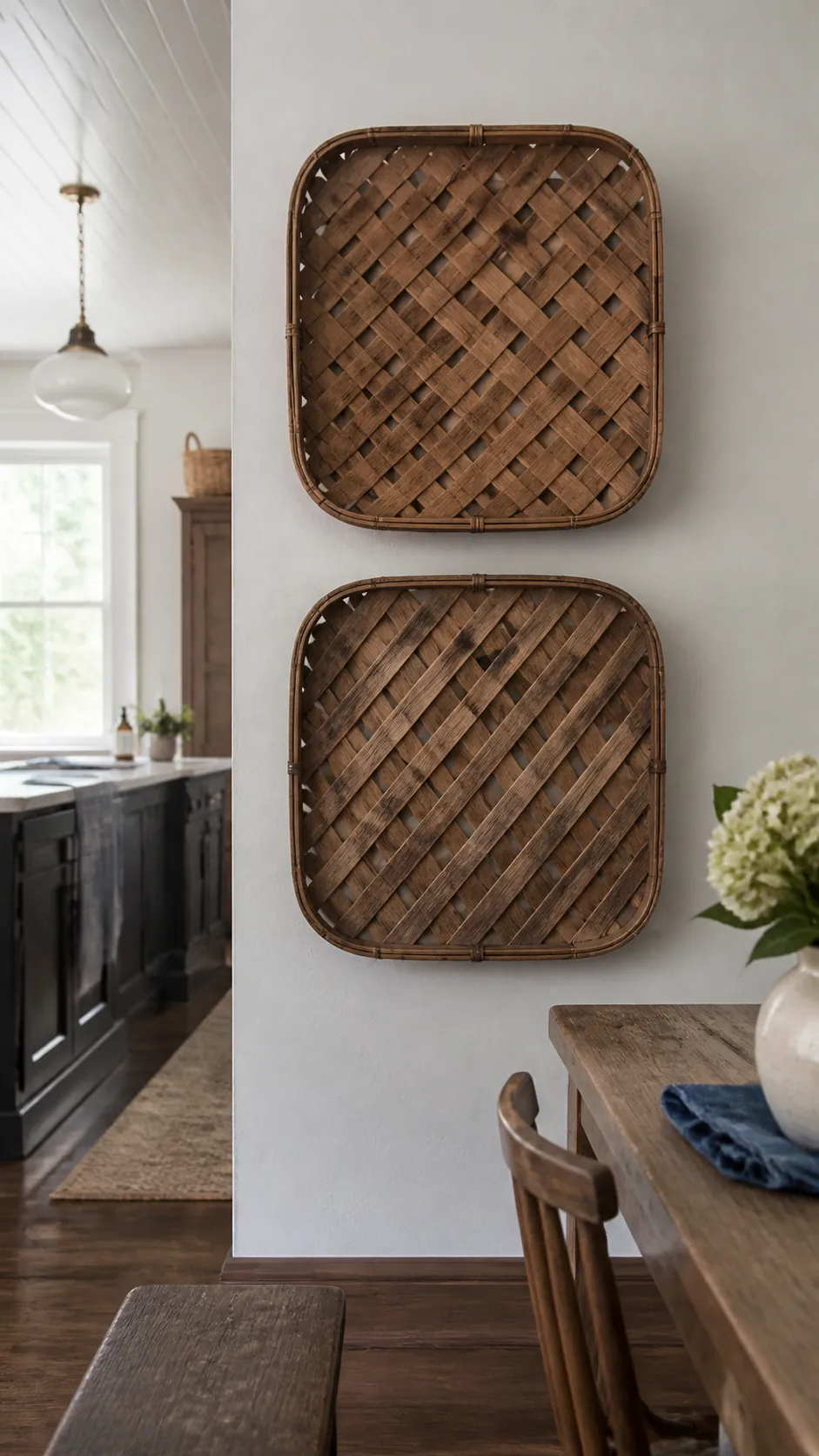
Inspect old willow for loose strips and remove surface dust before bringing it into the room. Support each basket at more than one point so it stays flat and does not rotate. Plain walnut furniture and unpatterned textiles will keep the layered weave from tipping into rustic clutter.
Architectural Salvage Corbels
Vintage corbels become more convincing when they return to a structural-looking role beneath an oak ledge. Check both carved pieces for sound wood, then align their top planes so the shelf sits level despite differences in age and handwork. Their worn profiles can be celebrated, but the attachment itself should feel solid and unobtrusive.
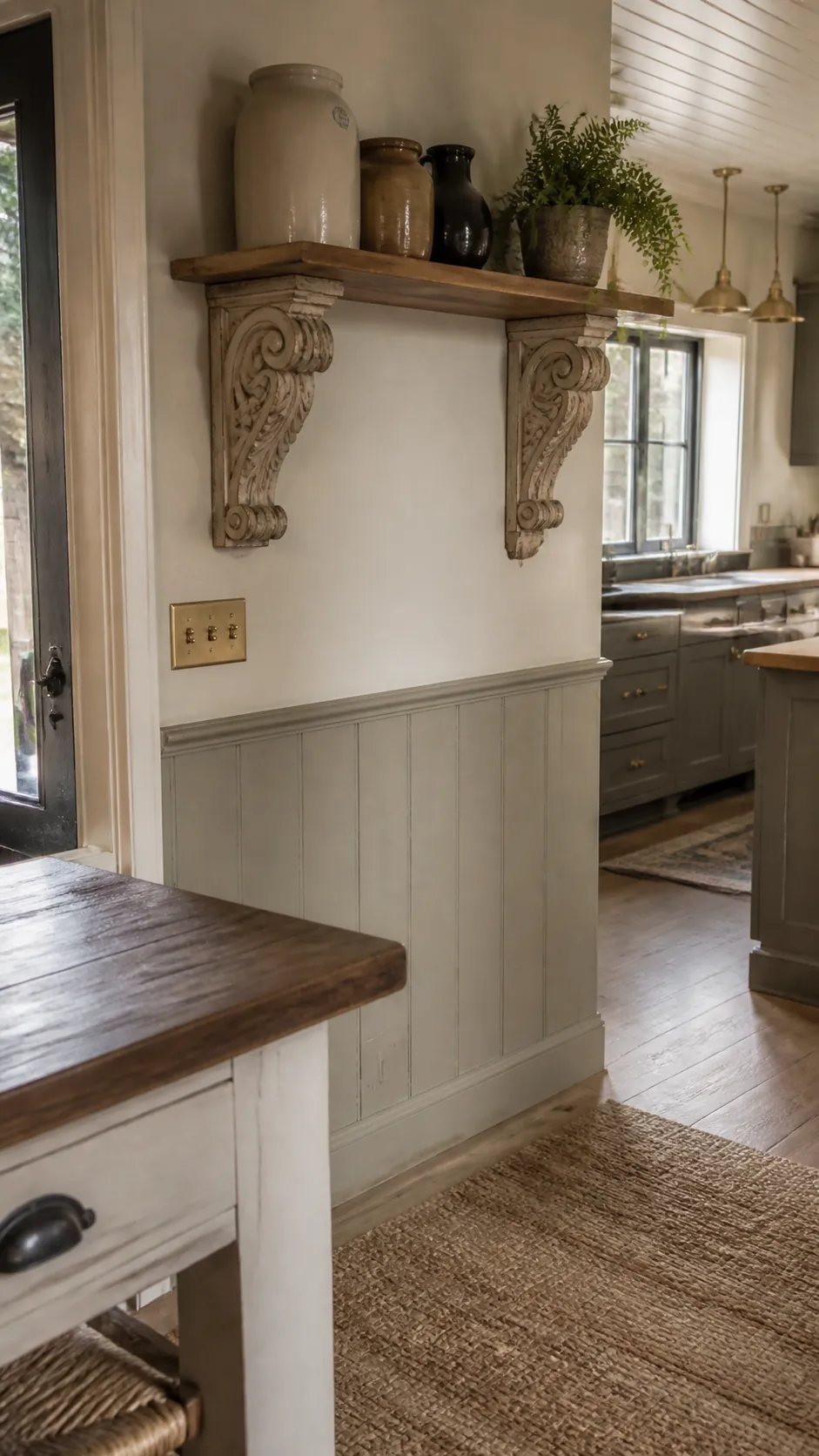
Use the ledge for a few low stoneware pieces rather than hiding the carving behind a packed display. Its projection and load need appropriate wall support, especially where people pass close to the alcove.
Blue Willow Plate Grid
A measured grid gives varied blue-and-white botanical plates a cleaner, more contemporary farmhouse expression. Sort the pieces by diameter and motif first, placing the strongest cobalt patterns where they balance one another across the whole rectangle.
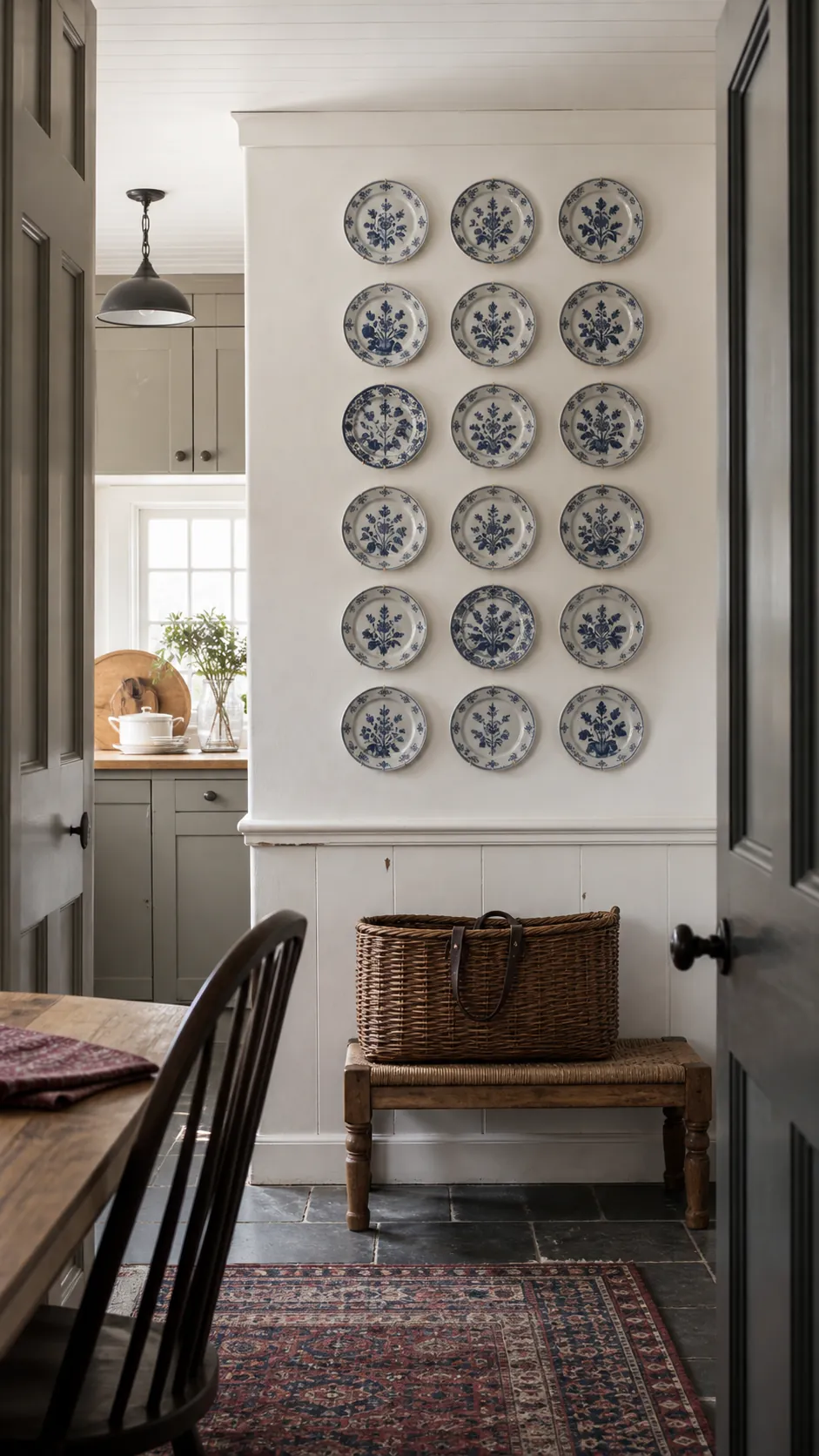
Paper circles taped to the wall make it easier to refine the spacing around passage trim before drilling. Fit every plate with hardware suited to its shape and verify that decorative rims are not carrying the load. Keep other wall accents out of the cottage passage so the crisp grid remains legible from a distance.
Barn-Style Picture Light
A long antique-brass picture light can make one charcoal pear study feel like a deliberate evening focal point. The fixture should relate to the artwork’s width and cast across the drawing evenly, rather than acting as a decorative bar floating above it. Center the pair as a single composition over the coastal farmhouse nook.
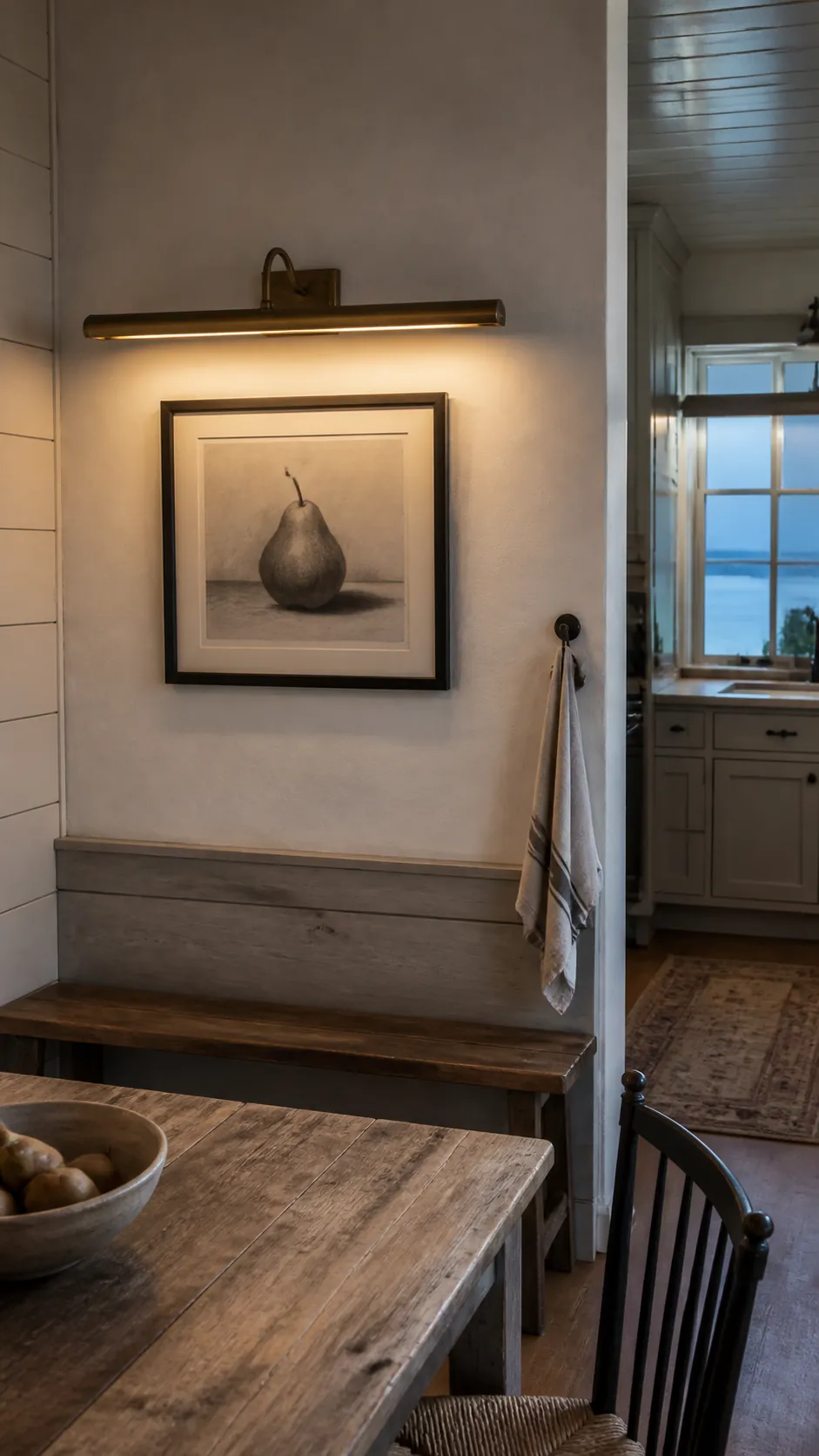
Review the beam and glass reflection after dark before settling the final angle. A properly installed fixture, restrained brass finish, and unadorned frame will read as tailored farmhouse detail rather than novelty barn styling.
Open Cookbook Library
Three shallow painted shelves can turn a breakfast-nook wall into a working cookbook library without borrowing counter space. Group worn volumes by height and frequency of use, reserving the easiest reach for books that actually come down during the week.
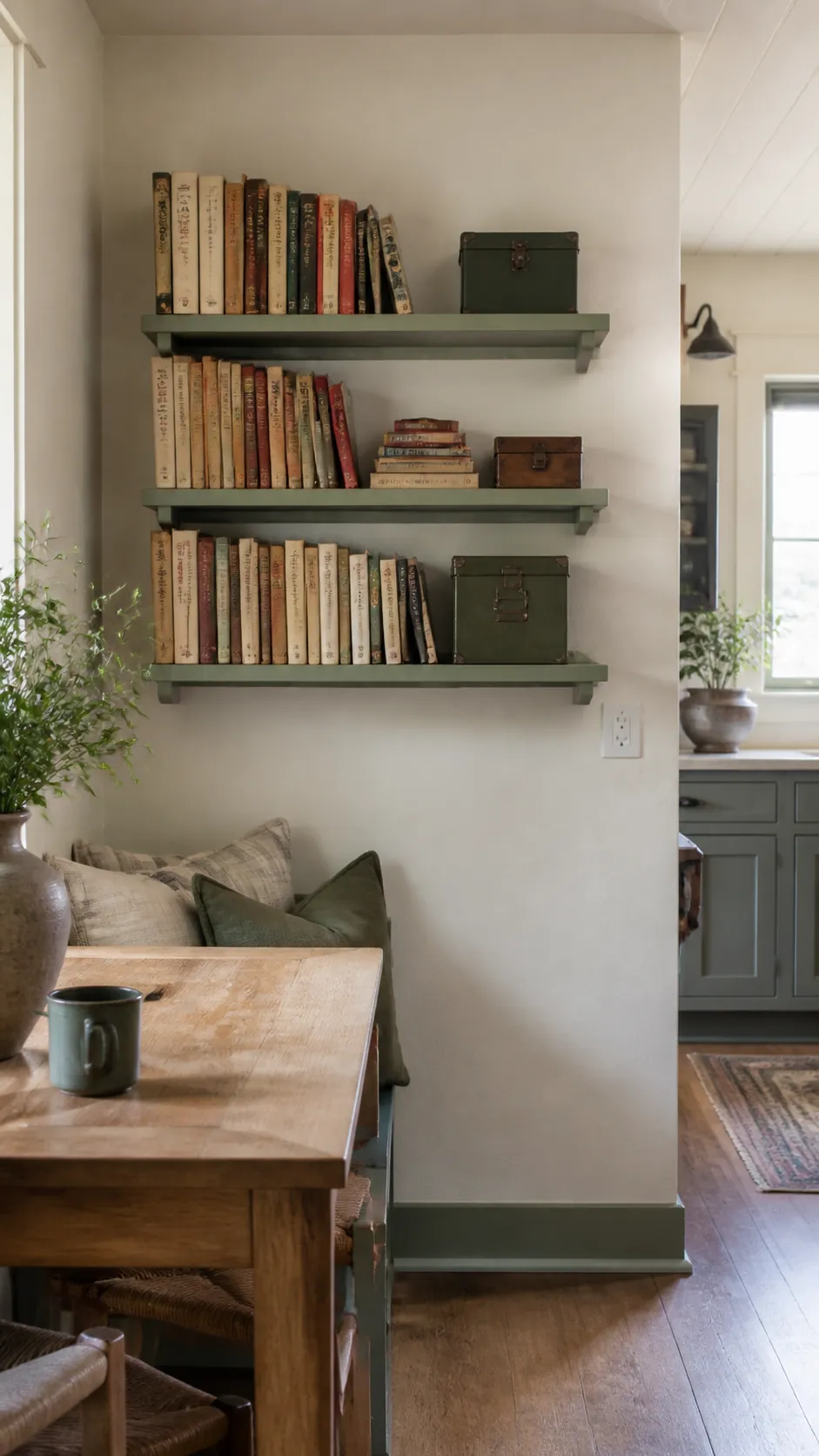
Closed boxes absorb loose recipe cards and small papers that would otherwise make the shelves look untidy. Confirm shelf depth against the largest book while preserving headroom above the bench or table. Let colorful spines provide the accent, avoiding extra ornaments that compete with a useful collection.
Coastal Farmhouse Oar
One weathered pale-blue oar introduces a coastal farmhouse note through a real object rather than a beach slogan. Its long horizontal form is especially effective above a breakfast bench, where it can echo the seat line and visually widen the dining end. Check the blade and handle for splinters or failing paint before display.
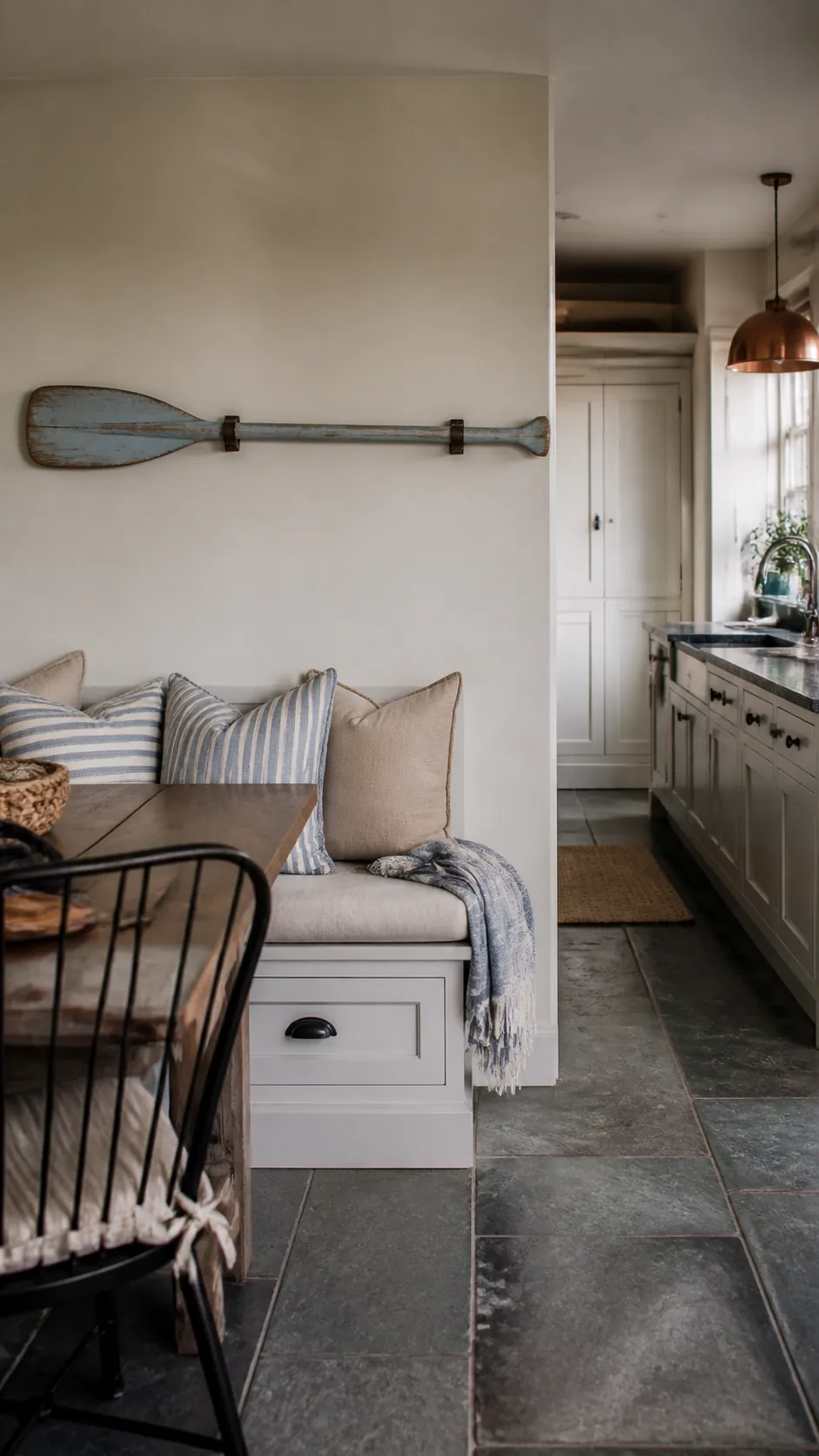
Cradle the wood at stable points so it cannot roll, and leave comfortable clearance above anyone seated below. Repeat the faded blue only in a minor textile or ceramic detail; too many nautical cues would weaken the restraint.
Hand-Forged Pot Rack
A shallow forged-iron rack works best as edited daily storage, not as a place to show every utensil in the kitchen. Hang only the tools that are pleasant to look at and comfortable to lift, mixing their lengths so the lower edge is relaxed rather than ruler-straight.
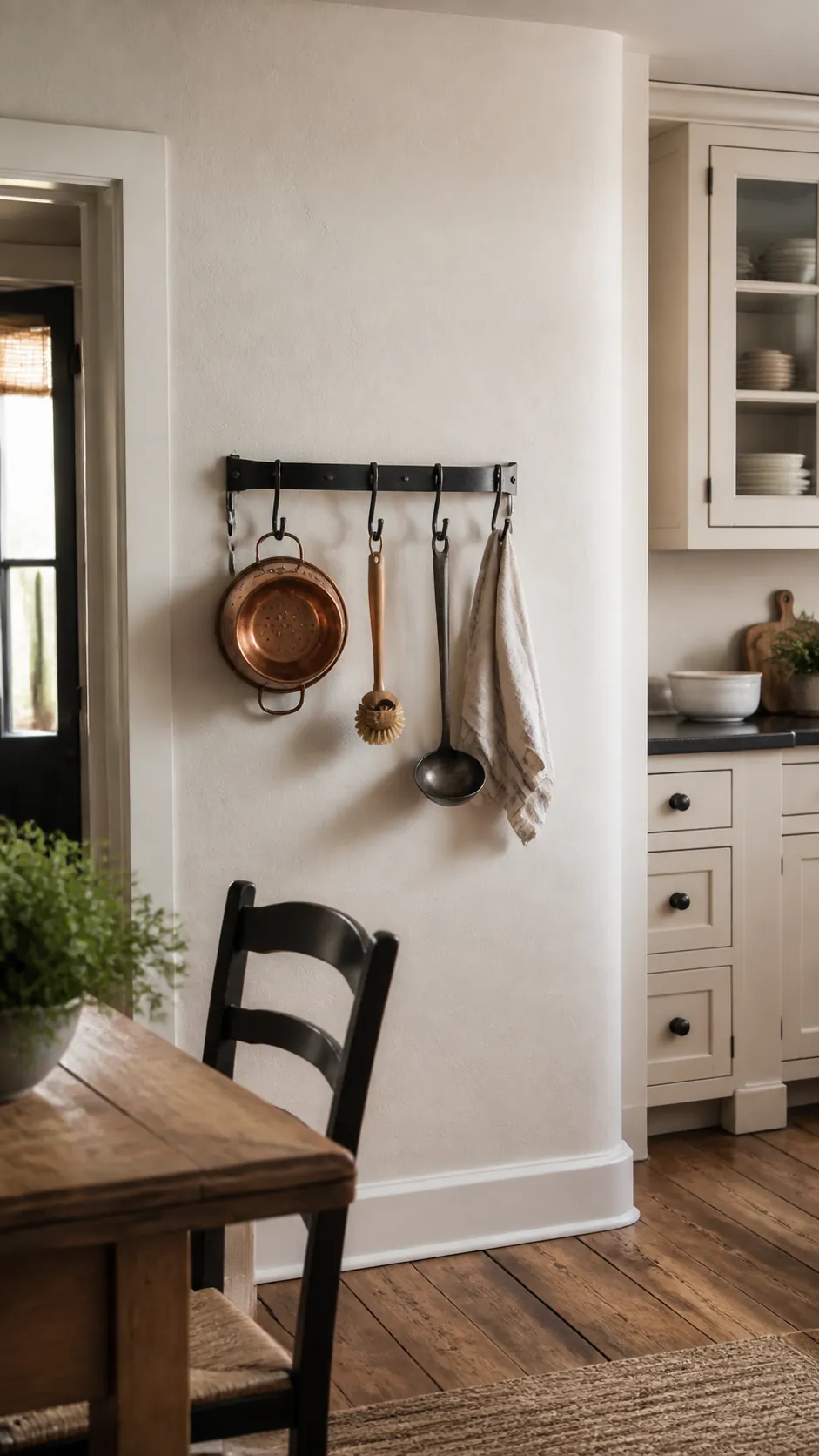
Locate it on a working side wall where handles remain clear of chair backs, open doors, and the cooking flame. Match fasteners to both the wall and the loaded rack instead of relying on the small screws packaged with decorative hardware. Regularly used pieces will keep the display naturally changing and free of dusty extras.
Vintage Window Mirror
A six-pane window converted into a mirror can bounce daylight deeper into an open table zone while retaining the character of old wood. Aim the reflection toward a real window or calm cabinetry, since a mirror that doubles clutter works against the purpose. The existing muntins create enough pattern without any surrounding frame collection.
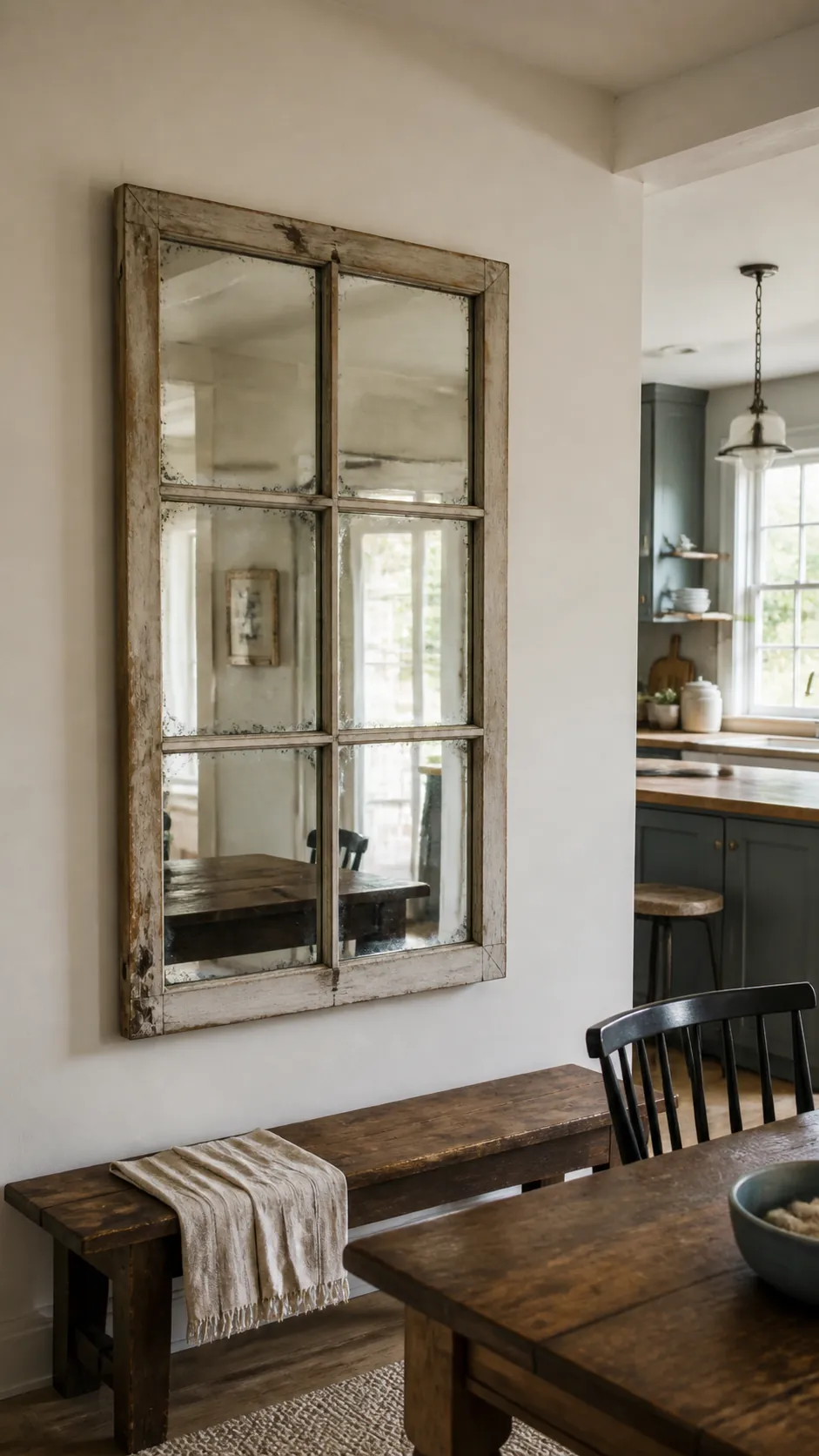
Repair loose joints and make sure every mirrored panel is securely backed before the piece goes on the wall. Hang the weight from dependable supports and keep the lower edge beyond contact with diners moving chairs.
Botanical Block-Print Wallpaper
A small olive-leaf print brings softness to a kitchen alcove without turning the room into a country pastiche. Sage and cream are quiet enough to sit behind aged brass and stoneware, while the irregular block-print quality keeps the repeat from feeling slick.
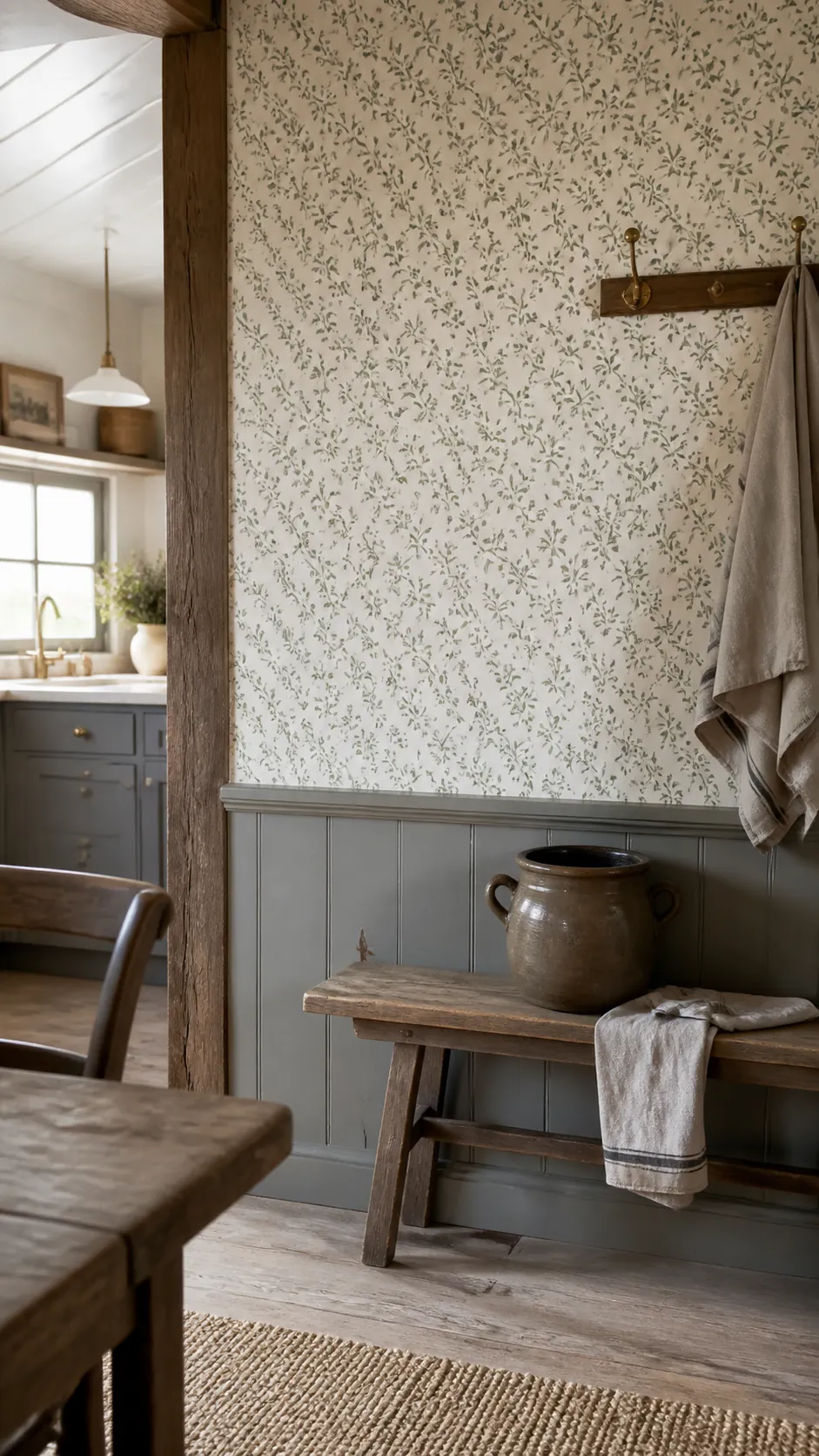
Use a full-size sample to see where stems meet at corners and how the pattern behaves behind shelves or outlets. Select a cleanable paper appropriate to the wall’s conditions, keeping it beyond direct splatter. Limit competing prints in nearby curtains and cushions so the leafy surface remains restful.
Ironstone Pitcher Niches
Three plaster niches turn a pitcher collection into part of the cottage architecture rather than another object-filled shelf. Give each ironstone vessel its own opening and choose different profiles, allowing handles and lips to cast distinct shadows. Repeating the niche shape ties the mismatched antiques together.
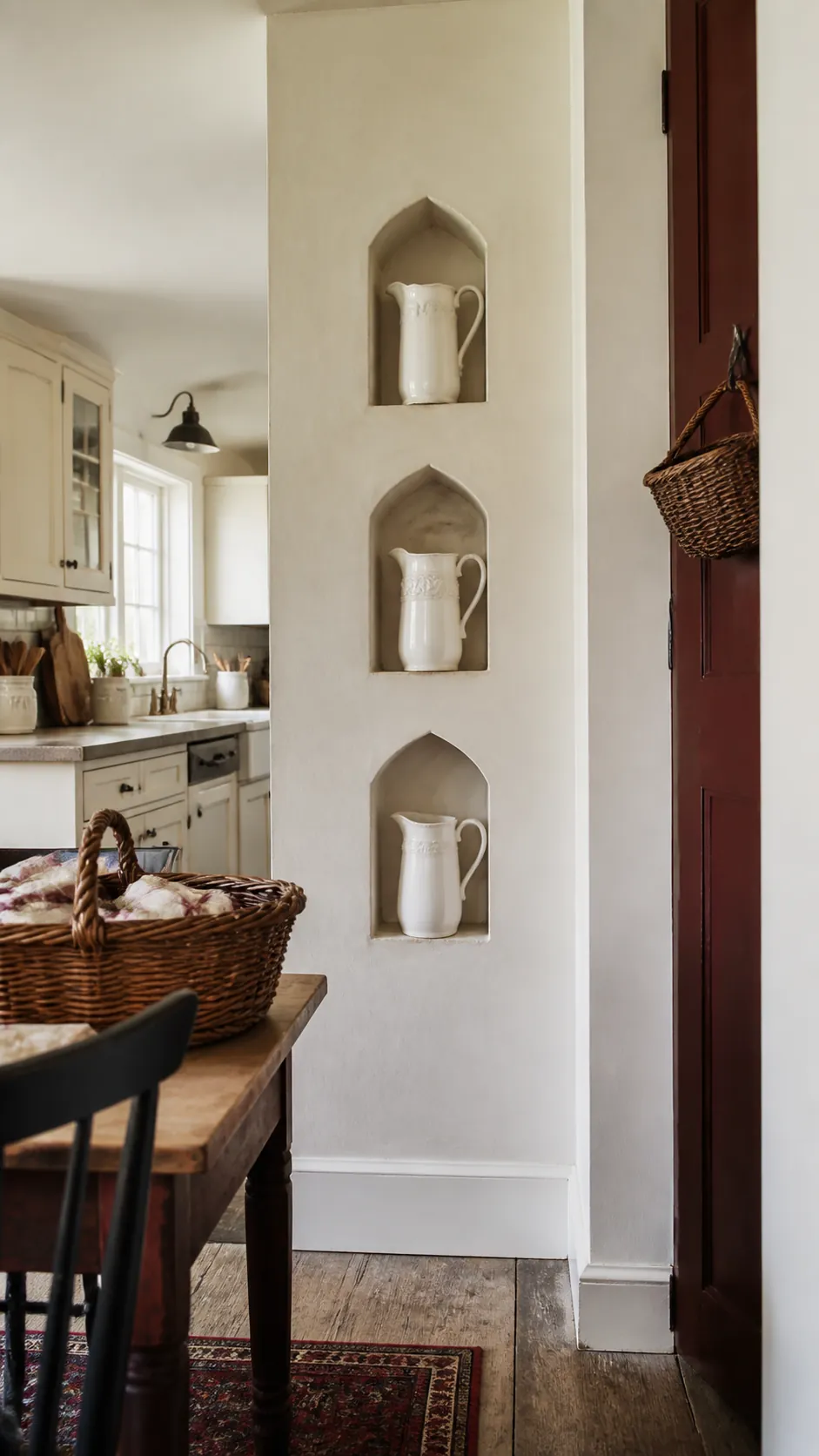
Plan enough interior depth that the pitchers sit securely without their handles scraping the reveals. A wipeable base and accessible height make the recesses practical to clean, while generous plaster margins keep the passage from feeling crowded.
Farmhouse Gallery Wall
Ledger fragments, one barn photograph, and botanical sketches can tell a rural story without resorting to generic signs. Start with the photograph as the visual anchor, then use the lighter paper pieces to extend the arrangement across the wall.
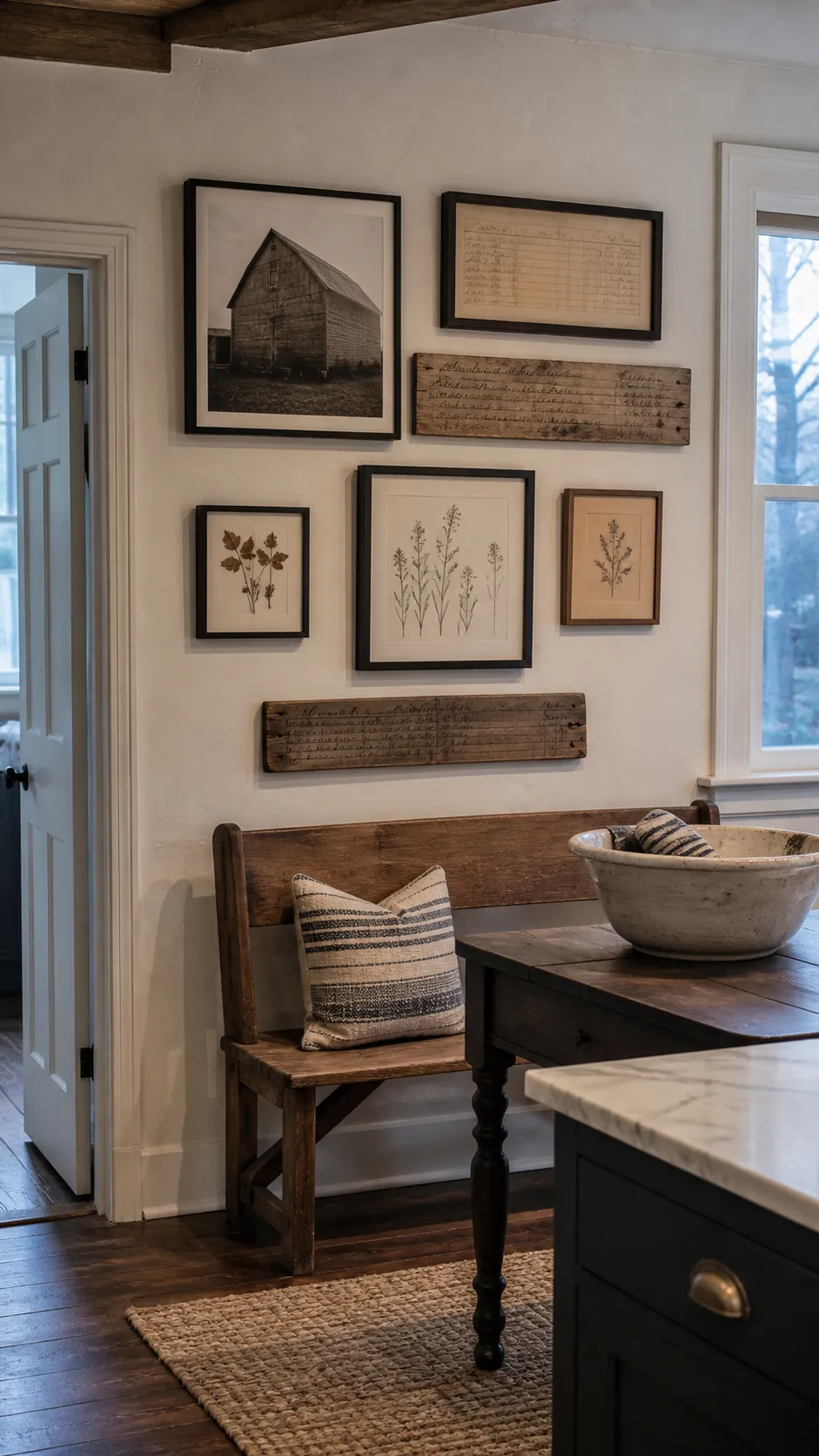
Unify the varied subjects with a limited mix of reclaimed chestnut and slim dark frames. Use copies rather than fragile original documents where kitchen light and humidity could cause damage. Define a firm outer boundary above the furniture, leaving enough quiet limewash around it to separate the gallery from cabinetry.
Reclaimed Beam Mantel Shelf
A deep chestnut beam gives a sunny breakfast nook the weight of a mantel even when there is no fireplace. Let its cracks, adze marks, and dark grain remain visible, but verify that the old timber is sound before treating it as a shelf. The beam’s depth should relate to the wall and nearby seating without projecting into a route.
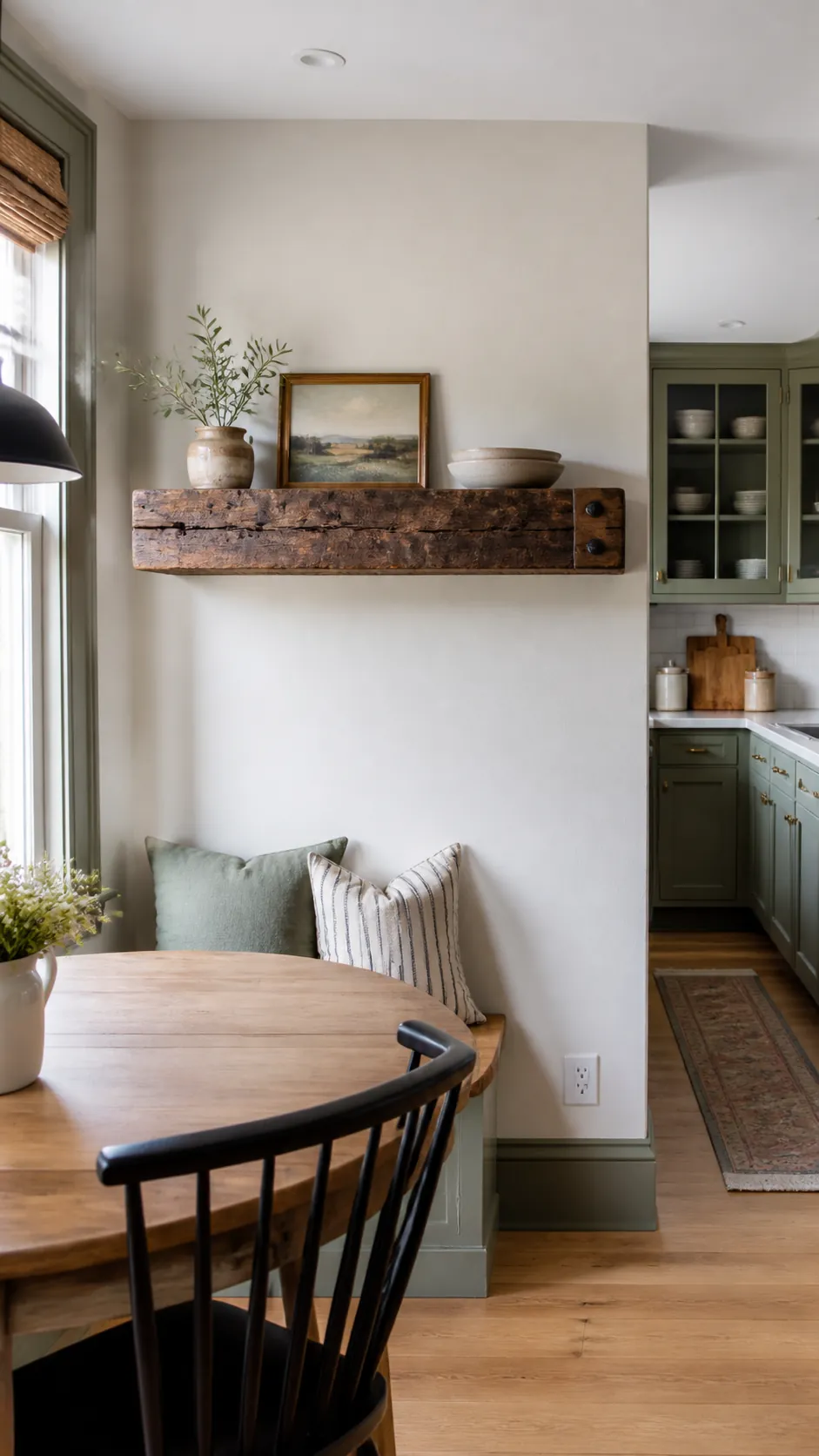
Secure the heavy piece to appropriate structure and seal surfaces that might shed dust. A low ceramic vessel and one leaning work of art are sufficient; bare stretches of wood reveal why the salvage was worth using.
Painted Beadboard Wainscot
Tall muted-blue beadboard gives the dining end of a galley color, texture, and a durable-looking architectural base. Set its top line in response to window sills, chair backs, and counters rather than choosing an arbitrary band around the room.
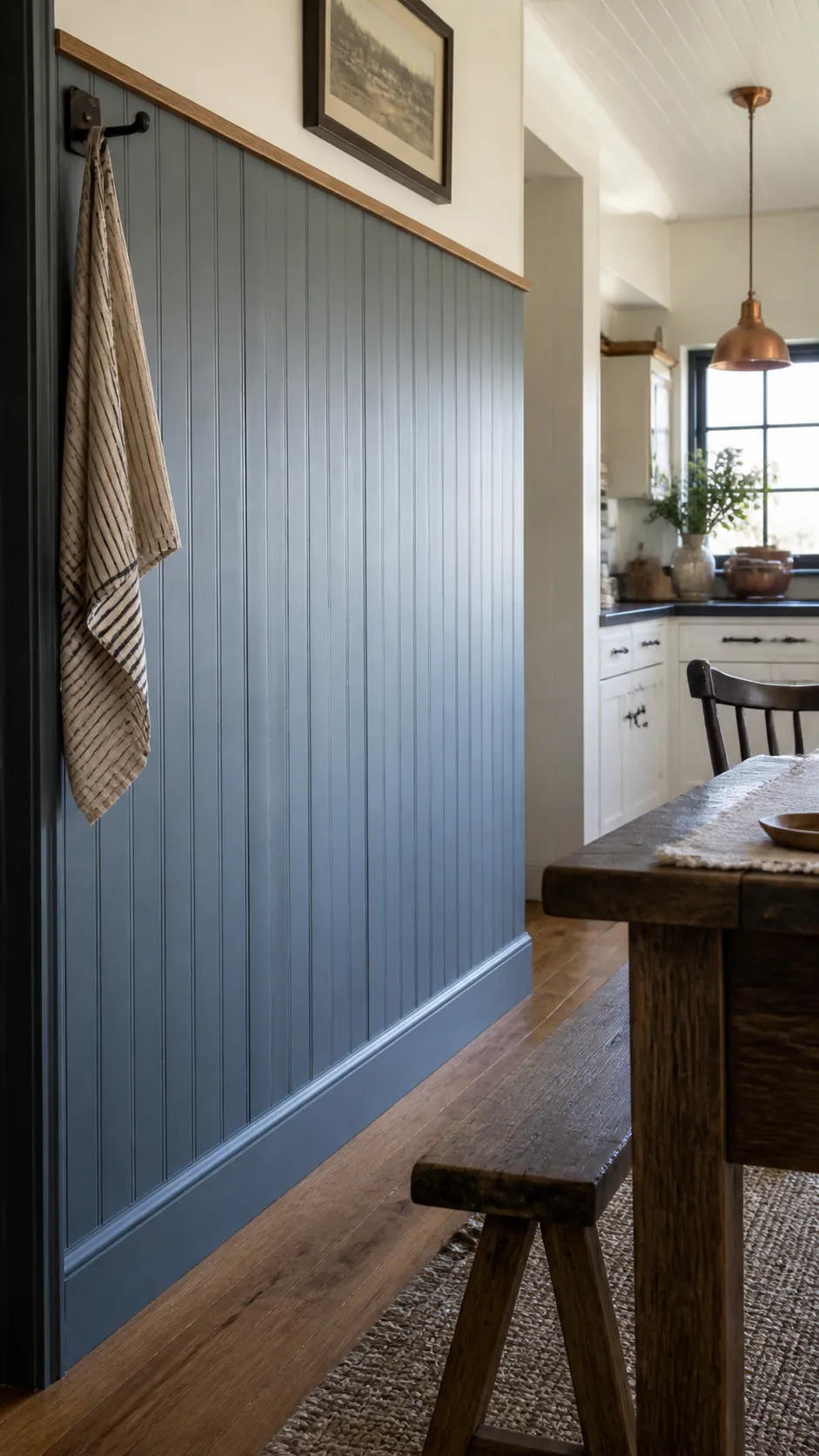
A slim oak cap creates a clean transition to the plain wall and introduces warmth near black iron or stone. Sample the blue beside cabinetry and flooring before painting all the grooves, because surrounding light can cool or gray the color. Keep the upper wall sparsely decorated so the vertical rhythm remains the main feature.
Vintage Grain Sieve Cluster
Cleaned grain sieves bring honest agricultural texture through their mesh, bent wood rims, and evidence of use. Cluster three different diameters in a loose triangle, turning each so its individual weave catches light from the side wall. Small overlaps can add depth, but the forms should not hide one another.
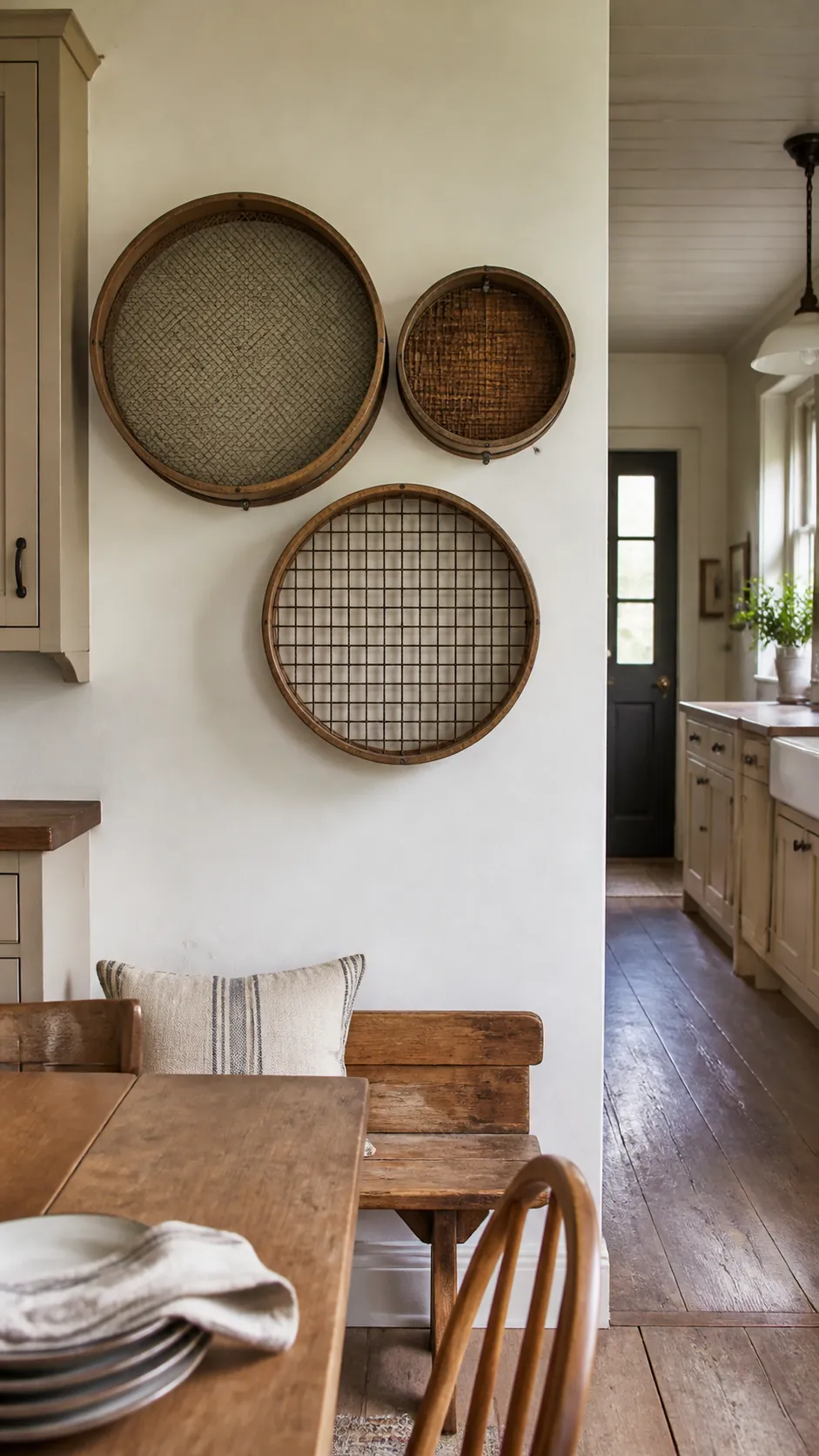
Stabilize fragile joints before hanging and use discreet ties that cannot work free from the shallow rims. Choose a location away from airborne grease, since the textured screens are far easier to maintain in a dining-side area.
Sculptural Olive Branch
A forged iron olive branch supplies a botanical reference through silhouette and shadow instead of a framed print. On quiet plaster, the black leaves appear crisp enough to hold an open-plan table wall without additional objects.
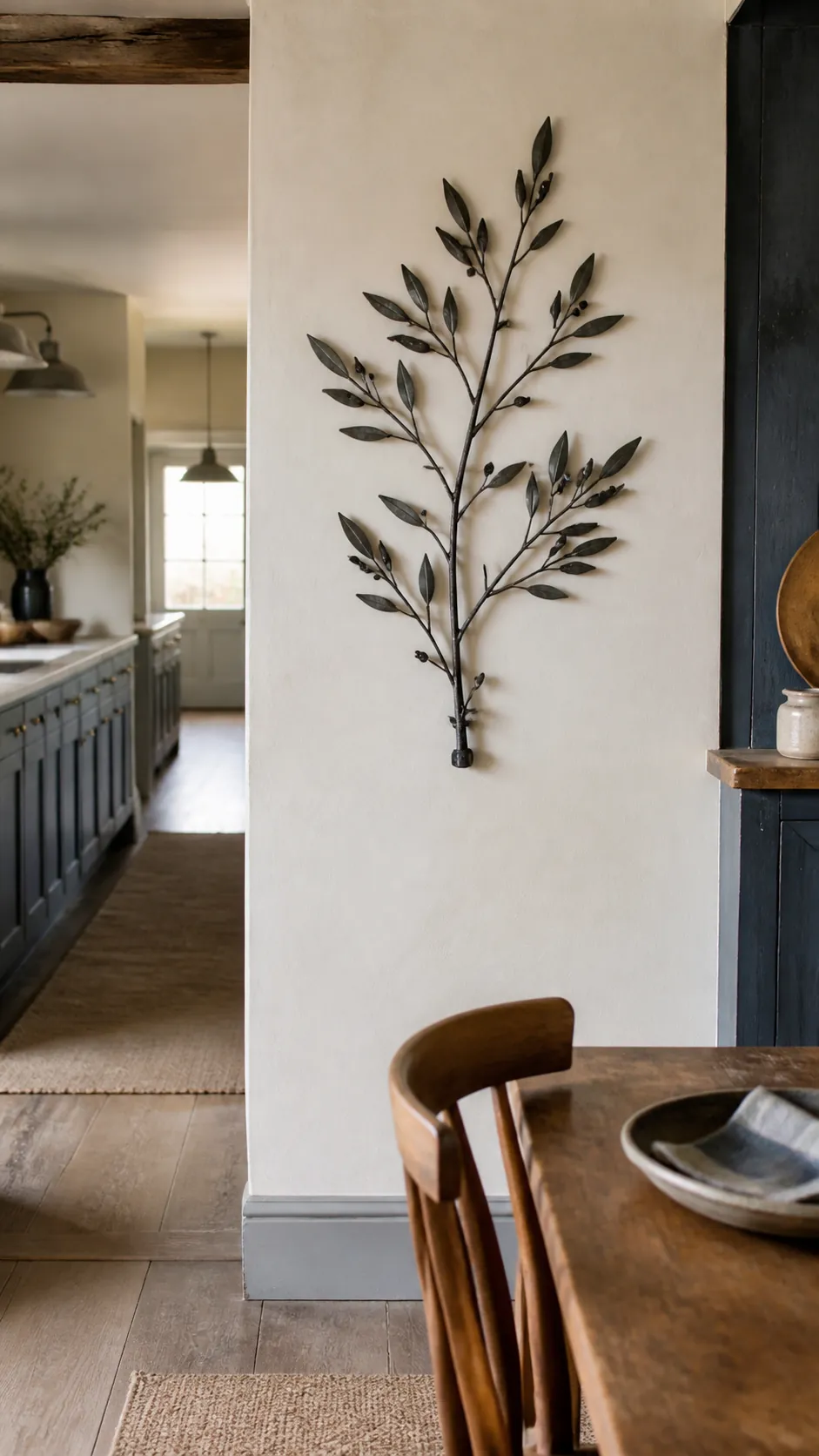
Turn the relief under the room’s actual light to find an angle that produces definition without harsh, distracting shadows. Use all intended mounting points so delicate stems cannot twist away from the wall. Cotton paper, walnut furniture, and other matte finishes can soften the metal’s graphic quality.
Apron and Basket Station
An oak hook board creates a useful landing place between the kitchen and its adjacent passage. Locate it where aprons are easy to grab but do not brush against food preparation, and check that shallow baskets stay within the wall’s profile. The station should support a routine rather than become storage for miscellaneous overflow.
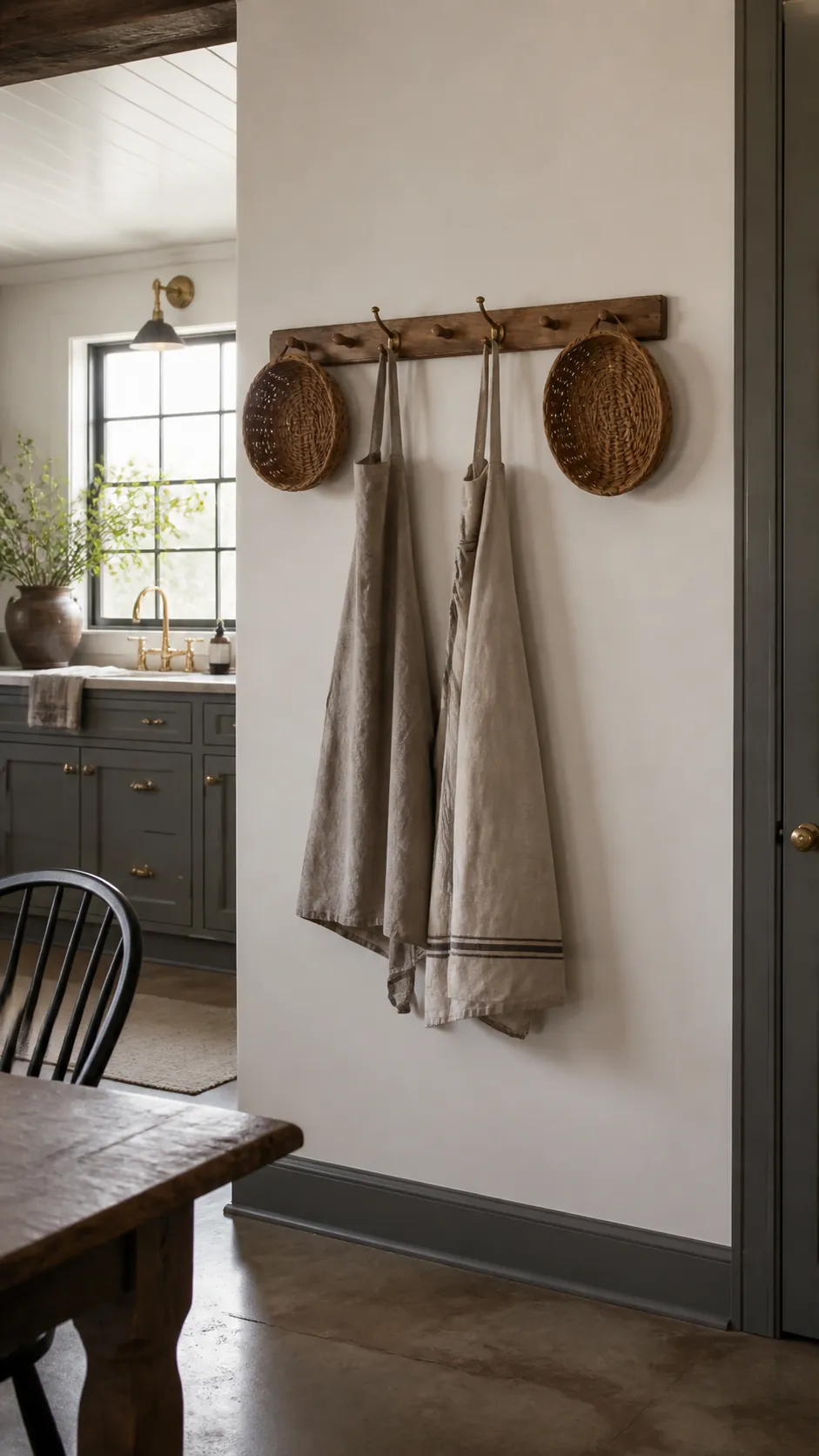
Two linen aprons provide soft movement against the wood, while the gathering baskets can hold lightweight items that genuinely belong there. Leave spare hooks visible so the arrangement still looks orderly when something is in use.
Pasture Panorama
A black-and-white pasture panorama can visually lengthen a small cottage passage without adding strong color. Choose a wide crop where the stone fence leads the eye through the landscape, and keep the horizon level when positioning the frame.
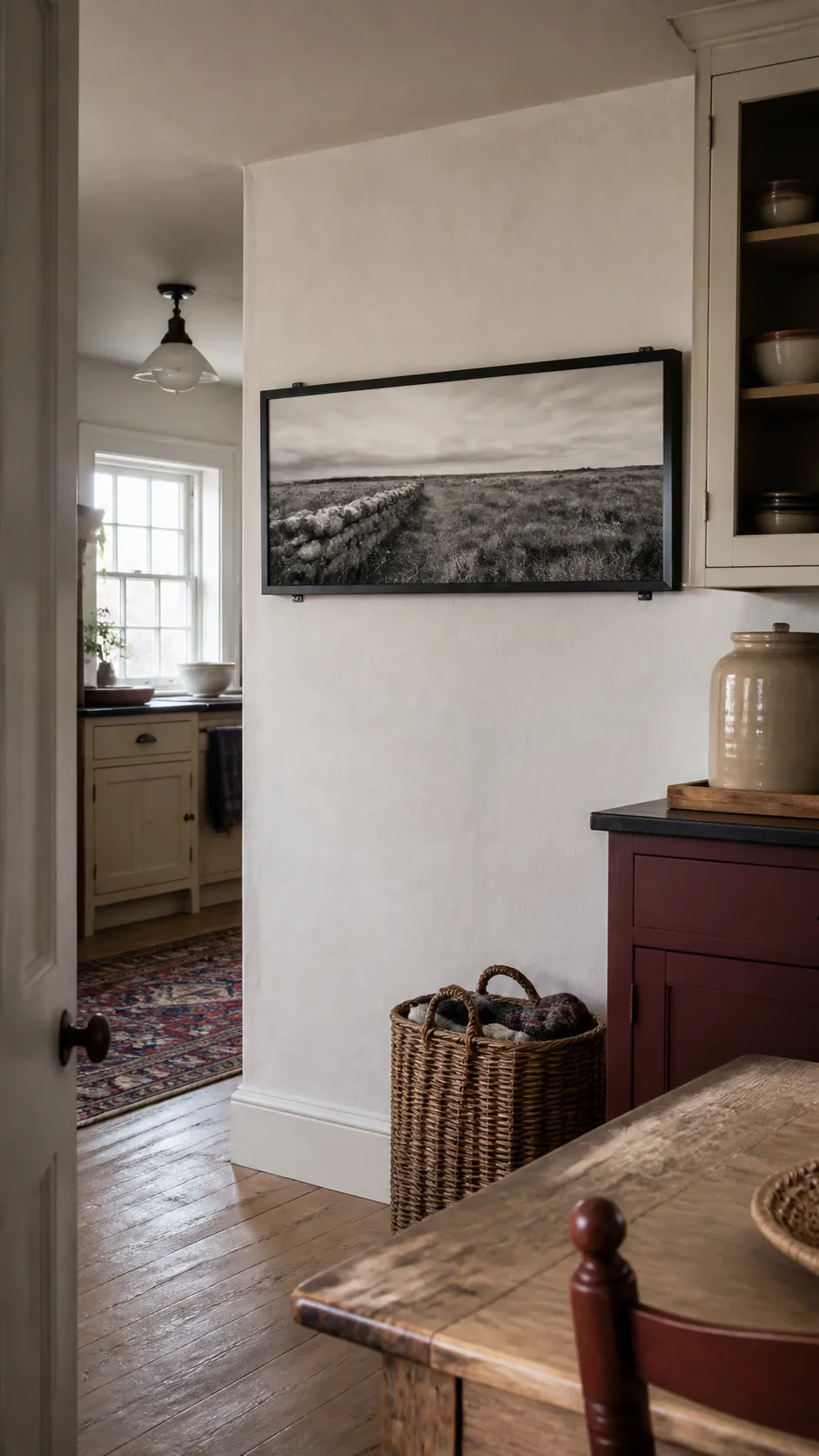
A restrained mat and narrow frame prevent the rural subject from feeling sentimental or heavy. Align the composition with the bench or cabinet below rather than centering it between distant doorways. Check the glazing from both ends of the passage, where reflections can obscure different parts of a long photograph.
Farmhouse Clock With Restraint
One large cream enamel clock is useful enough to justify its scale on a coastal farmhouse wall. A plain face and black hands keep the reference industrial and crisp, avoiding decorative words that would make the room feel themed. Place it where the time can be read from the cooking and dining areas without becoming the center of every sightline.
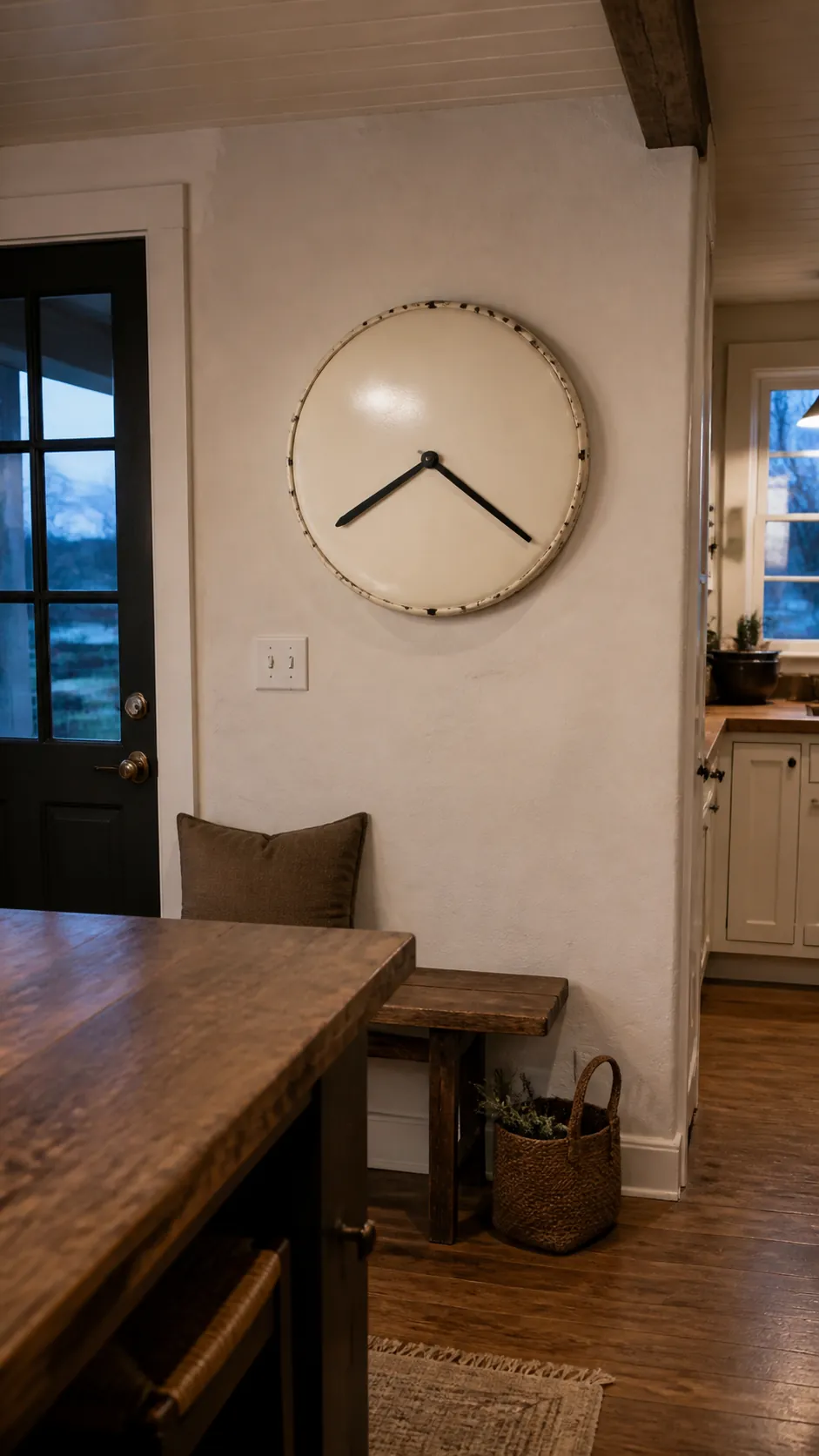
Before mounting, test a paper circle at full diameter so the clock does not crowd trim or a nearby shelf. Leave most of the surrounding limewash bare; the graphic dial has more authority when it is not part of a busy arrangement.
Quiet Plaster and Oak Wall
Sometimes the strongest farmhouse wall is softly troweled plaster with nothing hung on it. Subtle ridges and tonal changes hold sunlight across a breakfast nook, while a narrow oak bench gives the empty plane a practical lower edge.
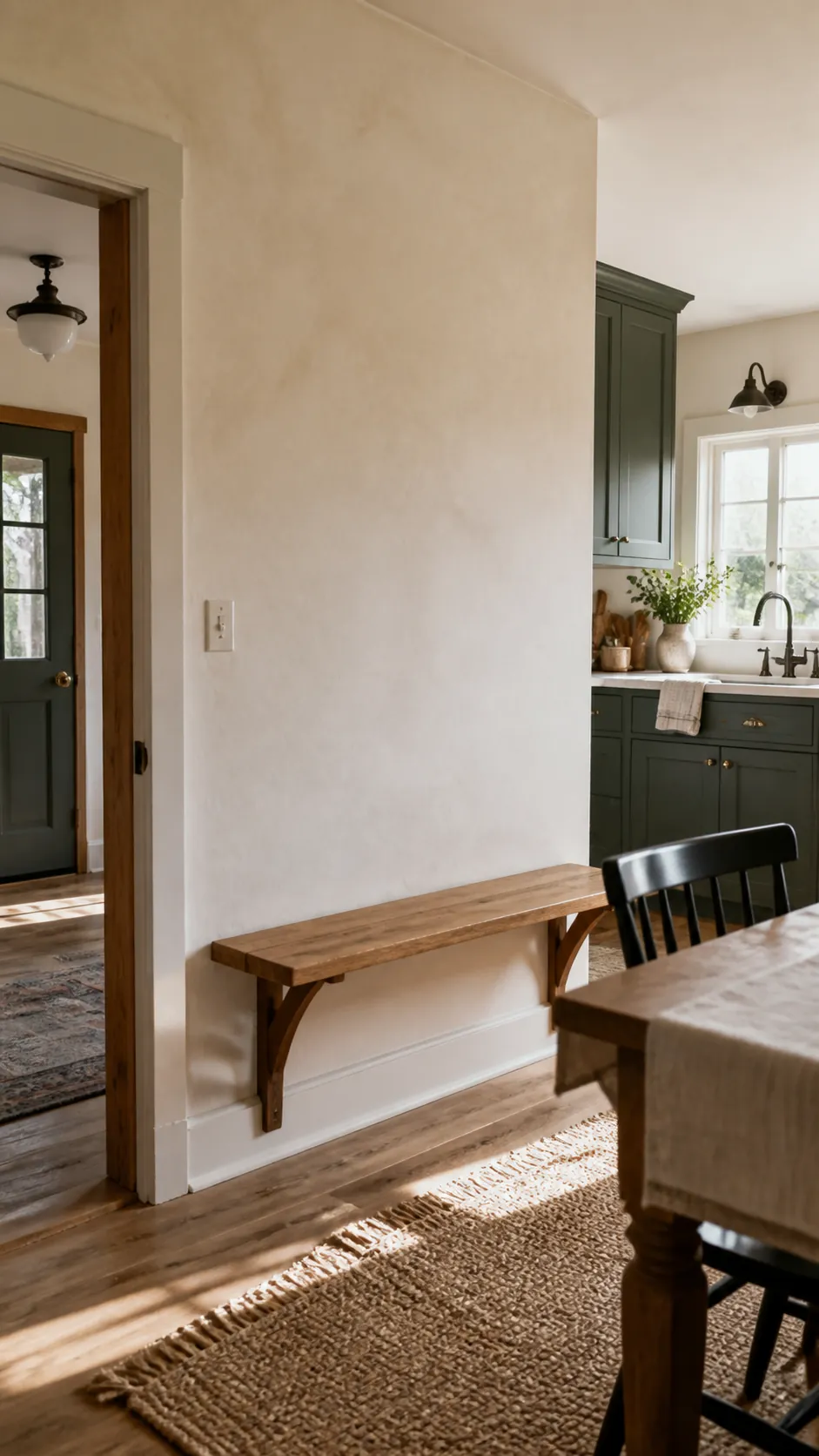
Review a large plaster sample beside the oak and floor, paying attention to texture as much as undertone. Keep the bench shallow enough for chairs and foot traffic to move normally. With no wall objects to distract the eye, careful junctions at baseboards, corners, and trim become the finish that makes the restraint feel intentional.