
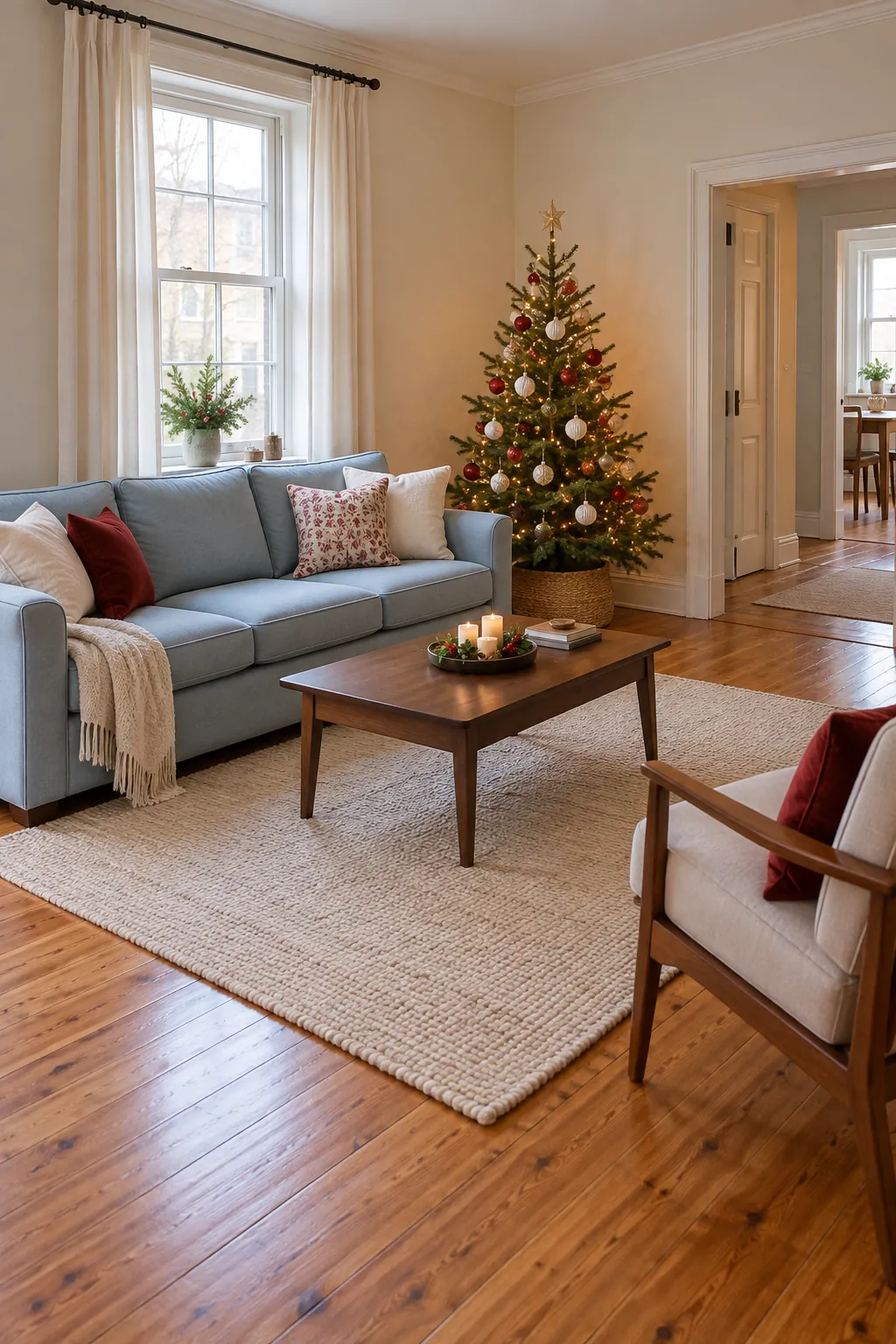
The sofa is often the piece that makes a living room work, so moving it for a few weeks can create more problems than it solves. Look for spare depth, optional furniture, and smaller tree shapes before disturbing your everyday seating. The useful position is the one that still lets you walk, open doors, and sit comfortably.
Measure the widest branches and the stand, then mark that footprint on the floor before bringing the tree in. Keep it away from heat, preserve required exits and window access, and follow the tree and light manufacturers’ instructions. Some options use a full floor tree; others use a compact or tabletop version when the available space asks for one.
Use the window corner beyond the sofa arm
An unused corner just beyond a sofa arm can hold a tree without changing the main seating position. Measure the tree at its widest branches, not only at the stand, before choosing this spot. Leave enough room to open curtains and reach any window controls.
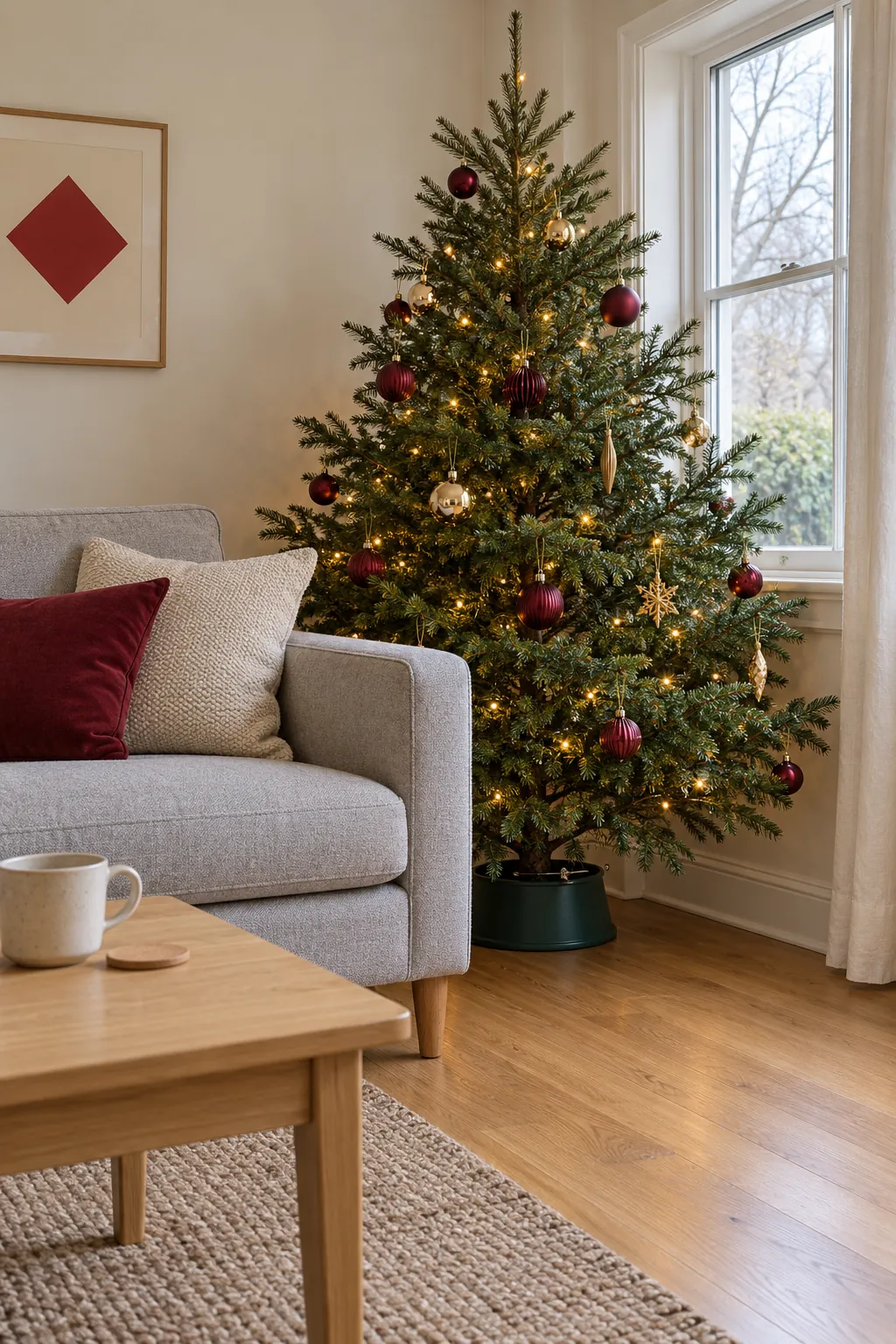
Keep presents inside the tree footprint so they do not spread into the route beside the sofa. If the corner contains a heater or an essential exit window, choose another position. The corner works because it is spare space, not because a window makes any placement safe.
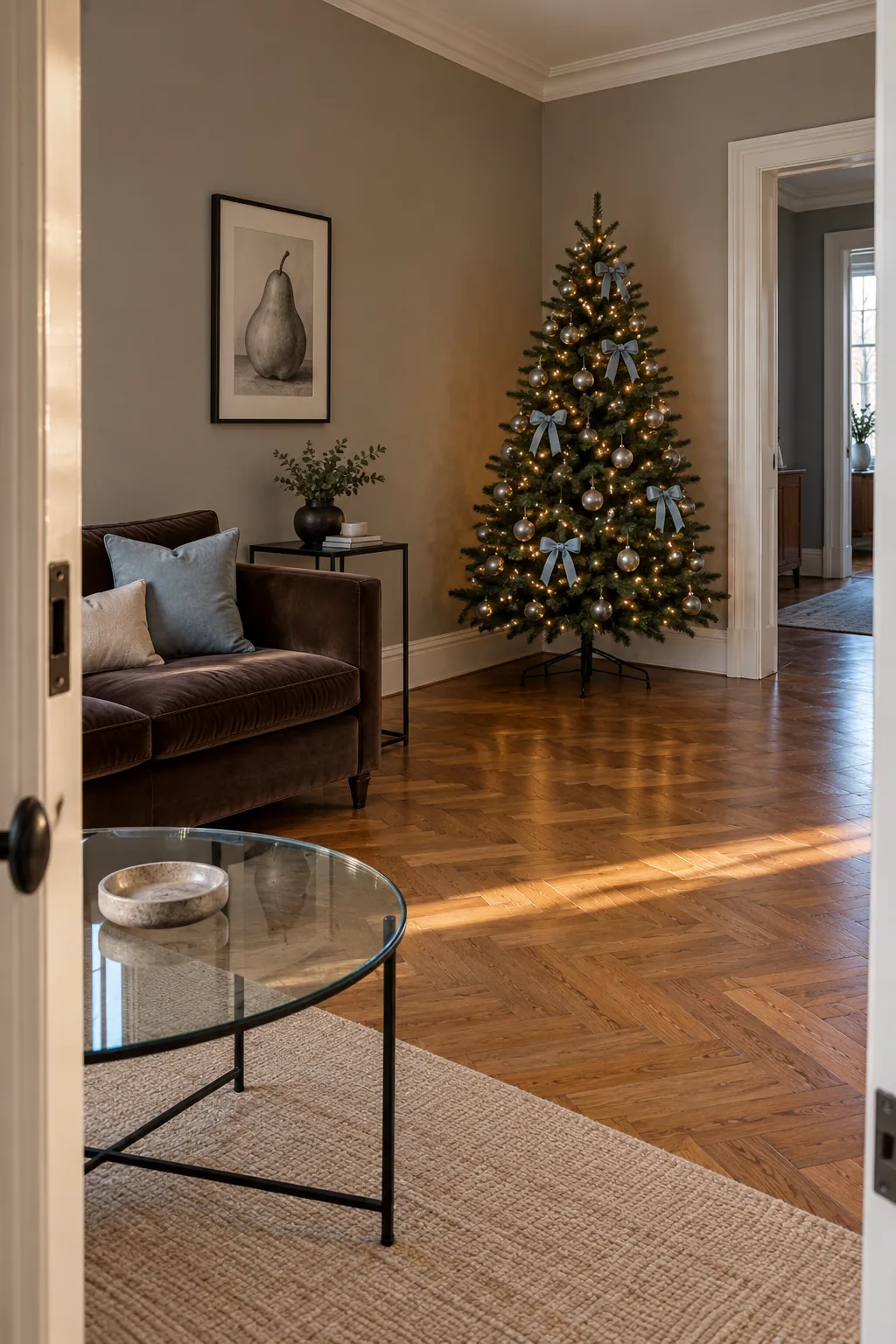
Choose the corner opposite the main entrance
Put the tree in a far corner that guests can see when they enter, while keeping the entrance itself open. This suits a room where the sofa already faces the center and the far corner does not carry traffic. Stand in the doorway with the branches marked on the floor to check the sightline. Make sure a nearby door can still open fully.
Place a slim tree between paired windows
A solid wall pier between two windows can give a narrow tree its own position without covering either view. Compare the pier width with the tree’s actual spread, including any ornaments that project outward. The sofa can stay along the opposite wall.
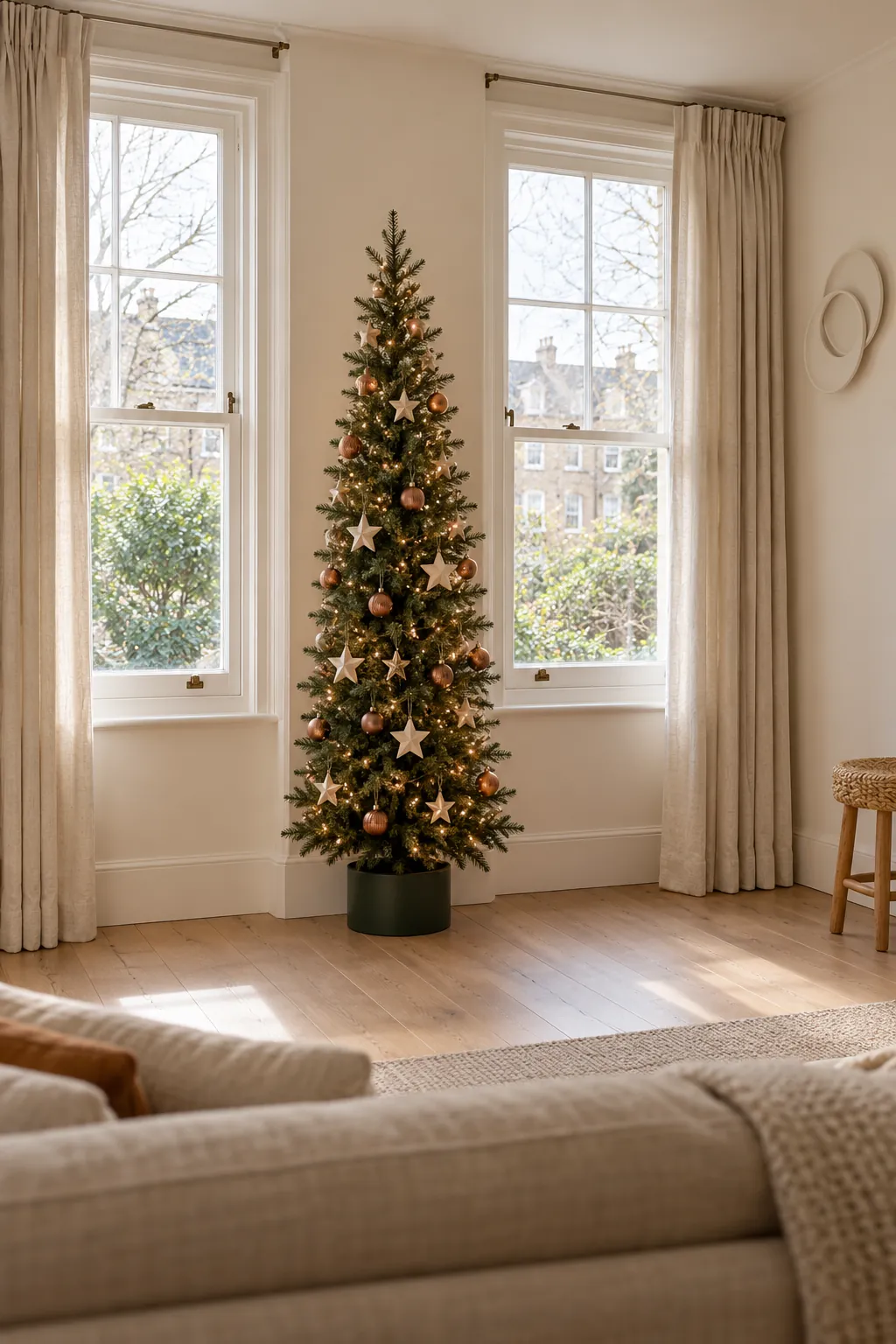
Check the curtain stacks as well as the bare wall width. Fabric pulled open should not rest on lights or branches. Keep the base modest so the window wall still feels spacious.
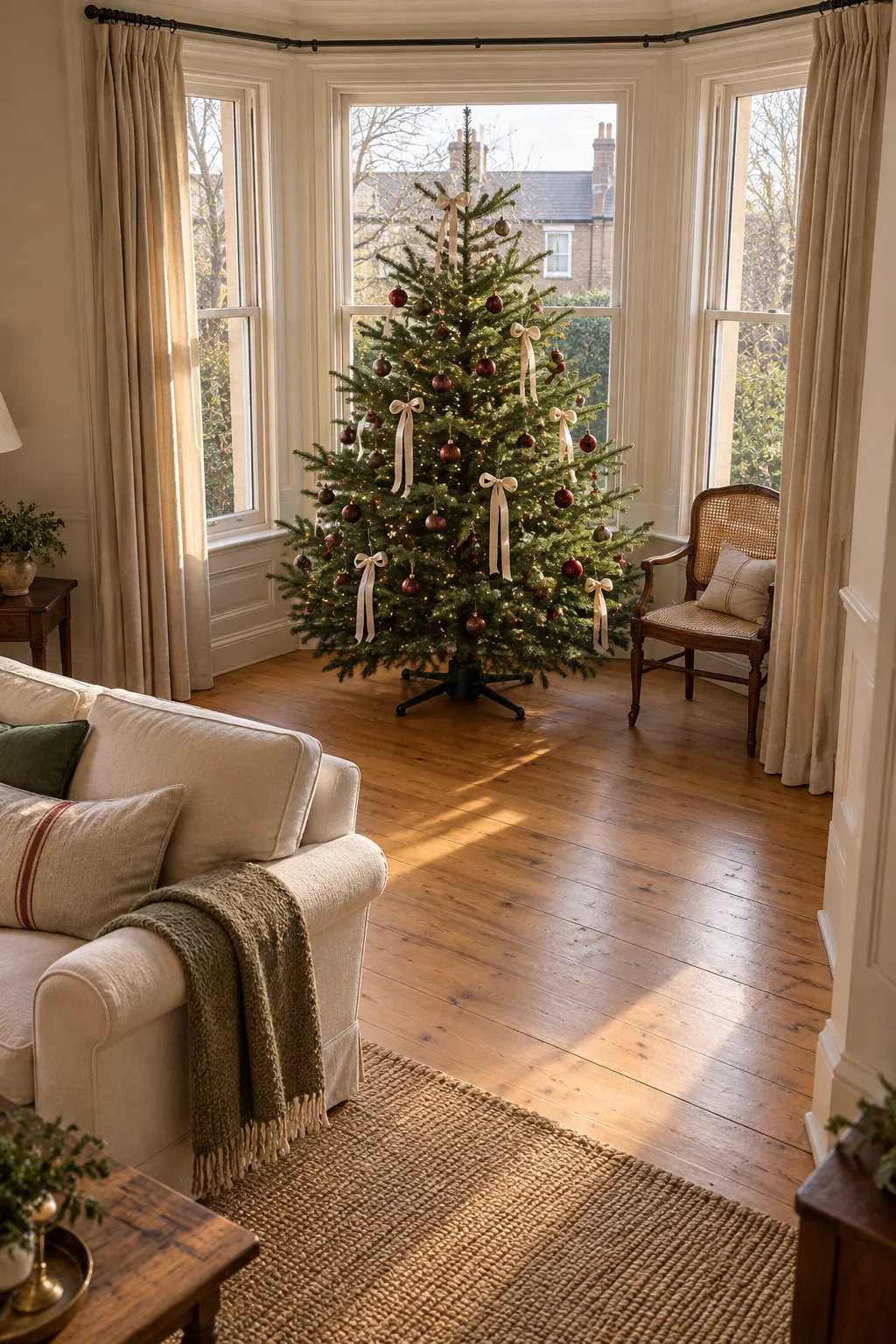
Let the center of a deep bay hold the tree
A deep bay can absorb a floor tree while the sofa remains outside the bay. Centering it works best when the bay has enough depth for the stand and branches to stay behind the room’s main walking line. Keep occasional chairs at the bay edges only if they remain comfortable to enter. Pull blinds or curtains through their normal movement before decorating. Avoid this layout when the bay is also the route to a door or a radiator occupies the available space.
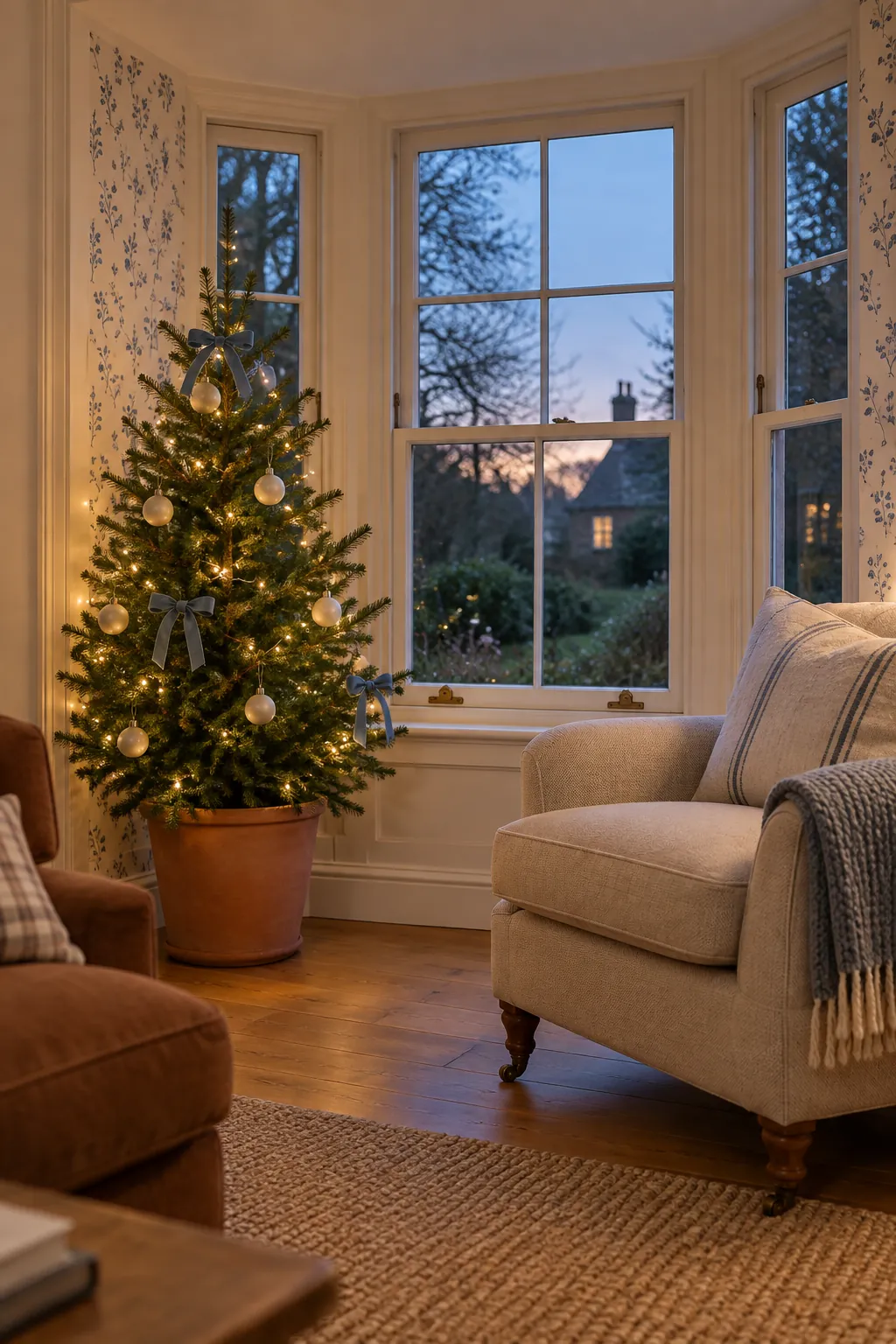
Use one side pocket of a bay instead
When a bay is wide but not very deep, offset a compact tree into one side pocket. This preserves more of the central window view and may leave a reading chair on the other side. Test the full branch diameter against the angled wall rather than assuming the corner creates extra depth.
Set the tree beyond the sectional’s short end
A sectional often creates a small unused zone beyond its shorter return. Put the tree outside that end rather than inside the seating elbow, where knees and feet need space. A narrow model keeps the chaise or end seat usable.
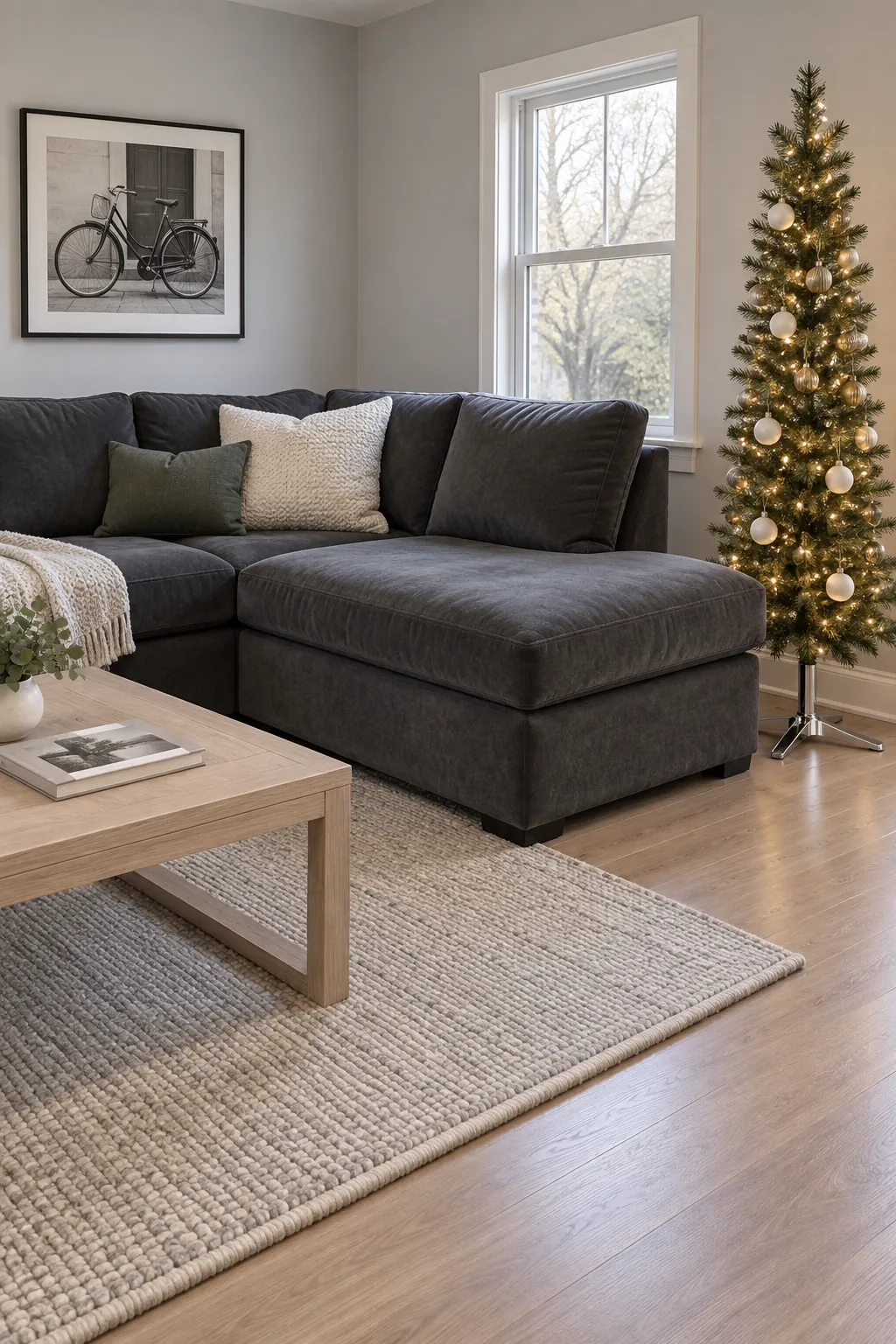
Sit in that end seat and test standing up without brushing ornaments. Check the route around the sectional from the room entrance. Keep the tree stand entirely on one level surface, away from a rug edge that could make it rock. This layout preserves both the sectional position and its reason for being there.
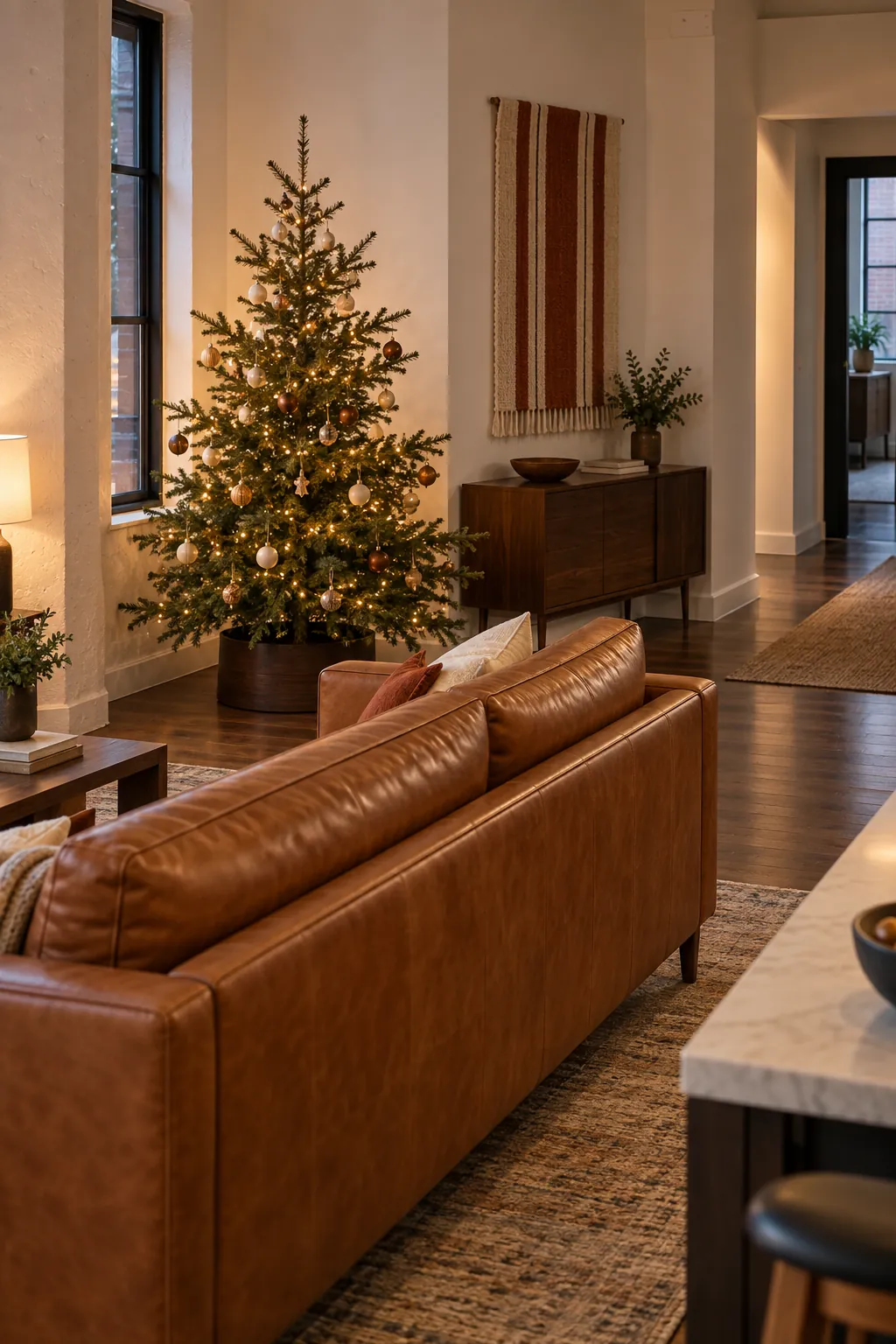
Use the spare space behind a floating sofa end
A sofa that already floats in the room may leave a generous pocket behind one end. A tree can occupy that pocket when it does not squeeze the circulation route behind the sofa. Look at the arrangement from the kitchen or hallway as well as the seats. The tree should add a focal point without turning the sofa’s back into a barrier.
Reserve the end of the television console
The unused floor beside a television console can hold a tree while the sofa stays aligned with the screen. Keep the branches beyond the screen edge so they do not cover part of the picture. Leave access to the console doors and electronics.
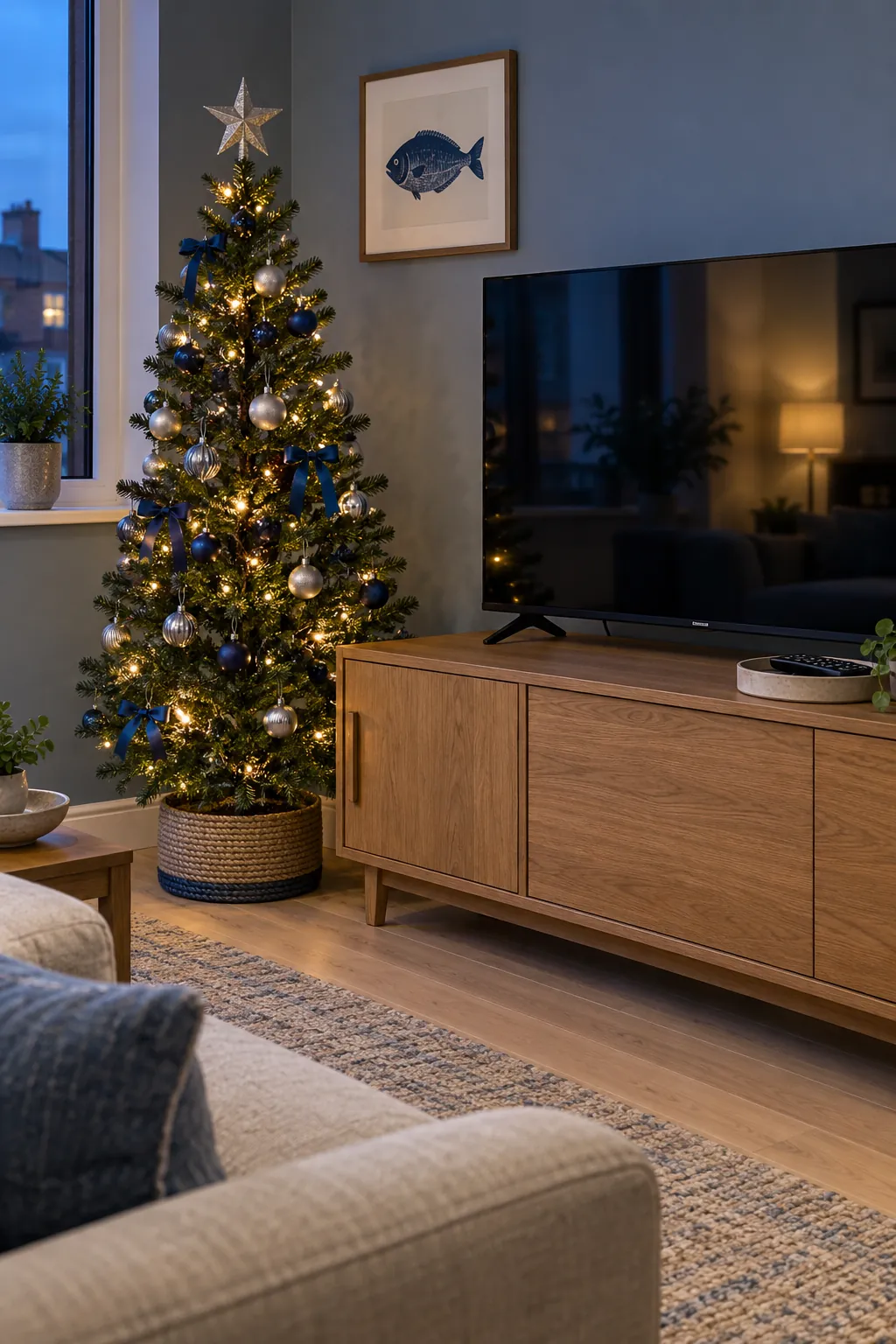
Try the position with the television on to check reflections from tree lights. A restrained light setting may be more comfortable than flashing bulbs. Follow equipment and lighting instructions, and avoid trapping warm electronics behind dense branches.
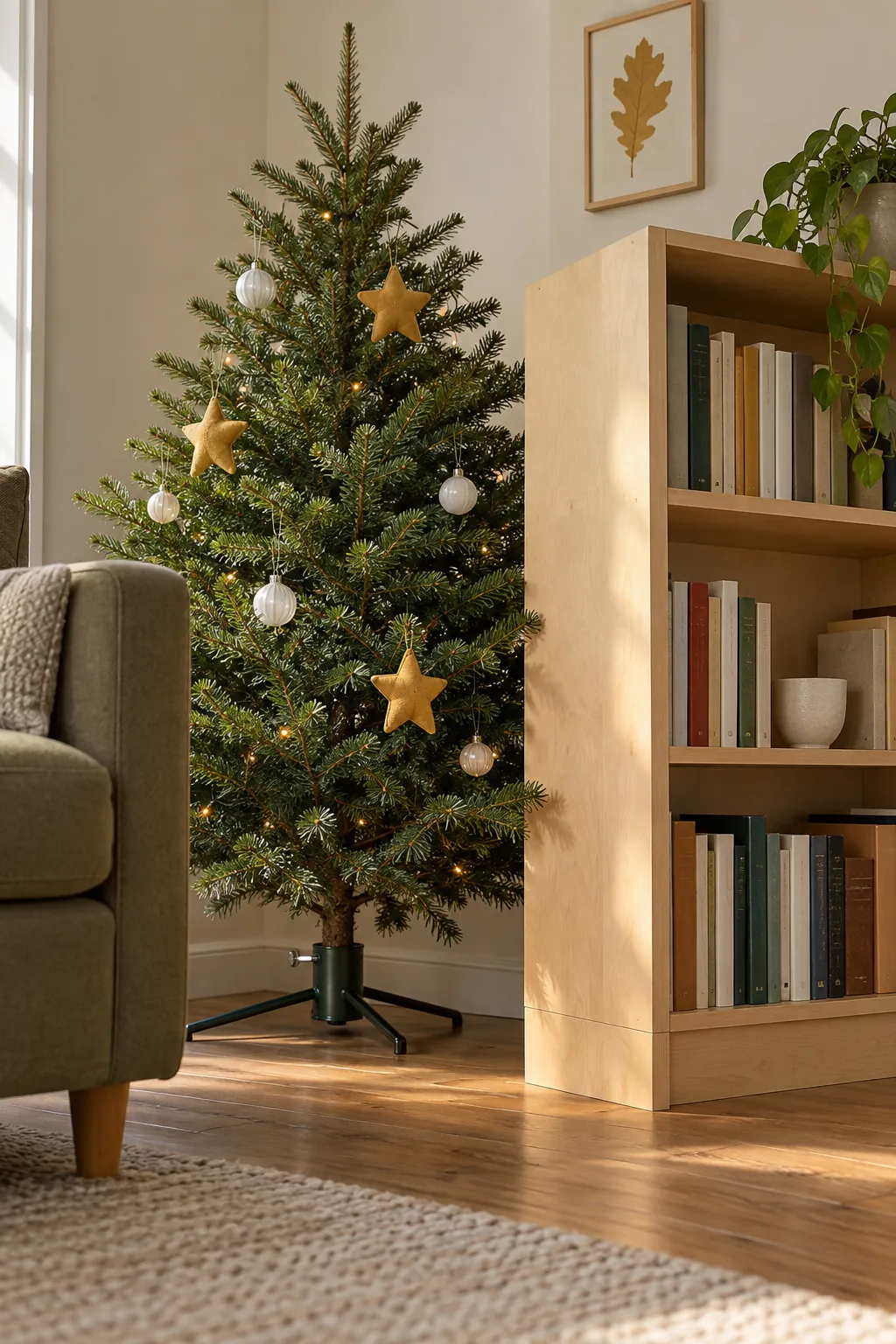
Anchor the tree beside the bookcase end
A bookcase can provide a visual boundary for a tree without requiring the sofa to move. Choose the outer end that does not block a frequently used shelf or cabinet door. The tree’s widest part should remain clear of books and any nearby reading light. Put a few wrapped boxes beneath the tree rather than on shelves that must stay useful. If the bookcase is not securely installed, address that before adding another object beside it.
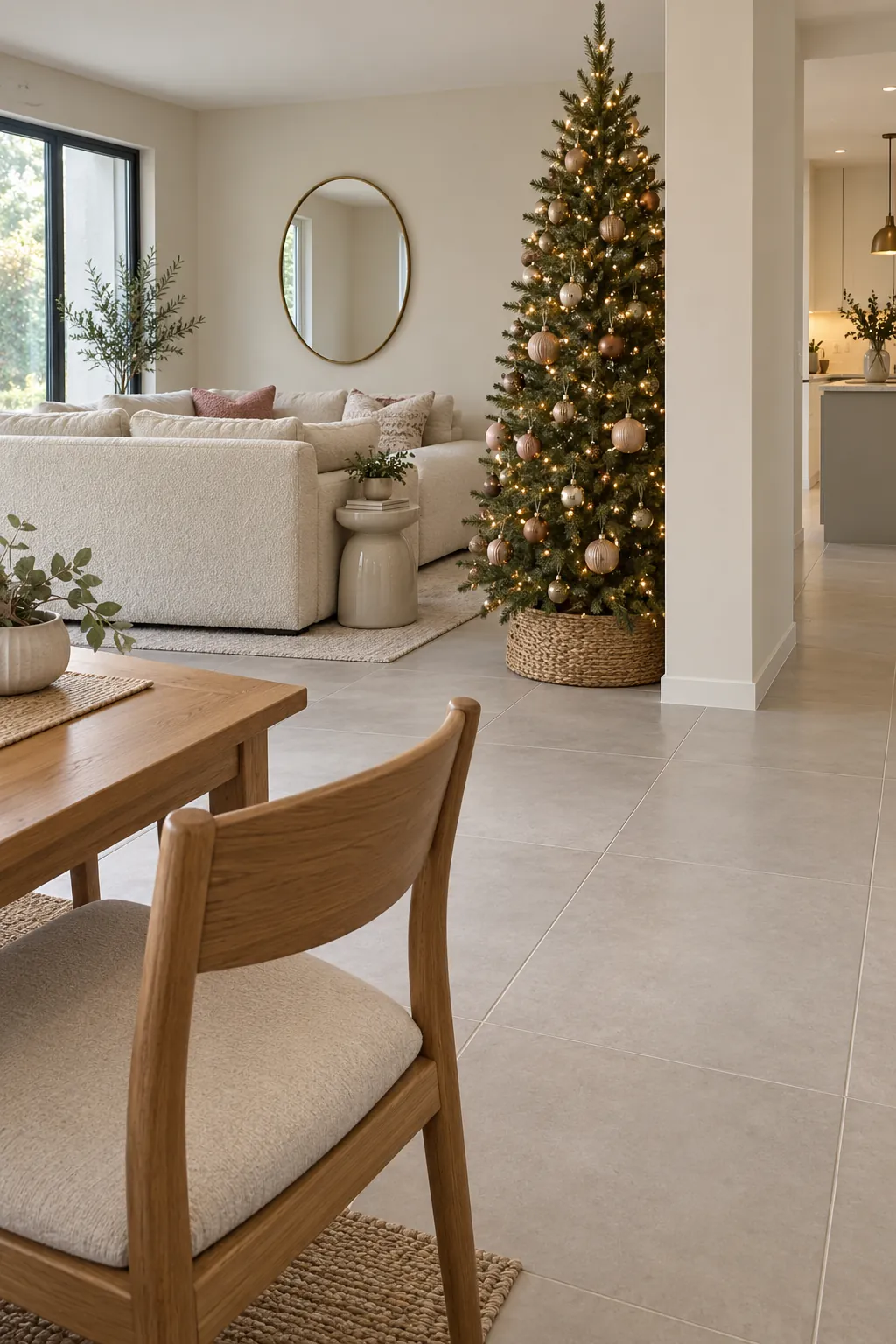
Place the tree on the living side of an open room
In a shared living and dining room, a tree can sit near the boundary while remaining on the living side. Keep the dining chairs’ pullback space separate from the branches and stand. Walk the route from the kitchen with a serving dish to see whether that boundary position is genuinely spare.
Let the tree take one side table’s place
Remove a small side table for the season and use its footprint for a slim tree. The sofa stays where it is, and the change is limited to one easy piece of furniture. Provide a reachable coaster or small landing surface on the sofa’s other side. Check that losing the table does not also remove the room’s only useful lamp.
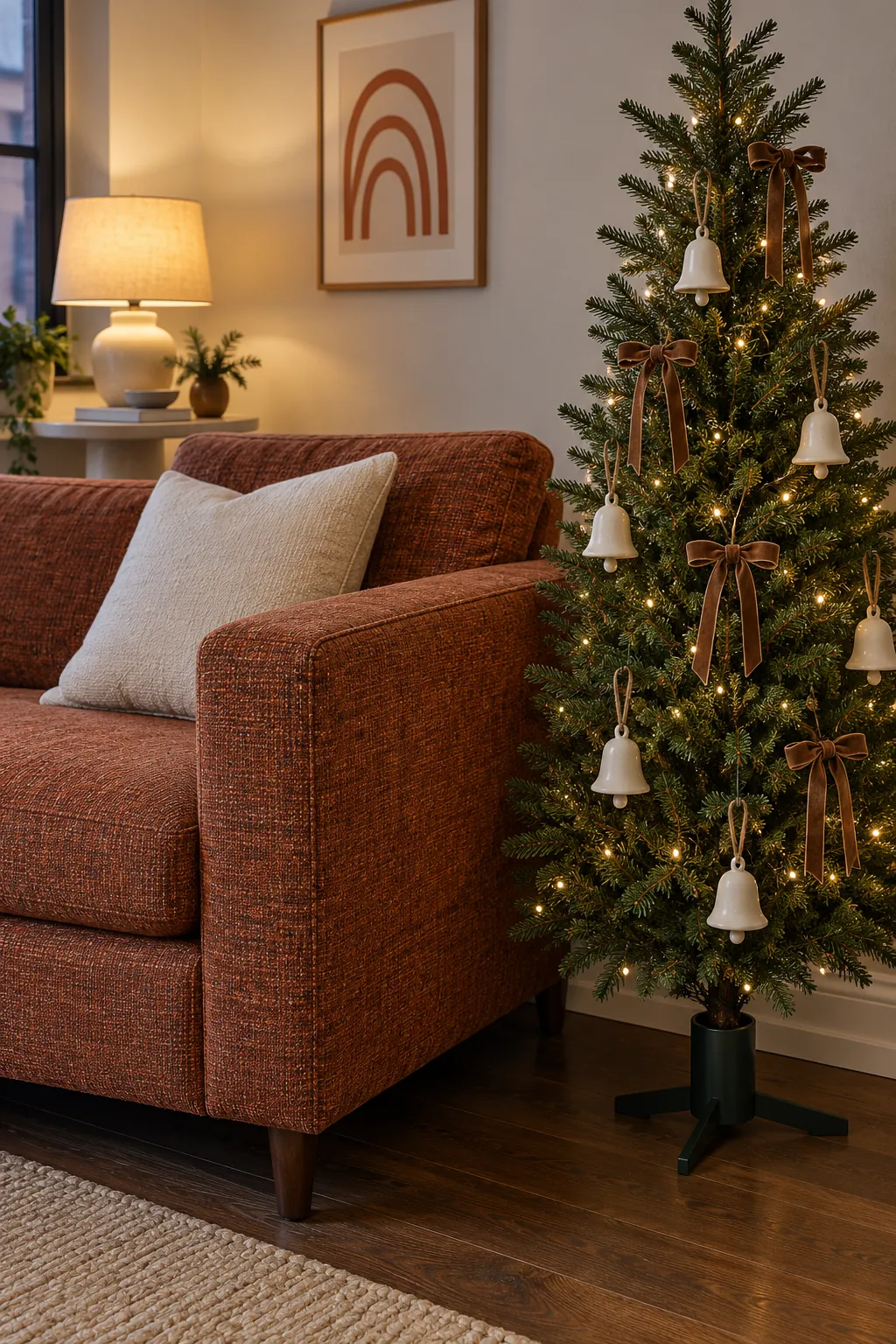
Relocate one accent chair to free a full corner
A lightly used accent chair may occupy the only sensible tree corner. Move that chair to another useful spot for the season, leaving the sofa and primary conversation route unchanged. Choose a tree that stays inside the cleared corner rather than reclaiming the chair’s entire surrounding space.
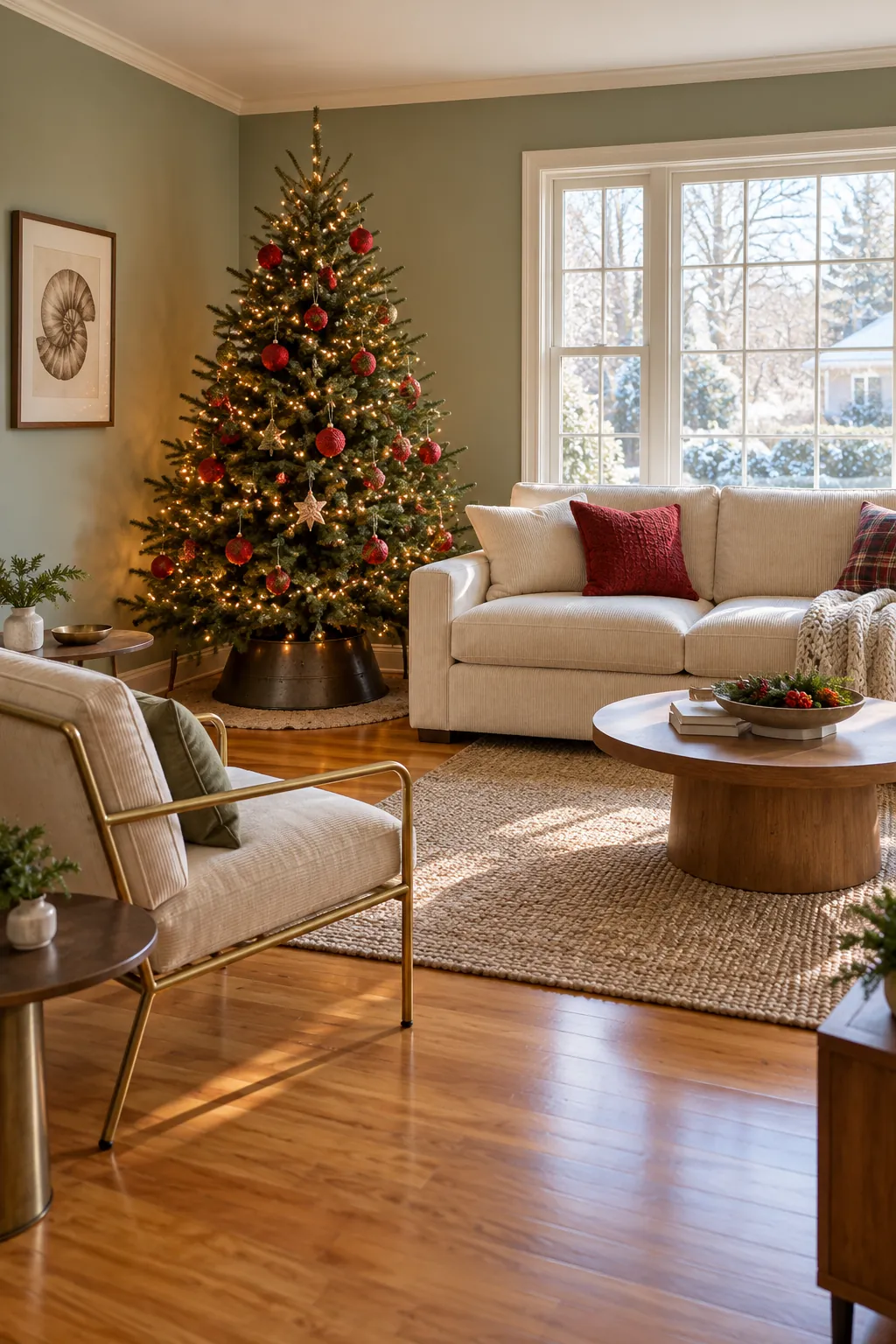
Try the remaining seating arrangement before committing. If that chair is essential for your household or visitors, keep it and select a smaller tree elsewhere. A seasonal layout should not remove the seat someone depends on.
Store the ottoman to open a diagonal pocket
An ottoman can take up the floor pocket between a sofa and a side chair. Storing it temporarily may create room for a compact tree outside the direct walking line. Keep this option for an ottoman that is genuinely optional, rather than one used for support or essential daily comfort.
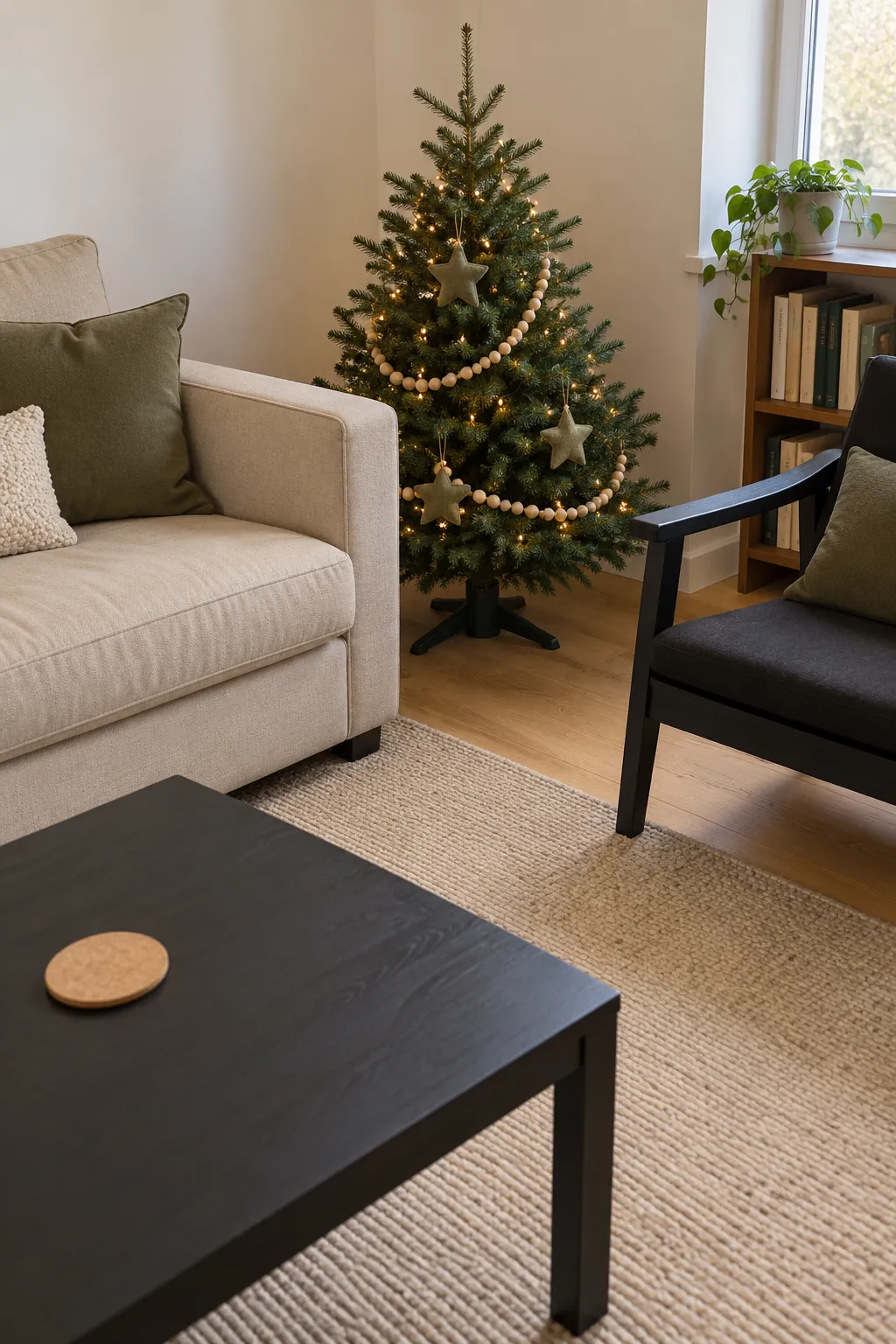
Nest small tables to release a room edge
If you already use nesting coffee tables, tuck the smaller one beneath the larger to reduce their spread. This may release enough room at the edge of the seating group for a narrow tree. The sofa can stay fixed while the table arrangement becomes more compact. Keep the larger table close enough to use from the seats. Test the newly opened space with the tree’s widest branches, since an empty floor patch alone can be misleading.
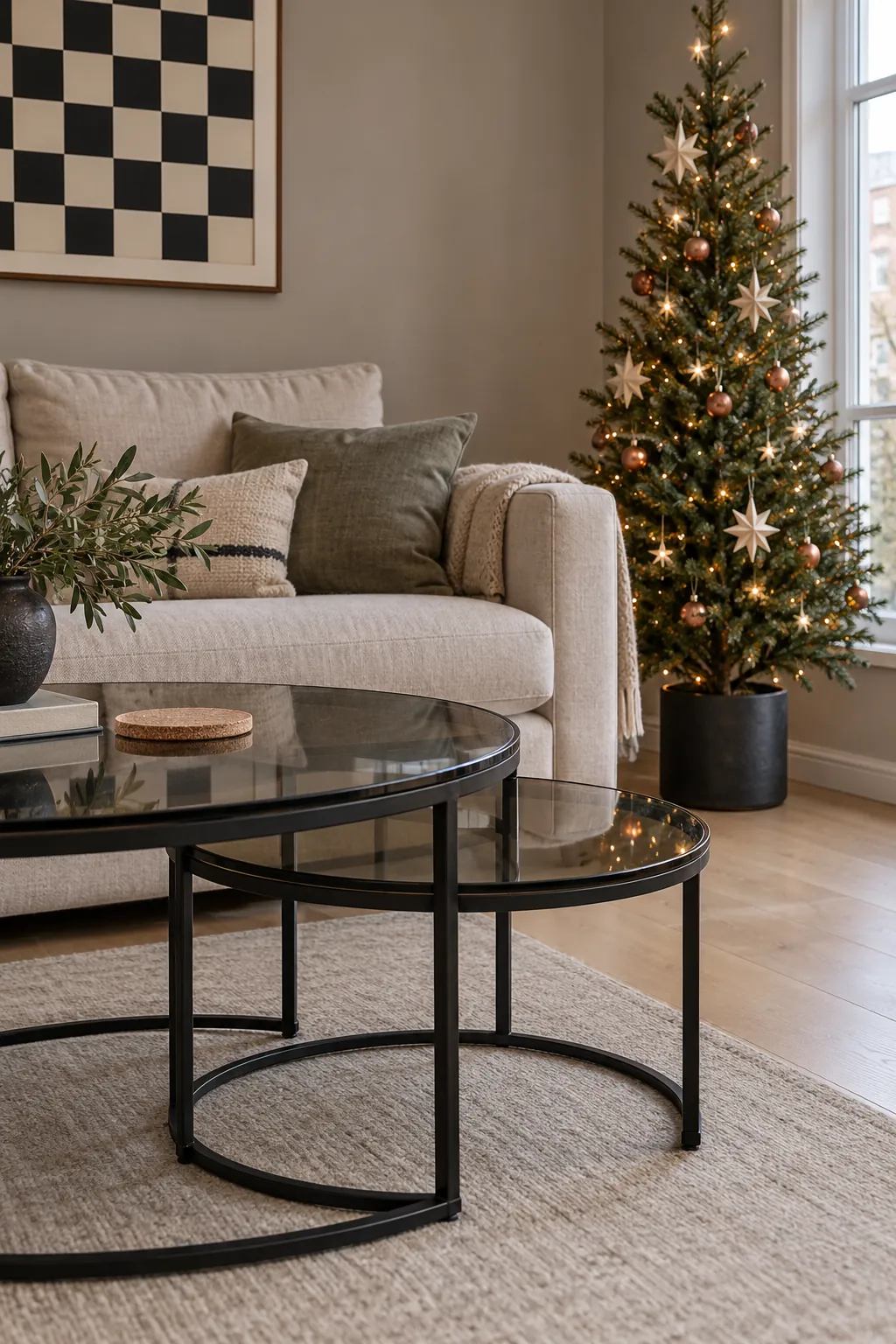
Swap a floor lamp for a tree with lights
A floor lamp sometimes occupies the exact corner needed for a tree. Move the lamp to a safe useful spot elsewhere and let a lit tree take that footprint. Tree lights can add atmosphere, but they may not provide enough light for reading.
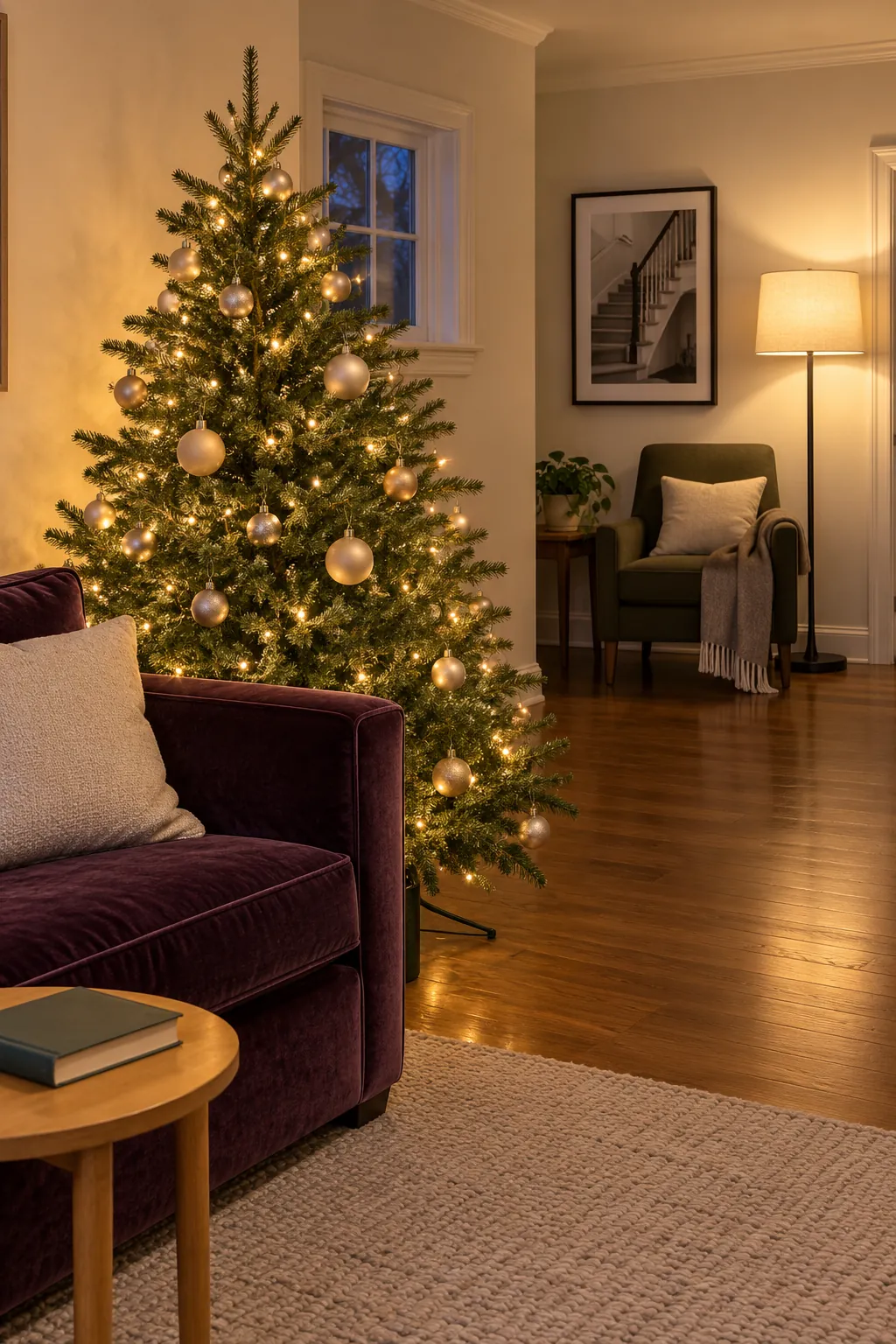
Keep another suitable lamp available for the people using the sofa. Check that the tree cord reaches a permitted outlet route without crossing the floor. Avoid adding multiple adapters merely to make the corner work. This is a change in furniture footprint, not a reason to compromise the room’s lighting.
Move a plant stand to free a bright corner
A plant stand and a Christmas tree often compete for the same attractive window corner. Relocate the plant only if you can give it suitable light and temperature elsewhere. Use the cleared corner for the tree while the sofa stays in place. Keep watering equipment and wet saucers away from the tree’s electrical connections.
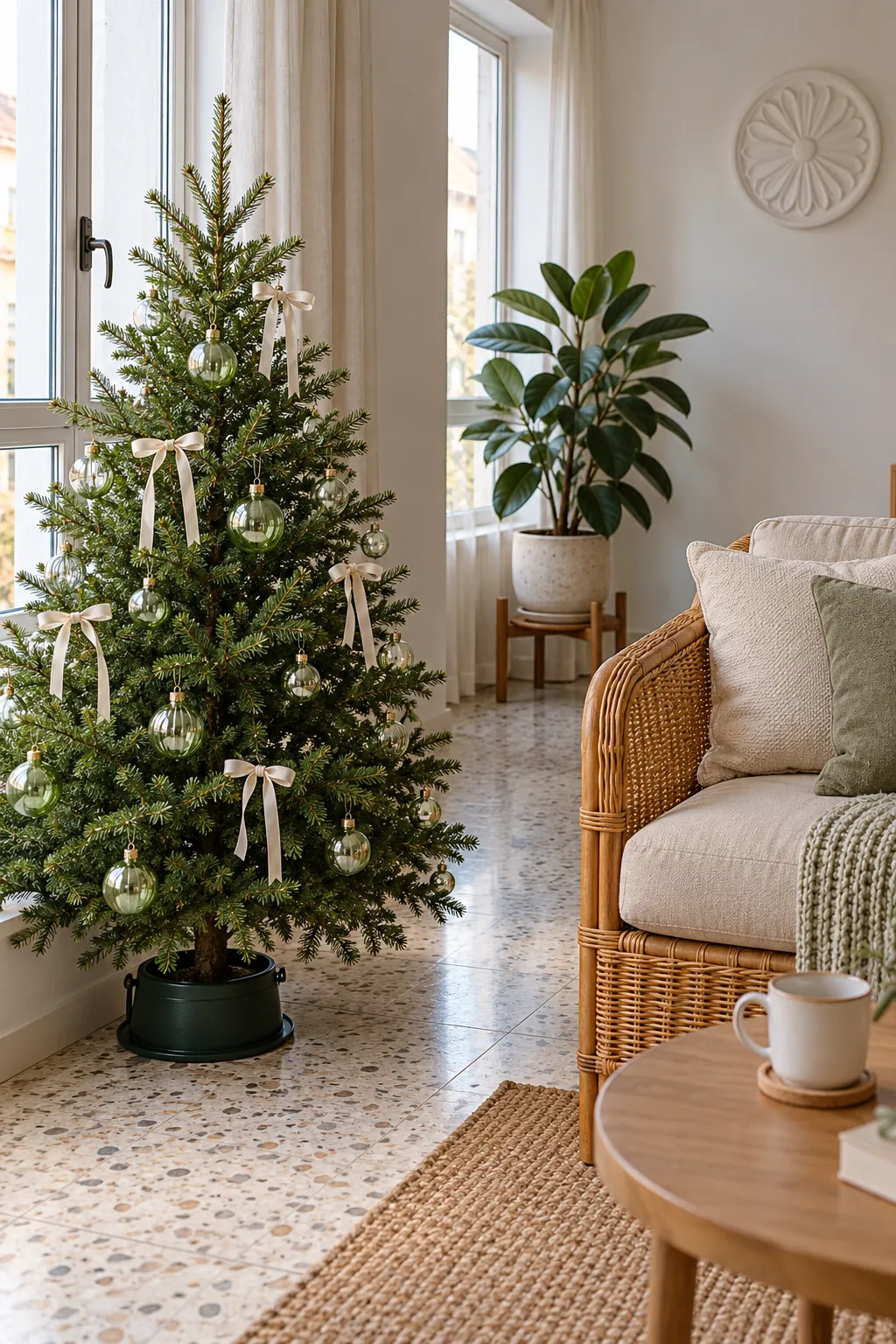
Use a flat backed tree along a spare wall
A tree designed with a flat back can sit closer to a wall than a conventional full tree. This suits a spare wall opposite the sofa where depth is limited but some width is available. Use the stand specified for that tree.
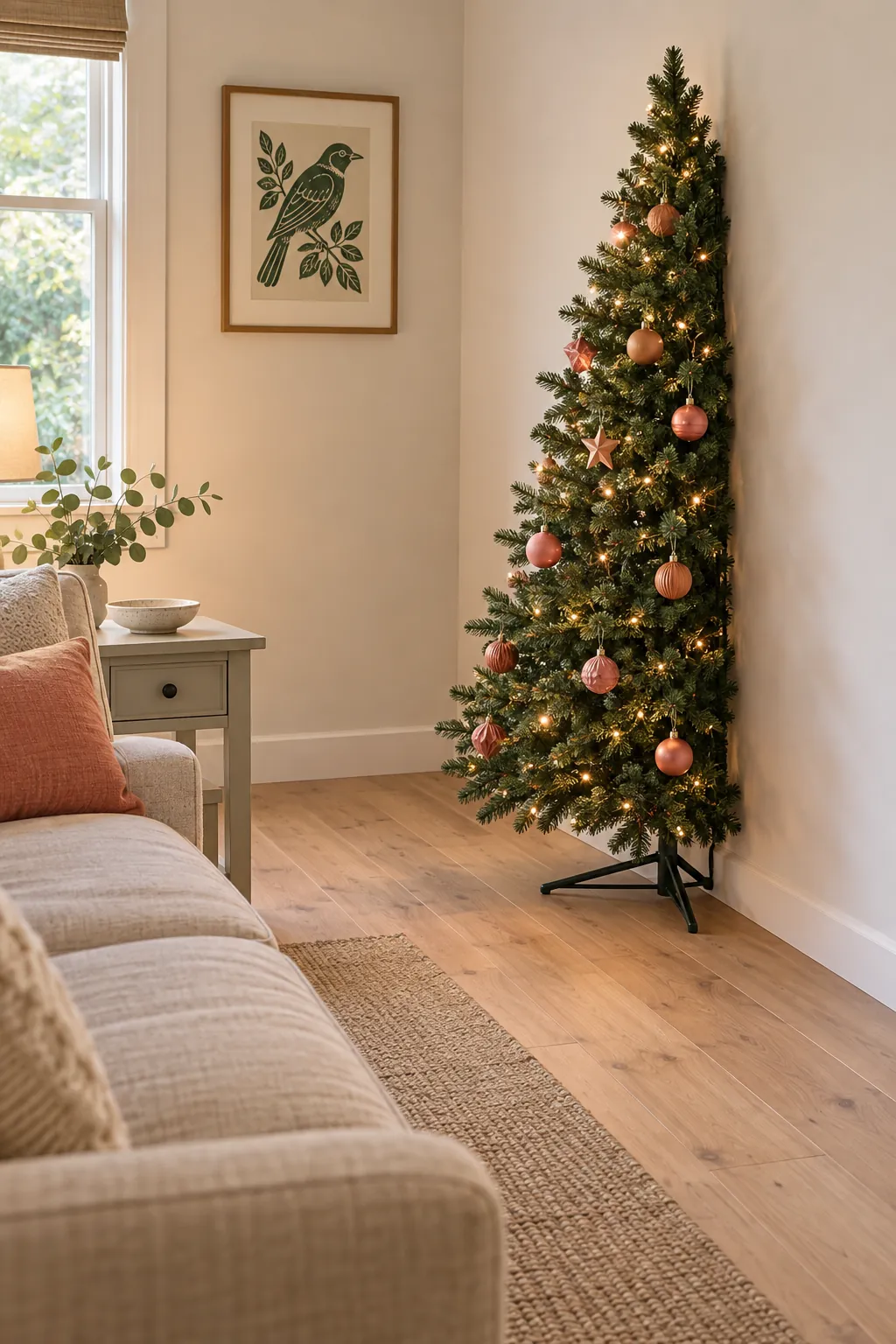
Allow room for the forward branches without letting them intrude on the seating route. Do not flatten a normal tree against the wall or force its stand into an awkward angle. A shape intended for the position is more reliable than a squeezed arrangement.
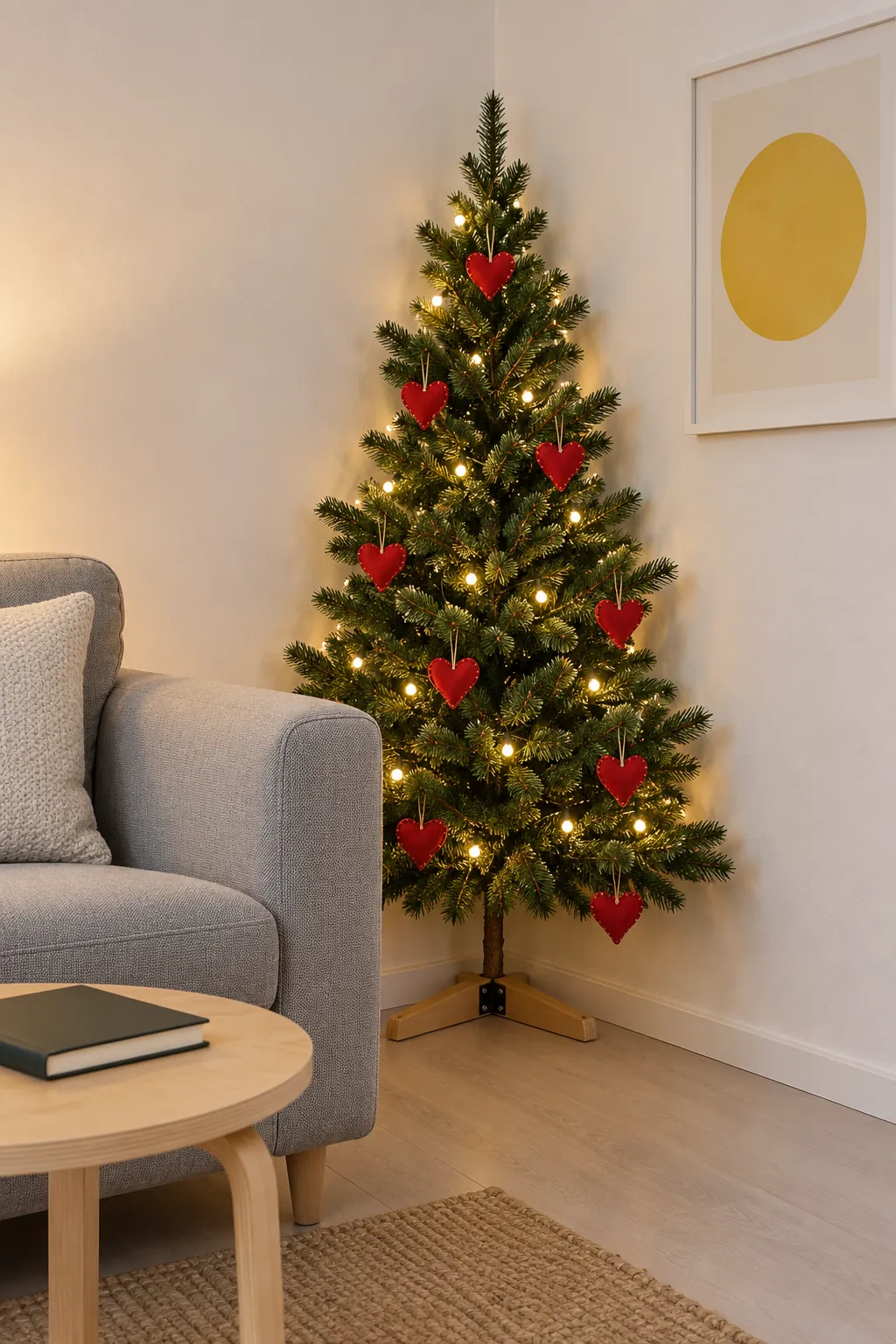
Choose a quarter tree for a true right angle
A purpose made quarter tree can fit into a right angle corner with less forward spread. It works where a full round tree would extend beyond the sofa arm into the room. Check the assembled dimensions and stand shape, because the word corner does not guarantee a small footprint.
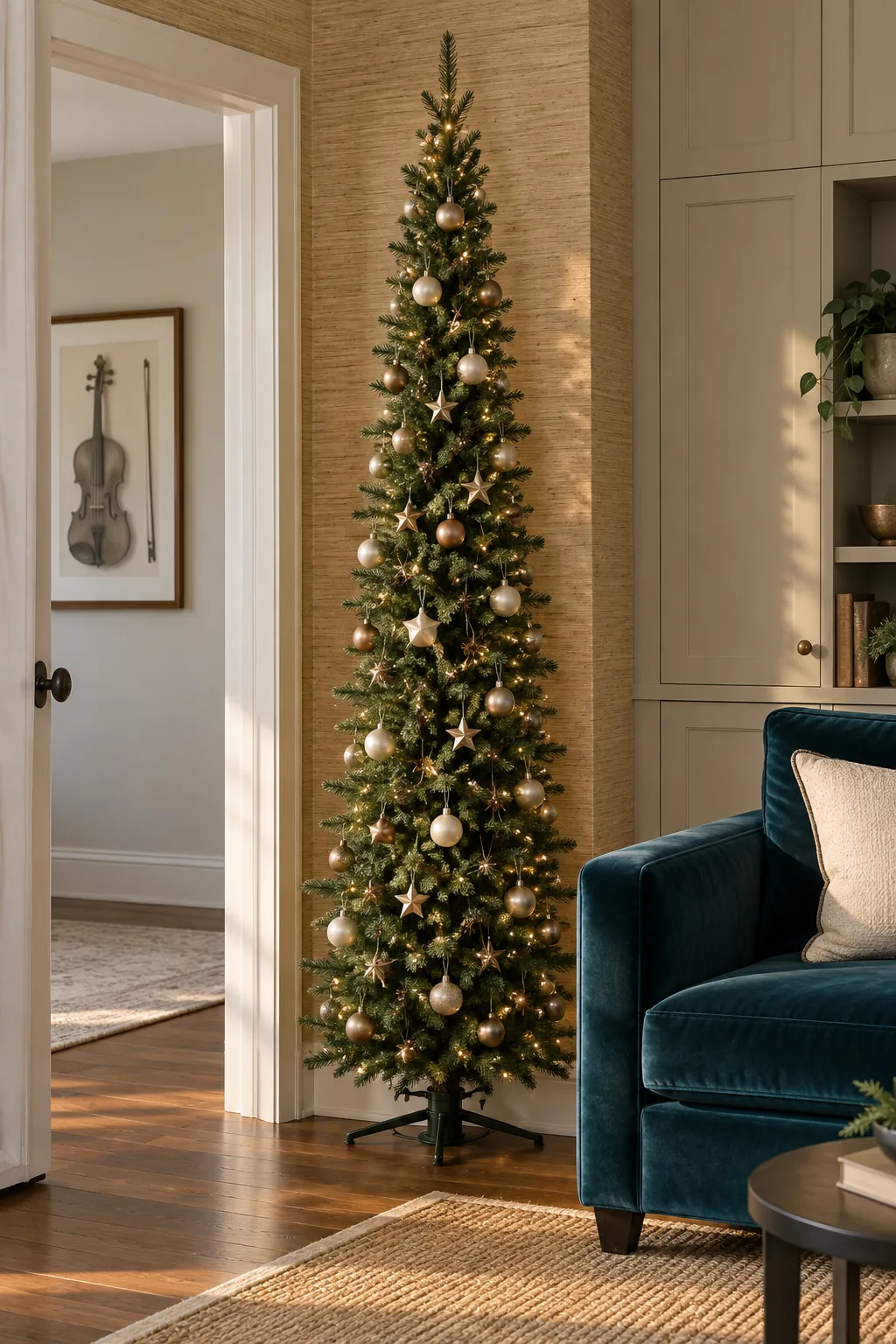
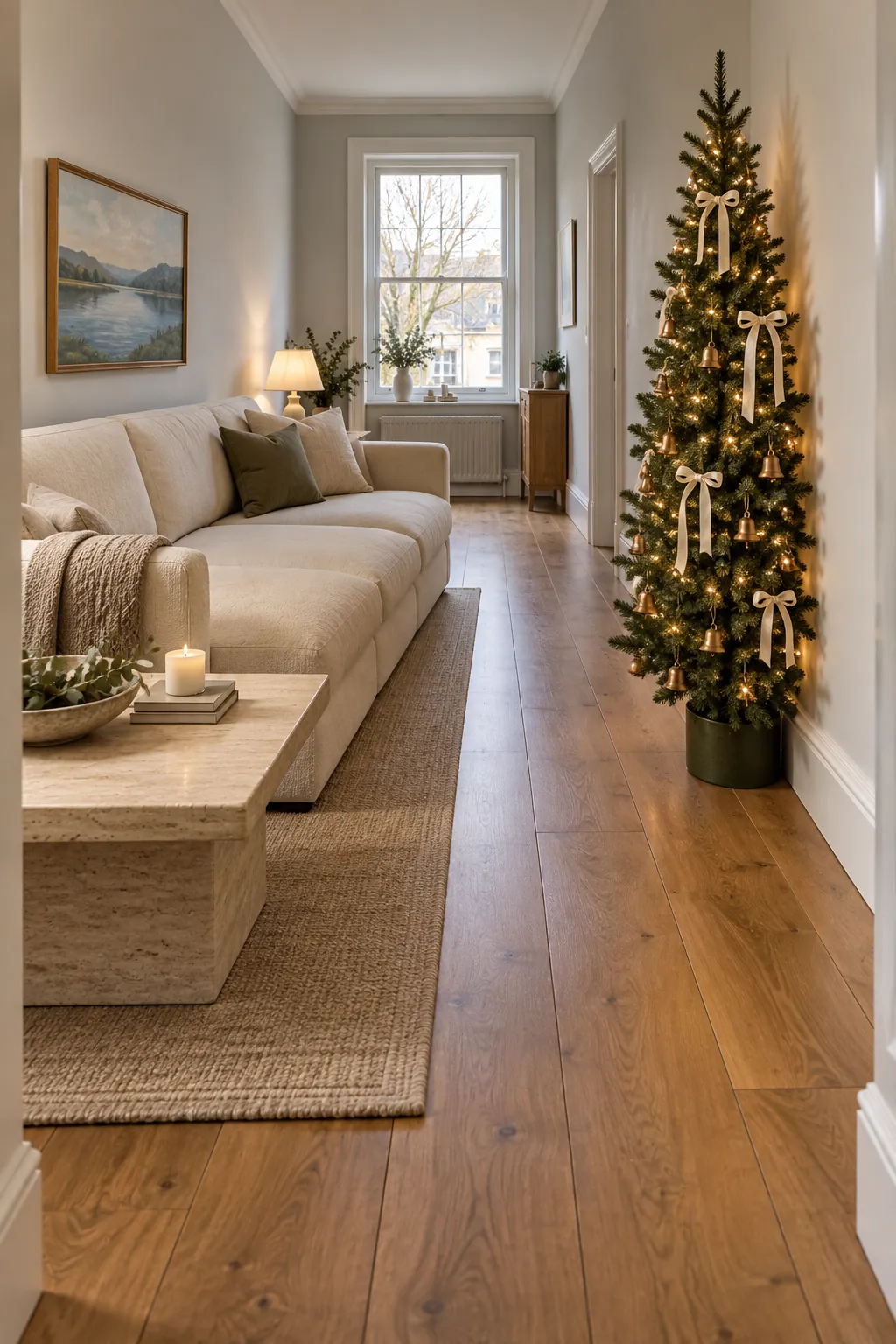
Put a pencil tree on a narrow wall pier
A tall pencil tree suits a narrow solid wall section that is not wide enough for a full tree. Place it beside the fixed sofa only when there is enough floor depth for its base and branches. Its height creates a focal point without a wide skirt. Keep ornaments small so they do not defeat the narrow shape. Confirm it is stable on the actual floor before decorating.
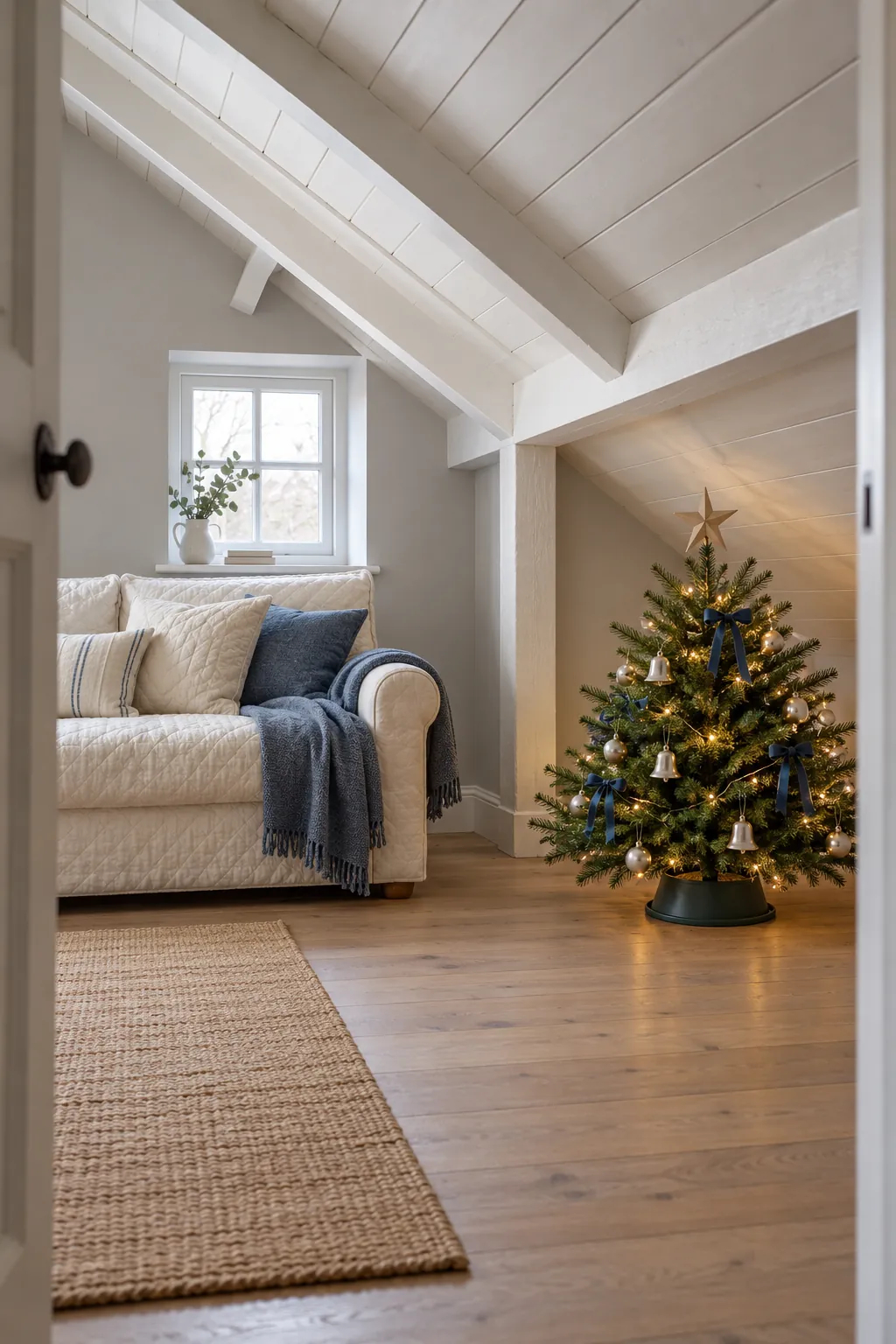
Choose a short tree beneath a sloped ceiling
A sloped living room ceiling may leave a low zone that furniture does not use. A short tree can occupy that zone while the sofa remains under the taller part of the room. Measure the height where the tree’s top will actually sit, allowing for its topper. Avoid wedging branches against the ceiling or putting the stand on a makeshift riser.
Set a tabletop tree on an existing console
A small tree on a console can create a visible Christmas focal point without taking another floor position. Clear the top so the entire stand sits on a sturdy level surface. The sofa can keep its normal relationship to the rest of the room.
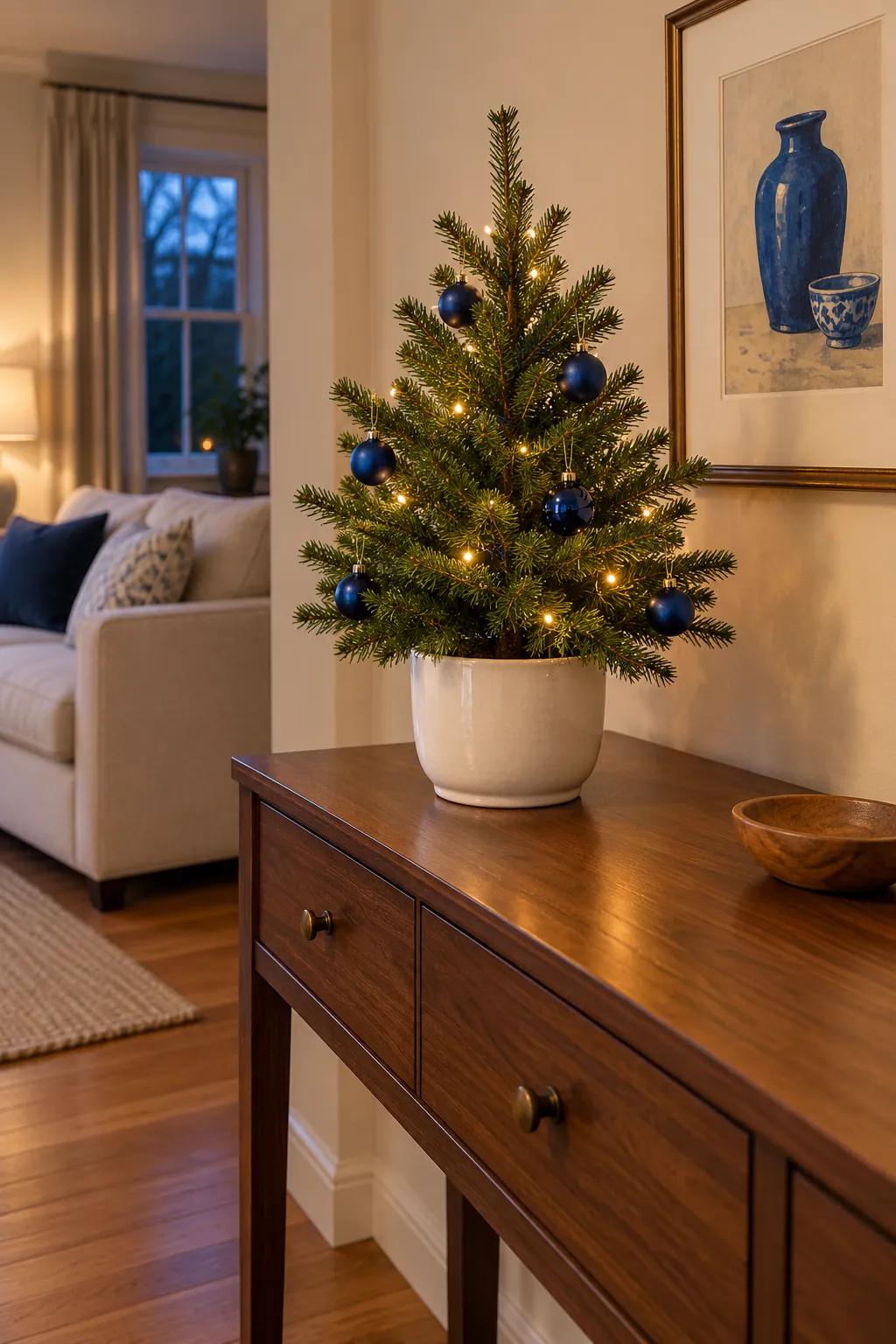
Consider the combined height of the console and tree before adding a topper. Keep cords behind the furniture in a safe permitted route and leave drawers usable. If children or pets can pull the tree down, choose a safer arrangement rather than relying on the console’s height alone.
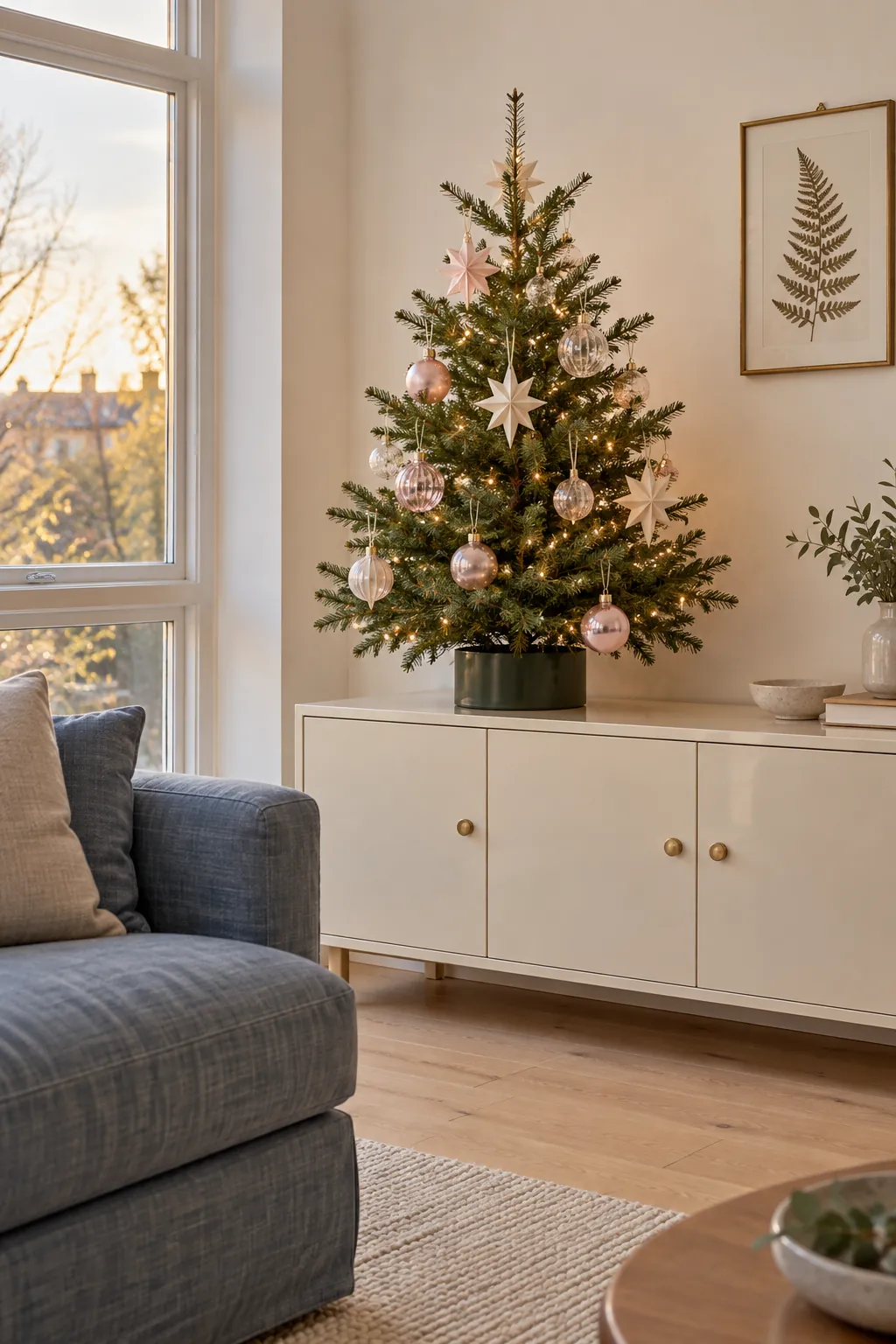
Use a low cabinet for a compact tree
A low cabinet lets a compact tree read as a room feature while keeping its total height modest. Use a cabinet with adequate depth and support for the whole stand. Keep the branches away from cabinet doors you need daily. This works particularly well when the sofa faces the cabinet but a full tree would obstruct the view.
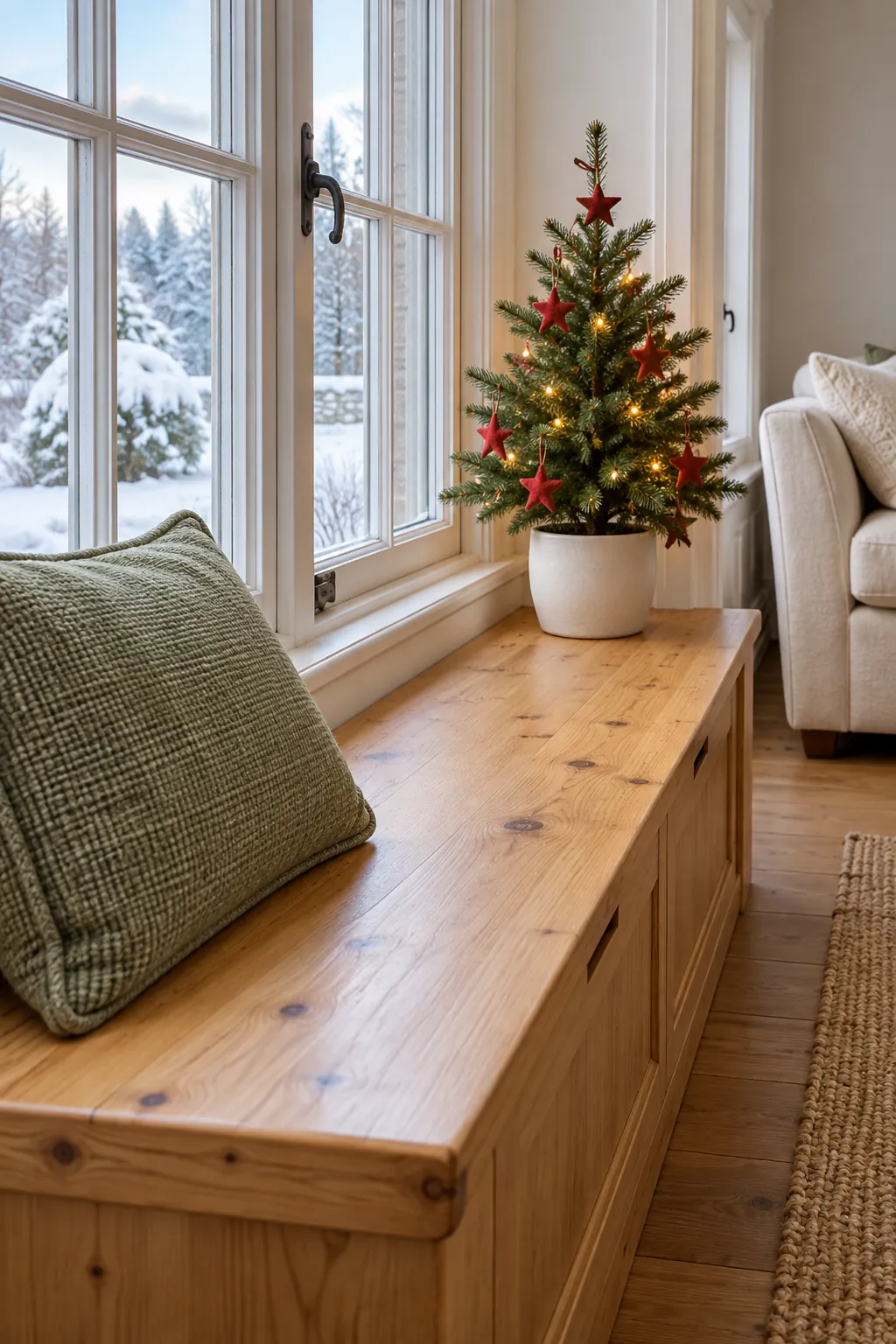
Place a small tree at one end of a window bench
An existing broad window bench can support a small tree if the surface is stable and not needed for access or seating. Leave the other end usable rather than filling the bench with presents. Skip this layout if the bench contains a heat outlet, is too narrow for the stand, or is the only comfortable spare seat.
Arrange two miniature trees on a wide shelf
A sturdy wide display shelf can carry two small trees at different heights while the floor remains free. Choose miniature trees whose bases sit entirely within the shelf depth. Keep the display away from heat and avoid trailing decorations.
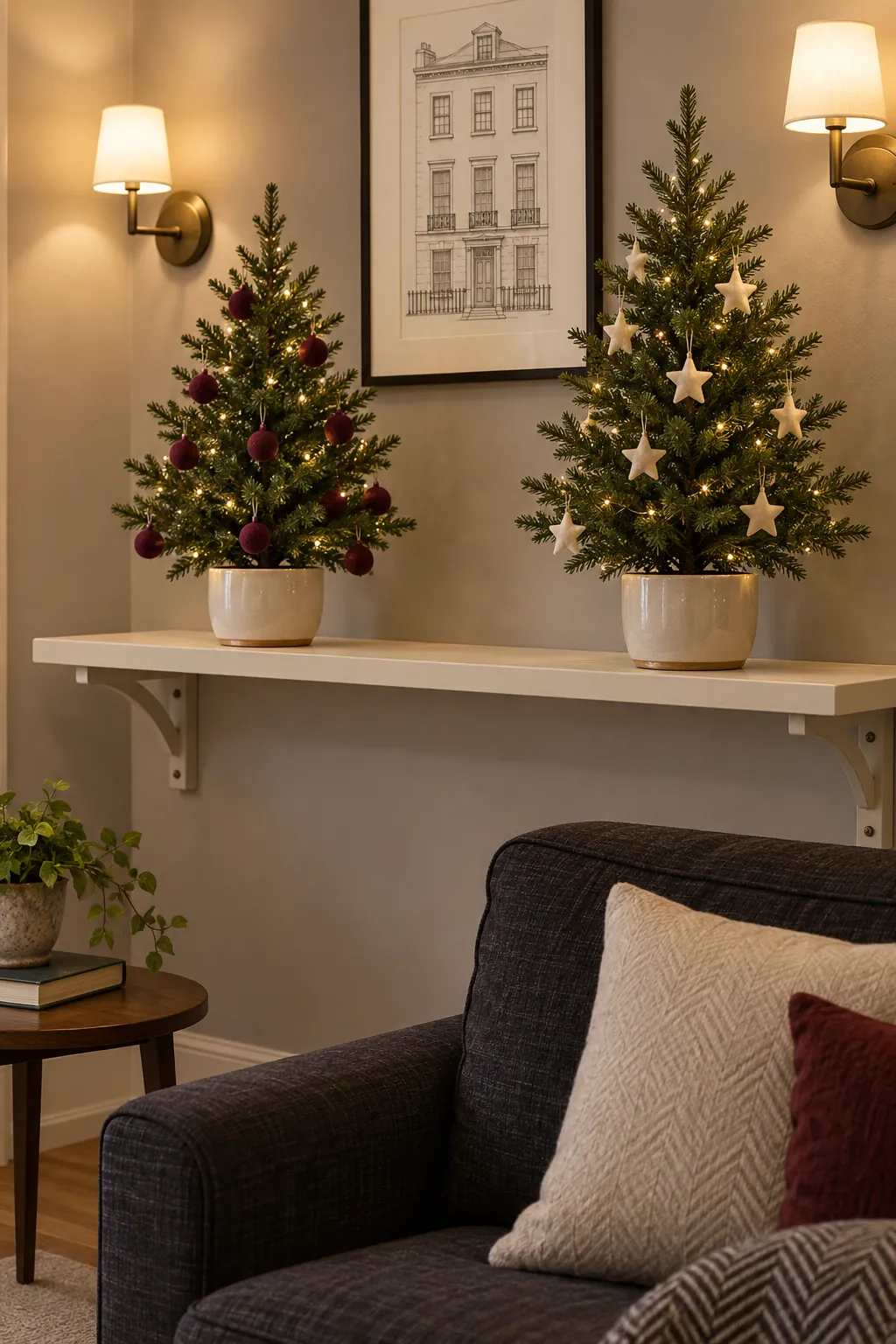
Let a clear gap separate the trees so the arrangement has shape without overcrowding. Use lightweight ornaments appropriate to their branches. Check the shelf’s load capacity and secure installation. A floating decorative ledge that is too shallow or weak is not a substitute for a suitable shelf.
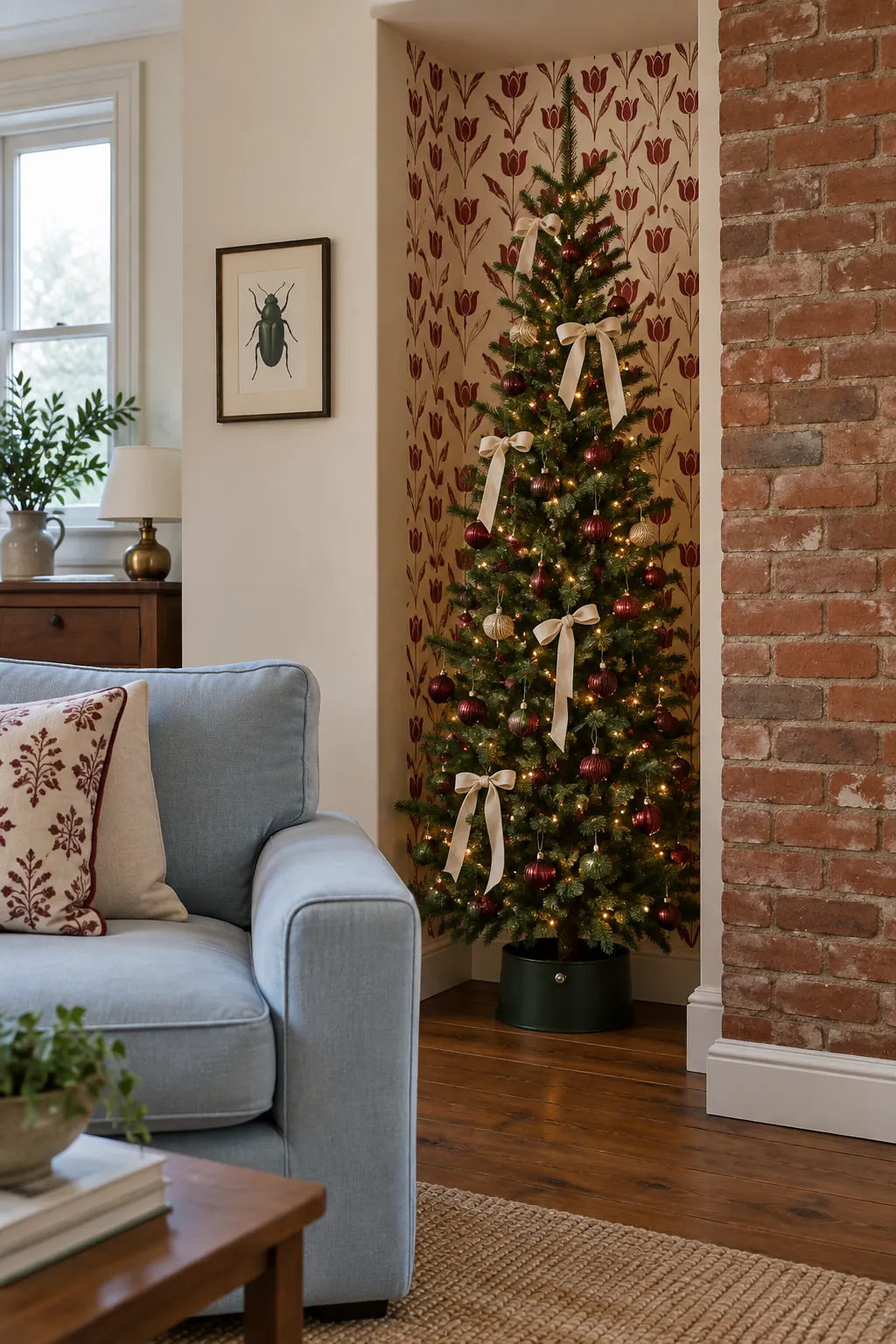
Use a shallow recess with a narrow tree
A recess beside a chimney breast or built in cabinet can provide a dedicated tree position. A slim tree makes use of the height while its base stays within the recess. The sofa stays in the room’s main seating zone. Measure the opening at floor level and at the widest branch height. Keep this layout away from any active heat source or required service access.
Place the tree beside the stair wall
A living room with an exposed stair wall may have a spare floor area beside the bottom of the stairs. Set the tree beside that wall, entirely outside the landing and stair route. The sofa can remain facing into the room.
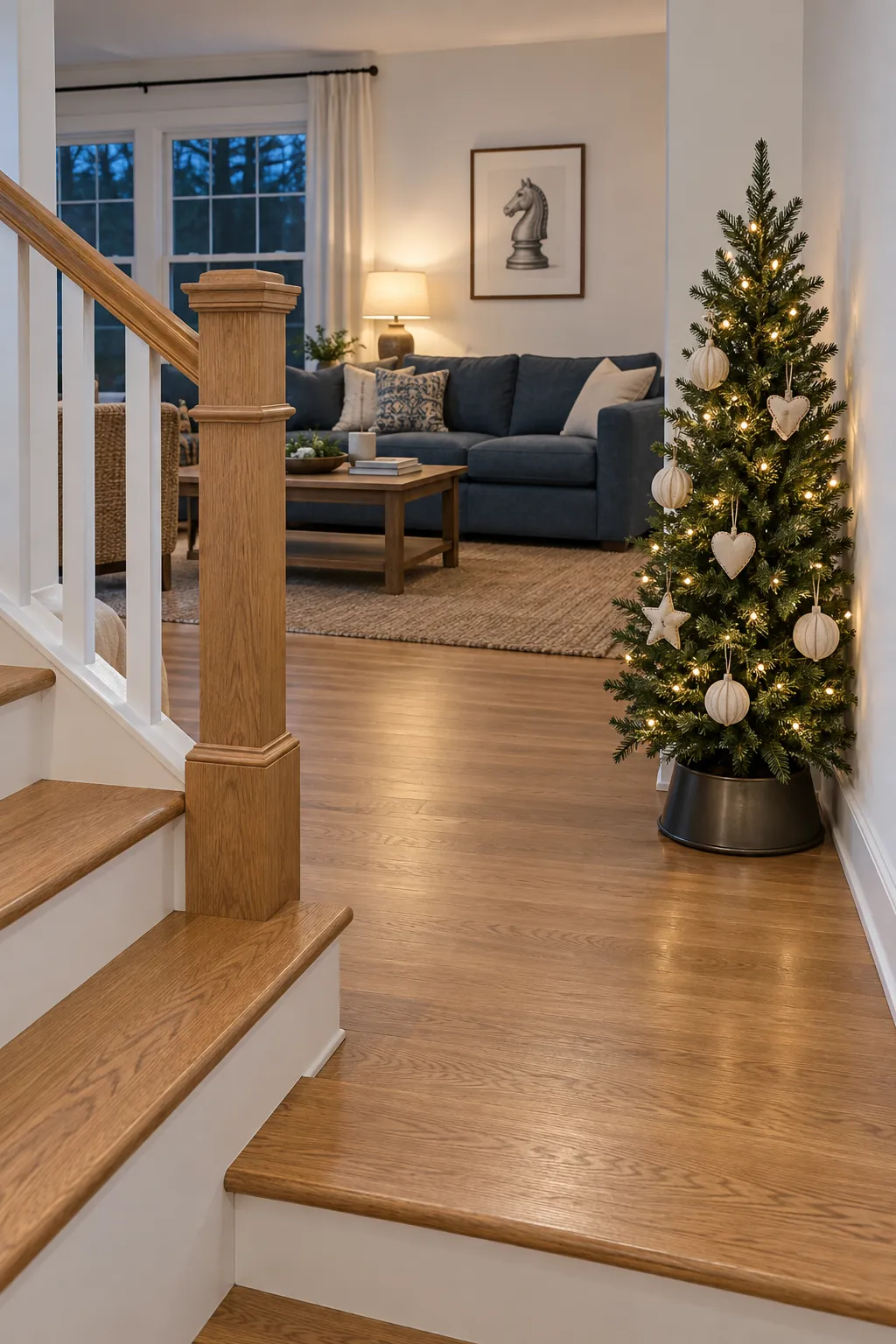
Walk down the stairs carrying a bag to test the approach. Leave the handrail reachable and keep lights and decorations off the steps. If the available area is really part of the exit path, use a tabletop alternative instead.
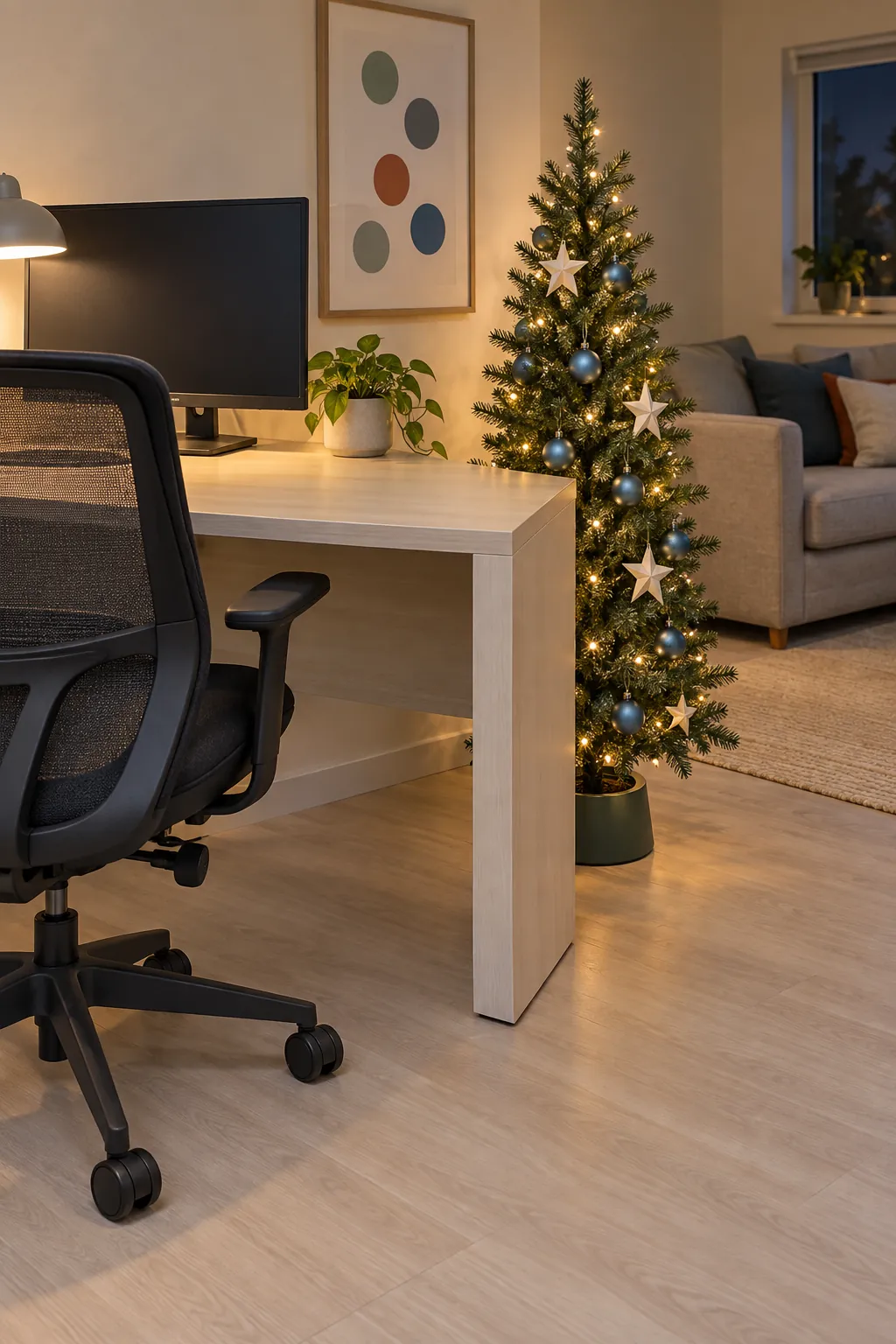
Use the outer edge of a desk return
In a living room that also holds a desk, the outer end of the work zone may have a spare floor pocket. A small tree can mark the seasonal boundary without moving the sofa or covering the desktop. Keep the chair’s full movement clear. Route tree lights separately from work equipment so the desk remains practical.
Keep a long room’s tree against its outer wall
A long narrow living room usually needs a continuous route past the sofa. Place a shallow tree at the outer wall where the route is widest, rather than adding a full tree in the room’s center. Measure the passage with branches in place and choose a smaller tree if normal movement becomes awkward.
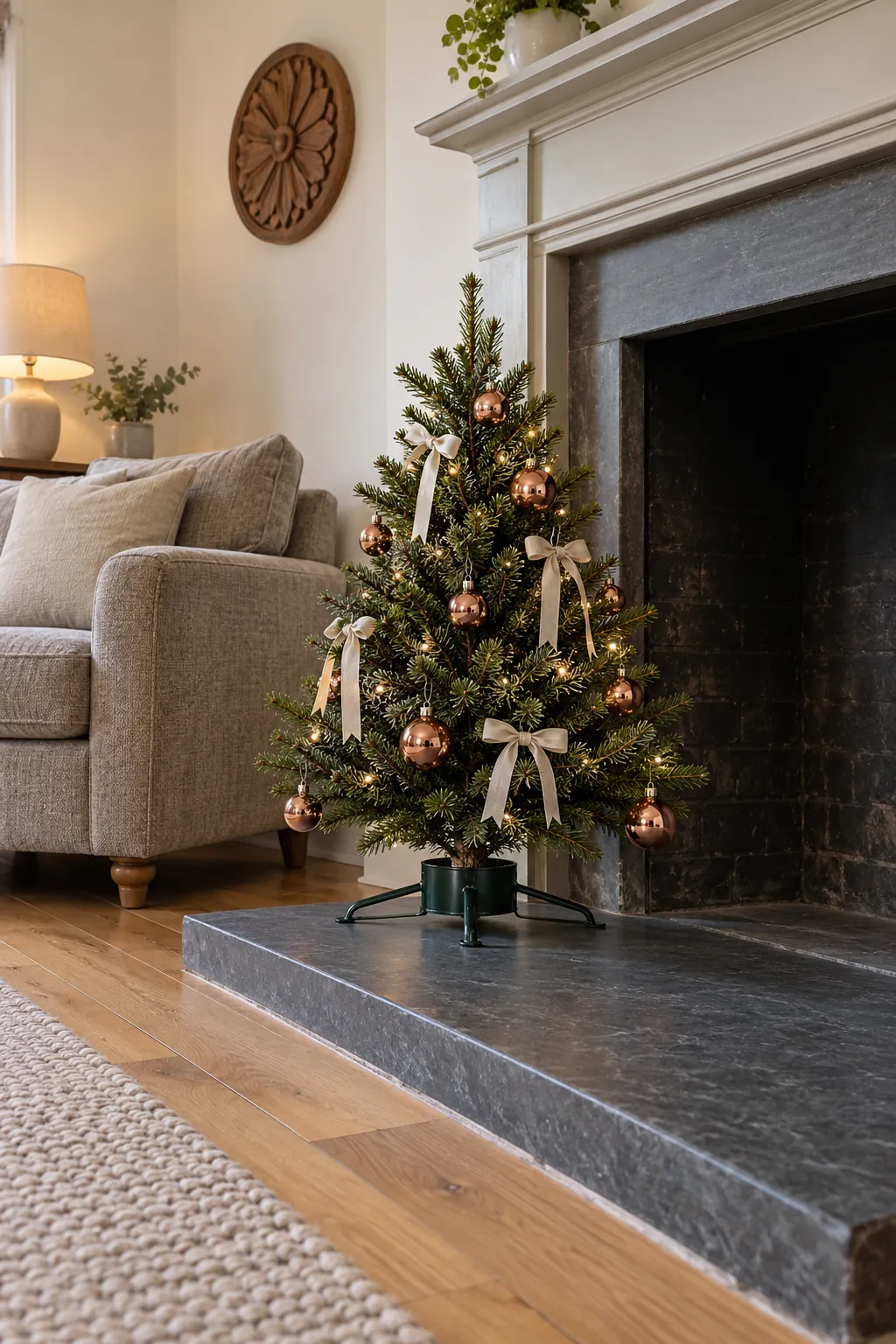
Use an inactive hearth as a compact display zone
An unused hearth can provide a defined spot for a compact tree while the sofa keeps its existing position. This is only an option when the fireplace and every nearby heat source will remain unused throughout the display. The hearth must be level and large enough for the full stand. Keep access clear if it is needed for maintenance or household use. An active fireplace calls for a different location, even if the tree would look good there.
Keep a short tree below the main window view
A low tree centered below a large picture window can preserve more of the view than a full height tree. This suits a room where the sofa is fixed beside the window and the floor in front is genuinely spare. Let the tree’s top stay comfortably below the important sightline.
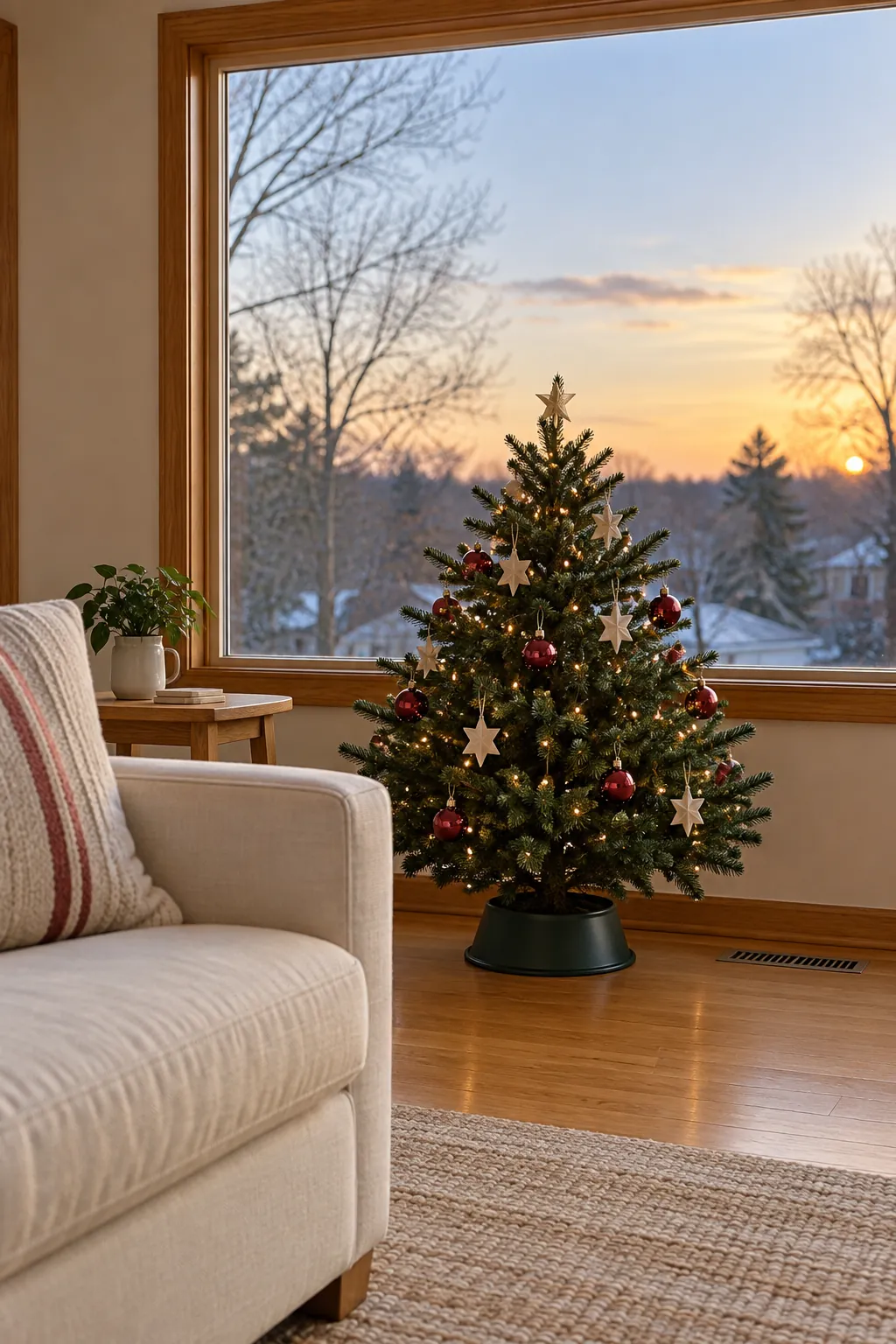
Check the curtain movement, floor vents, and window access before settling on that position. Mark the branch spread and take your normal route through the room once more. Choose the size that leaves daily life comfortable, even when that means a shorter tree than you first imagined.