A built in seat fails when its pretty cushion hides blocked drawers, trapped heat, or an uncomfortable perch. The strongest design starts with structure, access, and the activity the nook must support, then uses materials to make those decisions feel intentional. Measure every opening path before choosing the idea that deserves permanent space in your home.
Wall to Wall Reading Bench
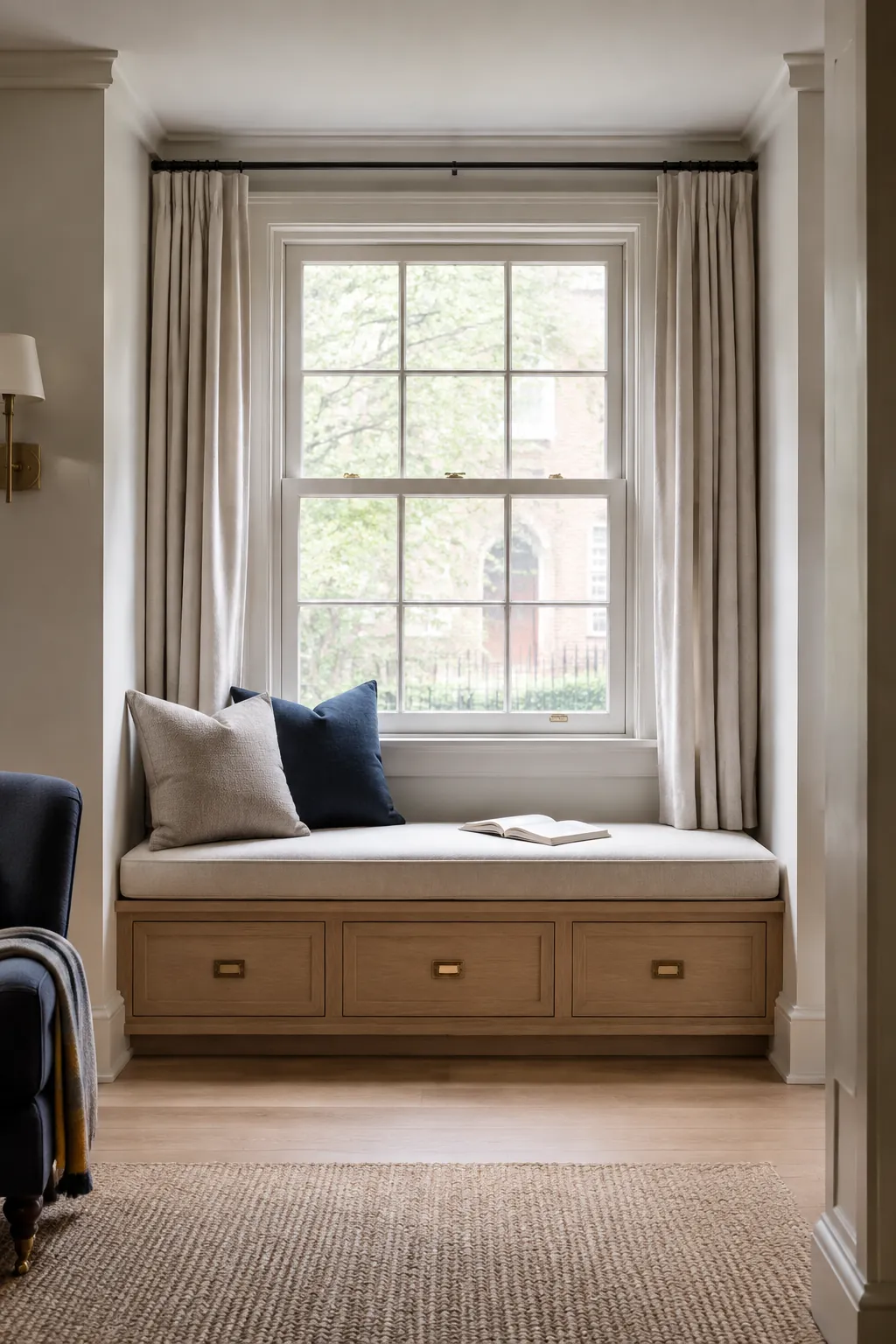
Run the seat between two full height walls so the nook feels architectural rather than added later. A finished depth that supports the thighs makes reading more comfortable, while a slight back cushion angle prevents slouching. Keep the window handles reachable and leave enough room for curtains to stack at the sides.
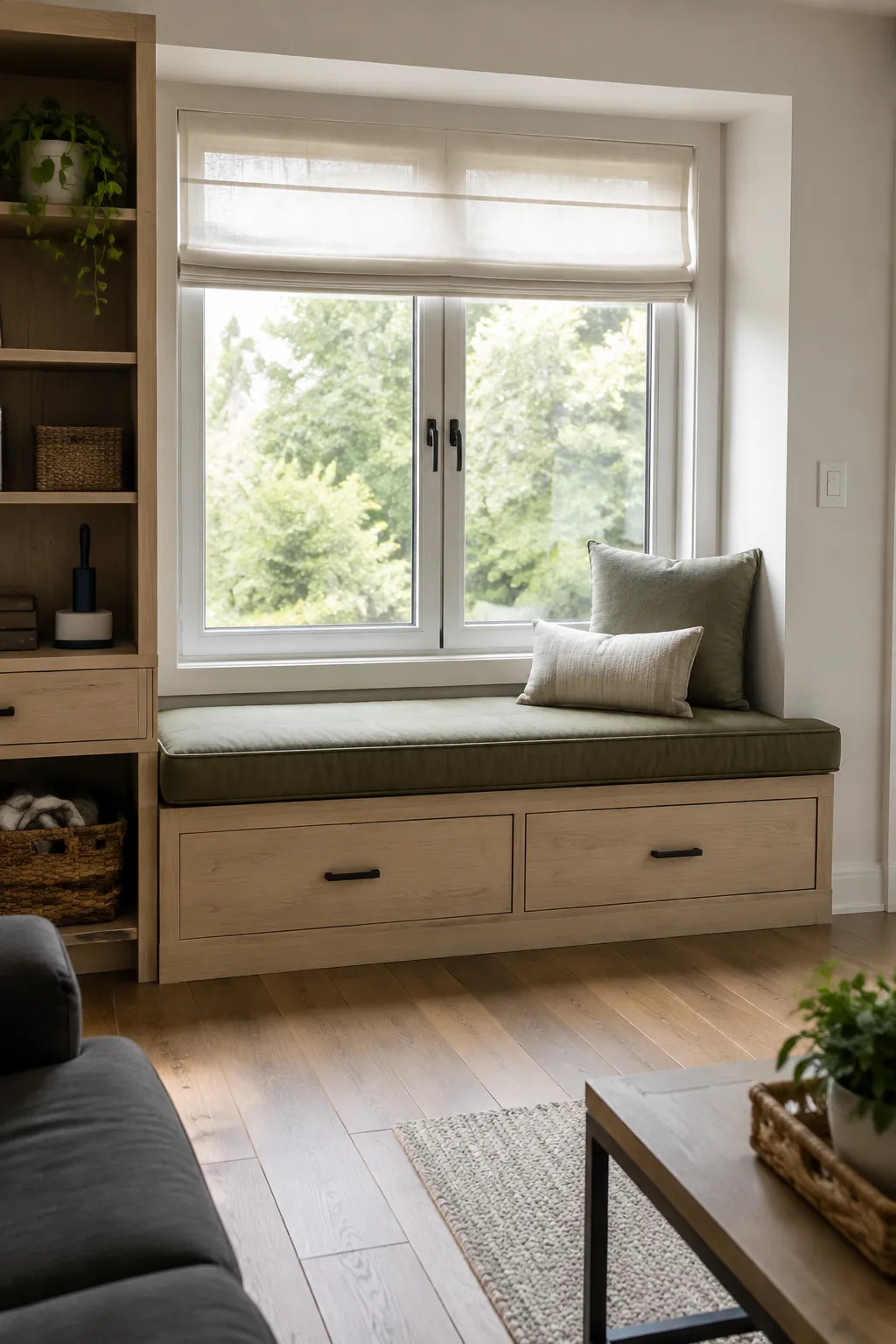
Three Drawer Storage Base
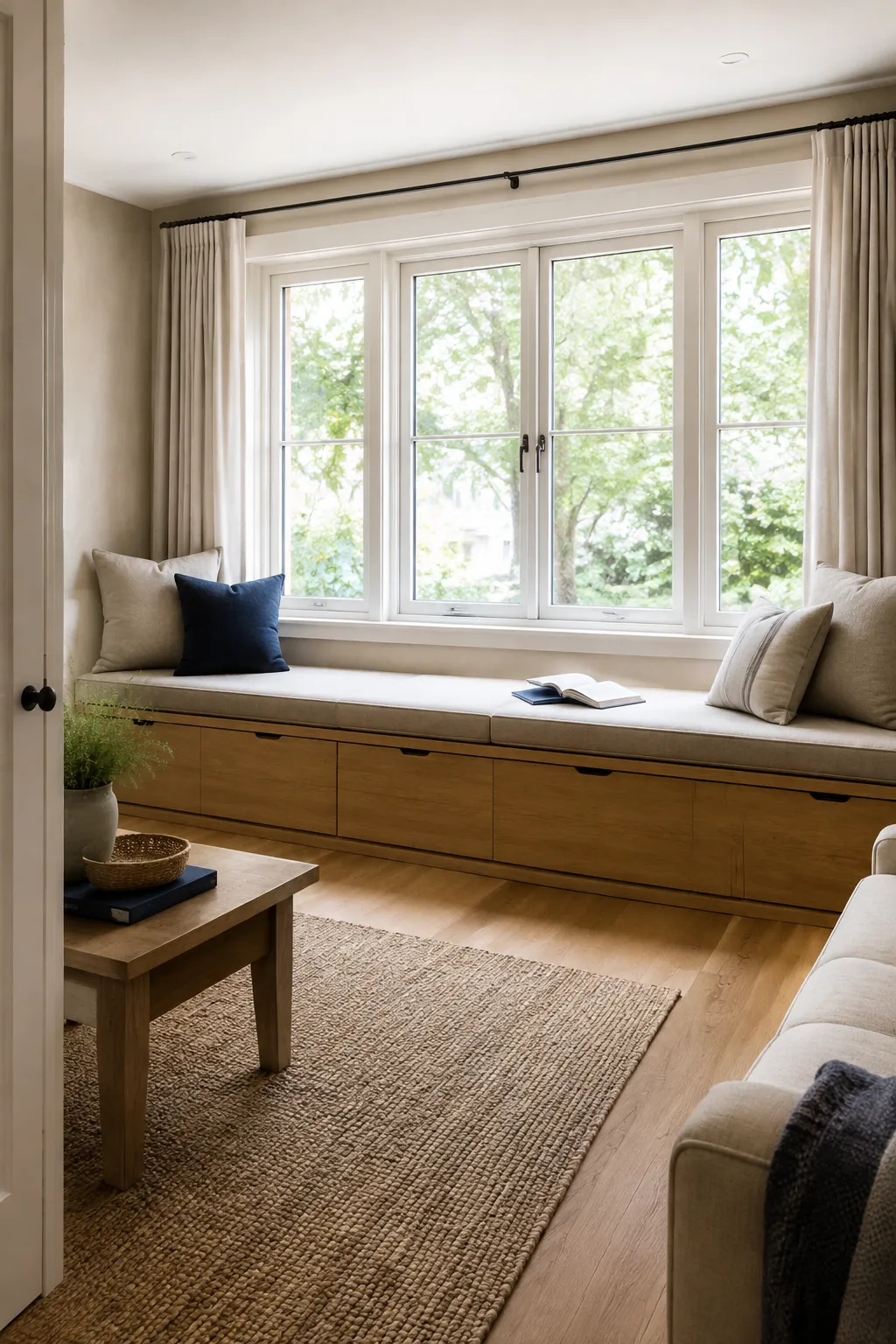
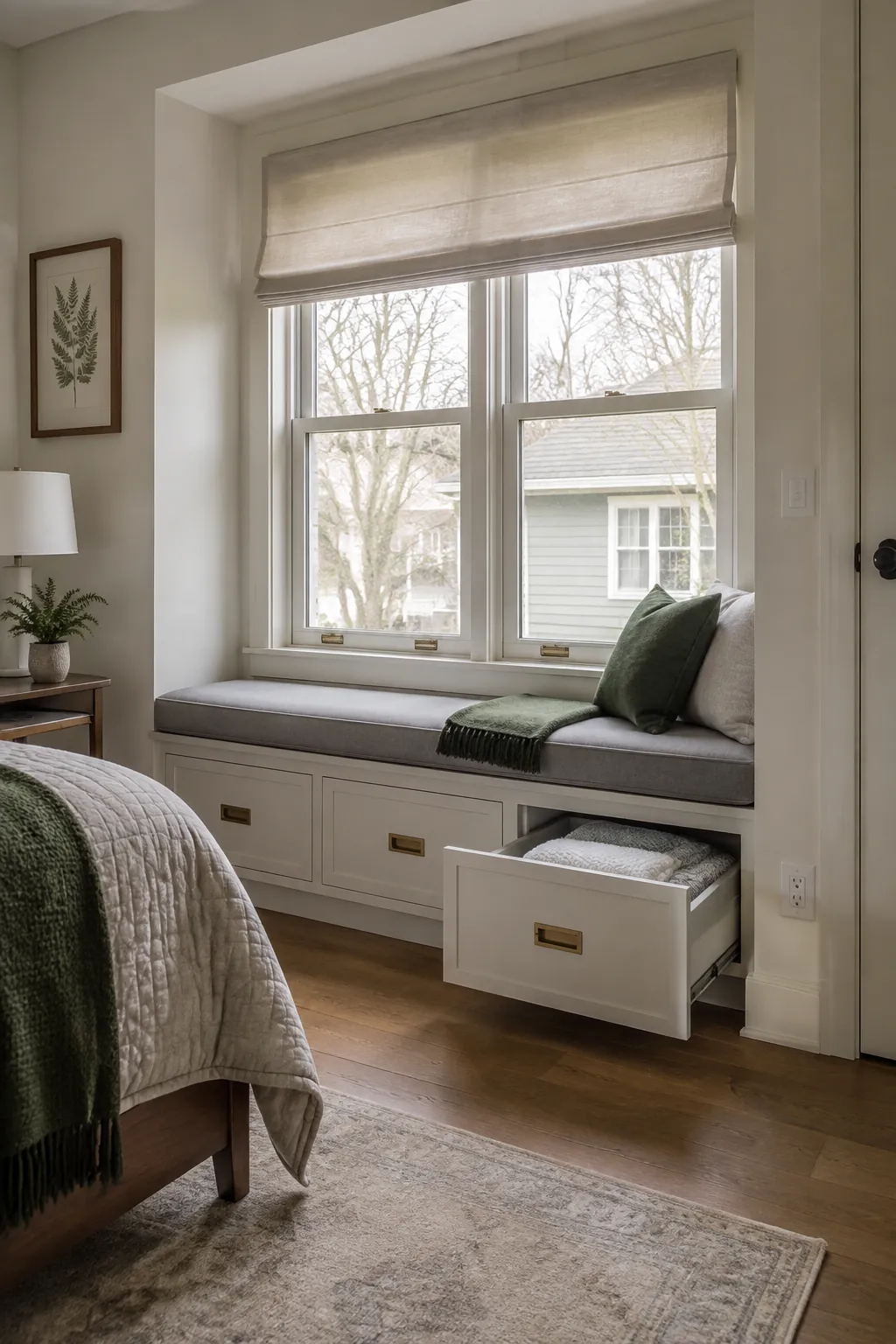
Choose deep drawers for blankets, games, or linens that are used every week. Full extension runners make the rear of each drawer useful, but the floor in front must stay clear for opening. Recessed pulls preserve a smooth seat edge and reduce snags.
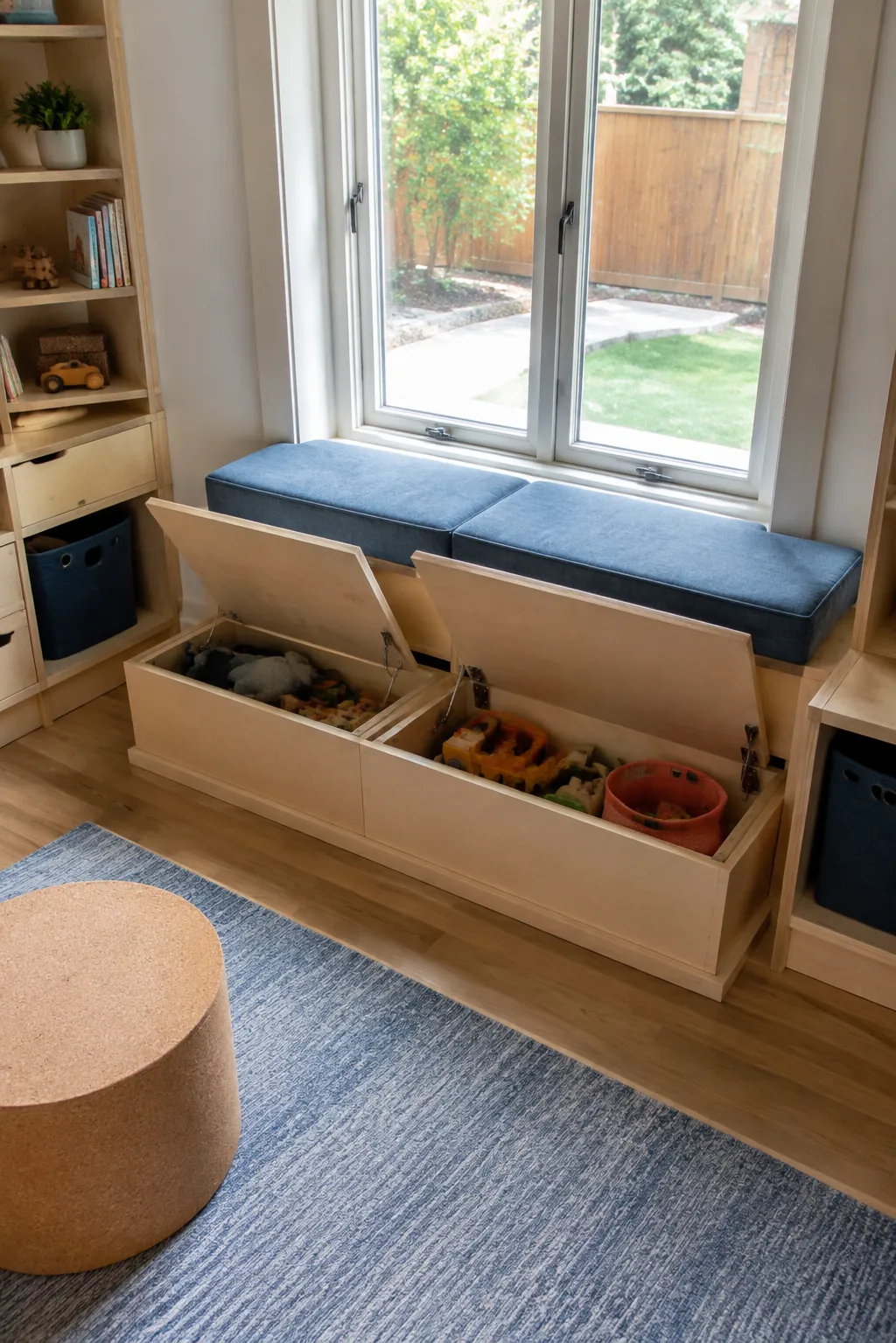
Lift Top Toy Chest
A divided lift top works well for large toys that do not fit neatly in drawers. Use soft close safety stays and lightweight lid sections so small fingers are protected. Ventilation openings and removable cushions make the box easier to clean and maintain.
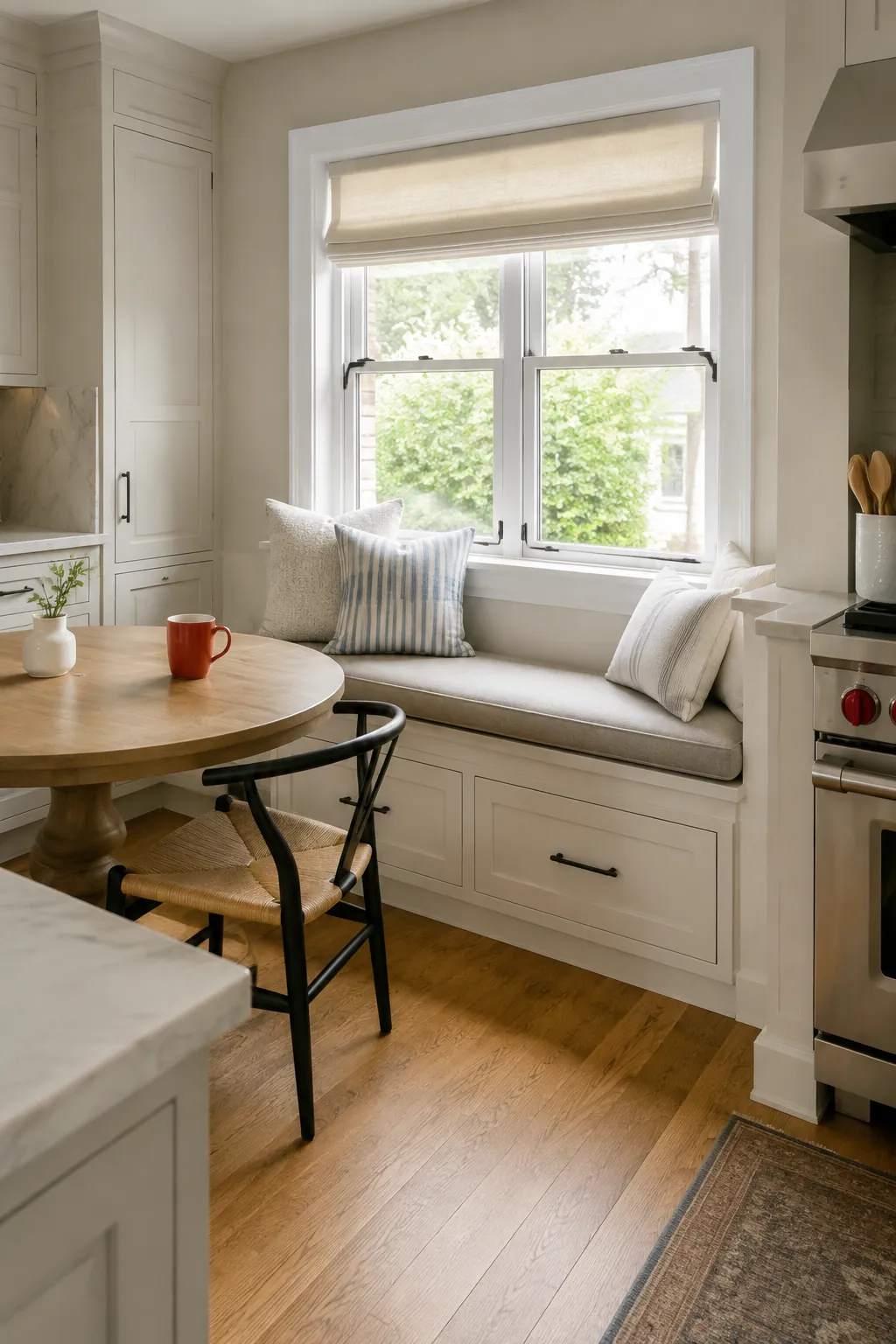
Kitchen Breakfast Perch
Fit a wipeable bench under a kitchen window to add casual seating without crowding the work aisle. The cushion should resist spills, and the base should stop short of appliance doors and heating vents. A small pedestal table can move closer for meals and away for cleaning.
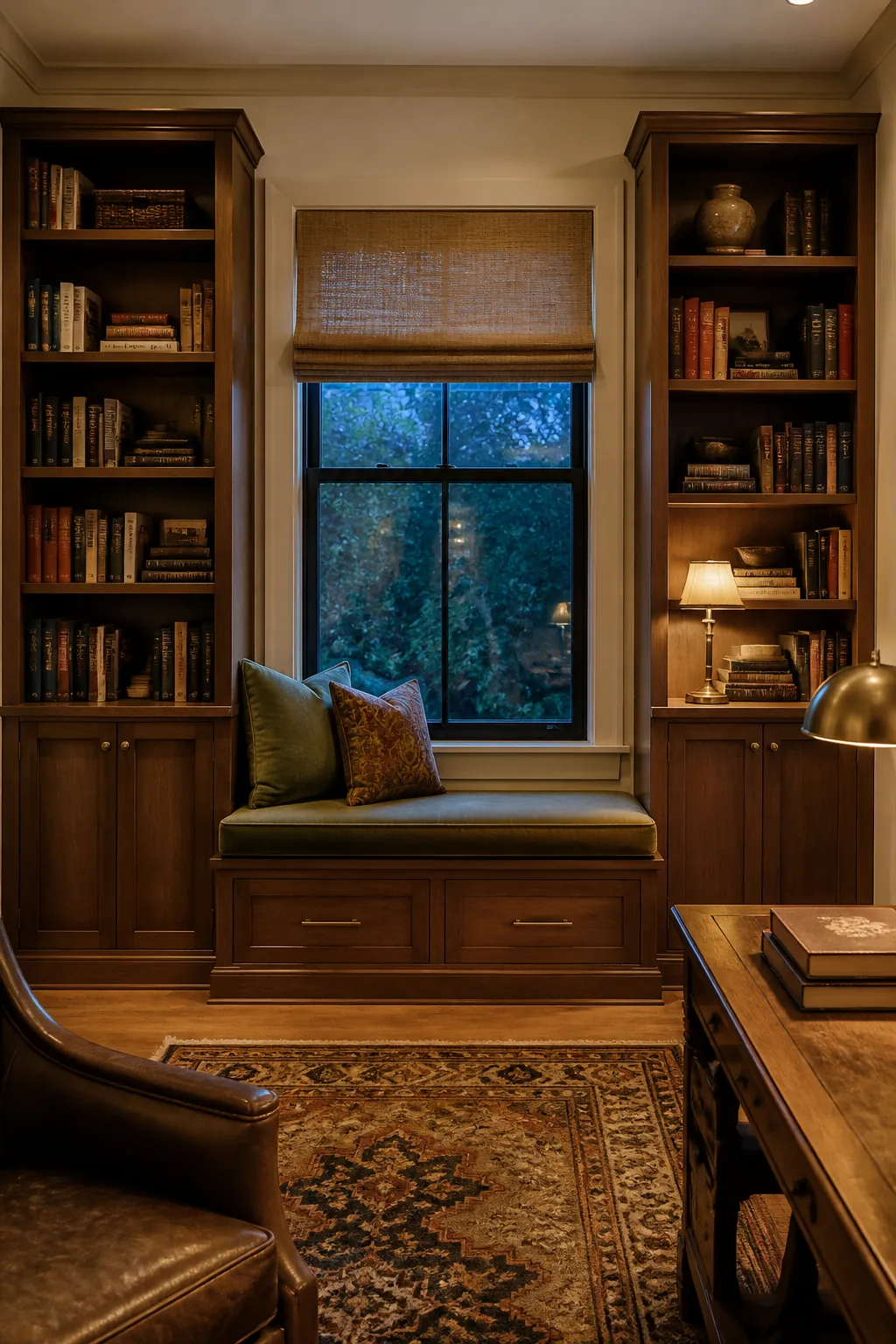
Bookcase Framed Nook
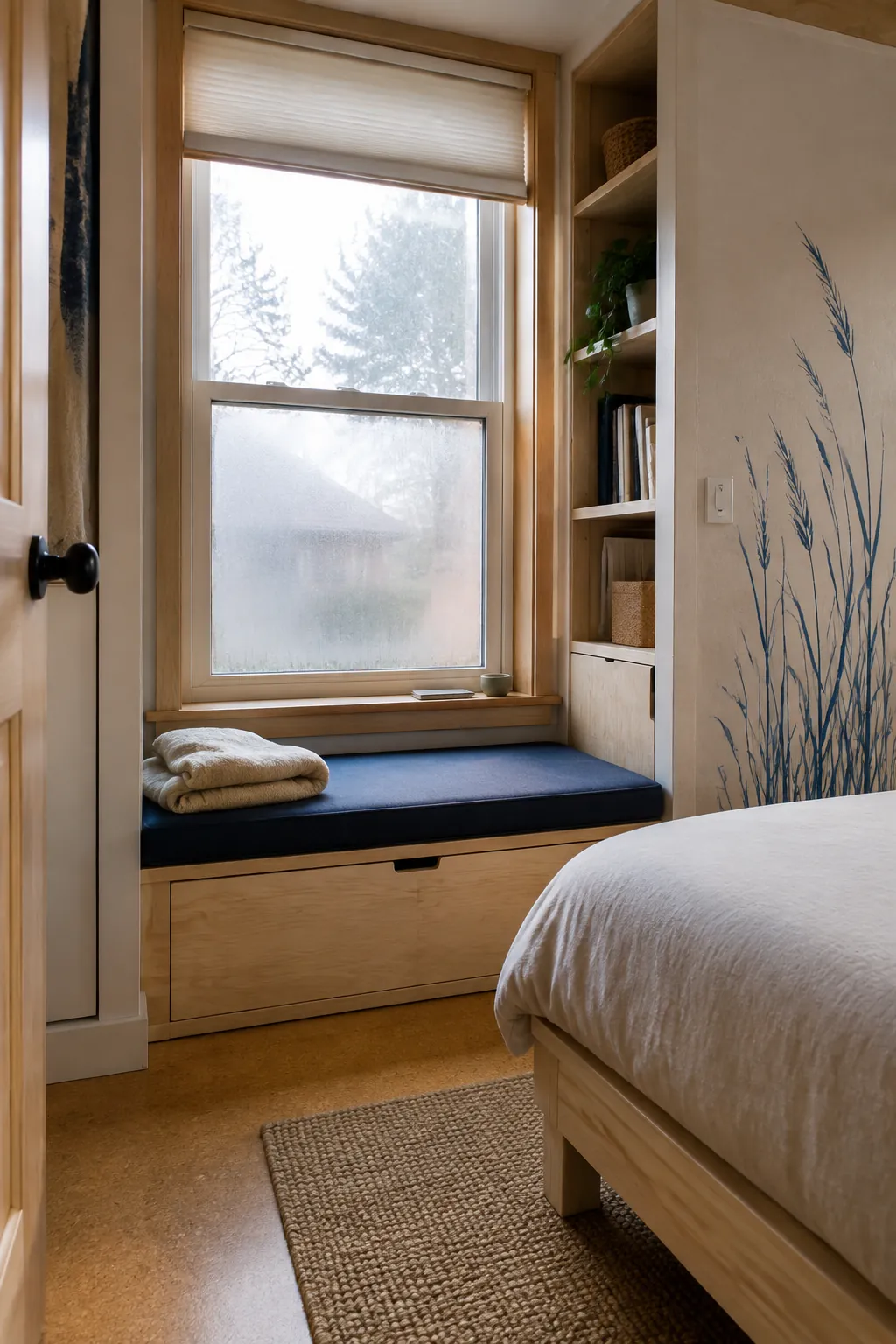
Flank the seat with shallow bookcases that stop below crown molding and remain clear of curtain hardware. Lower shelves can be deeper for large volumes while upper shelves stay light. The seat becomes a destination when the lamp, books, and cushion support an actual reading routine.
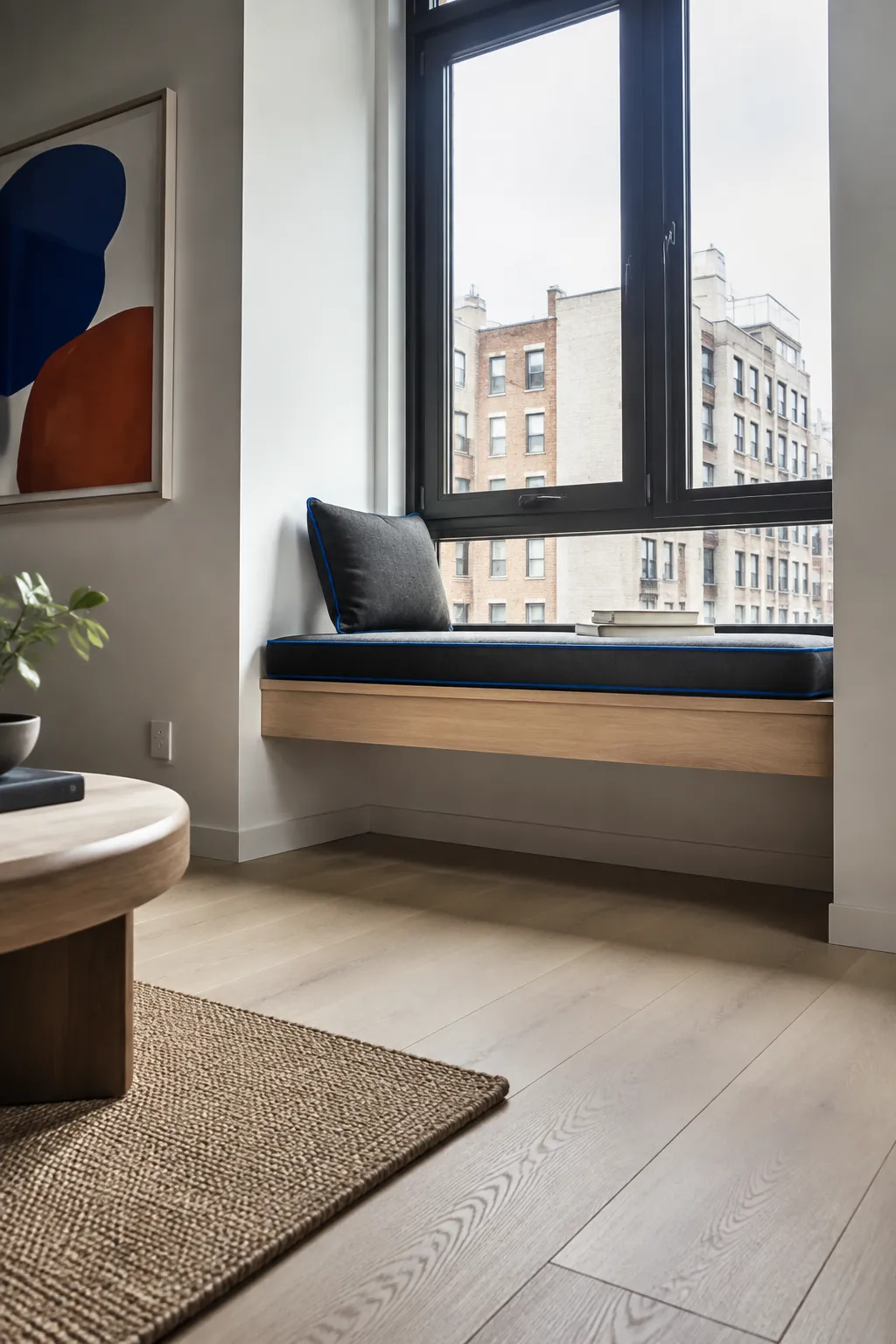
Floating Modern Ledge
A cantilevered seat keeps the floor visible and gives a small room a lighter feeling. Hidden steel supports must connect to real wall framing rather than relying on decorative trim. Limit the cushion to one tailored pad so the clean shadow line remains visible.
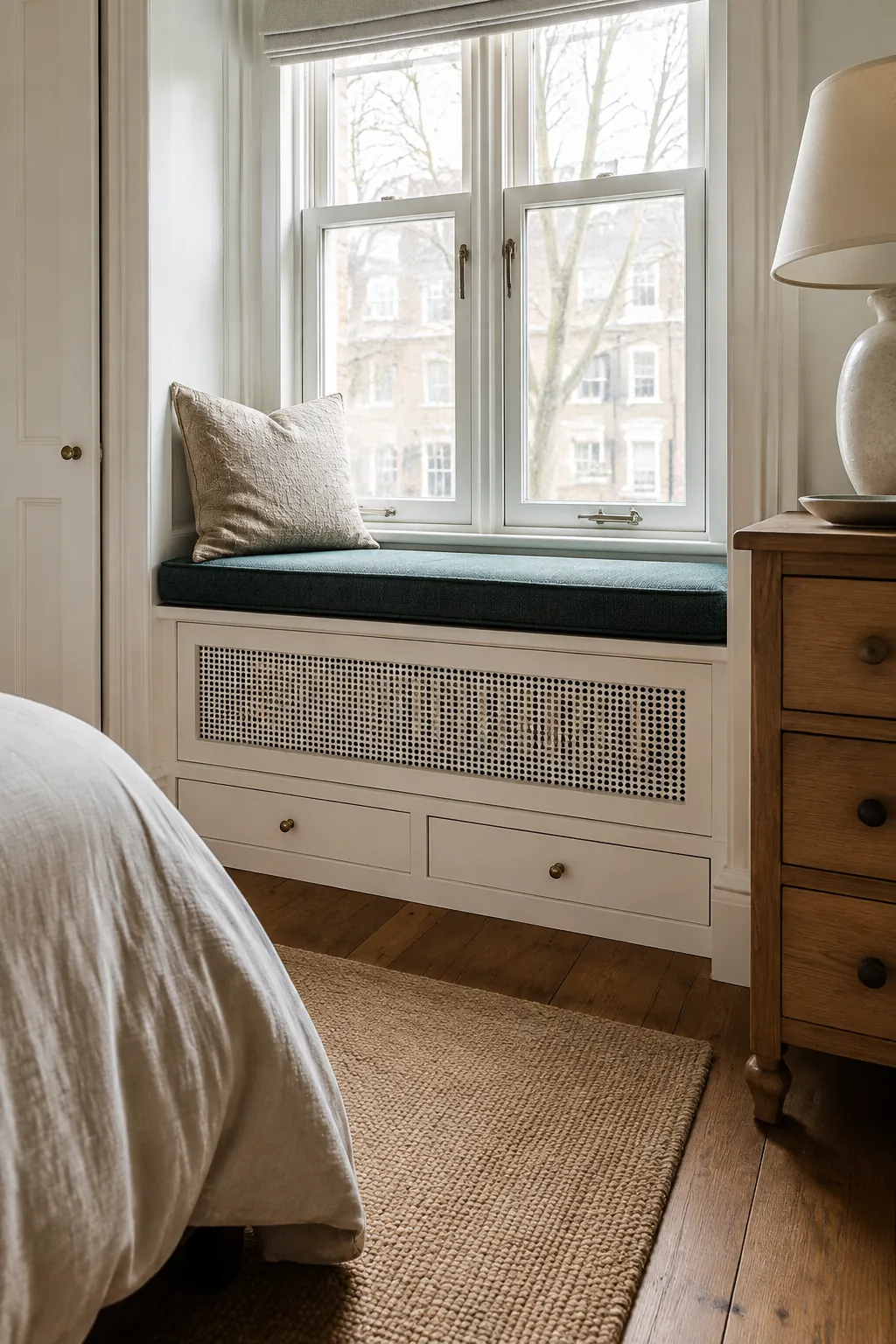
Radiator Vent Seat
Build above a radiator only when the enclosure maintains the appliance maker’s required clearances. A slatted front and open path at the top let warm air circulate, while removable panels keep valves accessible. The cushion must stay protected from excessive heat and should lift away for service.
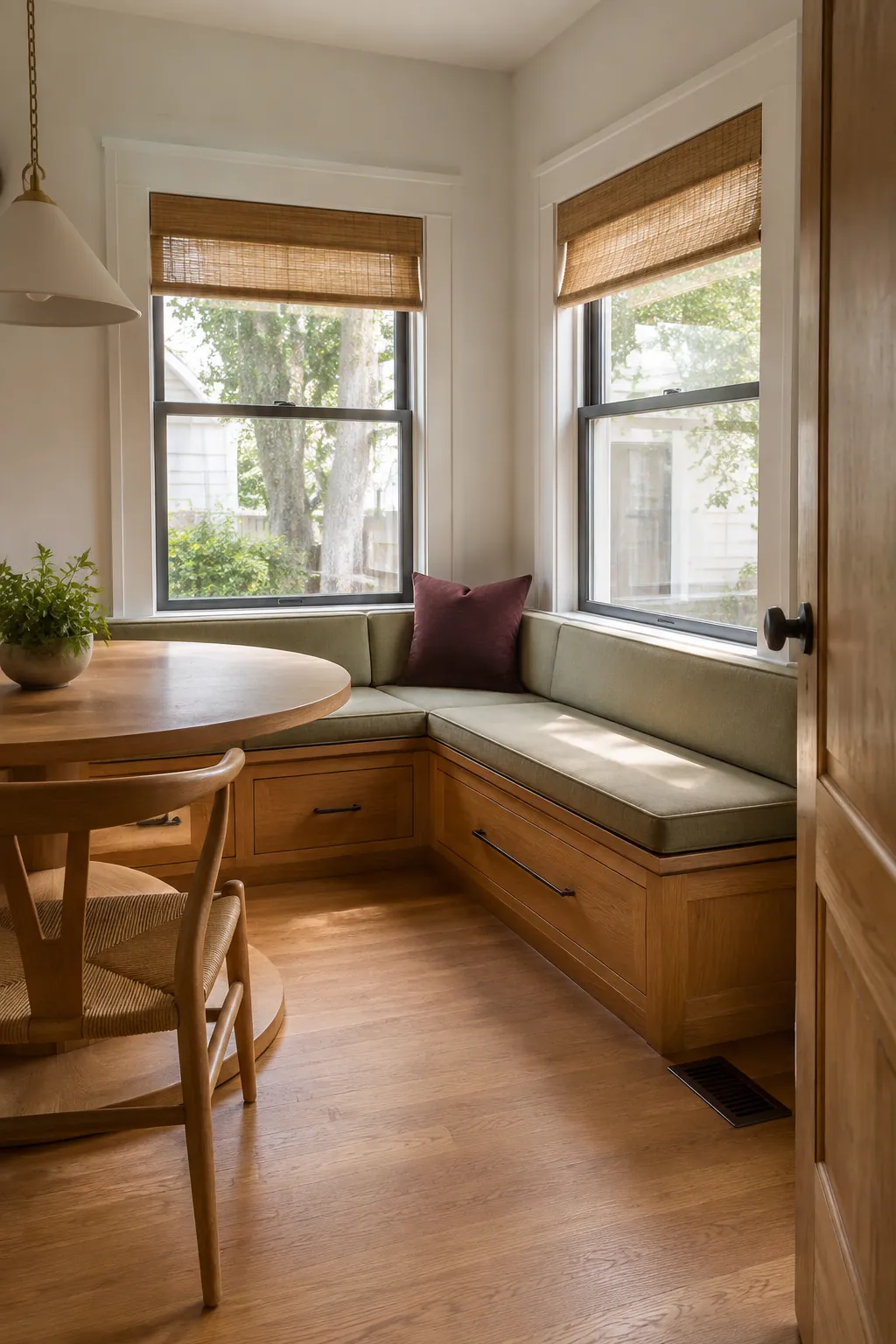
Corner L Shaped Banquette
Wrap the bench around a corner window to gain more seats without adding loose chairs. The return should be short enough to preserve the main walkway and deep enough to support the sitter’s hips. A round table reduces collisions at the open corner.
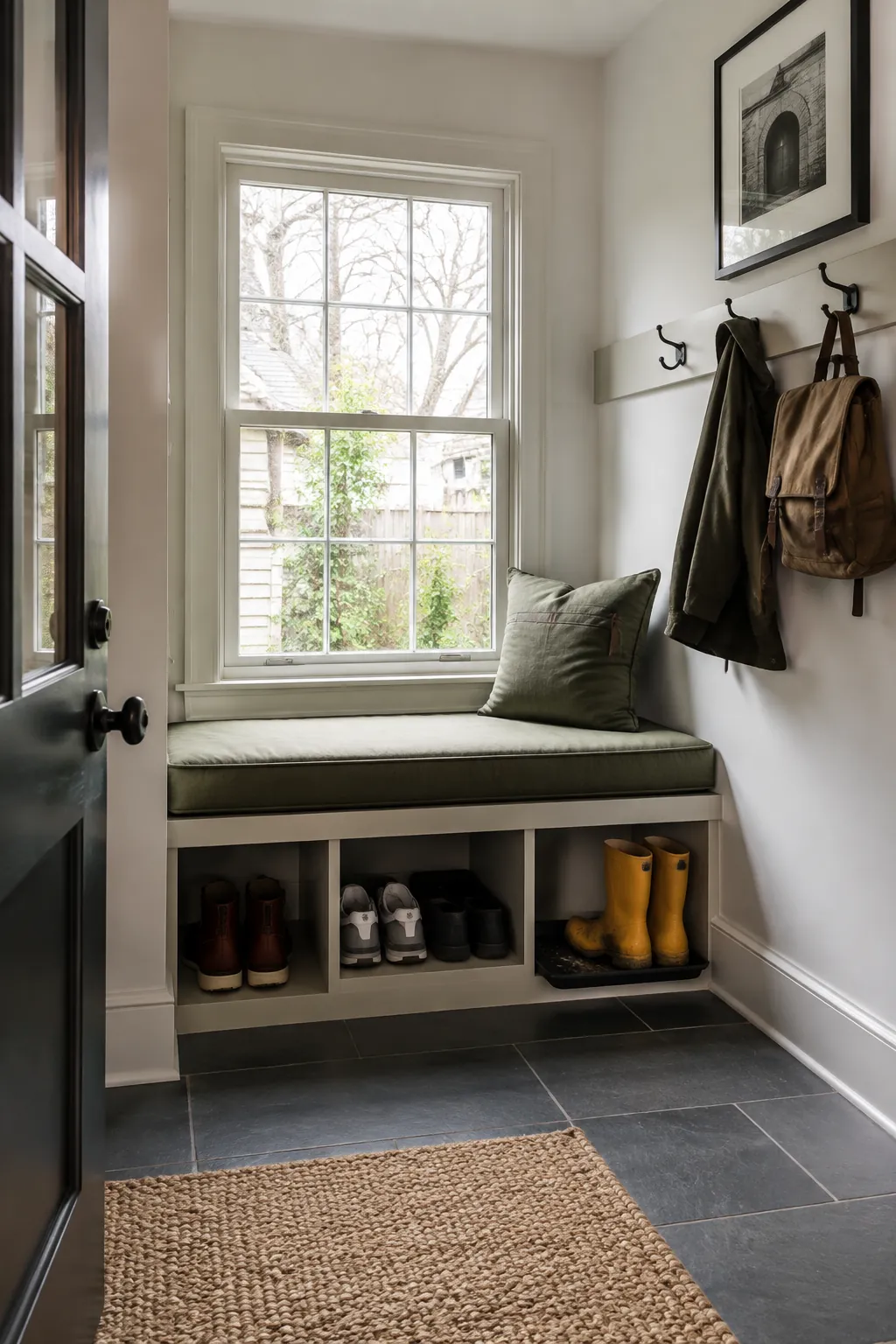
Mudroom Shoe Bench
Combine a durable seat with open shoe cubbies and hooks near the entry window. The bench height should make footwear changes easy, while a waterproof tray protects the lowest compartment. Leave wet coats enough space to hang without brushing the cushion.
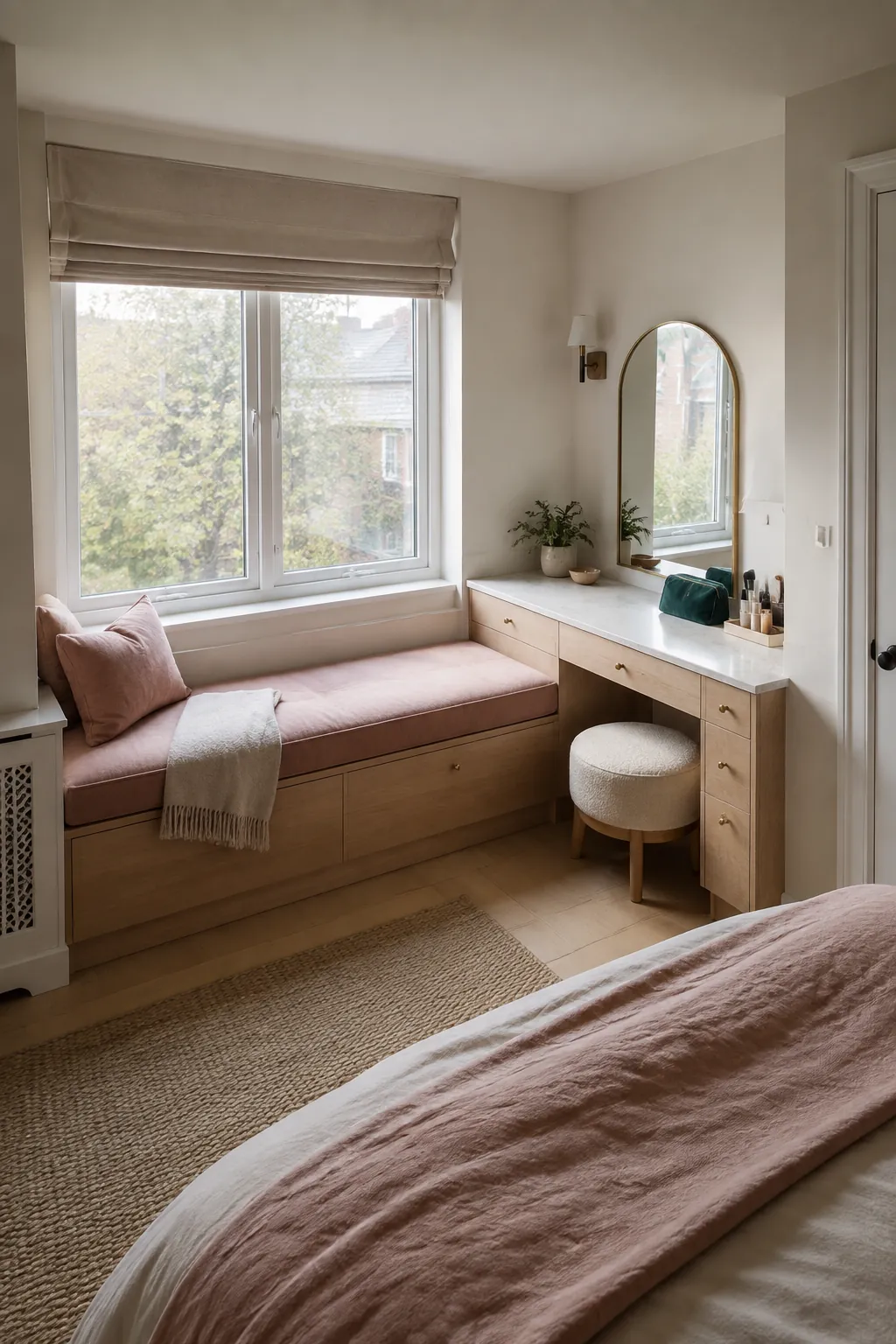
Bedroom Vanity Extension
Extend one end of the window seat into a shallow dressing surface. A backless stool can slide below the top while the cushioned section remains open for reading. Place the mirror where it catches even daylight without reflecting harsh sun toward the bed.
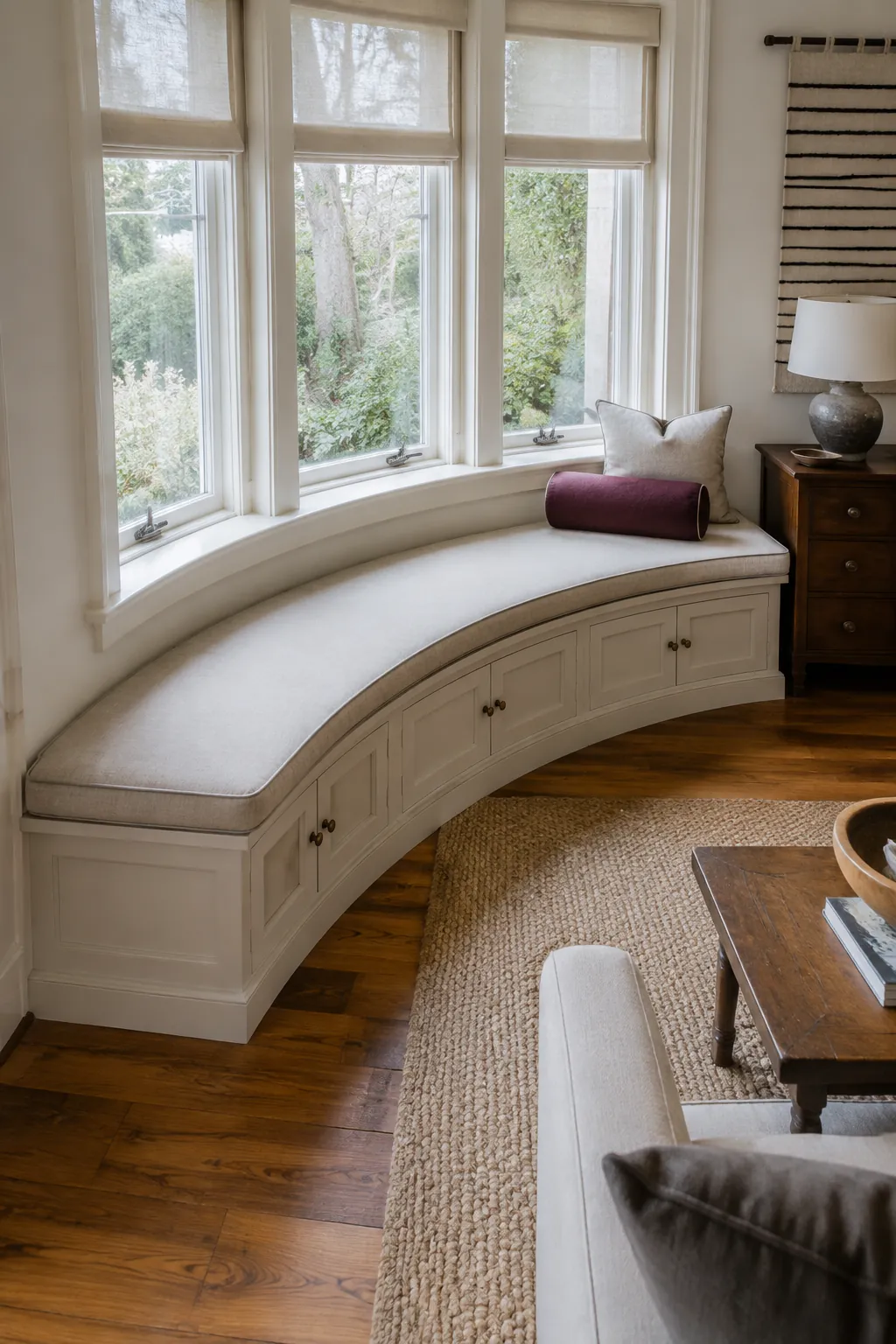
Curved Bay Window Seat
Follow a bowed wall with a carefully templated seat front and a cushion cut to the actual curve. Small gaps around irregular plaster are normal, but the finished trim should conceal structural shims. Segment storage below so curved doors remain manageable.
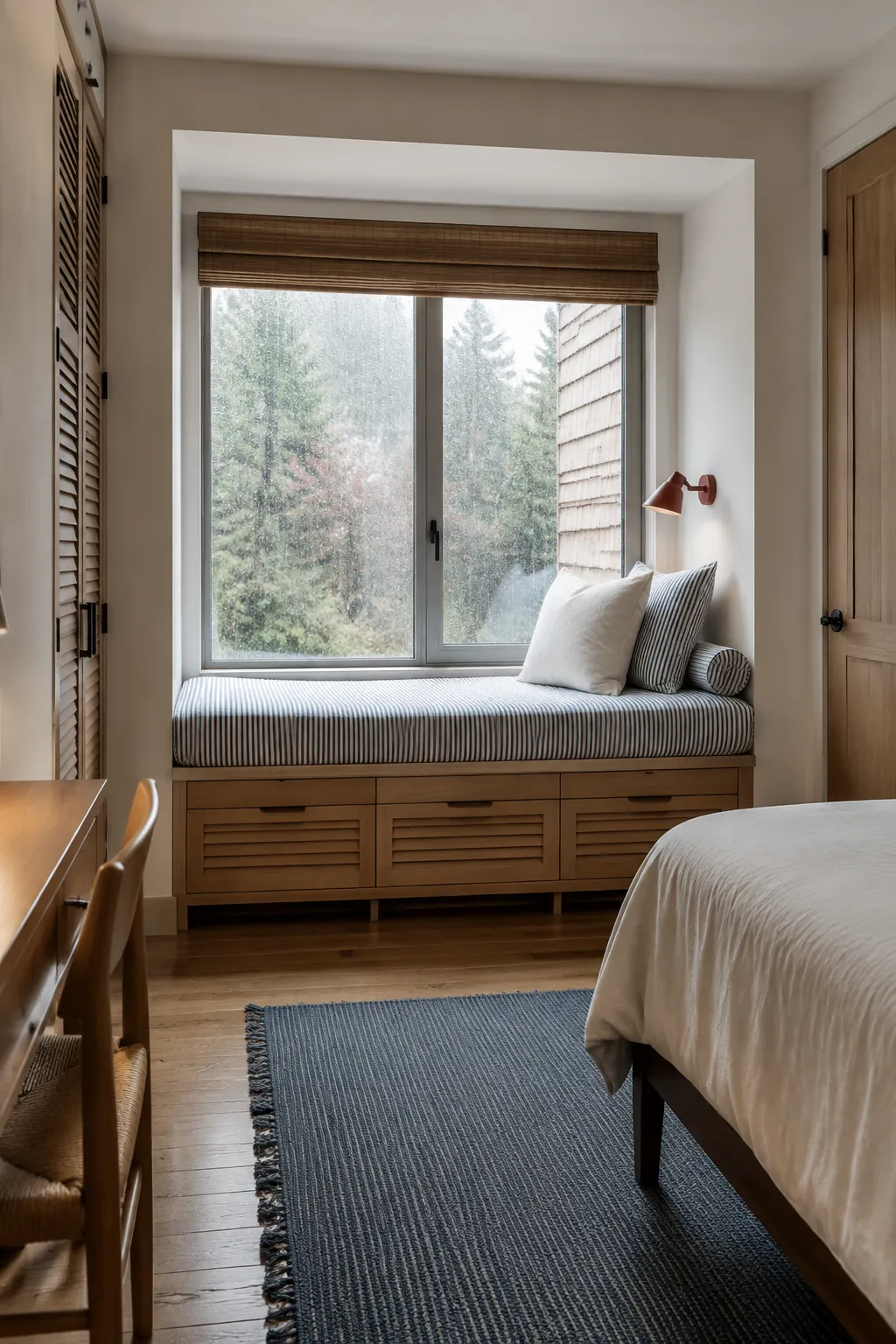
Deep Daybed Nook
A deep recess can support a single mattress and serve as a daybed for guests. Confirm ventilation beneath the mattress, safe access to the window, and enough length before building the platform. Fitted bedding prevents loose fabric from tangling with latches or shades.
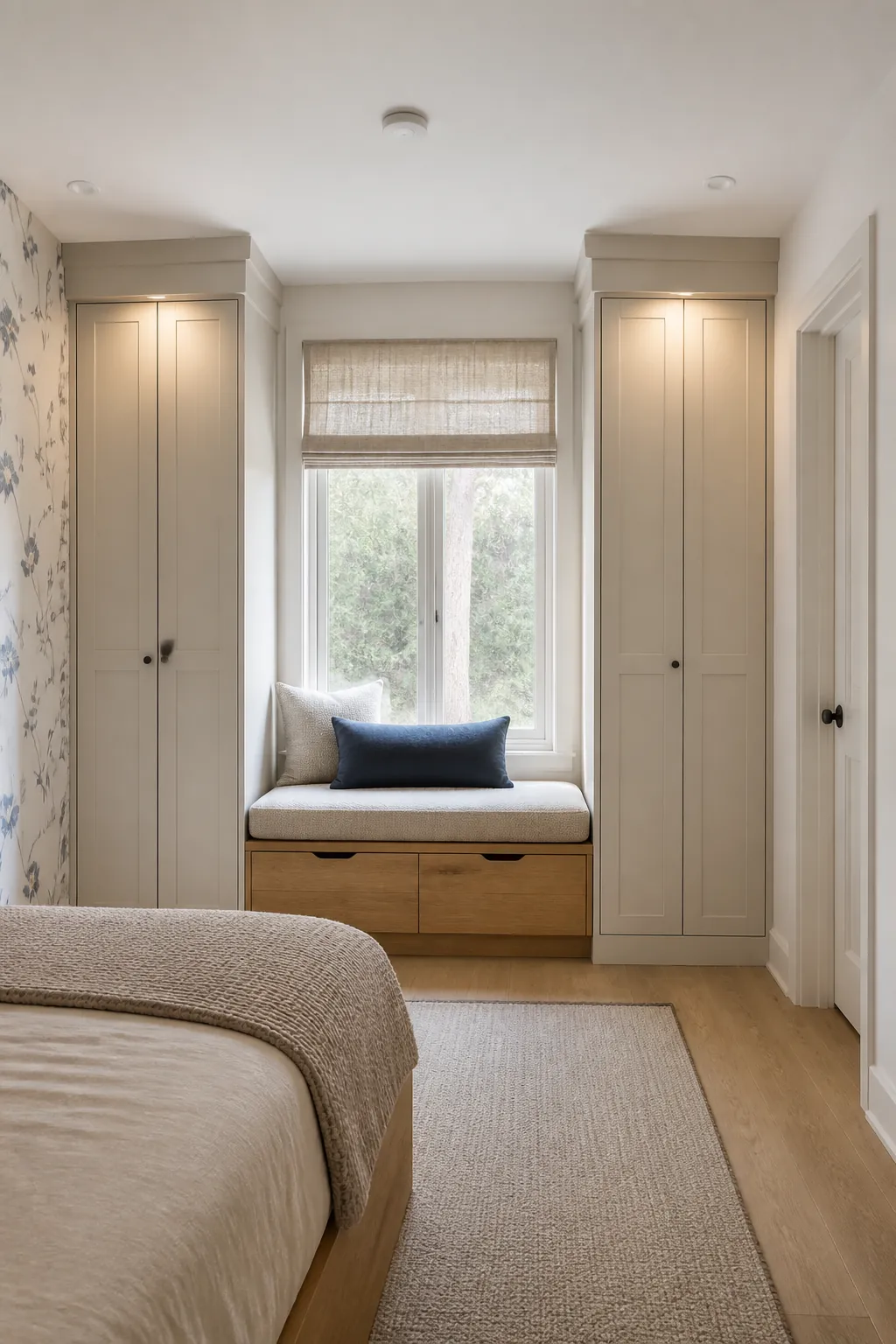
Window Seat with Wardrobes
Place tall wardrobes on both sides of the window and bridge them with a low seat. The units should not cover trim or make the window appear squeezed, so a narrow reveal at each side matters. Use interior wardrobe lighting rather than crowding the nook with table lamps.
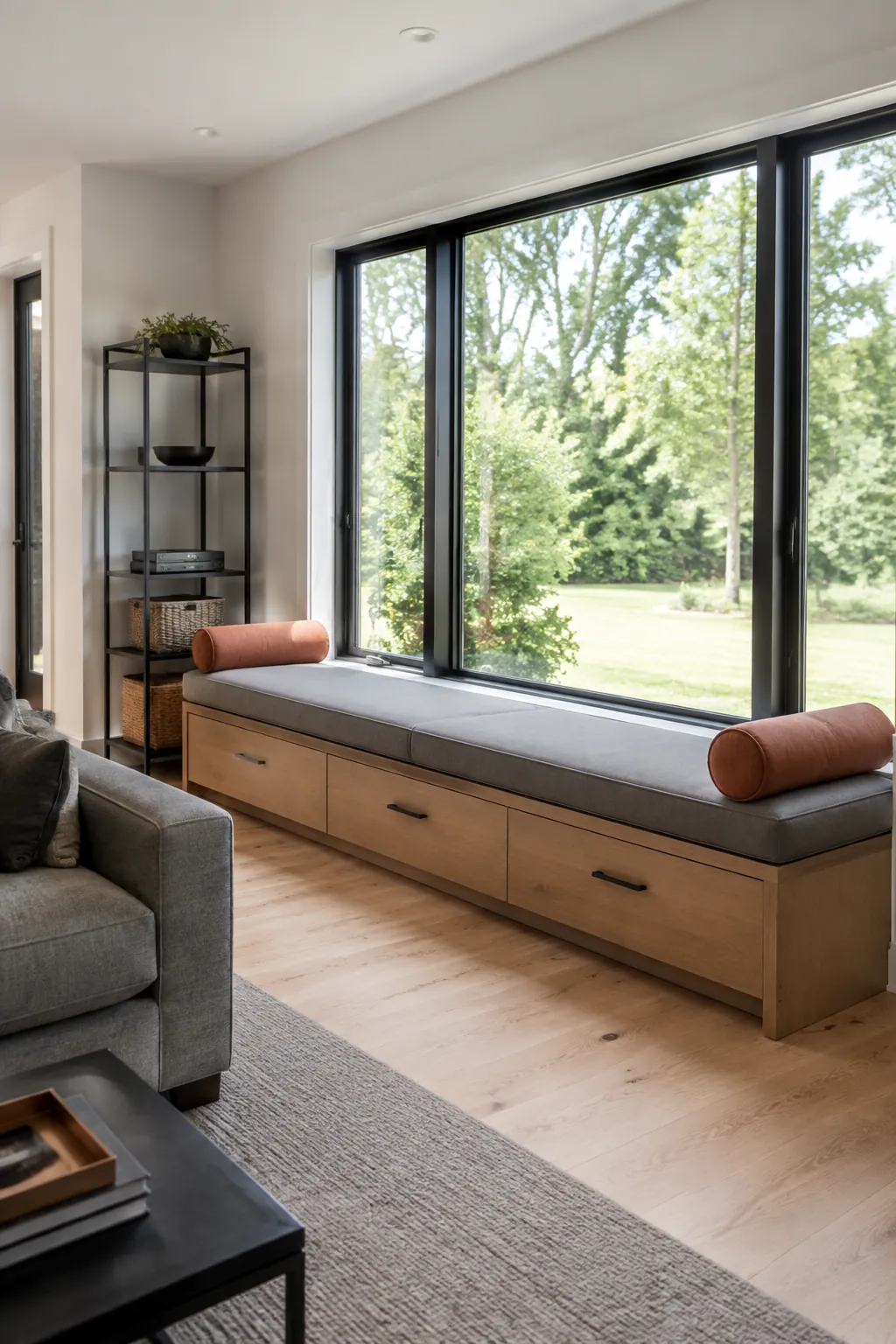
Low Living Room Bench
Keep the seat back below the sill so it does not compete with the view. A long low cushion and two firm bolsters create flexible lounging without a bulky sofa profile. Drawers below can hold media accessories while the main seating area stays calm.
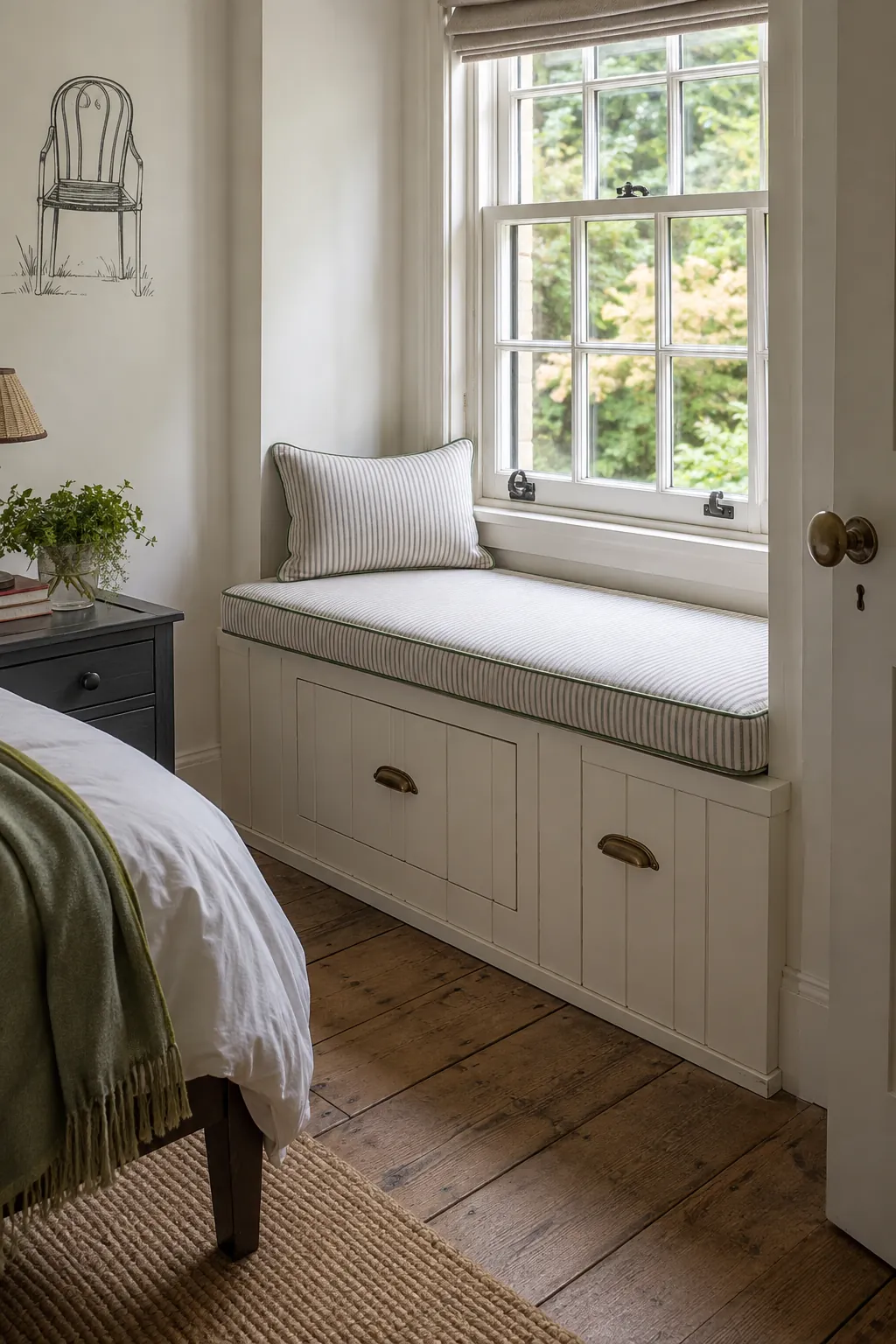
Cottage Tongue and Groove Seat
Clad the base in vertical boards to suit a simple cottage interior. Align board spacing with drawer fronts or access panels so the joinery reads as intentional. A loose striped cushion keeps the design relaxed and can be removed for washing.
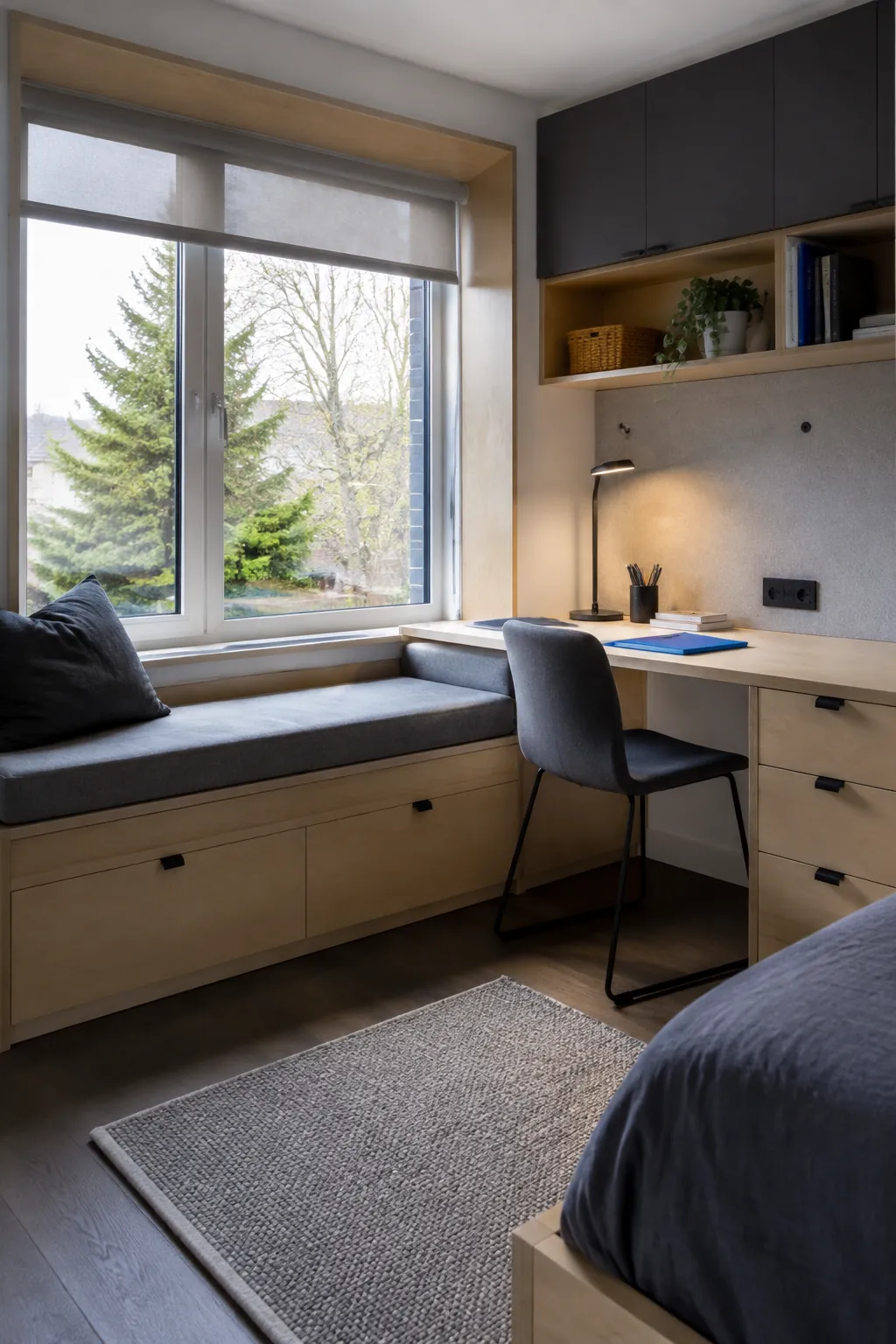
Window Seat Desk Combination
Run a continuous surface from a cushioned seat into a compact desk. The desk portion needs correct knee height and the seat needs greater depth, so a deliberate step in the joinery prevents awkward compromise. Route power below the work surface and keep cables out of the walking path.
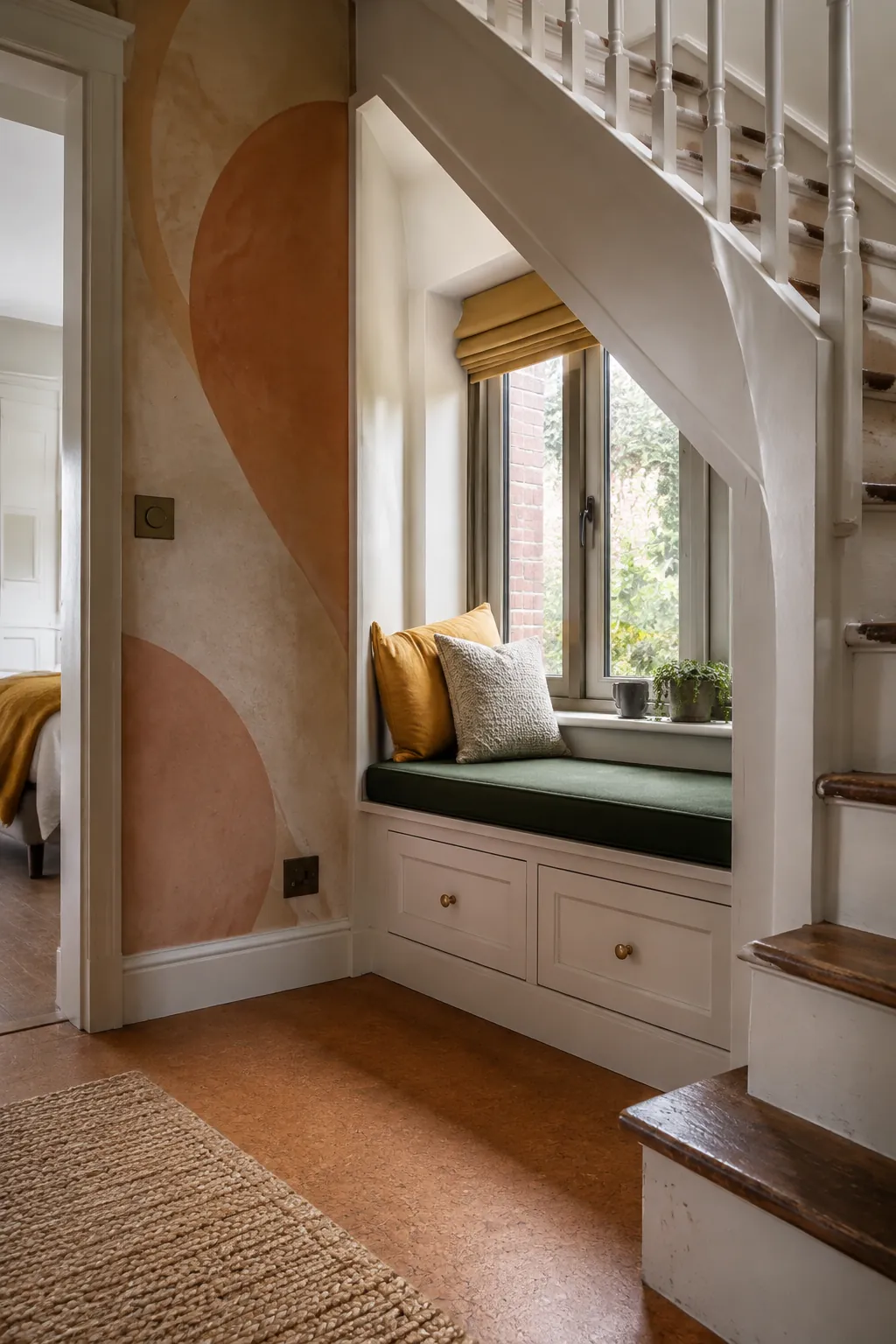
Under Stair Window Nook
Use an under stair window to create a compact perch in otherwise leftover space. The sloping ceiling determines where an adult can sit upright, while shallow drawers can occupy the lowest section. Rounded trim at head height makes the nook safer and visually softer.
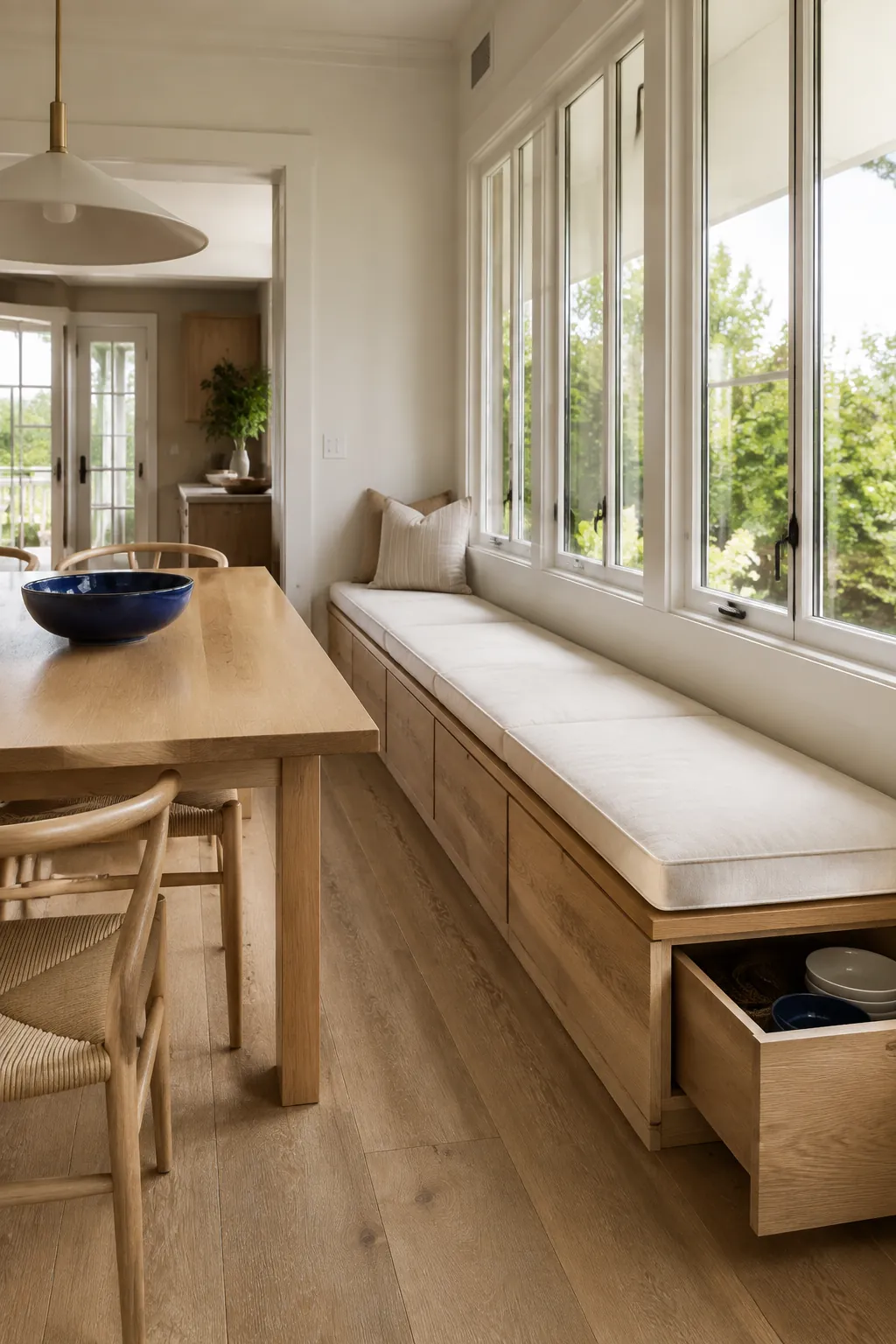
Dining Room Long Bench
A long built in bench under several windows can replace a row of dining chairs. Divide the cushion into sections that lift easily for cleaning, and position table legs so diners can slide in without collision. The base may hold occasional serving pieces if storage doors open beyond the table edge.
Breakfast Nook with Drawers
Use corner drawers or front facing drawers according to the space around the table. Daily placemats belong in the easiest compartment, while seldom used items can occupy the deep return. A compact table with a central pedestal gives legs more freedom.
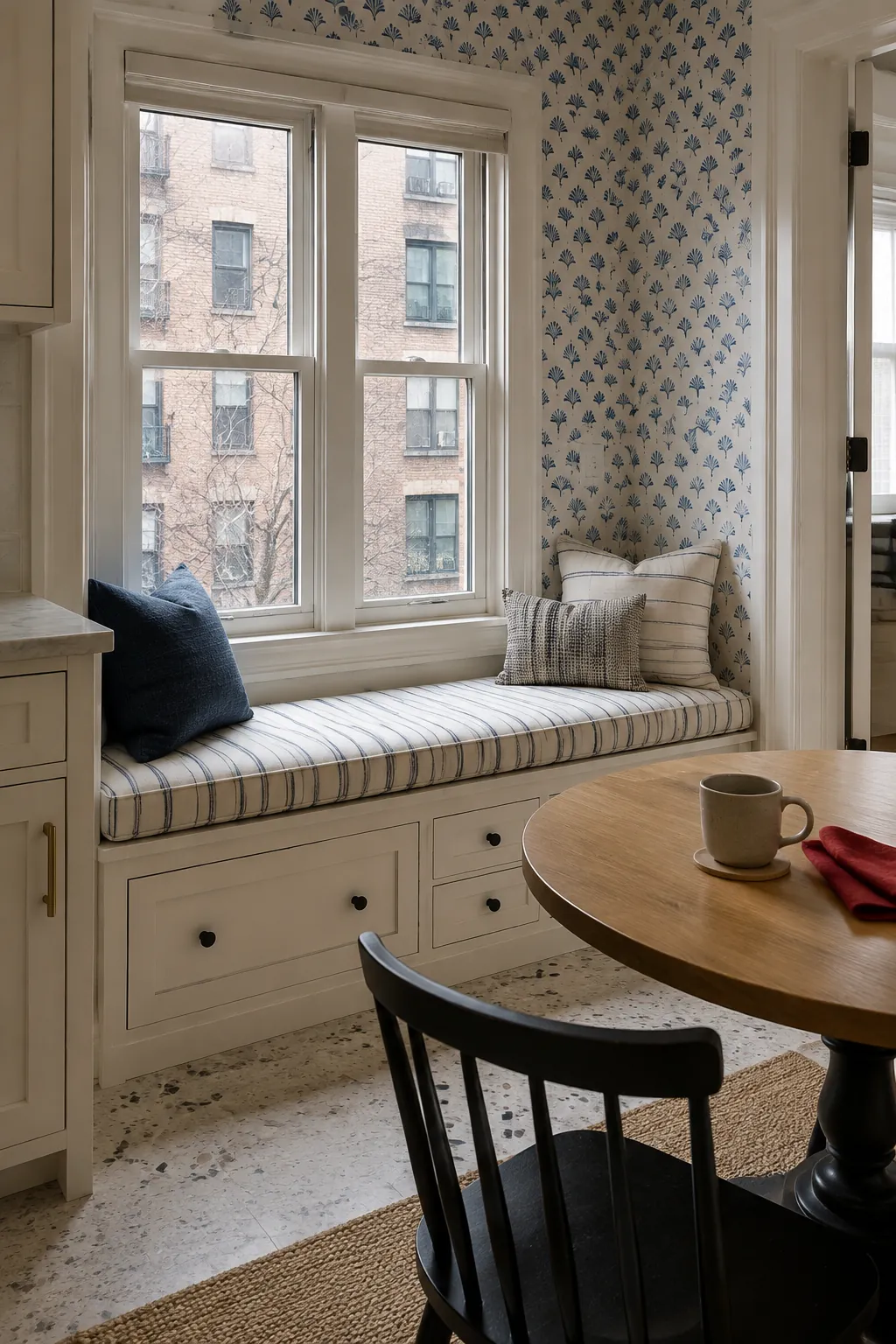
Window Seat for Plants
Integrate a narrow waterproof ledge behind the cushion so plants do not sit on upholstery. Drainage trays and movable pots protect joinery, while open space between leaves keeps latches reachable. Choose plants for the true exposure rather than filling every inch of glass.
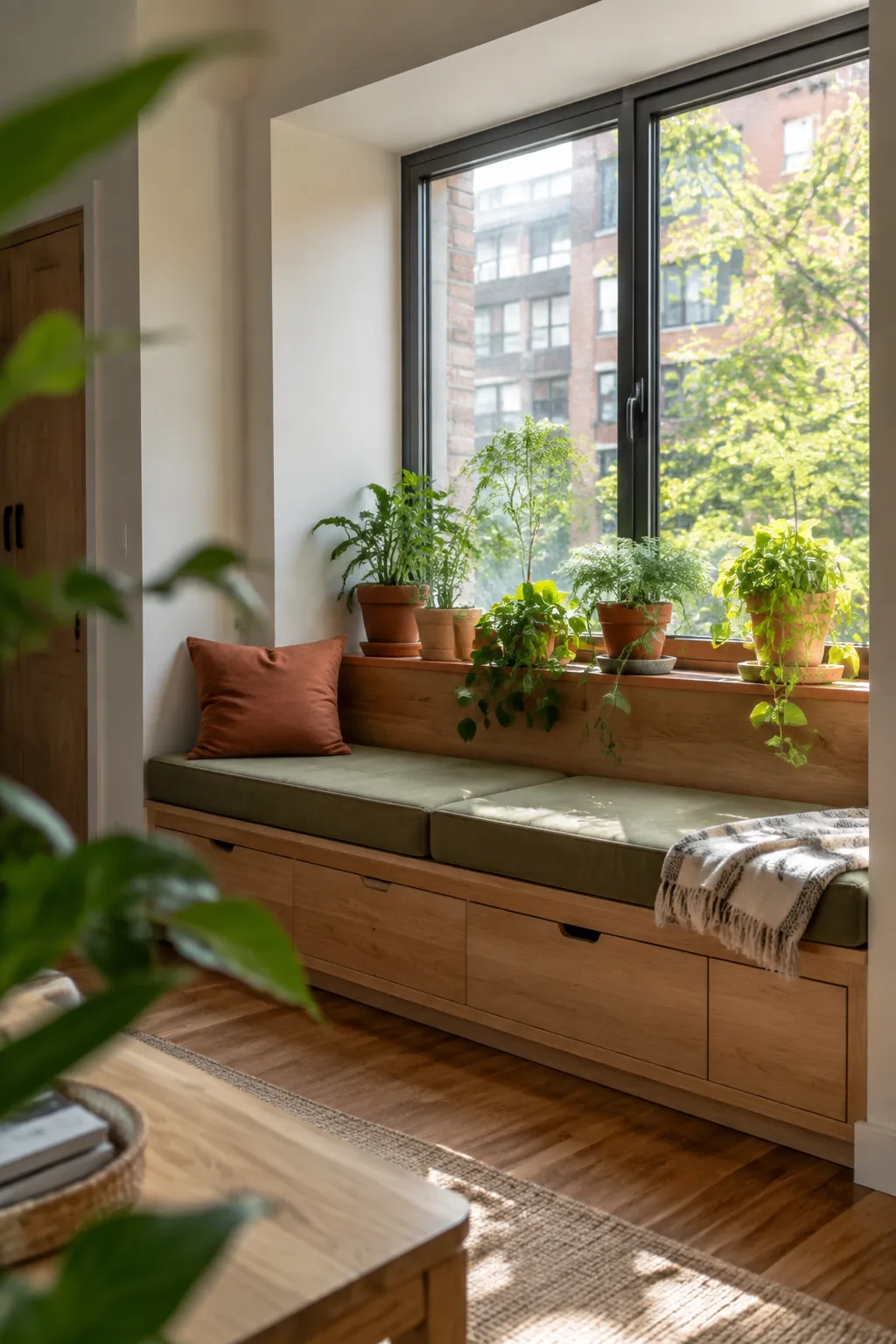
Fireplace Side Window Seat
Balance a fireplace with a fitted seat beneath the adjacent window. Maintain safe distance from heat and keep the seat lower than the mantel so the two features do not compete. A built in reading light turns the corner into a useful winter retreat.
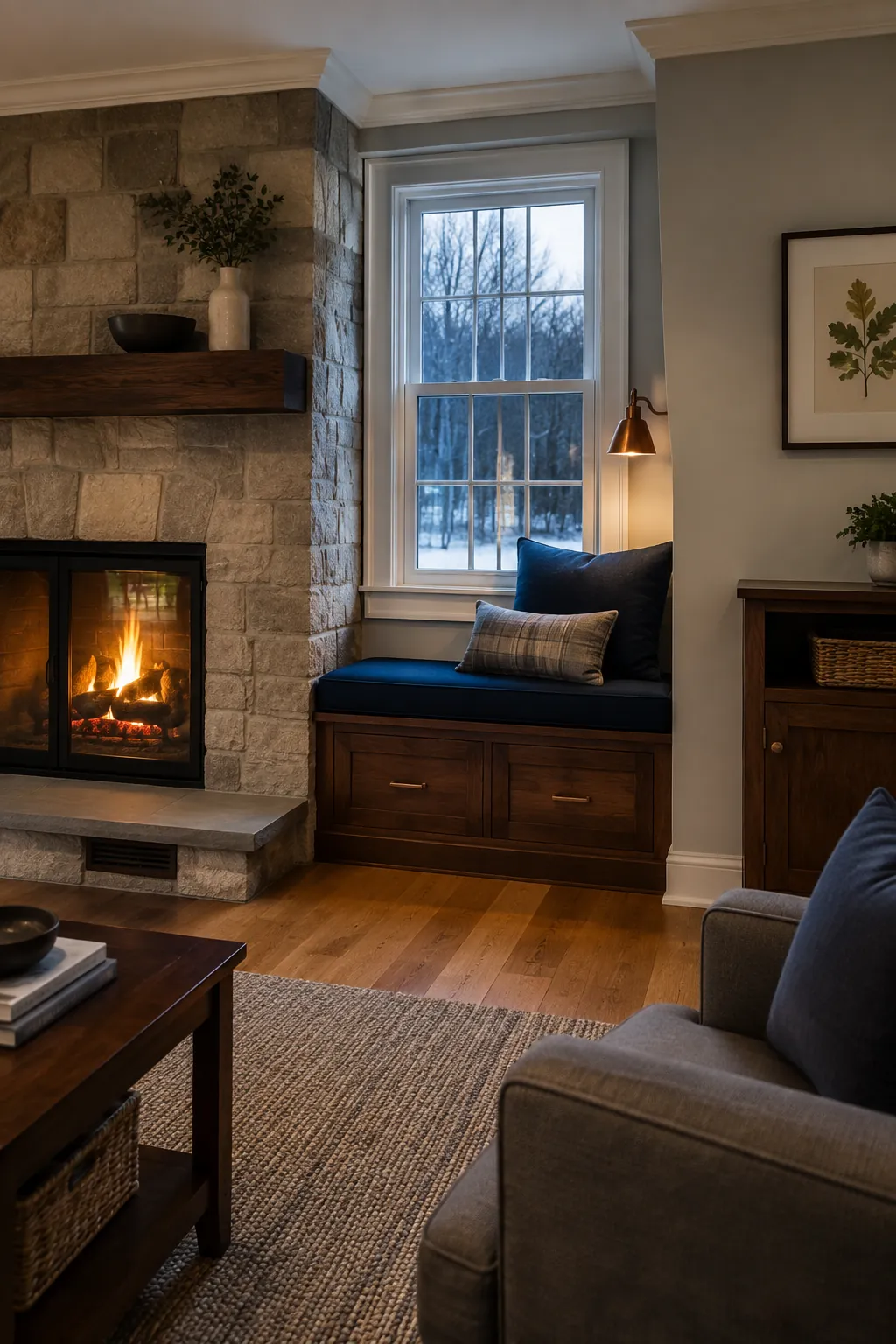
Twin Window Seats
Build matching seats beneath two separate windows when symmetry supports the room. Give each nook a different function through a book basket on one side and concealed storage on the other. Identical dimensions calm the architecture without requiring identical accessories.
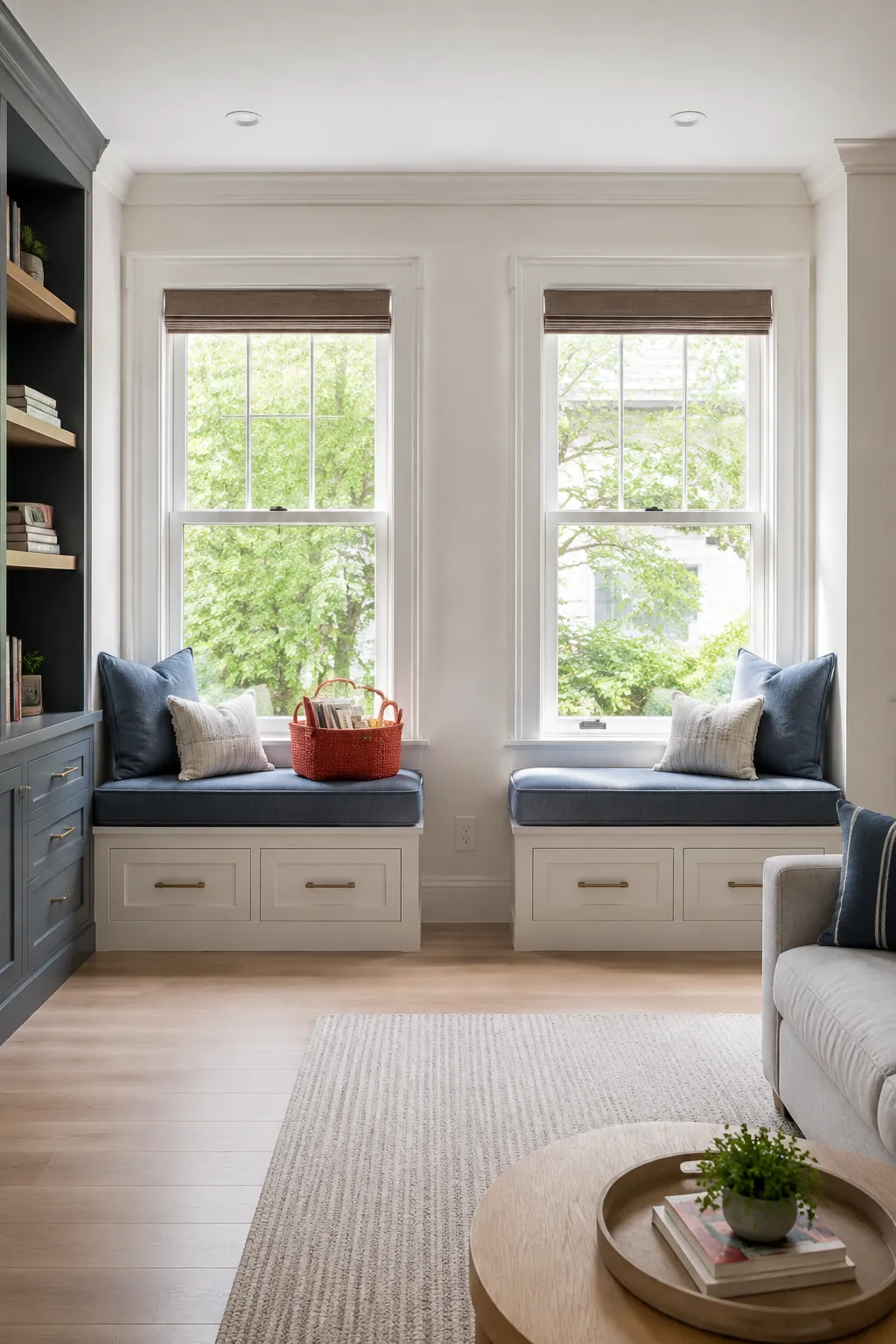
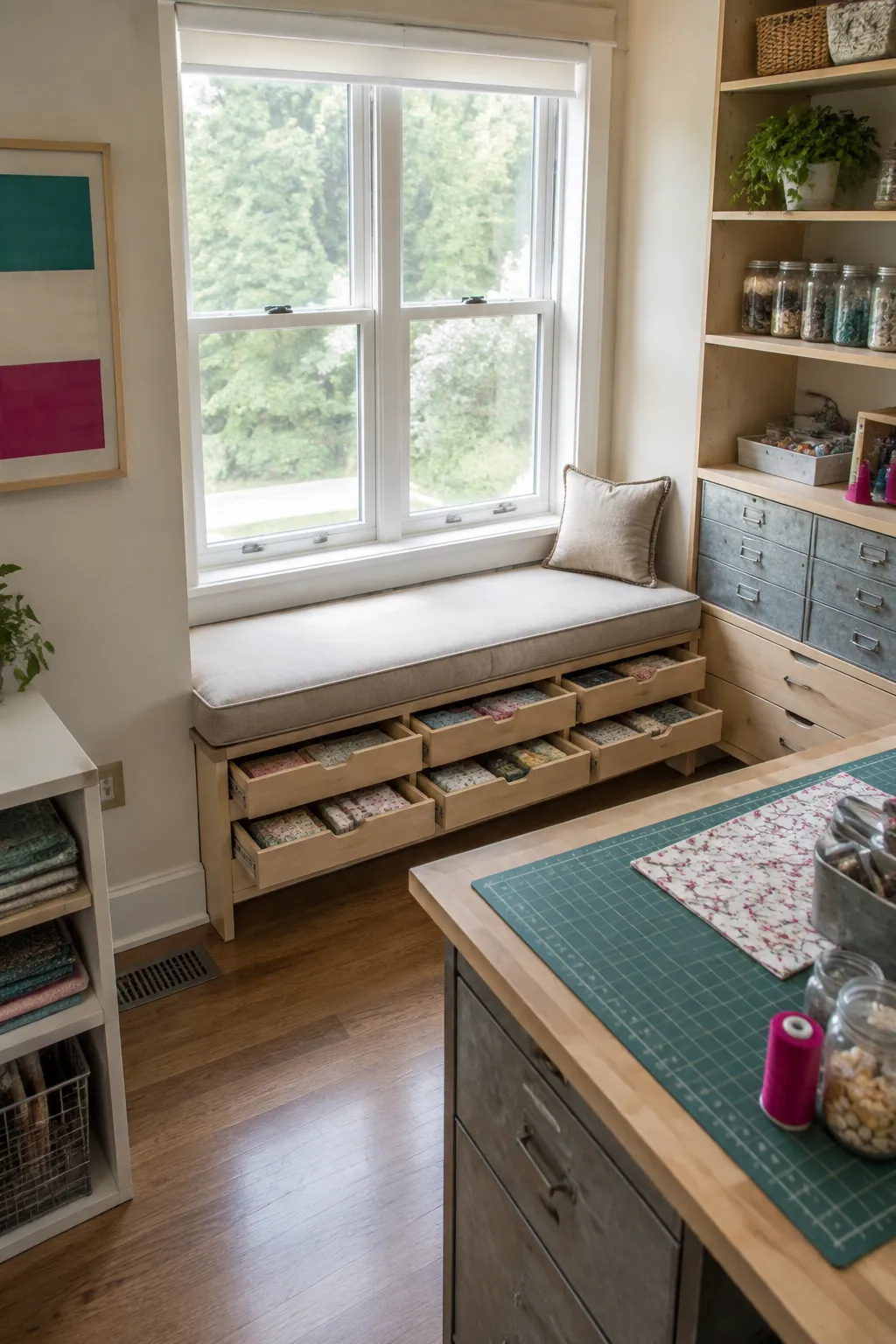
Craft Room Work Seat
Use a firm window bench as a place to sort fabric, sketch, or pause during projects. Shallow trays below can organize materials without requiring deep, messy bins. Protect the cushion with a washable cover and preserve a clear surface beside the window.
Pet Friendly Perch
Specify dense claw resistant fabric and a removable top cover for a household with pets. Sealed timber tolerates damp paws, while a simple front avoids fragile cane or open weave. Secure every blind cord and leave the glass free of breakable ornaments.
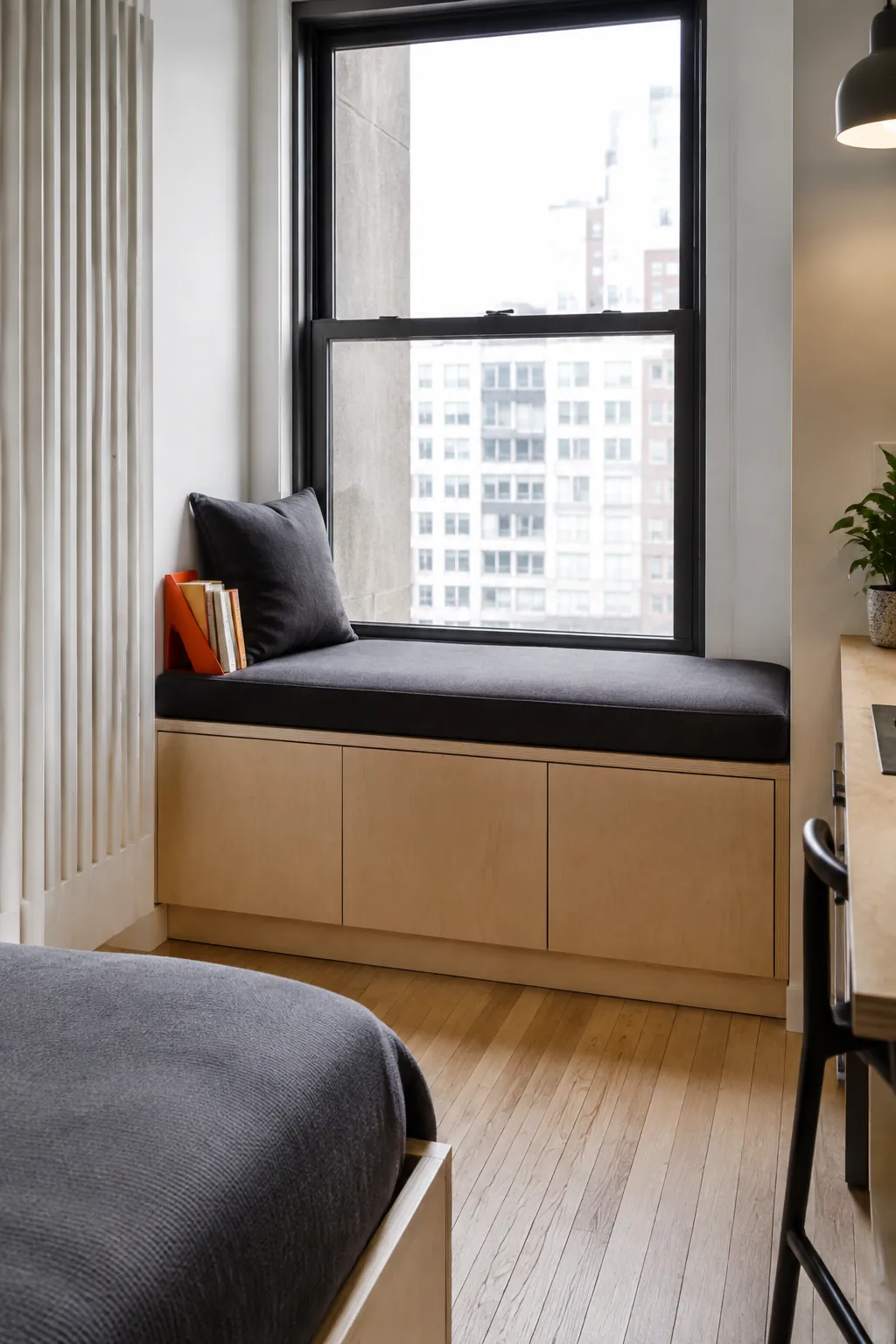
Minimal Plywood Box
A clean plywood box can become an affordable modern window seat when the edges and supports are carefully finished. Use cabinet grade panels, reinforce the span, and soften the sitting surface with a dense removable cushion. A recessed plinth makes the piece read as built in while allowing simple construction.
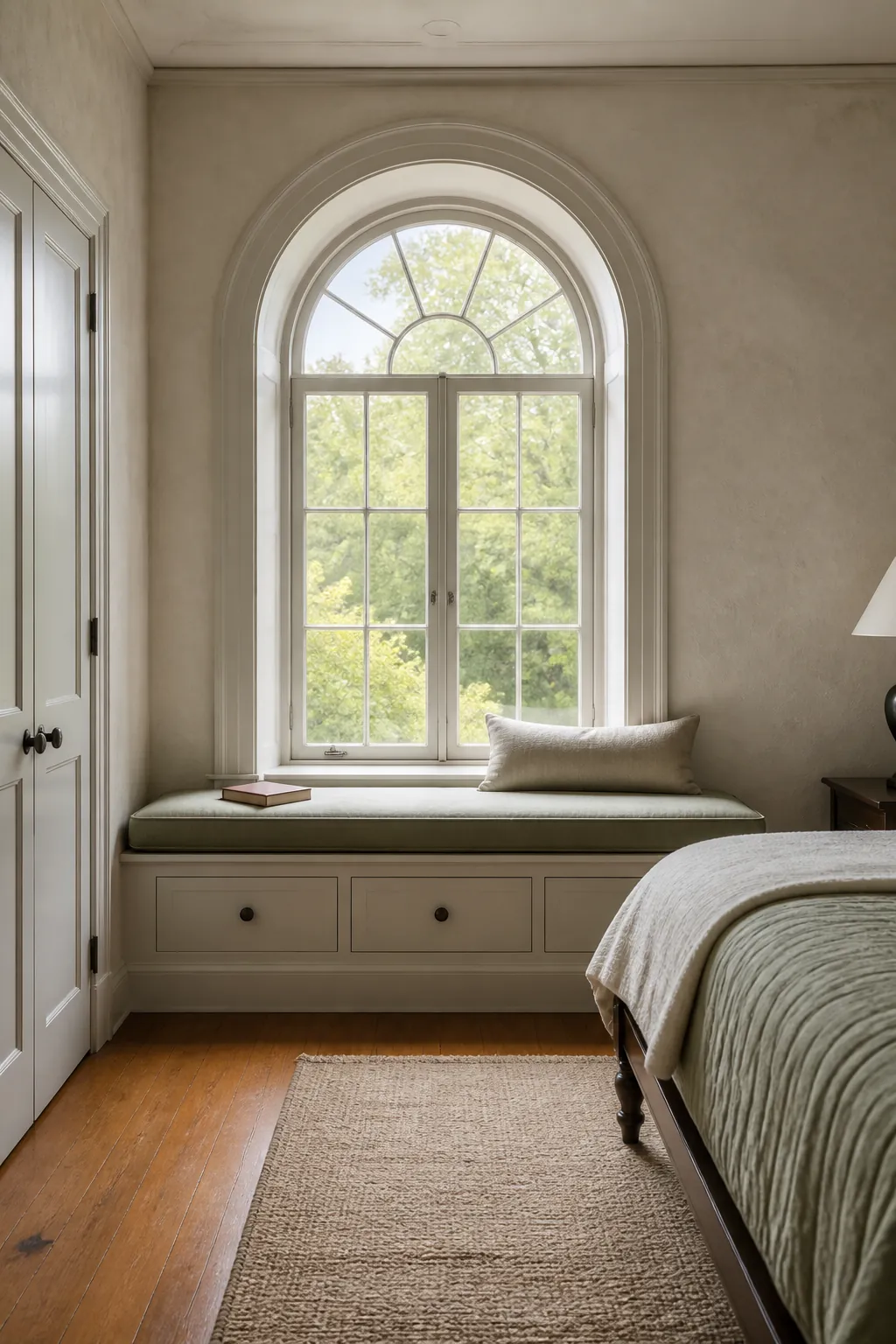
Arched Window Bench
Keep the joinery quiet beneath an arched window so the curve remains the focal point. A straight bench can sit below the spring line, with side panels shaped only where needed for trim. One long cushion echoes the width without imitating the arch.
Corner Drawer Window Seat
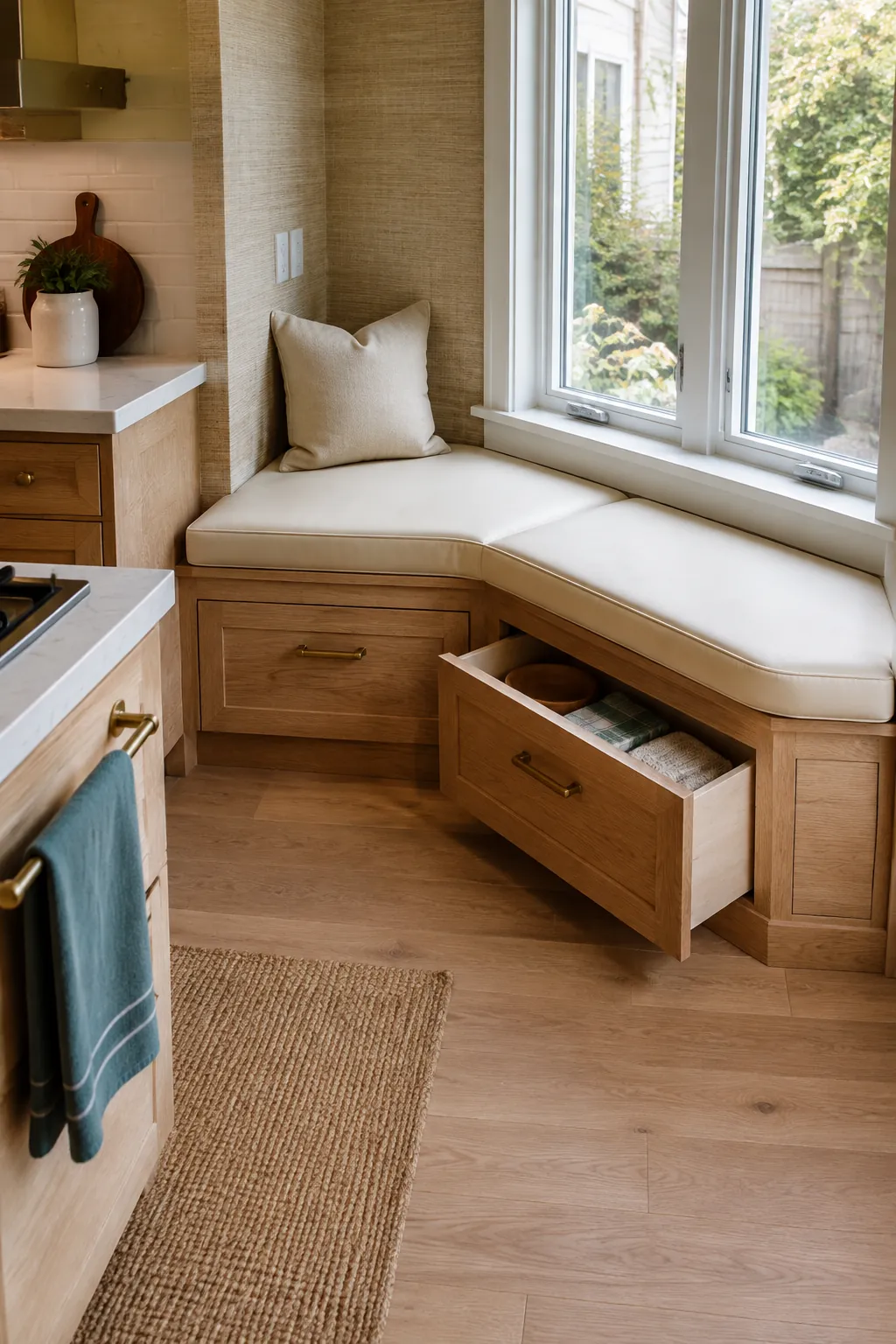
Use angled or staggered drawers to reach storage within a corner bench. The drawer boxes must clear one another, so mock up every opening before final installation. A continuous cushion can visually unite the top even when the cabinetry below changes direction.
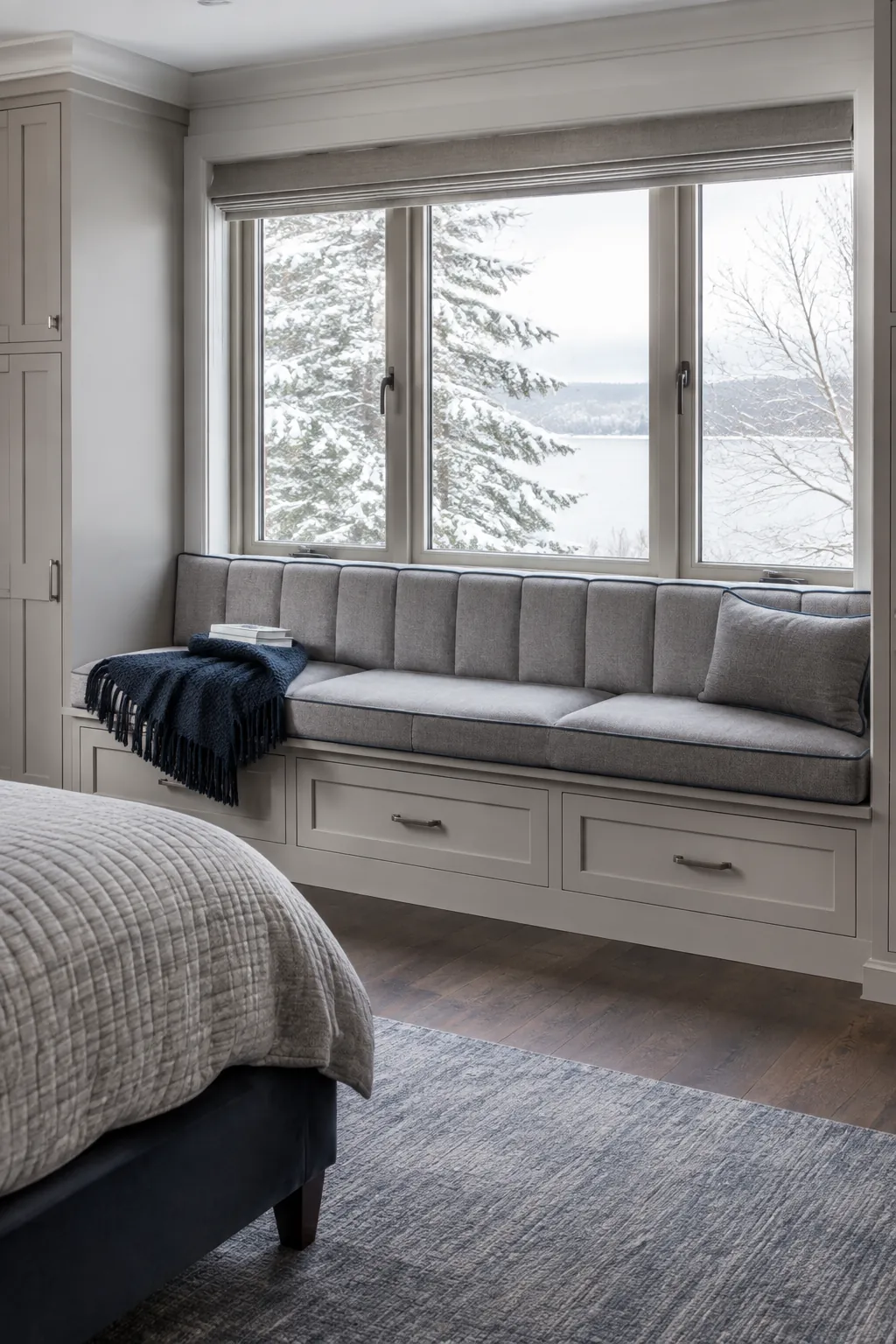
Upholstered Back Window Seat
Add a fixed upholstered back when the wall below the window is cold or uncomfortable. Stop the padding beneath handles and divide it into removable sections for service. Vertical channels create support without requiring a pile of decorative pillows.
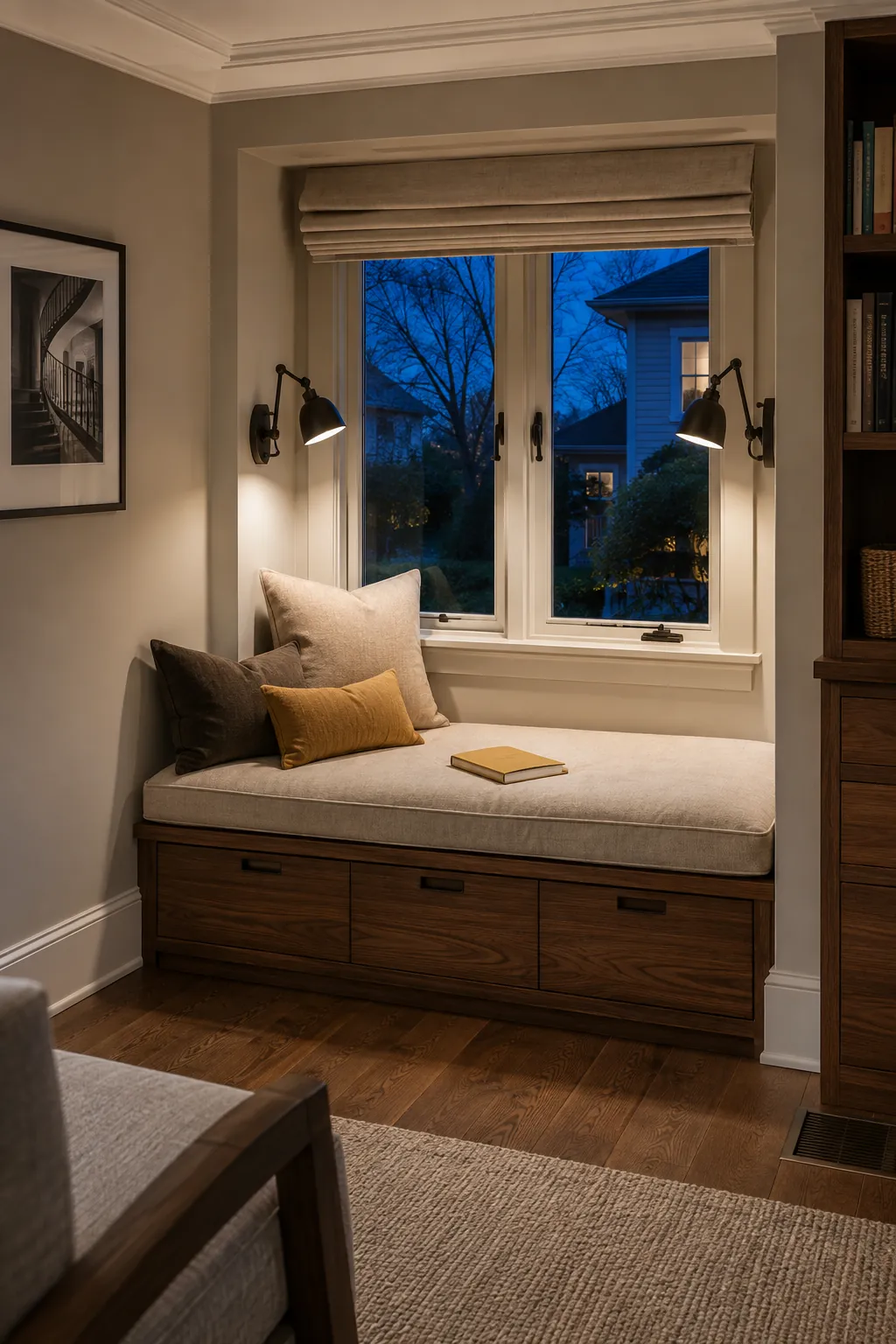
Window Seat with Sconces
Mount swing arm sconces on the solid walls beside the nook rather than on window trim. Each light should reach the page without shining into the room or tangling with curtains. Hardwired fixtures free the seat from trailing cords and crowded side tables.
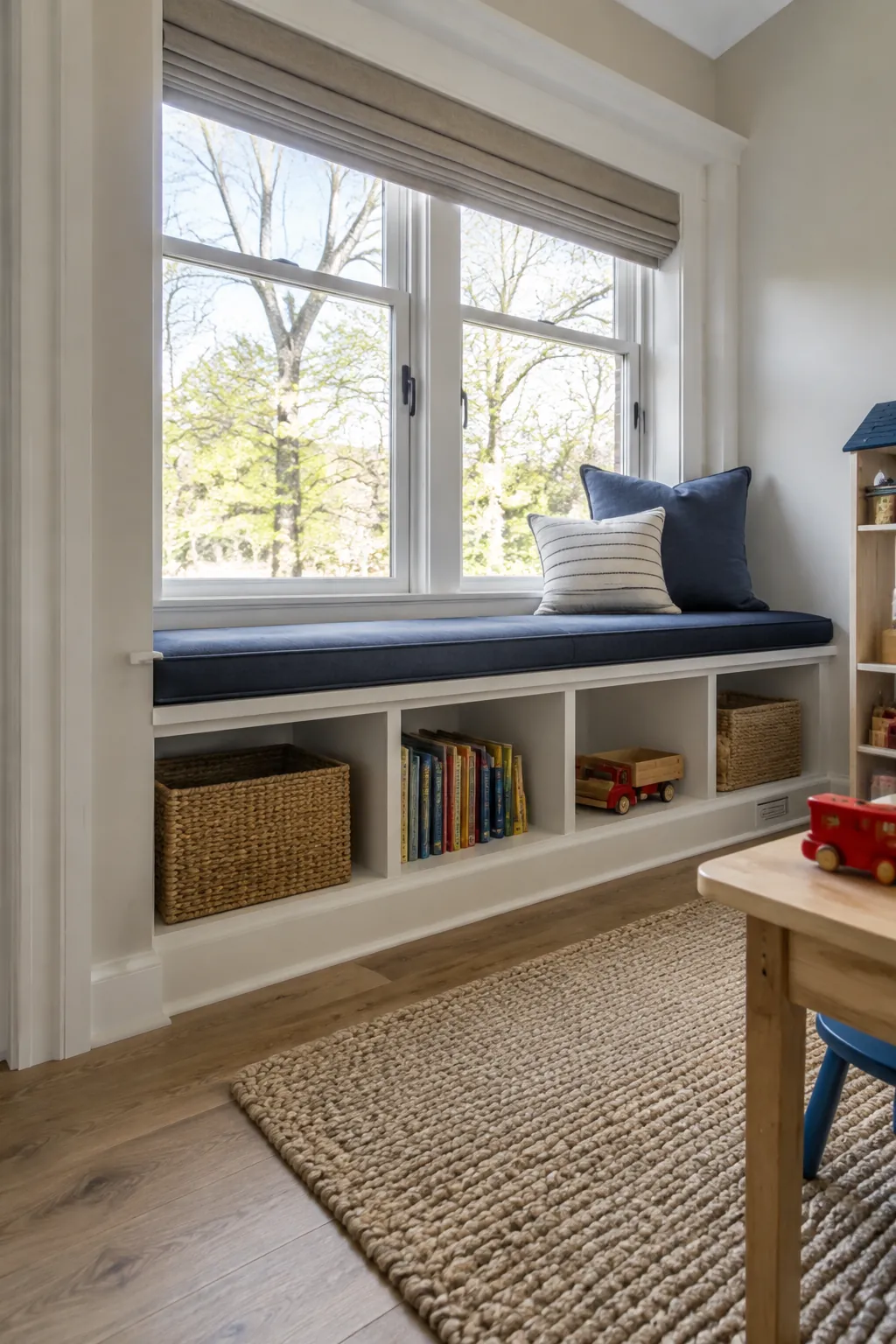
Open Cubbies Window Bench
Open cubbies suit baskets and books that need quick access. Size every opening for its intended container and leave a solid plinth so dust does not collect underneath. The visual rhythm stays calm when only a few cubbies hold objects and the rest remain open.
Quiet Meditation Nook
Finish the built in with a firm simple cushion and one small concealed compartment. A filtered shade provides privacy while preserving soft daylight, and a shallow ledge can hold a journal without becoming a display shelf. The restraint makes the final nook useful for a daily pause rather than another storage project.