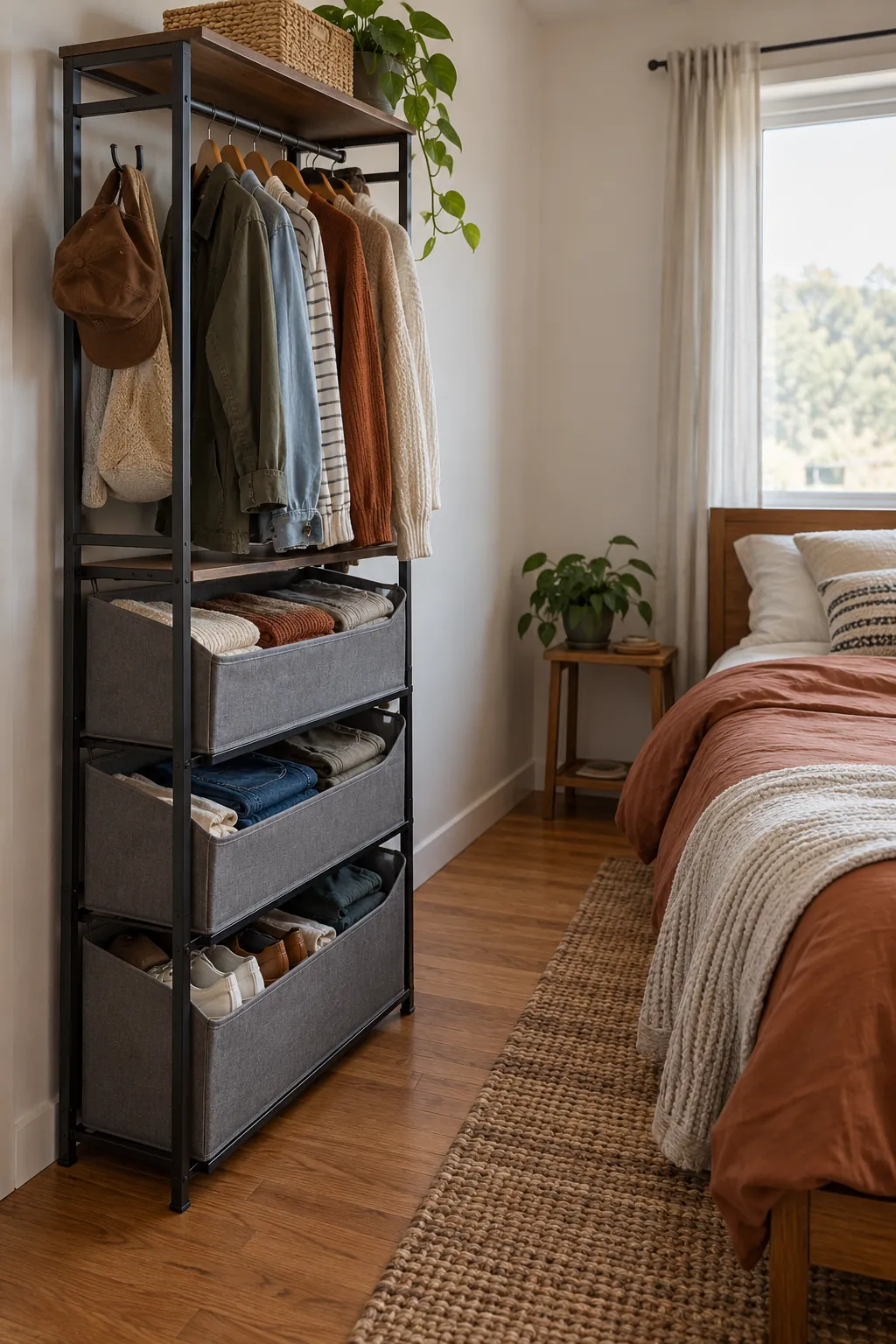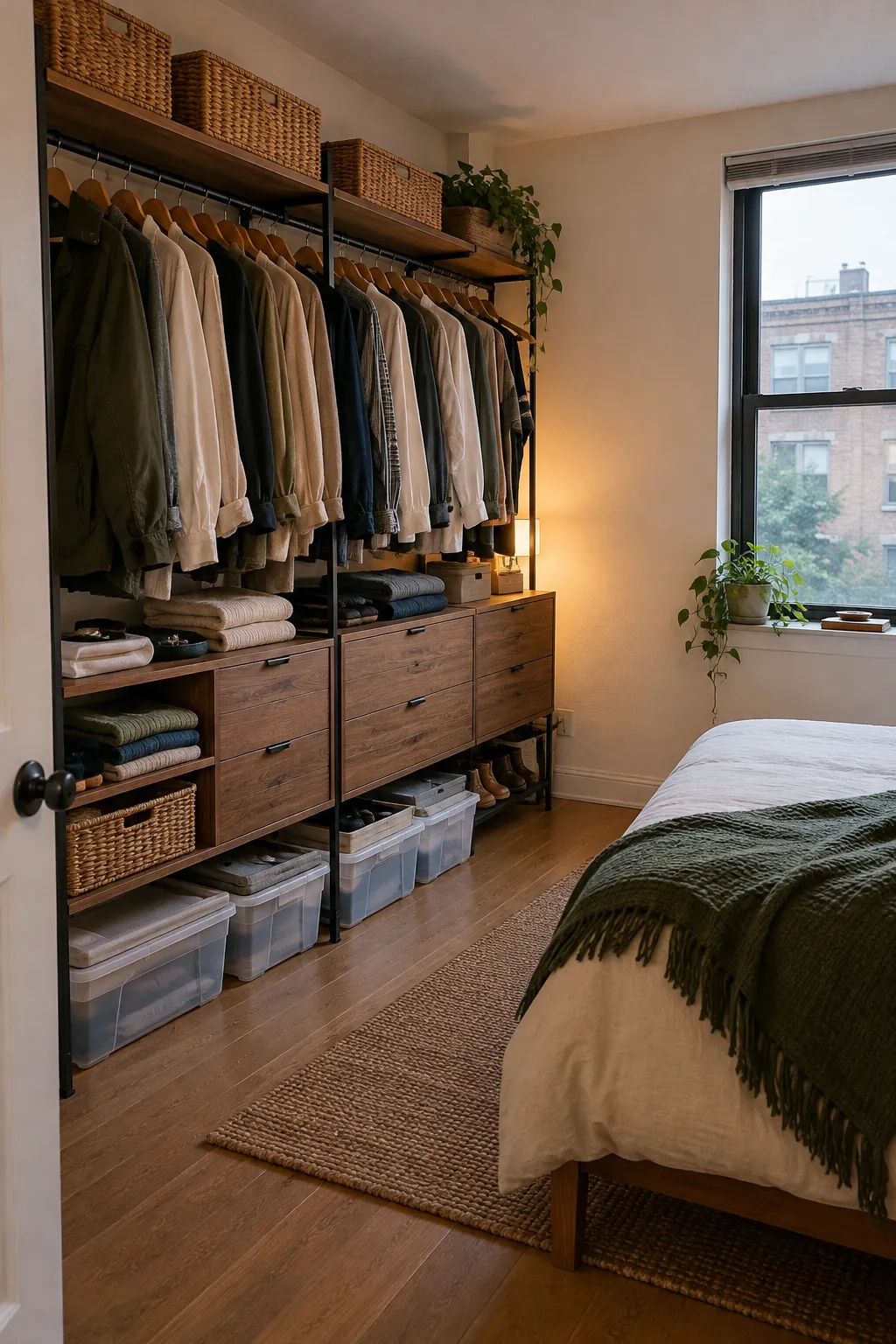
When every shirt, shoe, and spare blanket shares one small room, storage must protect the walking route as well as the clothes. Separate garments that need hangers from pieces that fold well, then give daily items the easiest reach. A balanced setup usually combines open access, closed storage, and one place for clothes waiting to be worn again.
Use a Slim Garment Rack
A narrow rack gives dresses and pressed shirts a hanging zone without the depth of a wardrobe. Choose a stable base and keep the rail below eye level so the room feels open. Limit the rack to current favorites because crowded hangers slow every morning.
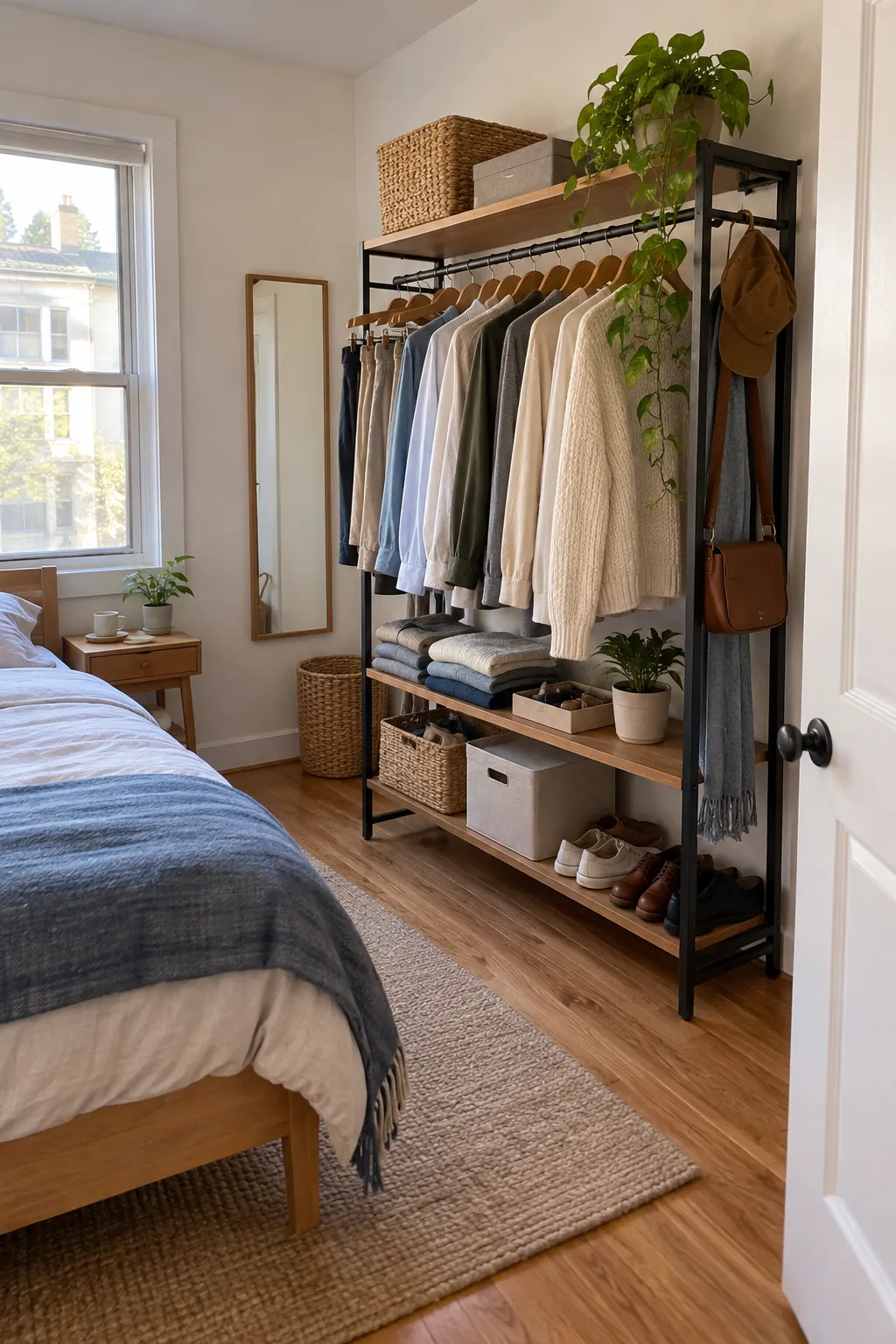
Choose a Covered Clothes Rack
A fabric cover hides visual clutter and keeps dust away from occasional clothes. Look for a cover that opens fully so garments do not disappear behind an awkward flap. Leave an air gap behind the rack and never pack damp clothing inside.
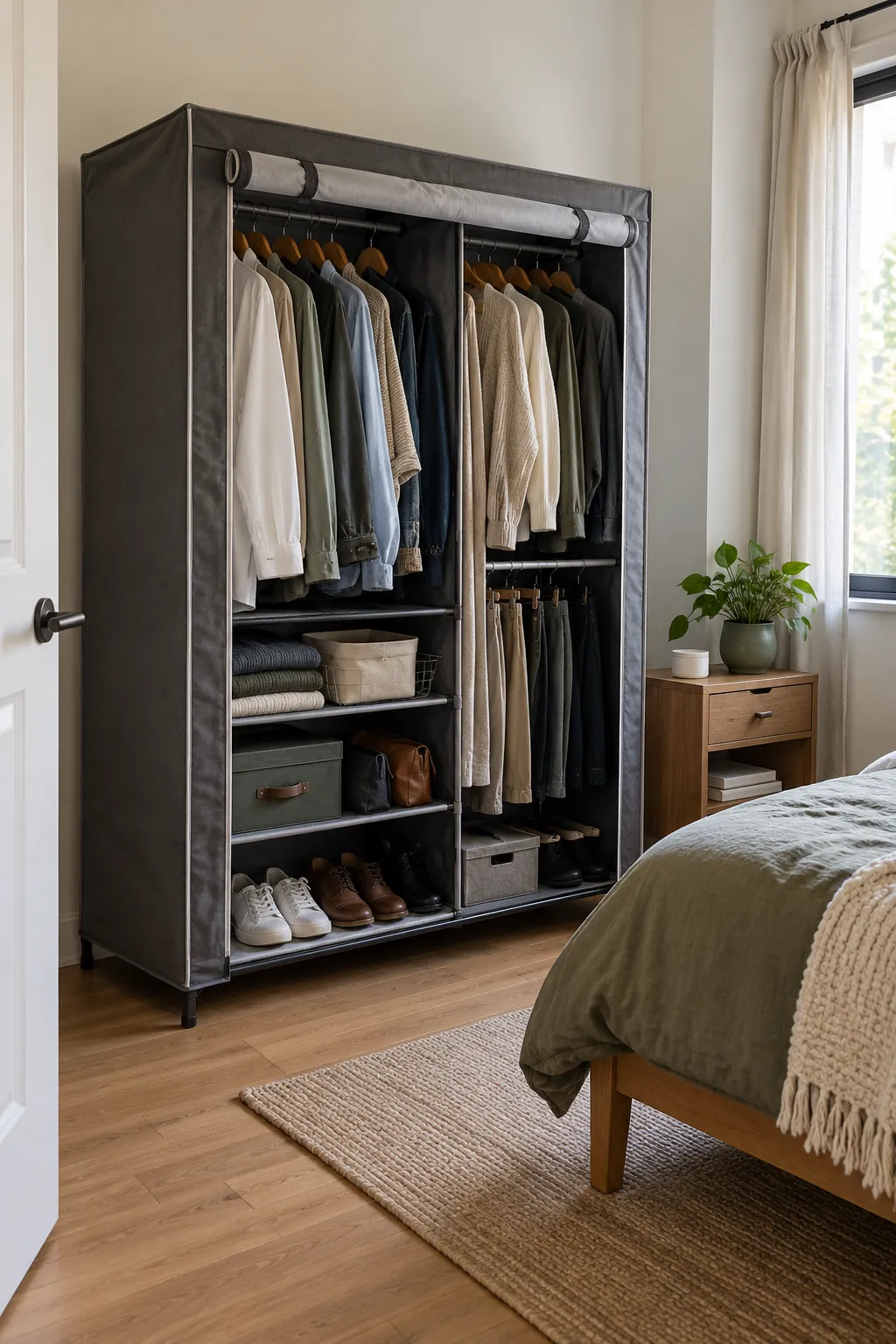
Install a Tension Pole in an Alcove
A strong tension pole can turn a shallow recess into a hanging bay without permanent holes. Confirm the surfaces are solid, follow the load rating, and test the pole before adding valuable clothes. A curtain on a second rod can soften the view while preserving quick access.
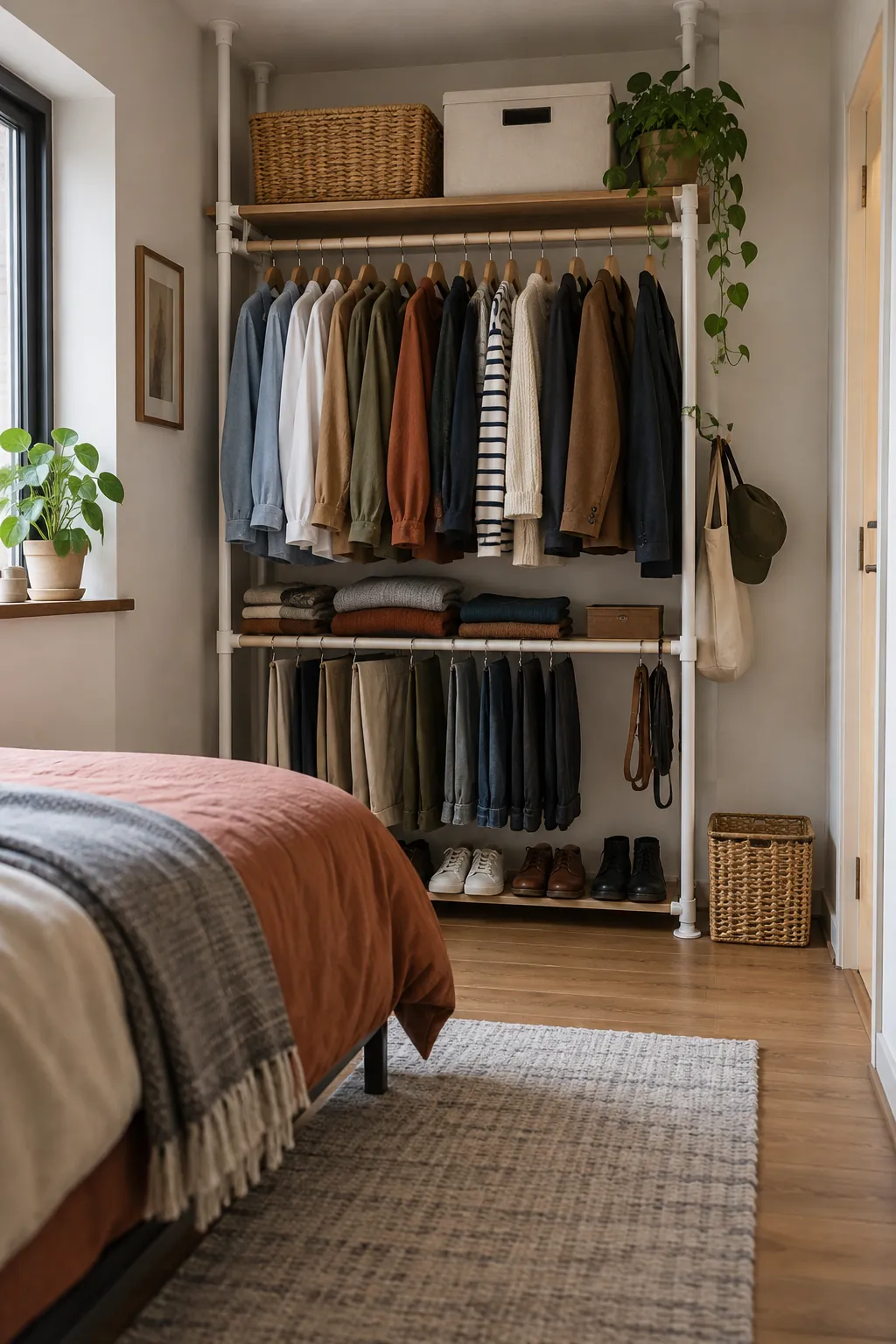
Build a Rail Under a Shelf
A wall shelf with a rail below uses one footprint for folded and hanging storage. Secure each bracket into suitable structure and keep the shelf shallower than the hangers. Baskets above can hold accessories while the rail carries frequently used clothes.
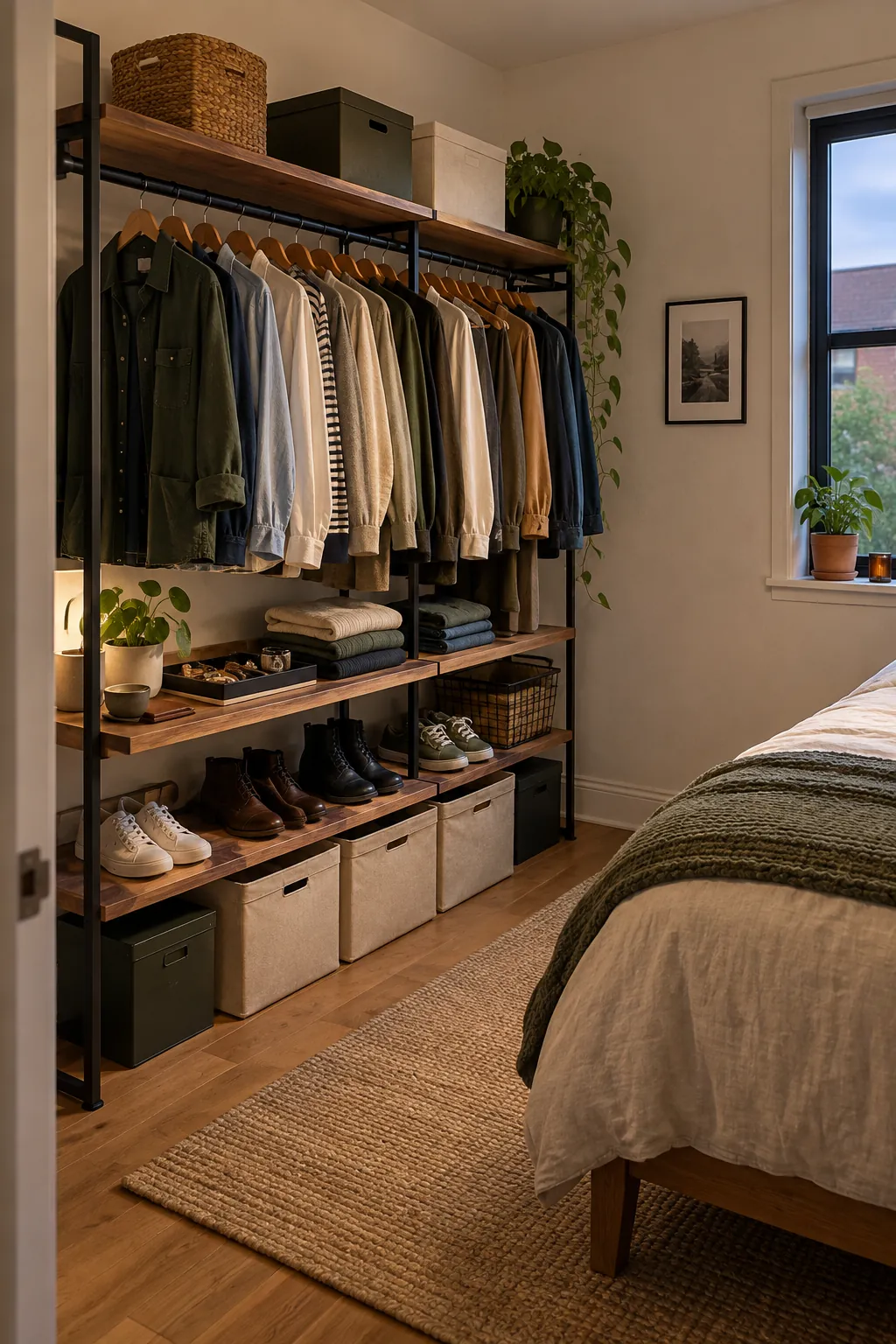
Place a Wardrobe Beside the Bed
A compact wardrobe provides the closest substitute for a built in closet and keeps clothing out of sight. Measure door movement, baseboard depth, and the path around the bed before buying. Sliding panels suit a spot where hinged doors would collide with bedding.
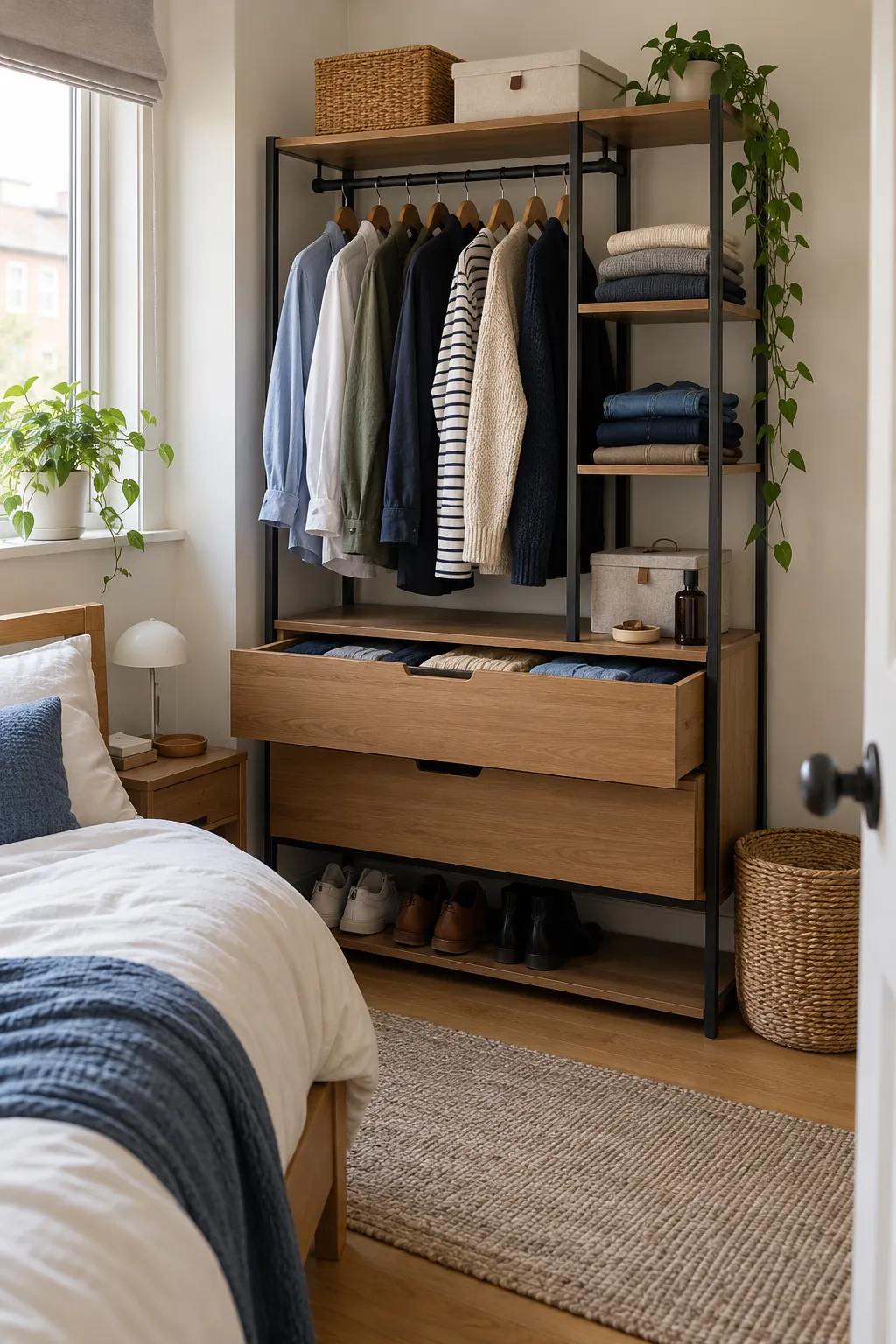
Use a Corner Wardrobe
A corner wardrobe can claim a difficult junction that rectangular furniture leaves empty. Select a simple interior with a rail and adjustable shelves instead of a complicated fitting that wastes depth. Check that its doors cannot trap the room entry.
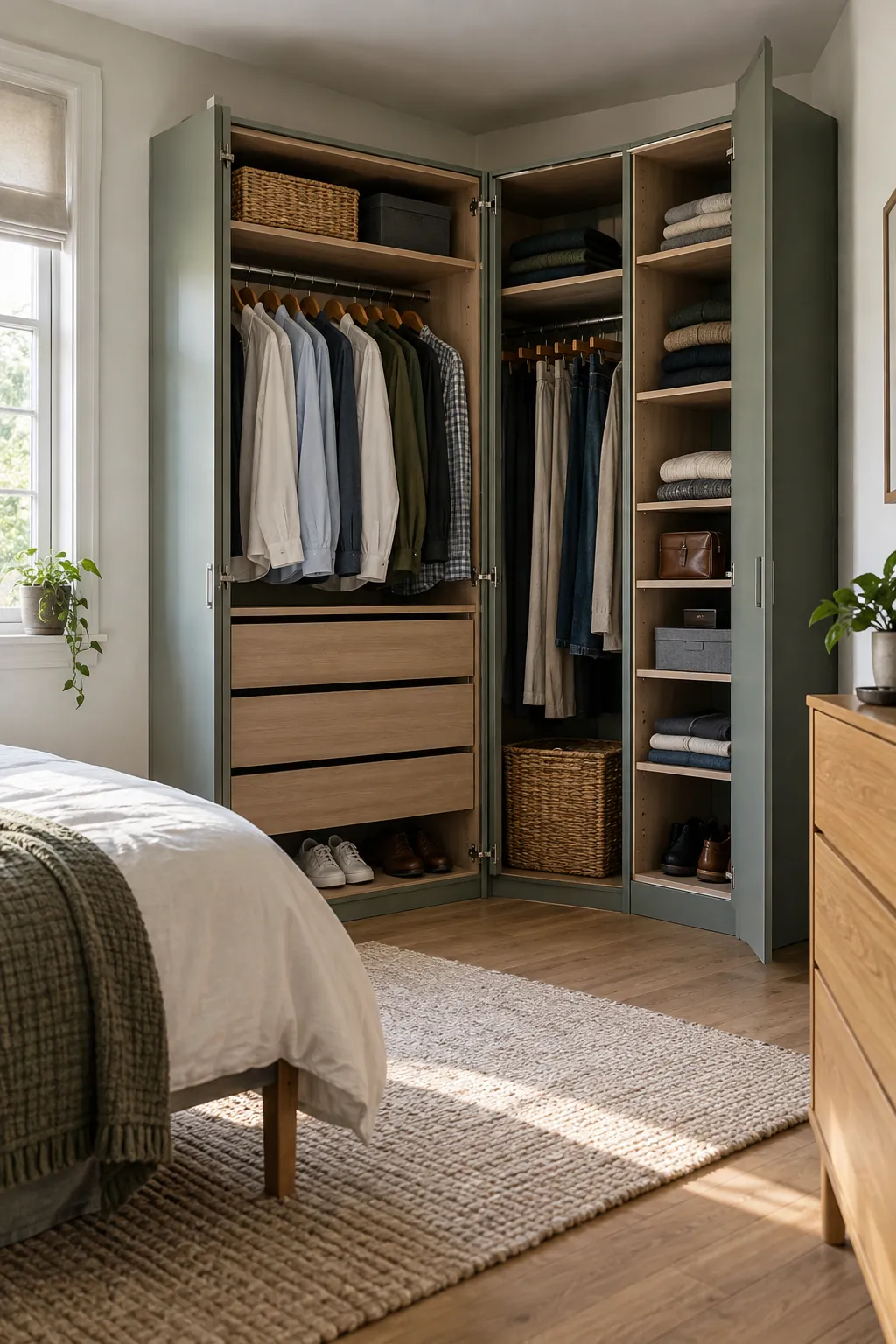
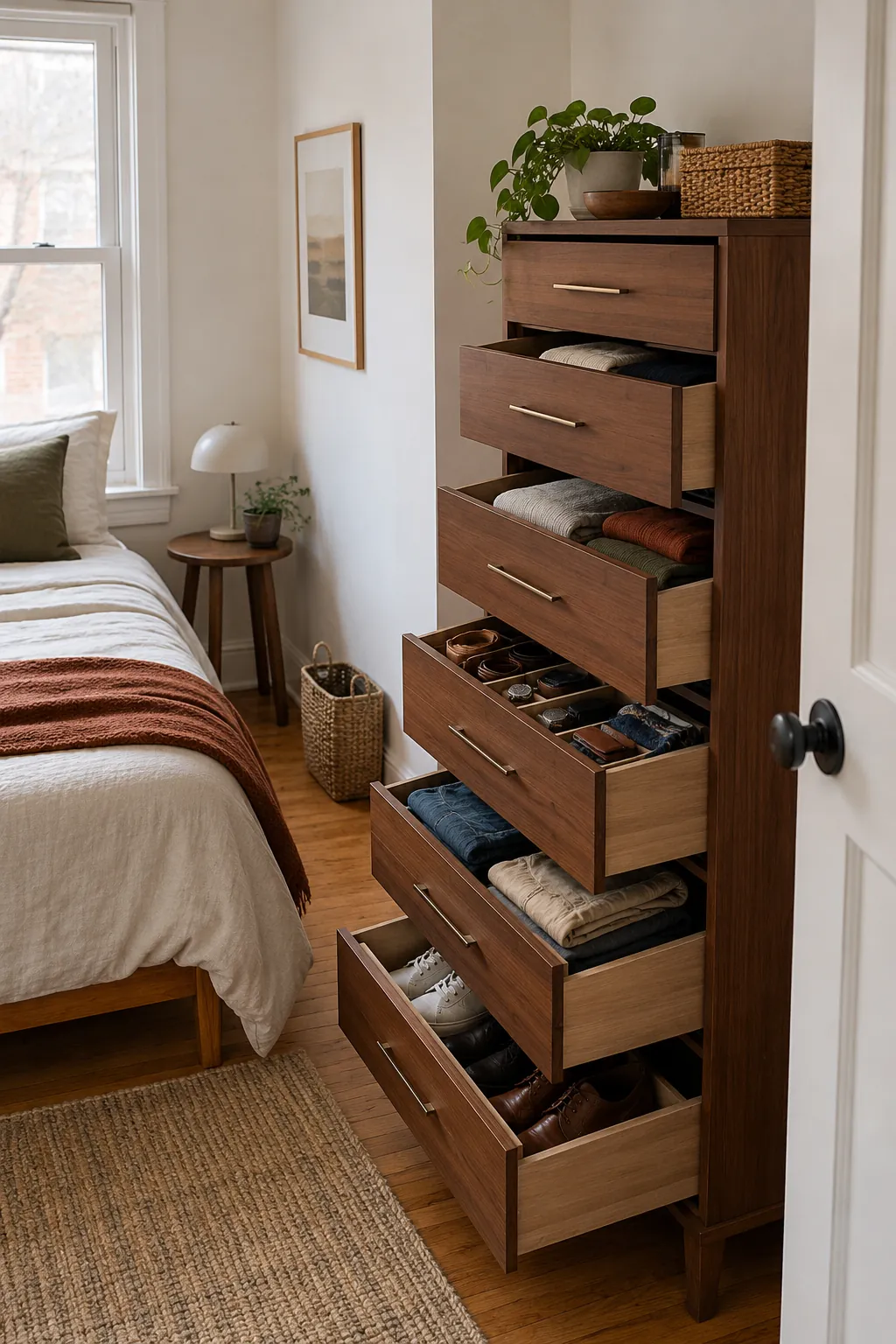
Try a Tall Narrow Dresser
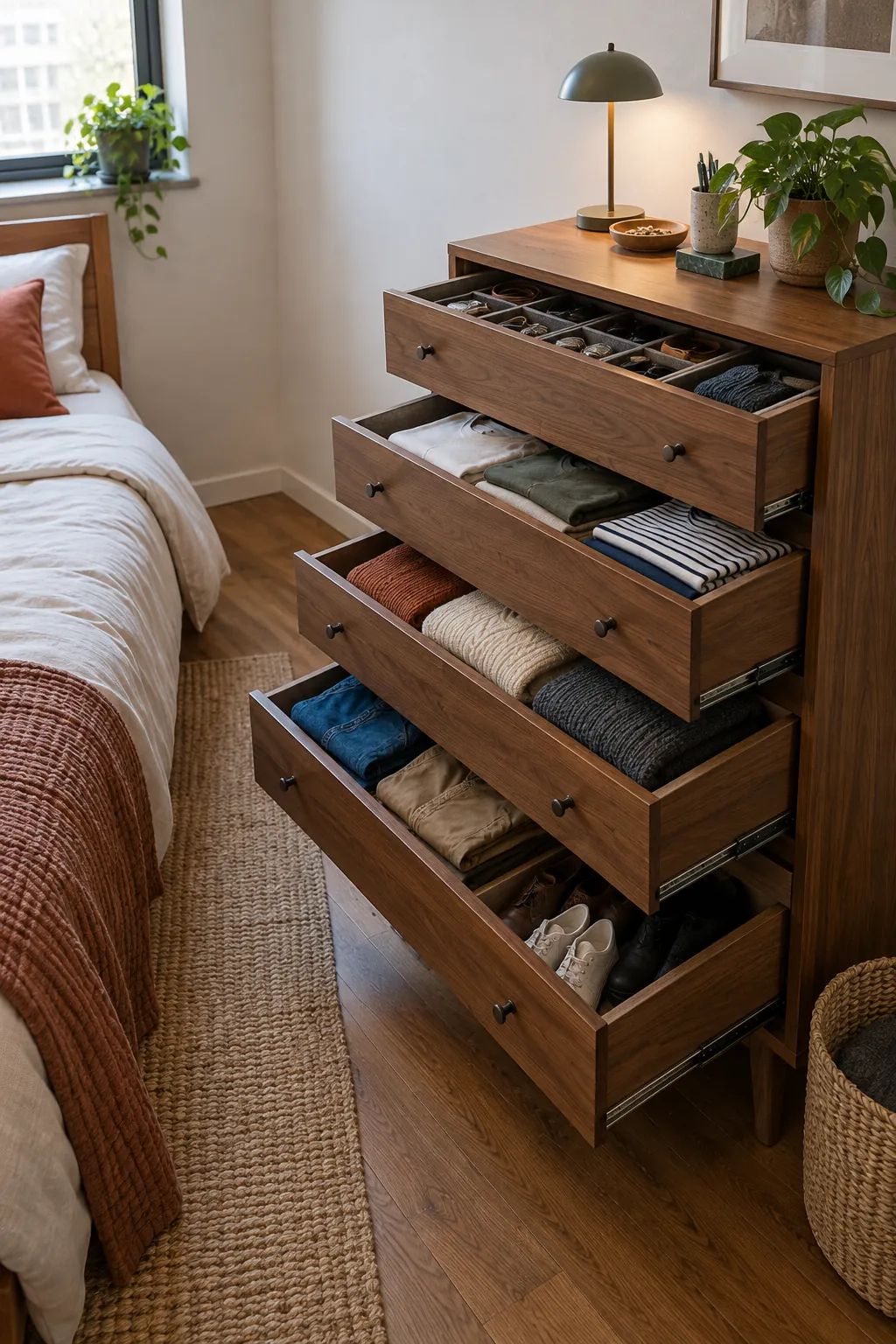
A tall dresser stores many folded pieces while using less floor width than a long chest. Anchor it as directed and reserve lower drawers for heavier items. Put daily underwear and shirts at waist height so the easiest drawers serve the busiest routine.
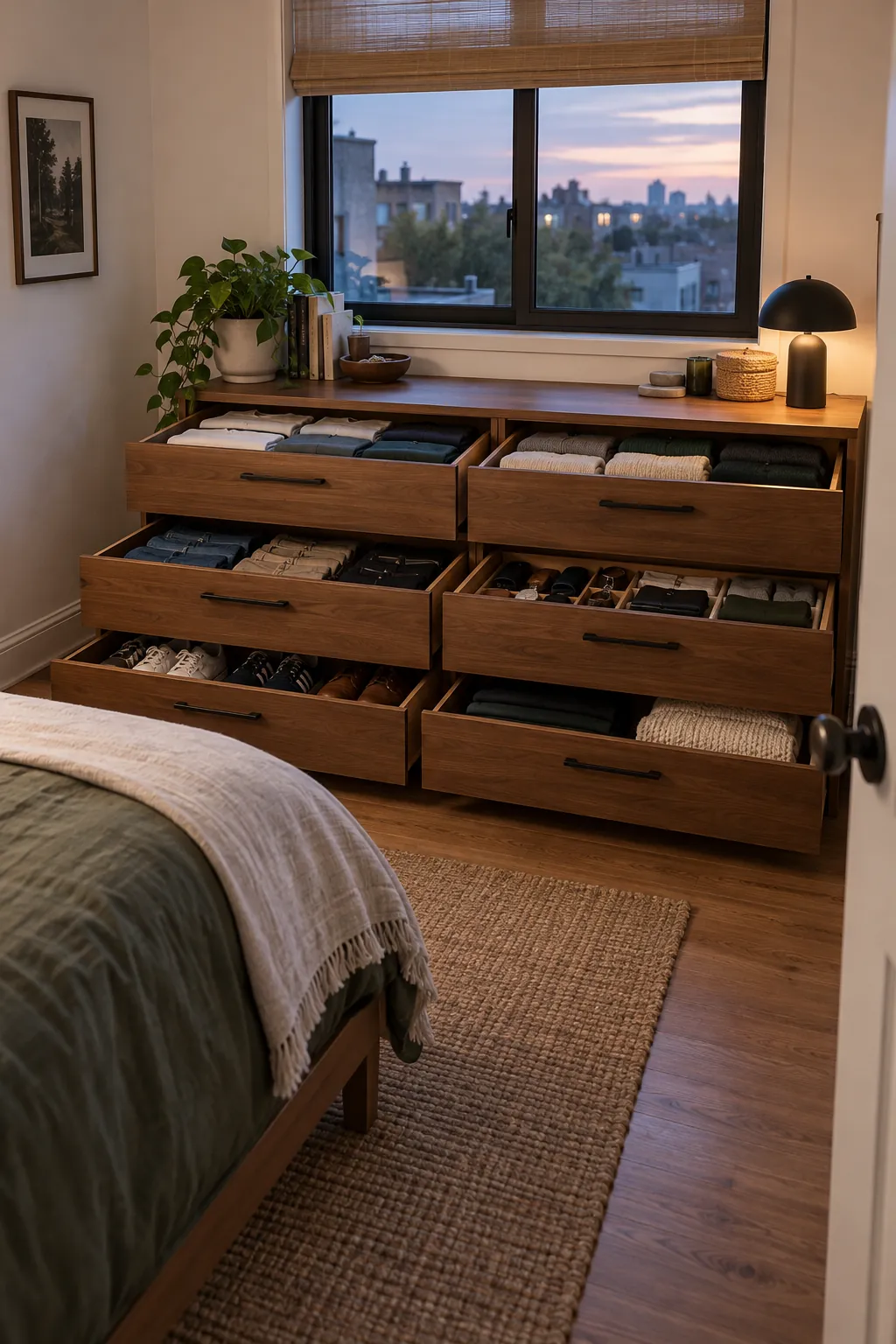
Put a Low Dresser Under the Window
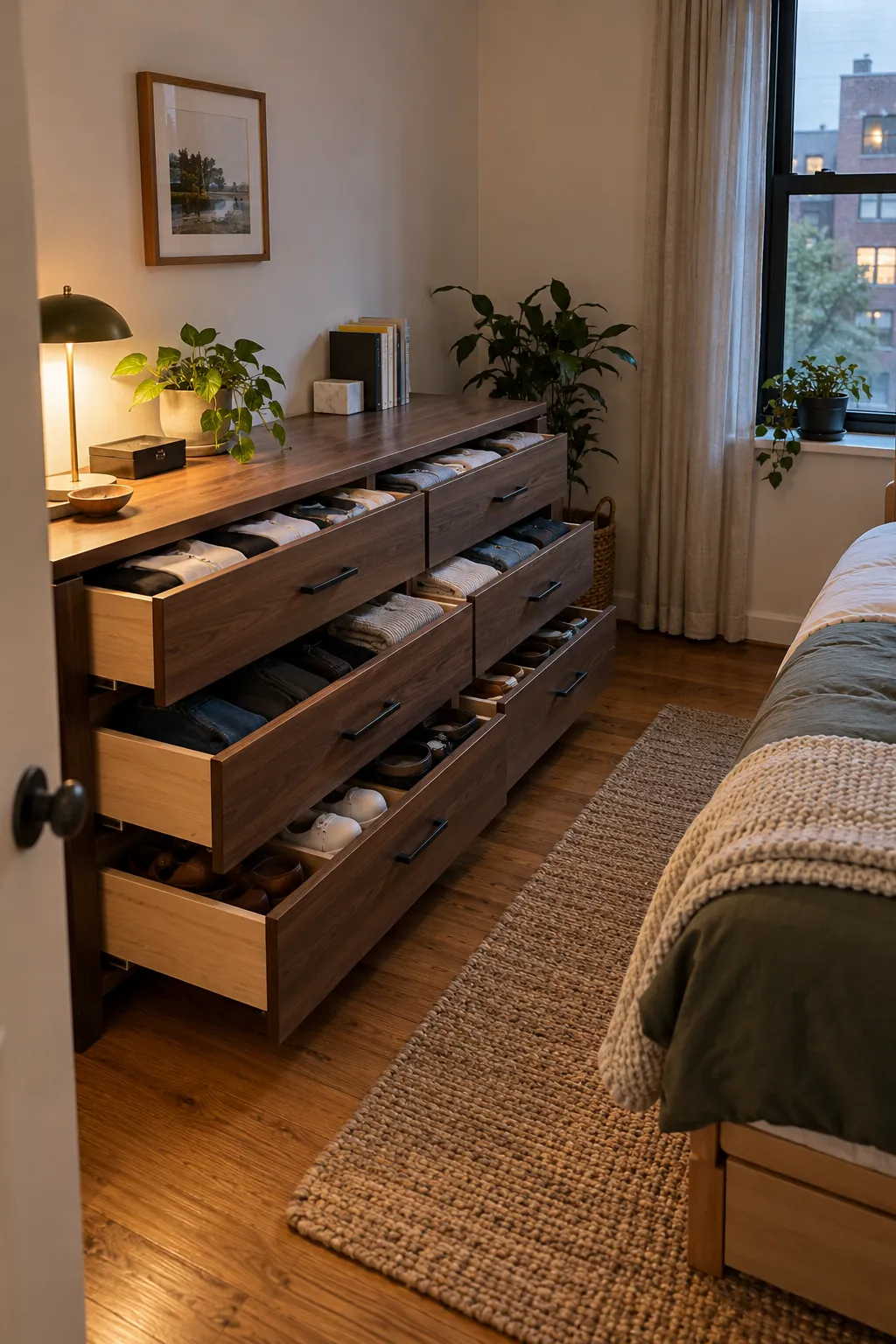
A low dresser uses the wall below a window without blocking daylight. Keep the top clear enough to reach locks, shades, and the window itself. Measure the open sash and any heater clearance before choosing this location.
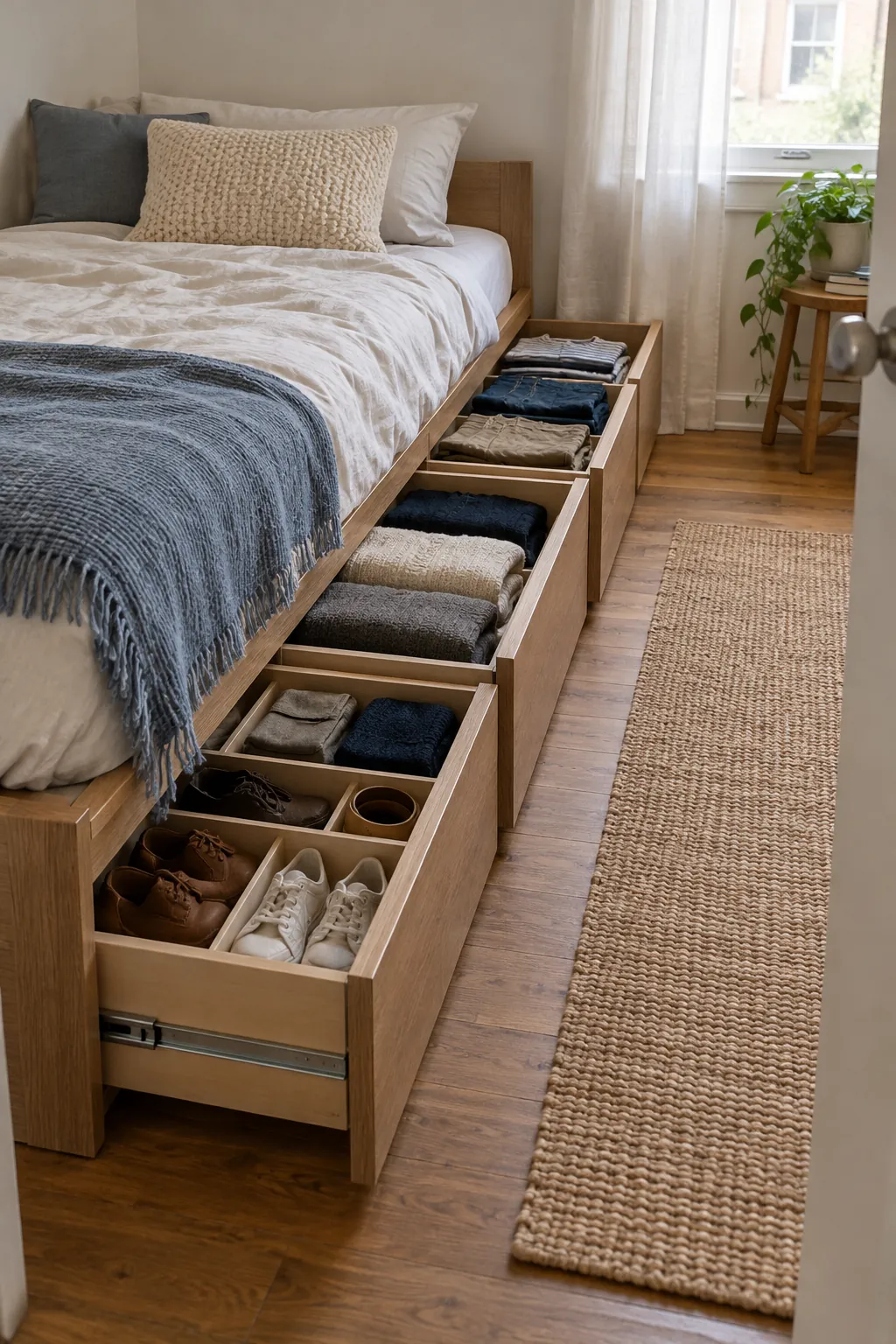
Add Drawers Beneath the Bed
Rolling drawers make the bed footprint work twice and suit jeans, knitwear, and sleepwear. Confirm each drawer can pull out without hitting a rug, wall, or table. Shallow dividers stop small garments from sliding into a mixed pile.
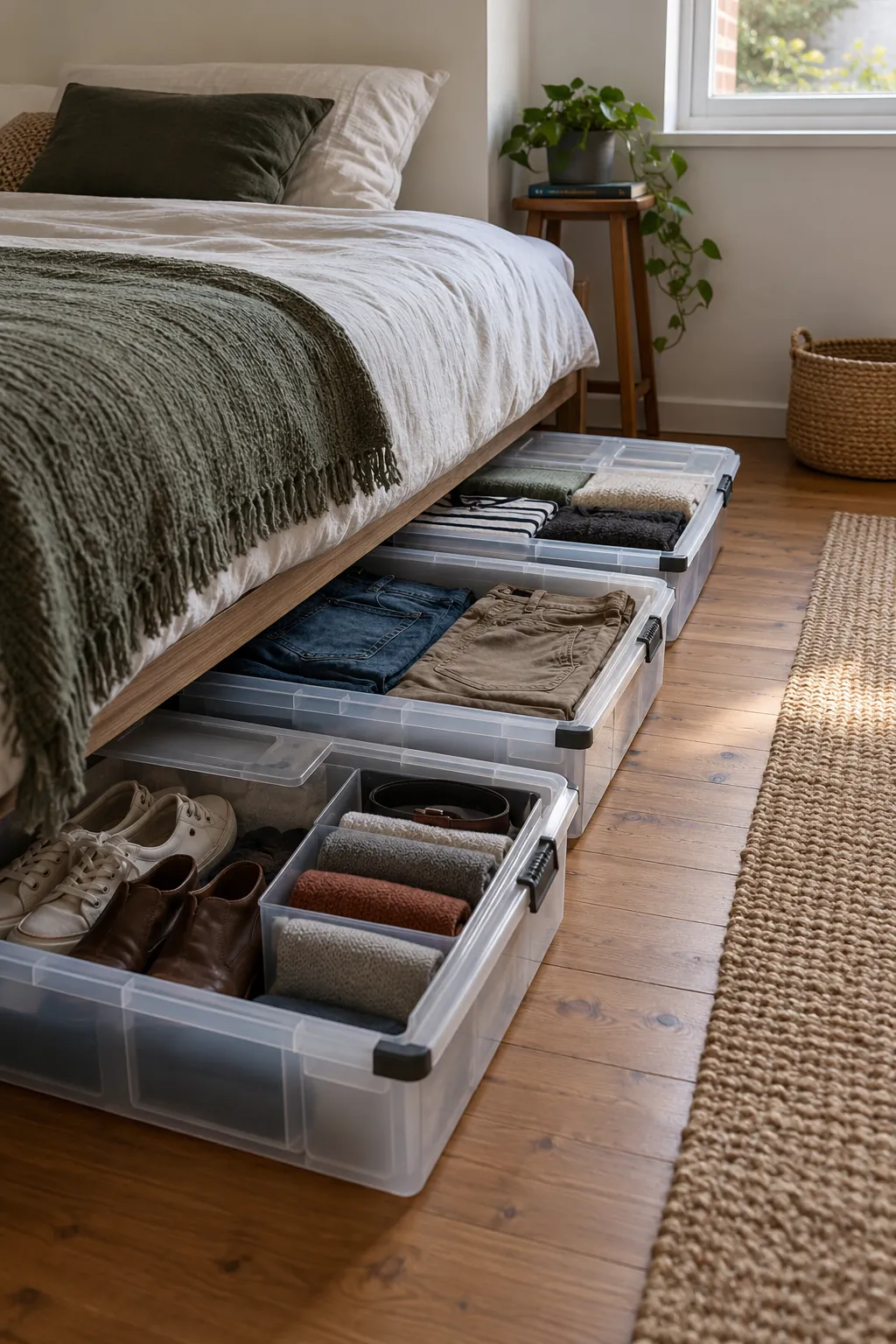
Slide Lidded Bins Under the Bed
Lidded bins protect seasonal clothing from dust when built in drawers are unavailable. Measure the lowest point under the frame, including center supports, before choosing a height. Clear sides or category cards make the right container easy to find.
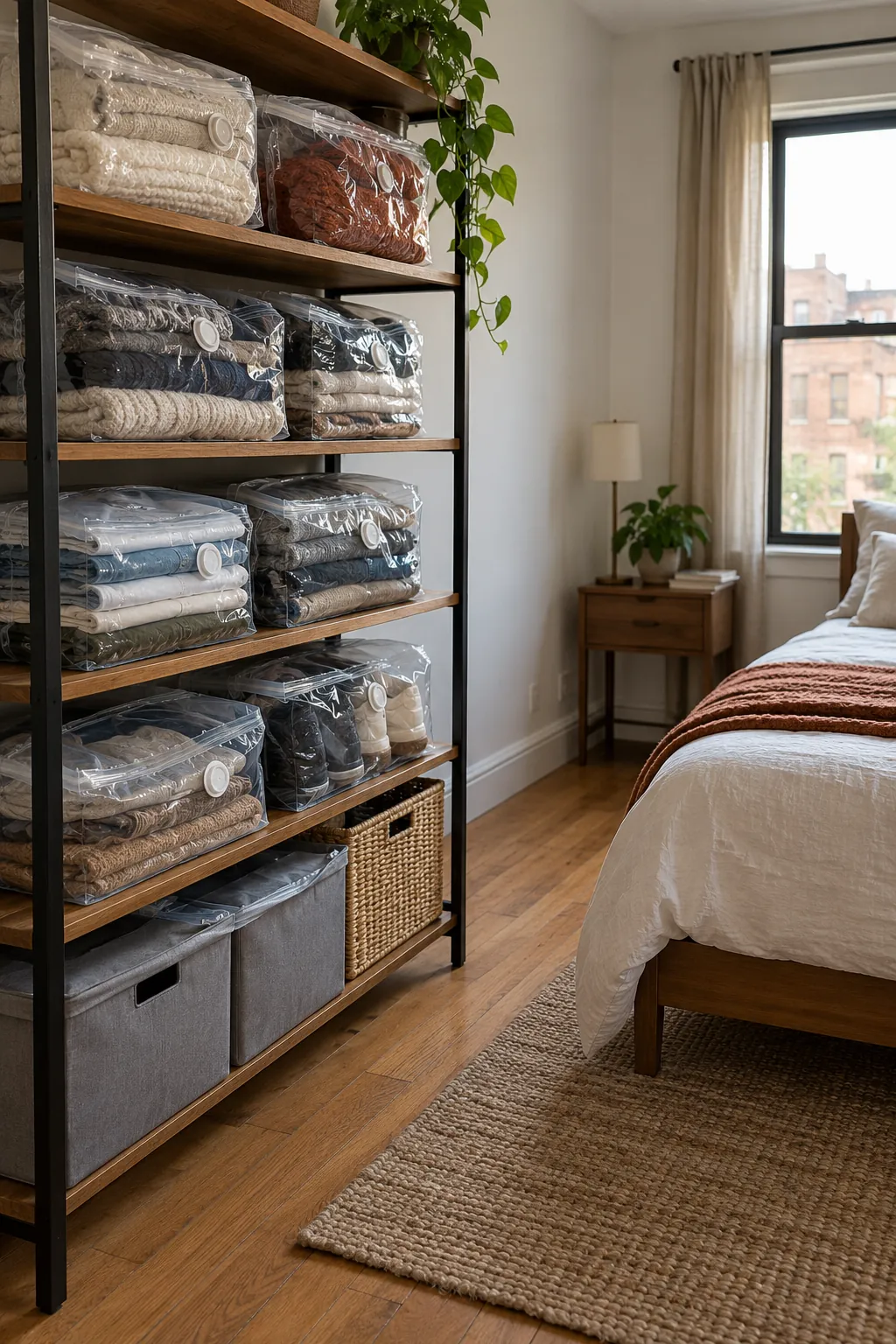
Use Vacuum Bags for Seasonal Clothes
Vacuum bags reduce the volume of clean coats and spare bedding stored for months. Avoid compressing leather, structured tailoring, or natural fill for long periods. Place each sealed bag inside a smooth bin so the plastic cannot snag.
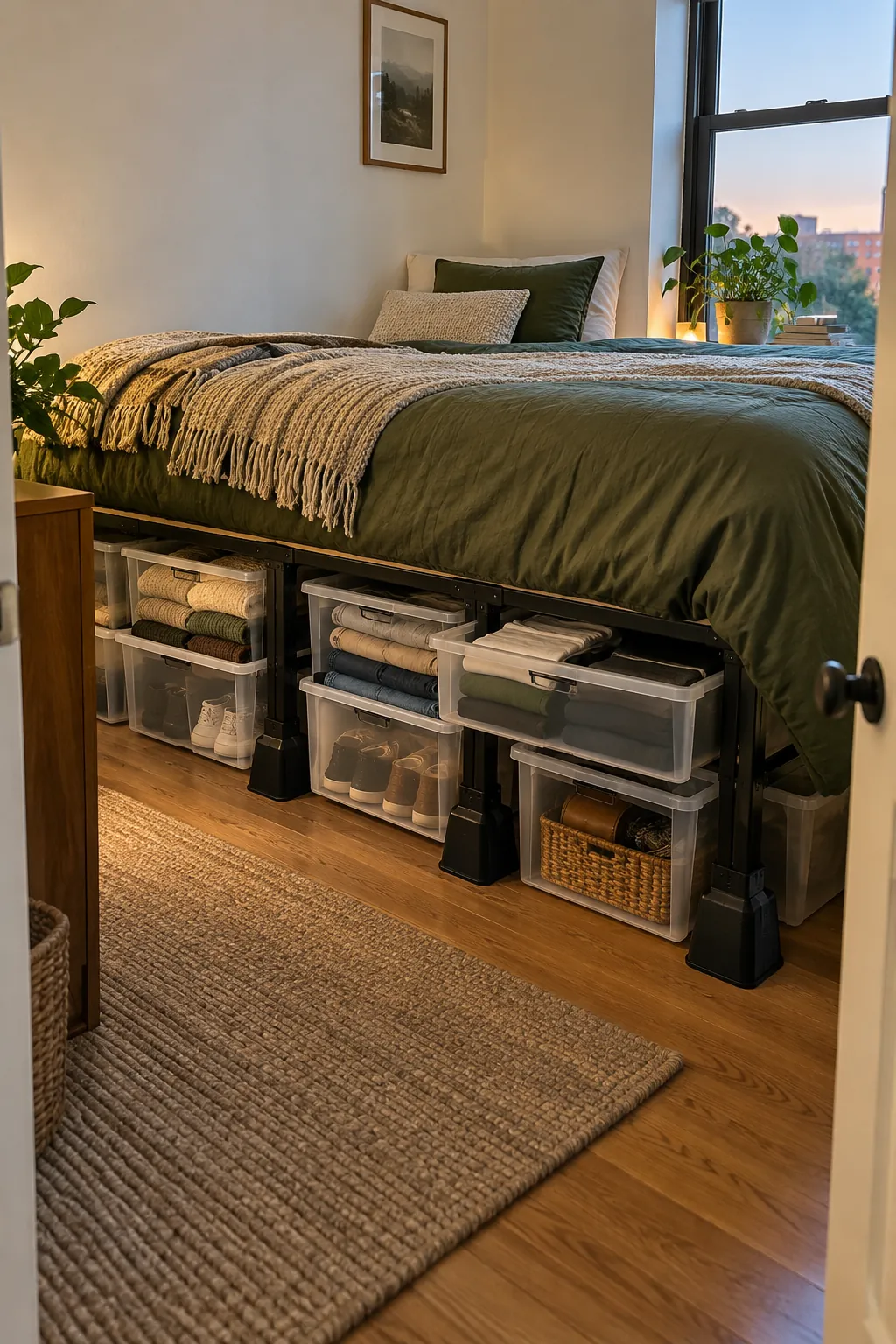
Raise the Bed for Storage
Purpose made risers can create clearance for practical clothing containers beneath an existing frame. Use only risers that fit every leg securely and respect their weight guidance. Recheck the new bed height for comfortable entry and stable bedside access.
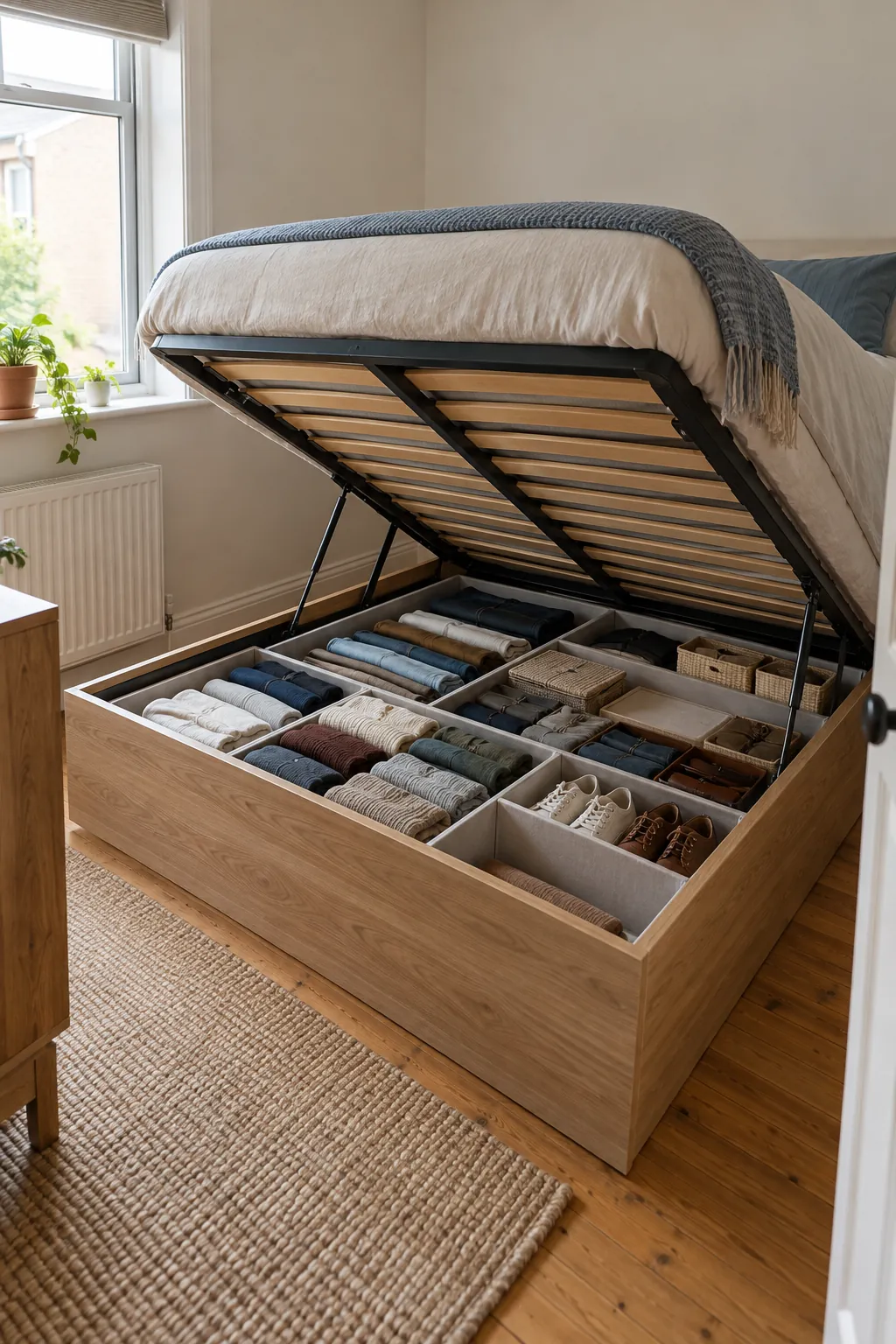
Choose a Lift Storage Bed
A lift platform reveals a large concealed compartment without needing drawer clearance beside it. Test the mechanism, mattress weight, and safe operation before relying on it. Store occasional pieces inside because opening the platform every morning becomes tiresome.
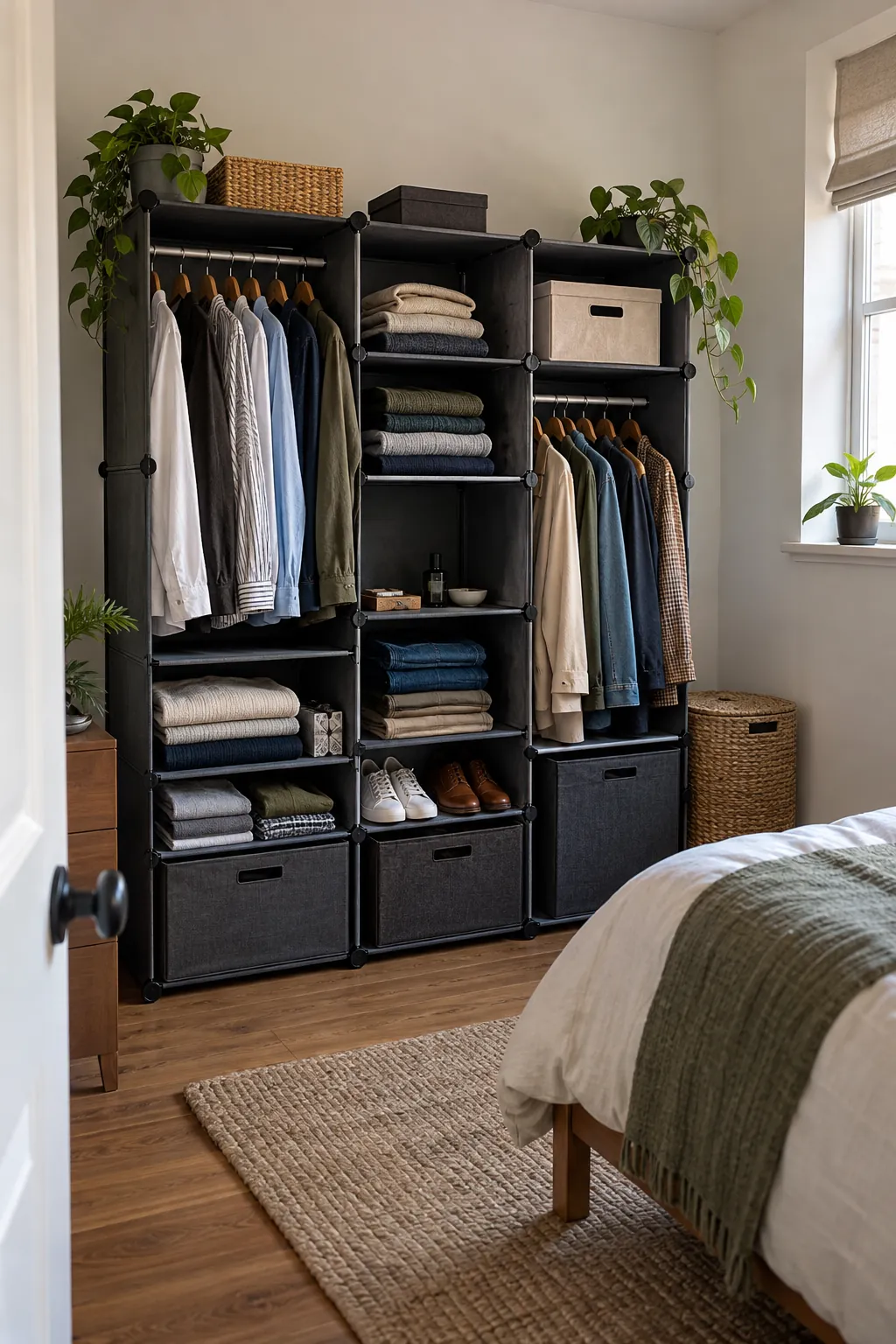
Stack Modular Cube Storage
Cube units divide folded clothing into visible categories and adapt around awkward wall widths. Use fabric bins for small pieces and open cubes for garments that remain tidy. Secure tall arrangements and keep heavy bins near the floor.
Use Baskets on a Bookcase
A slim bookcase becomes a clothing station when each shelf receives a breathable basket. Choose baskets that lift comfortably and leave finger space above them. Assign one category per container so folded items do not vanish into a deep stack.
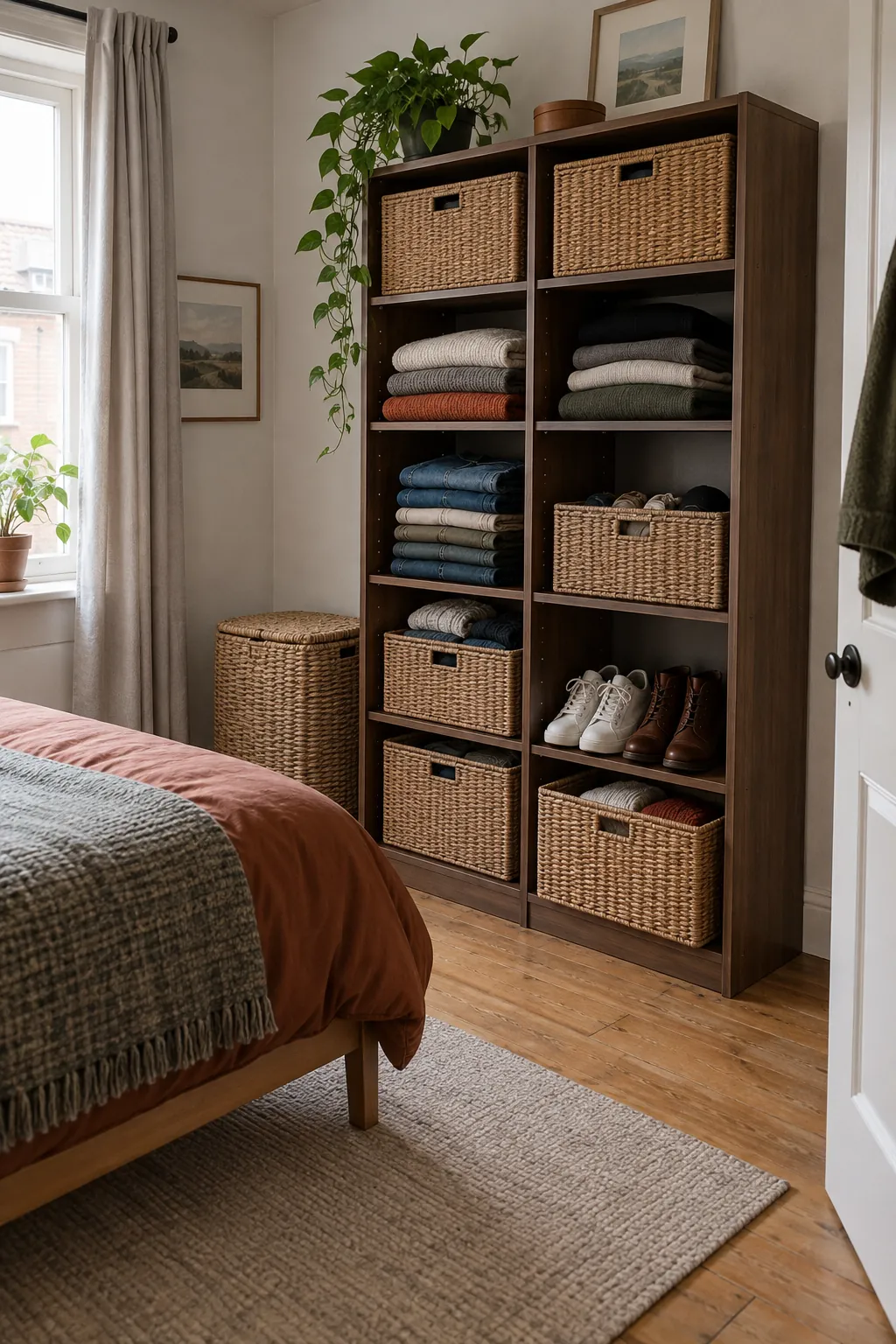
Mount Shelves Near the Ceiling
High shelves hold lightweight seasonal boxes while preserving useful wall area below. Mount them into appropriate support and keep containers shallow enough to retrieve safely. Give a stable step stool a permanent nearby home to avoid risky climbing.
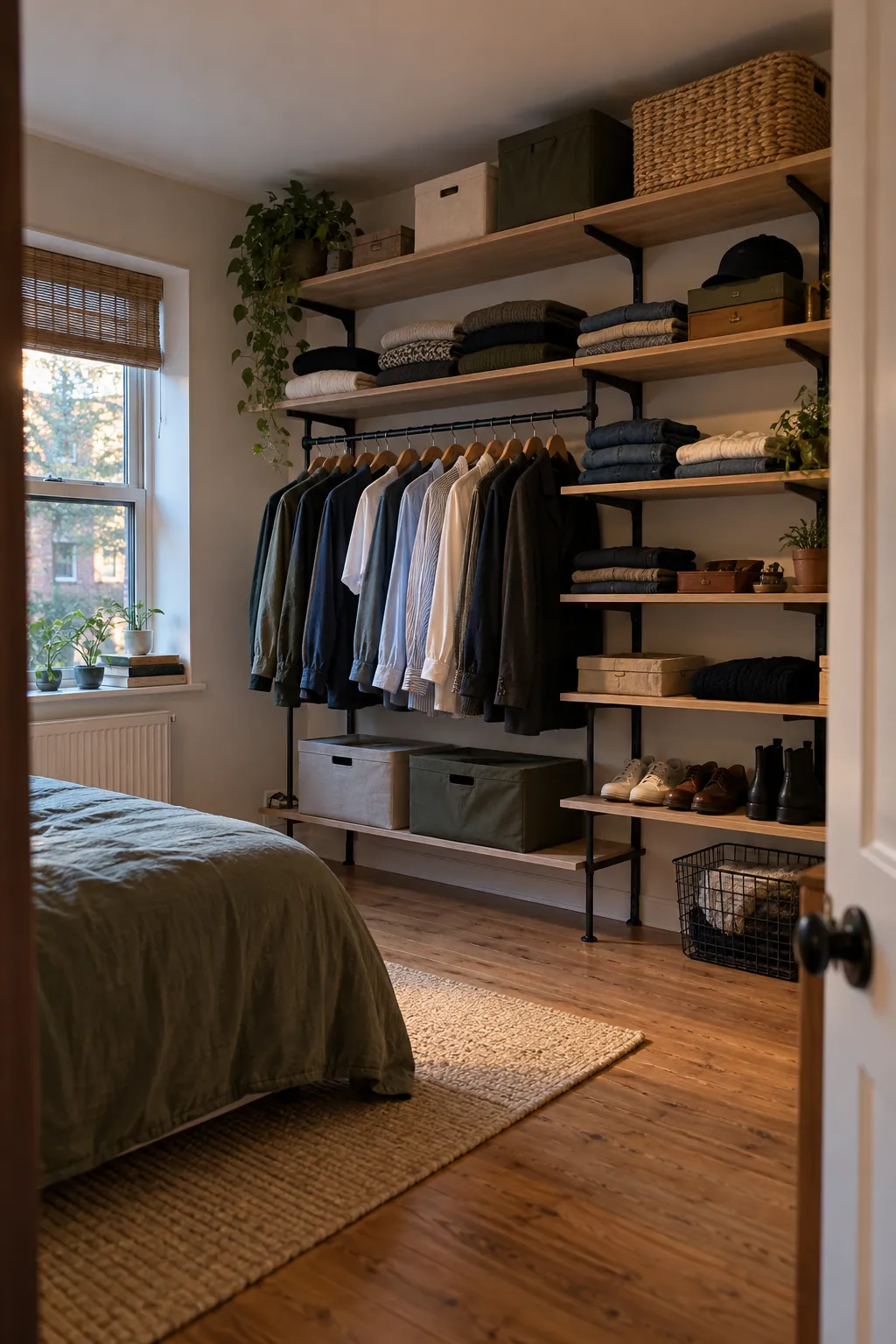
Frame the Headboard With Cabinets
Two narrow cabinets beside the bed can create a closet wall while preserving the sleeping center. Keep overhead pieces securely supported and well above sitting height. Shallow shelves suit folded clothes while side rails handle short garments.
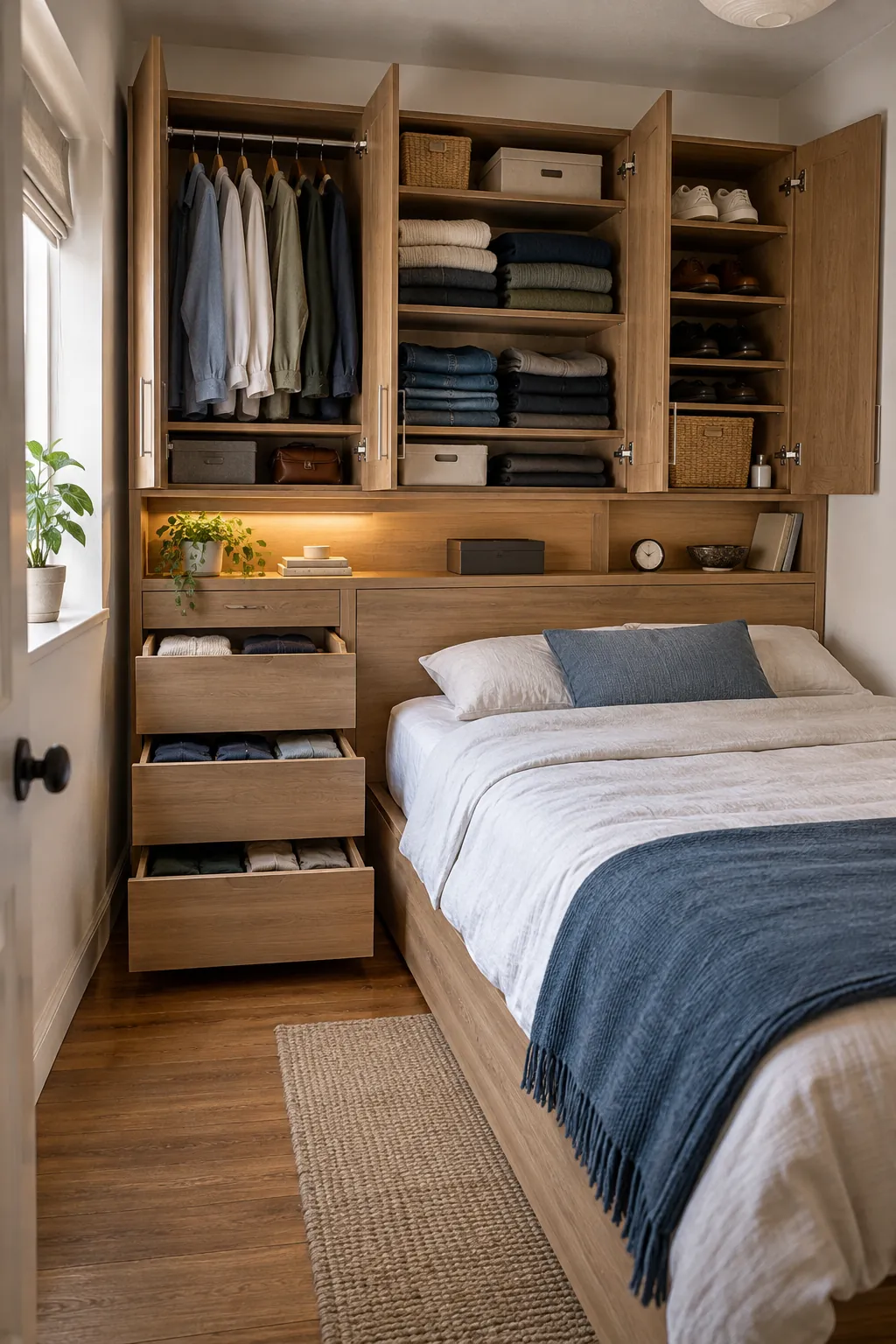
Hang a Door Organizer
An organizer on the room door keeps scarves, belts, socks, and small accessories in unused space. Pick a shallow model so the door opens fully and pockets do not hit the wall. Soft pockets are kinder to paint and quieter than rigid baskets.
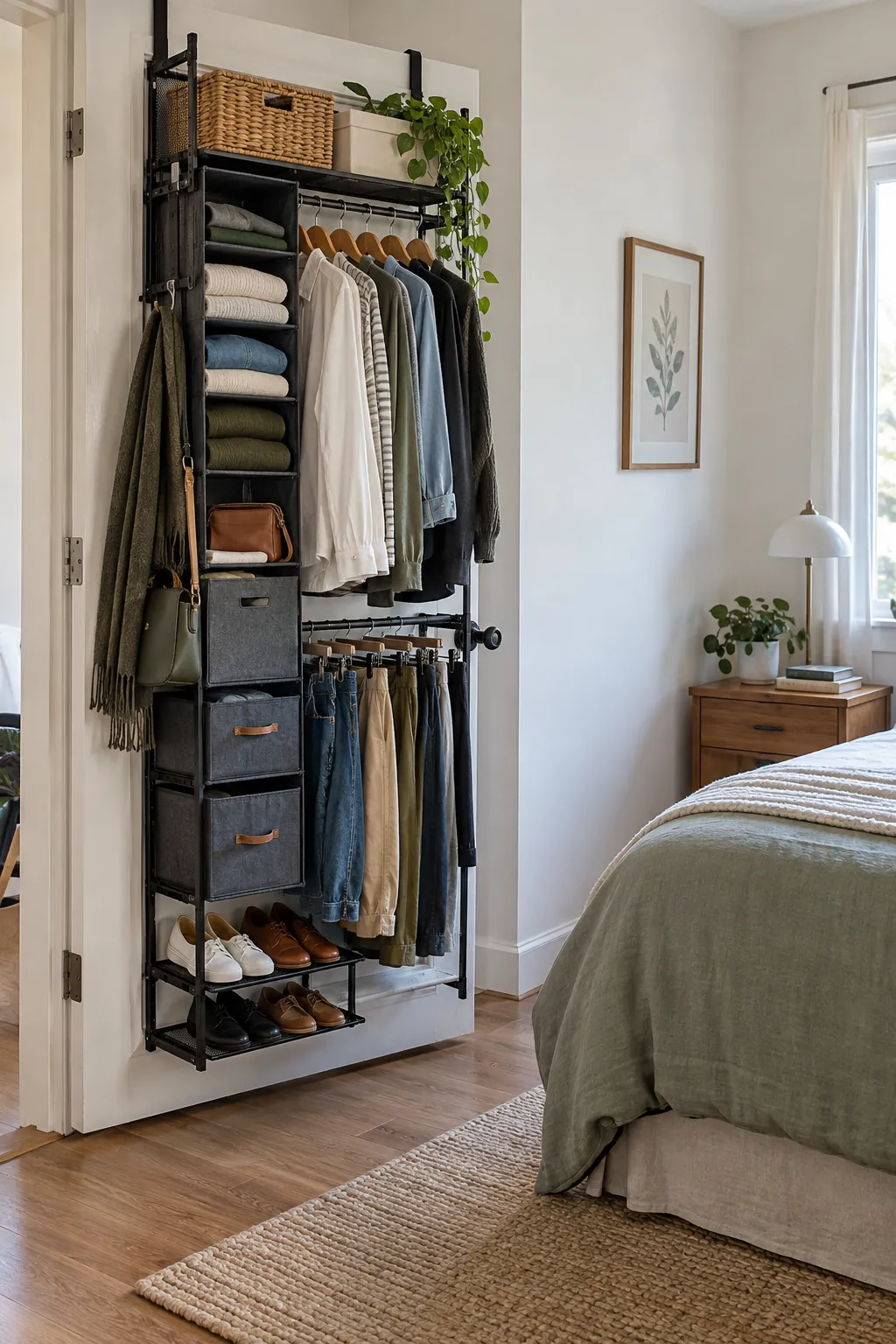
Add Hooks Behind the Door
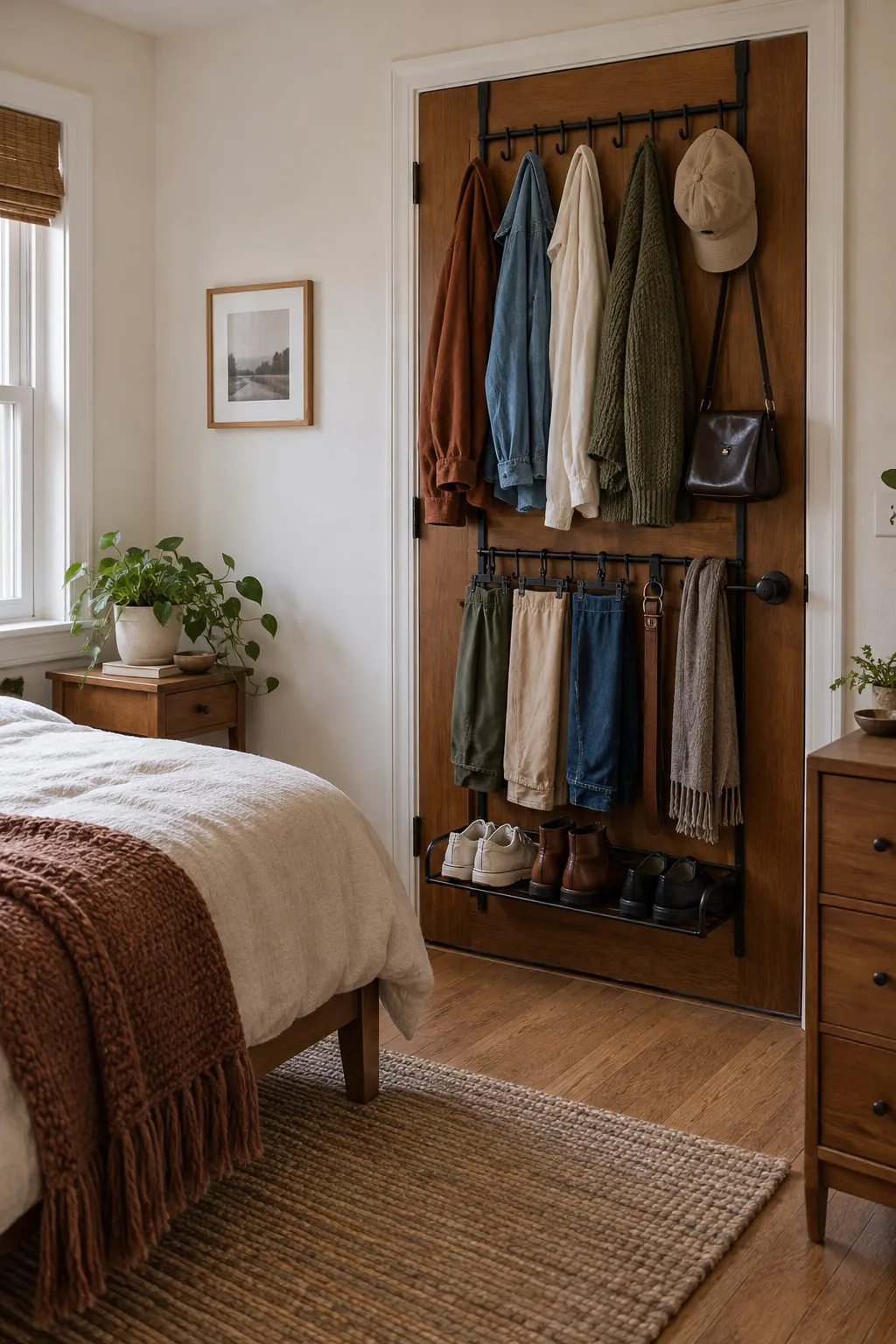
A short row of hooks gives robes, tomorrow’s outfit, and daily bags a temporary landing place. Space them so thick garments cannot block the handle or hinges. Treat this as a daily station instead of permanent storage to prevent a heavy fabric wall.
Mount a Peg Rail
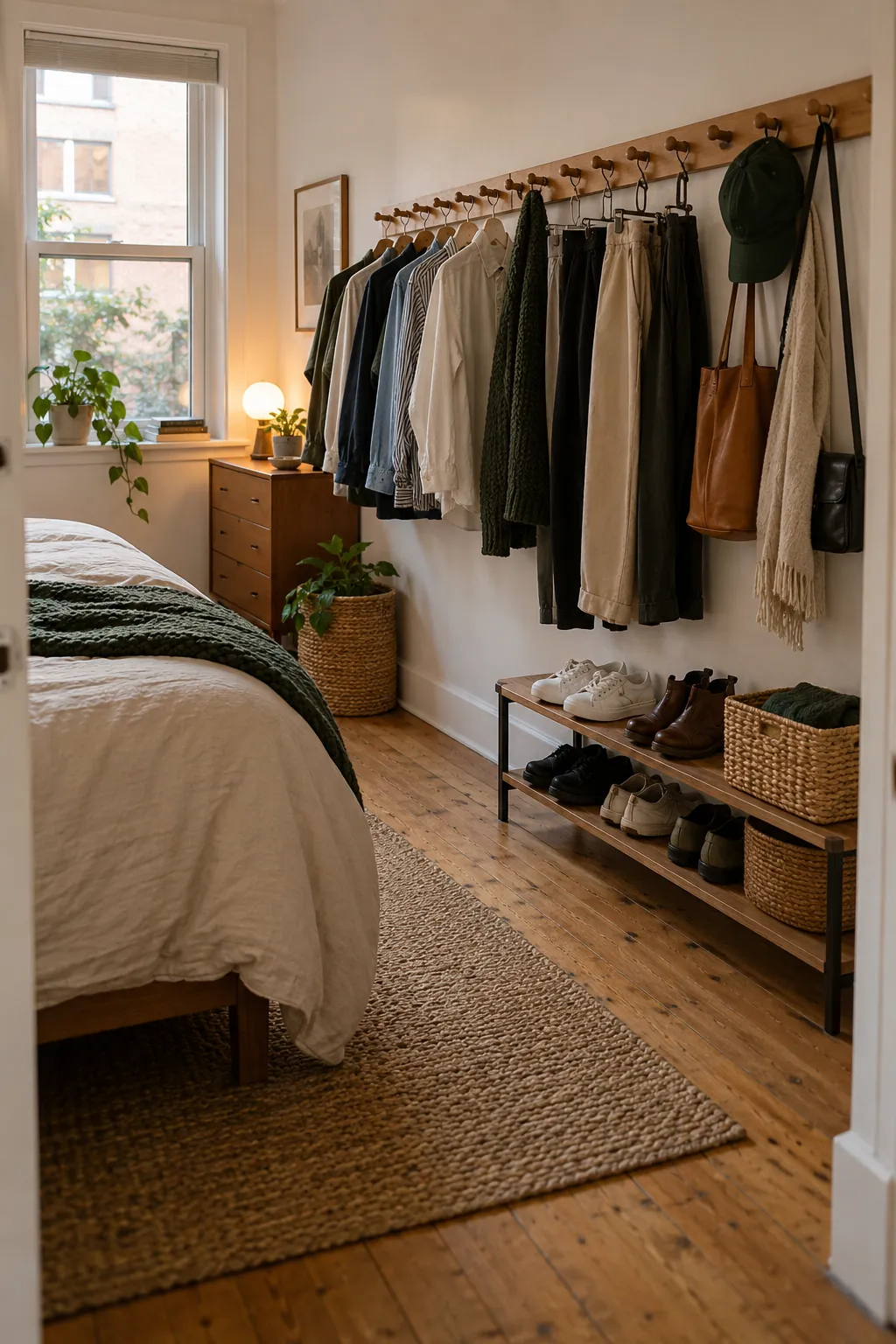
A wooden peg rail offers flexible hanging for hats, bags, and lightly worn layers. Place it where garments will not narrow the main path or brush the bed. A shelf above can hold small boxes if the wall support permits the added load.
Use a Folding Valet Stand
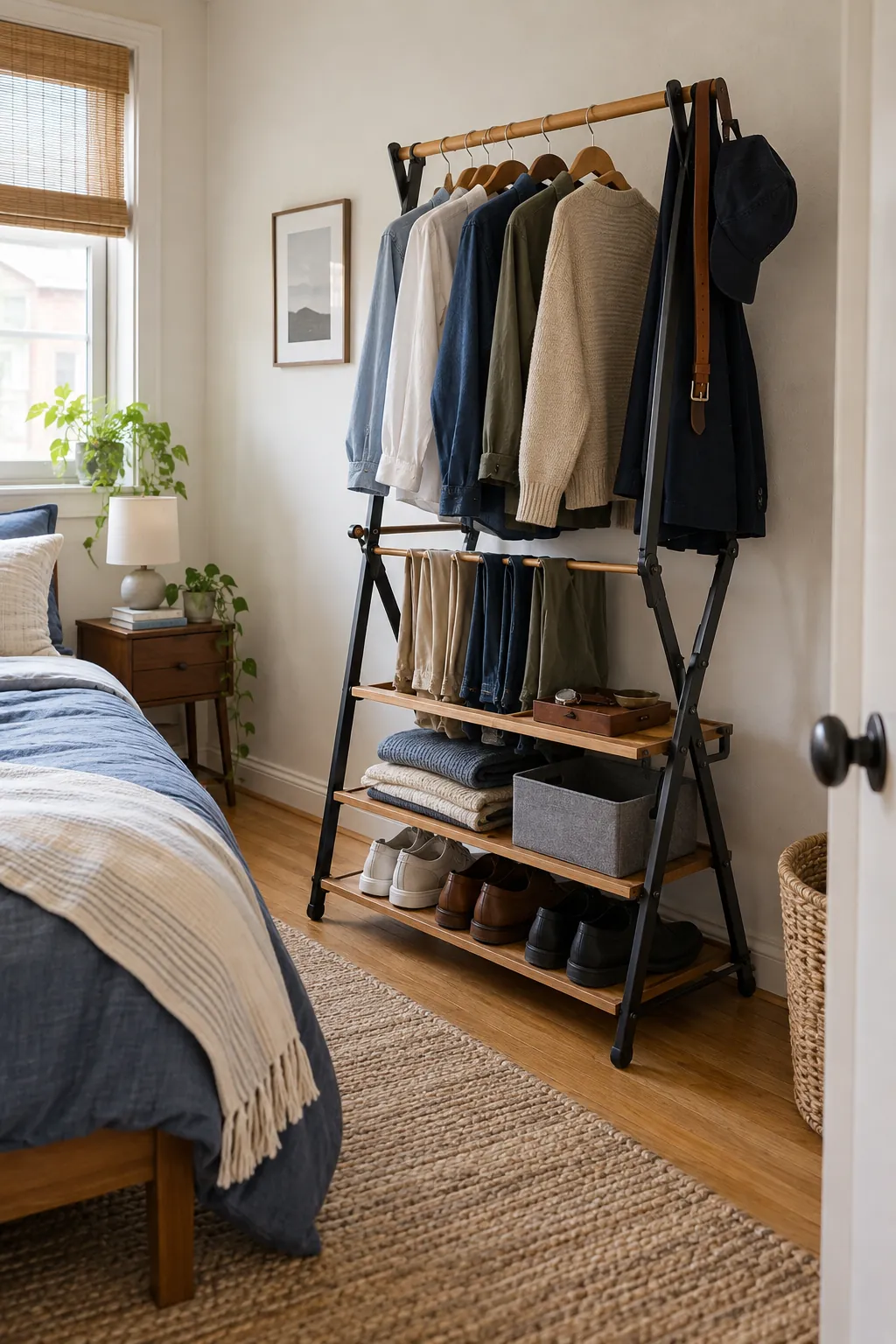
A folding valet keeps one planned outfit neat without turning a chair into a clothes pile. Open it only when needed and fold it against the wall after dressing. Its limited capacity encourages a clear choice about what returns to storage or laundry.
Store Clothes in a Storage Bench
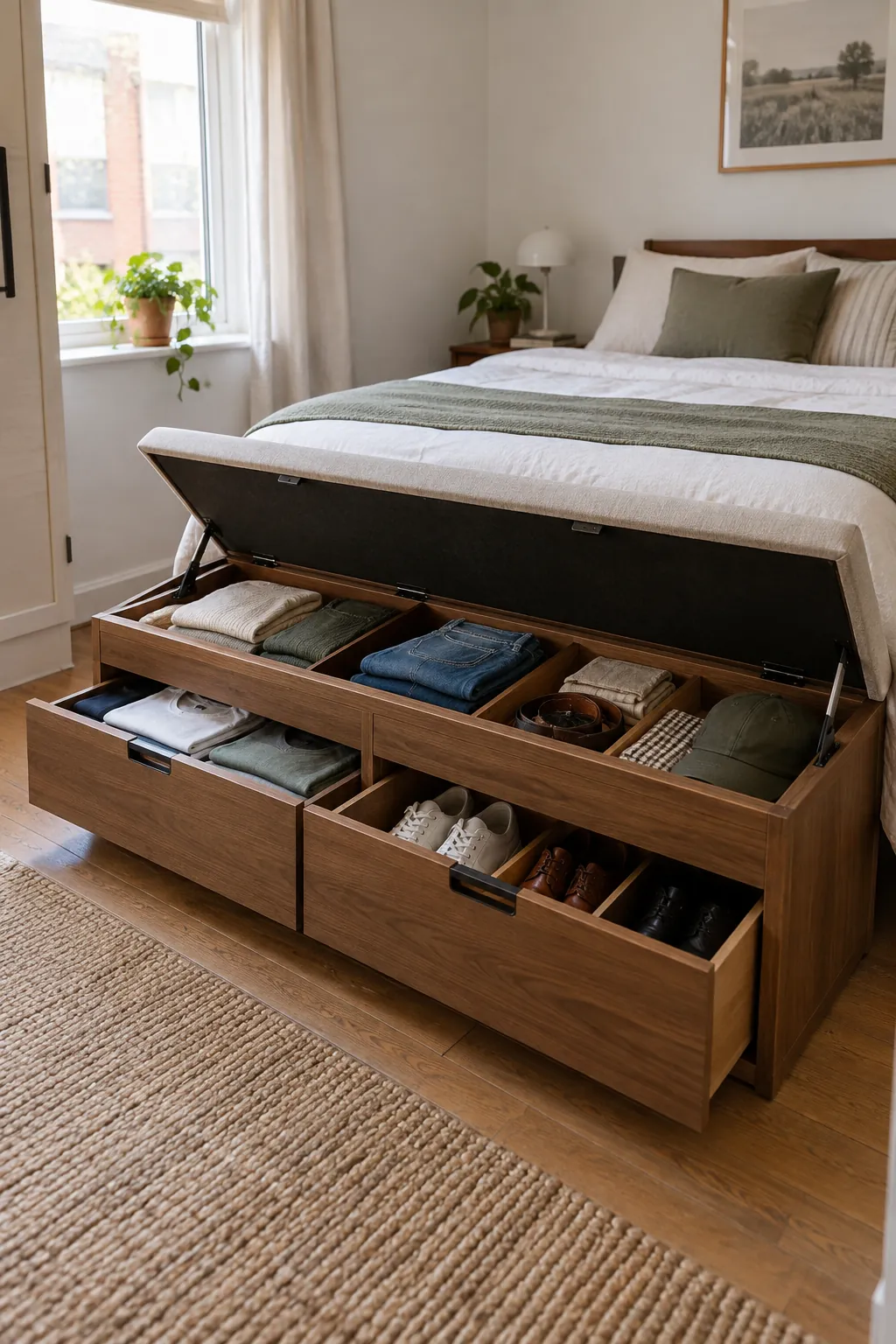
A lidded bench at the bed foot combines seating with room for sweaters or spare linens. Check that its lid can open without striking the mattress and choose a slow closing hinge. Fabric dividers stop the deep cavity from becoming a jumble.
Replace a Nightstand With Drawers
A compact drawer chest beside the bed can hold underwear while serving as a nightstand. Match its height to the mattress so the top remains comfortable to reach. Reserve the upper drawer for bedtime items and lower drawers for folded clothes.
Use a Desk With Clothing Drawers
A desk with one drawer pedestal stores folded basics while preserving a useful work surface. Keep office supplies in the shallow top drawer and dedicate deeper drawers to clothing. This works best when the chair can tuck completely under the desk.
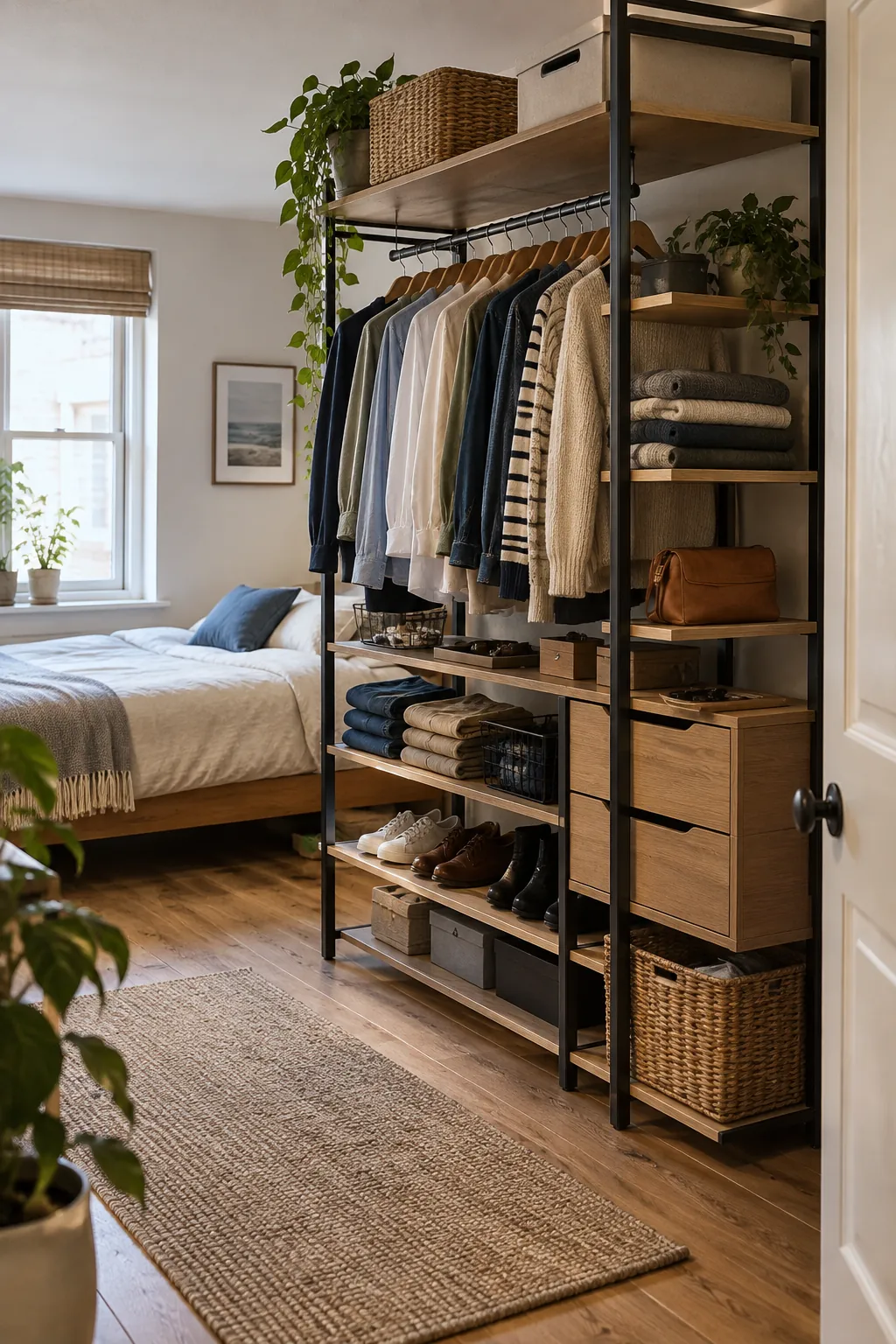
Divide the Room With an Open Wardrobe
An open wardrobe across one end of a bedroom can define a dressing zone. Use a unit designed to stand away from a wall and secure it as required. Keep the upper portion visually open so daylight and sight lines travel through.
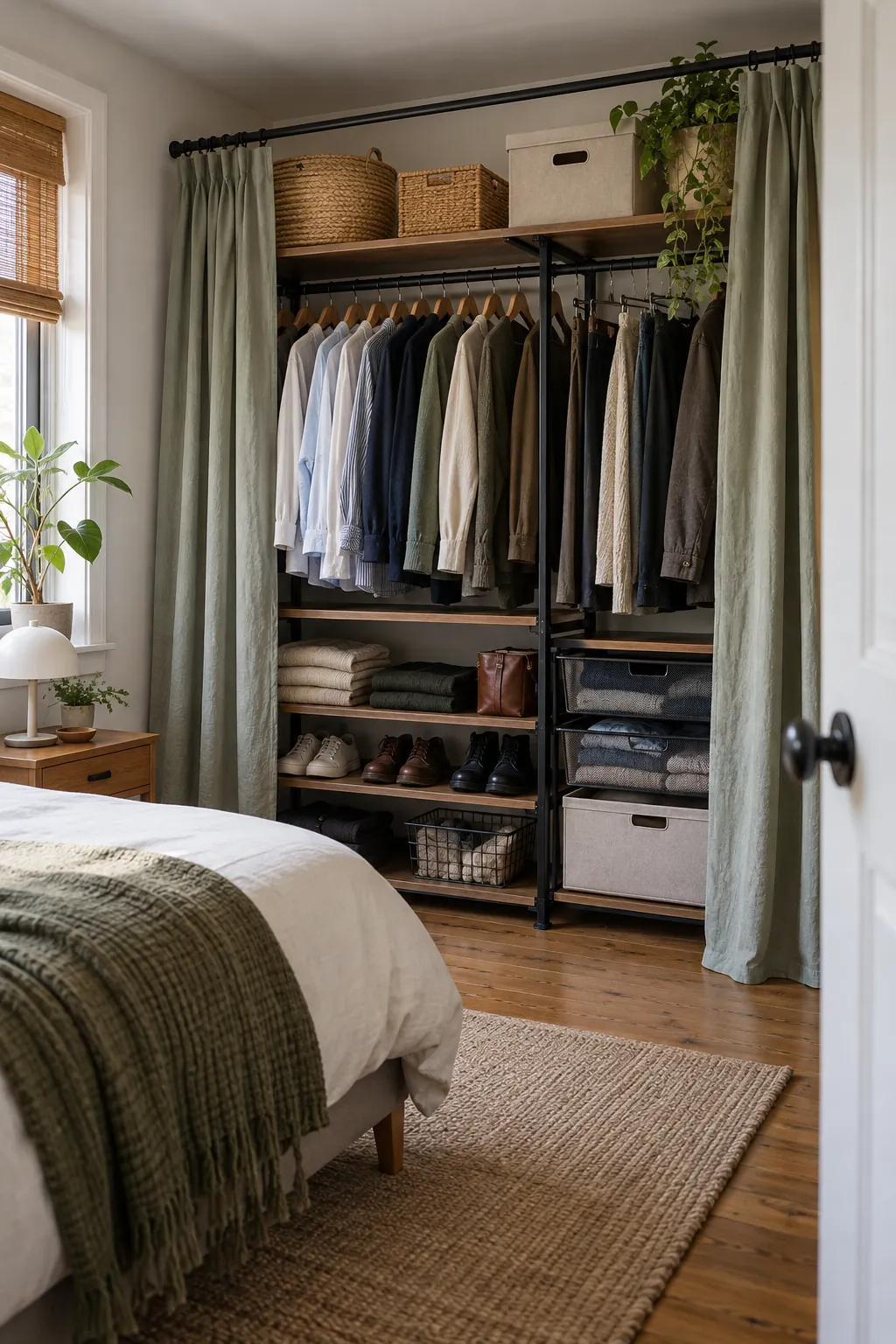
Hide a Clothing Zone With a Curtain
A ceiling mounted curtain conceals a rack and shelves with less floor demand than cabinet doors. Choose washable fabric that clears the floor and slides across the complete opening. Allow airflow around clothing and keep fabric away from heaters.
Fit a Rack Into an Unused Corner
A compact corner rack gives short garments a home where a deep cabinet would overwhelm the plan. Keep it clear of switches, vents, and the door swing. Place a shoe tray below so the vertical zone stays organized from floor to rail.
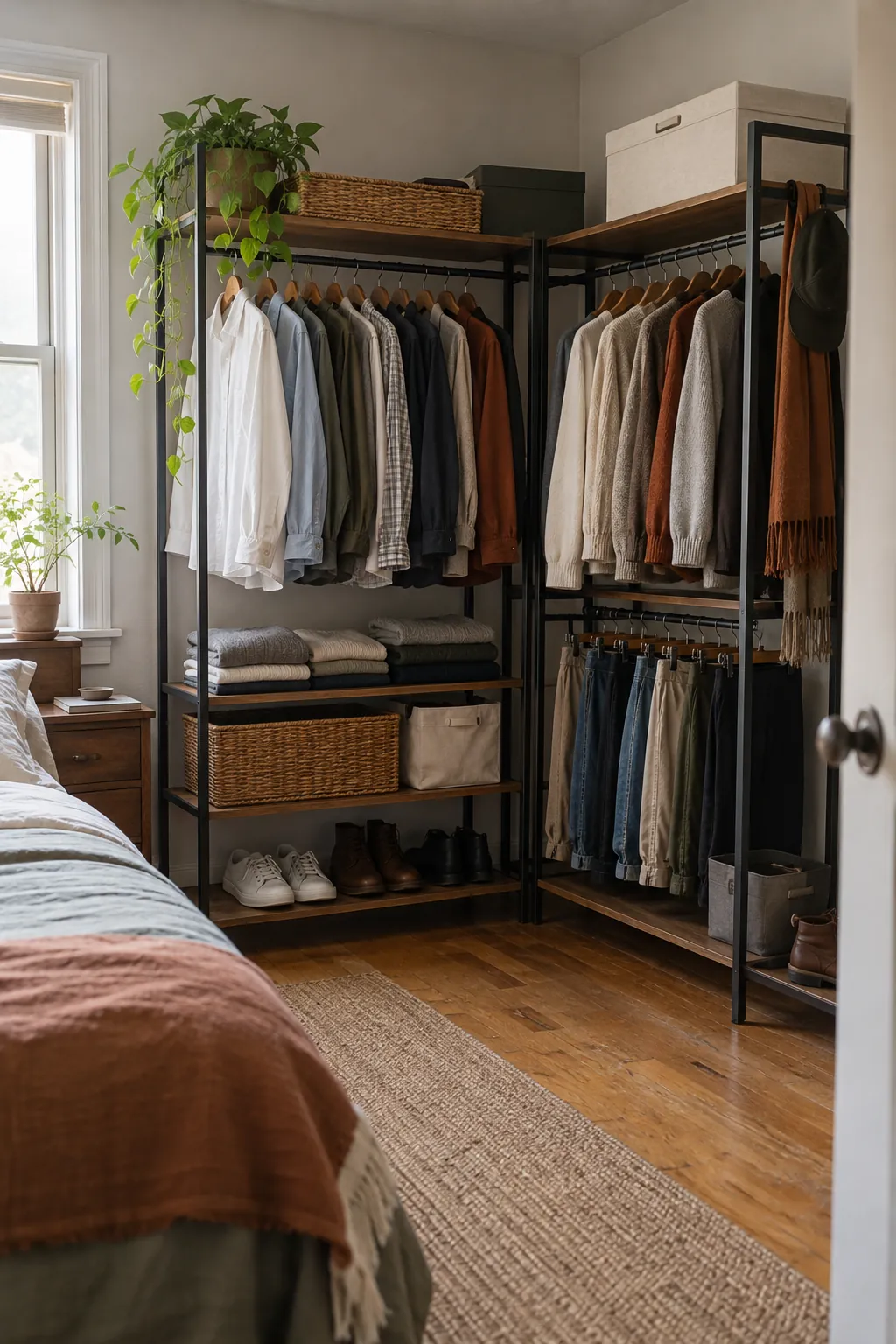
Add a Ladder Rack for Light Items
A leaning ladder offers a small landing place for scarves, trousers, and a robe. Use wall protection and the supplied restraint so it cannot slip or tip. Keep each rung lightly loaded because this design suits rotation rather than a complete wardrobe.
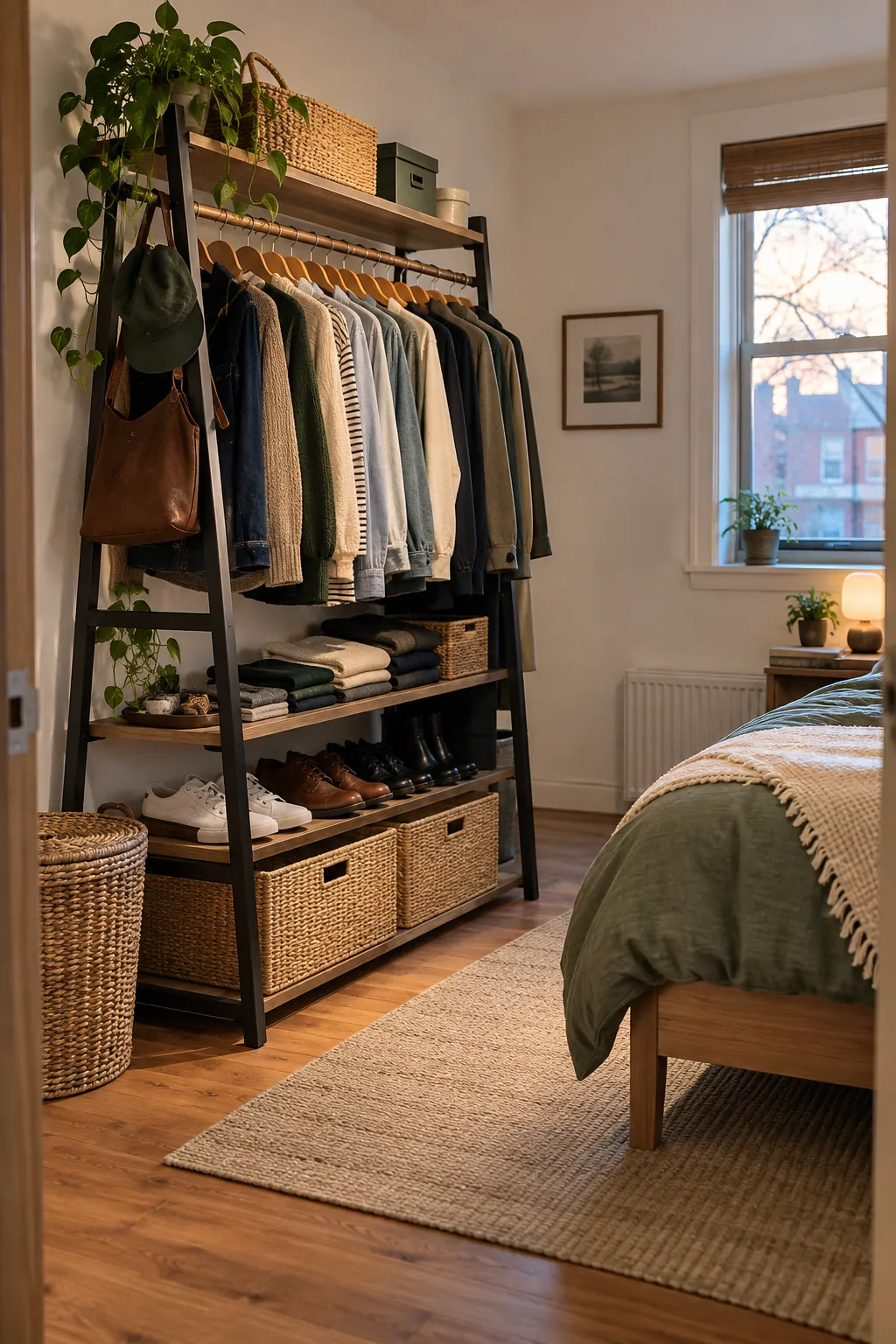
Keep Shoes in a Narrow Cabinet
A shallow tilt out cabinet stores shoes without using the depth required by normal shelves. Measure the largest footwear because some narrow compartments fit only low shoes. Position the cabinet near the dressing zone and anchor it securely.
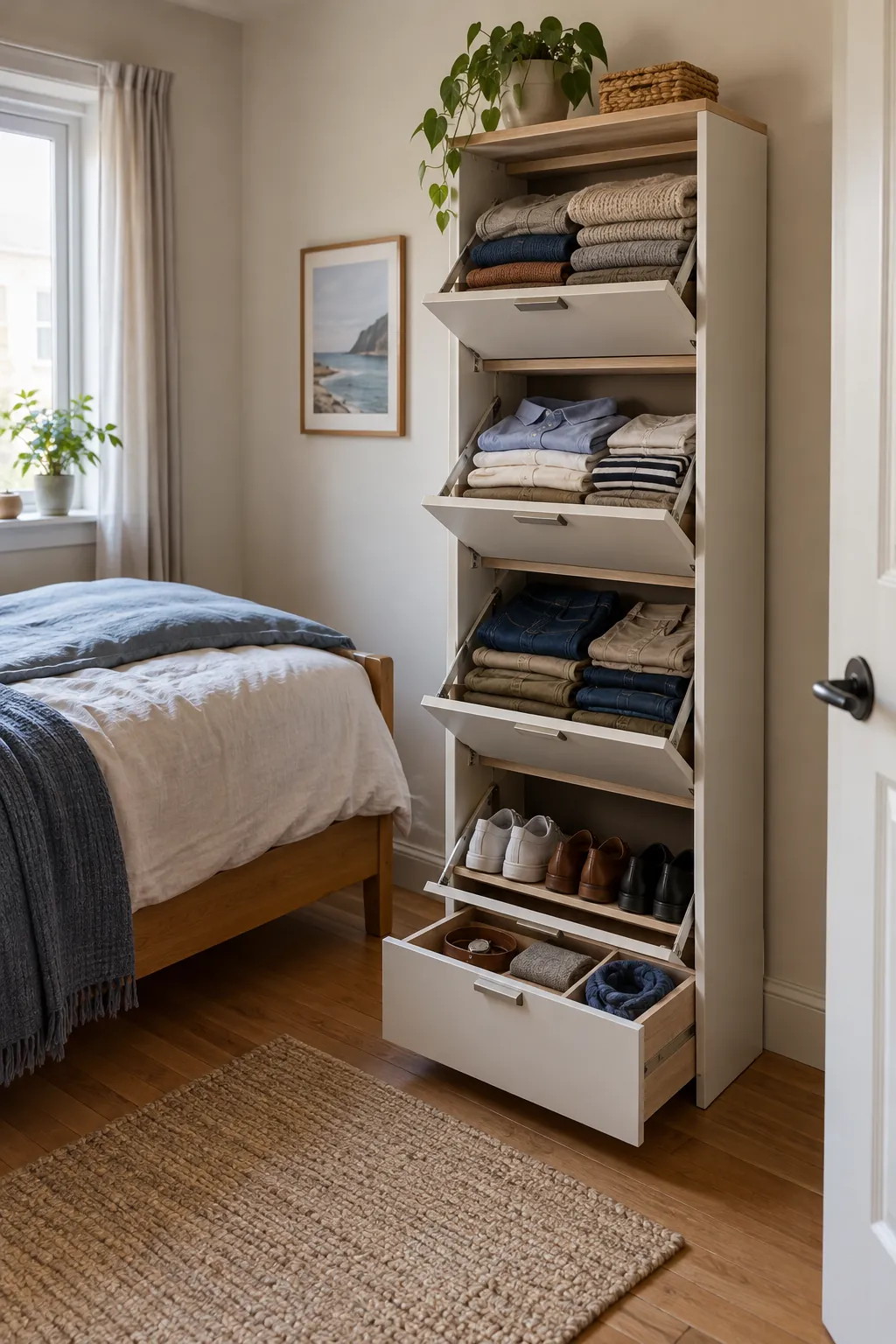
Hang Accessories on a Wall Grid
A small wall grid makes belts, scarves, jewelry, and caps visible without occupying a drawer. Give each hook one purpose and leave open space so items are easy to remove. Install the grid away from pillows and narrow passages.
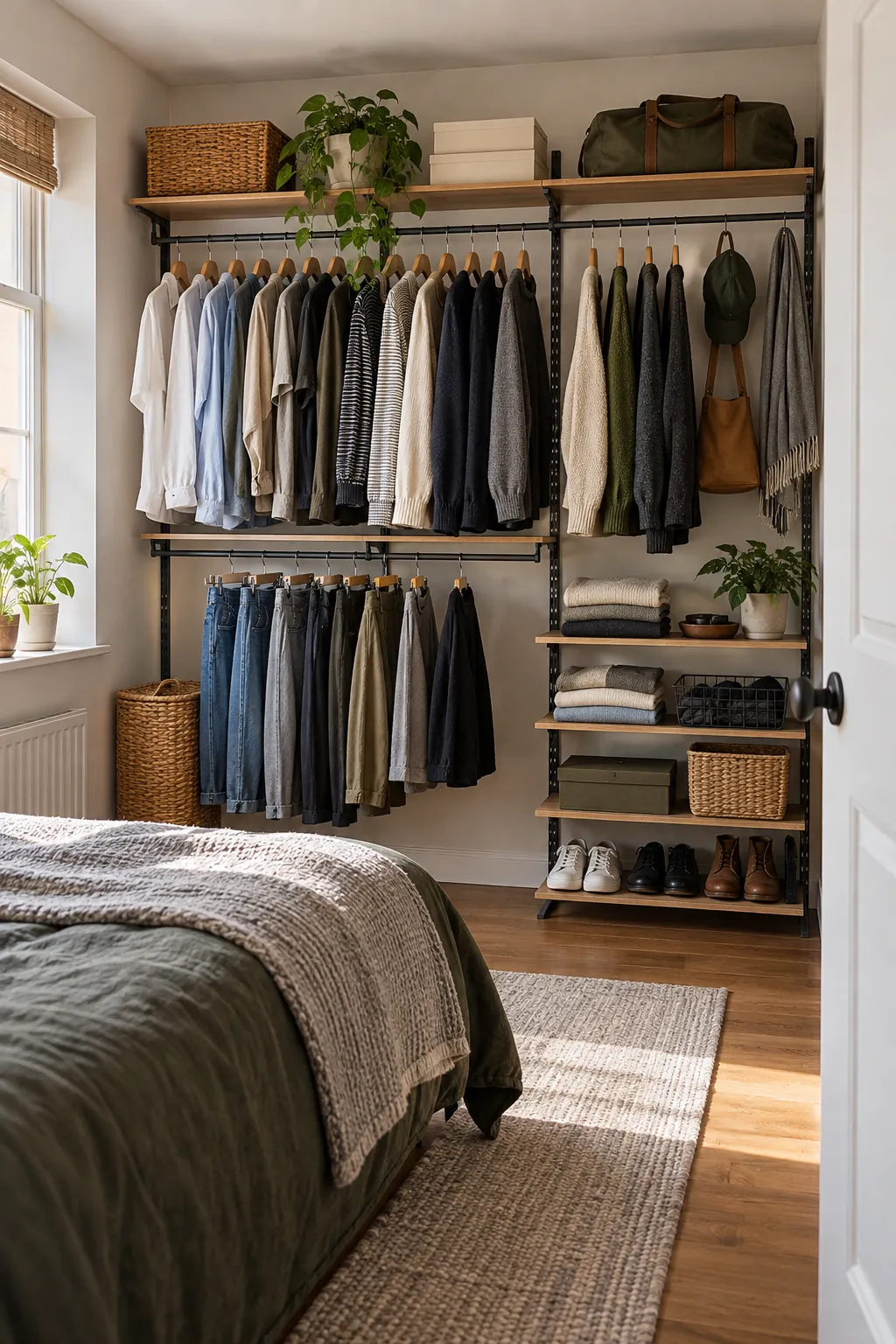
Create a Laundry Sorter Station
A divided hamper prevents worn clothing from spreading across the floor or clean storage. Choose a narrow upright model with removable bags for easy carrying. Return lightly worn clothes to a separate hook rather than mixing them with laundry.