
A small footprint does not have to limit comfort or personality. These compact living room ideas show how smart layouts, built-in storage, and visually light furniture can make even a tiny space feel inviting.
From bright boho rooms and colorful apartments to refined libraries and minimalist retreats, each example offers a practical design direction. Look for ideas that suit your architecture, storage needs, and preferred palette rather than trying to fit every trend into one room.
1. Add Bright Boho Storage Without Crowding the Room
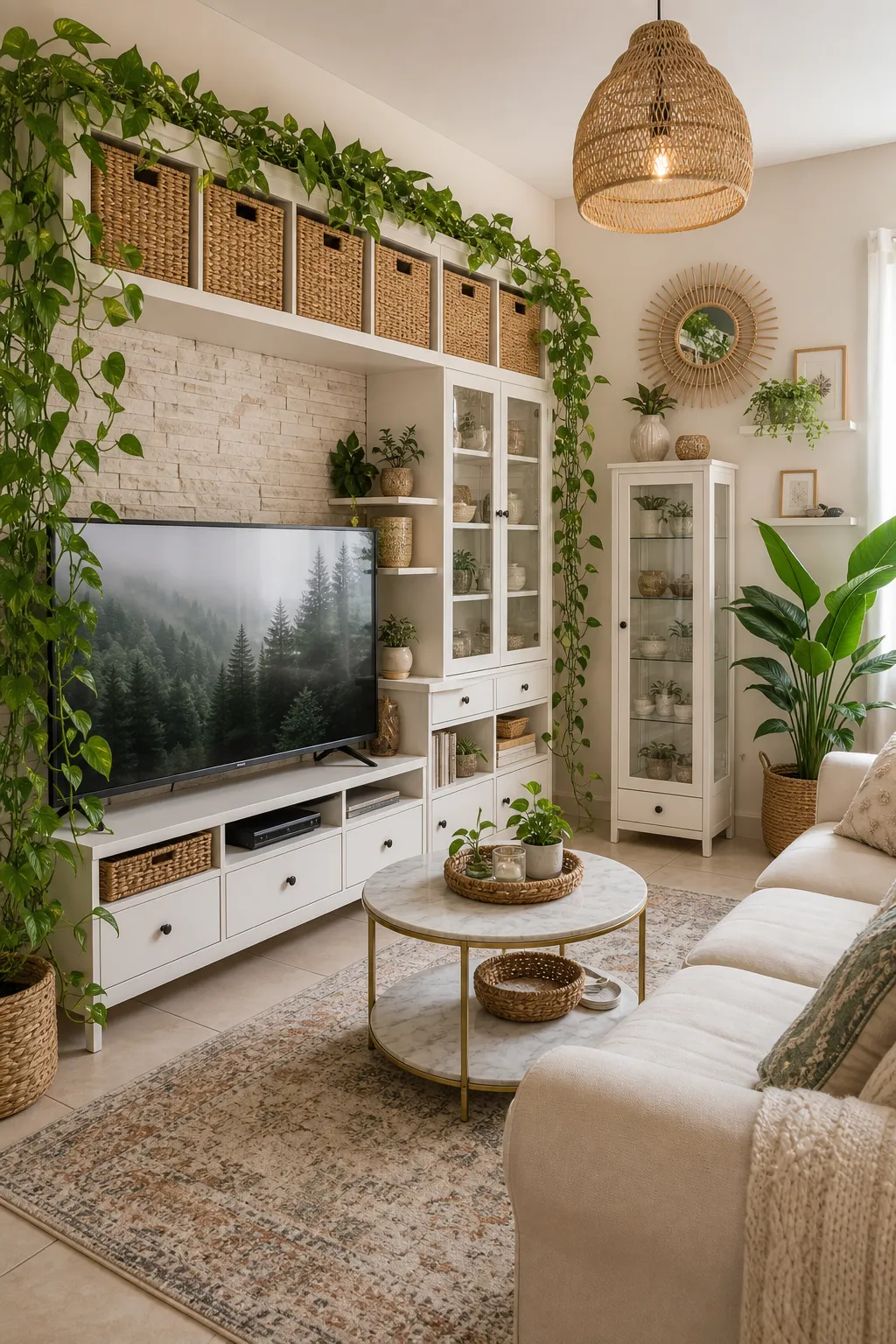
Choose slim shelving, woven baskets, and a low media unit to keep everyday items organized. Lightweight storage preserves open sightlines while adding texture and warmth.
Repeat pale wood, rattan, and soft textiles across the room so practical pieces feel intentional. Leaving a little space around each element helps the compact layout breathe.
2. Make a Tiny Living Room Sing With Maximalist Color
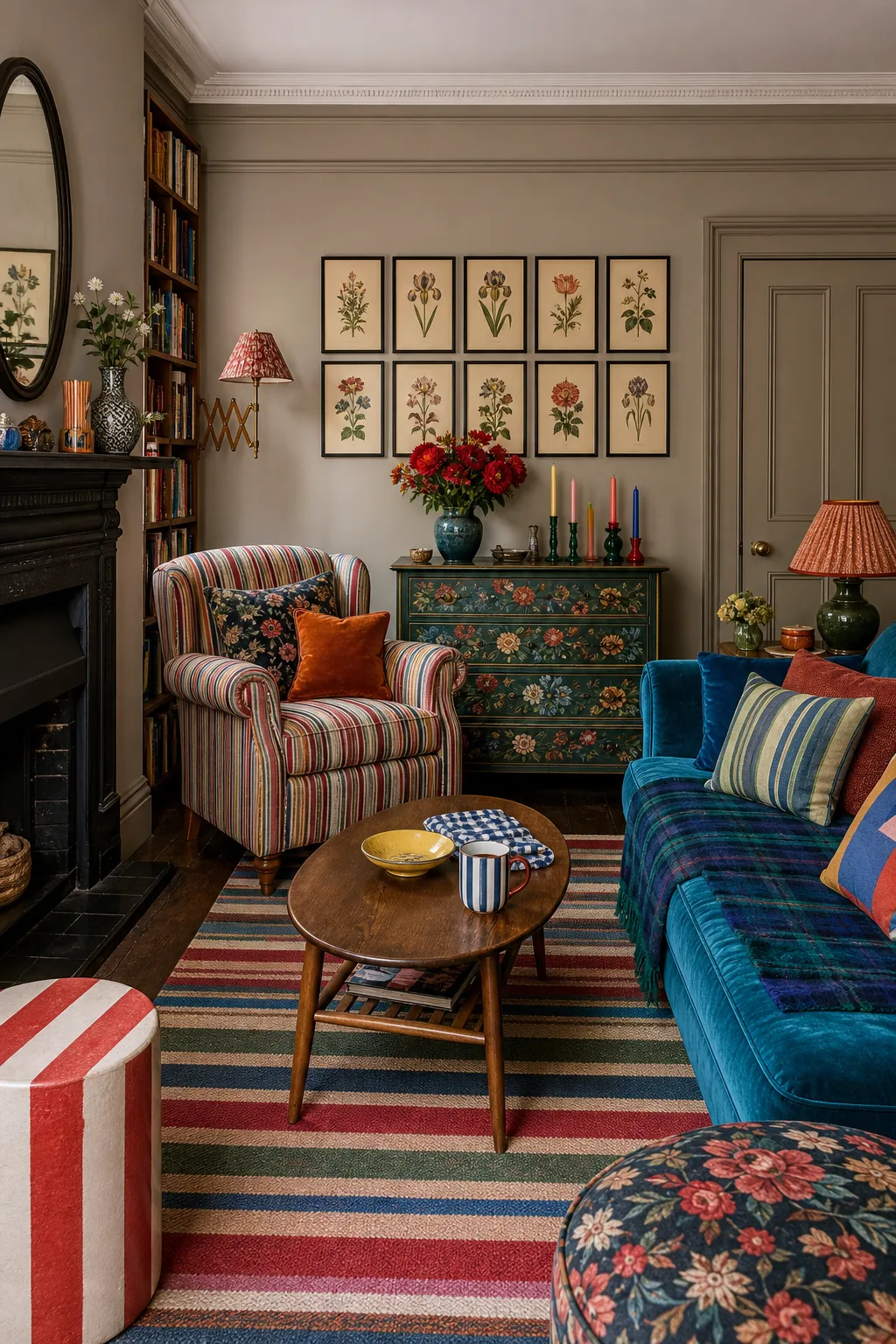
A small room can handle saturated color when a few hues repeat across the rug, cushions, art, and accessories. Color repetition turns energetic layers into a coherent scheme.
Keep the largest furniture pieces visually simple, then introduce pattern at different scales. A restrained backdrop gives brighter details room to shine without overwhelming the layout.
3. Soften a Small Layout With Airy Arches and Vintage Plants
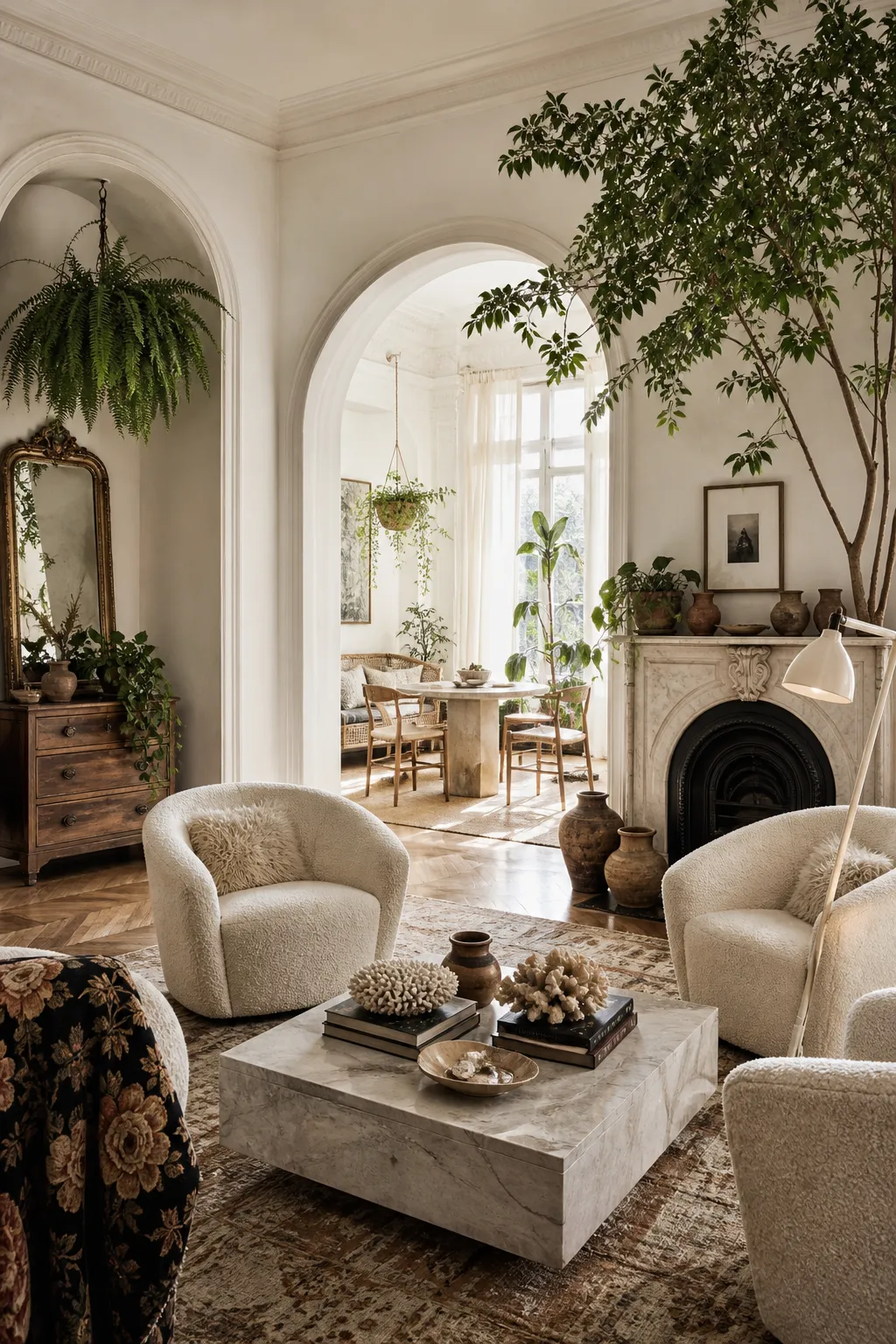
Curved openings and rounded furniture ease the hard edges of a compact floor plan. Gentle curves also guide the eye smoothly between adjoining spaces.
Place vintage planters at varied heights to create depth without consuming much floor area. Wispy foliage keeps the arrangement lush while allowing light to filter through.
4. Create Calm in a Compact High-Rise With Layered Neutrals
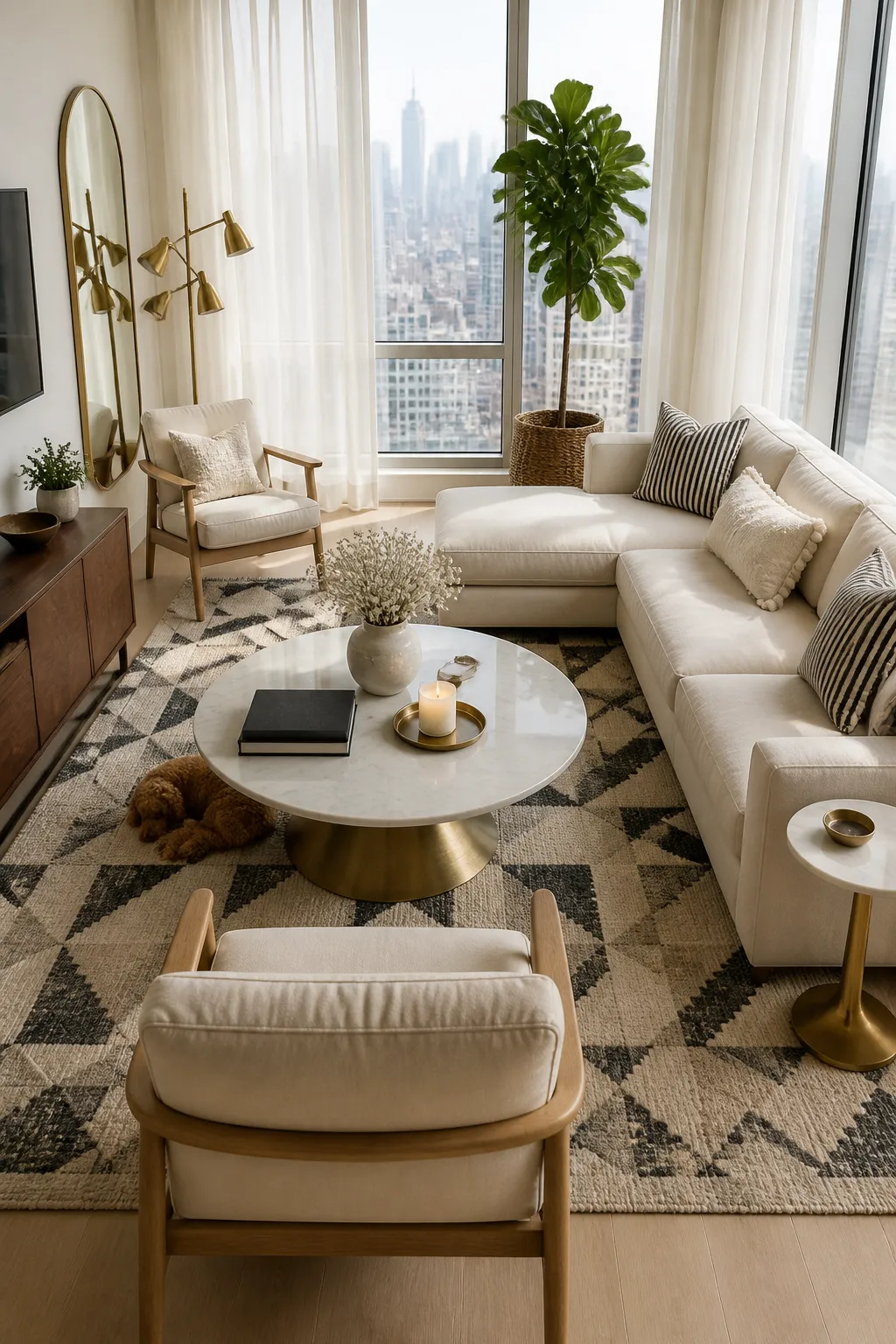
Build a quiet palette with ivory, oatmeal, taupe, and warm gray rather than relying on one flat shade. Layered neutrals add dimension while maintaining a restful atmosphere.
Mix linen, wool, wood, and subtly textured upholstery to keep the restrained scheme inviting. Low-profile furniture helps the skyline remain part of the room.
5. Give a Small Room Warm Midcentury Character Around the Fireplace
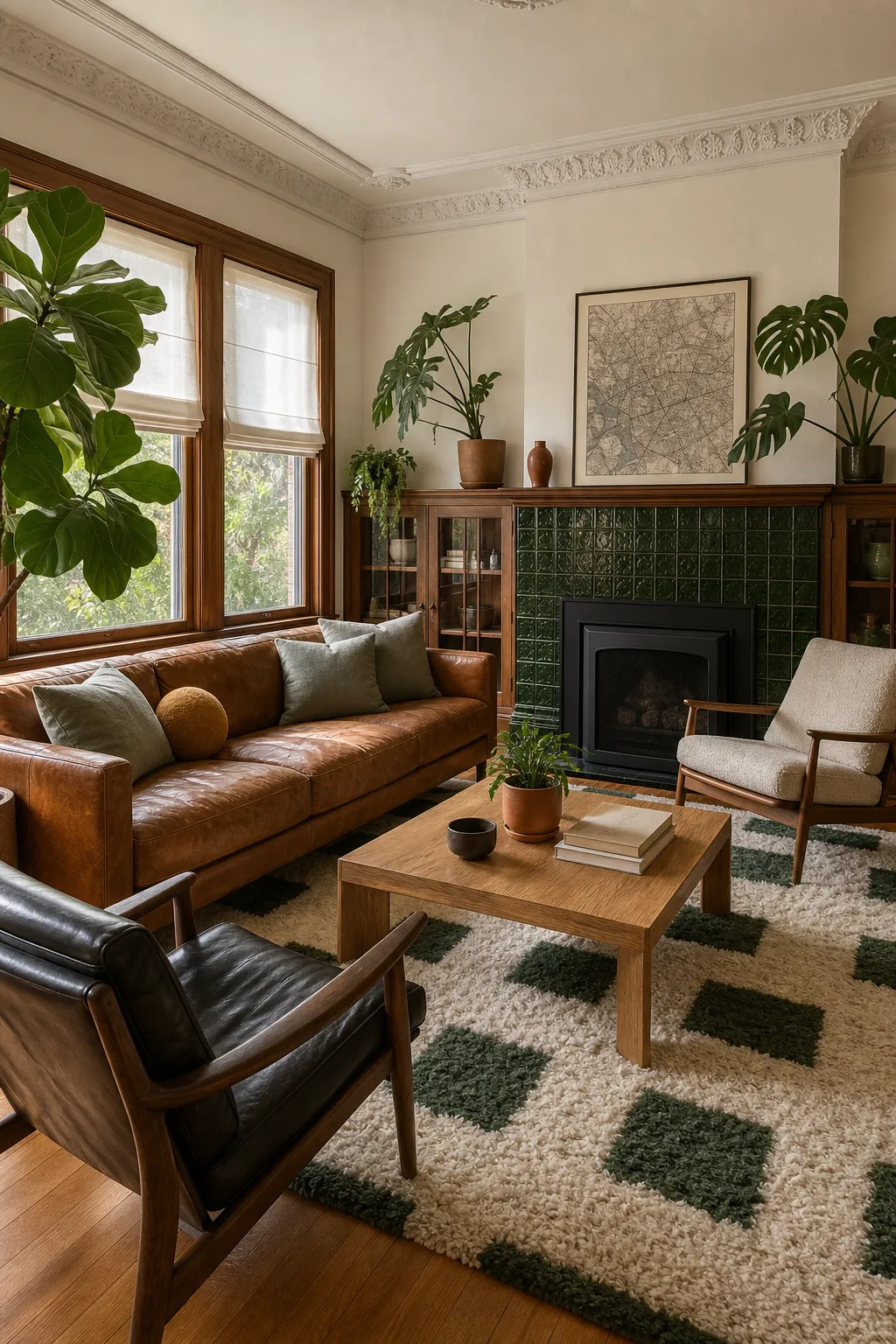
Frame the fireplace with low-slung seating, tapered legs, and warm wood tones. Midcentury silhouettes bring character without making a modest room feel bulky.
Use amber lighting and a few sculptural accessories to echo the hearth’s glow. Keeping the mantel display edited ensures the fireplace remains the clear focal point.
6. Anchor an Eclectic Layout With a Green Velvet Sofa
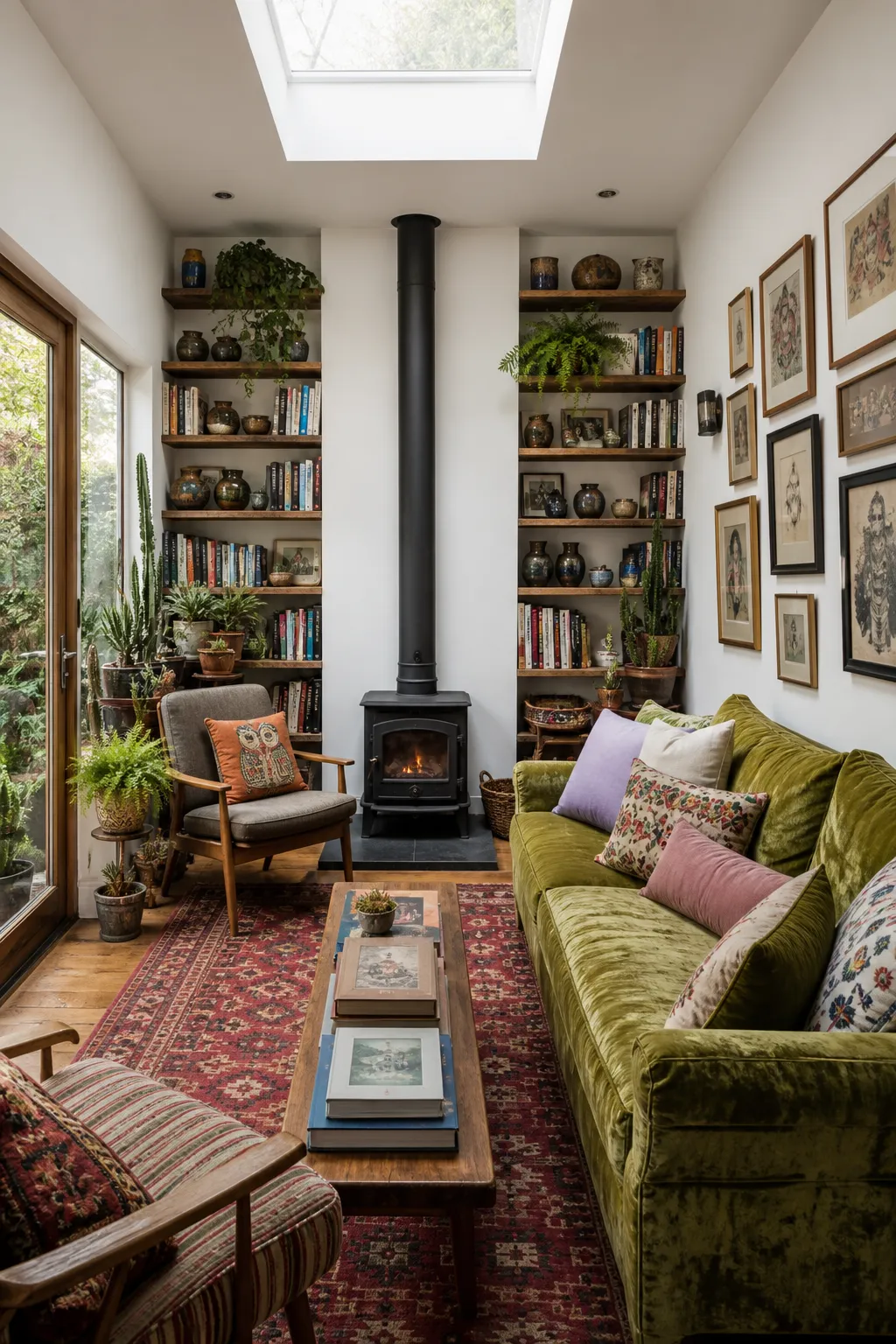
Let a green velvet sofa establish the room’s visual center, then pull its color into plants, artwork, or small decorative details. One strong anchor gives eclectic pieces a shared point of reference.
Balance the sofa’s richness with lighter walls, airy tables, and varied natural materials. Patterned accents can add personality while staying within a controlled supporting palette.
7. Brighten a Small City Apartment With a Window-Facing Layout
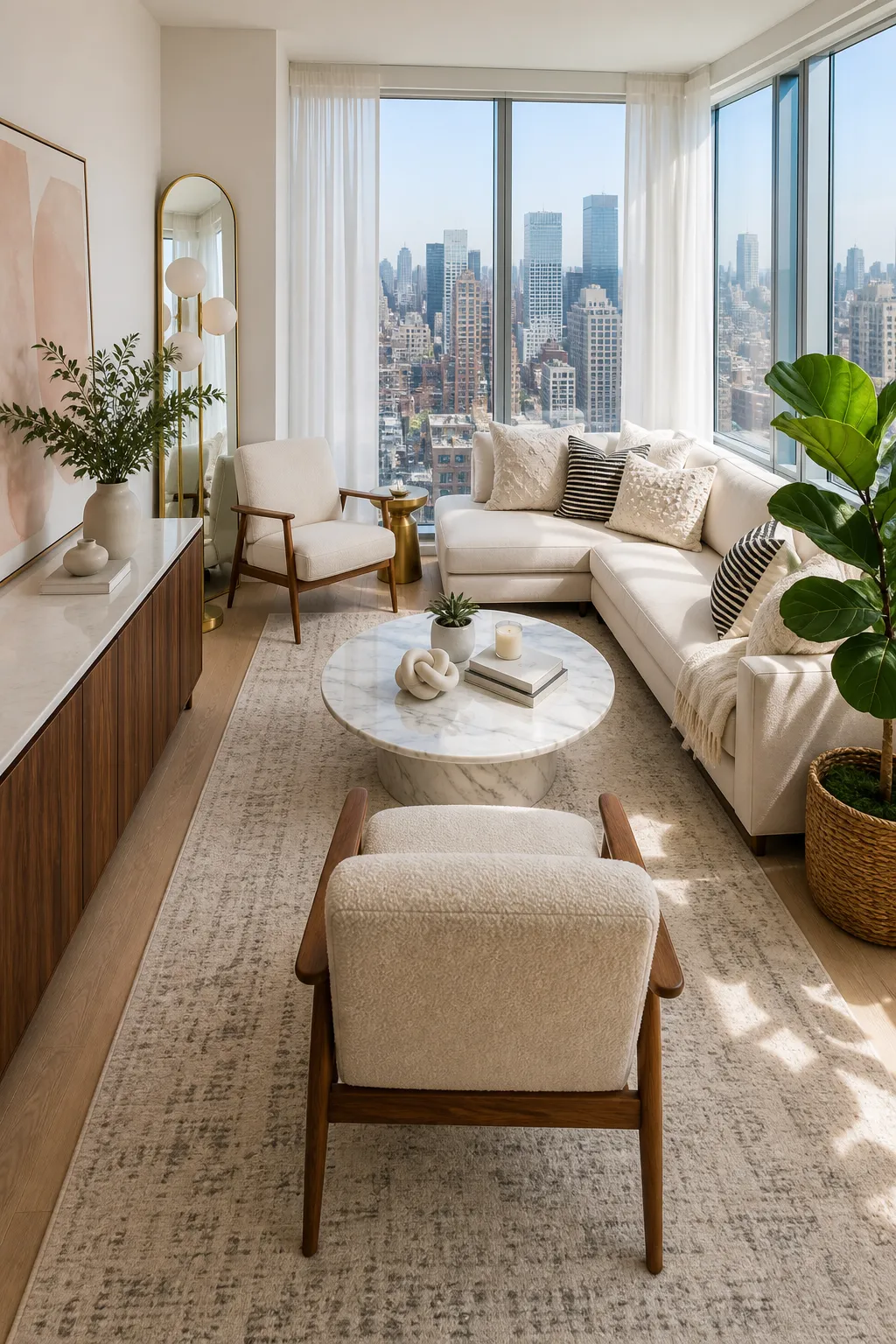
Orient the main seating toward the windows so daylight and the urban view become part of the design. Window-facing furniture can make a limited footprint feel more expansive.
Choose low-backed pieces that do not interrupt the light, and keep pathways to the glass clear. A mirror placed nearby can carry brightness deeper into the apartment.
8. Use Modern Art to Build a Colorful Yet Cohesive Scheme
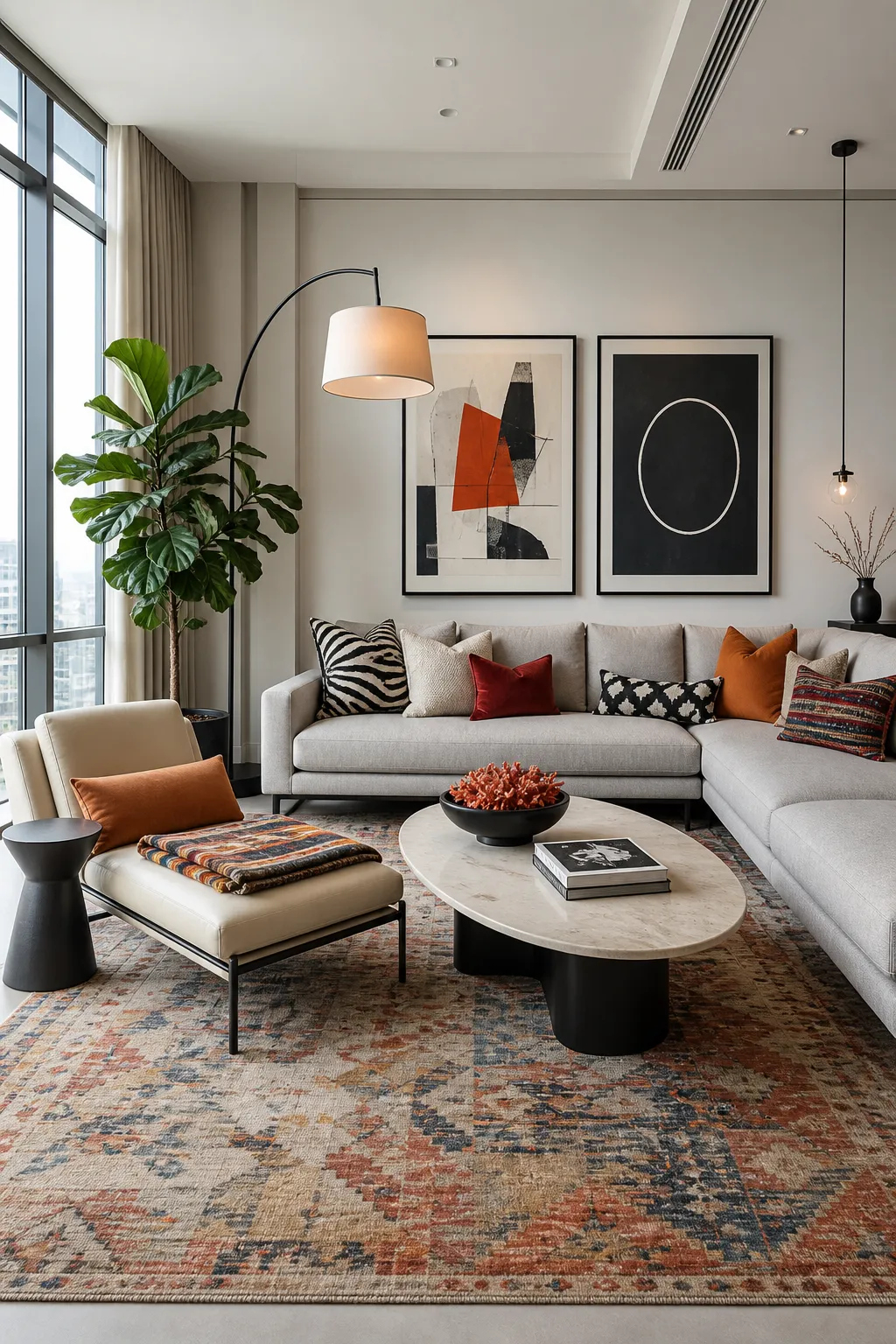
Start with one modern artwork and extract two or three colors for cushions, rugs, and occasional furniture. Art-led color makes bold choices feel connected rather than random.
Vary the intensity of those hues and leave some neutral breathing room around them. Simple frames and clean-lined furnishings allow the composition to remain lively but controlled.
9. Streamline the Focal Wall With a Linear Fireplace
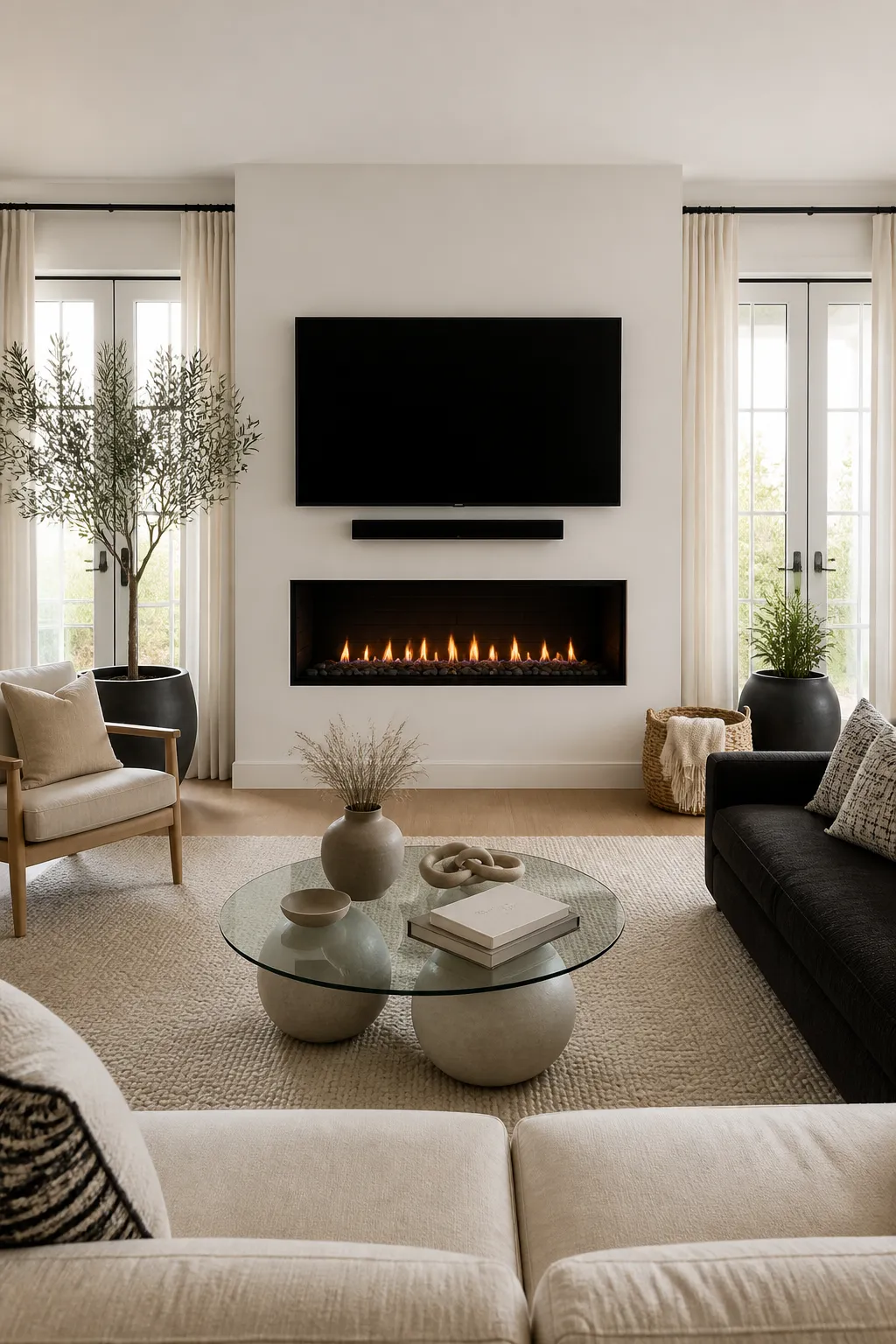
A long, narrow fireplace creates a strong horizontal line that can visually widen a compact room. Clean integration keeps the focal wall sophisticated and uncluttered.
Align nearby shelving, cabinetry, or a mantel ledge with the firebox for continuity. Limit decorative objects to a few well-scaled pieces so the architecture carries the design.
10. Turn an Art-Filled Apartment Into a Collected, Personal Home
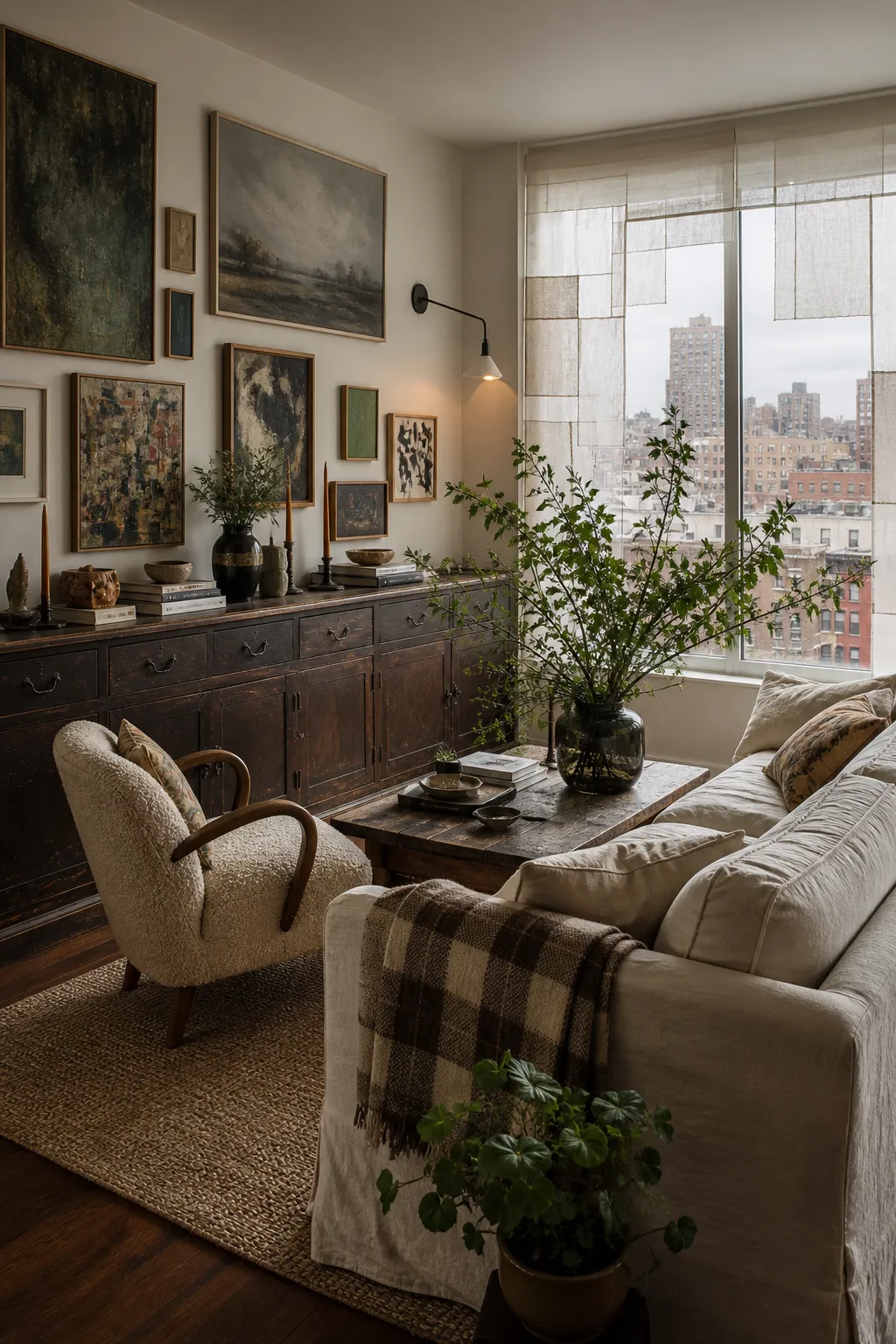
Combine artwork from different periods and formats to create a home that feels gathered over time. Personal curation matters more than perfect stylistic matching.
Connect varied pieces through recurring frame finishes, colors, or generous spacing. Mixing meaningful objects with comfortable furniture keeps the apartment expressive as well as livable.
11. Take Book Storage Upward With a Towering Library Wall
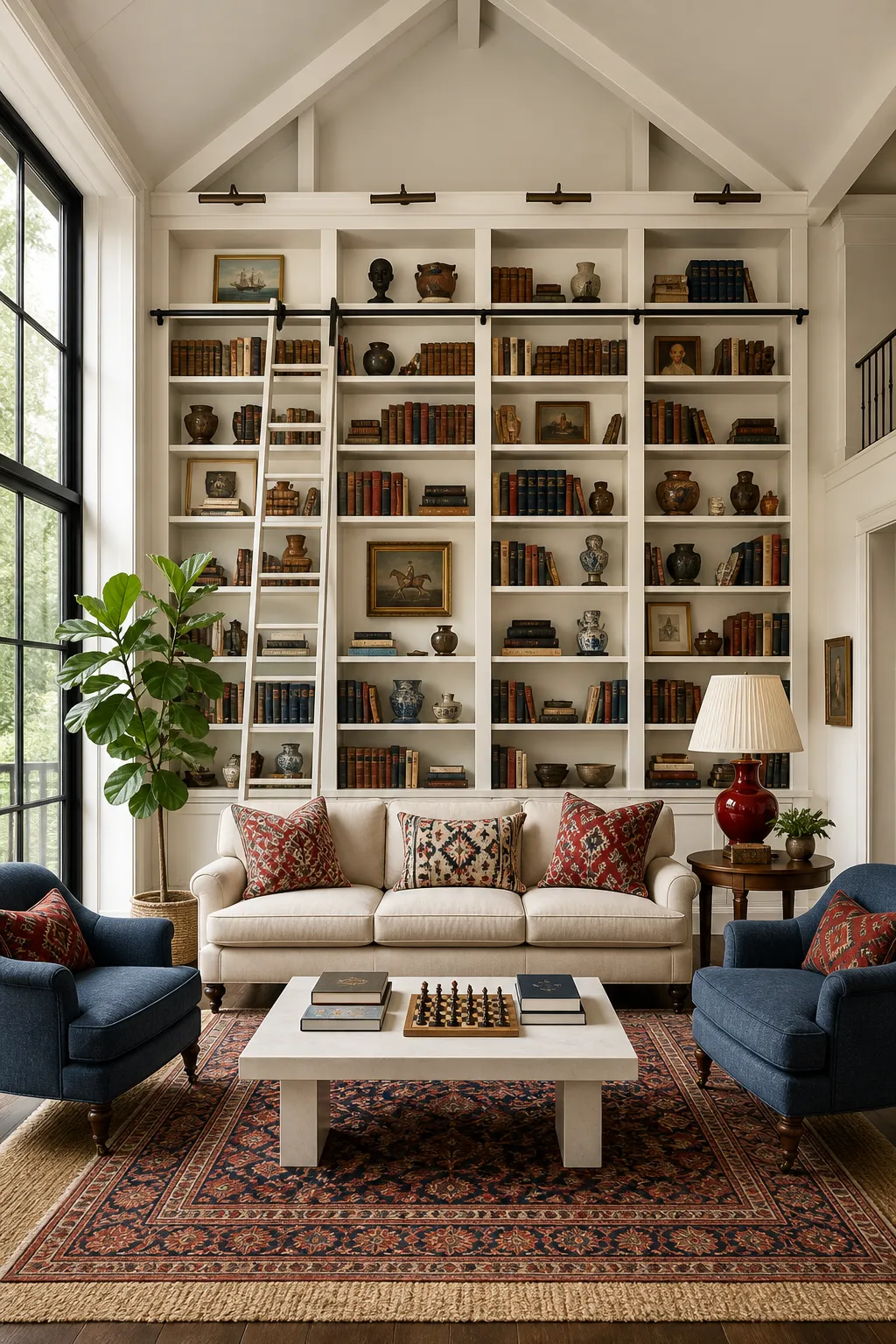
Floor-to-ceiling shelves use vertical space efficiently and turn a book collection into architecture. Upward storage frees valuable floor area while drawing attention to the room’s height.
Keep frequently used titles within easy reach and reserve upper shelves for display or occasional reading. A library ladder or nearby step stool can add practical access and visual charm.
12. Arrange Cozy Seating Around a Compact Stone Fireplace
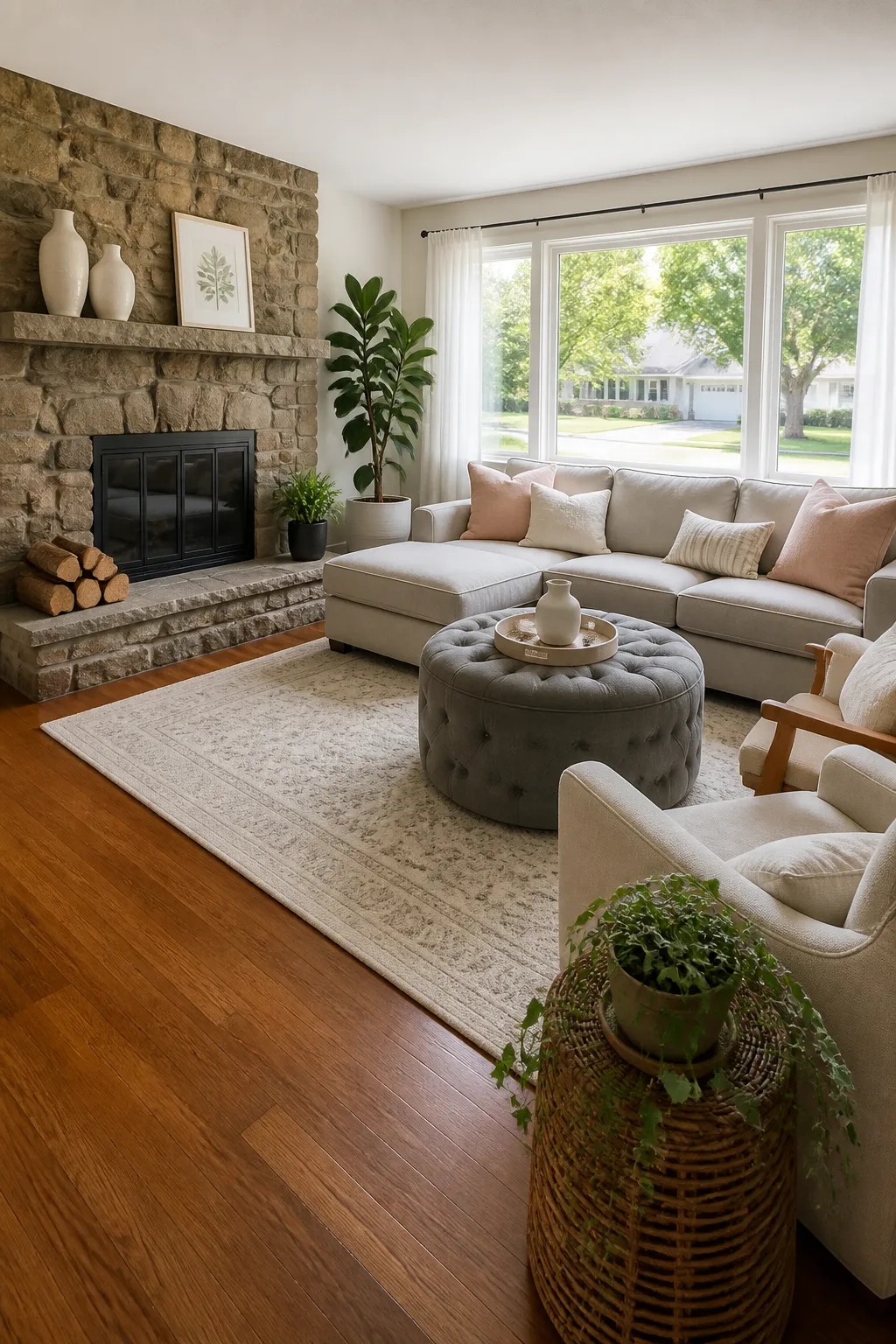
Position chairs and a small sofa close enough to enjoy the hearth without blocking circulation. Conversation-friendly seating makes the compact fireplace feel like the heart of the room.
Echo the stone’s natural tones through wood, wool, and earthy textiles. A round coffee table can soften the arrangement and simplify movement between seats.
13. Pair a Rose Sofa With an Unobstructed City View
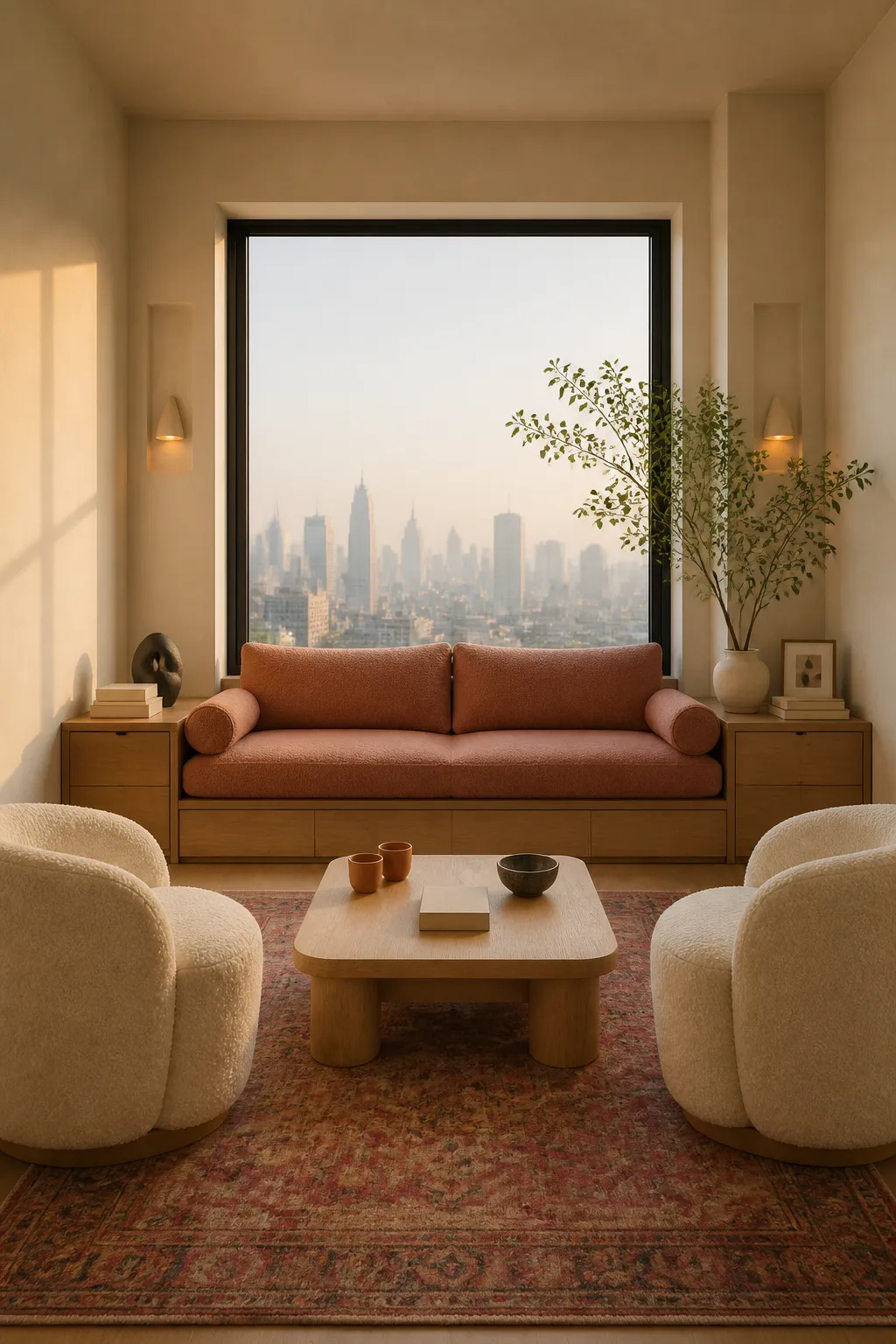
A rose sofa adds warmth against the cooler tones of glass, steel, and skyline views. Soft color contrast creates an inviting focal point without competing with the scenery.
Keep window treatments minimal and choose low-profile companion pieces to preserve the panorama. Neutral rugs and metallic accents can bridge the rosy upholstery with the urban setting.
14. Shape a Bright Boho Retreat With Plants and Light Textures
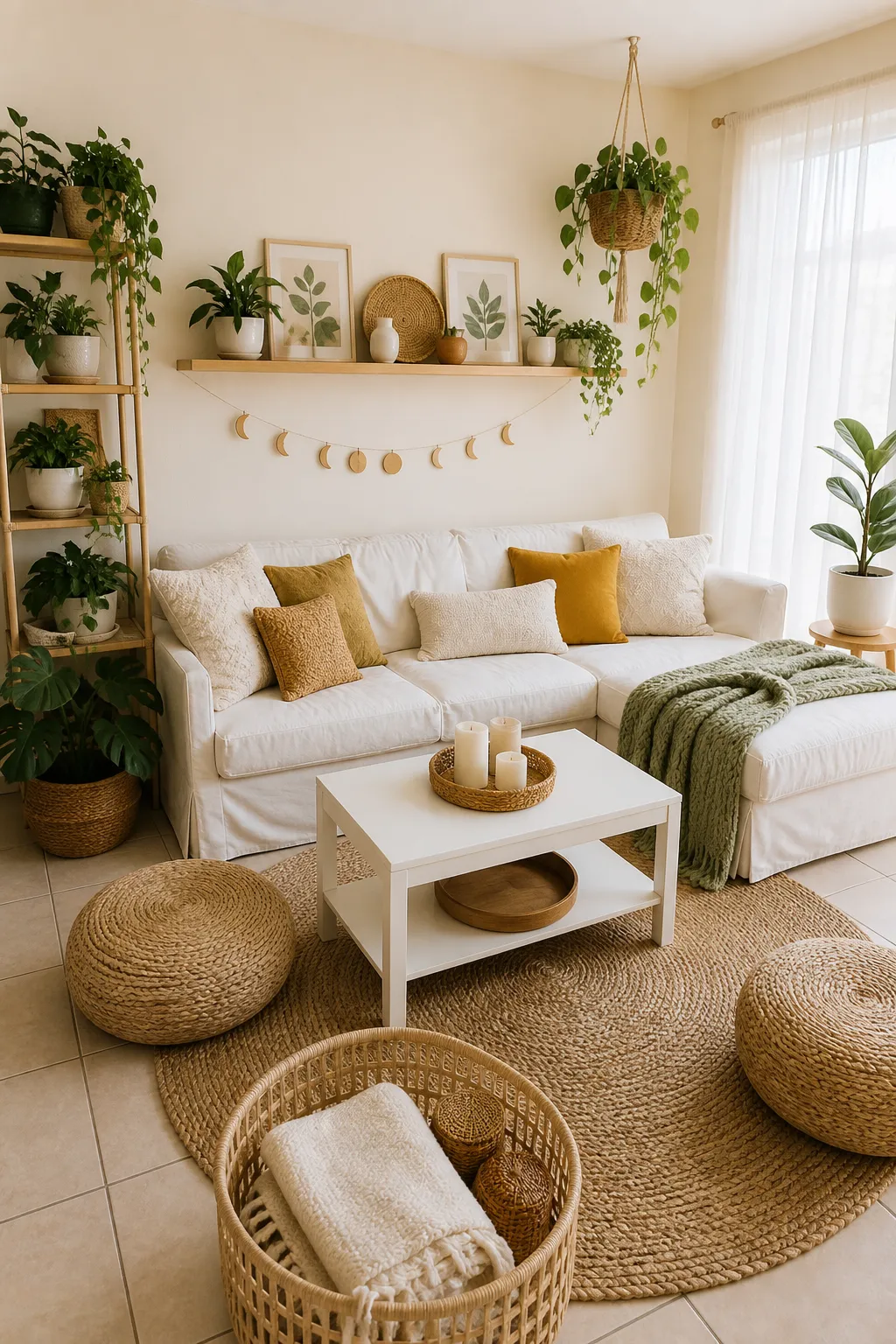
Layer linen, pale wood, cane, and softly woven textiles to create an easygoing boho foundation. Light natural textures add interest while reflecting daylight around the room.
Cluster plants near windows and vary their heights for a relaxed, abundant look. Leaving some surfaces clear prevents the retreat from feeling overly busy.
15. Balance Playful Lavender Walls With Punchy Red Accents
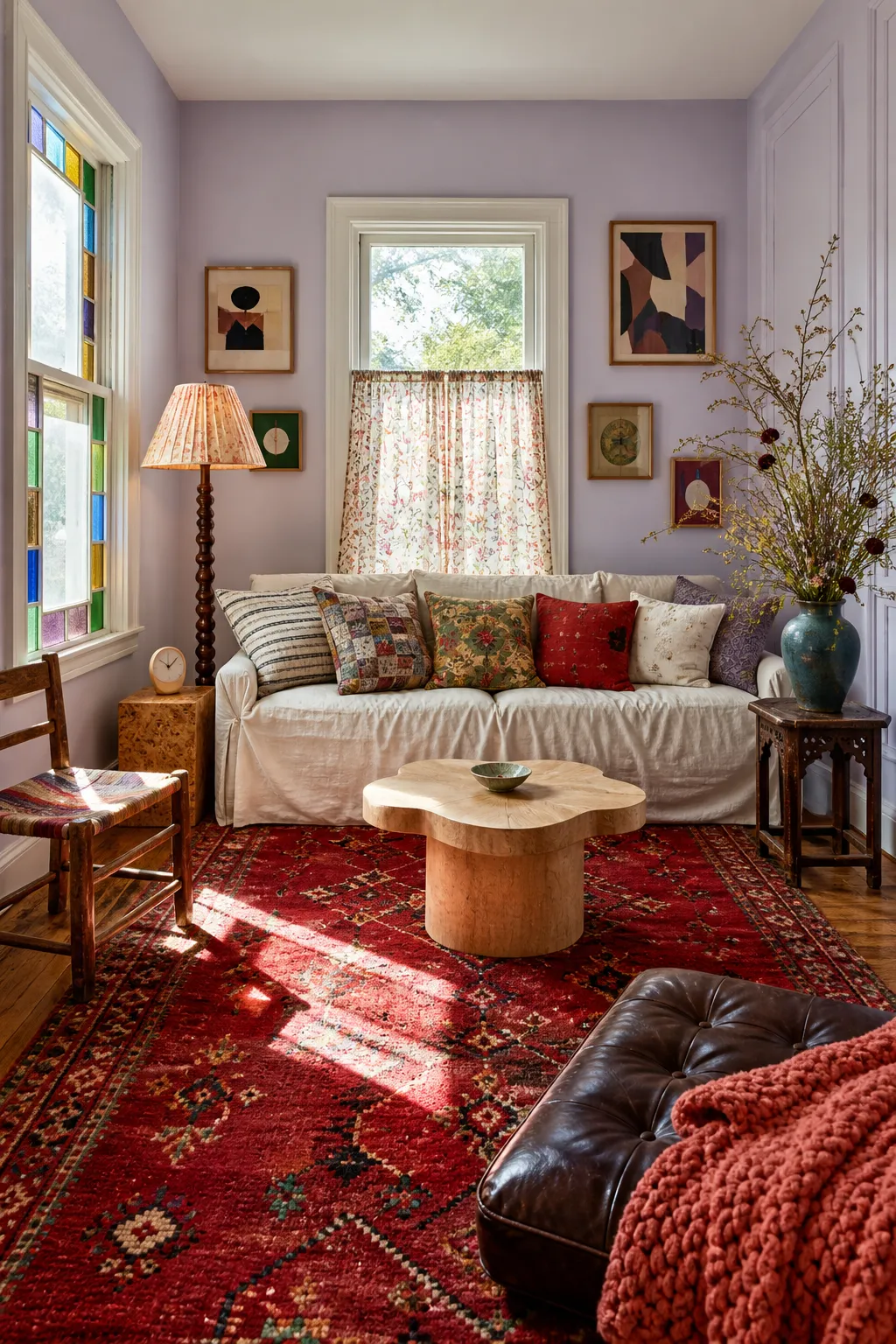
Lavender walls provide a soft, imaginative backdrop, while small doses of red introduce energy and definition. Controlled contrast keeps the combination playful rather than chaotic.
Repeat red in two or three strategic places, such as a lamp, cushion, or artwork. Neutral furniture and simple shapes give both statement colors enough space to register.
16. Layer Plants and Boho Materials for Natural Warmth
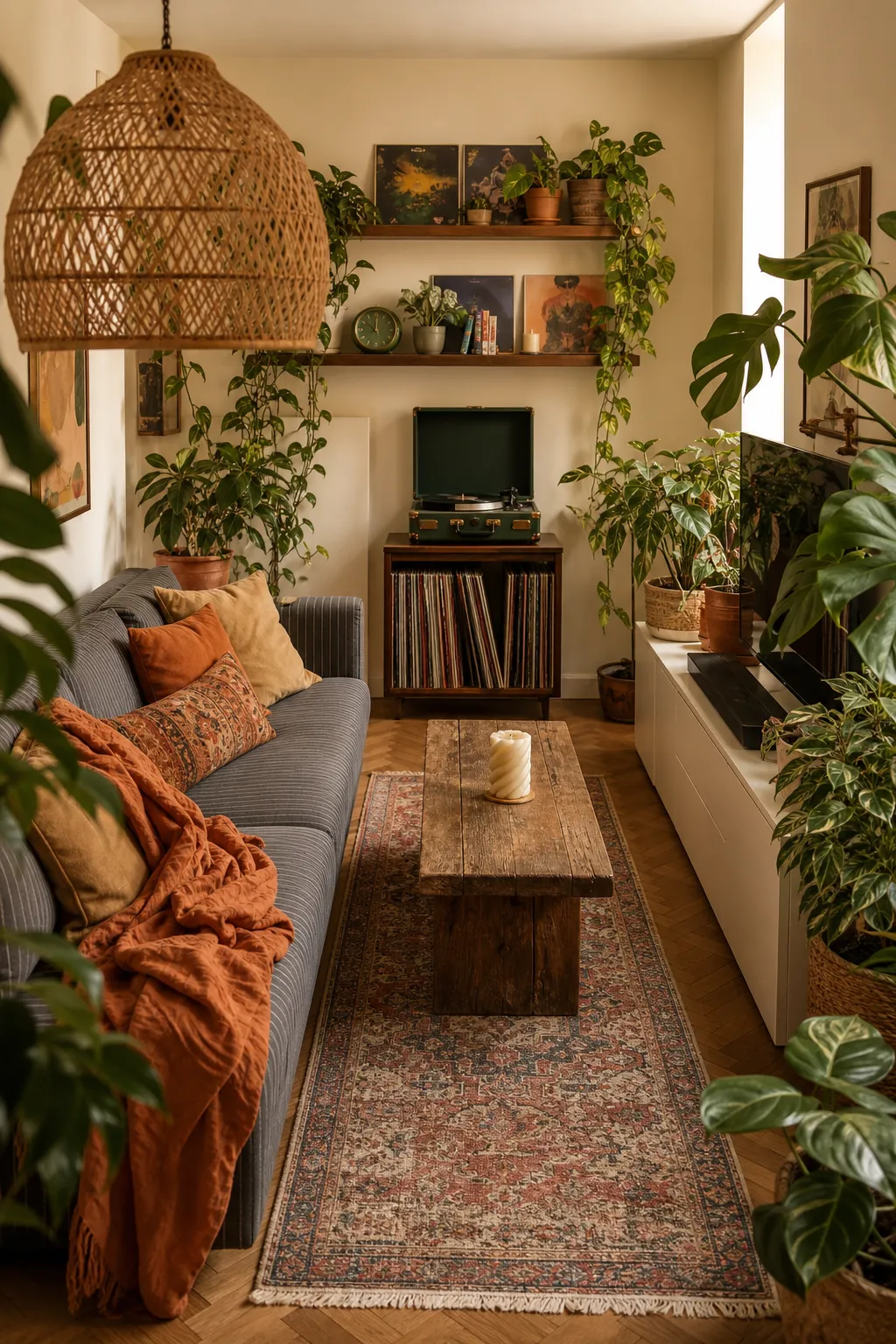
Mix leafy plants with rattan, jute, linen, and unfinished wood to give a compact living room natural warmth without relying on heavy decoration.
Vary plant heights and repeat woven textures across baskets, lighting, and cushions. Keeping the palette earthy helps the layered arrangement feel relaxed rather than cluttered.
17. Add Sophisticated Storage With Navy Built-Ins
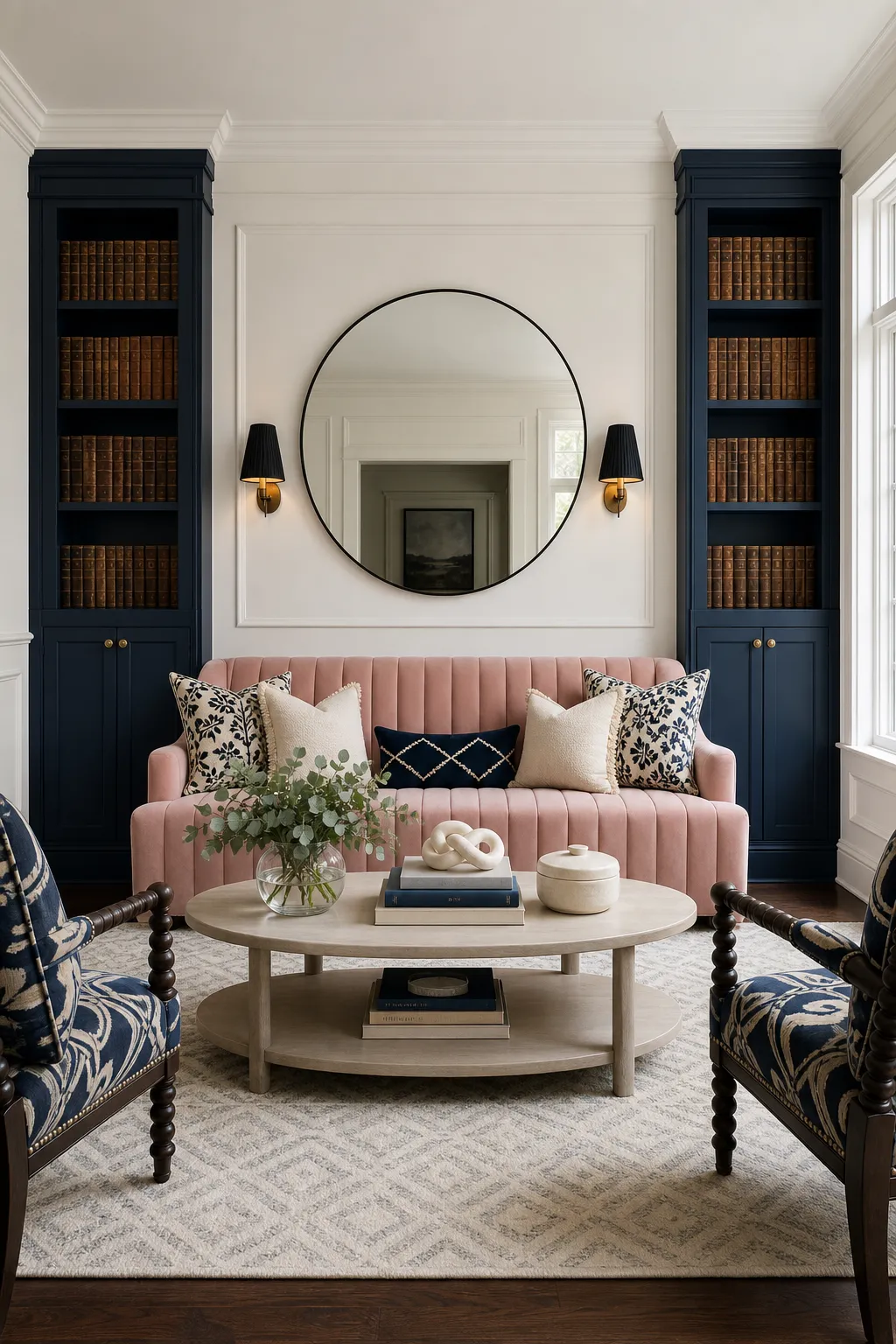
Floor-to-ceiling navy cabinetry turns practical storage into a polished architectural feature. Combine open shelves with closed cupboards to create display space without visual clutter.
Painting the built-ins and surrounding trim the same deep shade produces a seamless finish. Warm wood, brass, and pale upholstery can soften the navy and keep the room inviting.
18. Make a Monochrome Room Pop With Graphic Contrast
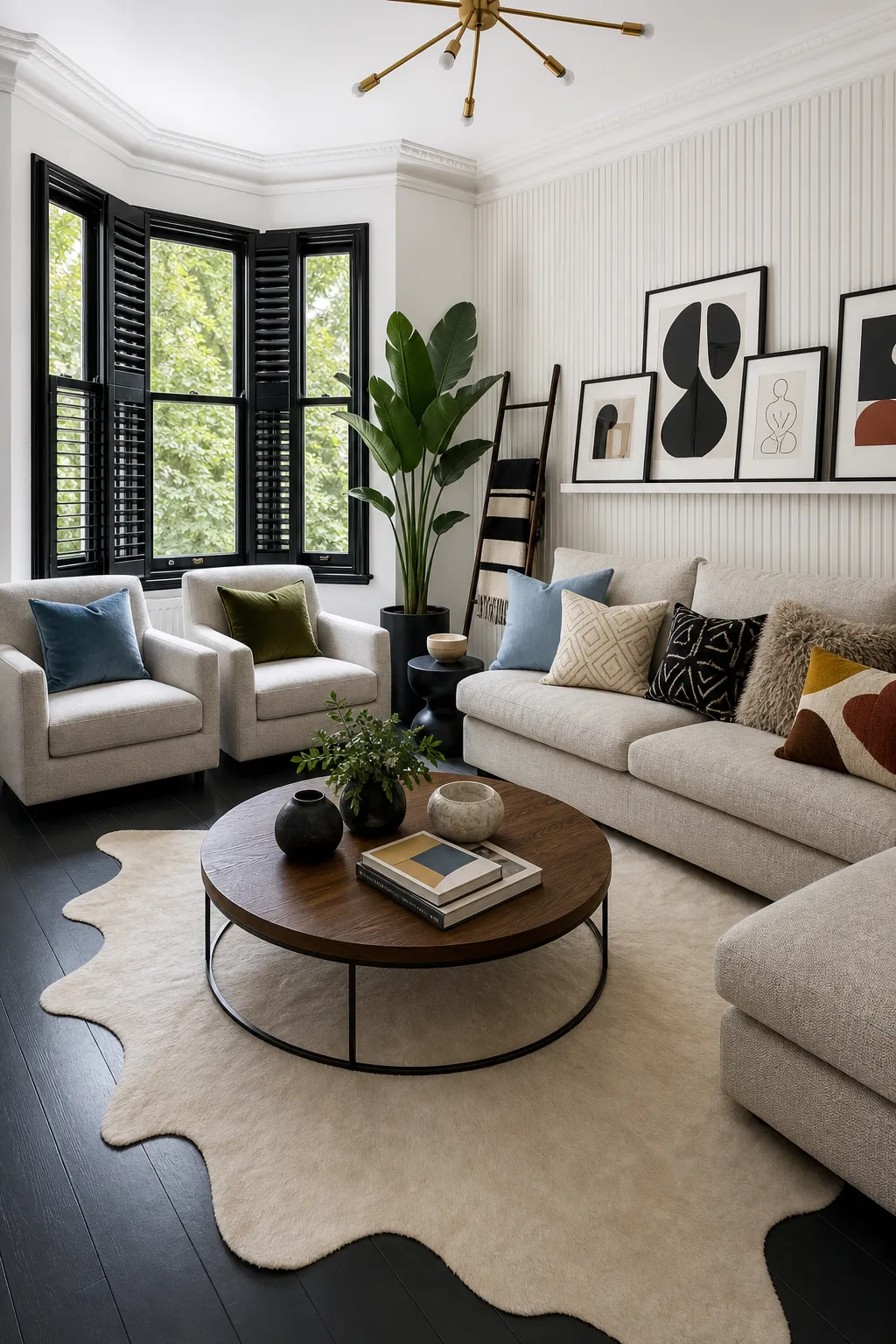
A restrained black-and-white palette can make a small room look crisp and intentional. Introduce graphic contrast through a patterned rug, bold artwork, or sharply outlined furniture.
Balance high-impact motifs with generous areas of plain color. Soft upholstery and rounded accessories prevent the monochrome scheme from feeling cold or overly severe.
19. Improve Flow With a Minimal Curved Sofa
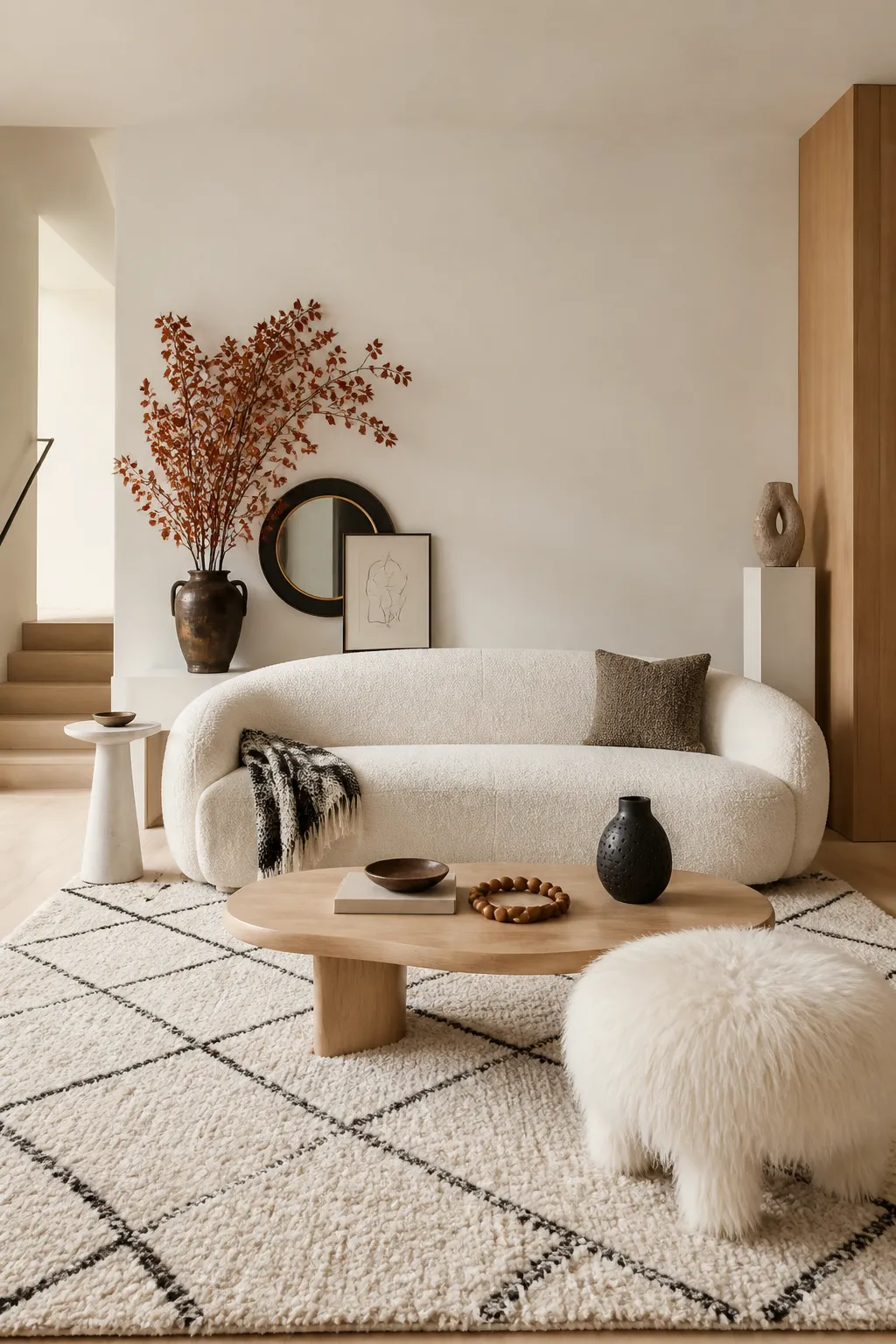
A streamlined curved sofa removes hard corners and helps movement feel easier in a tight layout. Its continuous silhouette creates smoother visual flow while still defining the seating area.
Choose slim legs or a low profile to preserve a sense of openness. Pair the sofa with a small round table so the surrounding furniture follows the same space-friendly geometry.
20. Bring Cottage Calm to a Small Room With Soft Sage Green
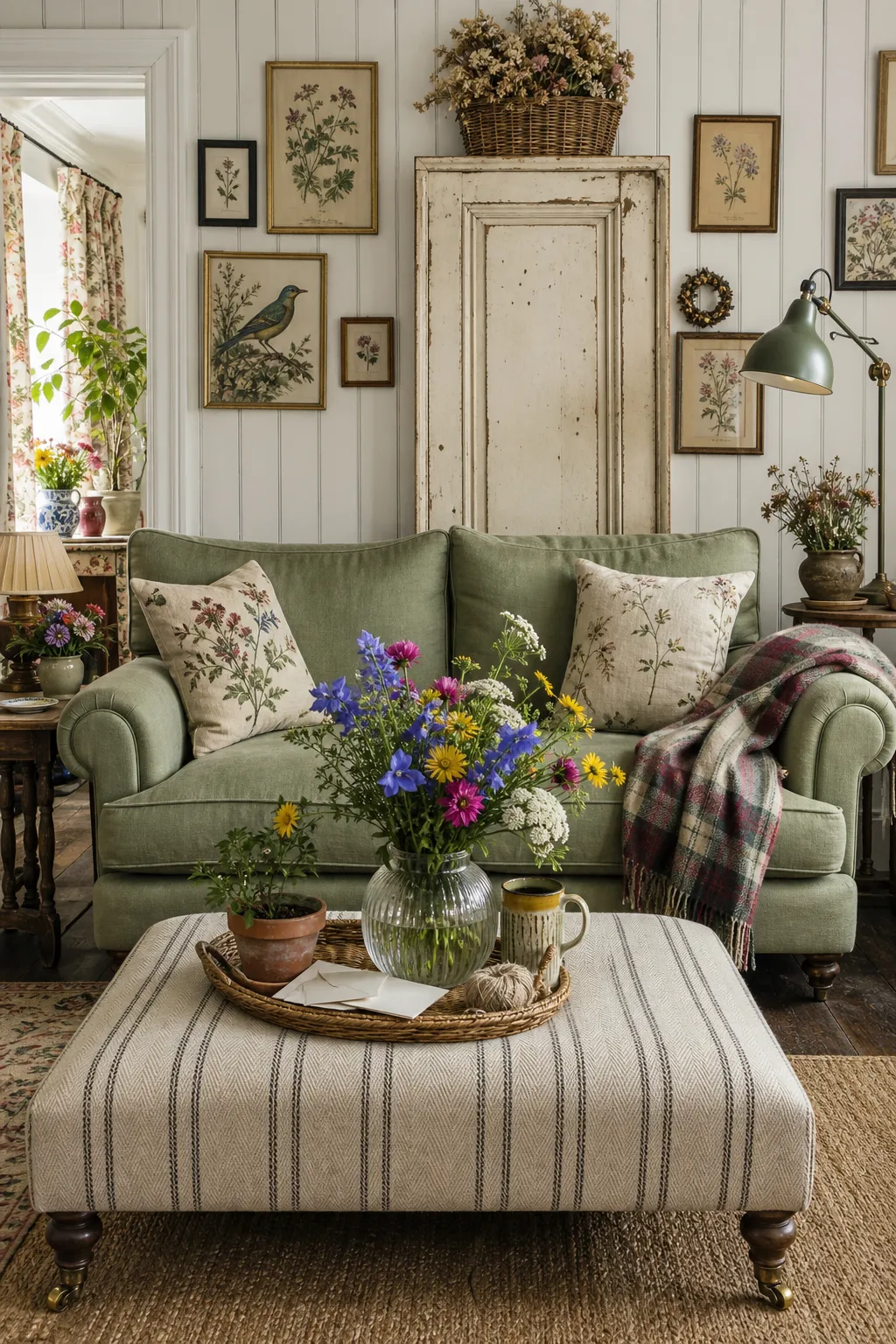
Soft sage green brings a quiet, nature-inspired character to a small cottage room. Use it across walls or joinery to establish a calm, cohesive backdrop.
Layer the green with creamy textiles, aged timber, and understated floral or checked patterns. These gentle details add cottage charm while preserving the room’s light, restful mood.
21. Build a Cozy Layout From Warm Neutrals and Rounded Forms
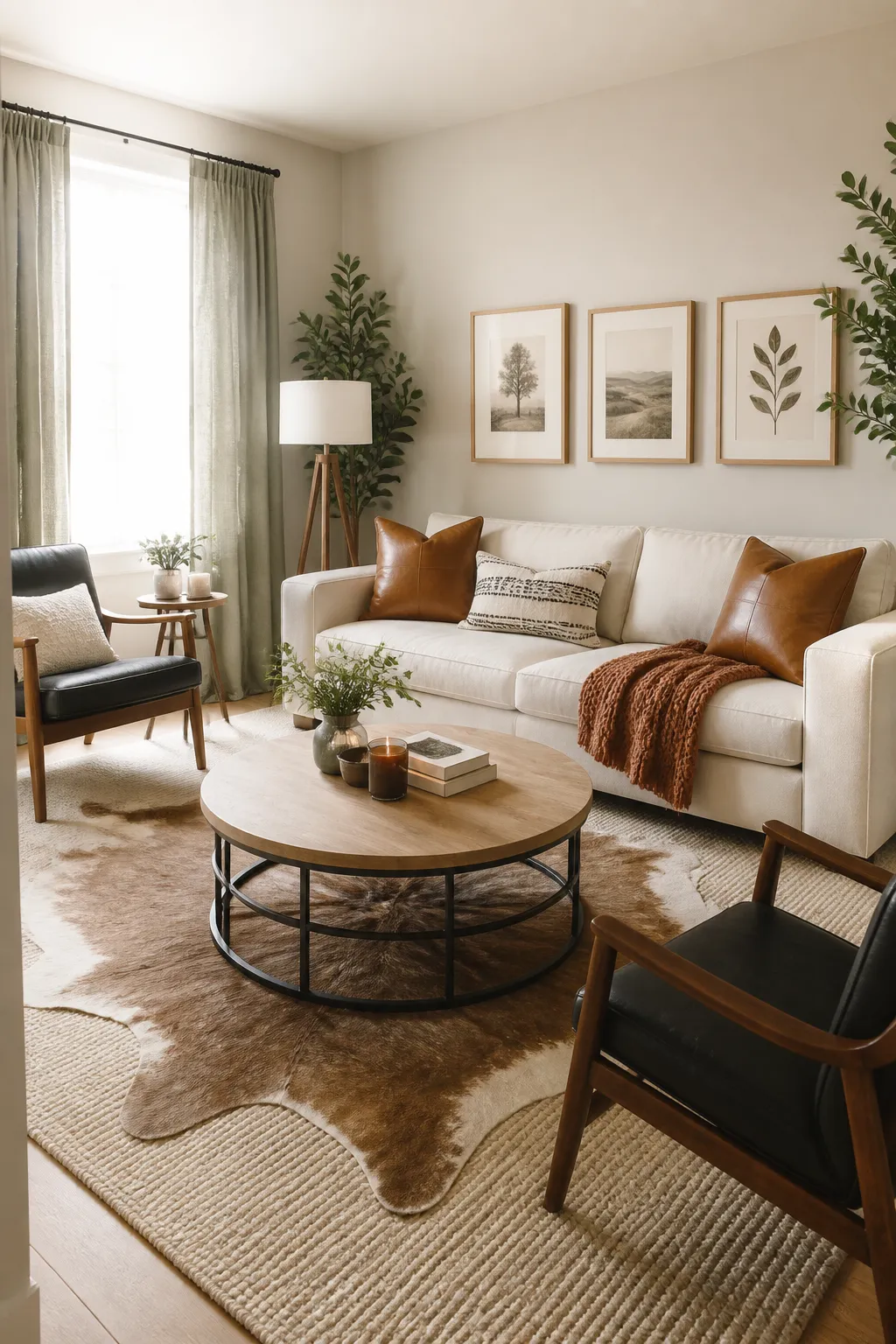
Build the room around sand, oatmeal, caramel, and soft brown tones for an enveloping yet airy foundation. Rounded sofas, poufs, and tables add comfort without sharp visual breaks.
Arrange the curved pieces close enough for conversation while leaving a clear route through the room. Bouclé, wool, and textured linen introduce depth without disrupting the quiet palette.
22. Combine a Fireplace and Bookcases for Library-Style Comfort
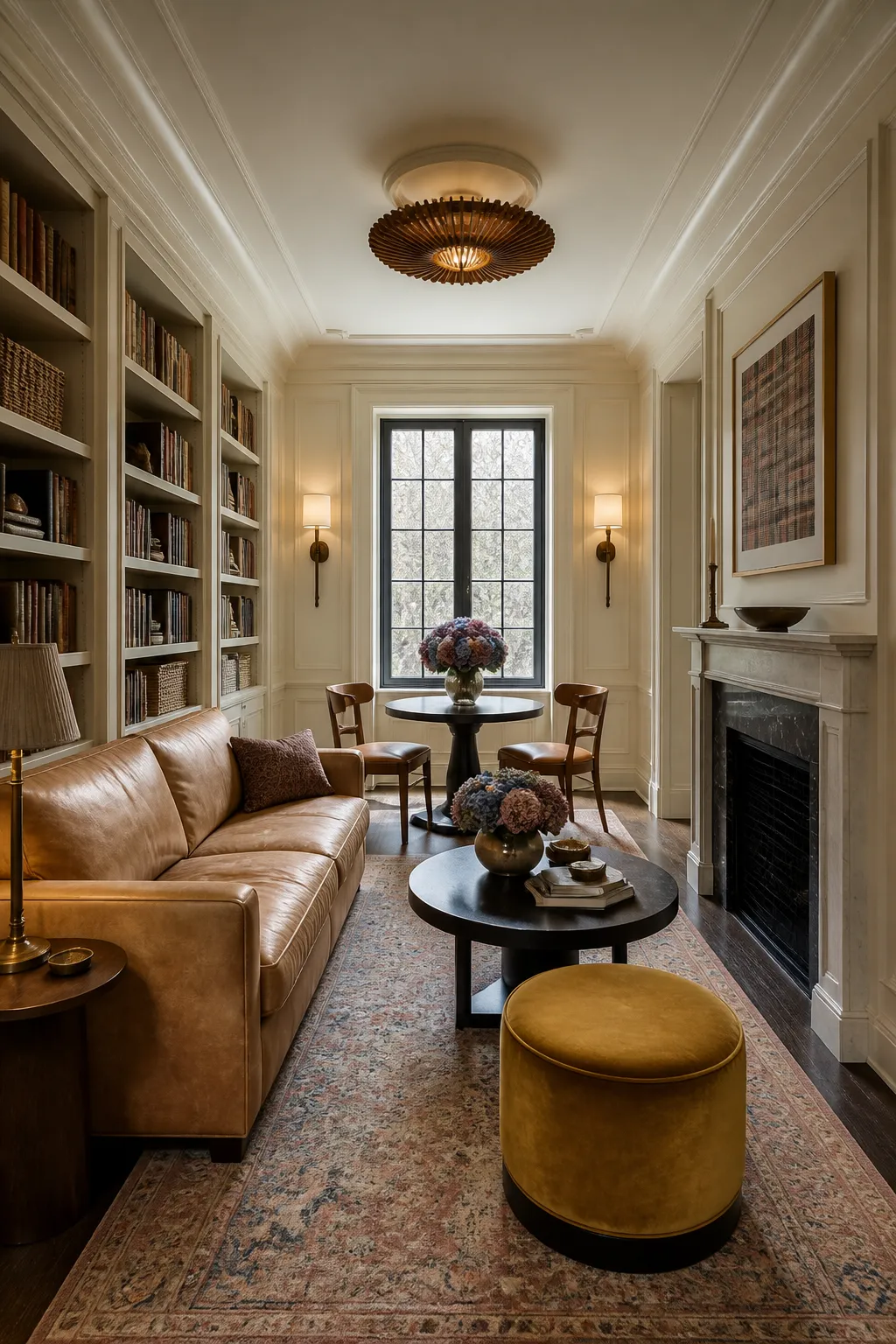
Flanking a fireplace with bookcases creates a natural focal wall and gives a small living room the atmosphere of a private library. The symmetrical composition delivers storage and comfort in one feature.
Fill the shelves selectively with books, art, and a few personal objects. Position compact seating toward the hearth to create an intimate place for reading and conversation.
23. Extend the Room Visually With an Indoor-Outdoor Connection
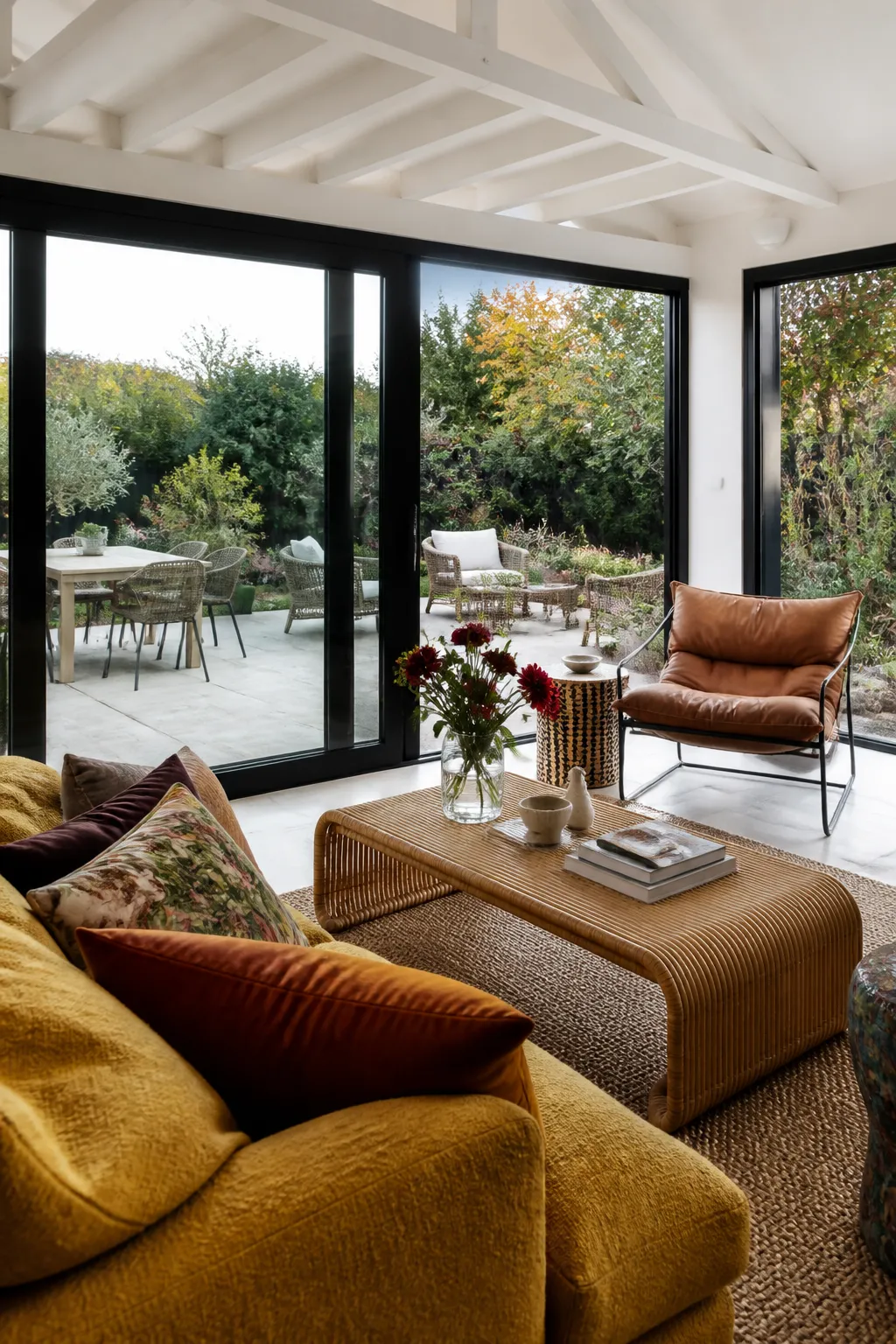
Wide glazed doors and an unobstructed view of the garden make a compact interior feel larger than its footprint. Similar colors and materials on both sides strengthen the indoor-outdoor connection.
Keep tall furniture away from the opening and orient seating toward the view. A continuous floor tone or repeated greenery can make the transition feel even more seamless.
24. Use Vertical Greenery to Enliven a Tiny Home
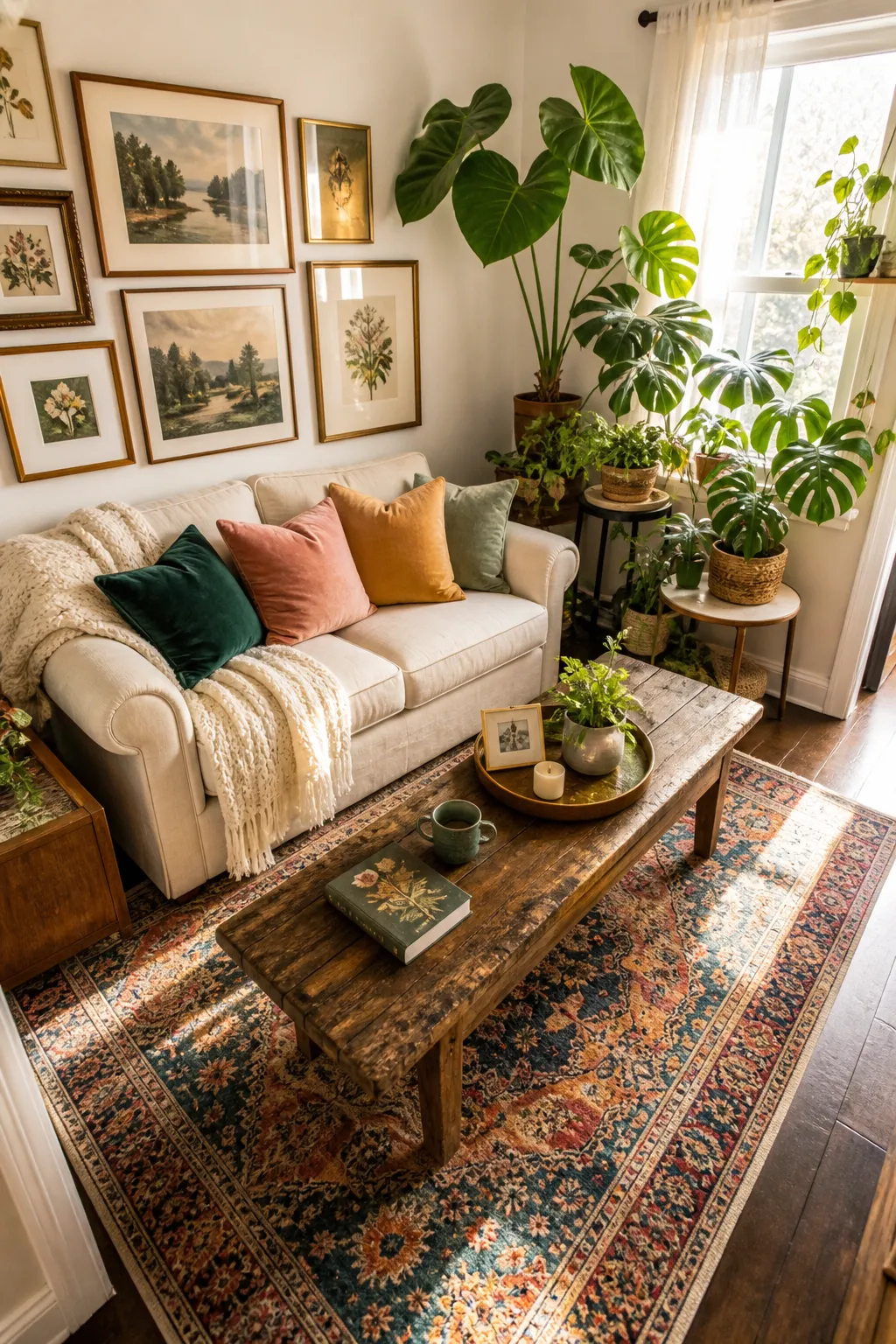
When floor space is scarce, lift plants onto shelves, wall-mounted planters, and hanging rails. This vertical greenery adds life and color without crowding walkways or work surfaces.
Choose trailing varieties to draw the eye upward and compact plants for narrow ledges. Repeating simple pots keeps the display unified in a multifunctional tiny home.
25. Give a Compact Library Classic Character With Deep Red
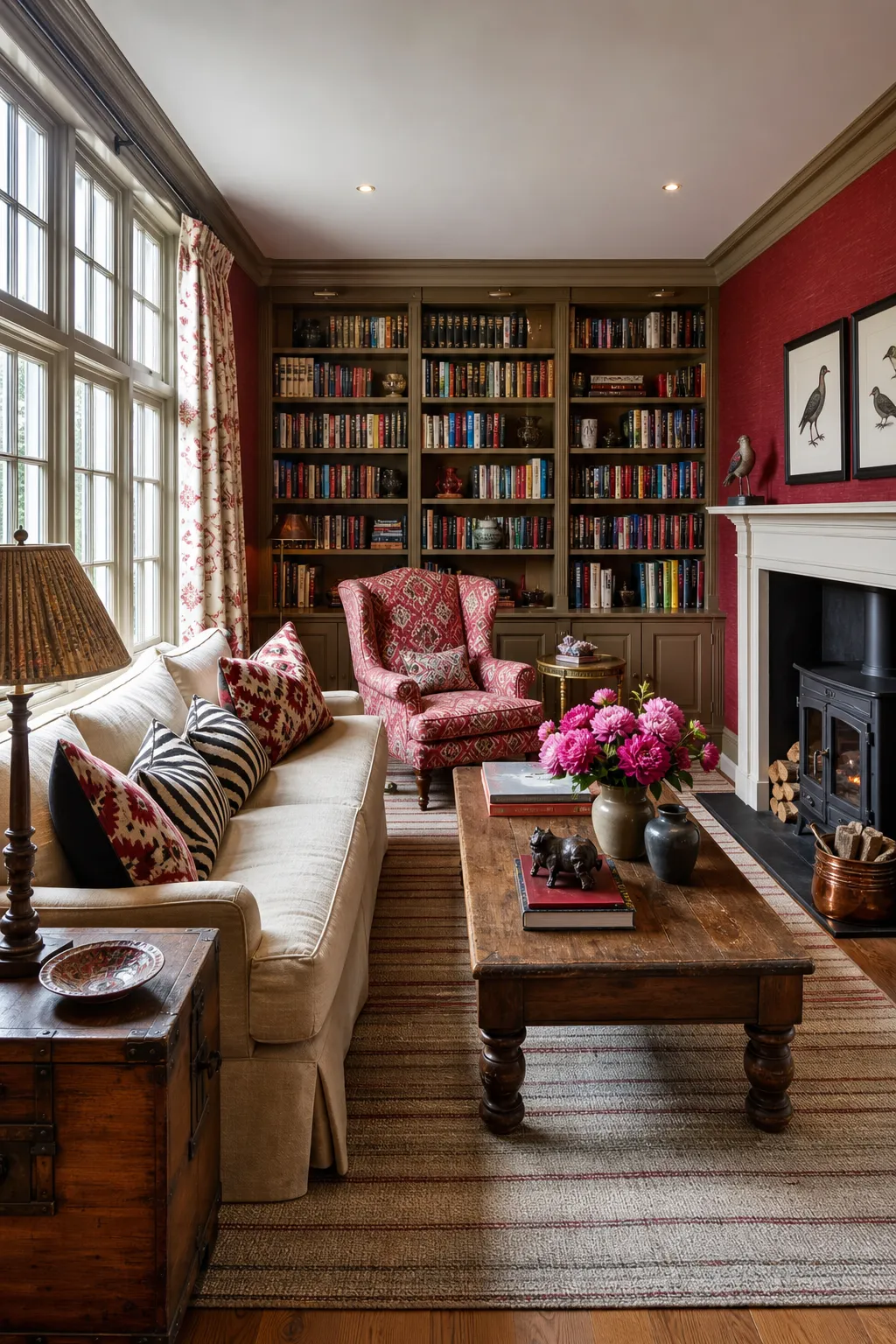
Deep red walls or cabinetry give a compact library a rich, established presence. The saturated color creates classic character and makes rows of books feel especially warm and inviting.
Balance the intensity with wood furniture, warm lamplight, and a lighter ceiling. Traditional patterns in small doses can reinforce the scholarly mood without overwhelming the room.
26. Frame Natural Light With Sage Green Windows
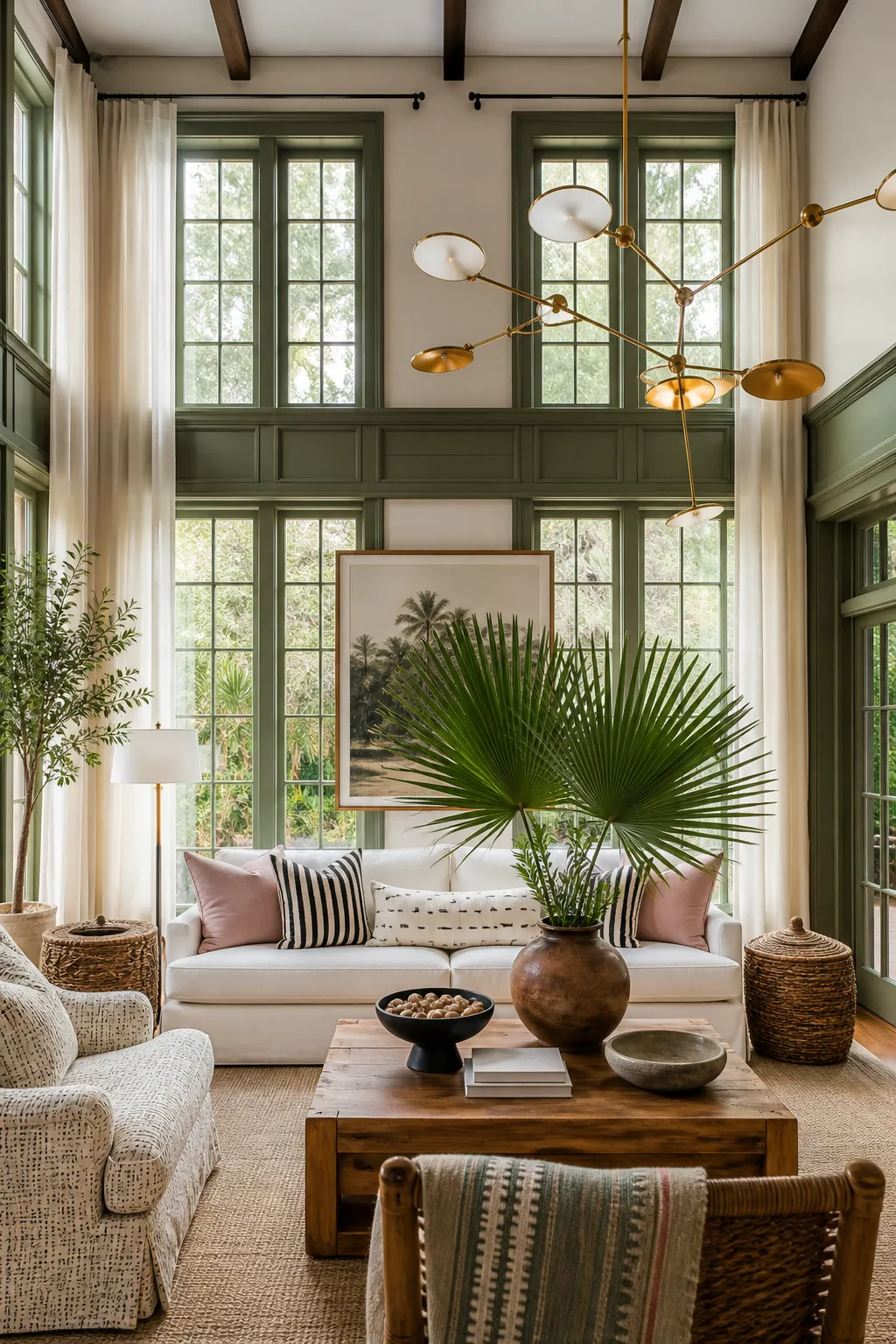
Painting window frames sage green turns incoming daylight into a gentle design feature. The muted hue provides subtle architectural definition while maintaining a fresh, natural atmosphere.
Echo the color in one or two nearby accents, then keep walls and curtains pale. This allows the framed view and natural light to remain the focus.
27. Warm Up a Compact Modernist Room With Tactile Materials
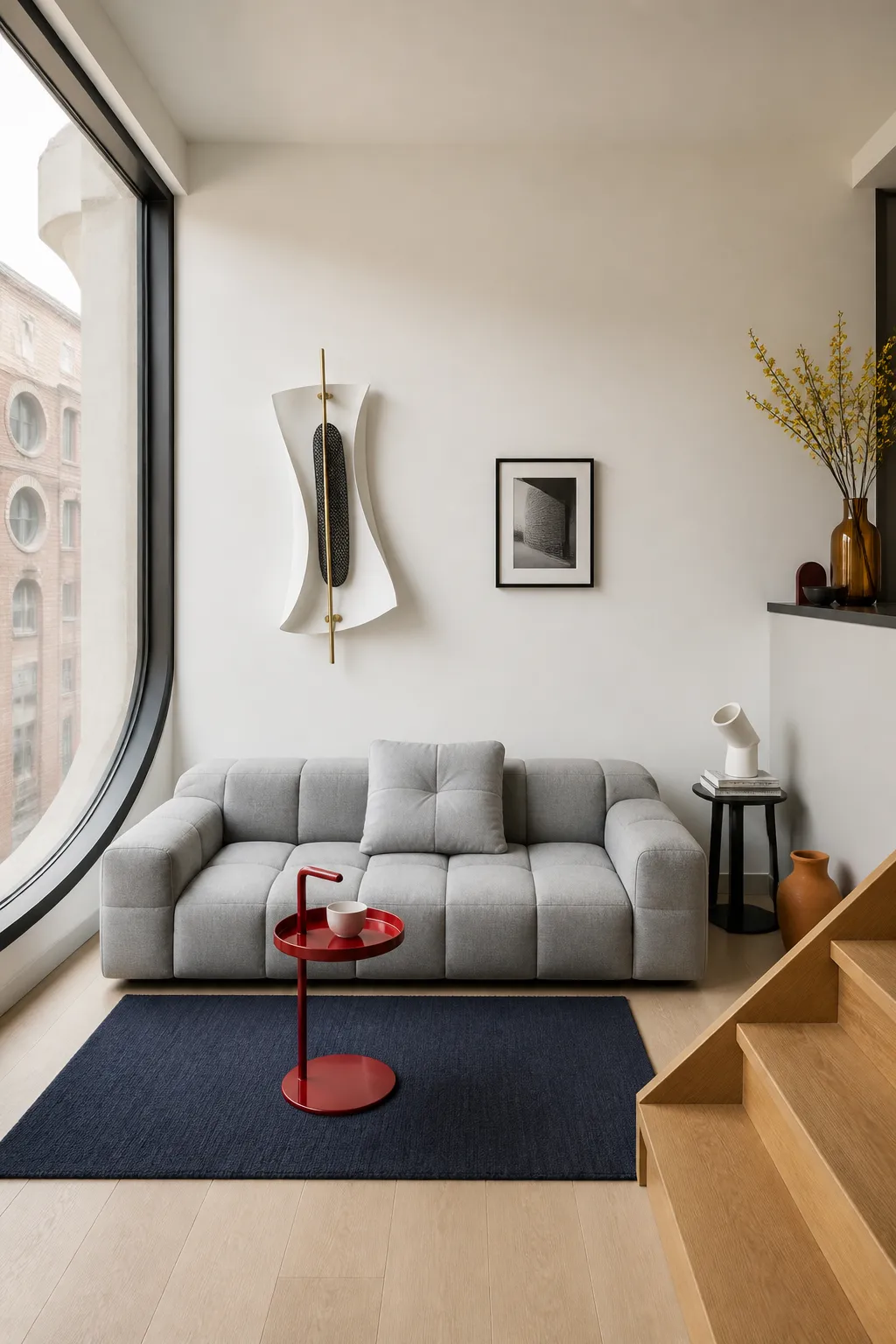
Clean modernist lines feel more welcoming when paired with wood grain, wool, leather, and nubby upholstery. These tactile materials add depth without compromising the room’s disciplined structure.
Limit the palette and let contrasting surfaces provide interest. A textured rug, timber table, and softly upholstered chair may be enough to make the compact space feel comfortable.
28. Wrap Storage Around the Room With Green Built-Ins
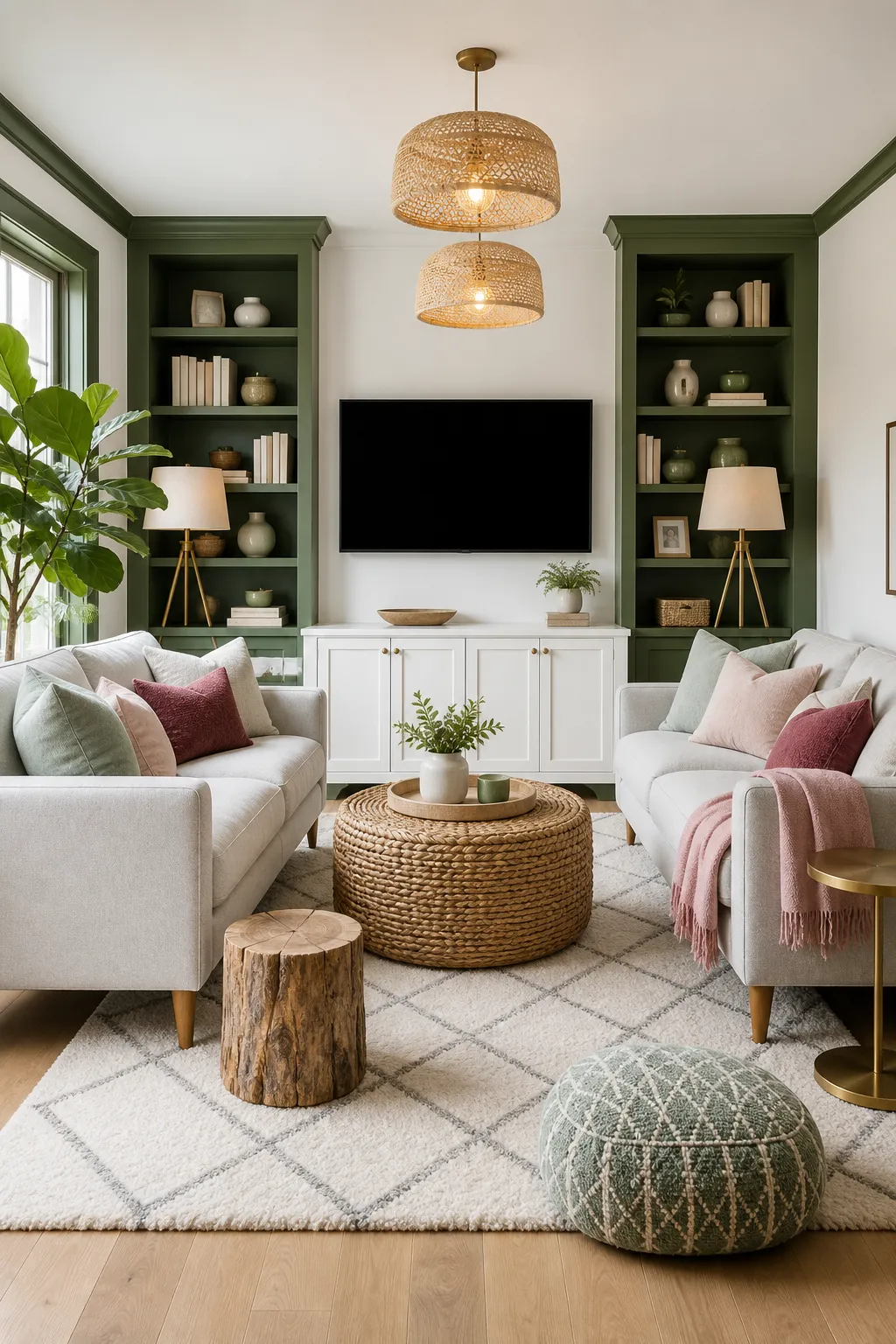
Green built-ins can wrap around walls, doorways, or windows to use otherwise overlooked space. A single continuous color makes extensive storage feel integrated rather than bulky.
Combine lower cupboards for hidden items with open shelves for books and display pieces. Matching the hardware and editing shelf contents will keep the room orderly.
29. Fit Bold Color Into a Narrow Room With a Purple Sofa
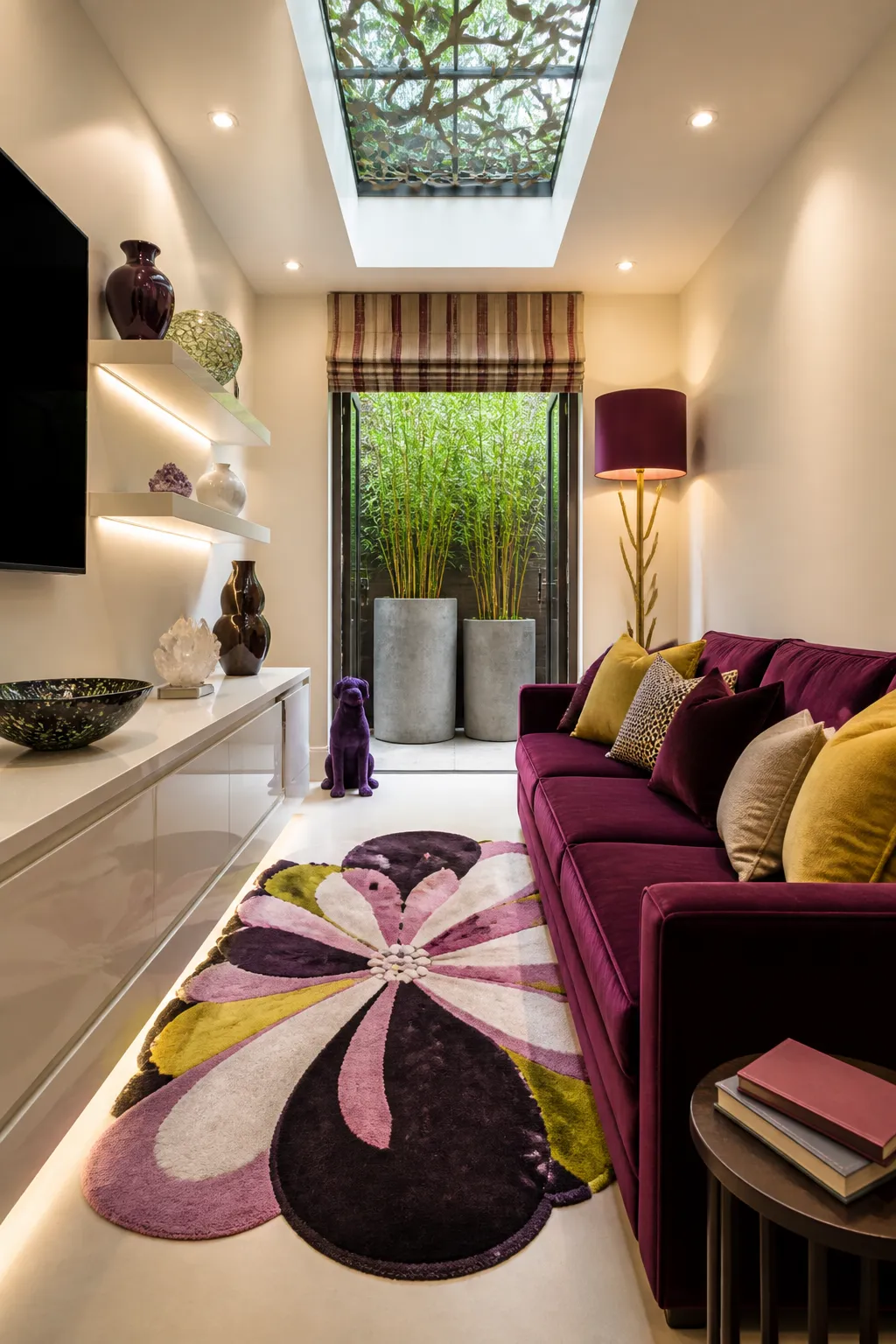
A purple sofa gives a narrow room a confident focal point without consuming extra space. Choose a streamlined shape so the bold color carries the impact, not an oversized frame.
Support the sofa with quieter wall colors and a slim rug that follows the room’s length. Small accents drawn from the same purple family can make the choice feel deliberate.
30. Pair Dark Green Walls With Cognac Leather for a Moody Look
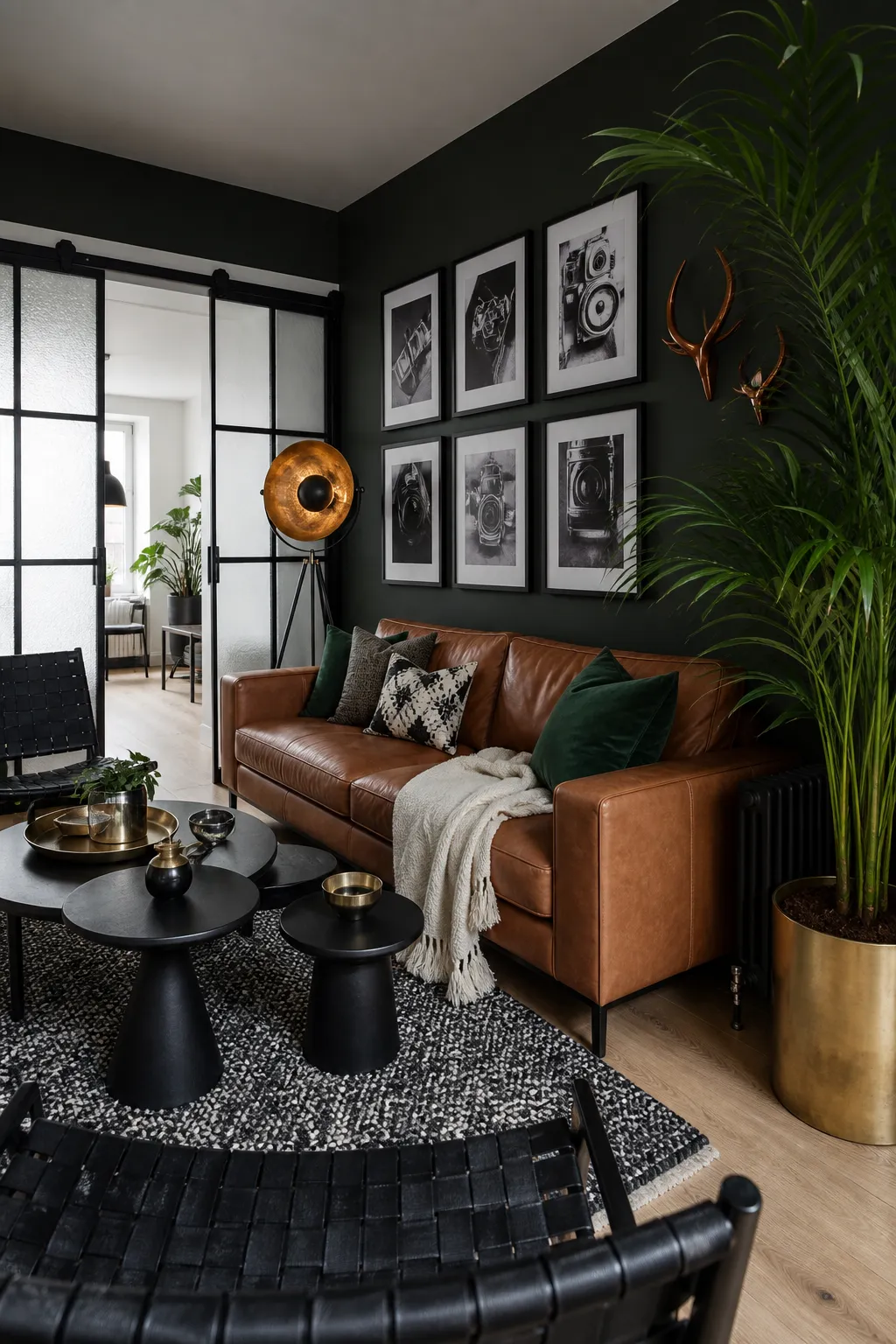
Dark green walls create an enveloping backdrop, while cognac leather introduces warmth and contrast. Together, they form a rich, moody palette that suits an intimate living room.
Use warm lighting, aged wood, and touches of cream to keep the scheme from becoming too dark. A few reflective or metallic details can lift the room while preserving its cozy character.
31. Finish With a Bright, Cozy Neutral Scheme That Feels Spacious
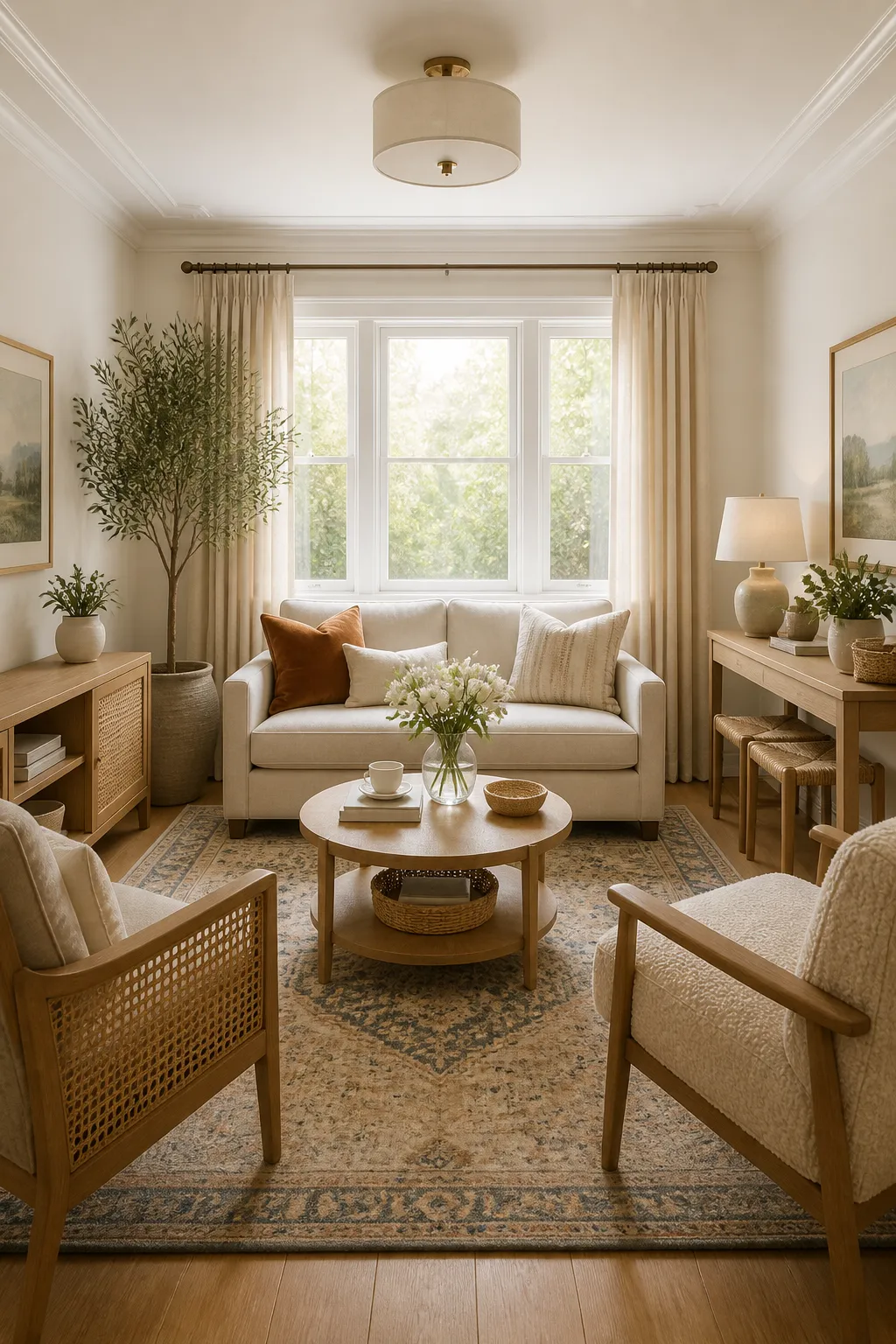
Finish the room with warm whites, soft beige, and pale natural wood to create a bright, spacious foundation. Keeping larger surfaces within this gentle palette helps light travel freely through the space.
Prevent the scheme from feeling flat by layering tactile details such as woven textiles, linen curtains, and a plush rug. A few deeper tan or muted brown accents add definition while preserving the cozy, airy feel.
Choose streamlined furniture and leave some visual breathing room between pieces. The result is a calm, welcoming interior that feels open without sacrificing warmth.