
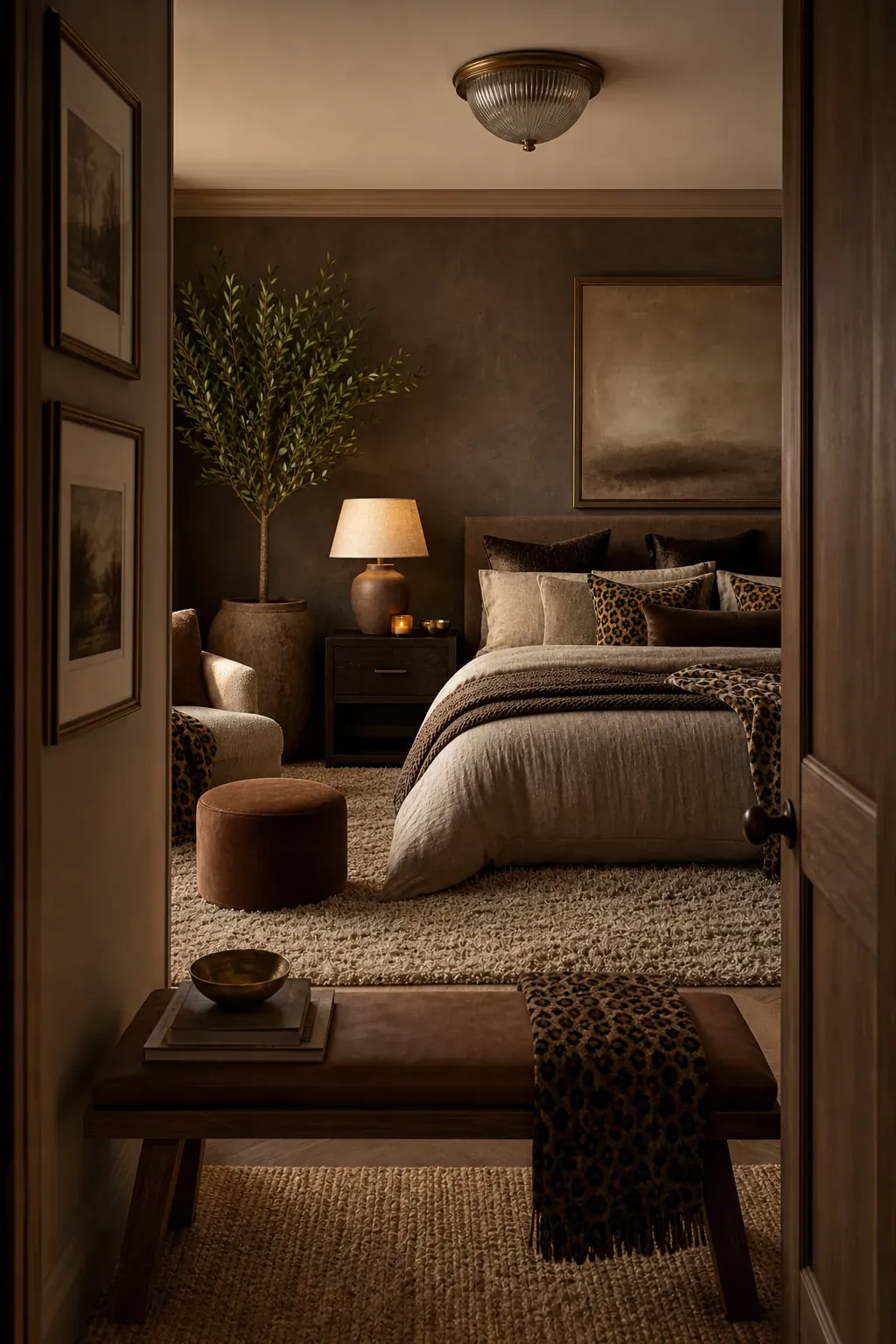
Leopard print can make a bedroom feel collected, glamorous, playful, or quietly expensive. It can also take over the room faster than almost any other pattern. The difference is rarely whether leopard belongs in a grown-up bedroom. It is usually scale, material, and how much visual space the print is asked to fill.
These leopard bedroom ideas range from one easy pillow to immersive walls, with practical ways to balance every version. Start with the mood you want, choose one dominant use of the print, and let the rest of the room give it somewhere to breathe.
1. Start With One Leopard Lumbar Pillow
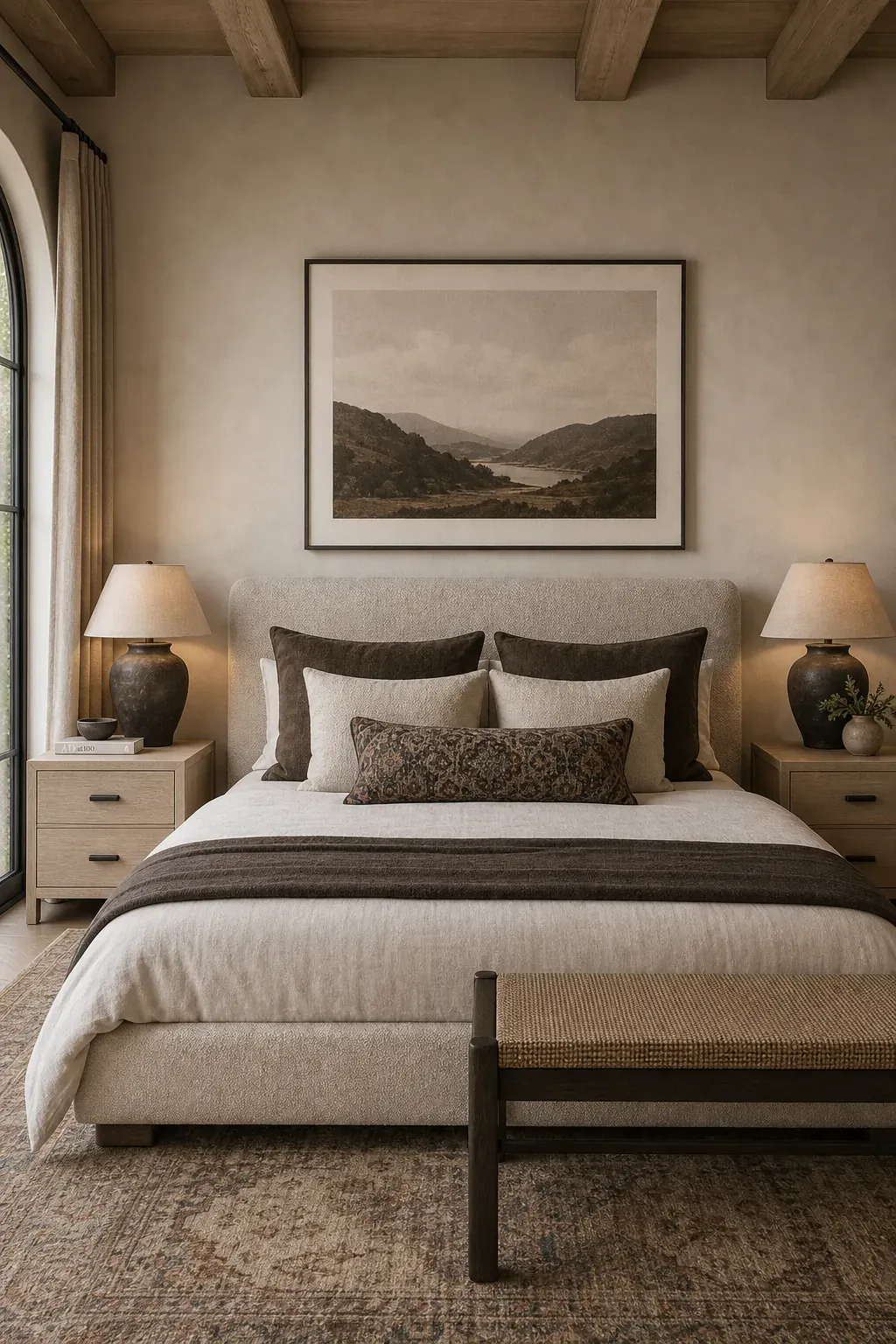
A single long lumbar pillow is the safest first move because it reads as an intentional focal point instead of scattered theme decor. Center it against plain sleeping pillows on a cream, oatmeal, or white bed. A larger, irregular rosette pattern tends to look richer than a tiny, obviously repeating print.
Keep the rest of the bedding tactile but quiet: washed linen, a cotton quilt, and perhaps one wool throw. This small dose is easy to change seasonally, and it gives you a clear color palette of black, caramel, and warm beige to repeat elsewhere.
2. Drape a Leopard Throw Over a Velvet Headboard Bed
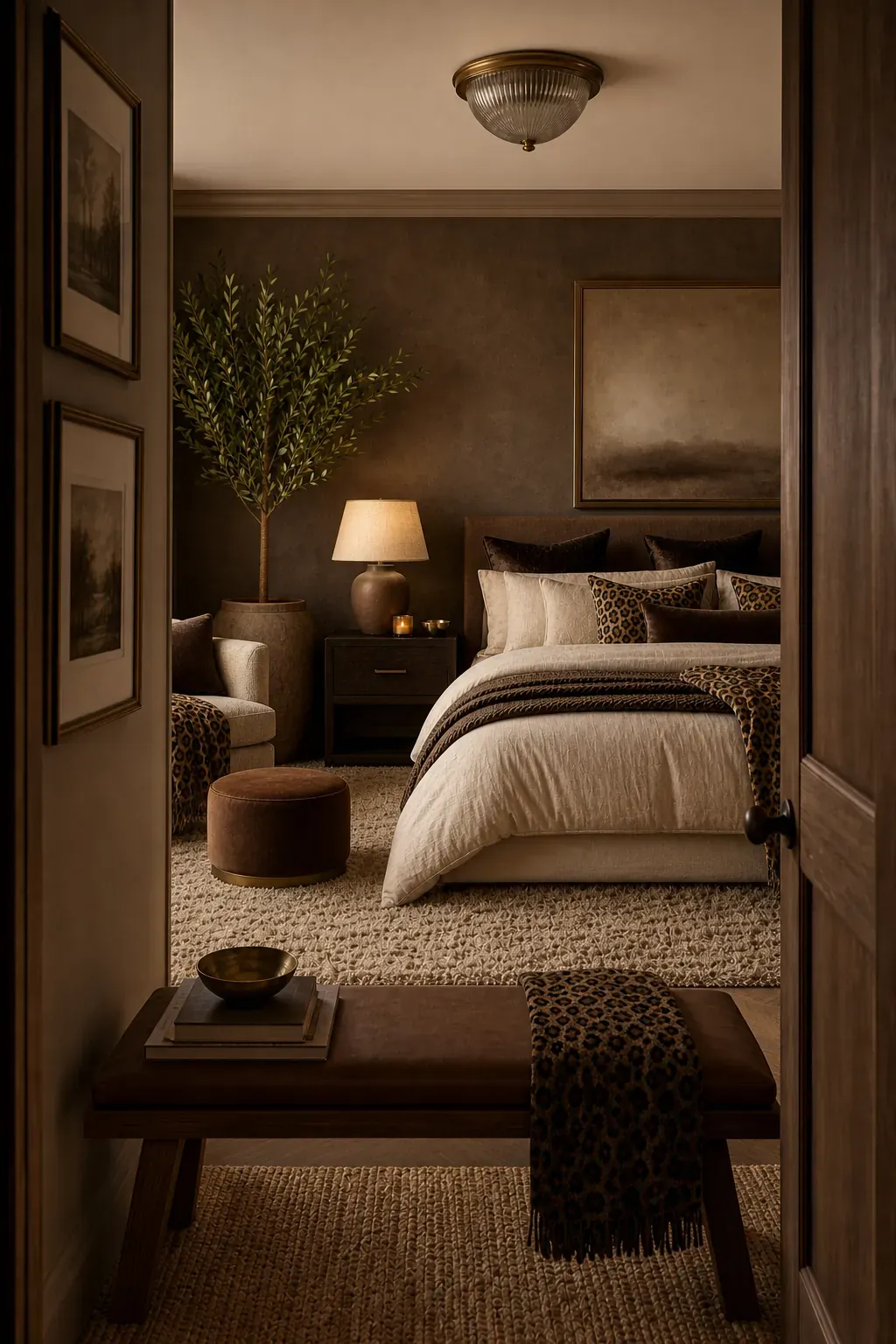
Leopard feels especially convincing beside a solid velvet headboard because both materials have visual depth. Try moss, tobacco, oxblood, or midnight blue velvet, then fold the animal-print throw across only the lower third of the bed. Leaving most of the duvet plain prevents the pattern from becoming a costume.
Look for a throw with a soft hand and a convincing variation in the spots. The combination works best when the velvet is matte rather than shiny and the bedside pieces are simple wood or aged metal.
3. Put the Print on an End-of-Bed Bench
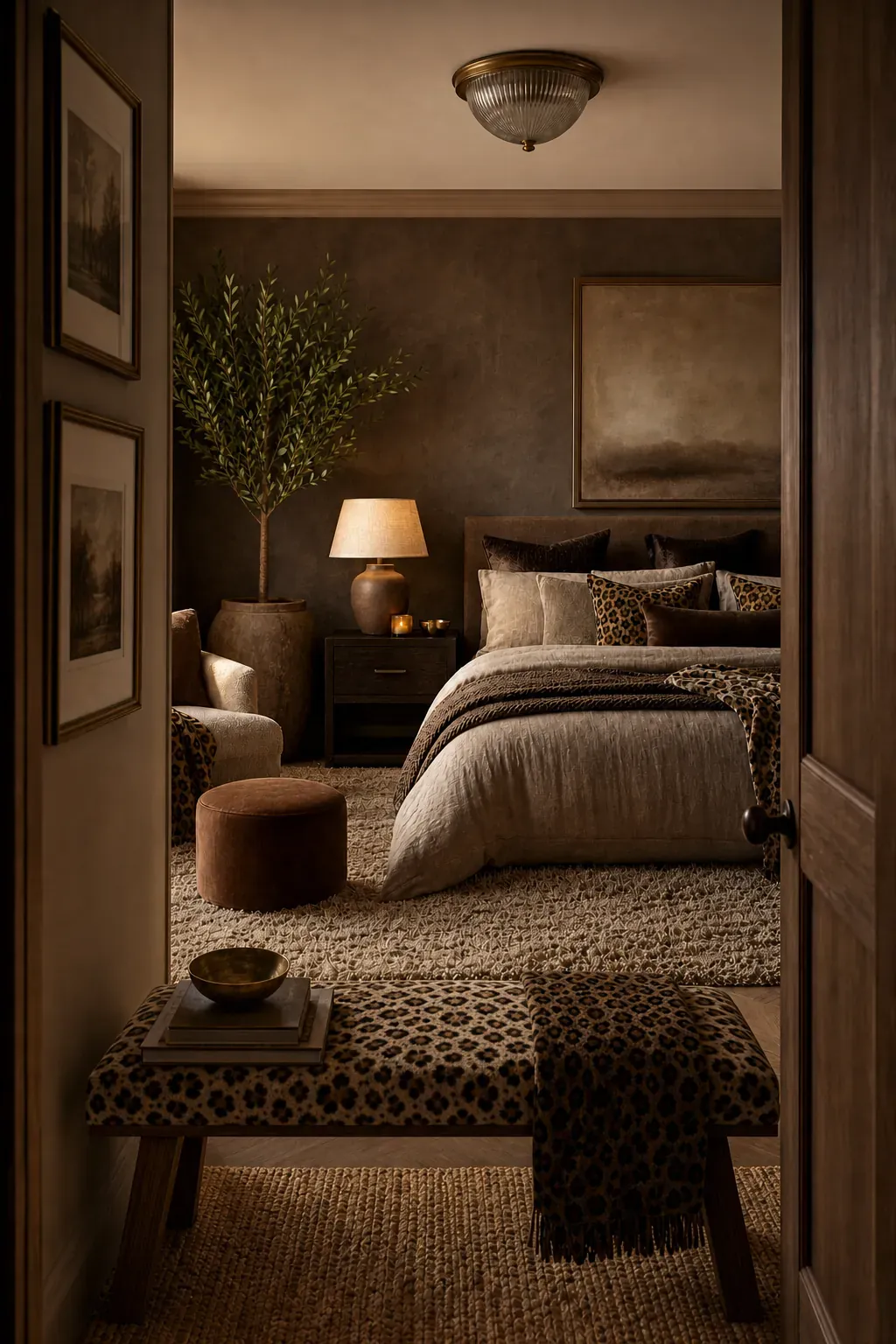
An upholstered bench gives leopard print enough area to make a statement while keeping it below eye level. That lower placement makes a dramatic pattern surprisingly easy to live with. Choose a clean-lined bench so the fabric, rather than ornate furniture details, carries the personality.
Allow a little floor to show between the bench and bed, and repeat just one color from the upholstery in a lamp base or frame. The bench also earns its footprint by providing a place to sit, set tomorrow’s clothes, or hold extra blankets.
4. Anchor the Bed With a Leopard Rug
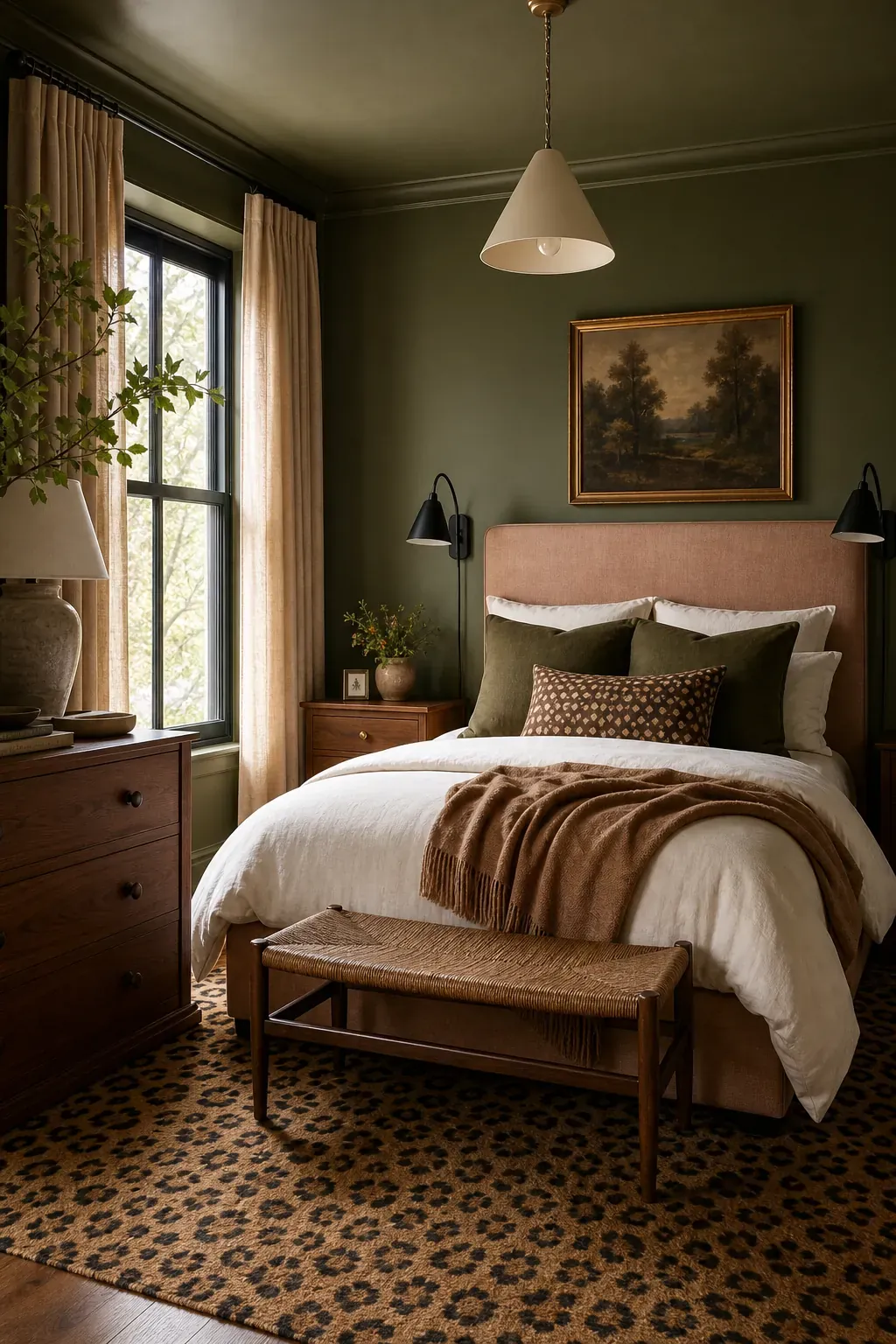
A leopard rug can function almost like a warm neutral when the ground is camel and the spots are softened black. Size matters: the rug should extend visibly beyond both sides and the foot of the bed, rather than floating as a small island. A generous rug makes the pattern feel architectural and settled.
Pair it with solid bedding and furniture with visible legs so some of the print remains readable. If the room already contains busy wallpaper or heavily figured wood, choose a lower-contrast rug or move the leopard to a smaller accent.
5. Use Leopard Wallpaper on the Headboard Wall

For an unapologetic room, leopard wallpaper behind the bed creates a complete focal wall without surrounding you on all four sides. A pattern with generous spacing and an imperfect, hand-painted quality avoids the look of a tightly tiled digital repeat. Let a tall upholstered headboard interrupt part of the pattern.
Paint the remaining walls in a color pulled from the paper’s ground—warm ivory, tobacco, muted olive, or ink. Keep artwork minimal on the printed wall; the wallpaper is already doing that job.
6. Frame Leopard Fabric as Oversized Art
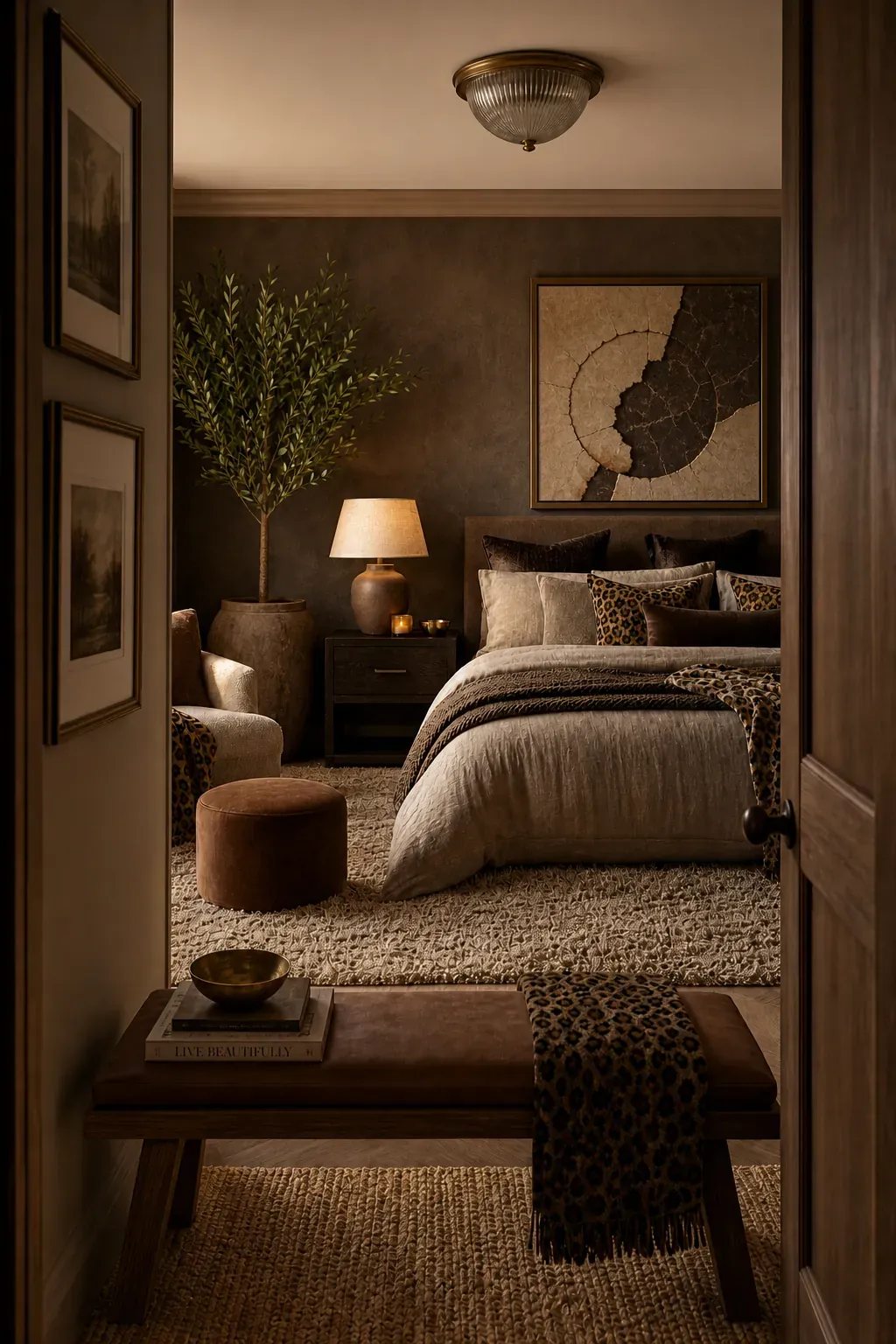
A remnant of beautiful fabric can become a large, affordable artwork. Stretch it flat over a backing board, place it in a simple dark-wood frame, and hang it above a dresser where the pattern has space around it. This is especially useful for renters who want impact without wallpaper.
Choose fabric with a composition you would enjoy as a painting, not merely a generic repeat. An off-center crop often looks more artistic. Keep the dresser styling low and sparse so it does not compete with the framed textile.
7. Frame the Window With Leopard Curtains
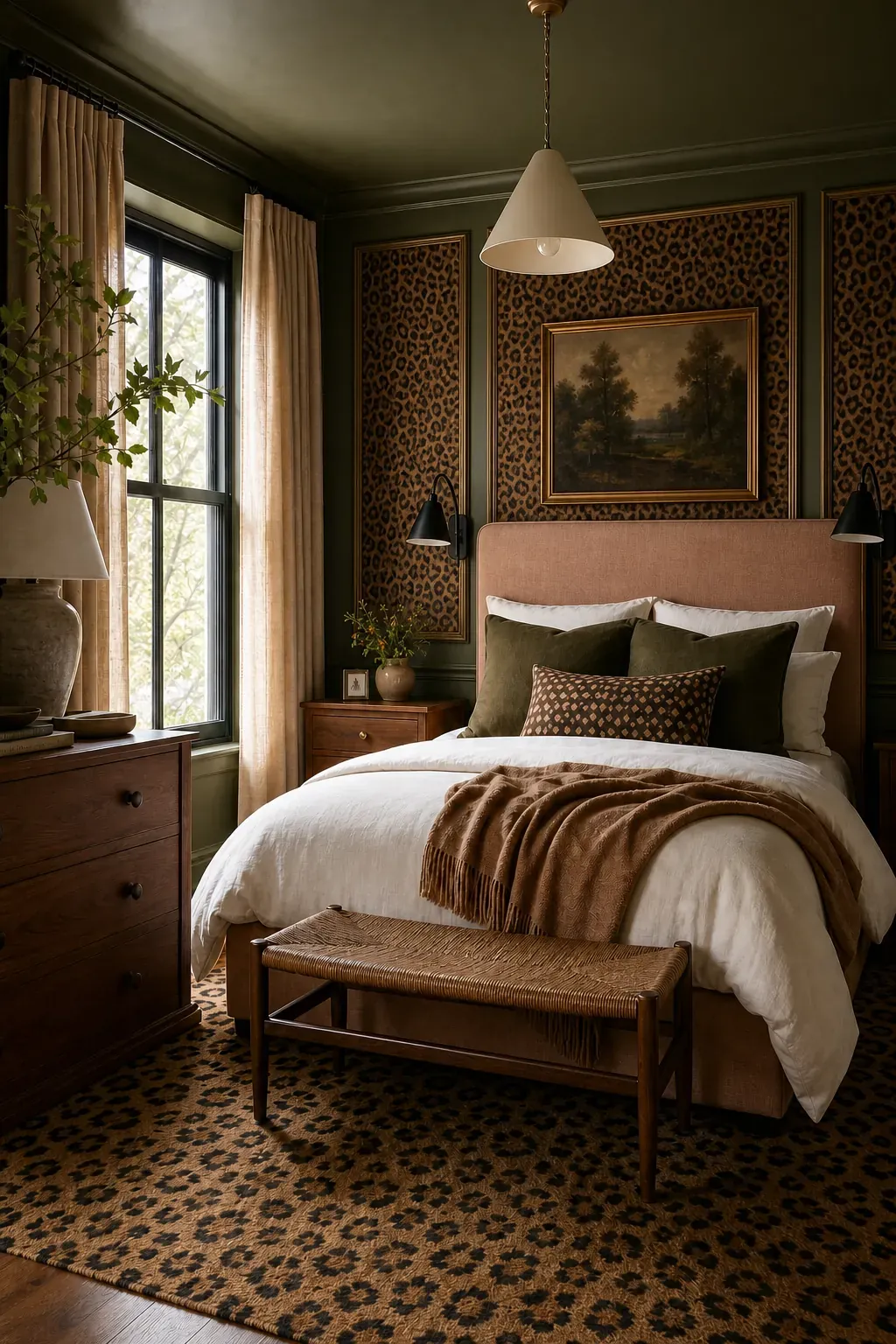
Leopard curtains are bold, but their vertical folds break up the repeat and make the pattern feel softer. Hang them high and wide so they frame the window rather than cover it, and let the panels reach the floor. Lined cotton or linen will look more tailored than thin shiny polyester.
Because curtains occupy a large visual area, use plain bedding and a restrained rug. Dark rods connect naturally to the black spots, while warm wood furniture pulls out the tan ground.
8. Try a Tonal Black-on-Black Leopard Rug
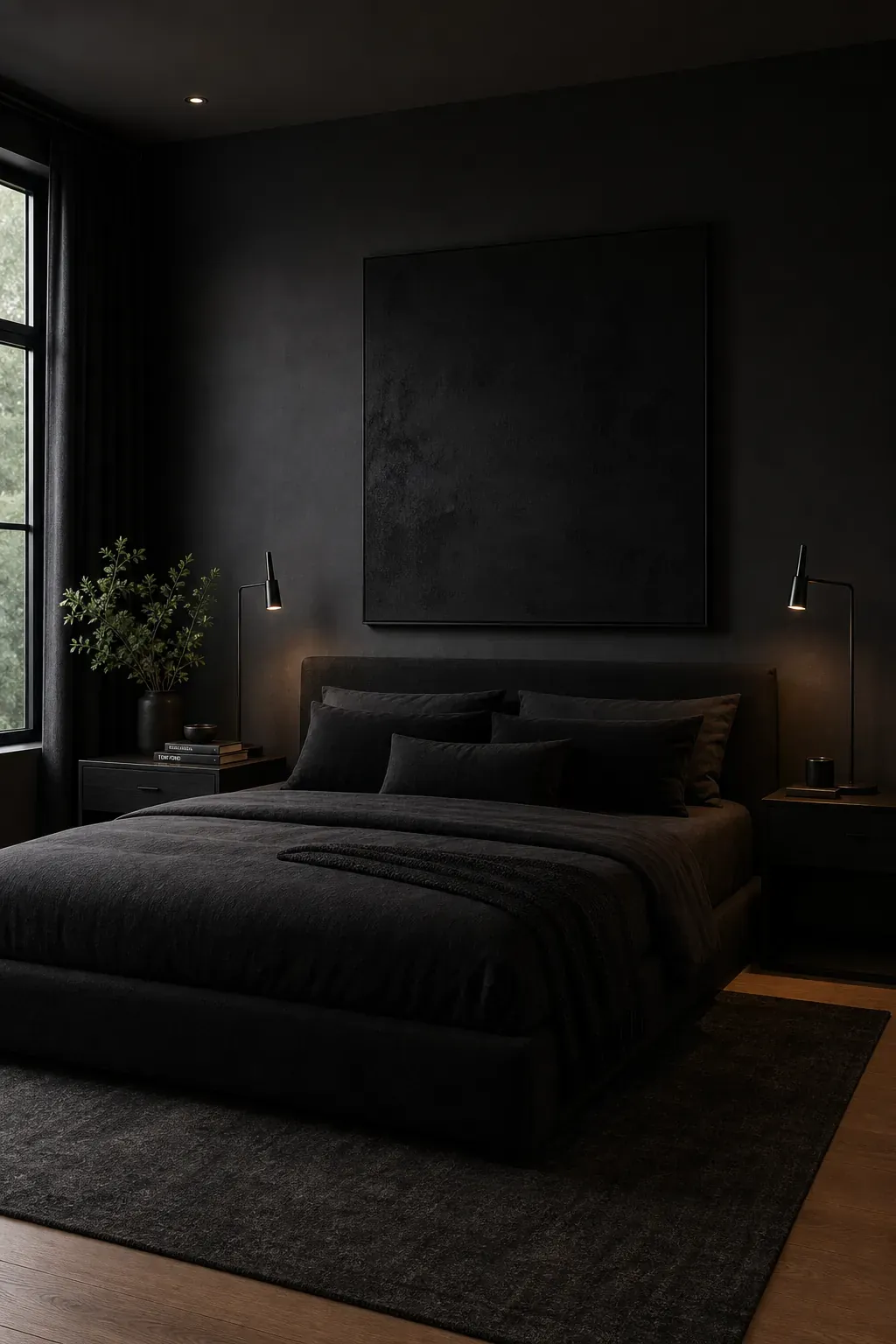
A black-on-black leopard rug reveals its pattern through pile height and sheen rather than strong color contrast. It is an excellent bridge between edgy and minimal, especially in a bedroom with pale walls, white bedding, and a few black accents. The print becomes visible as you move around the room.
Balance the dark floor with lighter textiles and at least two warm lamps. A black rug can feel heavy in weak daylight, so leave a border of visible wood floor and avoid matching it with an entirely black ceiling.
9. Pair Leopard With Blush Pink
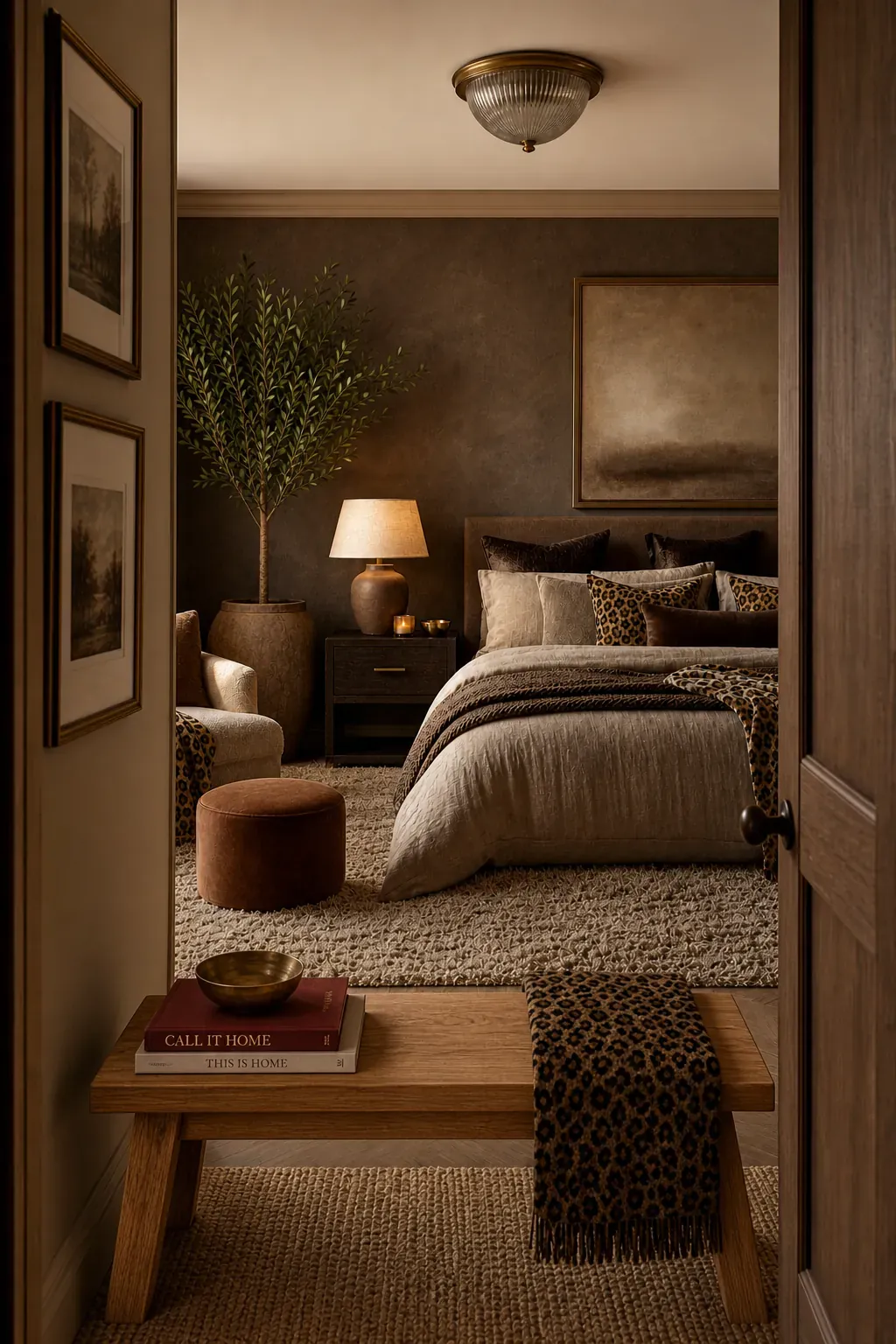
Blush pink softens leopard’s graphic edge and creates a bedroom that feels playful without requiring novelty furniture. Use dusty or plastery pink rather than candy pink for a more settled result. A leopard pillow, small stool, or folded blanket is enough to sharpen the softness.
Bring black back in through a slim lamp, frame, or curtain rod so the spots do not look disconnected. Cream bedding and natural wood keep the palette warm, while one cherry-red detail can make it feel more fashion-forward.
10. Combine Leopard With Moody Olive Walls
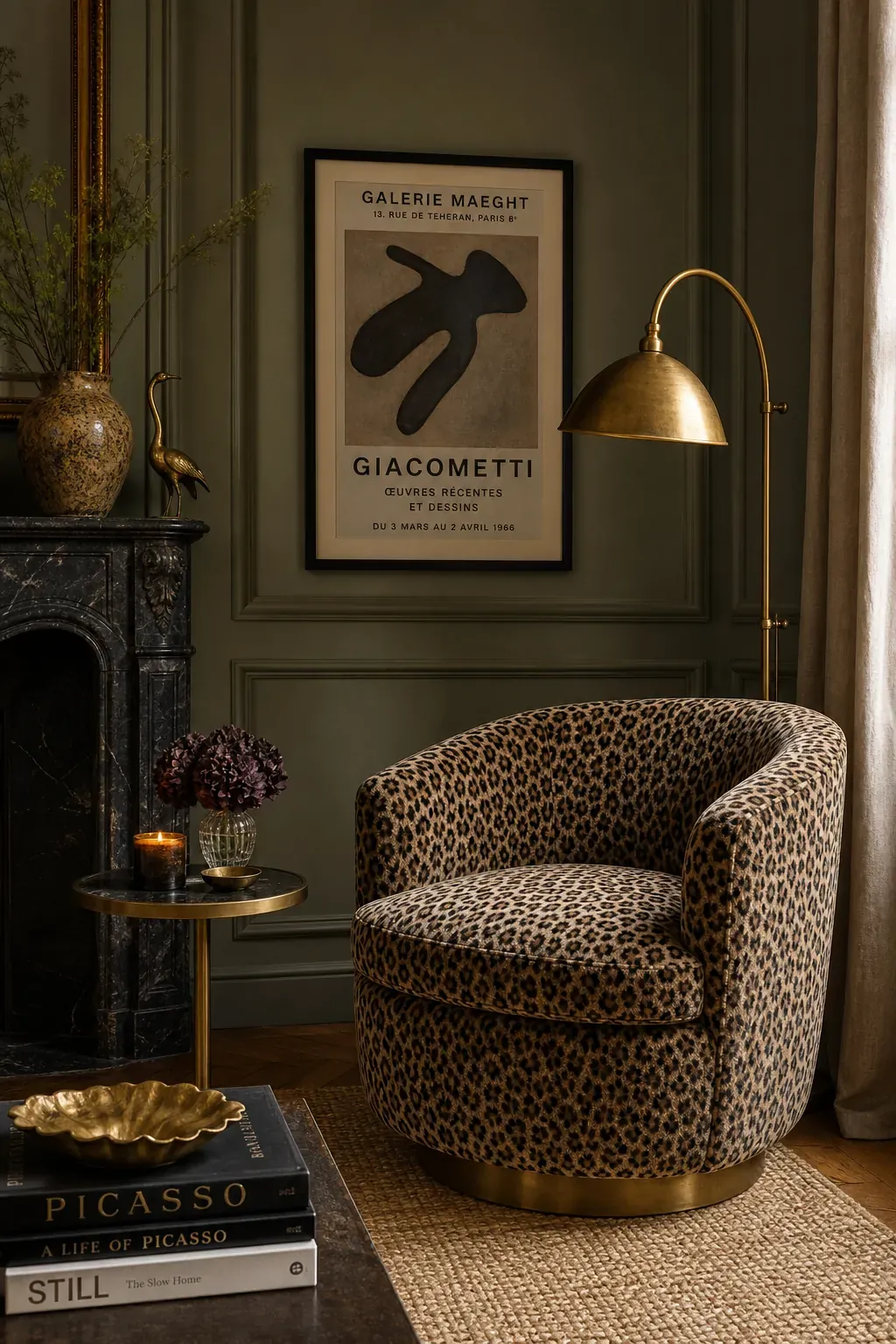
Muted olive or dark limewash gives leopard print a lush, grounded backdrop. The combination suggests a vintage resort more than a literal jungle when plants are limited and furniture remains tailored. Use the pattern on one chair, bench, or throw rather than every soft surface.
Warm woods, aged brass, and linen shades keep the room from feeling theatrical. Test the wall color at night: greens can turn murky under cold bulbs, while warm, shaded lamps preserve the brown and gold notes in the print.
11. Set Leopard Against Deep Teal
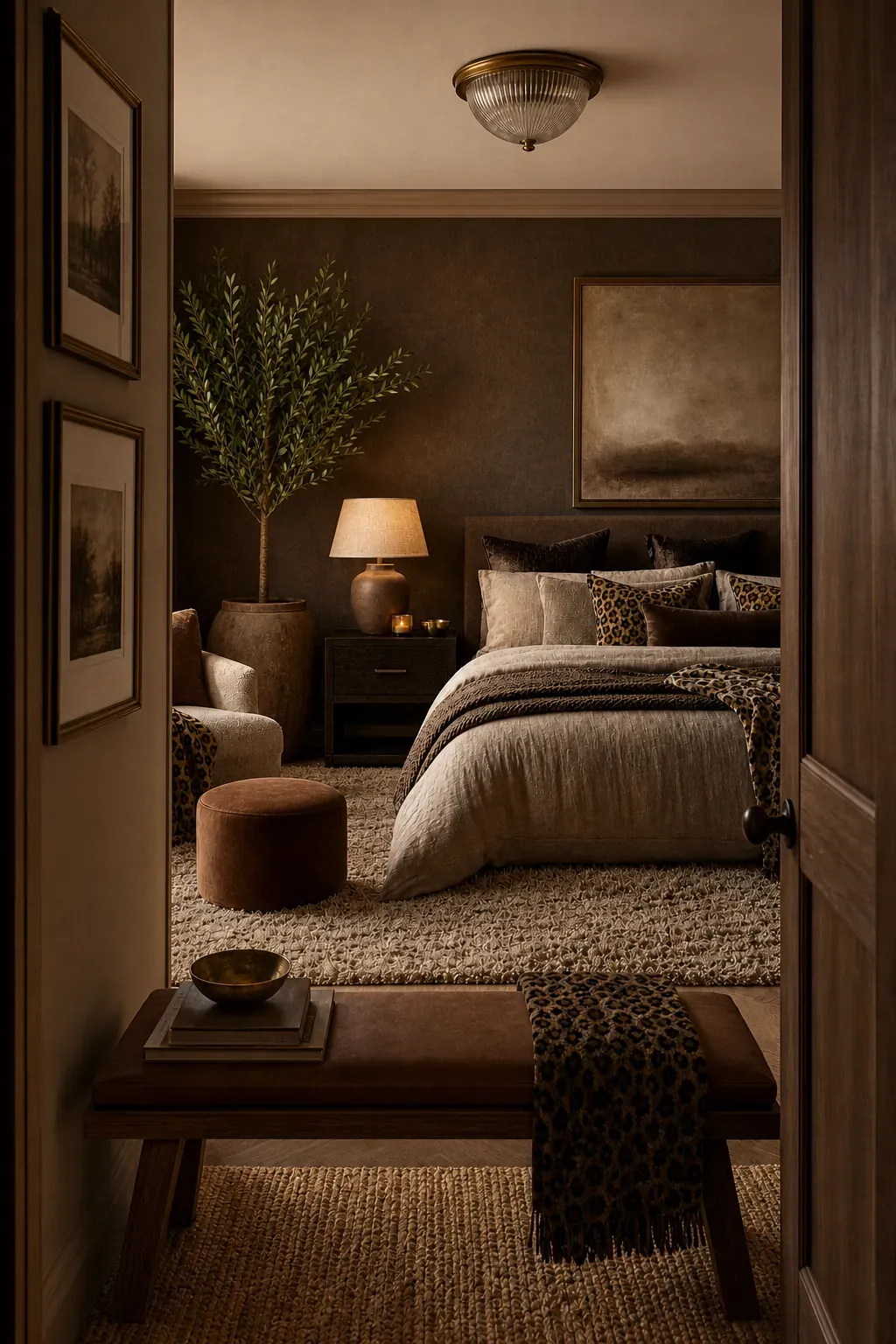
Deep teal creates a jewel-box effect beside caramel leopard tones. It is an especially good choice when you want more color than black or brown but still want the bedroom to feel cocooning. Put teal on the walls or headboard, then use leopard on one clearly defined object.
Add cream near the face—pillows, sheets, or a shade—to keep the bed inviting. Walnut and brass bridge the two saturated colors, while pale gray often makes the combination feel colder than intended.
12. Warm Leopard With Burgundy Bedding
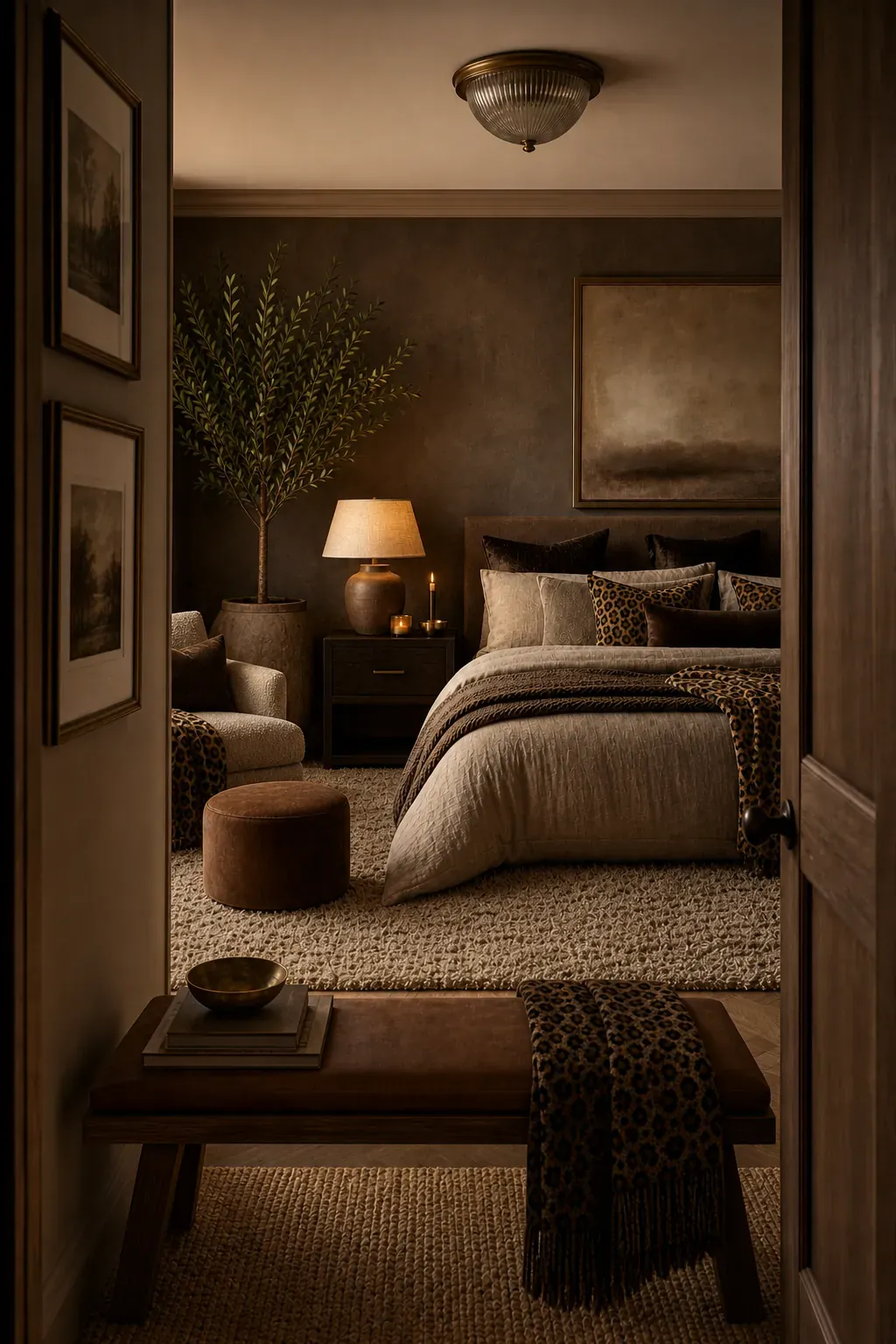
Burgundy brings out the reddish undertones in classic leopard and creates a dramatic, grown-up palette. A burgundy coverlet or velvet quilt can cover most of the bed, with the animal print restricted to a lumbar or narrow folded throw. The color contrast feels rich without being loud.
Use antique brass, dark wood, and parchment rather than bright gold and stark white. A touch of faded rose can soften the scheme, but keep larger pieces solid so the print remains legible.
13. Build a Chocolate-Brown Tonal Scheme
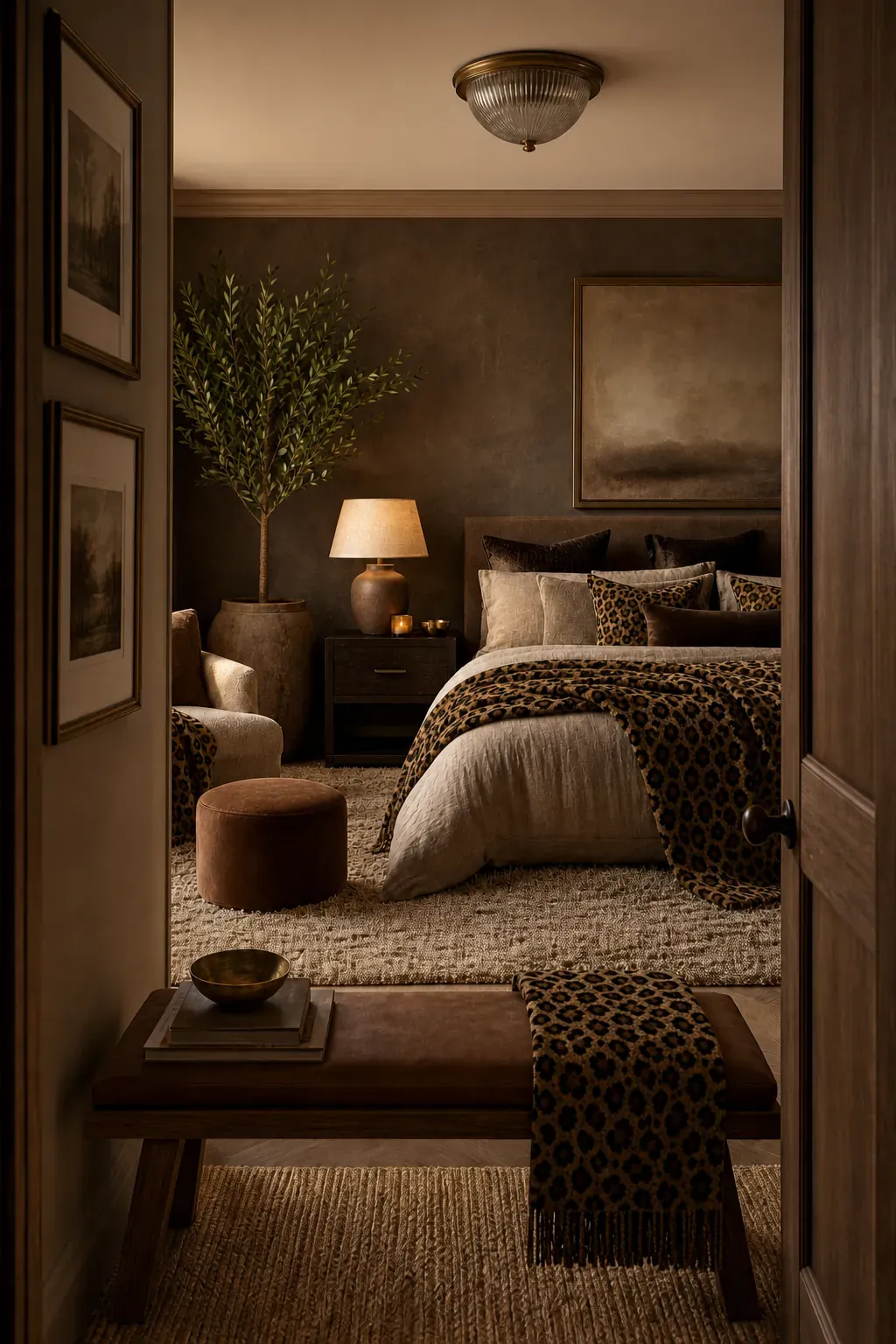
Leopard can disappear beautifully into a tonal brown bedroom. Combine espresso, cocoa, camel, and oatmeal, then let the spots provide the darkest punctuation. The result is calm because every color already exists within the print.
Variation in texture is essential: linen walls, wool carpet, cotton bedding, leather, and matte wood prevent the browns from becoming flat. Place a lighter sheet or coverlet near the center of the bed so the composition has contrast and the room does not read as one dark block.
14. Keep the Palette Cream, Camel, and Black
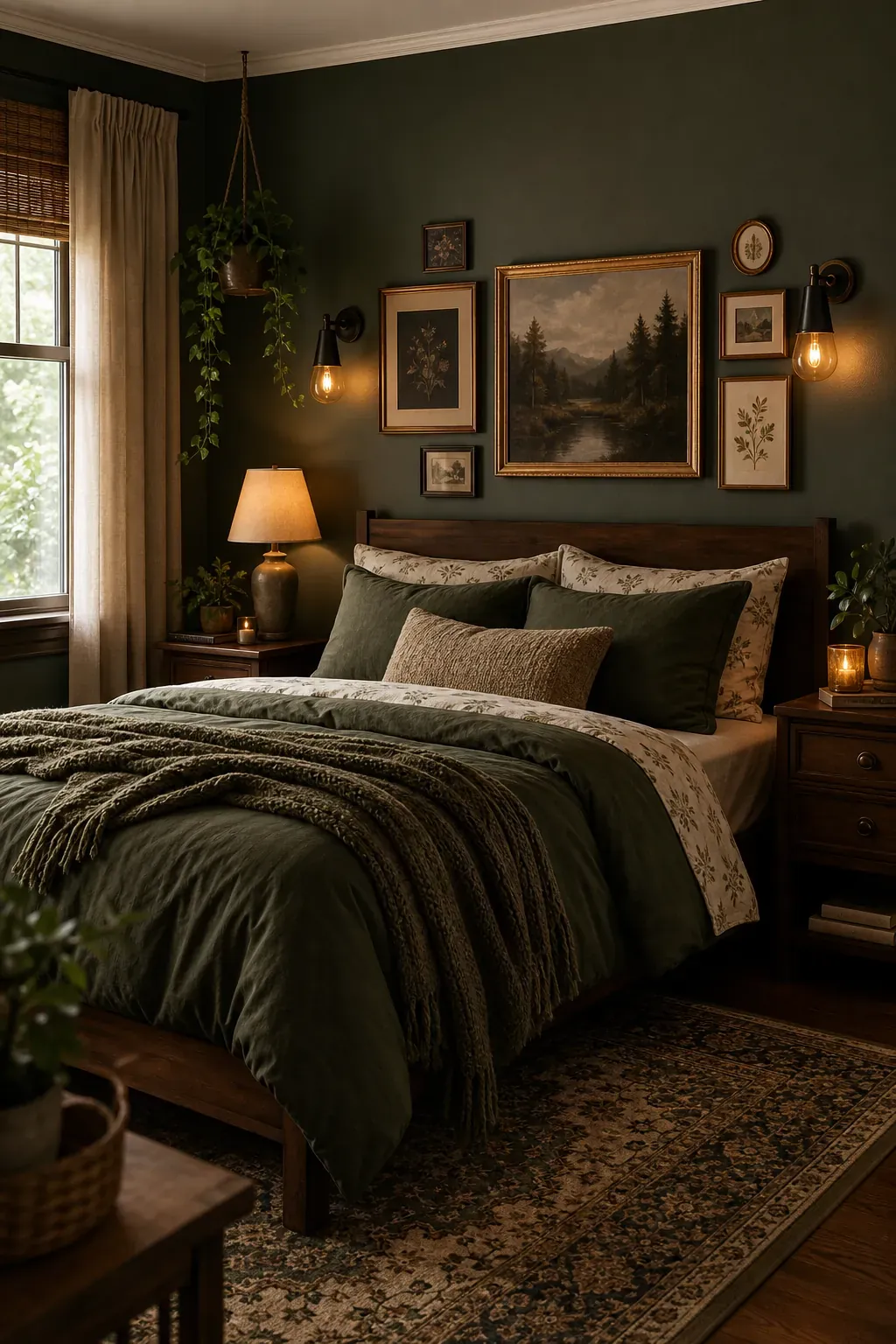
Using only the colors found in a traditional leopard pattern is a reliable way to make it feel intentional. Start with cream walls and bedding, add camel through leather or wool, and use black in thin structural lines. The print then connects the entire palette instead of acting as a random extra.
Vary the proportions rather than matching everything evenly. Cream should occupy the most space, camel should warm the middle, and black should appear as small anchors. One leopard piece can tie all three together.
15. Add Tortoiseshell Glass and Aged Brass
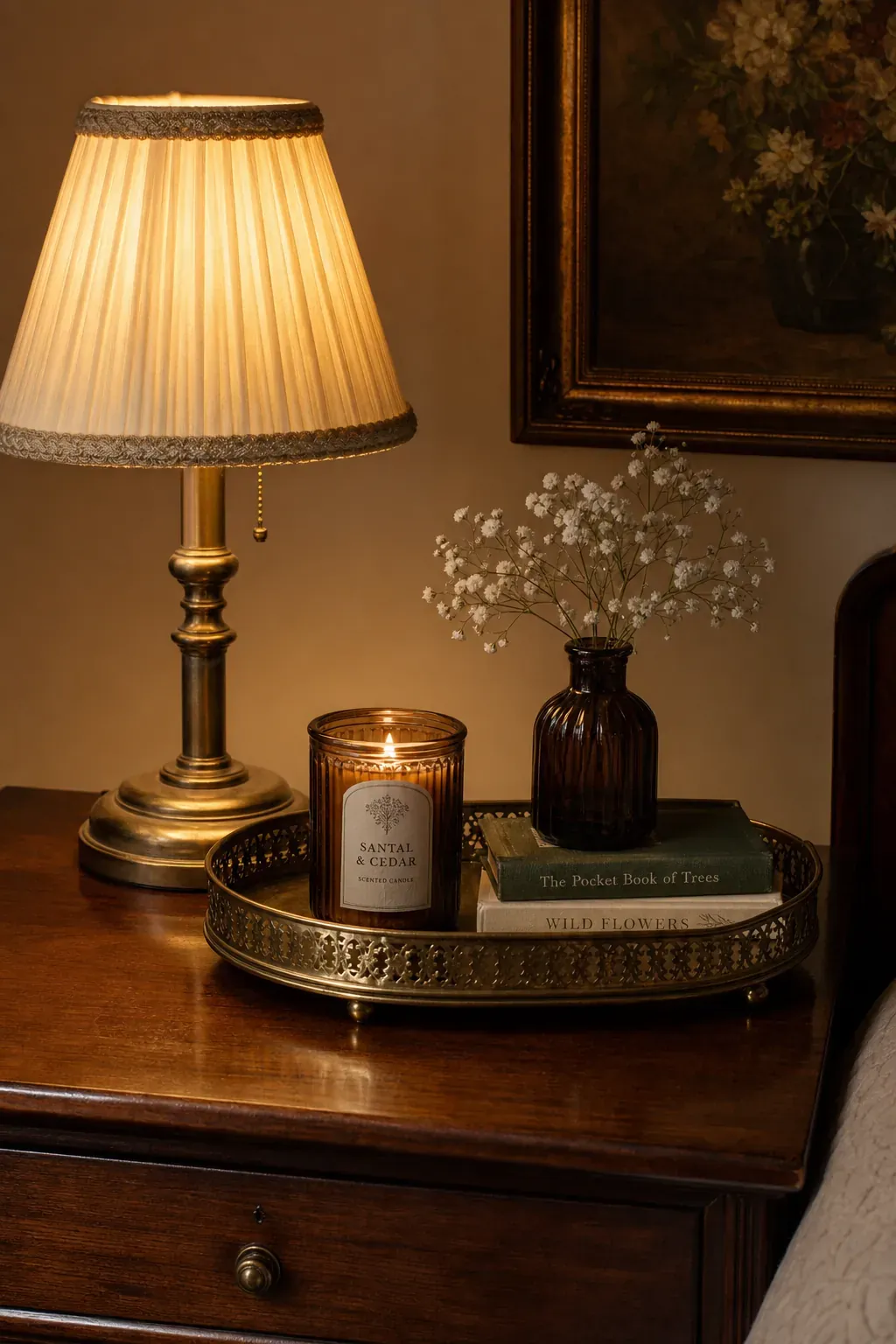
Tortoiseshell glass repeats leopard’s mottled movement without introducing another obvious fabric pattern. Use it in one bedside lamp, vase, or small tray, then add aged brass in restrained amounts. These materials make a simple leopard throw feel collected rather than themed.
Keep the glass away from other amber objects so it remains special. Soft lamplight brings out its depth at night, while a plain shade prevents the bedside table from becoming too busy.
16. Lean Into Vintage Maximalism
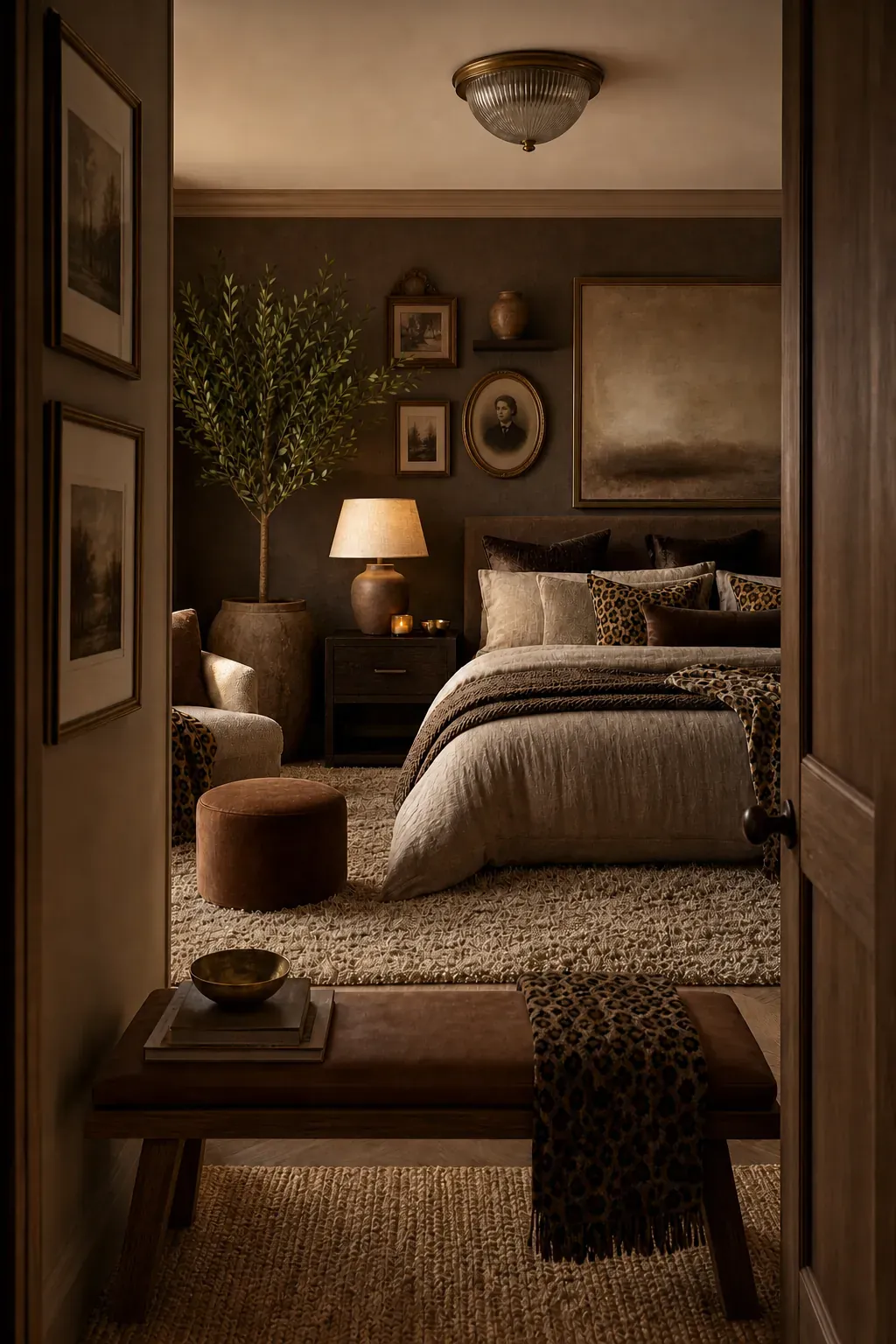
Leopard belongs naturally in a vintage maximalist bedroom, but successful rooms still establish hierarchy. Let one leopard chair or coverlet lead, then support it with old portraits, dark wood, a small floral, and collected ceramics. Not every object needs to be patterned.
Use frames and furniture from a consistent family of warm finishes to hold the variety together. Leave a few plain surfaces and visible wall areas so the eye can pause. Maximalism feels curated when objects have different scales and clear relationships, not when every gap is filled.
17. Create a Dark Feminine Leopard Bedroom
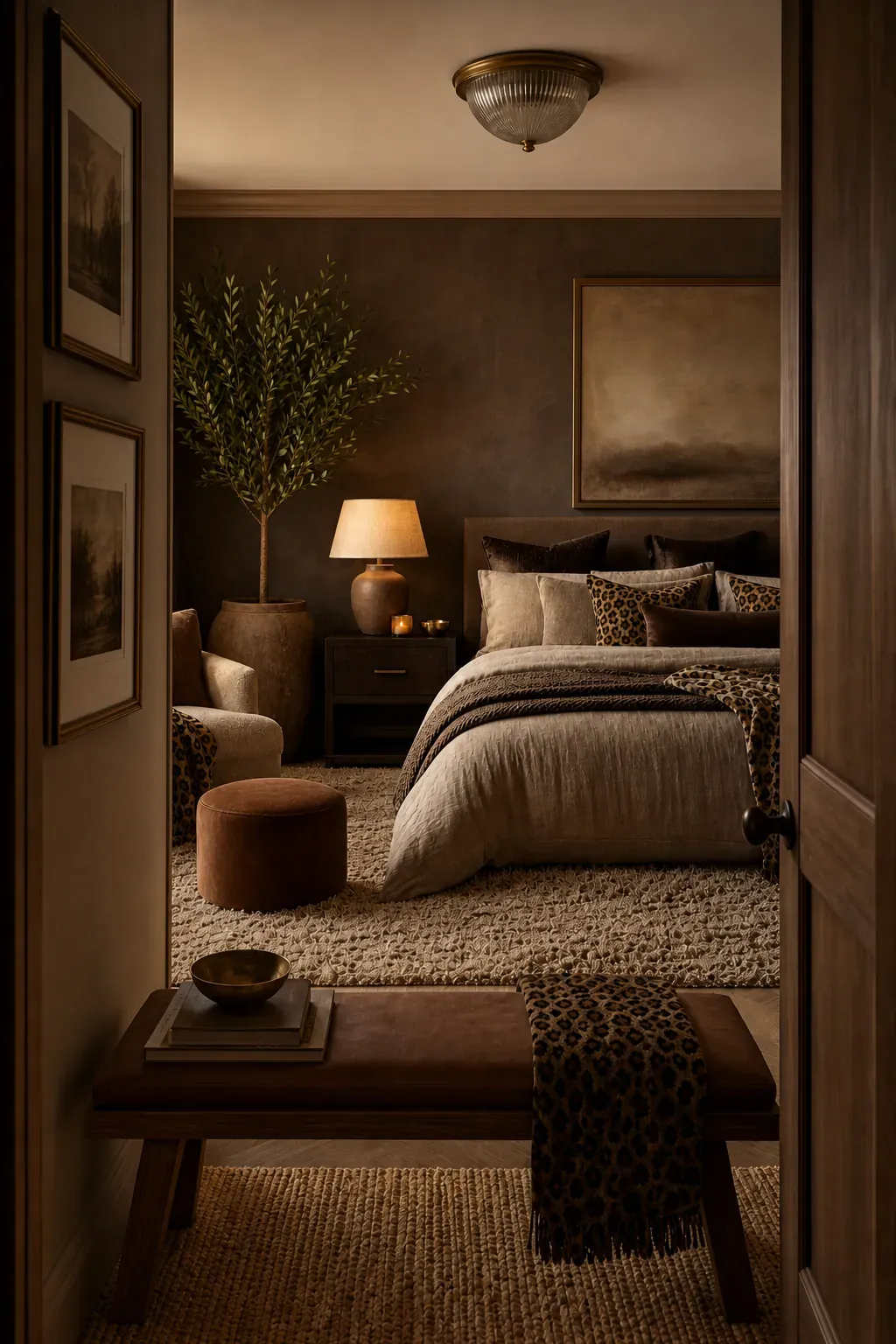
For a dark feminine bedroom, combine leopard with aubergine, blackened plum, smoky rose, and soft black. A curved headboard, pleated lamps, and one animal-print bench create sensuality through shape and texture rather than relying on excessive sparkle.
Use warm, low lighting at several heights so the palette remains dimensional after sunset. Satin can work in a small pillow, but matte velvet, wool, and linen keep the room sophisticated. Leave the ceiling or bedding somewhat lighter if daylight is limited.
18. Make Leopard Work in a Modern Minimal Bedroom

Minimalism does not require eliminating personality. In a room with a platform bed, plain plaster walls, and simple oak furniture, one leopard throw or compact chair becomes a deliberate art-like interruption. Keep its silhouette clean and give it generous negative space.
Avoid sprinkling small matching accessories around the room. Instead, repeat only a color—perhaps black in the sconces or camel in a leather pull. The single pattern looks stronger because it is not forced to compete.
19. Give Leopard a Relaxed Botanical Setting
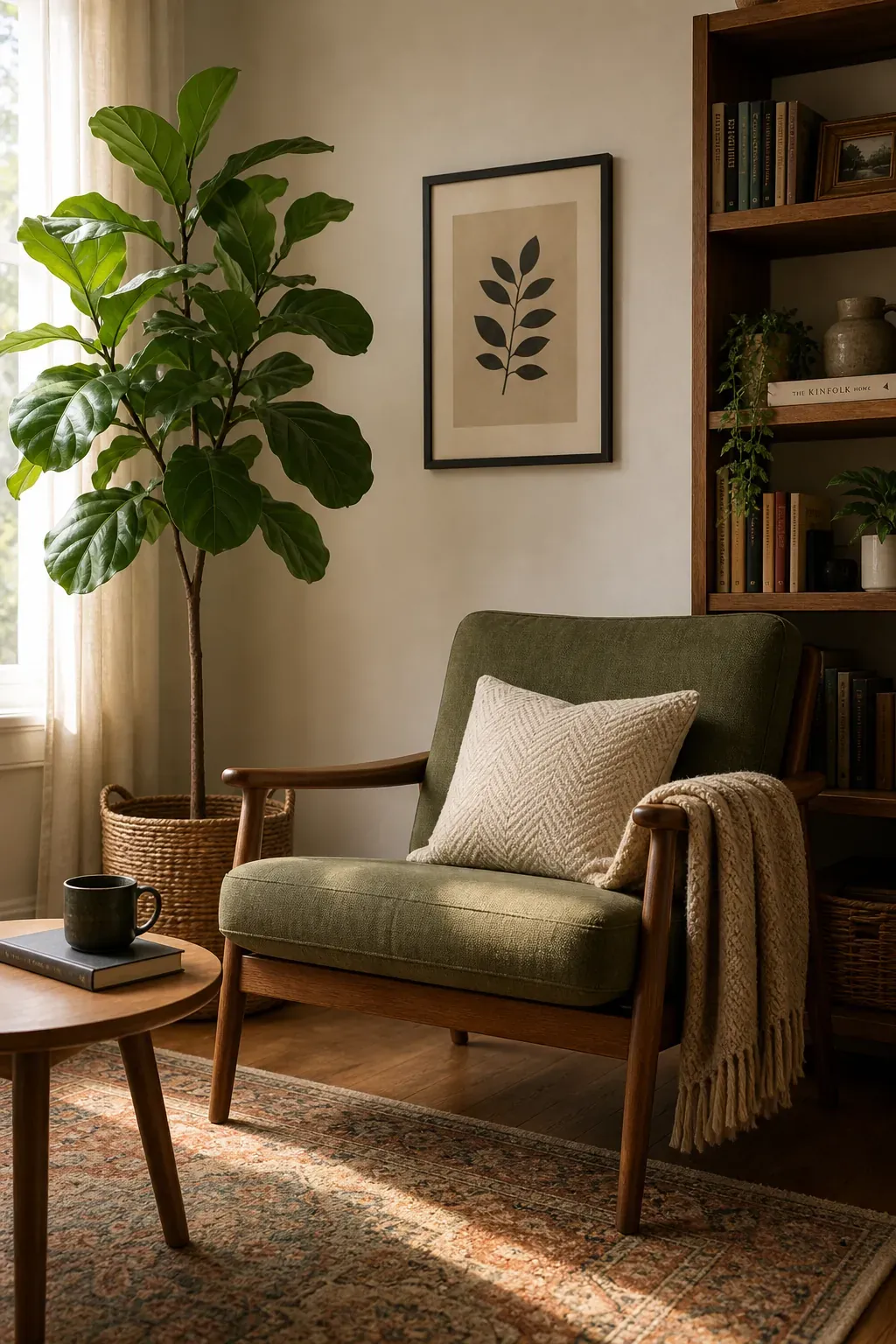
Plants and leopard can create a relaxed botanical bedroom, but the goal is atmosphere rather than a safari theme. Choose two or three healthy plants with different heights, natural woven textures, and a leopard accent on the bed or floor. Skip animal figurines and novelty signs.
White or pale plaster walls make the greens and spots feel fresh, while cane and aged wood soften the graphic pattern. Make sure every plant suits the actual window exposure; an unhealthy jungle corner never feels luxurious.
20. Use Leopard in a Polished Glam Bedroom
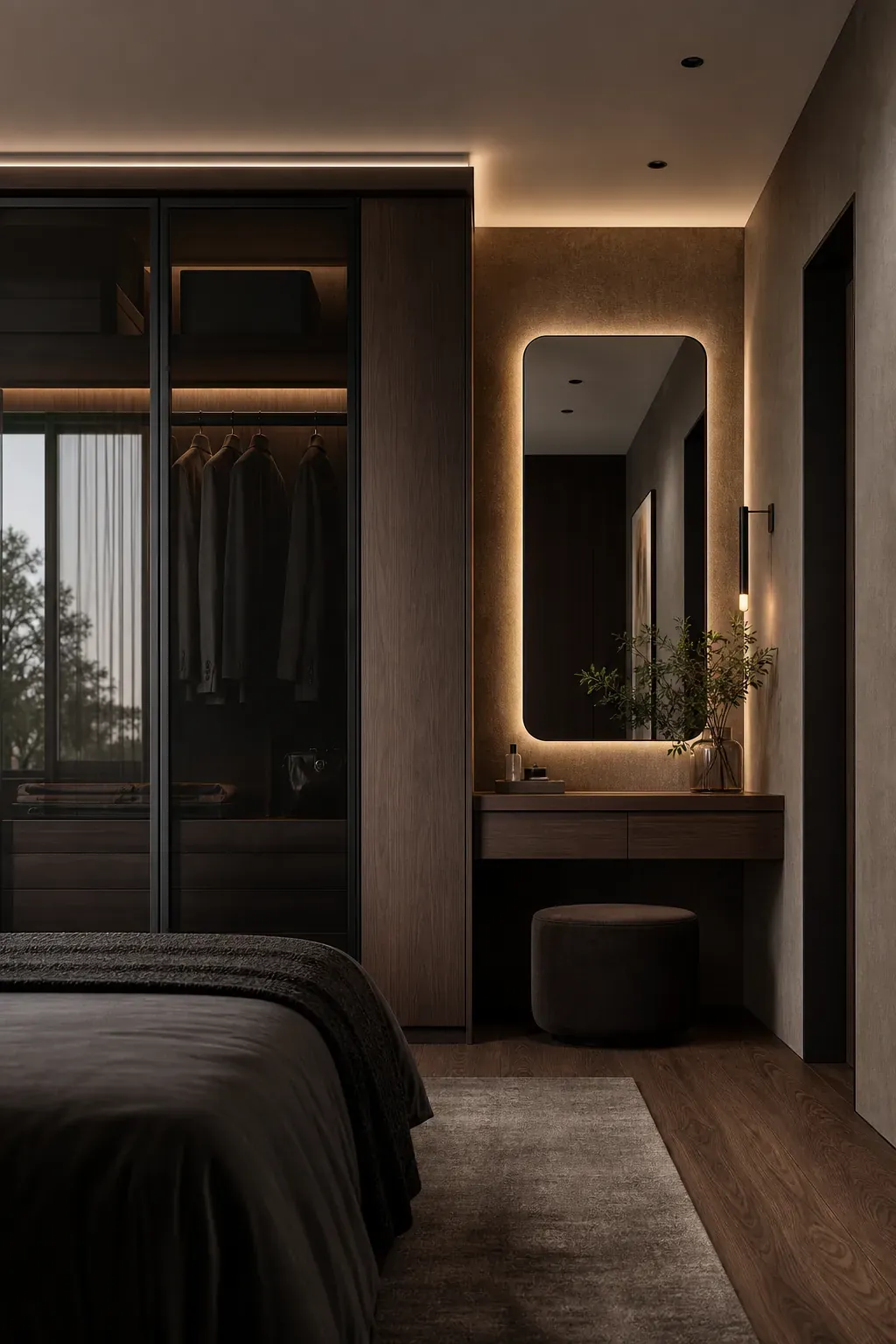
A glam leopard bedroom looks most current when shine is controlled. Pair a tailored leopard bench or pair of pillows with a channel-tufted headboard, crisp sheets, one brass lamp, and perhaps a smoked mirror. Let velvet and brushed metal provide luster instead of mirrored furniture on every wall.
Symmetry around the bed can calm the energetic print. Choose substantial lamps and correctly scaled nightstands, then keep their surfaces nearly clear. The room will feel polished without turning into a showroom.
21. Add a Rock-and-Roll Edge
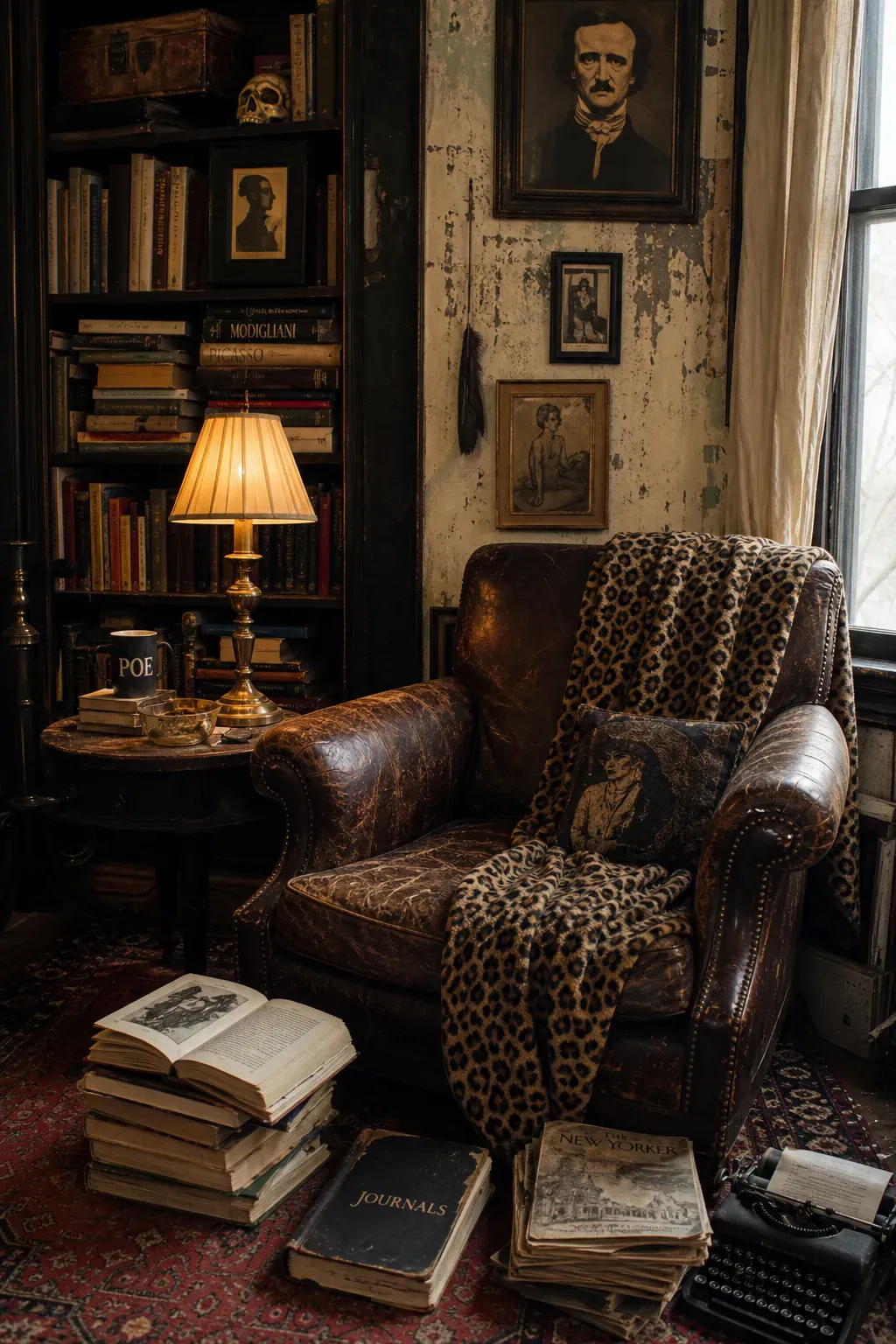
Leopard, black leather, and vintage music art make an easy rock-and-roll combination. Keep it believable with worn finishes: a softened leather chair, washed charcoal bedding, an old wood nightstand, and one leopard blanket. Highly polished black furniture can make the same palette feel harsh.
Hang one or two framed pieces at eye level rather than covering the wall with tiny posters. A shaded bedside lamp adds warmth and gives the darker materials texture at night.
22. Make It Cute With Pink, White, and Black
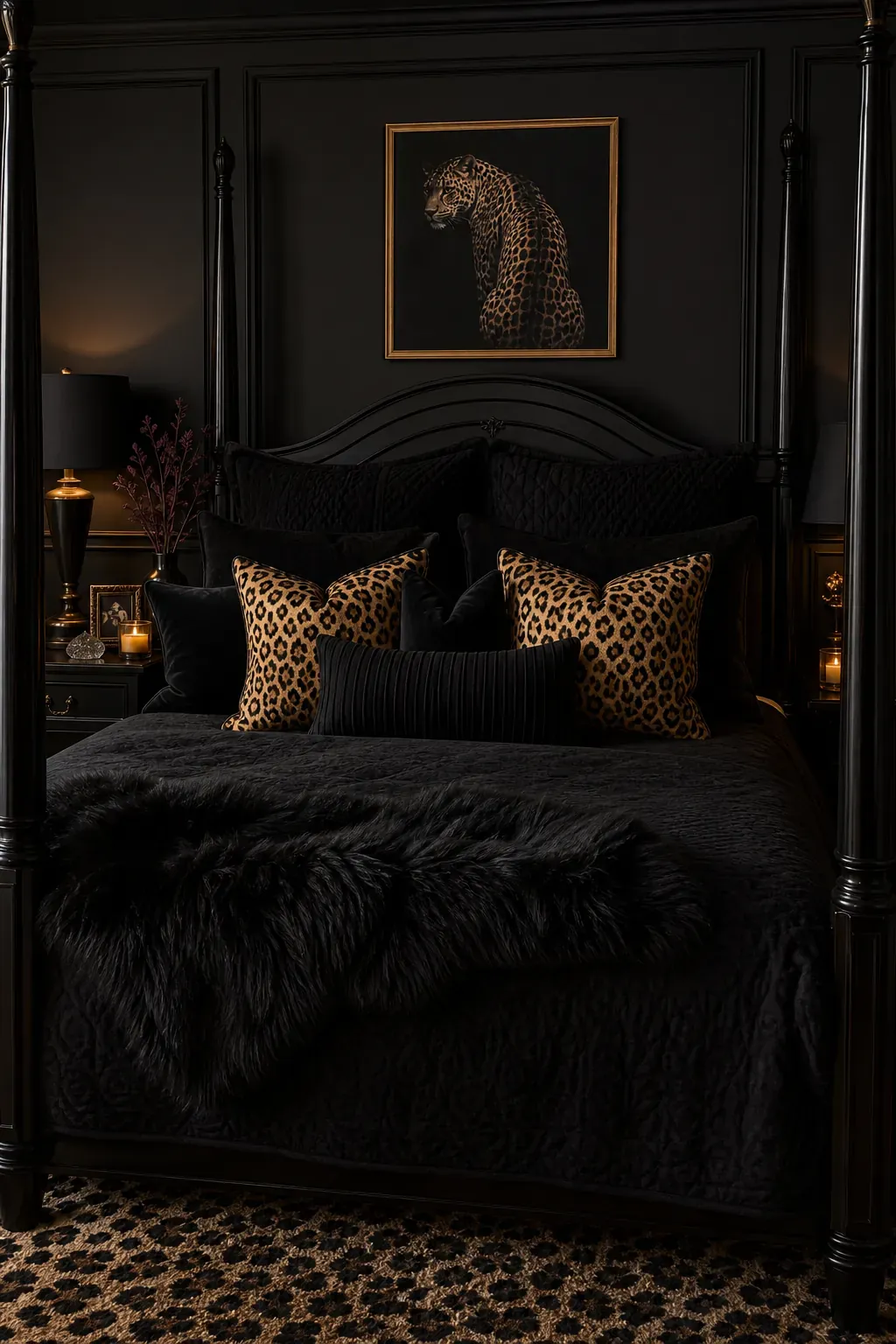
A youthful leopard room can be joyful without feeling disposable. Combine the print with clear pink, white, and a few black outlines, then choose practical pieces such as washable pillowcases, a throw, or a small rug. One scalloped or bow-shaped detail is enough to set the playful tone.
Give collections a defined shelf or pinboard instead of spreading them across every surface. Good storage lets the room stay expressive and usable, and the black spots help a pale palette feel grounded.
23. Make a Renter-Friendly Peel-and-Stick Panel
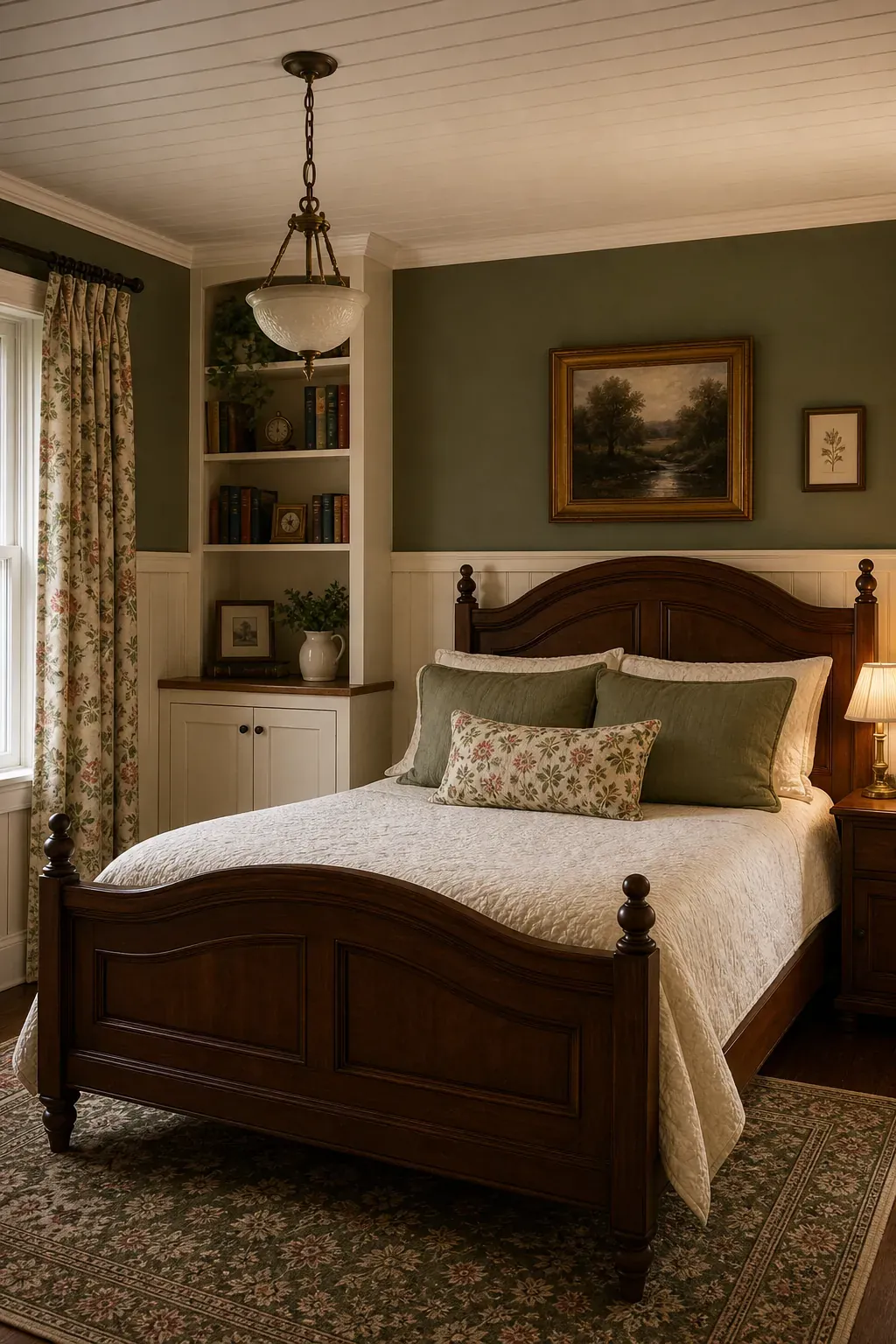
Instead of covering a full wall, apply removable leopard wallpaper to a large framed panel or the back of a shallow niche. The defined edge makes the pattern look intentional and reduces the risk of damaging paint. It can sit behind a desk, vanity, or narrow headboard.
Test the material in a hidden spot and follow removal instructions for your wall finish. A panel also moves with you, making it a better investment than a temporary scattering of small themed accessories.
24. Paint Your Own Oversized Leopard Spots
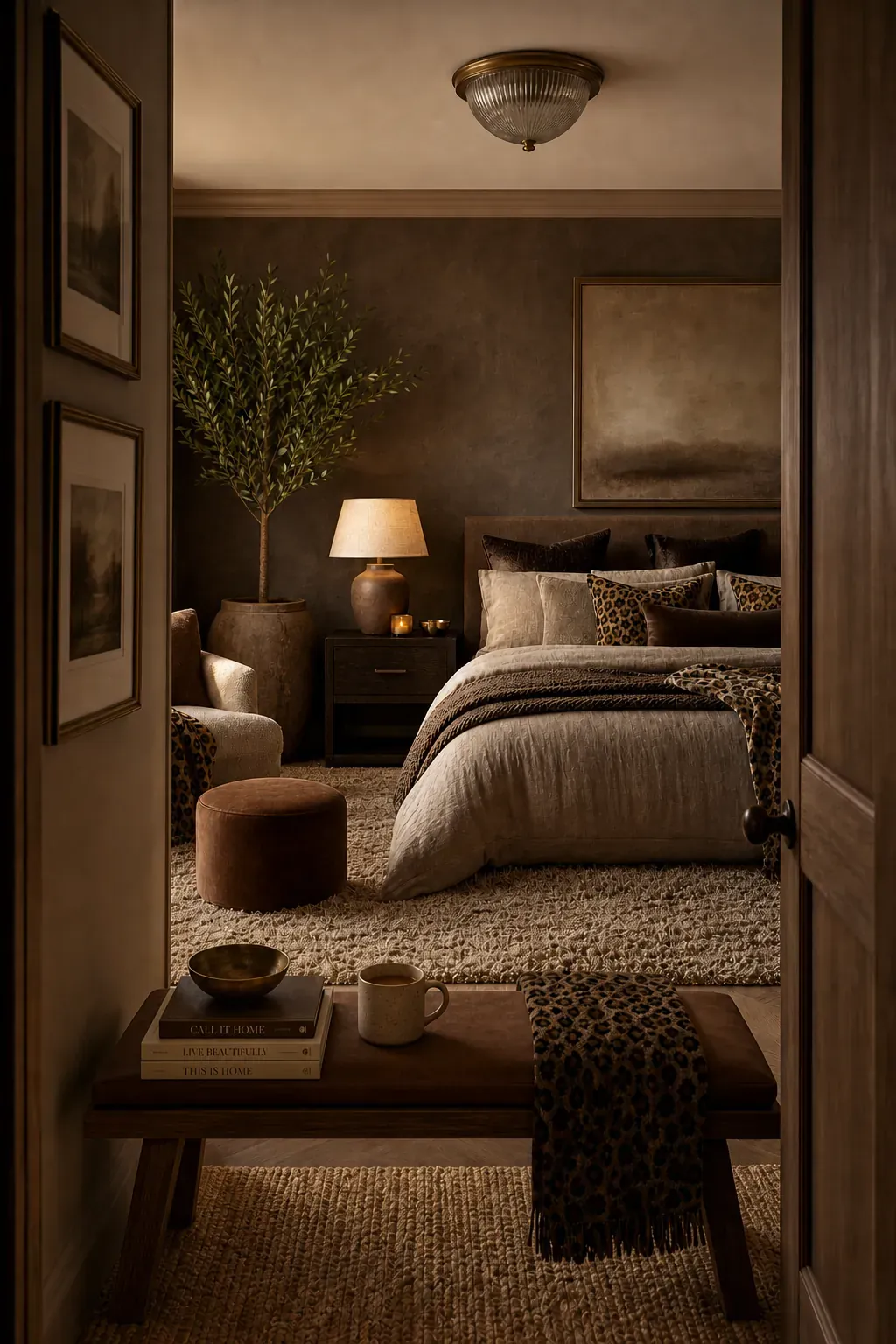
Leopard spots are forgiving to paint because irregularity makes them convincing. Use a large sheet of heavy paper or canvas, begin with uneven caramel shapes, and add broken black rosettes around some—not all—of them. Keep the scale large enough to read from across the bedroom.
Frame the finished piece simply and resist adding words or animal silhouettes. The personal artwork can become the room’s one leopard moment, and making it yourself gives the pattern a story beyond trend.
25. Use One Focal Point in a Small Bedroom
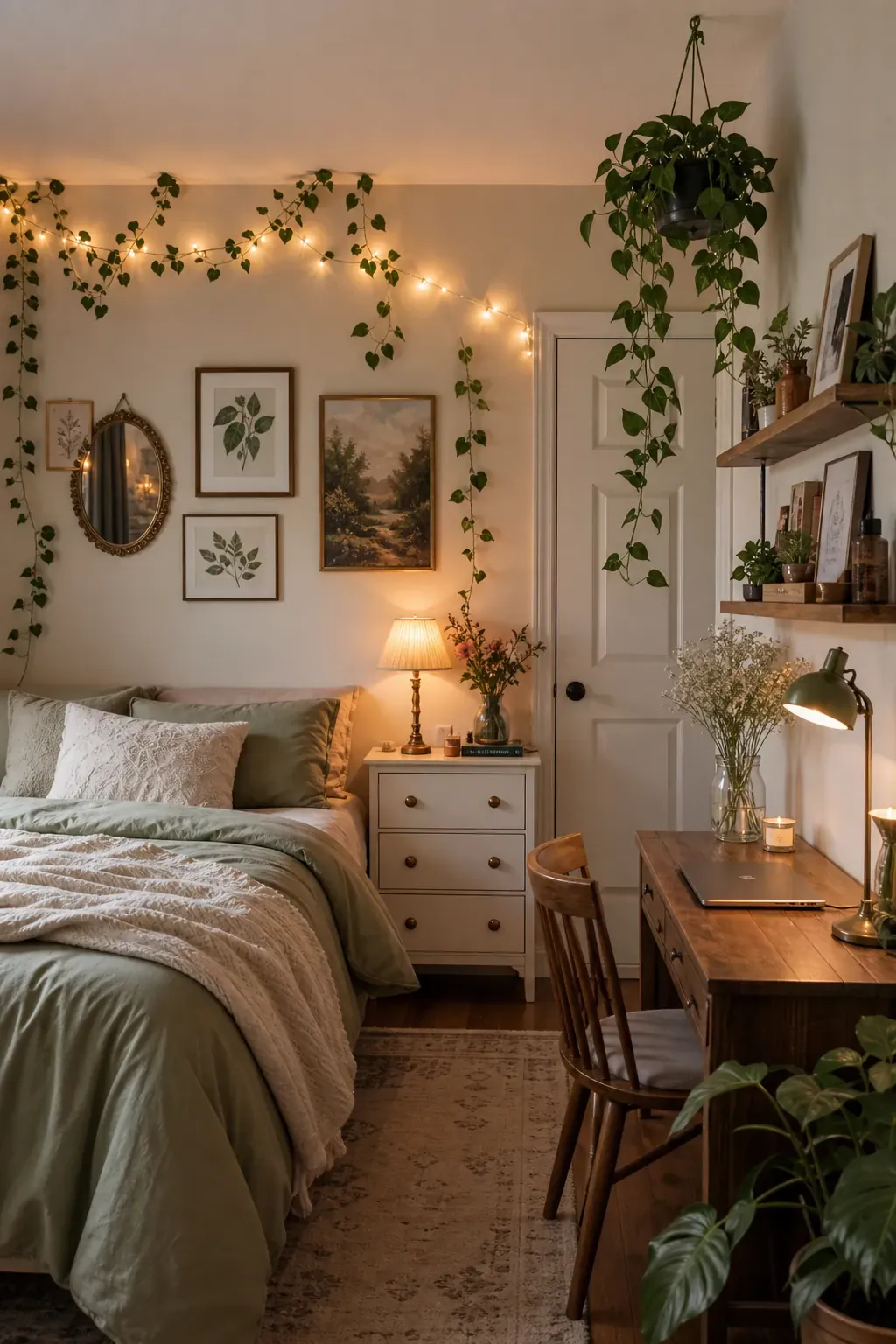
In a small bedroom, choose the spot where the eye naturally lands from the doorway. That might be a leopard lumbar, upholstered stool, or framed textile. Concentrating the pattern there keeps other necessary furniture from feeling like clutter.
Use closed storage, wall-mounted lights, and a restrained floor treatment to preserve breathing room. Small does not mean the print must be tiny; one medium-scale pattern often looks calmer than many miniature leopard accessories.
26. Mix Leopard With a Simple Stripe
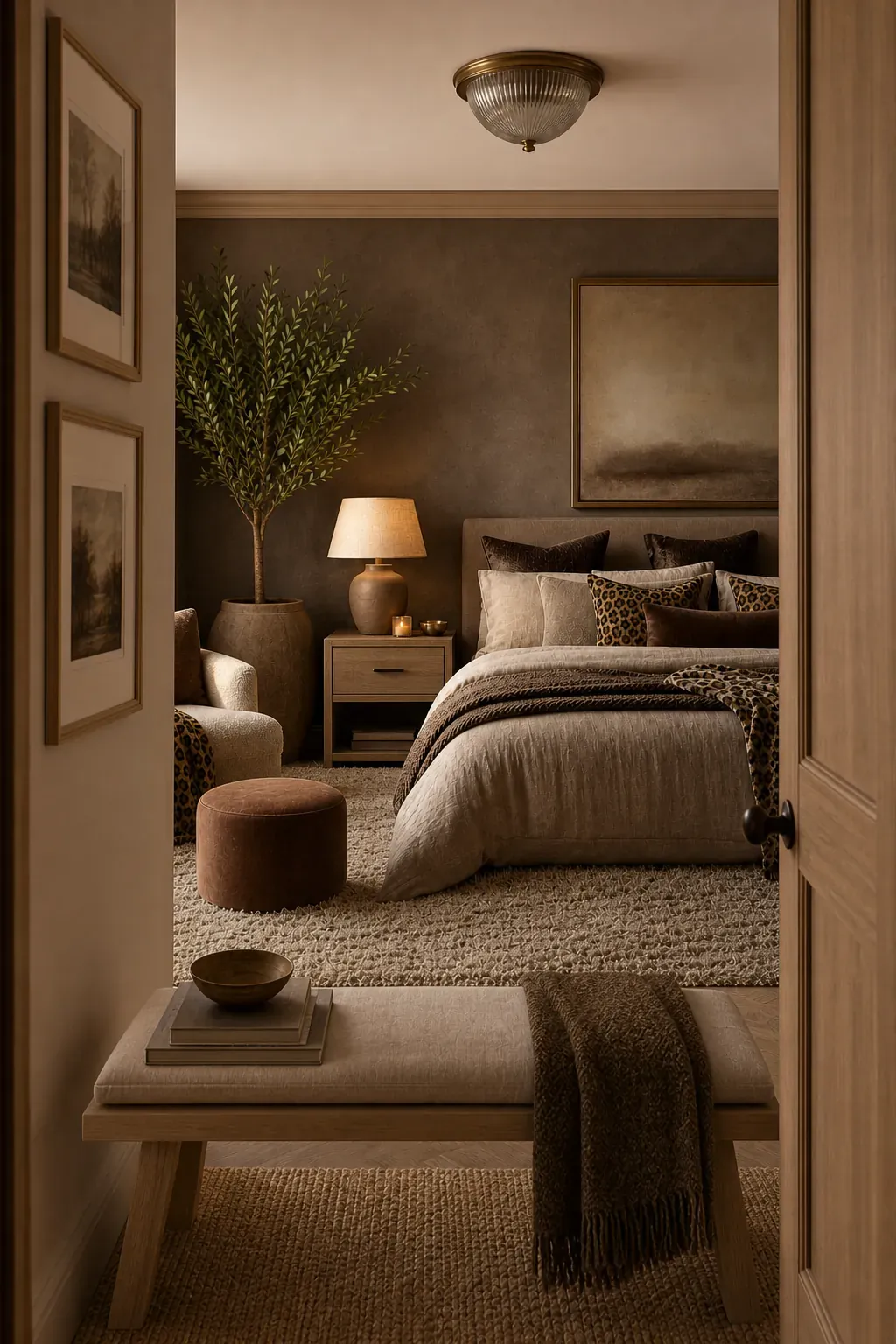
Leopard and stripes work because one is organic and the other is orderly. Choose a quiet stripe with only two colors, and vary the scale: a medium-to-large leopard beside a narrow ticking stripe is easier on the eye than two equally bold repeats.
Connect them through at least one shared color, such as black, cream, or brown. Put the stripe on a larger surface like a duvet or curtain and keep leopard to a pillow or bench, or reverse the proportions—but avoid a perfect fifty-fifty split.
27. Pair Leopard With Faded Florals
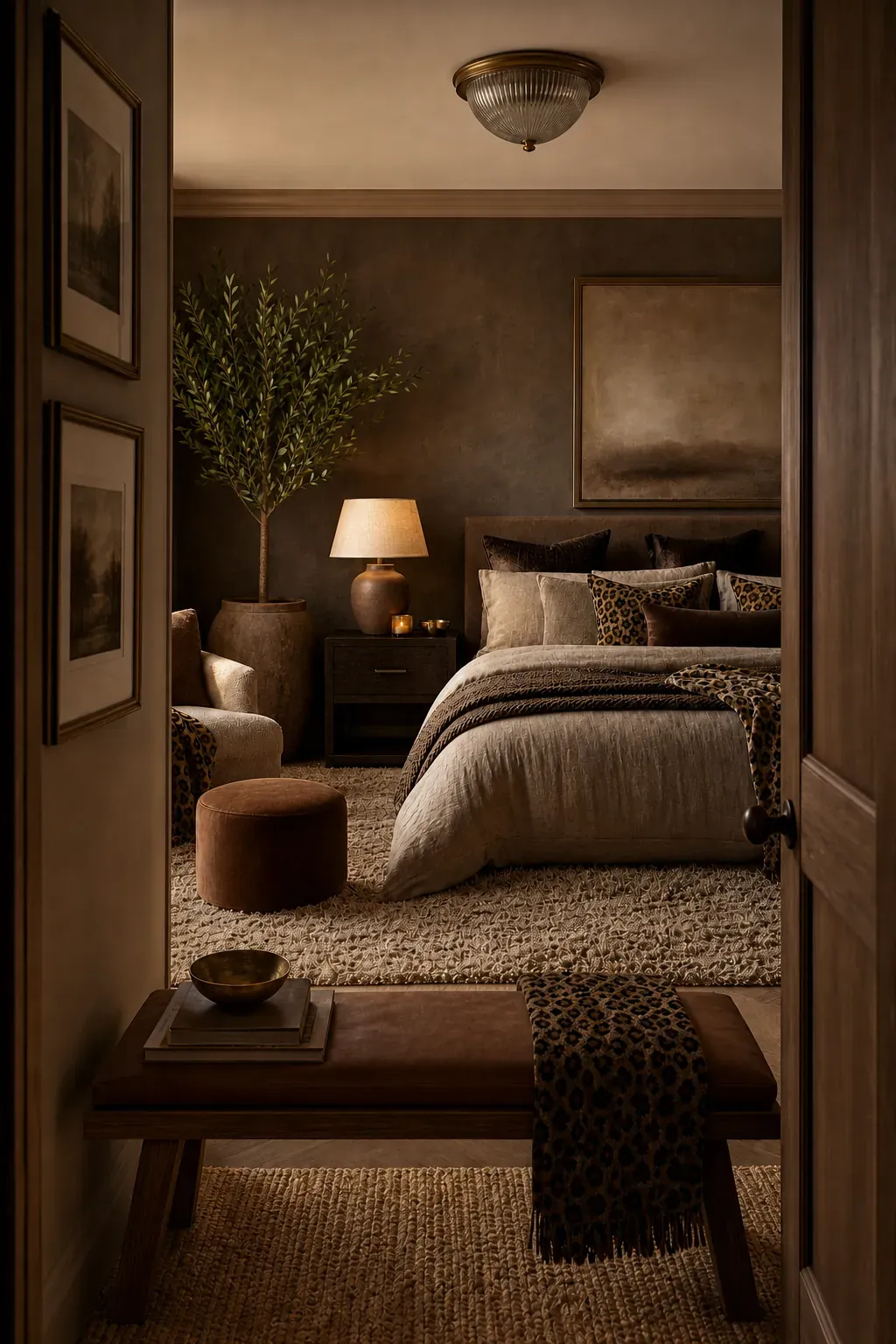
A faded floral can make leopard feel romantic and collected. Look for a floral with open ground and colors that already appear in the room, then separate the patterns with a solid textile. For example, floral curtains, plain linen bedding, and one leopard cushion create a clear rhythm.
Antique wood and softly aged metals support the mix. Avoid adding multiple geometrics at the same time; two pattern families are usually enough for a bedroom that still needs to feel restful.
28. Pay Attention to Pattern Scale
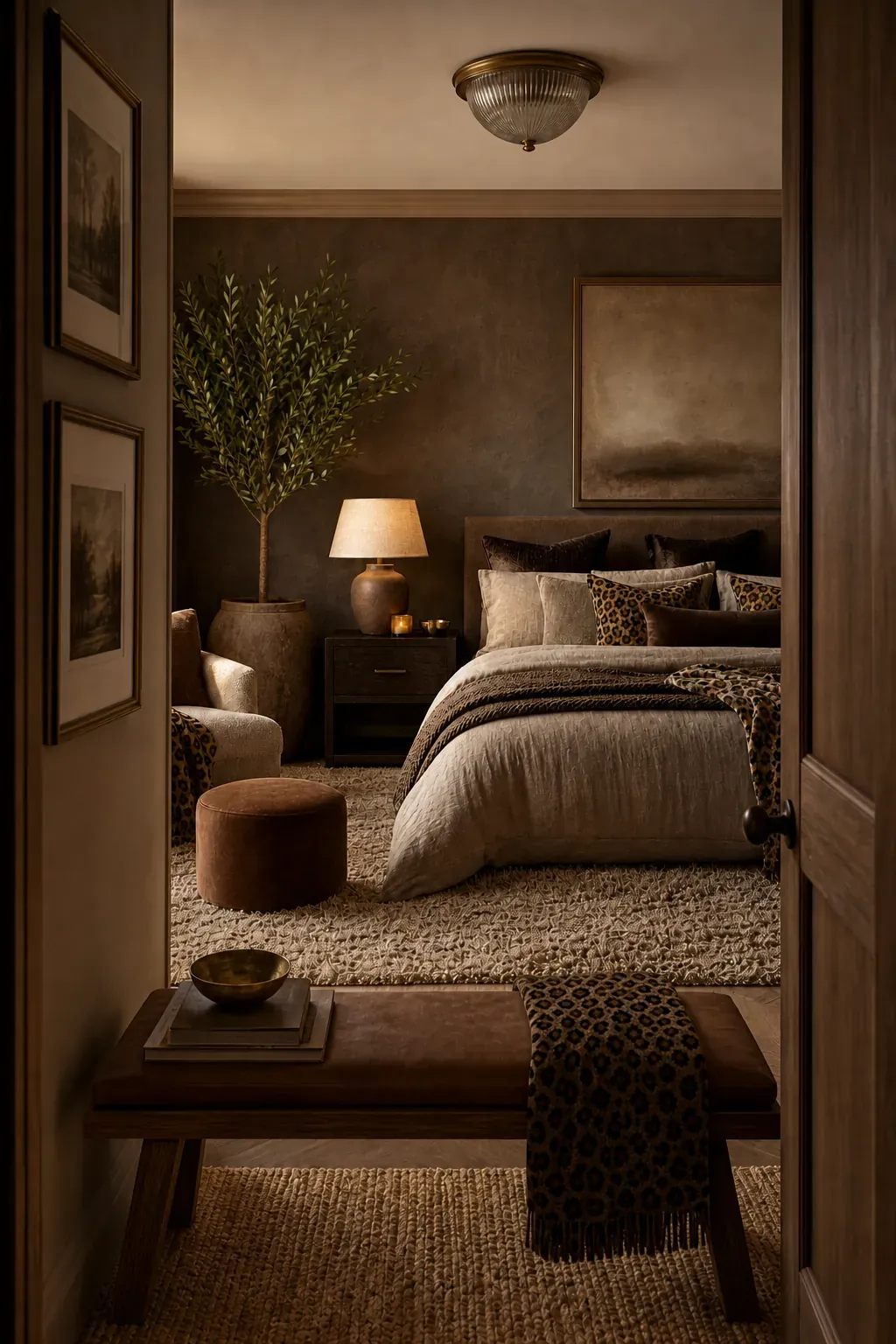
Print quality is often really a question of scale and repeat. Larger, uneven rosettes with visible variation tend to feel more textile-like, while tiny identical spots can reveal the repeat quickly. Step back several feet before buying and imagine how much of the pattern will be visible.
If leopard covers a large rug or curtain, choose a more spacious repeat. A small pillow can handle tighter detail. Never line up multiple leopard items precisely; natural variation is part of what makes the print feel alive.
29. Use Layered Lighting to Make Leopard Feel Luxurious
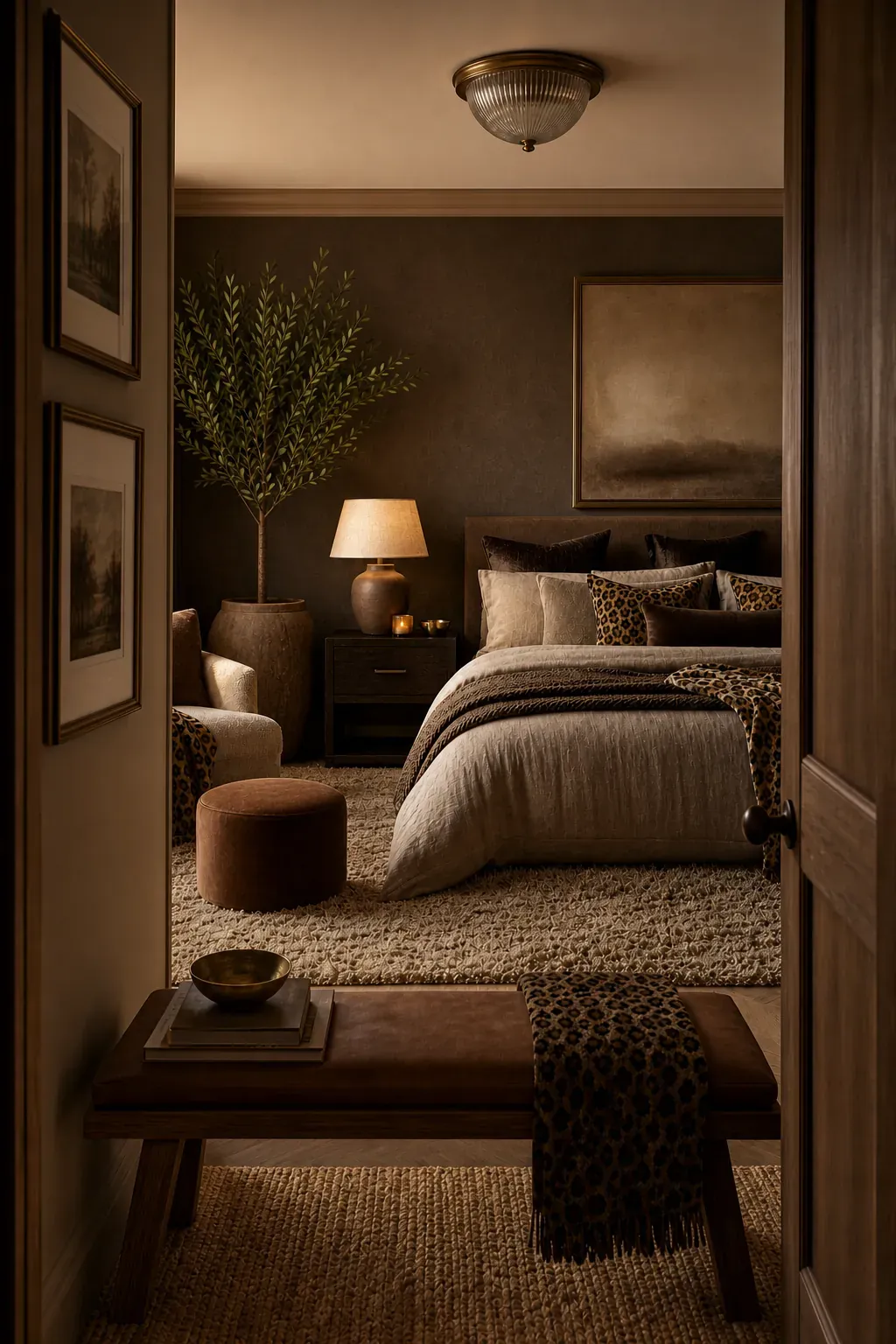
Animal print can look flat or harsh under one cold ceiling light. Use shaded bedside lamps for soft pools, then add a floor or dresser lamp to create depth across the room. Warm bulbs around 2700K usually flatter camel, brown, and black without turning cream textiles orange.
Check the room at the time you use it most. A print that looks sophisticated in daylight may need better side lighting at night. Dimmers make the palette easier to tune for reading and winding down.
30. Choose Washable Leopard Bedding
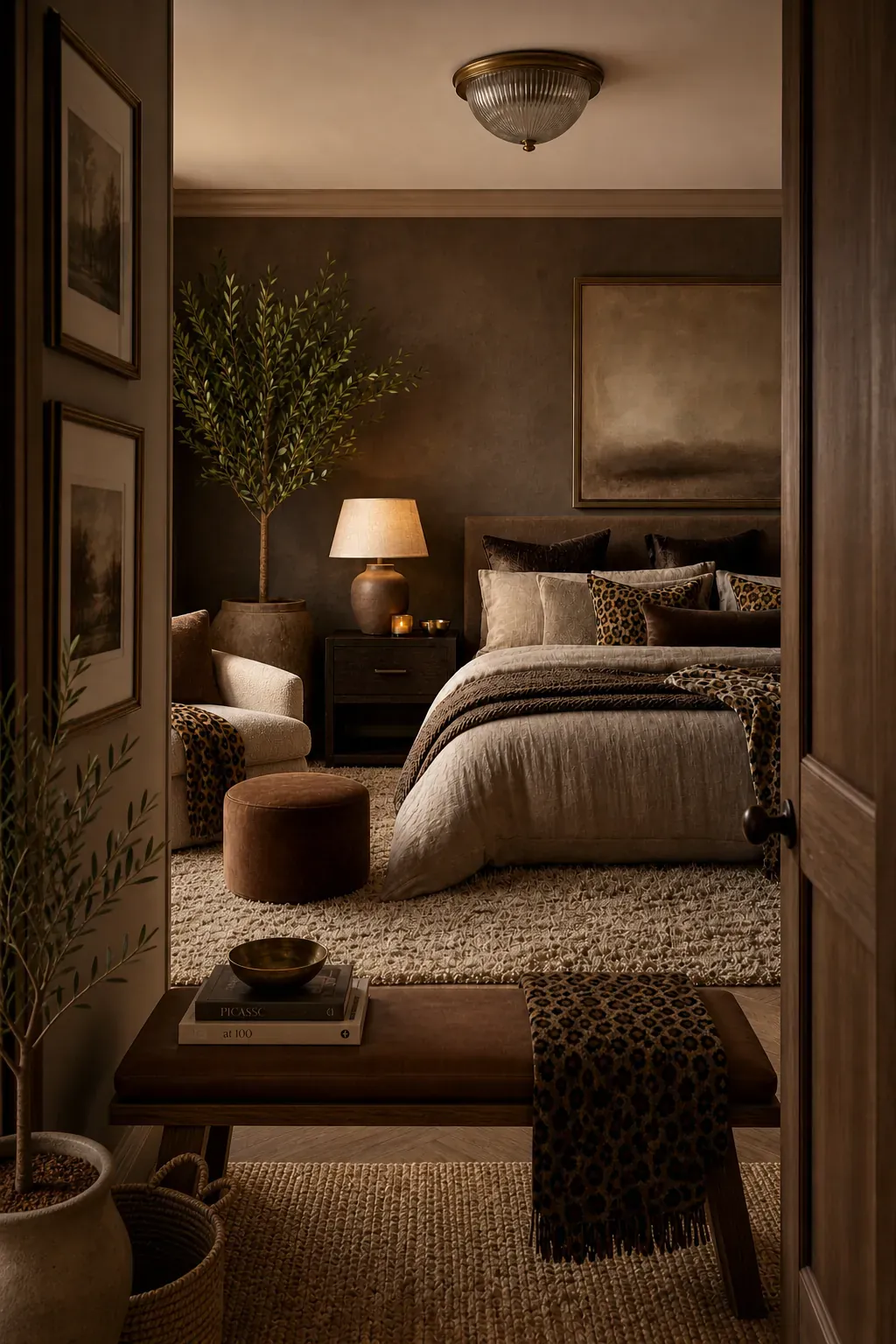
If you want leopard directly on the bed, prioritize fabric and care over a perfect photo-ready pattern. A washable cotton duvet, coverlet, or pillowcase will age better in real life than a delicate novelty textile. Check how the print looks when folded and rumpled, not only laid completely flat.
Balance a printed duvet with solid sheets and a plain headboard. If the full cover feels too strong, fold it at the foot like a bedspread; you keep the impact while making the sleeping area calmer.
31. Hide Leopard Inside the Wardrobe
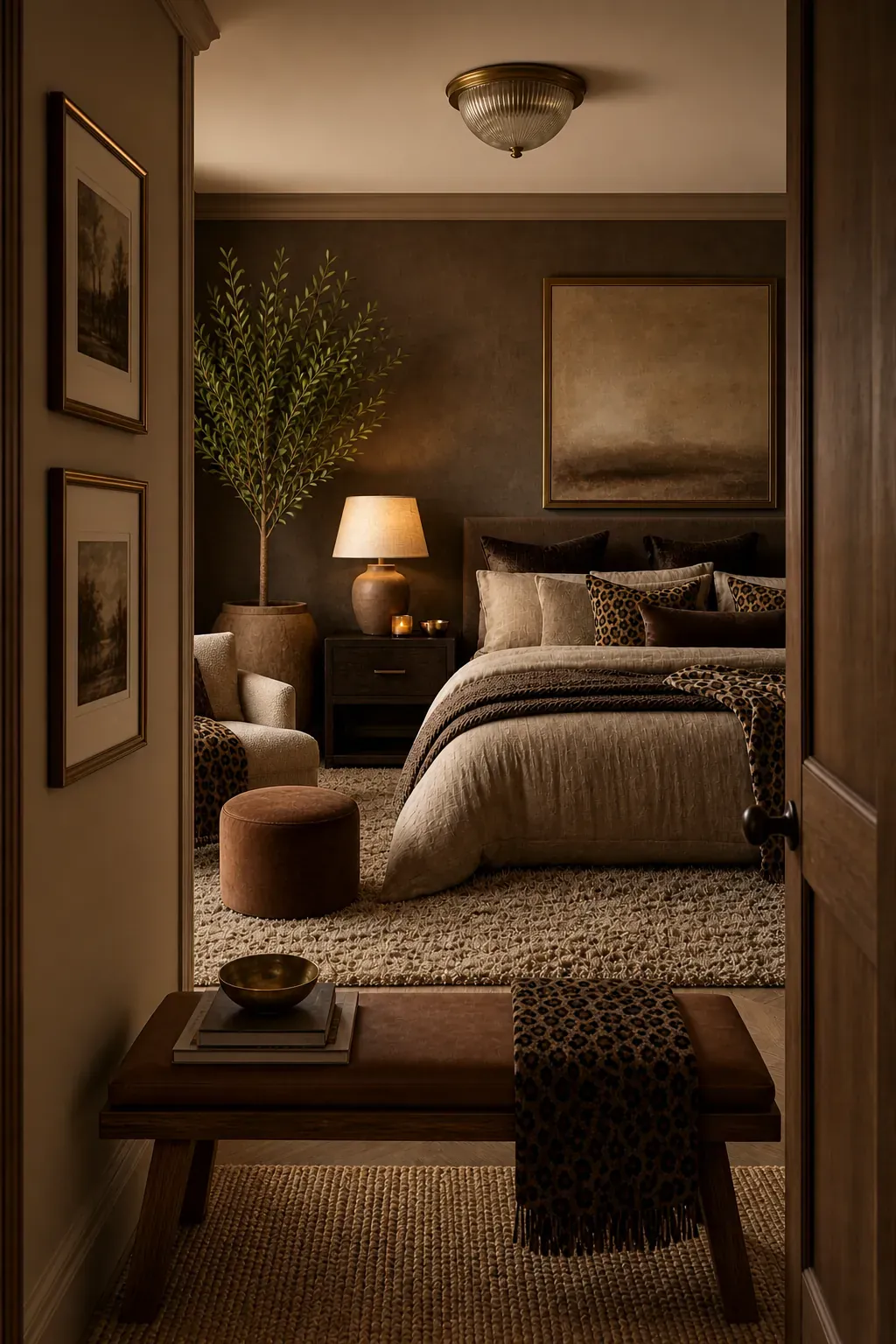
For a private, surprising use of pattern, line the inside back of a wardrobe, armoire, or closet with removable leopard paper. The room stays calm when the doors are closed, but getting dressed becomes more fun. This works especially well with a vintage wood cabinet and simple neutral bedding.
Use low-tack removable material and avoid covering ventilation or hardware. A small rechargeable wardrobe light can reveal the pattern without adding another visible lamp to the room.
The most convincing leopard bedrooms do not apologize for the print, but they do give it a clear role. Choose one primary placement, support it with materials and colors that repeat naturally, and stop before every surface joins the theme. Whether your version is dark feminine, cute, vintage, or minimal, that restraint is what lets leopard keep its confidence.