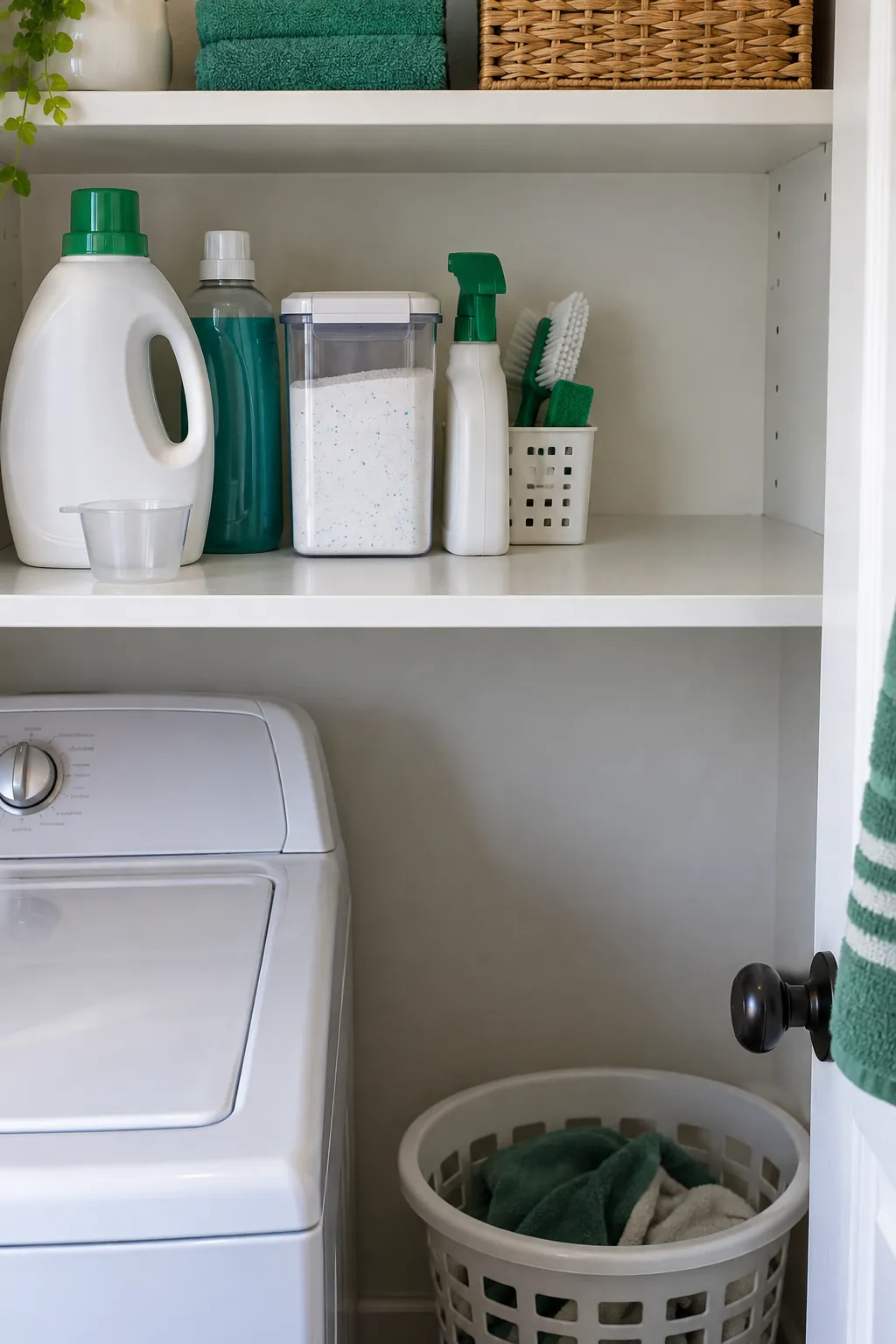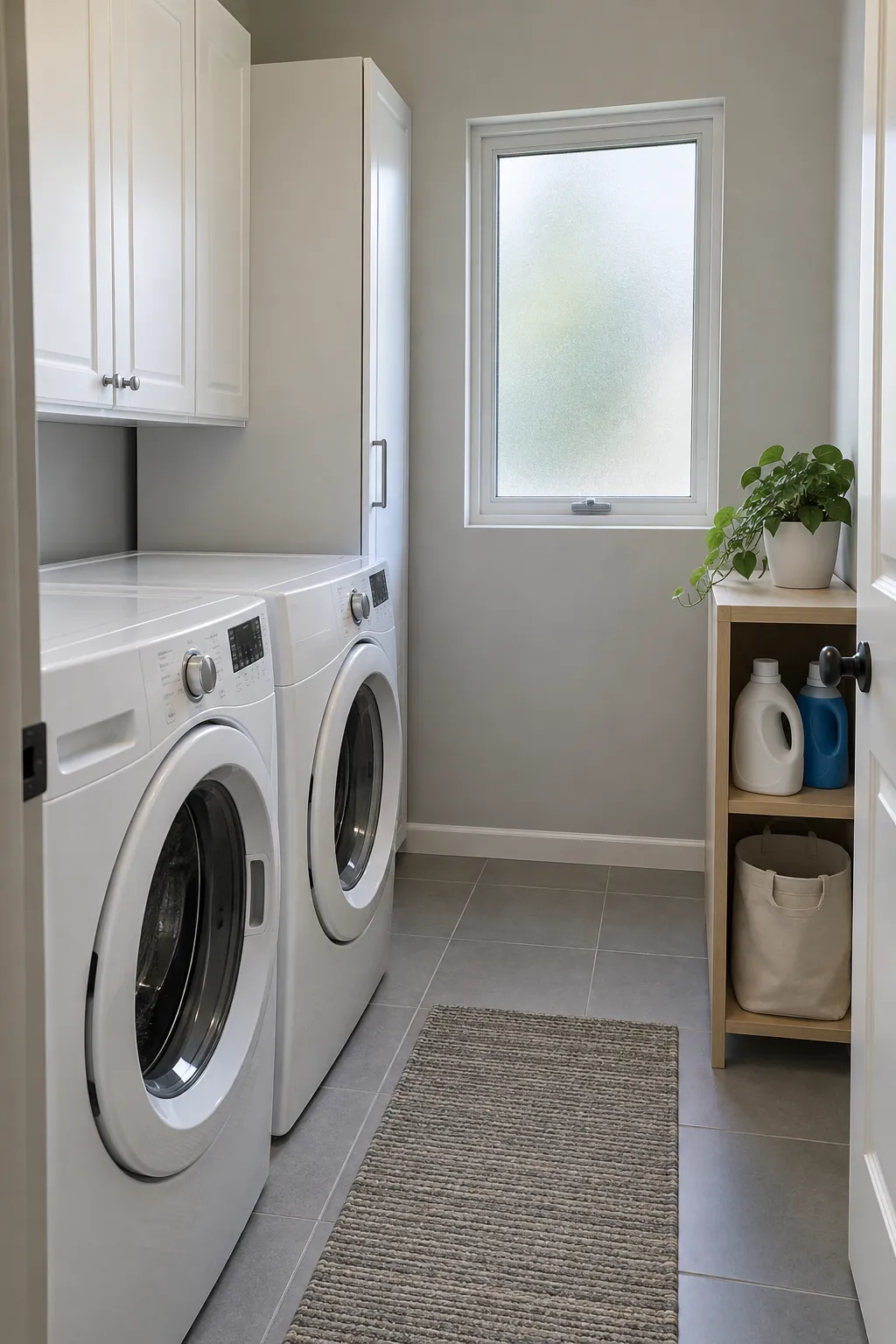
A bottle on the washer is easy to reach until you need to open the lid, wipe the surface, or find a missing wash bag. The useful fix is a home that takes no more effort to use than the machine top. Start with the supplies for one normal wash, then choose storage around your appliance clearances, door swing, and actual reach.
Before installing anything, read the appliance manual for ventilation and service space, open every lid and door fully, and check the loaded weight of shelves and fixings. Keep laundry products in their original labeled containers and follow their storage directions. Where children can enter, use suitable restricted storage rather than relying on shelf height alone.
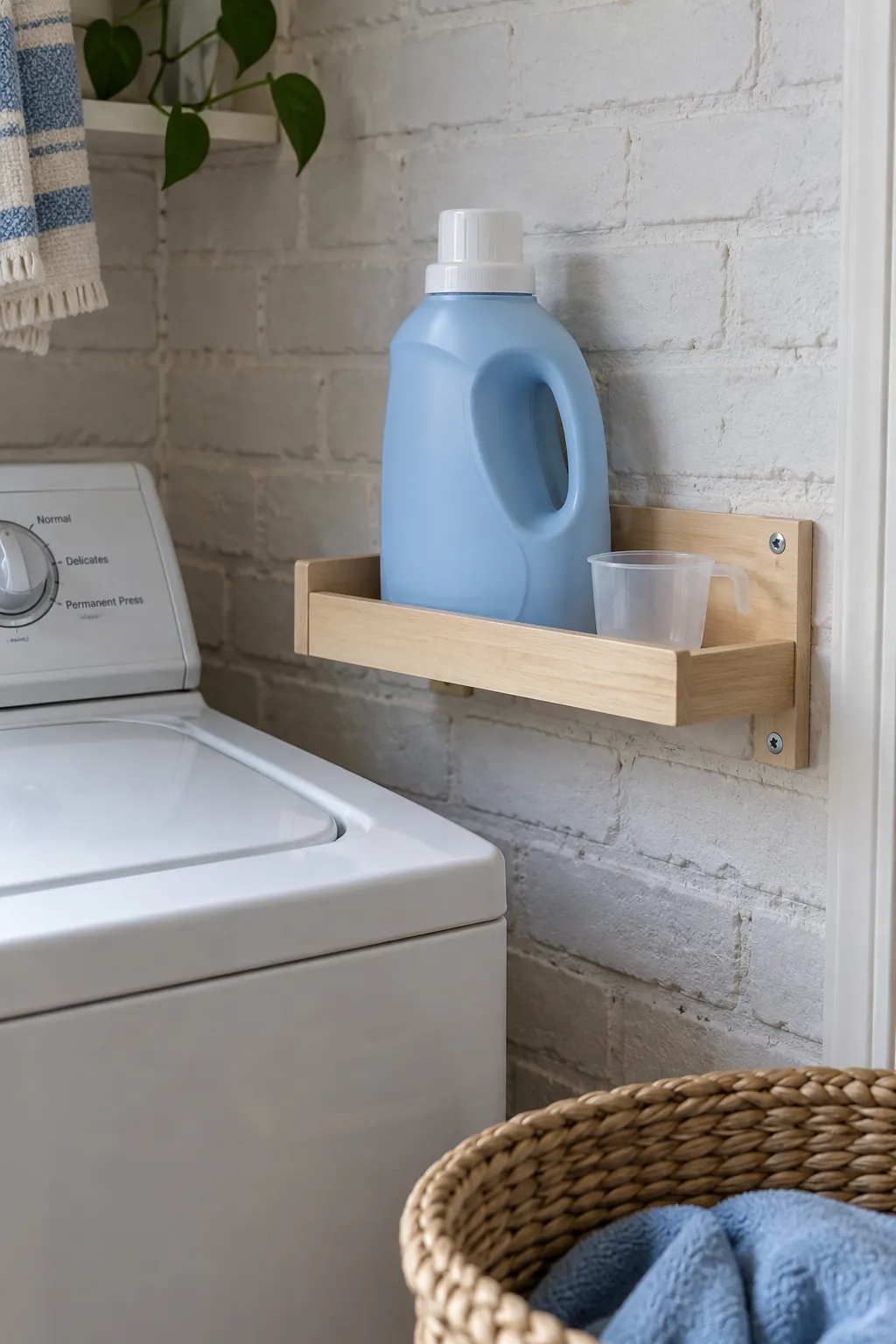
A shallow shelf beside the washer
Put daily detergent on a side wall where you can reach it without stretching over the machine. Measure the bottle depth before choosing narrow laundry shelving, and leave room to grasp the handle. A raised front lip helps contain small slips, but the shelf still needs secure fixings rated for the loaded weight. Keep the washer lid and control panel outside its footprint.
A slim rolling supply cart
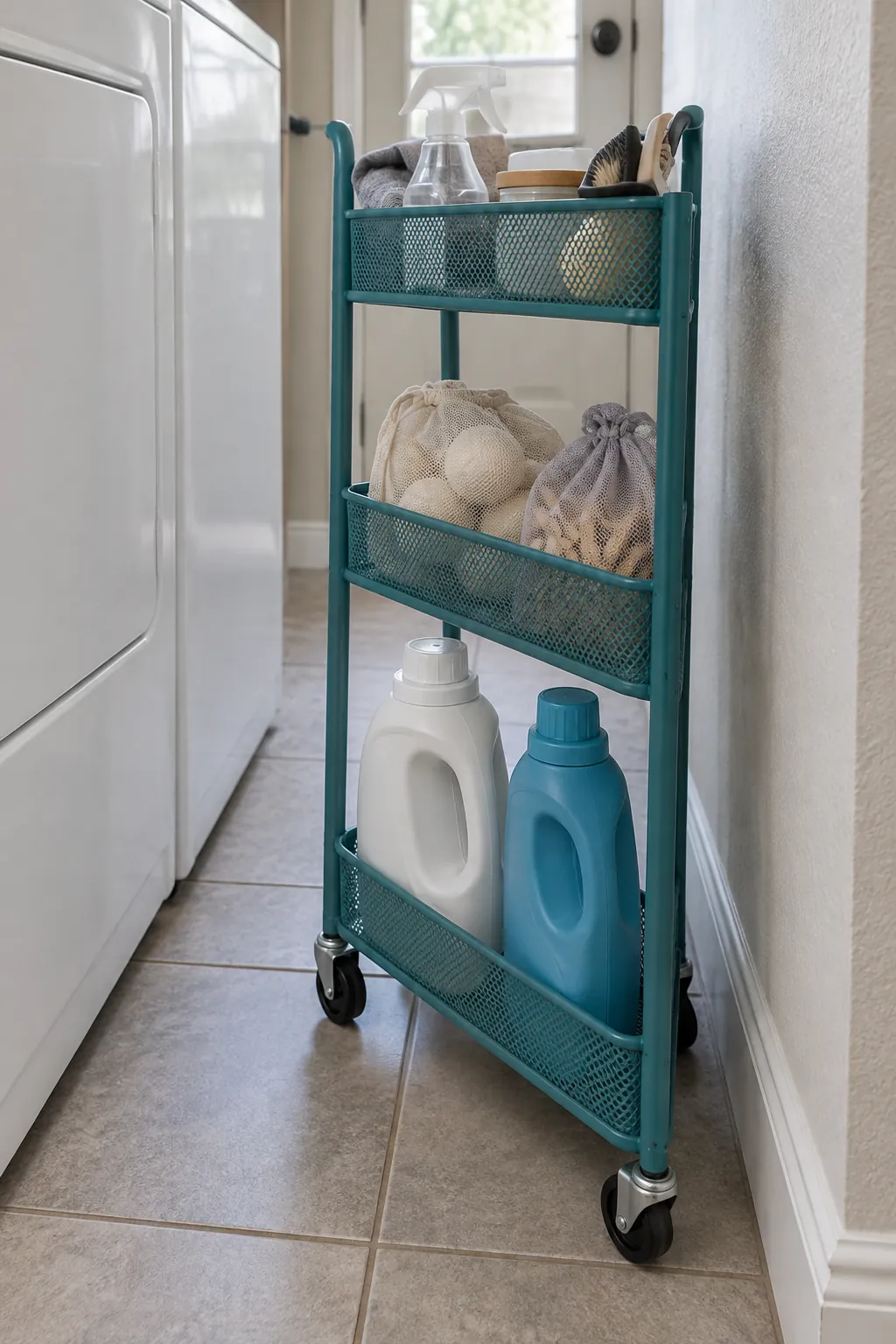
A narrow cart makes use of an accessible gap without turning it into a permanent cupboard. Check the appliance manual for required side clearance before measuring the space that remains. Choose wheels that travel smoothly over your floor, and keep heavy bottles on the lowest shelf.
Pull the cart into the aisle for use instead of pouring detergent through a tight gap. A handle at the open end can make a narrow cart easier to steer. Check that the wheels stay clear of hoses when the cart goes back.
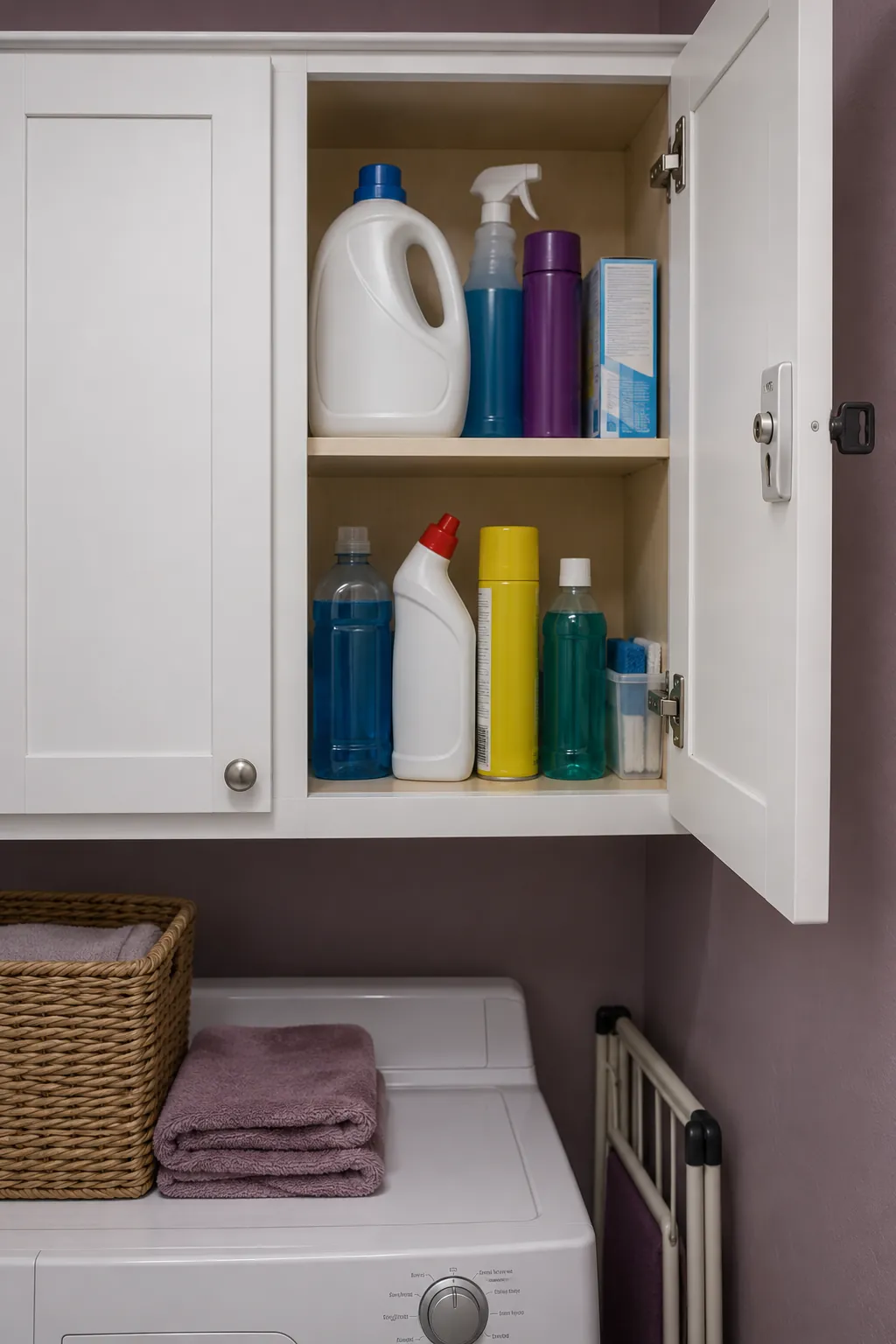
A cabinet for products that need restricted access
A wall cabinet with an appropriate child resistant lock can separate laundry chemicals from open household storage. Keep products in their original labeled containers rather than decorative jars. Place heavy bottles where adults can lift them safely, not on a shelf that requires a stool. A plain cabinet door also reduces visual clutter in a room that doubles as a passage.
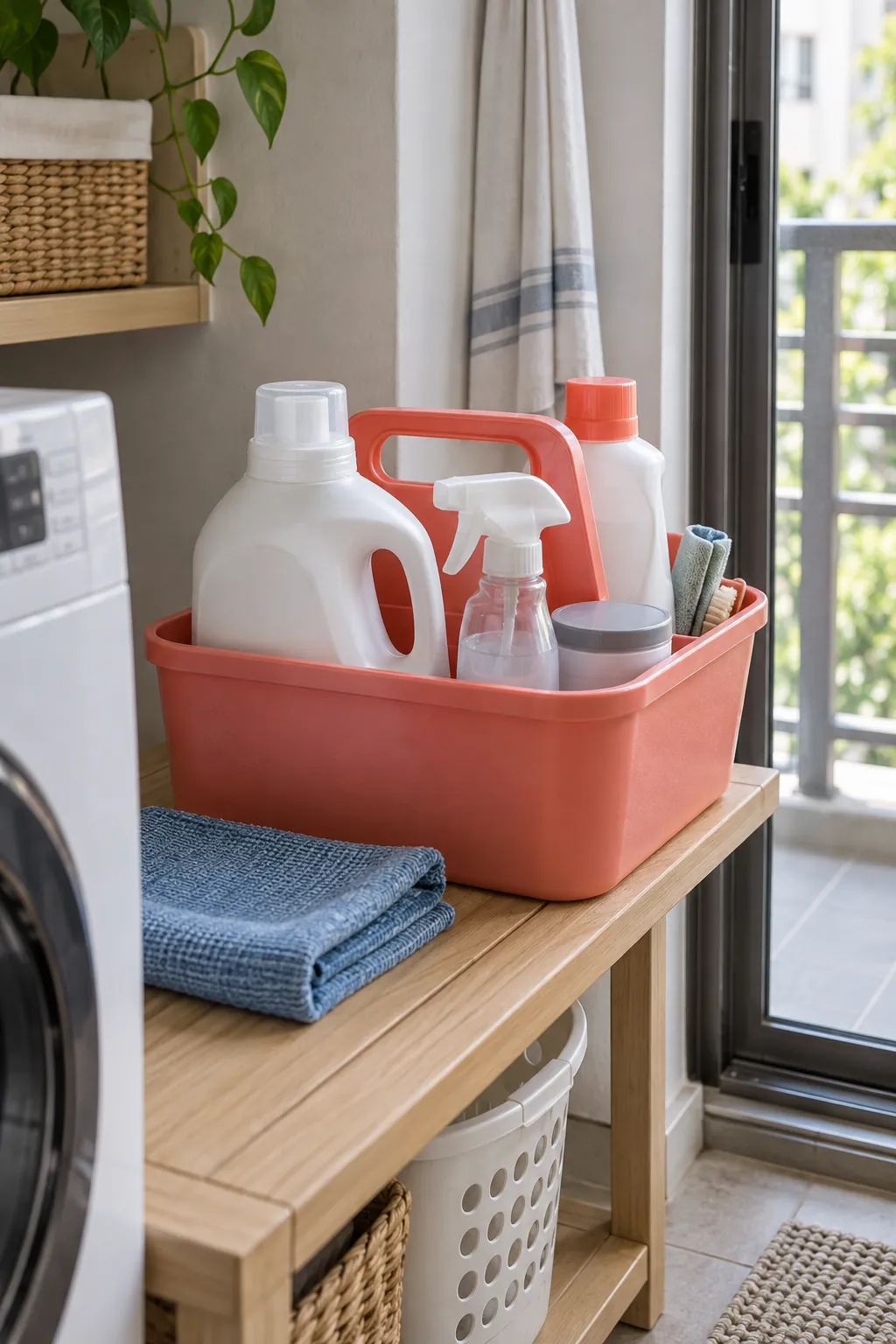
A washable caddy for the current wash
Group the products you actually use together in one handled caddy. Its base should be wide enough to hold each bottle upright without squeezing caps against one another. Store the caddy on a stable side shelf and carry it to the work area when needed. Rinse and dry the empty tray when drips collect, following the product label for spill cleanup.
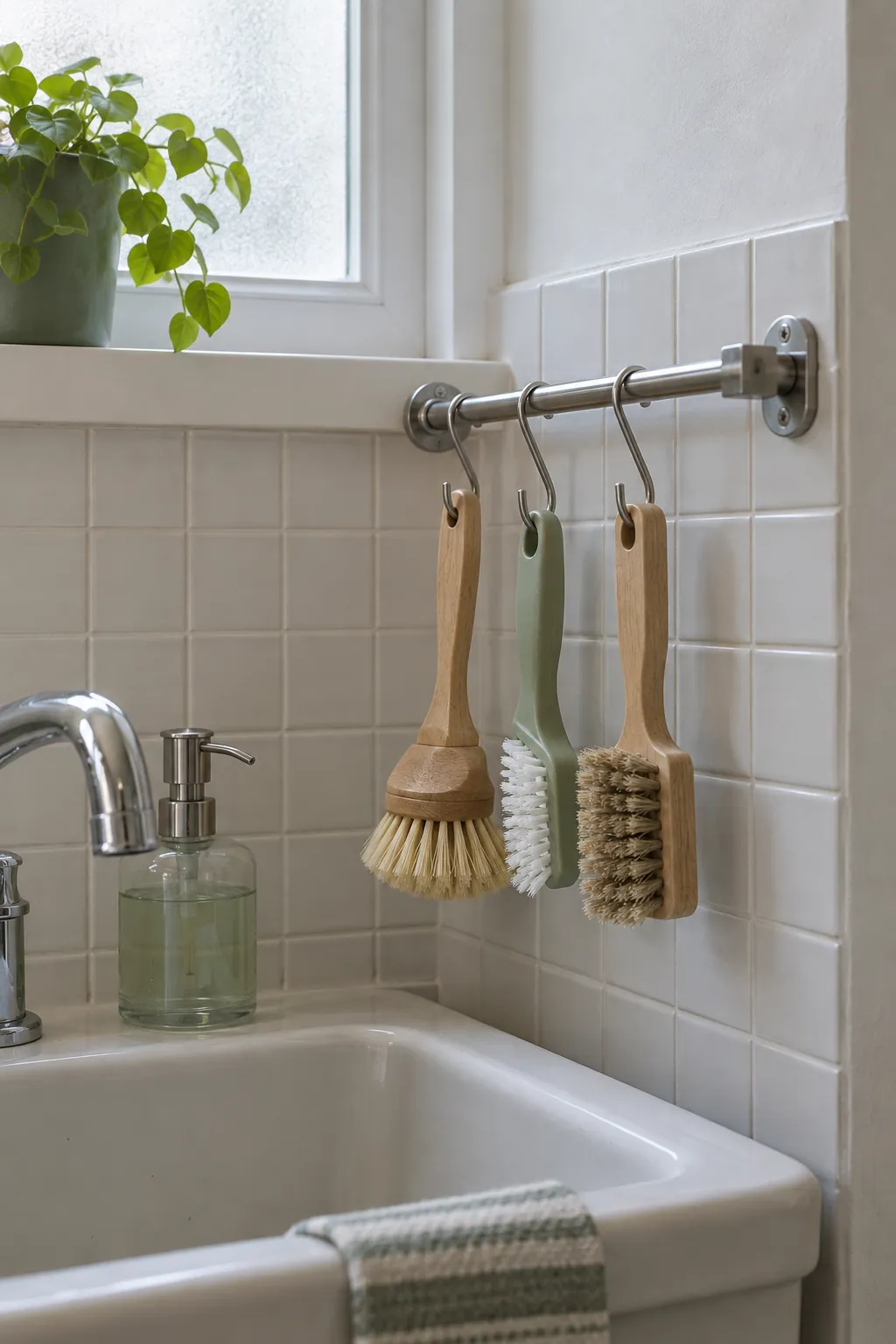
A fixed rail for light brushes
A short rail gives scrub brushes a drying place without using the machine top. Mount it beside the sink, with hooks that do not swing into the tap or doorway. Hang only tools whose handles and weight suit the rail hardware. Leave wet bristles clear of the wall so moisture does not stay trapped behind them.
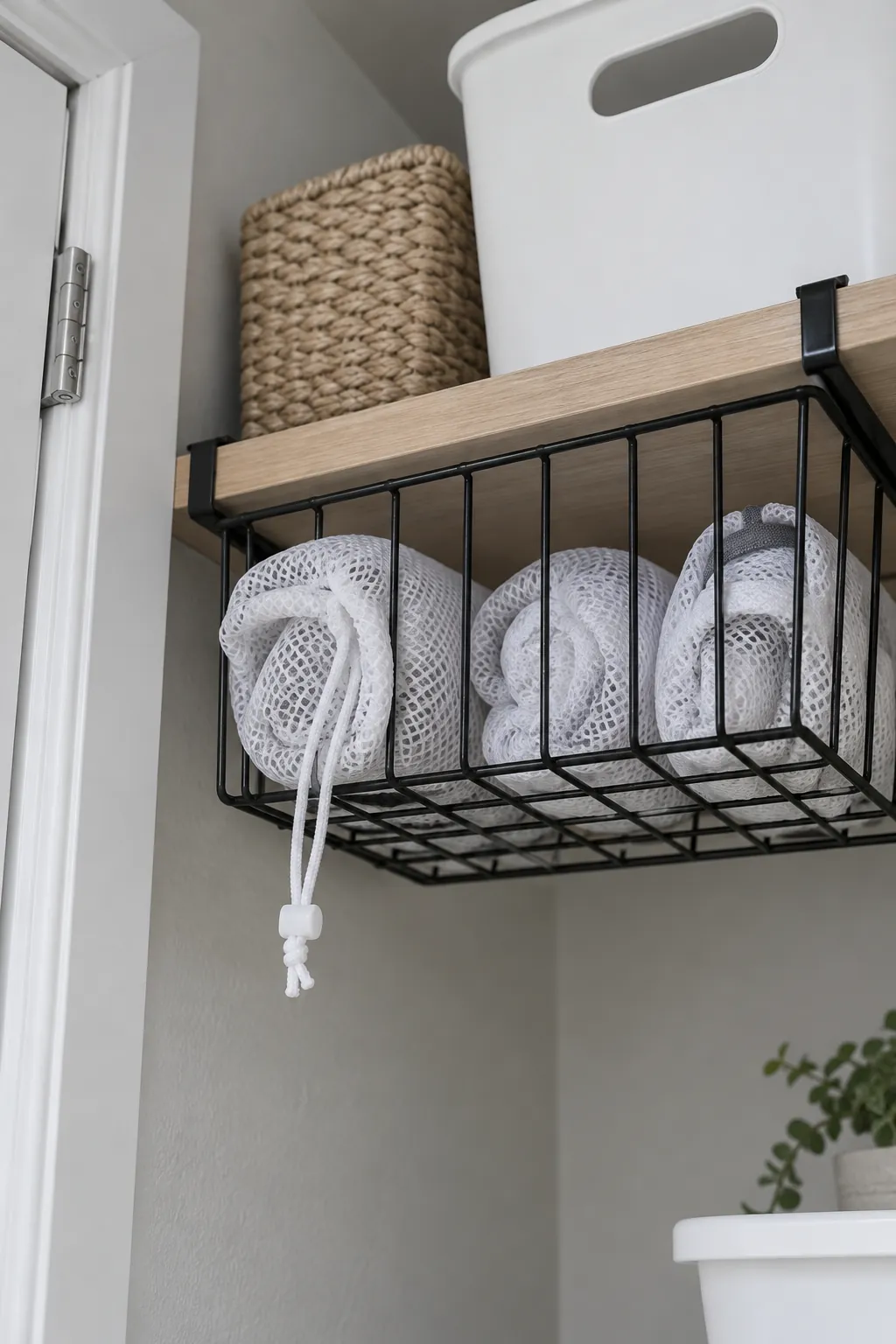
A basket under an existing shelf
An undershelf basket can hold light mesh wash bags in space that would otherwise go unused. Check that its supports fit the shelf thickness and do not prevent a cupboard door from closing. Reserve it for soft accessories rather than heavy liquid bottles. Pull one bag out as a test before loading the basket, since cramped access defeats the idea.
A solid tray on a wire shelf
A rigid shelf tray makes an existing wire rack more useful for small supplies. Choose one that rests securely across the wires and cannot slide toward the open edge. Stand bottles upright with their labels facing the room, leaving handles accessible. Check the rack's load limit rather than treating the tray as extra structural support.
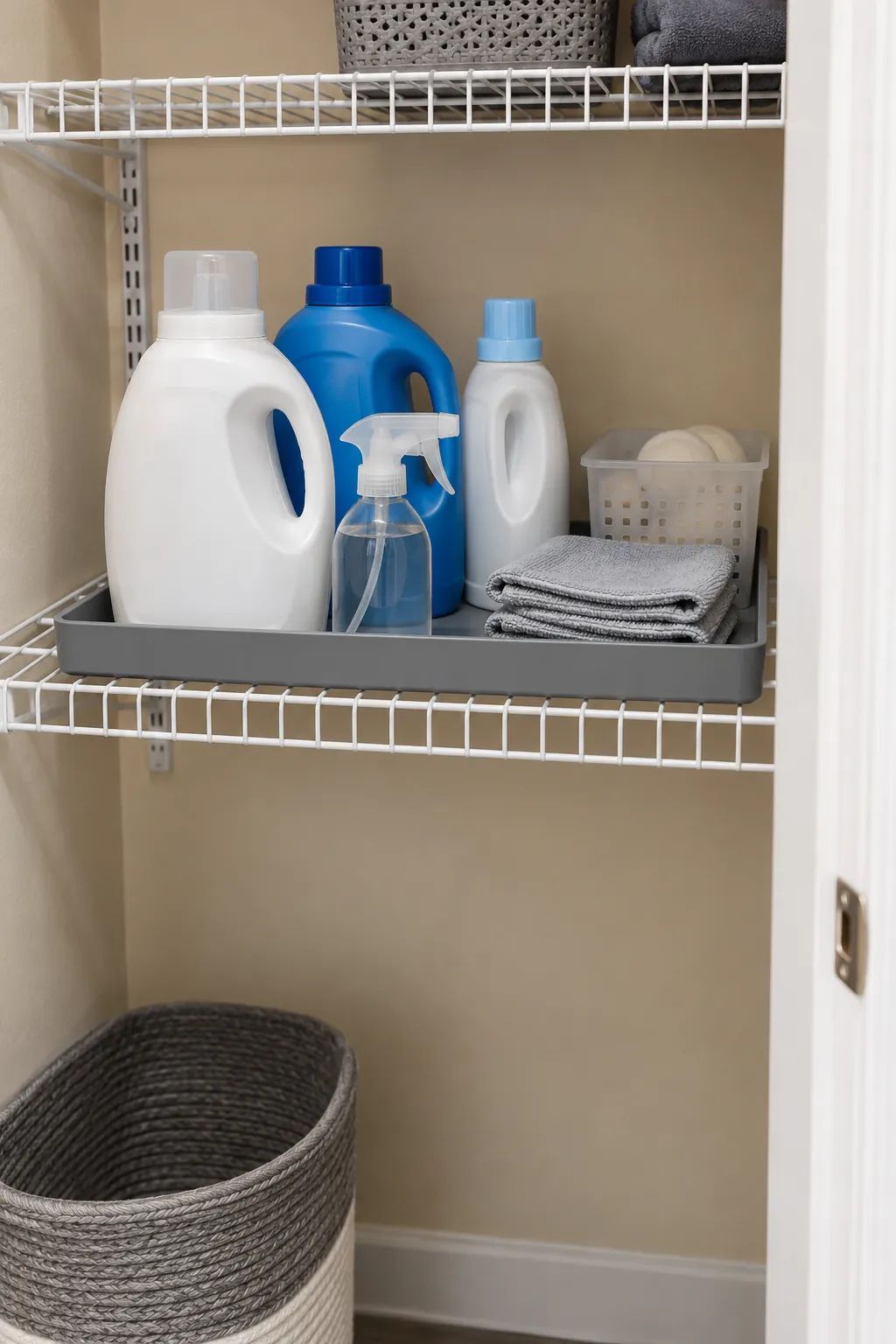
A door organizer for empty accessories
The back of a laundry door can hold mesh bags, lint brushes, and clothespins. Test the door through its full swing with the organizer installed, including the gap beside the frame. Use pockets deep enough to retain contents when the door moves.
Avoid placing laundry chemicals here when the door location makes them accessible to children. Thin metal hooks can mark a door finish if they rub each time it closes. Add only the protection recommended for the organizer, and stop using it if the door no longer latches properly.
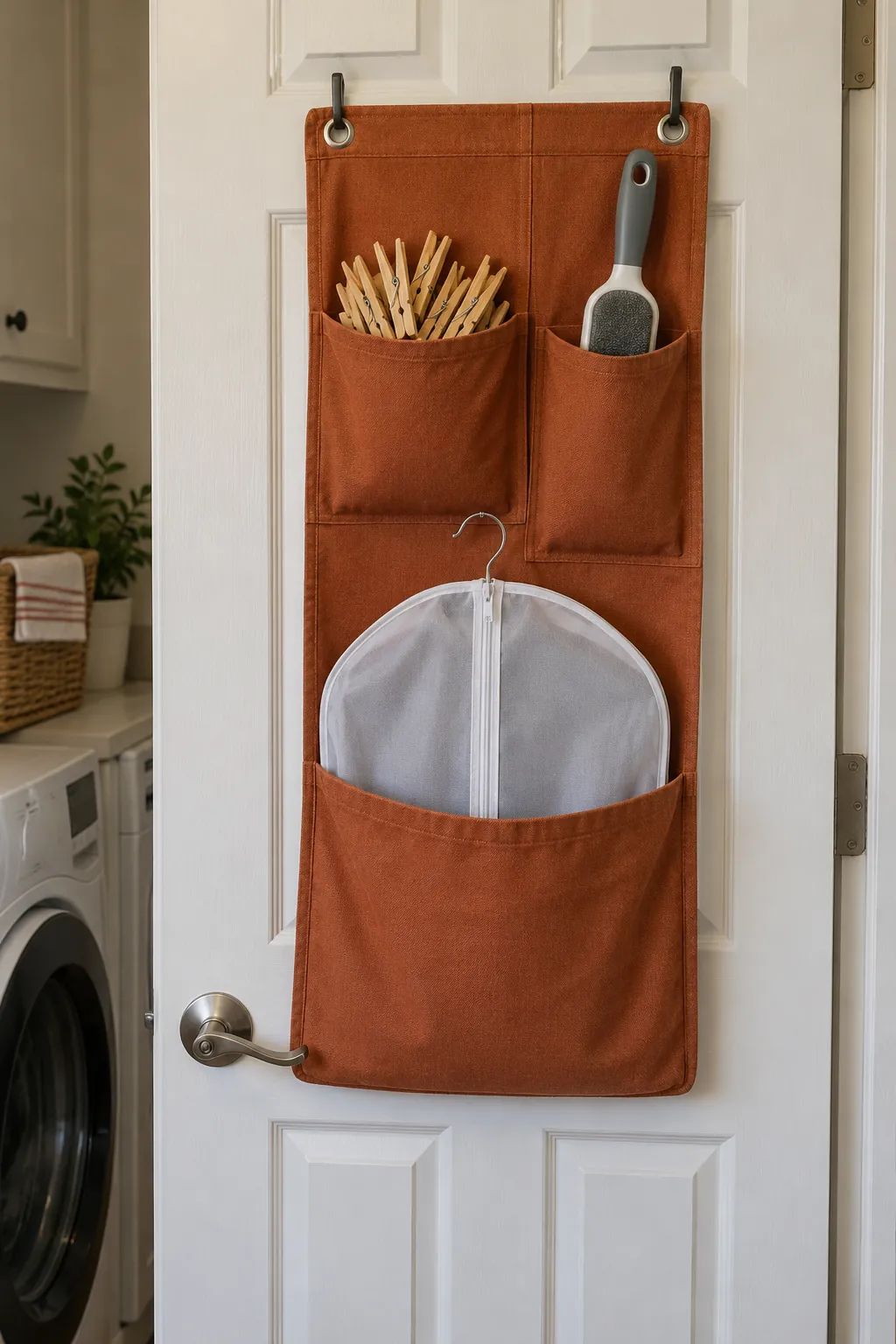
A pegboard for awkward shaped tools
A small pegboard fits tools that never sit neatly in a drawer. Arrange a stain brush, lint roller, and empty wash bags around the way you use them rather than filling every hole. Secure the board and use hooks that lock in place when an item is lifted. Keep its lower edge outside the path of baskets moving through the room.
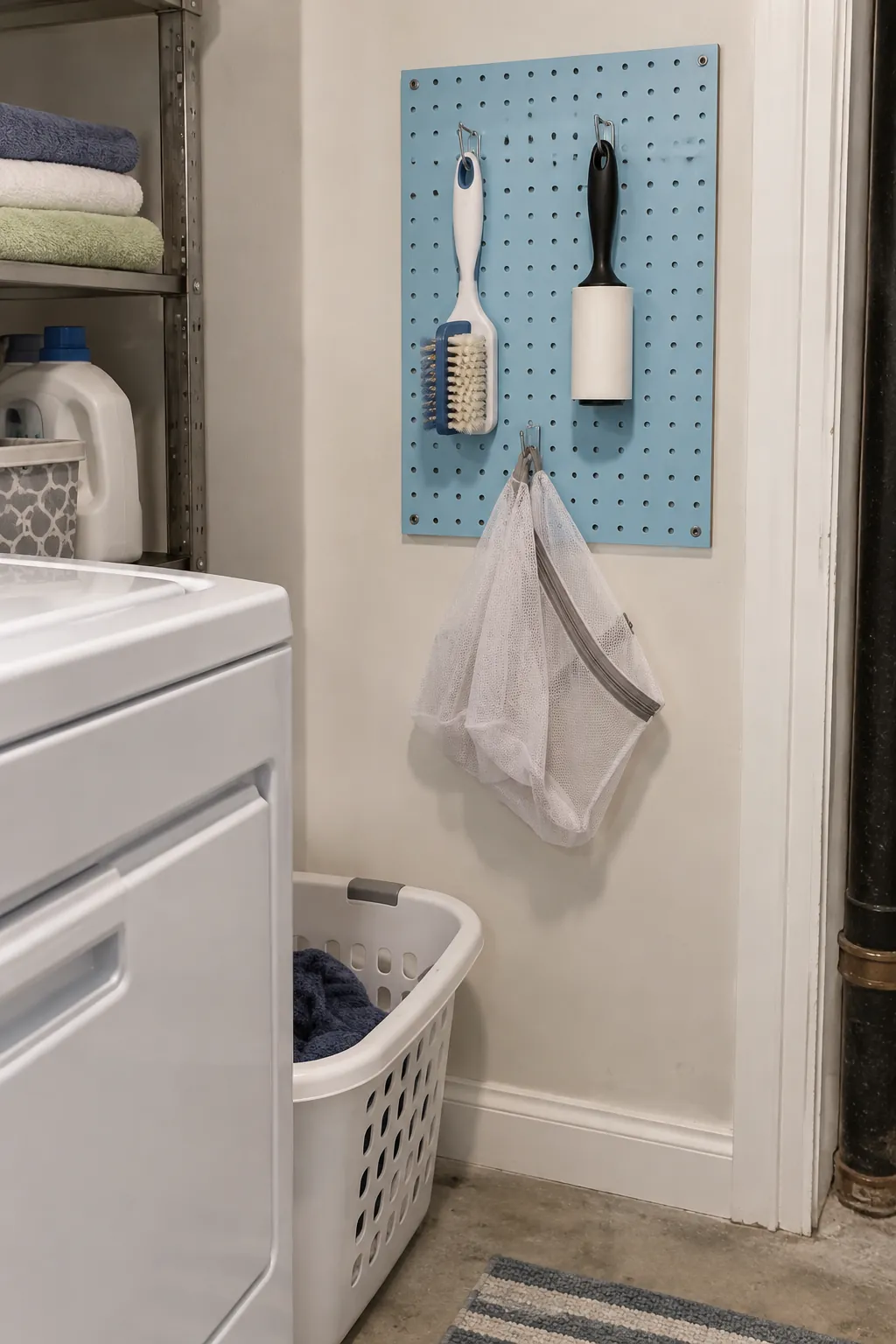
A drawer divider for small wash accessories
Divide an existing utility drawer into clear homes for garment bags and spare roller refills. Measure both the drawer height and the closing clearance before adding organizers. A long compartment suits a lint roller while smaller sections stop clothespins spreading across the base. Leave one section partly empty so returning an item is as simple as taking it out.
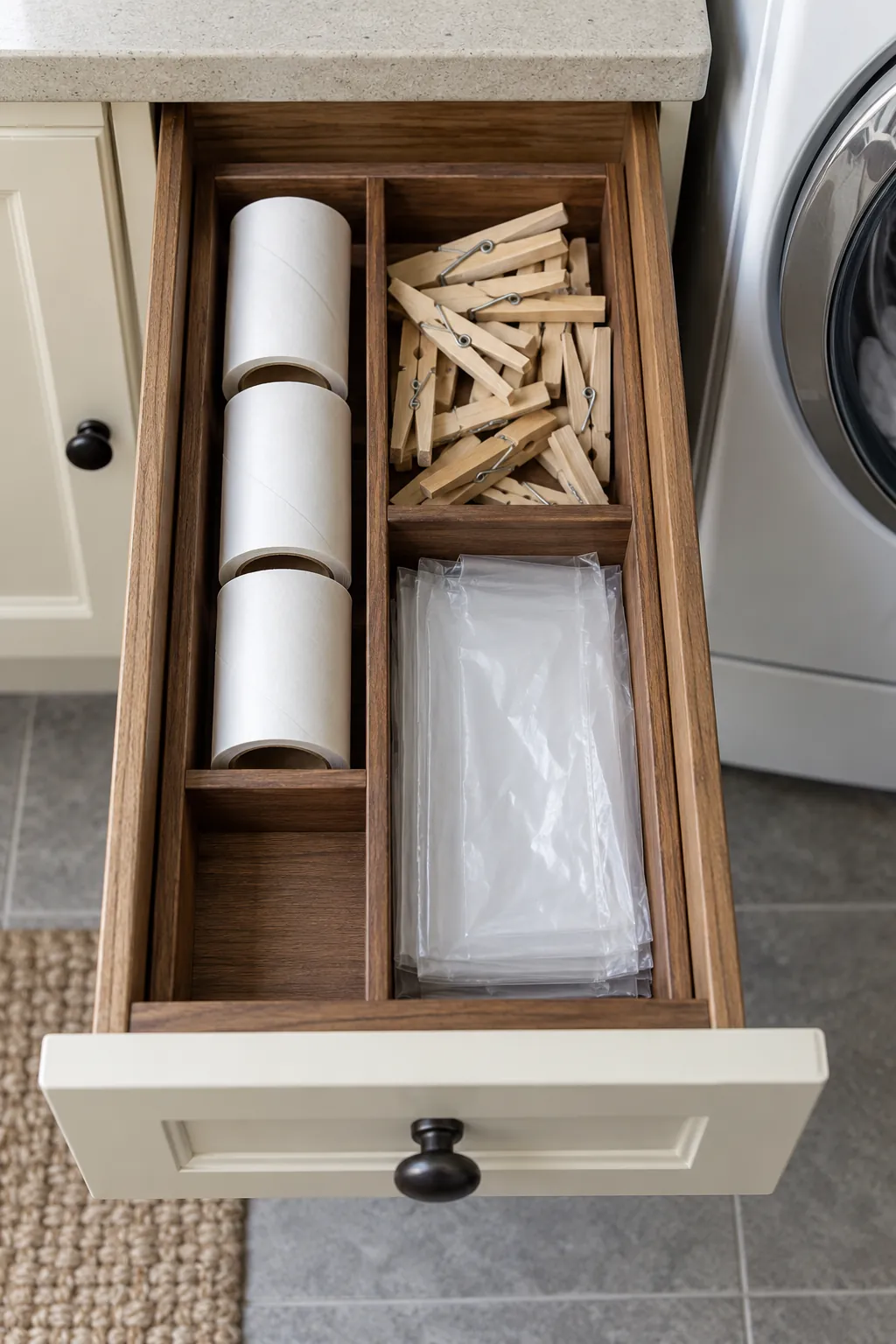
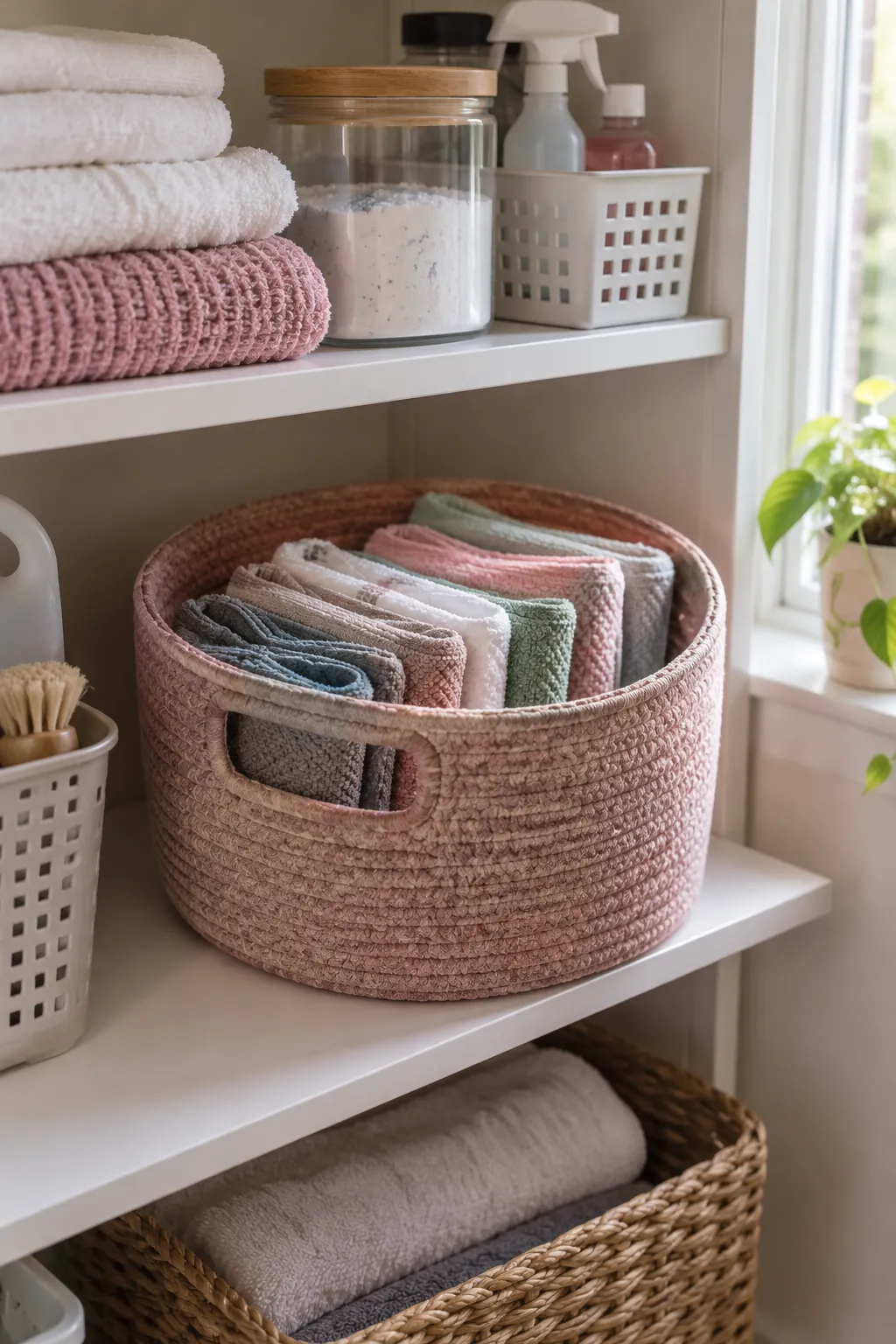
A basket for clean cleaning cloths
Store dry cleaning cloths together in a washable basket away from chemical bottles. Folding them loosely on edge makes it easier to remove one without disturbing the rest. Do not add damp cloths, since enclosed storage slows drying. A separate place for used cloths prevents a clean supply from becoming an accidental dirty laundry pile.
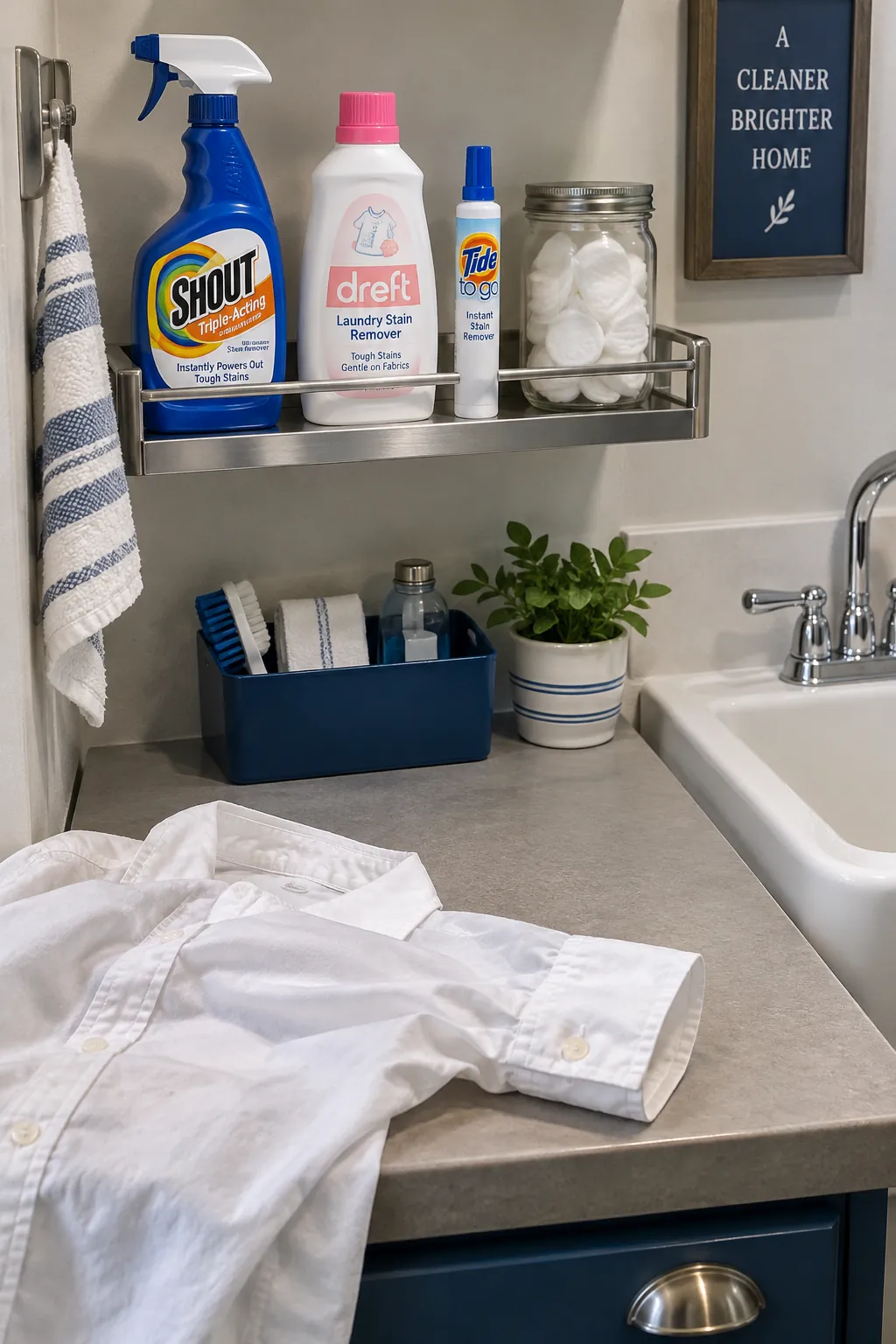
A stain treatment shelf at working height
A small treatment shelf near a suitable work surface saves repeated trips to the cupboard. Keep the original product labels readable and follow garment care instructions before applying anything. Allow enough room to set down a single garment without placing it on a running appliance. If children use the space, choose restricted cabinet storage for the products instead of an open shelf.
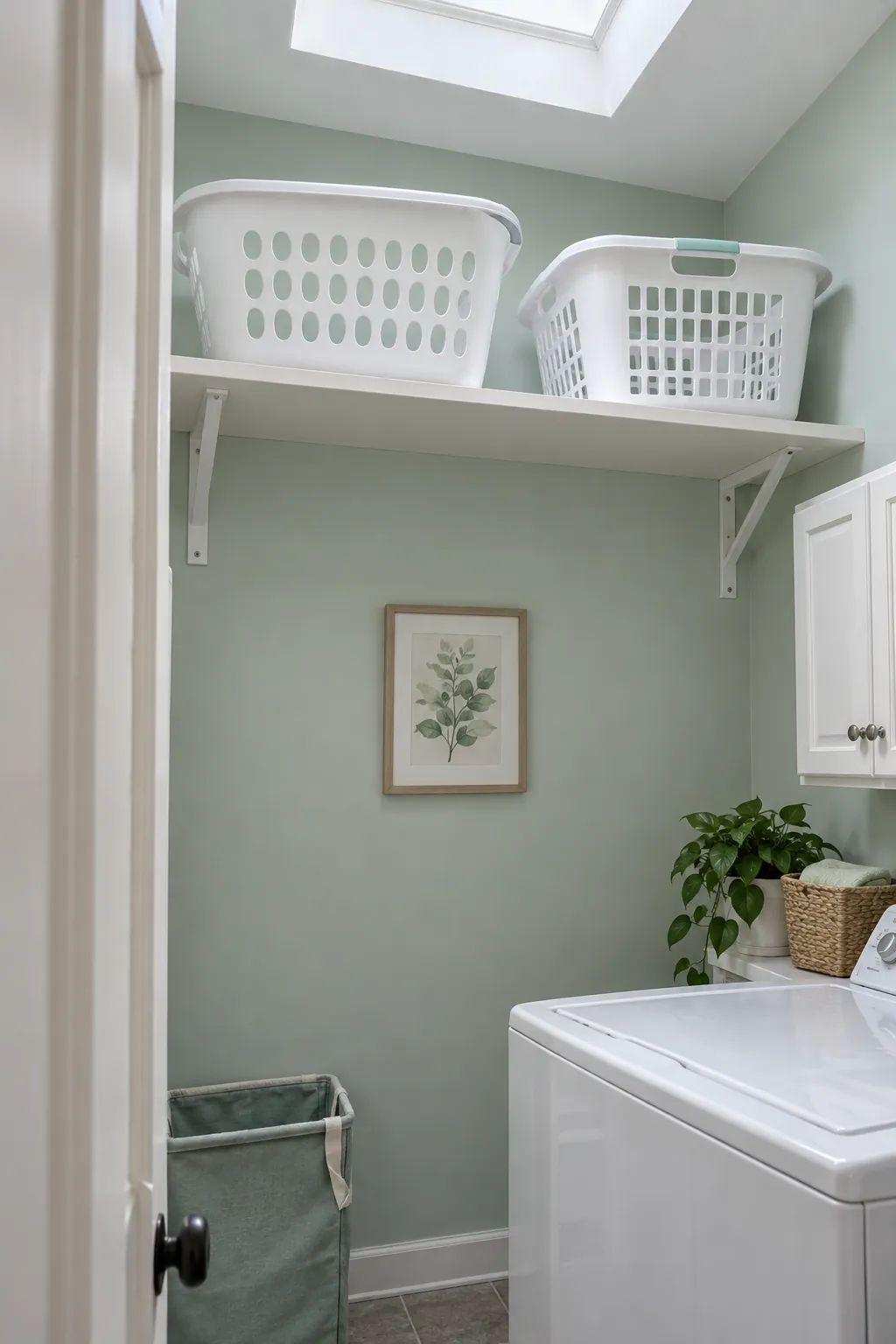
A high shelf for lightweight spare baskets
Empty laundry baskets can occupy a high shelf because they weigh little and are used less often than detergent. Measure their width at the rim, where they are usually widest. Avoid stacking them so tightly that you need to tug several down at once. Keep this shelf away from the washer lid's travel and use a safe method of reaching it.
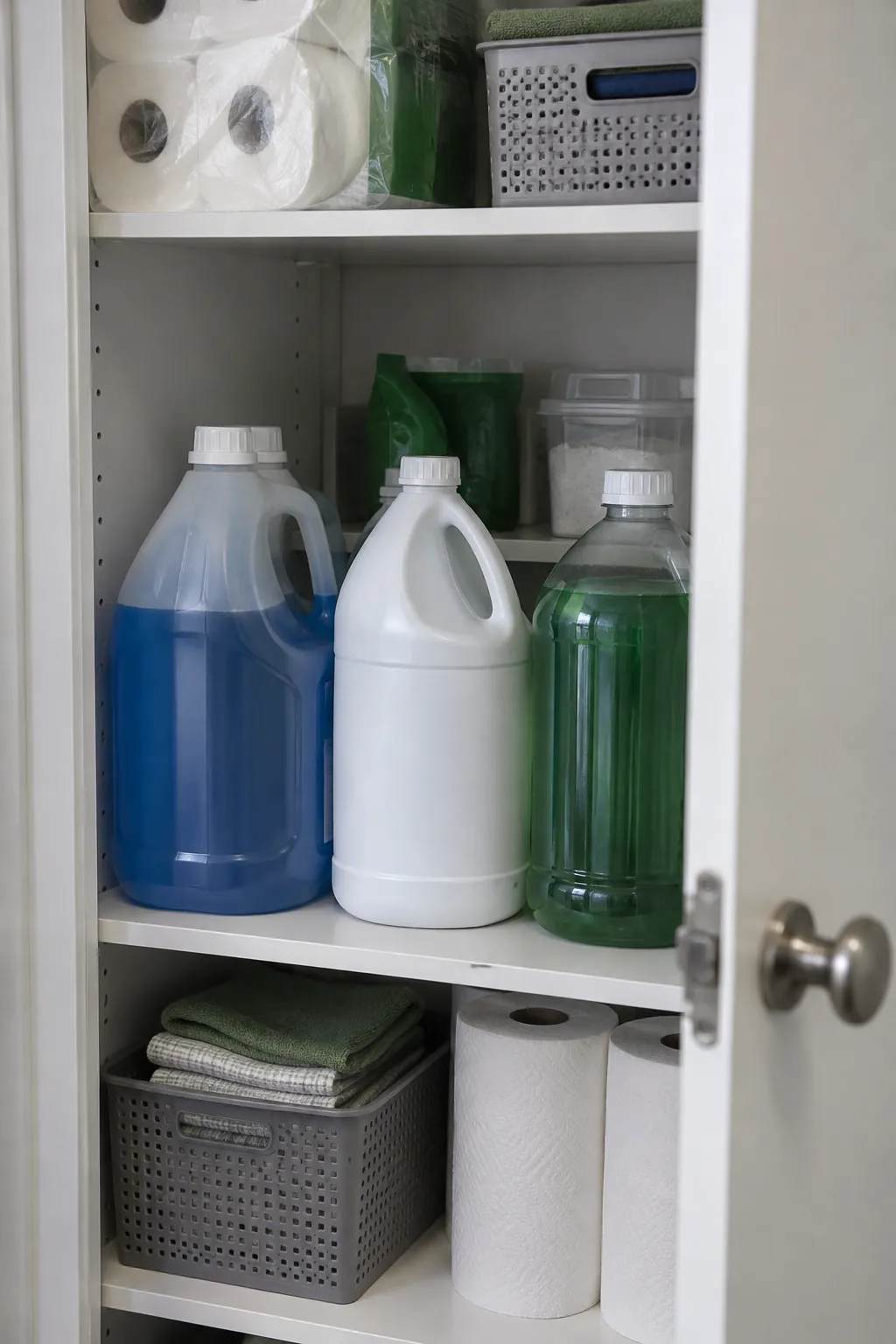
A separate cupboard for bulk refills
Bulk containers are easier to manage when they live somewhere other than the daily work zone. Choose a dry, secure cupboard that follows the storage directions on the labels. Keep the current bottle in the laundry room and bring out a refill only when needed. This reduces the weight your compact shelving must carry without hiding the supplies you use every wash.
A side tower with adjustable shelves
A narrow freestanding tower can adapt to different bottle heights as supplies change. Confirm that it fits outside appliance clearances and leaves enough aisle width to carry a basket. Fit any required anti tip restraints before loading the shelves.
Adjust the spacing around real containers instead of leaving large empty gaps above short items. Measure the usable width inside the uprights, since the outside dimension can overstate the storage space. A shallow tower often provides better access than a deeper unit in a narrow aisle.
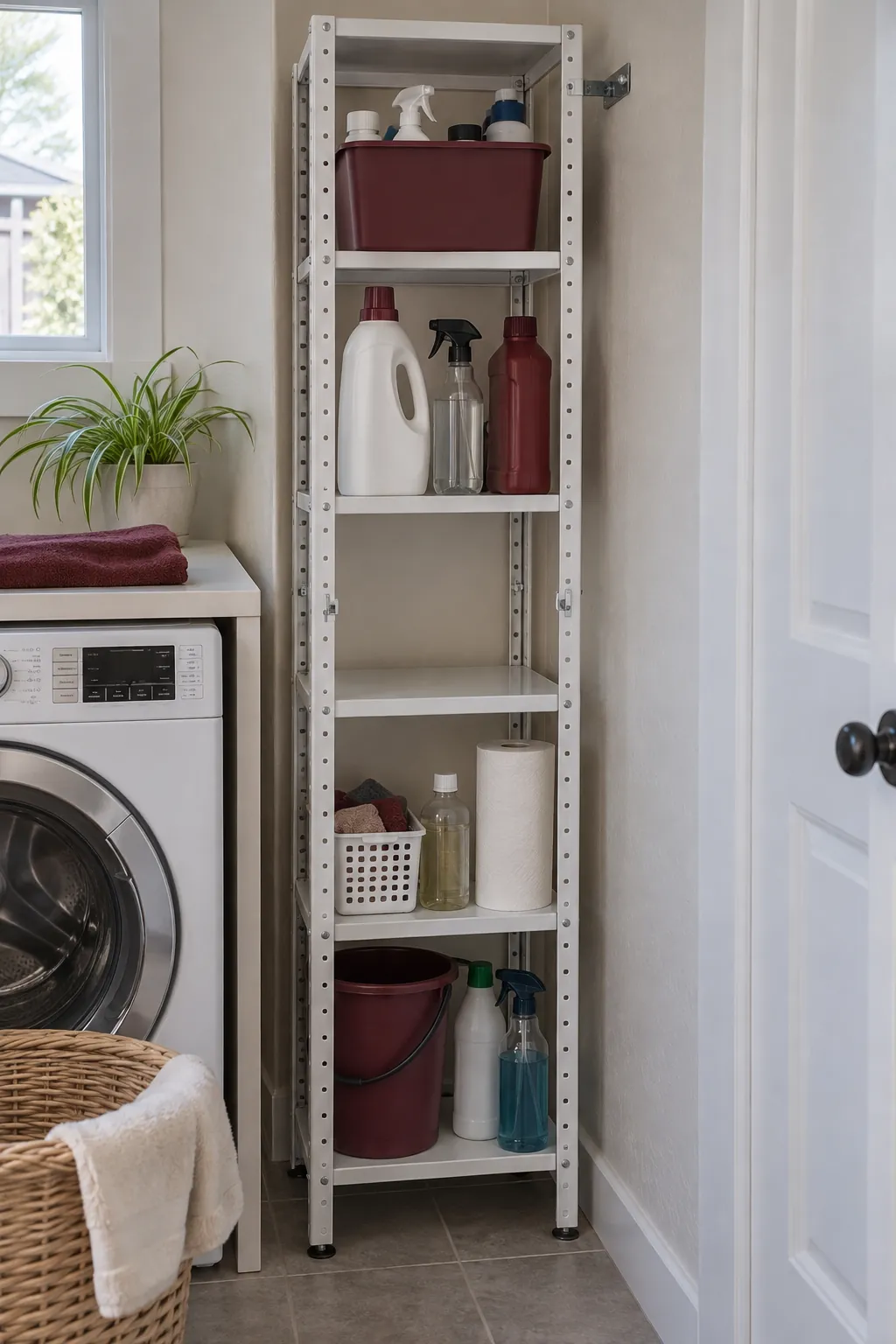
A corner shelf for dry accessories
An unused corner can hold clothespins or folded wash bags without needing a full wall unit. Make a cardboard footprint first to check how far the shelf projects into the room. Round or eased front edges are helpful where shoulders and baskets pass close by. Save heavy chemical bottles for a more accessible, secure location.
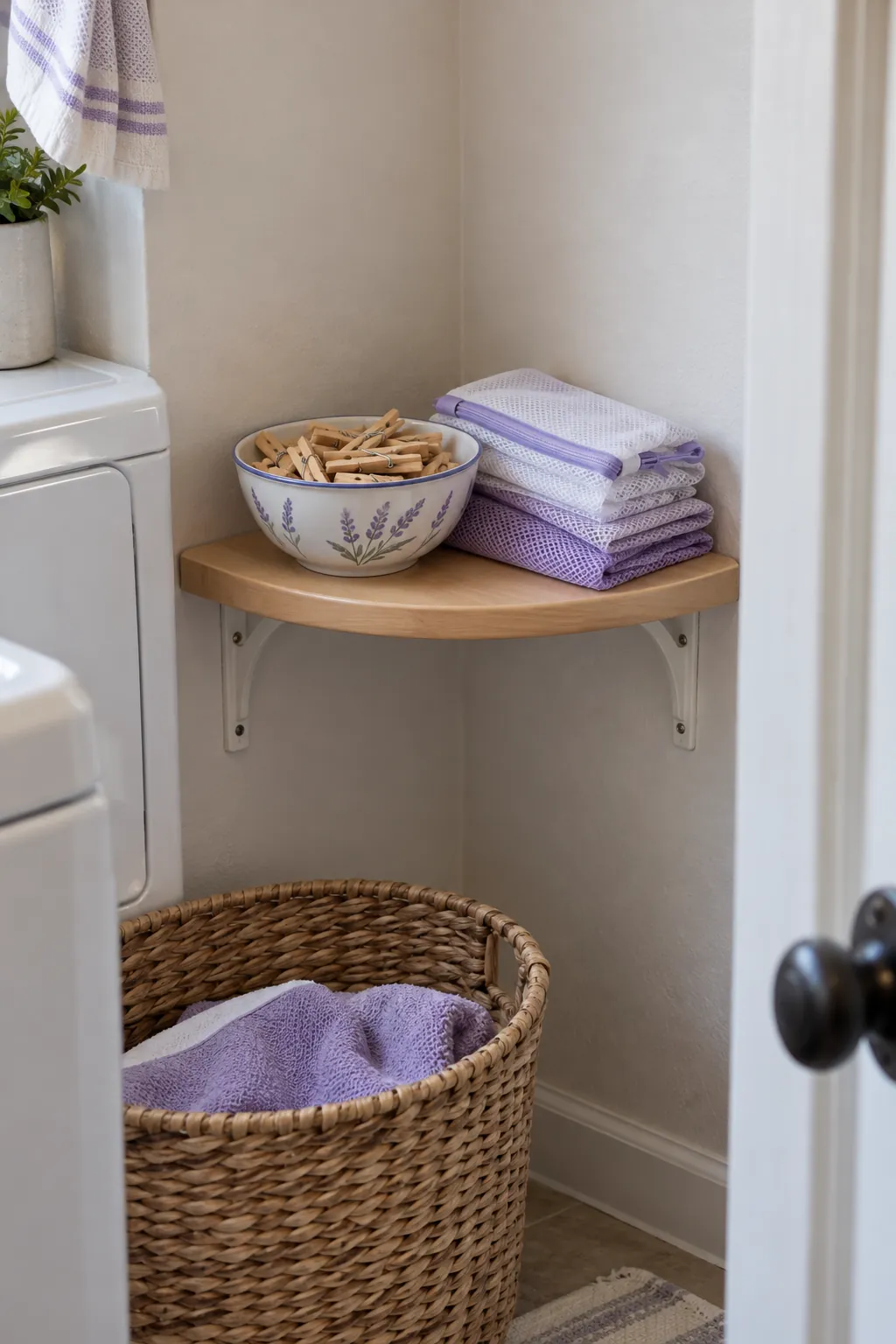
A narrow cupboard beside the sink
A slim cabinet next to a utility sink creates closed storage where water work already happens. Choose a finish suitable for occasional splashes and wipe up standing water promptly. Store cleaning products according to their labels, with incompatible products separated as directed. Leave plumbing access available rather than packing every space around the pipework.
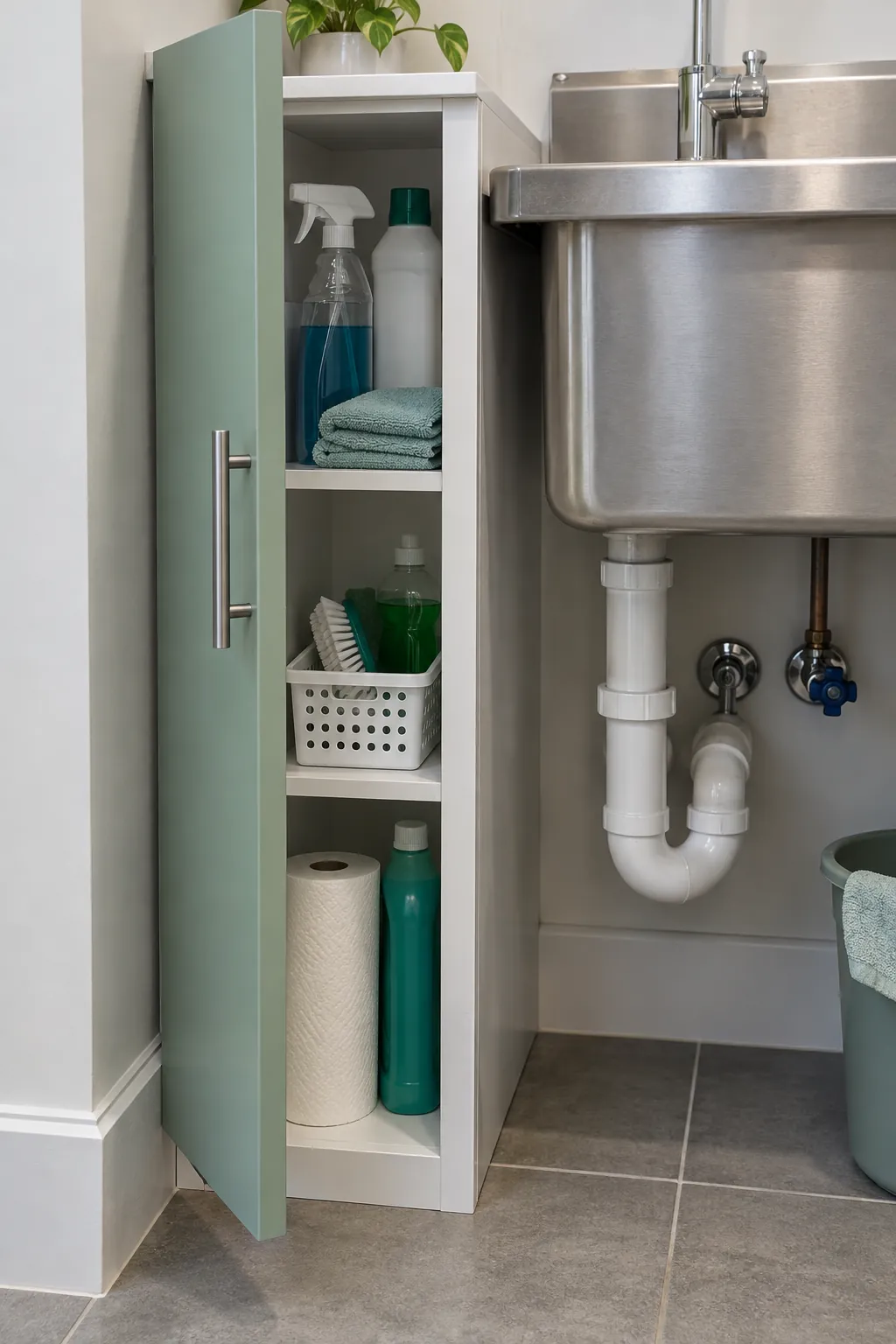
A removable tub beneath the sink
A small removable tub groups dry supplies while leaving the cabinet itself easy to clean. Check the shape of the plumbing before buying a tub with tall sides. Slide it out fully to reach items instead of working blindly behind the drain. Keep it clear of shutoff valves and inspect the base for leaks when you return it.
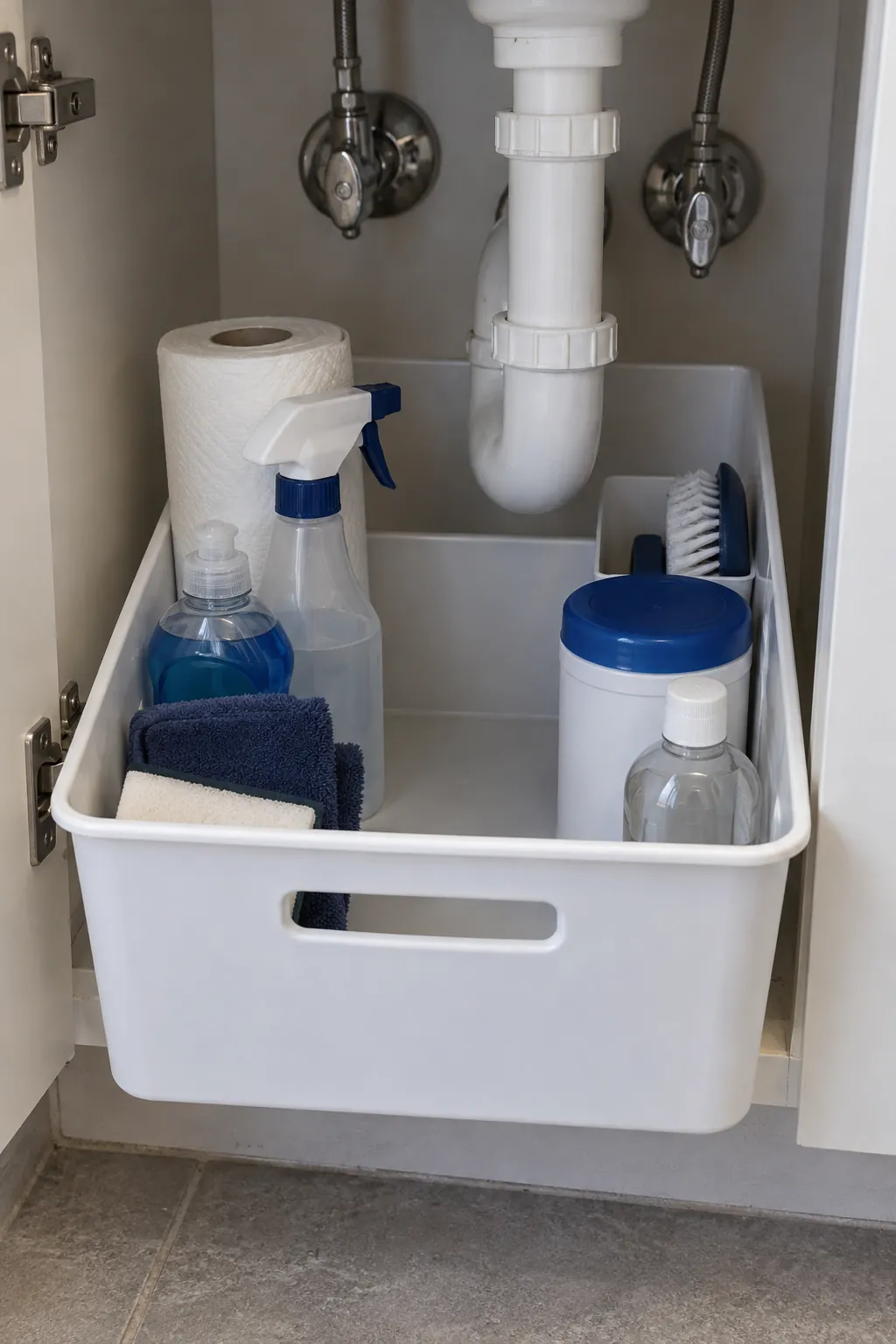
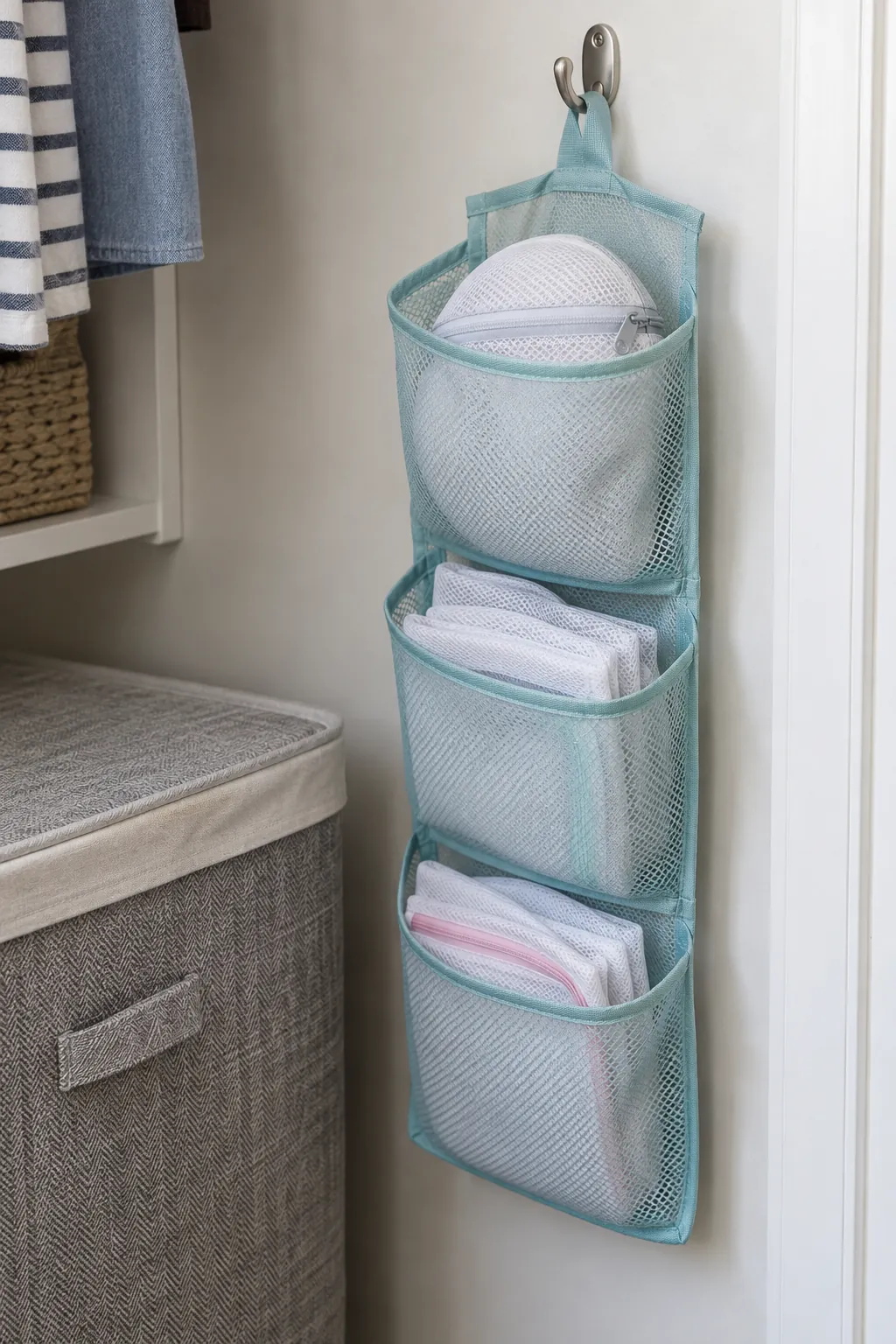
A ventilated pocket for dry mesh bags
A hanging fabric pocket can keep empty mesh bags visible and ready for the next load. Position it on an approved hook beside the hamper rather than on the appliance. Make sure every bag is dry before nesting it into the pocket. A light breathable organizer suits this task better than a deep sealed container.
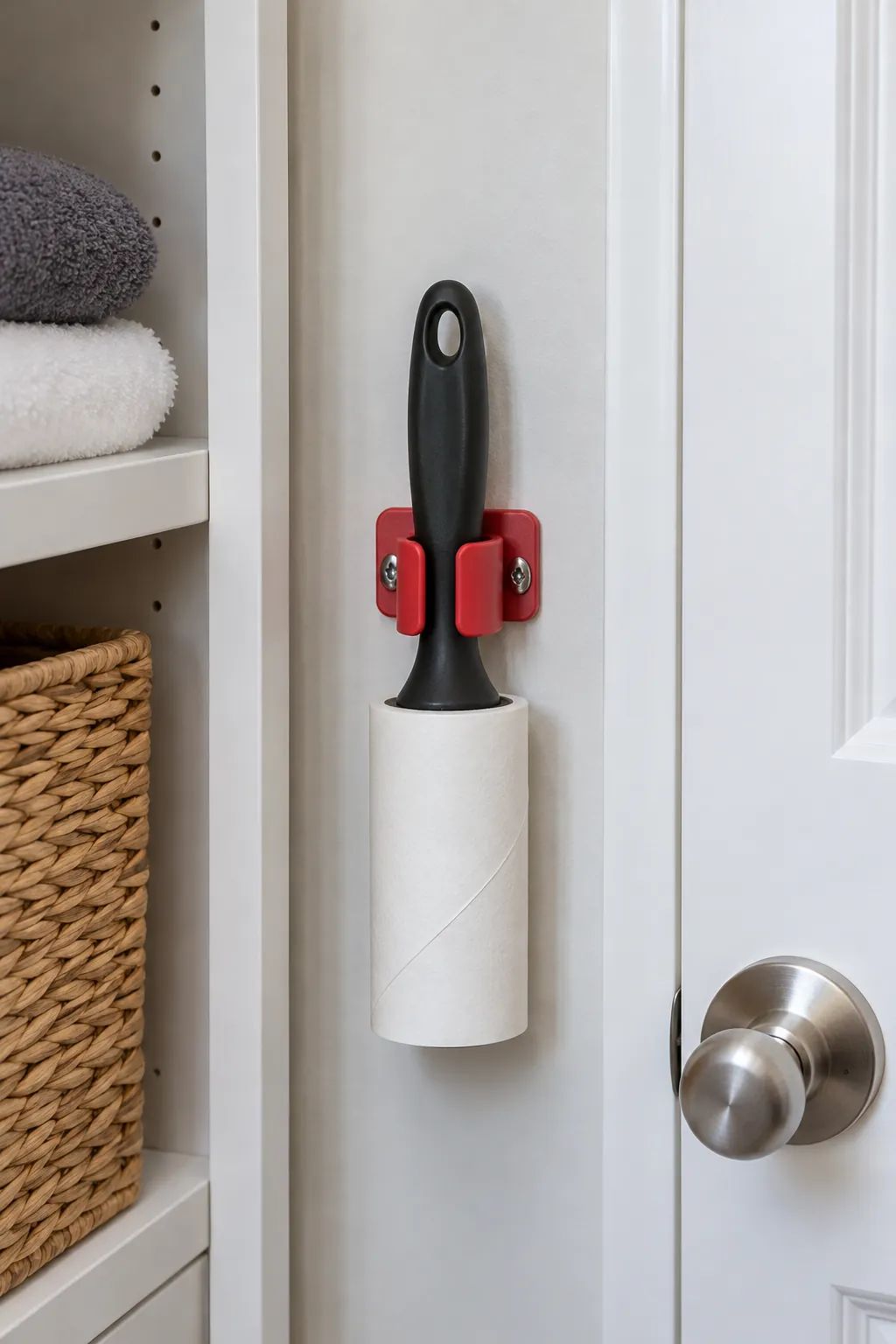
A wall clip for the lint roller
A dedicated clip stops a lint roller from disappearing under towels. Mount it where the roller can be lifted straight out without touching a door or shelf. Test that the clip grips the handle securely without damaging it. Store replacement rolls in a drawer so the wall space remains focused on the tool currently in use.
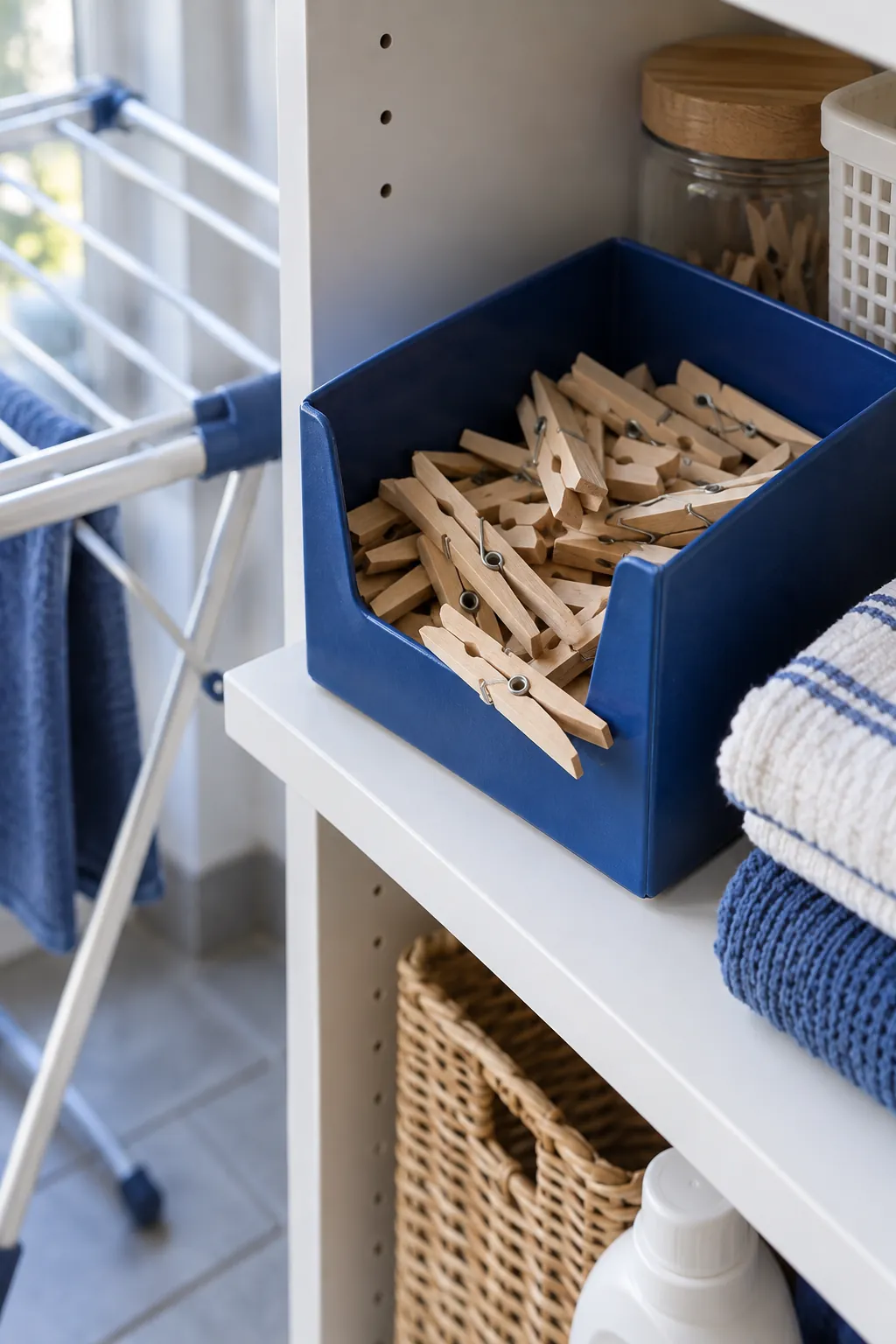
A dispenser box for clothespins
A small box with a comfortable opening keeps loose clothespins from scattering across the room. Set it beside the drying area on a stable shelf. The container should allow you to retrieve pins without tipping them into your palm over the floor.
Empty and dry it if damp wooden pins leave moisture inside. A wide low container works well when you carry pins to an outdoor line. A deeper one suits a fixed shelf but needs enough hand space above its rim.
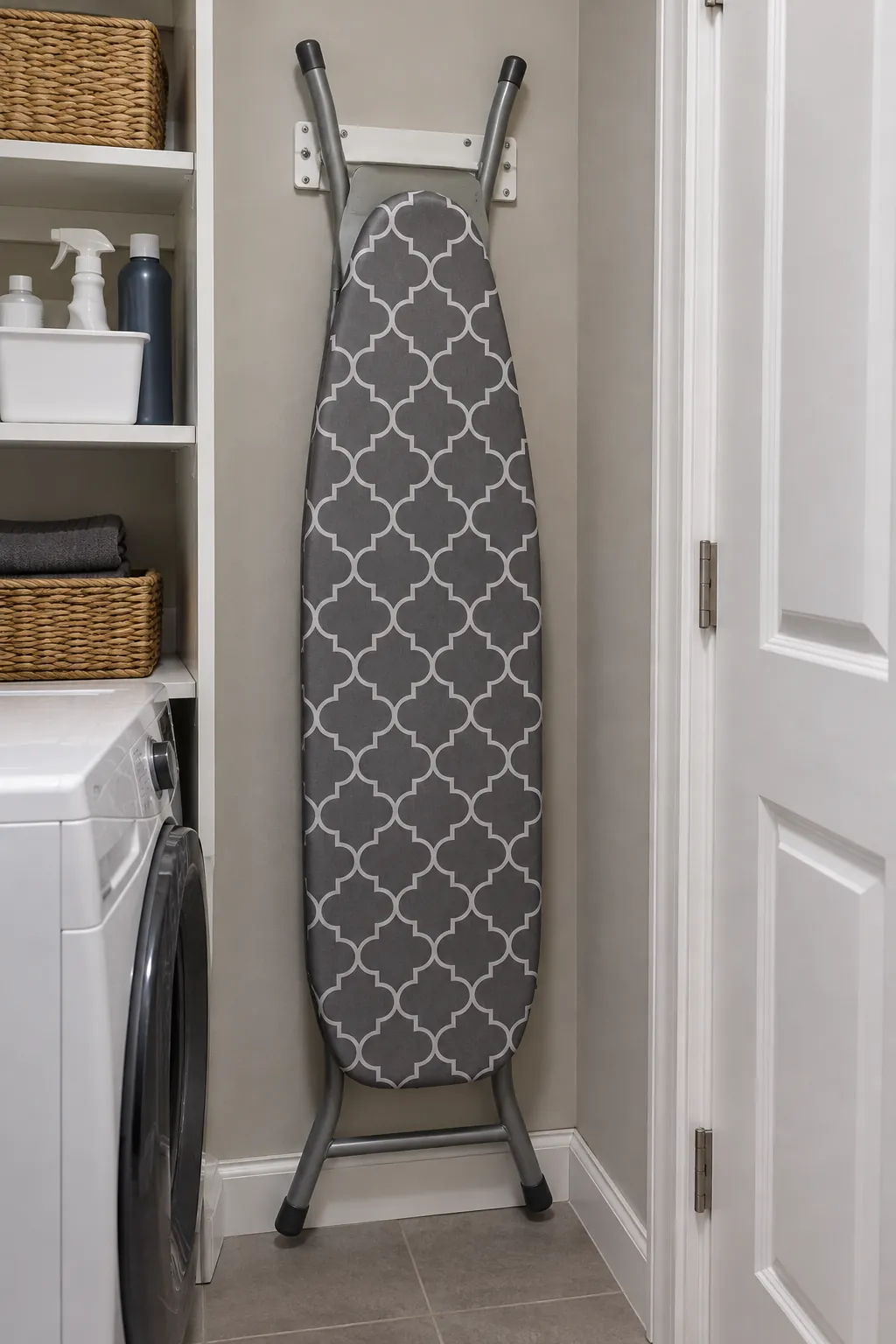
A hanging sleeve for an ironing board
A rated wall holder lets an ironing board leave the machine tops and the walkway. Measure the folded board, its feet, and the clearance needed to lift it from the hooks. Fasten the holder as its manufacturer directs rather than relying on decorative adhesive hooks. Let the board and iron cool fully before putting them away in their separate suitable storage.
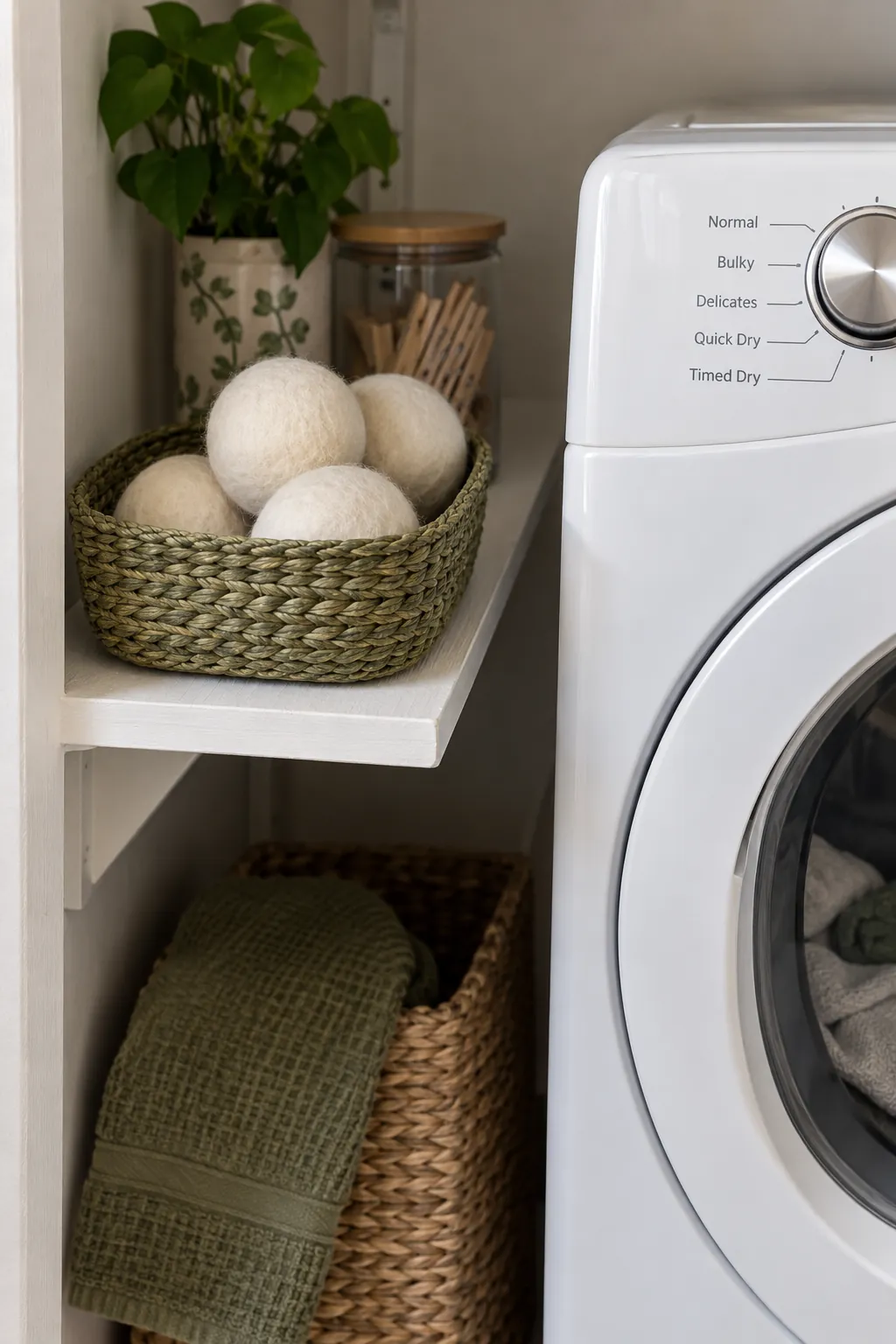
A small shelf near the dryer for dry accessories
Give reusable dryer balls a shallow basket close to the dryer door. Choose a position that leaves the appliance controls and any ventilation openings unobstructed. The basket should hold the full set without spilling when you retrieve one. Do not turn this spot into storage for flammable treatments or items with label restrictions near heat.
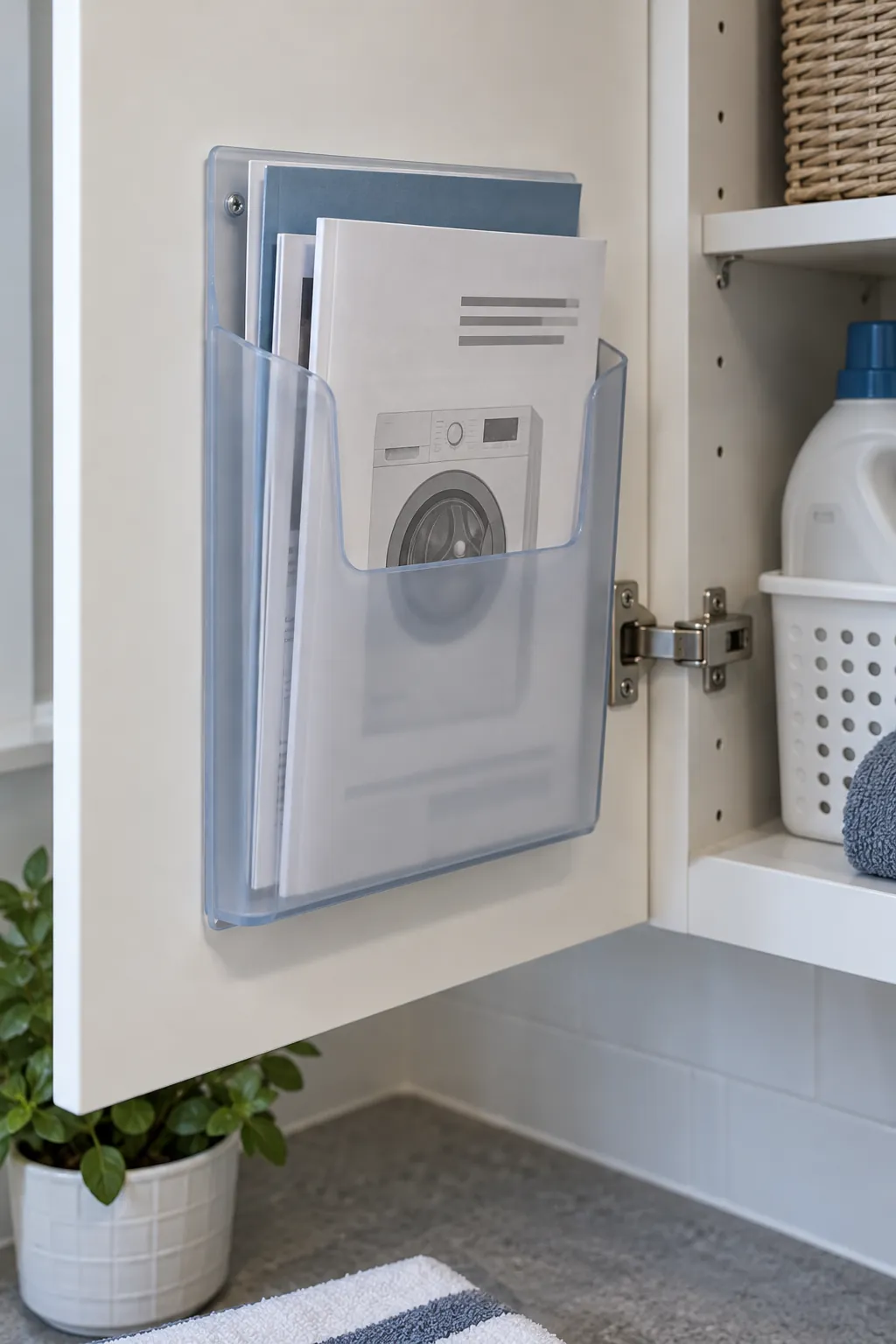
A cabinet door pocket for instruction cards
Appliance guides and garment care notes can fit in a slim pocket inside a cupboard door. Check the gap behind the closed door so paper does not catch on stored bottles. Keep the pocket away from damp sink areas.
Having the manual nearby makes clearance checks and cleaning reminders easier than searching through a household paper pile. Slip each guide into its own simple folder if loose pages tend to catch. Keep model numbers with the guides so you can confirm which instructions apply before changing the layout.
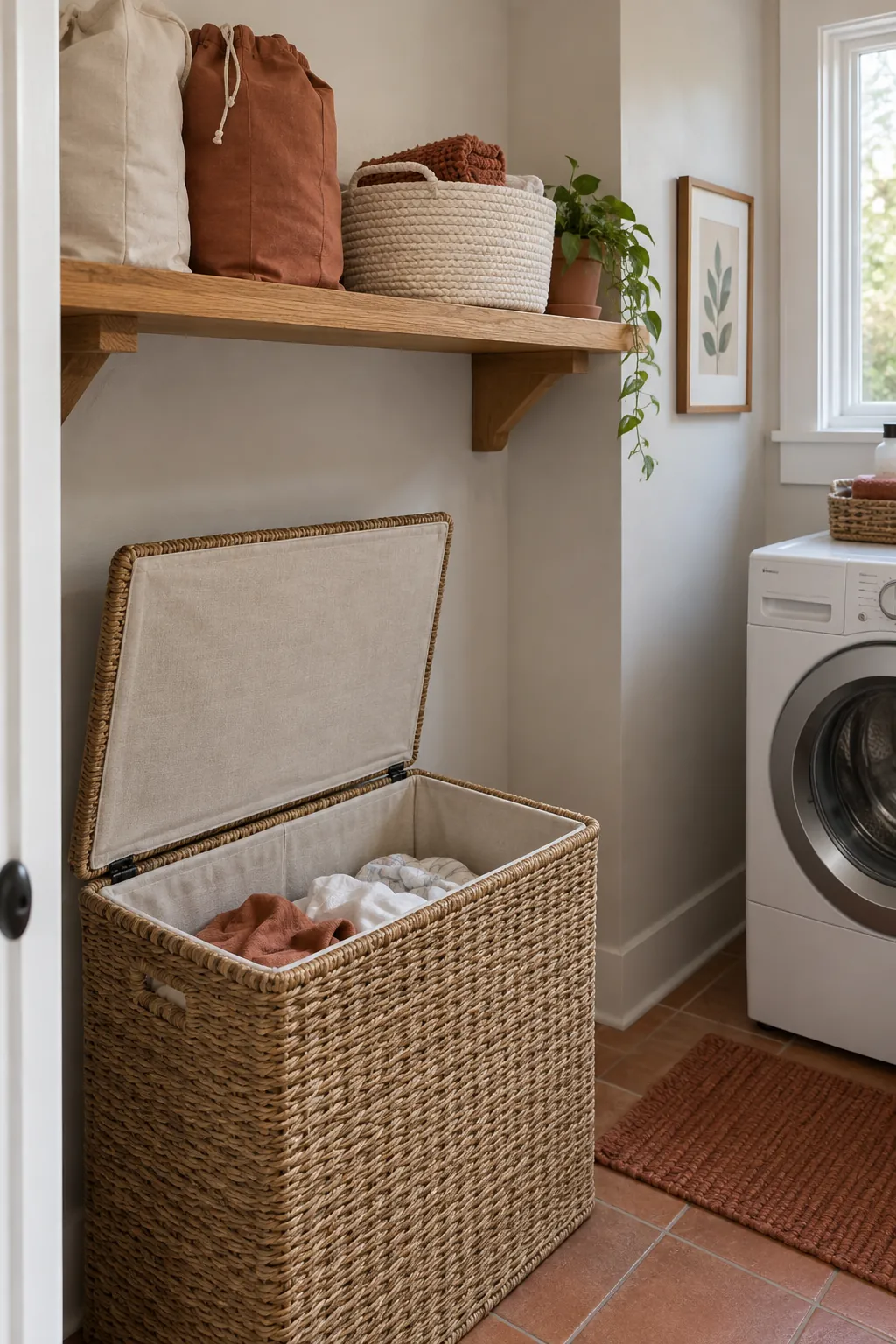
A shelf over the hamper instead of the washer
The wall above a hamper may be a better storage zone than the wall above an opening lid. Leave enough vertical space to lift the hamper lid and remove a full bag. Place dry accessories at easy reach and reserve the upper shelf for lighter occasional items. This shifts storage toward an unused zone while keeping the appliance work area clear.
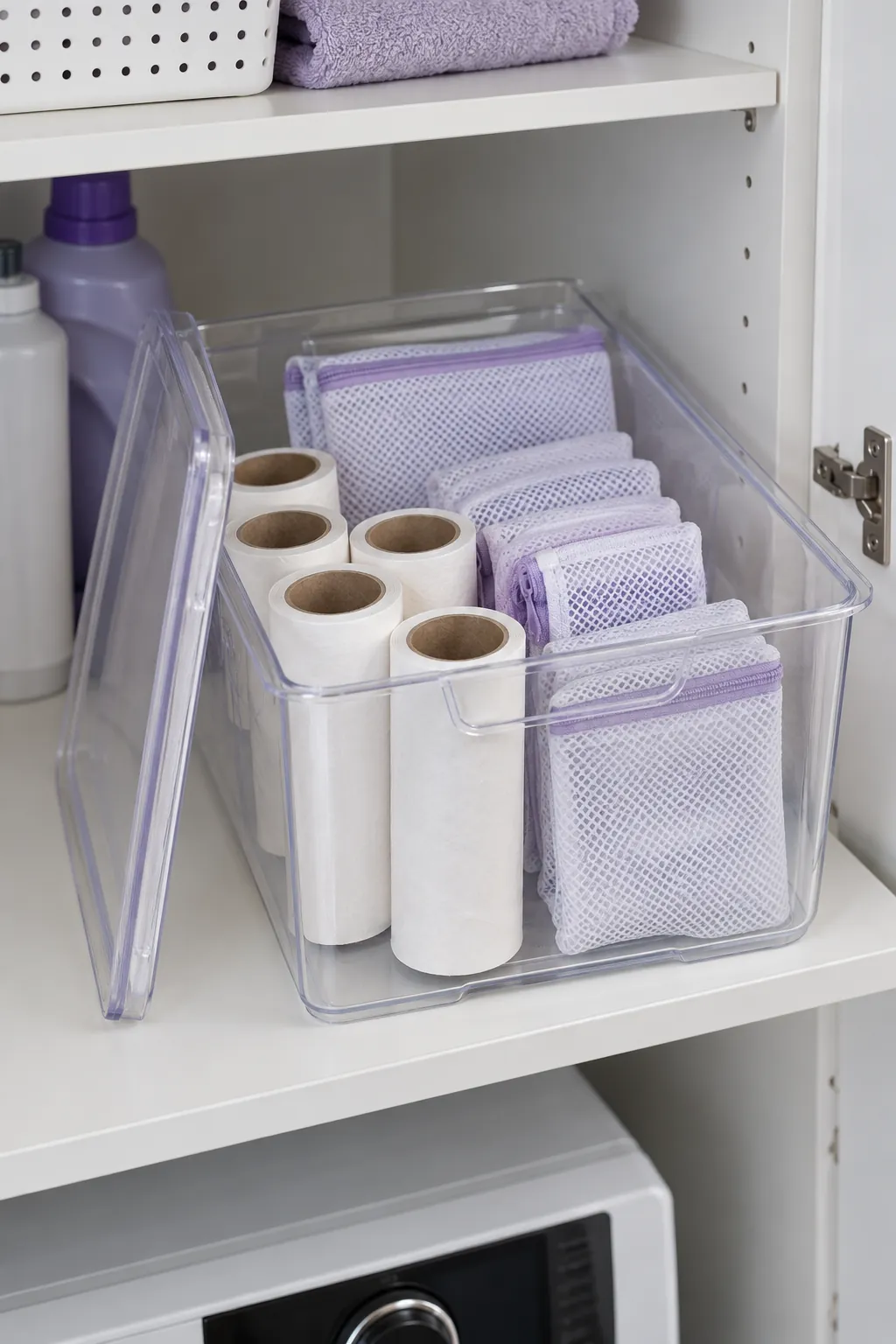
A clear bin for spare consumables
A transparent bin helps you see spare roller refills and replacement mesh bags without opening every container. Size it around the contents so the bin can slide out without scraping adjacent shelves. Keep its lid easy to lift if you use the supplies often. Chemical products still need their original packaging and any required restricted access.
A divided basket for each household routine
Two small divided baskets can separate delicate wash accessories from general laundry tools. Group them by the task performed rather than by the color of the packaging. Place the frequently used basket closest to the loading position. If either basket keeps overflowing, remove duplicates before buying a larger organizer.
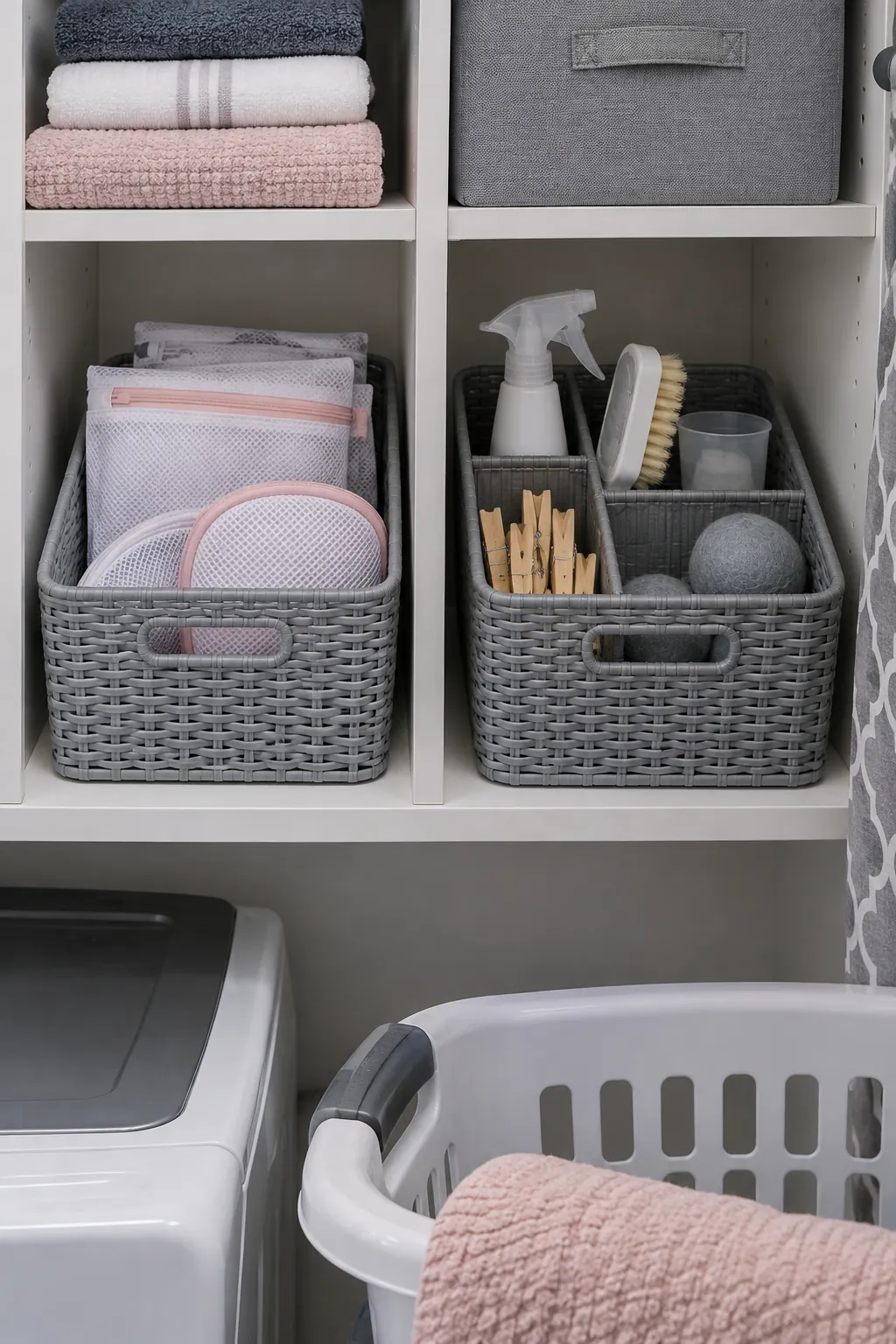
A low shelf for heavier bottles
A reachable low shelf reduces the awkward lift involved in moving large detergent containers. Keep bottles upright and use a stable washable base that contains ordinary drips. Low does not mean open to everyone, so choose locked cabinet storage when children or vulnerable household members could reach the products. Preserve enough front clearance to lift with both hands.
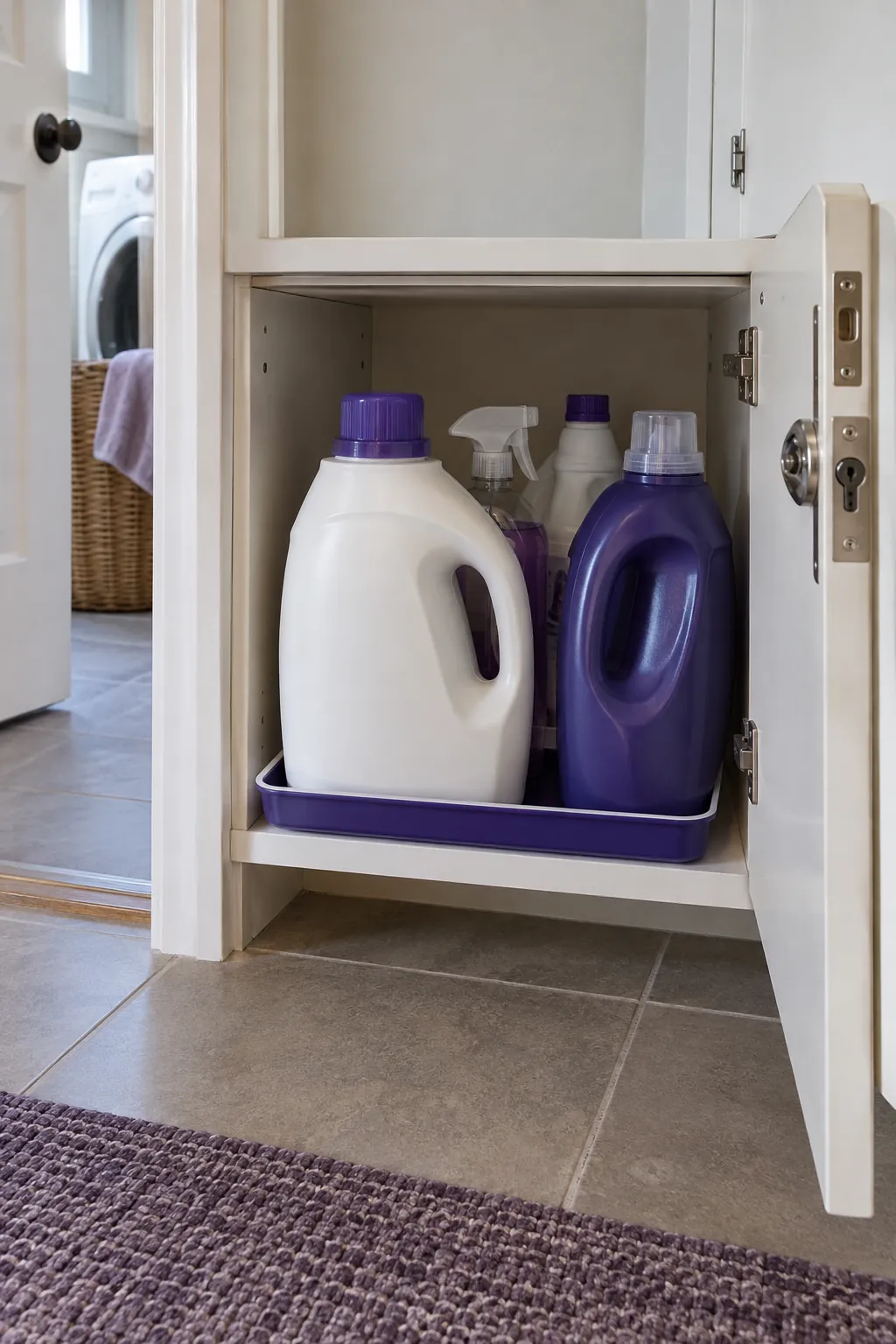
A sliding basket inside a cupboard
A properly fitted sliding basket makes deep cabinet storage accessible from the front. Check the hardware's rated load with the full contents included. Give tall bottles sufficient clearance under the shelf above and check that caps remain upright through the slide motion.
Install the basket where it does not interfere with plumbing or the door hinges. Measure the interior width between the hinges before choosing the slide assembly. Door hardware can steal the space that looks available when the cupboard is empty.
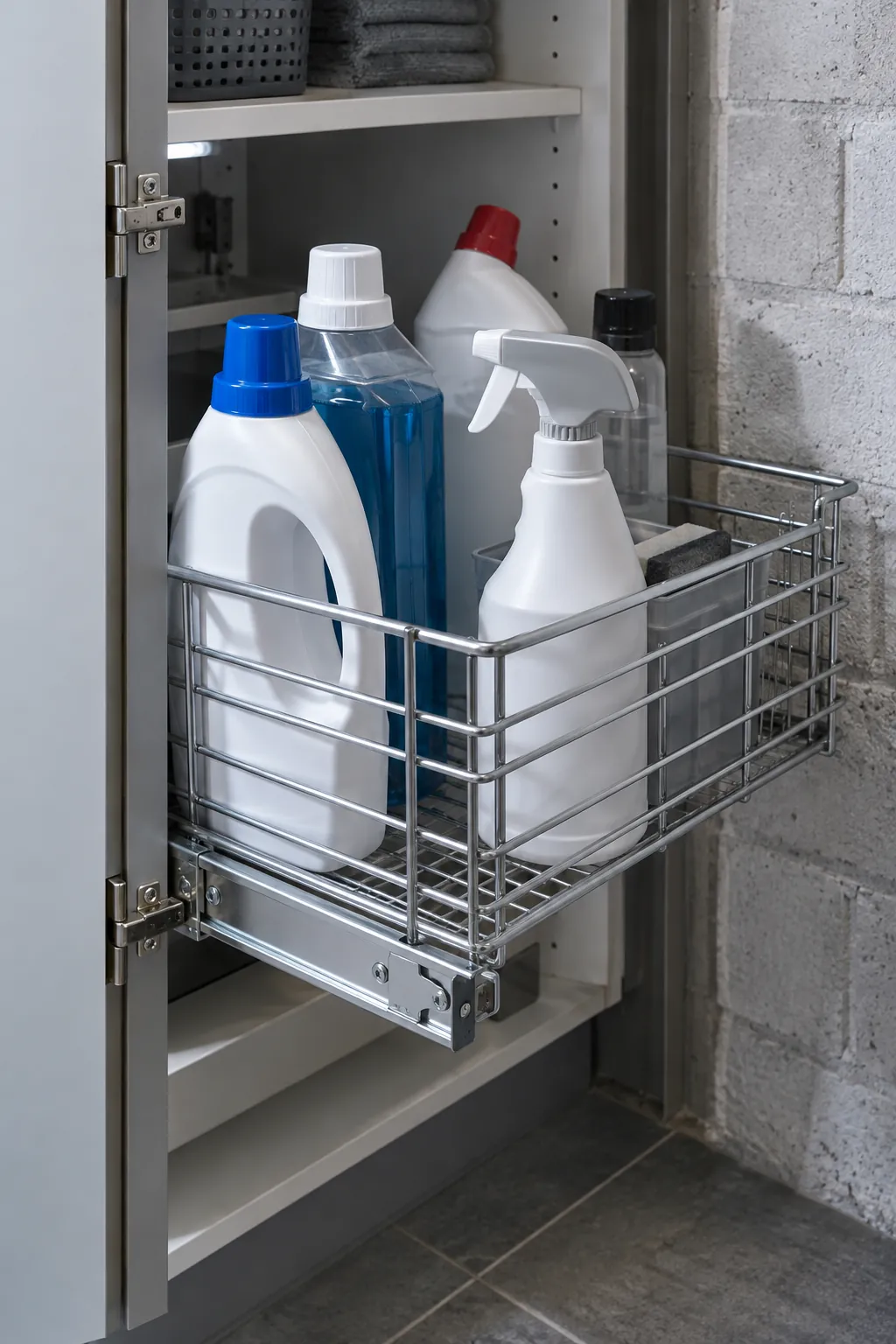
A rail basket beside the folding area
A small rail mounted basket can hold dry tools where you inspect and fold clothes. Choose a closed bottom so small refills do not drop through the wires. Keep the folding surface itself clear except for the garment being handled. Mount the basket below shoulder level if reaching overhead would make returning tools awkward.
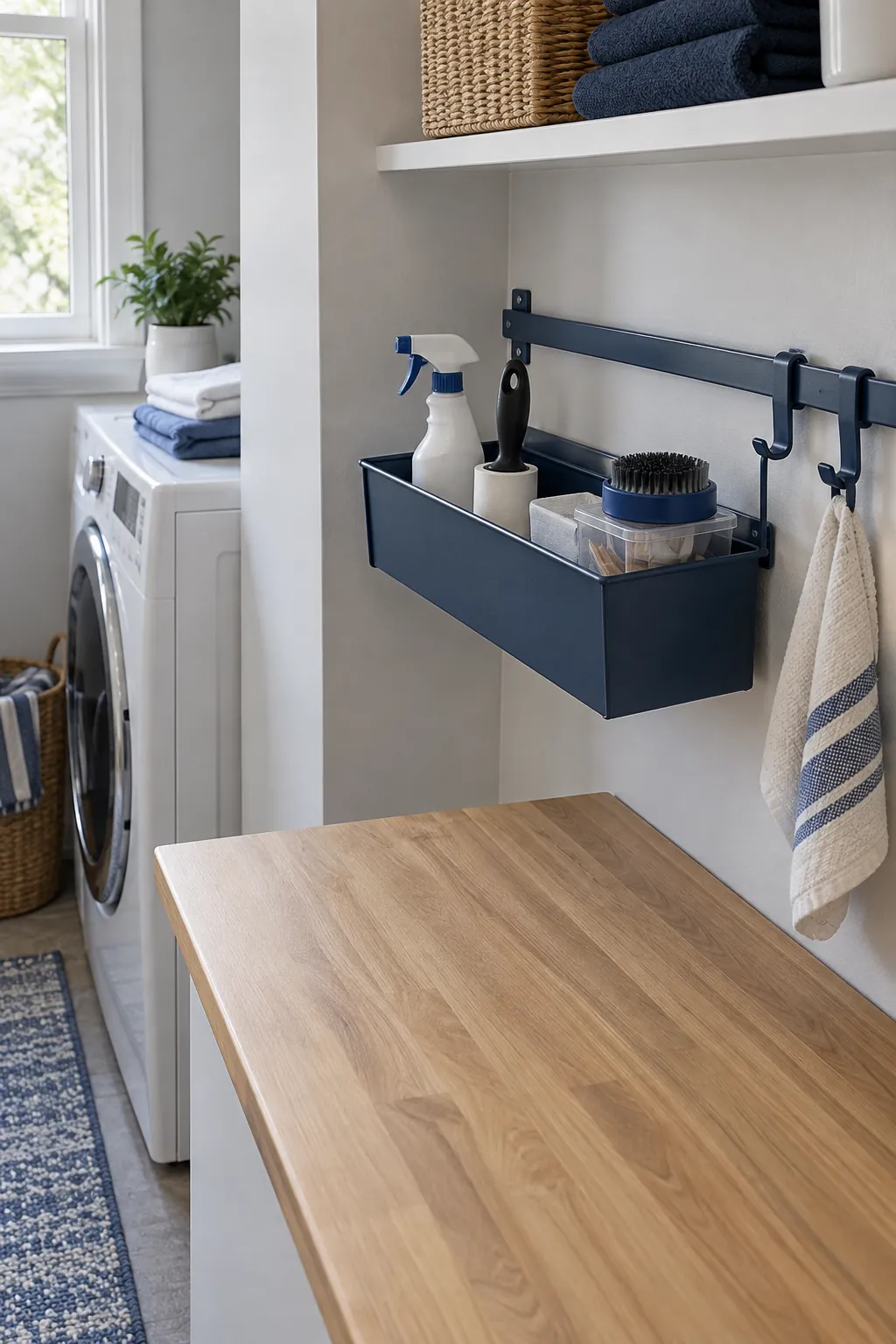
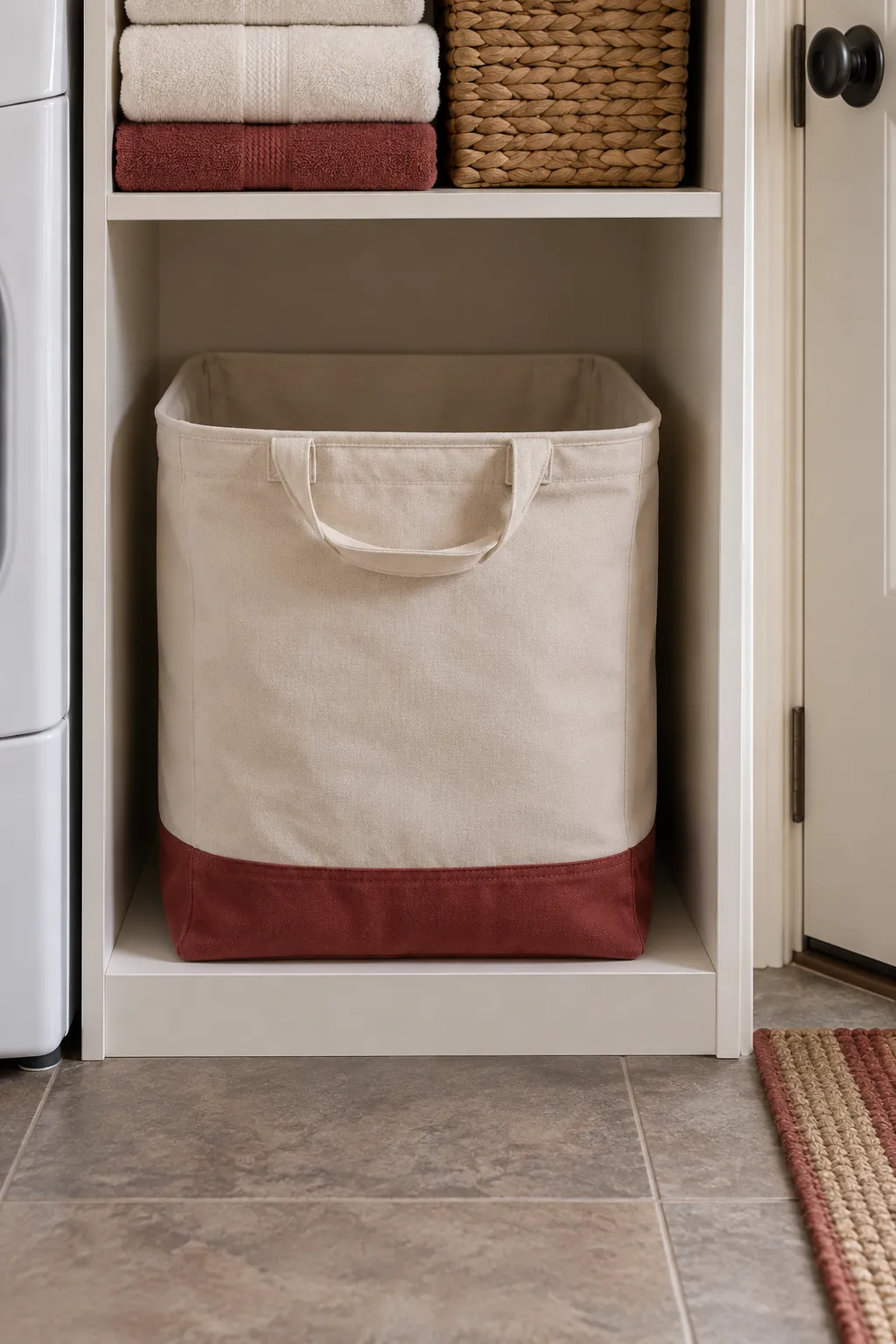
An open cubby for an empty laundry tote
A single cubby gives an empty tote a home so it stops sitting across both machines. Measure the tote with its handles folded down and leave finger space at the sides. Keep the cubby separate from chemical storage because the tote will touch clothing. Return it empty after putting laundry away rather than treating it as another long term storage bin.
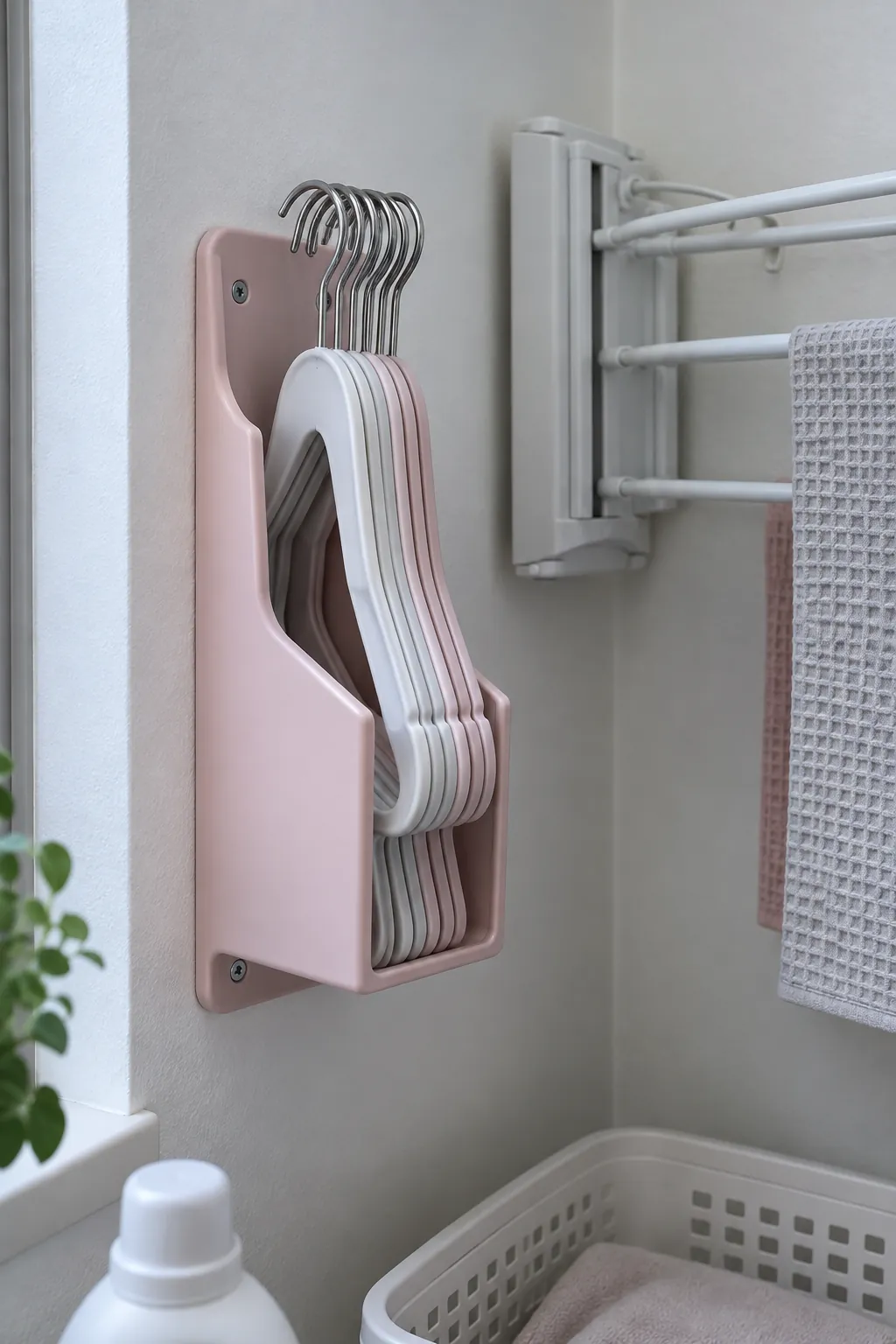
A wall holder for spare hangers
A purpose made hanger holder can gather spare hangers without leaving hooks tangled on the dryer. Check that the holder supports the hanger size you actually use. Install it near the drying zone with enough space to lift hangers free. Keep only a manageable working supply in the room, moving extras to the wardrobe.
A single daily supply zone with room to return things
Choose one existing shelf or cabinet compartment as the home for everything needed in a normal wash. Place products and tools where their handles can be reached without moving another item first. Leave a visible gap rather than filling the shelf to its edge, because a crowded home encourages supplies to land on the machines again. After the next wash, notice which item stayed out and change its storage position before adding another organizer.