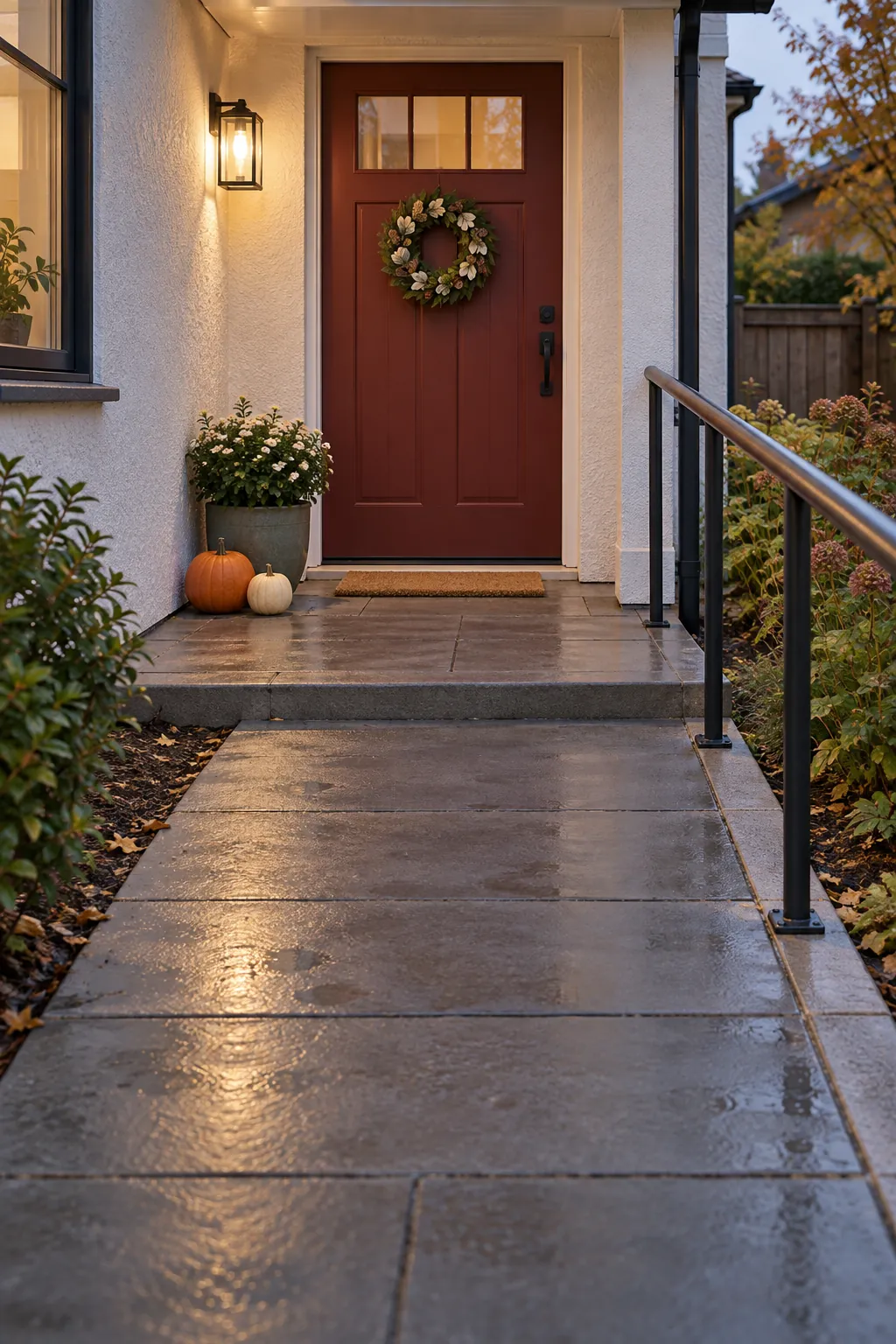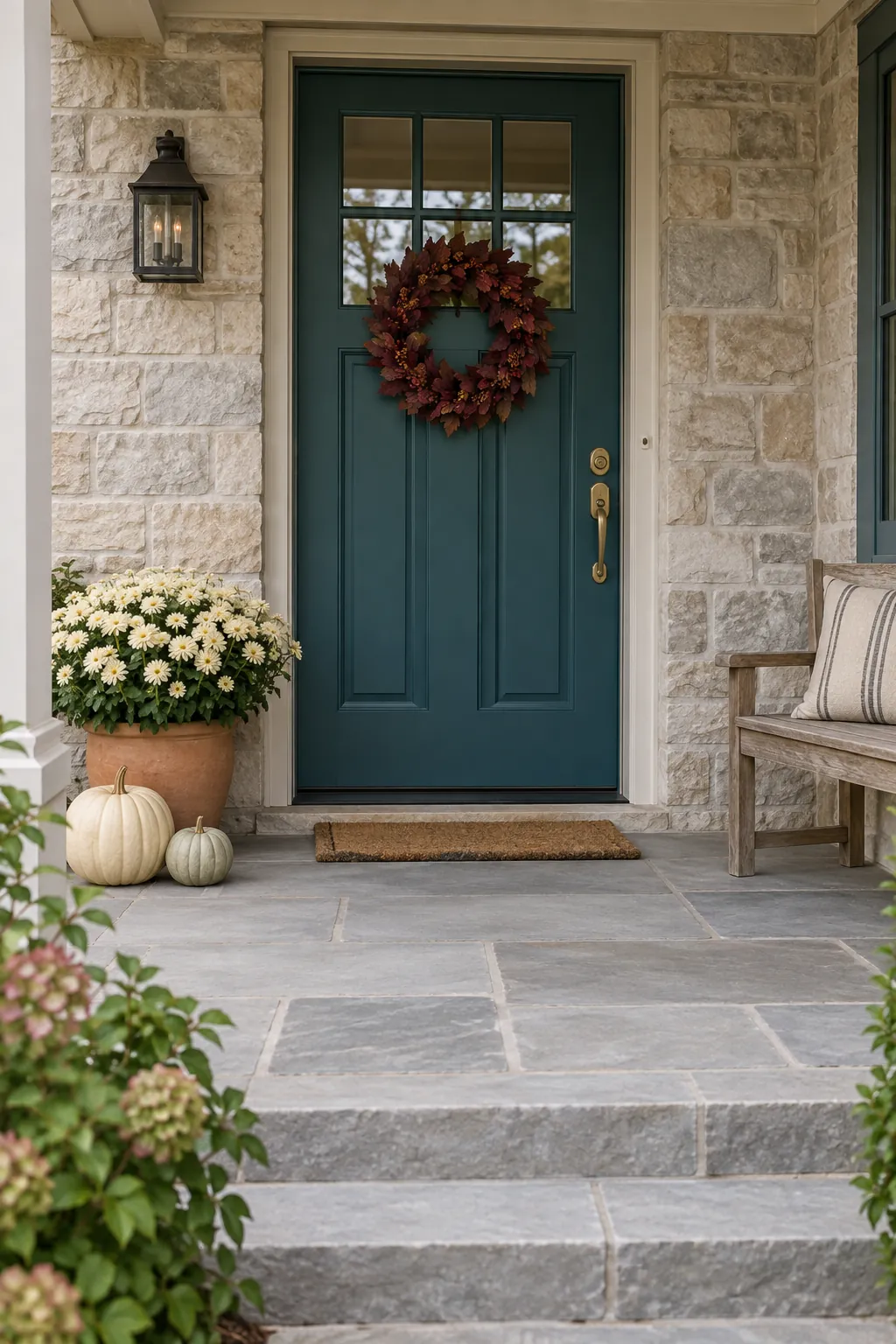
The best place for a pumpkin is not always the empty spot beside your feet. Before choosing colors, open the door fully, check where rain reaches, and notice the route visitors actually use. Those small checks make autumn decorating easier to live with and help you spend your effort where it will be seen.
Let One Leaf Wreath Carry the Color
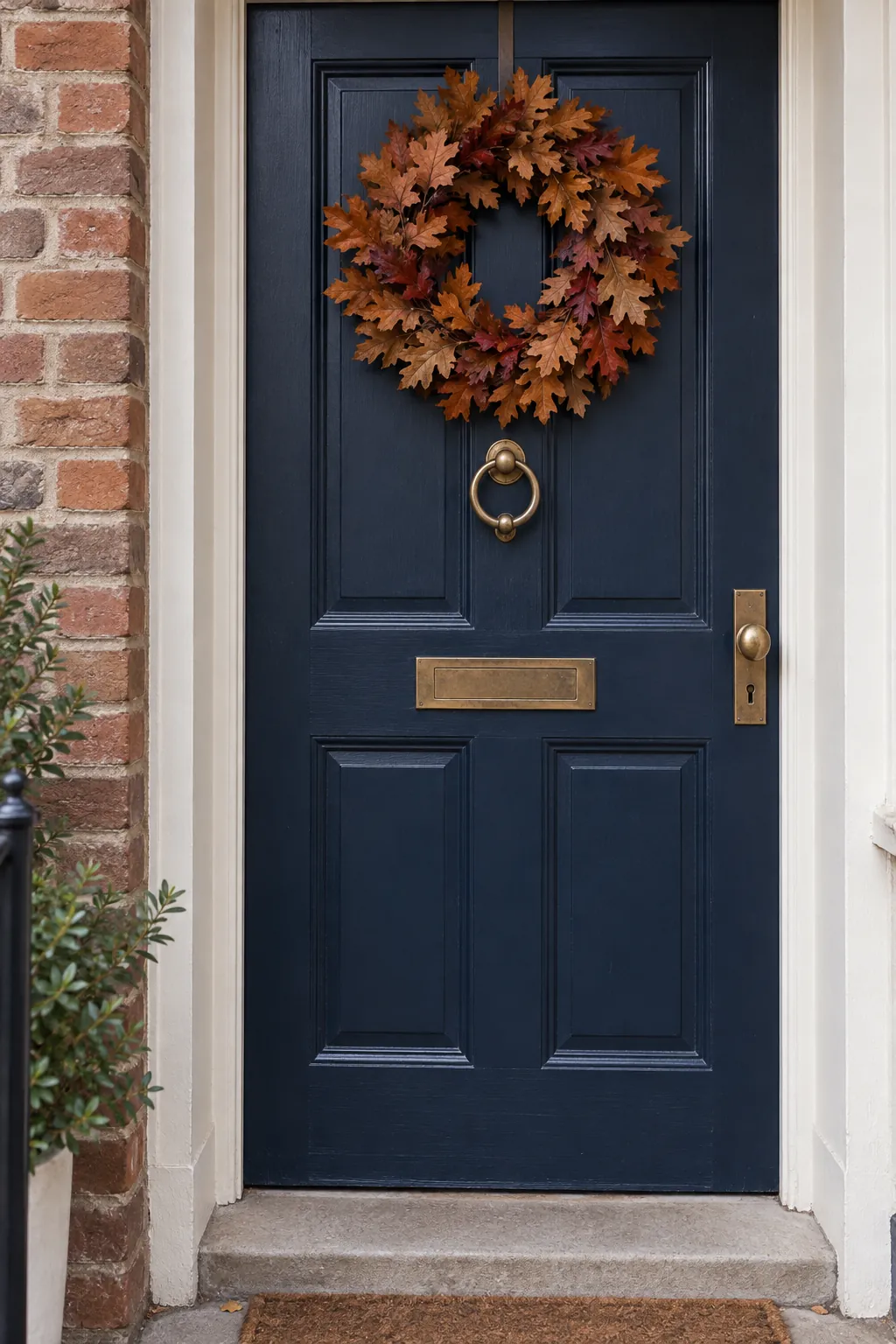
A single leaf wreath can be enough when your door already has a strong color or interesting panels. Choose foliage that contrasts with the finish, such as russet leaves against navy or burgundy against pale grey. Check the diameter against the handle and any glass panel before hanging it. A sheltered door gives fabric leaves a better chance of staying tidy than an entry exposed to driving rain.
Use a Shallow Basket Instead of a Ring
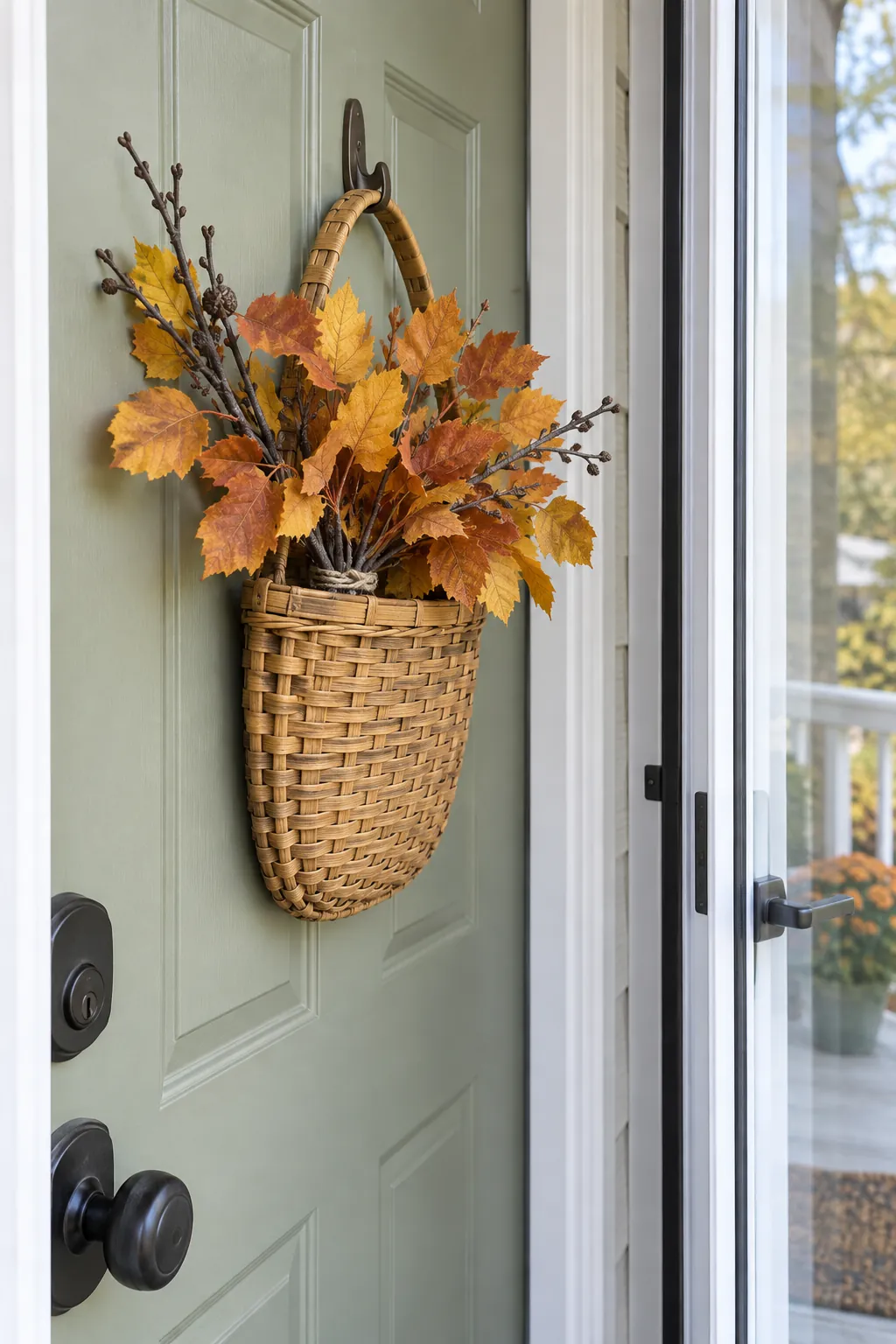
A flat backed basket changes the outline of autumn front door decor without taking over the doorway. Fill it with a short bundle of faux branches and secure the stems inside so opening the door cannot shake them loose. Keep the arrangement shallow enough for the storm door to close, and check the hanger's weight rating with the basket filled.
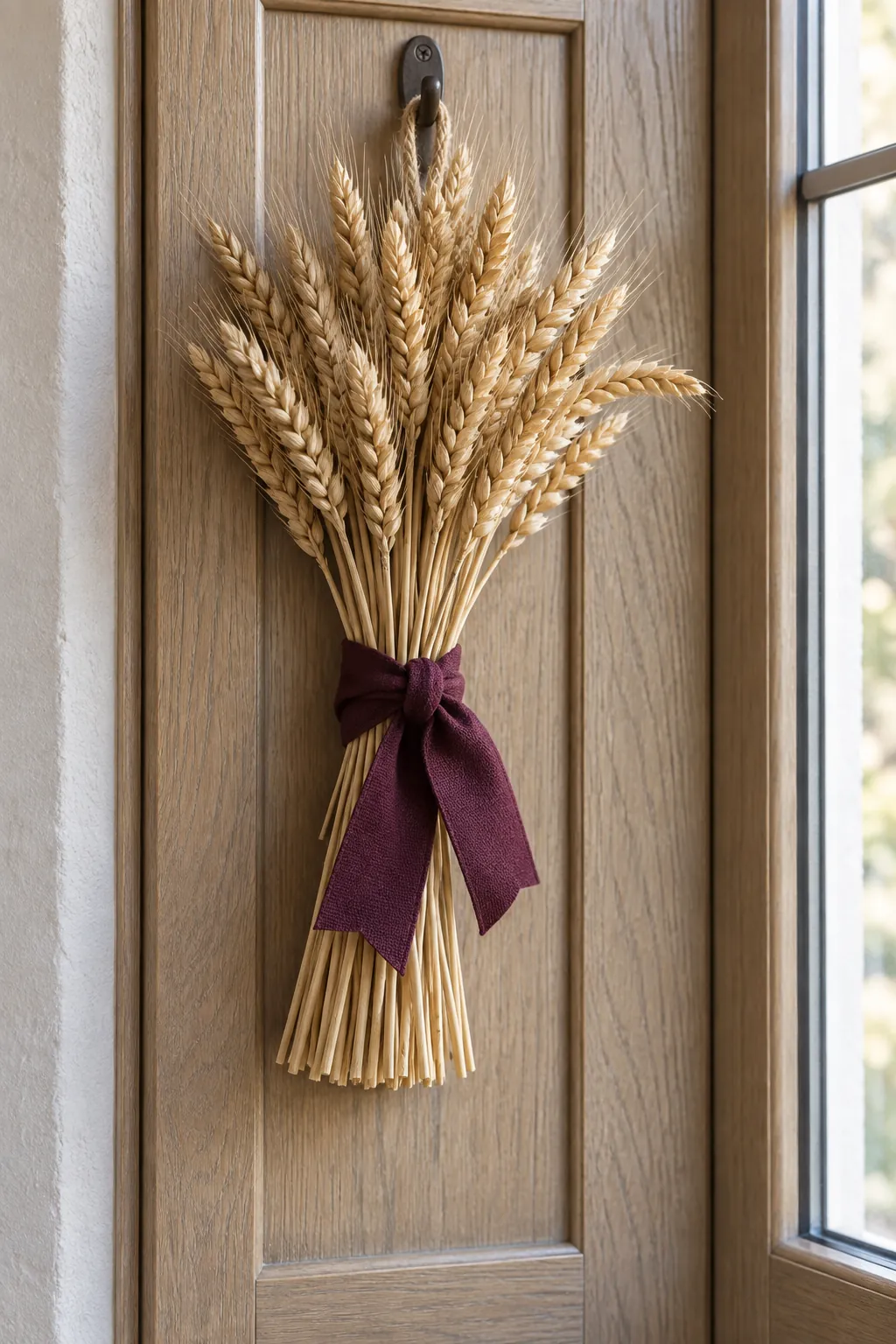
Tie a Wheat Bundle with a Wide Ribbon
A small bundle of dried wheat gives a plain door a quiet harvest accent. Tie the stems firmly before adding a wide ribbon, keeping the cut ends even and away from the latch. Real dried material belongs in a protected spot and can shed, so choose a convincing faux bundle where rain or frequent handling would be a problem. Store it upright in a container that does not crush the seed heads.
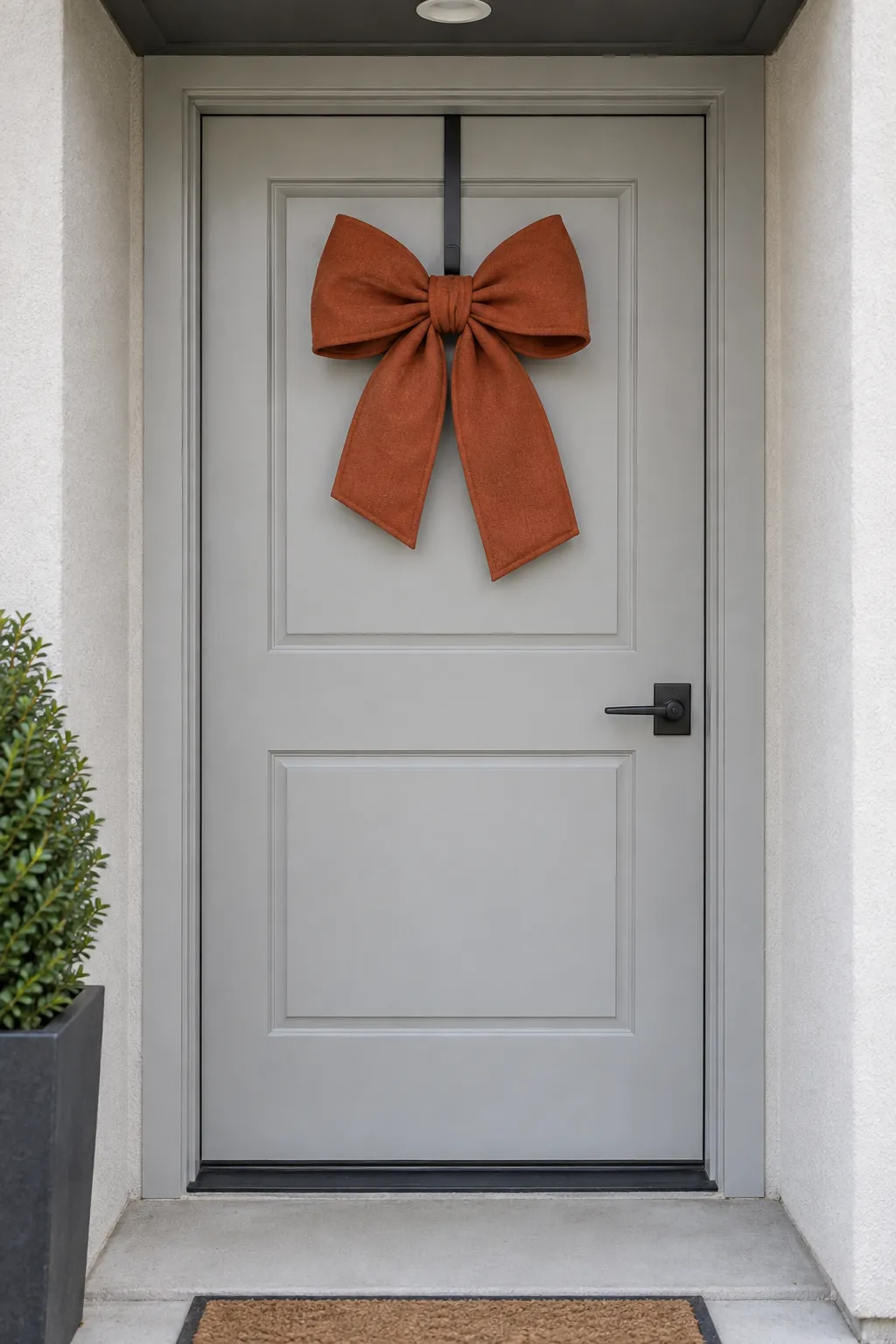
Choose One Oversized Bow
A broad fabric bow can supply seasonal color where a bulky wreath would interfere with a storm door. Use ribbon with enough body to hold its loops and attach it to a slim suitable hanger. Let the tails stop above the handle rather than flutter across it.
Try a deep rust or plum shade against your existing door finish. Check the door's movement before leaving the bow in place. If the entrance catches strong wind, shorten the tails and use an attachment designed for the conditions.
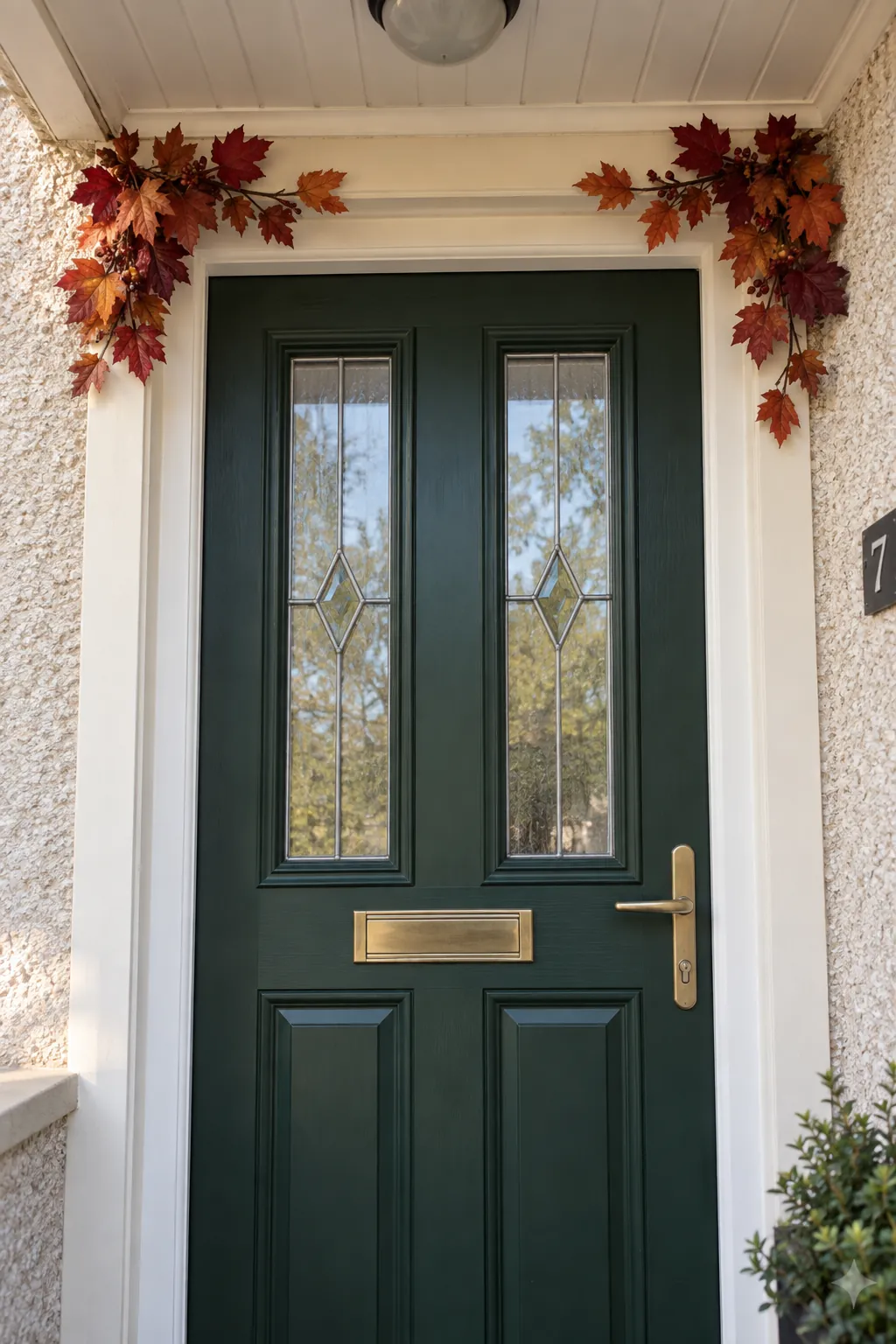
Frame the Upper Corners with a Short Garland
A garland need not surround the whole doorway to make it feel seasonal. Place short sections near the upper corners and leave the lower jambs clean, especially where bags and coats brush past. Use fixings compatible with the surface and keep leaves clear of the door seal. A restrained frame is easier to remove and store than a dense arch.
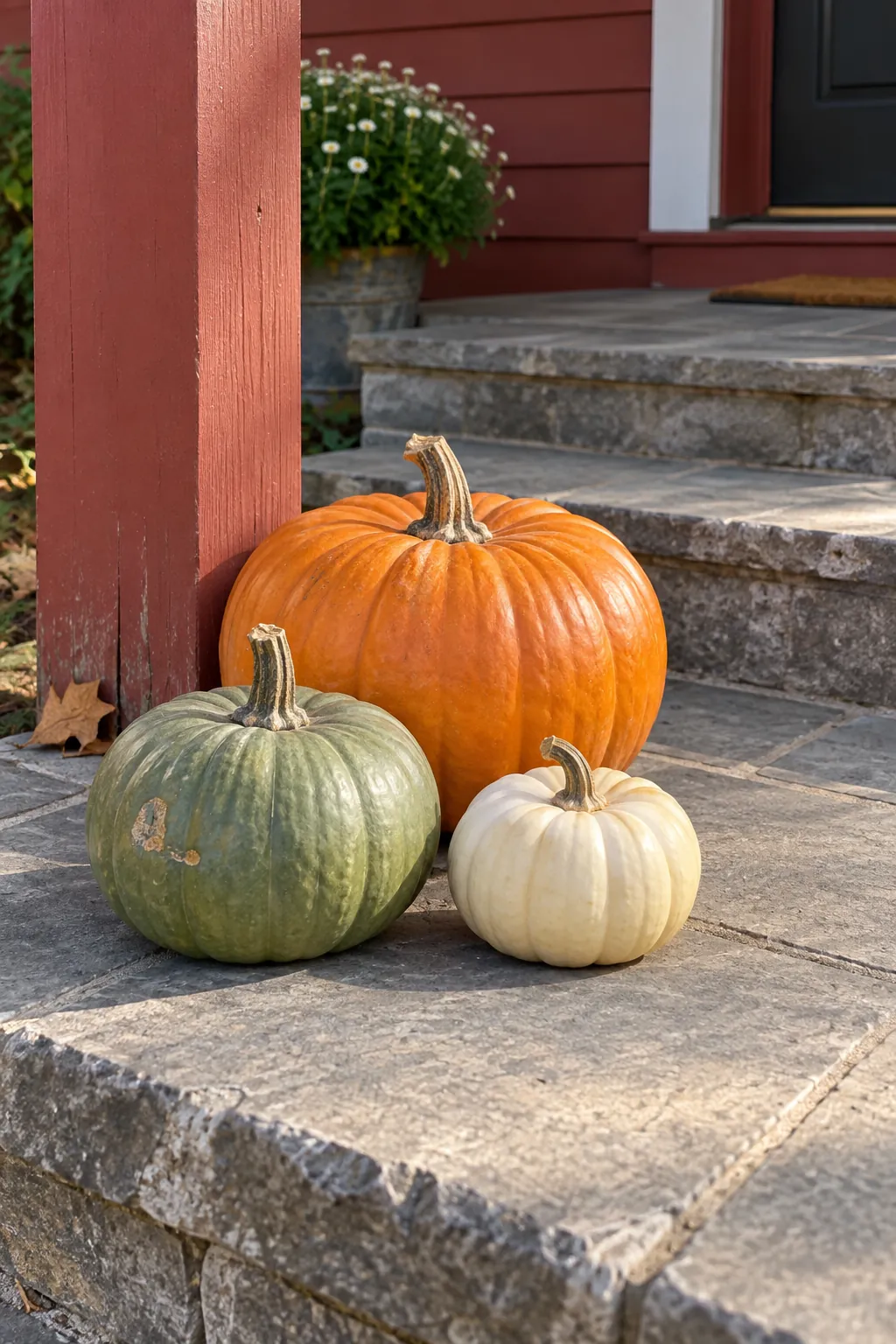
Group Three Pumpkins Beside the Landing
Three pumpkins with noticeably different sizes make a clear group without filling every step. Put the largest behind the others on a level area beside the landing, keeping the actual walking surface open. Inspect real pumpkins regularly and remove any that soften or leak, particularly on porous stone or timber.
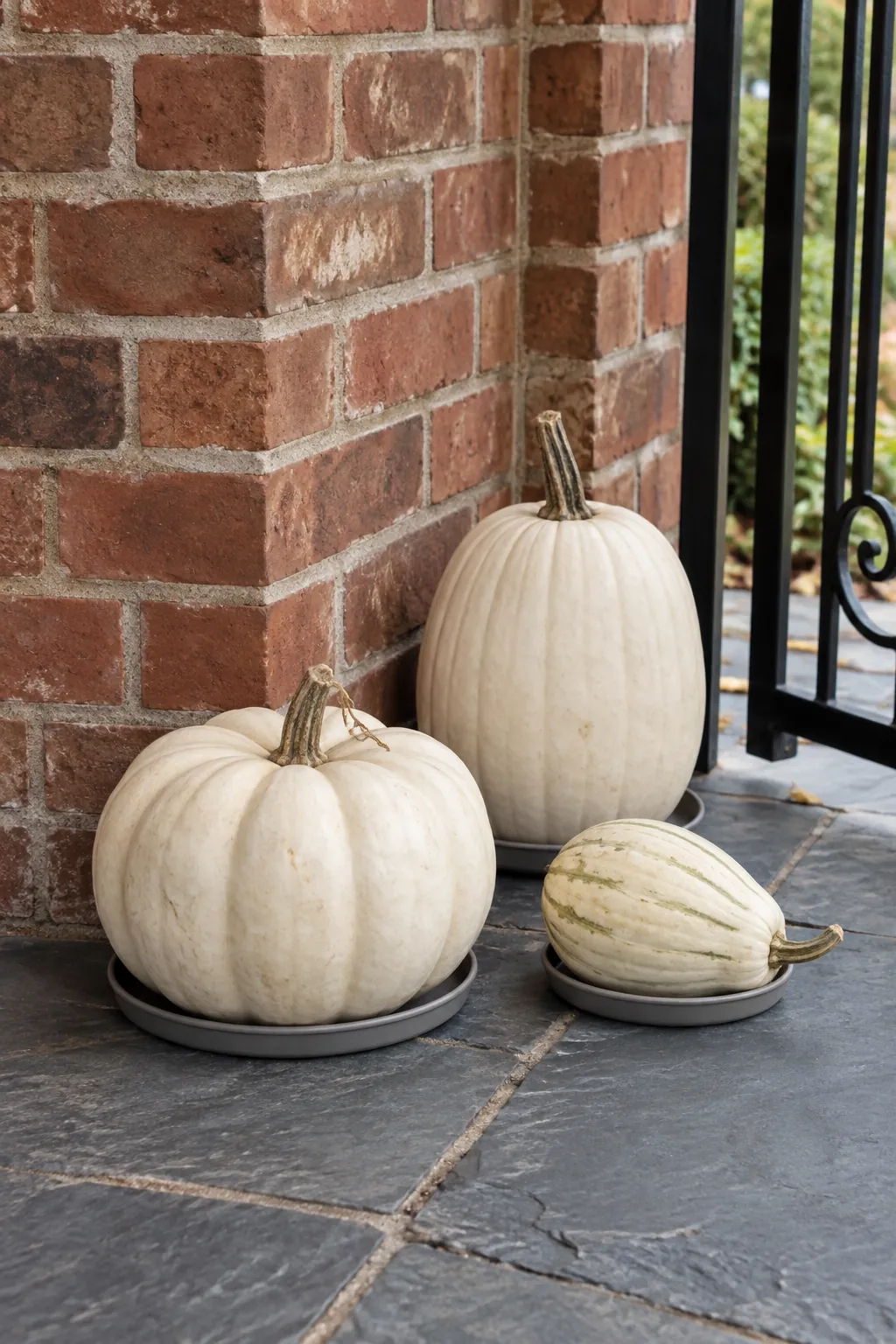
Make White Pumpkins Stand Out Against Brick
Pale pumpkins offer a useful contrast when orange fruit disappears against a warm brick facade. Combine a few different shapes instead of relying on many identical pieces. Set them on discreet protective trays where moisture might mark the surface, and leave gaps that make checking their condition easy.
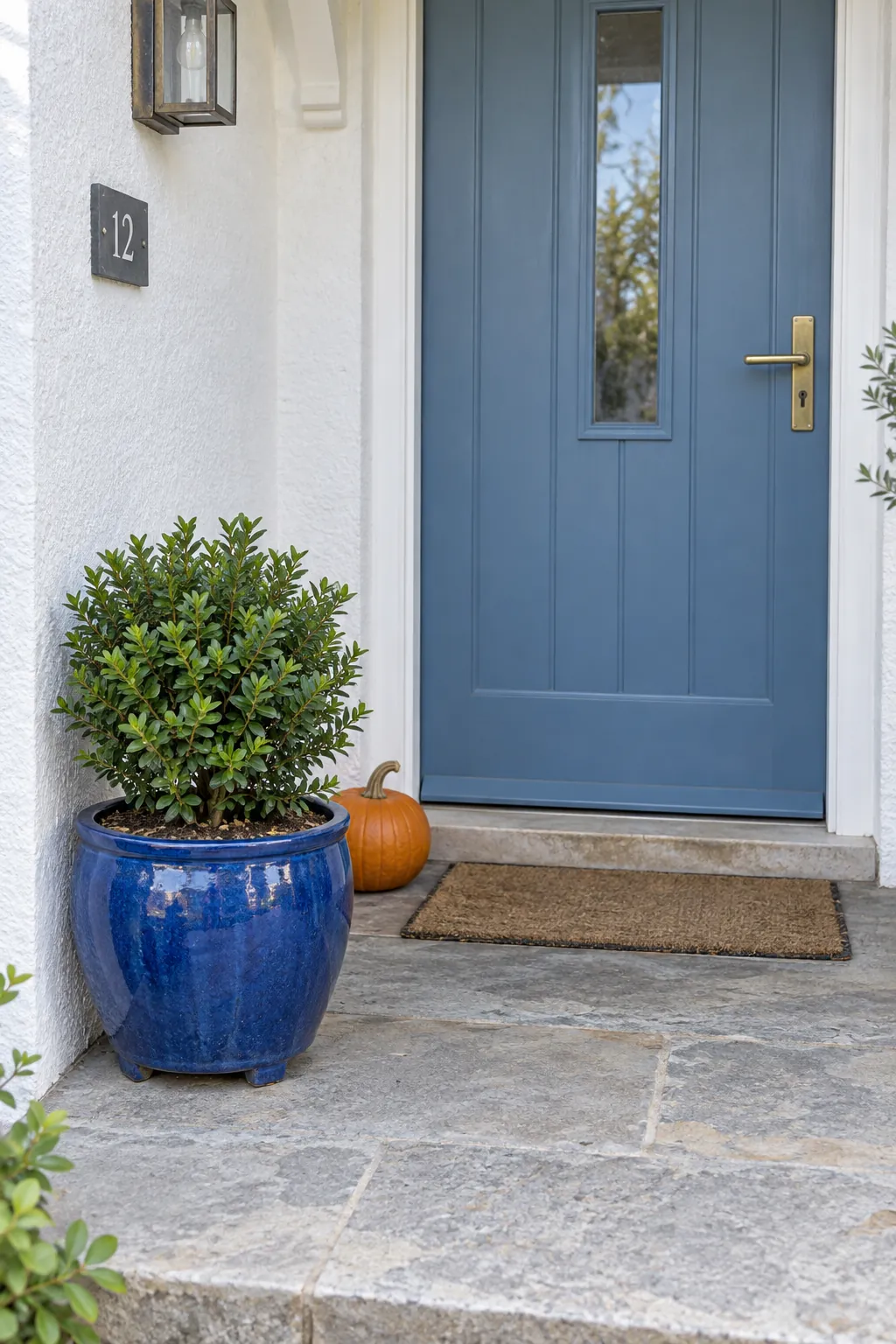
Repeat the Door Color in a Planter
A small echo of your door color can connect the entrance without matching every object. A burgundy door might pick up dark foliage in a planter, while a blue door could pair with a blue glazed pot. Keep the plants suited to the actual light and climate, then use pumpkins or ribbon for the seasonal detail.
Leave enough space around the pot for watering. A decorative container still needs suitable drainage for living plants. The planter can remain after autumn while the smaller accents change.
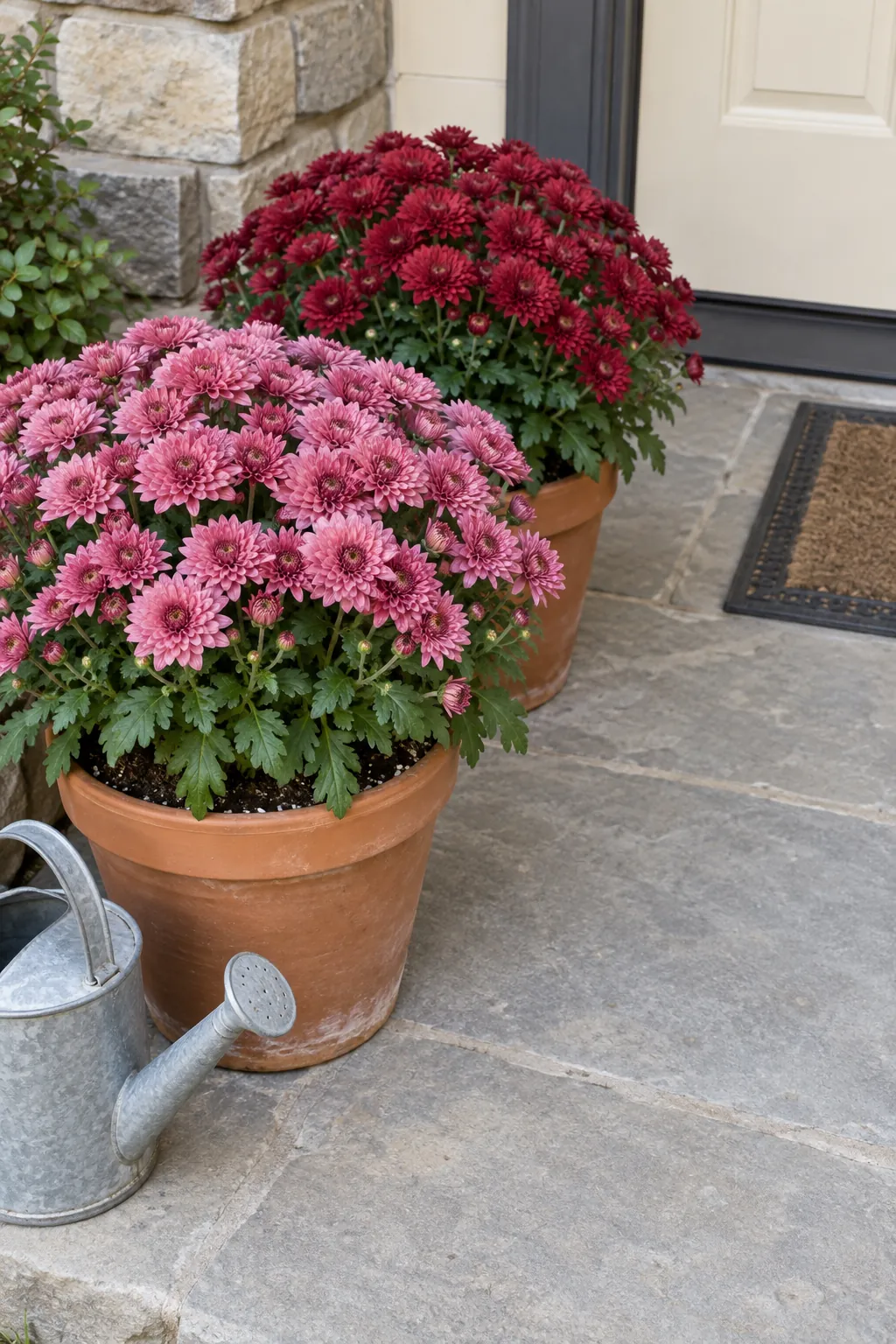
Give Mums Room to Be Watered
Potted mums bring dense color close to the entrance, but a pretty grouping still needs practical care. Position them where you can reach the soil and follow the plant's care needs for light and moisture rather than treating the pot as a disposable prop. Remove any decorative wrapping that prevents drainage. Choose fewer healthy plants over a crowded bank of pots that blocks the doorway.
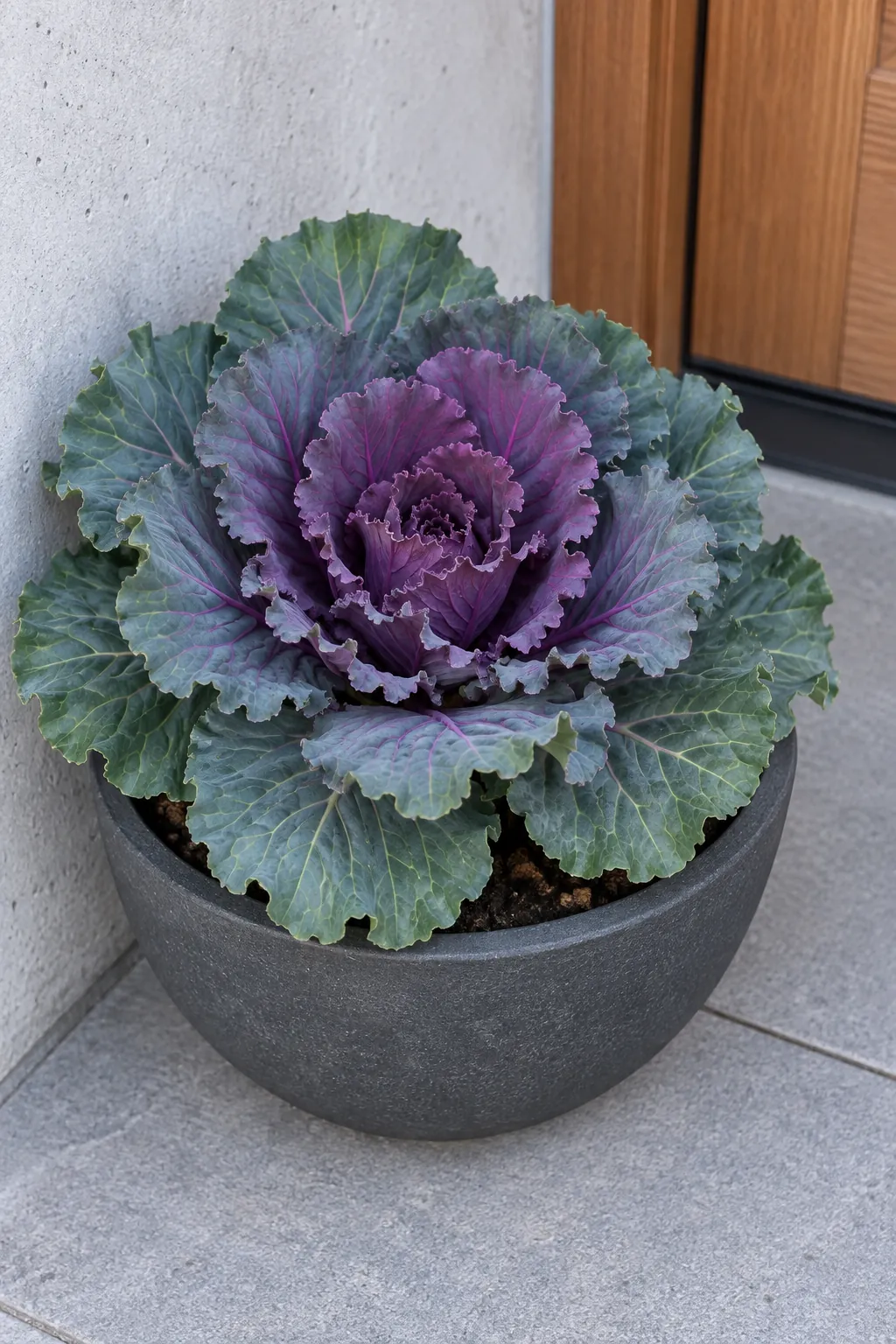
Try Ornamental Cabbage for Leaf Texture
Ornamental cabbage or kale adds broad ruffled foliage to fall exterior decor without another flower color. Check local suitability and the nursery's care guidance before using it at your entry. Pair one plant with a simple pot so the leaf shape remains visible, and keep the container out of the door's swing.
Use Existing Lanterns with Battery Candles
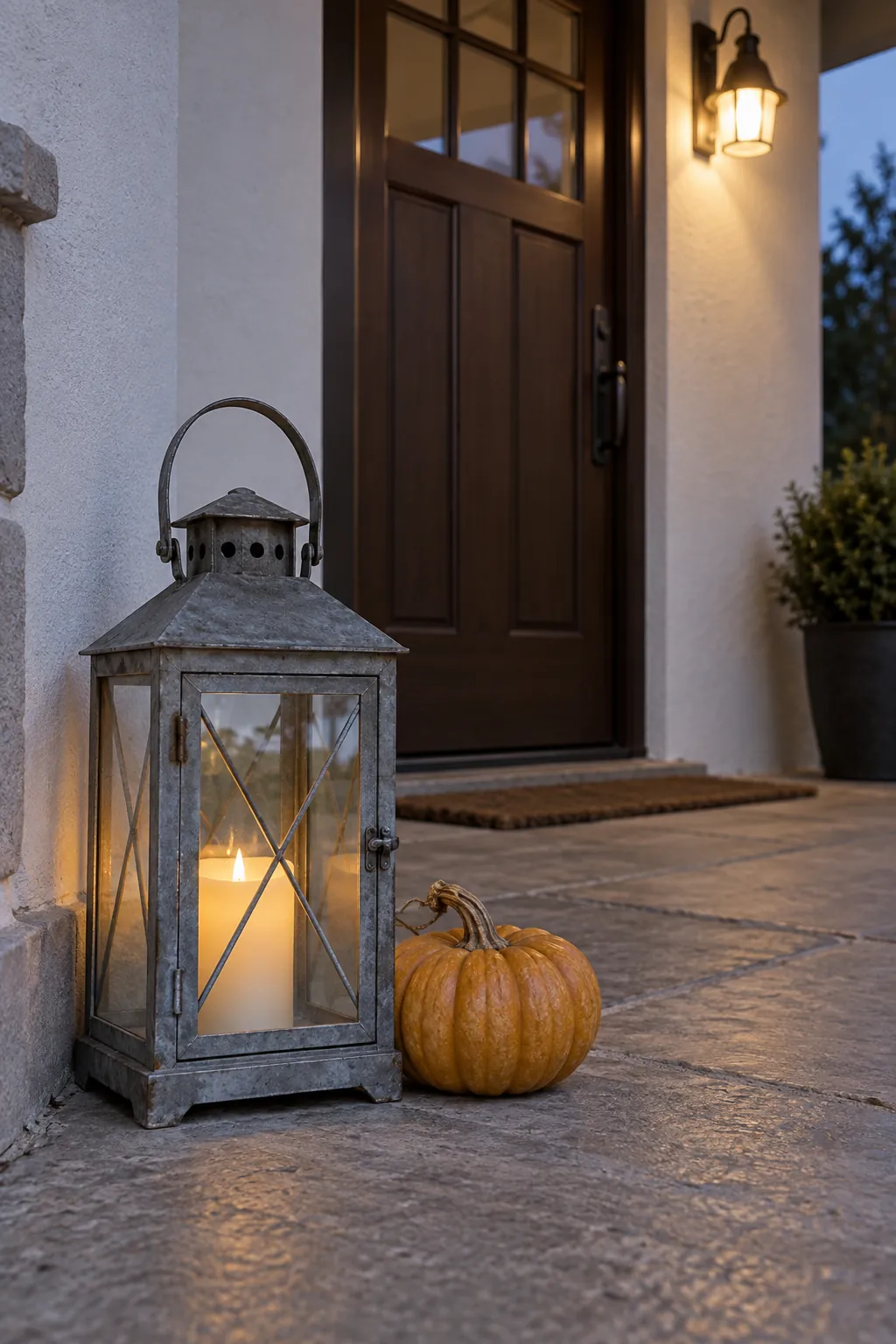
A lantern already used on the porch can become autumnal with one pumpkin placed beside it. Choose a battery candle and lantern rated for the exposure if the spot is outdoors. Keep both objects on a stable surface away from the walking line, and remember that decorative glow does not replace a working entrance light.
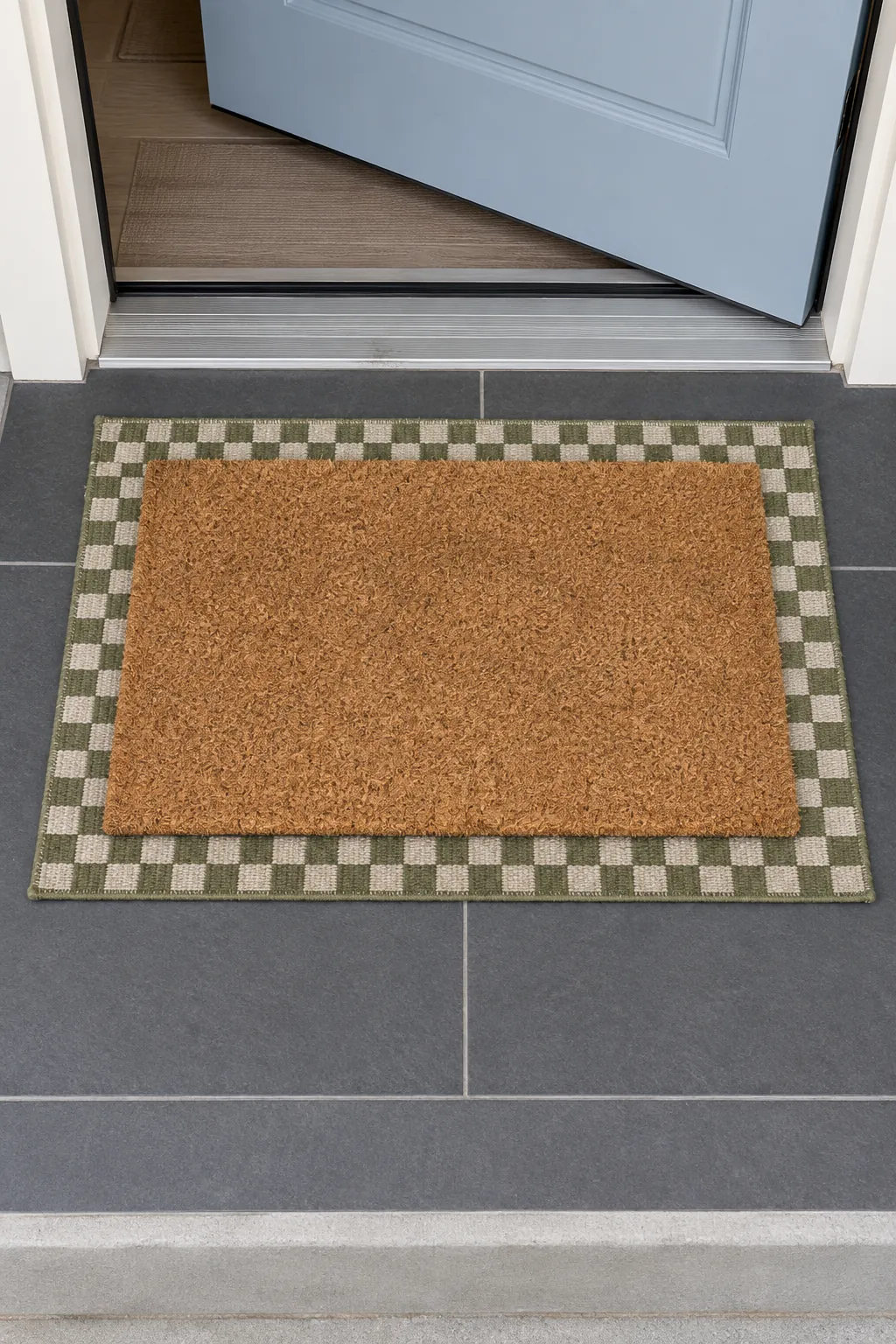
Put a Washable Mat Beneath a Coir Mat
Layered mats can add pattern near an otherwise plain door, provided the combined thickness does not catch the door or create a raised edge. Use an outdoor suitable base mat that lies flat and stays in place on your surface. Check how the layers behave when wet before making them part of a busy entrance.
A small check or stripe is easier to pair with other autumn decorations than a large slogan. Shake out grit regularly so it does not collect between layers. Skip the second mat entirely if the landing is too narrow for flat edges.
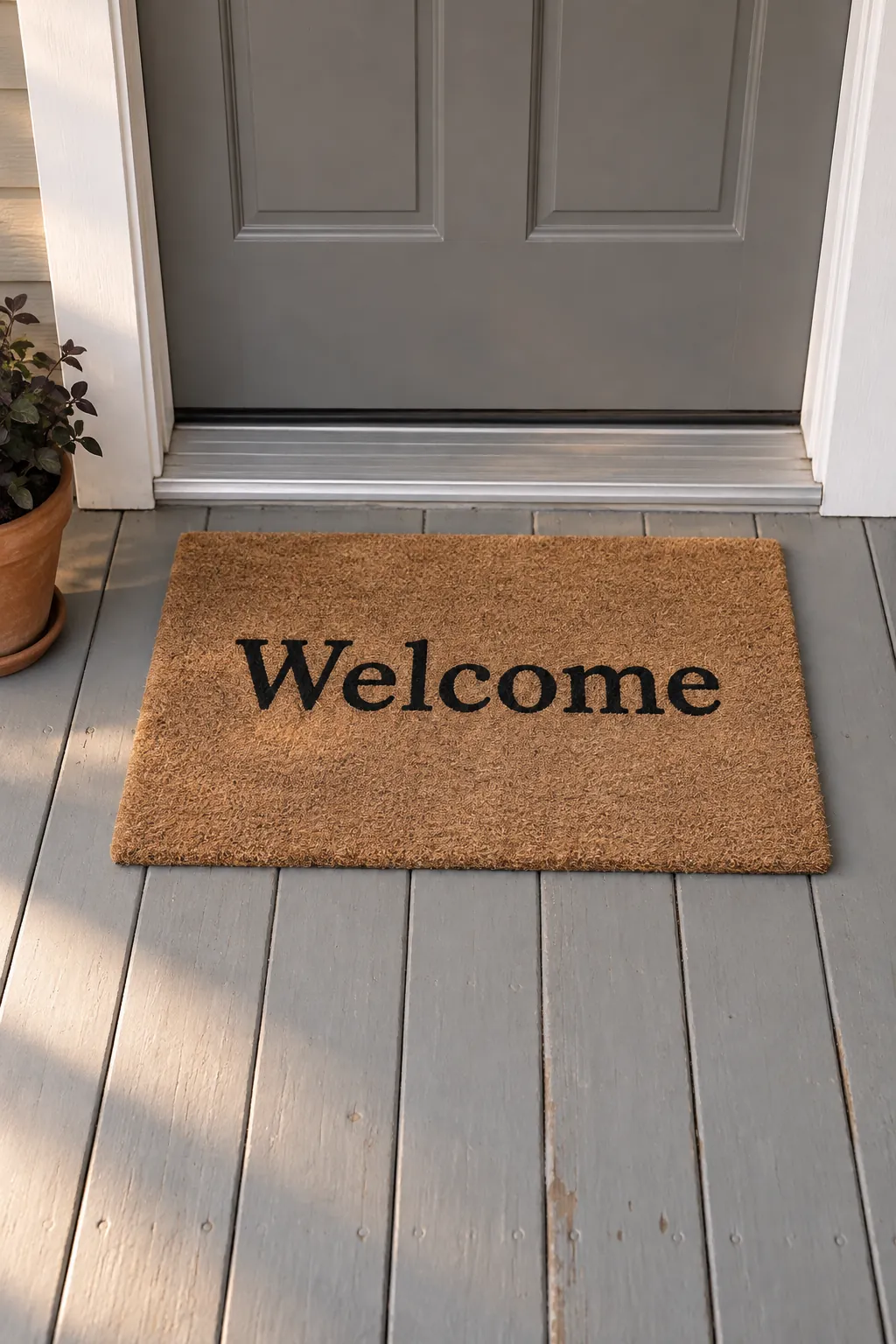
Switch to One Clear Welcome Mat
A single well sized mat often looks calmer than several stacked patterns. Choose a simple welcome design or a plain textured surface that leaves the threshold visible. Measure for door clearance and pick a backing appropriate to the floor, especially on a sheltered timber porch where trapped moisture matters.
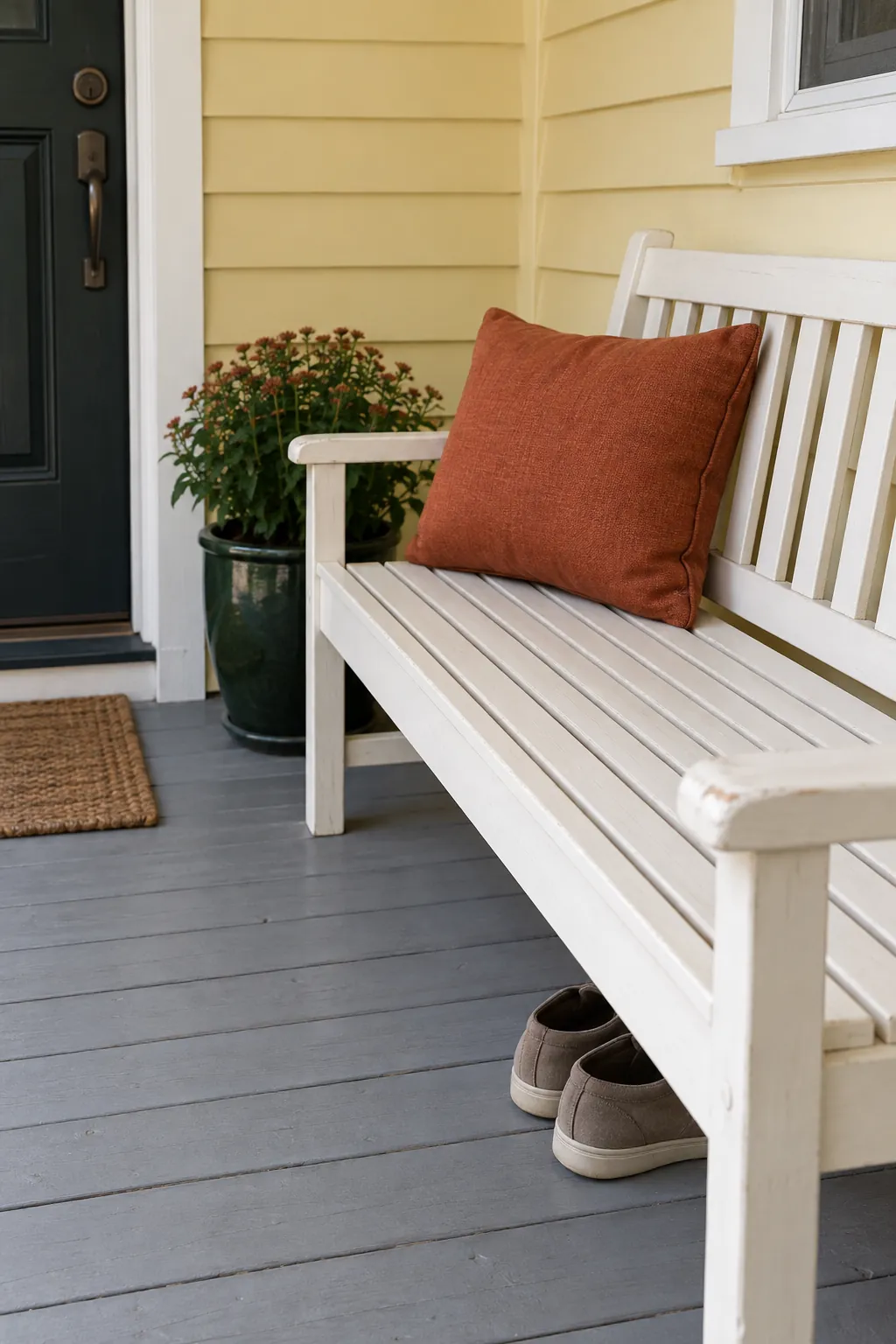
Add a Small Bench Cushion in Rust
An existing porch bench can join the season with one rust colored cushion. Use a cover suitable for its exposure and bring it in when conditions exceed its rating. Leave most of the seat free so the bench still helps with shoes or shopping bags. Repeating that rust tone in one nearby pot is enough to connect the arrangement.
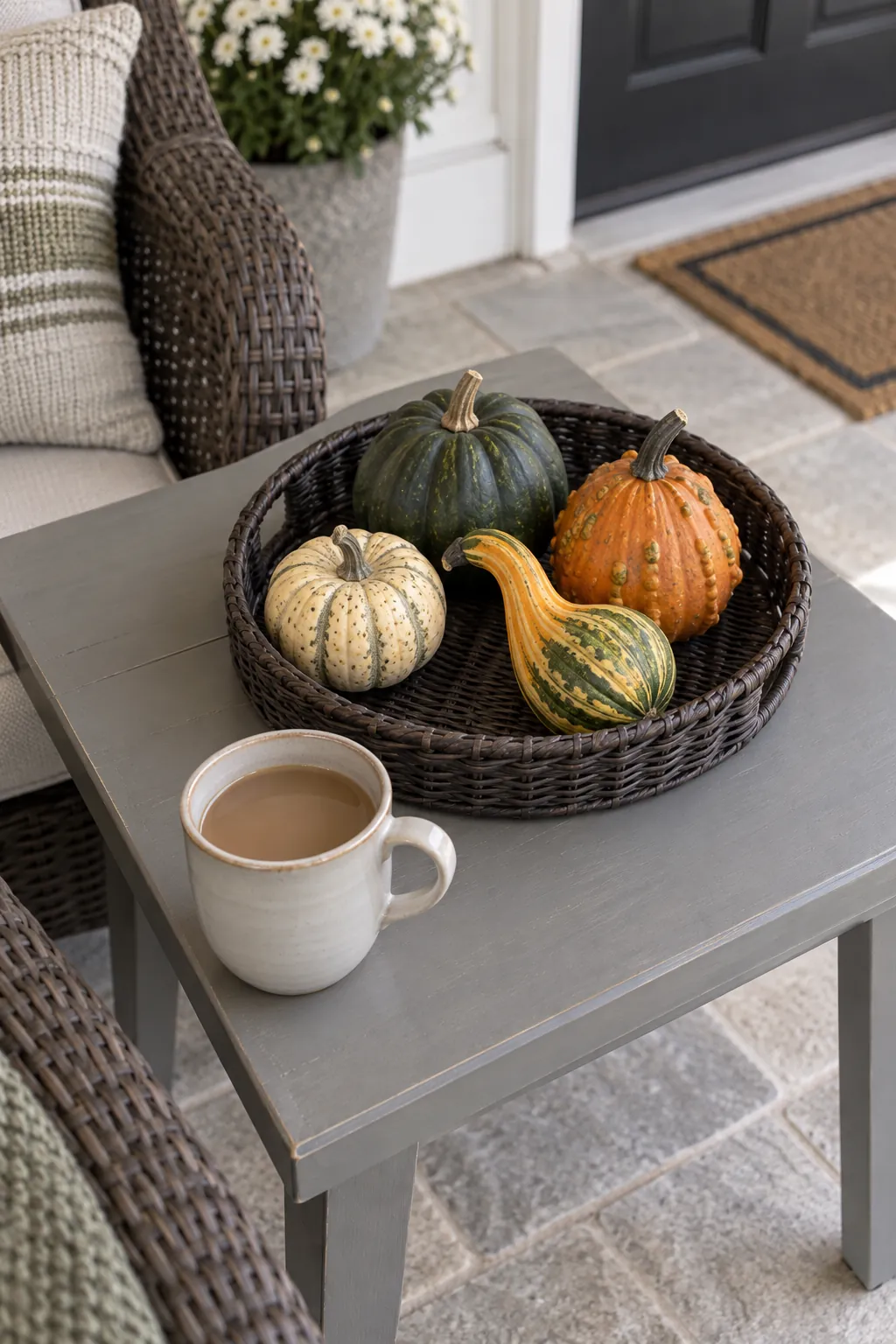
Set a Harvest Tray on a Side Table
A small tray of gourds gives a covered porch table a seasonal purpose without decorating the floor. Choose a stable table and keep the tray inside its edges, with space left for a drink. Use real gourds only while they remain sound, or choose reusable versions when regular inspection would be difficult.
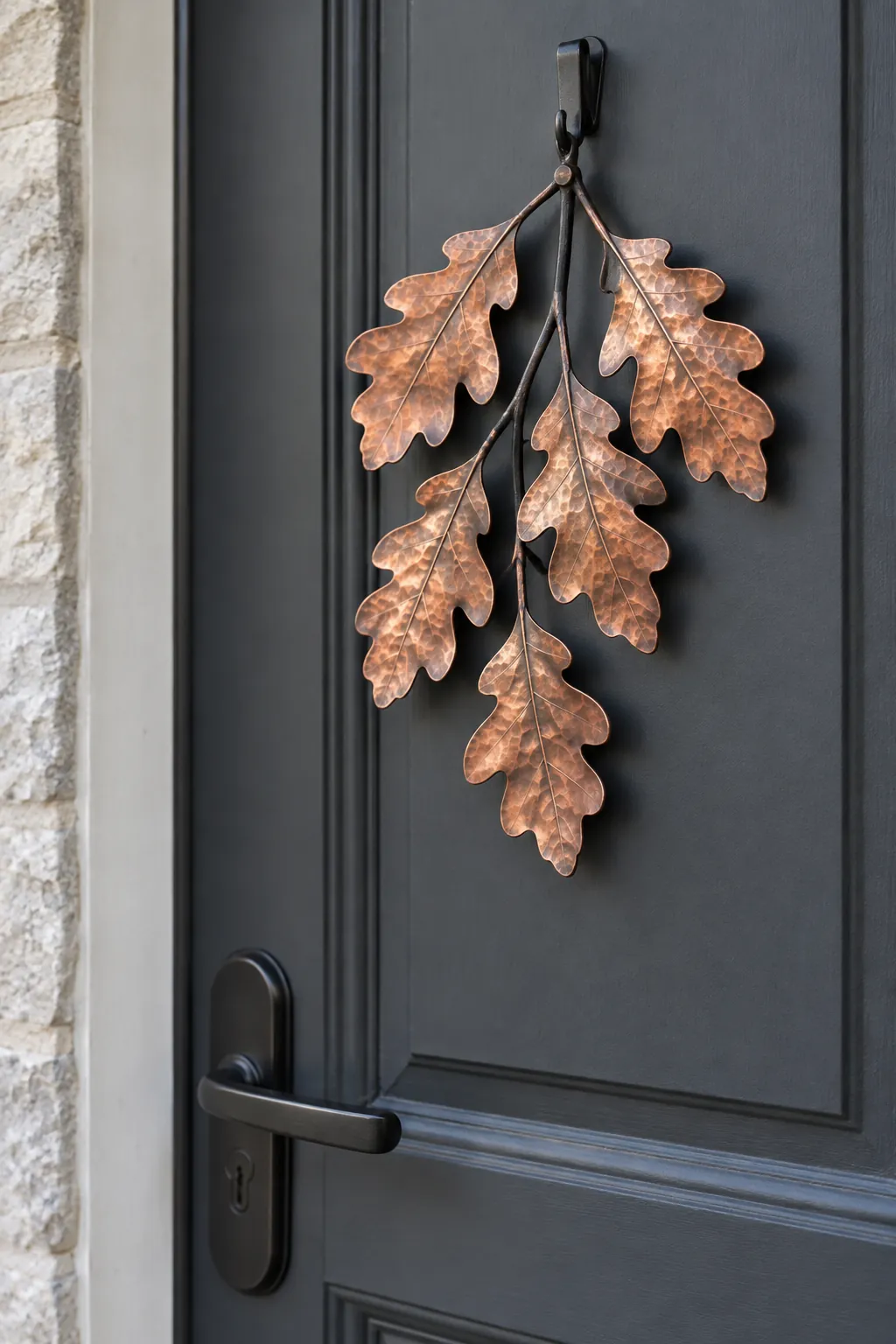
Hang a Copper Toned Leaf Accent
A lightweight metal leaf cluster can suit an entrance where paper and fabric weather poorly. Check that the finish is intended for outdoor use and that the hanging edges will not scratch the door. A few leaves with open space between them make their outlines easier to see.
Use a hanger appropriate to the finished weight. Add compatible protective pads at contact points if the product allows them. The warm metal color works particularly well beside a dark door and simple greenery.
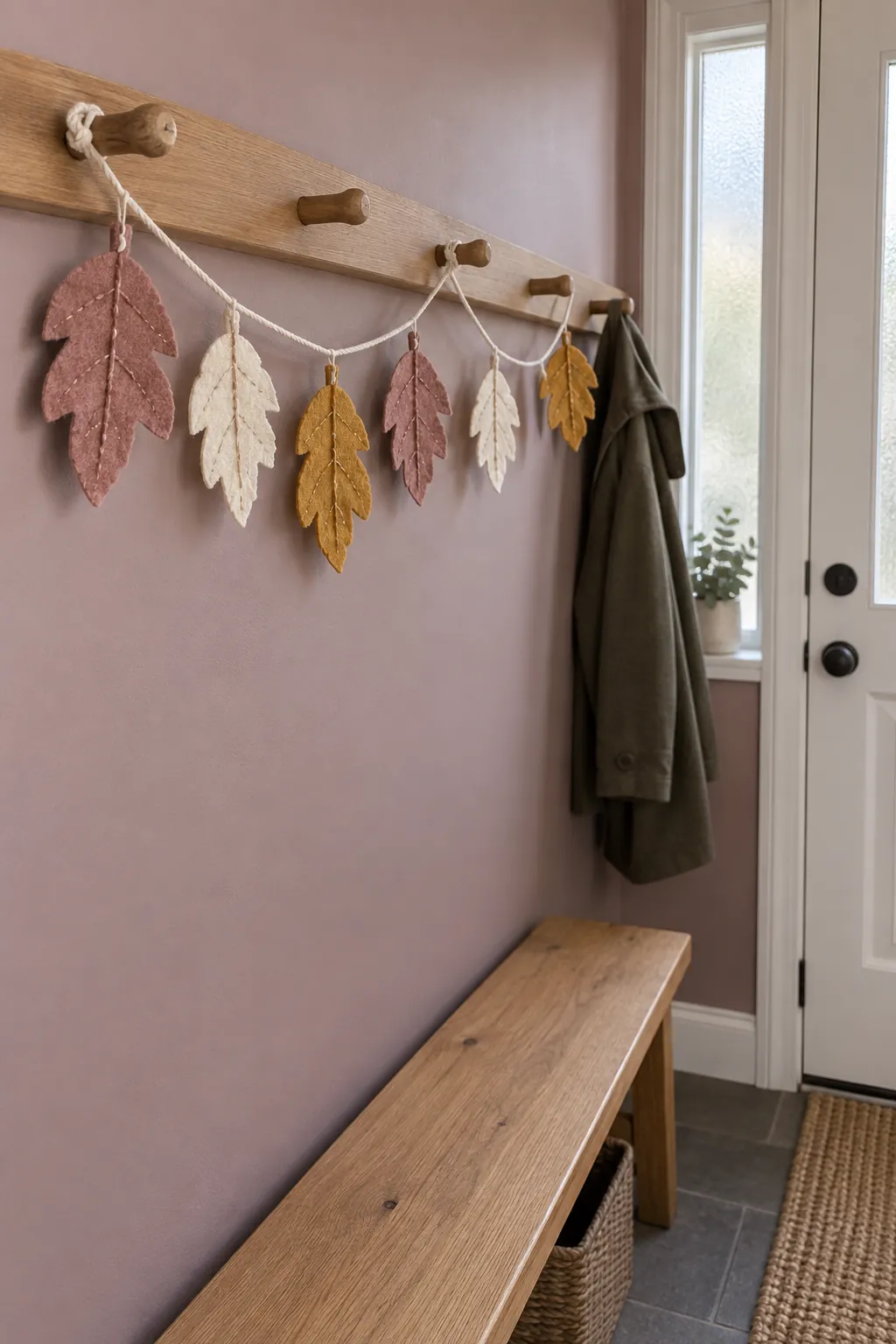
Choose a Felt Leaf Garland for an Interior Door
An interior vestibule door offers a place for soft autumn materials that would not survive outside. Tie a short felt leaf garland along an existing rail or approved hooks, keeping the handle and door edges clear. Use two or three related colors rather than a full rainbow, and store the garland loosely so the leaves keep their shape.
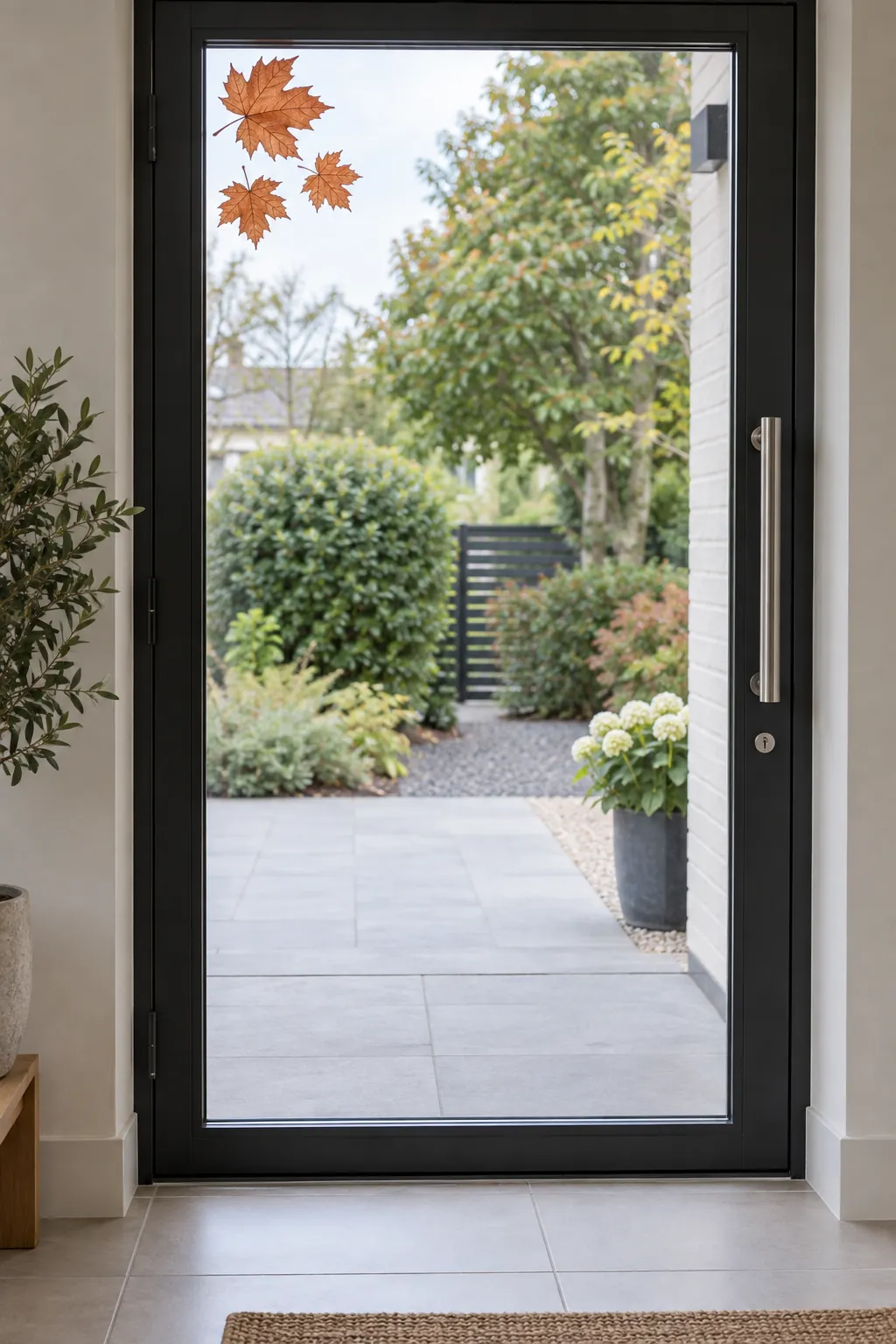
Keep a Glass Door Visually Open
A small corner cluster can decorate a glass door without hiding the view. Use products suitable for that particular glass and test removal instructions, especially on coated surfaces. Concentrate the decoration away from the handle and safety markings. Leave enough clear glass that visitors and people inside can see one another approaching.
Balance Double Doors with One Shared Accent
Double doors do not automatically need two large wreaths. A restrained garland above both doors can connect them while keeping the handles and central opening clear. Secure it independently of the moving leaves, and check that every attachment suits the frame. This approach is useful when matching door hangers would interfere with the seals.
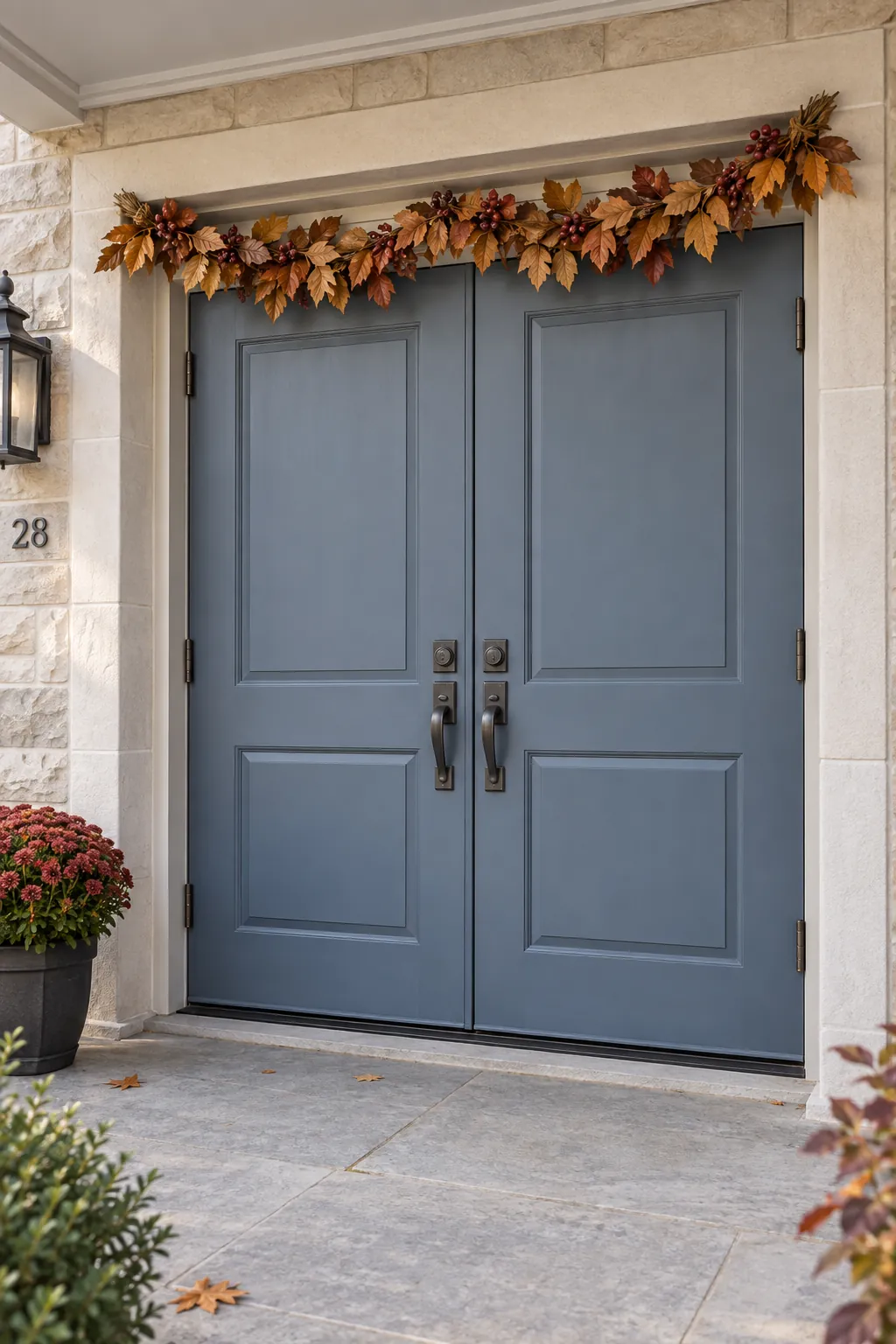
Give a Narrow Entry One Tall Planter
A single tall planter can provide height where a pair would crowd the landing. Put it on the side that stays clear when the door opens, then choose planting proportionate to the container. Avoid a top heavy bundle of branches in a light pot, and leave the threshold and handrail accessible.
Step back along the actual approach to judge the balance. The empty side is useful circulation space, not a gap that needs another object. A small wreath or bow can connect the planter to the door without taking more floor area.
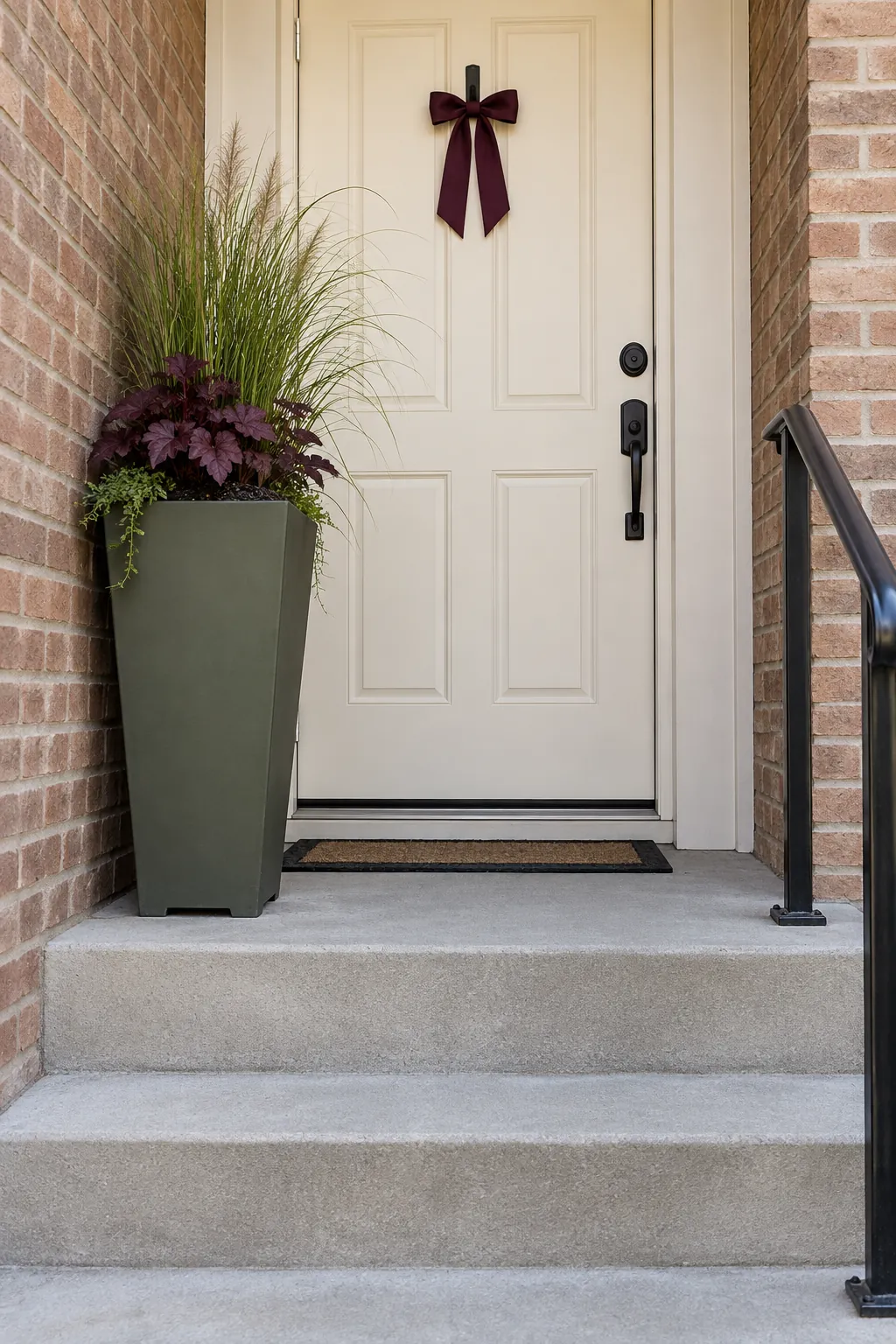
Use a Low Crate as a Display Base
A sound low crate can lift a small pumpkin group beside a covered entrance. Place it on a level surface and use only the load it can safely support, keeping heavier objects low. Turn rough or projecting edges away from passing legs. Do not stack loose crates into a tower beside a busy doorway.
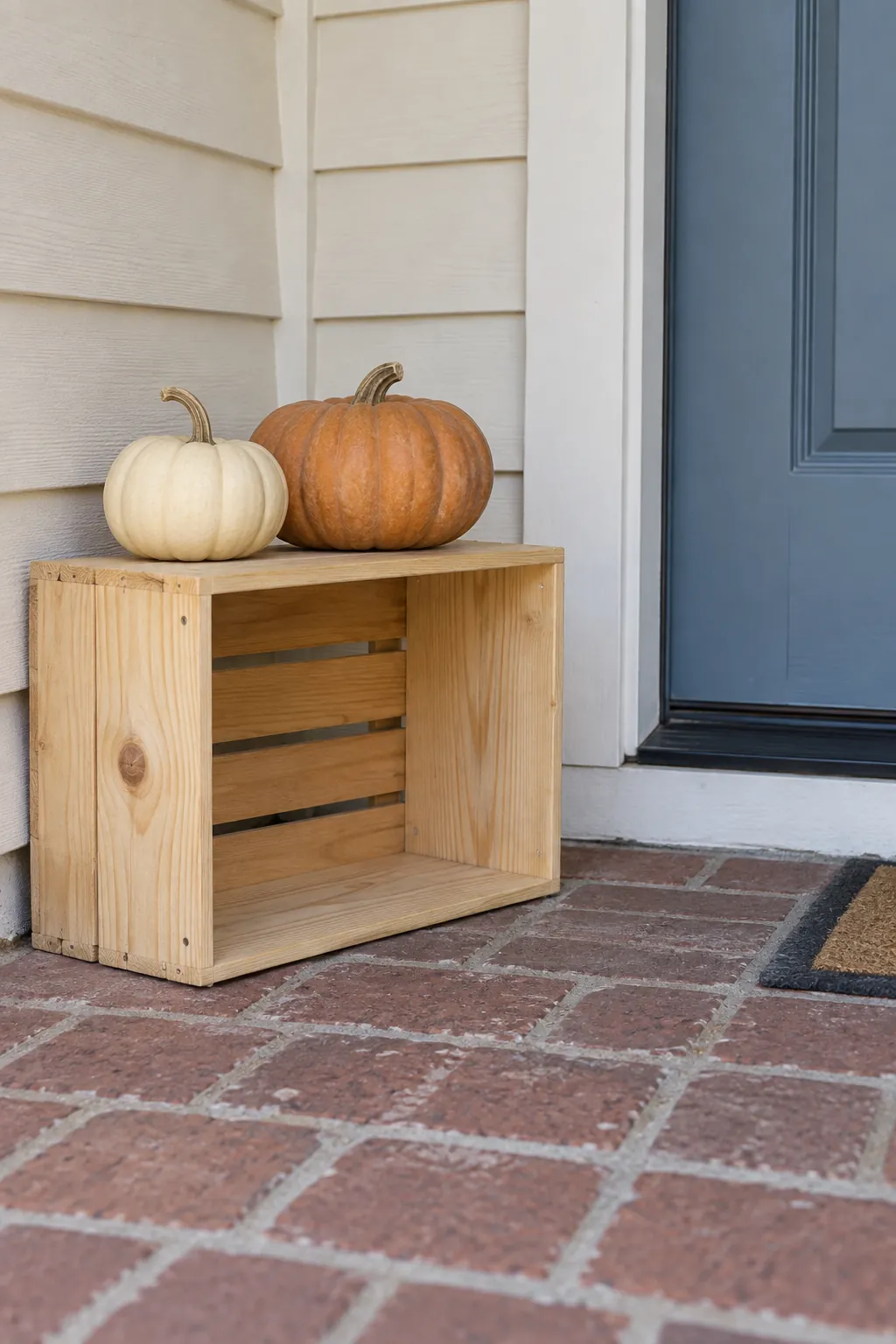
Bring in a Burgundy Branch Arrangement
A short arrangement of burgundy faux branches gives autumn front porch decor depth without a bright orange palette. Use a heavy stable vessel and keep the branch spread within the available corner. Secure the stems so they do not shift with a door movement or a gust, and choose outdoor suitable components for exposed positions.
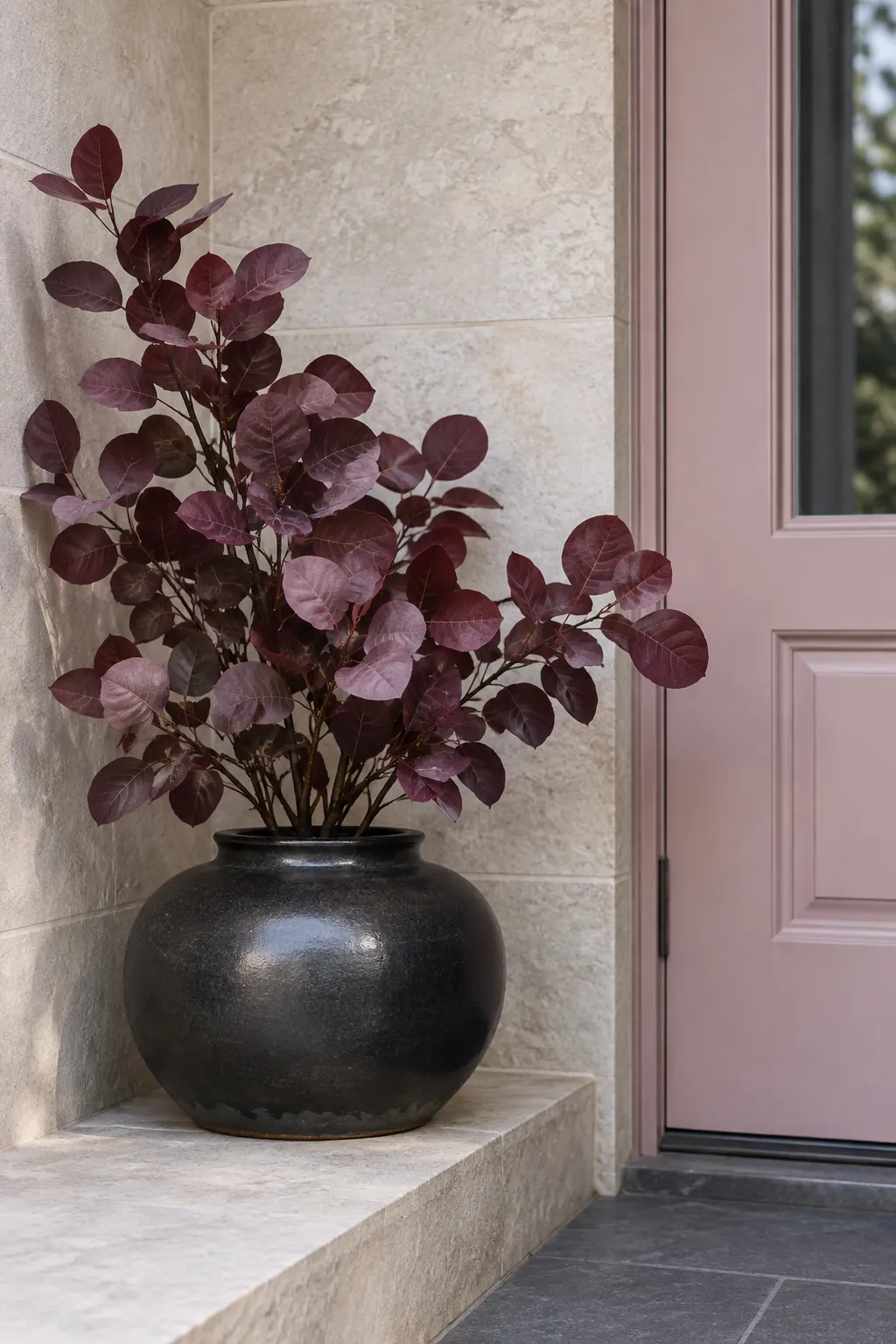
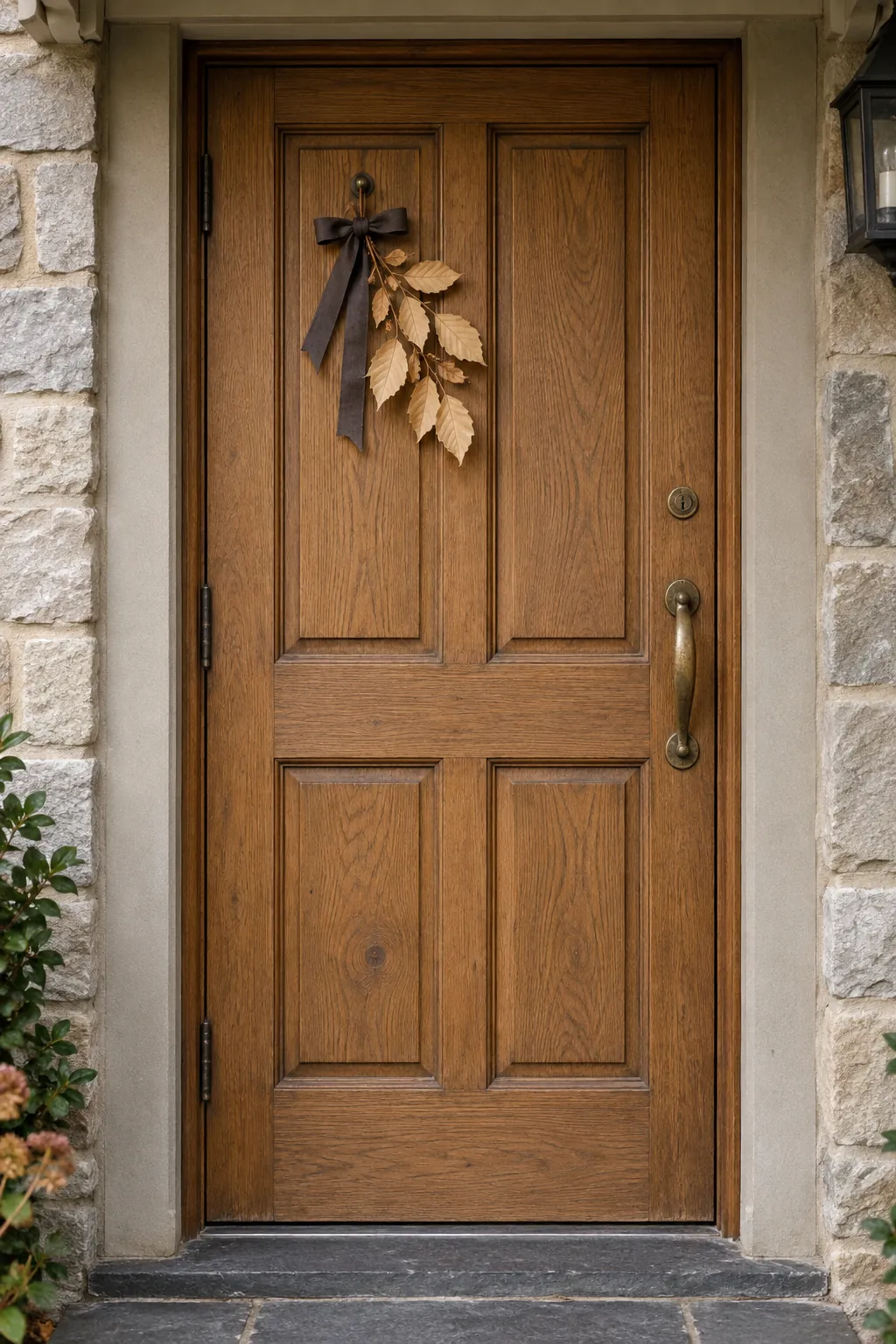
Let a Natural Door Stay Visible
A timber door can provide much of the warmth an autumn arrangement needs. Keep the decoration small enough that the grain, panels, and hardware remain part of the composition. A simple dark ribbon and a few pale leaves can provide contrast without covering the whole surface.
Check any adhesive or pad against the finish before use. Avoid leaving damp natural material directly against the timber. When the season ends, remove attachments according to their instructions rather than pulling them away abruptly.
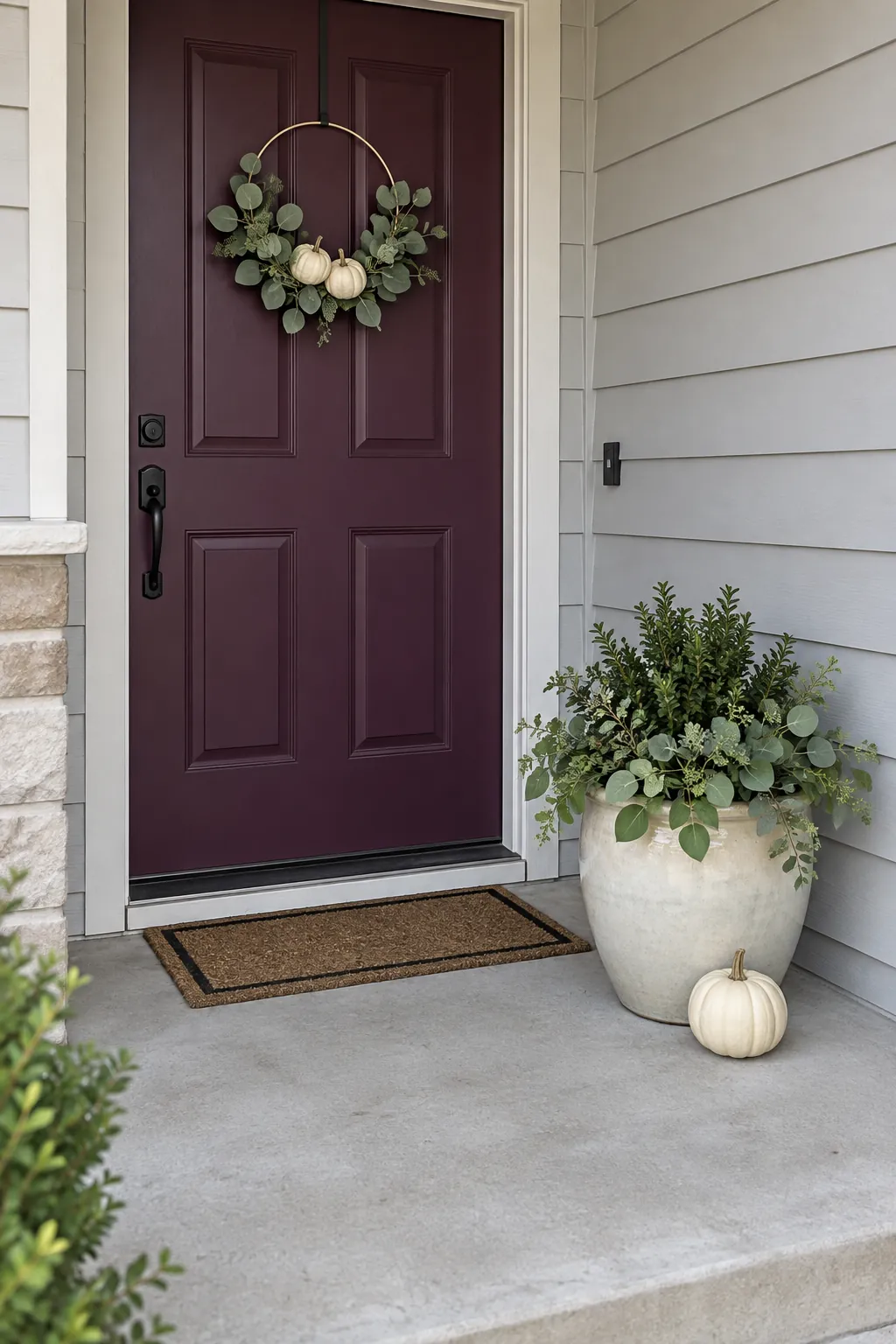
Use Cream and Green for a Quiet Palette
Cream pumpkins and green foliage create a softer alternative to the usual harvest colors. Repeat the pairing in one door accent and one nearby container, then let the rest of the entrance stay simple. This palette is especially useful when your existing door color is already vivid and another strong accent would compete.
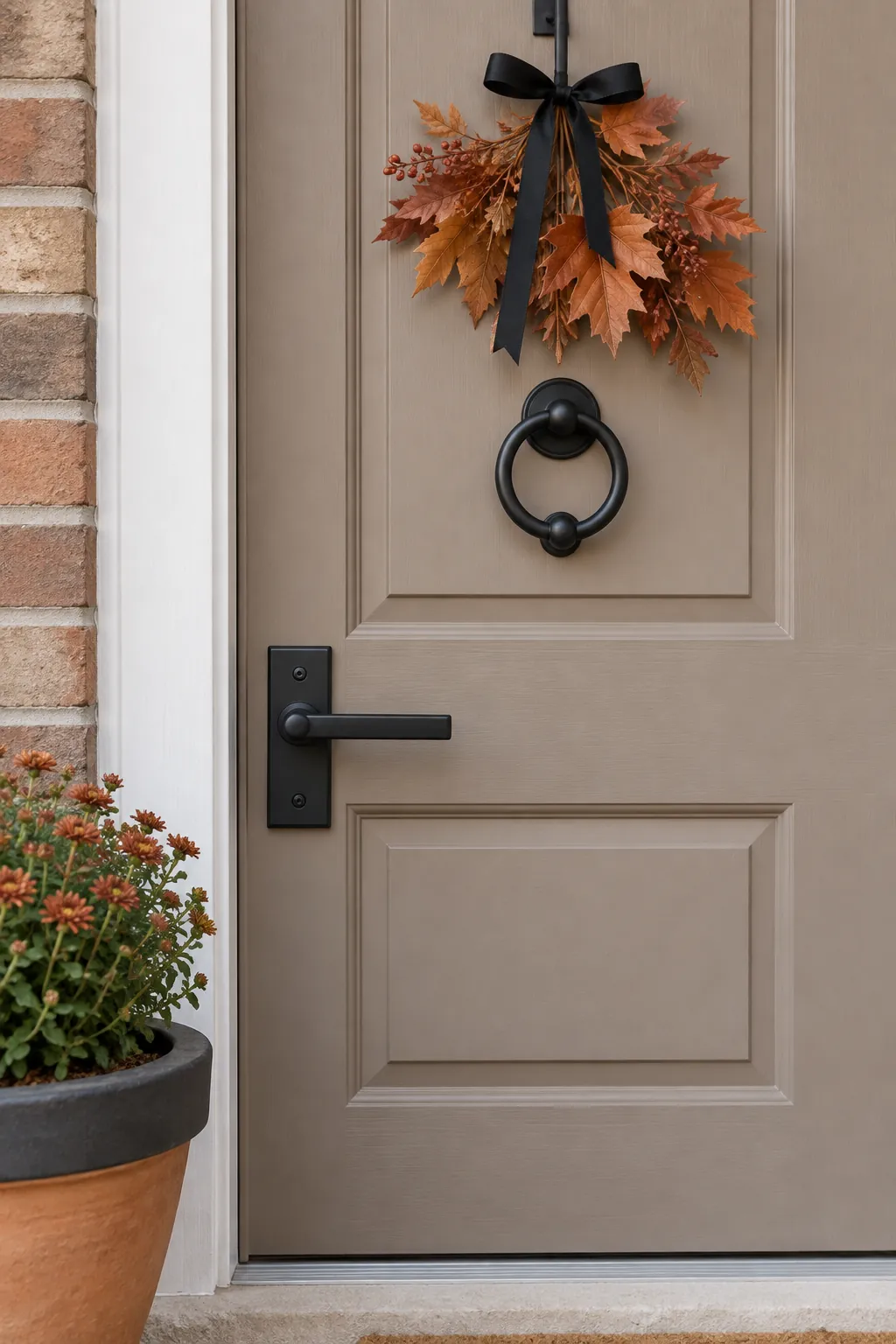
Echo Black Hardware with Small Details
Black door furniture can connect a seasonal display through a ribbon, lantern, or planter rim. Choose one or two of these echoes rather than outlining every object in black. Keep the hardware itself free of ties so locks, handles, and knockers remain easy to use.
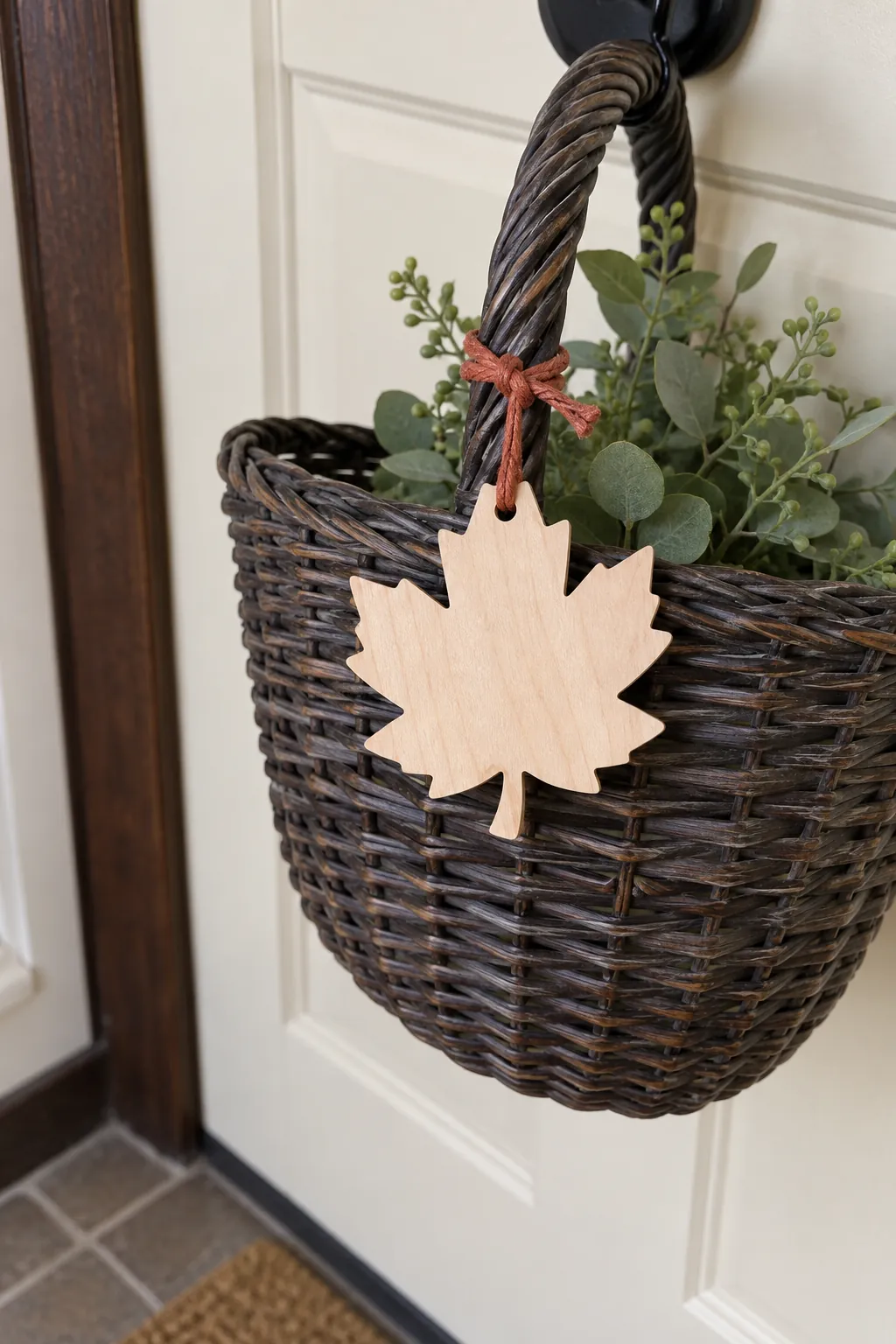
Add a Removable Autumn Tag to a Basket
A small wooden leaf shaped tag can make an everyday hanging basket feel seasonal. Tie it to the handle with a short cord instead of permanently gluing it to the weave. Keep the tag's weight modest and its edges smooth, then remove it when you want the basket to serve another season.
Style the Sheltered Side of the Door
An entrance with uneven exposure does not need a perfectly balanced arrangement. Place delicate foliage or fabric on the protected side and leave the wet or windy side simpler. Judge the composition from the approach so the asymmetry feels intentional rather than accidental.
Use the more exposed area for an outdoor rated container if space permits. Check both sides after rain to see where water actually lands. That observation is more useful than assuming the porch roof protects everything equally.
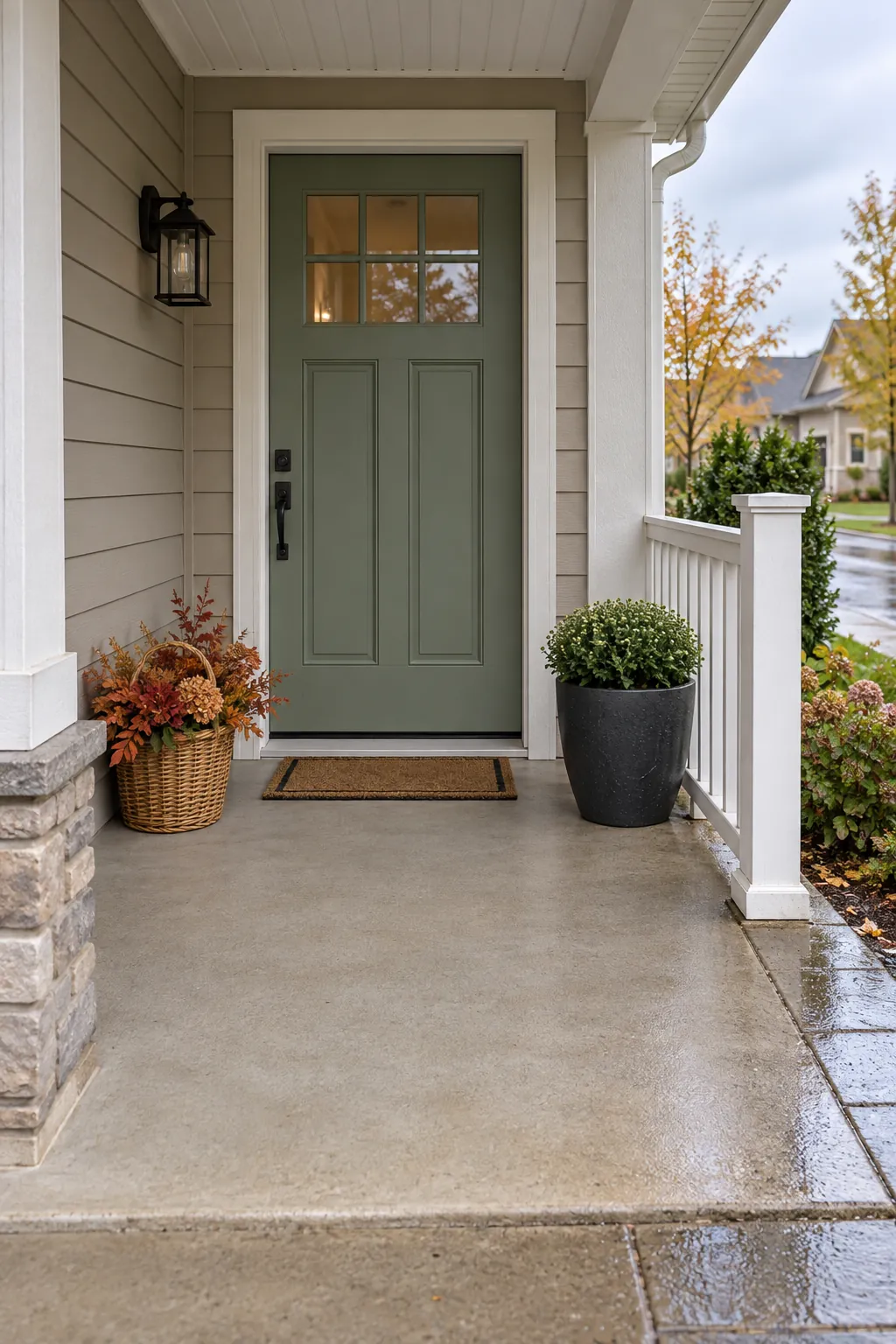
Keep a Porch Sconce Uncovered
A wall light can anchor the autumn scene without being wrapped in leaves. Place a small decoration below and to the side, leaving the fixture and its required clearances unobstructed. Match the accent to a wreath or planter so the light remains part of a coherent entrance, and follow the fixture's instructions rather than attaching material to it.
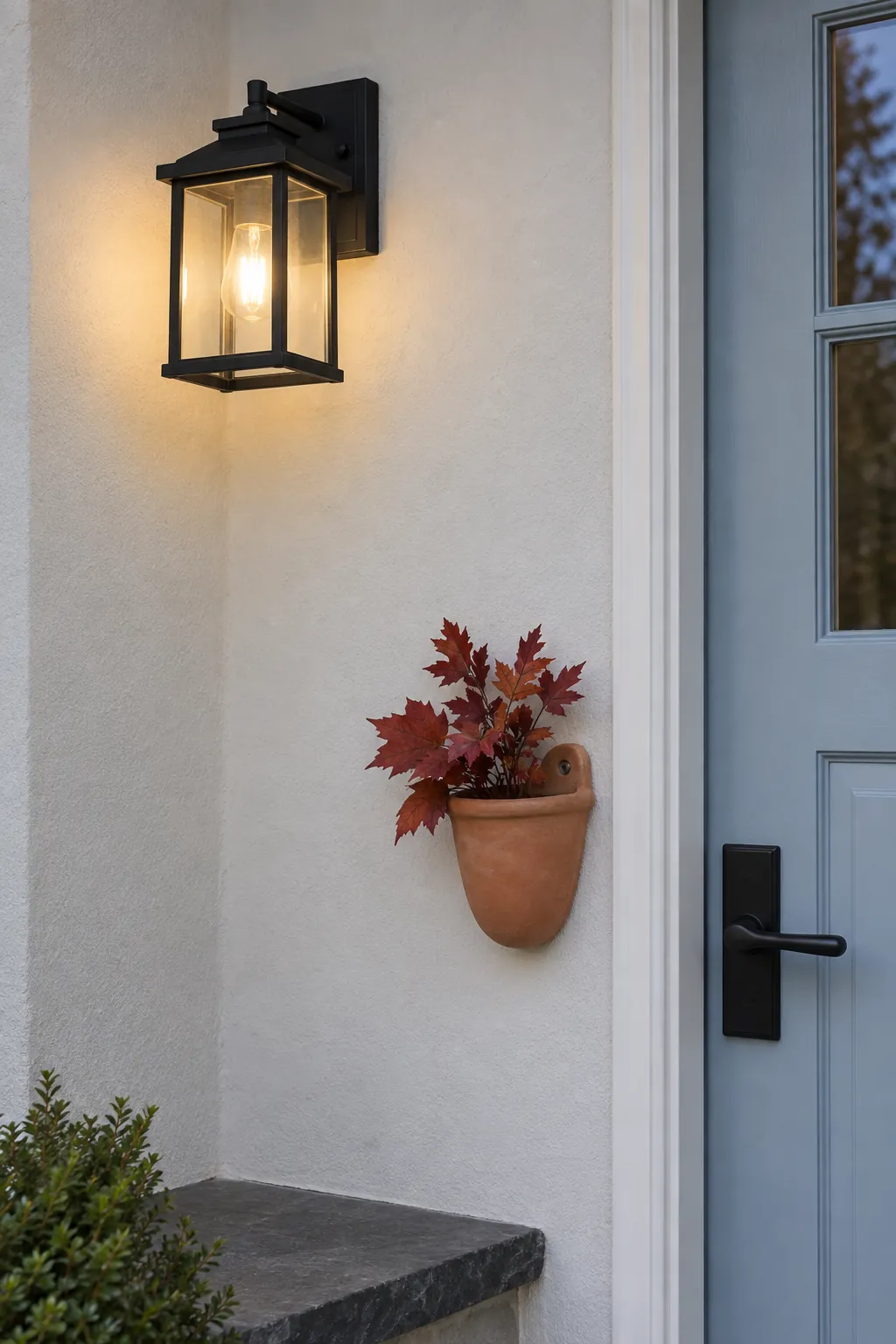
Use a Small Stool for One Pumpkin
A sturdy low stool can give one attractive pumpkin a little height beside a protected door. Choose a broad stable seat and keep the pumpkin centred, with no loose fabric between it and the stool. Set the whole piece away from the walking line and avoid using a delicate decorative stool as a load bearing stand.
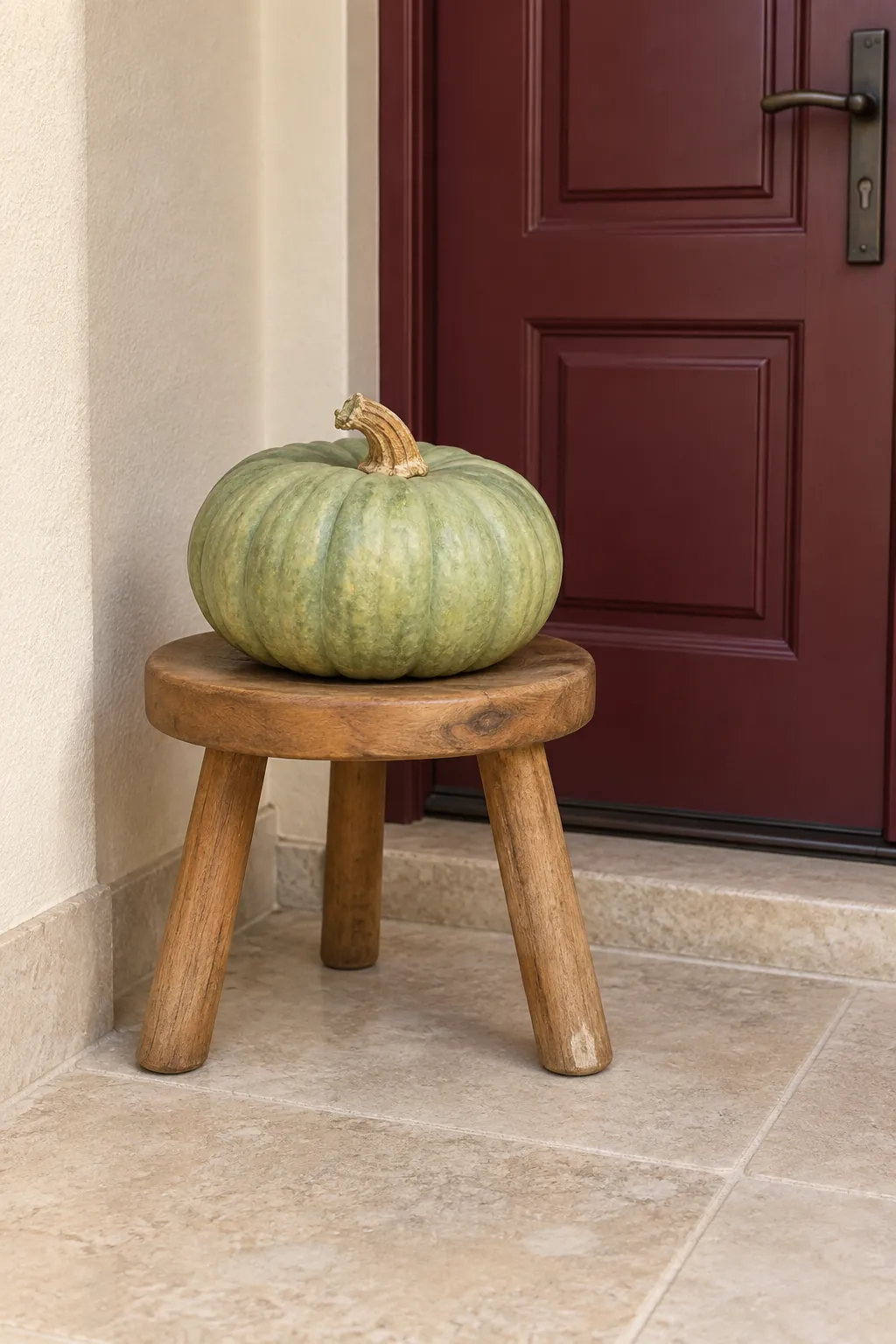
Try a Dried Hydrangea Accent Under Cover
Dried hydrangea heads offer rounded texture in muted rose, green, or tan. Keep them under reliable cover and attach the stems securely to a suitable base, since dried petals can shed with handling. Avoid a location that receives frequent door slams or moisture, and choose faux heads if the real material would need constant replacement.
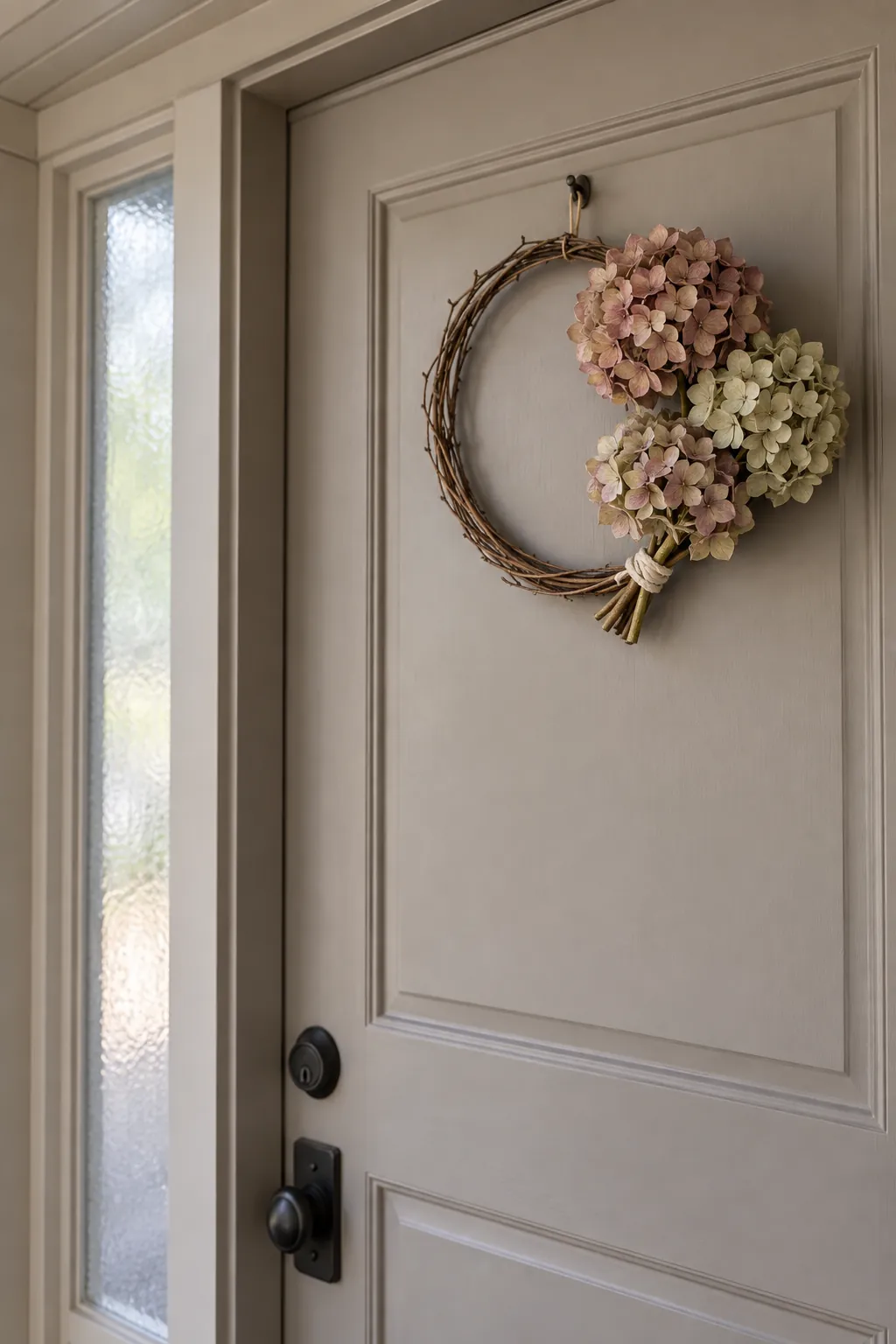
Make the Door Number Easy to Read
Seasonal decoration should not hide the information visitors need. Arrange leaves and ribbons around the door number rather than over it, and check visibility from the street and after dark. If the display competes with the numbers, reduce its size instead of adding more decorative signs.
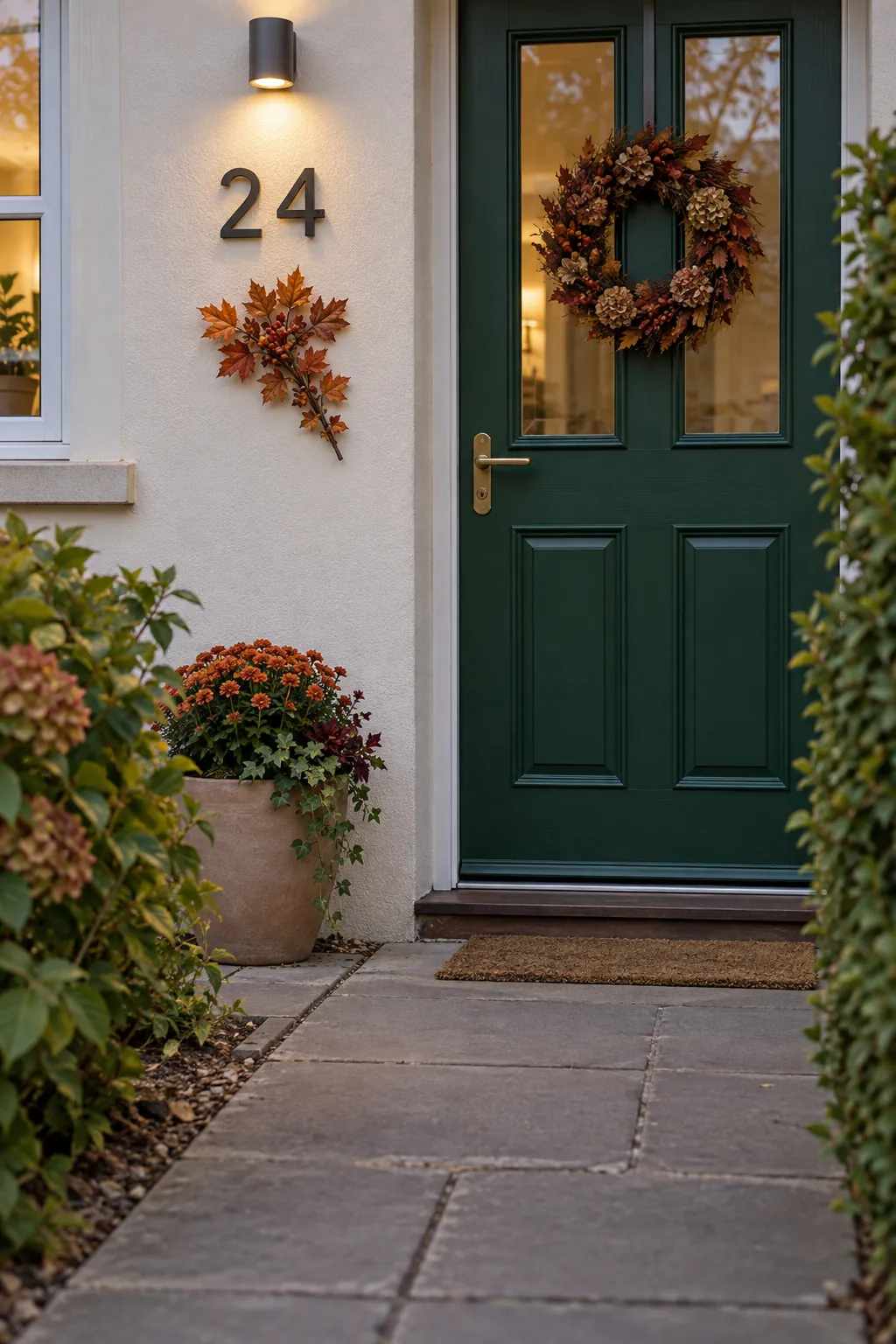
Use a Pair of Small Sidelight Accents
Narrow sidelights can take a pair of modest accents when a central wreath would cover important glazing. Keep the pieces small and use attachments appropriate to the glass or frame. Leave most of each pane open so the entrance retains light and visibility.
Check that curtains or blinds still move normally. Matching the material is enough; the two accents need not be perfectly identical. Avoid mounting anything across a joint that moves when the door opens.
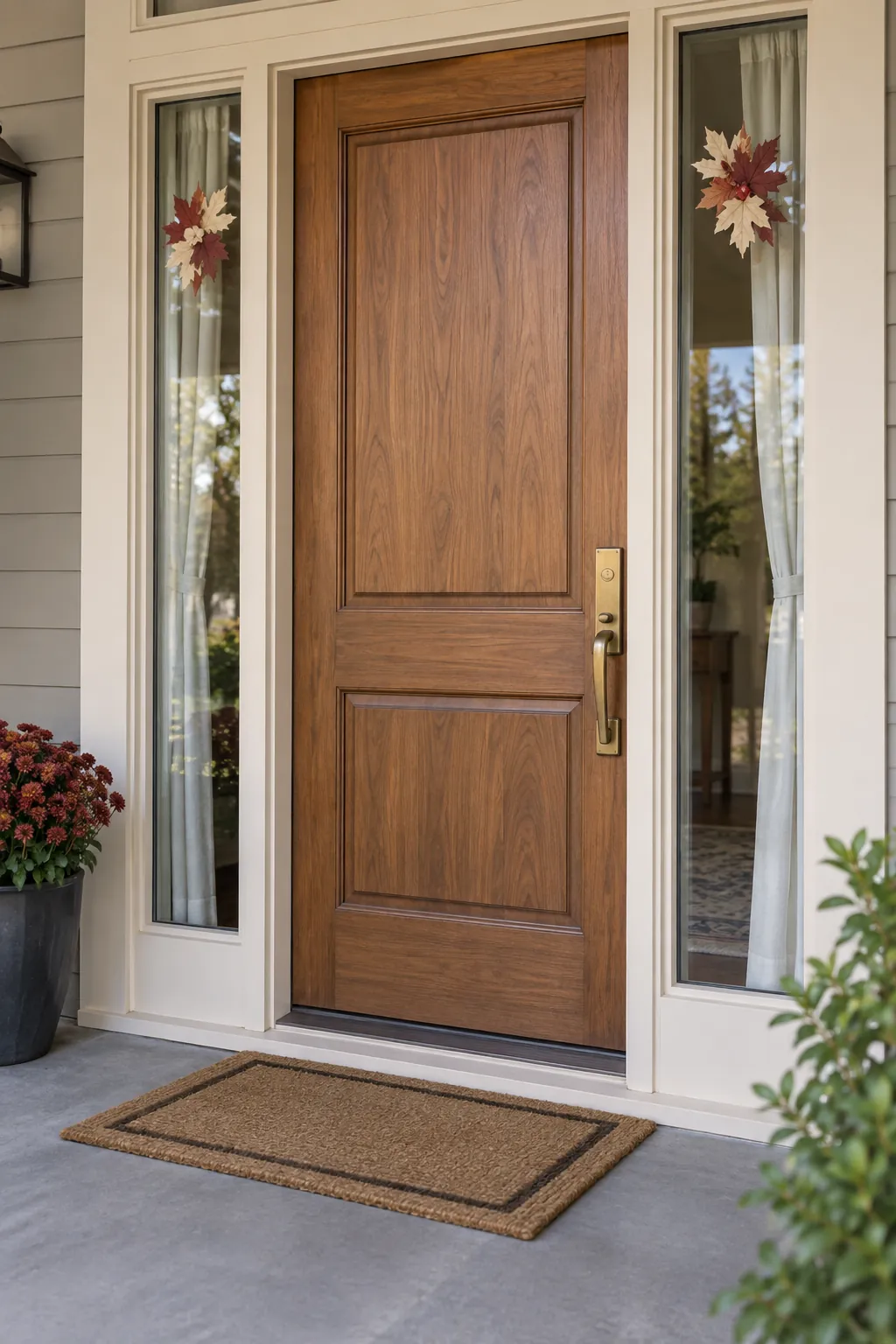
Choose Reusable Faux Fruit for a Warm Entry
Faux pears or apples can bring harvest color to a protected door basket without the maintenance of real fruit. Fasten each piece so it cannot drop when the door closes. Use a few convincing shapes among plain leaves rather than a heavy overflowing arrangement. Outdoor exposure still requires materials and finishes designed for those conditions.
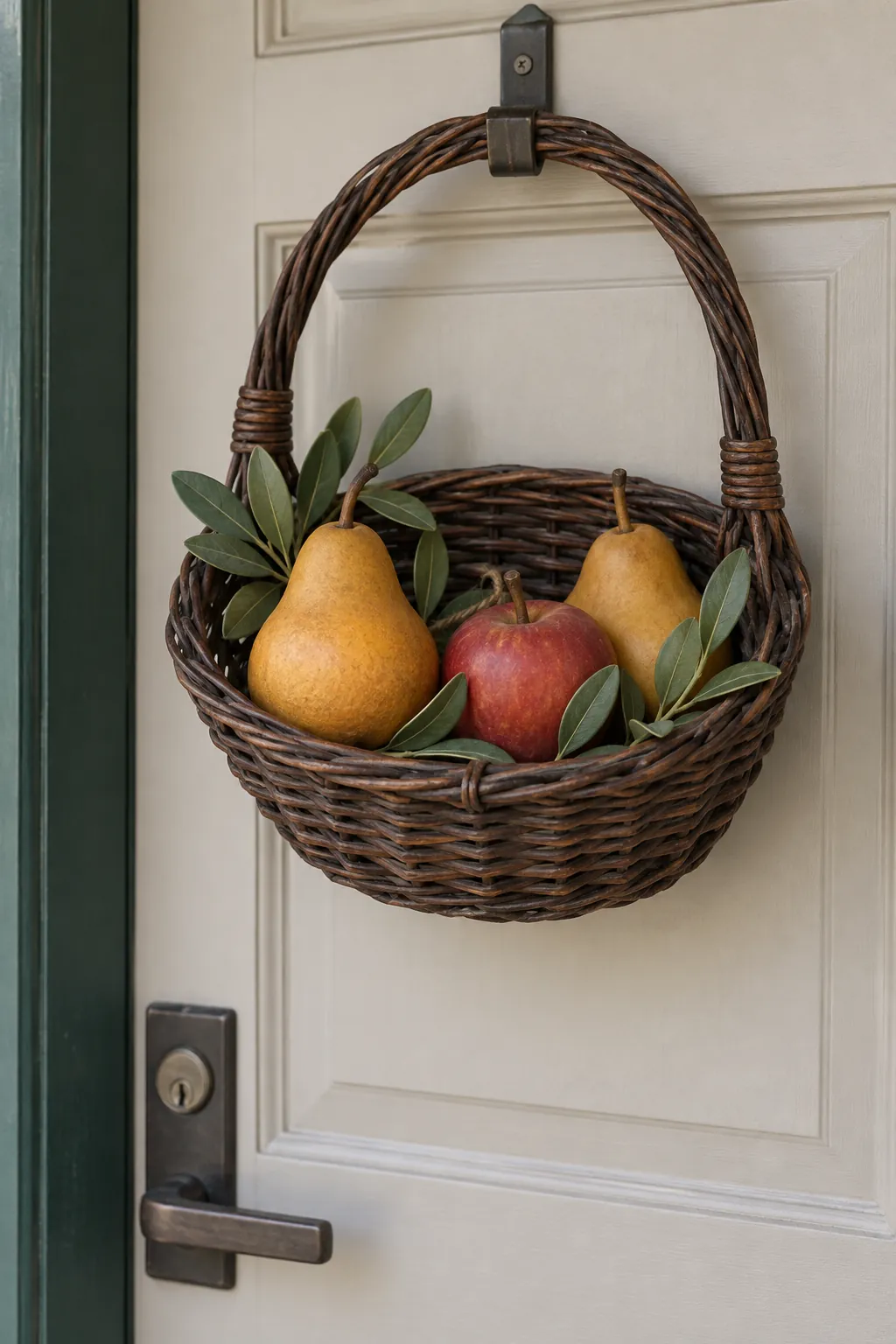
Store the Display in Separate Small Groups
Plan autumn decorations outdoor with storage in mind before adding another large piece. A compact wreath, a ribbon bundle, and a few small reusable gourds are easier to protect separately than one permanently glued arrangement. Keep a photograph of the finished entry with the stored pieces so you can rebuild the layout without guessing. Let everything dry fully before packing it away.
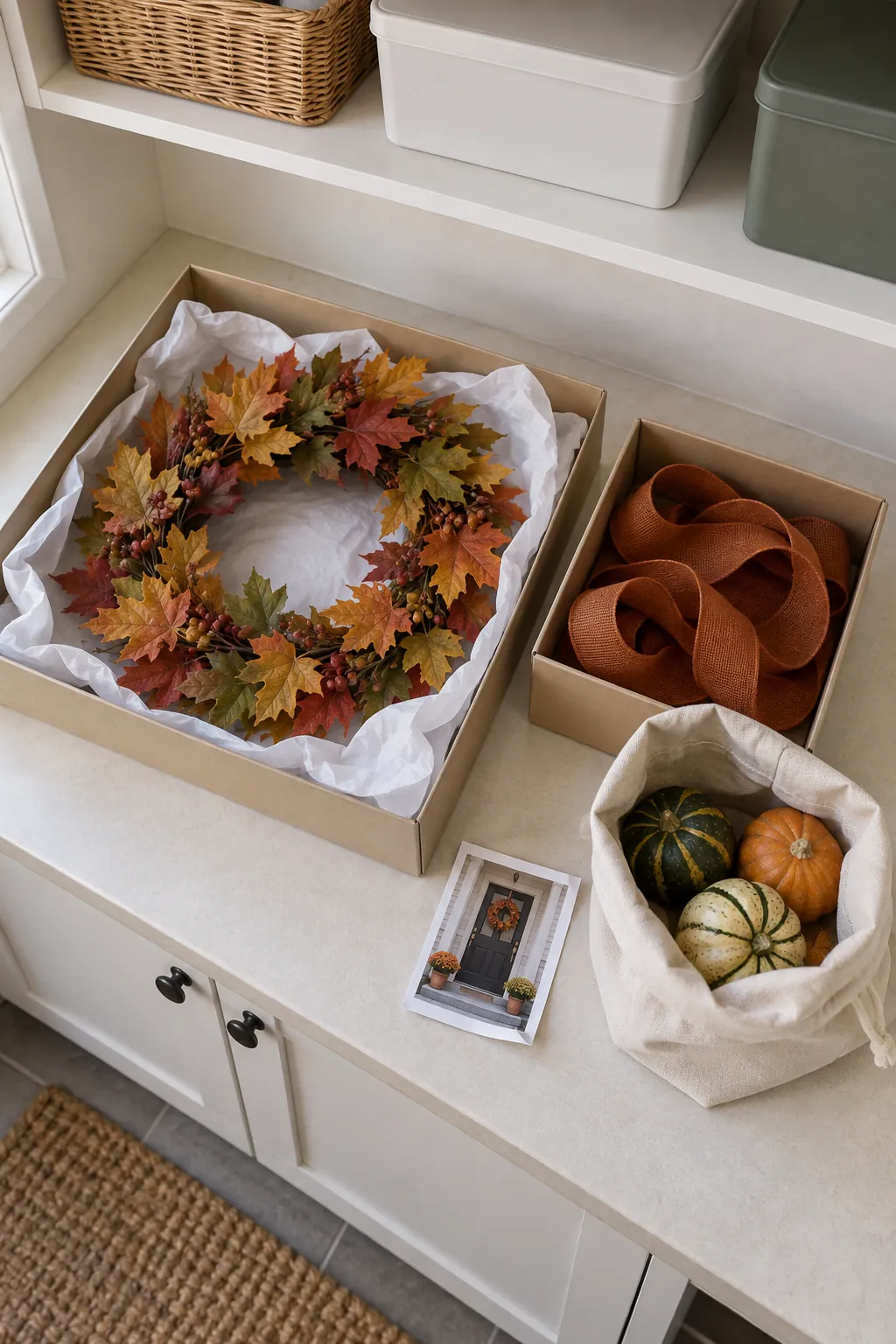
Finish with a Clear Route to the Door
Look at the entrance as someone arriving with a parcel, a mobility aid, or a child's hand would see it. Remove any pumpkin, pot, or mat edge that narrows the route or interferes with the door. Check the same space after dark and after rain, when glare, shadows, and slippery surfaces can change how it works. The display is finished when the seasonal details feel welcoming and the entrance still does its everyday job.