
Walking into a cramped, dark hallway can feel like stepping into a tunnel rather than a home. Many houses have narrow corridors that become magnets for clutter, shoes, and mail, making the space feel even smaller than it actually is. However, these transit zones have massive potential to set the tone for your entire house if you use the right layout.
This list covers practical ways to handle small hallways ideas and long hallway decorating without blocking the path. Whether you are dealing with a tiny entrance or looking for upstairs hallway ideas, these layouts focus on using vertical space and smart furniture to make every inch count.
Slim Console Table with a Round Mirror
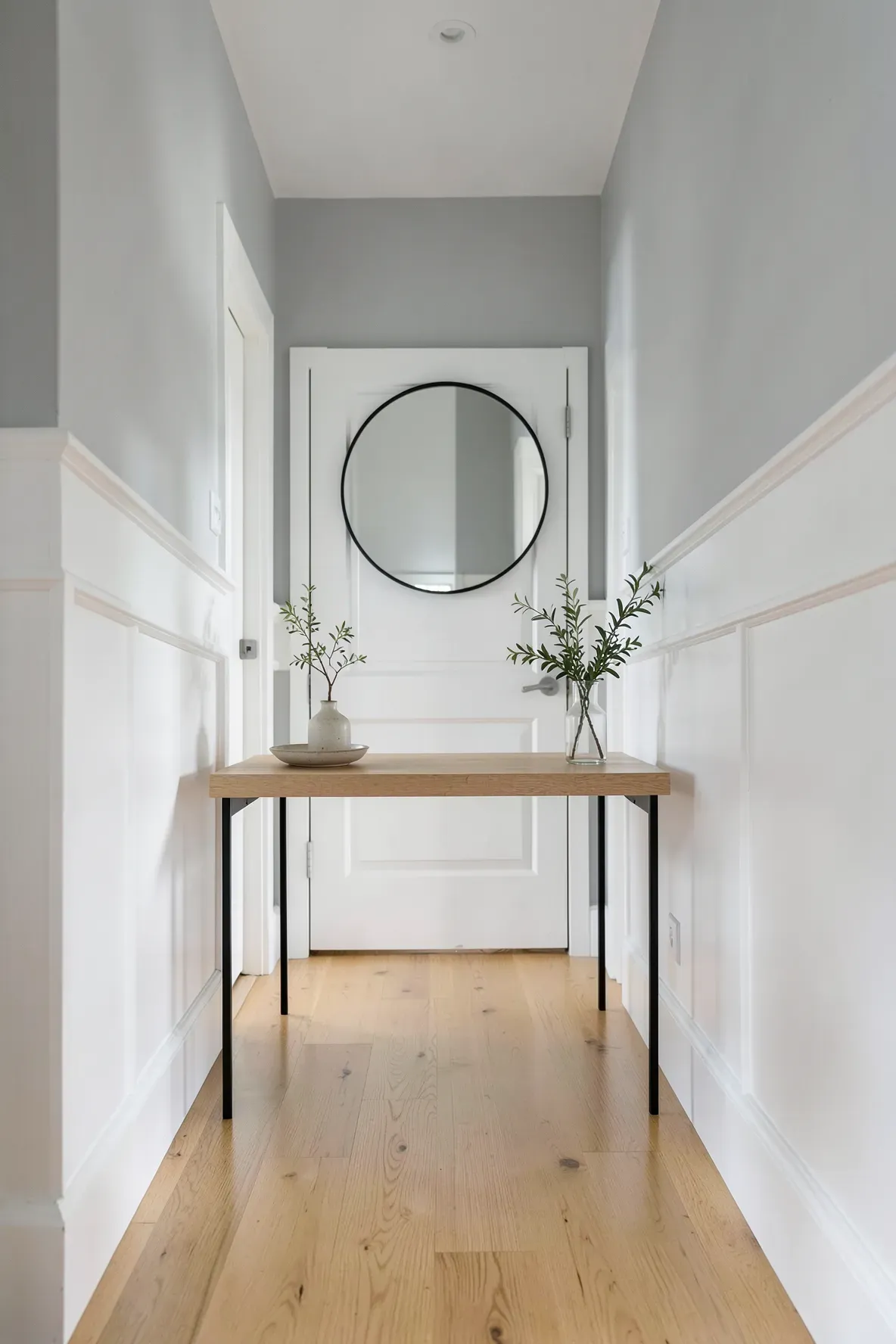
A shallow console table provides a surface for keys and mail without obstructing the walkway. Choosing a table with thin legs keeps the floor area looking open and airy. Hanging a large round mirror above the table breaks up the straight lines of the walls and reflects light back into the room. This combination creates a focal point that makes narrow entryway ideas feel more like a planned room and less like a cramped passage.
Floor-to-Ceiling Built-in Bookshelves
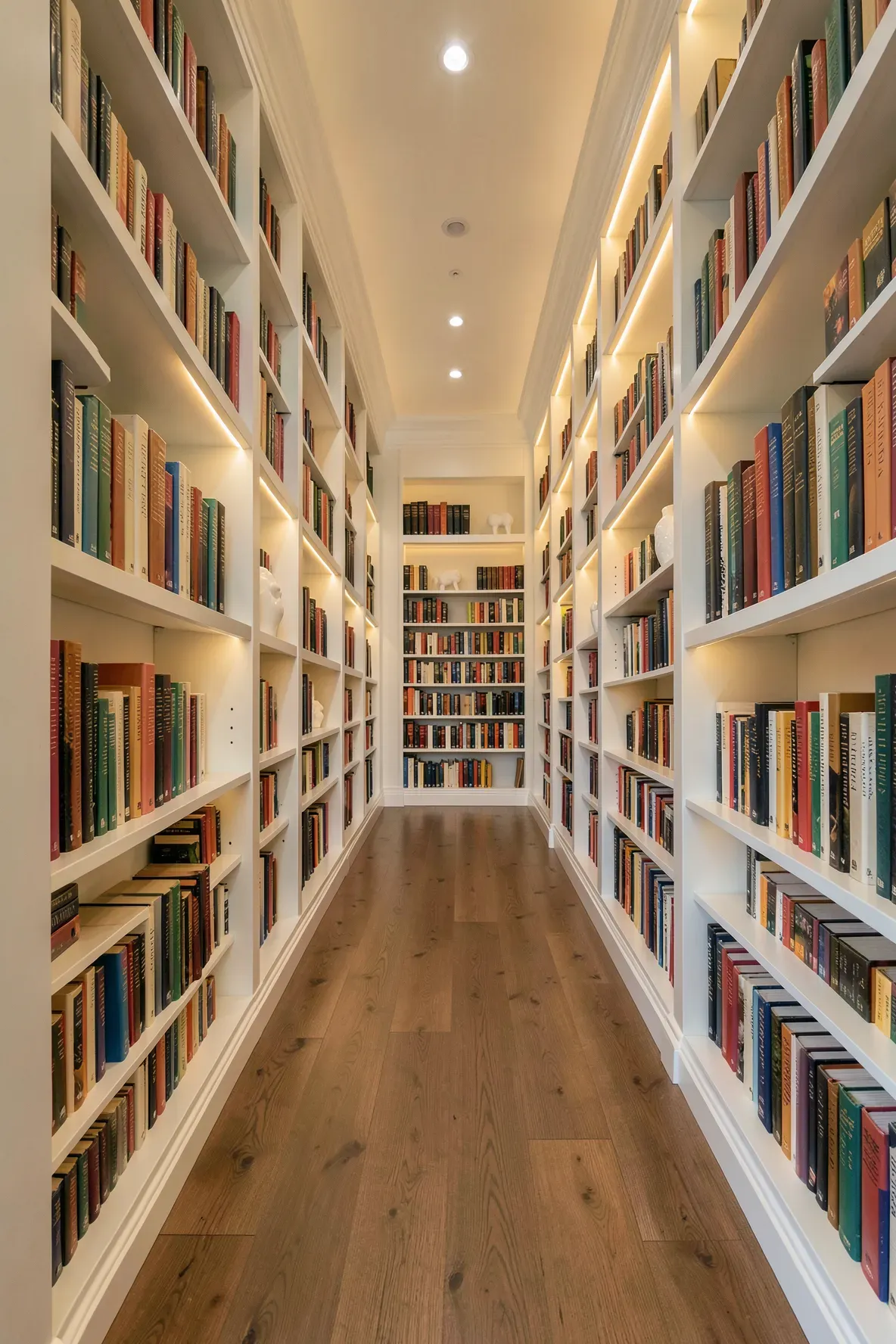
Using the height of your walls is a smart way to add storage without taking up floor width. Shallow built-in shelves can house hundreds of books and decorative items while only protruding a few inches from the wall. This works especially well for long hallway decorating where you have a large stretch of unused wall space. It turns a boring walk into a home library and adds texture to the corridor.
Woven Runner Rug to Soften Footsteps
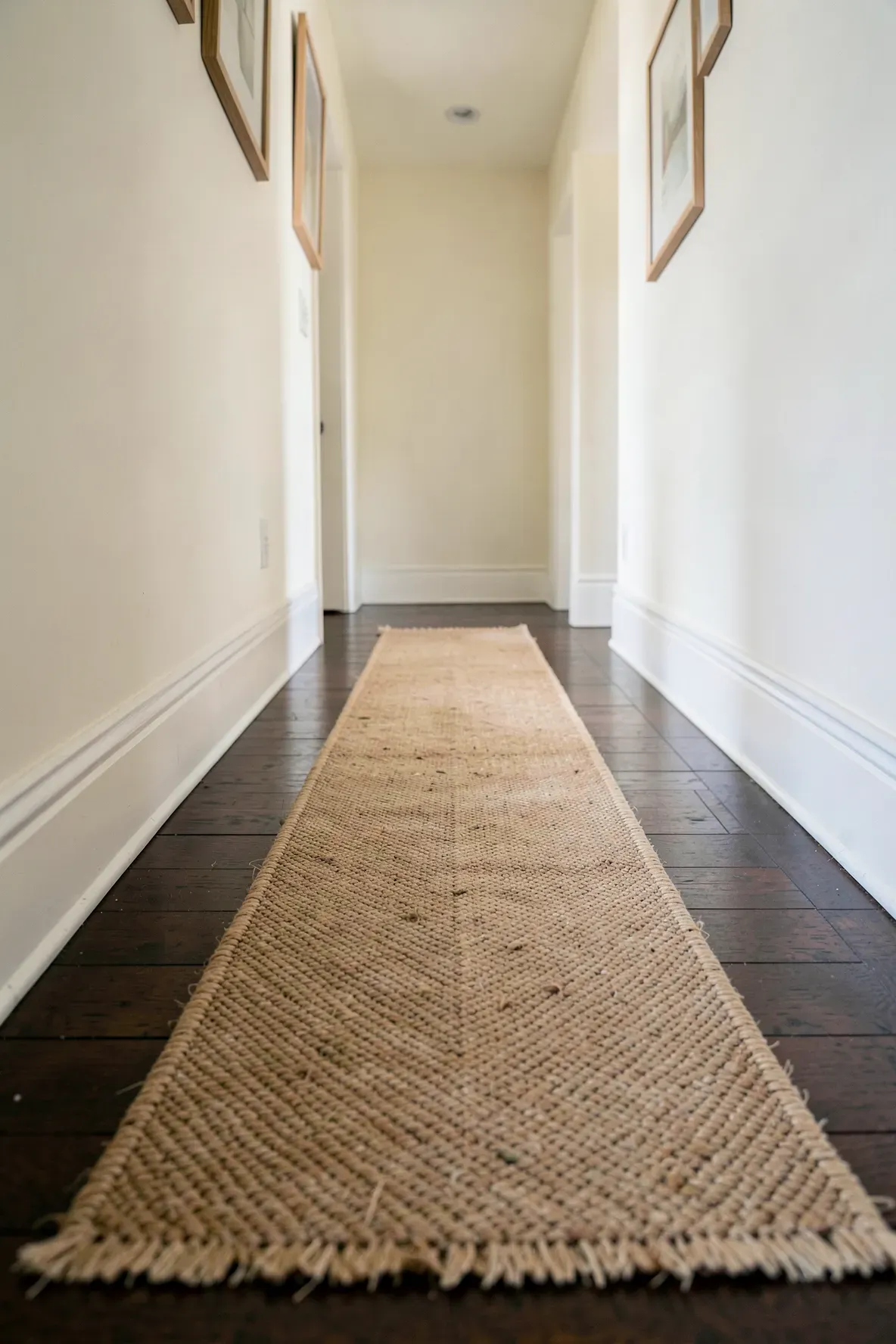
Long hallways often suffer from echoes and a cold, clinical feel. A durable woven runner rug adds warmth and absorbs sound, making the walk between rooms much quieter. Look for materials like jute or sisal for high-traffic areas near the front door. The long, rectangular shape of the rug draws the eye forward, which can actually make a short hallway feel longer and more intentional.
Wall-Mounted Peg Rail for Coats and Bags

Bulky coat racks often take up too much room in small hallways ideas. A simple wooden peg rail mounted directly to the wall keeps jackets, hats, and bags organized and off the floor. You can run the rail along the entire length of the wall or just behind the door. This layout keeps the floor clear, which is essential for maintaining a wide enough path to walk through comfortably.
Large Scale Gallery Wall with Uniform Frames
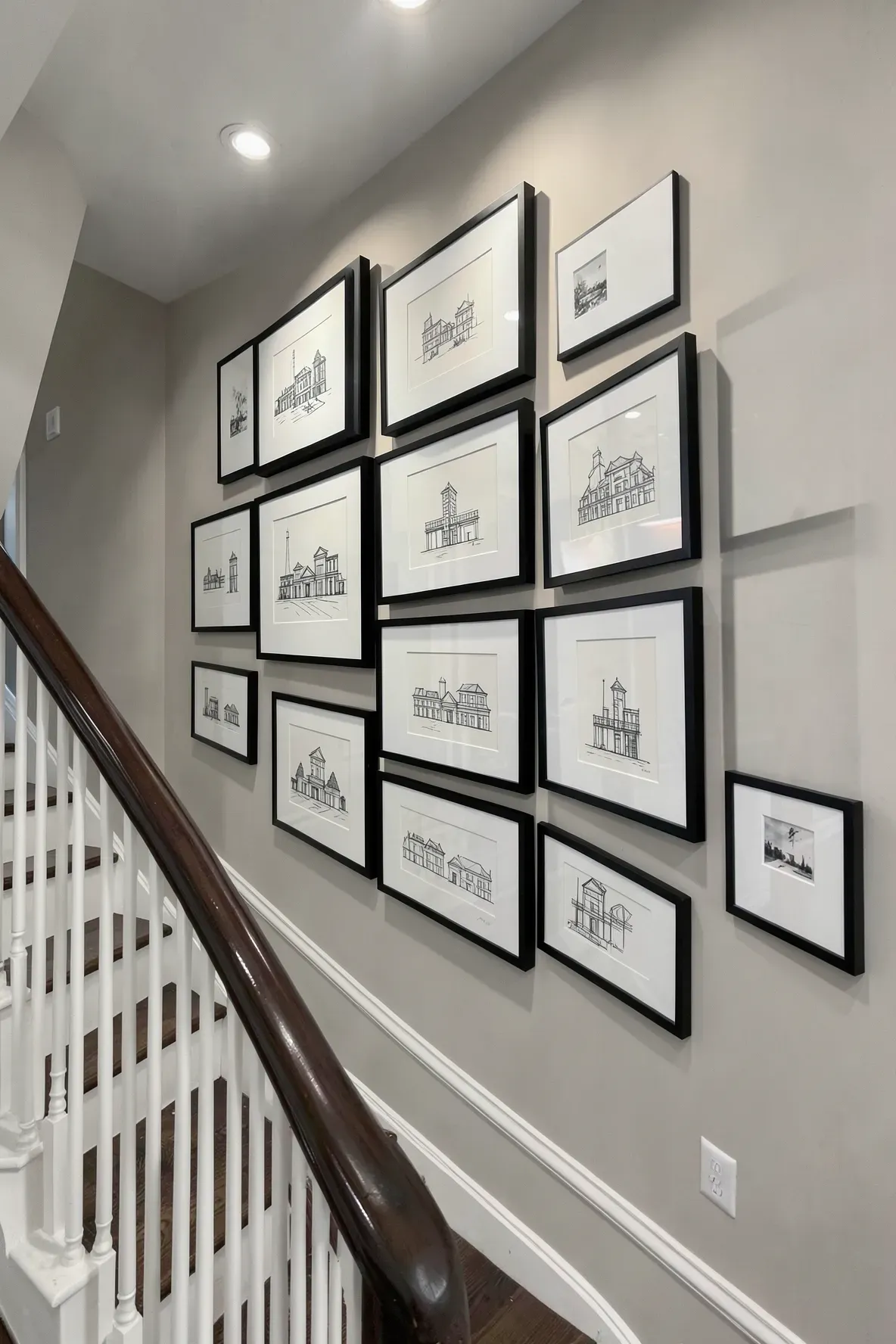
A gallery wall is a classic choice for hall stairs and landing decor. Using uniform frames with large white mats creates a clean, organized look that doesn’t feel cluttered. Space the frames closely together to create a continuous visual line. This technique distracts from the narrowness of the walls by giving the eye something interesting to focus on as you move through the space.
Statement Pendant Light in a High Ceiling
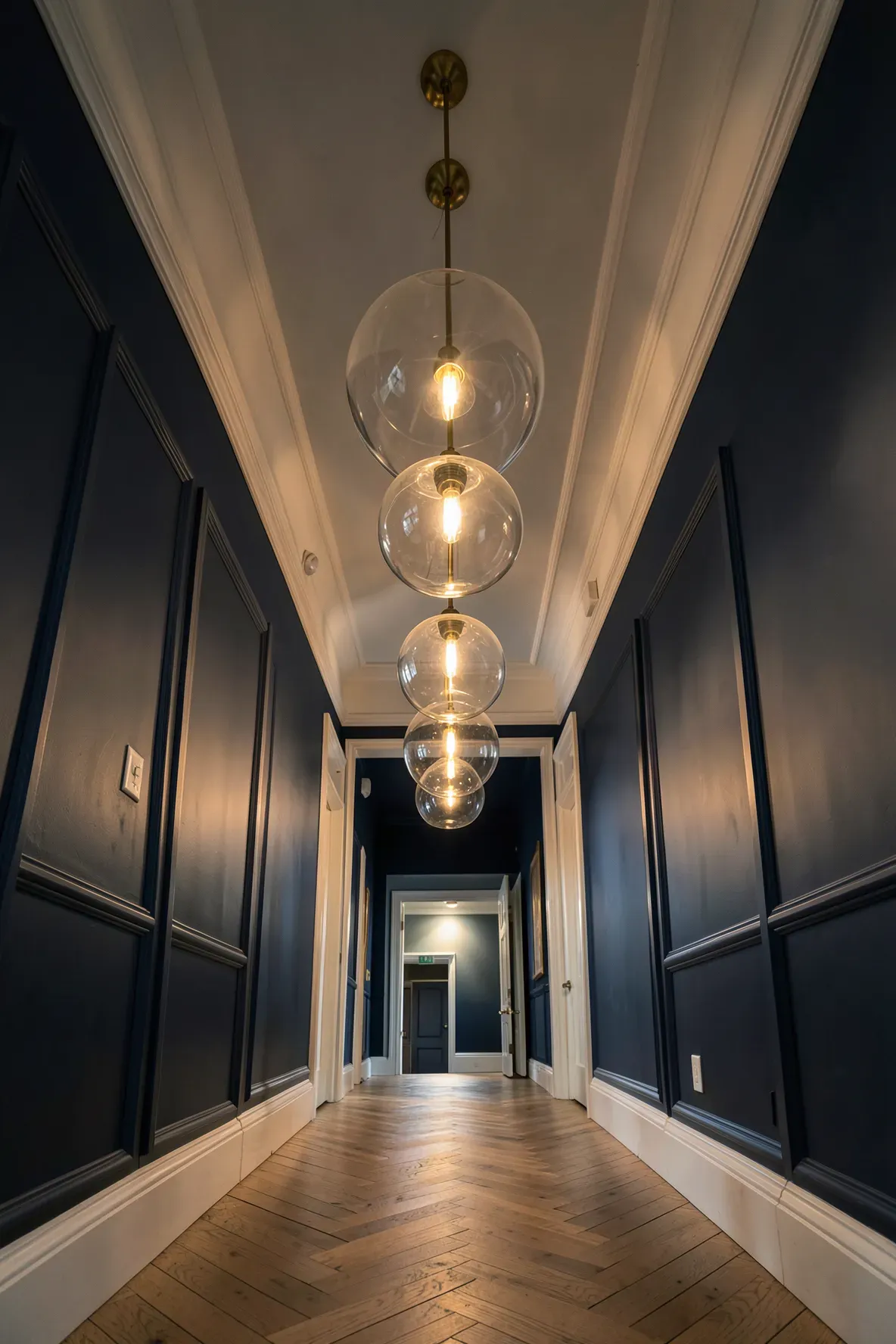
If your hallway is narrow but tall, use that vertical space to your advantage. A bold pendant light or a series of lanterns hanging from the ceiling draws the eye upward. This takes the focus away from the close proximity of the walls. It also provides better illumination than standard recessed lights, which can sometimes leave corners feeling dark and gloomy.
Narrow Bench with Under-Seat Shoe Storage
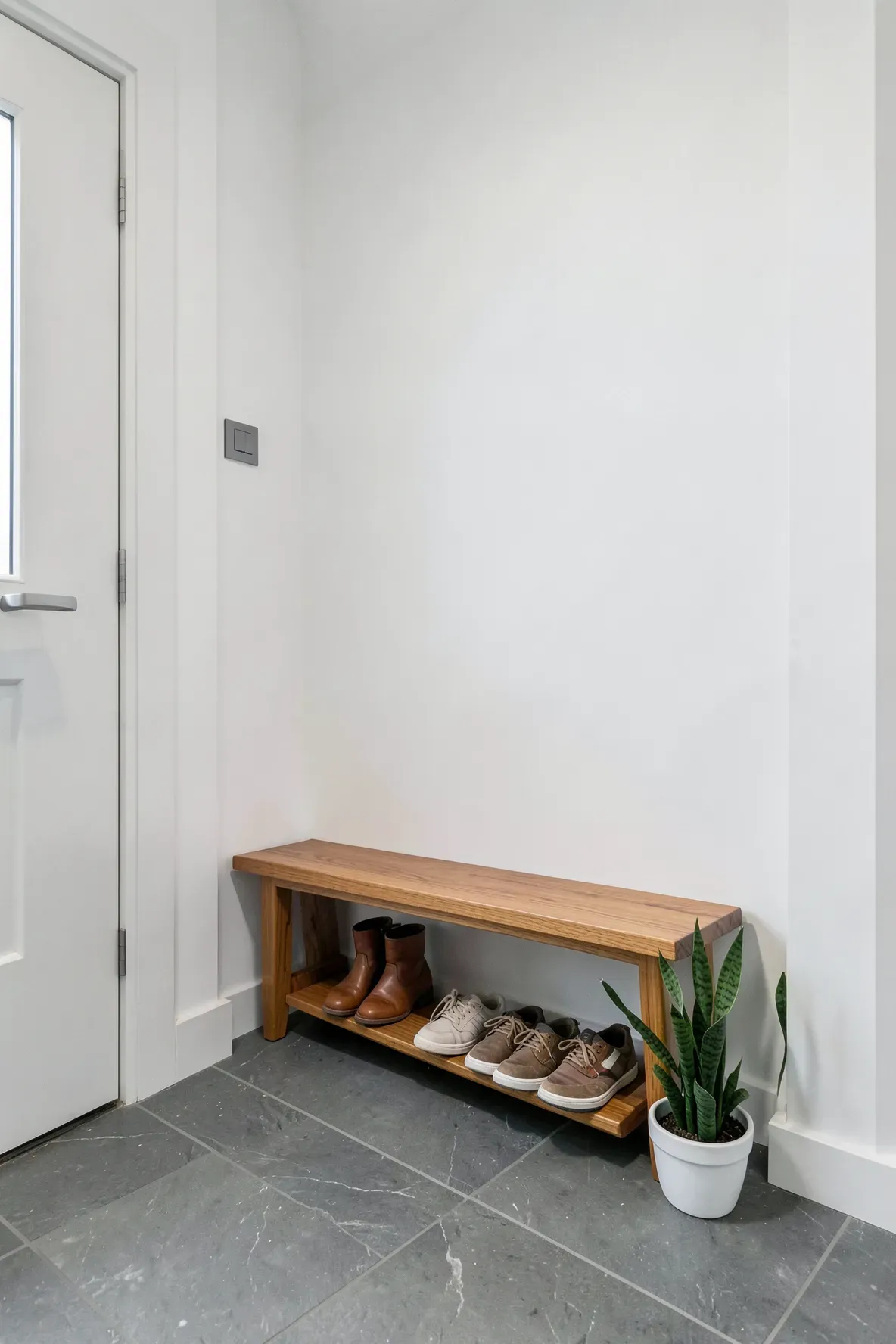
Finding a spot to sit and put on shoes is a luxury in tiny hallway ideas. A backless narrow bench fits against the wall and provides a place for shoes to live underneath. This keeps the entryway tidy and functional. Choose a bench with a slim profile so it doesn’t become a tripping hazard for people coming through the front door.
Vertical Wood Slat Wall Panels
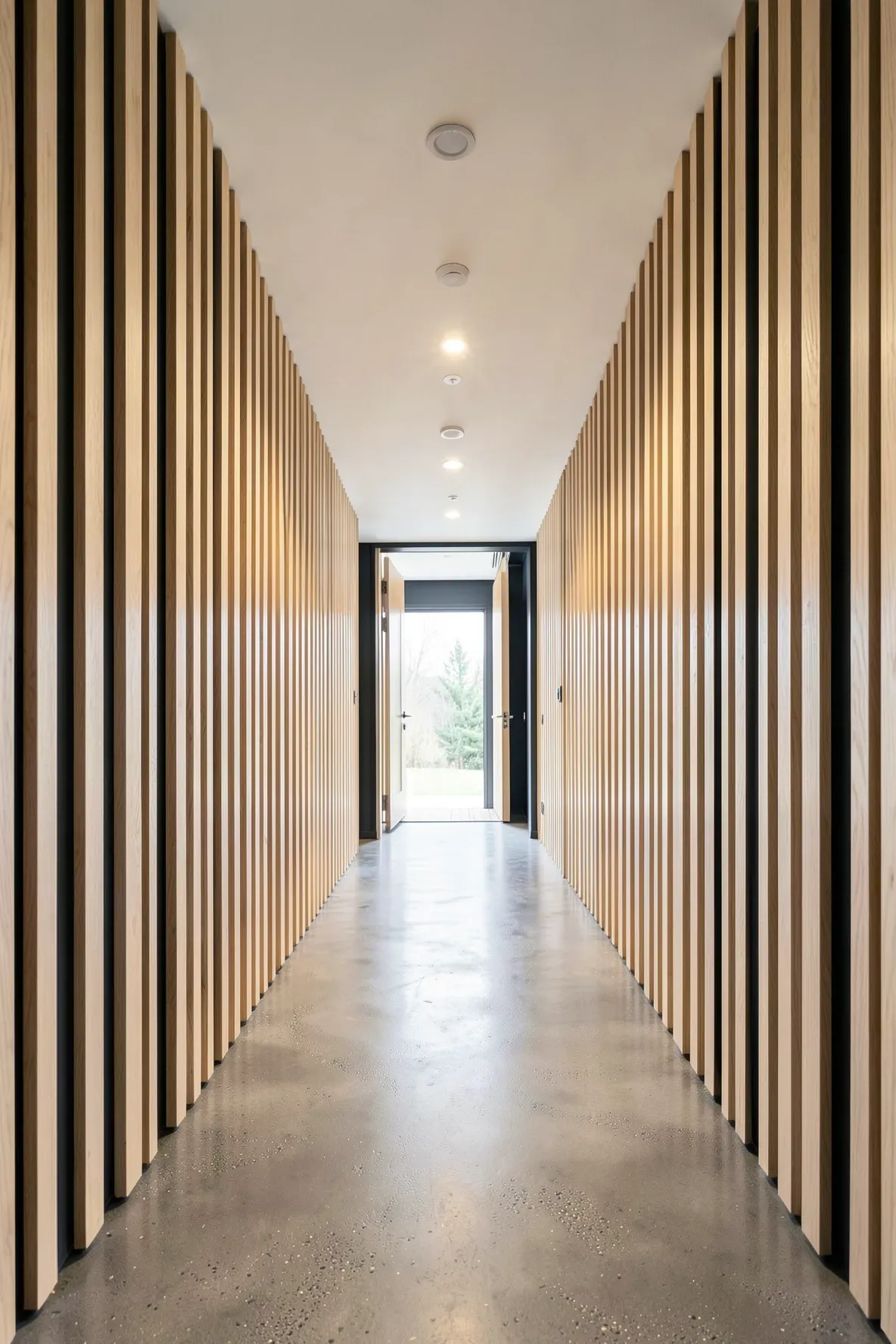
Wood slats add architectural interest and a sense of height to narrow hallway ideas. The vertical lines pull the gaze toward the ceiling, making the space feel less enclosed. These panels are also very durable, protecting your walls from the scuffs and marks that often happen in tight corridors. You can leave the wood natural for a warm look or paint it to match your trim.
Patterned Floor Tiles to Define the Space
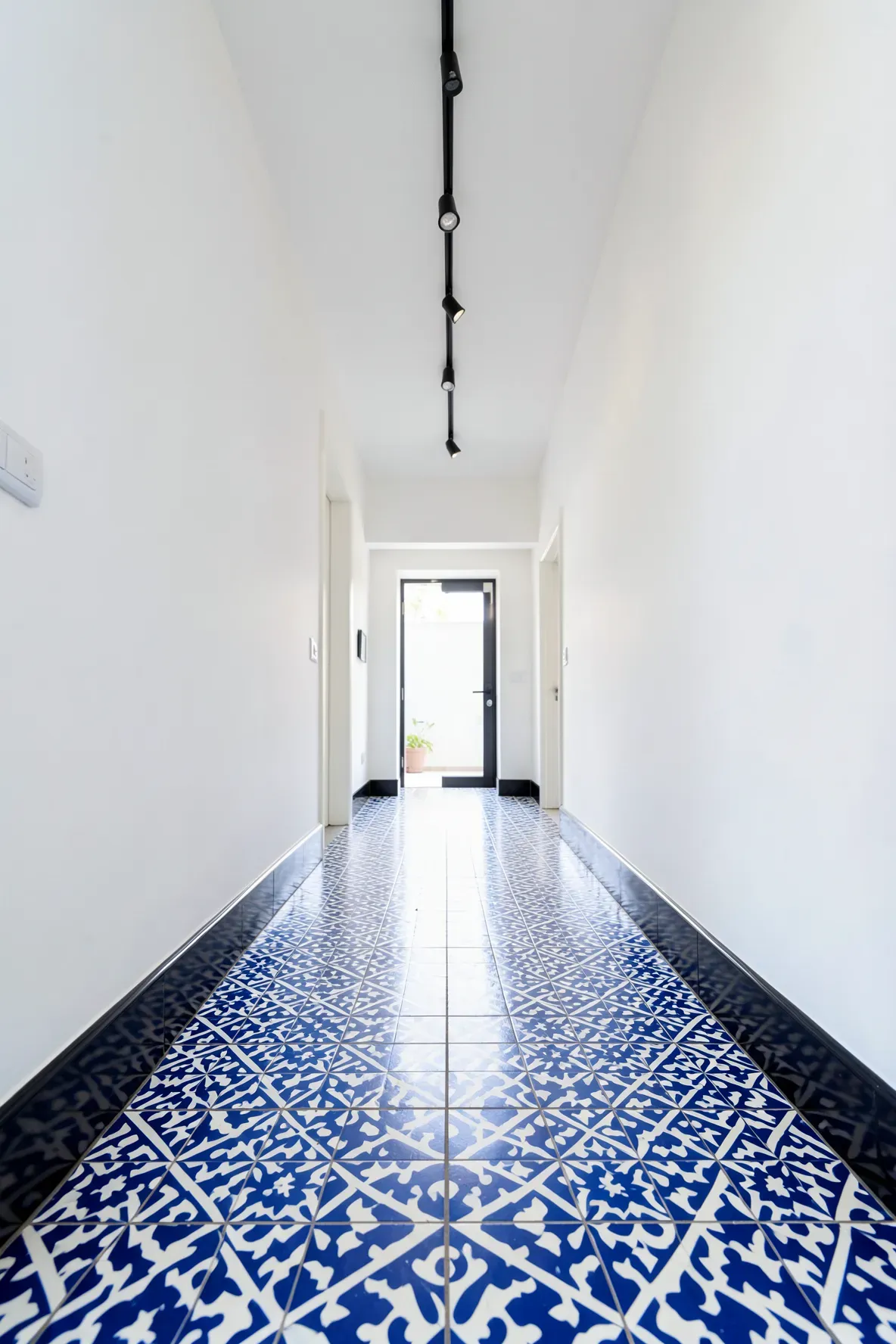
When you don’t have room for furniture, use the floor to make a statement. Bold, patterned tiles create a clear boundary for the entryway and add personality without using any physical space. This is a great trick for small hallway design because it makes the area feel like a distinct zone. Porcelain or encaustic tiles are easy to clean, which is a bonus for the busiest part of the home.
Half-Height Wainscoting with Contrast Paint
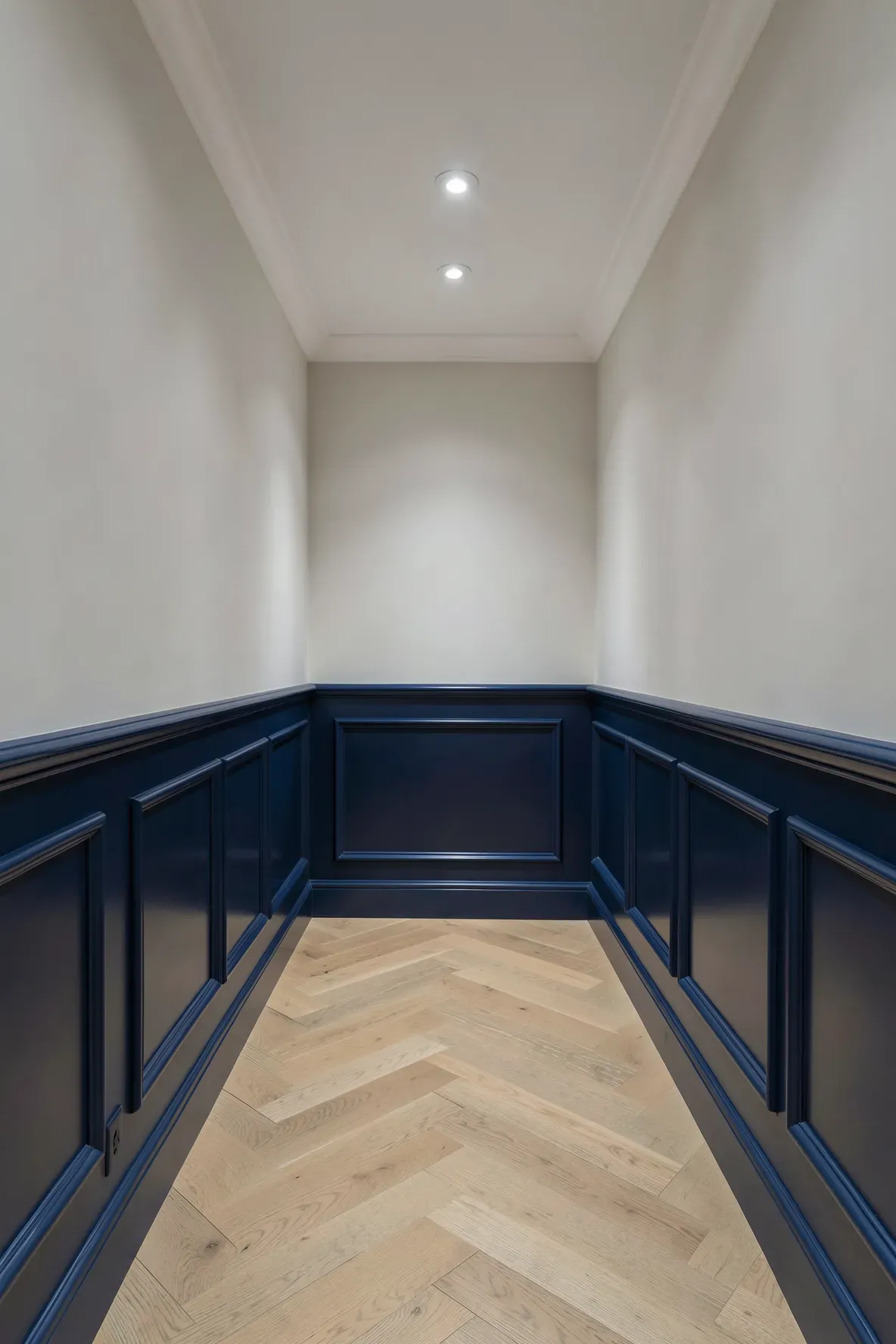
Wainscoting or wall paneling adds a layer of protection and style. By painting the bottom half of the wall a darker color and the top half a lighter shade, you create a visual divide. This prevents the walls from feeling like two giant, flat blocks closing in on you. It is a traditional approach to hall stairs and landing decor that still feels fresh in modern homes.
Recessed LED Strip Lighting Along the Baseboard
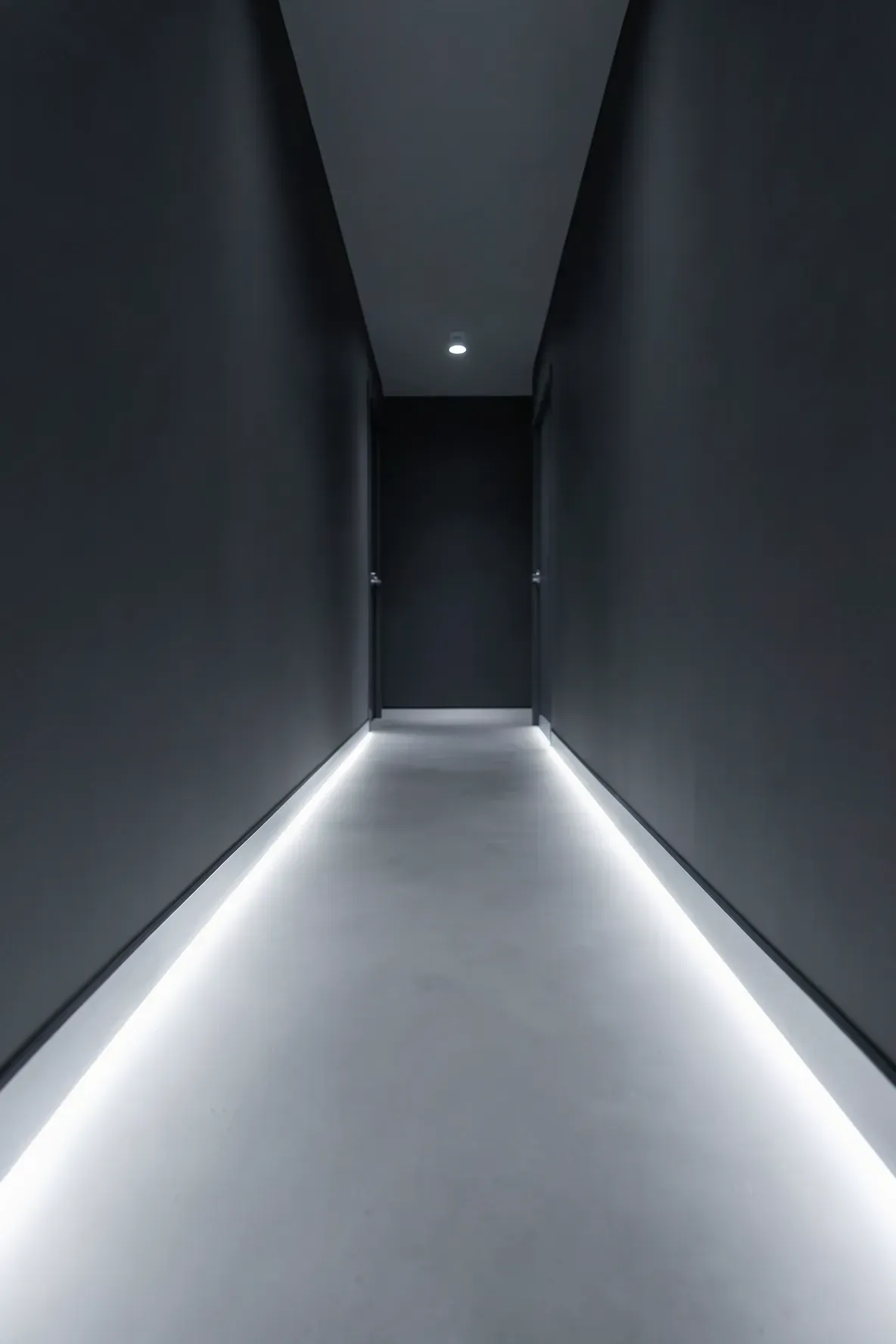
Lighting the floor level can make a narrow path feel wider and safer at night. Recessed LED strips tucked under the baseboard or along the edge of the floor create a soft glow. This eliminates dark shadows at the ground level, which often make spaces feel smaller. It is an effective way to modernize stairs and hallway ideas while providing a practical nightlight.
Oversized Leaner Mirror to Reflect Light
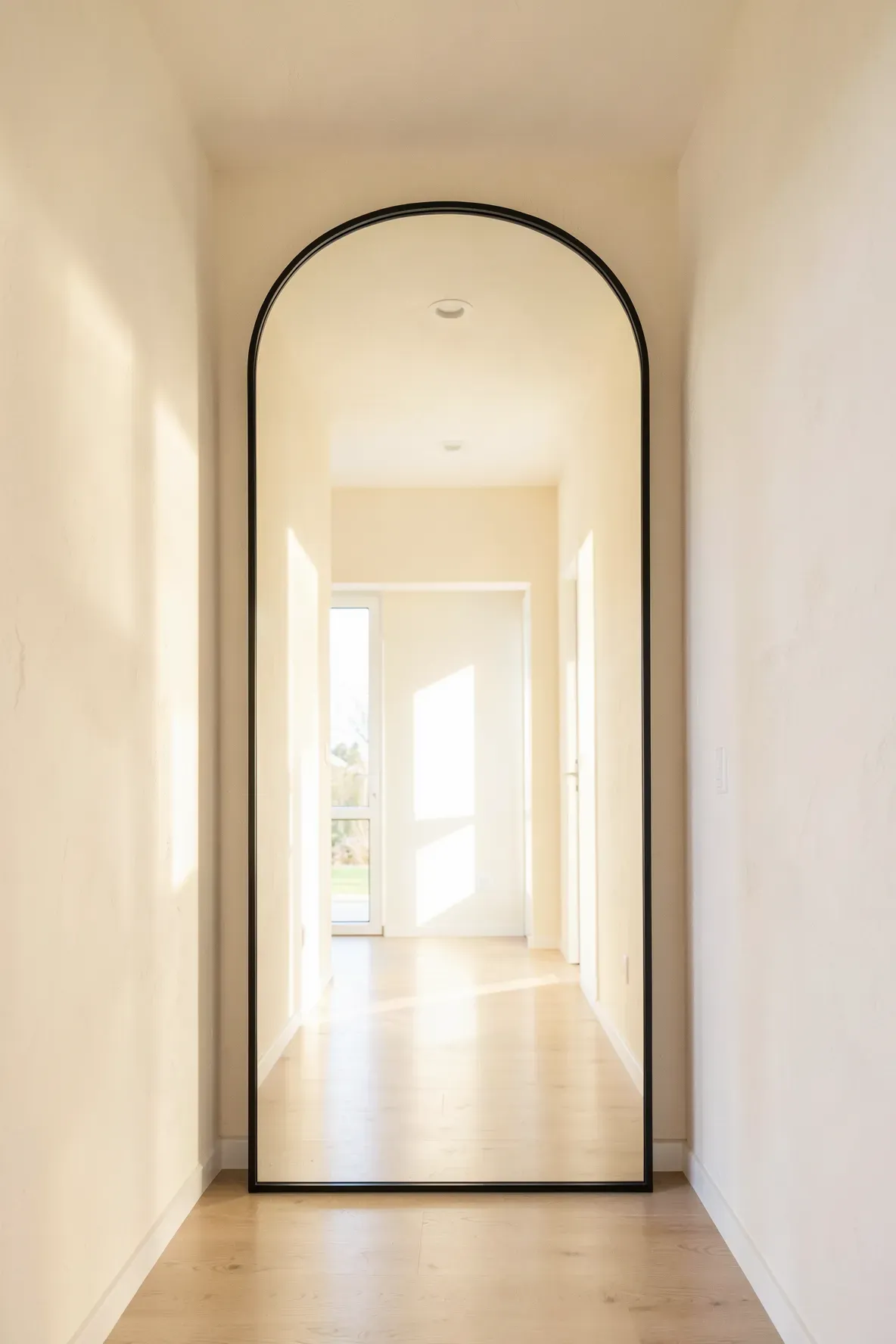
A large mirror leaning against the wall at the end of a hallway can make the space look twice as long. It captures light from nearby rooms and bounces it into the darker center of the hall. This is one of the most effective narrow entryway ideas for creating the illusion of more square footage. Just ensure the mirror is safely secured to the wall so it cannot tip over.
Small Floating Shelf for Keys and Mail
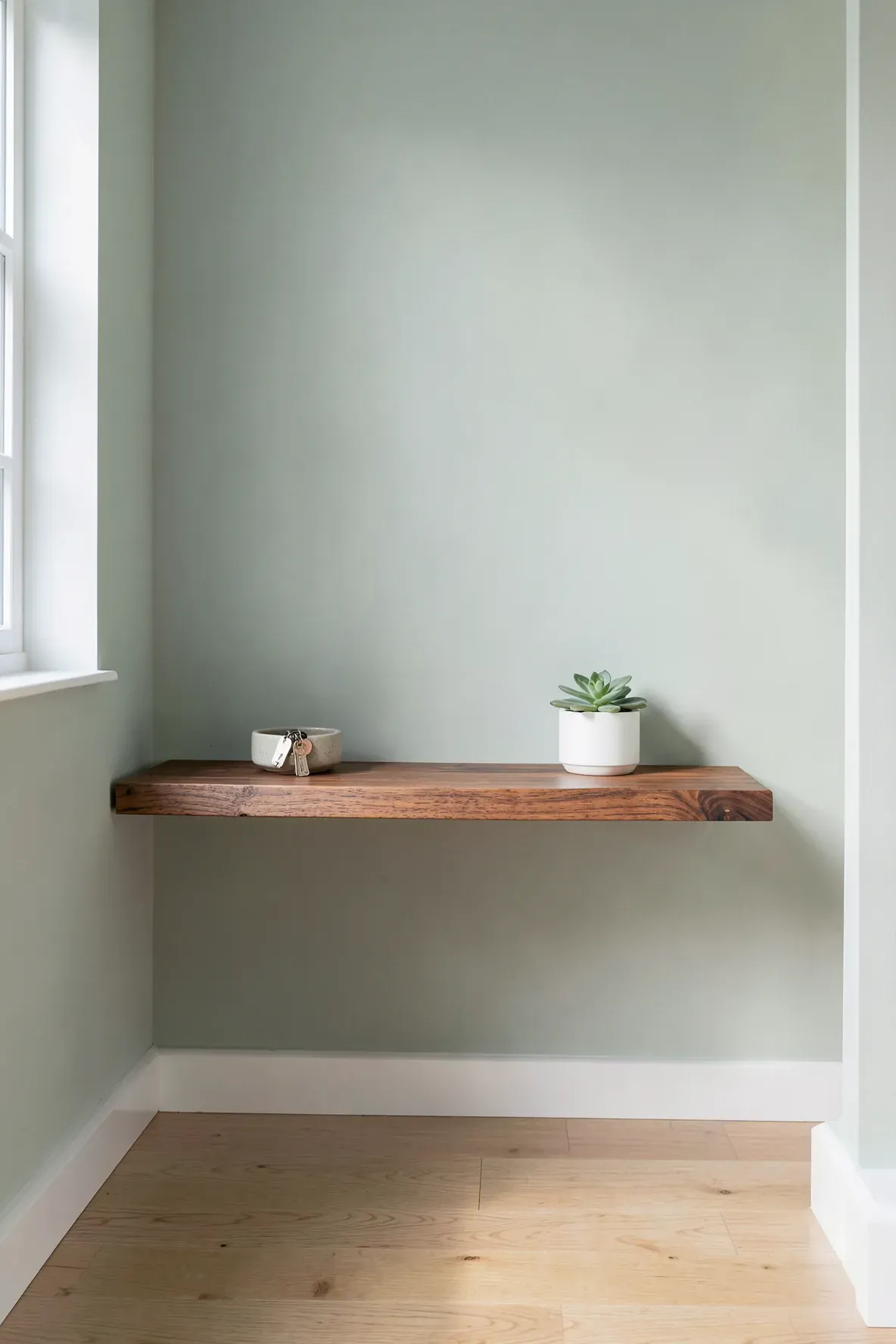
If a console table is still too wide, a floating shelf is the answer. Since it has no legs, it leaves the floor completely clear, which helps maintain a sense of openness. You can mount it at waist height to act as a landing pad for your essentials. This is a staple for tiny hallway ideas where every inch of floor space is needed for walking.
Matching Sconces Spaced Along a Long Corridor
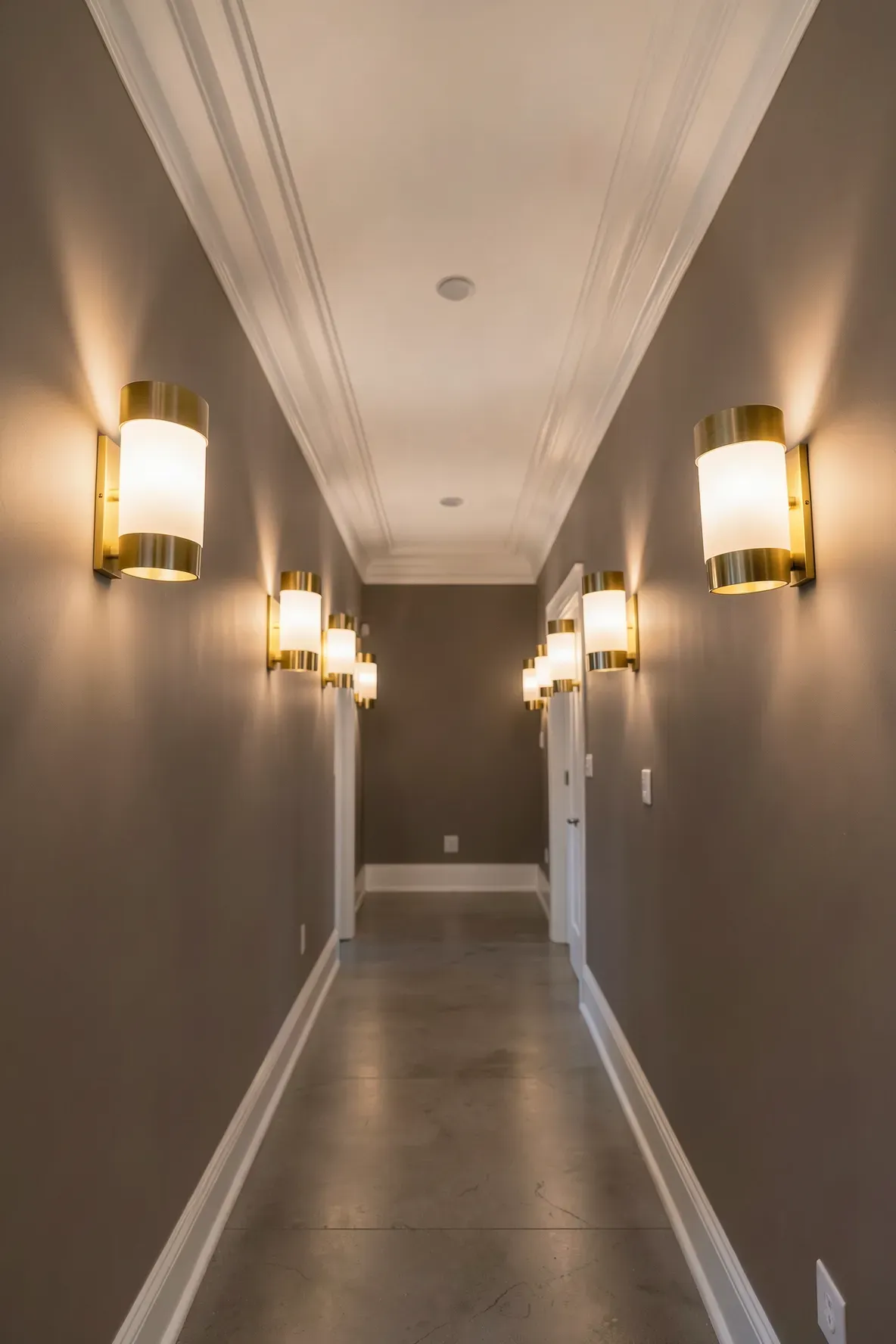
Relying on a single light source in a long hallway often results in dark spots. Placing matching wall sconces at regular intervals creates a rhythm that guides you through the space. This layout mimics the feel of a high-end hotel or gallery. Sconces provide a warm, eye-level light that is much more inviting than harsh overhead fixtures.
Wicker Baskets Tucked Under a Table
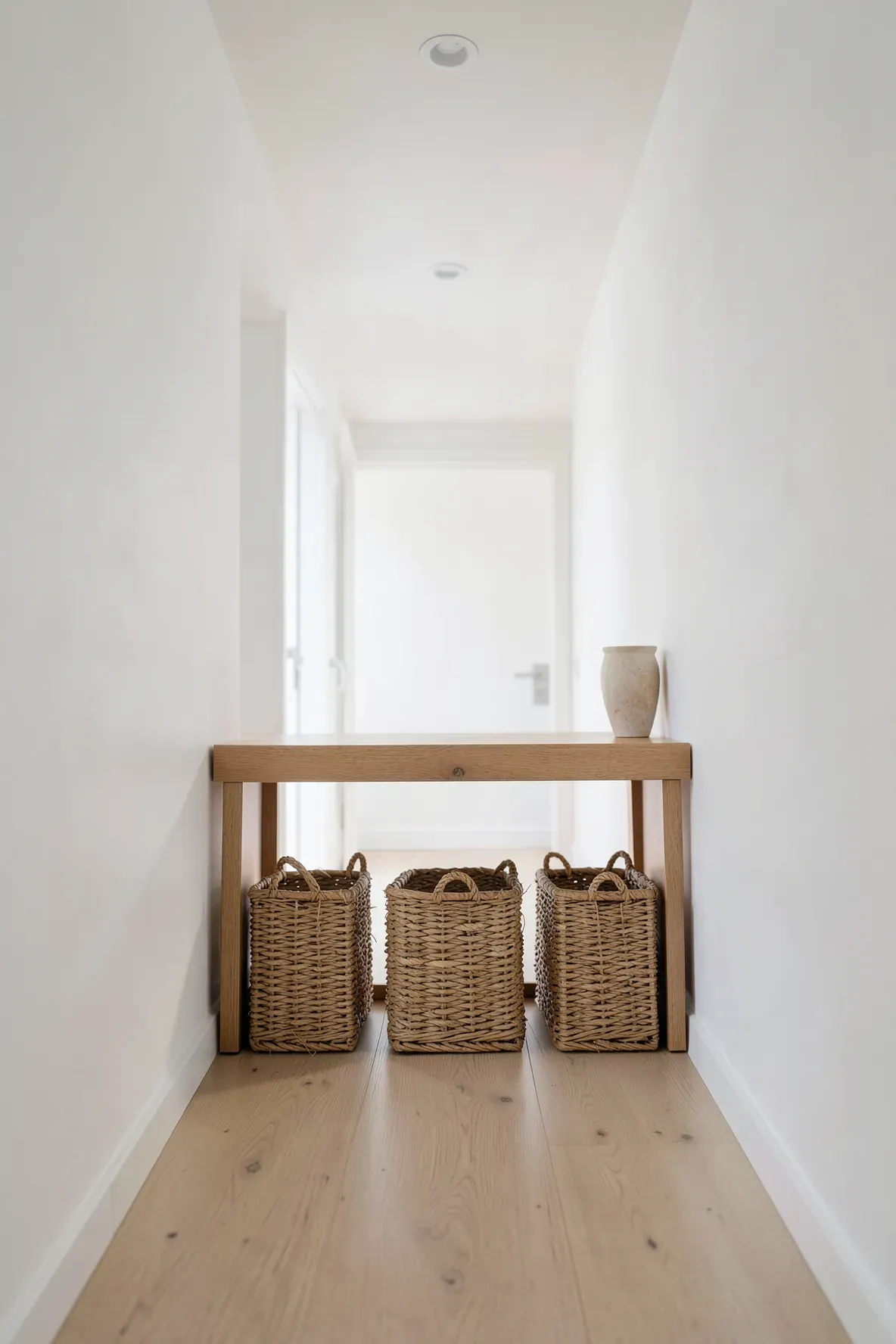
Baskets are great for hiding messy items like umbrellas, dog leashes, or shoes. Placing them under a console table or bench utilizes the dead space that usually goes to waste. Wicker or seagrass adds a natural texture that softens the hard lines of a narrow corridor. It is a simple way to keep small hallway design organized and clutter-free.
Bold Accent Wall at the Far End of the Hall
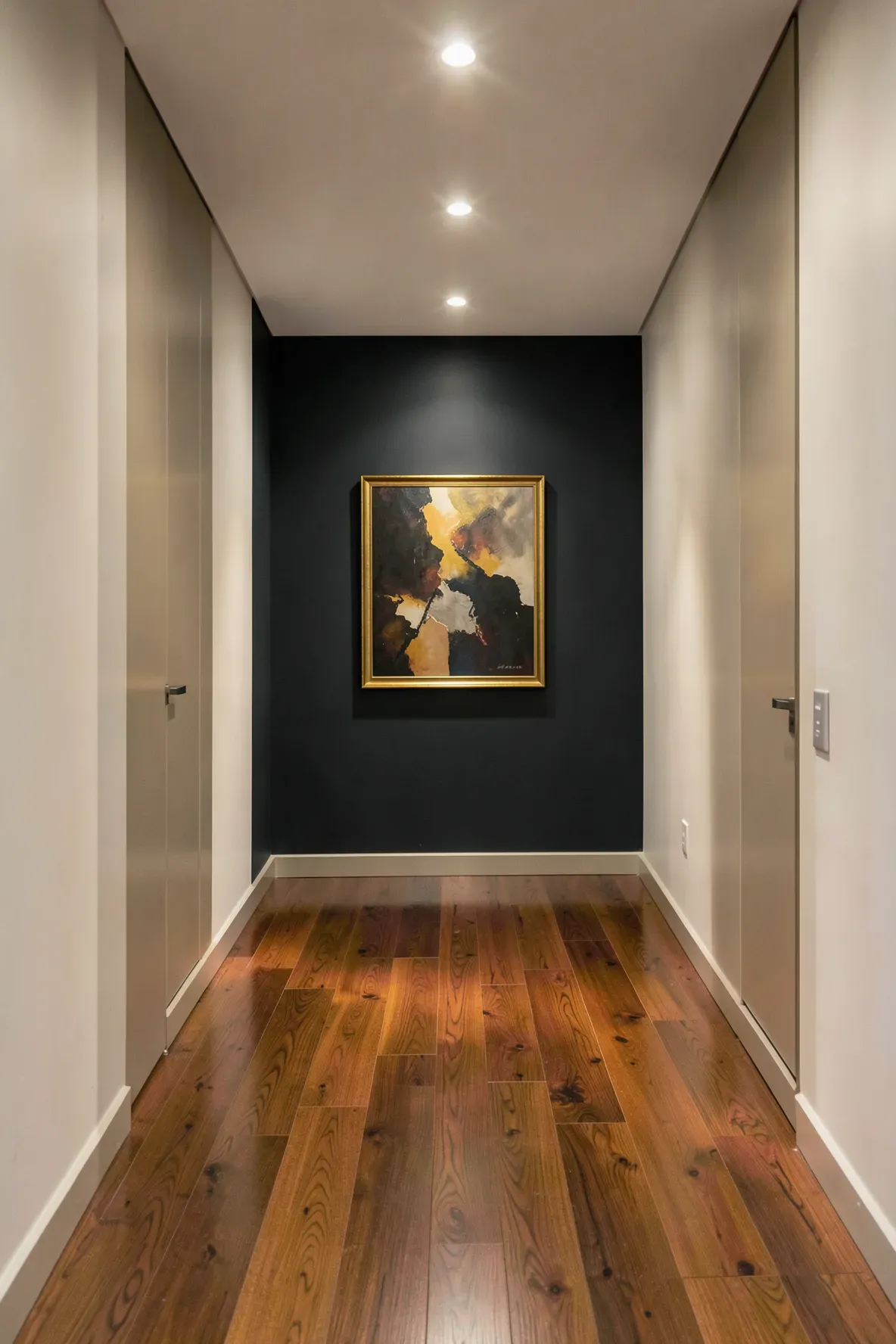
Painting the very last wall of a hallway a dark or vibrant color draws the eye forward. This creates a sense of depth and makes the journey through the hall feel purposeful. Instead of the hallway just ending, it leads to a visual destination. You can also use wallpaper or a large piece of art on this wall to achieve the same effect.
Stair Runner with Metallic Decorative Rods
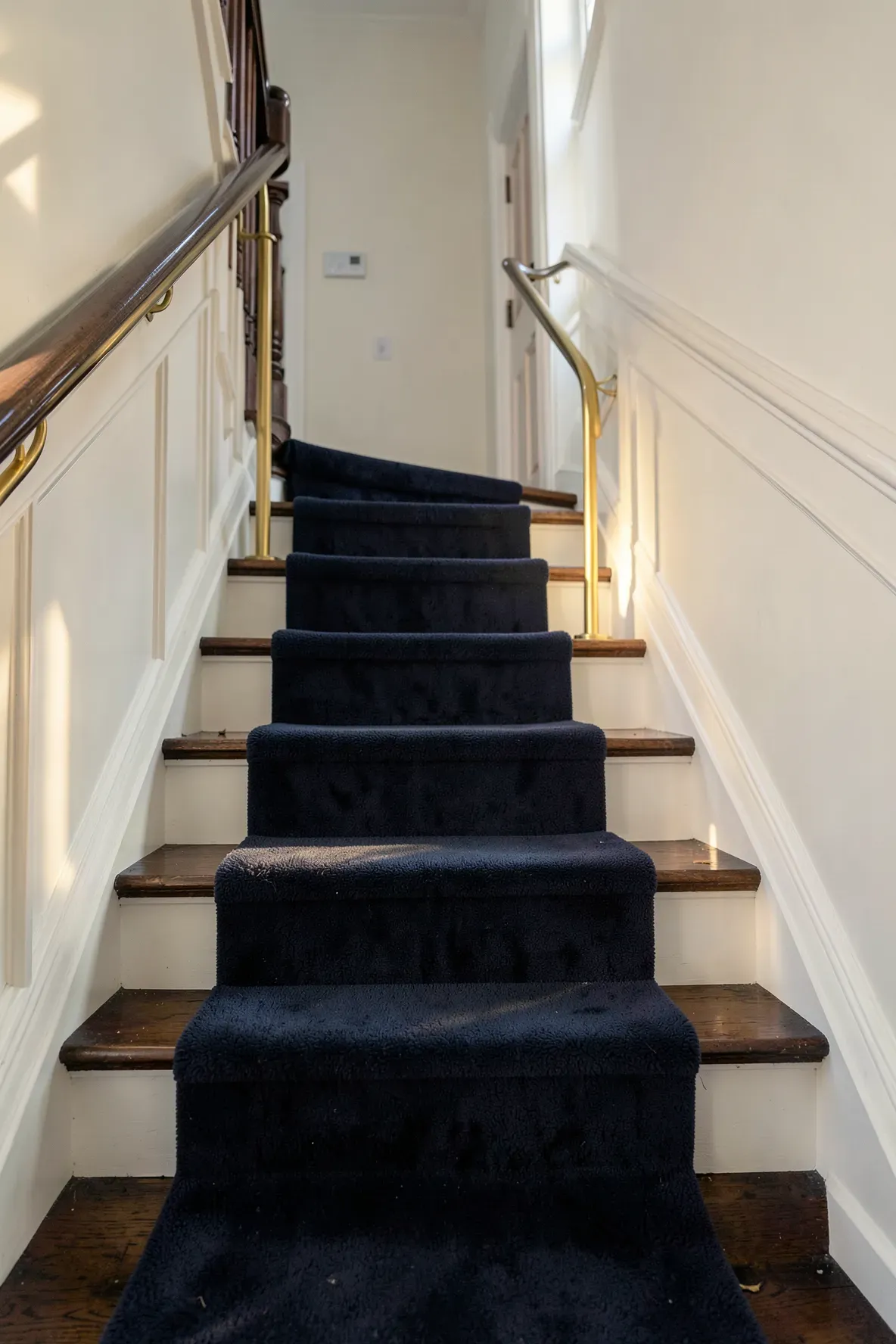
For homes where the stairs are the first thing you see, a runner adds immediate style. Metallic rods hold the carpet in place and add a touch of traditional detail. This layout connects the entryway to the rest of the house. It is a key part of stairs and hallway ideas because it reduces noise and makes the climb up to the landing feel more comfortable.
Corner Armchair for a Landing Reading Nook
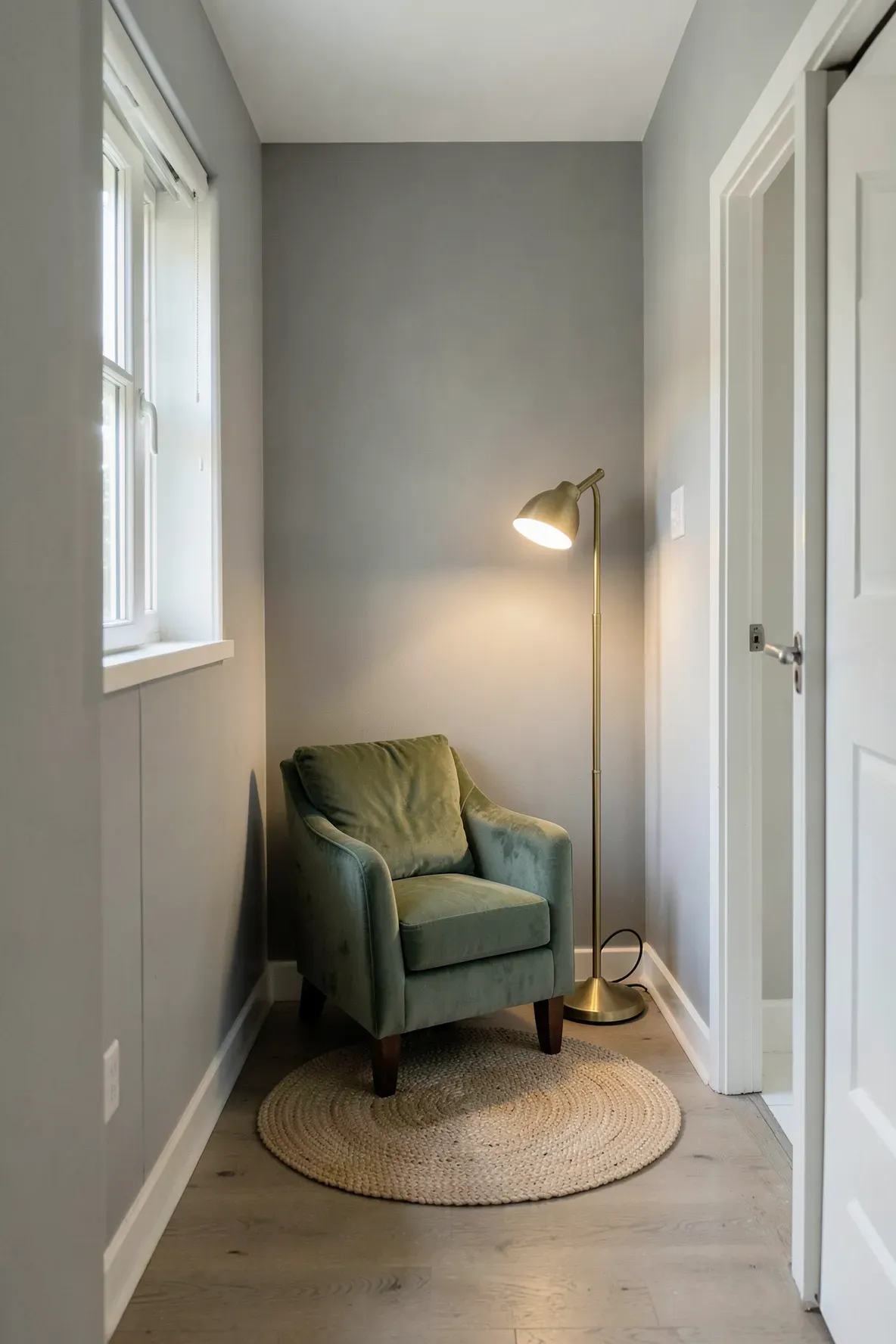
Upstairs hallway ideas often include awkward corners that stay empty. Placing a small, comfortable armchair in a corner turns a transit area into a destination. Pair it with a small floor lamp to create a quiet spot for reading. This makes the upstairs landing feel like a functional room rather than just a bridge between bedrooms.
Vintage Trunk for Seasonal Blanket Storage
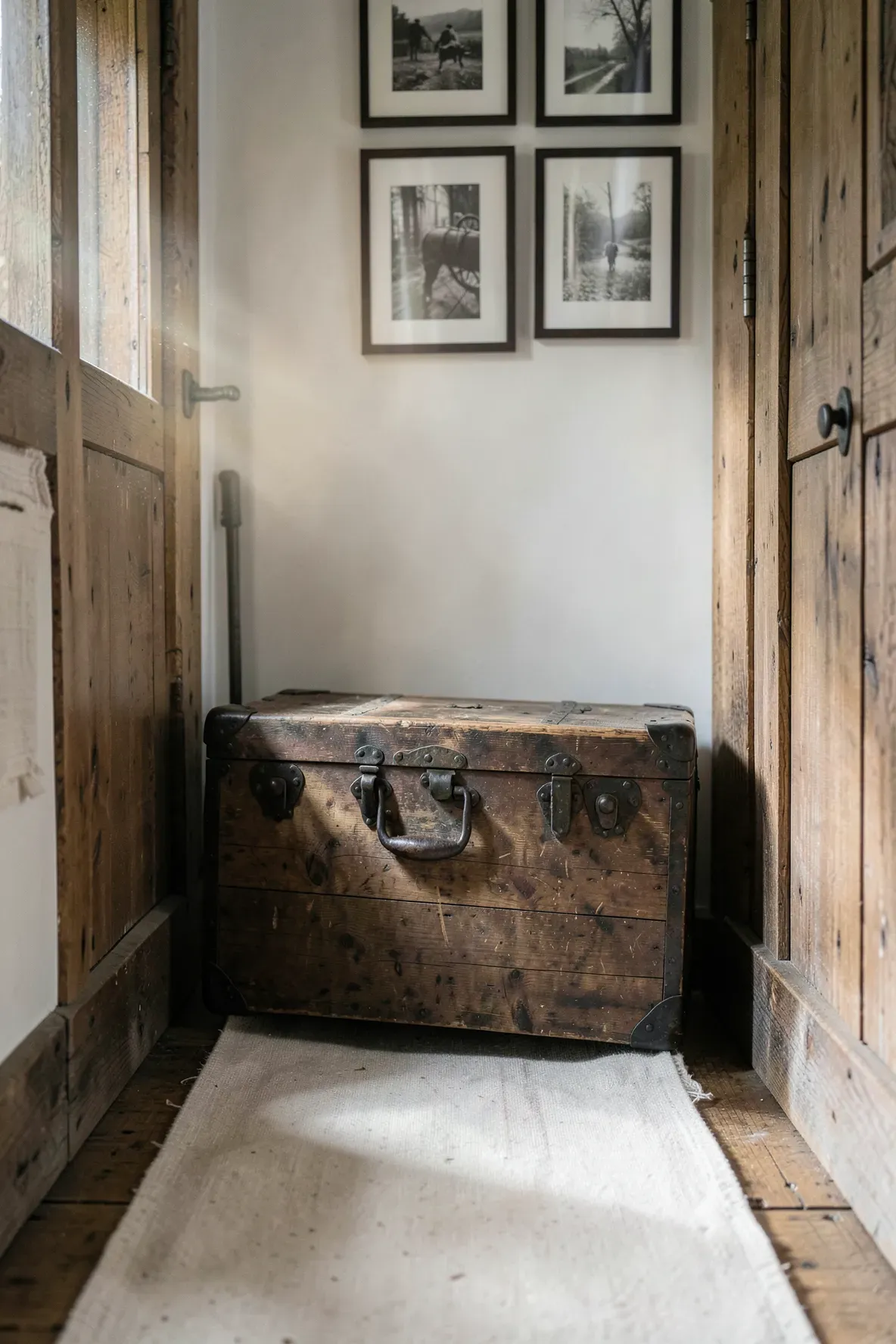
An old trunk provides a sturdy surface and deep storage in one piece. It fits well against a wall or on a wide landing. Use it to store bulky items like winter coats or extra blankets that don’t fit in the bedroom closets. The flat top can also serve as a place to set down bags when you first walk through the door.
Glass Panelled Internal Doors to Share Light
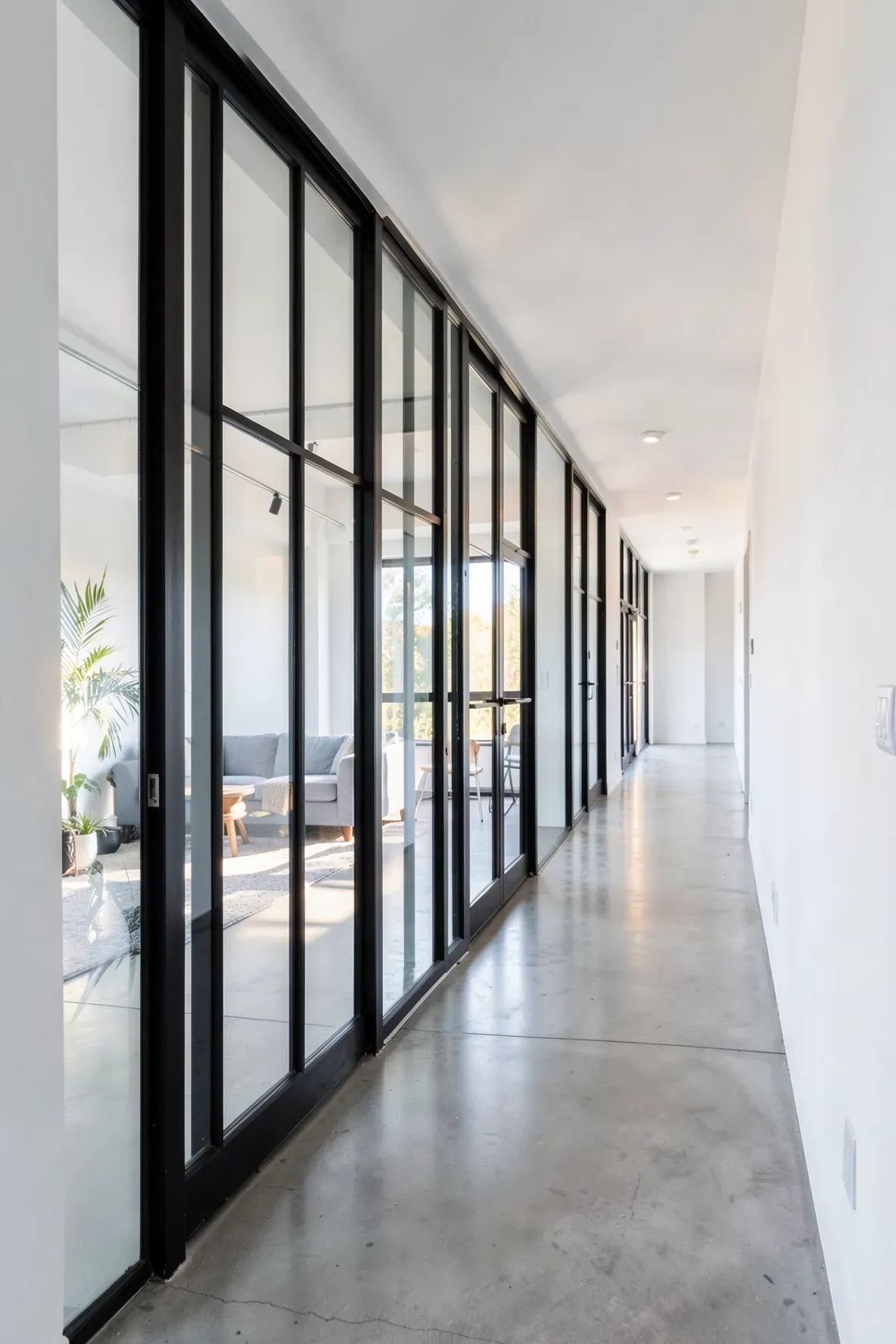
Narrow hallways are often dark because they have no windows. Replacing solid wooden doors with glass-panelled versions allows light from the brighter rooms to spill into the hallway. This keeps the space from feeling like a cave. If privacy is a concern, frosted or fluted glass offers a similar light-sharing benefit while keeping the rooms hidden from view.
Hanging Plant Brackets Near High Windows
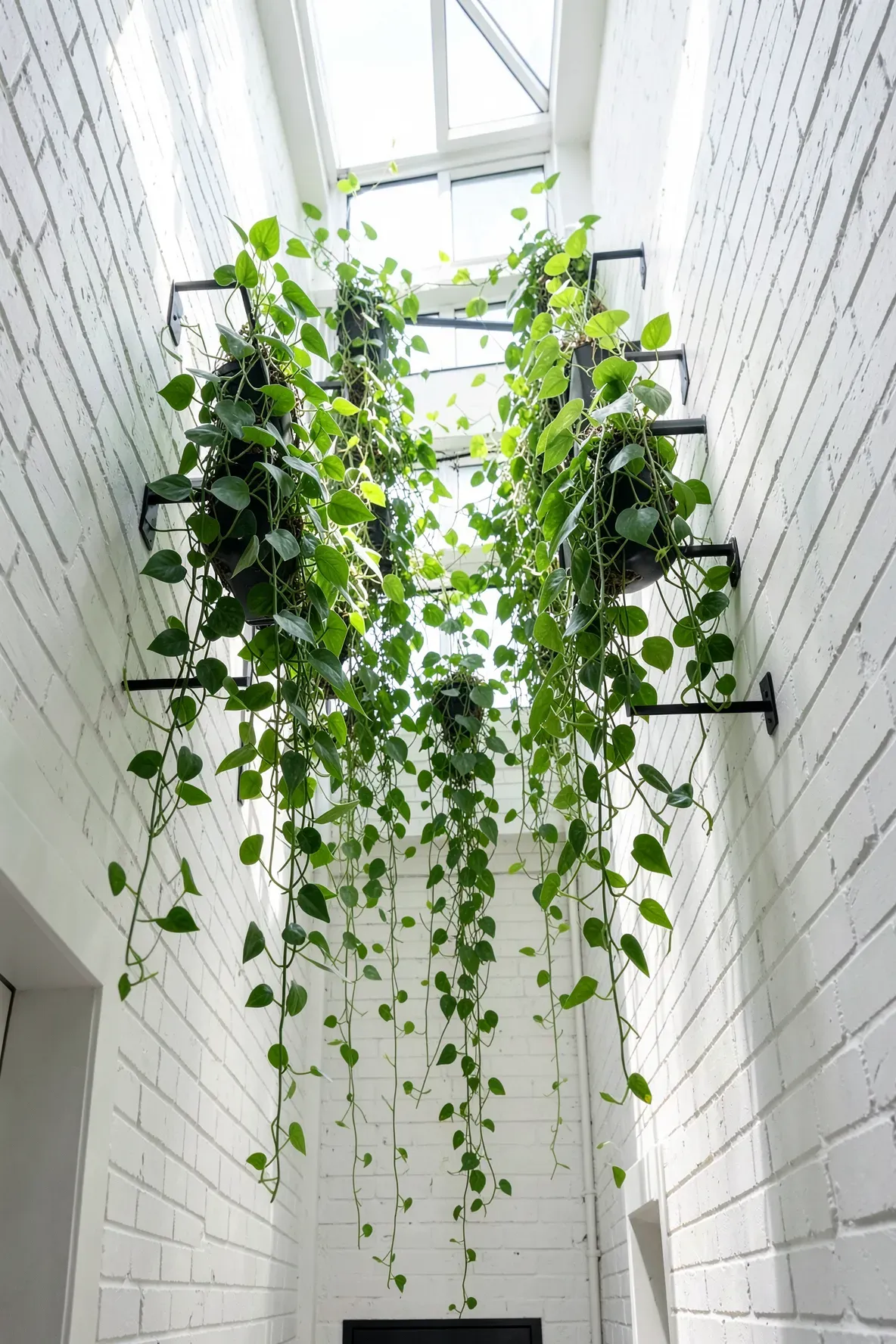
Plants add life to a hallway, but pots on the floor can get in the way. Use wall brackets or ceiling hooks to hang trailing plants like Pothos or Philodendrons near any available light source. This adds greenery at eye level or above, keeping the walkway clear. It is a great way to use the vertical space in narrow entryway ideas.
Minimalist Metal Shoe Rack for Tiny Entrances
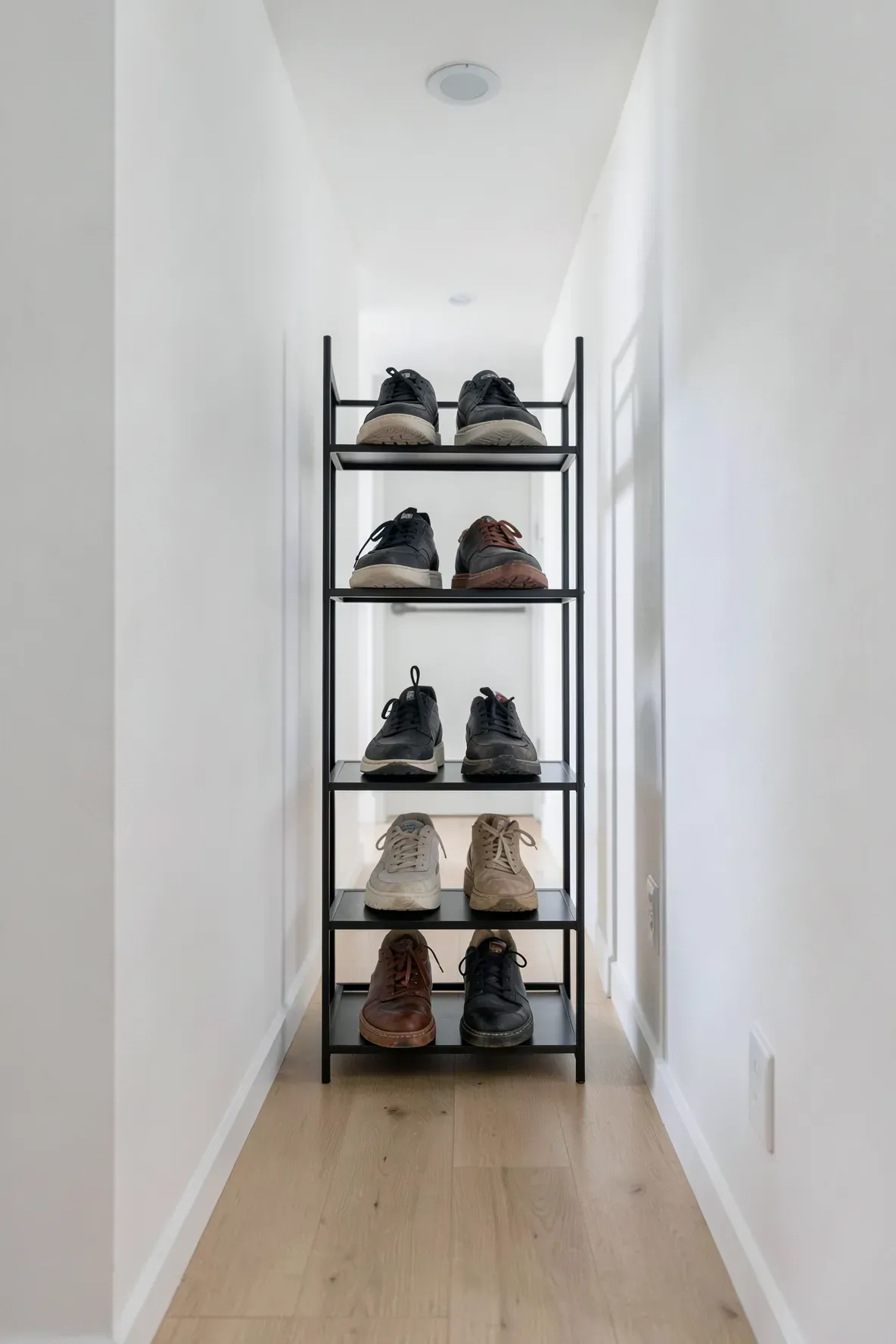
Metal racks are often thinner than wooden ones, making them ideal for the tightest spaces. A multi-tiered rack can hold several pairs of shoes in the same footprint as one pair. Keeping the shoes stacked vertically prevents the floor from becoming a mess of sneakers and boots. This is a very practical choice for maintaining a clean small hallway design.
Chalkboard Wall for Family Schedules
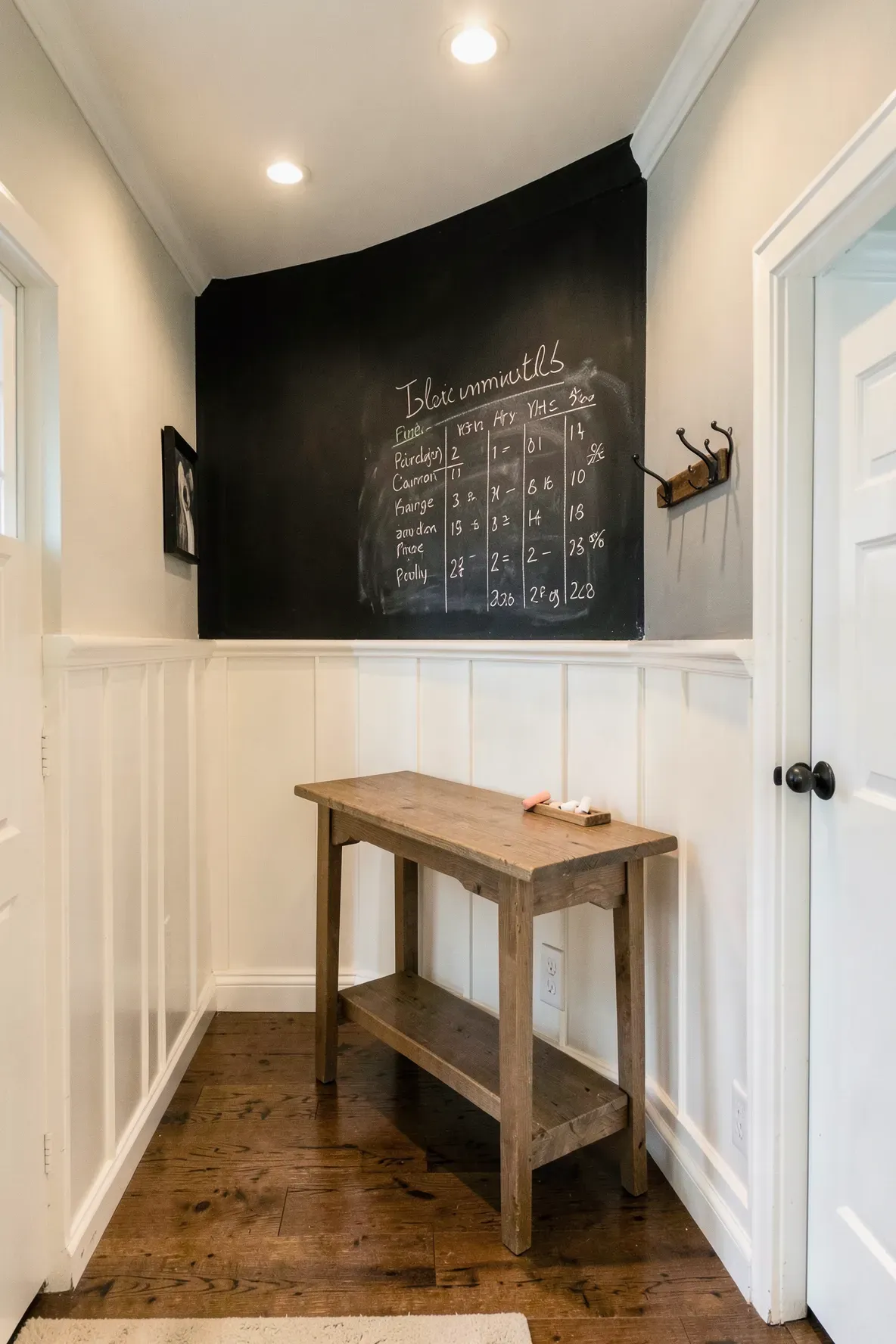
Turn a section of the wall into a communication hub with chalkboard paint. This is perfect for jotting down grocery lists, reminders, or daily schedules as you head out the door. It doesn’t take up any physical space at all, making it one of the most functional narrow hallway ideas. It also provides an ever-changing piece of wall art for the family.
Built-in Window Seat on an Upstairs Landing
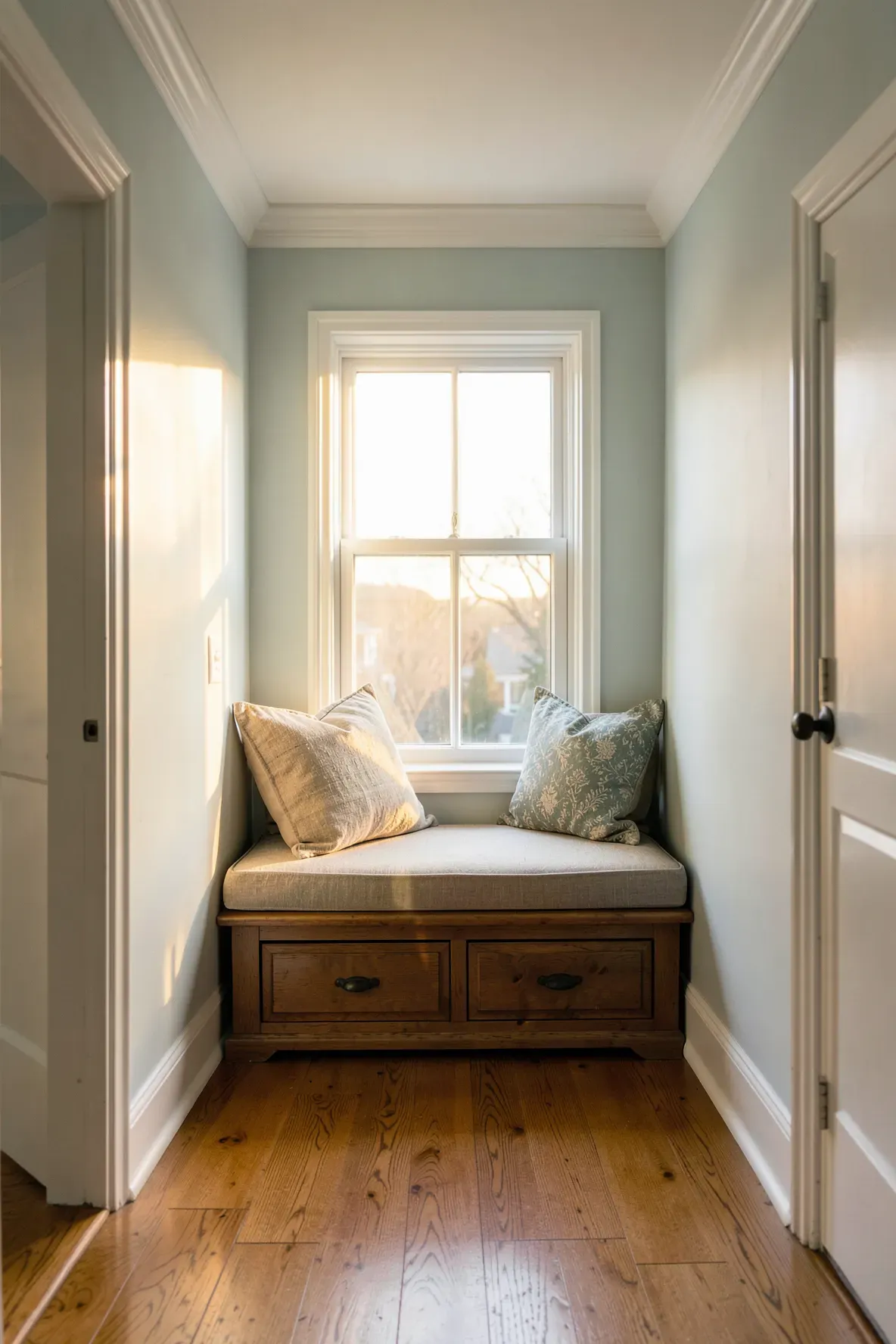
If your landing has a window, a built-in seat is a fantastic use of space. It provides a spot to sit and look outside while offering hidden storage beneath the cushion. This layout makes the most of upstairs hallway ideas by creating a cozy alcove. It turns a simple walkway into a charming feature of the home’s architecture.
Series of Identical Botanical Prints
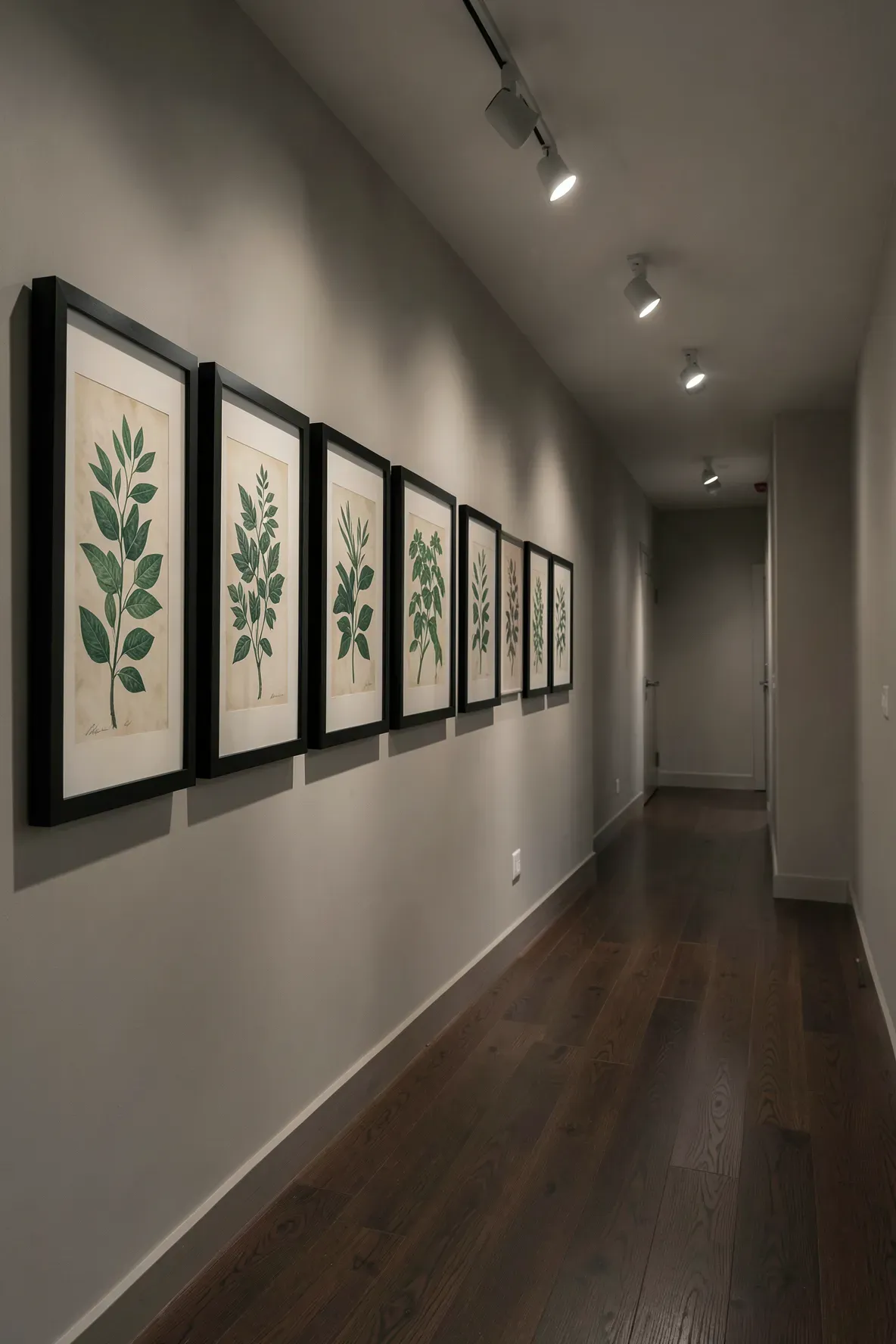
A row of matching prints creates a sense of order and calm. In a long hallway, this repetition acts like a visual beat that leads you from one end to the other. Choose simple frames and natural subjects like leaves or flowers to keep the look light. This is an affordable and easy way to handle long hallway decorating without overcomplicating things.
Bamboo Mat for a Durable Entryway Surface
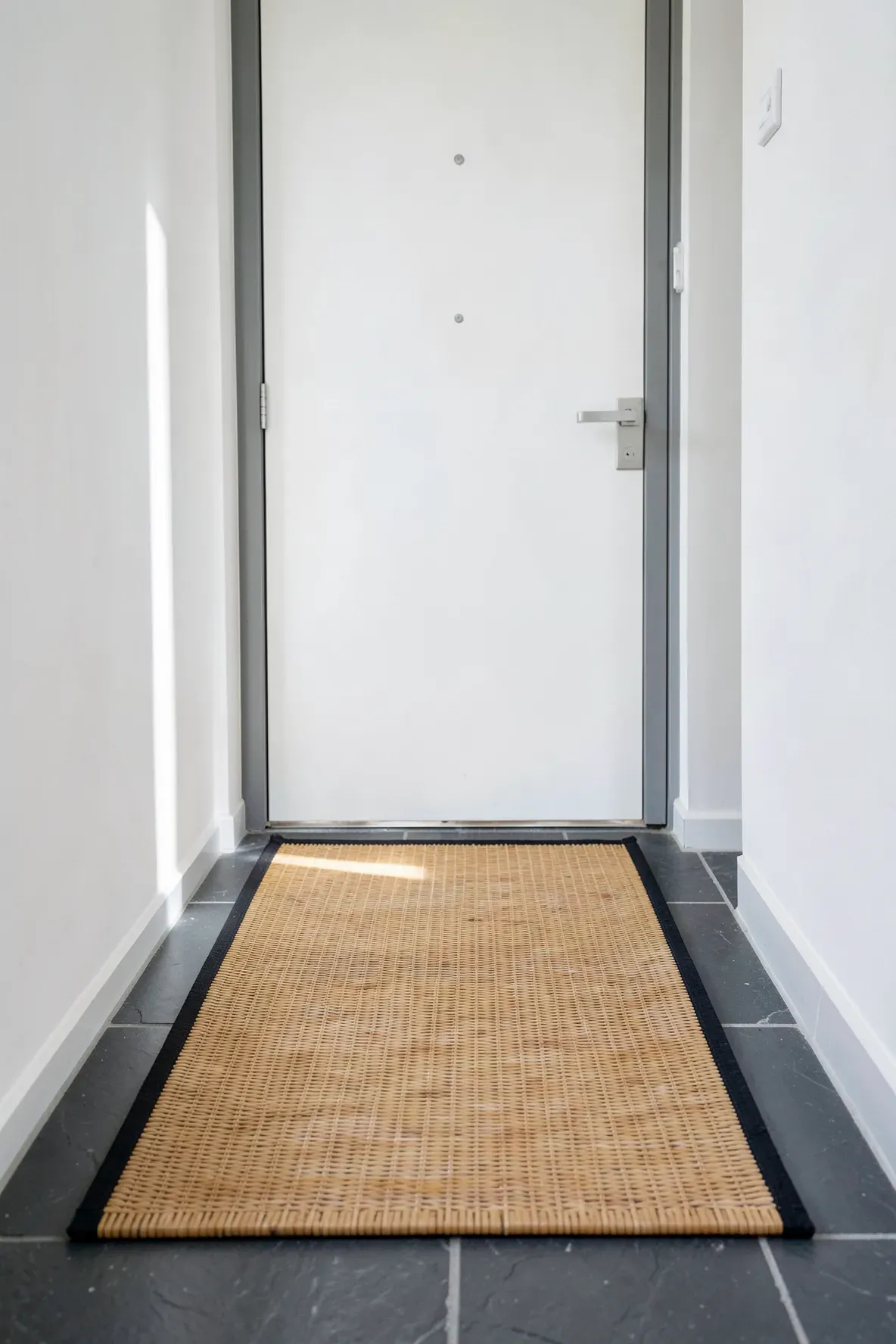
Bamboo mats are incredibly thin and flat, so they won’t interfere with door clearance. They are also very tough and easy to wipe down, which is perfect for the area where people kick off muddy shoes. The natural wood tone adds a warm element to the floor. This is a practical alternative to thick rugs in tiny hallway ideas where every millimeter counts.
Decorative Crown Molding to Add Character

Adding molding to the top of the walls can make a hallway feel more grand and finished. It draws the eye upward and adds a layer of detail that breaks up plain surfaces. This works well in both modern and traditional homes. It is a subtle way to improve hall stairs and landing decor by emphasizing the height and architecture of the space.
Low-Profile Radiator Cover with Display Space
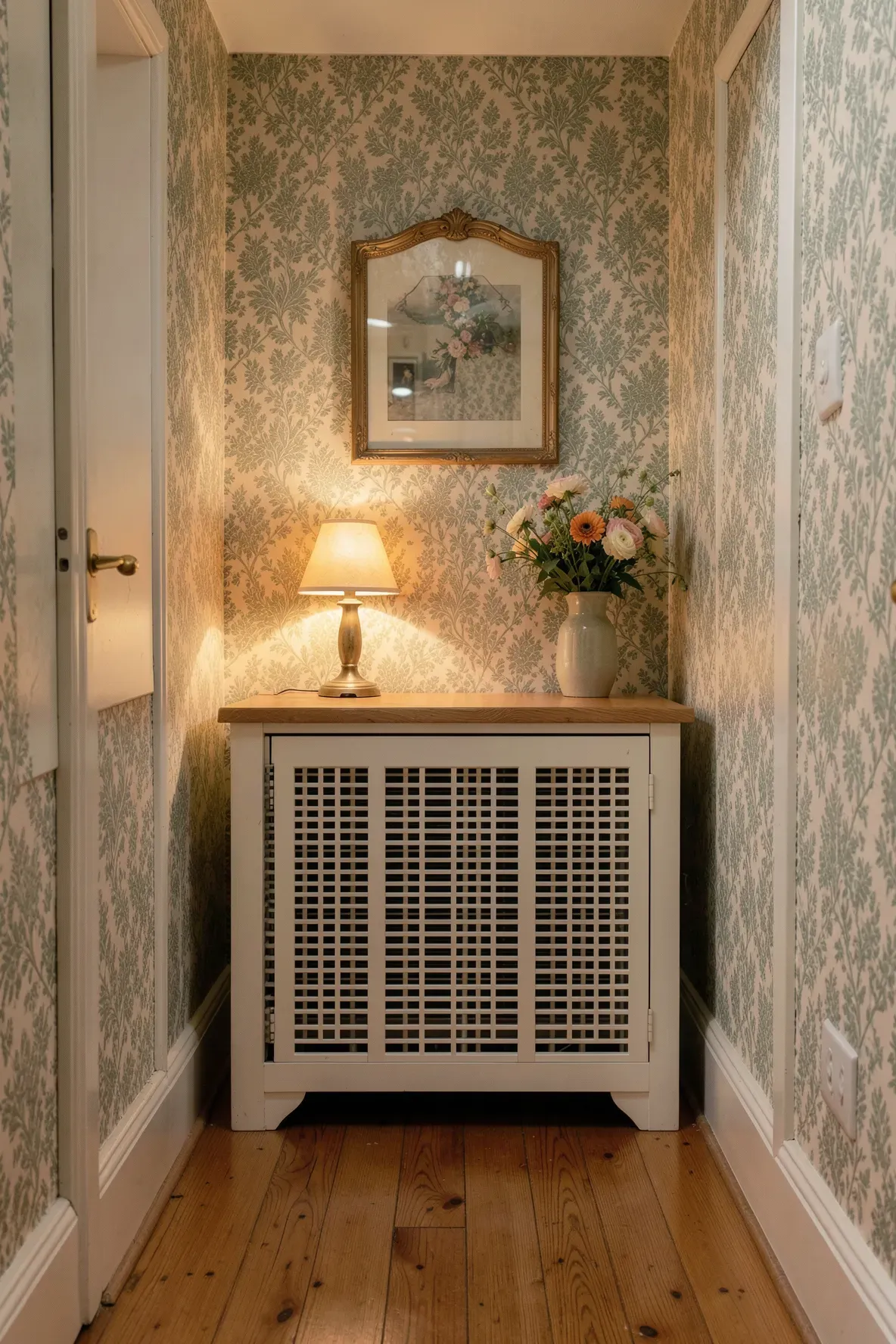
Radiators are often located in hallways and can be quite ugly. A slim radiator cover hides the unit and provides a narrow shelf on top for a few decorative items or a small lamp. Make sure the cover has plenty of vents to allow heat to circulate. This layout turns a necessary appliance into a stylish piece of furniture.
Umbrella Stand Made of Natural Ceramic
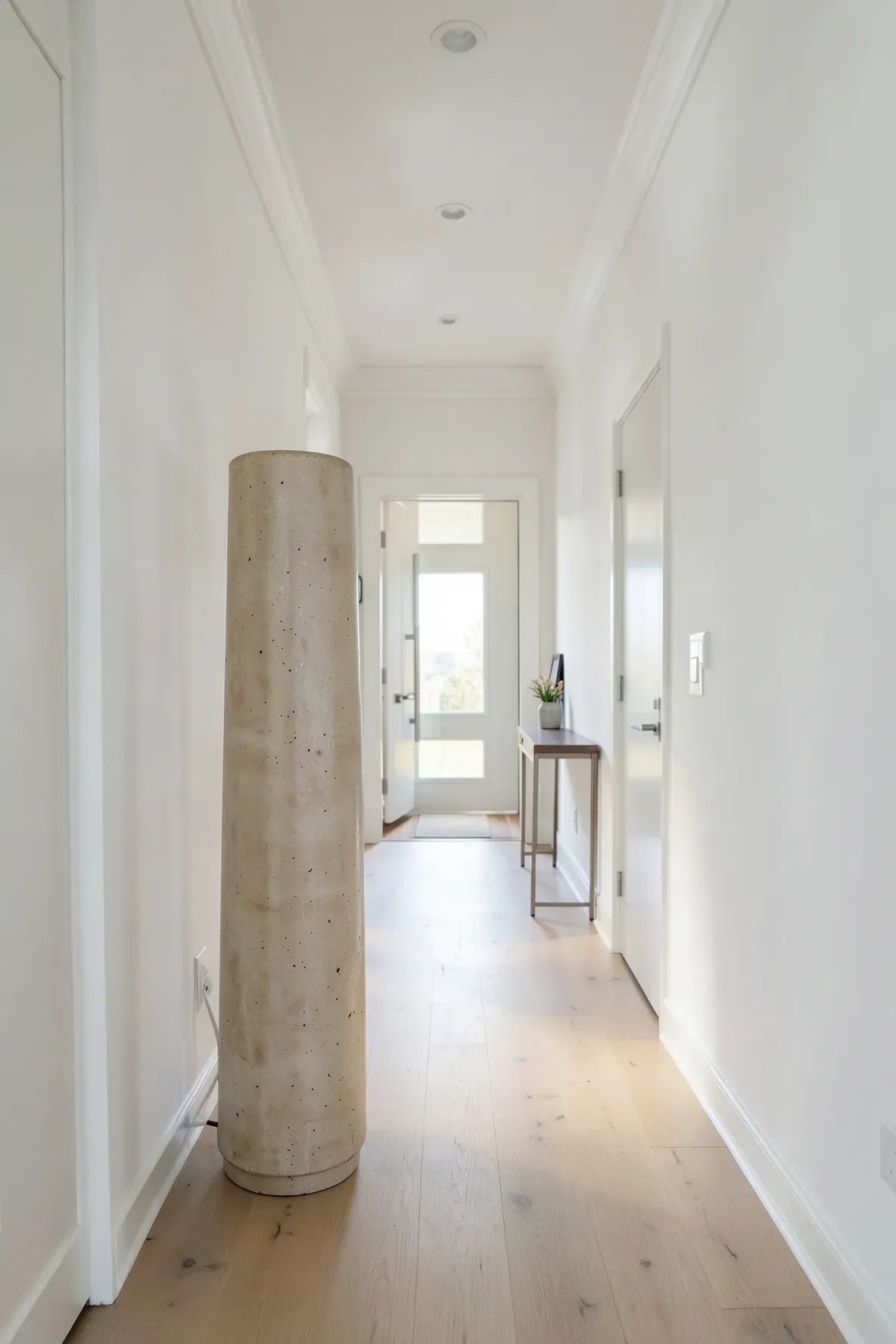
A tall, heavy umbrella stand prevents wet umbrellas from leaning against the walls and causing damage. A ceramic version adds a pop of color or texture to a corner. Because it is tall and thin, it fits perfectly in the small gap behind a door or at the end of a console table. It is a small but vital part of narrow entryway ideas.
Monochrome Color Scheme for a Clean Look
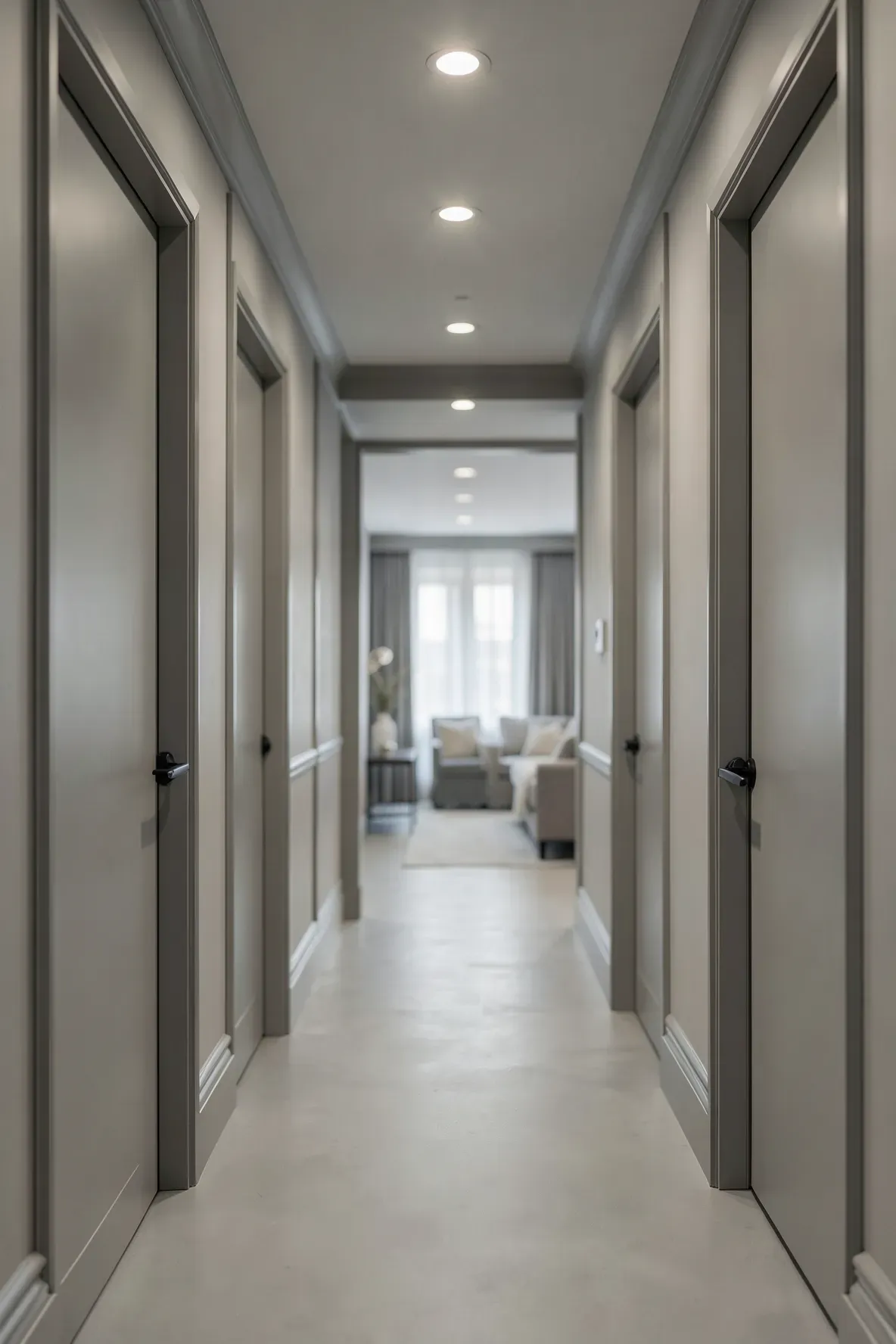
Using different shades of the same color can make a small space feel much larger. Painting the walls, trim, and even the doors in similar tones reduces visual noise. This creates a seamless look that allows the eye to travel through the hallway without being interrupted by high-contrast colors. It is a sophisticated approach to small hallway design.
Hidden Storage Cupboard Under the Stairs
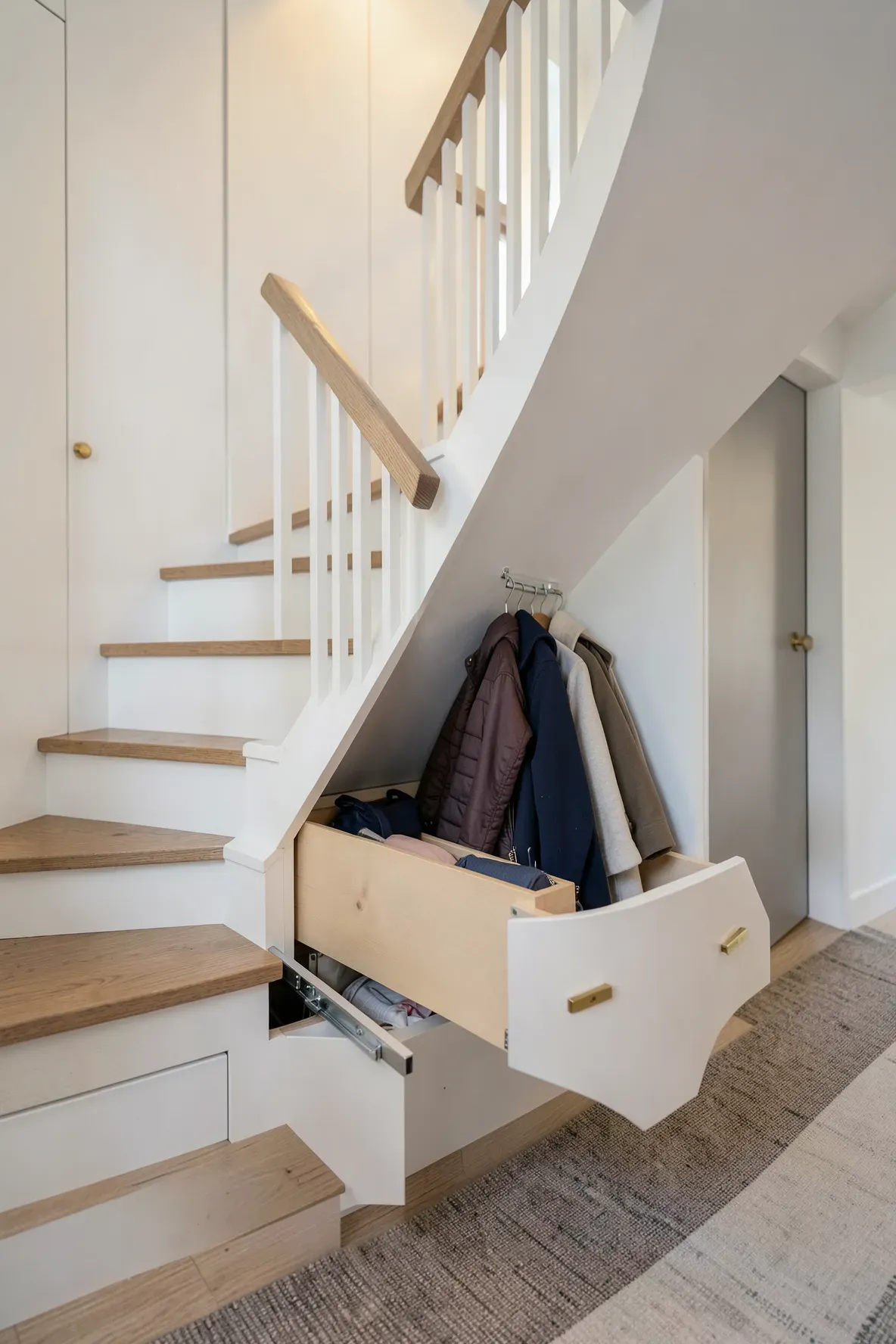
The space under the stairs is often a giant void. Installing custom pull-out drawers or a small closet can provide massive amounts of storage for vacuum cleaners, coats, or sports gear. This keeps these bulky items out of the main hallway. It is one of the most effective stairs and hallway ideas for keeping the rest of the house organized.
Velvet Ottoman for Putting on Shoes
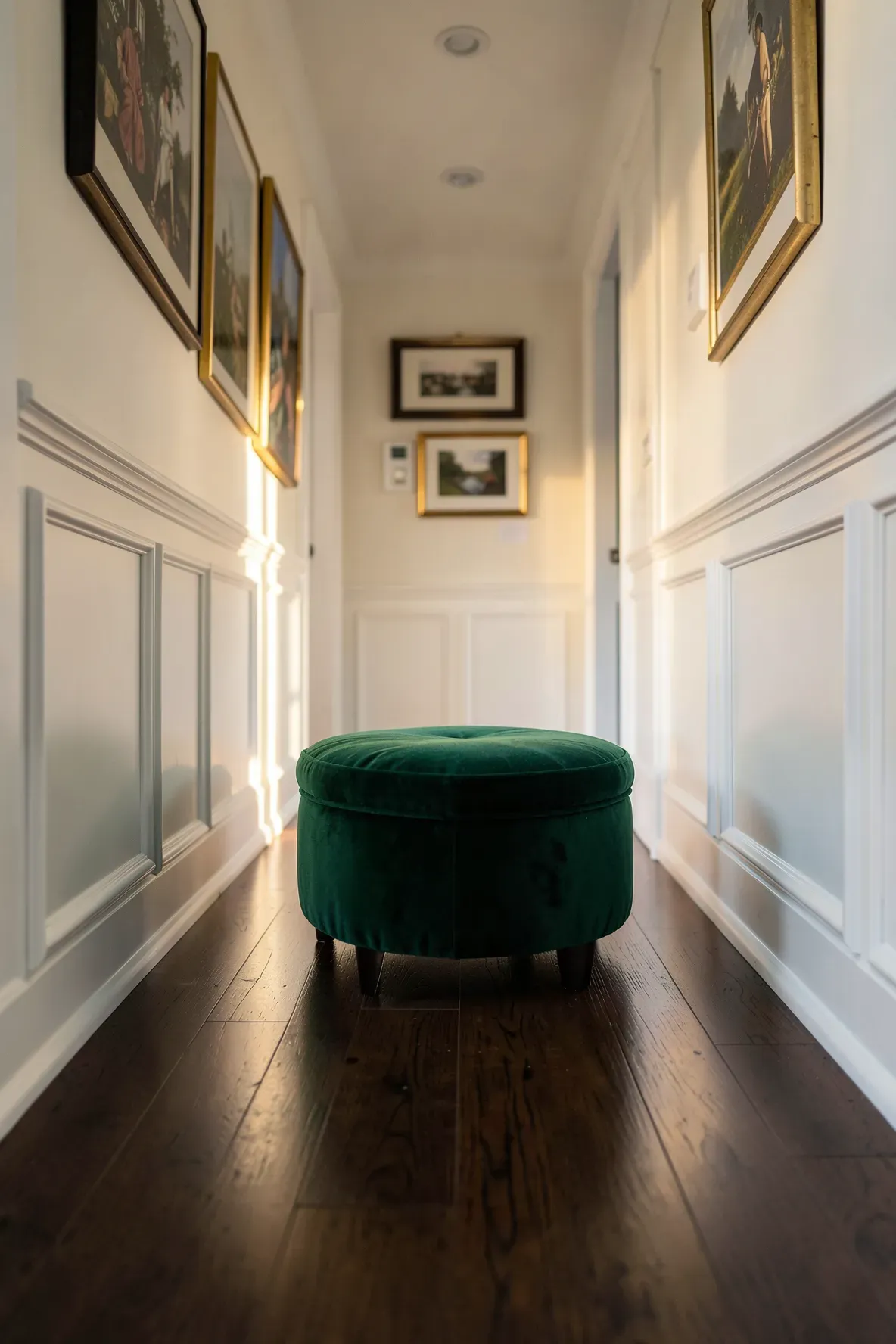
If you have a slightly wider spot on a landing or at the end of a hall, a velvet ottoman adds a touch of comfort. It is soft to the touch and easy to move around if needed. The fabric adds a different texture compared to wooden floors and painted walls. It serves as a comfortable perch that doesn’t feel as heavy or rigid as a wooden bench.
Brass Wall Hooks Arranged at Different Heights
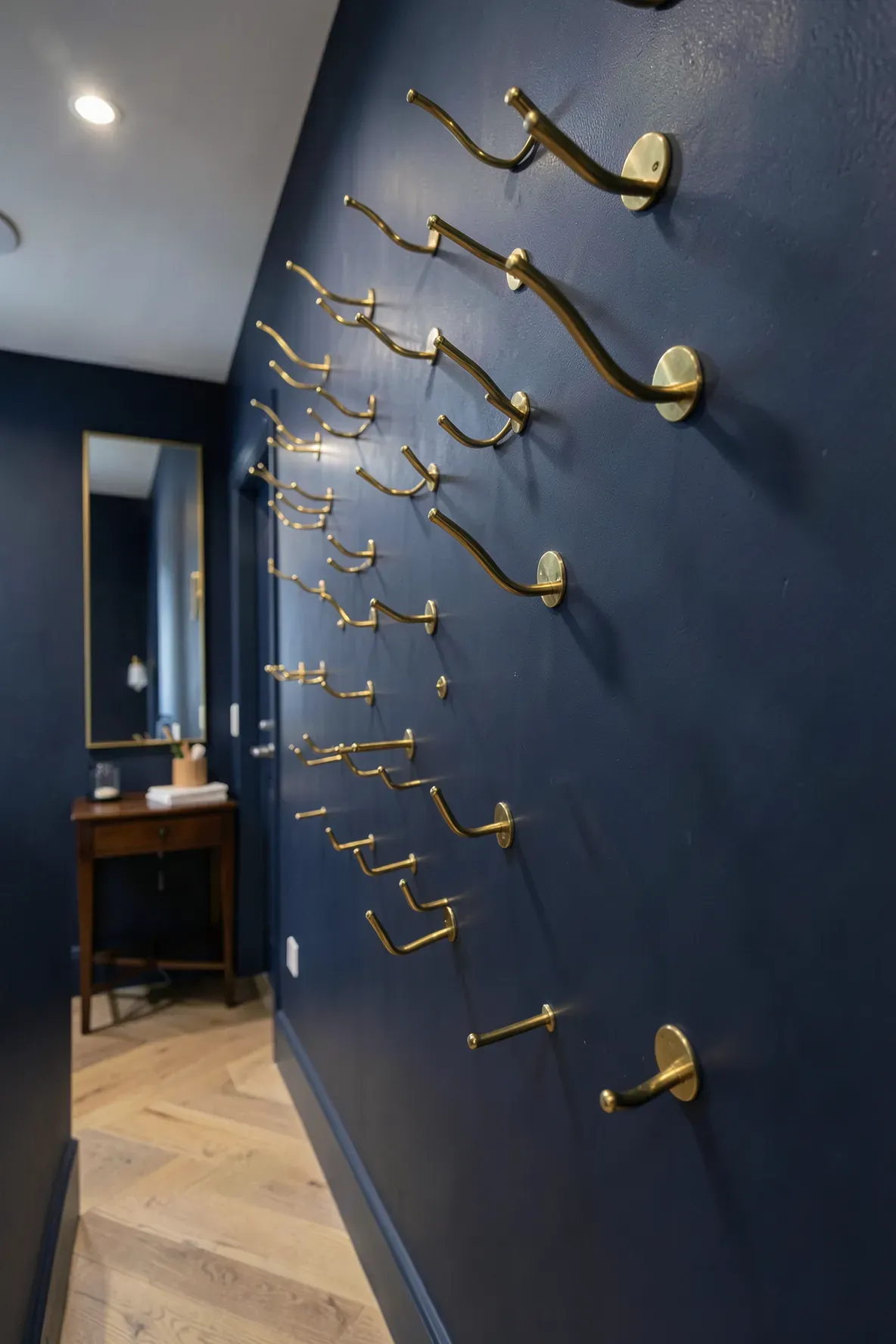
Instead of a single line of hooks, try staggering them at various heights. This allows you to hang long coats on the top hooks and shorter bags or kids’ jackets on the lower ones. Brass finish adds a bit of shine to a dark hallway. This layout is very flexible and can be expanded as your storage needs grow in small hallways ideas.
Narrow Picture Ledge for Rotating Art
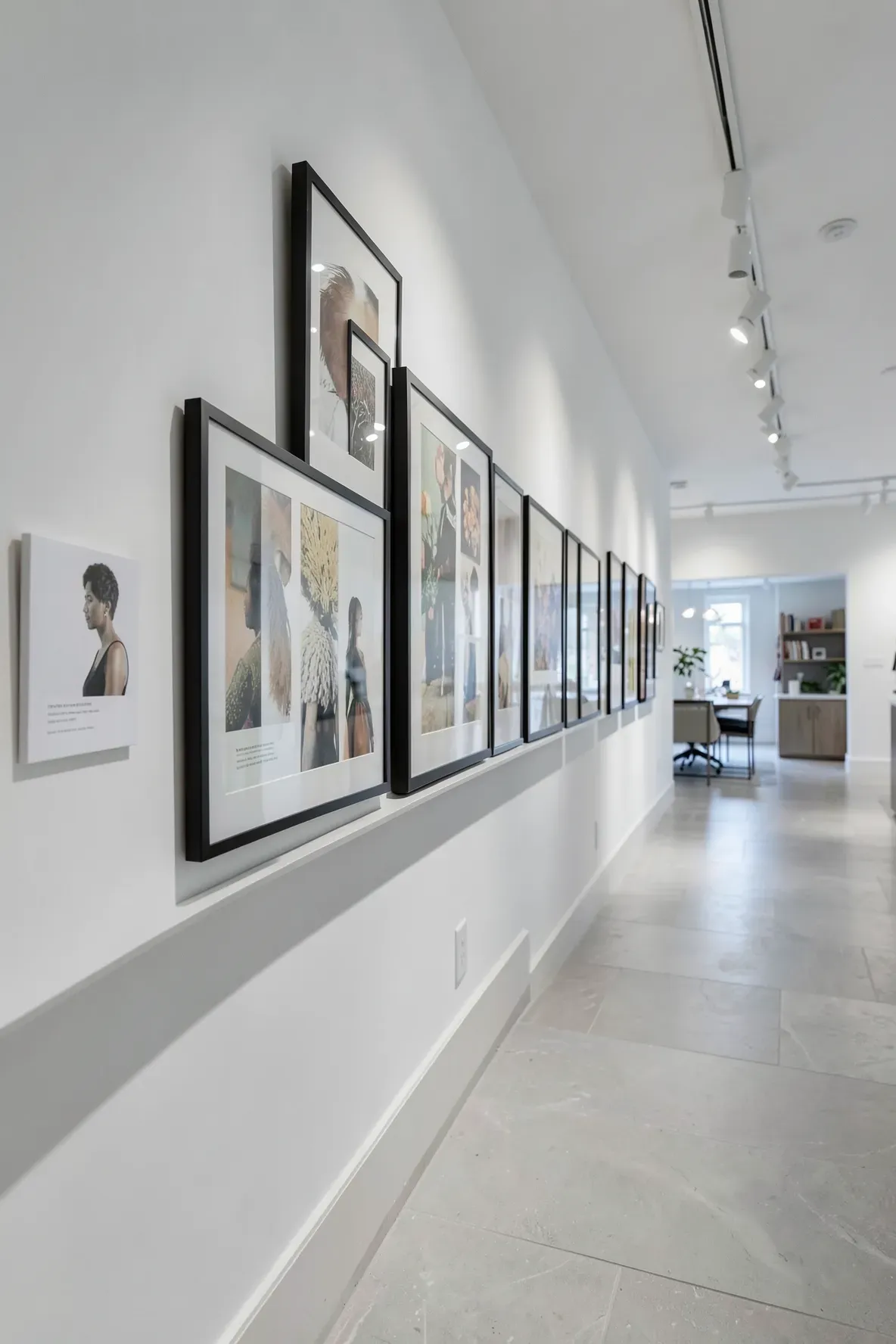
A picture ledge is only a few inches deep, making it perfect for thin corridors. It allows you to lean frames against the wall rather than hanging them. The best part is that you can swap out photos or art pieces whenever you want without drilling new holes. This is a great way to keep your long hallway decorating feeling fresh and updated.
Circular Rug to Break Up Linear Lines
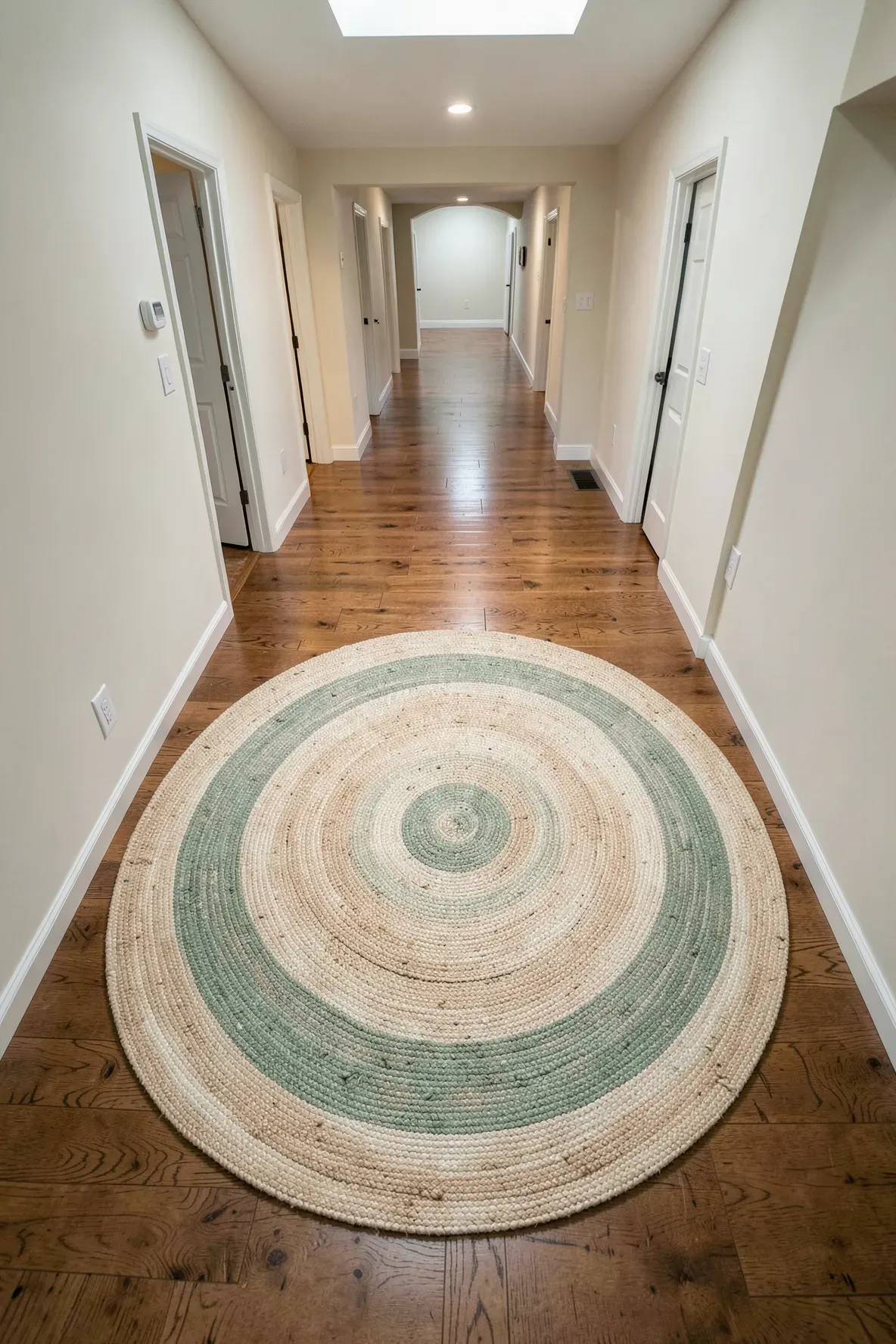
In a square entryway or a wide landing, a circular rug can soften the sharp corners of the room. It acts as a focal point that anchors the space. A round shape naturally draws people toward the center, making the area feel like a welcoming hub rather than just a pass-through. It provides a nice contrast to the long, straight lines found in most narrow hallway ideas.
Transforming a narrow hallway doesn’t require a major renovation. By focusing on slim furniture, vertical storage, and clever lighting, you can turn a cramped passage into a stylish part of your home. Whether you choose a bold gallery wall or a simple floating shelf, these practical layouts help you make the most of every square inch.