
Stepping on a plastic brick in the middle of the night is a rite of passage for parents, but it doesn’t have to be your daily reality. When you live in a home with limited square footage, every inch counts, and traditional toy boxes often take up too much floor space while hiding everything at the bottom. Finding the right small toy room ideas is about thinking vertically and using hidden spots you might have overlooked.
This list covers practical ways to organize everything from tiny figurines to bulky board games without making your home feel like a warehouse. You will find toys organization ideas small spaces require to stay functional and tidy. Whether you are dealing with a shared bedroom or a corner of the living room, these tips will help you reclaim your floor and keep the play area manageable.
Over-the-Door Clear Pocket Organizers
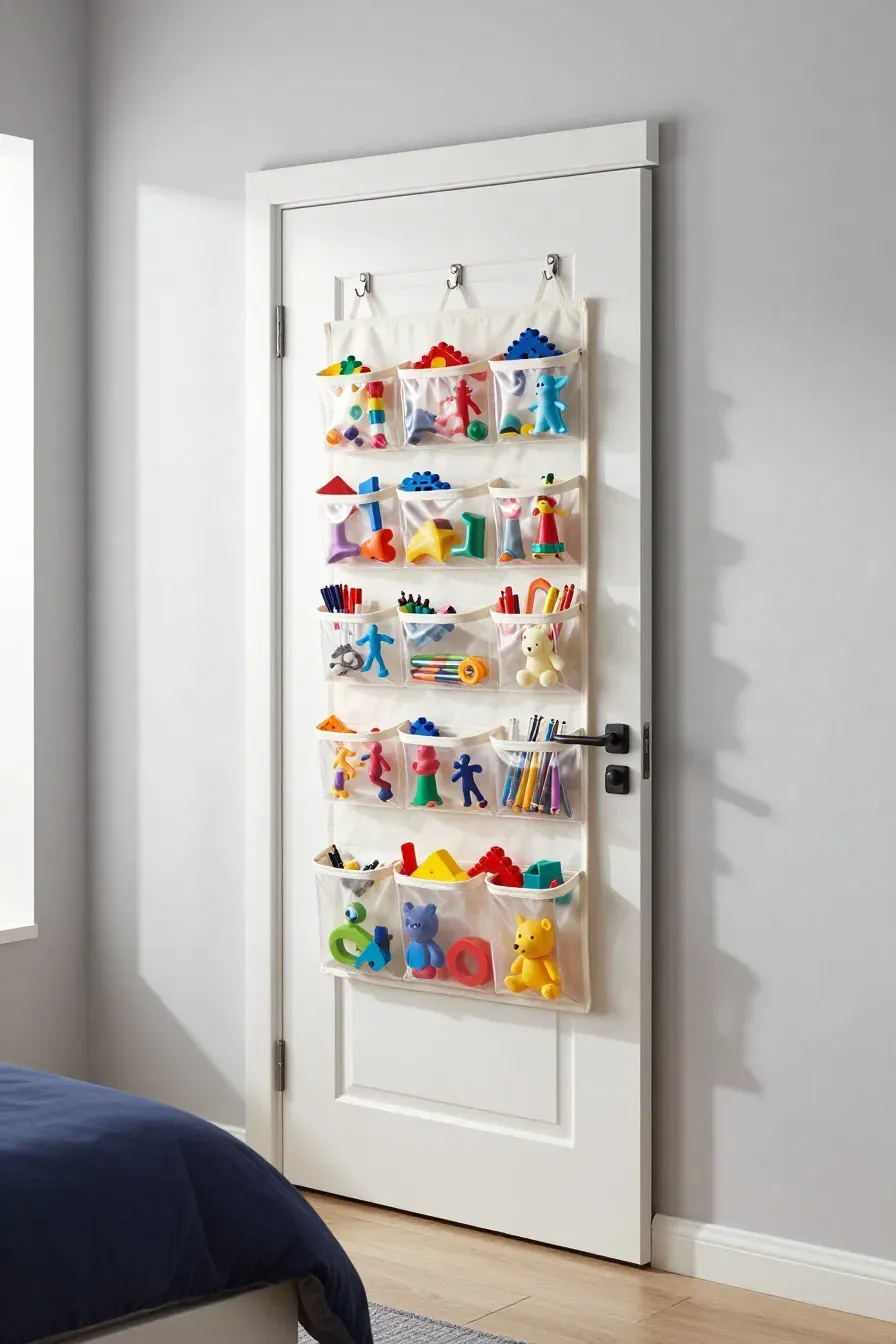
Clear pocket organizers are a classic for a reason. They use the often-wasted space on the back of a door to hold dozens of small items. Because the pockets are transparent, kids can see exactly where their dolls, action figures, or craft supplies are located without dumping everything out on the floor. This is one of those small playroom design tricks that keeps the floor clear while keeping toys accessible.
Rolling Under-Bed Storage Bins
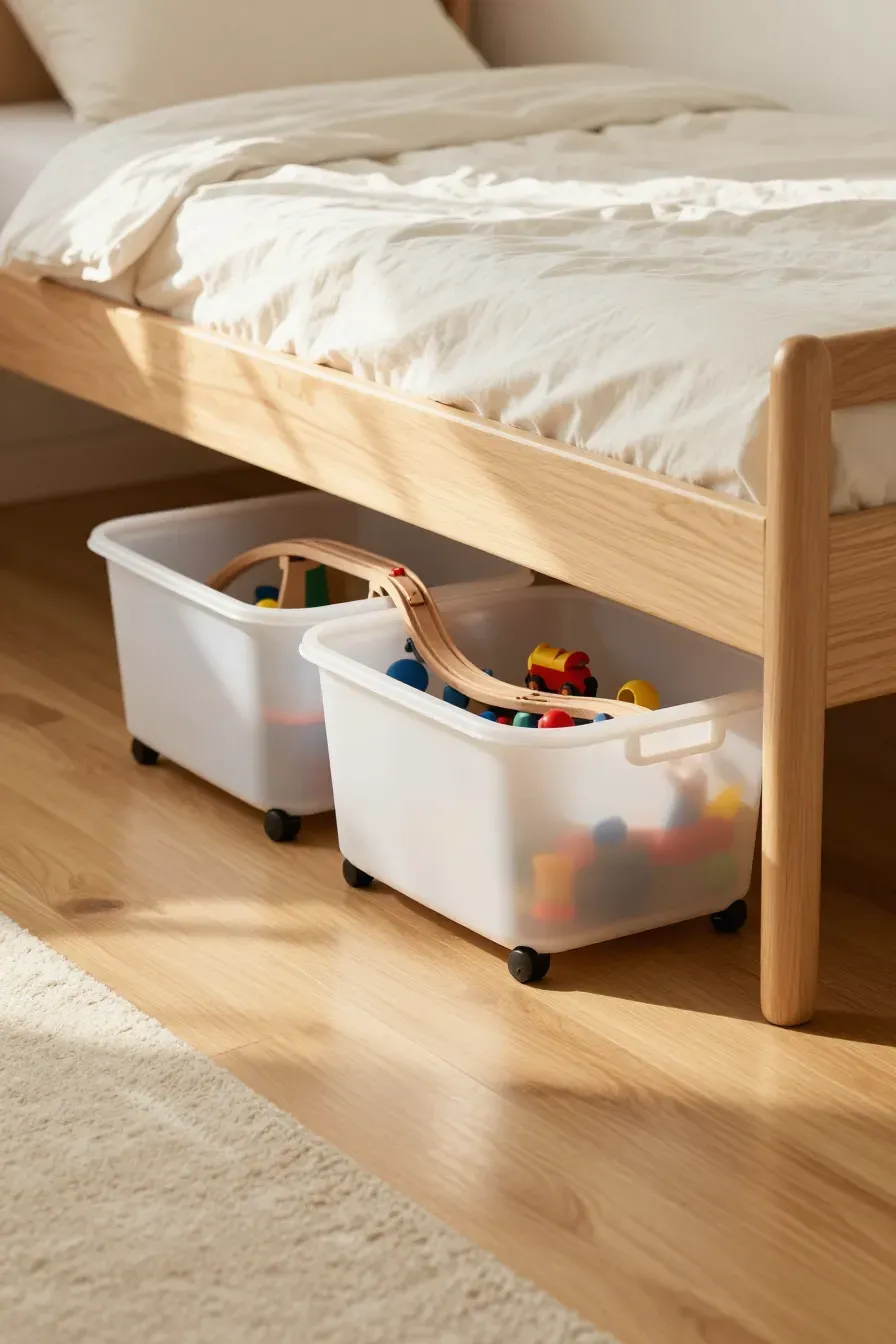
The space under the bed is a gold mine for small room toy storage. Low-profile bins with wheels allow kids to pull out their toys easily and push them back out of sight when playtime is over. These are great for building sets or train tracks that take up a lot of room. Look for bins with lids to keep dust away from the toys.
Low-Profile Floating Wall Shelves
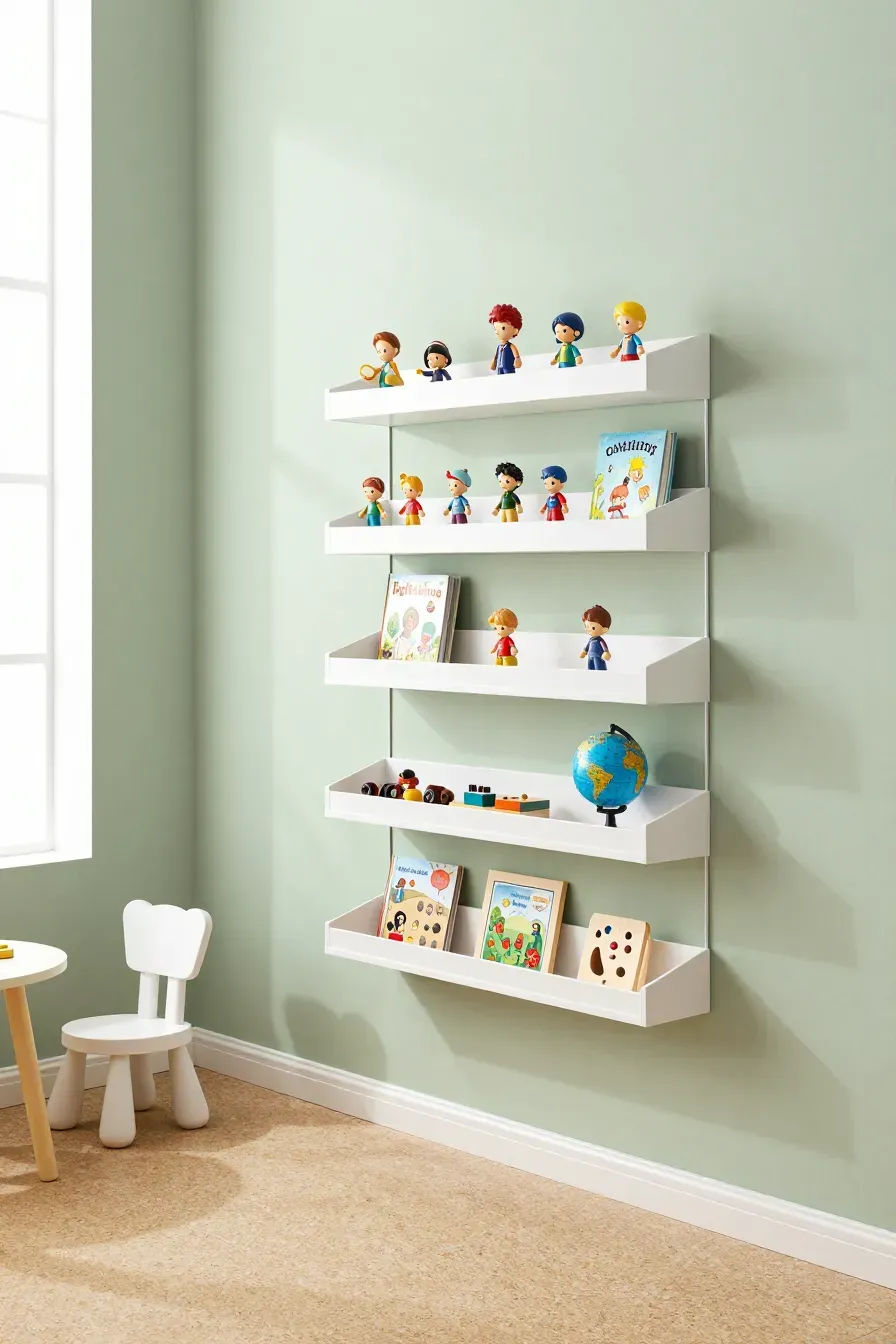
Floating shelves take up zero floor space and can be placed at any height. Use them to display favorite books or special toys that you want to keep out of reach of younger siblings. In a tiny playroom, installing these in a vertical row makes the walls work harder and creates a clean look that doesn’t feel cramped.
Hanging Mesh Toy Hammocks
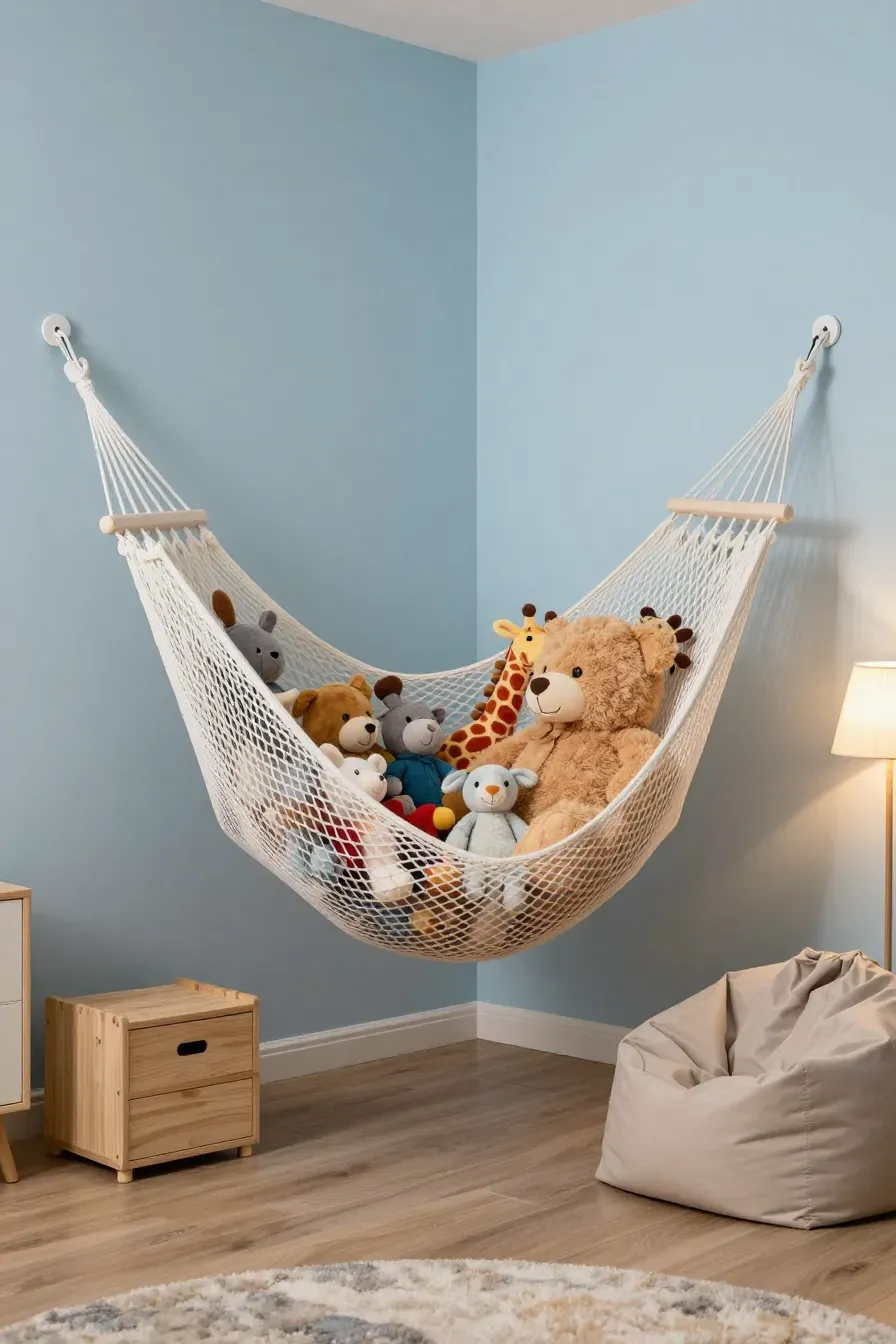
Stuffed animals are notorious for taking up space on beds and chairs. A mesh hammock tucked into a corner keeps them off the ground but still visible. It turns a pile of plush toys into a wall display. Make sure to hang it at a height where kids can still reach their favorites, or use it for the ‘backup’ toys that aren’t played with every day.
Storage Ottomans with Removable Lids
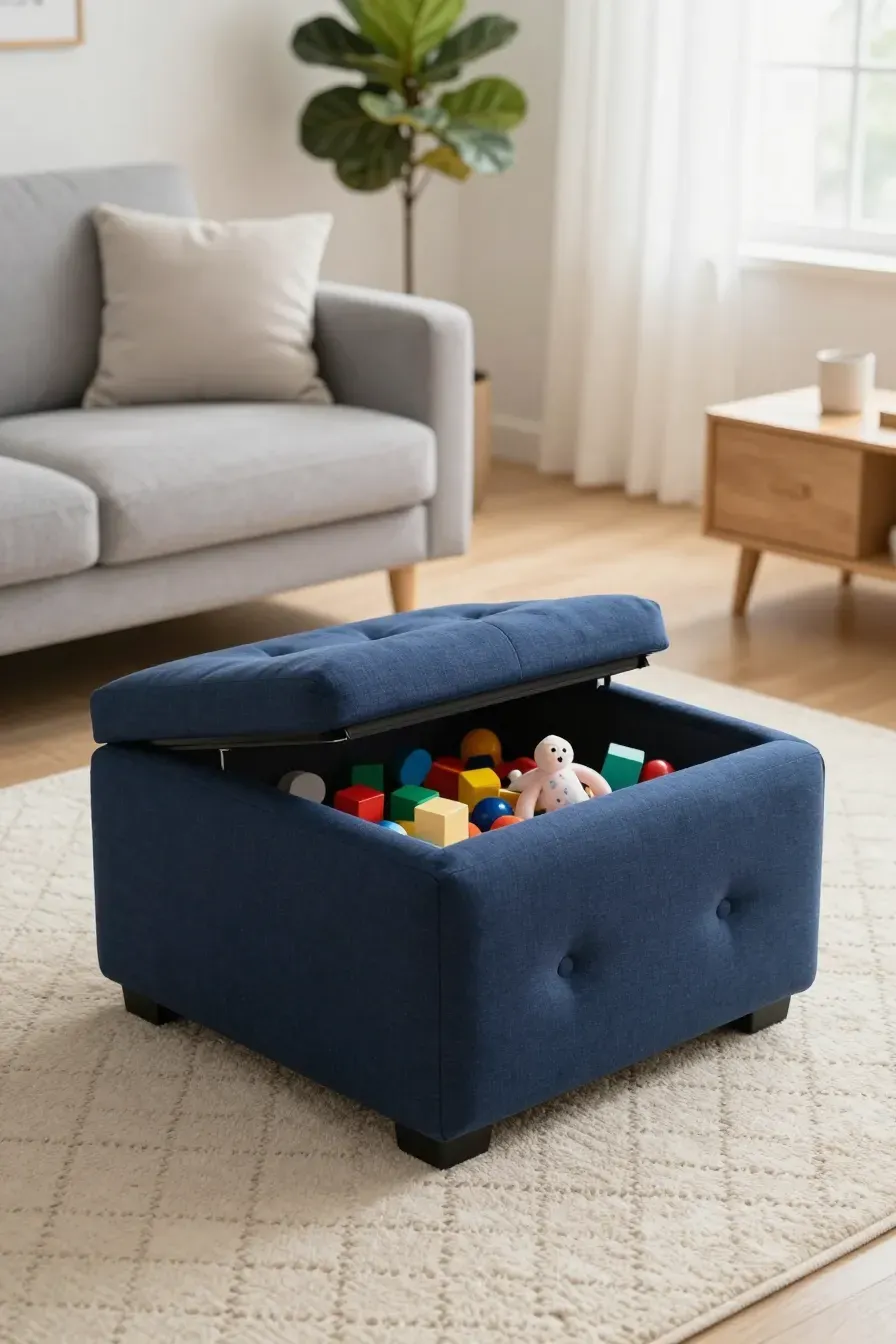
In a living room that doubles as a play area, furniture needs to do double duty. A storage ottoman provides a place to sit or rest your feet while hiding a large collection of blocks or dress-up clothes inside. It is a simple way to hide the mess quickly when guests come over. Choose a fabric that is easy to wipe down in case of spills.
Magnetic Strips for Metal Matchbox Cars
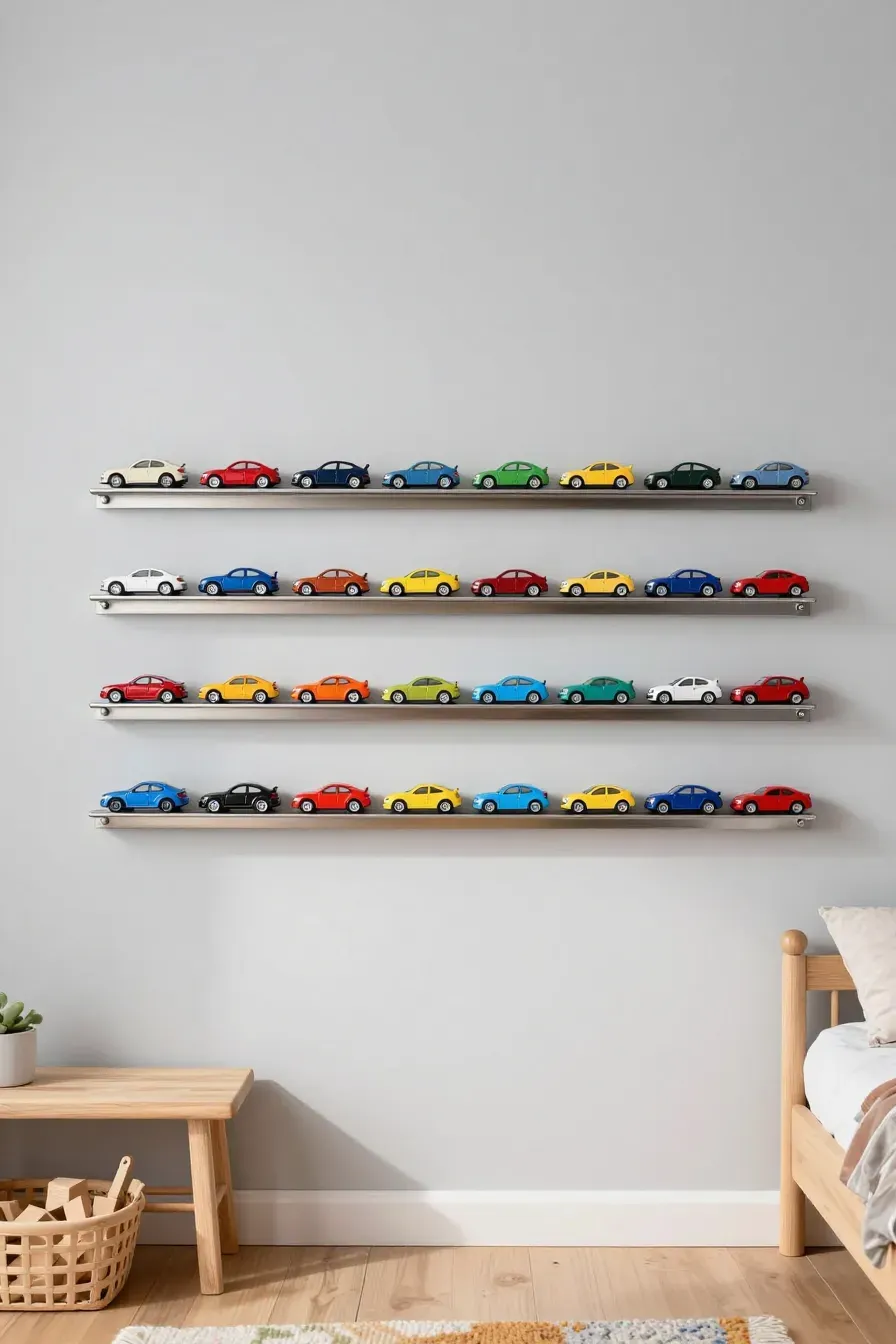
Knife strips aren’t just for the kitchen. Mount a few magnetic strips on the wall at toddler height to hold metal toy cars. It keeps the cars organized and prevents them from getting scratched in a bin. Plus, it looks like a cool wall decoration and makes it very easy for kids to ‘park’ their cars when they finish playing.
Multi-Level Corner Wire Baskets
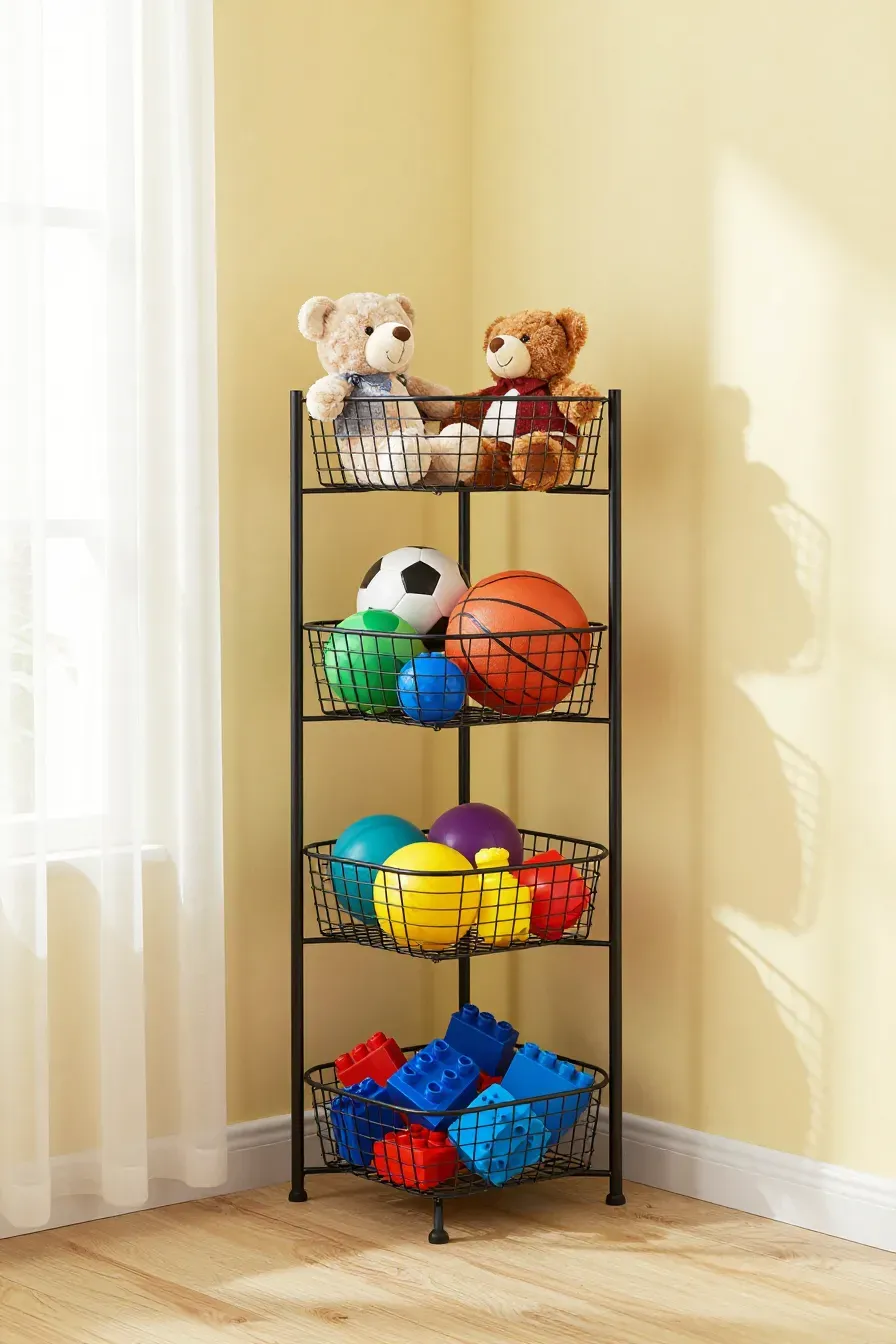
Corners are often wasted in small rooms. A tiered wire basket stand can hold a variety of items like balls, stuffed animals, or outdoor toys. The wire design lets you see what is at the bottom of the stack so nothing gets forgotten. These stands have a small footprint but offer a lot of vertical storage room.
Stackable Clear Plastic Shoe Boxes
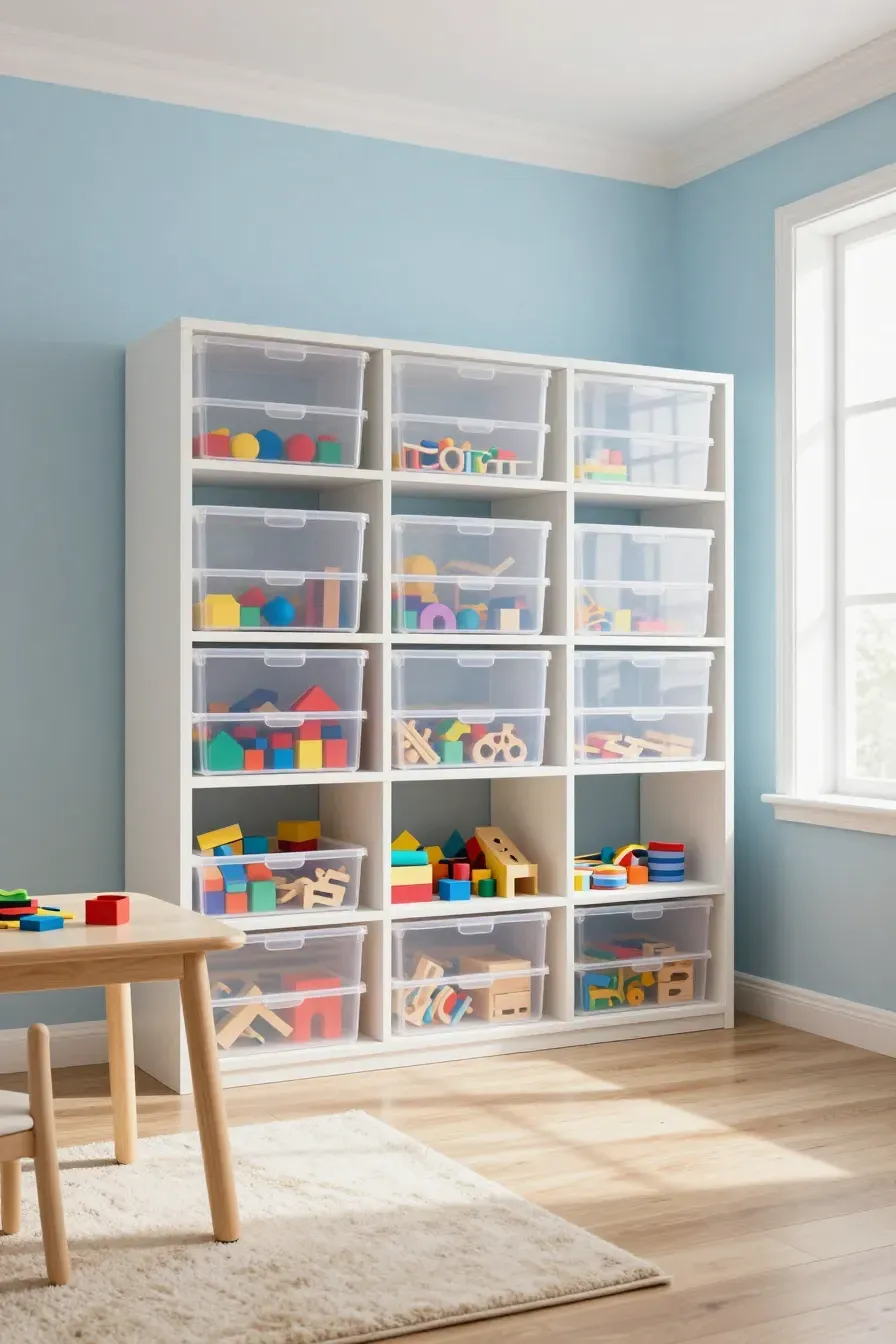
Shoe boxes are the right size for art supplies, puzzles, and small building sets. Because they stack neatly, you can fit a lot of them on a single shelf. Using clear plastic is key because it removes the need for kids to open every box to find the one thing they want. It keeps the toy storage organization simple and visual.
Vertical Book Racks Behind Doors
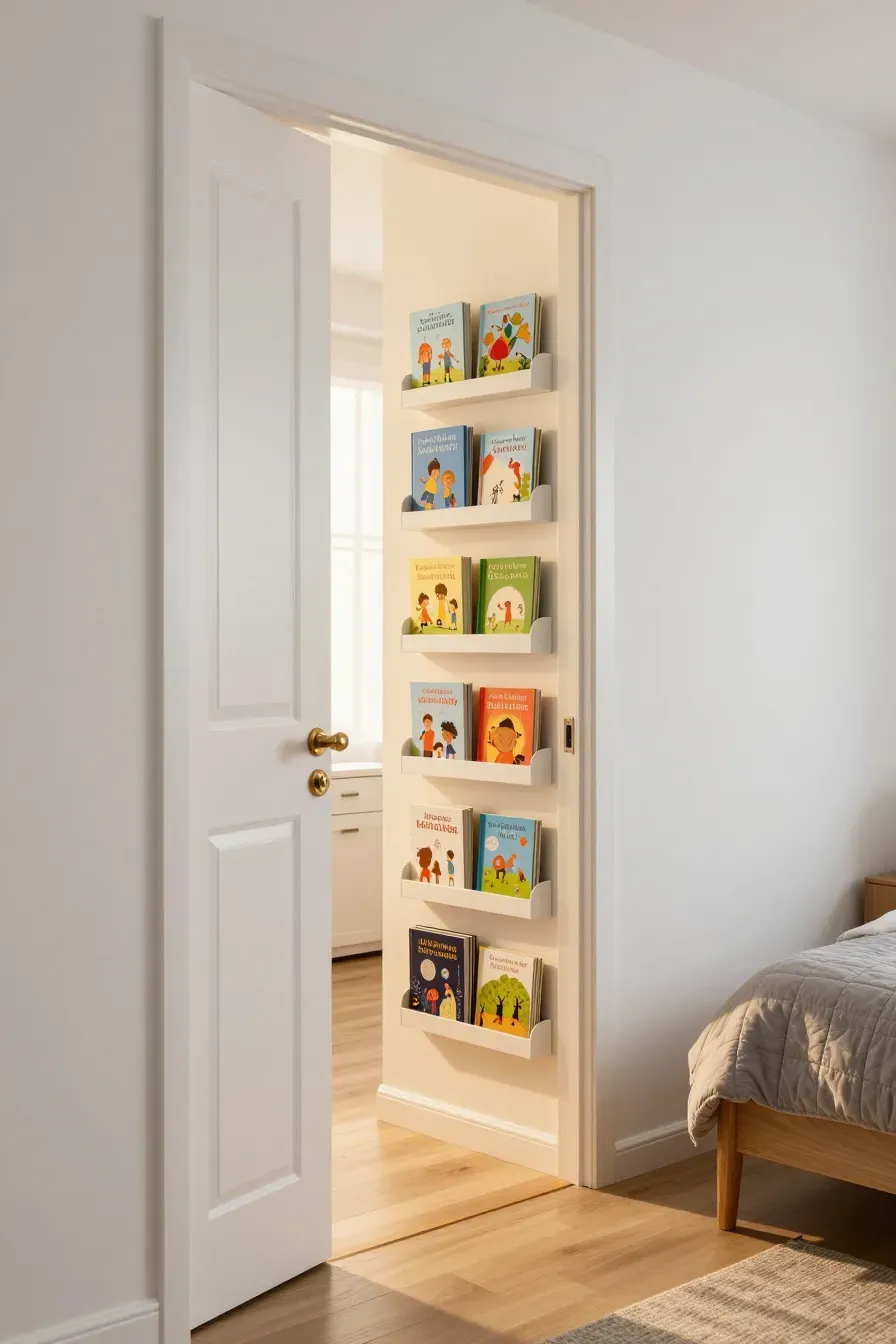
Standard bookshelves stick out quite far from the wall. Slim book racks, often called spice racks or picture ledges, can be mounted behind a bedroom door. They hold books with the covers facing out, which makes it easier for young children to pick a story. This uses a few inches of space that would otherwise be empty.
Fabric Cubes for Square Shelf Units
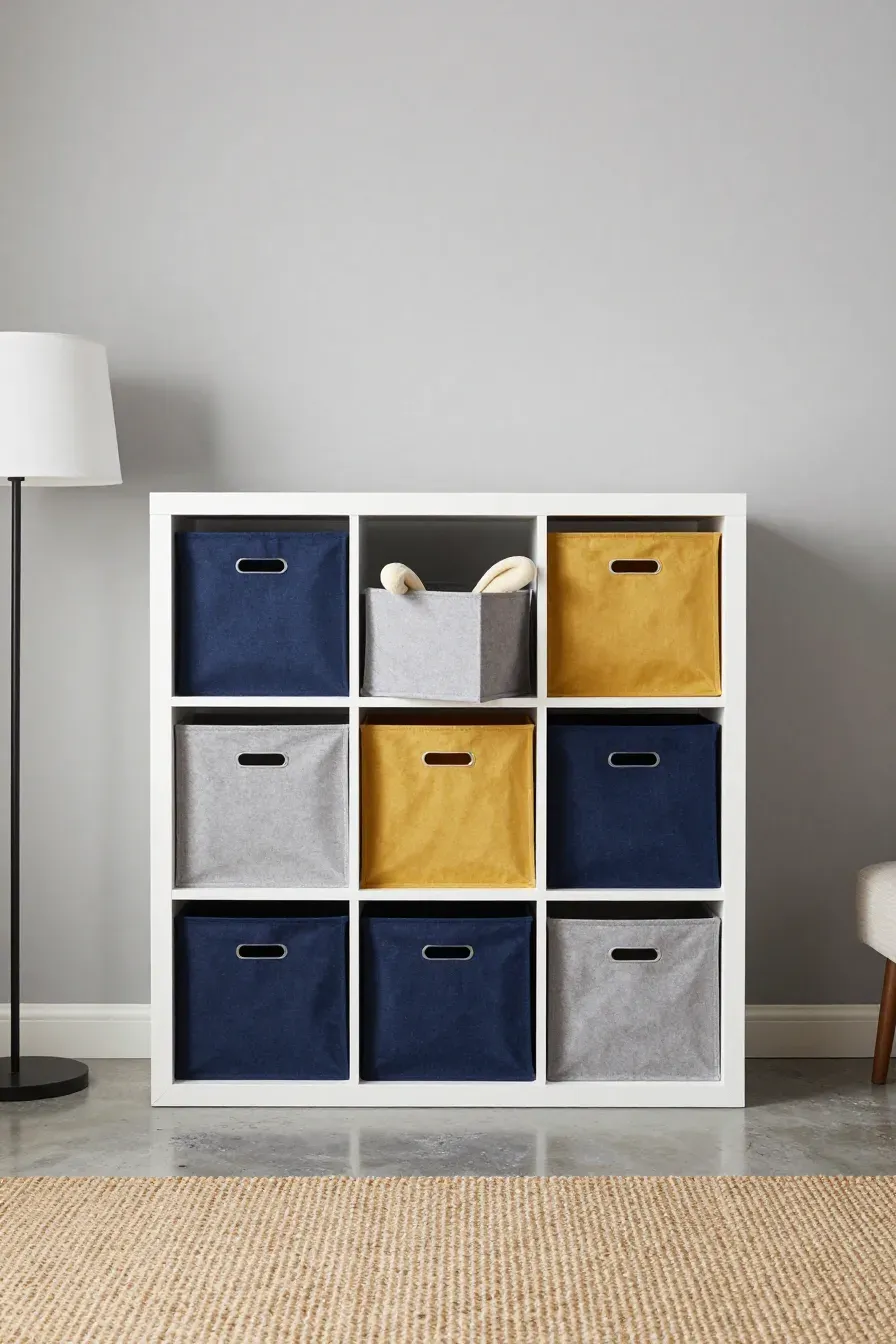
Cube shelving is a staple for playroom organization ideas. Fabric bins allow you to categorize toys by type—one for trucks, one for dolls, and one for blocks. You can pull the whole bin out for playtime and slide it back in for a clean look. They come in many colors to match your room’s decor.
Pegboards with Adjustable Cups and Hooks
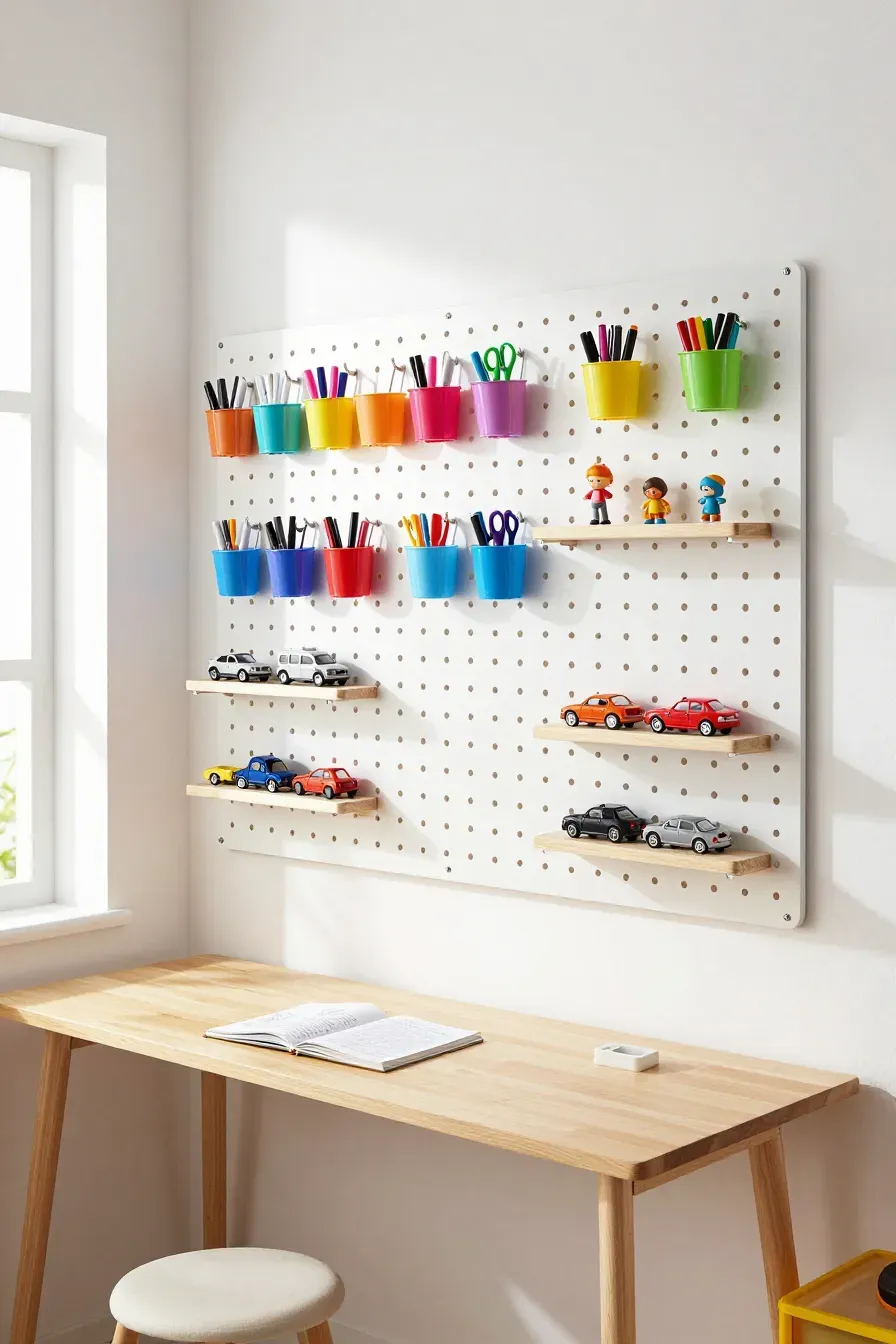
Pegboards offer total flexibility for creative toy storage ideas. You can move hooks and bins around as your child’s interests change. They are excellent for art stations to hold markers, scissors, and tape. Mounting a pegboard above a small desk keeps the work surface clear for actual creating.
Window Seat Benches with Hidden Compartments
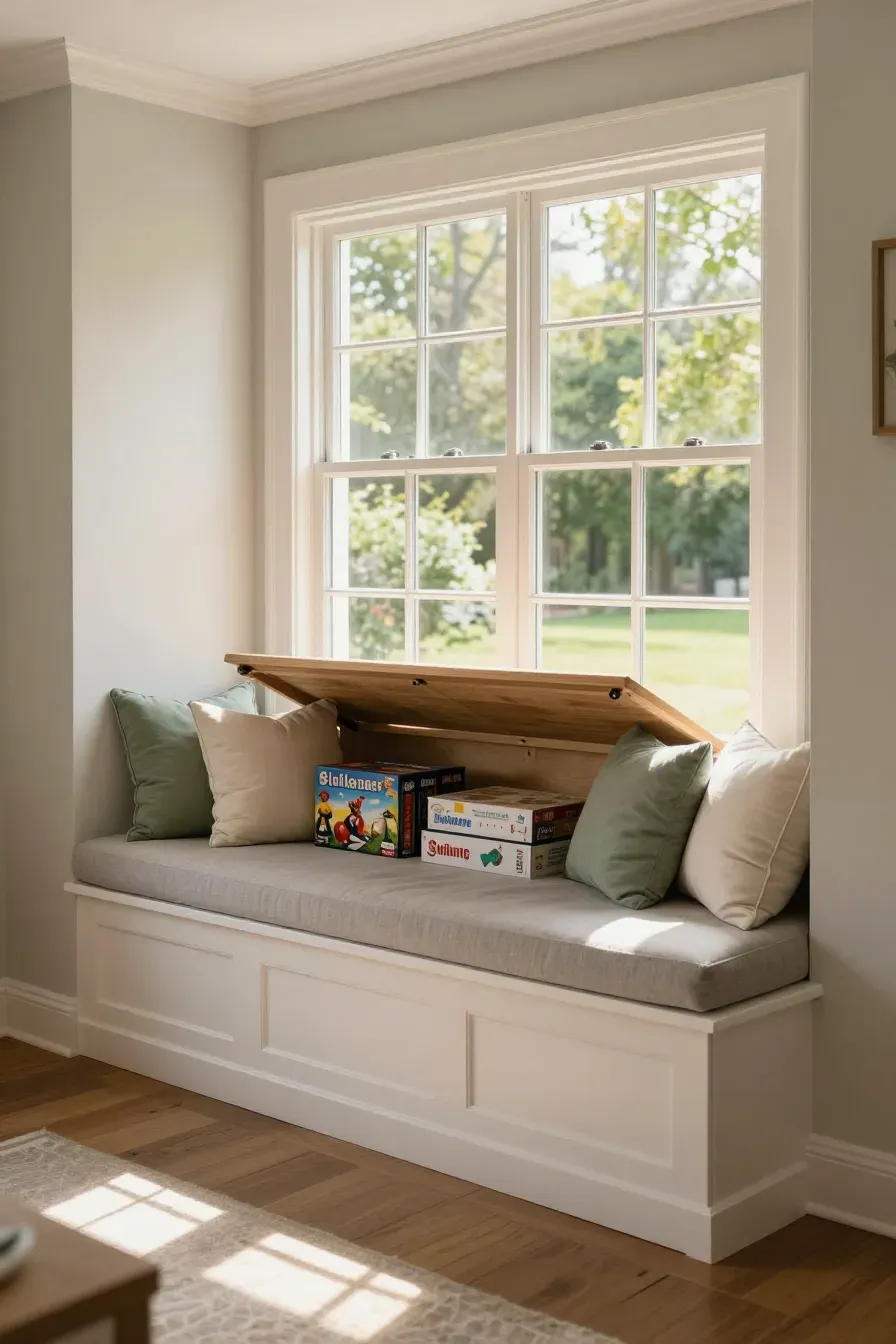
If you have a window, consider adding a bench with a lift-up seat. It provides a cozy reading nook and a massive amount of storage for bulky items like board games or sports equipment. This is a smart way to add storage without making a small room feel crowded with extra furniture.
Tension Rods for Stuffed Animal Corrals
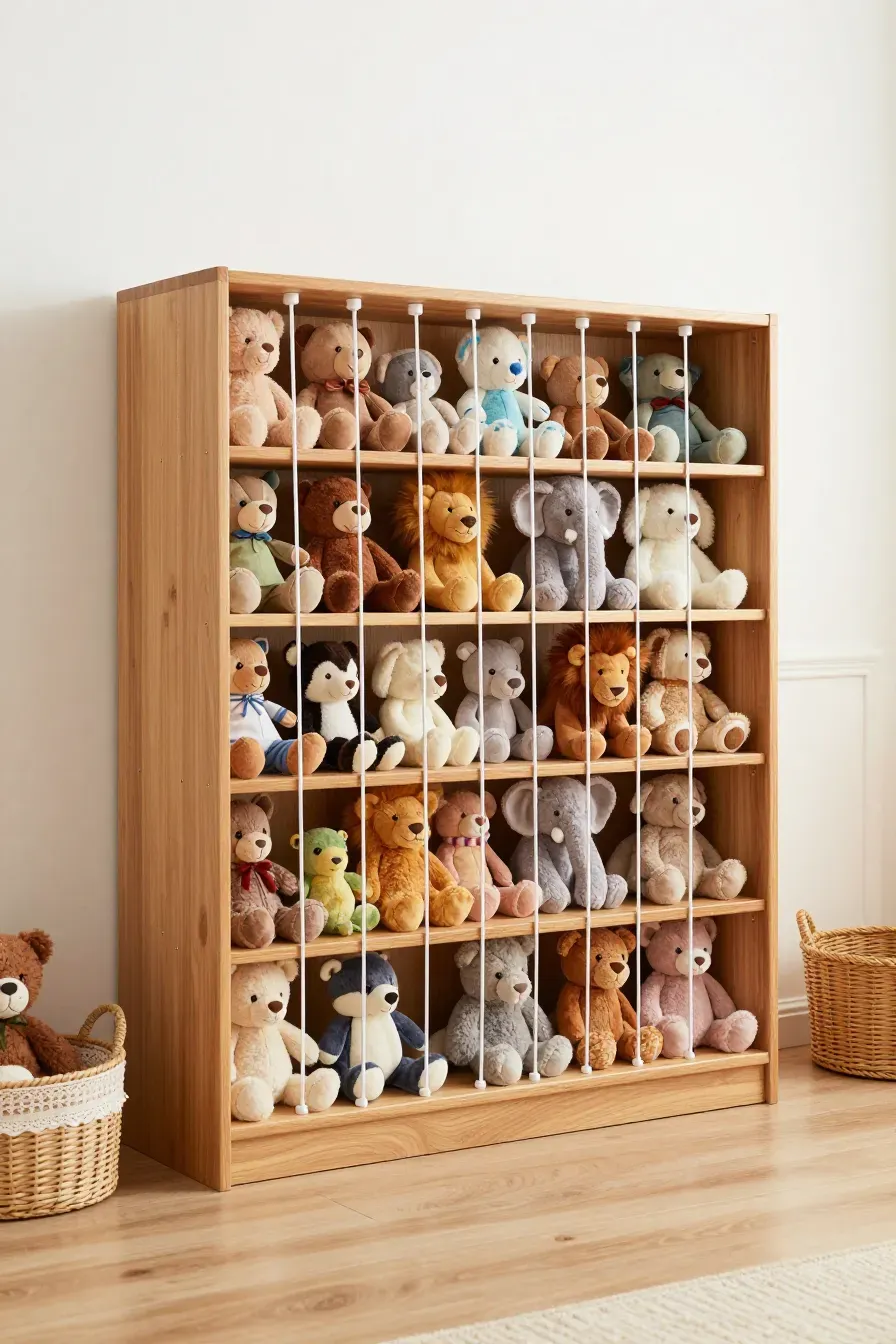
You can turn an open bookshelf into a ‘zoo’ for stuffed animals by placing vertical tension rods across the front. The rods hold the animals in place so they don’t spill onto the floor, but kids can easily pull them through the bars. It keeps the collection contained and tidy while still being fun for the kids.
Hanging Tiered Fruit Baskets for Small Toys
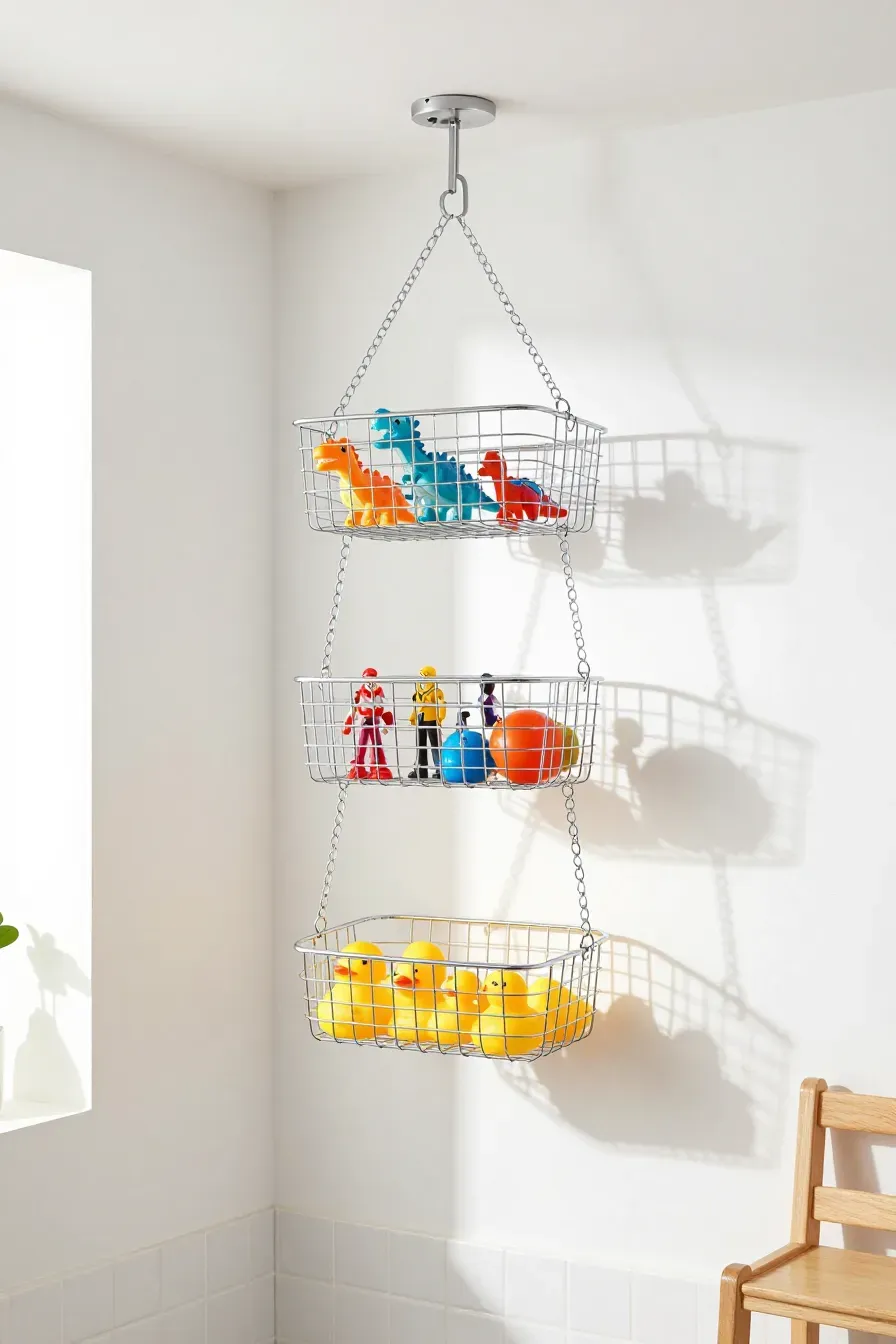
Wire fruit baskets that hang from the ceiling are perfect for light toys like bath toys or light plastic figures. Since they hang, they use zero floor or shelf space. They work well in a corner or even inside a closet to keep small bits from getting lost in larger bins.
Color-Coded Plastic Tubs with Lids
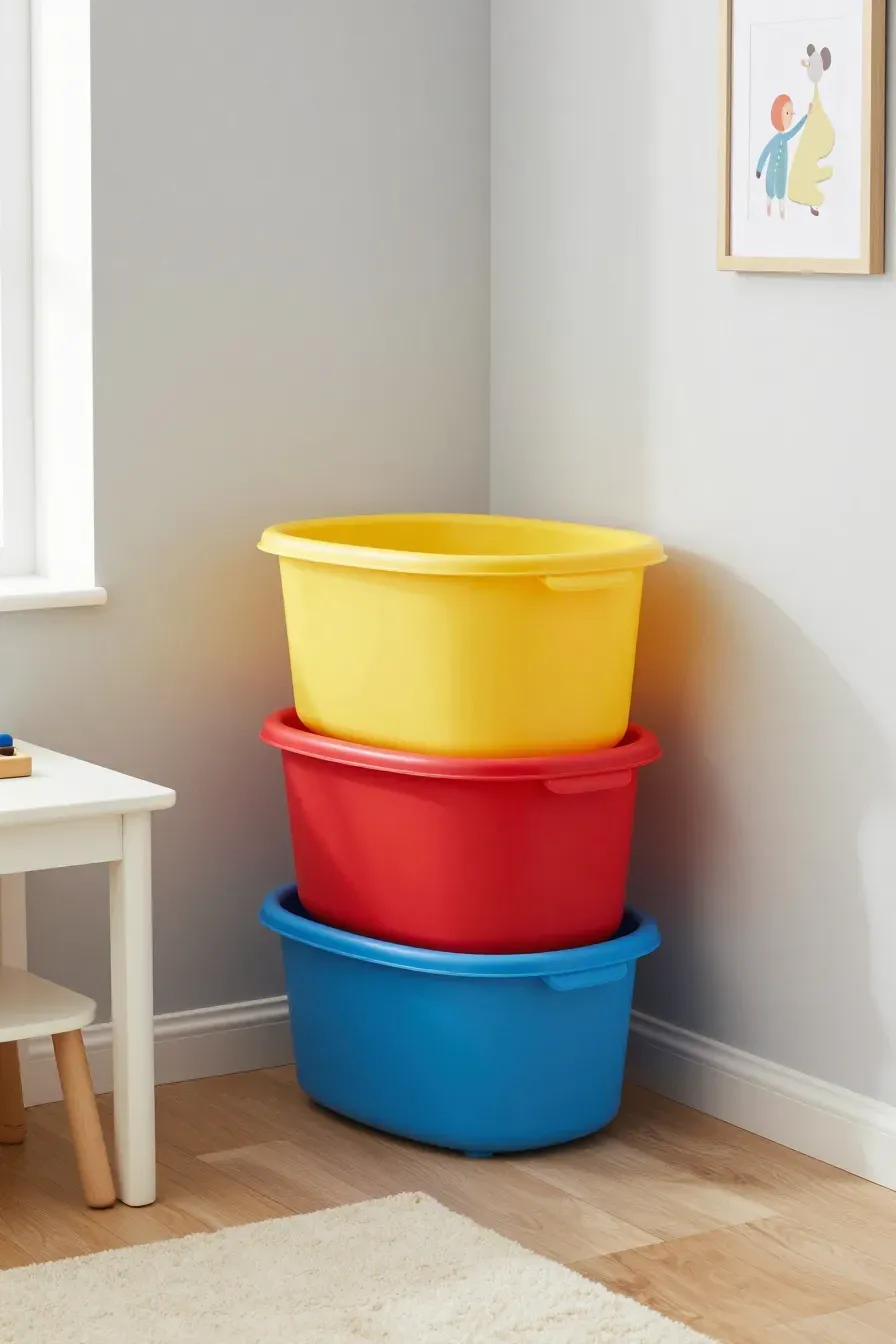
Color coding is a great way to help children who can’t read yet stay organized. You might use blue tubs for building blocks and red tubs for action figures. Using sturdy tubs with lids means you can stack them in a closet or in the corner of a room without them looking messy.
Revolving Bookcase Towers
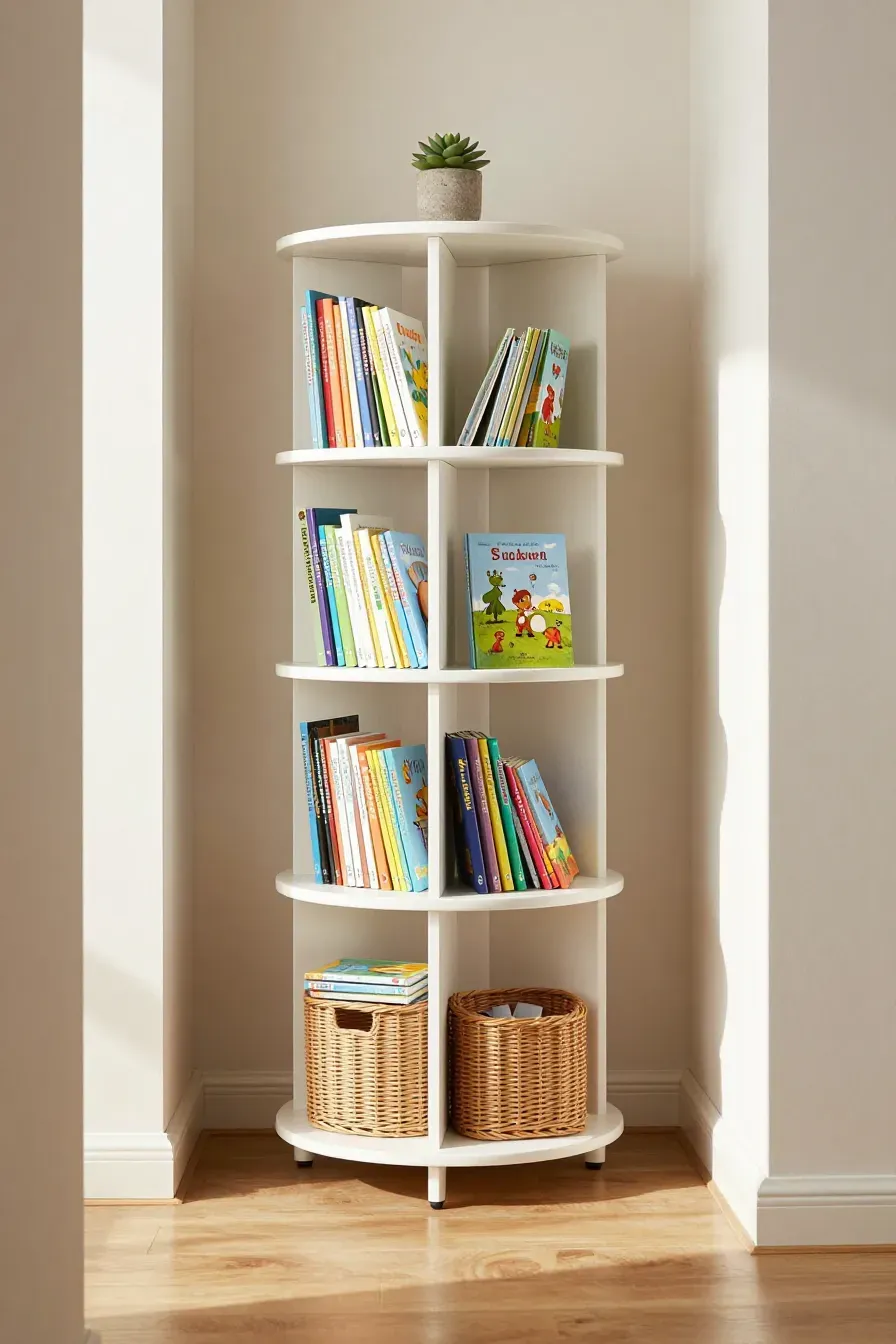
A revolving bookcase holds a surprising amount of media in a very small footprint. These towers spin, allowing access to all four sides while tucked into a corner. They are great for books, DVDs, or even small bins of craft supplies. This is a top choice for toy organizer ideas when you have a narrow space to fill.
Wheeled Carts with Metal Trays
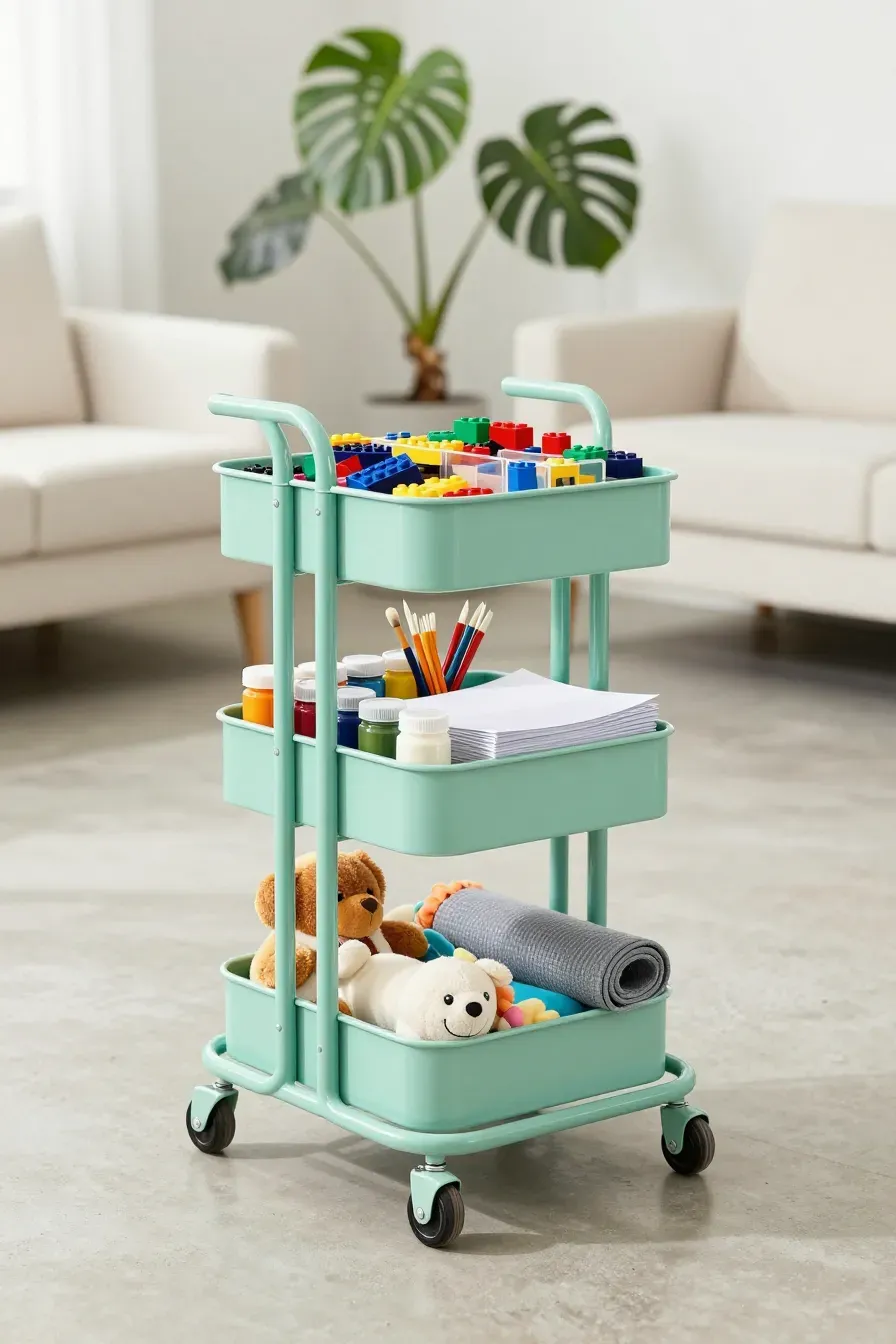
Utility carts are mobile storage stations. You can keep all the supplies for a specific activity, like painting or LEGO building, on the different tiers. When it is time to play, roll the cart out to the middle of the room, and when finished, tuck it back into a closet or corner.
Clip-on Labels for Woven Baskets
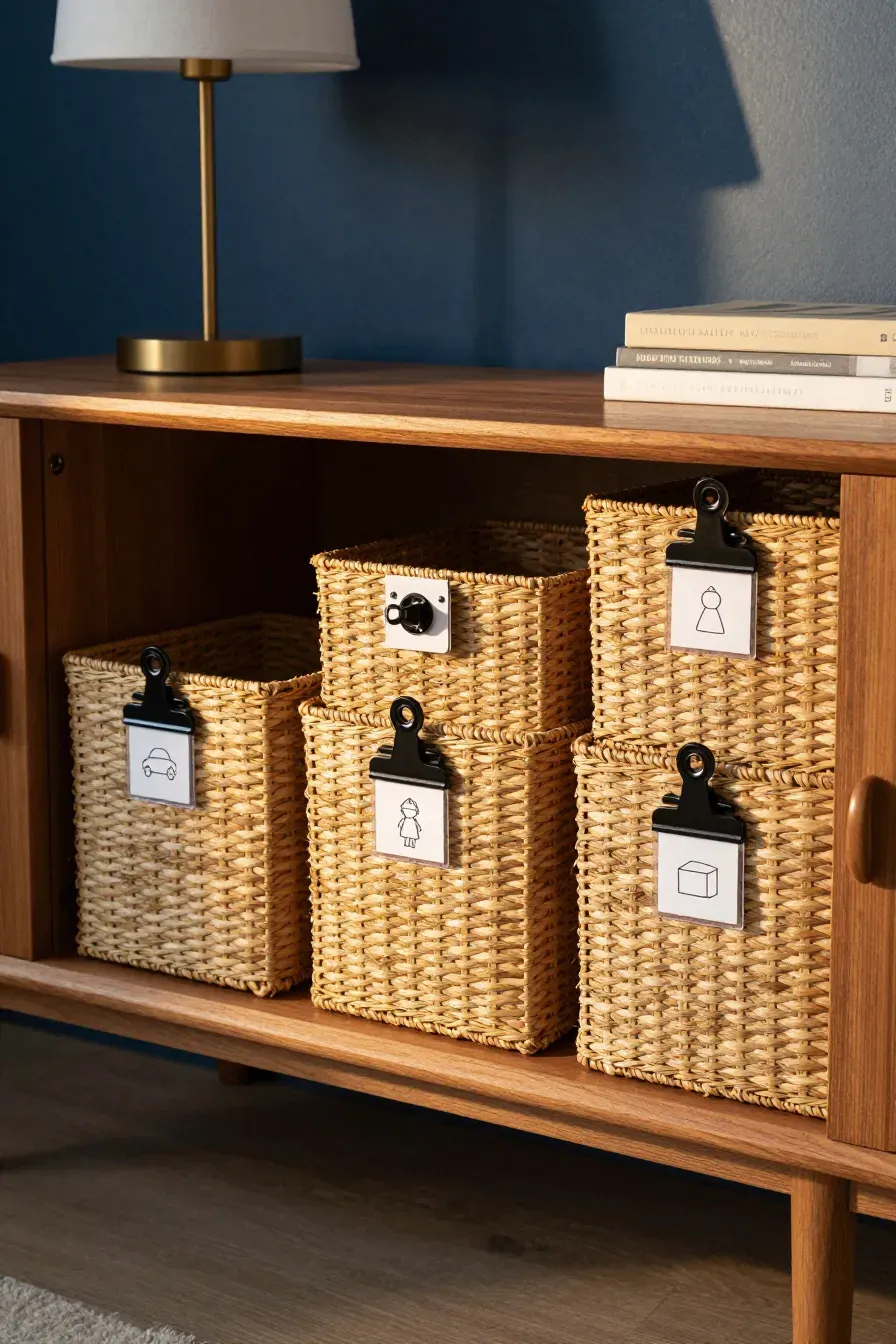
Woven baskets look great in a living room, but you can’t see what is inside them. Adding a simple clip-on label with a picture or a word helps everyone know where things go. This reduces the ‘dump and search’ habit that creates huge messes in seconds.
Wall-Mounted Wooden Crates
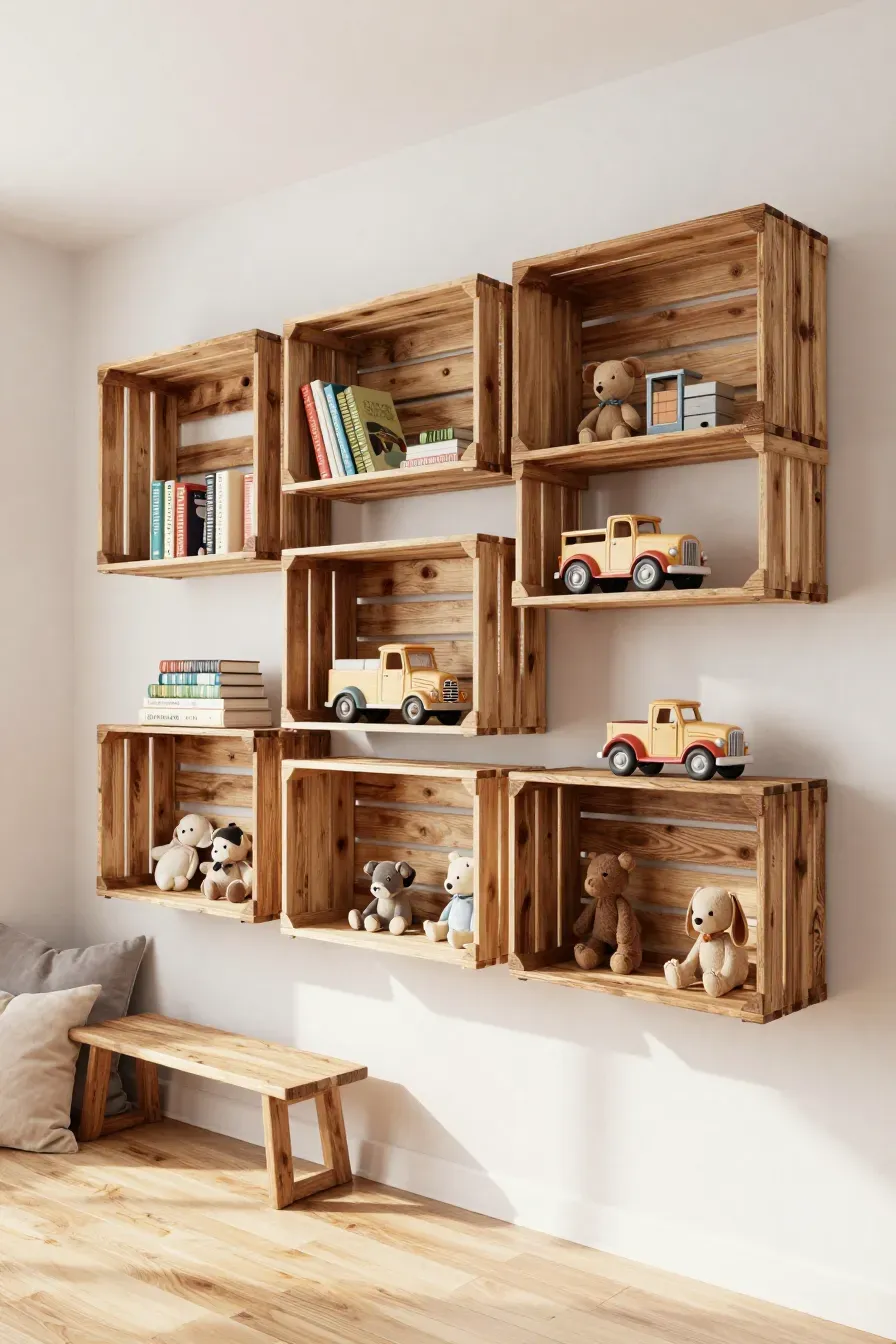
Wooden crates can be screwed directly into wall studs to create sturdy, rustic shelving. You can hang them in different patterns to fit your wall space. They are deep enough to hold larger toys and books, and they add a bit of character to a small playroom design.
Foldable Canvas Bins for Quick Cleanup
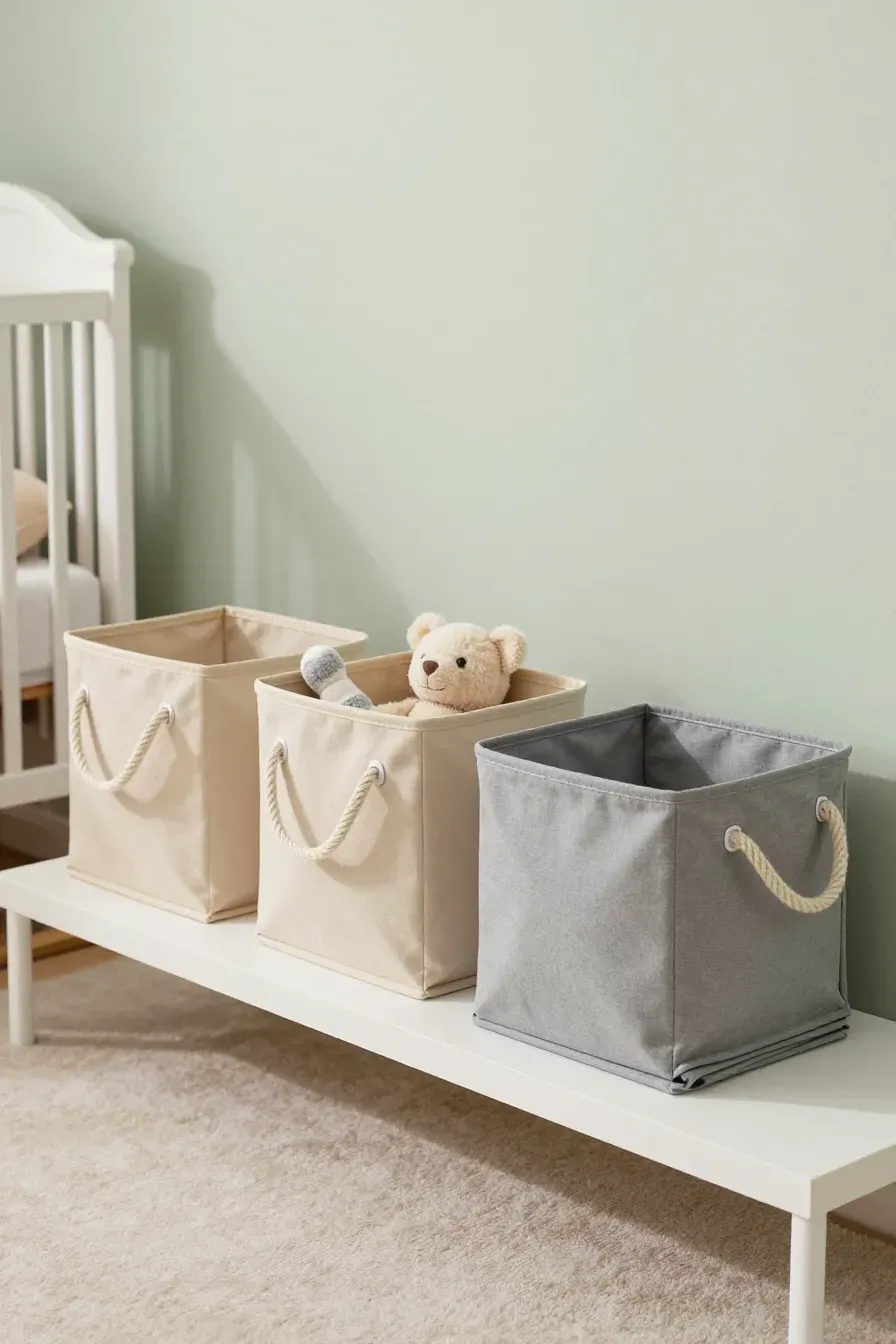
Canvas bins are lightweight and safe for even the youngest children. When they aren’t in use, they fold flat and can be tucked away. They are perfect for a quick end-of-day sweep where you just need to get everything off the floor and into a container.
Under-Sofa Slide-Out Drawers
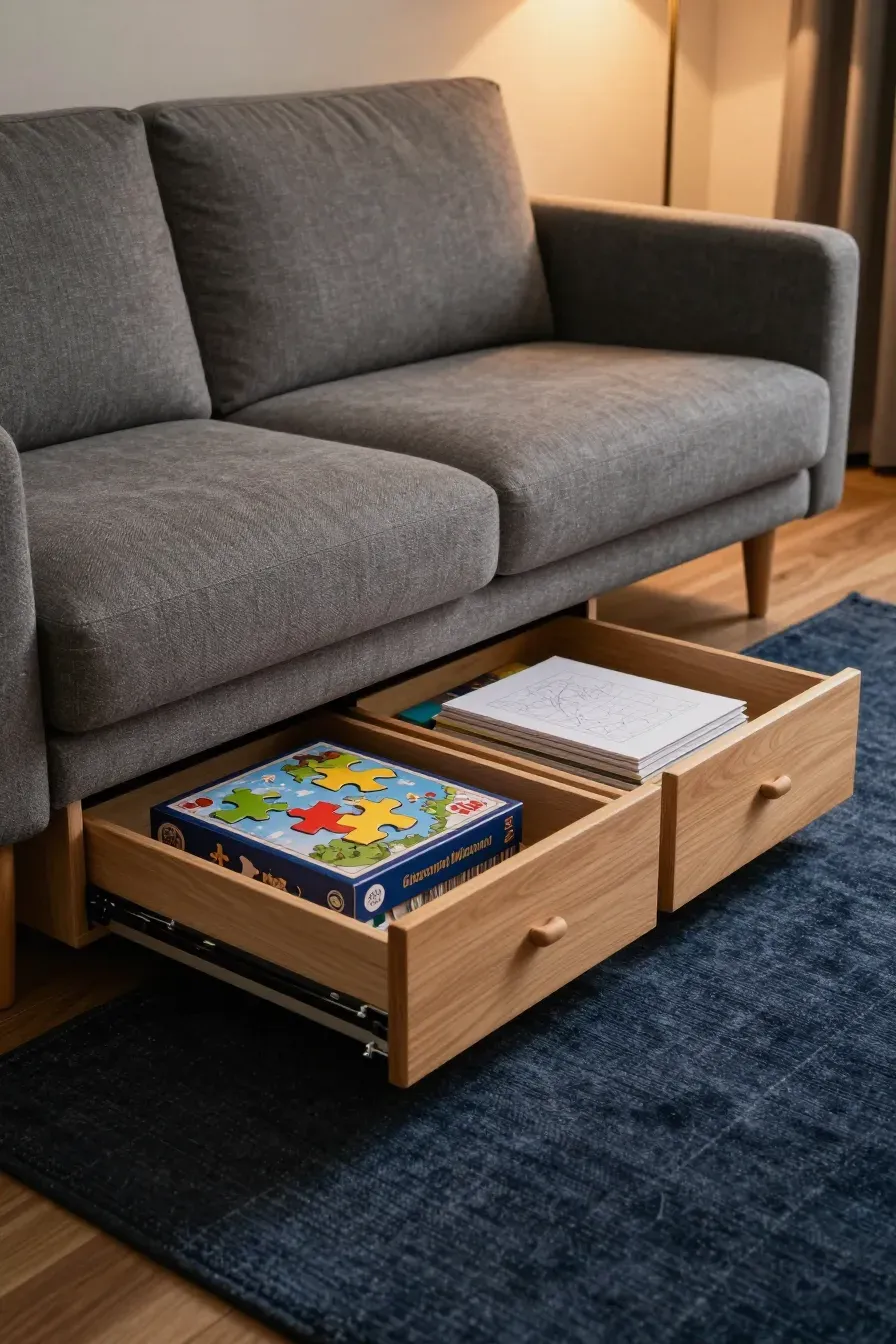
If your sofa has legs, there is likely a few inches of space underneath. Long, shallow drawers can slide under there to hold flat items like puzzles or drawing paper. It is a hidden storage spot that keeps toys out of the main walkway of your home.
Zippered Pouch Bags for Puzzle Pieces
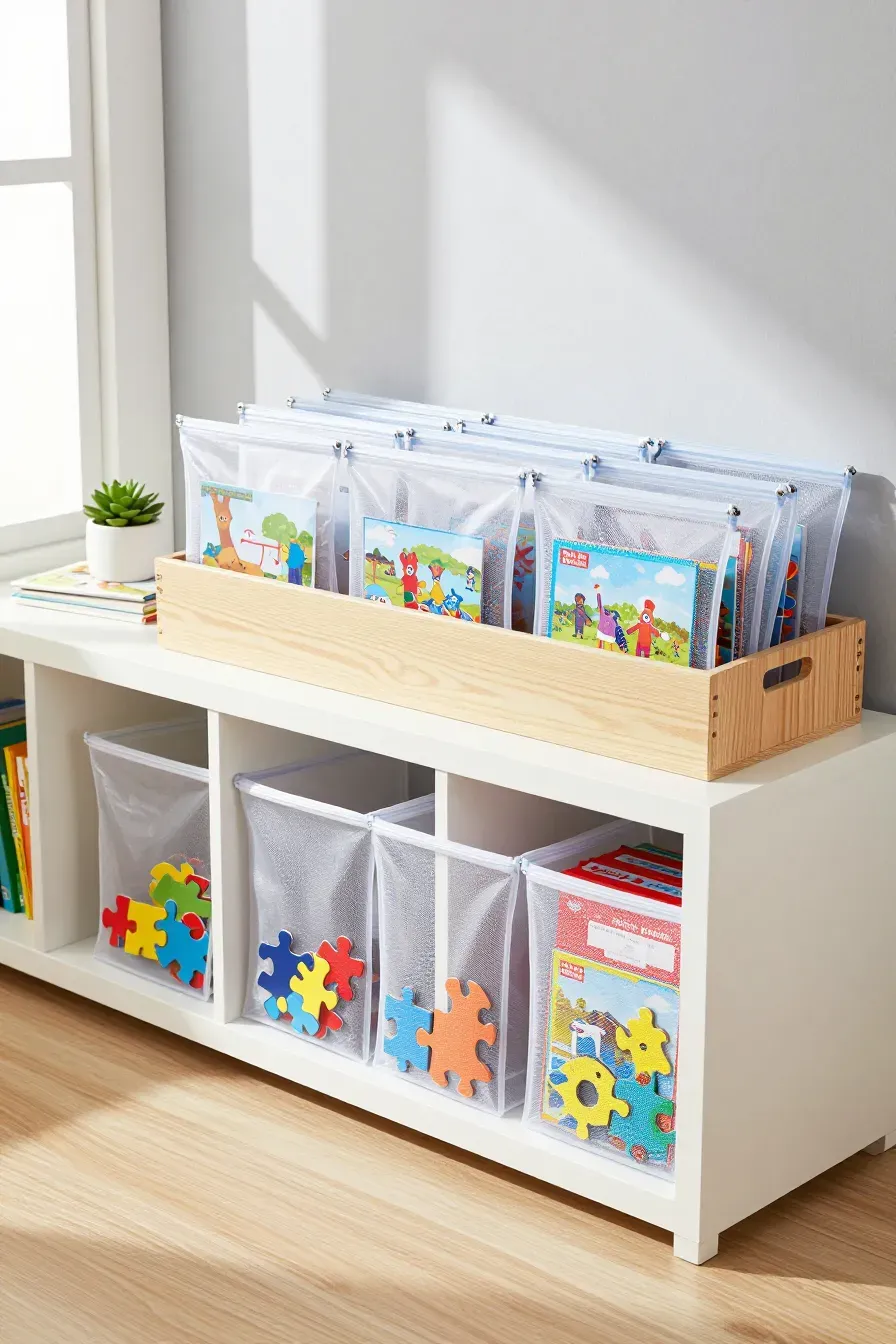
Puzzle boxes are bulky and often break, leading to lost pieces. Transferring puzzles into clear zippered pouches saves a massive amount of space. You can clip the picture of the puzzle from the box and slide it inside the pouch. These pouches can then be stored in a small basket or bin.
Suction Cup Baskets for Bath Toys
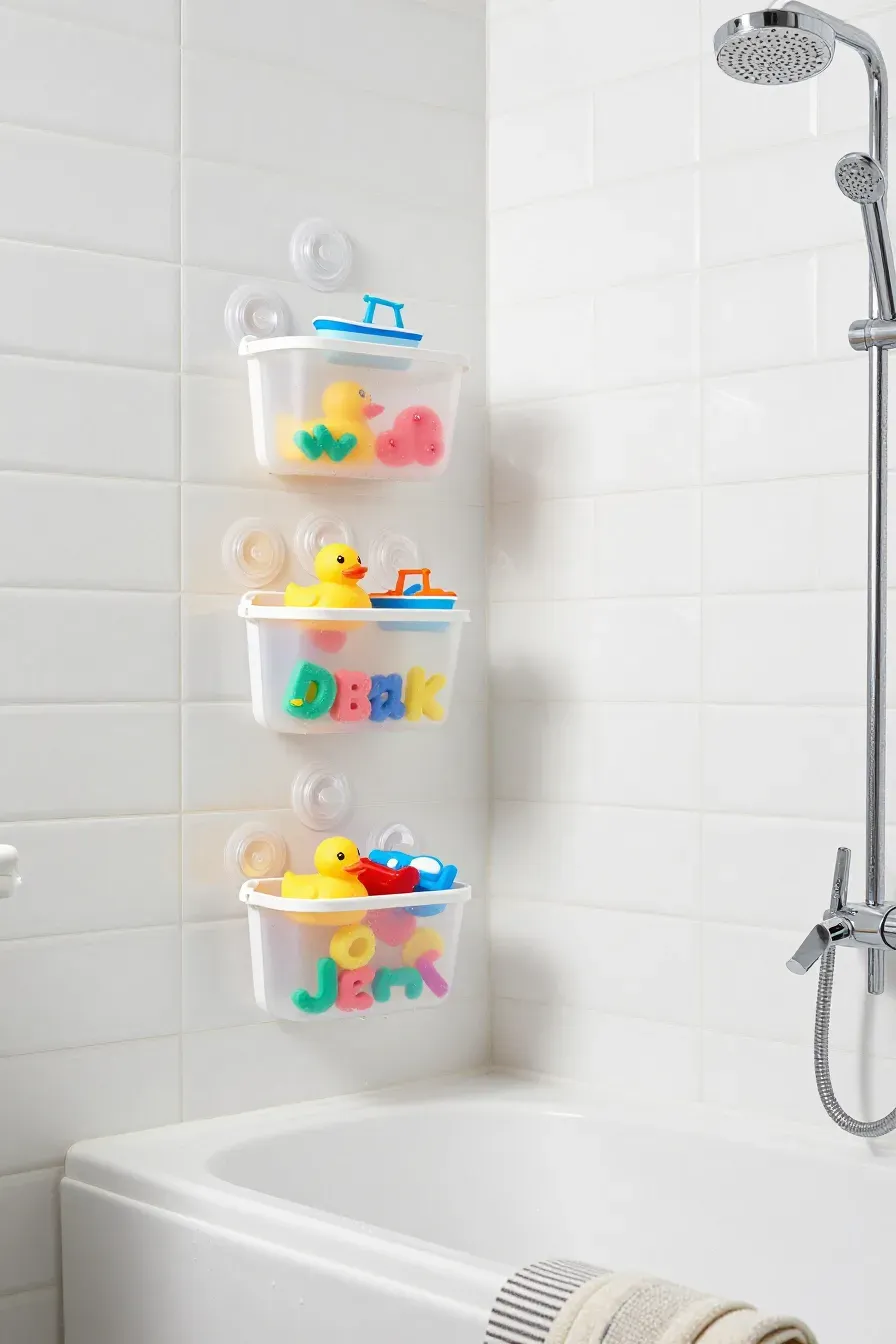
Bath toys can quickly take over a small bathroom. Mesh or plastic baskets with suction cups stick to the tile walls, keeping toys off the ledge and allowing them to drip dry. This prevents mold and keeps the tub area looking organized for adult use.
Wall-Hanging Fabric Buckets
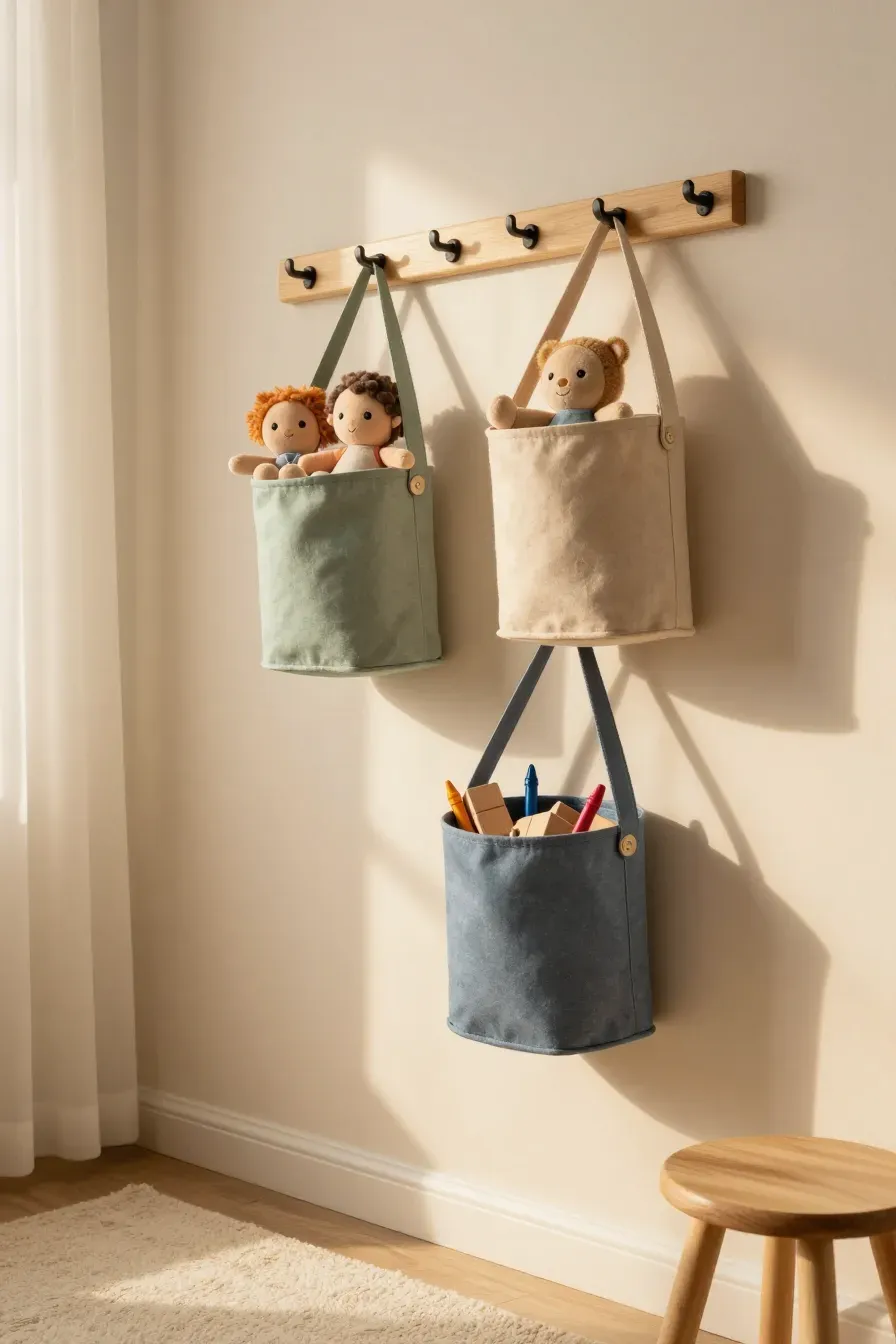
Fabric buckets with loops can be hung from hooks on the wall. They are softer than plastic and can be placed at different heights. Use them for frequently used items like crayons or small dolls. Because they hang, they don’t clutter up the surfaces of tables or desks.
Nesting Boxes for Seasonal Items
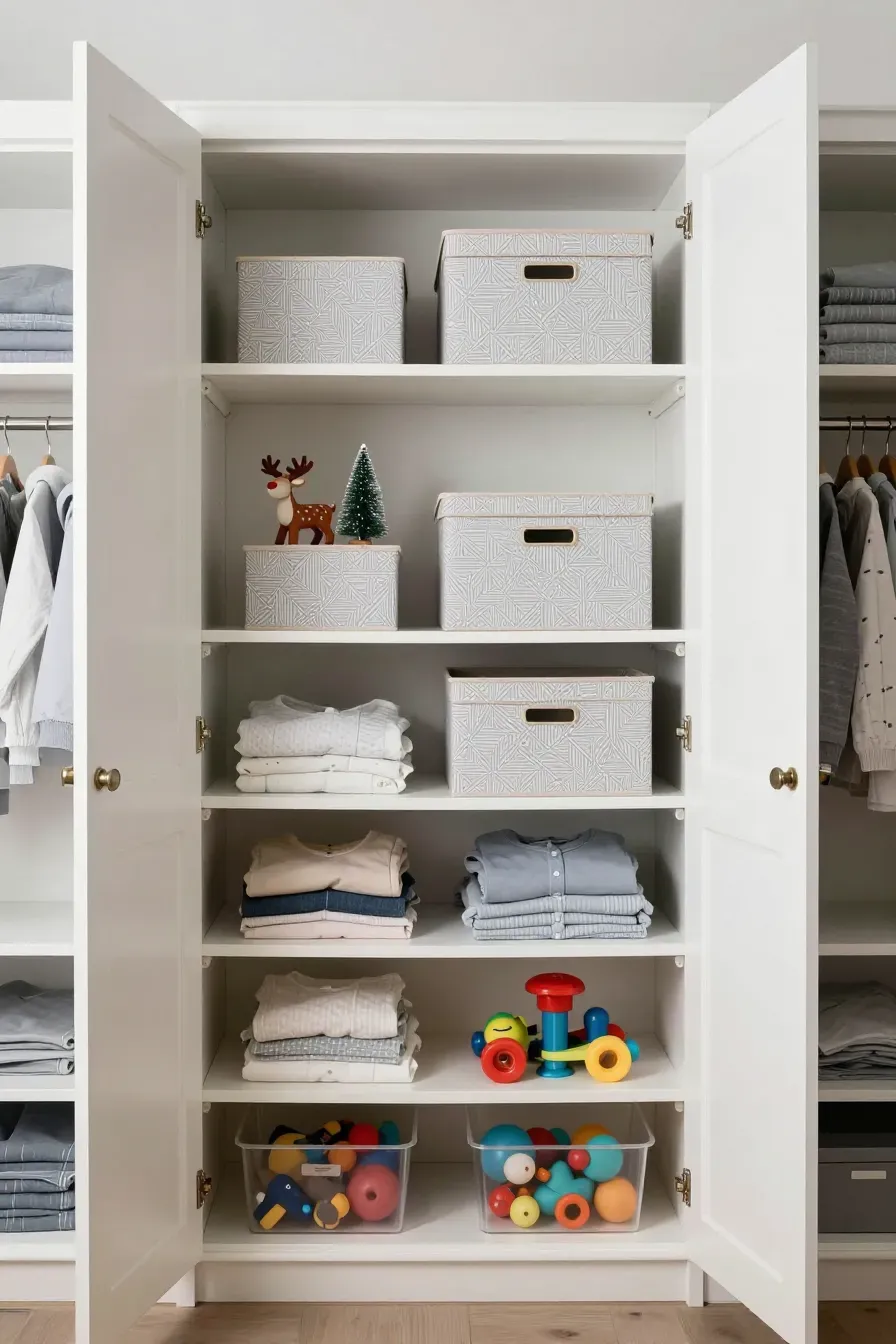
Not every toy needs to be out all year. Nesting boxes allow you to store holiday-themed toys or seasonal gear inside each other when they aren’t being used. This saves space in the top of a closet or under a bed until they are needed again.
Suitcase-Style Carry Cases for Figurines
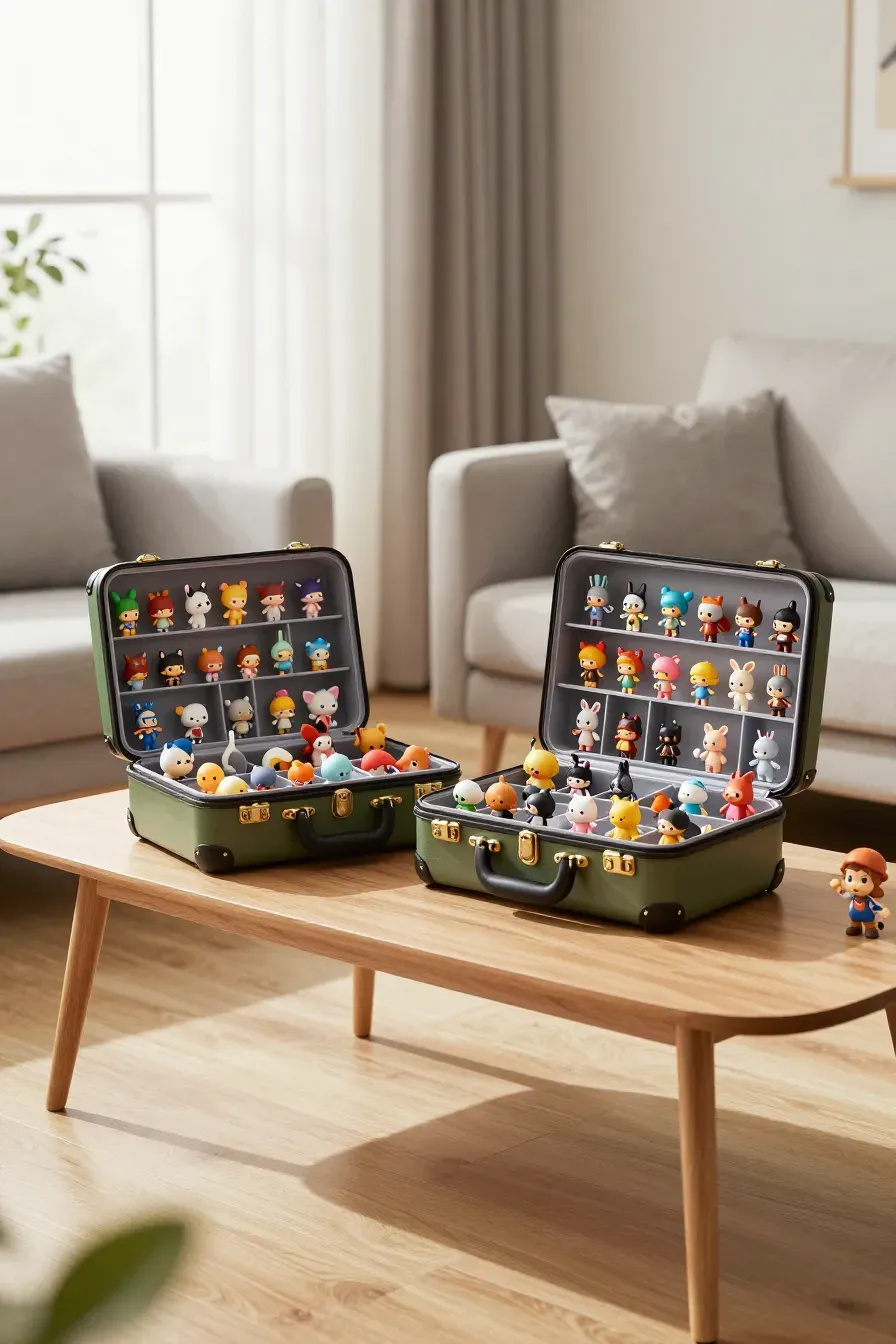
Small carry cases with handles are perfect for kids who like to take their toys from room to room. These cases usually have small compartments inside to keep tiny pieces separated. When playtime is over, the ‘toy box’ is already packed and ready to be put on a shelf.
Narrow Ladder Shelves for Vertical Storage
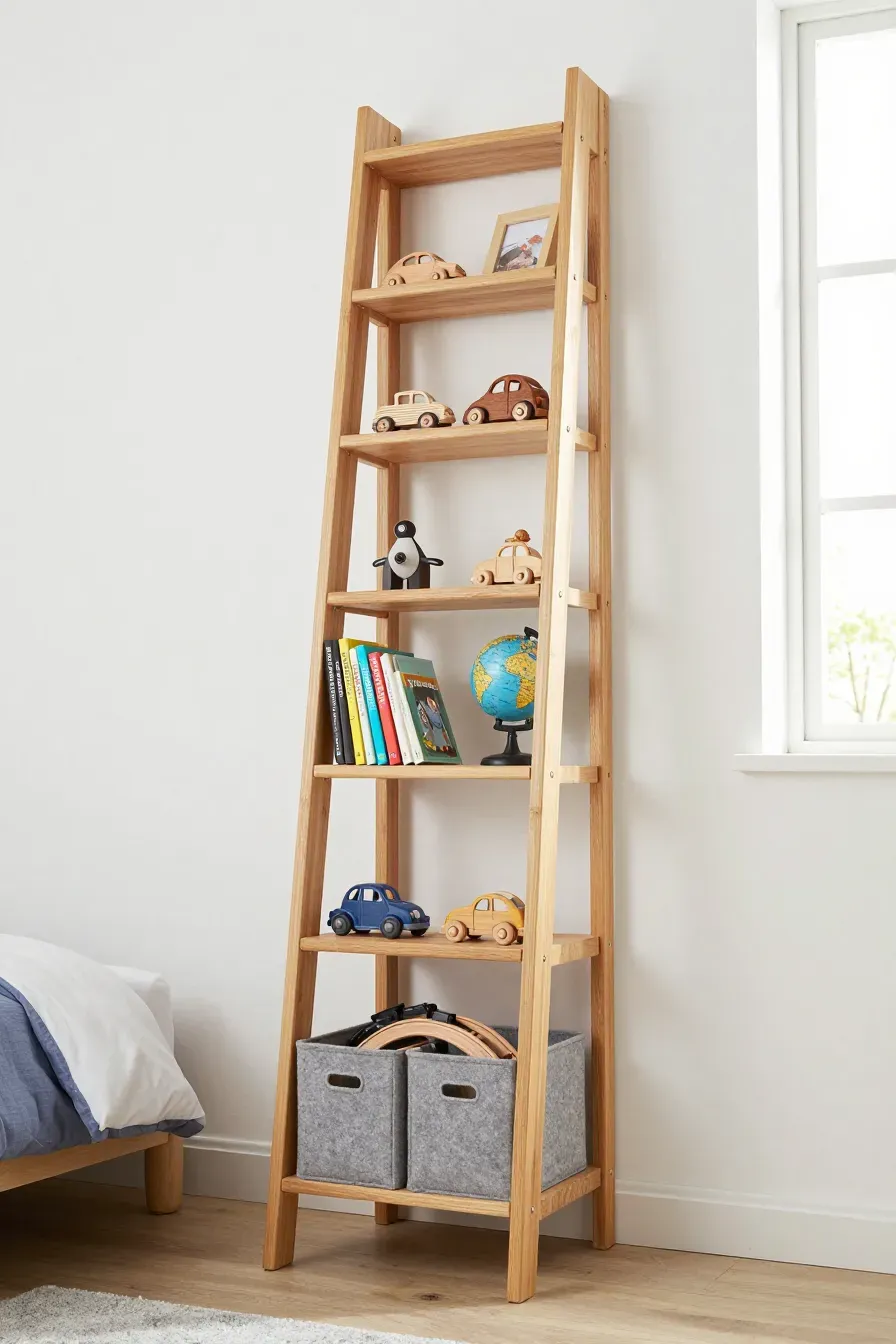
Ladder shelves have a small footprint at the base and lean against the wall. They offer multiple levels of storage without the bulk of a traditional cabinet. Use the bottom wide shelves for heavy bins and the top narrow shelves for decorative items or books.
Velcro Strips for Remote Control Cars
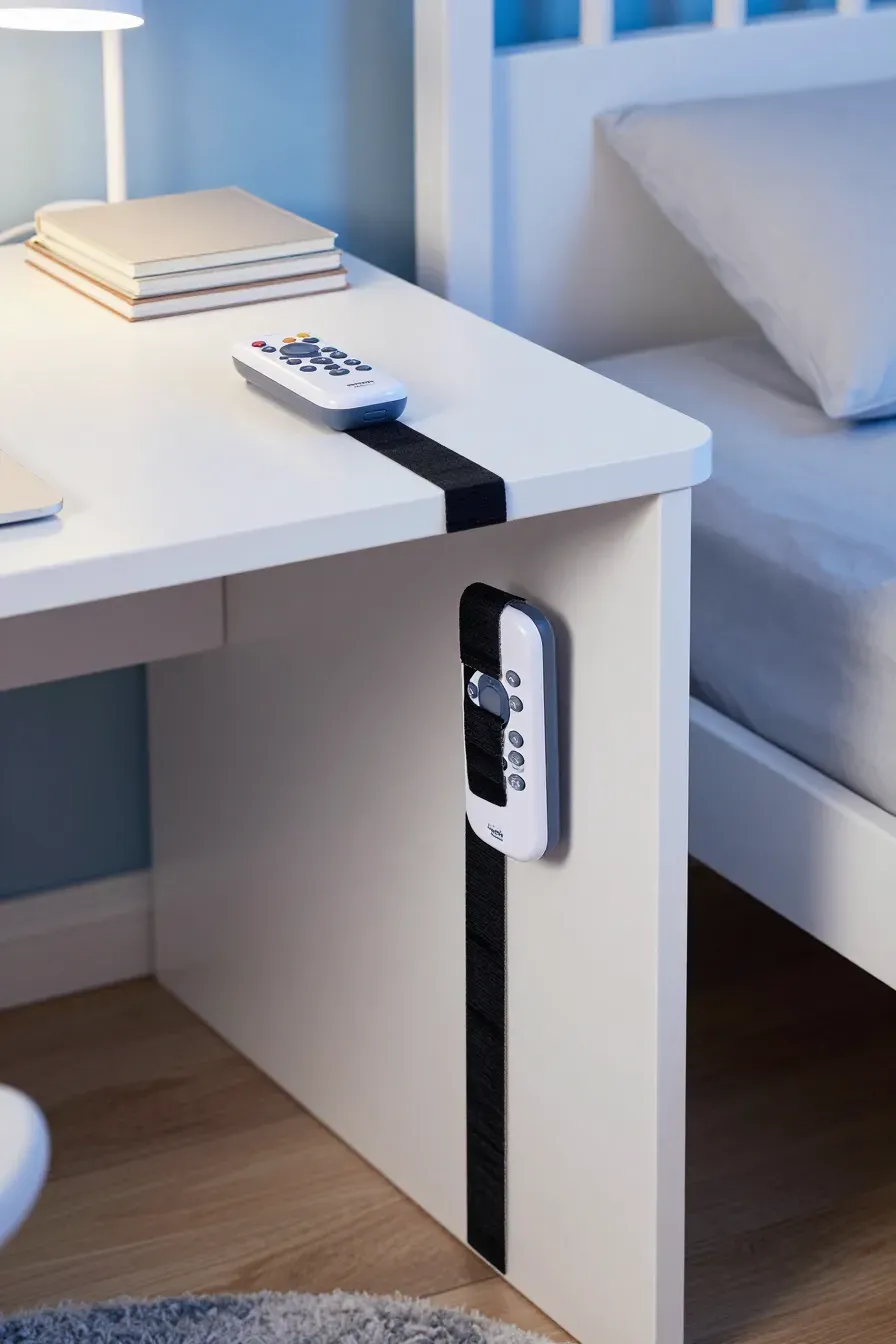
For lightweight toys like plastic remote controls or small electronic pads, sticky-back Velcro can be a lifesaver. Attach one side to the toy and the other to the side of a desk or bed frame. It keeps the remotes from getting lost in the cushions and keeps them off the floor.
Back-of-Chair Fabric Pockets
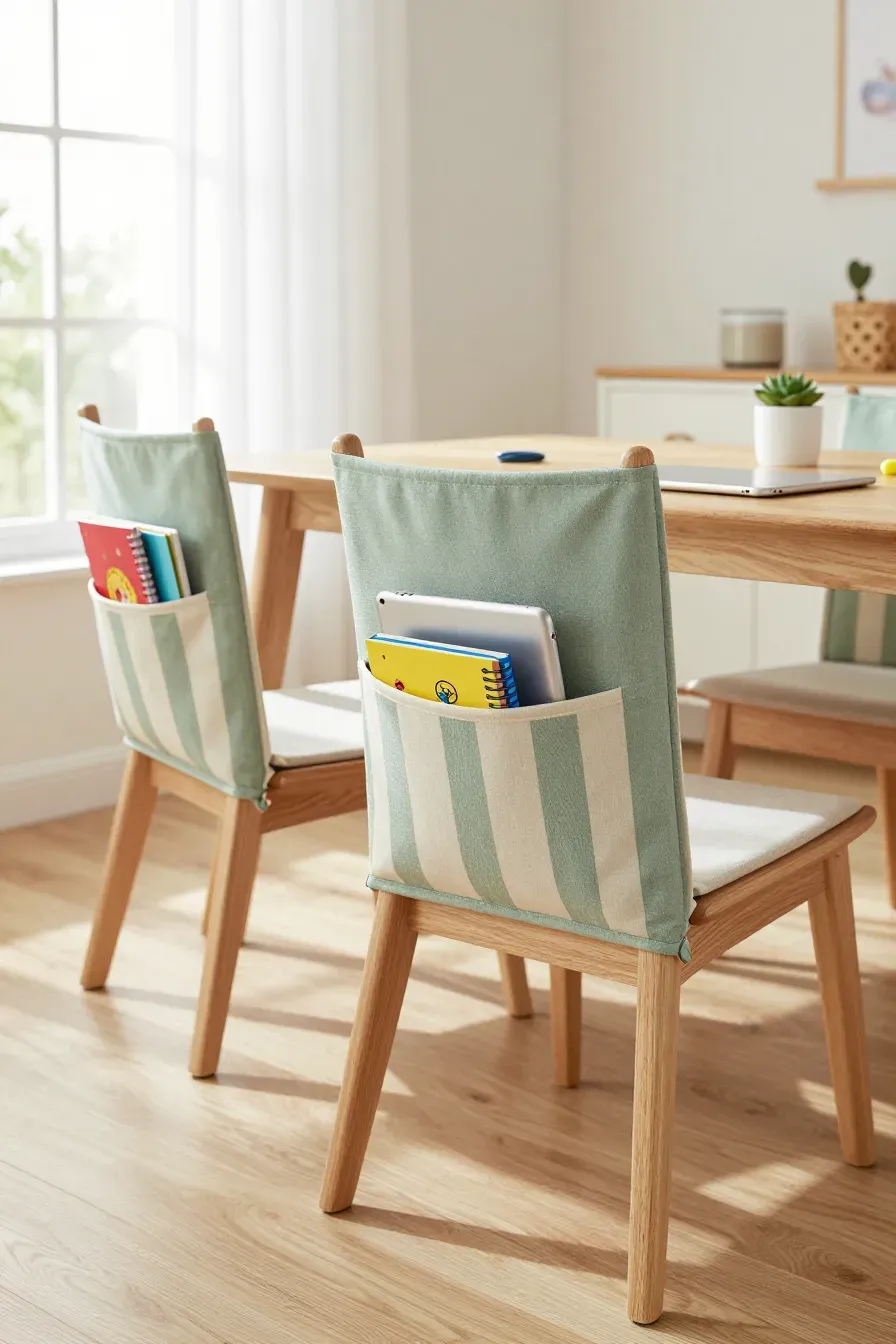
You can buy or make fabric sleeves that slip over the back of a chair. These pockets are perfect for holding coloring books, tablets, or notebooks. It is a great way to add storage to a small dining area or a bedroom desk without adding any new furniture.
Built-in Cubbies Under Bed Frames
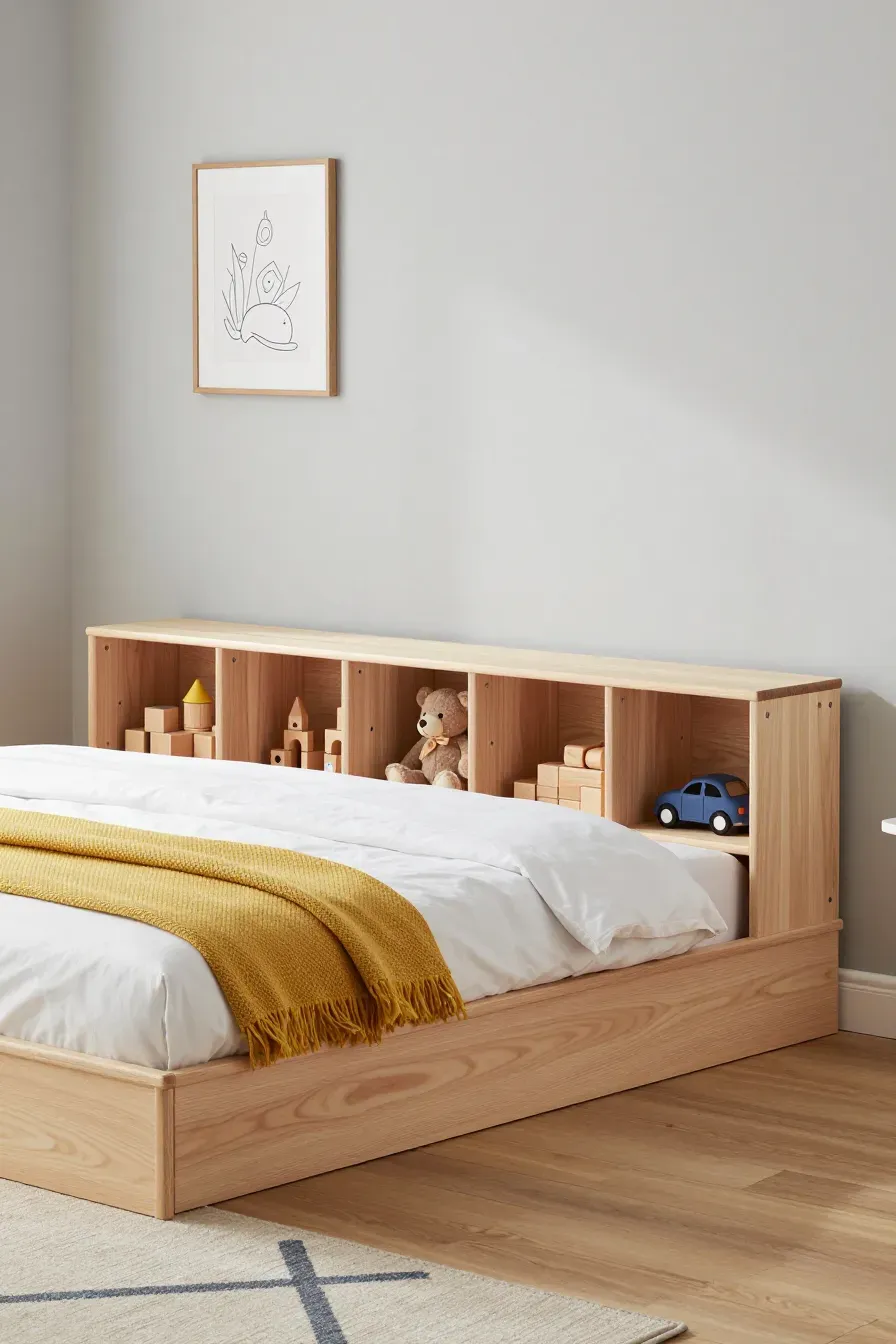
If you are looking for a more permanent solution, bed frames with built-in cubbies are a great investment for small rooms. They provide a structured place for toys right where the child sleeps. It eliminates the need for a separate dresser or toy chest in a cramped bedroom.
Repurposed Spice Racks for Small Books
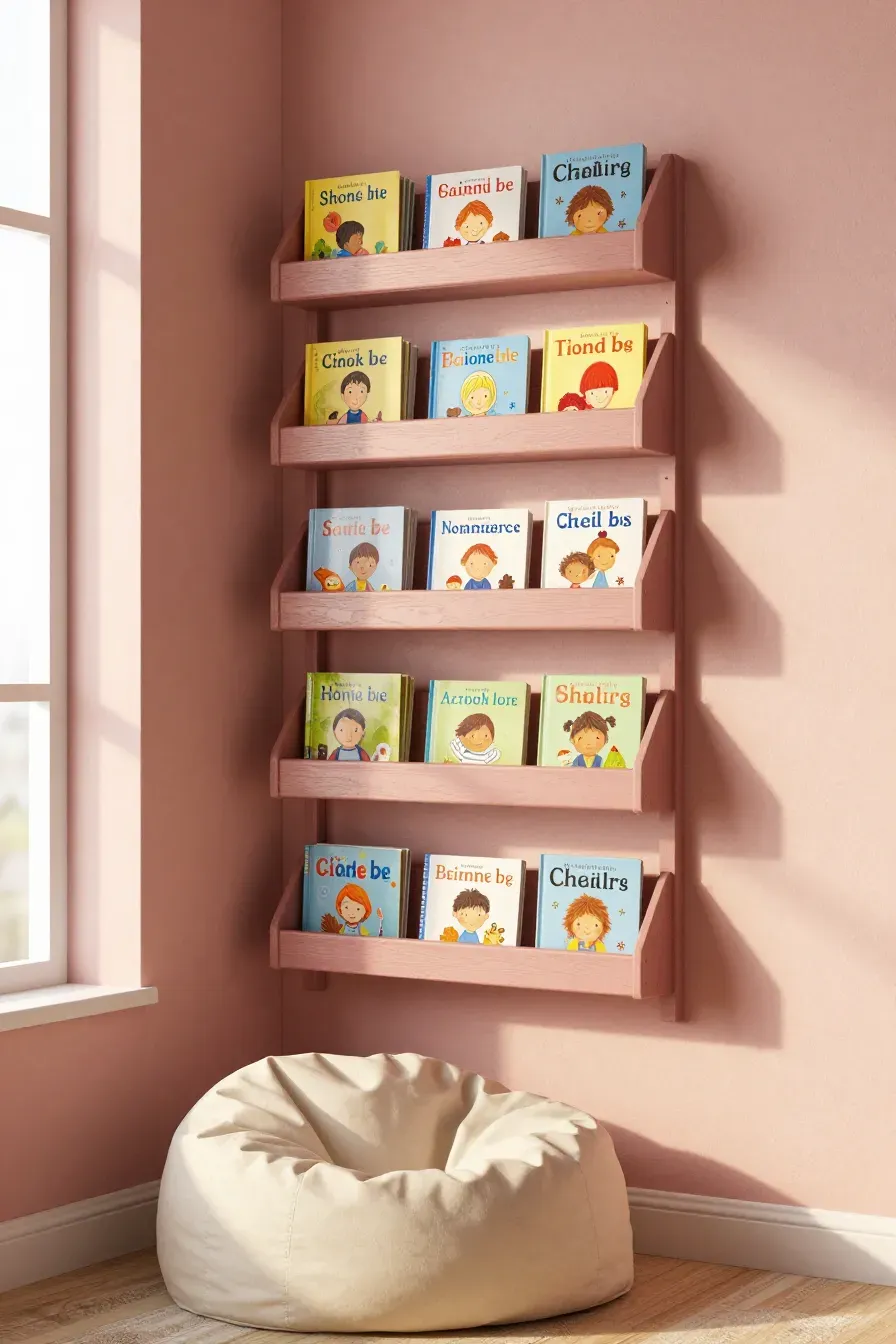
Wooden spice racks are the perfect size for thin children’s books. They are inexpensive and easy to mount on any wall. By painting them to match the room, you get a custom look that keeps books organized and easy to reach for little hands.
Soft Play Mats that Fold into Storage Bags
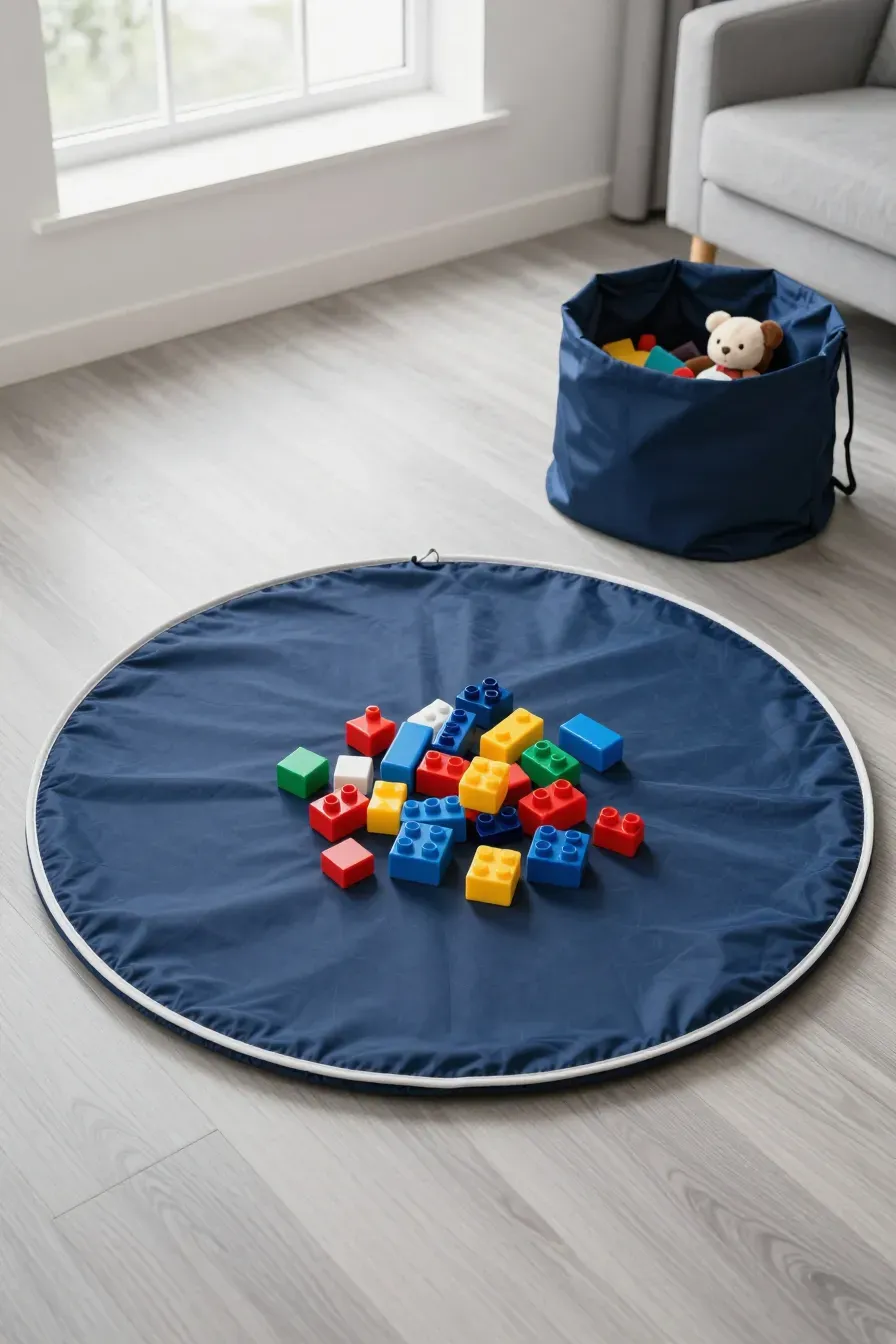
There are play mats designed with a drawstring around the edge. Kids can play with their blocks or dolls on the mat, and when they are done, you simply pull the string to turn the mat into a storage bag. This is one of the fastest toy storage solutions for daily cleanup.
Industrial Pipe Shelving for Heavy Games
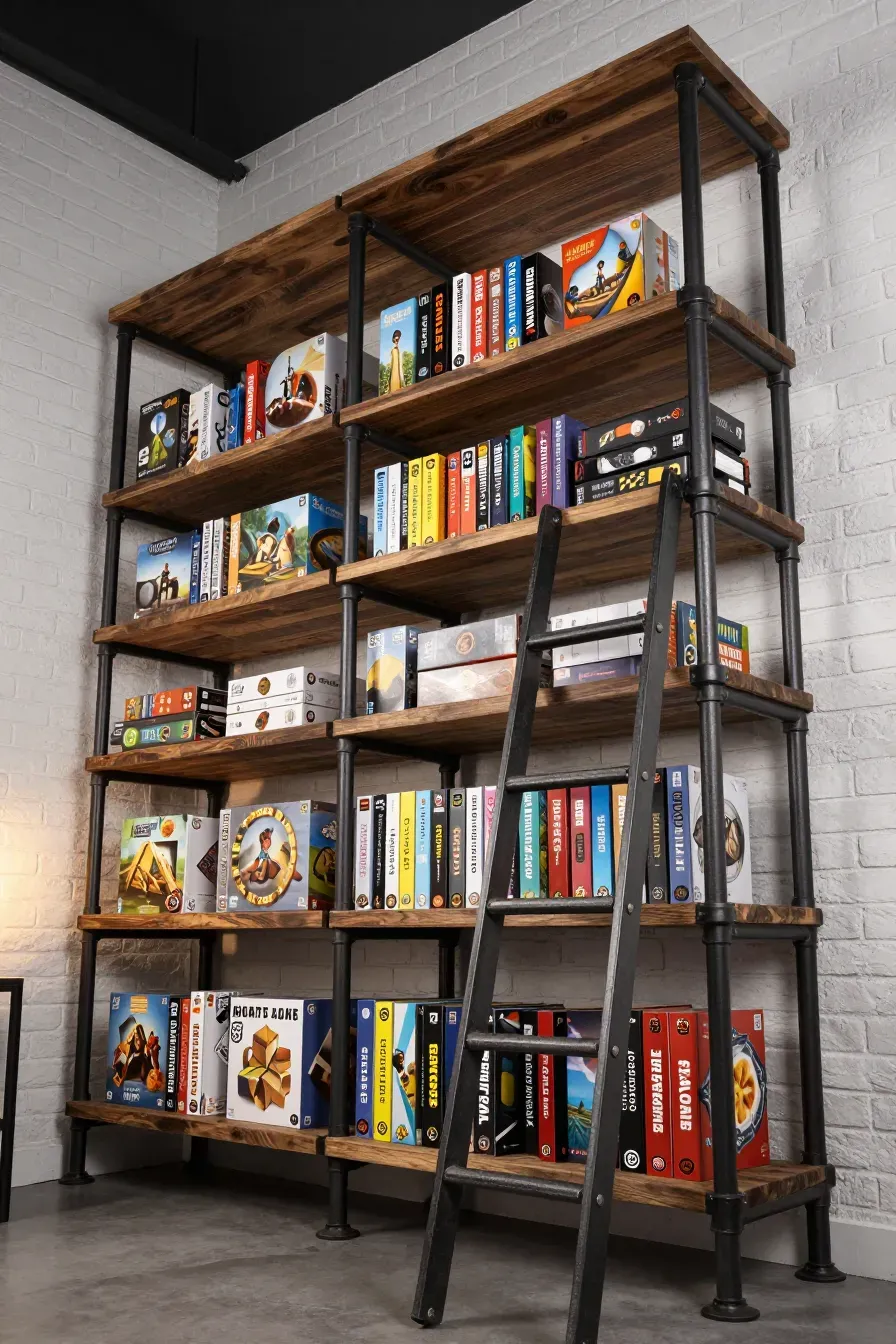
If you have a large collection of heavy board games, standard cheap shelves might sag. Industrial pipe shelving is very strong and can be customized to fit any wall width. It provides a sturdy, open look that keeps games organized and accessible without taking up much floor depth.
Divided Drawer Inserts for Art Supplies
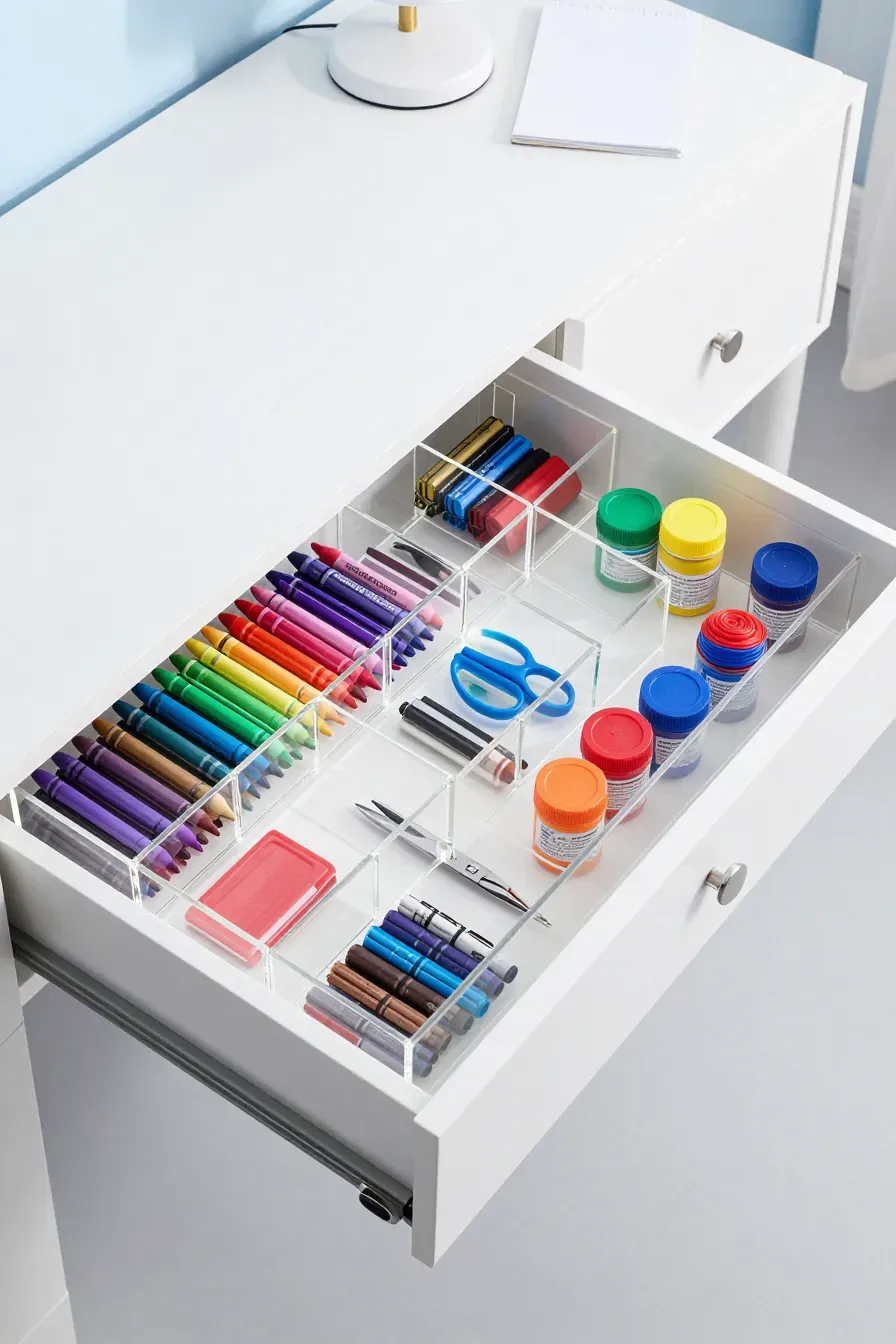
Drawers often become a ‘junk drawer’ for toys. Using divided inserts helps keep crayons, markers, and clay separate. When everything has a specific spot, kids are more likely to put things back where they belong, making the overall organization much more successful.
Sliding Chalkboard Panels Over Toy Cubbies
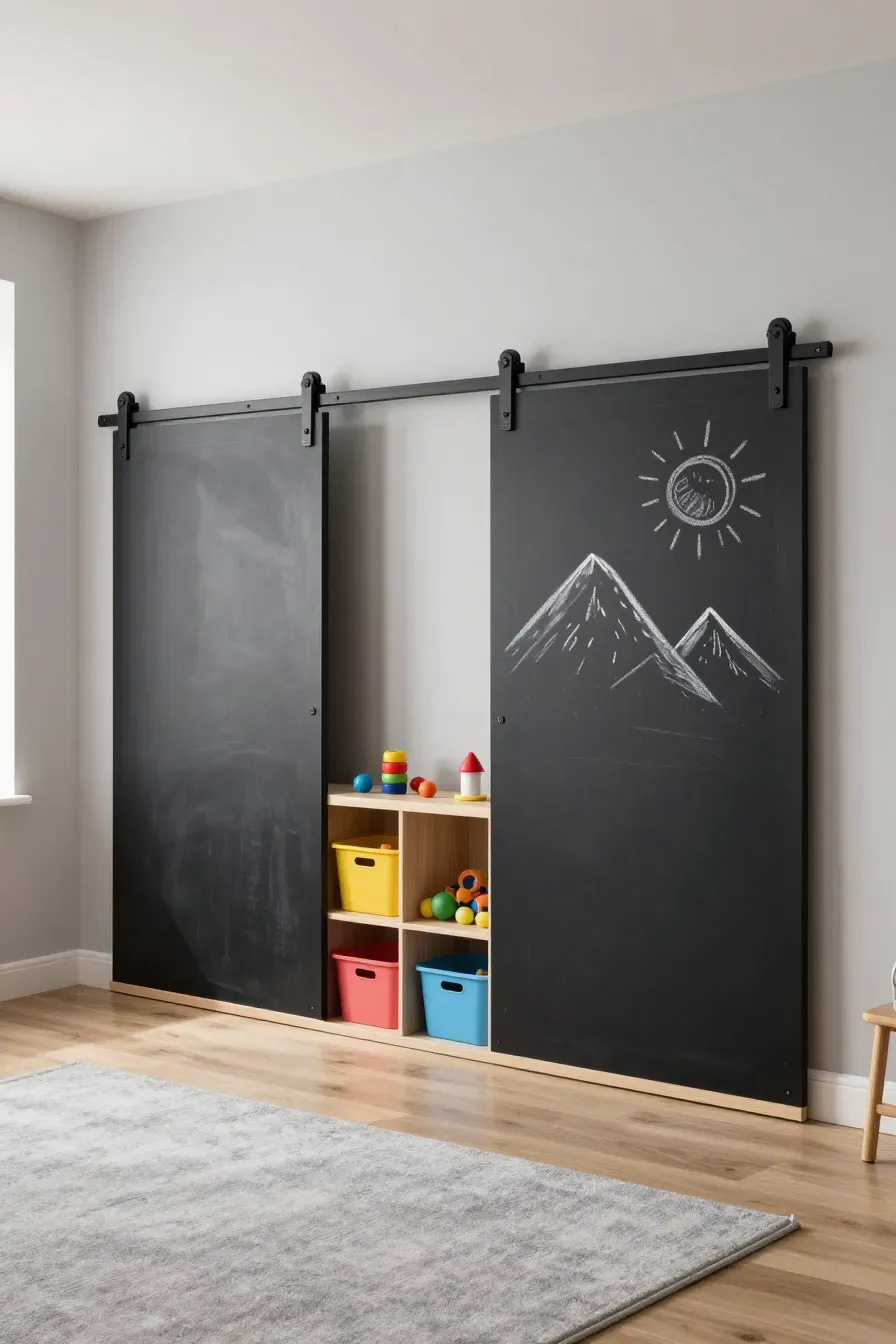
To hide the visual clutter of toys, you can install sliding panels over open cubbies. Using chalkboard paint on these panels gives the kids another place to play while hiding the bins behind them. It keeps the room looking tidy and serves as an extra activity station.
Managing toys in a small home doesn’t require a miracle; it just requires a bit of strategy. By using your walls, the space under your furniture, and multi-purpose pieces, you can keep the clutter under control. Start with one or two of these storage ideas and see how they change the feel of your room. A tidy space makes for a much more relaxed environment for both you and your children.