
Walking into a room filled with greenery instantly changes your mood. You don’t need a huge backyard or a sunroom to enjoy a lush garden. Indoor plants wall decor allows you to bring nature into your living space without taking up any floor area. Whether you live in a small apartment or a large house, a vertical garden can make your home feel more alive and fresh.
This list covers 35 practical ways to build your own plant wall. You will find everything from simple shelving setups to more complex living systems. These plant room ideas are designed to work for different skill levels and budgets. By the end of this guide, you will have plenty of inspiration to start your own DIY living wall indoor project.
Hexagonal Wooden Honeycomb Shelves with Trailing Vines
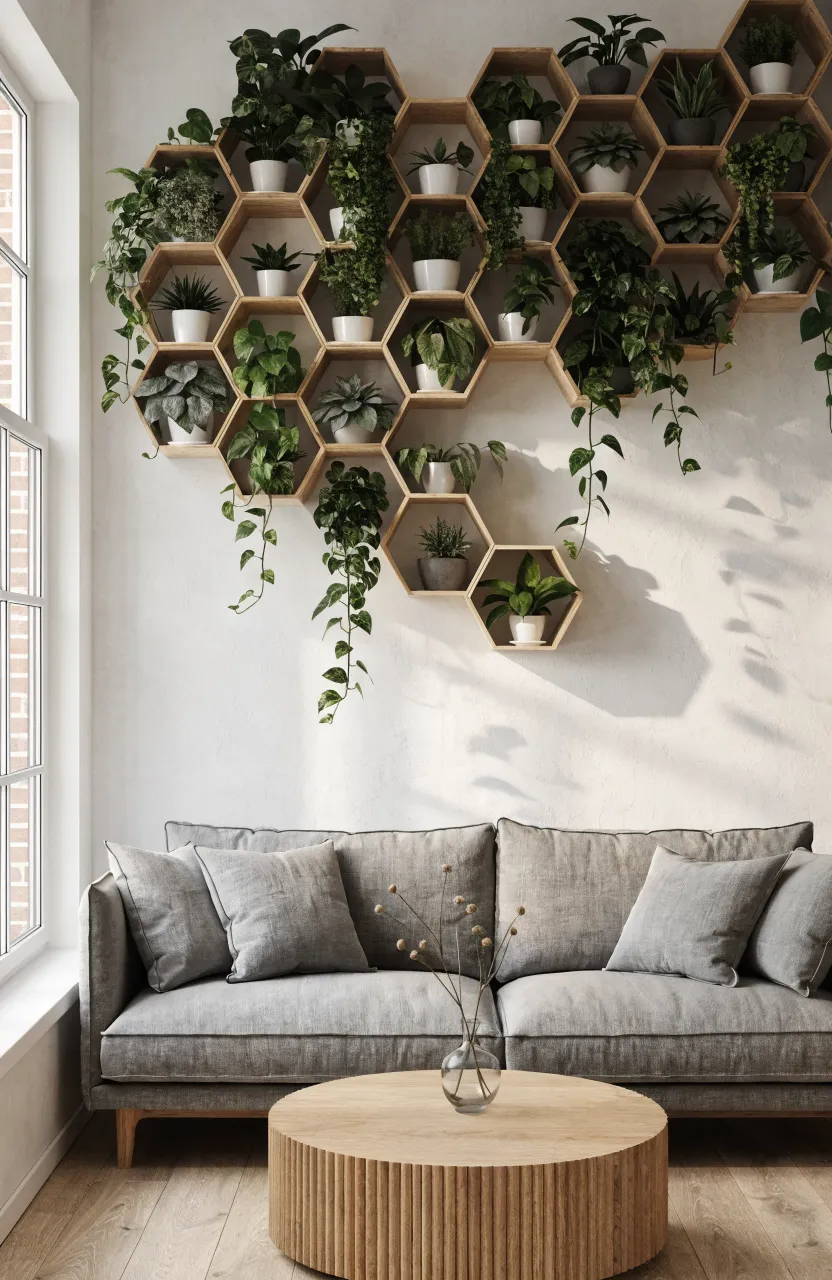
Honeycomb shelves create a geometric focal point that looks like art even before you add the plants. You can arrange these hexagons in a cluster to mimic a beehive pattern on your wall. They provide a sturdy base for small pots, making them one of the most popular plant wall shelf ideas for modern homes.
To get the best look, place trailing plants like Pothos or Heartleaf Philodendron in the top hexagons. As the vines grow, they will drape over the wooden edges and soften the sharp angles of the shelves. This setup works well in living rooms where you want a mix of natural wood and vibrant green leaves.
Vertical Felt Pocket Planters for a Full Living Wall
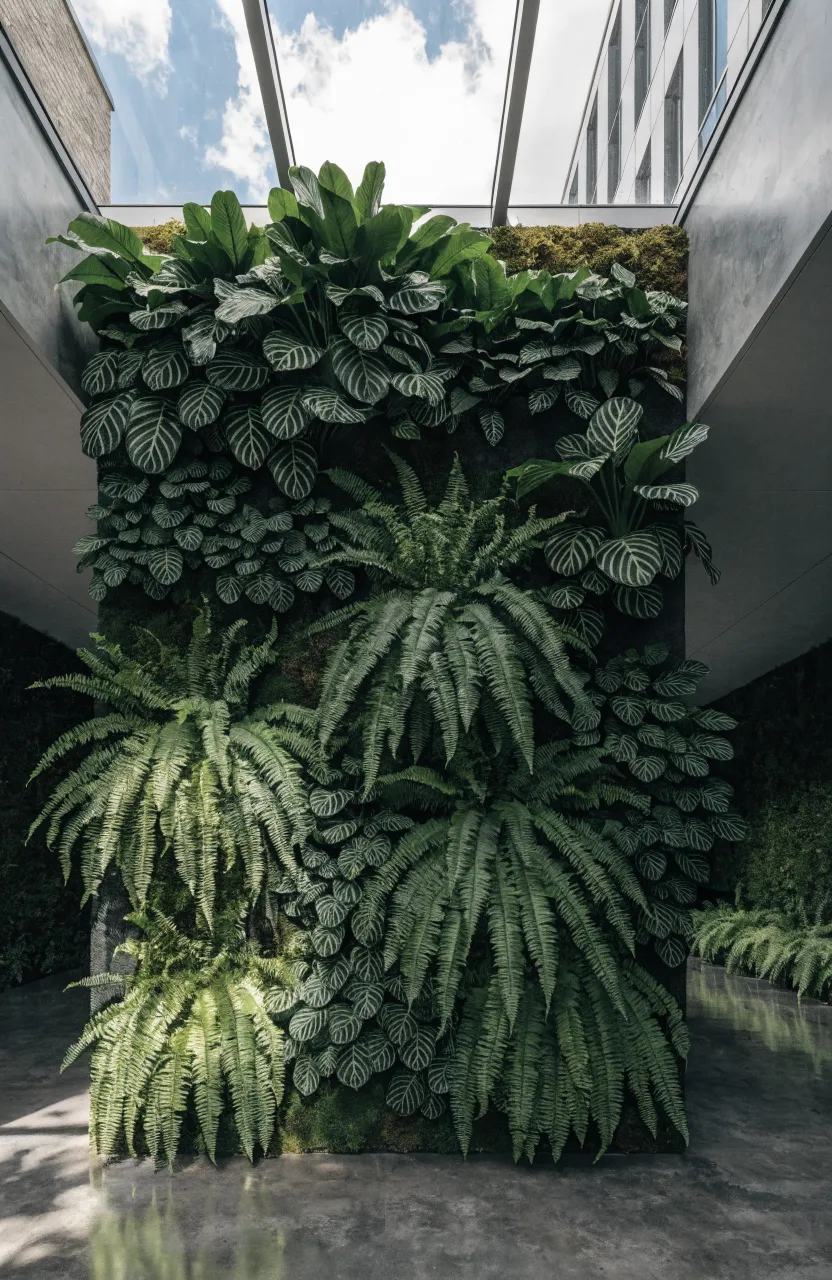
Felt pocket systems are a go-to choice for a DIY living wall indoor. These breathable fabric pouches allow air to reach the roots, which helps prevent rot. You can mount a large panel of these pockets to cover an entire wall from top to bottom.
When planting, choose species with similar water needs since the moisture can wick between the pockets. Ferns and calatheas thrive in this environment because the felt holds humidity well. It is a smart way to create a dense, carpet-like effect that hides the wall behind it.
Industrial Pipe Shelving with Potted Ferns
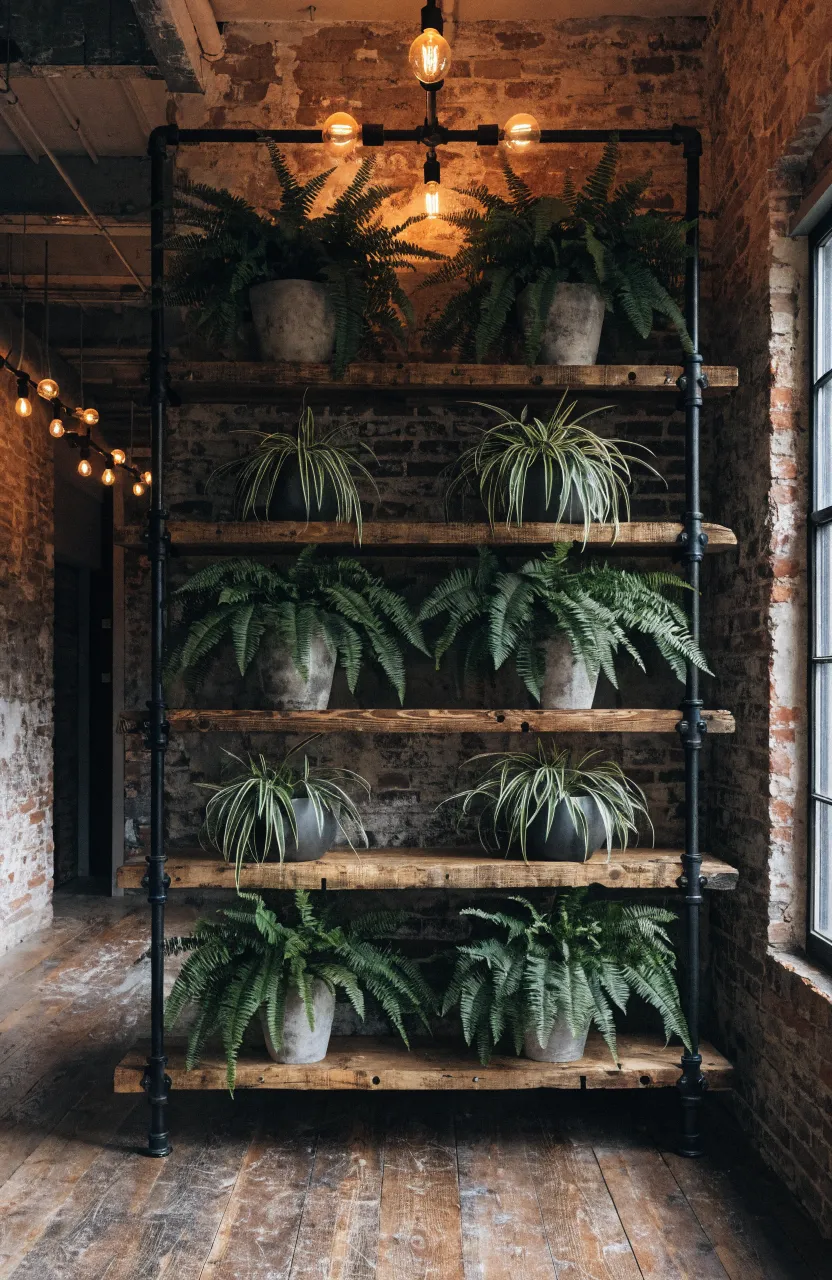
Black iron pipes paired with reclaimed wood offer a rugged look for wall plants indoor living rooms. This style of shelving is very strong, so you can use heavier ceramic or concrete pots without worrying about the weight. The dark metal provides a sharp contrast against the bright green fronds of Boston ferns.
Mount the pipes securely into wall studs to ensure the shelf stays level. Space the shelves far enough apart so the ferns have room to puff out. The combination of hard metal and soft foliage creates a balanced, industrial-chic aesthetic.
Macrame Plant Hangers Suspended from a Ceiling Rod
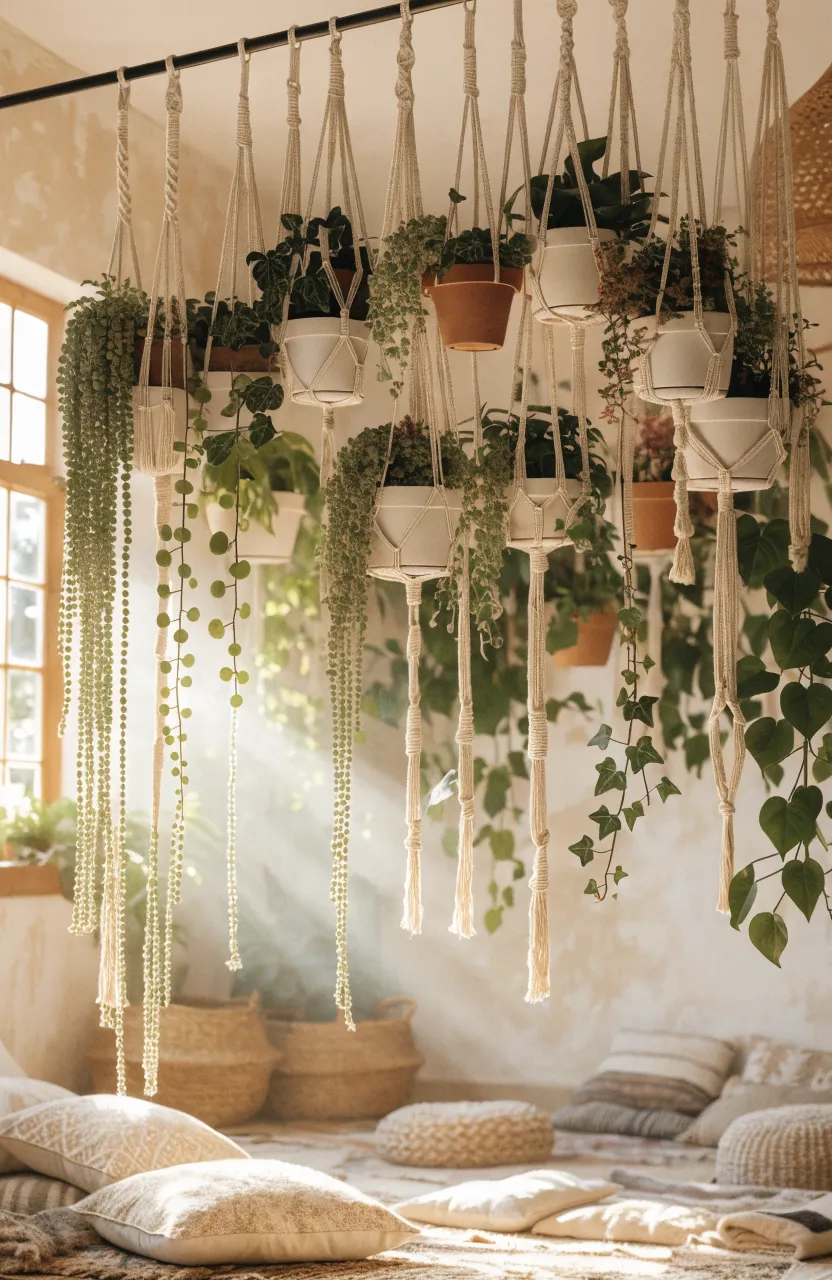
If you want to save wall space, try hanging a long curtain rod or a sturdy branch close to the wall. Use macrame hangers of varying lengths to create height interest. This method turns your plants into a living curtain that adds texture to the room.
This is a flexible plant wall design because you can easily swap plants or move the hangers around. It works best with trailing plants that can spill out of the knotted cords. It also keeps your plants away from curious pets or toddlers.
Floating Solid Wood Blocks for Individual Statement Plants
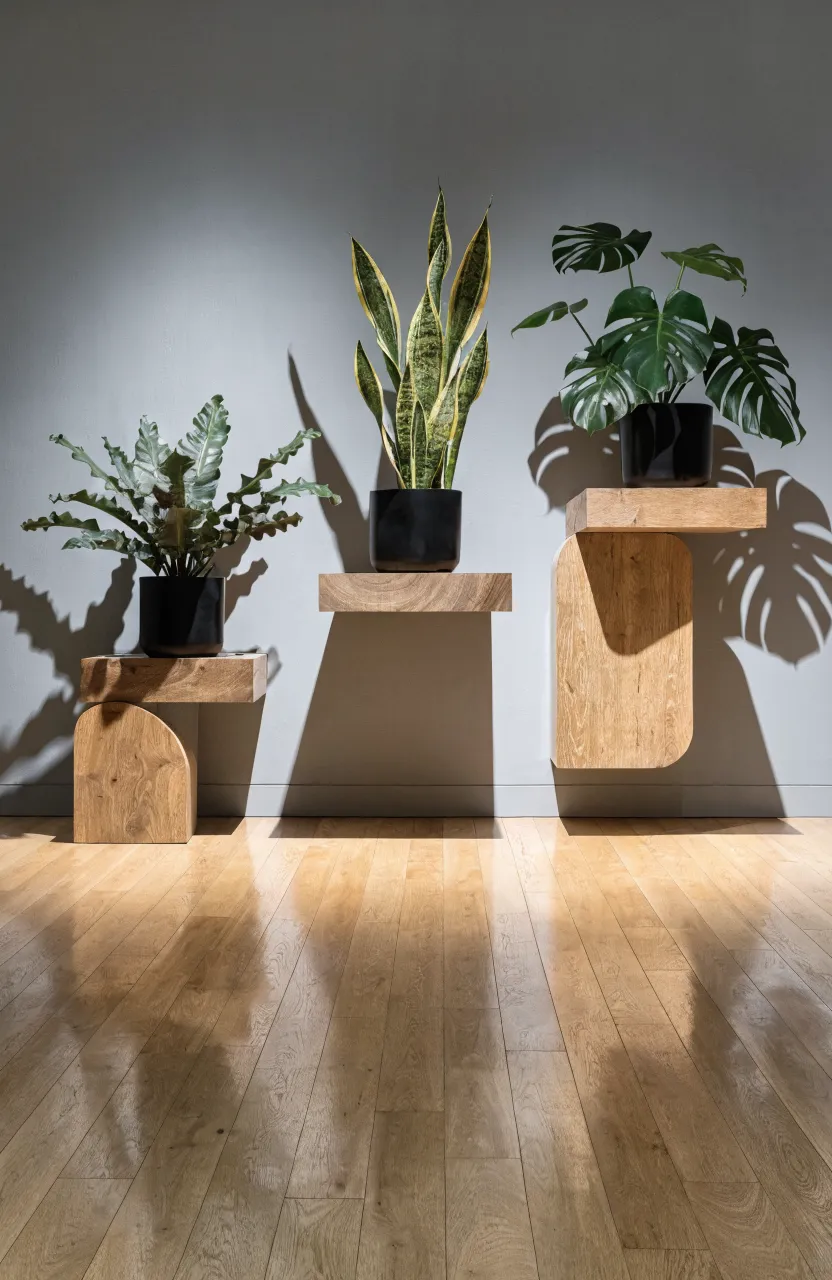
Small, thick wood blocks mounted individually can act as pedestals for your favorite plants. This approach treats each plant like a piece of sculpture. It is a minimalist way to handle indoor plants wall decor without cluttering the space with large furniture pieces.
Choose plants with unique shapes, like a Bird’s Nest Fern or a large Sansevieria. Since the blocks are separate, you can arrange them in a random or linear pattern depending on your style. Use a hidden bracket system to make the wood appear as if it is floating against the wall.
Magnetic Metal Tins for a Kitchen Succulent Wall
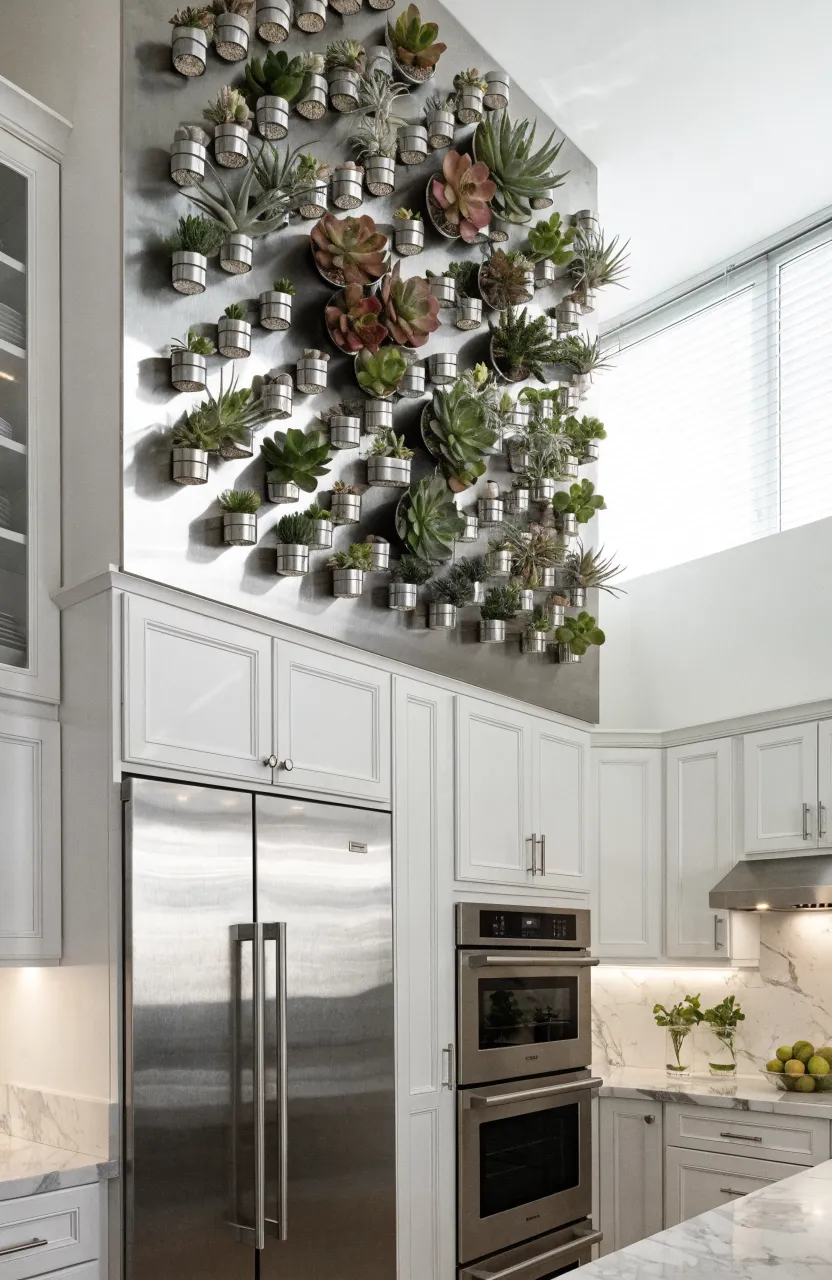
A magnetic succulent wall is a clever use of space in a kitchen or office. You can use a magnetic white board or a sheet of stainless steel as the base. Small metal tins with strong magnets on the back hold small succulents and air plants easily.
Since succulents don’t need much water, these small containers are manageable. Just make sure to add a layer of pebbles at the bottom for drainage or take them down to water them sparingly. It is a fun, interactive way to bring life to a backsplash or a refrigerator side panel.
Framed Moss Art Panels for a Maintenance Free Look
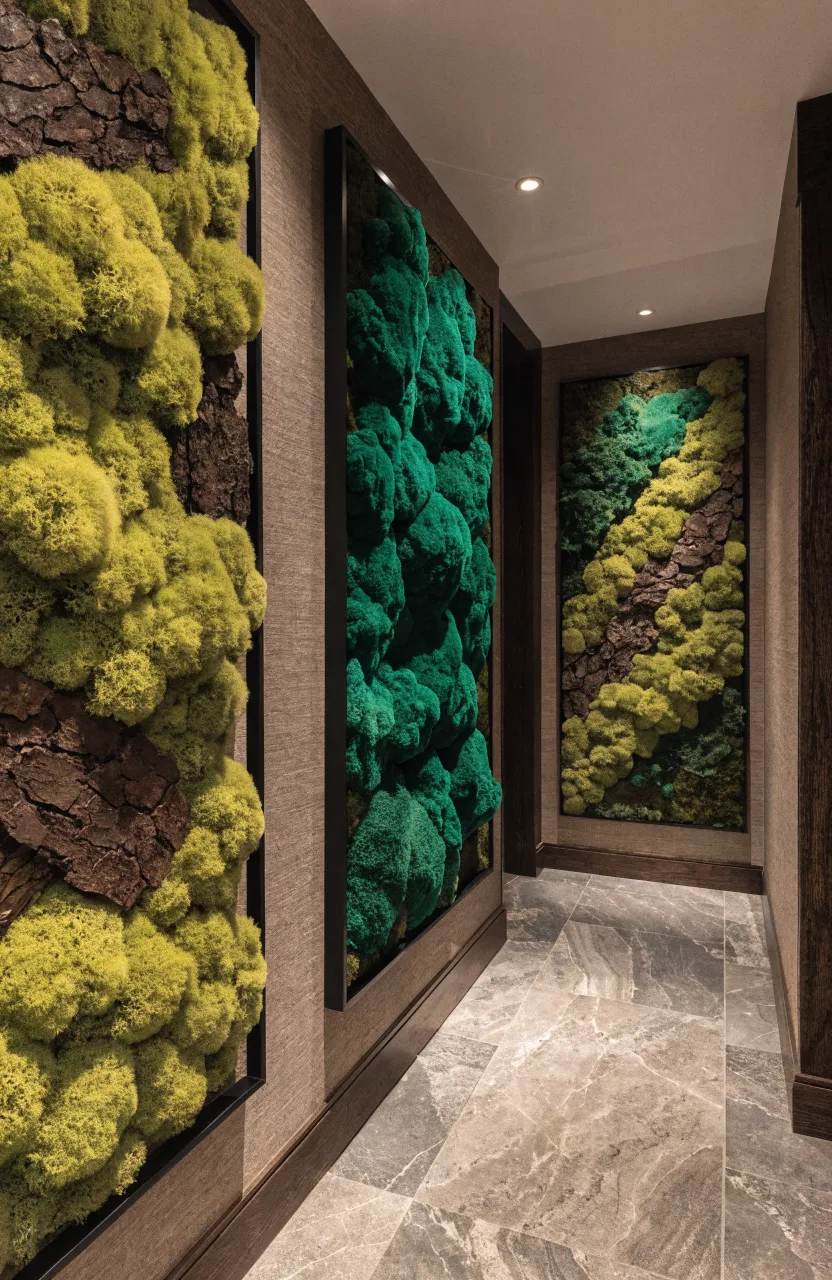
If you don’t have a green thumb, preserved moss art is a great alternative. These panels use real moss that has been treated to stay soft and green without water or sunlight. You can frame them like traditional paintings to create a mess-free plant accent wall.
Mix different types of moss, like reindeer moss and mood moss, to get different textures and shades of green. These panels are lightweight and can be hung anywhere, even in dark hallways where real plants wouldn’t survive. They bring a forest-like feel to your home with zero upkeep.
Recycled Wooden Pallet Mounted with Terracotta Pots
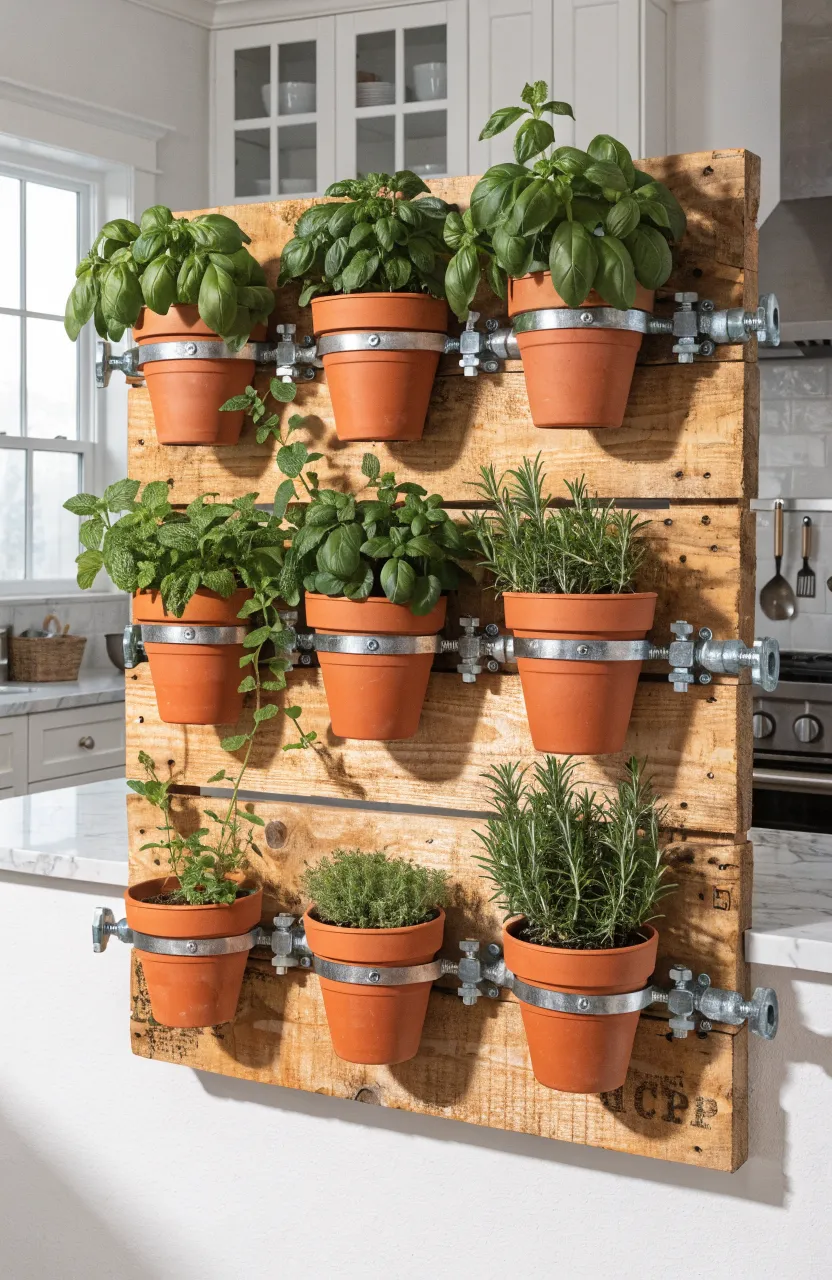
Using an old pallet is a budget-friendly way to start a DIY plant wall indoor. You can sand down the wood and stain it to match your decor, then use pipe clamps to attach terracotta pots directly to the slats. It has a rustic, garden-style look that works well in sunrooms or kitchens.
Space the pots evenly to keep the weight balanced. This setup is perfect for an indoor herb garden since the pots are easy to access for harvesting. The vertical slats of the pallet provide plenty of spots to screw in your hardware.
Copper Pipe Trellis for Climbing Ivy and Philodendrons
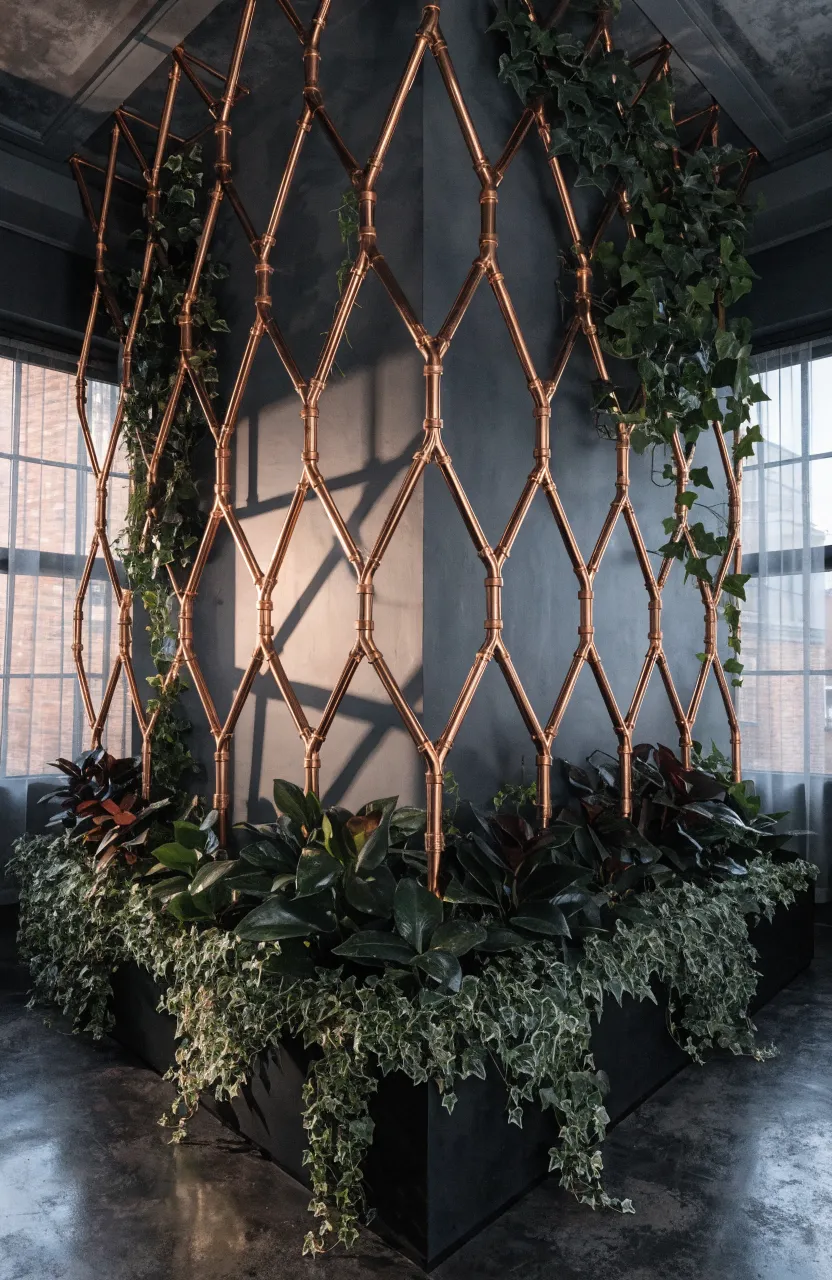
Copper pipes can be assembled into a custom grid or diamond shape to act as a trellis. As your climbing plants grow, you can gently wrap their vines around the warm-toned metal. This creates a very structured and elegant plant wall design.
English Ivy or Hoya plants are excellent choices for this setup because they naturally want to climb. Over time, the copper will develop a beautiful patina, or you can polish it to keep it shiny. It serves as both a support system for the plants and a decorative element for the room.
Geometric Wire Grid Wall Organizer with Small Air Plants

Metal wire grids are often used for photos, but they are also perfect for air plants. Since air plants don’t need soil, you can simply tuck them into the wire mesh. It is one of the easiest wall garden ideas indoor for people who want something low-maintenance.
You can use small clips or thin wire to keep the plants in place. This setup is very light and only requires a couple of nails to hang. To water the plants, just pop them out of the grid, soak them in a bowl for twenty minutes, and put them back once they are dry.
Minimalist Picture Ledge Packed with Potted Greenery
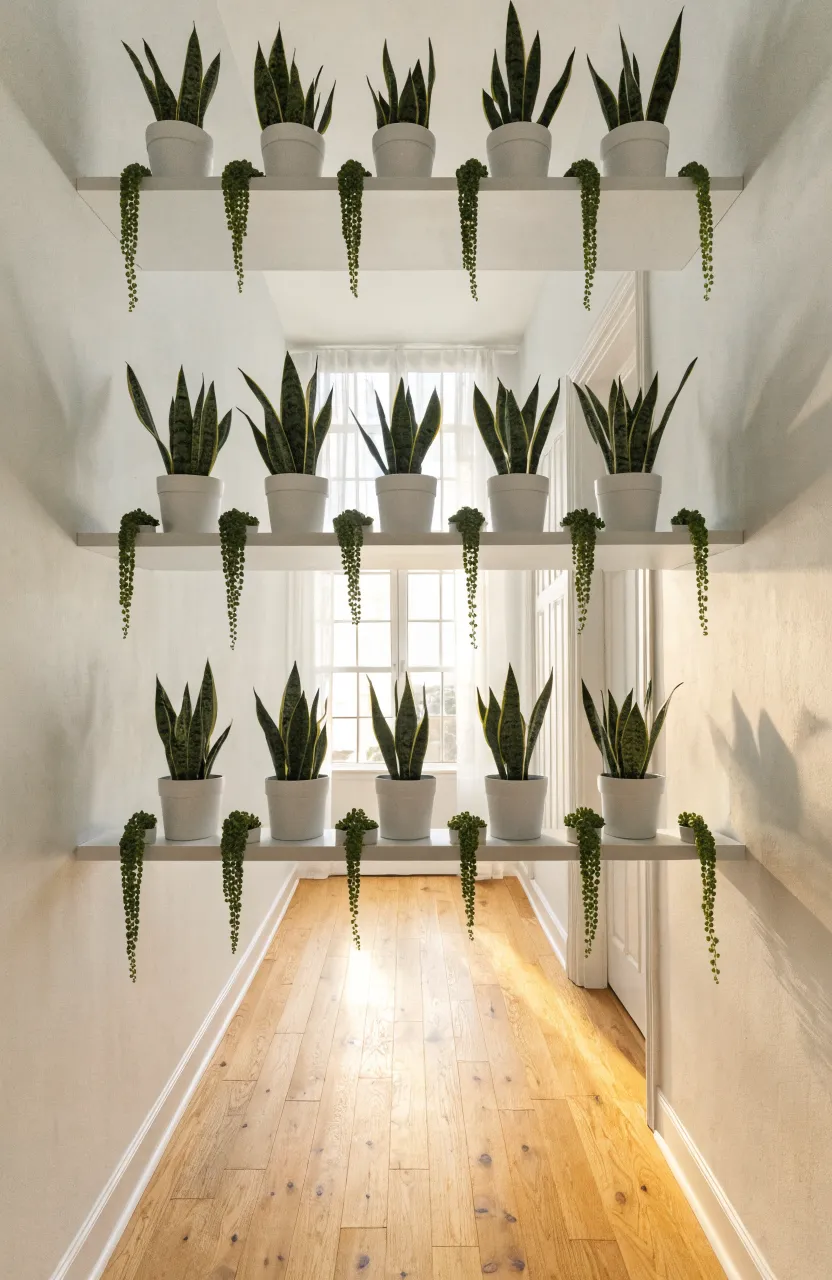
Picture ledges are thin and unobtrusive, making them ideal for narrow hallways. Instead of art, line them with a row of small, identical pots. This creates a clean, linear look that feels organized and modern.
Use a mix of upright plants and small trailers to add some variety to the line. Because the ledges are shallow, make sure your pots fit securely and aren’t at risk of tipping over. It is a simple way to use wall plants indoor living rooms without needing heavy-duty construction.
Circular Plywood Shelf Units for Round Leaf Varieties
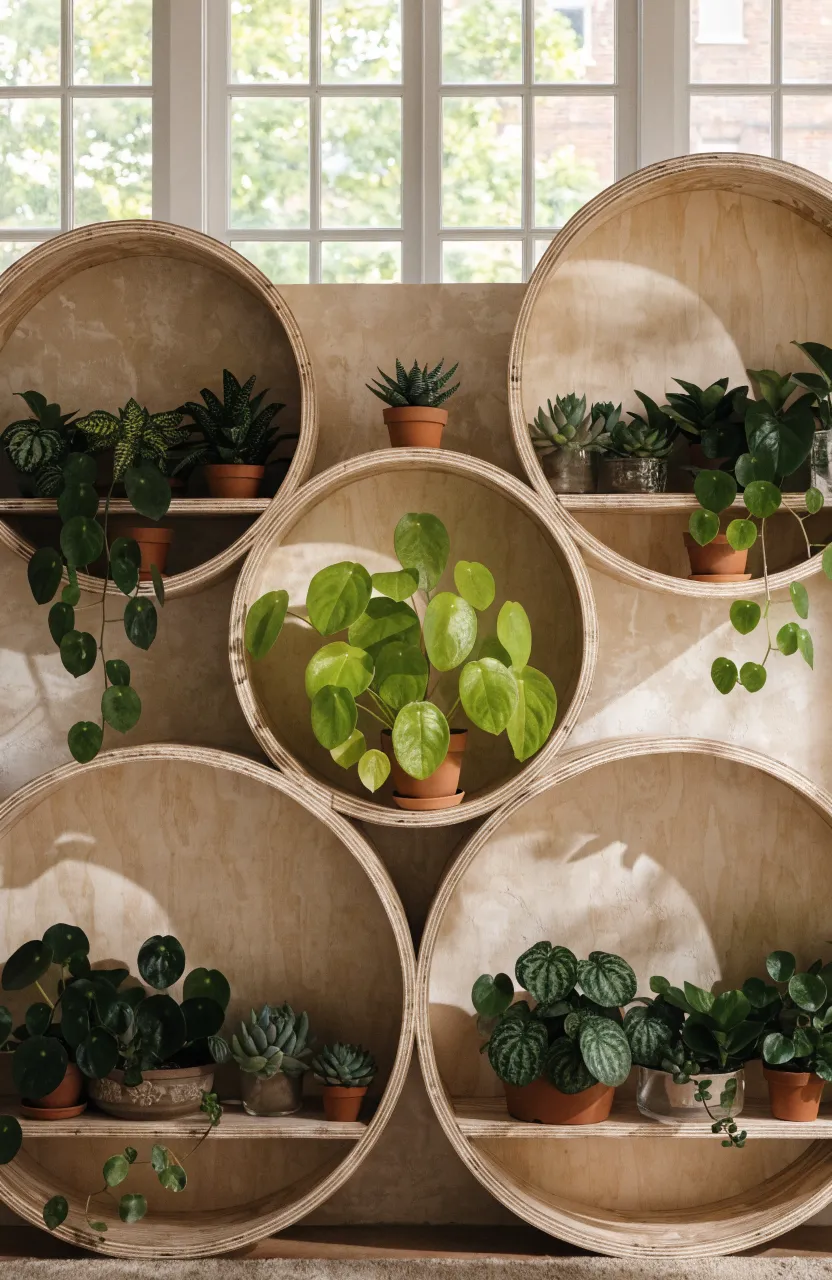
Circular shelves break up the straight lines often found in home architecture. These units usually have one or two flat surfaces inside a round frame. They look great when paired with plants that have rounded leaves, like the Pilea Peperomioides.
Grouping a few of these circles in different sizes creates a gallery wall effect. The wood grain adds warmth, while the circular shape draws the eye. It is a soft, organic way to display your favorite small plants.
Vintage Ladder Leaned Against the Wall with Potted Herbs
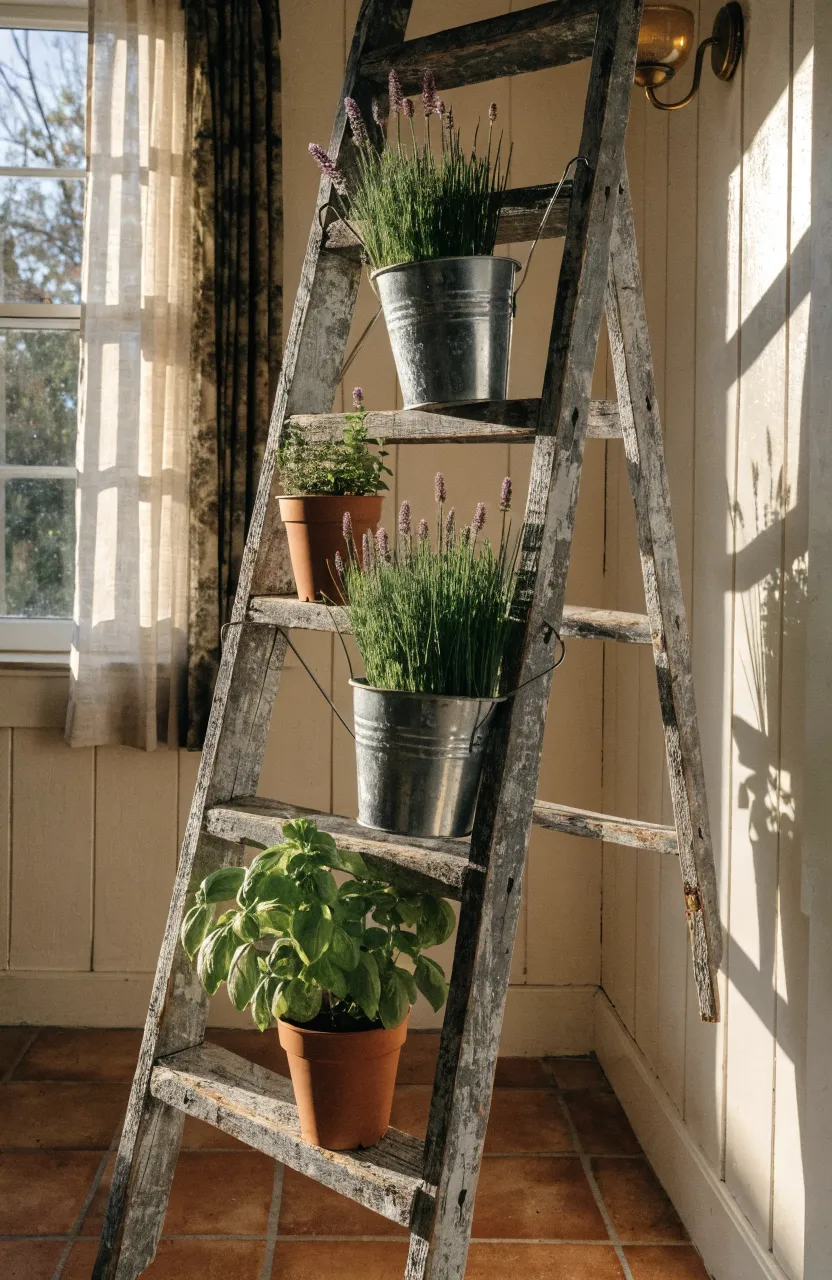
An old wooden ladder leaned against the wall provides multiple tiers for plants without the need for drilling many holes. You can place pots directly on the rungs or use S-hooks to hang small buckets. This is a great temporary solution for renters who want a plant wall.
Place the ladder in a sunny corner and fill it with herbs like basil, mint, and rosemary. The graduated steps ensure that the plants on the bottom still get some light. It adds a cozy, farmhouse vibe to any room.
Pegboard System with Adjustable Shelves and Tool Hooks
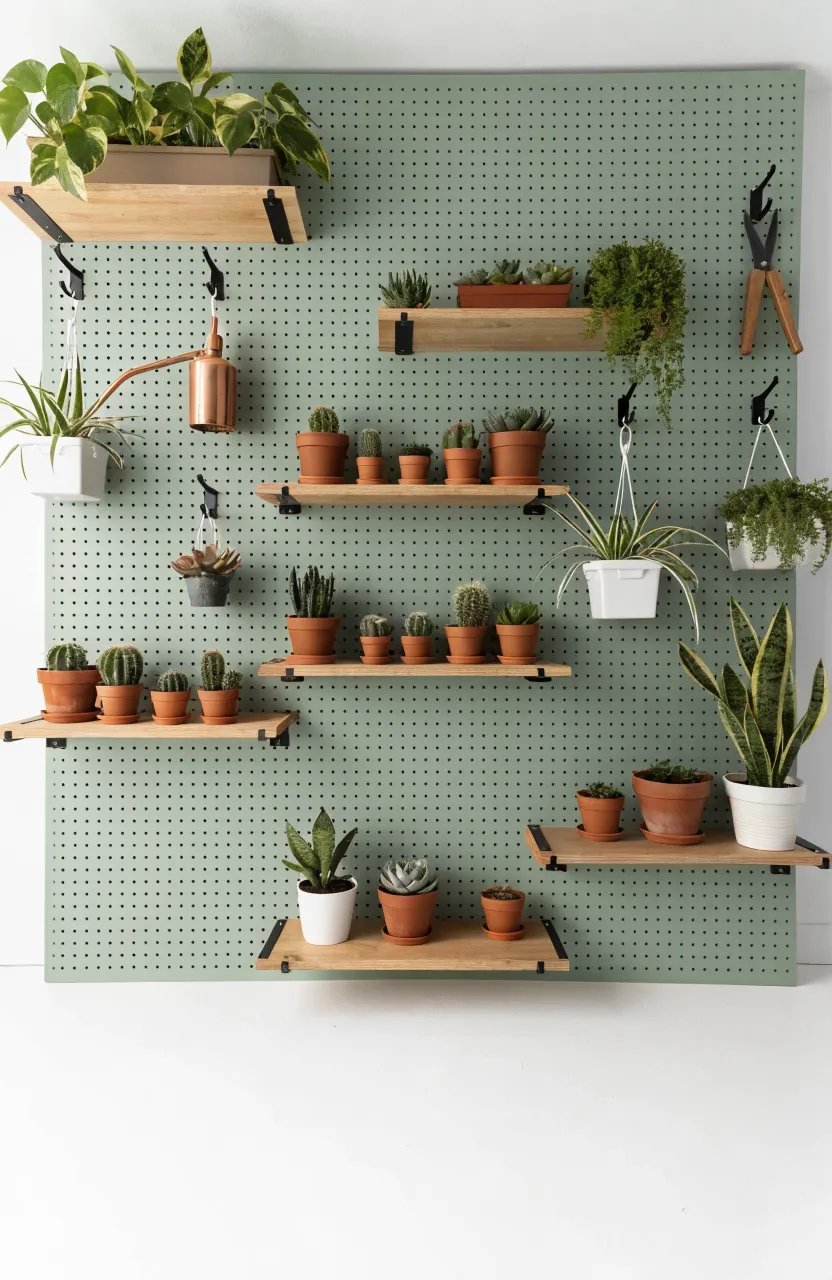
Pegboards aren’t just for garages; they are incredibly versatile for plant room ideas. You can move shelves, hooks, and bins around whenever your plant collection grows or changes. This allows for a completely customizable layout.
Paint the pegboard to match your wall color for a seamless look, or use a bold color to make it stand out. You can hang small gardening tools alongside your plants so everything you need for maintenance is in one place. It is a practical and stylish way to organize a vertical garden.
Floor to Ceiling Tension Pole with Swivel Plant Trays
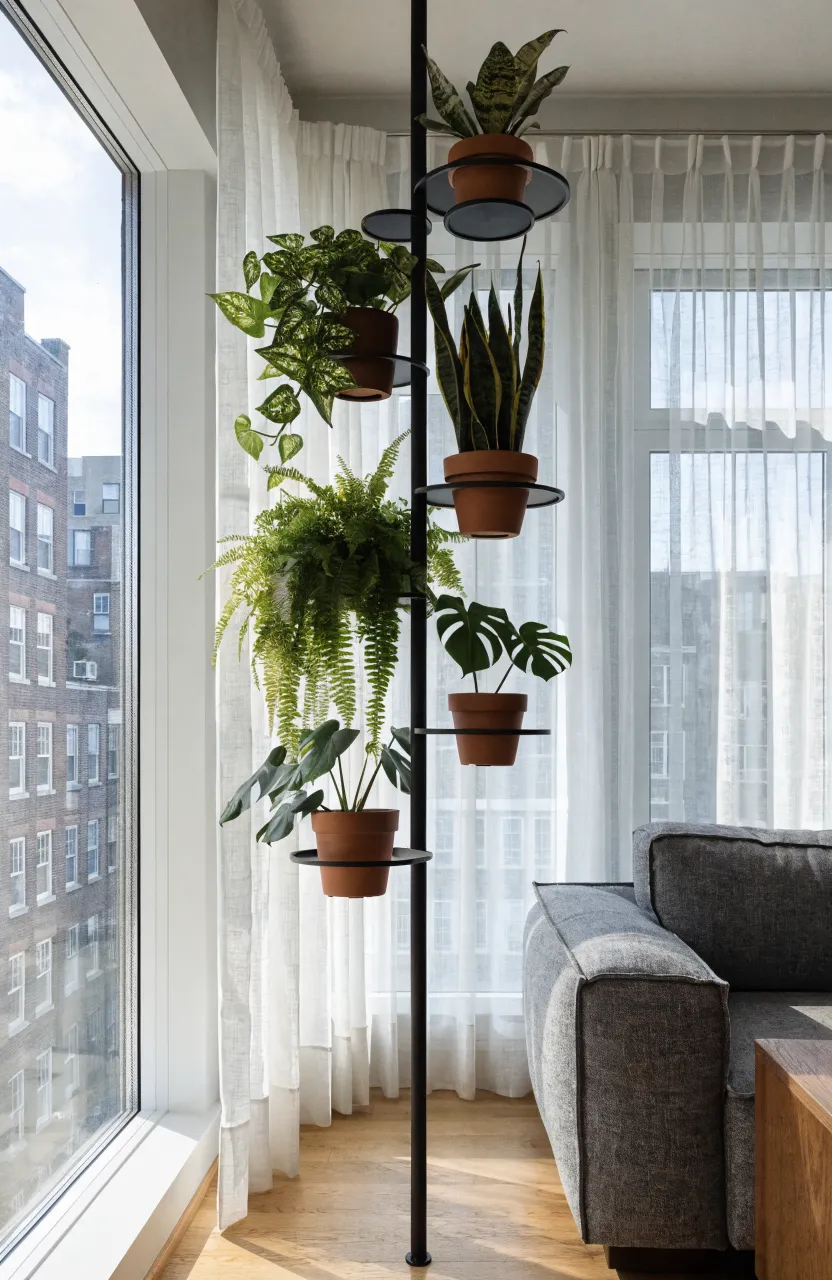
A tension pole is a smart way to create a vertical garden in a corner. The pole wedges between the floor and ceiling, and adjustable trays swivel out to hold pots. This uses very little horizontal space while holding several plants.
You can rotate the trays to ensure every plant gets its share of sunlight from the nearest window. This is especially helpful for larger plants that might be too heavy for standard wall shelves. It creates a pillar of green that can act as a natural room divider.
Glass Propagation Stations Mounted on a Backlit Board
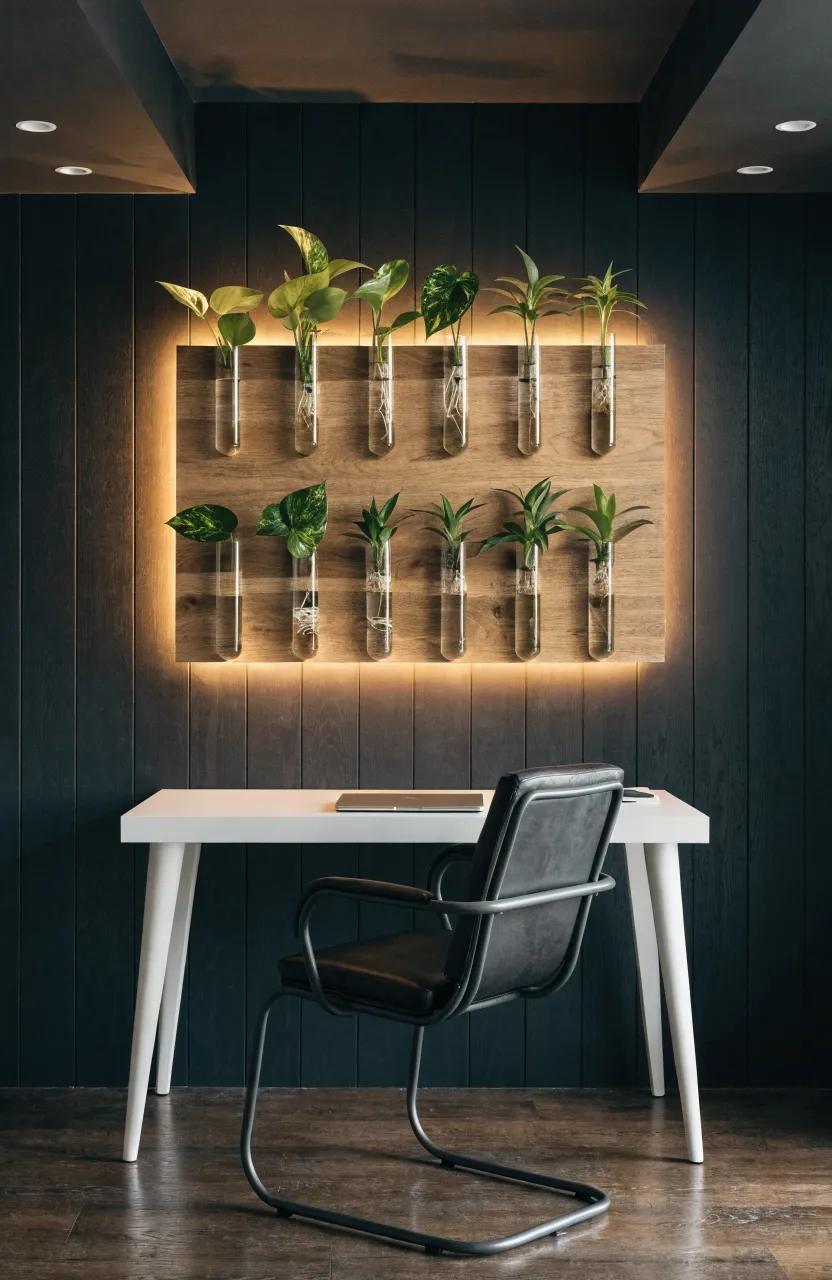
Propagation is the process of growing new plants from cuttings, and it can be a beautiful wall display. Mount small glass vials or test tubes onto a wooden board. If you add LED strip lights behind the board, the water and roots will glow.
This setup allows you to watch the roots grow in real-time, which is fascinating to see. Once the cuttings are ready, you can pot them or leave them in the water for a long-term display. It is a great way to turn a hobby into a piece of living decor.
Staggered Black Metal Brackets for a Modern Plant Accent Wall
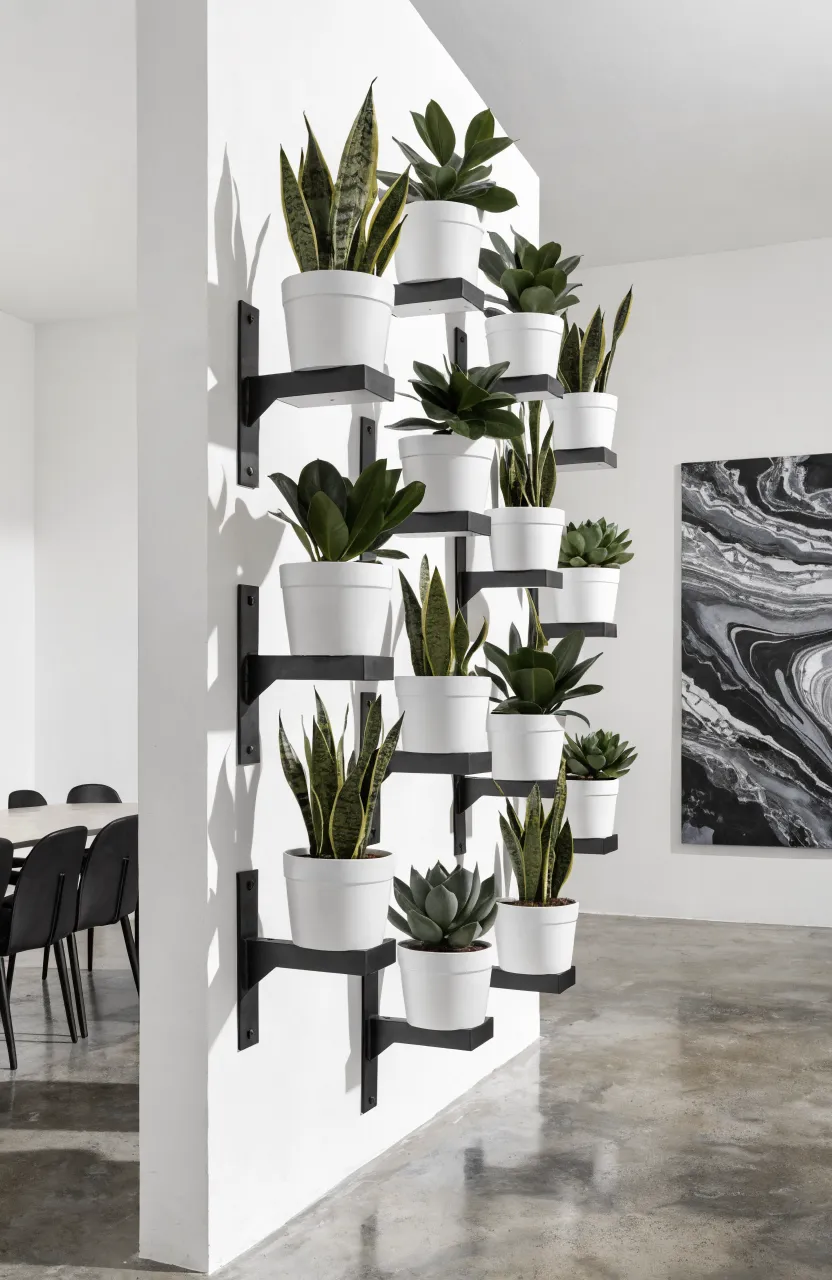
Using simple L-shaped brackets in a staggered pattern creates a sharp, modern look. You can place a single pot on each bracket without using a long shelf. This makes the plants look like they are stepping up the wall.
Black metal contrasts well with white walls and green leaves. This arrangement allows for plenty of air circulation around each plant. It is a clean way to fill a large blank wall without it feeling heavy or overcrowded.
Shadow Box Frames Filled with Preserved Greenery
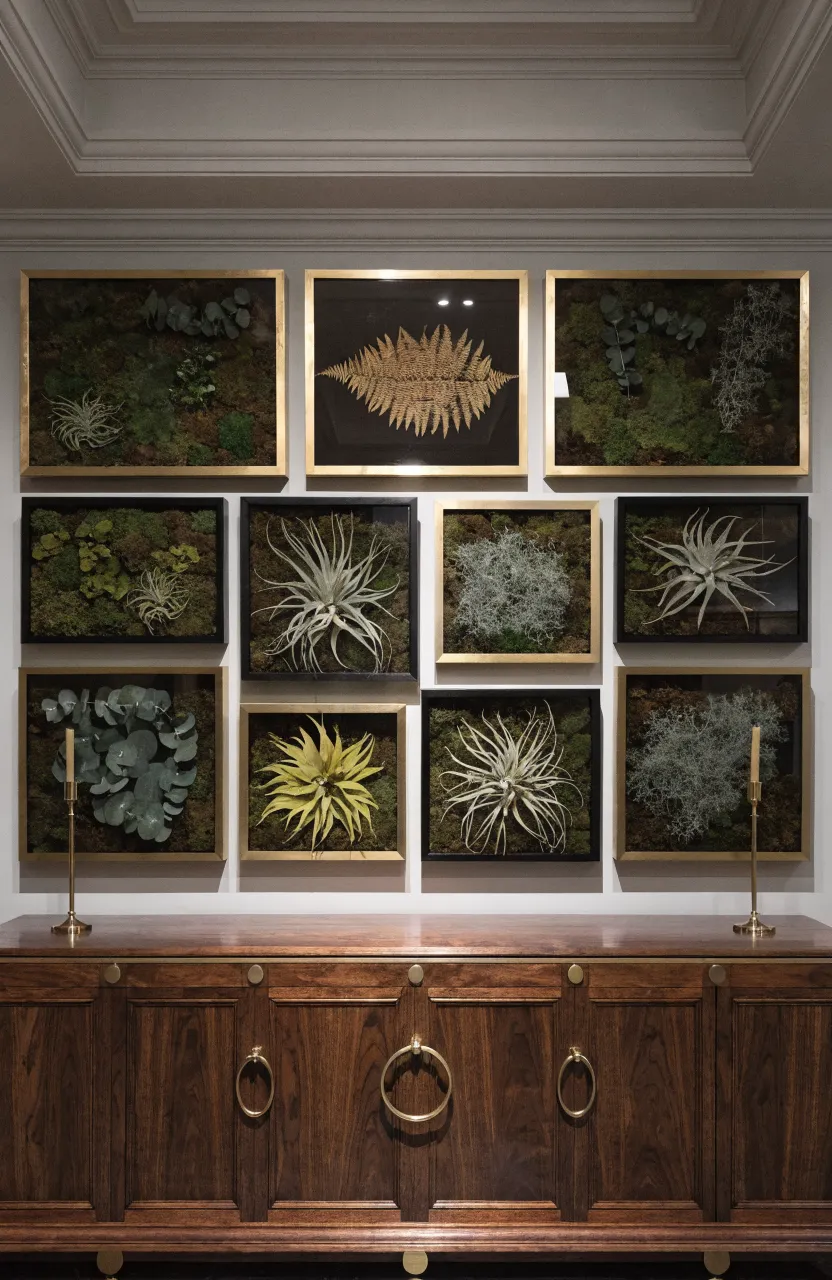
Shadow boxes give your plants a three-dimensional frame. You can use preserved ferns, eucalyptus, or air plants inside the glass boxes. This protects the plants from dust and creates a very polished, museum-like display.
You can mix and match different frame sizes and depths to add dimension. Since the plants are contained, you don’t have to worry about soil spilling or water dripping on your walls. It is an upscale way to incorporate greenery into a formal dining room or office.
Corner Zig Zag Shelving for Small Indoor Spaces
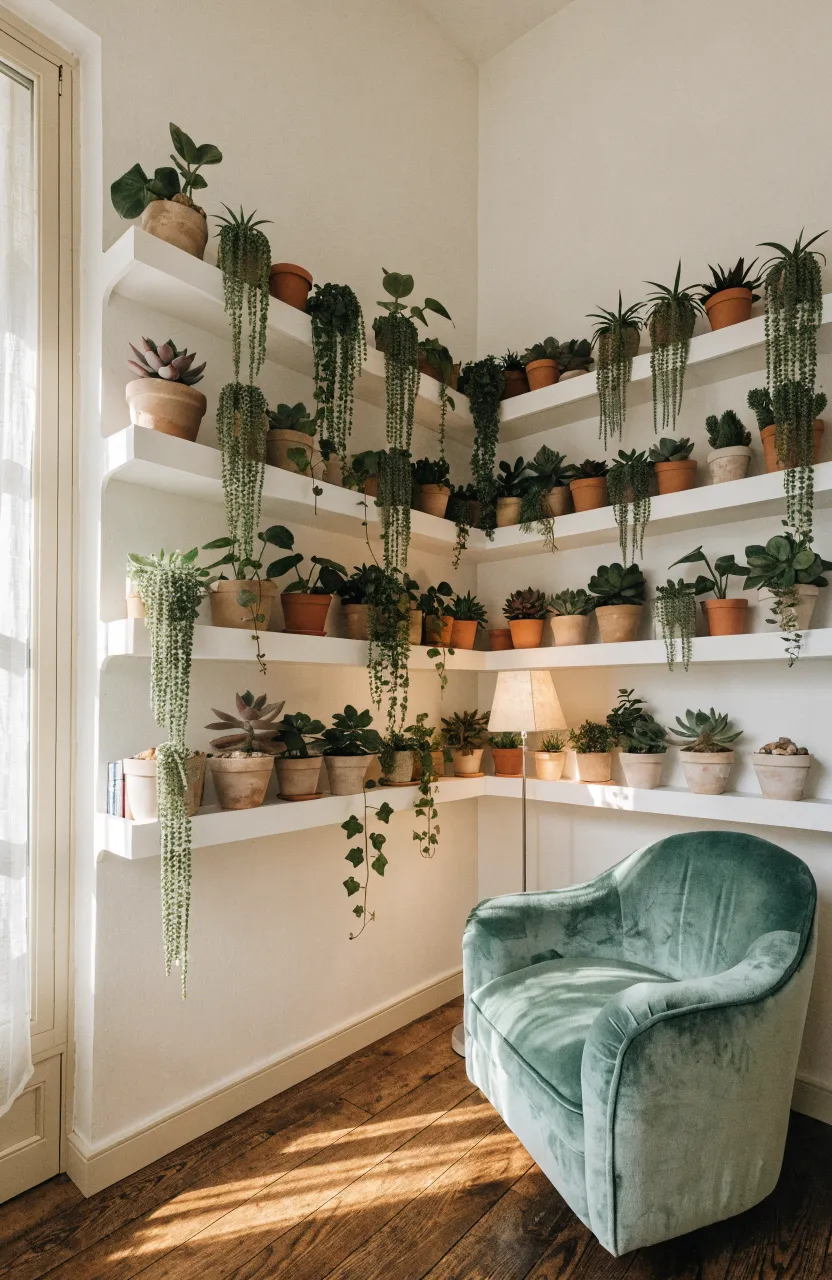
Corners are often wasted space, but zig-zag shelves turn them into a lush vertical garden. These shelves wrap around the corner, providing a continuous surface for small pots. It is a great way to maximize a small room’s footprint.
Fill the shelves with a variety of textures, like spiky succulents and soft mosses. Because the shelves are tucked away, they don’t interfere with foot traffic. It makes the corner feel cozy and intentional rather than empty.
Woven Seagrass Baskets Mounted Directly to the Wall
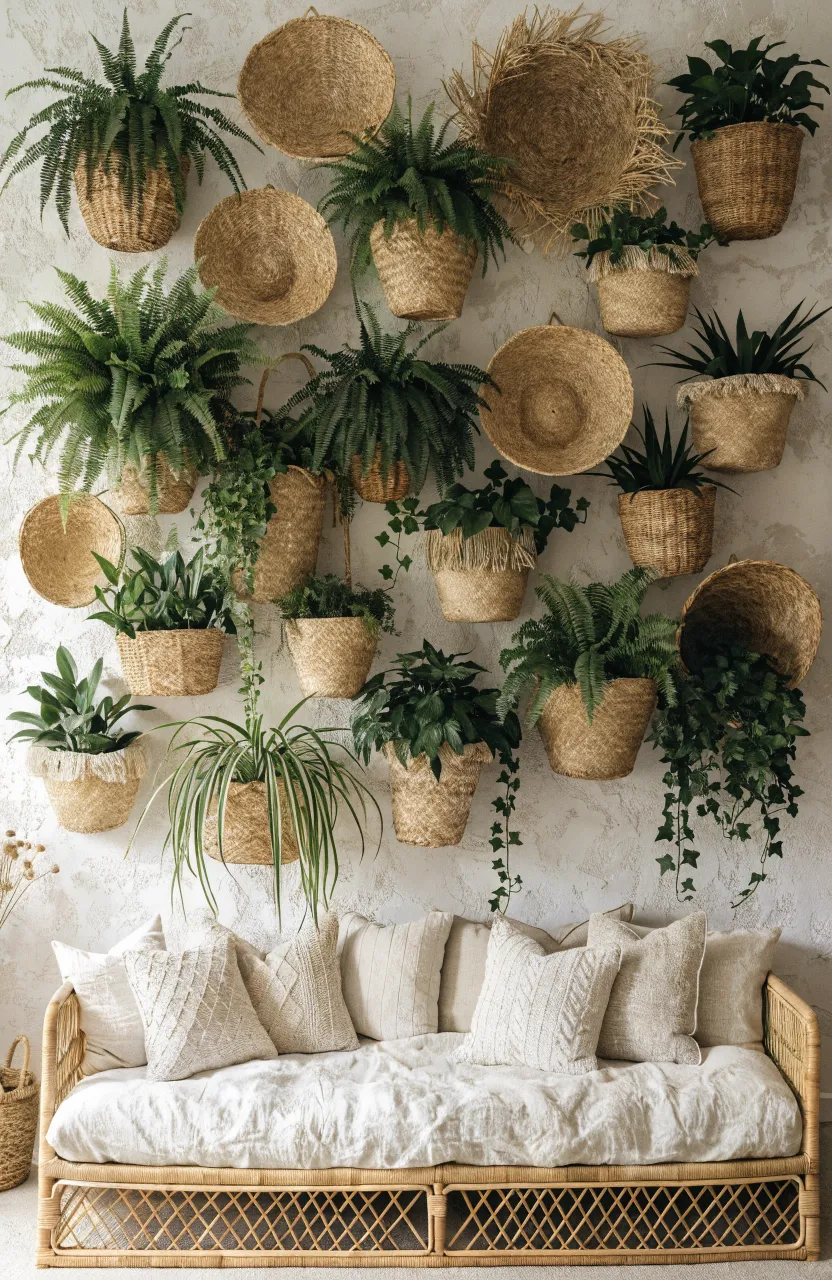
For a bohemian or coastal look, try mounting woven baskets to the wall. You can place plastic liners inside the baskets to hold potted plants. The natural texture of the seagrass pairs beautifully with the organic shapes of the leaves.
Use baskets of different depths to create a layered effect. This works well with bushy plants like Boston Ferns or Spider Plants that can hide the rim of the basket. It adds warmth and a handcrafted feel to your indoor plants wall decor.
Cork Board Panels with Pinned Air Plants and Ferns
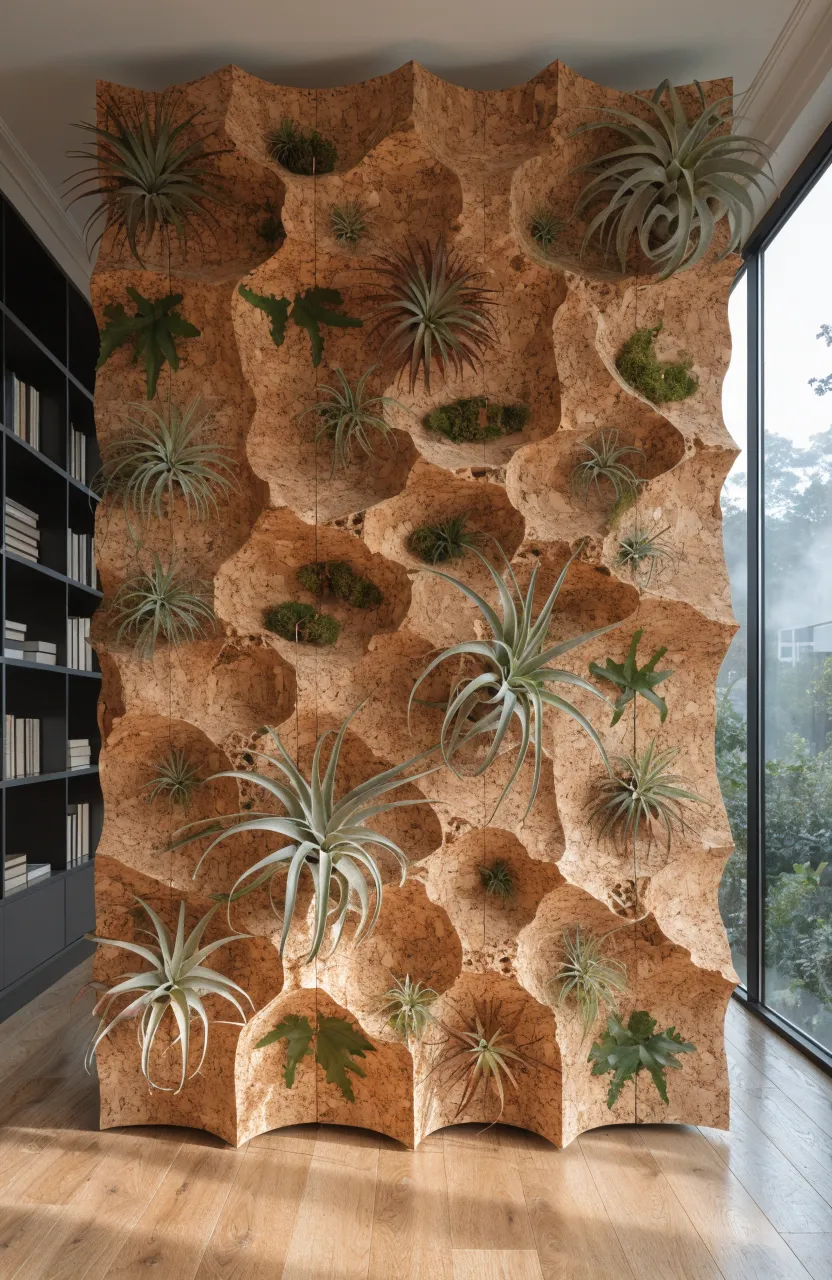
Cork is a natural material that provides a great backdrop for air plants. You can use small pins or wire to gently attach Tillandsia directly to the cork. The bark-like texture of the cork mimics the natural environment where these plants grow in the wild.
You can cover an entire section of the wall with cork tiles to create a dedicated plant zone. It also acts as a natural sound insulator for the room. To keep the plants healthy, mist them directly on the wall or take them down for a weekly soak.
Acrylic Clear Shelves for an Invisible Floating Effect
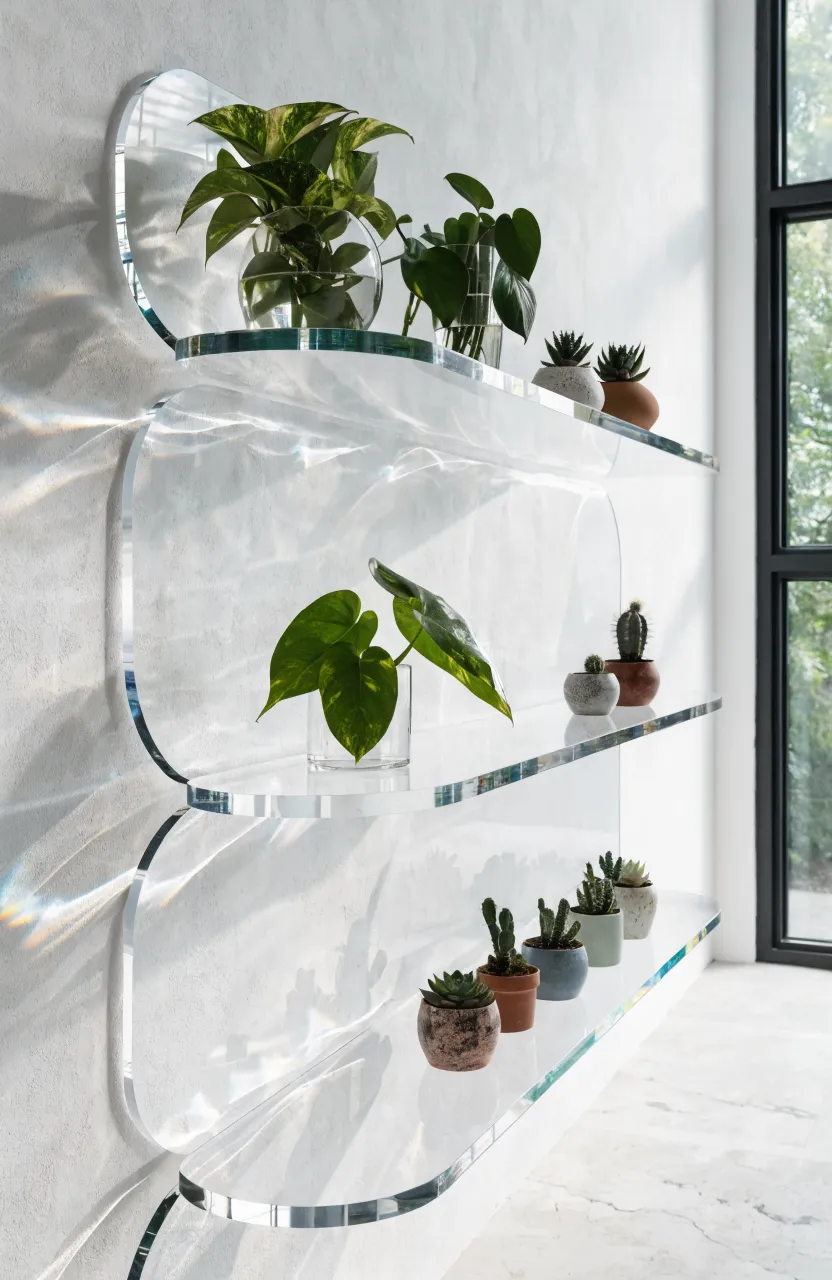
Clear acrylic shelves are almost invisible, which makes your plants look like they are floating in mid-air. This is a perfect choice if you want the greenery to be the main focus without any visual distraction from the shelving. It also allows light to pass through, which is better for the plants below.
These shelves are easy to clean and modern in appearance. They work particularly well in front of windows where you don’t want to block the view. Small colorful pots look especially striking on these transparent surfaces.
Driftwood Branch Hung with S-Hooks and Small Planters

A large piece of driftwood can serve as a natural hanging bar. Secure the branch to the wall or hang it from the ceiling with sturdy rope. Use S-hooks to dangle small pots at different heights along the length of the wood.
This creates a very organic, earthy look that fits well with rustic or boho styles. Each piece of driftwood is unique, giving you a one-of-a-kind plant wall design. It is a great way to display a collection of small trailing plants like String of Pearls.
Old Window Frame with Chicken Wire for Hanging Pots
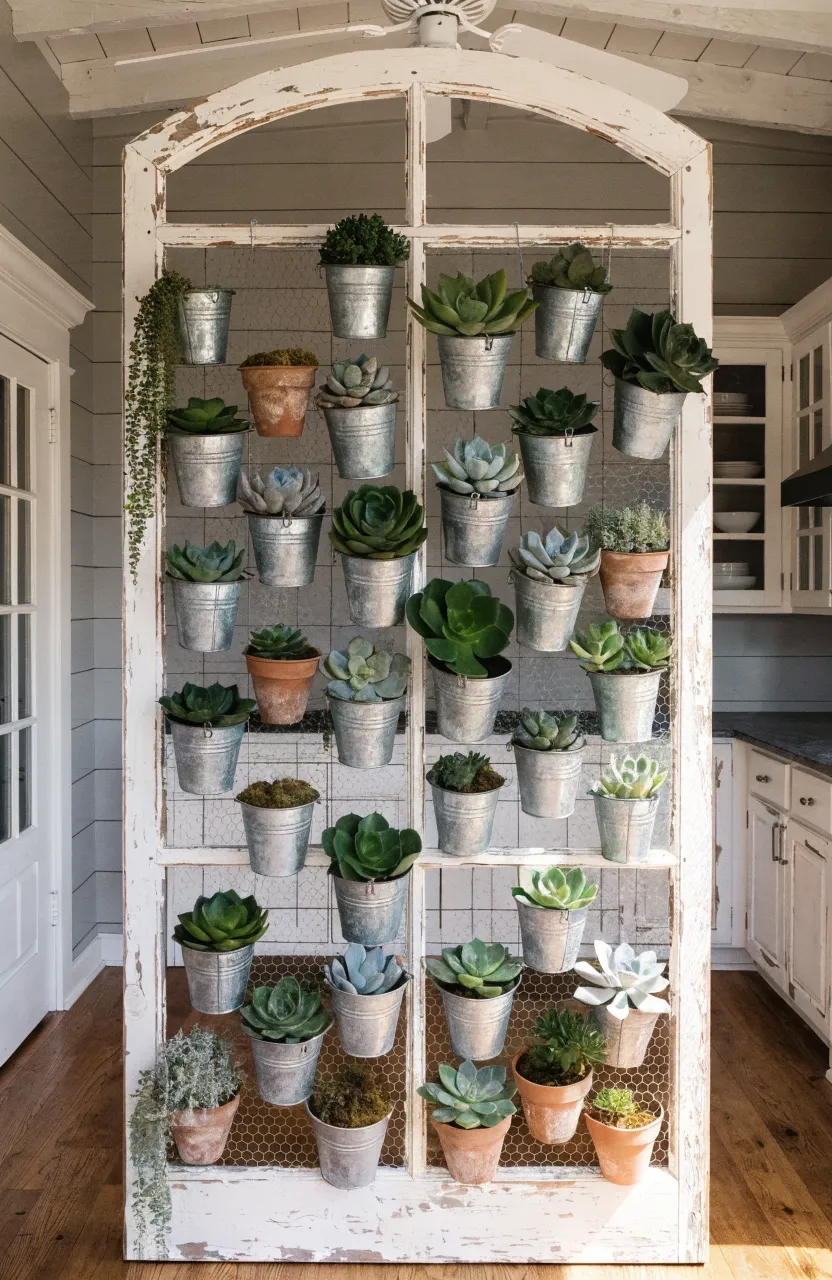
An old window frame can be repurposed by removing the glass and adding chicken wire to the back. You can then use small hooks to hang lightweight pots from the wire mesh. It is a creative way to recycle old materials into a vertical garden.
You can paint the frame a bright color to make it pop or leave it distressed for a vintage look. This setup is perfect for small succulents or air plants. It adds a bit of architectural interest to your wall while providing a sturdy grid for your plants.
Recessed Wall Niches with Built in LED Grow Lights
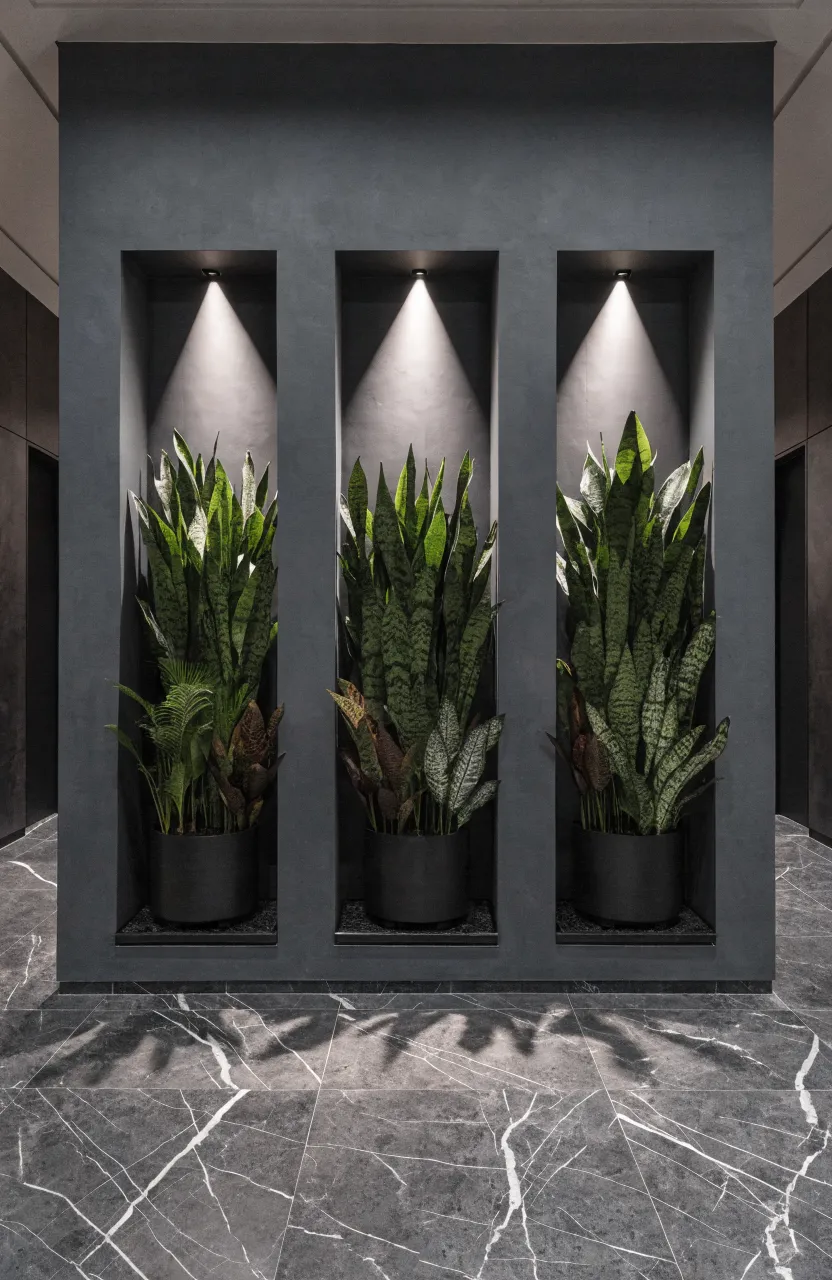
If you are renovating, consider building recessed niches directly into your walls. Adding small LED grow lights to the top of each niche ensures your plants get the light they need, even in a dark room. This creates a very clean, high-end look.
The niches act like individual stages for your plants. Because the pots are tucked into the wall, they don’t take up any physical space in the room. This is a permanent but very effective way to integrate nature into your home’s architecture.
Vertical Cedar Plank Siding with Attached Metal Rings
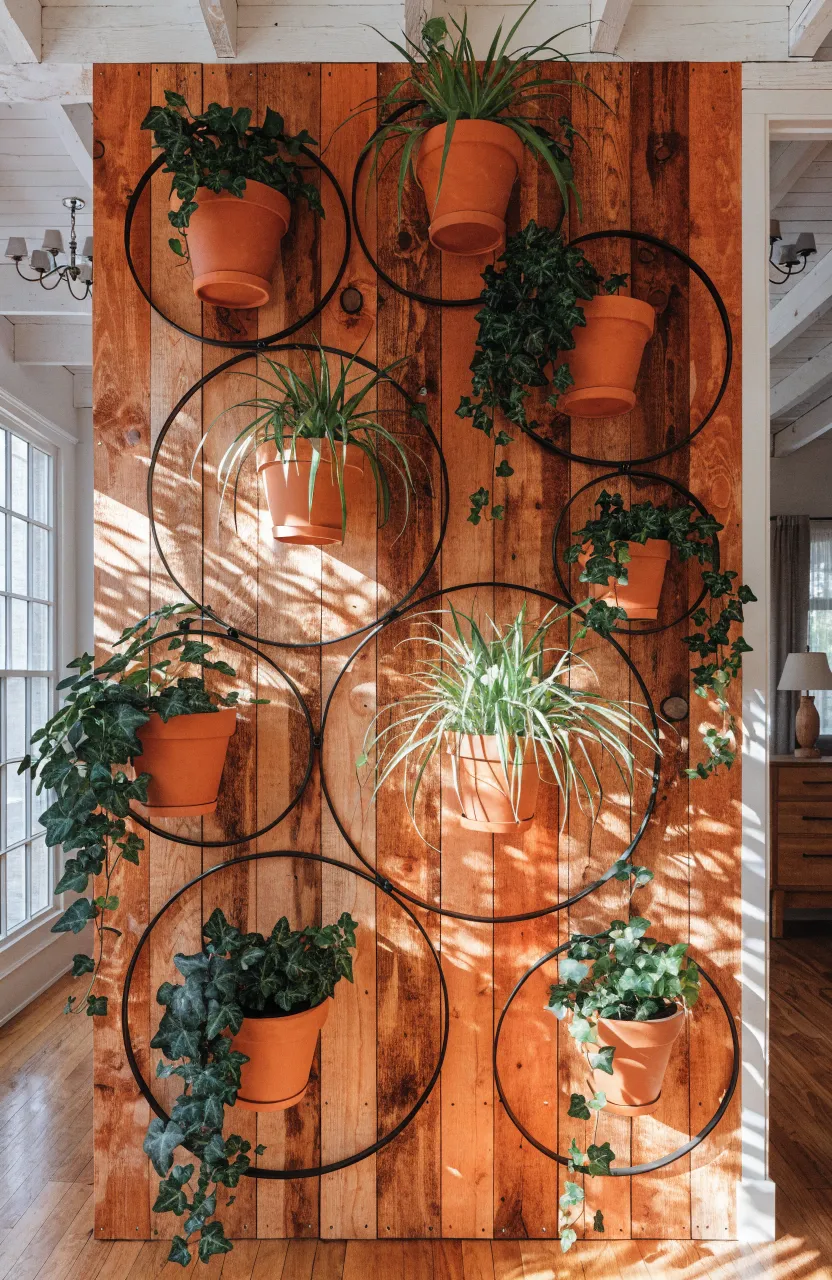
Cedar is naturally water-resistant and smells great, making it a good choice for a DIY living wall indoor. You can mount cedar planks vertically and attach metal pot rings to them. These rings hold standard terracotta pots securely by the rim.
This setup allows you to easily remove the pots for watering or repotting. The warm tones of the cedar wood look beautiful against the orange of the terracotta. It is a classic, sturdy design that can handle larger, heavier plants.
Concrete Pot Clusters Mounted on a Textured Stone Wall
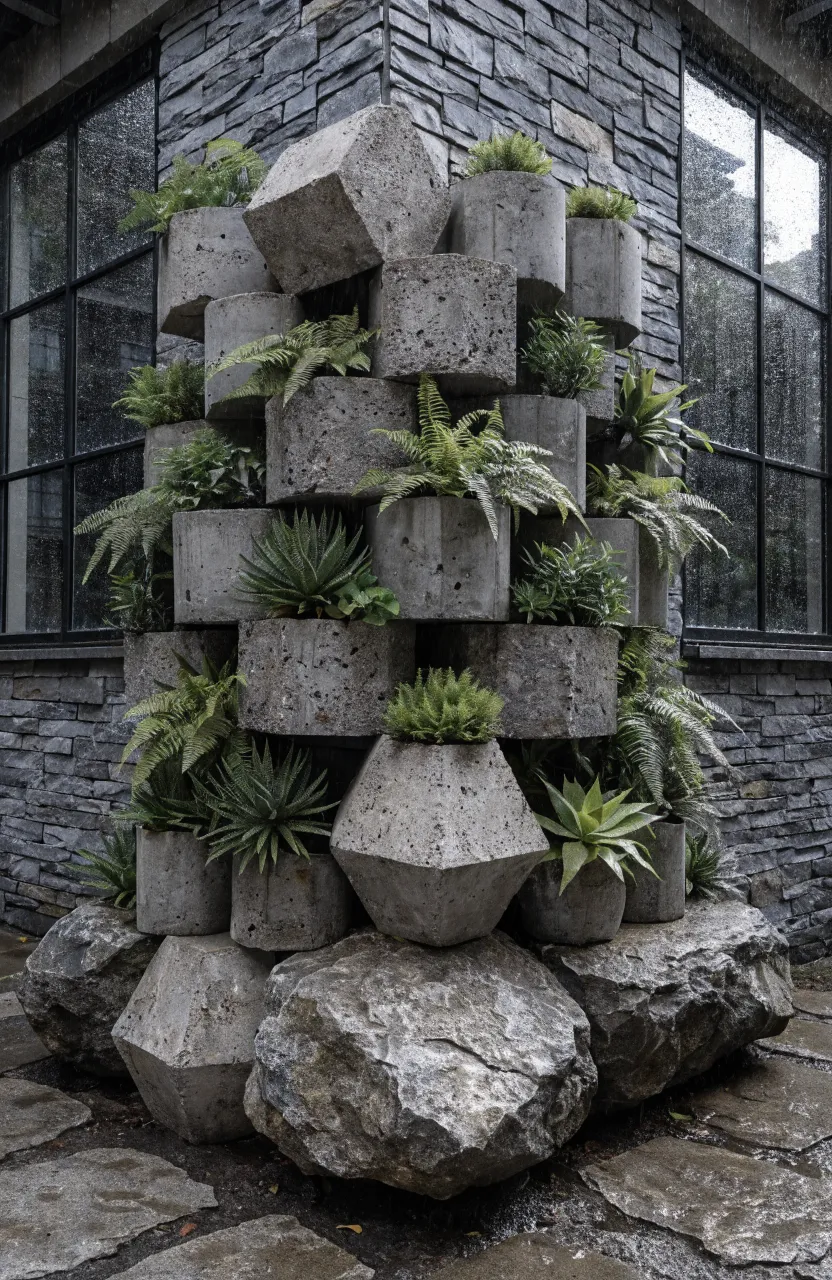
Concrete pots offer a minimalist, industrial feel. Mounting them in clusters on a stone or brick wall creates a rugged and durable display. The grey of the concrete makes the green of the plants look even more vibrant.
Use a strong adhesive or specialized masonry anchors to ensure the pots stay put. This look is very effective in modern lofts or entryways. It’s a great way to add life to a cold, hard surface.
Leather Strap Shelf Slings for a Soft Natural Texture
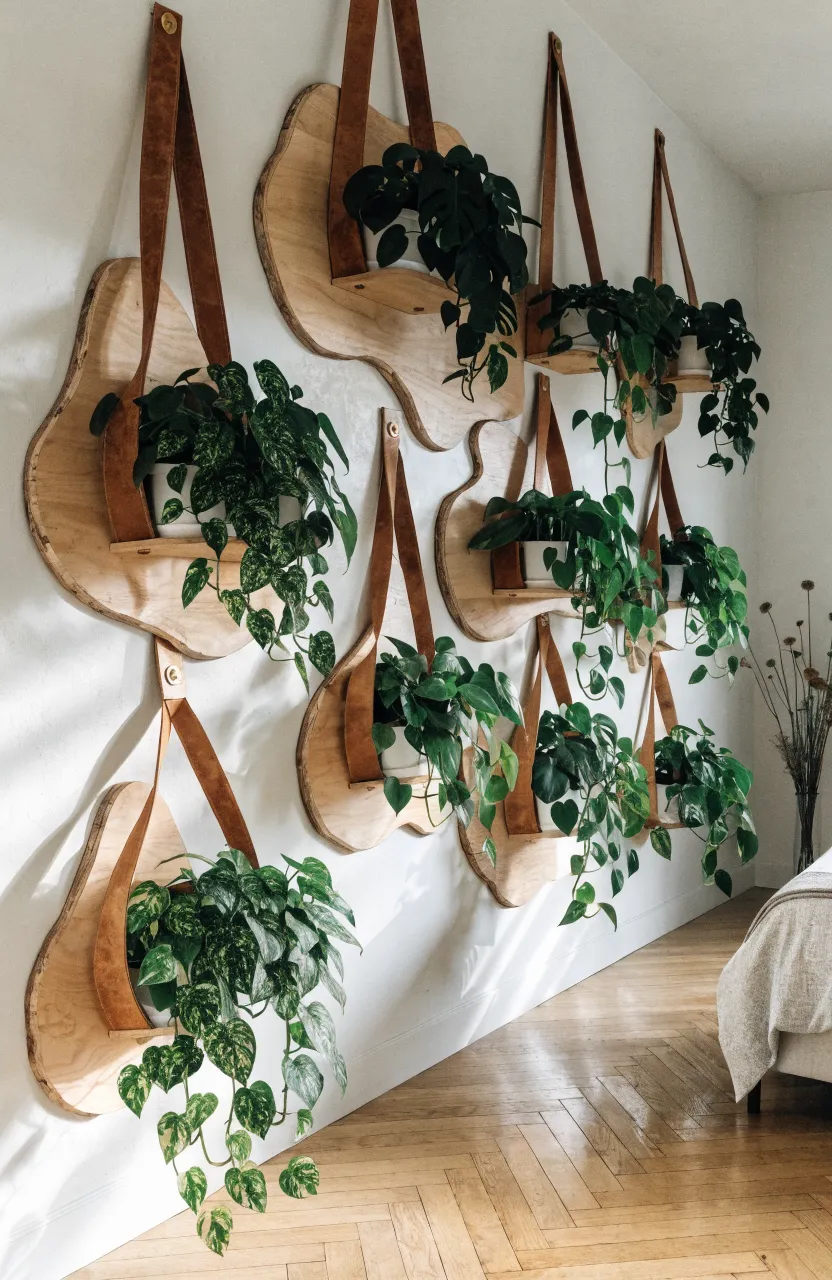
Instead of metal brackets, use loops of leather to hold up wooden boards. This adds a soft, high-quality texture to your plant wall. The leather will age over time, developing a unique character that complements the plants.
This style works best with light-colored woods like pine or birch. The combination of leather, wood, and leaves creates a very warm and inviting atmosphere. It is a simple DIY project that looks much more expensive than it is.
Wall Mounted Terrariums with Desert Sand and Succulents
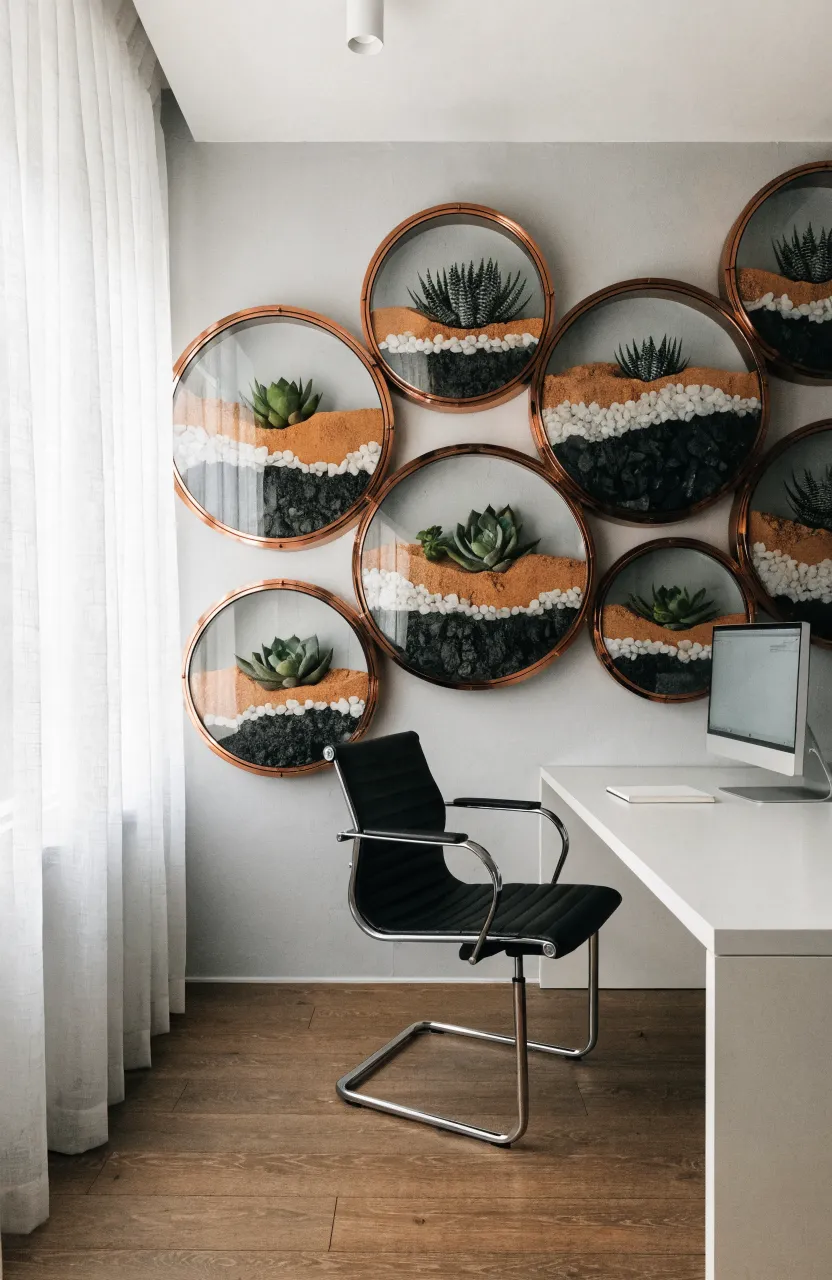
Glass globes or flat-backed terrariums can be mounted directly to the wall to create a succulent wall. Fill them with layers of colored sand, pebbles, and small succulents. These little ecosystems are like living portholes on your wall.
Because they are enclosed, they hold a bit more moisture than open pots, so be careful not to overwater. They are perfect for small spaces like bathrooms or offices. The transparent glass lets you see the different layers of soil and stone, adding more visual interest.
Scaffolding Board Shelves for a Rustic Industrial Vibe
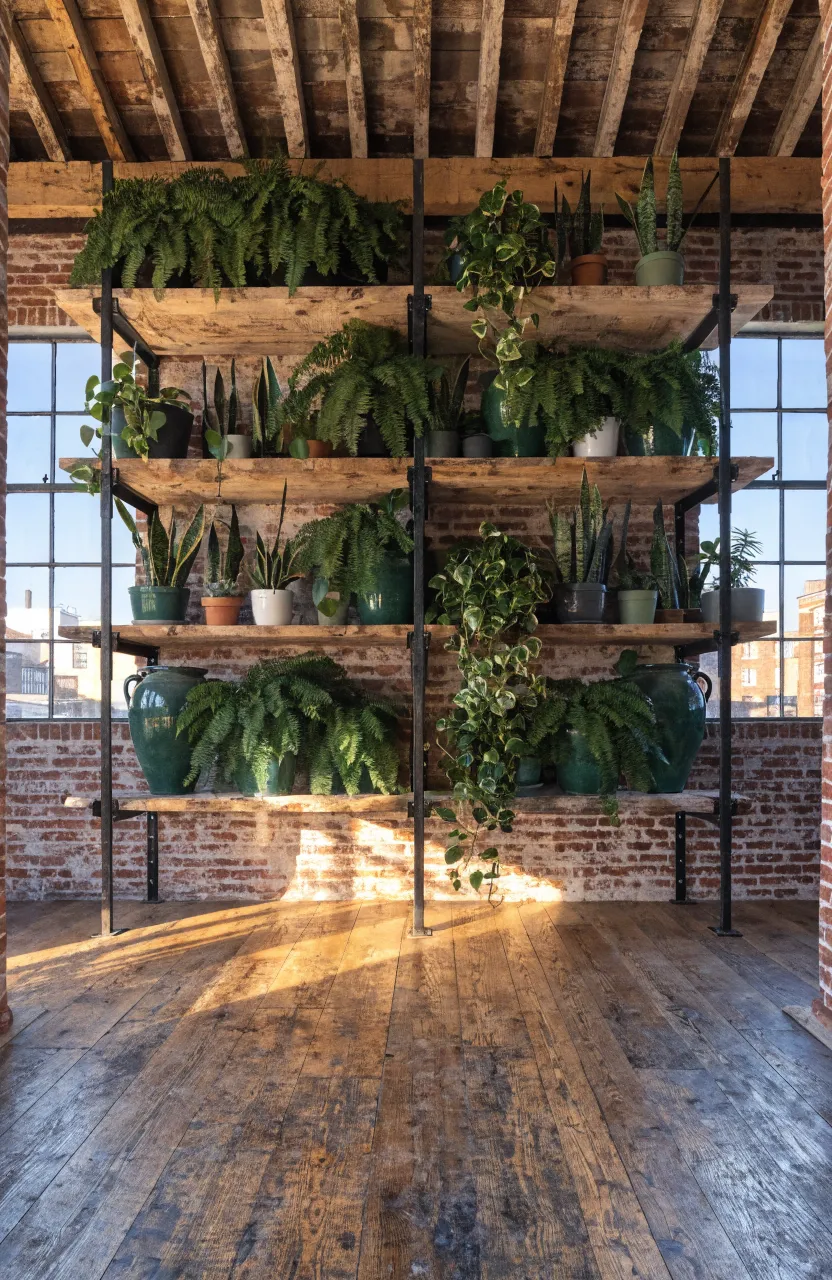
Thick scaffolding boards are wide and sturdy, allowing you to fit multiple rows of plants on a single shelf. You can use heavy-duty steel brackets to hold them up. This is a great way to create a massive wall of green on a budget.
The rough-hewn wood provides a nice contrast to delicate plants like Maidenhair Ferns. You can leave the wood raw or wax it to bring out the grain. This is one of the best plant wall shelf ideas for filling a large, empty wall in a living room.
Diamond Pattern Trellis for Training Indoor Creepers
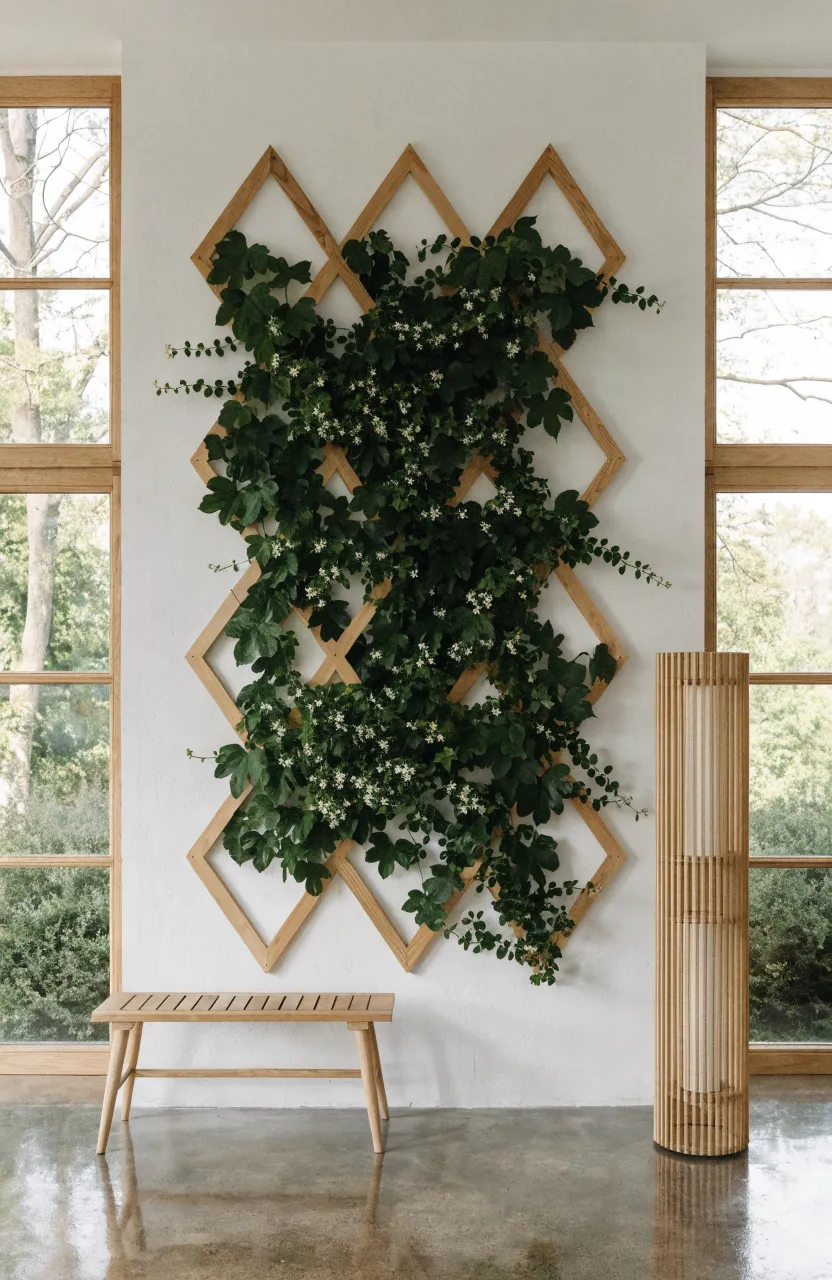
A simple wooden or plastic trellis can be mounted to the wall to guide climbing plants. As the plants grow, you can use small ties to train them into a specific shape, like a diamond or a chevron. This turns your wall into a living tapestry.
Plants like Jasmine or Creeping Fig are perfect for this because they grow quickly and have small leaves that cover the trellis well. It is a dynamic display that changes as the plant grows. It provides a full, green look without needing dozens of individual pots.
Painted Shiplap Backdrop with Contrasting White Planters
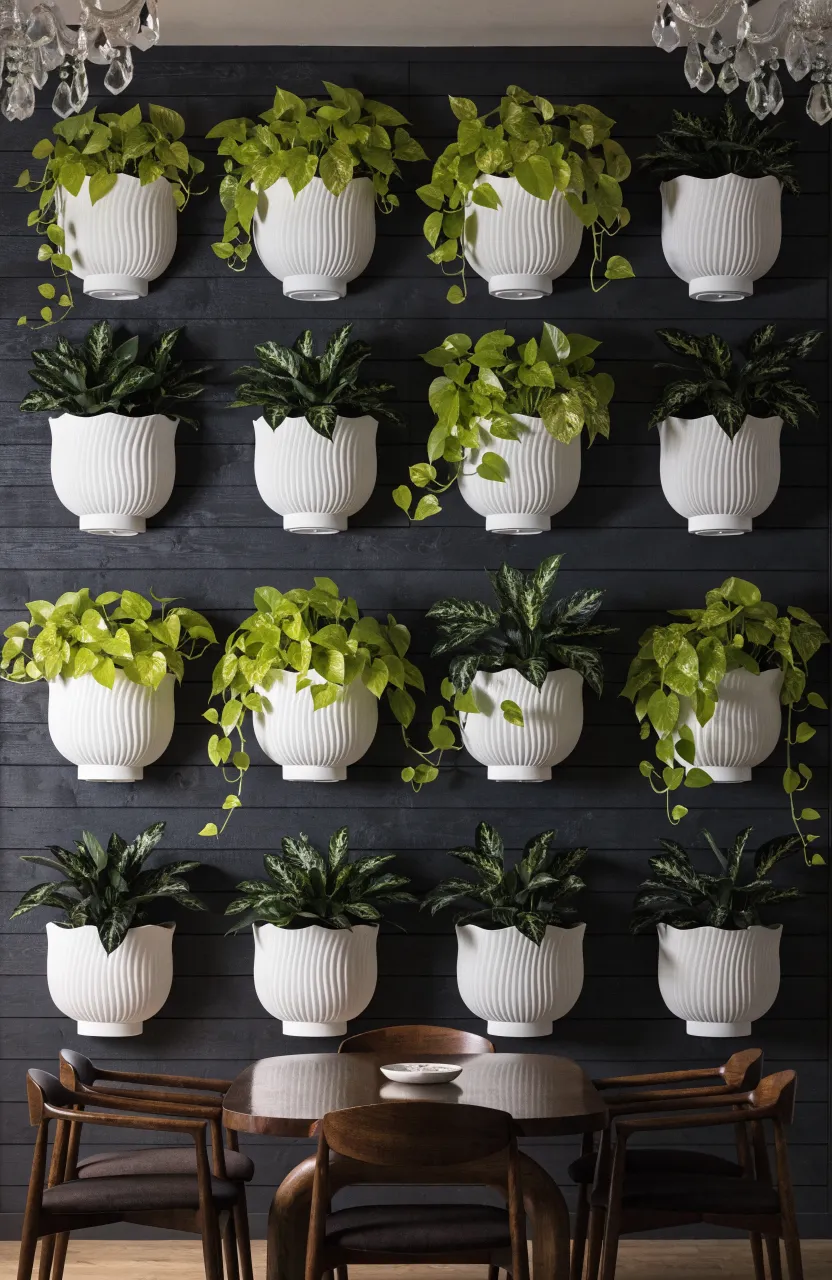
Shiplap adds a nice horizontal texture to a wall. If you paint the shiplap a dark color, like navy or charcoal, and use bright white planters, the plants will really stand out. This creates a very crisp and clean plant accent wall.
You can screw the planters directly into the wood slats. This is a very stable way to build a plant wall and allows for a lot of symmetry. The dark background makes the different shades of green in your leaves look deeper and more lush.
Modular Plastic Wall Tiles with Integrated Irrigation
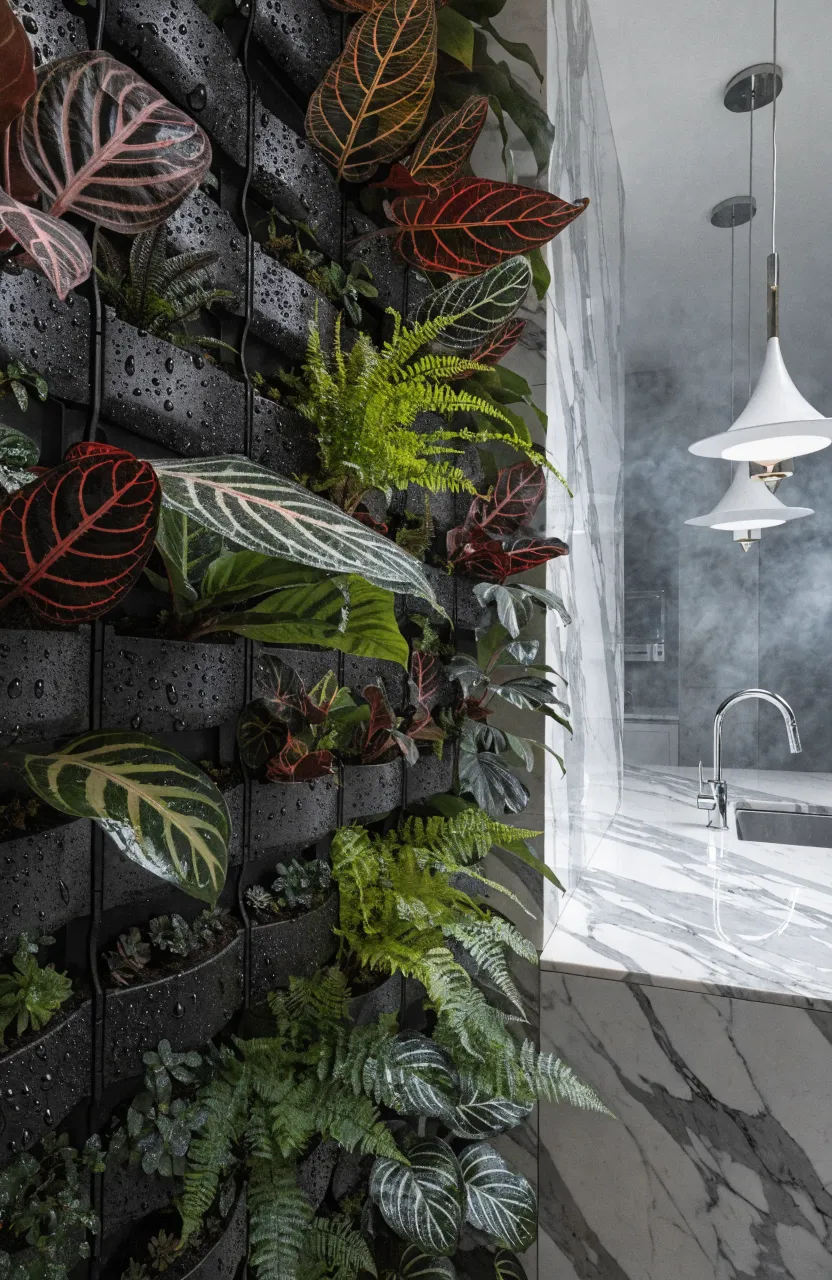
For a more serious vertical garden, modular plastic tiles are the way to go. These systems often come with built-in channels for water to flow from the top tile down to the bottom. This makes watering an entire wall much faster and more efficient.
You can snap the tiles together to fit any wall size. This is a great option for a DIY living wall indoor if you want to cover a large area and ensure the plants stay hydrated. It is a professional-grade solution that can be installed at home.
Repurposed Shutter Slats for Holding Small Potted Herbs
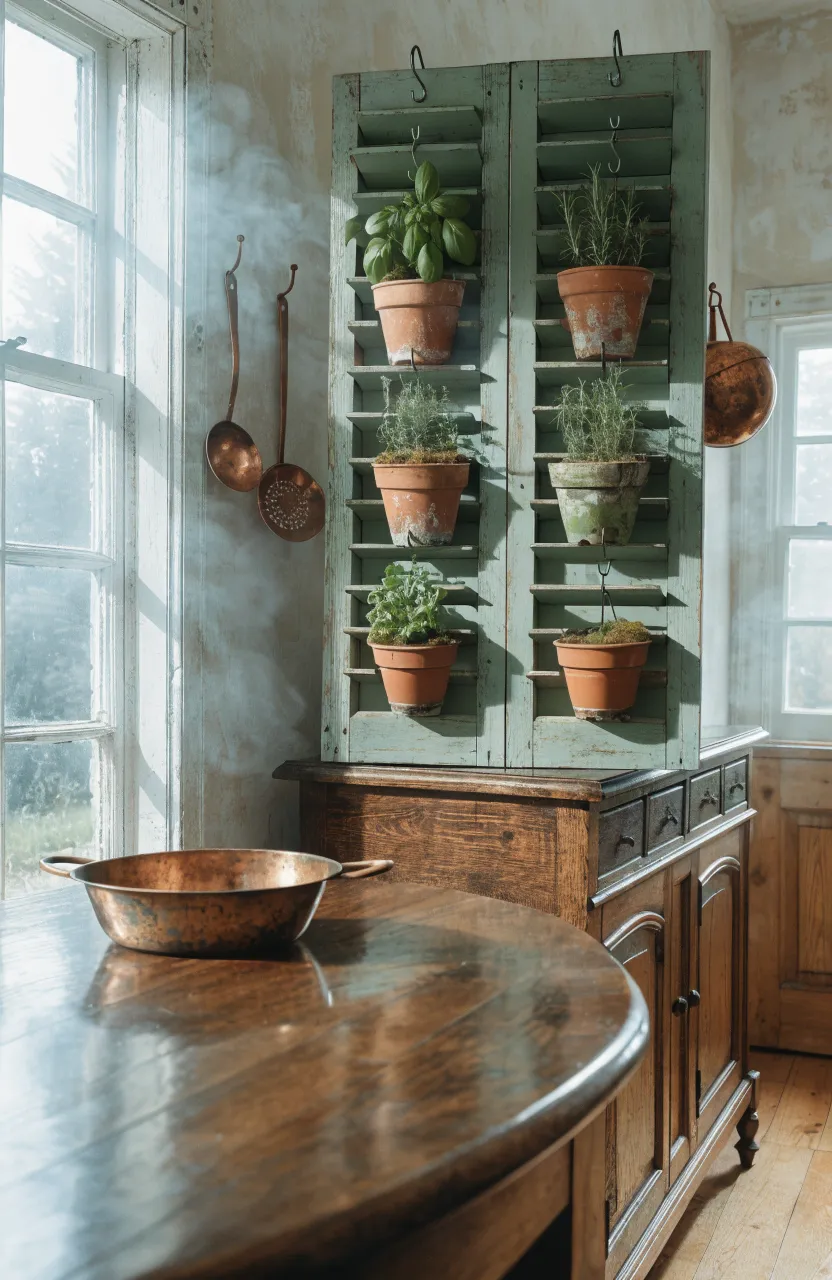
Old window shutters have slats that are perfectly angled for holding small S-hooks or thin pots. You can lean a tall shutter against the wall or mount it horizontally. It is a charming way to display a collection of small plants.
This works particularly well for a kitchen herb garden. The slats allow for plenty of airflow around the plants, which helps prevent mold. It’s a simple way to add a bit of architectural character to a plain room.
Tiered Bamboo Hanging Baskets for a Tropical Look
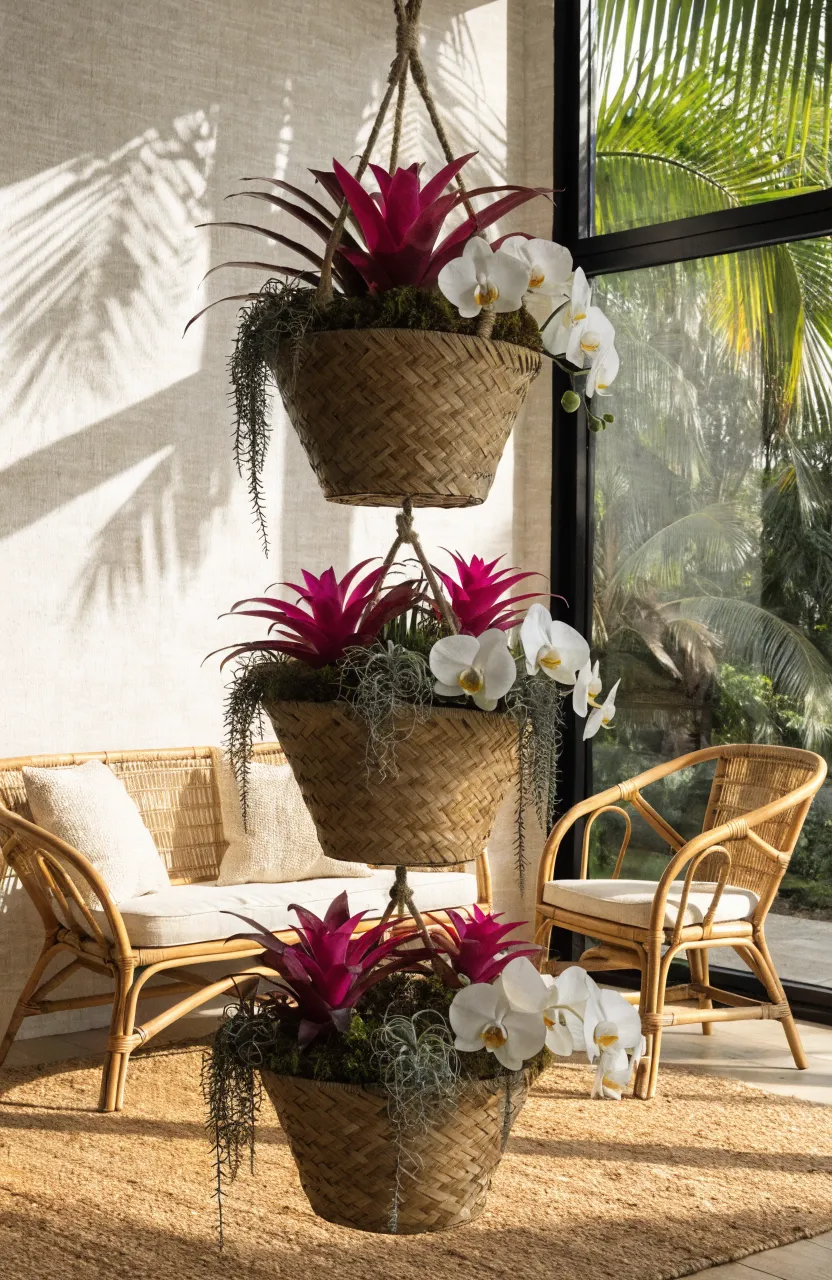
Bamboo baskets are lightweight and have a great tropical feel. You can find tiered versions that hang from a single hook, allowing you to stack three or four plants vertically. This is an easy way to add height to your plant wall design.
Fill the baskets with tropical plants like Bromeliads or Orchids. Bamboo is a sustainable material that handles moisture well, making it a good choice for plant decor. The hanging motion adds a bit of life and movement to your indoor garden.