
Walking into a room filled with greenery instantly changes your mood. It’s not just about the fresh air; it’s about how a splash of nature makes a space feel alive and lived-in. Whether you have a sun-drenched living room or a windowless basement, there is a way to bring plants onto your walls without taking up valuable floor space.
This list covers 36 practical ways to build a plant feature wall that fits your style and skill level. You will find everything from simple DIY plant wall indoor projects to professional-looking living wall ideas. These setups help turn bare walls into focal points that grow and change over time.
Recessed Wall Niche with Trailing Pothos
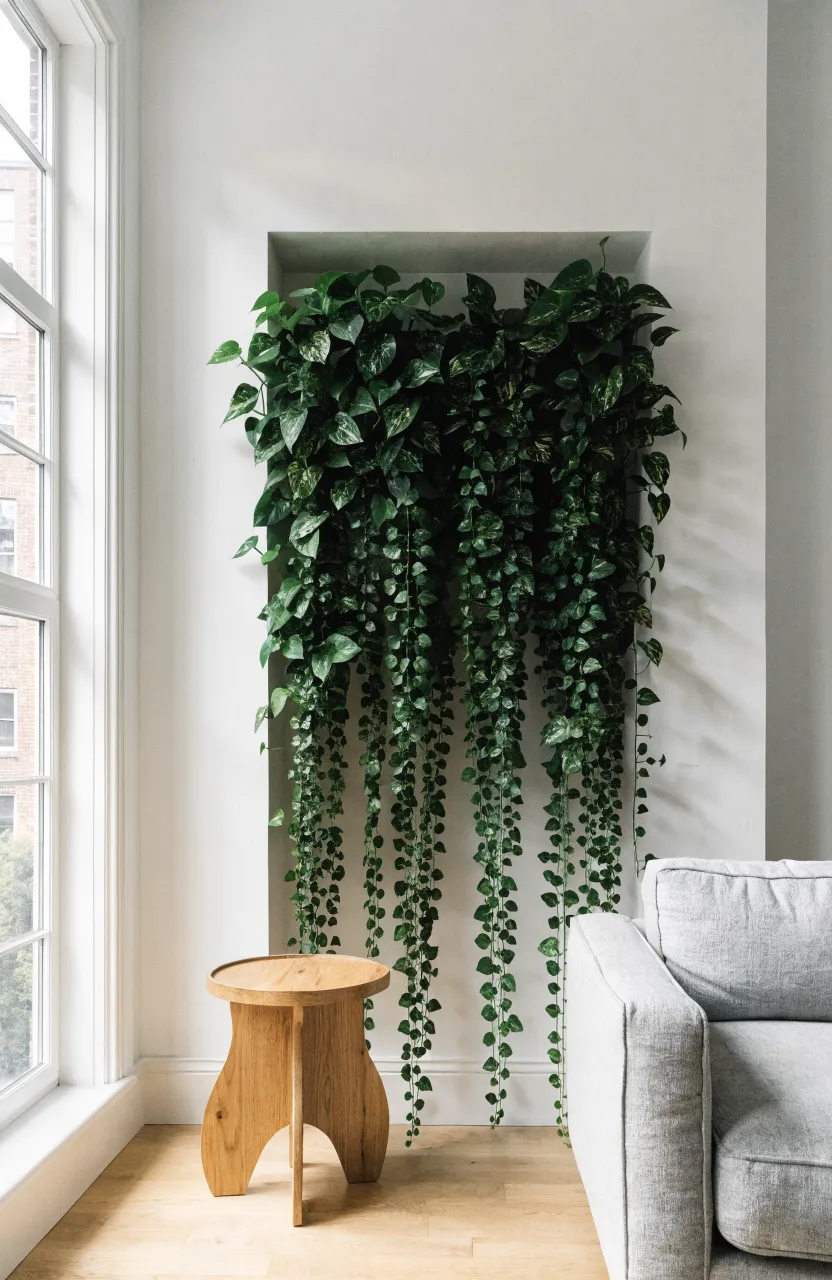
If your home has built-in wall niches, use them for a cascading green display. Pothos is a great choice here because it grows quickly and handles lower light levels well. Place a few pots at the top of the niche and let the vines hang down to create a natural curtain. To keep it clean, use cachepots without drainage holes at the bottom, or place a small plastic tray inside the niche to catch any stray water drops.
Floor-to-Ceiling Wood Slats with Integrated Planter Boxes
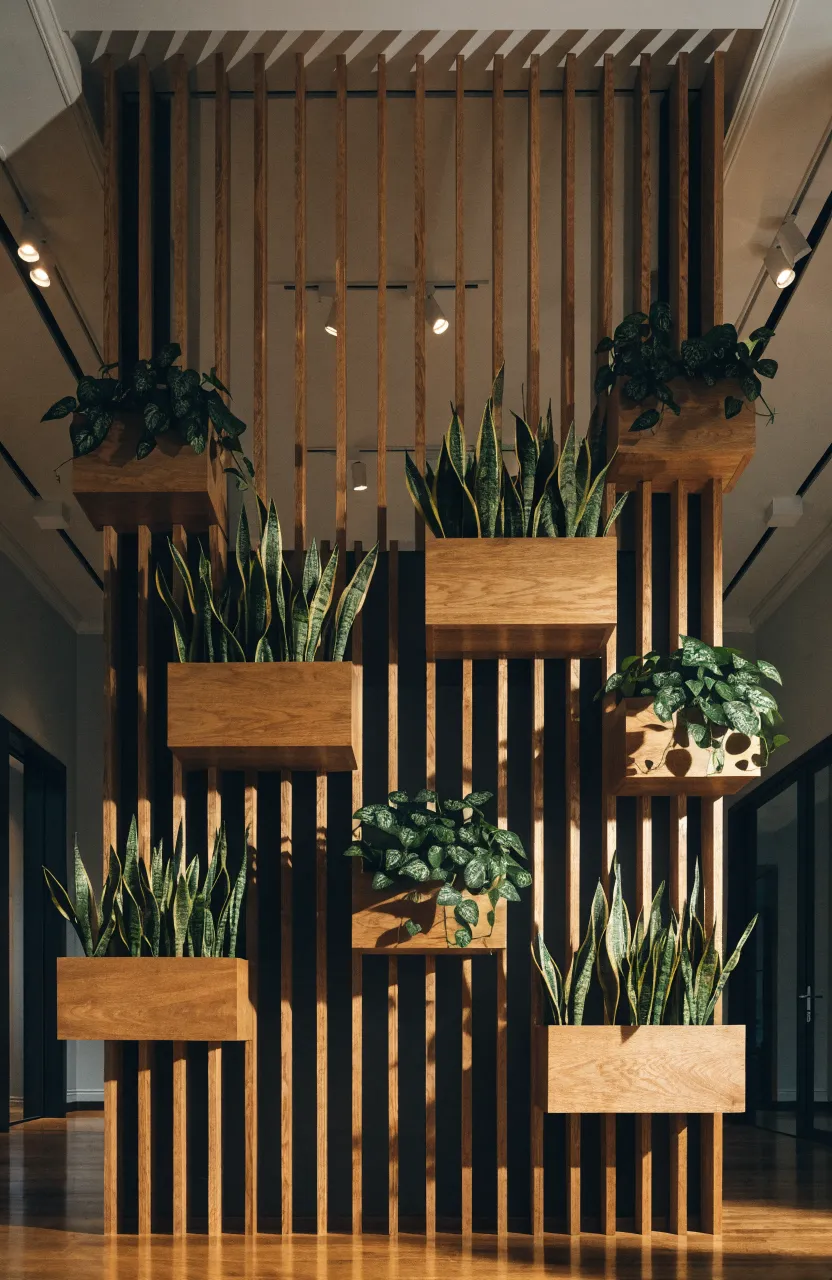
Wood slats add warmth and texture to a room, and they provide a sturdy base for an indoor green wall. You can attach small wooden boxes directly to the slats at various heights. This setup works well for a mix of upright plants like snake plants and softer, flowing foliage. It creates a structured look that feels architectural rather than cluttered.
Hexagonal Wooden Wall Honeycombs for Succulents
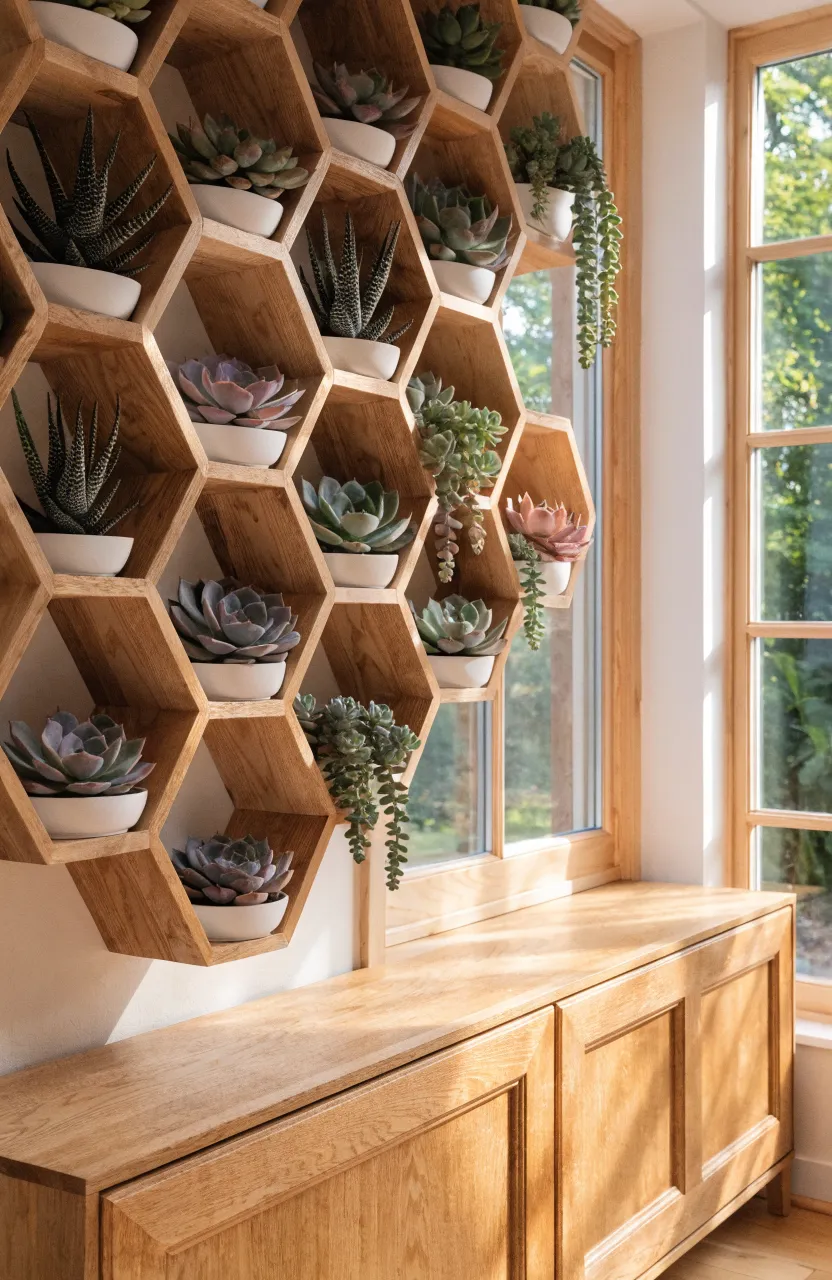
Geometric shapes give a modern touch to your plant wall design. Hexagonal shelves, or honeycombs, are ideal for small succulents that don’t need much root space. Cluster several hexagons together to create a honeycomb pattern across your wall. Since succulents need bright light, place this setup near a window or under a dedicated grow light to keep the plants compact and colorful.
Industrial Metal Grid with Hanging S-Hooks and Terra Cotta Pots
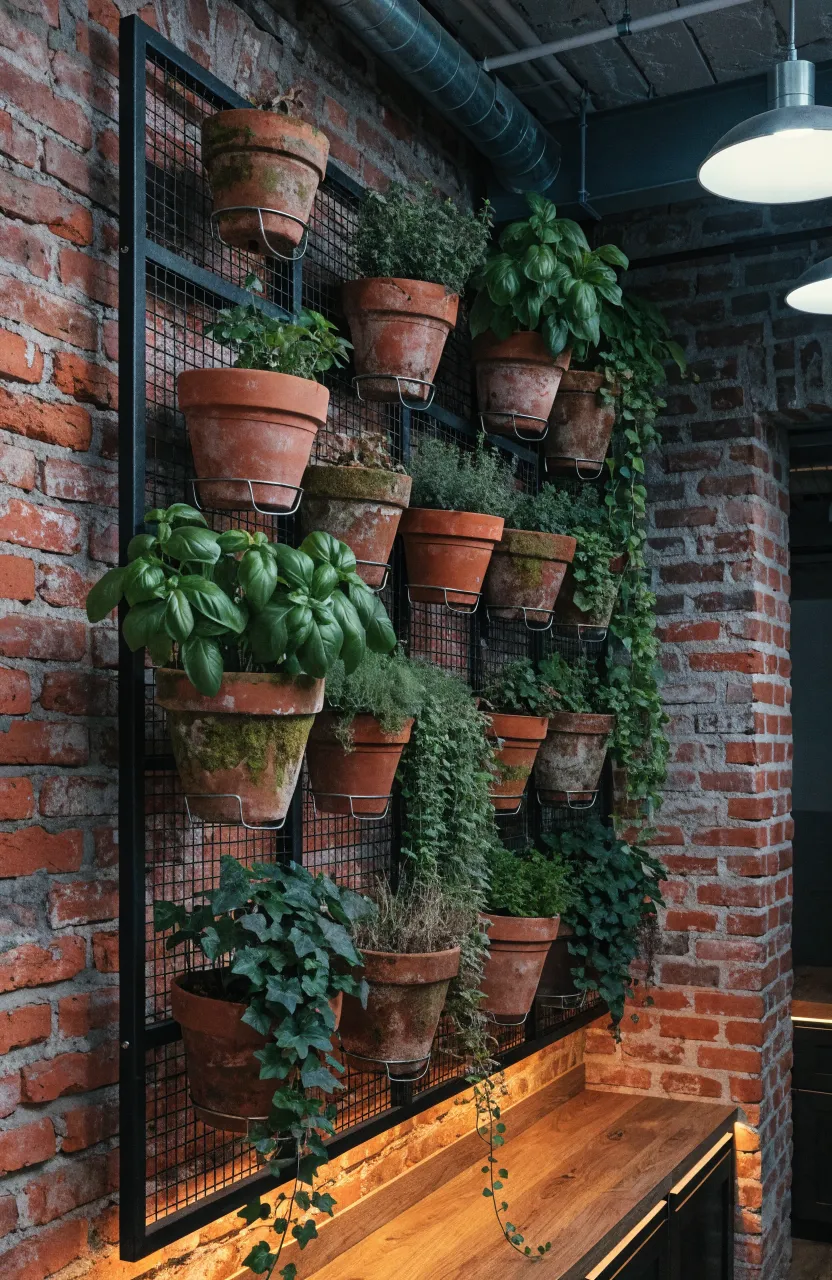
A simple wire mesh or metal grid panel is one of the easiest ways to start a DIY plant wall indoor. Use S-hooks to hang small terra cotta pots by their rims or attach them with wire loops. This system is very flexible because you can move the pots around as the plants grow. It’s a functional look that fits well in kitchens or home offices where you want a bit of an industrial vibe.
Solid Preserved Moss Panel in a Reclaimed Wood Frame
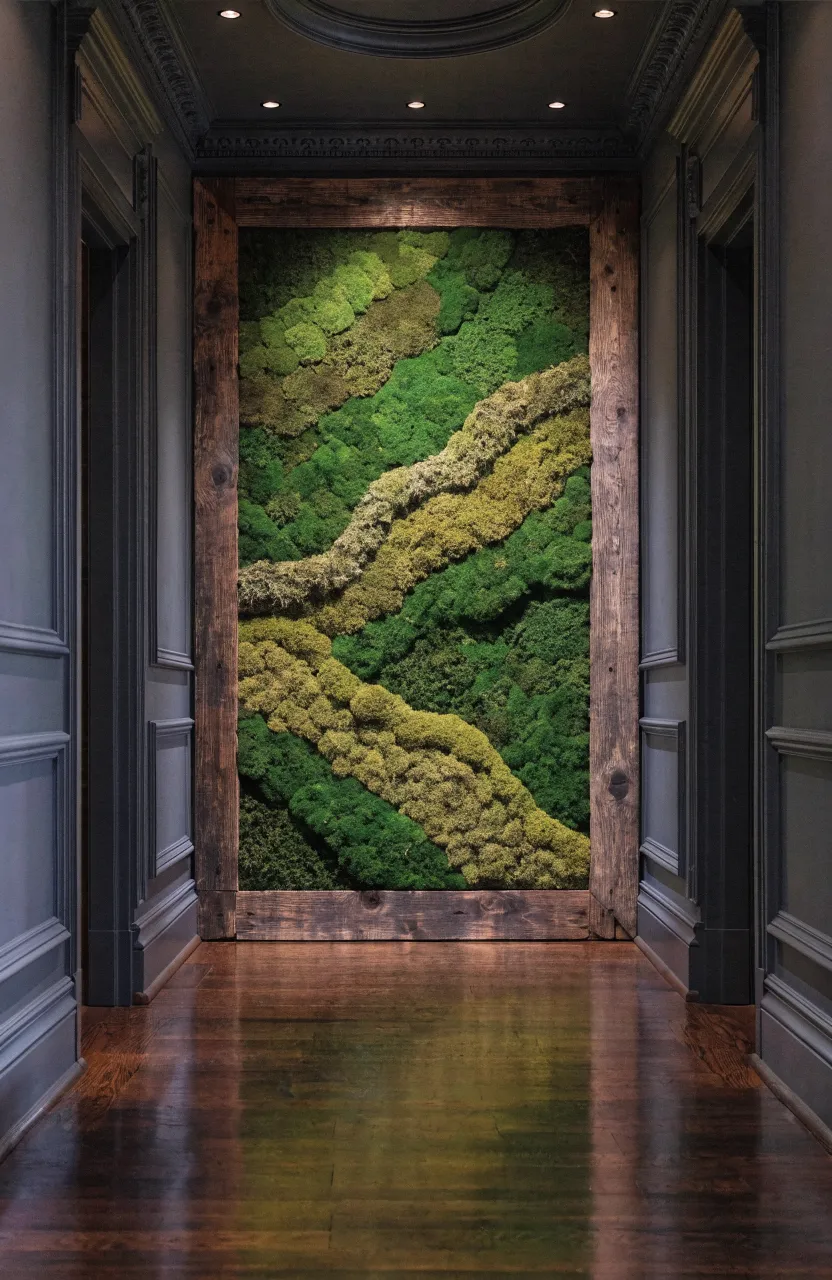
For those who want the look of a green plant wall without the maintenance, preserved moss is a smart alternative. These panels use real moss that has been treated to stay soft and green for years without water or sunlight. Framing the moss in reclaimed wood makes it look like a piece of living art. It’s a great choice for hallways or bathrooms where natural light might be limited.
Vertical Hydroponic Felt Pocket System for Leafy Greens
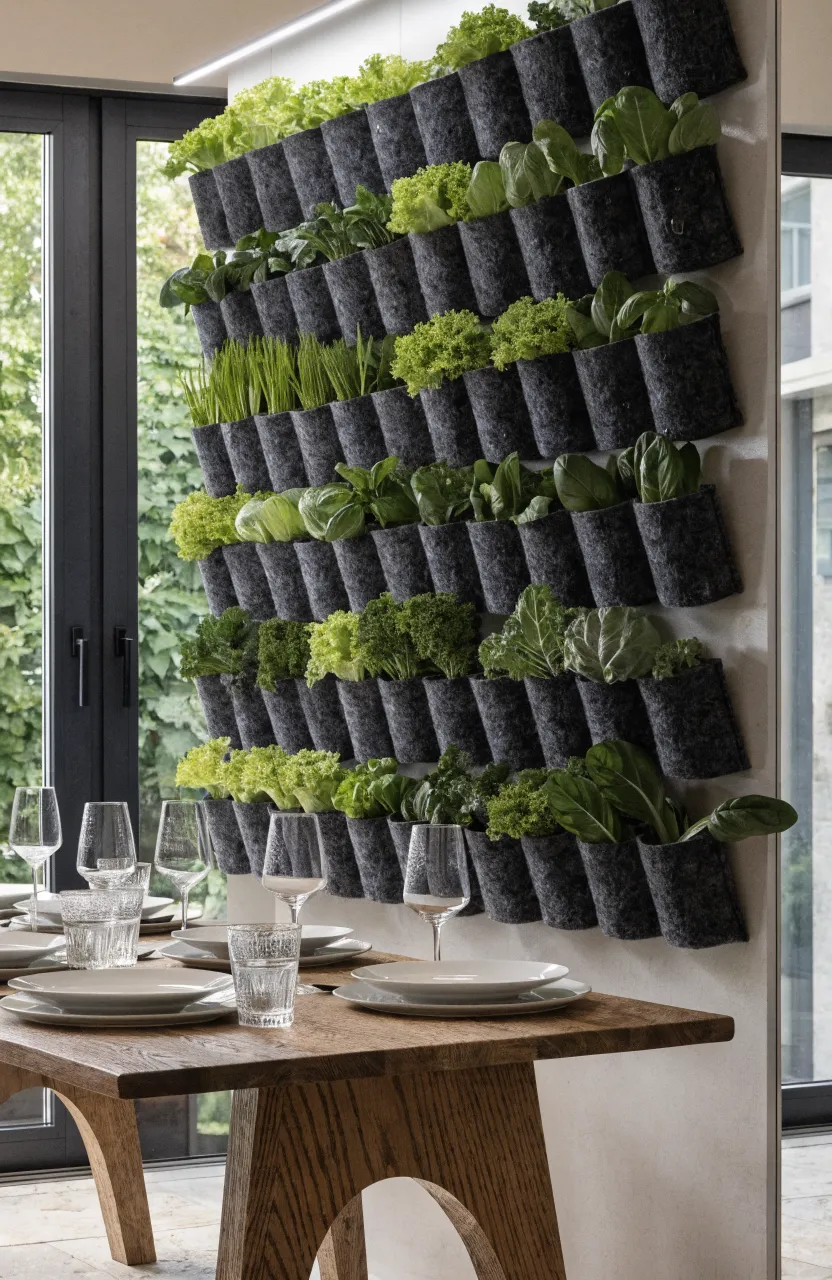
Felt pocket systems are a classic choice for a heavy-duty living wall. The fabric allows the roots to breathe while holding moisture. If you use a hydroponic setup, you can grow leafy greens or herbs right in your dining room. Make sure to install a waterproof barrier between the felt and your drywall to prevent moisture damage over time.
Floating Glass Propagation Tubes on a Minimalist Oak Board
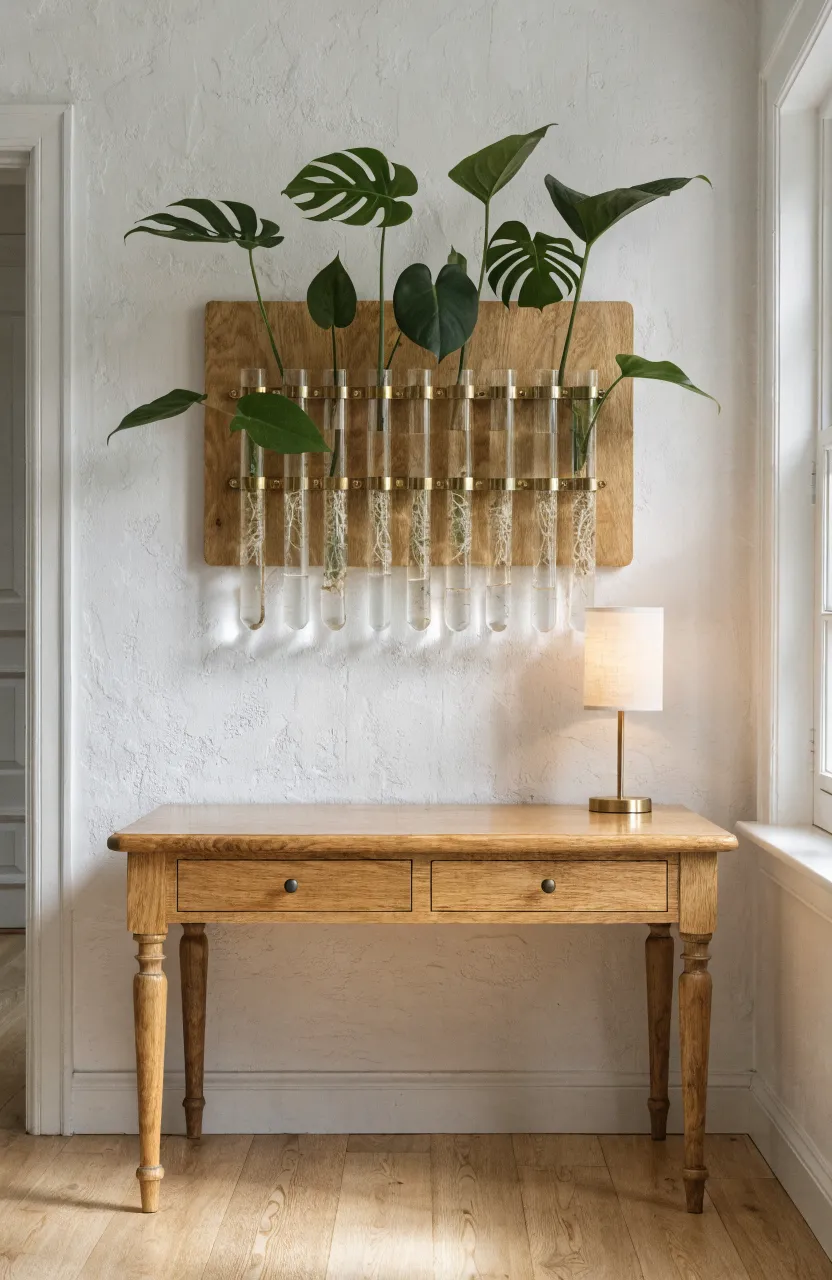
Propagation walls are both functional and beautiful. By mounting glass tubes to an oak board, you can see the roots of your plants grow in water. This works best for plants like Monstera adansonii or philodendrons. It’s a simple way to expand your plant collection while adding a delicate, laboratory-style aesthetic to your wall.
Staircase Side Wall with Staggered Floating Shelves
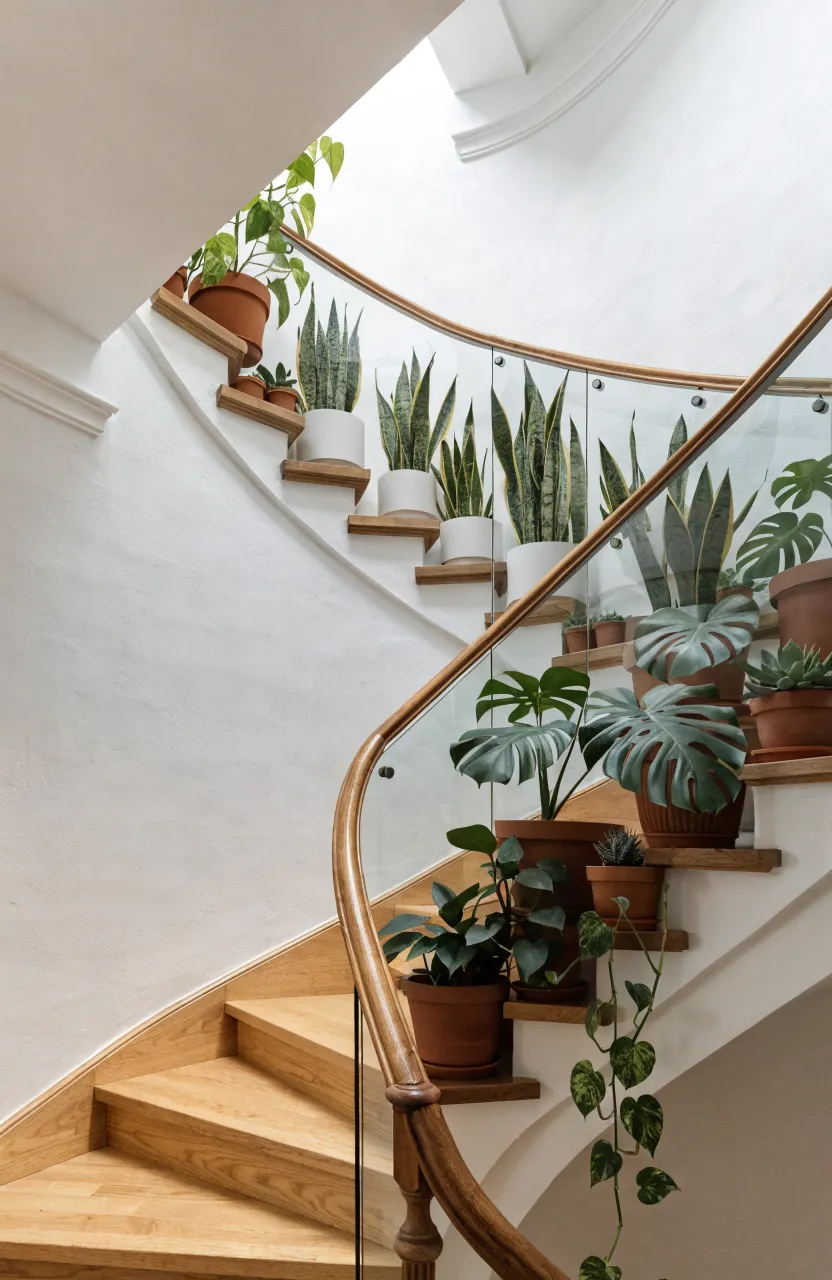
The space along a staircase is often ignored. Installing staggered floating shelves allows you to create a rising green plant wall that follows the line of the stairs. Use a variety of pot sizes and plant types to keep the visual interest high. Just ensure the shelves are high enough that they don’t get bumped by people walking up and down.
Floor-standing Bamboo Trellis for Climbing Vines
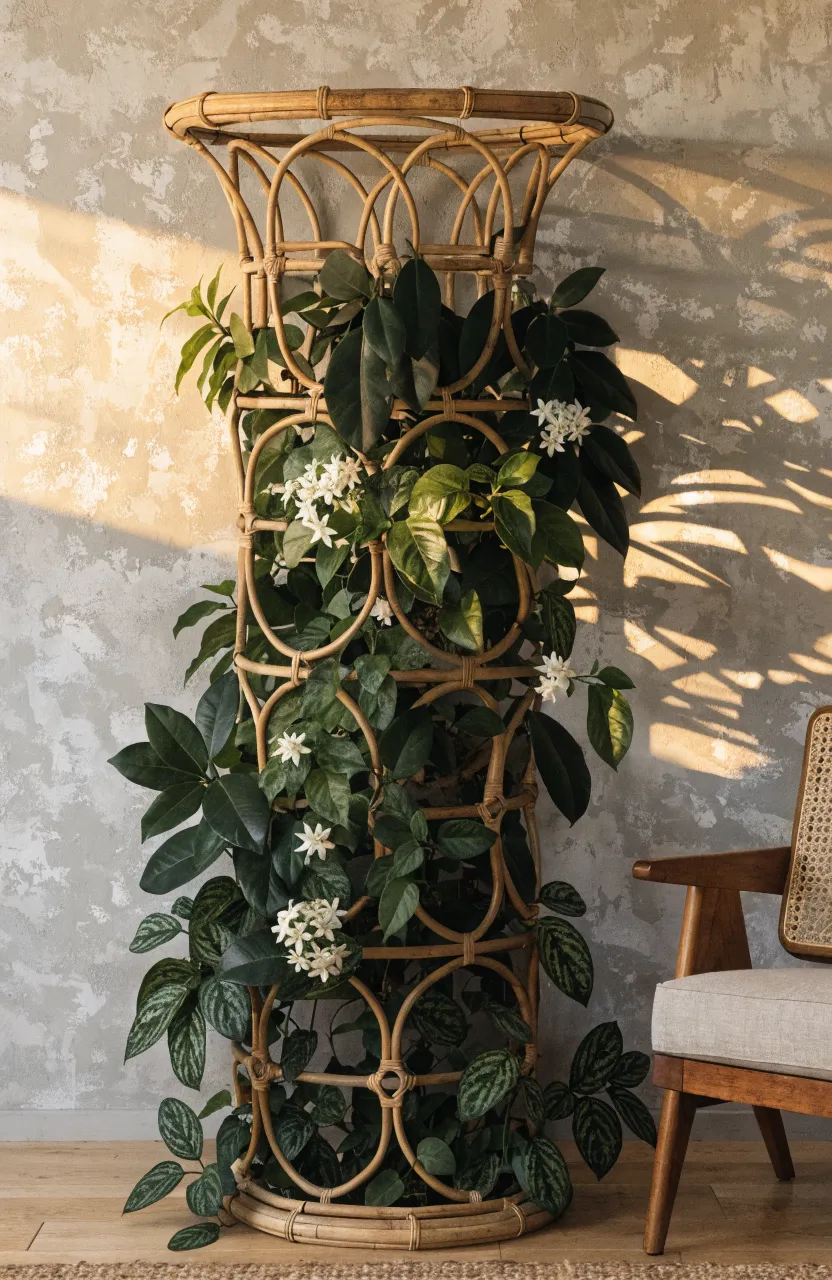
If you cannot drill into your walls, a floor-standing bamboo trellis is a great alternative. Lean it against the wall and plant fast-growing climbers like Hoya or Jasmine at the base. Over time, the vines will weave through the bamboo, creating a lush, vertical screen. This setup is easy to move if you decide to rearrange your furniture.
Circular Metal Wall Hoops with Air Plant Displays
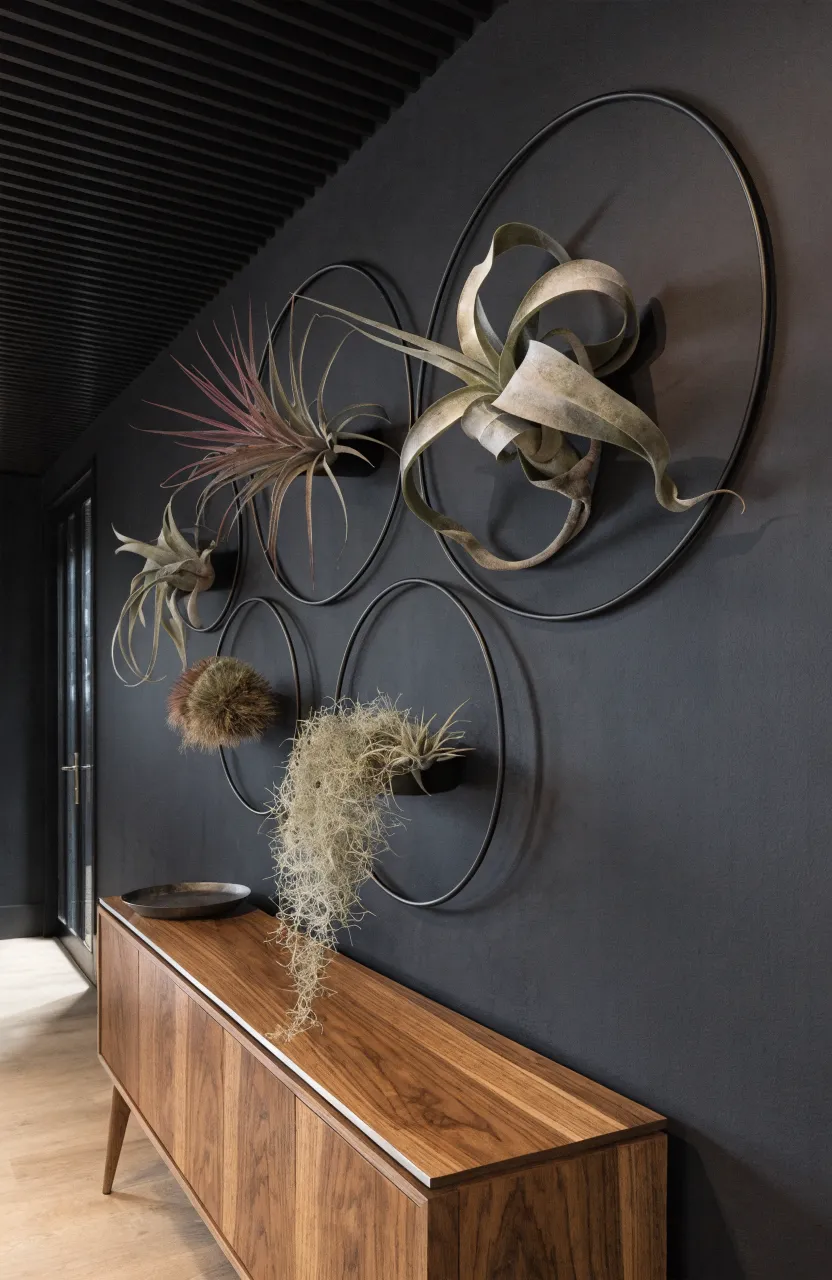
Air plants are unique because they don’t need soil to survive. Mounting thin metal hoops to your wall provides a minimalist frame for these plants. You can rest the air plants directly on the hoops or use nearly invisible fishing line to suspend them in the center. To water them, simply take them down once a week for a quick soak in the sink.
Cork Board Wall with Pinned Bromeliads and Tillandsia
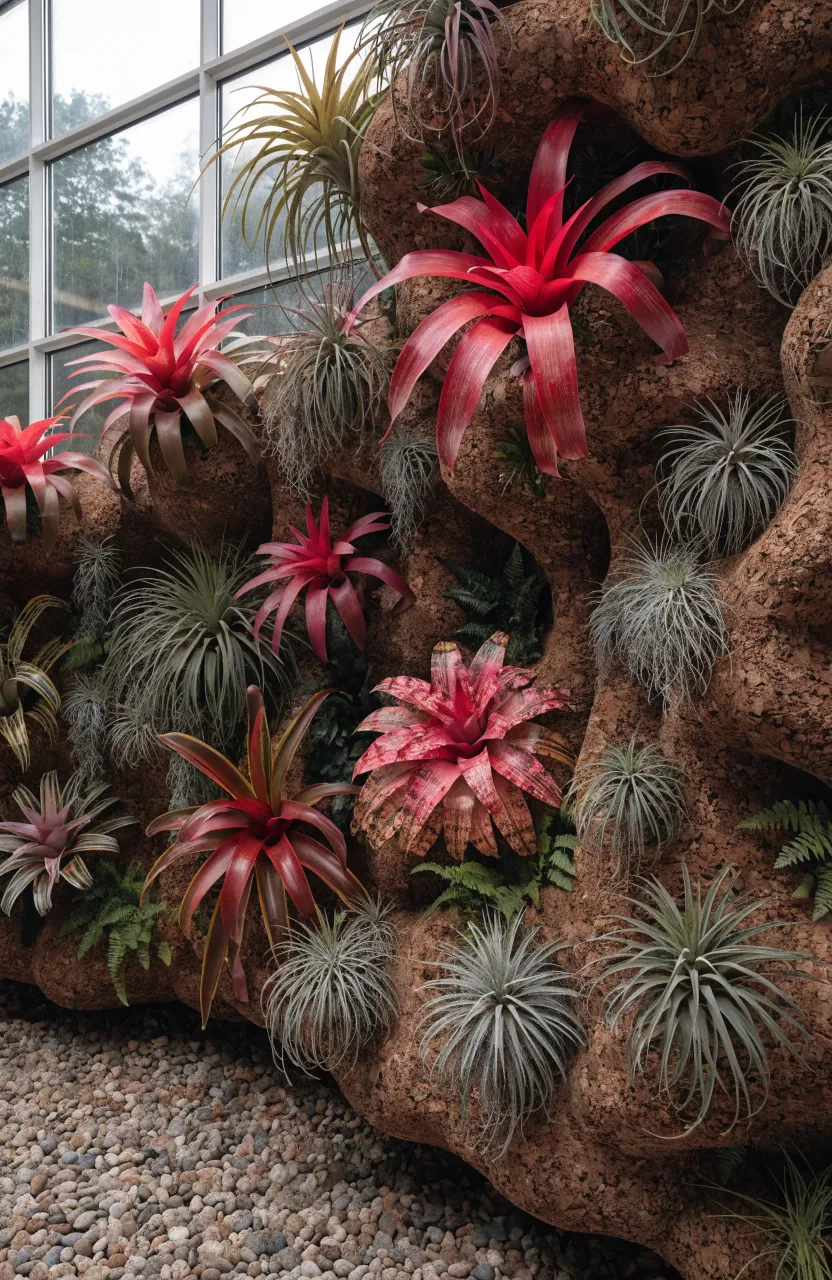
Cork is a natural material that handles moisture well and provides a soft backing for epiphytic plants. You can pin Bromeliads or Tillandsia directly to a thick cork board using floral wire or staples. This creates a textured, 3D effect. It’s a fun way to experiment with different plant wall ideas indoor without needing heavy pots or shelves.
Large Scale Faux Boxwood Panels for Low Light Basements
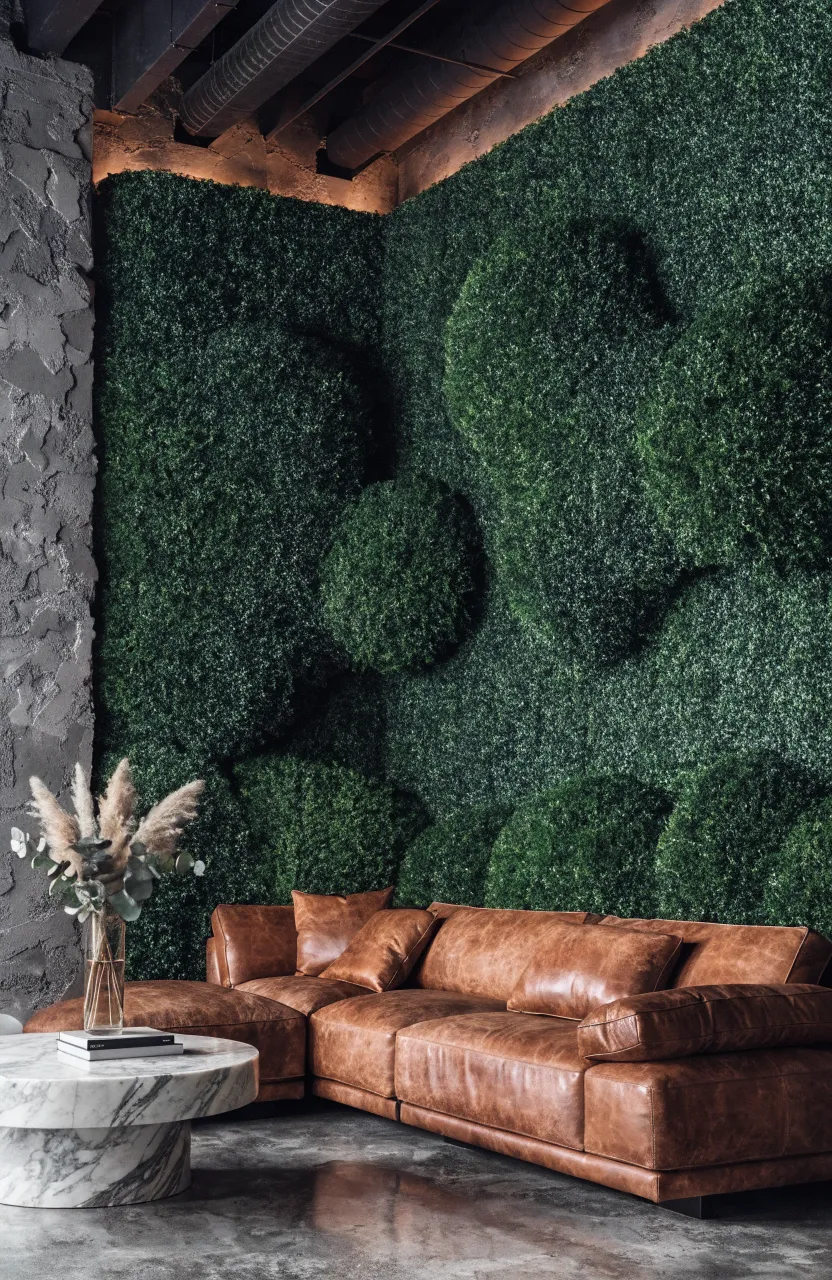
Basements often lack the light needed for real plants to thrive. A faux plant wall using high-quality boxwood panels can bring that green feeling to a dark space. These panels usually come in squares that snap together, making installation quick. They offer a dense, consistent look that requires zero upkeep other than an occasional dusting.
Macramé Hanger Gallery Wall with Trailing Ivy
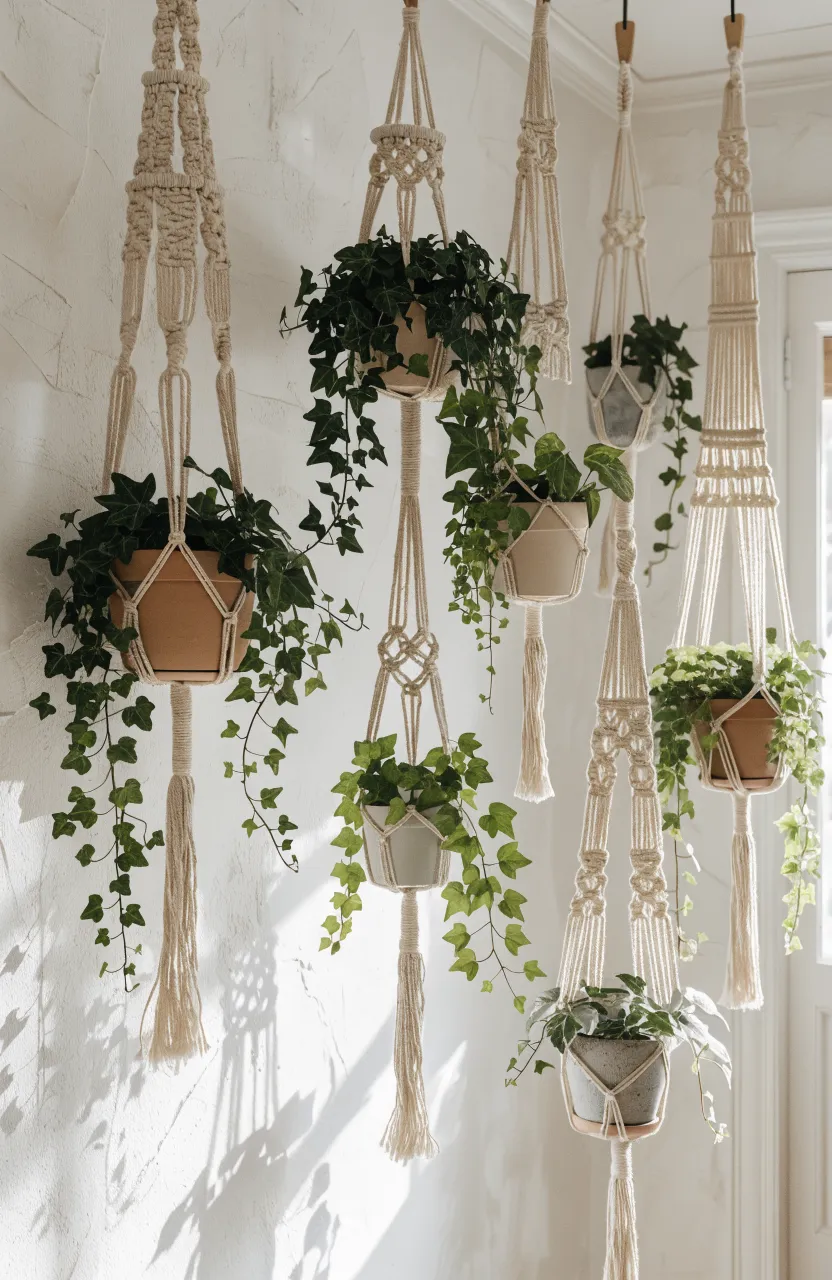
Group several macramé plant hangers at different lengths to create a bohemian gallery wall. Trailing English Ivy or Grape Ivy looks great in these woven holders. By hanging them close to the wall, you create a soft, layered texture. This is an affordable way to fill a large wall space with greenery using only a few ceiling or wall hooks.
Built-in Bookshelf with Alternating Books and Trailing Plants
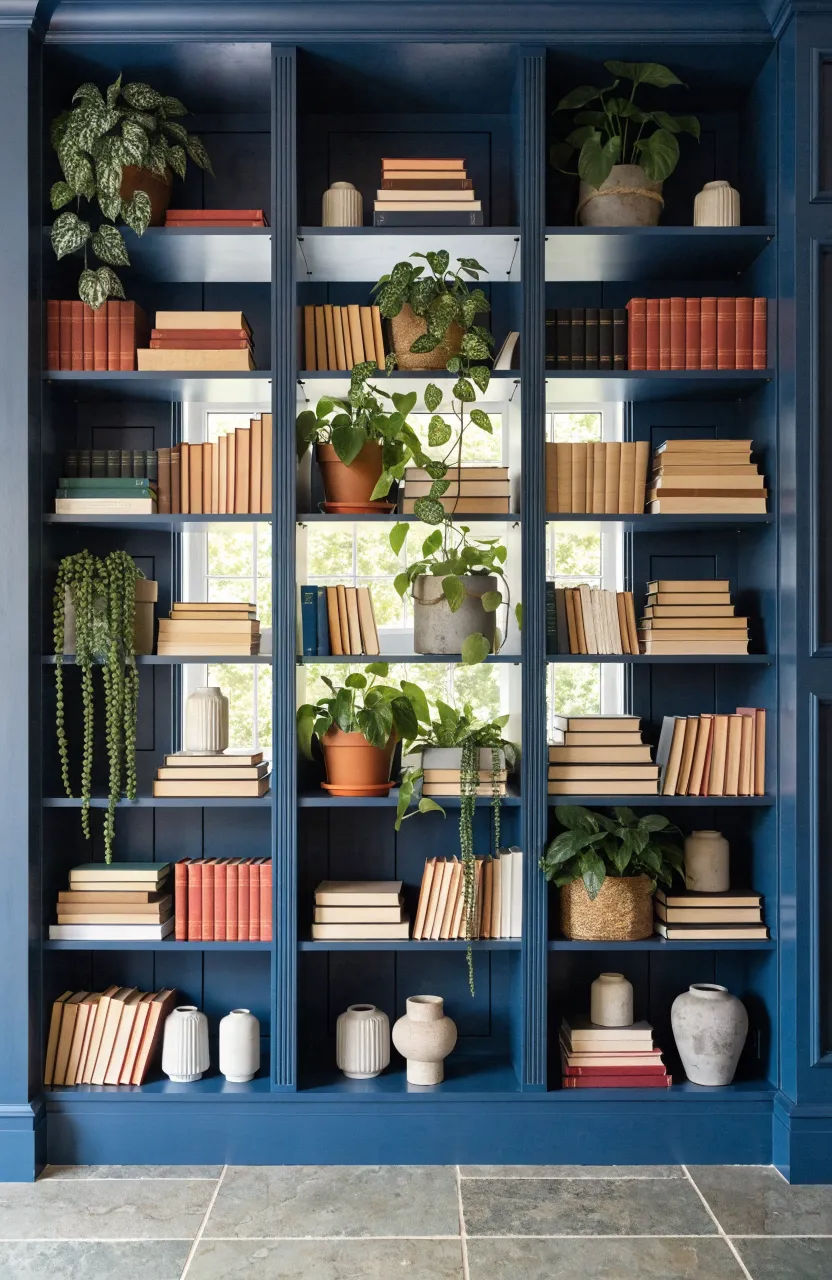
Your existing bookshelf can serve as a green wall ideas foundation. Dedicate every third or fourth cubby to a plant instead of books. Choose plants with long vines, like Scindapsus pictus, and let them drape over the edges of the shelves. This breaks up the hard lines of the books and adds a sense of movement to the room.
Kitchen Herb Garden with Magnetic Tins on a Metal Backsplash
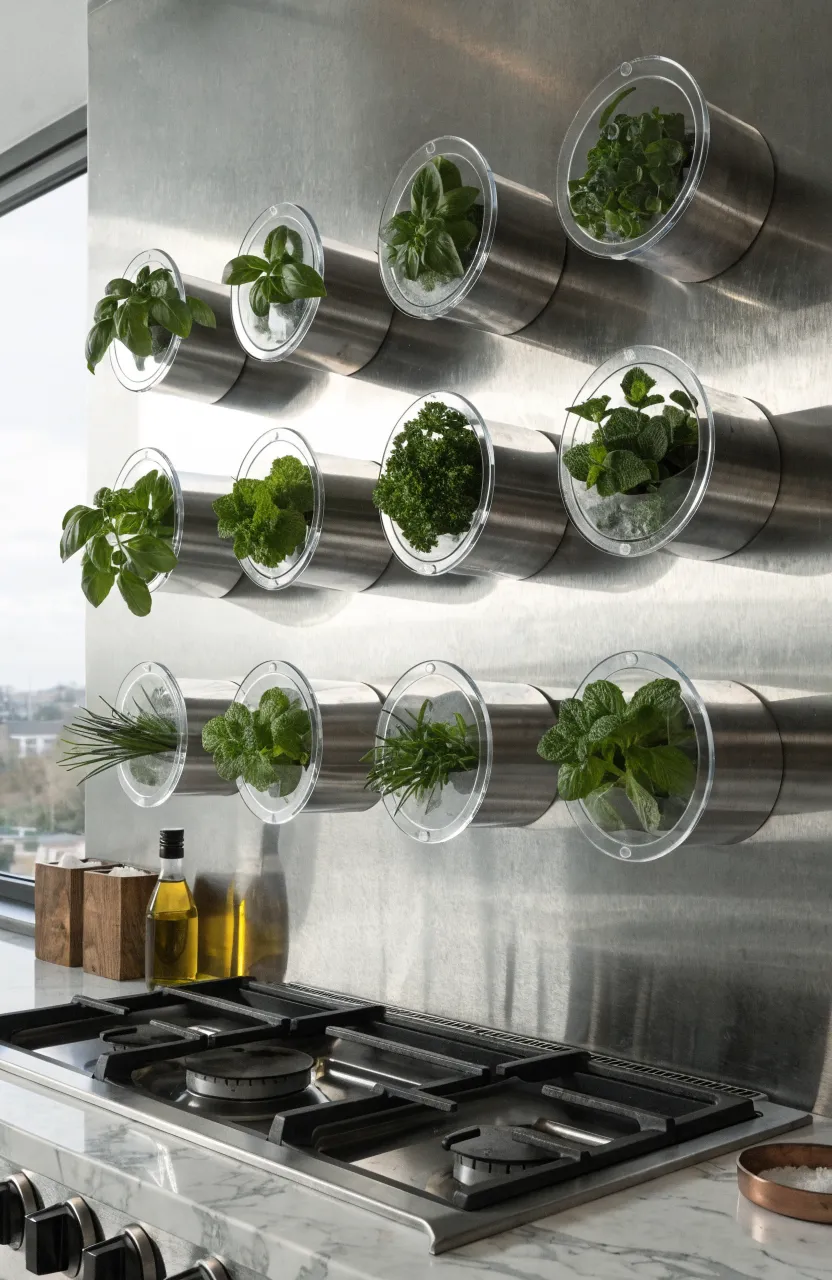
Keep your cooking herbs within reach by using a magnetic wall system. Small metal tins with clear lids can be filled with soil and herbs like basil, mint, or chives. Attach a magnetic board to your backsplash or use a stainless steel fridge surface. It’s a practical plant feature wall that saves counter space and smells amazing while you cook.
Over-the-Bed Shelving Unit with Heartleaf Philodendron
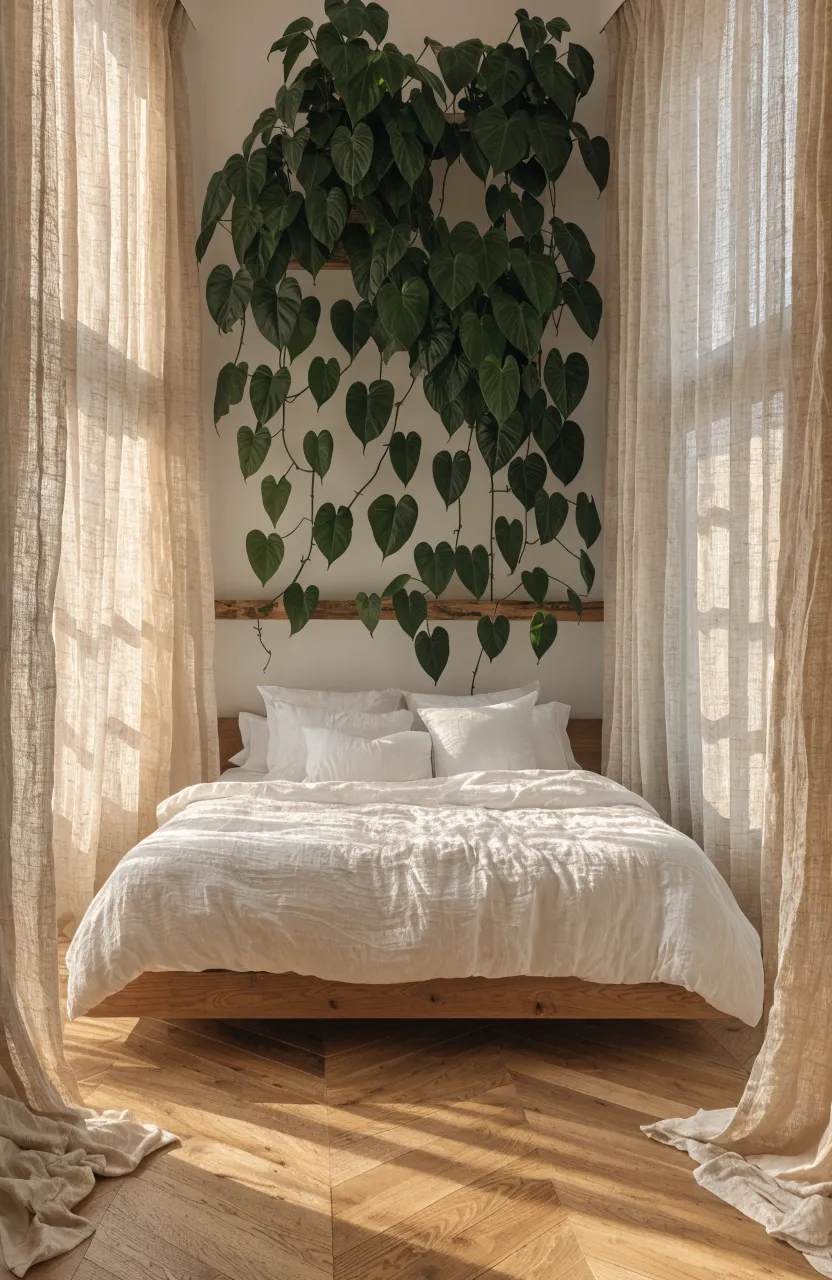
A plant wall bedroom setup can make your sleeping space feel like a sanctuary. Install a long, sturdy shelf above your headboard and fill it with Heartleaf Philodendrons. These plants are known for being hardy and having a beautiful heart shape. As they grow, you can train the vines to run along the wall using small clear clips for a framed effect.
Bathroom Shower Wall with Moisture-Loving Ferns
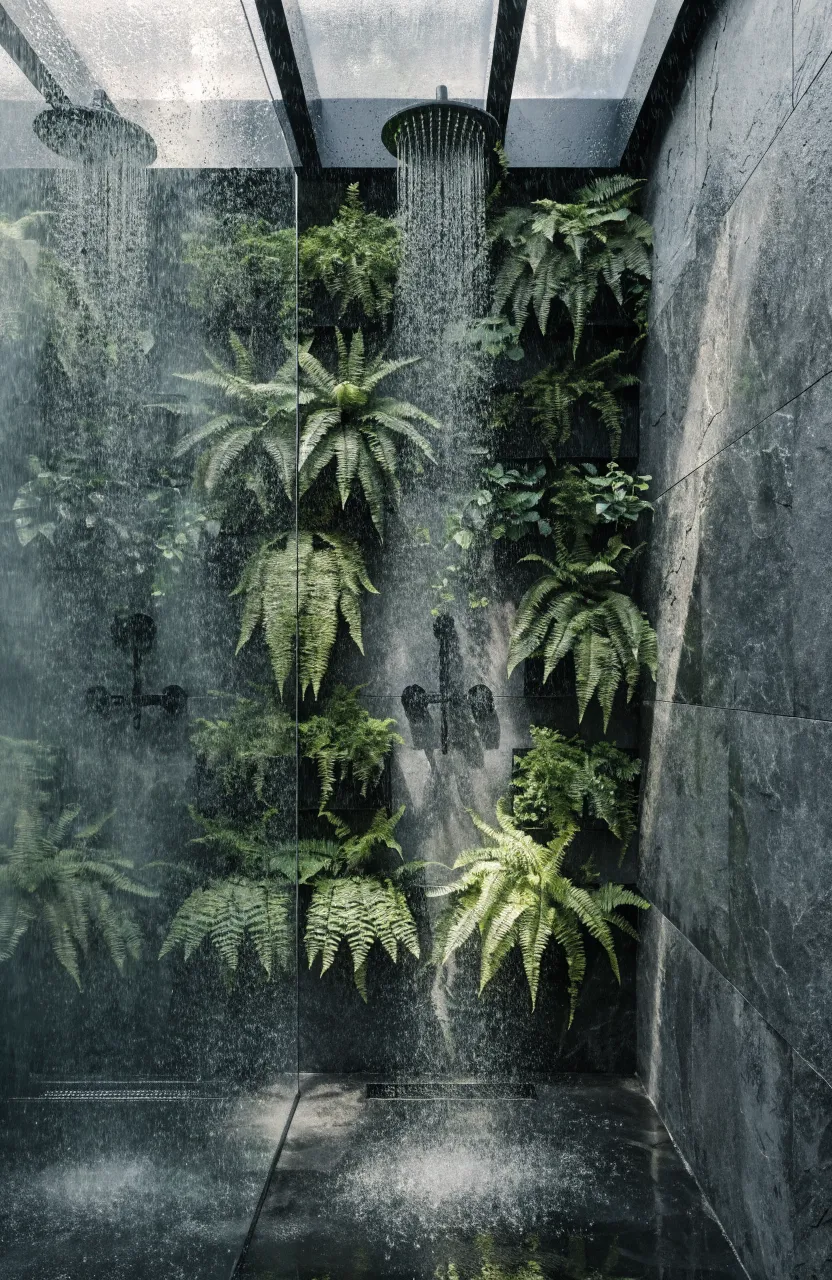
Ferns love the high humidity of a bathroom. You can install wall-mounted planters near the shower where they can soak up the steam. Species like Boston Ferns or Maidenhair Ferns thrive in these conditions. Just make sure there is enough indirect light from a window or a skylight to keep them healthy.
Geometric Copper Pipe Frame with Hanging Glass Globes
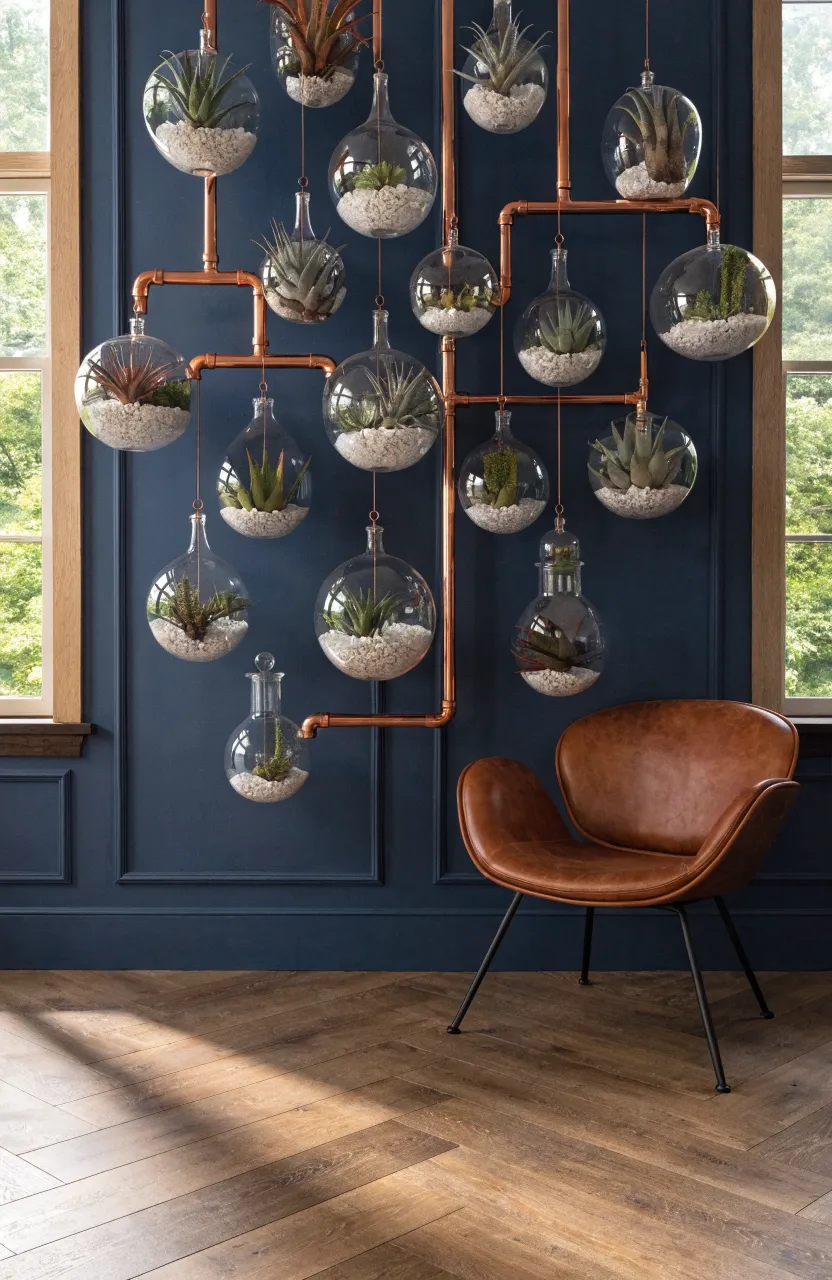
For a bit of shine, build a frame out of copper piping. You can hang small glass terrarium globes from the horizontal bars using twine or wire. Inside the globes, place small pebbles and succulents or air plants. The combination of the warm copper and the delicate glass creates a sophisticated look that works well in modern living rooms.
Repurposed Wooden Pallet Planter for a Rustic Entryway
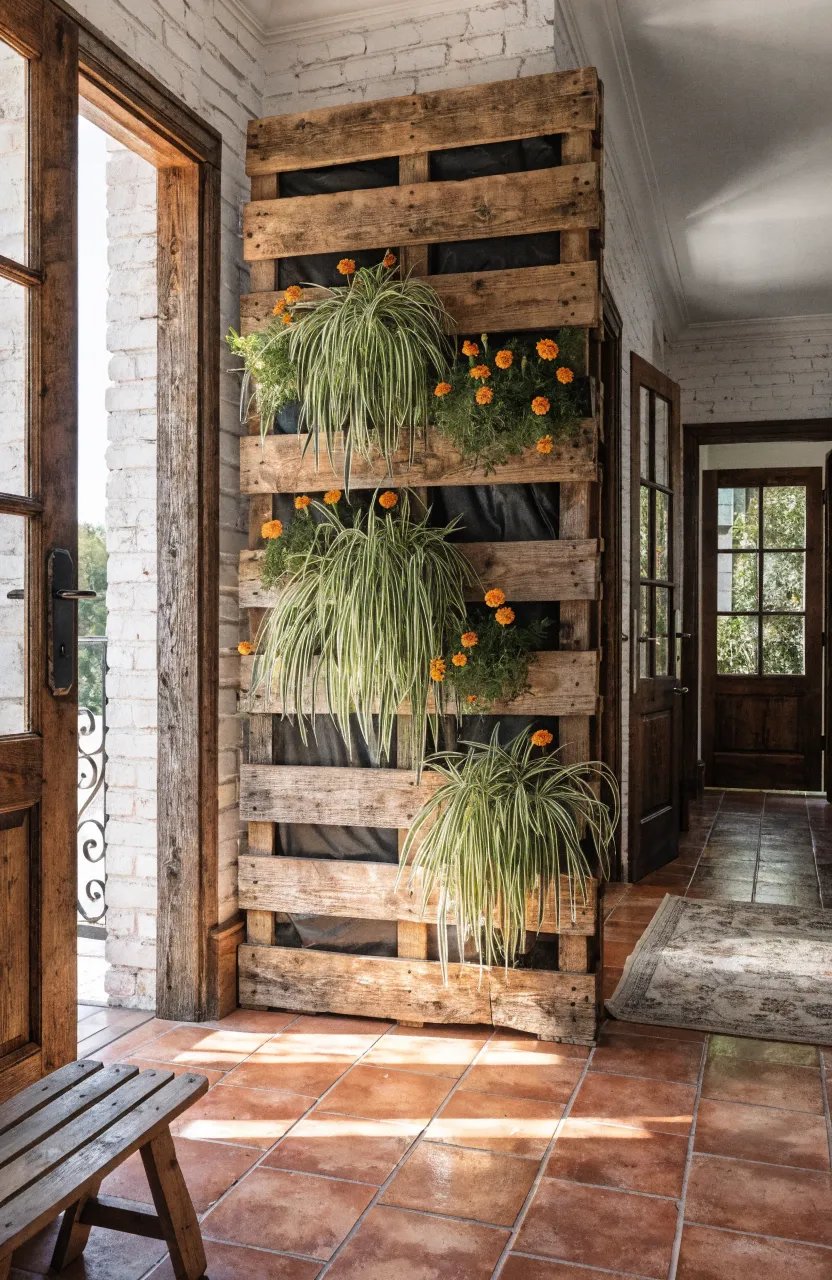
An old wooden pallet can be turned into a rustic planter with very little effort. Nail landscape fabric to the back and bottom of the slats to create pockets for soil. Lean it against an entryway wall and fill it with hardy plants like spider plants or marigolds. It’s a great way to recycle materials while creating a welcoming green entrance.
Shadow Box Frames with Dried Pressed Flowers and Ferns
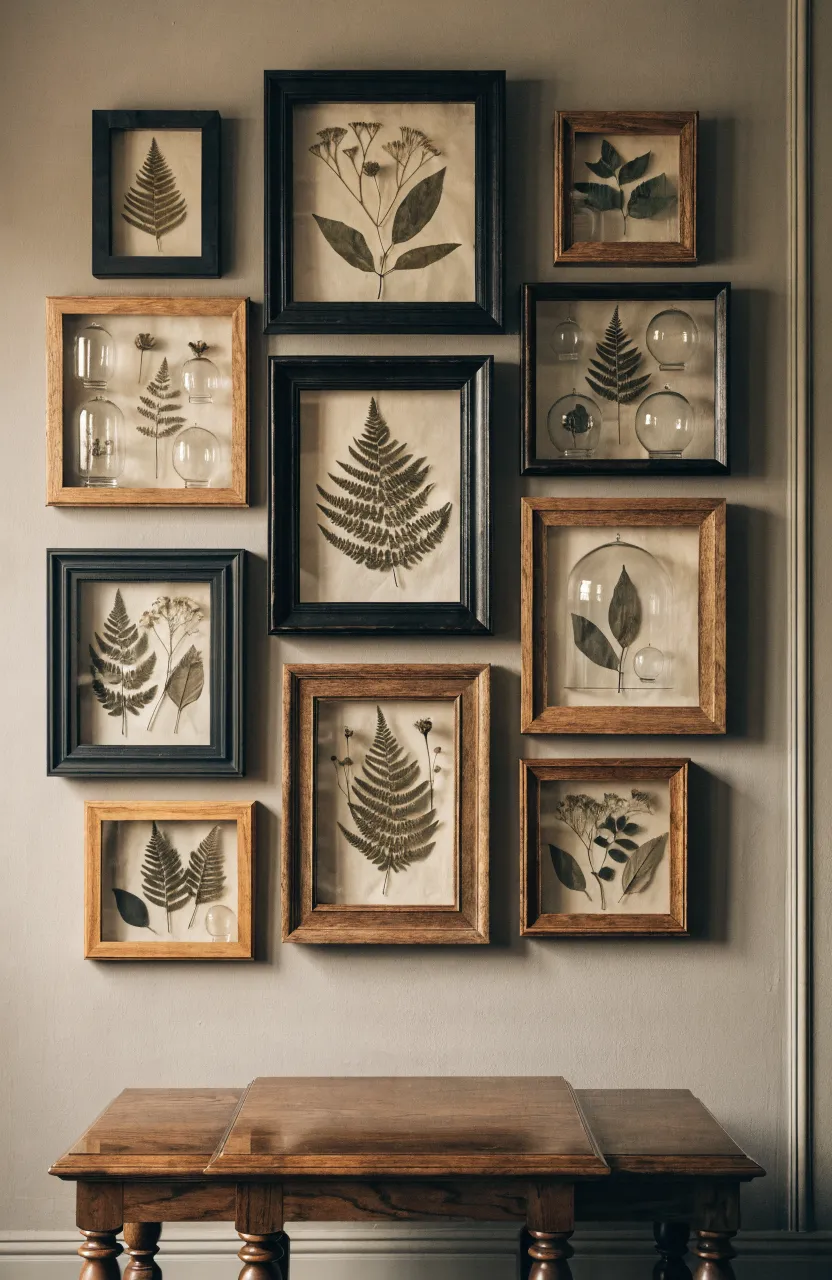
If you prefer a more static display, shadow boxes are a beautiful option. You can press your favorite ferns or flowers and mount them behind glass. Arrange several frames of different sizes in a cluster to create a botanical art wall. This is a great way to preserve memories from a special garden or bouquet while adding a natural touch to your decor.
Modern Black Wire Mesh with Clip-on Metal Pots
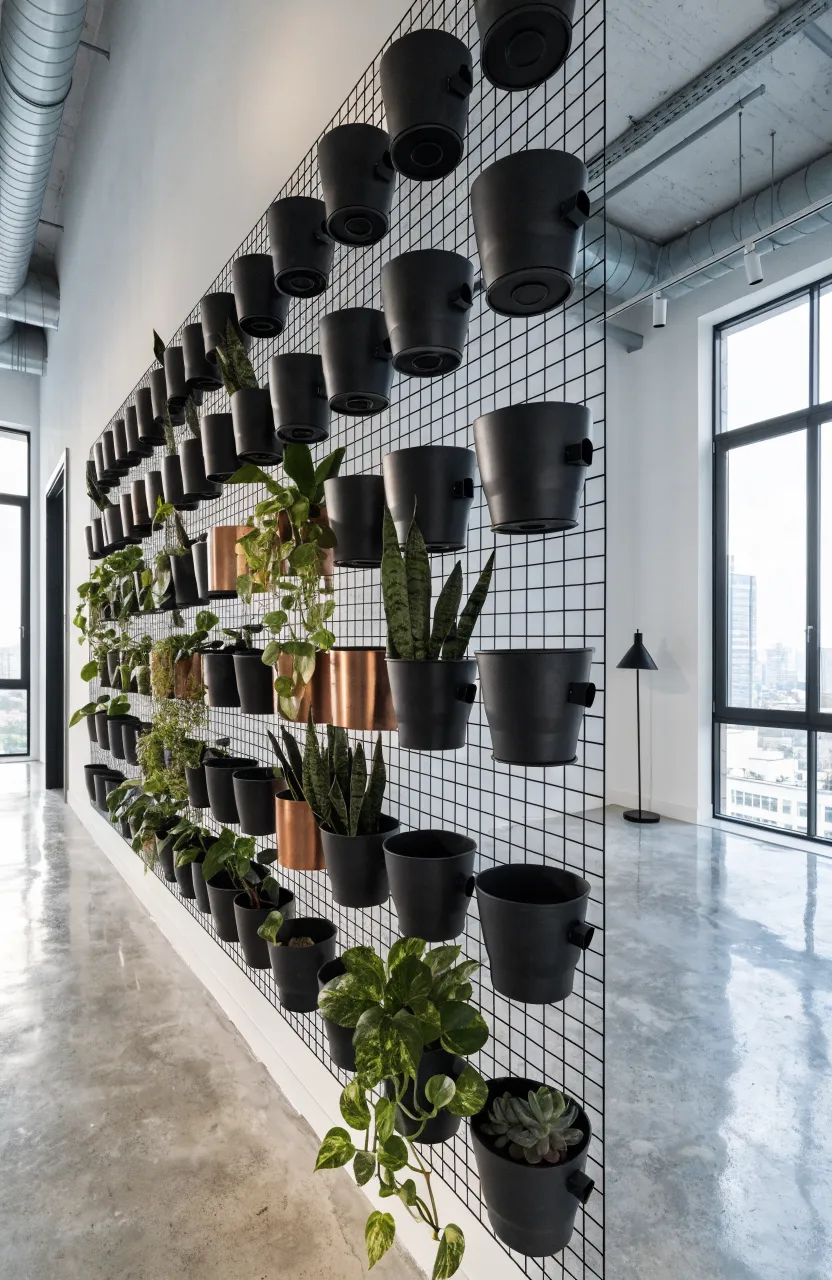
A black wire mesh panel offers a sharp, modern contrast against a white wall. Use matching black clip-on pots for a uniform look, or mix in copper and silver pots for more variety. This setup is great for small apartments because it stays very close to the wall and doesn’t take up any floor area.
Corner Waterfall Effect with Tiered Hanging Planters
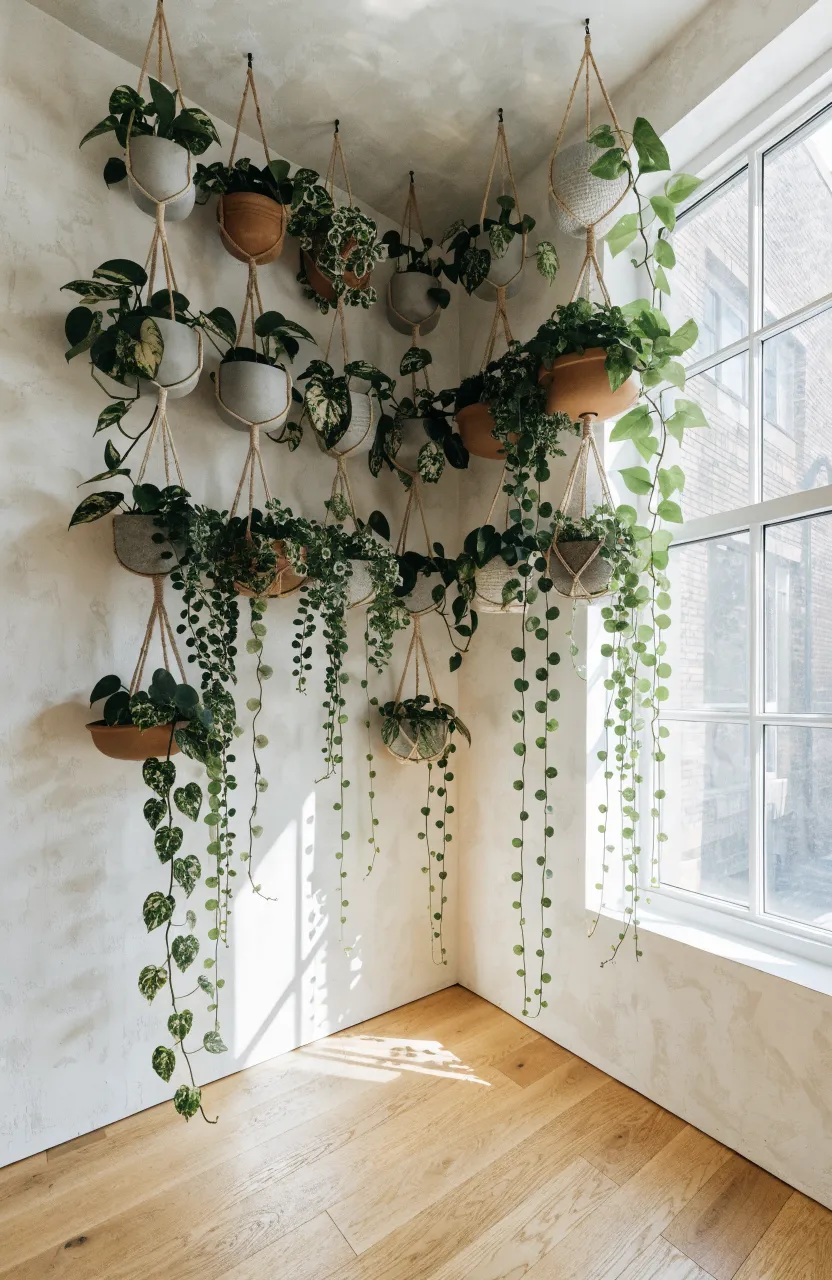
Corners are often difficult to decorate. By hanging several planters at different heights right in the corner, you create a ‘waterfall’ of greenery. Use plants with different leaf shapes and colors to add depth. This draws the eye upward and makes the ceiling feel higher than it actually is.
Ceiling-Mounted Rod with Trailing Spider Plants Over a Sofa
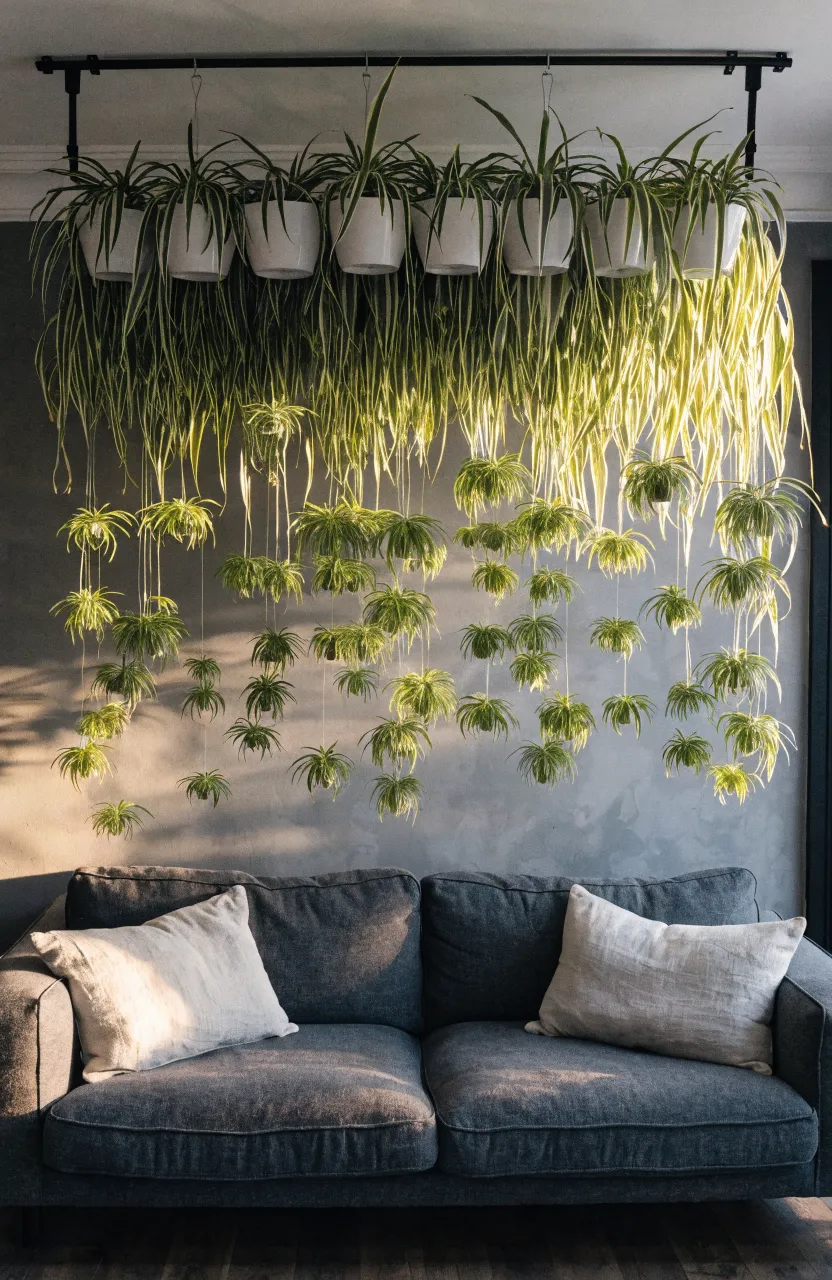
Install a sturdy curtain rod or a long metal pipe to the ceiling about a foot away from the wall. Hang several spider plants in lightweight pots from the rod. The long, arching leaves and ‘babies’ that hang down will create a living backdrop for your sofa. It’s an easy way to fill a large wall without needing to mount individual shelves.
Framed Artificial Grass Panels for a Textured Green Accent
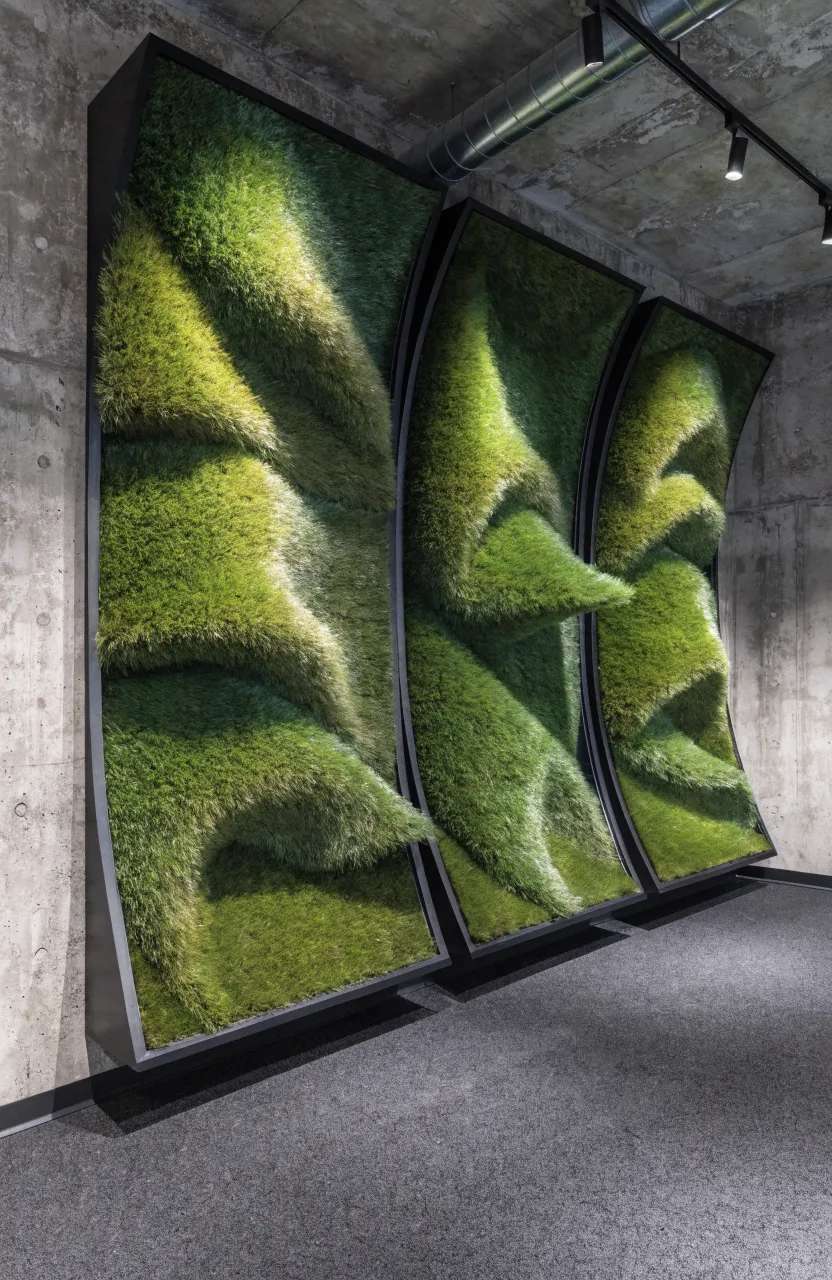
Artificial grass isn’t just for lawns. High-quality faux grass panels can be cut to fit into large frames for a unique textured wall. This adds a solid block of green to a room without the need for light or water. It’s a bold choice that works well in home gyms or playrooms where you want a durable, high-energy feel.
Living Picture Frame with Small Succulent Arrangements
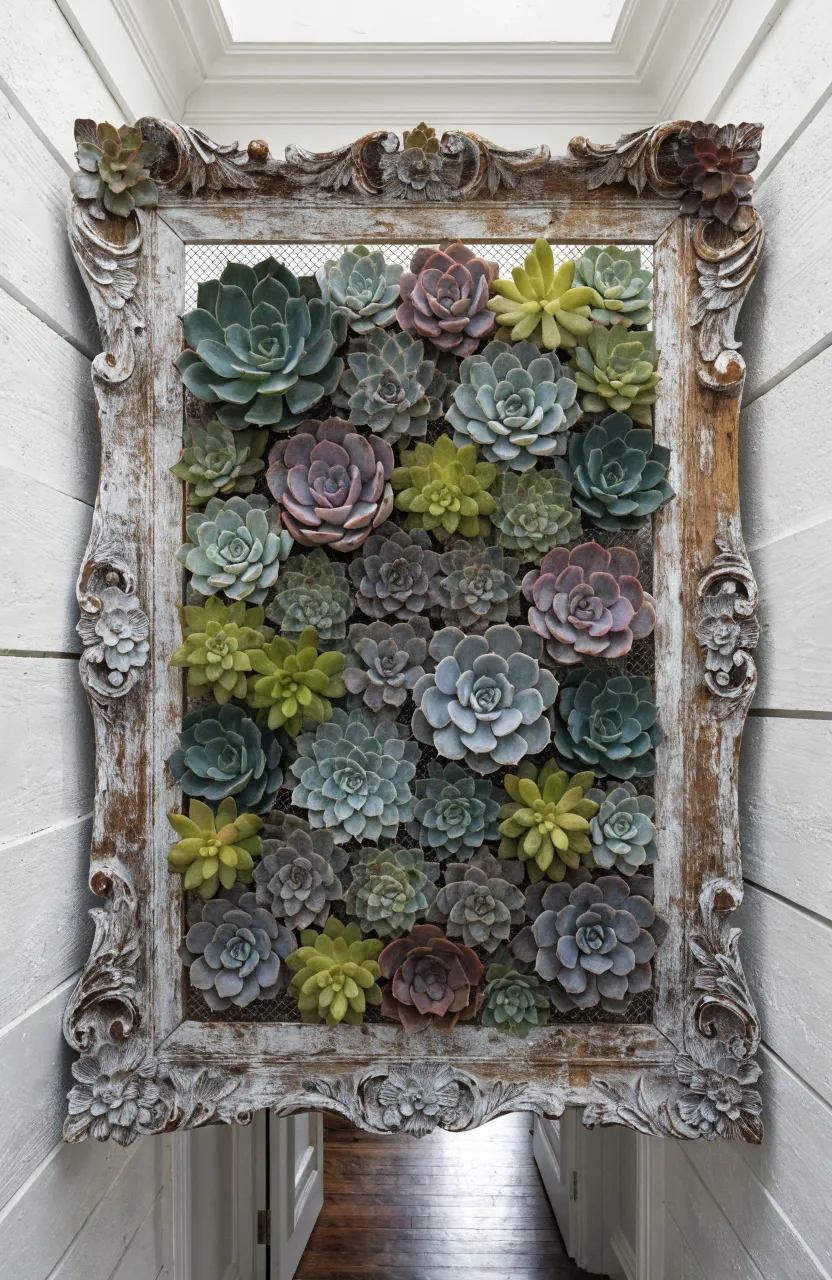
A living picture frame is essentially a shallow planter box with a frame on the front and wire mesh to hold the soil in place. You plant small succulents through the mesh. Once the roots take hold, you can hang the frame vertically. It’s a stunning piece of art that literally grows on your wall.
Vertical PVC Pipe Planter with Multiple Planting Holes
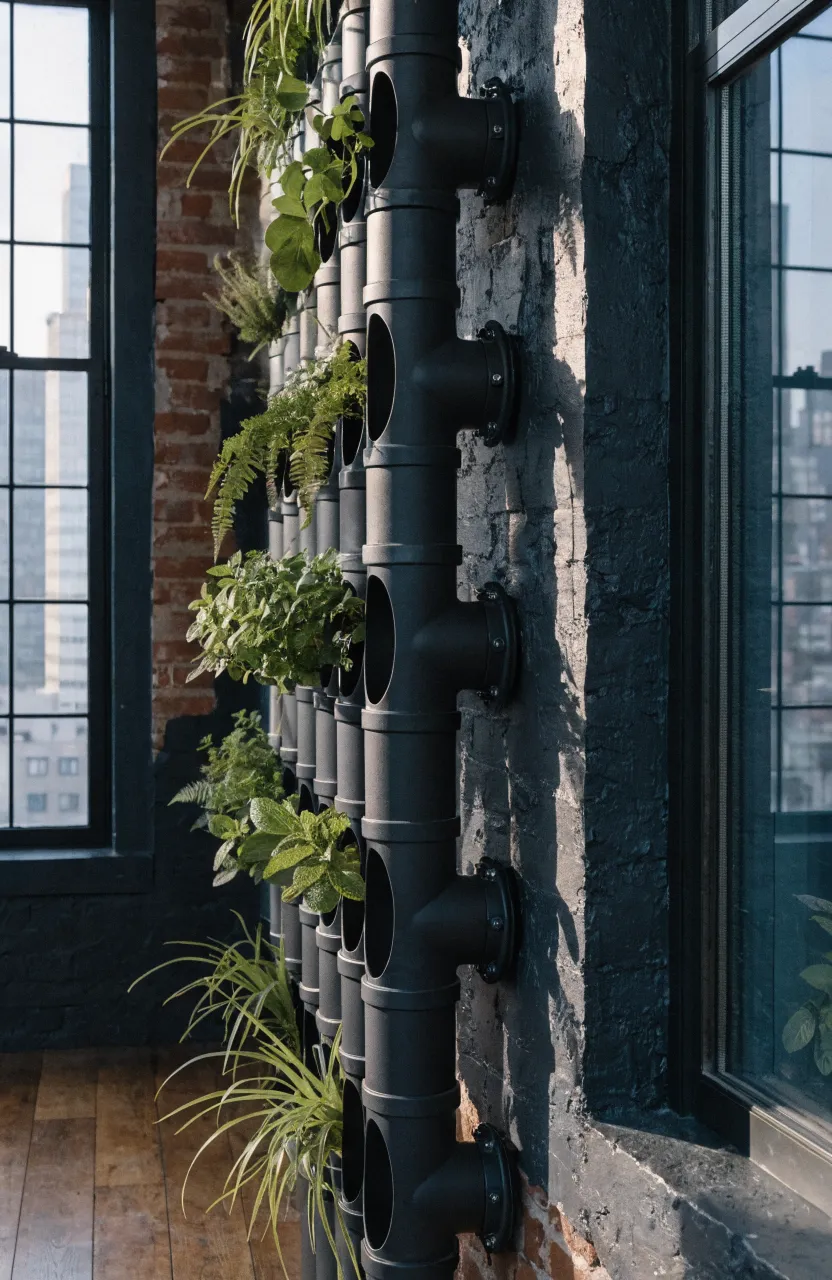
For a more industrial or DIY look, use a large PVC pipe. Cut holes at intervals along the pipe and cap the bottom. Fill it with soil and place a plant in each hole. You can paint the PVC to match your wall color so it blends in. This is a very space-efficient way to grow a lot of plants in a very narrow area.
Leather Strap Shelf Brackets with Trailing String of Pearls
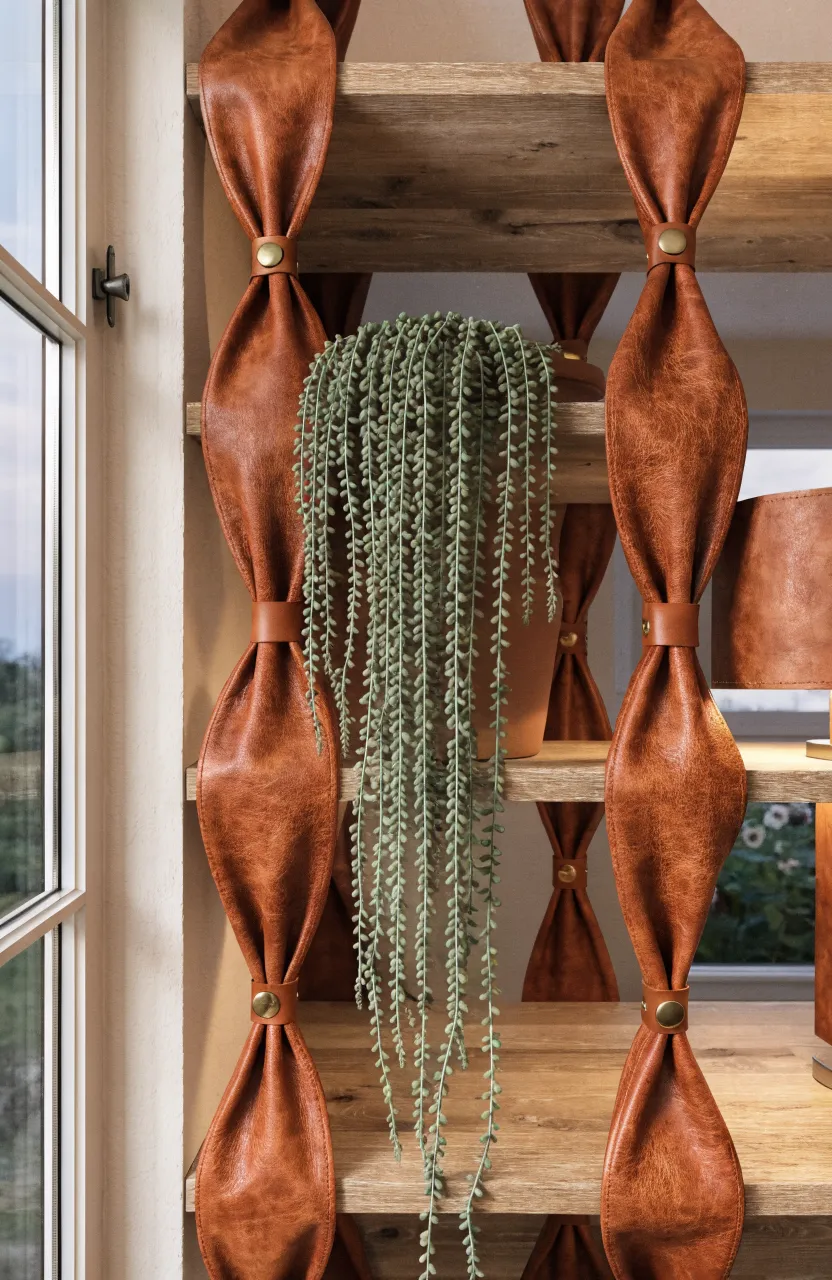
Leather straps add a high-end, organic feel to shelving. Use them to hold up simple wooden planks. Place a ‘String of Pearls’ plant on the shelf and let the bead-like leaves drape over the leather. The combination of wood, leather, and greenery is timeless and fits well in a cozy reading nook or bedroom.
Full-Height Mirror Bordered by Climbing Creeping Fig
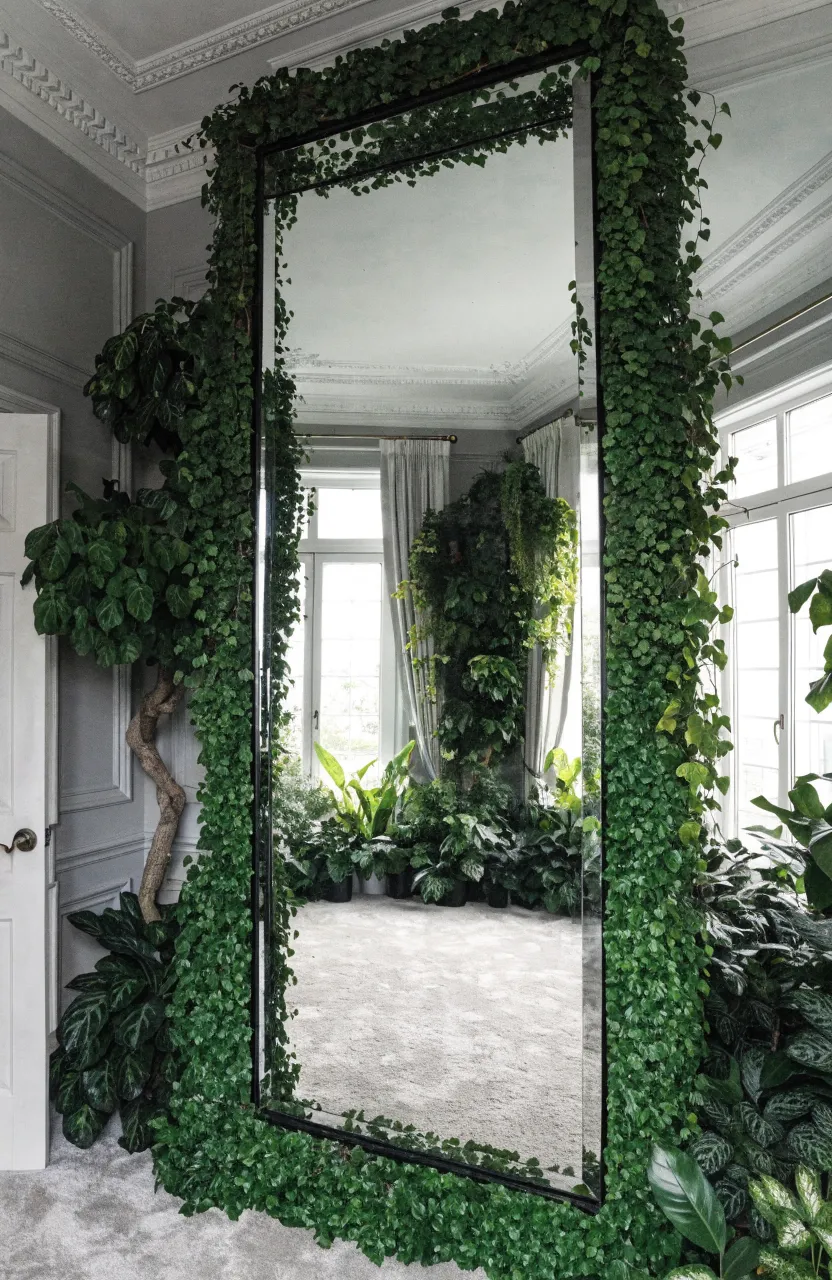
A large floor-to-ceiling mirror can be transformed by adding a border of Creeping Fig. This plant has small leaves and naturally clings to surfaces. You can place the pot at the base and guide the vines around the mirror frame. The mirror will reflect the greenery, making your indoor green wall look twice as lush.
Slate Stone Backdrop with Wall-Mounted Staghorn Ferns
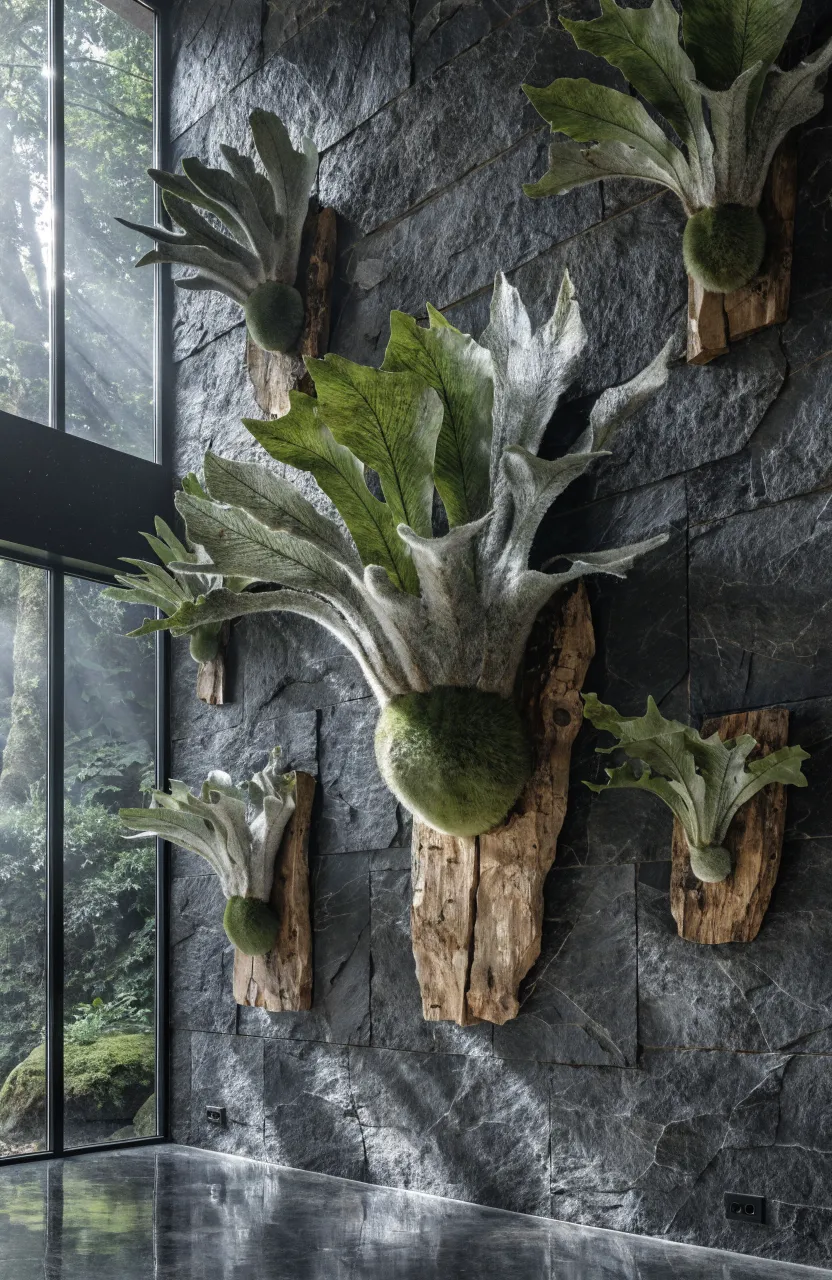
Staghorn ferns are unique because they can grow on boards rather than in pots. Mounting them onto a slate stone wall creates a dramatic, earthy look. The dark grey of the slate makes the bright green fronds of the fern pop. These plants love a good misting, so they are perfect for a humid room or a wall near a window.
Dining Room Sideboard with a Tall Snake Plant Row
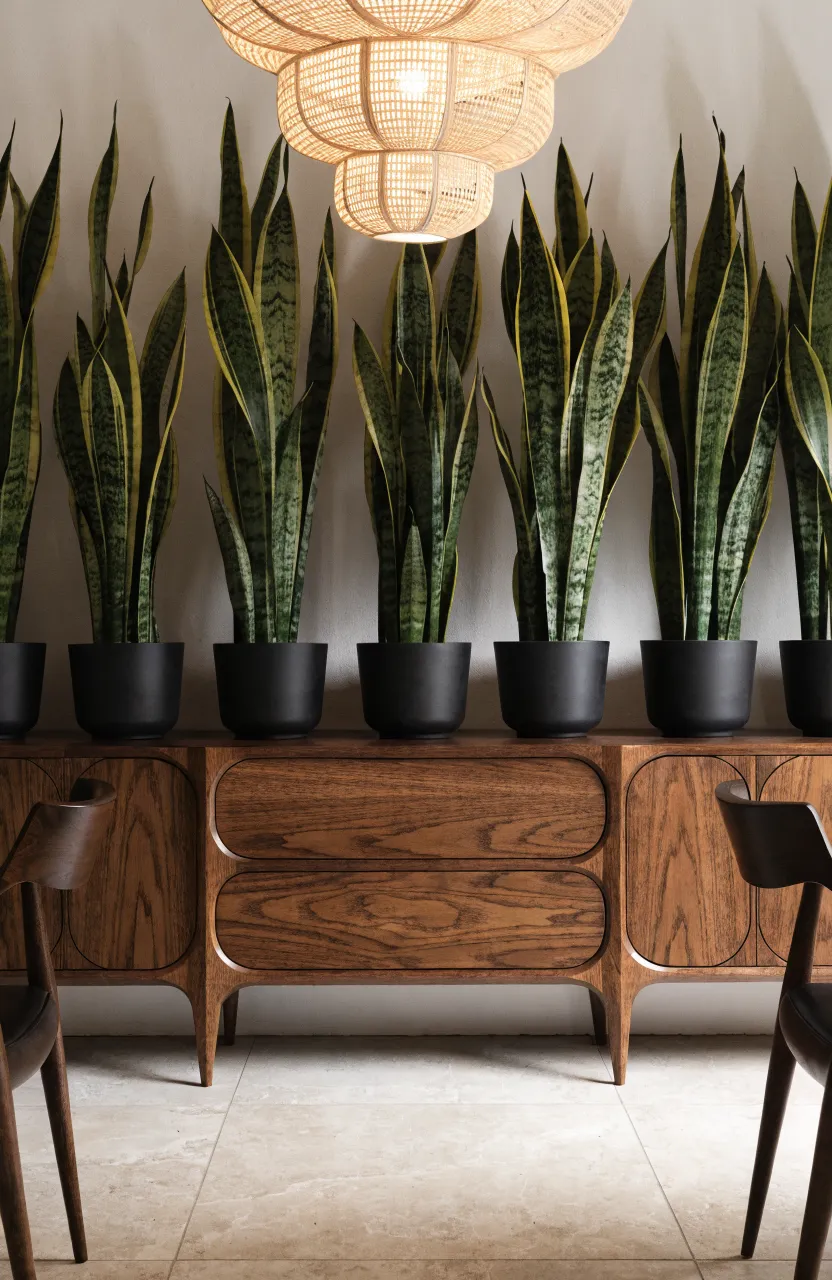
If you have a long sideboard or buffet, use it as a base for a wall of snake plants. Line up several identical pots with tall, upright snake plants. This creates a green screen against the wall that feels structured and clean. Snake plants are also famous for being almost impossible to kill, making this a great low-maintenance option.
Workspace Pegboard with Integrated Small Potted Plants
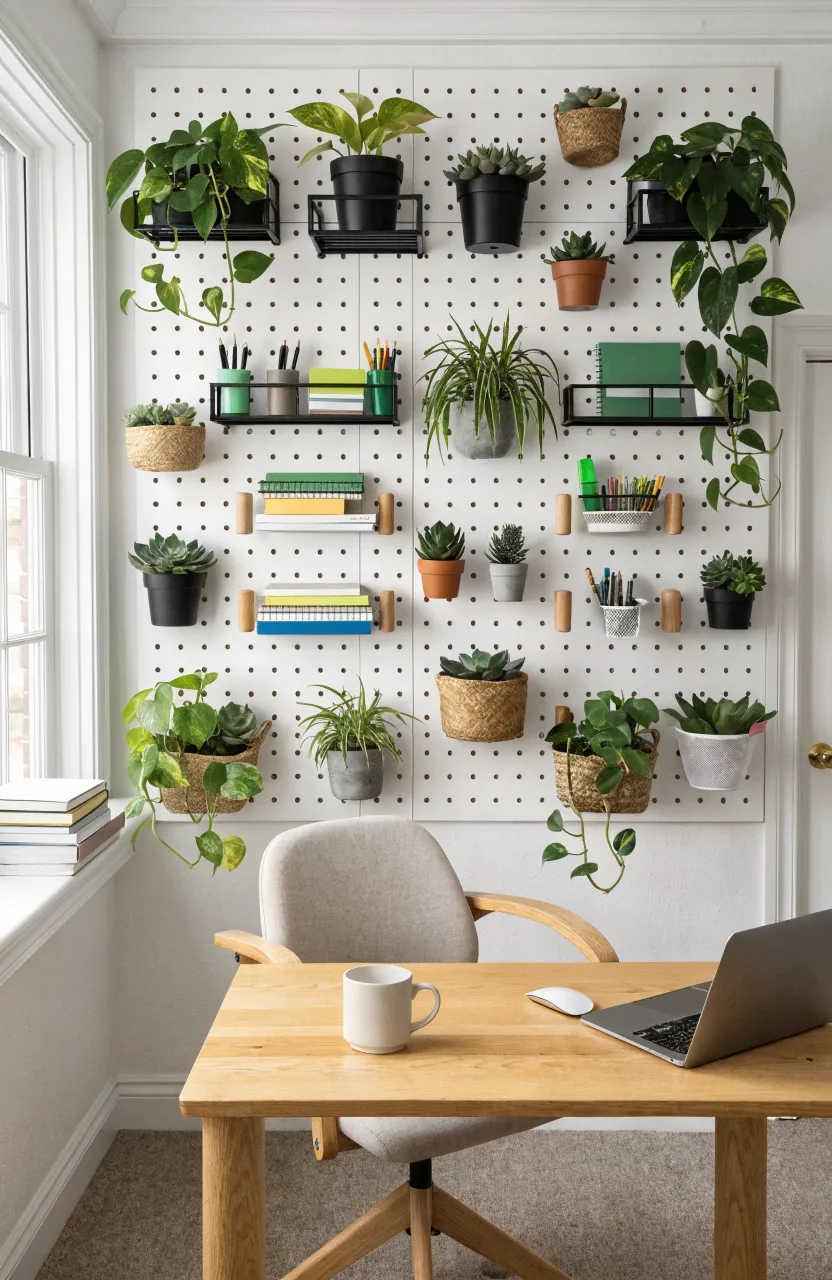
Pegboards are great for organizing tools, but they can also hold plants. Use pegboard rings or small baskets to hold 2-inch or 4-inch pots. Mixing plants in with your office supplies makes your workspace feel more relaxing. It’s a simple way to add some life to your desk area without cluttering your work surface.
Hand-Painted Mural with Attached 3D Plant Pockets

Combine art and nature by painting a simple mural—like a tree or a geometric pattern—and then attaching wall planters to specific spots. For example, you could paint a tree and attach planters where the leaves would be. This adds a fun 3D element to your wall and allows you to be as creative as you want with the design.
Antique Shutter Wall with Metal Pot Rings
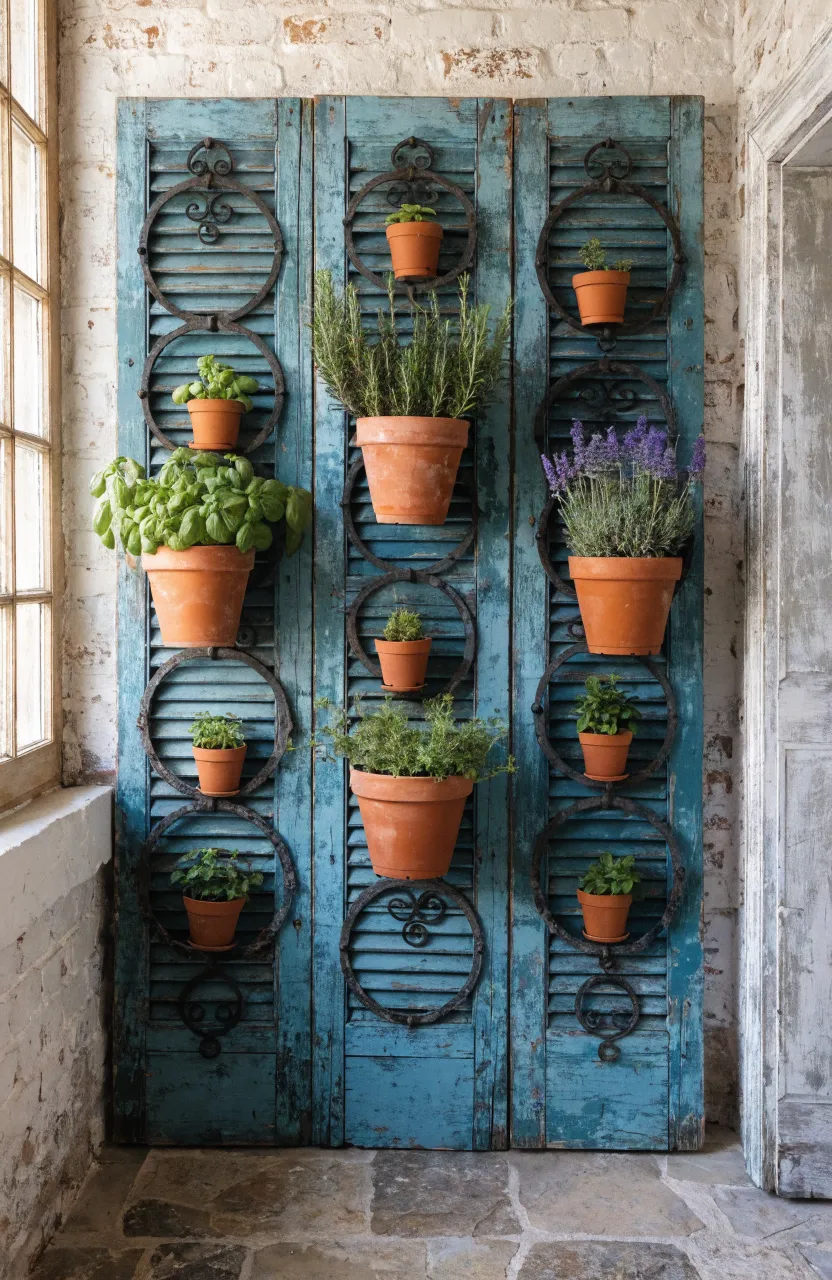
Old window shutters have a lot of character. You can mount them to your wall and use metal pot rings to hold small flowering plants or herbs. The slats in the shutters provide a great texture, and the vintage look adds a sense of history to your home. This works particularly well in a sunroom or a farmhouse-style kitchen.
Minimalist White Wall with Single Large Monstera Leaf Vases
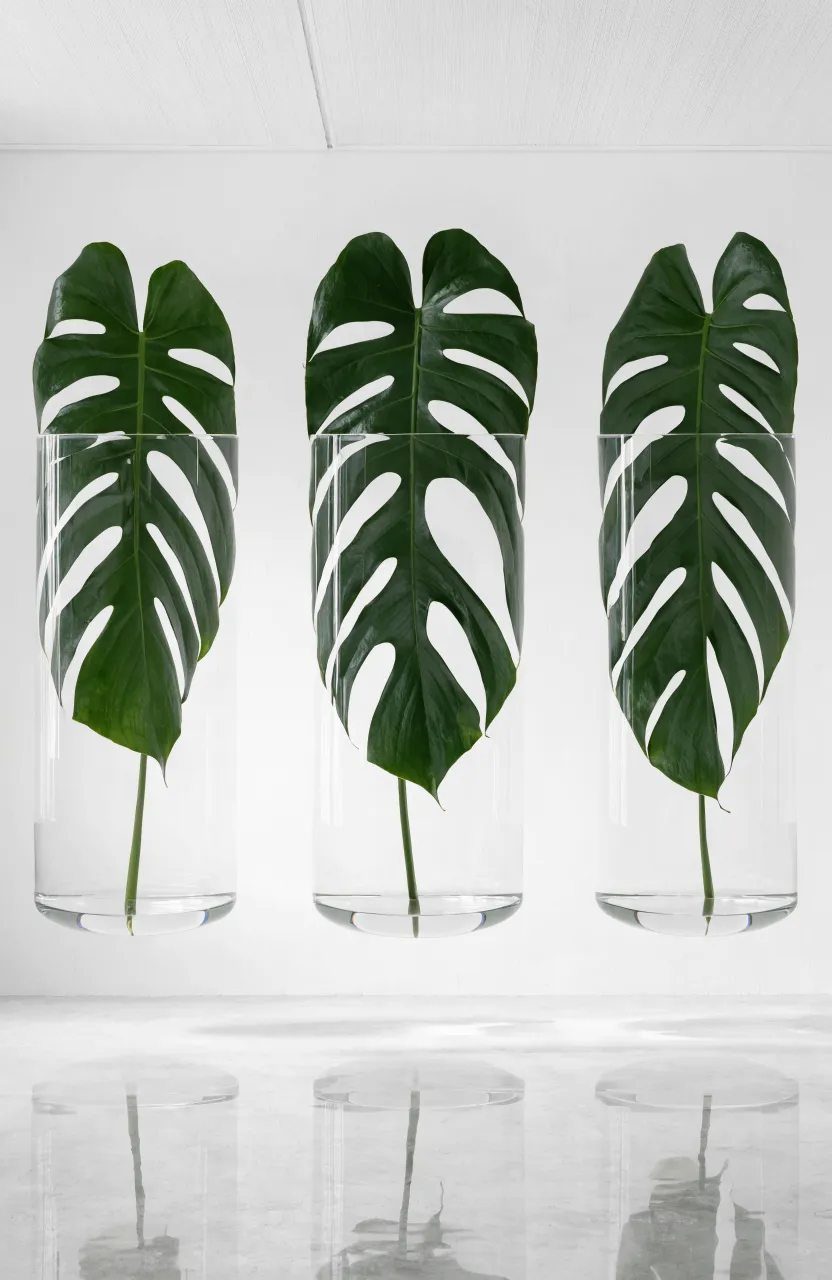
Sometimes less is more. For a very clean look, mount a few simple white or glass vases to a white wall. Place a single, large Monstera Deliciosa leaf in each vase with water. These leaves can stay green for weeks or even months in water. It’s a high-impact look that feels like a modern art gallery.
Woven Seagrass Baskets Mounted as Wall Planters
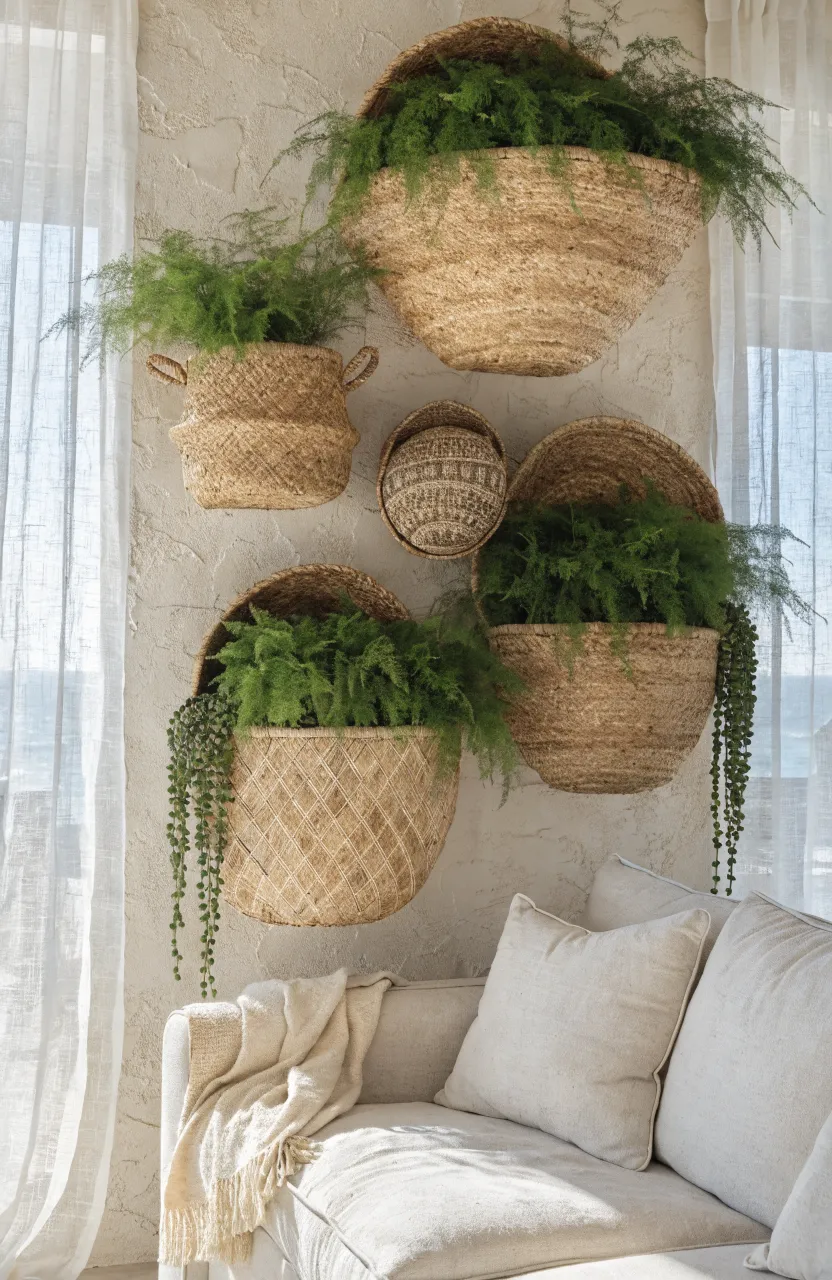
Seagrass baskets add a soft, coastal texture to a room. You can line them with plastic and use them as wall-mounted planters. They look great when grouped in odd numbers. Use plants with soft foliage, like Asparagus Ferns, to complement the woven texture of the baskets.
Custom Neon Sign Surrounded by Faux Tropical Foliage
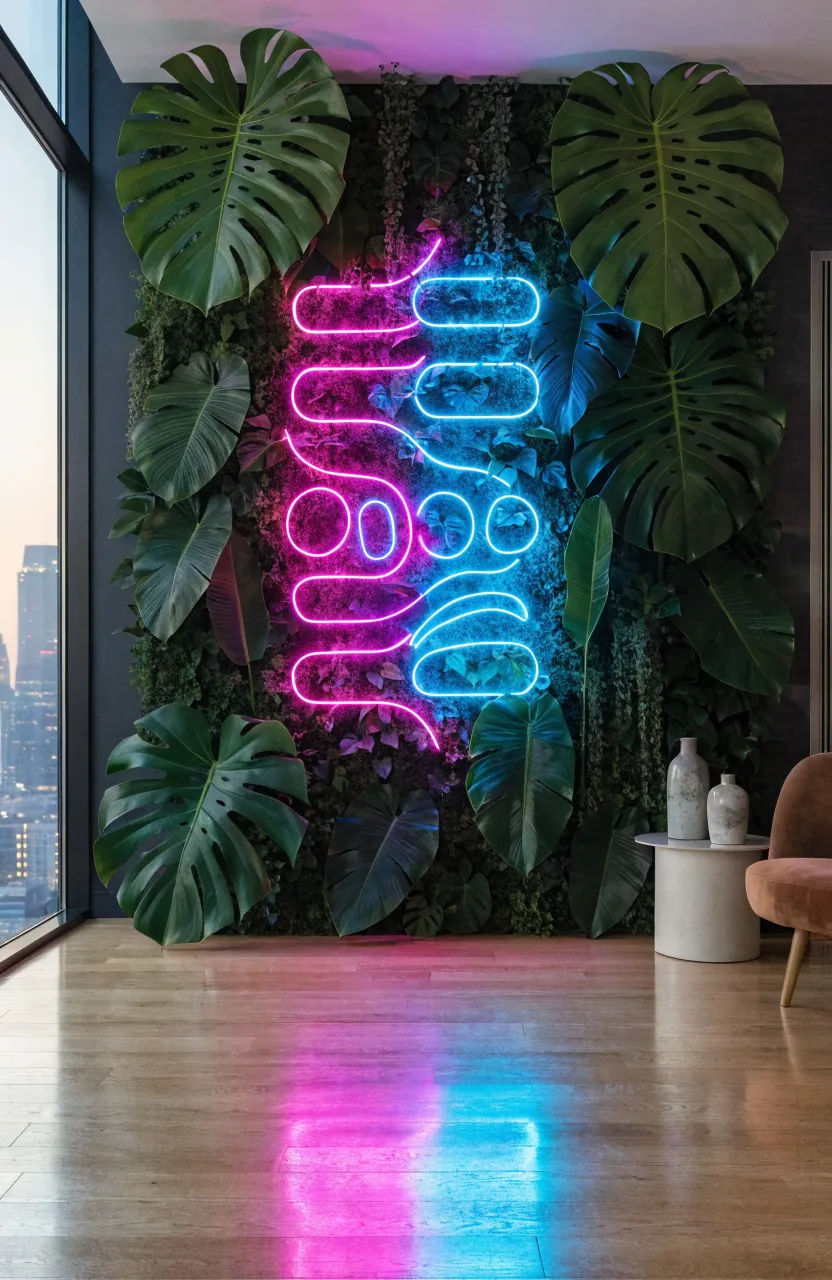
For a trendy, high-energy look, mount a neon sign on your wall and surround it with a faux plant wall of tropical leaves. The light from the neon will catch the edges of the leaves, creating a cool glow. Using faux plants here is safer because you don’t have to worry about watering near electrical components, and the look stays perfect year-round.