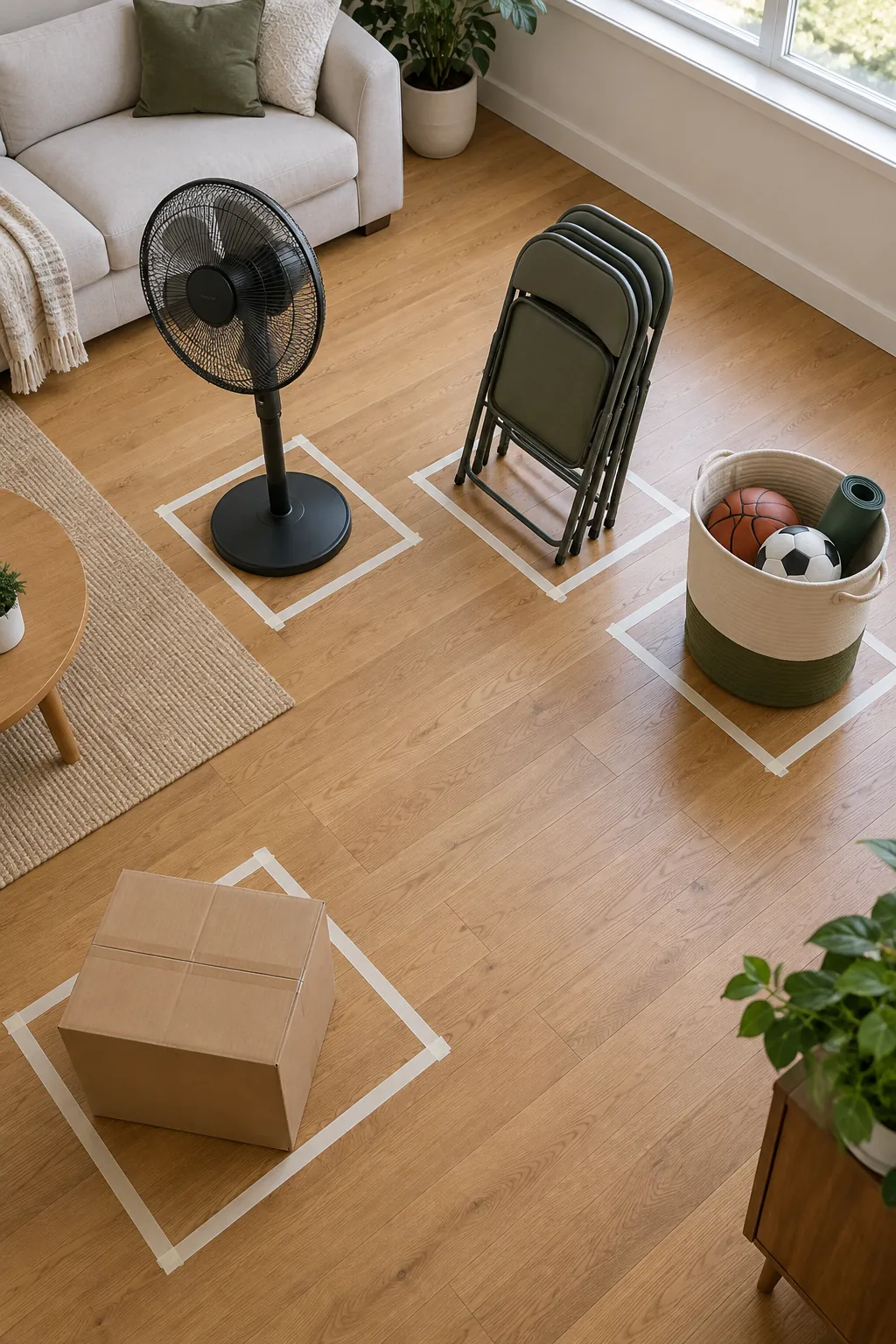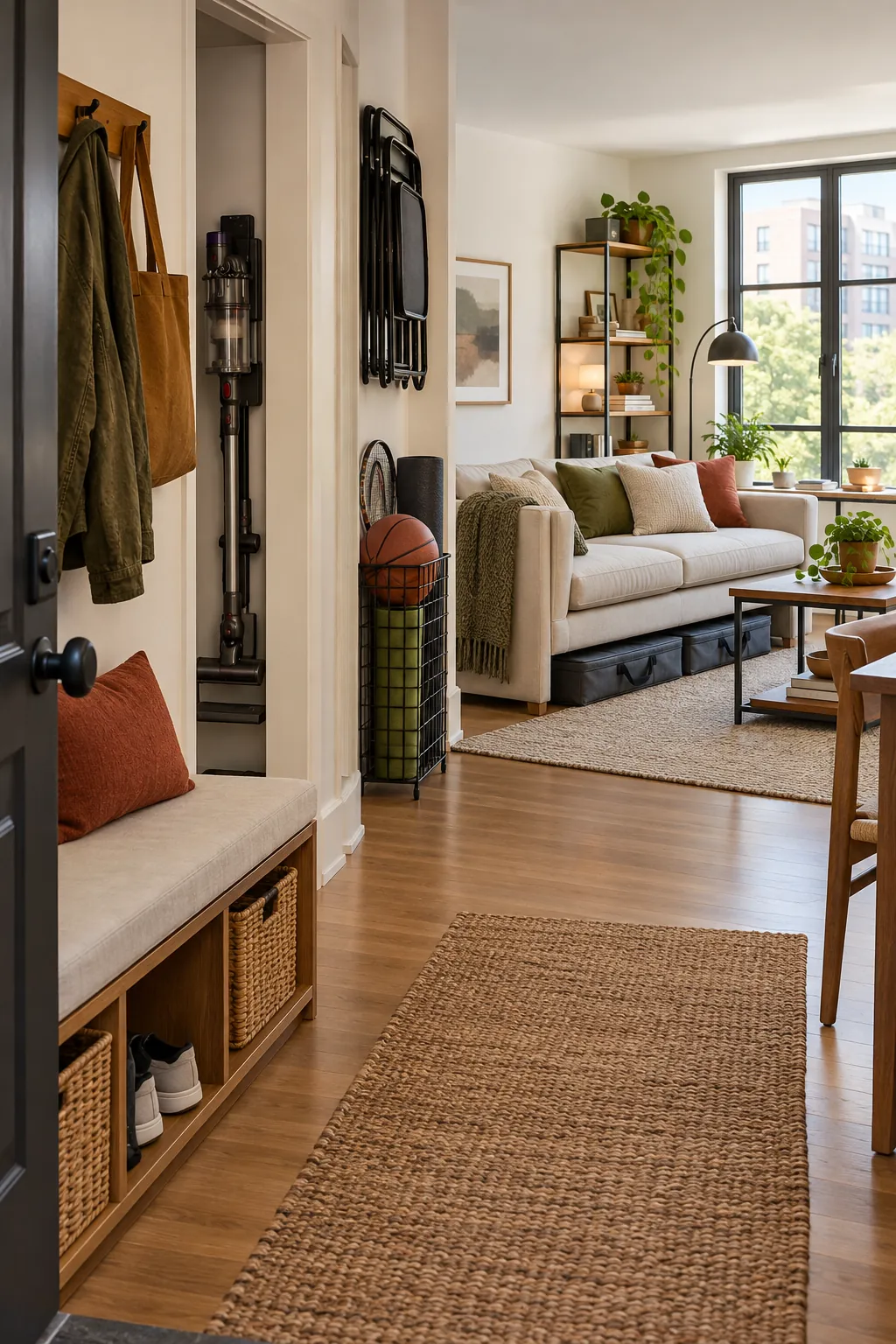
Bulky belongings become clutter when they have no safe orientation, no fixed footprint, and no clear access rule. Before adding containers, measure the item at its widest point and decide whether it belongs low, vertical, flat, or overhead. The best small apartment storage protects daily circulation without turning every wall into a warehouse.
Dock the Vacuum on a Utility Wall
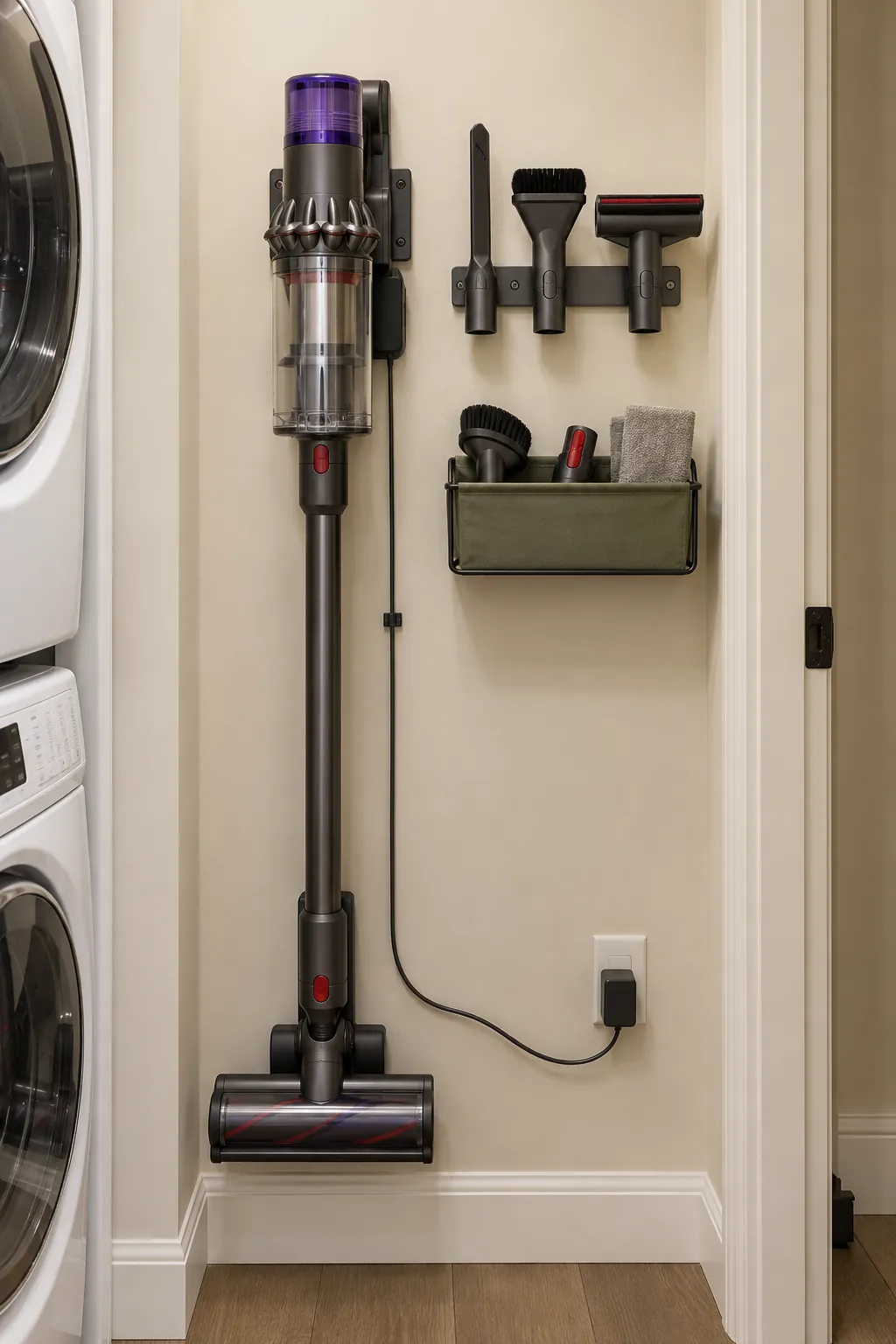
Mount a compatible vacuum dock on a utility wall or inside a sturdy cabinet. Keep attachments in one shallow basket beside it so the floor head stays easy to reach. Confirm the wall can hold the load and route the charging cable away from moisture.
Hang Mops Behind a Door
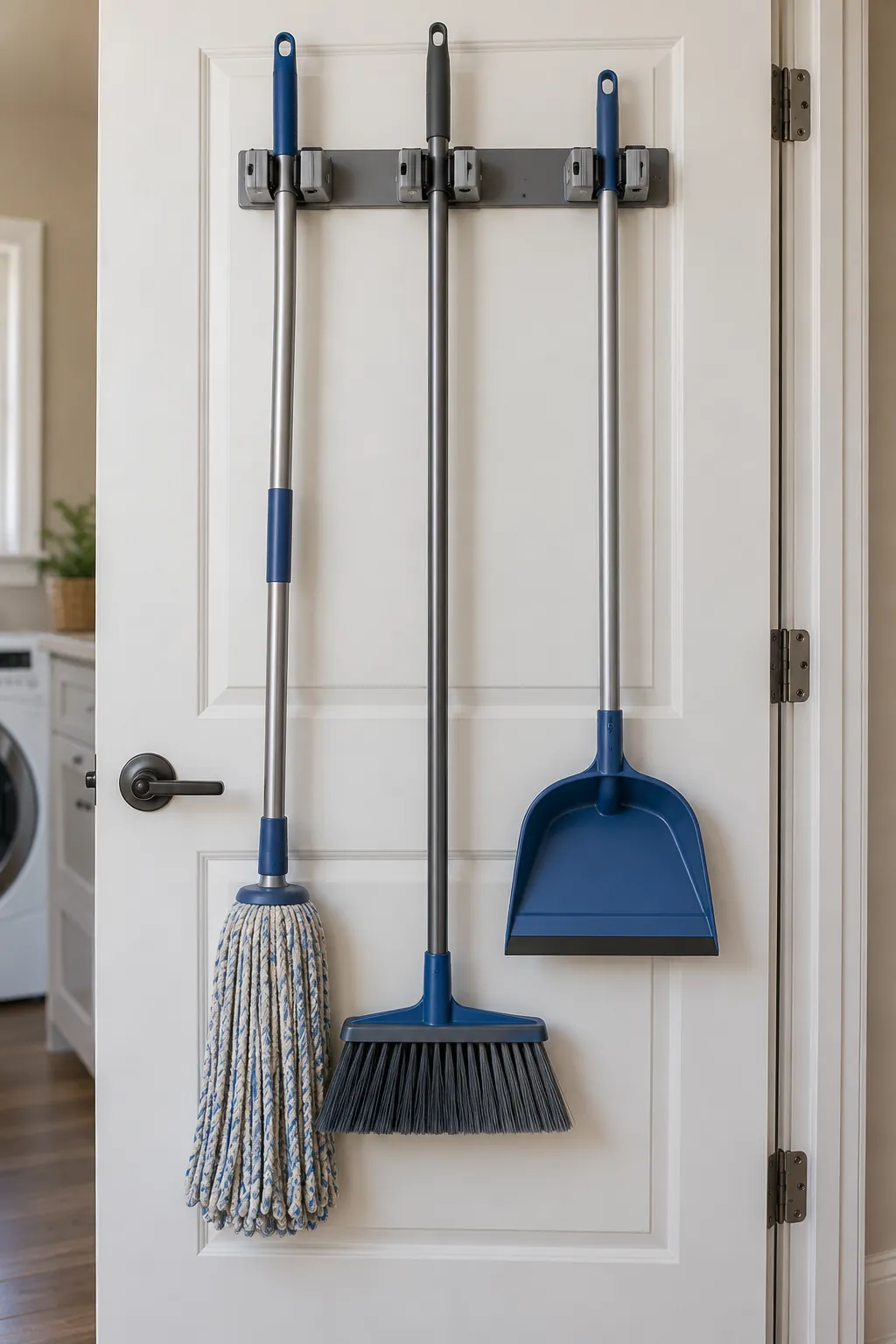
A gripping rail behind a laundry or bathroom door can hold a mop, broom, and dustpan upright. Space the clips so damp heads do not touch the wall. Check that the door opens fully and that tools cannot fall into the walkway.
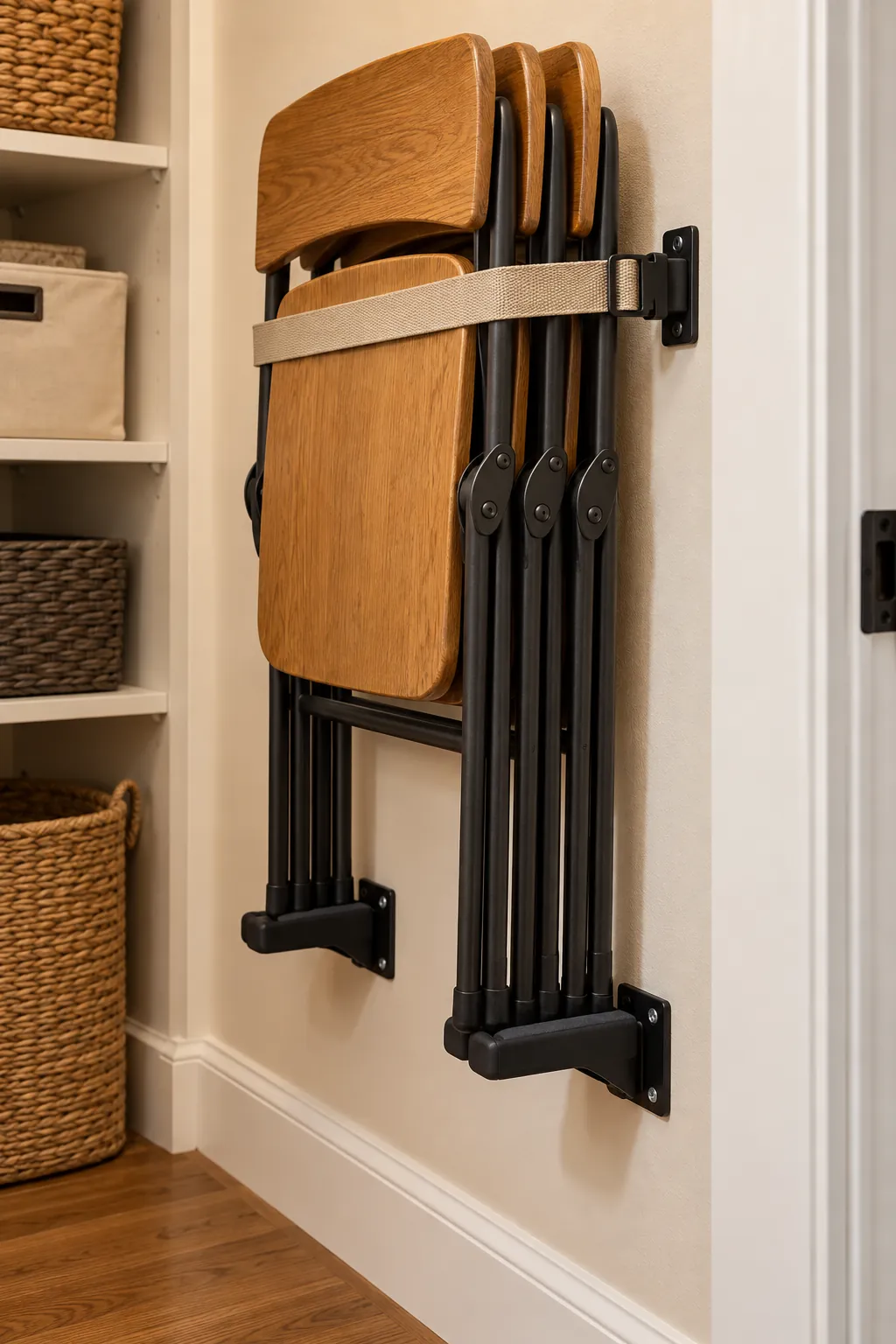
Mount Folding Chairs on Low Brackets
Store folding chairs flat against a wall on brackets rated for their combined weight. Keep the lowest edge above baseboard level but within safe adult reach. A strap around the folded frames prevents rattling and accidental opening.
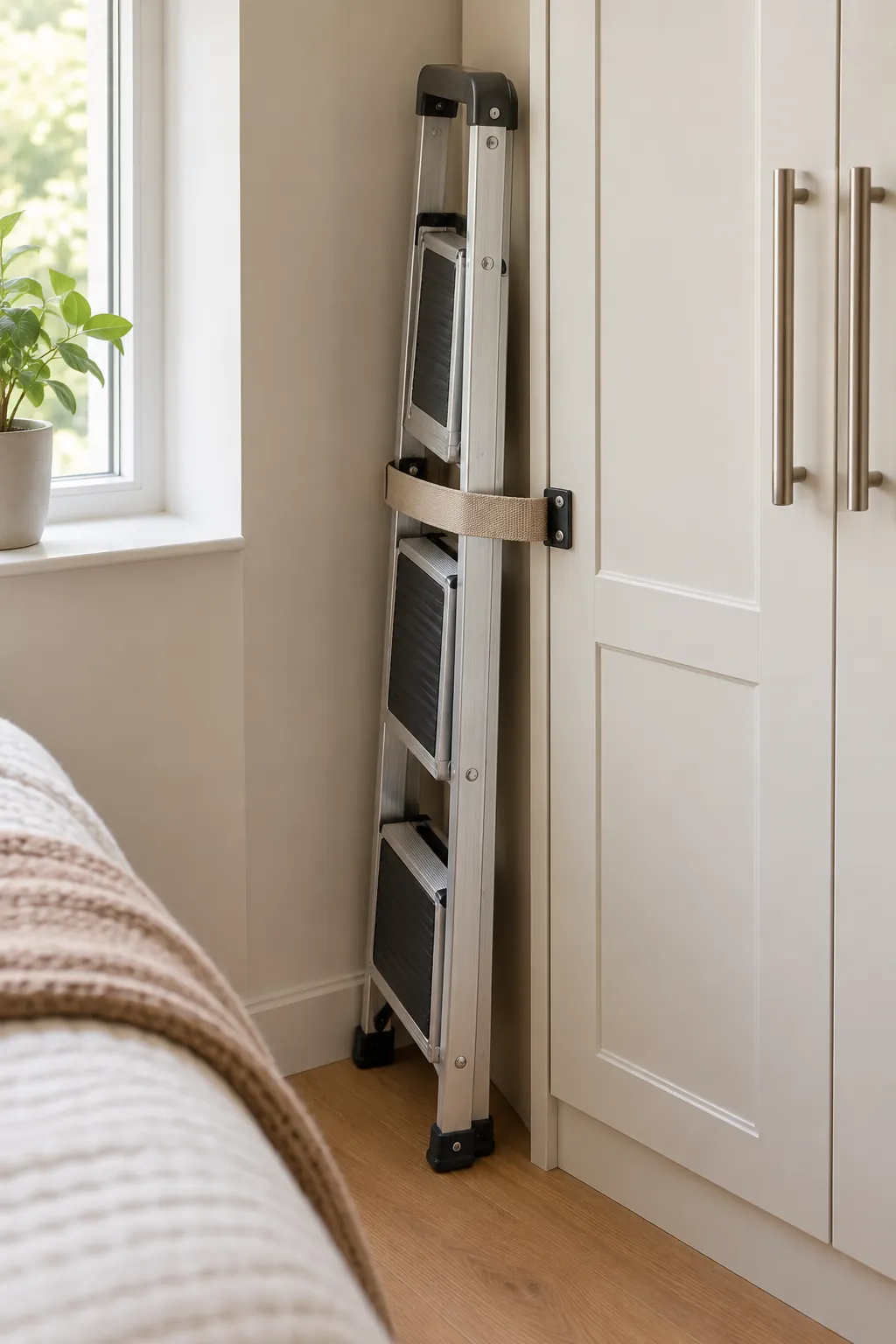
Slide a Step Ladder Beside the Wardrobe
A narrow gap beside a wardrobe can hold a folded step ladder when the floor is level and dry. Add a simple retainer so it cannot tip outward. Keep the ladder visible enough that reaching high storage does not require moving half the room.
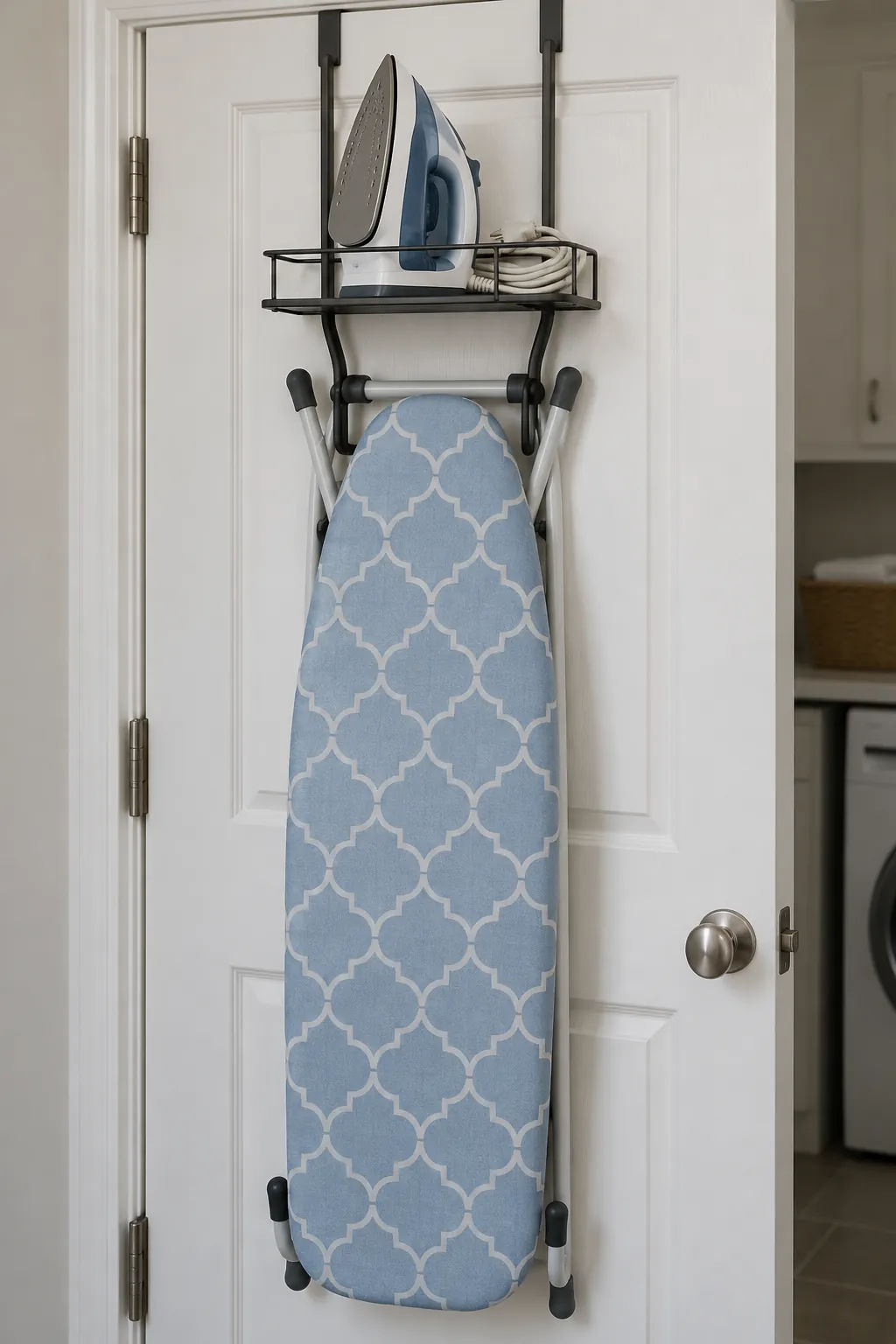
Use a Door Rack for the Ironing Board
An ironing board can hang vertically on a door rack with the iron on a heat safe shelf above. Let every item cool and dry before storage. Balance the load so hinges and door movement remain smooth.
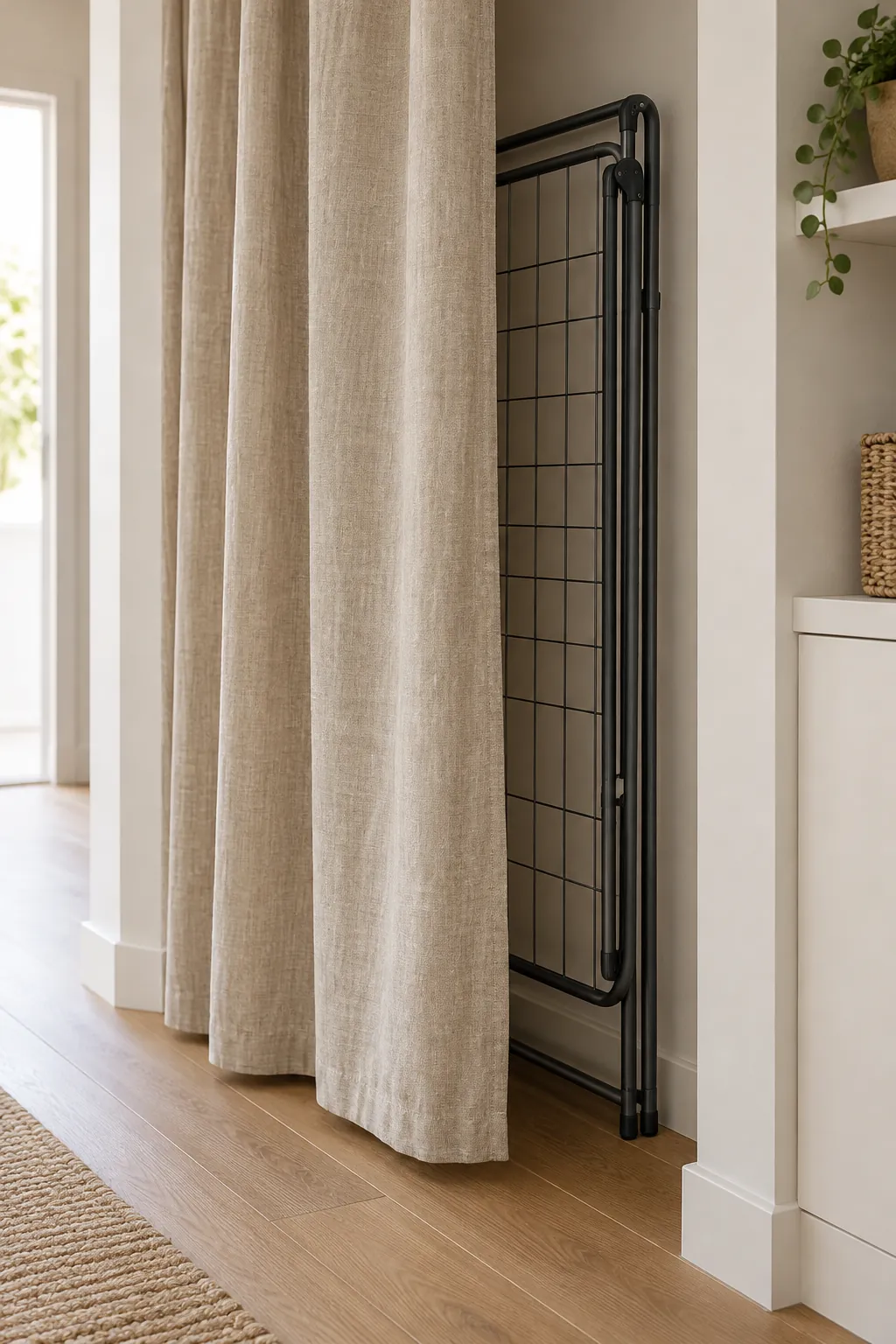
Hide a Drying Rack Behind a Curtain
A slim folding drying rack can stand in a shallow wall recess behind a washable curtain. Store it only when completely dry to prevent trapped moisture. The curtain track uses less aisle space than a cabinet door.
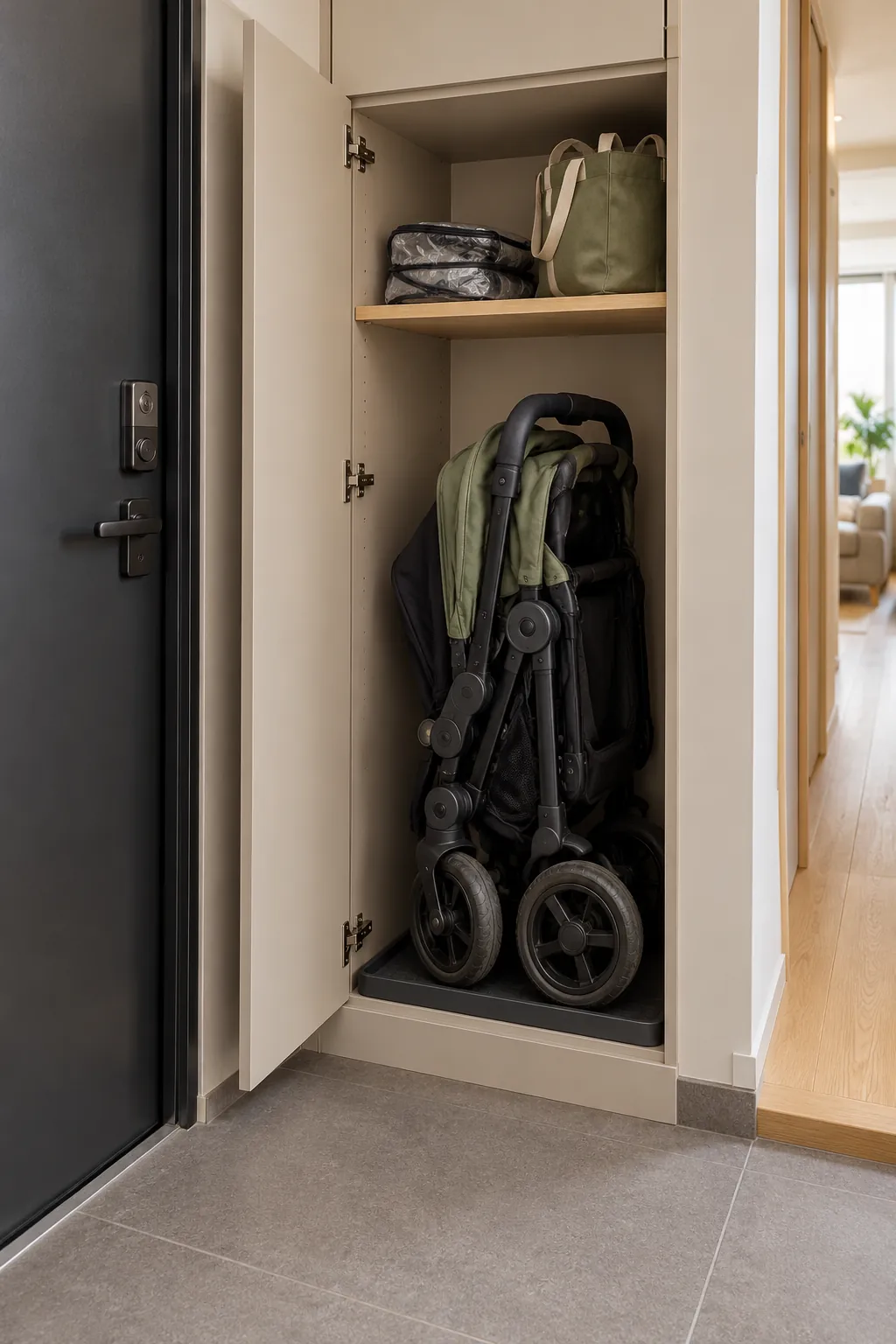
Park the Stroller in an Entry Cabinet
Use a tall entry cabinet with an open lower bay for a folded stroller and a shelf for rain covers. Protect the cabinet floor with a washable tray. Maintain a clear exit route and never block required building access.
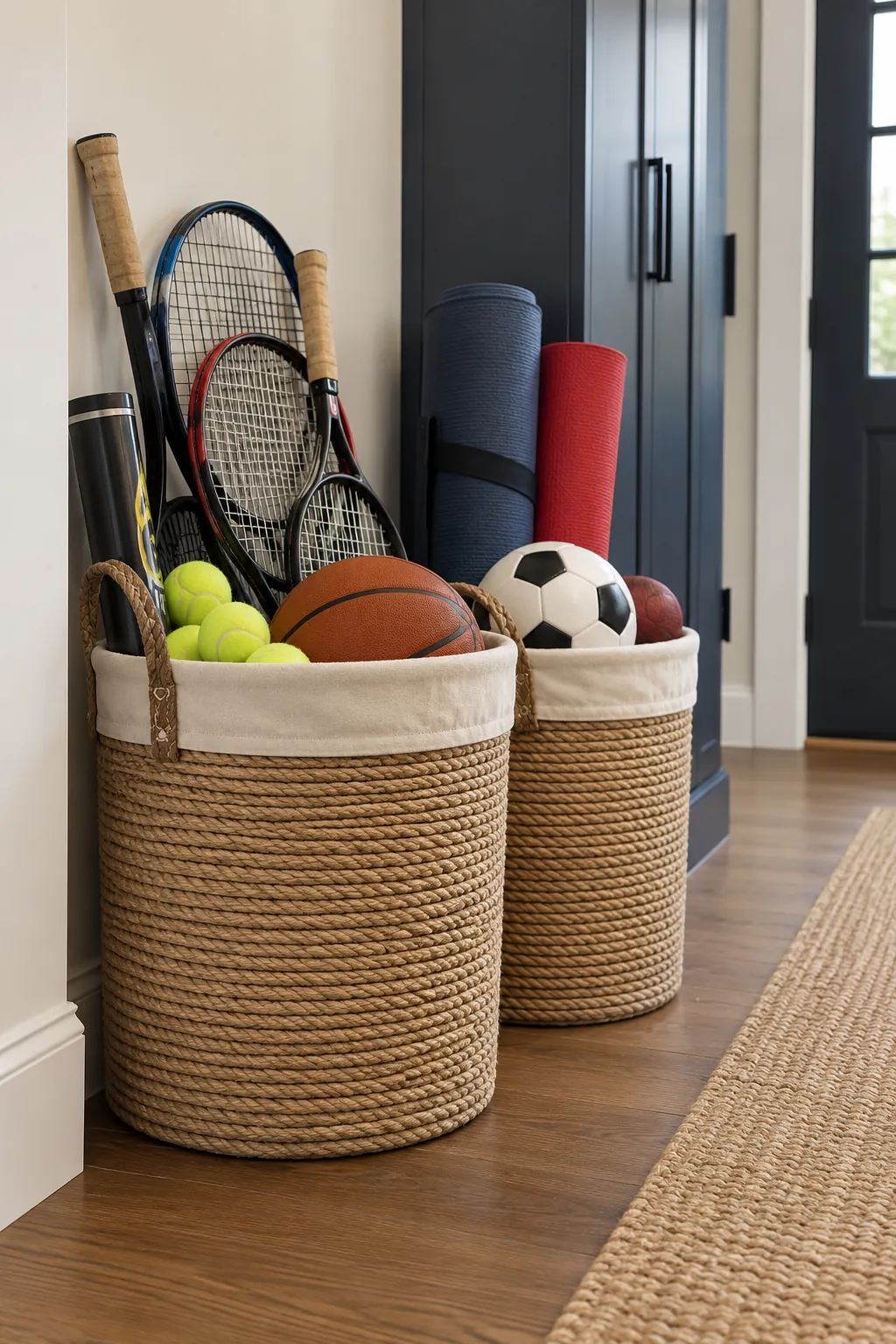
Contain Sports Gear in Tall Baskets
Tall stable baskets can hold rackets, rolled mats, and balls that collapse ordinary shelves. Put washable liners inside when gear returns from outdoors. Keep heavy weights elsewhere and angle long items inward so they cannot fall into the room.
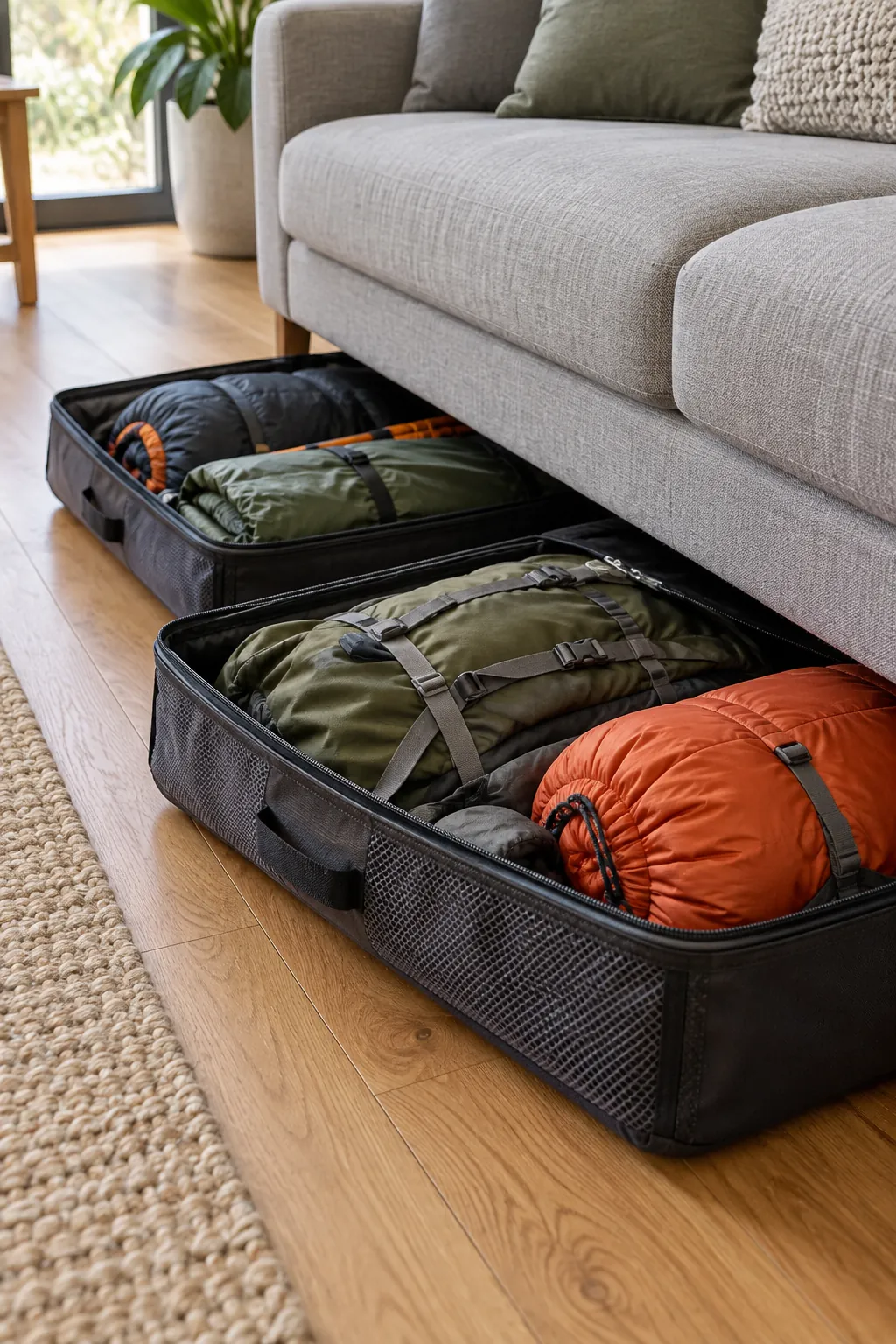
Flatten Camping Gear Under the Sofa
Soft camping gear can spread into shallow cases beneath a sofa rather than filling a tall closet. Clean and dry every item before sealing it. Keep frequently used day packs near the front and seasonal tents farther back.
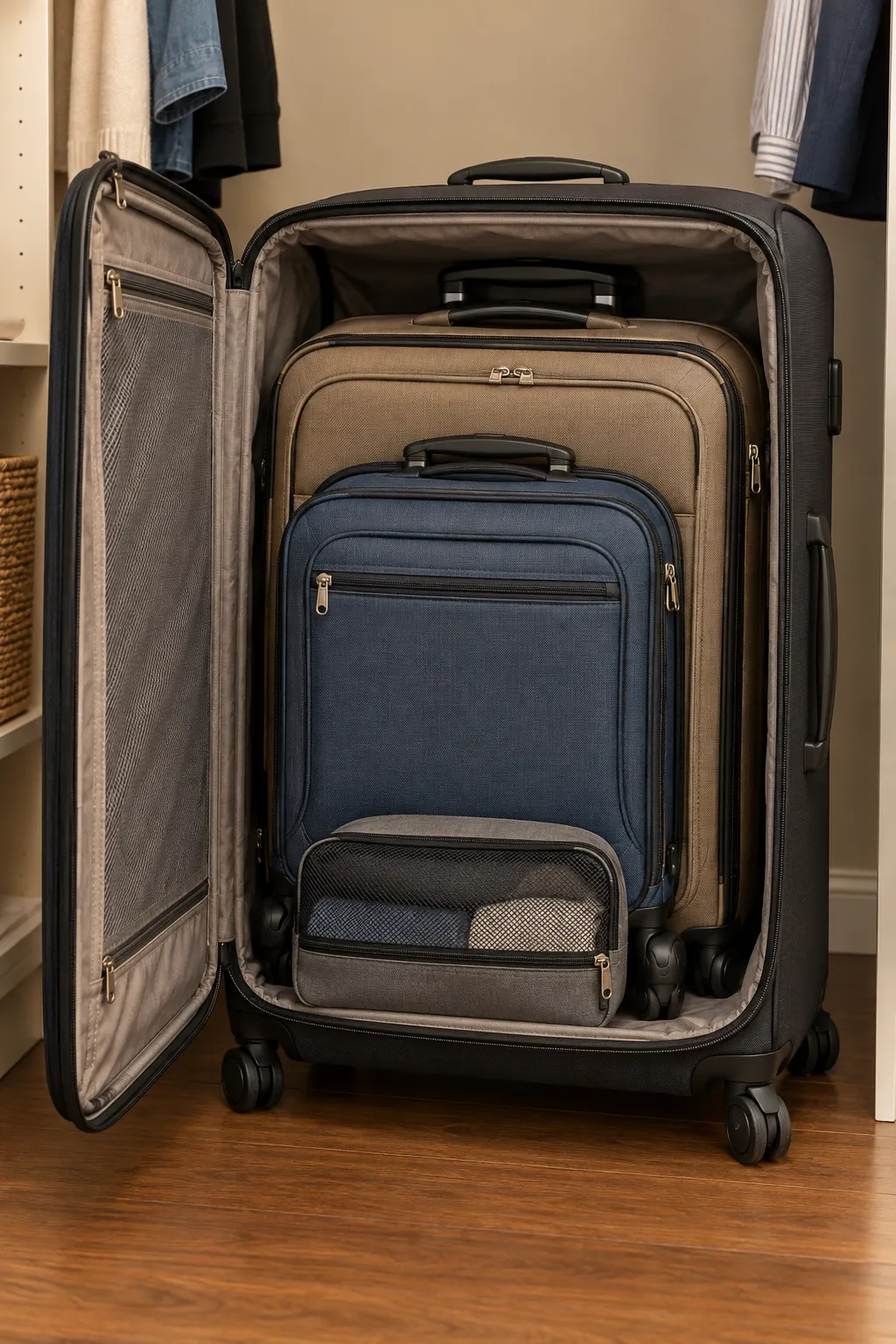
Nest Smaller Suitcases Inside the Largest
Empty luggage wastes volume when each case is stored separately. Nest clean smaller cases inside the largest while keeping travel accessories in a packing cube. Leave wheels and handles uncompressed so they do not deform.
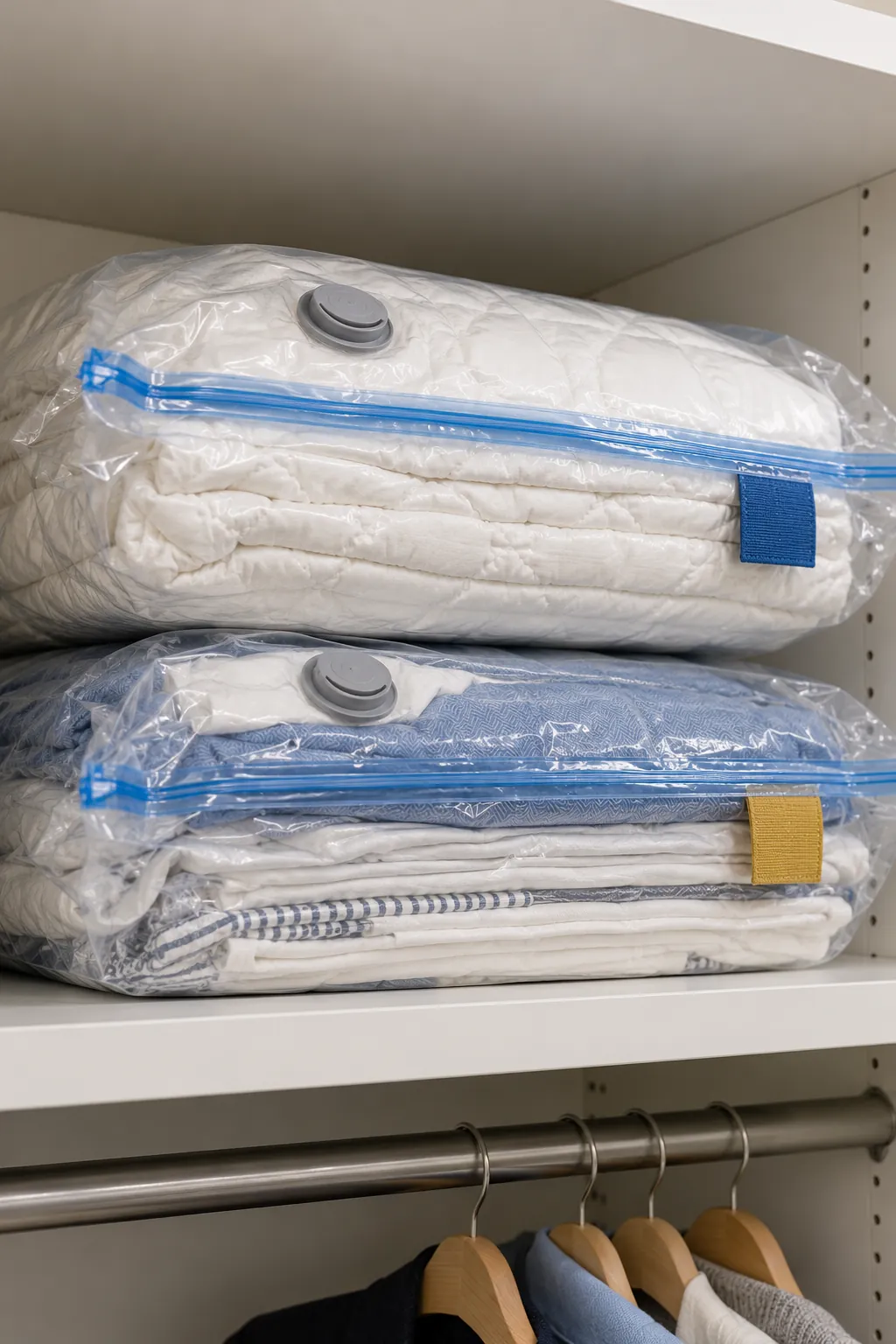
Compress Guest Bedding in Labeled Bags
Vacuum bags reduce the volume of washable guest quilts and spare sheets. Label each bag by bed size and store it flat where the seal is not pinched. Avoid compressing delicate filled bedding that may not recover its loft.
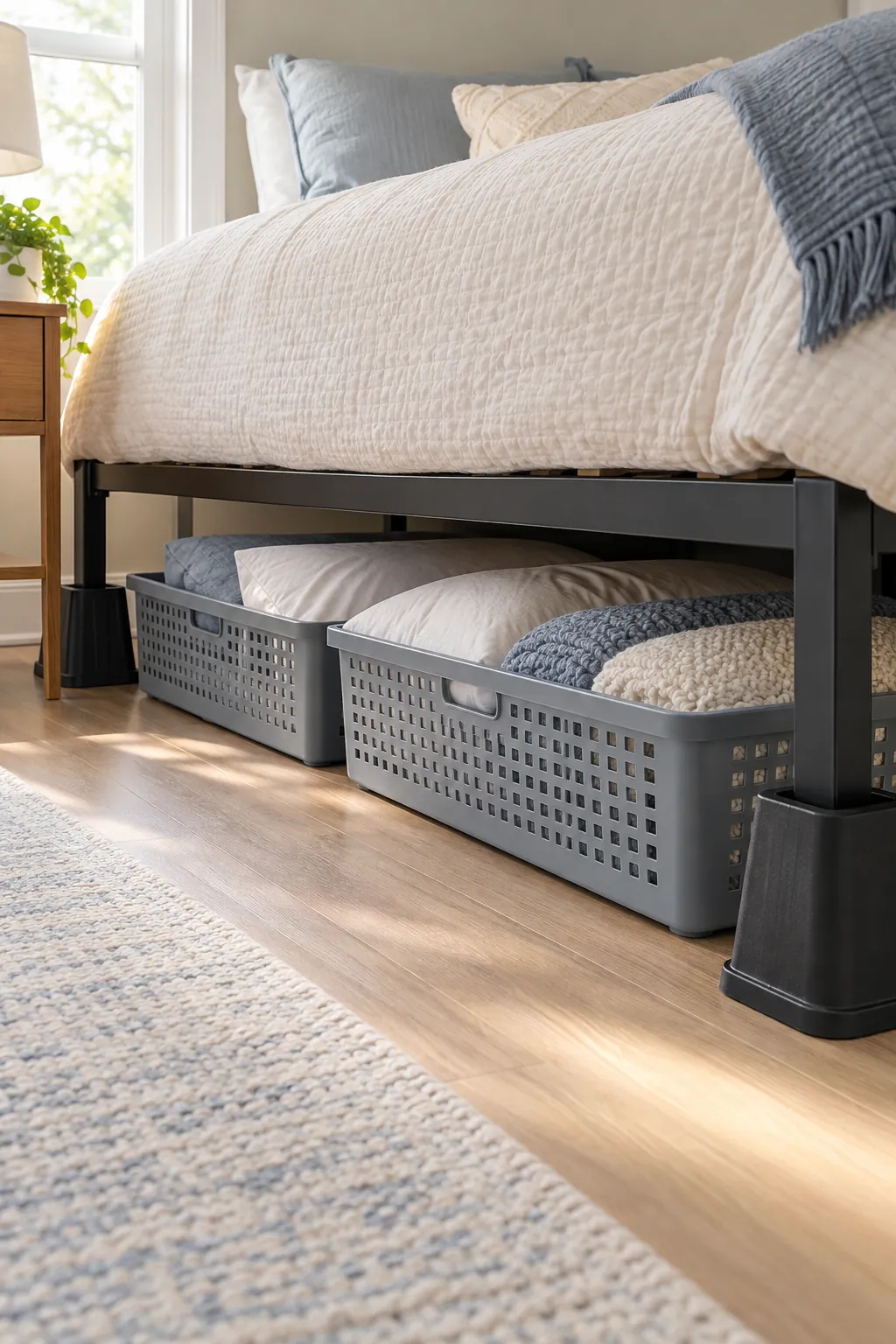
Raise the Bed for Pillow Bins
Stable bed risers can create enough height for broad bins holding spare pillows and bulky throws. Use risers designed for the bed frame and keep all supports equal. Choose vented containers so clean textiles do not develop stale odors.
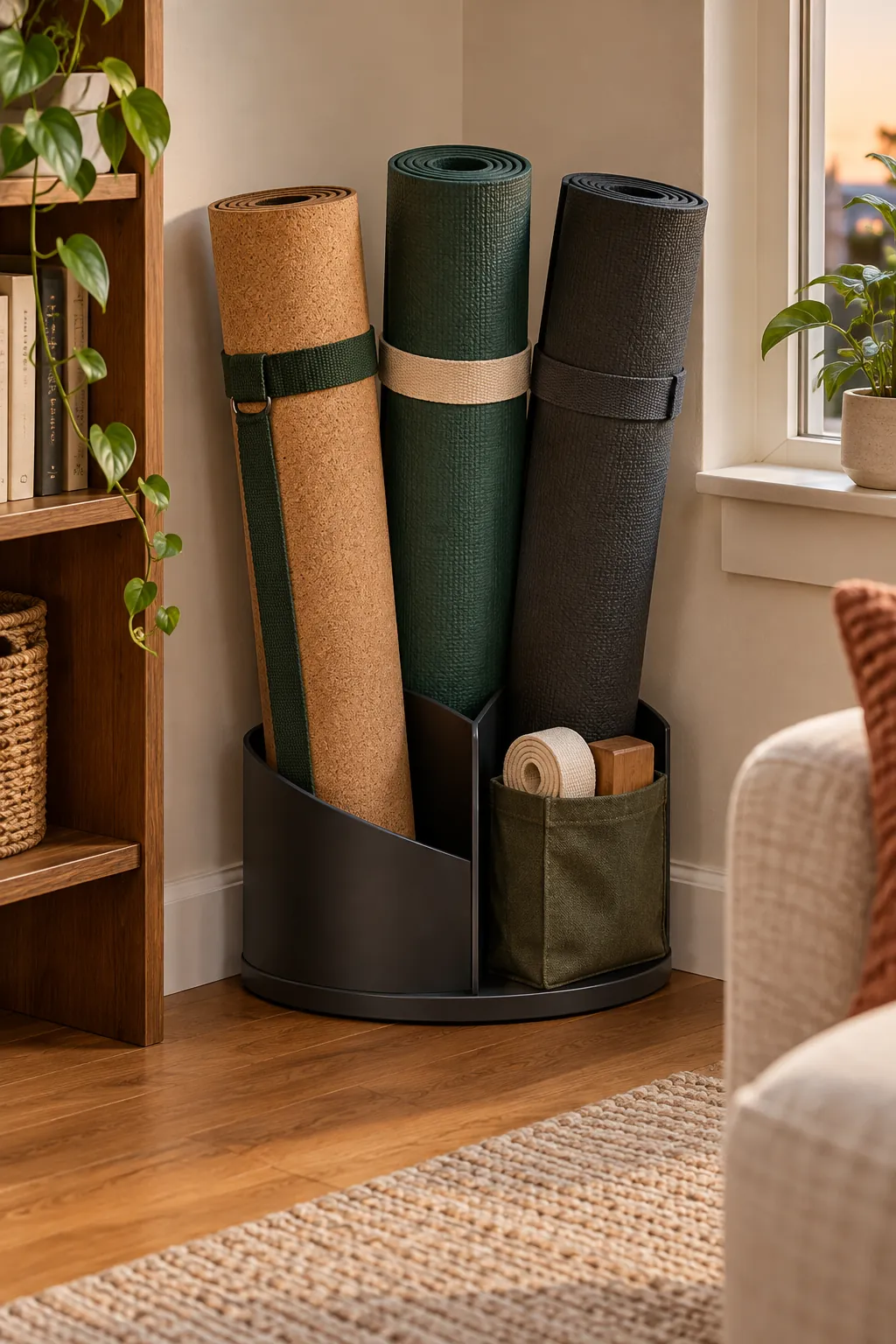
Stand Yoga Mats in a Weighted Holder
A weighted vertical holder keeps rolled yoga mats from spreading across a closet shelf. Store straps in a small attached pouch and let damp mats dry first. Place the holder in a corner where tall rolls cannot tip into circulation.
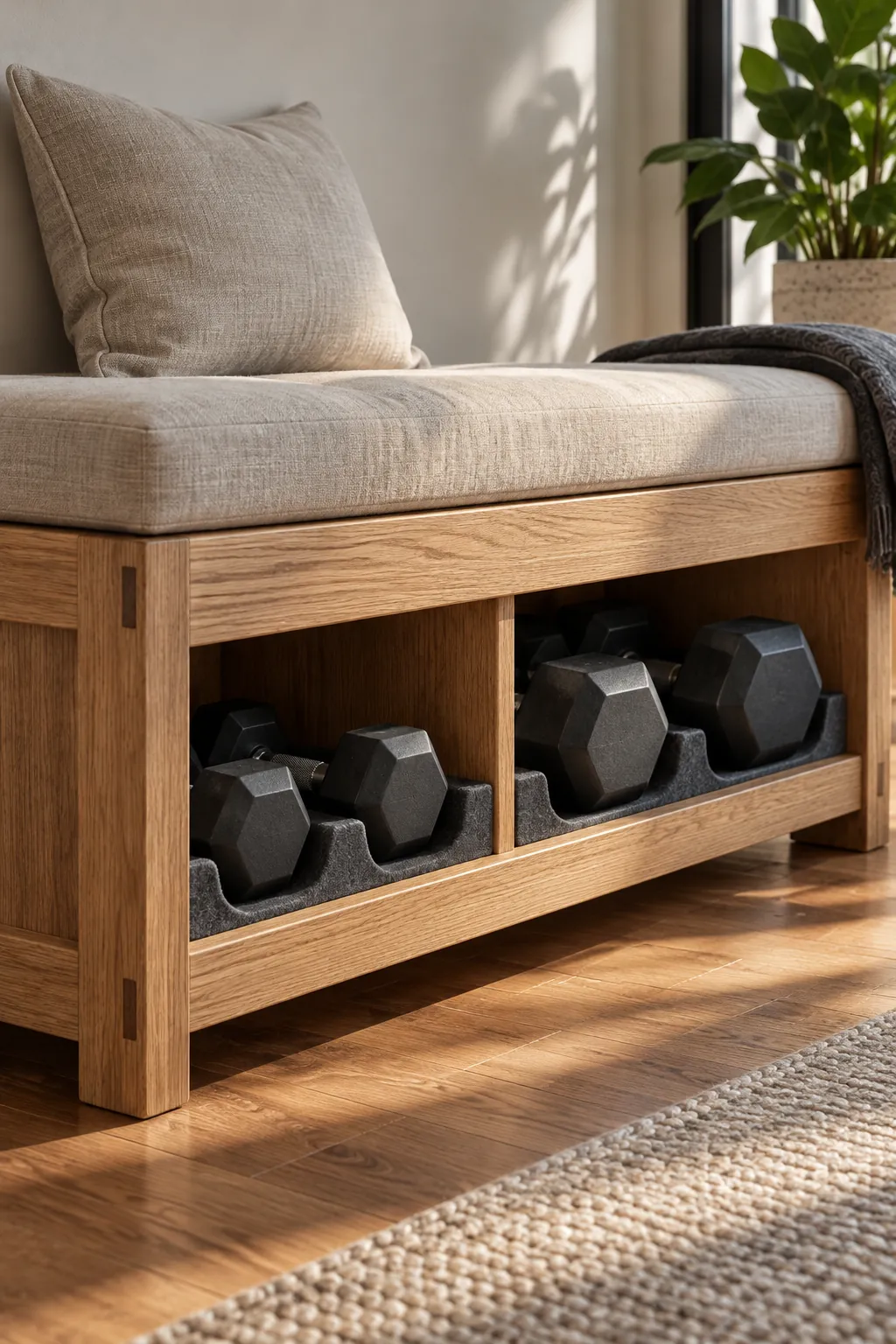
Build a Low Bench for Hand Weights
Dense exercise equipment belongs low, close to the strongest part of the floor. A reinforced bench with open bottom bays can hold hand weights while adding a seat. Use fitted cradles so round weights cannot roll toward feet.
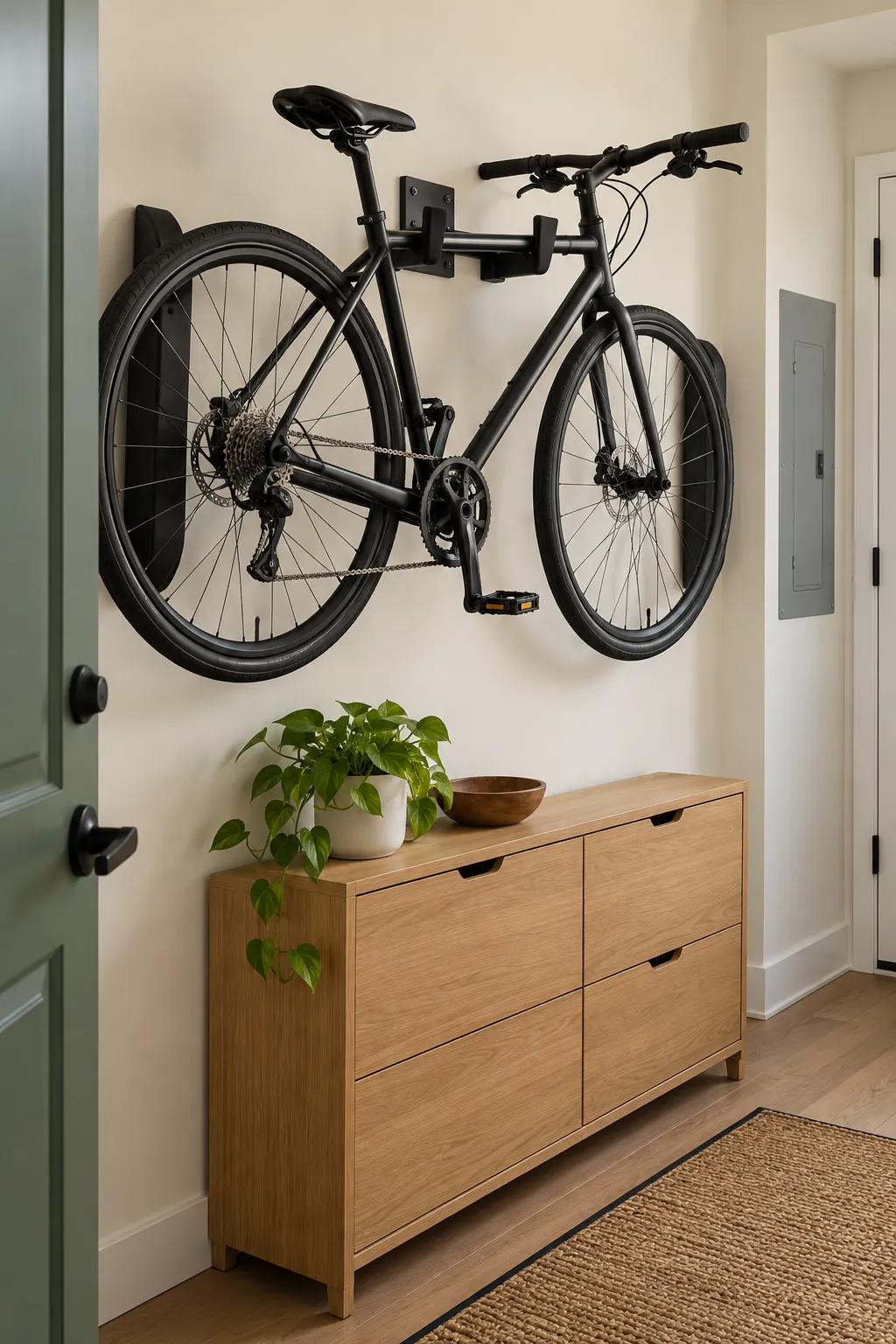
Hang a Bicycle on a Rated Rack
A bicycle can mount vertically or horizontally when the wall, hardware, and lease permit it. Keep pedals and handlebars away from head level and protect the wall from dirty tires. Lift only a bicycle that the user can handle safely.
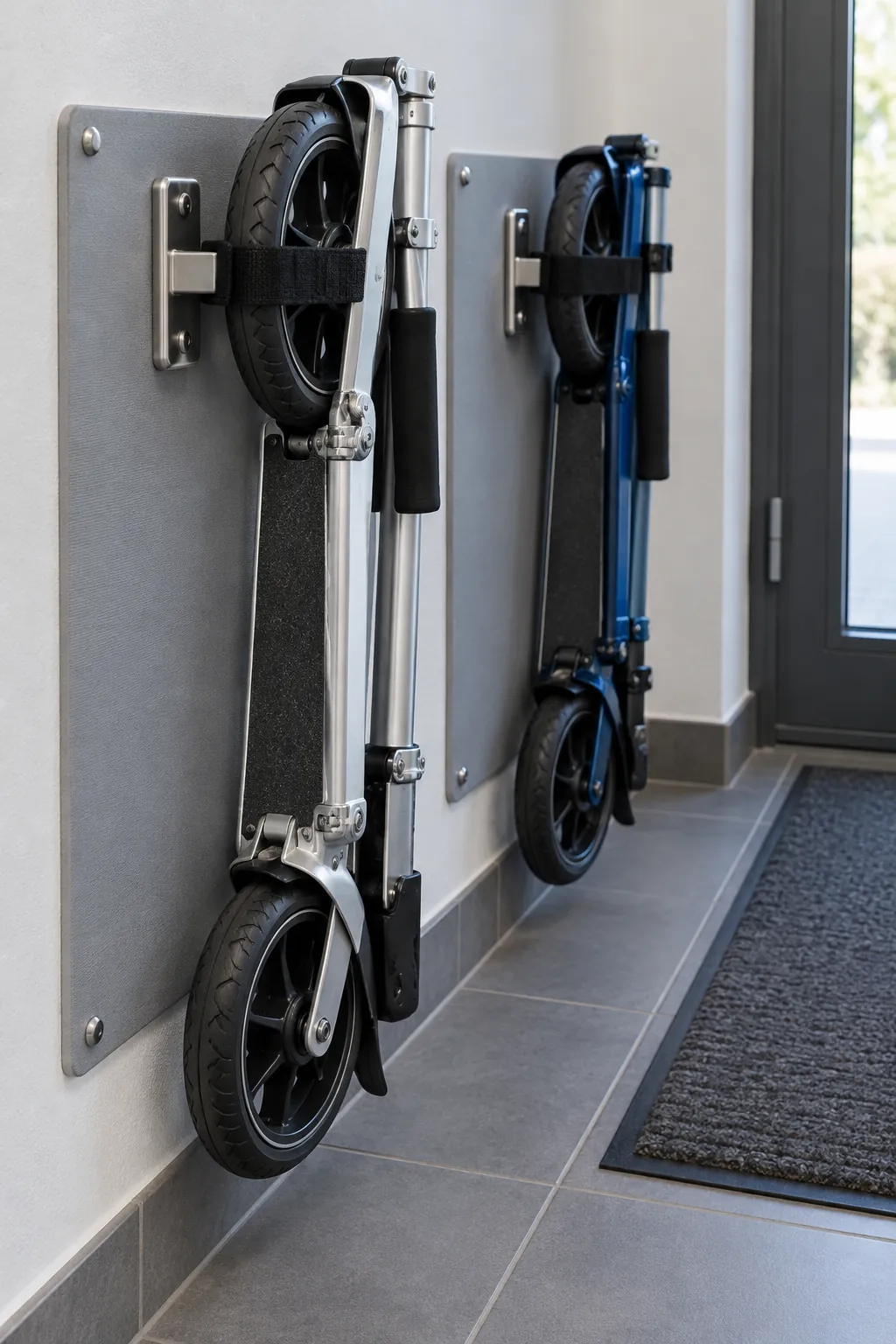
Clip Scooters to Entry Wall Hooks
Fold scooters and secure them to low locking hooks rather than leaning them loosely. Add a washable wall guard behind the wheels. Position the hooks away from the main exit route and any electrical panel.
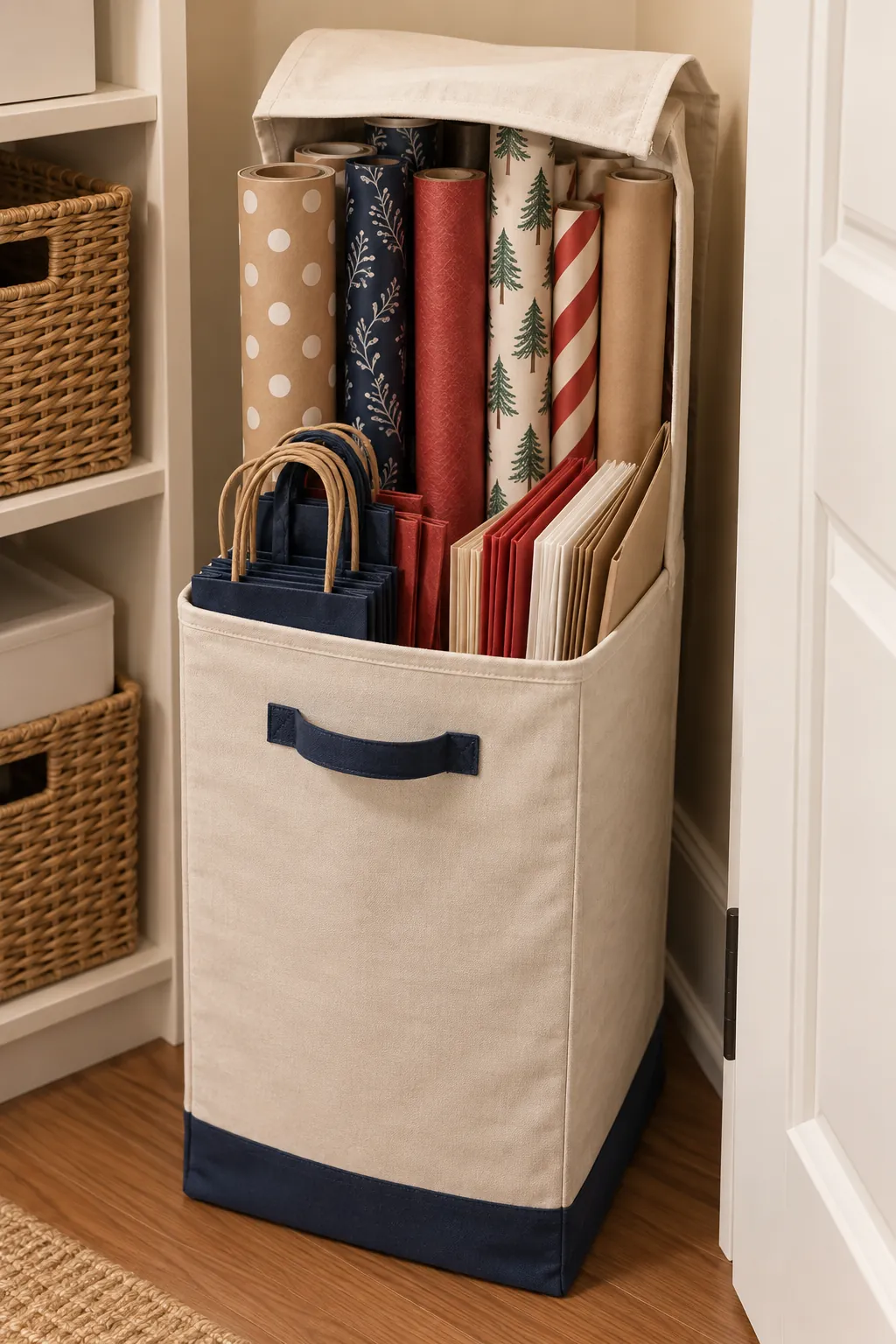
Stand Wrapping Paper in a Slim Bin
A tall narrow bin keeps paper rolls upright without consuming a shelf. Use an internal divider for reusable gift bags and flat tissue paper. Cap or cover the rolls if the storage spot collects dust.
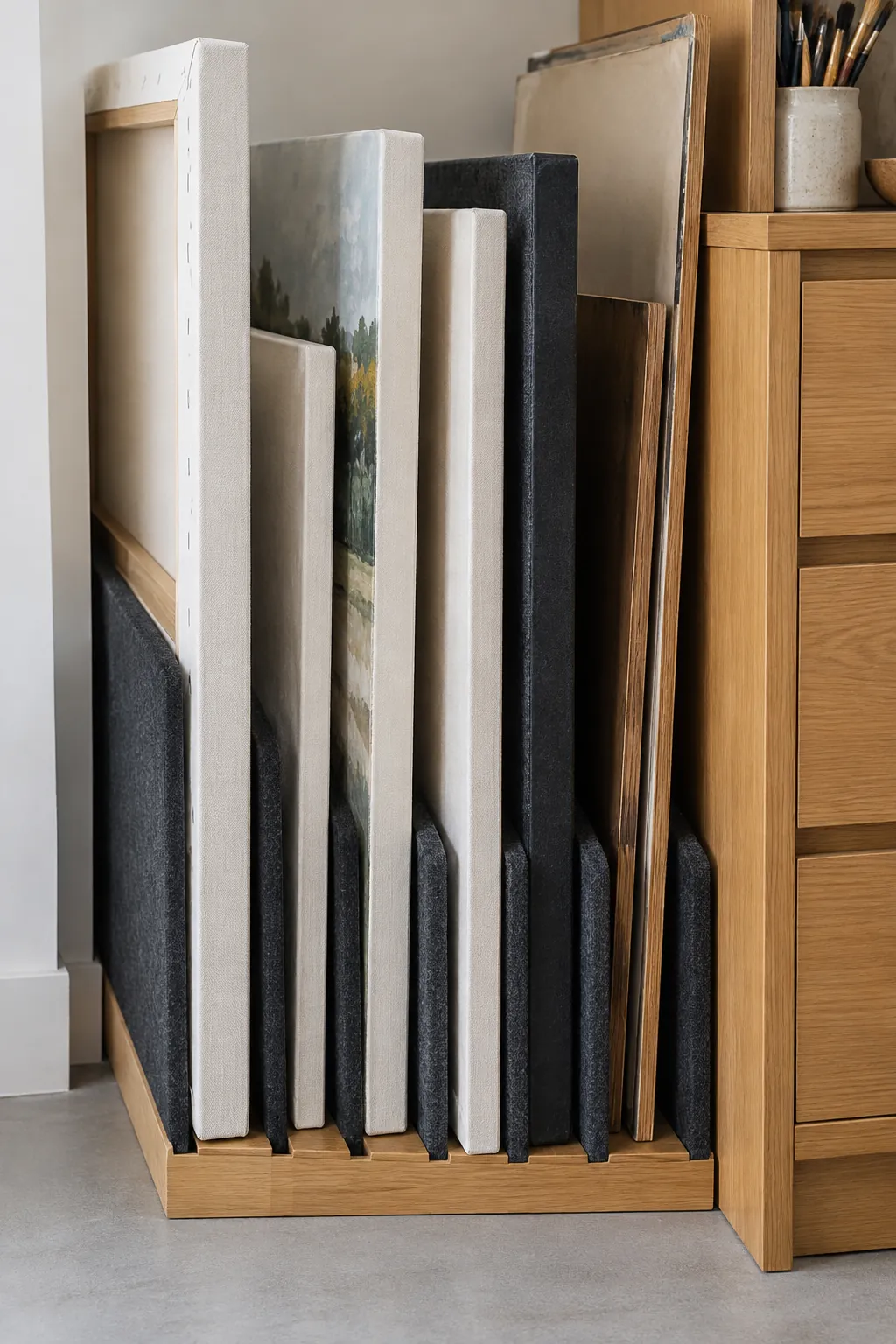
Create a Narrow Slot for Art Canvases
Store dry canvases and drawing boards vertically in a divided slot beside a cabinet. Support the full lower edge so large pieces do not warp. Keep finished work separated with acid free tissue when preservation matters.
Roll Pet Food Under a Console
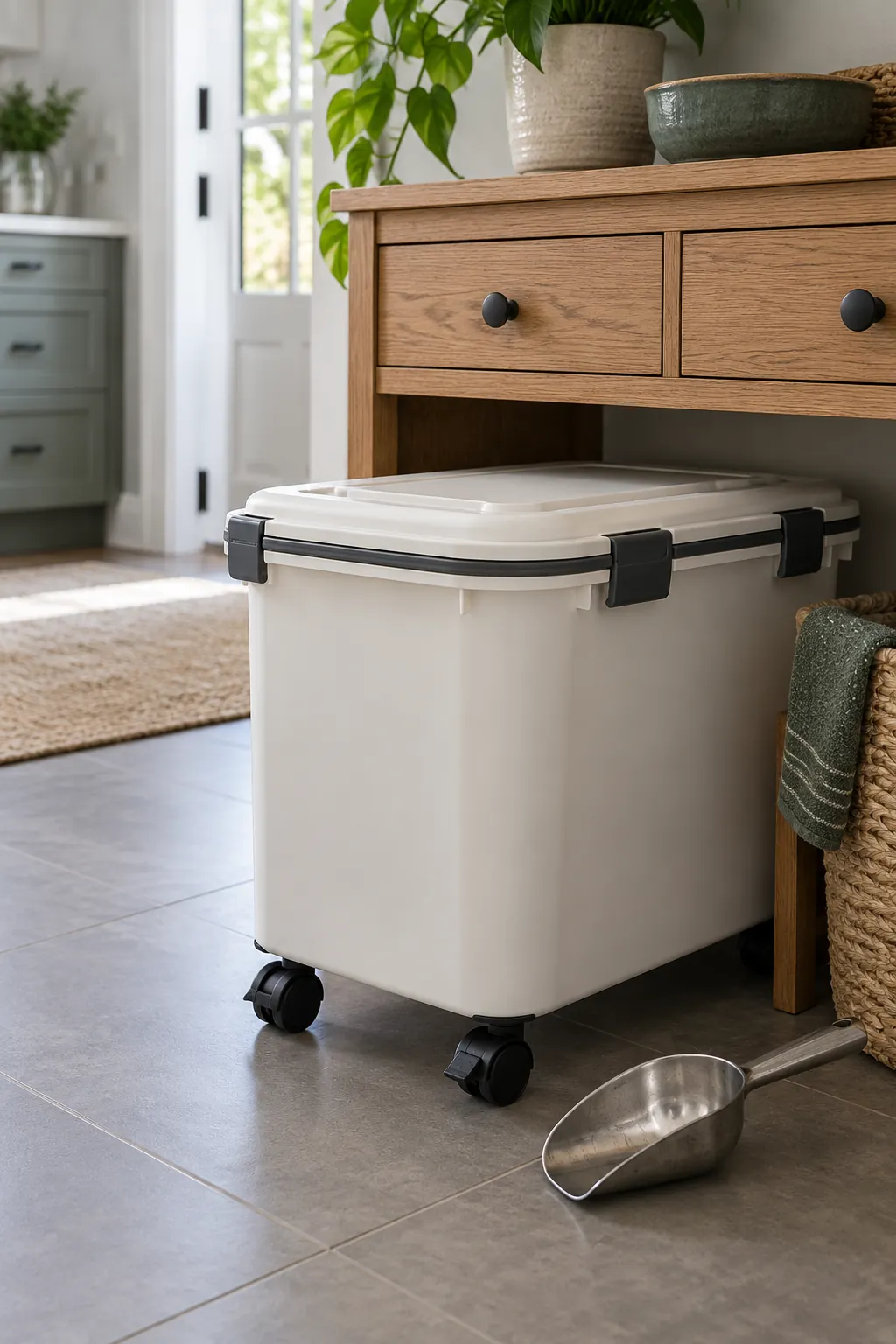
A sealed rolling bin can hold heavy pet food beneath an entry console or kitchen shelf. Choose a container designed for food and keep the original lot details available. The wheels should lock so the bin does not move while scooping.
Give Litter Supplies a Ventilated Cabinet
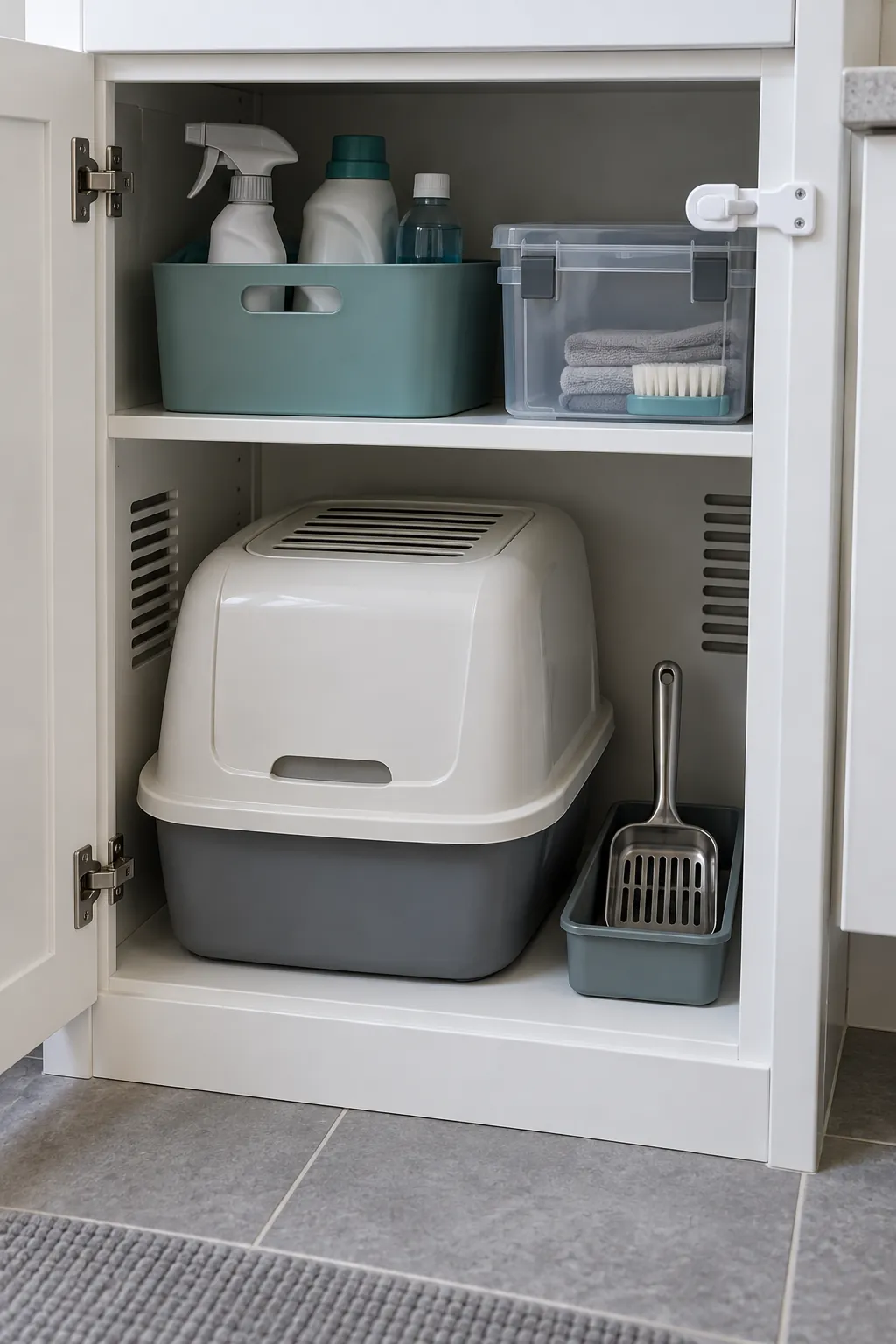
Store litter bags, scoop, and cleaning supplies in a separate ventilated cabinet near the box. Use a low shelf for the heavy litter container and a sealed tray for tools. Keep chemicals inaccessible to children and pets.
Add a High Shelf for Toilet Paper
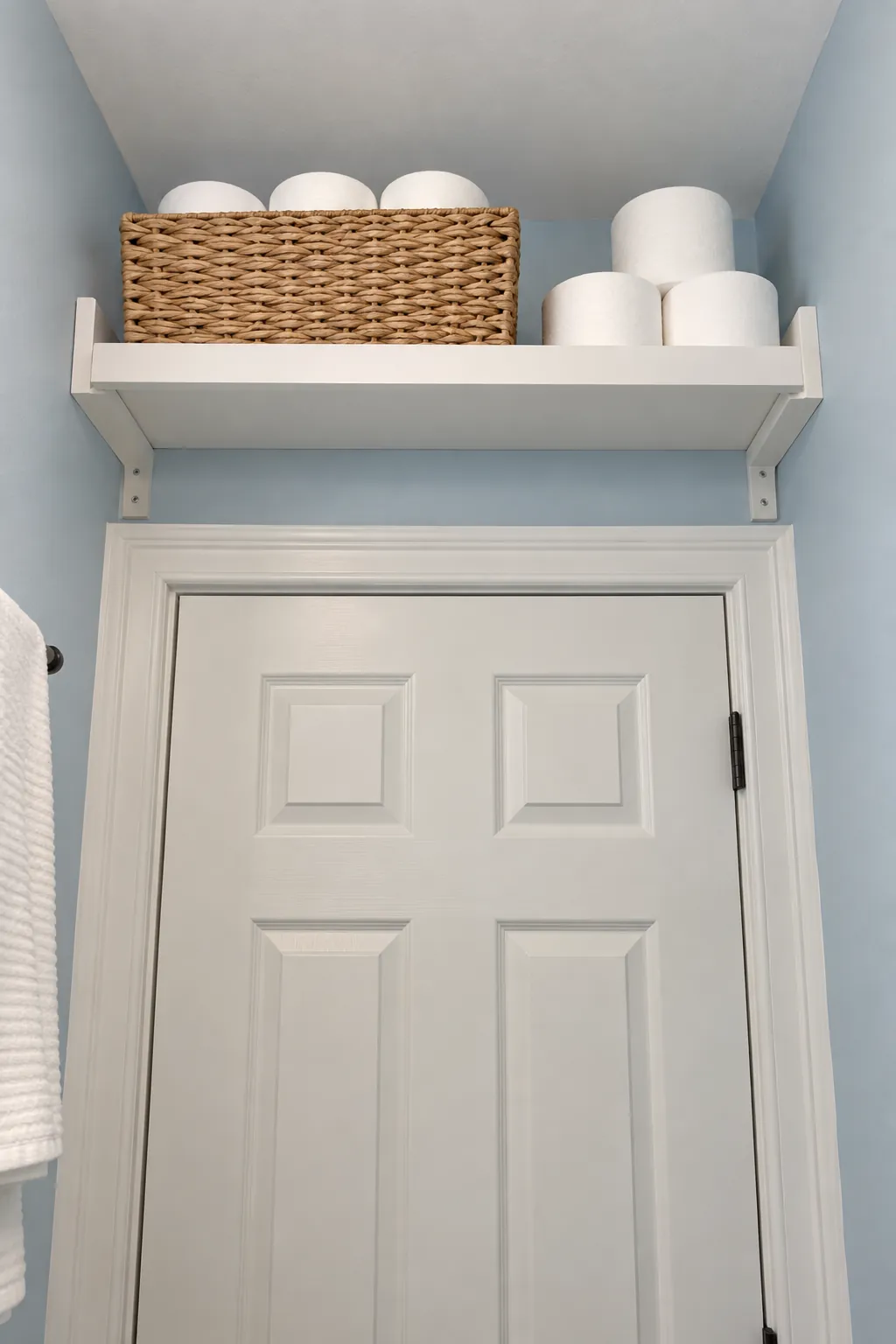
A shelf above the bathroom door can hold lightweight paper goods without crowding the vanity. Use a front lip and avoid placing liquids overhead. Keep one everyday roll within reach so the high shelf is only reserve storage.
Use the Top of Cabinets for Paper Towels
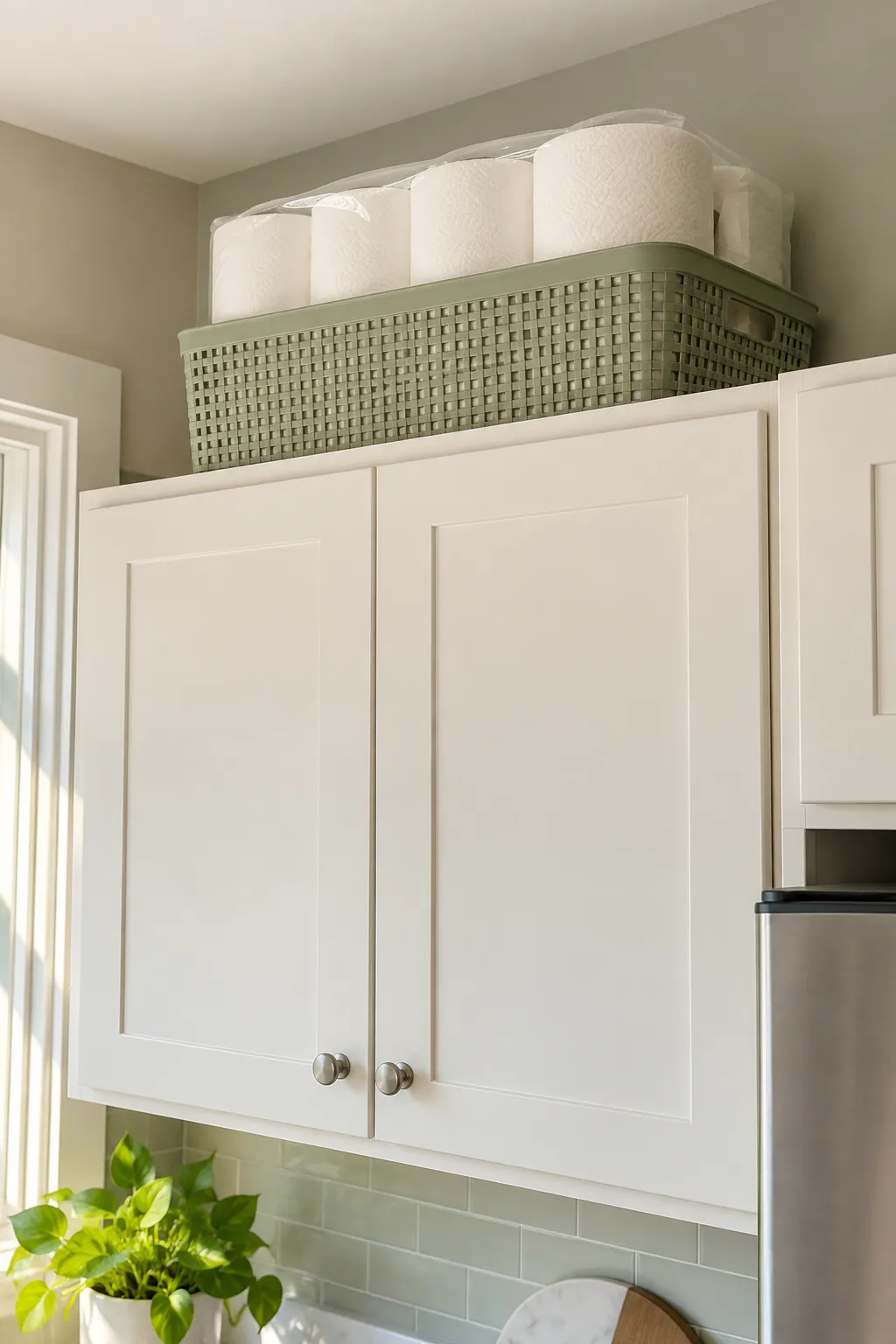
Reserve paper towels can sit in a light washable basket above kitchen cabinets. Keep them away from heat, grease, and sprinkler clearance. Bring down only one pack at a time with a stable step.
Slide the Laundry Rack Under the Bed
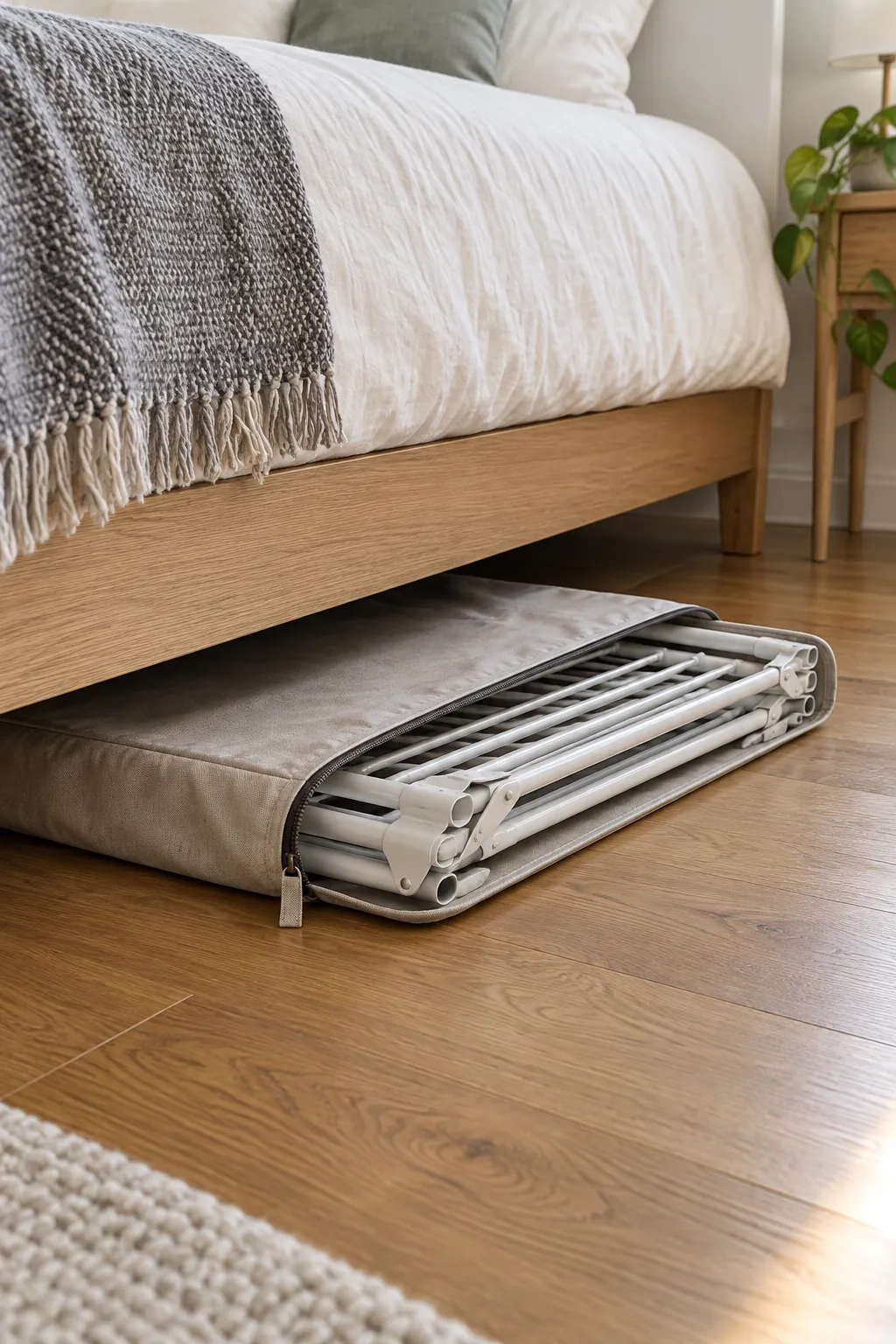
A flat folding laundry rack can slide into a protective sleeve beneath the bed. Make sure it is dry and free of sharp exposed joints. Store the sleeve near the bed edge so weekly use does not require lifting other bins.
Fold a Utility Table Against the Wall
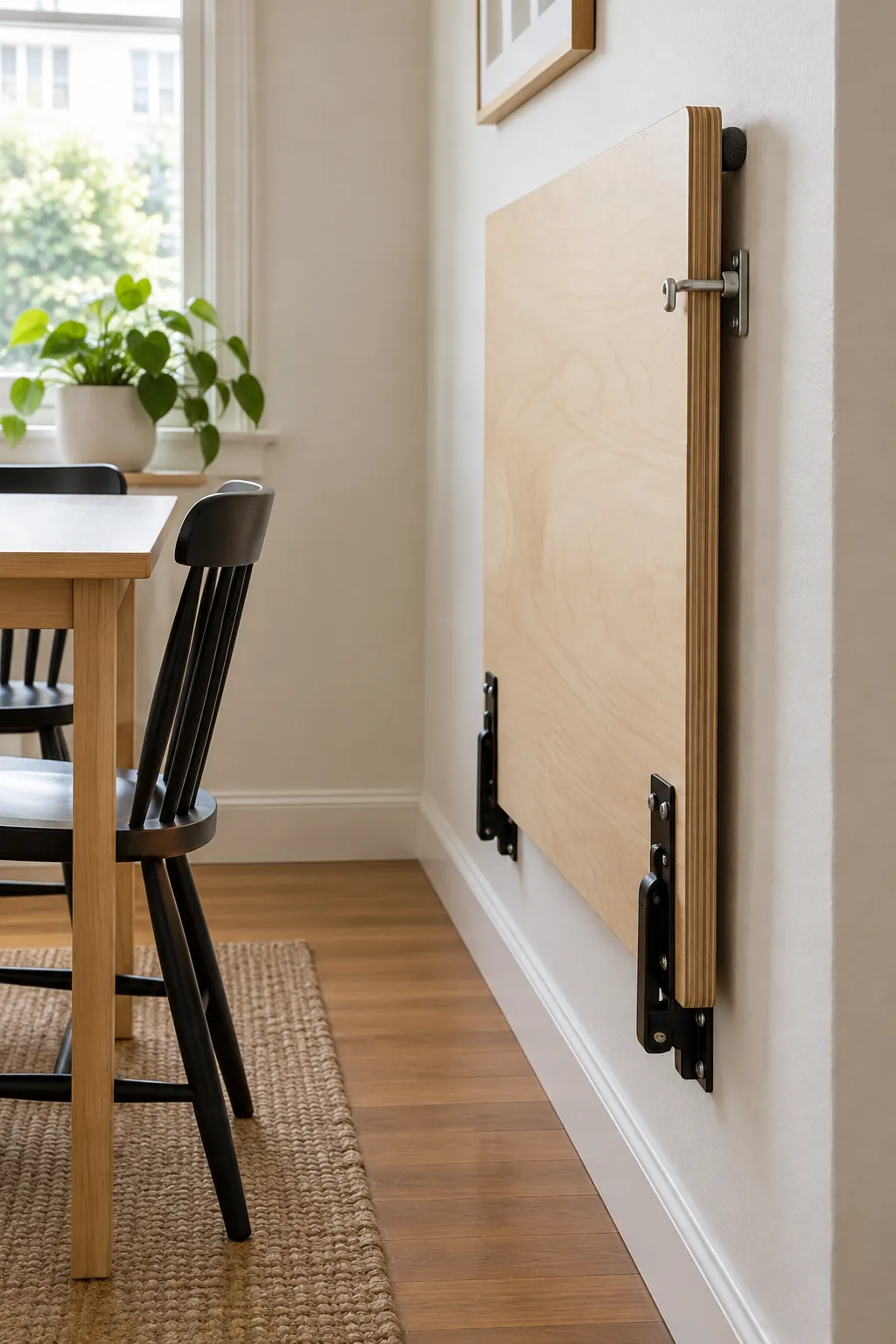
A wall mounted folding table can replace a freestanding craft or dining surface. Use brackets rated for the expected load and keep the folding path clear. Store stools elsewhere so the closed table actually returns floor space.
Store Table Leaves Behind the Sofa
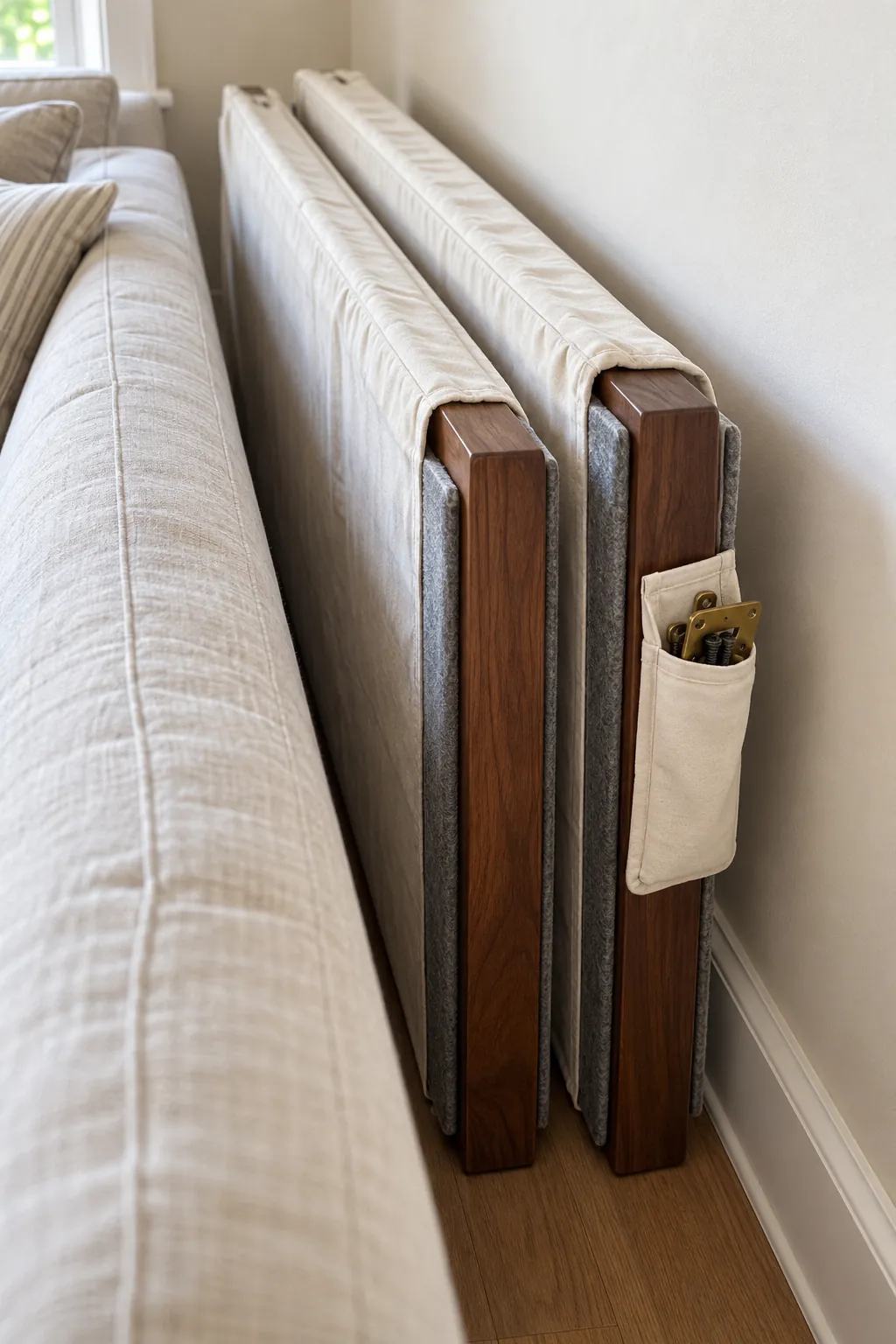
Wrap removable dining leaves in breathable covers and stand them in a protected slot behind the sofa. Support the long edge and keep hardware in an attached pouch. Avoid damp exterior walls that can damage wood.
Place the Seasonal Fan on a High Shelf
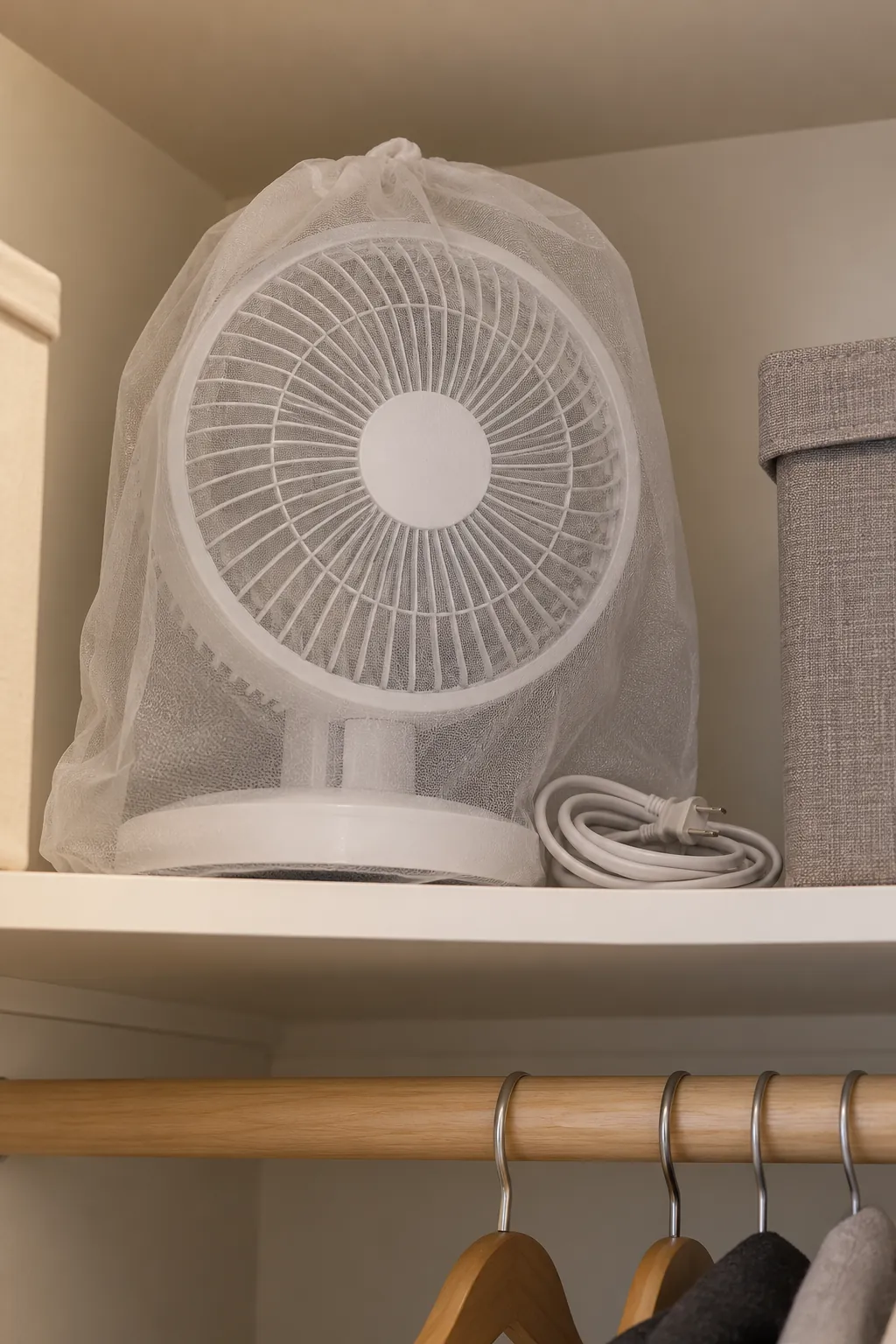
Clean and bag a lightweight fan before moving it to a high seasonal shelf. Coil the cord loosely and keep the base fully supported. Heavy air conditioners need a lower, stronger location instead.
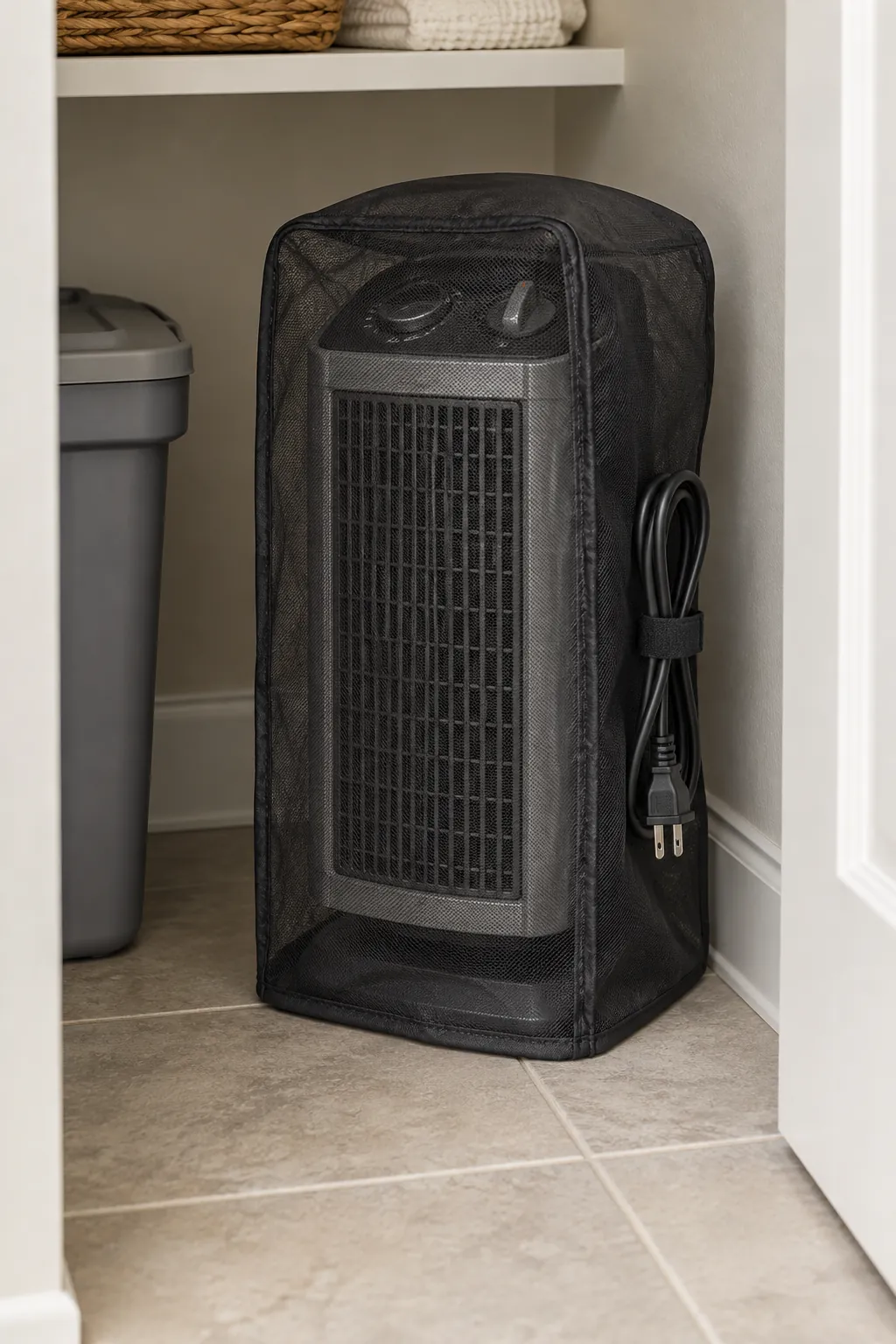
Store a Cool Heater Low and Covered
Unplug, cool, and clean a portable heater before storage. Place it low in a ventilated dust cover with the cord secured loosely. Keep the heater away from damp areas and never use its storage spot while it is operating.
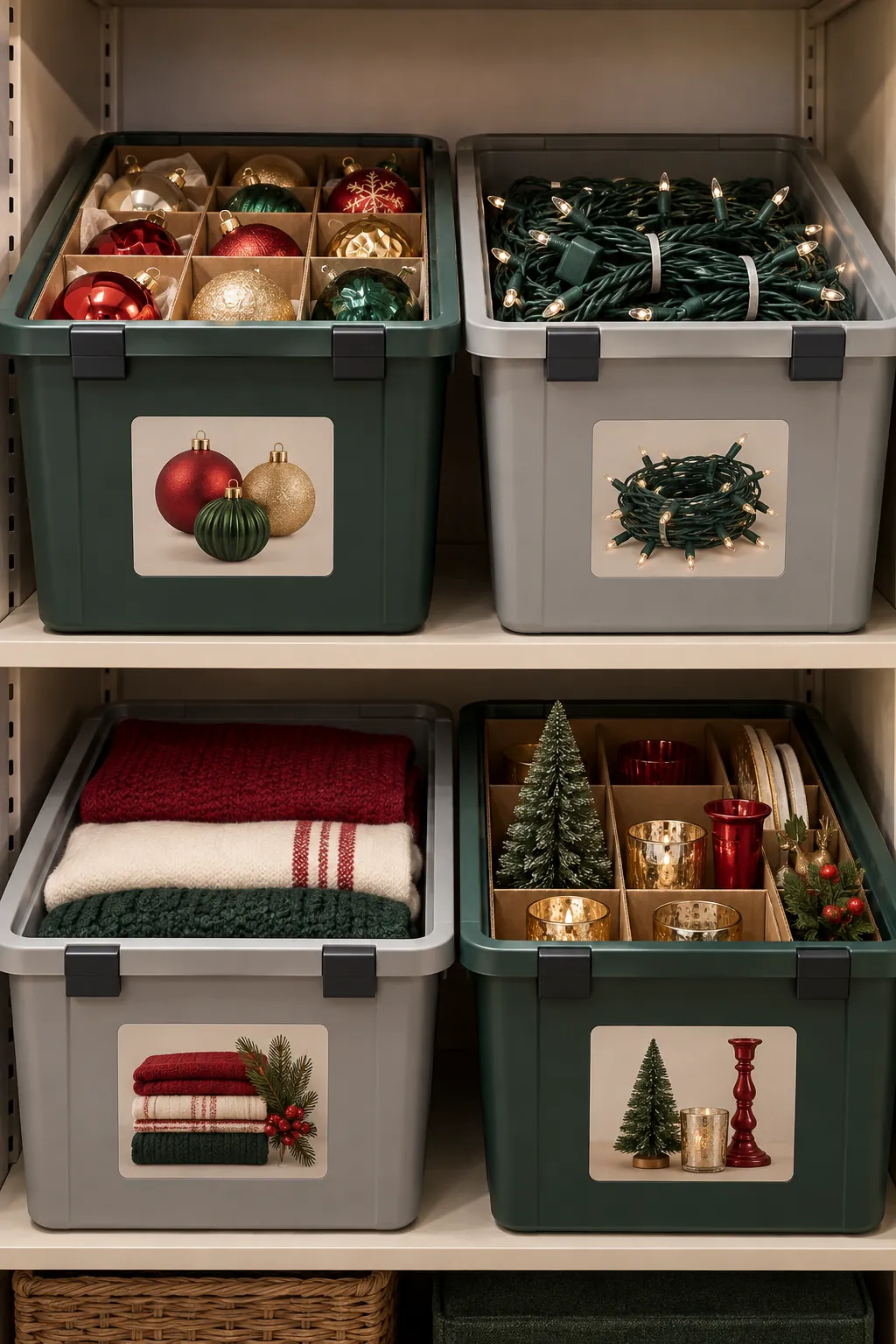
Number Holiday Decor Bins by Zone
Use a small set of sturdy bins for holiday decor and assign each to a room or display zone. Photograph the contents before closing each bin. Store fragile items with dividers and keep heavy bins below shoulder height.
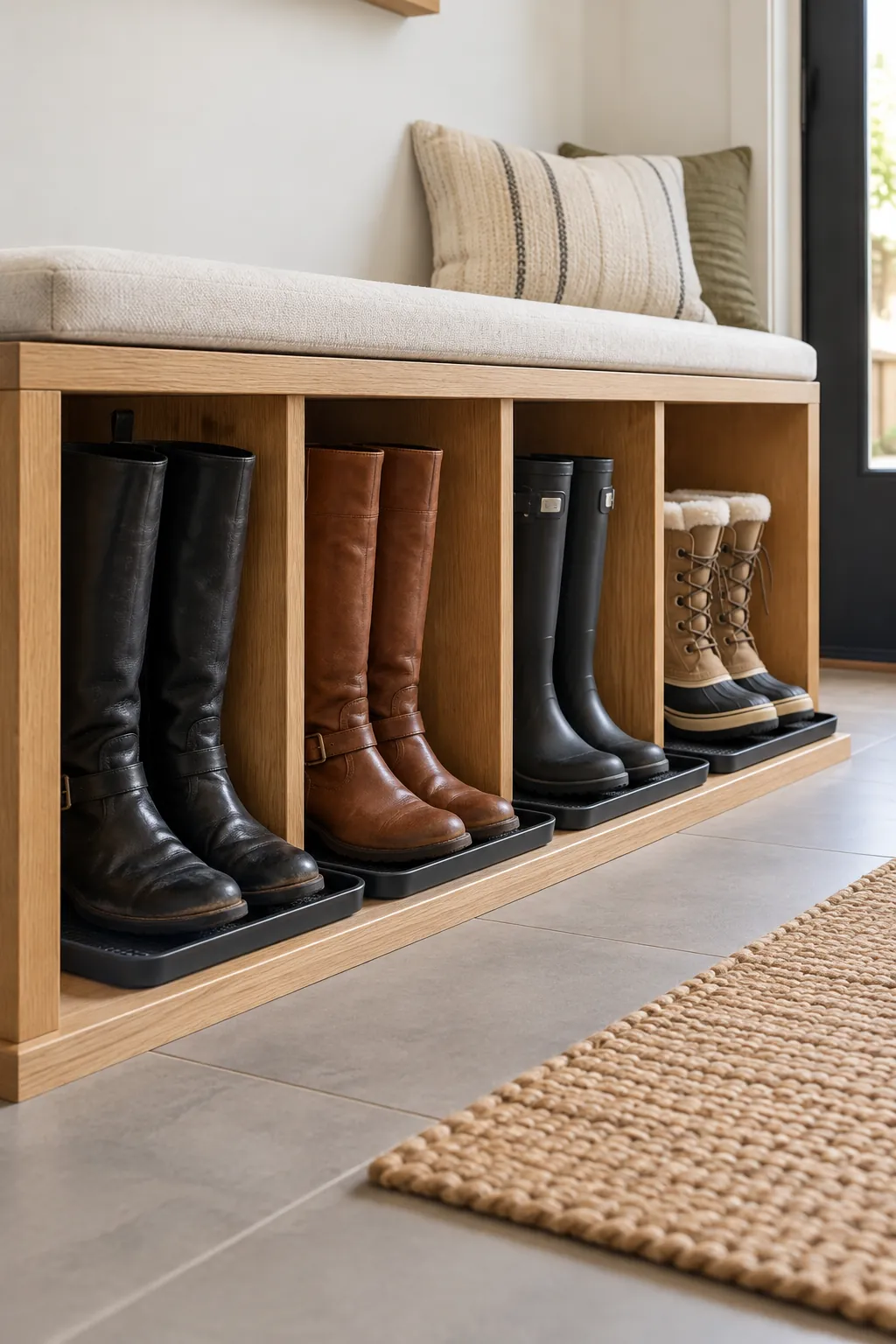
Build Boot Bays Under an Entry Bench
Deep cubbies beneath a bench can hold tall boots without bending their shafts. Use washable trays for wet soles and allow airflow. Limit each person to the pairs that fit during the current season.
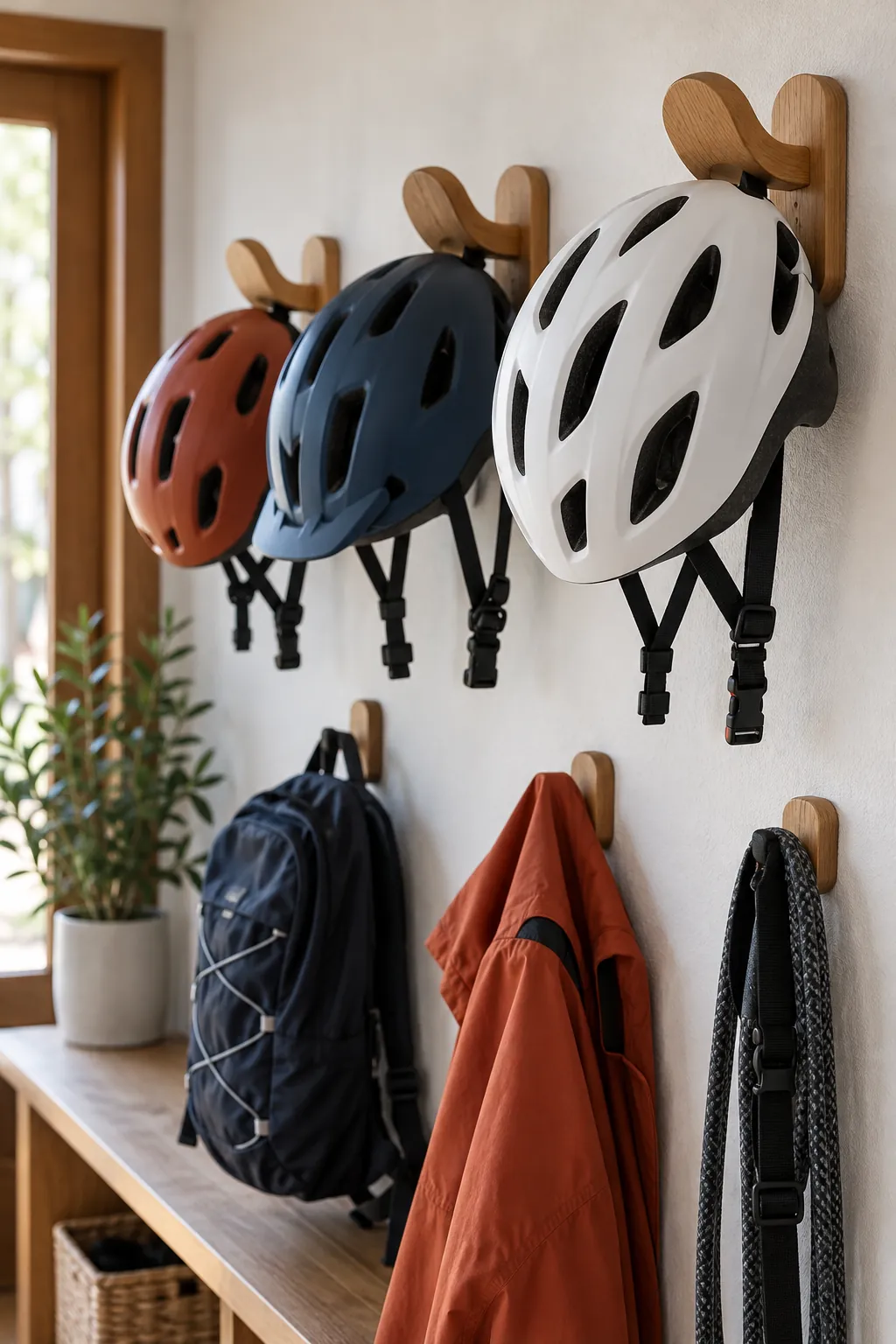
Hang Helmets on Rounded Hooks
Rounded hooks can hold bicycle and sports helmets without crushing their foam. Place them near related gear but away from direct heat. Inspect helmets after impacts and follow replacement guidance rather than storing damaged protection.
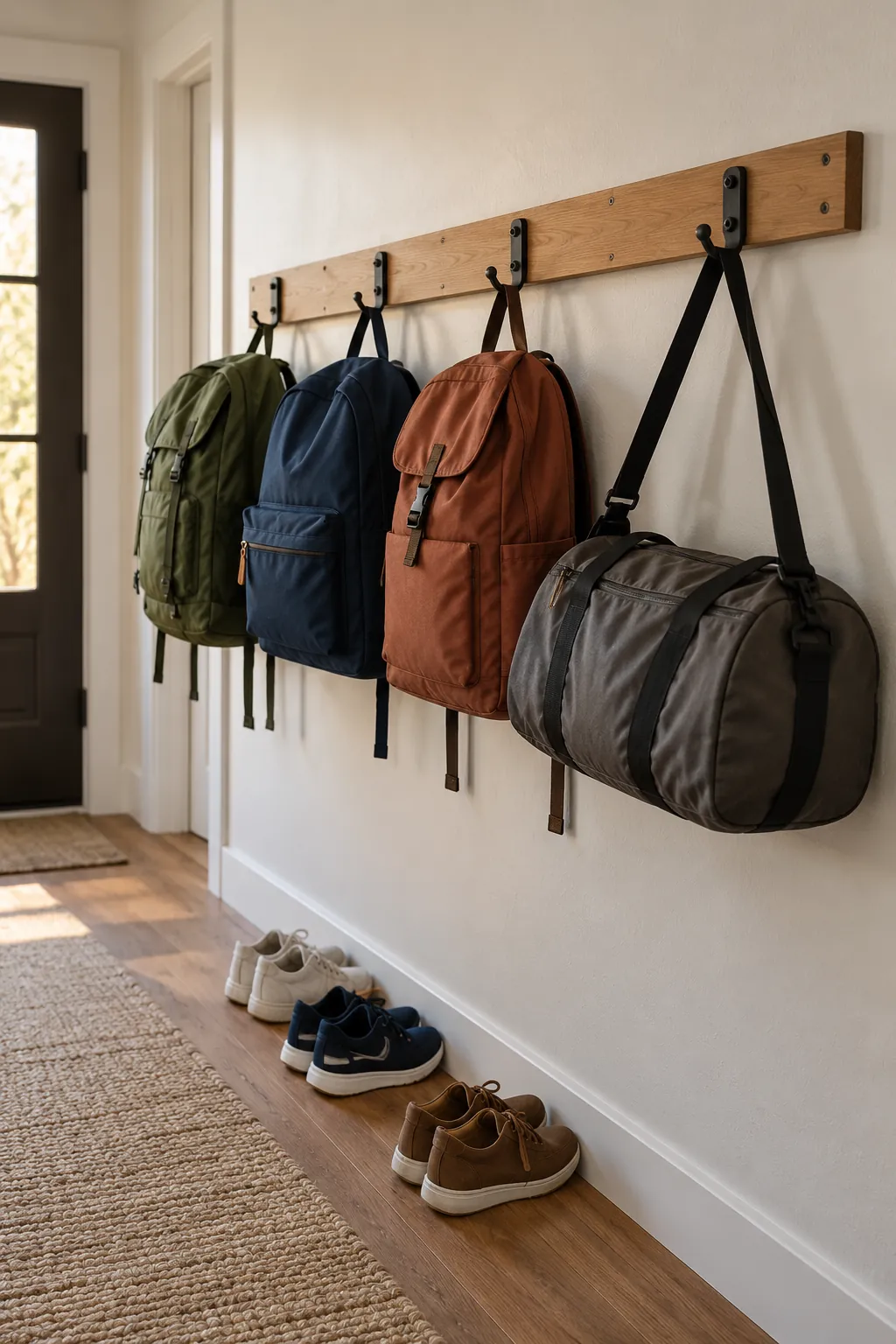
Use a Rail for Backpacks and Gear Bags
A wall rail spreads backpack weight across several secure mounting points. Give each bag a hook and keep the floor below clear for shoes. Empty wet towels and food containers before hanging bags indoors.
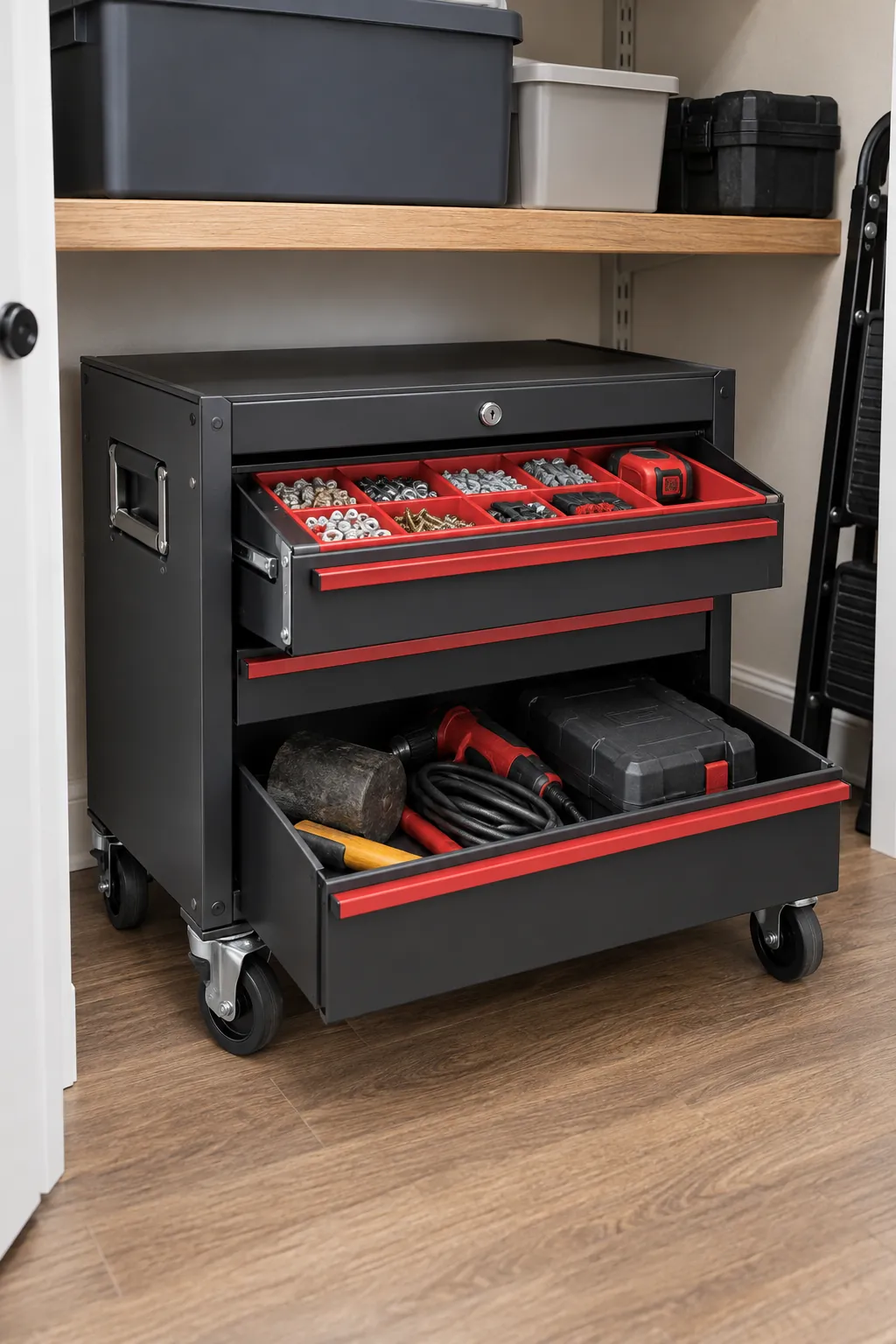
Keep Tools in a Rolling Box
A compact rolling tool box can slide beneath a desk or utility shelf. Put dense tools in the bottom and small hardware in a removable top tray. Lock the box when children are present and keep batteries according to manufacturer guidance.
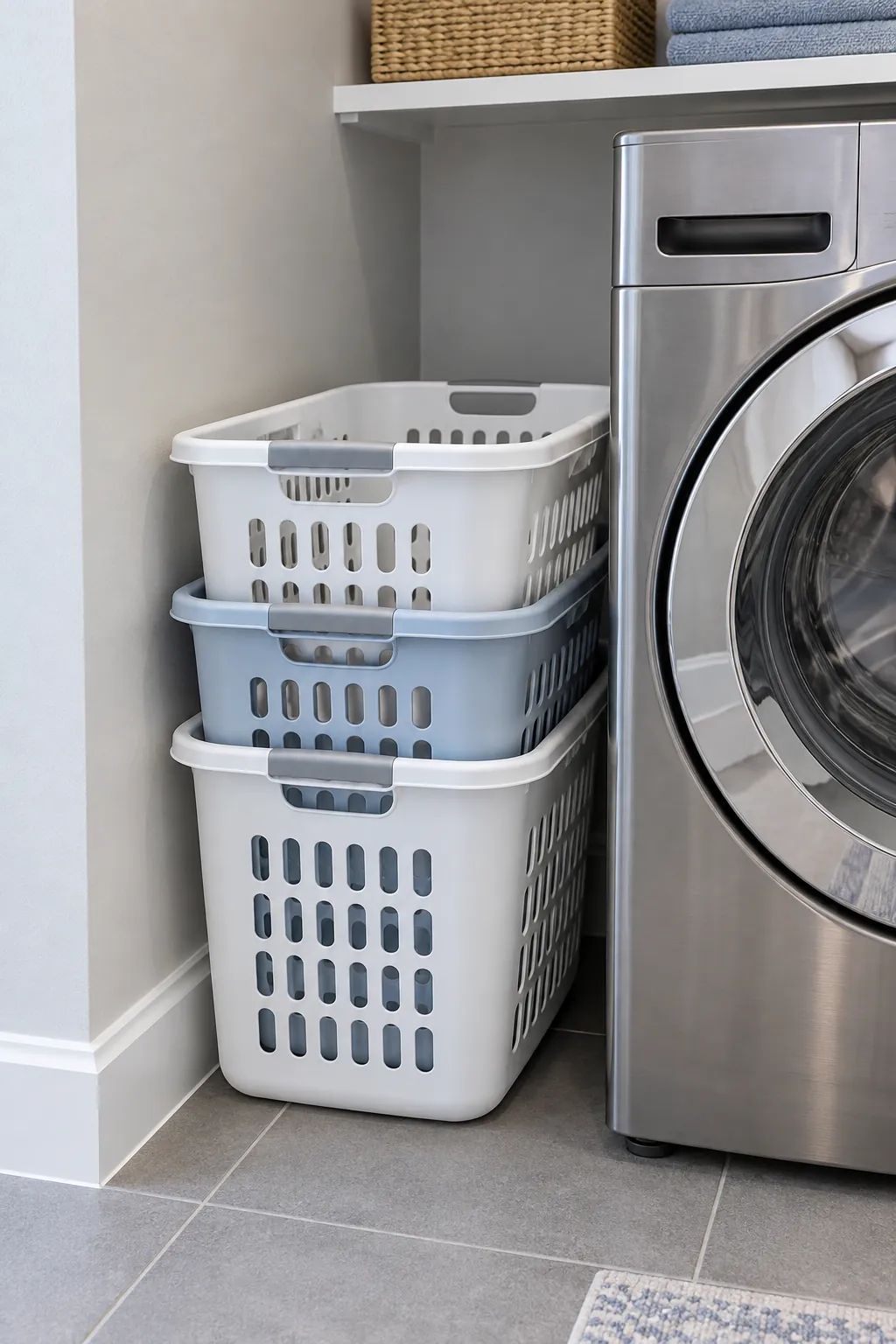
Nest Empty Laundry Baskets
Choose compatible laundry baskets that nest when they are not carrying clothes. Store the stack above or beside the washer rather than across a hallway. Do not trap damp fabric between nested baskets.
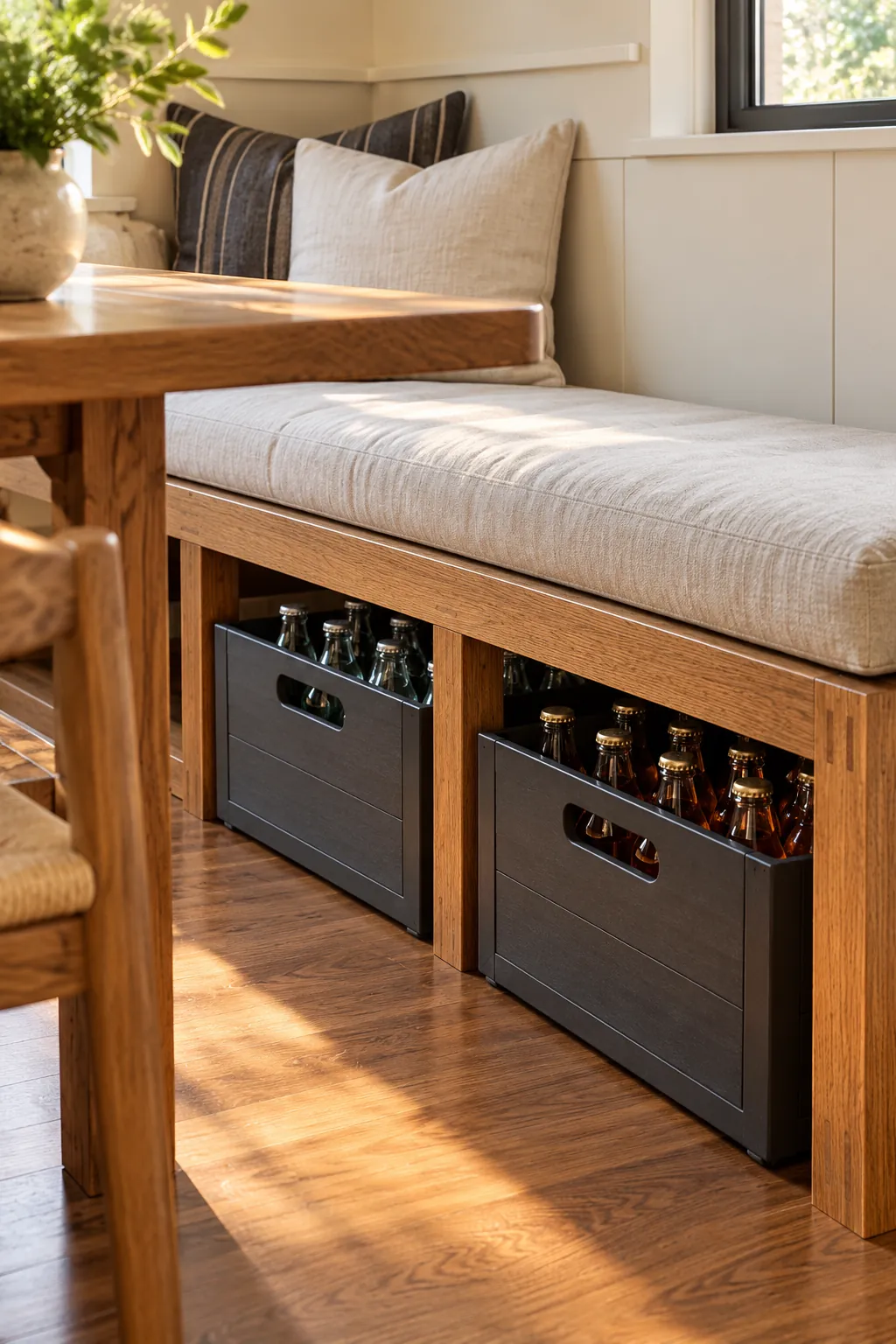
Turn Beverage Crates Into a Bench Base
Strong covered crates can support a properly built bench while holding sealed beverages low. Check load ratings and keep the cushion fixed. Rotate stock from the front so old containers do not disappear at the back.
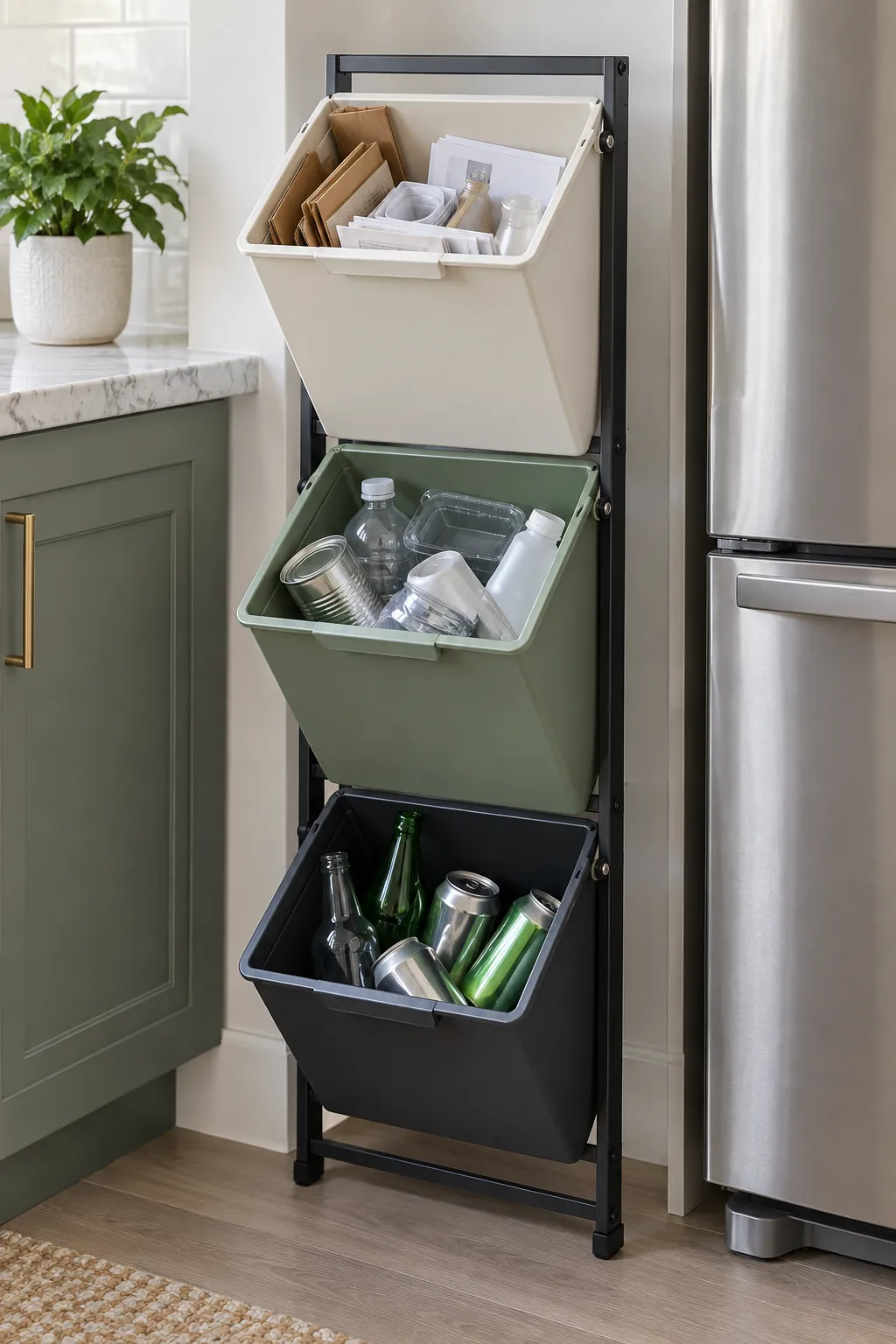
Stack Recycling Vertically
A vertical sorter uses one floor footprint for paper, containers, and returnable items. Choose removable bins that can be washed and carried independently. Empty them before weight makes the upper frame unstable.
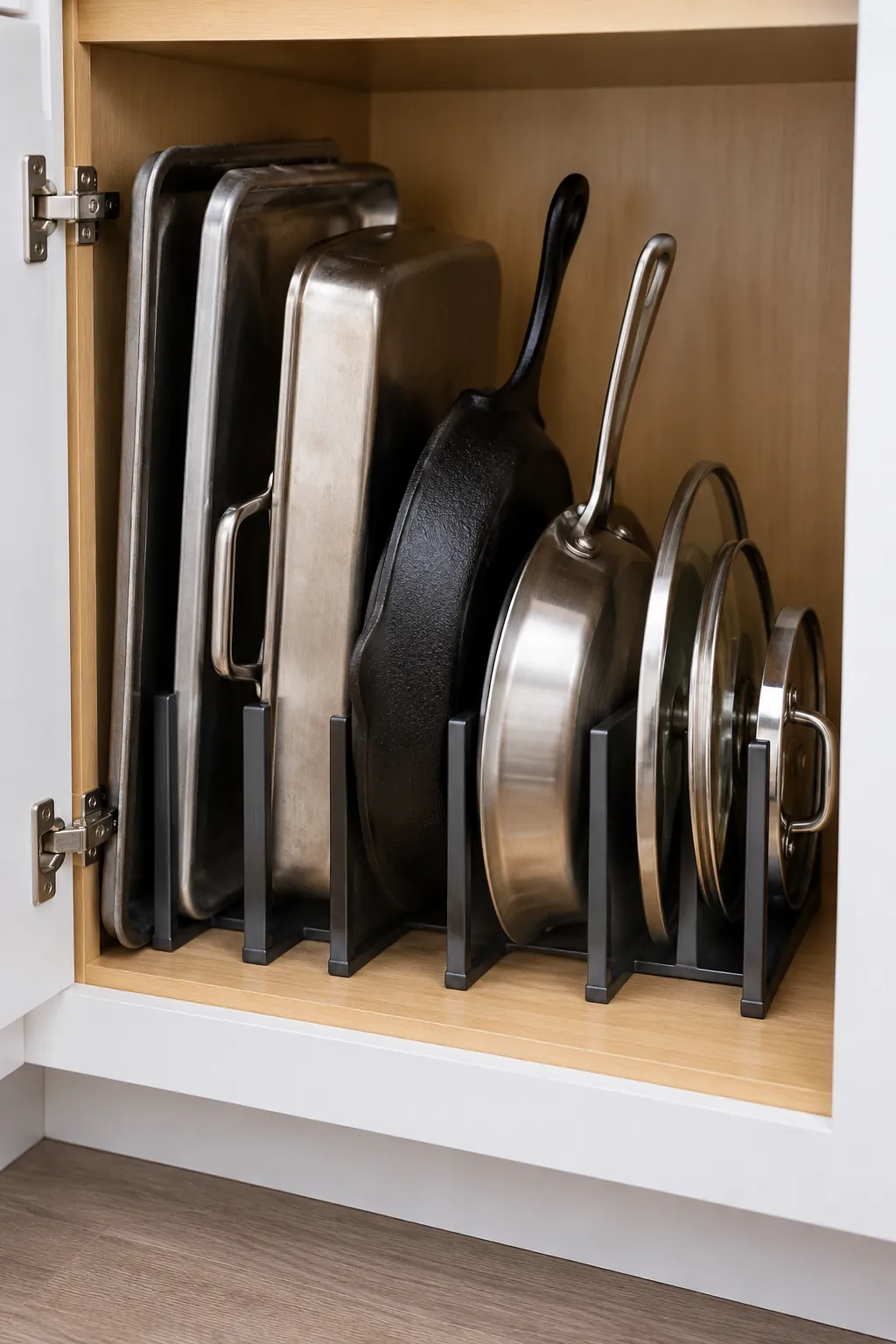
Divide Bulky Cookware Vertically
Deep lower cabinets work better when pans and lids stand between strong vertical dividers. Match each slot to the actual handle and rim dimensions. Keep the heaviest cookware nearest the cabinet base and hinge side.
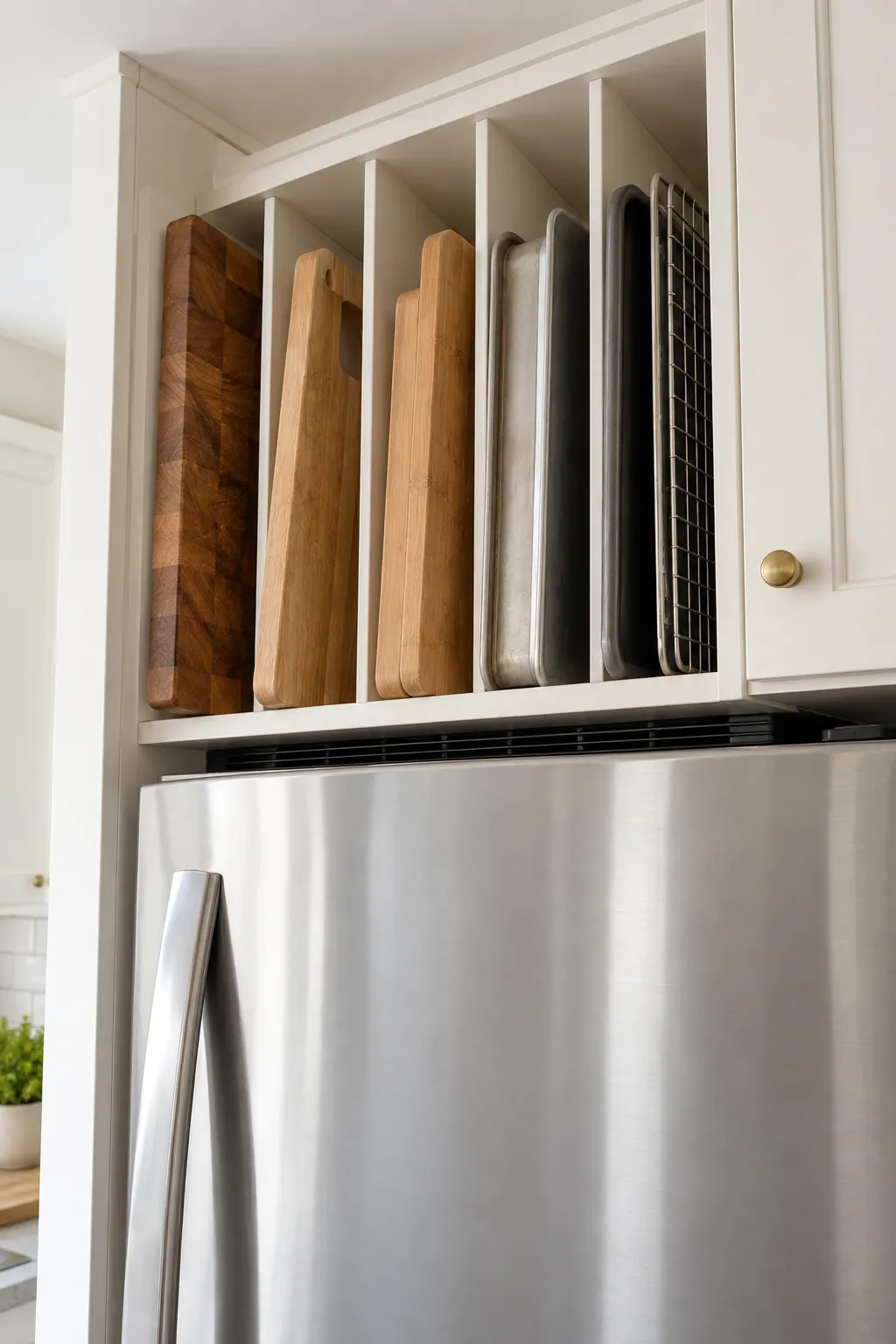
Rack Cutting Boards Above the Fridge
A divided shelf above the refrigerator can hold large cutting boards and baking sheets upright. Leave ventilation clearance required by the appliance. Dry every board completely before storing it in a narrow slot.
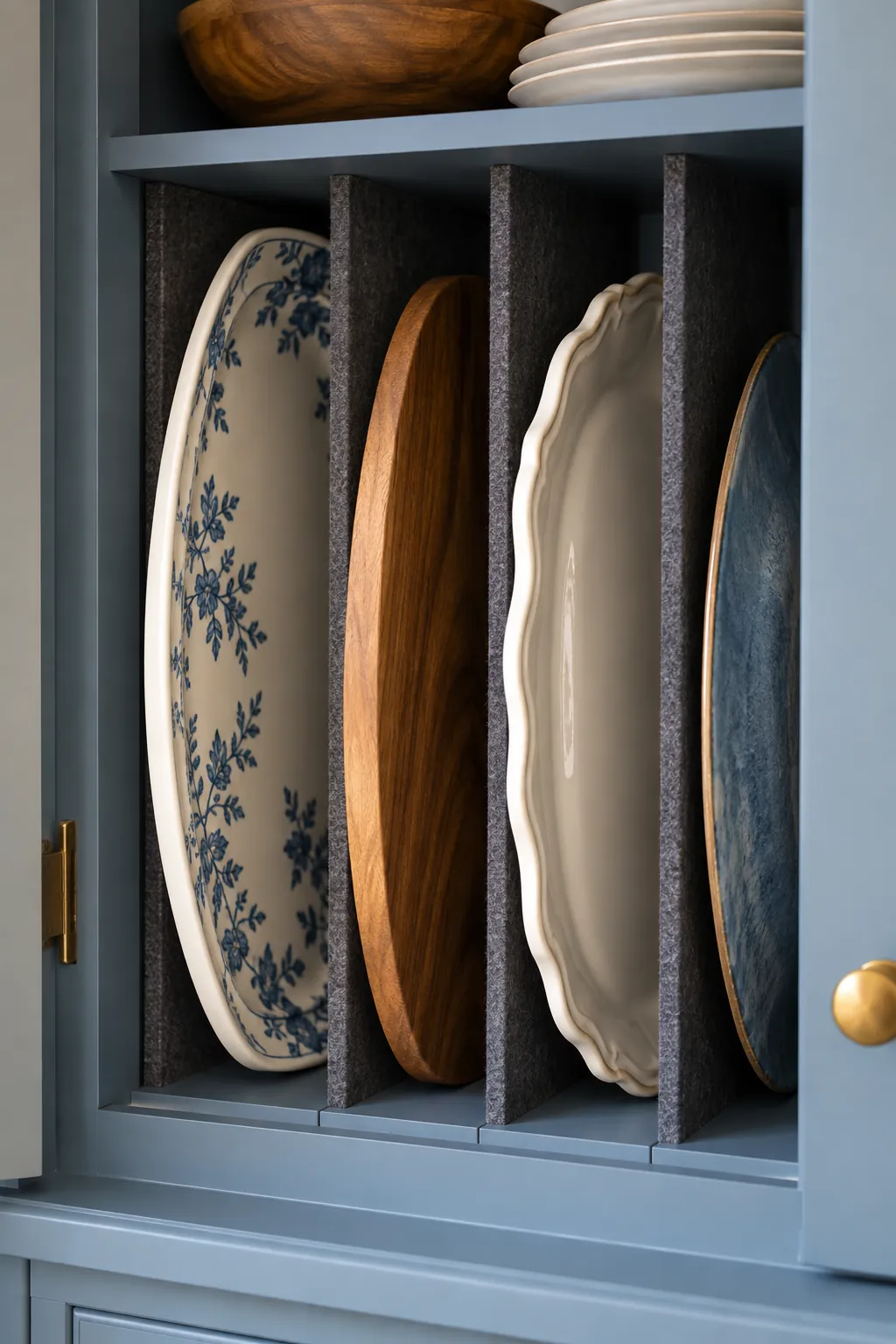
Stand Serving Platters in Felt Slots
Large platters take less shelf width when they stand in padded dividers. Use felt or silicone contact points to protect edges. Place the tallest platter where it cannot catch the cabinet frame during removal.
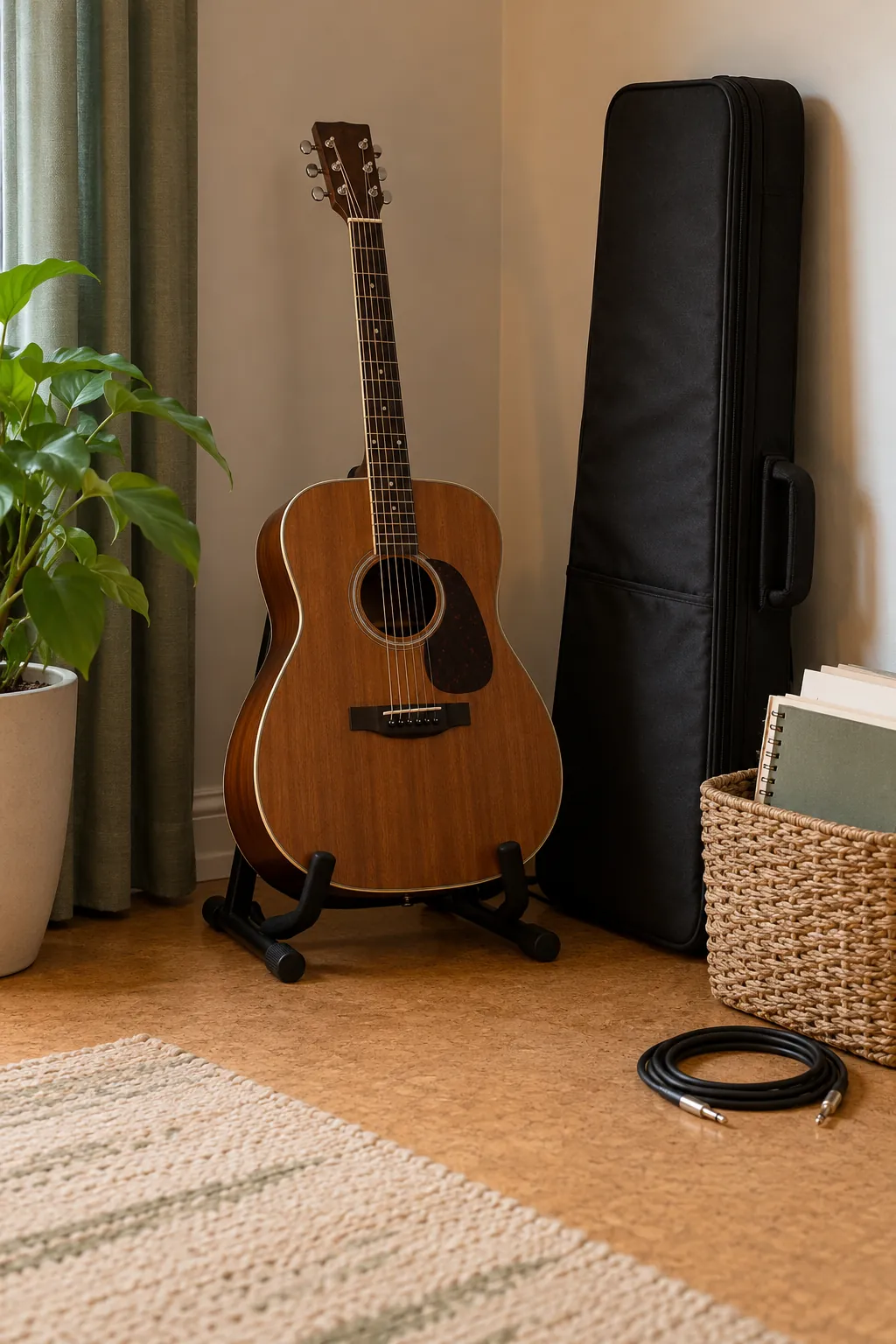
Give Instruments a Padded Corner
Store a guitar, keyboard case, or similar instrument in a stable padded stand away from heat and direct sun. Keep cables and sheet music in a separate nearby basket. Do not pile household items against the instrument for the sake of using every inch.
Audit Every Bulky Footprint
Mark the floor or shelf area that each awkward item consumes and compare it with how often the item is used. Borrow, rent, replace, or release belongings whose storage cost is greater than their value. A small apartment works when every bulky item earns its permanent footprint.