
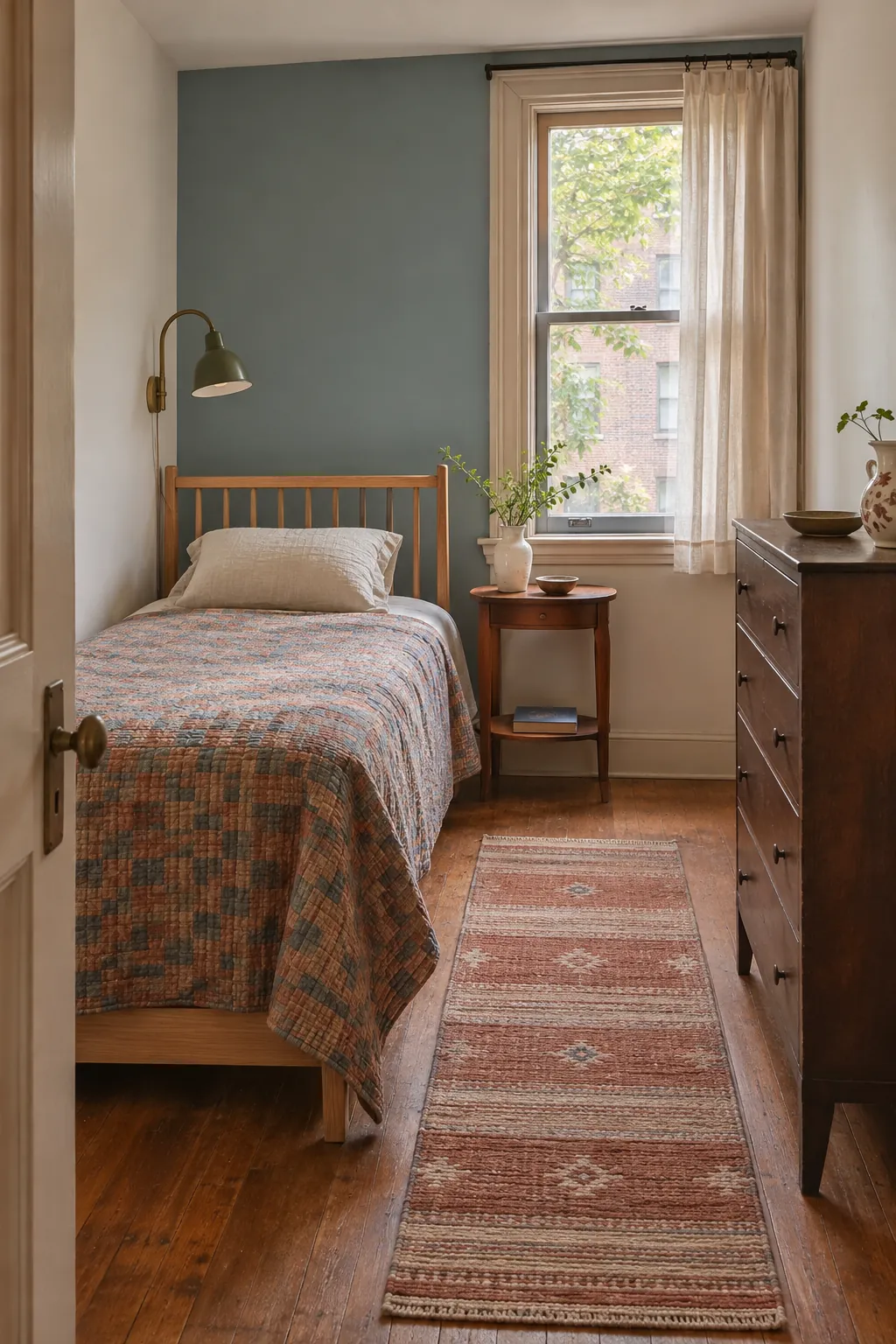
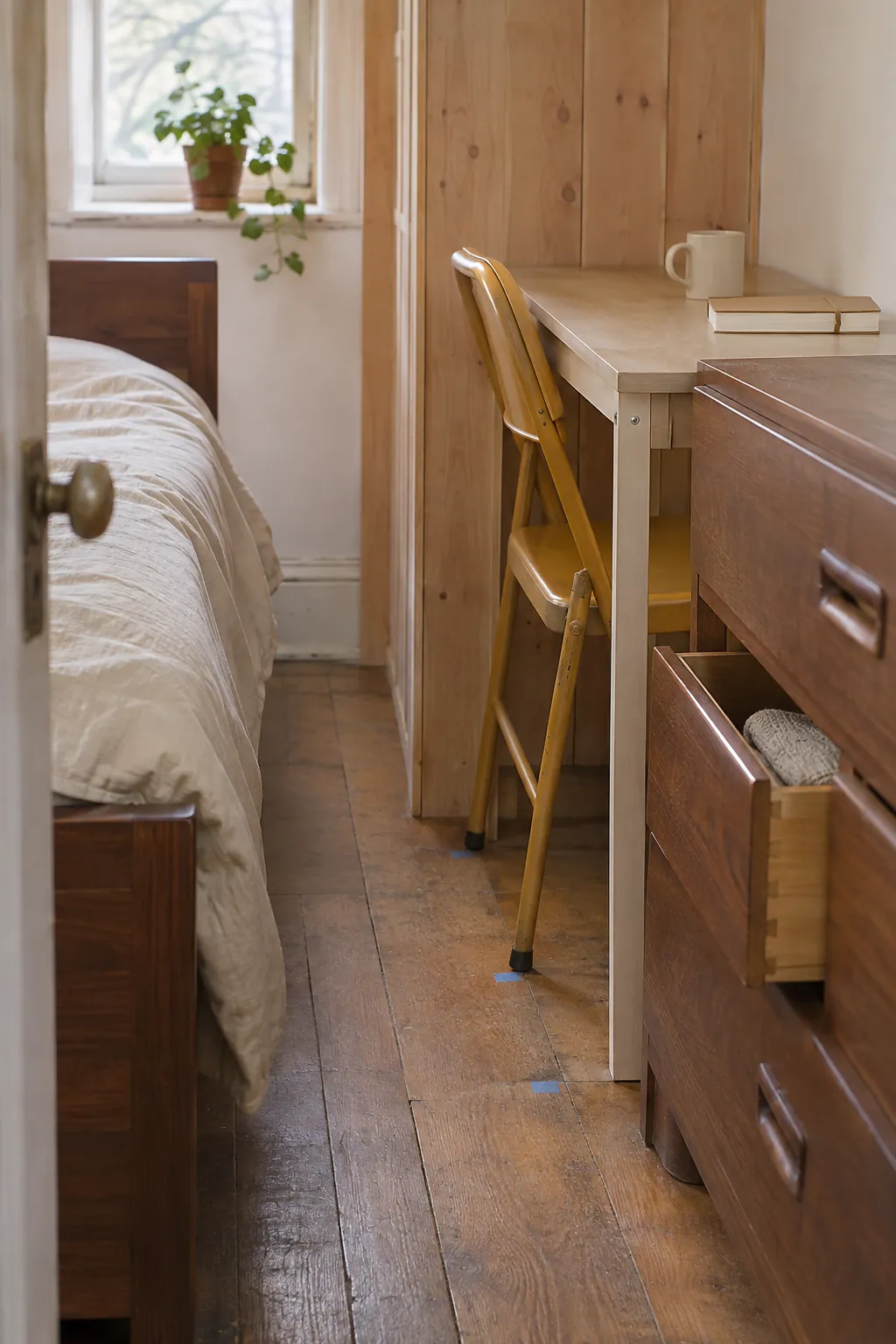
In a narrow bedroom, a deep dresser can pinch the route to the closet before you put anything in it. Open the doors and drawers, then walk from the entry to the bed with a laundry basket. That test tells you which floor space needs to stay empty. Give the retro details to the bed, the walls and the furniture that fits around that route.
Keep a Clear Route Along One Side
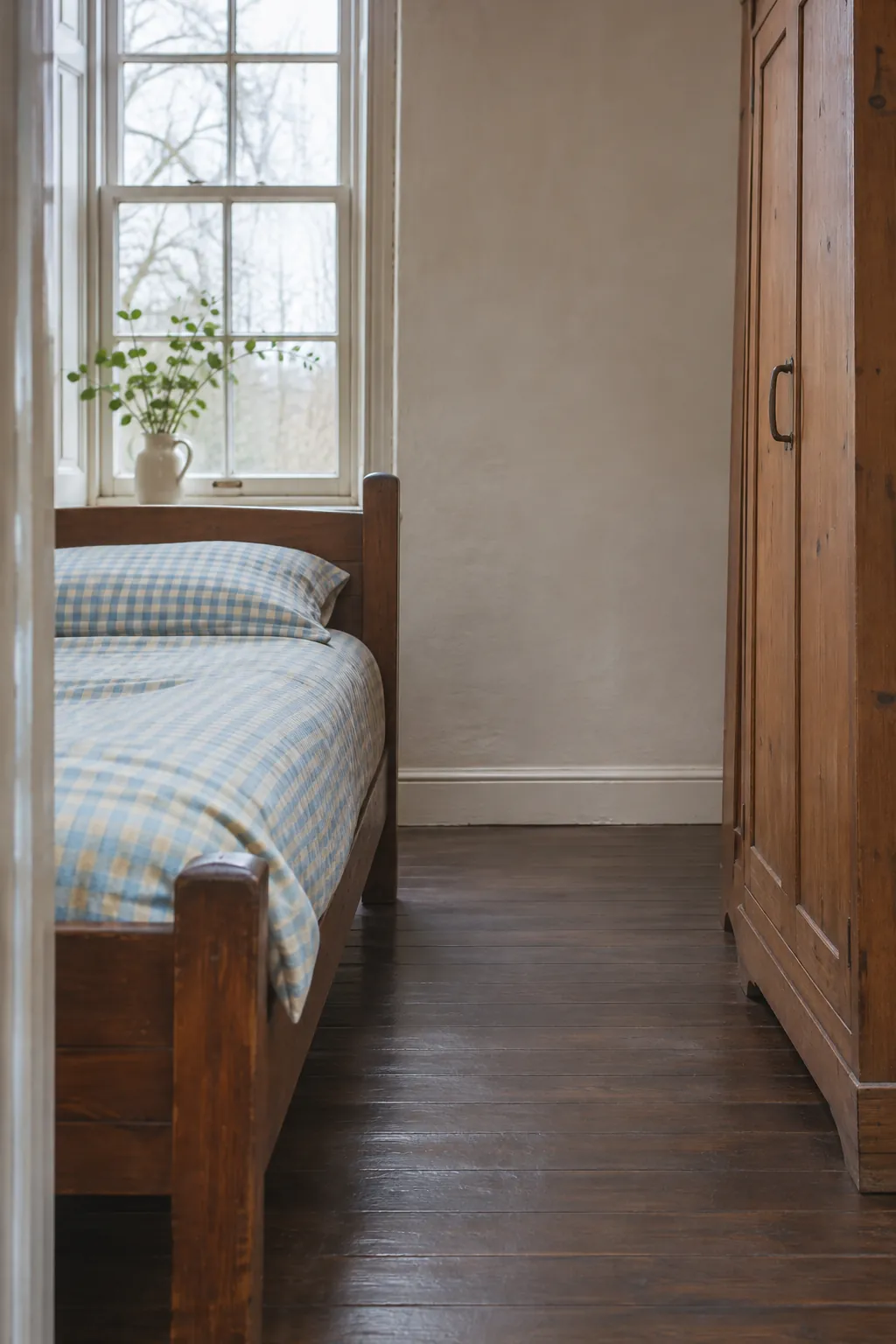
In a room used by one person, pushing a bed toward one wall can give the other side a useful strip of floor. Leave a gap where your frame or mattress maker needs ventilation. Walk it with a laundry basket and reach for the closet handle before you settle on the arrangement. If two people use the bed, check how each will get in and out at night.
Measure the Door Swing Before Buying Furniture
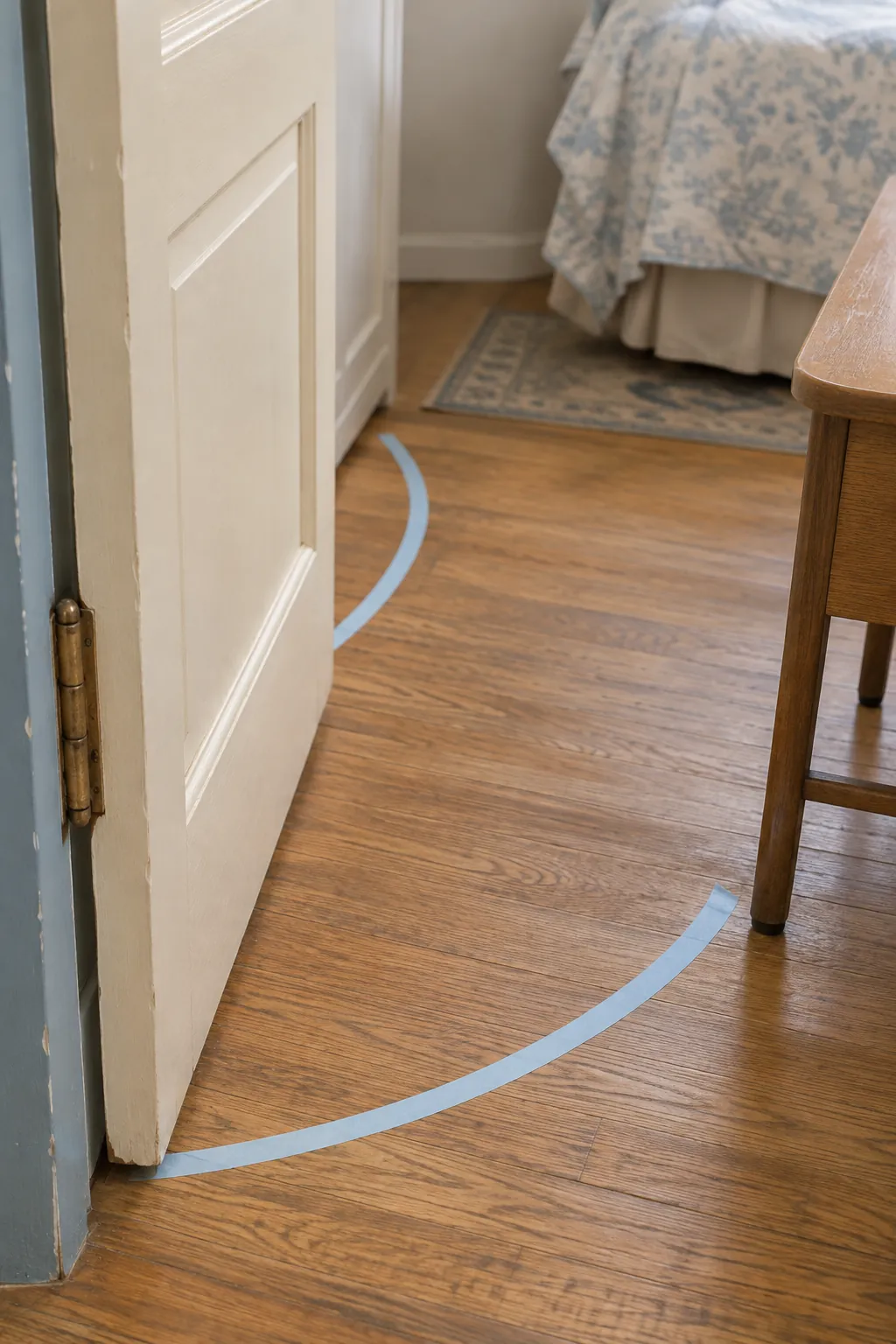
Mark the open edge of the bedroom door on the floor with masking tape. Repeat the test with the closet door fully open. Measure the patch left between those paths before you choose a dresser or desk. Check the furniture handles and the feet since they may stick out farther than the main box.
Lower the Bed Frame to Open the View
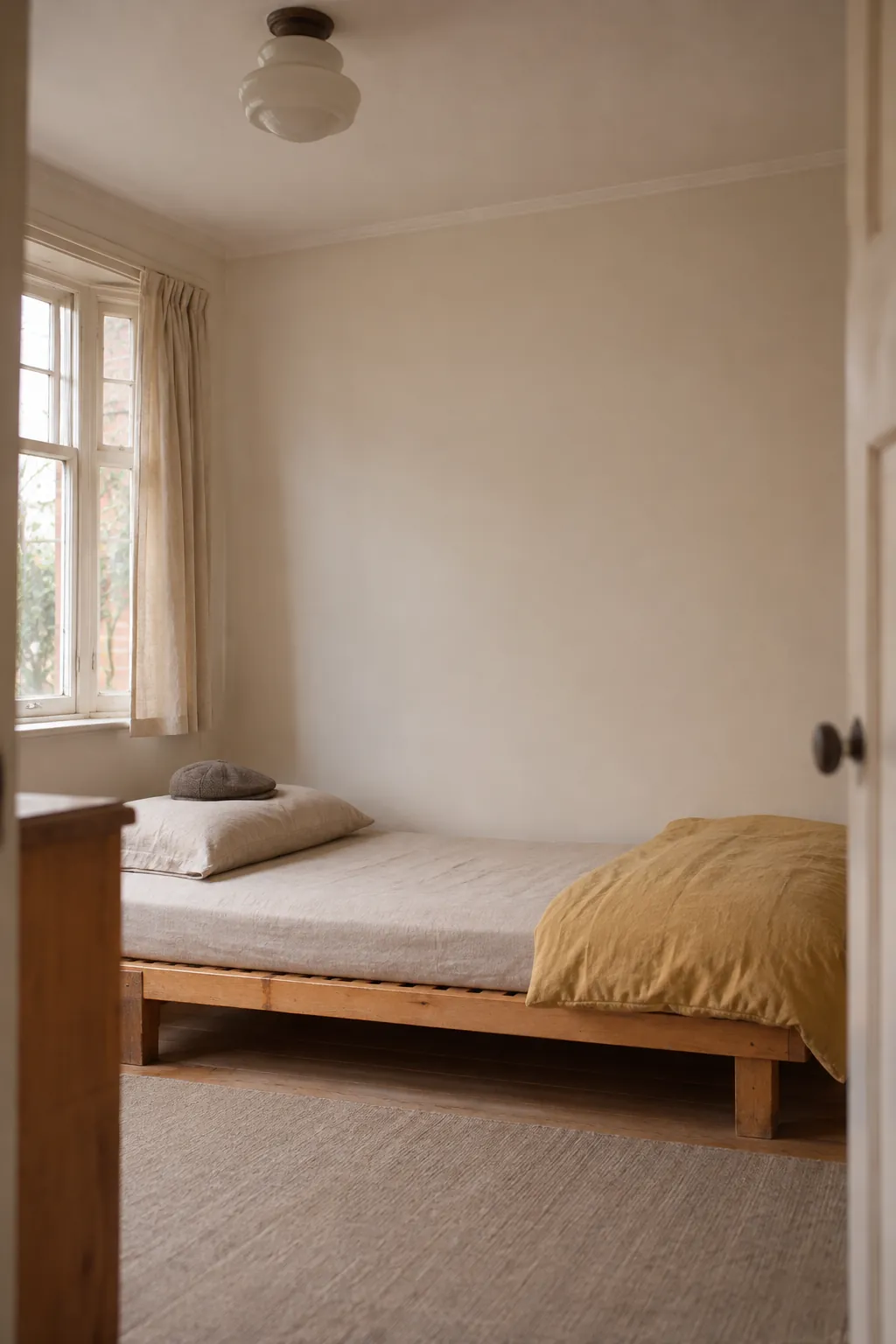
A low frame can leave more wall in sight above the bed in a small vintage bedroom. Sit on the mattress at the proposed height before committing to it, especially if you rely on your hands to stand. Check that the frame supports the mattress and lets it breathe as the maker requires. A narrow solid wood edge offers a retro detail without a large headboard.
Store Spare Linens in One Accessible Drawer Under the Bed
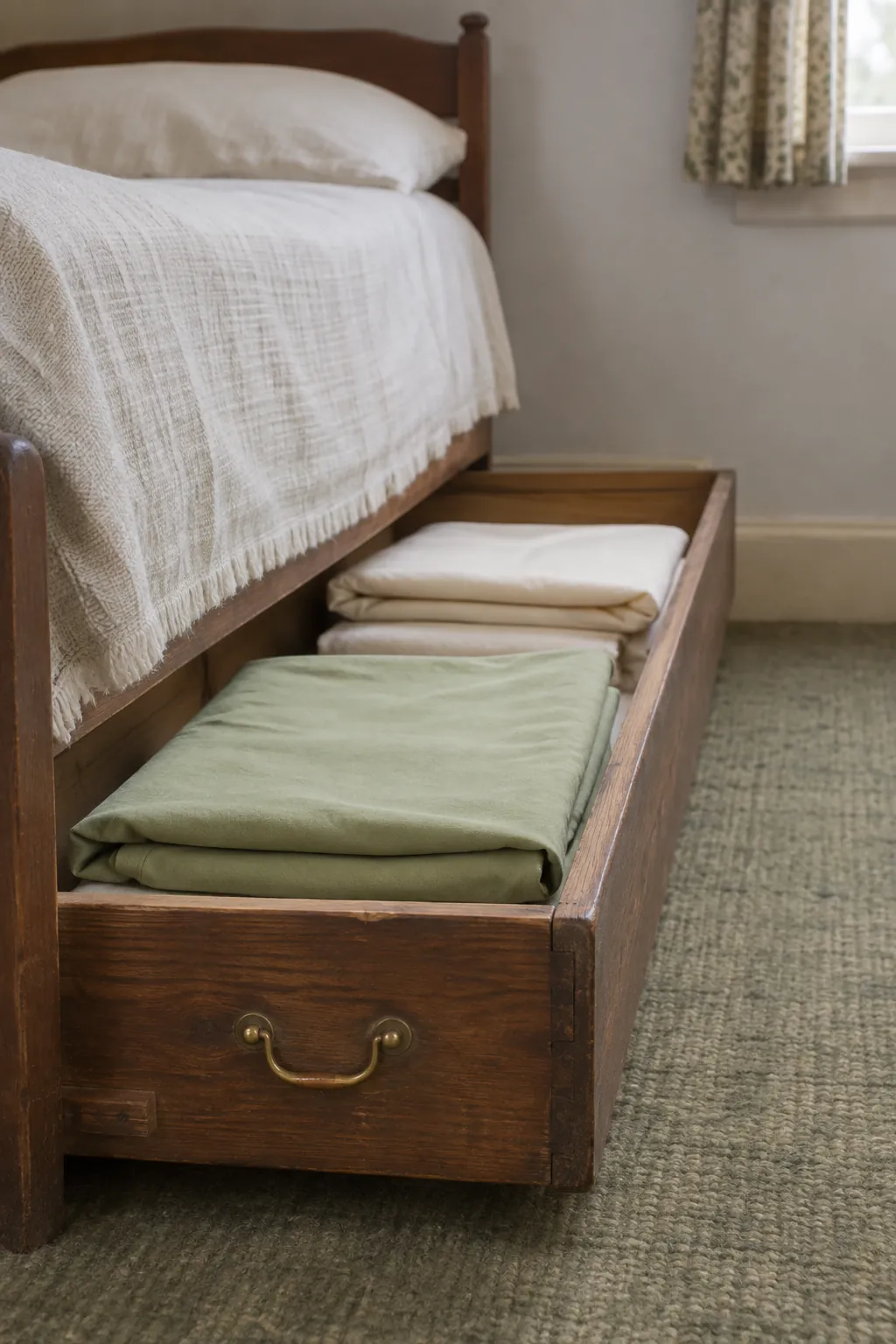
A long drawer underneath the bed can hold an extra set of sheets without touching the dresser. Measure the room needed to open it fully from its handle. Choose a bin or drawer shallow enough that it clears the mattress frame and floor covering. Keep what you use weekly near its front.
Use the Top Shelf of the Closet for Seasonal Items
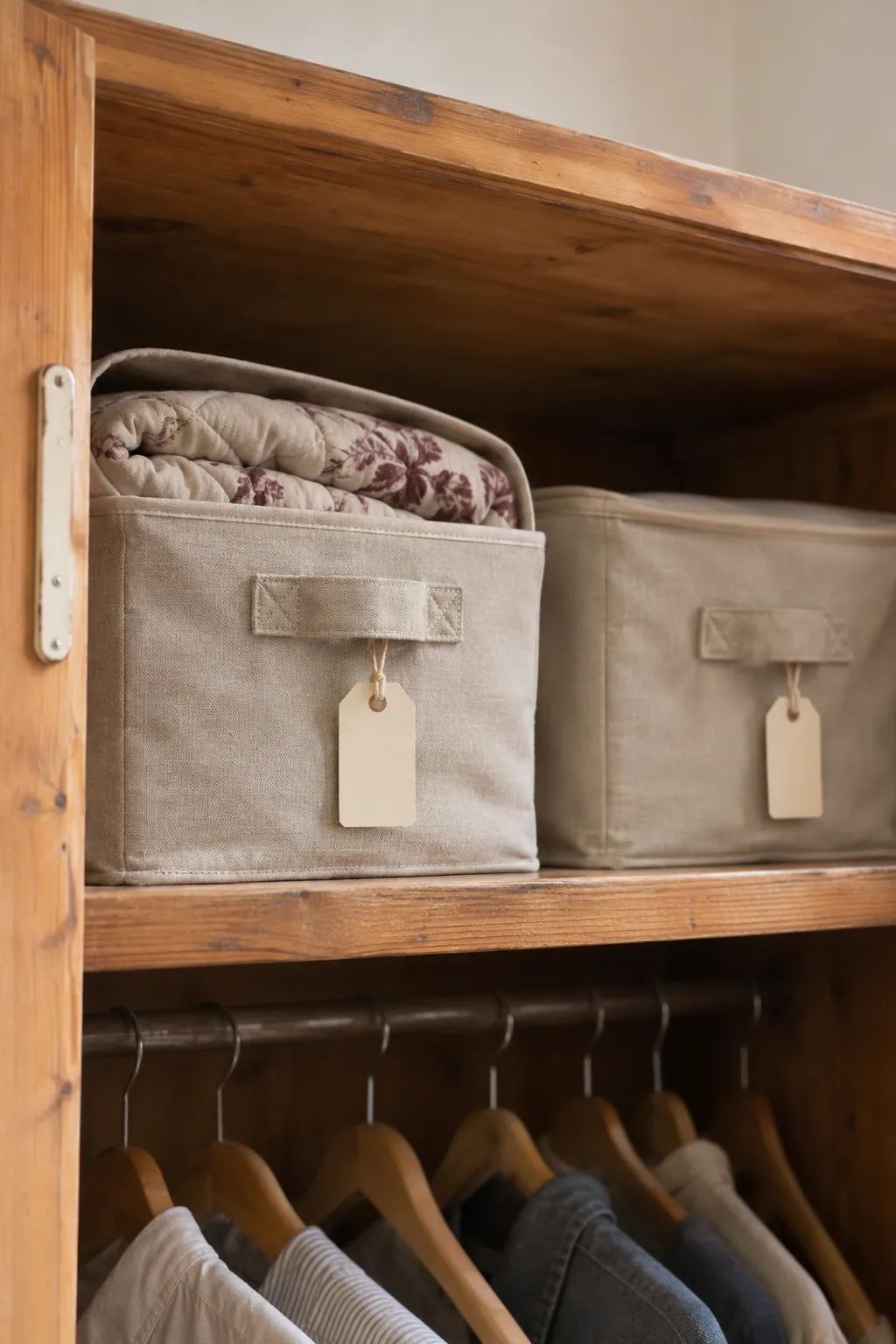
A top closet shelf can take spare blankets you reach for a few times a year. Measure the shelf and the opening you have to pass the container through. Label the front rather than the lid so you can see what is inside before lifting it down. Use lightweight boxes up high and reserve heavier items for shelves you can reach without climbing.
Try a Tall Narrow Dresser
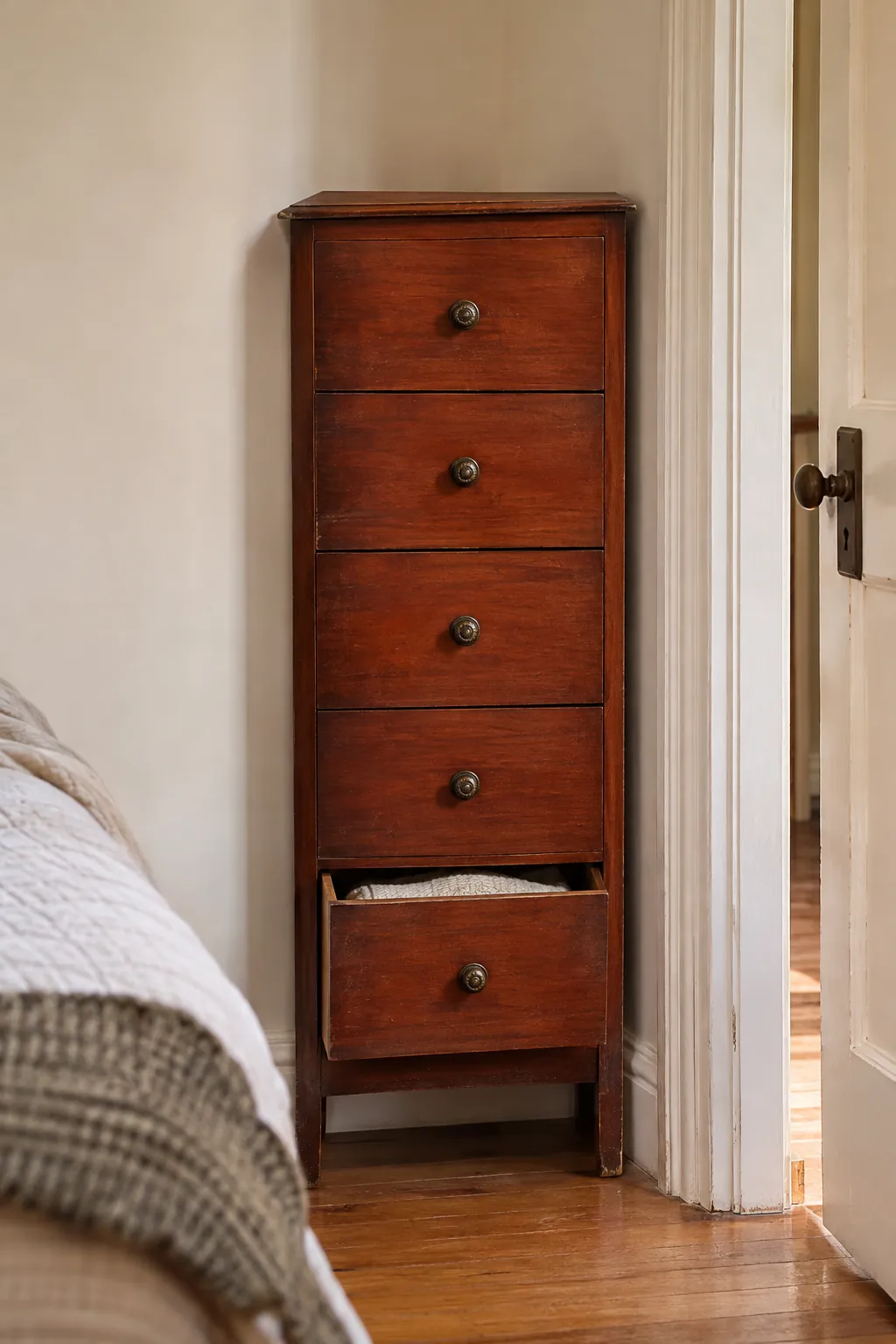
A narrow chest can fit on a wall where a wide dresser would block an opening. Count the drawers you need and measure their usable depth, since slim furniture can still have shallow storage. Give the drawer fronts room to open. Anchor the chest using the maker’s instructions and the right hardware for your wall.
Use an Old Telephone Table by the Bed
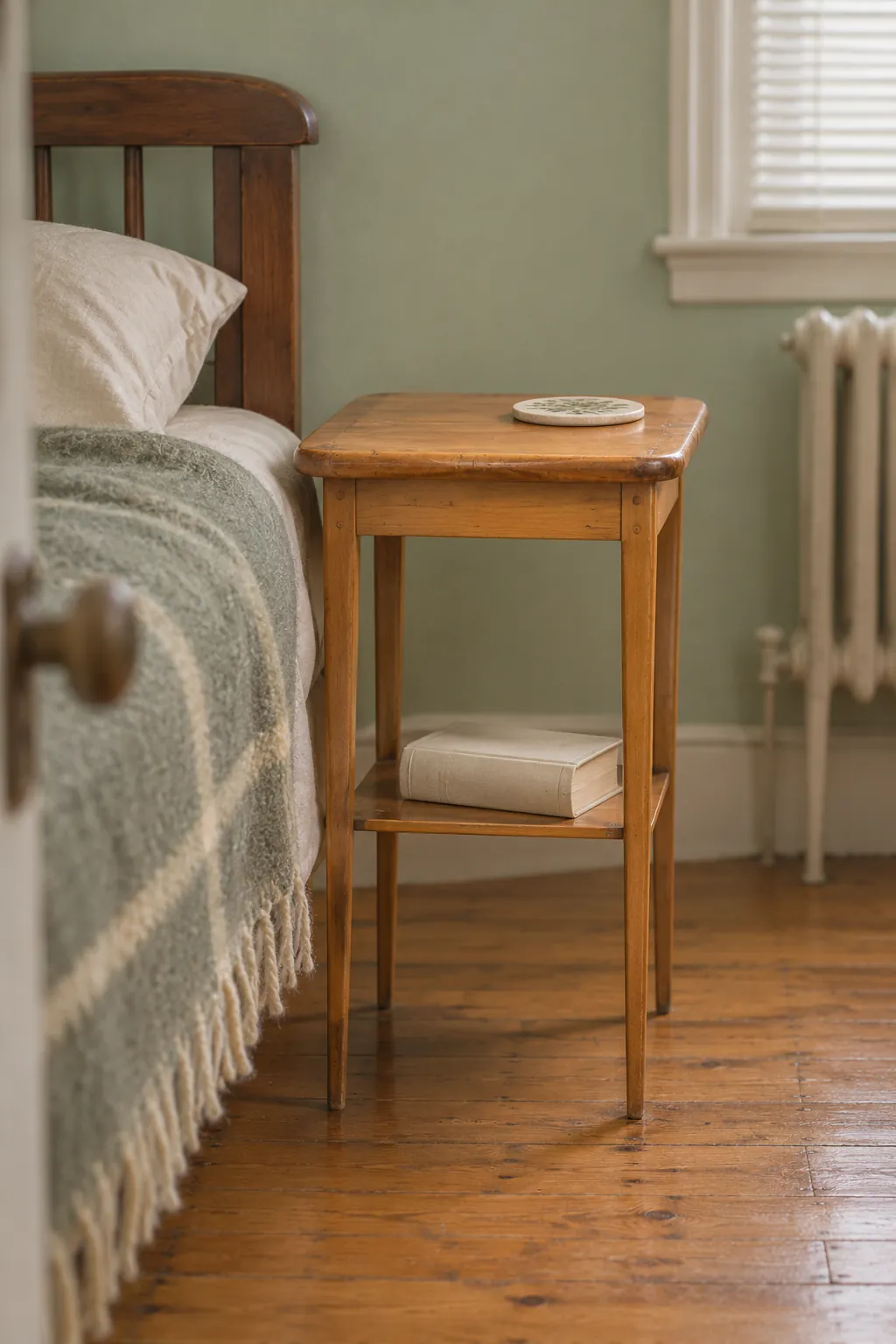
A small telephone table often gives you a little open shelf and room for a glass. Check its height from the mattress, since a table that looks short in a thrift shop may sit at the right level beside a low bed. Test both feet and top for movement. Keep the lower shelf for one book or charging case.
Put a Shelf Where a Nightstand Would Stand
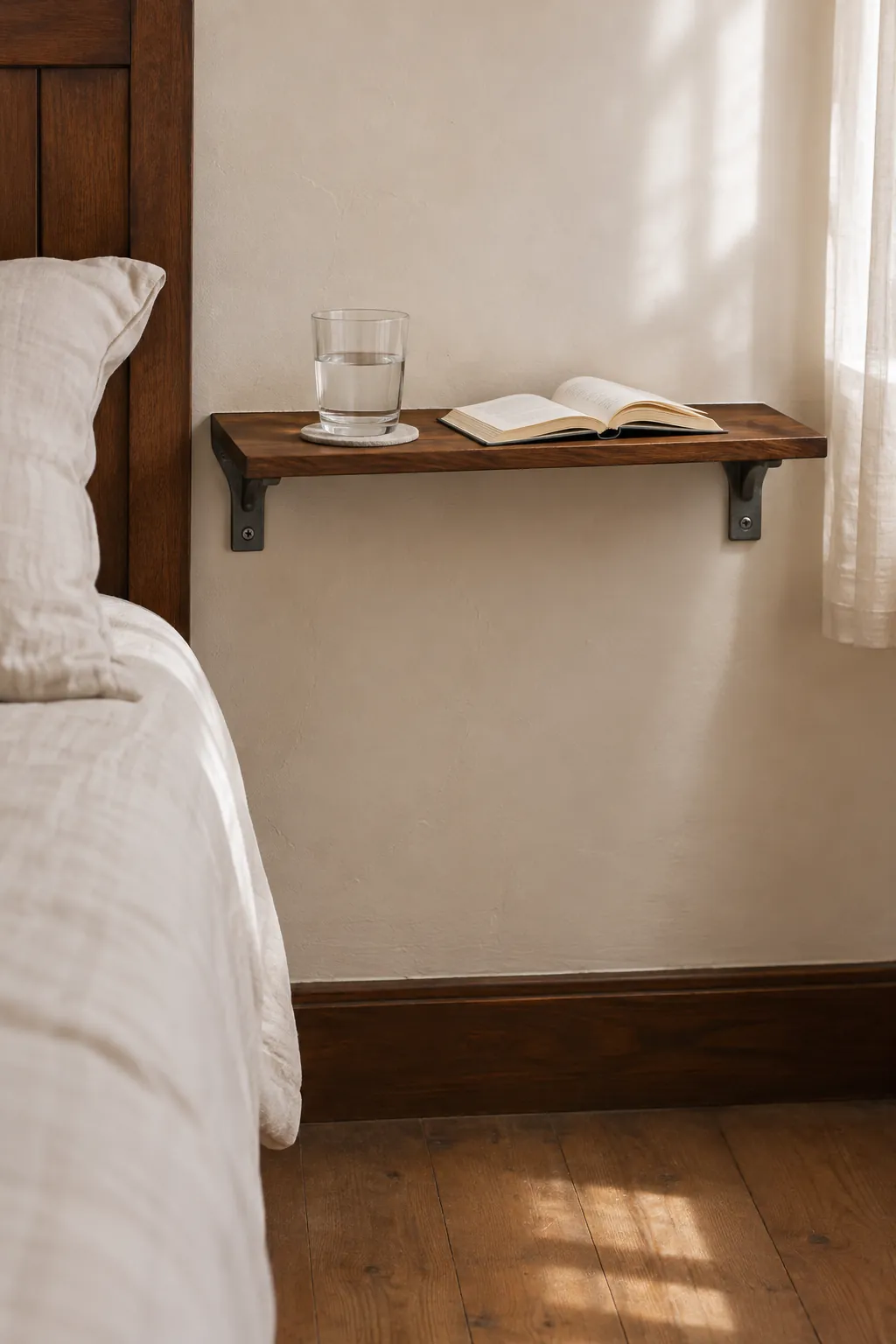
A shallow floating ledge can save the space your feet take when you get up. Mark its depth from the wall with a stiff piece of cardboard and sit on the bed to check arm clearance. Use a wall fixing and shelf rated for the objects, with permission if you rent. Keep a glass back from the front edge.
Choose a Clamp Lamp for a Rental
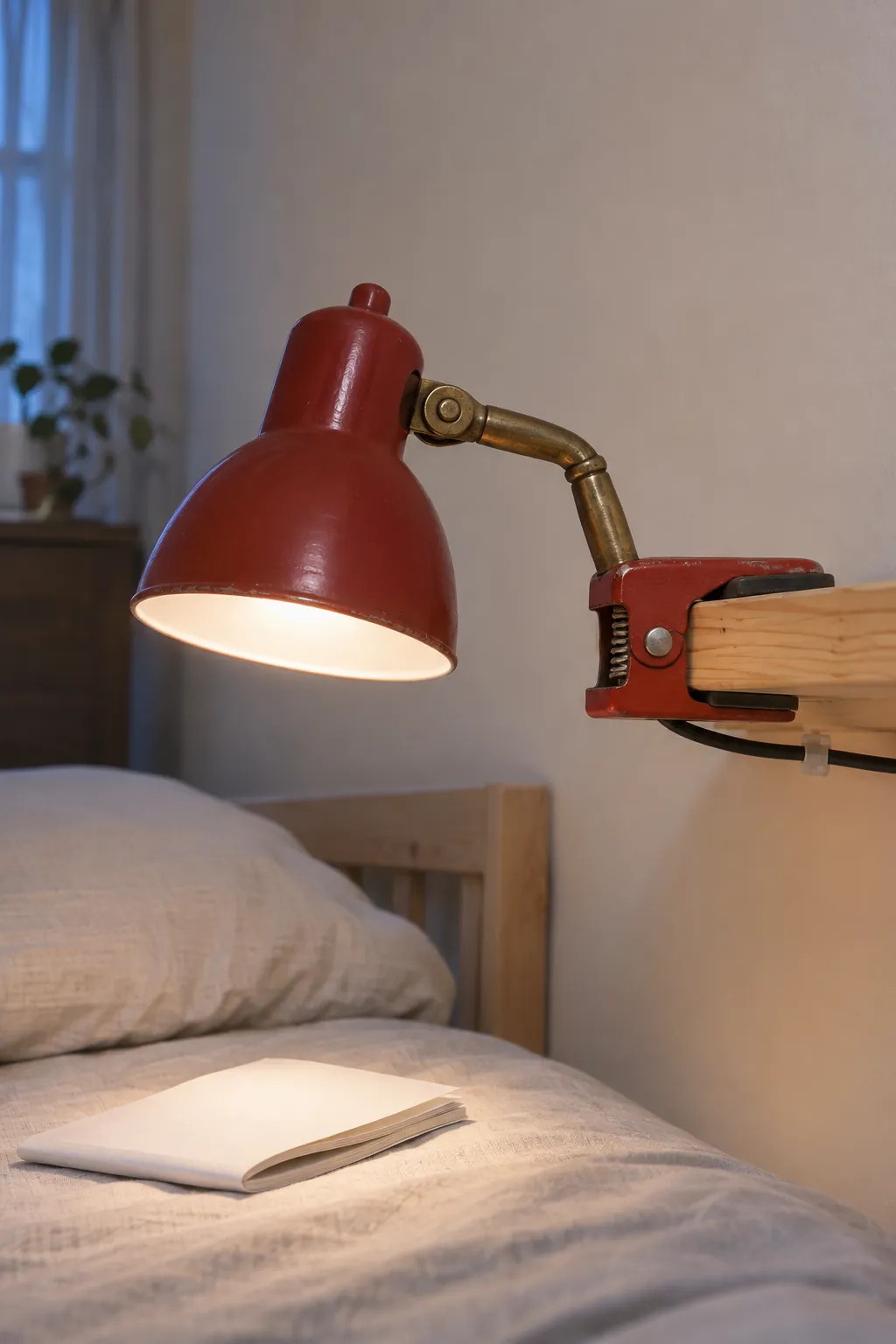
A clamp shade can give you a reading light without wall holes if your shelf can carry it. Match the clip to the surface thickness and use pads that will hold securely without marking the finish. Keep the cord behind the furniture and away from the mattress. Aim the opaque shade at the page to keep the bulb out of your view.
Hang a Swing Arm Lamp Where You Can Fold It Back
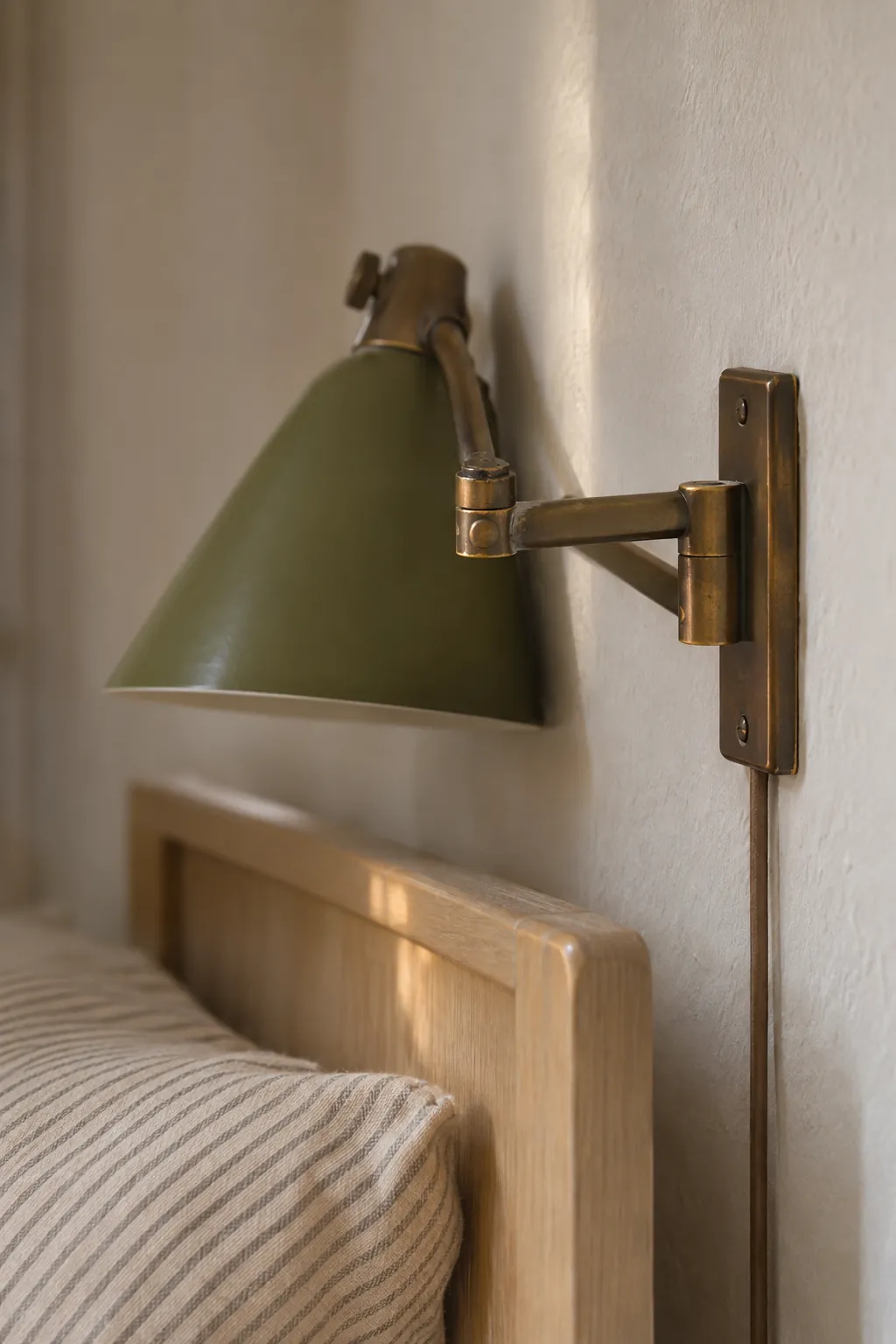
An adjustable wall lamp can free space on a small table. Mark the end of its reach and check it from a sitting position. Fold the arm back and verify its shade clears the headboard when you turn in bed. Choose a suitable installation method and keep the adjustment clear of the cord.
Choose a Low Open Headboard
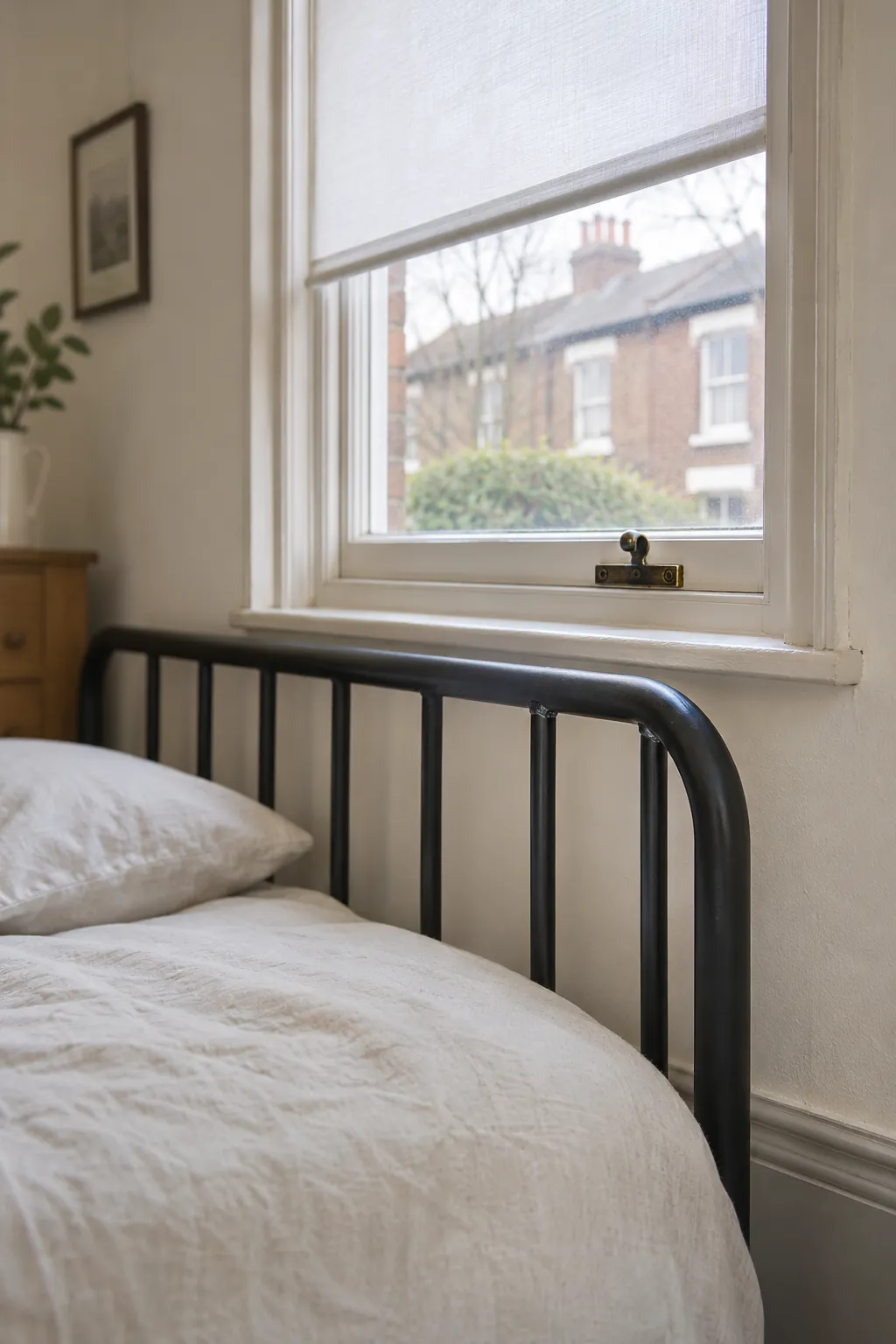
A plain bent metal or slim spindle headboard lets you see wall between its uprights. Check the gaps and how it attaches to your mattress frame. Pick a safe design made for use as a headboard, especially in a child’s room. If the bed sits under a window, leave the sash and latch reachable.
Make a Shallow Room Work With a Daybed
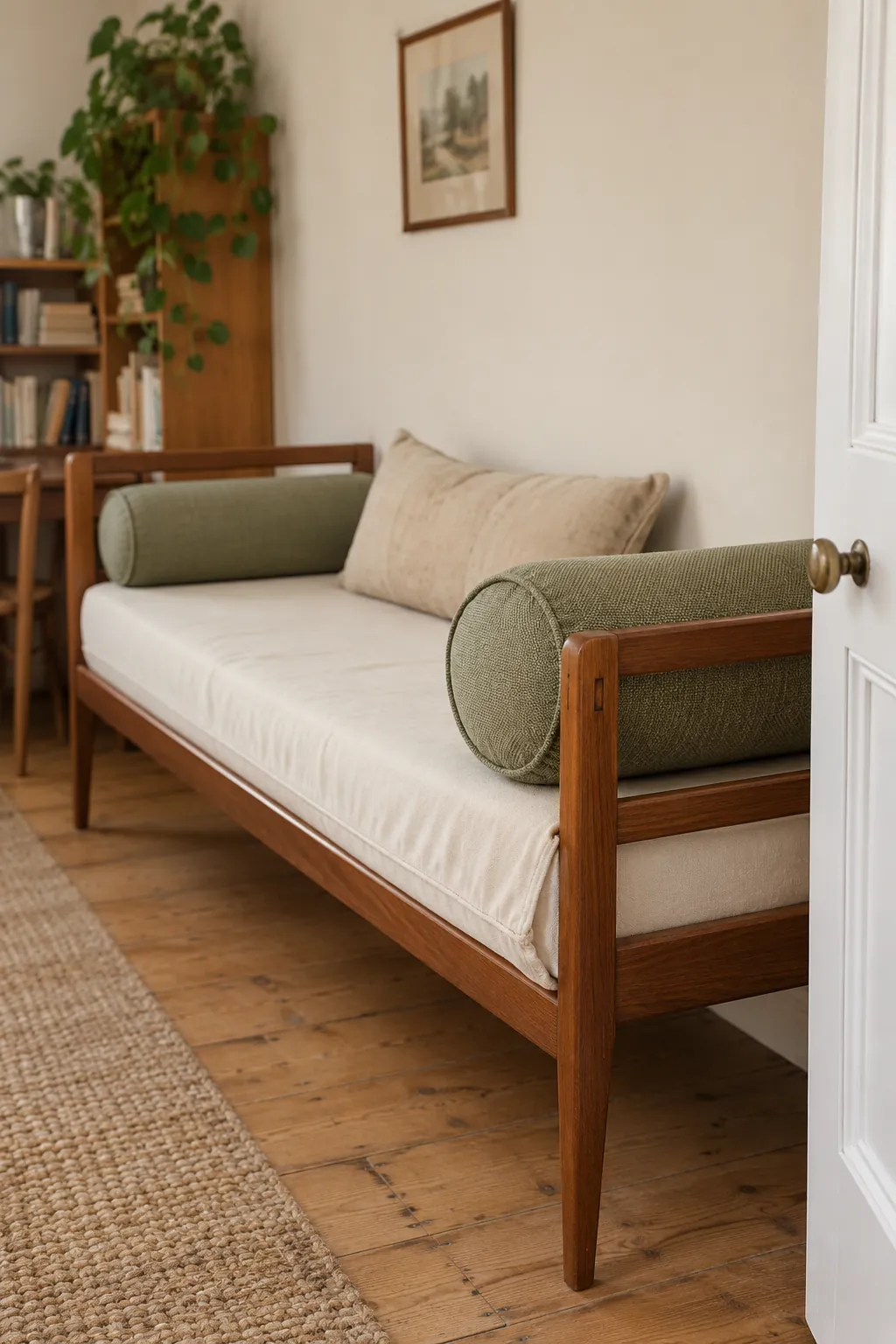
A daybed gives you a place to sit along the wall where a normal chair might not fit. Measure the full outer frame including arms before choosing one. Keep bolsters removable so the sleeping area is easy to clear. Leave enough floor to make the bed from its open edge.
Use a Flat Runner in the Walking Lane
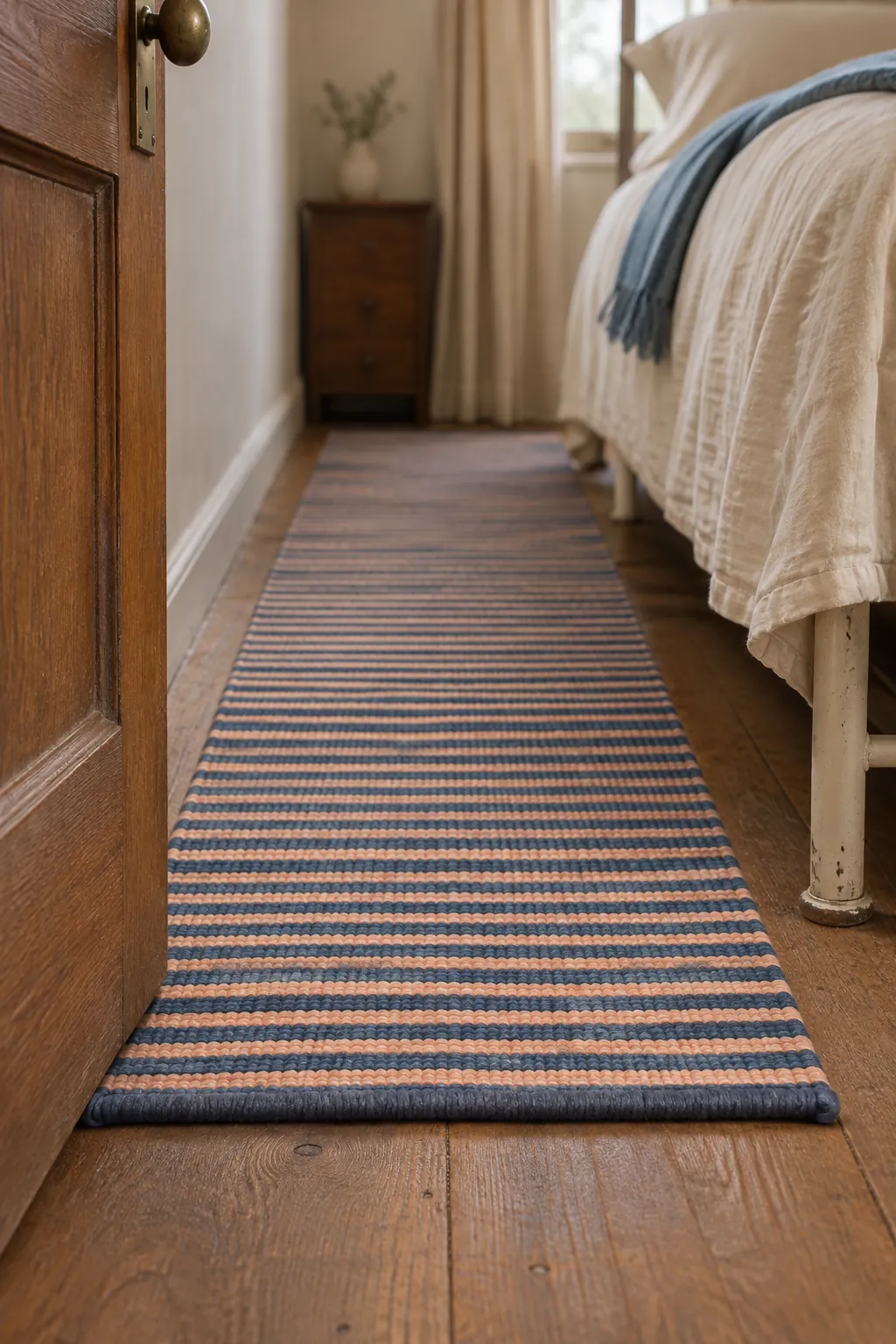
A narrow rug of muted retro colors can define the clear route beside the mattress. Choose a flat bound edge where the bedroom door swings. Set it on a nonslip pad suited to the floor. Leave it wide enough for two feet to stand when you get up.
Keep the Pattern on One Quilt
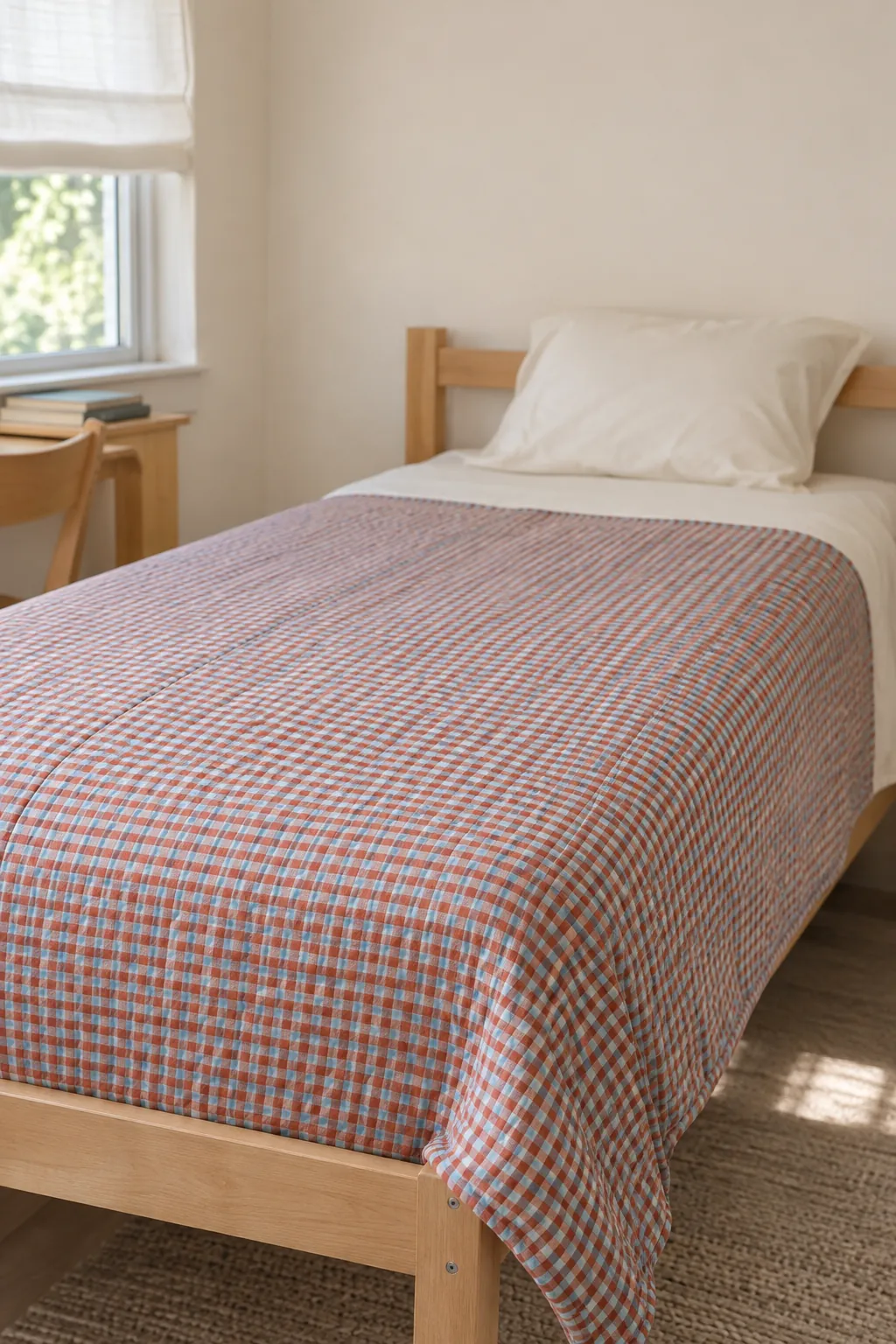
A checked or graphic quilt can give a mini bedroom its retro character without taking any floor. Decide how much of the design remains visible after your pillows and throw are in place. Choose a solid sheet in the palest color on the quilt. A smaller repeat works better if most of a large motif would hang off the side.
Give the Smallest Wall One Saturated Color
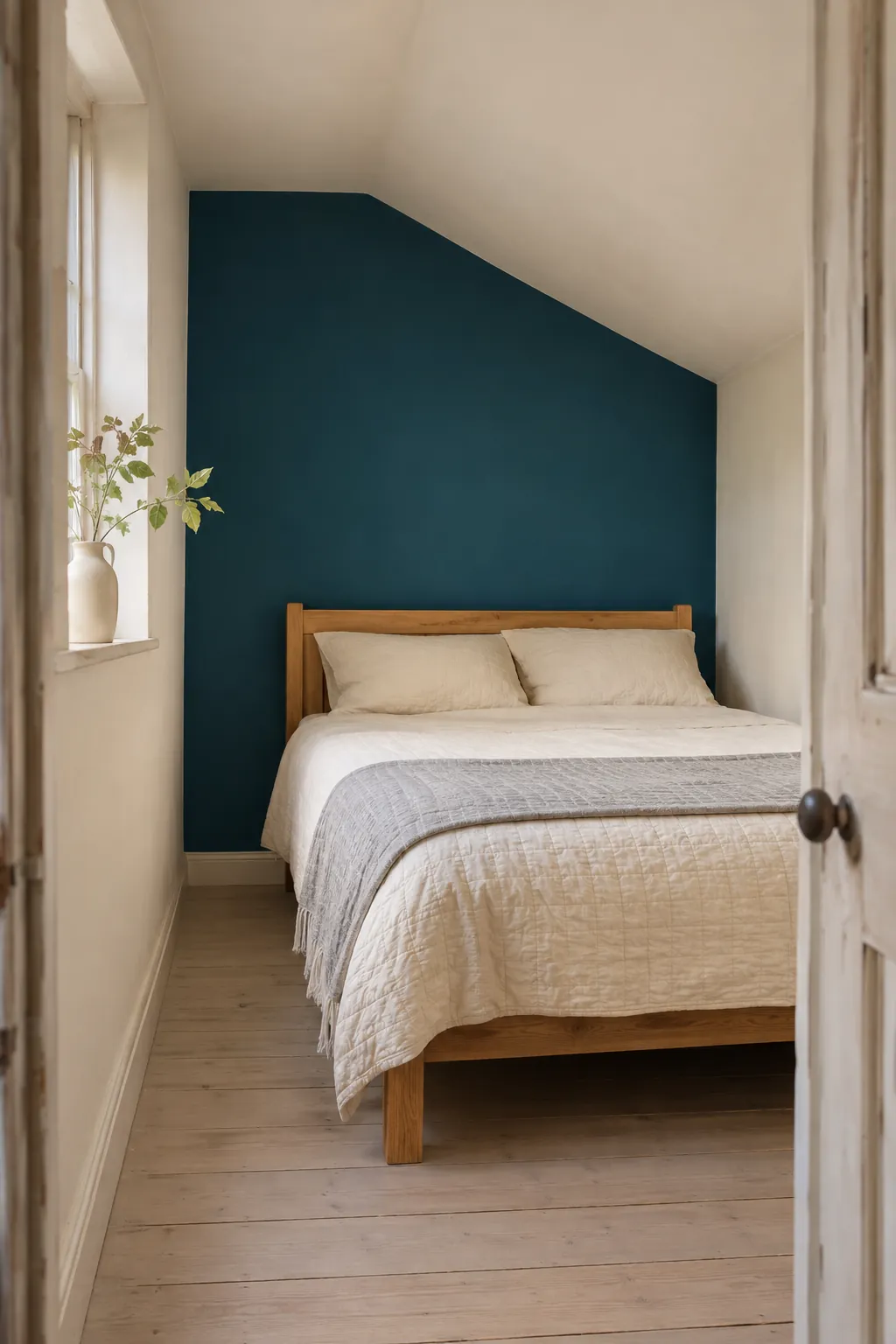
An accent wall at the narrow end can create a point of interest without you buying a single new piece. Put a strong blue or green sample beside your bed and compare it at noon and after dark. Keep the side walls pale if the room gets little daylight. Stop color at the actual corners.
Use a Painted Band Below the Window
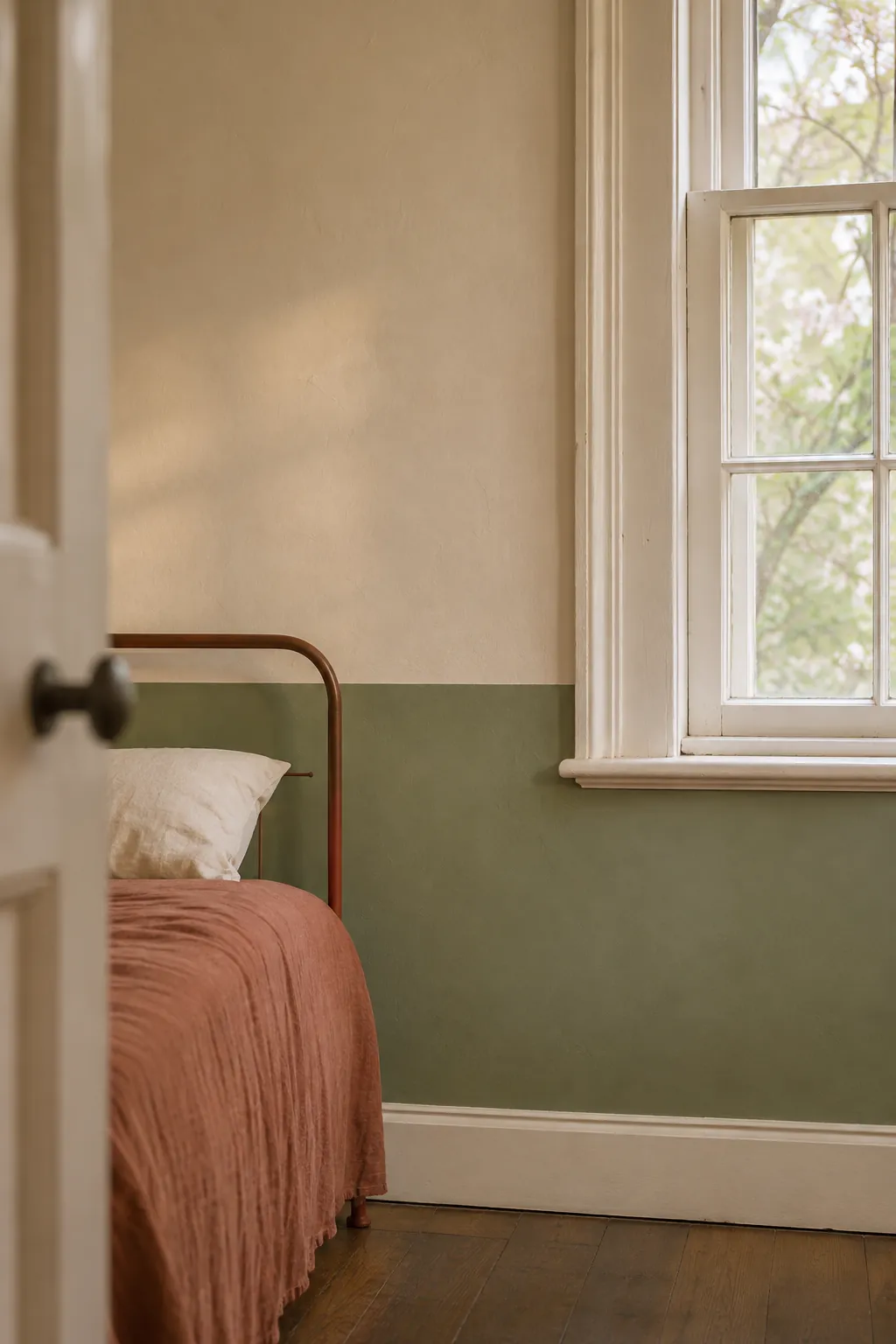
A colored lower band makes space for a vintage hue while keeping the upper wall light. Mark its height with tape and check it against the base of your bed and the window sill. Keep the line level across the actual wall even if an old floor slopes. Try a washable paint where a hand or chair rubs against it.
Build a Small Gallery of Three Frames
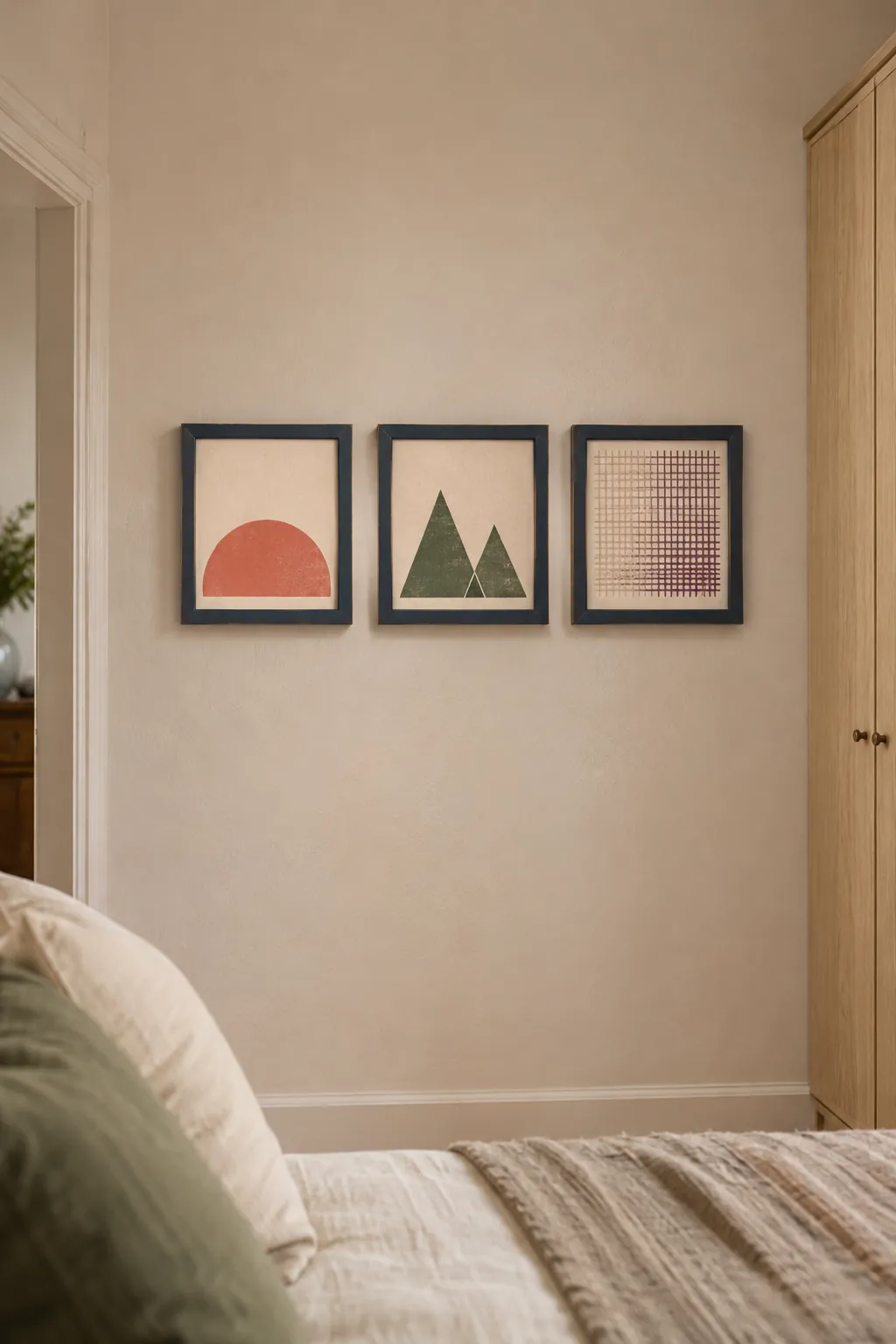
Three correctly spaced frames can fill a short wall without crowding the bed. Use a paper guide to set their edges before screwing anything in. Try small prints with a common frame color even if the shapes inside are different. Keep heavy frames away from the space above a sleeping pillow.
Try a Display Ledge for Rotating Art
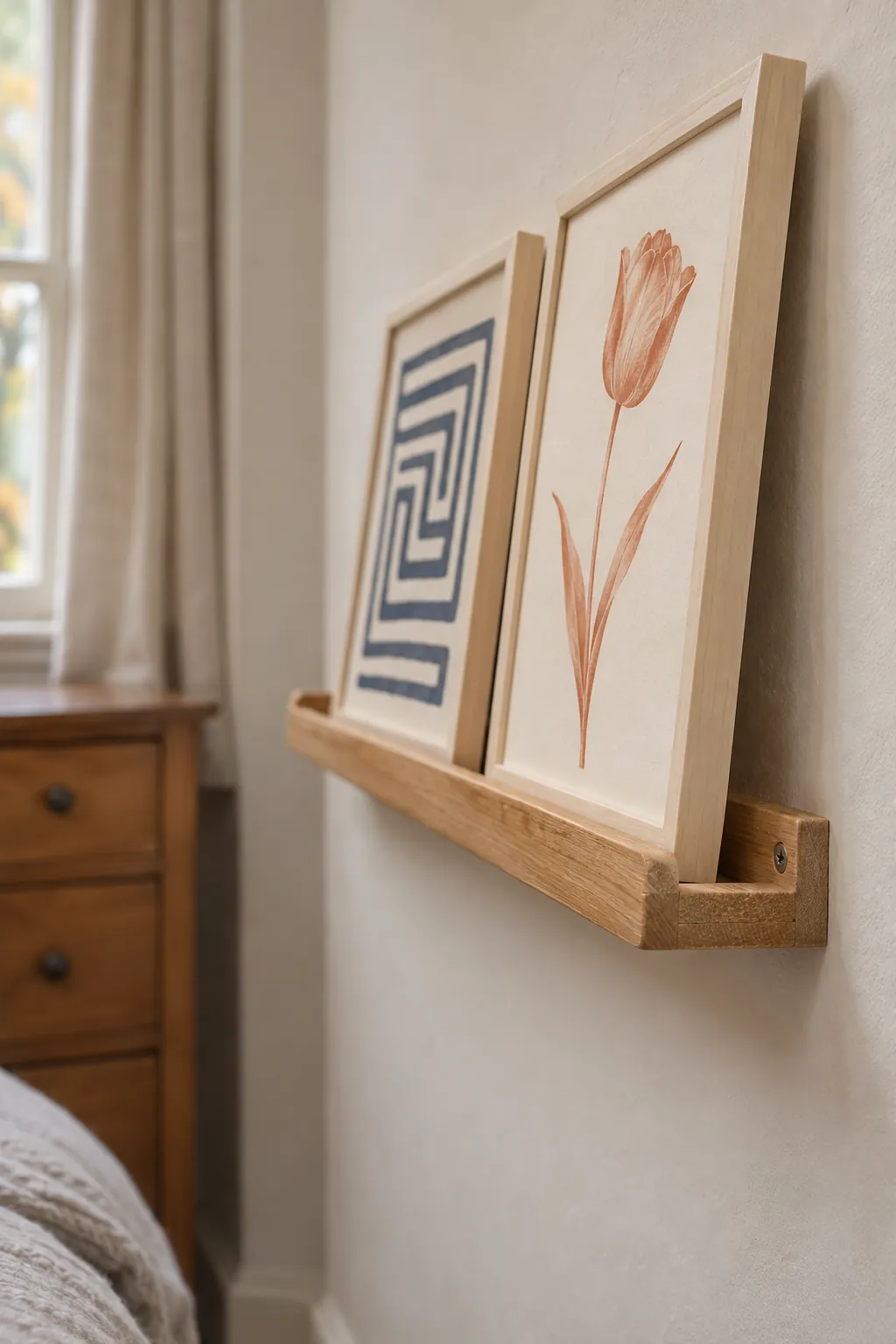
A shallow ledge with a raised lip can hold one or two light prints that you change by the season. Check that the frames lean fully into the wall and cannot slide forward. Mount the ledge where your shoulder will not brush it on the way to the closet. Put it on the dressing side rather than over your head at night.
Use a Mirror Across From Soft Daylight
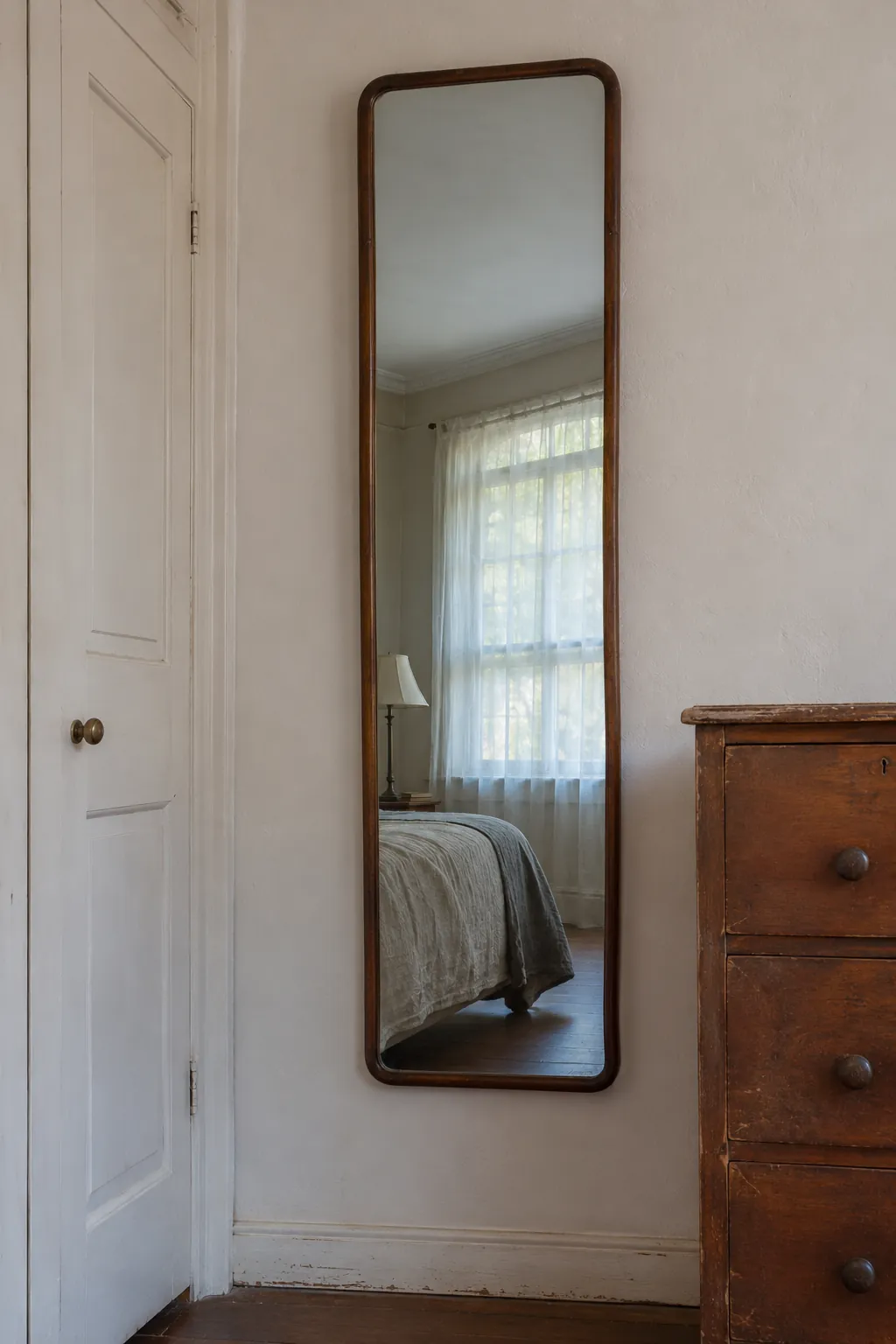
An old narrow mirror can give the room a longer view of a bright corner. Walk the usual path and see what it reflects before you fix it to the wall. Pick a position that reflects pale daylight without shining a bedside lamp back at you. Fasten it with hardware that supports its weight.
Choose a Small Chest With Visible Feet
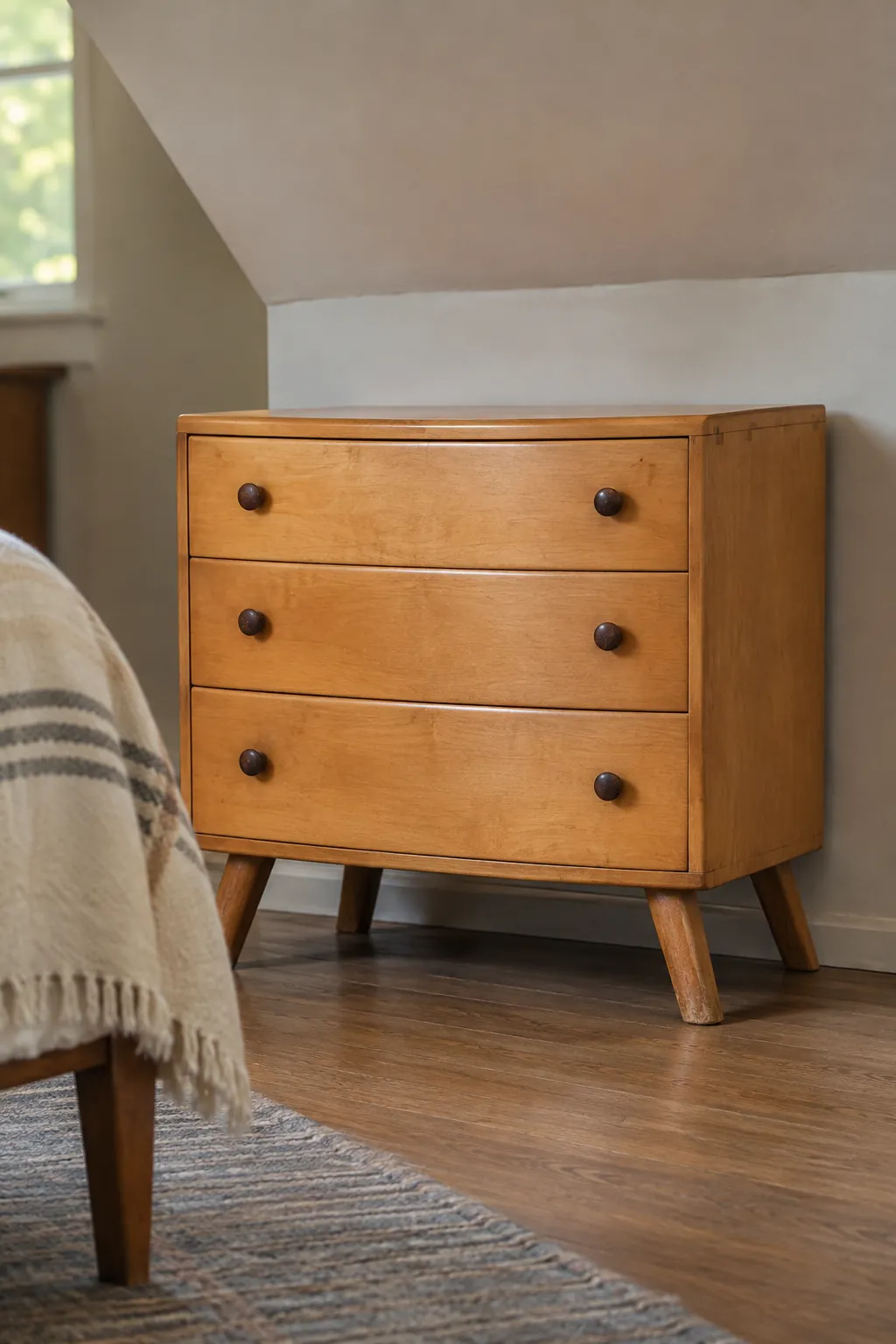
A used chest on short legs shows a little more floor than one that sits all the way down. Check that each leg joint is firm and that the bottom leaves enough room to clean. Try all of the drawers before bringing it home. Follow the maker or an appropriate hardware specialist when anchoring it.
Use a Corner Shelf in the Dead Angle
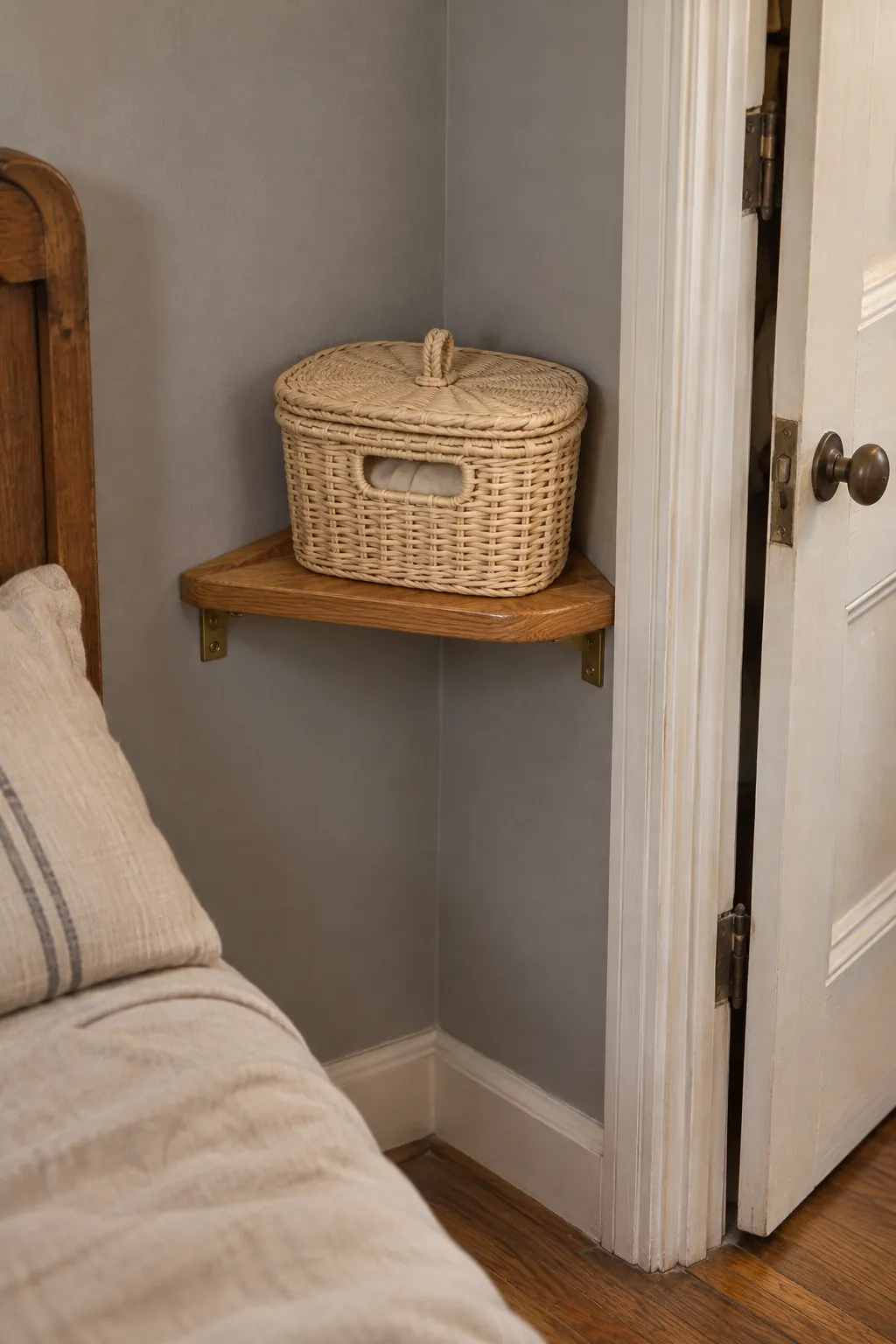
A small shelf can hold a basket in the corner where a nightstand would stick out. Make a paper pattern of its surface before buying so the usable width at the front is clear. Keep it out of the door swing. Choose strong fasteners for the wall material and the weight you plan to store.
Fit a Small Cabinet Into an Existing Alcove
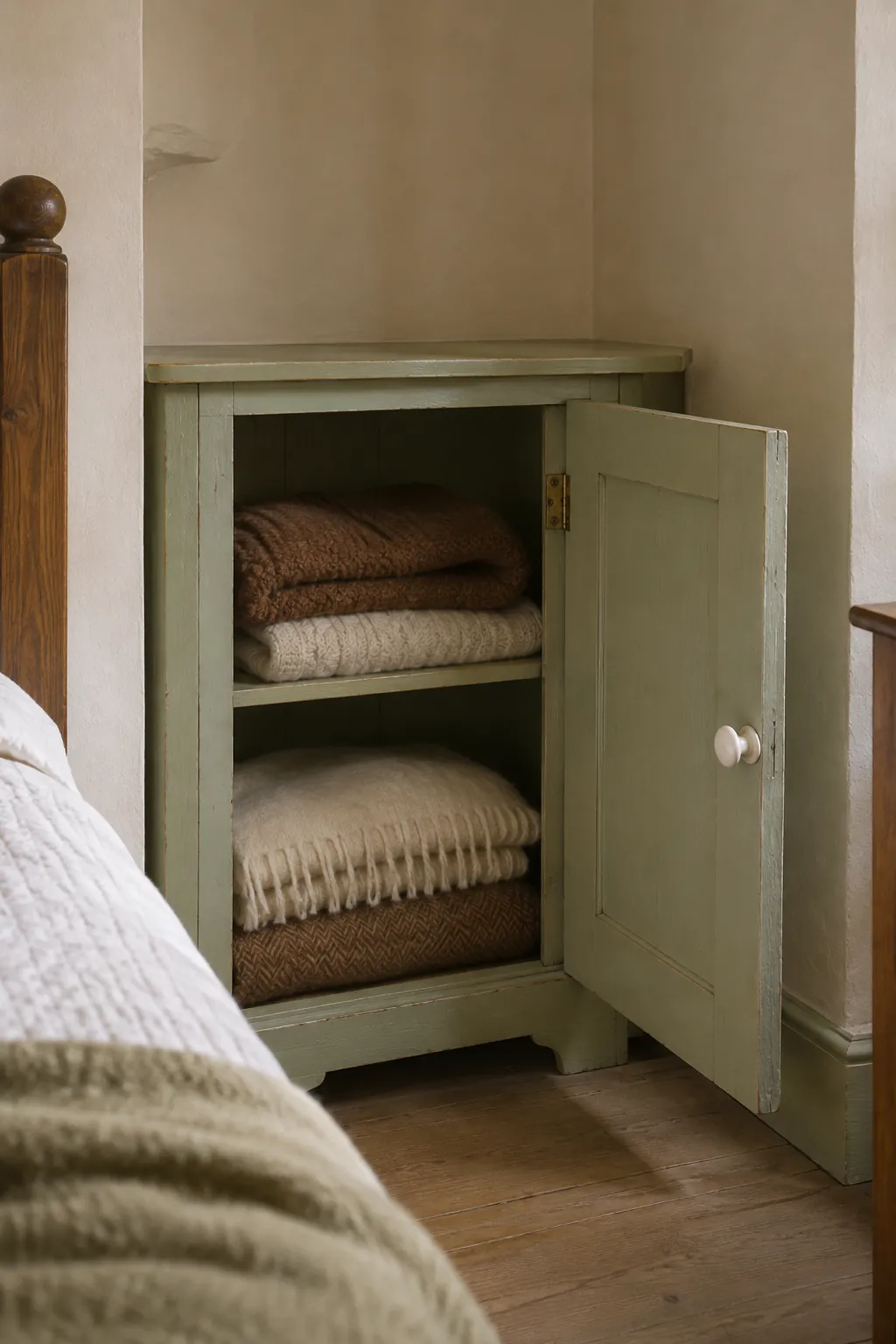
An old cabinet in a recess can hold folded clothes without adding to the room’s width. Measure the opening at the top and bottom, since old walls can lean. Include any baseboards and leave room to open the door. Keep the unit clear of ventilation or electrical fixtures that need access.
Add Shallow Hanging Storage Inside the Closet
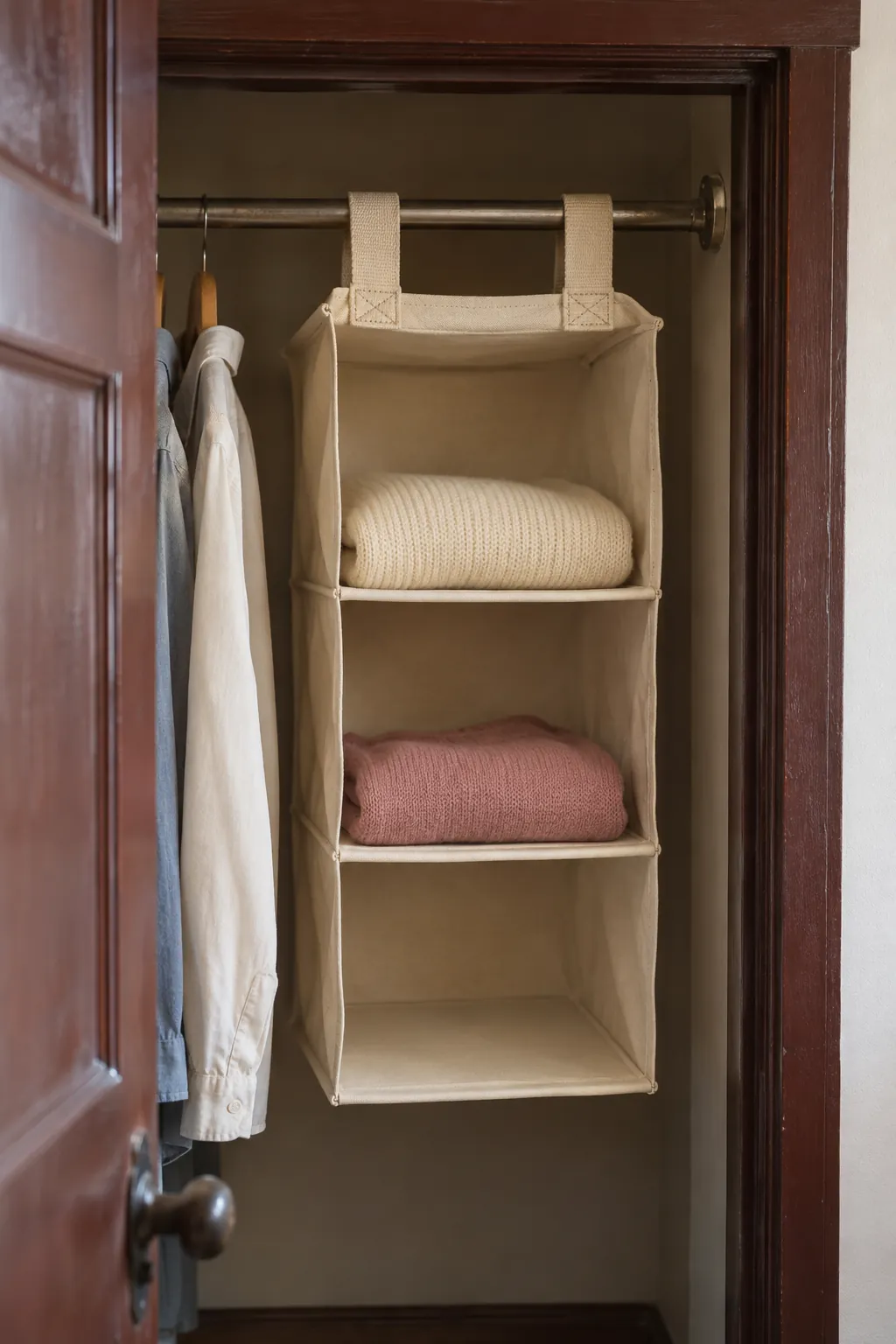
A soft hanging shelf can give sweaters a place above the shoe line. Check the closet rod rating and the weight of the loaded organizer. Give hangers beside it enough space so sleeves do not catch on the shelf corner. Choose a plain lining that makes the small opening brighter.
Give Shoes One Low Row
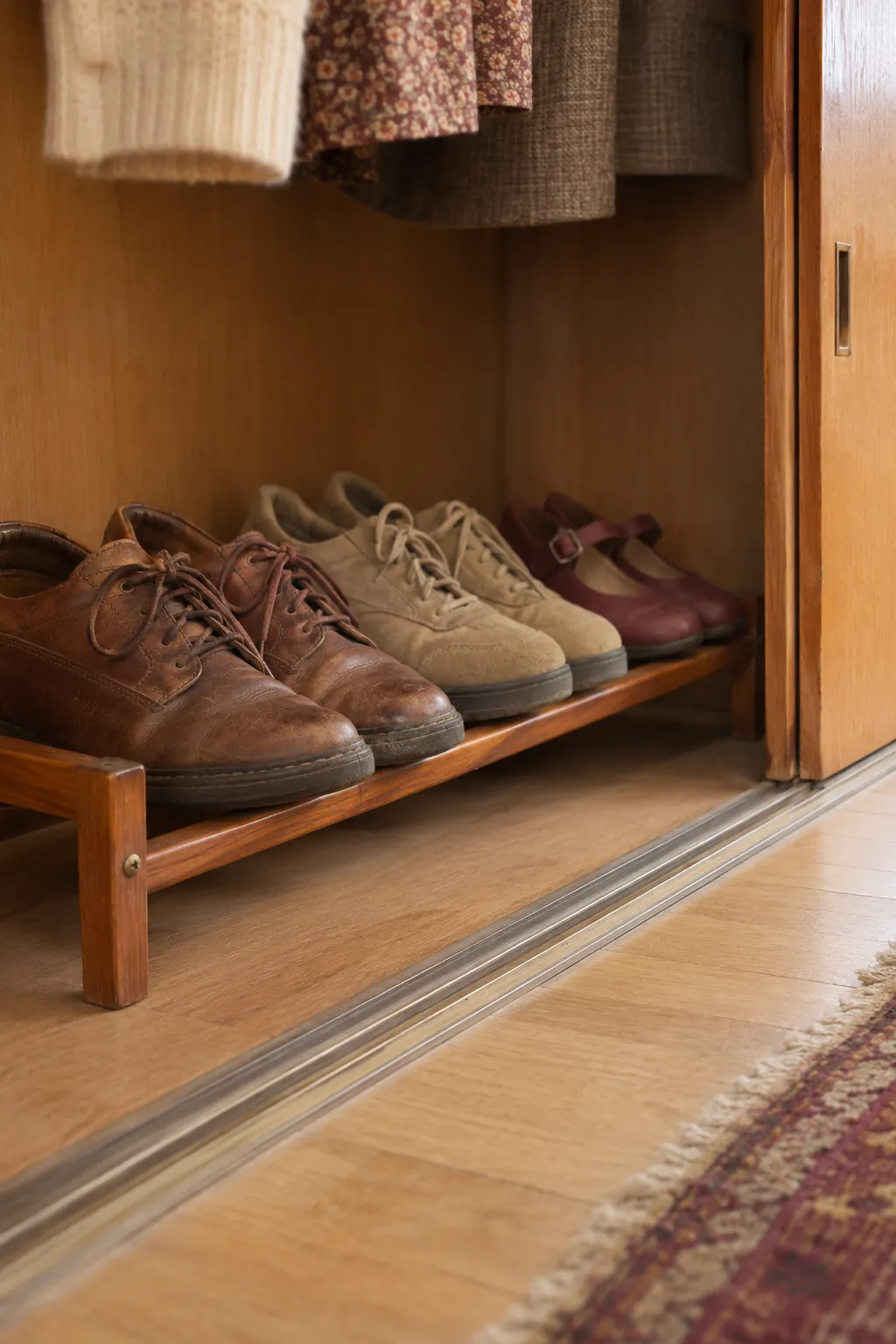
A narrow shoe rack on the closet floor can keep shoes away from the bedroom route. Put the pair you reach for most where it is easy to slide out. Pick a rack shallow enough that closet doors close without touching heels. Keep high boots off the rack if the opening bends their shafts.
Use a Sliding Bin for Extra Bags
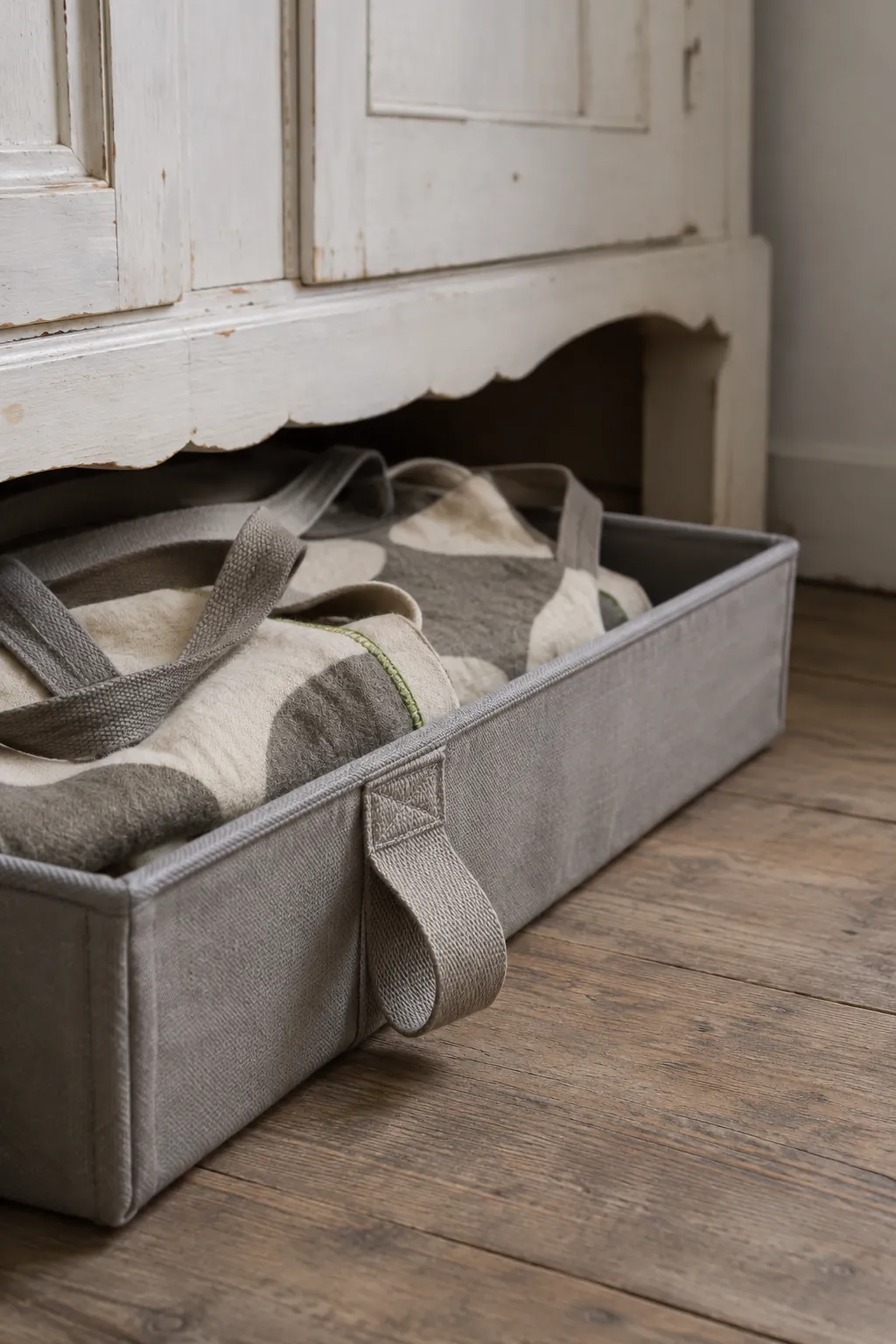
A low rigid bin can slide into a space that is awkward to reach repeatedly. Give it a pull handle you can grip even when it is pushed all the way back. Check that the floor under it is level and smooth. Leave a little slack inside if you tend to drop bags in without folding them.
Try a Folding Desk on a Free Wall
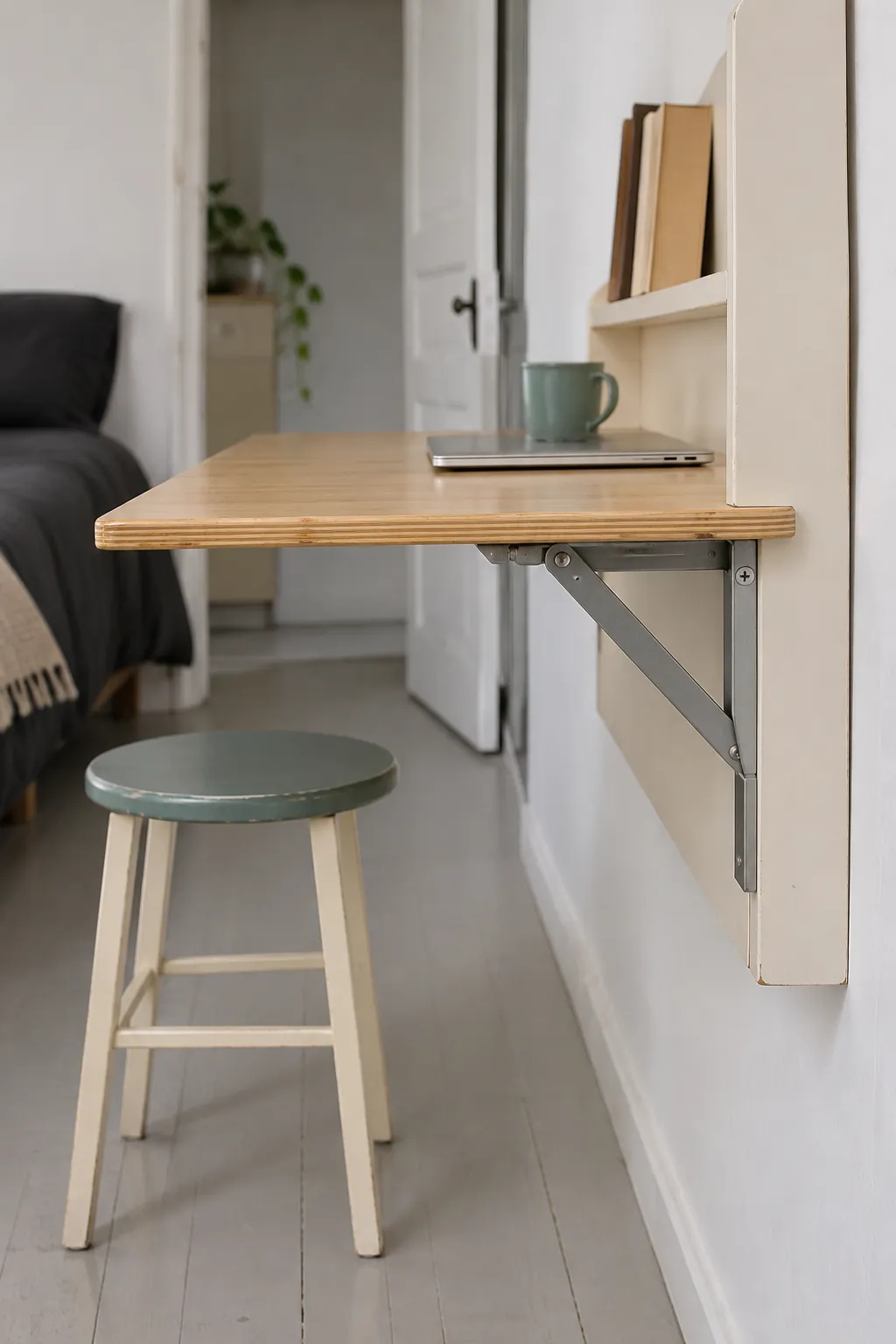
A folding desk can fit where the room is only wide enough for a chair at certain times. Make a paper version of the open top and tape it to the floor to test your knees and the route to the door. Use a mount rated for work and attach it to suitable structure. Keep the closed position clear of the chair as well.
Use a Writing Desk as a Dressing Table
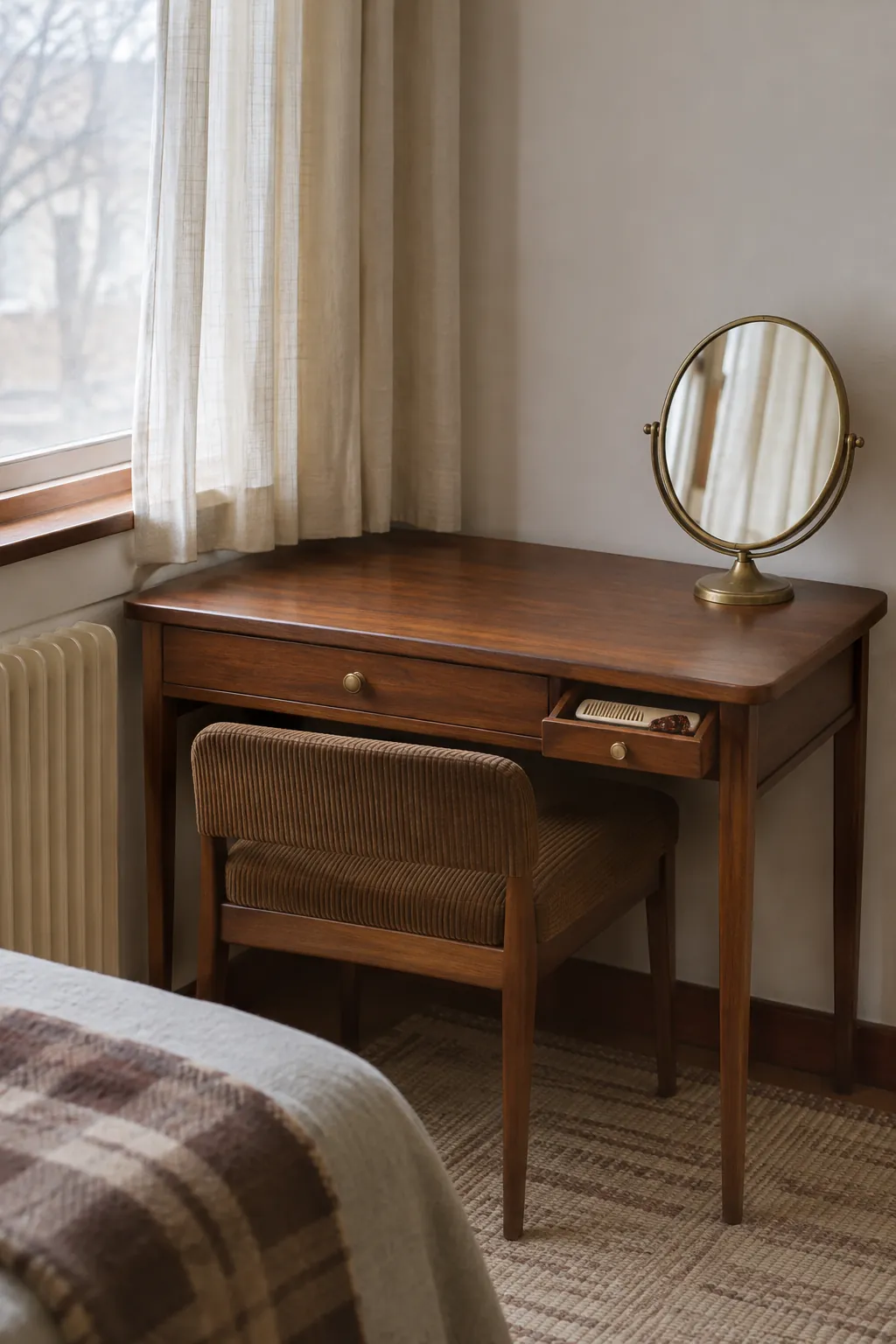
A little wood desk can do two jobs if you keep its top mostly clear. Put a small standing mirror on one side and leave the center for writing or a laptop. Store combs or brushes in one shallow tray in the drawer. Make sure the chair slides far enough under that you can still pass.
Pick a Backless Seat That Tucks In
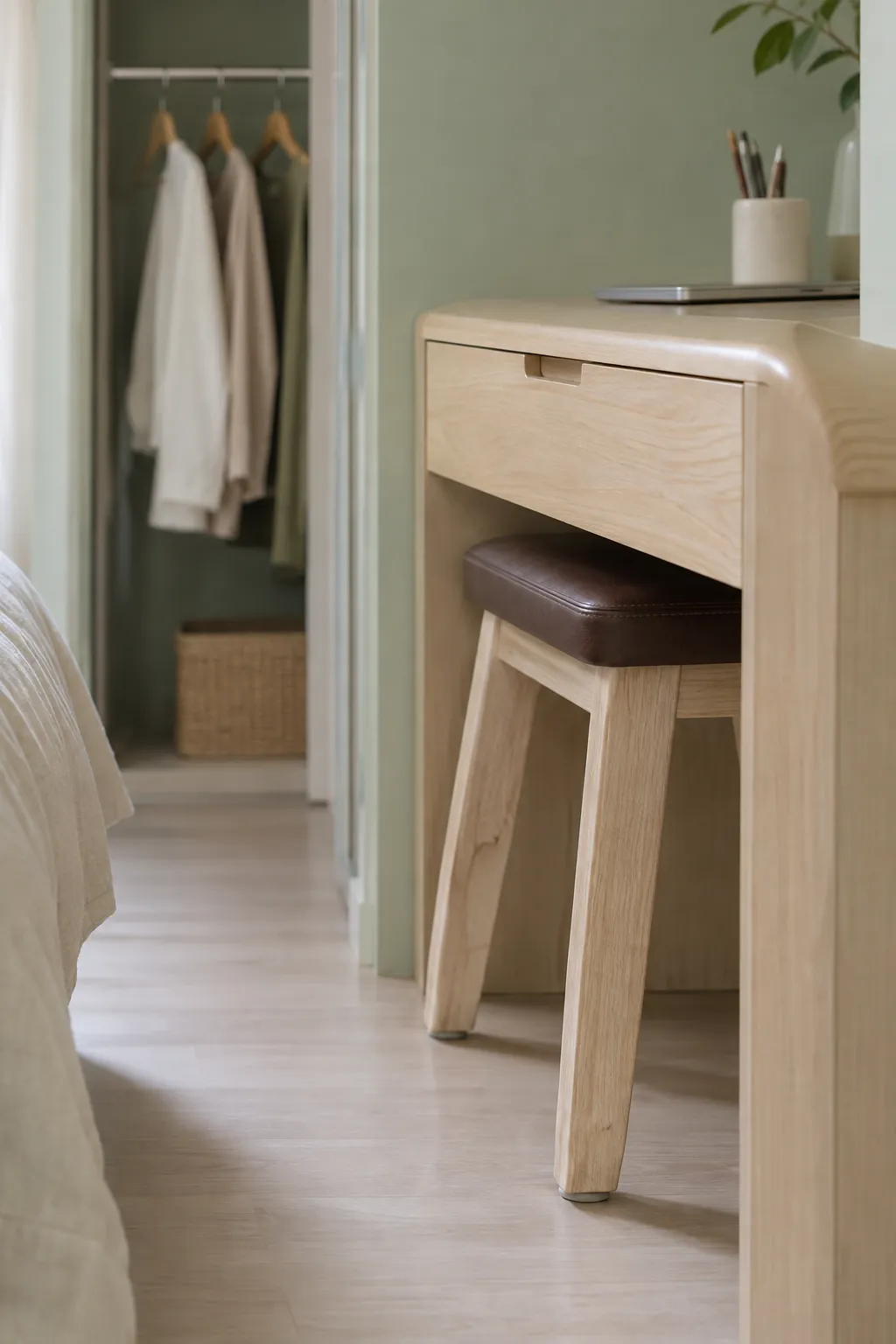
A compact stool can serve a low desk without leaving chair arms in your walking route. Check the height at the seat and the thickness of the desk apron. Choose a stable stool with feet that will work on the floor you have. Tuck it all the way in once you are done using it.
Lean on Existing Dorm Furniture for the Basics
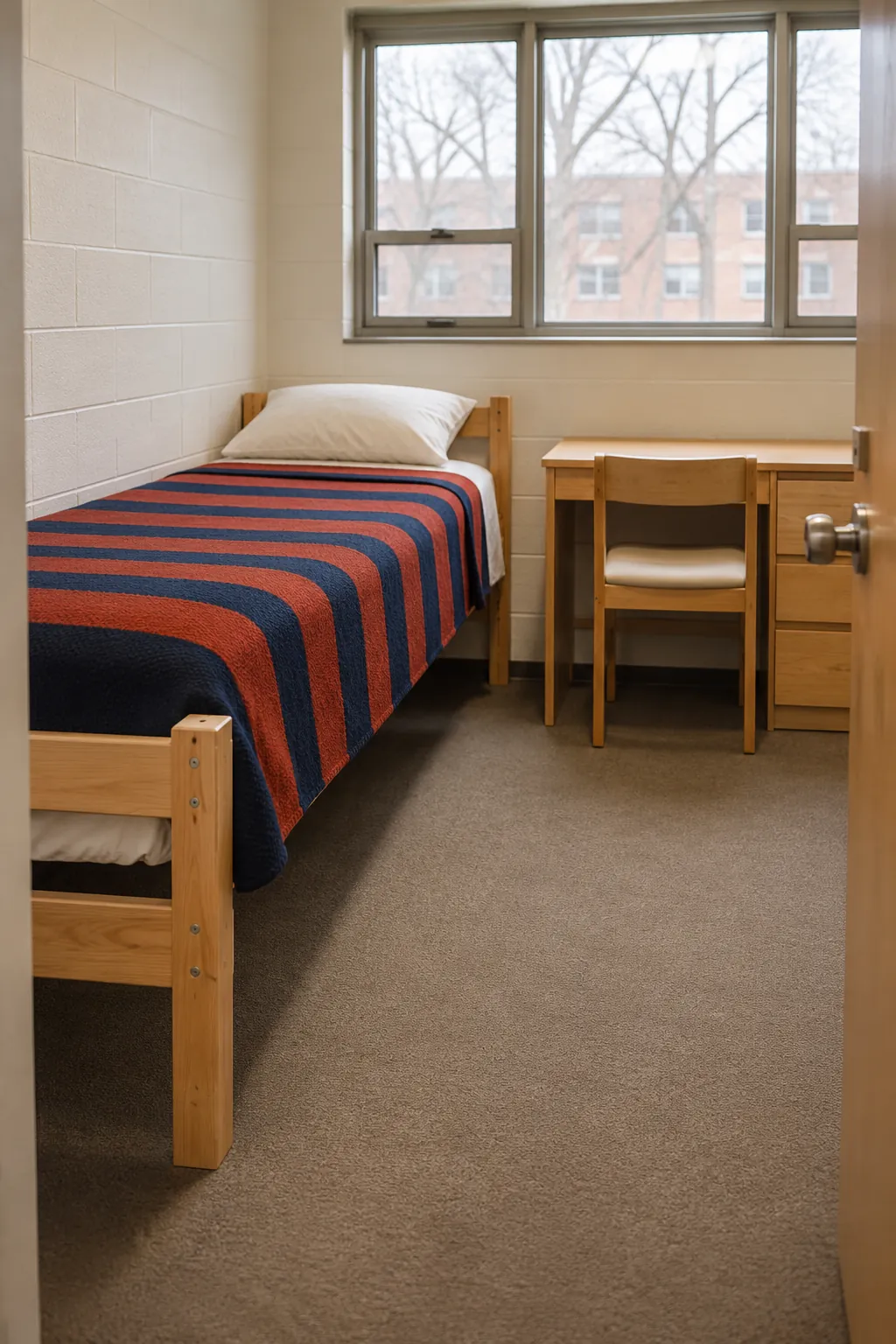
A sturdy fixed bed and desk give you the dimensions to work with in a retro dorm room. Read the room rules before changing the furniture or hanging things. Bring in the style with an old patterned blanket or a washable cover for the seat. Keep the official route to the door clear.
Hang a Light Panel From a Tension Rod Where It Fits
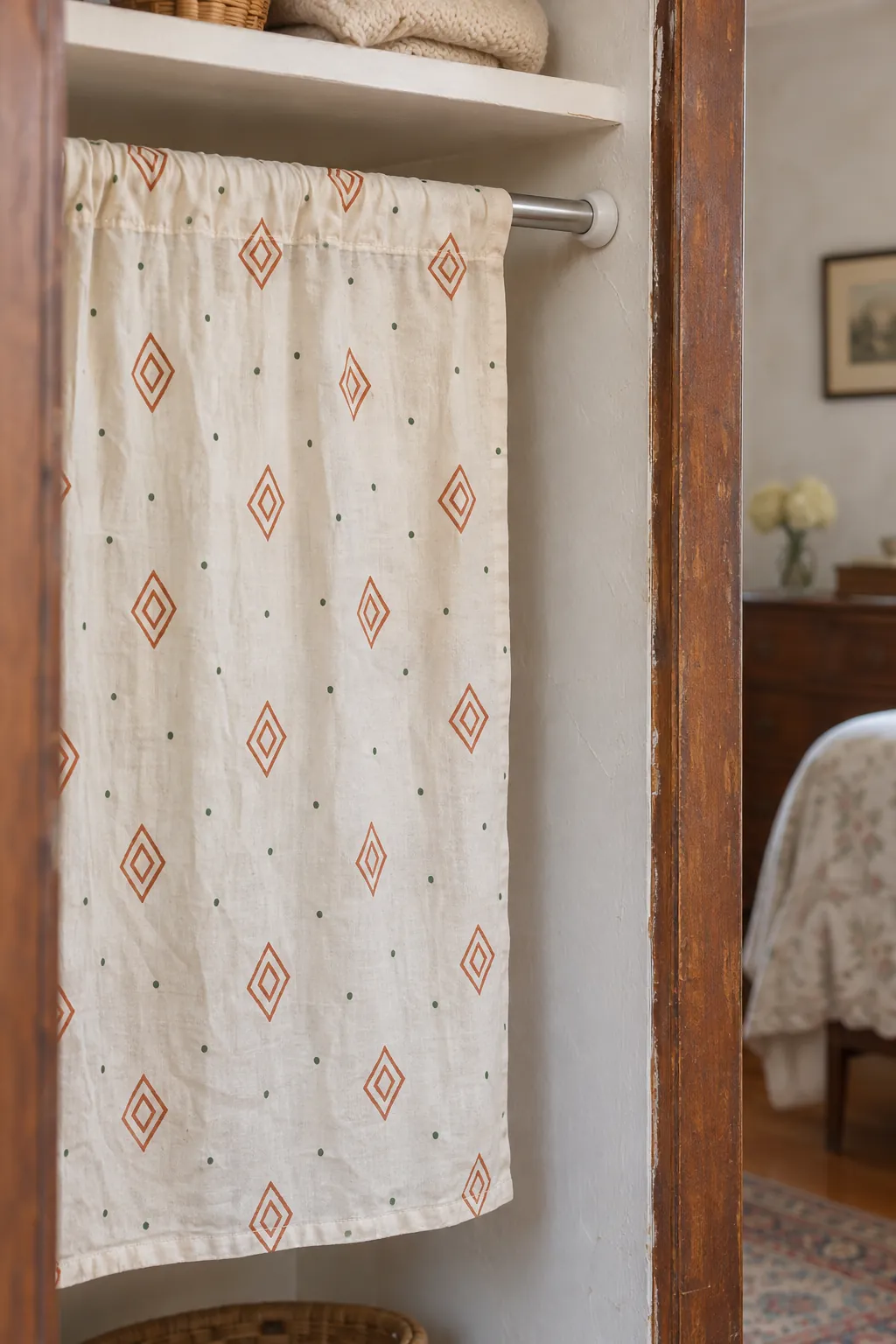
A short tension rod can support a light printed panel in a sound alcove that has opposing sides. Measure the span and check the rod’s load limits. Keep it away from heat and choose a fabric that leaves the path clear. Take it down if it starts to slip or leaves marks.
Use a Removable Decal Above the Desk
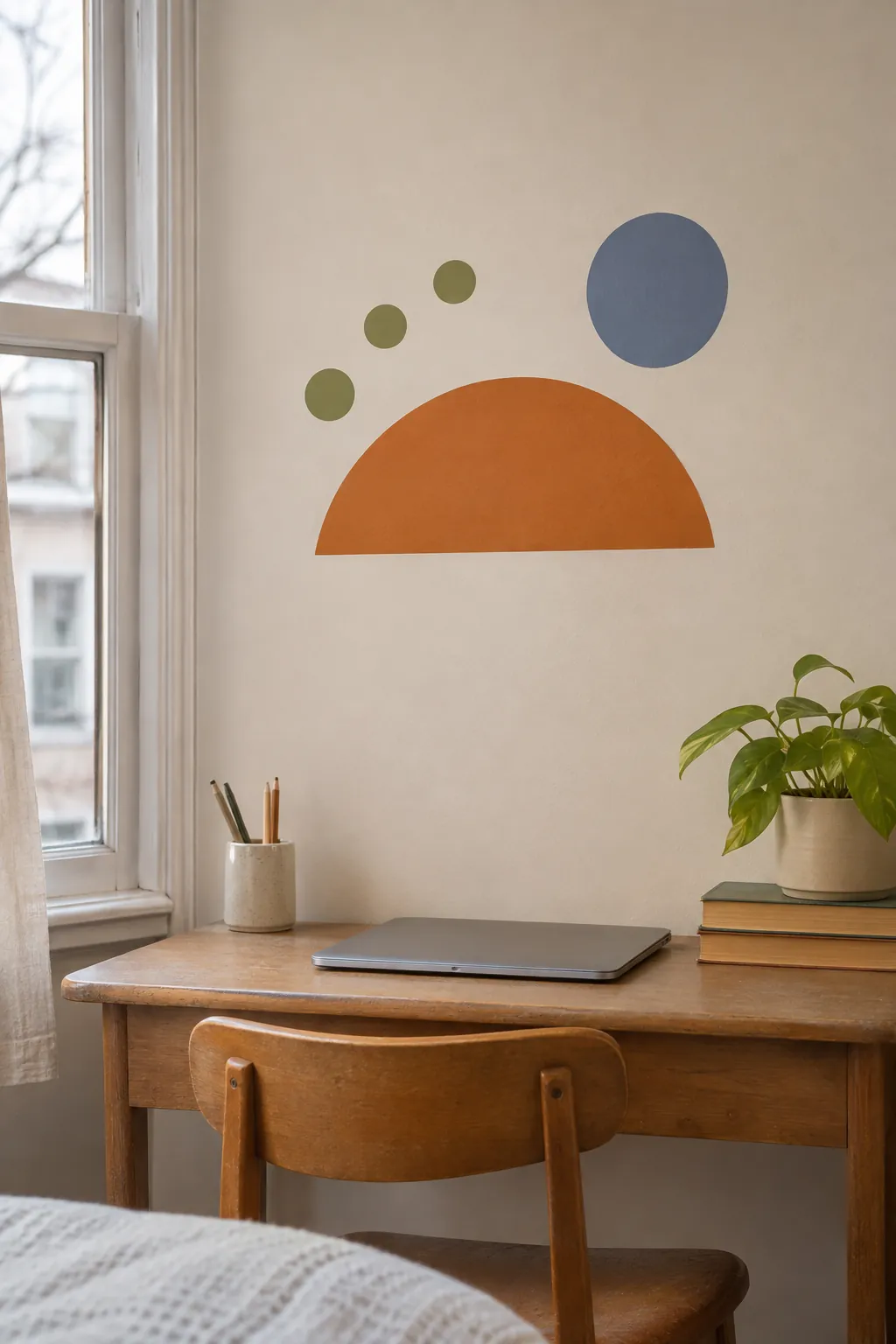
A small group of peelable shapes can add color to a wall if the paint and lease permit it. Pick a position where daylight lets you see the outline. Test a small spare shape somewhere out of view and follow the maker’s removal advice. Choose fewer shapes if you want to leave room for notes or a lamp.
Make Curtains Clear the Desk and Floor
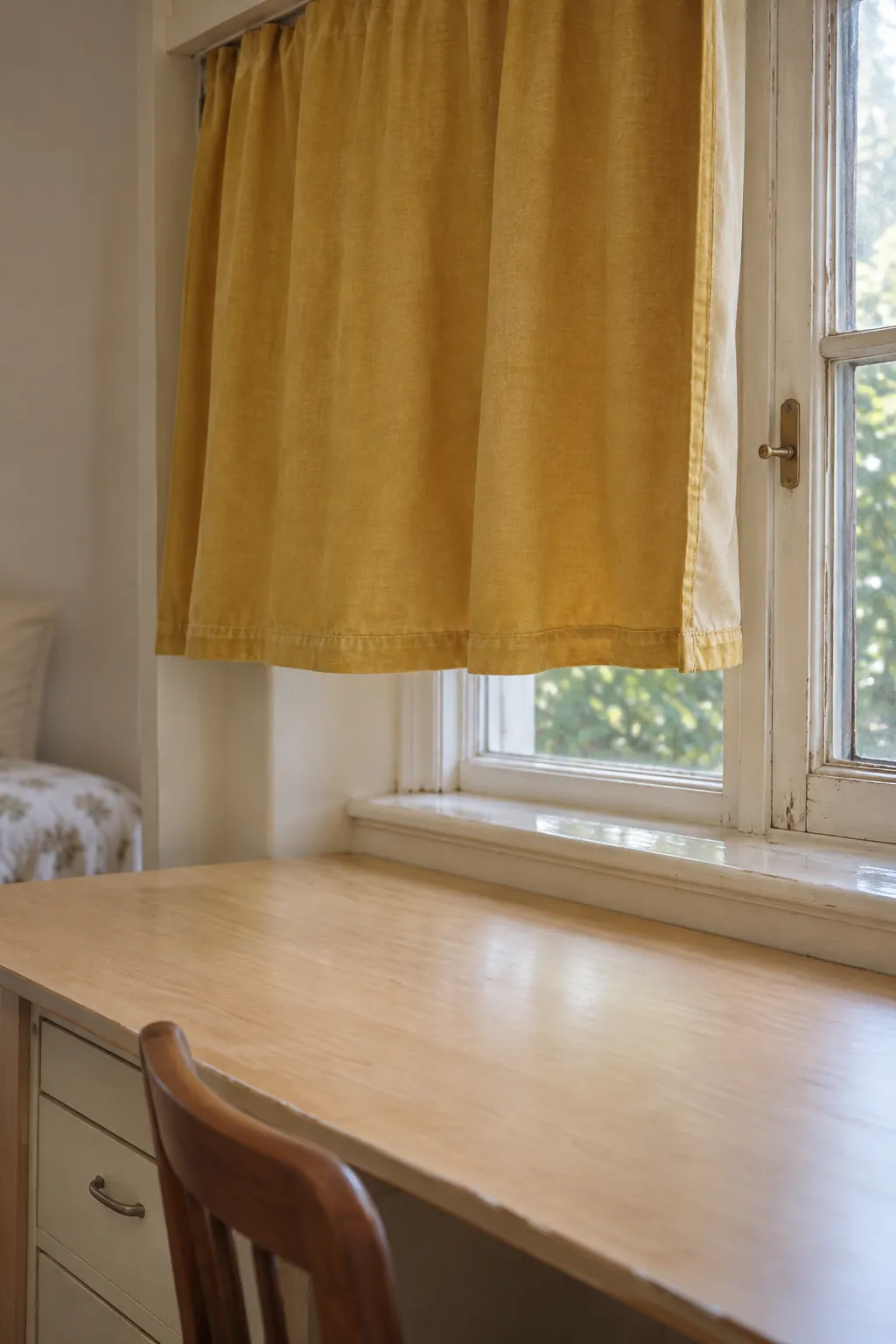
A shorter straight curtain can work when a desk sits just below a bedroom window. Give the hem enough space around outlets and anything that gets hot. Check that you can operate the curtain without clearing the desk first. A simple solid cloth can sit quietly beside a patterned bed.
Use a Narrow Roll Shade to Free the Sill
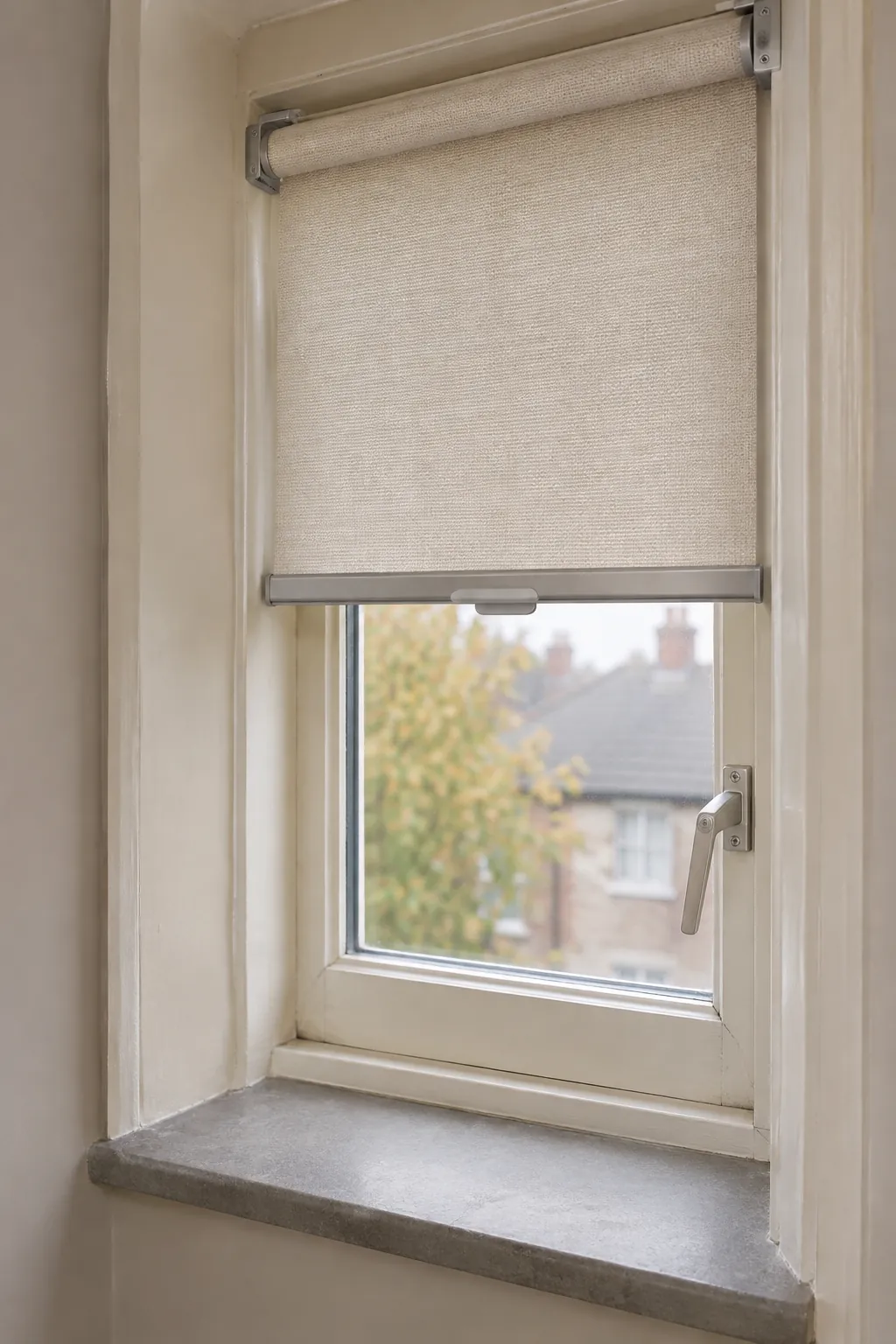
A roll shade stays close to the window when it is closed and leaves the sill open when it is up. Measure the frame at several points before buying. Choose a cordless model where a child could reach a hanging loop. Make sure the sash opens without striking the handle or the lower rail.
Put a Tray on a Narrow Sill With a Lip
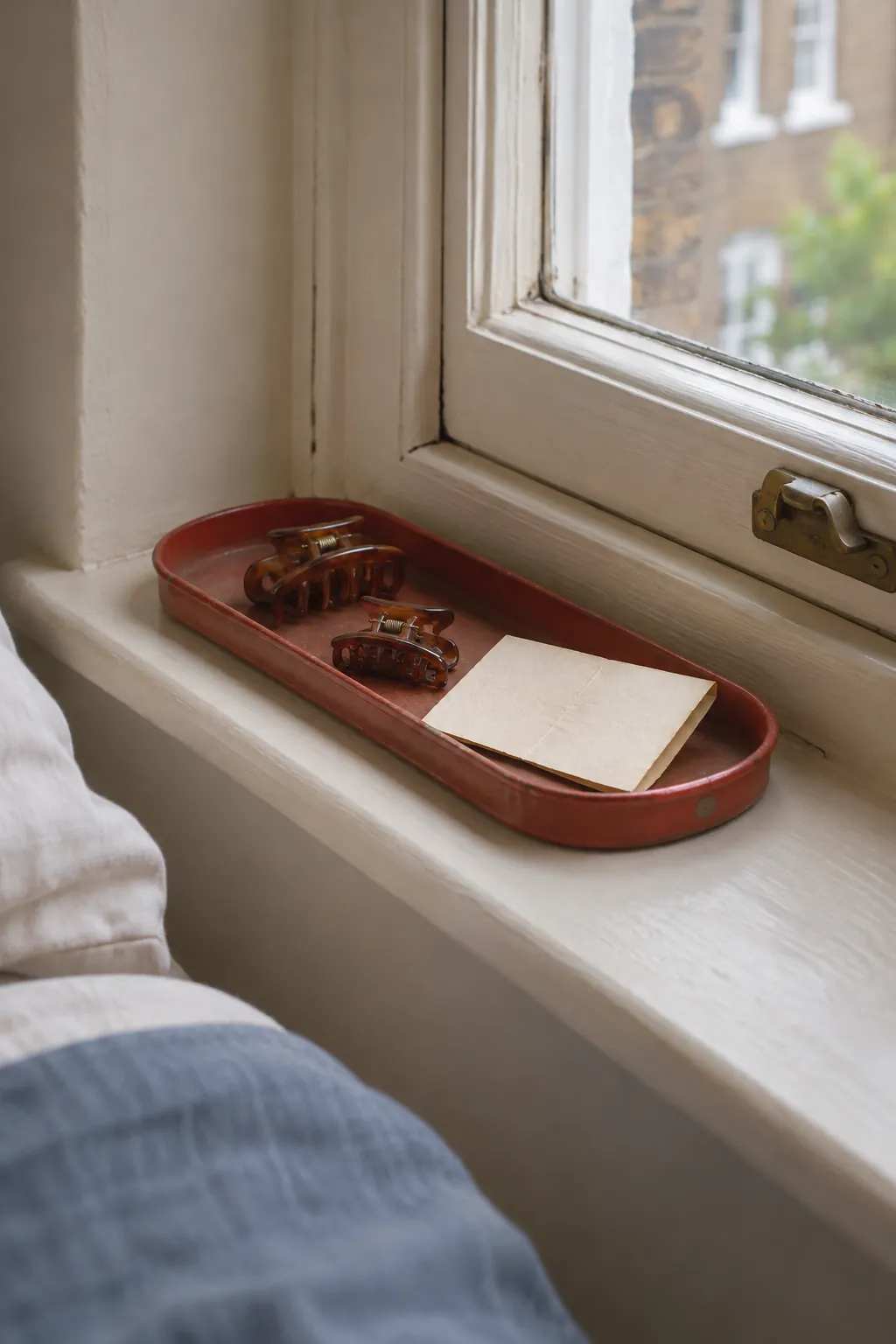
A shallow sill can hold a small tray if the whole base is supported. Use it for light dry objects such as hair clips or a folded note. Keep the tray away from the sliding or swinging part of the window. Take it away if opening the window sends loose items across the room.
Hide a Laundry Basket Behind the Closet Door
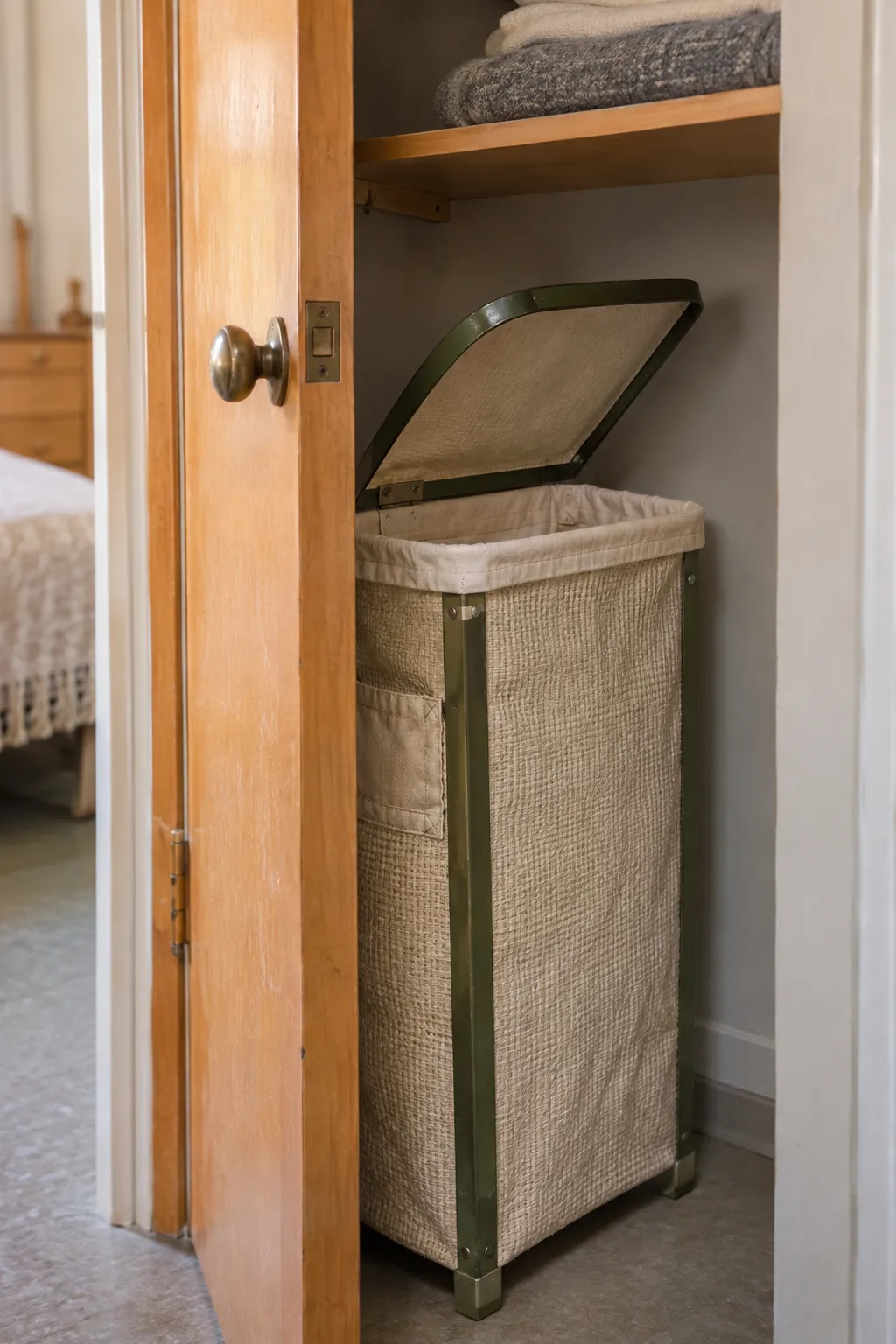
A tall slim hamper can fit where an open basket would spread over the floor. Check that its lid can open without striking a shelf and that you can carry it through the door. Leave enough space around it to grab with both hands. Choose a lining you can lift out to wash.
Use Closed Bins to Make an Open Shelf Quieter
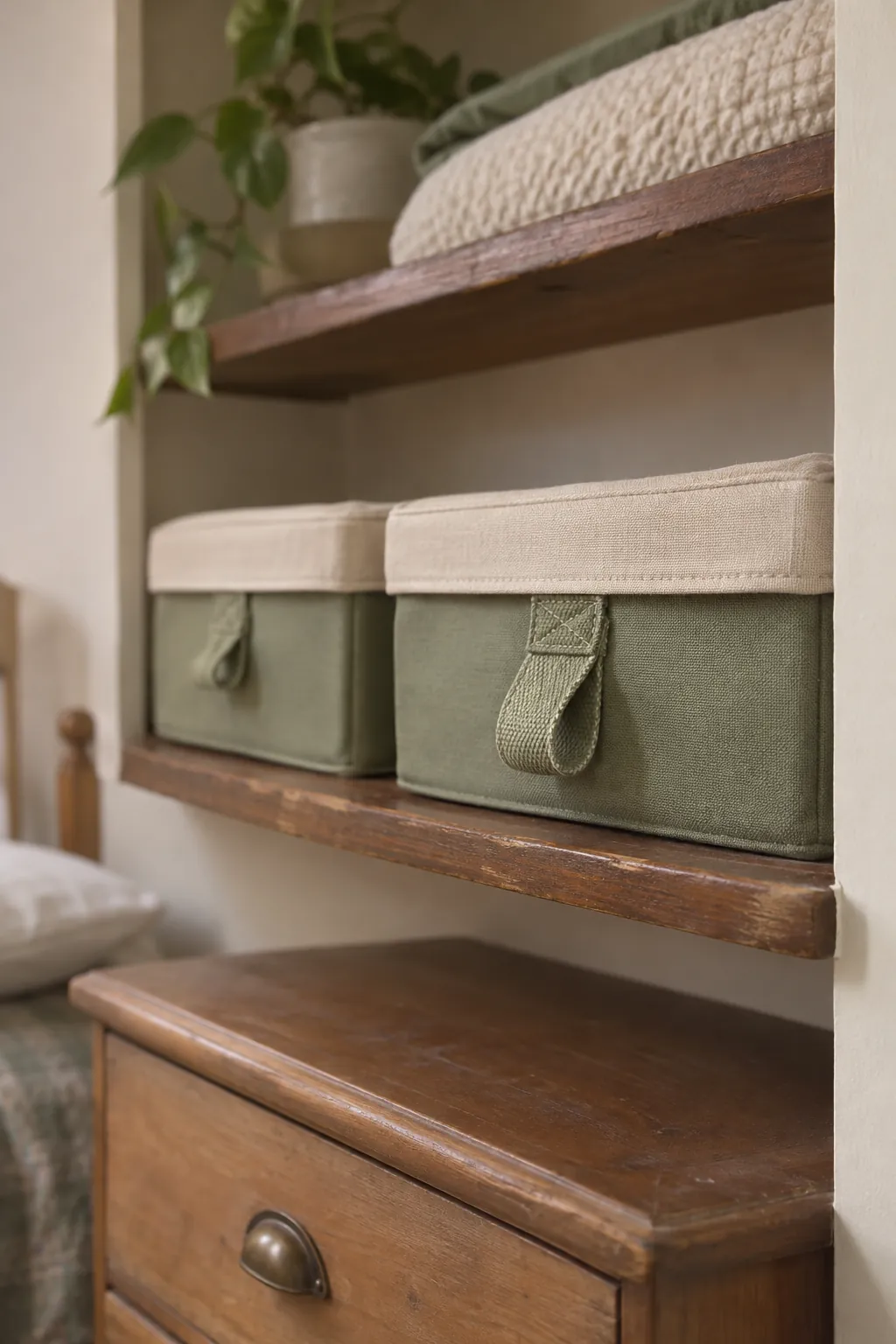
Two plain bins on an open shelf can keep small things together. Choose one with a pull tab low enough to hold when it sits just above eye level. Give every bin an easy reason to be there, such as spare cables or folded scarves. Leave enough depth for the bins to sit fully on the shelf.
Use One Tall Object in the Spare Corner
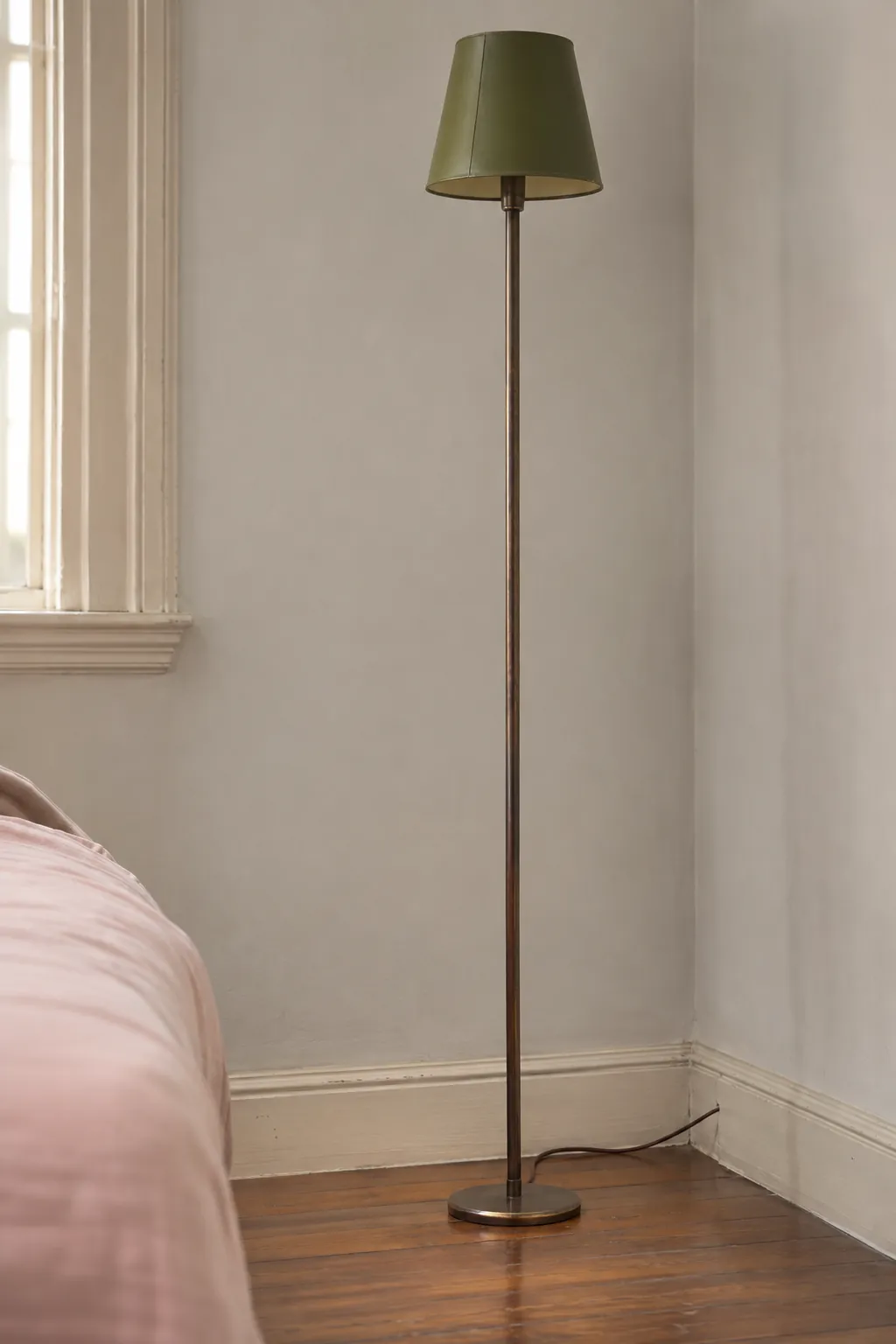
A slim floor light can draw your eye toward an empty corner without filling it with another cabinet. Measure the foot as carefully as the stem since a wide base can eat the floor space. Keep the cord against the wall out of the route. Switch it on from bed to check where its light points.
Turn a Dresser Top Into a Changing Surface for Everyday Items
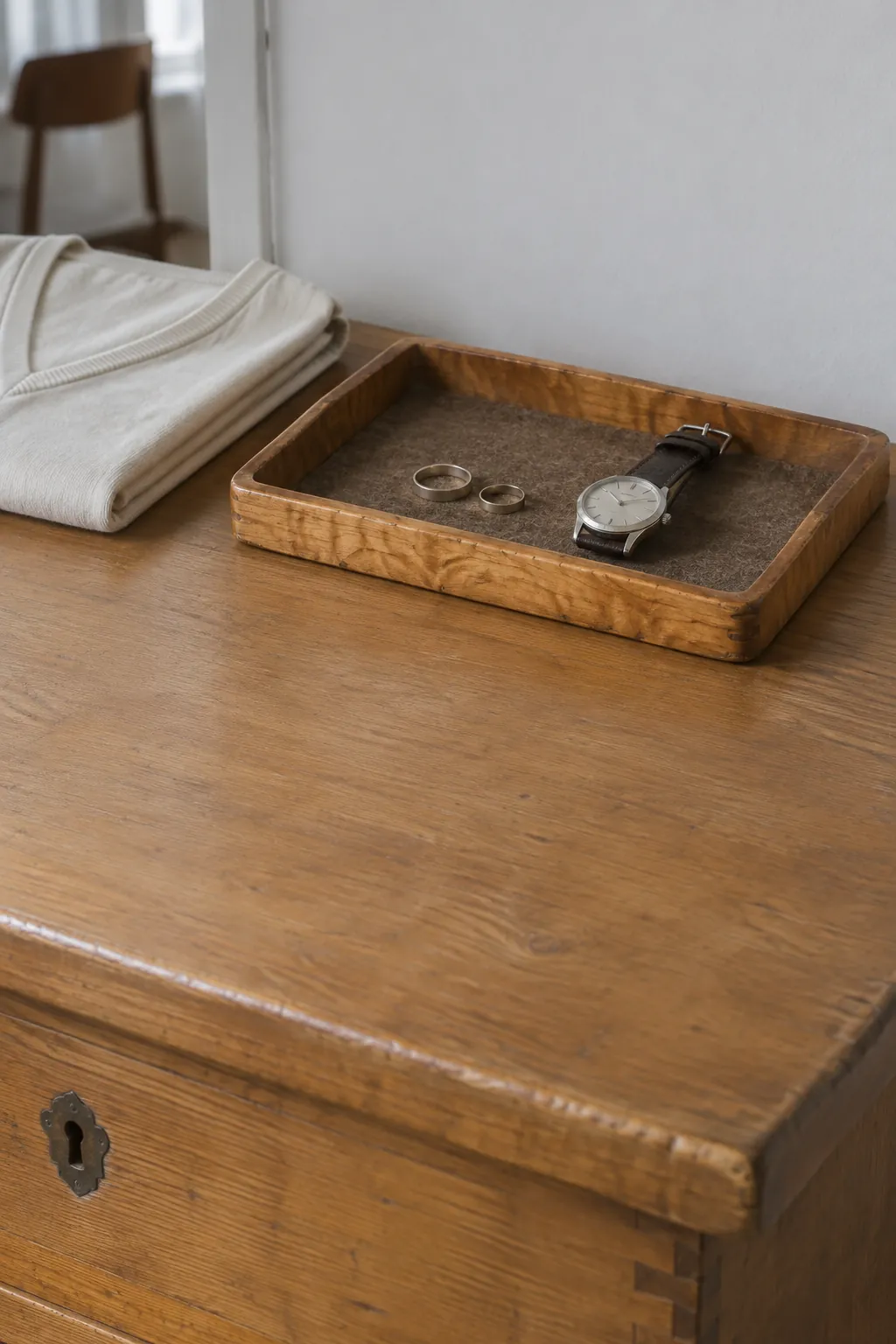
A small wood tray can keep your watch and jewelry near where you dress. Leave the front half of the dresser empty so you can put down folded clothes. Choose a tray with sides that limit rolling and an underside that will not scratch the wood. Clear anything you did not use at the end of the week.
Keep the Bedside Floor Empty at Night
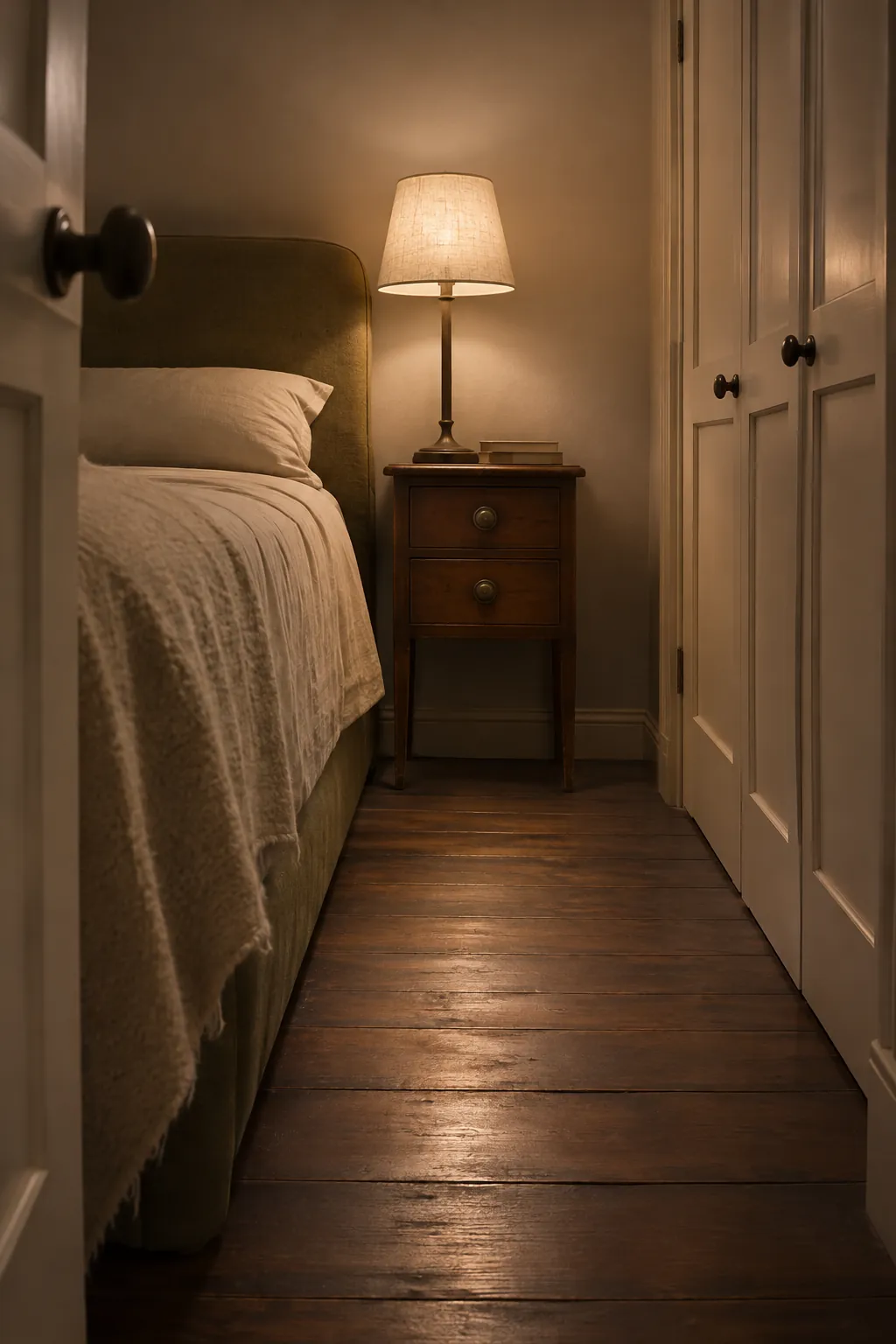
If the path to the door is already narrow, a basket or shoes beside the bed can make it harder to walk in the dark. Give those things a shelf inside the closet or a place under the bed. Check the route once with the main light off while keeping a small lamp on. Move the lamp switch within reach if you need to cross the room to find it.
Draw the Layout Again After a Week
Give a new arrangement a week of getting dressed, making the bed and opening storage. If you keep dragging a chair to reach something, give it a position you can use without moving heavy pieces. Mark the floor and check the route again. Bring in the next vintage find only after you know where it fits.