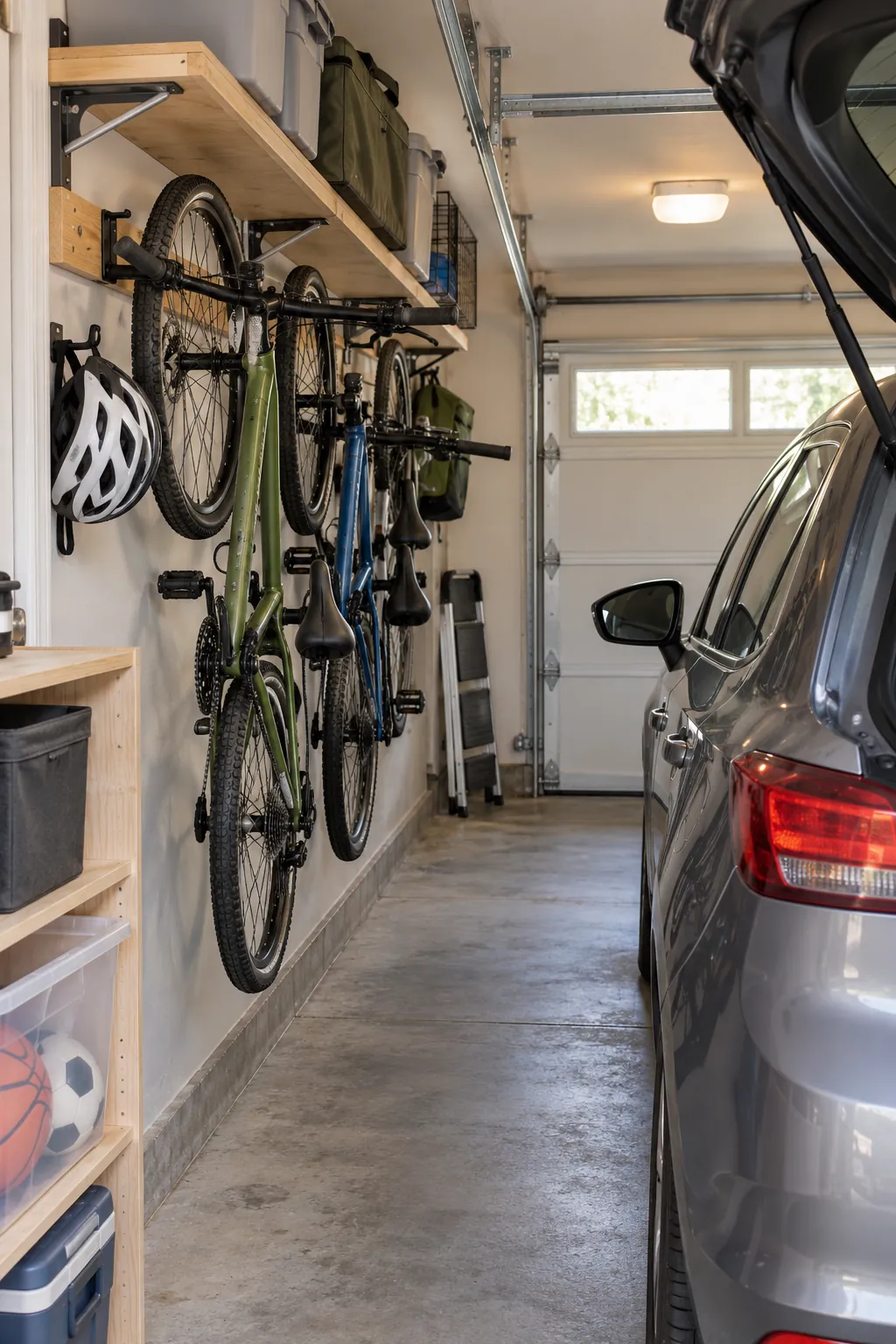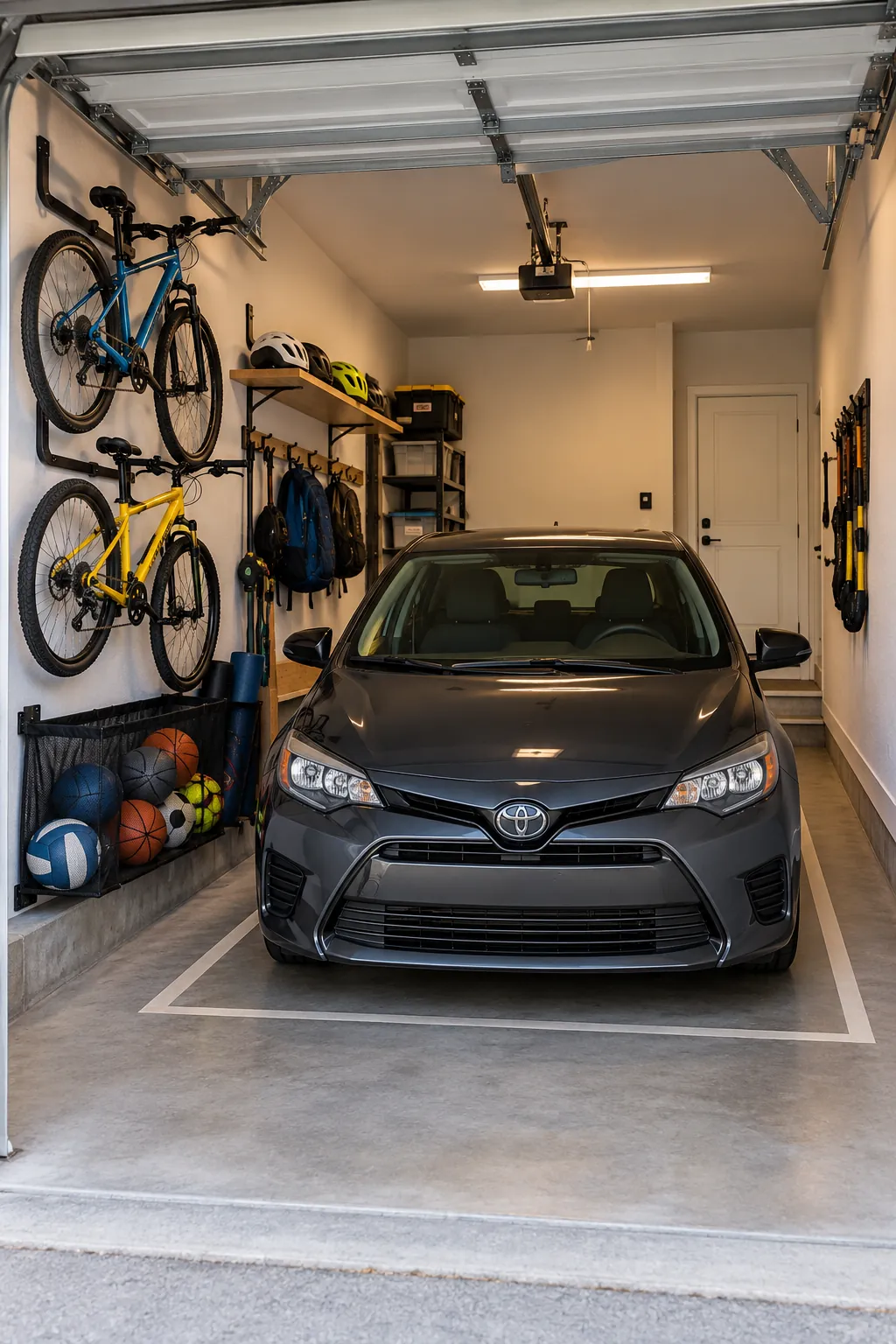
The real problem in a crowded garage is not a lack of containers. Bikes and sports gear occupy the same turning, walking, and door space the car needs every day. Start by protecting movement, then give each awkward object a safe position on the wall, near the ceiling, or inside a clearly bounded station.
Mark the Car Parking Rectangle
Park the car in its normal position and mark the four tire locations with removable floor tape. Open every door and the trunk, then mark the space those movements require. Treat everything outside that clear rectangle as potential storage and keep everything inside it empty.
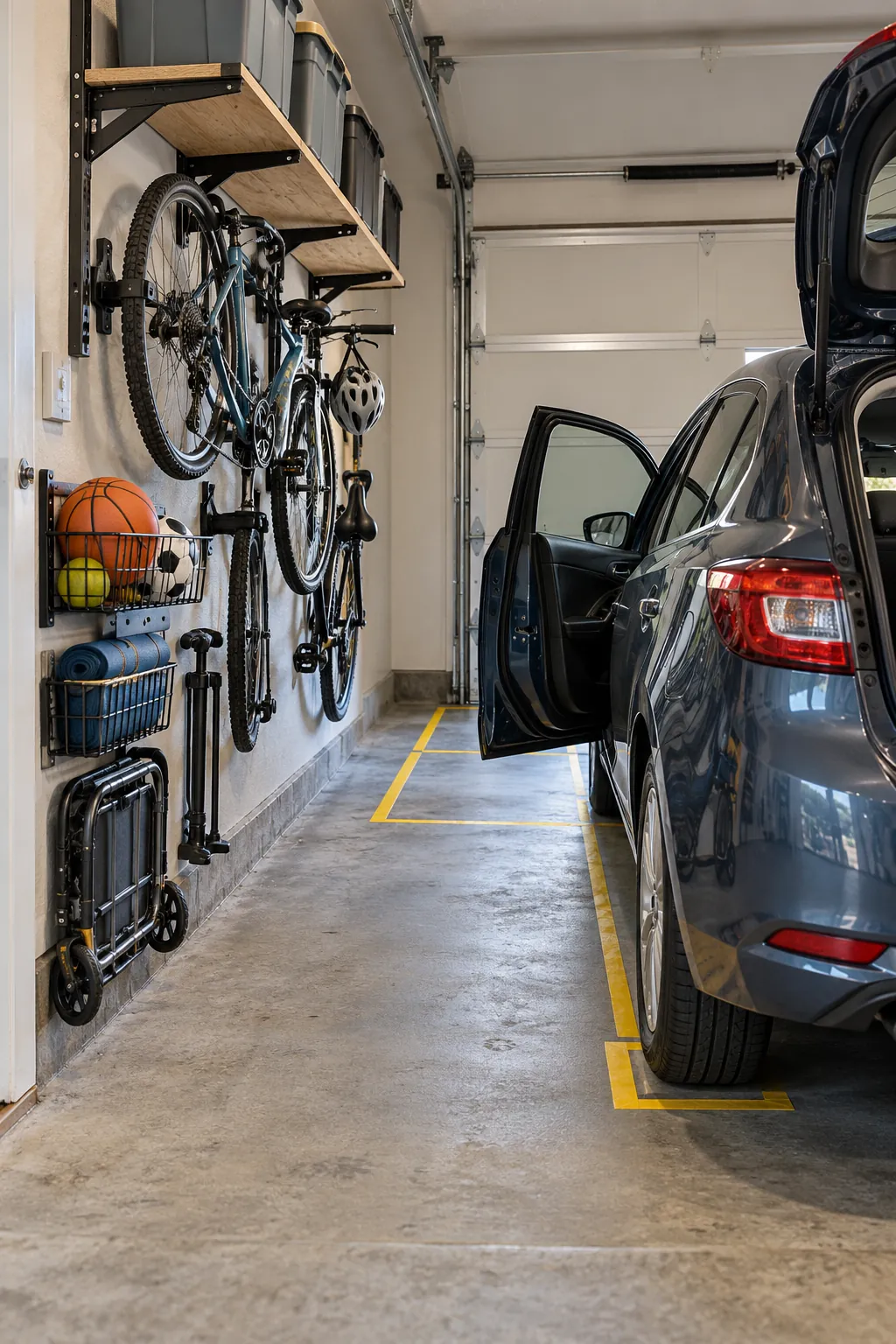
Protect the Driver Door Swing
Set a visible buffer along the driver side so shelves, bikes, and bins cannot creep into the door path. Use a low floor stripe and a matching wall marker that remain easy to see in dim light. This small boundary prevents scratched doors and makes daily parking less stressful.
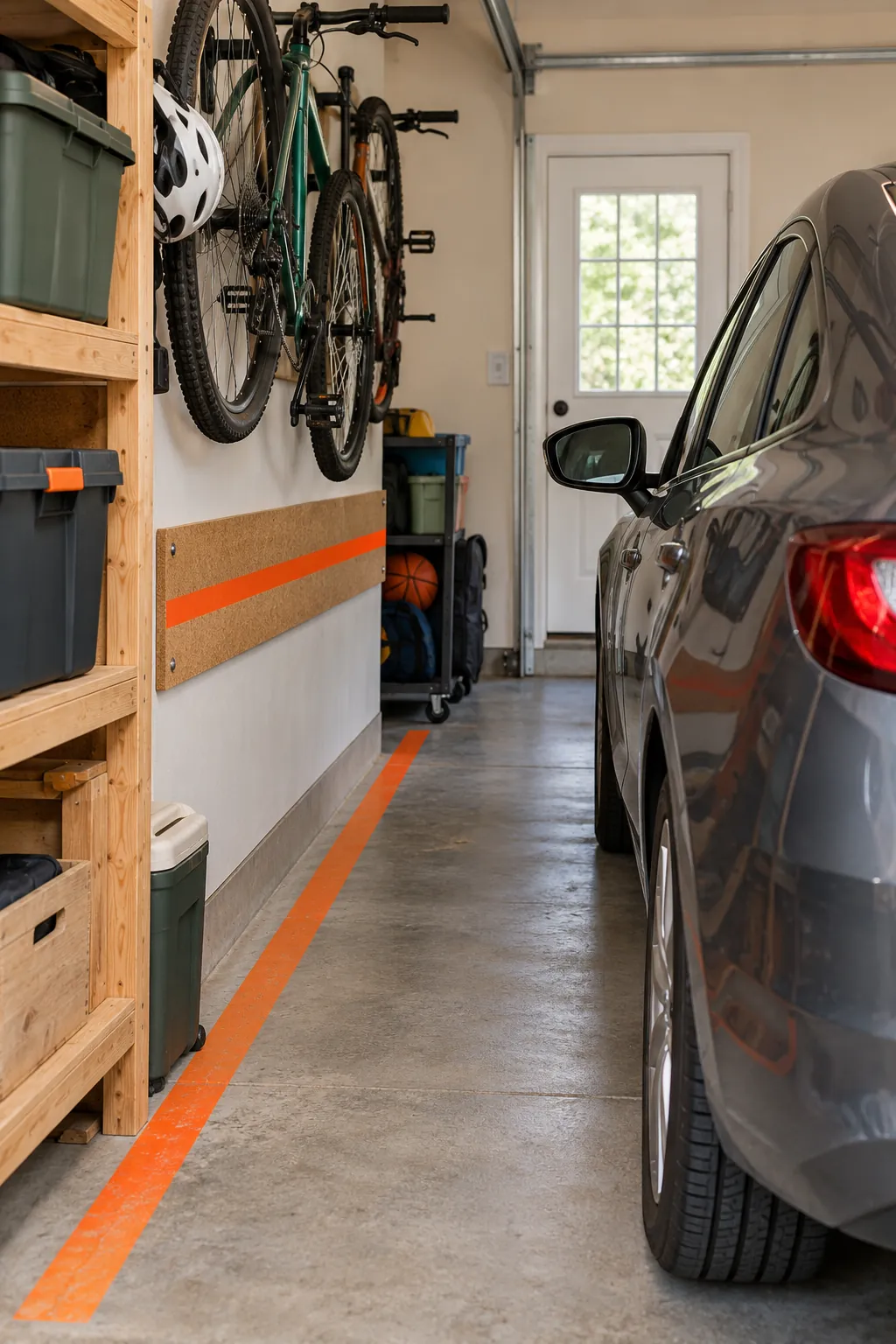
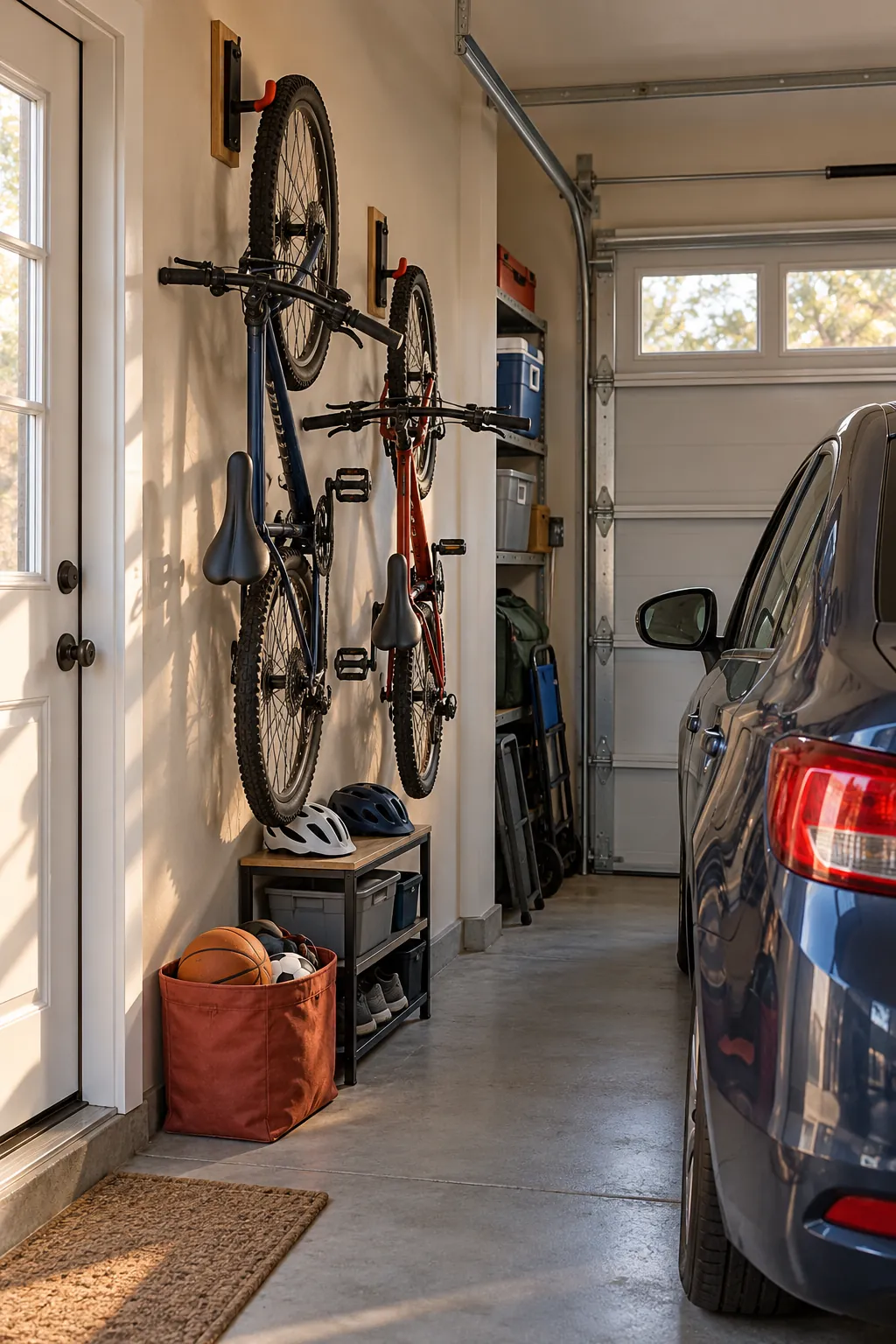
Alternate Vertical Bike Hooks
Mount rated bike hooks into sound framing at alternating heights so handlebars overlap instead of colliding. Leave enough lower clearance to lift each wheel onto its hook without striking the car. Match the hook style to the rim and bike weight, and follow the hardware maker’s installation limits.
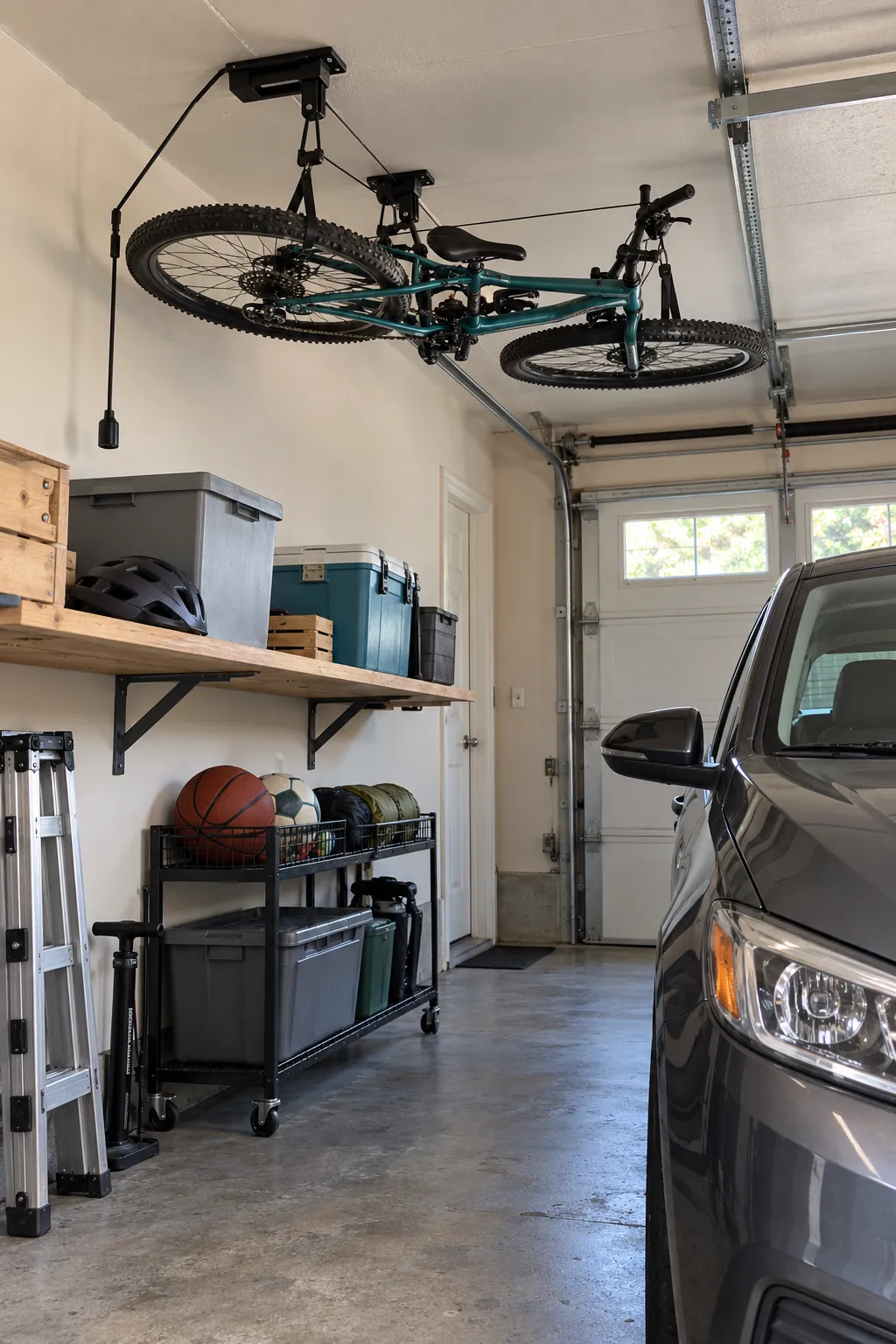
Lift Rarely Used Bikes Horizontally
A rated ceiling hoist can hold an occasional bike parallel to the ceiling when vertical hanging would put a tire near the car roof. Confirm joist location, ceiling height, lift path, and locked clearance before installation. Keep the release cord secured where children cannot pull it.
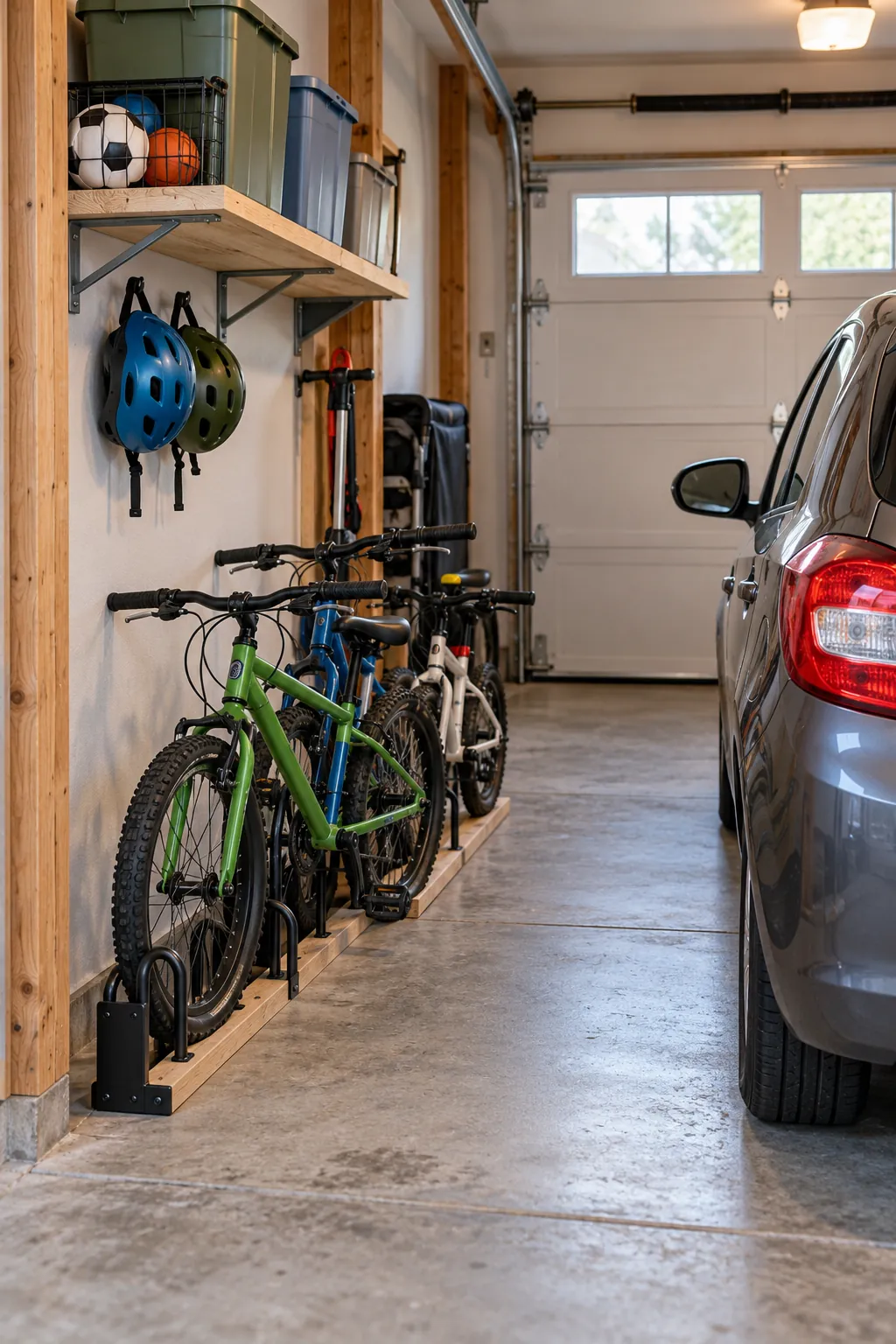
Give Children a Floor Bike Rack
A simple floor rack lets children roll bikes into place without adult lifting. Put it near the garage door so a child does not weave past the parked car. Choose a stable rack that holds the wheel without bending spokes or narrowing the walking path.
Build a Rolling Family Bike Stand
A mobile stand can hold several bikes and move aside when the garage needs a different layout. Use locking casters and a wide base so the loaded rack does not tip. Mark its parked location outside the car clearance zone so mobility does not become wandering clutter.
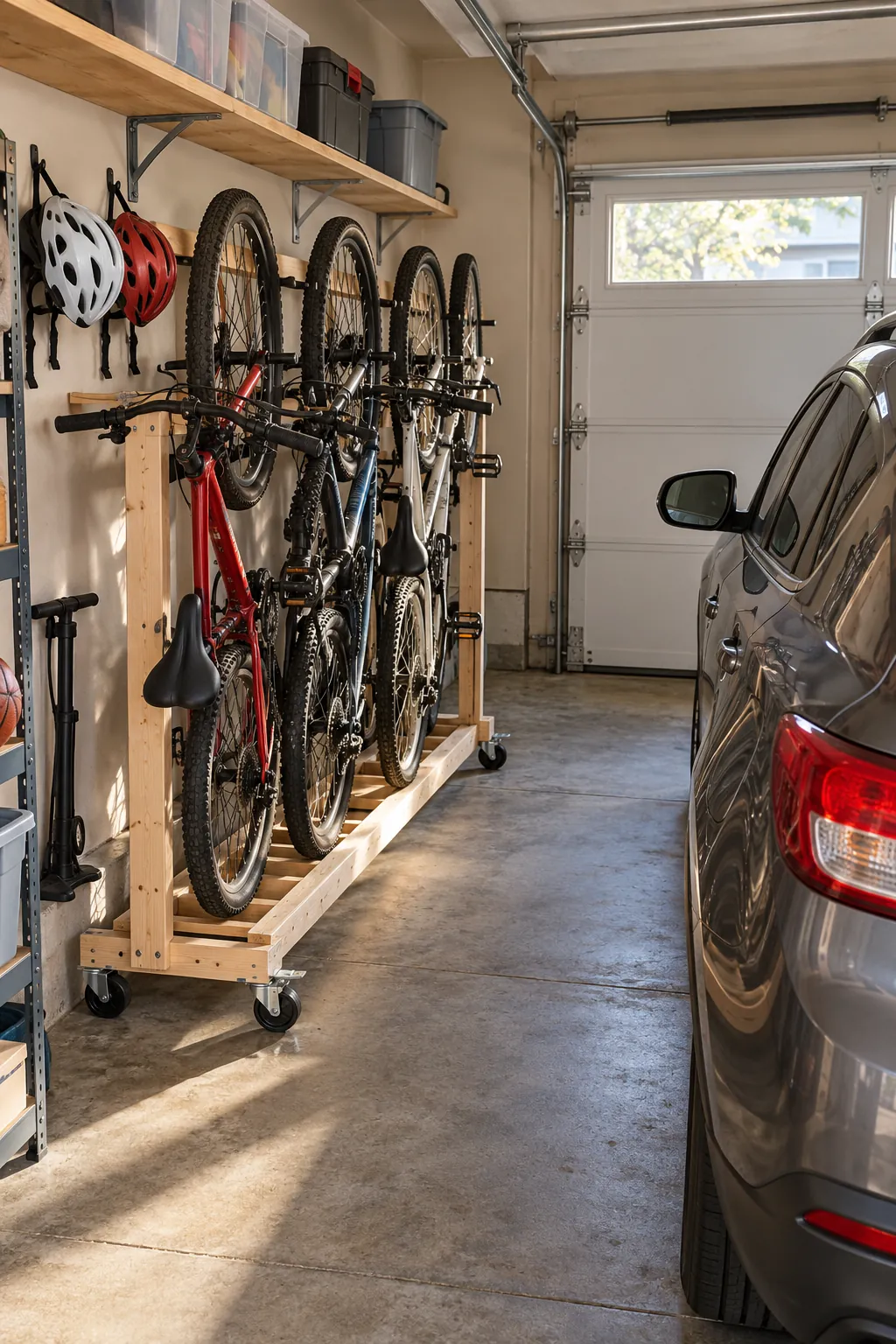
Store Helmets Directly Above Bikes
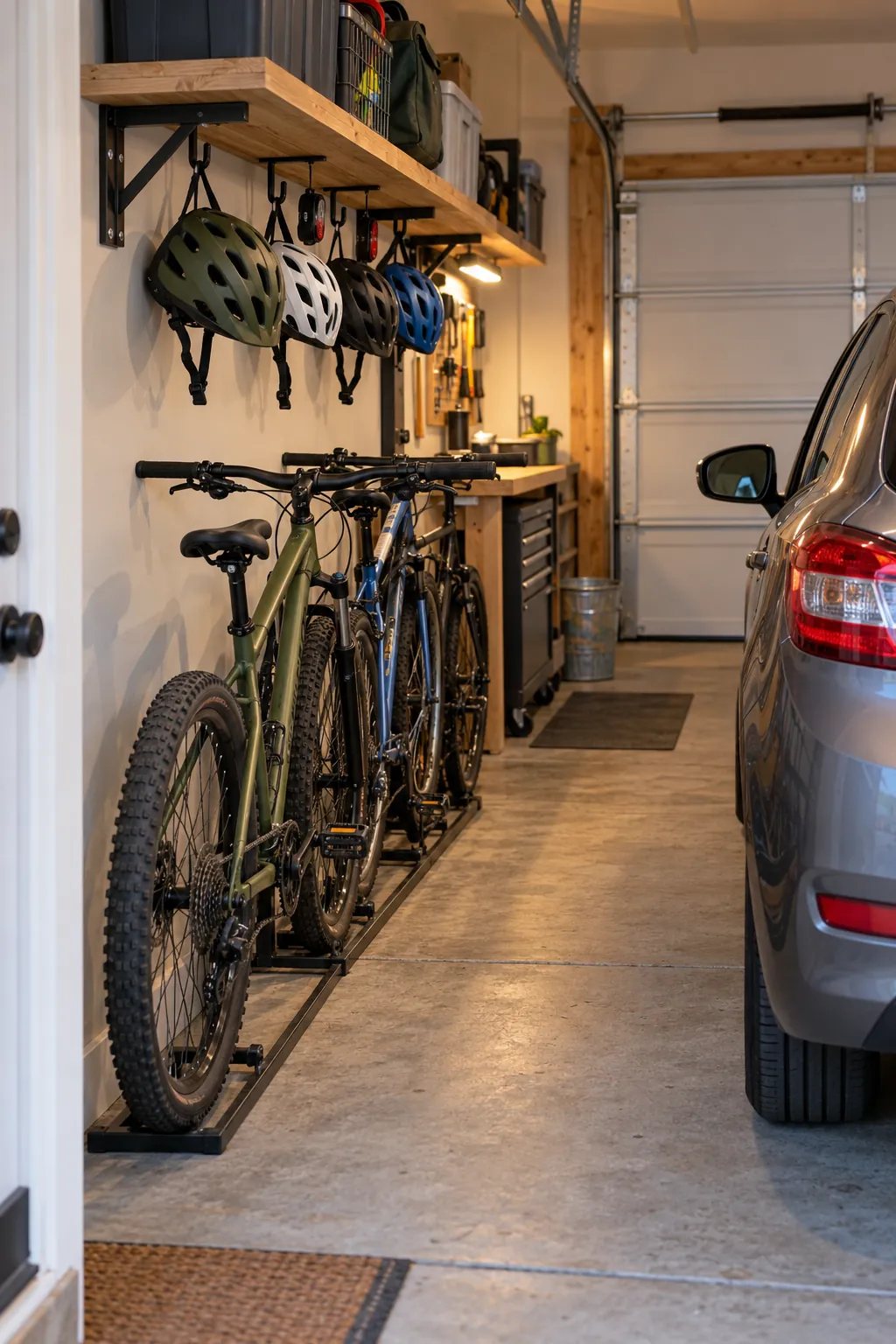
Place a shallow shelf or row of broad hooks above the bike station for helmets and lights. Keep each rider’s gear together so departure does not create a search across the garage. Allow airflow around damp helmet pads and avoid crushing straps behind bins.
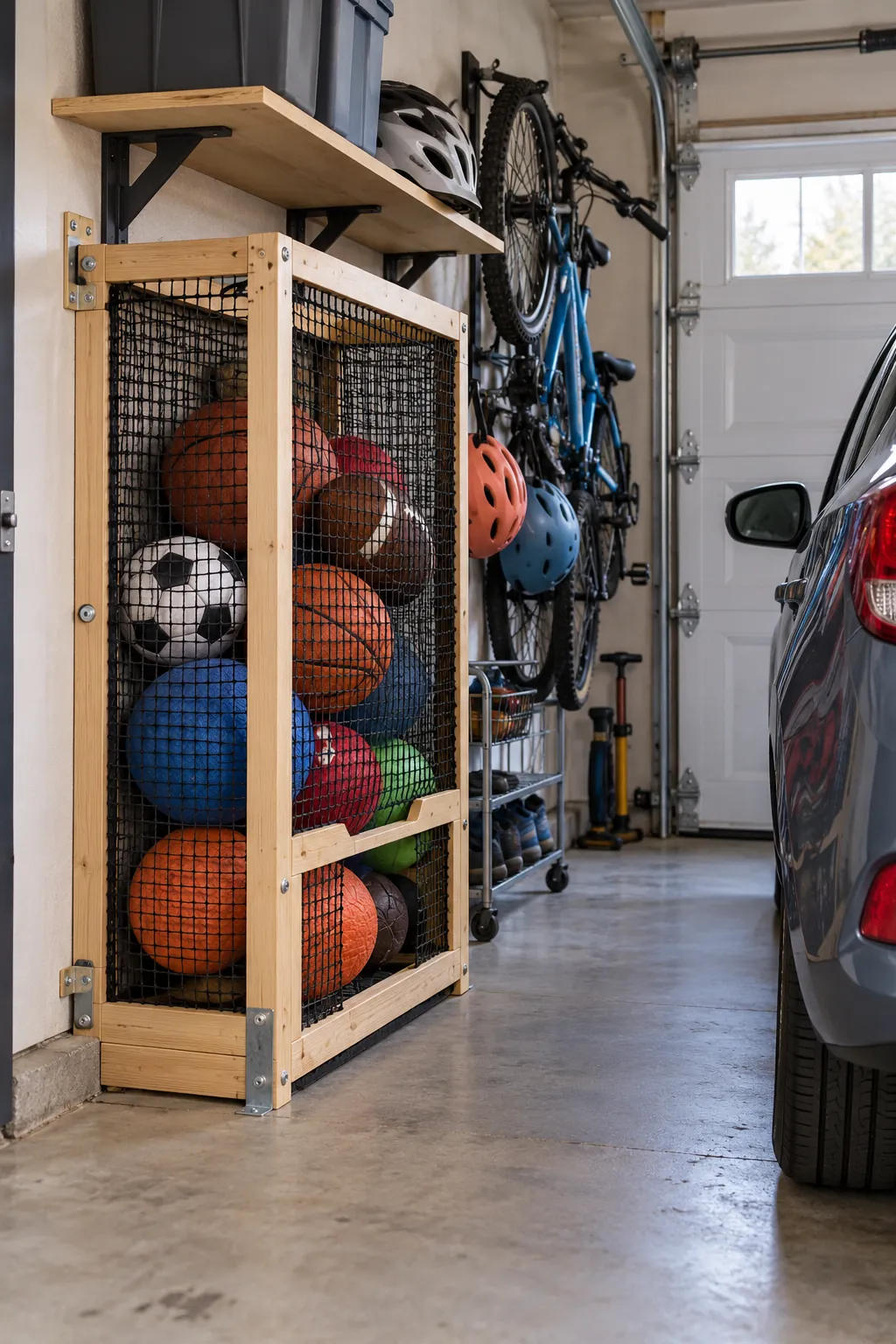
Make a Mesh Ball Corral
A tall frame with flexible mesh contains footballs, basketballs, and playground balls while keeping them visible. Leave a low opening that children can reach without unloading the whole container. Anchor the corral so a rolling ball cannot push it into the parking lane.
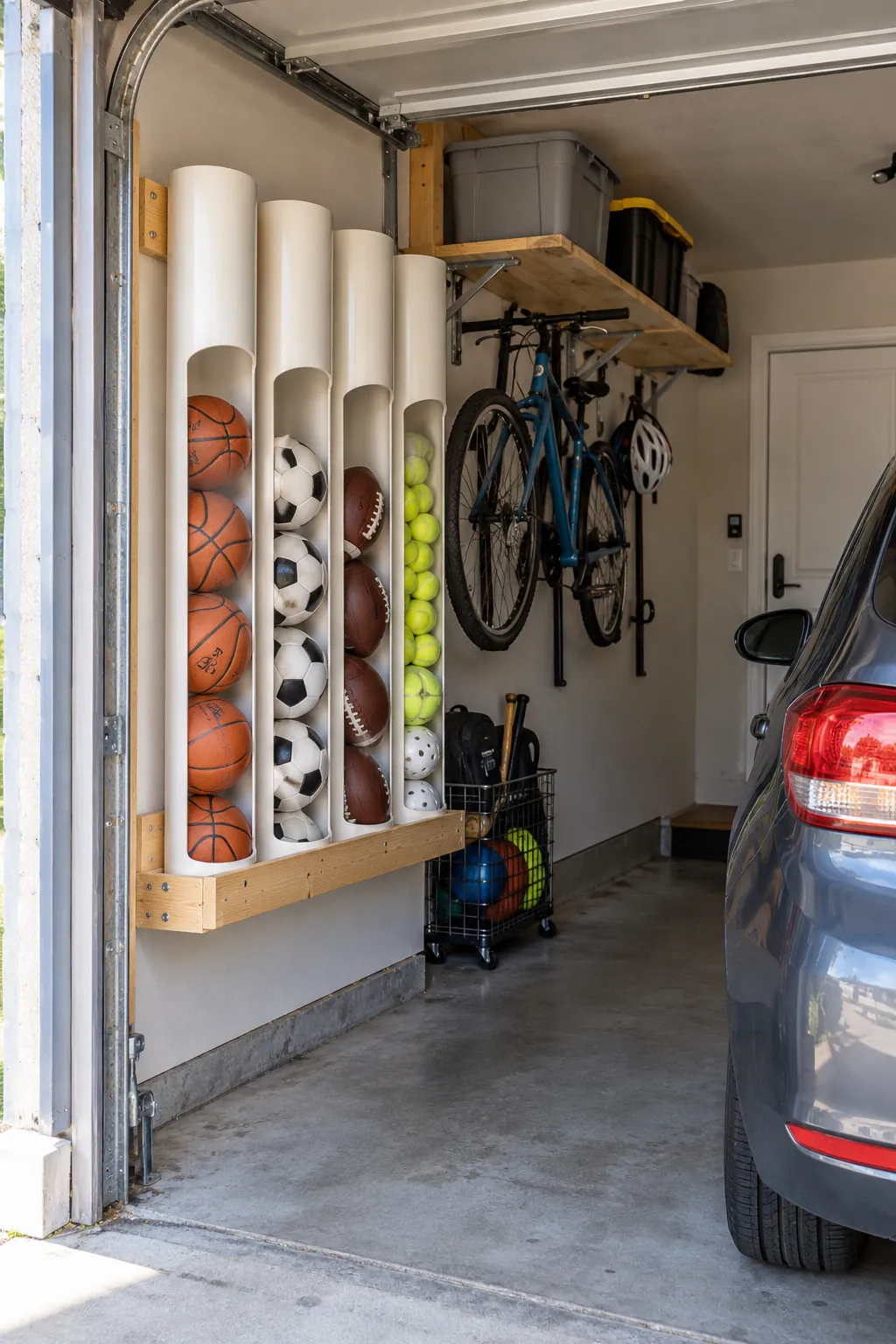
Use Vertical Tubes for Loose Balls
Wide smooth tubes mounted upright can separate balls by sport in a narrow wall zone. Size every opening so fingers cannot become trapped and balls do not wedge halfway down. Place the most frequently used tube at the easiest reach height.
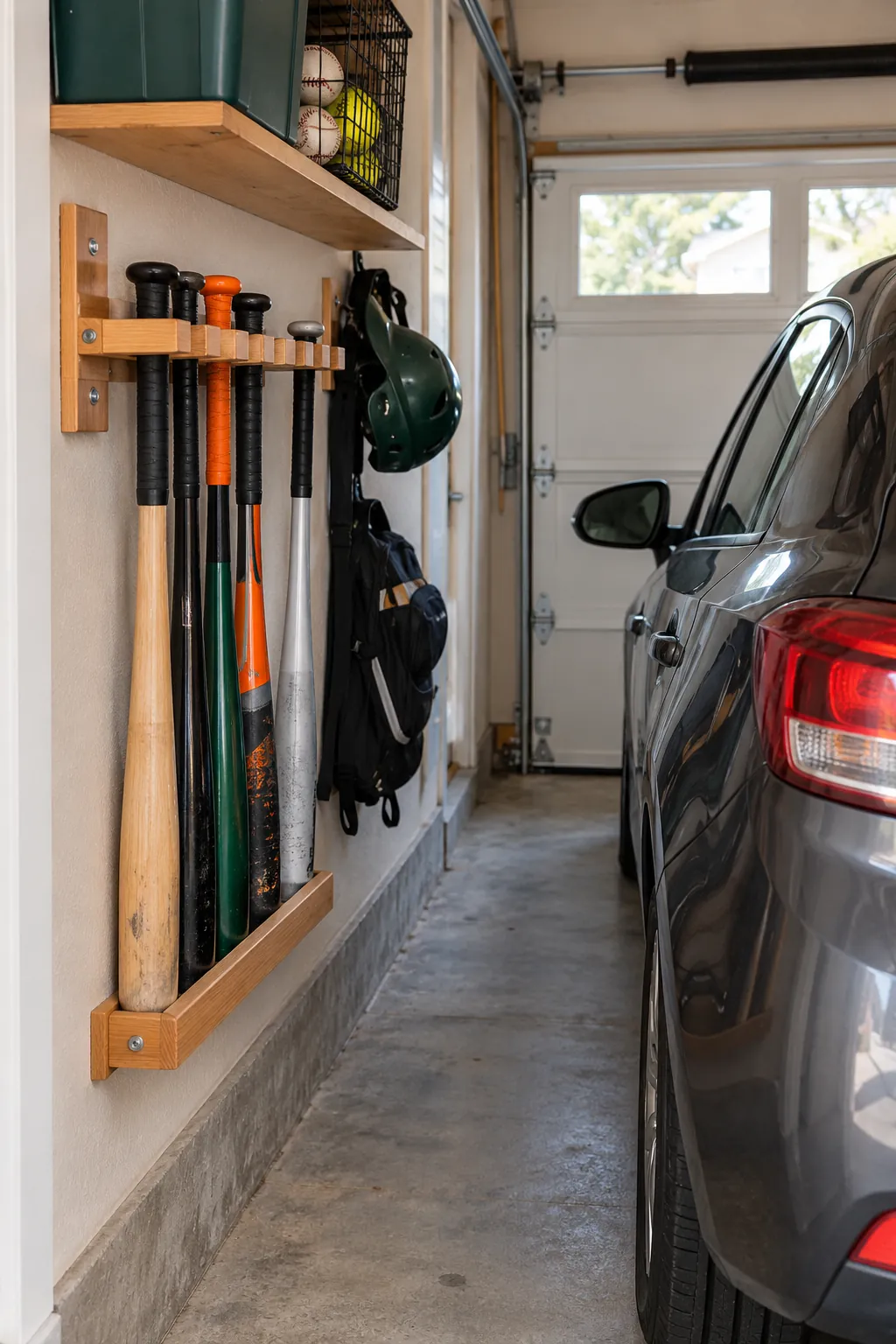
Hang Bats in a Shallow Rack
A narrow bat rack keeps long handles upright and prevents them from sliding beneath the car. Add a lower stop so each bat remains seated when the garage door moves. Keep heavy training bats at adult height only if children cannot safely remove them.
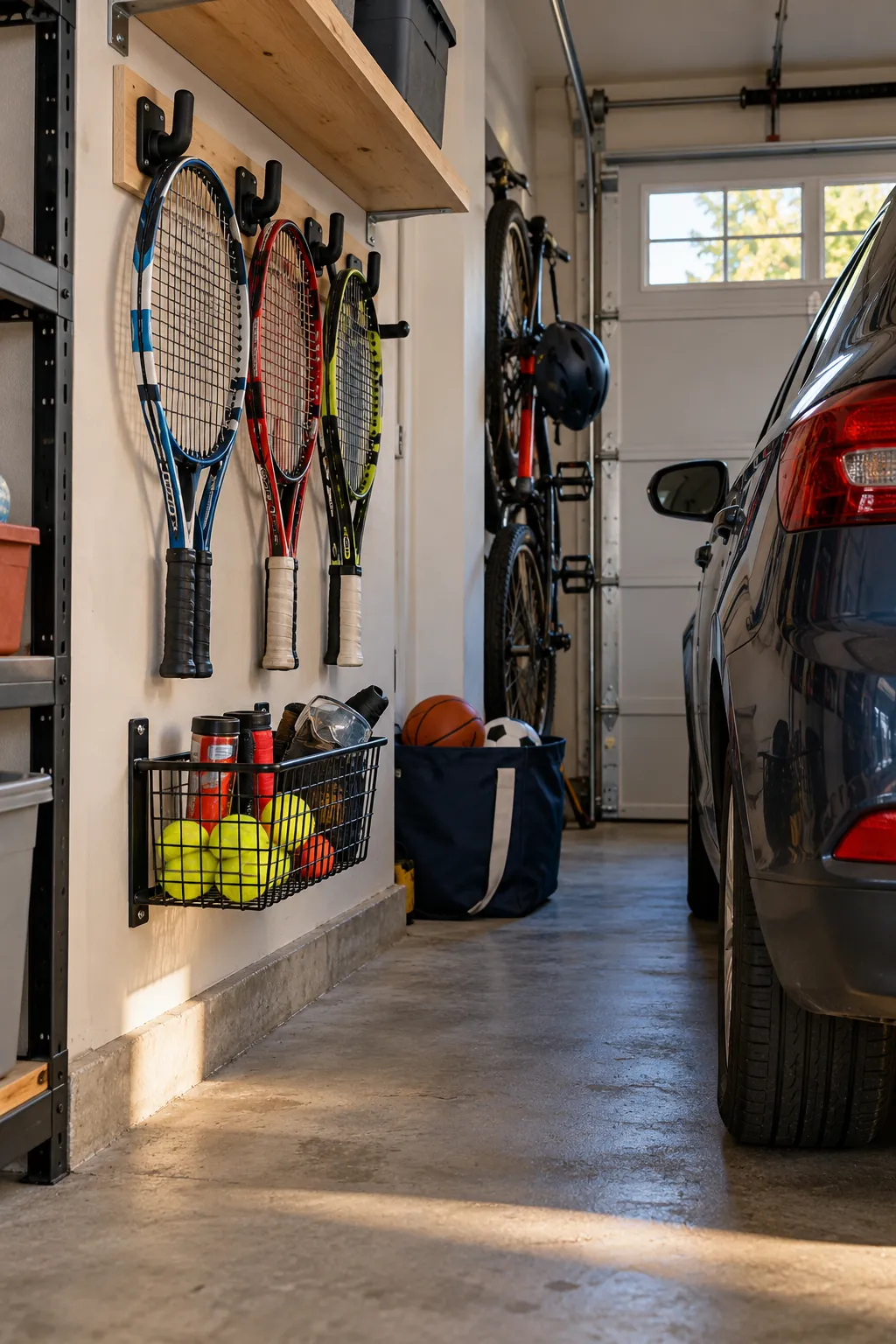
Pair Rackets With Their Balls
Use padded hooks for rackets and a small nearby basket for balls, grips, and goggles. The paired zone shortens the time needed to pack for practice. Keep strings away from sharp metal edges and avoid compressing several rackets behind one hook.
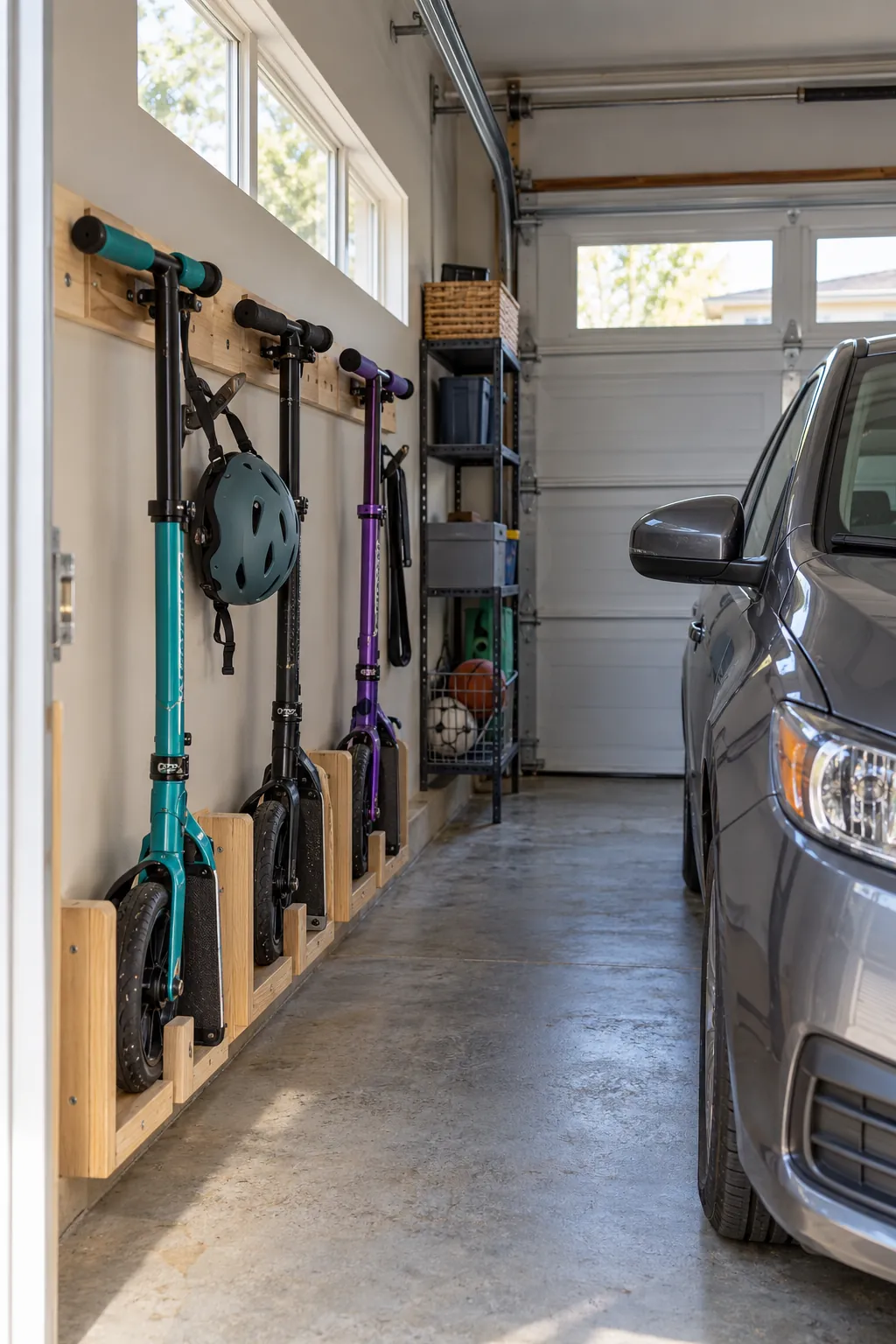
Give Scooters Individual Wall Slots
Park each scooter vertically in a wheel channel or a purpose built bracket. Fold handlebars only when the model permits it and keep brake cables free. Place the slots near the exit but outside the garage door track and vehicle mirror path.
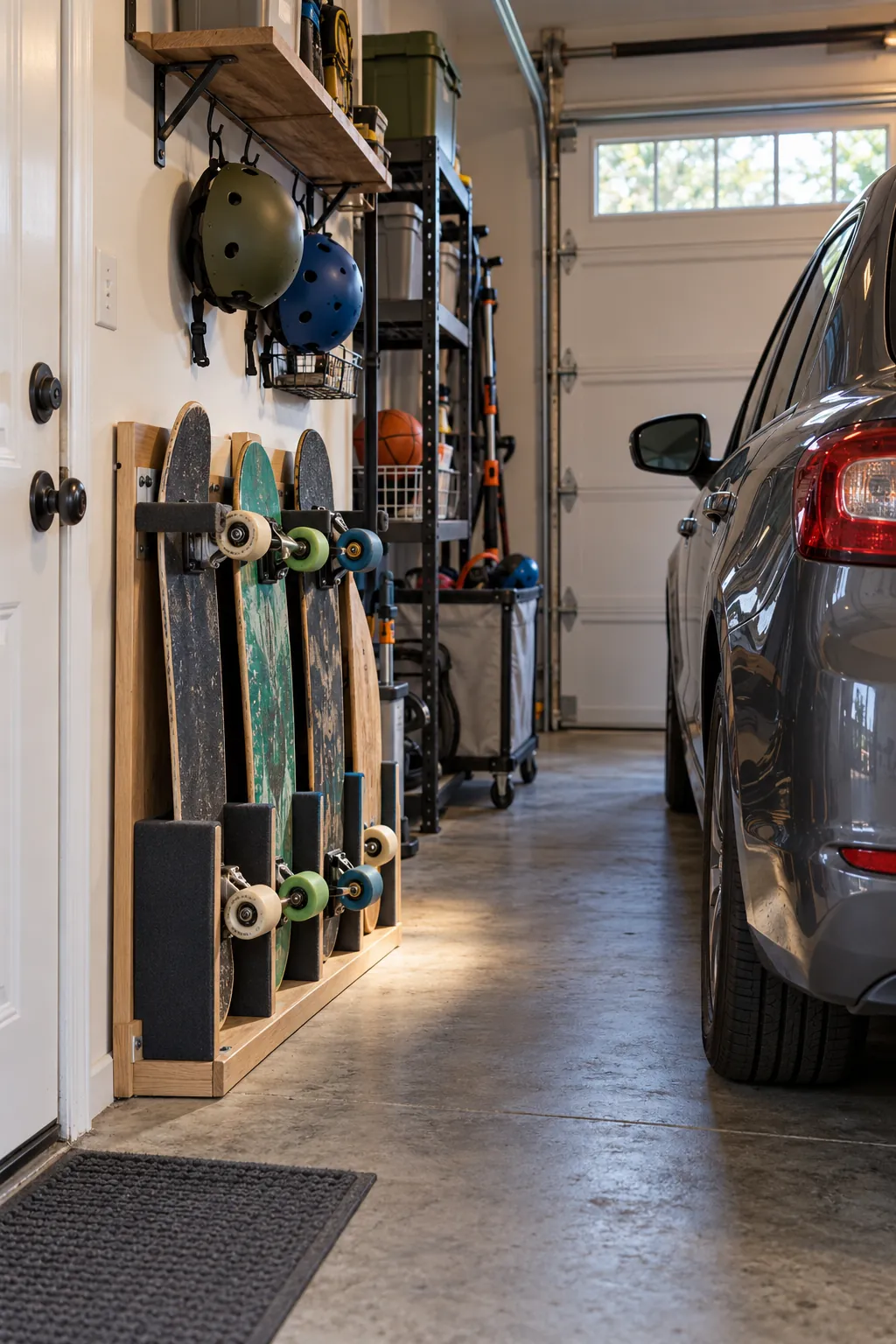
Stack Skateboards on Edge
A narrow rack with padded dividers can hold skateboards and longboards on edge. Keep wheels facing outward for quick identification and place helmets nearby. Secure the rack so boards cannot roll into the car area when bumped.
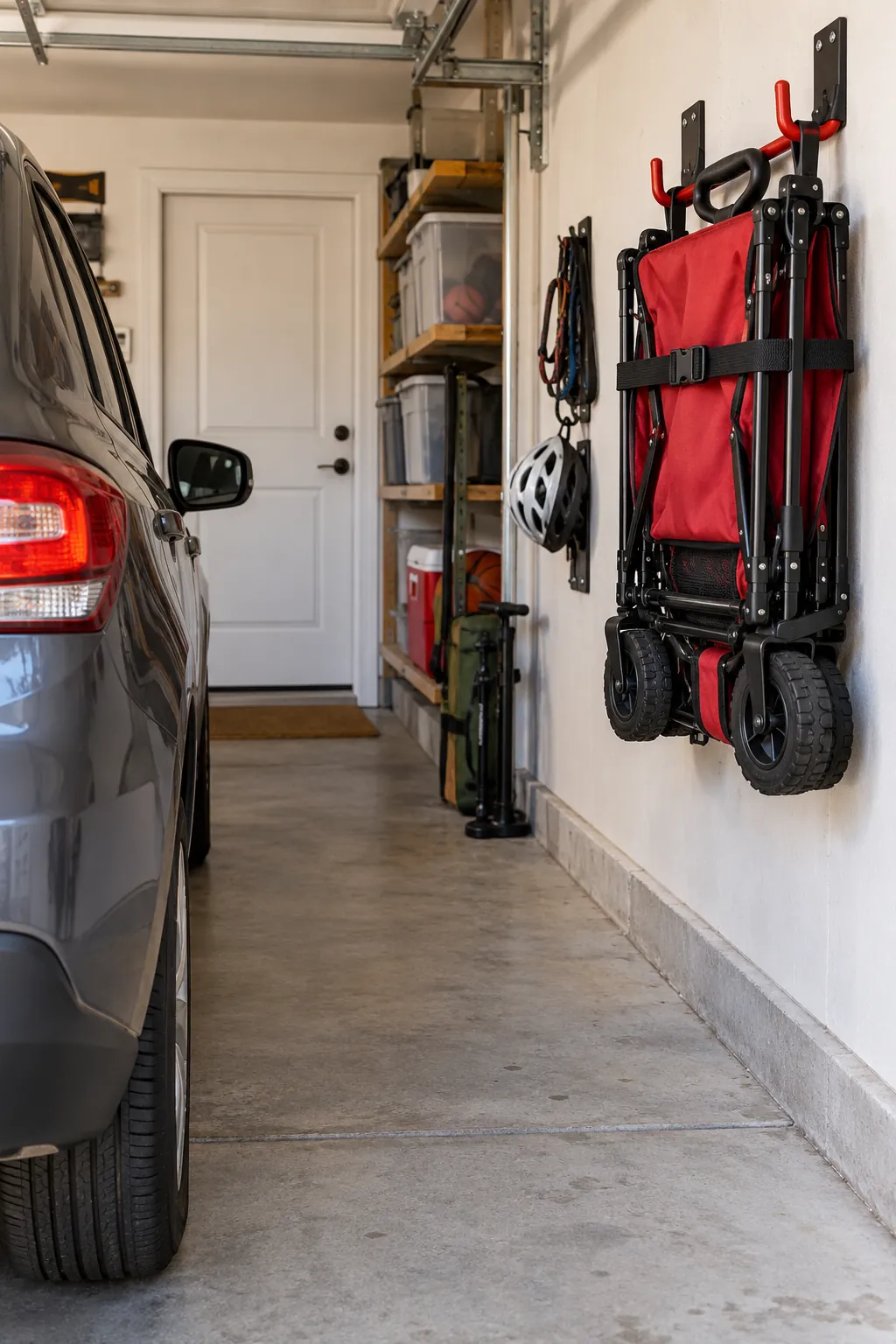
Suspend the Folding Wagon Safely
Store a clean folded wagon on two rated low wall hooks rather than leaning it in a corner. Support its frame at two points and strap it closed so it cannot unfold. Choose a height that allows an adult to lift it without twisting over the car.
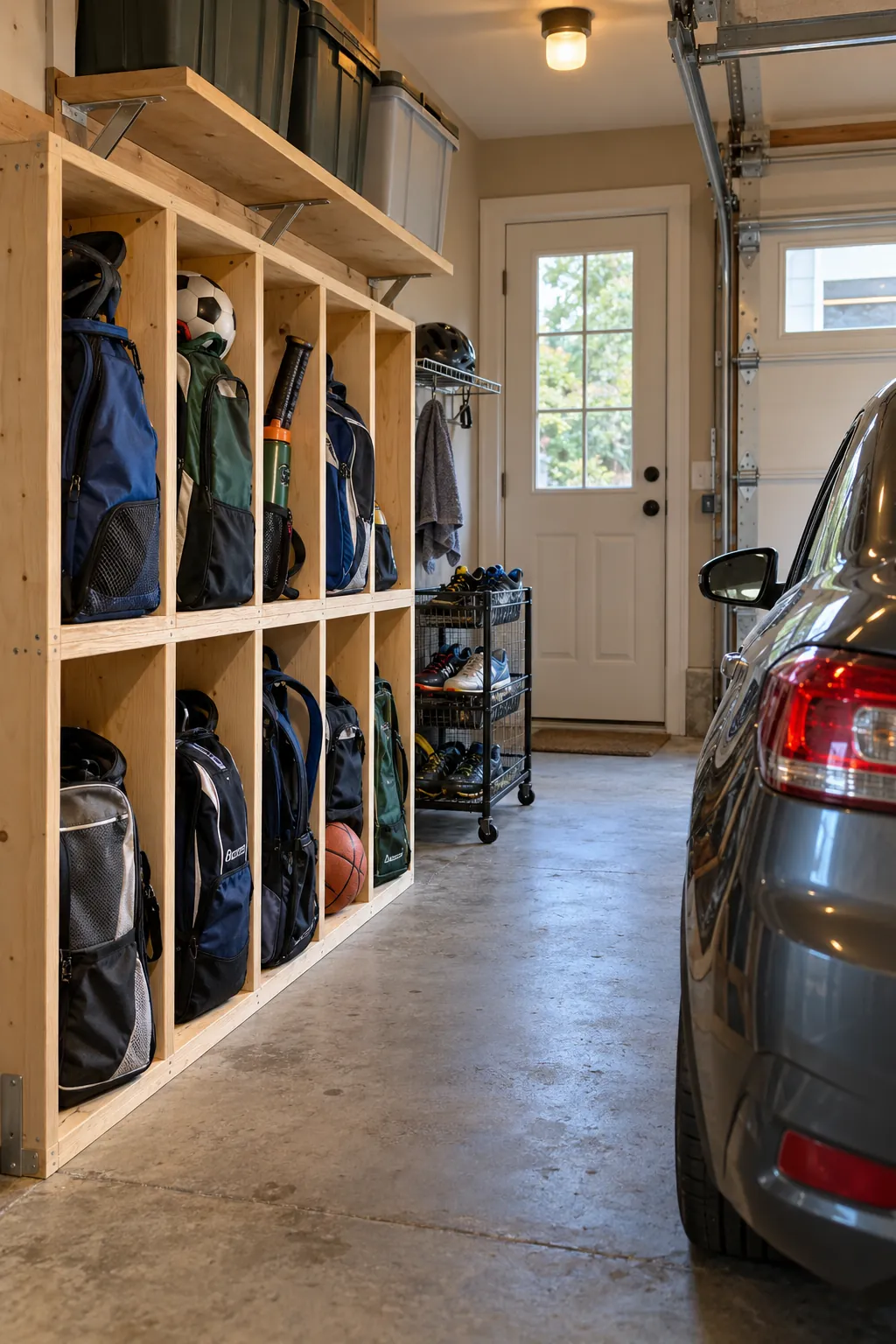
Create Cubbies for Sports Bags
Assign one ventilated cubby to each person or activity instead of piling bags on the floor. A bag can return to the same opening after practice while wet items move to a drying zone. Keep cubbies shallow enough that they do not intrude into the vehicle path.
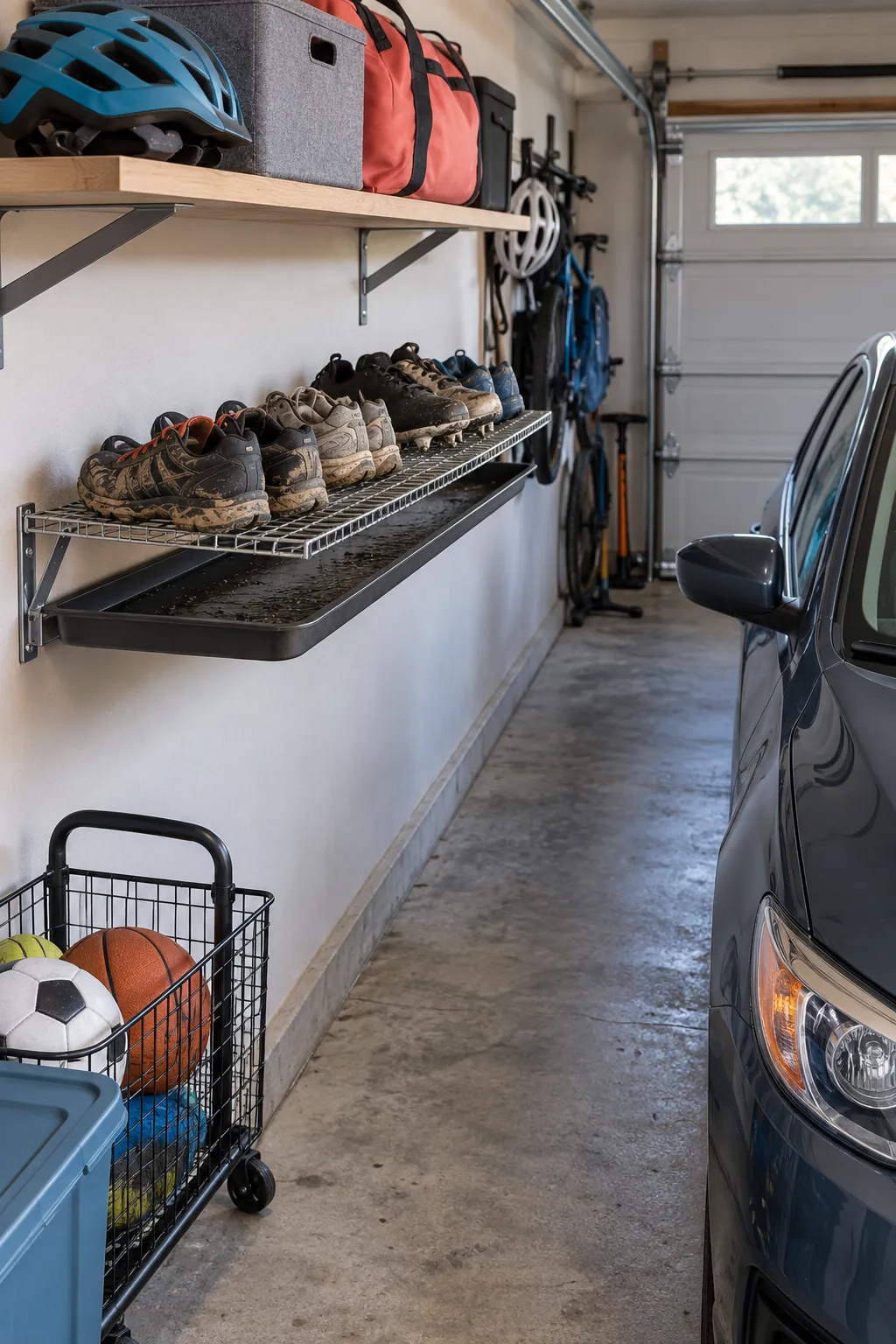
Add a Ventilated Shoe Tray
Place cleats and muddy shoes on a raised wire tray above a washable drip pan. Air can circulate while grit and water stay off the garage floor. Locate the tray away from electrical outlets and bring footwear indoors when freezing or extreme heat could damage it.
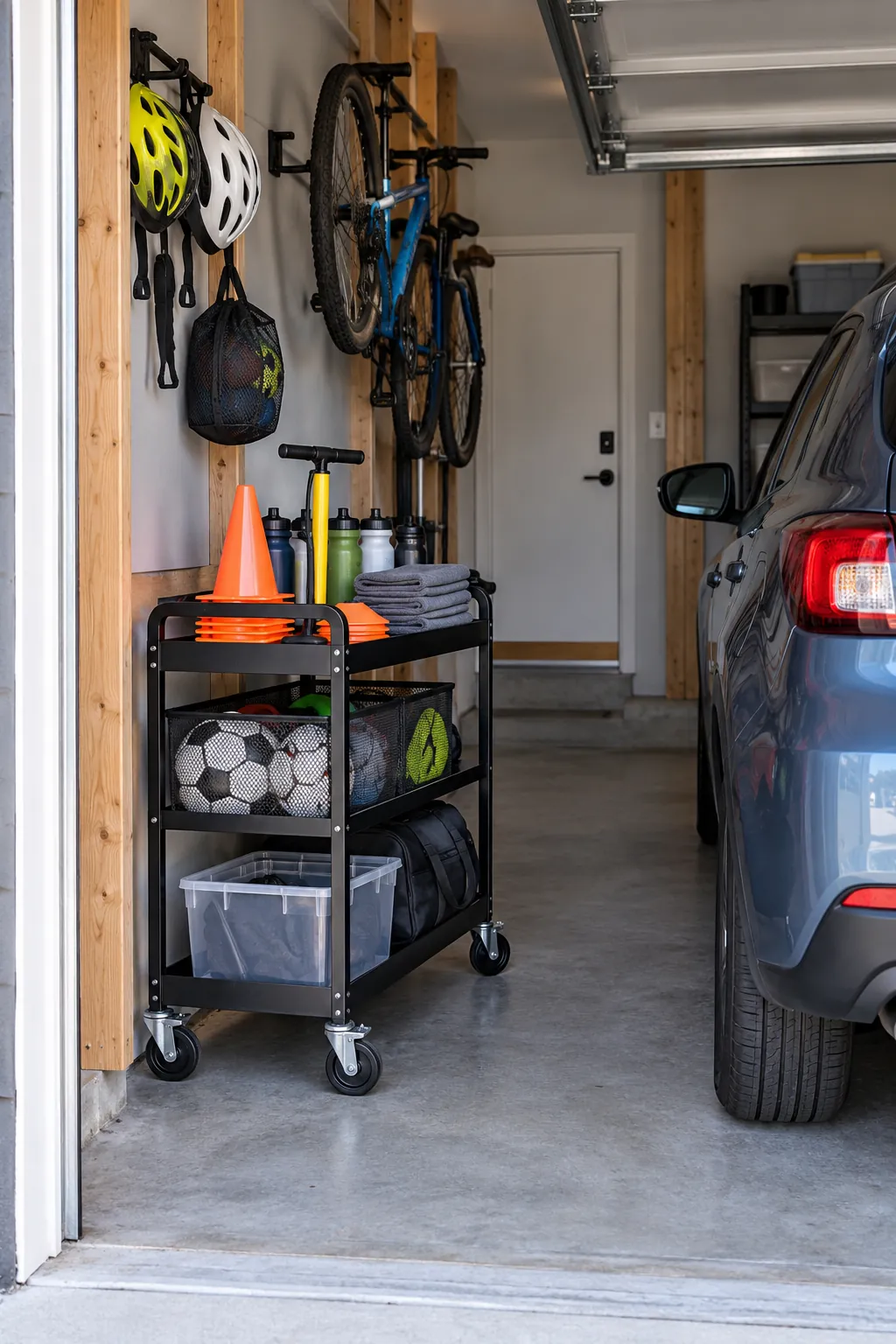
Load a Rolling Practice Cart
Use a slim cart for cones, pumps, towels, and the equipment needed at most practices. Roll it to the car for loading, then return it to a marked bay. Lock the casters and keep heavy objects on the lowest shelf.
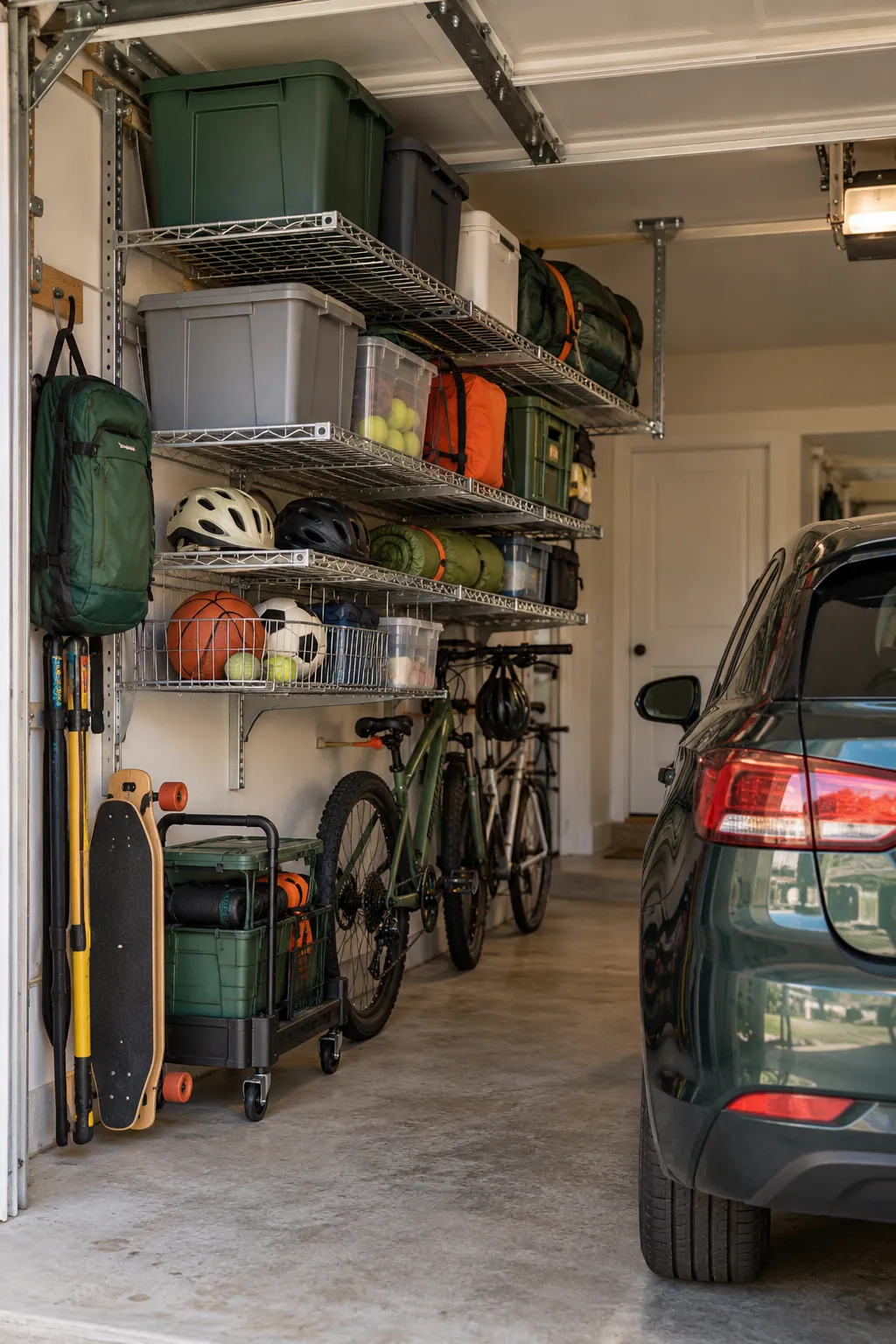
Choose Open Wire Shelving
Wire shelves make small equipment visible and allow damp air to move around it. Adjust the shelf heights around actual bins rather than accepting large empty gaps. Anchor tall shelving and keep its feet outside the marked car rectangle.
Run a Narrow Shelf Above Head Height
A shallow high shelf can hold light seasonal supplies while preserving shoulder room beside the car. Confirm that stored items cannot fall and that the shelf clears raised doors and the garage door mechanism. Use closed containers only for clean dry contents.
Use Overhead Bins With a Retrieval Plan
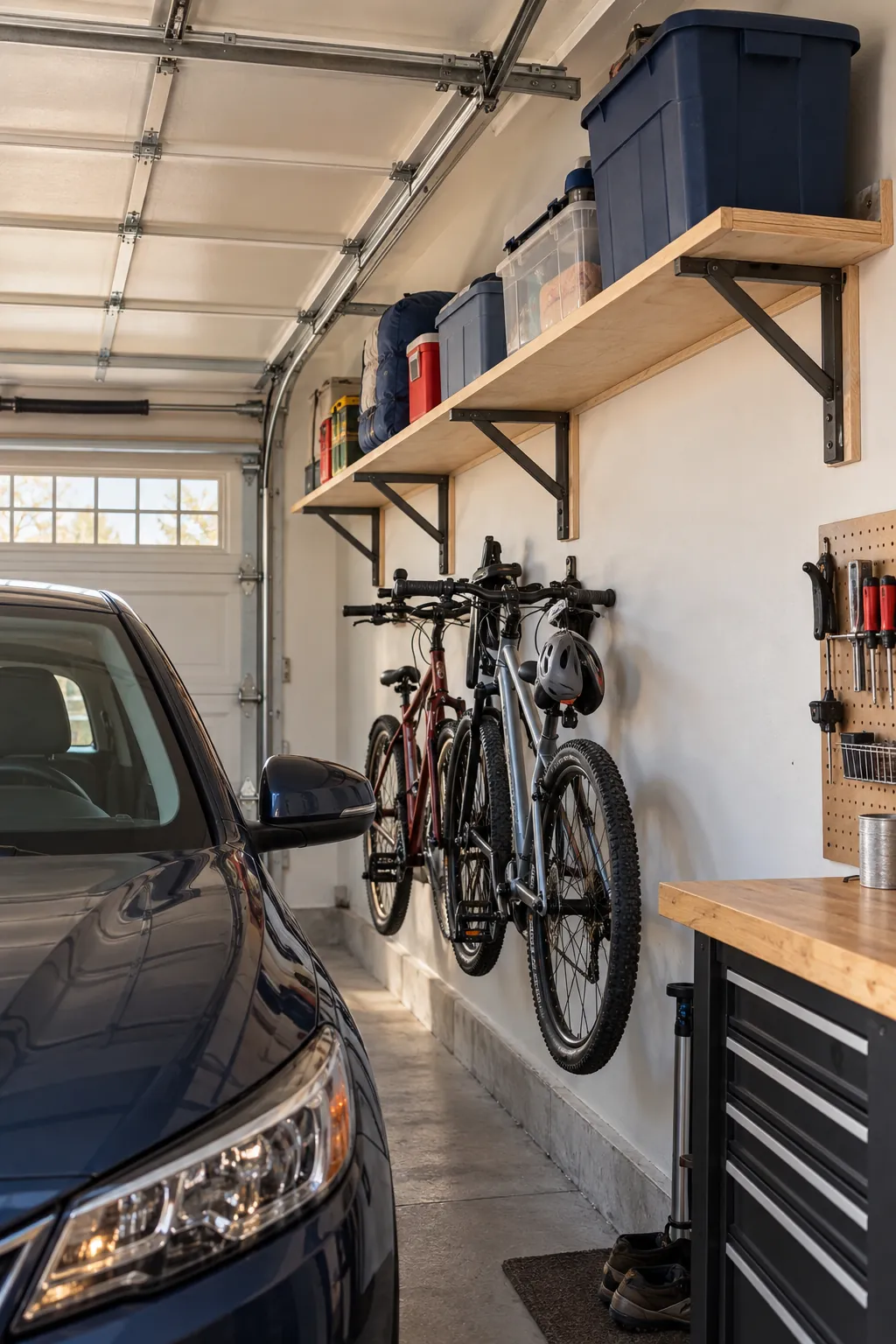
Overhead racks work for light gear used a few times a year, but only when every bin can be reached with a stable ladder placed outside the car bay. Record the bin contents on the visible end. Respect the rack load limit and never store fuel, chemicals, or fragile glass overhead.
Choose Clear Bins for Seasonal Sets
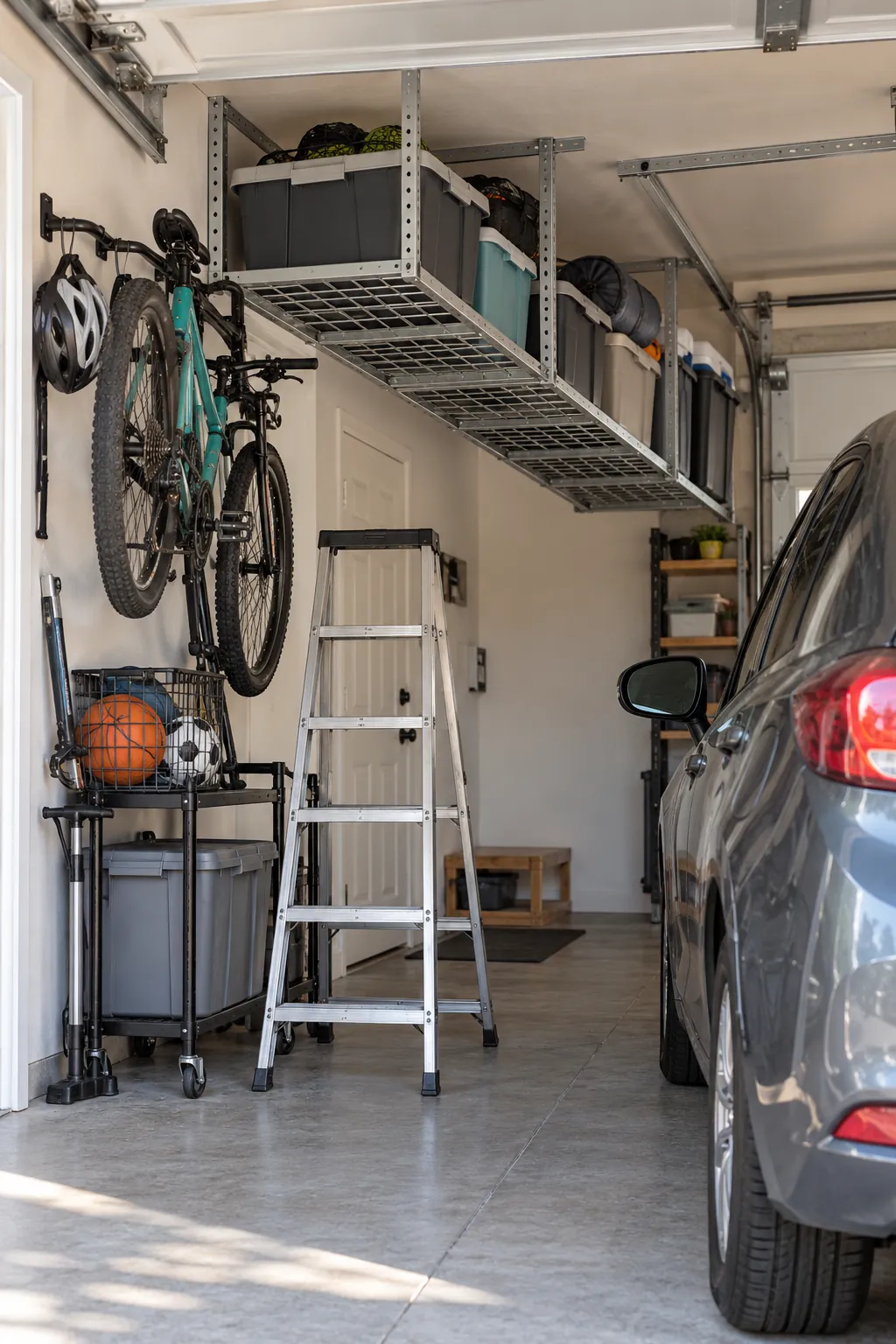
Transparent bins reveal skates, pads, or swim gear without opening a stack. Group complete seasonal sets rather than mixing unrelated leftovers. Leave a little free space for air and verify that all equipment is dry before closing the lid.
Assign One Color to Each Person
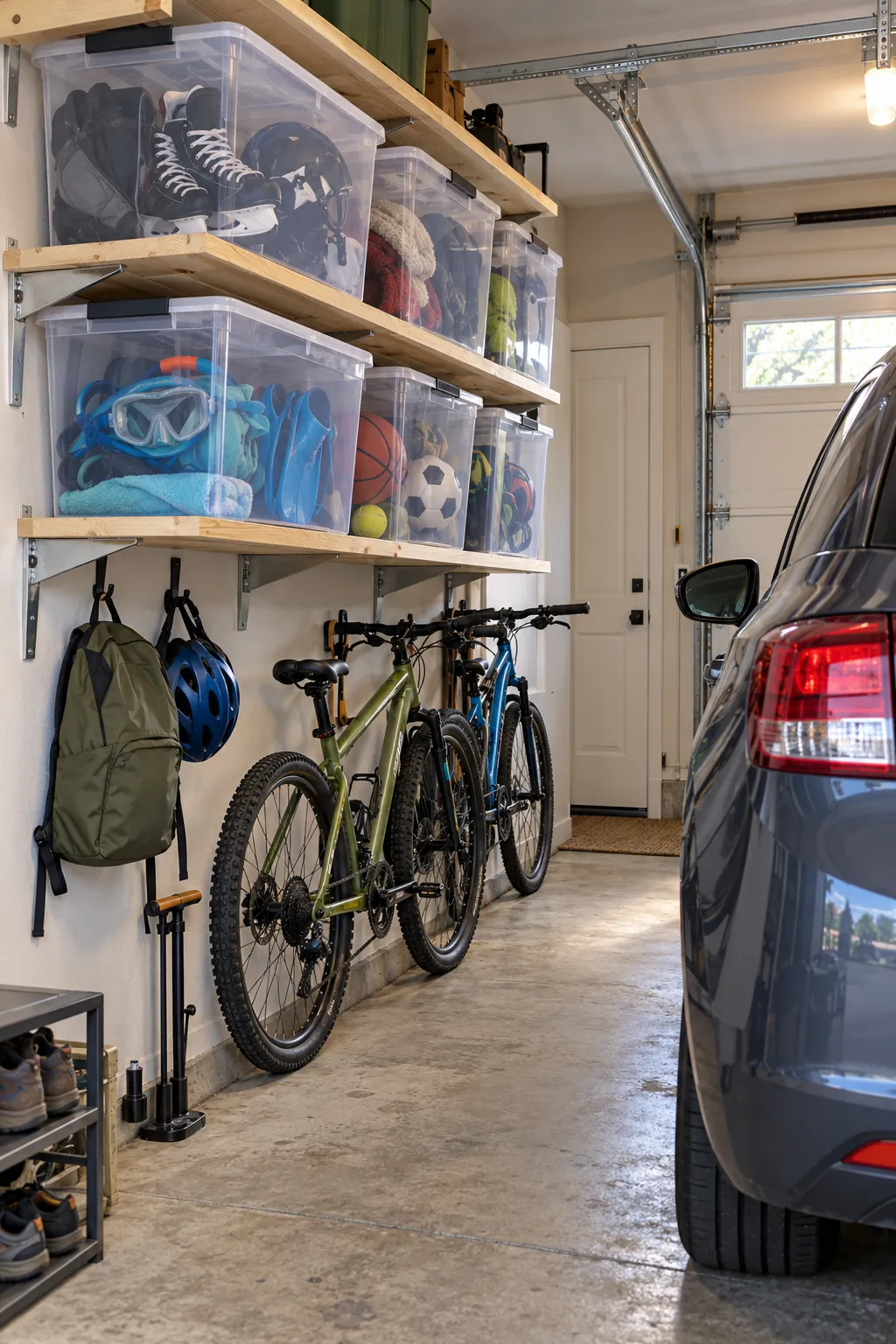
A consistent bin or tag color helps family members return gear without reading every label. Use color as a secondary cue, not the only cue, so the system still works for every user. Limit the palette to the actual household rather than creating a decorative rainbow.
Install a Flexible Wall Track
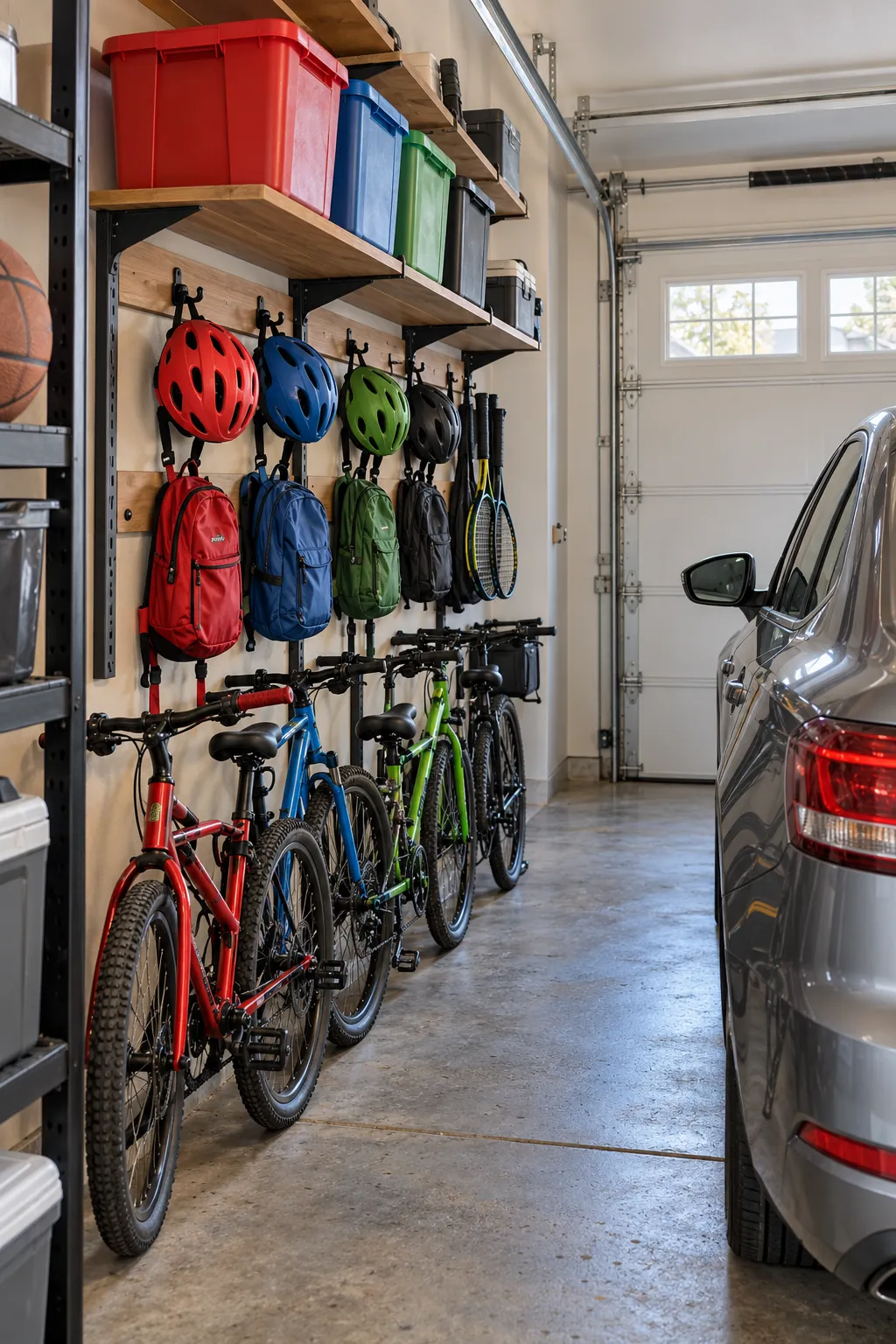
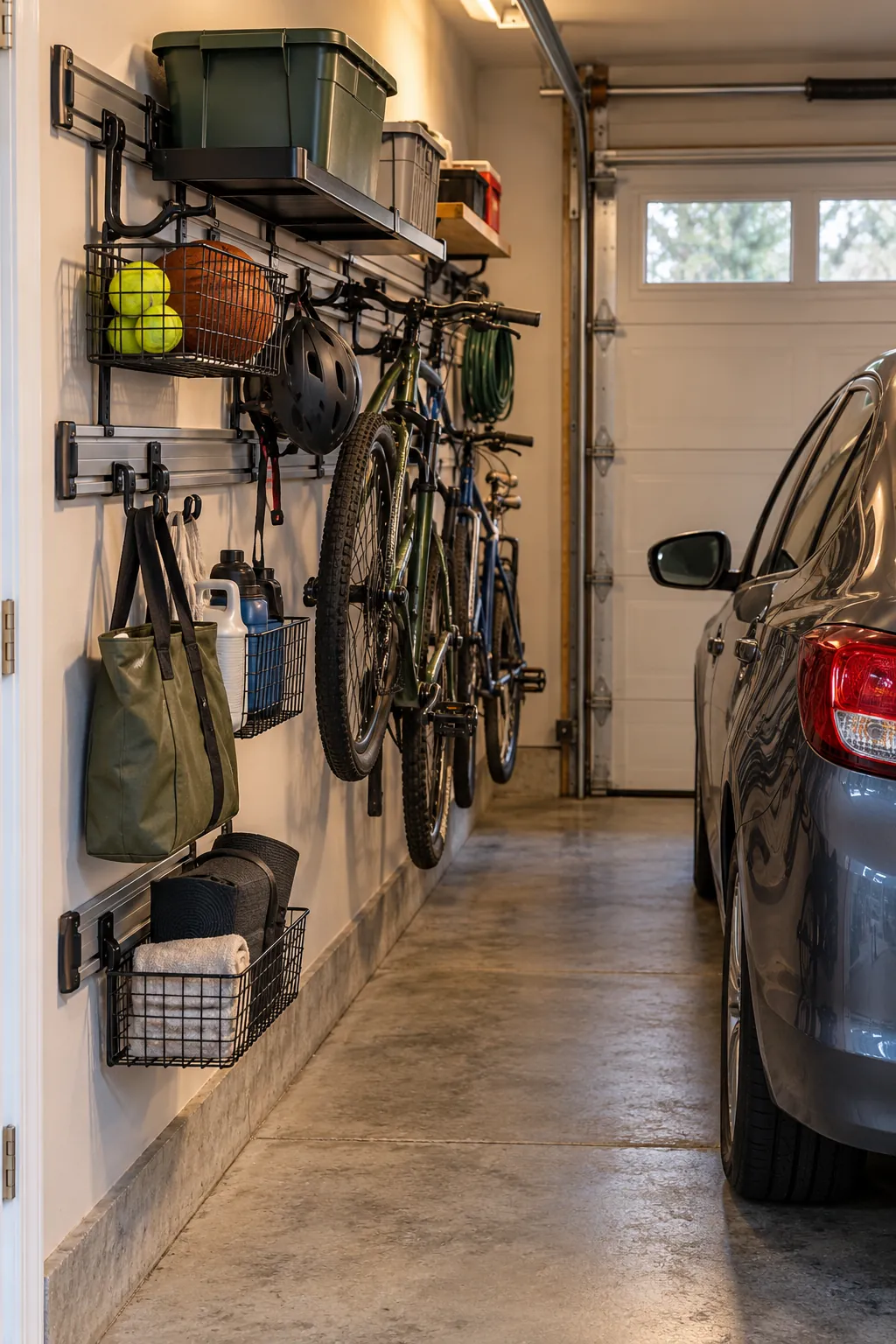
A rated wall track lets baskets, hooks, and small shelves move as equipment changes. Fasten the rail into suitable framing and check every accessory load. Keep the lowest attachments rounded and clear of the car door edge.
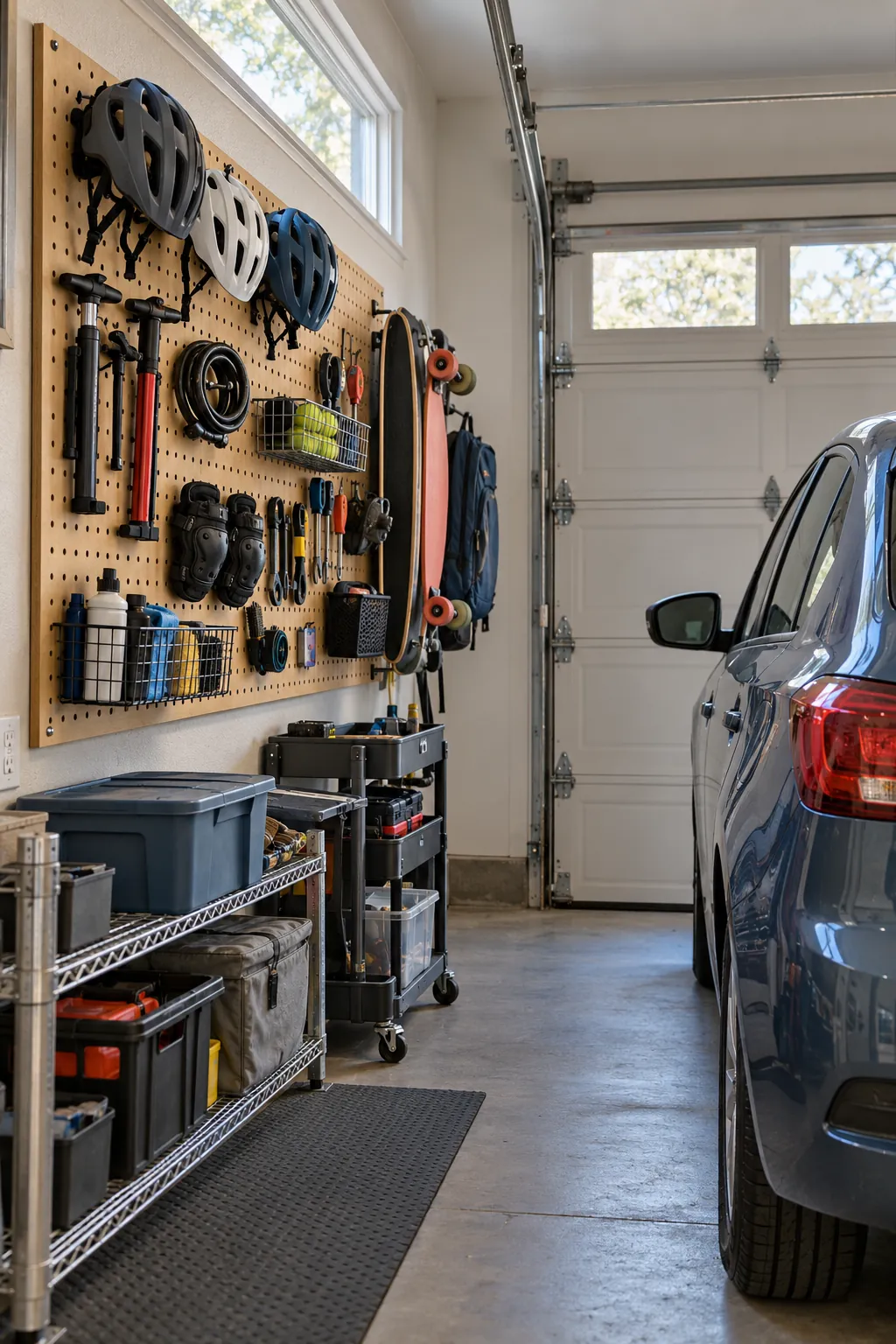
Reserve Pegboard for Small Gear
Pegboard can organize pumps, locks, protective pads, and hand tools in a compact service zone. Outline broad categories through placement rather than drawing around every object. Use locking accessories where vibration might shake hooks loose.
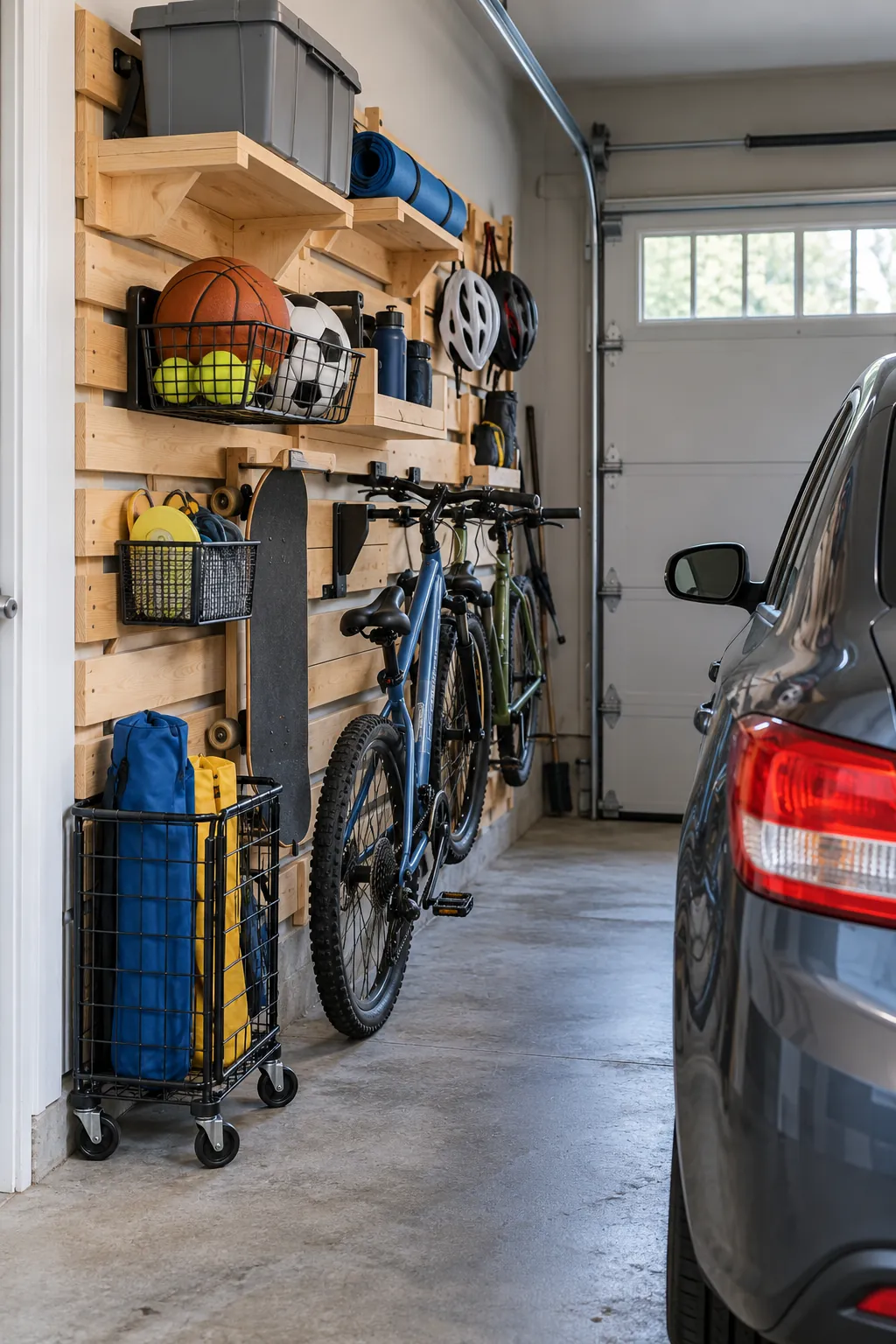
Build a French Cleat Utility Strip
A solid cleat system can carry custom holders for odd sports equipment and change over time. Use appropriate lumber, secure it to framing, and keep heavy modules low. Test every holder away from the car before trusting it with valuable gear.
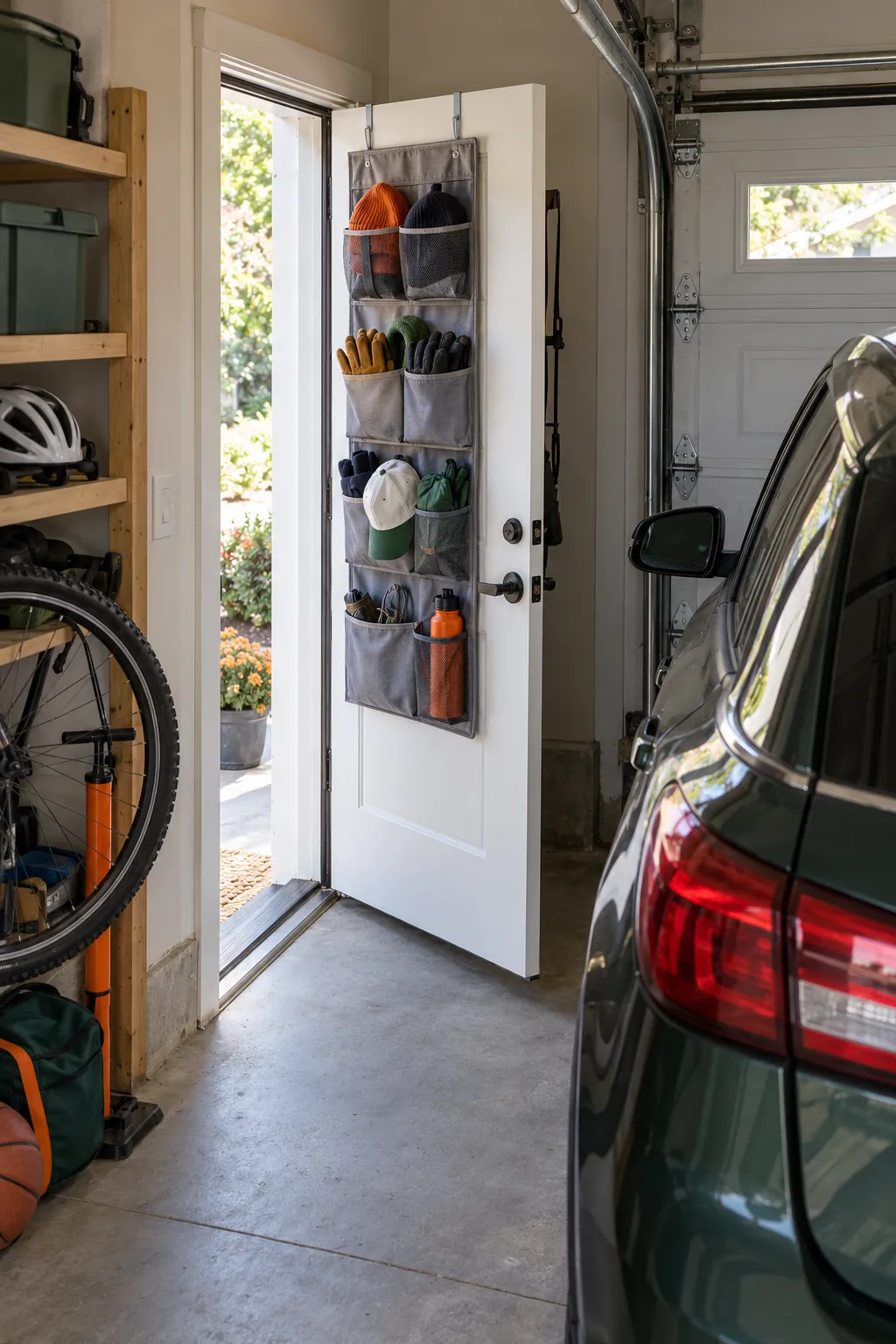
Use the Back of the Entry Door
A shallow pocket organizer on the interior garage entry door can hold gloves, caps, and small accessories. Confirm that it does not interfere with the latch, weather seal, or full door swing. Avoid heavy objects that could strain hinges or fall when the door closes.
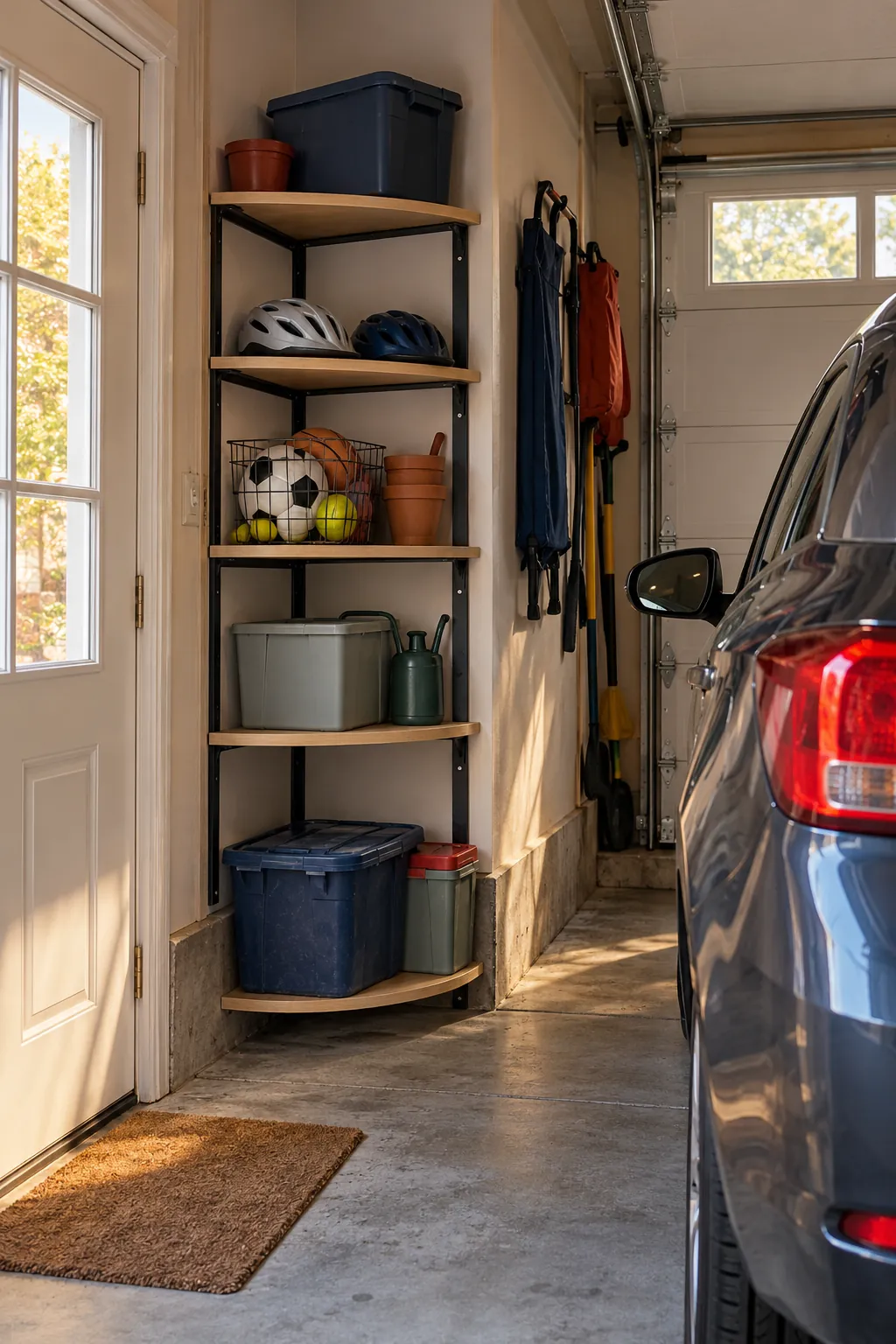
Fit Shelves Into a Dead Corner
Triangular or narrow corner shelves can capture space that standard units miss. Reserve them for small light items that will not project into the aisle. Keep the lowest corner rounded or protected where someone might brush past it.
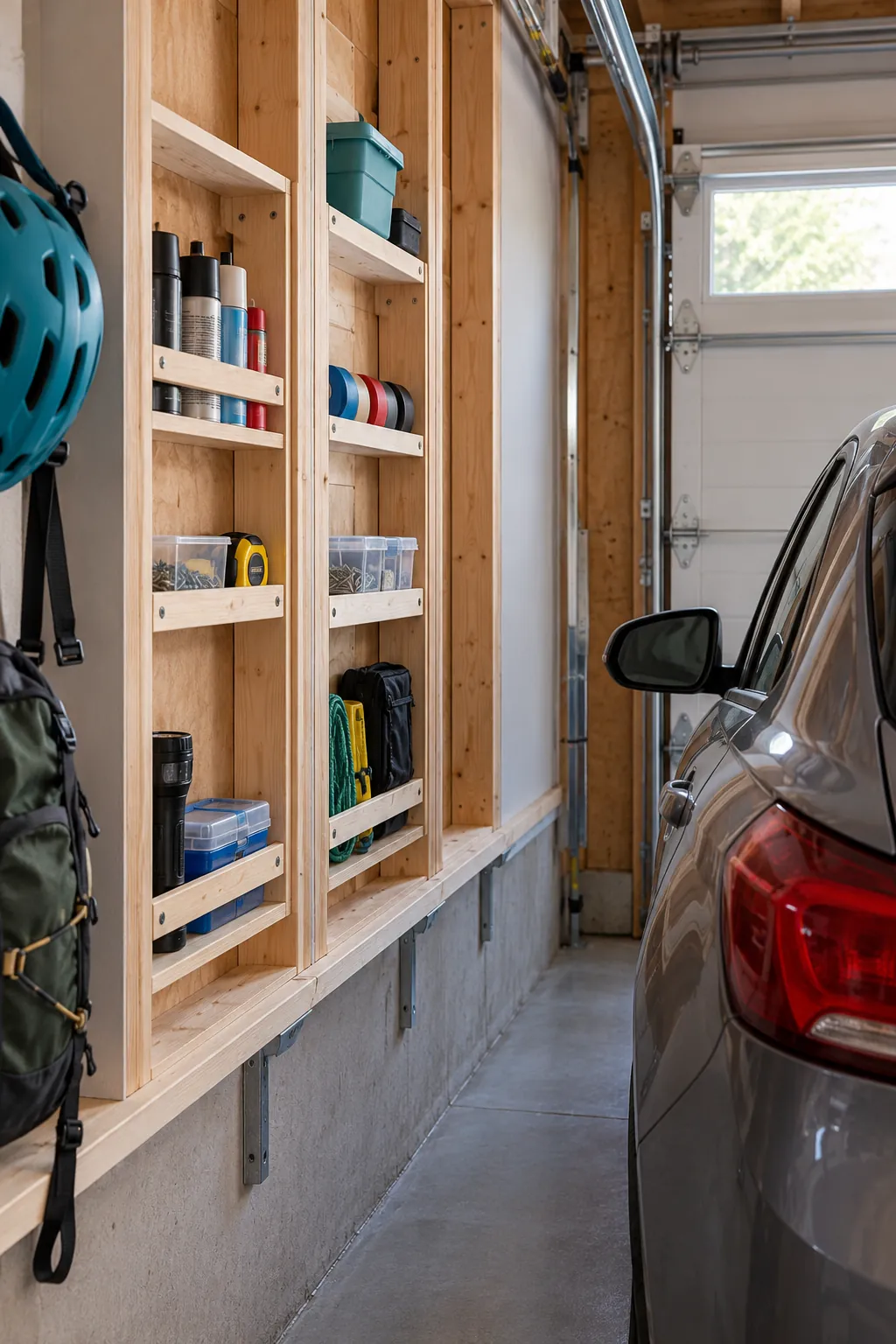
Recess Small Items Between Studs
In an unfinished wall, a carefully framed recess can hold narrow cans, tapes, or accessories without stealing floor area. Check wiring, plumbing, fire separation, and local requirements before cutting or modifying anything. Add a retaining lip so vibration cannot send items forward.
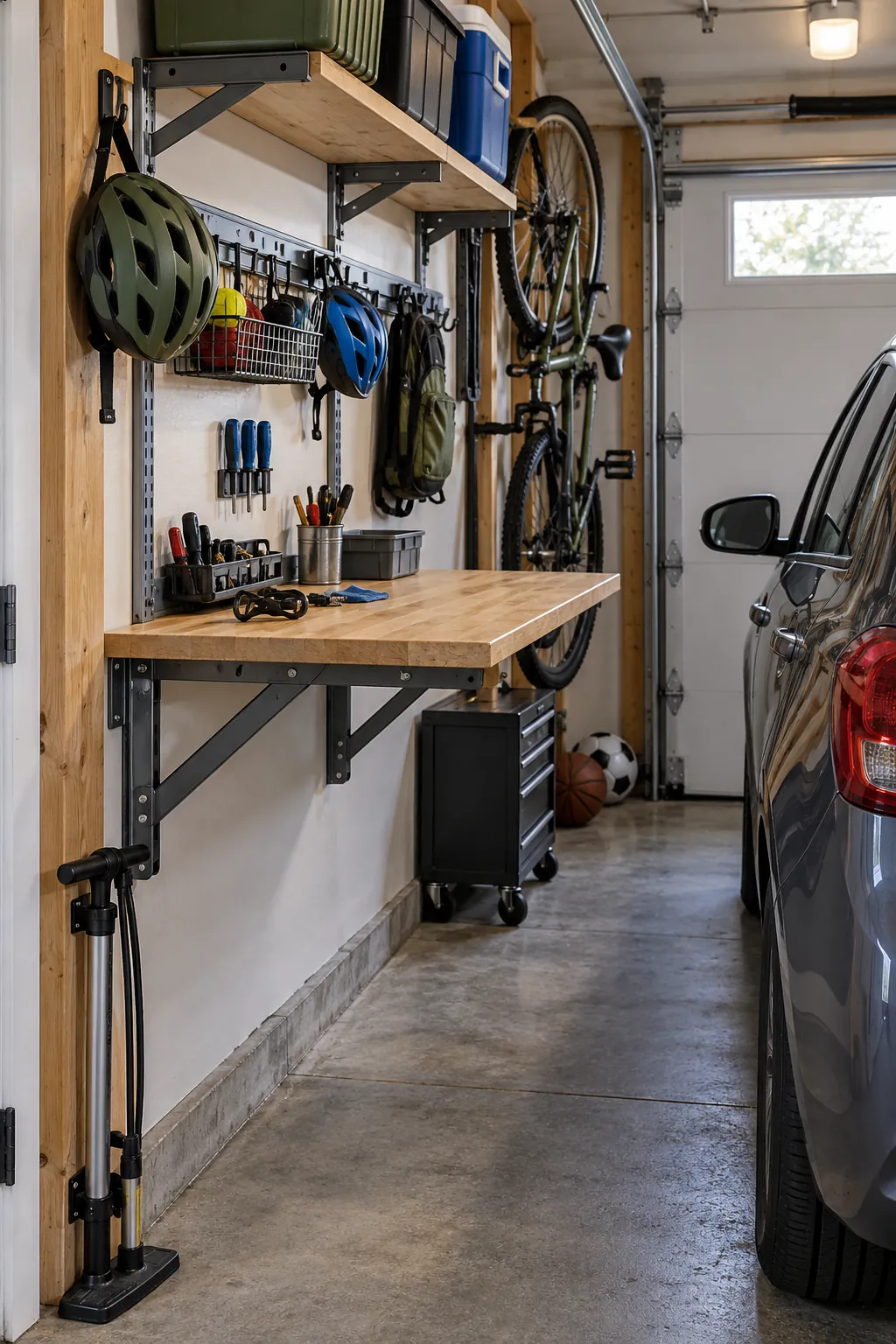
Mount a Folding Work Surface
A wall mounted folding bench creates a repair spot for bikes and sports gear, then closes before the car returns. Support it with rated hardware and keep the folded depth inside the wall zone. Store tools separately so nothing remains loose on the panel.
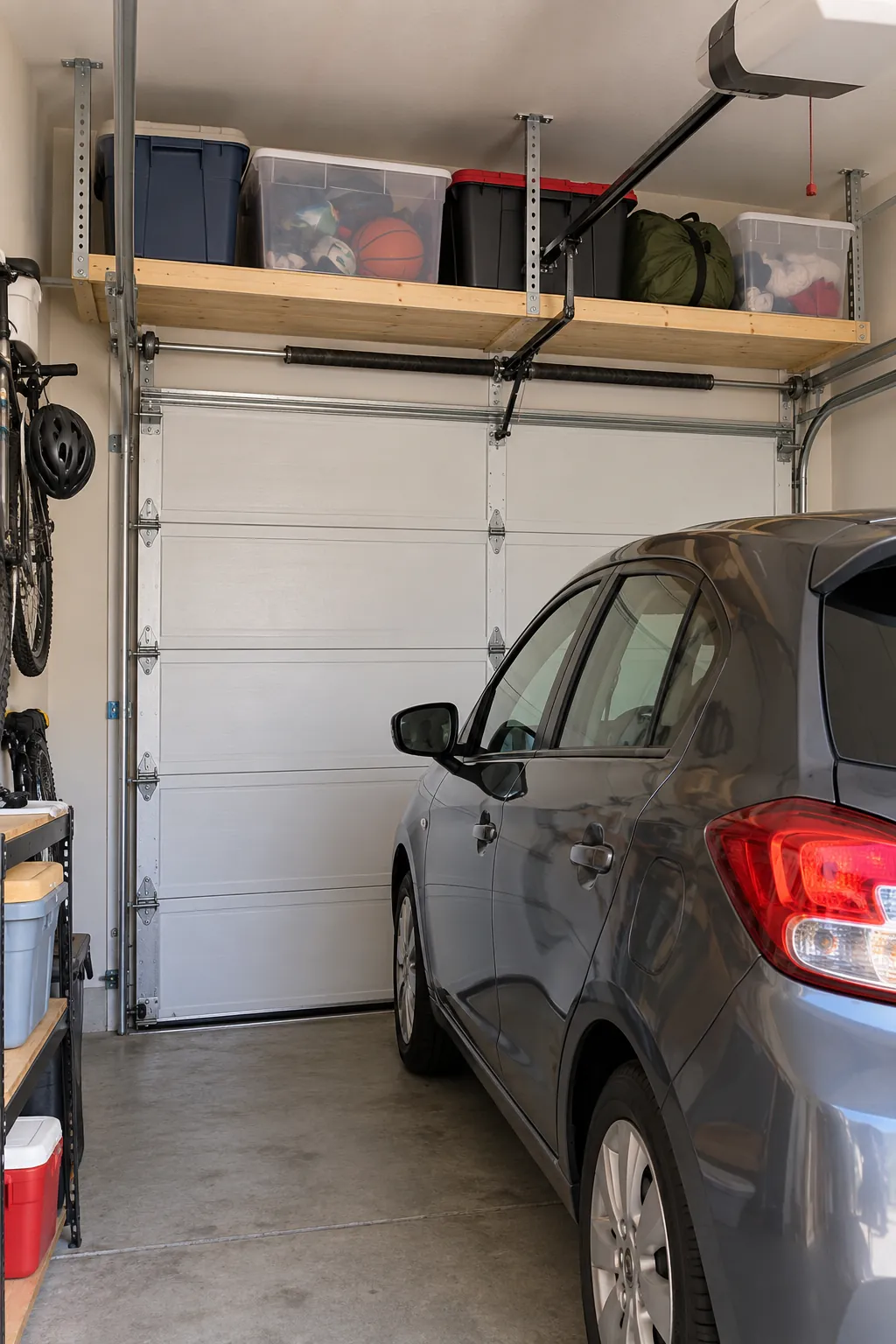
Use the Zone Above the Garage Door
A properly engineered shelf above the door opening can hold light, rarely used containers when the door and opener clear it in every position. Measure the moving path before building and follow local safety requirements. Never improvise around springs, tracks, cables, or opener hardware.
Cradle Long Boards Near the Ceiling
Padded wall arms can hold surfboards or paddle boards horizontally above normal shoulder height. Support each board at two broad points and secure it against rolling. Keep it clear of the garage door path and inspect straps before each season.
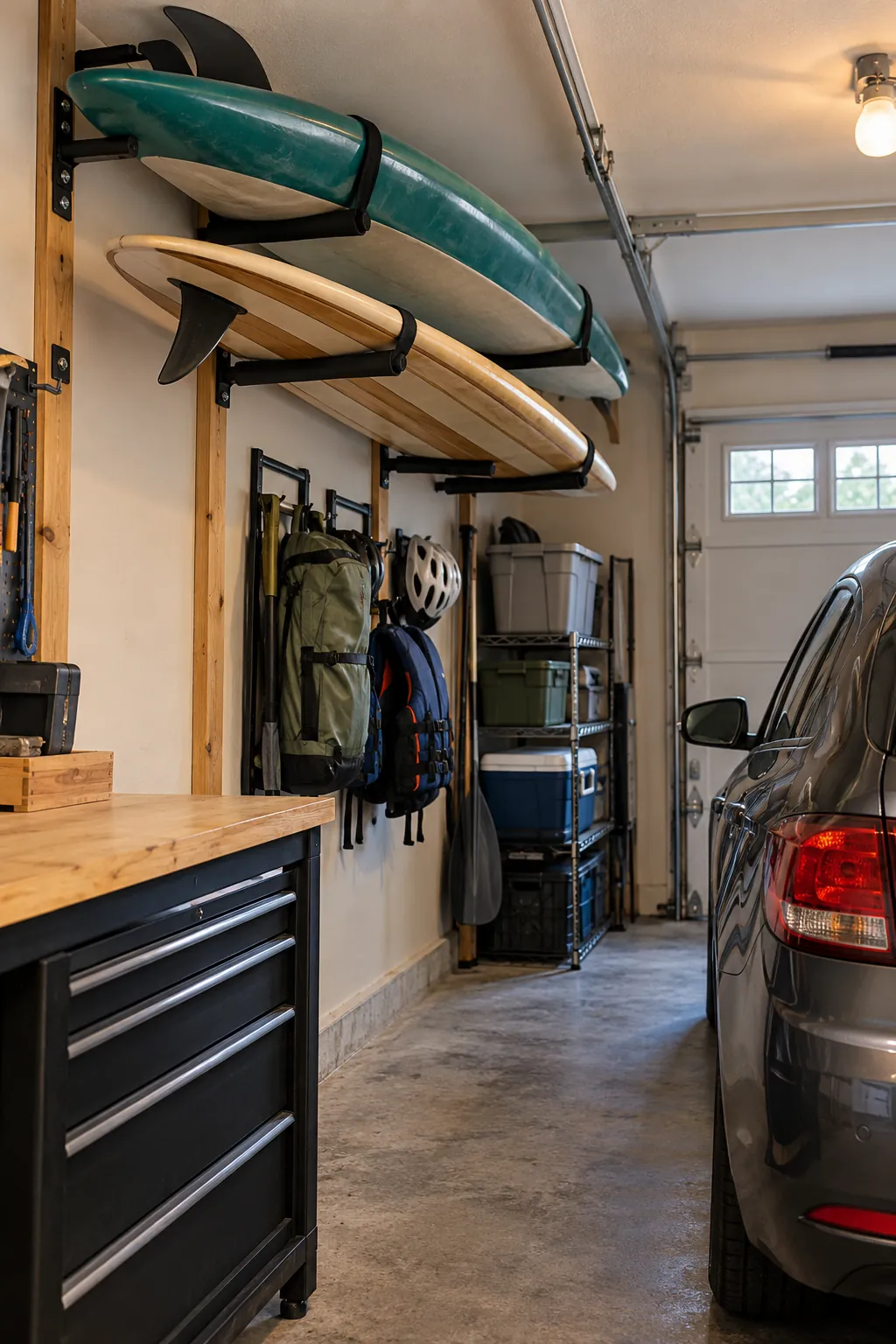
Stand Skis in a Dry Vertical Rack
A vertical rack keeps skis paired while using little wall width. Let equipment dry before storage and avoid pressure on bindings. Place poles in a separate narrow channel so tips do not catch clothing or scratch the car.
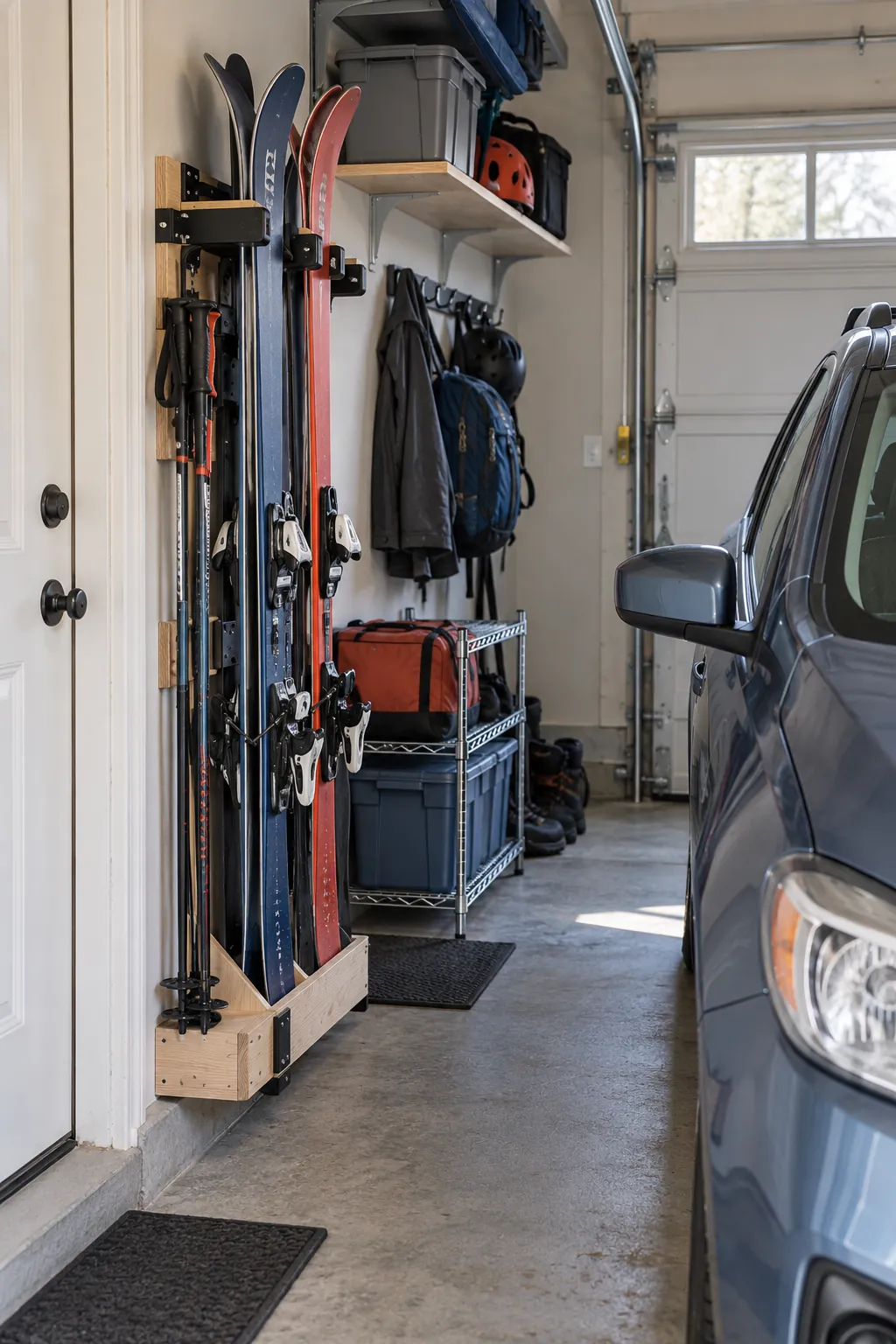
Run Fishing Rods Along the Ceiling
A purpose built rod rack can hold fishing rods parallel to ceiling joists without bending tips. Keep hooks removed or covered and secure every rod at two points. Position the rack away from lights, door hardware, and places where a ladder would hit the car.
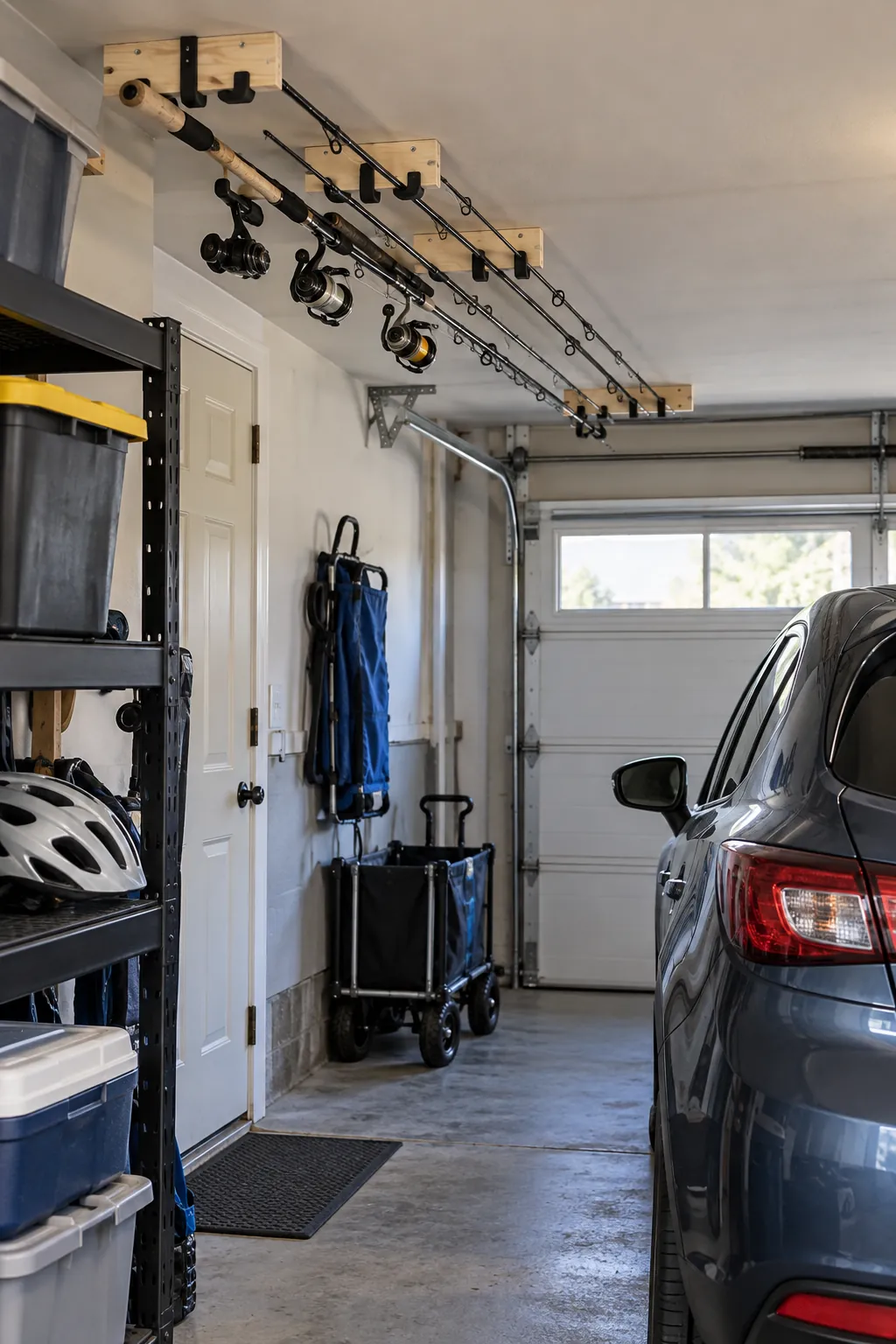
Pack Camping Gear by Trip Type
Create separate dry bins for sleeping, cooking, and shelter equipment so one weekend does not require unpacking every container. Store fuel and hazardous items according to their own safety rules outside the general gear bin. Put the heaviest camping bin on a low shelf.
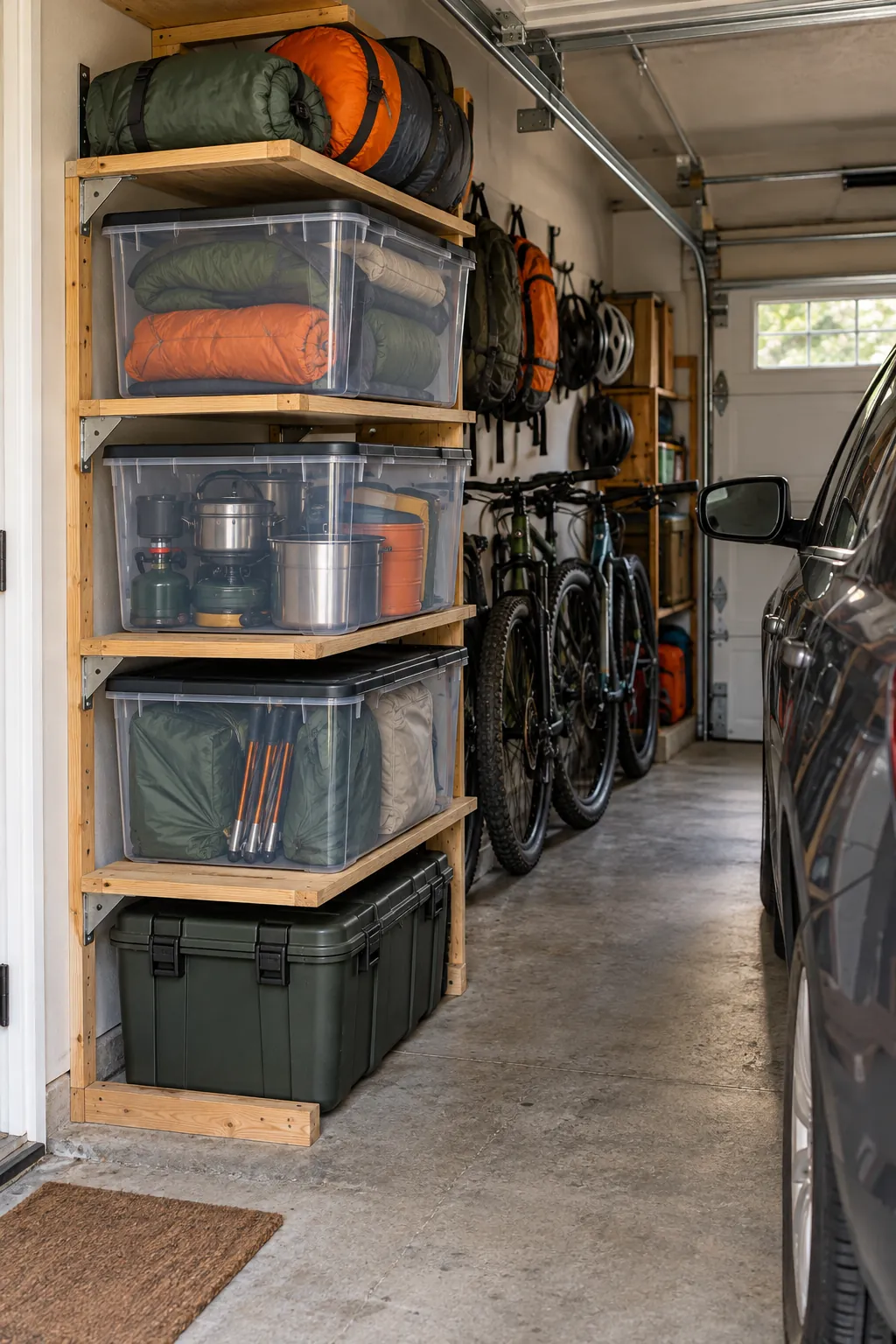
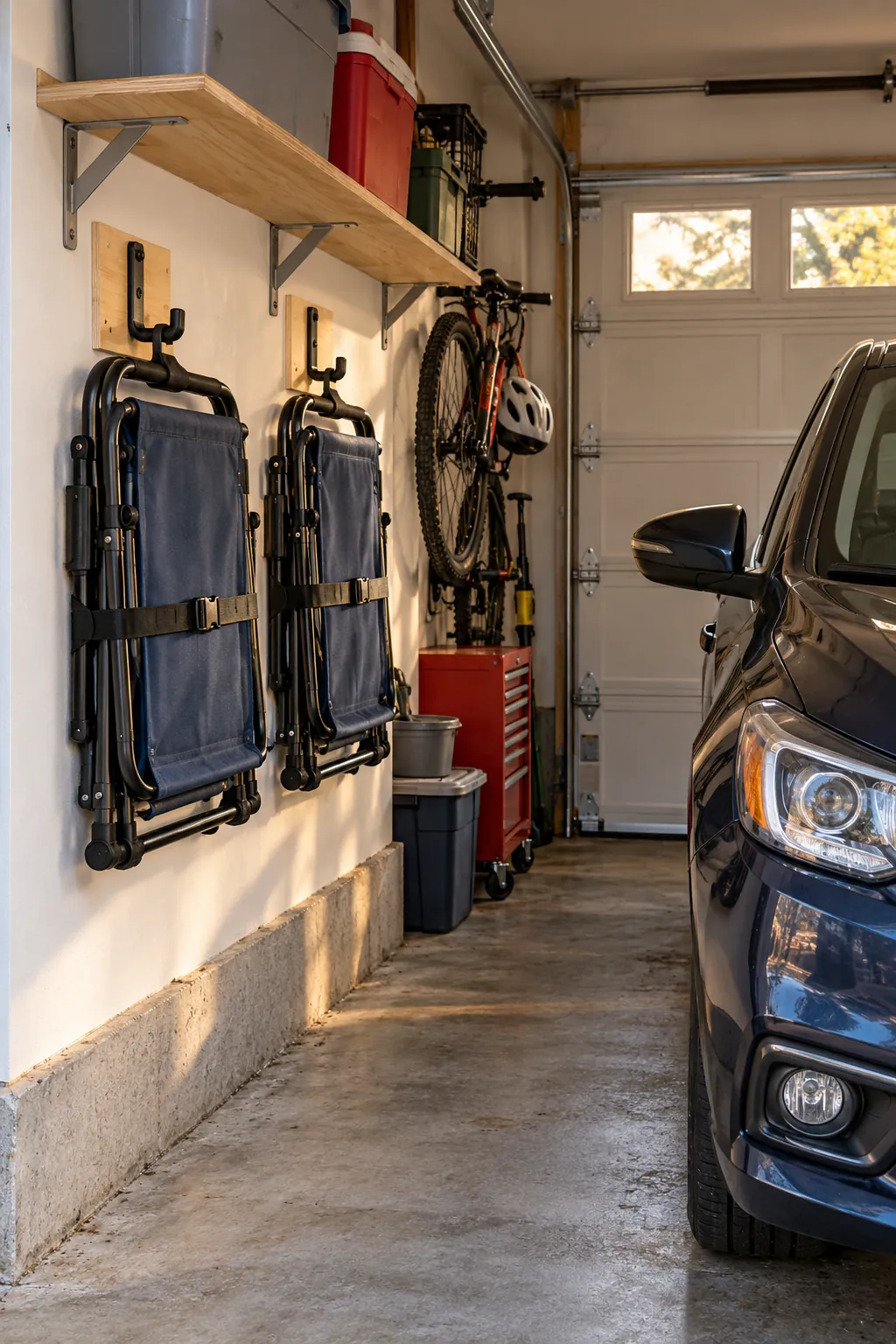
Hang Folding Chairs as a Pair
Two broad wall hooks can hold folded chairs flat against the wall. Strap each chair closed and support the frame rather than thin fabric. Keep the hooks low enough for safe lifting but outside the car door swing.
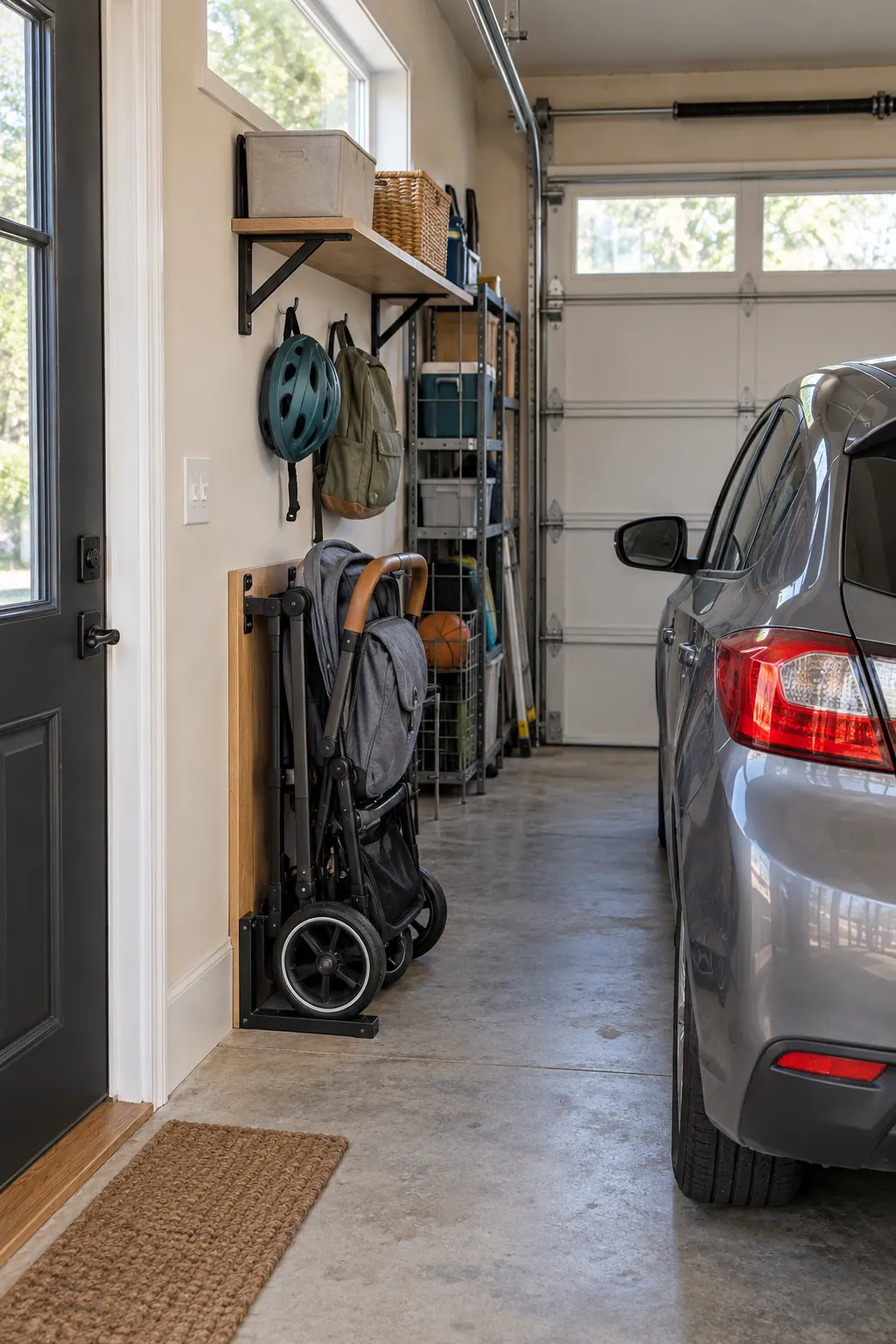
Dock the Stroller Near the Exit
A folded stroller can stand in a marked floor dock or rated wall bracket near the garage entry. Keep its wheels clean and lock the fold before storage. Leave enough space to remove it without squeezing beside a hot car.
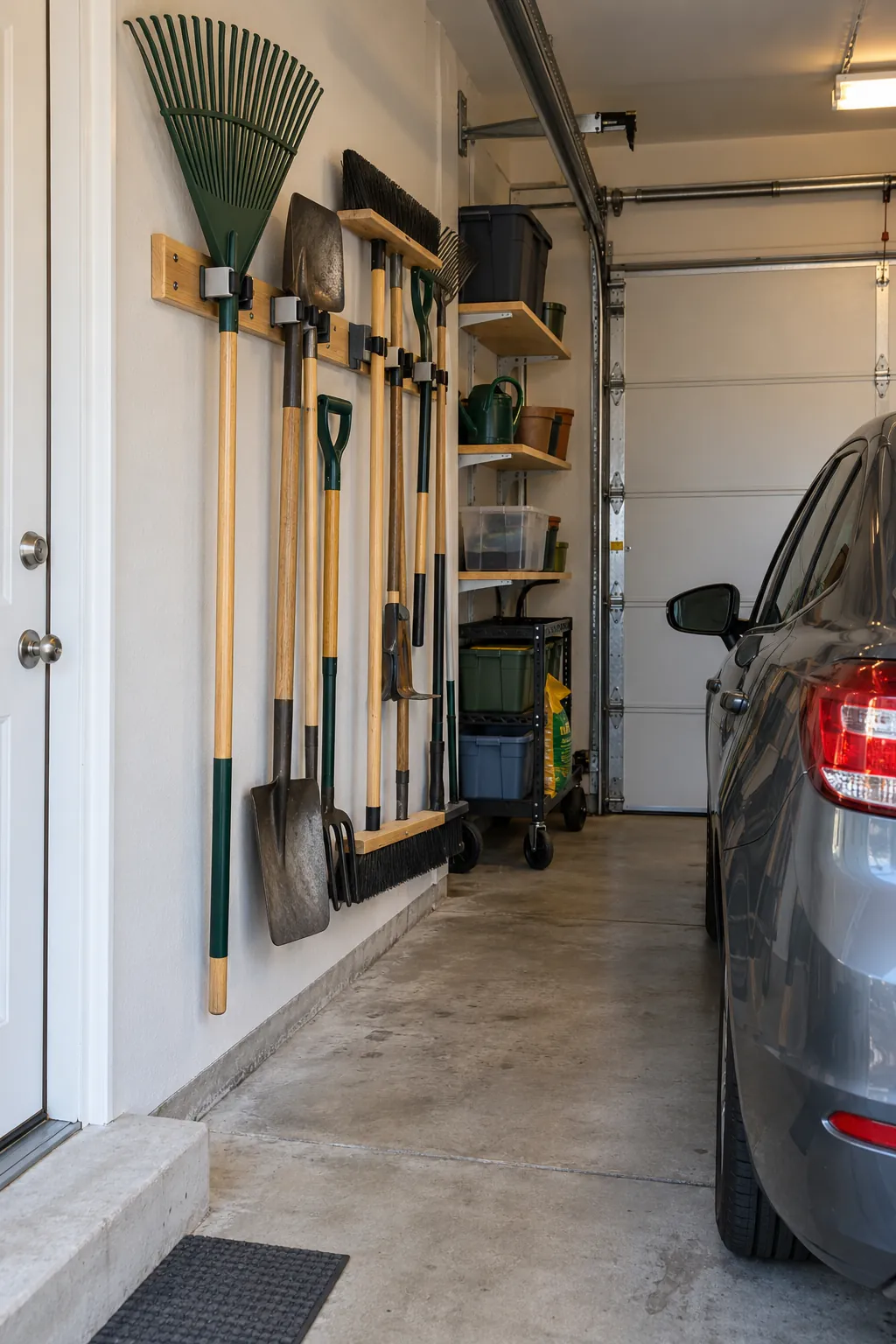
Group Garden Tools on One Rail
A wall rail with correctly sized grips can hold rakes, shovels, and brooms upright. Put sharp or heavy tools beyond young children’s reach and keep handles out of the vehicle lane. Return each tool clean and dry so the rack does not become a mud strip.
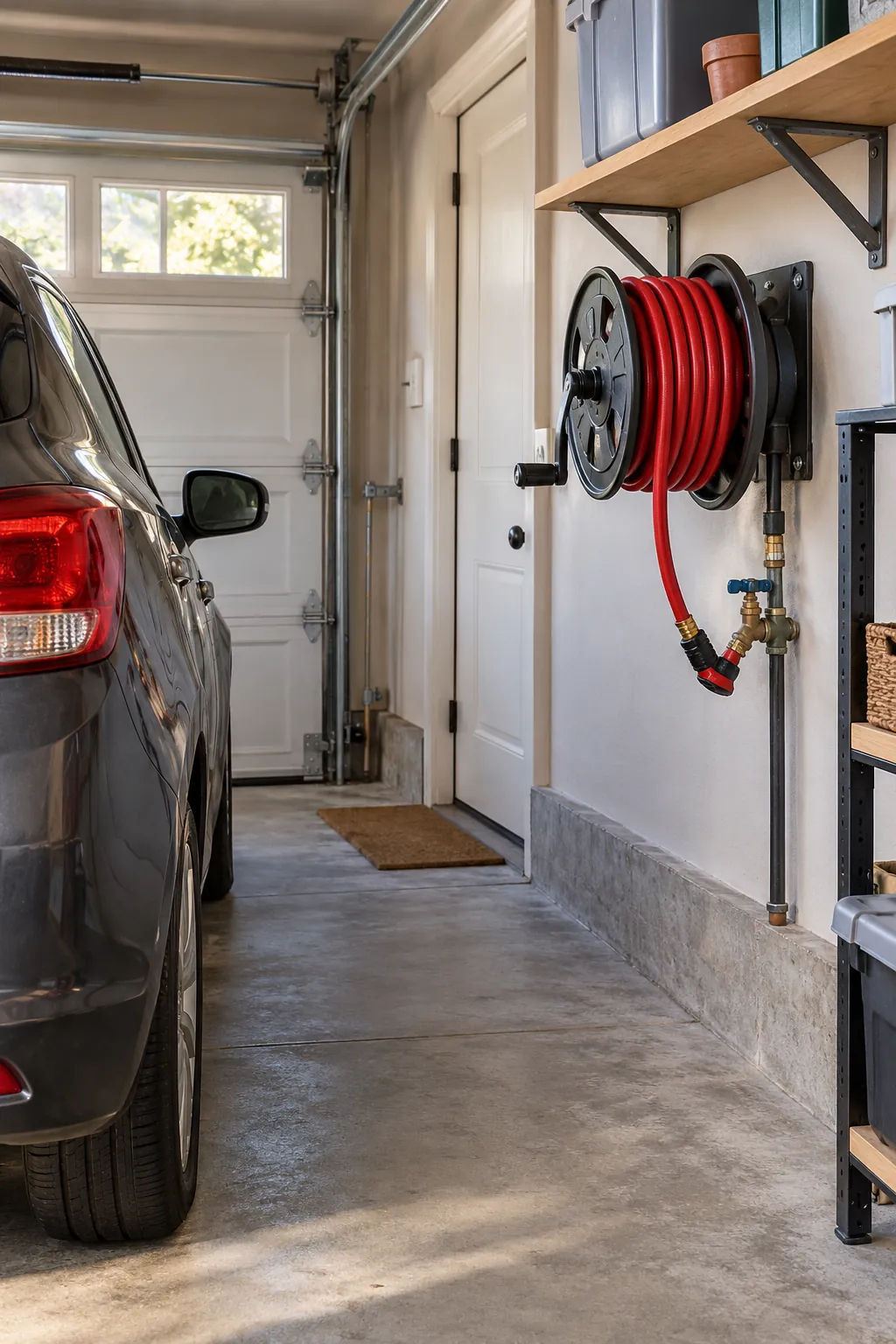
Mount a Compact Hose Reel
A wall reel prevents loops of hose from spreading across the parking path. Locate it close to the water source and allow the hose to drain. Keep the crank and fittings inside the wall zone where a mirror or door cannot strike them.
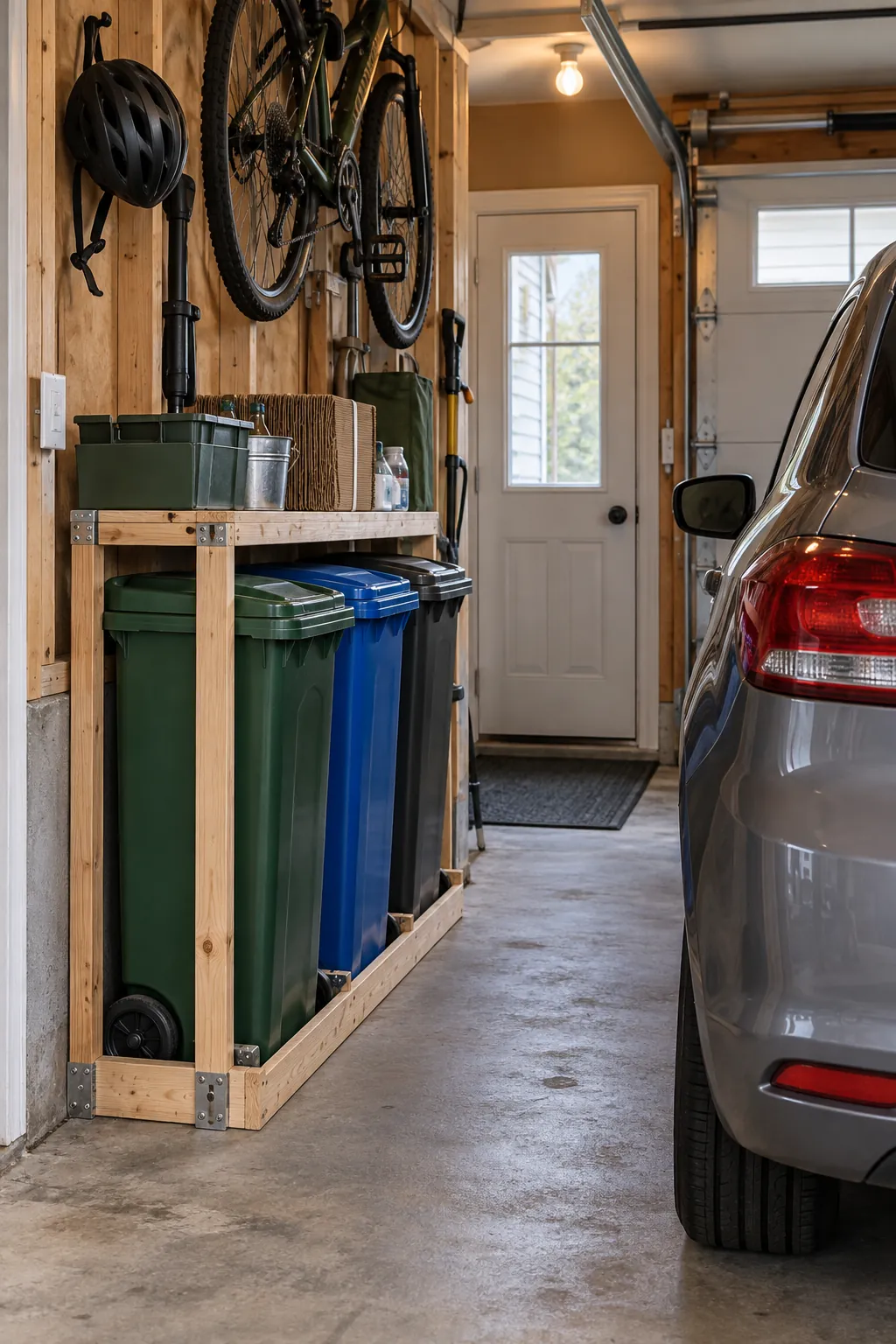
Build a Slim Recycling Station
Use tall narrow containers that fit against a wall instead of wide bins scattered near the car. Match capacity to collection frequency so overflow does not enter the parking bay. Keep the station away from ignition sources and clean spills promptly.
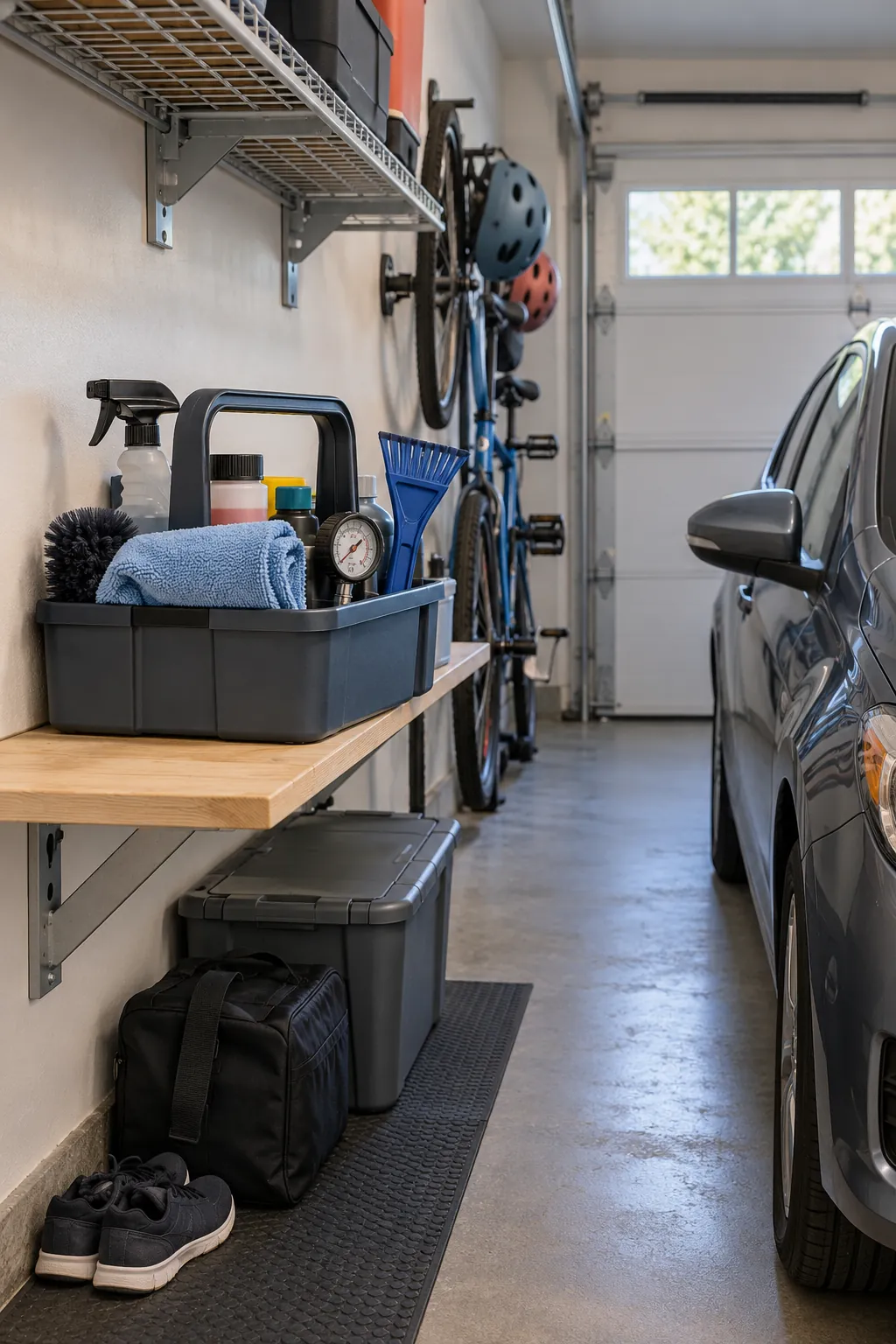
Keep Car Care in One Caddy
Place wash cloths, tire gauge, scraper, and safe maintenance supplies in one handled caddy. Store chemicals only as their labels require and separate incompatible products. Give the caddy a low shelf that can be reached without opening every vehicle door.
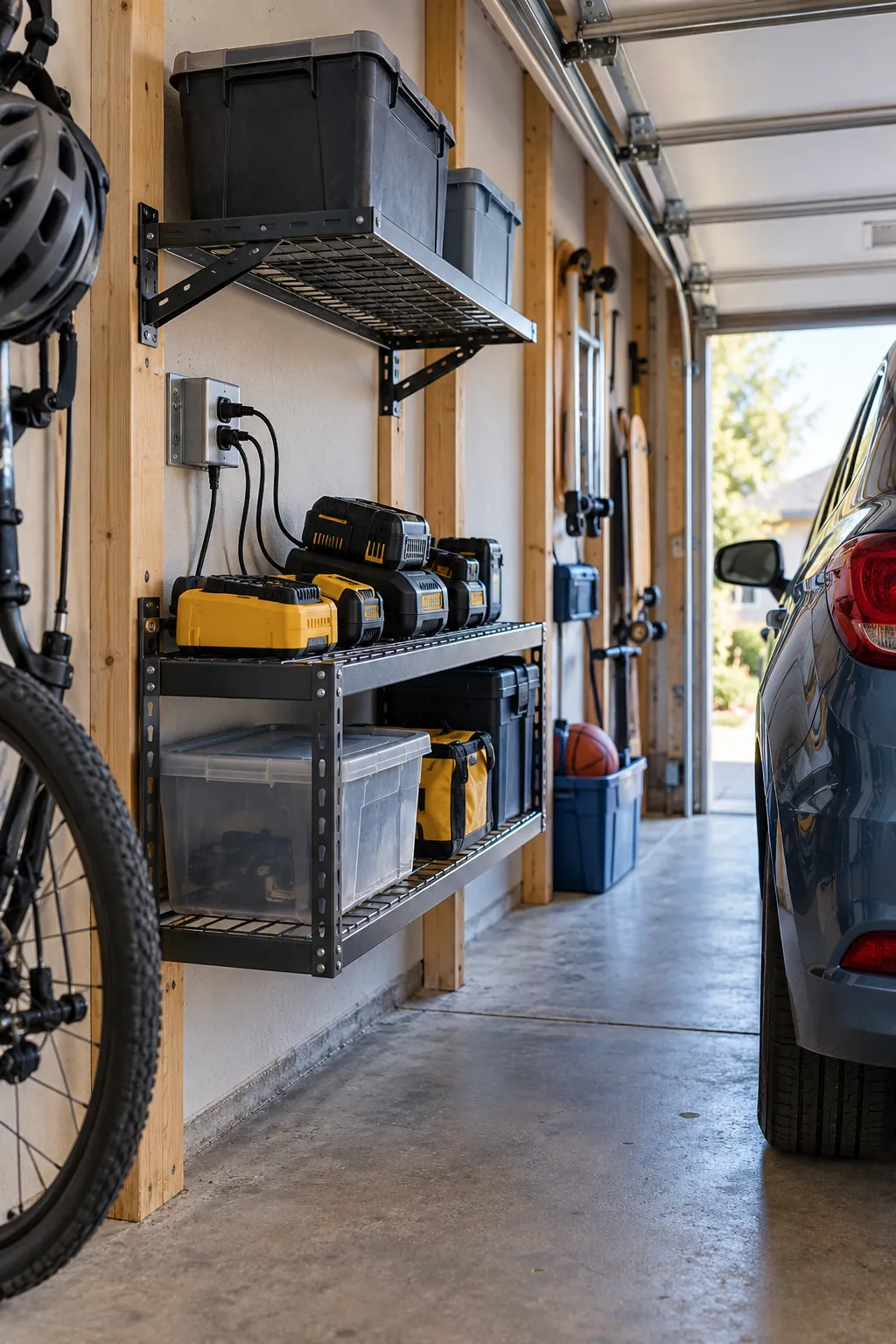
Create a Safe Charging Shelf
A metal or other suitable shelf can keep approved tool and light chargers together near a correctly installed outlet. Follow each battery maker’s temperature, ventilation, and charging guidance. Never cover charging equipment or run cords across the floor.
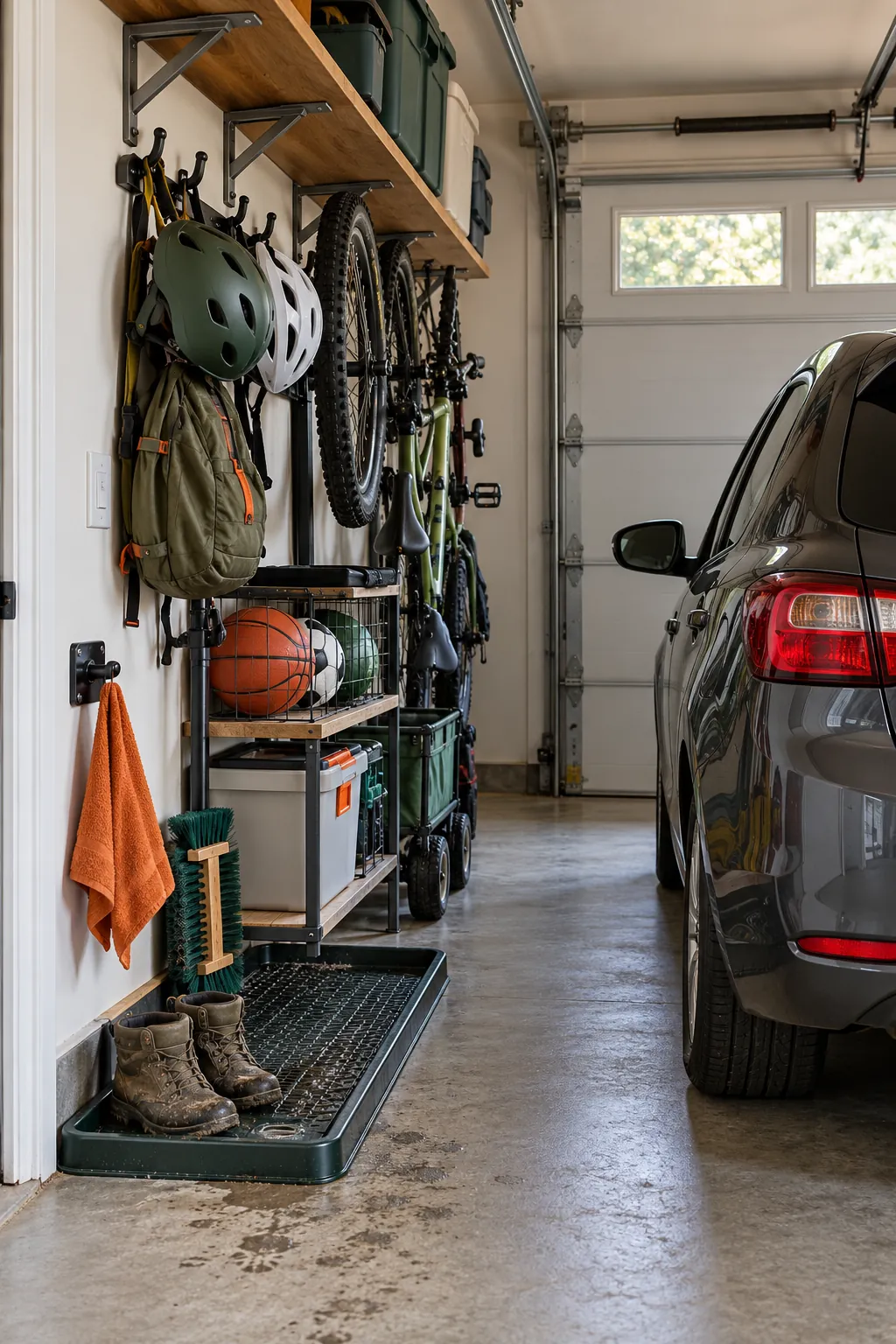
Stop Mud at the Gear Zone
Set a durable boot tray and stiff brush beside the return point for outdoor equipment. Clean dirt before bags and balls go back to shelves. Empty collected water quickly so the tray does not become slippery or attract pests.
Keep a Donation Bin by the Exit
A small labeled container near the door catches outgrown pads, duplicate balls, and unused gear. Empty it on a fixed schedule before it becomes permanent storage. Never put recalled, broken, or unsafe equipment into circulation.
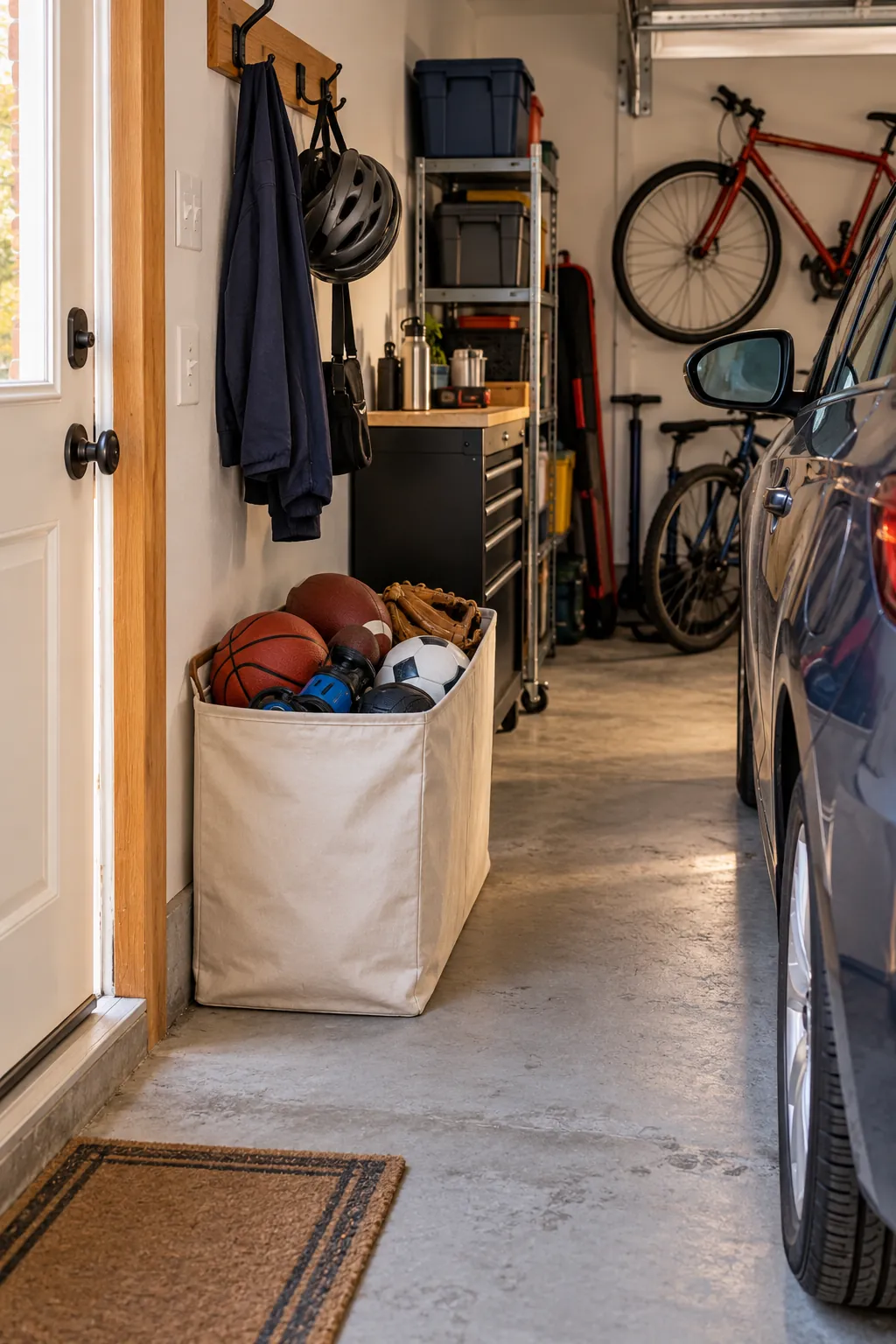
Use a Weekly Reset Basket
Collect stray items in one shallow basket during busy days, then return them every week. This keeps loose gear from migrating into the tire path without pretending the basket is a final home. Limit its size so delay remains visible.
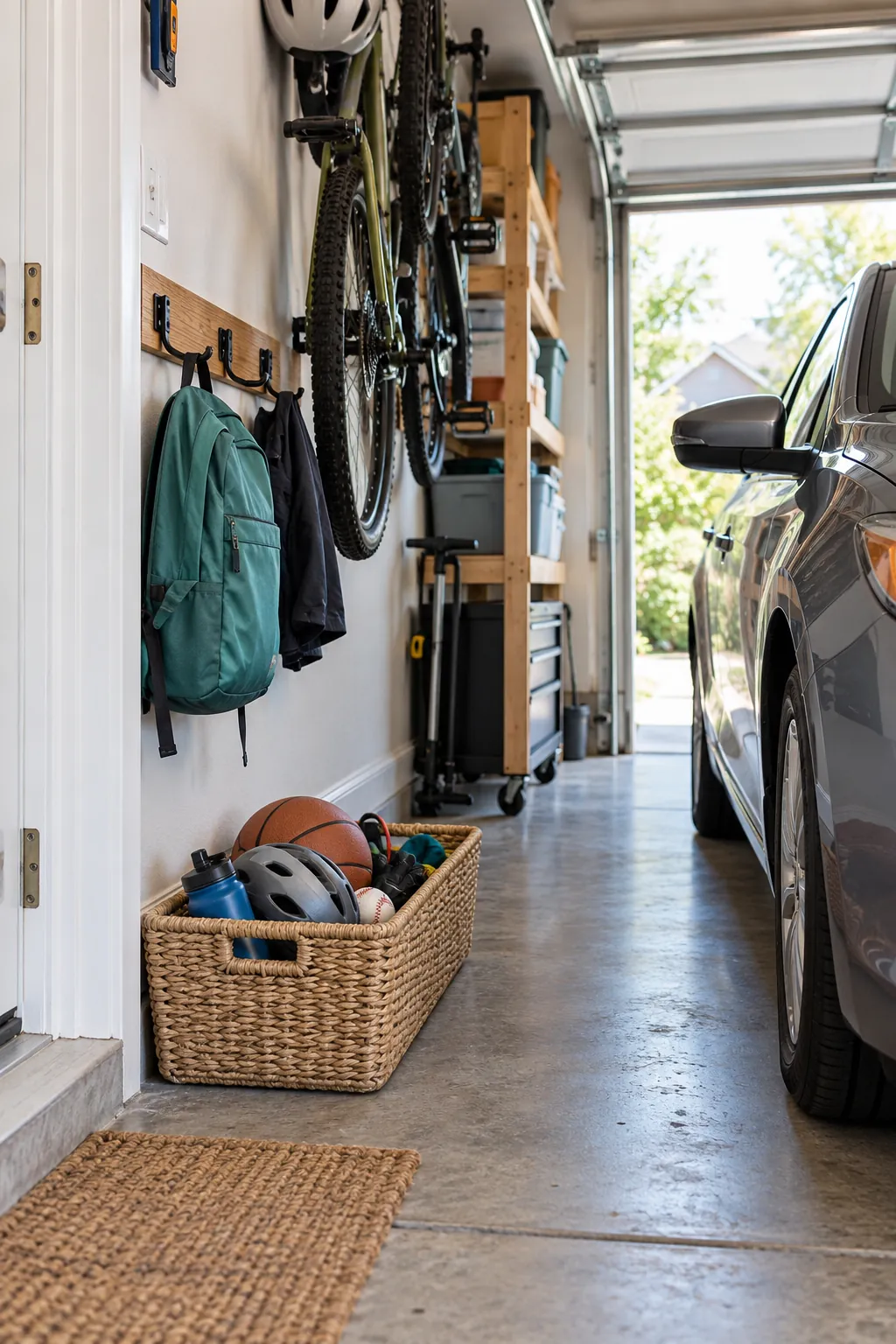
Repeat the Full Parking Test
After organizing, park the car, open every door, lift the trunk, walk both sides, and remove the most frequently used bike. Adjust any shelf, hook, or cart that makes those actions awkward. A storage system succeeds only when the vehicle and family gear can move safely every ordinary day.