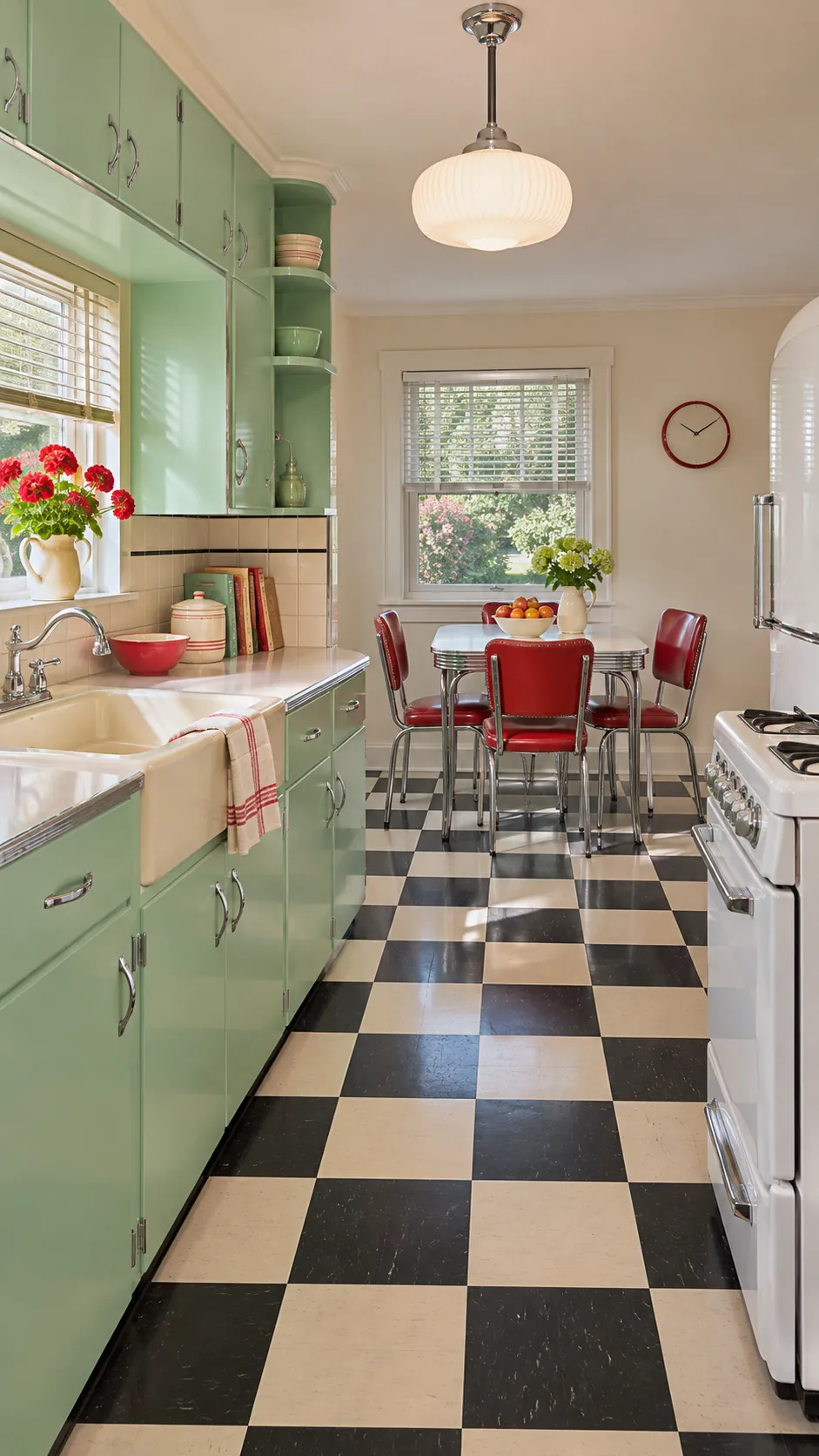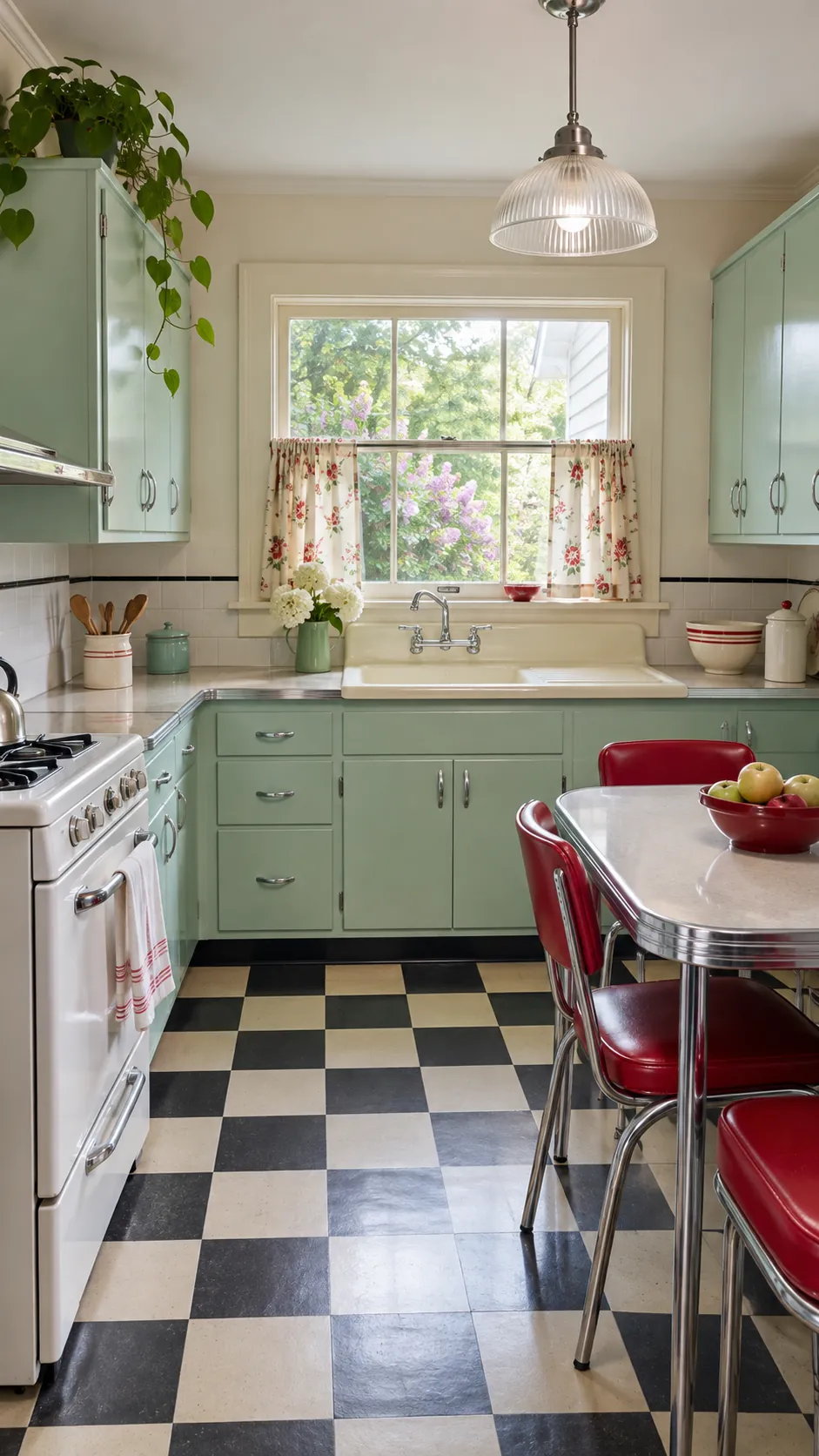
A vintage kitchen works best when the era appears through real materials and useful details, not a room full of novelty objects. Preserve sound metal cabinets, original hardware, or a good porcelain sink first. Then improve safety, storage, lighting, and cleaning without hiding the features that give the room its identity.
Choose an authentic anchor
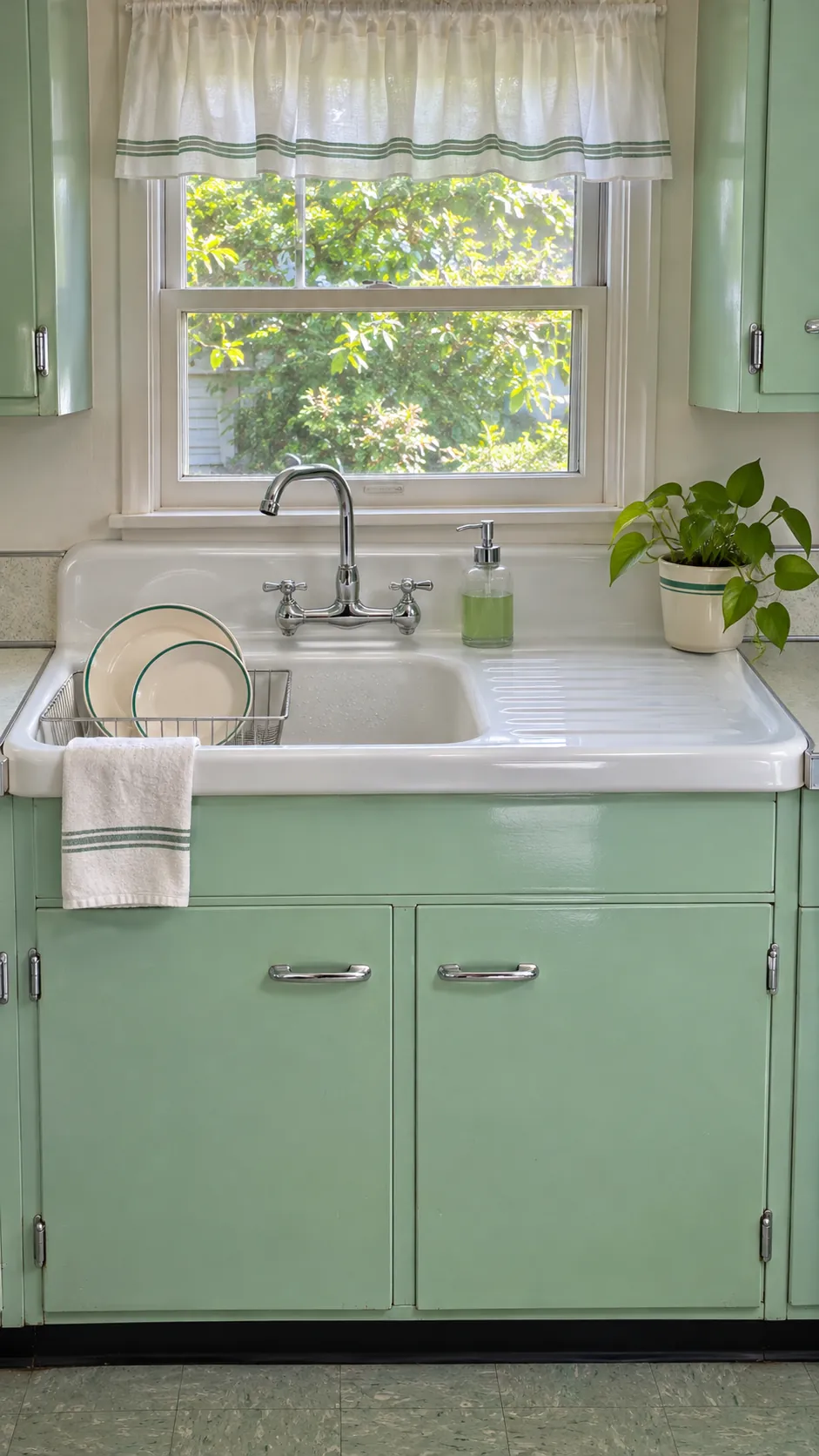
Start with one strong survivor such as steel cabinets, a drainboard sink, or a chrome edged table. Repair that element before buying decorative accessories. A clear anchor makes later color and material choices easier.
Use color with restraint
Mint, butter cream, soft pink, turquoise, and cherry red all belong to the period, but one main accent is usually enough. Place color on a backsplash, cabinet run, or dining chairs and let cream, white, chrome, and wood provide rest. Test samples under daylight and evening bulbs so pale colors do not become muddy.
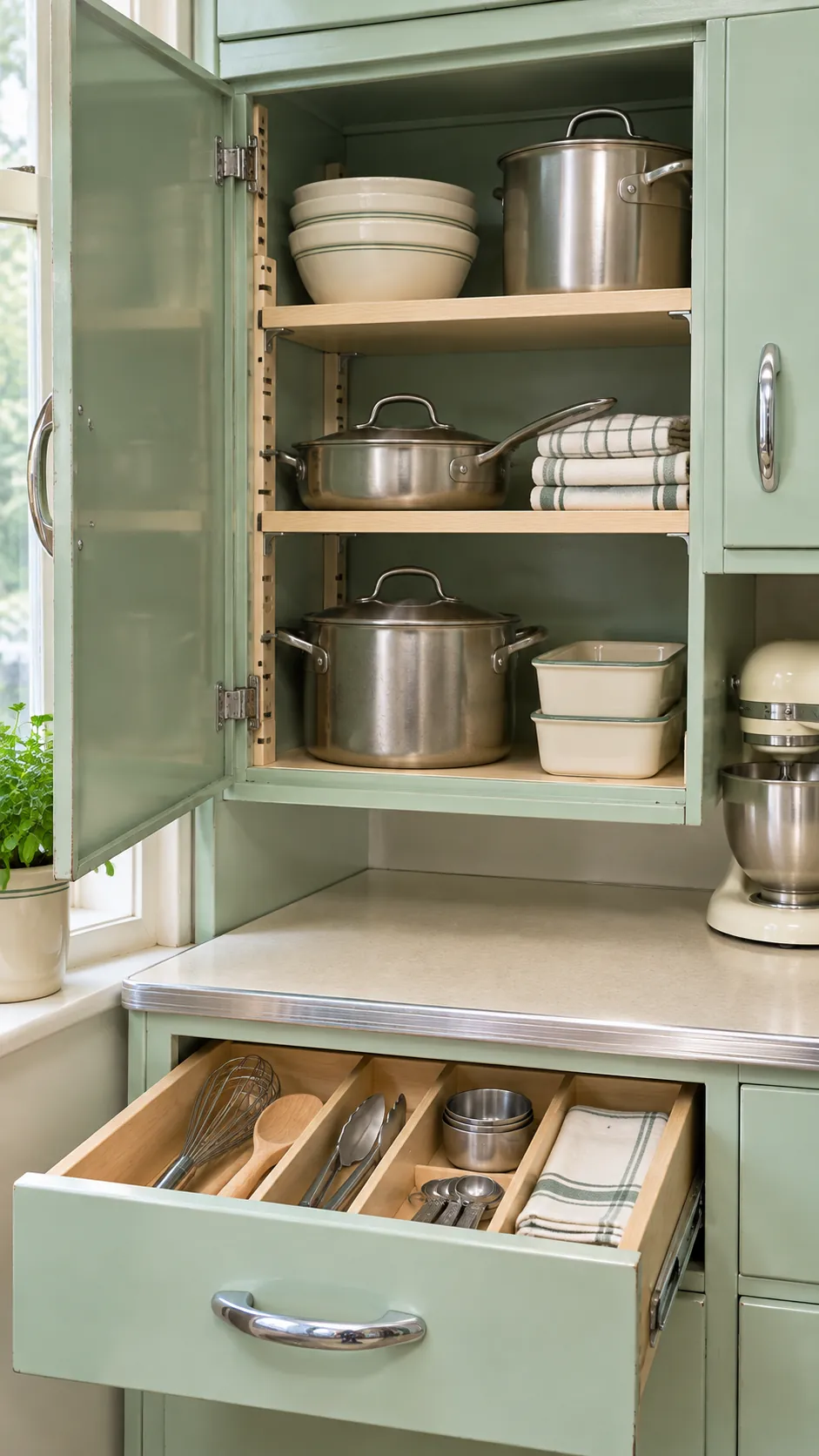
Restore cabinets for modern storage
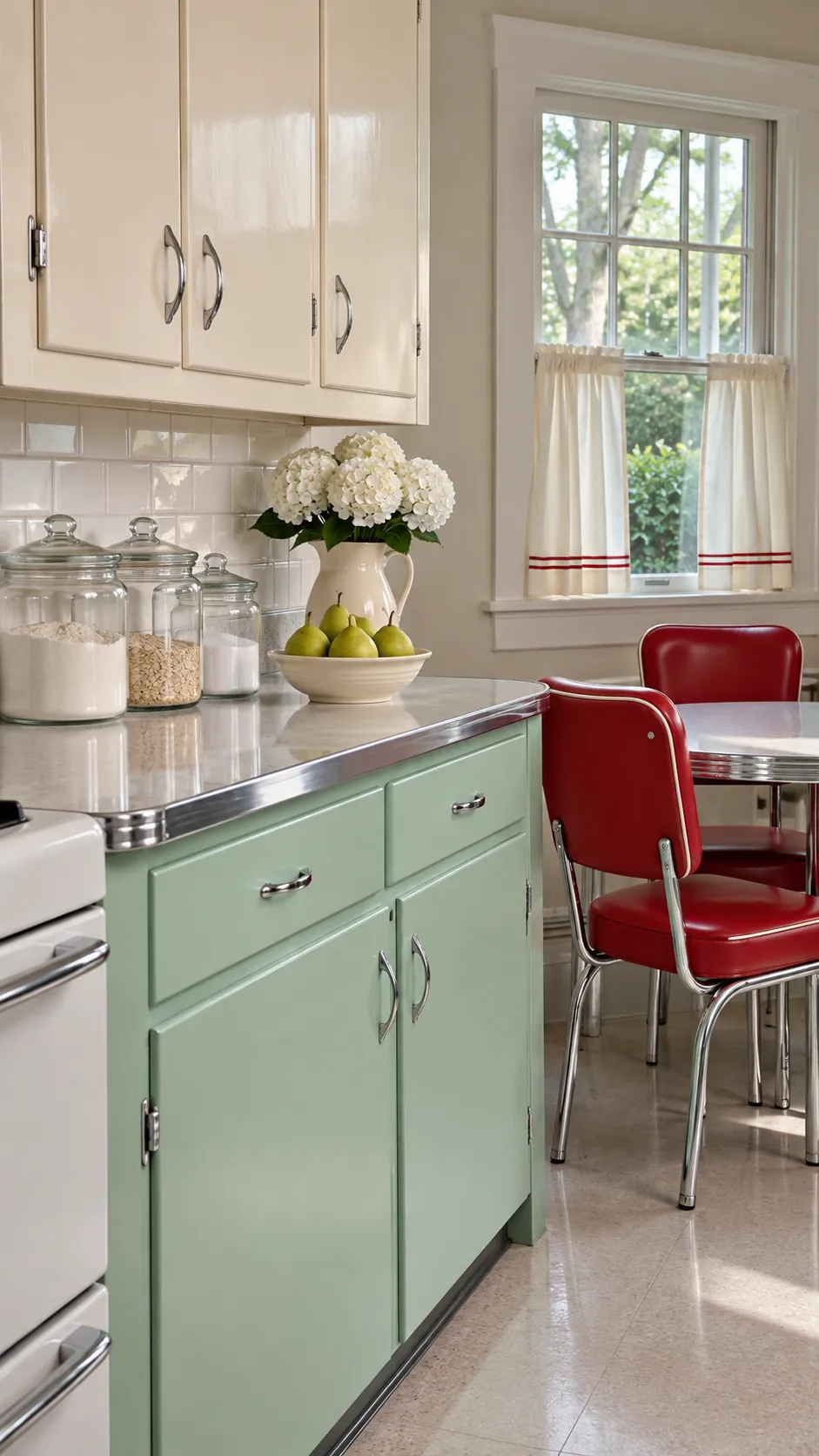
Sound steel cabinets can be cleaned, repaired, and professionally refinished. Add drawer organizers and shelf inserts without drilling unnecessary holes through original doors. Keep magnetic catches, hinges, and pulls only when they operate safely and reliably.
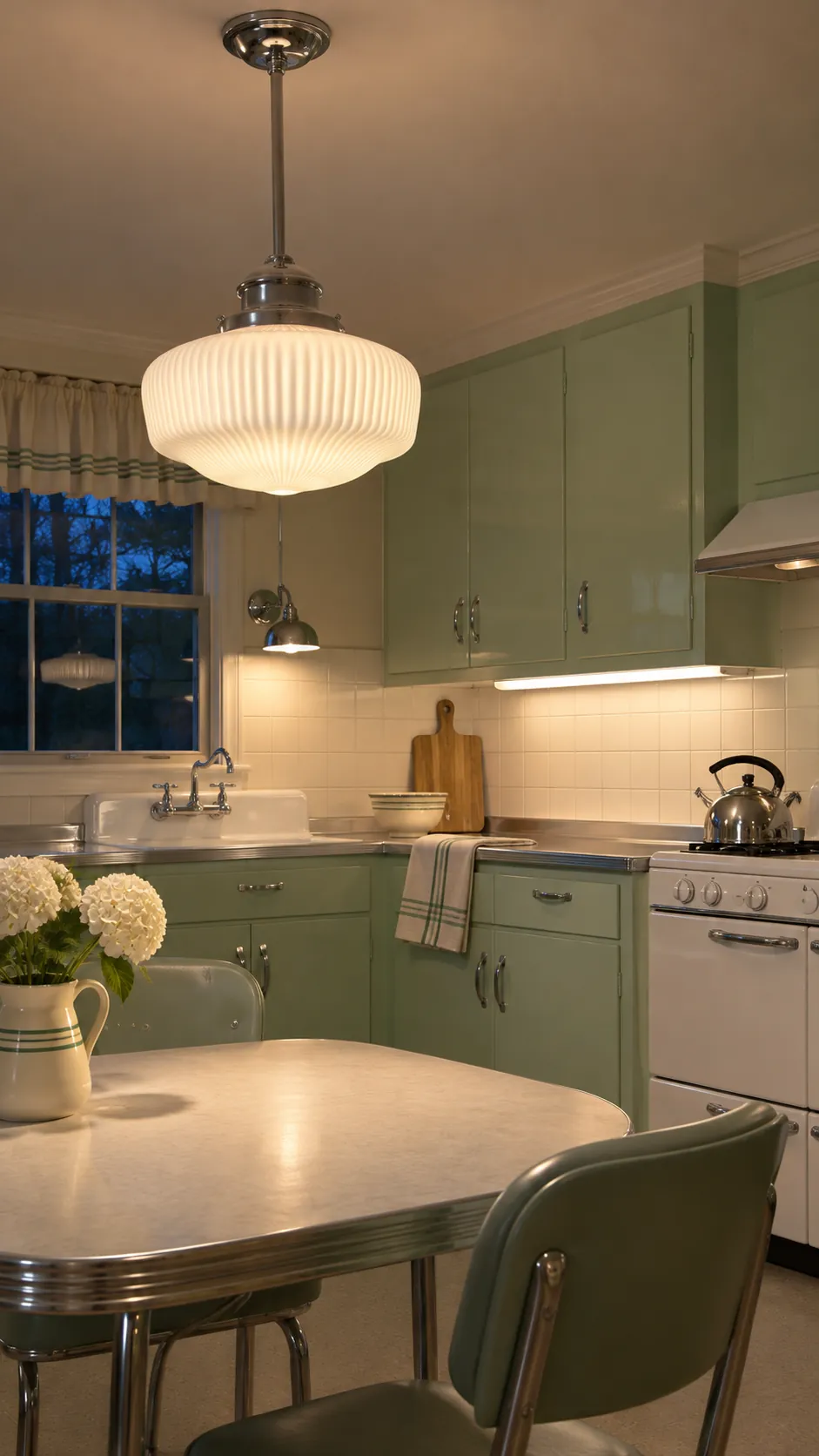
Layer practical lighting
Use a simple schoolhouse or globe fixture for character, then add concealed counter lighting for food preparation. Accurate warm neutral bulbs keep mint and cream finishes clear without turning them yellow. Separate controls allow bright work light and a softer dining mood.
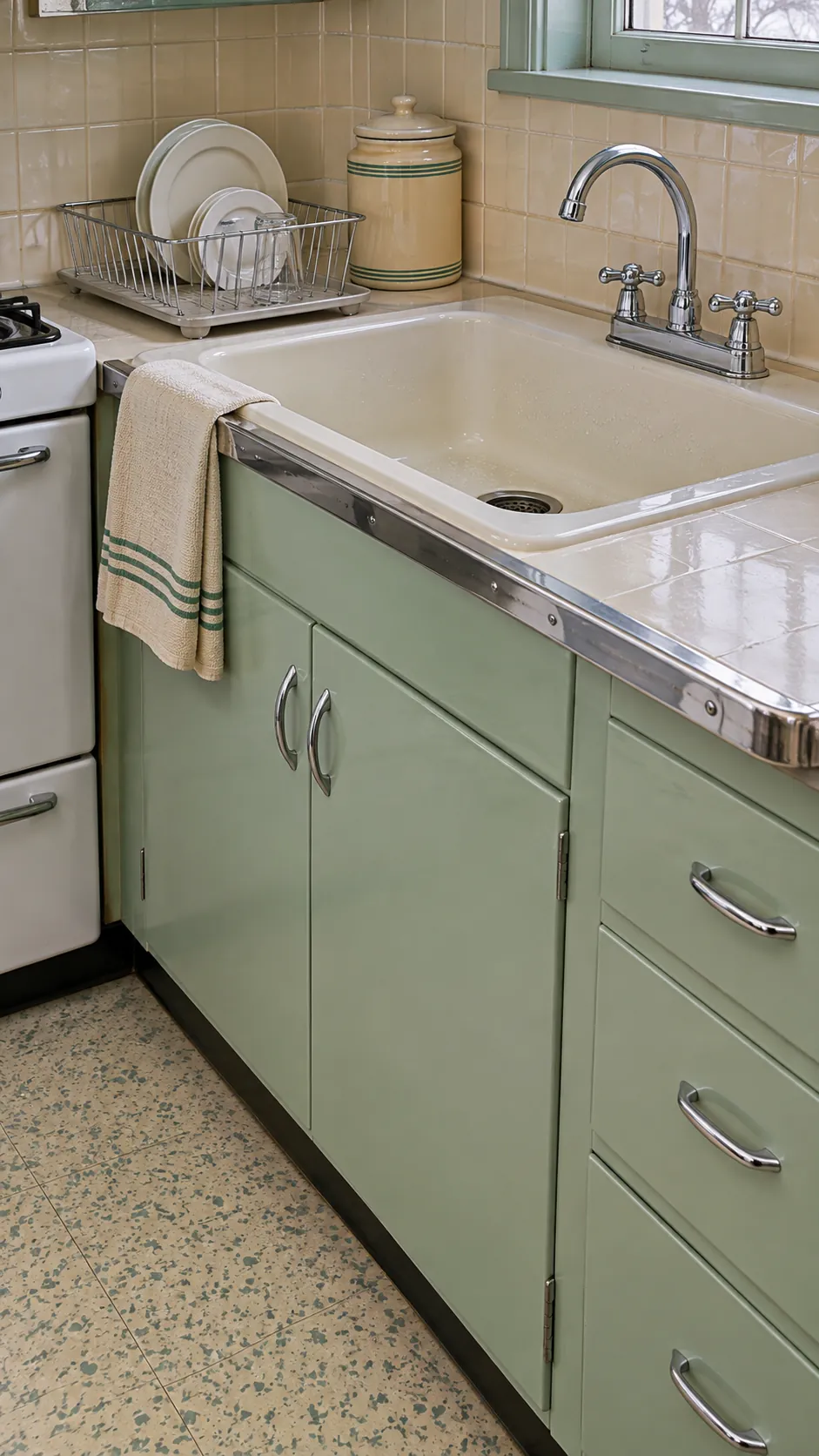
Mix old forms with durable surfaces
Porcelain, stainless steel, linoleum, ceramic tile, and sealed wood can provide period character while supporting daily use. Place water resistant materials near the sink and heat tolerant surfaces beside the range. Avoid fake aging because honest wear looks more convincing and is easier to maintain.
Finish with useful period details
A chrome edged table, ribbed glass light, wall clock, or small ceramic can complete the room. Choose pieces that serve a purpose and leave counters open for cooking. The final space should feel collected over time, not assembled from matching themed products.
Keep modern appliances visually quiet and place them where doors and handles have full clearance. Store seldom used display pieces away from grease and steam. A restrained room lets genuine vintage features remain the focus.