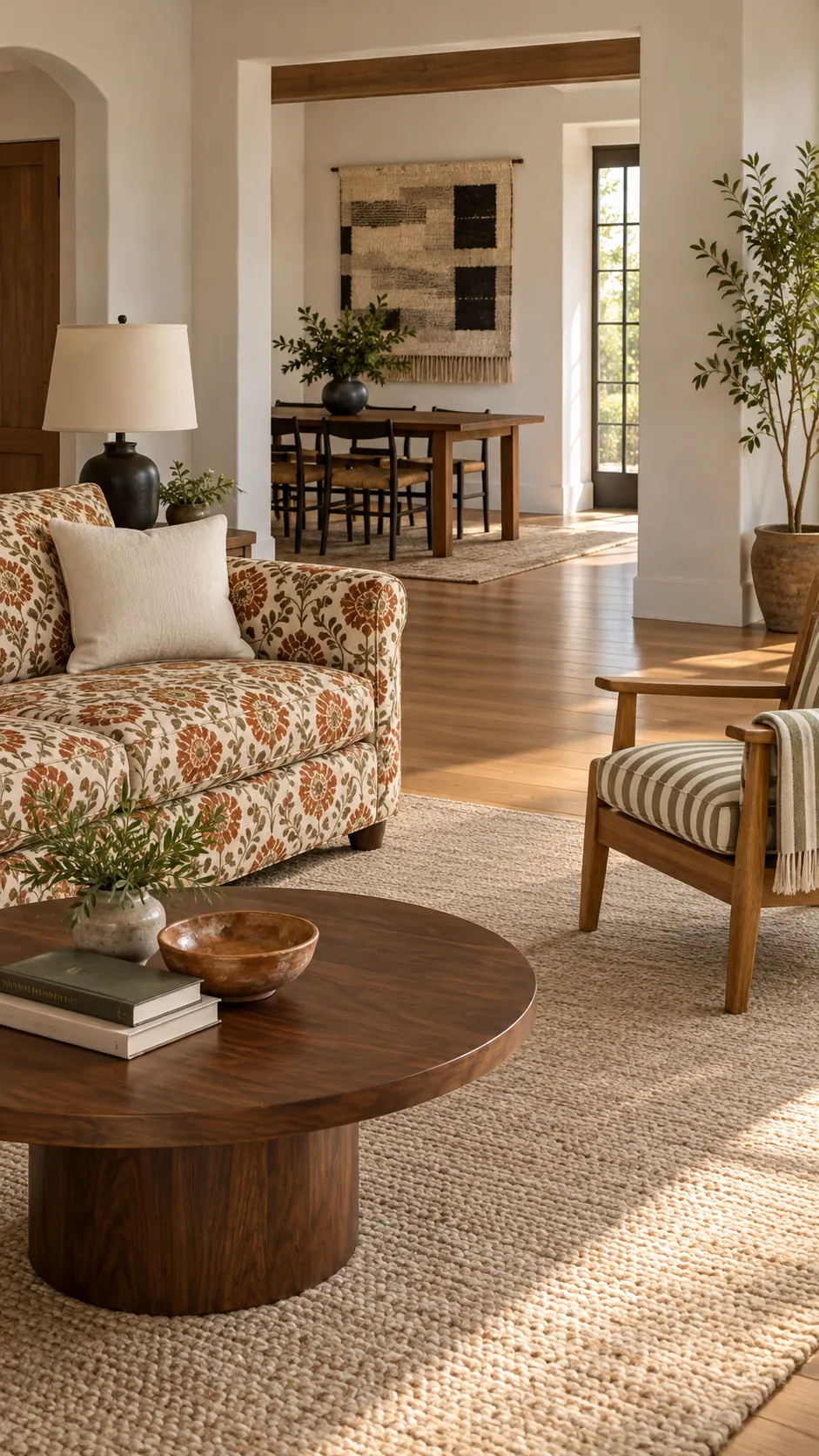
A patterned sofa already sets a strong rhythm, so an added stripe needs a different job rather than an equal claim on attention. The safest combinations share at least one color, vary their scale, and leave solid surfaces between them. Use the sofa as the fixed reference, then test one striped element at a time from the main doorway and the seat you use most.
Choose a Stripe in the Sofa Background Color
Start with the quietest color in the upholstery pattern, not its brightest accent. A cream and taupe stripe can sit comfortably near a floral sofa when cream already surrounds the flowers. This shared background lets the two patterns relate while their subjects remain clearly different.
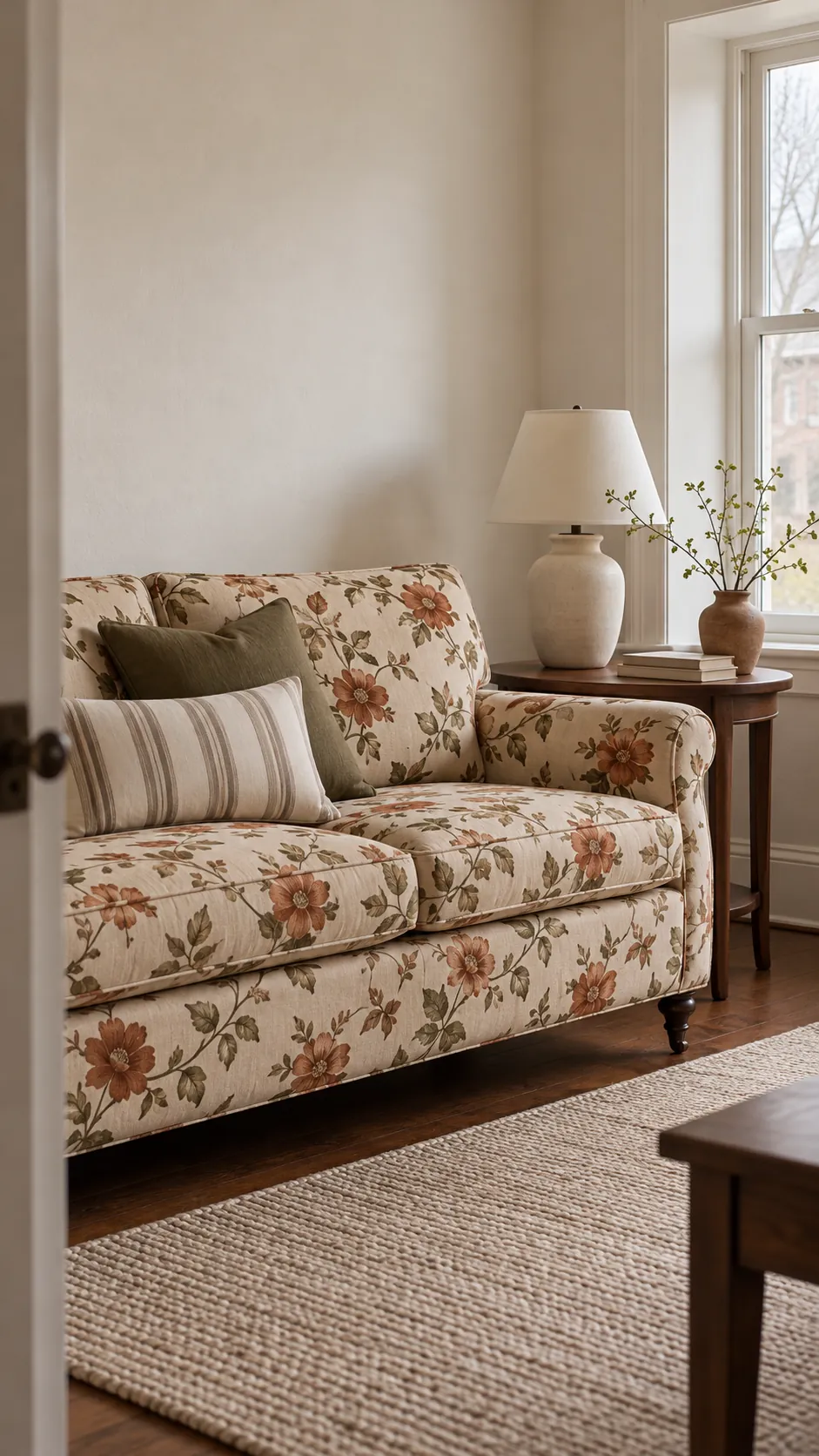
Pair a Wide Stripe With a Small Sofa Pattern
Pattern scale in decor matters more than whether both textiles are bold. Broad bands read as large simple blocks beside a sofa covered in tiny leaves or dots, so the eye can separate them quickly. Keep the striped piece compact, such as one lumbar cushion, and let the sofa carry most of the detail.
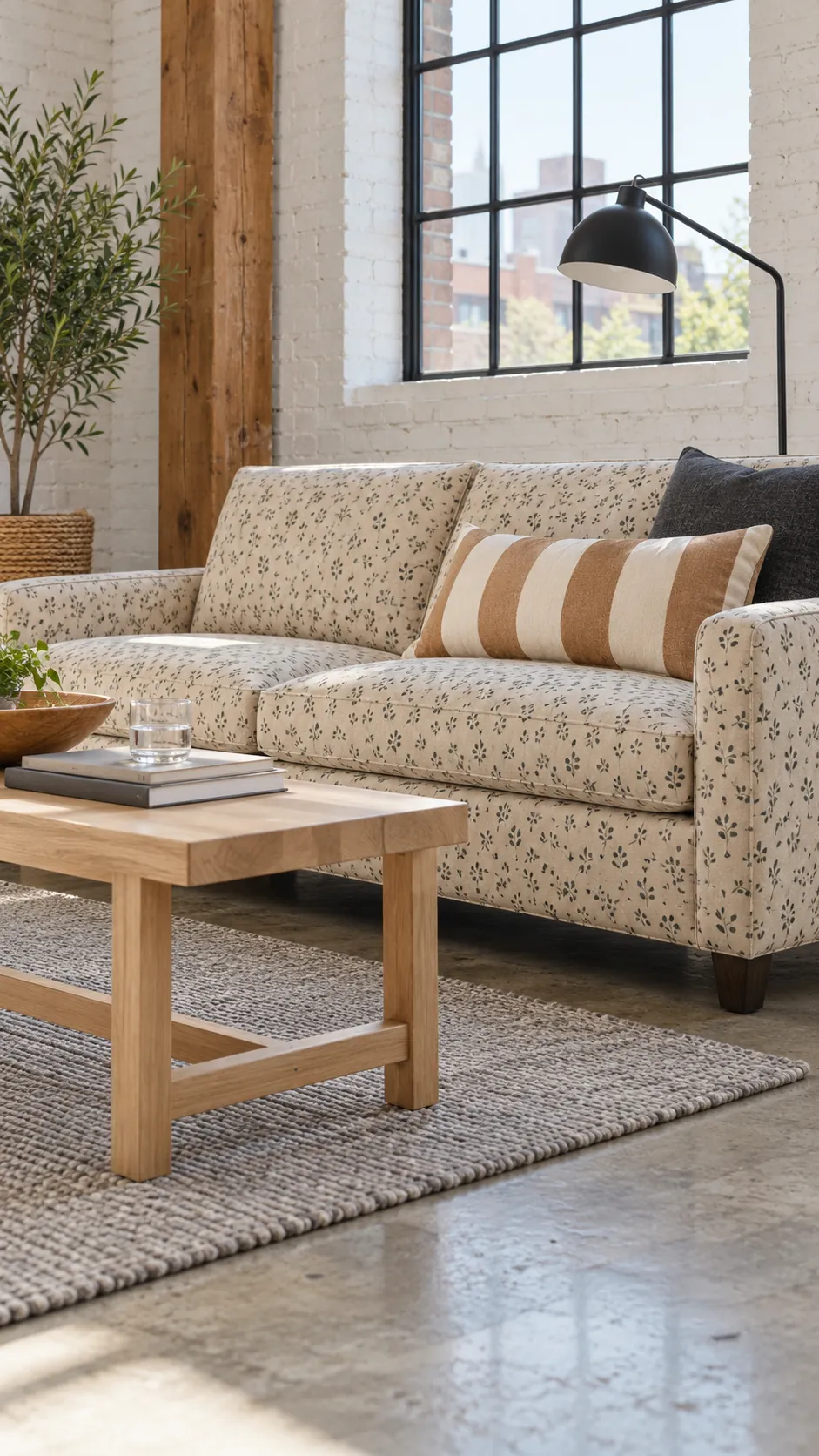
Use a Narrow Stripe Beside an Oversized Motif
An oversized botanical or geometric sofa can handle a fine ticking stripe because the scales do not compete. Choose two colors already present in the large motif and avoid adding a third strong hue. The fine line acts almost like texture when viewed from across the room.
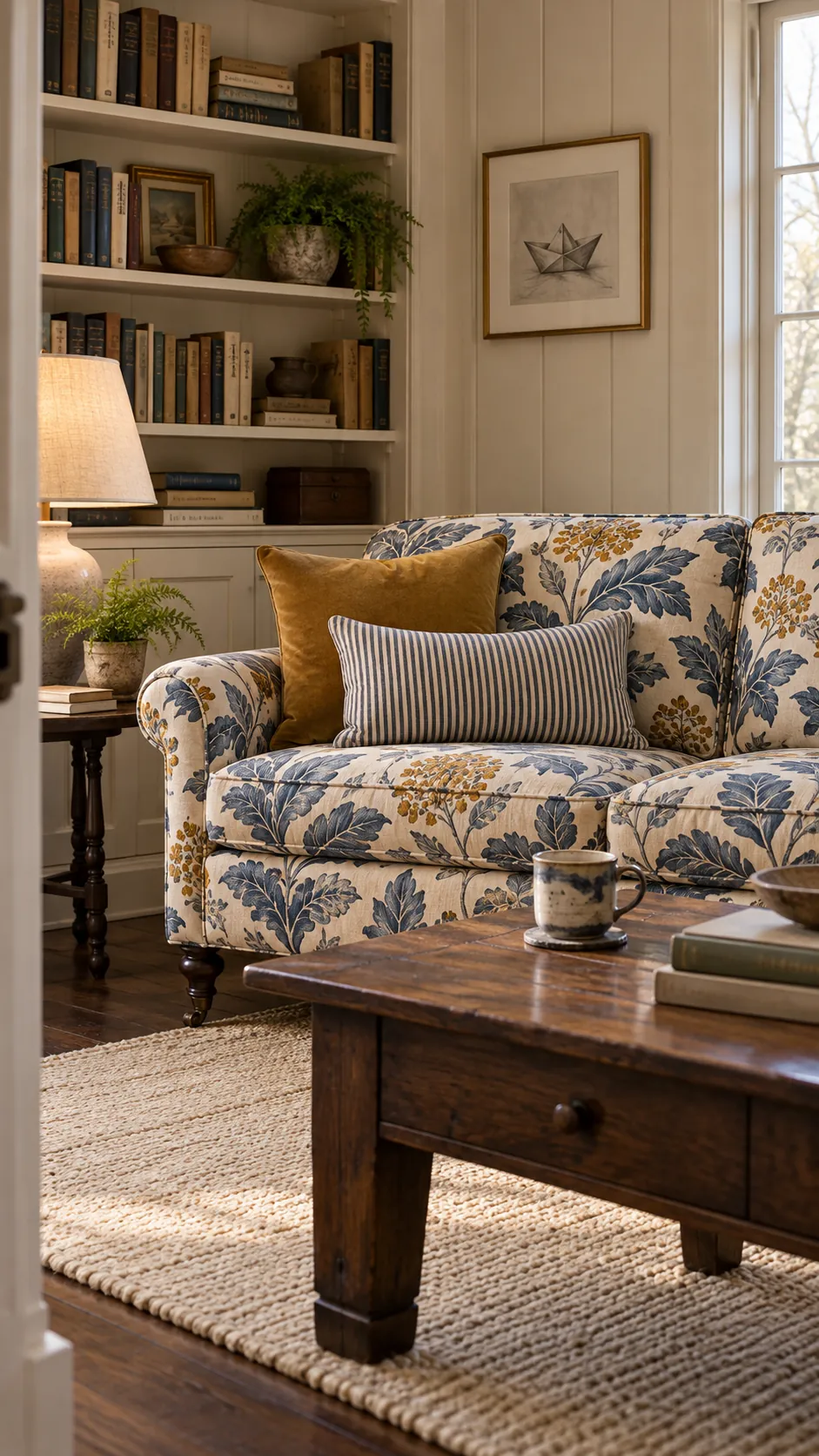
Place Stripes Away From the Sofa
Striped curtains can work with a patterned sofa when neutral wall and floor space separates them. Repeat one sofa color in the curtain stripe, then keep the bands soft and lower in contrast than the upholstery. The distance creates a visual pause and lets each pattern define its own zone.
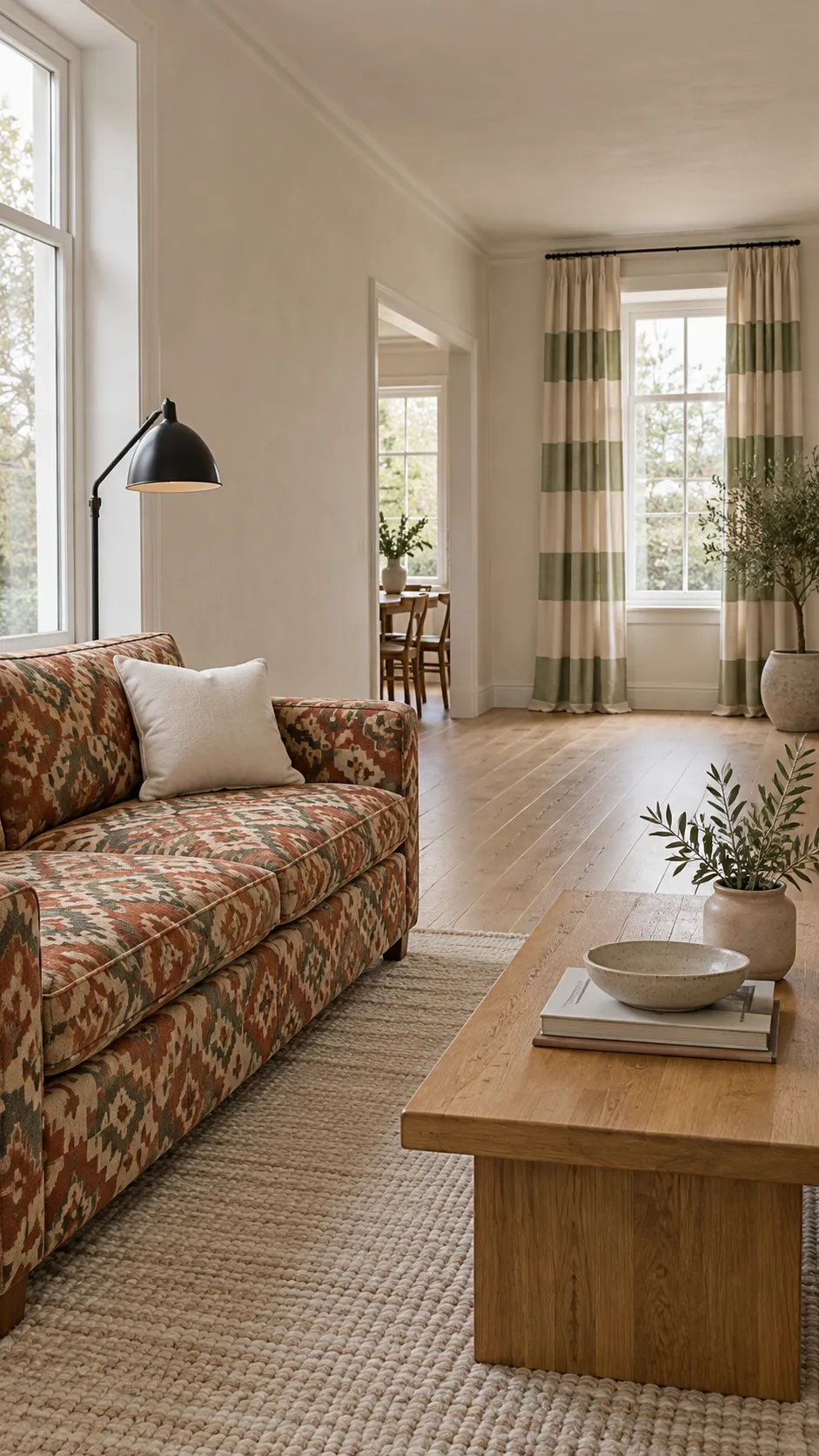
Let a Solid Pillow Create a Buffer
A solid cushion between striped throw pillows and patterned upholstery gives both designs a clean edge. Pull the solid color from the sofa and choose a fabric with visible texture, such as linen or velvet, so it does not feel empty. This buffer is especially useful when the stripe and sofa motif have similar visual weight.
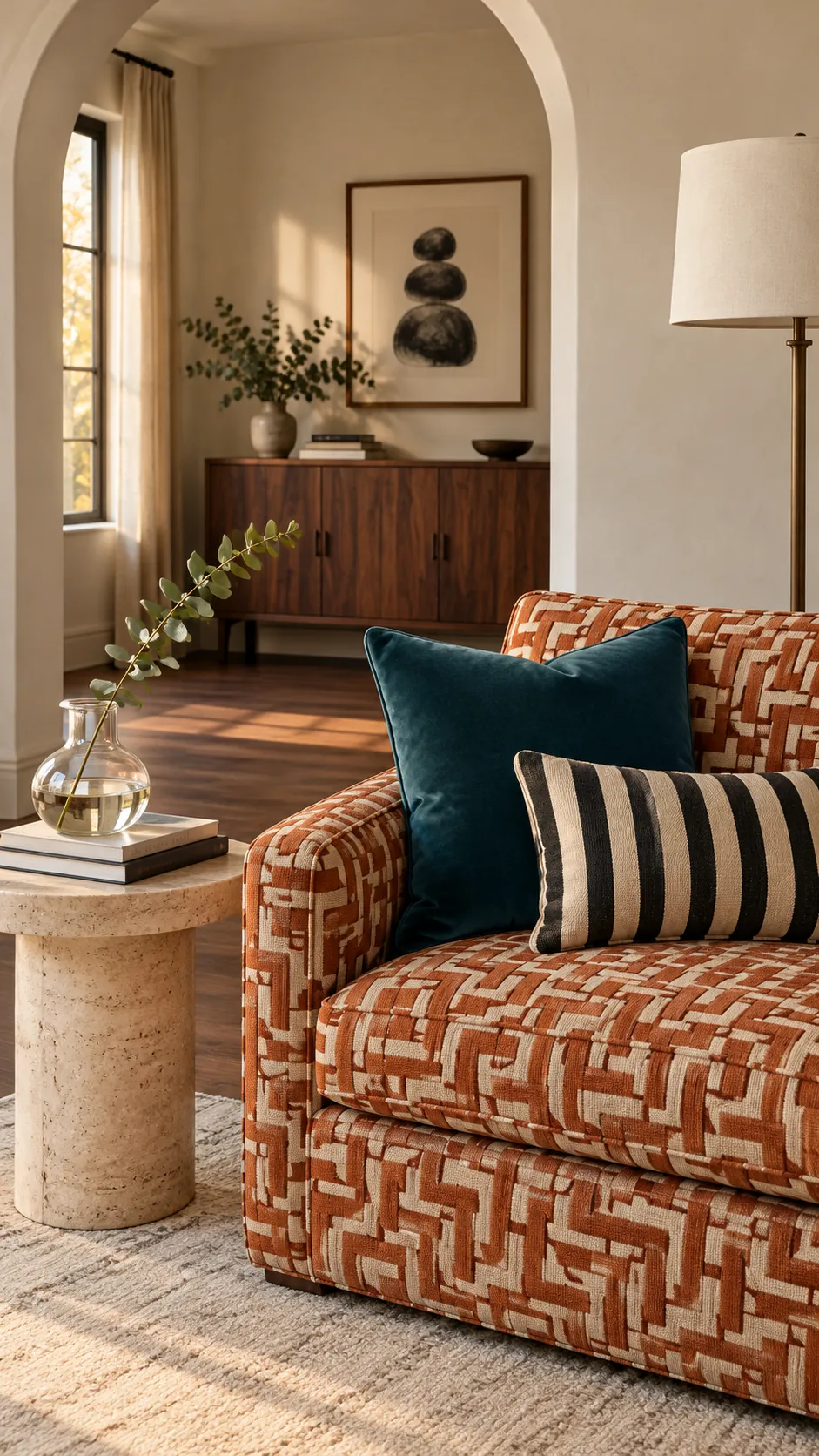
Turn the Stripe in a Different Direction
Direction can distinguish mixed pattern accessories even when their colors are close. A vertical striped lumbar cushion feels orderly beside a sofa motif that spreads diagonally or curves across the fabric. Keep the cushion shape long and simple so the directional contrast remains obvious.
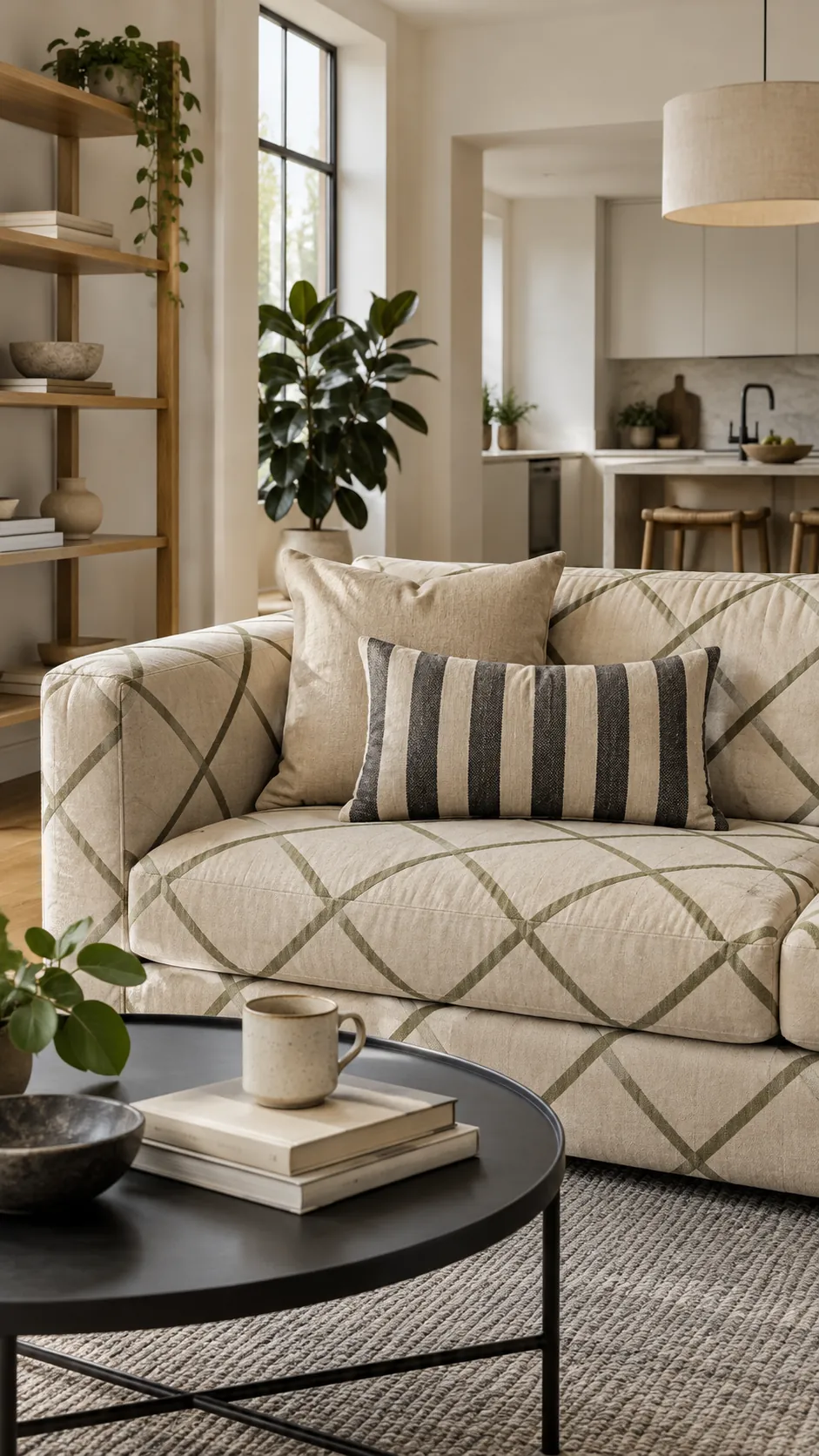
Repeat the Stripe in One Small Detail
A single striped cushion can look isolated if no line or color appears elsewhere in the room. Repeat it once with a narrow band on a lampshade, a book spine, or a small tray, rather than adding another large striped textile. The small echo makes striped home decor feel intentional while the patterned sofa stays dominant.
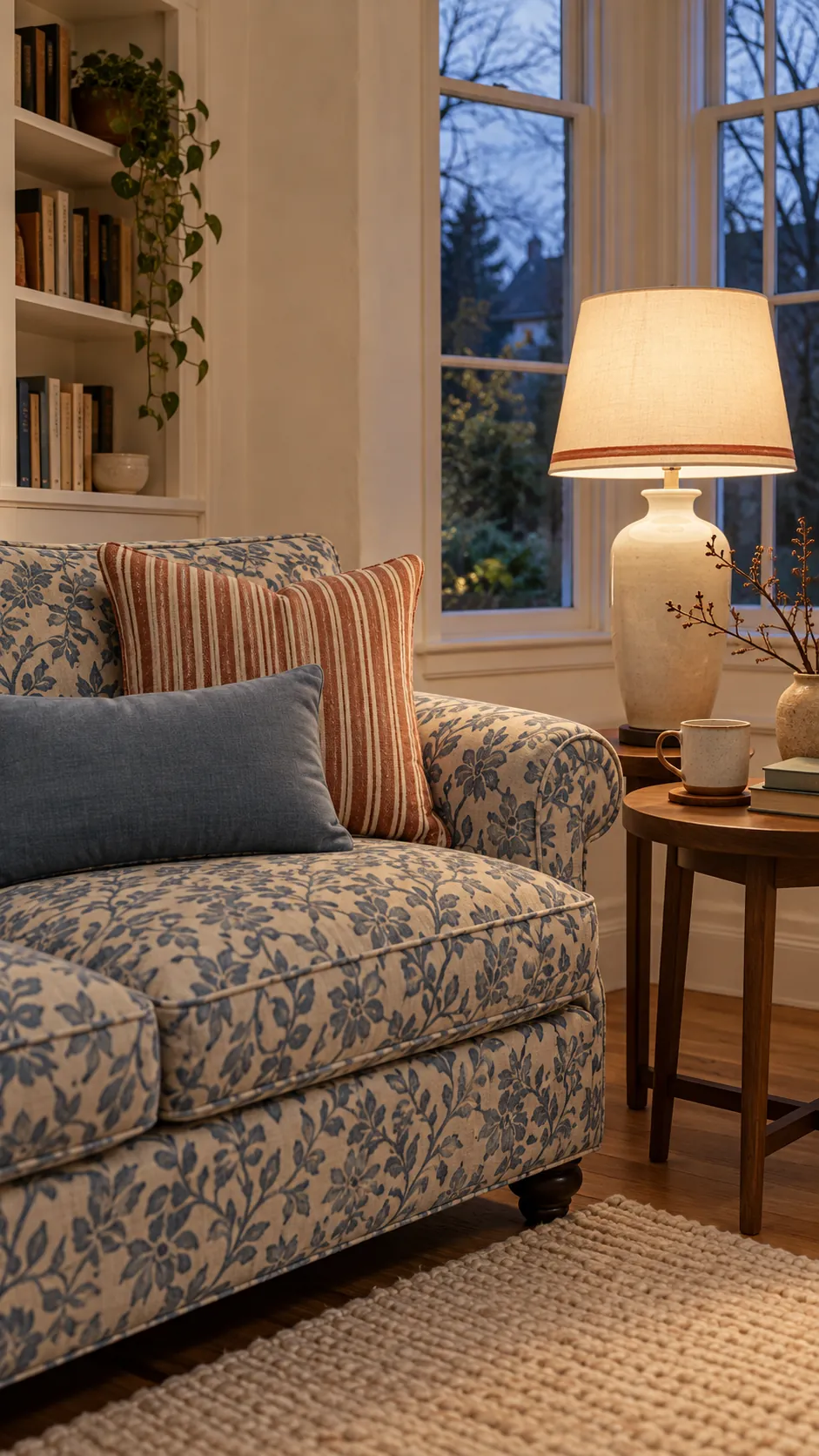
Limit the Room to One Stripe Family
Use one stripe family and stop before every accessory starts repeating it. A chair cushion and a small throw may share the same muted bands, but rugs, curtains, and additional pillows can remain solid. This restraint gives the room pattern balance and makes the final arrangement easier to edit over time.