
Natural materials still need a plan: loose bark can shed beside a plate, and a tall branch can block the person across from you. Choose one contained accent, then give the meal enough space to work. The most useful arrangements combine seasonal texture with clear sightlines and pieces you can move or reuse.
Layered Linen with Short Wheat
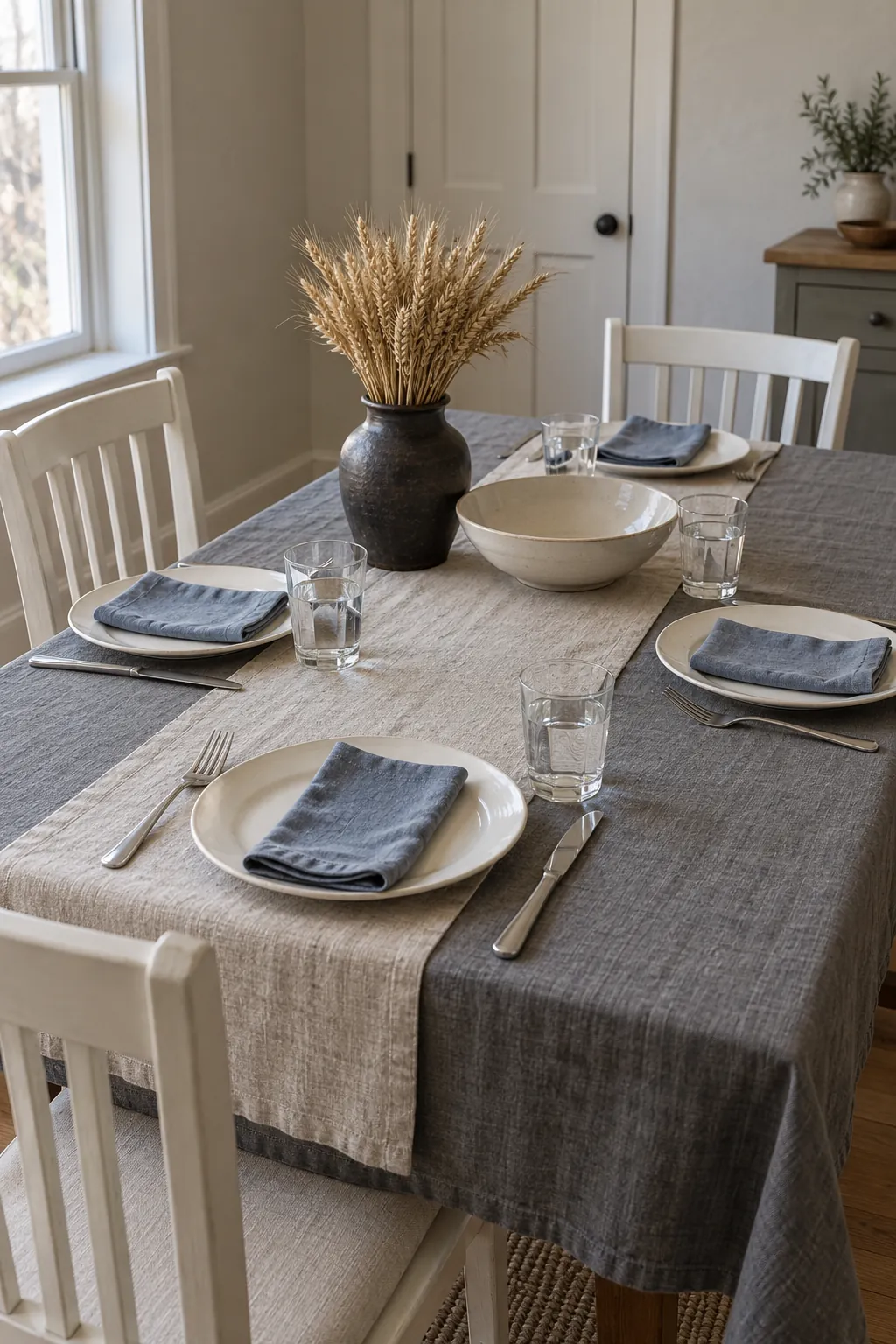
Linen supplies most of the texture, so a small wheat bundle is enough to finish the table. Fold a lighter runner over a darker cloth rather than piling several fabrics beneath plates. Use a weighted vase and trim the stalks below seated eye level. Keep the dry wheat well away from candles and hot dishes.
Wood Slice Chargers and Stoneware
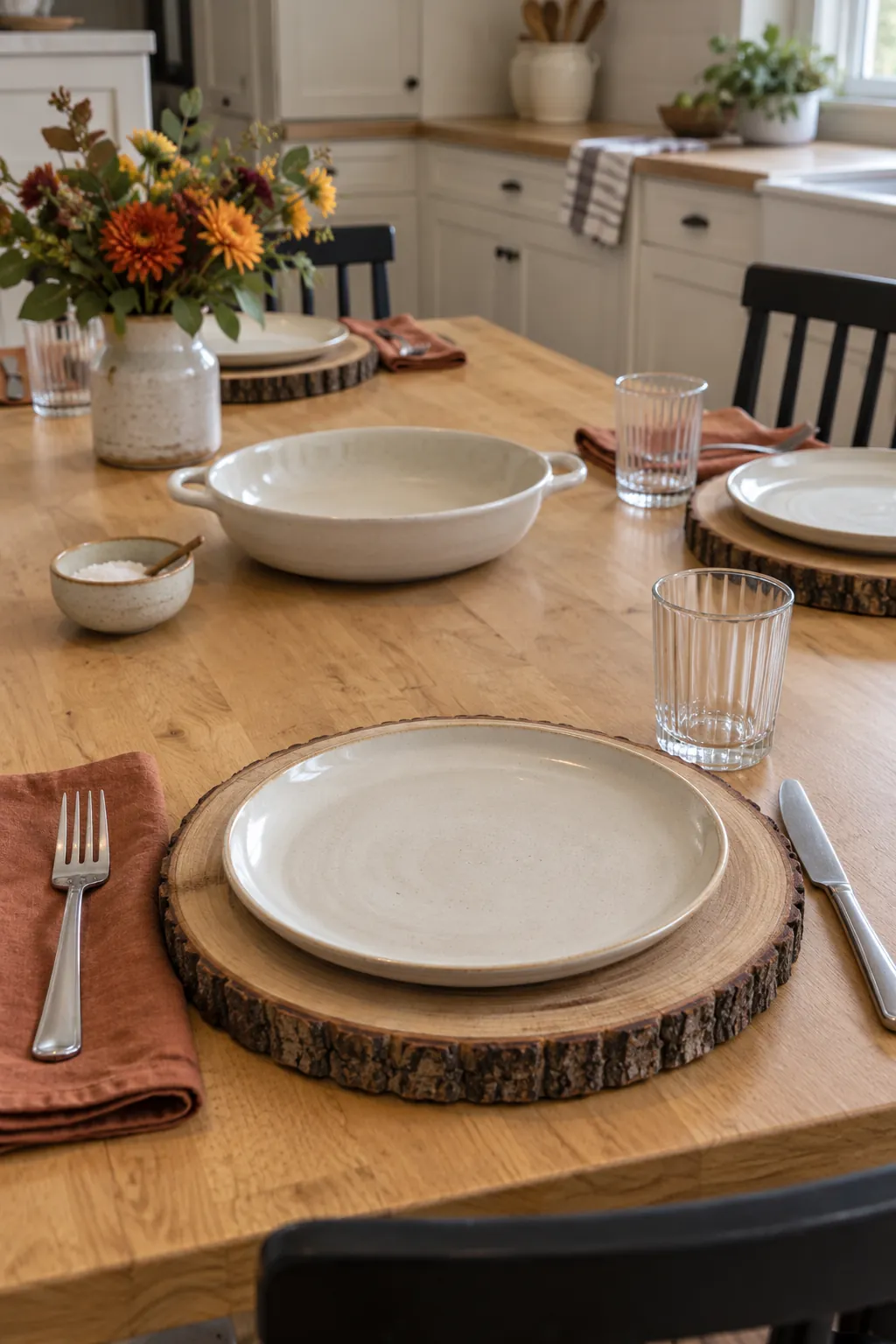
Wood slice chargers give neutral stoneware a distinct natural edge. Use smooth, clean, dry pieces that sit flat, with proper plates covering the surface where food goes. Check each slice for loose bark before bringing it to the table. Leave out chargers if their width takes space needed by glasses or neighboring guests.
Eucalyptus and White Pumpkins
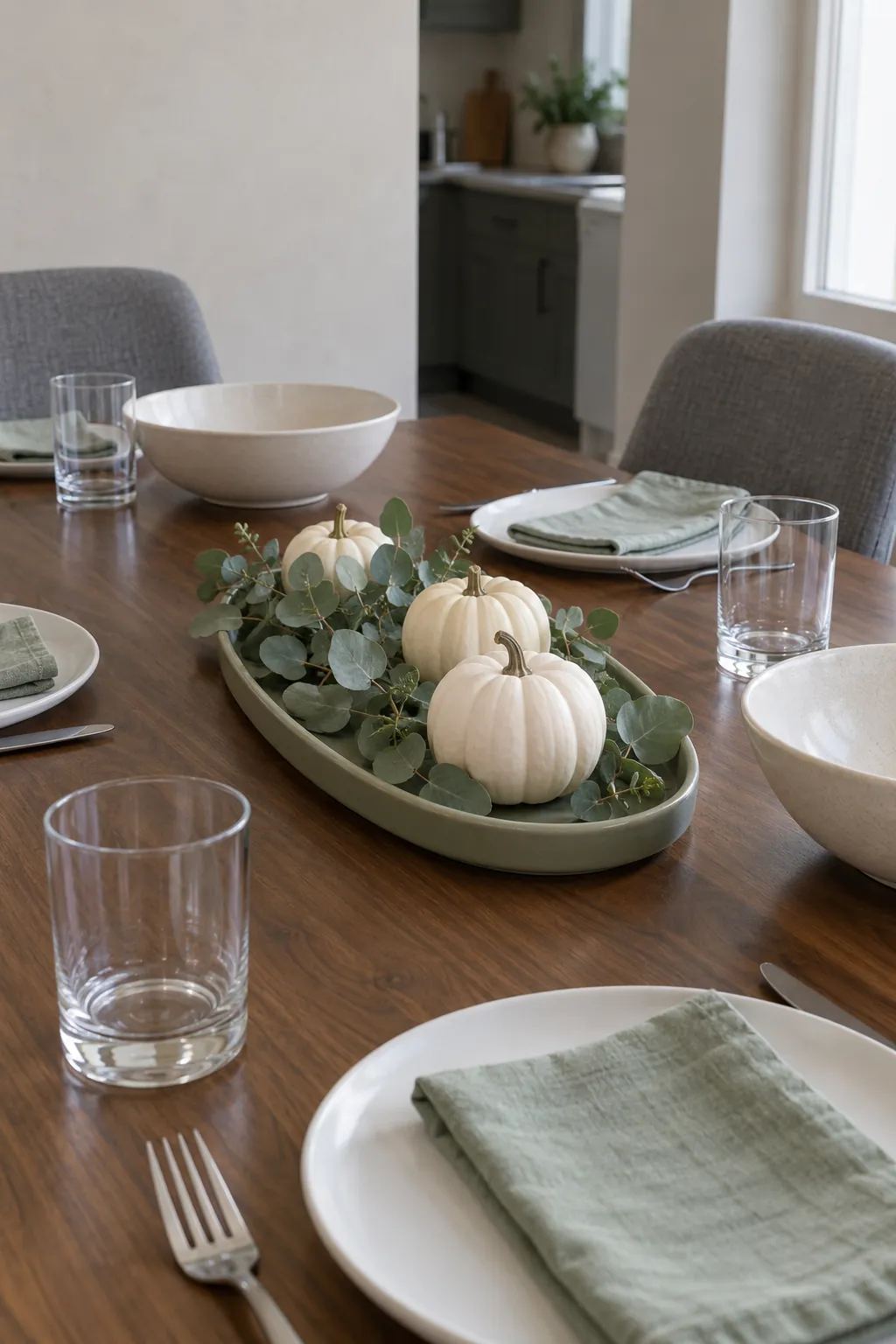
A short stretch of eucalyptus can connect a few small white pumpkins without becoming a dense garland. Keep the stems on a tray or runner where they will not brush against food. Choose a different greenery or a washable alternative if the scent bothers your guests. Leave breaks between the pumpkins for serving bowls.
Amber Vases with Battery Tapers
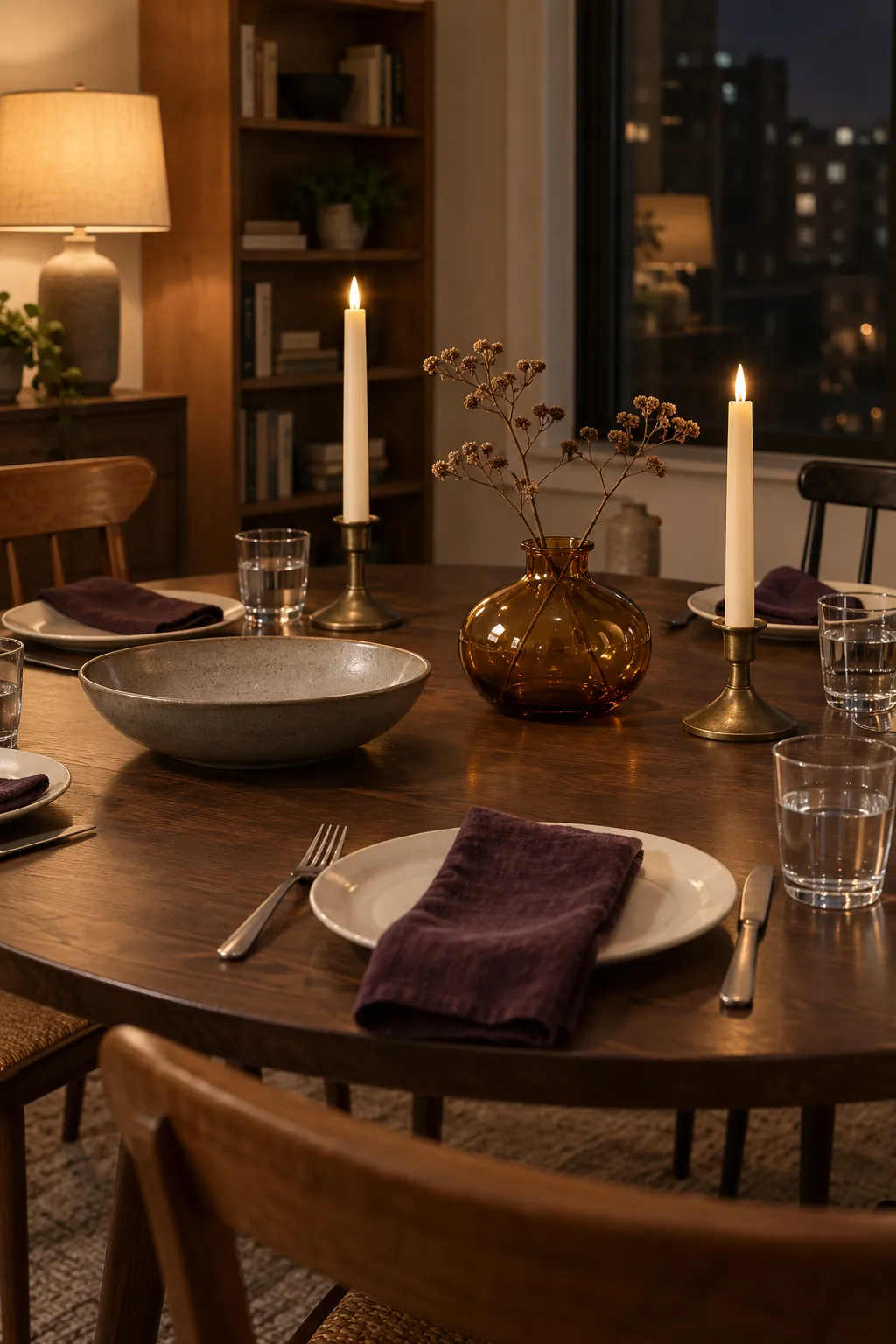
Amber glass gives a moody Thanksgiving tablescape color even before the lights come on. Put a few short stems in one vase and pair it with stable battery tapers. Avoid clustering real flames beside dried flowers or branches. Keep the room bright enough for guests to see their meal comfortably.
Woven Mats with Clay Napkins
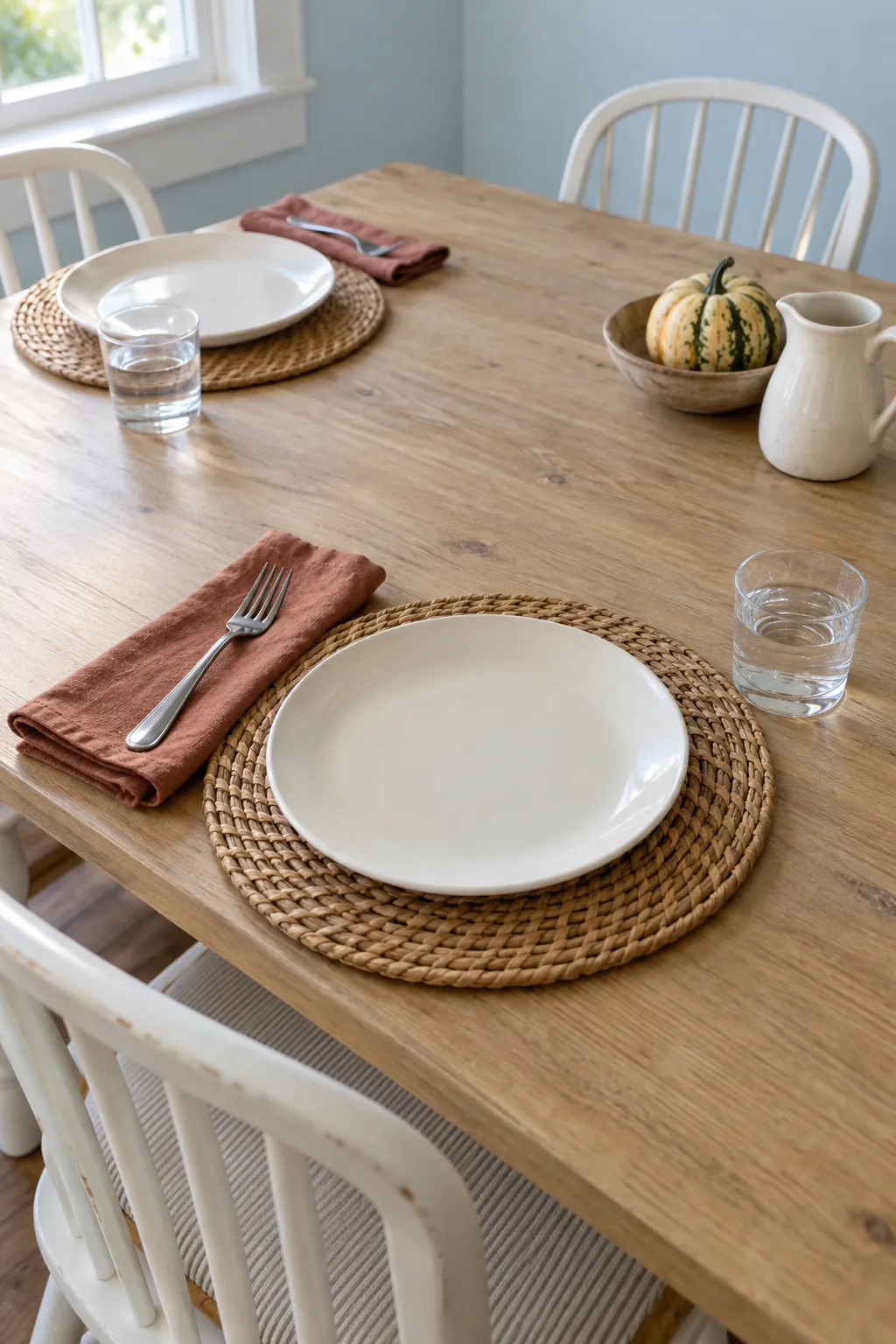
Rattan mats and clay colored napkins make simple fall tablescapes feel layered. Choose mats that stay flat beneath your plates instead of rocking at the edges. Shake out loose fibers and check the care instructions before setting the table. Plain dinnerware keeps the fabric color and weave easy to see.
A Foraged Branch on a Liftable Tray
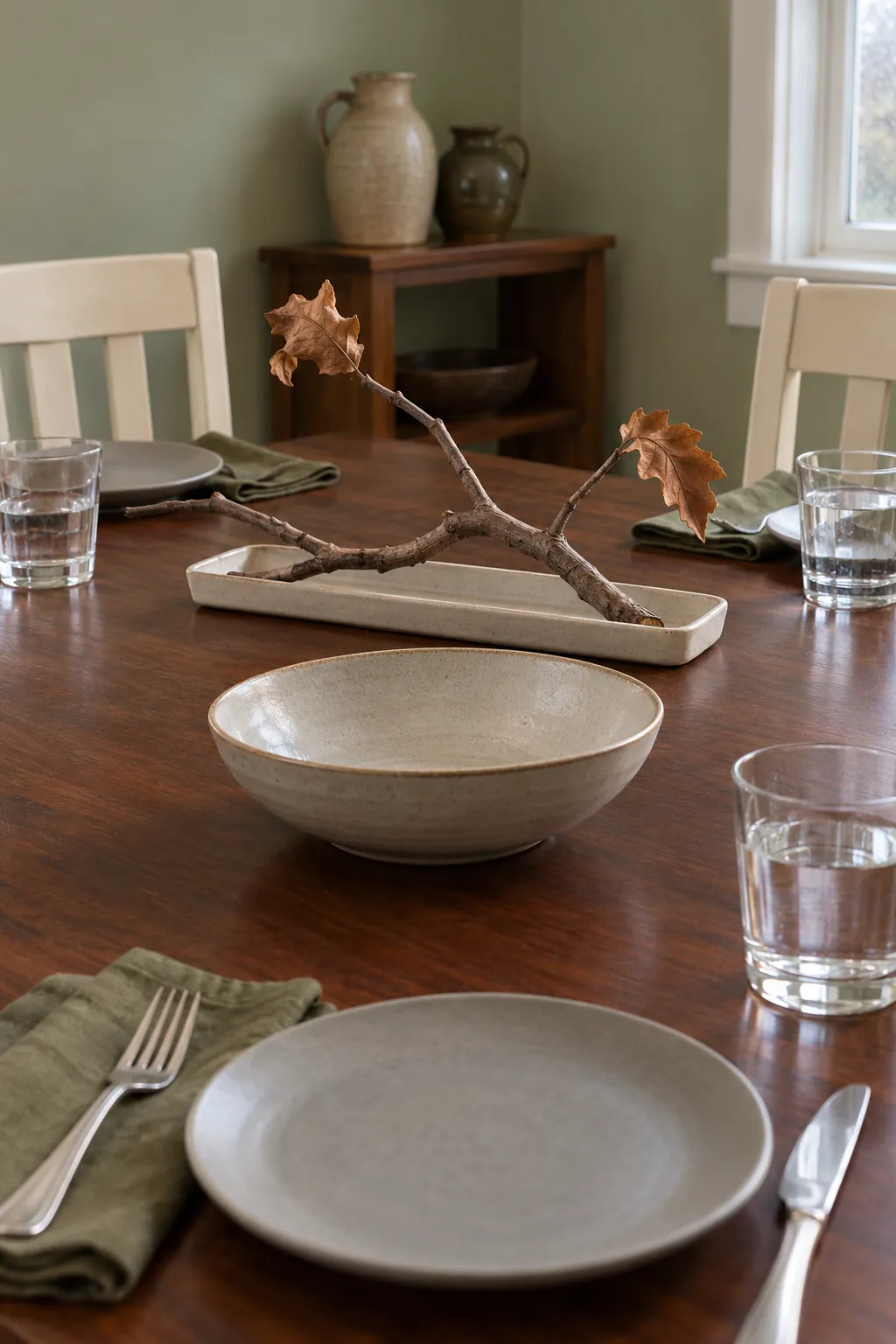
A clean fallen branch can become a sculptural accent when it stays inside a shallow tray. Inspect it for insects, loose bark, and sharp ends before bringing it indoors. Keep the tray away from dishes and use only material you can identify and handle safely. Lift it away when the main serving platters need the center.
Whole Fruit on a Clean Breadboard
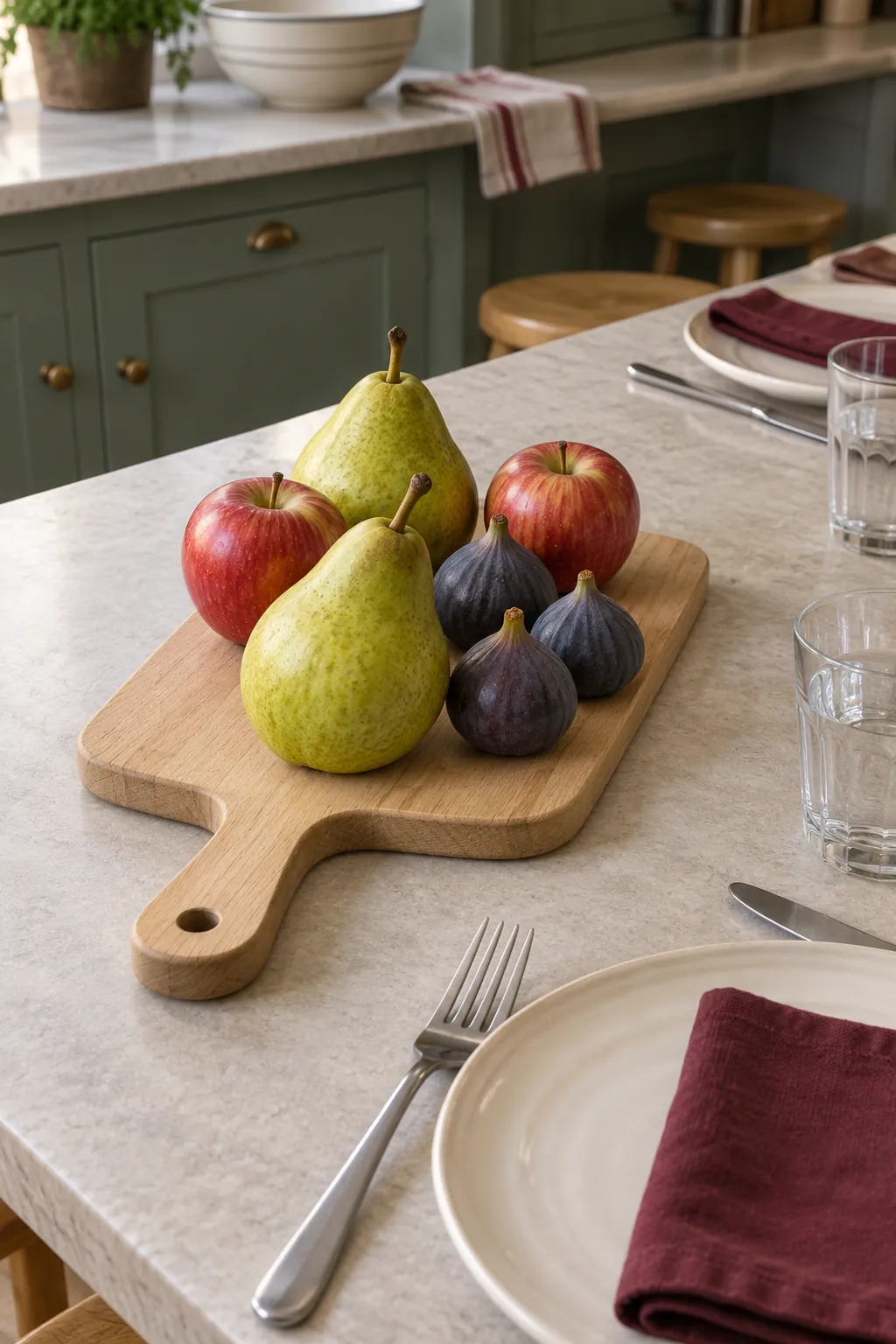
A clean breadboard can hold whole pears, apples, and figs for an edible looking harvest display. Use a board suitable for food if guests will take fruit from it. Keep decorative foliage, glue, and painted objects separate from anything intended to eat. Choose only a few pieces so the board remains easy to carry away.
Succulents in Protected Terracotta Pots
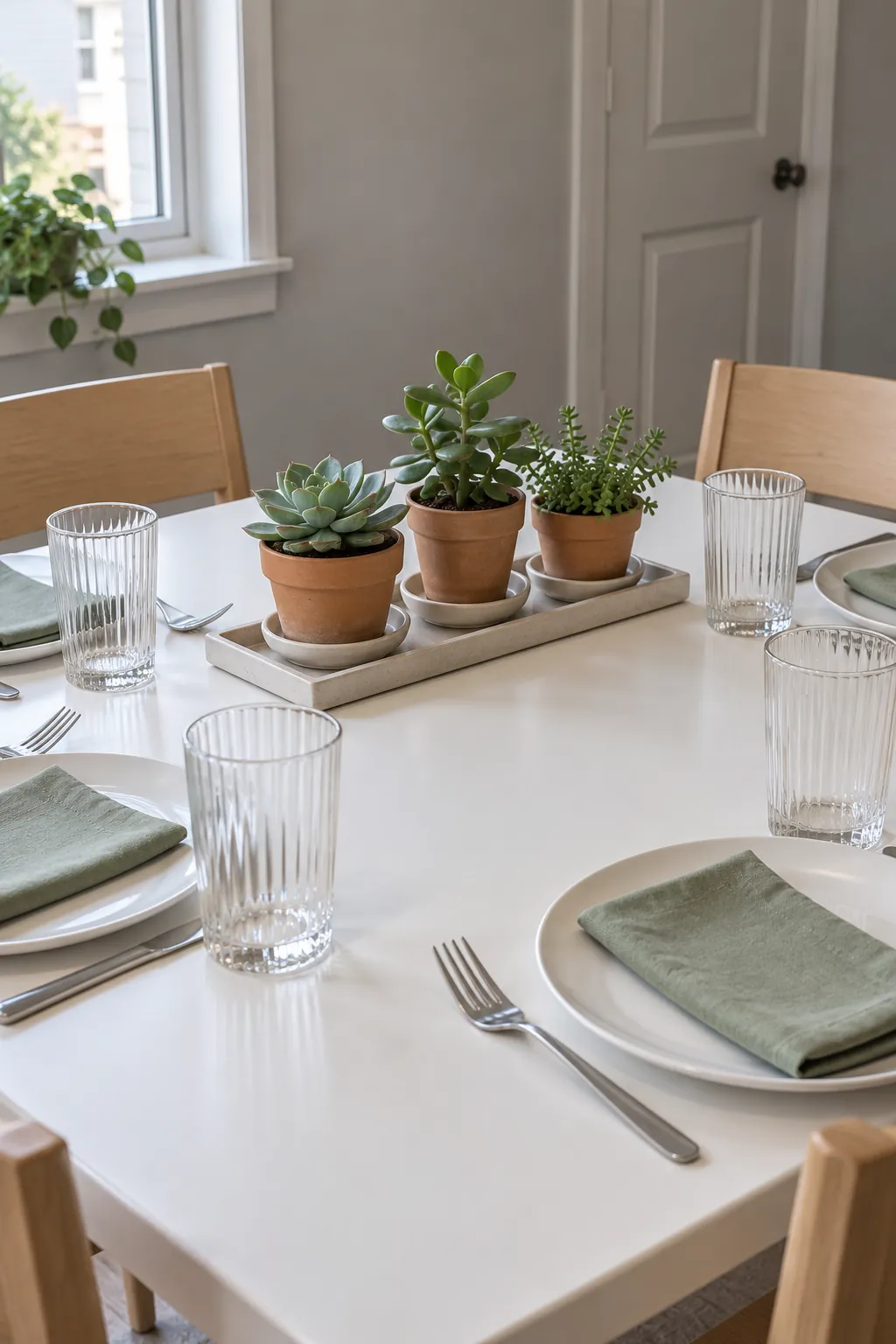
Small succulents bring living texture without a flower arrangement that needs frequent attention. Put each terracotta pot on a watertight saucer and wipe away soil from the outside. Group the plants in the center rather than placing dirt beside every dinner plate. Keep them out of reach of children or pets who may chew leaves.
Linen with Gold Colored Flatware
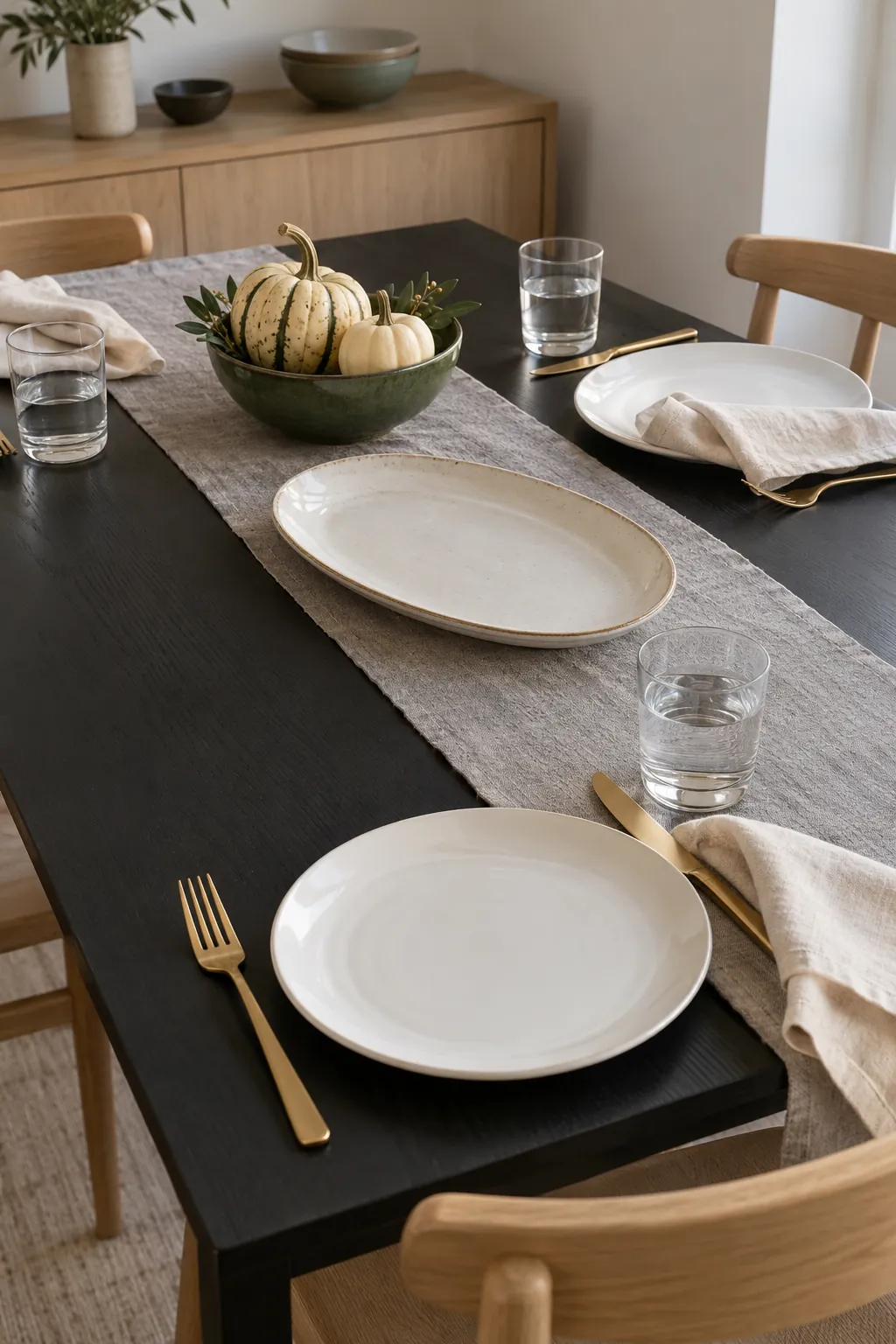
A linen runner can soften the small shine of gold colored flatware. Use cutlery intended for food service and follow its washing instructions. Keep the plates simple so the contrast between matte fabric and metal remains clear. This pairing suits modern Thanksgiving tablescapes without requiring many extra decorations.
Walnuts in a Shallow Ceramic Dish
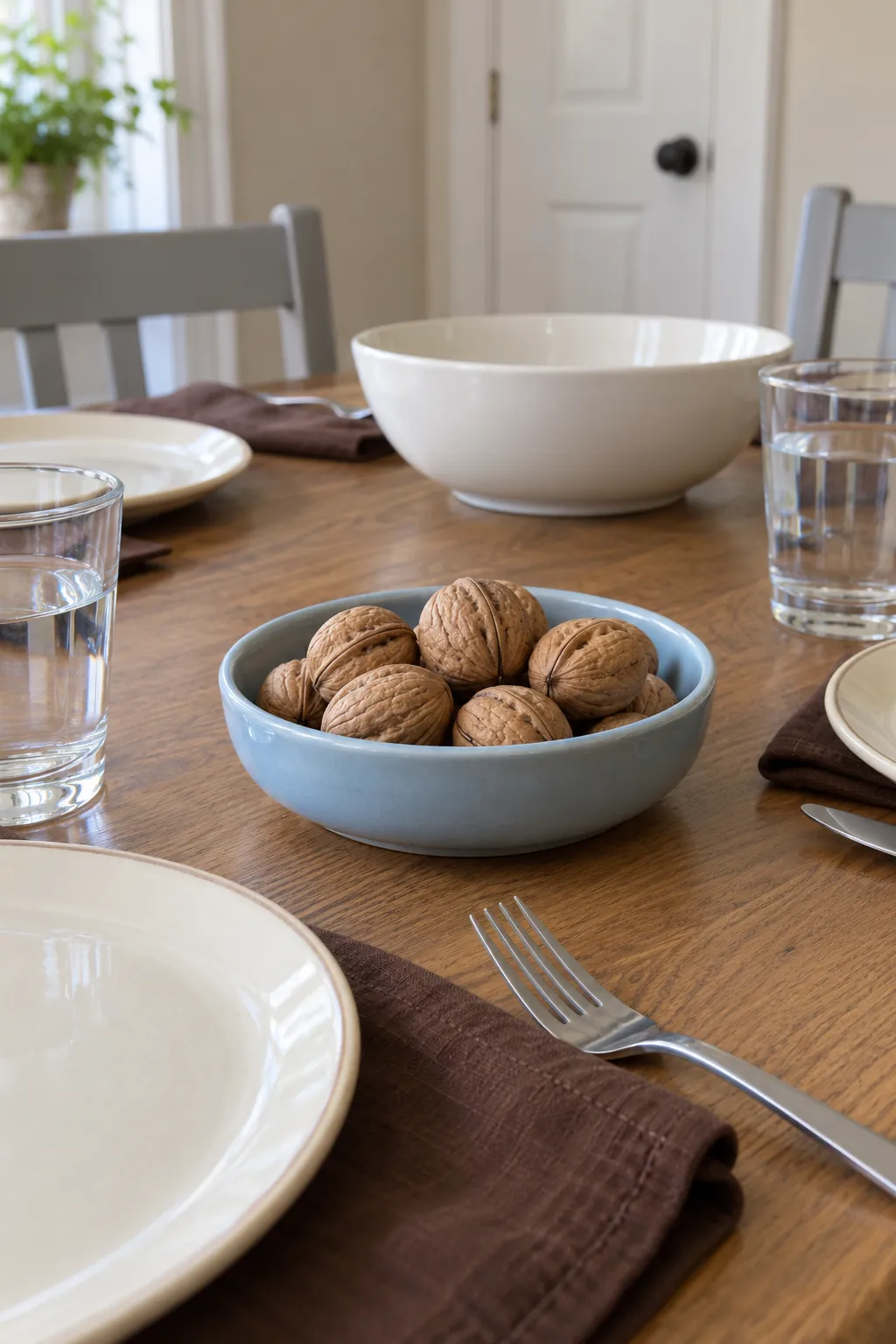
Whole walnuts add a rounded natural texture to a low centerpiece. Keep them contained in a small ceramic dish instead of scattering shells near cutlery. Choose another material when nut allergies make them unsuitable for the gathering. A brown cloth and plain cream plates give the small dish enough contrast.
Pears with Olive Green Linen
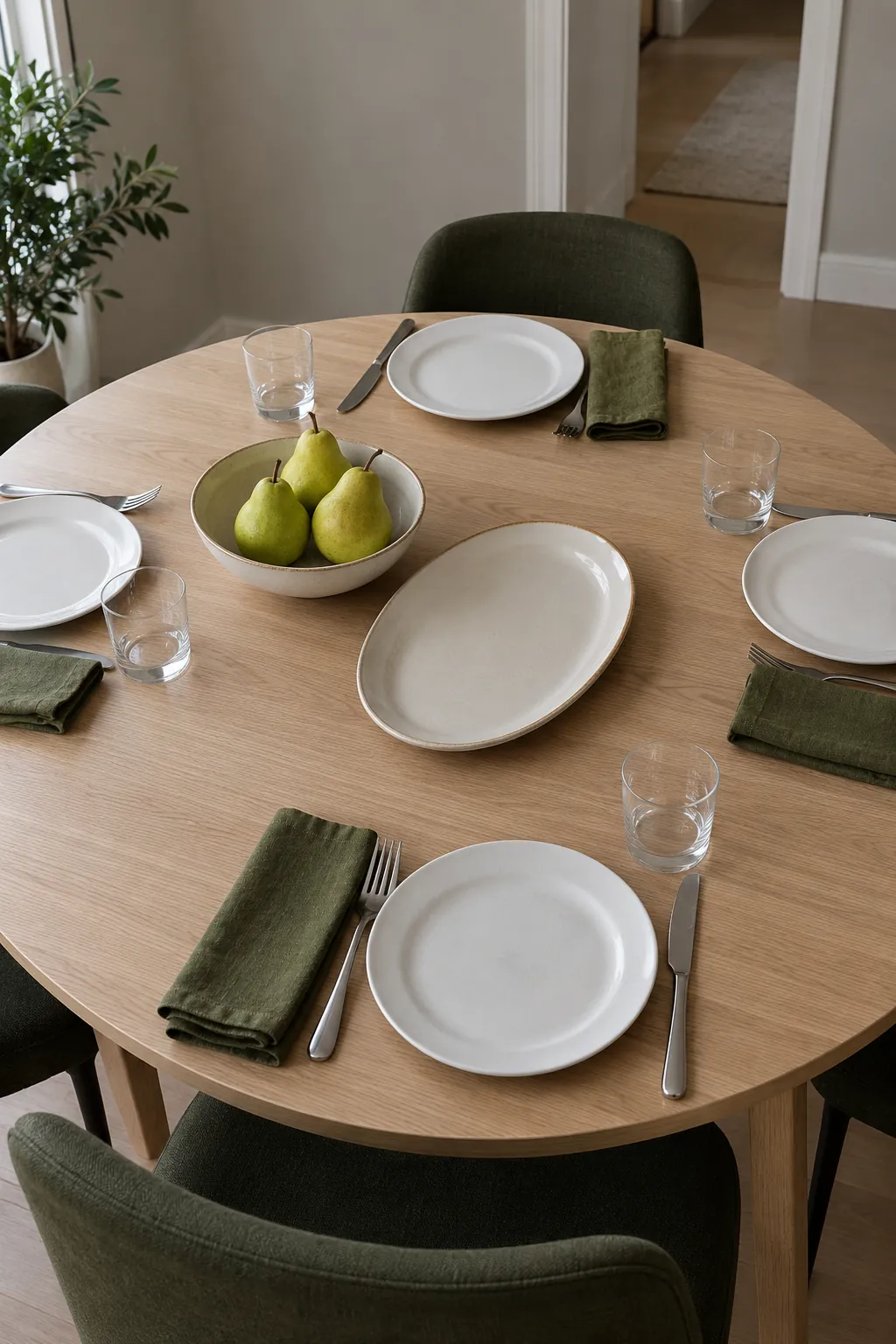
Olive green linen brings out the pale skin of whole pears. Set the fruit in a shallow bowl where it will not roll toward a glass. Wash any pears you plan to serve afterward, and avoid mixing them with treated decorative stems. The combination needs little else on a small dining table.
Dried Hydrangeas Below Eye Level
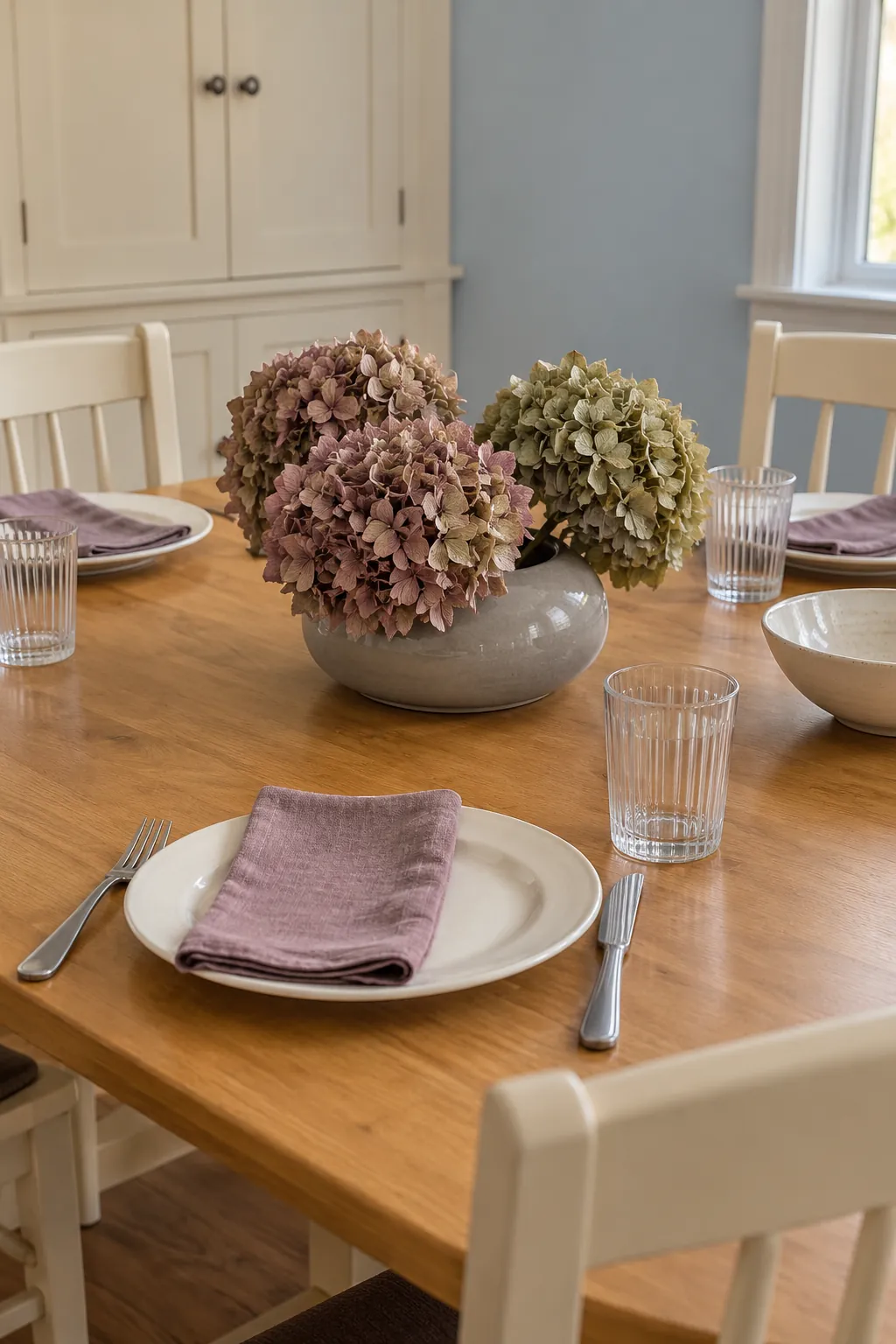
Dried hydrangeas can fill a short vase with soft volume. Check that the heads are intact and do not shed onto plates. Keep the arrangement below the sightline between seated guests and far from flames. A broad base matters more than adding another tall stem.
Sage Pots on a Central Board
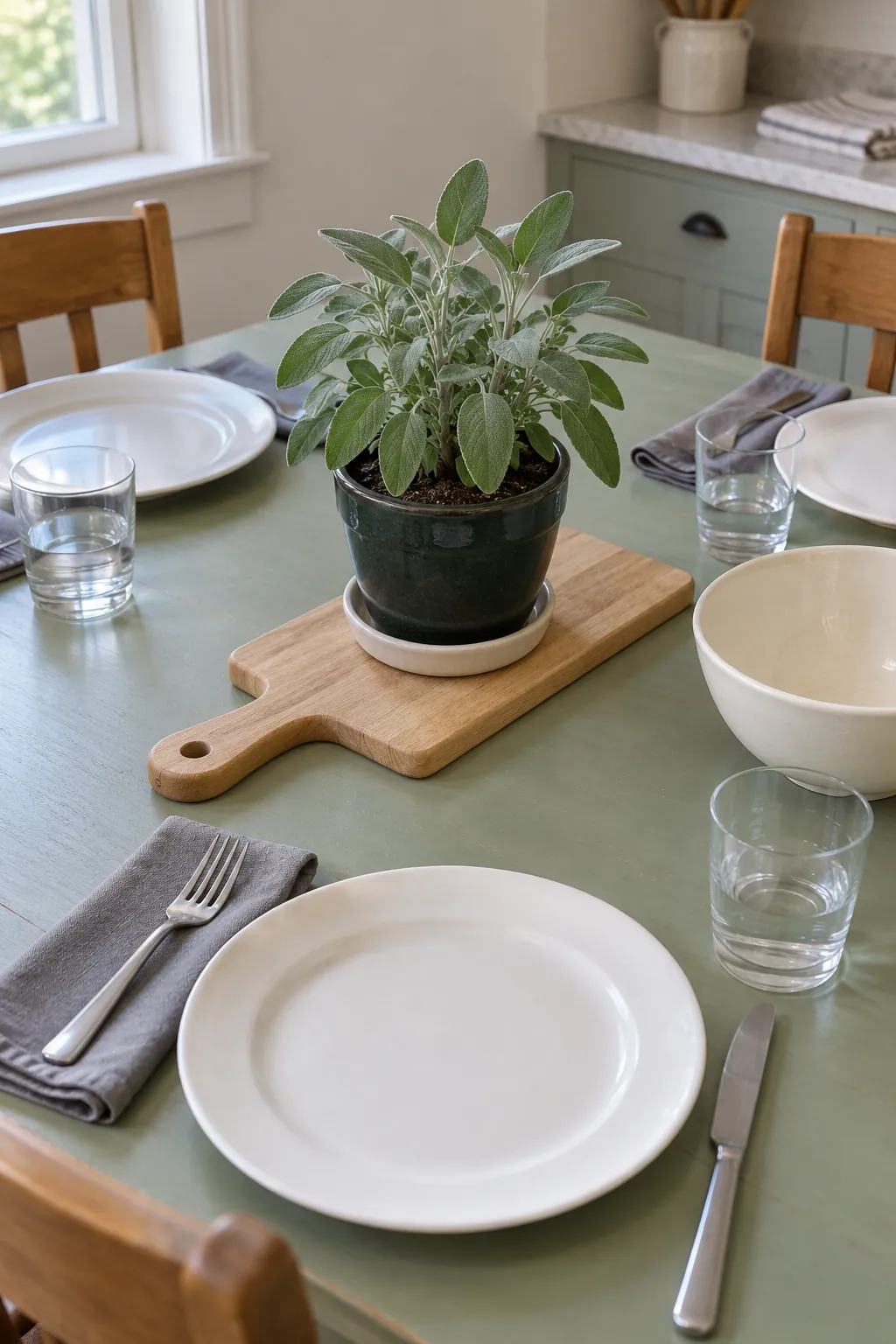
A small sage plant offers soft gray green leaves and a useful alternative to cut greenery. Place its pot and saucer on a central board so you can move them together. Keep soil contained and do not promise that a decorative plant is suitable for cooking unless its treatment is known. Pair it with washable gray napkins for a calm palette.
Acorns Contained in a Glass Vessel
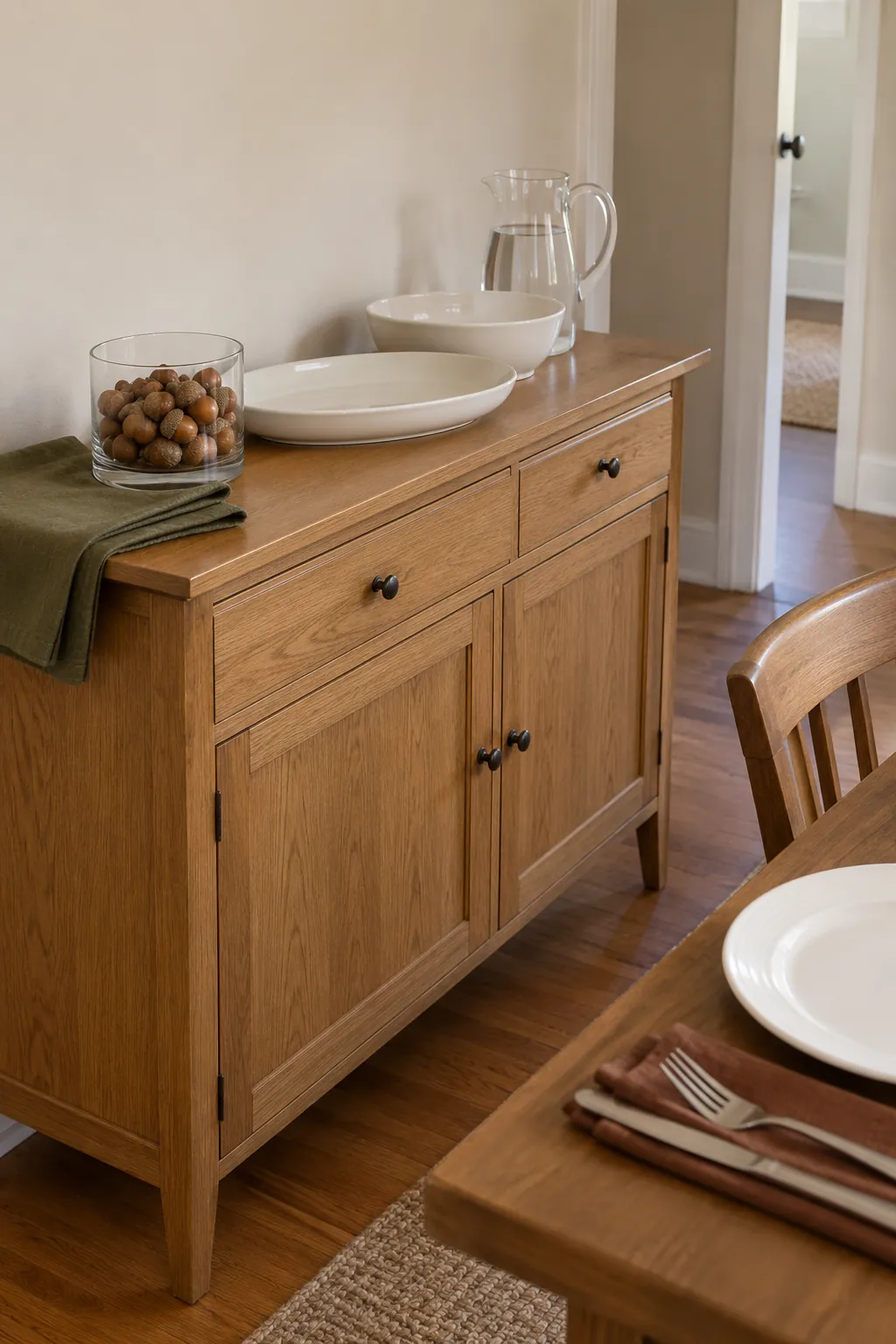
A small glass vessel makes acorns visible without scattering tiny objects around the table. Use clean, dry acorns and inspect them before arranging them indoors. Skip this detail at a table used by young children who may put objects in their mouths. The container can sit on a side buffet if the dining surface is narrow.
A Low Bowl of Seasonal Flowers
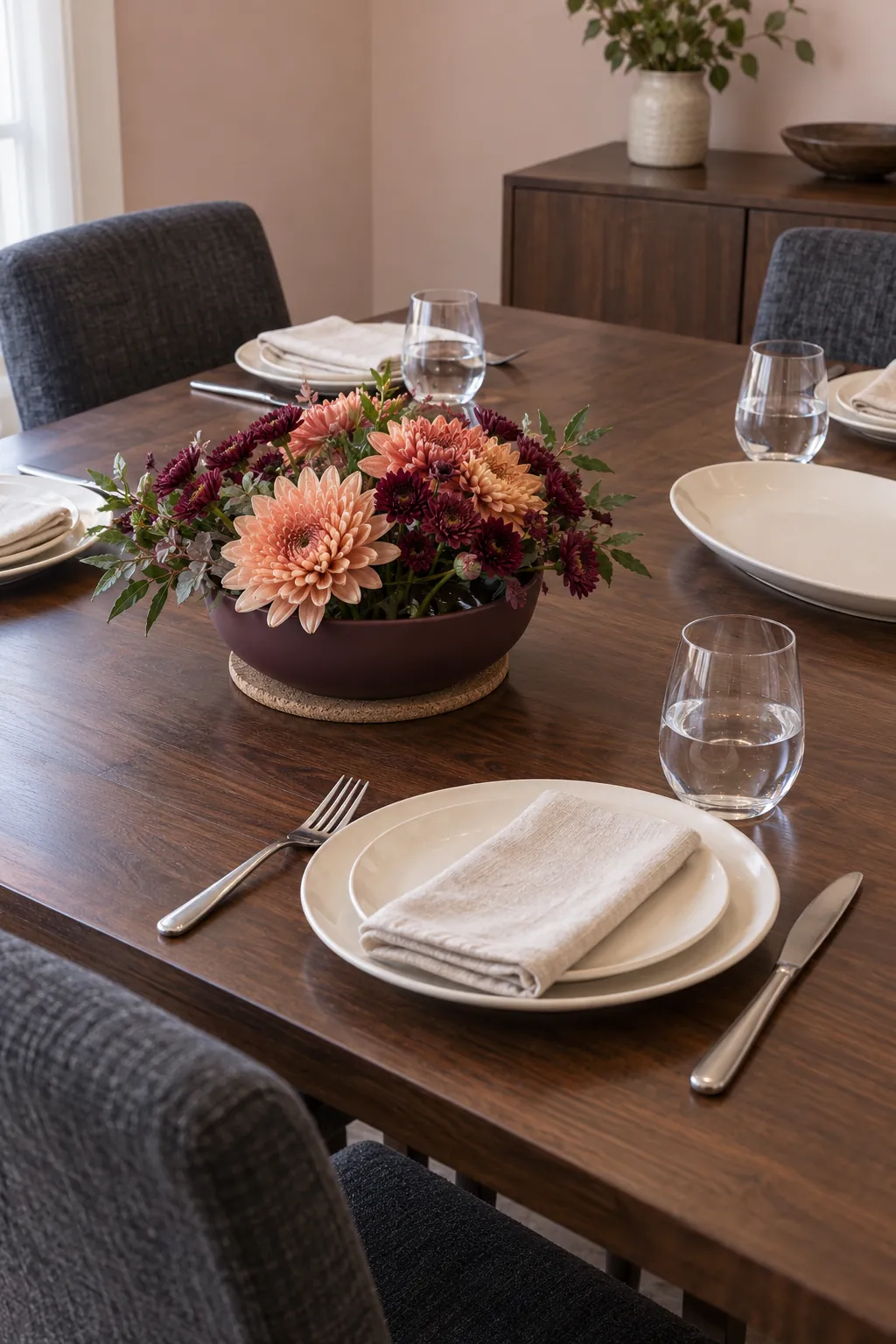
A shallow bowl of seasonal flowers gives fall tablescapes elegant color without blocking conversation. Trim stems to suit the bowl and keep water well below the rim. Set the arrangement on a protective base before placing it on wood. Move it to a side table if passing dishes becomes awkward.
Cotton Napkins with Simple Twine
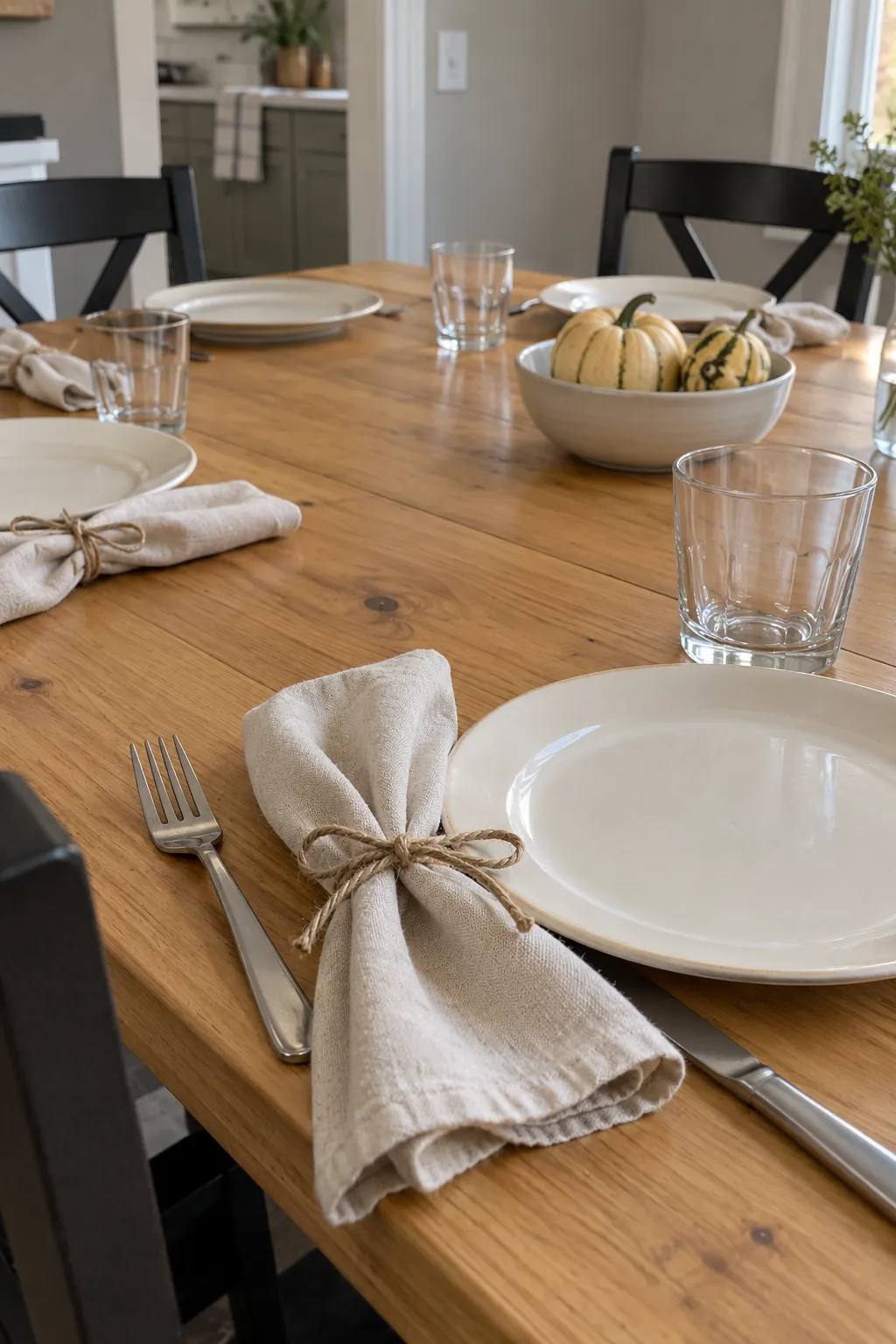
Plain twine can gather a cotton napkin without a purchased decorative ring. Tie a loose bow that guests can undo easily, with short ends that do not drag across food. Check that the twine is clean and does not shed fibers. Let a simple ceramic bowl supply the table’s only central accent.
Small Gourds in a Willow Basket
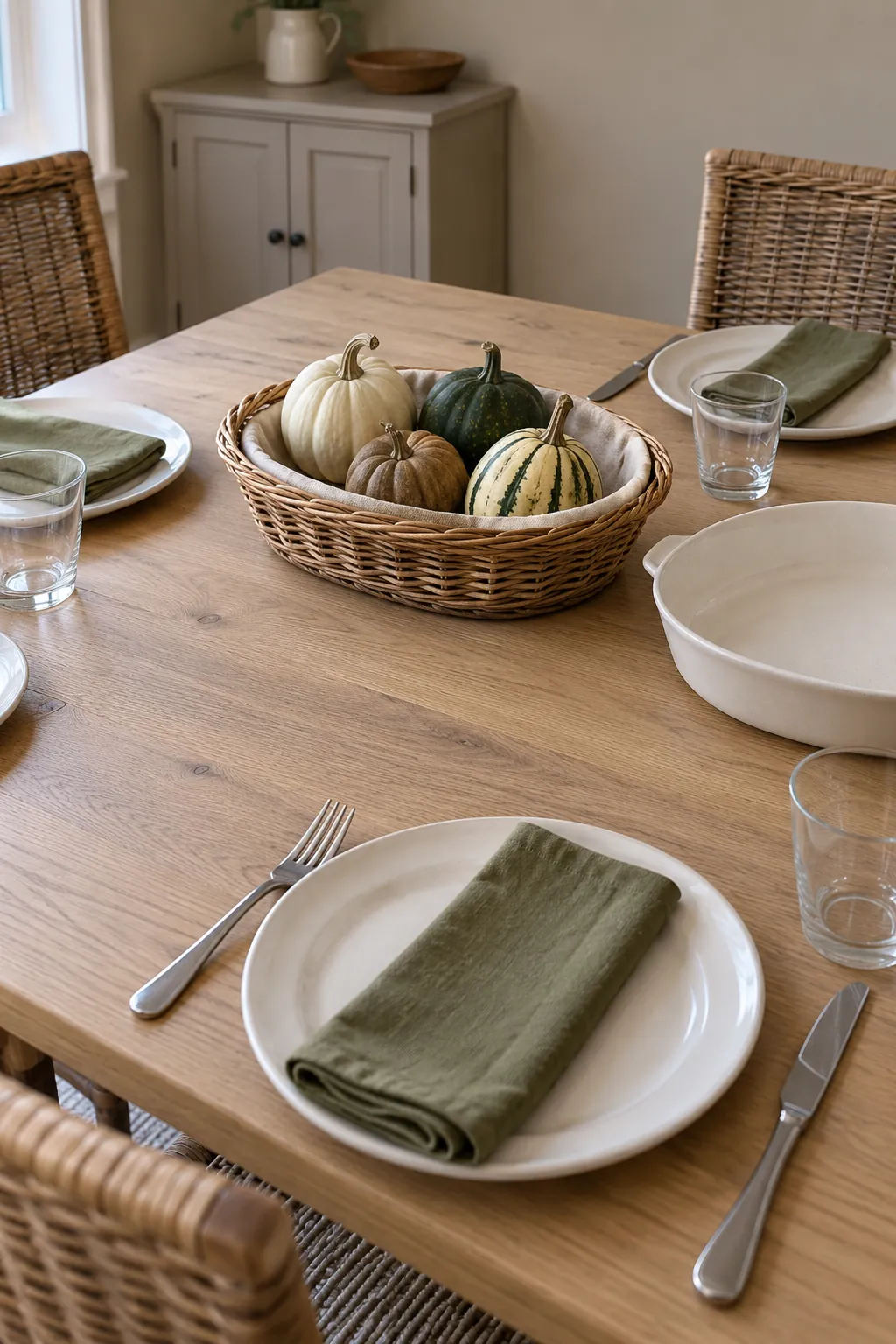
A shallow willow basket can hold several small gourds in one moveable group. Line it if rough weaving could scratch your table, and keep it separate from food service. Pick gourds with firm skins and leave out any that show soft spots. Limit the basket to a modest size so the meal still has room.
Oat Linen and Dark Pottery
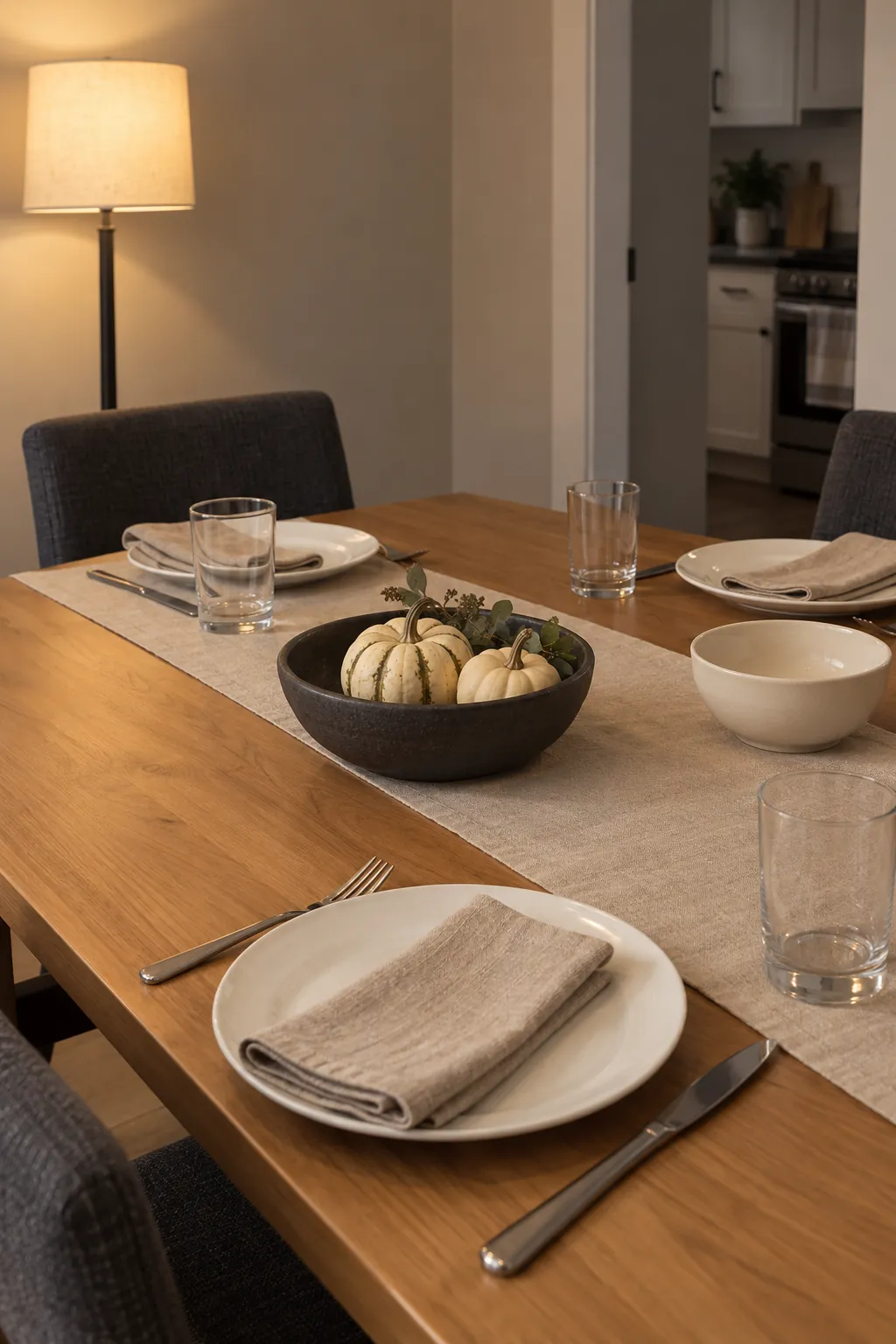
Oat colored linen helps dark pottery remain visible in an evening setting. Use one low vessel instead of a collection of heavy bowls. Add a soft room light so the table is comfortable to use after sunset. Dark pieces work best when their shape is clear rather than lost in shadow.
A Single Magnolia Stem
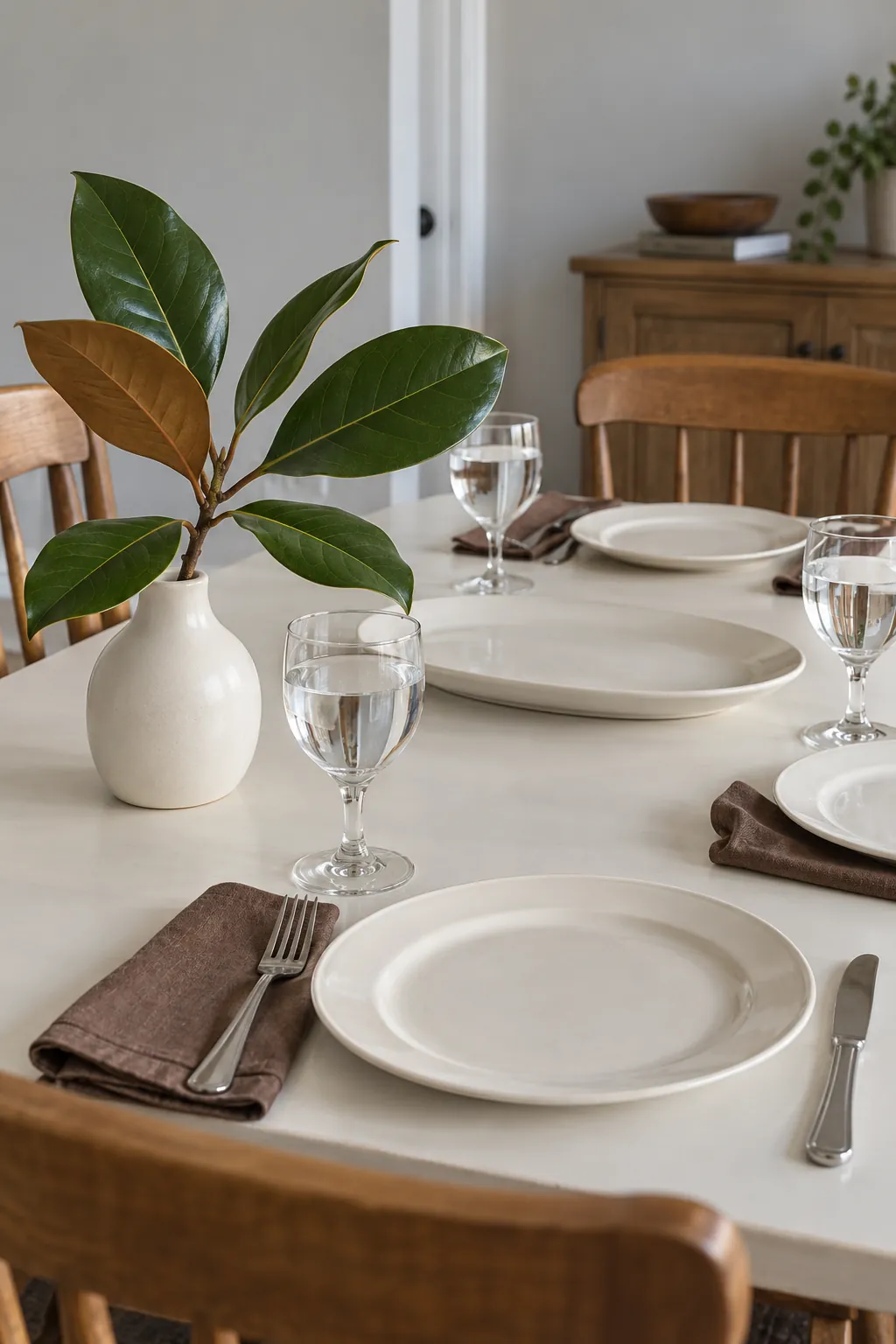
A short magnolia stem brings broad leaves to a plain table. Put it in a stable vase with the leaves angled away from glasses. Remove damaged leaves and keep the stem out of the eating area. One branch is enough when the table already has textured mats or distinctive dishes.
Persimmons in a Neutral Bowl
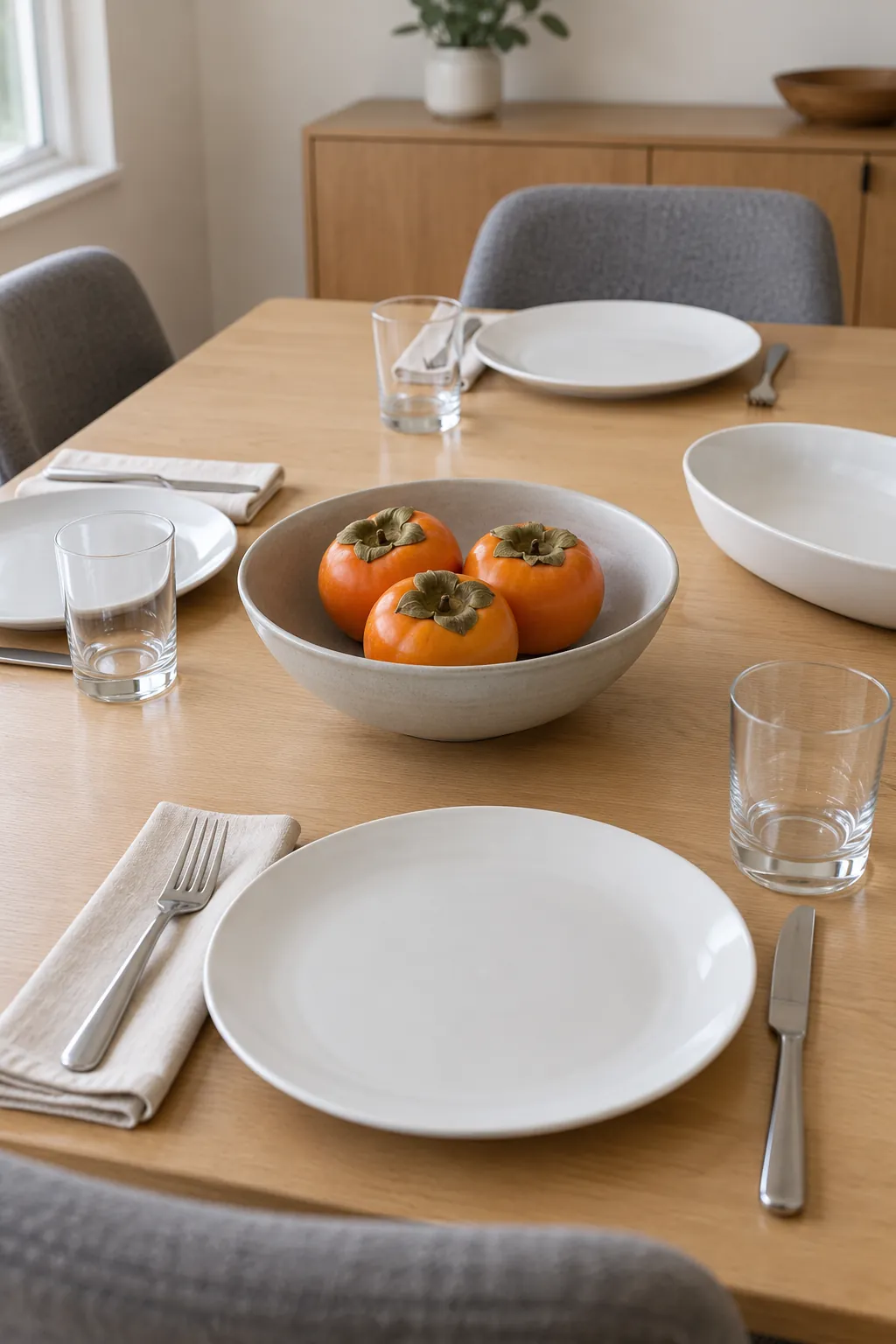
Whole persimmons provide a strong autumn color beside neutral dishes. Keep them in a bowl with a stable base, and choose firm fruit for the display. Handle the fruit gently to avoid bruising before any later use. A pale cloth prevents the orange skins from competing with another bold pattern.
A Reusable Cork Setting
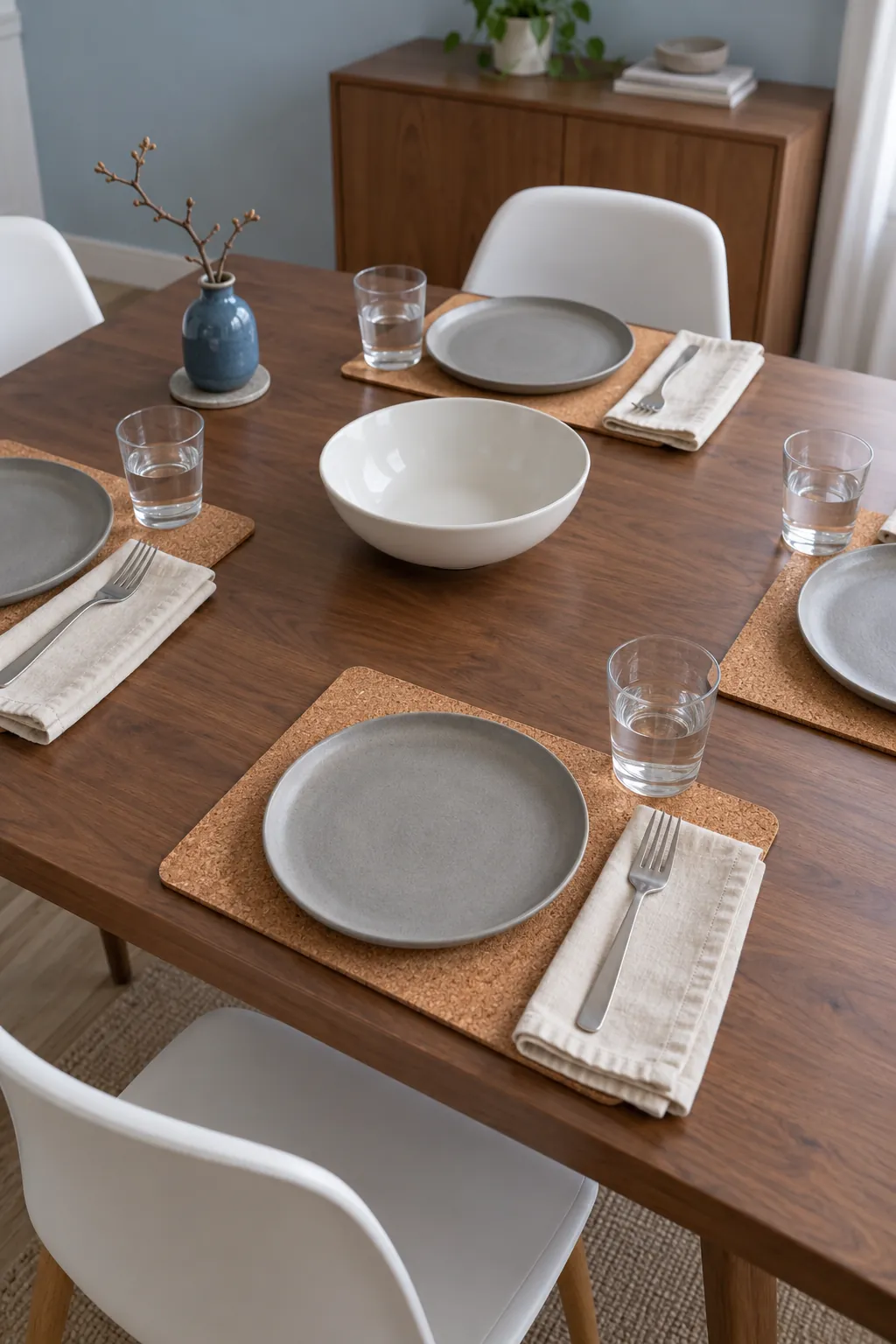
Cork mats give an everyday place setting texture without seasonal prints. Match them with linen you can wash and use again after the gathering. Keep the mats dry according to their care instructions and use separate protection under damp flower vessels. A small twig in a sealed vase supplies the holiday accent.
Soft Pampas on the Sideboard
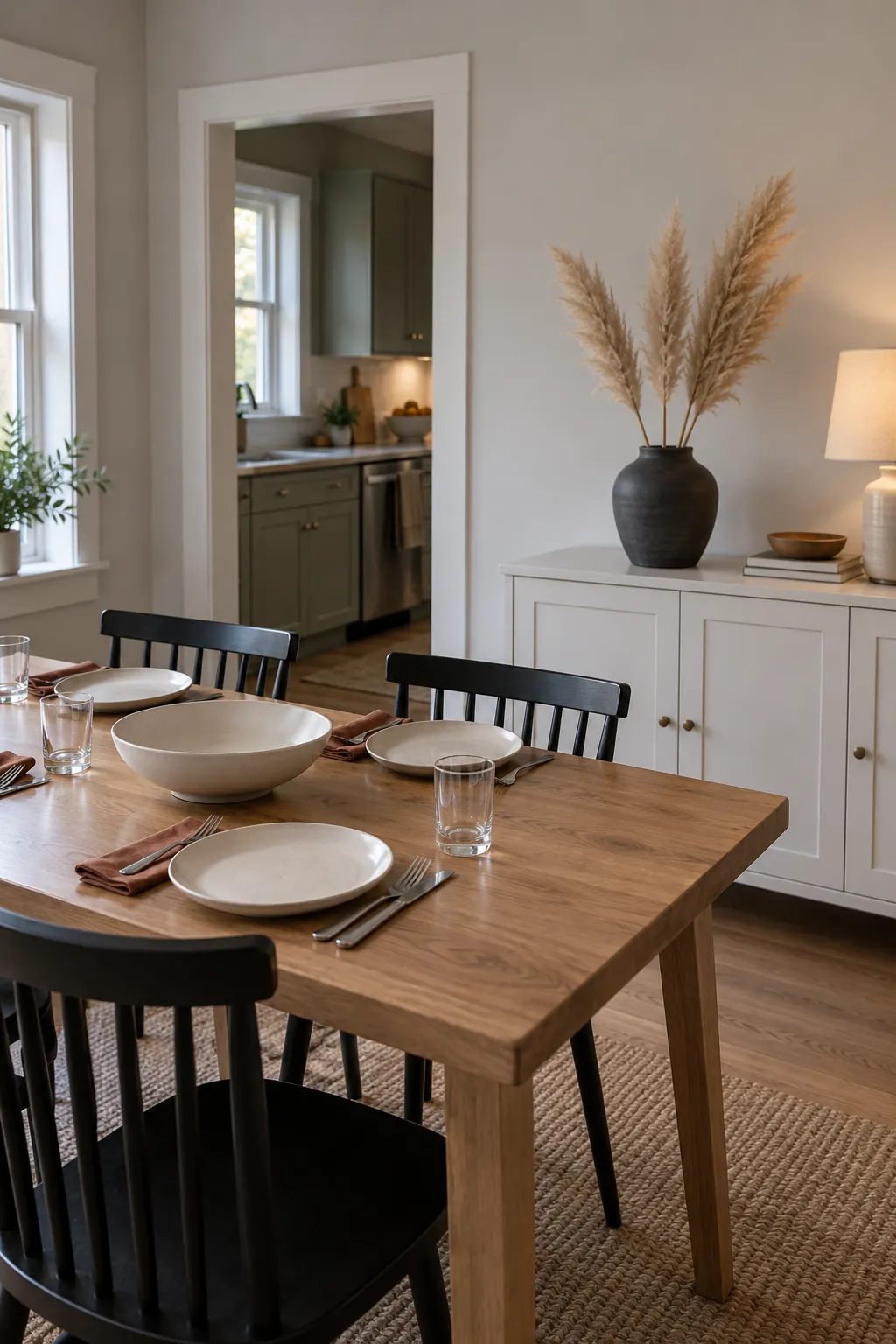
Pampas grass is better on a sideboard when its volume would block the dining table. Use a stable floor or cabinet vessel away from heat and check for shedding. Keep the dinner settings simple with a small repeated napkin color. The room can carry the natural decoration while the tabletop stays clear.
Pressed Leaves Under a Clear Mat
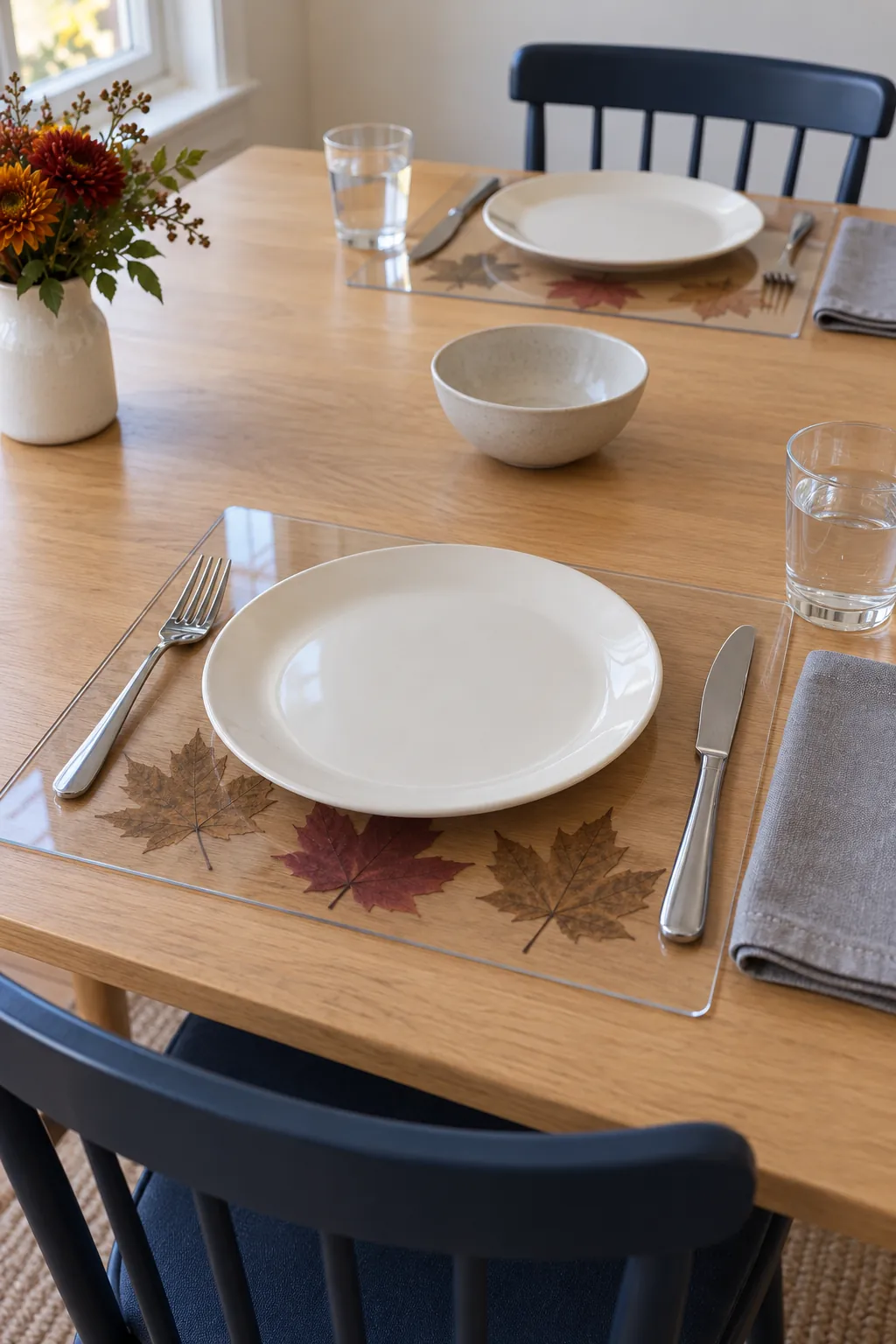
Pressed leaves can add autumn detail when they remain protected beneath a suitable clear placemat. Check that the mat lies flat and does not slide under the plate. Keep the leaves entirely enclosed so loose fragments cannot reach the meal. Test the arrangement before dinner rather than relying on a decorative surface that rocks.
A Narrow Greenery Accent at One End
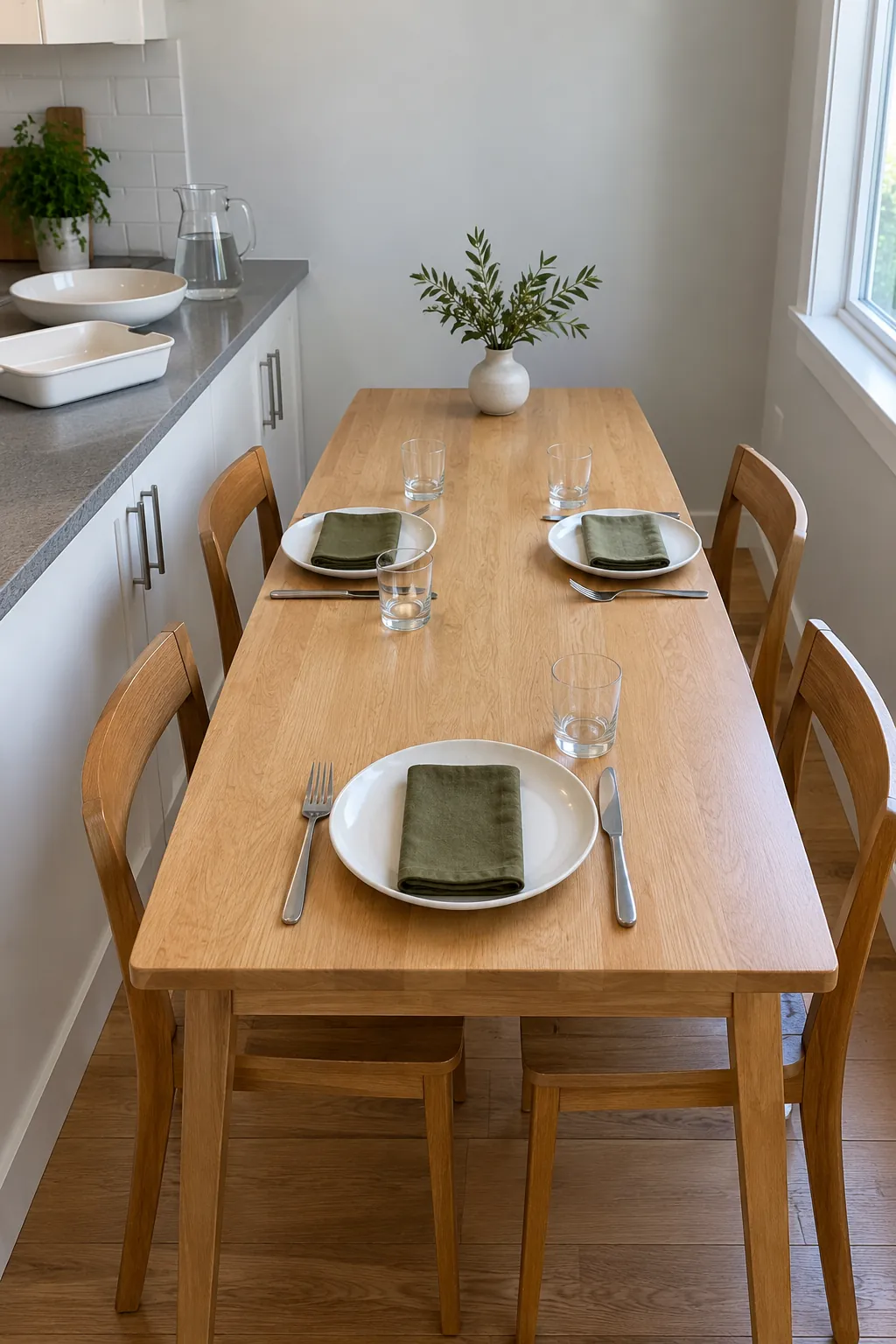
A narrow table does not need a centerpiece along its full length. Put one small greenery arrangement at an end where it will not occupy a guest’s plate space. Repeat its color in the napkins to connect the settings. Serve larger dishes on a nearby counter to keep the eating area comfortable.
A Covered Patio with Natural Layers
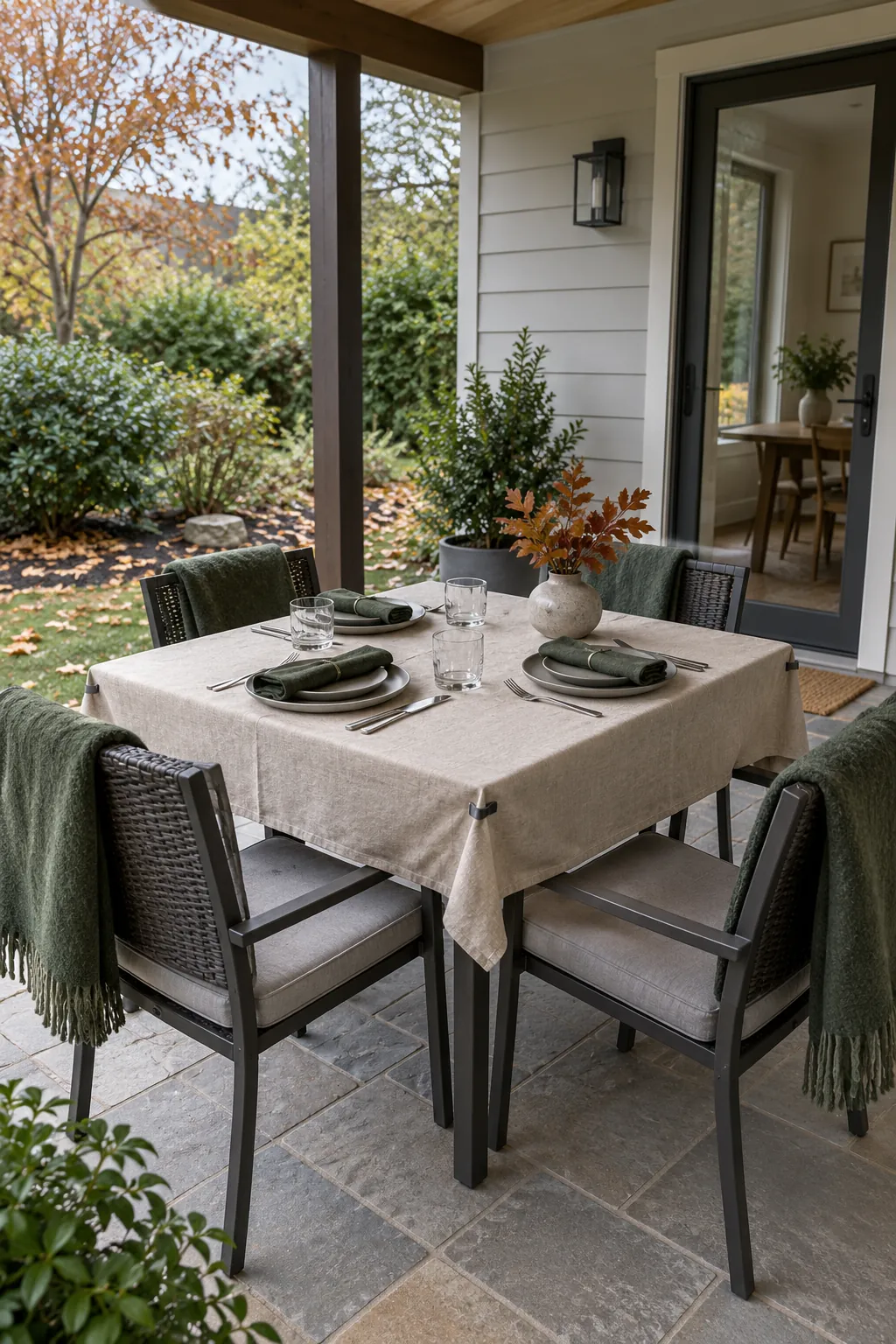
Natural cloth and simple pottery can make a sheltered patio feel connected to the season. Secure the fabric, use stable dishes, and keep any loose foliage contained in a vessel. Check the weather and prepare an indoor option before planning an outdoor meal. Throws add comfort but do not replace suitable temperatures or shelter.
Collected Glass with One Branch Vase
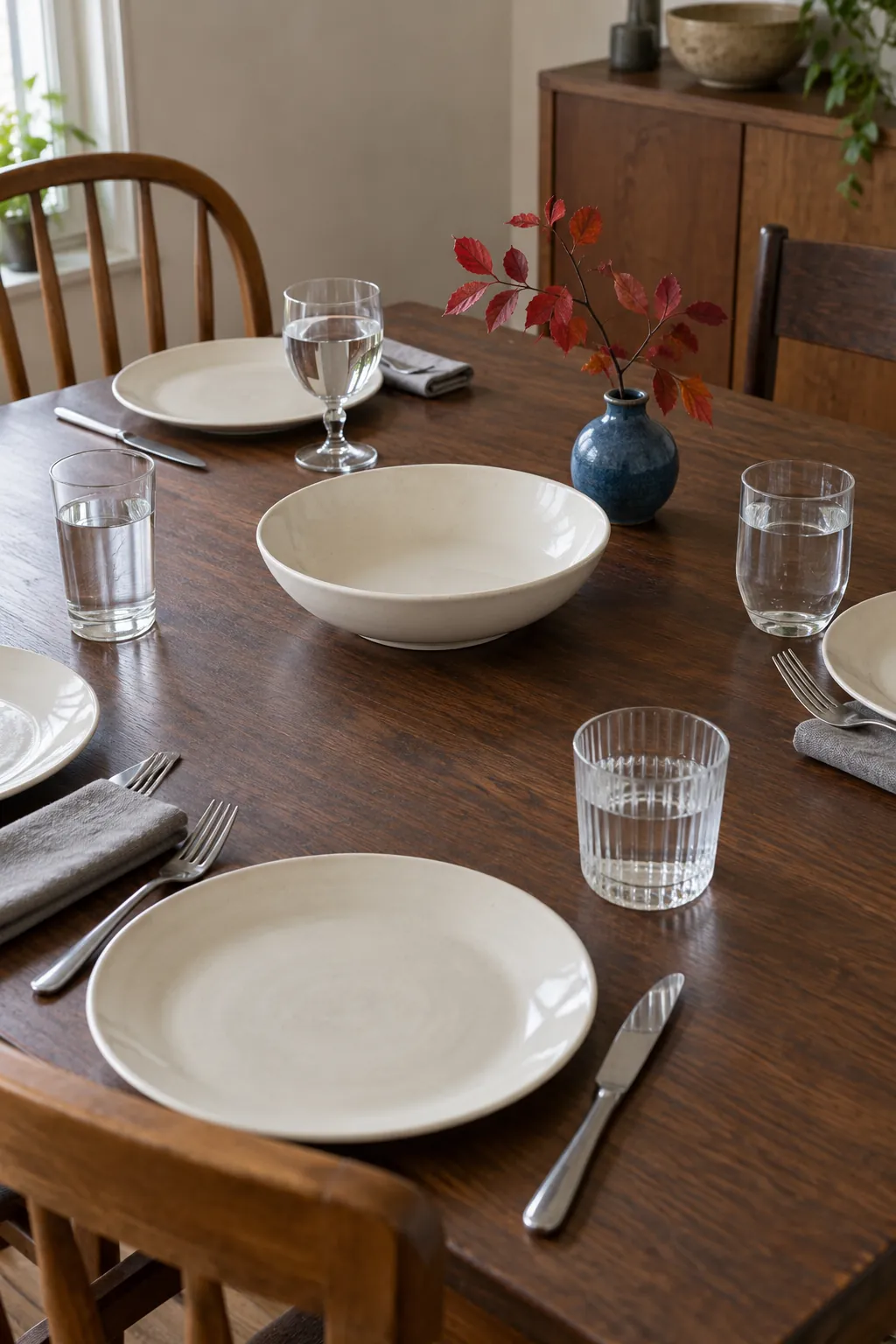
Different clear glasses can work together when the rest of the table is quiet. Inspect every rim for chips and use vessels suitable for drinking. A single short branch vase gives the collection a natural focal point. Plain napkins prevent the varied glass shapes from becoming visually crowded.
Bare Wood with a Small Harvest Bowl
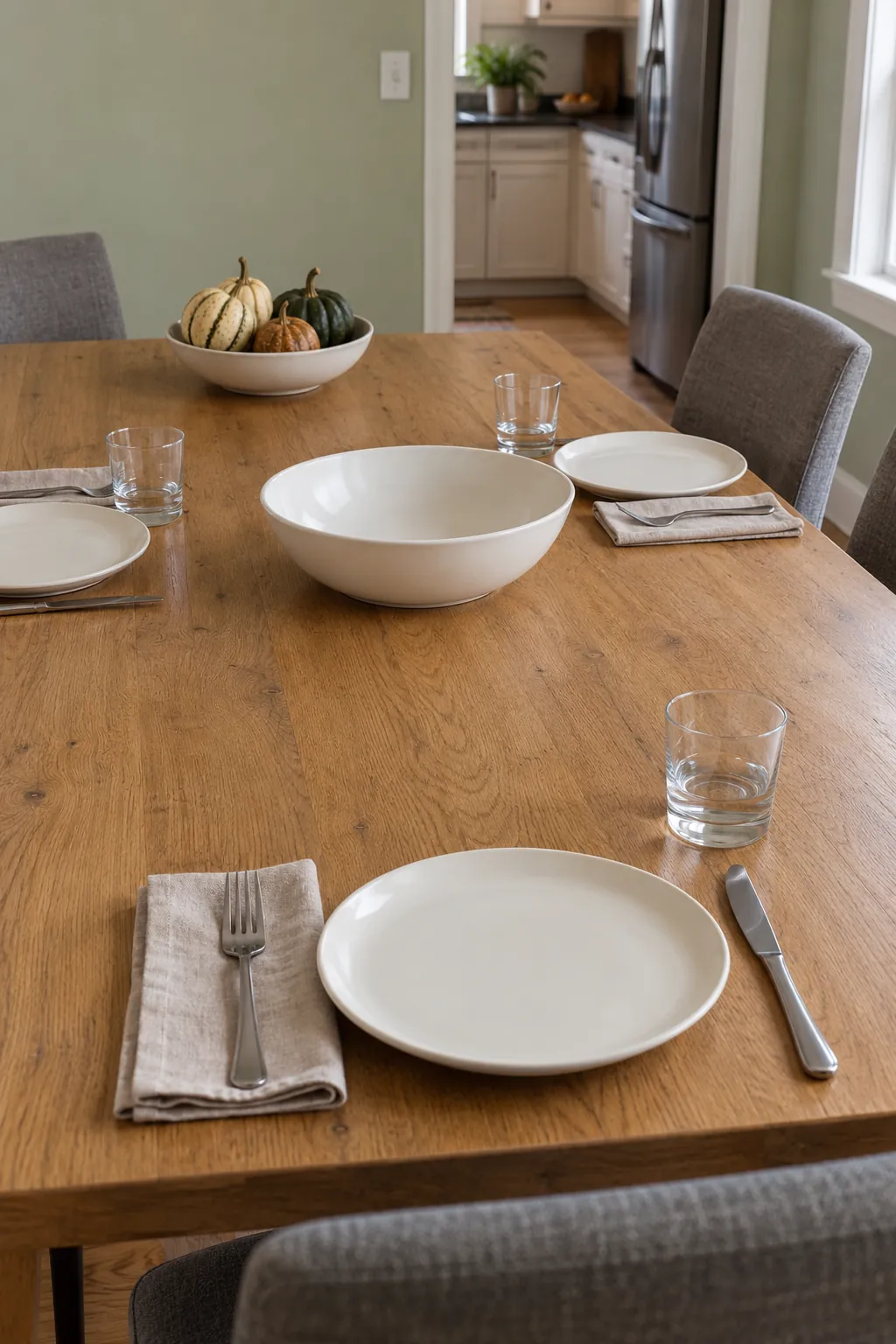
Bare wood already supplies a natural foundation for a holiday meal. Add one small bowl of intact gourds and leave the remaining surface for useful dishes. Comfortable napkins and clear glassware complete the setting without covering the grain. Sit at the table before guests arrive and remove any object that makes serving harder.