
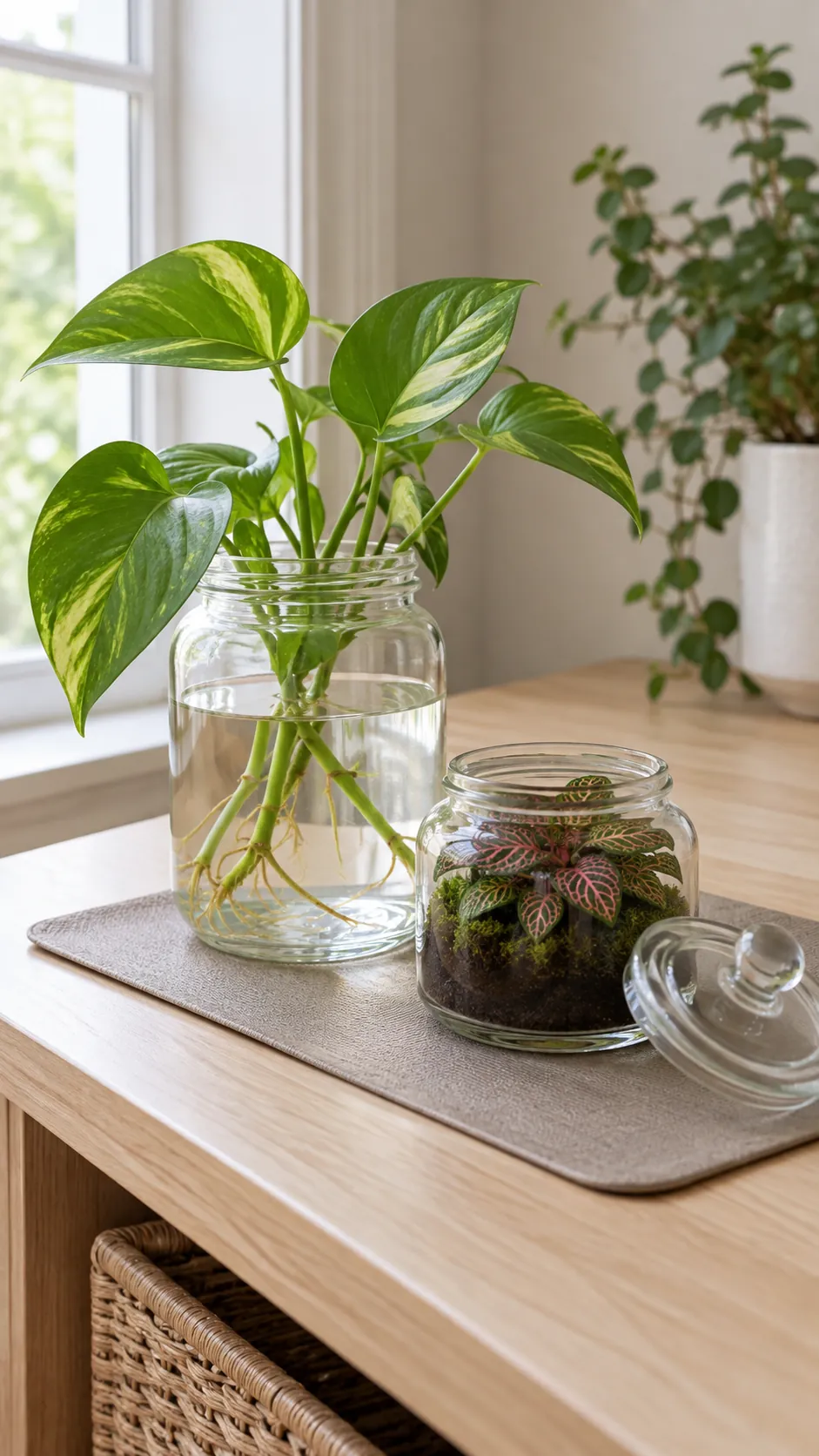
Clear glass makes roots and moisture visible, but it also makes a poor watering decision hard to hide. Before adding soil, decide whether your container will hold a cutting, a humid terrarium, an aquatic plant, or a removable pot. Plants in glass jars need a care plan that matches the plant, especially when the glass has no drainage hole.
Start a pothos cutting in a clear jar
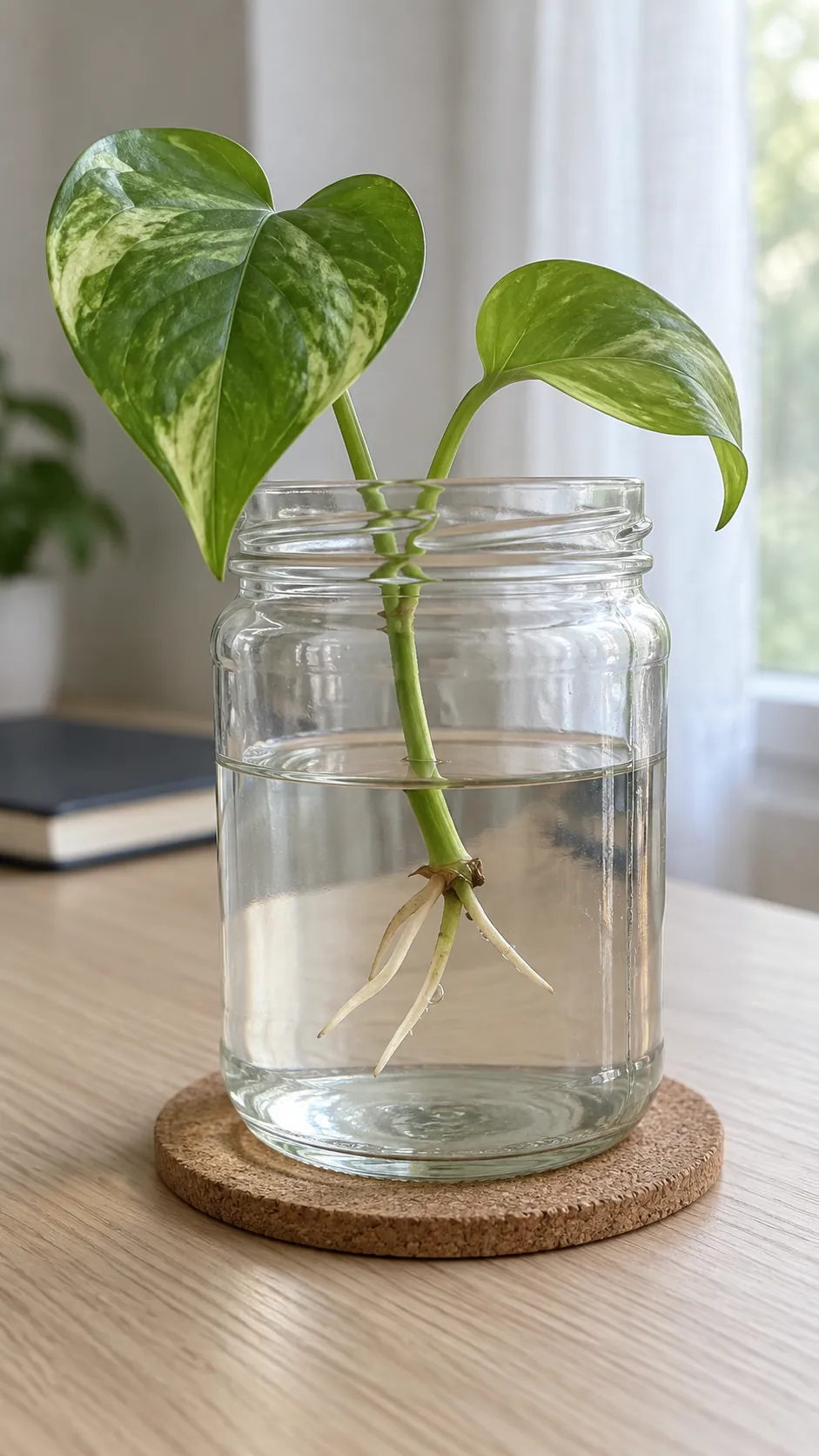
A pothos cutting makes roots easy to watch without committing to a planted terrarium. Include a stem node below the water and keep the leaves above it, since a loose leaf without a viable node will not become a new vine. Refresh the water when it becomes cloudy, clean the glass as needed, and move the cutting to a suitable growing setup once roots develop.
Root mint for a future kitchen pot
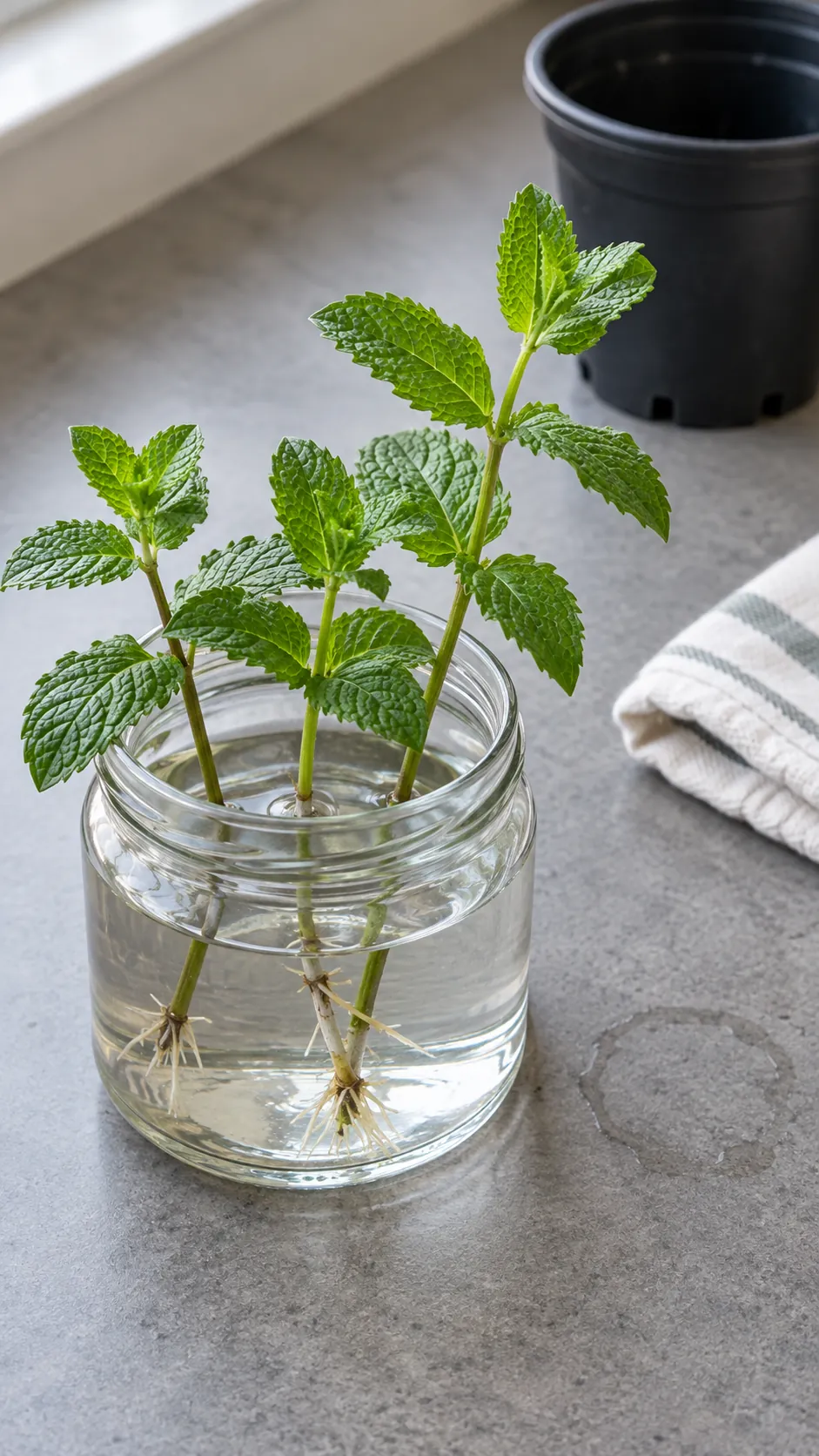
Mint stems can become a useful propagation project in a clean food jar. Remove leaves that would sit underwater and place the jar in bright indirect light. Treat the jar as a starting station, then transfer rooted stems to a pot with drainage rather than promising a permanent harvest from plain water.
Give basil cuttings a bright start
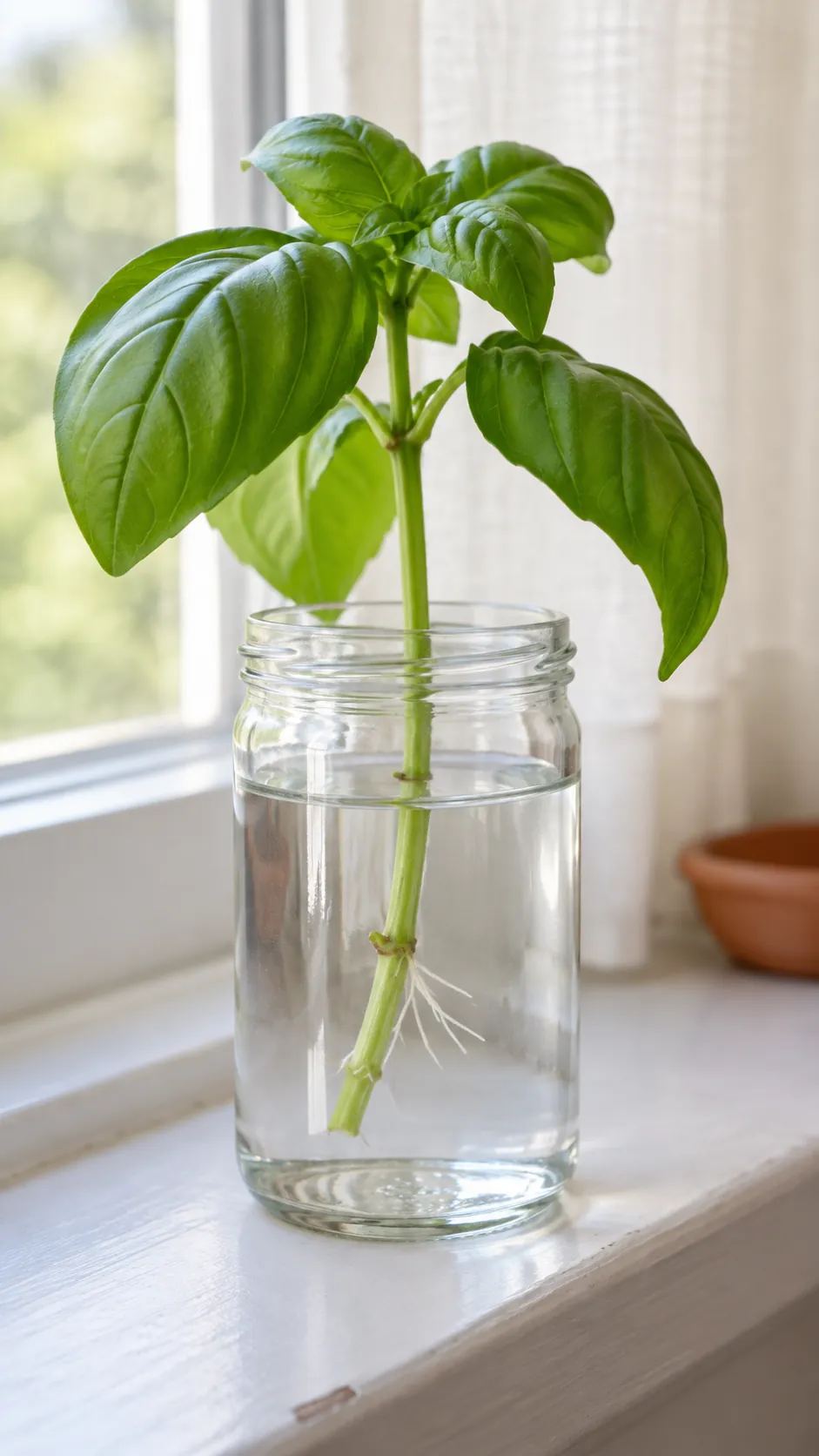
Choose a healthy basil stem without flowers and remove its lowest leaves before placing the bare nodes in water. Keep the container away from cold drafts and harsh sun that heats the water. Once a small root system develops, transplant gently into suitable potting mix and maintain even moisture while the roots adjust.
Observe a spider plant offset
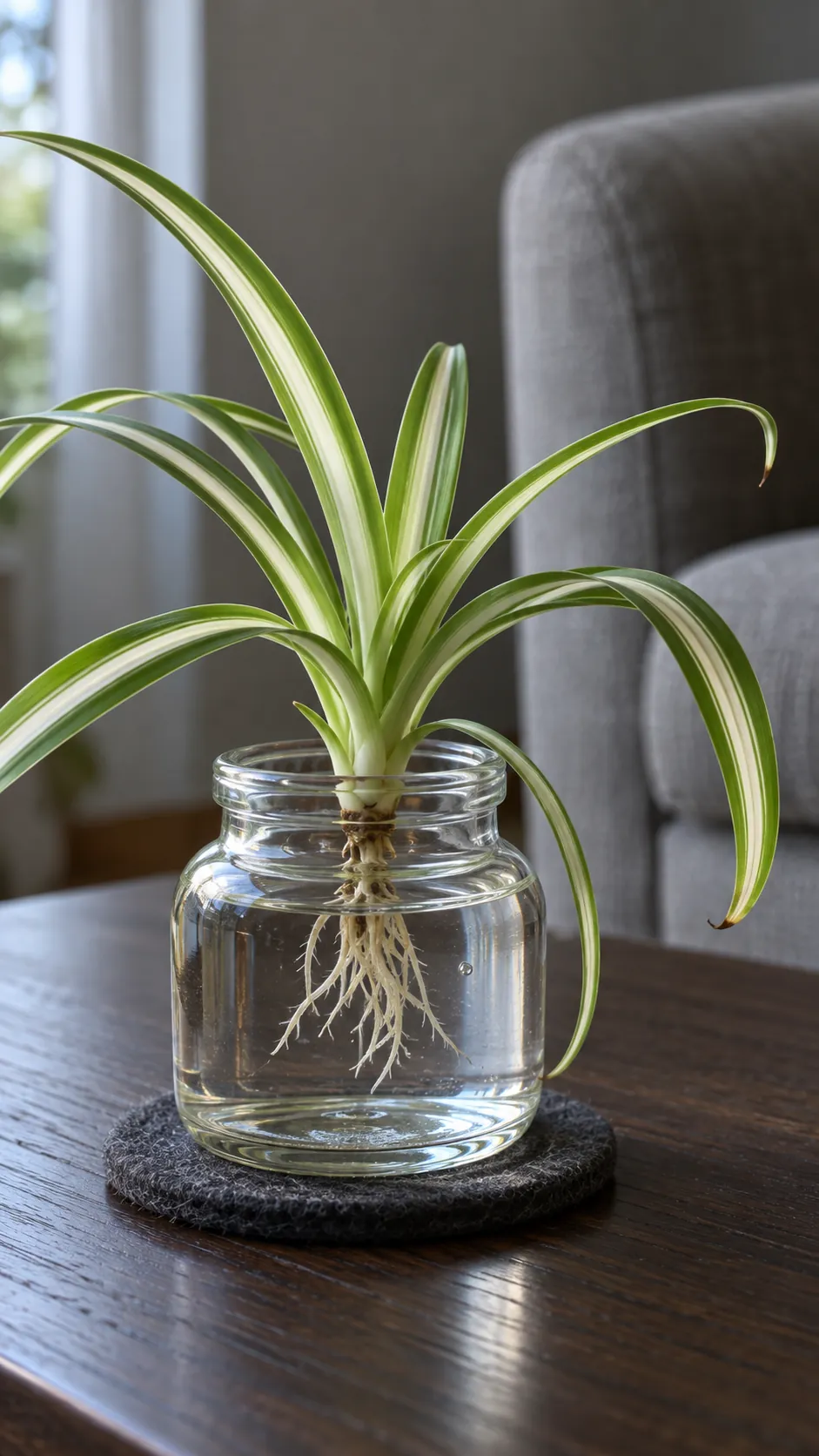
A spider plant offset can rest at the mouth of a small jar while its developing roots reach the water. Keep the leafy crown above the waterline to reduce the chance of rot. Use a stable jar that will not tip as the leaves arch outward, and pot the offset when it has enough roots to establish.
Try a heartleaf philodendron stem
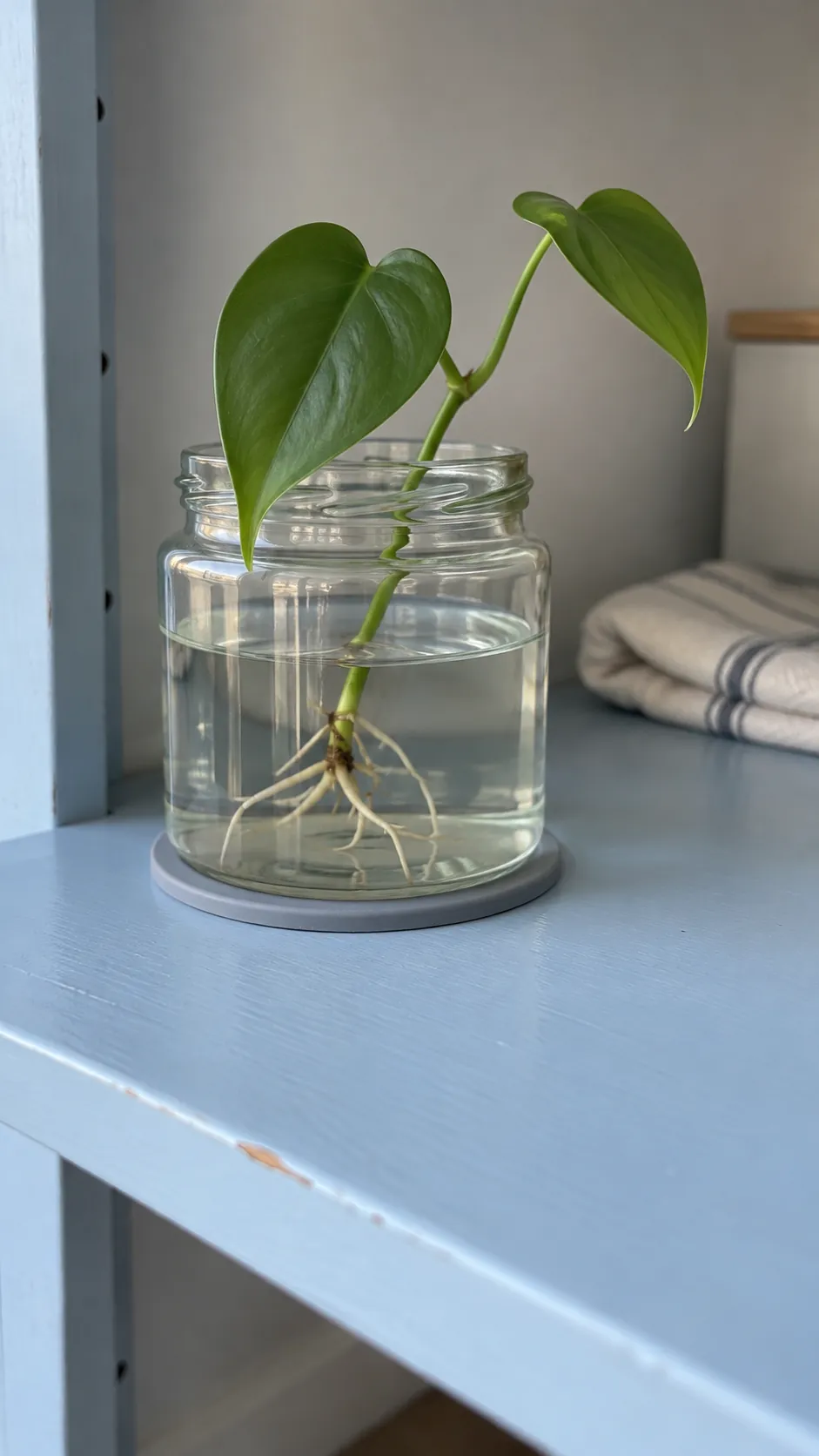
A heartleaf philodendron cutting offers a simple way to see new roots along a node. Choose a jar with an opening wide enough to remove the roots later without tearing them. Keep this plant away from pets and children who might chew it, and remember that extended water culture needs suitable nutrients and ongoing care.
Use coleus for colorful propagation
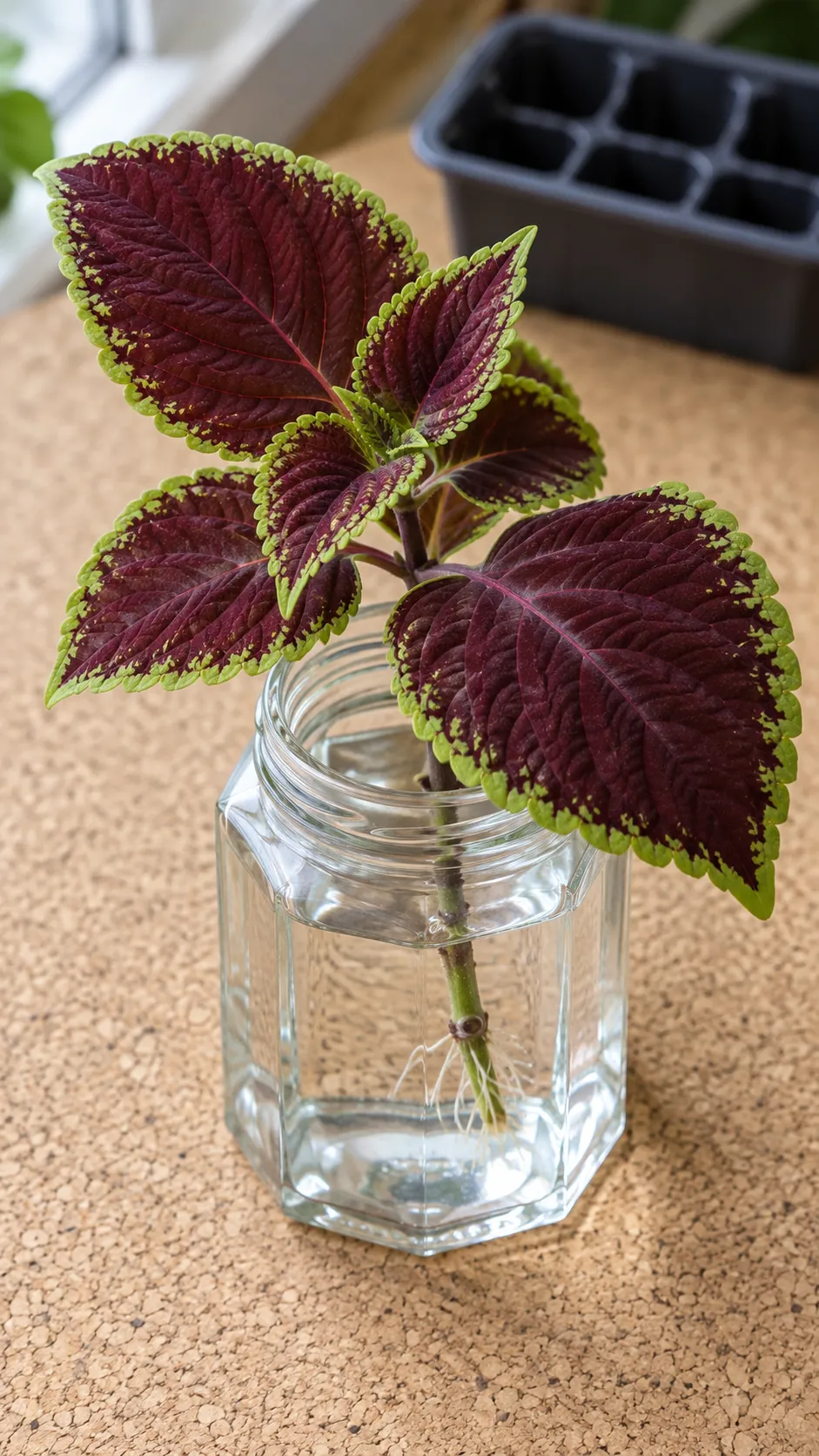
Coleus brings leaf color to a propagation jar without depending on flowers. Take a healthy stem with nodes, remove submerged leaves, and keep the foliage comfortably above the rim. Pinch and pot the rooted plant as appropriate for its variety instead of leaving a crowded bundle of stems in a tiny vessel.
Display a succulent in a removable inner pot
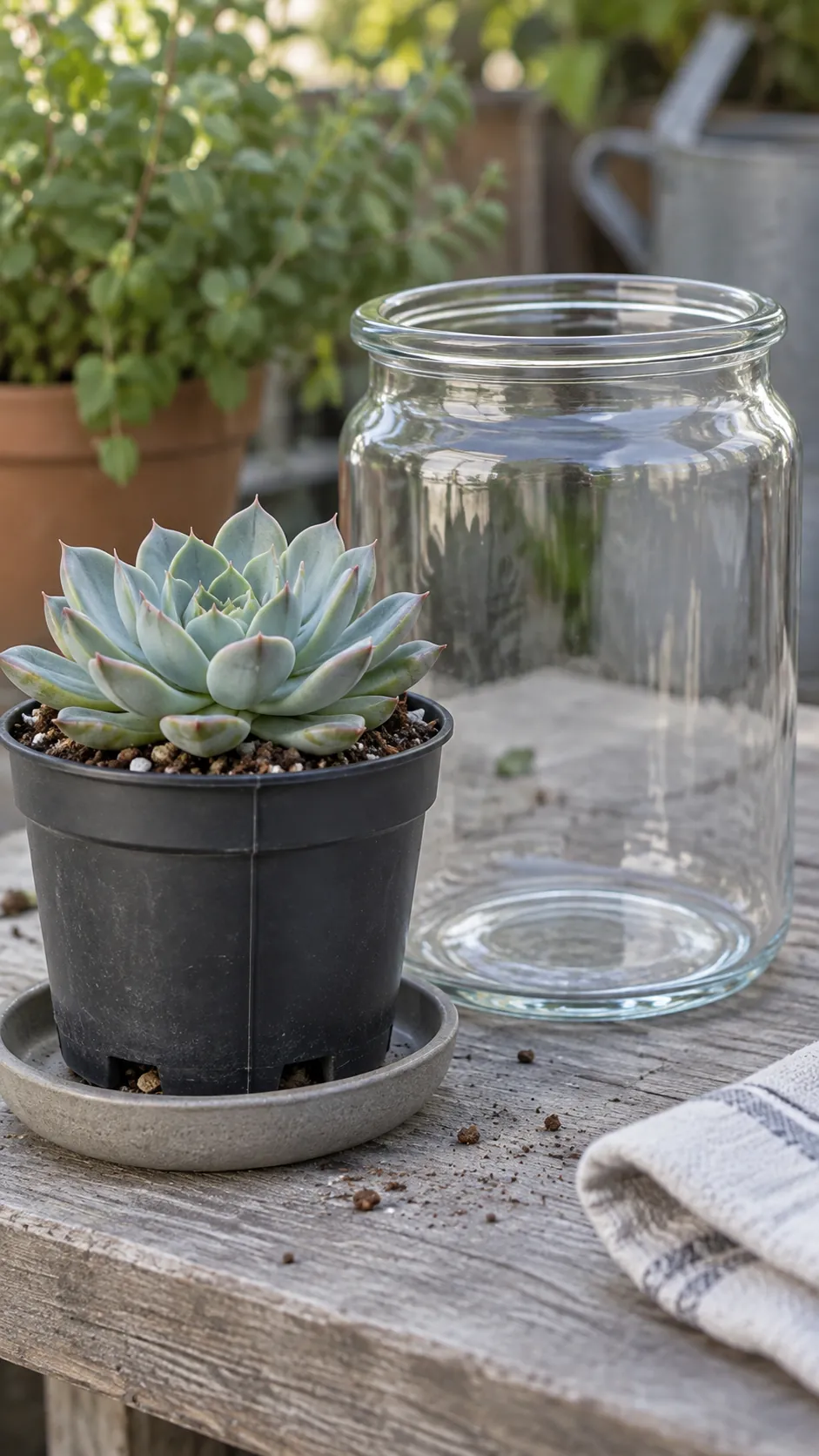
For succulents in containers, use the jar as an outer display around a small pot that has drainage holes. Lift the inner pot out for watering, let it drain completely, and return it only when the outer jar is dry. Stones at the bottom of a sealed jar do not create drainage, so avoid planting a succulent directly into a decorative wet soil stack.
Keep an orchid in its ventilated pot
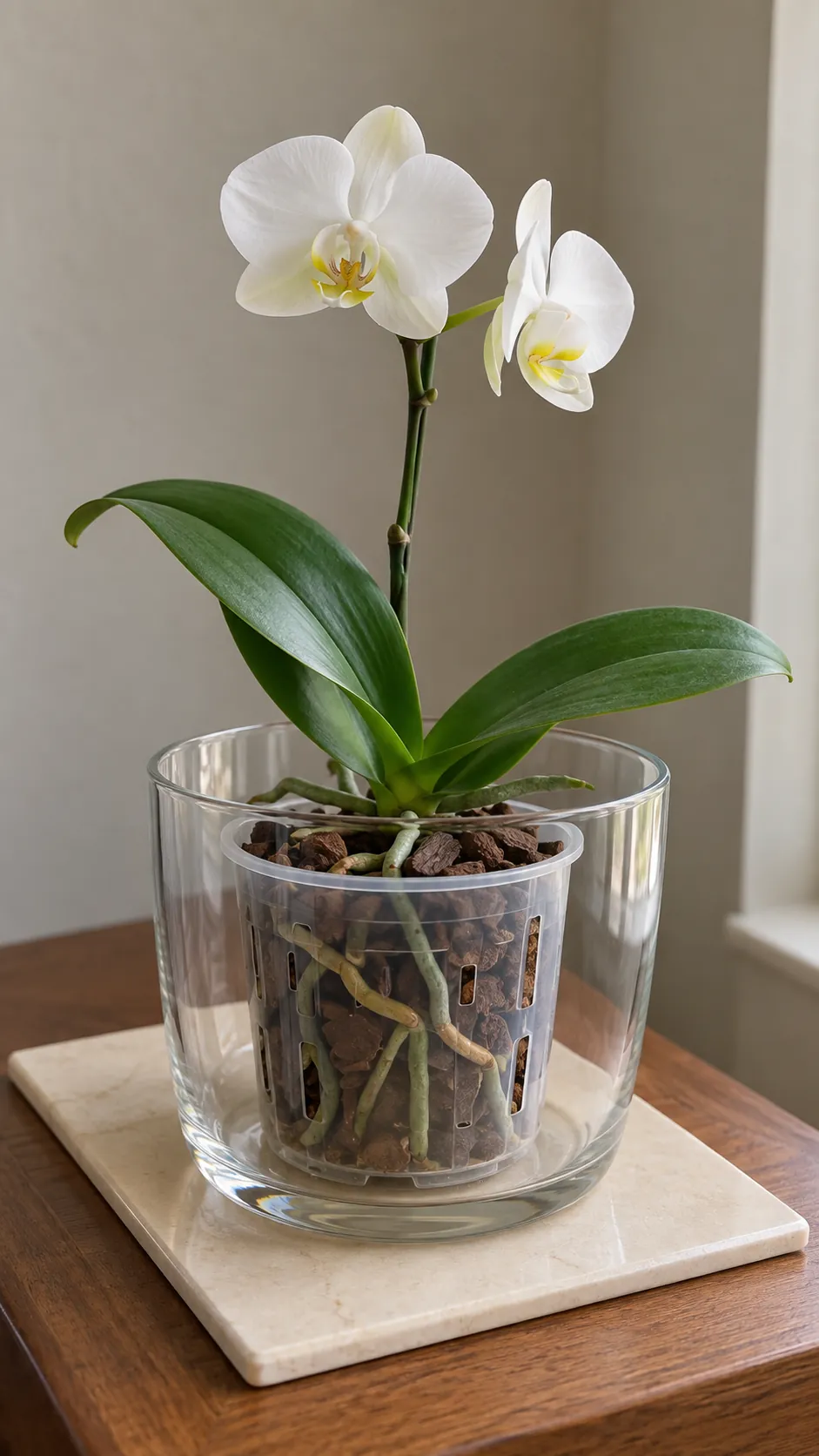
An orchid can sit inside a roomy open glass vessel while staying in its proper ventilated growing pot. Leave air space around the inner container and remove it to water and drain. A sealed jar packed with wet moss is a poor substitute for species appropriate airflow and root care.
Show an anthurium through clear glass
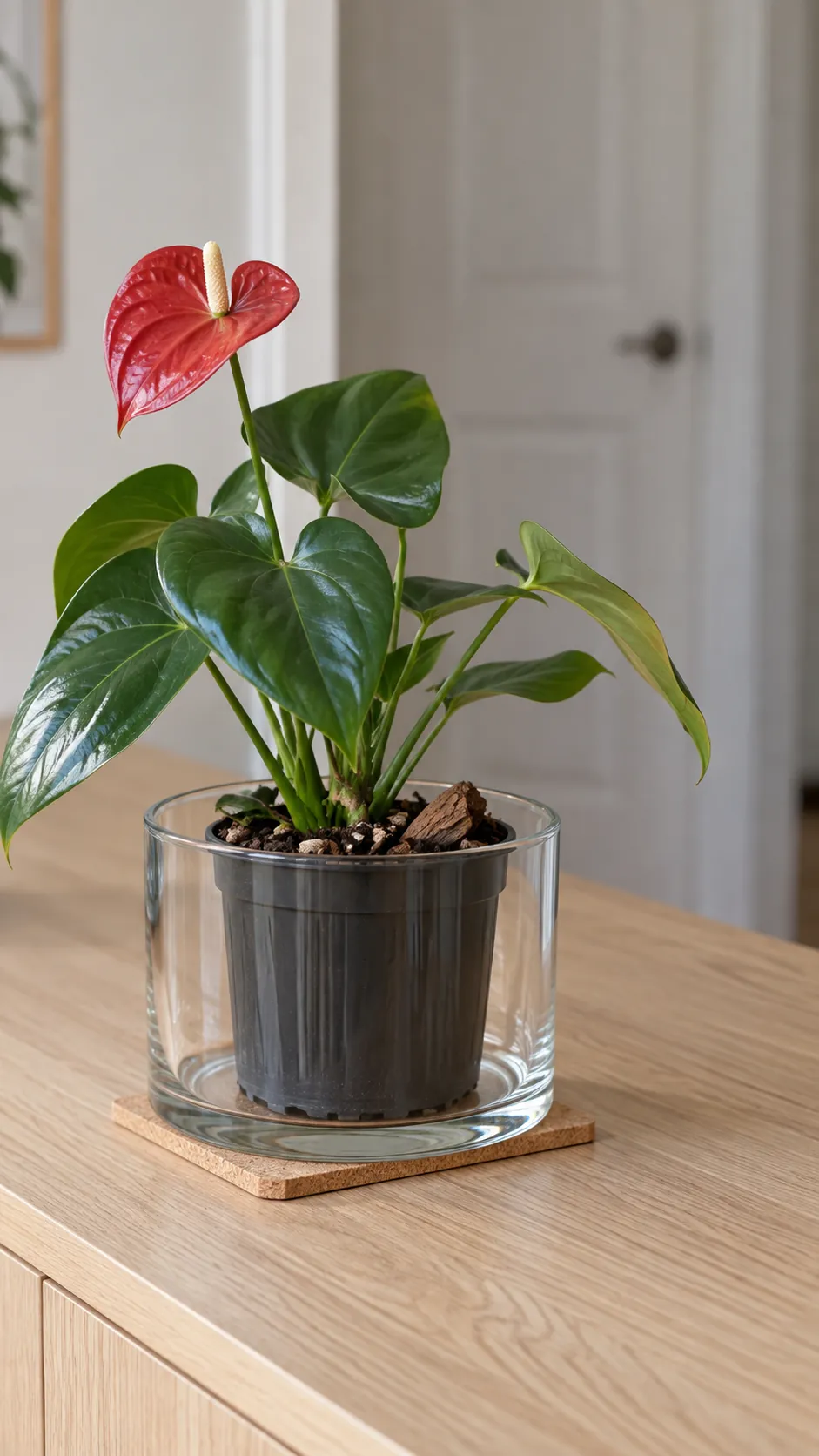
A small anthurium can make an attractive glass display when its draining nursery pot remains removable. Choose a wide outer vessel and keep water from pooling beneath the inner pot. The glossy colored spathe is a modified leaf rather than the whole flower, and the plant still needs suitable light and an airy growing mix.
Build a compact fittonia terrarium
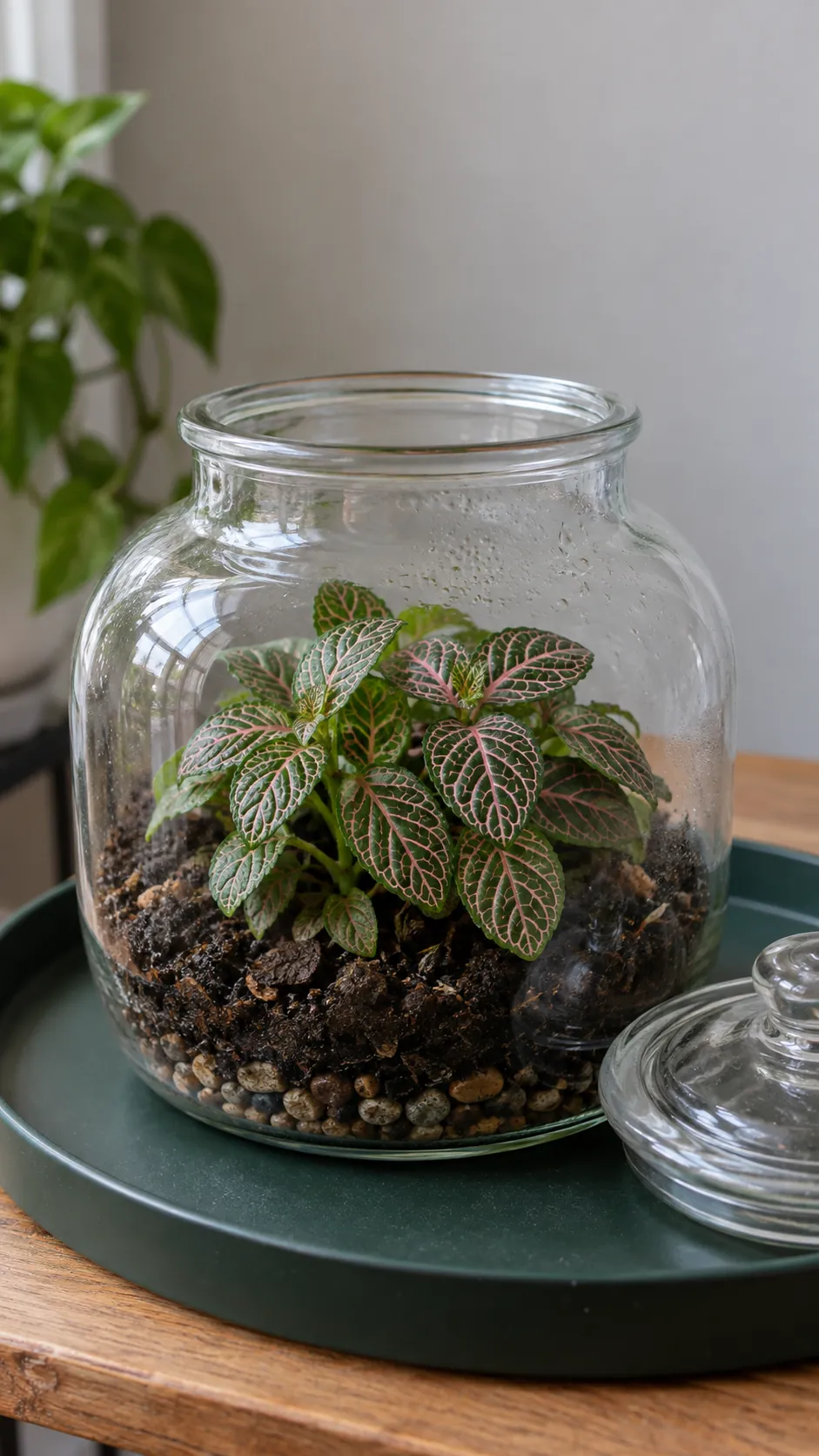
Fittonia is a useful terrarium plant for a humid jar with enough room around its leaves. Start with a clean wide mouth container and a modest amount of suitable substrate, then add water cautiously rather than saturating every layer. Keep the jar out of direct sun and adjust ventilation if heavy condensation persists or plants decline.
A gravel reservoir can separate some excess water from substrate, but it cannot drain water out of sealed glass. Do not treat charcoal as a cure for overwatering or poor maintenance. Trim growth before it presses against every surface and remove decaying material promptly.
Choose a miniature fern that fits
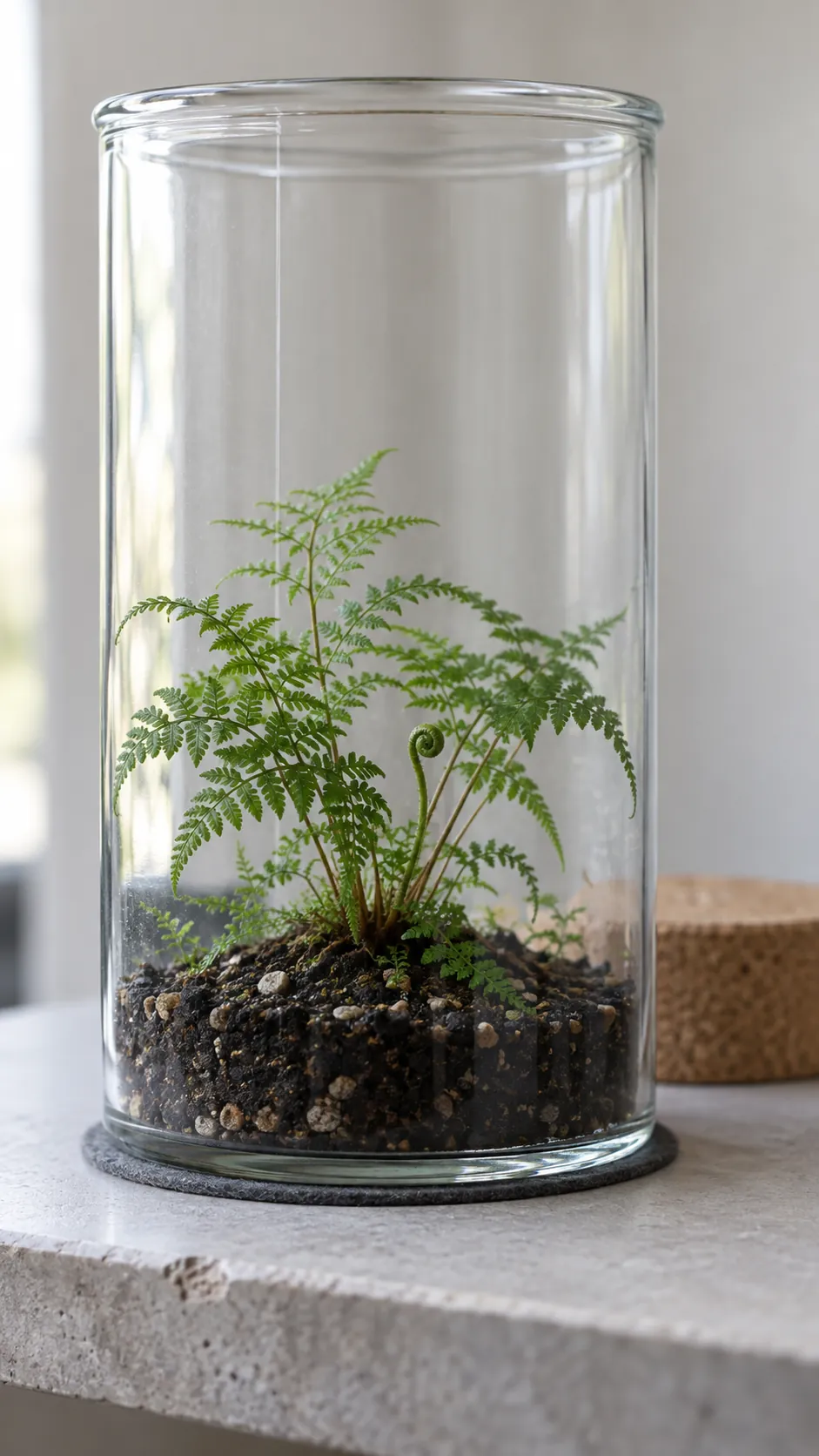
A genuinely small fern can bring fine foliage to a roomy terrarium without overwhelming it immediately. Confirm the mature size and humidity needs of the particular fern rather than assuming every fern belongs in a jar. Leave working room at the opening so damaged fronds can be removed and the plant can be lifted out when it outgrows the space.
Make a simple moss observation jar
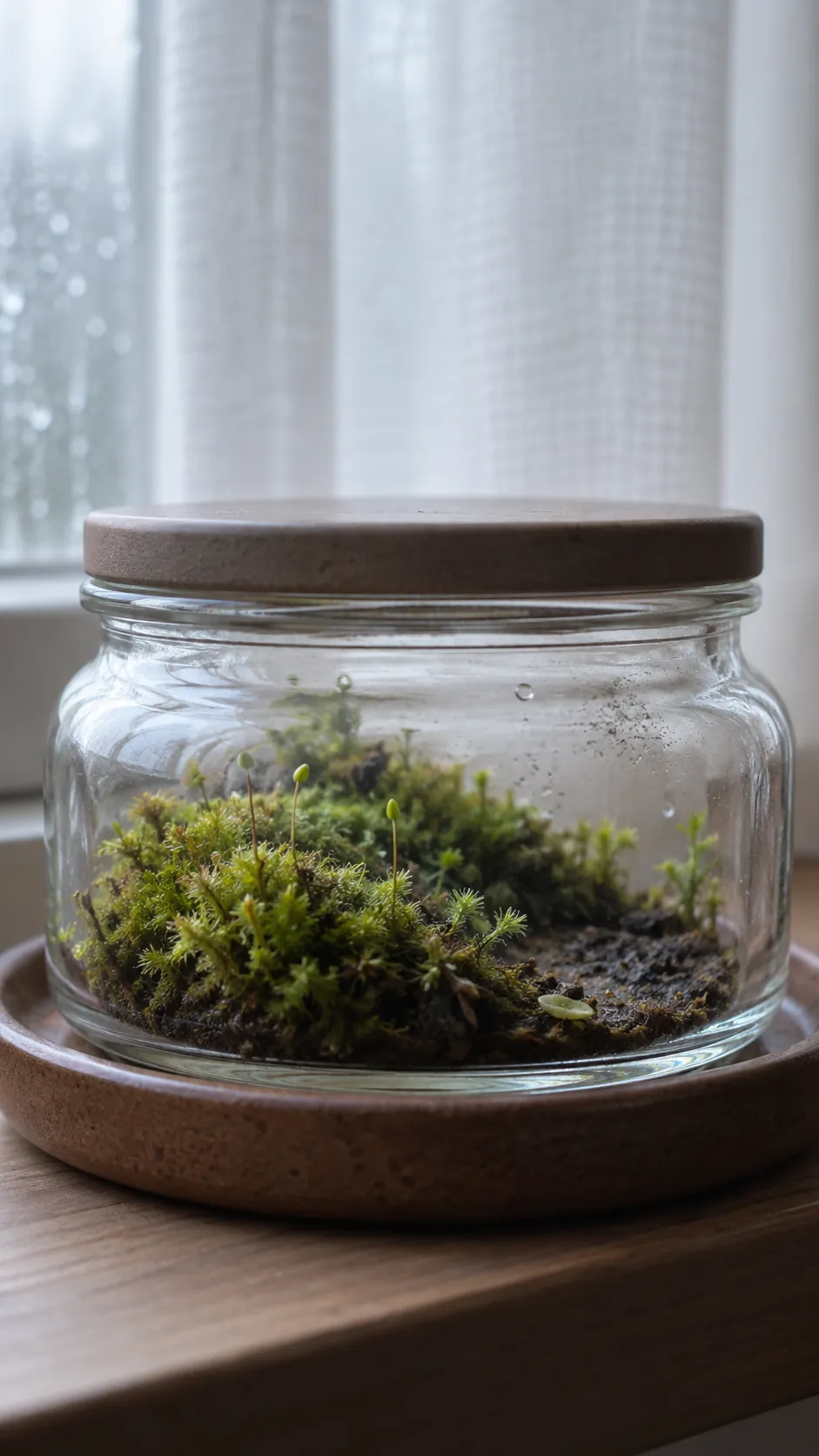
Use legally and responsibly sourced moss suited to humid container conditions for a quiet green display. Keep it lightly moist and in suitable indirect light, watching for browning or persistent sogginess. Moss is not automatically maintenance free, and different species respond differently to a closed environment.
Grow a small peperomia under glass
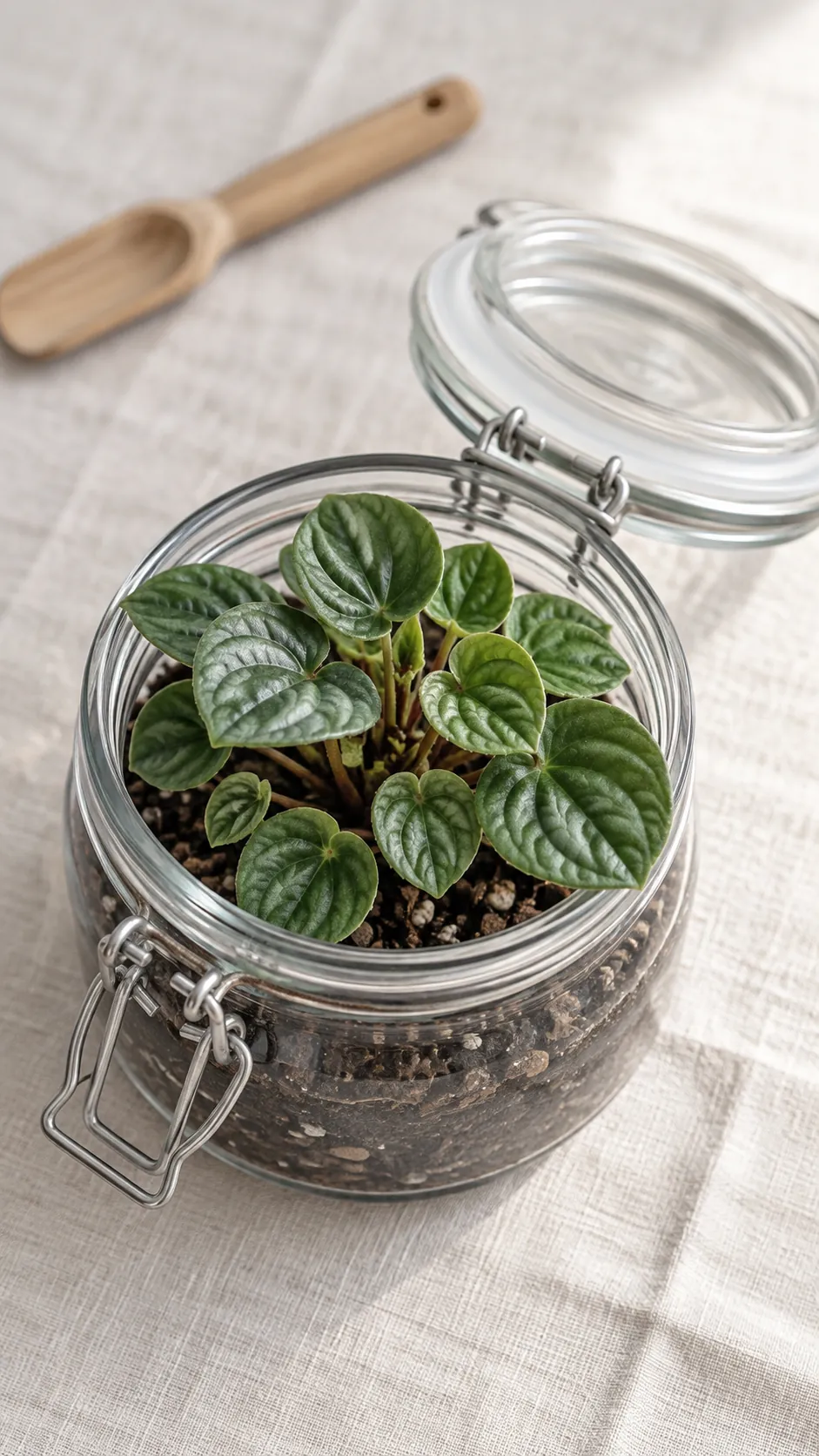
Some compact peperomias suit humid displays, but their needs and mature habits vary. Select a small identified variety and keep its crown above wet substrate rather than burying stems deeply. An openable jar gives you access to adjust moisture, prune, or repot when the plant needs more room.
Leave an air plant open to the room
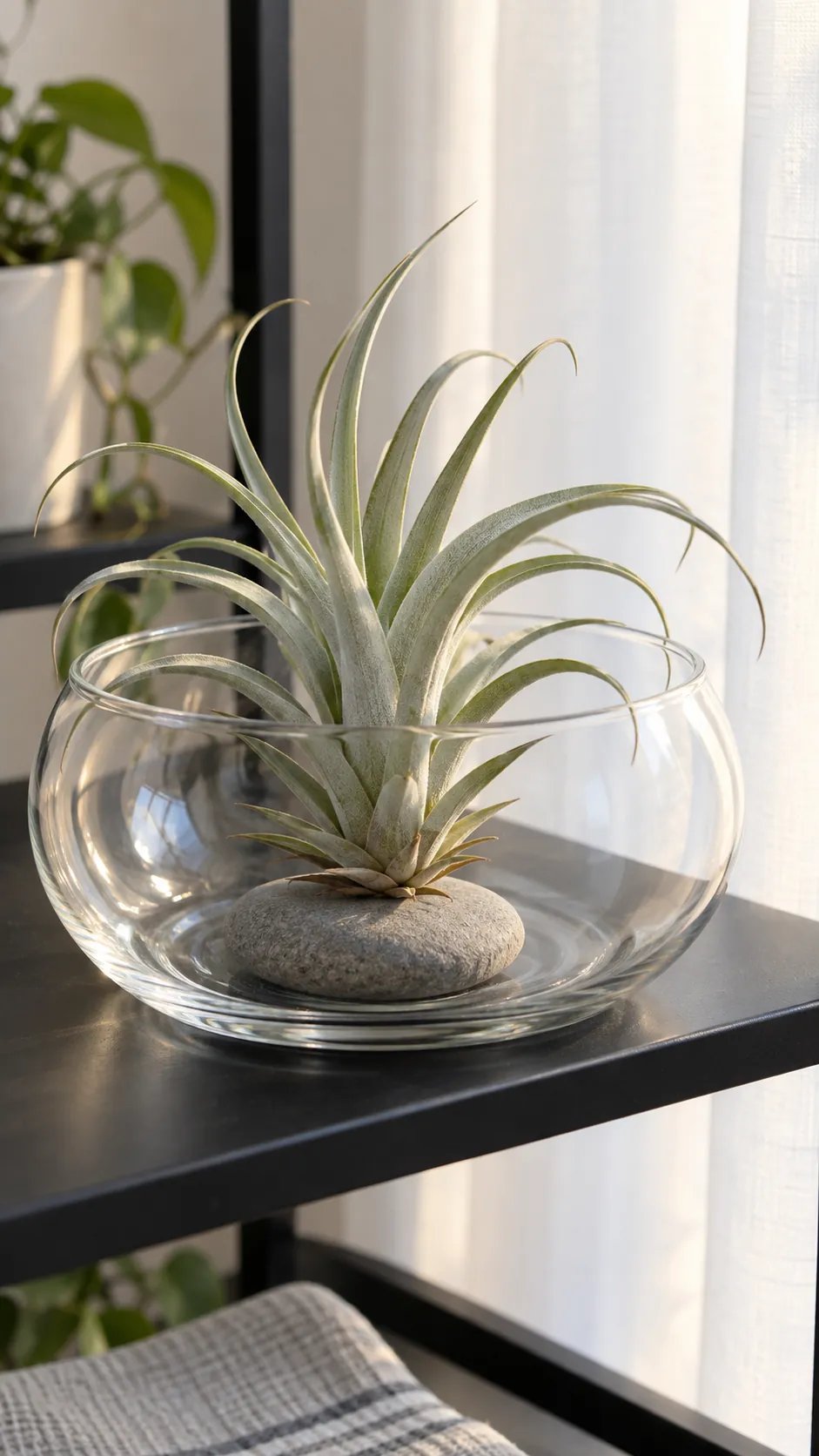
An air plant should sit in a wide open glass display with good airflow, not inside a sealed humid jar. Remove it for the watering method appropriate to its species, then let it dry thoroughly before replacing it. Do not bury its base in damp sand or assume occasional misting meets every air plant's needs.
Anchor anubias without burying its rhizome
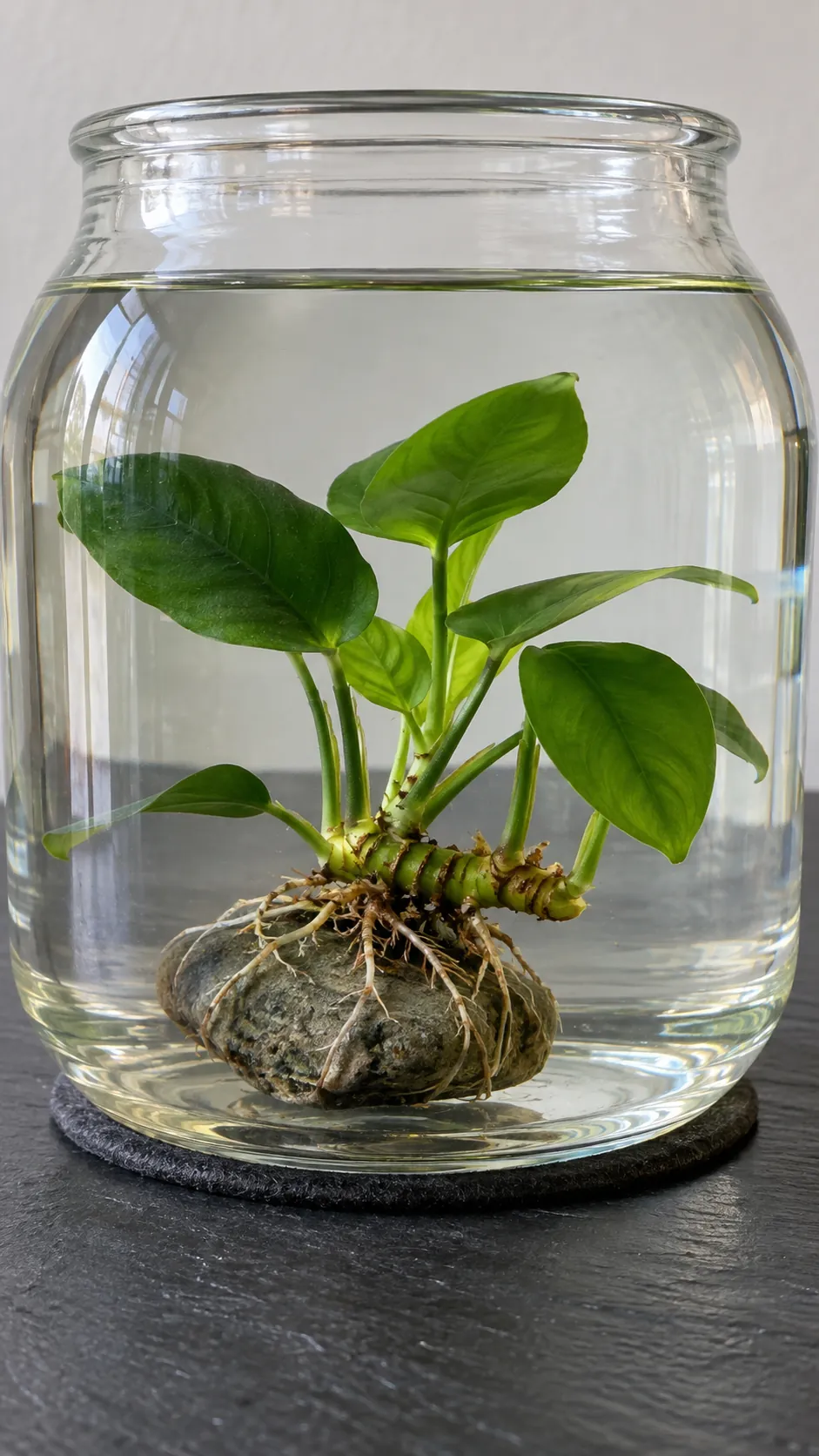
A small anubias can become an aquatic glass display when its rhizome stays above the substrate. Attach it loosely to suitable aquarium wood or stone and use water appropriate for aquarium plants. Keep the jar free of fish, maintain water quality, and expect to manage algae rather than treating the setup as a sealed ecosystem.
Give java fern a separate aquatic jar
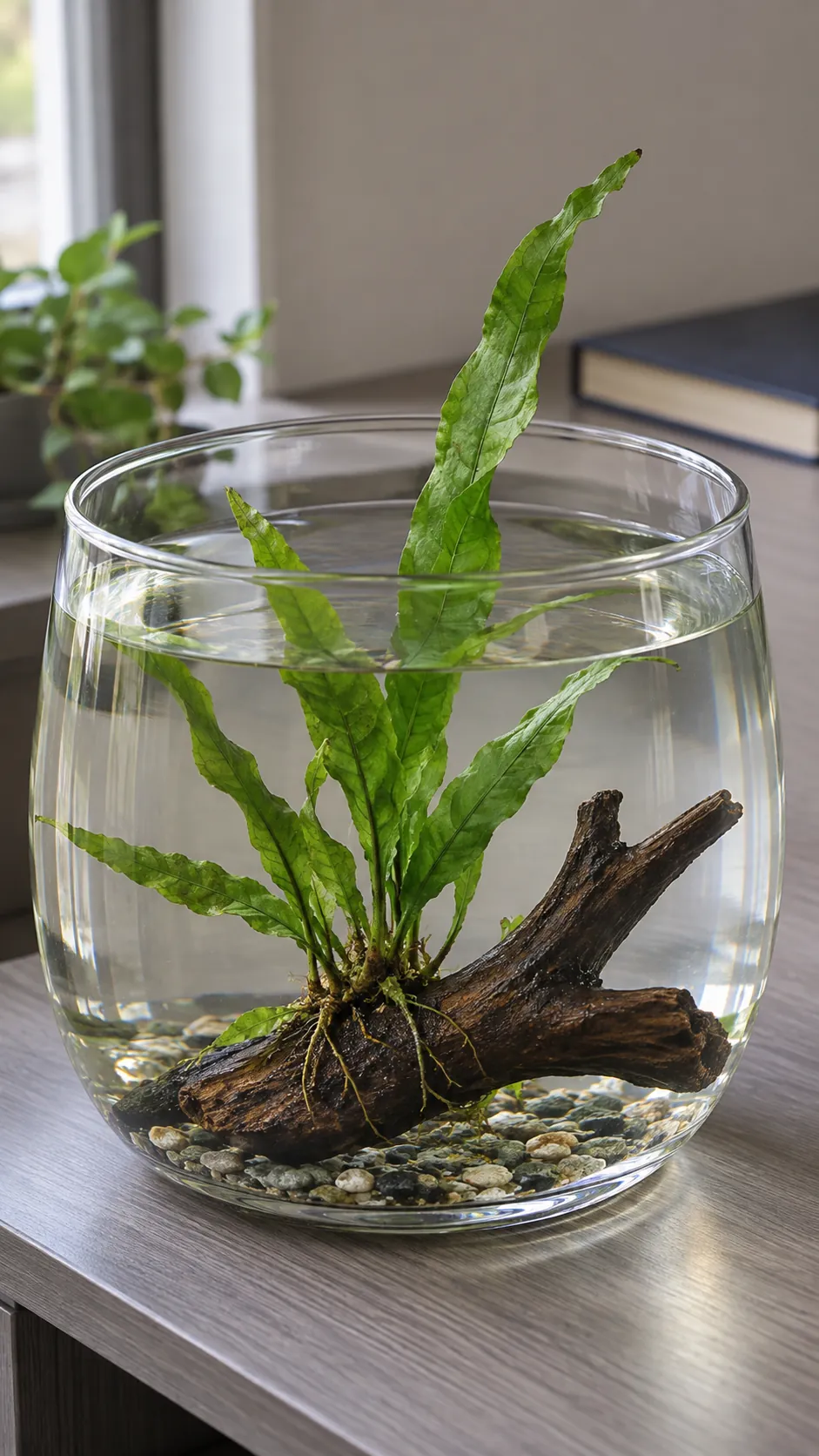
Java fern offers a different leaf shape for a small aquatic display, provided its rhizome is not buried. Use a container with enough water volume and opening space to clean and maintain it. Light and nutrients still matter, and a tiny jar should not be presented as a suitable home for fish.
Reuse a bottle only when roots can come out
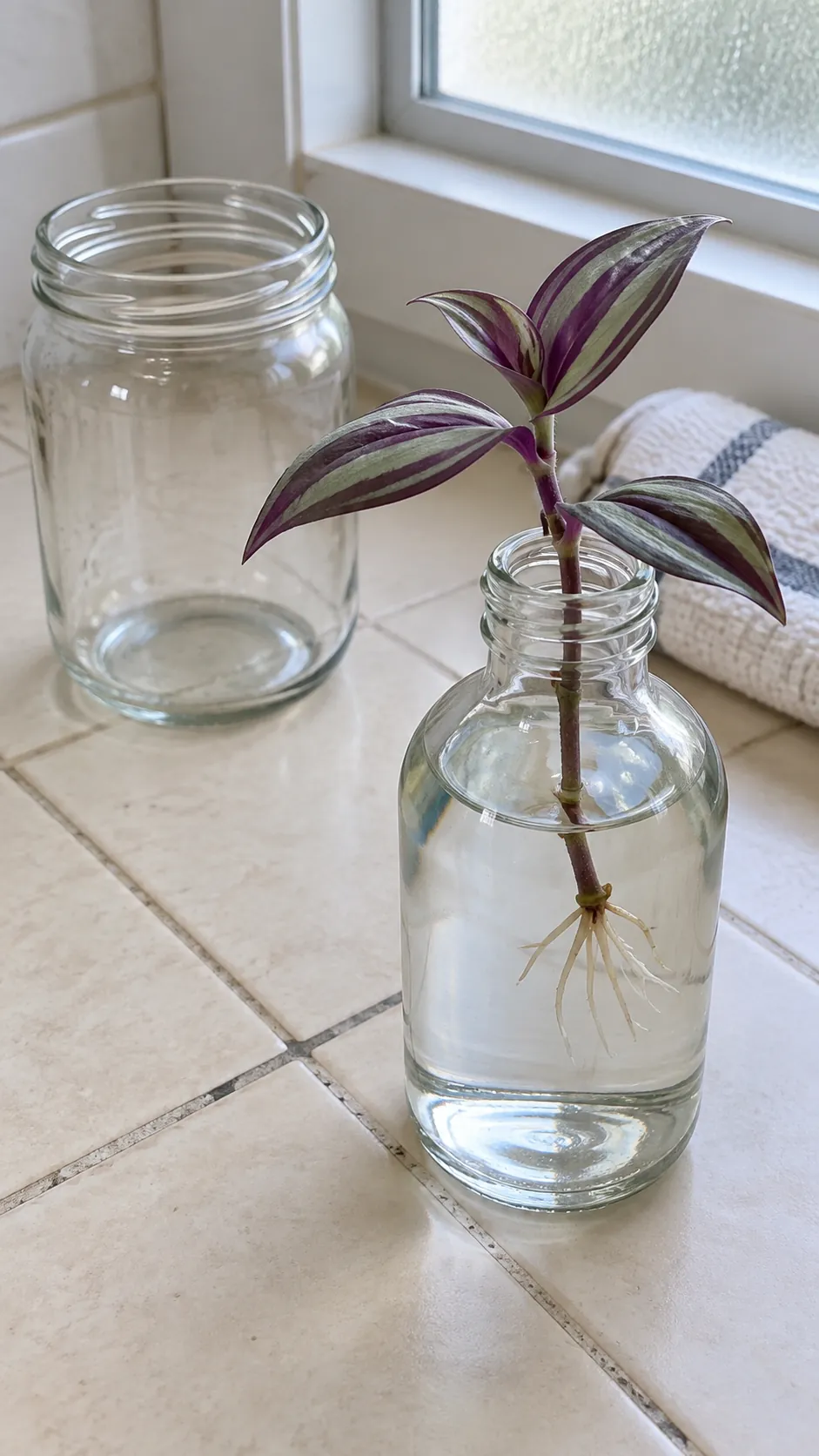
Plants in bottles can look elegant, but a very narrow neck makes cleaning and root removal difficult. Choose a smooth undamaged bottle with an opening that suits a small cutting, and keep the project temporary if roots begin filling the neck. Avoid improvised glass cutting for a decorative project when a safer wide mouth jar is available.
Add one removable miniature accent
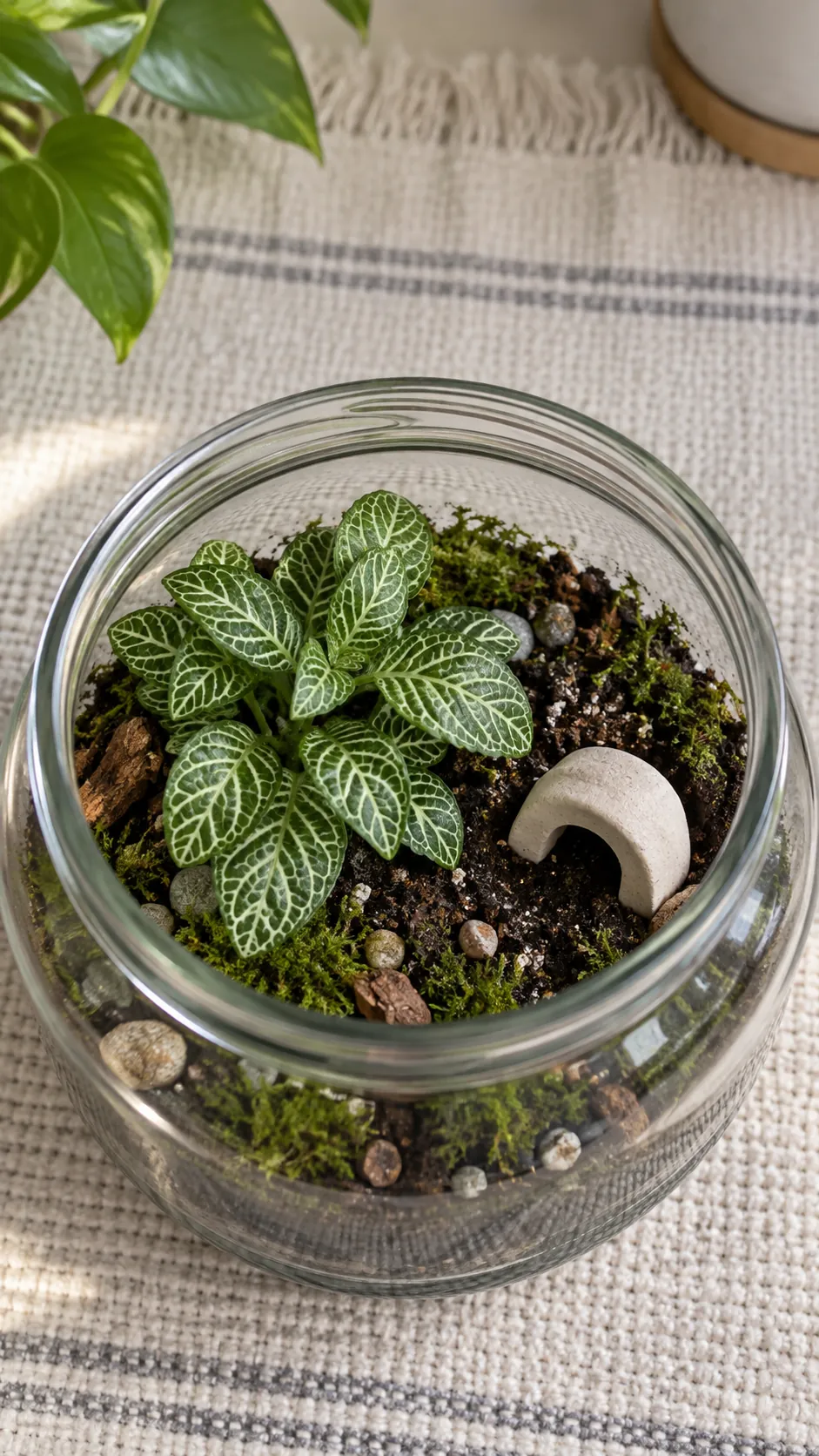
A small inert ornament can personalize a terrarium without turning the growing space into a crowded model village. Leave the plant crowns, glass edges, and access opening clear, and choose materials that tolerate moisture without leaching paint. Remove the accent easily for cleaning instead of cementing objects around living roots.
Light a jar garden without overheating it
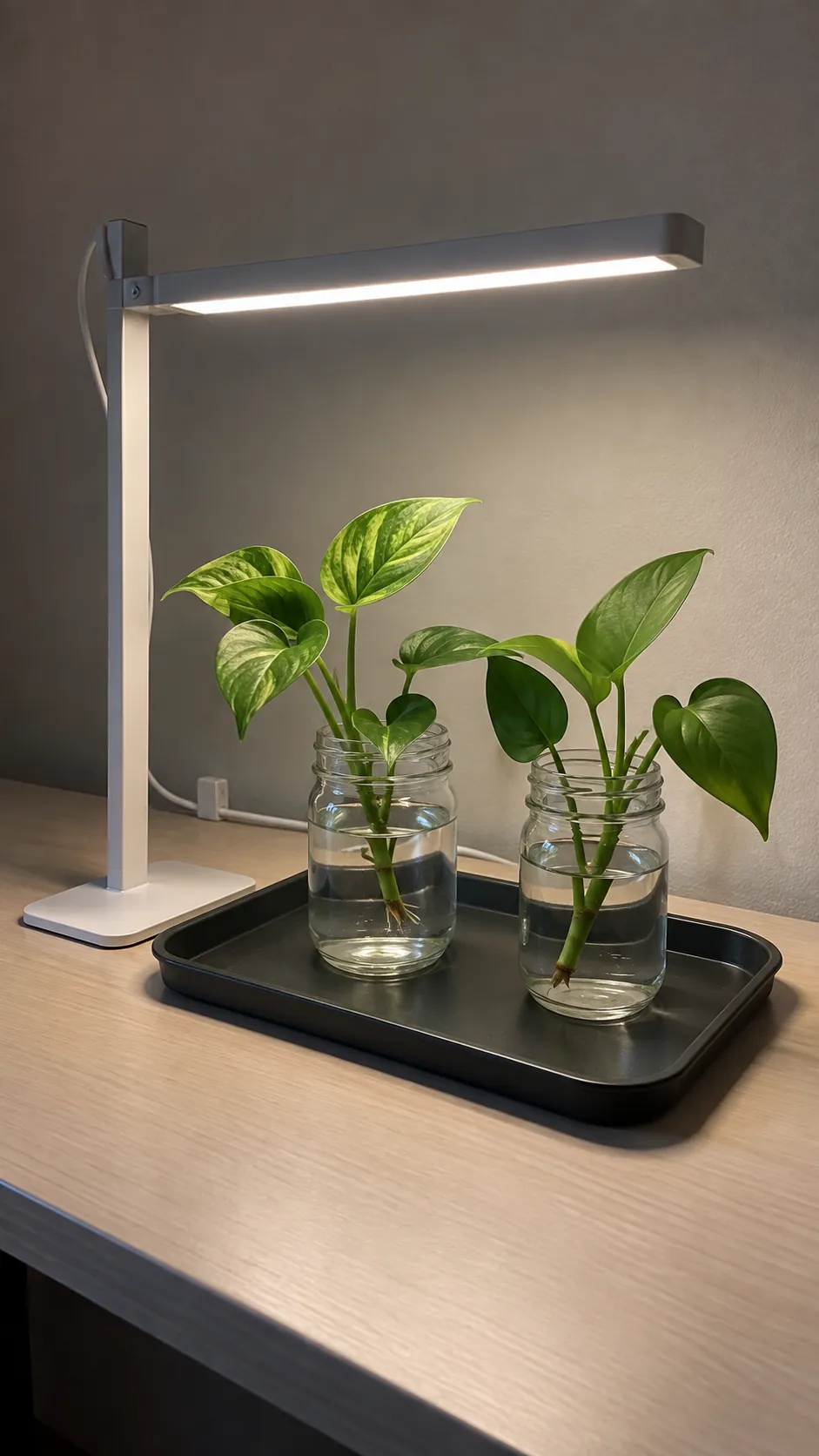
Place a jar where the plants receive suitable light and where you can inspect the water or substrate easily. A small grow light can help in a dim room when its distance and schedule suit the plants. Keep heat and electrical connections away from wet surfaces, and avoid direct sun on a closed terrarium.
Group jars by care needs on a stable tray
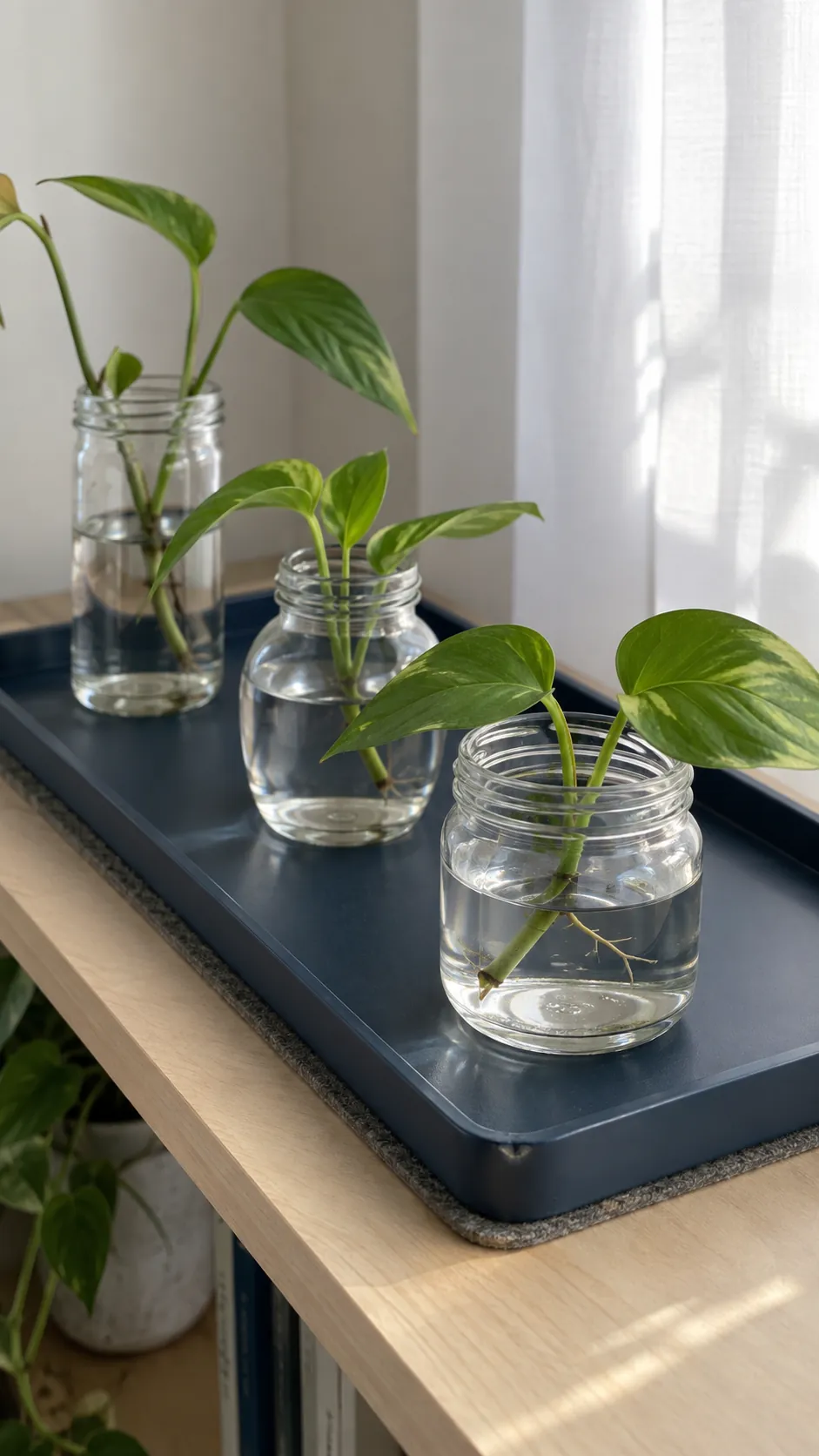
A shallow tray can make several jars easy to move for cleaning, but keep each vessel's water and substrate separate. Group similar care needs together rather than putting a dry air plant into the same closed environment as moisture loving moss. Leave enough room to lift each jar and protect the furniture with a suitable waterproof surface.
Keep an open jar for easy maintenance
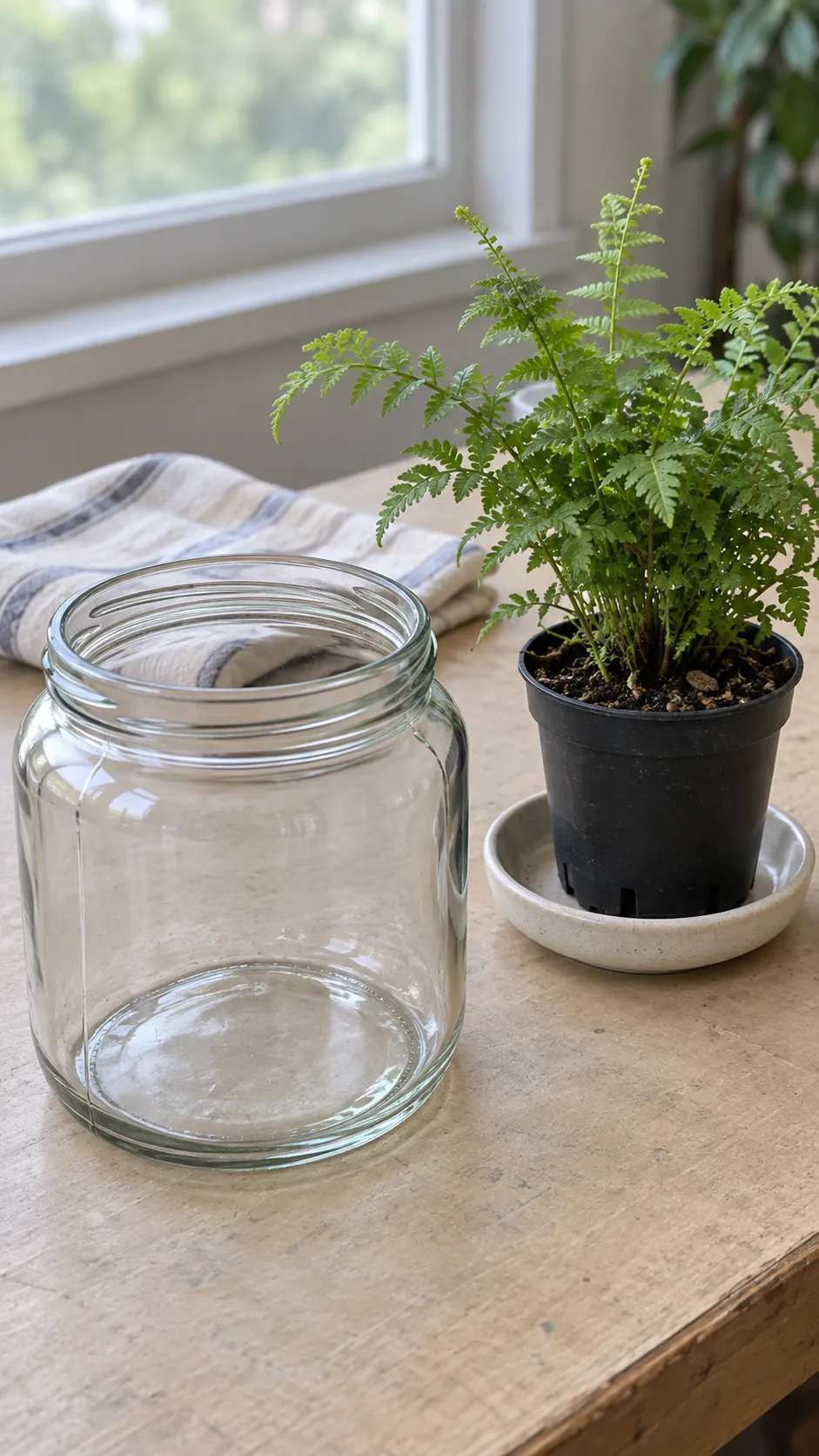
An open wide mouth jar is easier to inspect, clean, and replant than a narrow sealed bottle. Choose a small suitable plant or removable inner pot, then review moisture and growth regularly rather than declaring the display self sustaining. If a plant needs a much larger aquatic container, as lotus usually does, choose a proper outdoor setup instead of forcing it into a tabletop jar.