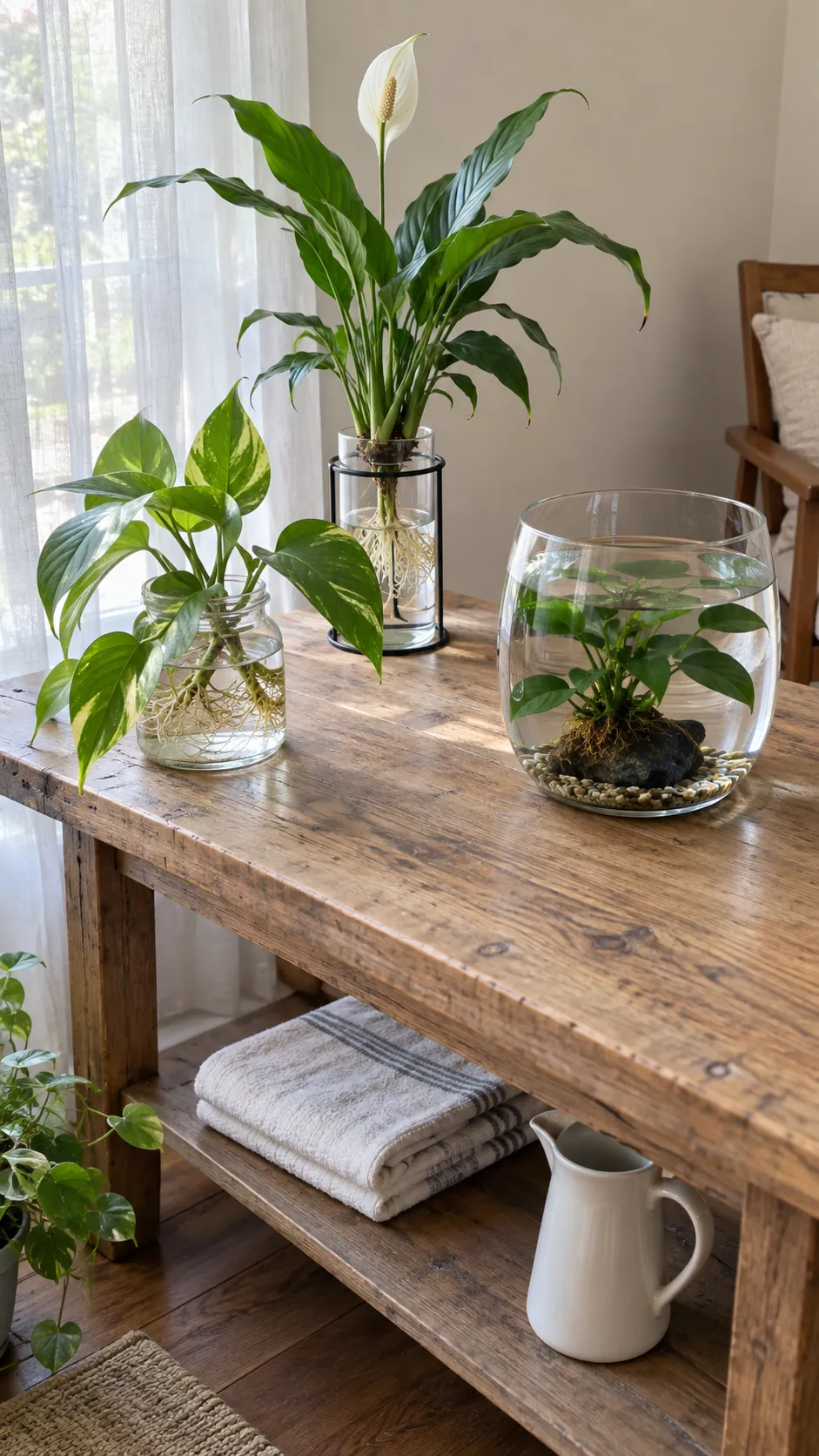
A cutting can look healthy in clear water long before its setup is ready for lasting growth. The useful choice is whether you are rooting a new plant, maintaining a fed water culture, or growing a true aquatic species. Match the container to that job and you can enjoy visible roots without turning a simple display into a rescue project.
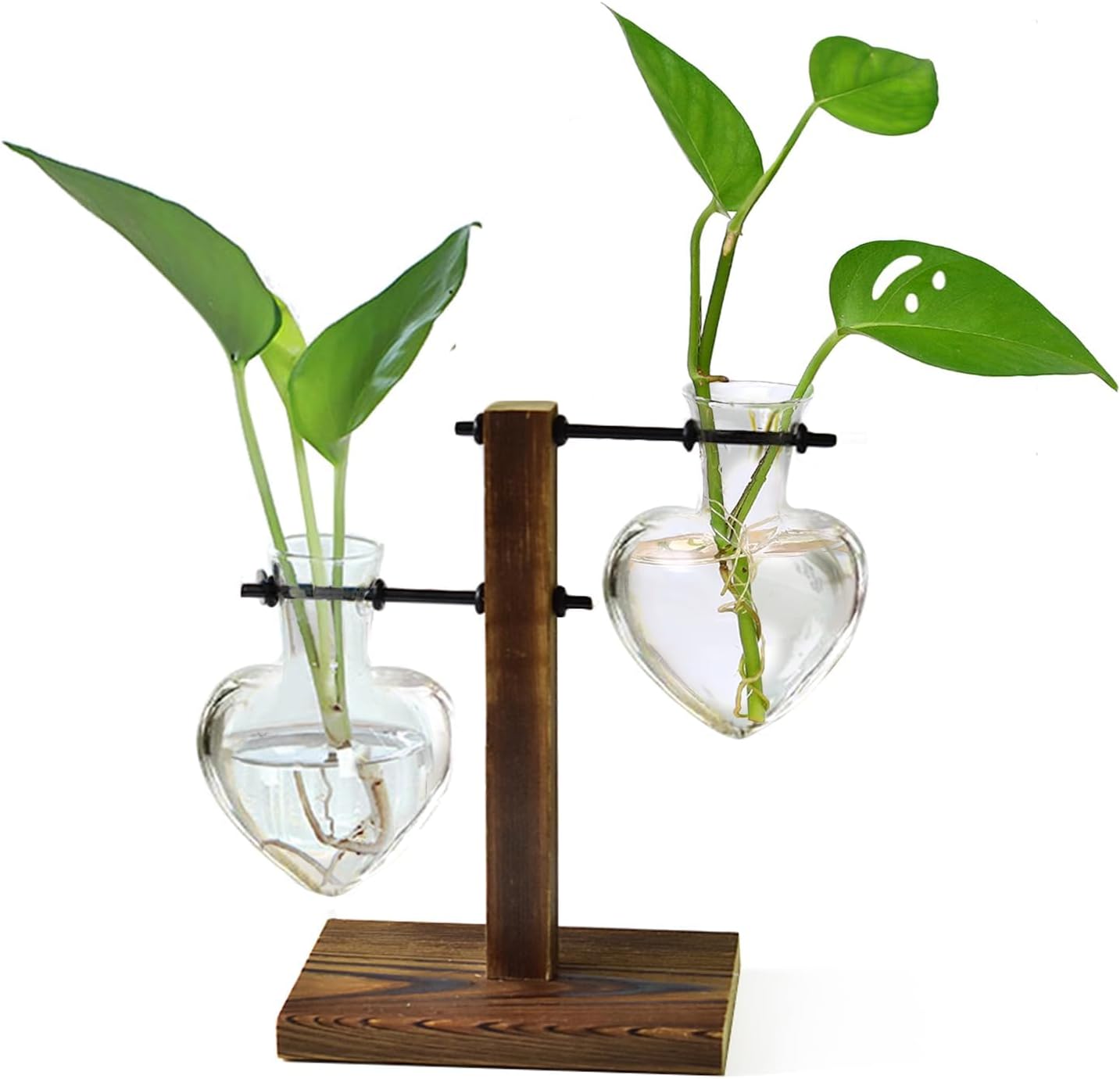
Start with a pothos stem that has a node
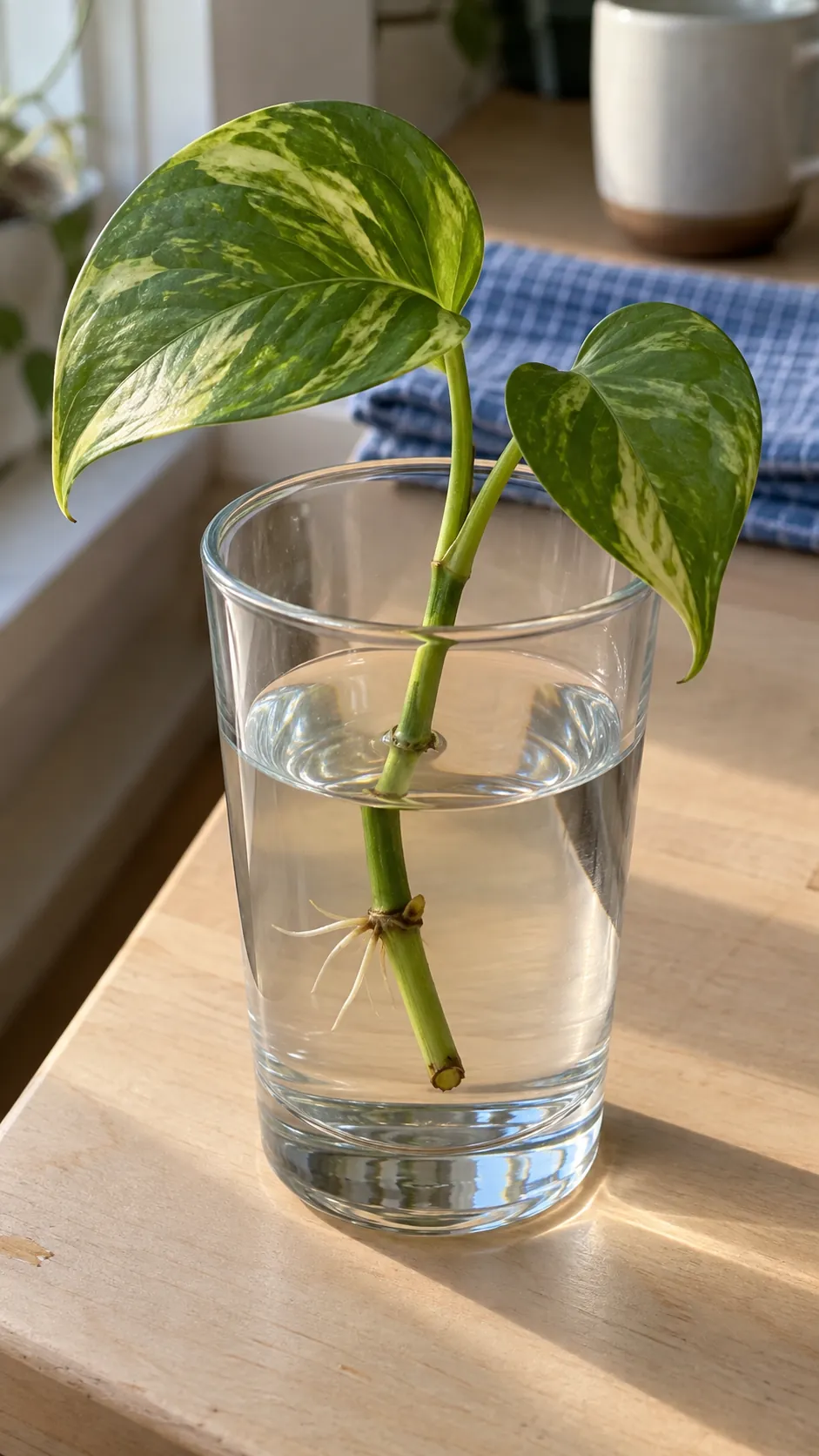
A pothos cutting needs a piece of stem with a node, not just a leaf and its stalk. Place the node in water while keeping the leaf blades dry, then choose bright indirect light where you can easily inspect the jar. For money plant in water kept beyond the rooting stage, plan for a suitable hydroponic nutrient solution rather than relying on plain water forever.
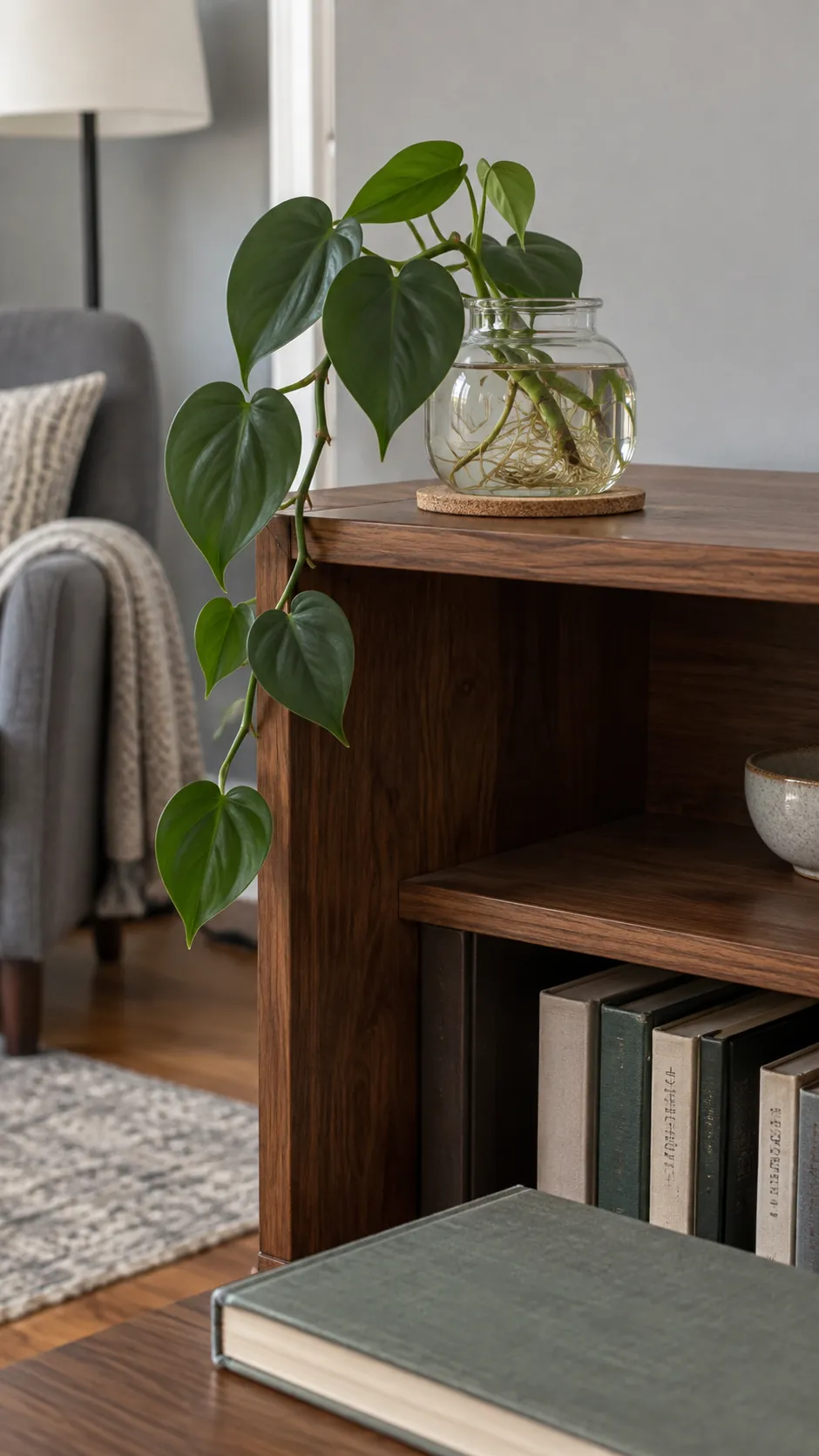
Give heartleaf philodendron room to trail
Heartleaf philodendron suits a shelf where its vine can hang without pulling the container toward the edge. Root a short healthy stem first, because a long vine with few roots can struggle to support its leaves. Leave enough shelf space to lift the vessel straight out for cleaning instead of weaving the vine around permanent fixtures.
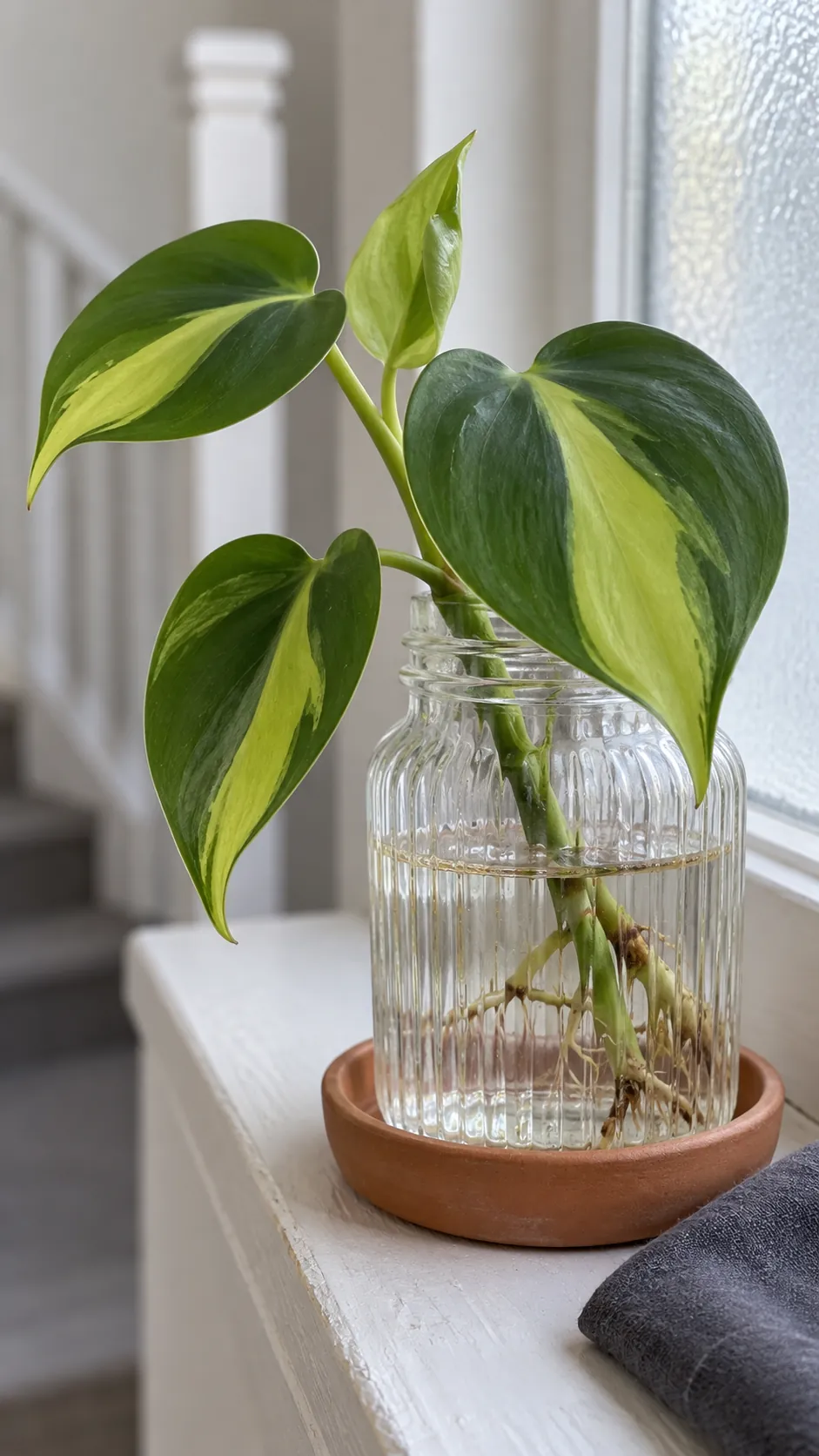
Use Philodendron Brasil for patterned foliage
The lime stripe on Philodendron Brasil adds contrast without needing flowers. A stem cutting with a node can root in water, but dim conditions may produce weaker growth and less striking new leaves. Turn the container occasionally if growth leans toward the window, and keep the display out of harsh midday sun.
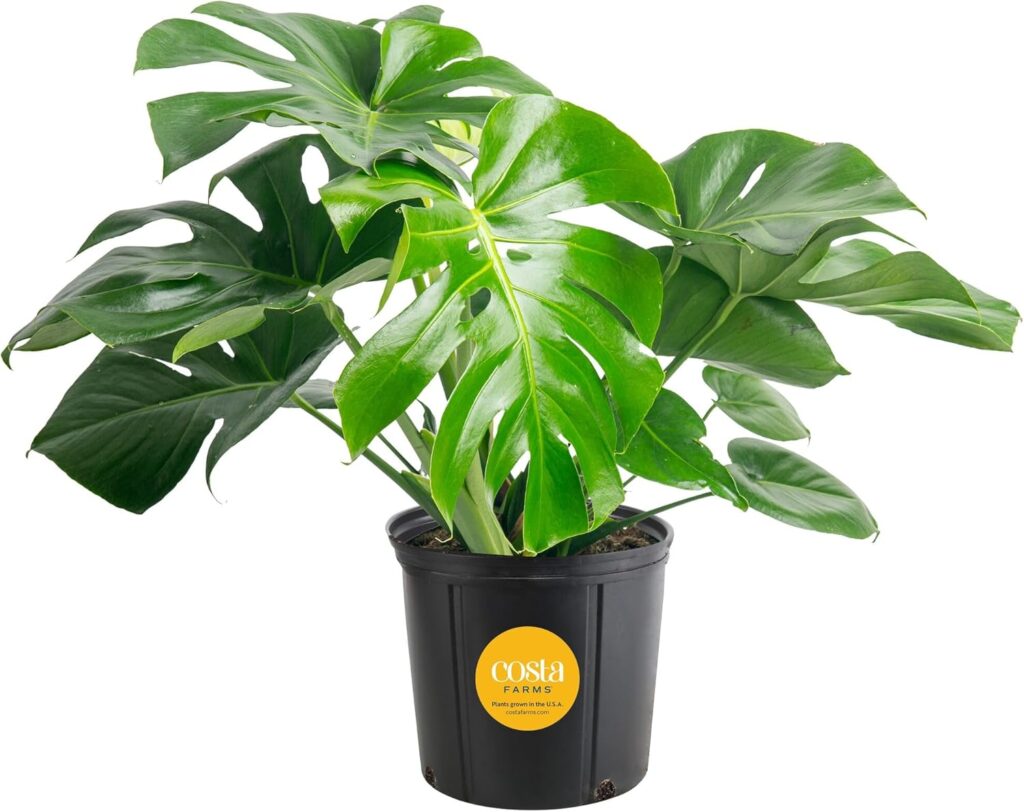
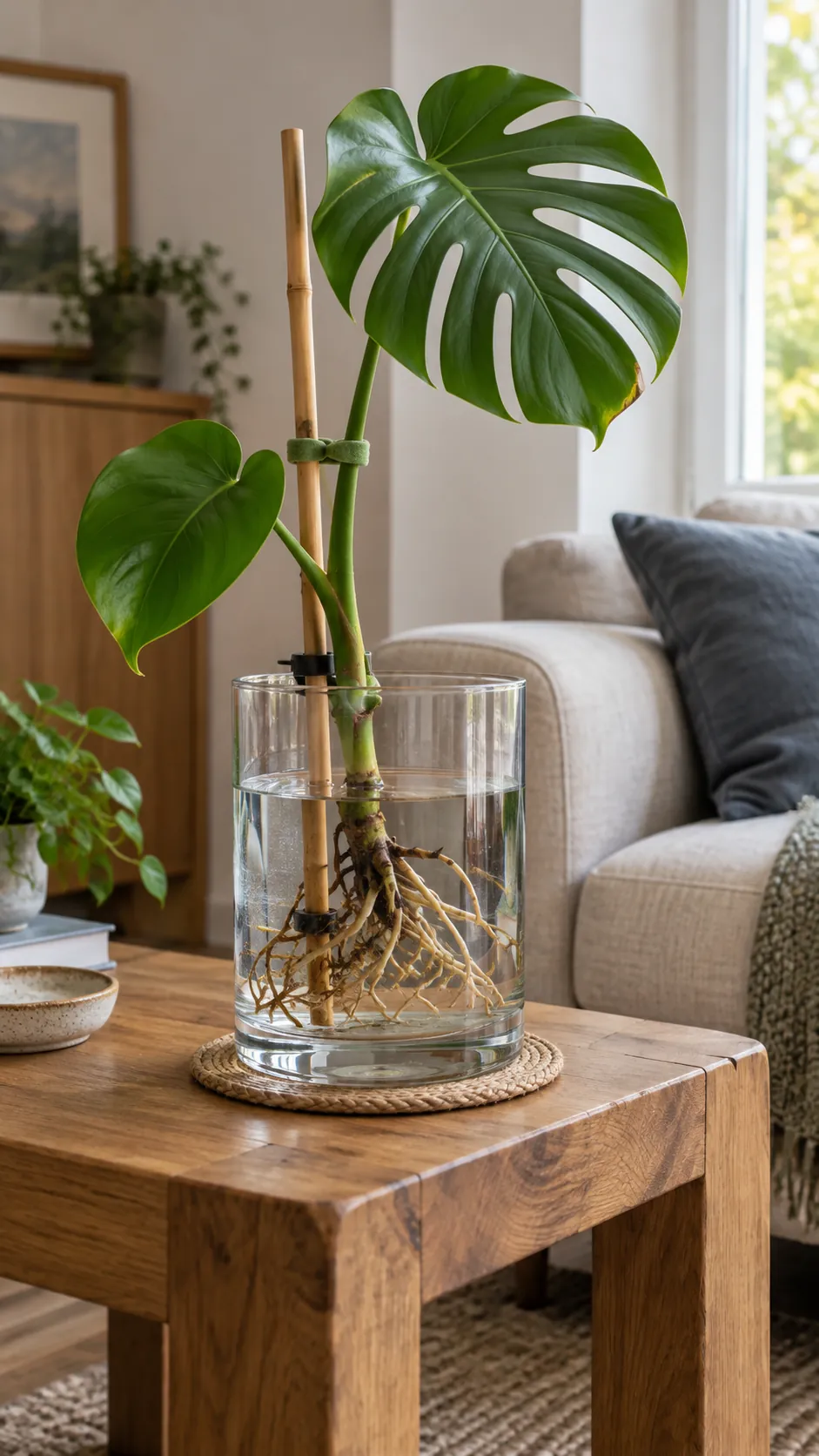
Support a Monstera deliciosa cutting
A Monstera plant can begin in water when the cutting includes a viable stem node. Its heavy leaves call for a broad, stable vessel and a support that does not crush the stem. Keep the leaf stalk junction above the water and move to a larger setup before roots become trapped in a narrow neck.
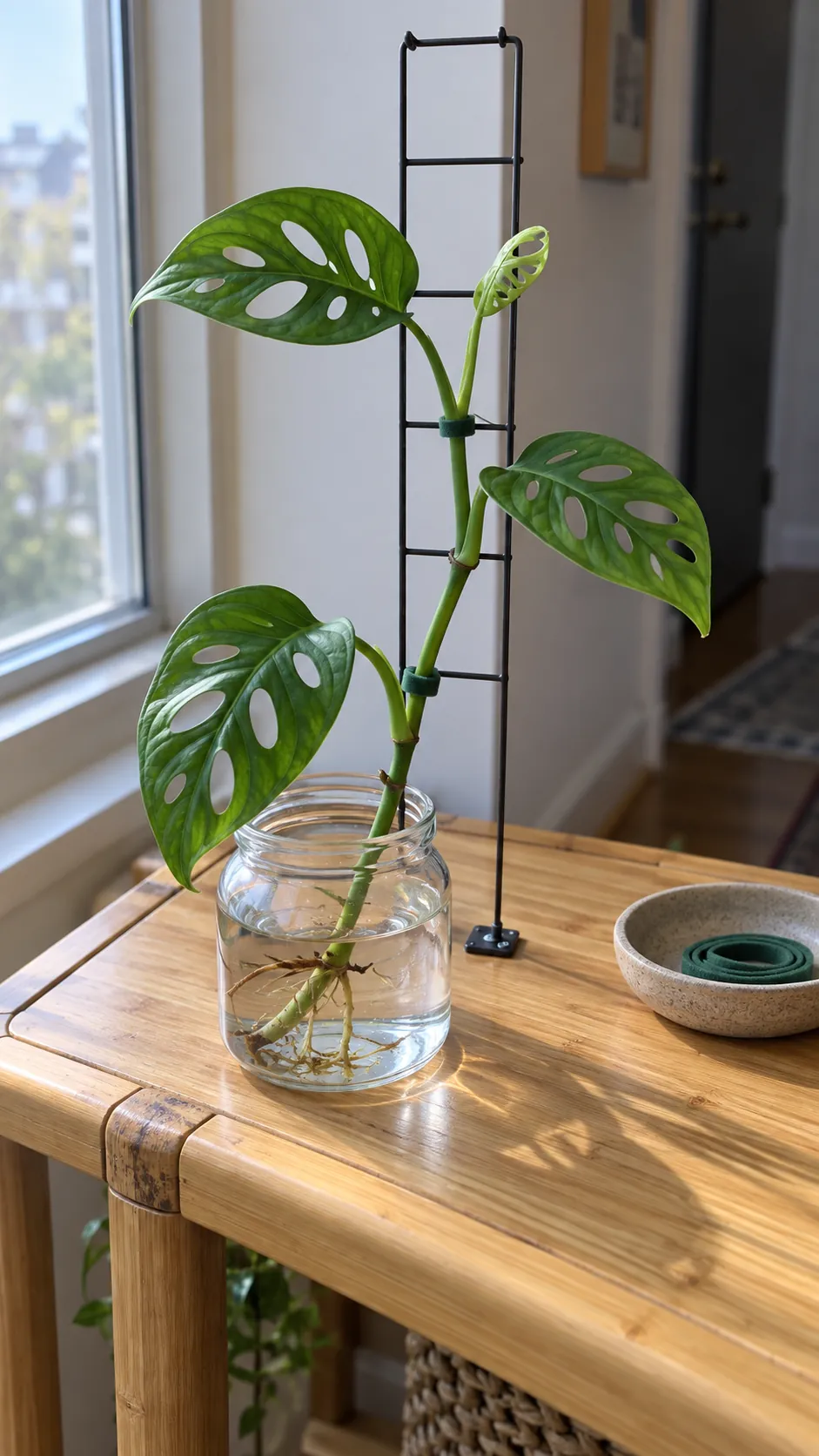
Choose Monstera adansonii for a lighter vine
Monstera adansonii offers perforated leaves on a smaller vine than a mature deliciosa. Remove any leaf that would sit below the waterline, leaving a node available to root. A small trellis beside the vessel gives new growth somewhere to climb without forcing tangled roots through a decorative bottle.
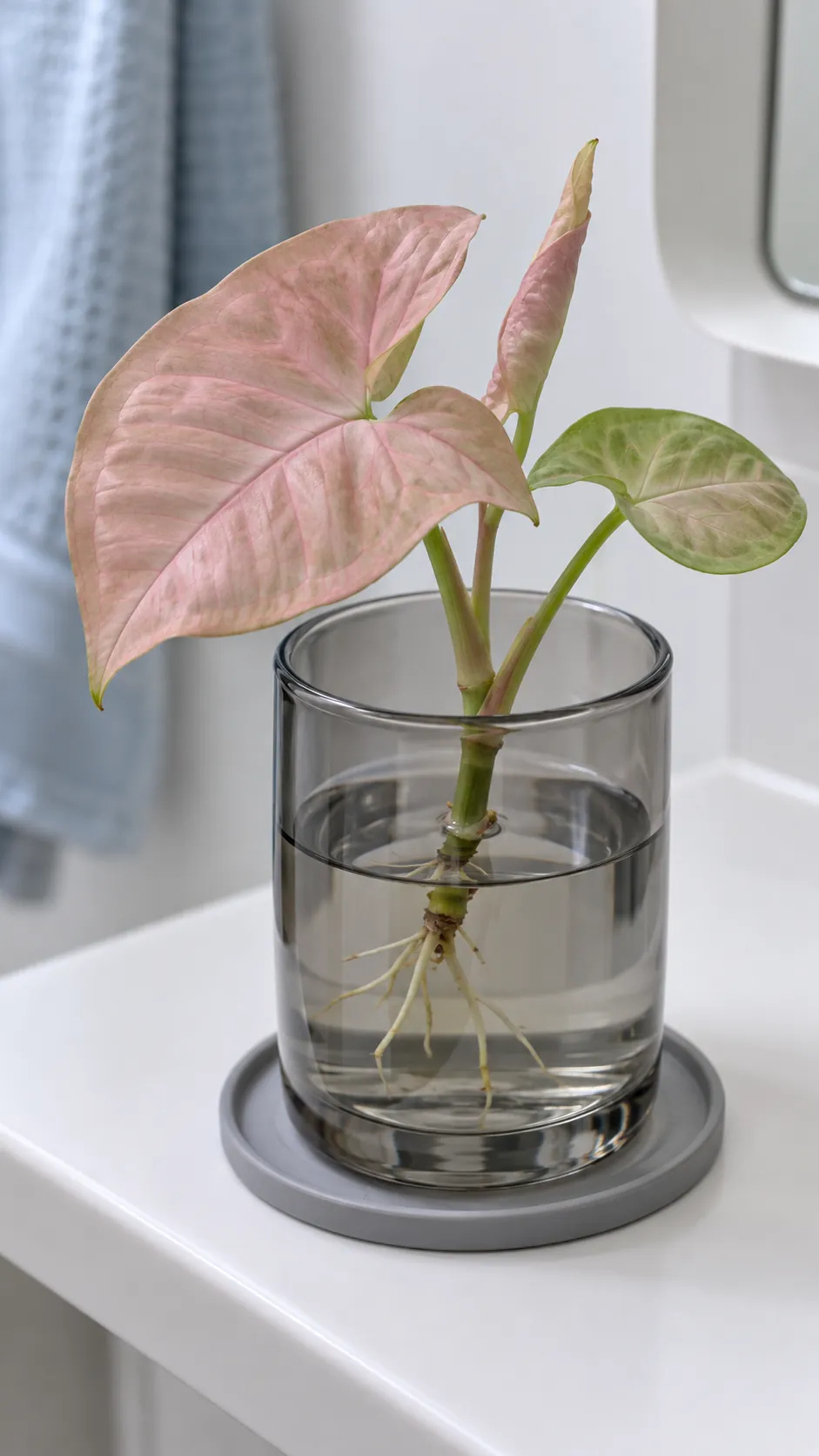
Let syngonium establish before expanding its display
Syngonium cuttings need a stem node, even when the colorful arrow shaped leaf seems like the main attraction. Start with a modest cutting and watch for fresh roots before adding a second stem to the same vessel. Pink or cream foliage looks best in useful indirect light, while a crowded bundle makes declining stems harder to spot.
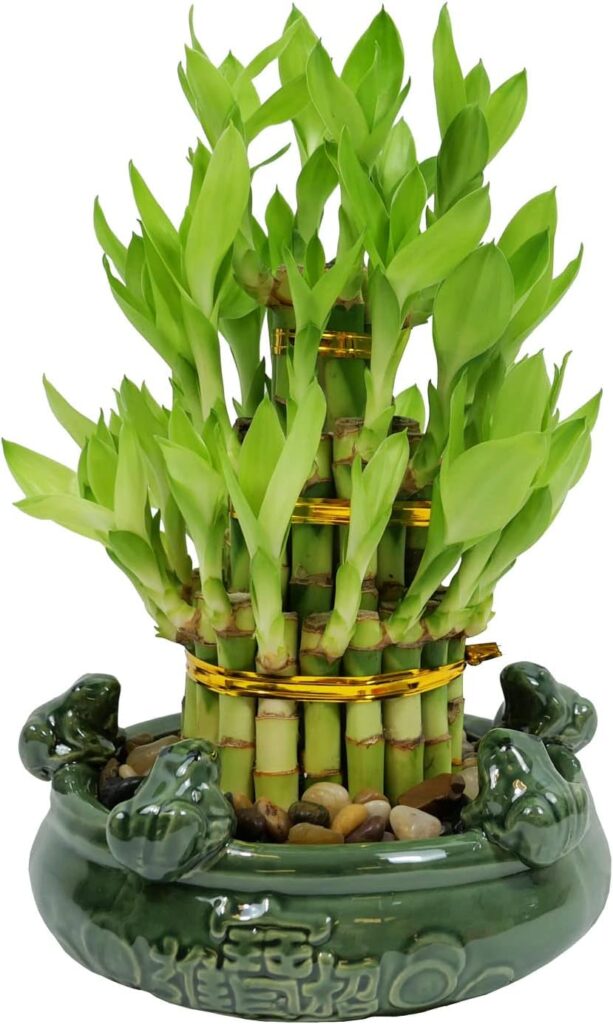
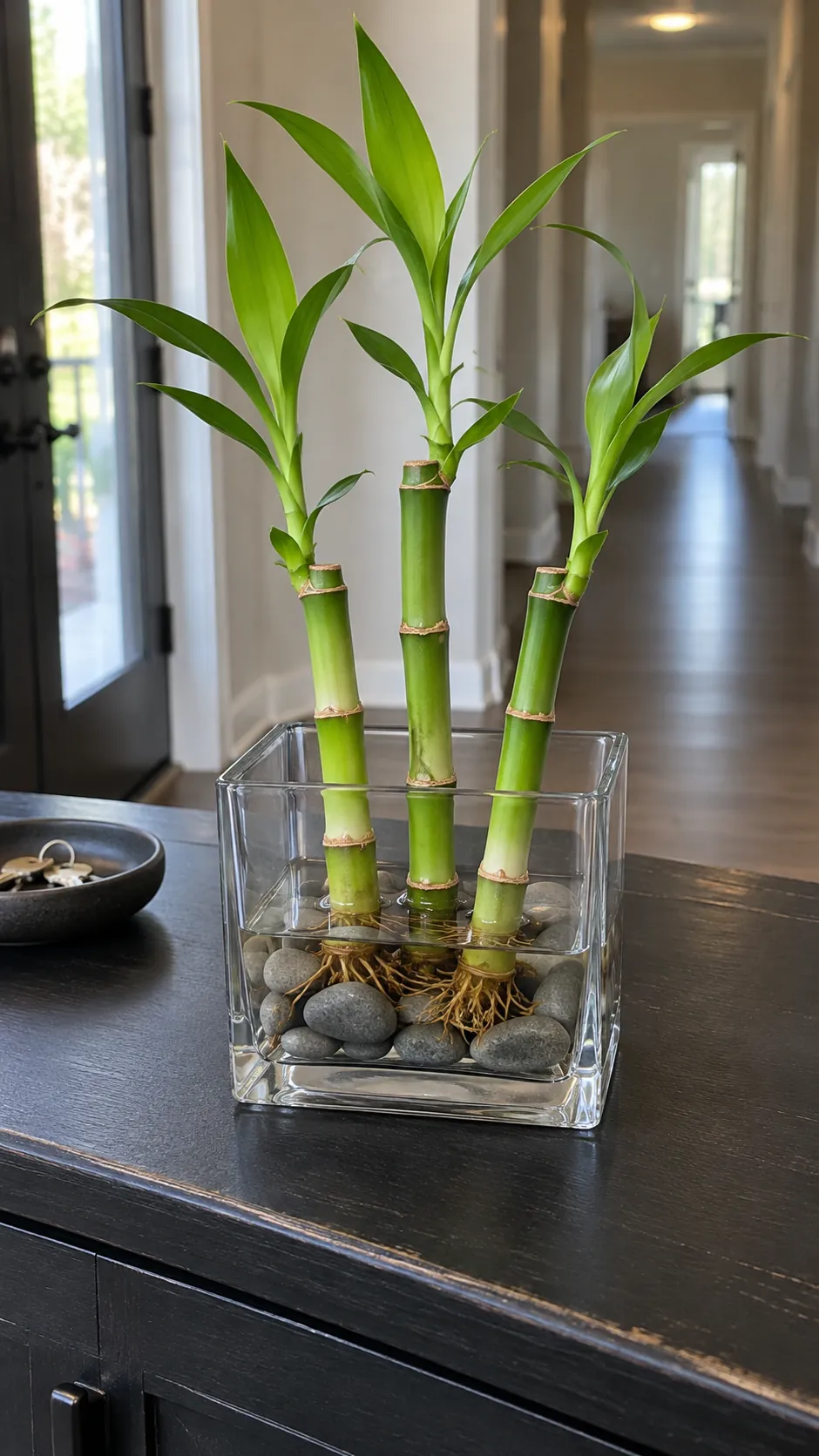
Keep lucky bamboo roots covered and canes exposed
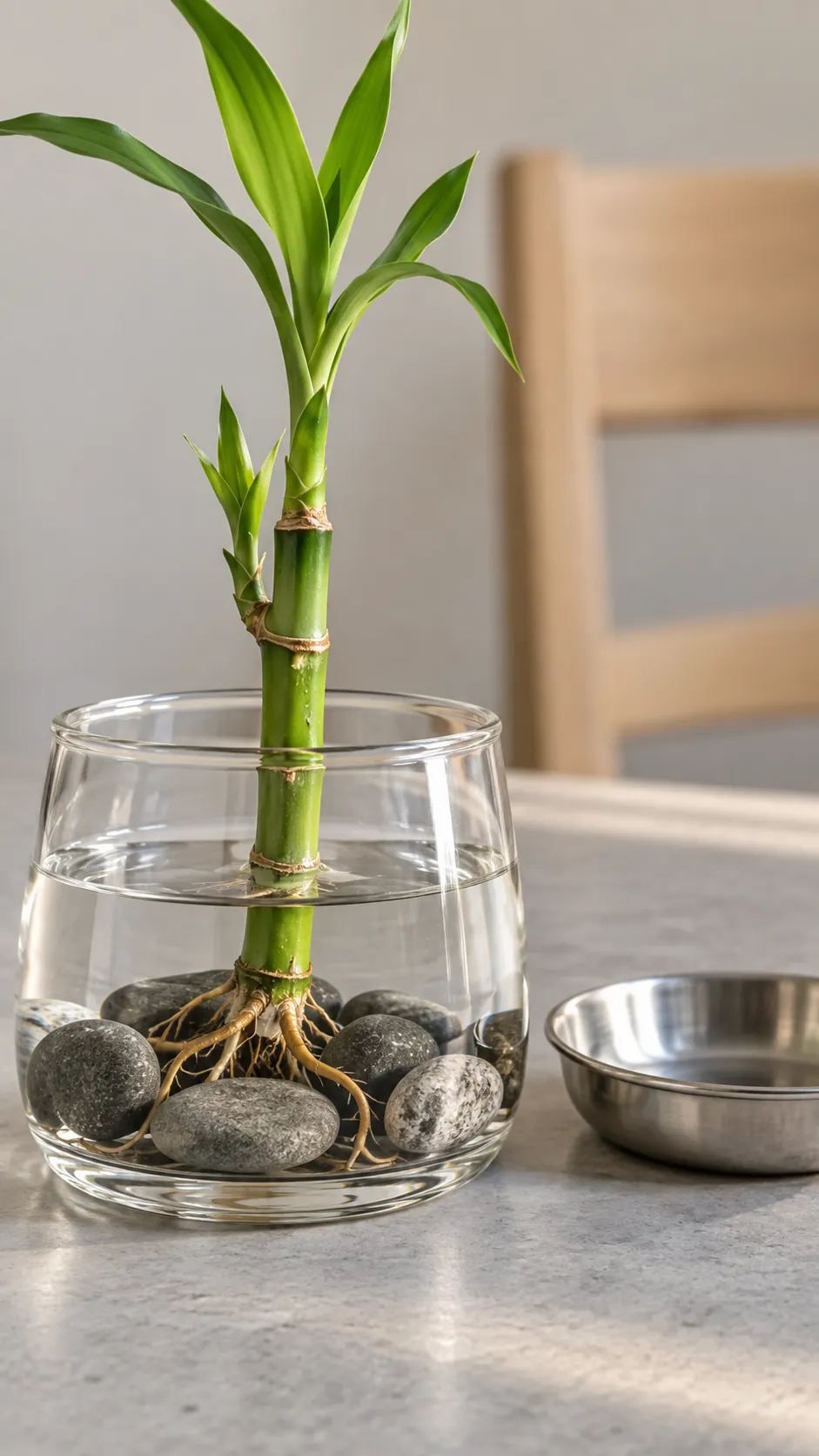
Lucky bamboo is a Dracaena, not a true bamboo or a fully submerged aquatic plant. Cover the roots with water while leaving most of each cane above the surface, and use a small amount of clean support material only if needed. If your tap water causes persistent leaf tip damage, try water with fewer dissolved salts and avoid adding fertilizer at every top up.
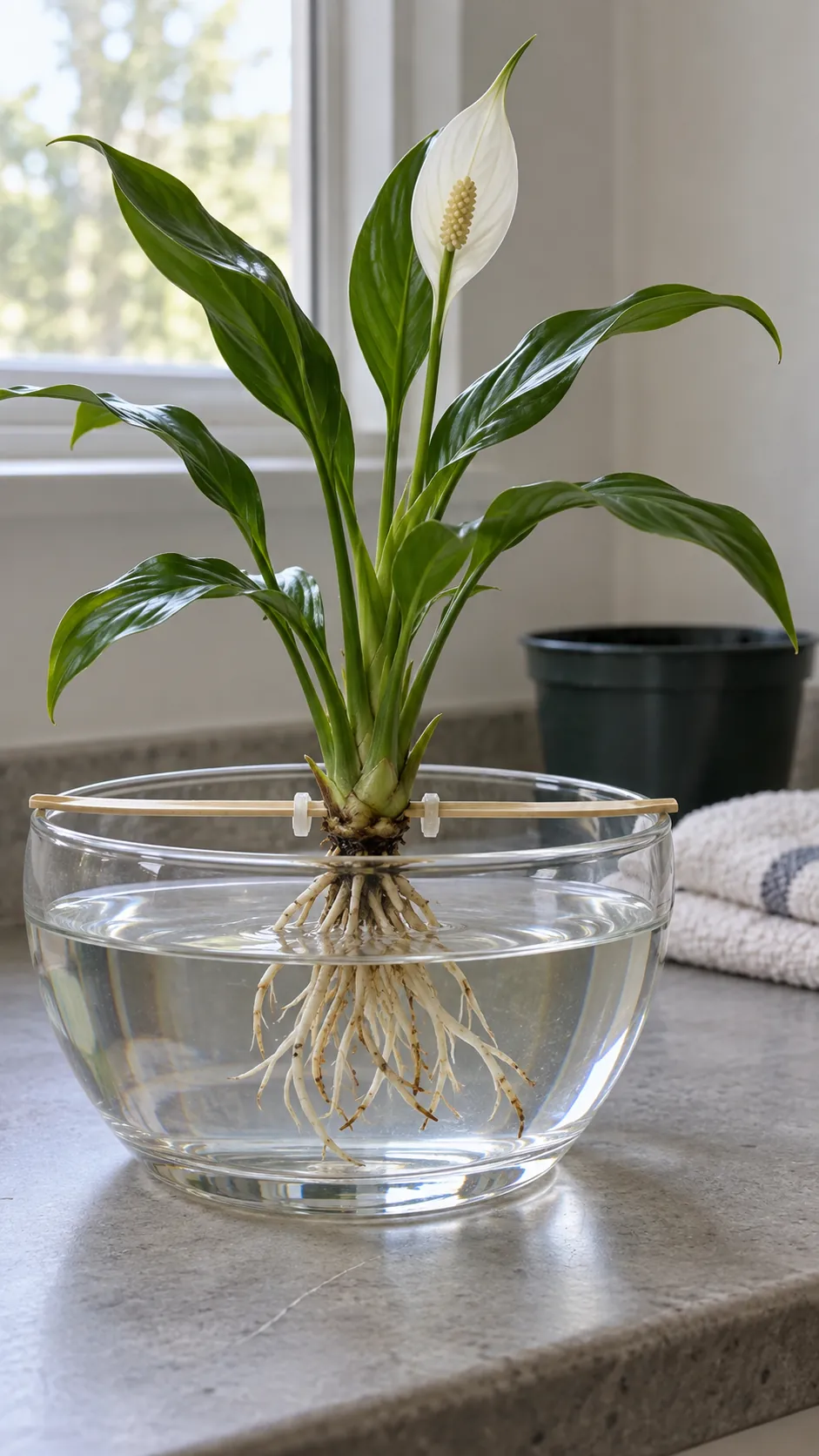
Try peace lily with its crown above water
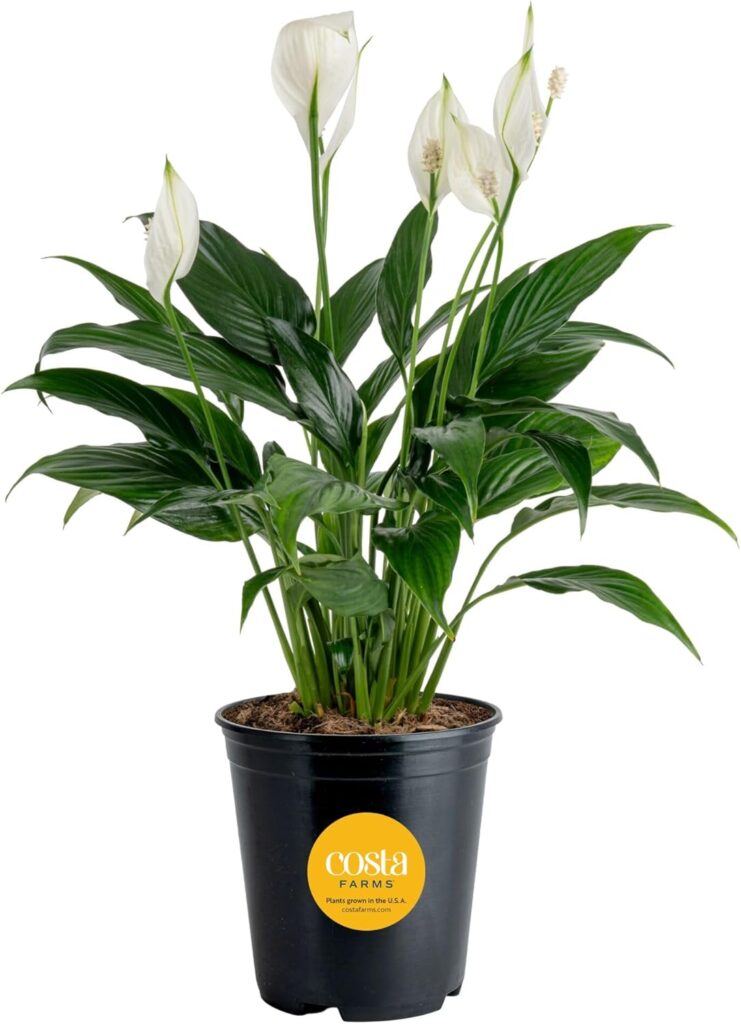
Peace lilies can adapt to managed water culture, but a soil grown plant may lose some roots during the transition. Keep the crown where the leaf stalks meet above the water rather than sinking the whole base into a vase. Start with a small healthy division, monitor it closely, and do not interpret a decorative water display as proof of effortless growth.
A clear vessel helps you inspect roots, although clear water alone cannot show whether nutrition or oxygen is adequate. This plant is unsuitable for chewing pets or children, so place it where the foliage and water are inaccessible. Enjoy the leaves without relying on houseplants to clean room air in place of ventilation.
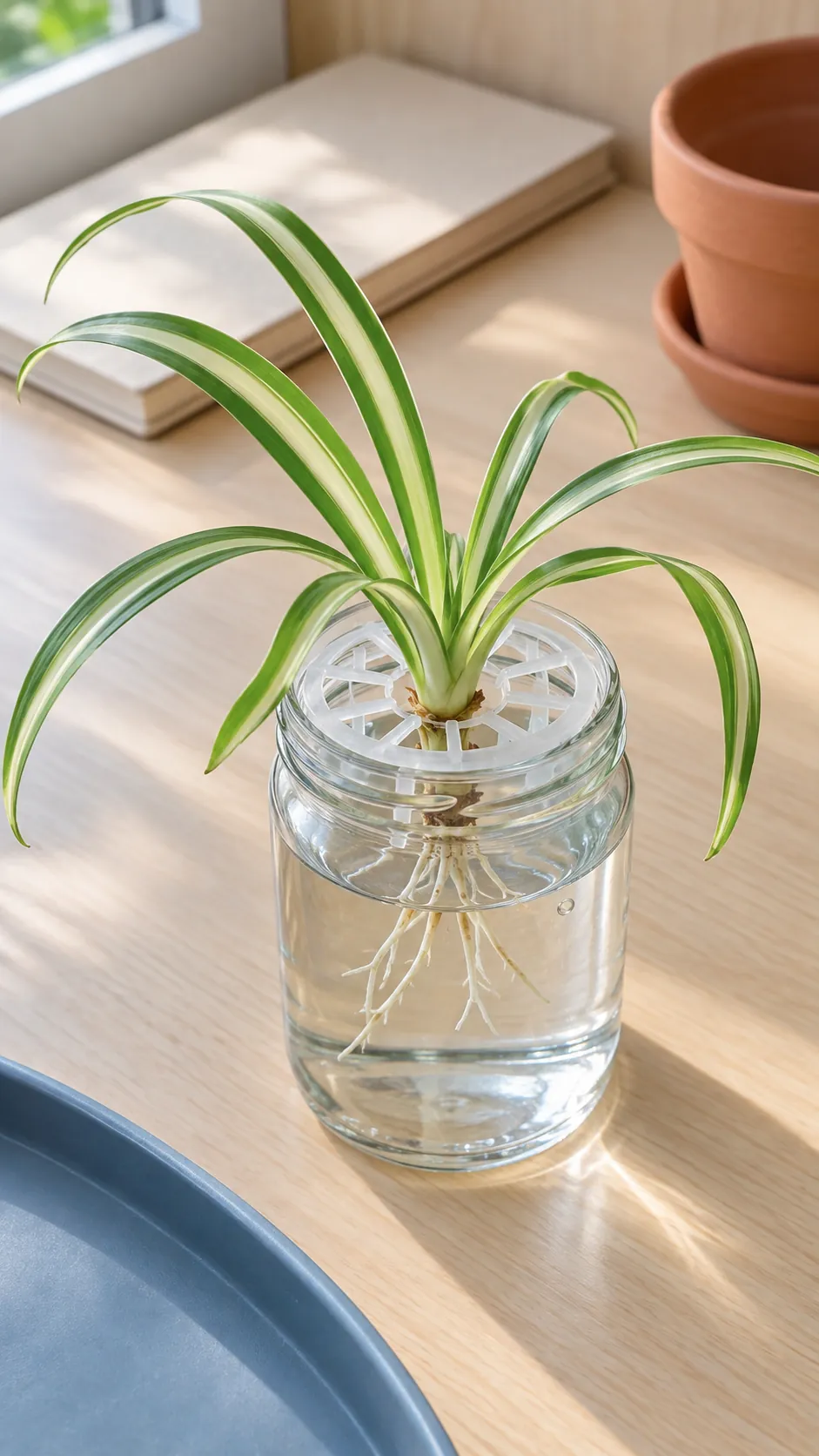
Root a spider plant offset without drowning its center
A spider plant baby with visible root nubs is a convenient starting point for water propagation. Rest it at the opening so the roots reach water and the central leaf rosette stays above it. Once a branching root system forms, choose either a potting mix or a deliberate hydroponic setup instead of leaving the baby forgotten in a tiny vial.
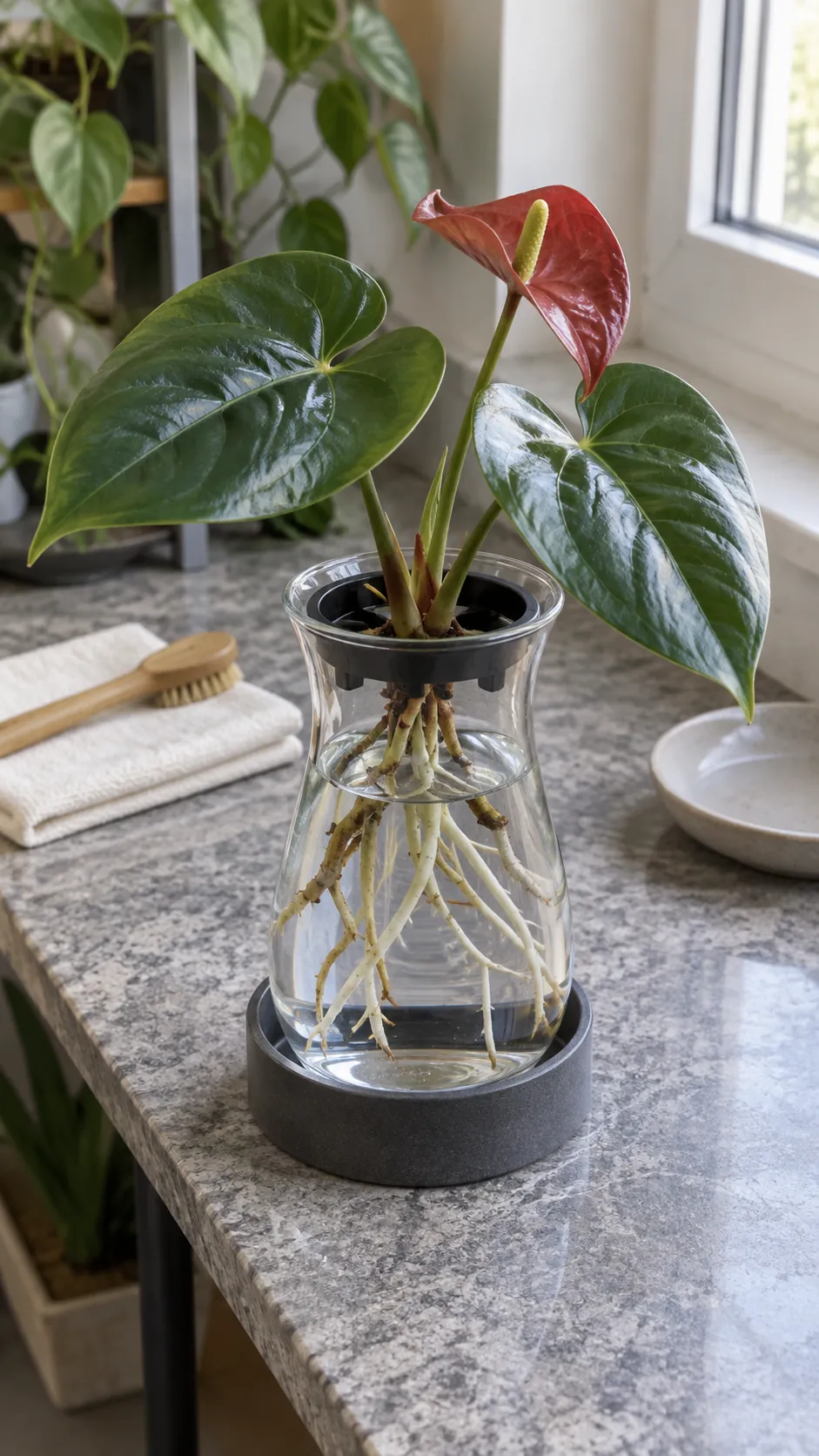
Treat anthurium water culture as a managed project
Anthuriums can be grown without soil, but washing a mature plant and immersing every root is not a guaranteed shortcut. A small adapted plant in a supported setup is easier to monitor than a large flowering specimen in a tight vase. Keep the crown dry, provide indirect light, and respond to soft roots before the whole plant declines.
Start Chinese evergreen from a healthy stem
Chinese evergreen can root from a suitable stem cutting with a node. Its tolerance of lower light does not mean a dark hallway will support strong water grown foliage. Put the vessel where new leaves can develop steadily and use a stable base beneath the relatively heavy patterned leaves.
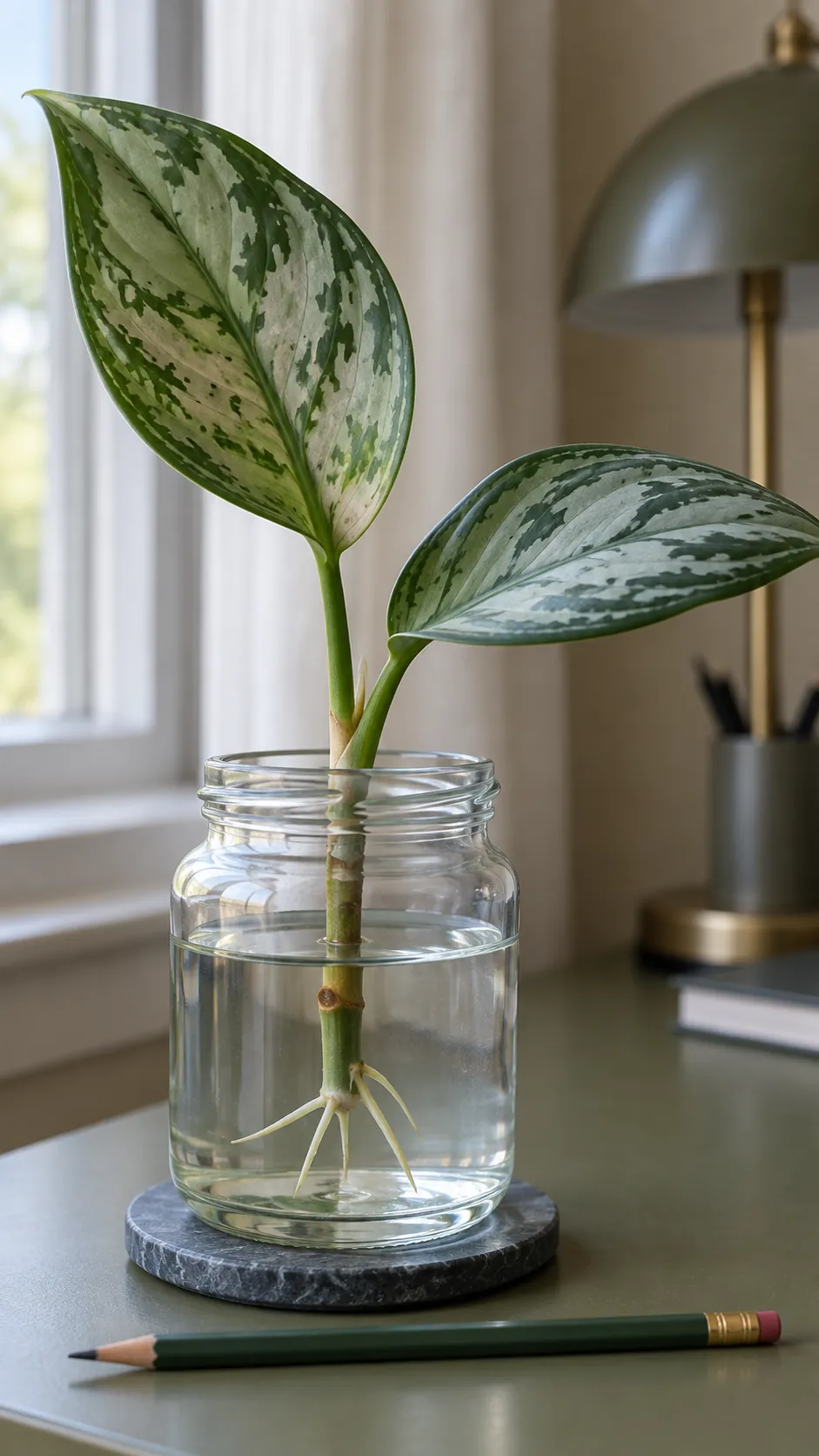
Use coleus cuttings for a temporary color display
Coleus stems often root readily in water and can brighten a small table while you prepare new plants. Strip the lower leaves so their soft blades cannot decay below the surface. Pinch back leggy growth after establishment, and move cuttings to a suitable growing system when the glass can no longer support their appetite for light and nutrients.
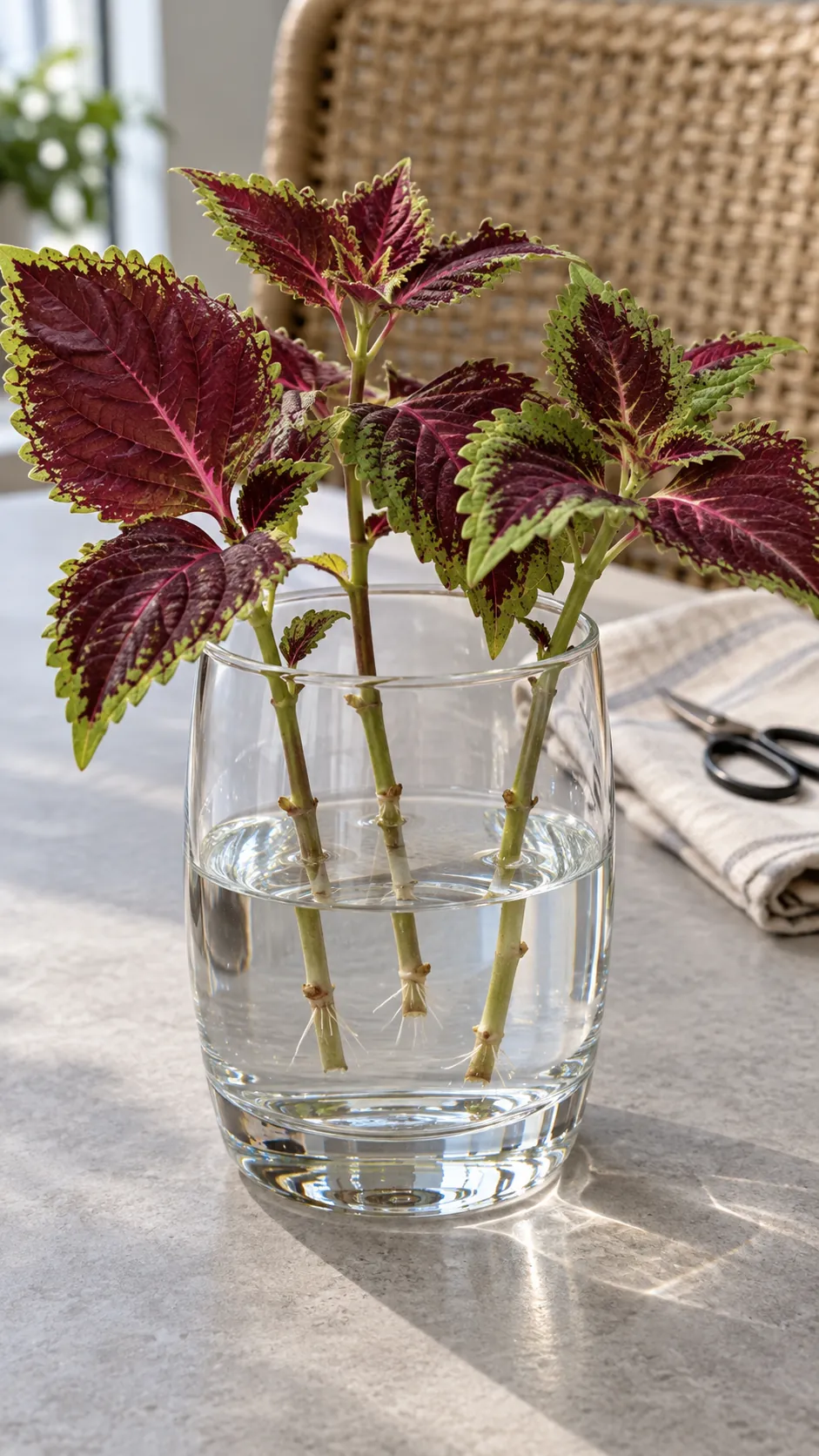
Refresh a tradescantia display with short stems
Tradescantia zebrina gives a water vase silver and purple foliage with a distinctly different texture from pothos. Several short healthy cuttings usually make a tidier start than one long bare vine. Keep submerged nodes clear of leaves and remove any soft stem promptly, because crowded stems can hide decay.
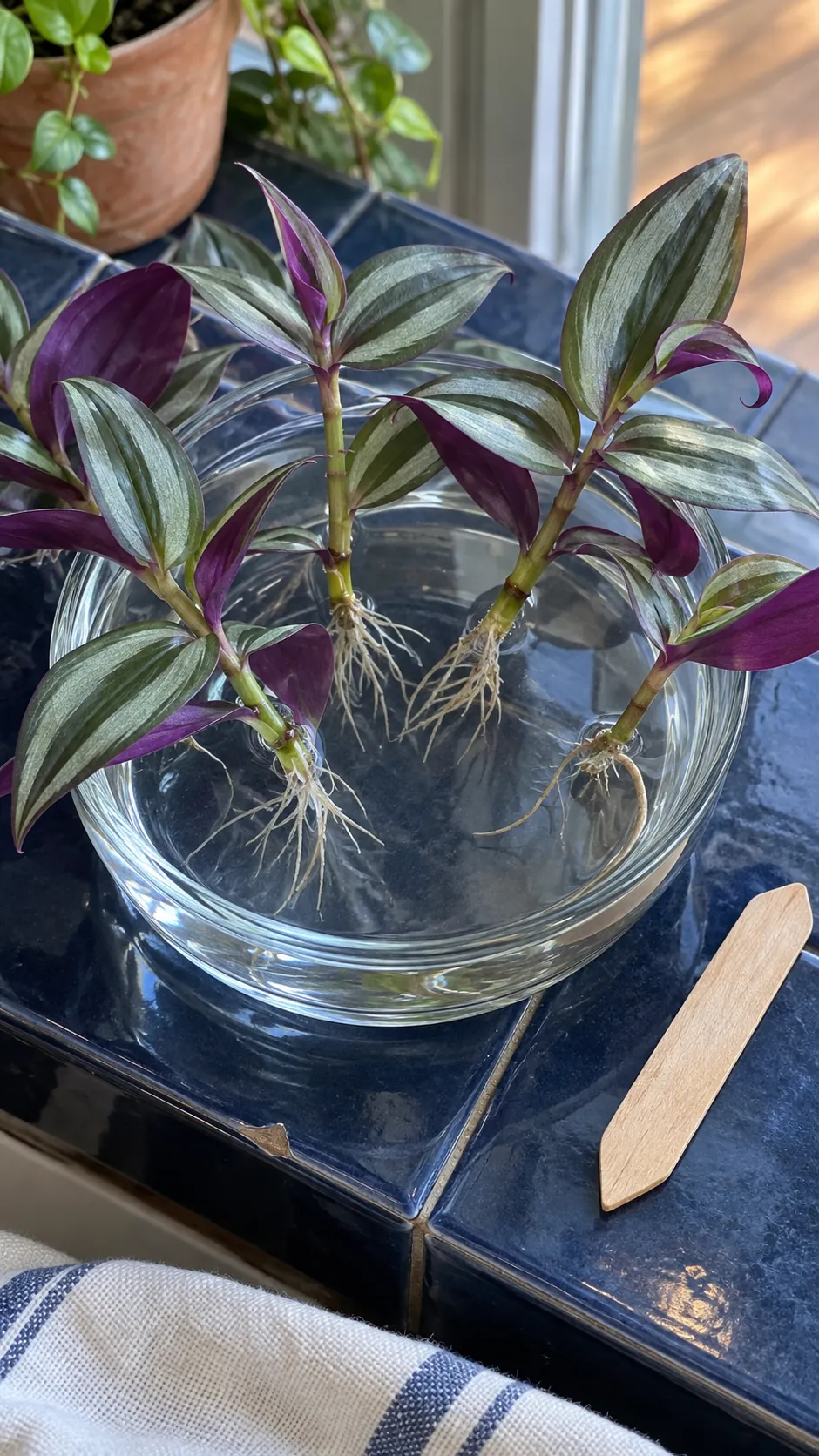
Give mint a bright place to root
Mint cuttings are useful for starting a kitchen herb collection, especially when lower leaves are removed before the stems go into water. A bright position supports sturdier shoots than a dim decorative corner. For repeated harvests, move rooted stems to potting mix or a properly fed hydroponic herb system rather than expecting a jar of tap water to supply endless growth.
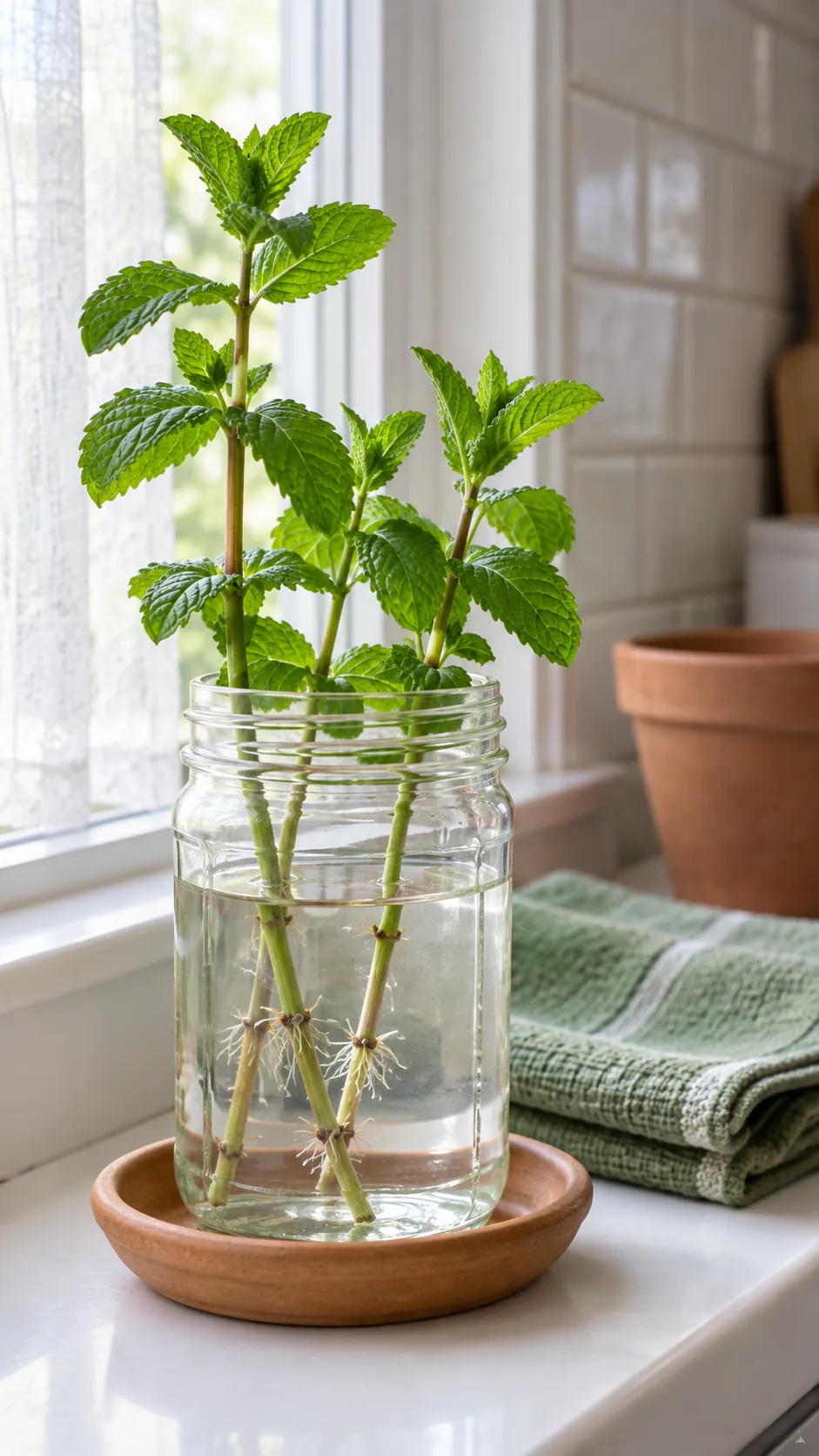
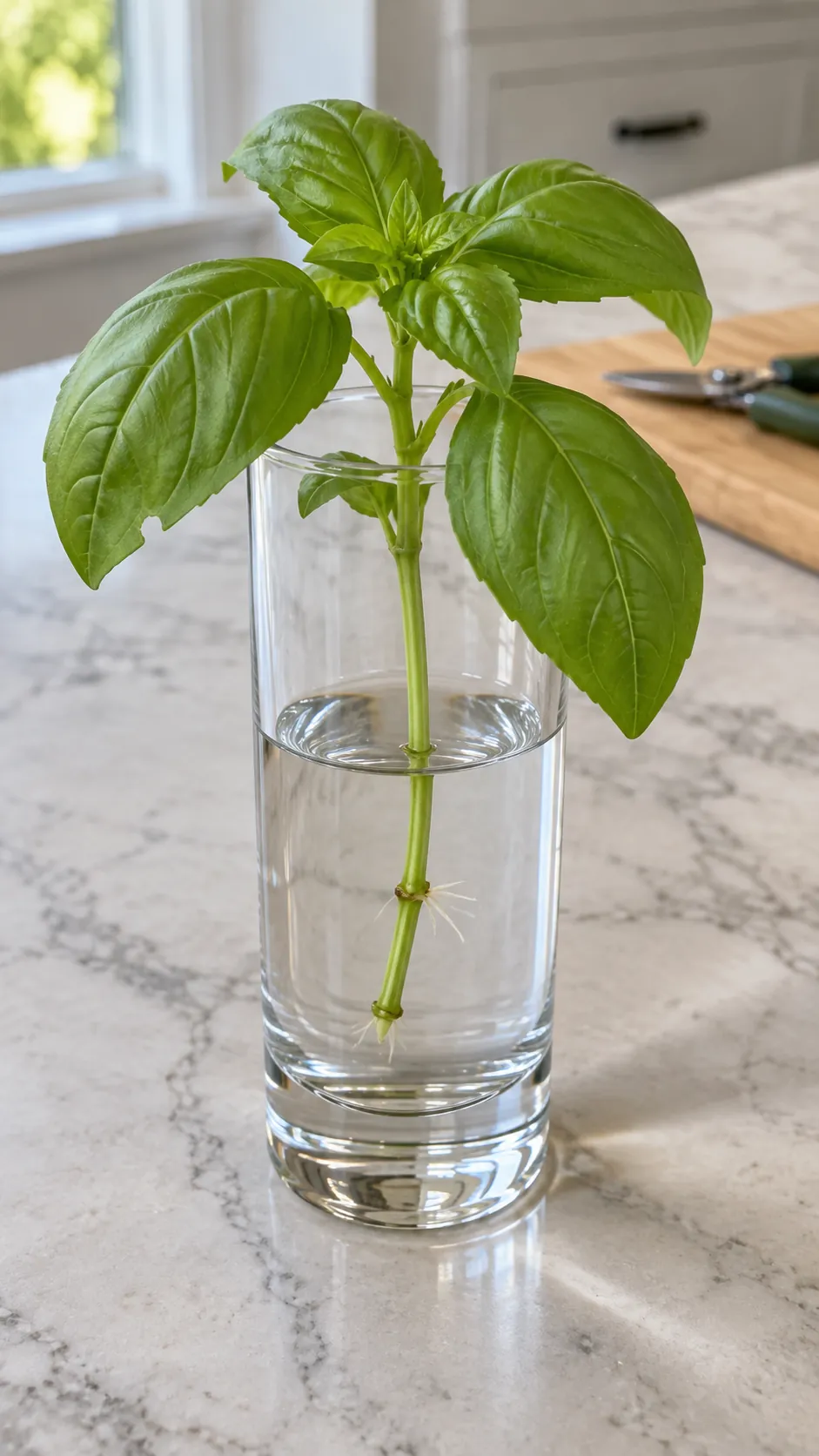
Take basil cuttings before flowering
A healthy basil shoot without flowers directs attention toward fresh leafy growth. Cut below a node with a clean tool, remove the lowest leaves, and keep the remaining foliage above water. Warm conditions and strong appropriate light matter more than an attractive bottle, particularly if you want enough leaves to harvest.
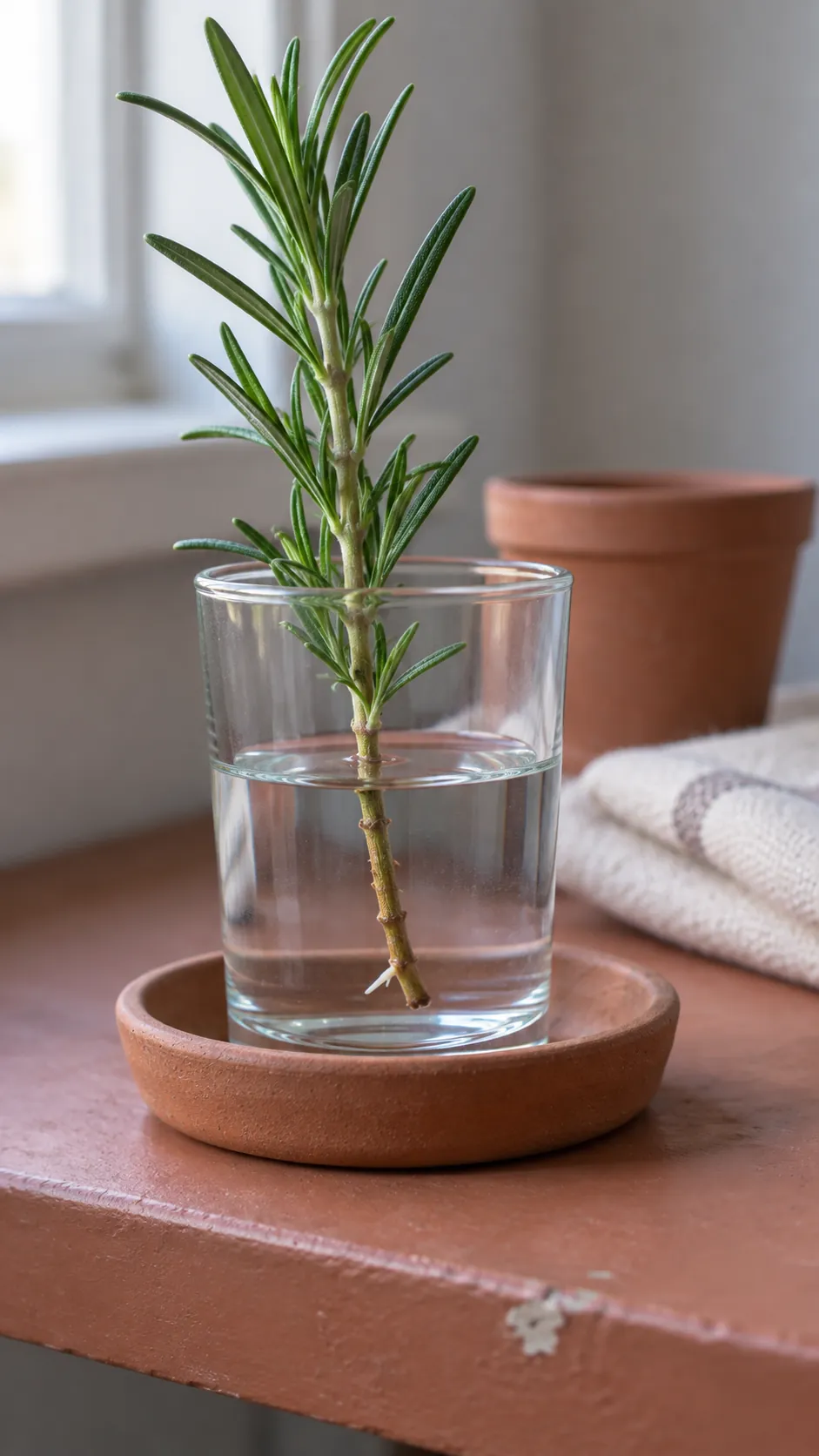
Root rosemary with realistic expectations
Rosemary may root in water, but it can be slower and less forgiving than soft mint stems. Use a healthy young shoot and keep only the stripped lower portion in water, checking that it remains firm. If it blackens or stalls, begin again with fresh material or use an airy propagation medium instead of deepening the water.
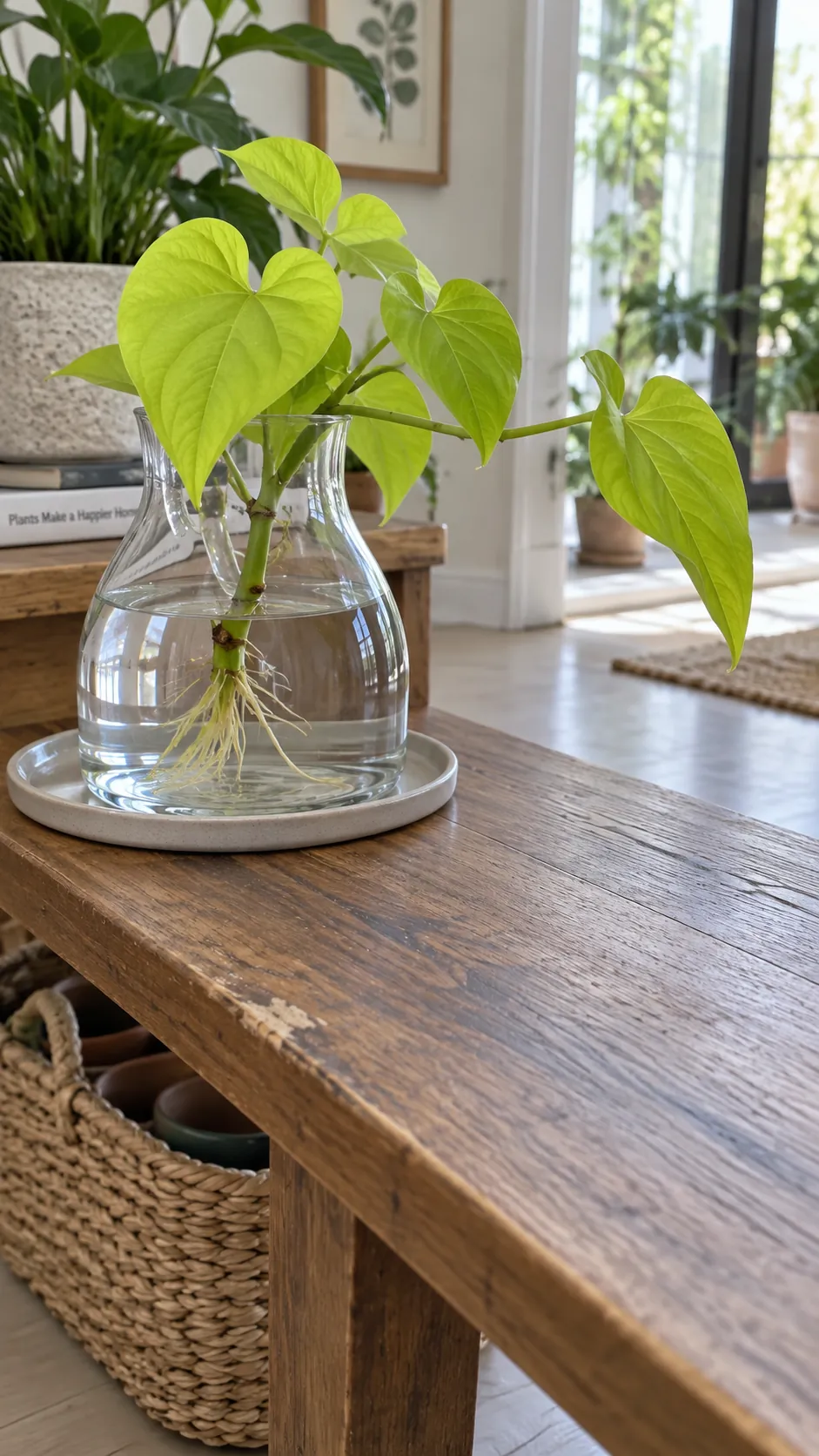
Use sweet potato vine as a vigorous cutting
Ornamental sweet potato vine can develop roots from stem nodes and quickly become larger than its starting glass. A cutting is easier to manage on a shelf than a bulky tuber balanced on toothpicks. Reserve room for growth, trim when needed, and do not assume an ornamental cultivar is intended for food.
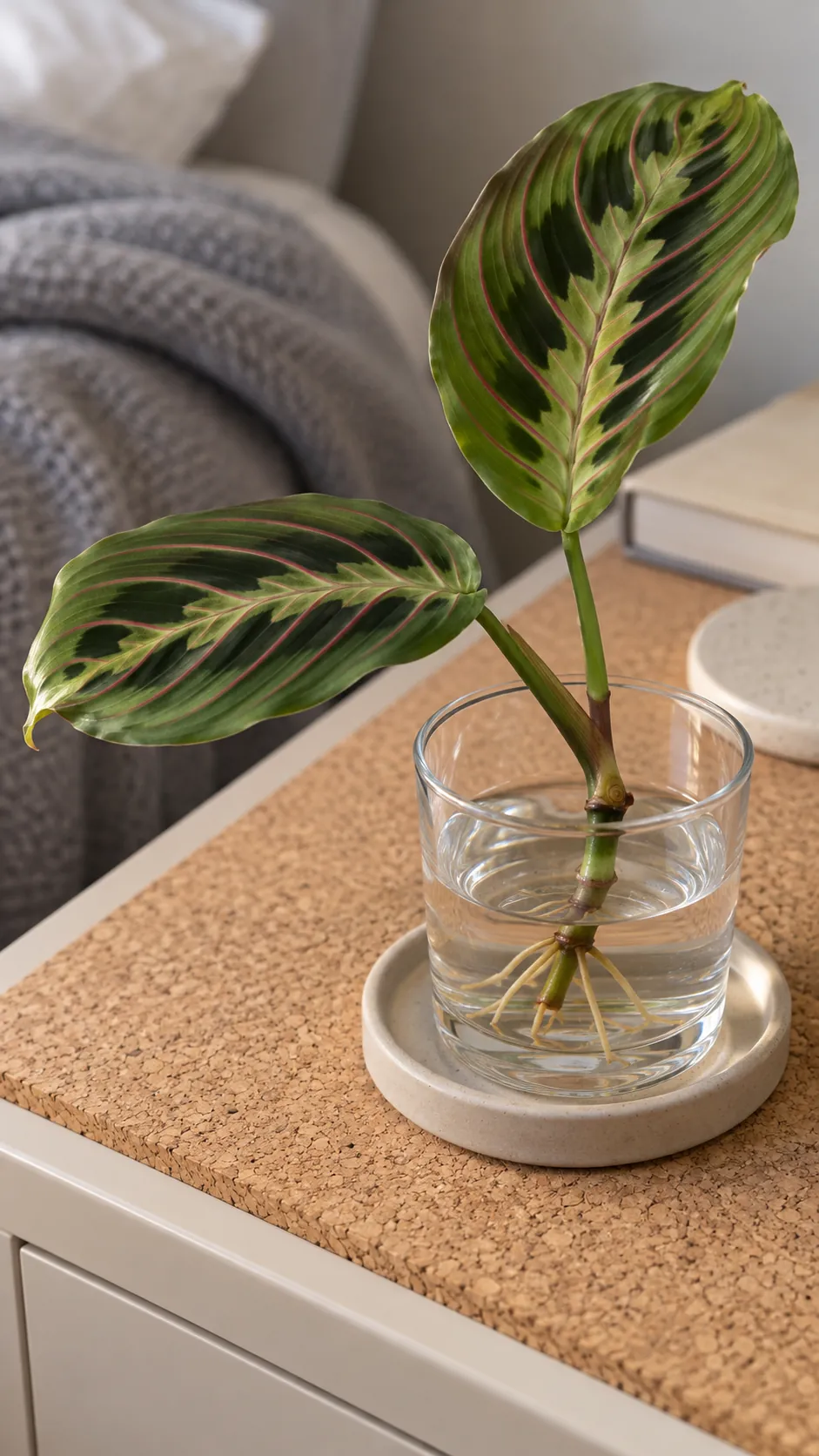
Choose a maranta cutting with a joint
Maranta can be propagated from a stem section with a node below healthy leaves. A detached leaf without the necessary stem tissue cannot be expected to become a new plant. Keep the cutting away from cold drafts and view the water stage as a rooting project unless you are prepared to manage ongoing hydroponic care.
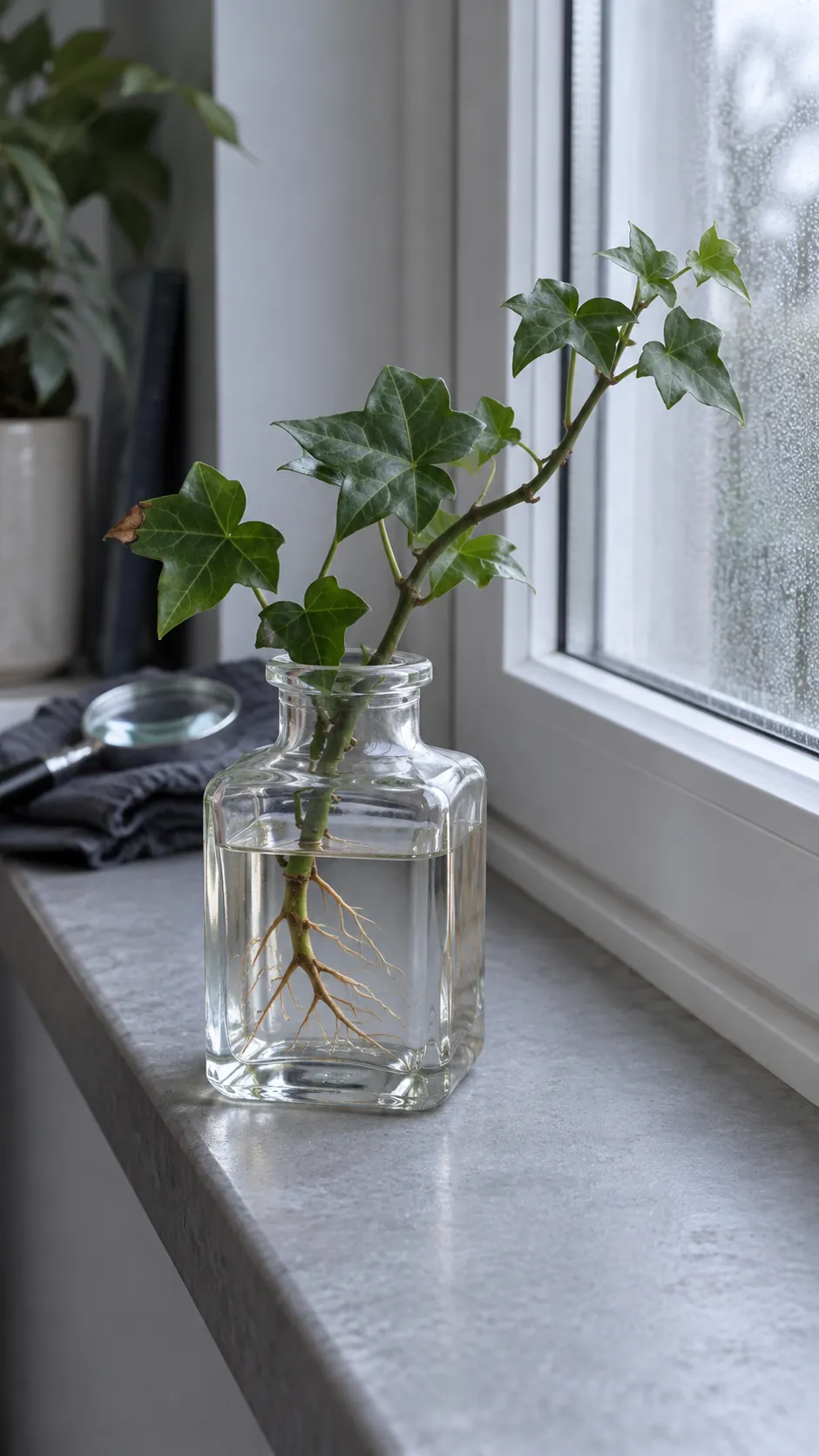
Give English ivy a cool bright rooting spot
English ivy cuttings can root in water, but hot dry indoor air still stresses their foliage. A cooler bright location and regular checks under the leaves help you notice mites before a trailing display deteriorates. Keep discarded cuttings out of outdoor waterways or natural areas, and check local restrictions before planting ivy outside.
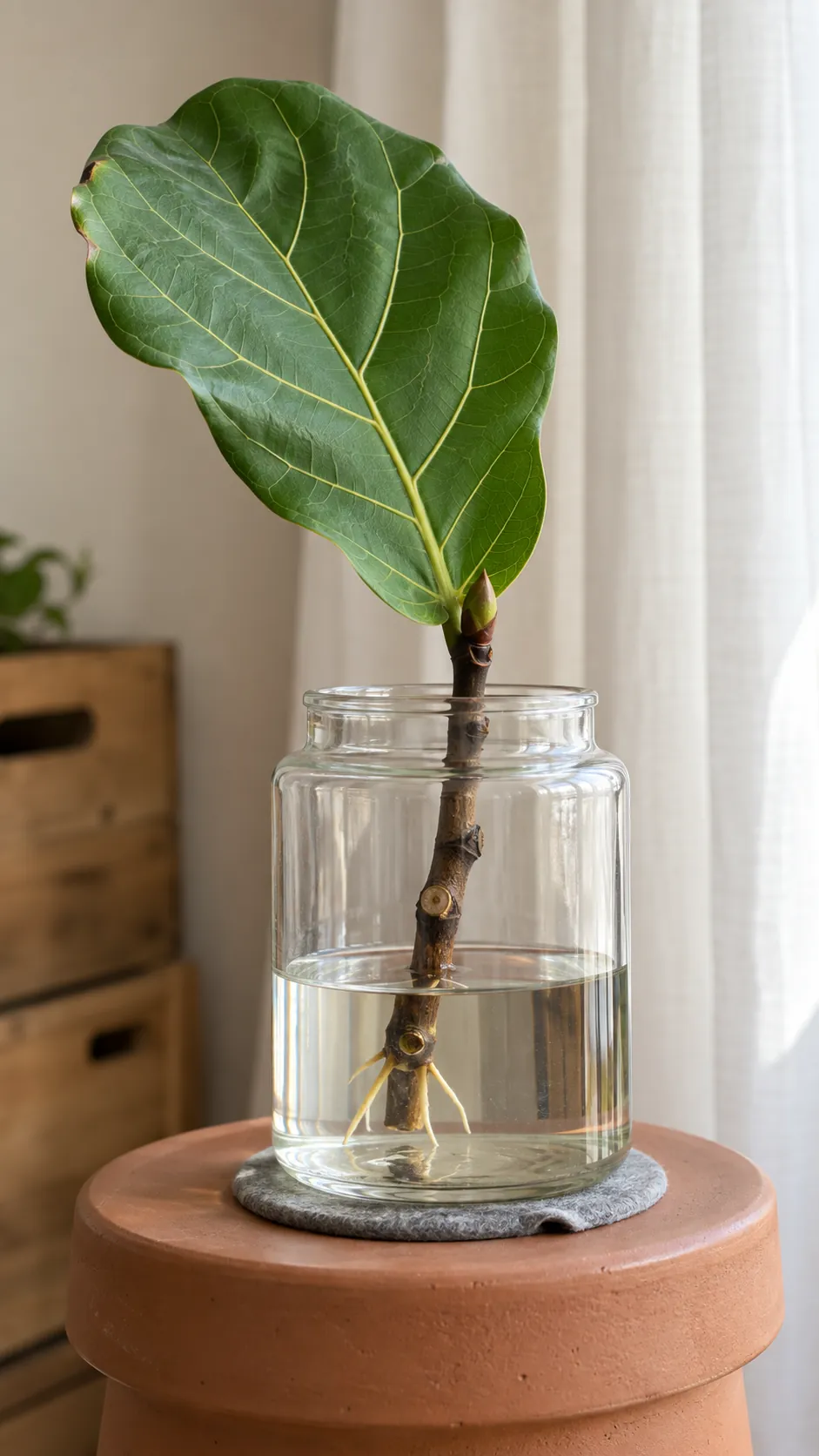
Take a fiddle leaf fig stem rather than a leaf
A fiddle leaf fig leaf can sometimes produce roots without ever developing into a new tree. To propagate a new plant, take a suitable stem cutting that includes a node and a viable growing point. Support its broad leaf in a heavy vessel and be patient rather than treating survival of one leaf as successful propagation.
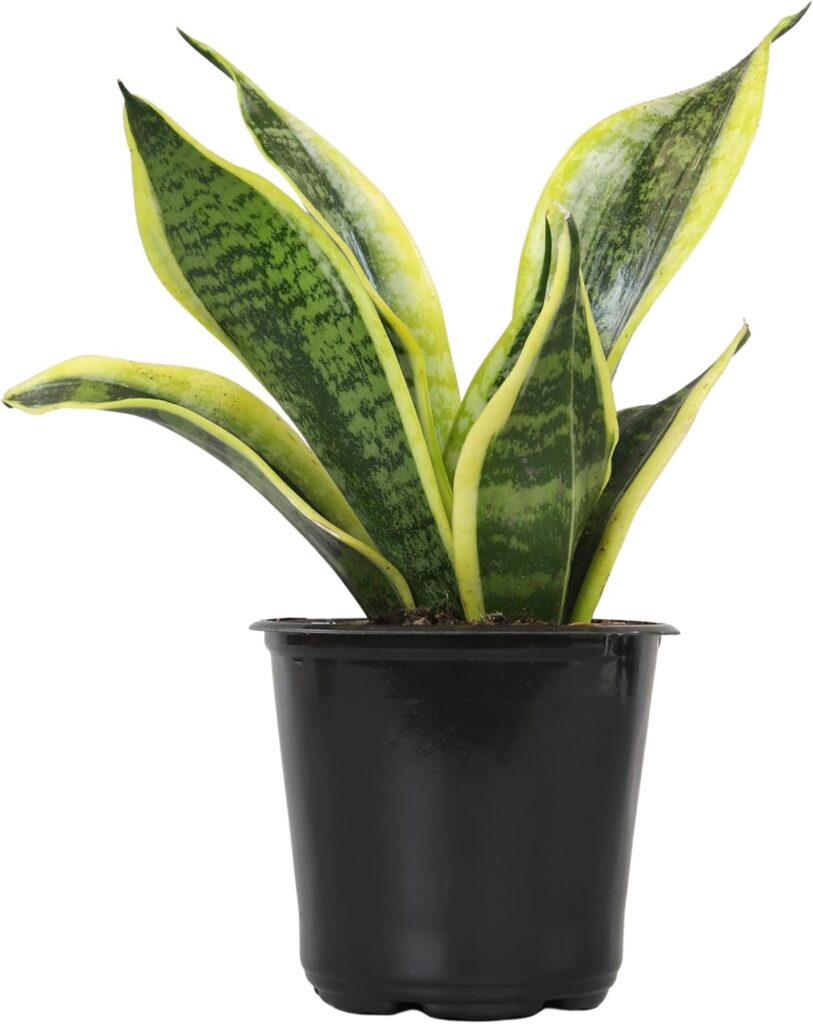
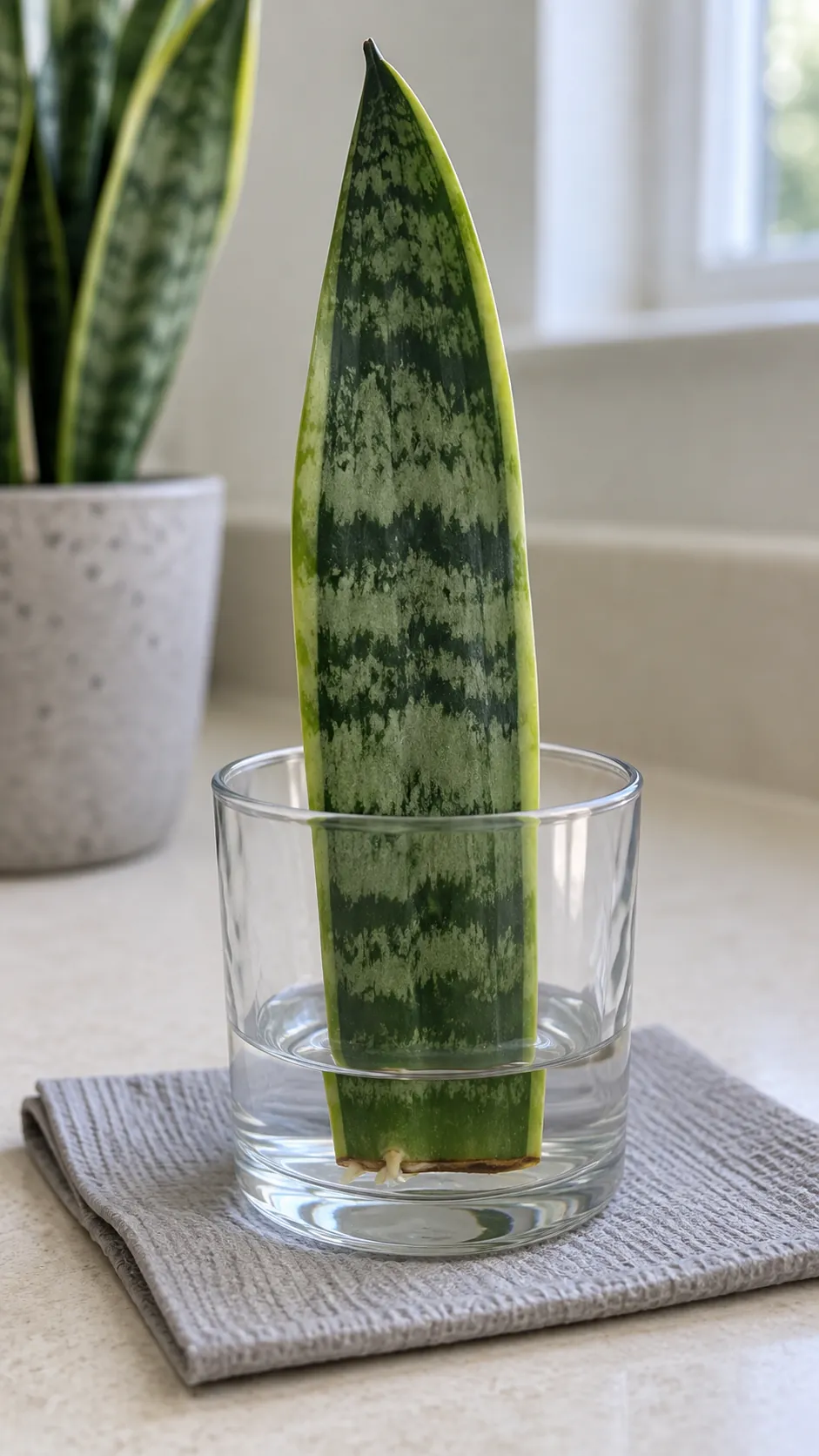
Use snake plant water rooting as an experiment
Snake plant leaf sections can root in water, but they are slow and vulnerable to rotting at the cut base. Let the cut dry before placing only the lower end in shallow water, keeping the original bottom end pointing down. Leaf propagation may also lose the variegated pattern of the parent, so division is a better choice when preserving that pattern matters.
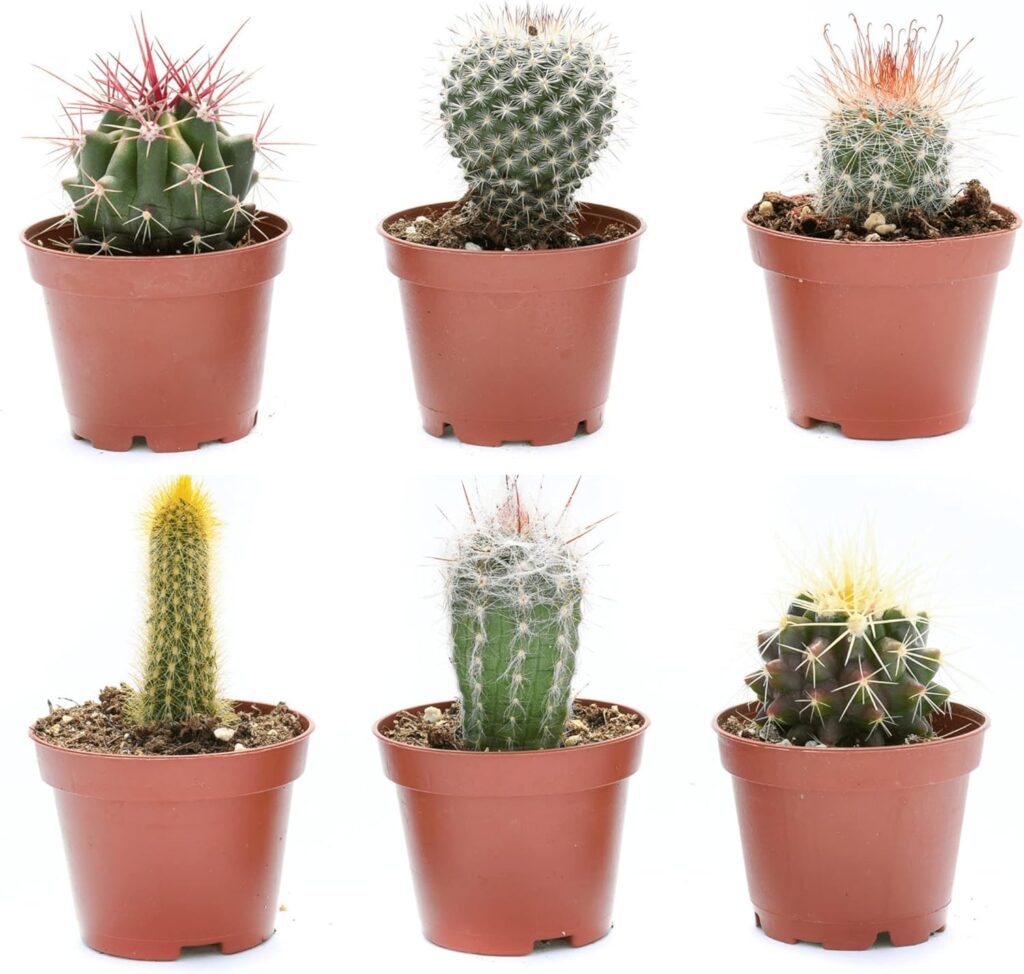
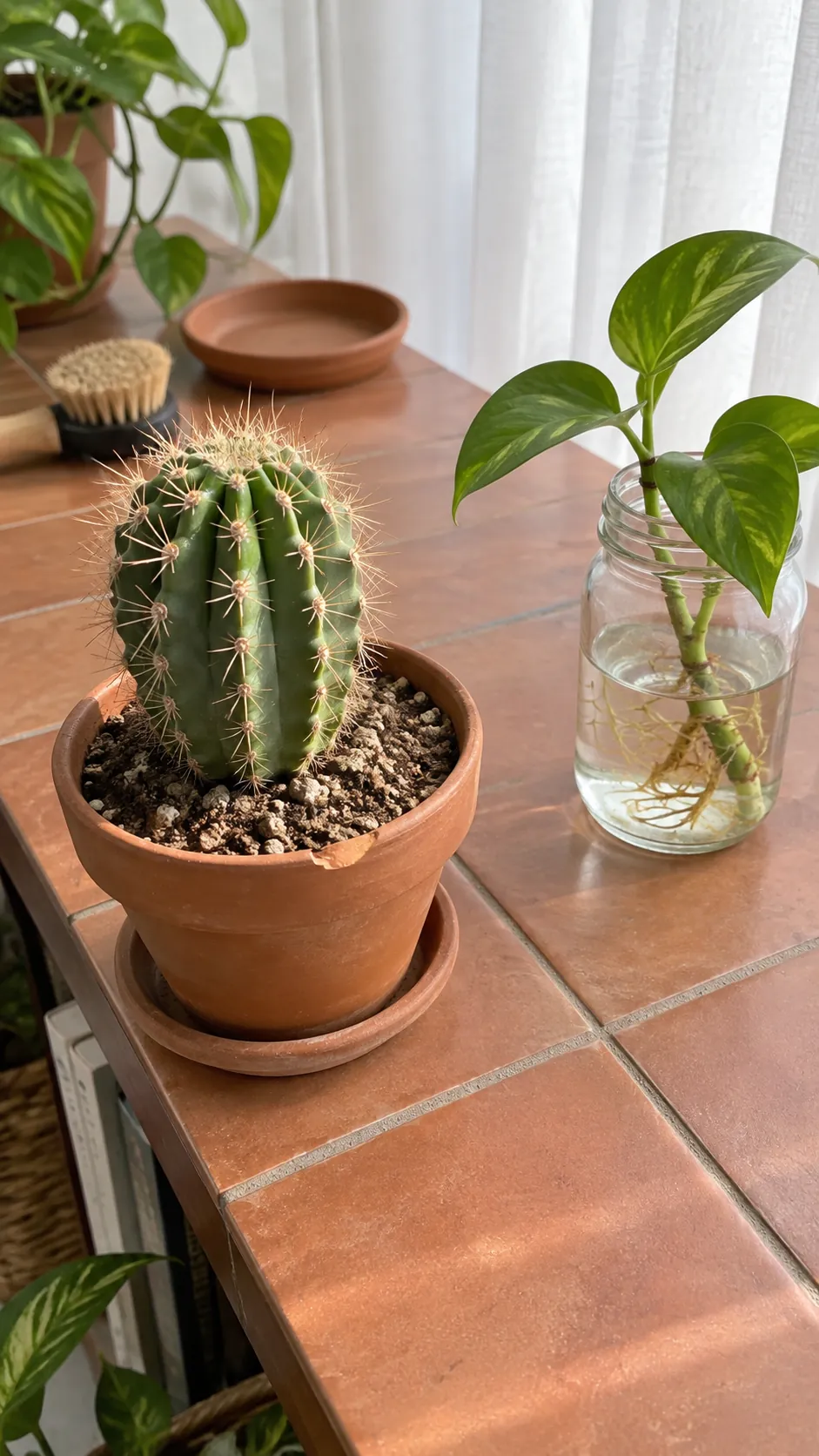
Keep desert cacti in draining pots beside the water display
A desert cactus is a poor default choice for a permanent vase of water. Put it in a draining pot beside your propagation jars if you want contrasting shapes without submerging a plant that needs a different root environment. Forest cacti have different growing habits, but water rooting experiments still should not be presented as proof that every cactus thrives in water.
Attach anubias without burying its rhizome
Anubias is a true aquatic option for an indoor water garden when you choose a plant suitable for submerged growth. Attach it gently to a rock or wood so the thick horizontal rhizome remains exposed instead of burying it. Provide appropriate aquarium lighting and routine water care, and avoid adding fish to a small decorative bowl just to complete the scene.
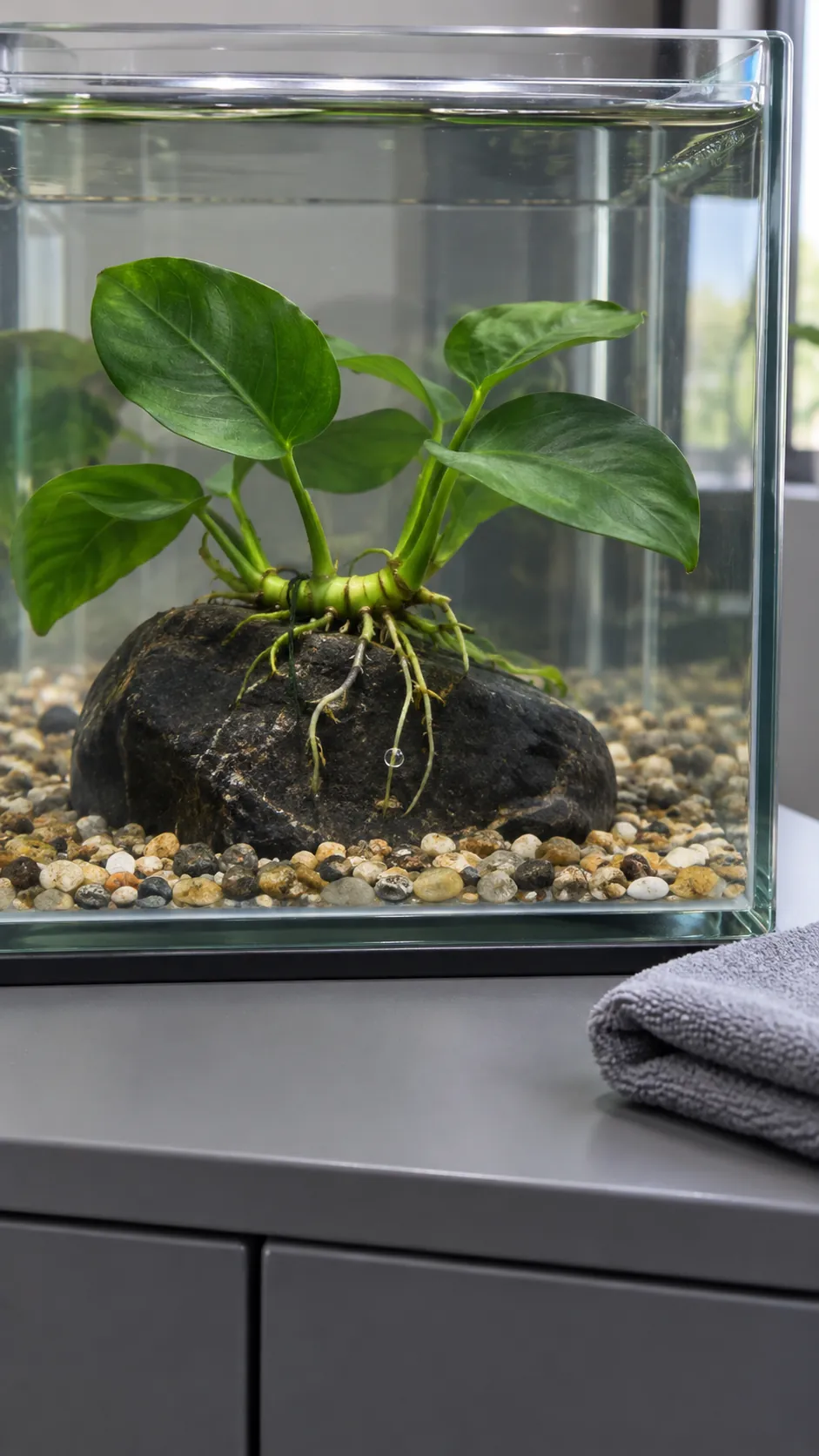
Anchor Java fern to a small piece of wood
Java fern grows from a rhizome that should sit above the substrate rather than disappear beneath gravel. A small piece of suitable aquarium wood provides an anchor without filling the whole vessel. Leave room for its leaves to expand under water and move the plant into a larger aquarium when the display becomes cramped.
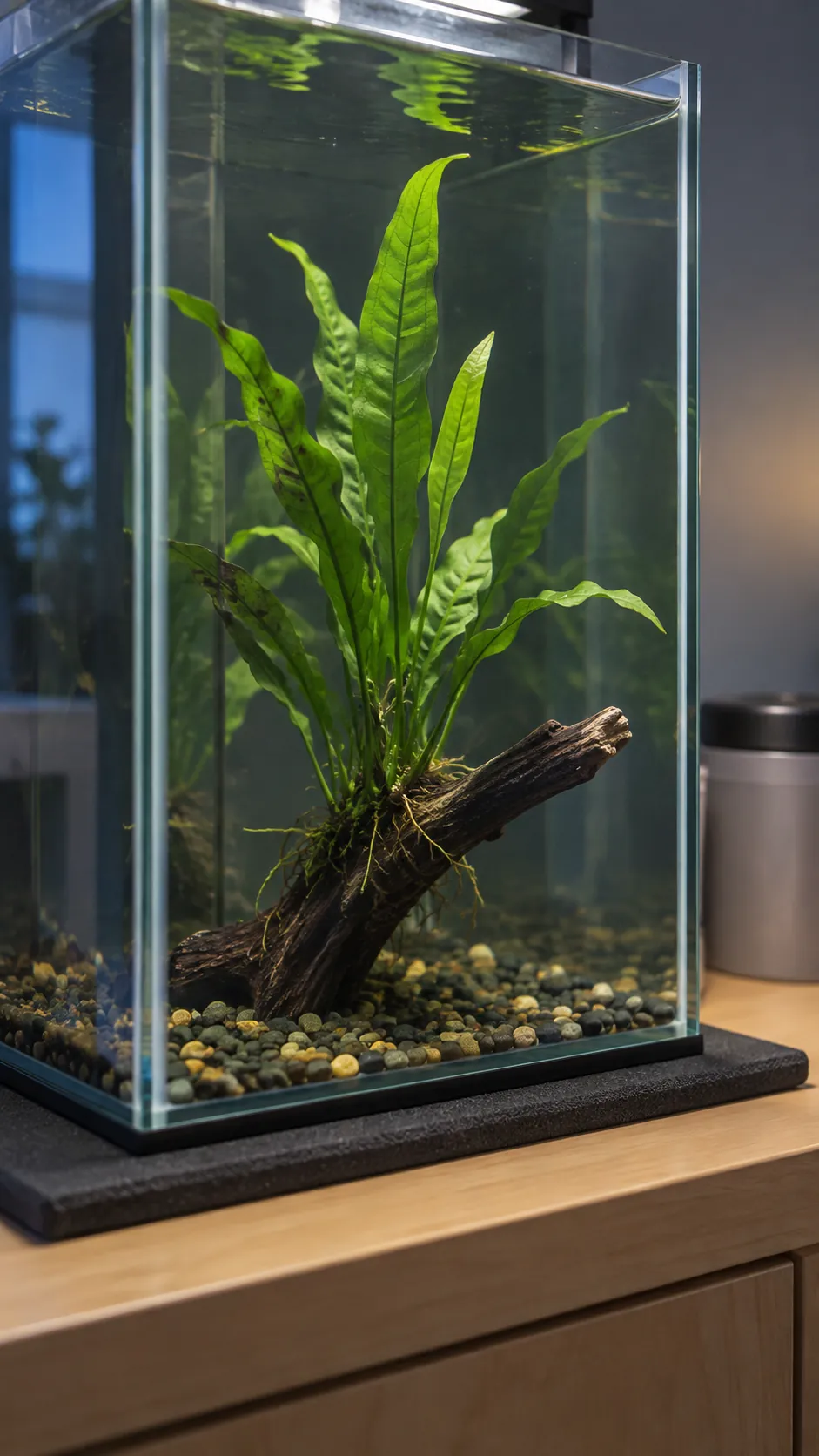
Grow Java moss as a thin attached layer
Java moss creates texture on a submerged stone when attached in a modest layer. An oversized loose mass traps debris and is harder to keep tidy in a small water garden. Trim it when needed, remove loose fragments during maintenance, and use aquarium appropriate materials that will not leach paint or glue into the water.
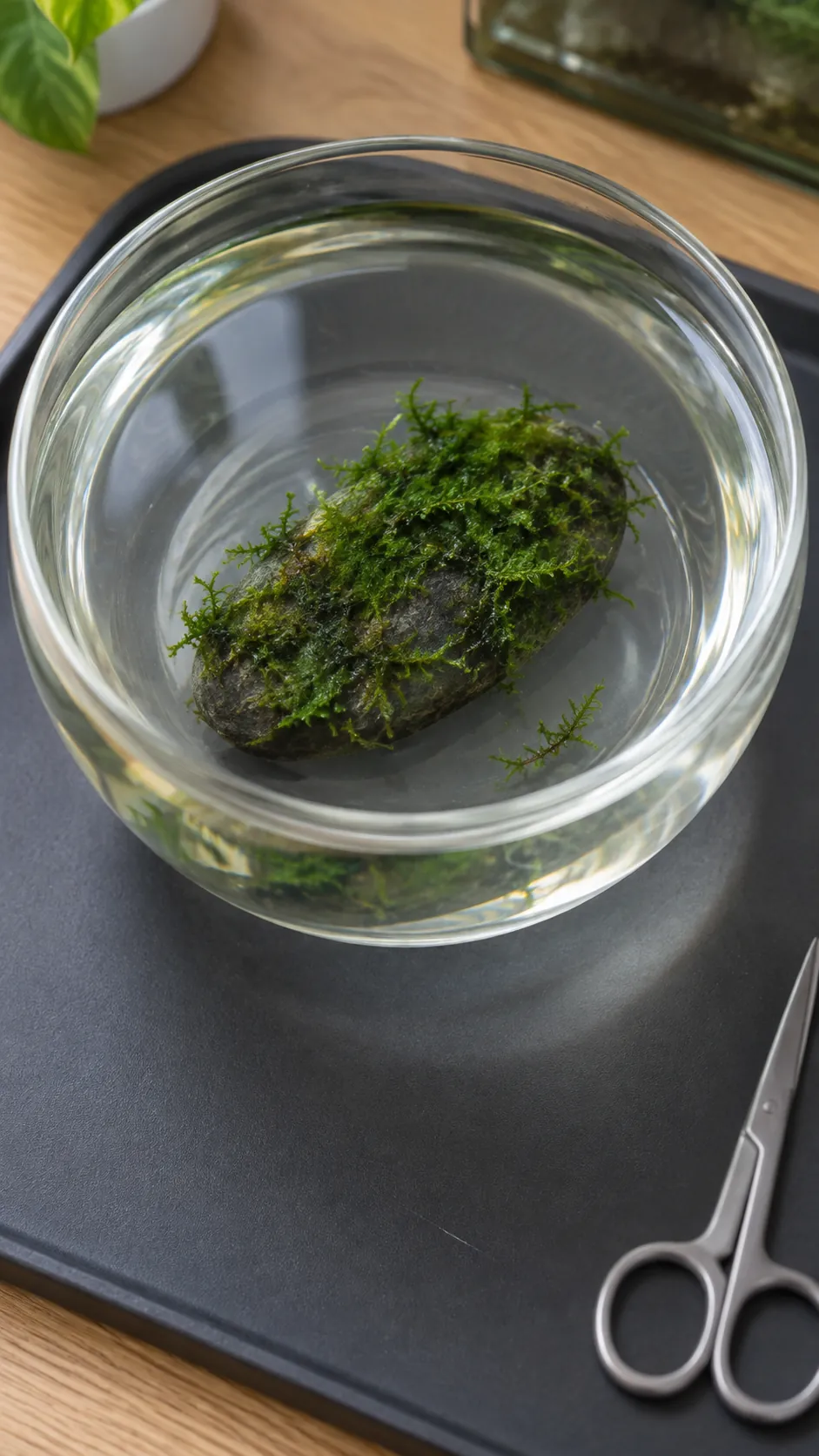
Reserve a roomy setup for water sprite
Water sprite is an aquatic fern that can outgrow a tiny jar surprisingly quickly. Give it an aquarium sized space with suitable light instead of squeezing it into a miniature terrarium. Thin crowded growth as necessary so lower leaves are not permanently shaded, and dispose of trimmings responsibly.
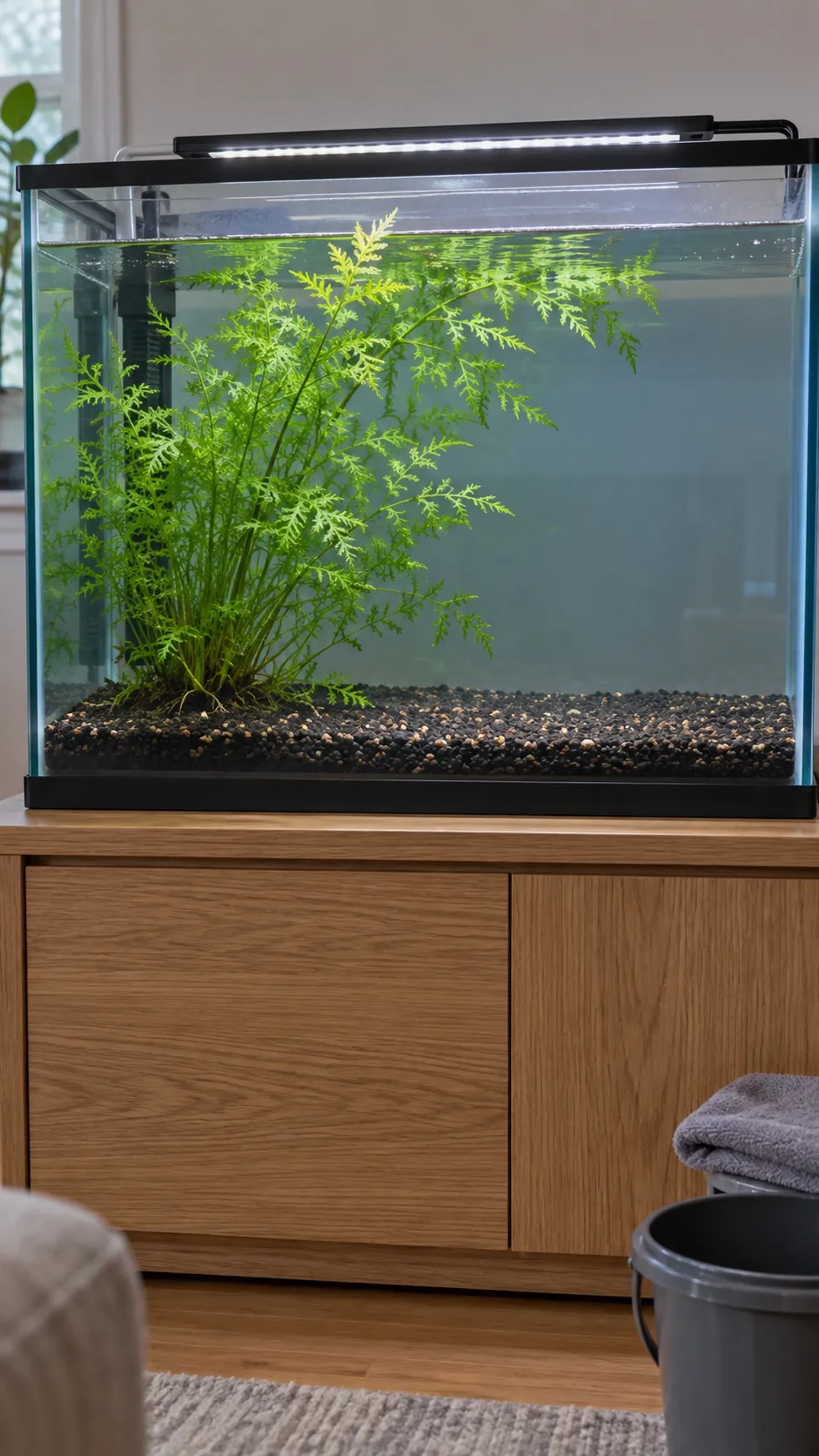
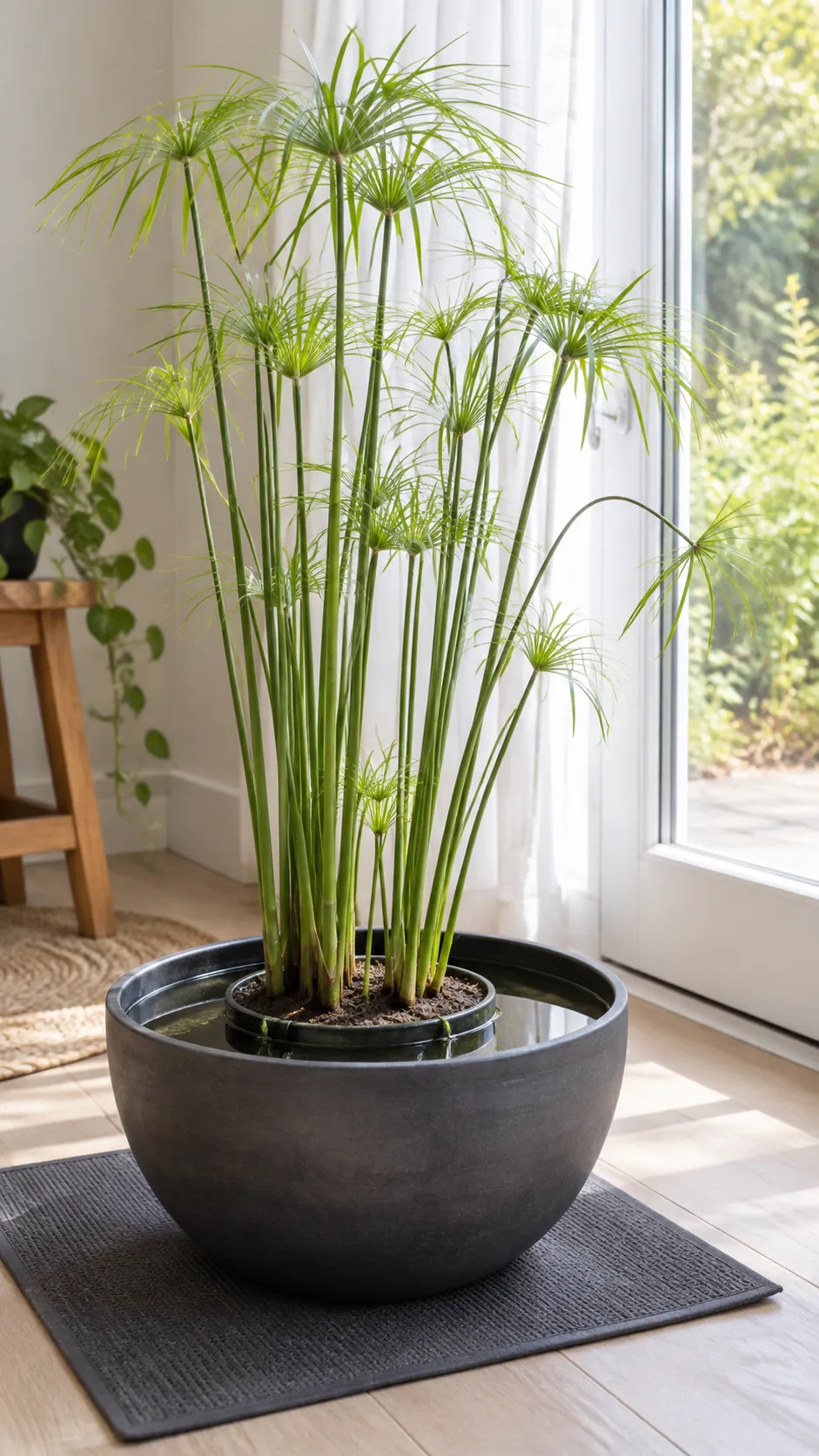
Treat dwarf papyrus as an emergent plant
Dwarf papyrus belongs in a roomy wet root environment with its upright foliage above the water. A supported pot inside a watertight outer container is more stable than loose stems placed in a shallow glass dish. Give it strong suitable light and enough headroom, because a small purchase does not guarantee a permanently miniature plant.
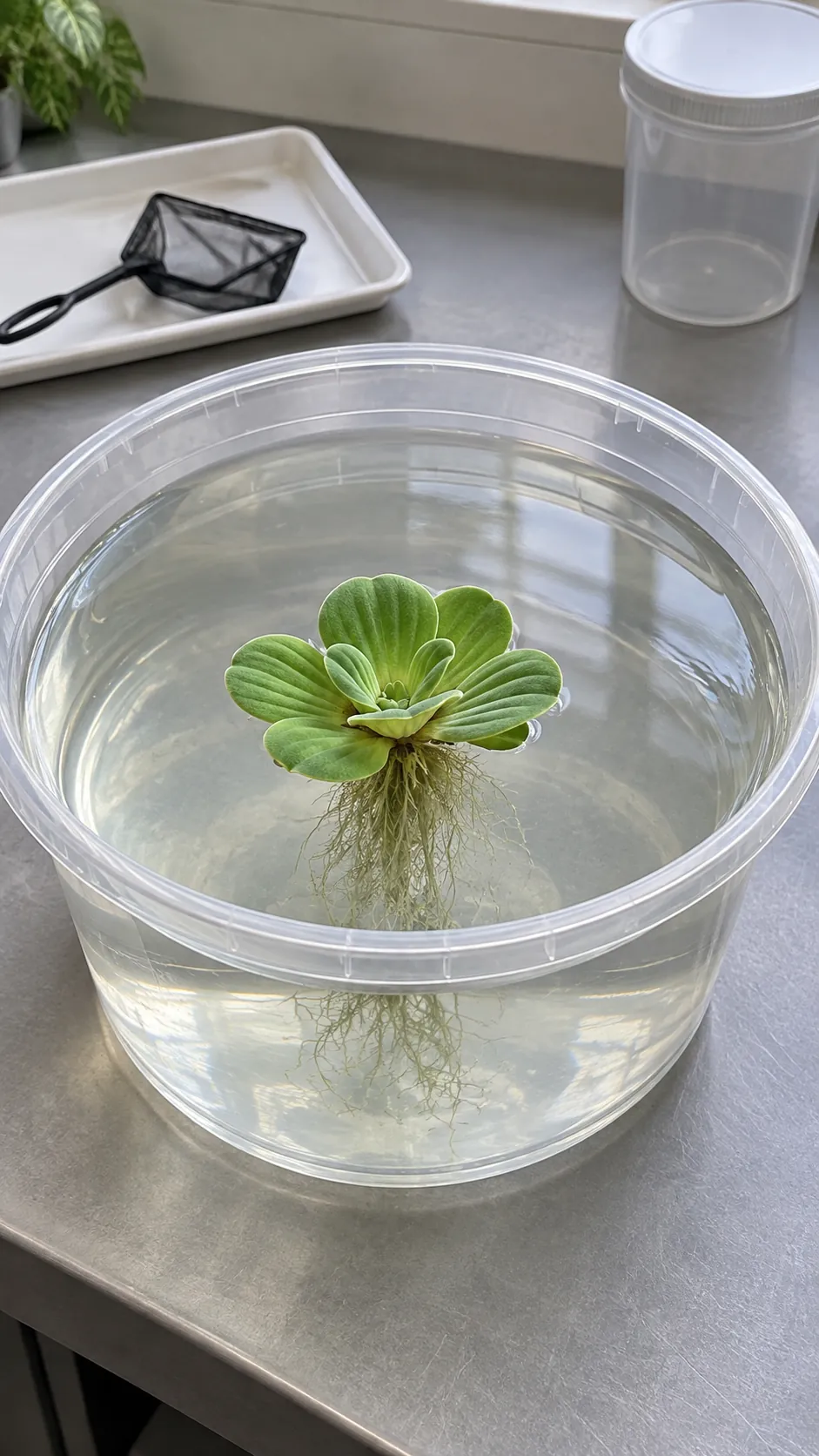
Choose floating plants only after checking local rules
Floating aquatic plants can cover the water surface and shade everything beneath them. Before buying water lettuce or similar fast spreading species, check whether possession and sale are permitted where you live. Keep any allowed specimen contained, thin excess growth, and never release plants or plant fragments into ponds, drains, or streams.
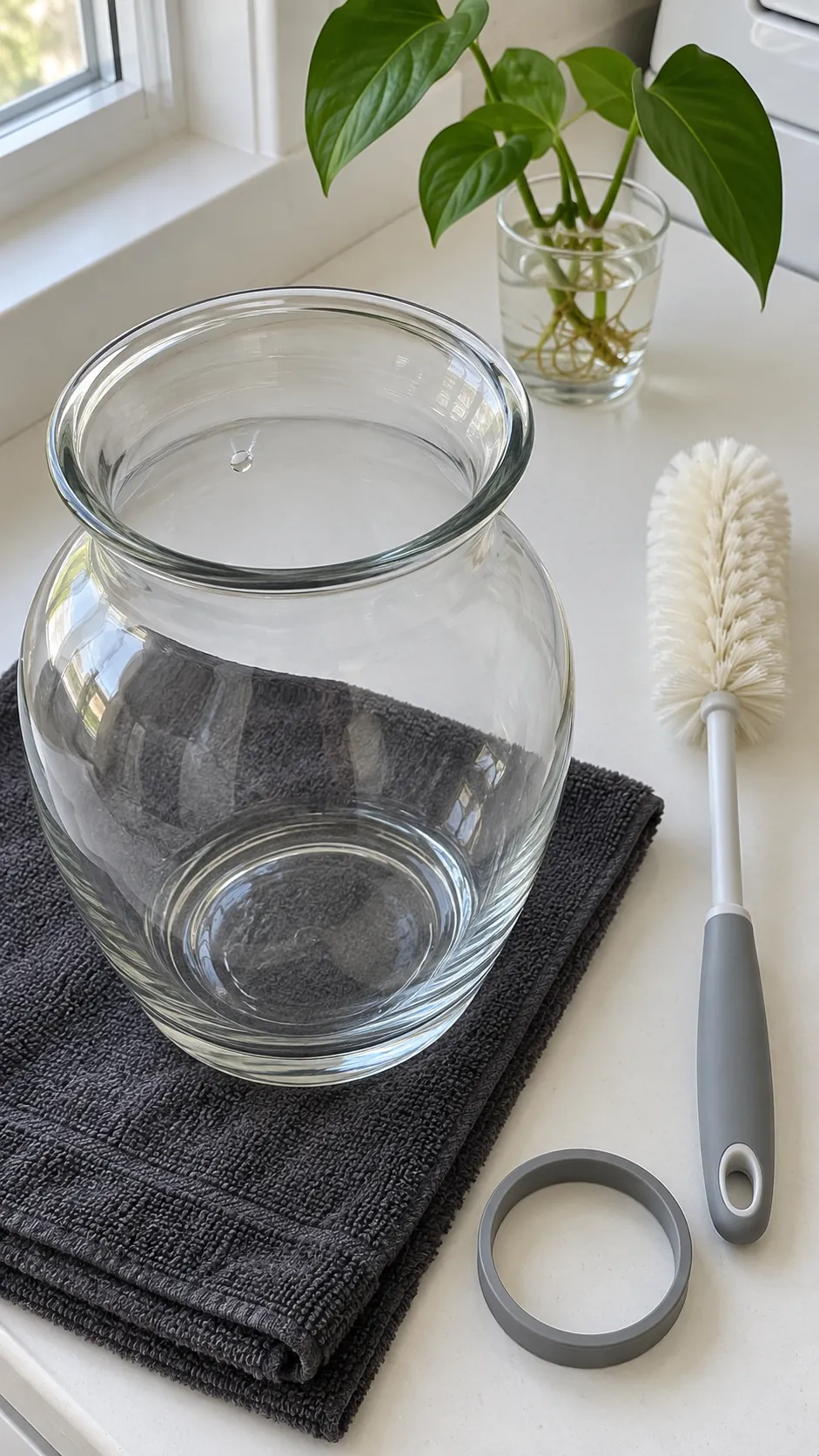
Pick a vessel you can actually clean
Plants in water vases are easier to maintain when the opening admits your hand or a suitable brush. A beautiful narrow bottle can trap a branching root mass and turn an ordinary water change into a struggle. Choose a removable support and enough root space, then test access before the cutting becomes established.
Use pebbles for support rather than filtration
Clean inert pebbles can hold a stem upright, but they do not replace nutrients, oxygen, or water changes. Use only as many as the plant needs, keeping the crown and sensitive stem tissue clear of a tightly packed wet layer. Avoid shells or unknown decorative materials that can change water chemistry, especially in a small vessel.
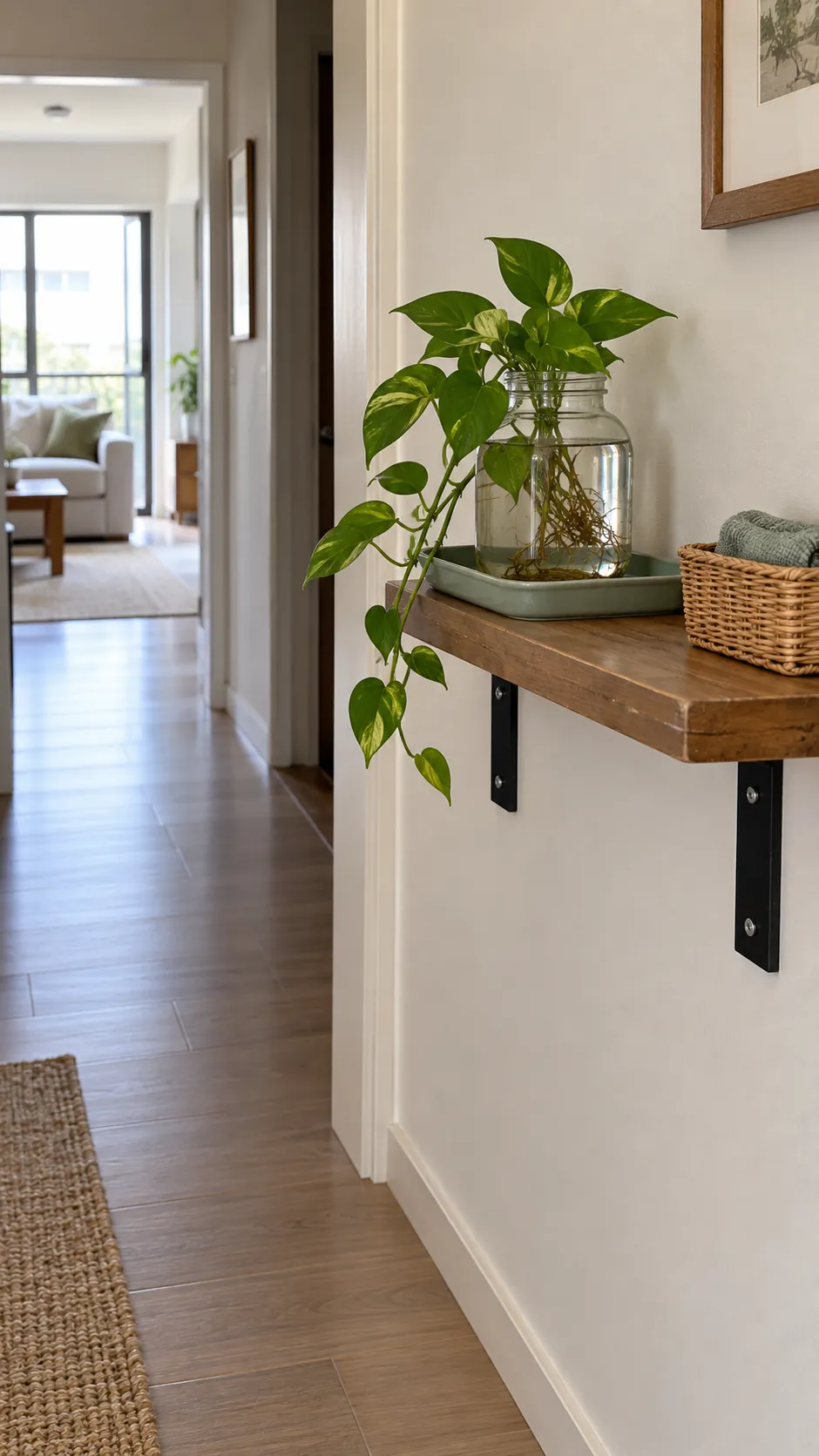
Keep a trailing display within easy reach
Hanging plants indoors become awkward when every water change requires a ladder and a precarious lift. A secure shelf at a comfortable height can give the same trailing effect while keeping the vessel accessible. Use a waterproof tray beneath the container and keep heavy glass away from paths where people or pets could pull the vine.
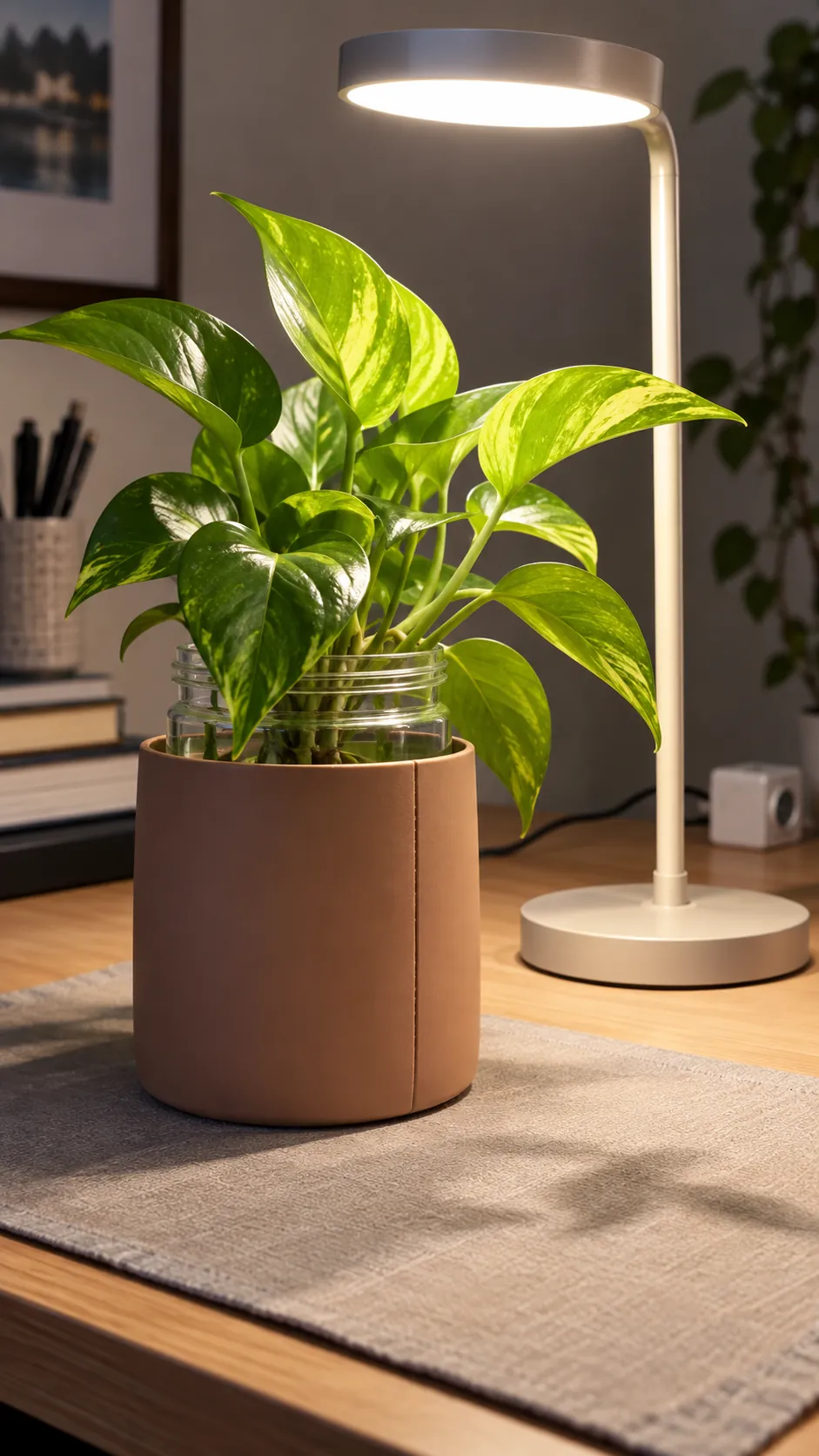
Give the leaves useful light and the roots some shade
A bright window can help foliage while also heating the water and encouraging algae on clear glass. Move the container away from intense sun or add an opaque removable sleeve around the root zone without shading the leaves. In a dim room, use an appropriate plant light with a timer instead of assuming decorative LEDs provide enough growth light.
Position electrical connections safely away from spills and follow the fixture instructions for distance. Check leaf response after changing the light rather than increasing brightness simply because growth is slow. Temperature, root health, and nutrition can limit growth even when the lamp is adequate.
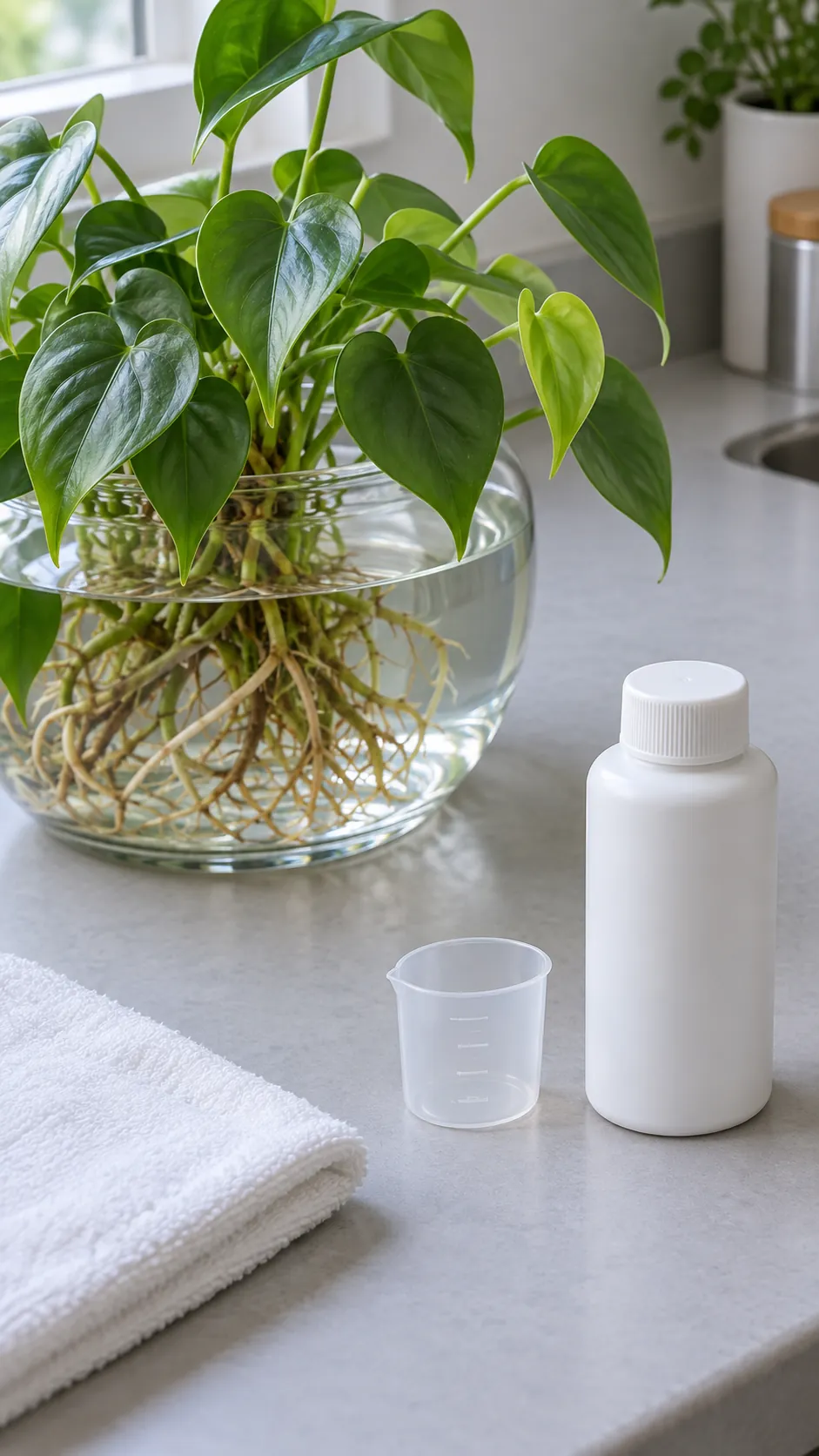
Feed established water plants with a suitable formula
Plain water can support the early rooting stage, but it is not a complete food supply for continuing growth. Use a hydroponic nutrient formulated for the plant and system, following its dilution and replacement directions instead of guessing by capful. Do not pour kitchen scraps, compost tea, or ordinary concentrated fertilizer into a decorative jar and expect a balanced solution.
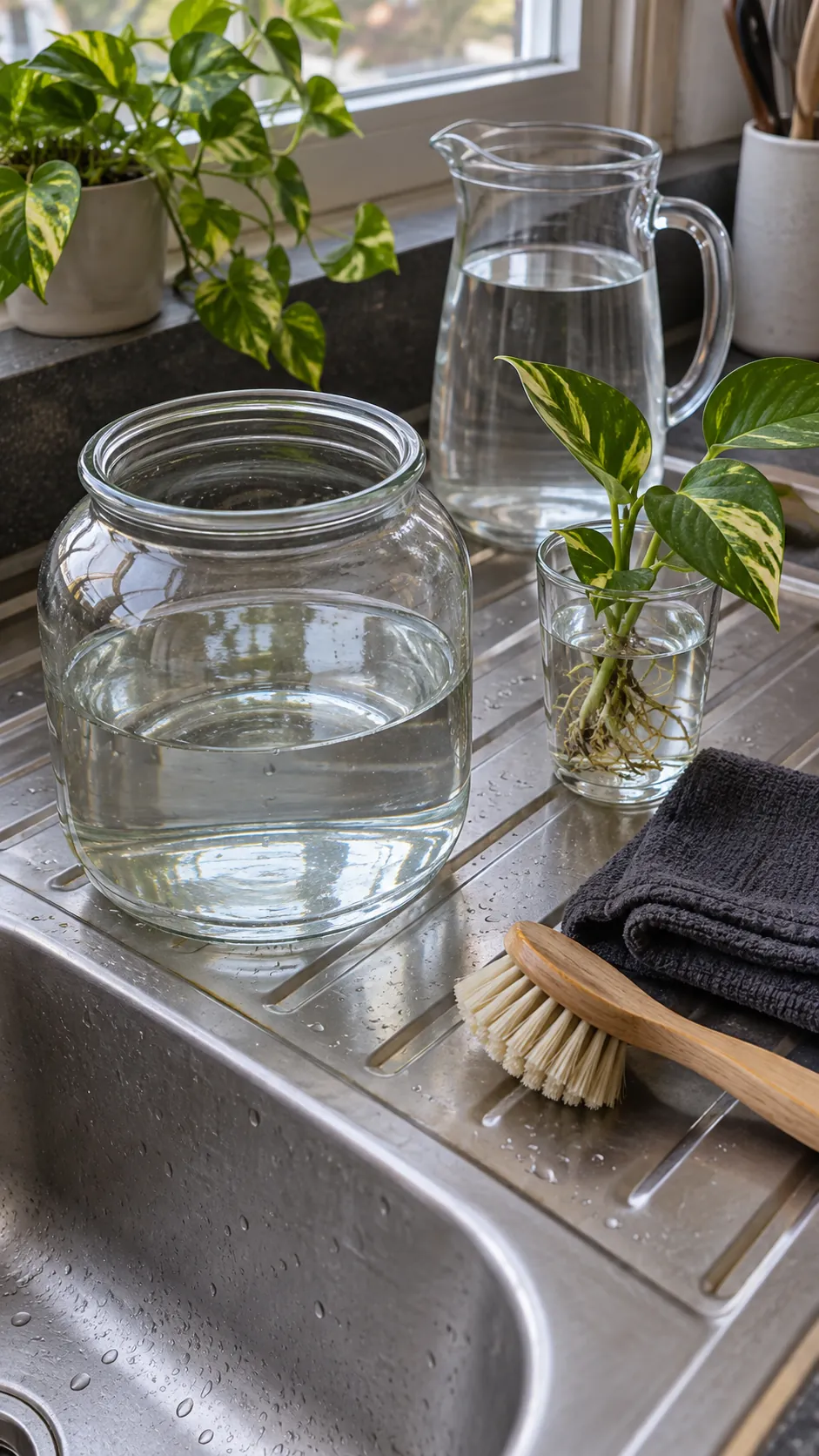
Make water changes part of a cleaning routine
Check water level and root condition regularly, replacing water before it becomes foul or cloudy rather than following appearance alone. During a change, clean the vessel and remove fallen leaves without scrubbing healthy roots aggressively. Use suitable fresh water near room temperature, and remember that topping up evaporation does not remove accumulated salts.
Inspect soft roots before adding more fertilizer
Firm roots can naturally be cream, tan, or darker depending on the plant, so color alone does not diagnose rot. A mushy texture, sloughing tissue, or an unpleasant smell is more concerning and calls for removing damaged material with a clean tool and cleaning the container. Separate an affected plant from shared water and correct stagnant conditions rather than treating every decline as a nutrient shortage.
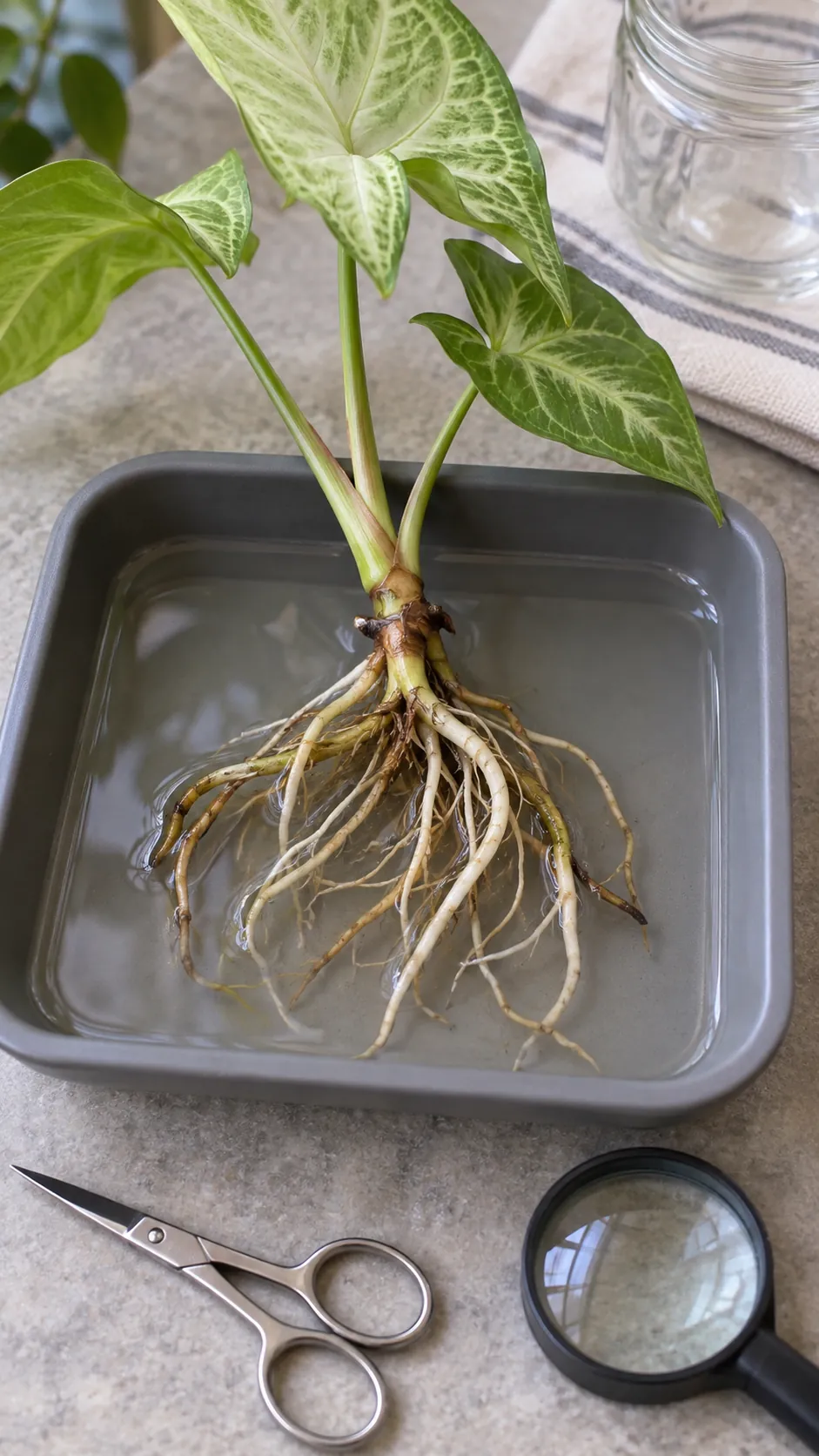
Move rooted cuttings into their next home on purpose
Decide whether each cutting is headed for potting mix or a maintained hydroponic system before its roots fill the vessel. For a move to soil, a modest branching root system is easier to handle than a dense knot, and the freshly potted plant needs attentive moisture while it adapts. Keep terrarium plants, aquatic plants, and ordinary houseplant cuttings in environments suited to their roots, because a shared glass aesthetic does not make their care interchangeable.
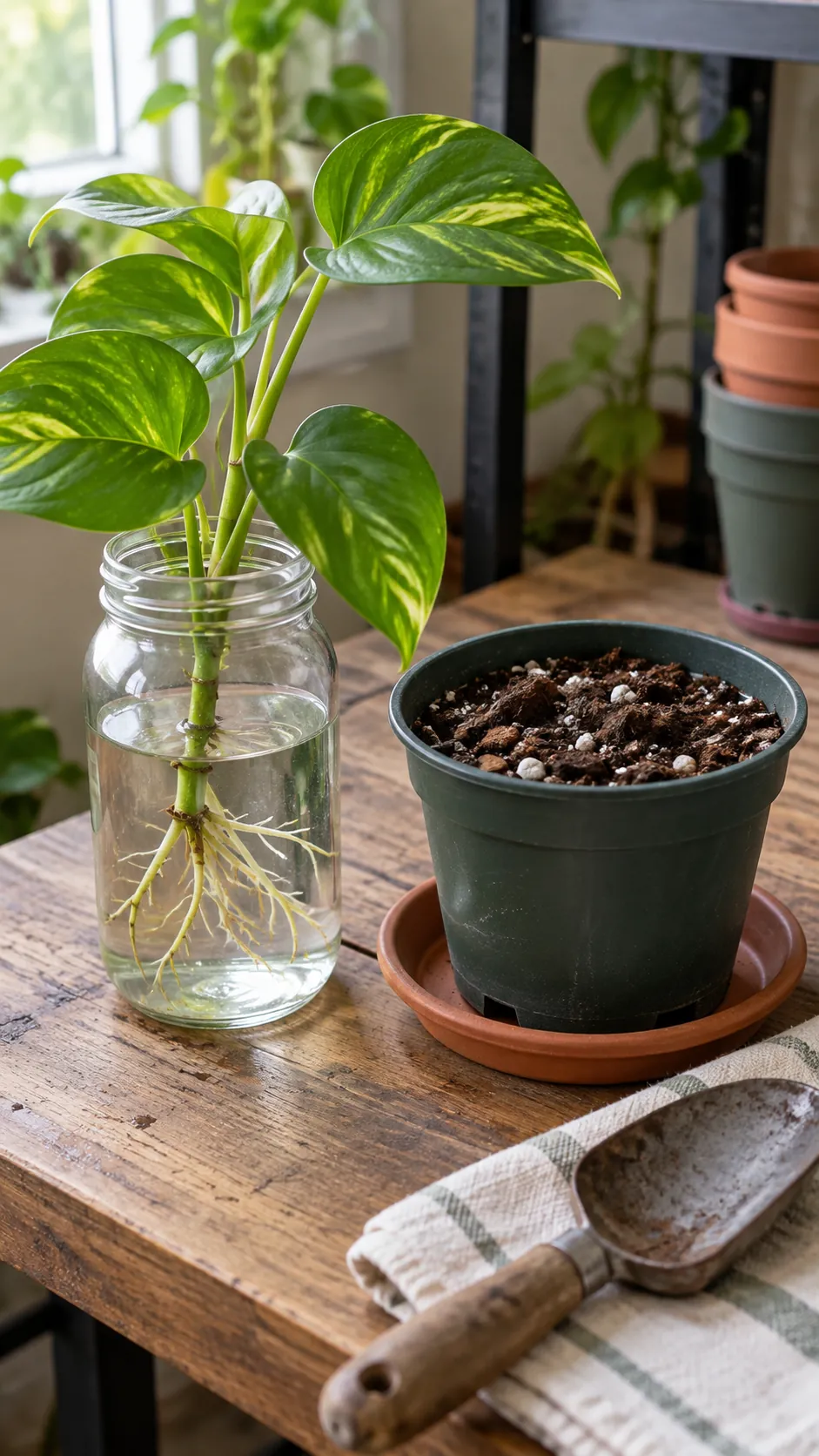
The plant and container references below can help you choose supplies for a specific setup. Live plants sold in nursery pots still require the transition and care described above, and desert cacti belong in draining pots. A decorative vessel or a bag of stones is a support choice, not a complete growing system.
 Check on Amazon