
Staring at a blank white wall can feel uninspiring, especially when you want more greenery but have run out of floor space for pots. Bringing plants up onto your walls doesn’t just clear the clutter; it changes the whole energy of a room. Whether you live in a small apartment or a large house, a vertical garden acts as living art that cleans your air and boosts your mood.
This guide covers realistic ways to build your own plant feature wall. We will look at different materials like wood, metal, and felt to help you find a style that fits your home. You don’t need to be a professional landscaper to make these work. Most of these projects are simple enough to finish in a weekend, giving you a lush, green view without much fuss.
Modular Felt Pocket System for Full Coverage
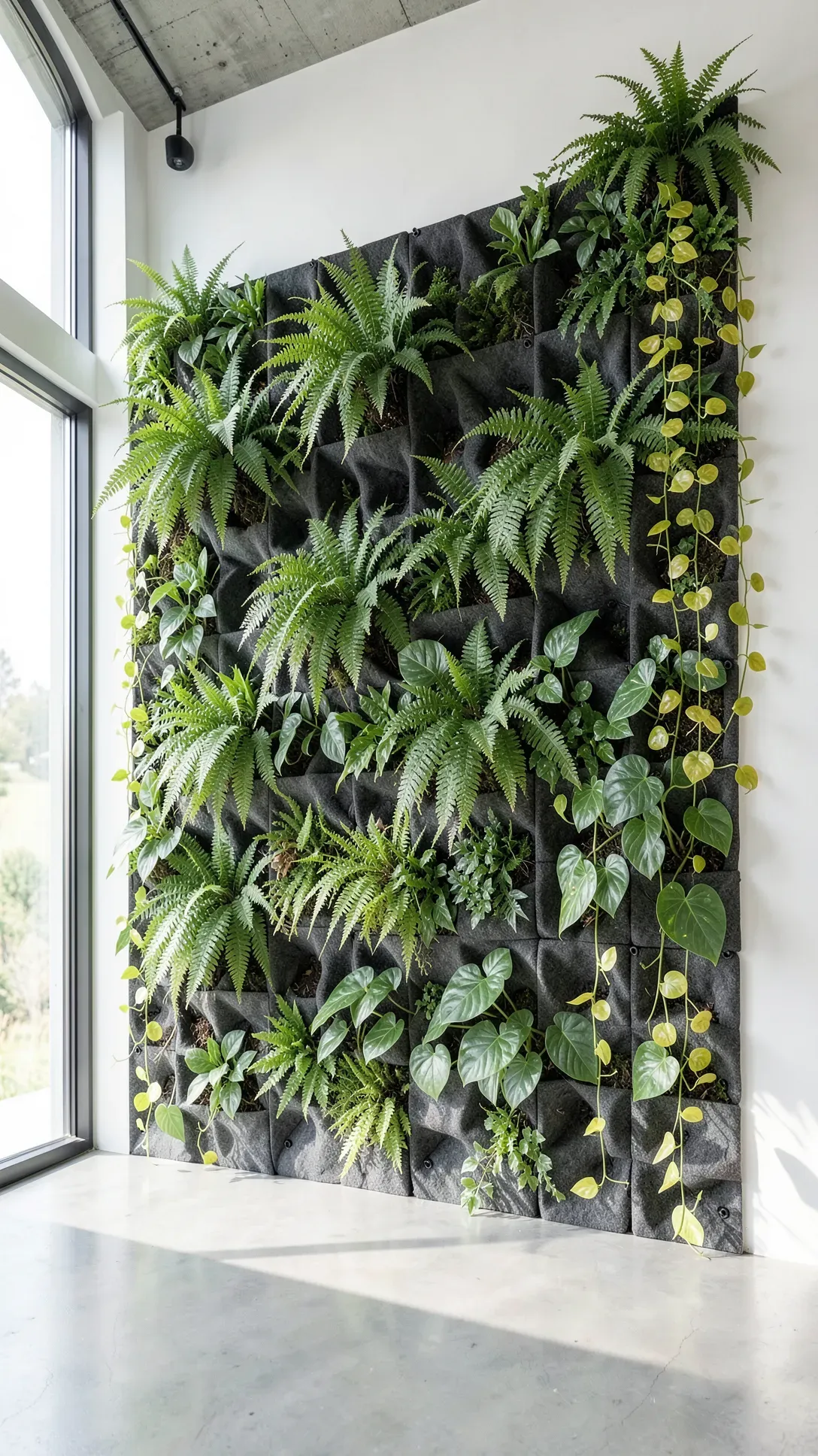
Felt pockets are a go-to for creating a DIY living wall indoor because they are breathable and lightweight. These systems usually come in panels that you can screw directly into the wall. The felt material allows roots to breathe and prevents water from pooling at the bottom, which keeps your plants healthy. You can start with one panel and add more as you go to cover an entire surface from floor to ceiling.
When planting, keep the nursery pots or wrap the root balls in a bit of landscape fabric before sliding them into the pockets. This makes it easier to swap out plants if one isn’t doing well. This setup works best with ferns and pothos that enjoy a bit of humidity and can hide the felt material as they grow.
Floating Wood Shelves with Trailing Pothos
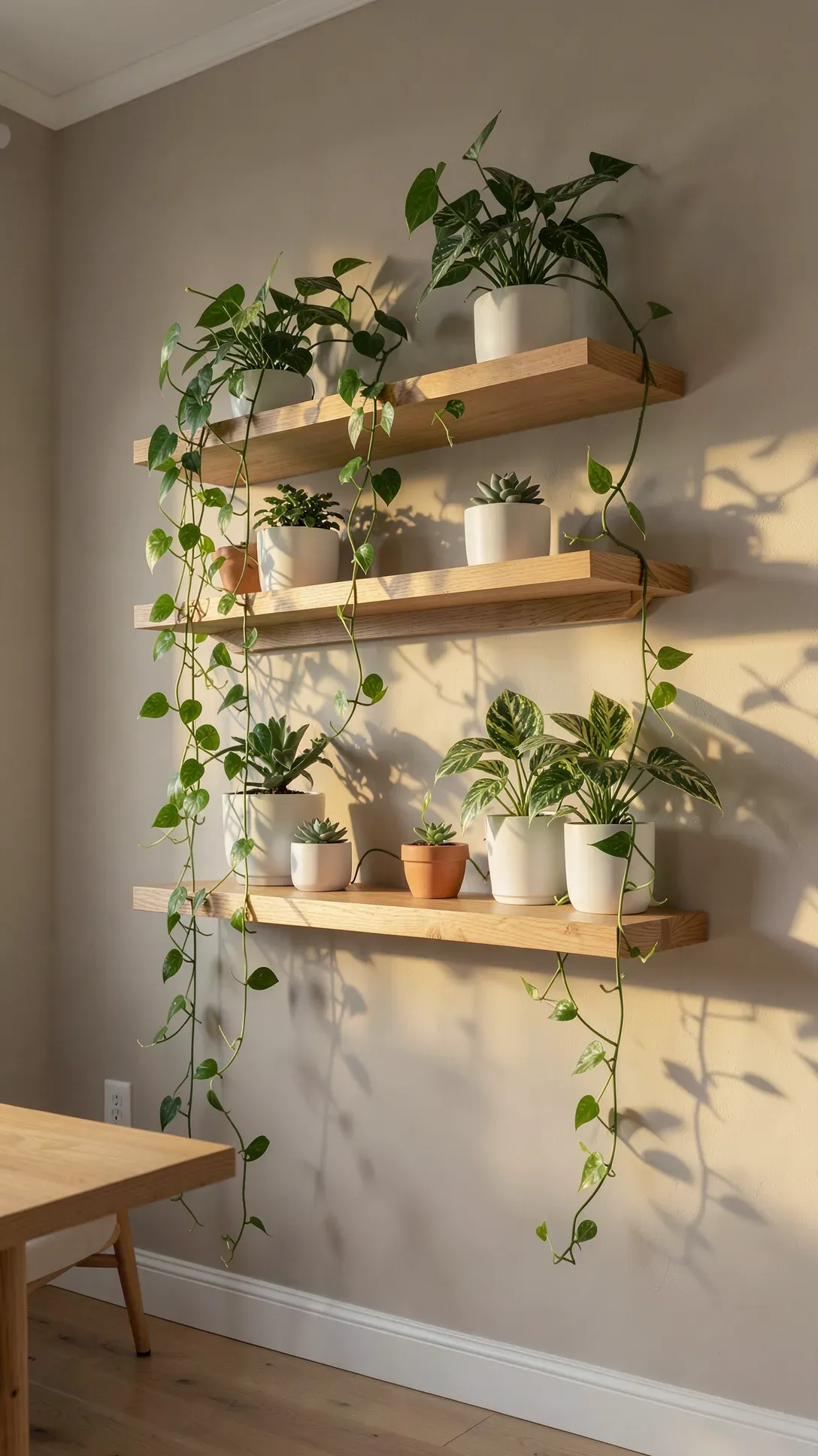
Floating shelves offer a clean way to create a plant accent wall without a complex installation. By staggering the heights of the shelves, you create visual interest and give trailing plants room to hang down. Pothos or Heartleaf Philodendrons are great for this because their vines will eventually drape over the edges, softening the lines of the wood and hiding the shelf brackets.
To keep things looking modern, choose shelves that match your existing furniture or go with a raw wood finish for a more natural look. Make sure to use sturdy wall anchors, as wet soil and ceramic pots can get quite heavy. Grouping three or five shelves in a cluster usually looks more balanced than a single long shelf.
Geometric Metal Grid with Clip-on Pots
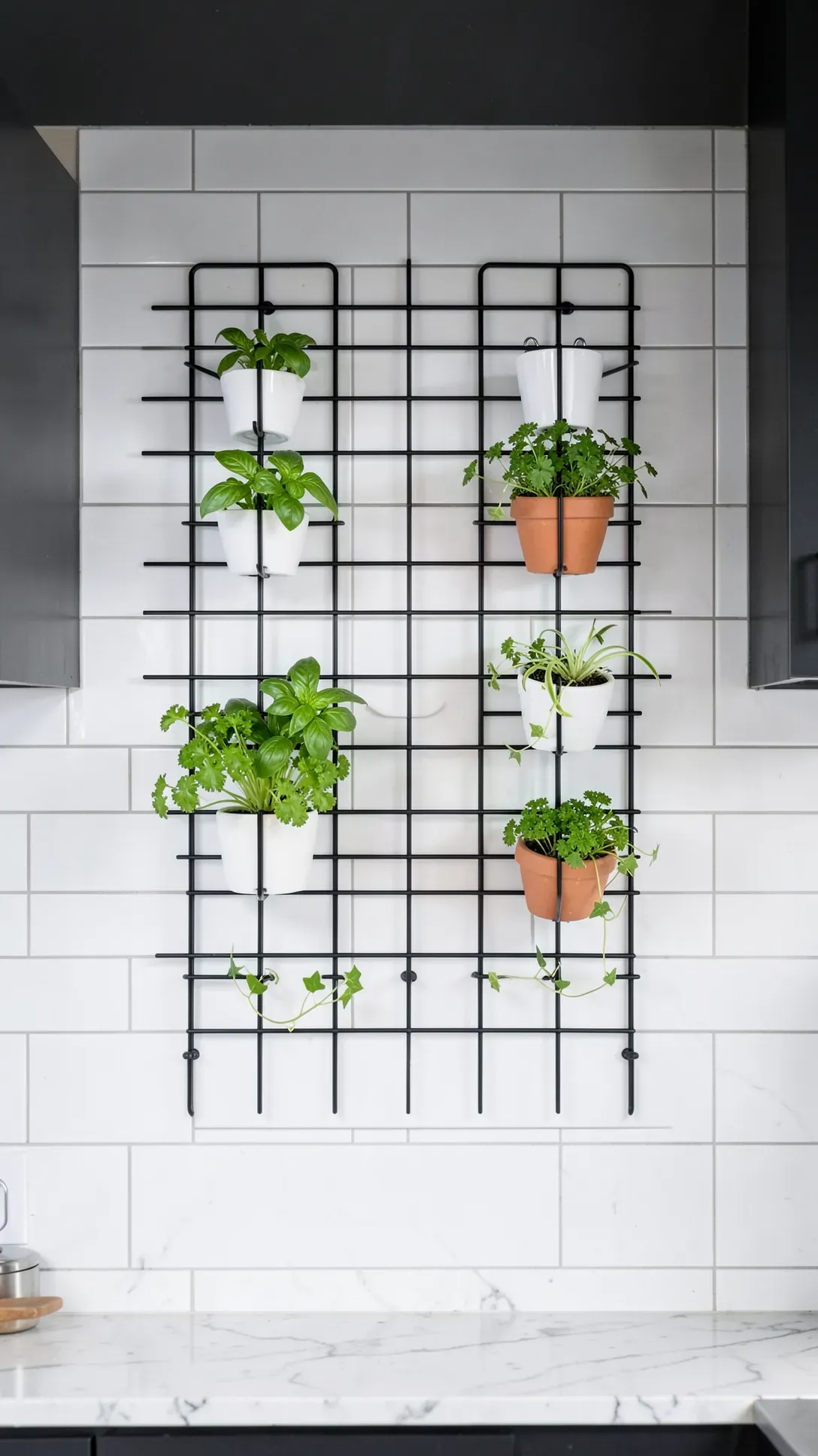
A metal grid is a versatile base for a DIY plant wall indoor. You can find these grids in black, white, or gold at most home goods stores. They attach easily to the wall with small hooks. Once the grid is up, you use S-hooks or specialized clips to hang small pots at different heights, allowing you to change the layout whenever you feel like it.
This method is helpful for people who like to move their plants around for better light. It also works well in kitchens for holding small pots of herbs. Because the grid is open, it doesn’t block much light, making the room feel airy while still providing plenty of space for your greenery.
Recycled Pallet Planter for a Rustic Accent Wall
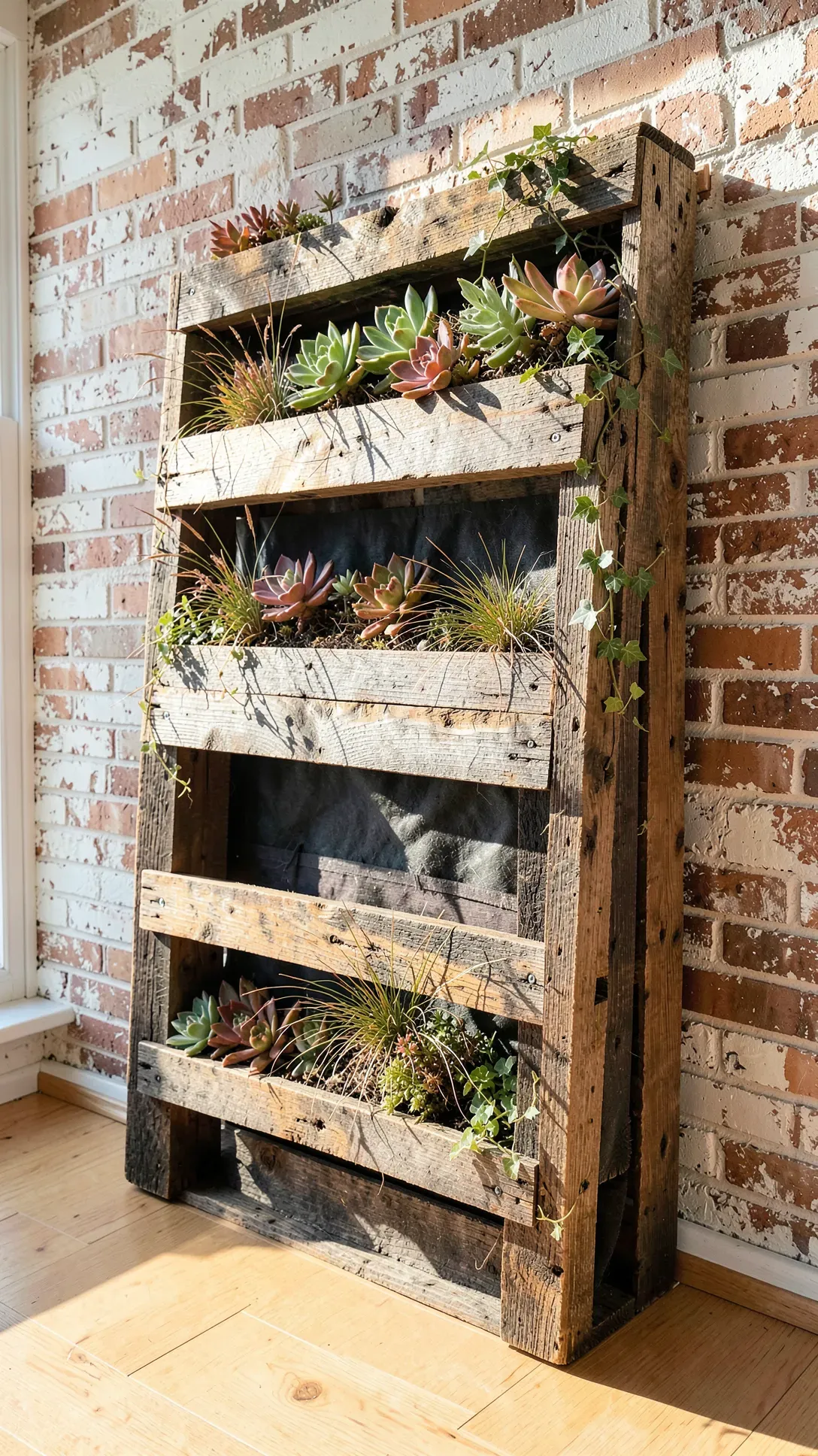
Using a wooden pallet is an affordable way to build a plant feature wall with a rugged look. You can find pallets for free at many local businesses, but make sure they are heat-treated rather than chemically treated. After a bit of sanding, you can staple landscape fabric into the slats to create deep planting pockets or simply use the horizontal boards as ledges for small pots.
If you want to lean into the rustic style, leave the wood as it is, or paint it to match your room’s color scheme. Pallets are heavy, so it is often best to rest the bottom on the floor and secure the top to wall studs. This setup provides a large surface area for a variety of textures, from succulents to small leafy greens.
Magnetic Steel Board with Air Plant Holders
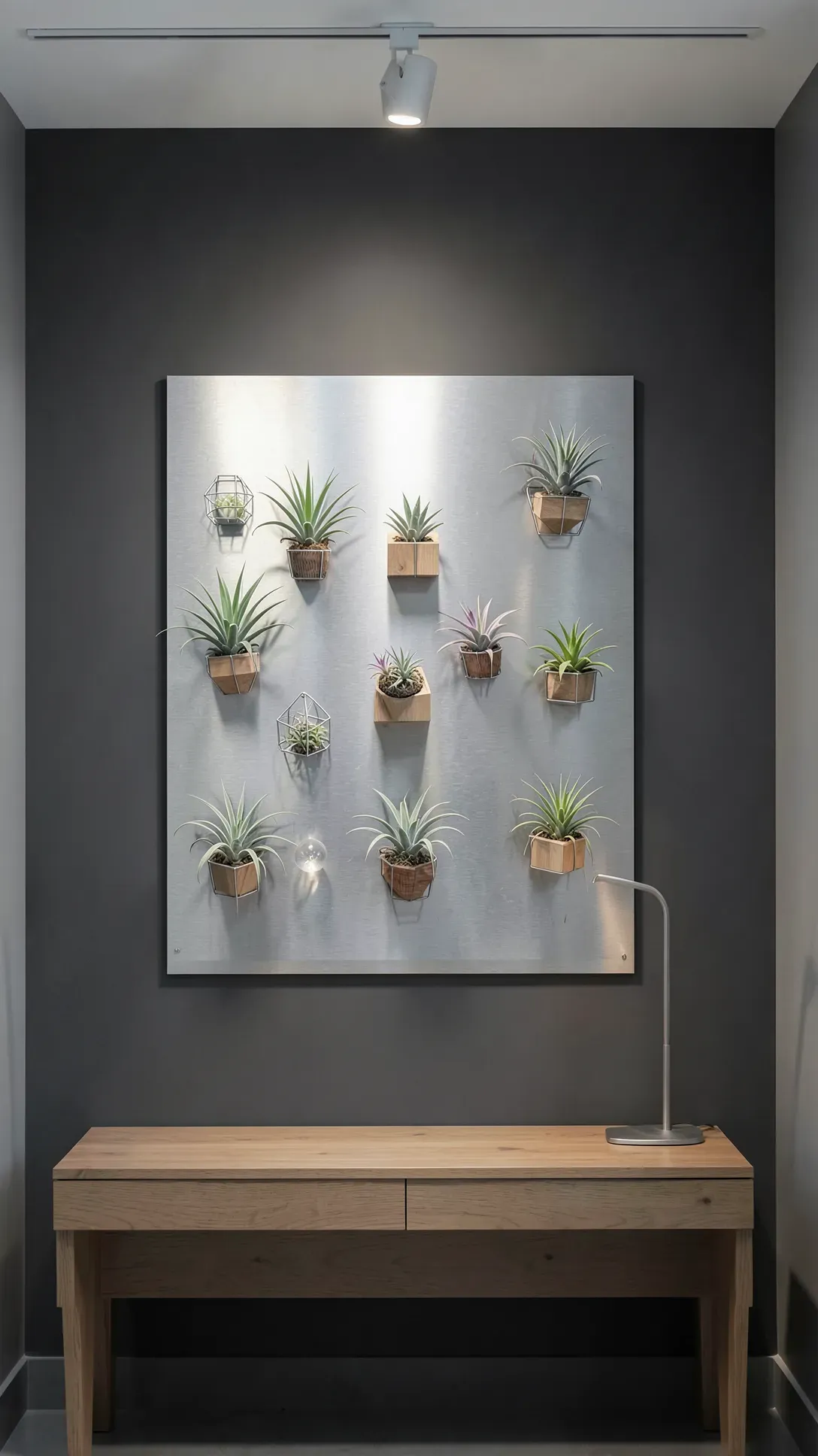
Air plants are unique because they don’t need soil to grow, which makes them perfect for a magnetic display. You can mount a sheet of galvanized steel or a magnetic chalkboard to your wall and use small magnetic tins or wire loops to hold the plants. This creates a very clean, minimalist plant wall design that requires almost no cleanup.
Since air plants need to be misted or soaked, having them on magnets makes maintenance simple. You just pull the plant and its holder off the board, take it to the sink, and snap it back into place when you are done. This is a great option for office spaces or narrow hallways where a bulky planter might get in the way.
Hexagonal Honeycomb Wall Planter Arrangement
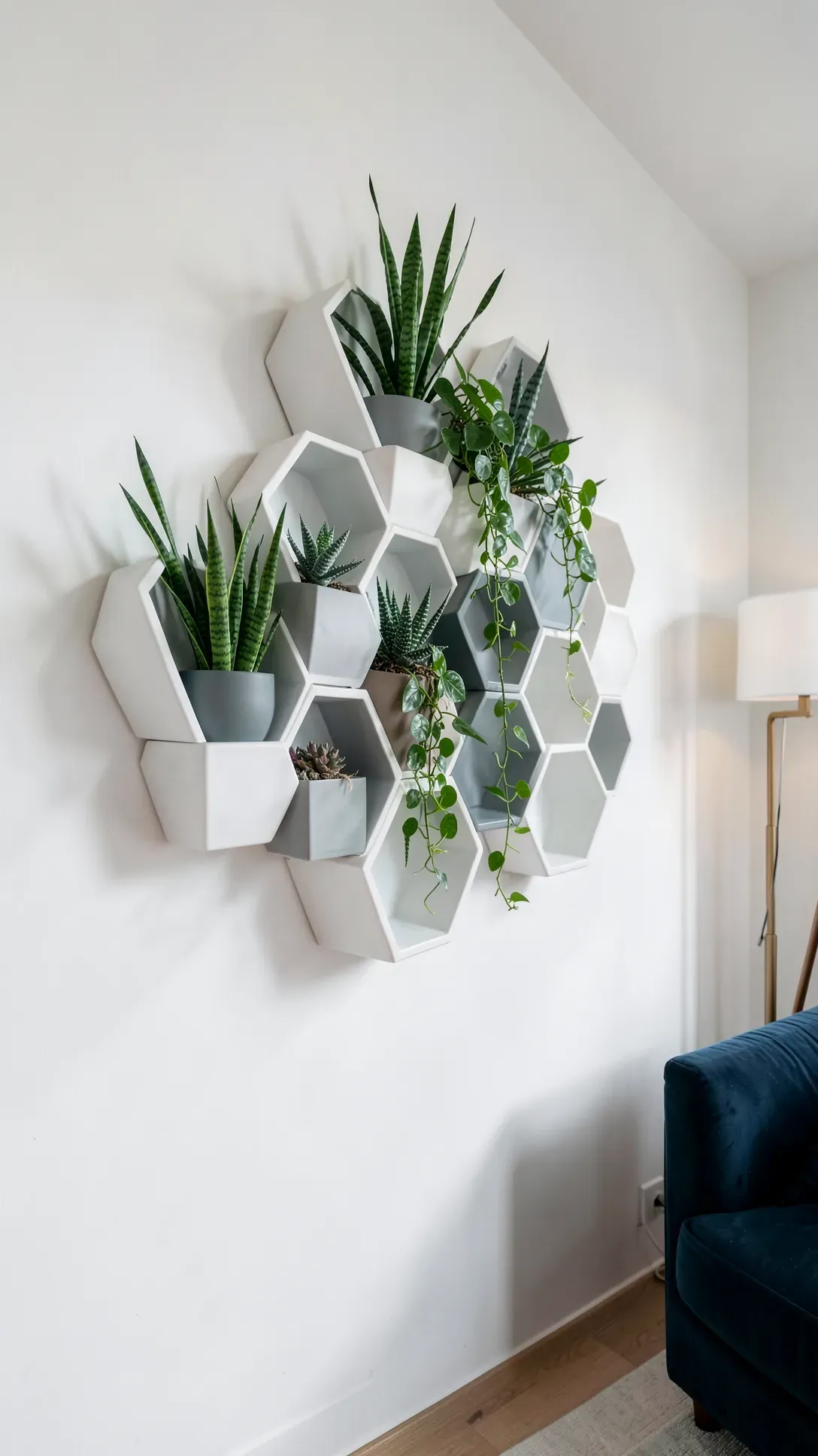
Honeycomb shapes are popular for wall garden ideas indoor because they fit together like a puzzle. You can buy individual hexagonal planters and arrange them in a cluster that grows across your wall. This geometric pattern looks like a piece of art even before you add the plants. It works well in living rooms where you want a focal point that feels intentional and modern.
Try mixing different types of plants in each hexagon to create contrast. You might put a spiky snake plant in one and a soft, trailing hoya in the next. Using planters of the same color but different sizes can also add depth to the display without making it look cluttered.
Vertical Tension Pole with Adjustable Pot Arms
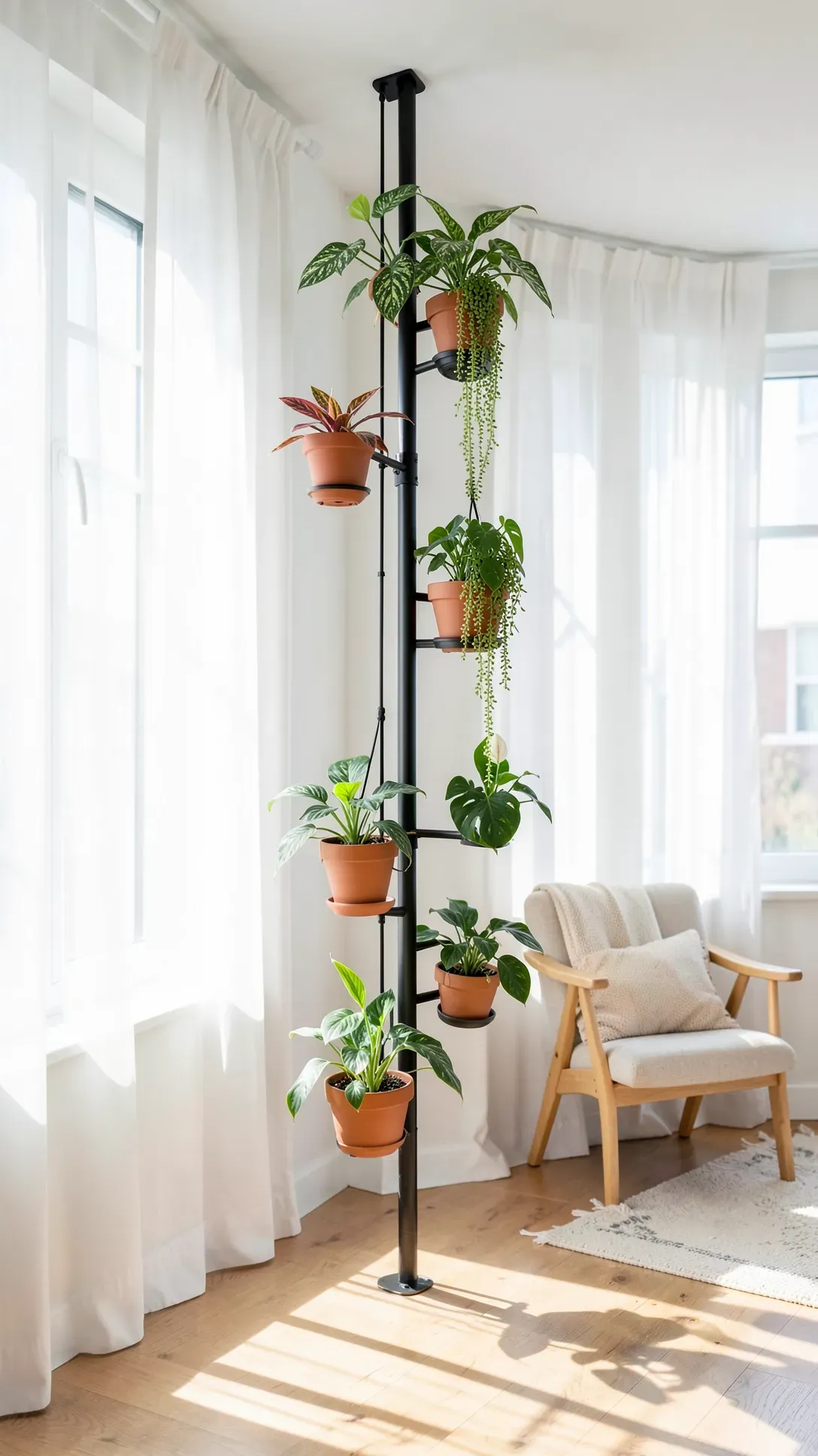
If you are renting and cannot drill holes in your walls, a tension pole is a smart alternative. These poles wedge between the floor and the ceiling, taking up very little horizontal space. They usually come with several arms that you can move up and down to hold pots at different levels. This creates a vertical column of greenery that mimics the look of a wall-mounted garden.
These poles are particularly useful for wall plants indoor living rooms where corner space is often wasted. You can rotate the arms to ensure every plant gets enough light from a nearby window. It is a flexible system that allows you to add a lot of green to a room without any permanent changes to the building.
Copper Pipe Trellis for Climbing Vines
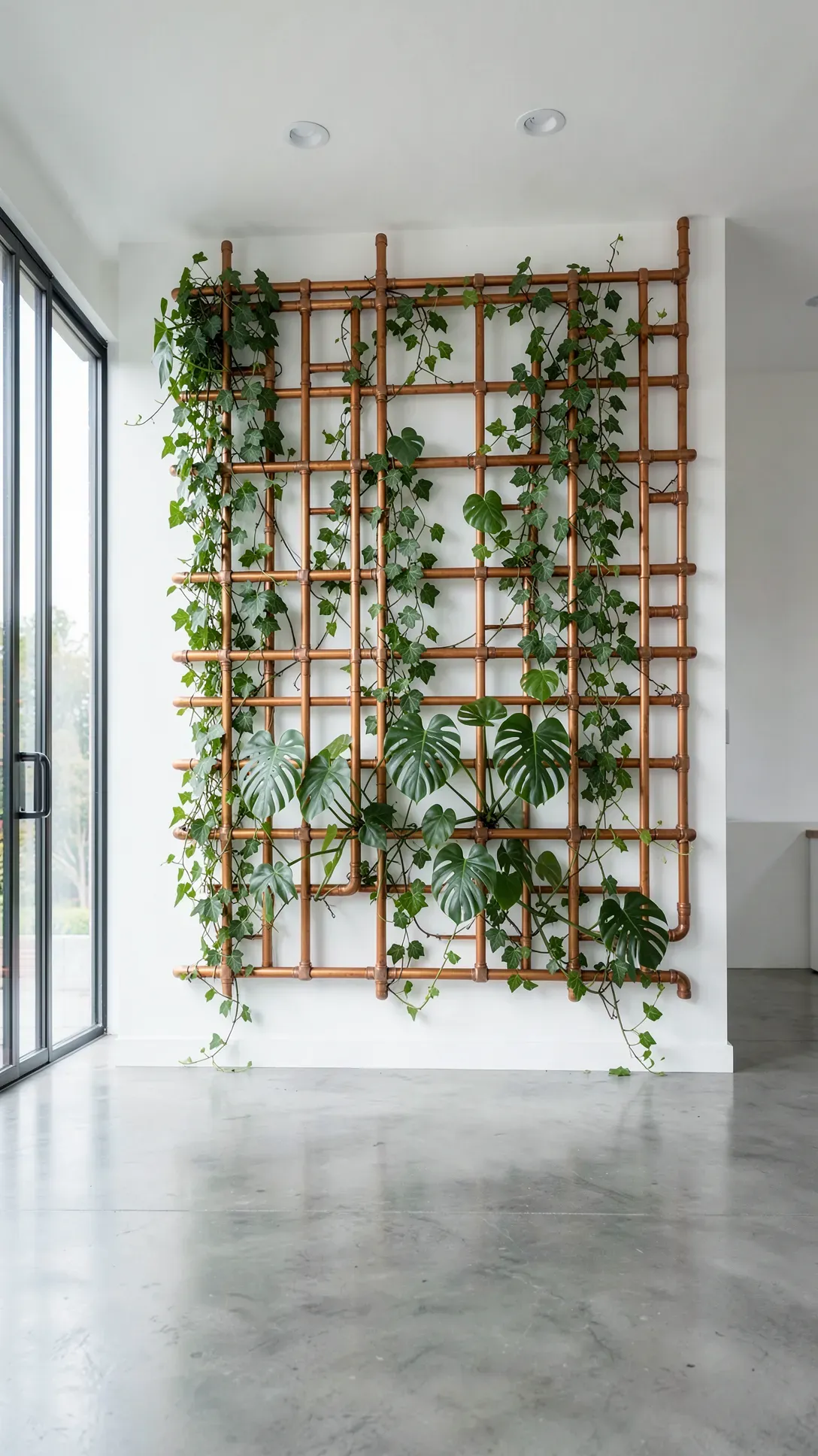
Copper pipes add a warm, industrial touch to your indoor garden. You can build a simple frame or a more complex grid using copper pipes and elbow joints from the hardware store. Once mounted, this trellis provides a sturdy structure for climbing plants like English Ivy or Monstera Adansonii to wrap around as they grow upward.
Over time, the copper will develop a natural patina, or you can polish it to keep it shiny. This type of support is great for creating a living screen between different areas of an open-concept room. It feels more structural than just hanging a pot and gives the plants a clear path to follow.
Wall-Mounted Glass Terrarium Orbs
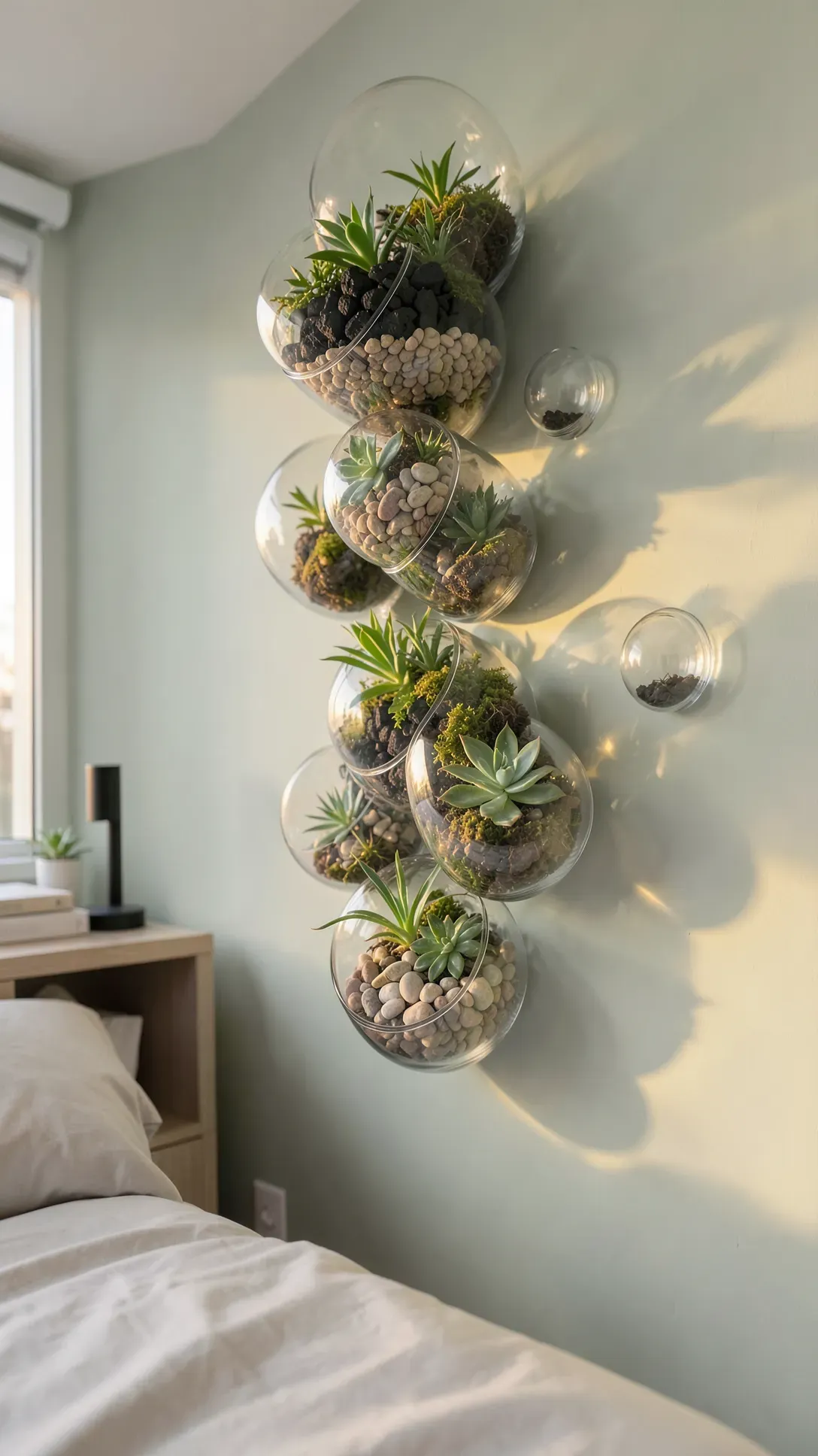
Small glass orbs that mount directly to the wall are excellent for a delicate look. These are typically used for small plants like succulents, moss, or air plants. Because the glass is clear, you can see the layers of pebbles and soil inside, which adds an extra design element to your wall. They work best in bright rooms where the glass can catch the light.
When using glass containers without drainage holes, it is important to put a layer of charcoal and gravel at the bottom to prevent root rot. These orbs are perfect for creating a small-scale plant wall in a bathroom or a bedroom where you want something subtle rather than a massive green installation.
Industrial Wire Mesh Panel for Potted Herbs
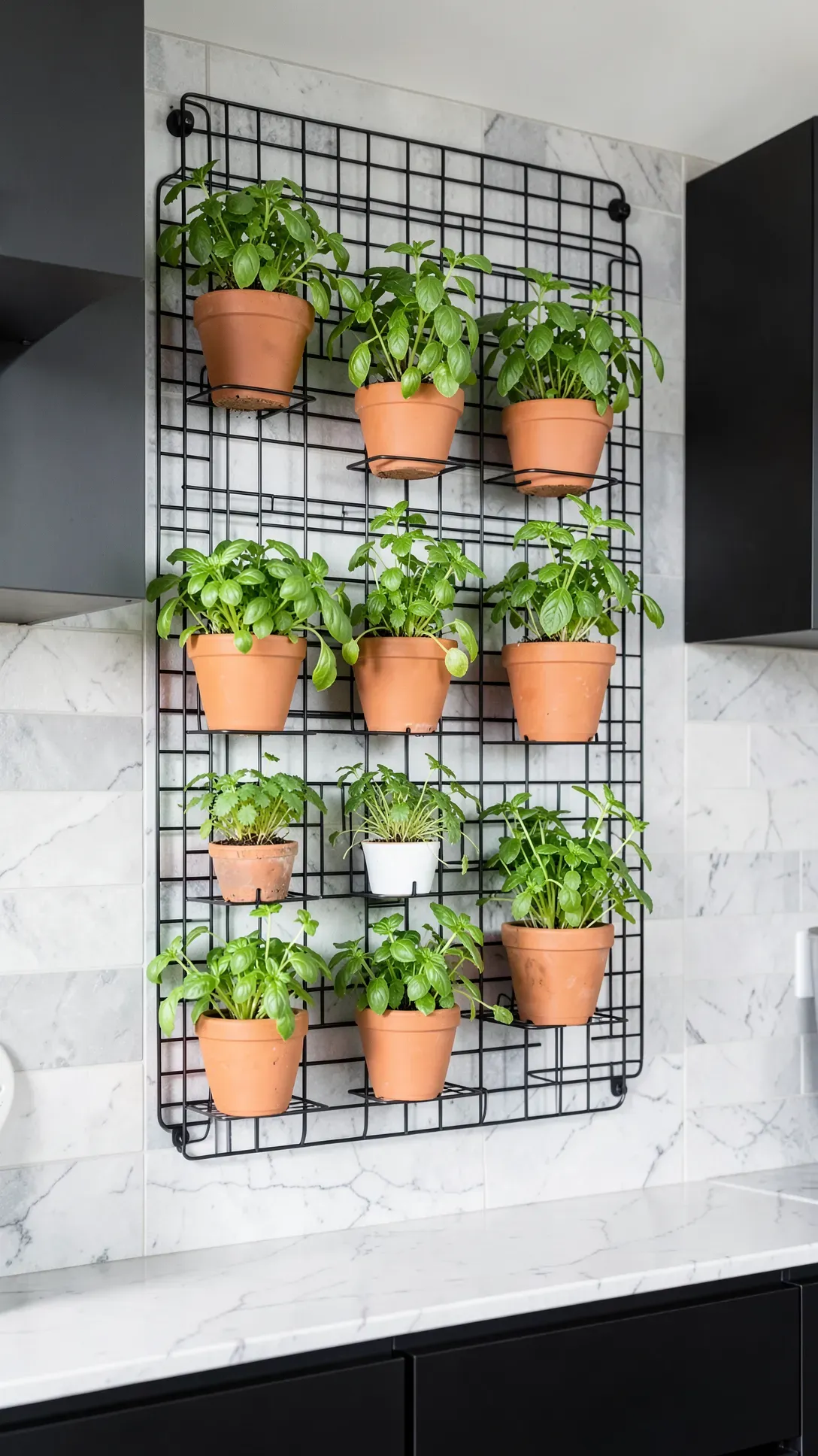
Wire mesh panels offer a more rugged, utilitarian look compared to thin metal grids. These are often used in outdoor plant wall ideas but work just as well inside for a kitchen herb garden. You can use zip ties or wire to attach small terracotta pots to the mesh. This keeps your basil, mint, and cilantro within arm’s reach while you are cooking.
To prevent water from dripping on your floor, you can use pots with attached saucers or simply take the pots to the sink for watering. The mesh itself is very strong, so it can handle the weight of several damp pots at once. It’s a practical way to turn a blank kitchen wall into a functional garden.
Custom Built-in Recessed Wall Niche with Lighting
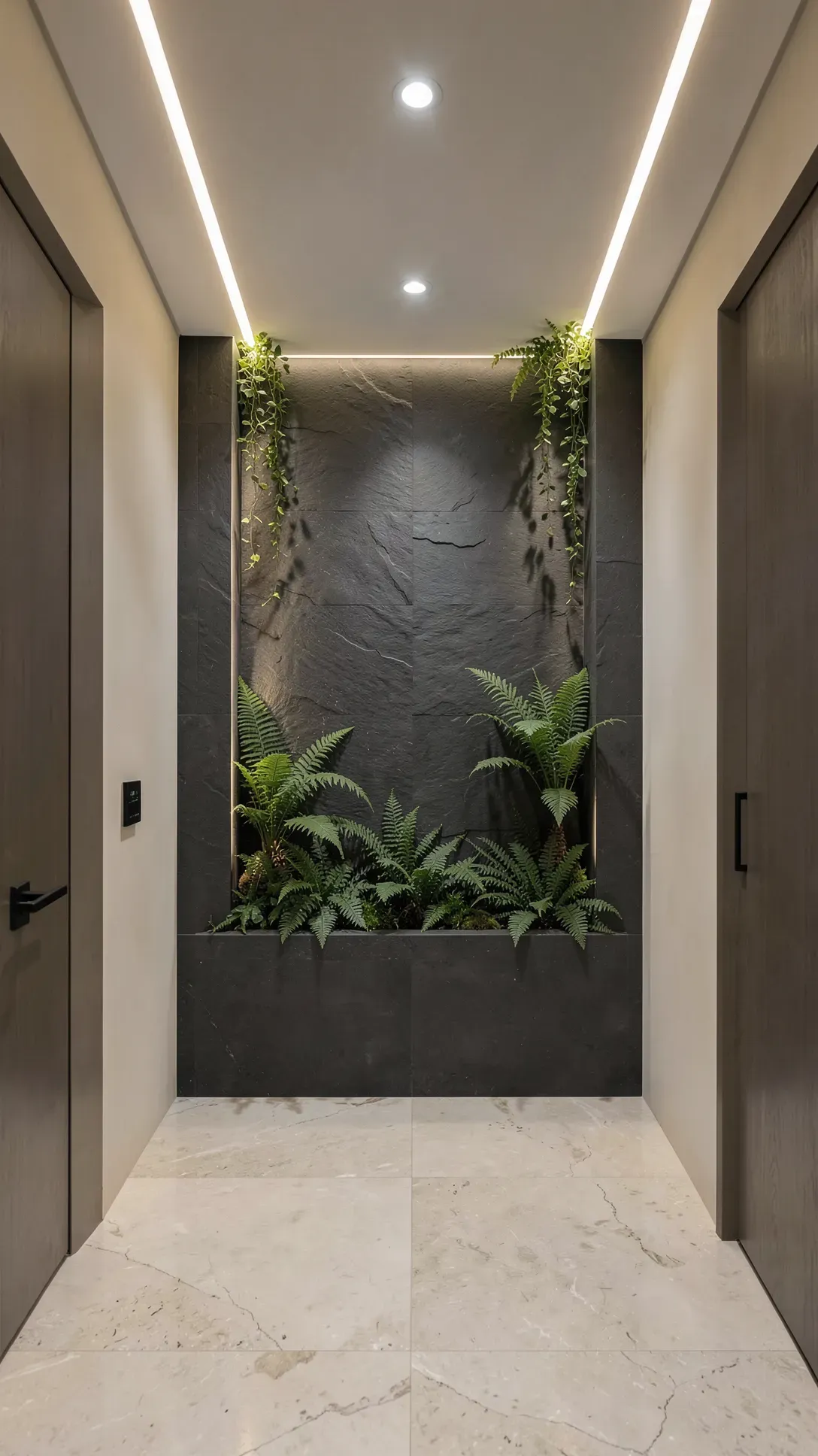
If you are doing a renovation, a recessed niche is a permanent and high-end way to display plants. By carving out space inside the wall, the plants sit flush with the surface, which saves space and looks very integrated. Adding built-in LED grow lights at the top of the niche ensures your plants stay healthy even if the room doesn’t get much natural sun.
This approach works beautifully for a plant feature wall in an entryway or hallway. You can line the inside of the niche with moisture-resistant materials like tile or stone to protect your drywall. It turns your plant collection into a gallery-style exhibit that feels like a part of the home’s architecture.
Minimalist Leather Strap Shelving for Small Succulents
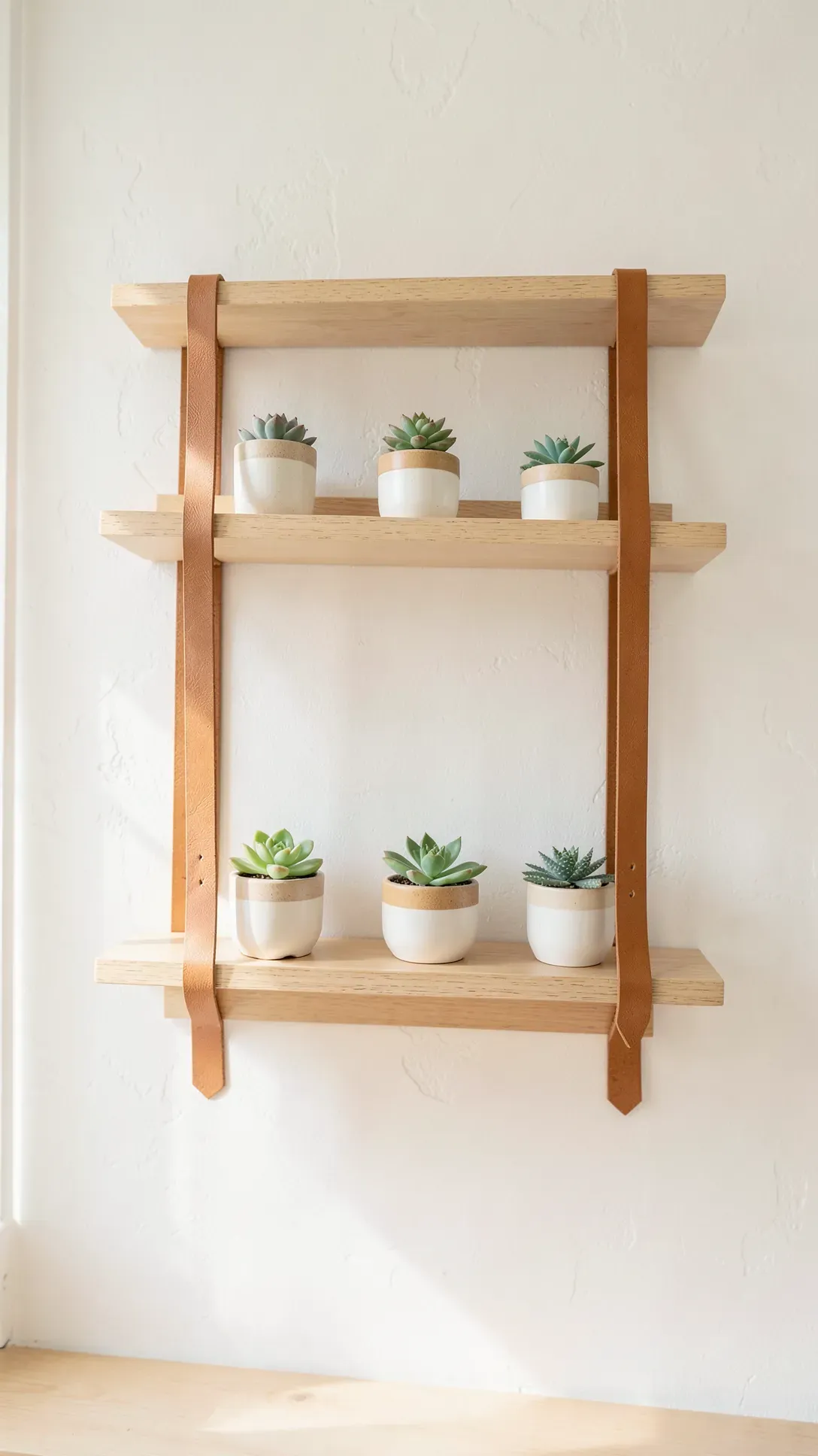
Leather strap shelves use two loops of leather to hold a wooden board against the wall. This design is very popular in modern interiors because it combines natural textures in a simple way. These shelves are ideal for small, lightweight plants like succulents or cacti that don’t require heavy pots or frequent watering.
The contrast between the soft leather and the green leaves creates a sophisticated look. Because the straps are thin, the focus remains on the plants themselves. It’s an easy DIY wall planter indoor project that only requires a few strips of leather, some screws, and a finished piece of wood.
Framed Moss Art Panel for Low Maintenance
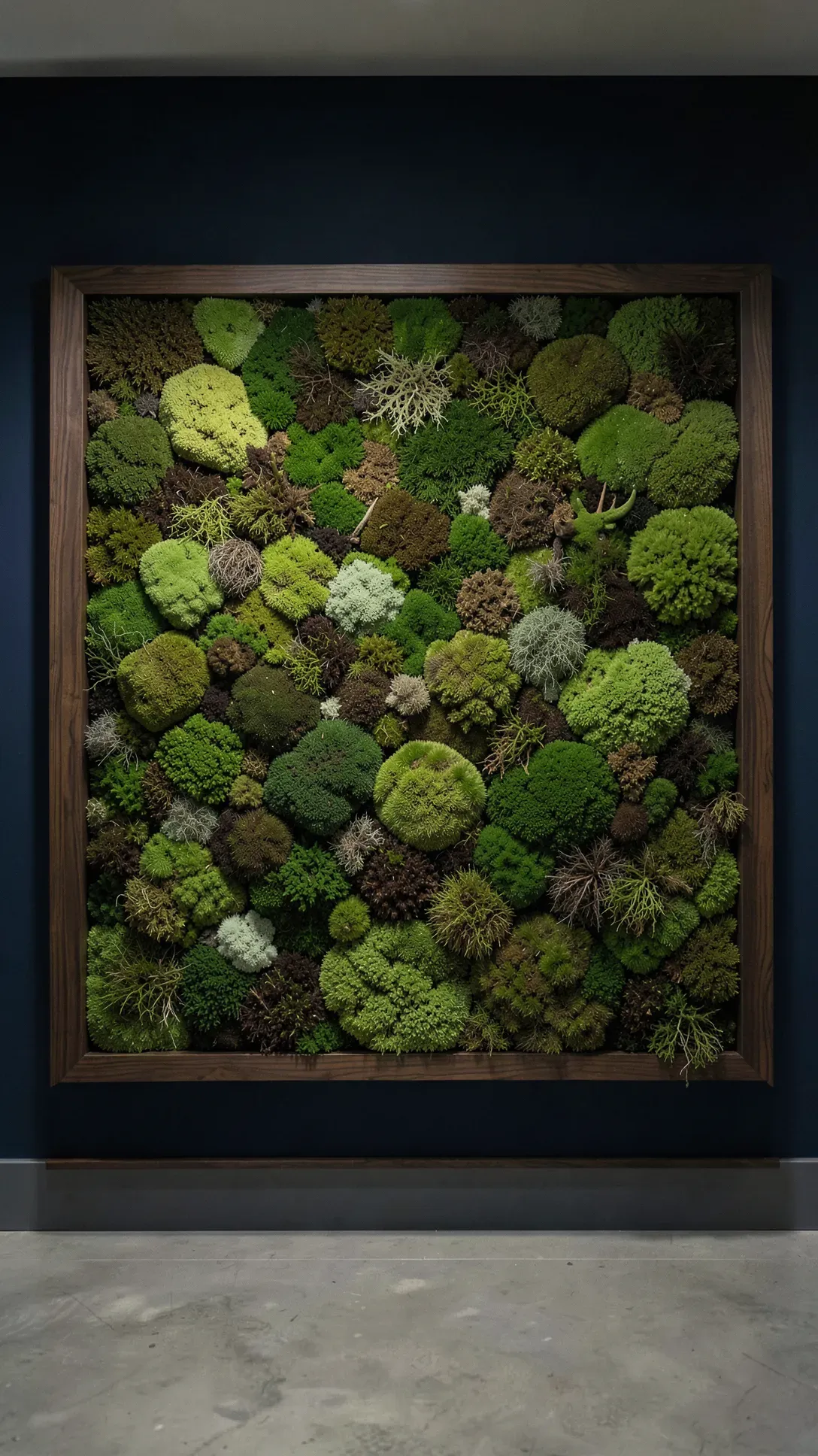
For those who want the look of a living wall without the watering schedule, framed moss art is a great solution. These panels use preserved moss that stays green and soft for years without any light or water. You can arrange different colors and textures of moss inside a deep picture frame to create a landscape look.
Moss panels are perfect for rooms with no windows, like basements or internal bathrooms. Since the moss is no longer growing, the panel is lightweight and can be hung just like a regular piece of art. It provides the organic feel of a living wall ideas project without any of the traditional garden chores.
Self-Watering Vertical Garden Kits for Busy Spaces
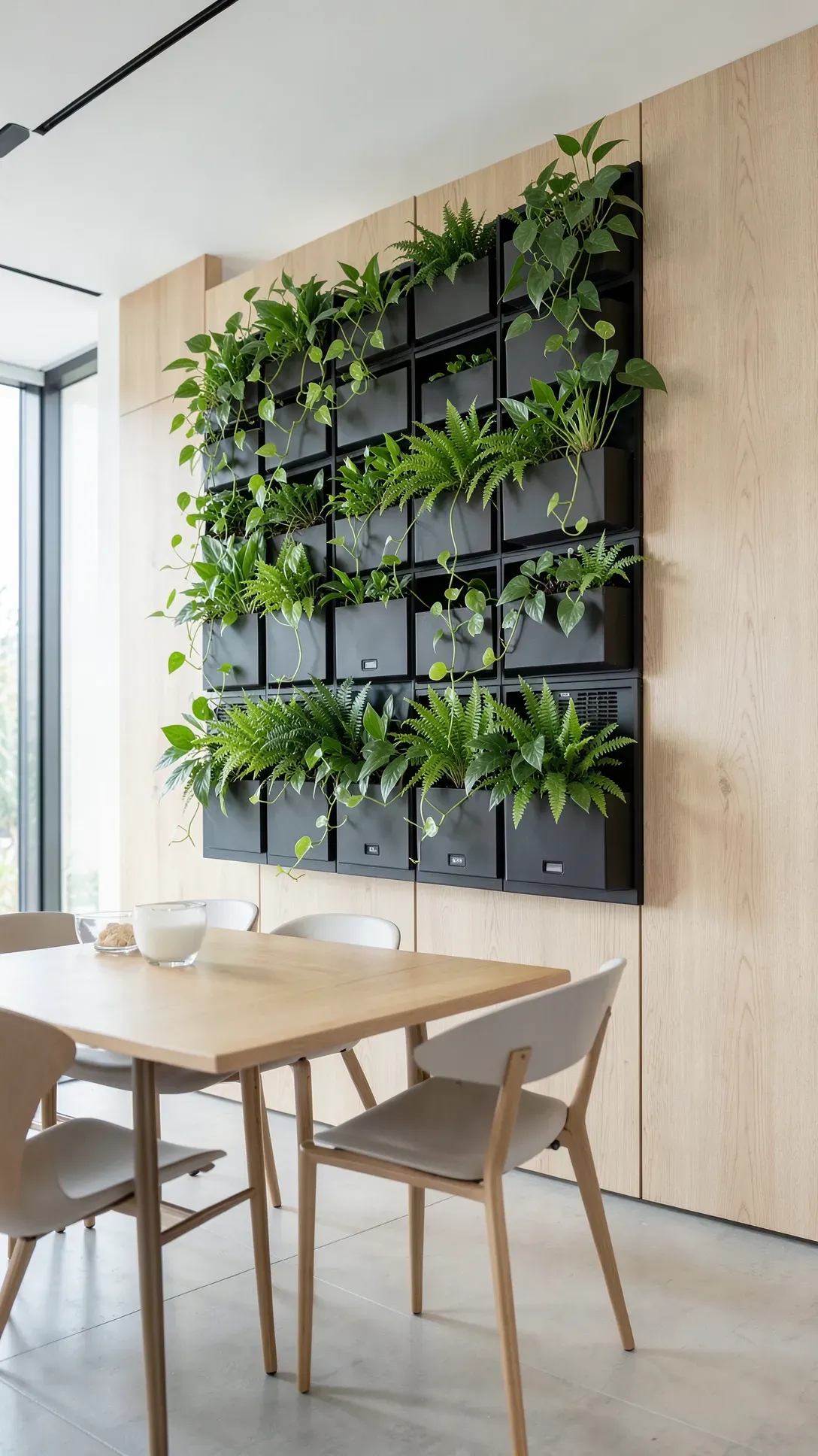
If you worry about keeping your plants alive, a self-watering kit takes away the guesswork. These systems usually have a reservoir at the top or bottom that slowly distributes water to all the plants in the rack. This ensures consistent moisture levels, which is especially helpful for thirsty plants like ferns or tropicals.
Many of these kits are designed to be modular, so you can stack them as high as you want. They are a reliable way to maintain a DIY living wall indoor if you travel often or have a busy schedule. Most kits also include a water level indicator so you know exactly when it’s time to refill the tank.
Pegboard Display with Moveable Plant Containers
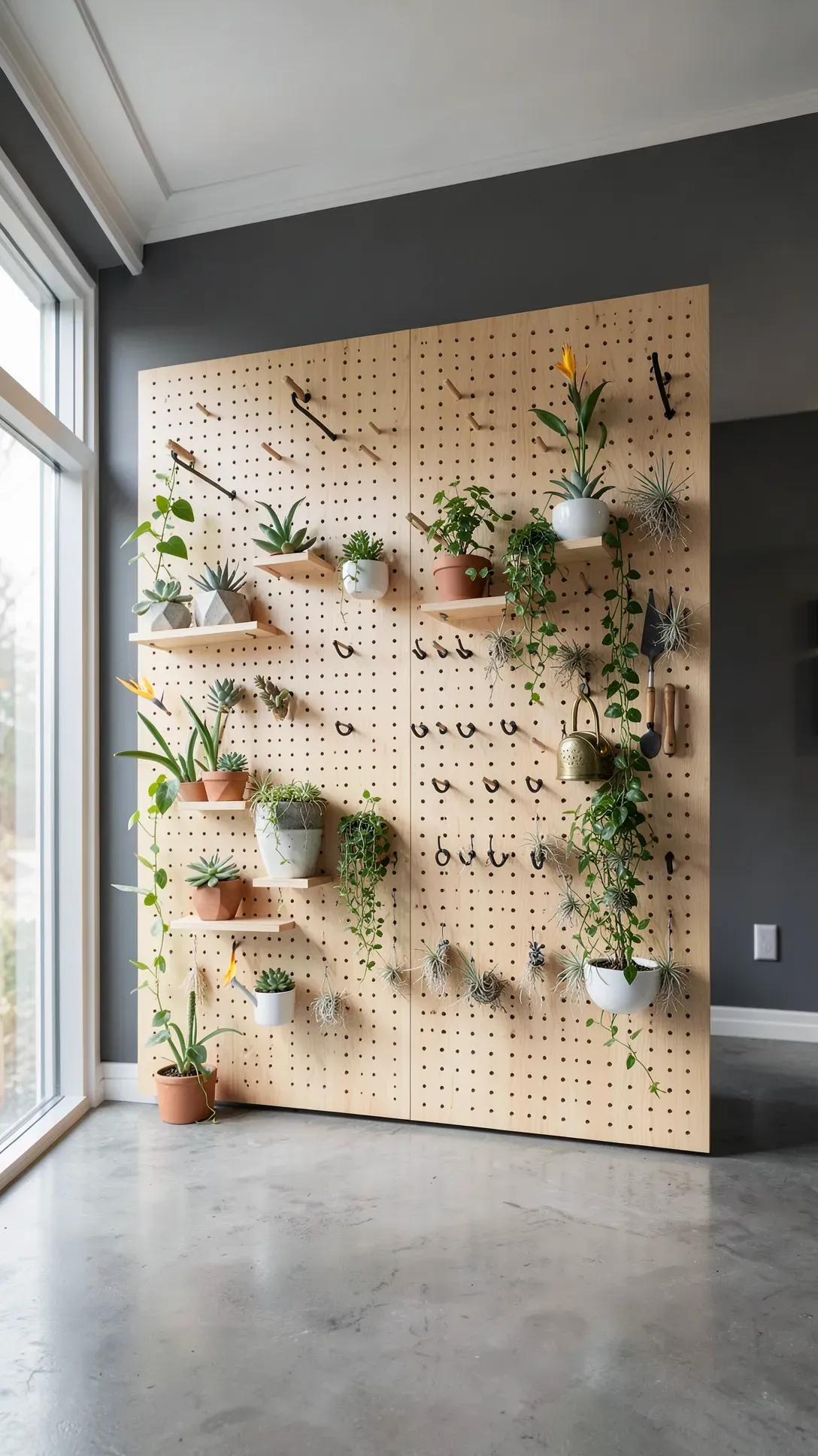
Pegboards are no longer just for garages; they have become a stylish way to organize plants. By using a large wooden or plastic pegboard, you can attach shelves, hooks, and bins to hold your pots. This is one of the most flexible wall garden ideas indoor because you can move everything around as your plants grow or as you add new ones to your collection.
You can paint the pegboard to match your wall color so it blends in, or use a contrasting color to make the plants pop. It is a great way to display a mix of small pots, gardening tools, and even some decorative items. The holes in the board also provide good airflow around the pots, which helps prevent soil mold.
Hanging Macrame Gallery on a Driftwood Branch
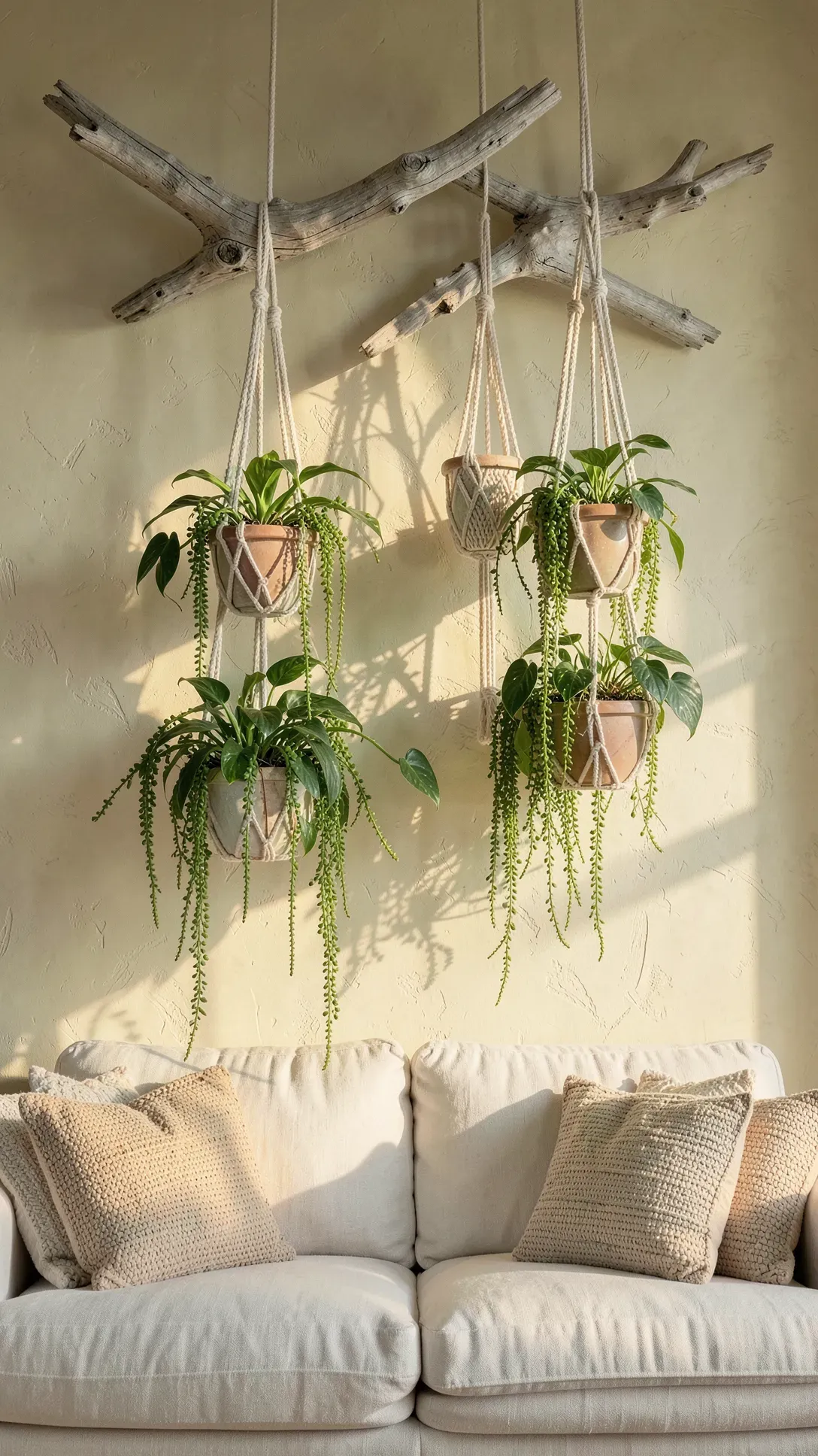
A macrame gallery offers a softer, bohemian vibe for your wall. Instead of mounting pots directly to the wall, you hang a large piece of driftwood or a thick dowel and suspend several macrame plant hangers from it at different lengths. This fills the vertical space of the wall with texture and movement.
This method is perfect for trailing plants like Spider Plants or String of Pearls. It works well over a sofa or a bed where you want something that feels cozy. Since the plants are hanging, they can catch the light from multiple angles, and it is easy to take them down when they need a good soak in the sink.
Floor-to-Ceiling Wood Slats with Integrated Hooks
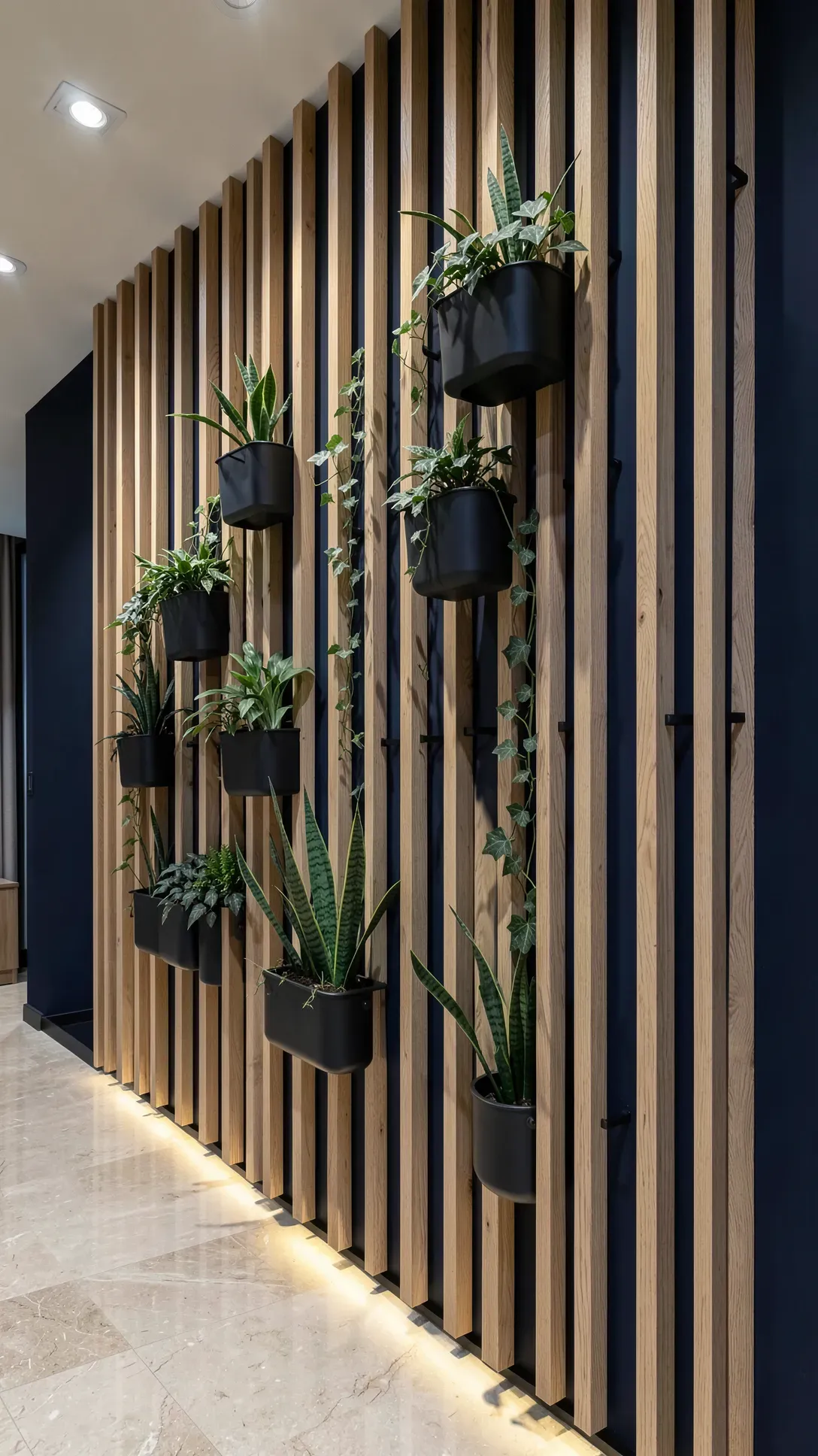
Vertical wood slats can turn an entire wall into a textured backdrop for plants. By attaching thin strips of wood vertically with small gaps between them, you create a surface where you can easily hook or screw in planters at any point. This design adds height to a room and creates a very professional-looking plant accent wall.
You can use black metal pots against light oak slats for a modern contrast. The slats also allow you to hide cords for grow lights or irrigation tubes behind the wood. It’s a structural way to bring nature indoors while adding a bit of architectural interest to a plain room.
Clear Acrylic Wall Shelves for an Invisible Look
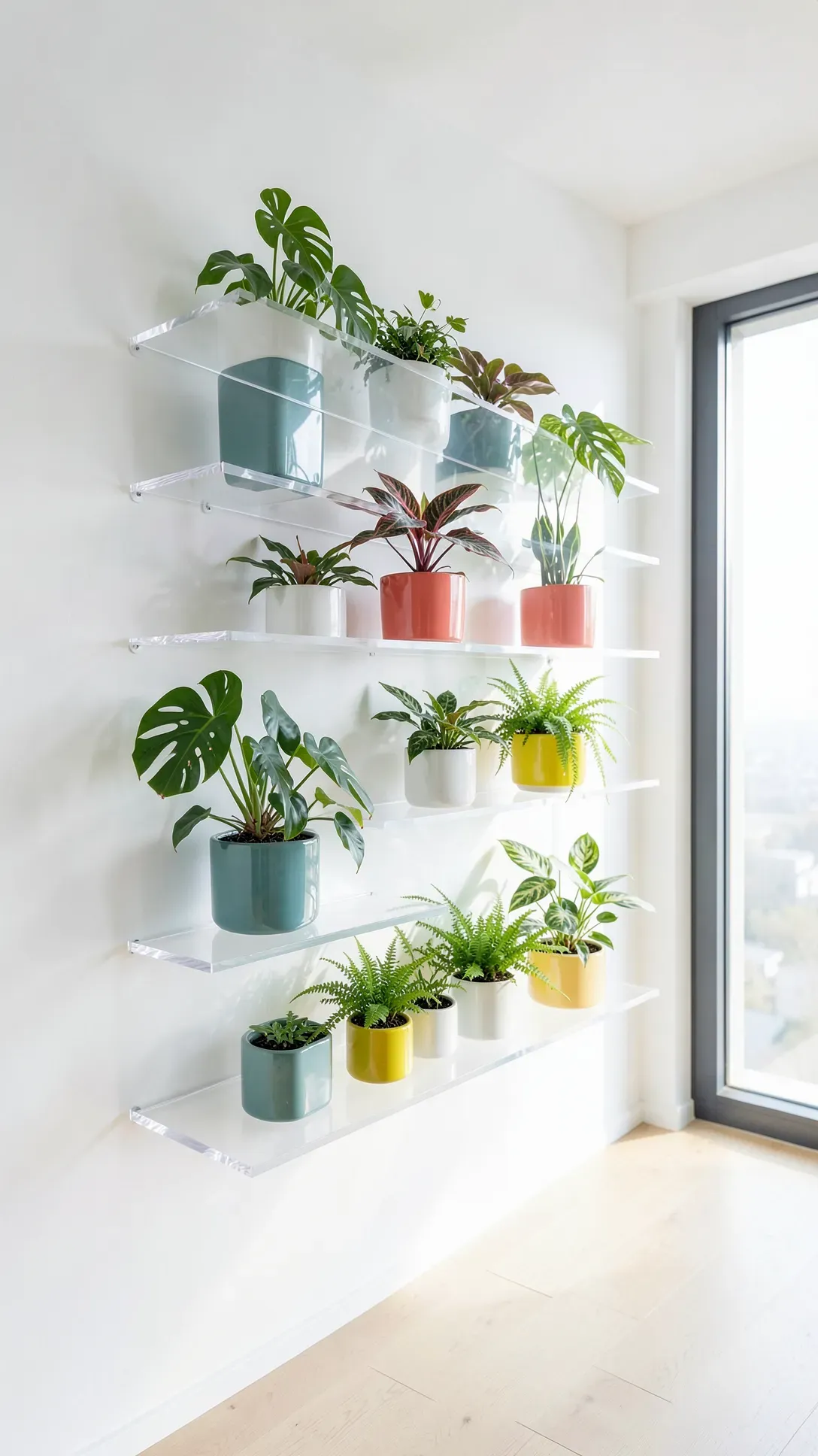
Acrylic shelves are nearly invisible once they are mounted, making your plants look like they are floating on the wall. This is an excellent choice for small rooms where you don’t want to add visual weight. The clear material allows light to pass through to the plants below, which is helpful if you are stacking several shelves on top of each other.
These shelves are usually very easy to clean and won’t be damaged by water spills. They work best with colorful pots or unique plant shapes that you want to highlight. Because they are so unobtrusive, they fit into almost any decor style, from ultra-modern to traditional.
Upcycled Painted Tin Cans on a Shiplap Backdrop
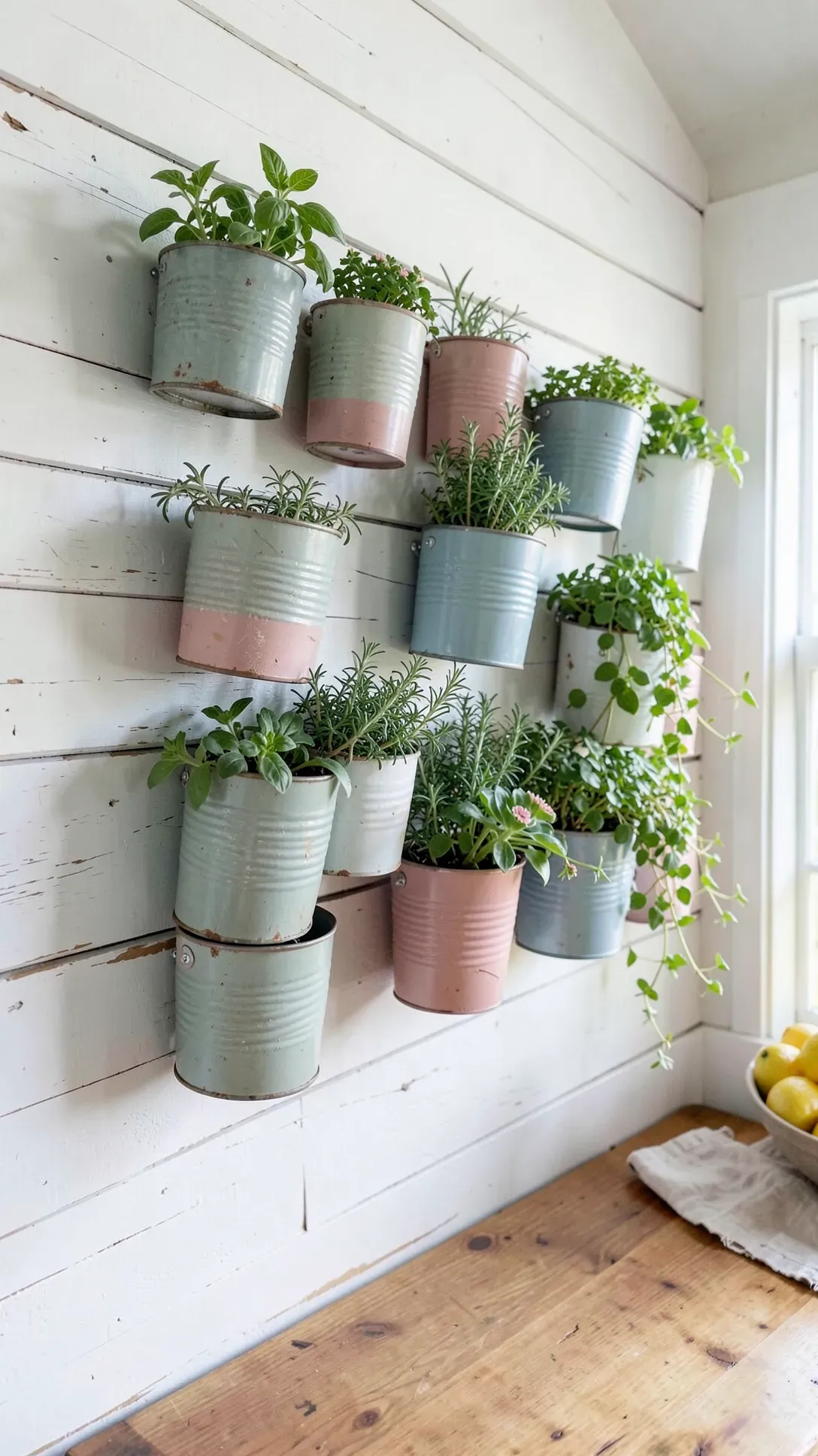
For a budget-friendly and eco-friendly project, you can turn old tin cans into wall planters. After cleaning and painting the cans, you can screw them directly onto a shiplap wall or a wooden board. This creates a charming, repurposed look that works well in a farmhouse-style kitchen or a sunroom.
Be sure to drill a few drainage holes in the bottom of the cans and use a waterproof sealant inside to prevent rusting. This is a simple DIY wall planter indoor idea that allows you to customize the colors to match your space perfectly. It’s a great way to recycle while creating a lush, green feature for your home.