
Imagine cooking a meal while feeling the breeze, but without the nuisance of flies or mosquitoes landing on your food. Converting a screened-in porch into a functional cooking space bridges the gap between your indoor kitchen and the open air. This setup allows you to host gatherings regardless of the weather, providing a sheltered spot for guests to relax while you grill.
Building an enclosed outdoor kitchen requires more than just moving a grill onto the porch. You need to consider how smoke will escape, which materials can withstand humidity, and how to arrange the space so it flows naturally into your home. This guide covers the practical steps for creating a durable and safe outdoor entertaining area that works year-round.
Choosing the Right Location and Layout for an Enclosed Outdoor Kitchen
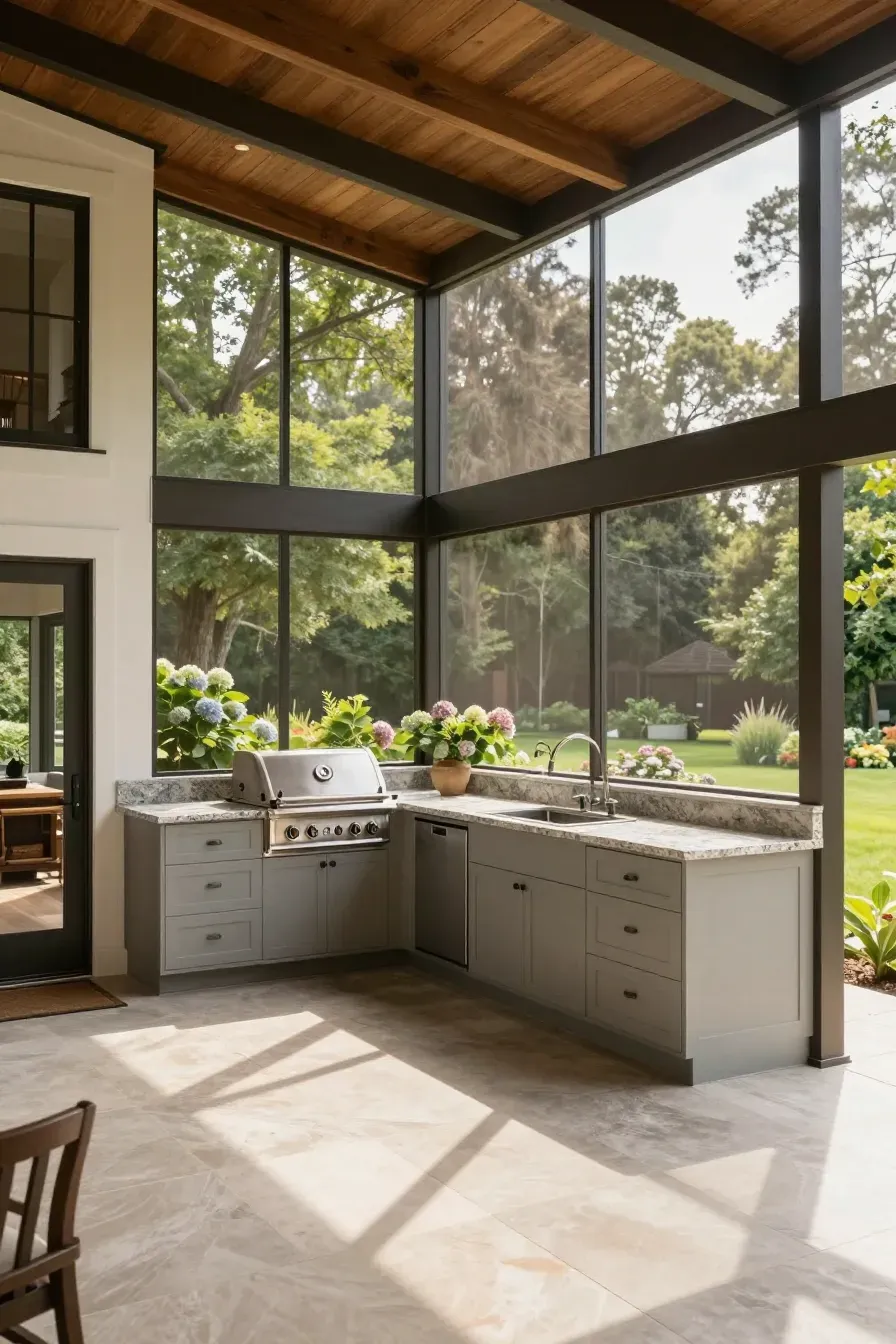
When planning your layout, look at how the porch connects to your main house. Keeping the cooking area close to the interior kitchen door makes it easier to carry ingredients and dishes back and forth. A popular choice for a screened in porch and patio is the L-shaped layout, which tucks the appliances against two walls, leaving the center open for movement. If your porch is small, a linear run along one wall might be better. Ensure there is enough space for a 'landing zone' on both sides of the grill or cooktop so you have a place to set hot pans or raw meats.
Essential Ventilation and Safety Standards for Screened Cooking Areas
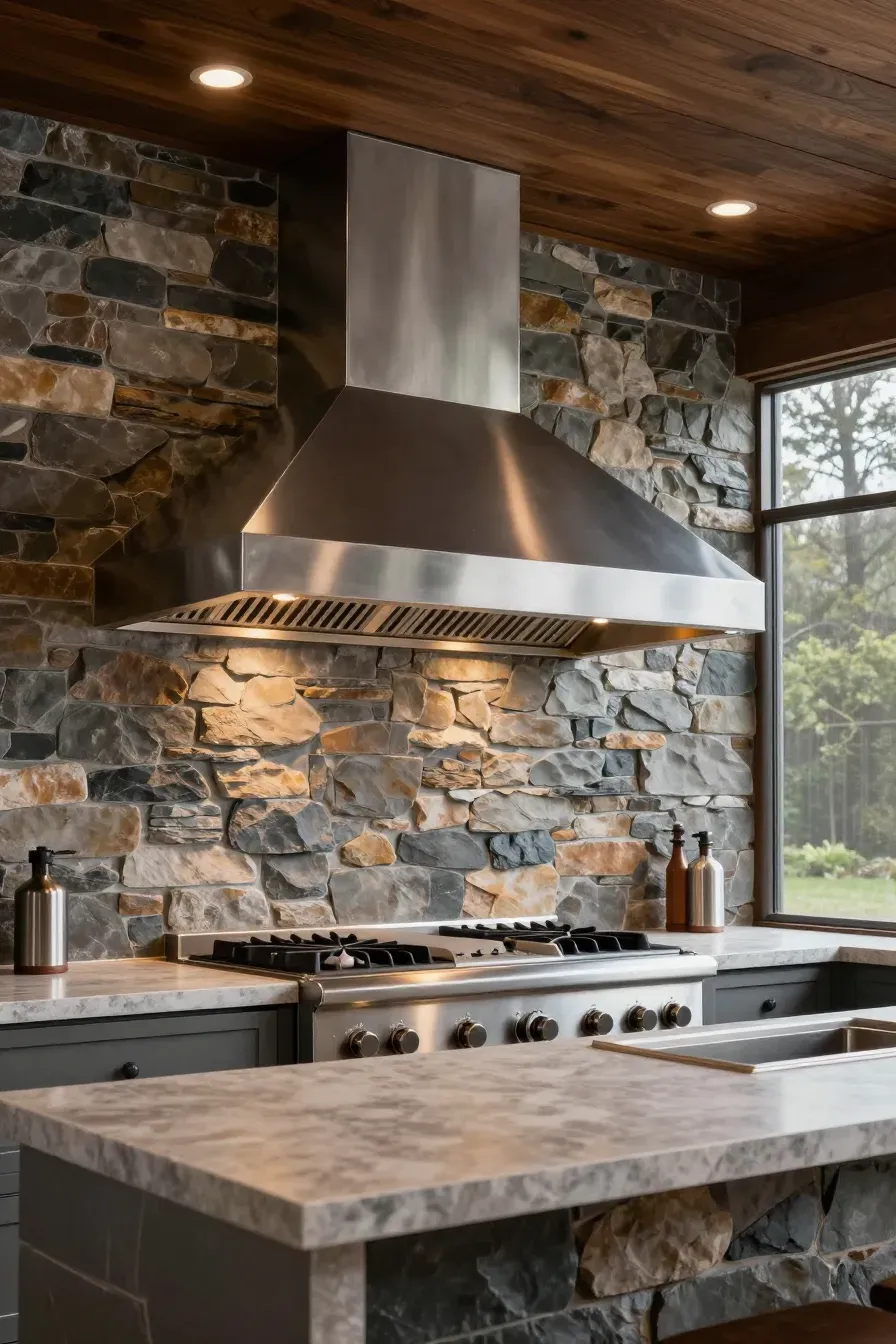
Safety is the most important part of any covered outdoor kitchen design. Unlike an open deck, a screened porch can trap smoke and carbon monoxide. You must install a professional-grade vent hood over any grill or stove. These hoods are deeper and more powerful than indoor versions to handle the high heat and grease of outdoor cooking. Additionally, check your local building codes regarding the distance between the grill and the screen mesh or wood framing. Non-combustible backsplashes, such as stone or tile, are necessary to protect the walls from heat damage.
Durable Material Choices for Cabinets and Countertops Under Cover
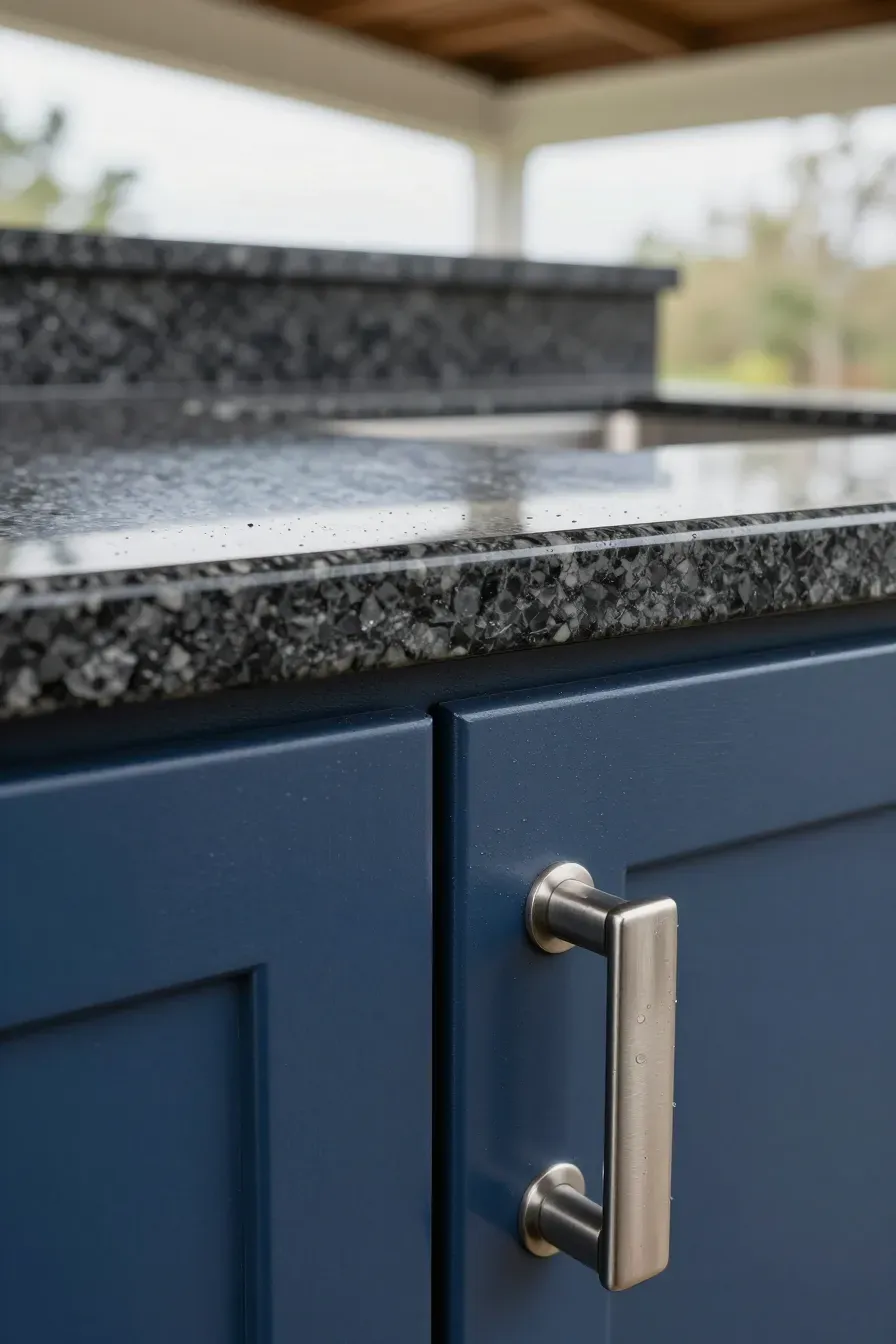
Even though your kitchen is under a roof, it will still face humidity, pollen, and temperature swings. Avoid standard indoor cabinetry, which can warp or grow mold. Instead, look into stainless steel, marine-grade polymer, or high-density polyethylene (HDPE) cabinets. For the surfaces, granite is a top choice because it is tough and easy to clean. Soapstone and concrete also work well in a back patio ideas covered setting. Avoid quartz if your porch gets direct sunlight, as the resins can yellow or crack over time.
Integrating Appliances Into Your Covered Outdoor Kitchen Design
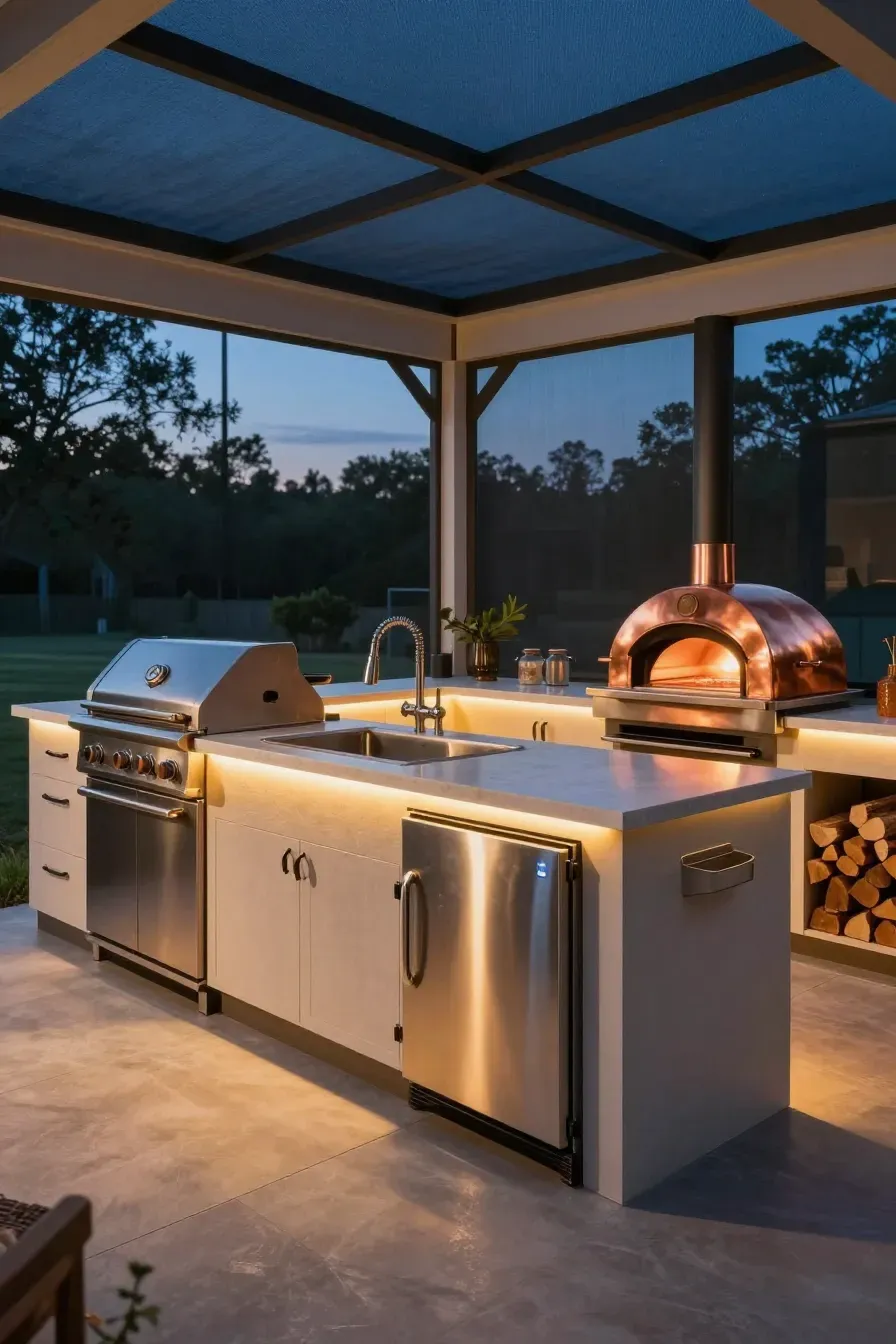
Start with the basics: a grill, a small refrigerator, and a sink. If you have the space, a pizza oven or a side burner can expand your cooking options. When selecting appliances for an enclosed outdoor kitchen, ensure they are rated for outdoor use. These models are designed to maintain consistent temperatures even when it is hot or cold outside. Plumbing a sink into your screened porch saves you from running back inside to wash your hands or rinse vegetables, making the space truly self-sufficient.
Flooring Options That Handle Spills and Heavy Foot Traffic
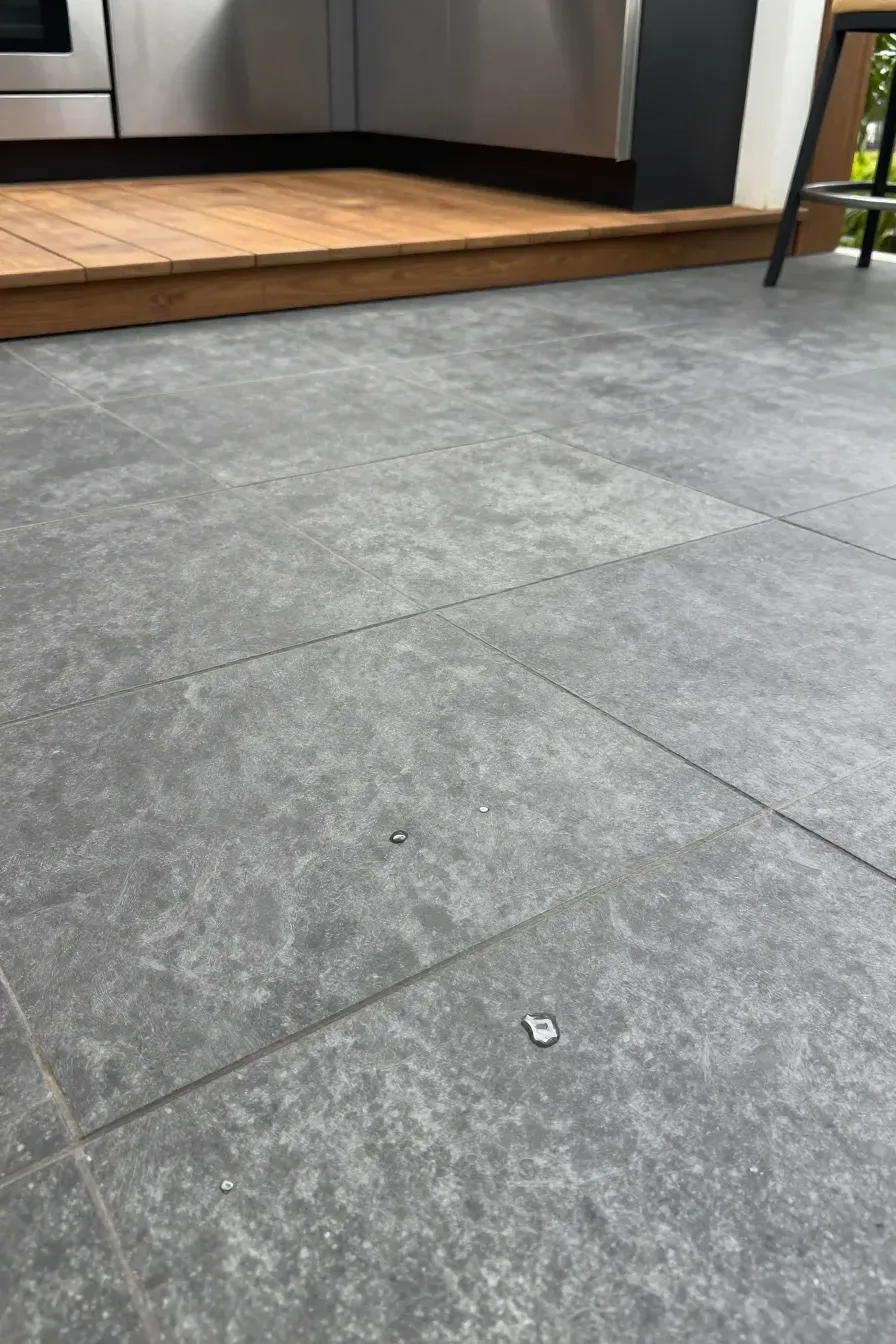
The floor of your screened in patio and kitchen needs to be slip-resistant and easy to hose down or mop. Porcelain tile is a great option because it is dense and resists staining from grease or wine. Natural stone like slate or flamed granite offers a rugged look and good grip. If you are working with an existing wood deck, consider covering it with a fiber-cement board and tiling over it, or using a high-quality composite decking that won't rot when exposed to the occasional splash from the sink or rain blowing through the screens.
Practical Lighting and Power Needs for a Back Screened In Porch
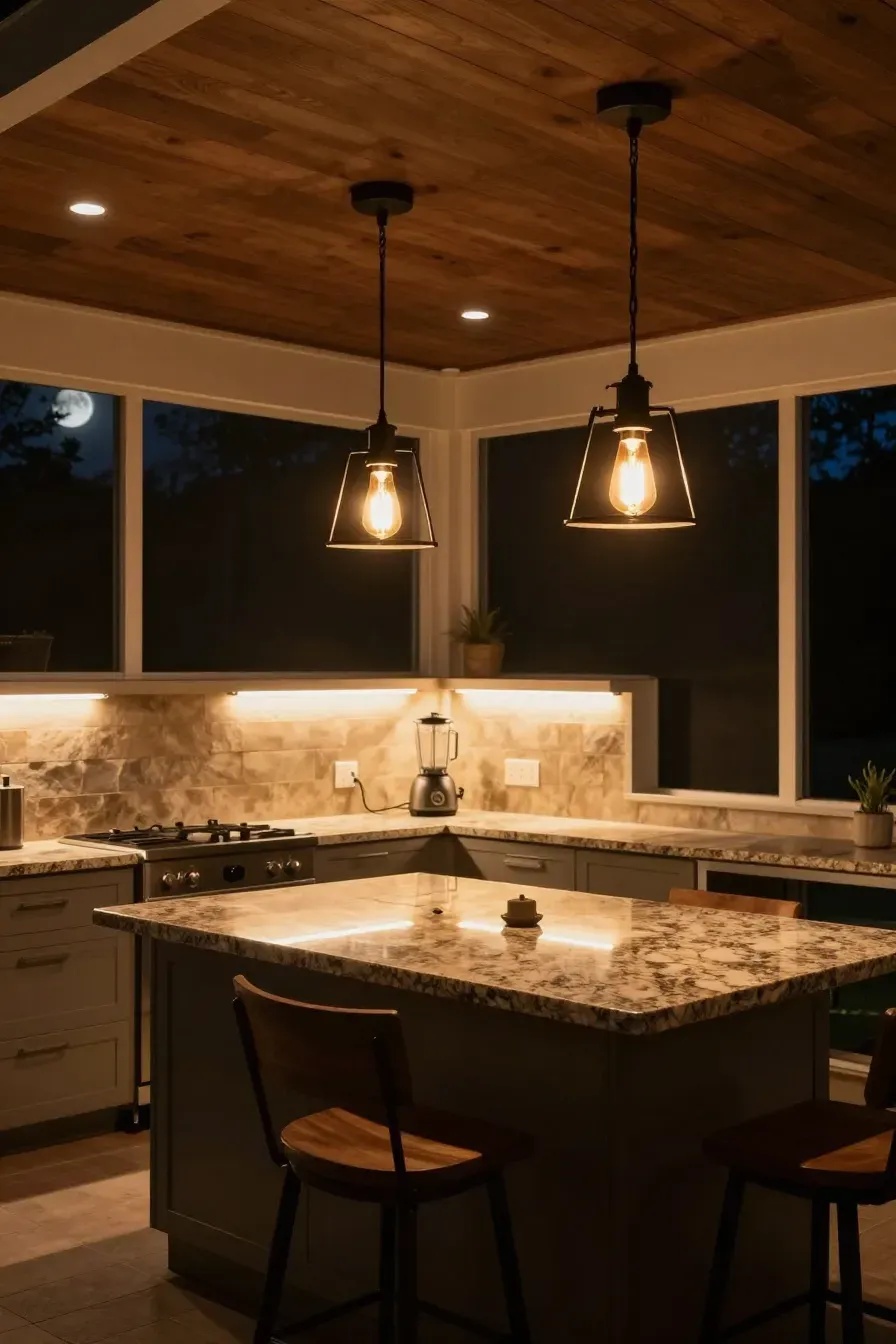
Good lighting makes your outdoor entertaining area usable after the sun goes down. You need task lighting over the grill and prep areas so you can see what you are cooking. Under-cabinet LED strips or recessed ceiling lights work well. For the dining area, dimmable pendant lights or a ceiling fan with a light kit can set a relaxed mood. Don't forget to install plenty of GFCI-protected outlets for small appliances like blenders or slow cookers. It is also wise to run a dedicated circuit for the refrigerator to prevent tripping breakers.
Furniture and Decorating Ideas for a Comfortable Outdoor Entertaining Area
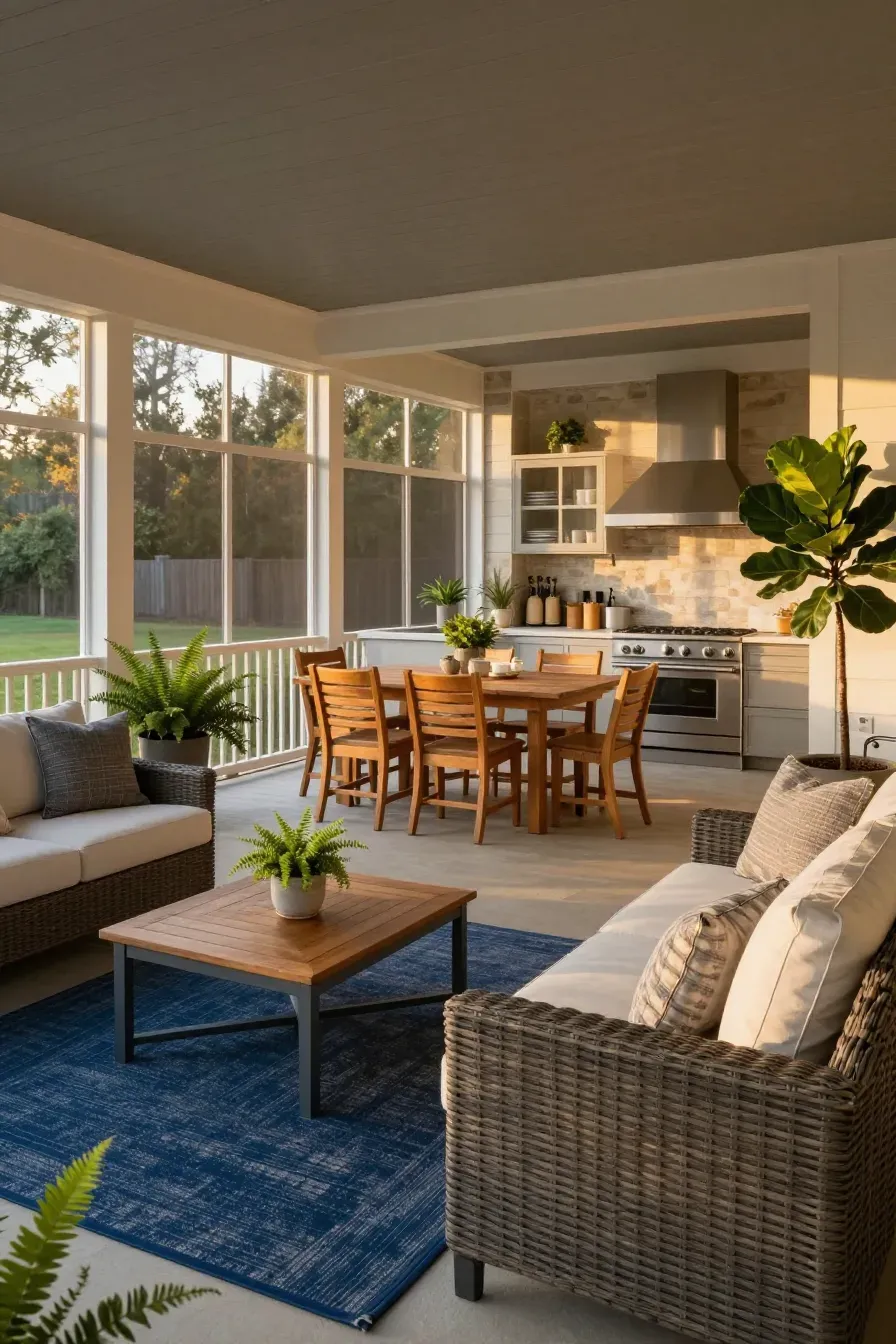
To make the space feel like a room, use screened in patio decorating ideas like outdoor rugs and comfortable seating. Choose fabrics that are UV-resistant and quick-drying. A dining table should be placed far enough from the cooking zone to keep guests out of the smoke but close enough for easy serving. If you have a large back screened in porch ideas often include a small lounge area with a sofa or armchairs near the screens to enjoy the view. Using natural textures like wicker or wood helps the porch blend into the backyard scenery.
Maintaining Your Screened In Patio and Kitchen Throughout the Year
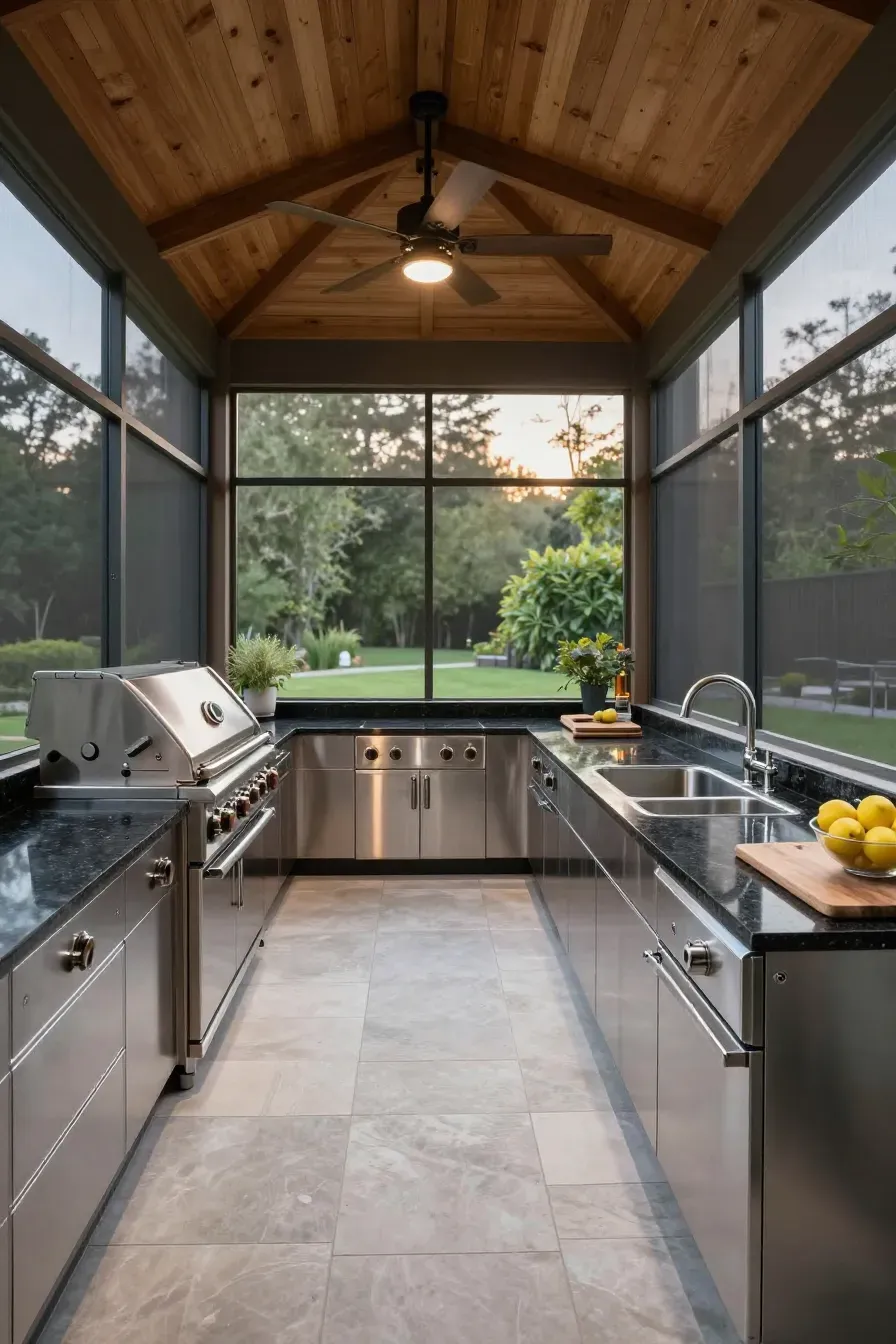
Regular cleaning prevents grease buildup and keeps pests away. Wipe down your stainless steel appliances with a specialized cleaner once a month to prevent tea-staining or rust. Check the screens for holes or sagging, as these can let in bugs that are attracted to cooking smells. In the winter, if you live in a cold climate, you should drain the water lines to your outdoor sink to prevent pipes from bursting. Keeping the floor swept and the counters clear will ensure your outdoor kitchen ideas covered are always ready for a spontaneous weekend barbecue.
Building a kitchen on your screened porch is a smart way to get more use out of your home. By focusing on proper ventilation and choosing weather-resistant materials, you create a space that is both functional and inviting. Start by sketching out your ideal layout and consulting with a professional about gas and electrical lines. With a little planning, your back patio will become the favorite spot for every meal.