
A messy bathroom counter can make even the calmest morning feel rushed. When your skincare, hair tools, and toiletries are competing for space on a small surface, it is hard to stay organized. Choosing the right vanity is about more than just finding a piece of furniture that looks good; it is about finding a functional hub that supports your daily habits.
This article covers how to evaluate vanity layouts, find hidden spots for bulky electronics, and pick materials that handle moisture. By focusing on smart storage and practical sizing, you can create a bathroom environment where everything has a home and your routine runs smoothly.
Drawer and Cabinet Layouts That Maximize Space
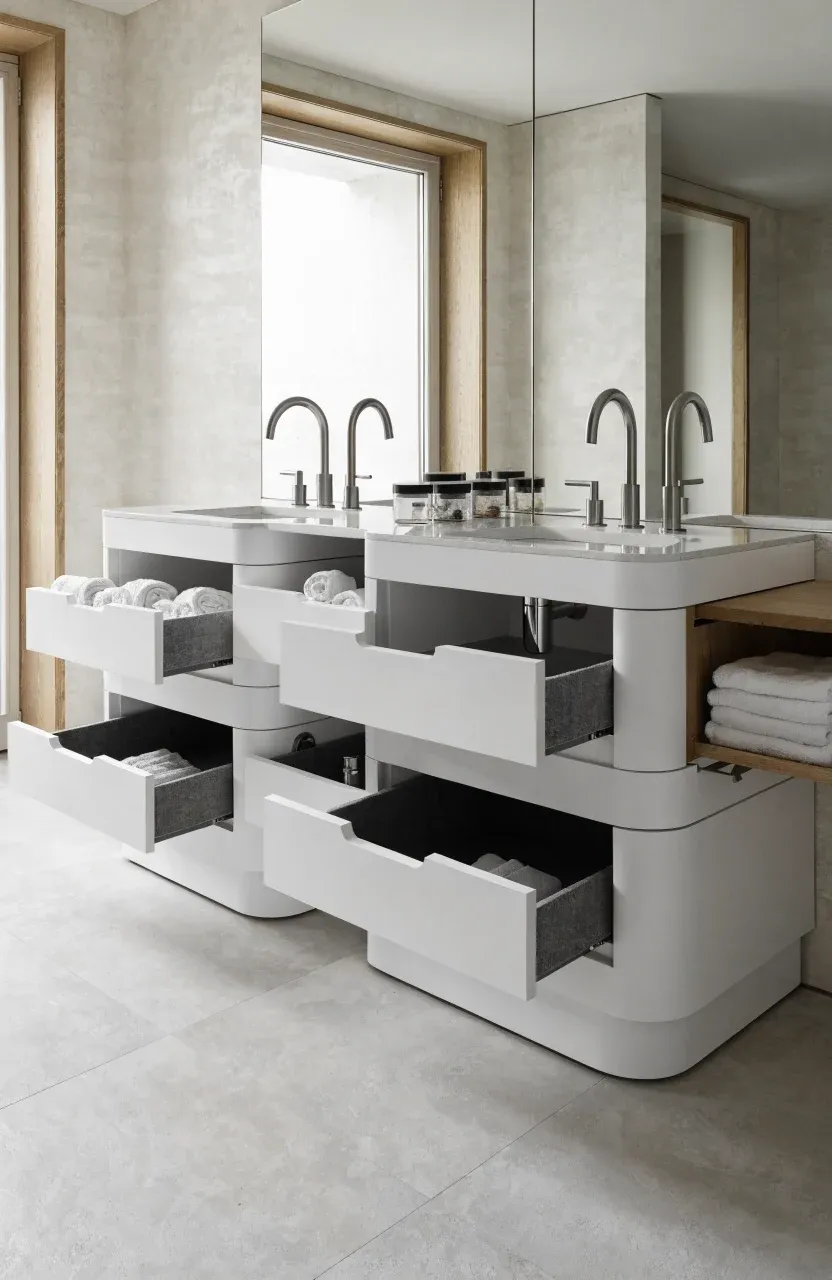
Not all vanity storage is equal. Deep cabinets often become dark holes where products get lost in the back. To avoid this, look for vanities that prioritize drawers over large open cupboards. U-shaped drawers are particularly helpful because they wrap around the sink plumbing, turning wasted space into usable storage for combs or makeup.
If you prefer cabinets, consider models with pull-out shelves. These allow you to see everything at once without kneeling on the floor. A mix of shallow drawers for small items and one or two deep drawers for taller bottles usually provides the most flexibility for a standard routine.
Hidden Compartments for Hair Tools and Electronics
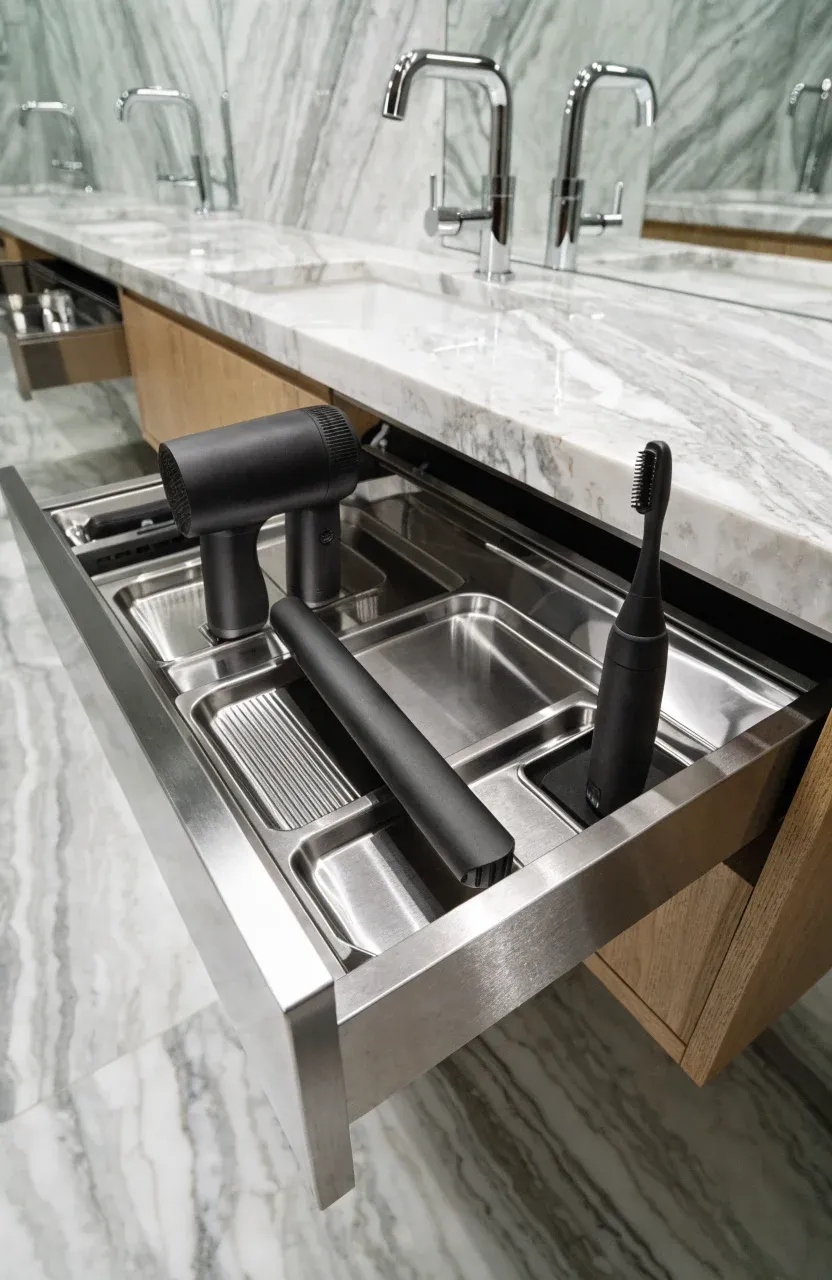
Hair dryers, curling irons, and electric toothbrushes are bulky and often have messy cords. Modern vanities now offer dedicated compartments for these items. Look for a unit with a built-in power strip inside a drawer. This lets you keep your tools plugged in and ready to use without cluttering the countertop.
Stainless steel inserts or heat-resistant holsters are also great features. They allow you to put away a hot flat iron immediately after use, keeping the bathroom safe and tidy. For electric toothbrushes or shavers, a narrow pull-out cabinet can keep charging bases out of sight while still being easily accessible.
Selecting the Right Size for Your Floor Plan
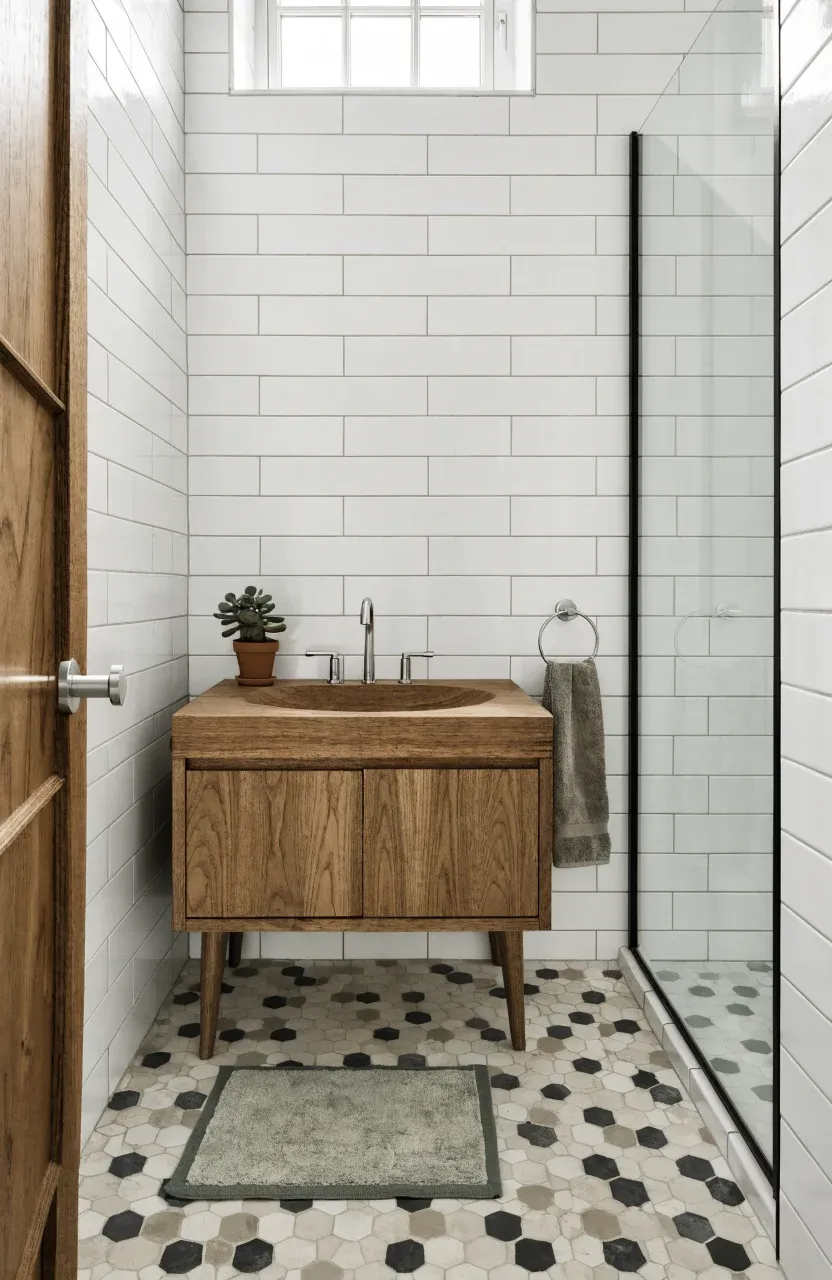
Before buying a vanity, you must measure your floor space carefully. A vanity that is too large will make the bathroom feel cramped and might block the door or shower entry. On the other hand, a vanity that is too small leaves you with no workspace. Aim for a balance that allows at least 30 inches of clear space in front of the unit for standing.
If you have a narrow bathroom, consider a 'shallow depth' vanity. These are typically 18 inches deep instead of the standard 21 inches. They save floor space while still providing plenty of cabinet room. For shared bathrooms, a double vanity is often worth the extra footprint if you have at least 60 inches of wall space to work with.
Materials and Finishes That Stand Up to Daily Use
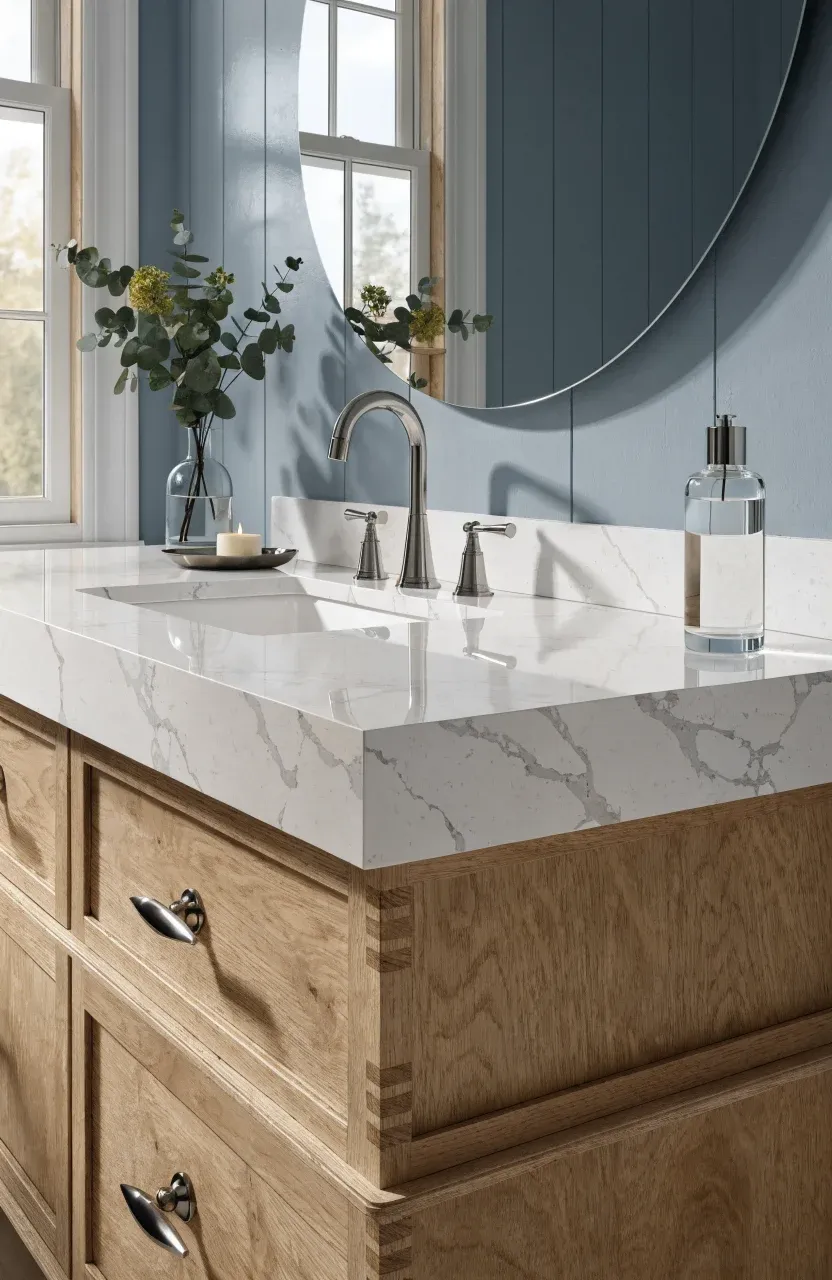
Bathrooms are humid, so the materials you choose matter for longevity. Solid wood is beautiful but can warp if the bathroom isn't well-ventilated. Plywood is often a better choice for vanity boxes because it is stable and resists moisture well. Avoid cheap particle board, as it tends to swell and peel when it gets wet.
For the countertop, quartz is a top choice because it is non-porous and resists stains from toothpaste or makeup. If you prefer a natural look, bamboo is a sustainable and water-resistant option that fits well in modern bathrooms. Whatever you choose, ensure the finish is easy to wipe down with a damp cloth.
Adding Internal Organizers for Small Items
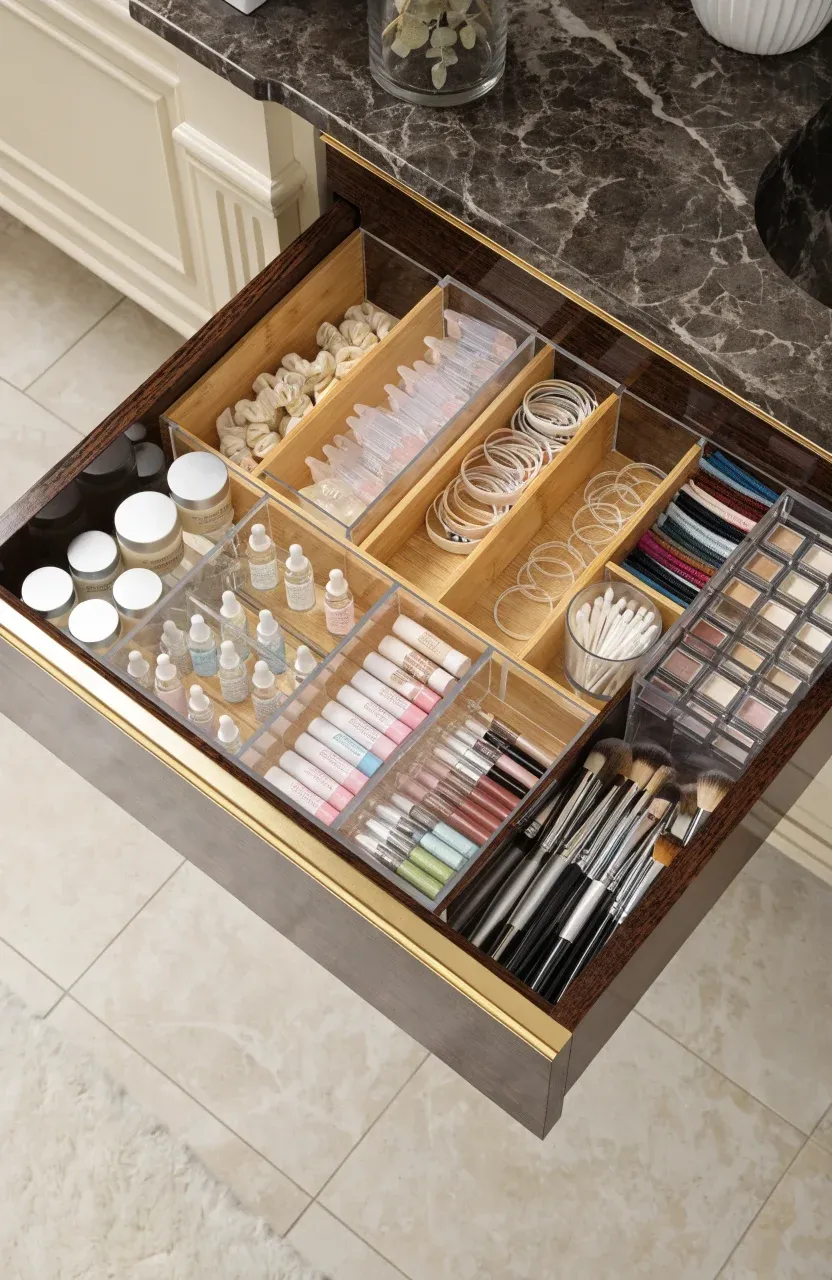
Even a large drawer can become messy if small items like hair ties, tweezers, and lip balms are thrown in together. Internal organizers are the secret to maintaining order. Clear acrylic bins or bamboo dividers allow you to categorize your items by use.
Consider using tiered organizers for medicine or skincare bottles so you can see the labels of the items in the back. If your vanity doesn't come with built-in dividers, you can easily add aftermarket trays. This small step prevents you from digging through drawers every morning, saving you time and frustration.
Lighting and Mirror Placement for Better Functionality
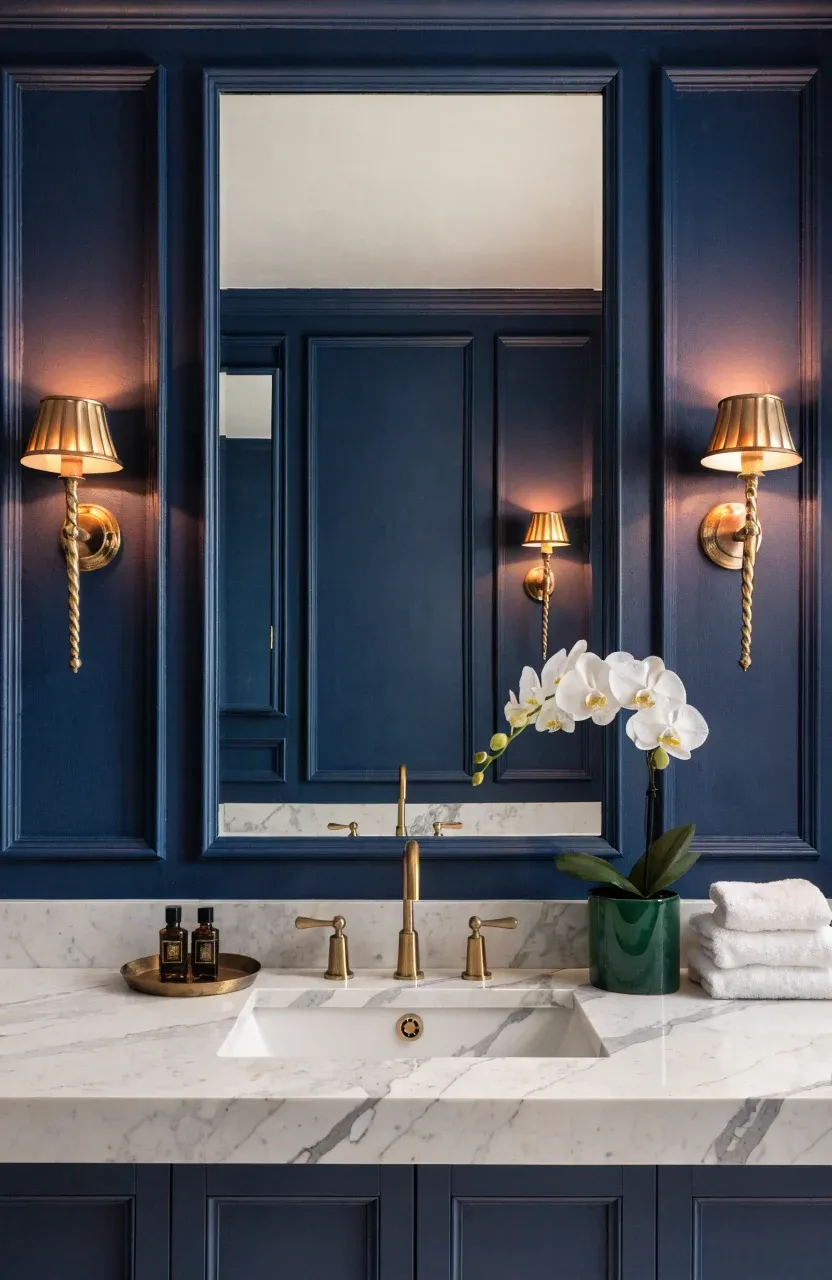
Your vanity is only as good as the light around it. Avoid placing a single light directly above the mirror, as this creates shadows on your face. Instead, install sconces on either side of the mirror at eye level. This provides even lighting that is better for shaving or applying makeup.
The mirror itself should be proportional to the vanity. A general rule is to choose a mirror that is about 2 to 4 inches narrower than the vanity base. If you need extra storage, a recessed medicine cabinet with a mirrored front offers a clean look while providing a hidden spot for daily essentials like deodorant and aspirin.
Choosing the right vanity comes down to understanding how you use your bathroom every day. By prioritizing smart drawer layouts, moisture-resistant materials, and proper lighting, you can turn a cluttered space into an organized retreat. Take some time to measure your room and list out your most-used items before you shop. Ready to update your space? Start by clearing off your current counter to see exactly how much storage you really need.