
Many homeowners worry that adding stone to their front yard will make it look cold or industrial. While large slabs of gray concrete can feel harsh, natural stone offers a range of textures and colors that can actually make your home feel more inviting. By choosing the right materials and balancing them with greenery, you can create a landscape that feels solid yet gentle.
This article covers how to select stones with the right shapes and colors to complement your home. We will look at ways to blend rock with native plants, use pathways to guide guests comfortably, and add lighting that makes the space feel safe and cozy after the sun goes down.
Choosing Stones With Warm Tones and Rounded Shapes

The color and shape of your stone set the mood for the entire yard. Sharp, jagged rocks in cool grays or whites often feel modern and stark. To get a softer look, look for stones in warm earth tones like tan, beige, ochre, or soft brown. These colors mimic the natural soil and feel more integrated into the environment.
Shape is just as important as color. Rounded stones, such as river jacks or cobbles, lack the aggressive edges of crushed gravel. Their smooth surfaces catch the light differently and feel more organic. When these rounded shapes are grouped together, they create a sense of flow and movement that mimics a dried creek bed rather than a construction site.
Mixing River Rocks with Native Grasses and Shrubs
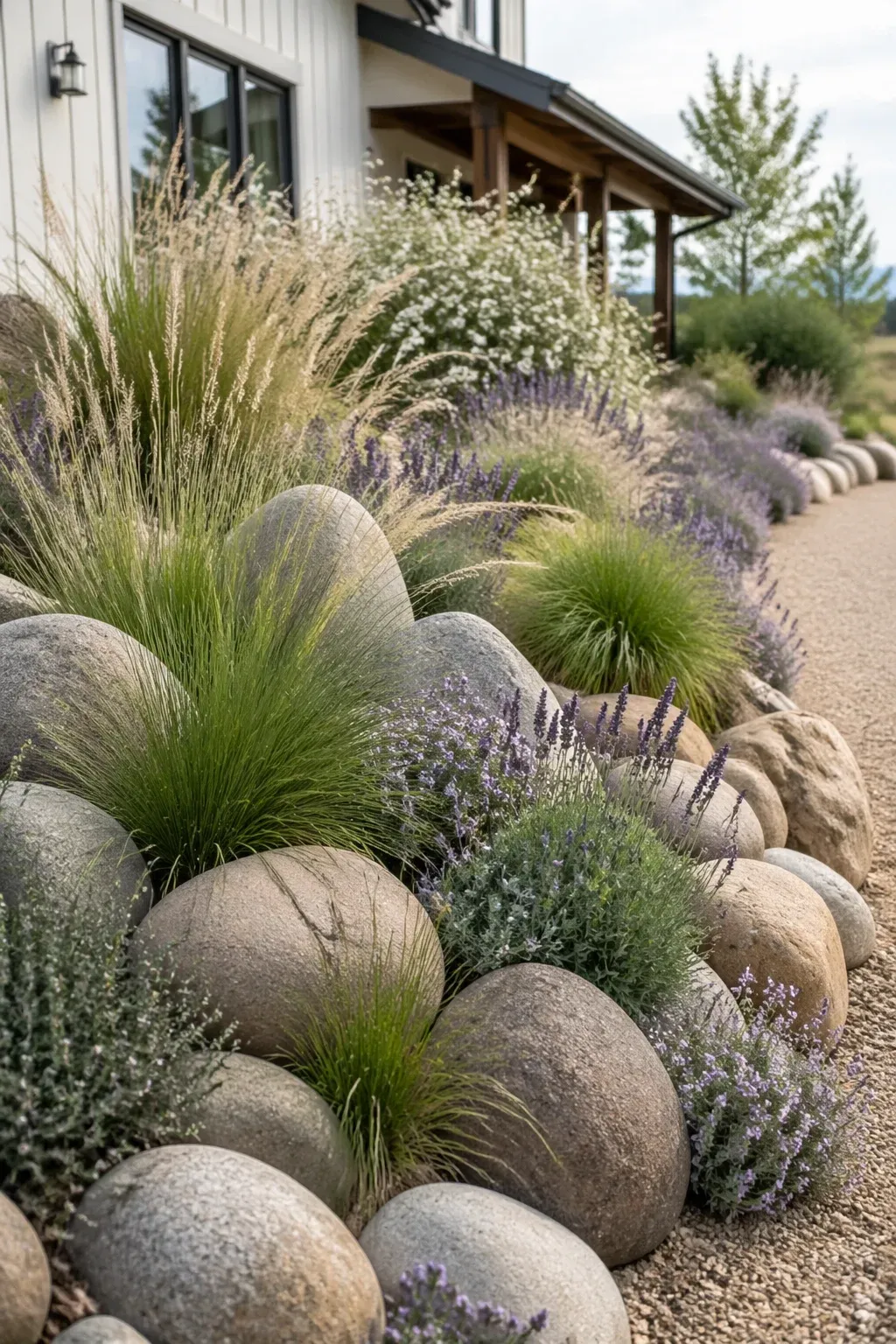
Stone should never stand alone if you want a welcoming vibe. The best way to soften a rock feature is to tuck plants directly into it. Native grasses are a great choice because their wispy blades move with the wind, providing a contrast to the stillness of the stone.
Try planting low-maintenance shrubs like lavender or creeping thyme near the edges of your rock beds. The greenery spills over the stone, blurring the hard lines. This combination also benefits the plants; stones help retain moisture in the soil and keep roots cool. Using native species ensures the yard looks like it belongs in your local climate, which feels more natural to the eye.
Breaking Up Large Surfaces with Stepping Stones and Pathways
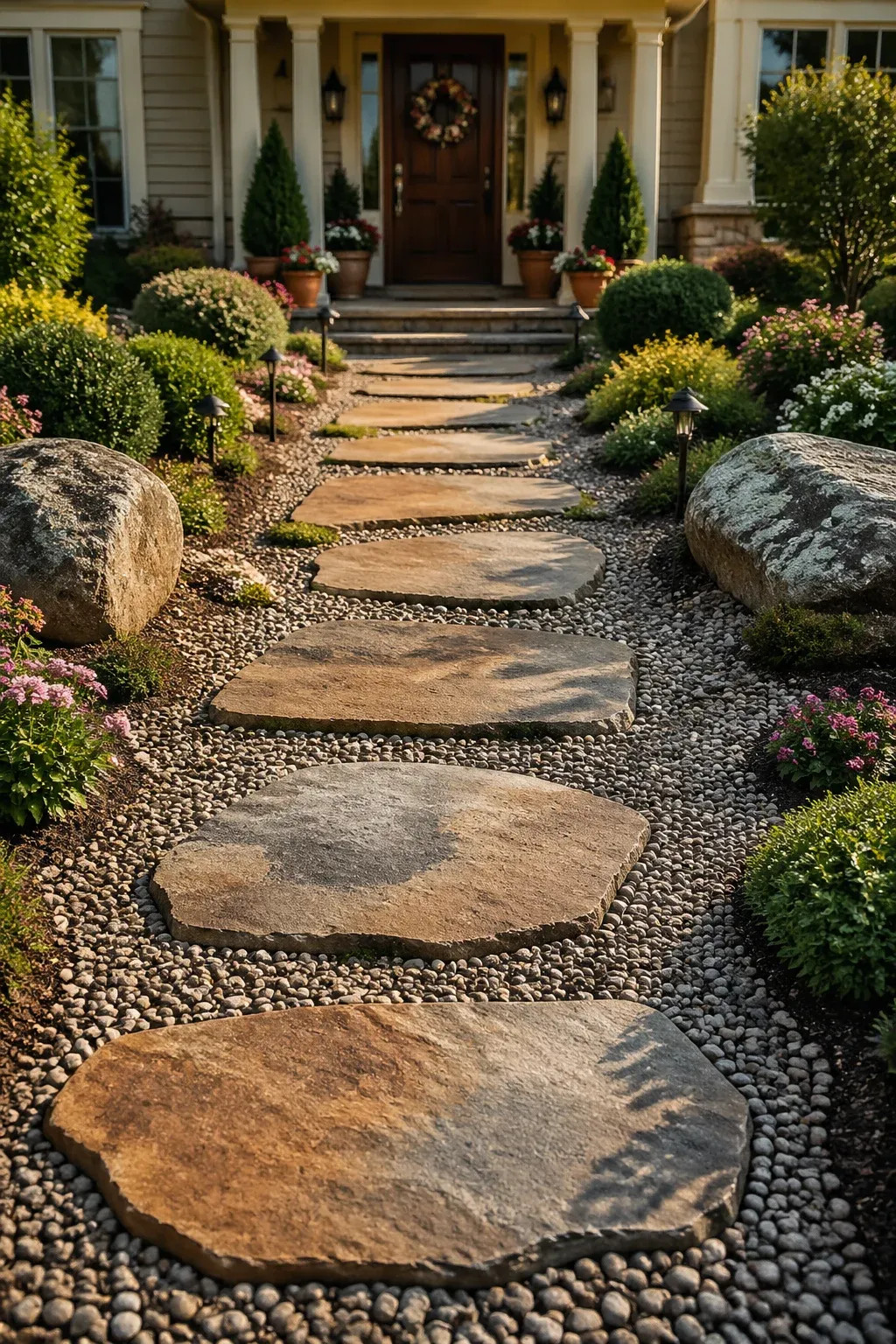
A solid expanse of stone can feel overwhelming. Instead of a wide, paved driveway or a massive gravel patch, use stepping stones to create a clear but relaxed path to your door. Flagstones with irregular edges work well here because they allow for gaps where moss or small groundcovers can grow.
Spacing the stones out encourages visitors to slow down and enjoy the garden. It creates a rhythm for the eyes and feet. If you have a large gravel area, you can break it up by placing a few larger accent boulders or changing the size of the stone in certain sections to define different 'zones' in the yard.
Using Mulch and Groundcovers to Counteract Hard Surfaces
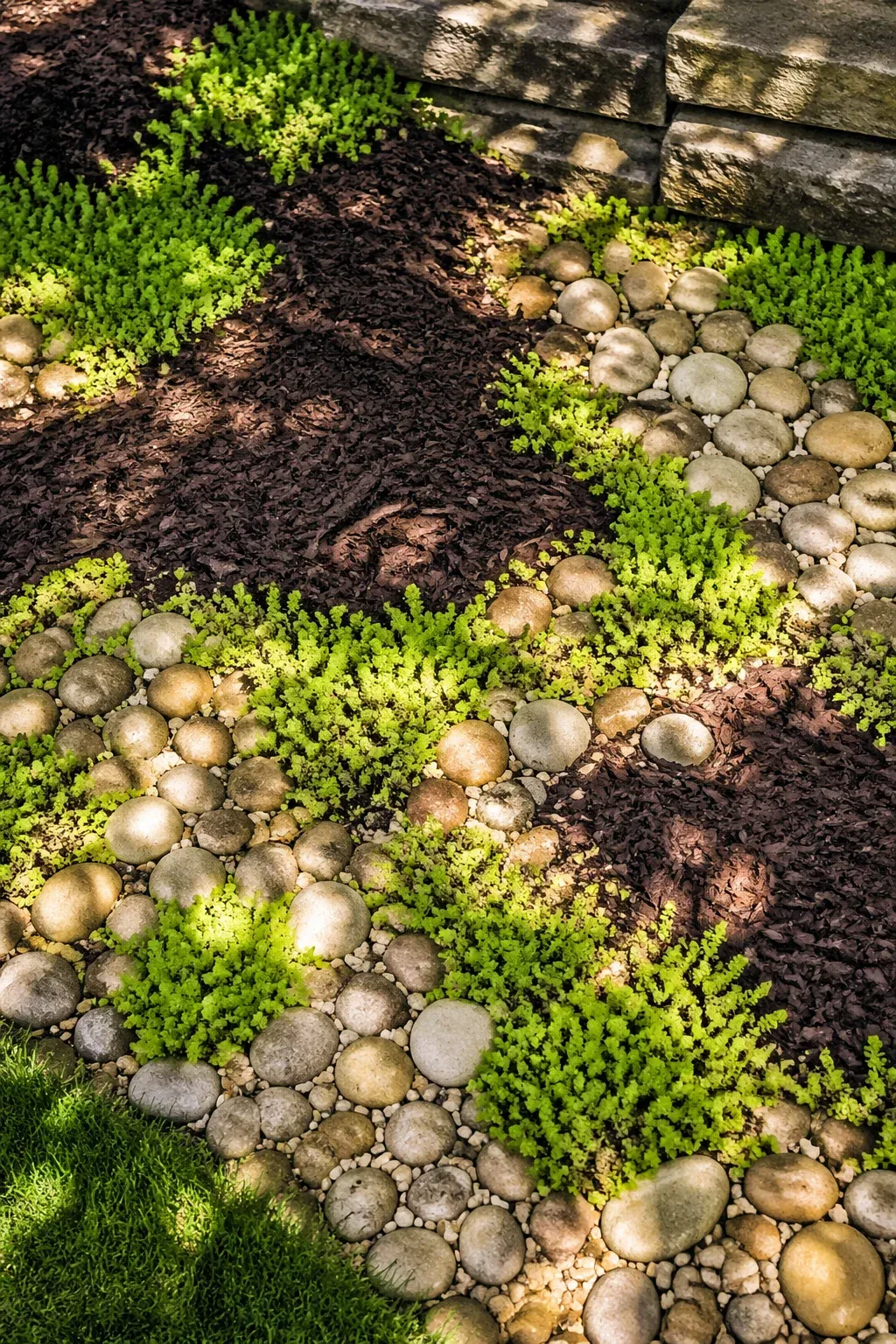
Too much stone can sometimes lead to a 'heat island' effect where the yard stays too hot. To prevent this and add a layer of softness, mix in organic mulch or living groundcovers. Deep brown wood mulch provides a dark, rich backdrop that makes the colors of your stones pop without adding more hard surfaces.
Groundcovers like sedum or 'no-mow' grass can be grown in the crevices between stones. This creates a tapestry of textures. The mix of organic material and stone makes the yard feel like a living ecosystem rather than just a decorated plot of land. It also helps with water absorption during heavy rain.
Adding Subtle Lighting to Soften Rock Features at Night
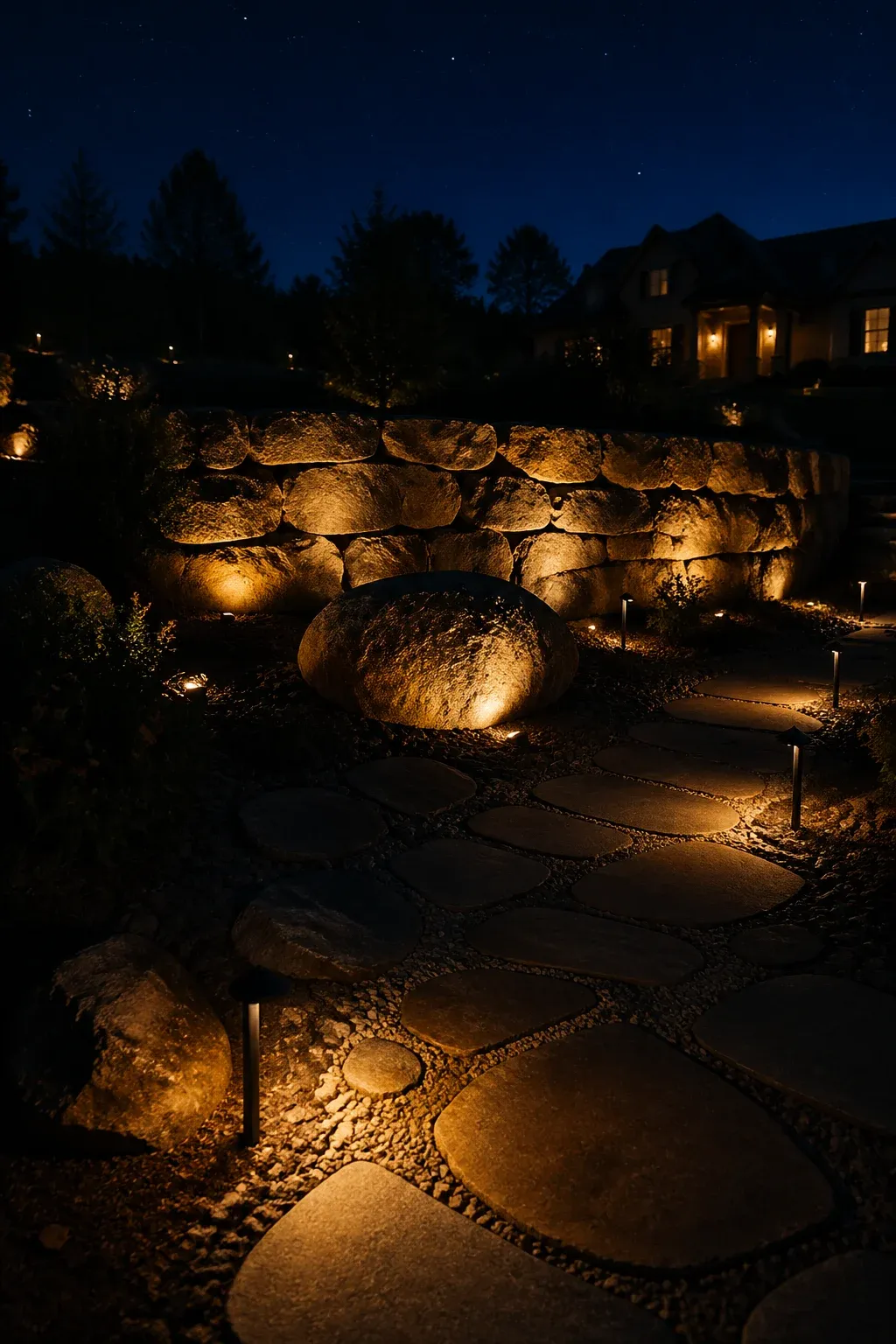
Stone features can look flat or even slightly intimidating in the dark. Strategic lighting changes that by highlighting the texture of the rocks. Avoid bright, overhead floodlights. Instead, use low-voltage path lights or small spotlights tucked behind boulders.
Uplighting a textured stone wall or a large accent rock creates soft shadows and a warm glow. Solar-powered stakes along a stone path make the entry feel safe and guided. The goal is to create a gentle wash of light that makes the front yard feel like an outdoor room, extending the home's warmth all the way to the sidewalk.
Planning for Proper Drainage and Weed Control Under Stone
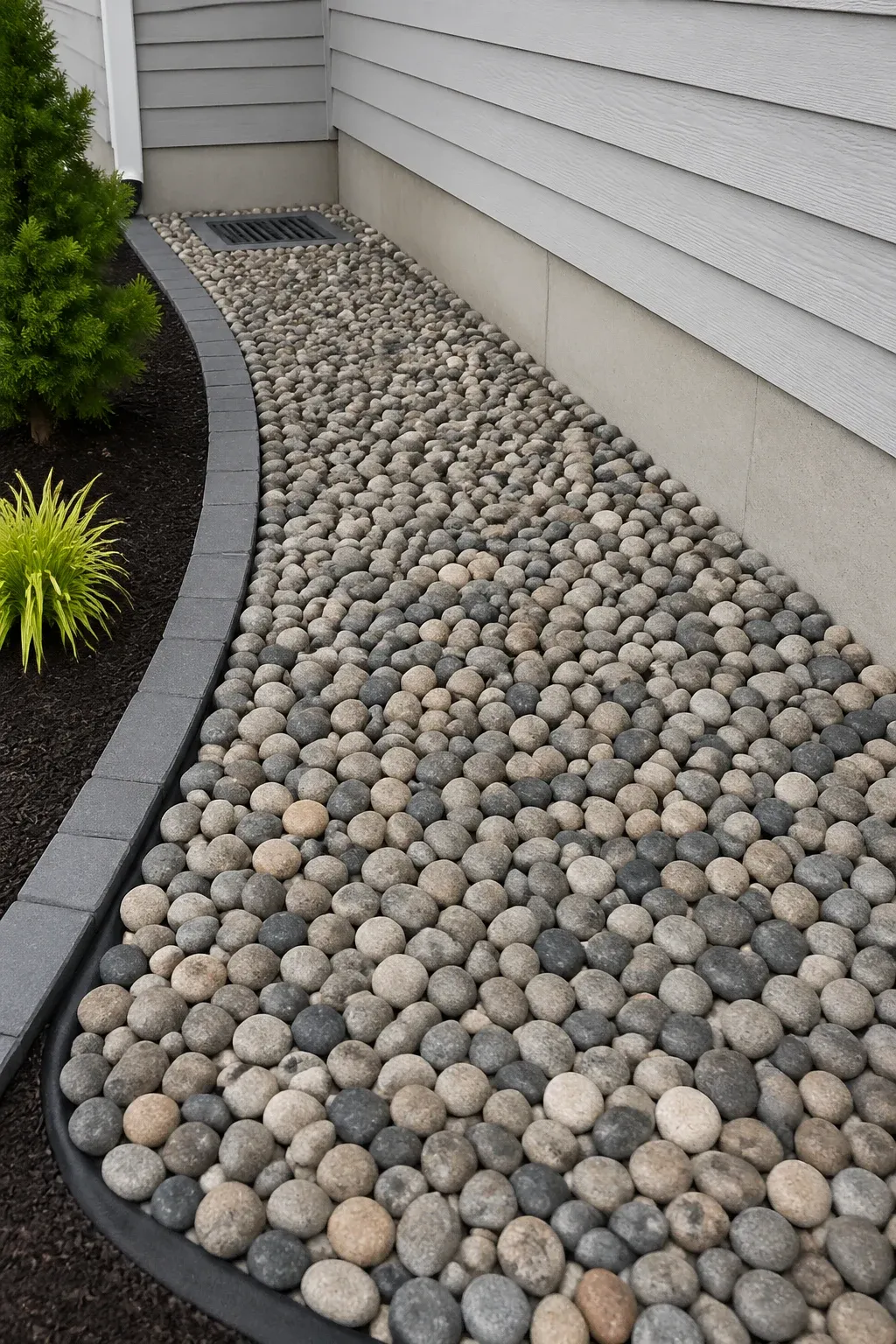
A yard only stays welcoming if it is well-maintained. Before laying any stone, you must handle the logistics of drainage and weeds. Water should always flow away from your foundation. You can use a slight slope or hidden French drains beneath the stone to manage runoff.
Using a high-quality landscape fabric under the stone is essential for weed control. But don't just rely on the fabric; a thick layer of stone—at least three inches—is usually needed to block out enough light to stop seeds from germinating. This keeps the yard looking tidy and intentional with very little work on your part.
Creating a welcoming front yard with stone is all about balance. By choosing warm colors, rounded shapes, and plenty of plant life, you can build a landscape that is both durable and soft. Start by picking one area, like a small path or a corner garden bed, and see how the addition of natural stone changes the feel of your home. A little bit of planning goes a long way in making your outdoor space a place where people feel truly at home.