
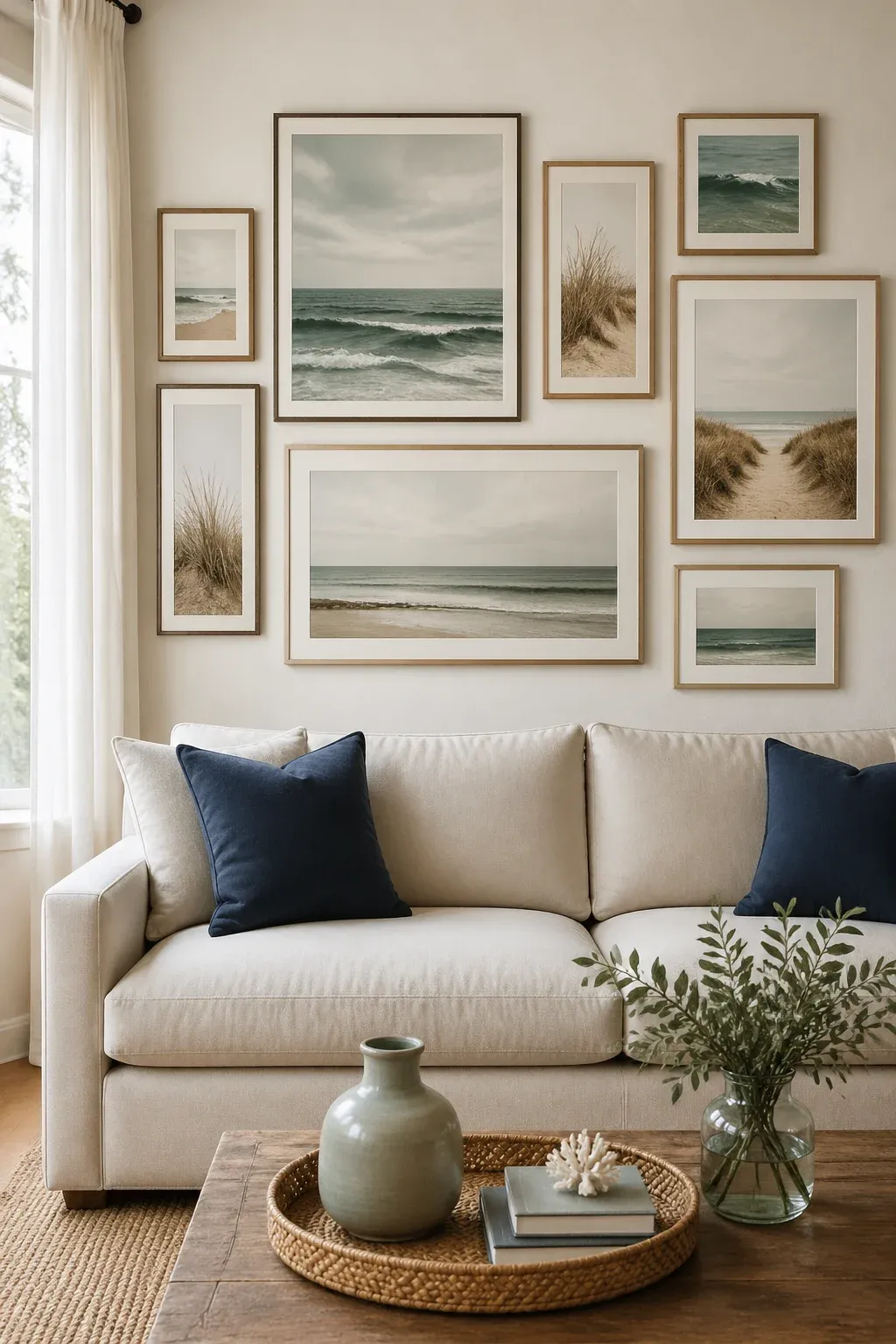
There is something about the ocean that instantly makes people feel at ease. Whether it is the sound of crashing waves or the feeling of sand between your toes, many of us want to bring that calm home. A coastal gallery wall is one of the best ways to do this because it lets you tell a story through art, photos, and found objects. It is not just about hanging pictures; it is about creating a window to the seaside on a plain wall.
In this guide, we will look at how to pick the right colors, mix different types of art, and arrange everything so it looks natural. You will learn how to turn your collection of shells, driftwood, and prints into a cohesive display that makes your living space feel like a beach retreat.
Choosing a Color Palette Inspired by the Shore
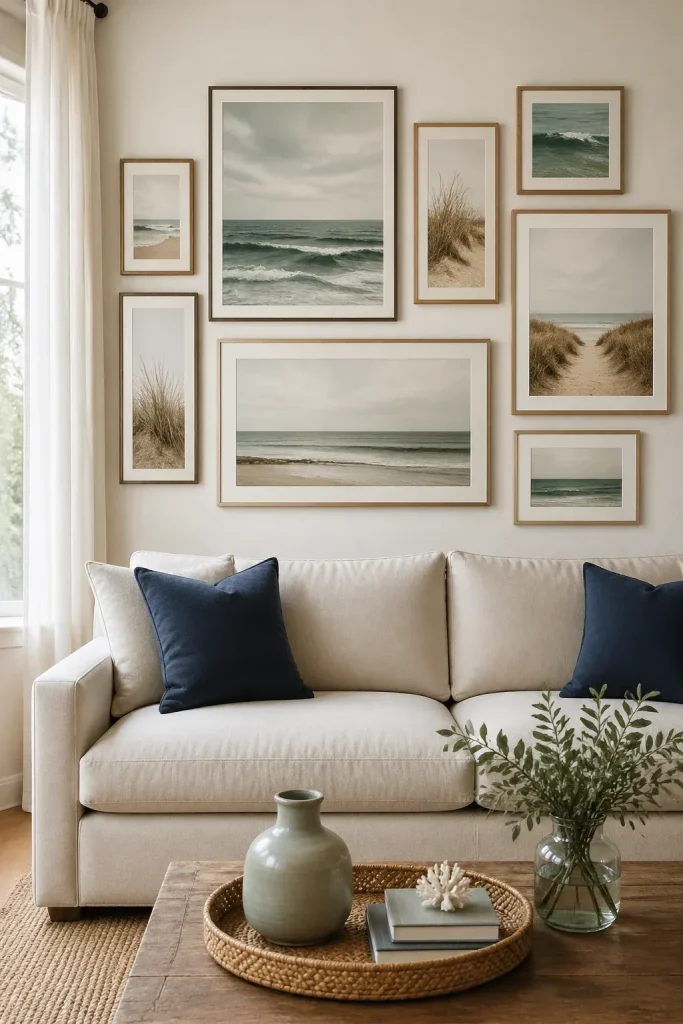
A successful coastal wall starts with a clear set of colors. You do not have to stick to just bright blue and white. Think about the colors you see at the beach on a cloudy day or at sunset. Soft greys, sandy beiges, and muted greens work well as a base. These colors feel more sophisticated and less like a theme park.
If you want more energy, add pops of navy blue or coral. The key is to keep the background colors neutral so the art can stand out. Try to match the tones of your wall to the art. For example, if your wall is a warm white, look for prints with creamy backgrounds rather than stark, cool whites. This makes the whole display feel like it belongs in the room.
Mixing Different Types of Coastal Art and Textures
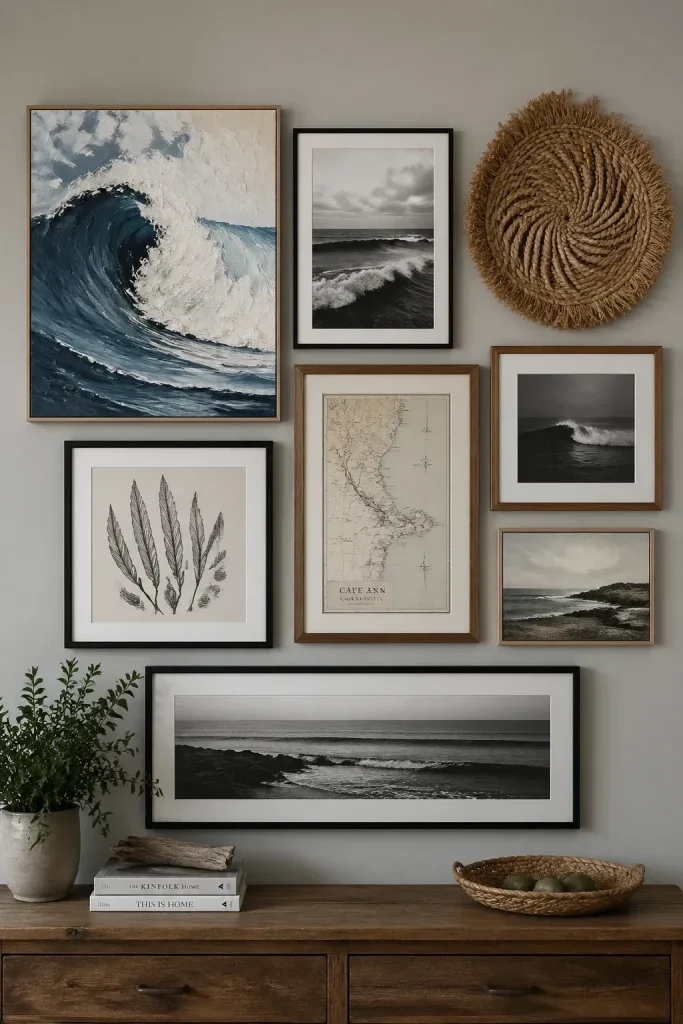
A wall with only flat photos can look a bit dull. To make it interesting, mix up the media. Combine oil paintings of landscapes with black-and-white photography of waves. You can also include botanical sketches of seaweed or vintage maps of your favorite coastline.
Texture is just as important as the image itself. Consider adding a woven piece made of seagrass or a small canvas with thick, textured paint. Mixing these different elements prevents the wall from looking like a store-bought set. It should feel like a collection you built over time, with pieces that have different finishes and styles.
Selecting Frames That Match the Beach Aesthetic
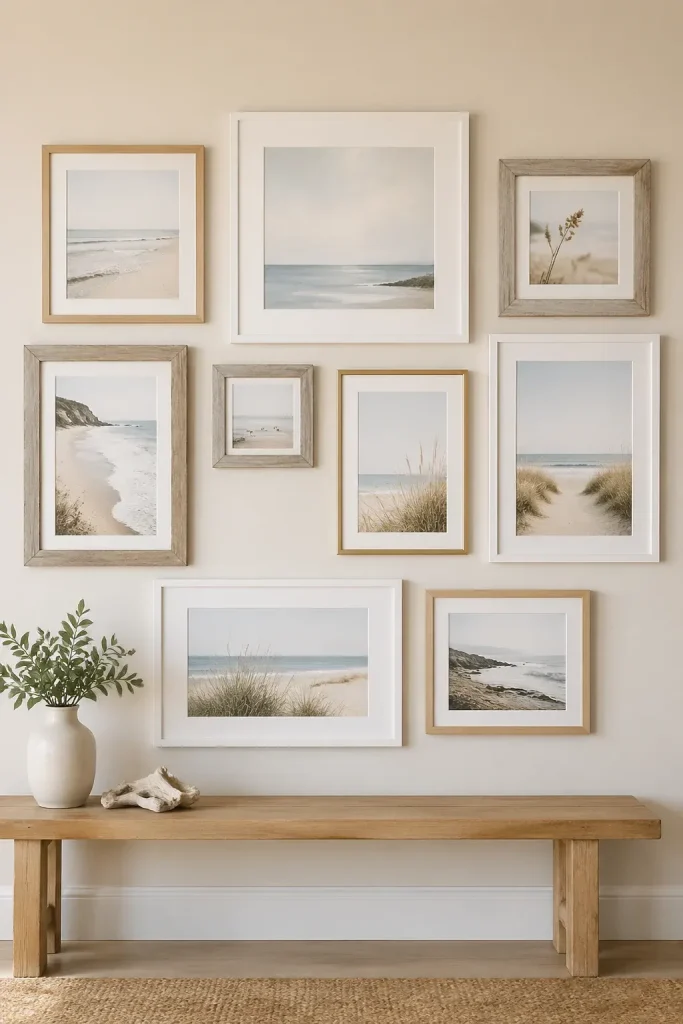
Frames act as the bridge between your art and your home. For a coastal look, natural wood is often the best choice. Light oak, pine, or weathered driftwood frames look like they have been bleached by the sun. They add warmth without being too heavy.
White frames are another great option as they provide a clean, crisp look that mimics white sand. If you want something more formal, a thin gold frame can add a touch of elegance to a coastal display. Avoid heavy, dark, or overly ornate frames, as these can weigh down the light and airy feel you are trying to create. Mixing two types of frames, like wood and white, can also add a nice layer of variety.
Planning the Layout for a Balanced Display
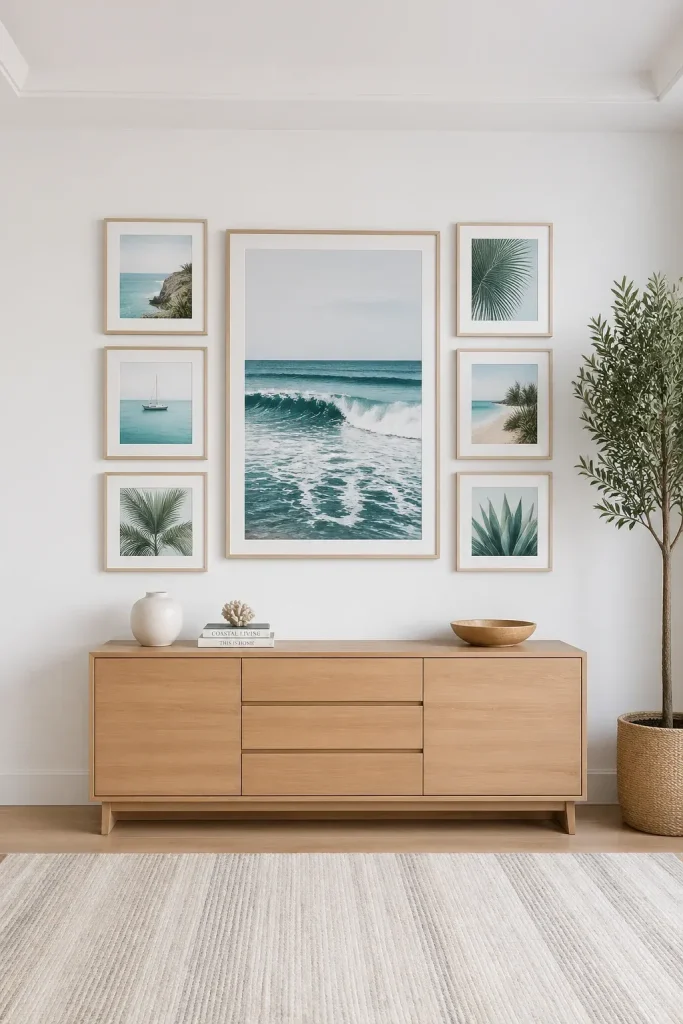
Before you start putting holes in the wall, lay everything out on the floor. Start with your largest piece in the center or slightly off-center and build around it. You want the weight of the items to be balanced so one side doesn't look heavier than the other.
Keep about two to three inches of space between each frame. If the pieces are too far apart, the wall will look disconnected. If they are too close, it might look cluttered. A good trick is to trace your frames onto craft paper, cut them out, and tape them to the wall with painter's tape. This lets you see the arrangement in the actual space and make changes easily before you pick up a hammer.
Incorporating Personal Beach Finds and Three-Dimensional Items
What makes a gallery wall special are the items that aren't behind glass. Shadow boxes are great for displaying shells, sea glass, or starfish you found on vacation. You can also hang a piece of driftwood directly on the wall or use a small floating shelf to hold a jar of sand.
These three-dimensional items break up the flat surfaces of the frames and add depth. Even a small woven basket or a piece of rope tied in a nautical knot can add character. These personal touches turn the wall into a memory board of your trips to the coast, making it much more meaningful than just a decorative project.
Arranging Your Wall for Different Rooms in the House
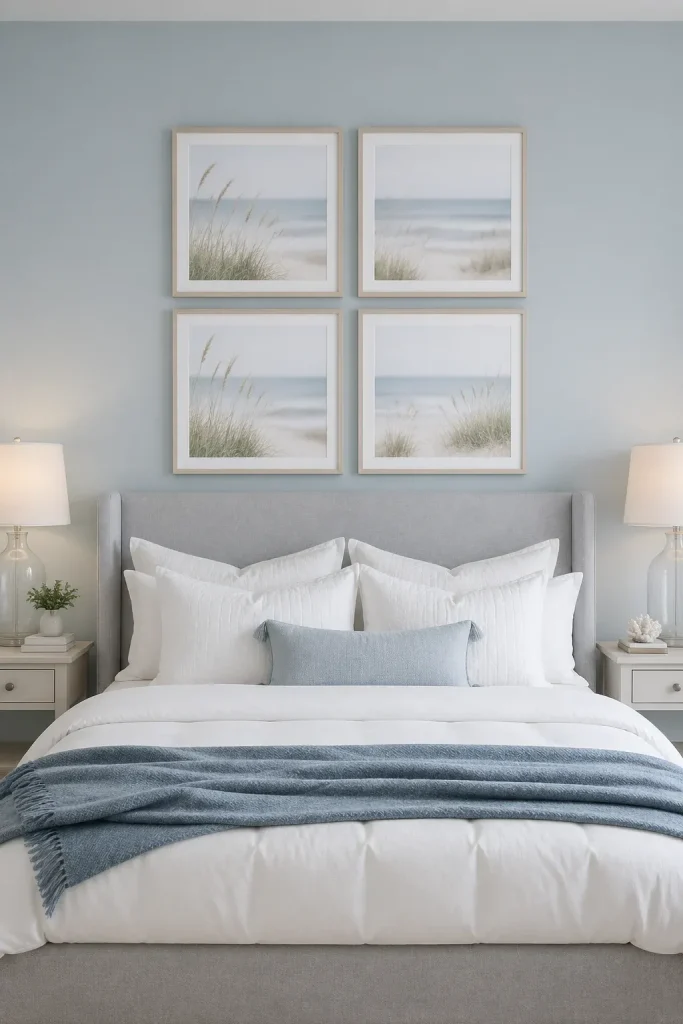
The location of your gallery wall changes how you should design it. In a living room, you might go for a large, expansive display that covers most of the wall behind a sofa. This creates a main focal point for the room. In a bathroom, you might choose smaller, simpler frames with waterproof backing to handle the humidity.
For a hallway or entryway, a linear arrangement often works best because people are usually walking past it. In a bedroom, keep the colors very soft and the layout symmetrical to promote a sense of rest. Wherever you put it, make sure the center of the gallery is roughly at eye level, which is usually about 57 to 60 inches from the floor.
Creating a coastal gallery wall is a simple way to bring the relaxing spirit of the beach into your daily life. By focusing on a calm color palette, mixing various textures, and adding your own personal treasures, you can build a display that feels both professional and personal. Take your time choosing pieces that you truly love, and don't be afraid to move things around until the balance feels just right. Now, go find those favorite beach photos and start planning your seaside escape at home.