
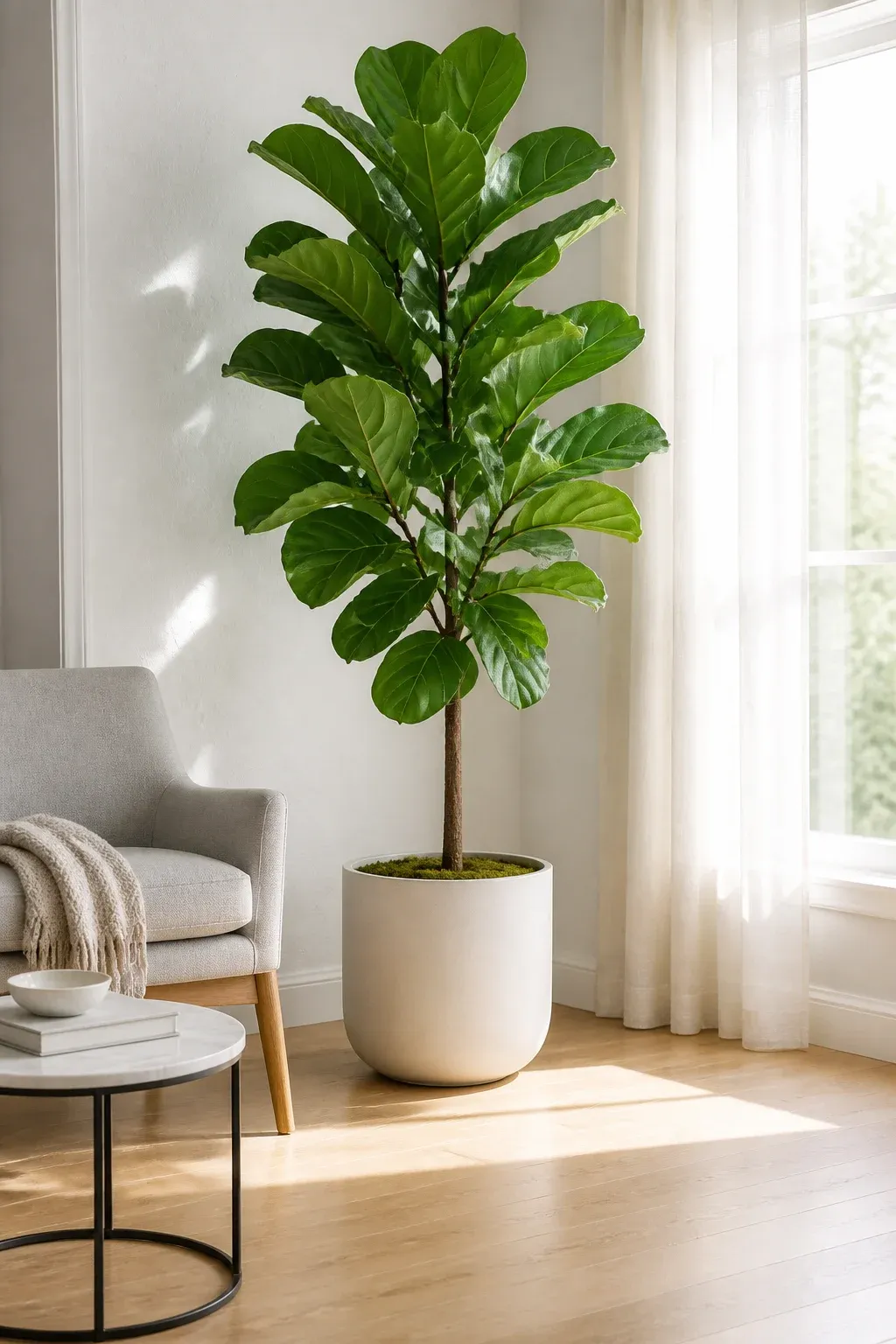
Empty corners in a living room can often feel like wasted space or cold gaps in an otherwise cozy home. While furniture like armchairs or side tables are common fixes, they can sometimes make a room feel crowded or heavy. Tall indoor plants offer a softer alternative, bringing life, texture, and a sense of height that draws the eye upward without cluttering the floor plan.
In this guide, you will learn how to select the right greenery based on your room's light, how to pick containers that fit your style, and ways to arrange multiple plants for a balanced look. Using large foliage is one of the easiest ways to finish a room's design while improving the air quality and overall mood of your living space.
Choosing the Right Tall Plant for Your Corner Light
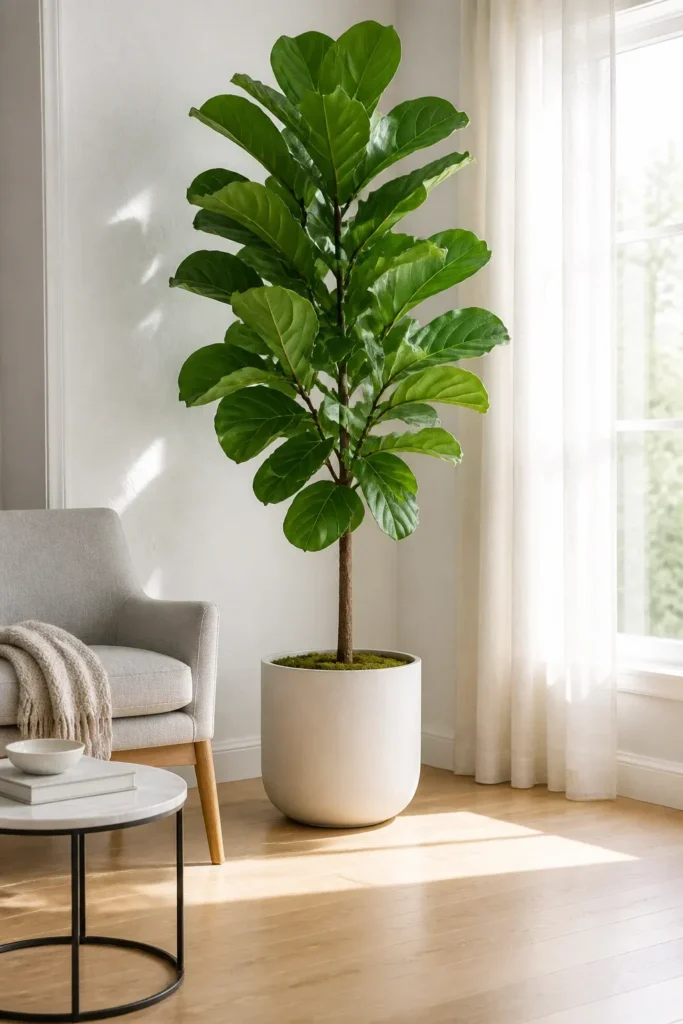
Before buying a large plant, you need to check how much light that specific corner actually receives. Most corners are tucked away from windows, meaning they might stay in deep shade even on sunny days. If your corner is bright and near a south-facing window, a Bird of Paradise or a Fiddle Leaf Fig can thrive. These plants love consistent light and will grow quickly when they get it.
For darker corners, look for hardy species like the Snake Plant or the ZZ Plant. While these are often sold as small tabletop plants, you can find mature versions that stand several feet tall. A Dracaena is another great choice for medium light; it has a slim profile that fits into tight spaces without blocking walkways. Always match the plant to the light you have, rather than trying to force a sun-loving plant to survive in a dark nook.
Selecting Pots and Planters That Match Your Decor
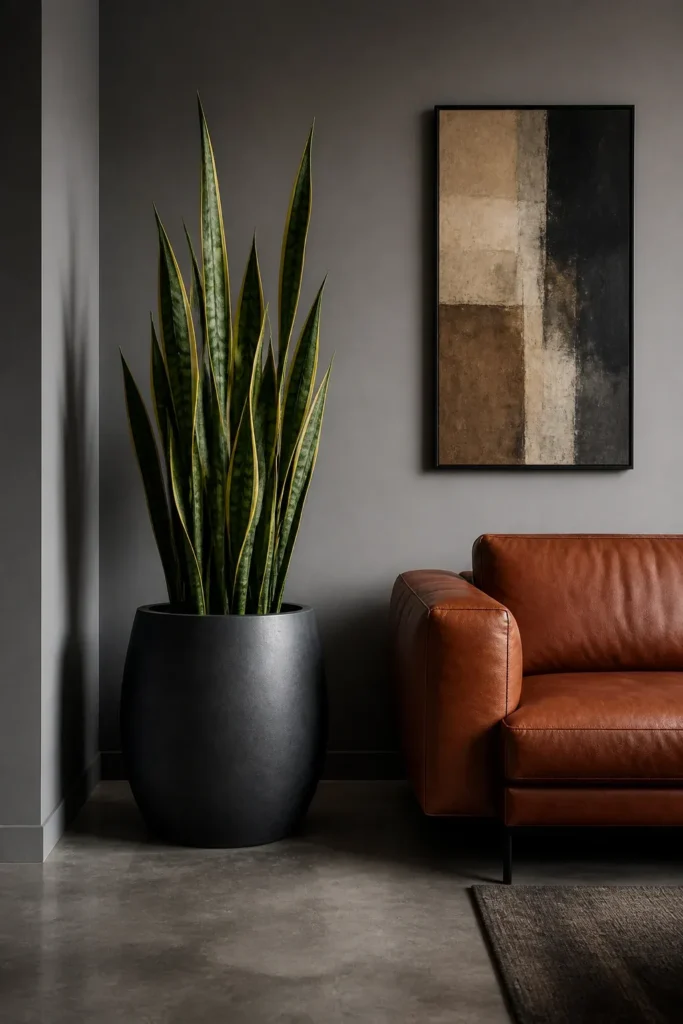
The pot you choose is just as important as the plant itself when it comes to interior design. A heavy ceramic pot in a matte finish works well for modern or minimalist rooms, while terracotta or woven baskets add warmth to bohemian or rustic spaces. Since tall plants are heavy, look for pots with a wide base to prevent tipping.
Consider the color of your walls when picking a planter. A dark green plant in a white or light gray pot creates a sharp contrast that makes the greenery pop. If you want a more cohesive look, choose a pot color that matches your trim or large furniture pieces. Make sure the pot has drainage holes, or use a plastic nursery liner inside a decorative 'cachepot' to make watering easier and protect your floors from leaks.
Adding Height With Plant Stands and Pedestals
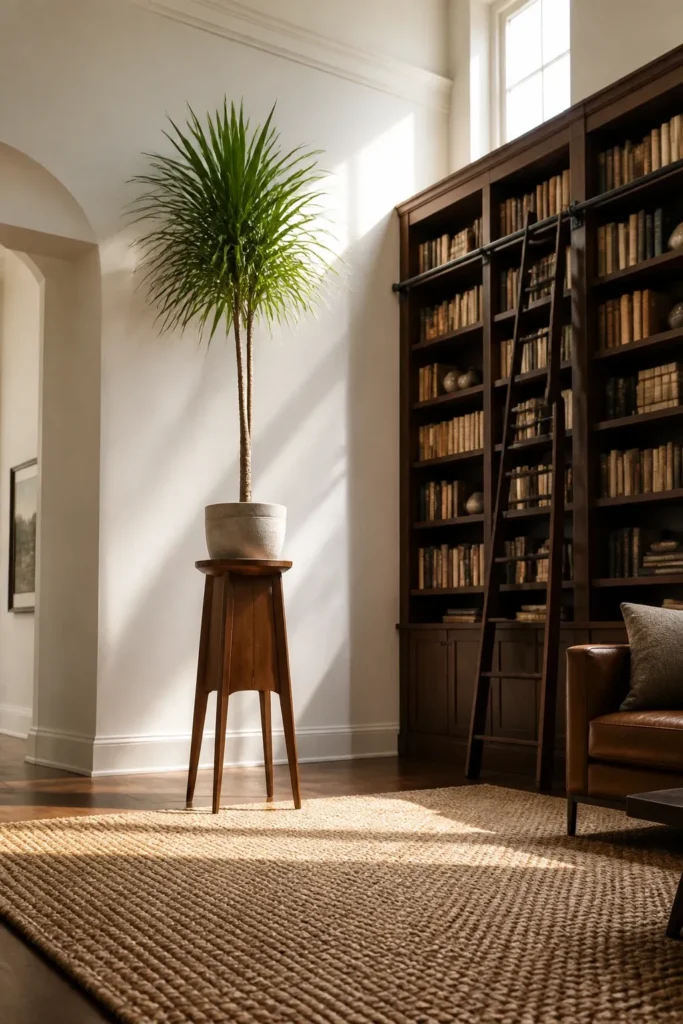
Sometimes a plant is beautiful but not quite tall enough to fill the vertical space of a high ceiling. Instead of waiting years for it to grow, you can use plant stands or pedestals to give it an immediate boost. A simple wooden tripod stand can lift a three-foot plant to eye level, making it look much more substantial.
Using stands also helps with air circulation around the base of the plant and makes cleaning the floor underneath much easier. If you have a very large, heavy tree, a low rolling caddy is a practical choice. It stays hidden under the pot but allows you to move the plant easily for cleaning or to catch better light during different seasons.
Arranging Multiple Plants for a Layered Look
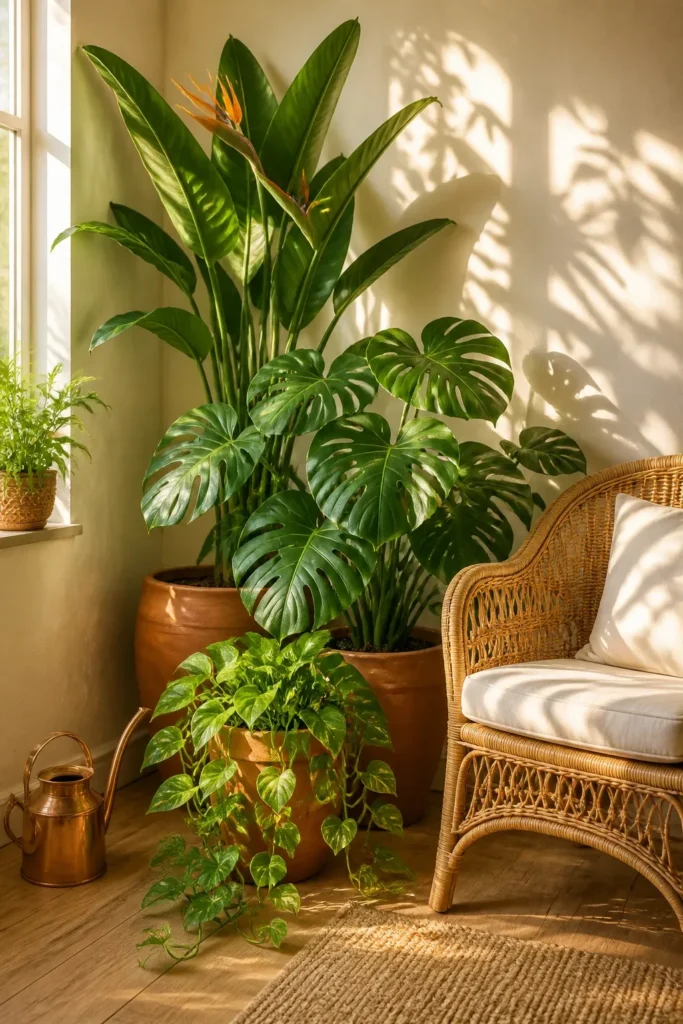
A single tall plant looks great, but grouping a few plants together creates a lush, indoor jungle feel. To do this effectively, use the rule of three and vary the heights. Place your tallest plant in the very back of the corner, then add a medium-sized plant and a smaller, trailing plant in front.
This layering technique adds depth to the corner. You can mix different leaf shapes, such as the broad, flat leaves of a Monstera paired with the fine, feathery fronds of a Parlor Palm. Keep the pots in a similar color family or material to ensure the grouping looks like a planned arrangement rather than a random collection of containers.
Practical Care for Large Indoor Foliage
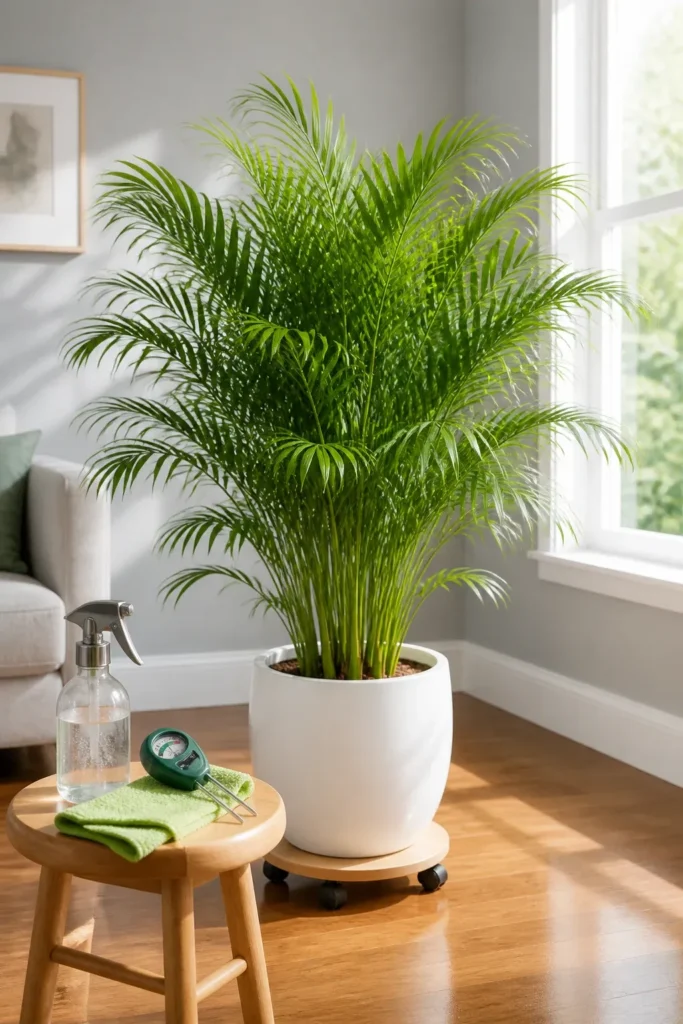
Large plants have different needs than small succulents. Because they have more leaf surface area, they collect dust quickly. Dust blocks sunlight and can invite pests, so wipe the leaves down with a damp cloth every few weeks. This keeps the plant healthy and looking vibrant.
Watering can be tricky with deep pots. Use a moisture meter or your finger to check the soil a few inches down before adding water. Large plants often need less frequent watering than small ones, but they require a larger volume of water when you do soak them. Also, remember to rotate the pot a quarter turn every time you water. This ensures all sides get equal light and prevents the plant from leaning toward the window.
Managing Space and Traffic Around Large Greenery
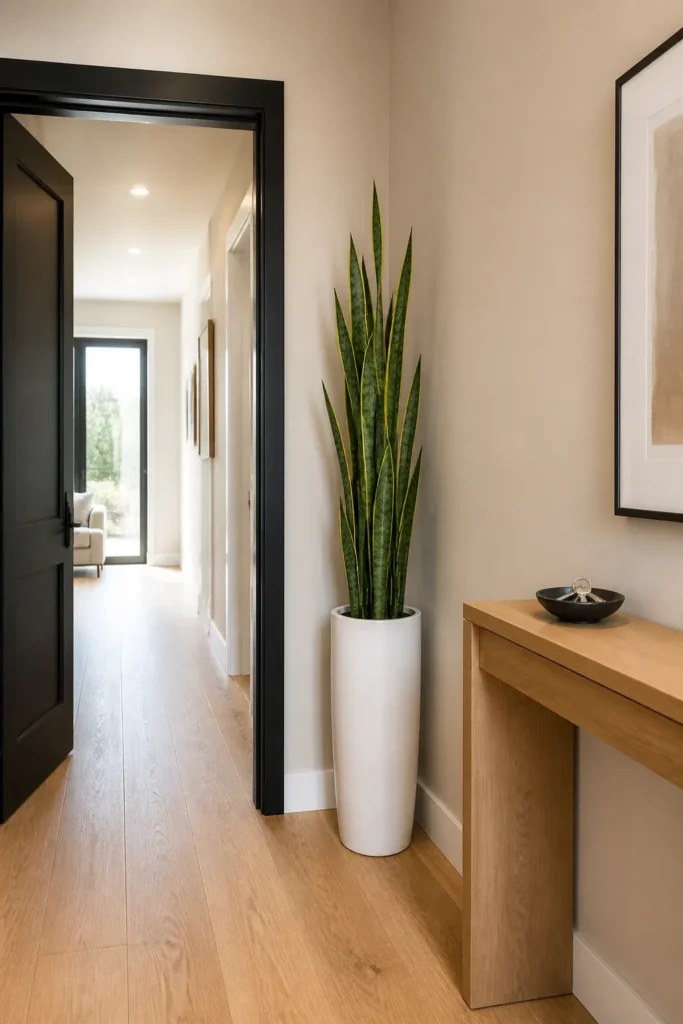
A common mistake is choosing a plant that grows too wide for the available space. If your corner is next to a doorway or a hallway, avoid 'bushy' plants like certain ferns or wide-spreading Monsteras that might snag on clothing. Instead, opt for upright growers like a Sansevieria or a columnar cactus.
Ensure there is at least a few inches of space between the plant and the walls to allow for airflow and prevent mold growth on the drywall. If the plant starts to outgrow its corner, don't be afraid to prune it. Trimming back the top or sides helps maintain the shape and keeps the plant from taking over the room. Proper placement should enhance the room, not make it hard to walk through.
Adding a tall plant to an empty corner is a simple way to breathe life into your living room. By matching the species to your light levels and choosing a pot that complements your style, you can turn a forgotten nook into a focal point. Start with one sturdy plant and see how it changes the energy of your space. If you're ready to refresh your home, head to a local nursery this weekend and find a leafy companion to fill that quiet corner.