
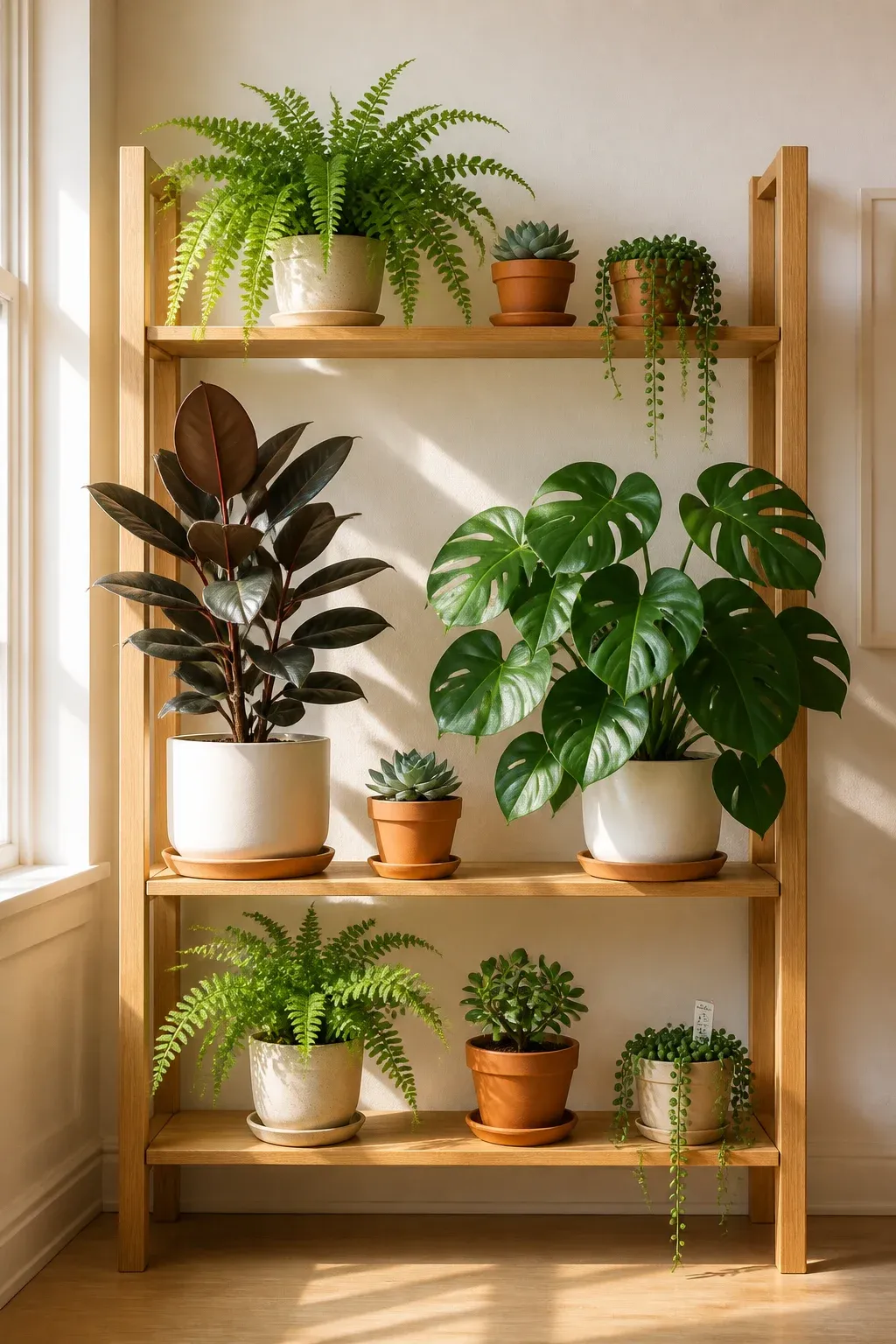
An indoor plant shelf can easily turn from a beautiful green display into a cluttered mess of pots and tangled leaves. Many of us start with one or two plants and soon find ourselves with a crowded shelf that lacks a clear sense of style. Organizing your plants is about more than just making them look good; it is about creating a space where they can grow well and where you can actually see each individual leaf.
In this guide, you will learn how to arrange your greenery by size, choose the right pots, and mix in decor to create a balanced look. We will also cover how to handle trailing vines and keep everything healthy. By the end, you will have a clear plan for making your plant shelf a calm and attractive part of your home.
Arranging Plants by Size and Shape
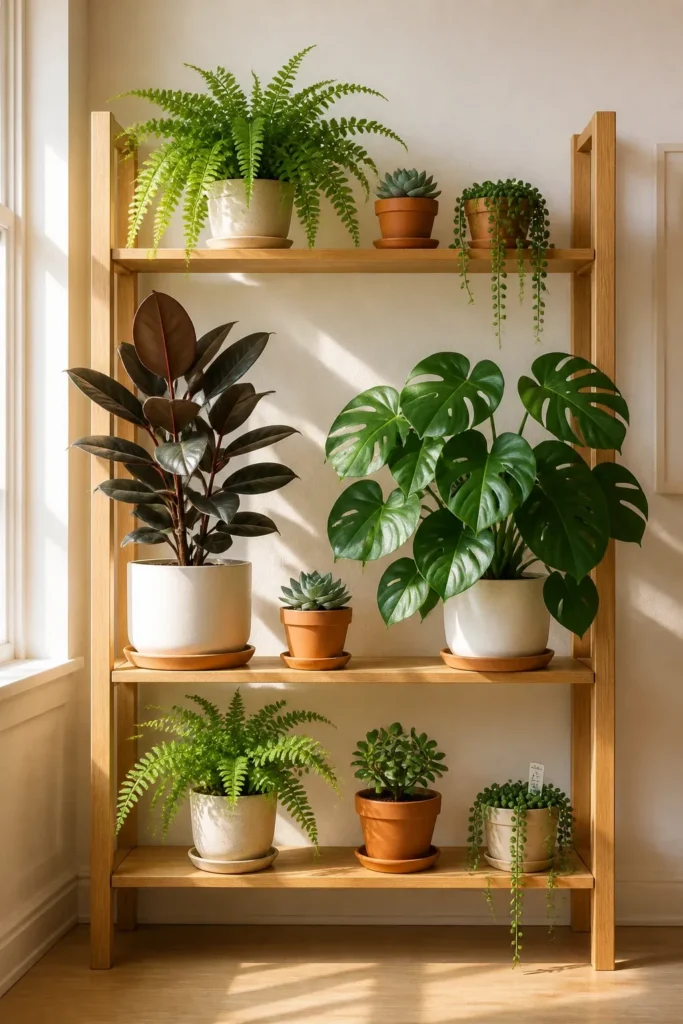
The easiest way to start is by looking at the physical size of your plants. If you put all your tall plants in the back, you might hide smaller succulents or seedlings. Instead, try a staggered approach. Place larger, bushier plants on the ends of the shelf to act as anchors. This keeps the center of the shelf feeling open.
Think about the shape of the leaves too. A plant with broad, flat leaves like a Rubber Tree provides a nice contrast to the feathery fronds of a fern. Putting plants with different shapes next to each other makes the display more interesting to the eye without needing a lot of extra decor.
Using Different Pot Materials and Colors
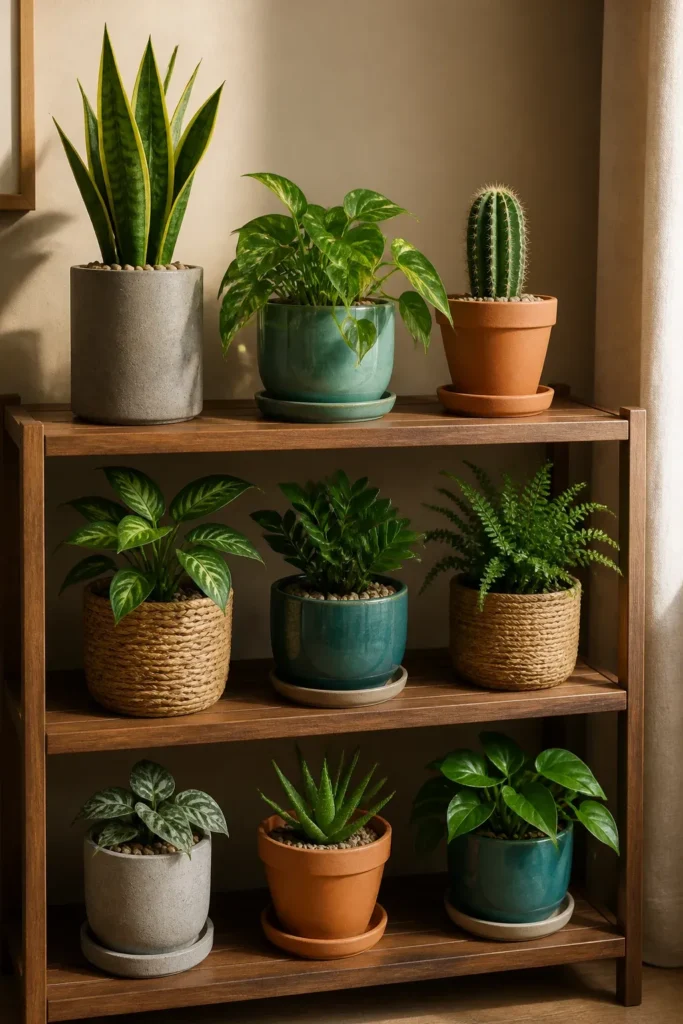
Pots are just as important as the plants themselves. Using the exact same pot for every plant can look a bit stiff, but using too many different styles can look messy. A good middle ground is to choose a color palette. You might stick to earth tones like terracotta, beige, and soft greens.
Mixing materials adds texture. A smooth ceramic pot looks great next to a woven basket or a rough concrete planter. If you have a plant that needs a lot of water, a glazed ceramic pot is a smart choice because it holds moisture. For plants that like to dry out, stick with breathable terracotta. This way, your styling choices also help your plants stay healthy.
Mixing Non-Plant Decor into the Display
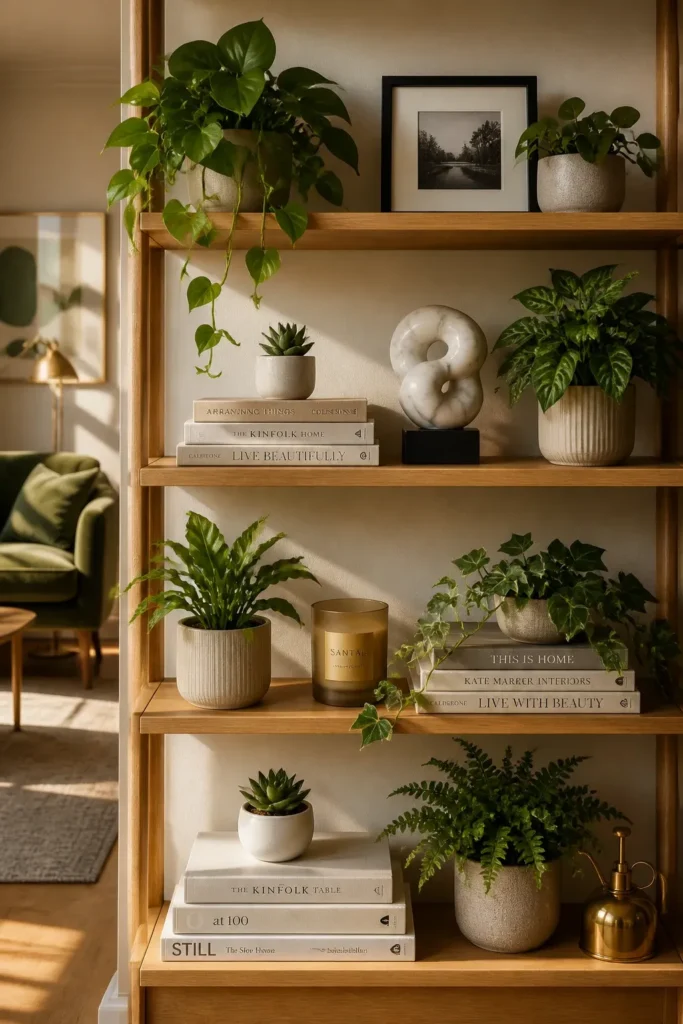
A shelf full of only plants can feel heavy. Adding a few non-plant items breaks up the green and gives the eye a place to rest. Books are a classic choice; you can stack them horizontally to create a small pedestal for a tiny plant.
Small sculptures, candles, or framed photos also work well. The key is to not overdo it. Choose items that mean something to you or match the room's vibe. If your shelf is made of bamboo or wood, earthy items like stones or wooden bowls fit right in. These pieces help tell a story and make the shelf feel like a part of your home rather than just a storage unit for plants.
Creating Visual Balance with Height and Depth
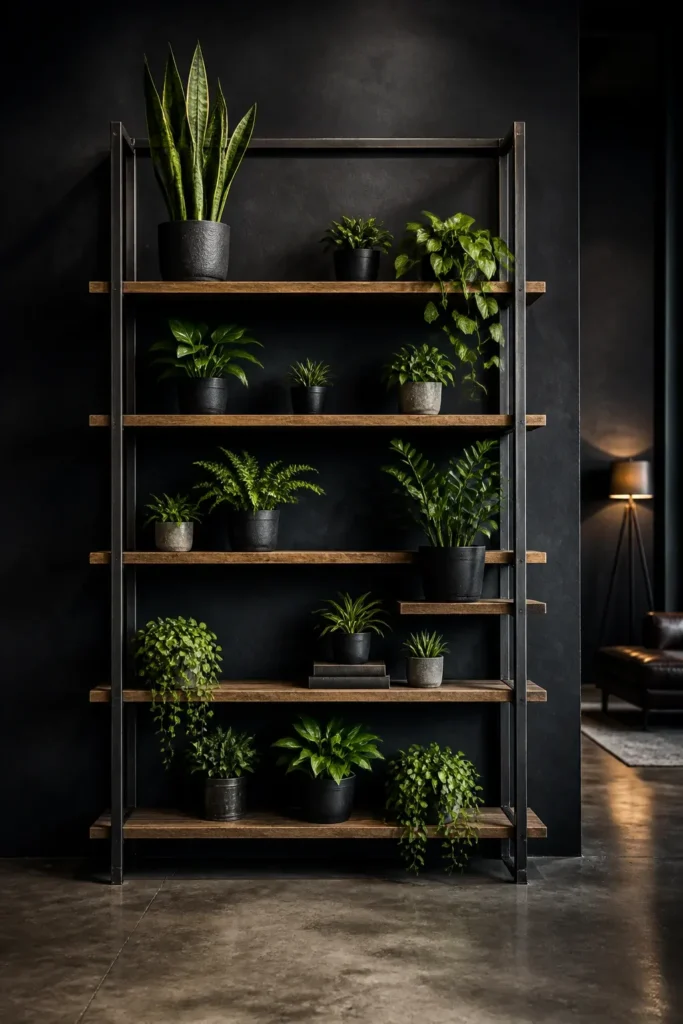
Visual balance is what makes a shelf look professional. Avoid putting all your tall plants on one side, which makes the shelf look like it is leaning. Instead, distribute height across the entire unit. If one shelf has a tall Snake Plant on the left, put a medium-sized plant or a stack of books on the right side of the shelf below it.
Depth is another trick. Don't line up all your pots in a straight row. Push some toward the back and pull others toward the front. This creates shadows and layers, making the display feel more three-dimensional. It also gives you space to tuck small accessories between the pots.
Managing Trailing Vines and Overflowing Foliage
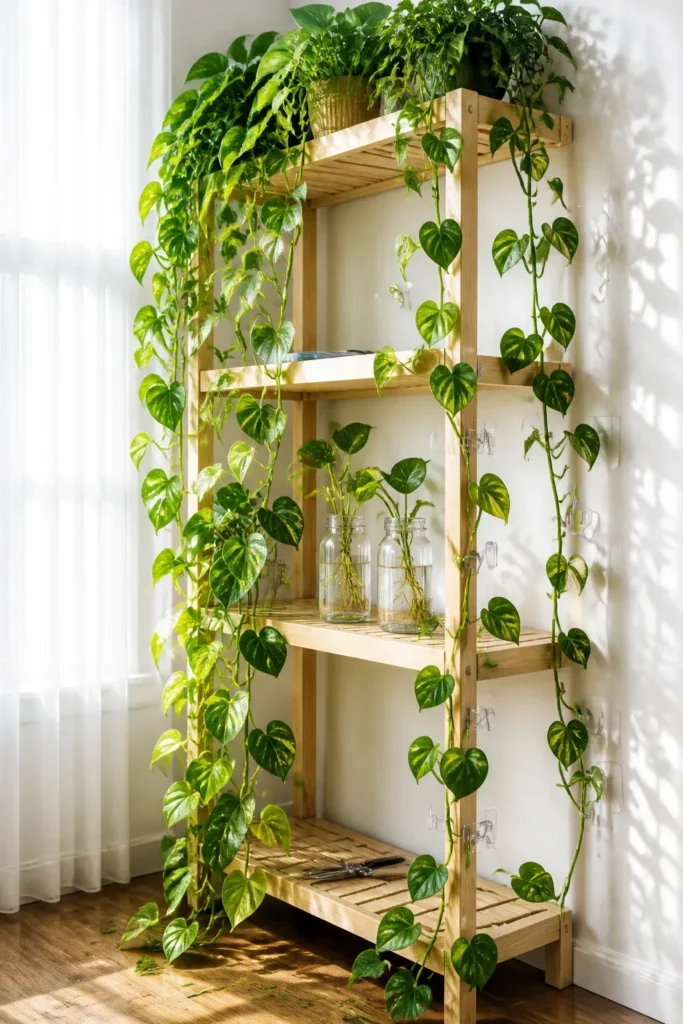
Vining plants like Pothos or Heartleaf Philodendron add a lot of movement, but they can quickly take over. To keep them under control, let them drape over the edges of the shelf rather than letting them tangle with the plants next to them.
You can also use small clear hooks to lead the vines along the shelf edge or even up the wall. If a plant is getting too long and looks thin at the top, don't be afraid to trim it. Pruning keeps the plant bushy and prevents the shelf from looking like a jungle. You can even stick the cuttings in a glass of water on the same shelf to start new plants.
Keeping Your Display Looking Clean and Healthy
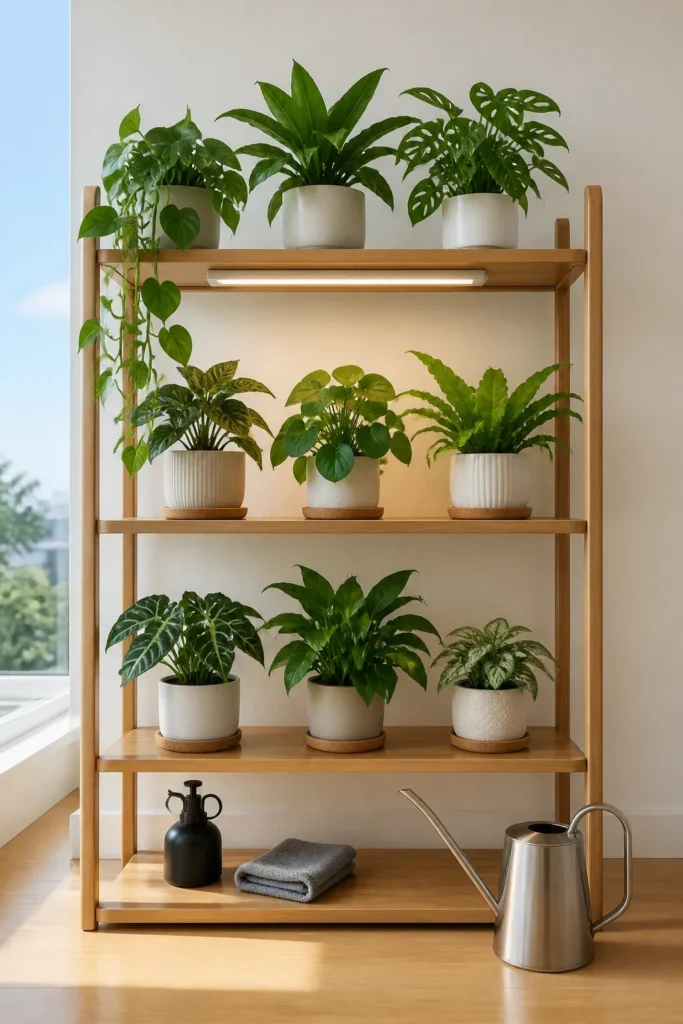
A beautiful shelf loses its appeal if the plants are covered in dust or have yellowing leaves. Dust blocks sunlight and makes plants look dull. Every few weeks, wipe the leaves with a damp cloth. This keeps them shiny and helps them breathe.
Check for dead leaves or spent flowers and remove them immediately. Also, keep an eye on the shelf surface itself. Water rings can ruin wood or bamboo, so always use saucers under your pots. If your shelf is in a dark corner, consider adding a small, stylish grow light to keep the plants from stretching and becoming leggy. A clean, well-maintained shelf always looks better than a neglected one.
Organizing your plant shelf is an ongoing process as your plants grow and change. By focusing on balance, varying your pots, and keeping things clean, you can create a display that brings a sense of calm to your room. Take a moment today to look at your shelf and try moving just two or three items to see how it changes the feel of the space.