
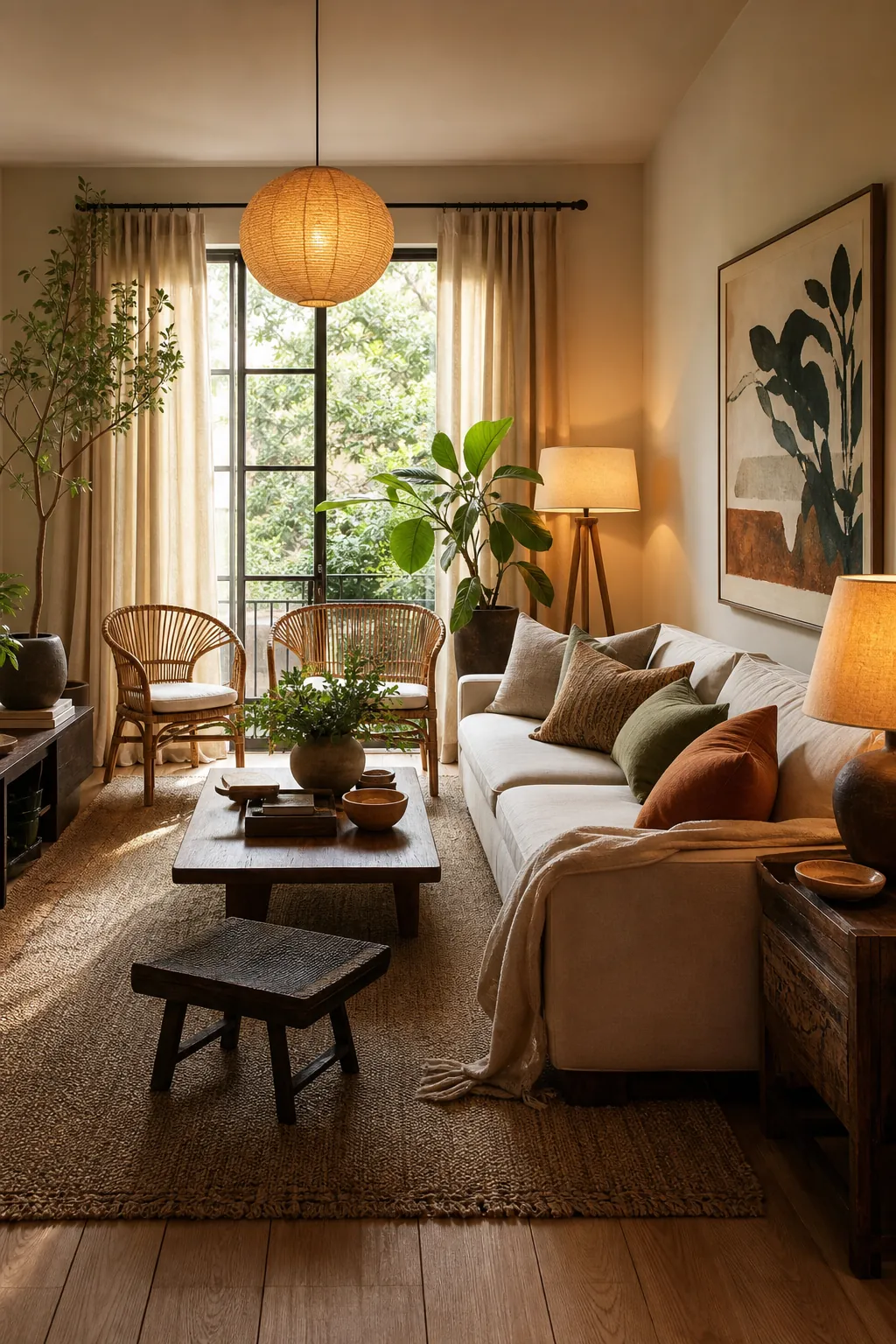
A living room rarely feels unfinished because it is missing one magical item. It usually feels unfinished because the room has only one or two layers doing all the work: a sofa, a coffee table, maybe a rug, and then a lot of blank space asking for attention.
That is the pattern that keeps showing up in real decorating questions. People ask why their living room feels cold, why the sofa wall looks empty, why the rug looks wrong, or why the space feels like a furniture showroom even after they bought plenty of things. The answer is usually the same: the room has objects, but it does not yet have depth.
Designers solve that by layering in a sequence. They do not start by adding random decor. They build the room from the ground up, then add light, texture, scale, natural materials, personal objects, and restraint. Here is the order that makes a living room look intentional instead of busy.
Start With The Ground Layer
The rug is not just a soft thing under the coffee table. It is the boundary line for the whole conversation area. When the rug is too small, every other piece of furniture looks as if it is floating by itself. A designer usually wants the rug to connect the sofa, chairs, and table into one readable zone.
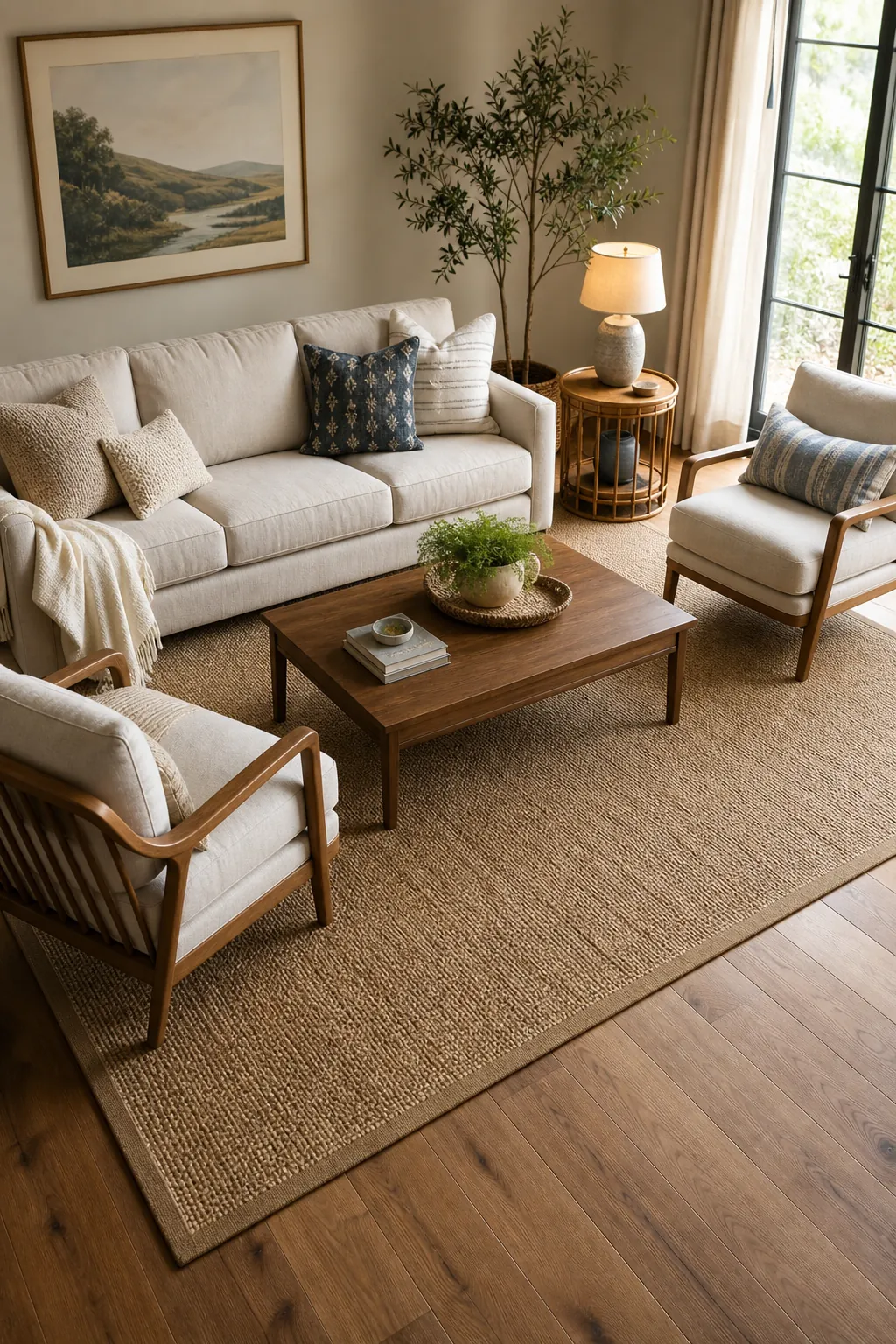
A good rule is simple: at least the front legs of the main seating should sit on the rug. In a larger room, all legs can sit on it. In a small apartment, the front-leg rule is often enough. What matters is not the label on the rug size; it is whether the rug visually gathers the furniture.
Once the rug is right, the room immediately feels more settled. Then the rest of the layers have somewhere to land.
Use Light Before You Use More Decor
If a room feels flat at night, another pillow will not fix it. Flat rooms often have flat lighting: one ceiling fixture trying to illuminate every corner equally. Designers break that habit by giving the room several smaller sources of warmth.
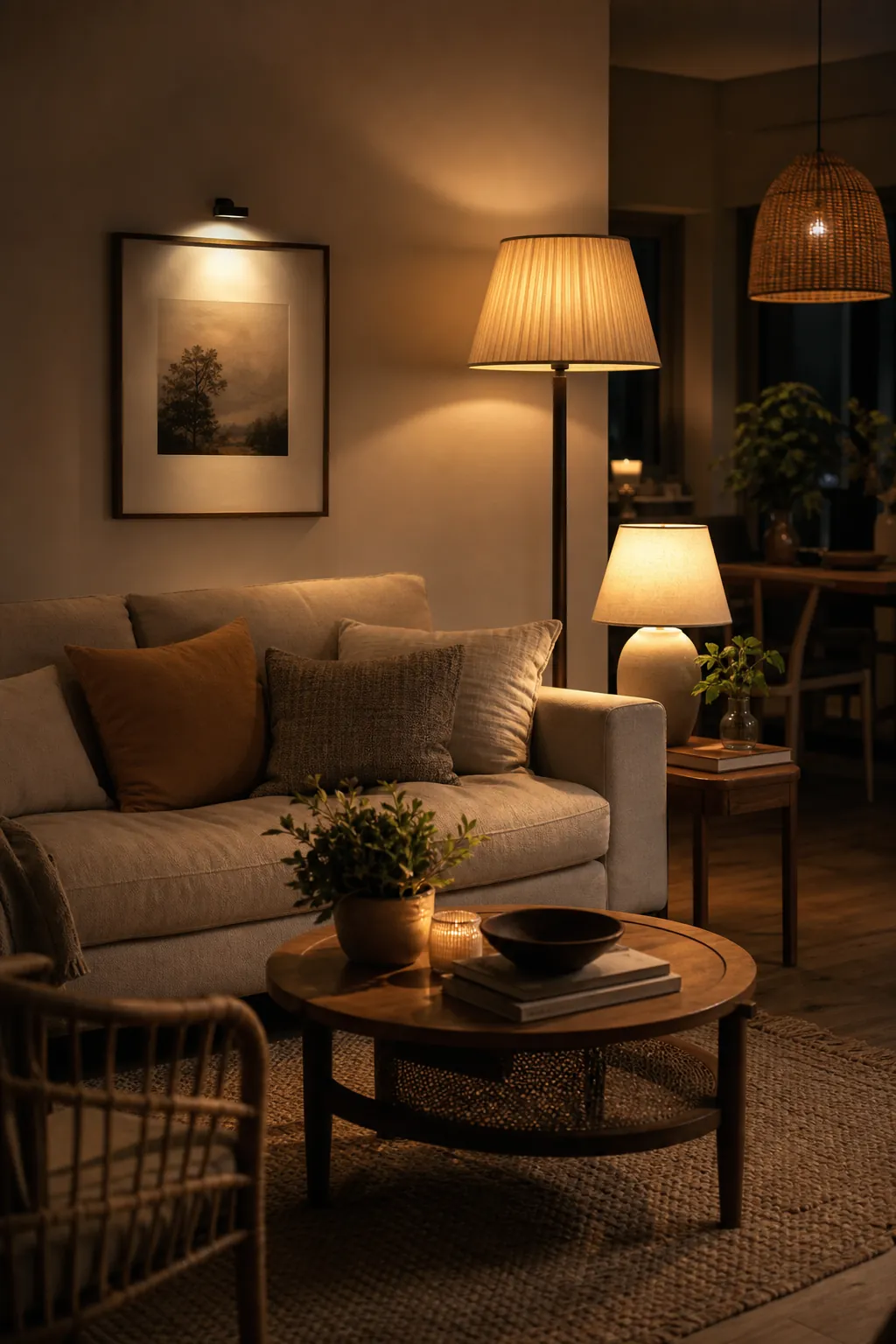
Think in three levels. Ambient light gives the room a gentle base. Task light helps someone read, knit, or work on the sofa. Accent light gives attention to art, shelves, a plant, or a textured wall. The mix is what creates depth.
- Place a floor lamp near the main sofa or reading chair.
- Add a table lamp where the room currently has a dark corner.
- Use warm bulbs instead of harsh white light.
- Put lamps at different heights so the room does not glow from one single plane.
This is one of the fastest ways to make a living room feel designed because it changes how every surface, textile, and color is perceived.
Layer Texture, Not Just Color
Color gets most of the attention, but texture is usually what makes a living room feel expensive. A beige sofa can look plain or beautiful depending on what touches it: linen, boucle, velvet, jute, rattan, wool, ceramic, bamboo, aged wood, and stone all read differently to the eye.
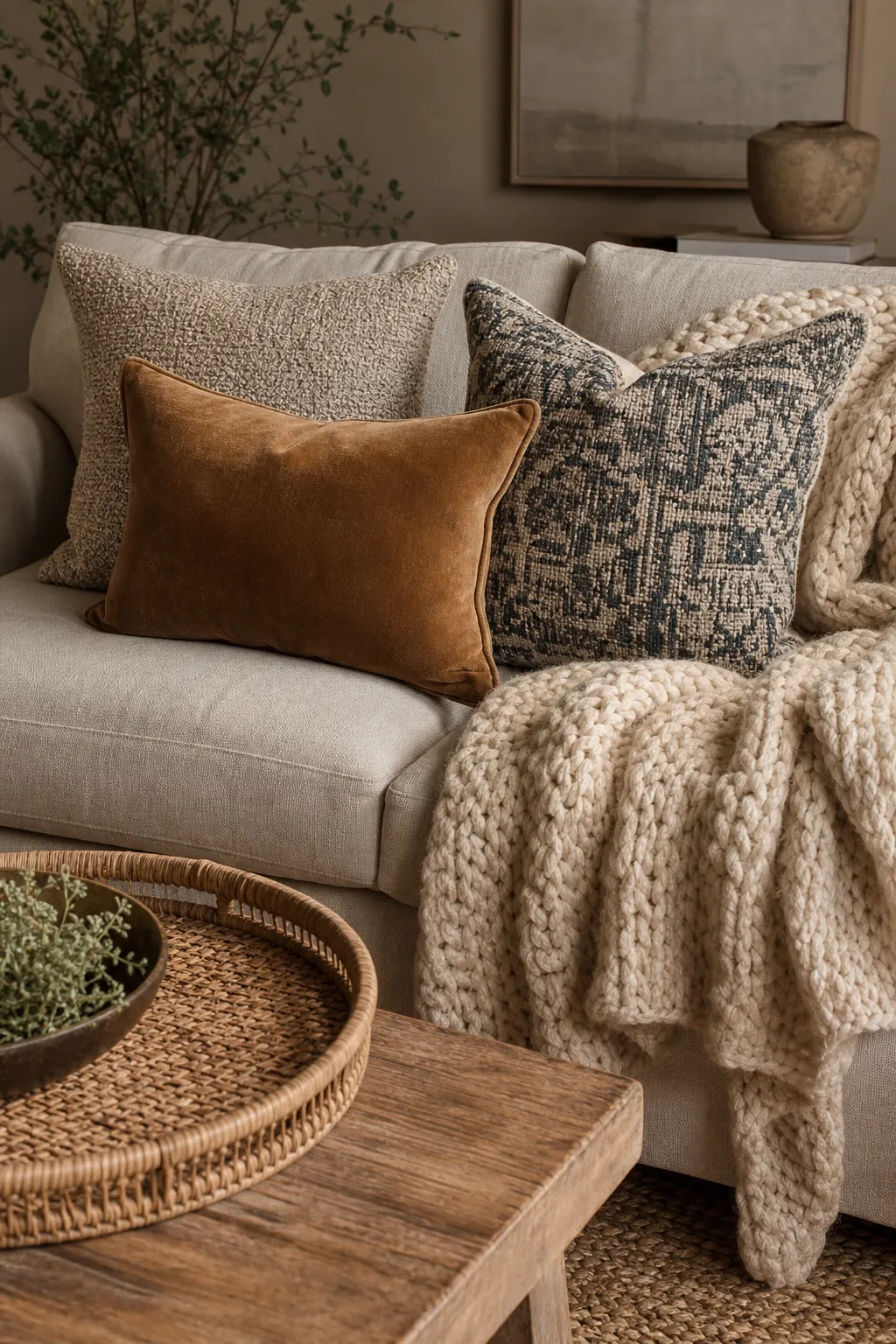
The trick is contrast. If the sofa is smooth, add a nubby throw. If the rug is flat woven, use a pillow with pile or embroidery. If the coffee table is glossy, place something matte or handmade on it. A layered room lets the eye feel the difference between surfaces.
Do not buy five matching pillows and call it done. Use a small, medium, and large scale. Mix one solid, one subtle pattern, and one tactile fabric. The sofa will look styled without becoming a pillow display.
Fix The Wall Scale
The wall above the sofa is where many living rooms lose confidence. One small print centered over a wide sofa makes the whole wall look underdressed. Designers usually go larger than nervous homeowners expect because the art has to relate to the furniture below it.
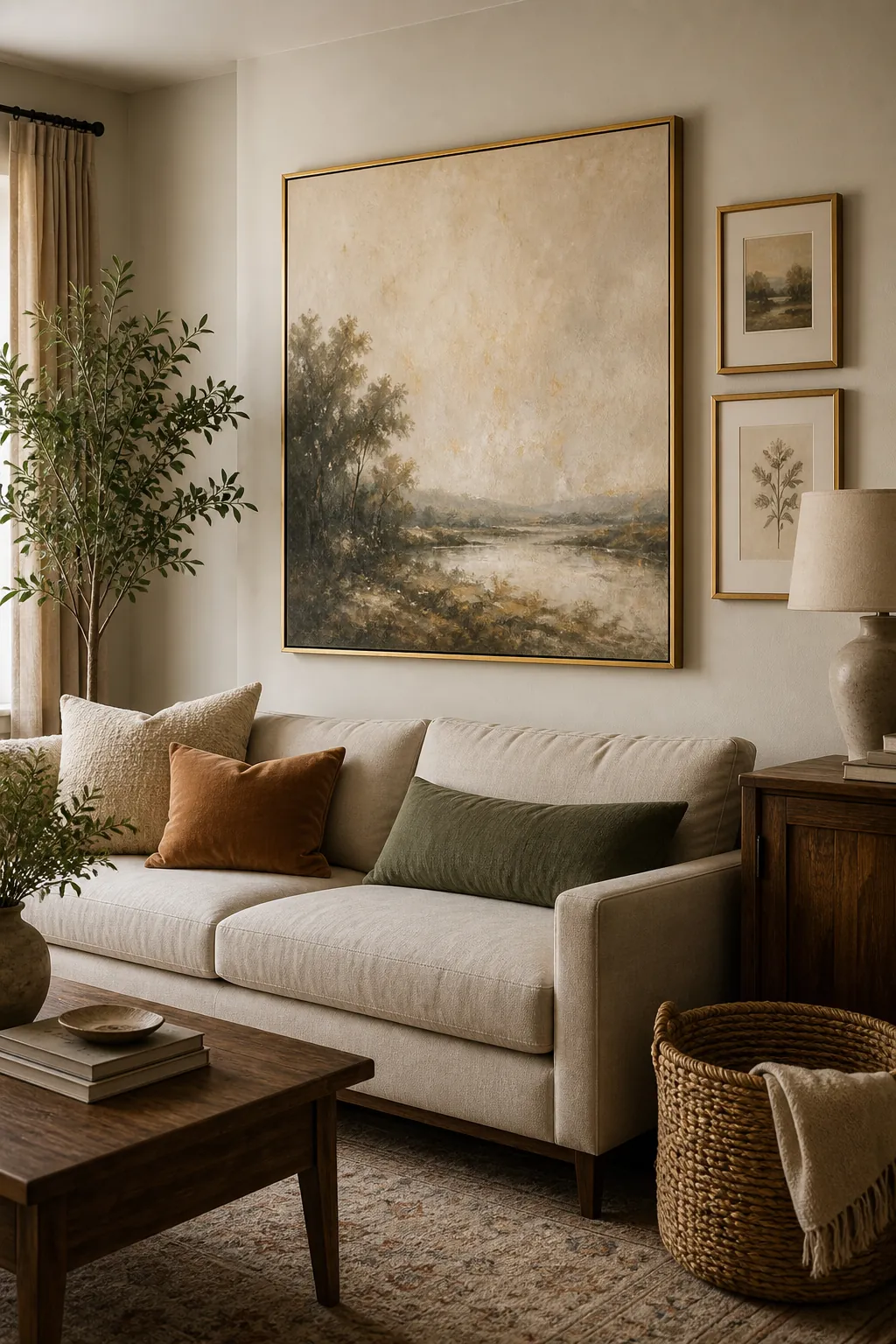
As a practical target, the art or gallery arrangement above a sofa often looks best when it covers roughly two-thirds of the sofa width. It does not have to be exact, but it should feel visually connected. Small art can be beautiful, but small art on a large wall usually needs company.
If one large piece feels too formal, try a pair of framed works, a low shelf with art leaned on it, or a relaxed gallery arrangement. Keep the bottom edge close enough to the sofa that the wall and furniture read as one composition.
Bring In Natural Materials With Contrast
Natural materials are powerful because they add warmth without shouting. Bamboo, rattan, jute, linen, wood, stone, and clay make a room feel grounded. The mistake is using them all in the same pale tone until the room becomes one flat beige blur.
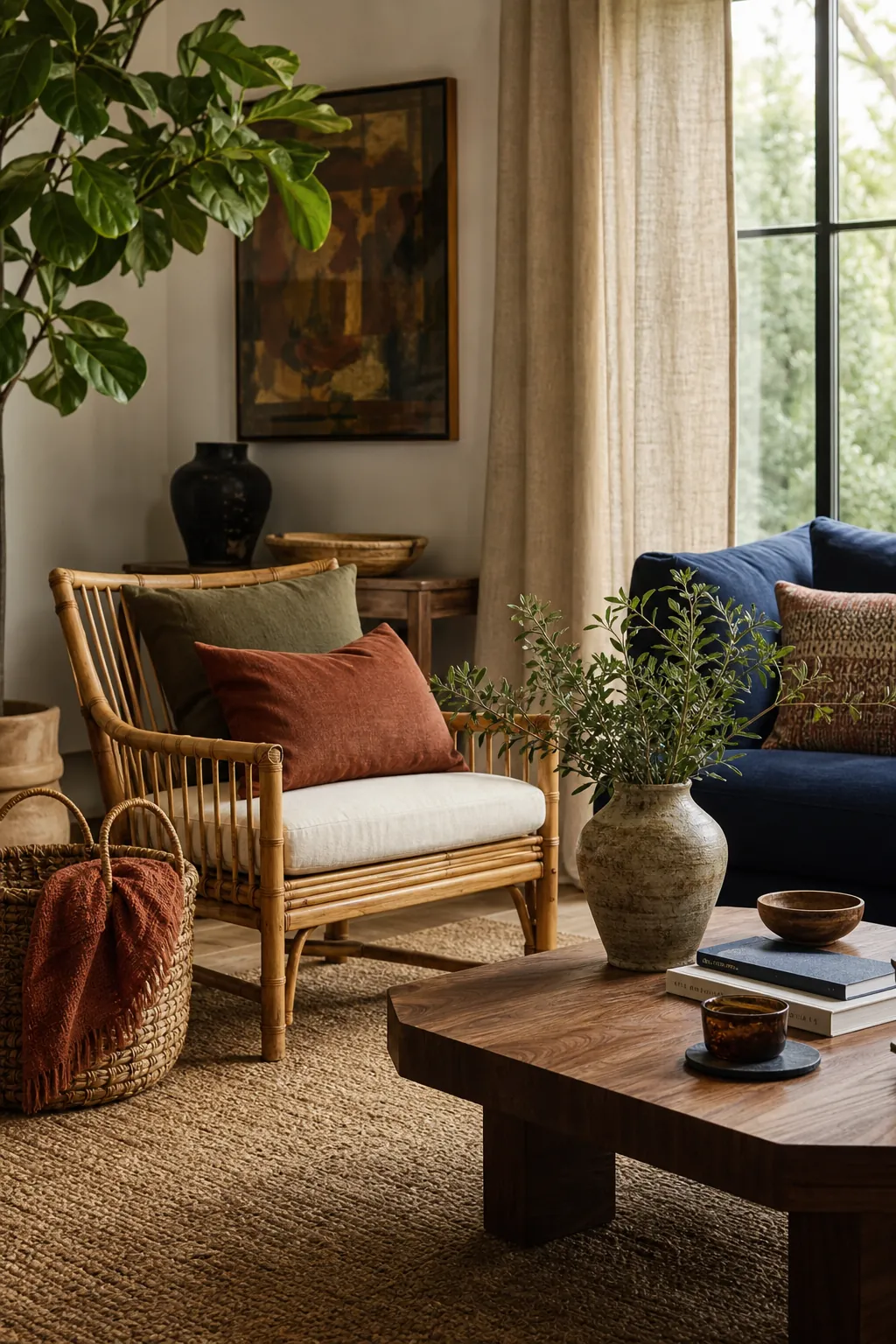
Use natural materials in different temperatures and weights. Pair a light bamboo chair with a darker walnut table. Put a rough jute rug near a smooth ceramic lamp. Add one deeper color such as olive, rust, ink blue, or warm black. The room will still feel natural, but it will have shape.
This is also where sustainable and durable choices make visual sense. A bamboo bench, a woven basket, or a solid wood side table does not have to announce itself as eco-conscious. It simply gives the room an honest material note that plastic and veneer rarely manage.
Style Surfaces Like Small Stories
Coffee tables, shelves, and consoles are where a living room becomes personal. They are also where layering can turn into clutter. A designer does not fill every inch. They create a few small scenes with height, shape, texture, and empty space.
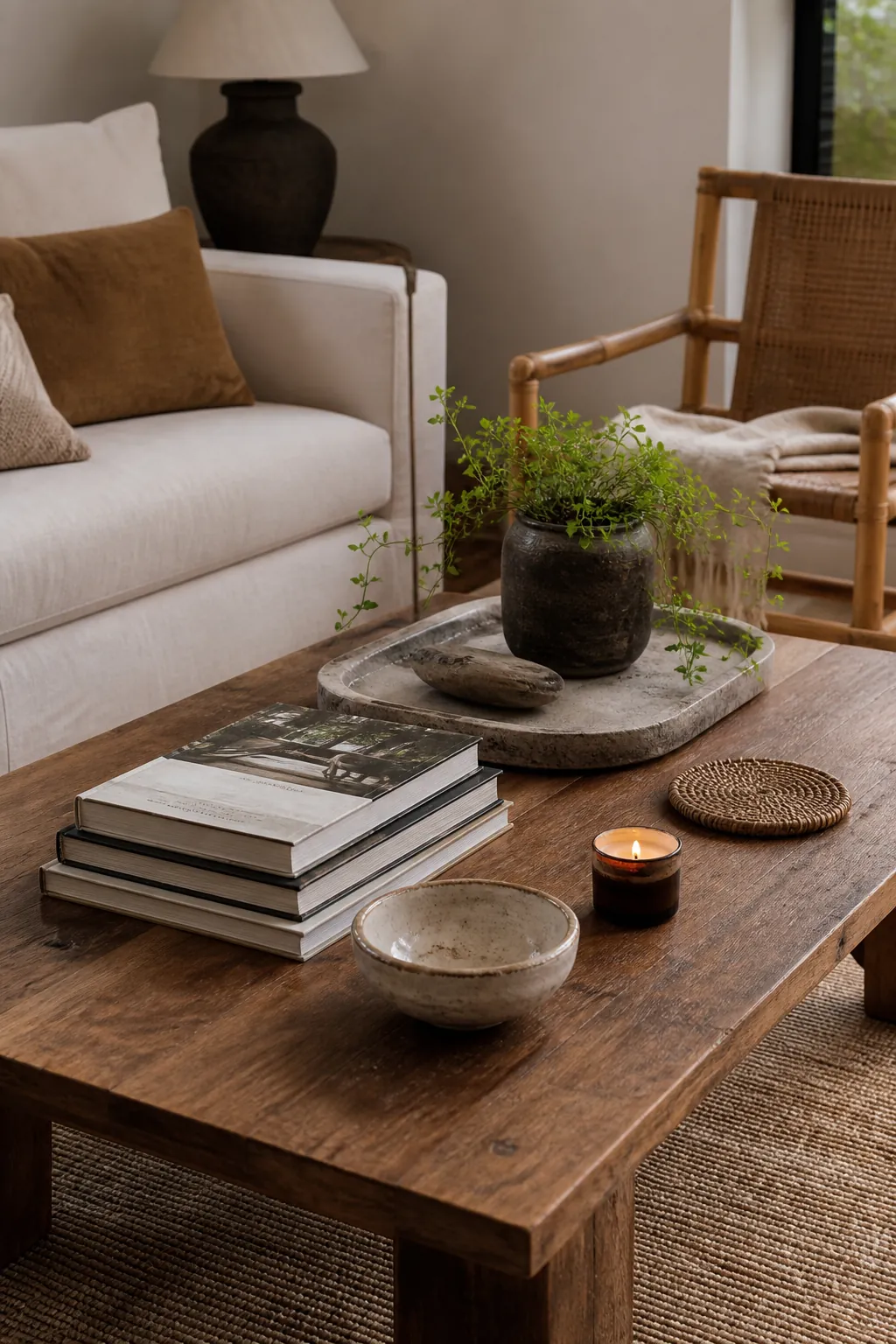
Try this combination: a tray, one low object, one taller object, one organic element, and one personal piece. That might mean a stone tray, a ceramic bowl, a candle, a small plant, and a book you actually open. The personal piece is what keeps the room from looking staged.
If you are styling shelves, leave gaps. If you are styling a coffee table, keep room for a mug. If you are styling a console, vary height but avoid a straight row of small objects. The goal is collected, not crowded.
Edit Until The Room Can Breathe
The last designer layer is restraint. Once the rug, light, texture, art, natural materials, and personal objects are in place, stop and remove the weakest thing. A layered room is not a room where every surface is decorated. It is a room where every important area has been considered.
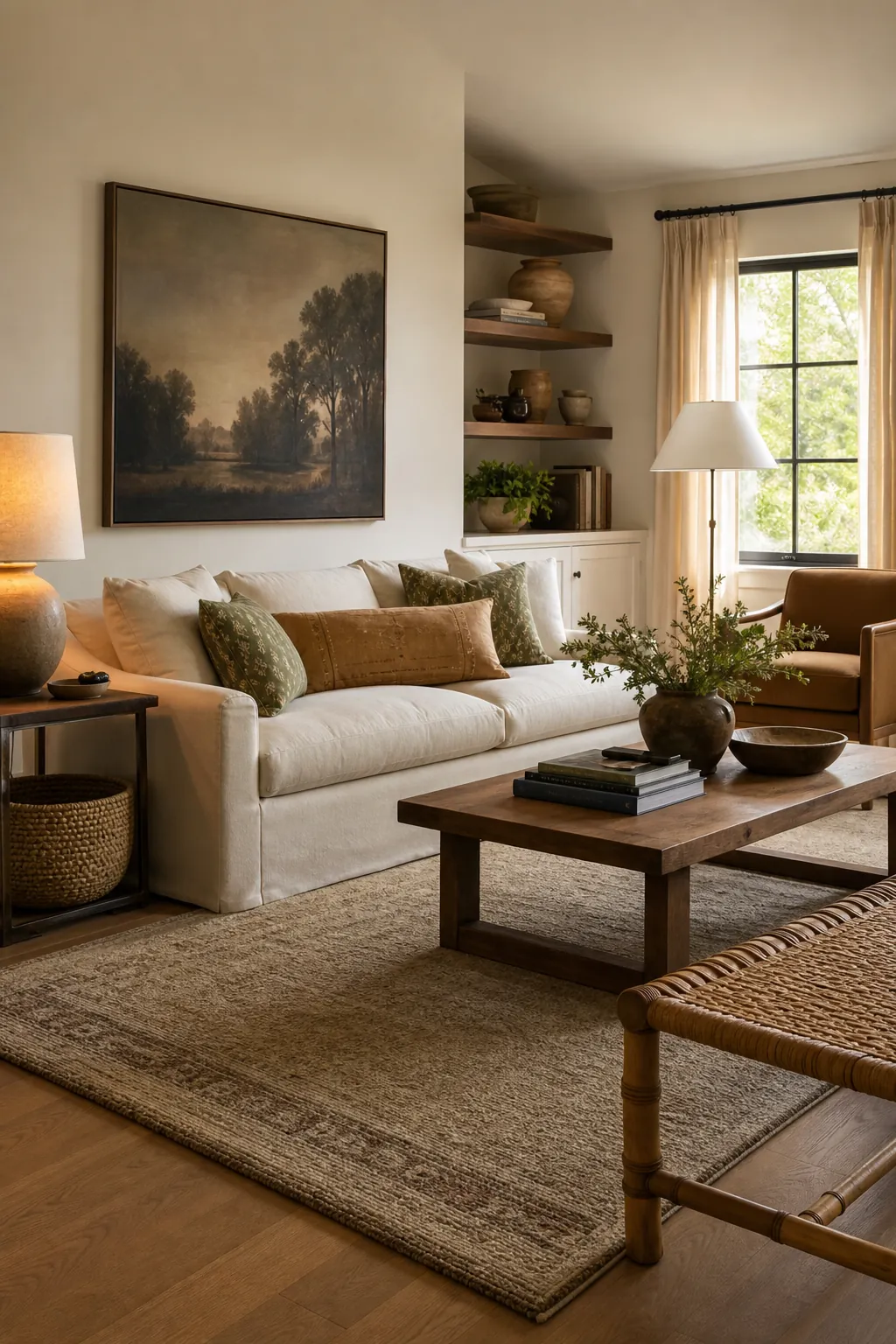
- Can people walk through the room without dodging furniture?
- Does every seat have light nearby?
- Does the sofa wall feel connected to the sofa?
- Is there at least one natural texture in every major sightline?
- Can you remove one accessory and make the room stronger?
That final question matters most. Designer layering is not the art of adding more; it is the art of adding the right depth and then knowing when the room is finished.