
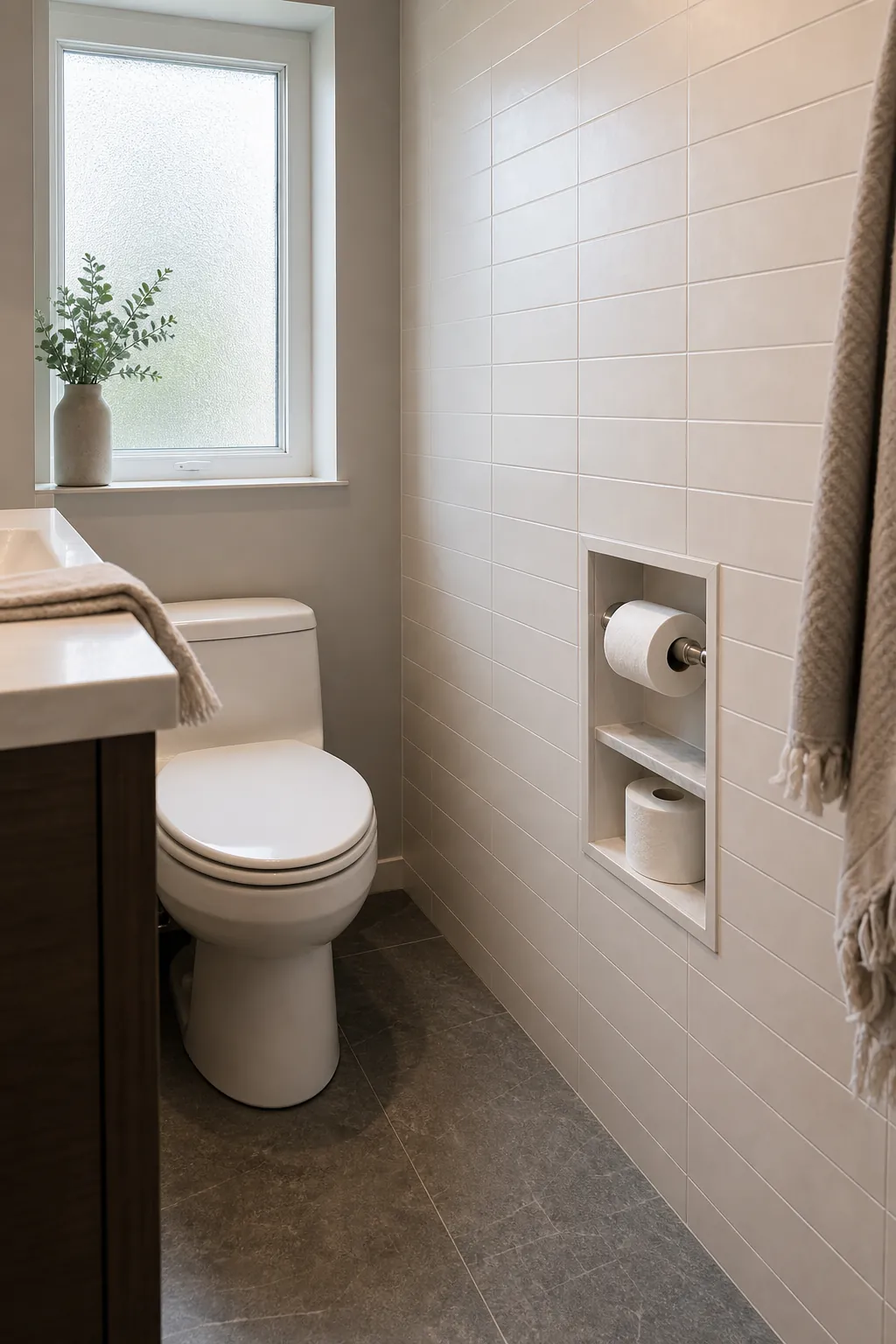
A recessed toilet paper holder sounds like a tiny detail until the bathroom is finished and the roll is either digging into someone’s knee, hidden behind the toilet, or sitting on the tank because the “perfect” wall was full of studs, wiring, or plumbing. The best built-ins solve a real problem: they keep paper easy to reach while making a tight bathroom feel cleaner and less crowded.
The sweet spot is not just “make a hole in the wall.” A good recessed holder needs the right reach, a dry location, enough depth for modern rolls, and a trim detail that looks intentional next to tile, ledges, shelves, or a wall mount toilet. Once those pieces are handled, this small built-in can make a powder room or compact bath feel much more custom.
Start With Reach, Not the Wall That Looks Empty
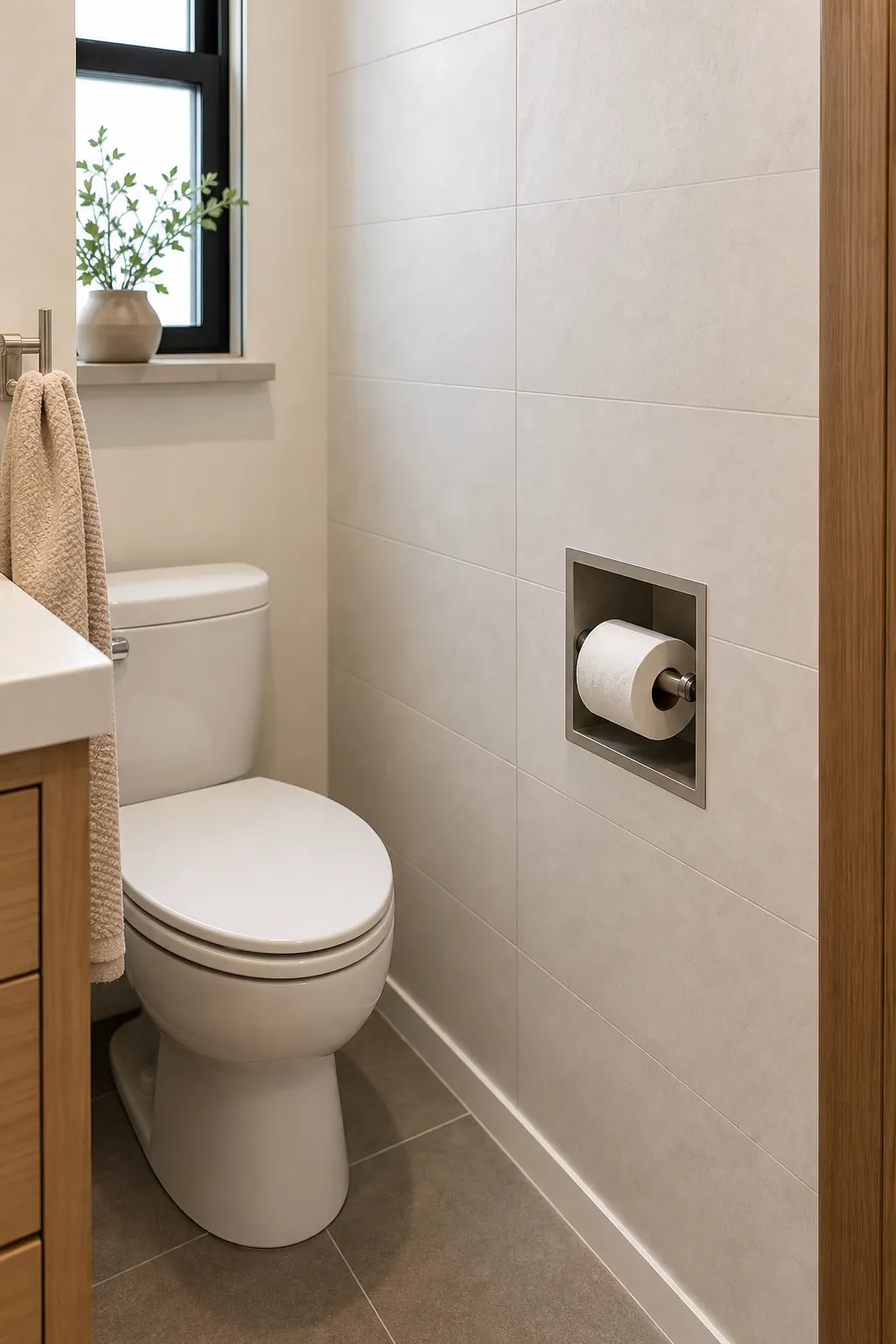
The most common mistake is choosing the wall from the doorway view instead of from the seated position. A holder can look beautifully centered in photos and still be awkward every single day. A practical rule of thumb from bath planning guidance is to place toilet paper roughly 8 to 12 inches in front of the toilet bowl edge and around 26 inches from the floor, then adjust for the actual users and fixture layout.
Sit on the toilet before you cut anything. Reach with your natural hand, without twisting your shoulder or leaning forward. If the best-looking wall forces a full torso turn, it is the wrong wall. This is especially important in old-house powder rooms, bathrooms with a vanity tight to one side, and narrow layouts where a freestanding holder keeps getting kicked.
- Best everyday position: side wall, slightly in front of the bowl, at a comfortable hand height.
- Risky position: behind the toilet or directly across a narrow room where kids and guests have to stretch.
- Best test: tape a paper template to the wall and live with it for a day before cutting.
Use the Stud Bay Instead of Fighting the Studs
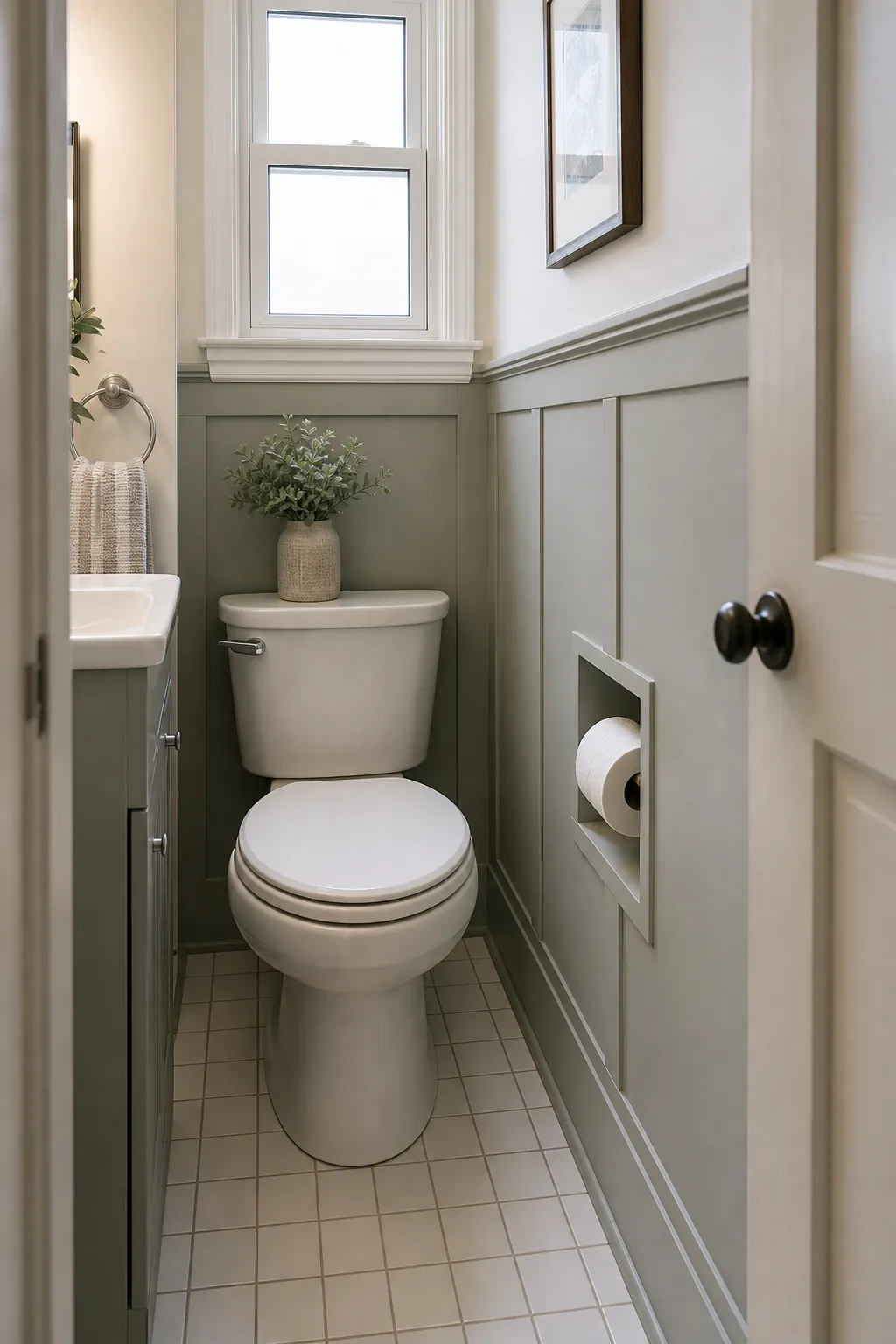
Recessed holders are tempting because they look simple, but the wall cavity decides what is easy. Studs, electrical cable, plumbing, blocking, insulation, and vapor barrier can all turn a five-minute idea into wall repair. The cleanest approach is usually to design the niche around the stud bay you already have, even if that means the holder shifts a few inches off the visual centerline.
If symmetry matters, pair the holder with a second matching recess. One bay can hold the roll and the other can become a slim shelf for a spare roll, small bottle, hand towel, or candle. That move turns an unavoidable framing compromise into a deliberate built-in composition.
- Use a stud finder and small inspection hole before committing to the final location.
- Avoid cutting structural members unless a qualified pro has approved the framing plan.
- If wiring is in the way, rerouting should be handled safely and to local code.
- On exterior walls, protect insulation and vapor barrier continuity instead of leaving an open cold spot.

Choose a Built-In Style That Fits the Bathroom
The classic ceramic square still works in cottage, vintage, and old-house bathrooms. In a modern small bath, though, a deeper niche with a clean metal bar or wood-lined opening often looks more current. The right choice depends on the bathroom’s other built-ins: shower niche, ledge wall, recessed medicine cabinet, floating vanity, or wall mount toilet.
For a quiet look, repeat one detail from the room. Match the niche edge to the shower niche trim. Match a wood-lined recess to the vanity finish. Match a stainless holder to faucets and towel bars. The holder should look like part of the architecture, not a product stuck into a random cutout.
Plan for Modern Rolls, Spare Storage, and Phone Ledges
Older recessed holders can be shallow, which becomes annoying with thicker modern rolls. Before buying or building, check the depth and roll clearance. If the roll rubs the back of the niche or jams against the face trim, it will look tidy but function badly.
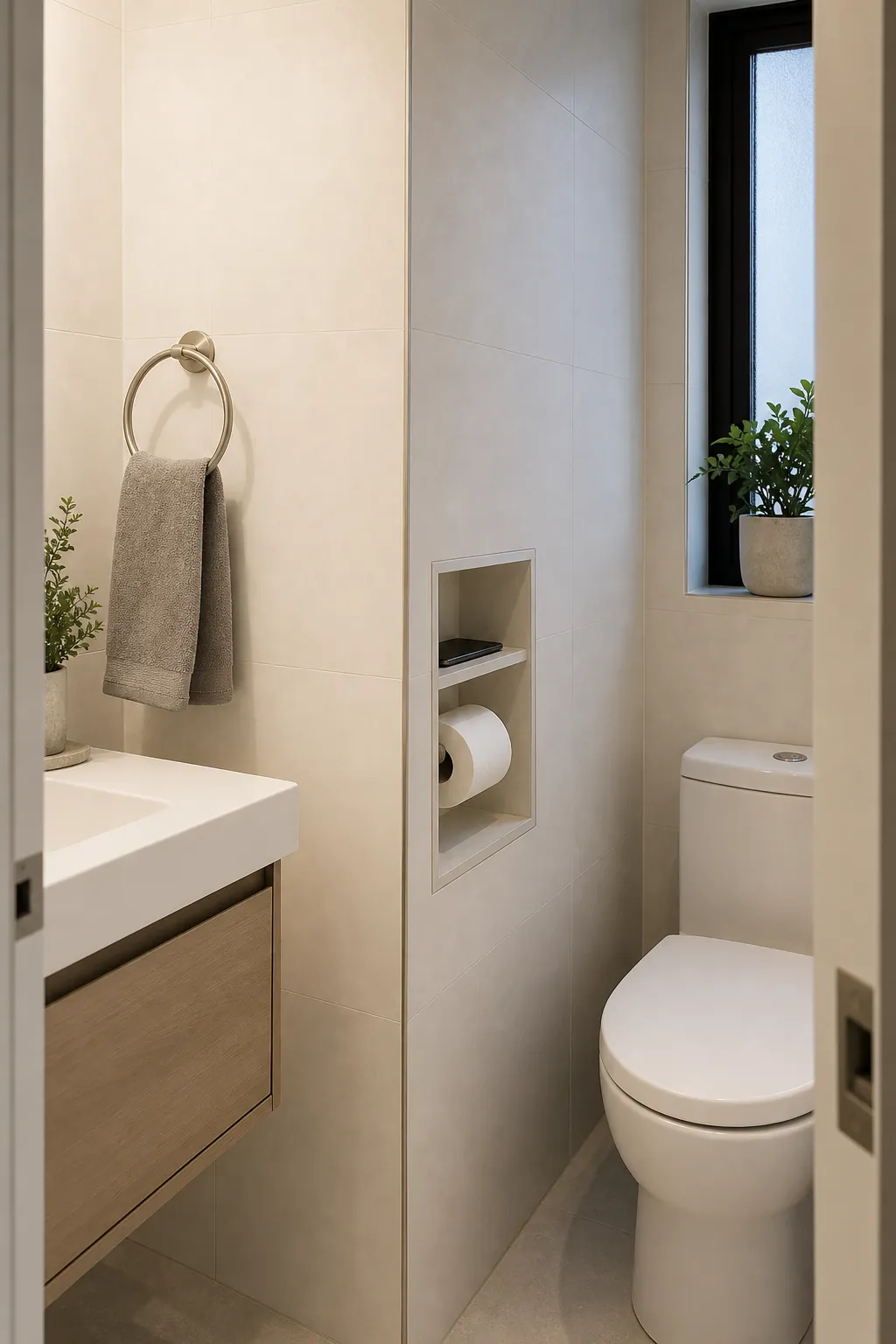
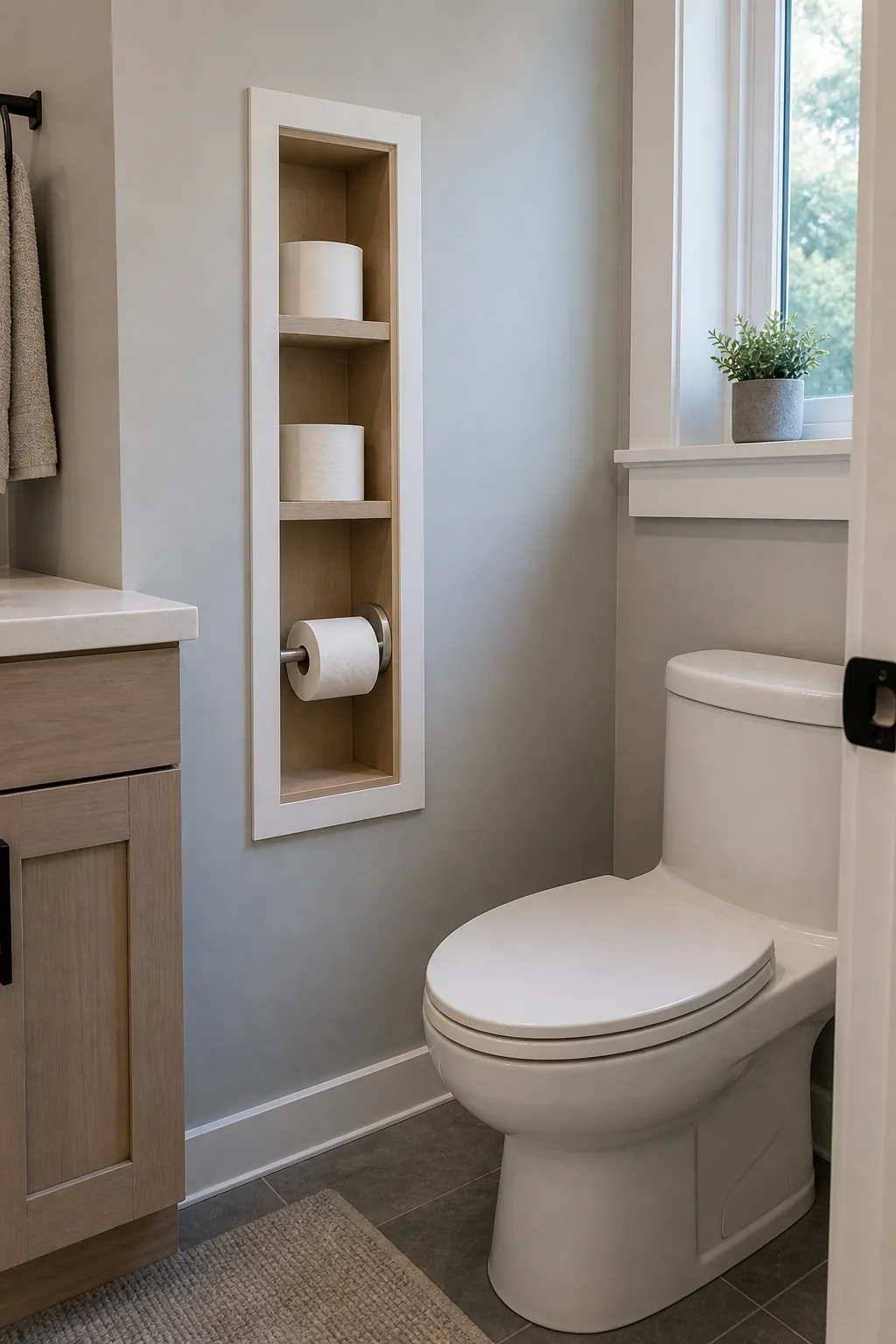
A vertical built-in is often the most useful version for a tiny bathroom. The active roll can sit at hand height, with a spare roll above or below. A narrow top shelf can hold a phone without becoming a clutter ledge. The key is restraint: one roll, one spare, one small shelf usually looks better than an overbuilt cabinet next to the toilet.
Keep Paper Dry Near Showers, Tubs, and Sinks
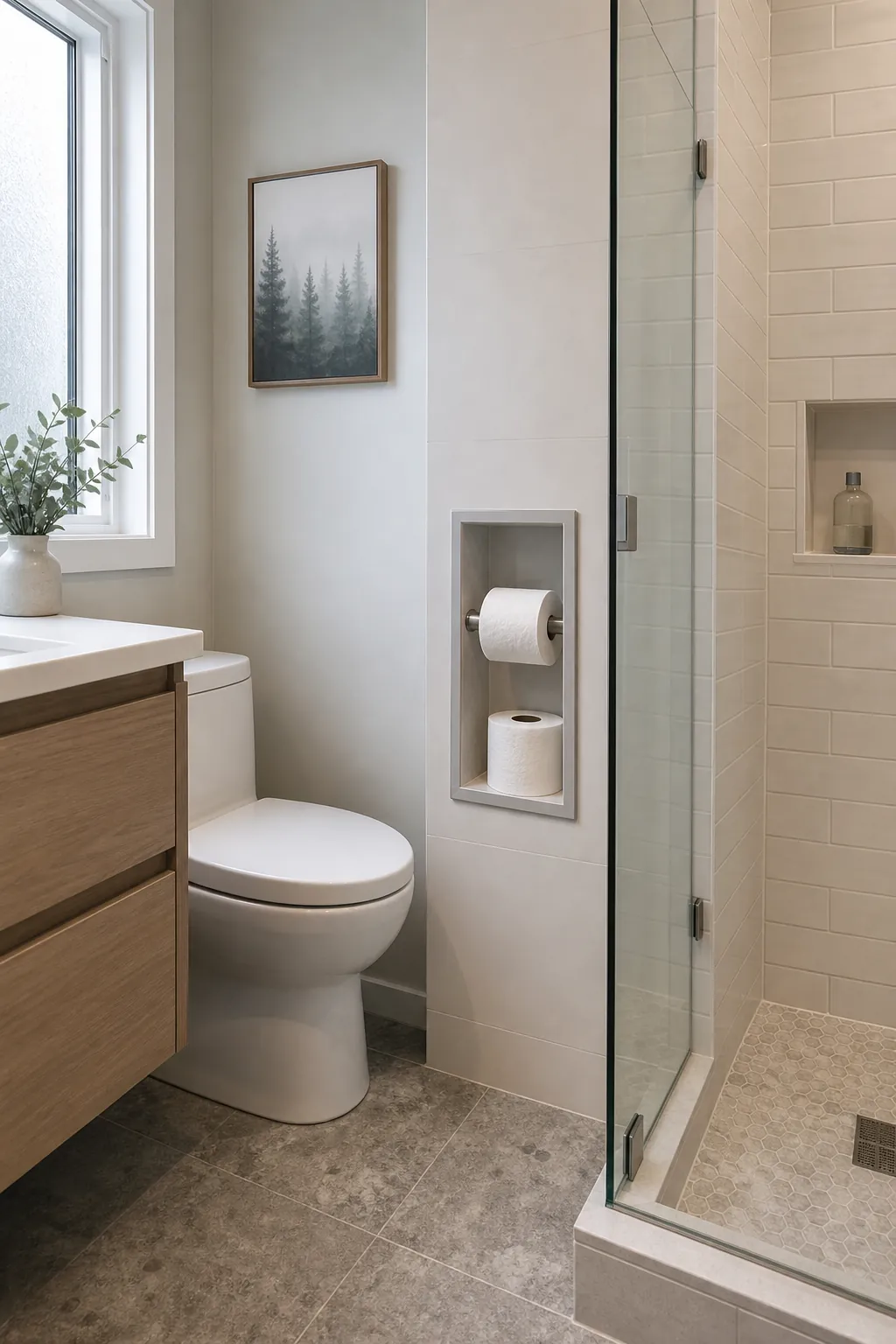
A recessed holder beside an open shower can be beautiful and wrong at the same time. Toilet paper hates splash zones. If the toilet sits near a wet area, place the recess on the drier side, add a small return wall, use a partial glass panel, or choose a covered niche. In a humid bath, use materials that tolerate moisture: porcelain tile, sealed stone, powder-coated metal, stainless steel, or properly sealed wood.
Caulk the edges cleanly where tile meets the niche body. Avoid raw MDF inside the recess. If the built-in is on an exterior wall, do not sacrifice insulation just to hide a roll. A hidden toilet paper holder is only a win if the paper stays dry and the wall stays healthy.
Make It Work With Wall Mount Toilets and Ledge Walls
Wall mount toilets and ledge wall designs create a natural opportunity for recessed storage. The ledge can hide the tank carrier, create a shelf, and give the toilet paper holder a clean vertical plane. In this layout, the holder often looks best recessed into the side return or a short partition rather than centered on the tank wall.
Do not let the ledge become the only plan. A roll sitting loose on the ledge will slide, get wet, or look unfinished. Build the holder into the ledge wall, align it with the tile grid, and keep the opening close enough to reach without leaning. The cleaner the toilet design, the more obvious a poorly placed holder becomes.

When a Recessed Cabinet Is Better Than a Single Holder
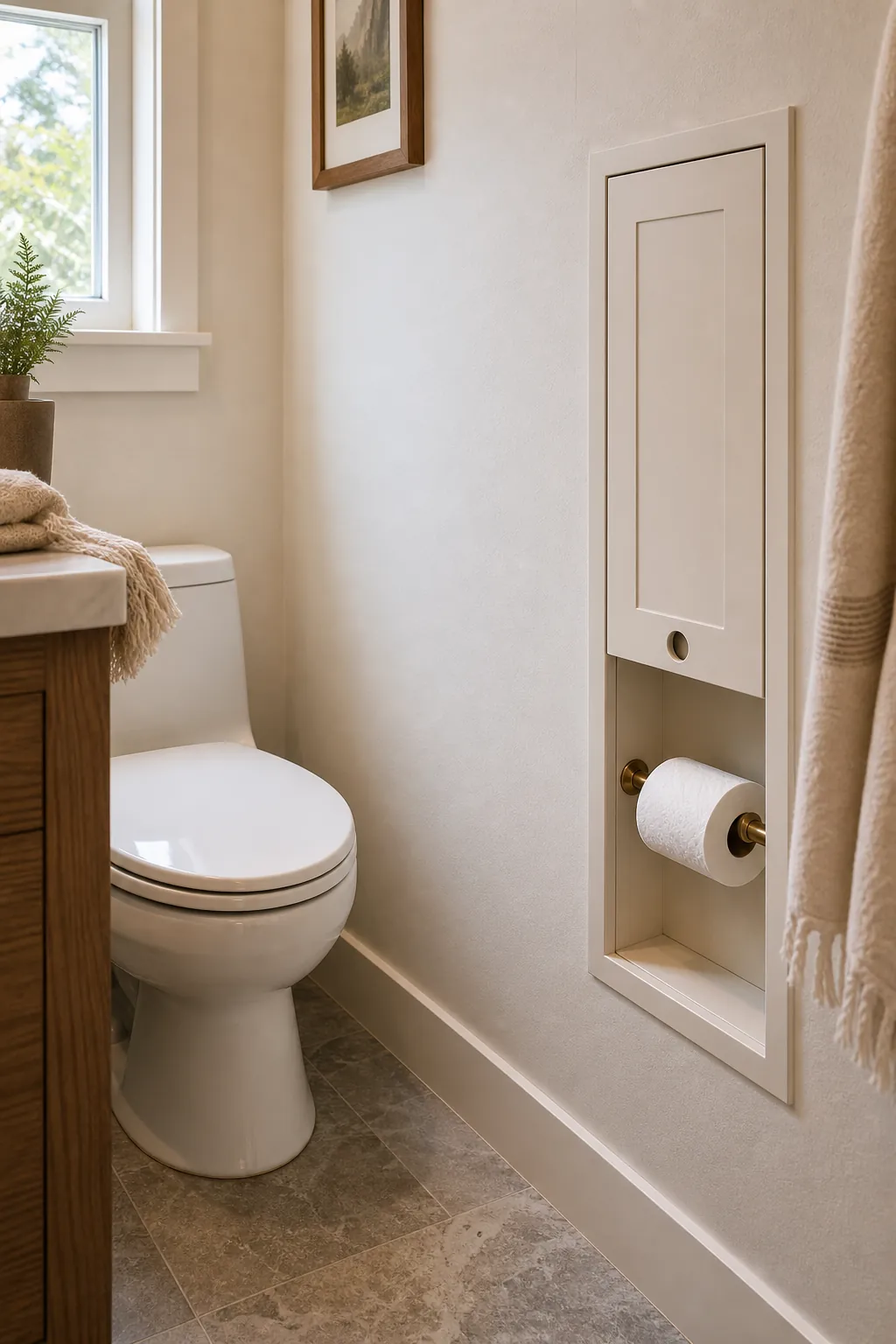
A single recessed holder is ideal when the bathroom already has storage. If there is no vanity, no medicine cabinet, and no shelf, a narrow recessed cabinet may be smarter. It can hide extra rolls, wipes, small towels, or cleaning supplies behind a simple door while keeping the active roll exposed and easy to grab.
The cabinet should still stay shallow and calm. Deep storage next to the toilet can feel bulky, and a busy open shelf can make a small bathroom look messier than before. Use a flush door, push latch, or small finger pull. Align the cabinet with tile, paneling, or wall trim so it reads as millwork.
A Simple Decision Checklist Before You Cut the Wall
- Reach: Can you grab paper while seated without twisting or leaning?
- Clearance: Will knees, vanity doors, shower glass, or a towel bar interfere?
- Wall cavity: Have you checked for studs, wiring, plumbing, insulation, and blocking?
- Moisture: Is the roll protected from sink splash, shower spray, and tub edges?
- Roll size: Does the recess fit the toilet paper you actually buy?
- Visual logic: Does the trim match the tile, ledge, shelves, cabinet, or hardware?
- Future repair: Can the holder be removed or replaced without exposing an ugly paint outline?
The strongest recessed toilet paper holder built ins are modest. They do not call attention to themselves; they remove visual clutter and make the bathroom easier to use. Choose the location by reach, respect what is inside the wall, and repeat materials already in the room. That is how a small recess becomes a detail that feels built in from the beginning.