
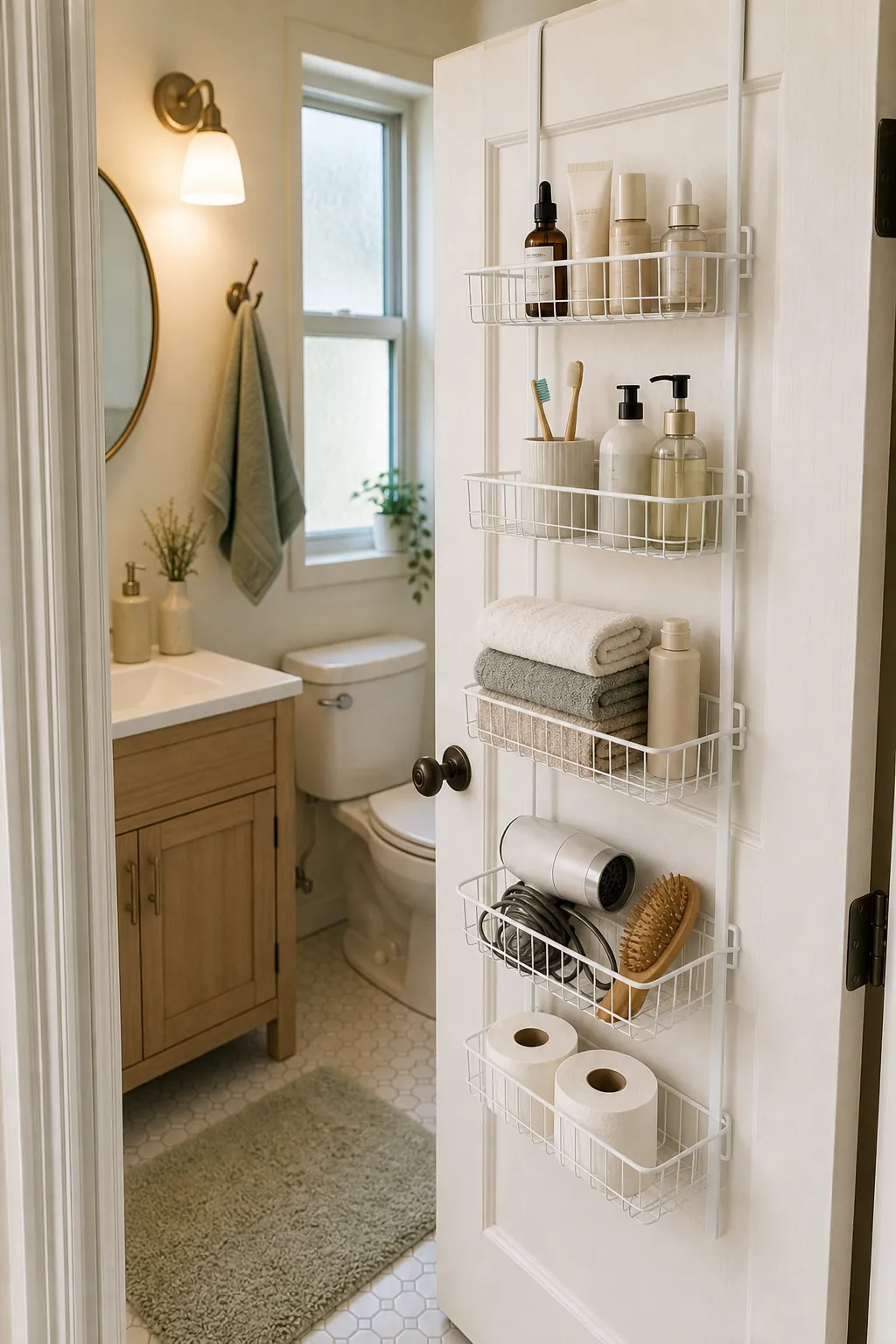
A bathroom door organizer sounds like the easiest fix in the world until the door will not close, the baskets scrape the towel bar, or every bottle on the back of the door turns into visual noise. The door is useful storage, but only when it is treated as a shallow daily-use zone, not a second closet.
The best setup starts with one honest question: what should be easy to reach every day, and what should live somewhere else? For small bathrooms, the answer is usually toiletries, washcloths, hair tools, dental supplies, and a few backups. Bulk packs, wet towels, heavy bottles, and rarely used products belong in a closet, vanity bin, or rolling cart.
Start With Door Clearance, Not the Organizer
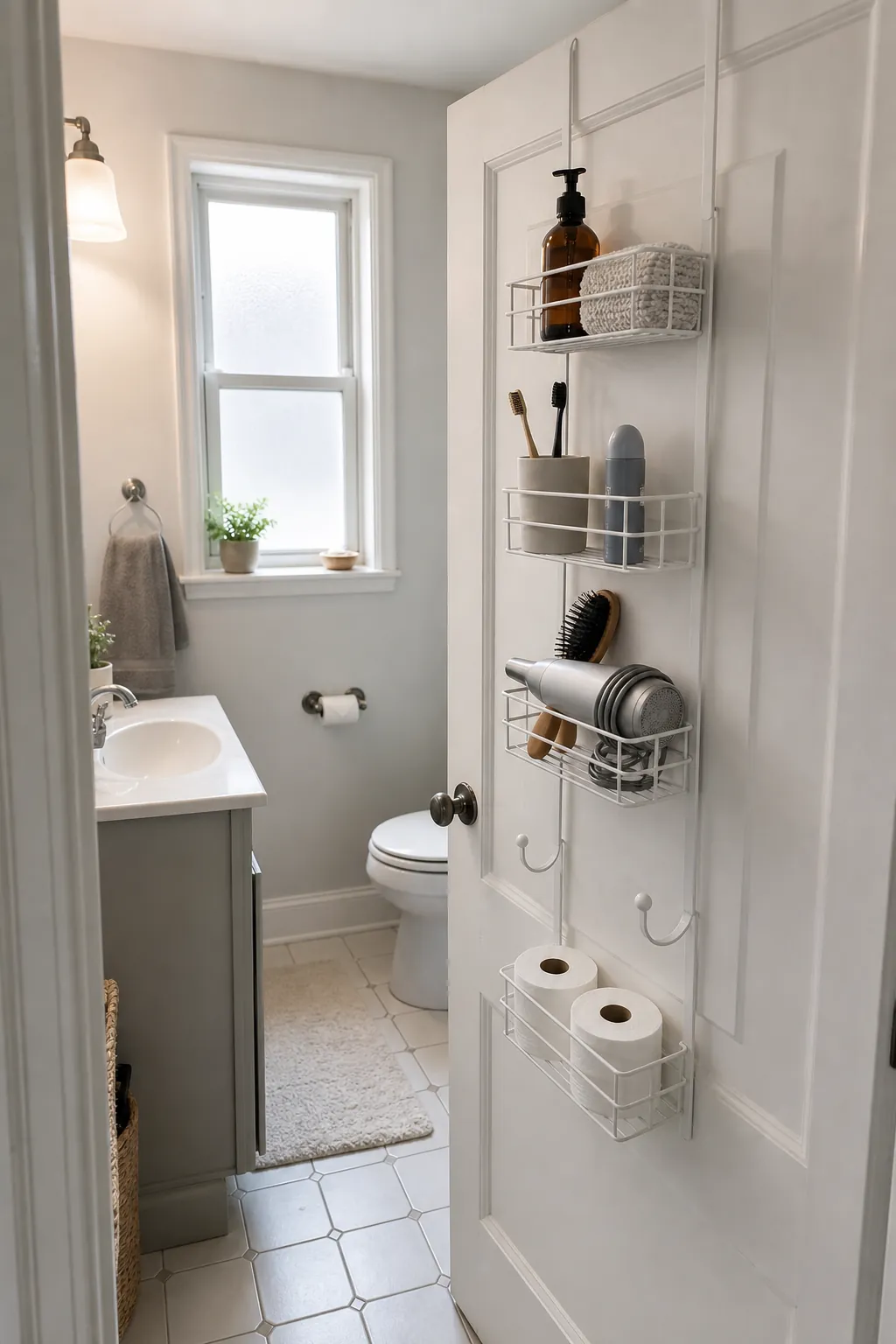
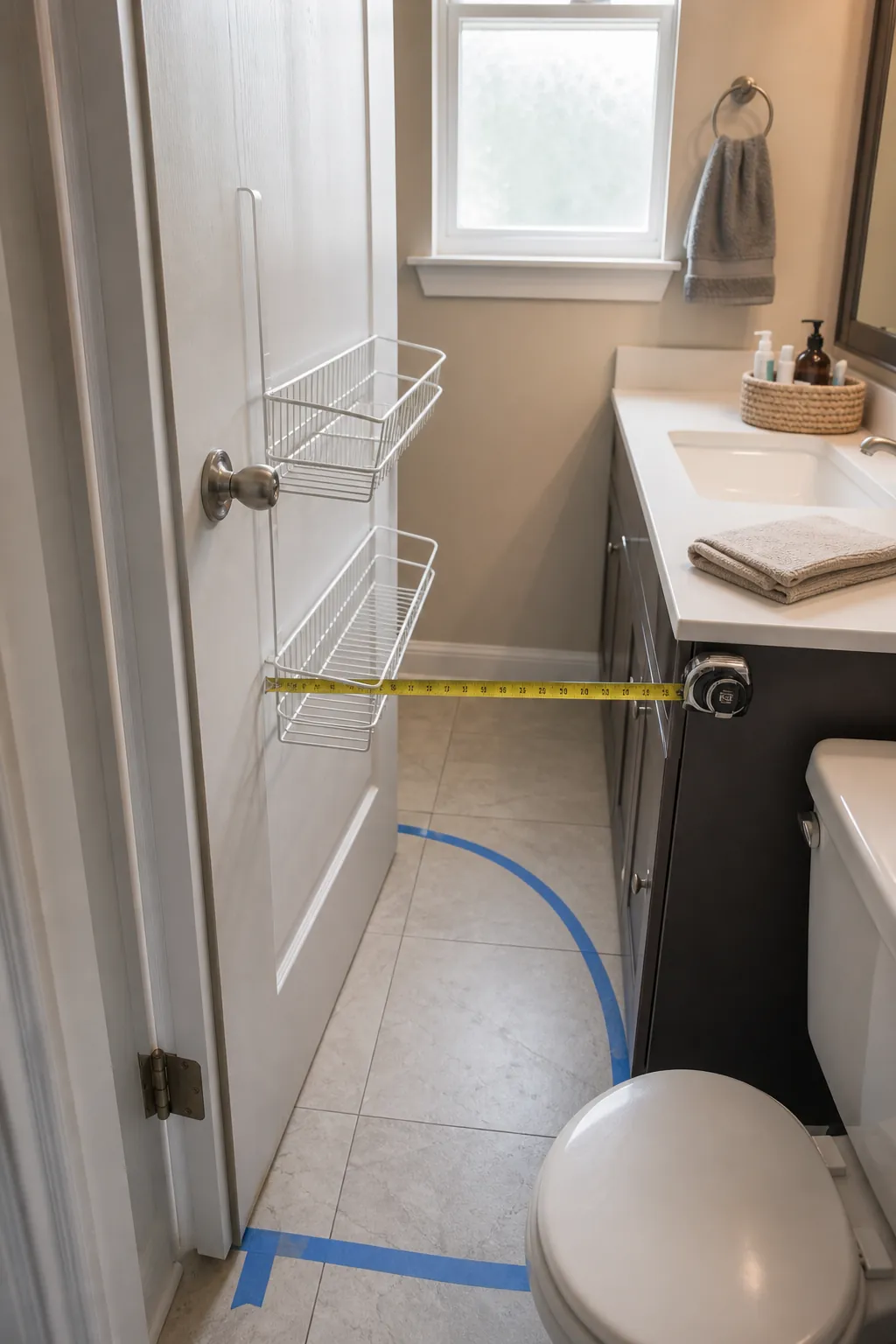
The biggest mistake is buying the prettiest rack before checking the swing path. A bathroom door has to clear the vanity, towel hooks, toilet tank, shower frame, and trim. Measure from the back of the door to the nearest obstruction while the door is moving, not only when it is fully open.
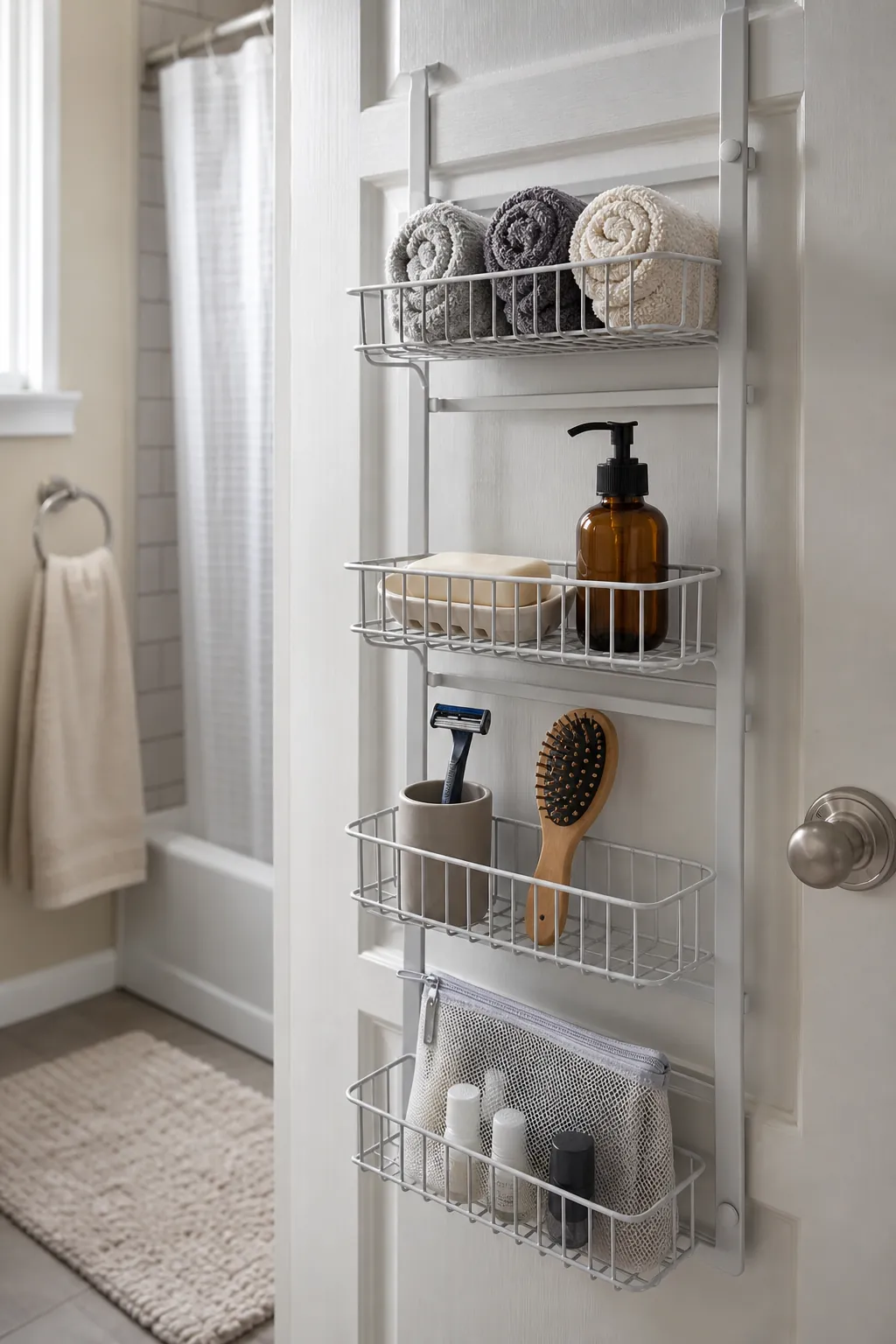
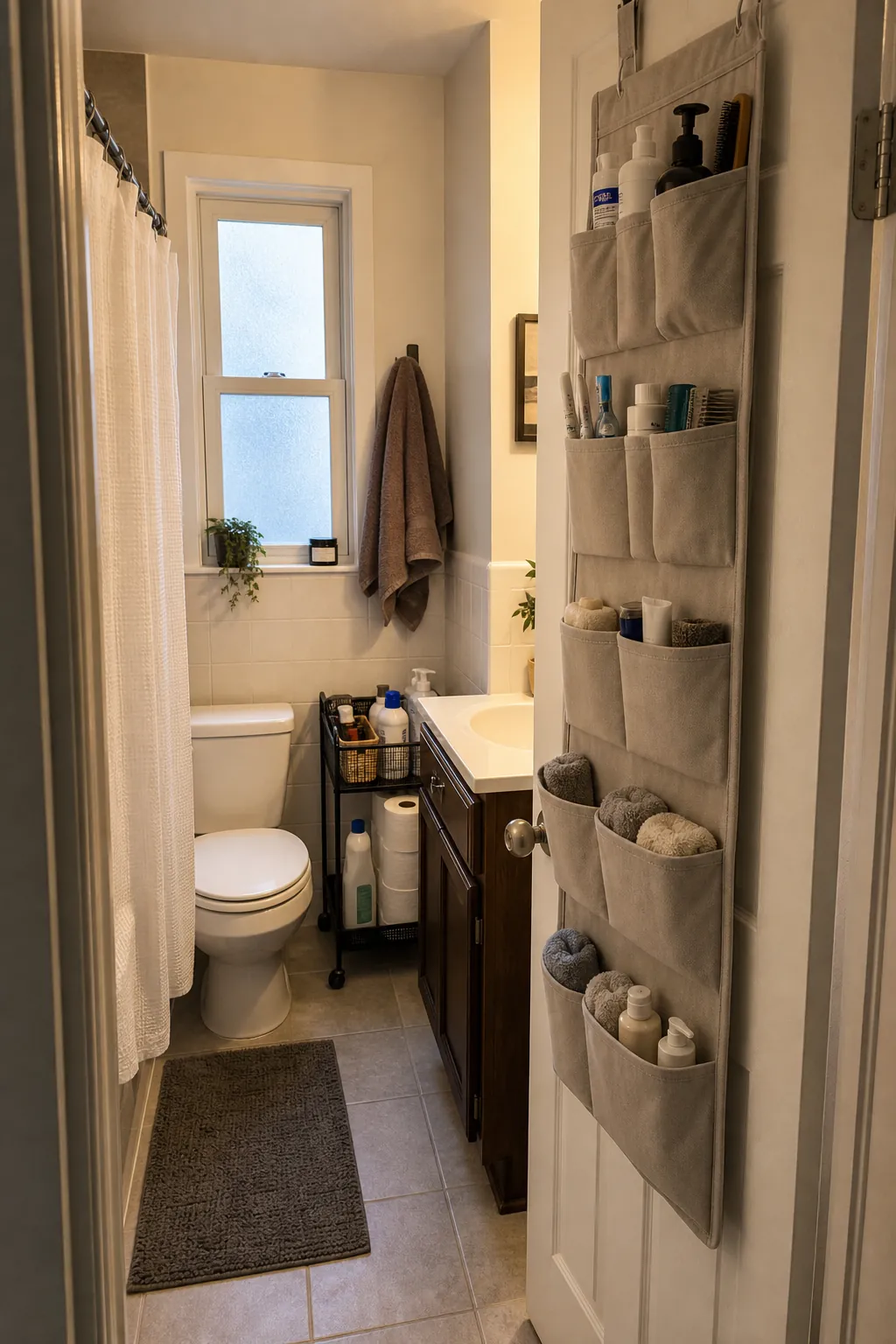
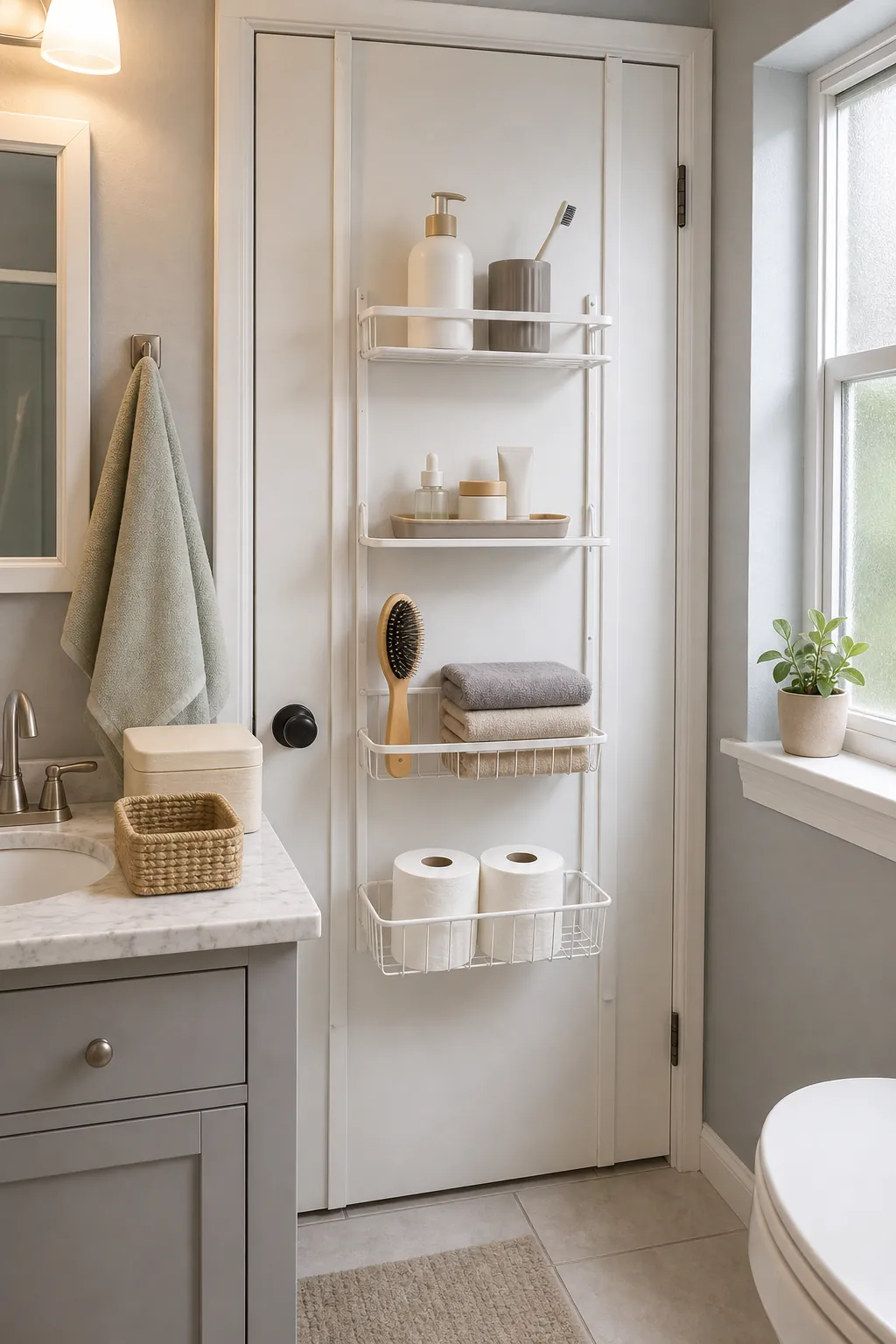
For most tiny bathrooms, shallow beats spacious. A slim rack that holds six daily items is better than a deep rack that bumps the wall every time someone enters. If the door sits close to a wall, look for narrow wire baskets, fabric pockets, or a cabinet-door organizer instead of a bulky pantry-style unit.
Build Zones Around Real Routines
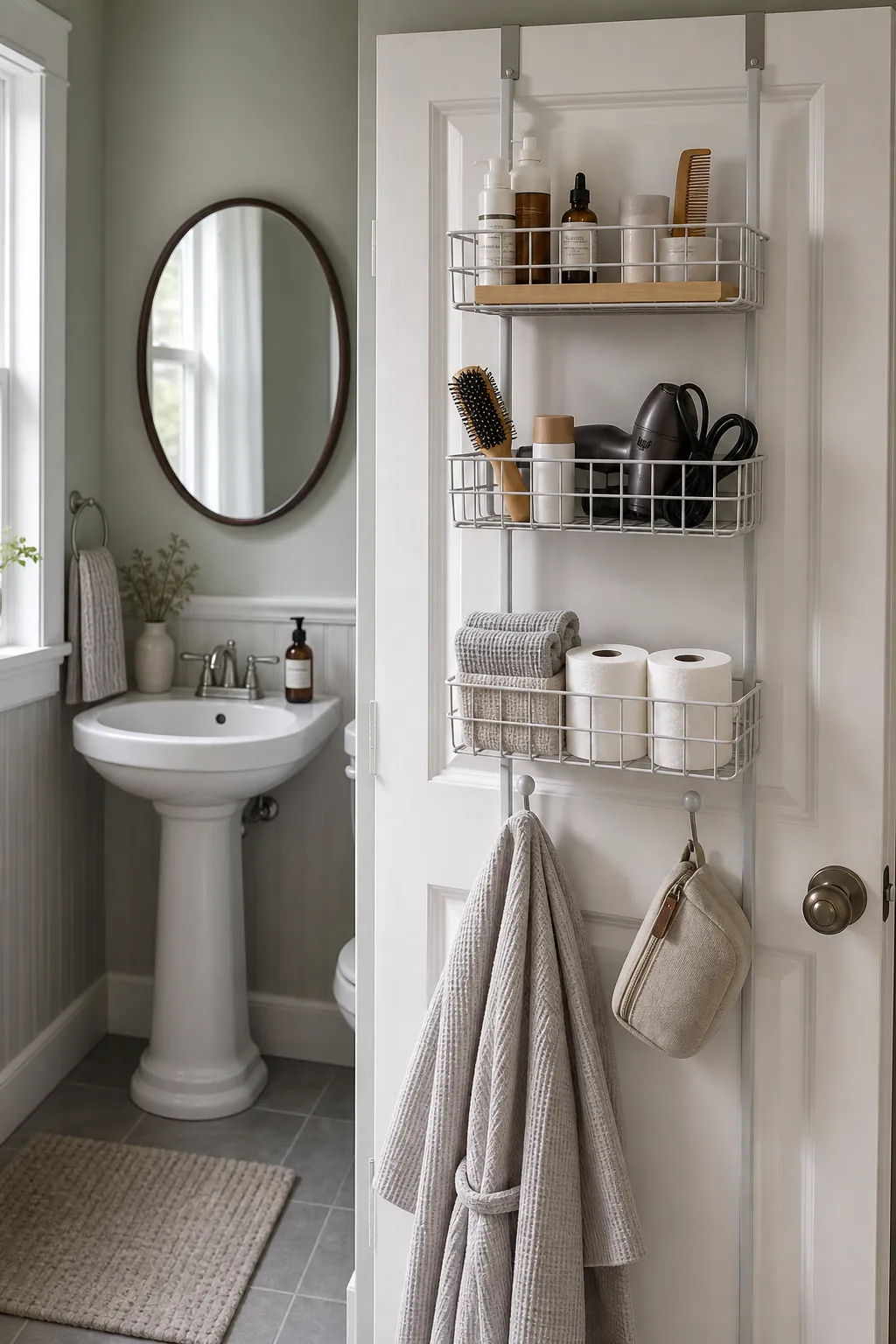
A door organizer works best when every shelf has a job. Put morning items at eye level, hair tools near hand height, and backups low. That simple order keeps the door from becoming a catch-all, which is the complaint people run into after the first week of organizing.
- Top zone: skincare, sunscreen, deodorant, contact lens supplies, or anything you use while standing at the mirror.
- Middle zone: brush, comb, hair dryer, flat iron pouch, and small tools that need quick access.
- Lower zone: folded washcloths, toilet paper, extra soap, or a small toiletry pouch.
Choose Fabric Pockets When Visual Clutter Is the Problem
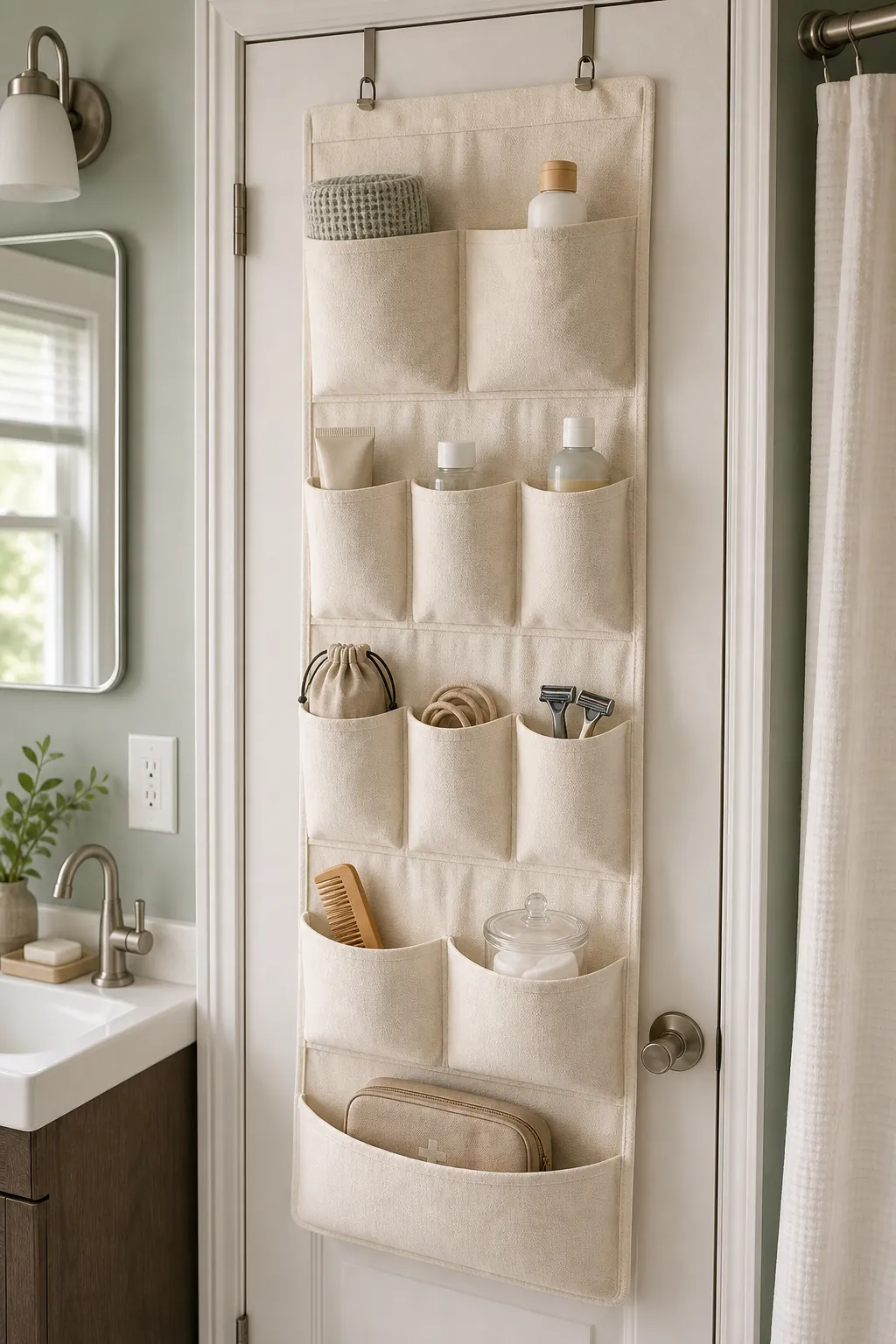
Wire baskets are easy to clean, but they expose every label, cap color, and mismatched bottle. If the door faces the hallway or reflects in the mirror, a fabric pocket organizer can make the room feel calmer. The pockets hide labels while still keeping toiletries reachable.
Fabric works best for dry items: hair accessories, travel bottles, cotton rounds, razors with caps, first-aid supplies, and folded hand towels. Skip fabric for anything damp or leaky. In a humid bathroom, pretty storage still has to dry fast.
Use Humidity-Safe Materials Near the Shower
Bathrooms punish bad materials. Thin chrome can rust, adhesive can loosen, and closed pockets can trap moisture. If the organizer sits near the shower, choose powder-coated metal, stainless steel, acrylic, mesh, or washable plastic. Leave air gaps between damp textiles and bottles.
The door is not the place for soaking wet towels. Hang damp towels on a hook or bar where they can breathe. Use the organizer for dry washcloths, capped products, and items that will not leak if the door moves.
Do Not Forget the Inside of Cabinet Doors
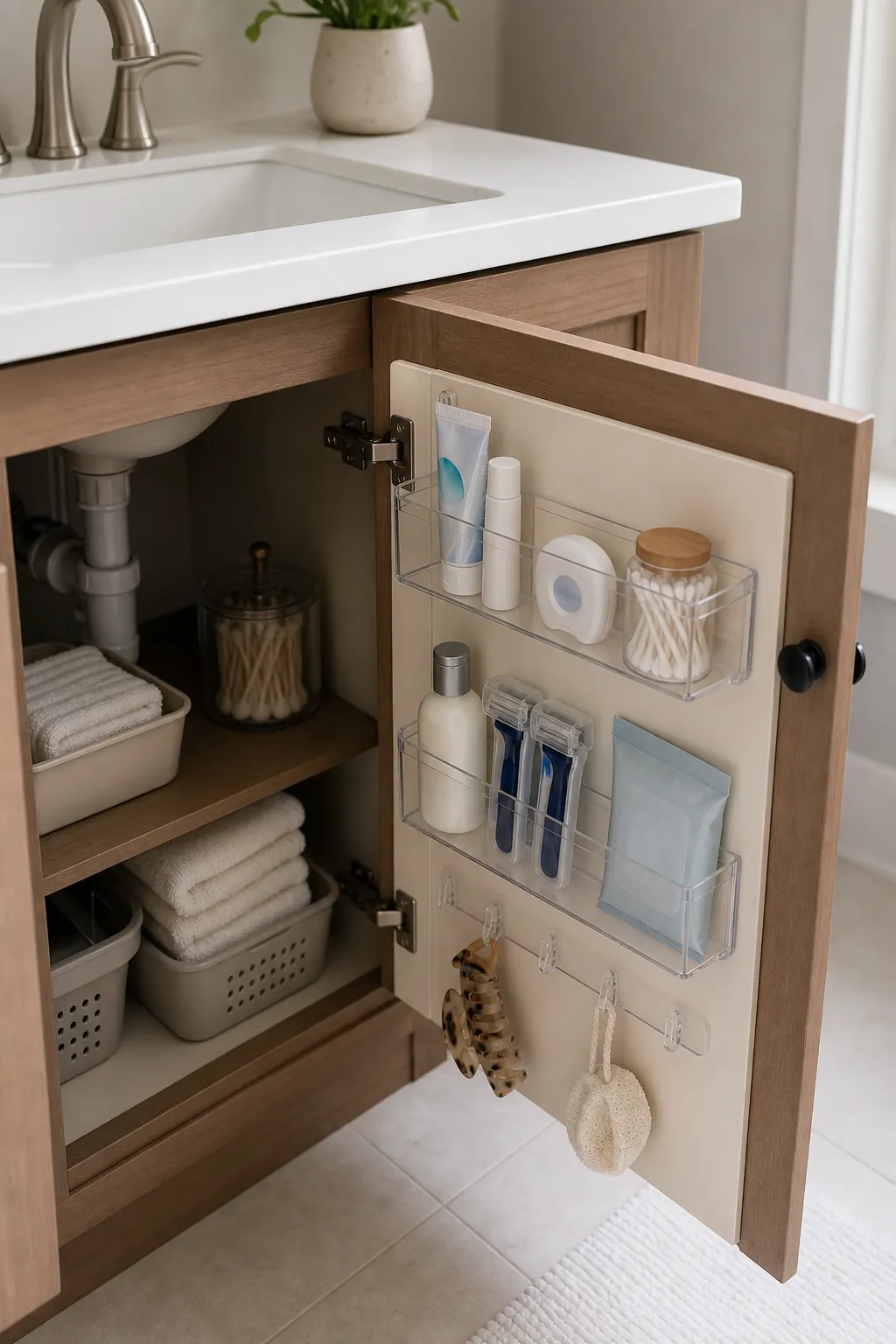
If the main bathroom door has poor clearance, the vanity cabinet door may be the better choice. A shallow acrylic bin inside the cabinet can hold toothpaste, floss, cotton swabs, hair clips, and razors without changing the look of the room.
Before mounting anything inside a cabinet, close the door slowly with the organizer held in place. Watch the plumbing, shelf edges, and cleaning bottles. The winning organizer is the one that fits after real items are inside it.
Shared Bathrooms Need Categories, Not More Baskets
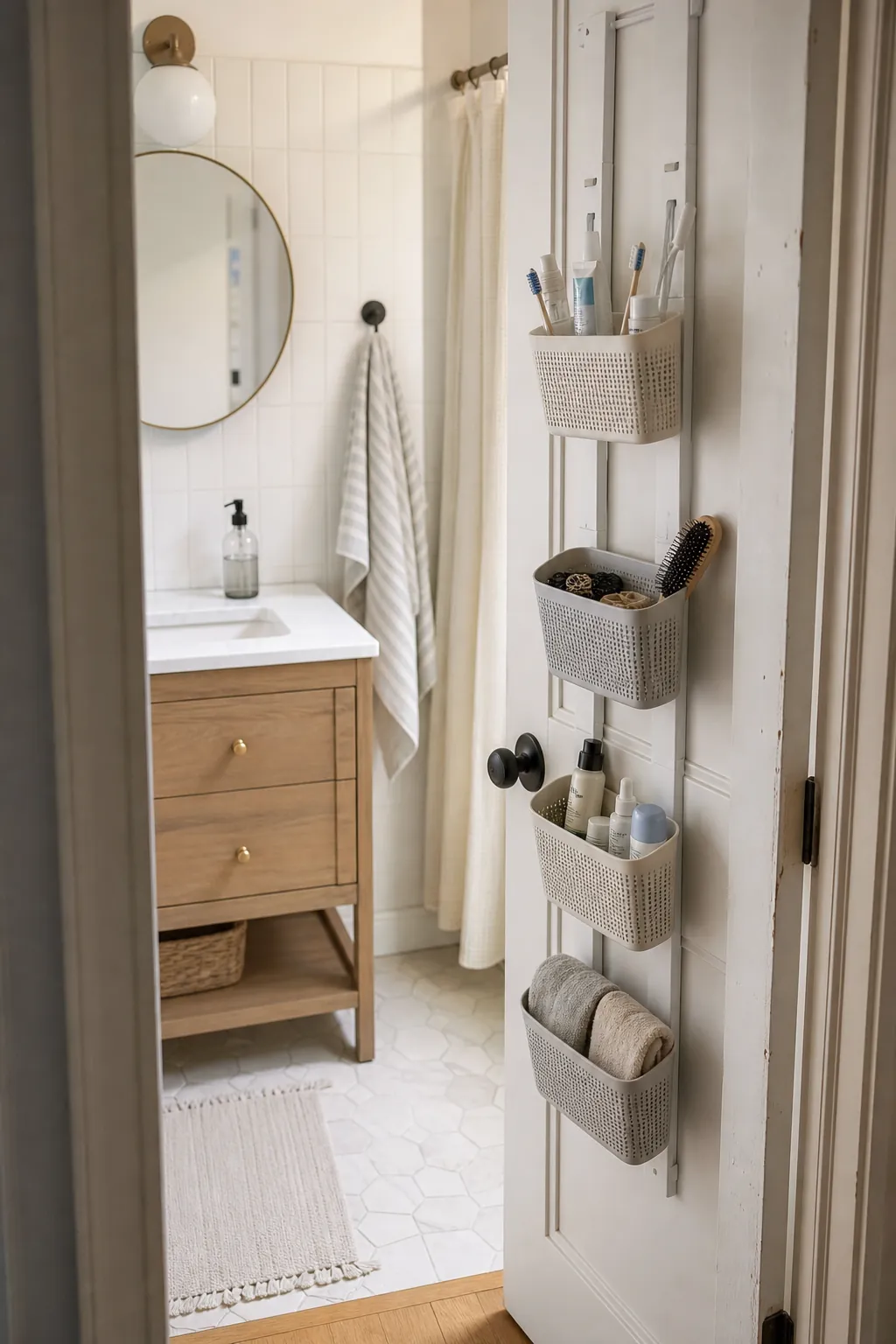
In a shared bathroom, an over-the-door organizer can fail because everyone treats it as open real estate. Give each basket a category or person, then limit the size of each zone. When a basket is full, something has to leave before something new comes in.
Matching bins help, but restraint matters more. Storage does not solve duplicates; it only gives them a place to hide. Keep one active toothpaste, one current deodorant per person, and one backup per category if the bathroom is truly tiny.
Pair the Door With One Backup Storage Spot
A door organizer should hold the front line, not the entire bathroom. Put daily items on the door and move backups to one other spot: a narrow rolling cart, a closet bin, a vanity basket, or a high shelf. This keeps the door light and prevents the hinges from carrying unnecessary weight.
The easiest rule is simple: if you do not touch it this week, it does not get prime door space. That includes unopened products, seasonal hair tools, cleaning sprays, hotel samples, and the third bottle of lotion you forgot you owned.
Edit the Door After One Week
The first version is rarely the best version. After a week, notice what falls out, what you never reach for, and what annoys you when the door moves. Then edit hard. The goal is not to fill the organizer; the goal is to make the bathroom easier to use with less thinking.
A strong final setup usually looks quieter than expected: a few daily toiletries, one towel stack, one hair tool zone, and a small amount of backup paper. That is why a bathroom door organizer can be so effective in a tiny bathroom. It gives the right things a home without asking the room to get bigger.
Quick Buying Checklist
- Measure the door swing before buying.
- Choose shallow baskets for tight bathrooms.
- Use breathable, rust-resistant materials near showers.
- Keep damp towels off the organizer.
- Store daily items on the door and backups elsewhere.
- Edit the organizer after one week of real use.