

A calm living room is not built by removing every object until the room feels empty. The rooms people keep trying to recreate usually work for a quieter reason: the materials repeat gently. Wood shows up in the table, the chair frame, and a tray. Linen shows up on the sofa, the curtains, and a pillow. Greenery softens the corners without turning the room into a plant display.
That balance matters because natural living room decor can go wrong in two opposite directions. Too little texture and the room feels flat. Too many baskets, branches, pillows, and plants and the room starts to feel busy. The goal is a room that looks peaceful when you walk in, but still has enough warmth to make you want to sit down.
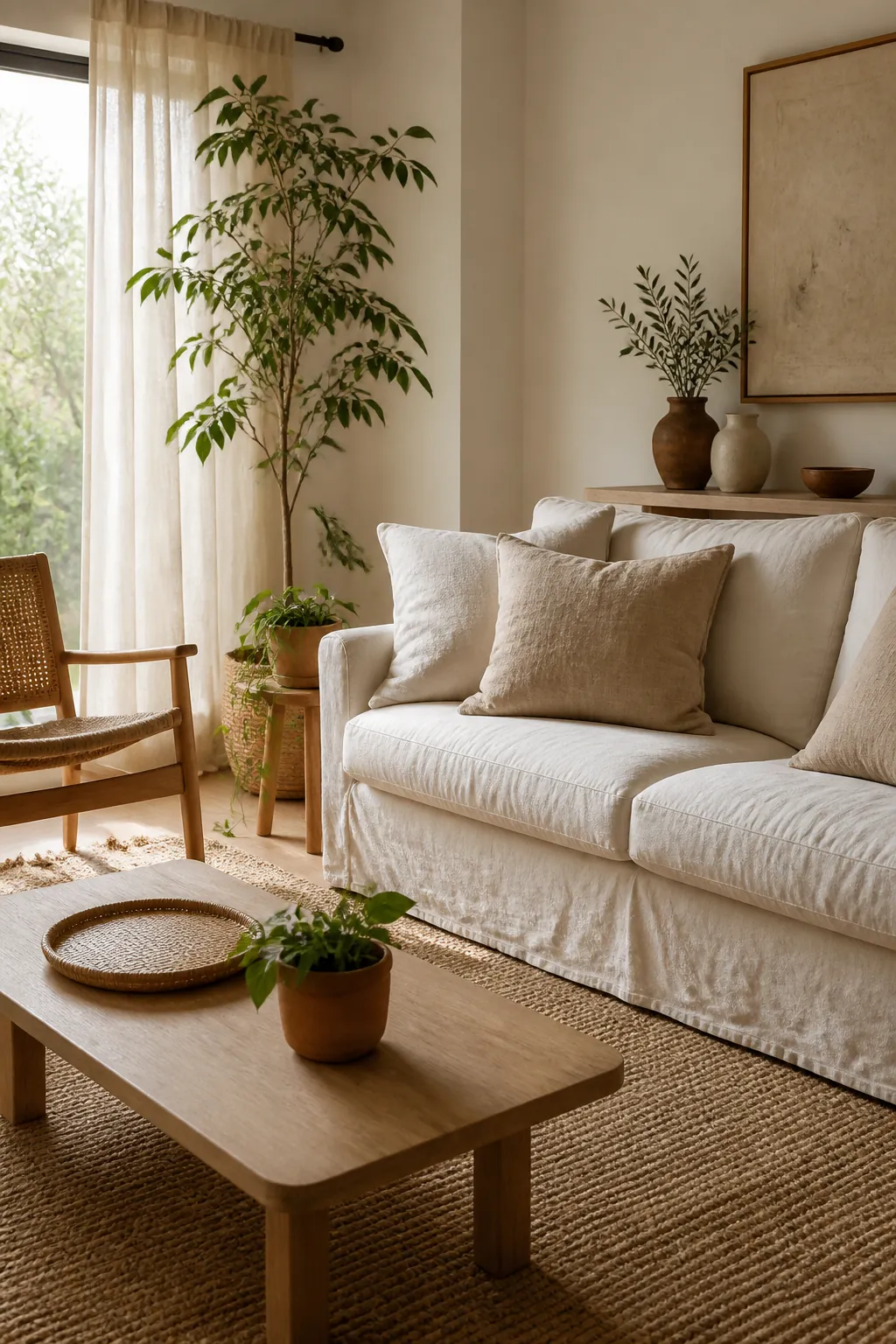
Start With A Short Material List
The easiest way to keep a natural living room calm is to choose a short list of materials before choosing more decor. A good base is wood, linen, one woven texture, matte ceramic, and greenery. That is enough variety to keep the room from feeling plain, but not so much that every surface competes for attention.
Wood gives the room structure. Linen keeps the seating soft and relaxed. A woven rug or basket adds texture at a lower level. Ceramic breaks up all the fibers with something smooth and quiet. Greenery brings life into the room and makes the natural materials feel intentional instead of beige by default.
- Use one main wood tone for the largest pieces, such as the coffee table or chair frame.
- Repeat linen twice, such as curtains and pillows, so it feels like part of the room rather than one random fabric.
- Keep woven pieces useful, like a rug, tray, basket, or shade, instead of adding texture only as decoration.
- Limit greenery to grouped moments so plants calm the room instead of filling every gap.
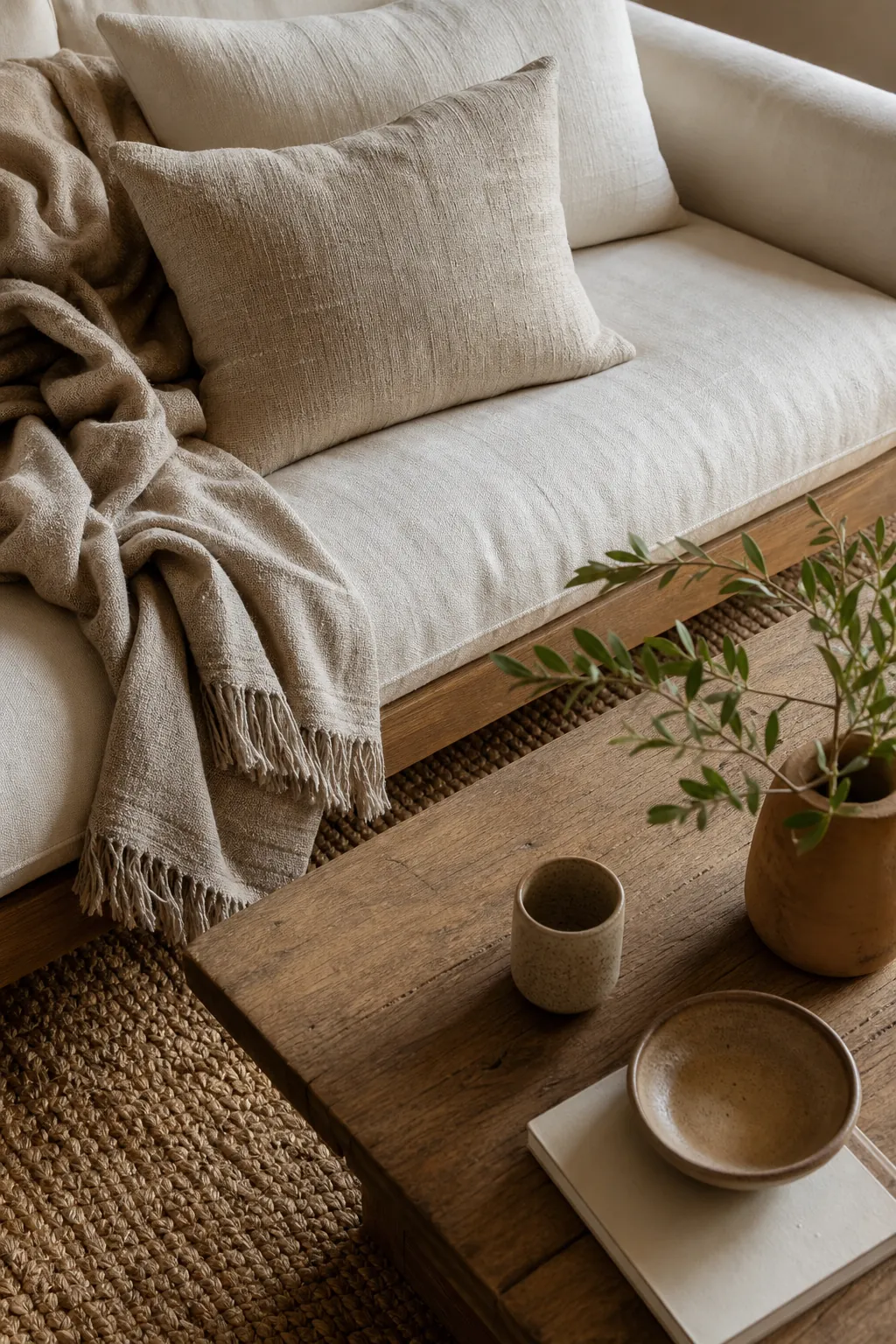
Let Linen Do The Softening
Linen works especially well in a cozy living room because it does not need to look perfect. The small wrinkles, slubs, and relaxed edges are the point. They make a neutral room feel lived in without adding visual noise.
If the sofa is already upholstered in a practical fabric, bring linen in through pillow covers, a throw, or curtains. The key is contrast. A smooth cotton pillow beside a nubby linen pillow looks more layered than three matching pillows from the same set. Soft textures feel richer when they are slightly different from each other.
For neutral textiles, avoid matching every shade. A mix of cream, oatmeal, flax, and warm beige usually feels more natural than a single exact color repeated everywhere. If the room starts to look too pale, add one deeper textile, such as olive, clay, mushroom, or muted brown.
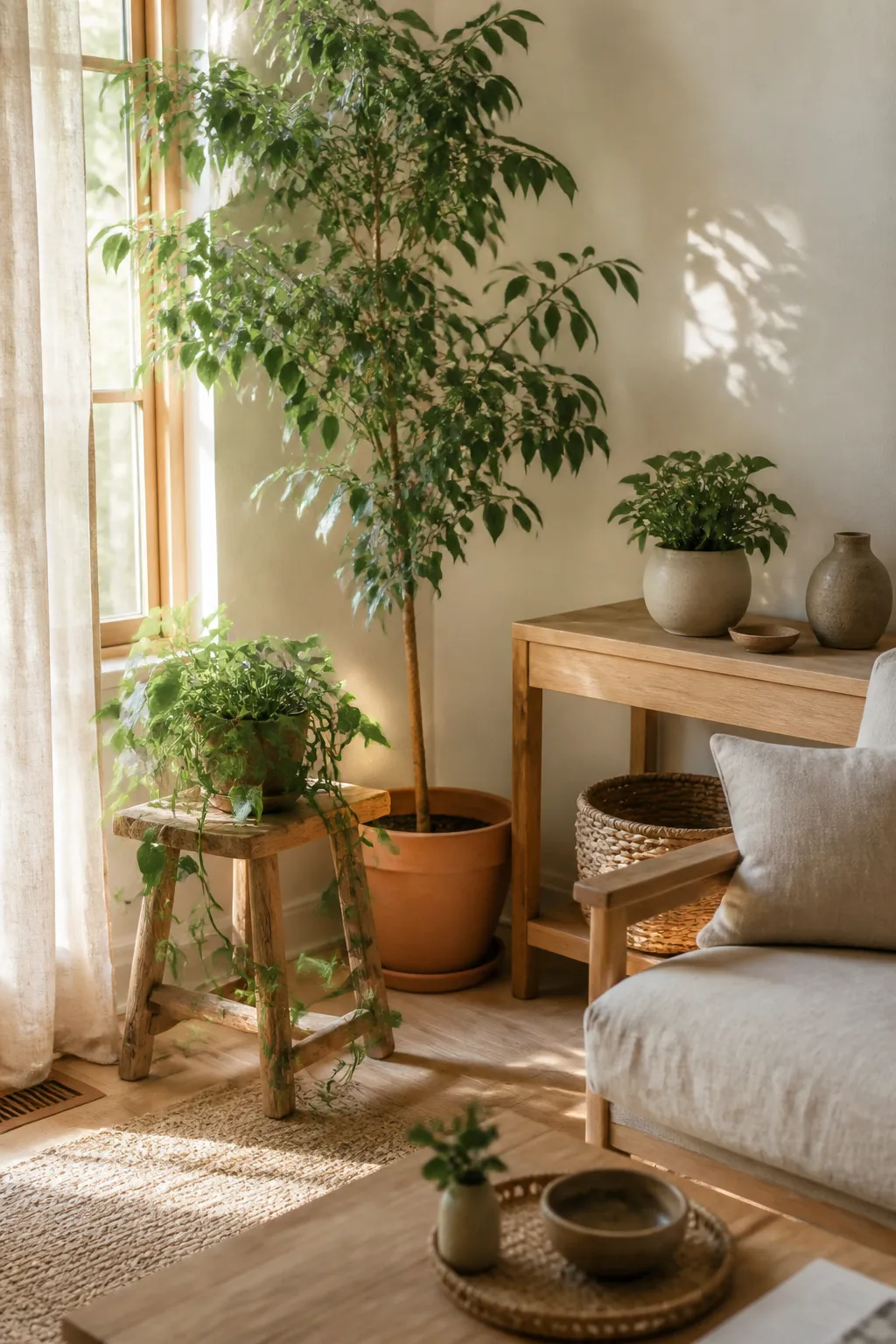
Use Greenery As Shape, Not Filler
Greenery is one of the fastest ways to make a natural living room feel peaceful, but it needs room around it. A tall plant in the corner can soften a blank wall. A trailing plant can break up a straight shelf. A small plant on the coffee table can bring the eye down into the seating area.
The common mistake is using plants to cover every empty surface. That makes the room look restless. Instead, build one or two plant moments with different heights. One tall plant, one medium plant, and one small plant will usually look calmer than six similar pots scattered across the room.
Planters matter too. Terracotta, matte ceramic, woven baskets, and simple stoneware usually sit well with wood decor and linen decor. Glossy plastic planters can work, but they often interrupt the softer texture story unless the room already has a more modern edge.
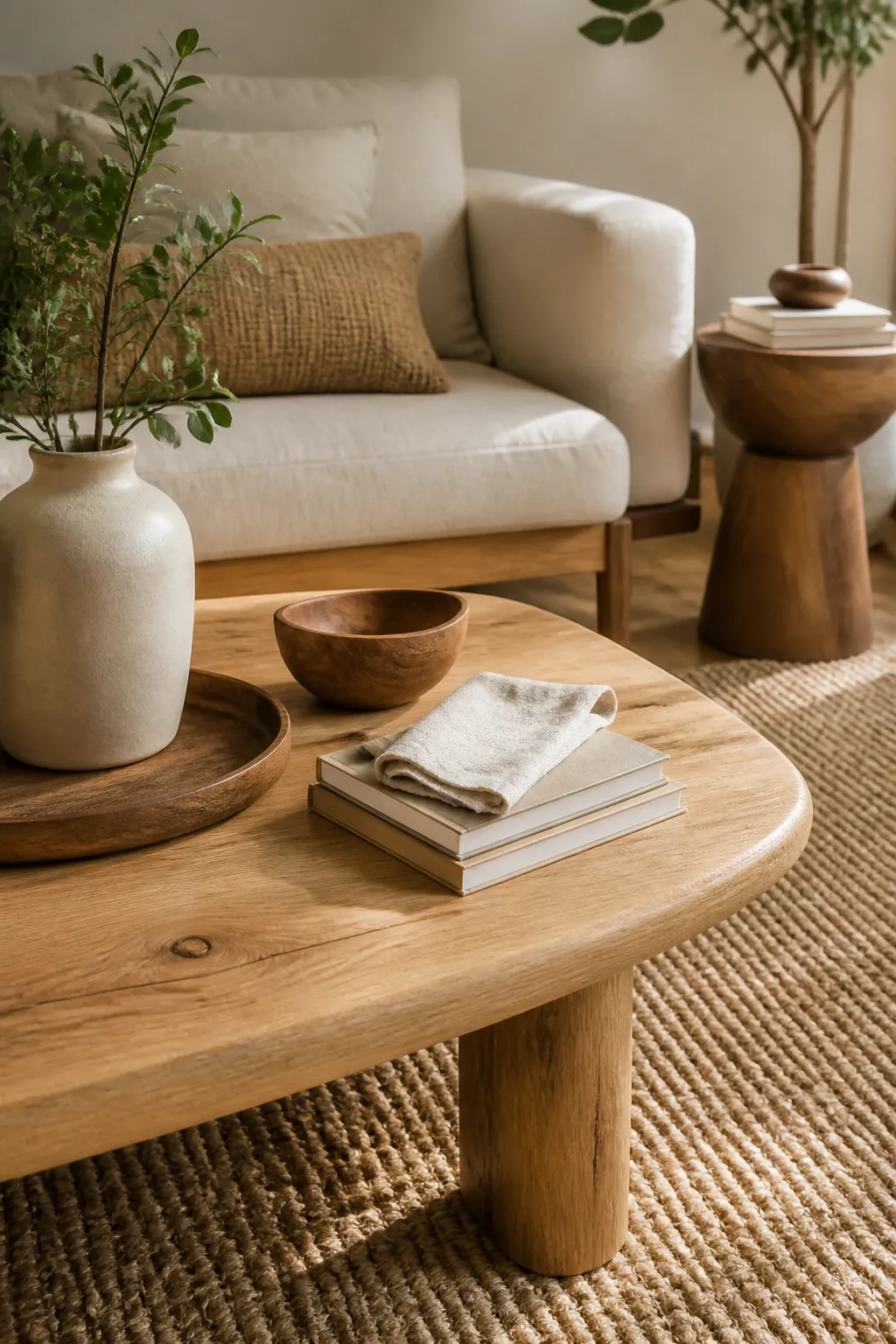
Mix Wood Accents Without Making The Room Heavy
Wood is what keeps a neutral living room from feeling cold. The trick is to vary scale more than color. A large oak coffee table, a small wood stool, a slim frame, and a simple tray can all work together because they appear in different roles.
You do not need every wood piece to match exactly. In fact, a room can feel more natural when the tones are close cousins rather than identical twins. Pale oak, honey wood, bamboo, rattan, and a slightly deeper walnut accent can sit together if the undertones are warm and the room repeats them intentionally.
Where people get stuck is mixing a very orange wood with a very gray floor, or adding too many dark rustic pieces to a light room. If the goal is calm, keep the heaviest wood pieces low and balanced with lighter textiles. The wood should ground the room, not dominate it.
Build One Quiet Corner First
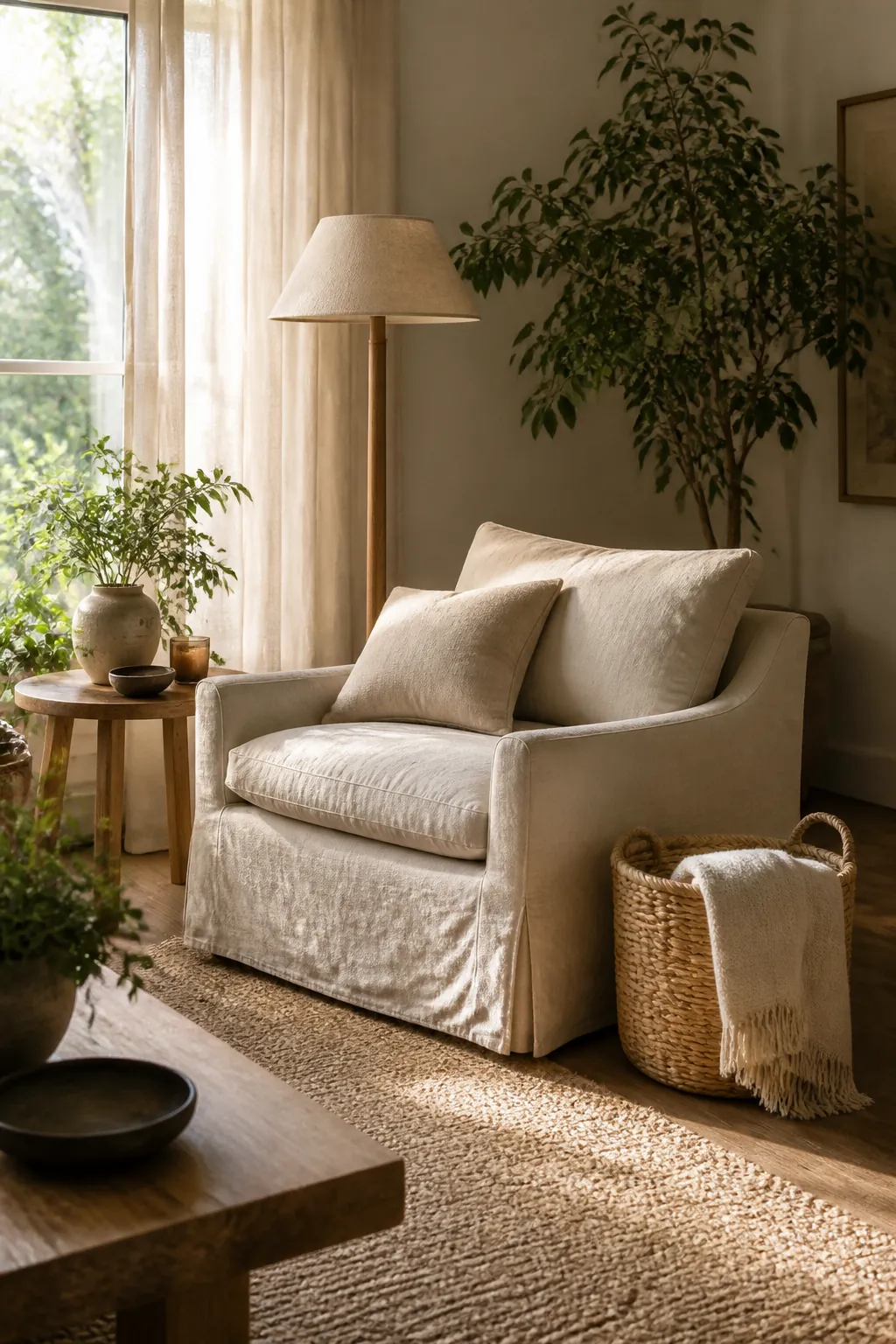
If the whole room feels hard to style, start with one corner. A chair, a small table, a lamp, a basket, and a plant can become a complete natural home decor moment before you solve the entire living room. This is also a practical test: if the corner feels good, the material mix will probably work across the room.
For a reading corner, keep the pieces functional. A lamp should give useful light. The basket should hold blankets or magazines. The side table should be large enough for a drink and a book. Useful pieces make a calm room feel honest, while purely decorative pieces can make it feel staged.
Keep Shelf Styling Low And Breathing
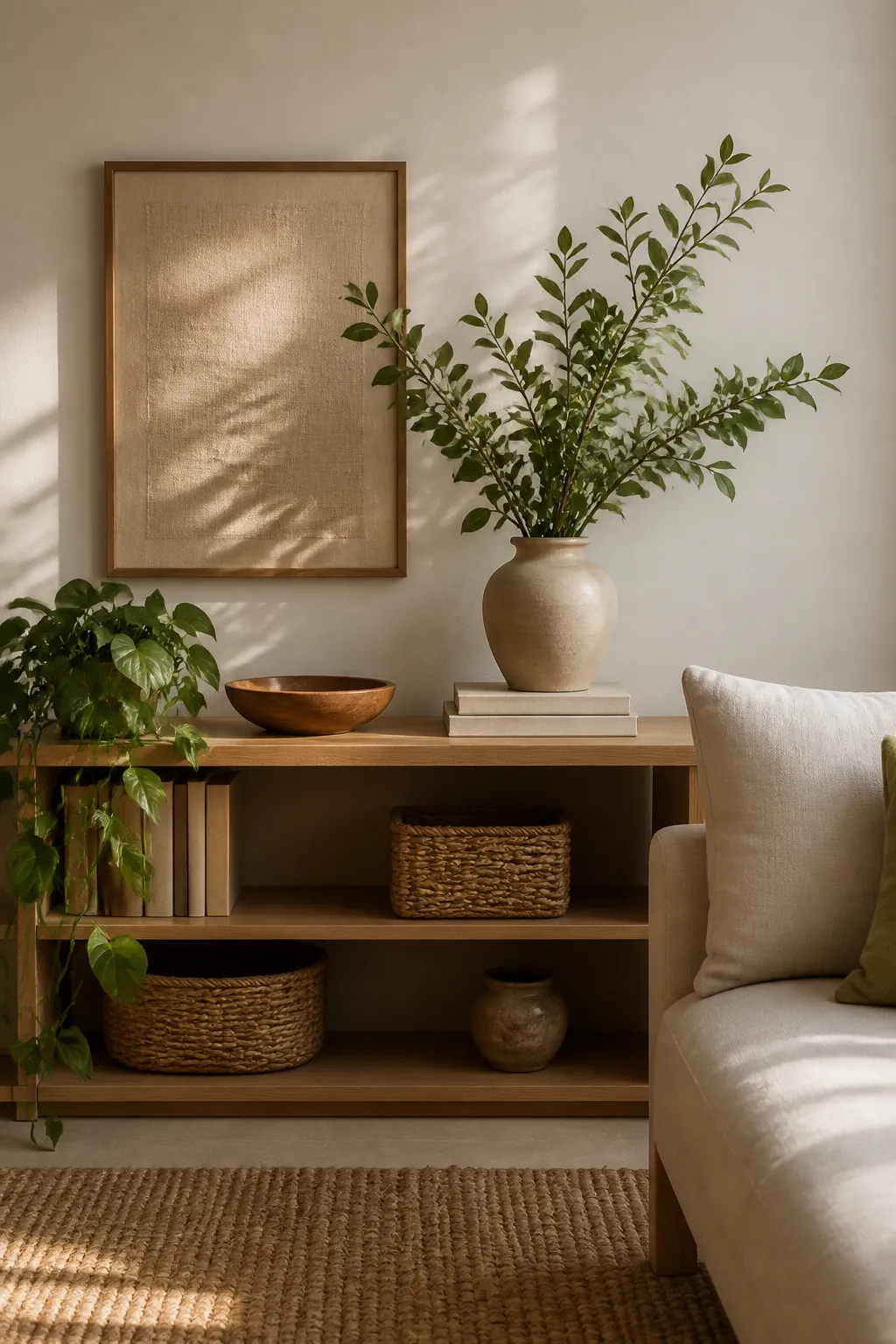
Shelves and consoles are where calm living room ideas often become cluttered. Every object may be beautiful on its own, but the group can become noisy if all the pieces are the same height or every inch is filled.
Use fewer objects with clearer jobs: one taller vase or branch, one lower bowl, one small plant, one art piece, and a short stack of books. Leave space between them. The blank areas are not wasted. Negative space is what lets natural materials feel peaceful.
When styling wall art near wood and greenery, choose quiet contrast rather than more pattern. A simple textile piece, a muted landscape, or a warm abstract print will usually sit better than high-contrast black-and-white art if the goal is a soft natural living room.
The Simple Formula For A Calmer Room
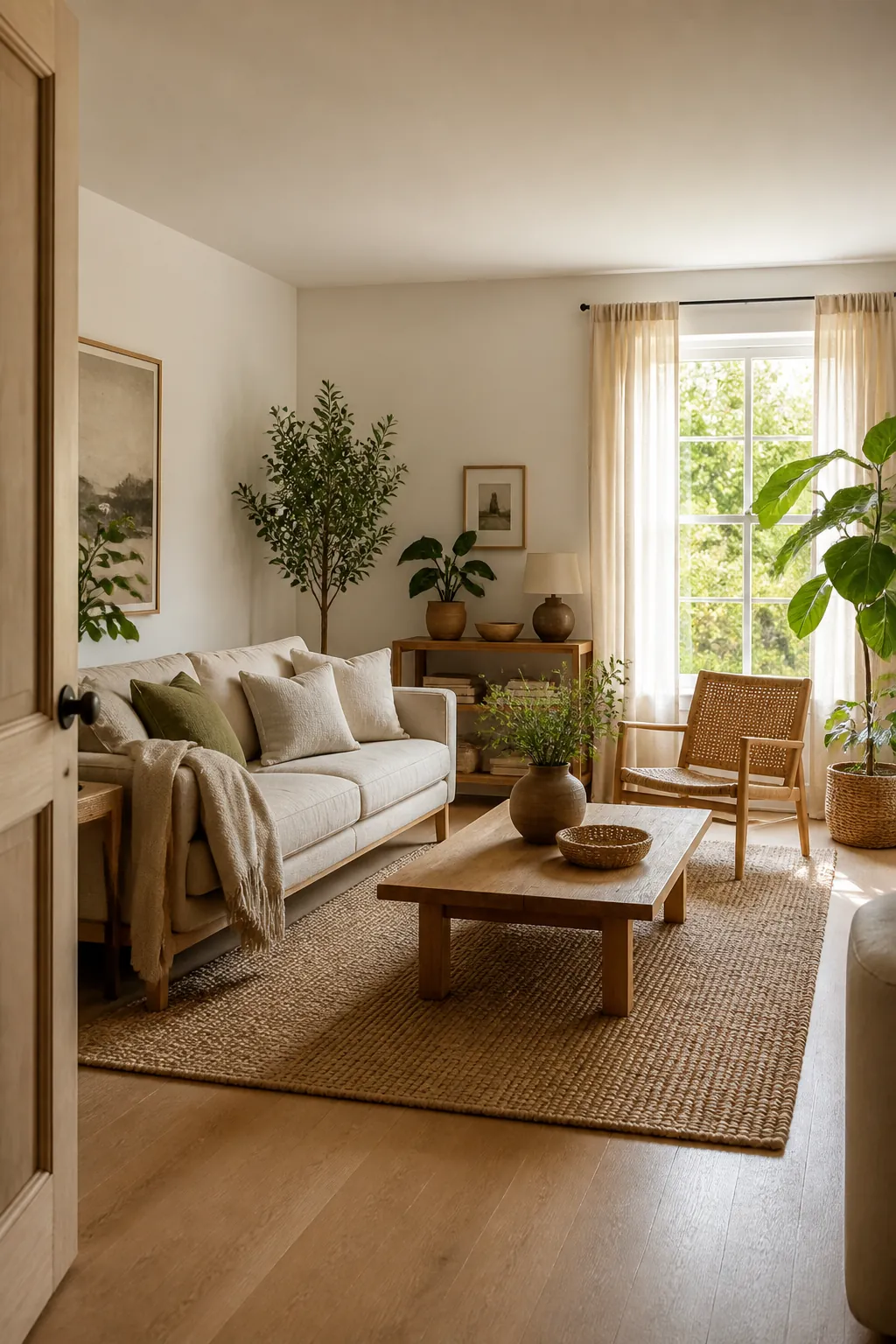
A peaceful natural living room usually comes down to repetition and restraint. Repeat the materials enough that they feel connected. Restrain the number of decorative objects enough that the room can breathe.
Use wood for warmth, linen for softness, greenery for life, and woven texture for depth. Then edit anything that does not support those jobs. The room should not look empty. It should look settled.
That is the real advantage of wood, linen, and greenery together: they do not need a dramatic color scheme to work. They make the living room feel calm because they are familiar, tactile, and easy to live with every day.