
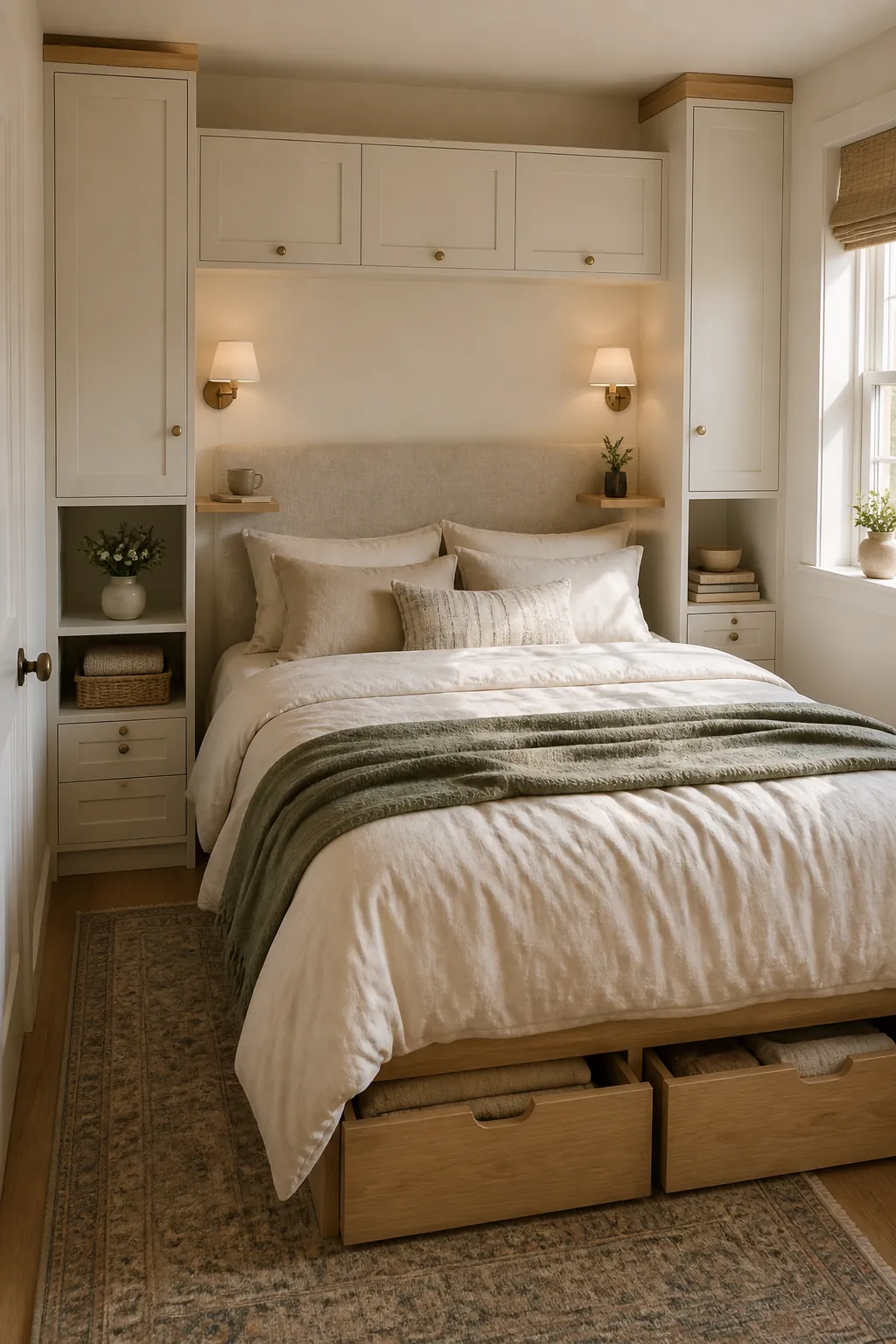
A small bedroom usually does not fail because the bed is too big. It fails because the storage is scattered in the wrong places: a basket by the door, a dresser blocking the walkway, a bedside table that only holds a lamp, and unused wall space above the pillow. The best way to create storage around bed space is to treat the bed like the room’s main storage wall, then decide what belongs under it, beside it, behind it, and above it.
The goal is not to pack every inch with cabinets. In real small room ideas, the winning setup keeps a clear path, gives daily items an obvious home, and hides the bulky things that make a compact bedroom feel busy. Start with the bed footprint, then build storage in layers.
Start With Clearance, Not Furniture
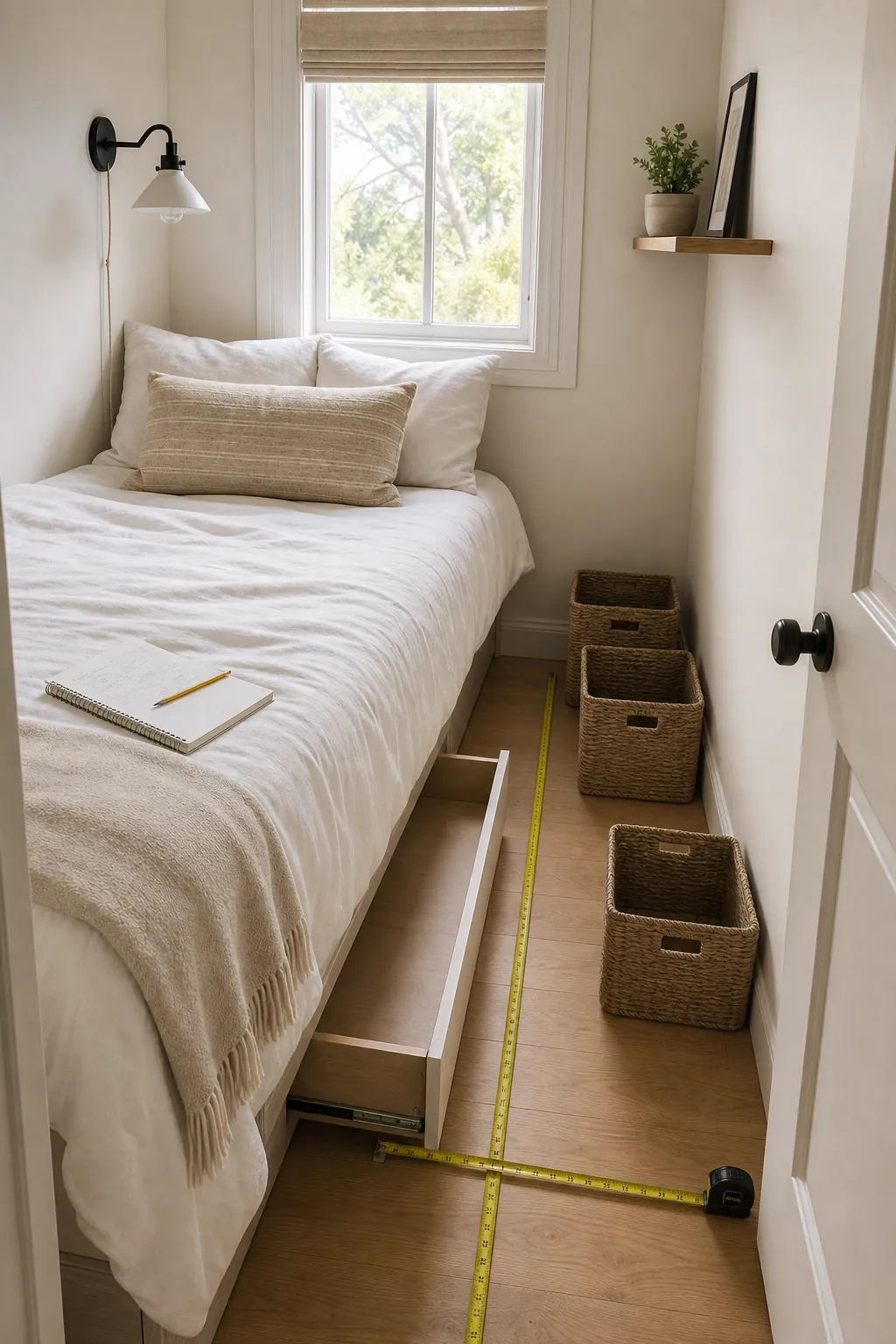
Before buying shelves, drawers, or a storage bed, measure the space you need to move around the bed. This is the step people skip, and it is why many small bedroom storage projects look good online but feel annoying at home. A drawer bed is only useful if the drawers can open. A wall shelf is only useful if you do not hit it when you sit up. A tall unit beside the mattress is only useful if it does not make the bed feel boxed in.
- Leave the easiest walking path open. If one side of the bed must sit close to a wall, make the open side work harder.
- Measure drawer swing and bin pullout depth. Under bed storage needs room in front of it, not just below the mattress.
- Keep head-height storage shallow. Bedroom shelves over pillows should be narrow, secure, and mounted high enough to feel calm.
Turn the Headboard Wall Into a Storage Zone
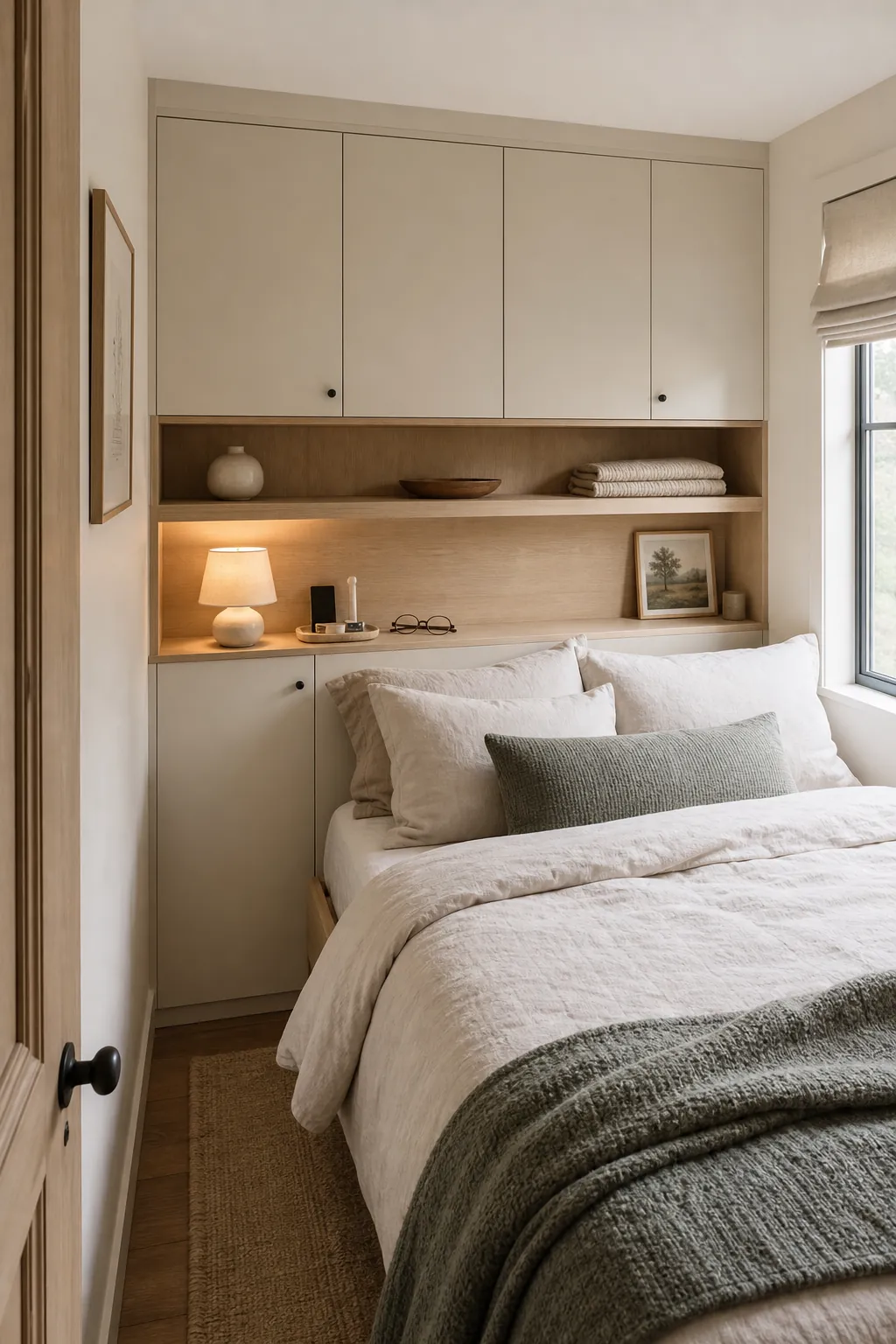
The wall behind the bed is usually the strongest place to add storage because it does not steal extra floor area. A headboard with shelves, slim book ledges, or shallow built-ins can replace a bulky nightstand and make bedroom organization easier. The trick is to keep the lower area useful and the upper area visually light.
For renters, a freestanding storage headboard or a narrow console shelf behind the bed can hold books, a small lamp, charging cables, and a tray for glasses. For owners, recessed niches or shallow cabinets can look cleaner. In either case, avoid deep open shelves directly above your pillow. They collect clutter and can make the bed feel less restful.
Use Over Bed Storage Without Making the Room Feel Heavy
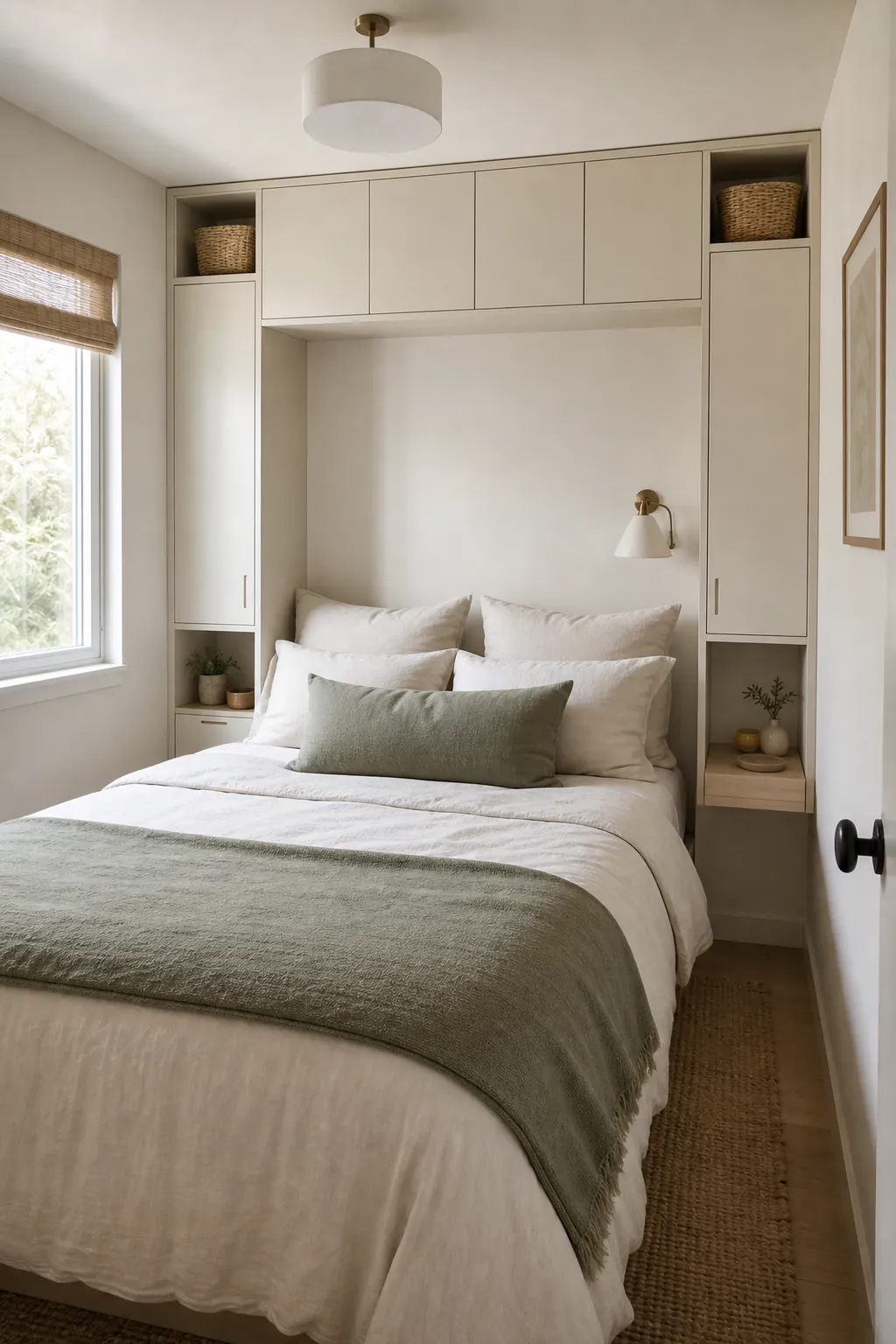
Over bed storage can be excellent in a small room, but it needs restraint. Use it for lighter, less-frequent items: extra bedding, off-season knits, file boxes, keepsakes, or baskets with closed lids. The safest and calmest version is a bridge of wall cabinets or a high shelf that sits above the headboard area while leaving comfortable blank space around the pillows.
If you choose cabinets, match them to the wall color or keep the fronts plain so they recede. If you choose open shelves, use repeated baskets or boxes instead of random objects. The more visible the storage is, the more disciplined the contents need to be. In a tiny room, visual noise takes up space even when the floor is clear.
Choose Under Bed Storage by What You Actually Store
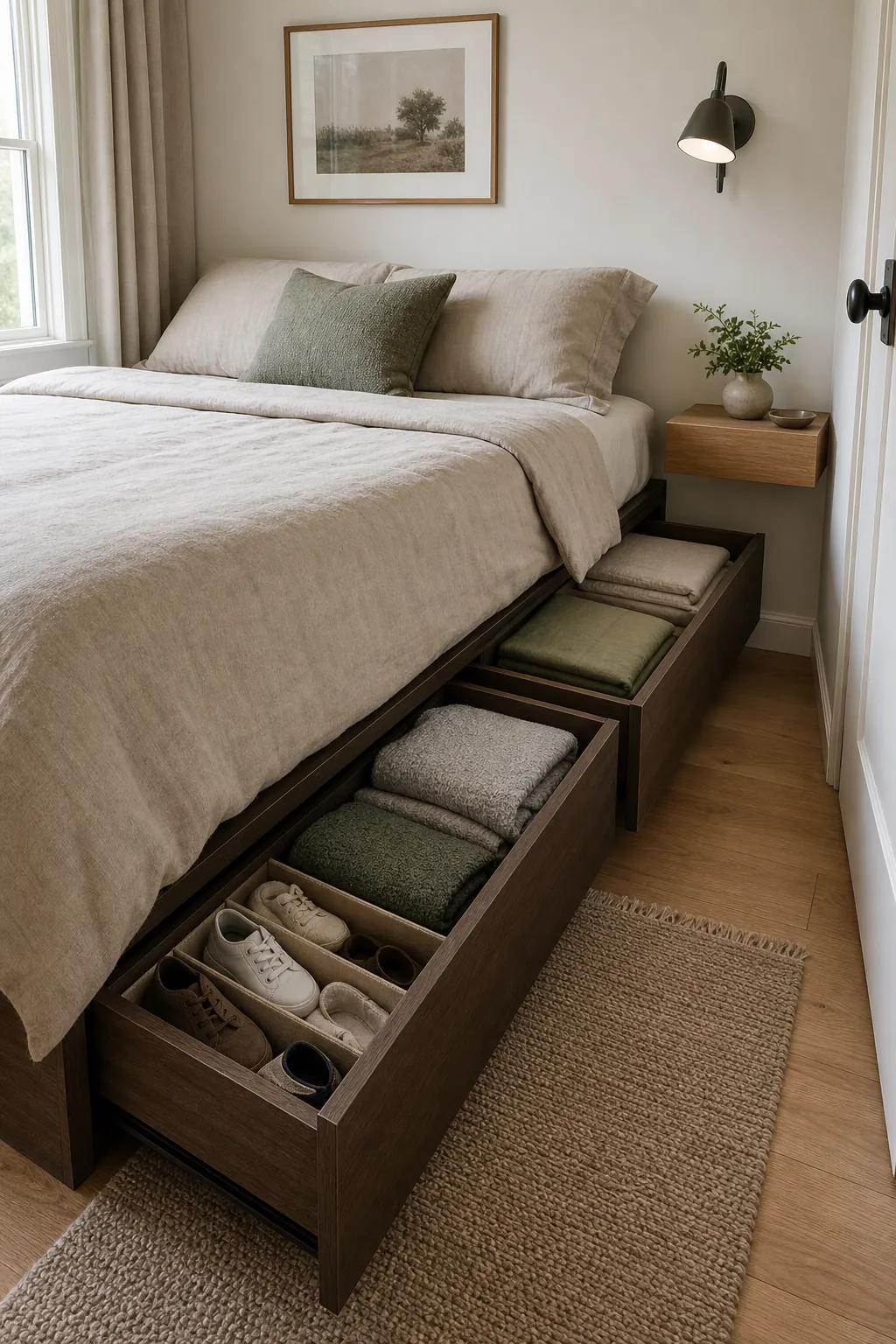
Under bed storage is the biggest hidden opportunity in most compact bedrooms. It works best when you assign it to categories that are easy to pull out and put back: seasonal clothes, spare sheets, shoes, bags, gift wrap, or rarely used linens. Do not make it the home for items you need several times a day unless the access is truly smooth.
- Drawers are best when both sides of the bed have enough clearance.
- Lift-up storage beds are useful when side clearance is tight, especially for bedding and suitcases.
- Rolling bins work well for renters and can be replaced if your storage needs change.
- Flat zip cases are better for soft goods than for heavy items you use often.
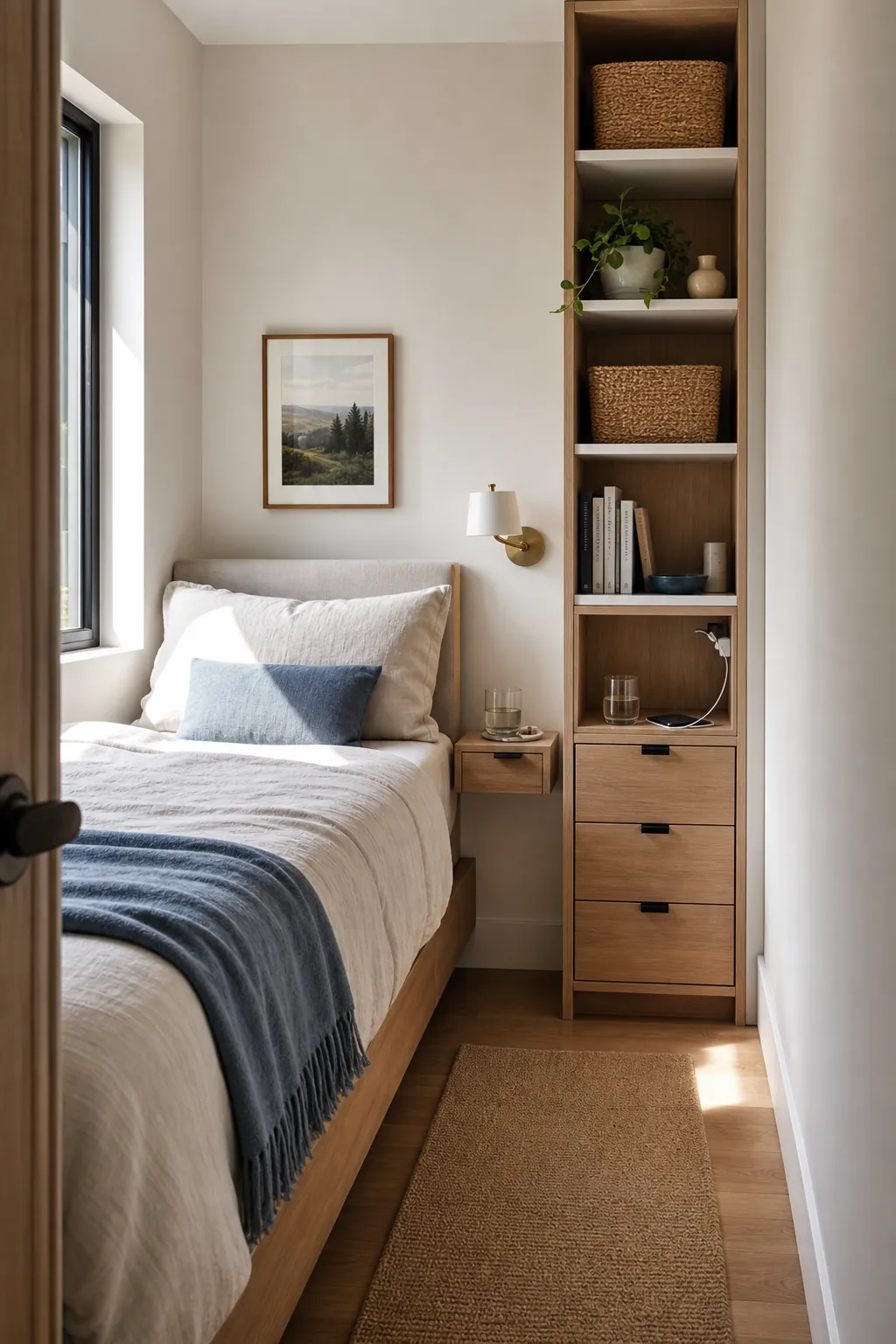
Replace Nightstands With Narrow Vertical Storage
When the room is narrow, traditional nightstands often waste the most valuable strip of floor. Try wall-mounted bedside shelves, slim cabinets, narrow bookcases, or a small floating drawer. This creates bedside function without forcing the bed inward. If you need clothing storage, a tall narrow unit beside the bed can act as both a nightstand and a mini dresser.
Keep the top surface simple: lamp or sconce, water, phone, and one small tray. Move everything else into a drawer, basket, or shelf. Small space storage works when the easiest place to drop an item is also the correct place.
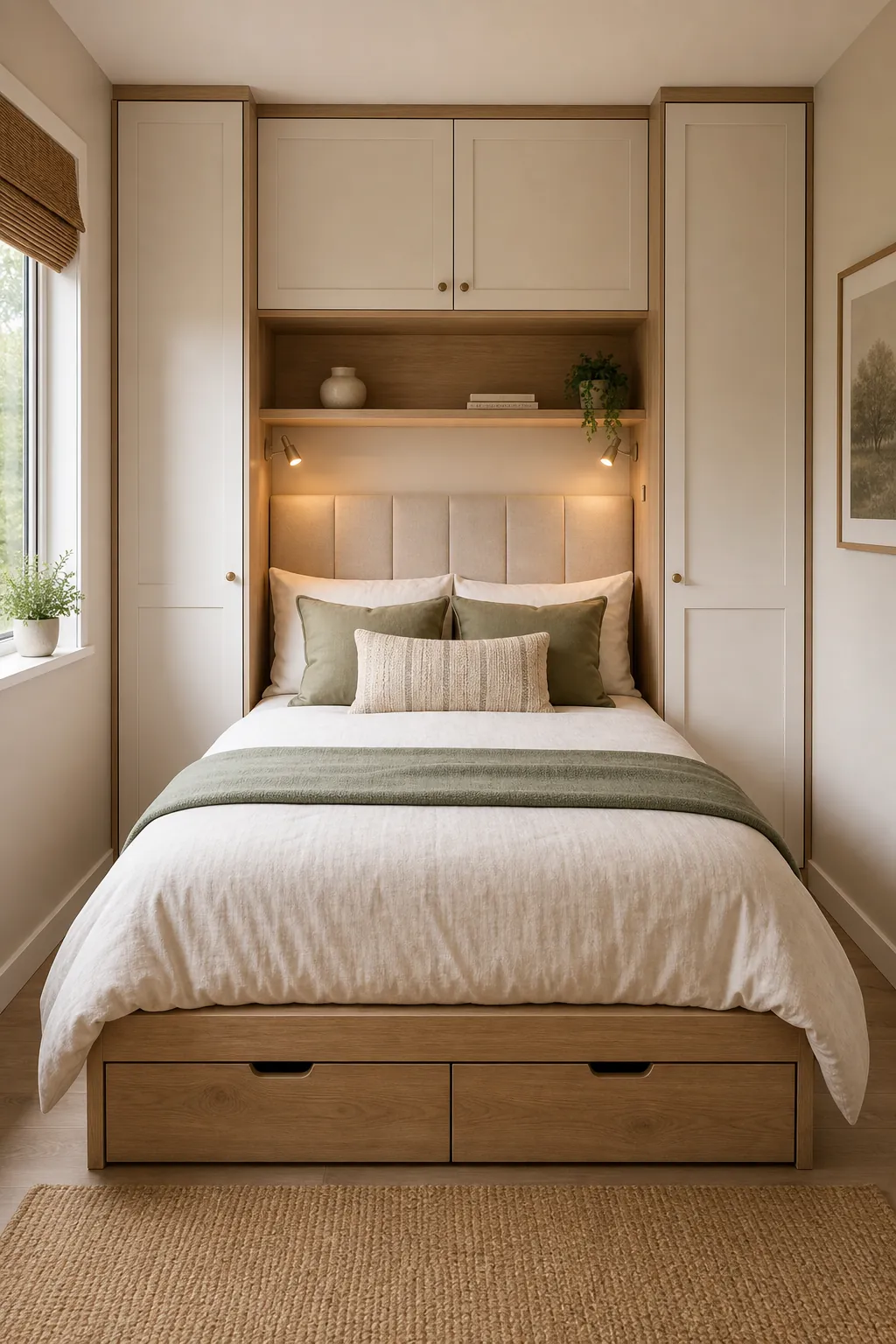
Build a Calm Bed Surround Instead of a Clutter Wall
Some rooms can handle a full bed surround: wardrobes on both sides, a bridge cabinet above, and a shelf or upholstered panel behind the pillows. This can be a smart storage bed alternative when the closet is weak or the room has awkward alcoves. The key is symmetry, shallow depth, and a clear center so the bed still looks intentional.
Use closed storage for bulk, open shelves for a few attractive daily items, and lighting that makes the setup feel built in rather than squeezed in. If the room is very small, choose one strong storage move instead of three weak ones. A clean headboard wall plus good under bed storage often beats cabinets, baskets, hooks, and shelves fighting for attention.
A Simple Storage Plan for a Small Room
If you want the room to feel organized quickly, divide the bed area into jobs. Put bulky and seasonal items under the bed. Put nightly essentials in a shallow headboard shelf or floating bedside drawer. Put less-used items in over bed storage. Keep decorative objects limited to one or two places. This gives every item a zone without turning the bed into a warehouse.
The best storage around a bed is quiet. It supports the way you live, leaves space to move, and makes the bed feel like the calmest part of the room. Once the path is clear and the daily items have homes, even a very small bedroom can feel deliberate instead of cramped.