
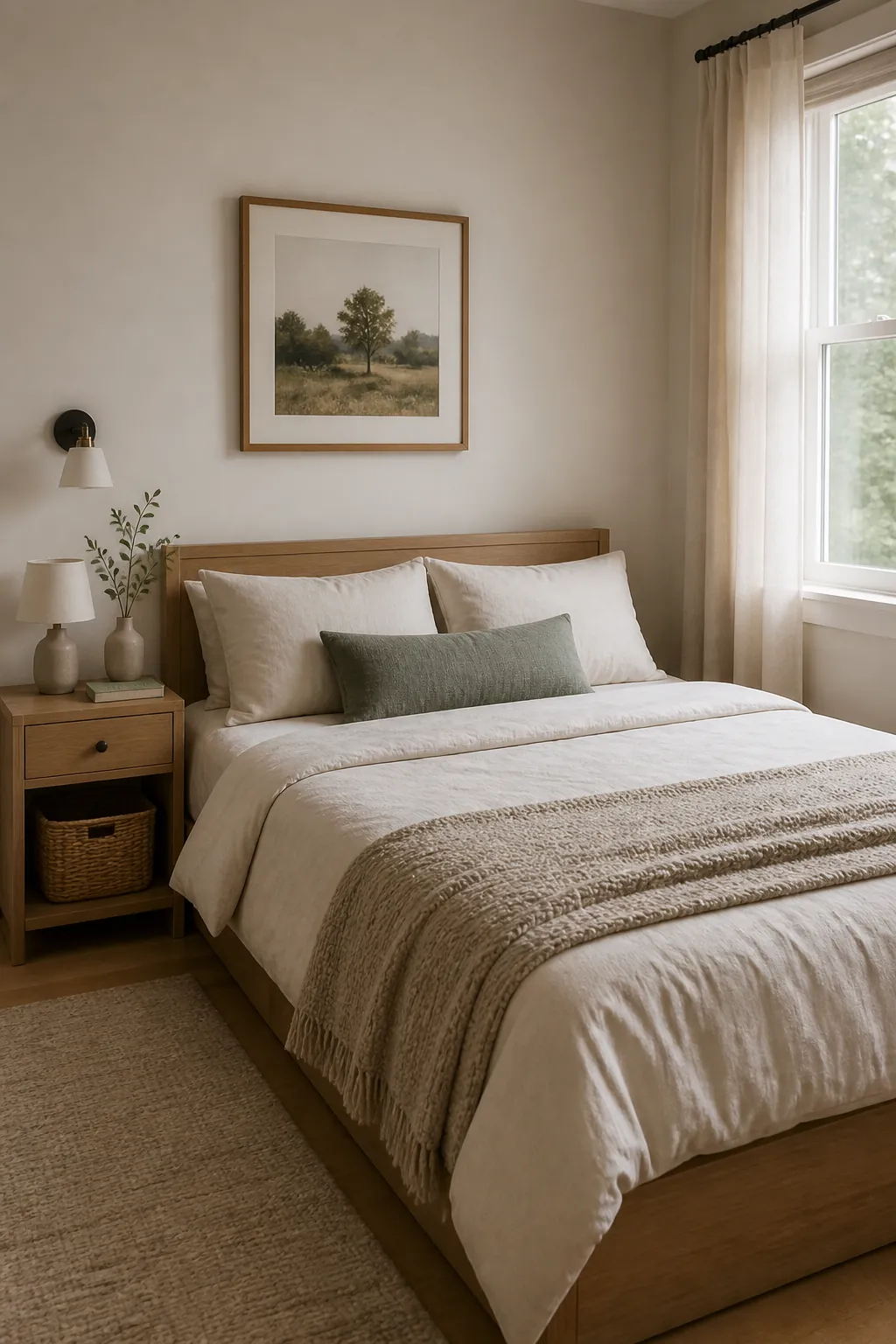
A small bedroom does not need more decor to feel finished. It usually needs fewer visible decisions. When the bed, lighting, textiles, and storage all point in the same calm direction, the room can feel styled without asking every surface to hold something pretty.
The goal is not a bare room. The goal is a soft, useful, easy-to-reset bedroom where the pieces you see are doing real work: making the bed look inviting, keeping daily items contained, adding texture, or helping the room feel warmer at night.
Start by editing what the room is trying to say
Small bedrooms become visually noisy fast because every object is close to the bed. A candle, a stack of books, a tray, a plant, framed art, and a jewelry dish might look harmless on their own, but together they can make the room feel busier than it is.
Before adding anything, choose one clear direction: calm neutral bedroom, cozy layered bedroom, warm natural bedroom, or clean compact bedroom. Then remove anything that argues with that direction. This one step makes simple bedroom styling easier because the room is no longer trying to be five moods at once.
Make the bed the main decorative moment
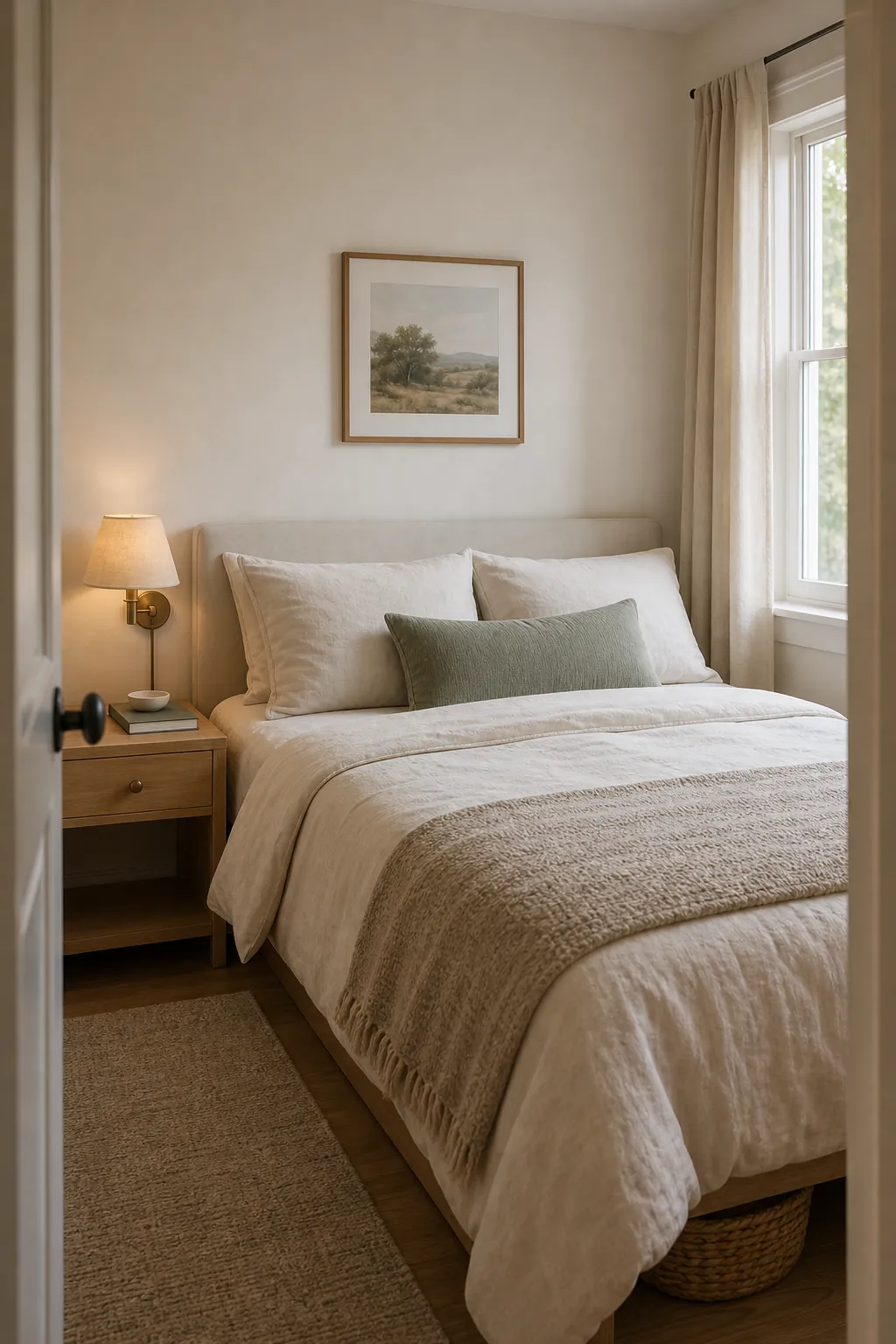
In a compact bedroom, the bed is already the largest surface. Use it. A tidy bed with breathable sheets, one textured blanket, and two or three pillows can carry more style than a shelf full of objects. This is the safest place to add soft textures because textiles add comfort without shrinking the walkway or crowding the walls.
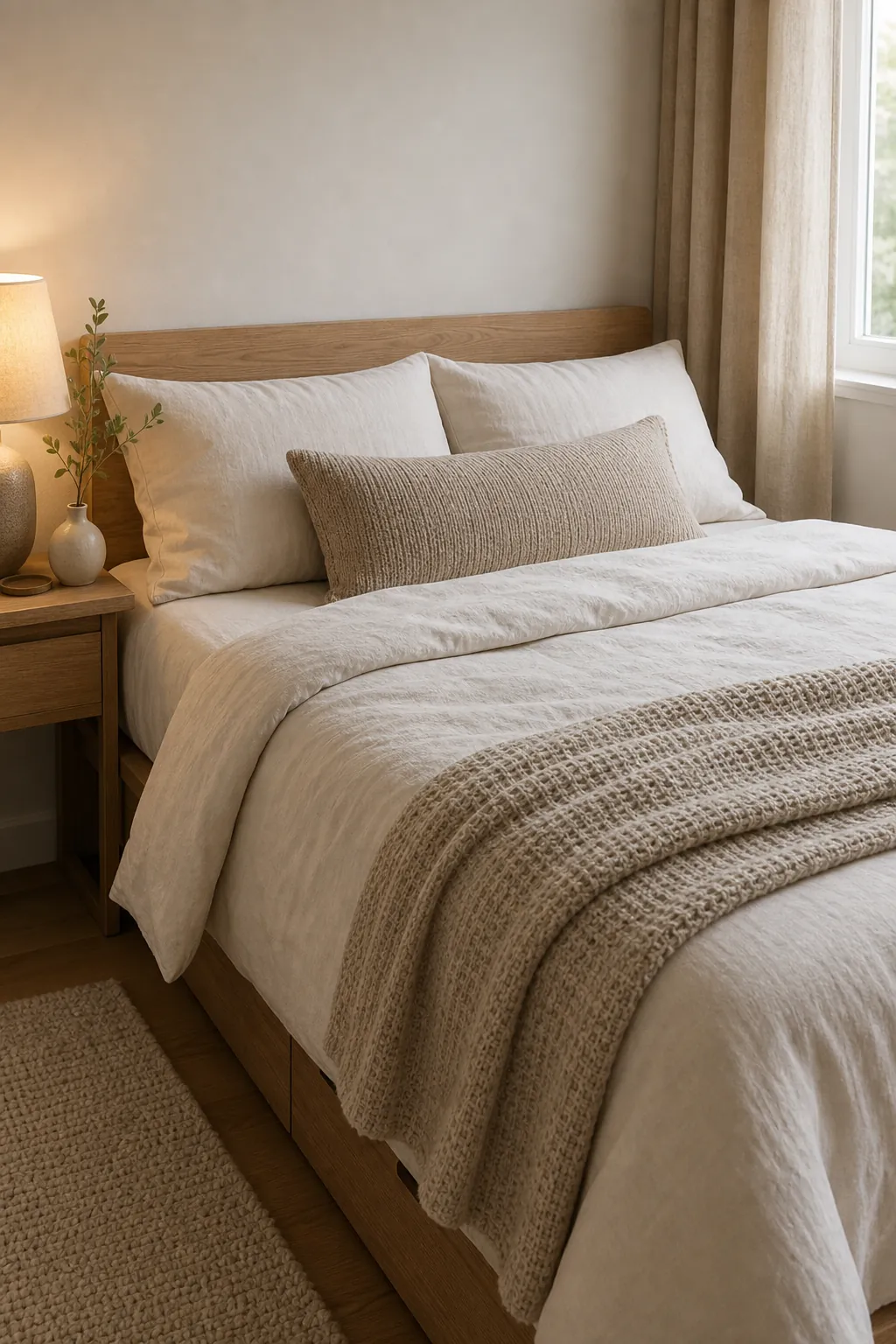
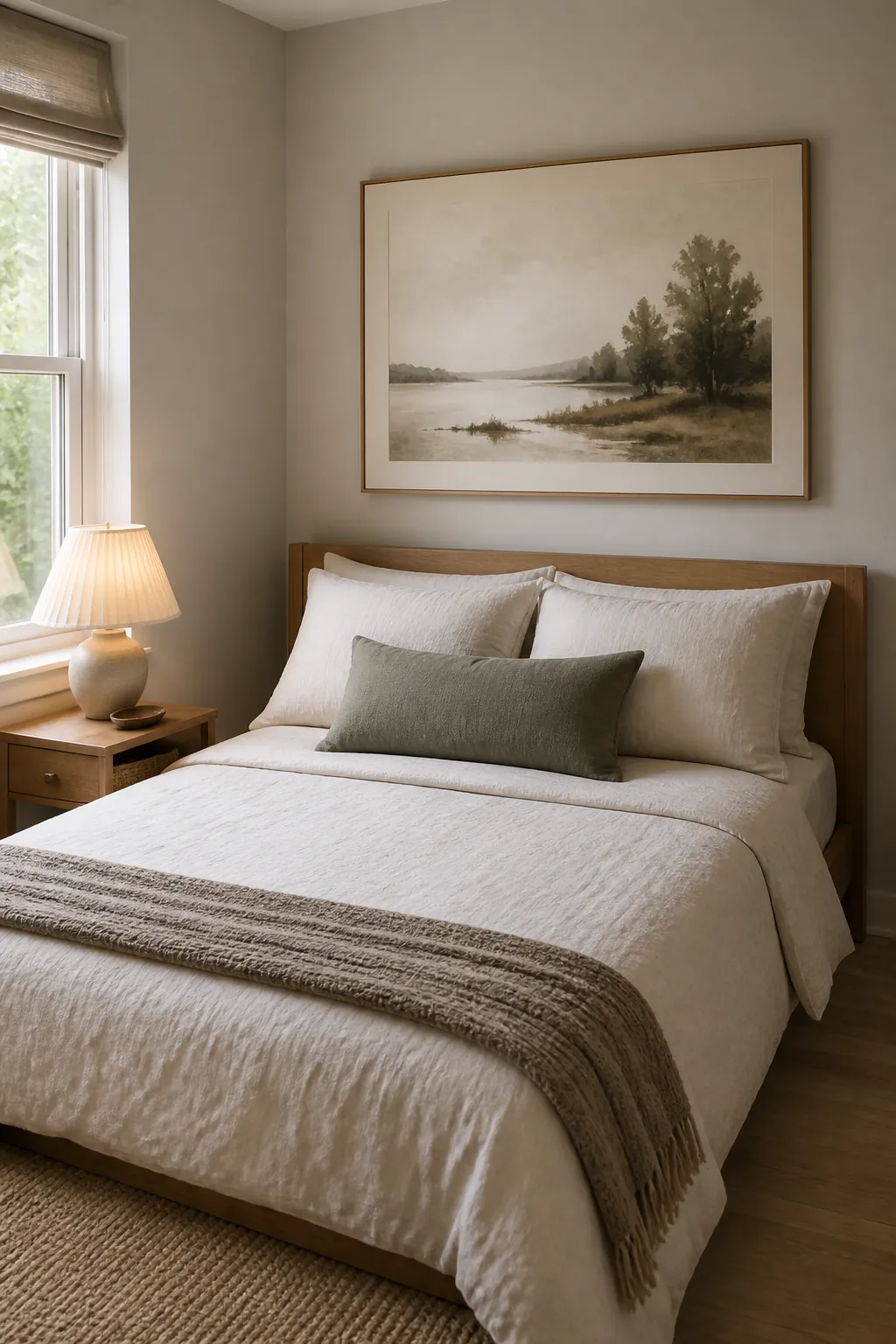
Keep the formula simple: smooth base bedding, one folded layer at the foot, and one texture change. Linen, cotton, waffle weave, boucle, light quilted cotton, or a soft knit throw can make the room feel cozy without turning the bed into a pile.
- Use fewer pillows than you think. Two sleeping pillows and one lumbar pillow often look cleaner than five small cushions.
- Let one fabric be the star. If the blanket has texture, keep the pillow covers quiet.
- Repeat the room color once. A warm beige throw or soft gray pillow can connect the bed to curtains, art, or a rug.
Use functional decor instead of extra decor
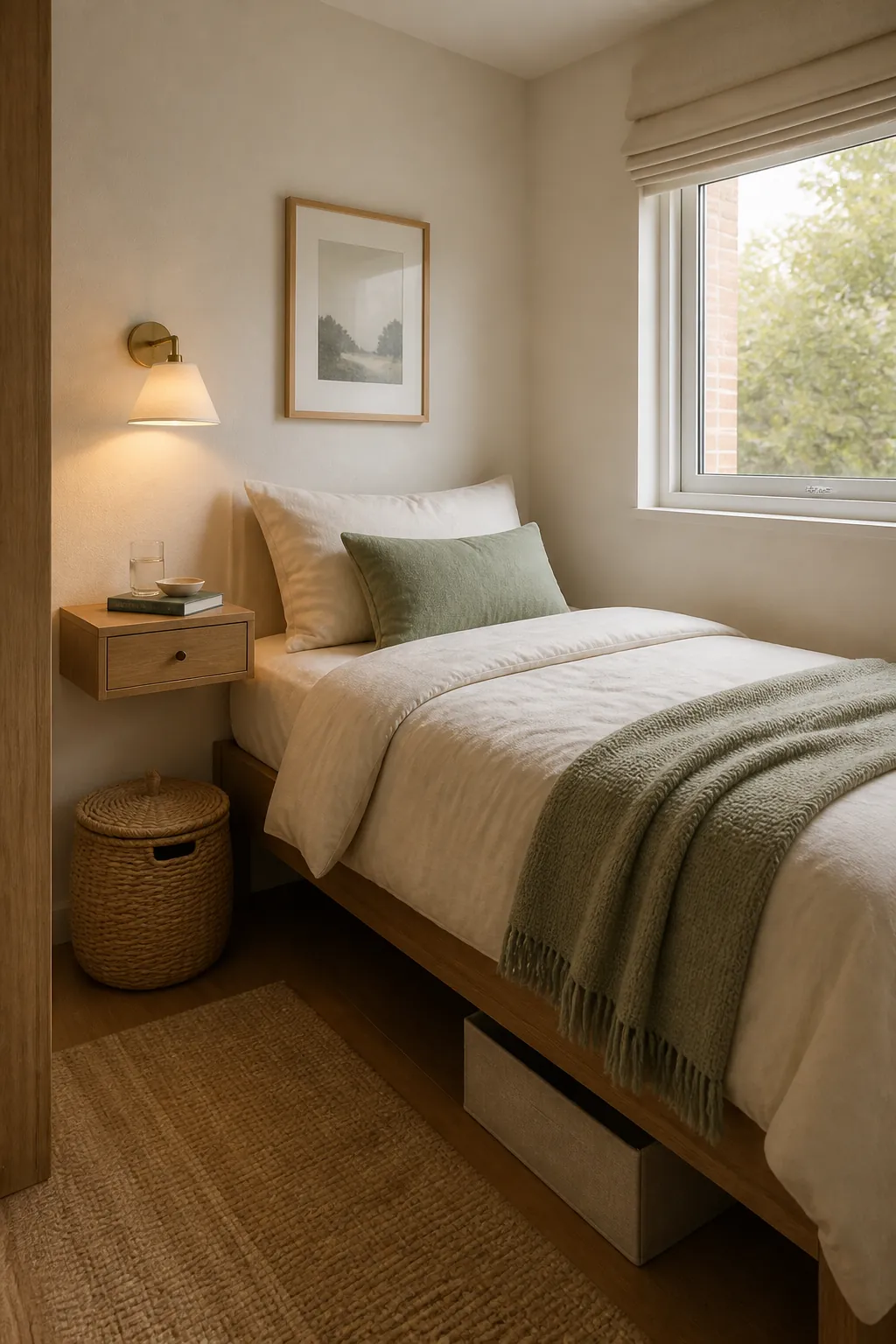
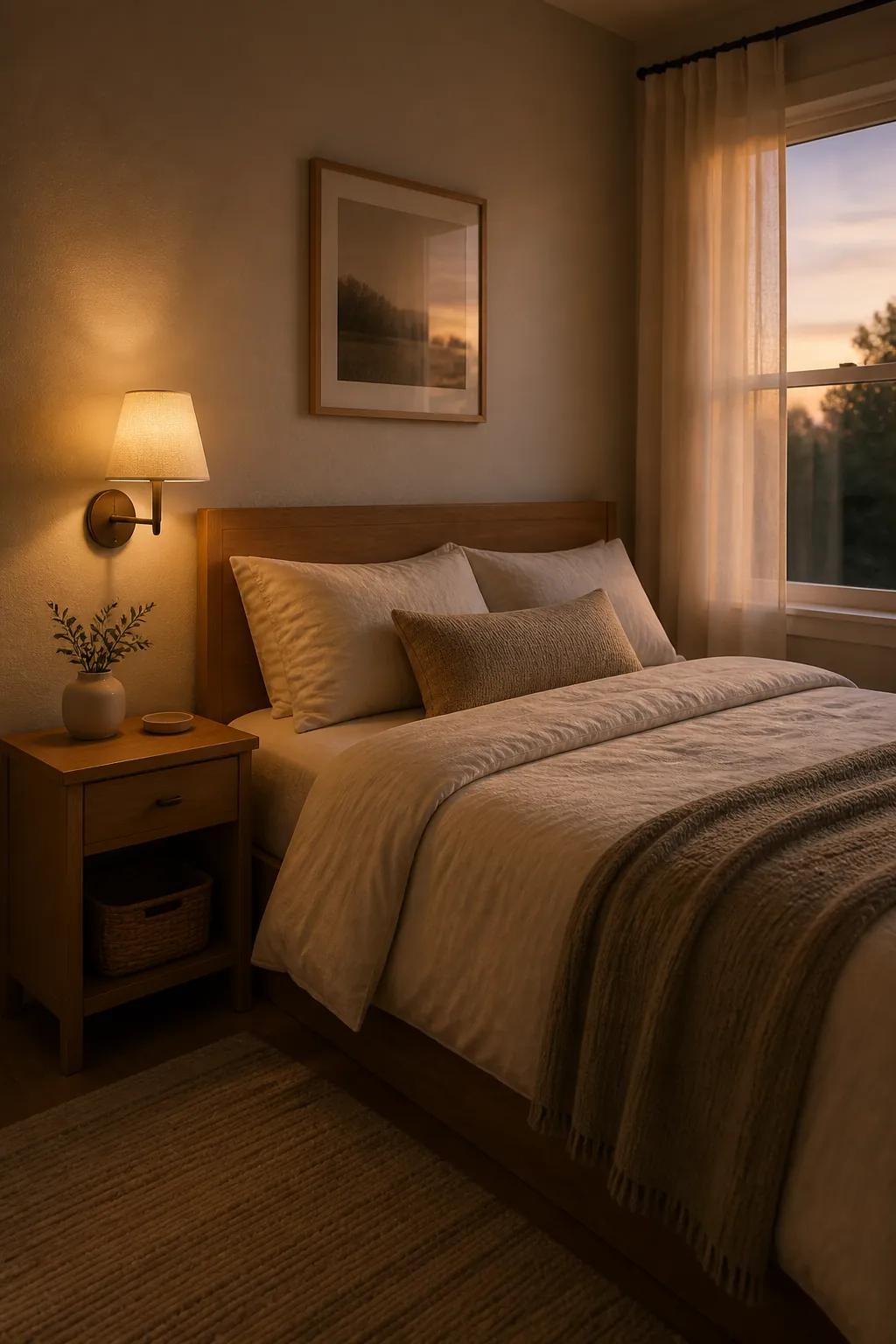
The easiest way to avoid too much decor is to make practical items attractive enough to stay visible. A wall sconce can replace a table lamp. A lidded basket can hide extra bedding. A narrow nightstand with a drawer can hold chargers and lip balm. A simple tray can make three daily objects look intentional instead of scattered.
This is where small space decor becomes less about buying decorative pieces and more about choosing useful pieces with quiet shapes. If an item does not help with light, storage, comfort, or rhythm, it probably has to earn its place very carefully.
Keep surfaces styled, not filled
A small nightstand or dresser should not be treated like a display shelf. It should have breathing room. The cleanest rule is to style in small groups and leave at least half the surface open. That open space is not wasted. It is what makes the room look relaxed.
For a nightstand, try a lamp or sconce, one small dish, and one book. For a dresser, try a mirror or art piece, one low tray, and one organic item such as a branch, small plant, or ceramic vase. Three calm objects usually look more designed than ten tiny ones.

Add warmth with light, not more objects
Many small bedrooms feel unfinished because the lighting is flat, not because the decor is missing. One ceiling light can make even good furniture look harsh. A warm bulb, a shaded lamp, a wall sconce, or a small plug-in picture light can change the feeling of the room without adding clutter.
Choose warm, low-glare lighting near the bed and let it wash over texture: linen bedding, a woven shade, a wood frame, or a soft curtain. Light gives a cozy bedroom atmosphere while keeping the actual object count low.
Let the walls work harder with fewer pieces
Small rooms often look messier when the wall decor is too scattered. Instead of several tiny frames, choose one calm focal point: a larger framed print above the bed, a simple textile wall hanging, a slim shelf with only two or three objects, or a mirror placed to catch light.
The scale matters. One medium or large piece can make a room feel more settled than a group of small pieces because the eye has somewhere to land. For minimal decor, the best wall choice is usually the one that adds shape, color, or light while keeping the room easy to read.
Use color restraint, then add depth through texture
A neutral bedroom does not have to be plain. The trick is to keep the color range tight and vary the materials. Soft white walls, warm wood, oatmeal bedding, a woven basket, a matte ceramic lamp, and one muted accent can feel layered without feeling decorated to the edge.
If the room feels too flat, do not immediately add more accessories. Add contrast through finish: smooth next to nubby, matte next to woven, crisp cotton next to a soft throw. Texture gives a compact bedroom depth without stealing space.
Make the room easy to reset every day
A styled small bedroom only works if it can return to order quickly. Give every daily item a landing place: a drawer for chargers, a hook for tomorrow’s clothes, a basket for extra blankets, and a closed bin for seasonal items. The less often loose objects sit out, the more intentional the room looks.
The final test is simple. Stand in the doorway and ask what your eye notices first. If it is the bed, the light, the texture, or one calm focal point, the styling is working. If it is cords, piles, crowded surfaces, or too many small objects, remove before you add. That is the real secret to small bedroom decor that feels finished without too much decor.