
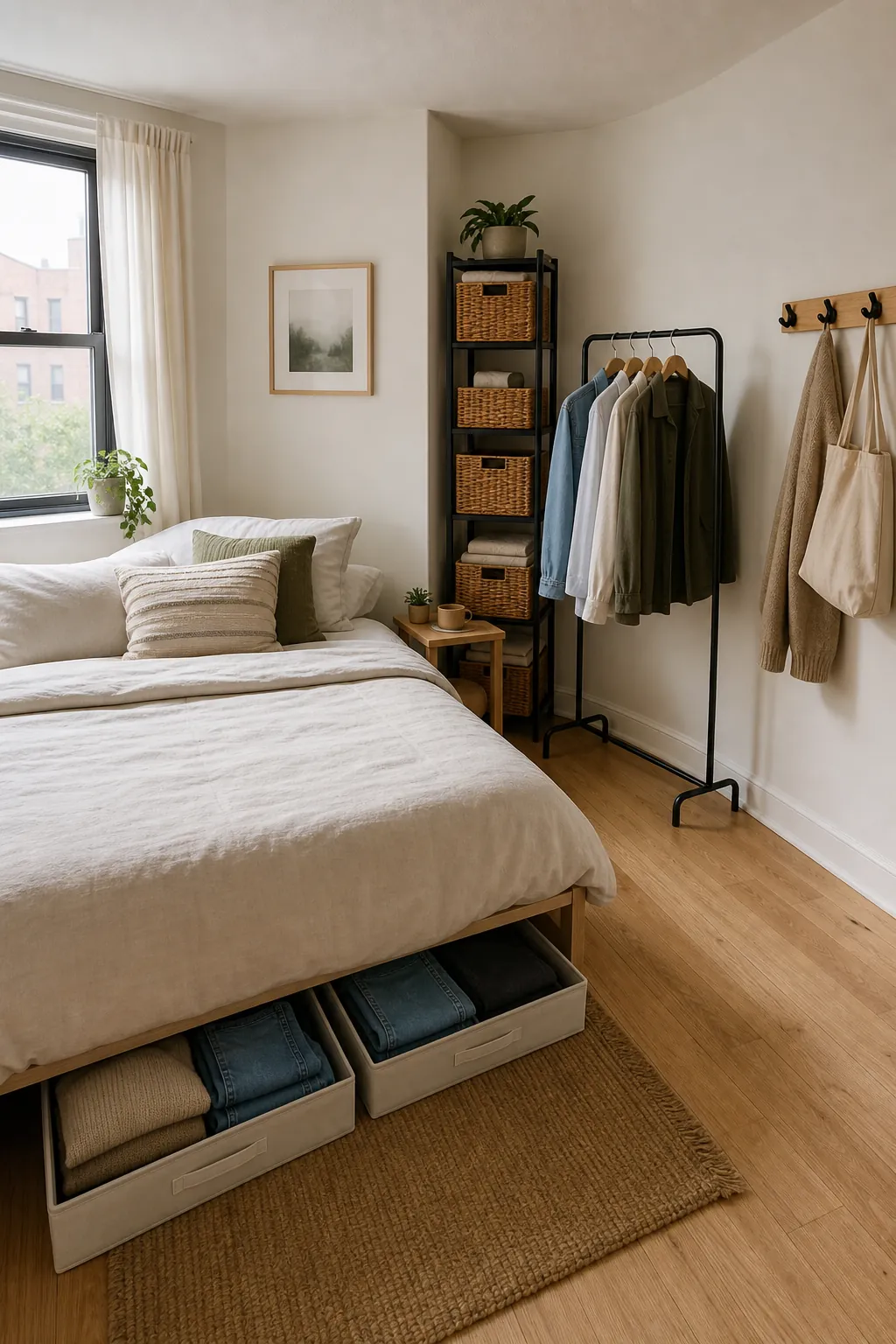
A small bedroom without dresser space needs a system, not one more piece of furniture squeezed into the only walkway. The goal is simple: give every kind of clothing a home while keeping the room calm enough to sleep in. That usually means splitting storage into three zones: hidden storage for bulk items, vertical storage for daily access, and a small landing zone for worn-once clothes so they do not become a floor pile.
From real small-space discussions, the same pain points come up again and again: people do not have room to pull out deep drawers, open racks can look messy, under bed bins get forgotten, and tiny closets fill with clothes that are not actually worn. These ideas focus on the habits behind the mess as much as the furniture.
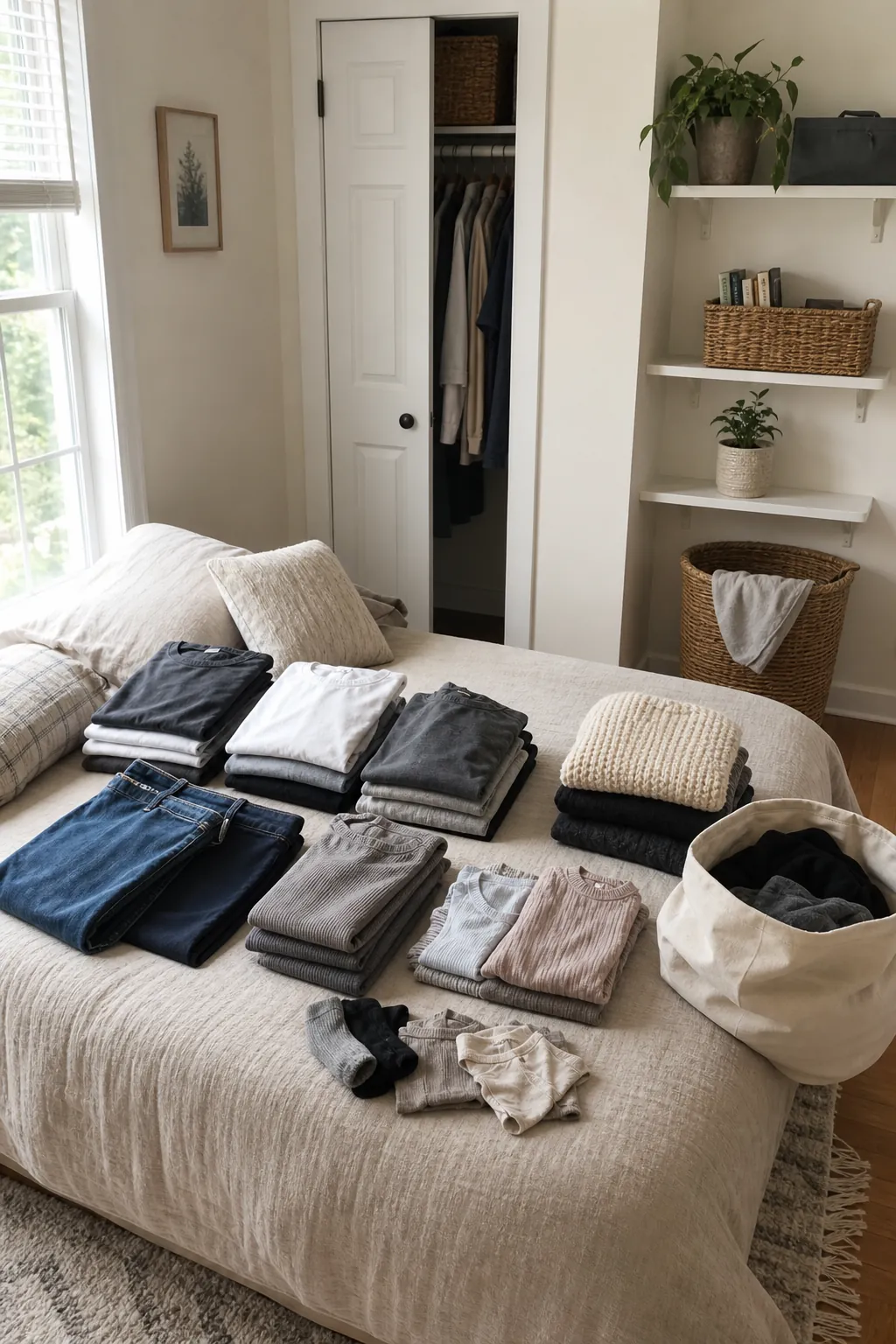
Start With A Clothes Audit Before Buying Storage
Before choosing closet alternatives, reduce the amount of clothing that has to live in the bedroom. Keep current-season pieces, daily basics, sleepwear, and frequently worn shoes in the room. Move off-season coats, formalwear, spare bedding, and sentimental pieces into labeled bins elsewhere if you can.
- Daily clothes: keep them visible or easy to reach.
- Occasional clothes: store them higher, lower, or farther away.
- Off-season clothes: compress them in bins or vacuum bags.
- Almost-never clothes: donate, sell, or relocate them.
Use Under Bed Storage For Folded Clothes
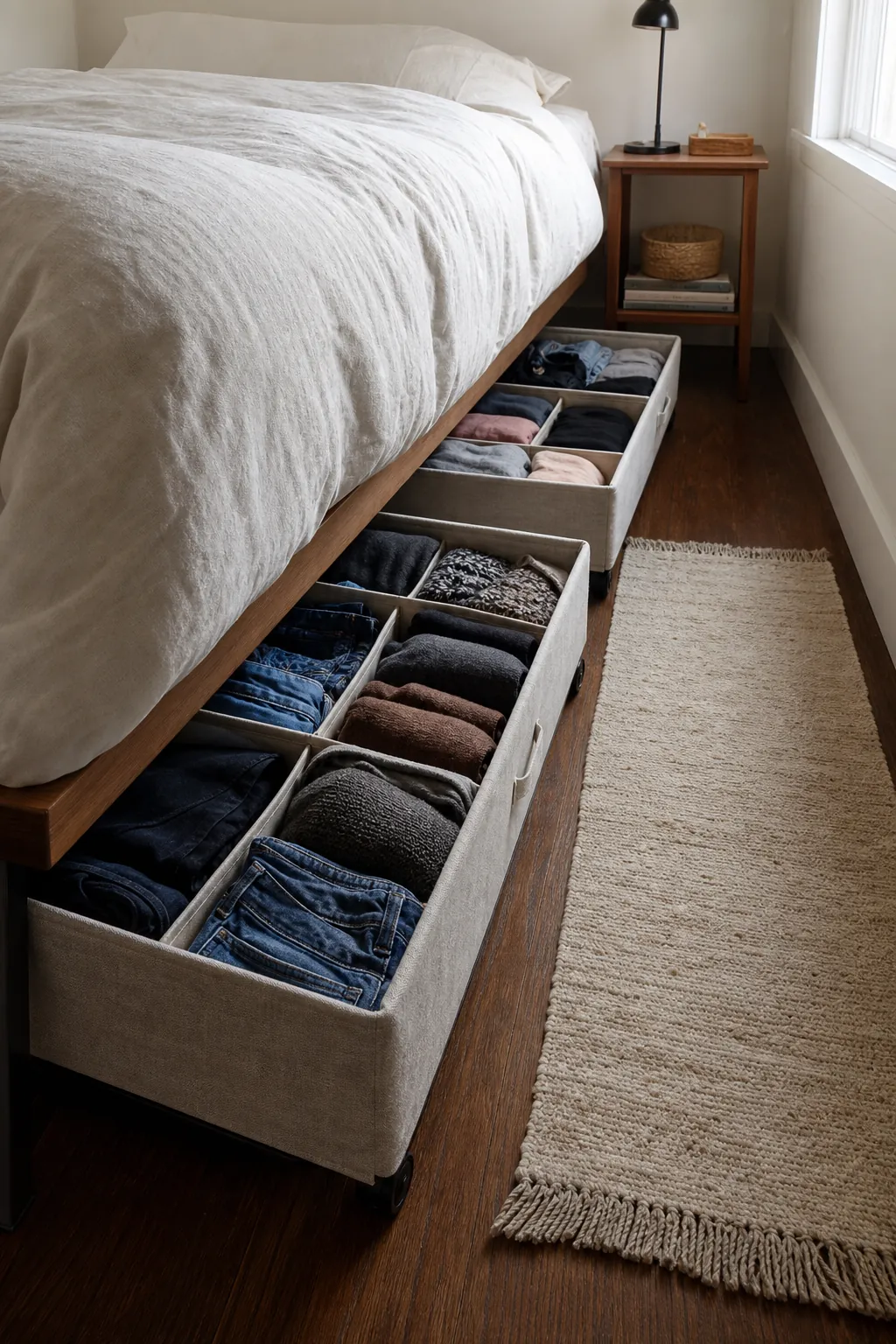
Under bed storage is the most useful no dresser storage option when the room has enough clearance. It works best for folded jeans, sweaters, workout clothes, pajamas, and extra linens. Choose shallow rolling bins or fabric drawers that can be pulled out without moving the bed.
The trick is to treat the space like a real drawer, not a hiding place. Use dividers, file-fold clothing upright, and label the front edge. If the bed sits against a wall, store your most-used items on the open side and place seasonal pieces on the harder-to-reach side.
Replace A Dresser With A Tall Shelf And Baskets
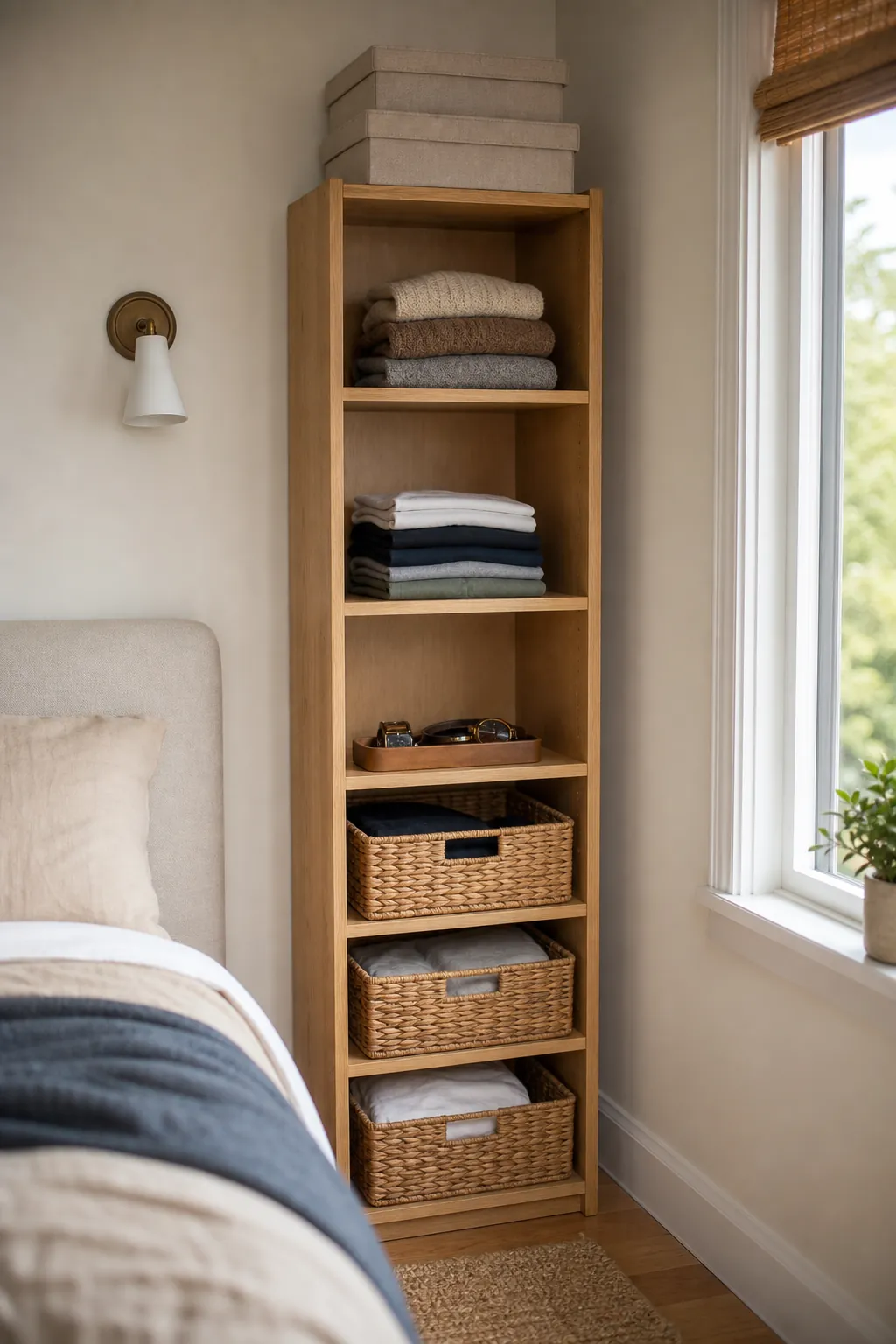
A wide dresser uses a lot of wall and floor space. A tall, shallow shelf gives you more vertical storage with less bulk. Add matching baskets or bins for socks, underwear, folded T-shirts, accessories, and small items that would normally disappear in drawers.
For a cleaner look, keep the lower baskets for daily clothing and the upper shelves for less-used items. If open shelving feels visually busy, use solid baskets in one calm material and leave a little breathing room around the top shelf. Small bedroom storage looks better when containers match and categories stay simple.
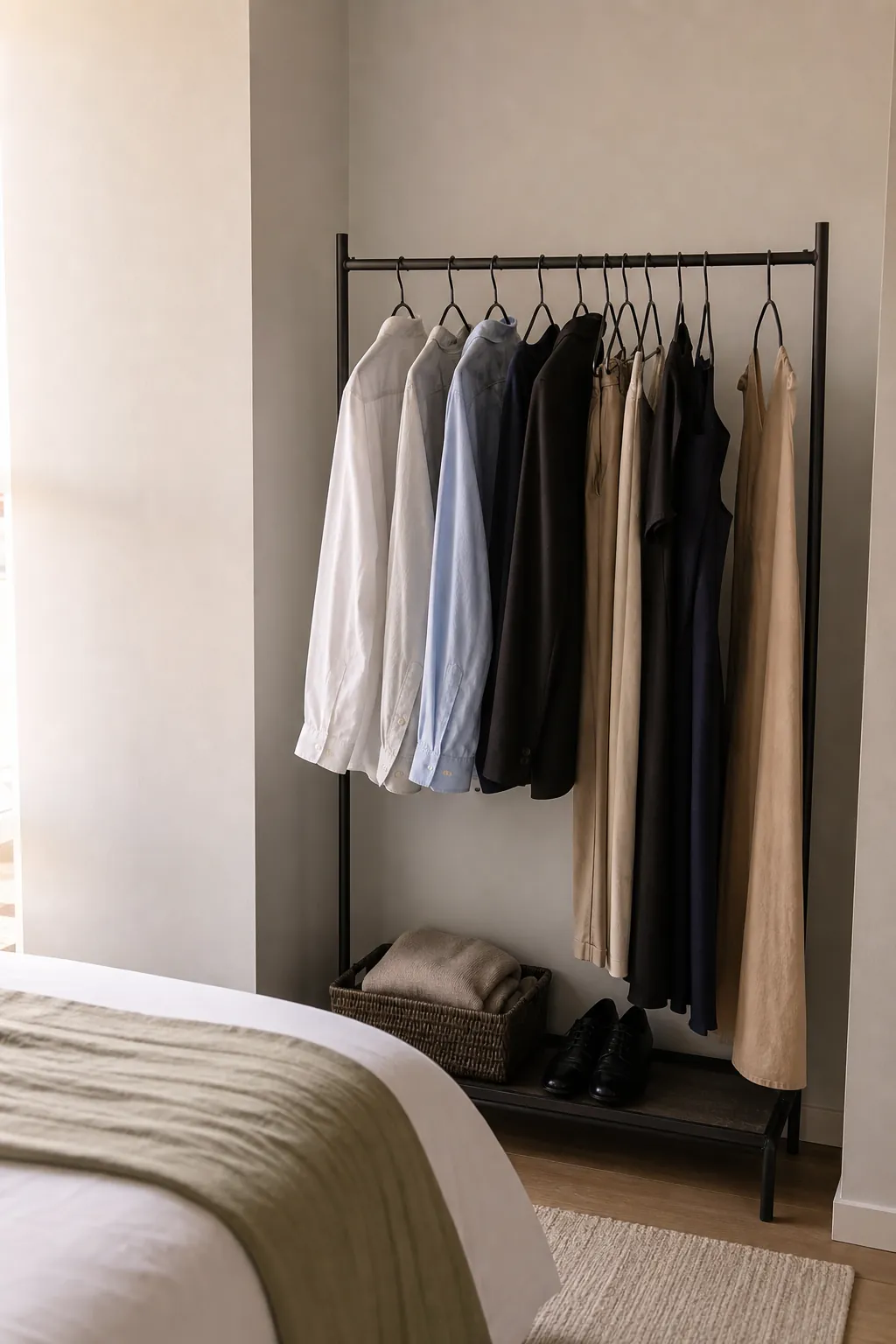
Create A Mini Open Closet With A Slim Rack
If your closet is tiny or nonexistent, a slim garment rack can become the hanging zone. The key is restraint: keep it for clothes that need to hang, not every item you own. Use identical slim hangers, group items by type, and add one lower shelf or basket for shoes and bags.
A rack works best when it has a clear boundary. Place it in an alcove, beside a wardrobe, behind a curtain, or along the least visible wall from the doorway. If you hate the visual clutter, hang a ceiling-mounted linen curtain in front of it instead of buying a bulky armoire.
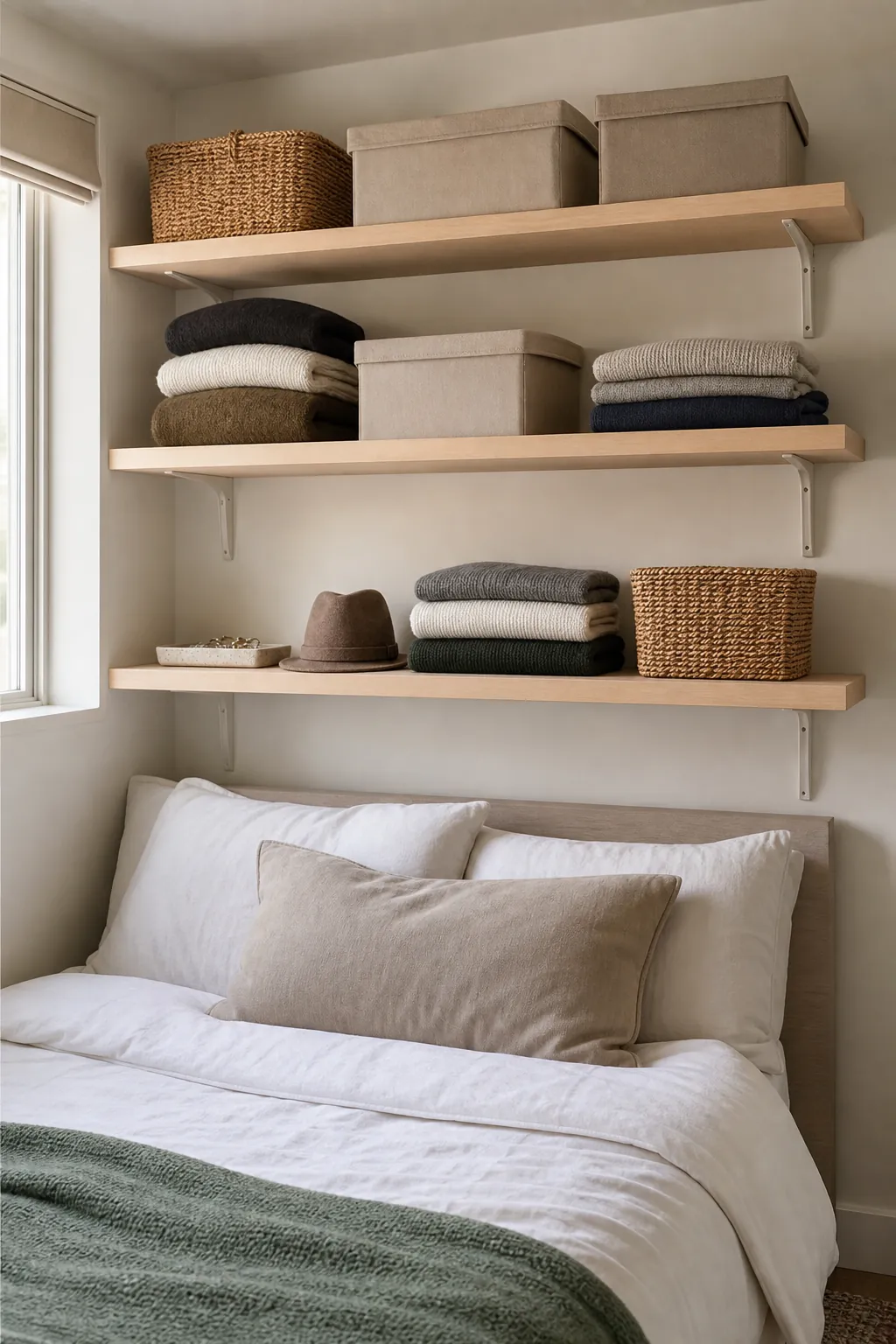
Add Wall Shelves Above Dead Space
Wall shelves are useful when the floor is already full. Look above the headboard, above a desk, beside the closet, or around the upper perimeter of the room. Keep the depth modest so the shelves do not loom over the bed.
Use shelves for items that can look intentional: lidded boxes, folded knits, hats, bags, books, baskets, and decorative trays. Put everyday clothes at reachable height and seasonal items higher up. The best wall shelves reduce floor furniture, but they still need category discipline.
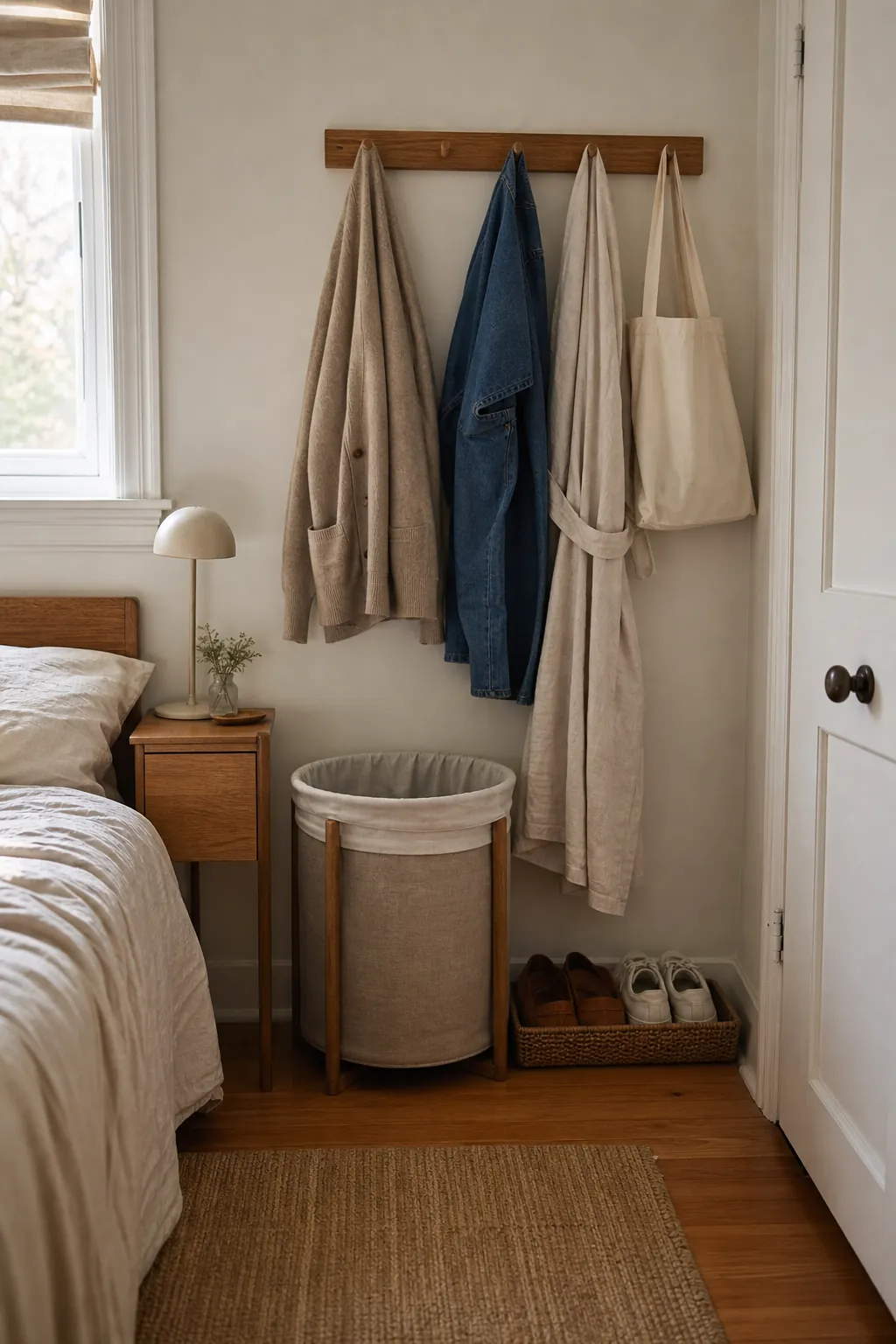
Use Hooks For The Clothes Chair Problem
Most small bedrooms need a place for worn-once clothes: jeans, hoodies, pajamas, robes, and sweaters that are not clean enough for the closet but not dirty enough for laundry. Without a landing zone, those pieces become the chair pile.
Install wall hooks, over-the-door hooks, or a narrow peg rail near the closet or laundry hamper. Limit the number of hooks so the system cannot quietly turn into a second closet. A good rule is one hook group for worn-again clothes and one hamper for everything else.
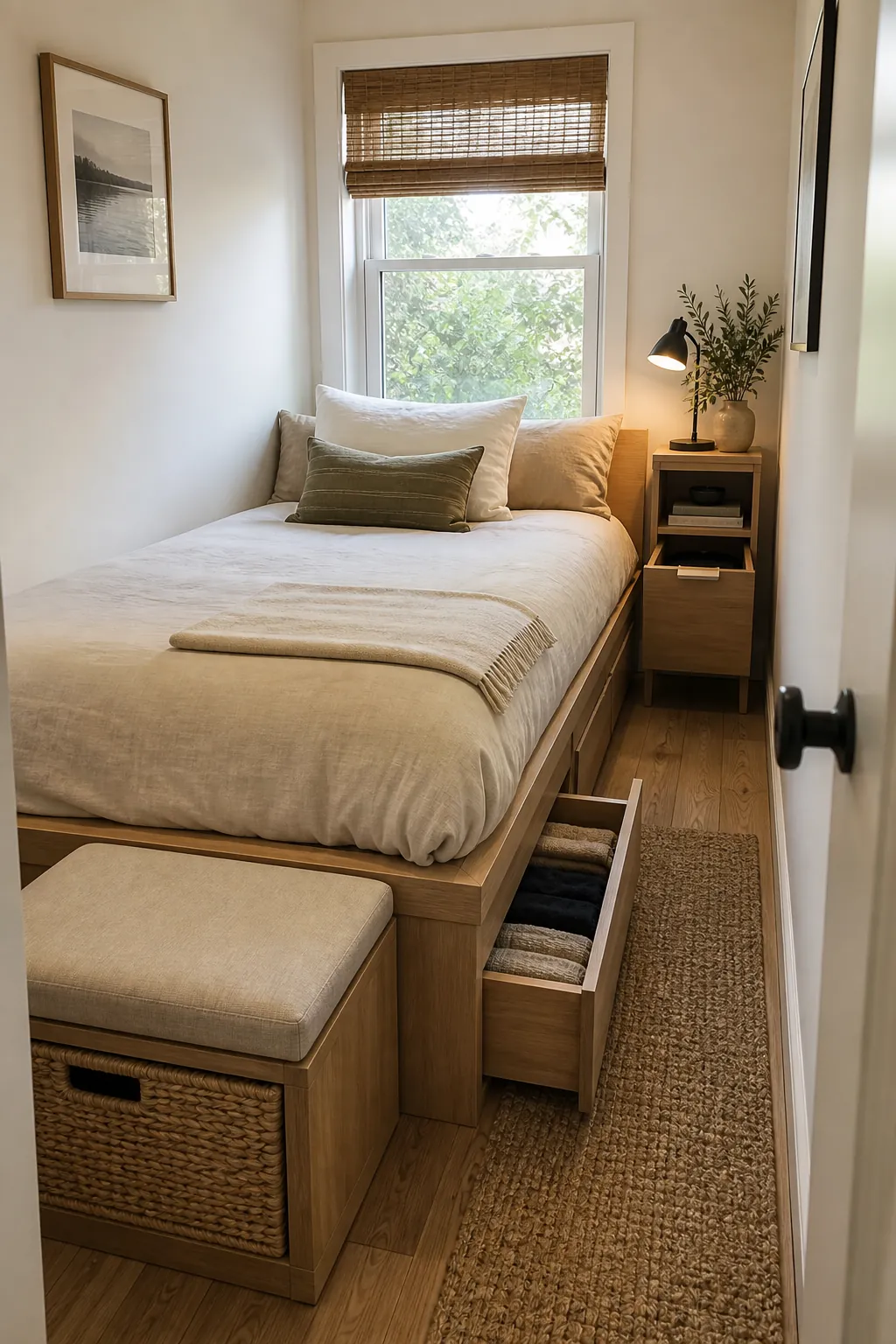
Choose Storage Furniture That Does Two Jobs
When there is no room for a dresser, every new furniture piece should earn its footprint. A storage bed, lift-top nightstand, bench with hidden storage, wall-mounted nightstand, or narrow wardrobe can hold clothes without making the room feel packed.
Measure the clearance before buying anything with drawers. In a tight bedroom, a drawer that technically fits may still be useless if you cannot stand in front of it. Sliding doors, lift lids, pull-out baskets, and open cubbies often work better than deep drawers in a compact bedroom.
Build A Simple Weekly Reset
No storage setup survives without a reset habit. Once a week, put clean laundry into its assigned bins, move worn-once clothes back to the closet or hamper, and check whether under bed bins are still organized. The reset should take ten minutes, not an entire afternoon.
If the room keeps overflowing, do not start by buying another organizer. First ask what category has outgrown its zone. Too many hanging clothes means the rack needs editing. Too many folded clothes means the bins are overloaded. Too many random items means the bedroom is storing things that belong elsewhere.
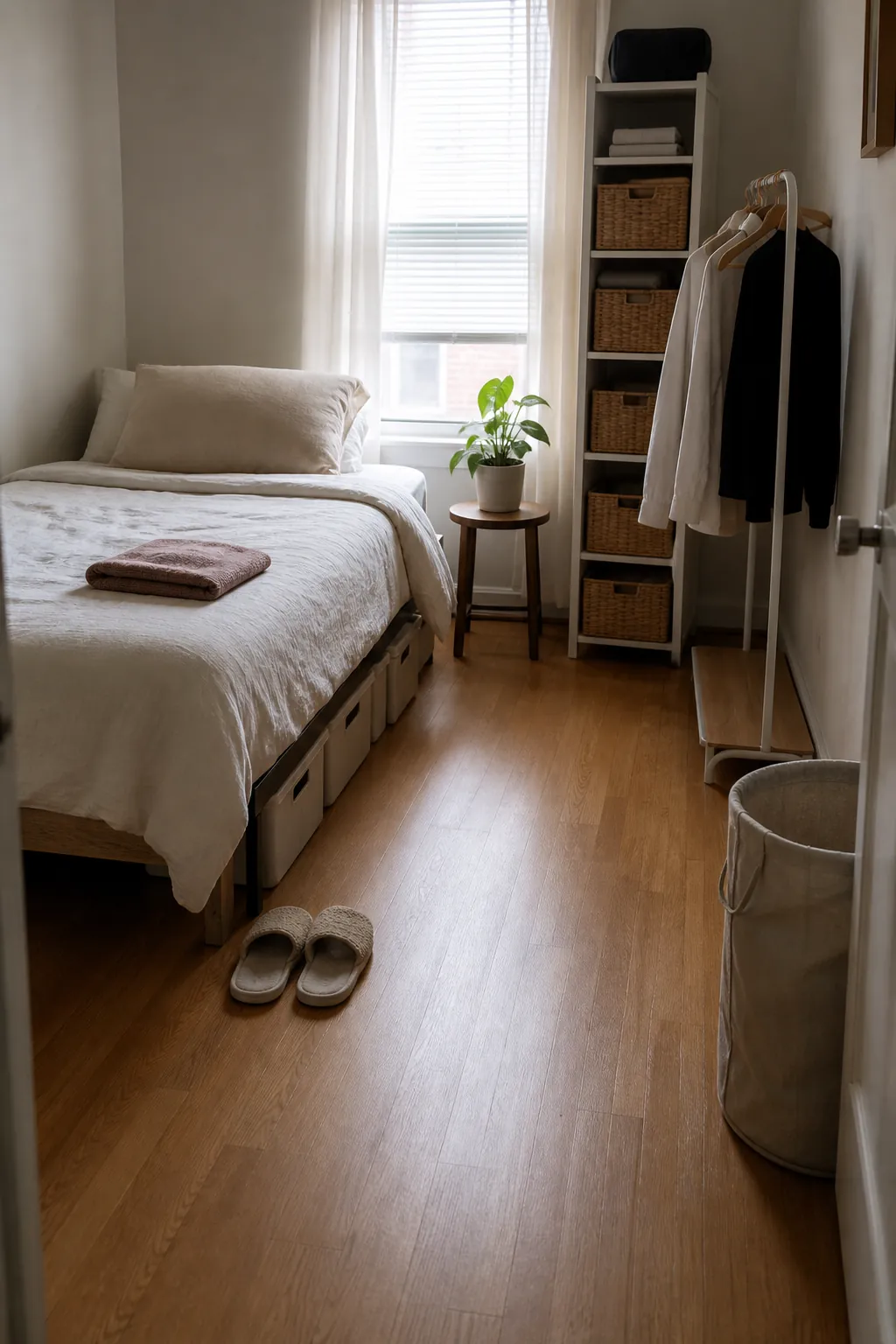
A Practical No Dresser Layout
For most small bedrooms, the strongest layout is a bed with under bed bins, a slim rack or closet rod for hanging clothes, a tall shelf with baskets for folded items, hooks for worn-once clothing, and a small nightstand with hidden storage. That combination covers clothes storage without forcing a dresser into a room that cannot comfortably hold one.
The real win is not hiding more stuff. It is making the room easier to use every morning. When each category has a small, obvious home, a no dresser bedroom can feel intentional instead of temporary.