
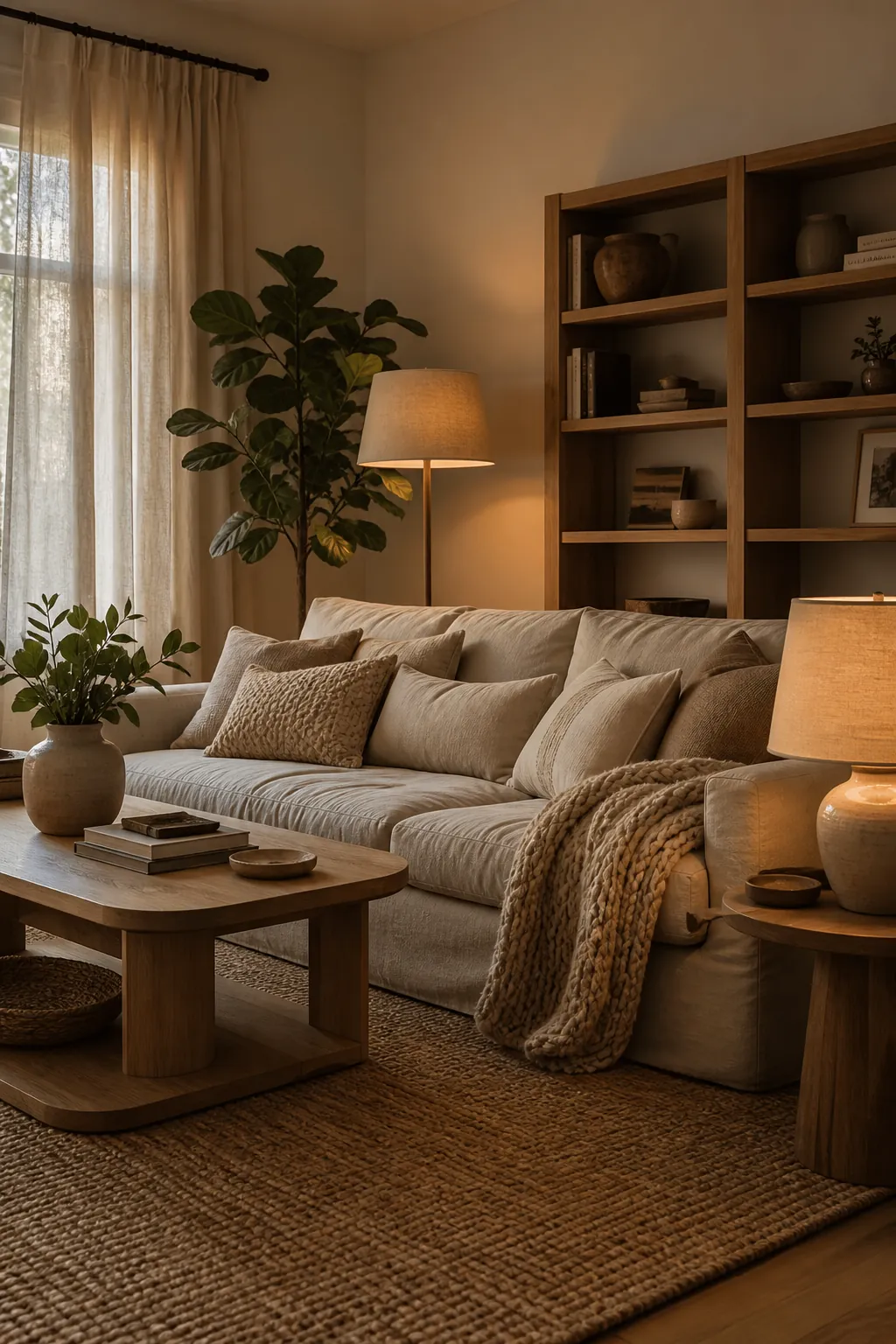
A natural living room can look beautiful in daylight and still feel flat after sunset. The fix is rarely another beige pillow. The rooms people keep describing as cold, dull, or unfinished usually have the same gap: the materials are soft, but the lighting is doing all the work from the wrong places.
For this kind of Living Room Decor, think in layers. A calm palette, honest wood, woven texture, and greenery give the room its natural base. Soft Lighting gives those materials depth, shadow, and warmth. Together, they create a Cozy Living Room that still feels clean and breathable.
Start With Lamp Layers, Not One Bright Ceiling Light
Overhead lighting can make a neutral room look washed out because it flattens the sofa, rug, walls, and decor into one plane. A better plan is to place light where people actually sit, read, talk, and move. Use one table lamp near the sofa, one floor lamp near a chair or dark corner, and one lower accent light on a console, shelf, or side table.
The practical rule is simple: aim for at least three warm, eye-level light sources before judging the room. This gives the space glow without glare and makes Living Room Lighting feel intentional instead of accidental.
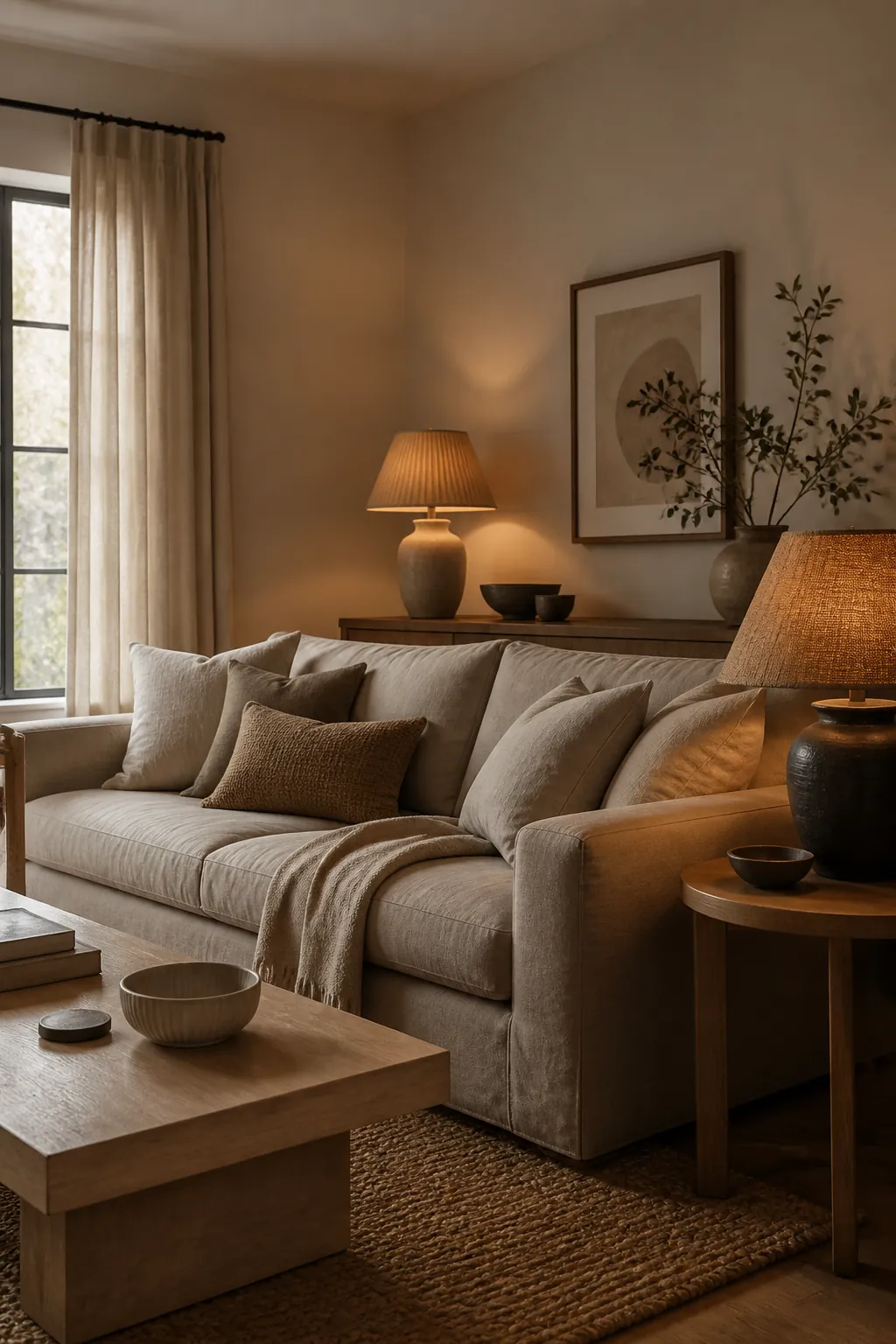
Let Daylight and Lamp Light Overlap
A Natural Living Room should not switch from bright daytime to cave-like evening. The transition feels better when daylight and lamp light overlap for part of the day. Sheer curtains help by spreading window light across the room, while a warm shaded lamp near the seating area keeps the corner from going gray.
This is especially useful in north-facing rooms or apartments where the window light is weak. Instead of fighting the room with icy white bulbs, use warm white bulbs, pale reflective walls, and natural textures that catch light softly. Cozy Lighting should make the room usable, not just atmospheric.
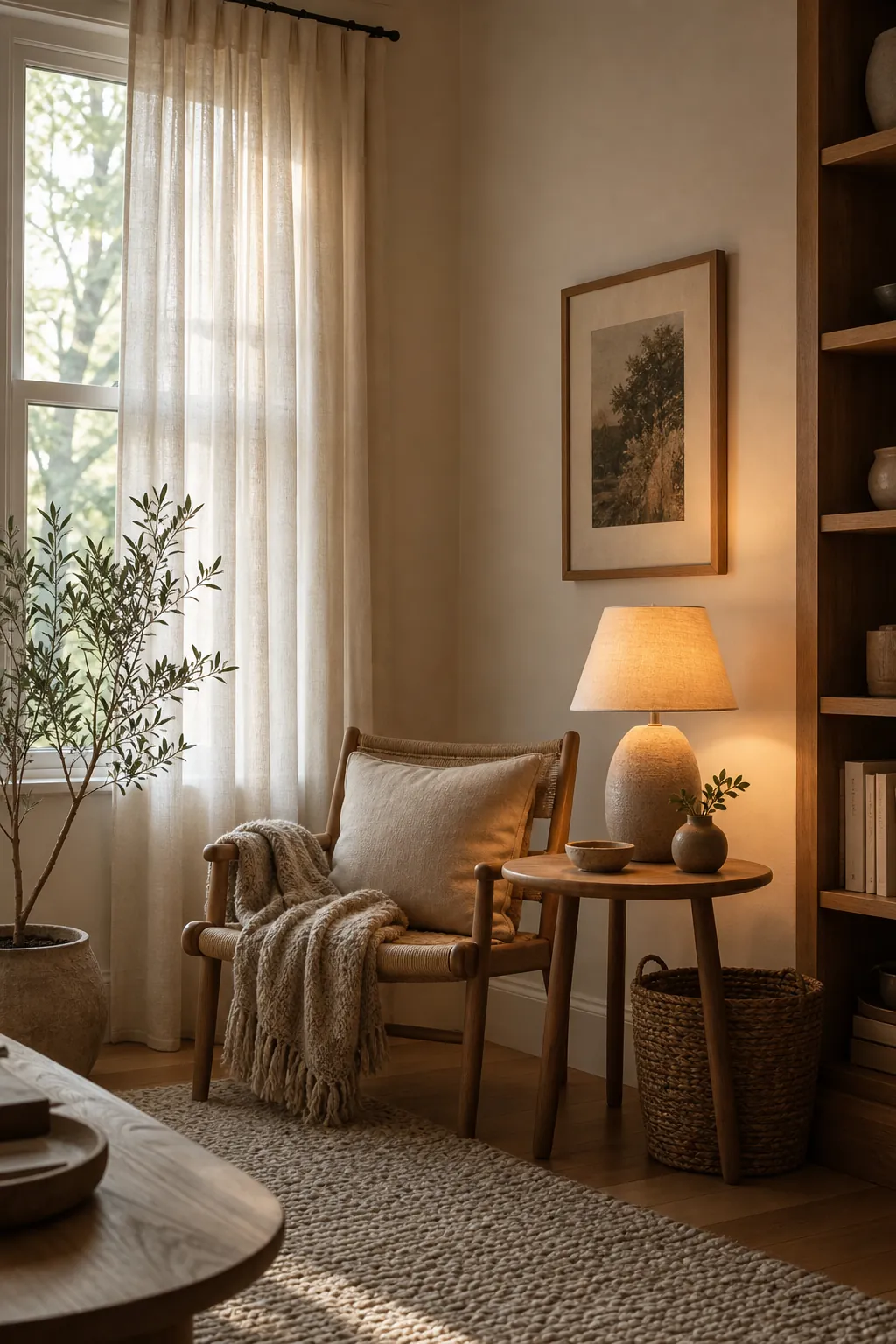
Use Texture So Neutral Decor Does Not Turn Into a Beige Blur
Neutral rooms go wrong when every surface has the same value and finish. If the sofa, rug, pillows, wall, curtains, and table are all smooth and similar, even expensive pieces can feel bland. Natural Home Decor needs contrast you can feel: linen beside jute, oak beside clay, cotton beside stone, matte ceramics beside leafy greenery.
Soft lamp light makes those textures visible. It catches the ridge of a woven basket, the grain of a wood table, and the uneven edge of a handmade vase. That is why Wood Decor and tactile pieces matter so much in an organic room: they give the light something to reveal.
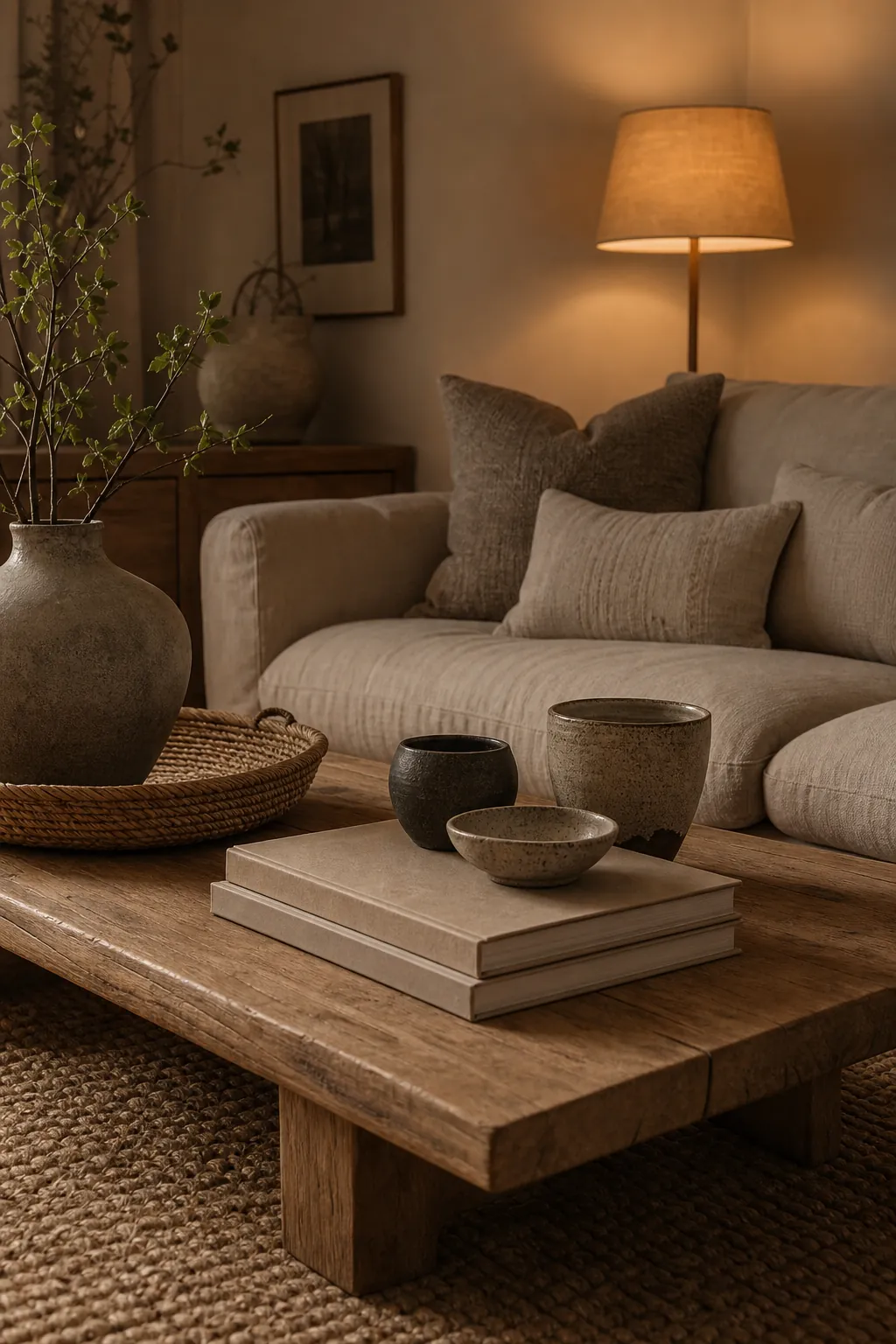
Give the Walls a Gentle Glow
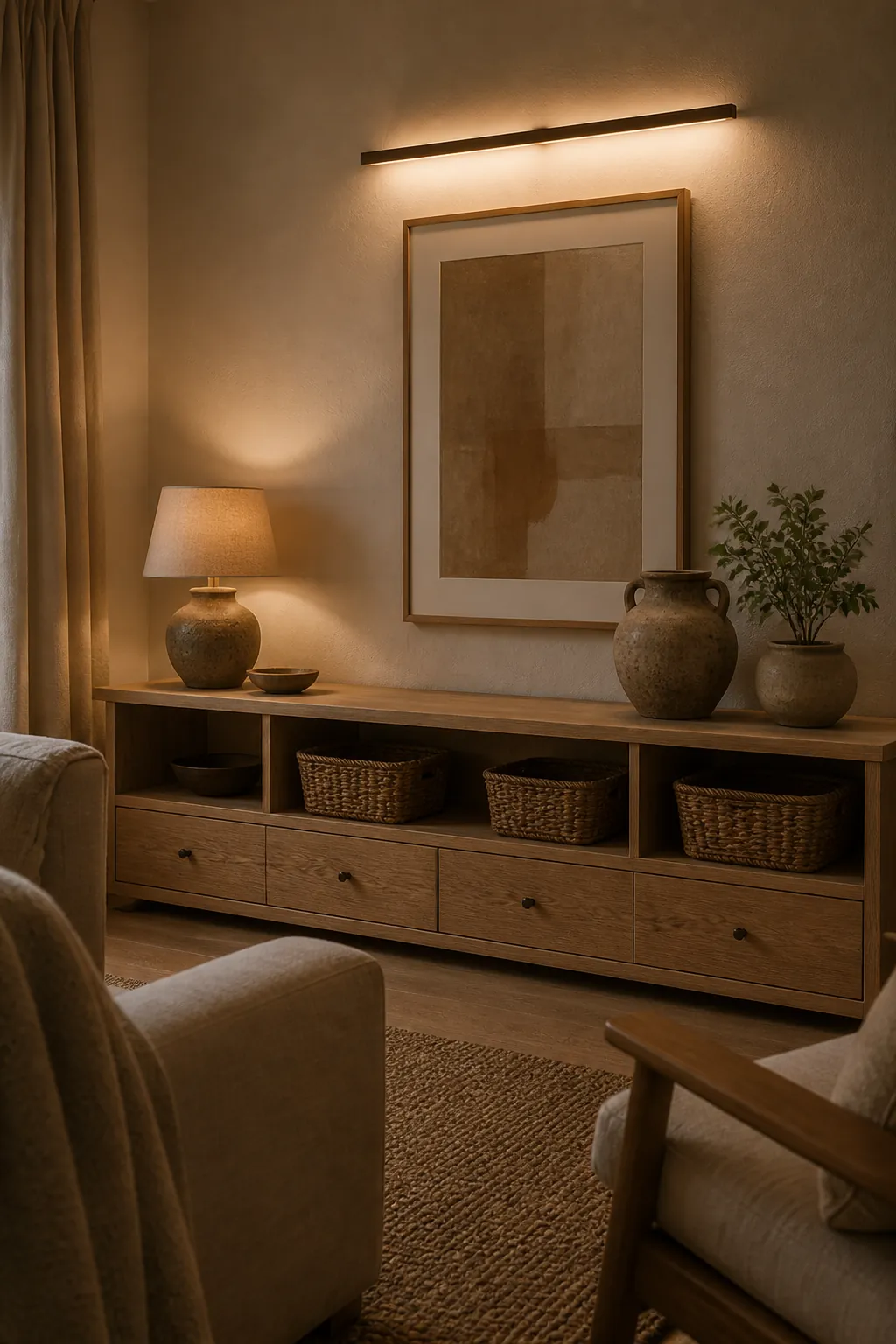
If the center of the room looks pleasant but the walls feel blank, add a wall-level light layer. A small shaded lamp on a console, a picture light above art, or concealed warm light on shelving can make the room feel finished without adding more furniture. The goal is not brightness everywhere. The goal is controlled glow in the places the eye naturally lands.
This is where Organic Modern Decor works especially well. A pale oak console, clay vase, woven storage, simple art, and one warm lamp can make a wall feel grounded. Keep the styling loose and low. Too many small objects will scatter the light and make the room feel busy.
Make the Seating Area Feel Like a Pool of Warmth
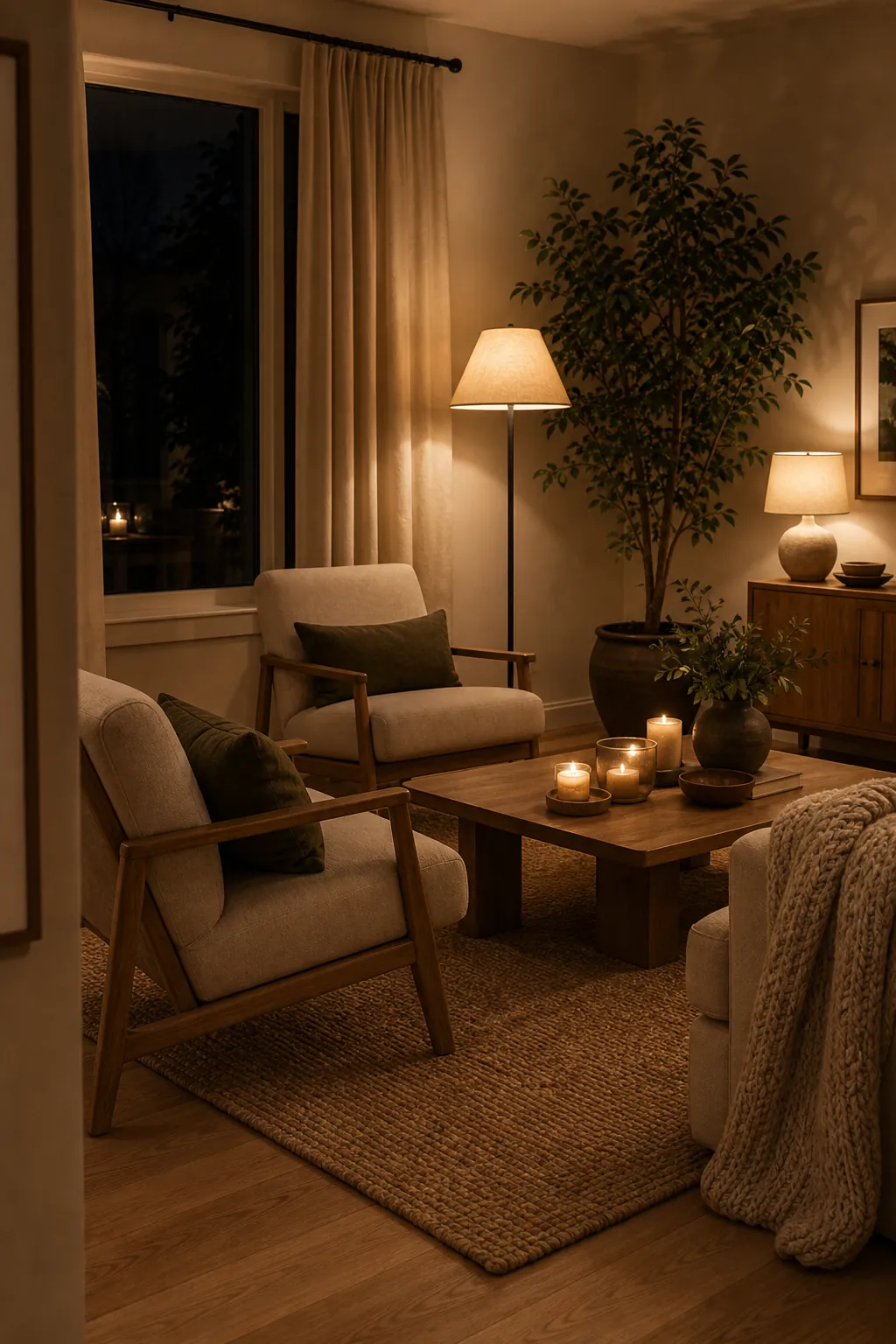
A living room feels cozy when people can imagine sitting down and staying there. Arrange chairs, sofa edges, side tables, and lamps so the seating area becomes its own warm zone. Put lamps close enough to serve the seats, not stranded in corners where they only decorate the perimeter.
For evening use, combine one taller floor lamp with one lower table lamp. If you add candles, keep them simple and sparse. The best Neutral Home Decor does not depend on clutter for warmth. It depends on the relationship between scale, shadow, texture, and comfort.
Fix Dark Corners With Vertical Light and Pale Texture
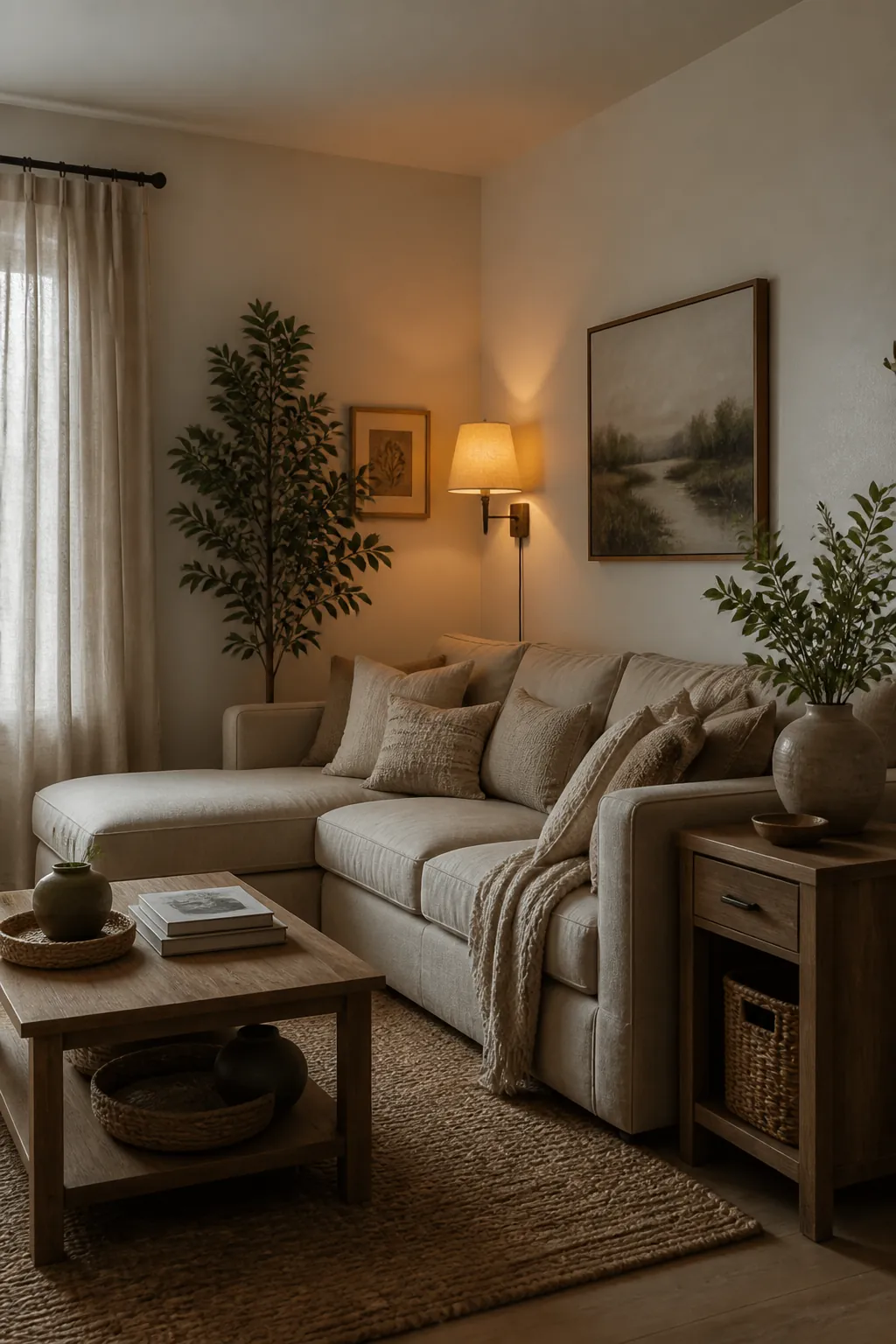
Small rooms often have one corner that makes the whole space feel heavy. A plug-in sconce, narrow floor lamp, or shaded lamp on a slim side table can change that corner fast. Keep the bulb warm, hide the source behind a shade, and let the wall catch the light instead of pointing glare into the room.
Then support the light with pale texture: linen curtains, a woven basket, a light rug, a wood side table, and one plant with enough height to soften the edge. The corner should feel gently lifted, not over-decorated.
Keep the Palette Natural, But Do Not Make Everything Match
The most common natural living room mistake is treating neutral as one color. A better palette has range: warm white walls, oat linen, mushroom or taupe pillows, pale oak, muted olive greenery, matte clay, and a few charcoal or black accents. This keeps the room quiet without making it lifeless.
Before buying more decor, test the lighting first. Move lamps around at night, change bulb temperature, and look at the room from the doorway. If the sofa, table, art, rug, and plant all have their own soft edge of light, the room will often need fewer accessories than you expected.
A Simple Styling Checklist
- Use three or more warm light sources: table lamp, floor lamp, wall light, shelf light, or console lamp.
- Keep light close to activity: reading, conversation, walking paths, and dark corners.
- Mix natural textures: linen, jute, wool, oak, clay, stoneware, cotton, and greenery.
- Vary neutral tones: warm white, oat, taupe, mushroom, pale wood, olive, and small dark accents.
- Avoid glare: choose shades, dimmers, and indirect placement instead of exposed bulbs.
- Leave breathing room: soft lighting works better when every surface is not crowded.
Natural styling is not about making a living room look untouched. It is about making the room feel easy to live in. When the light is low, warm, and layered, the wood looks richer, the textiles look softer, and the neutral palette finally has depth.