
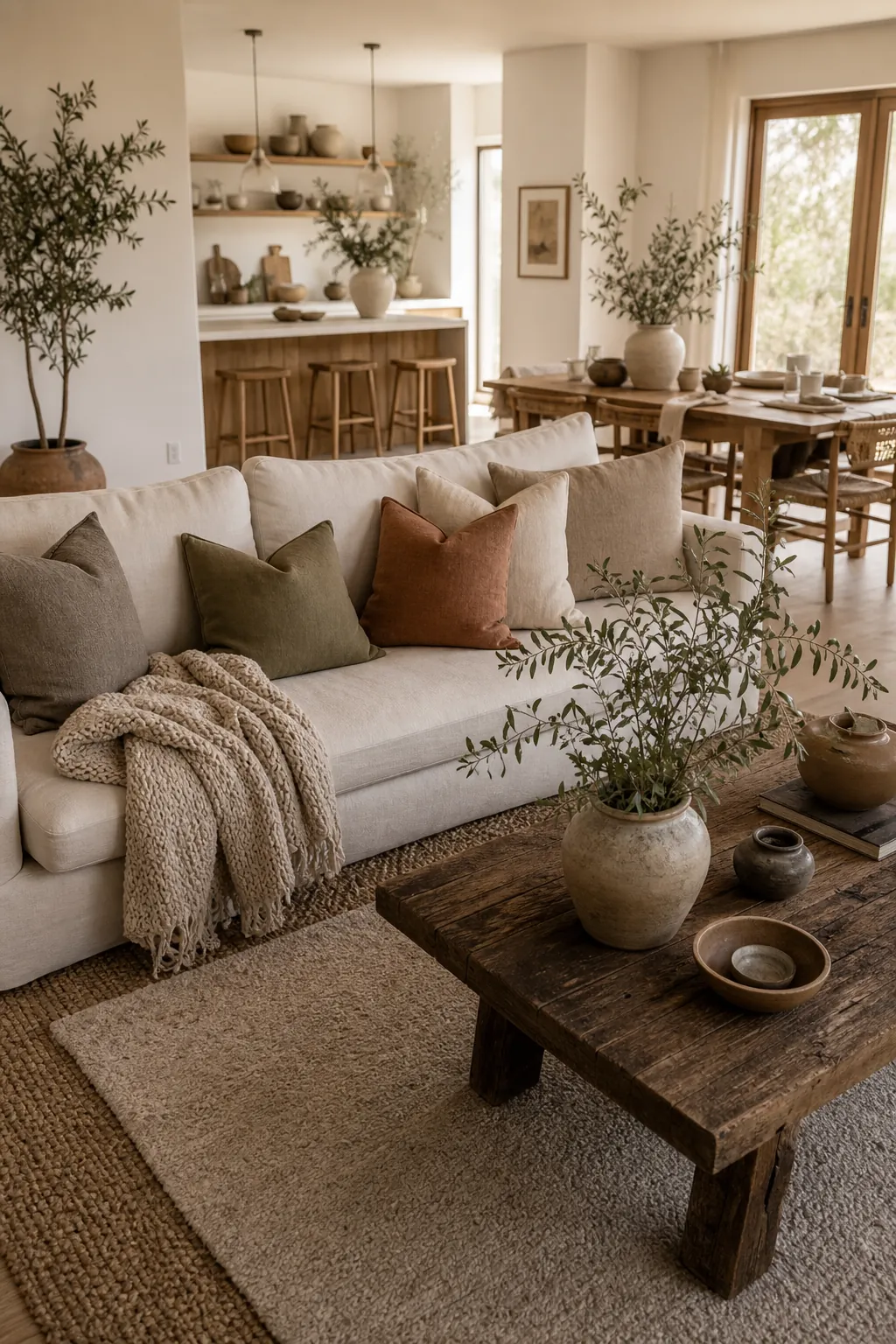
A slow weekend home does not need a full redesign. It needs fewer visual demands, warmer texture, softer light, and a few small rituals that make the rooms feel ready for rest. The easiest weekend home refresh starts by asking one question: what would help this room lower your pace the moment you walk in?
That answer is usually more practical than decorative. A basket where clutter can land, a lamp instead of overhead glare, a throw that invites you to sit down, or a wood tray that turns scattered objects into one calm moment can shift the whole mood. These relaxing home decor ideas are built for slow living, not a shopping sprint.
Start the slow weekend at the door
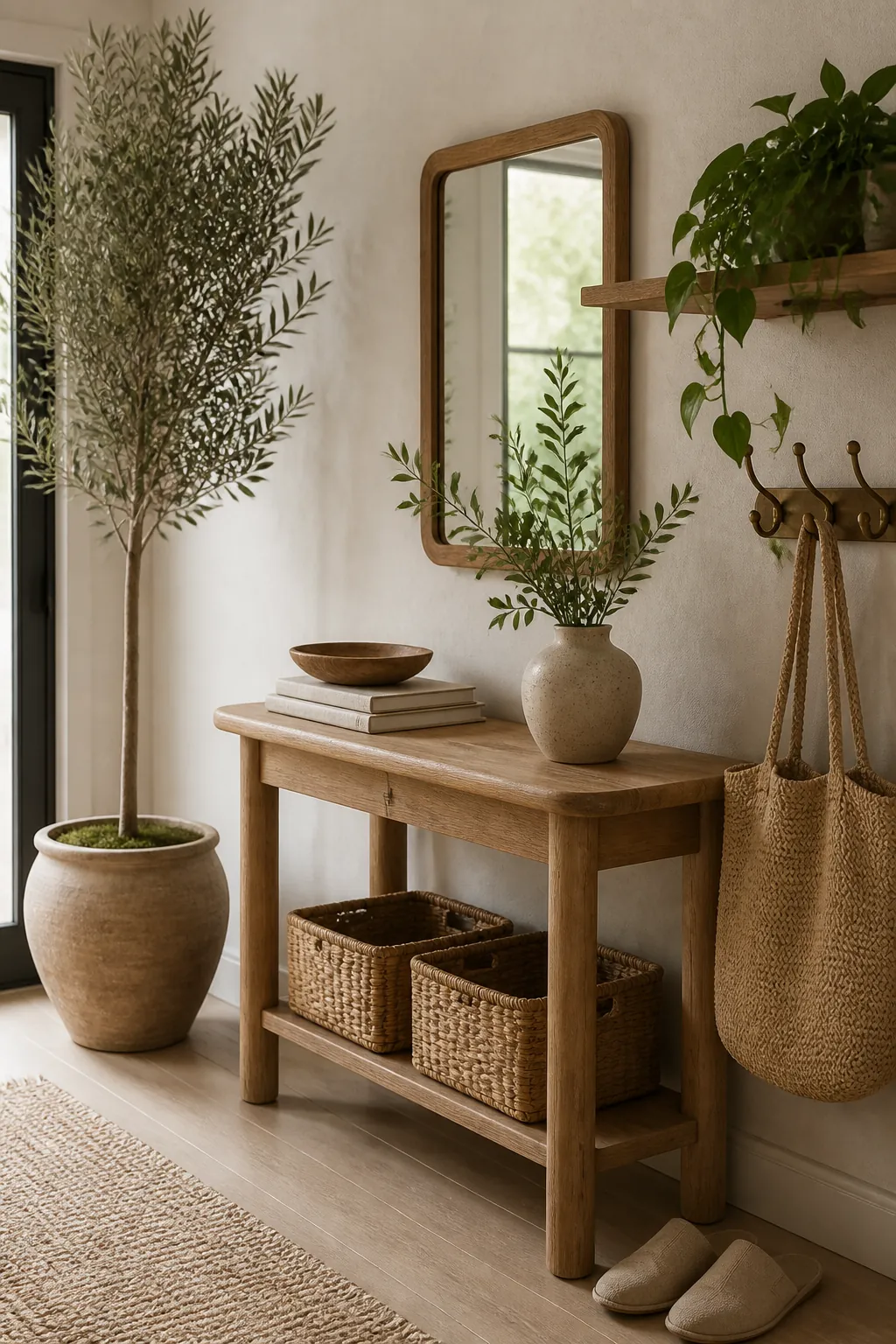
The entry is the first place your body decides whether home feels calm or crowded. If shoes, mail, tote bags, and keys are the first things you see, even a beautiful living room has to work harder. A simple bench, one tray, a hook rail, and a basket can turn the entry into a small pause before the rest of the house.
Keep this area honest. You do not need a styled console if your real problem is loose clutter. Choose natural home decor that solves the mess while still feeling warm: a woven basket, a wooden bowl, a linen tote, or a small branch arrangement. The goal is a calm drop zone, not another surface to maintain.
Make the living room feel softer before you add more
A cozy living room often comes from editing before buying. Remove the objects that feel sharp, shiny, or visually busy. Then bring back texture in layers: linen, wool, jute, clay, woven seagrass, warm oak, and one darker accent so the room has depth. This keeps neutral home decor from turning flat or cold.
For an easy weekend reset, focus on the seat where you actually unwind. Add one textured pillow, fold a throw where your hand naturally reaches, clear the coffee table down to a tray and one useful object, then leave breathing room. A calm room is not empty; it is edited around the way you want to feel.
Use texture as the quiet layer
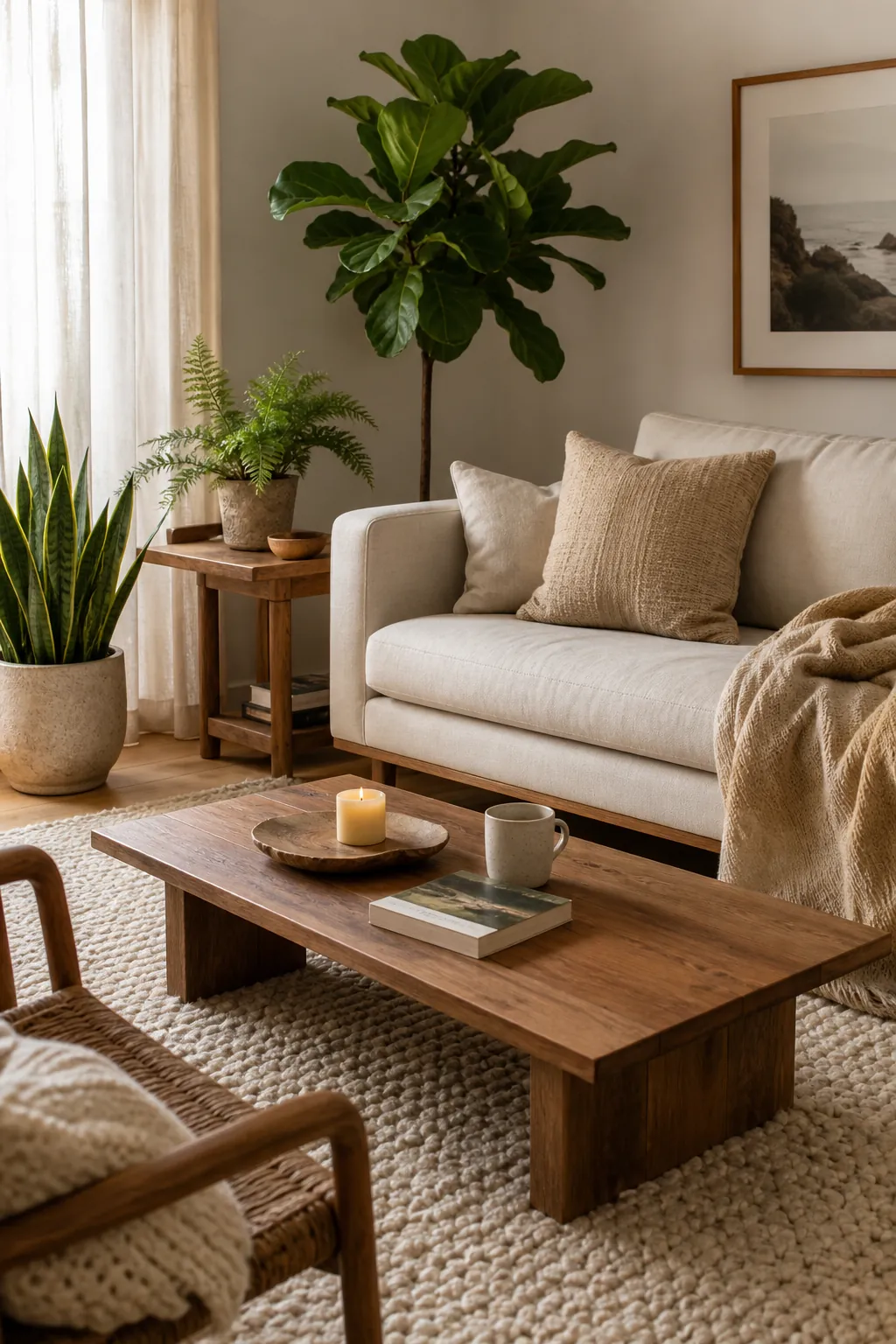
Texture is the reason earthy interiors feel grounded even when the palette is simple. A room with only smooth surfaces can look clean but still feel tense. A nubby chair, a jute rug, a linen curtain, a matte ceramic planter, or a woven basket gives the eye something gentle to rest on.
Try building one texture corner instead of spreading small decor everywhere. Place a reading chair near the window, add a basket with a folded blanket, use a small wood stool for tea or a book, and keep the plant life real or very realistic. This kind of organic modern decor feels relaxed because it uses honest materials instead of visual noise.
Turn down the light before evening
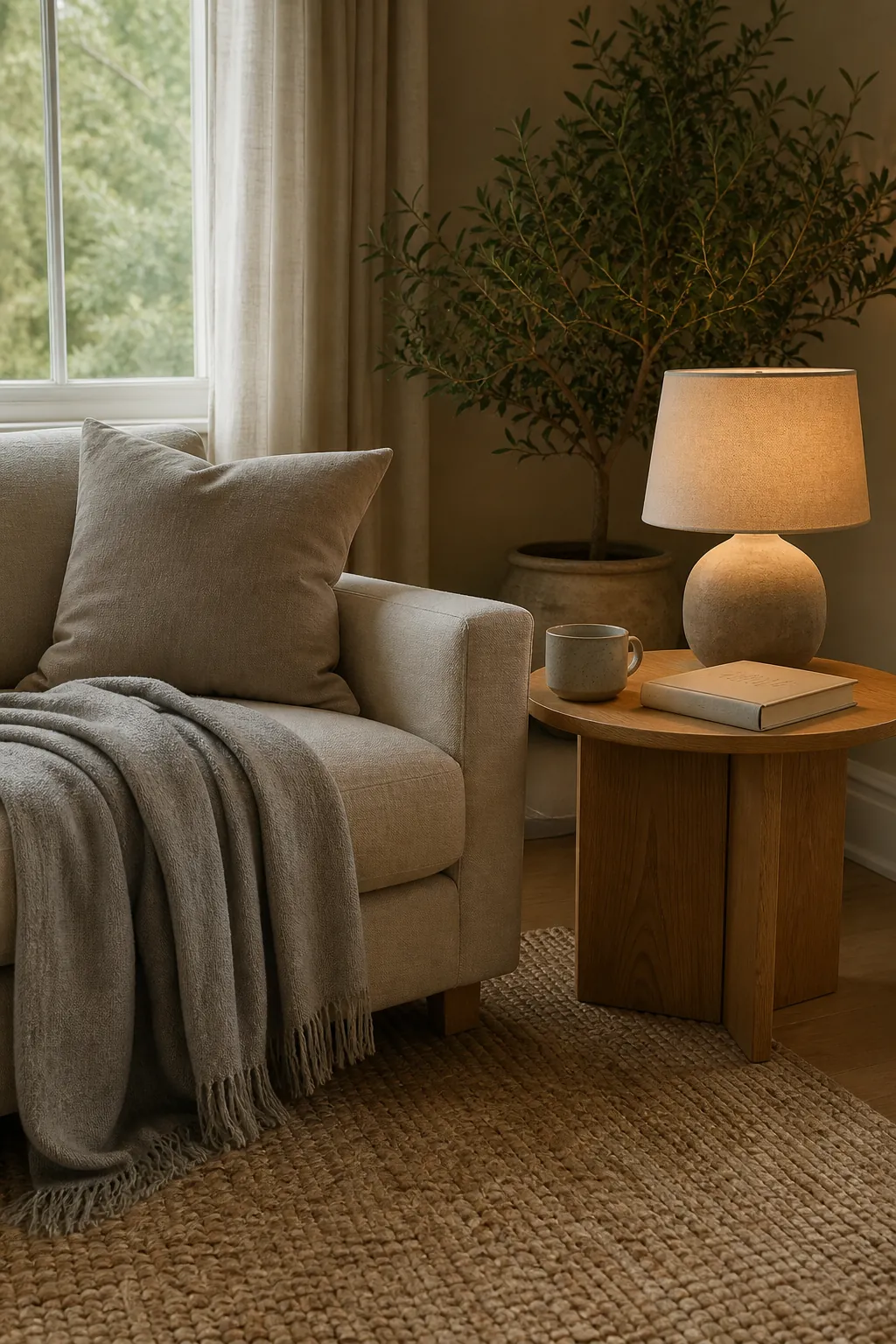
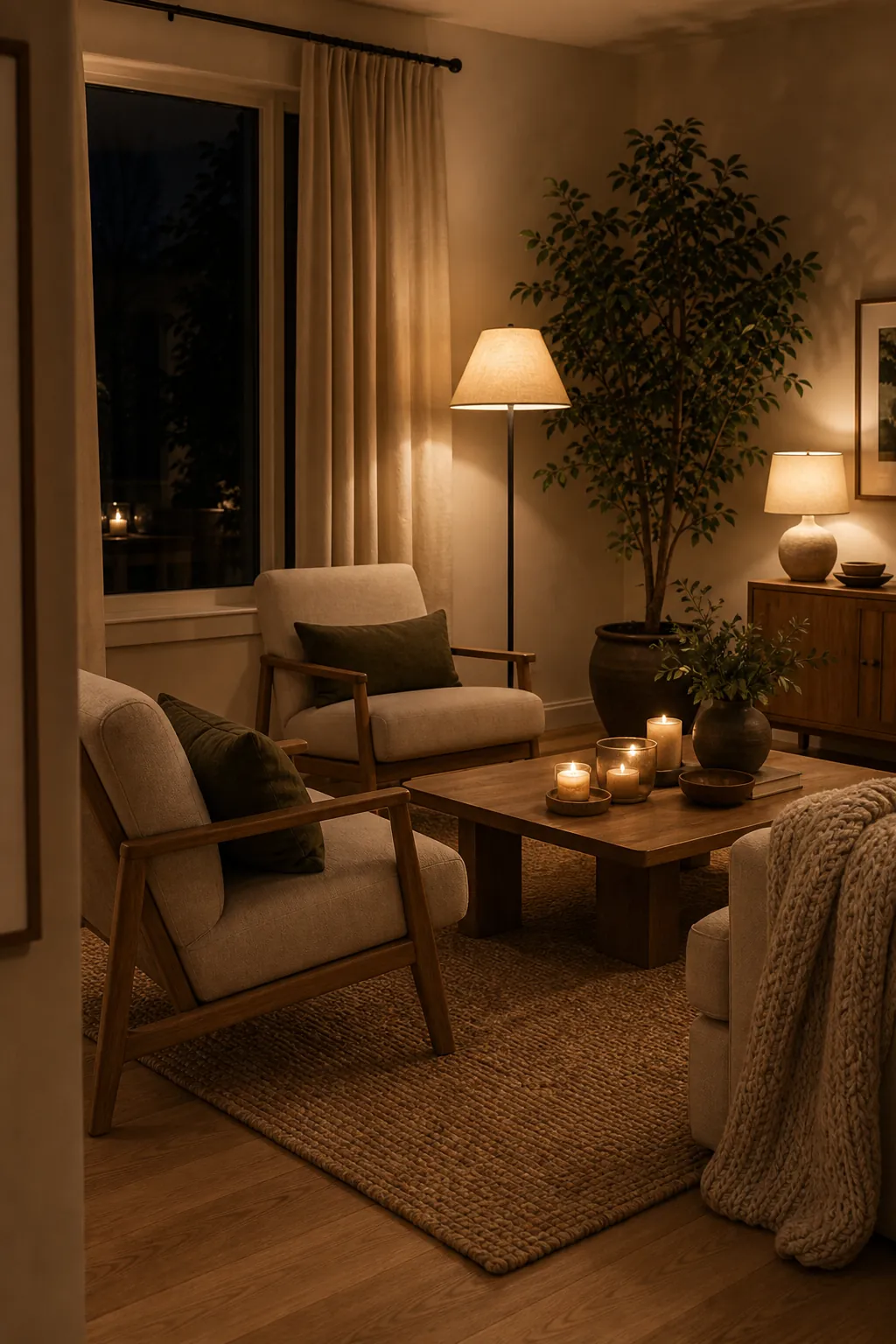
Lighting is the fastest way to change the emotional temperature of a room. Harsh ceiling light can make a clean room feel exposed, while two or three low lamps create a softer boundary around the evening. For a calming home, think in pools of light instead of one bright wash across the ceiling.
Use warm bulbs, linen shades, and lamps at different heights. A table lamp near a sofa, a low lamp beside a reading chair, and one candle on a tray can make the same furniture feel slower. The best part is that this change works even if the rest of the room is still in progress.
Let wood decor do the warming work
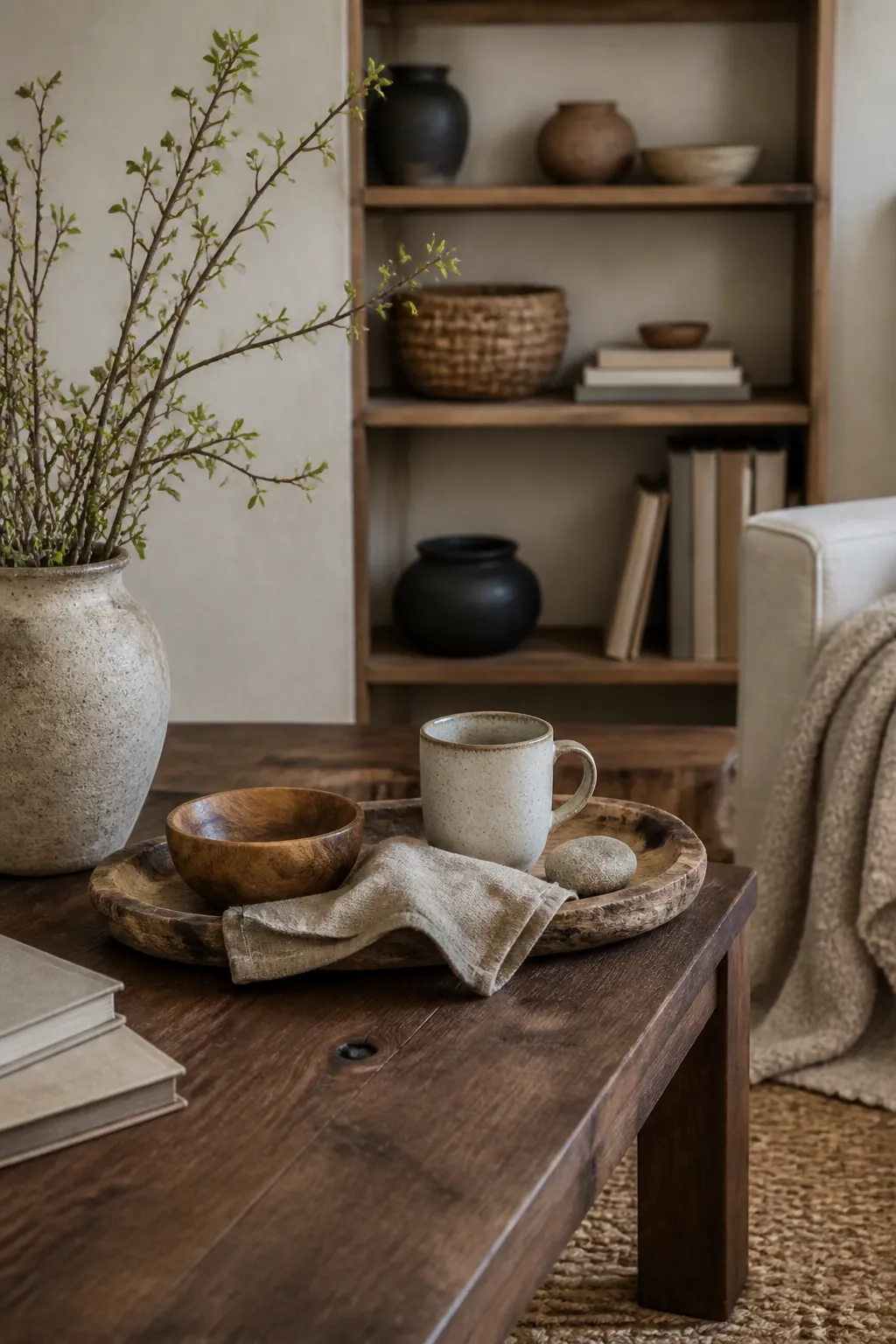
If your room feels too pale, add wood decor before adding another color. Wood gives neutral rooms weight, warmth, and age. A tray, a small bowl, a stool, a picture frame, or a side table can make white walls and light upholstery feel intentional instead of unfinished.
The trick is to mix wood with other natural surfaces. Pair walnut with matte ceramic, oak with linen, or reclaimed wood with stone and greenery. Avoid filling every shelf. A few grounded objects with space around them will feel calmer than a line of tiny pieces competing for attention.
Carry the slow weekend feeling into the bedroom
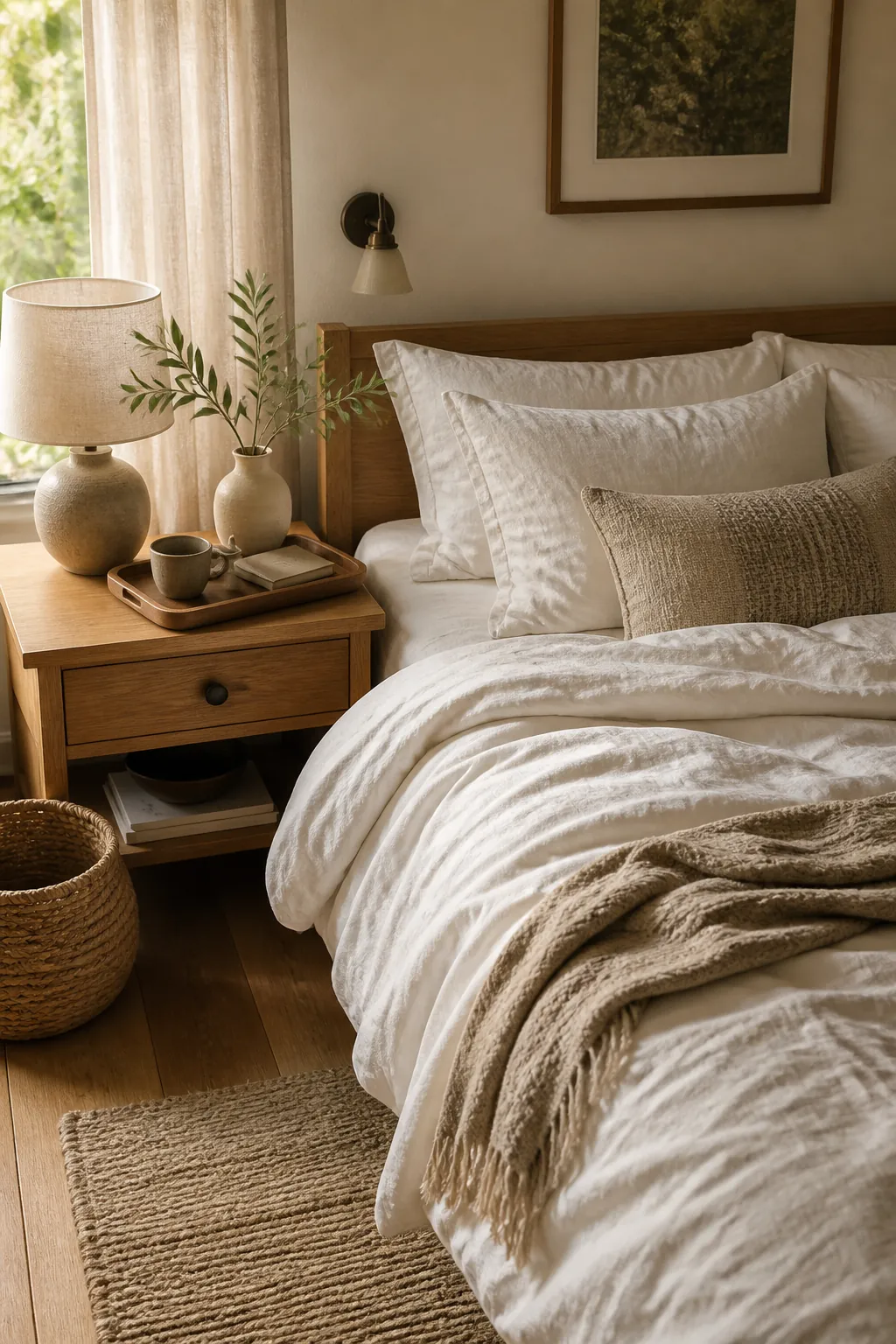
A relaxing weekend should not stop at the sofa. The bedroom can support the same quiet pace with simple choices: breathable bedding, a clear nightstand, one soft lamp, and a tray for the things you actually use in the morning. A cozy home feels consistent from room to room, even when each space has a different job.
Do not over-style the bed. Slightly wrinkled linen, one textured pillow, and a folded blanket often feel more restful than perfect layers. Keep the nightstand low on objects: a lamp, a mug or carafe, a book, a small vase, and enough empty space that the surface still feels easy to use.
A simple slow-weekend reset plan
- Clear one surface completely, then return only what supports rest or function.
- Replace one harsh light source with a warmer lamp, shade, or candle moment.
- Add one natural texture, such as linen, jute, wool, clay, wood, or woven storage.
- Create one sitting spot that is ready for tea, reading, music, or doing nothing.
- Stop before the room looks staged; a slow living home should still feel usable.
The best relaxing home decor ideas are not the ones that make the house look finished by Sunday night. They are the ones that make Monday feel less abrupt. When your rooms hold softer light, natural materials, clear surfaces, and small rituals, the weekend feeling lasts longer than the weekend itself.