
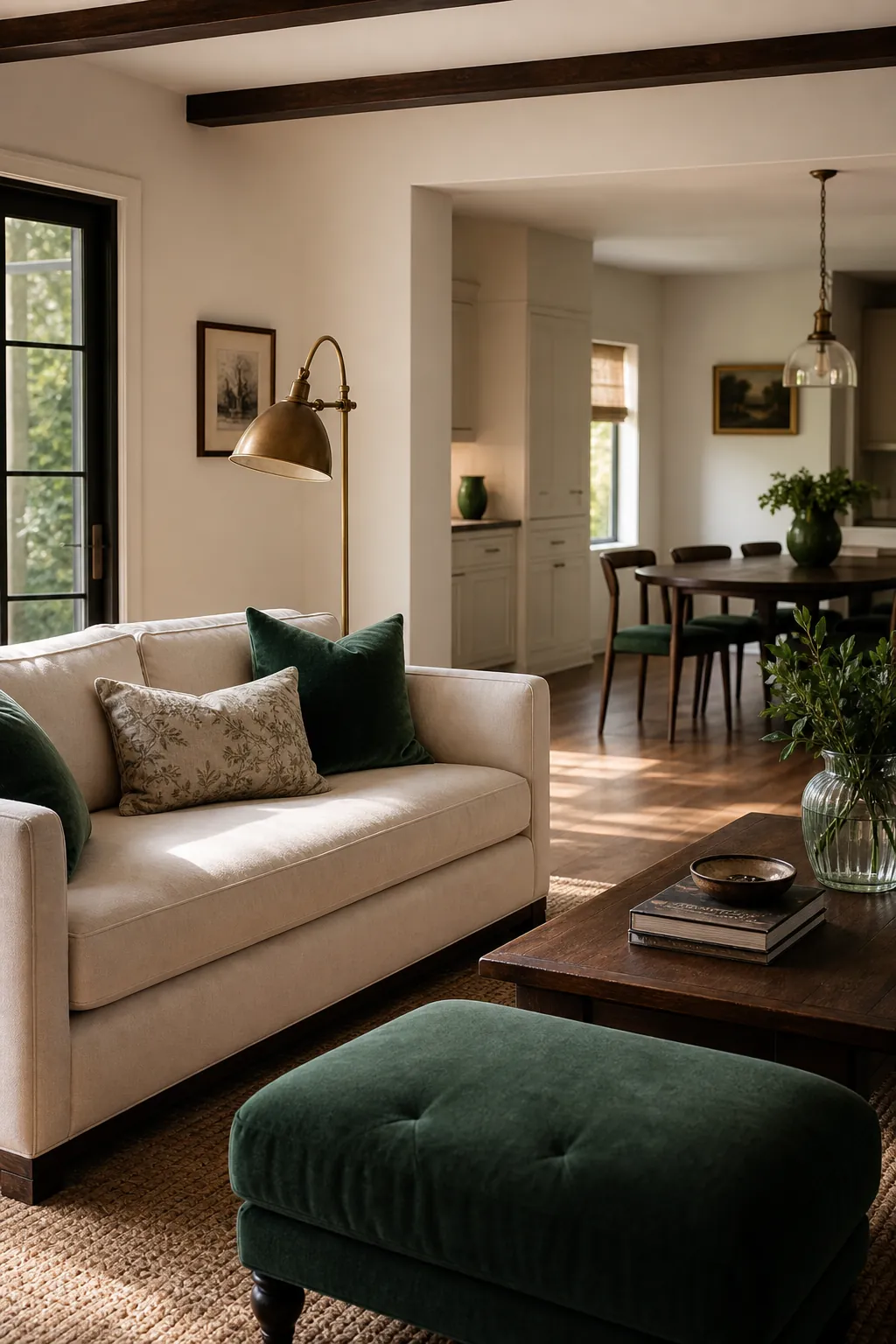
A green living room works best when the color is treated like a material, not just a paint choice. Pair it with brass accents for warmth, beige decor for breathing room, and wood accents for structure, and the room starts to feel layered instead of themed.
The trick is restraint. A beautiful Green Living Room does not need every surface to be green. It needs a clear balance: one confident green anchor, a few warm metallic details, enough neutral texture to soften the palette, and natural wood so the room feels grounded.
Start With One Green Anchor
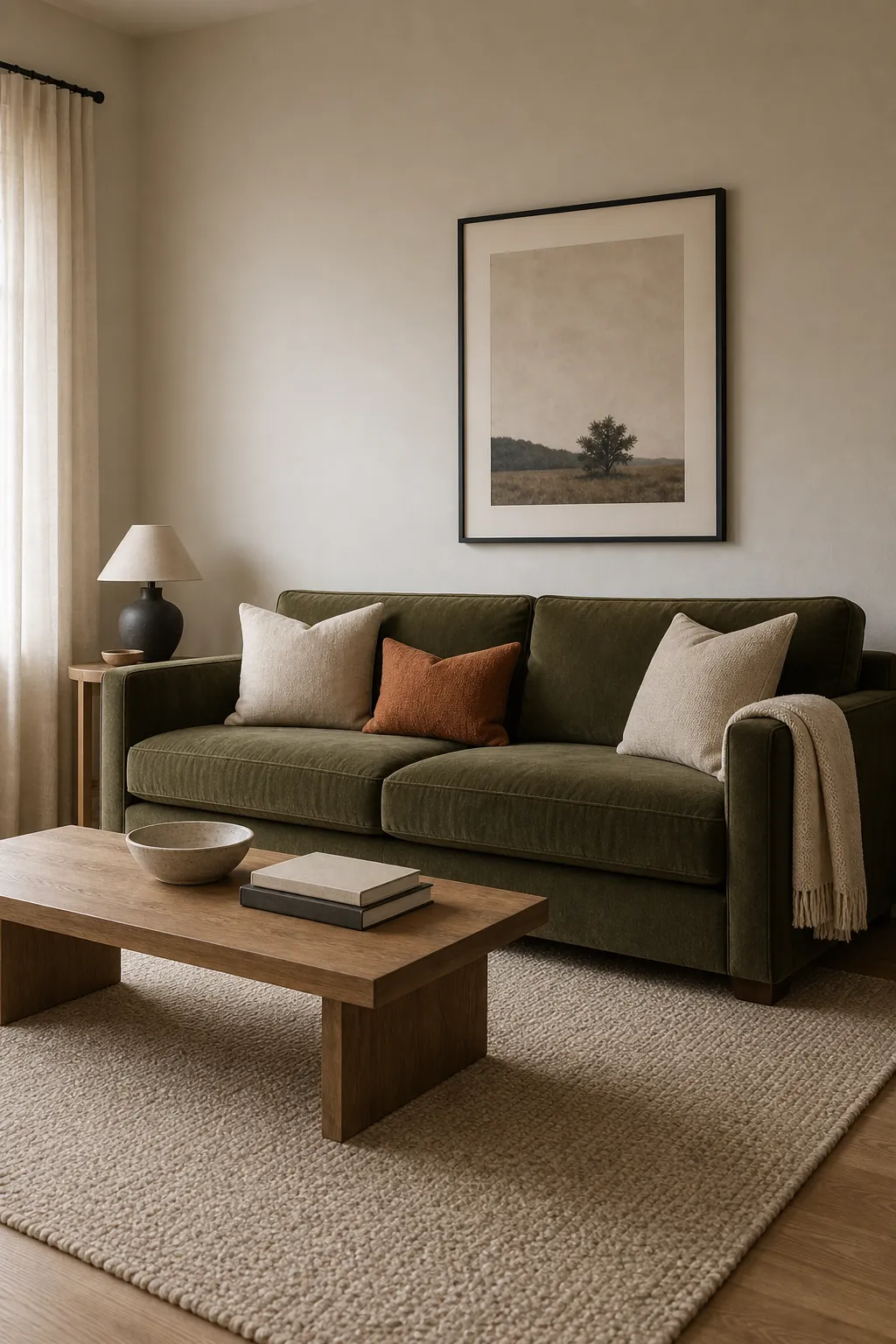
Choose the green element that will carry the room before adding anything else. For most homes, that anchor is a green sofa, an olive wall color, or painted built-ins. When all three compete, the room can feel heavy fast.
If you already have a Green Sofa, keep the surrounding walls softer: creamy white, pale beige, warm greige, or a muted green-gray. If the walls are the feature, choose upholstery in beige, oatmeal, tan, or tobacco leather so the eye has a place to rest.
- Best green for a warm living room: olive, moss, sage, eucalyptus, or deep muted forest.
- Harder greens to balance: bright emerald, blue-green jewel tones, and very yellow avocado unless the rest of the room is extremely quiet.
- Most forgiving formula: one large green element, two beige textures, one medium wood tone, and three small brass moments.
Use Beige Decor To Keep Green From Feeling Dark
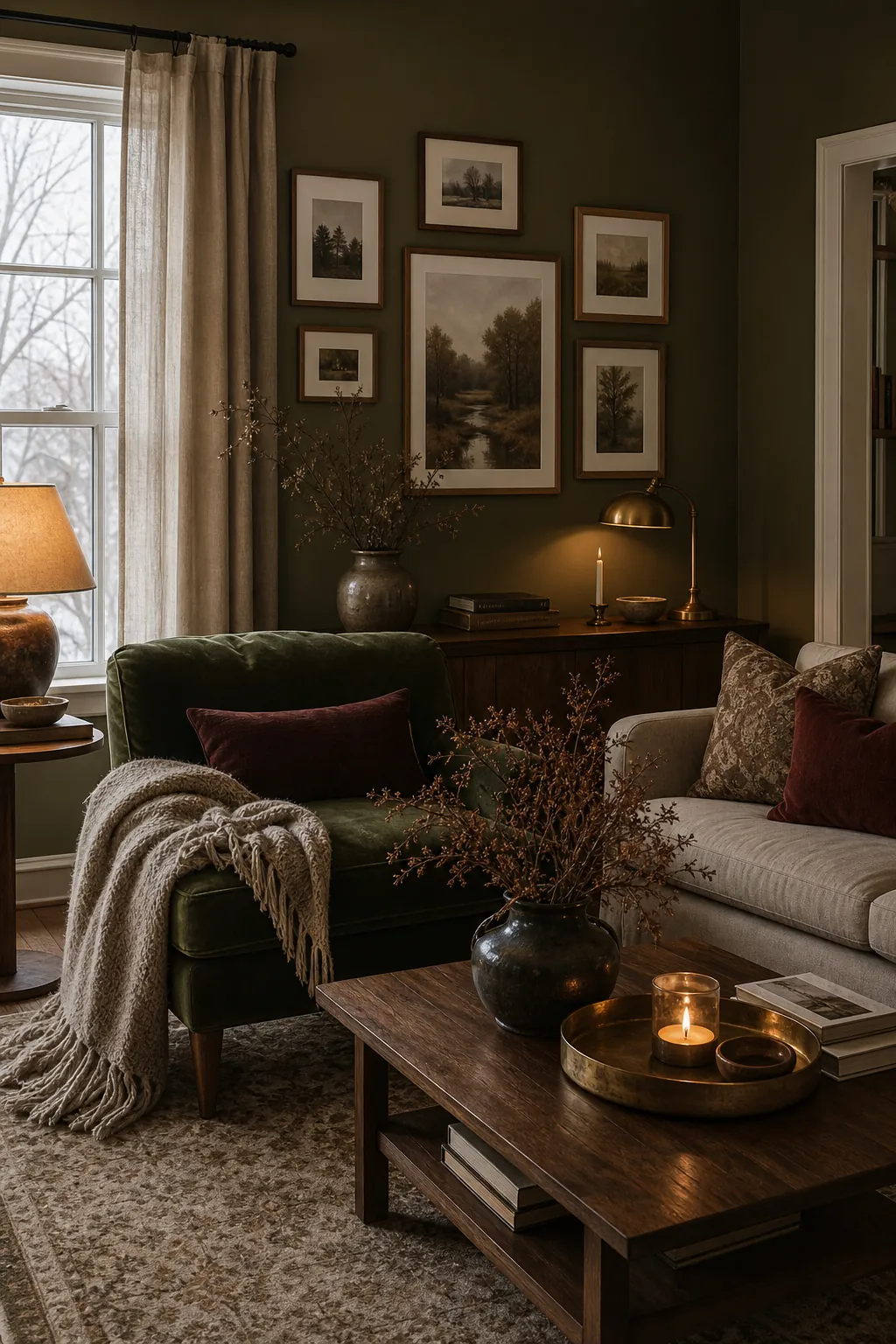
Beige Decor is not filler in this palette. It is the part that makes green livable. Linen curtains, a wool rug, boucle pillows, ceramic lamps, and warm ivory shades create softness around stronger green surfaces.
A common mistake is using only crisp white with green. White can look sharp, but it can also make olive or sage feel colder than intended. Beige, oatmeal, flax, and cream make the same green look warmer and more natural, especially in rooms with wood floors or lower evening light.
For Neutral Home Decor that still feels intentional, vary texture instead of adding more colors. Try a nubby rug, slubby linen drapes, a smooth ceramic vase, a woven basket, and a knit throw. The palette stays calm, but the room does not look flat.
Let Brass Accents Work Like Jewelry
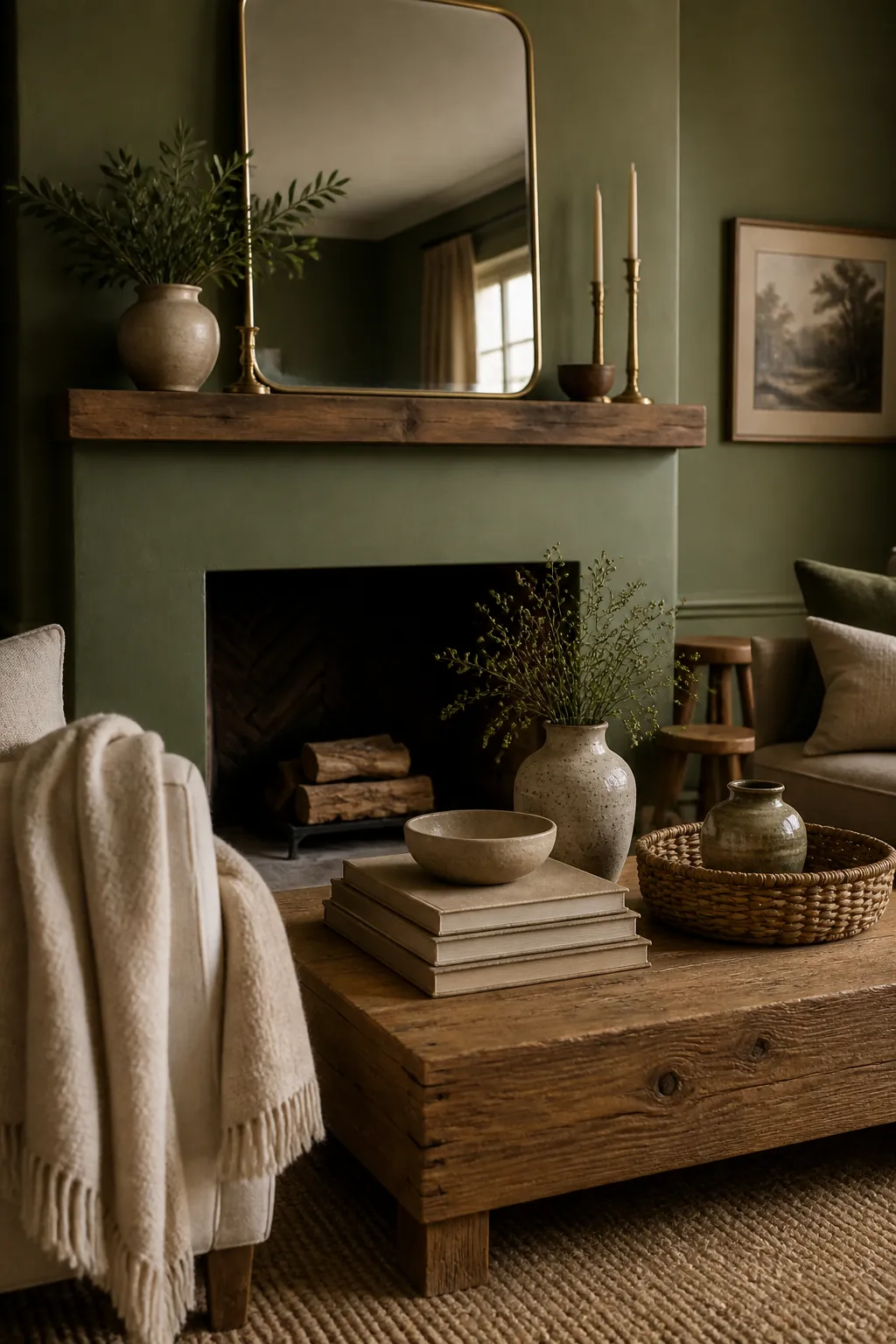
Brass Accents are strongest when they catch light in small doses. A brass floor lamp, picture light, side table, mirror frame, curtain rod, or cabinet pull can warm up green without turning the room formal.
The best brass for an Earthy Living Room is usually brushed, aged, unlacquered, or antique brass. Highly polished brass can work, but it needs more restraint because it reflects more light and attention.
- Use brass near green surfaces so the contrast feels deliberate.
- Repeat brass at least twice, but avoid using it on every object.
- Mix brass with matte ceramics, linen, and wood so it does not feel too glam.
- Keep black accents minimal if you want the room to stay soft and warm.
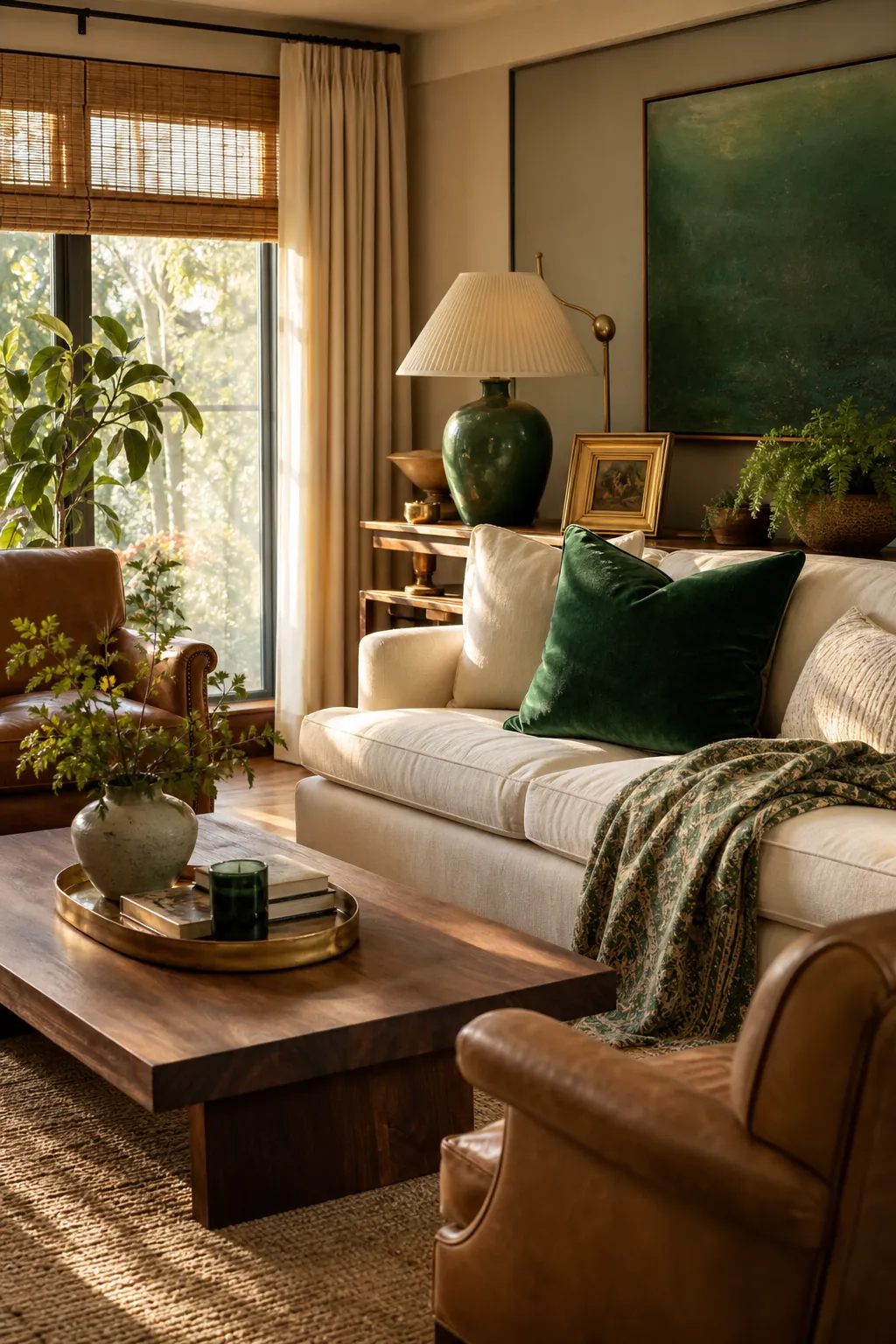
Choose Wood Accents That Match The Mood
Wood Accents decide whether the room leans rustic, modern, traditional, or organic. Pale oak makes green feel fresh and Scandinavian. Walnut gives the room depth. Reclaimed wood makes the palette more relaxed and earthy. A mix can work, but the undertones should agree.
For most green, brass, and beige rooms, medium warm woods are the easiest bridge. They connect the brass warmth to the neutral textiles and stop green from feeling isolated. If your floors are cool gray, add warmth with an oak coffee table, woven shades, walnut frames, or a vintage wood stool.
A practical Living Room Styling rule: put wood at different heights. Use flooring or a rug border low, a coffee table in the center, frames or shelves at eye level, and a lamp or branch arrangement higher up. That vertical spread makes the palette feel designed.
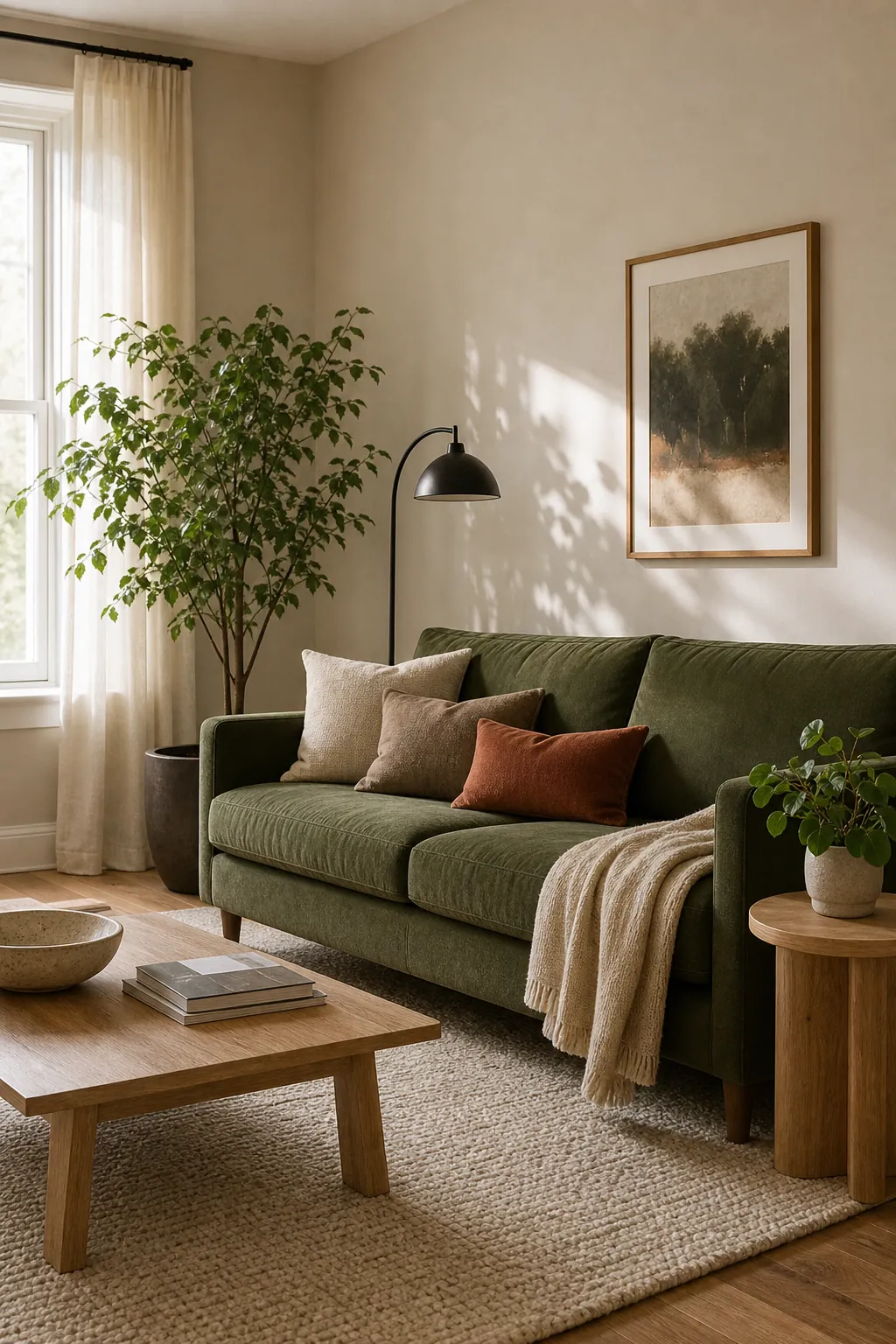
Build A Palette That Looks Warm In Real Life
Green can change dramatically across the day. Morning light may make it look fresher; evening light may make it read deeper and moodier. Before painting a whole room, test the green beside the exact beige fabric, brass finish, and wood tone you plan to use.
A warm Green Living Room usually needs at least one of these balancing moves: a beige rug larger than the seating area, warm bulbs in every lamp, wood furniture with visible grain, or brass placed near the darkest green surface. Those choices keep the room cozy without making it dim.
If the palette feels too quiet, add contrast through shape instead of color. A round brass mirror, ribbed ceramic lamp, chunky oak table, arched floor lamp, or sculptural beige chair gives the room movement while staying inside the Natural Home Decor direction.
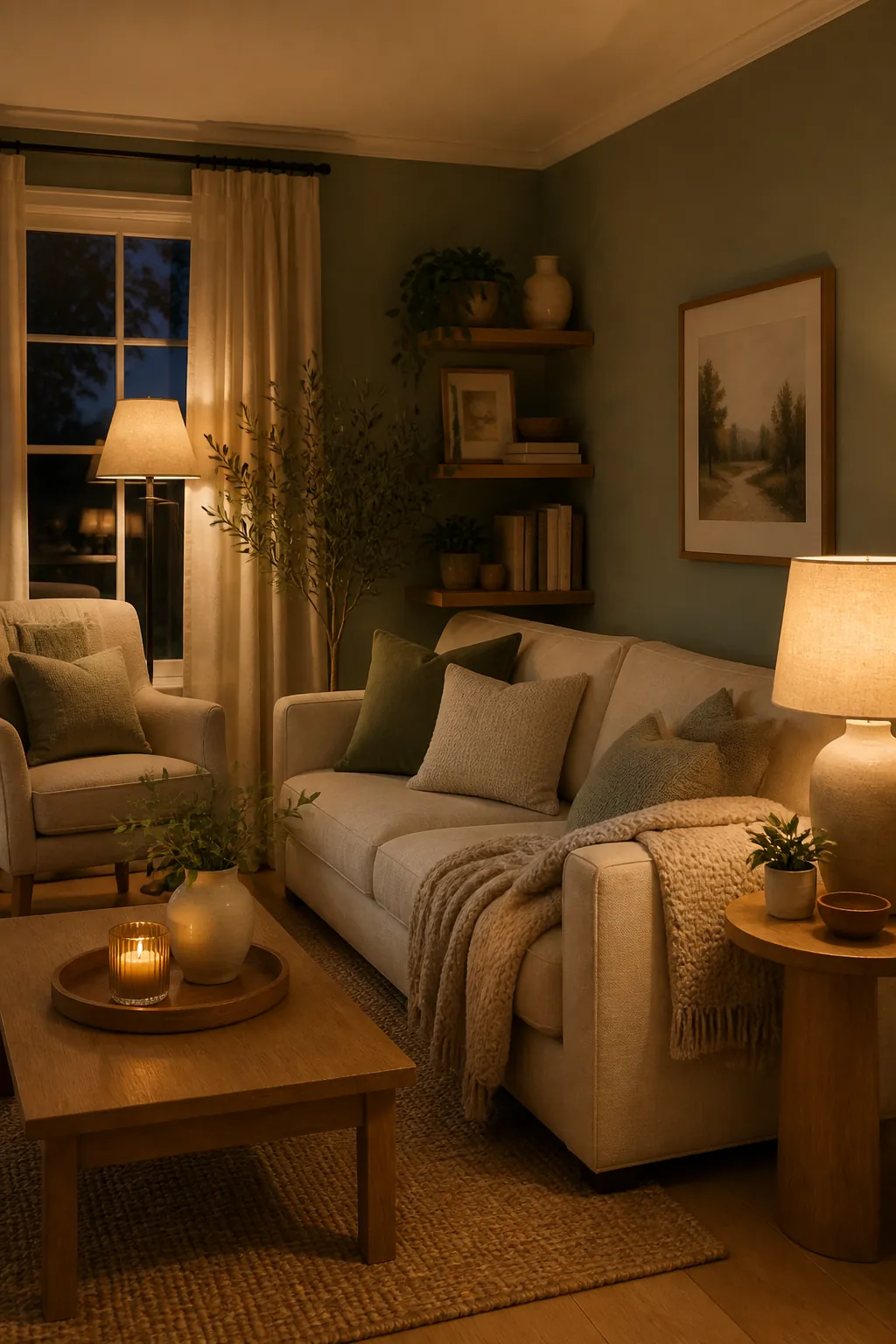
Make The Same Formula Work In A Small Living Room
In a smaller room, the palette has to work harder. Use green as a focused statement rather than a full-room takeover: one sofa, one painted wall, one built-in, or one large artwork. Then use beige decor to keep the room open and wood accents to give it shape.
Brass is especially useful in compact rooms because it reflects light without adding visual weight. A plug-in brass sconce, slim floor lamp, or small brass-framed mirror can make the space feel warmer without taking up much room.
- Choose a leggy wood coffee table so the rug remains visible.
- Use one large beige rug instead of several small textiles.
- Repeat green in a plant or pillow, but avoid scattering green everywhere.
- Pick storage pieces in oak or walnut so practical furniture still supports the palette.
The Finished Look
The most successful green, brass, beige, and wood rooms feel collected, not matched. Green brings depth, brass catches light, beige softens the edges, and wood makes the space feel human. When each material has a clear job, the room becomes warm, earthy, and easy to live with.