
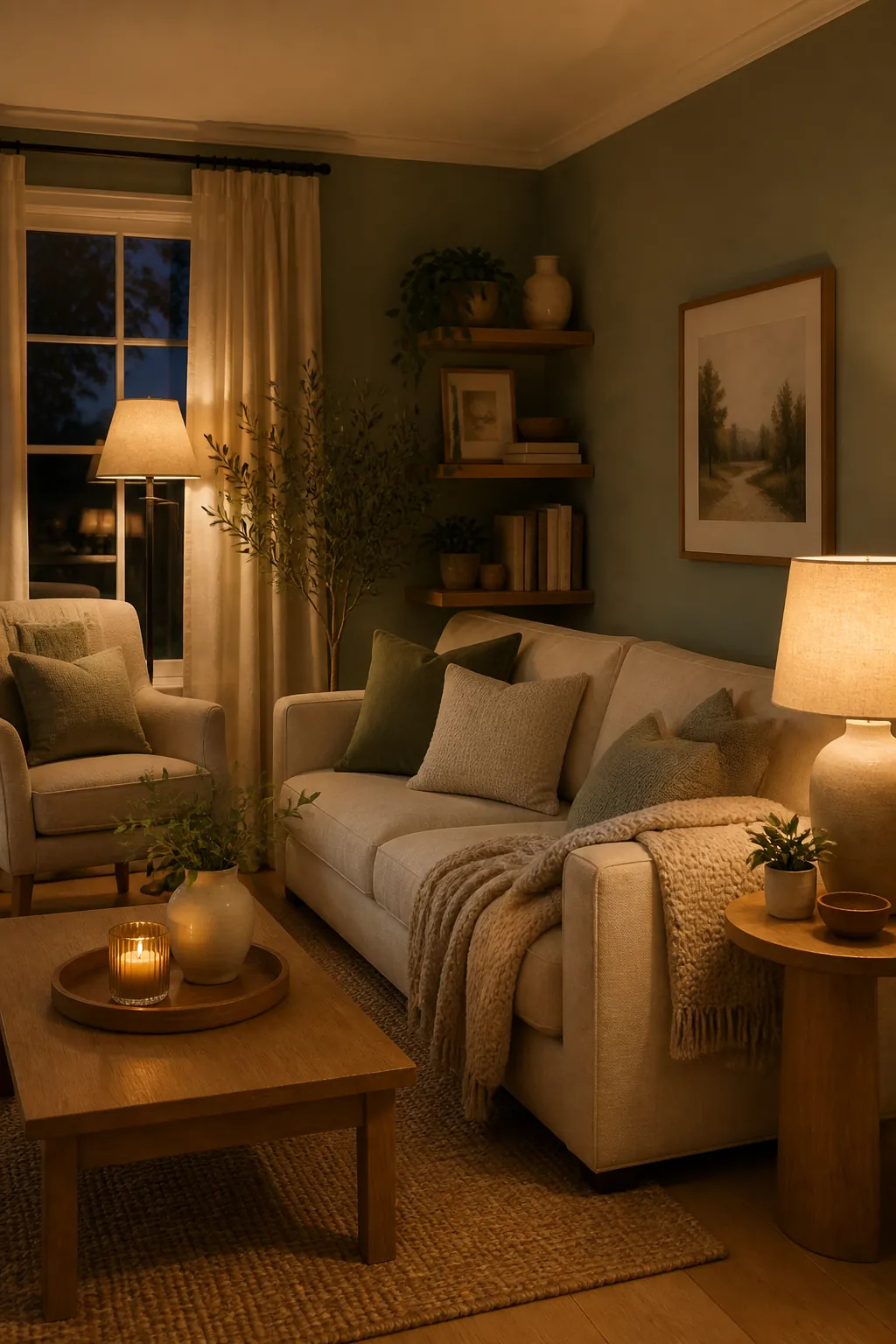
An olive green living room can be one of the easiest rooms to make cozy in winter, but only when the green has enough warmth around it. On its own, olive can shift muddy, gray, or heavy when the daylight turns weak. Paired with wool, wood, cream, brass, and a little amber light, it becomes calm and cocooning instead.
The trick is to treat olive as the room’s grounding color, not the whole story. A winter-ready green living room needs contrast, texture, and a few warmer notes so the space feels intentional after sunset as well as during the day.
Start With Warm Neutrals So Olive Does Not Turn Flat
Olive already has brown and yellow undertones, so it works best with neutrals that share that softness. Cream, oatmeal, mushroom, flax, warm gray, and greige make an olive wall or green sofa feel relaxed instead of severe. Bright white can look sharp in summer, but in winter it often makes olive feel colder than it is.
Use neutral accents where the eye rests most: the rug, curtains, lamp shades, sofa throws, and larger pillows. These pieces break up the depth of the green without stealing attention from it. If the room feels dull, add one warmer accent such as rust, clay, muted ochre, or caramel leather rather than adding more green.
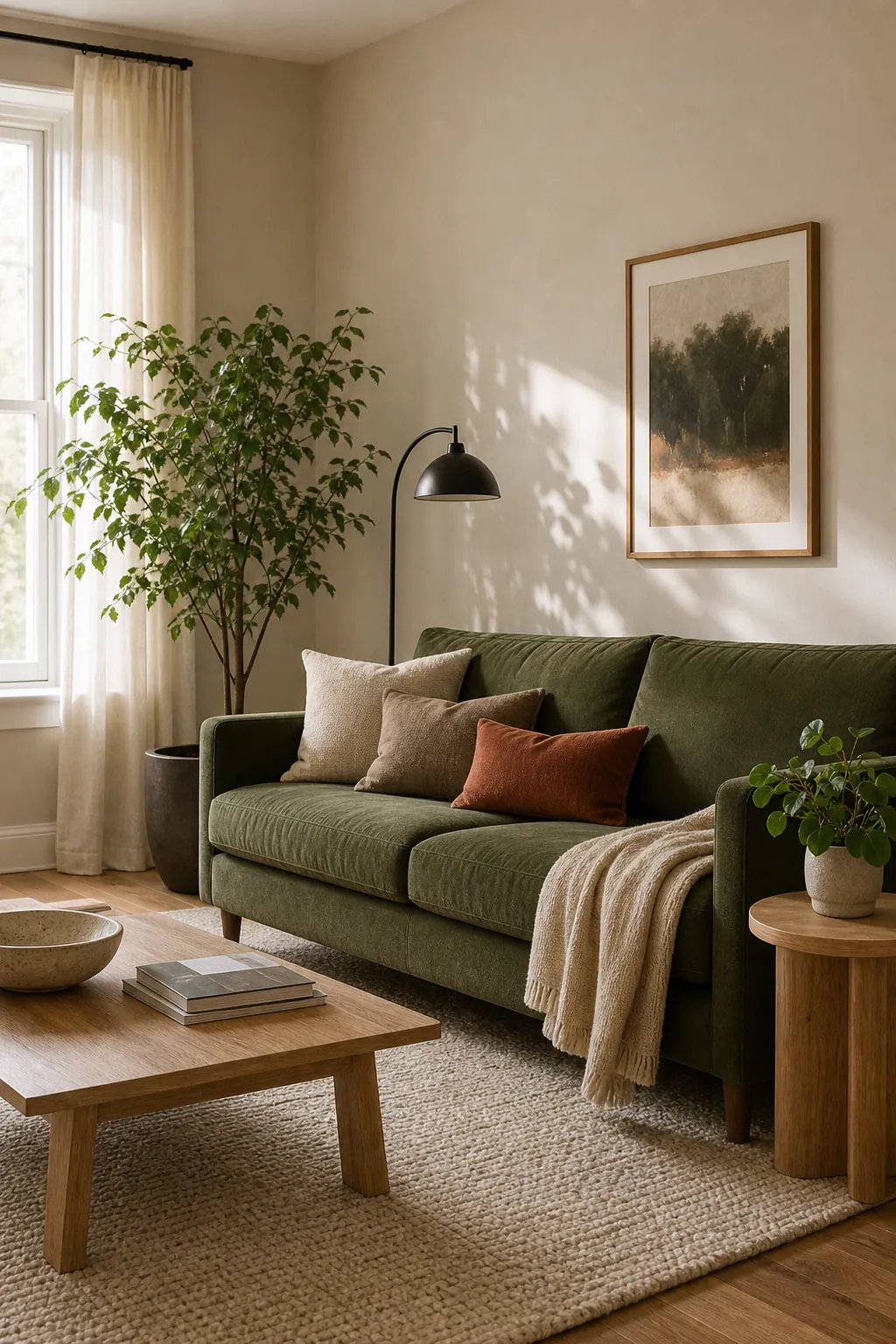
Bring In Wood Accents Before Adding More Decor
When an olive room feels unfinished, the missing piece is often wood. Wood accents give olive green a natural partner and keep the palette from reading too cool. Walnut, oak, teak, and reclaimed wood all work, but the finish matters: choose medium or warm stains over gray-washed wood.
A coffee table, picture frames, side table, media cabinet, or woven basket can be enough. You do not need to replace every piece. In a winter decor scheme, wood also adds visual warmth even when the room has simple shapes and quiet colors. It makes earthy decor feel collected instead of themed.
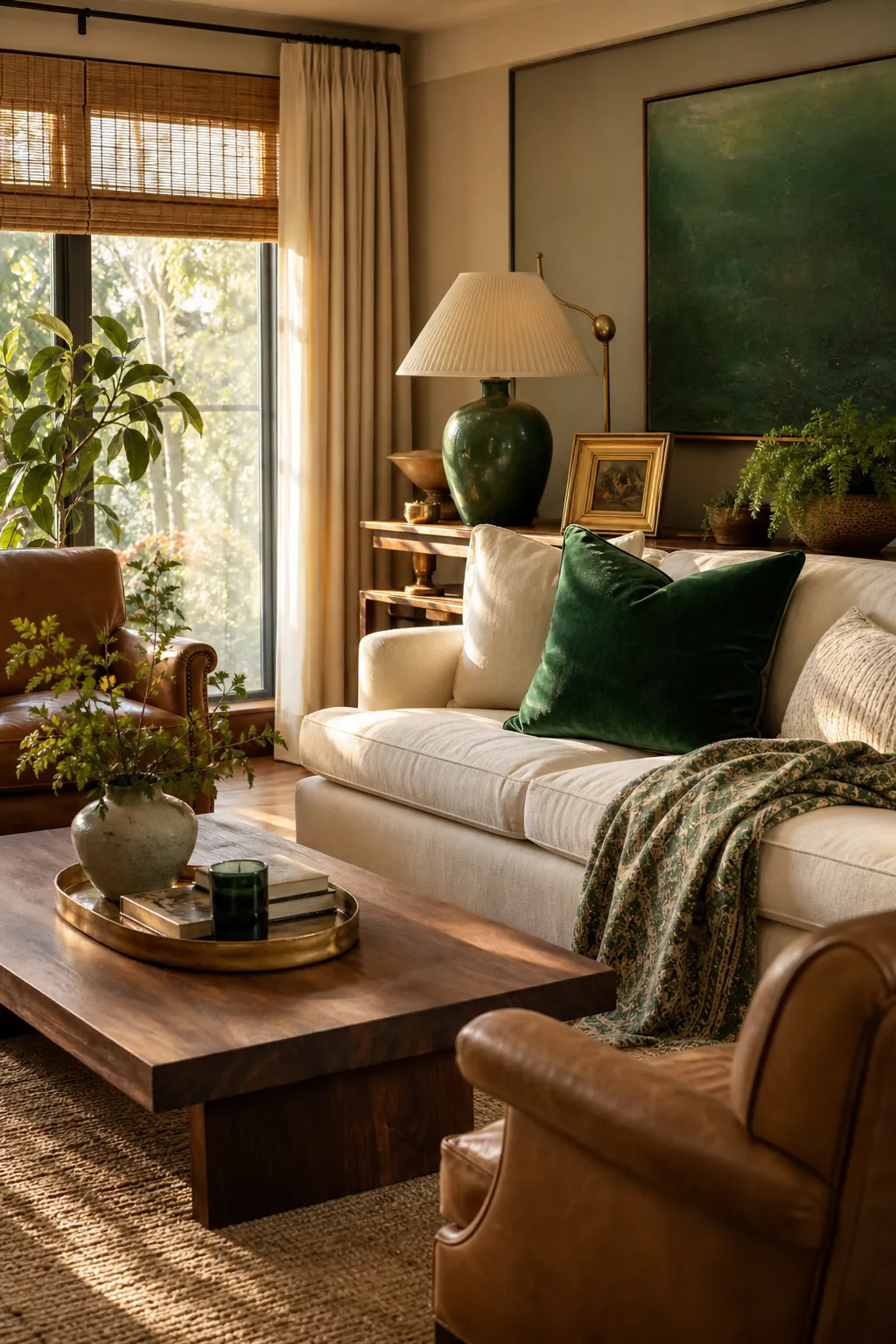
Layer the Lighting for Winter Evenings
Olive green changes dramatically with light. In pale winter daylight, it can look soft and herbal. Under a single cool ceiling light, it can look shadowy and tired. A warm living room needs at least three light sources: one for the room, one near seating, and one low accent light that catches wood, art, or fabric texture.
Look for warm bulbs, linen or paper shades, brass finishes, and lamps placed lower than eye level when seated. A table lamp beside the sofa, a picture light over art, and a floor lamp in a reading corner will make the green feel deeper without making the room dark. This is especially helpful if your olive wall is across from a window and loses direct light early in the afternoon.
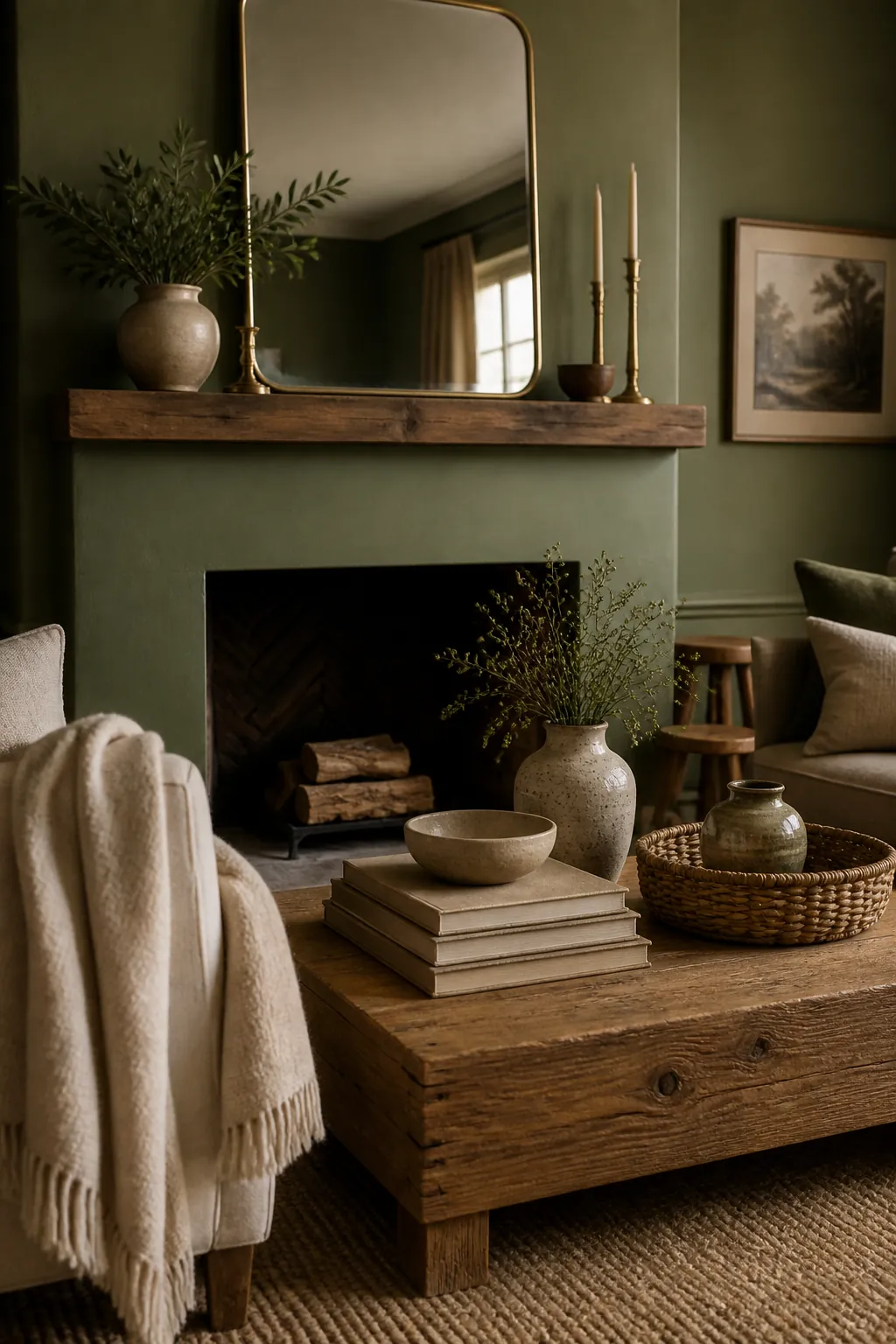
Use Texture as the Main Winter Decor
The most reliable winter decor for an olive green room is not seasonal signage. It is texture. Wool, boucle, linen, velvet, jute, aged leather, matte ceramics, and chunky knits make the space feel warmer without making it busy. A room can stay minimal and still feel layered if the surfaces are varied.
For a cozy living room, start with a thick rug and curtains that soften the window wall. Then add one heavy throw, two or three pillows in different materials, and a small group of tactile objects on the coffee table. If everything is smooth, olive can feel formal. If everything has texture, olive feels comfortable.
Keep Seasonal Styling Subtle and Earthy
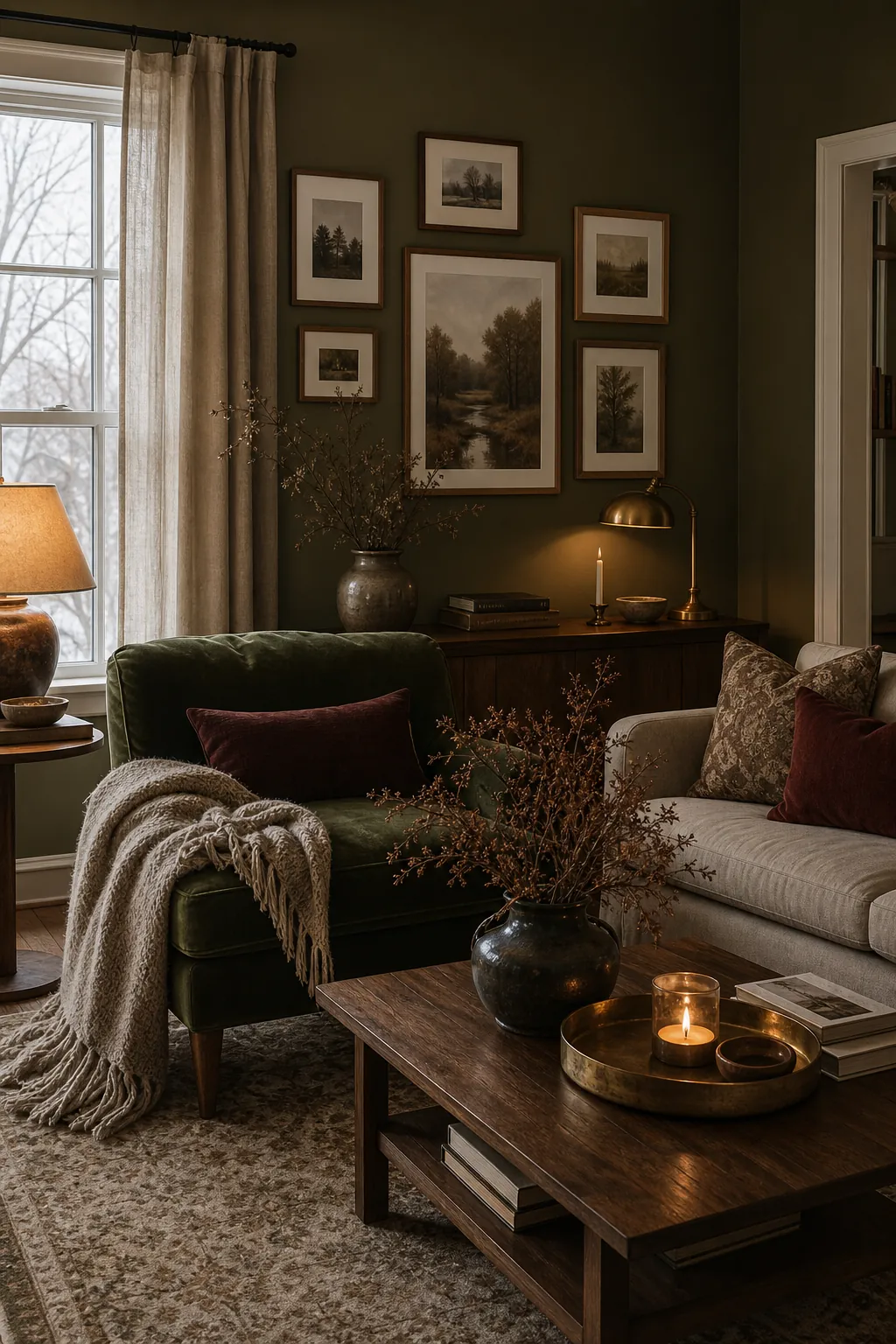
Olive green already suggests nature, so it does not need heavy seasonal decoration. A few winter branches, cedar stems, dried grasses, stacked logs, stoneware, and candlelight are usually enough. This keeps the room from feeling like a temporary holiday setup and makes it easier to live with through the whole cold season.
If you have a fireplace or mantel, use it to repeat the palette: olive art, cream ceramics, dark wood, brass, and one warm terracotta piece. The goal is quiet repetition. Living room styling feels richer when the same tones appear in different materials, not when every object competes for attention.
Make Olive Work in a Small Living Room
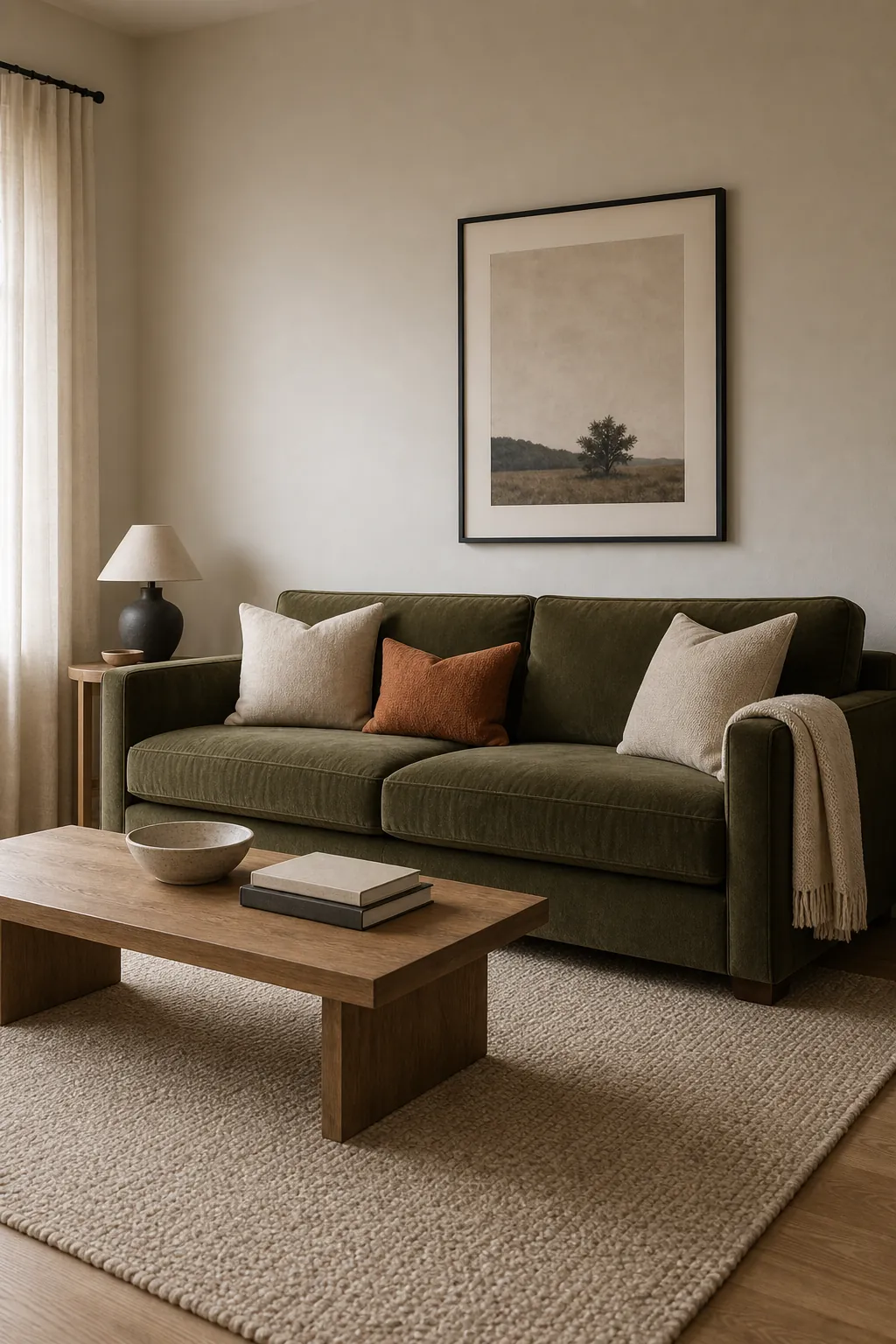
In a compact room, olive green works best when it has breathing room. Use it on one wall, on the sofa, or in a chair, then keep the largest surrounding pieces lighter. A cream sofa against an olive wall can feel warmer and more open than a dark sofa against a dark wall, especially when paired with pale oak and simple curtains.
Small rooms also benefit from repeated slim shapes: narrow wood shelves, a round coffee table, a small lamp, and baskets tucked under a console. Keep the palette restrained but not monochrome. Olive, cream, oak, rust, brass, and one deep brown note will feel more layered than many shades of green.
The Simple Formula
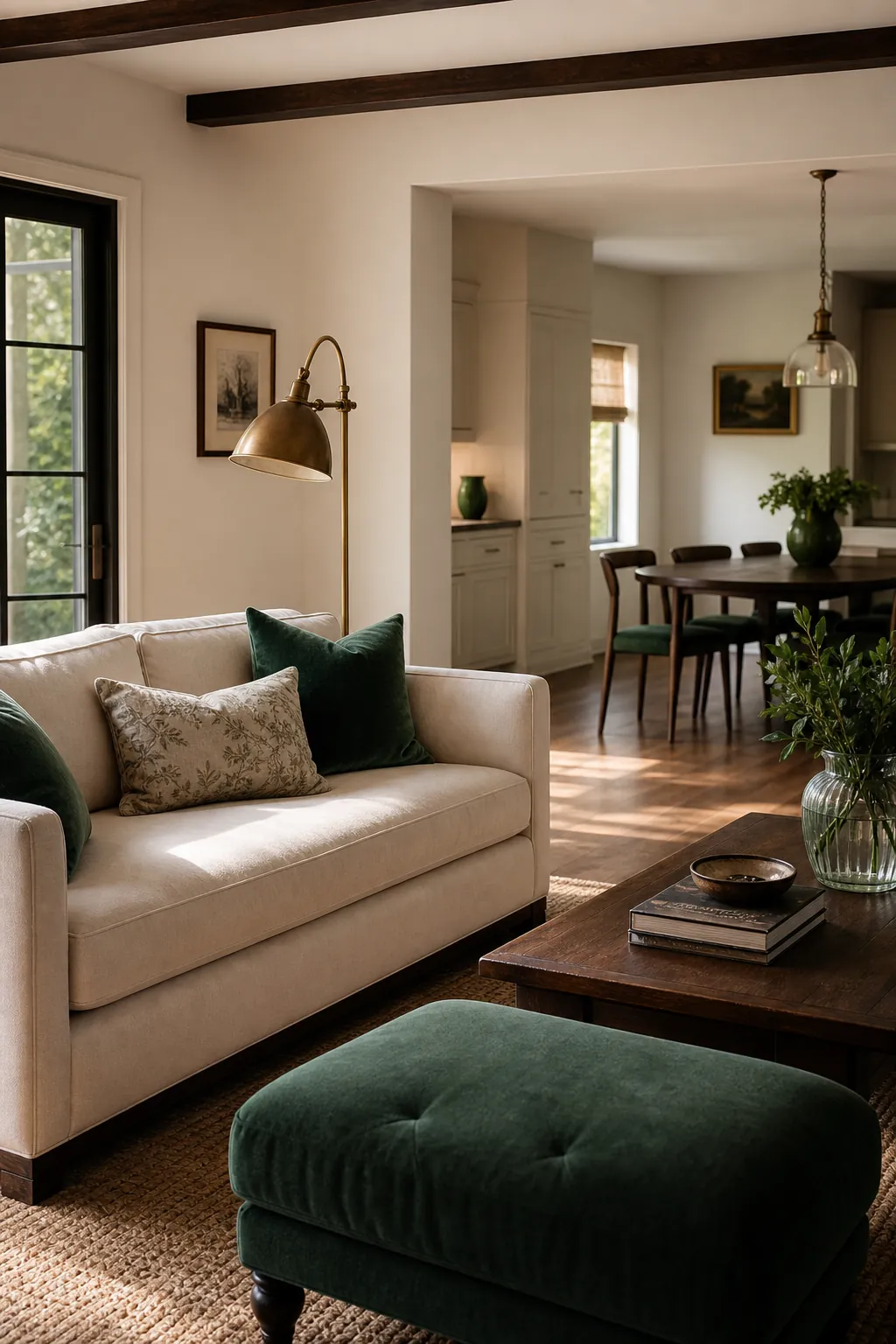
For an olive green living room that feels warm in winter, use this formula: olive for depth, cream for lift, wood for warmth, texture for comfort, and layered lamps for evening softness. If the room feels too cold, add amber light or wood. If it feels too heavy, add cream textiles. If it feels flat, add texture before adding more color.
Olive is at its best when it feels grounded, not decorated around. Let the green set the mood, then use neutral accents, wood accents, and earthy winter layers to make the room feel calm enough for everyday living.