
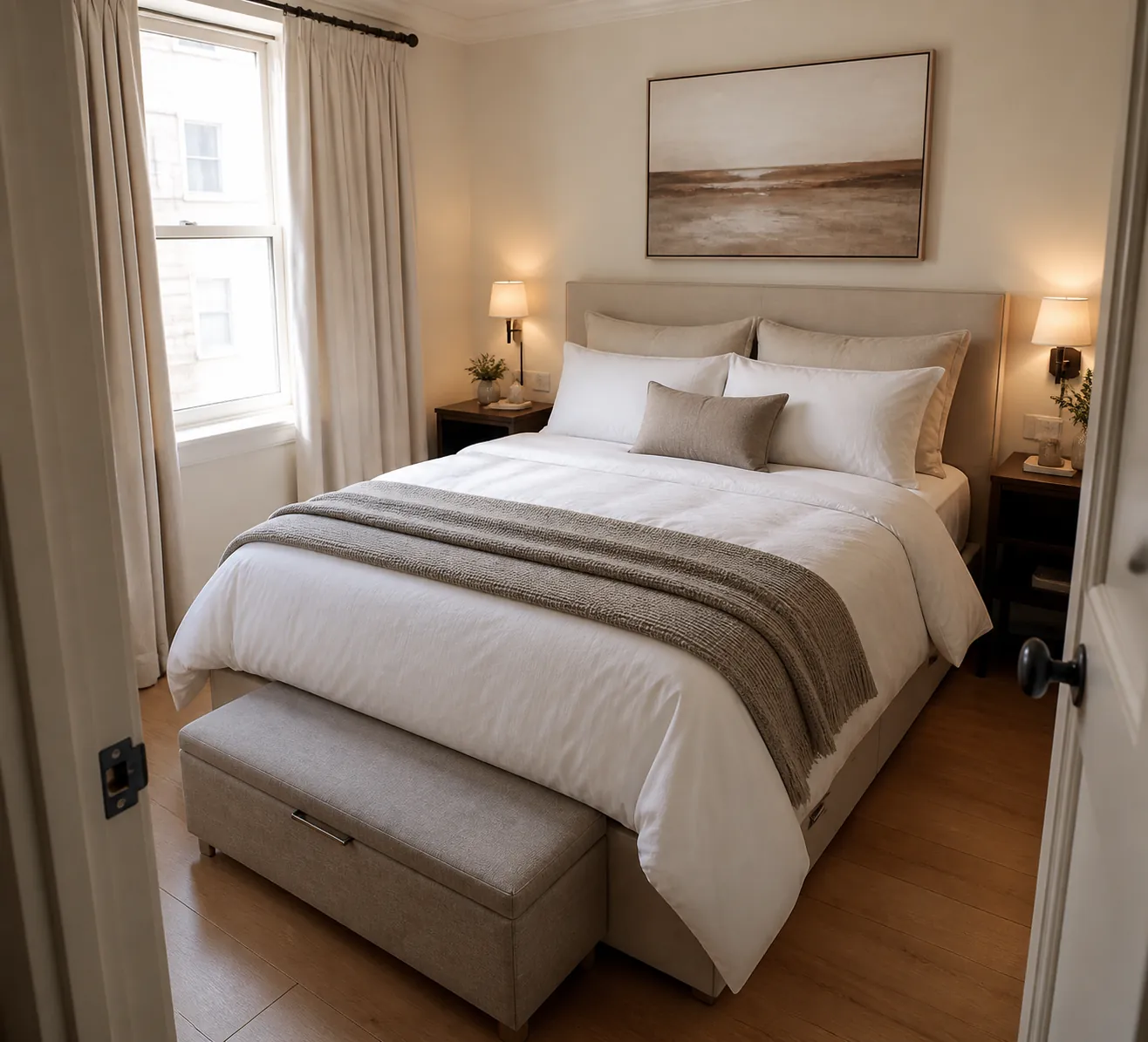
A small bedroom does not need more decor to feel like a hotel room. It needs fewer weak signals: no thin bedding, no harsh overhead light, no crowded nightstand, no visible storage overflow, and no furniture that blocks the room from breathing.
The hotel look works because the room feels intentional before it feels expensive. In a compact room, that means choosing a calm palette, building the bed properly, using soft lighting at more than one height, and hiding the practical stuff so the first impression is restful.
Start With the Bed Because It Takes Up the Most Visual Space
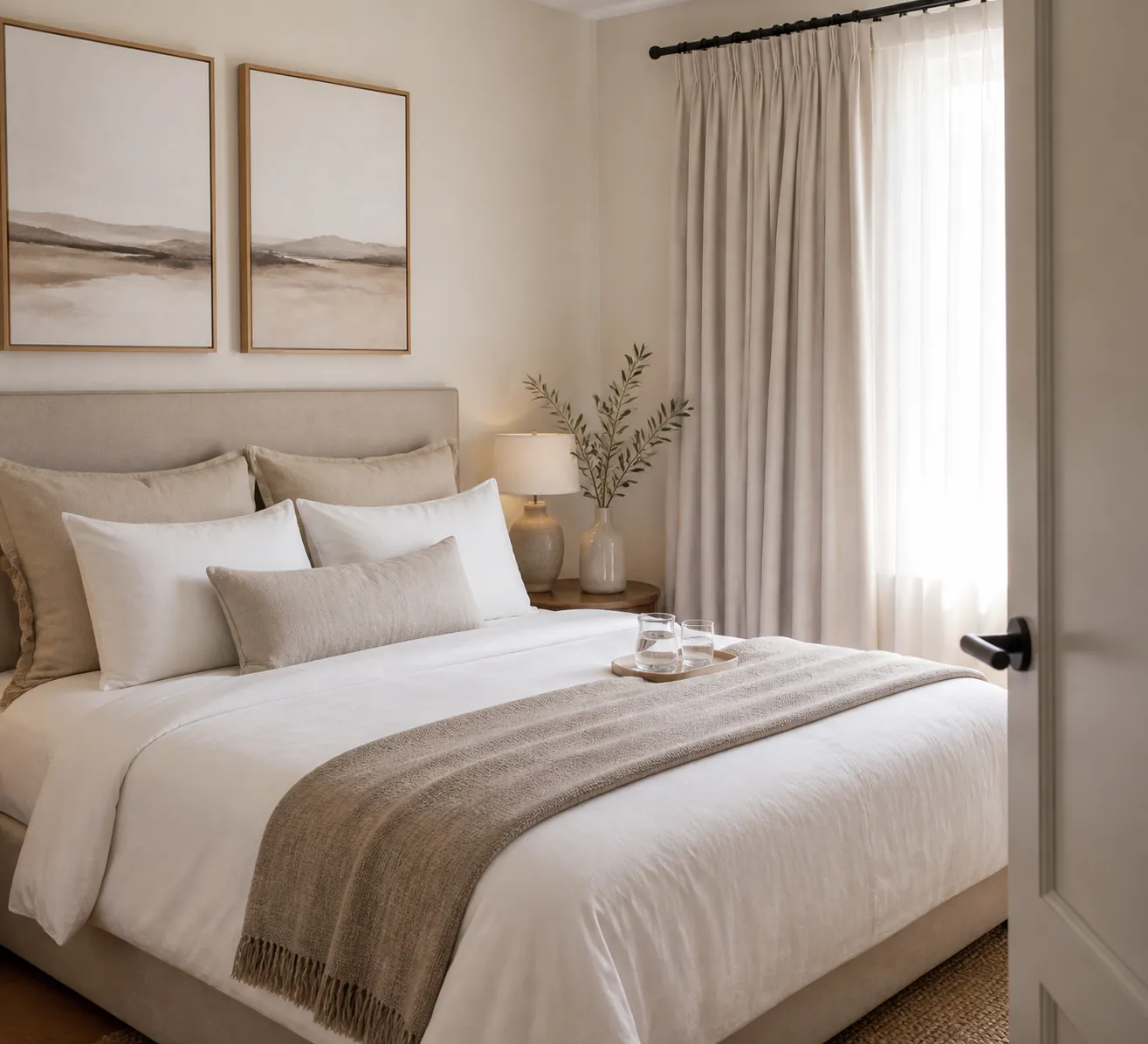
In a small bedroom layout, the bed is not just furniture. It is the main wall, the main color block, and the main texture in the room. If the bed looks flat, the whole room feels unfinished. The fastest hotel style bedroom upgrade is layered bedding in a tight palette.
- Use crisp white sheets or a white duvet as the base.
- Add two sleeping pillows per person if the bed size allows it.
- Place larger Euro pillows or firm shams behind the sleeping pillows for height.
- Fold a textured throw across the foot of the bed instead of spreading it casually everywhere.
- Limit accent pillows to one or two so the bed still feels easy to use.
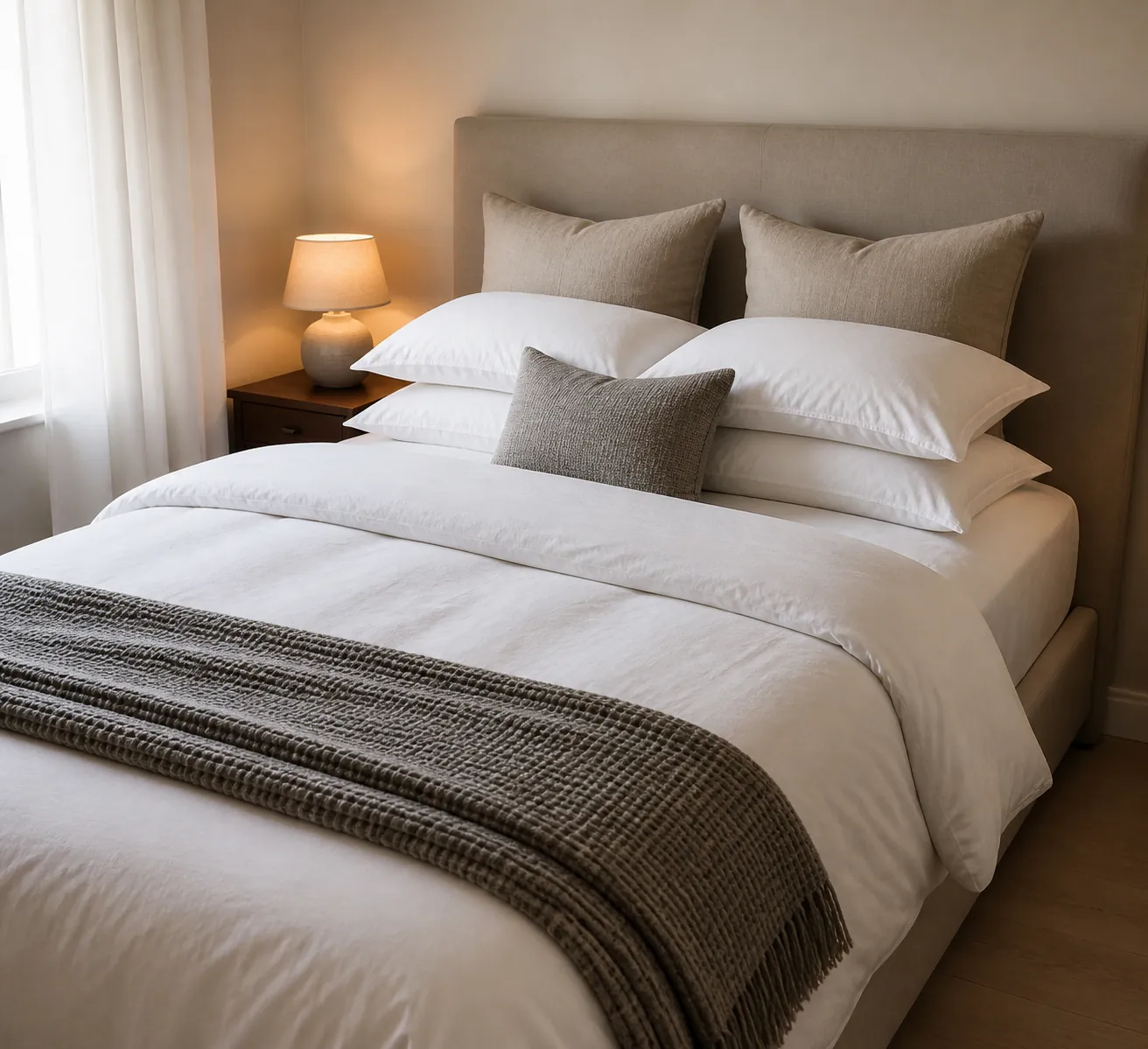
Keep the colors close: white, ivory, oat, taupe, warm gray, or soft beige. A neutral bedroom can still feel cozy when the fabrics change texture. Cotton, linen, waffle weave, matelasse, and a soft knit throw create depth without making the room busy.
Replace One Harsh Light With a Hotel-Style Lighting Plan
Most small bedrooms feel ordinary because the only useful light is a ceiling fixture. Hotels rarely depend on one overhead light. They use low, warm, flattering light near the bed so the room feels calm at night and soft in the morning.
If floor space is limited, wall sconces are usually better than bulky table lamps. If wiring is not realistic, use plug-in sconces, slim lamps, or rechargeable picture lights. The key is not the fixture price. The key is placing light near the headboard, curtains, and bedside surface so the room has glow instead of glare.
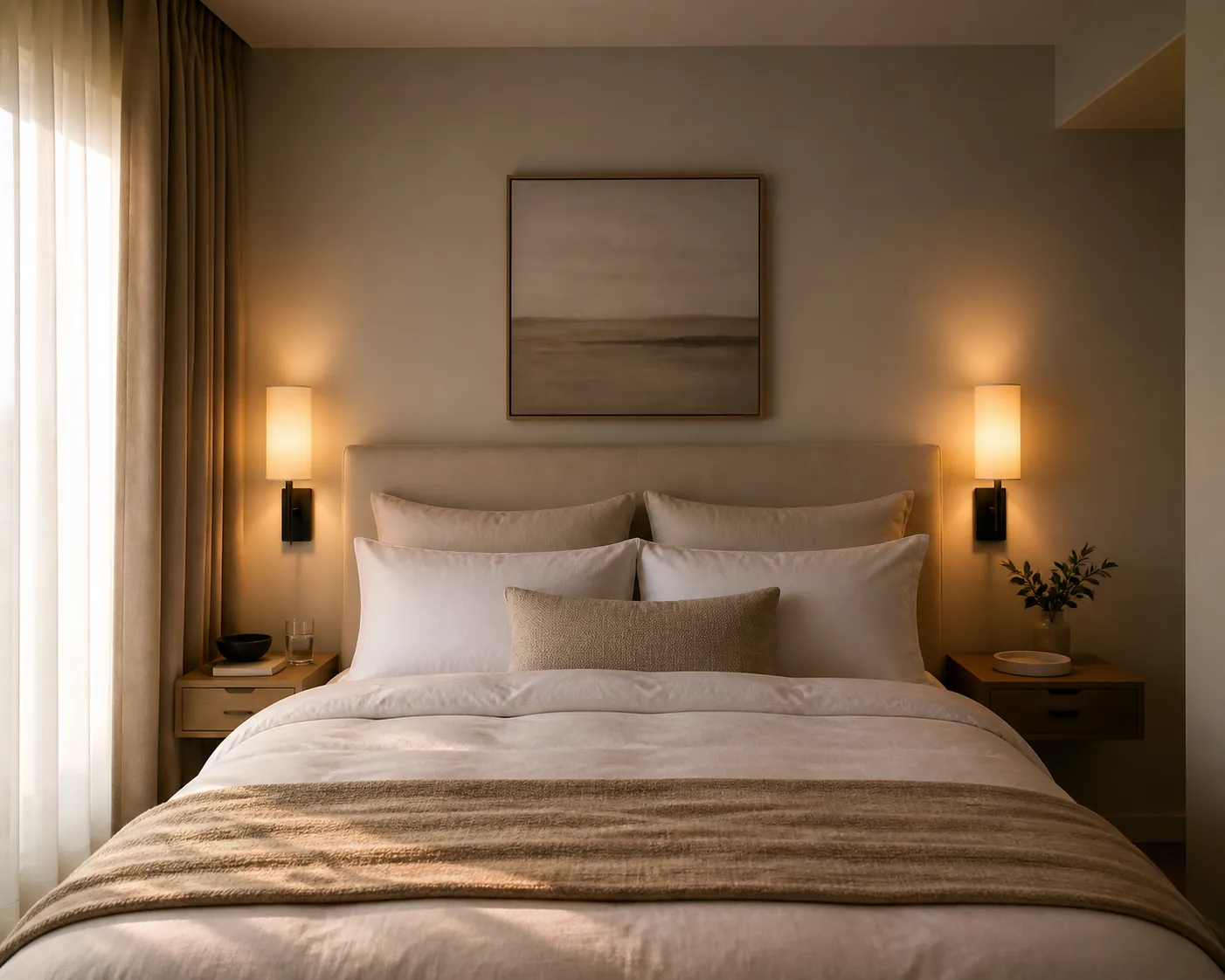
Use warm bulbs, add dimmers where possible, and avoid blue-white light near the bed. Soft lighting is one of the easiest ways to make a cozy bedroom feel more expensive because it improves every surface at once: bedding, wall color, curtains, and wood tones.
Use Layout Choices That Make the Room Feel Deliberate
A hotel room usually feels good because the pathway is obvious. You can enter, set something down, reach the lamp, and move around the bed without negotiating with clutter. For small bedroom decor, the same rule matters more than symmetry.
- Center the bed only if both sides remain usable.
- Use one real nightstand and one tiny wall shelf if two full nightstands do not fit.
- Choose a headboard that adds height without deep padding or oversized wings.
- Hang curtains high and wide so the wall feels taller.
- Add a mirror where it reflects light, not laundry or open storage.
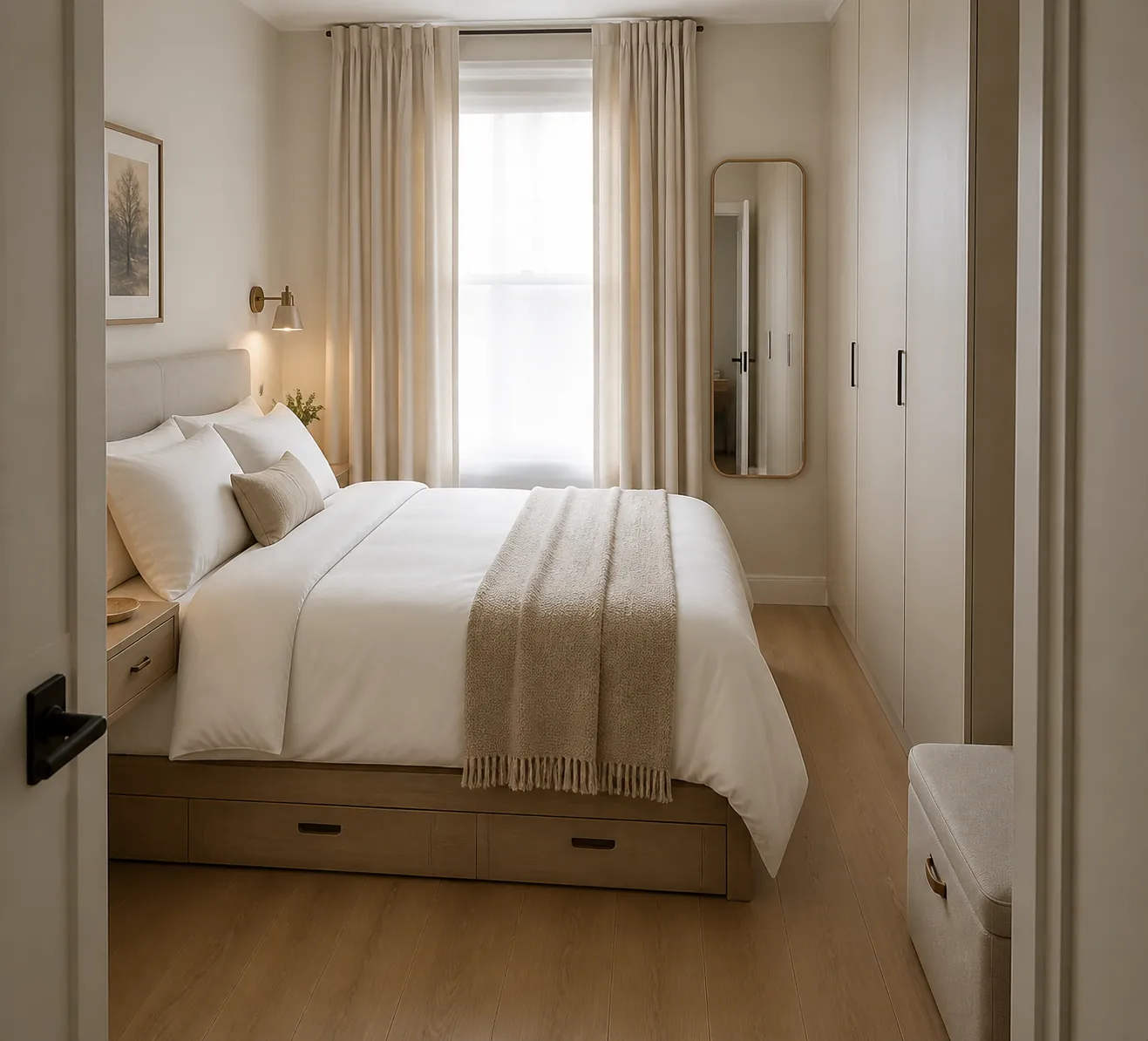
The best small bedroom layout is the one that removes friction. If the closet door hits the nightstand or the dresser blocks the walkway, the room will never feel like a relaxing bedroom no matter how nice the bedding is.
Hide Storage So the Room Reads as Calm First
Hotel rooms have storage, but they rarely lead with it. In a small bedroom, exposed bins, overfilled hooks, and crowded shelves make the room feel hardworking instead of restful. The fix is quiet bedroom storage that blends into the furniture.
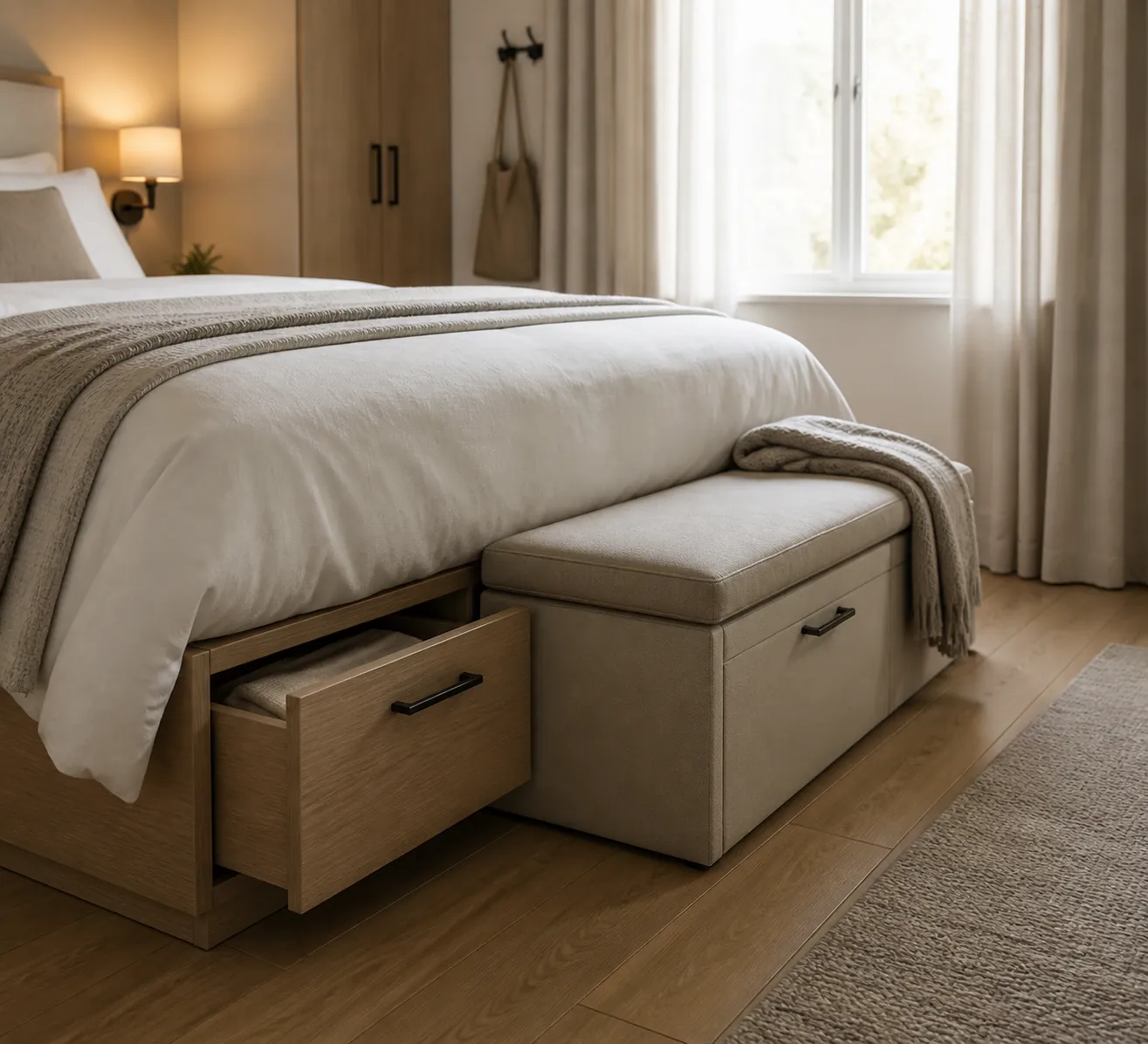
Under-bed drawers, a lidded bench, flat-front wardrobes, and matching closed boxes are better than open baskets when the room is already visually tight. Store spare bedding, seasonal clothes, chargers, and small clutter behind solid fronts. Then keep the visible surfaces edited: lamp, book, water, tray, and nothing else unless it earns its place.
Style the Nightstand Like a Hotel, Not a Storage Shelf
A hotel nightstand feels good because it is useful and nearly empty. That is the standard to copy. Your nightstand does not need a stack of decor. It needs a lamp or sconce, a place for water, a book, and one small tray to collect the things that would otherwise scatter.
For bedroom styling, repeat materials instead of adding more colors. A ceramic lamp, linen shade, glass carafe, light wood table, and one dark metal accent can do more than five decorative objects. This is how a neutral bedroom stays warm rather than blank.
Finish With the Sleep Details Hotels Always Get Right
The final layer is not decoration. It is comfort. Hotels make a room feel finished by controlling light, texture, sound, and clutter. At home, that means blackout curtains behind the pretty curtains, a soft rug beside the bed, a clear place for tomorrow’s clothes, and bedding that is easy to reset every morning.
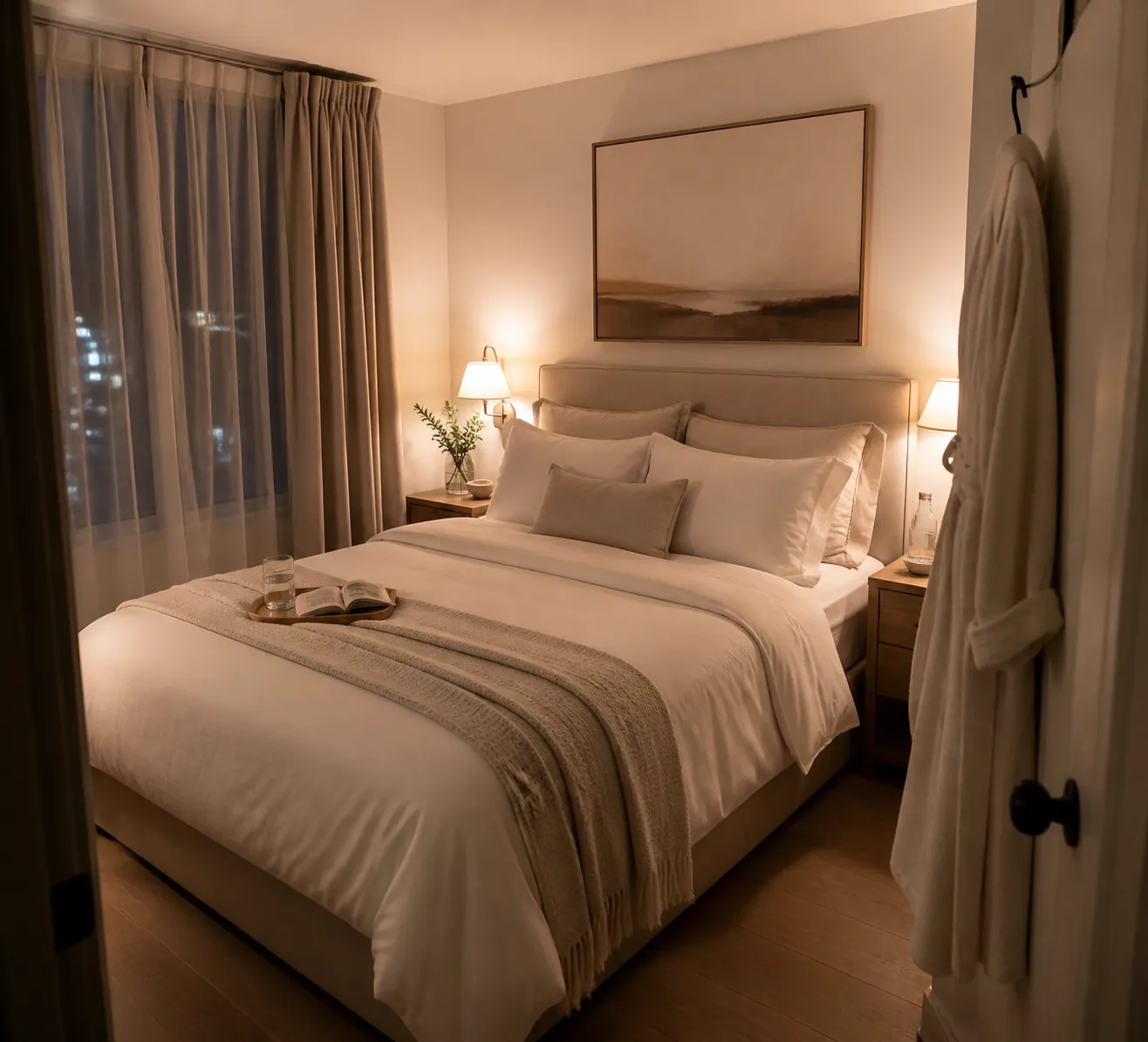
Before adding anything new, remove what breaks the mood: visible laundry, tangled cords, mismatched storage, extra pillows you throw on the floor, and decor that crowds the bedside surface. The room should be easy to use at night and easy to reset in the morning.
A Simple Hotel Room Checklist for a Small Bedroom
- Layer the bed first: white base bedding, supportive pillows, one textured throw.
- Choose soft lighting: warm bedside lamps or sconces before overhead light.
- Keep the palette quiet: warm white, beige, taupe, light wood, and one contrast accent.
- Hide storage: closed drawers, lidded bench, under-bed storage, and flat-front wardrobes.
- Edit surfaces: tray, book, water, lamp, and one natural detail.
- Make the layout feel easy: clear walkway, reachable lighting, and curtains hung high.
The real trick is restraint. A small bedroom feels like a hotel room when every visible choice supports rest. Build the bed, soften the light, hide the storage, and let the room look calm before it looks decorated.