
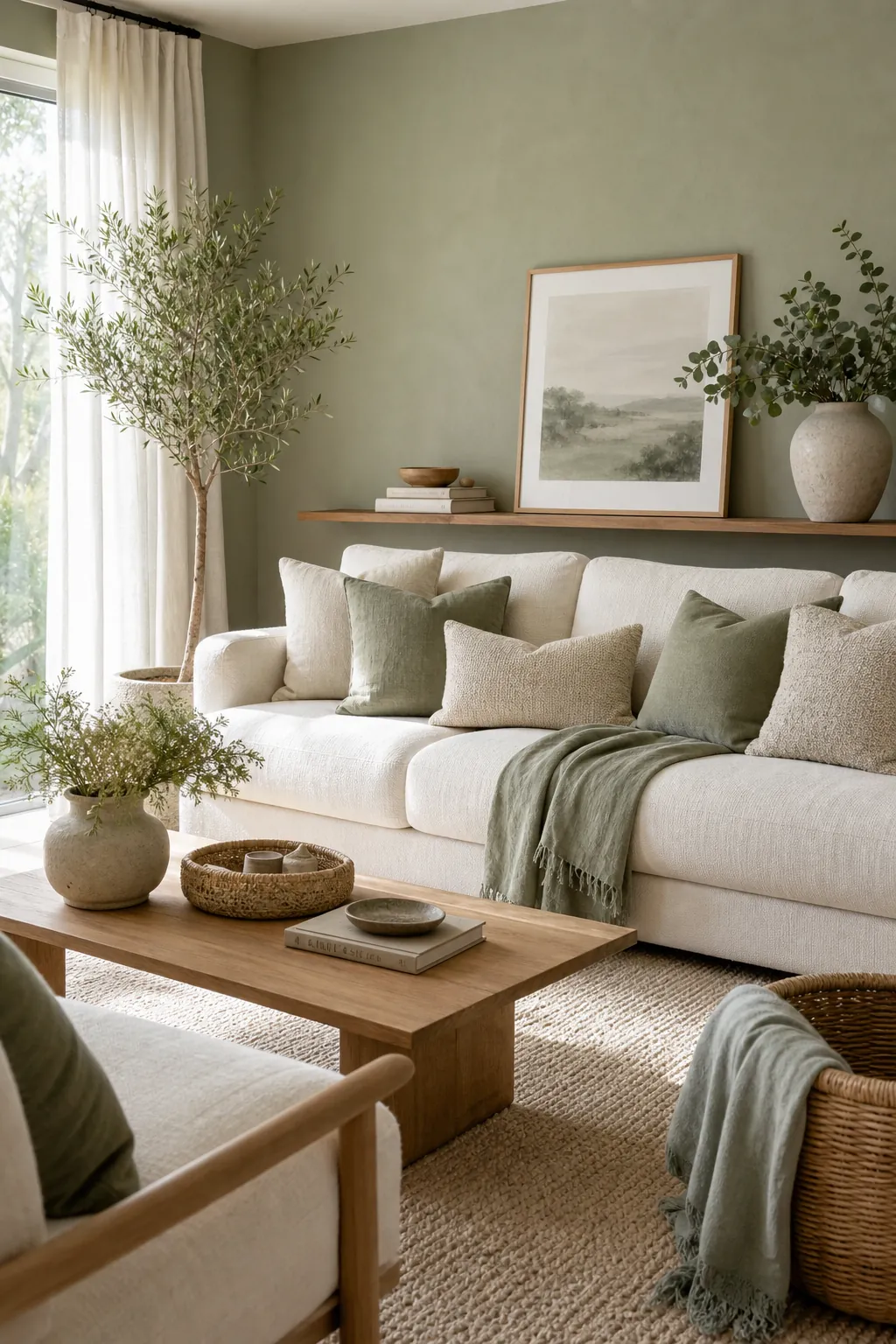
Soft green decor works best when it lowers the temperature of the room without making it feel cold. The trick is not to turn every surface green. A calm living room usually comes from a tighter mix: one clear soft green direction, warm neutral accents, soft textures, and enough natural material to keep the space grounded.
That matters because sage green decor can go two ways. With cream linen, oak, wool, rattan, and warm light, it feels relaxed and quietly expensive. With gray whites, shiny finishes, and too many matching accessories, it can feel flat. Use the ideas below to build a green living room that still feels cozy, personal, and easy to live with.
Start With One Soft Green Anchor
A calm living room needs a main visual decision. Pick one soft green anchor first: a sage wall, an area rug, an accent chair, a large artwork, or a set of pillows on the sofa. This keeps the room from becoming a collection of unrelated green things.
If you want the room to feel airy, use pale sage green on the wall and let the bigger furniture stay cream, beige, or warm gray. If you rent or do not want to paint, make the anchor a rug, textiles, or one upholstered chair. The anchor gives the room direction; the neutrals give it breathing room.
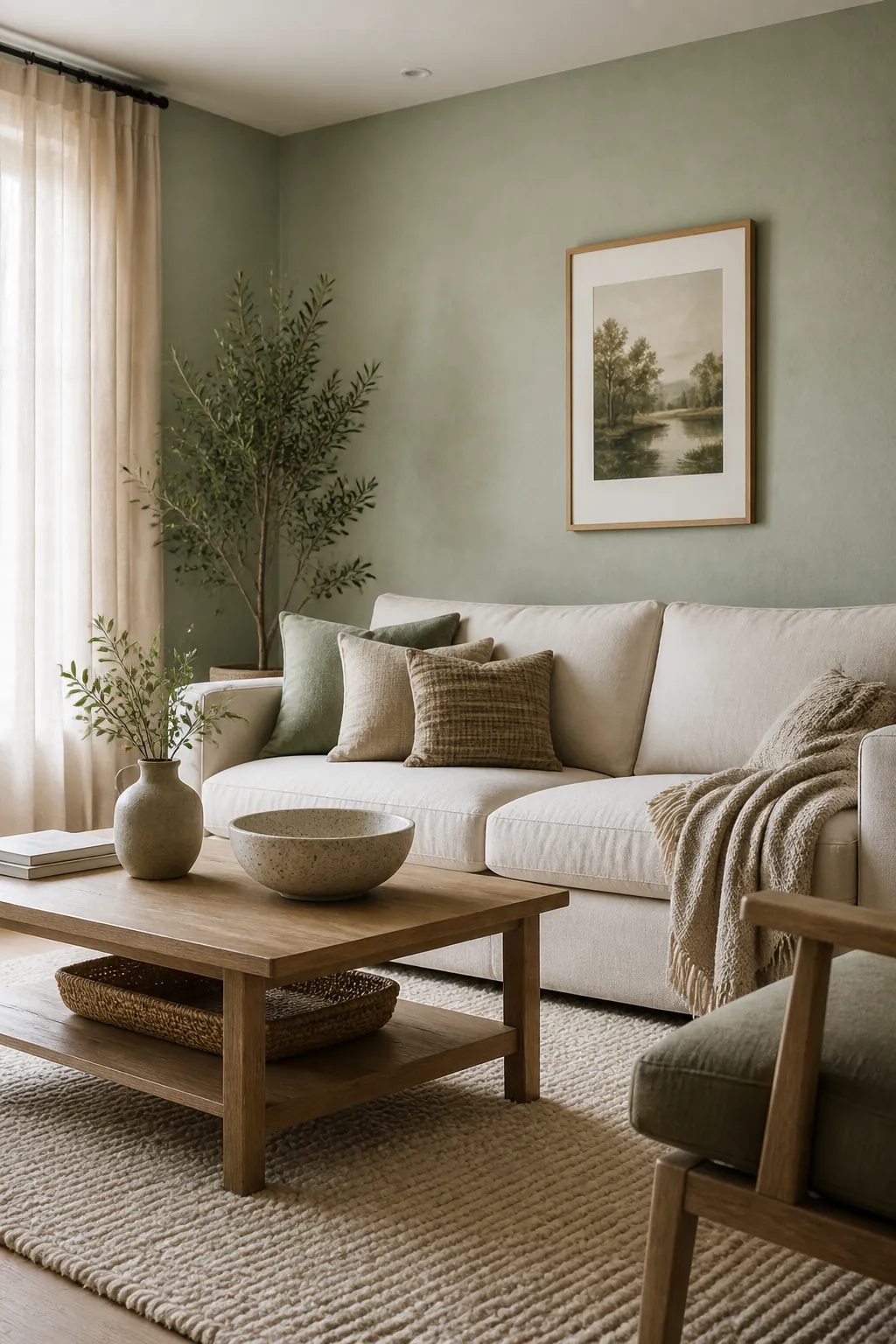
Keep the Neutrals Warm, Not Stark
Soft green can look peaceful or chilly depending on what sits beside it. For a relaxing home, pair sage with ivory, oatmeal, mushroom beige, taupe, flax, natural oak, and light stone. Avoid building the whole room around sharp white, blue-gray, and chrome unless you intentionally want a cooler look.
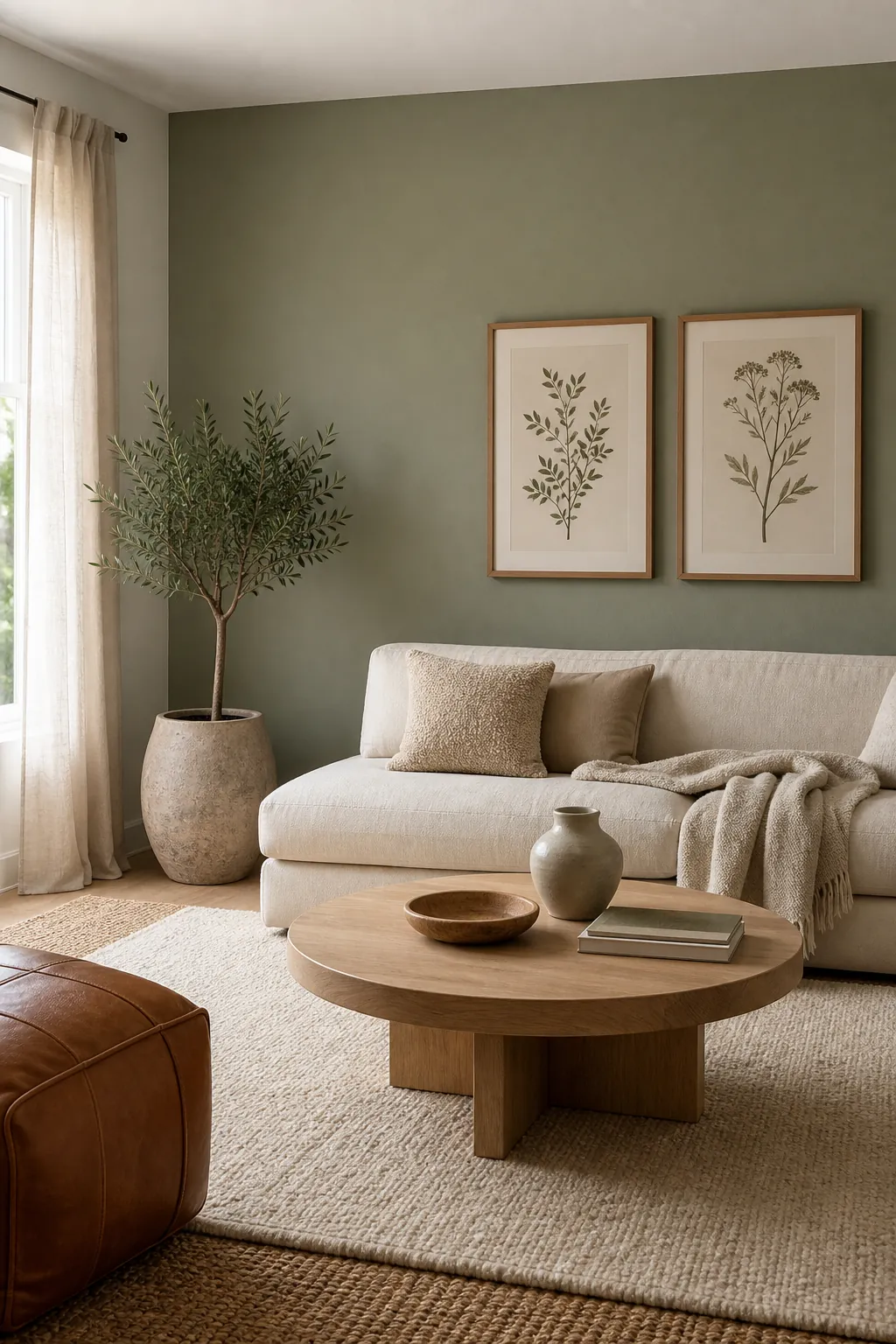
This is where neutral accents do real work. A cream sofa, beige curtains, a wool rug, and a pale wood coffee table make green living room styling feel warmer and more layered. When the neutral palette has warmth, the green reads as calm instead of sterile.
- Use ivory instead of optic white.
- Choose oak, ash, or light walnut instead of glossy black furniture.
- Bring in taupe, clay, and stone so the room does not become one-note.
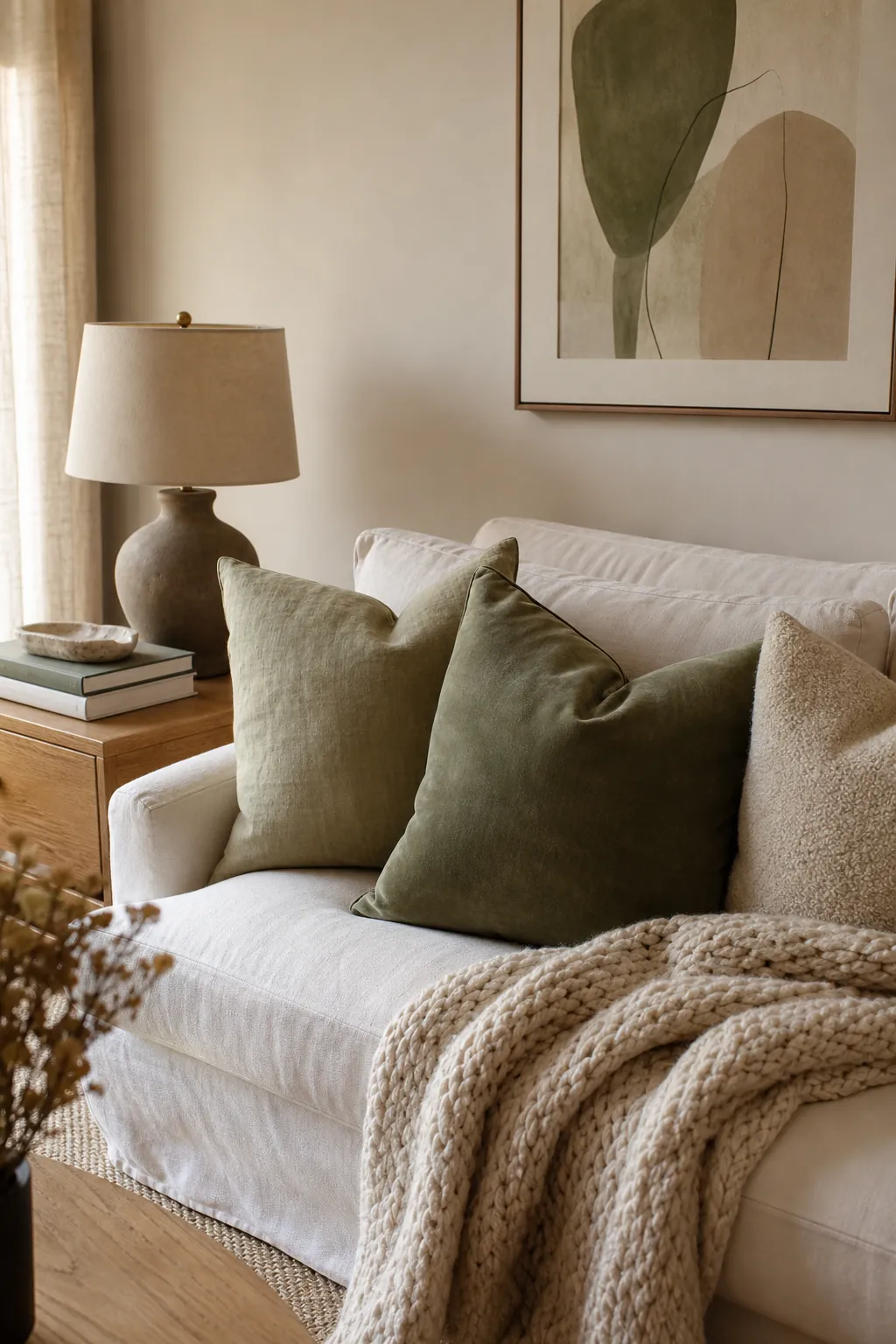
Use Texture So the Room Does Not Feel Flat
A soft color palette needs texture more than contrast. Without texture, sage green decor can start to look thin, especially in photos. Add soft textures in different weights: linen pillows, boucle cushions, a wool rug, a cotton throw, woven baskets, rattan trays, and matte ceramics.
Do not worry about every green matching perfectly. A calm living room is usually better when the greens vary slightly: pale sage, eucalyptus, muted olive, gray-green, and one deeper leaf tone. Variation makes the room feel collected; exact matching makes it feel forced.
Try an Accent Wall Only If the Rest of the Room Stays Quiet
A sage green accent wall can be beautiful, but it needs restraint around it. Keep the sofa, rug, curtains, and major case goods neutral. Then repeat the green only two or three times in smaller ways, such as artwork, a ceramic vase, or one pillow. That repetition makes the wall feel intentional without turning the room into a theme.
For living room styling, the safest wall colors are muted and slightly grayed: soft sage, eucalyptus, pale olive, or green-gray. If the paint looks bright on the chip, it will usually look stronger across an entire wall. Choose a softer green than you think you need, then let light and texture do the rest.
Repeat Green in Small, Natural Details
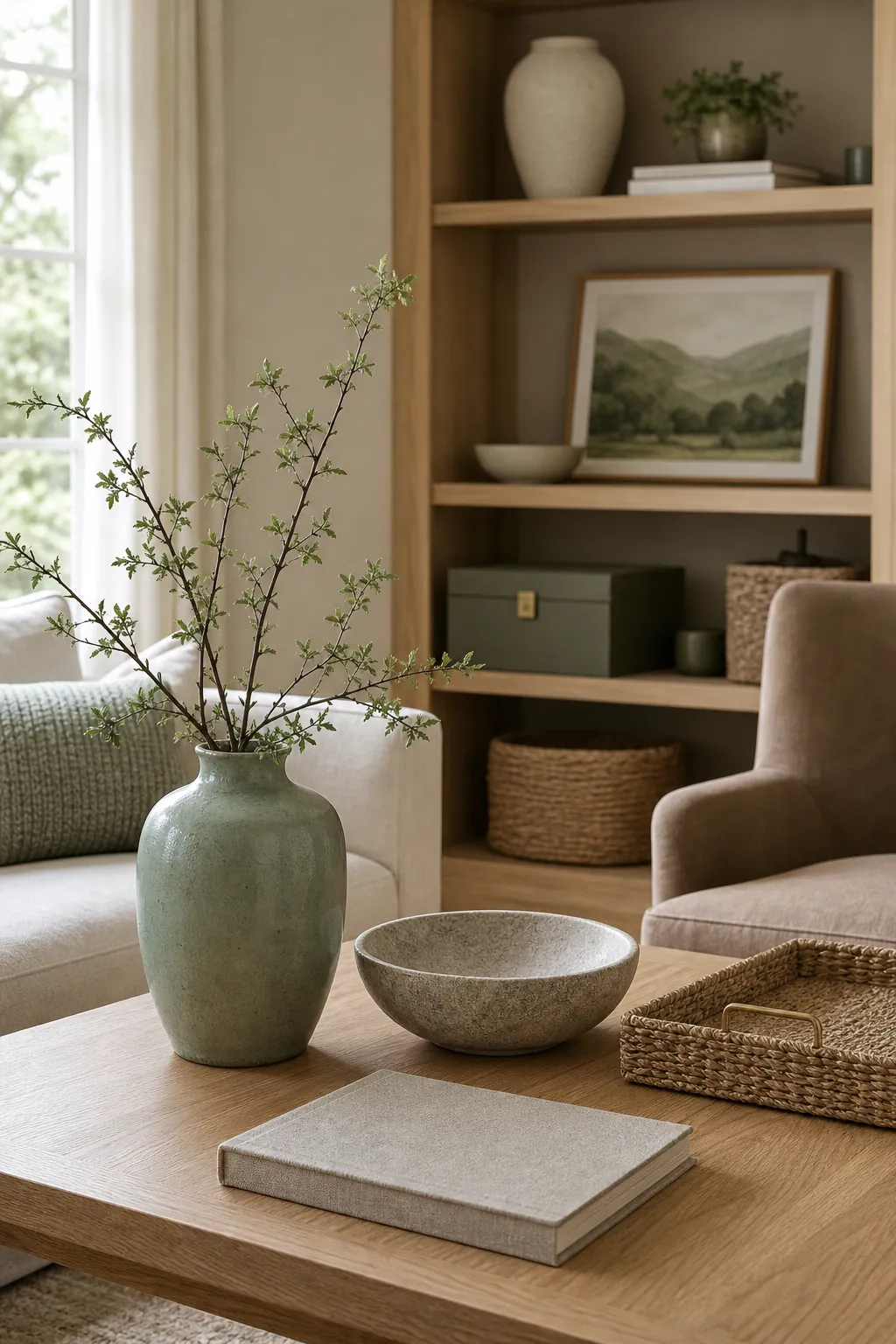
If your living room already has the big pieces, use small soft green decor to shift the mood. A sage ceramic vase, muted green planter, landscape print, olive storage box, or green-gray book cover can create a quiet rhythm across shelves and tables.
The key is spacing. Put one green note near the sofa, one across the room, and one on a shelf or coffee table. Your eye will connect them, and the room will feel finished. Small repeated details are often more calming than one loud statement piece.
Build One Cozy Green Corner
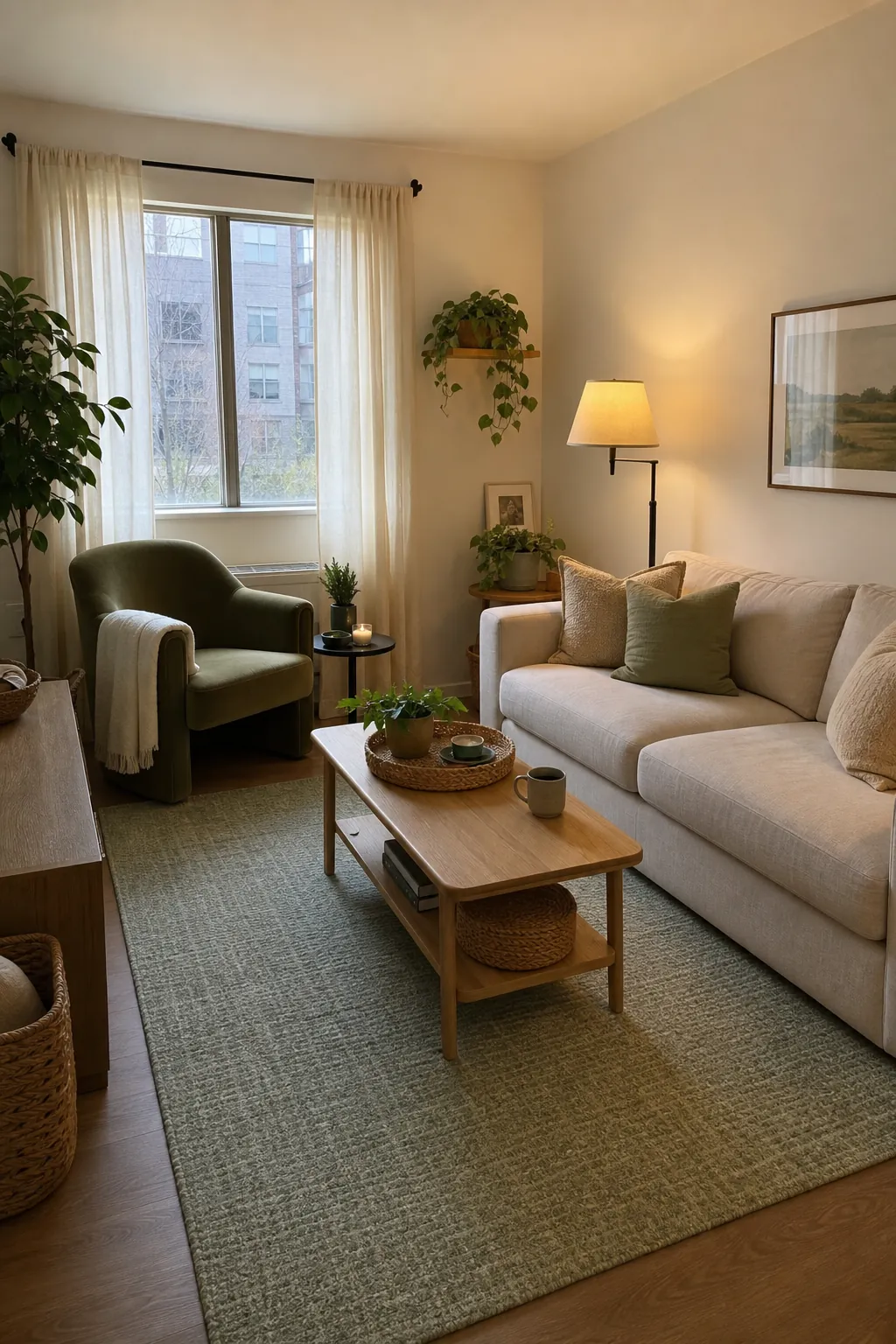
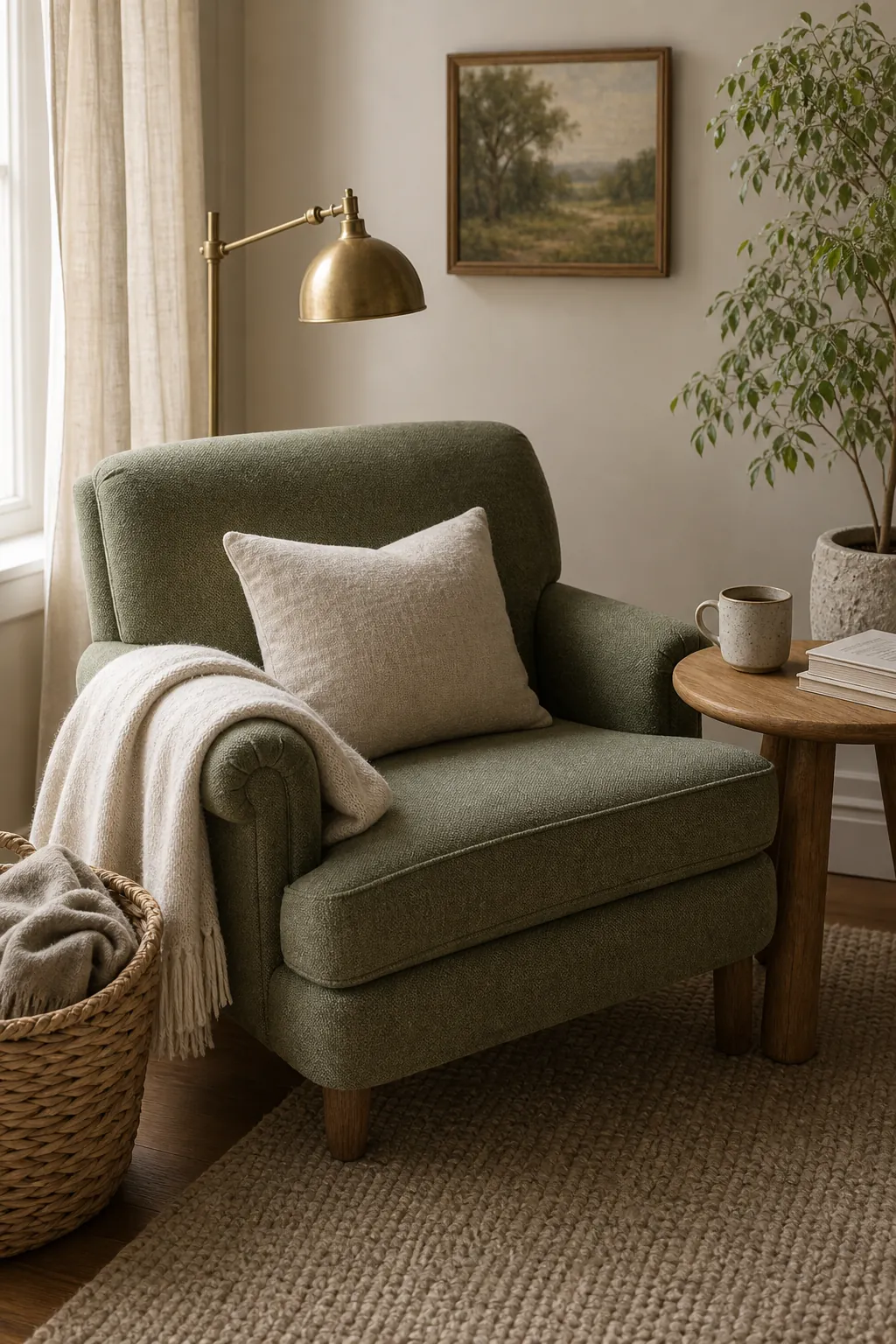
If the whole room feels like too much to change, style one corner first. A sage green chair, warm brass reading lamp, cream throw, linen pillow, small wood table, and textured rug can make a calm destination inside the room. This is especially useful in open-plan spaces where the living area needs a softer identity.
Think of the corner as a test. If the soft green feels good there, repeat the color in two smaller places. If it feels too cool, add more warm neutrals before adding more green. A cozy living room is built by adjusting balance, not by buying every matching piece at once.
The Simple Formula
For a calm living room, use this formula: one soft green anchor, three warm neutral accents, two soft textures, one natural wood tone, and a small repeat of green across the room. It is simple enough to follow, but flexible enough to work with what you already own.
Soft green decor should make the room feel easier to enter and easier to stay in. When sage green, neutral accents, natural home decor, and soft textures are balanced well, the space feels restful without becoming plain.