
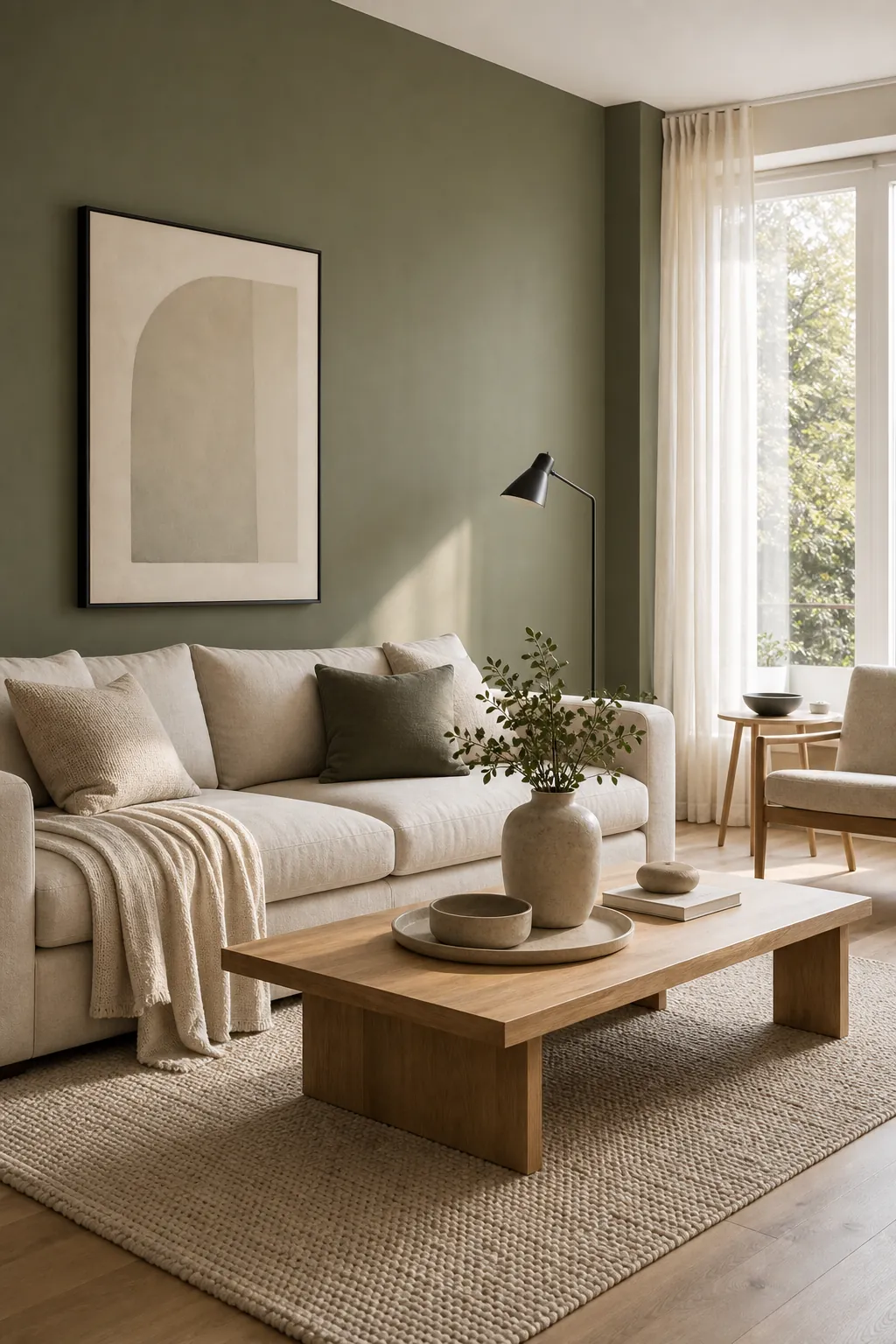
Green walls rarely fail because the color is wrong. They fail because the rest of the room lets the color become the loudest, heaviest thing in sight. A deep olive, moss, sage, or blue-green can look sharp and modern in one living room, then feel gloomy in another room with the same paint chip.
The difference is usually not taste. It is visual weight: how much darkness, contrast, texture, and furniture mass sits around the wall color. If the green wall is paired with dark floors, dark curtains, bulky furniture, and one weak ceiling light, the room can feel dense fast. If that same green is balanced with warm whites, pale wood, soft lighting, and cleaner lines, it starts behaving like a modern neutral.
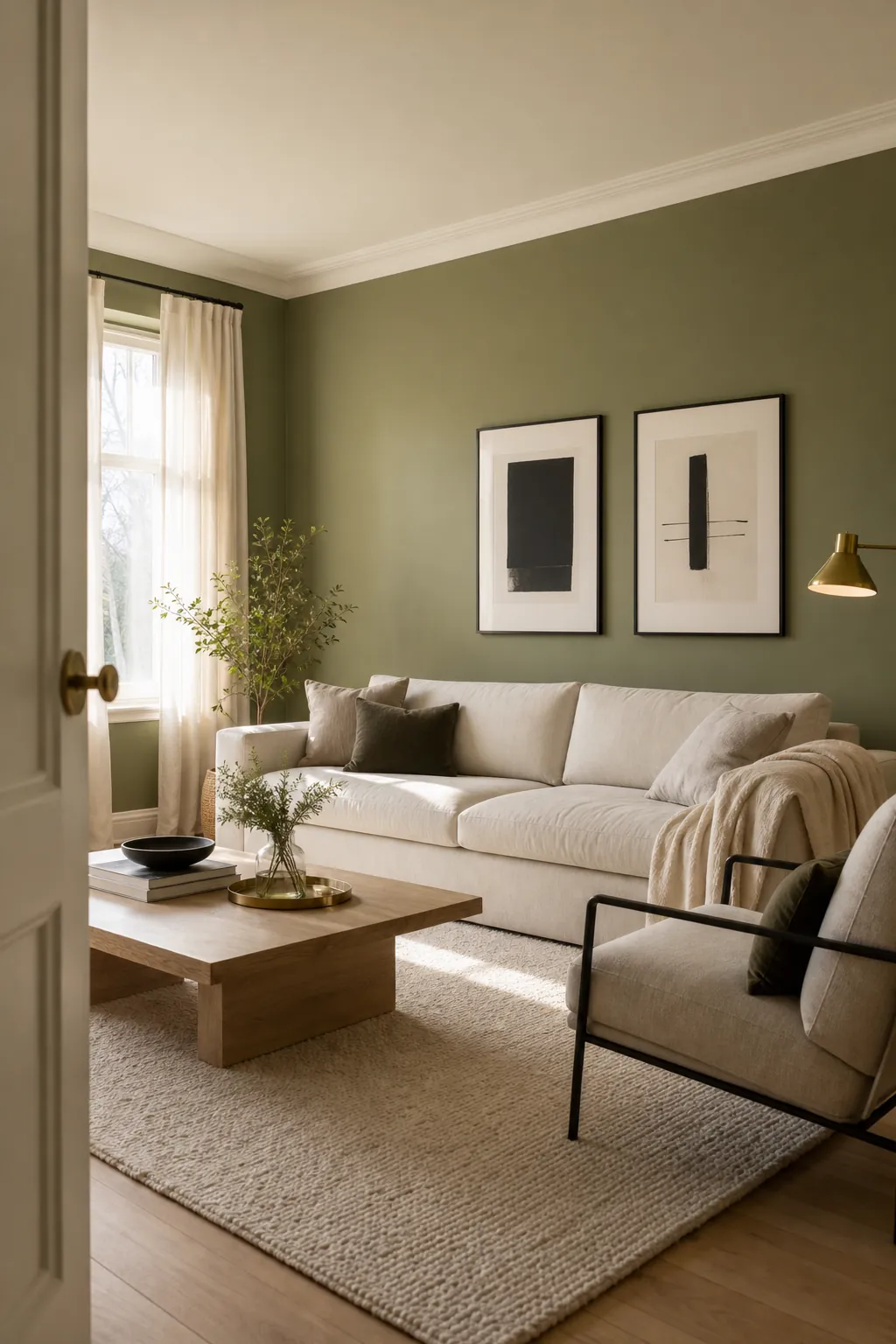
Choose a Green That Matches the Room’s Light, Not Just the Trend
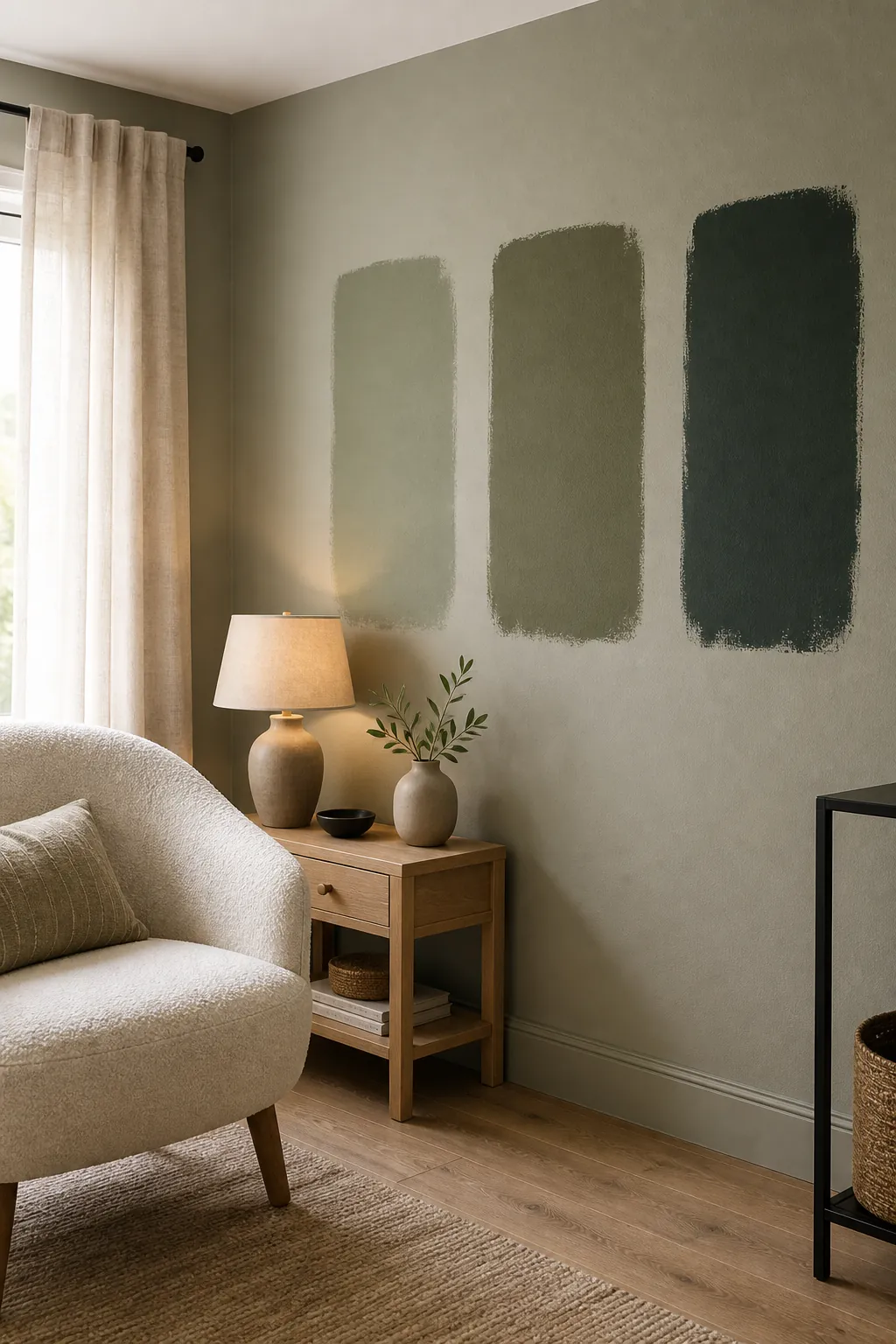
The fastest way to make Green Walls feel heavy is to choose a shade from a bright online photo without testing it in your own room. Green changes dramatically under different light. North-facing light can make olive feel gray and serious. Warm afternoon light can make sage look soft and relaxed. Artificial light can pull yellow, blue, or even muddy brown undertones out of a color you thought was simple.
For a Modern Living Room, start with the room you actually have. If the space is small, shaded, or filled with dark wood, a softened sage, gray-green, or muted olive is usually easier to live with than a saturated forest green. If the room gets strong daylight and has pale floors, you can go deeper without the walls closing in.
Do not judge the color flat against white printer paper. Test large swatches next to your sofa fabric, floor, curtains, and trim. Look at them in the morning, late afternoon, and evening with lamps on. The right green should still look intentional when the room is at its darkest.
Let Neutrals Do More Work Than the Green
A green room does not need green everywhere. In fact, too much matching green is what often turns Modern Green Decor into something flat and heavy. The wall already carries the color story. The sofa, rug, curtains, and main furniture pieces should usually carry the breathing room.
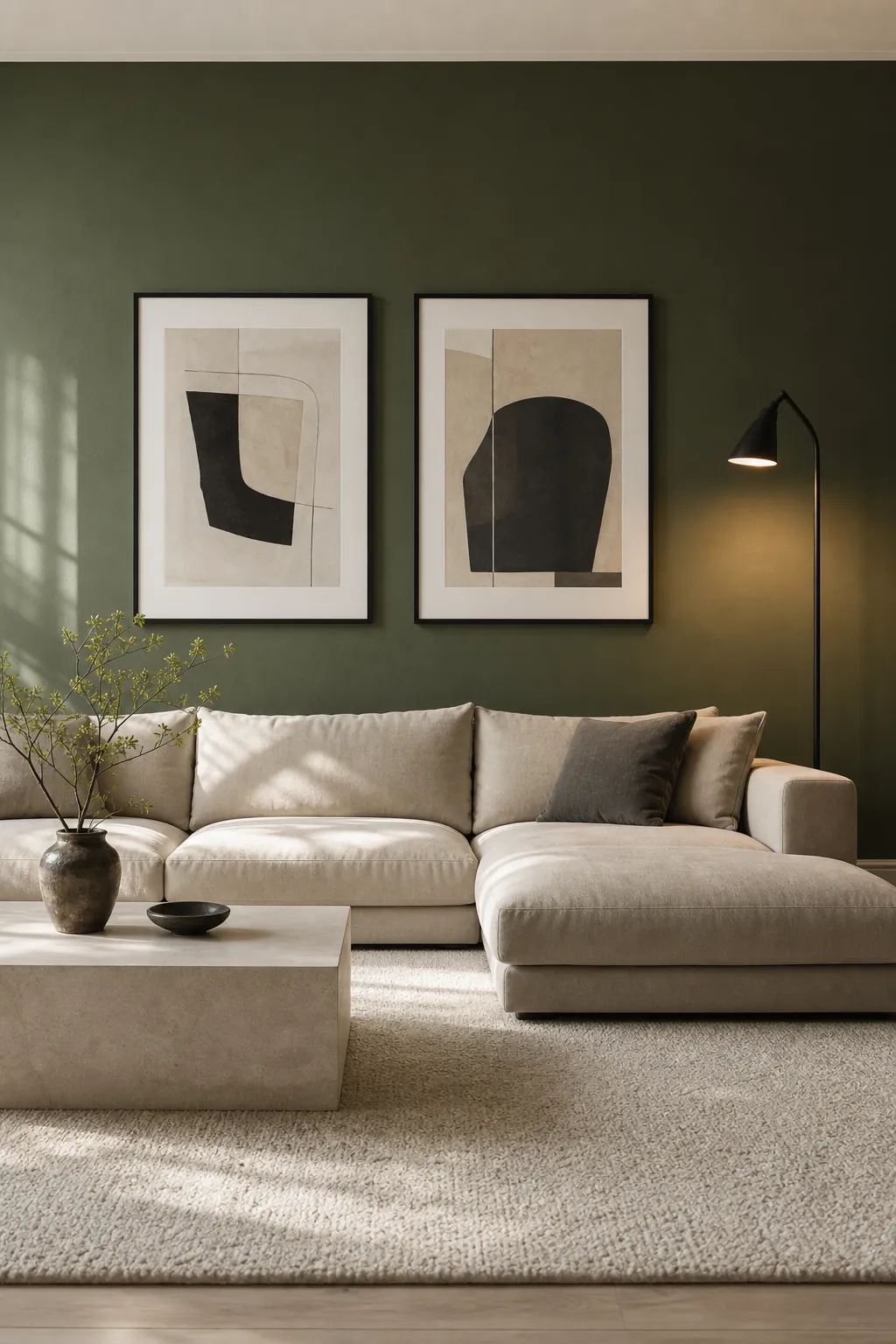
Use warm white, oatmeal, stone, flax, pale gray, natural oak, light walnut, and small black accents to break up the wall color. These Neutral Accents keep the room from becoming a single dark block. A cream sofa against a deep green wall looks crisper than a charcoal sofa against the same wall. A pale rug can make the whole seating area feel lifted. Thin black frames can make the wall look graphic without adding bulk.
The goal is not to make the room pale. The goal is to create light-to-dark layers: green wall, lighter upholstery, grounded table, pale rug, a few dark lines. That sequence feels modern because the eye can read each piece clearly.
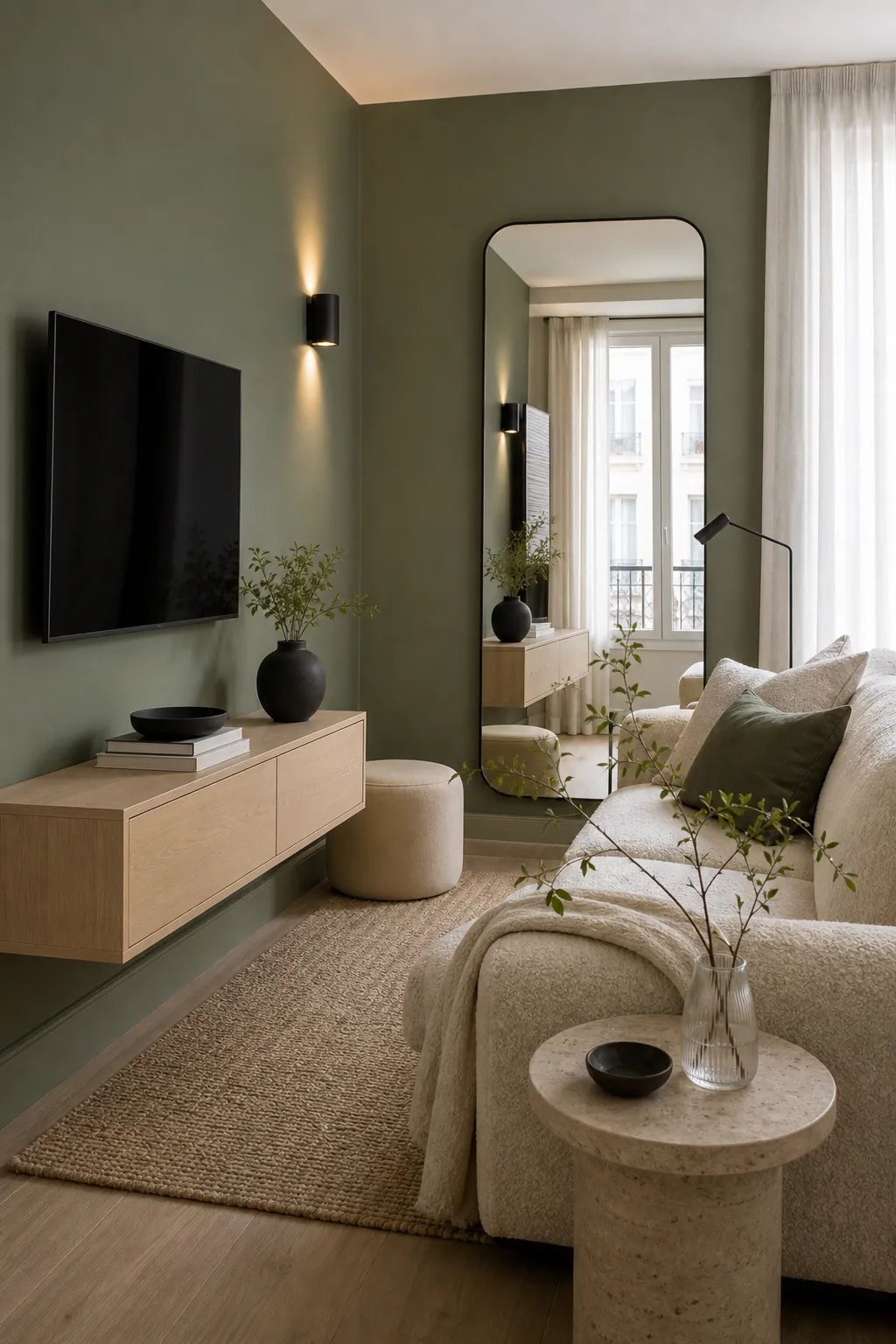
Use Mirrors, Air, and Negative Space to Keep Green Walls Moving
Green walls feel heavier when every inch is filled. Tall bookcases, dense gallery walls, heavy curtains, large dark consoles, and too many plants can make the color look trapped. Modern green rooms need interruption: light, reflection, blank space, and slim furniture profiles.
A mirror can be more useful than another framed print because it sends window light back into the room. A floating oak console usually feels lighter than a deep cabinet sitting on the floor. One oversized artwork with a wide mat can feel more current than six small frames fighting for attention. This is where Balanced Decor matters: each piece should either lighten, sharpen, or soften the green.
If you love Moody Decor, keep it intentional. Let the wall be moody. Let the furniture stay simple. Let empty space remain visible. A room can be atmospheric without being visually packed.
Layer Soft Lighting Instead of Depending on One Overhead Light
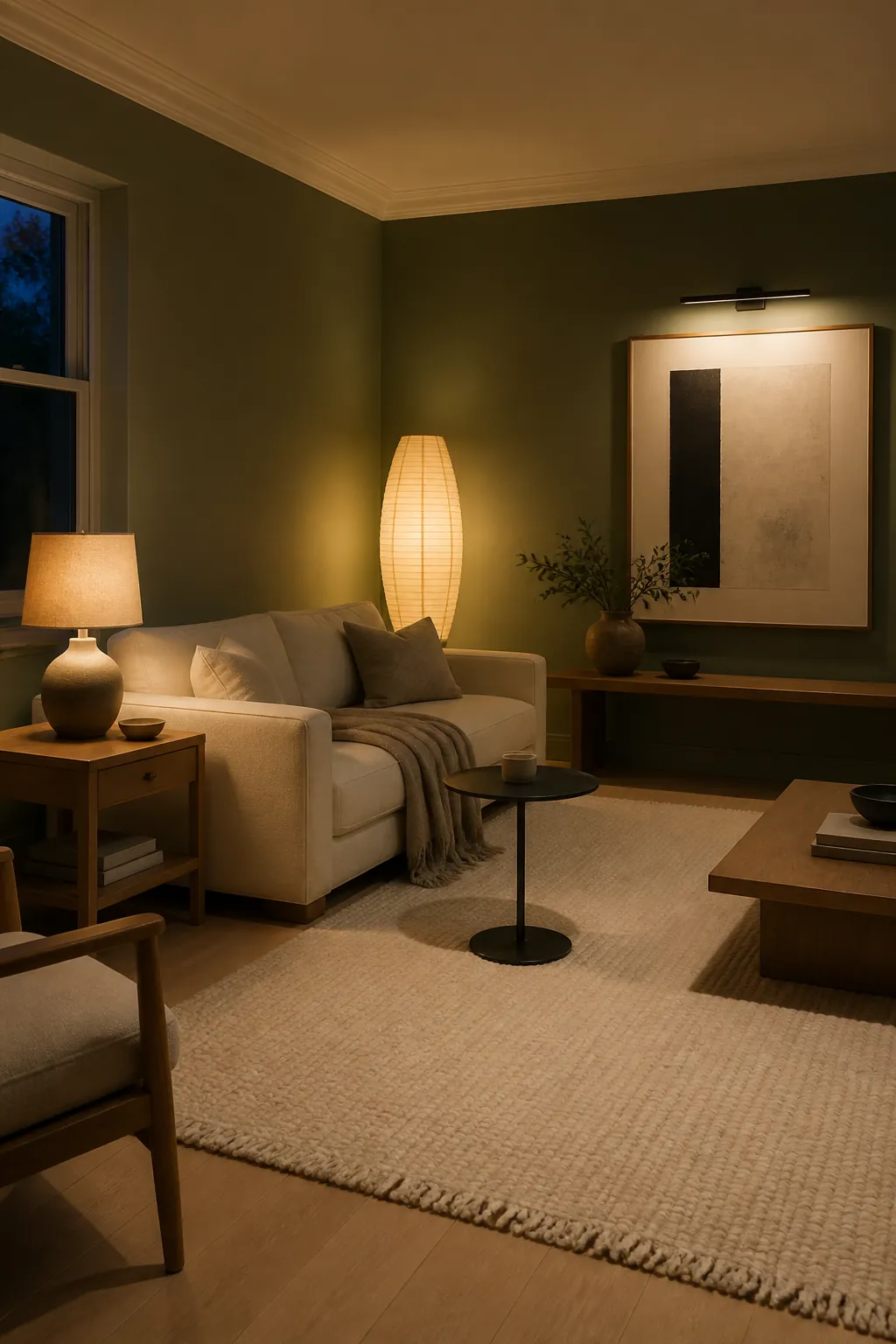
Green is especially sensitive to lighting. One cold overhead fixture can make green walls look flat and shadowy. One tiny lamp can leave the corners dead. Soft Lighting works best when it comes from several heights: a table lamp, a floor lamp, a picture light, a wall sconce, or a low shaded lamp near the seating area.
Warm bulbs help most greens feel more inviting, especially in the evening. Aim for a gentle warm-white temperature rather than a blue-white glare. You want the wall to have dimension, not shine. Light grazing across matte paint can make the room feel designed; harsh light pointed straight down can make even a beautiful green feel heavy.
The best test is nighttime. If the room only looks good at noon, the design is not finished. A modern green living room should still feel comfortable after sunset, when the wall color is at its deepest.
Repeat Green Quietly, Then Stop
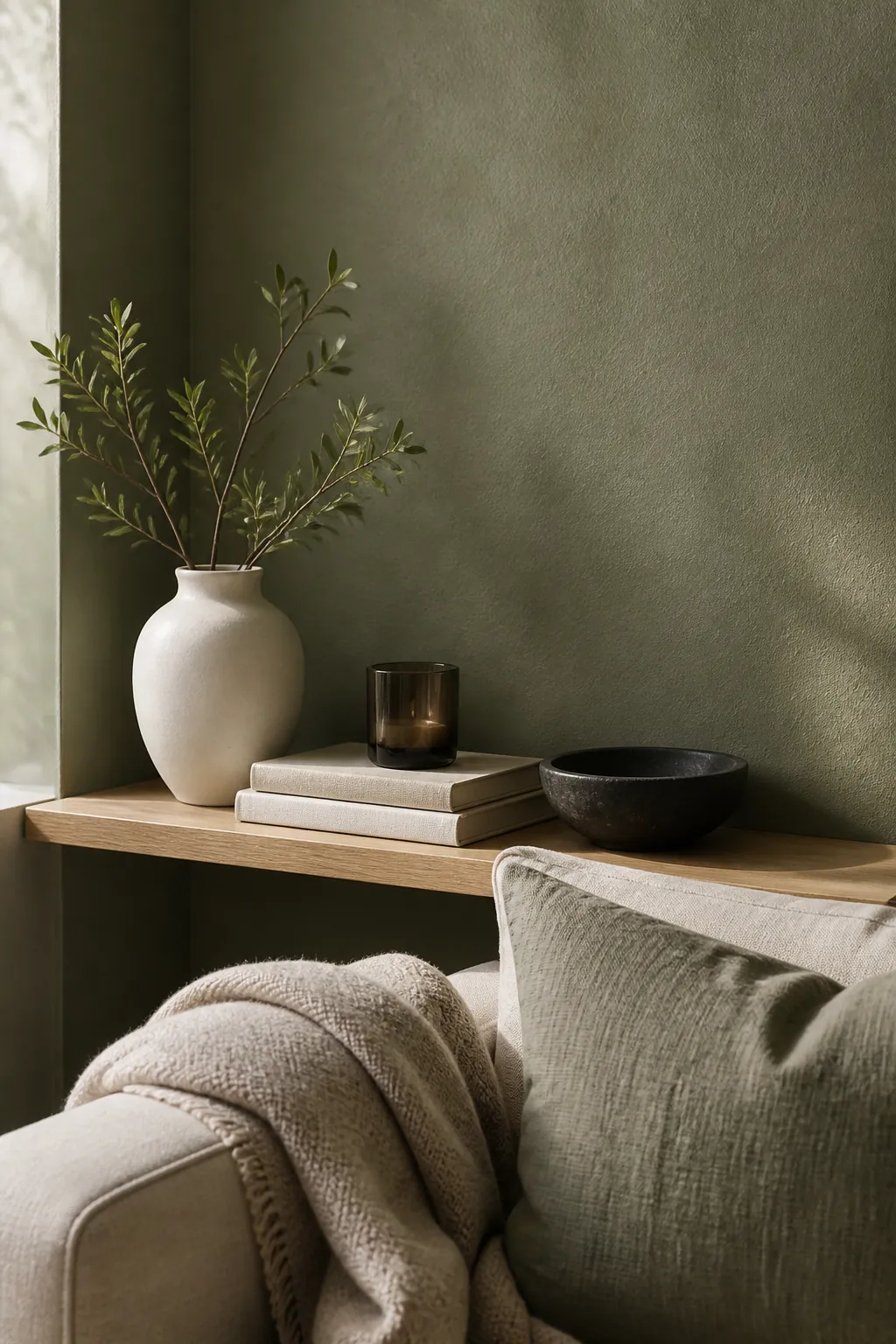
Repeating green in the room helps the wall feel connected, but the repeat should be quieter than the wall itself. A gray-green cushion, a smoky glass vase, a branch arrangement, or a muted artwork detail is enough. When every pillow, vase, throw, and print repeats the exact same green, the space starts to look themed.
Good Interior Styling often comes down to restraint. Pair green with cream ceramics, clear or smoky glass, pale wood, natural linen, matte black, stone, and warm metal in small amounts. These finishes add texture without adding more color noise. They also make Green Room Decor feel more collected than decorated all at once.
Think of green as the room’s base note. The accents should not compete with it. They should make it easier to live with.
Keep the Ceiling, Trim, and Big Planes Light Unless You Want Drama
Painting the ceiling, trim, doors, and built-ins the same green can look beautiful in the right room. It can also make a casual living room feel much darker than expected. If the goal is modern, fresh, and not heavy, keep the largest supporting planes light: ceiling, trim, window treatments, rug, and major upholstery.
This does not mean every surface must be white. Warm white trim, ivory curtains, pale oak floors, beige linen, and stone gray can all soften green without making the room sterile. These Wall Color Ideas work because they give the eye a place to rest.
If you want a darker, enveloping look, commit to it on purpose. Add stronger lamp layers, clearer contrast, and fewer competing colors. The mistake is choosing a dramatic paint treatment while styling the rest of the room as if the walls were still plain white.
The Simple Formula for Modern Green Walls
If you want green walls to feel current instead of heavy, do not start by adding more decor. Start by removing visual weight.
- Pick the green in your real light, not from a perfect inspiration photo.
- Use pale, textured neutrals for the biggest furniture pieces so the wall has contrast.
- Add black only as a line, not as a large block.
- Layer warm lighting at different heights so the wall has depth at night.
- Repeat green in small, softer notes, then stop before the room feels themed.
- Leave some empty wall and floor space visible so the color can breathe.
That is the shift: green walls do not need to be softened by making the whole room safe. They need to be balanced with enough lightness, texture, and space that the color looks deliberate. When the room has that balance, green stops feeling heavy and starts feeling like one of the most modern wall colors you can choose.