
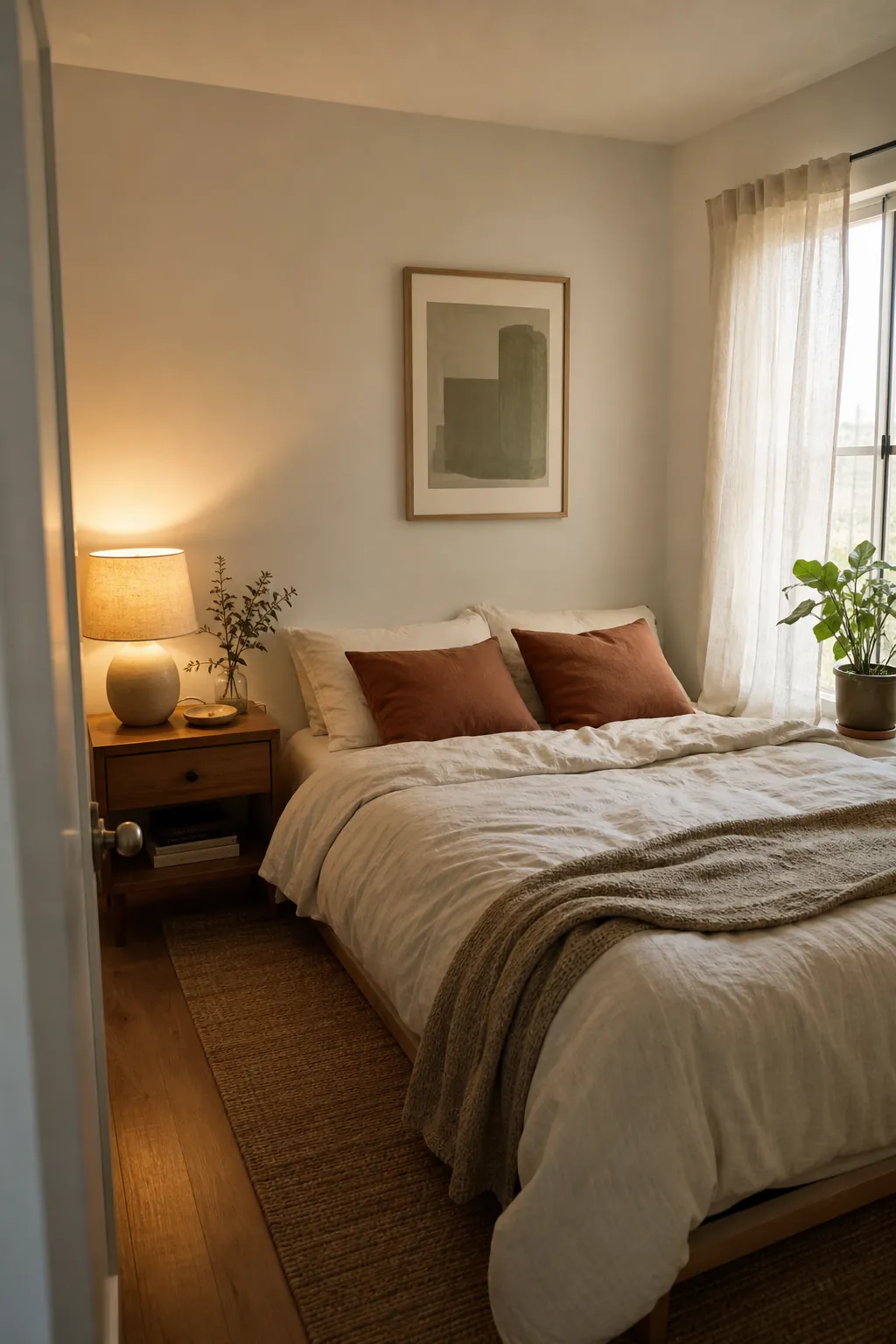
A small bedroom can be tidy, practical, and still feel a little sharp at the edges. The walls may look too cool. The ceiling light may flatten everything. The bed might be comfortable, but the whole room still reads as temporary instead of restful. The fix is not always more furniture or a dramatic makeover. Most of the time, a small bedroom feels softer when color and light work together instead of competing with each other.
That matters because small rooms exaggerate every decision. A grey that looked calm on a paint chip can feel chilly beside a metal bed frame. A white bulb can make neutral bedding look clinical. A dark accent wall can feel cozy at night but heavy in the morning if the rest of the lighting is wrong. The goal is not to make the room look huge. The better goal is to make it feel kind, calm, and easy to settle into.
Start With the Mood, Not the Paint Chip
Before choosing small bedroom colors, decide when the room bothers you most. If it feels cold in the evening, the issue is probably lighting and contrast. If it feels cramped in daylight, the wall color may be too flat or too stark. If it feels unfinished all day, the room may need texture, curtains, art, and a more intentional color story.
For a softer bedroom, choose a mood phrase before you choose a color name. Try warm quiet, soft neutral, sun-washed calm, or cozy but uncluttered. This keeps you from mixing every pretty idea at once. A small space cannot absorb too many competing moods; it needs a clear direction.
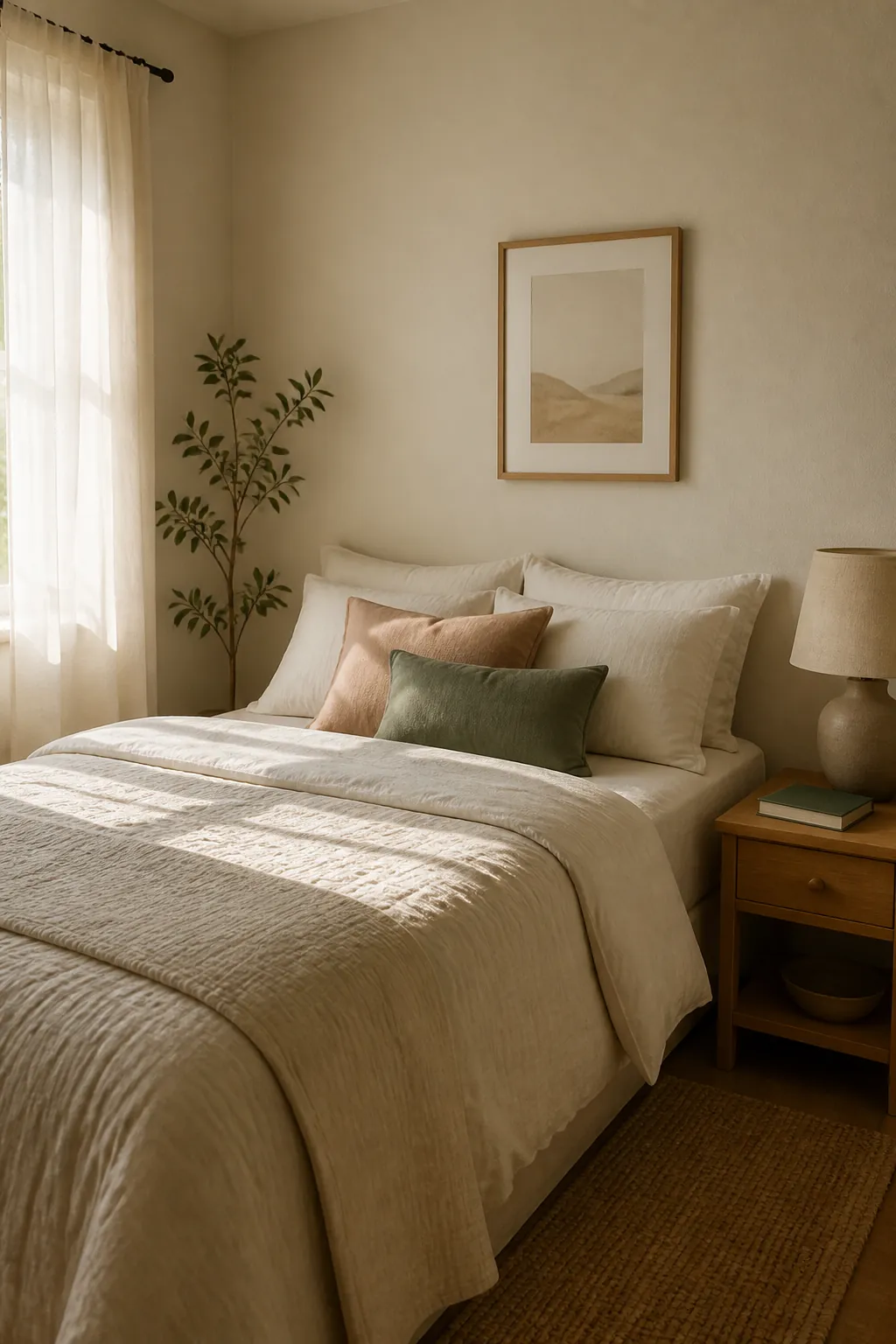
Choose Warmer Versions of Neutrals
Neutral colors are not automatically soft. Cool white, blue grey, and icy greige can make a small bedroom feel brighter but also harder. If the room already has limited daylight, black furniture, shiny metal, or grey flooring, cool neutrals may make every surface look colder.
Look for neutrals with a little warmth built in: oatmeal, mushroom, linen, creamy white, soft taupe, pale clay, warm beige, muted blush, or a quiet green with yellow undertones. These colors still feel calm, but they stop the room from looking washed out. The trick is to warm the neutral, not make the room brown.
If you rent or cannot paint, use the same idea through bedding, curtains, a rug, a lampshade, and art. A white room with oatmeal linen curtains and a clay-toned throw can feel much softer than a painted room with cold lighting.
Build a Small Color Palette You Can Repeat
A soft bedroom does not need to be all beige. It does need repetition. Pick one main neutral, one warmer support color, and one muted accent. For example, creamy white, natural wood, and dusty rose. Or warm grey, olive, and ivory. Or oatmeal, soft blue, and brass. This gives the room enough variation to feel lived in without making a small bedroom look busy.
Repeat each color at least twice. If your accent is muted green, use it in a pillow and a small print. If your warm tone is clay, echo it in a throw and a ceramic lamp base. Repetition is what makes bedroom styling feel intentional. Without it, even expensive decor can look random.
Keep the strongest contrast low. A black-and-white bedding set can look crisp, but in a tiny room it often feels blunt. A softer version might be ivory sheets, a warm grey quilt, and one charcoal stripe or frame. Small rooms usually feel gentler when the contrast is layered instead of shouted.
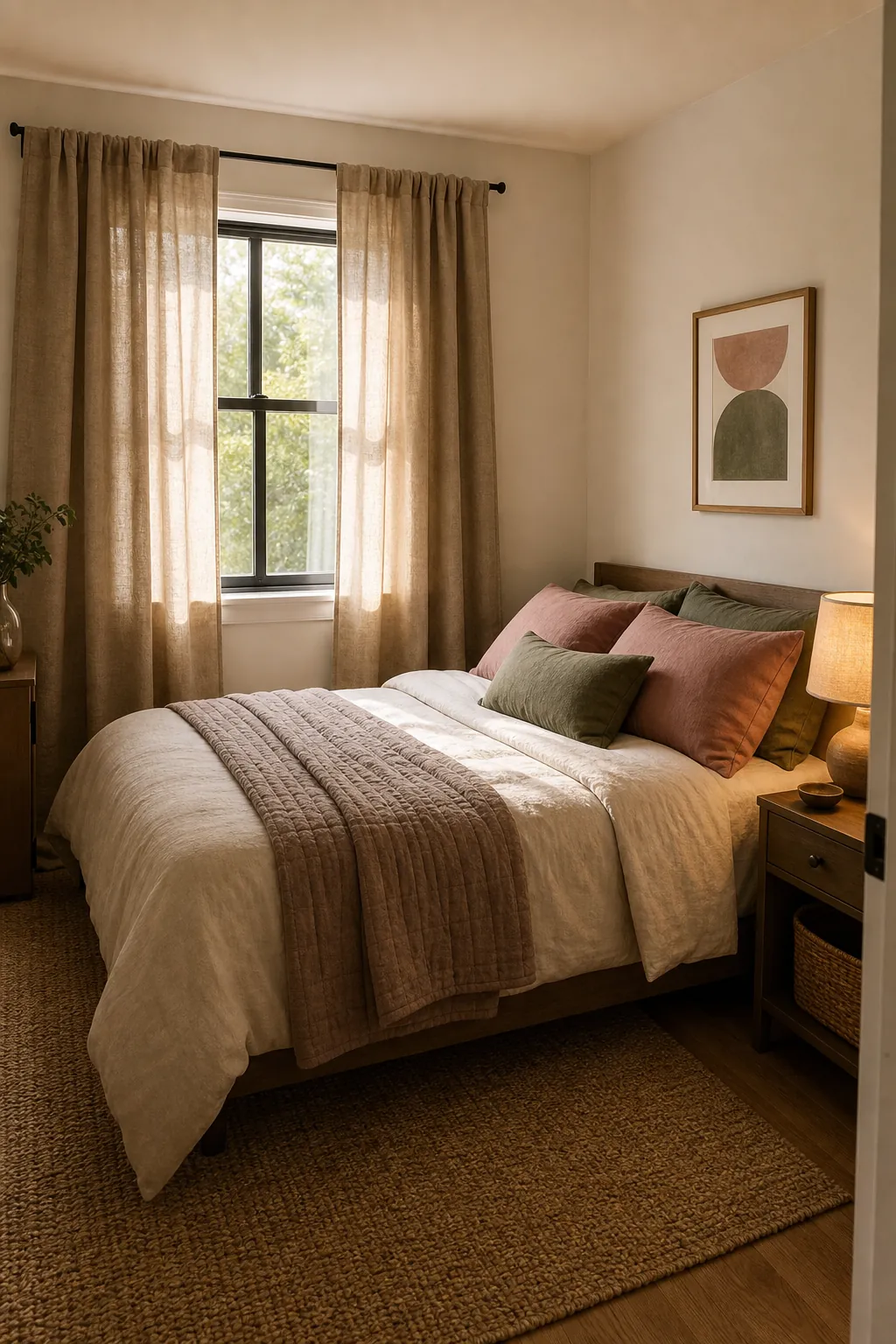
Replace One Harsh Ceiling Light With Three Softer Lights
Bedroom lighting is often the fastest way to change the feeling of a small room. A single overhead light throws shadows down the walls and makes the bed, floor, and corners look flat. Even a beautiful color palette can look wrong under a cold bulb.
A softer setup uses three layers: ambient light, task light, and accent light. Ambient light is the gentle overall glow. Task light helps you read or get dressed. Accent light makes a corner, shelf, plant, or wall art feel warm. You do not need a large room for this. In a small bedroom, the layers can be simple: a bedside lamp, a plug-in wall sconce, and a low lamp on a dresser.
For warm lighting, start around 2700K to 3000K and use dimmable bulbs where possible. Avoid relying on cool daylight bulbs at night. They may be useful for cleaning or detailed tasks, but they rarely create a cozy bedroom mood. The softer the bulb, the more forgiving your colors become.
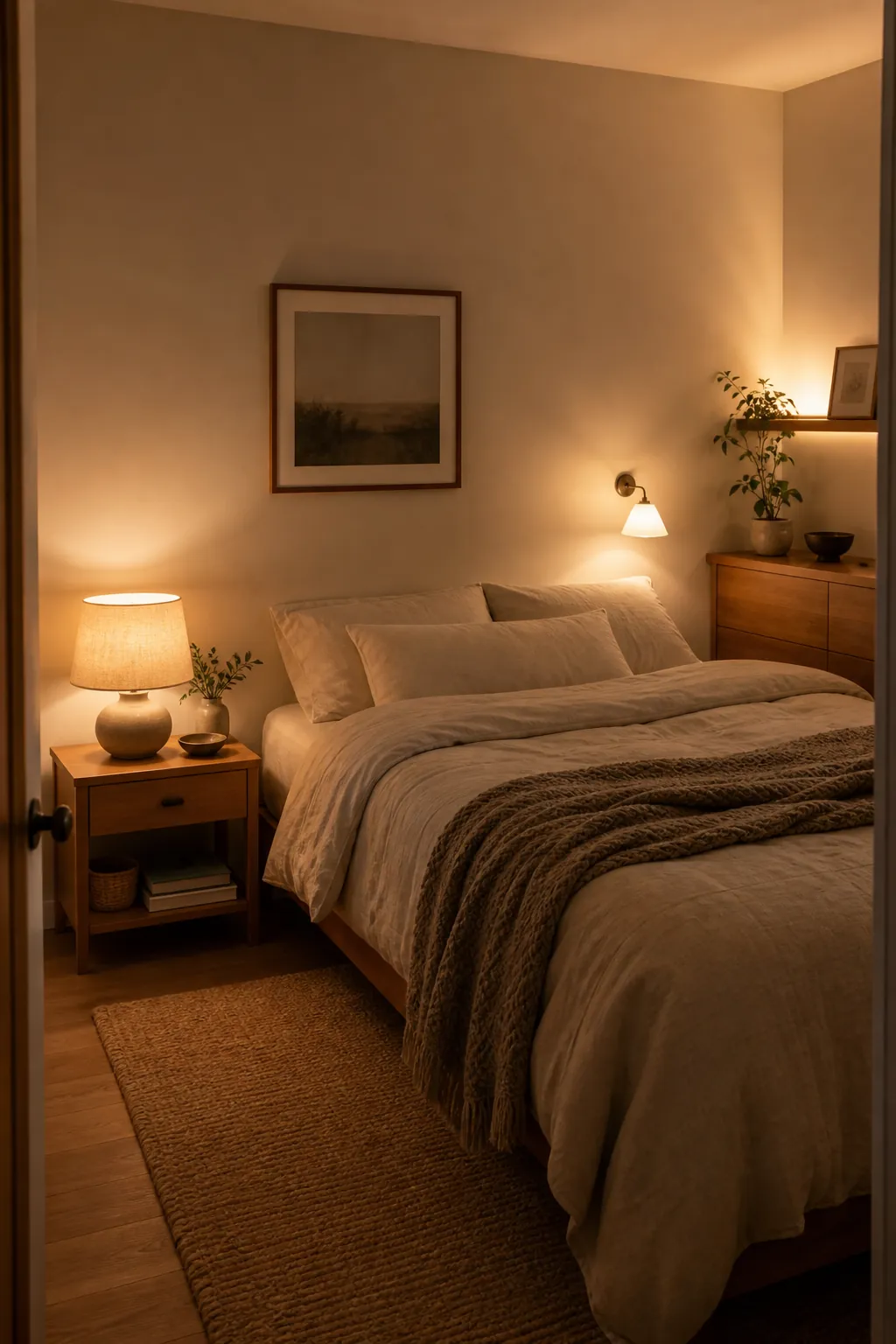
Soften the Window Before You Add More Decor
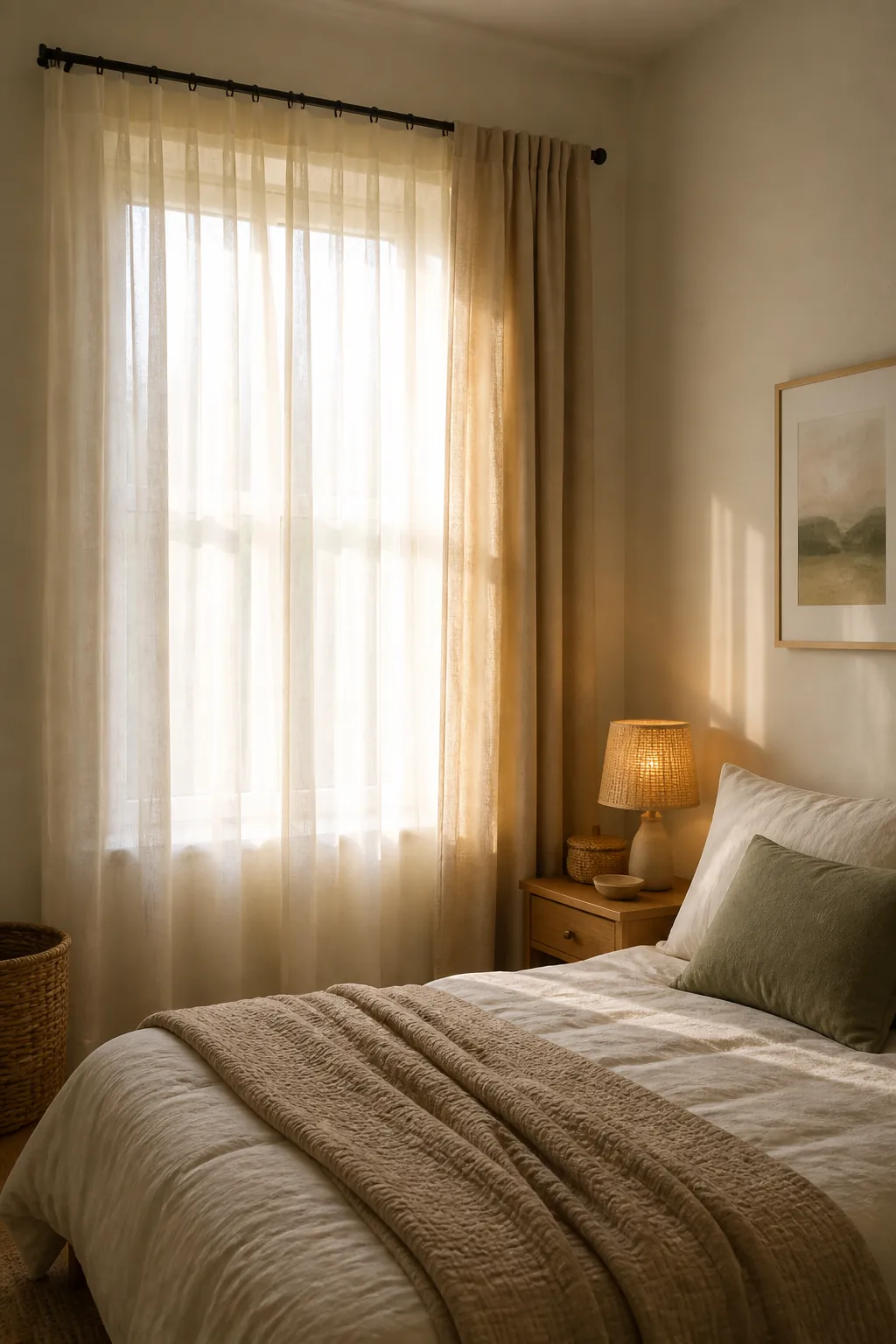
A bare window can make a small bedroom feel exposed and unfinished. The fix does not have to be heavy blackout curtains. Sheer curtains, bamboo shades, linen panels, or a soft Roman shade can filter daylight and blur hard window lines. This is especially helpful when the room has a small or awkward window that makes the wall feel cold.
Hang curtains wider and higher than the window when you can. This gives the wall a calmer frame and makes the room feel more complete. If the window faces harsh afternoon sun, choose a warm white or natural linen fabric so the light entering the room already feels softened. If privacy is the problem, try a layered solution: a sheer panel for daytime and a simple blackout panel for sleep.
Window treatments also give you a chance to repeat your palette. In a neutral bedroom, curtains can carry the warmth without painting the walls. In a colorful bedroom, they can quiet the room down.
Make the Bed Area Feel Padded, Not Packed
The bed is the largest visual object in most small bedrooms, so it has to do a lot of softening. That does not mean piling on twenty pillows. It means choosing bedding that looks touchable: a thicker duvet, a quilt with gentle texture, a washed cotton cover, a nubby throw, or one lumbar pillow in a muted accent color.
If the room has a metal bed frame, black side table, or hard flooring, bedding becomes even more important. Soft bedroom decor balances the hard surfaces. Add one larger rug that reaches beyond the sides of the bed if the layout allows. If not, use a runner where your feet land in the morning. The room feels softer when the first and last thing you touch each day is not a cold floor.
Keep the bed colors connected to the wall and lighting. A cool grey duvet under a cool bulb can look flat. The same duvet with warm white lighting, wood tones, and a cream throw may suddenly feel calm instead of cold.
Use Natural Materials to Warm Up Flat Color
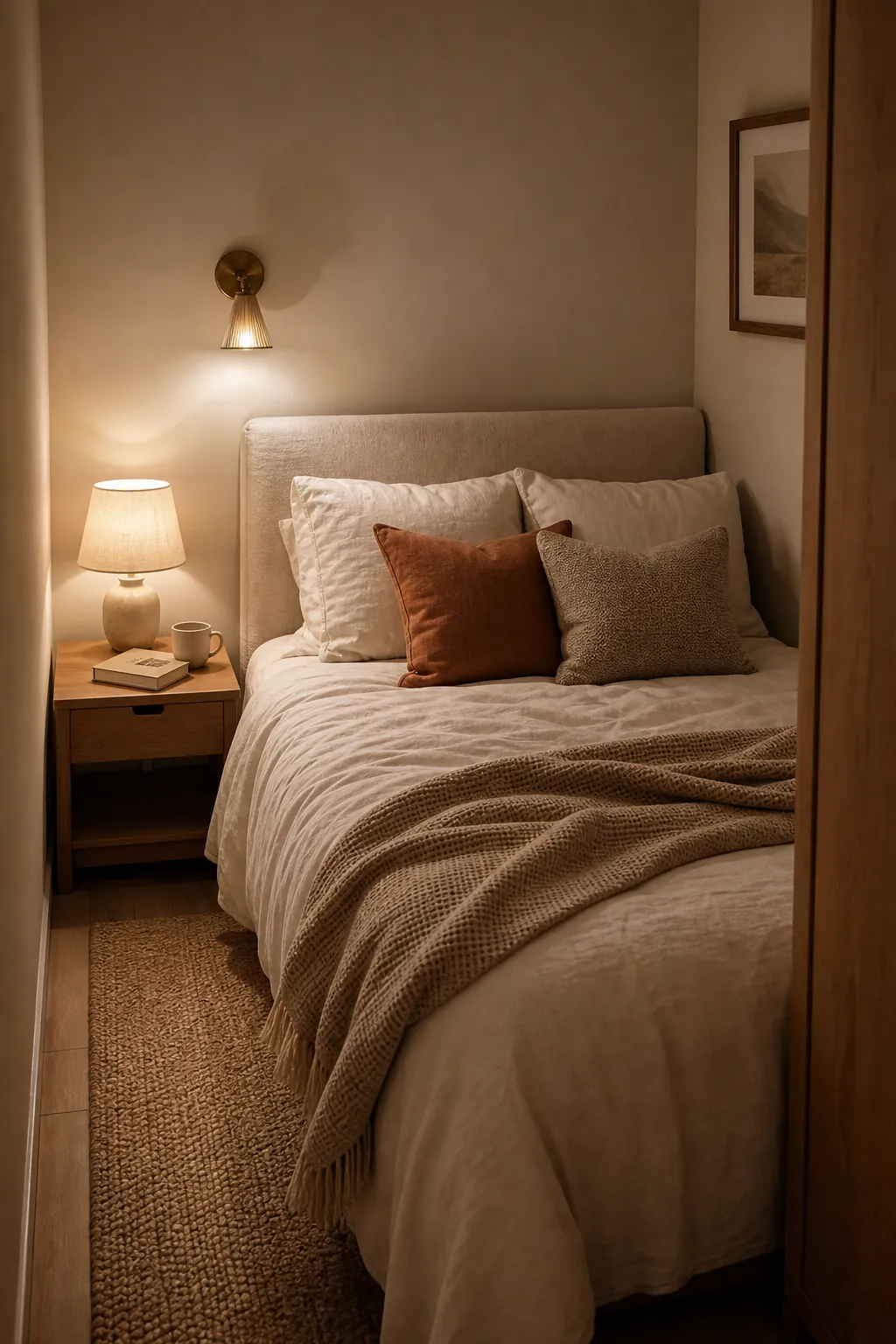
When a small bedroom feels cold, the cause is often too many flat surfaces in the same temperature: painted walls, laminate furniture, plastic storage, metal frames, and plain bedding. Color helps, but material does just as much work. Natural wood, woven baskets, linen, cotton, wool, rattan, paper shades, and ceramic lamps all add small irregularities that make light land more softly.
You do not need to replace every piece of furniture. Start with the objects light touches first: the nightstand, lampshade, curtain, bedding, and wall art. A wood tray on a white dresser, a fabric shade on a lamp, or a woven basket under a nightstand can make the same color palette feel warmer.
Plants help for the same reason. They add organic shape and a little life to a room full of straight edges. In a calm bedroom, one healthy plant in the right corner is often better than several tiny plants scattered around.
Let Shadows Be Gentle, Not Empty
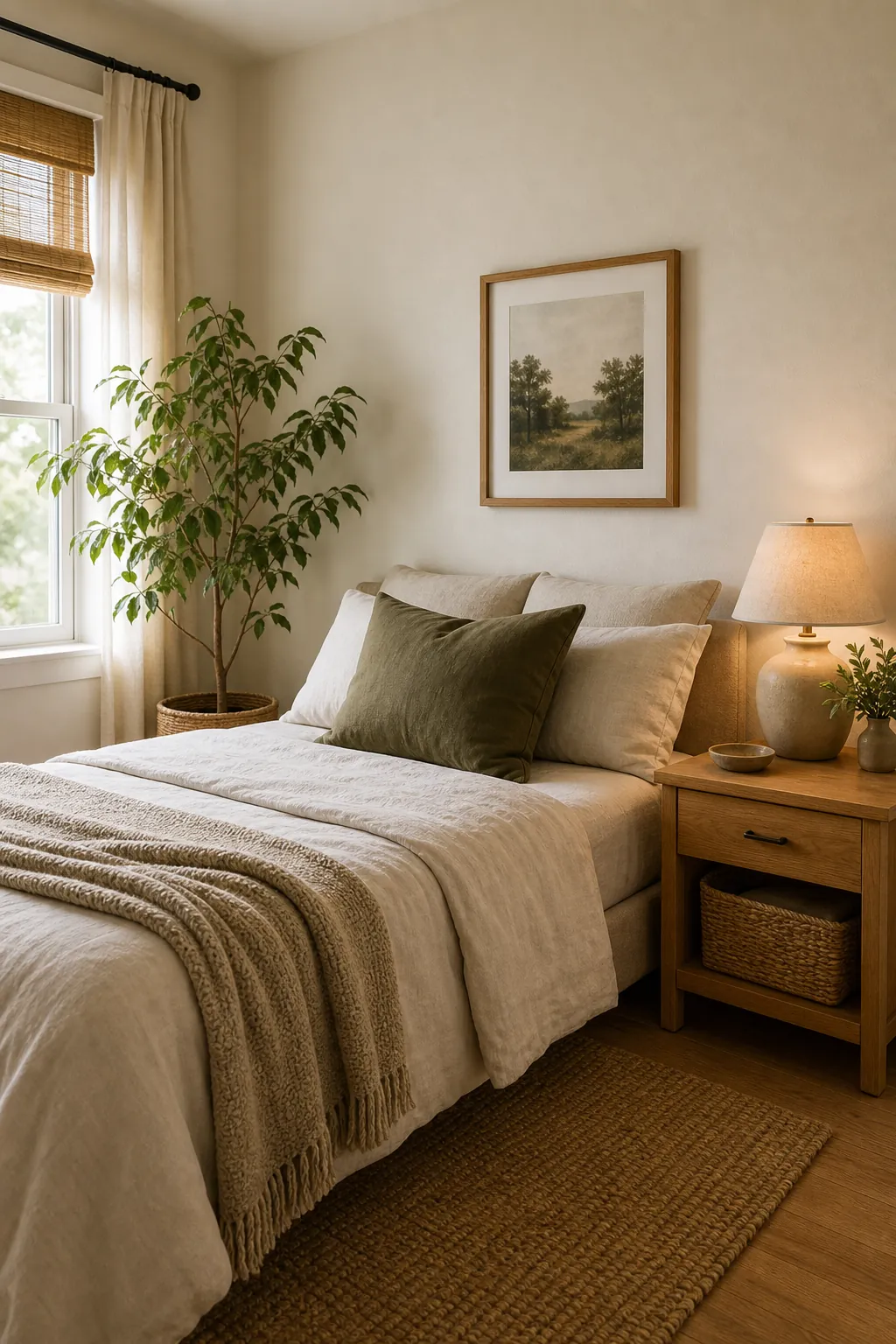
One reason a small room can feel uneasy at night is that the corners go dark while the ceiling light stays bright. That contrast makes the room feel smaller and harsher. A soft bedroom has lower, warmer pools of light that let the edges fade without turning into empty black corners.
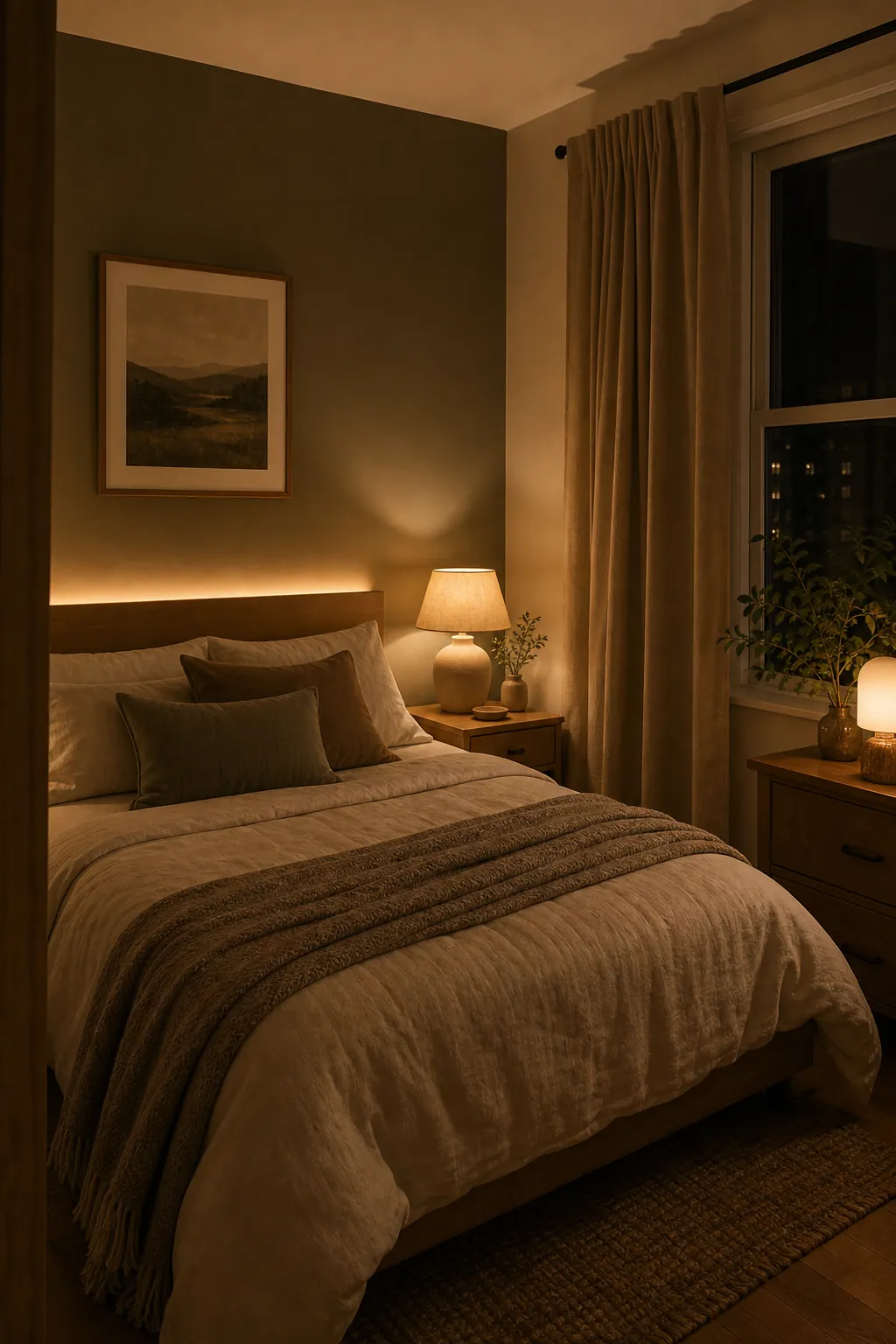
Try placing a small lamp near the darkest corner, adding a plug-in sconce beside the bed, or putting a warm LED strip behind a headboard or shelf. Keep the light indirect when possible. Aim it at a wall, fabric shade, or wood surface instead of directly into your eyes. This creates a glow rather than glare.
This is where darker colors can work in a small bedroom. A muted olive, deep taupe, smoky blue, or warm brown accent wall can feel intimate when the room has enough low lighting. Without that lighting, the same wall may feel heavy. Dark colors are not the problem; unsupported darkness is the problem.
Edit Visual Noise Before Buying More
Soft does not mean stuffed. In a small space, too many visible items can make the room feel restless even if every item is cute. Open shelves, exposed cords, laundry baskets, beauty products, and random storage can break the calm faster than the wrong paint color.
Do a quick softness edit before shopping. Clear the nightstand except for a lamp, one useful object, and one personal object. Hide cords where possible. Put small items into one lidded box or basket. Replace several tiny wall pieces with one larger framed print if the wall feels scattered. The room should still show personality, but it should not make your eyes work hard at bedtime.
This is also the best moment to decide what deserves attention. If the bedding is soft and the lamp is warm, let that be the focus. If the window has beautiful light, keep the area around it quiet. A calm bedroom usually comes from fewer stronger choices, not from more small fixes.
A Simple Soft Bedroom Formula
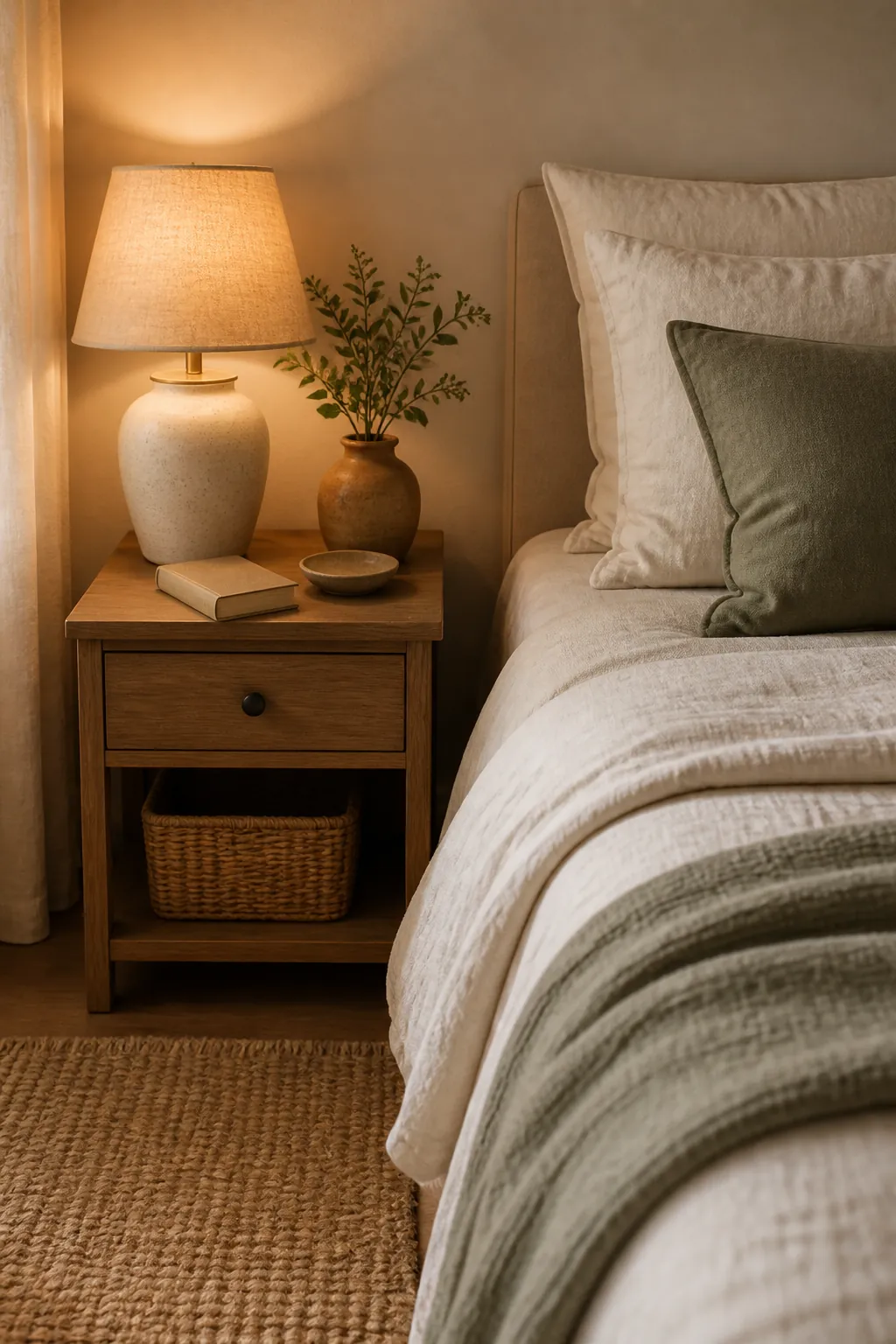
If you want a quick plan, use this order: warm the light, soften the window, repeat a small palette, add texture to the bed, and edit visual noise. Paint can come before or after, but it should not carry the whole room by itself.
- Light: use warm bulbs, dimmers, and at least two lamps below eye level.
- Color: choose warm neutrals or muted accents instead of icy whites and cold greys.
- Texture: add touchable bedding, a rug, curtains, woven storage, or a fabric lampshade.
- Repetition: repeat each main color in at least two places so the bedroom styling feels intentional.
- Quiet: hide small clutter and let one or two soft moments become the focus.
The best small bedroom ideas are not about tricking the eye once. They are about changing what the room feels like every morning and night. When the color is warmer, the light is lower, and the textures are easier on the eye, even a tiny bedroom can feel less like a box and more like a place that lets you exhale.