
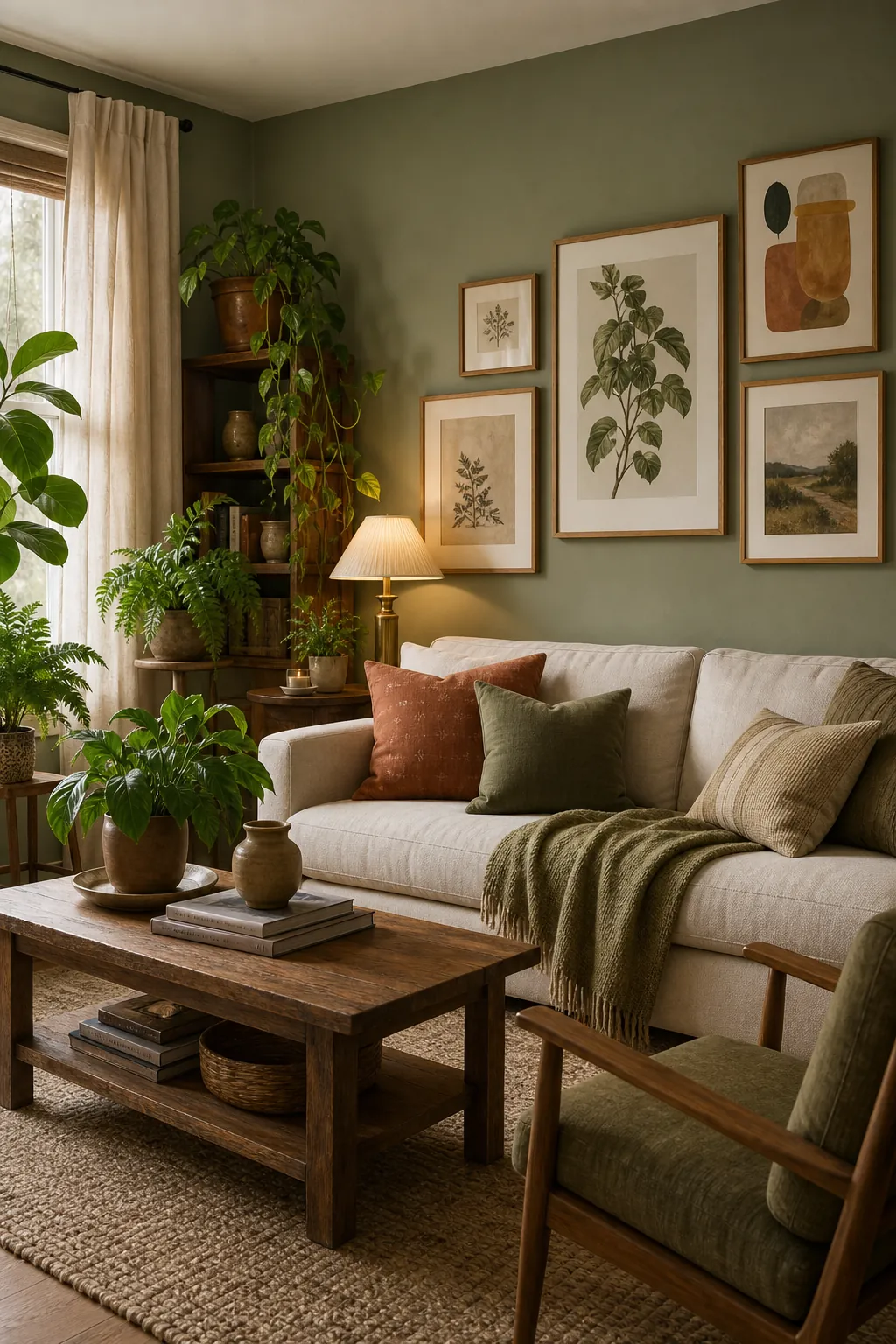
A green room can go wrong in two opposite ways. It can feel flat and heavy, as if every choice is another version of the same color. Or it can feel unfinished, with a green sofa, green wall, or a few plants sitting in a room that still looks bare. The fix is not simply “add more green.” The better move is to build a room where plants, wall art, soft textures, warm light, and contrast all have a job.
That is what people are usually looking for when they search for Green Room Decor: a room that feels calm, personal, and comfortable, not staged or overly themed. The strongest green living room or green bedroom ideas use green as the base, then let texture, shape, and meaningful details make the space feel human.
Start With The Green You Already Have
Before buying anything, decide what is already carrying the green. It might be a wall color, a velvet sofa, bedding, a rug, a painted bookshelf, or a cluster of plants. Once you name the main green element, the room becomes easier to style because every new choice has to either support it, soften it, or give it contrast.
If the room already has green walls, avoid filling every surface with more green decor. Use cream, oatmeal, warm white, linen, pale wood, or aged brass to give the eye a place to rest. If the room is mostly neutral and the green comes from plants, repeat green in small places: a pillow edge, a ceramic pot, a framed print, a throw blanket, or a rug detail. Repetition works best when it feels incidental, not forced.

A practical test: stand in the doorway and squint. If the room looks like one dark block, add contrast. If the green appears only once, repeat it in two or three smaller details. If the space looks busy, remove the smallest decorative pieces and keep the larger shapes.
Use Plants As Shape, Not Just Decoration
Plant decor is strongest when it changes the shape of the room. A tall floor plant can soften a hard corner. A trailing plant can make a shelf feel less rigid. A small pot on a side table can connect the sofa area to the window. Instead of scattering plants randomly, place them at different heights so the green moves through the room naturally.
- Use one tall plant to add height near a window, empty corner, or reading chair.
- Use medium plants on consoles, shelves, or plant stands to bridge the wall and furniture.
- Use small plants on a coffee table, nightstand, or side table when the surface needs life but not clutter.
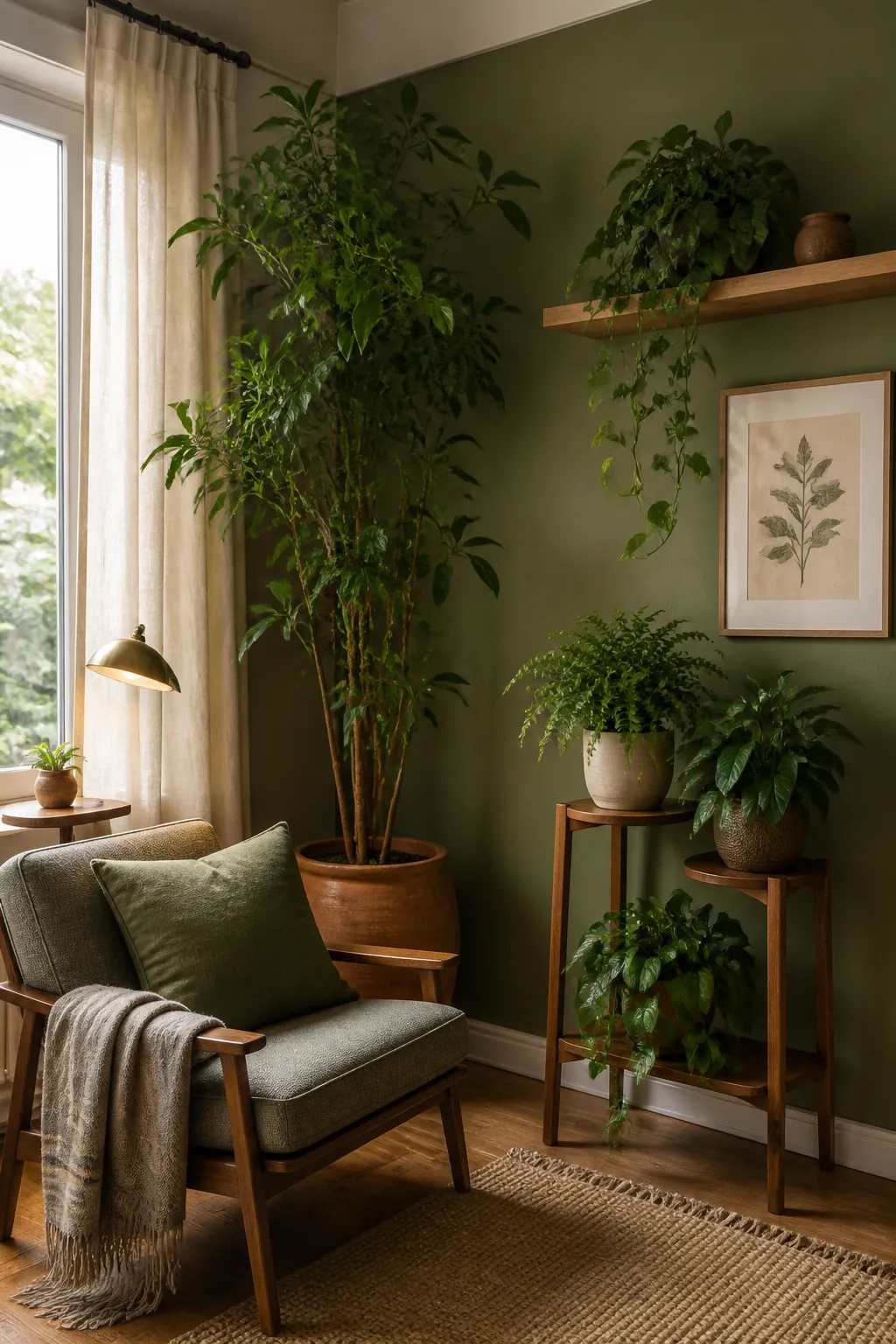
The goal is not to turn every room into a greenhouse. A cozy home usually needs fewer plants than social media suggests, but each one should earn its spot. If you have pets, low light, or a poor track record with watering, mix real plants with convincing faux stems, preserved branches, or botanical art. The feeling matters more than proving every leaf is real.
Let Wall Art Carry The Palette
Wall art is one of the easiest ways to make a green room look intentional. It can pull together a green sofa, wood furniture, plant decor, and soft textures without adding more objects to the floor. Look for art that repeats the room’s green but also introduces a second or third color: rust, blush, ochre, deep blue, black, cream, or warm brown.
A single large piece works well above a sofa, bed, or console because it creates a clear focal point. A gallery wall works better when the frames share a finish, the prints share a mood, or the spacing is disciplined. Botanical prints are a natural fit, but the room will feel more personal if you mix them with landscapes, abstract pieces, local artwork, family photography, or small textile pieces.
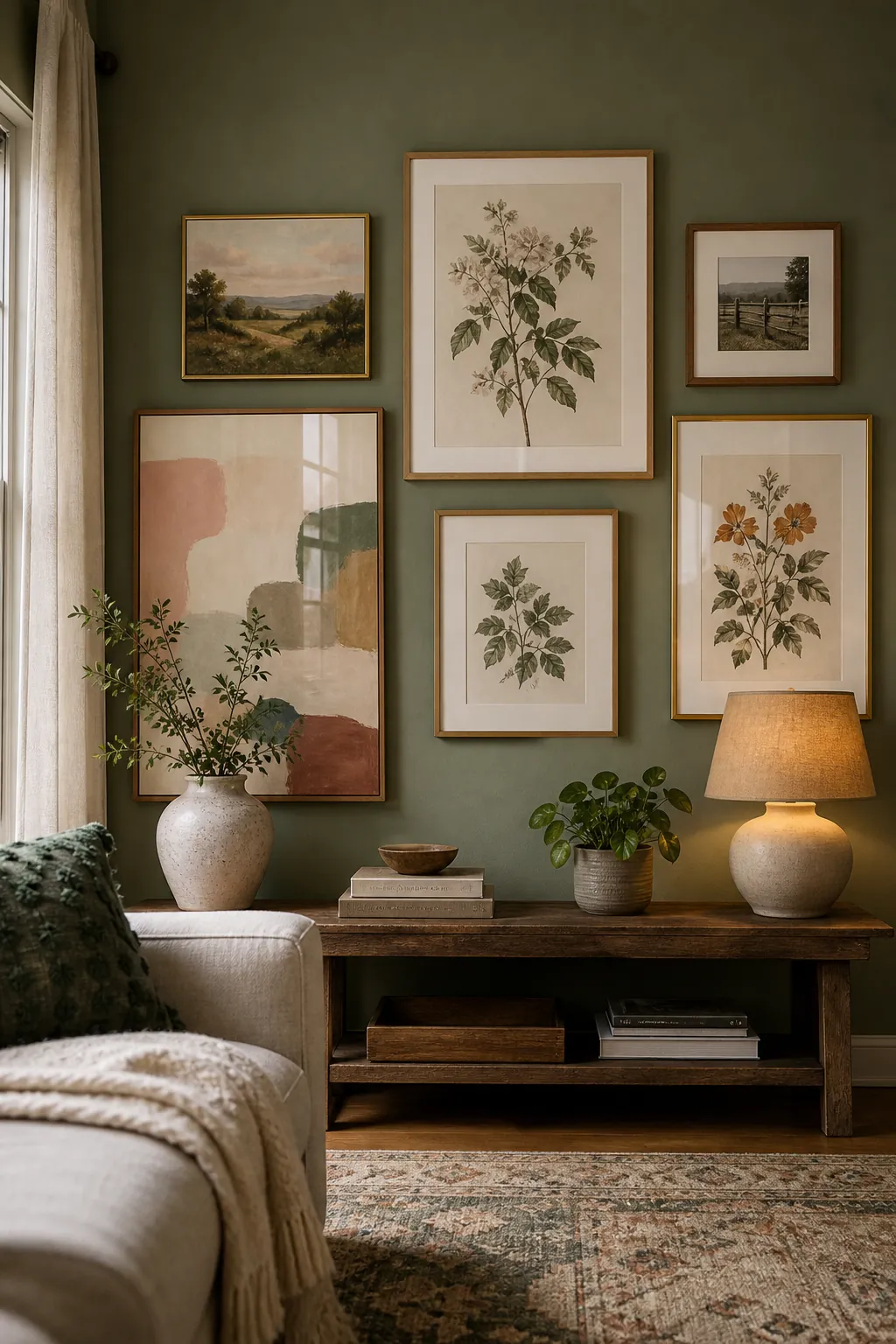
If the room feels empty, choose art before buying more small decor. If the room feels chaotic, replace several small pieces with one larger work. Good wall art gives green room ideas a center of gravity.
Soften The Room With Rugs, Curtains, And Throws
Most unfinished rooms are not missing clever decor. They are missing softness. A rug anchors the furniture, curtains soften the wall, pillows make the seating look used, and throws bring touchable texture. These soft textures matter even more in a green room because green can feel cool, shadowy, or too serious without fabric layers.
For a living room, start with a rug large enough for at least the front legs of the sofa and chairs. If the room is dark, choose a rug with cream, oatmeal, pale blue, faded rose, or warm tan in the pattern. If the room is pale, a deeper vintage-style rug can ground the furniture. Curtains should usually hang high and fall close to the floor, even when they stay open most of the time. They frame the window and make the room feel finished.
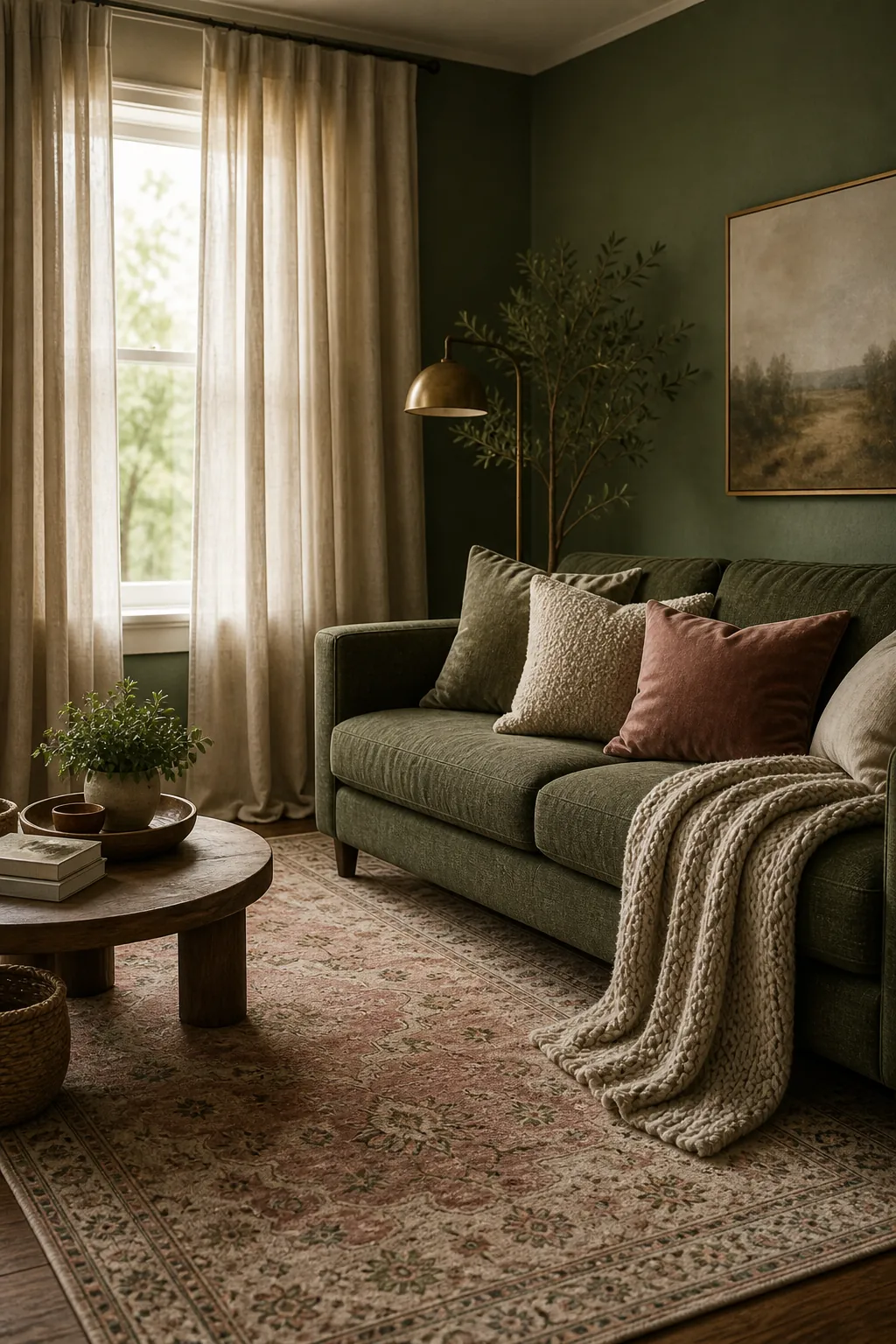
For throws and pillows, vary the material before varying the color. Linen, boucle, cotton knit, wool, velvet, jute, and woven textures can all live in the same palette without looking repetitive. Softness is not only visual; it is how the room asks people to stay.
Balance Green With Warm Wood, Cream, Brass, And One Accent Color
Green becomes easier to live with when it has warm materials around it. Natural wood keeps the room from feeling cold. Cream and warm white brighten the palette without fighting it. Brass, aged gold, or warm bronze adds a small amount of glow. Then one accent color gives the space personality.
- Green and cream feels quiet, fresh, and easy to layer.
- Green and rust feels earthy and mature.
- Green and blush softens a bedroom or reading nook.
- Green and ochre adds warmth without becoming too bright.
- Green and deep blue works when the room already has strong natural light.
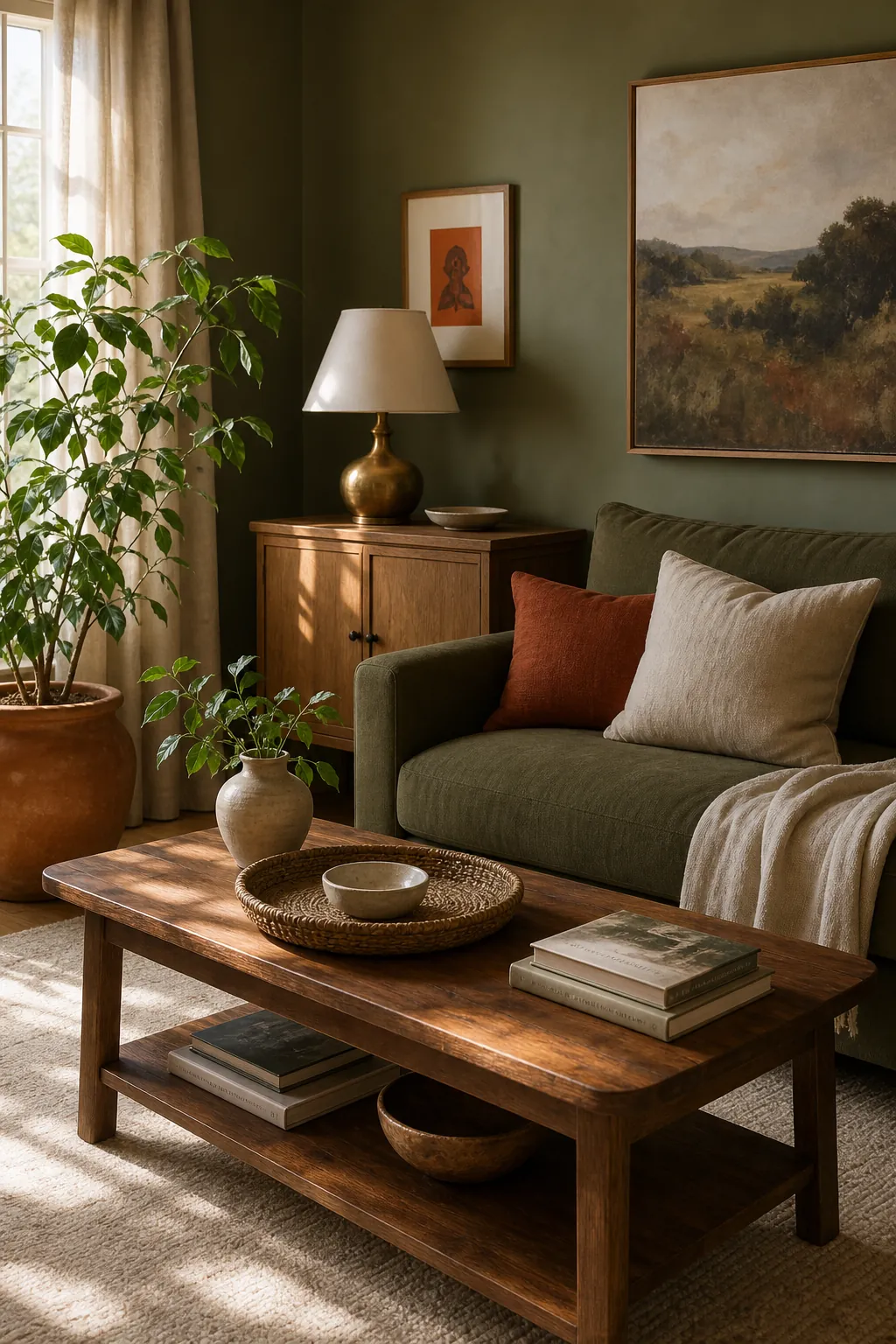
The accent color should appear in a few places, not everywhere. A rust stripe in the rug, a blush pillow, a mustard lampshade, or a blue detail in the wall art is enough. When every accent repeats too perfectly, the room starts to look like a set. The best interior styling feels connected but not matched.
Make A Green Bedroom Feel Calm, Not Themed
A green bedroom should feel restful first. Instead of filling it with plant motifs, choose one clear green statement: a sage wall, olive bedding, a painted nightstand, or a leafy view near the window. Then layer touchable fabrics around it. Washed cotton sheets, a quilt, a wool throw, linen curtains, and a soft rug can make even a simple room feel considered.
Keep the wall art quieter in a bedroom than you might in a living room. One large landscape, a pair of botanical prints, or a small gallery above a dresser can be enough. Bedside lighting should be warm and low. If you add plants, place them where they will not crowd the nightstand or drop leaves onto the bedding.
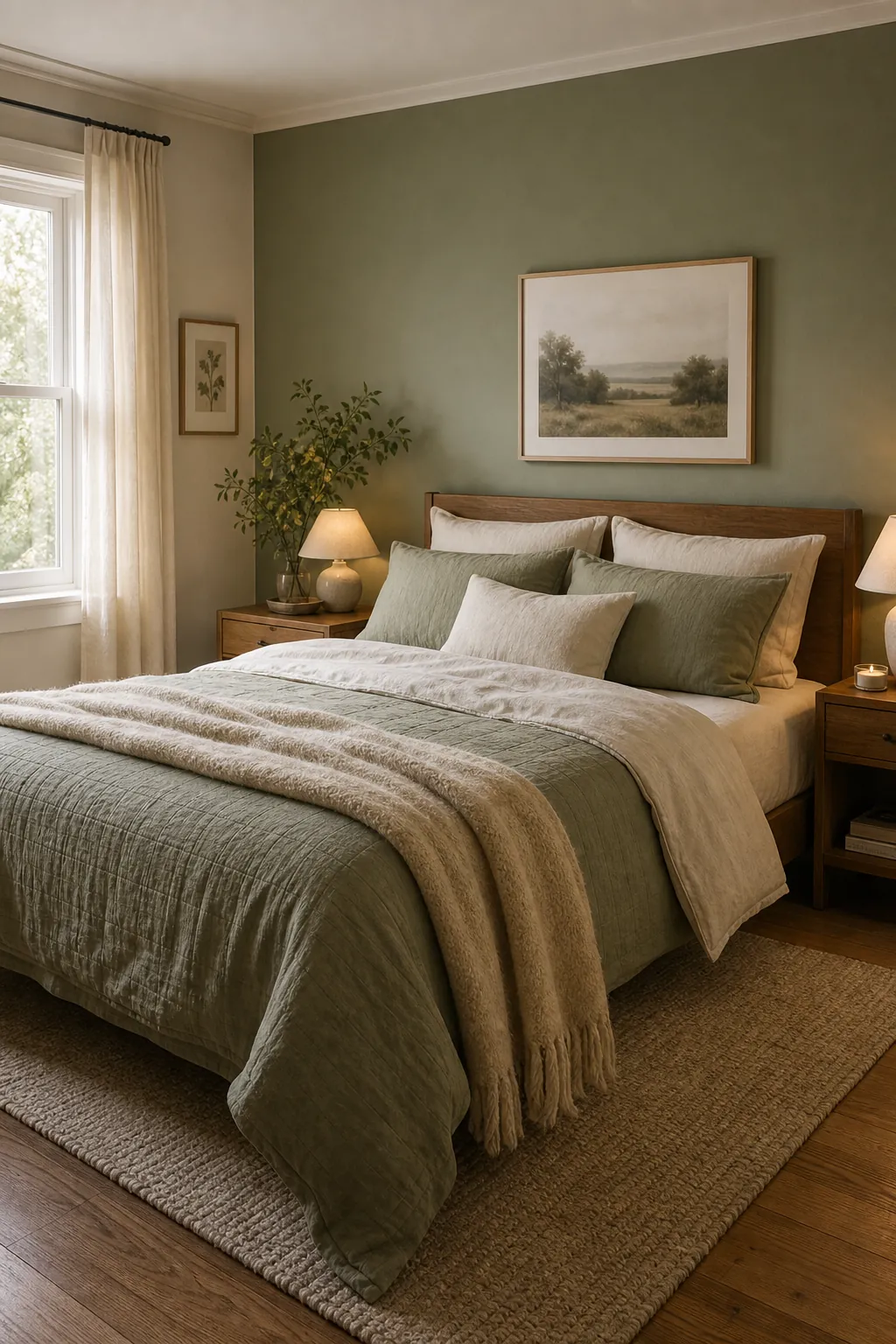
The most common mistake is making the bedroom too literal: green bedding, green rug, green pillows, green art, and many plants. Pick a lead note and let the rest of the room breathe. Natural home decor works best when it leaves space for quiet.
Choose Plant Decor That Works With Your Real Light
Beautiful plant decor fails when it ignores the room’s actual light. A sunny window can support larger, bolder leaves. A dim corner may need a plant stand closer to the window, a grow light, dried stems, or a faux plant that looks better than a struggling real one. There is no shame in choosing what works for your home instead of what looks impressive online.
Think of plant placement as part of the room’s layout. A tall plant can balance a floor lamp. A hanging plant can soften a window corner. A slim shelf of small pots can make a blank wall feel alive. But if every surface becomes a plant shelf, the room loses its calm. Plants should add rhythm, not maintenance stress.
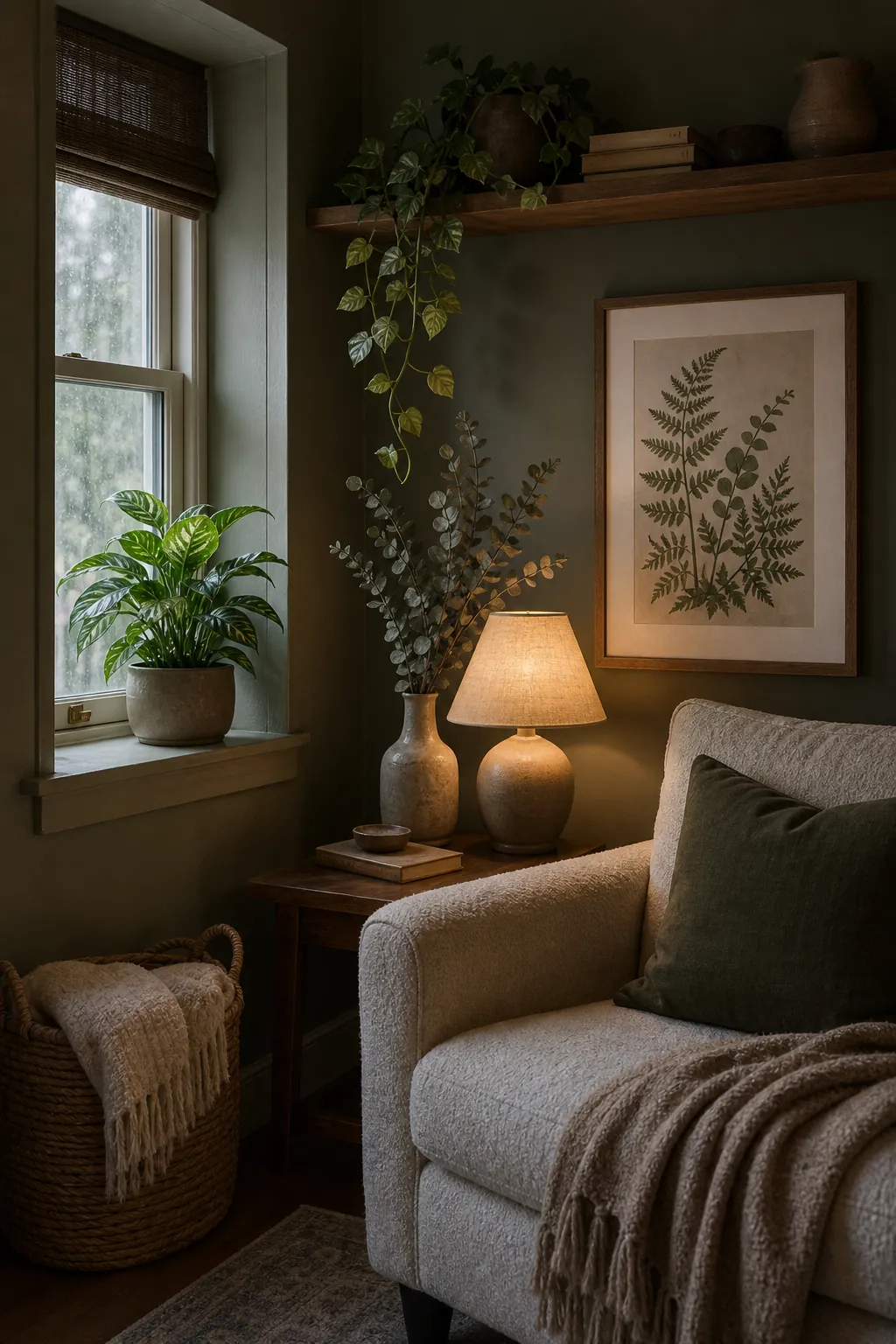
If you are styling a rental or a room with poor windows, use plant decor in lower-risk ways: botanical art, green ceramic pots, preserved eucalyptus, mossy textiles, or a single reliable plant near the brightest spot. The room can still feel green without asking you to manage a full indoor garden.
Finish Slowly So The Room Feels Collected
A polished green room rarely happens in one shopping trip. The rooms that feel best usually have a mix of new, vintage, handmade, and personal pieces. That is especially true with wall art and small decor. A room with meaningful art, a plant that has grown into the space, a comfortable rug, and a few well-chosen textiles feels more natural than a room where everything arrived from the same cart.
- First, anchor the room with the main furniture layout and rug.
- Second, soften it with curtains, pillows, throws, and warm lighting.
- Third, personalize it with wall art, plant decor, books, ceramics, and collected pieces.
- Last, edit it so the room still has open space and clear focal points.
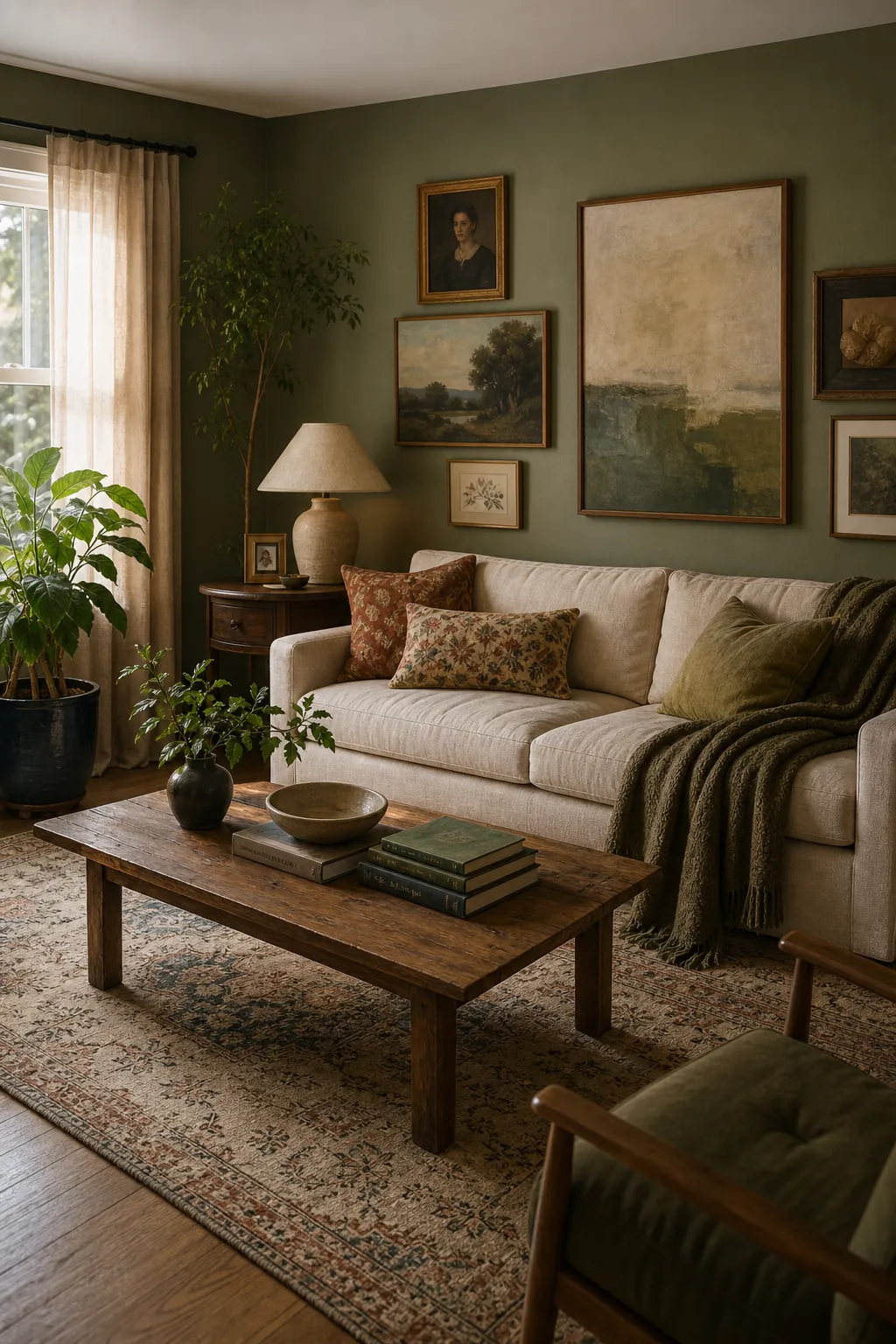
This is the simplest way to keep green room ideas from becoming clutter. Let each layer solve a real problem. A rug solves floaty furniture. Curtains solve bare windows. Art solves empty walls. A plant solves a dead corner. A throw solves a sofa that looks stiff. When each object has a reason, the room feels styled without feeling overfilled.
The Best Green Rooms Feel Alive, Not Just Green
The best green room decor does not depend on one perfect paint color or one trendy plant. It comes from balance: living leaves, layered textiles, warm light, personal wall art, comfortable furniture, and enough contrast to make the green feel intentional. Start with the green you already have, add softness where the room feels hard, add art where it feels blank, and add plants where the shape of the room needs life.
That is how a green living room, green bedroom, or small cozy home corner becomes more than a color scheme. It becomes a room that feels calm, textured, and lived in.