
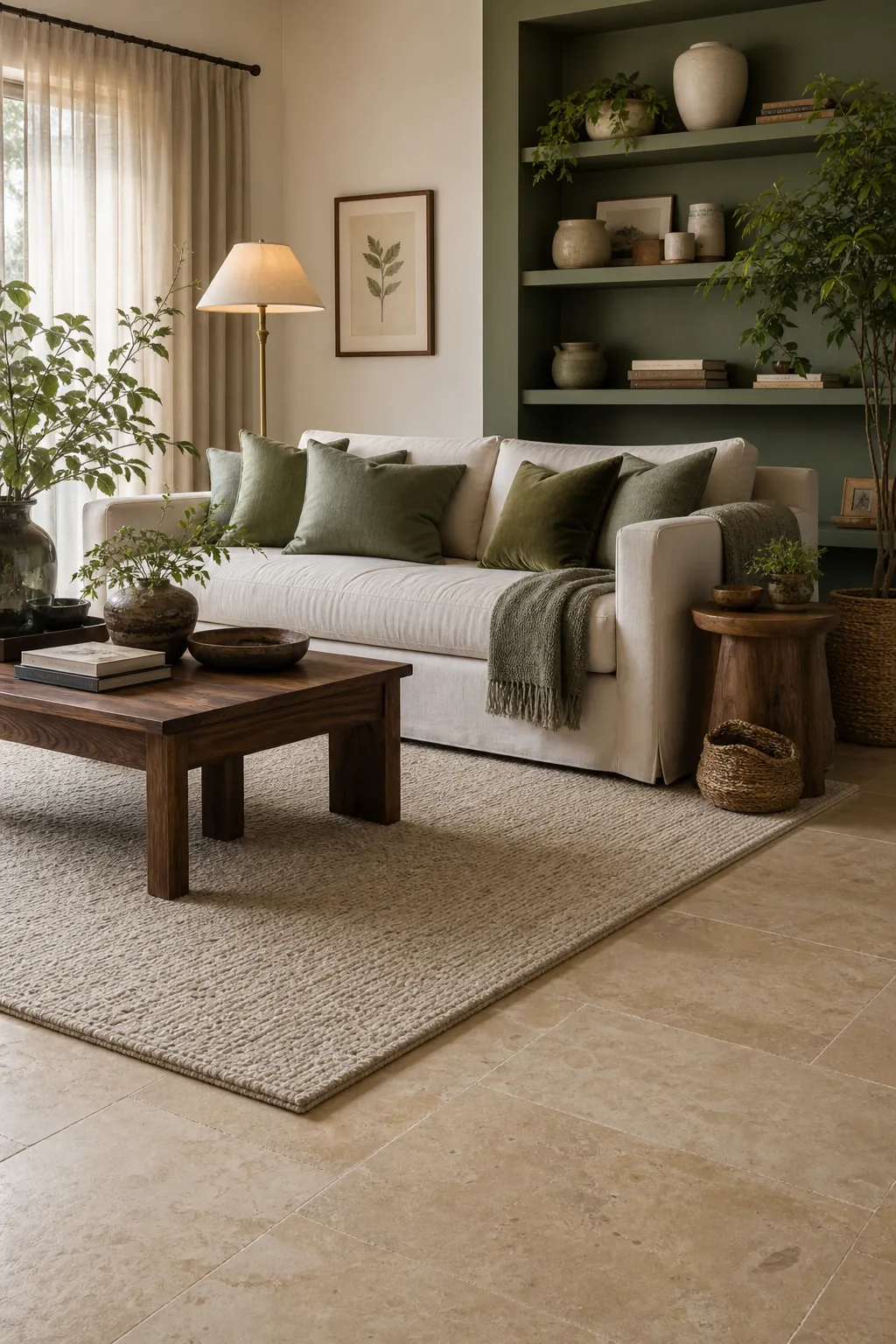
Beige floors can feel like the thing you have to decorate around, especially when they are tile, carpet, or builder-grade flooring you cannot replace. But they are not a design problem by default. They are a quiet base. The room starts to work when green gives that base a clear direction: softer, warmer, earthier, and more intentional.
The mistake is treating green as one accent pillow or one dramatic wall and hoping it fixes the whole room. A beige floor needs repetition, contrast, texture, and light. The goal is not to hide the floor. The goal is to make it look like it was part of the palette from the beginning.
Read the Beige Before You Pick the Green
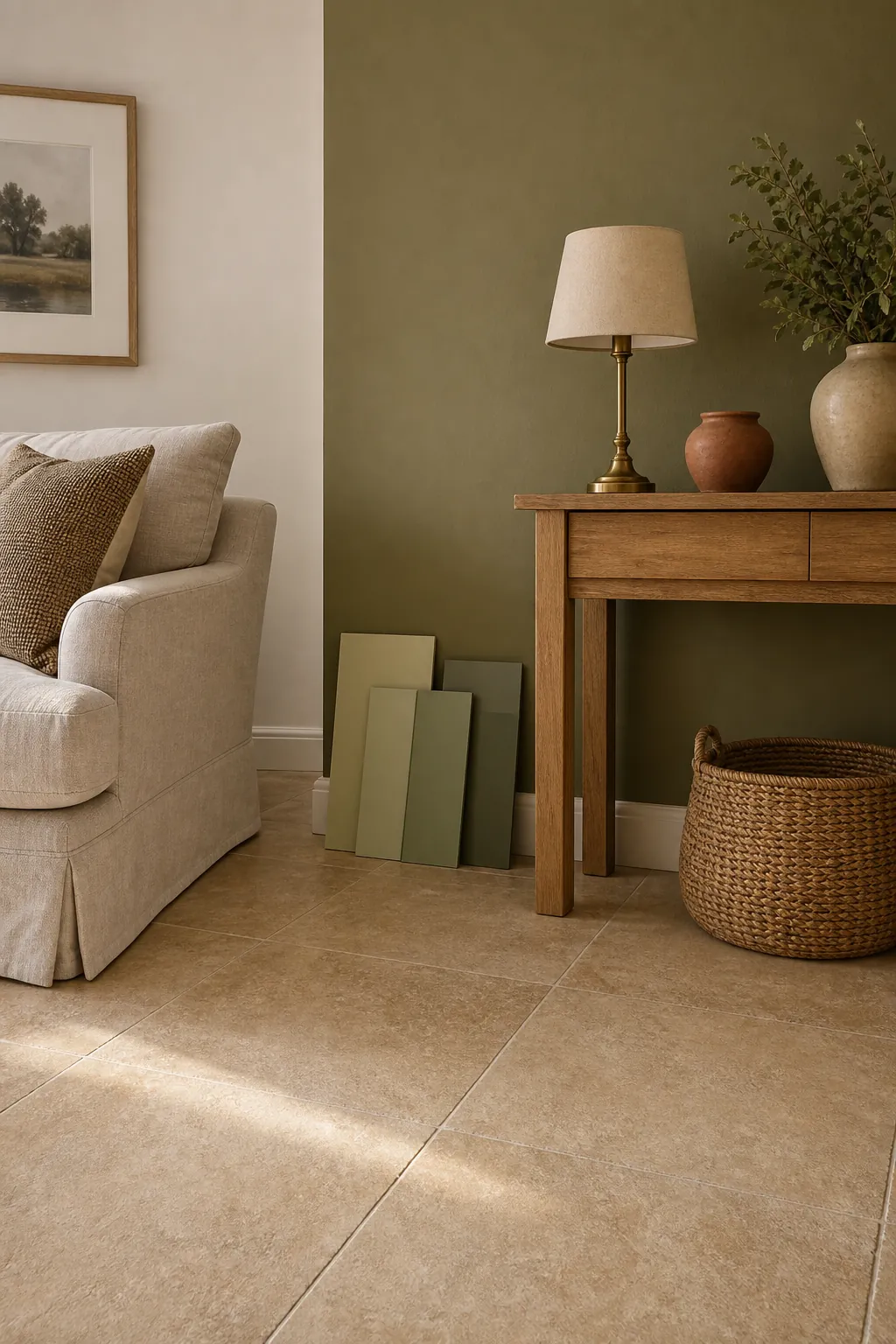
Start with the floor, not the paint chip. Beige floors usually lean warm yellow, pink-taupe, gray-greige, or sandy stone. That undertone decides which green room decor will look calm and which one will look sharp, cold, or accidental.
- Warm yellow beige works best with olive, moss, muted sage, cream, oak, camel, terracotta, and aged brass.
- Pink or taupe beige needs softer greens like eucalyptus, dusty sage, and gray-green instead of bright emerald.
- Greige beige can handle deeper forest green, black accents, walnut, and textured white because the floor already has a cooler base.
If the floor looks too yellow beside your green sample, the green is probably too blue or too saturated. If the room feels dull, the green may be too close in value to the floor. The easiest fix is usually a muddier green plus one stronger contrast: cream, black, walnut, rust, or brass.
Use Green as the Direction, Not Just the Accent
A beige floor often feels unfinished because the rest of the room stays just as neutral. One green cushion will not change that. Instead, choose a green direction for the whole room: sage and linen for soft calm, olive and wood for earthy decor, forest green and brass for a richer look, or pistachio and white for a brighter small-space feel.
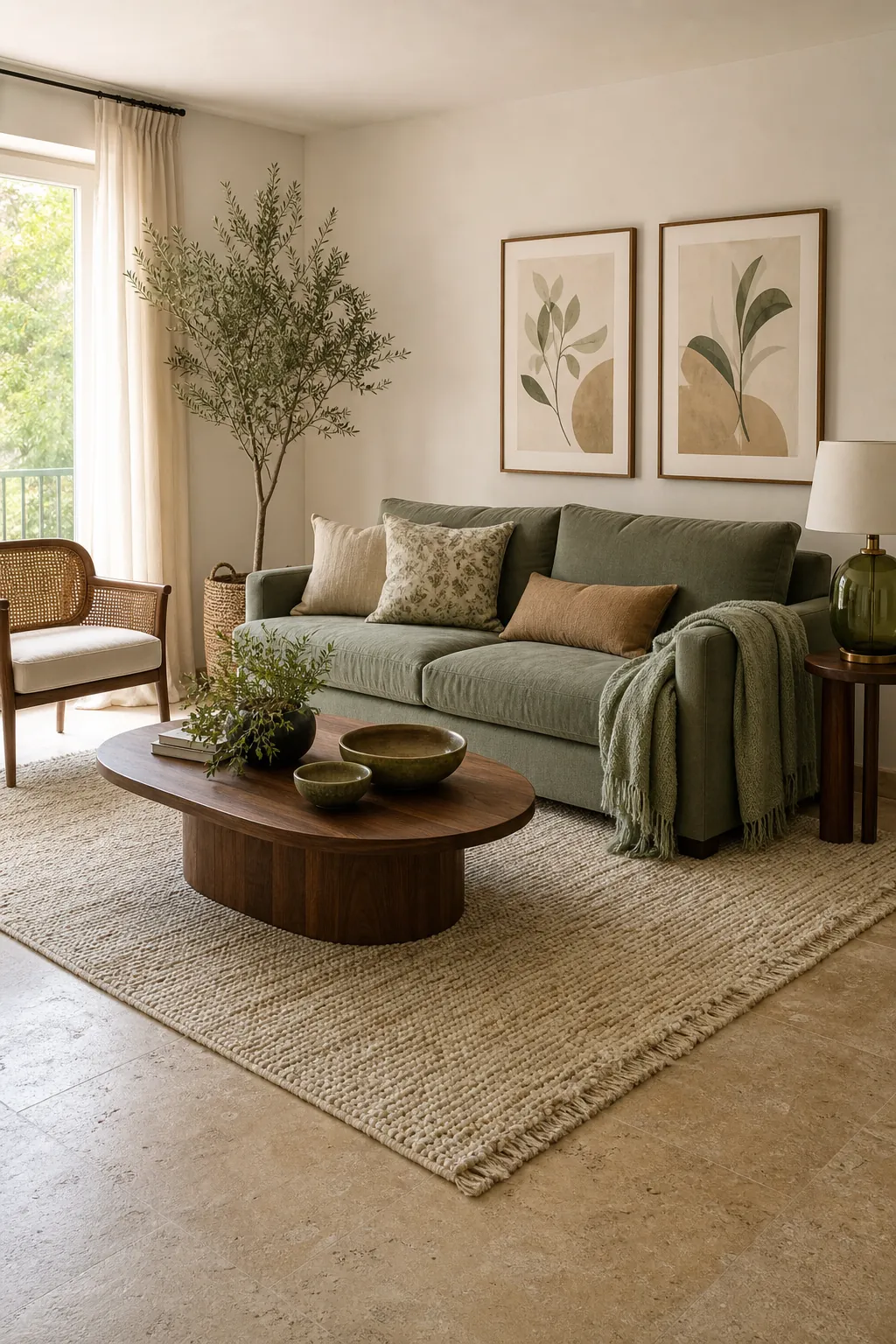
Then repeat that green in at least three places. For a living room, that might be a sage sofa, olive art, and green ceramics on a coffee table. For a bedroom, it could be soft green bedding, a muted green lamp base, and a botanical print. Repeating green makes beige floors feel connected instead of leftover.
If you are nervous about painting, start with fabric. Curtains, pillows, throws, and slipcovered chairs let you test whether the green warms up the floor before you commit to walls.
Choose a Rug That Breaks Up the Beige Without Fighting It
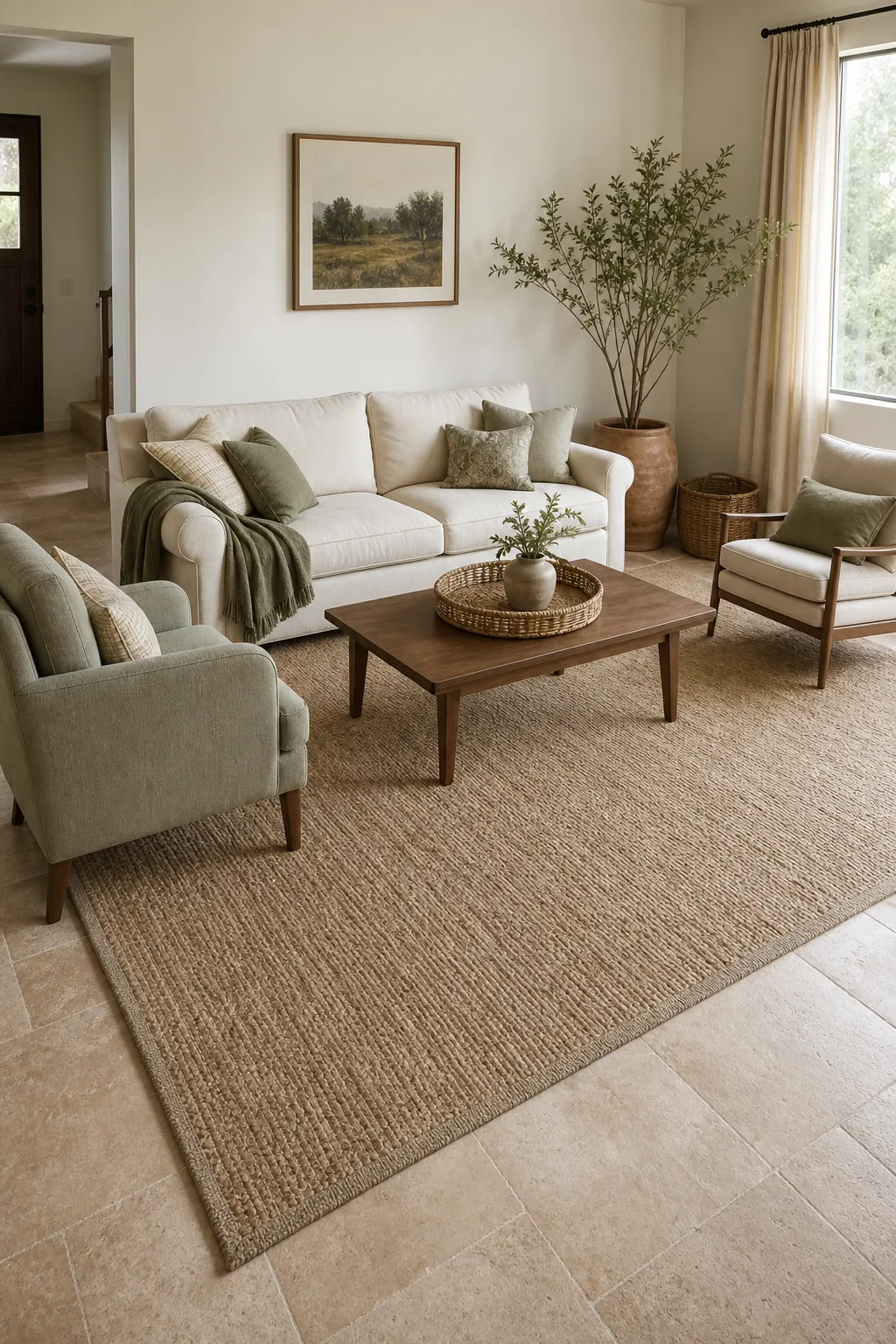
Many beige-floor rooms fail because the rug is too small, too thin, or too close to the floor color. A small beige rug on a beige floor does almost nothing. A large rug creates a room zone, covers the most visually dominant part of the floor, and gives the furniture a stronger foundation.
For green and beige decor, the most reliable rug choices are oatmeal wool, jute, ivory with olive lines, faded Persian patterns with rust and sage, or a low-contrast checker in cream and tan. In a living room, the front legs of the sofa and chairs should sit on the rug. In a bedroom, the rug should extend well beyond the bed so the beige floor becomes a border, not the whole story.
Do not use the rug only to hide the floor. Use it to add scale, texture, and a bridge color. A rug with tan, green, ivory, and a small amount of terracotta can make even plain beige tile look chosen.
Warm the Palette With Wood, Terracotta, Brass, and Woven Texture
Green can cool down a room if every other finish is flat white, gray, or black. Beige floors need warmth around them. Natural wood, cane, rattan, linen, clay, leather, and brass pull the green back toward an earthy decor palette.
This is where room styling becomes more important than color matching. A walnut coffee table, a terracotta vase, linen curtains, and a brass reading lamp can do more for a beige tile living room than another green accessory. The floor starts to look like part of a natural material story.
Use black only as a thin line: a picture frame, lamp stem, curtain rod, or side table. Too much black can make warm beige flooring look dingy, but a little black gives the eye a place to land.
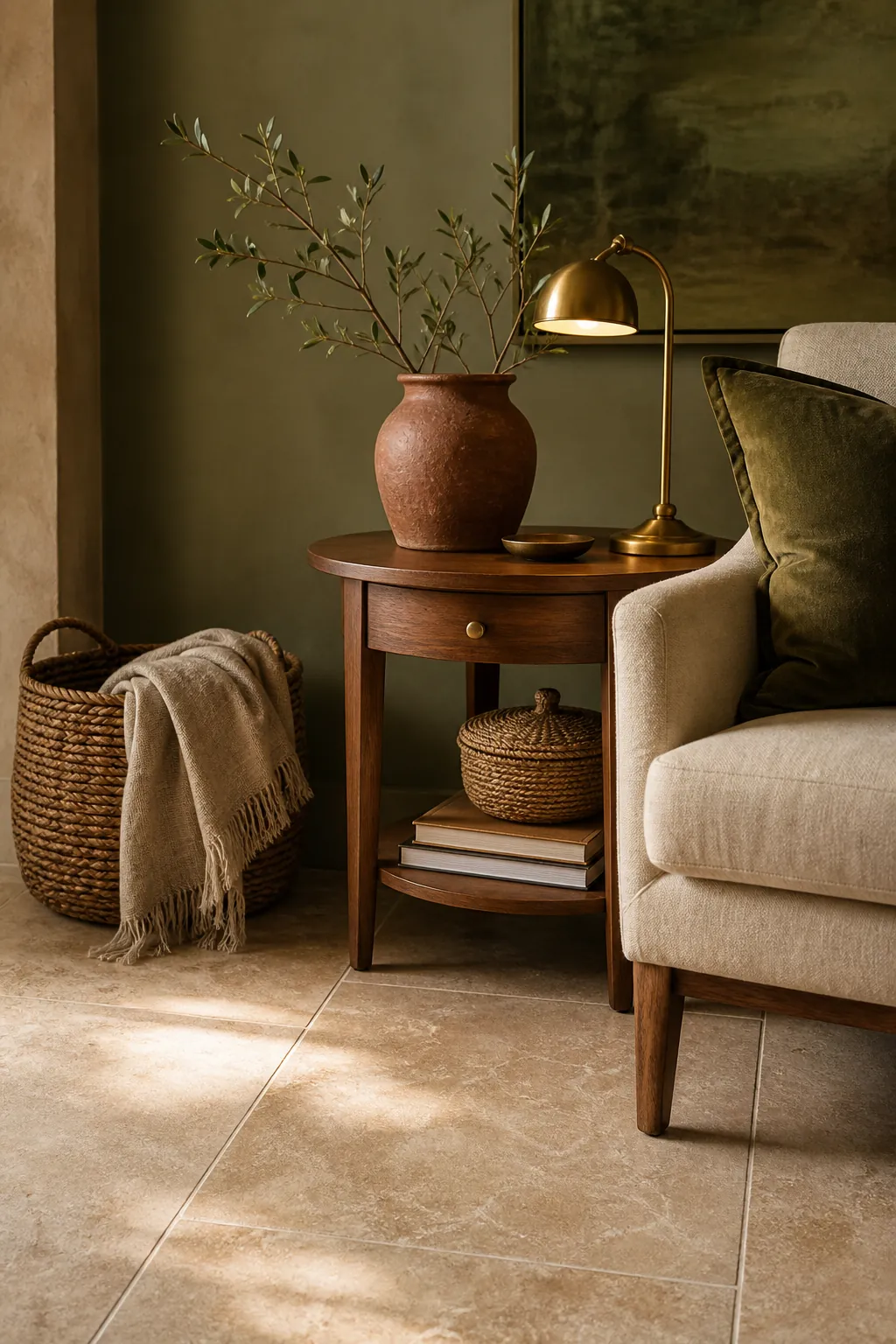
Keep Dark Green Cozy Instead of Heavy
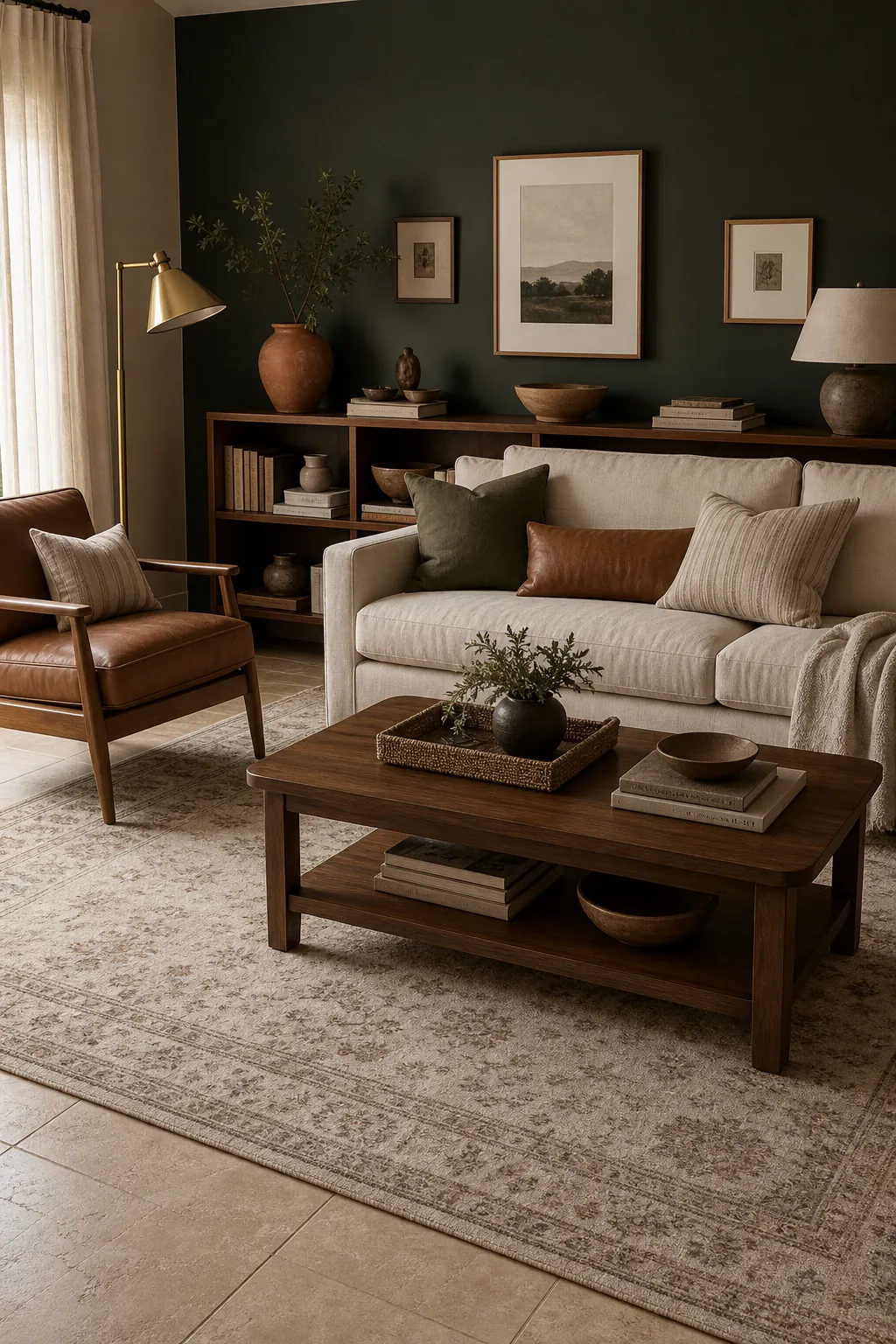
Dark green can absolutely work with beige floors, but it needs discipline. The problem is not the darkness. The problem is when a deep green wall, dark sofa, dark wood, and beige floor all sit at the same visual weight. The room becomes muddy instead of moody.
If you want forest, fir, or deep olive walls, balance them with creamy upholstery, pale linen curtains, a lighter rug, and warm lamps. Let the beige floor be the mid-tone and bring in brighter surfaces above it. A dark green room still needs light pieces, reflective moments, and texture you can see.
For renters or cautious decorators, paint one built-in, one cabinet, or one accent wall before painting the entire room. A single dark green wall behind a beige sofa can look intentional when the rest of the room repeats the green in art, pillows, and plants.
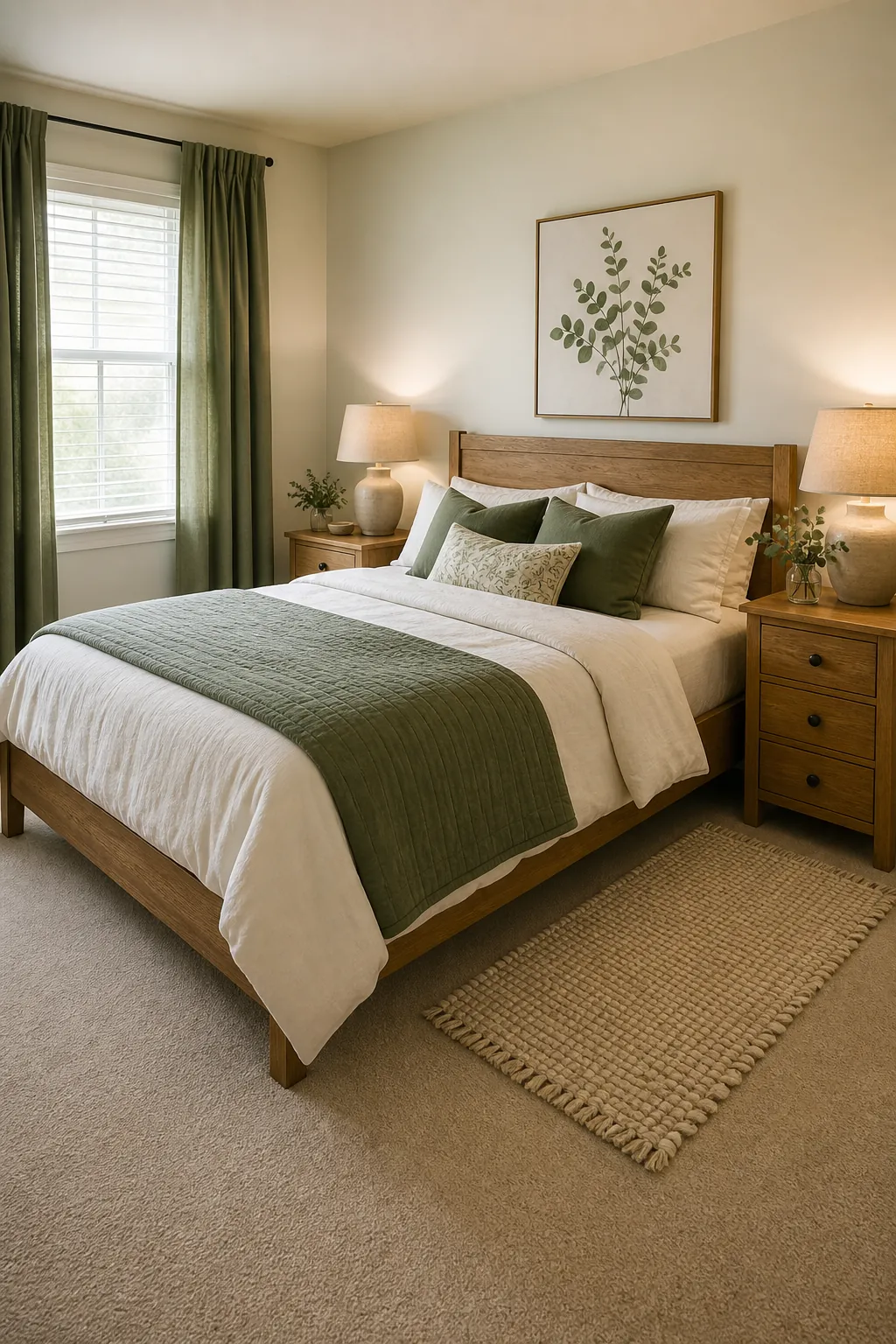
Make Soft Green Work in Bedrooms With Beige Carpet
Beige carpet in a bedroom can make every color feel softer, which is useful if you work with it instead of against it. Sage bedding, eucalyptus curtains, ivory quilts, oak nightstands, and warm white walls create a bedroom decor palette that feels restful rather than bland.
The key is to avoid a bed that disappears into the floor. If the carpet is light beige, use deeper olive pillows, a patterned quilt, a wood bed frame, or a green upholstered headboard. If the carpet is darker tan, use creamy bedding and soft green accents so the room does not become visually heavy.
In bedrooms, green should calm the beige, not compete with it. Keep the loudest colors out of the largest surfaces and bring personality through art, lamps, and small textiles.
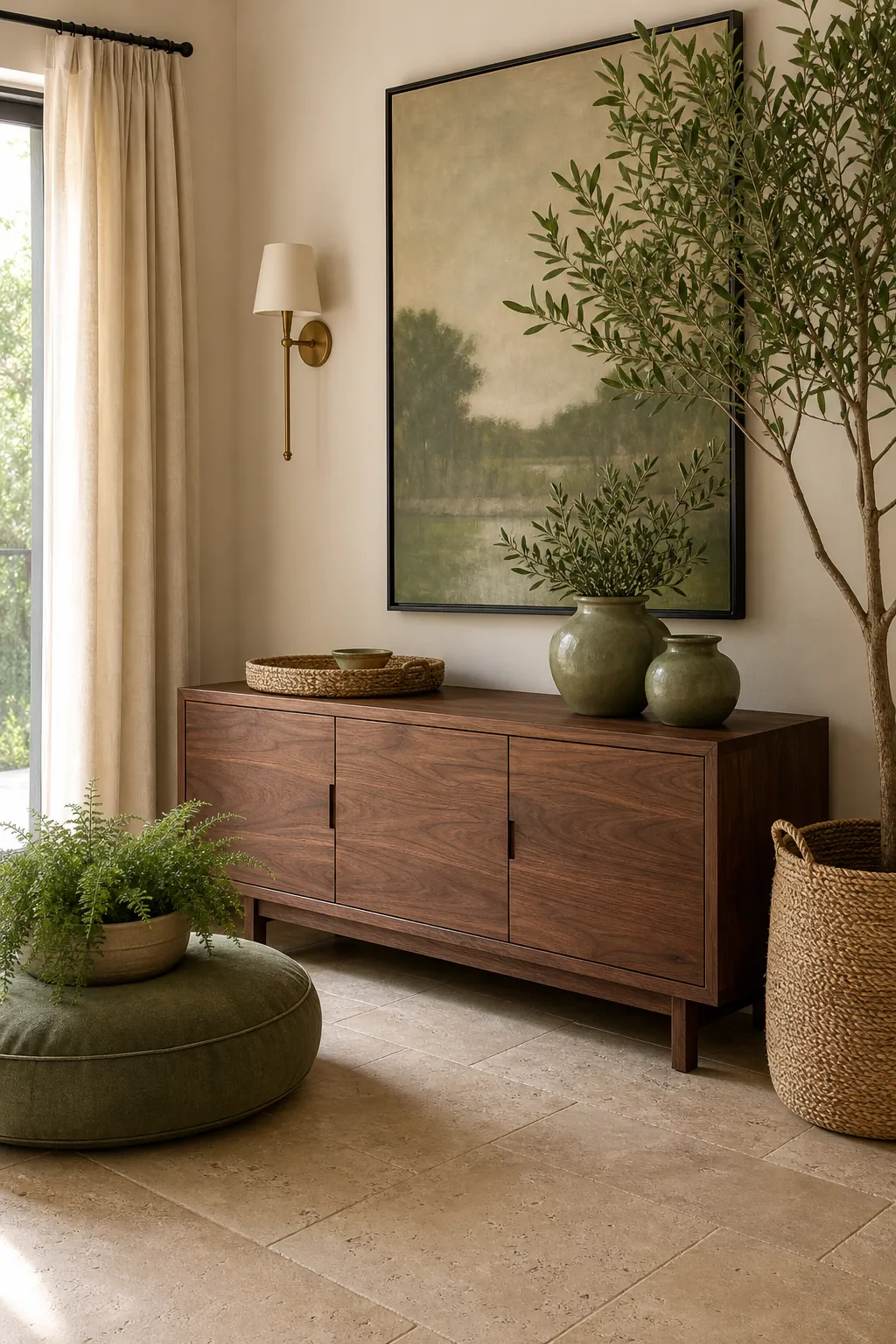
Repeat Green at Three Heights
A room feels more finished when color moves through it vertically. Beige floors sit low, so green should not live only on the sofa or rug. Repeat it low, middle, and high.
- Low: a rug pattern, ottoman, floor cushion, planter, or basket liner.
- Middle: pillows, lamps, ceramics, side chairs, throws, or a painted cabinet.
- High: curtains, artwork, wall color, shelves, plants, or a tall bookcase backdrop.
This simple vertical rhythm solves one of the biggest beige-floor problems: the eye stays stuck on the floor. When green appears at several heights, the whole room reads as styled, not just furnished.
Use Lighting to Stop Beige and Green From Looking Flat
Lighting is the quiet reason some green and beige rooms look expensive while others look dull. Beige floors can flatten under cool overhead light. Green can look gray, muddy, or too saturated depending on the bulb and time of day.
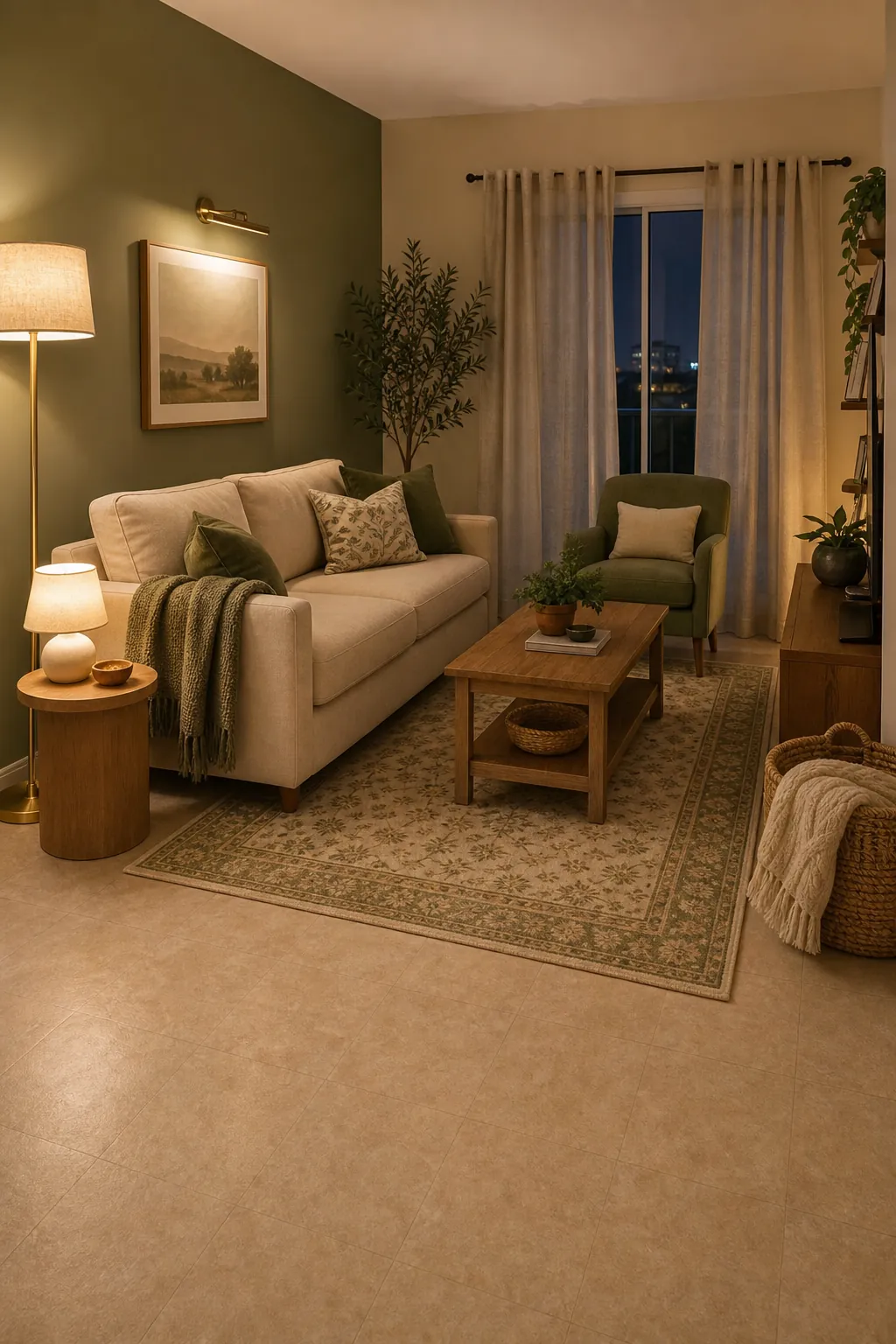
Use warm bulbs, shaded lamps, and more than one light source. A floor lamp beside a chair, a table lamp on a console, and a picture light over art will make the floor look warmer and the green feel deeper. If the room has glossy beige tile, lamps also soften reflections so the floor does not dominate every view.
Small rooms need this even more. A compact apartment with beige flooring can handle green curtains, a sage chair, and a patterned rug if the lighting creates depth. Without that depth, the same room can feel like beige floor plus scattered green objects.
A Simple Formula That Works in Most Rooms
If you want a reliable starting point, build the room around this formula: beige floor, warm white walls, one muted green anchor, one large textured rug, two wood tones, one earthy accent color, and three warm light sources.
That formula works because it gives every surface a job. The beige floor becomes the neutral flooring foundation. Green creates the mood. Wood and woven texture add warmth. Terracotta, rust, or brass keeps the palette from becoming too cool. Lighting makes the whole room feel deliberate.
The best green room decor for beige floors does not try to erase the beige. It gives beige a better role. Once the floor becomes the base instead of the obstacle, the room can feel calm, layered, and lived-in without replacing a single tile or square foot of carpet.