
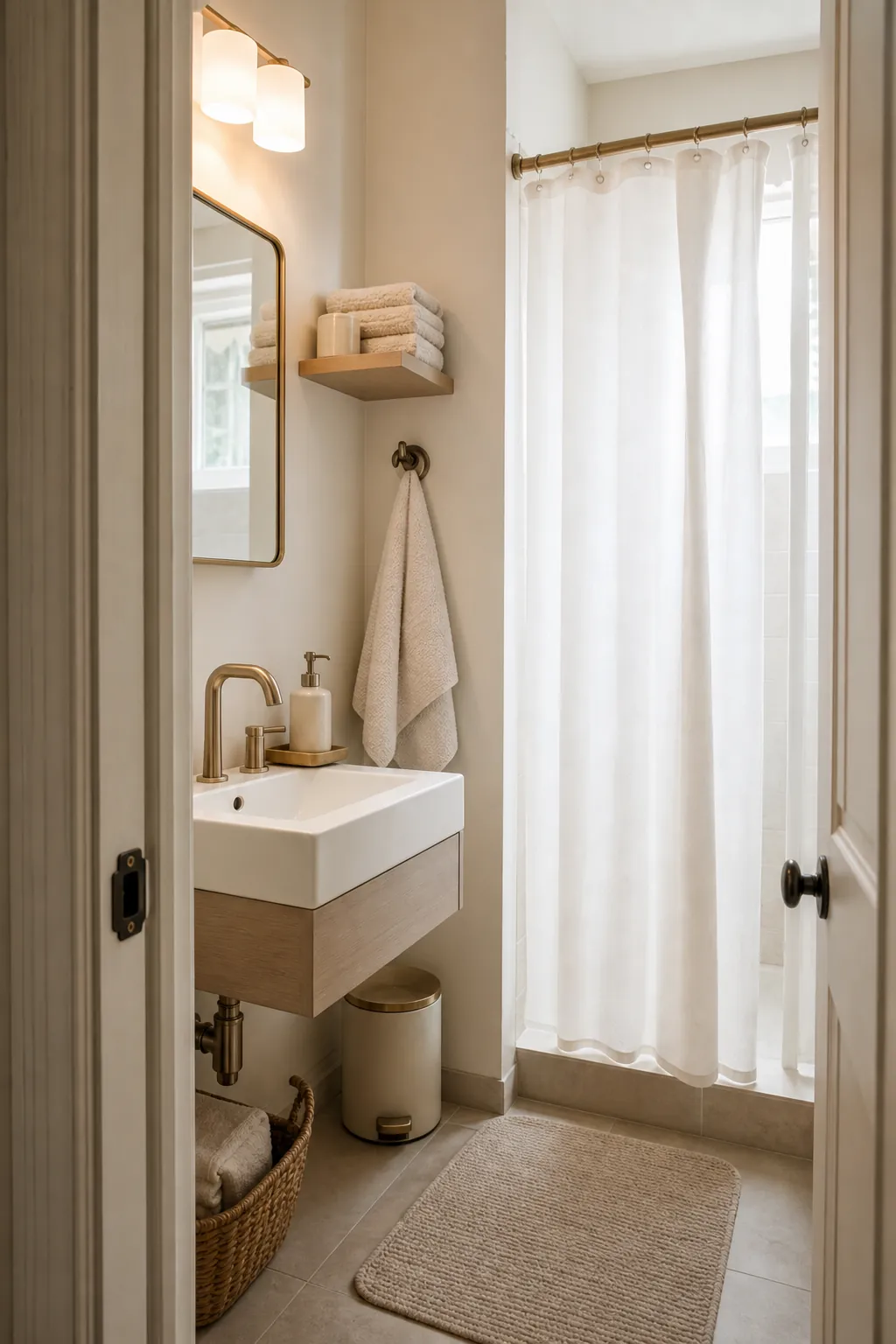
A tiny bathroom rarely looks unfinished because it is small. It usually looks unfinished because too many decisions are competing in one tight frame: the mirror is one style, the light is another, the shelves are doing storage and decor at the same time, and the daily essentials are sitting wherever they fit.
The fix is not to decorate every inch. A designed bathroom has a clear point of view, edited storage, and a few repeated details that make the room feel intentional. That is especially true in a tiny bathroom, where one towel color, one wall decor choice, or one bulky shelf can change the whole room.
Start With One Design Decision
Before buying a mirror, shelves, rug, art, or new lighting, choose the sentence the bathroom should express. Not a broad style label like modern or farmhouse, but a simple direction you can use as a filter.
- Warm spa: creamy towels, brushed brass, pale wood, soft white walls.
- Clean hotel: white shower curtain, polished chrome, one framed print, folded towels.
- Moody tiny jewel box: deep wall color, compact lighting, slim mirror, minimal open storage.
- Natural small bathroom decor: stone, woven texture, matte black, linen, and one plant if light allows.
This matters because tiny bathroom design punishes almost-matching choices. A gray rug, beige tile, black shelf, silver light, bamboo bin, and bright towel may all be fine alone, but together they read as accidental. Pick one finish family, one main textile color, and one accent material. Then let everything else become quiet.
Edit the Visual Noise Before You Add Decor
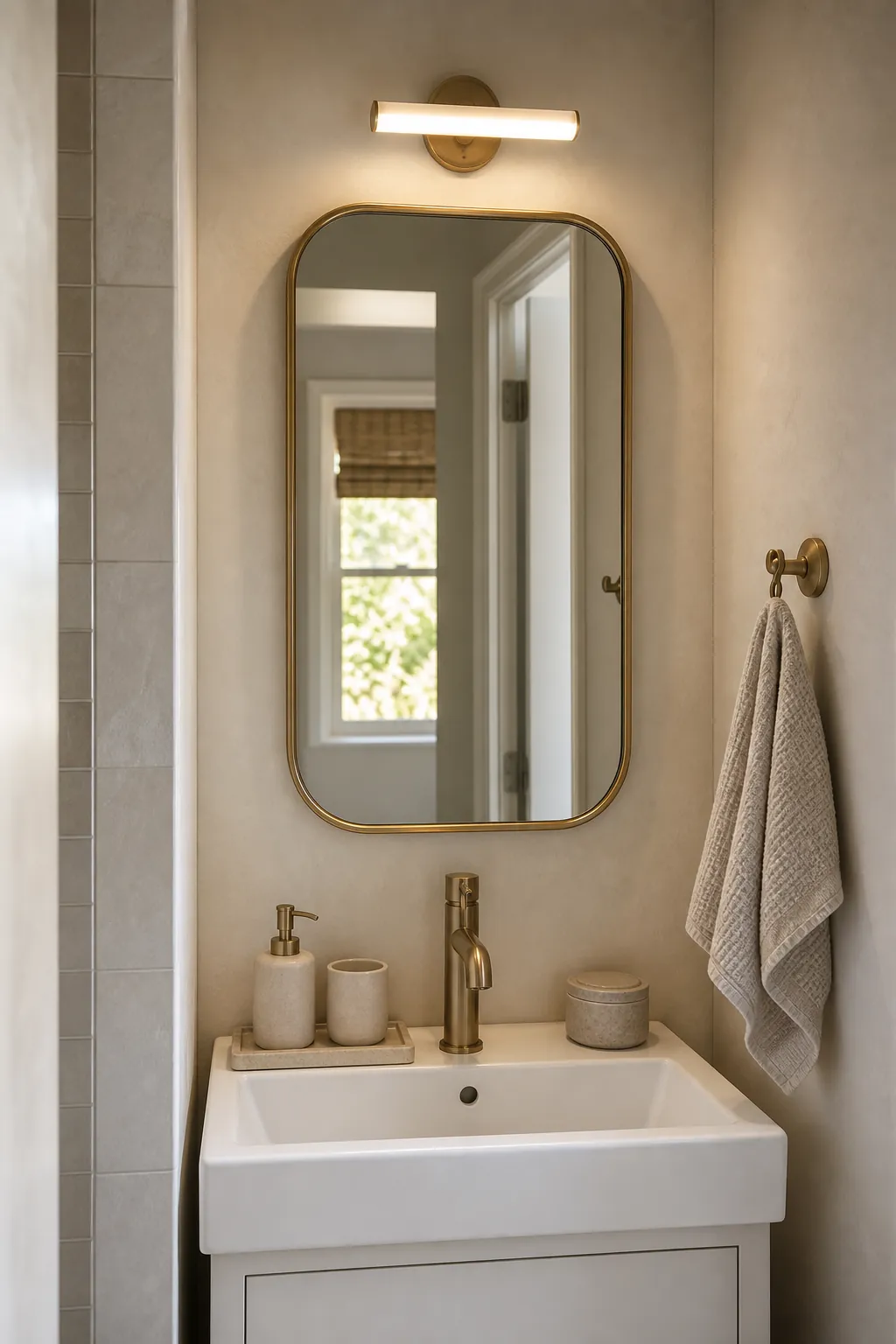
Reddit bathroom threads repeat the same pain in different words: no counter space, too many visible products, shelves that feel crowded, and a room that looks busy even after cleaning. That is the first clue. A tiny bathroom makeover often starts by removing things, not adding them.
Look at the room from the doorway and ask what your eye hits first. If it sees toilet paper, bottles, cleaning spray, mismatched towels, a trash can without a lid, or a shelf packed edge to edge, the room will not feel designed. Move backup supplies out of sight, give daily products one tray or one cabinet, and leave at least one wall mostly empty.
Open storage is not wrong, but in a small bathroom it needs discipline. One shelf can look architectural. Three shelves full of products can make the wall feel closer. Keep the visible shelf for the things that support the room: folded hand towels, one good container, one small framed piece, or one practical object with a nice shape.
Make the Mirror and Lighting Look Deliberate
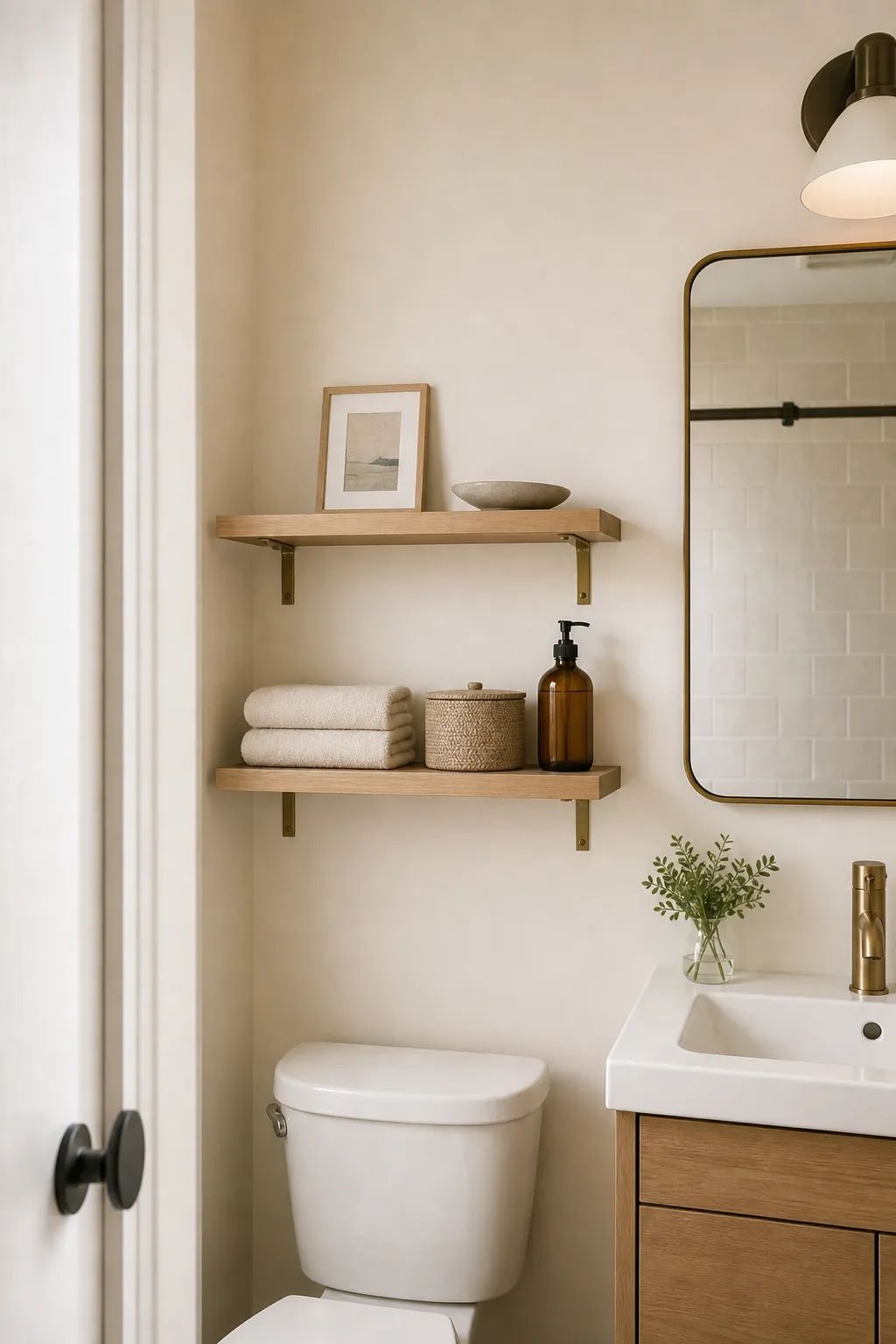
The bathroom mirror and bathroom lighting do more work than almost any other upgrade because they sit at eye level. If those two pieces look dated, too heavy, too small, or out of scale, the whole room feels unresolved.
In a tiny bathroom, a mirror should either add storage or add presence. A recessed or shallow medicine cabinet is useful when counter space is limited. A larger thin-framed mirror can make the wall feel wider without adding visual weight. Avoid a chunky frame unless the room has enough breathing space around it.
Lighting should flatter the room, not just blast it. If the vanity light is oversized, yellow, or aimed badly, replace it with a compact fixture that spreads light evenly. Good lighting makes tile, paint, metal, and towels look more expensive because the surfaces finally read clearly.
Use Color Like a Design Tool, Not a Distraction
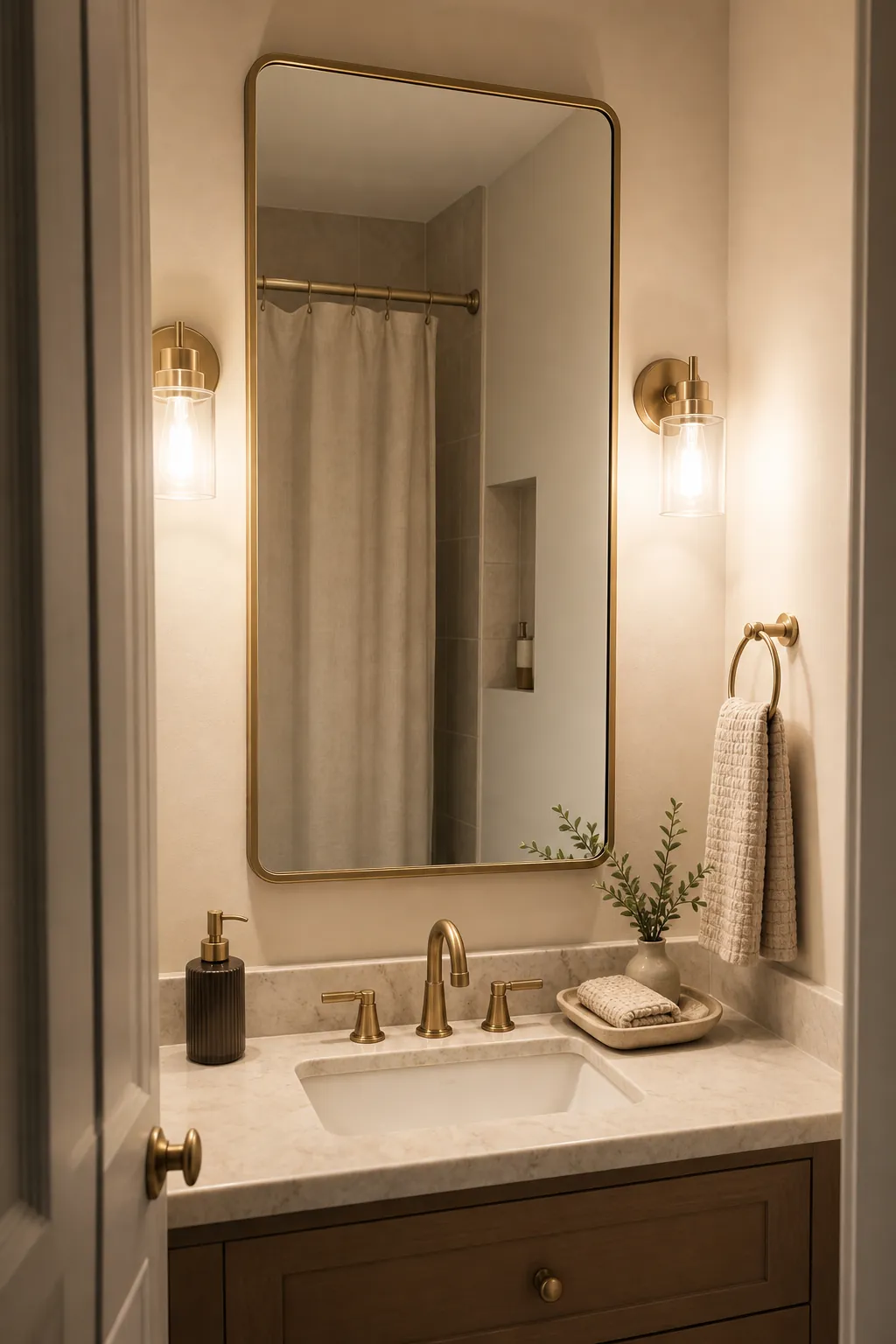
Small bathrooms do not have to be all white. White can look clean, but it can also make old tile, awkward floors, and weak lighting more obvious. A tiny bathroom can handle color if the rest of the choices are controlled.
The safest formula is simple: one calm base, one repeated accent, and one metal finish. A warm white wall, cream towel, and brass hardware can make beige tile feel intentional. A green-gray wall, black mirror, and natural wood tray can make a rental bathroom feel styled without touching the plumbing. A deep blue or olive wall can turn a windowless powder room into a small, moody designed bathroom when the lighting is strong enough.
Where people get stuck is mixing several half-choices. If the shower curtain has a pattern, keep the rug quiet. If the wall color is strong, let towels and accessories repeat one calmer color. If the floor tile is already busy, do not ask the wall decor to compete with it.
Treat Shelves as Architecture, Not Overflow
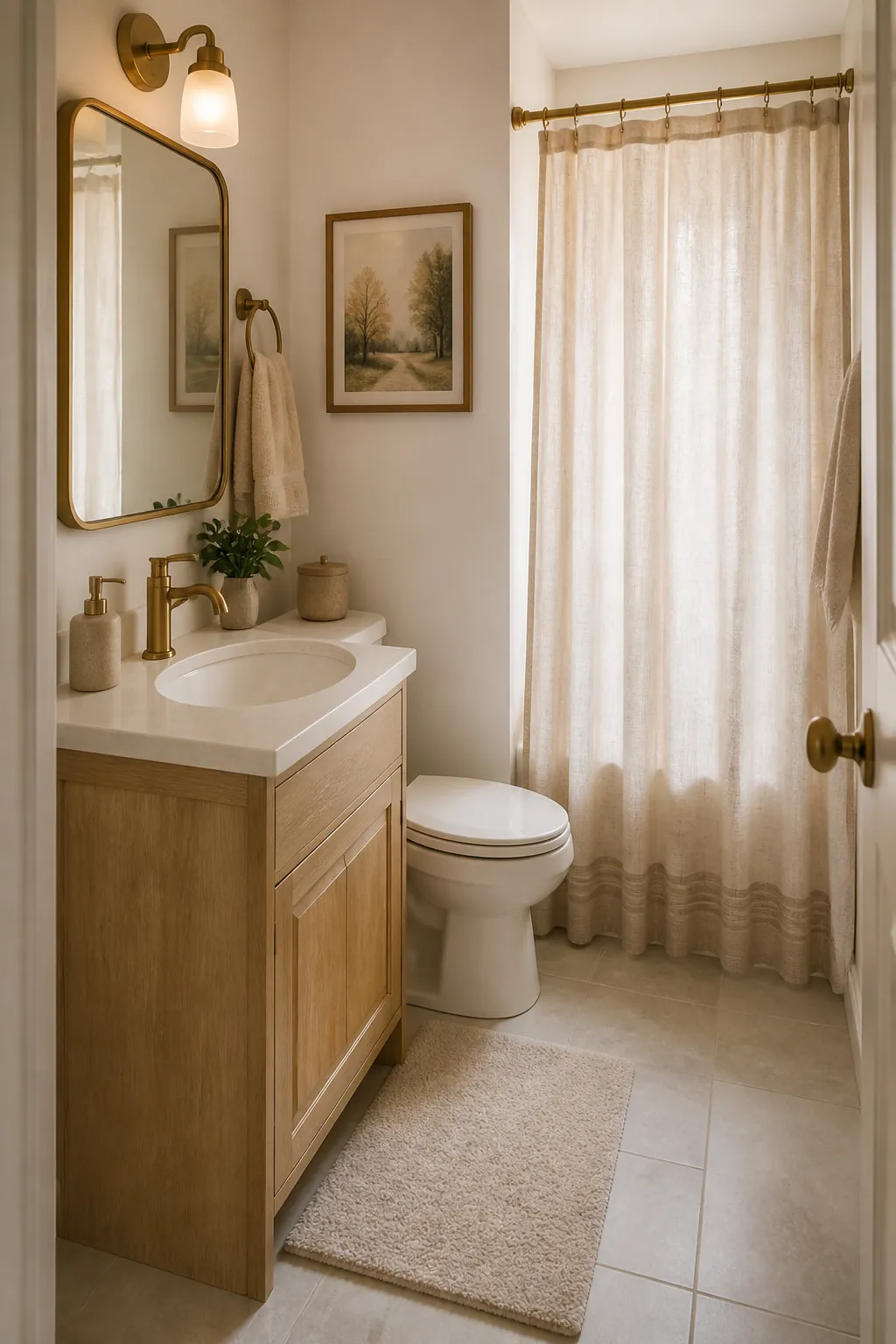
Bathroom shelves are useful, but they are also dangerous in a tiny room because they invite every spare object into view. The goal is not to display your storage problem. The goal is to make storage look planned.
If shelves sit over the toilet, keep them shallow and aligned. Staggered shelves often look playful in a large room, but in a tiny bathroom they can make the wall feel jumpy. A single long shelf, a slim cabinet, or two matching shelves stacked cleanly usually looks more designed.
Use closed containers for the things that are not beautiful: extra rolls, razors, cotton pads, cleaning cloths, and backup bottles. Leave the visible layer for objects with texture: a folded hand towel, ceramic cup, amber pump bottle, small tray, or one framed piece leaning against the wall. Every visible item should either be useful, beautiful, or both.
Raise the Shower Curtain and Simplify the Fabric
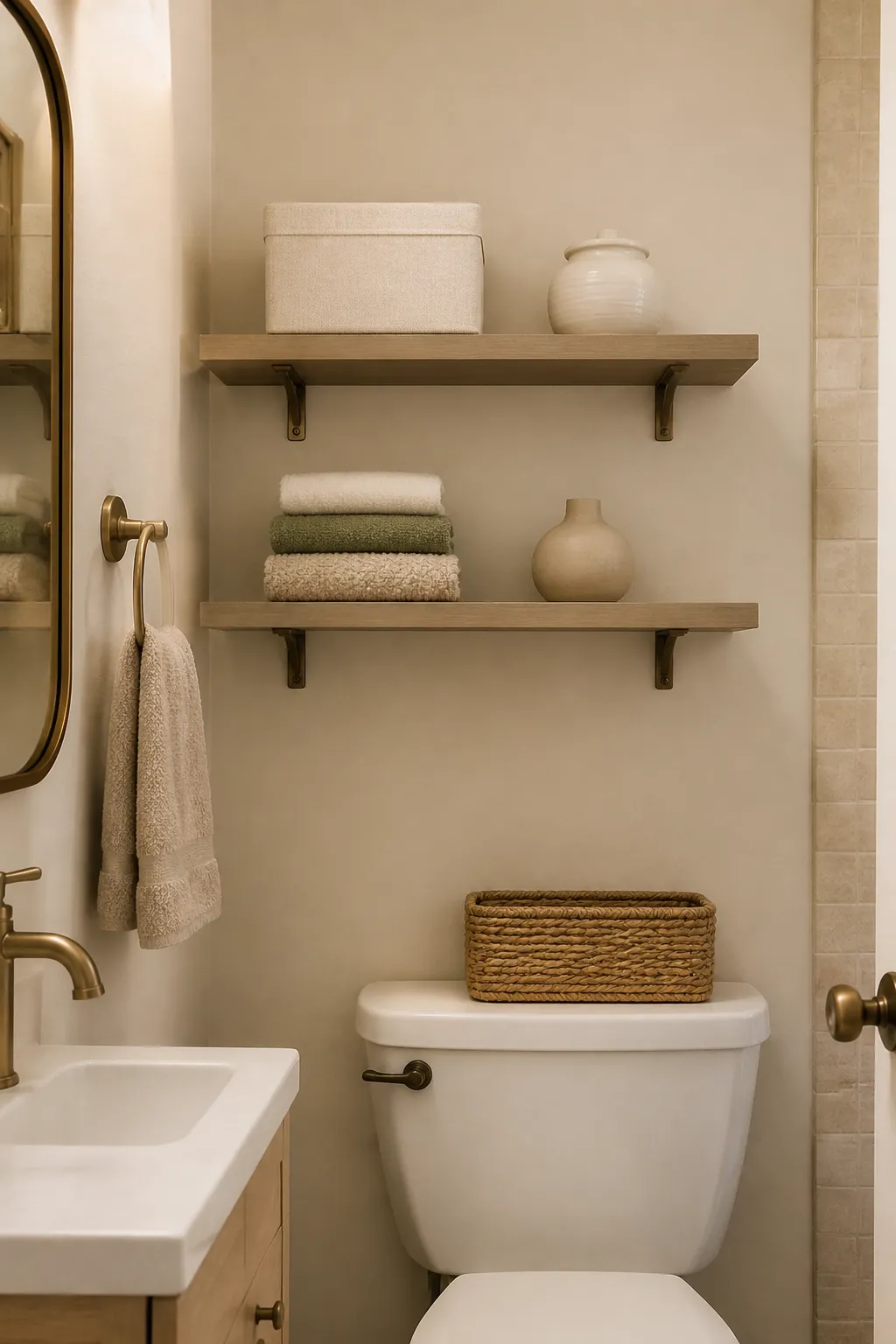
If your bathroom has a tub or shower curtain, this may be the fastest way to make the room feel taller. Mount the rod higher when possible, choose a curtain long enough to nearly reach the floor, and keep the fabric clean in color and texture.
A linen-look white, cream, warm gray, soft stripe, or one restrained pattern can make the shower area feel like a wall treatment instead of a temporary cover. The trick is scale. A tiny repeating pattern can look busy, while a large chaotic print can swallow the room. The best shower curtain supports the palette and quietly stretches the vertical line.
If you are deciding between a glass panel and a curtain, think about maintenance and privacy as much as style. Glass can open the room visually, but it needs regular cleaning and may not suit every tub. A well-hung curtain can still look polished, especially when the rest of the bathroom styling is tight.
Use Wall Decor With More Confidence
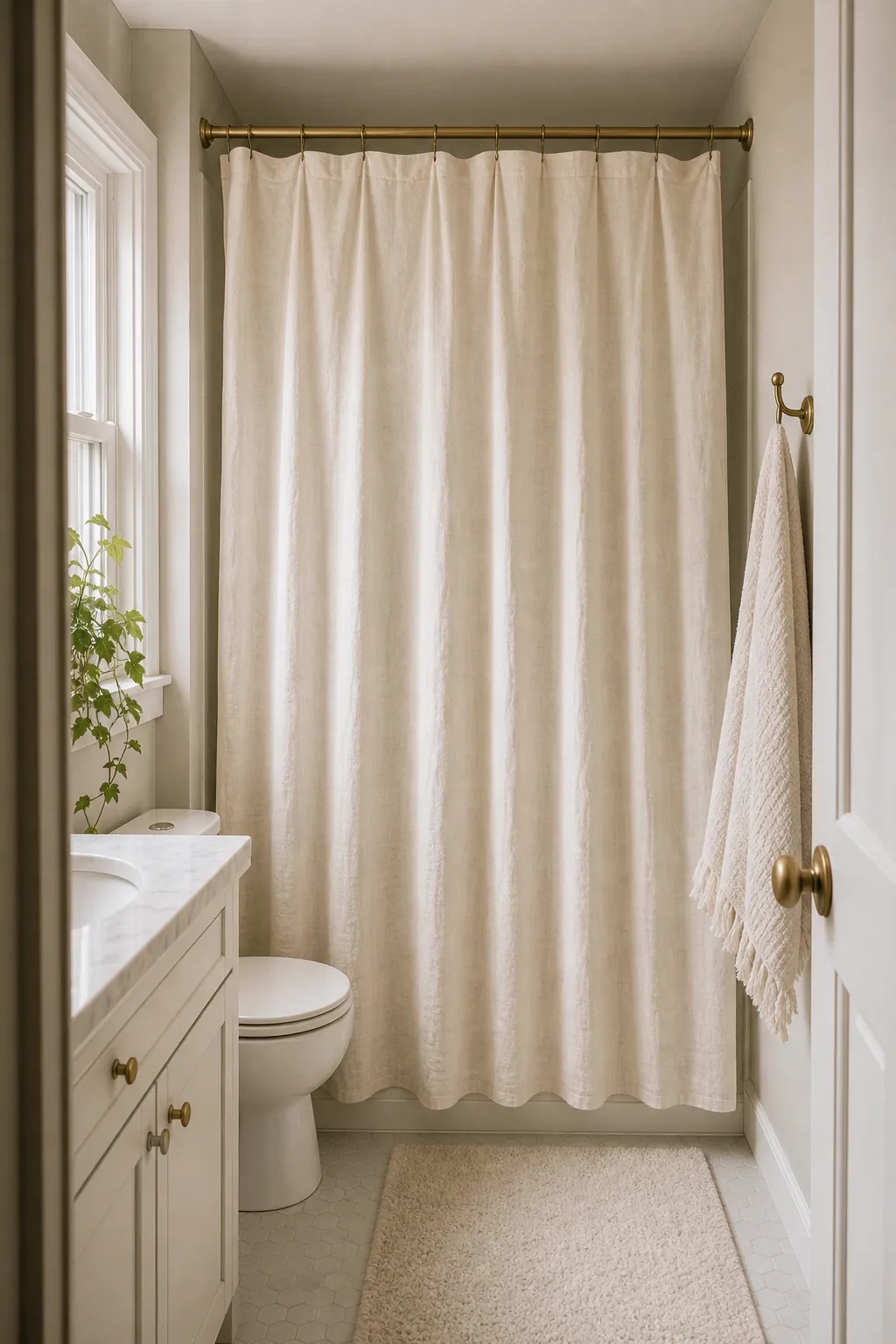
Wall decor in a tiny bathroom should not feel like a leftover print found at the end of the hallway. It should solve a design problem: add contrast, repeat a color, bring warmth to tile, or give the room one finished focal point.
One larger piece often works better than several tiny pieces. Above the toilet, a single framed print can look calmer than shelves packed with small decor. Beside a mirror, a narrow vertical piece can balance the sink zone. If the bathroom has vintage tile, lean into it with art that shares one tone from the tile instead of trying to hide it.
Frame choice matters. A thin black frame can sharpen a soft room. Warm wood can relax bright white tile. Brass or antique gold can make beige tile look chosen rather than tolerated. The frame is part of the bathroom design, not an afterthought.
Style the Useful Things So They Look Chosen
A tiny bathroom cannot hide everything. The hand towel, soap, bath mat, trash can, toilet paper holder, hooks, and toothbrush cup may stay visible. That is fine. The goal is to make the necessary objects look selected.
Start with textiles. Replace random towels with one color family. Choose a bath mat that belongs with the shower curtain instead of fighting it. Use hooks behind the door or beside the shower so towels have a real home. A lidded trash can looks cleaner than an open bin, especially in a guest bathroom.
Then corral small items. A tray beside the sink can turn soap, lotion, and a small cup into a styled moment. Matching bottles are not required, but clashing labels should not be the most colorful thing in the room. Bathroom styling works when the daily routine still functions after the photo moment ends.
Use the Doorway Test Before You Call It Done
When the updates are in place, step outside the bathroom and look in from the doorway. This is how guests experience the room, and it quickly reveals what still feels accidental.
- If the first thing you see is clutter, remove or contain one more group of items.
- If the room feels flat, improve the lighting or add one richer texture.
- If the room feels cramped, lower the number of visible objects and simplify the shelves.
- If the room feels plain, add one confident wall decor choice instead of several small fillers.
A designed tiny bathroom does not need every trend. It needs restraint, repetition, and a few upgrades at eye level. When the mirror, lighting, shelves, textiles, and wall decor all point in the same direction, the room stops apologizing for being small and starts feeling deliberate.