

A pink bedroom can look calm, tailored, and grown up. It only starts feeling too young when every choice is made for the color instead of the room. The fix is not to avoid pink. The fix is to give pink a job: soften the space, warm up the light, and create a bedroom that feels collected instead of themed.
The most adult pink bedrooms rarely rely on bright candy color or a matching set of pink decor. They use blush, plaster, rose, mauve, or dusty pink as part of a wider interior styling plan. Think of pink as the atmosphere, not the entire personality of the room. Once you pair it with neutral accents, layered bedding, real texture, and soft lighting, the room stops reading juvenile and starts reading intentional.
The Real Reason Pink Starts Feeling Juvenile
Pink gets blamed for a problem that is usually caused by repetition. A blush wall, a pink duvet, pink art, pink lamps, pink storage bins, and pink accessories can make the room feel like a color aisle rather than a bedroom. The eye has nowhere to rest, and the smaller novelty pieces begin to feel more important than the architecture, bed, lighting, and materials.
The more grown up method is stricter. Choose the mood first: quiet hotel suite, romantic cottage, warm minimalist retreat, vintage feminine bedroom, or softly modern apartment. Then choose only the pink pieces that support that mood. A mature pink bedroom is edited around tone, texture, scale, and light, not filled with every pink object you can find.

Choose a Pink With Dust in It
If the wall color is the biggest pink decision in the room, skip the sugary shade and look for a pink with beige, clay, taupe, gray, brown, or terracotta in the undertone. These muted pinks behave more like warm neutrals. They still give you the softness of a pink bedroom, but they do not shout or flatten the rest of the decor.
Bright bubblegum pink can work in a deliberate, playful room, but it needs discipline. For an elegant bedroom, dusty rose, plaster pink, pale mauve, muted coral, and beige-blush are easier to live with. The safest grown up pink decor choice is a color that changes with the light and looks slightly complex up close.
- For walls: try plaster pink, beige blush, muted rose, or warm pink-white.
- For bedding: use blush as one layer, then add ivory, taupe, warm gray, oatmeal, or soft brown.
- For accents: bring in brass, black, walnut, oak, travertine, linen, wool, and glass so the pink has adult contrast.
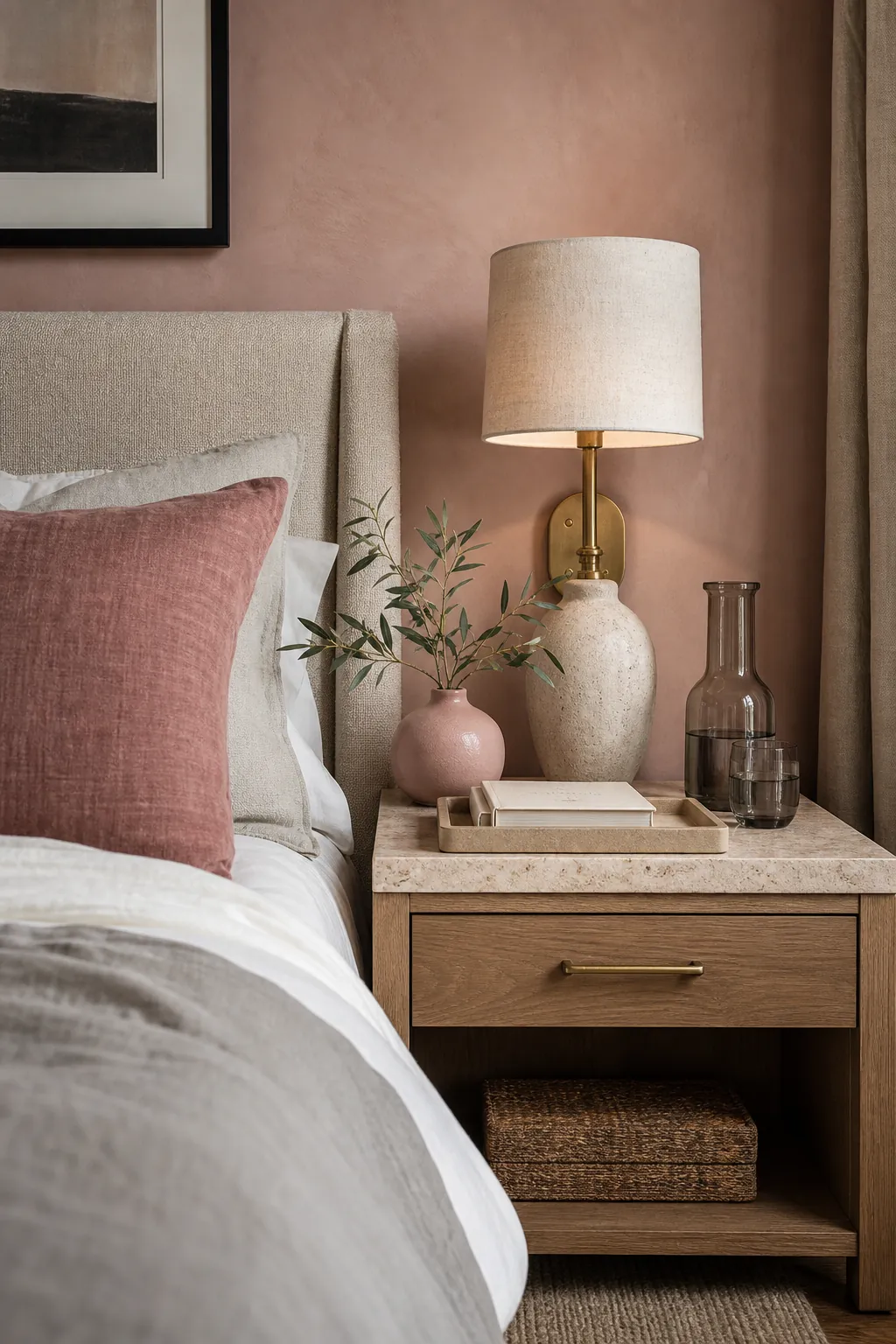
Ground the Room Before You Add More Pink
Neutral accents are not there to make the room boring. They give the pink something to push against. A blush bedroom with oak nightstands, a stone lamp, a cream rug, black picture frames, and a walnut bench feels designed because every soft element has a firmer material nearby.
Use this test before buying anything: would the room still look good if the pink pieces were removed? If the answer is no, you need stronger bones. The bed shape, rug, curtains, art, lamp scale, and storage should be able to carry the space even before the blush accents arrive. Pink should finish the bedroom, not compensate for weak furniture or random styling.
Layer Bedding Like an Adult, Not a Matching Set
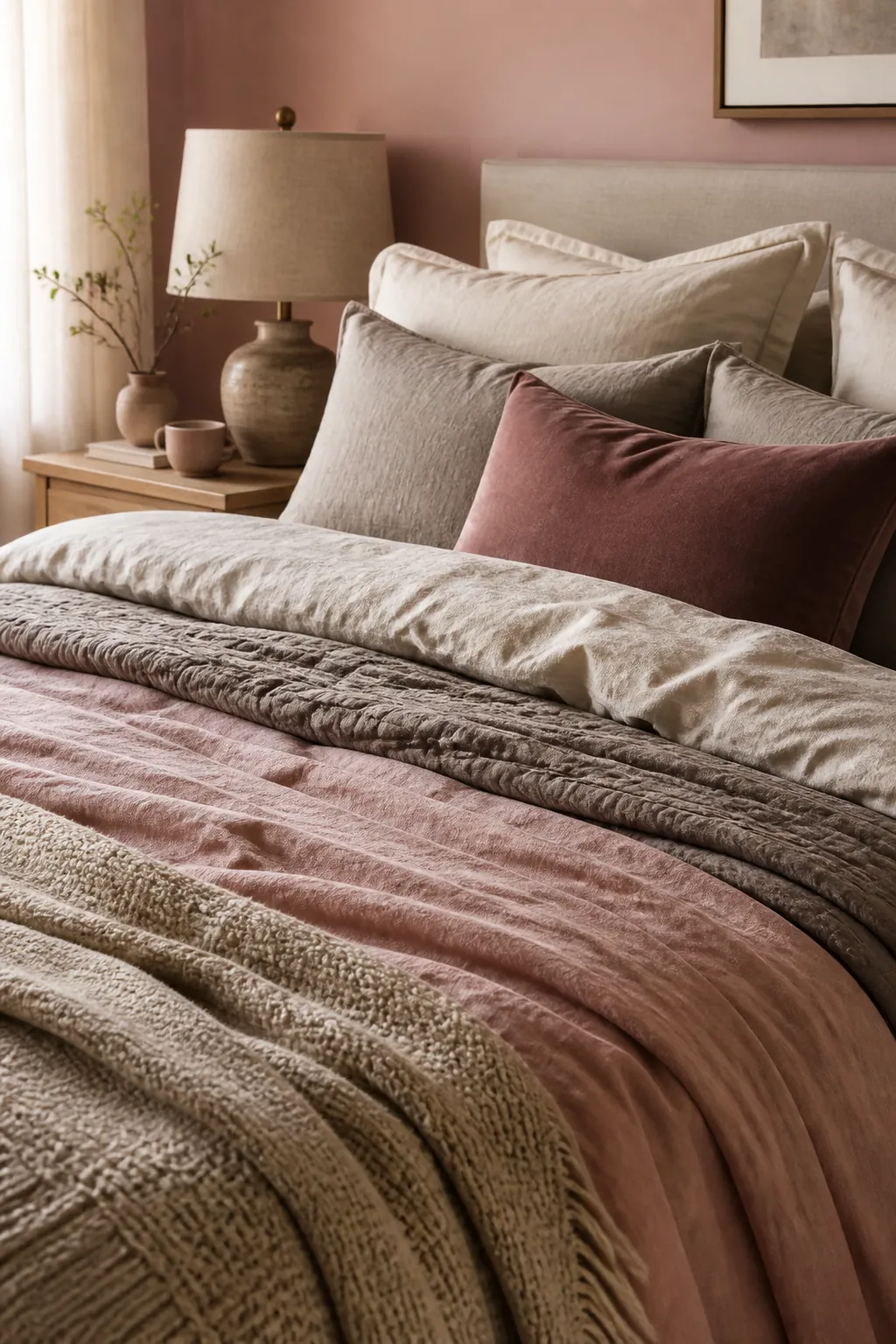
Layered bedding is one of the easiest ways to make pink feel sophisticated. Avoid a full set where the duvet, shams, throw blanket, and decorative pillows are the same pink. Instead, build a bed with contrast: crisp ivory sheets, a warm neutral duvet, linen or cotton pillowcases, one dusty pink quilt, and a deeper mauve or rose accent pillow.
The bed should look touchable. Mix matte cotton, slub linen, boucle, velvet, wool, or a subtle herringbone throw. Let a few wrinkles stay visible. A perfectly flat pink bed can look staged; a layered bed with believable texture feels restful and adult. The goal is not more pink. The goal is more depth.
Use Art, Scale, and Contrast to Signal Grown Up
Small cute objects can be charming, but too many of them make a pink bedroom feel young fast. Mature styling usually works with fewer, larger choices: one oversized piece of art, a sculptural lamp, a full-length curtain, a substantial headboard, or a bench at the foot of the bed. Scale tells the room to feel settled.
For art, look beyond obvious pink prints. Try charcoal line work, black-and-white photography, botanical studies, abstract pieces with a little blush, or a vintage landscape with rose undertones. Black frames, aged brass frames, or dark wood frames can keep the softness from floating away. A pink bedroom becomes elegant when the styling includes at least one serious note.

Make Soft Lighting Do Half the Work
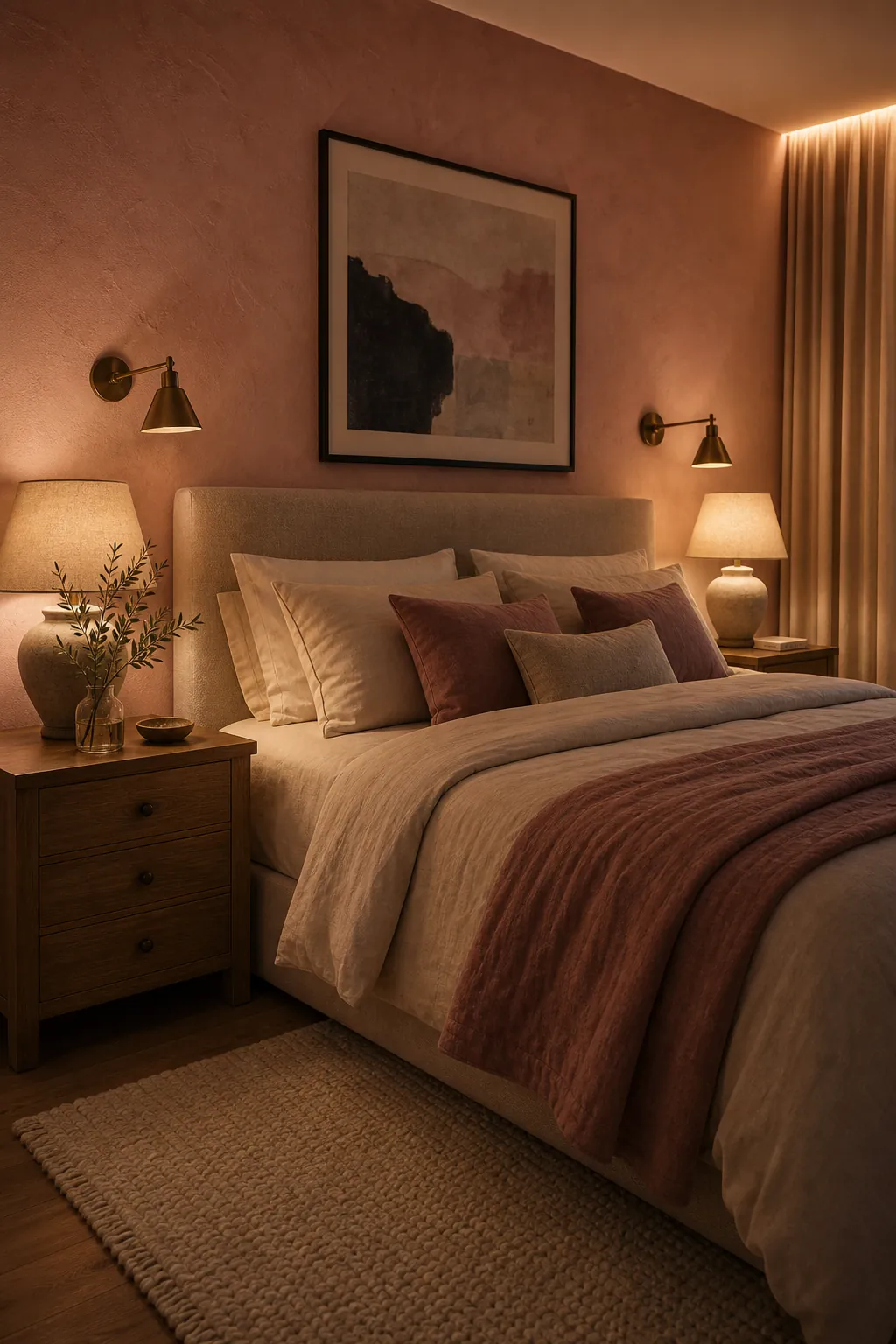
Lighting can make or break a blush bedroom. Cool white bulbs can turn pale pink gray, chalky, or oddly flat. Warm bulbs, shaded lamps, sconces, and indirect light bring out the cozy undertones that make pink feel restful. This is especially important at night, when a bedroom should feel calm instead of bright and decorative.
Use at least two light sources near the bed: a pair of lamps, wall sconces, or a lamp and a soft overhead pendant. Add dimmers if you can. Keep the shade material warm, such as linen, parchment, opal glass, or cream fabric. The right soft lighting turns pink from a color choice into a mood.
Keep the Cute Pieces, But Curate Them Hard
A grown up room does not have to erase personality. If you love ruffles, florals, bows, scallops, vintage pieces, or playful pink accessories, keep the best ones. The difference is placement and quantity. One floral pillow can feel romantic. Six tiny pink novelty items on a dresser can feel accidental.
Group smaller objects with adult materials. A pink candleholder looks sharper on a travertine tray. A blush vase feels calmer beside a dark wood box. A floral pillow looks less sweet when the bed also has plain linen, a wool throw, and a grounded headboard. Curated cute is personal; scattered cute is what usually reads young.
If You Rent, Start With Removable Layers
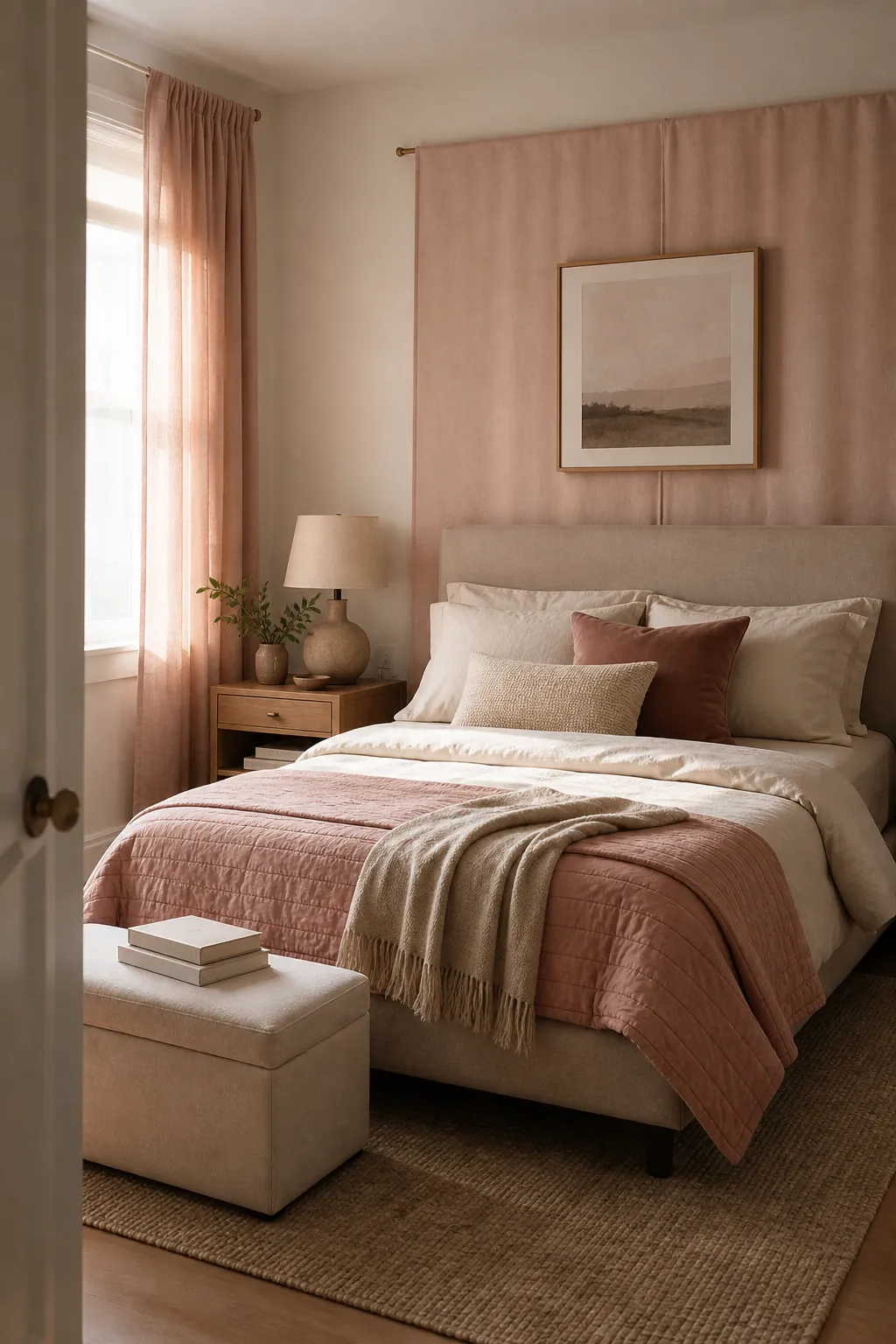
You do not need to paint the whole room to get a grown up pink bedroom. Renters can create the same effect with bedding, curtains, lampshades, art, an upholstered bench, a washable rug, or a single peel-and-stick panel behind the bed. Keep the large pieces neutral and let pink appear in layers you can adjust.
This approach is also useful if you are not sure how much pink you want long term. Start with a blush quilt or floor-length curtains, then live with them through morning and evening light. Add the next piece only if the room still feels calm. The slower you layer pink, the more expensive and intentional it tends to look.
A Simple Formula for a Grown Up Pink Bedroom
If you want a quick decorating rule, use this balance: one dominant neutral, one muted pink, one grounding material, one dark or metallic accent, and several textures. For example, oatmeal walls, dusty pink bedding, oak furniture, black frames, brass lamps, linen curtains, and a wool rug. That combination gives the room softness without making pink carry every decision.
The final test is emotional, not technical. When you walk in, the room should feel like a bedroom first: restful, warm, private, and easy to use. The pink should be obvious enough to make the space feel personal, but restrained enough that the bed, lighting, art, and materials still matter. That is the difference between a pink bedroom that feels young and a blush bedroom that feels grown up.