
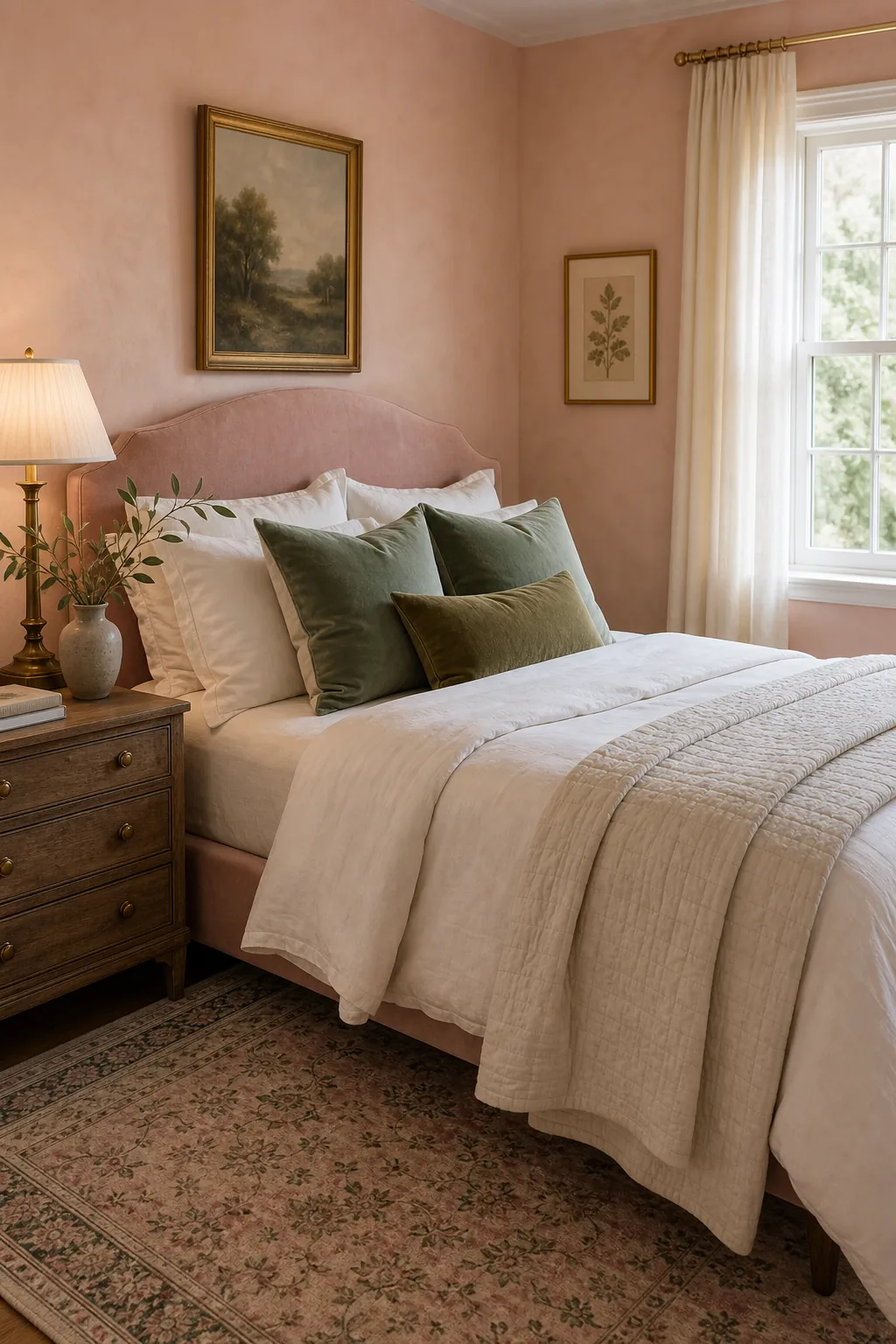
A pink bedroom can go sweet very quickly. That is not a flaw in pink; it is usually a balance problem. The rooms that feel calm, grown, and easy to live with do not use every pretty thing at once. They let blush decor carry the softness, then use green accents for depth, white accents for breathing room, and gold accents for warmth.
The best version of this color combination feels collected instead of themed. Think soft bedroom first, pink bedroom second. Start with the mood you want at night, then choose the exact shades, materials, and lighting that support that mood. A pale rose wall, sage velvet pillow, white cotton duvet, and aged brass lamp will read as elegant bedroom styling. The same amount of pink in shiny plastic, harsh white bulbs, and matching novelty pieces can feel flat and young.
Start With A Softer Pink, Not More Pink
The easiest way to make pink bedroom decor feel intentional is to narrow the pink family. Dusty rose, plaster pink, blush, muted coral pink, and tea rose are much easier to live with than bubblegum or neon pink. They also shift beautifully through the day, looking fresh in morning light and warmer after sunset.
Choose one main pink and repeat it in different textures. For example, use blush walls, a slightly deeper rose throw pillow, and a faded pink pattern in the rug. That gives the room depth without making every object shout the same color. If your bed frame is already dusty pink, let that be the anchor and keep the walls white or a very pale warm pink.
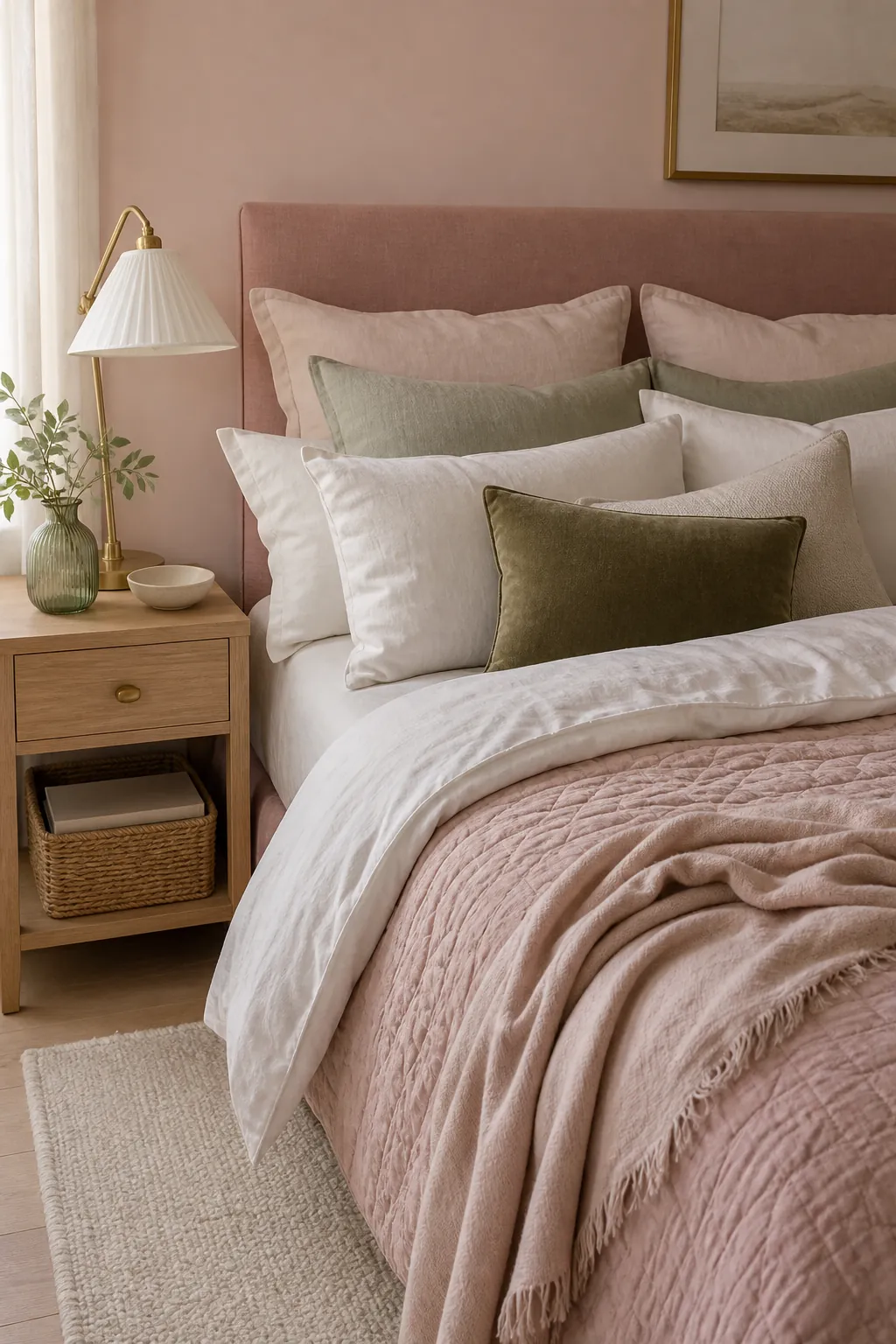
A useful rule is to make pink about 40 percent of the visible color story, not the whole room. Let white and natural materials hold the center, then bring in green and gold where the eye needs contrast. This keeps the room feminine without making it feel like a single-color set.
Use Green Accents To Make Blush Decor Feel Grown Up
Green is the color that makes pink feel more layered. It works because it cools the warmth of blush and adds a natural reference point. Sage green feels airy and gentle. Olive green feels earthy. Forest green feels moody and more dramatic. You do not need all three, but you can use two tones if one is quiet and the other is used sparingly.
If the room needs calm, use sage as the bridge. Sage curtains, a sage bolster pillow, or a painted nightstand can connect a pink bed to white walls without looking random. If the room already has lots of pale colors, use a darker green in one or two places, such as artwork, a velvet cushion, or a small chair, so the space does not wash out.
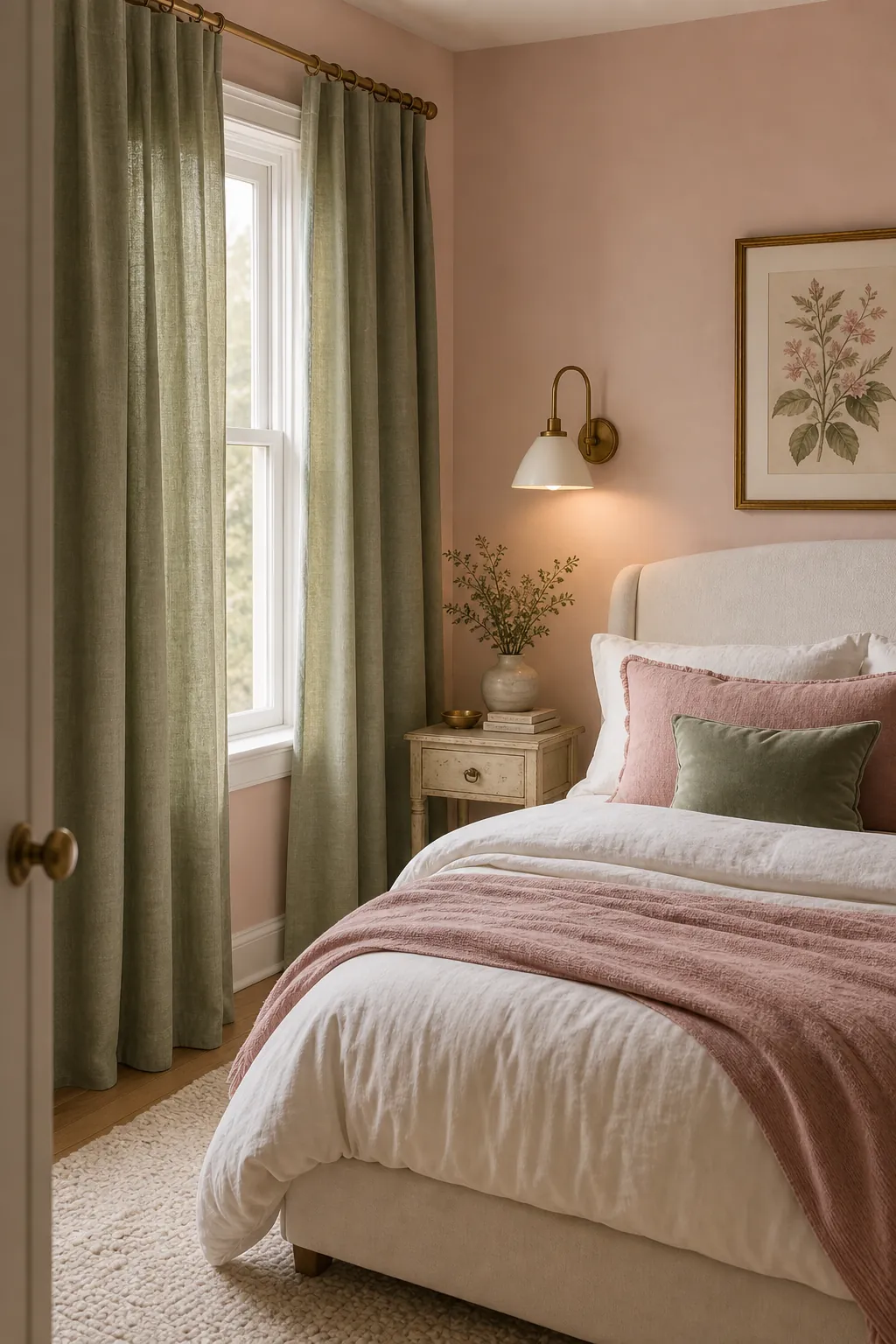
- Sage green: best for a light, restful pink bedroom.
- Olive green: best with wood, cream, cane, and vintage pieces.
- Forest green: best when you want contrast, drama, or a boutique hotel mood.
The mistake is choosing green because it is green, not because the tone belongs. A bright grass green rug can fight with blush walls, while a muted sage rug can make the same room feel softer. Before buying a large green piece, hold it next to your pink and look at it in morning and evening light.
Let White Accents Give The Palette Space To Breathe
White accents are not filler in this palette. They are what keep the color combination crisp. White bedding, white lampshades, white matting around art, painted trim, or a warm white rug gives the eye somewhere quiet to rest between the pink and green.
The key is choosing the right white. Warm white, ivory, and soft cream usually work better than blue-white. A cold white can make blush look chalky and make gold accents feel brassy. A warmer white keeps the bedroom decor gentle and cohesive, especially under lamps at night.
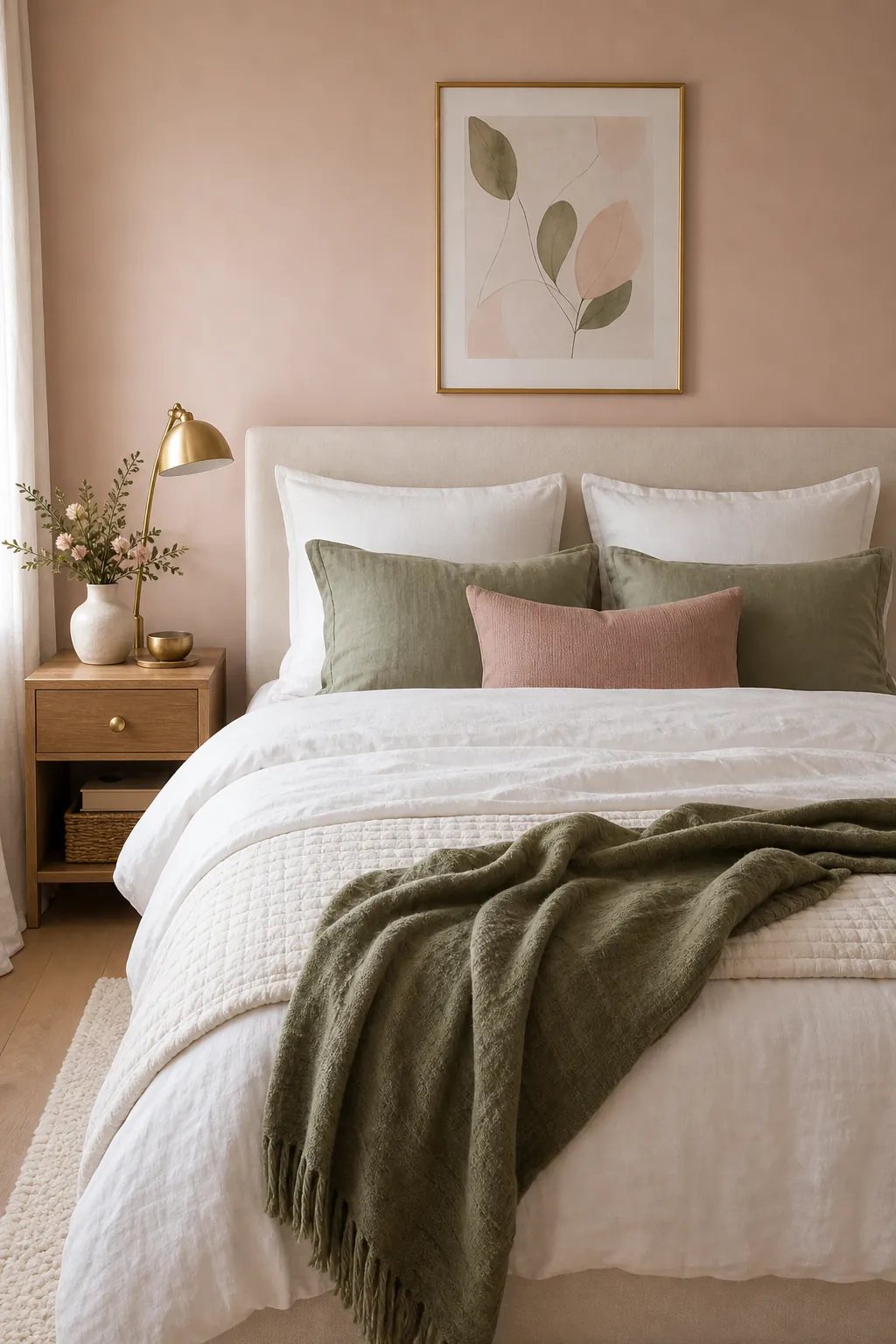
If your room feels too sweet, add more white before adding more decor. Swap a pink duvet for white bedding, use white ceramic lamps, or choose white curtains with enough fullness to feel soft. The room will still read as a pink bedroom because the walls, bed, art, or textiles carry the blush decor, but the whole space will feel lighter and more adult.
Keep Gold Accents Warm, Small, And Repeated
Gold accents are strongest when they look like metal, not glitter. Aged brass, antique gold, champagne gold, and brushed brass are easier to blend with pink and green than mirror-bright yellow gold. Use gold where it naturally belongs: lamp bases, sconces, picture frames, curtain rods, drawer pulls, a mirror, or a small tray.
Repeat gold three to five times around the room, then stop. That rhythm makes the finish look intentional. A gold sconce beside the bed, a thin gold frame over the headboard, and brass knobs on a painted dresser are enough. Too much gold competes with the softness of pink and the natural feel of green.
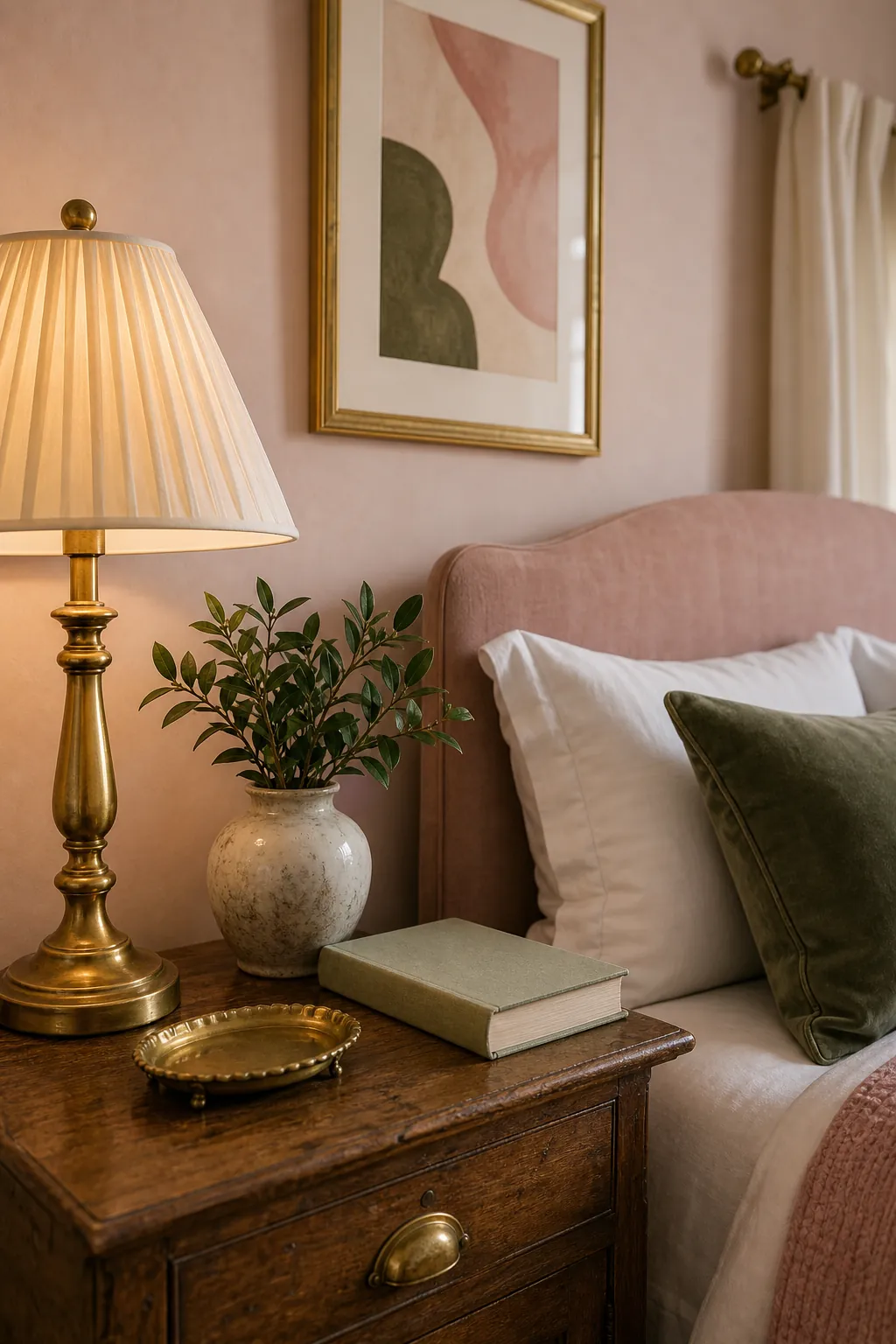
Gold also helps if you are mixing new and secondhand furniture. A thrifted wood nightstand, brass lamp, vintage mirror, and fresh white bedding can feel more personal than a perfectly matched set. The metal finish becomes the thread that ties mismatched pieces together.
Build Texture Before You Add More Color
When a pink and green bedroom feels unfinished, the answer is often texture, not another accent color. Soft textiles and natural materials make the palette feel collected. Try linen, cotton percale, velvet, boucle, cane, woven shades, ceramic lamps, marble-topped tables, aged wood, or a wool rug.
Texture is what separates grown-up pink bedroom ideas from a pile of pink objects. A blush velvet pillow, white linen duvet, green embroidered cushion, and brass reading lamp have very different surfaces. The colors relate, but the materials keep the room from looking flat.
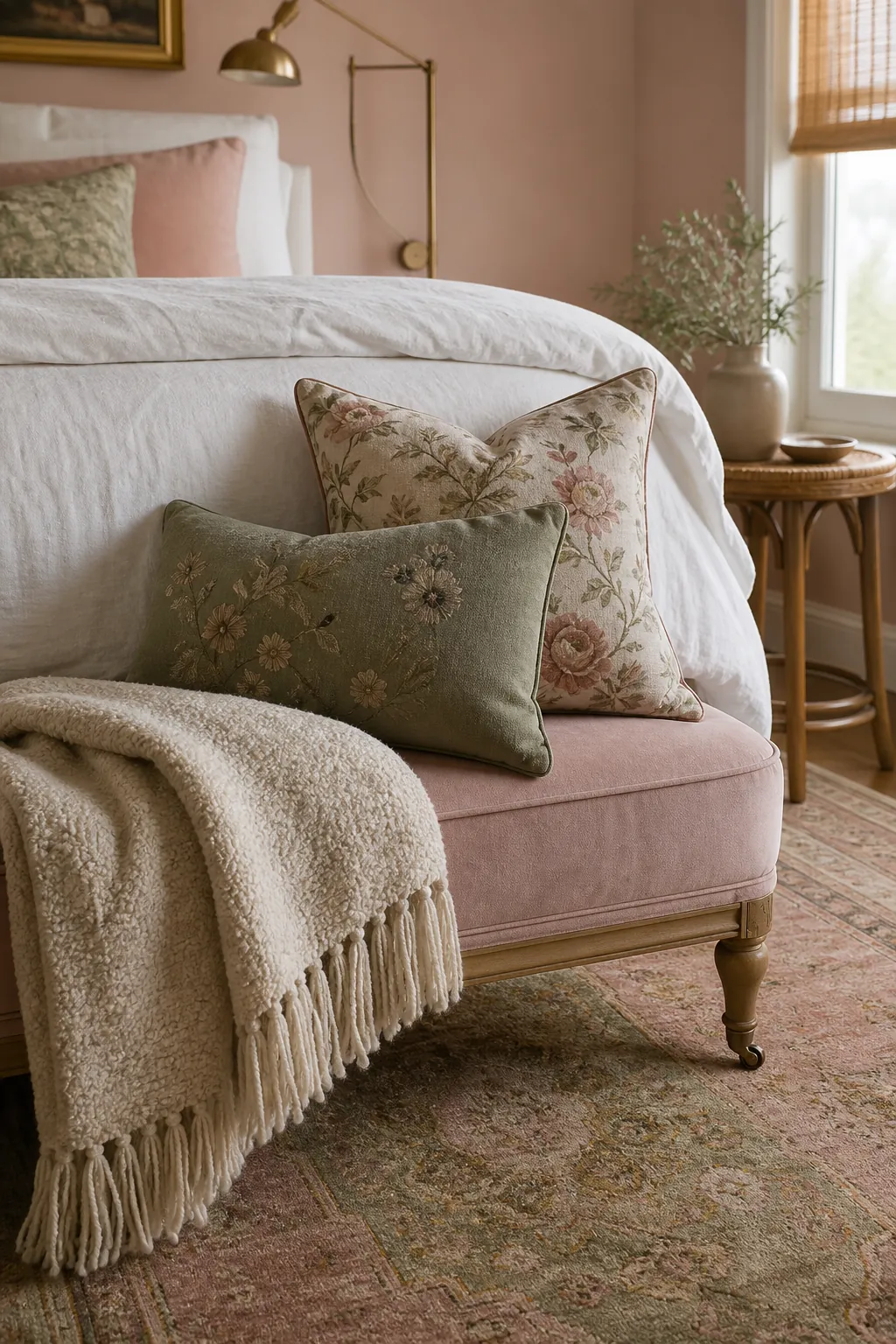
Patterns can help, too, especially when they combine pink and green in one piece. A floral pillow, botanical print, toile fabric, or vintage rug can make the color scheme feel natural instead of forced. If you are nervous about pattern, start with artwork above the bed or a small cushion before committing to curtains or a large rug.
A Simple Formula For The Whole Room
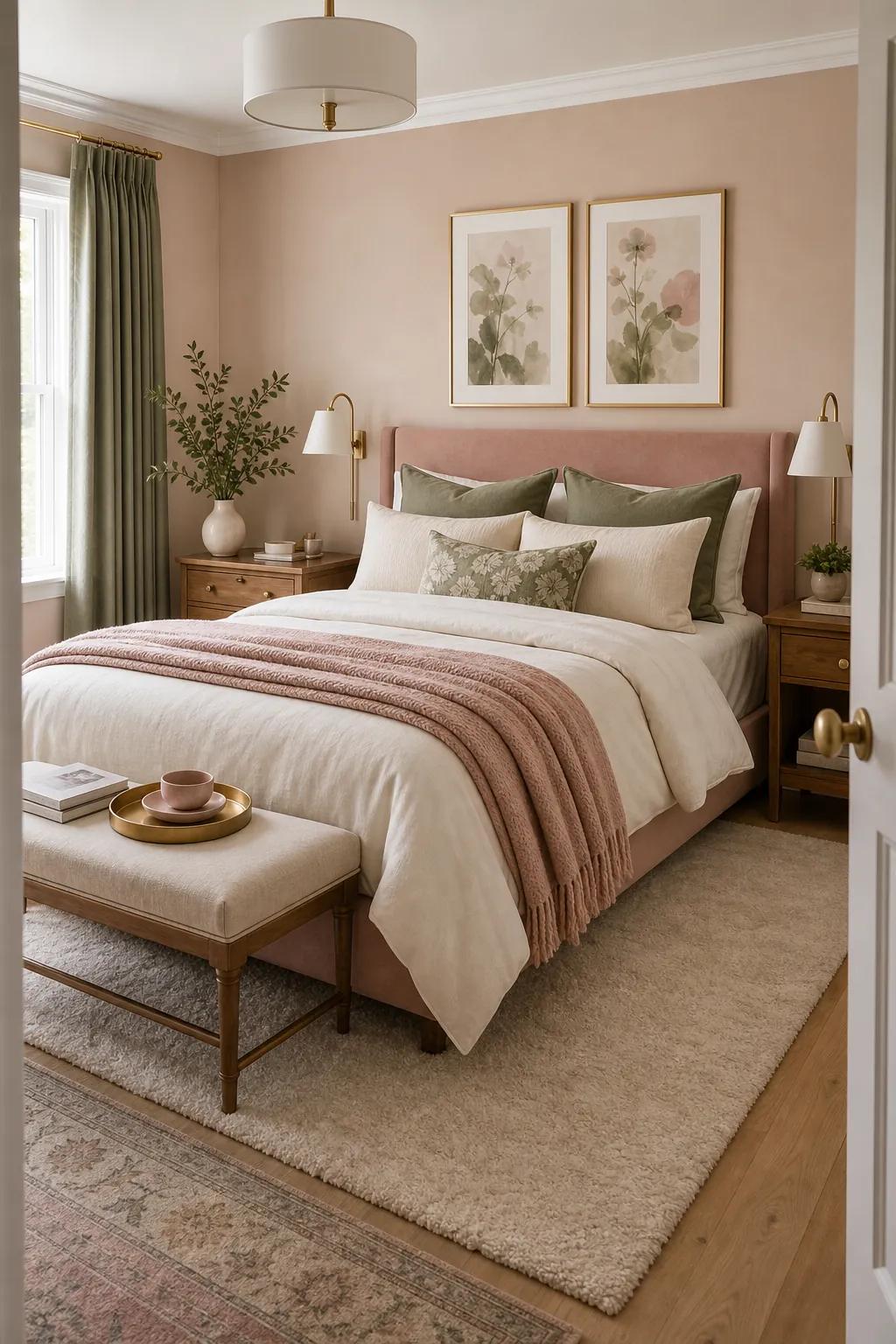
If you want a practical starting point, use this formula: pink as the mood, white as the base, green as the contrast, gold as the jewelry. It works in a small apartment bedroom, a guest room, or a primary bedroom because it tells each color what job to do.
- Base: warm white bedding, walls, curtains, lampshades, or rug.
- Mood: blush wall color, pink headboard, rose throw, or pink patterned textile.
- Contrast: sage curtains, olive pillows, green artwork, or a leafy plant.
- Finish: brass lighting, gold picture frames, warm metal hardware, or a mirror.
For a soft bedroom, keep the green muted and the gold brushed. For a more elegant bedroom, deepen the green and add richer textures like velvet, dark wood, and a vintage-style rug. For a renter-friendly version, leave the walls white, use blush bedding, hang green curtains, and repeat gold through lamps and frames.
What To Avoid When Styling This Color Combination
The first mistake is matching everything too closely. A pink bed, pink curtains, pink rug, pink lamp, and pink wall art can make the room feel themed even when each item is pretty on its own. Choose the pieces for the room, not just for the color name.
The second mistake is using only tiny accents. One green pillow and one gold frame may not be enough to make the palette feel deliberate. Repeat each accent at least twice, ideally in different heights: green near the bed and on the wall, gold at the nightstand and above eye level, white across the bed and windows.
The third mistake is ignoring lighting. Pink can turn peach, gray, or dull under the wrong bulb. Green can look fresh in daylight and muddy at night. Use warm bulbs, then test your main fabrics beside them before committing. A beautiful color combination still has to work after sunset.
The Final Check
Stand at the bedroom door and ask three questions. Does the room feel soft before it feels pink? Do the green accents appear in enough places to look intentional? Does the white make the palette cleaner instead of colder? If the answer is yes, the gold accents only need to add warmth and polish.
Pink, green, white, and gold can be playful, romantic, vintage, or polished. The elegant version comes from restraint. Let blush decor set the tone, let green give it depth, let white calm it down, and let gold finish the room quietly.