
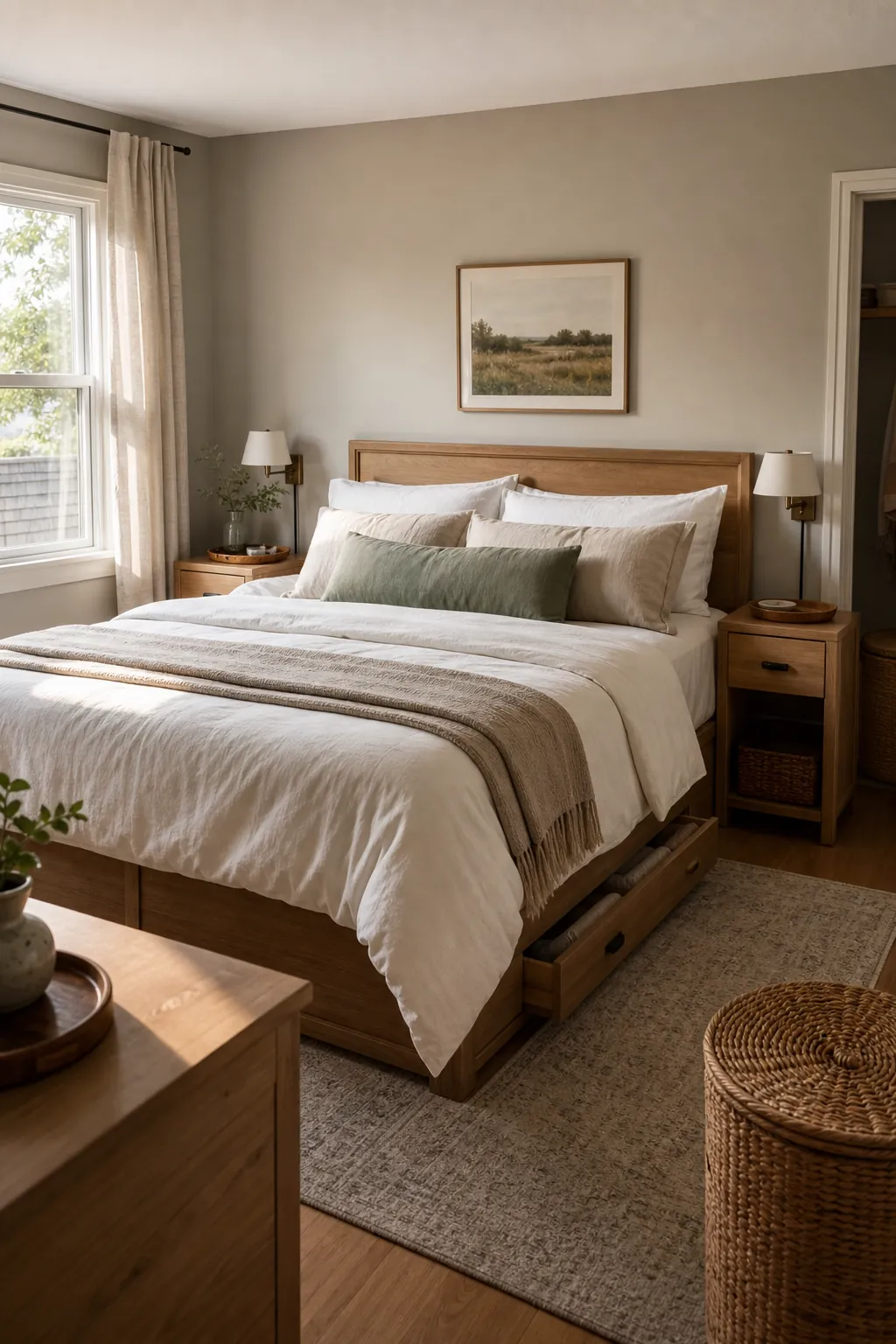
A shared bedroom does not get messy because two people have no style. It gets messy because two routines are competing for the same few surfaces: the nightstands, the dresser top, the chair, the floor beside the bed, and the closet door. The fastest way to make a shared bedroom feel calm is to stop styling around clutter and start styling around habits.
The goal is not a bare room. A good couple bedroom should still feel personal, warm, and lived in. The difference is that every daily item needs a clear home, every shared surface needs a limit, and the room needs enough visual quiet that one person’s things do not feel like they are taking over the other person’s space.
Start with ownership, not more storage
Most bedroom organization advice jumps straight to bins, baskets, and under-bed boxes. Those can help, but in a shared room the first problem is usually ownership. Before buying anything, divide the room into three simple zones: your side, their side, and shared space.
Your side holds your book, glasses, charger, watch, and whatever you actually reach for before sleep. Their side holds their equivalent items. Shared space is only for objects both people use or both people agree to see every day: a lamp, a hamper, extra blanket storage, one piece of art, or a small tray for temporary items.
This one decision prevents the quiet resentment that makes clutter feel bigger than it is. A dresser top covered with two people’s loose items reads as chaos. Two small trays, one for each person, read as a system.
Make the bed the visual anchor
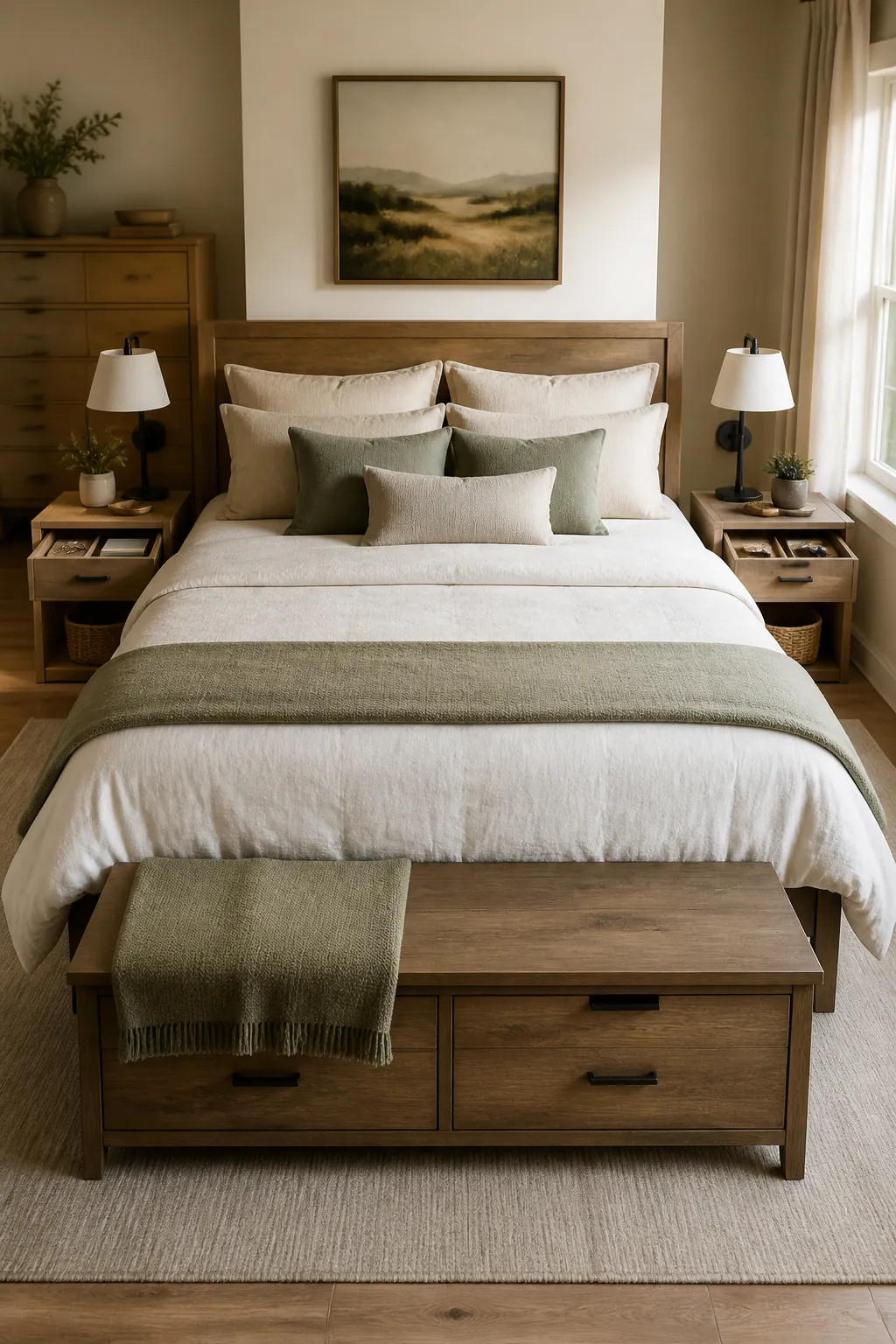
In a bedroom shared by two people, the bed is the largest object and the easiest place to create order. A neat bed will not solve clutter, but it will give the room a calm center. Choose bedding that feels inviting without adding too many loose layers: one fitted sheet, one duvet or quilt, two sleeping pillows per person if needed, and one or two decorative pillows at most.
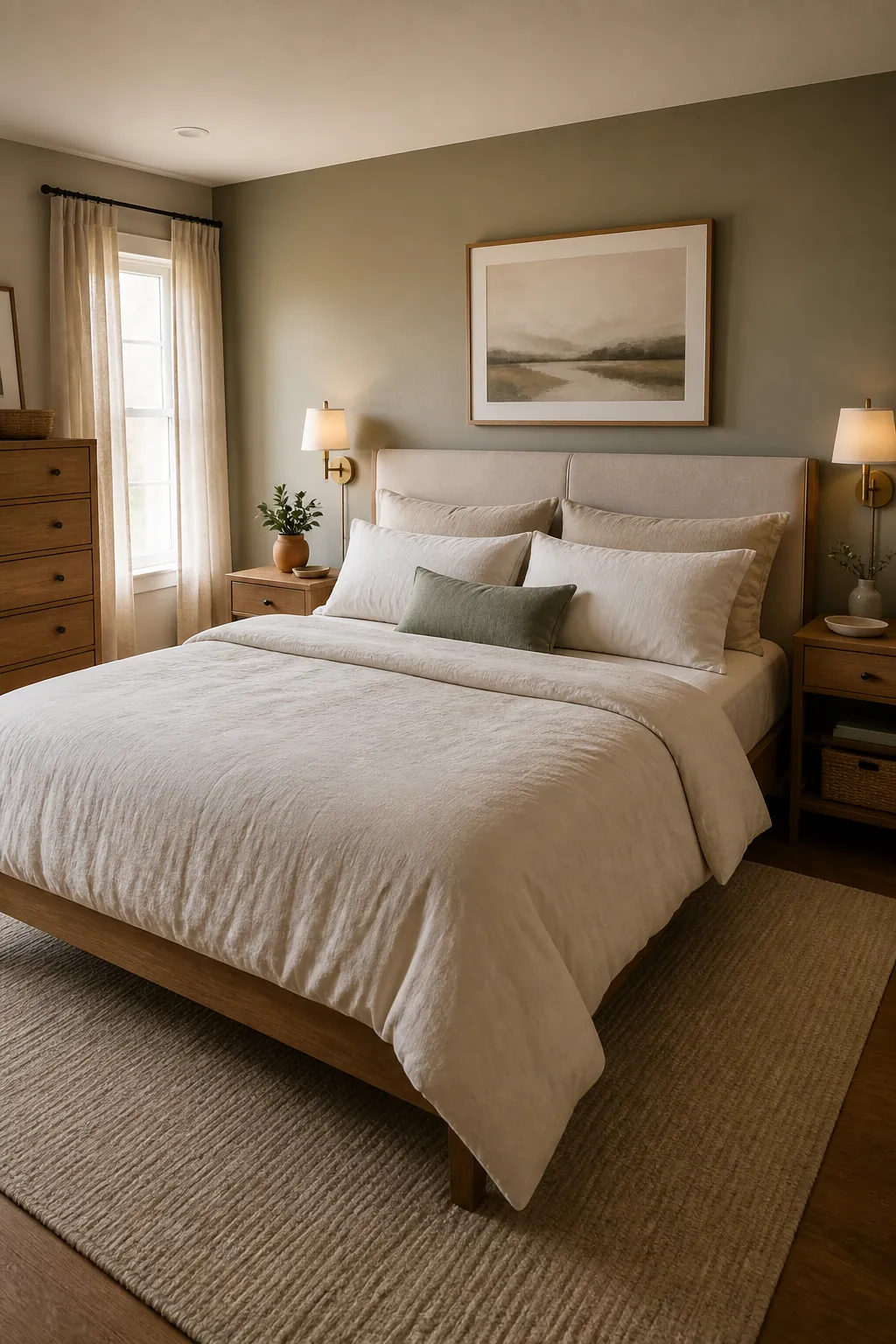
For a neutral bedroom, keep the largest textiles quiet: warm white, oatmeal, soft gray, clay, muted green, or gentle taupe. Then let each person add personality in controlled ways, such as different reading lamps, one accent pillow, or artwork on their side. The room feels cohesive because the big pieces agree, and it still feels personal because the smaller details are allowed to vary.
If the bedroom feels cluttered even after tidying, look at the bedding first. Busy patterns, too many pillows, and blankets piled at the foot of the bed can make a tidy room feel visually full.
Limit each nightstand to one routine
Nightstands turn into clutter magnets because they try to hold every possible need: skincare, water, books, chargers, jewelry, medication, headphones, receipts, hair ties, and half-finished projects. The better rule is simple: a nightstand should support the bedtime and wake-up routine, not become overflow storage.
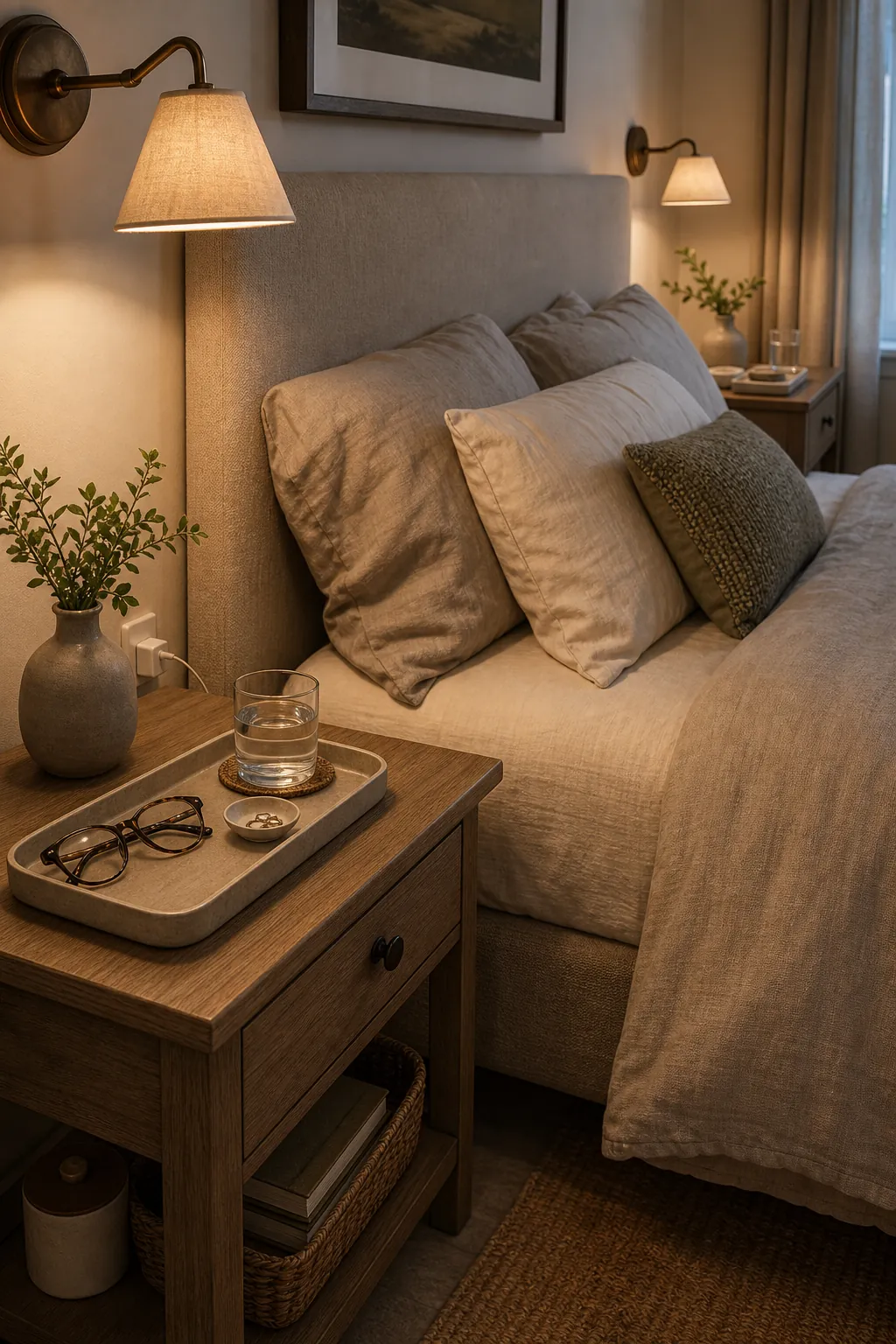
Start by asking each person what must be reachable from bed. Keep only those items on or inside the nightstand. Everything else needs a different home. A drawer divider can hold lip balm, glasses, medication, and a charger. A small tray can hold jewelry or a watch. If there is no drawer, use a lidded box or an opaque basket on the lower shelf so the surface stays clean.
For better nightstand decor, choose one vertical object and one low object: a lamp or wall sconce, plus a tray, book, or small vase. When both sides follow the same rule, the room feels styled even if the furniture is not perfectly matching.
Use closed storage where clutter collects
Open shelving can look beautiful in photos, but it is unforgiving in a couple bedroom. Two people usually mean duplicate products, different habits, and items that do not visually match. If you want a clutter free bedroom, use open display sparingly and rely on closed storage for the messy categories.
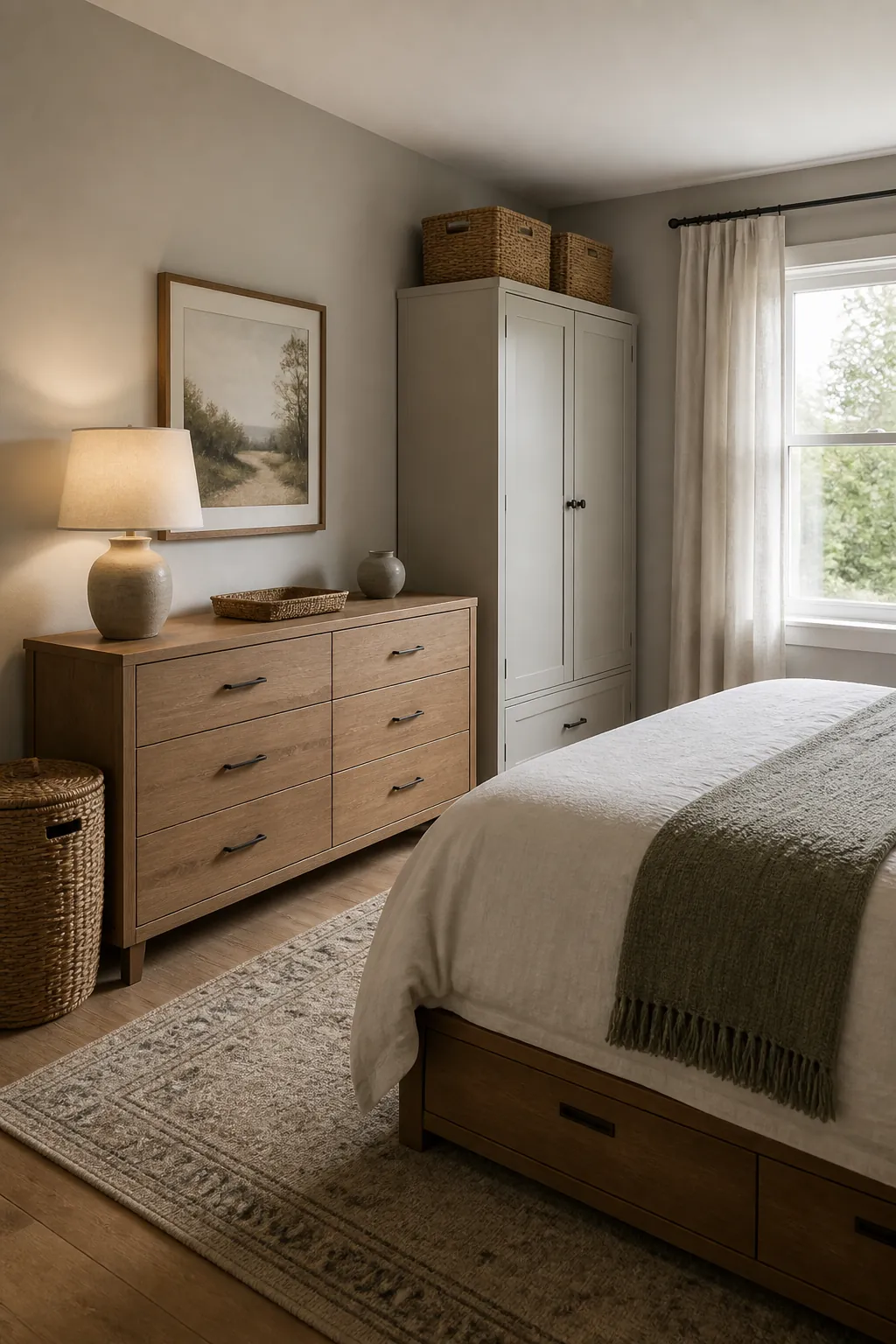
The best storage ideas are not always bigger. Often, they are calmer. A cabinet with doors will usually look better than three small open carts. A dresser with deep drawers will usually feel calmer than multiple floor baskets. Matching opaque bins can make a bookshelf look intentional, while mixed clear bins can make it feel like a stockroom.
Think in categories: clothes, grooming, chargers, sleep items, sentimental items, linens, and temporary drop-zone items. Each category gets one closed or contained home. If a category outgrows its home, the answer is not automatically another bin. The first step is editing.
Go vertical before adding more furniture
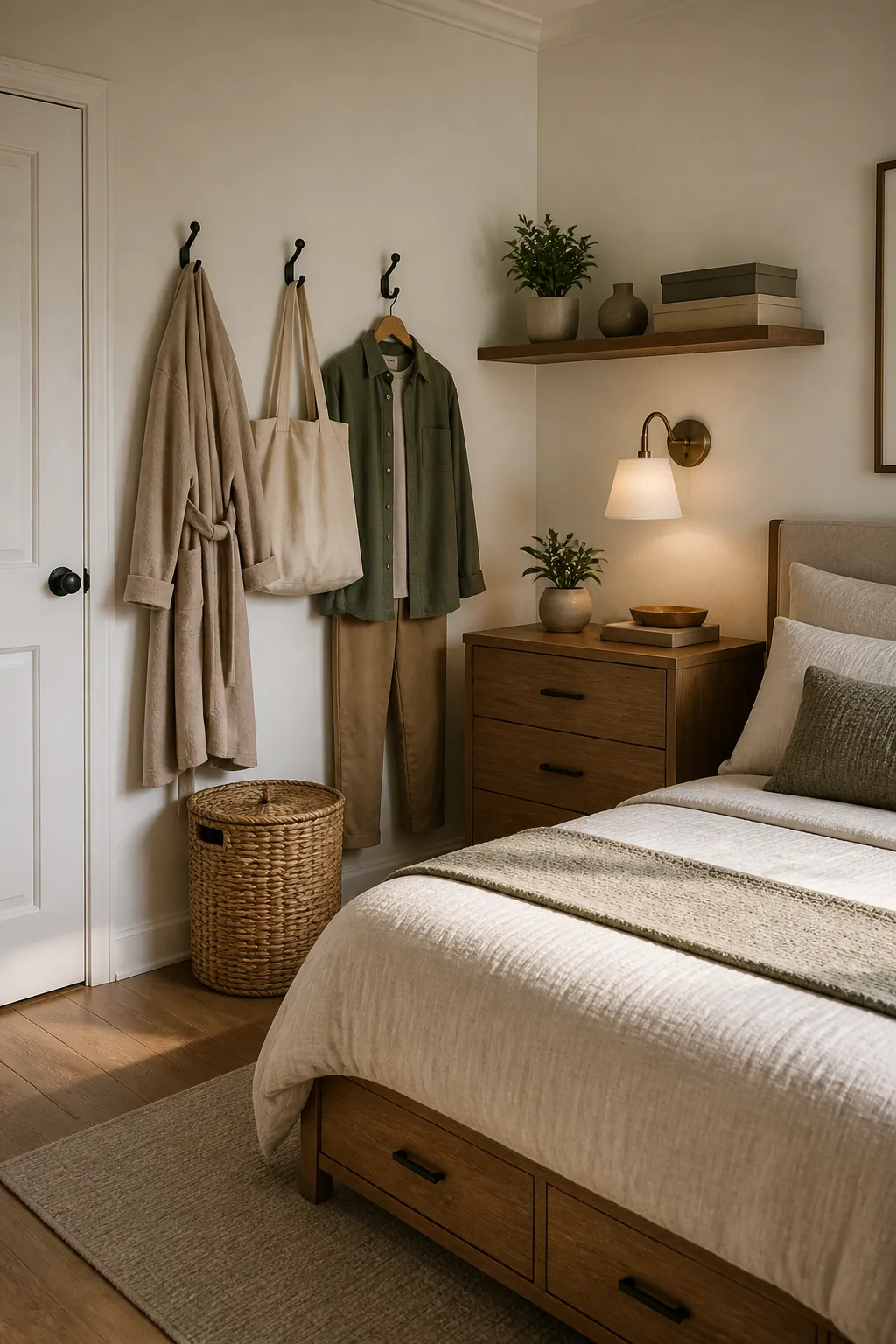
When a bedroom already feels crowded, adding another small table, cart, or narrow shelf can make the room harder to use. Before buying more furniture, look at the wall, the back of the door, the closet interior, and the space under the bed. These areas often solve clutter without taking away walking space.
Wall hooks near the door can hold robes, tomorrow’s outfit, or a frequently used tote. A slim floating shelf can move books and small decor off the nightstand. Under-bed drawers can hold off-season clothes or spare linens. A wall-mounted sconce can free the nightstand surface. A full-length mirror on the wall or closet door keeps the floor open.
The key is restraint. Vertical storage should not turn every wall into a display wall. Use it for items that truly need quick access, then keep the rest behind doors, inside drawers, or under the bed.
Split the closet by behavior
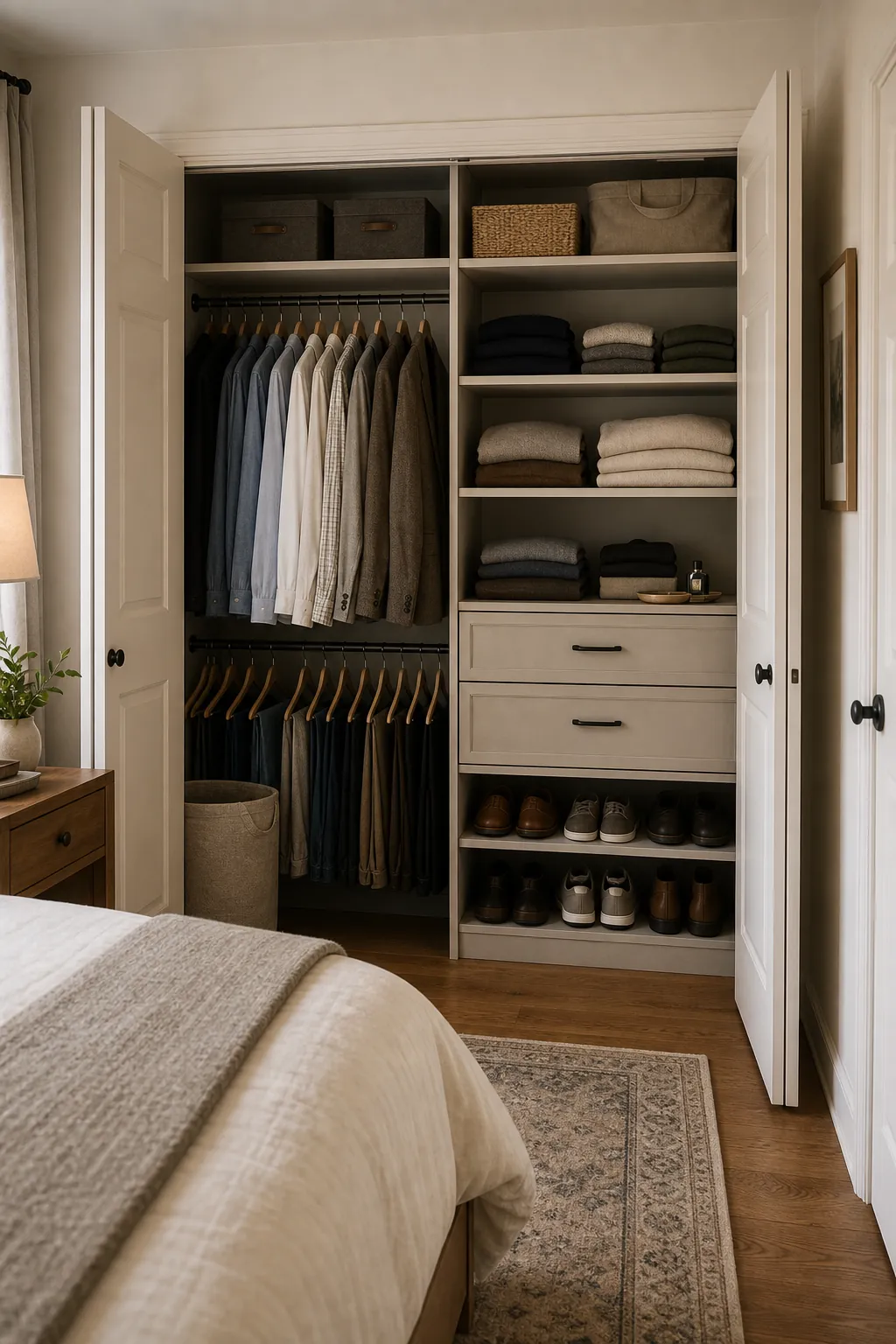
A shared closet does not need a perfect fifty-fifty split. It needs a fair split that matches real behavior. One person may hang more clothes. The other may need more drawer space. One may rotate seasonal clothes carefully. The other may need a simple bin for casual wear. Good bedroom organization respects those differences instead of pretending both people use storage the same way.
Start with a quick closet audit. Remove what is not bedroom-related, what does not fit, what belongs in another room, and what neither person uses. Then assign storage by function: hanging clothes, folded clothes, shoes, accessories, laundry, and off-season items. Labeling is not about being fussy; it is about reducing daily negotiation.
If the closet is tiny, use one of the strongest small-space moves: raise the hanging rod or add a second rod, then put drawers or lidded bins below. This creates more usable storage without pushing more furniture into the room.
Style the room with fewer, stronger details
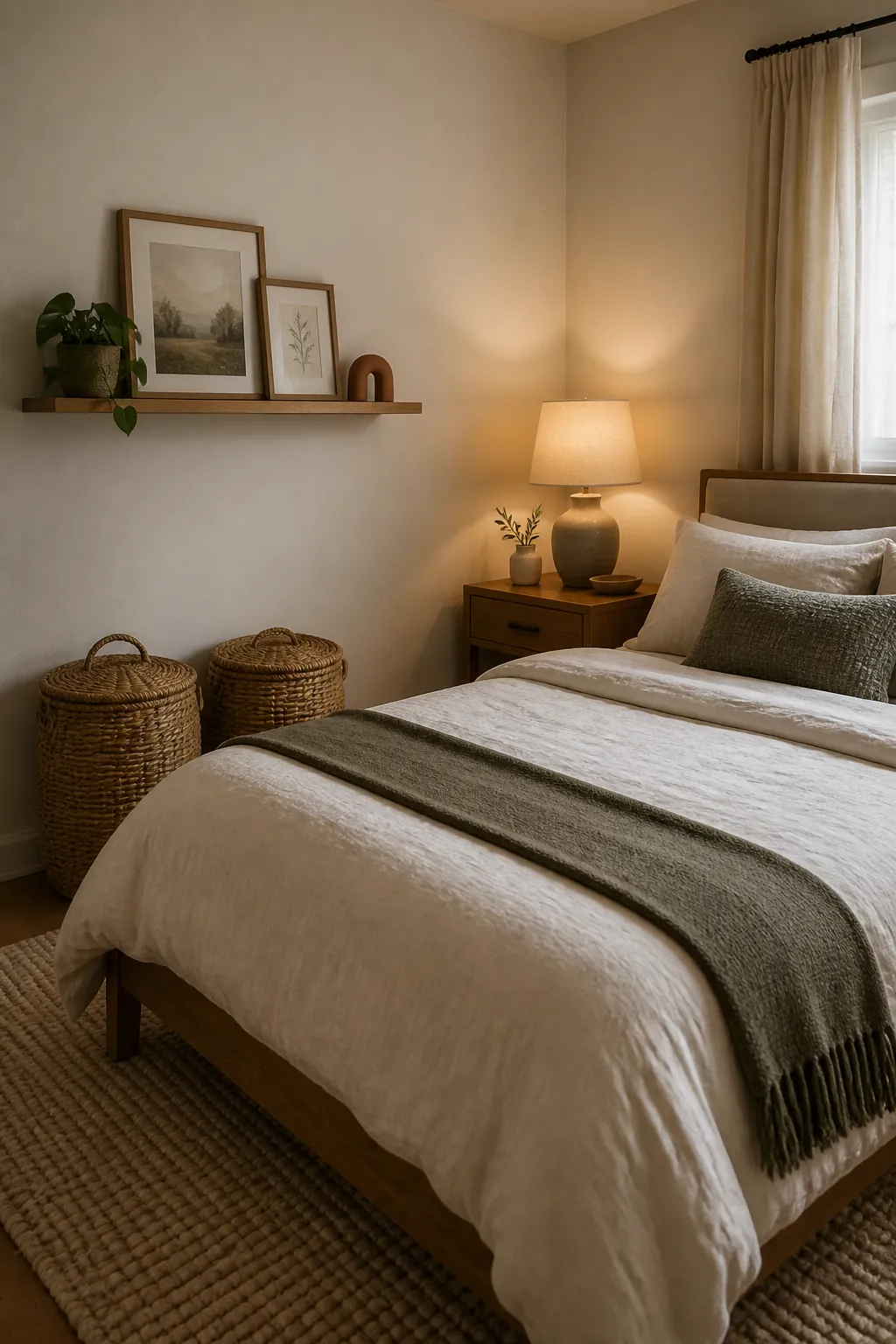
Bedroom styling is not the same as adding decor. In a shared bedroom, style comes from repetition, proportion, and editing. Repeat a few materials across the room: wood, linen, woven texture, matte black metal, warm brass, ceramic, or soft cotton. Keep the palette calm, then add contrast through texture instead of clutter.
A cozy bedroom does not need five blankets, a dozen pillows, and every sentimental object on display. It can be cozy with warm lighting, layered bedding, a soft rug that fits the room, curtains that frame the window, and one intentional display surface. If both people have collections or personal items, give each person a small display boundary. A shelf, tray, or framed ledge is better than objects spreading across every surface.
The test is whether the room still looks good after a normal weekday. If it only works after a deep clean, the styling is too fragile.
Create a reset system that takes five minutes
A shared bedroom stays clutter free when the reset is easier than the mess. Build a five-minute reset around the places clutter actually lands. Put a hamper where clothes hit the floor. Add one landing tray near the door or dresser for temporary items. Keep a donation bag in the closet. Give each person a small private catchall, then empty it once a week.
Do not make the reset dependent on one tidy person. The system has to be visible and simple enough that both people can use it when tired. That usually means fewer categories, more closed storage, and clear limits on surfaces. A drawer labeled “chargers” works better than a perfect cable organizer nobody wants to maintain.
The most important rule is the one-night rule: anything that lands on the floor, chair, or dresser top gets returned before the next night. That small habit keeps clutter from becoming part of the room.
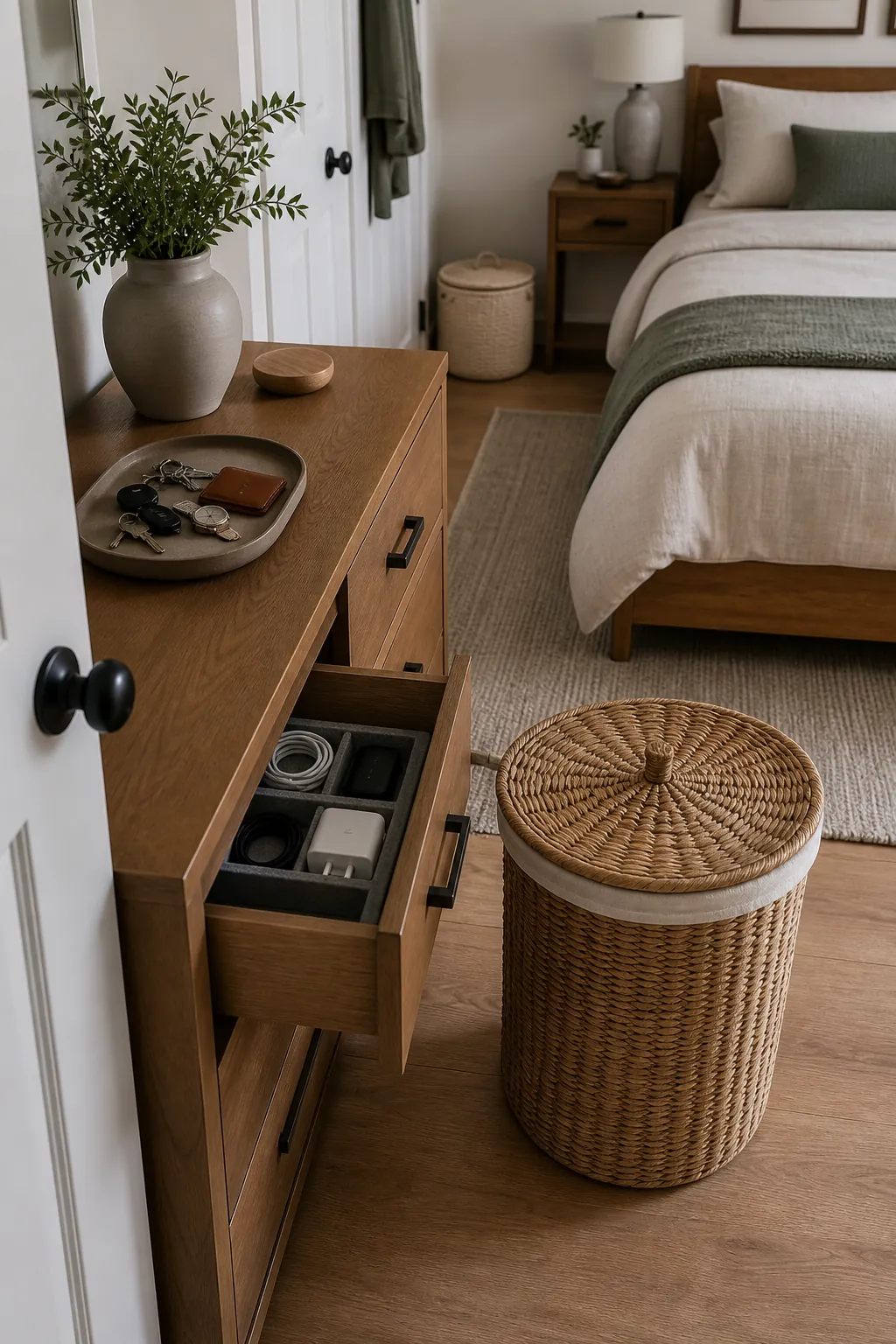
A simple clutter-free shared bedroom checklist
- Give each person a side: one nightstand, one tray, one drawer, or one clear personal zone.
- Protect shared surfaces: only agreed-upon items stay on the dresser, bench, or window ledge.
- Choose closed storage first: use drawers, doors, lidded boxes, and opaque baskets for visually messy categories.
- Keep nightstands routine-based: bedtime and morning essentials only.
- Use vertical storage carefully: hooks, wall shelves, and sconces should free space, not create a new display problem.
- Style with repetition: repeat materials and colors so the room feels intentional even when the furniture is mixed.
- Reset nightly: clothes, chargers, cups, books, and loose items go back before clutter hardens into a habit.
The best shared bedroom is not the one with the most storage. It is the one where both people can move, sleep, get ready, and relax without feeling crowded by the other person’s things. Start with ownership, hide the visual noise, keep the bed calm, and let the styling come from choices you can maintain on an ordinary weeknight.