
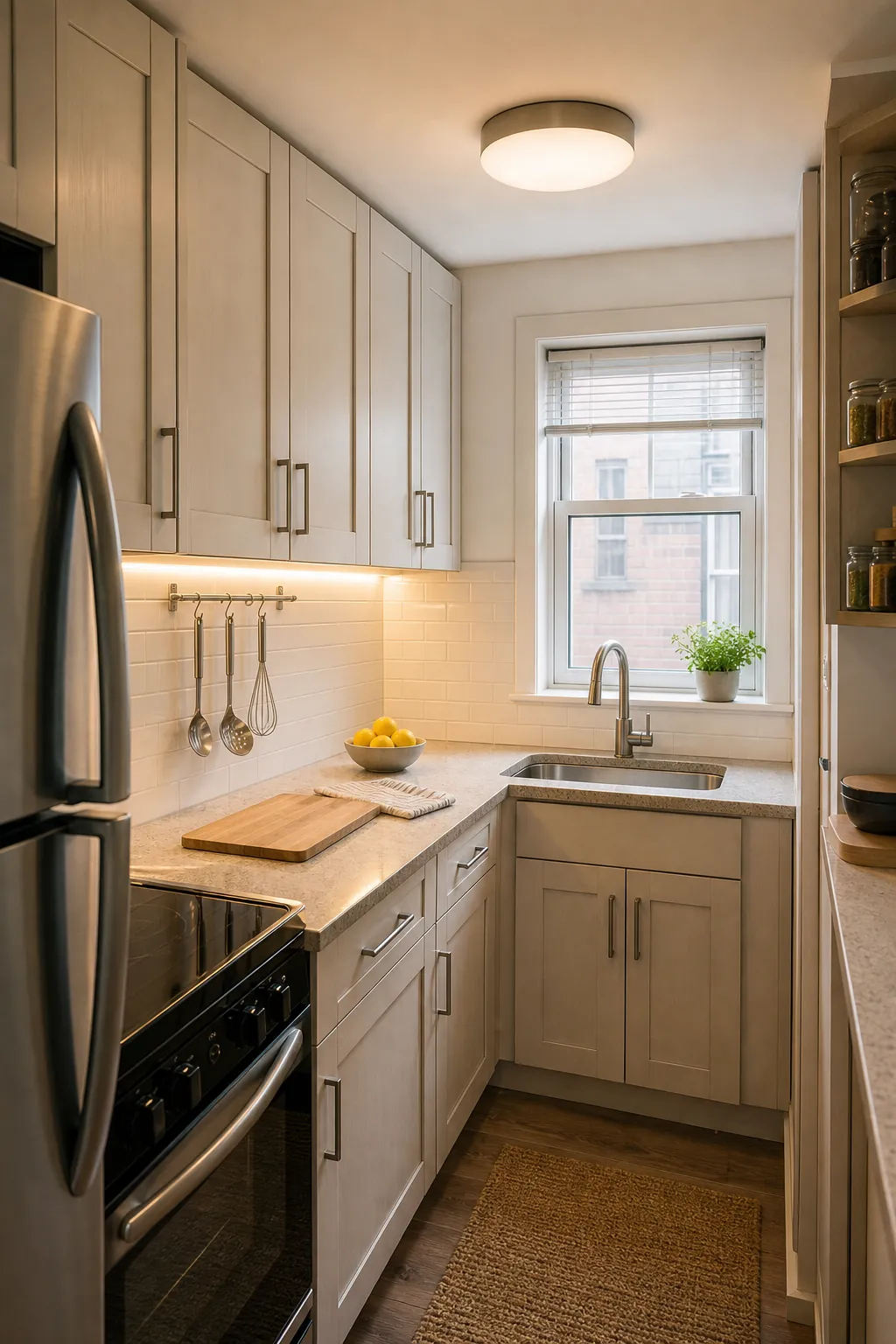
A small kitchen usually feels crowded for two reasons at once: the counters are doing too many jobs, and the light is not reaching the places where cooking actually happens. You can buy prettier jars and a new rug, but if the meal prep space stays dim and interrupted, the room will still feel harder to use than it should.
The better fix is to treat small kitchen lighting and clear counters as the same project. Light the work surface first. Then remove anything that does not earn its place on that surface. The result is not a bare showroom kitchen. It is a compact kitchen that gives you one calm place to chop, plate, pour coffee, pack lunch, or clean up without moving six things first.
Start With One Counter That Stays Clear
The most useful small kitchen idea is also the least dramatic: choose one counter section and make it the permanent clear zone. It can be only two feet wide. It can sit between the sink and stove, beside the fridge, or under the brightest cabinet light. What matters is that it is always ready.
This is where a lot of kitchen counter organization goes wrong. People try to organize every item before deciding where food prep actually happens. Reverse that. First protect the work zone. Then decide where everything else goes.
- Keep only prep-related items nearby: cutting board, knife, mixing bowl, towel, and compost or trash access.
- Move decorative objects away from the work zone: plants, candles, framed art, and oversized canisters can live on shelves, ledges, or a dining table.
- Give the counter a daily end point: when dishes are done, this area returns to empty before the rest of the kitchen gets attention.
Put Task Light Where Your Body Casts Shadows
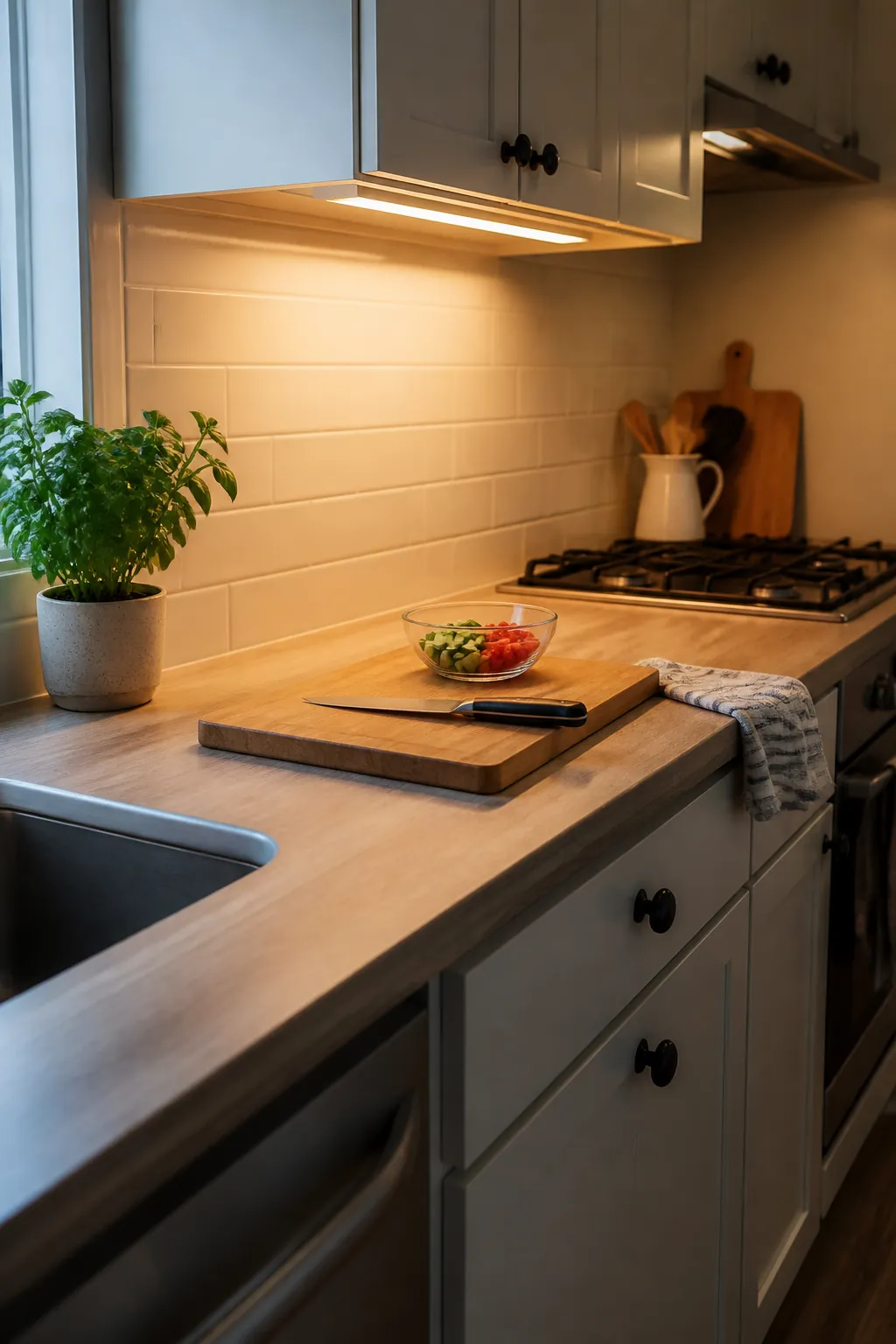
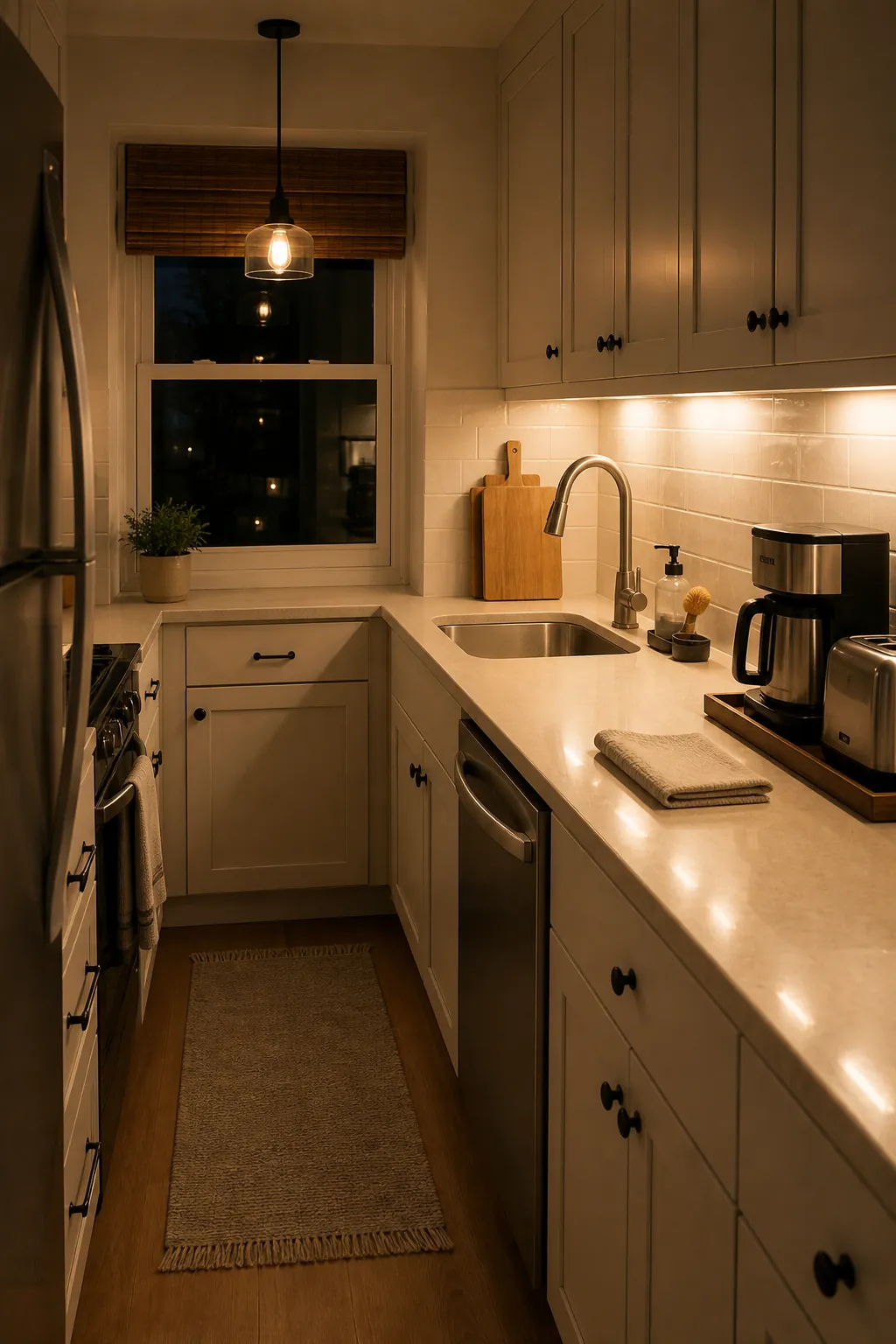
One ceiling fixture can make a small kitchen look lit while leaving the counter dark. The problem shows up when you stand in front of the sink or cutting board and your body blocks the overhead light. That is why under-cabinet lighting is such a strong kitchen refresh: it lights the surface from the front instead of from behind you.
For a compact kitchen, start with the zones that need accuracy: the prep counter, sink, stove edge, and coffee station. A warm white LED strip or slim puck light can make the backsplash feel deeper and the work surface easier to read. If you rent, look for rechargeable or plug-in options so you can avoid wiring work.
The goal is not maximum brightness everywhere. The goal is layered light: soft general light overhead, focused task light on the counter, and a small accent source if the room feels cold at night. When those layers work together, small kitchen decor looks intentional instead of cluttered.
Use Vertical Storage Before Buying More Countertop Organizers
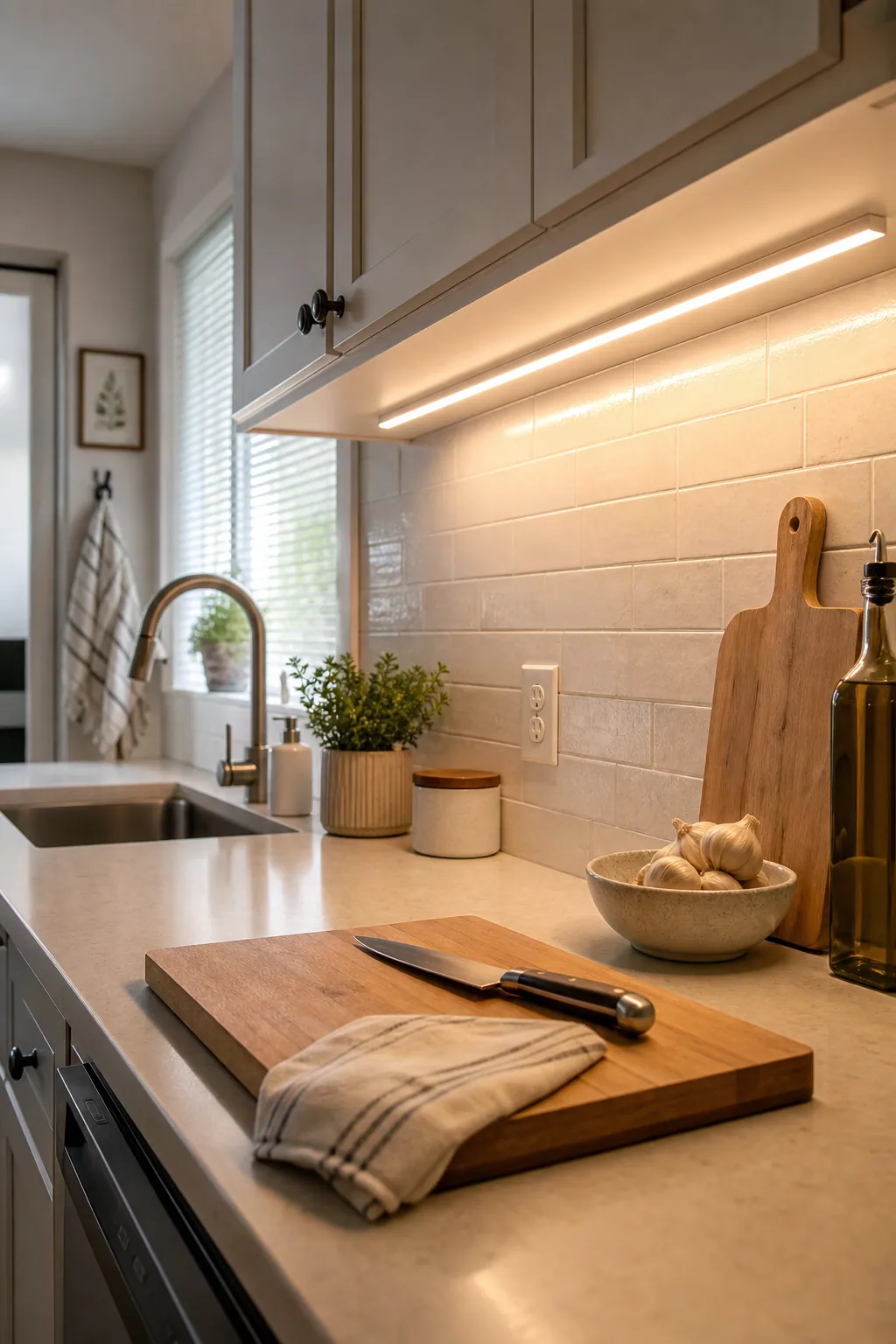
If the counter is covered with spice jars, knives, mugs, utensils, vitamins, and mail, a tray will only make the clutter neater. The counter still loses. Better small kitchen storage uses the wall, cabinet doors, shelf undersides, and narrow gaps before it asks the counter for more space.
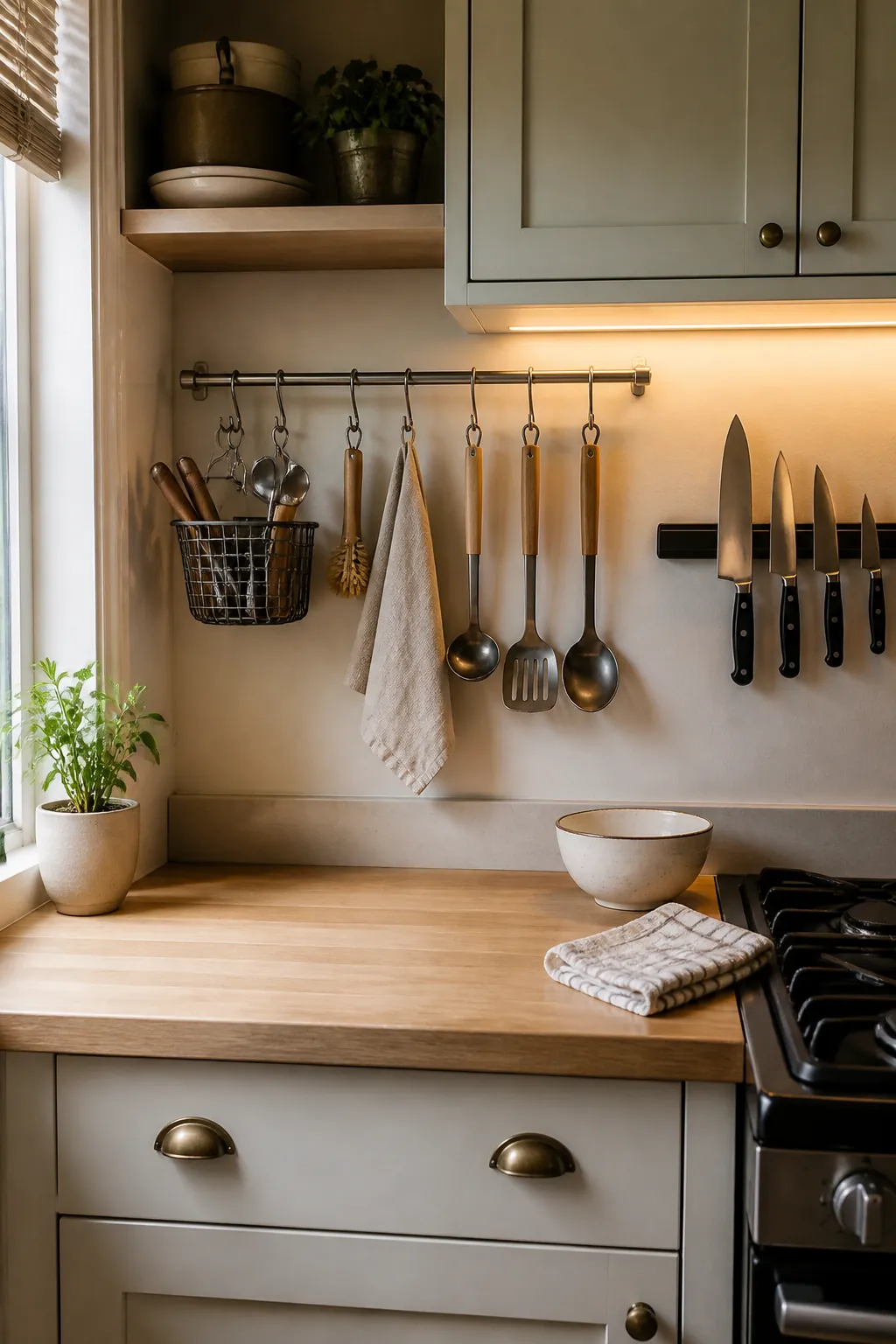
A magnetic knife strip can remove a bulky knife block. A wall rail can hold cooking tools beside the stove. A slim spice shelf can move jars up from the backsplash ledge. Adhesive hooks inside cabinet doors can hide towels, measuring spoons, and oven mitts. These moves work because they keep the useful item close while giving the worktop back to food.
One rule keeps vertical storage from turning messy: only store repeat-use tools in the open. The items should be simple, coordinated, and genuinely used each week. Anything occasional belongs in closed storage, even if that closed storage is a nearby closet, pantry bin, or high shelf.
Group the Appliances You Actually Use
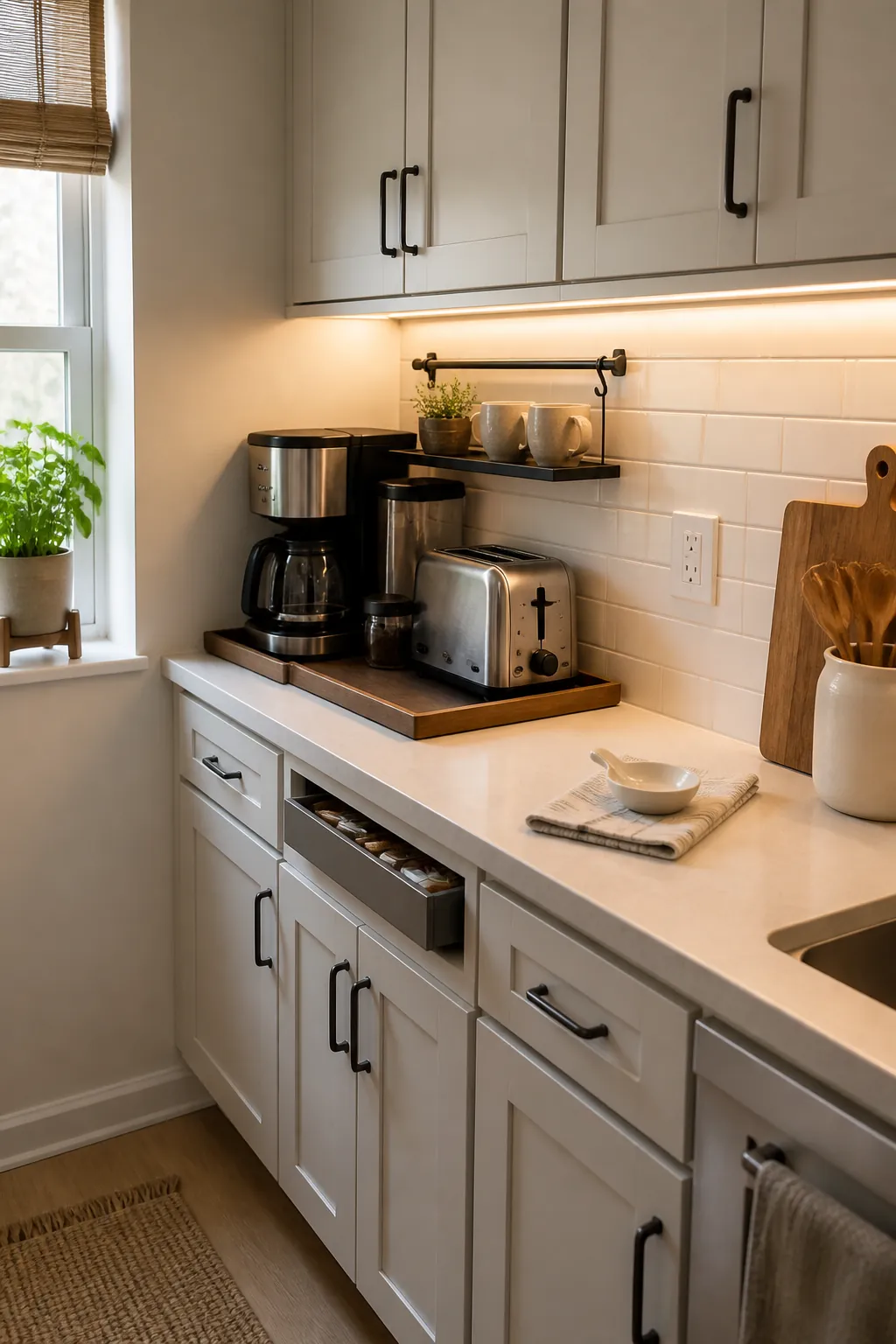
Clear counters do not mean every appliance must disappear. In real kitchens, the toaster, coffee maker, kettle, rice cooker, blender, or air fryer may be used too often to drag out every day. The mistake is scattering them across the room so every stretch of counter feels half occupied.
Choose one appliance zone and make it deliberate. A coffee maker can sit with mugs above it and beans in the drawer below. A toaster can live on a tray with bread storage near the breakfast shelf. A microwave can move to a cart, shelf, pantry niche, or lower cabinet if the layout allows. The key is that the appliance zone has a boundary, and the prep zone does not become its overflow.
Use frequency as the test. Daily tools deserve convenient homes. Monthly tools deserve storage. Aspirational gadgets that block your only cutting space are not helping your kitchen ideas become easier meals.
Shrink the Sink Zone So It Stops Taking Over
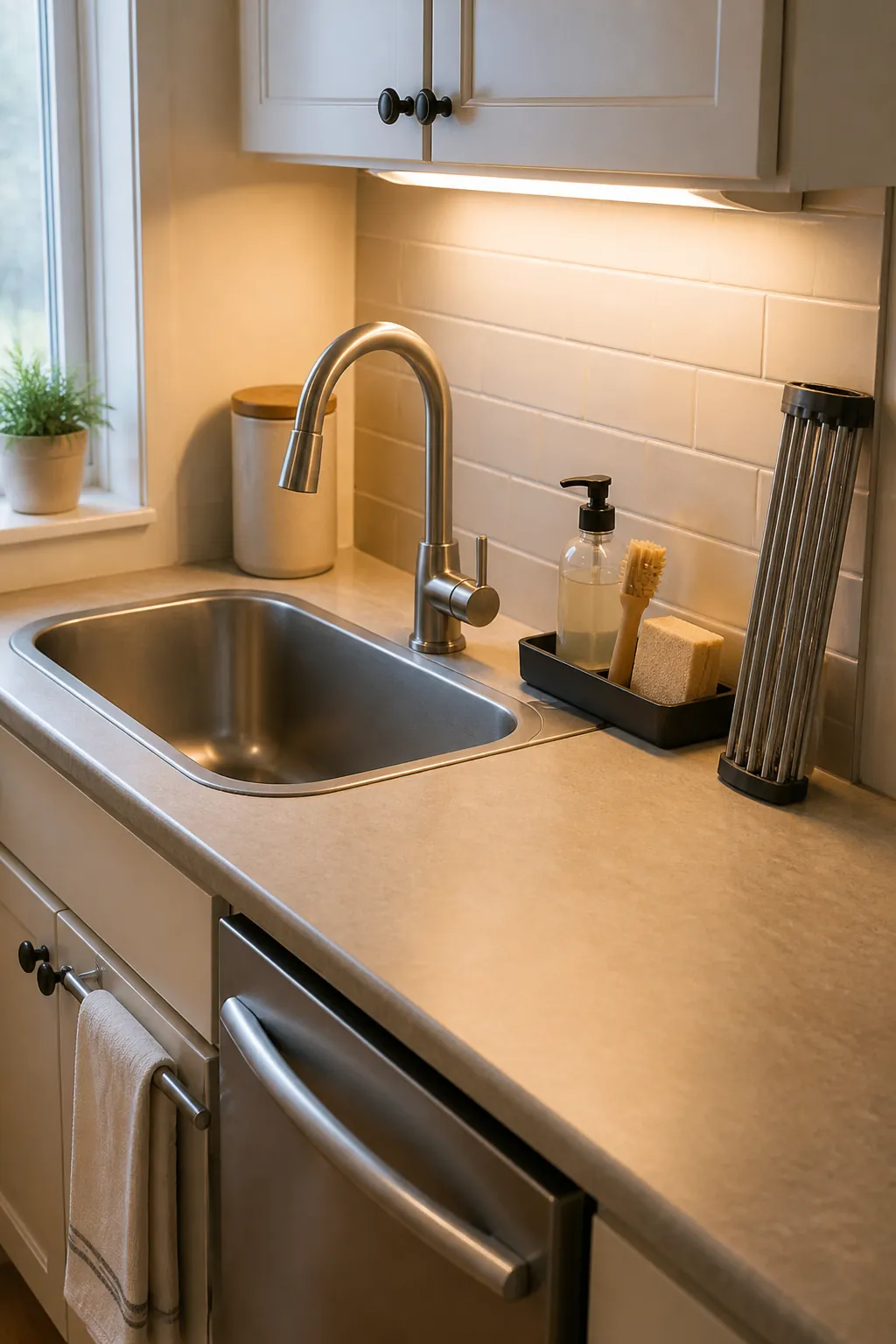
In a small kitchen, the sink area can quietly steal half the counter: sponge, dish soap, hand soap, scrub brush, drying rack, bottle brush, towel, and a pile of dishes waiting for later. Once the sink spreads, the rest of the room feels unfinished even when it is technically clean.
Make the sink zone tight and vertical. Use a narrow caddy that fits the exact tools you reach for. Move backup soap and extra sponges under the sink. Choose a roll-up drying rack, wall-mounted dish rail, or compact rack that can be put away after use. If the counter beside the sink is also your meal prep space, the drying rack cannot be a permanent resident.
Lighting matters here too. A small fixture above the sink or a strip under the cabinet can make dishwashing feel less like a dark corner chore. It also makes the clean counter more visible, which helps the reset stick.
Let Closed Storage Carry the Visual Weight
Open shelves can look beautiful, but they are unforgiving in a tight room. If every mug, spice, snack, bowl, and pan is visible, the kitchen reads as full even after you clean it. Closed storage gives the eye somewhere to rest.
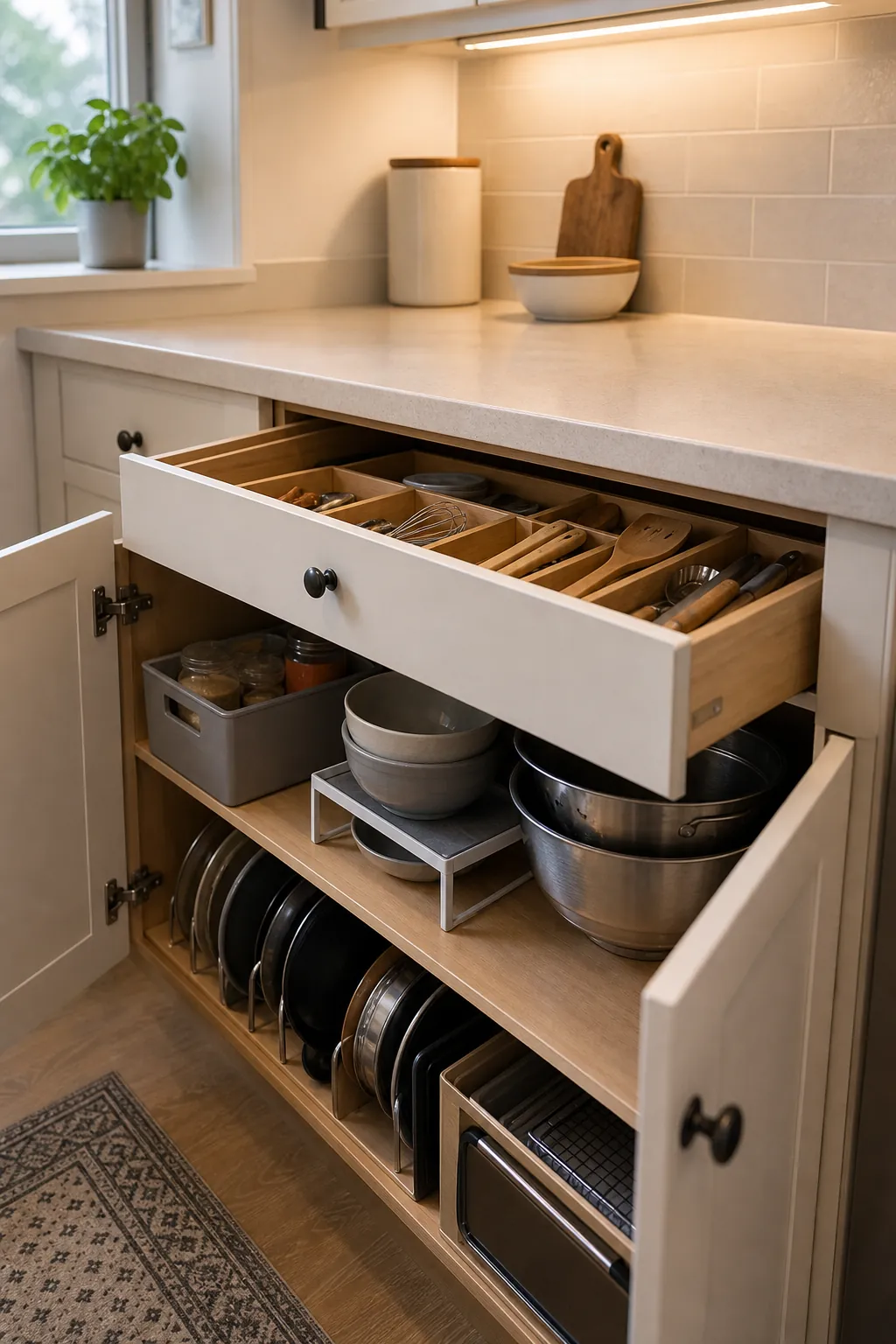
Start by editing cabinet interiors instead of buying more bins. Stack pans vertically. Decant only foods that truly work better that way. Put shelf risers where short cups waste height. Use drawer dividers for tools that currently live in a jar on the counter. Store backstock together so it does not leak into daily cooking space.
If your cabinets are shallow, use the inside of the door. If your cabinets are tall, add another shelf. If your pantry is outside the kitchen, make it work harder for bulk items. The best kitchen organization is not the prettiest system. It is the system that keeps the counter from becoming storage.
Choose Decor That Bounces Light Instead of Adding Noise
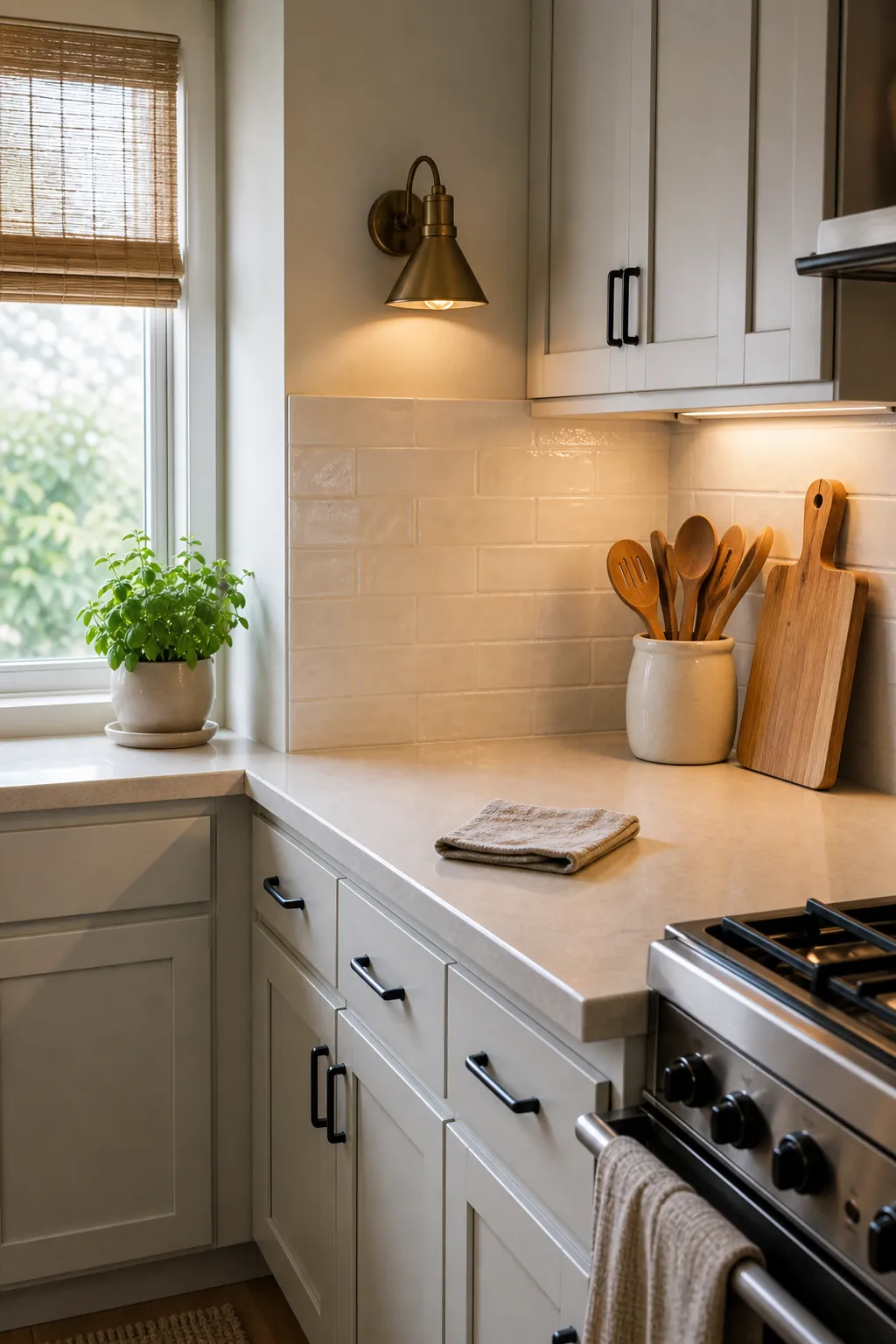
Small kitchen decor works best when it helps the room feel brighter, calmer, or more useful. Light wall paint, a simple window treatment, a reflective tile or peel-and-stick backsplash, pale towels, and one small plant can do more than a collection of signs and countertop objects.
Patterns need restraint in compact rooms. A patterned counter, busy rug, printed towels, visible packaging, and multicolor tools can all compete at once. If the fixed finishes are already busy, keep the removable pieces quiet. If the cabinets and counters are plain, one stronger rug or pendant can give the room personality without filling the prep space.
A good test is simple: if the decor makes the work surface harder to use or harder to wipe down, it belongs somewhere else. Pretty is not enough in a small kitchen. Pretty has to earn its footprint.
Build a Counter Reset That Takes Five Minutes
The final step is the one that makes the refresh last. Give the kitchen a short closing routine that returns the room to its working state. It should be small enough to do when you are tired.
- Put daily appliances back inside their boundary.
- Clear the protected prep counter completely.
- Move mail, tools, receipts, and random objects out of the kitchen.
- Wipe the counter under the task light so crumbs and water spots are easy to see.
- Turn on the softer light if the kitchen connects to the living area at night.
This routine works because it is not a full declutter every evening. It is a reset of the few surfaces that change how the kitchen feels the next morning. Better lighting helps here too: when the prep zone is clearly lit, clutter has fewer places to hide.
The Small Kitchen Upgrade That Changes the Room Fastest
If you only change one thing, make it the relationship between light and counter space. Pick the counter that should stay clear. Light it well. Move everything else into a specific home. That single decision makes the rest of the kitchen easier to judge.
A compact kitchen does not need every clever product. It needs one reliable place to work, enough light to use it comfortably, and storage that protects that space. Once those three pieces are in place, the room feels brighter, cleaner, and more generous without a renovation.